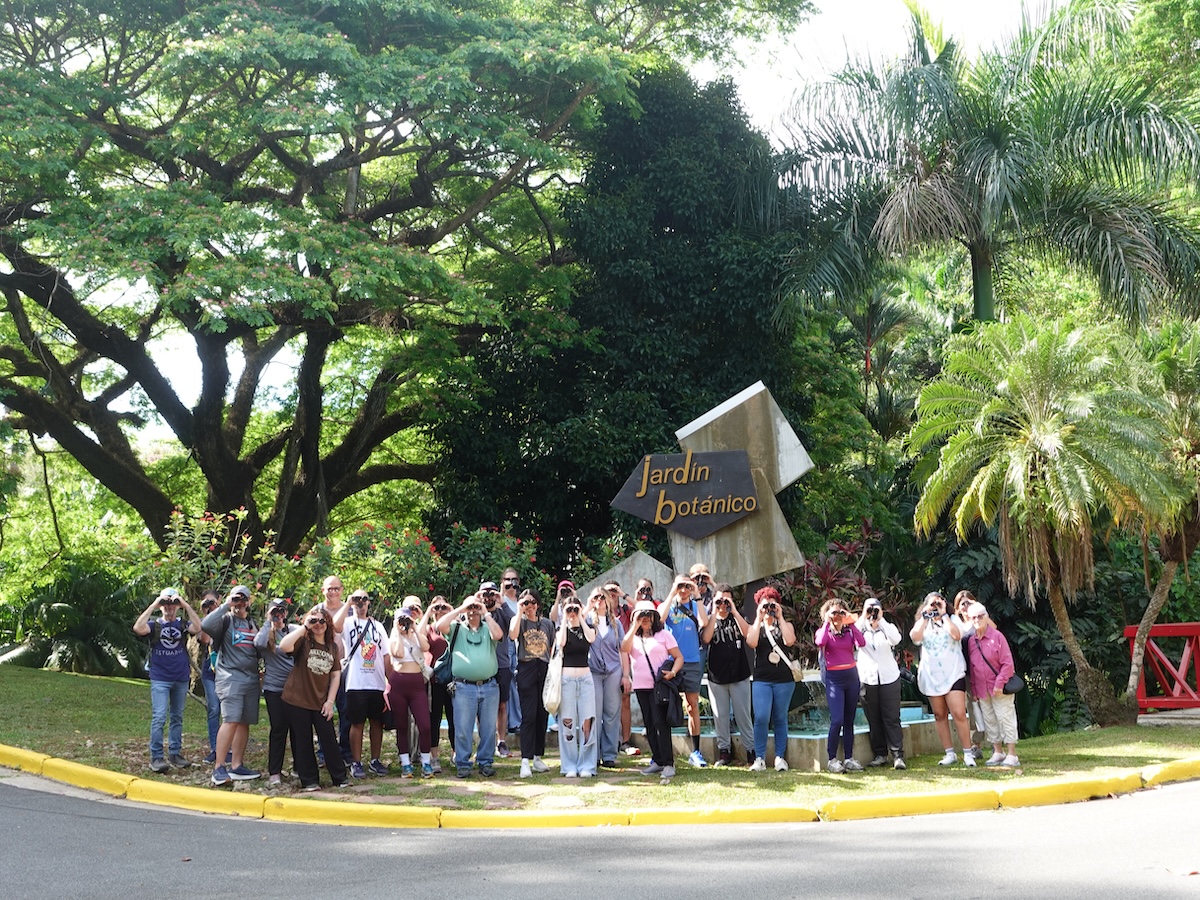
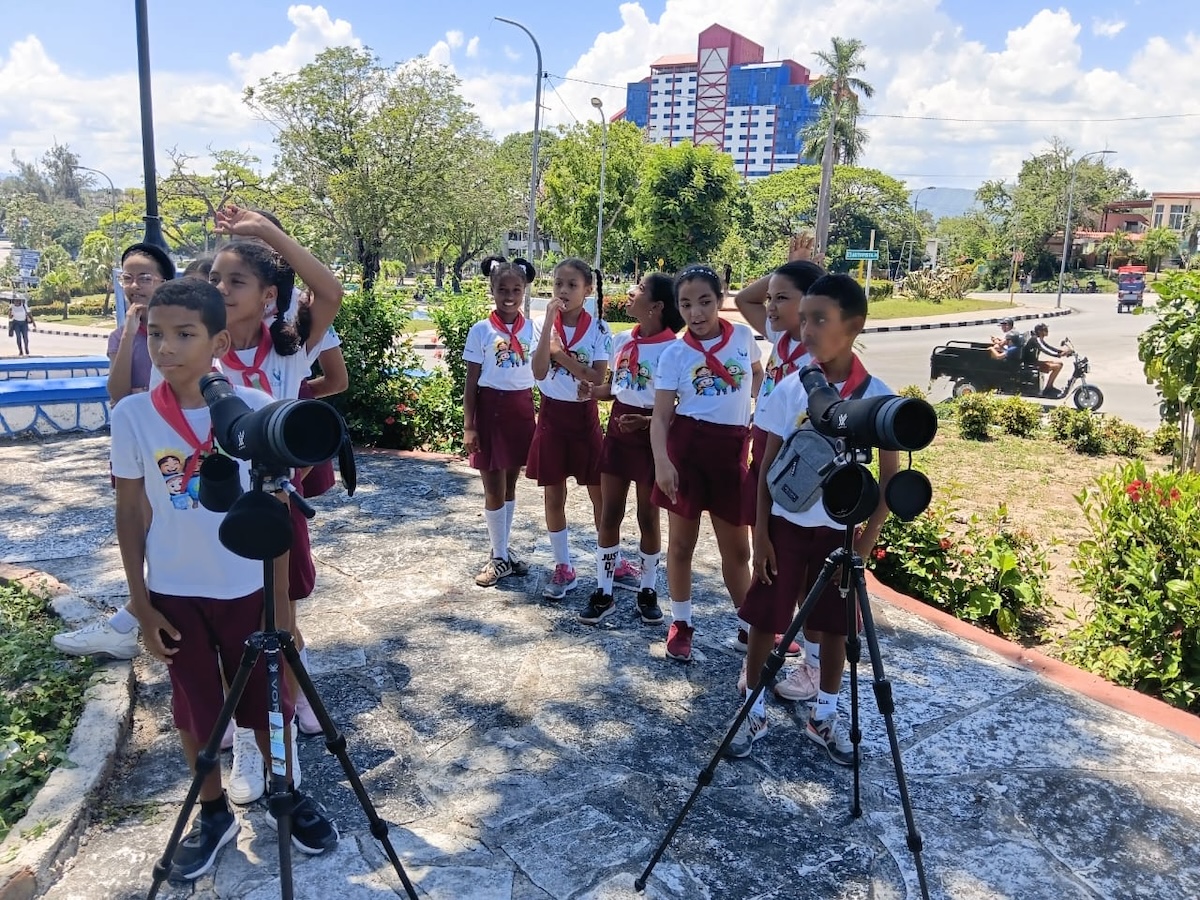
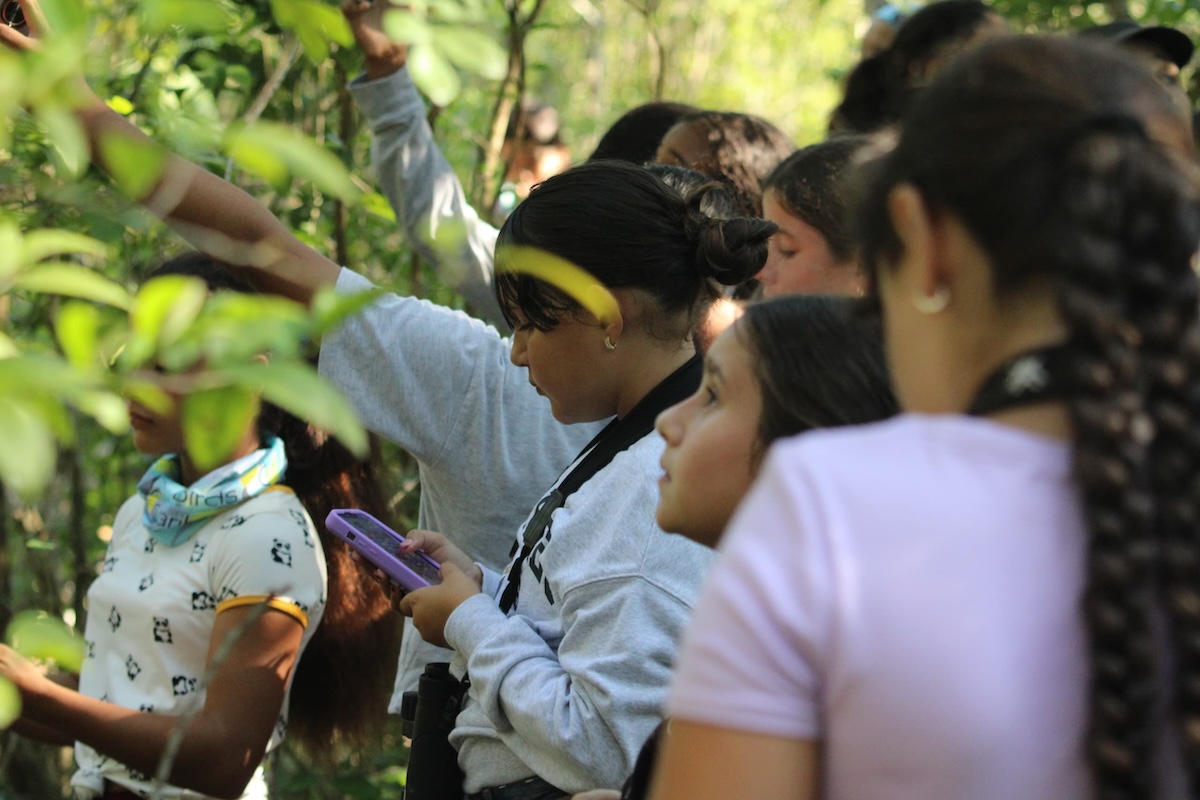
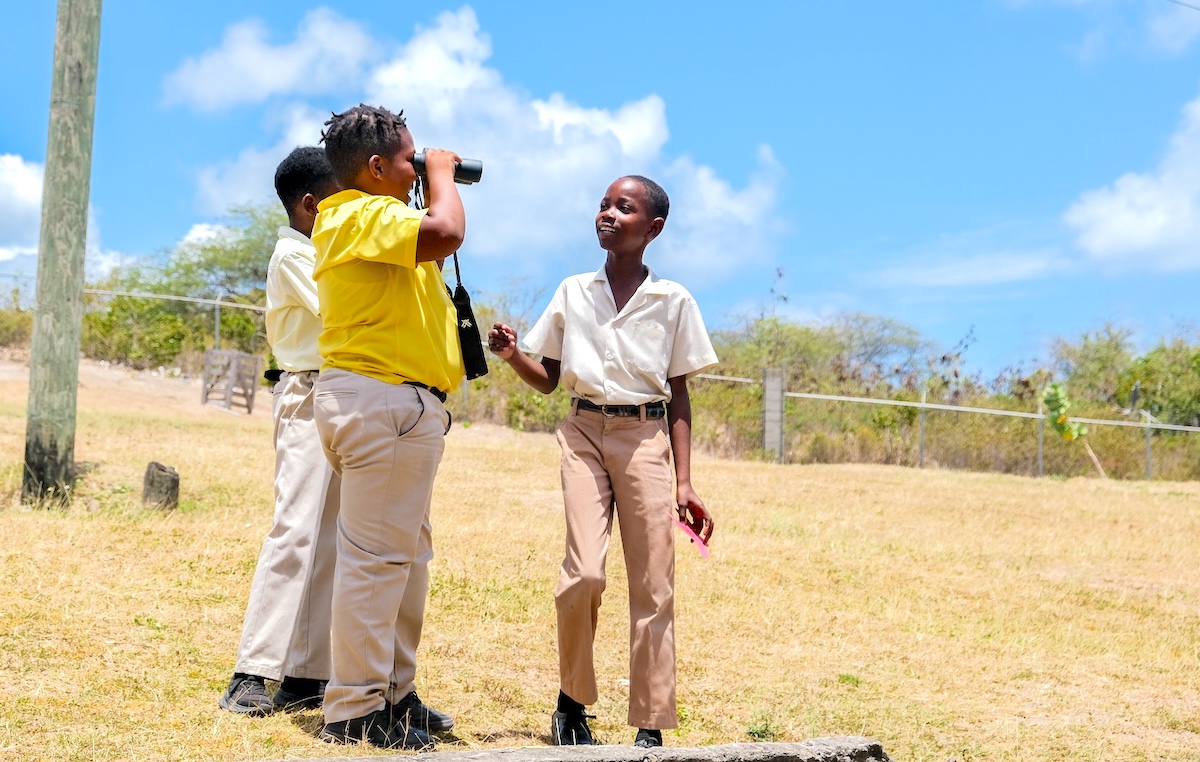
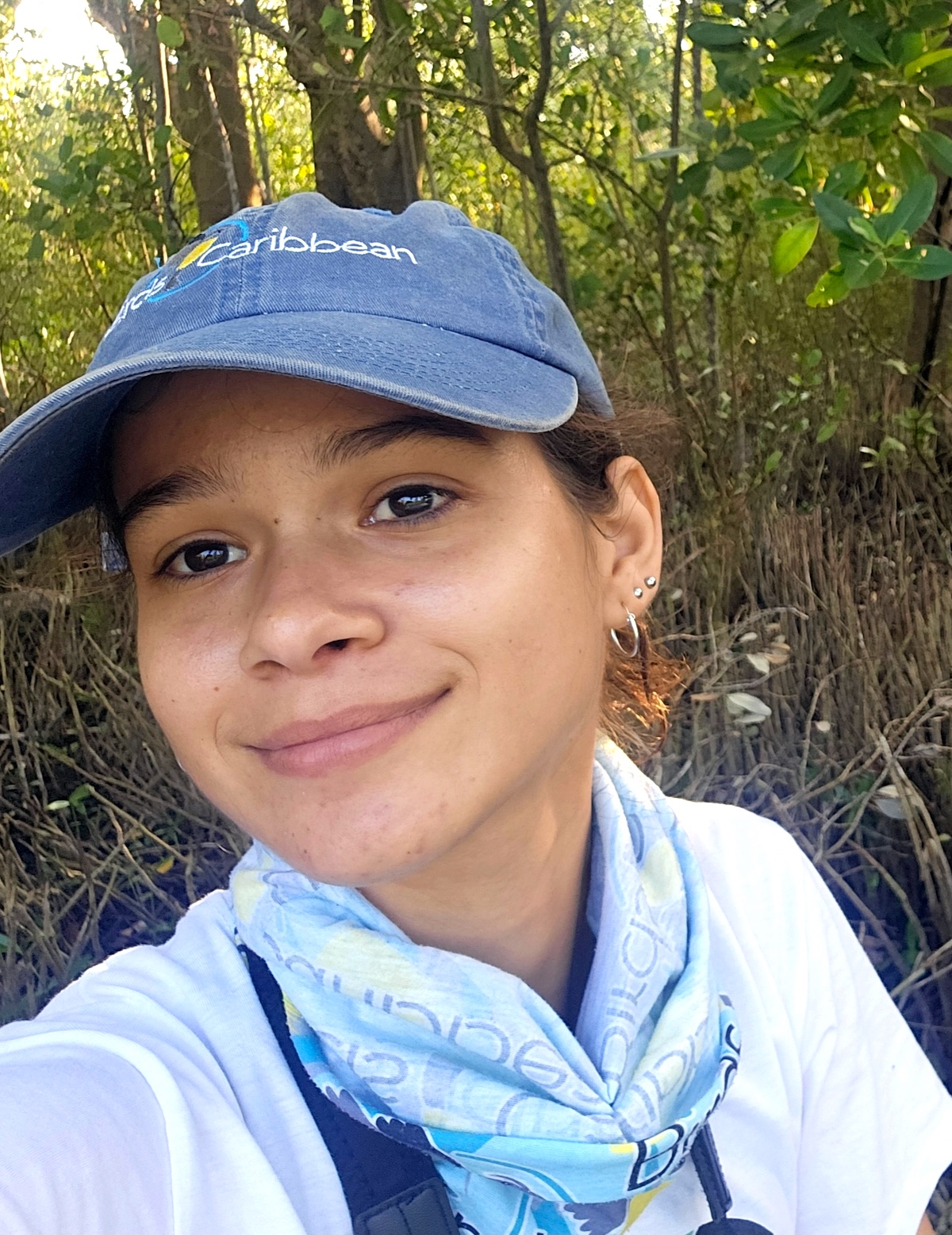
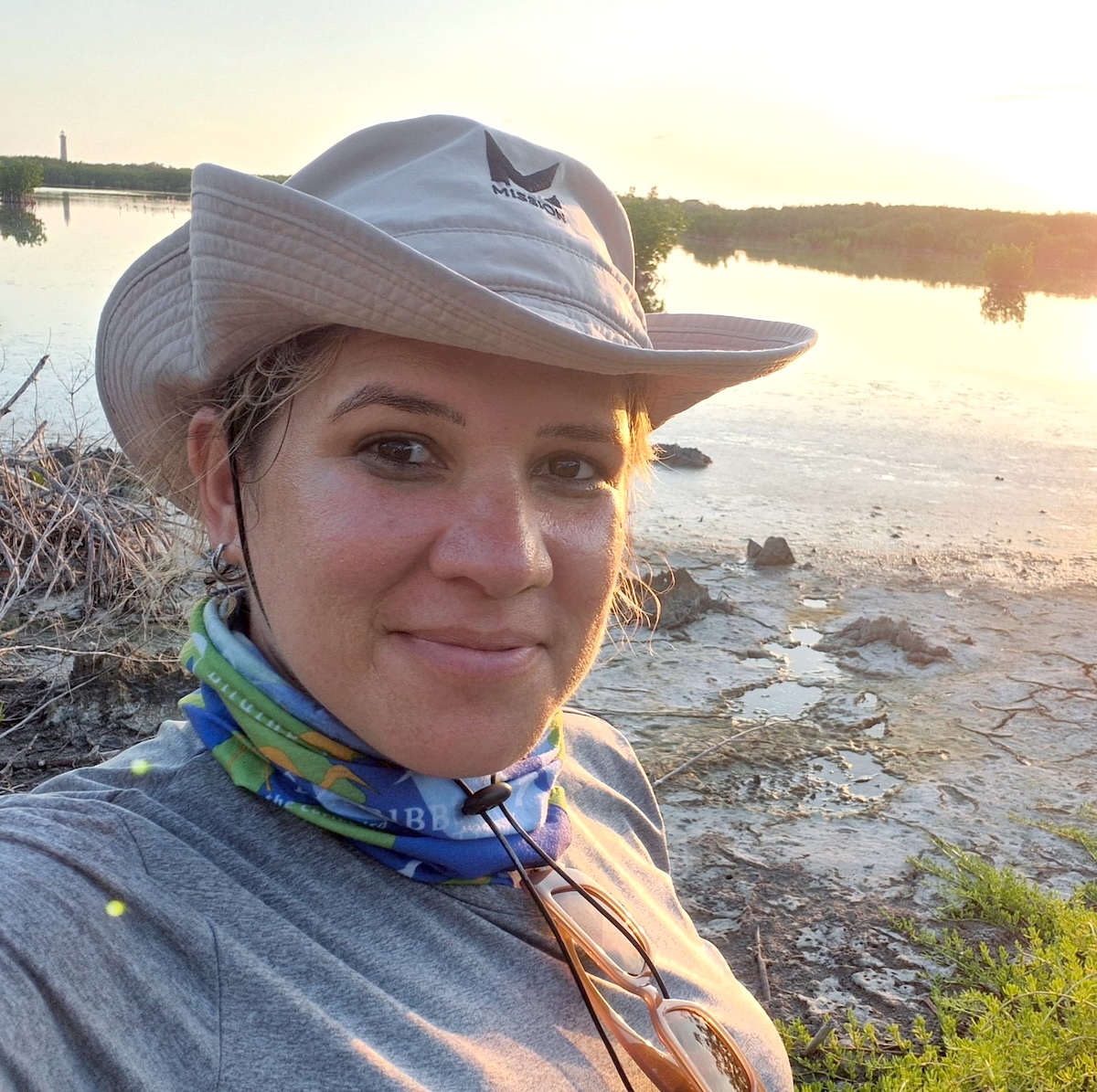
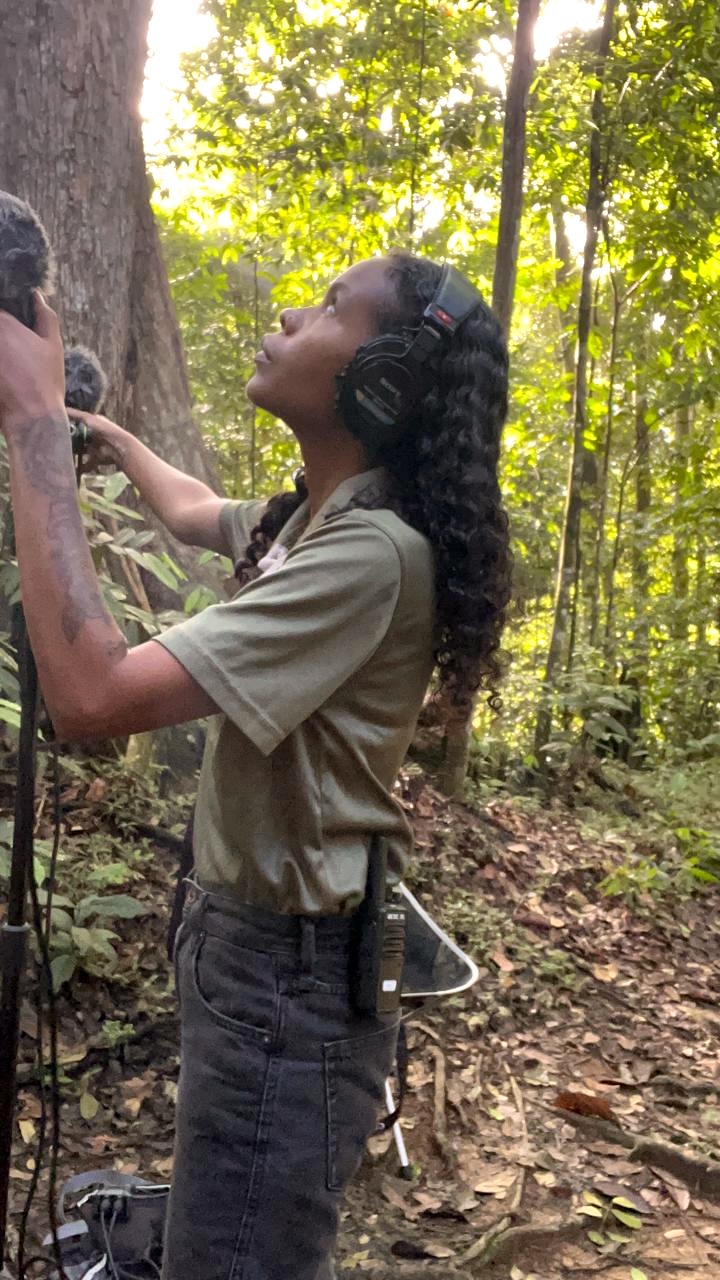
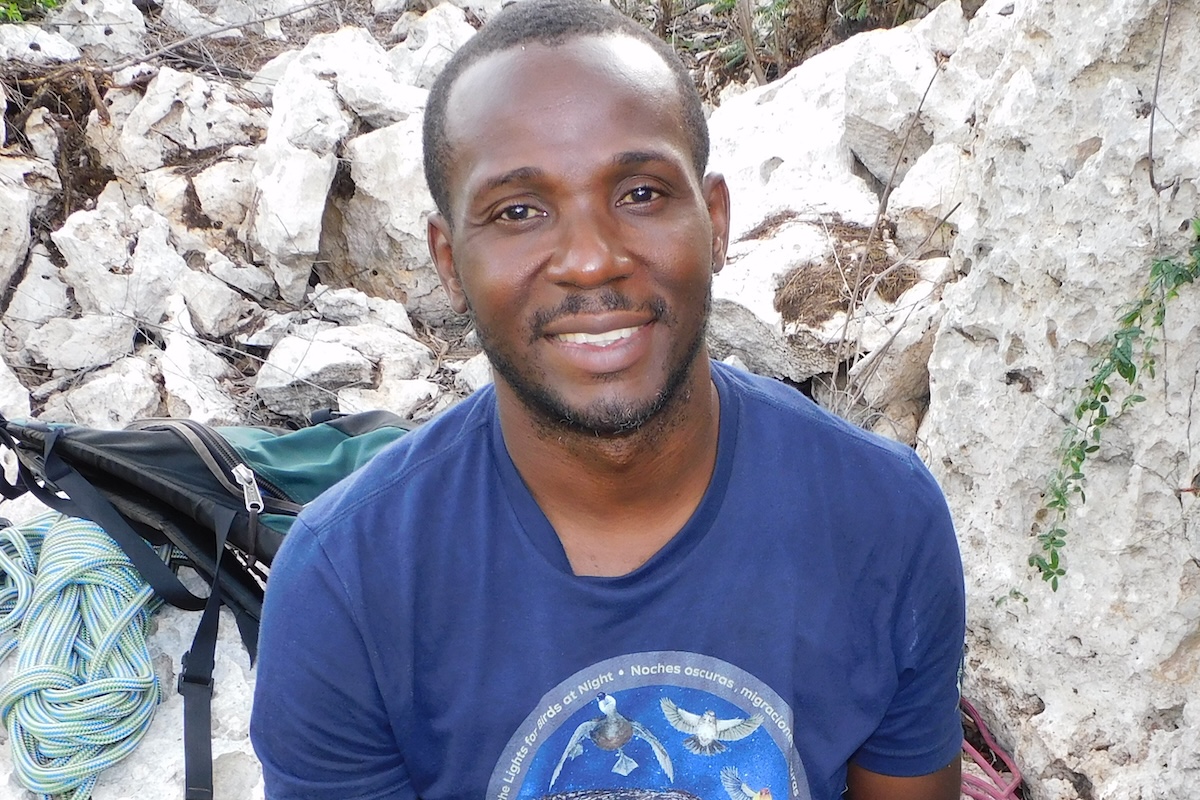
From February through July 2026, the air across the Caribbean was alive with the sound of music — our community was listening and recording! Launched in partnership with the Grabando Aves initiative, the Sound Recording Challenge invited birders and nature lovers, in the Caribbean, of all experience levels, to hit “record” in their favorite birding spots (backyards and cities included!).
Why record bird sounds?
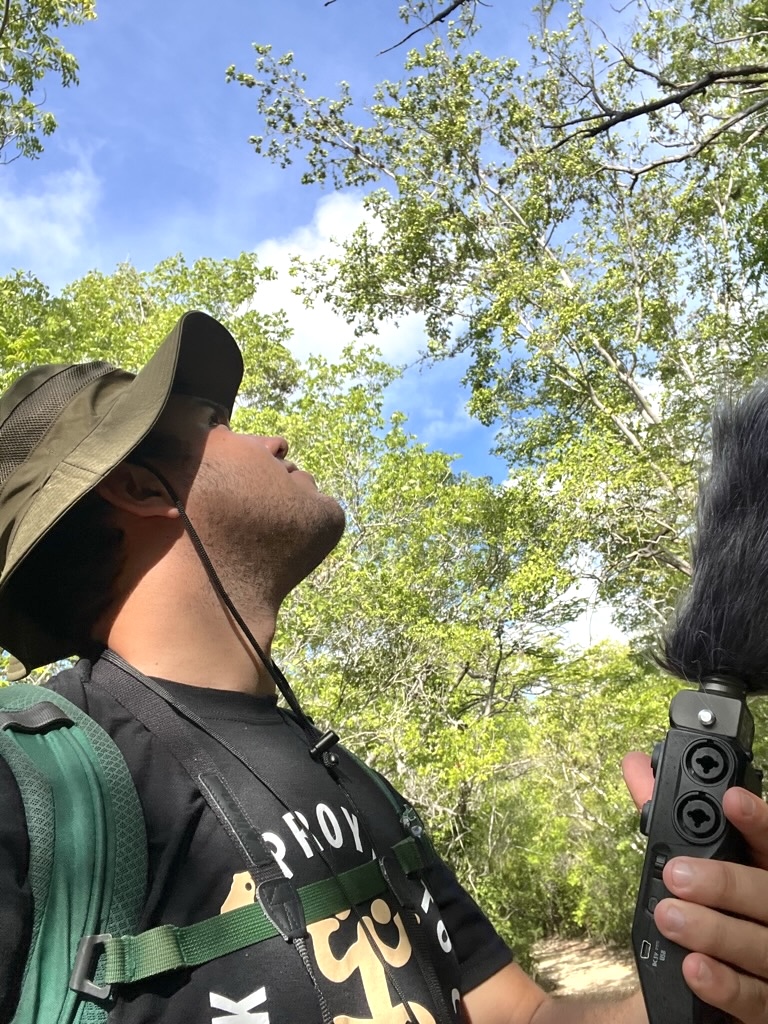
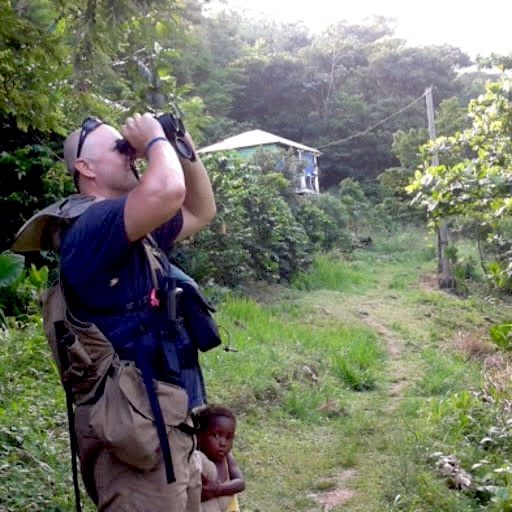
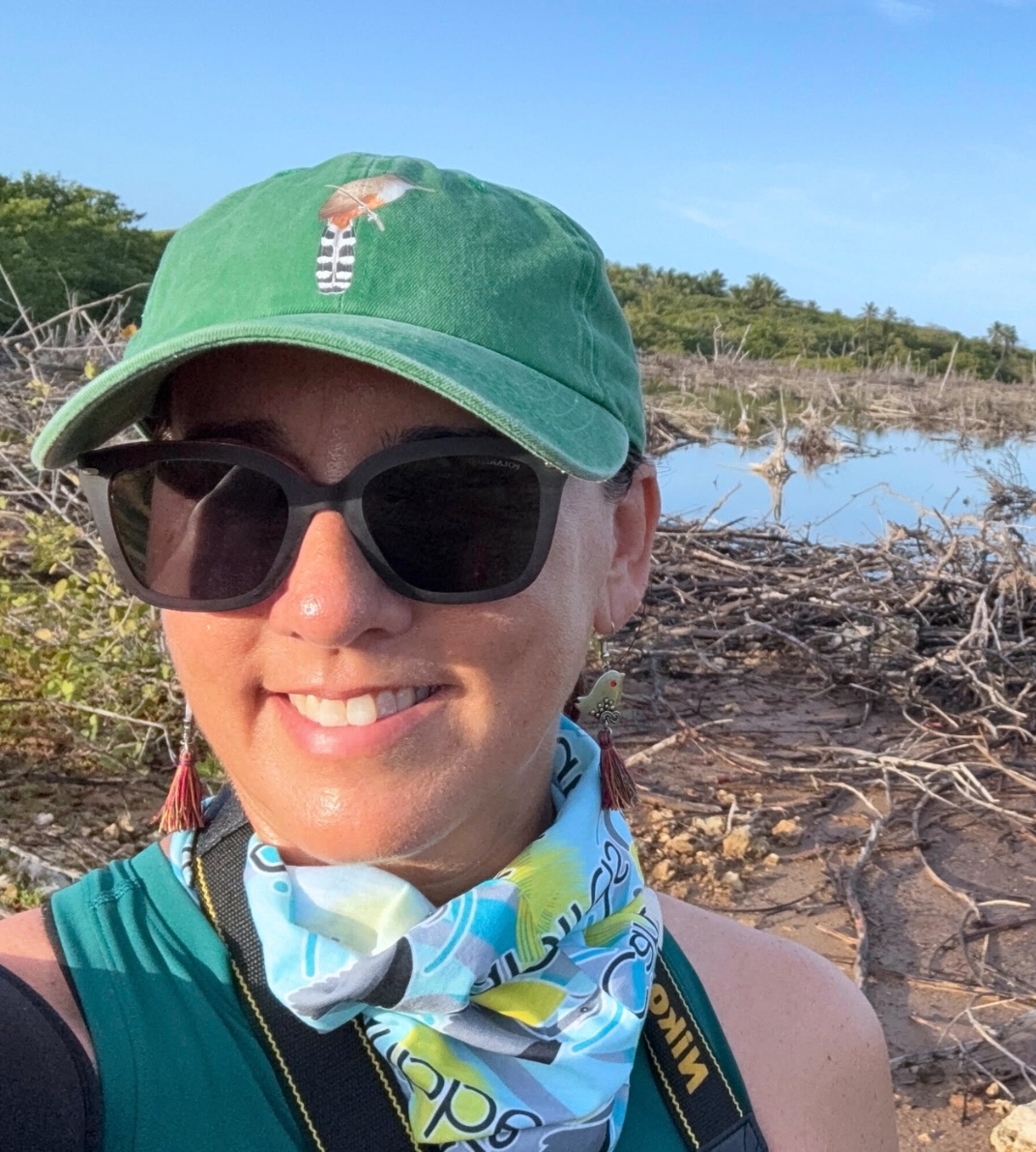
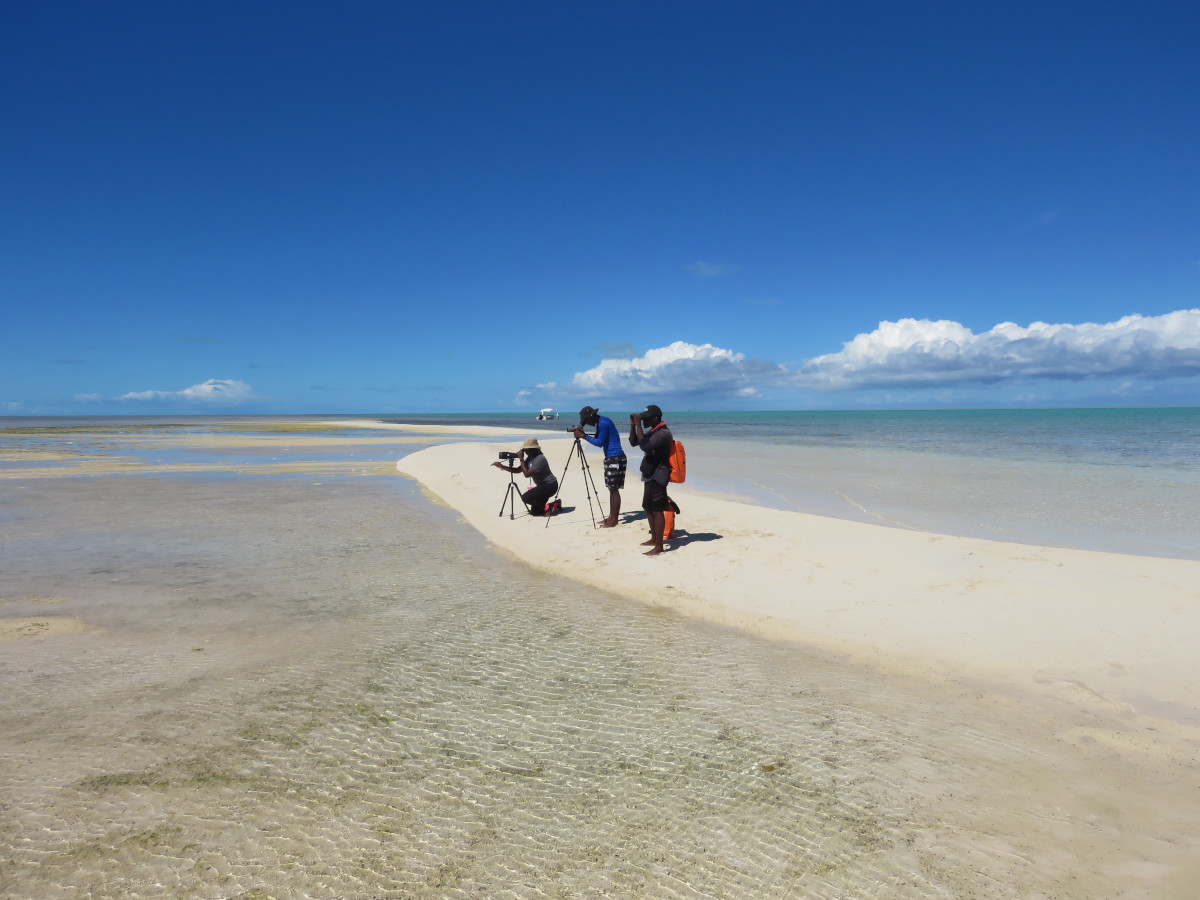
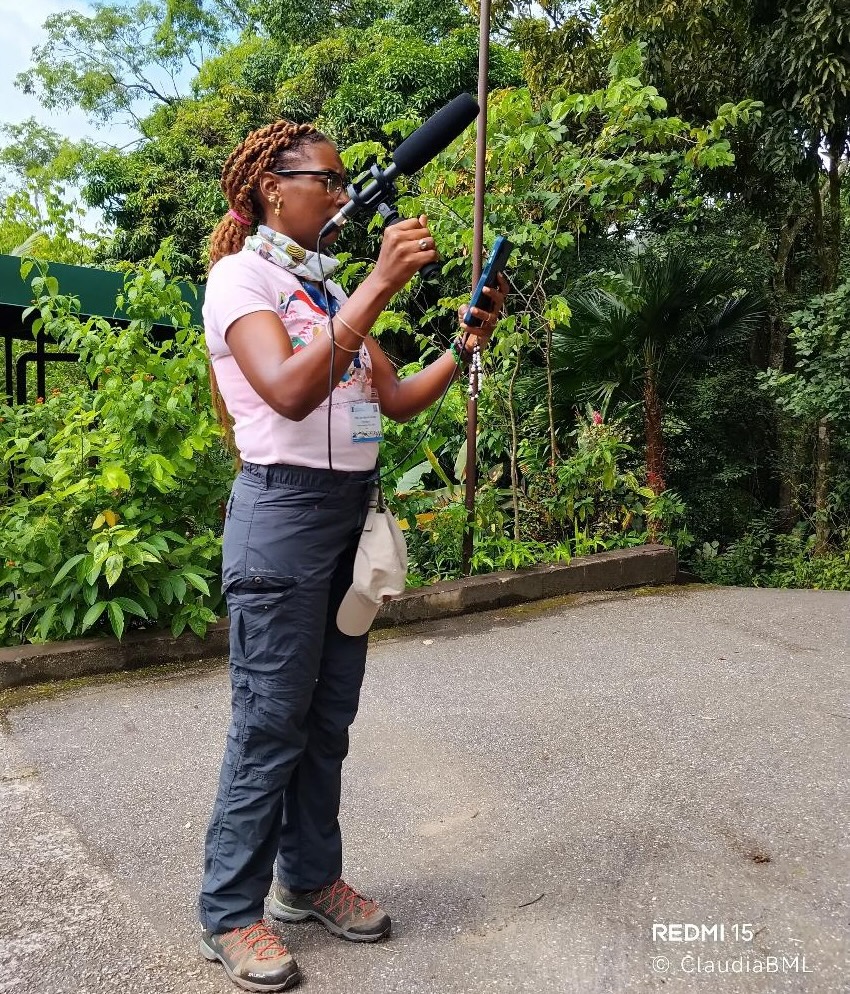
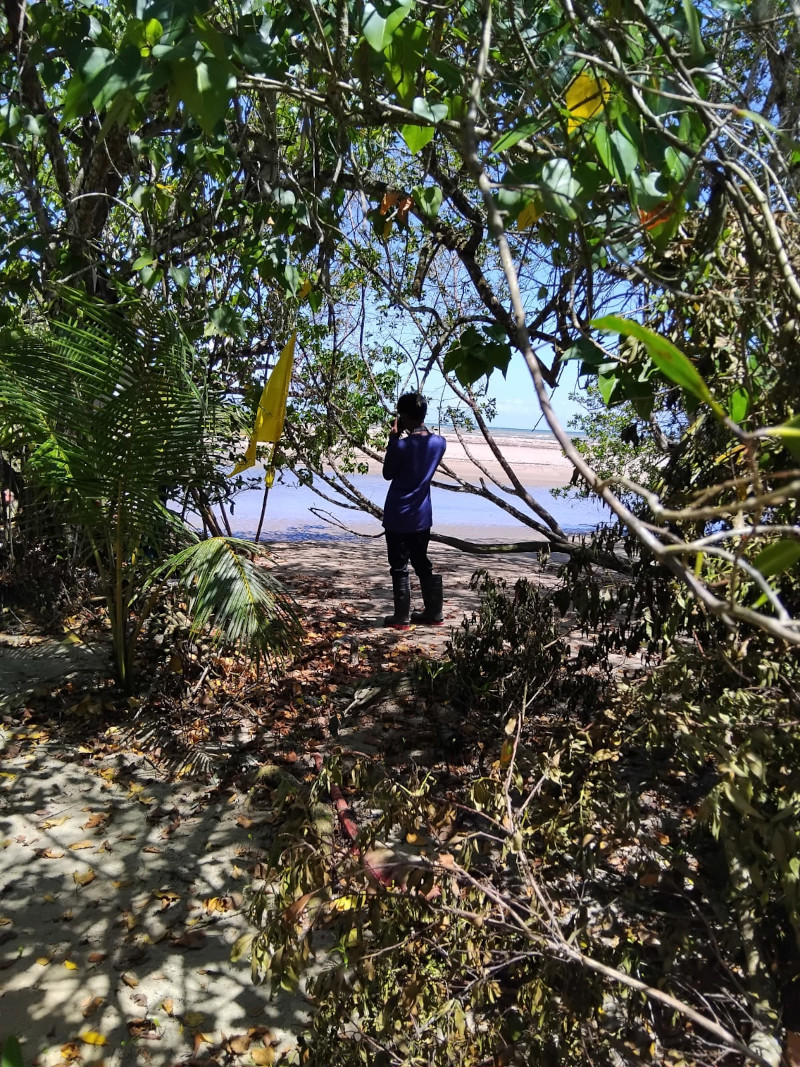
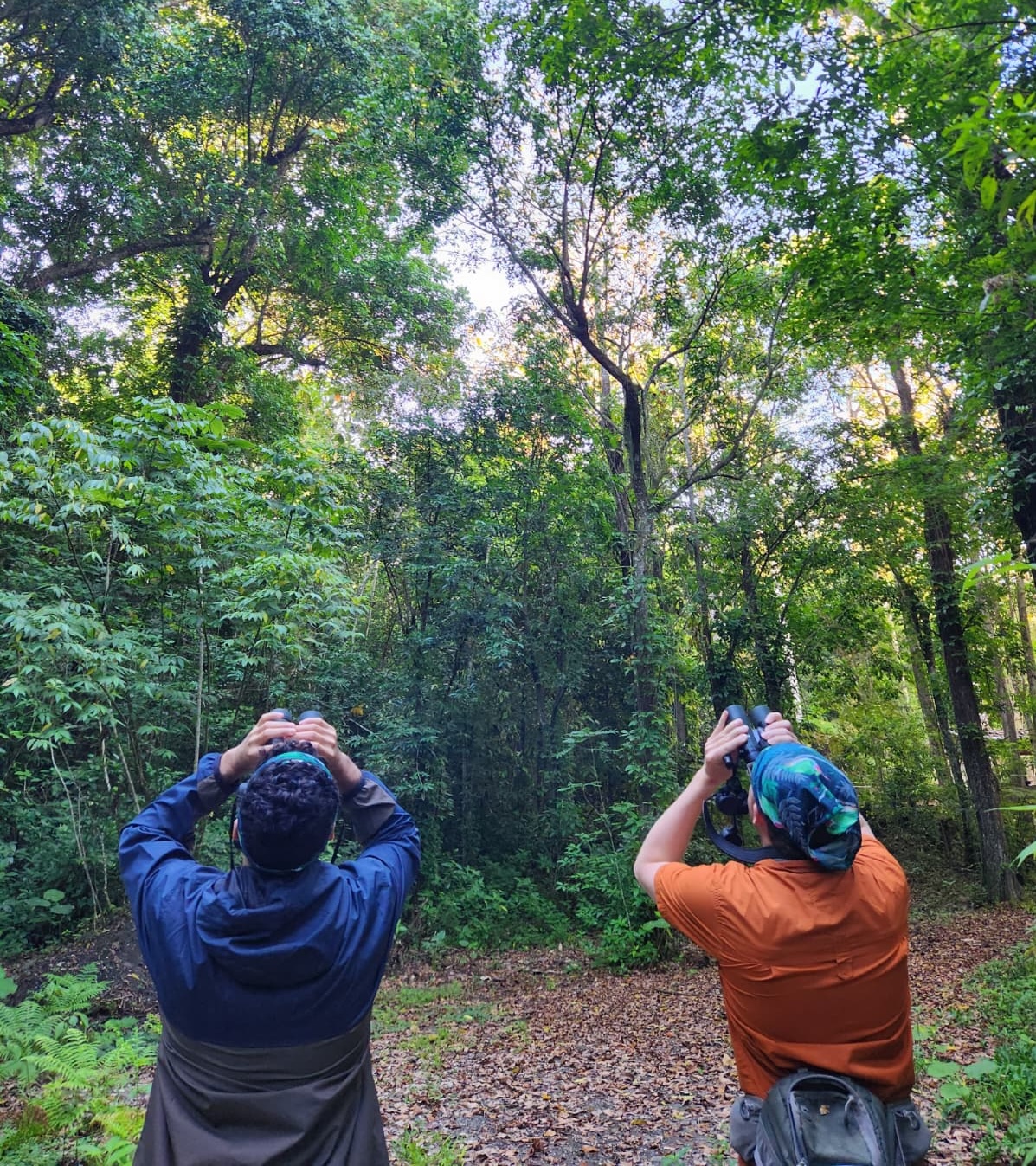
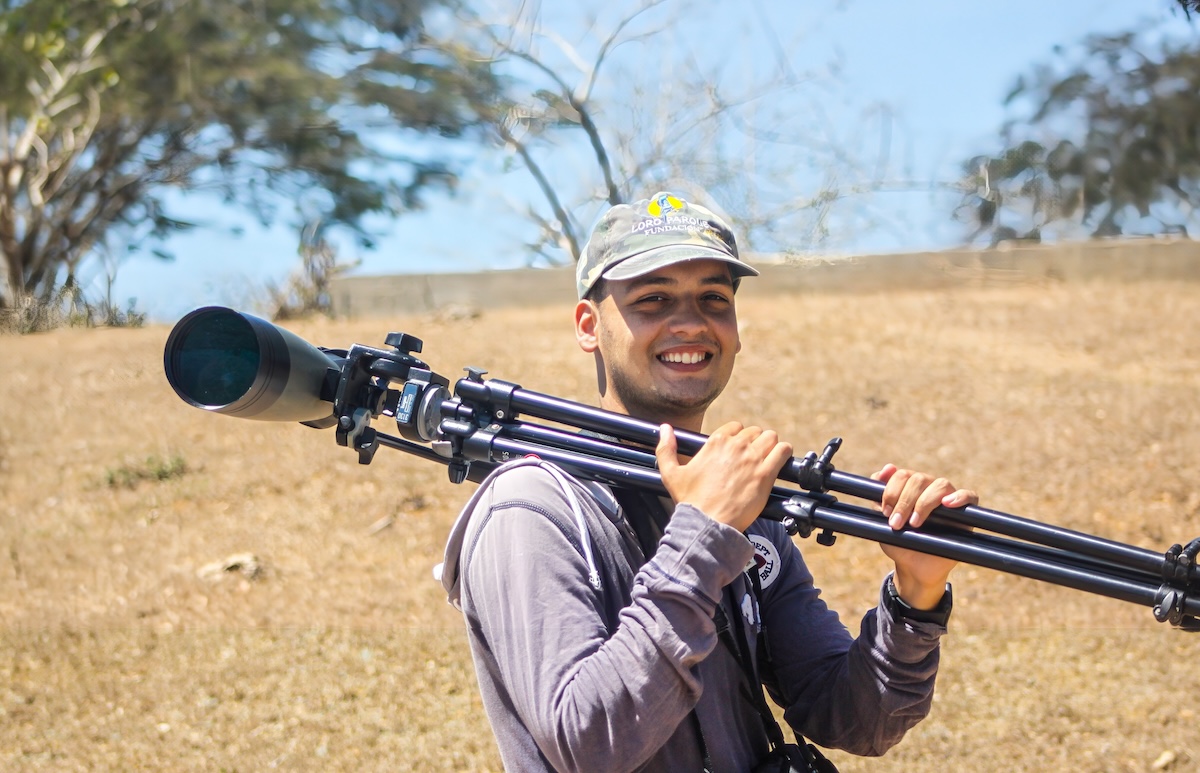
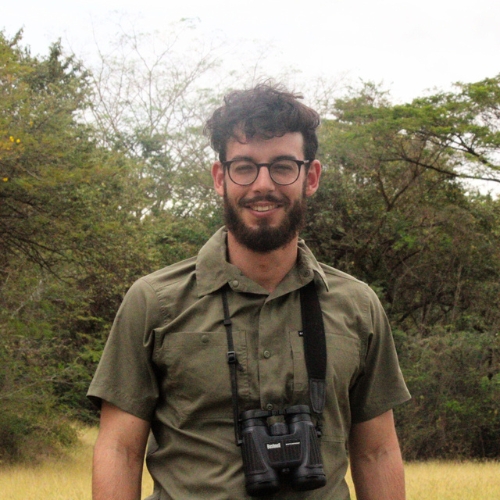
Miguel l Costas Sabatier recording Puerto Rican Euphonia calls and songs in Guánica State Forest.
Beyond filling our hearts with joy, bird sound recordings are critical tools for science and conservation. They help researchers track species distributions, understand bird ecology, and train automated audio identification systems like Merlin Sound ID. Every high-quality file uploaded helps bridge the data gap for the Caribbean, ensuring regional bird sounds are accurately recognized by modern tools.
To qualify for the grand prize which was a state-of-the-art field recording kit featuring a RØDE NTG2 shotgun microphone, a Zoom H1 XLR recorder, an XLR cable and headphones, participants had to submit 50 or more bird sound recordings, including at least three Caribbean priority species, and upload them via eBird.
Caribbean birders answered (and recorded) the call!
The response was staggering. Across the region, 310 passionate birders contributed a phenomenal 3,578 recordings spanning 376 species, including 161 priority species! Two grand prize winners were selected through a random draw.
Drumroll, please… we are thrilled to share the incredible winners who received their prizes at the 2026 BirdsCaribbean Conference:
*Click on the individual names to see their eBird profiles
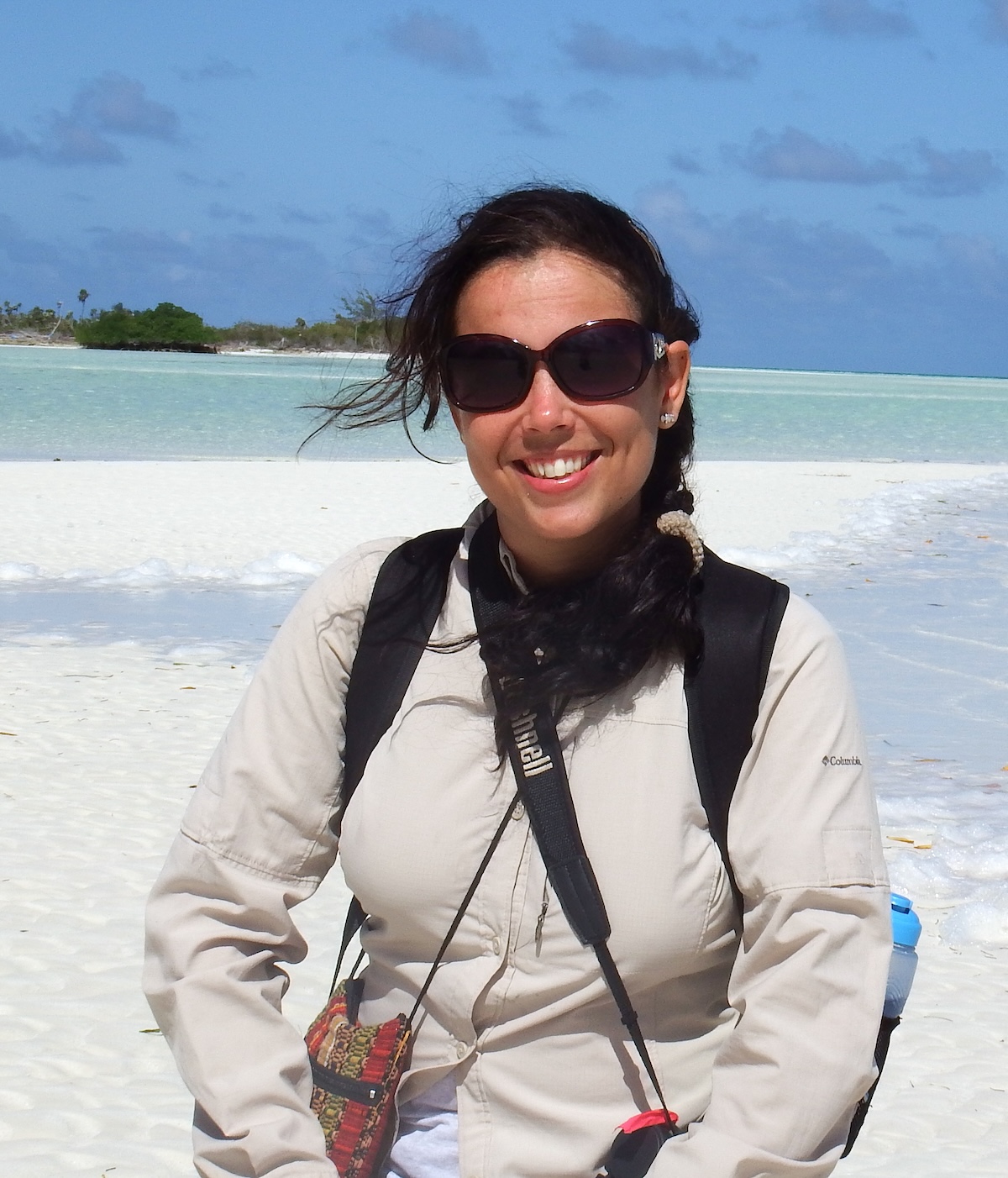
Grand prize: Mirielle Villanueva(Puerto Rico) – 191 recordings, 47 species, and 7 priority species.
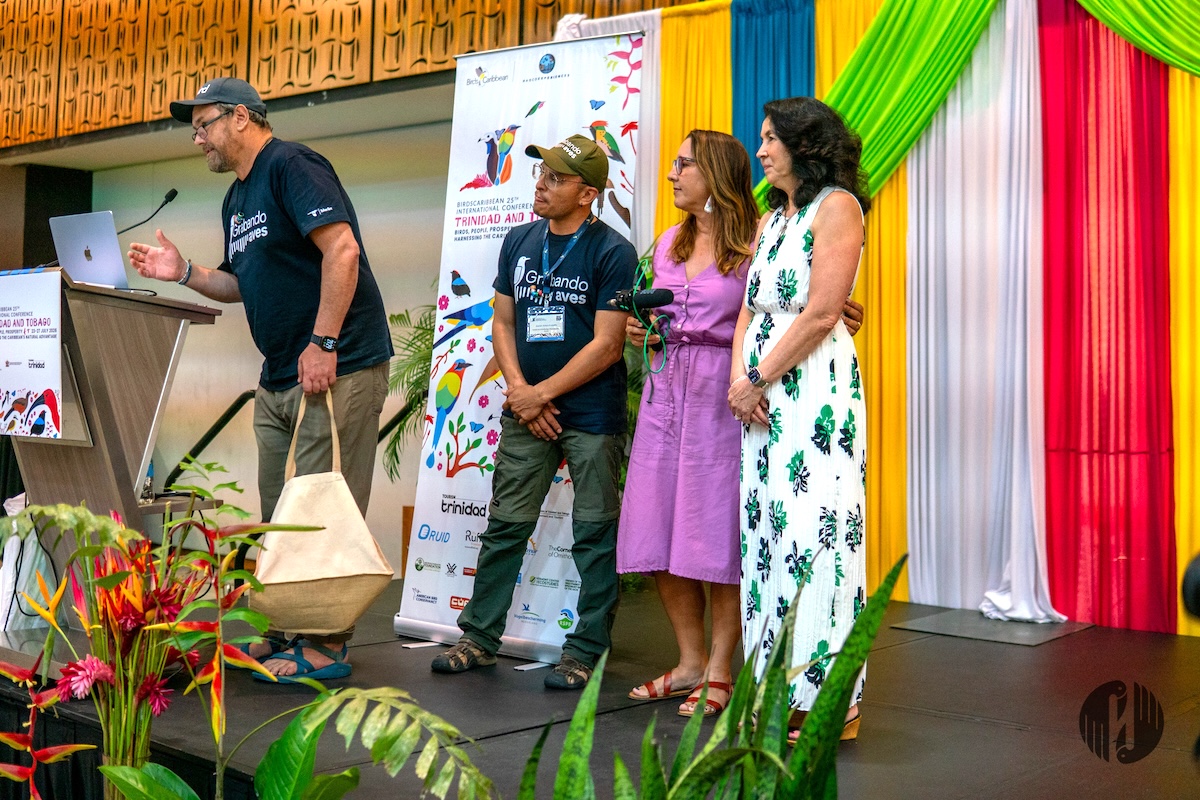
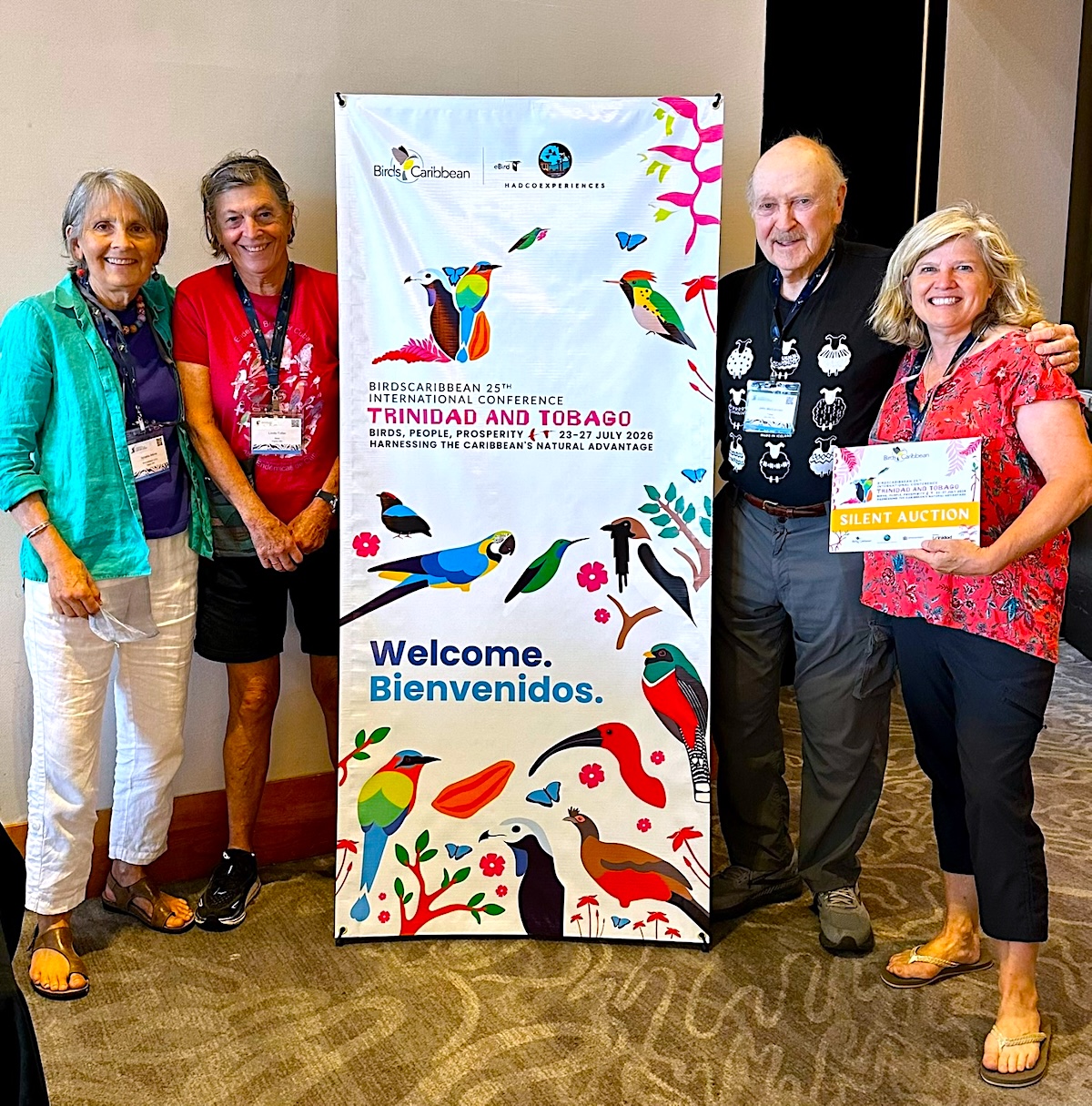
Mirielle Villanueva recieves her prize from Cullen Hanks (Cornell Lab of Ornithology) and Daniel Arias-Cruzatty (Cornell Lab of Ornithology / Grabando Aves). (Photo by Holly Garrod)
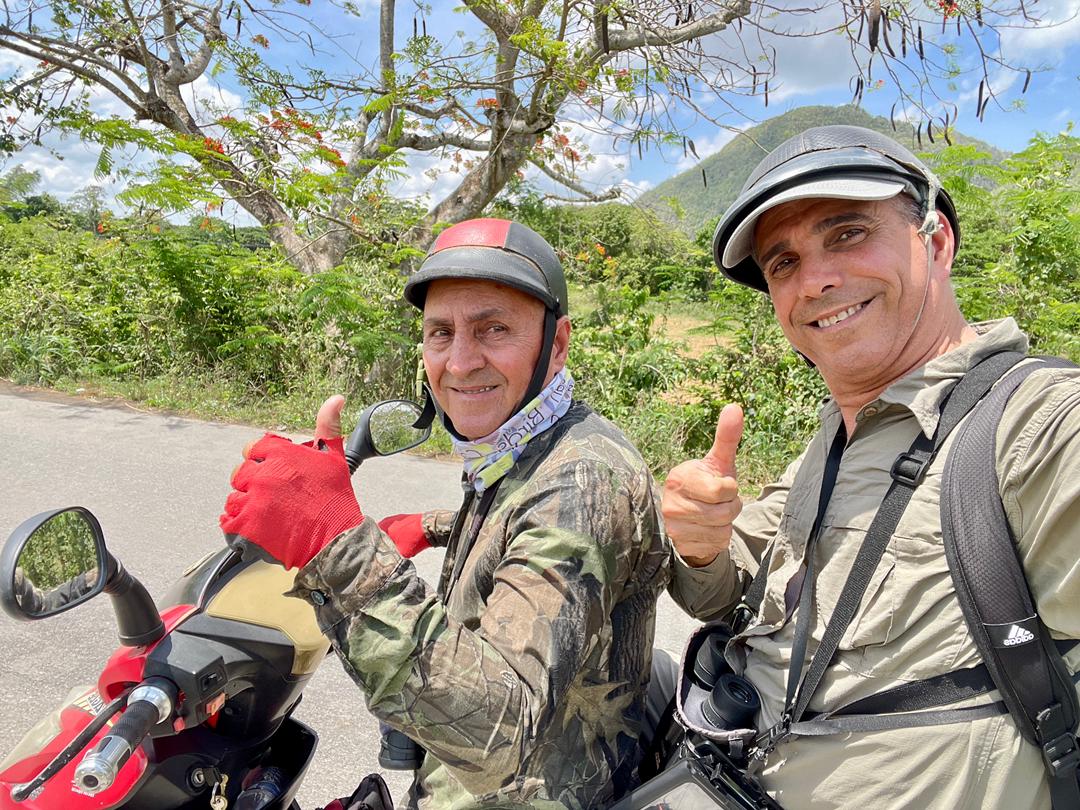
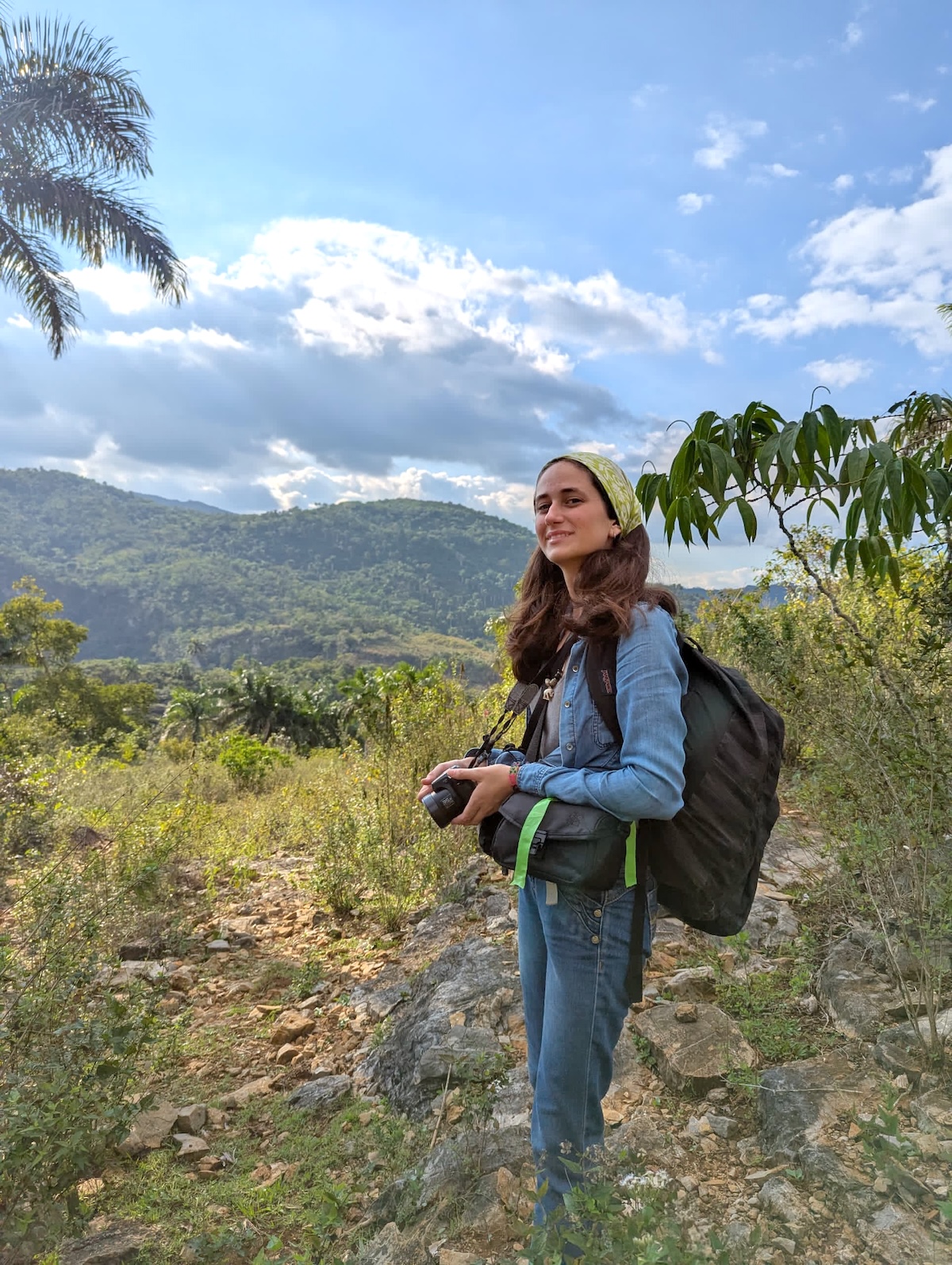
Grand prize: Serguei Alexander López Perez(Cuba) – 89 recordings, 37 species, and 13 priority species. Serguei was not present at the conference to receive his prize.
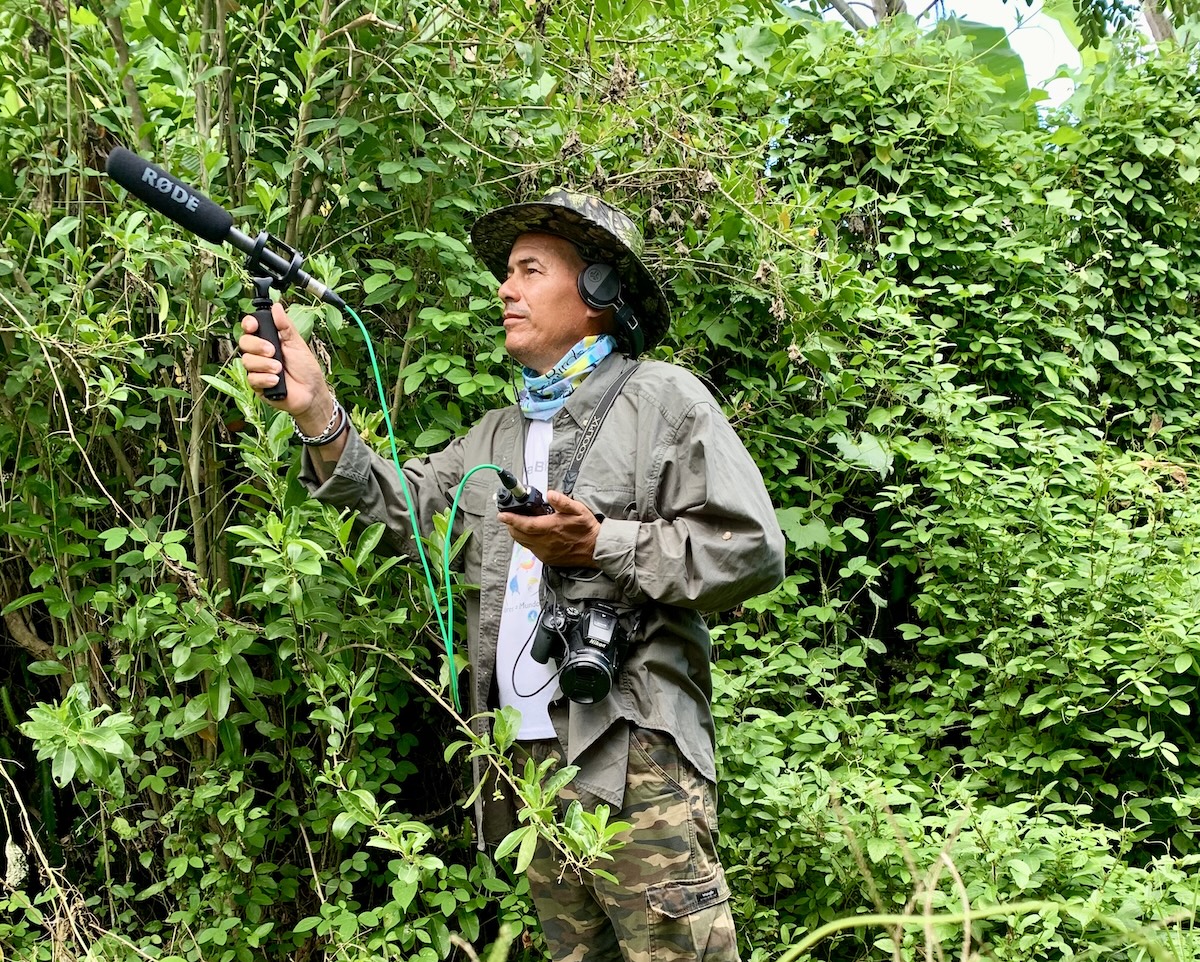
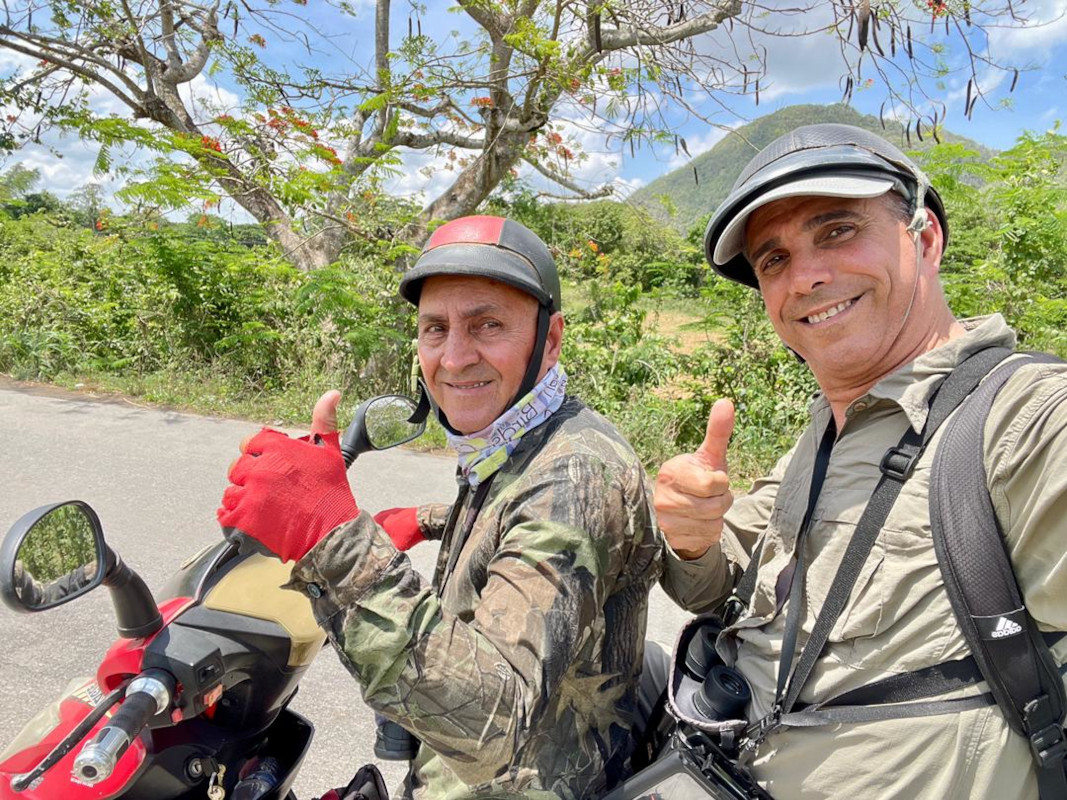
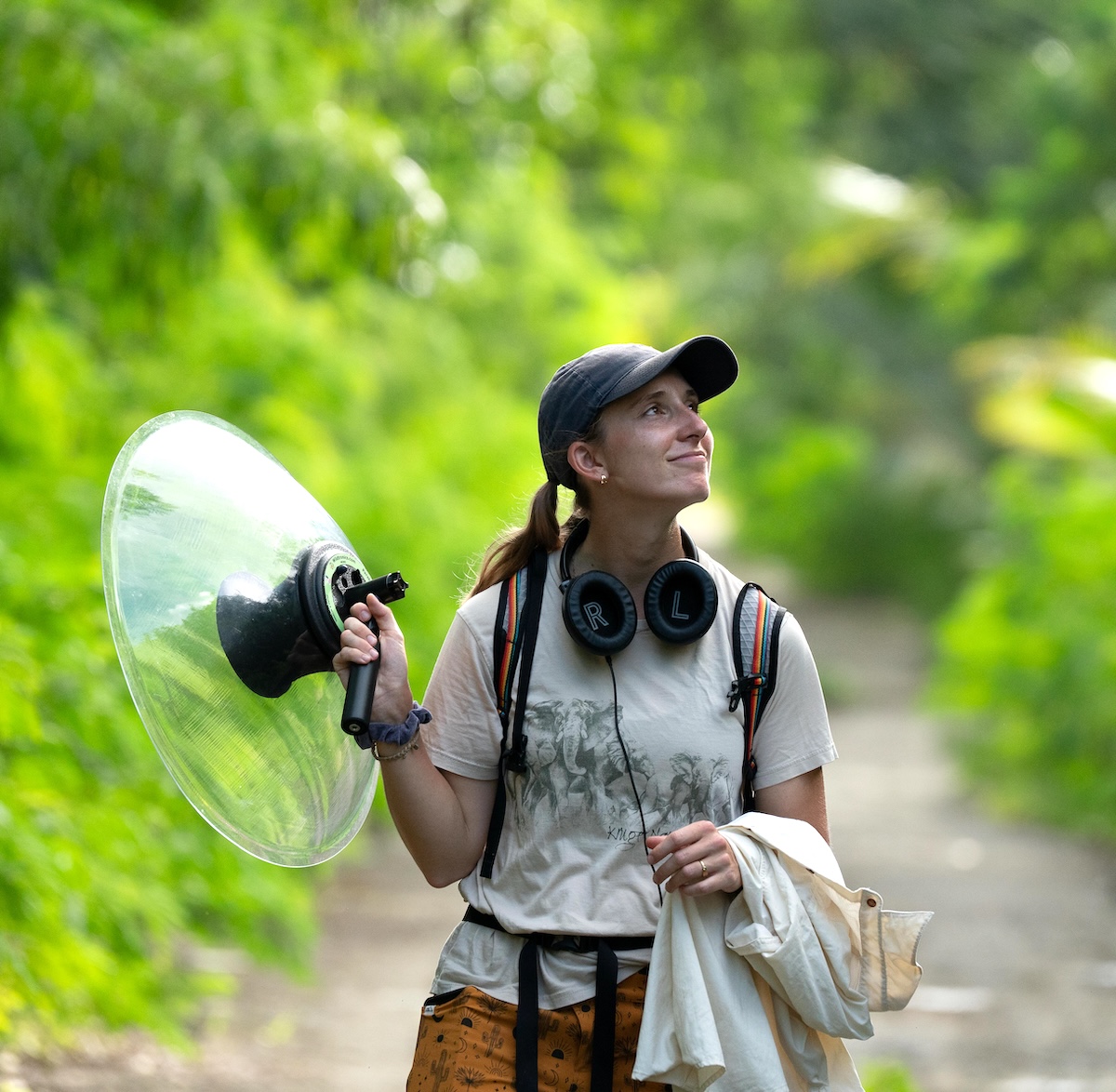
Sergei in the field recording bird calls in Cuba.
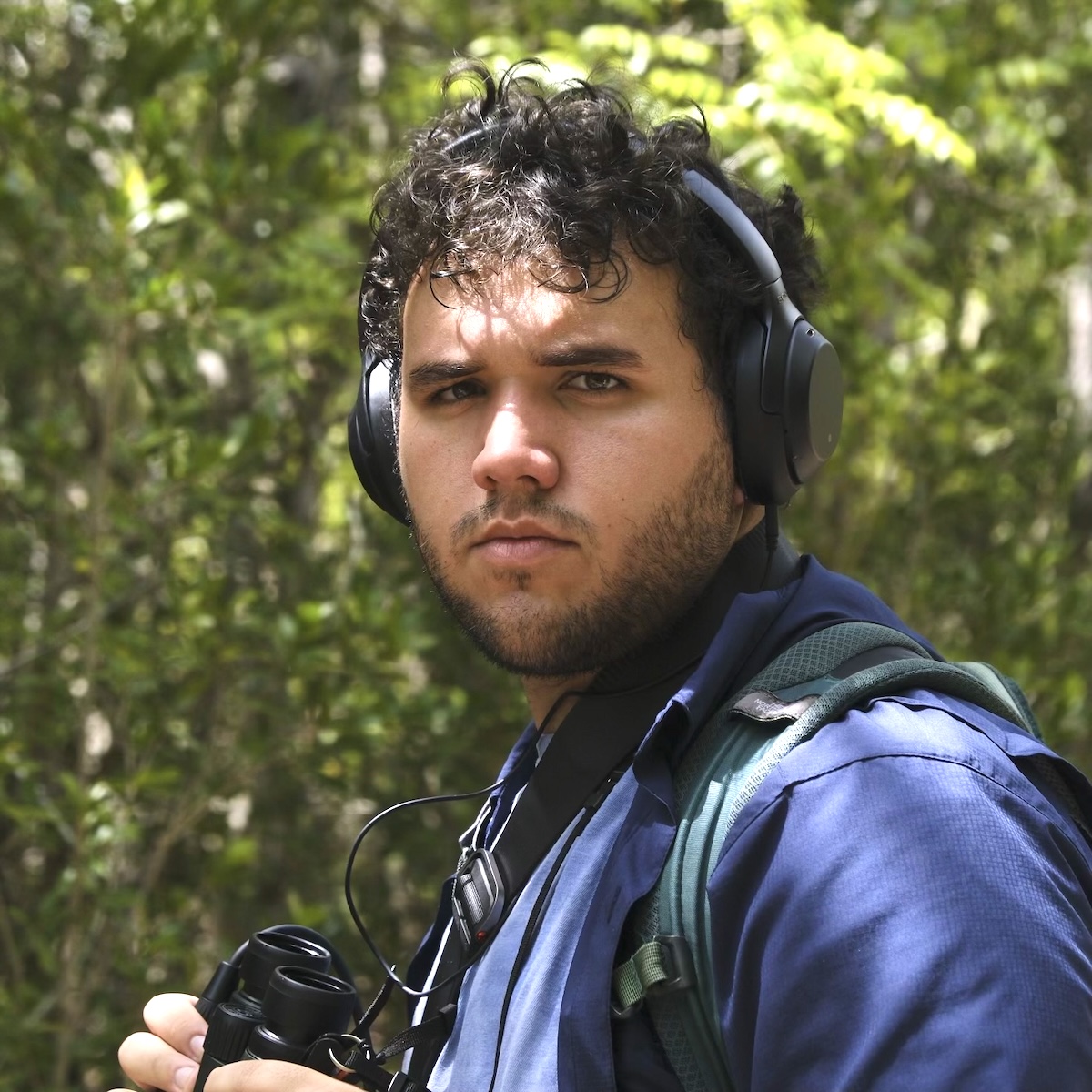
Honorable Mention goes toAdrián Domínguez(Cuba) – An astounding 333 recordings, 60 species, and 22 priority species.
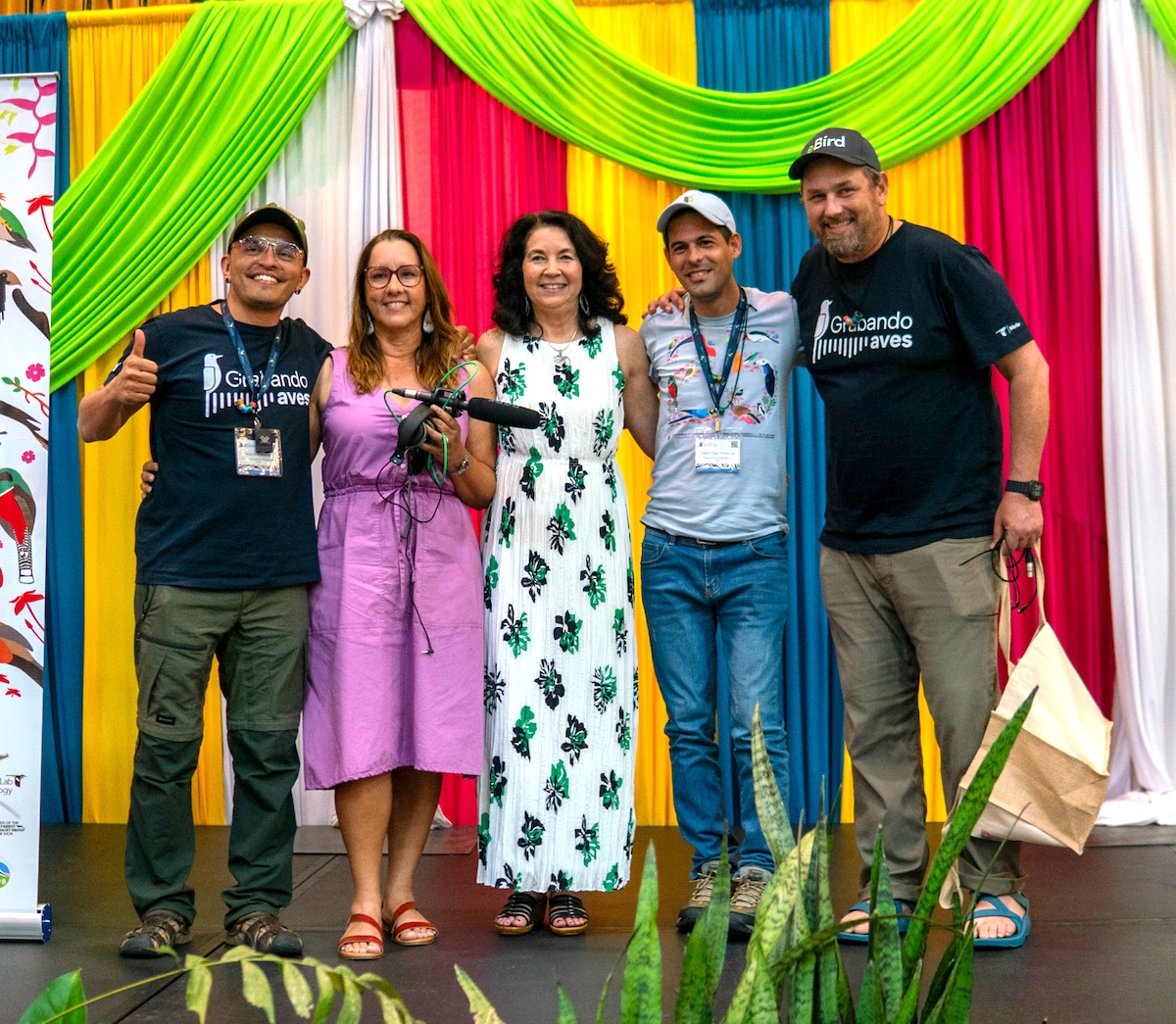
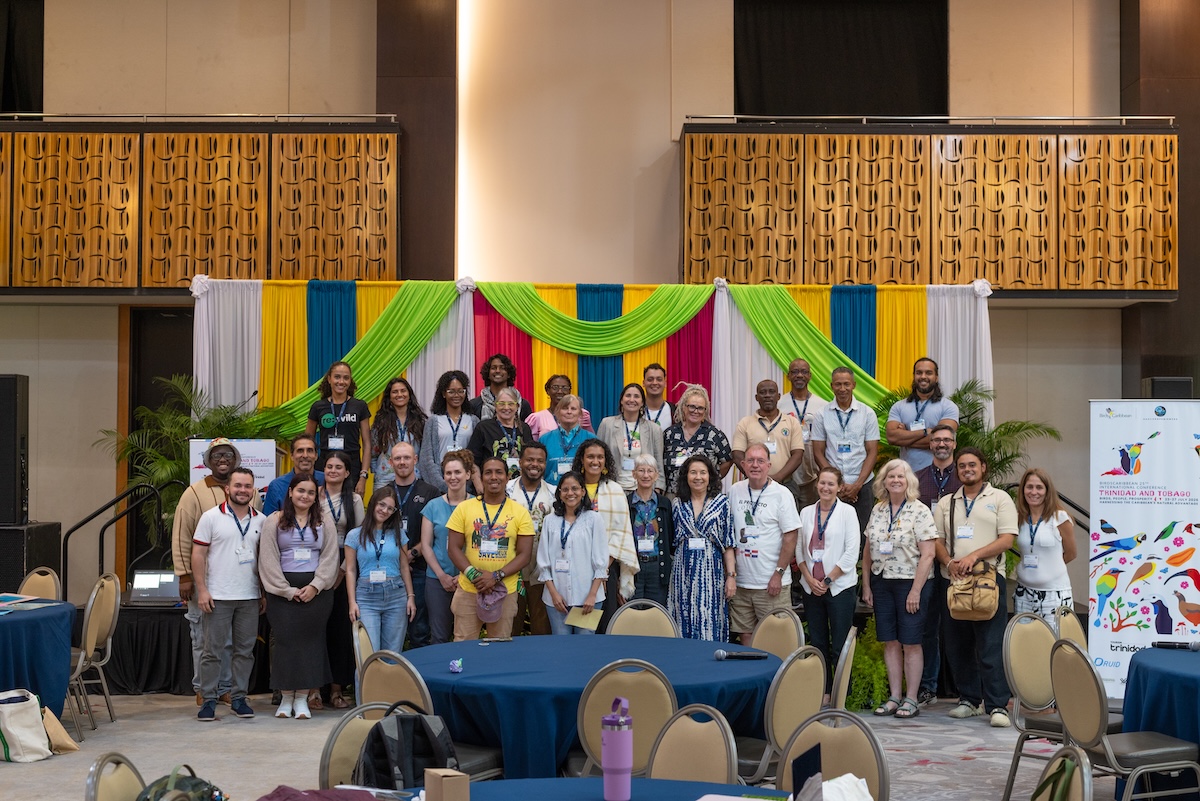
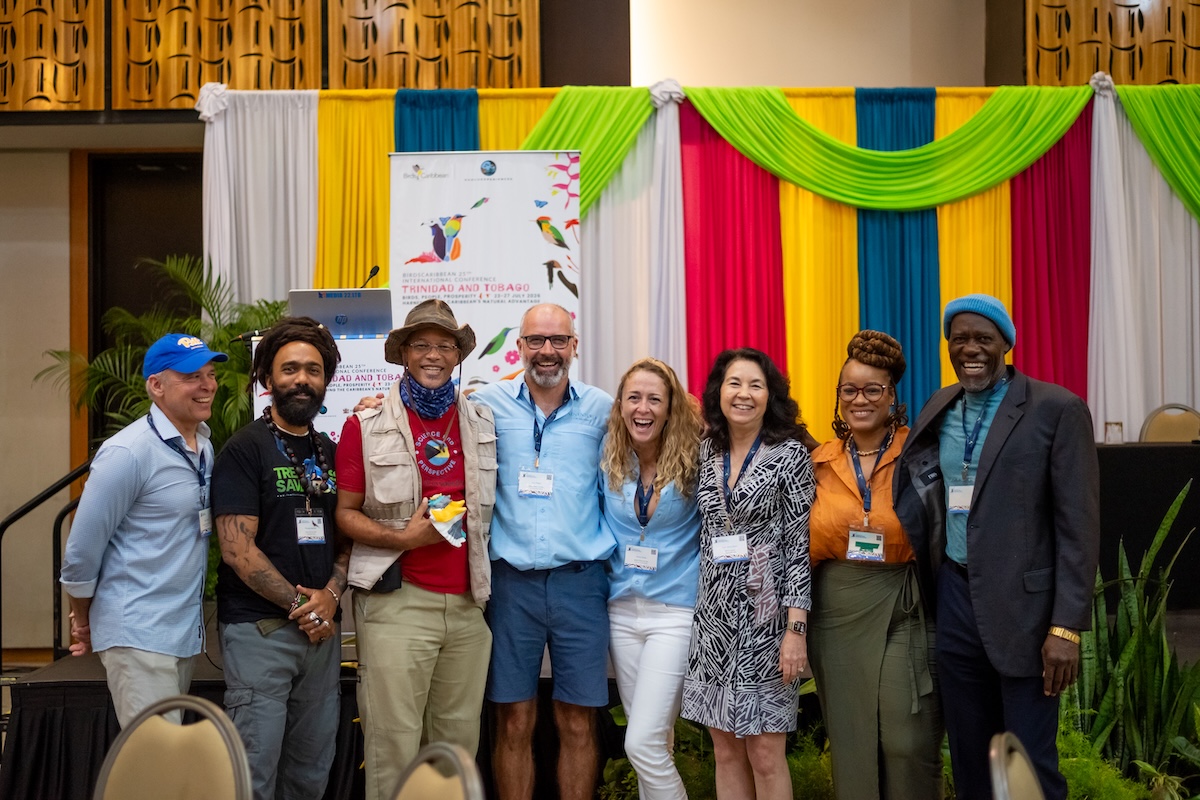
Winners of the Sound Recording Challenge 2026. L to R: Daniel Arias-Cruzatty, Mirielle Villanueva, Lisa Sorenson, Adrián Domínguez and Cullen Hanks. (Photo by Holly Garrod)
A huge congratulations to our winners and every single participant who held up their phone or recorder and added their local soundscapes to the global archive.
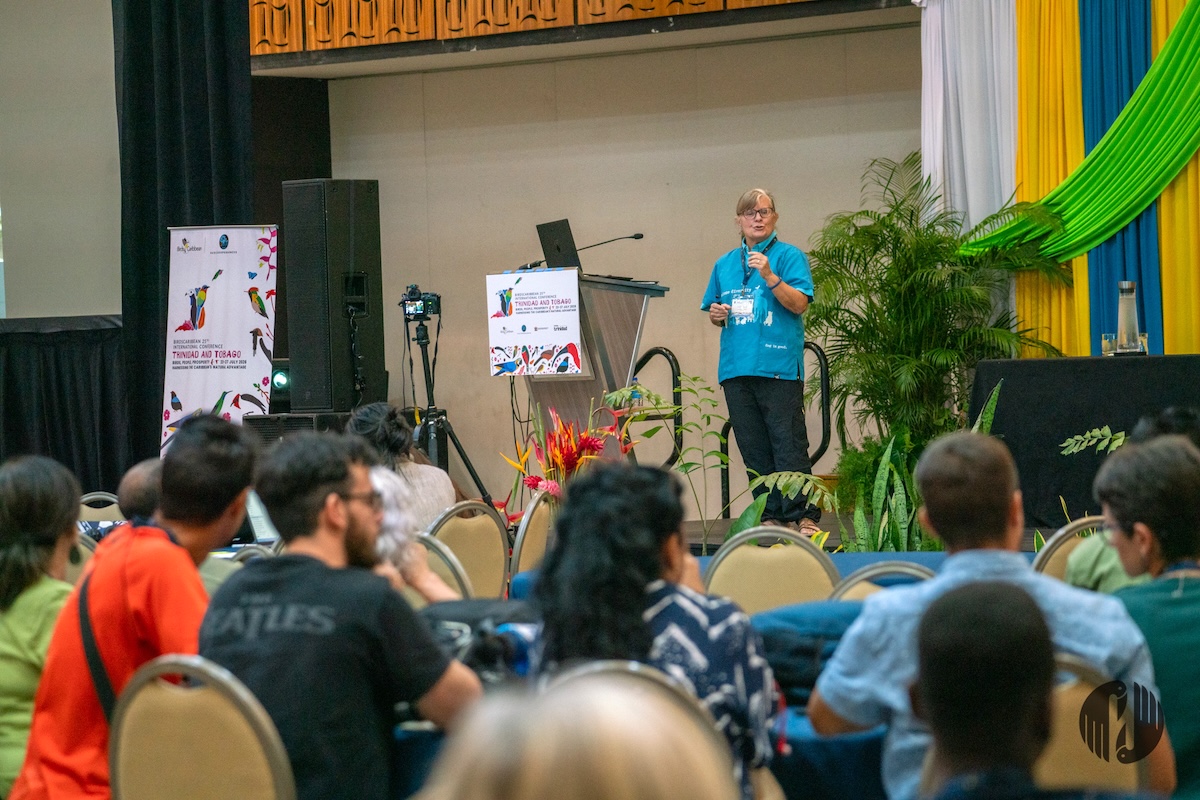
“I was genuinely surprised by how many people across the Caribbean wanted to record bird sounds and contribute them to the Macaulay Library, both to help improve Merlin Sound ID and to support community science. During the conference events, that interest was everywhere. What excites me most is what comes next: a community that wants to keep contributing, learning, and sharing what it knows.”— Daniel Arias-Cruzatty, Cornell Lab of Ornithology / Grabando Aves
To date, Caribbean birders have uploaded 4,727 recordings of 395 species to the Macaulay Library (click here to explore the library!).
Upload your sound recordings directly in eBird mobile
You can now upload sound recordings directly to your checklists in eBird Mobile. No computer necessary: just your phone, your checklist, and the birds you’re already listening to.
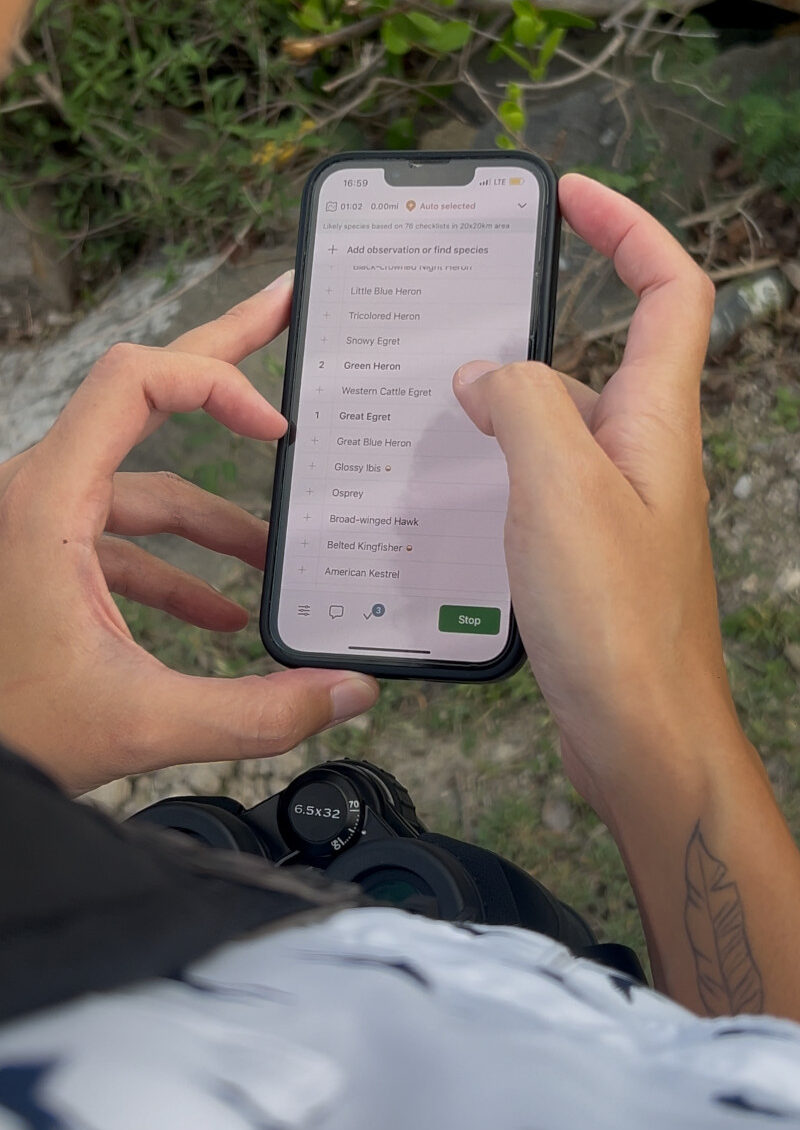
To start, you’ll need a sound recording app (the actual recording doesn’t happen in the eBird Mobile app). We recommend Merlin Bird ID as a sound recording tool: use the Sound ID feature on the main page of Merlin, and then Save your recording in the upper right corner of the screen. Other sound recording apps work, too—we recommend Merlin because it collects high-quality files in .WAV format and also provides Sound ID results while you’re recording.
In the video below, Jay McGowan from the Cornell Lab of Ornithology demonstrates how you can upload your recordings to directly in eBird.
Want to keep the mic hot?
Even though the challenge has wrapped up, your acoustic adventures don’t have to end! The acoustic challenges continue over at Grabando Aves! Check out their ongoing challenges for 2026. These challenges are open to anyone in Latin America and the Caribbean.No sign-up needed: recordings uploaded to eBird count automatically!
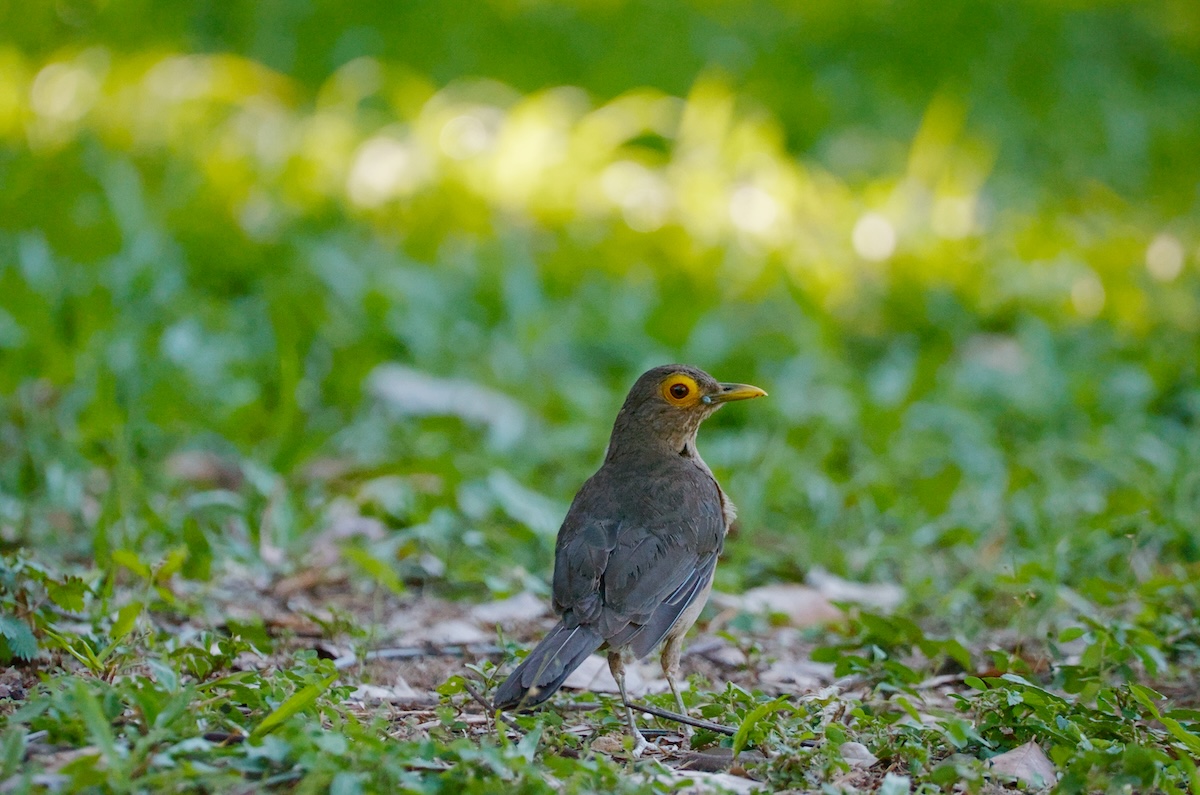
Gray Trembler calling. (Photo by Michael Stubblefield, Macaulay Library-ML604068631)
Keep your ears open, your recorders ready, and let’s keep the Caribbean sounding loud and proud!
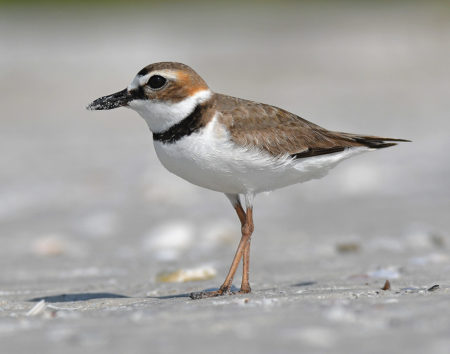
Wilson’s Plovers are one of the many shorebird species found in the Caribbean. (Photo by Hemant Keshan)
The English names we use for shorebirds that describe them by their color, physical characteristics or behavior can totally make sense, and even help with ID… until they totally don’t! Here is a Caribbean perspective of when shorebird names hit the mark and when they fall-flat.
Bird names come in all sorts of forms. Sometimes it’s easy to understand why a bird was given its name, or at least to trace the history behind it. Other times, things are not as clear! Shorebirds are no exception.
Some shorebirds are named after people, especially naturalists. For example theWilson’s Plover is named in honor of Alexander Wilson, often called the “father of American ornithology.” But honorifics don’t tell us what the birds actually look like. The name Wilson’s Plover certainly doesn’t tell you that this shorebird has a huge, heavy bill that helps you pick it out from other brown-and-white plovers!
Fortunately, descriptive names are extremely common amongst birds. Researchers who developed the AvianLexiconAtlas found that almost 90 percent of the 11,000 bird names they examined reflect appearance, habitat, or other characteristics, while only 11 percent are named after people. (You can explore the AvianLexiconAtlas and access their research publication here).
Descriptive names can tell us about a species’ appearance, where it lives, its favourite foods, or even its behavior. These clues can be remarkably helpful, especially for new birders. Shorebirds are notoriously tricky to identify, so any clues in their names that help with ID are VERY welcome!
But sometimes those supposedly ‘helpful’ descriptive names can be confusing—or downright misleading! That’s because the appearance, and even behavior, of shorebirds (and other birds) can change drastically across seasons and life stages. For instance, a name describing a bird’s plumage might only make sense during the breeding season, or apply to just one sex. Similarly, names referencing a particular location can be misleading when the bird migrates and spends much of the year elsewhere.
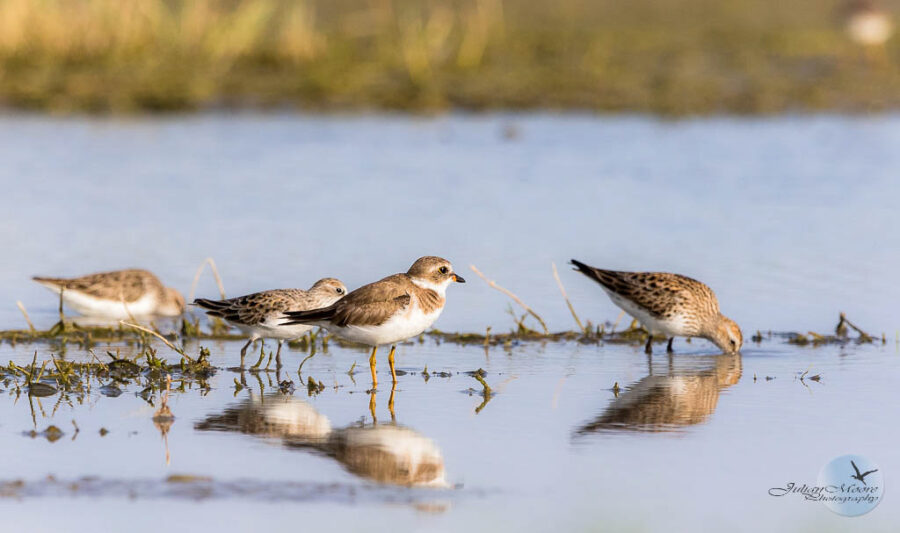
Semipalmated Plover feeding with peeps, Fosters, St. Lucy, Barbados. (Photo by Julian Moore)
Depending on the species, a descriptive moniker might hit the nail on the head, miss the mark entirely, or only ring true at certain times and in certain places. And of course, there are also bird names that sound descriptive but don’t tell us anything helpful at all!
Let’s take a look at some shorebird names and find out just how helpful they really are.
Rock flipping at its finest! Yes! Turnstones really do use their bills to flip rocks, pebbles, seaweed, and pieces of drift wood in search of small crustaceans and insects.
It’s the only oystercatcher native to the coastal regions of the Americas. Do they really catch oysters? You bet! They feed on oysters, clams, and other saltwater molluscs.
Note: Oystercatcher species found in the UK and Europe, Australia, New Zealand and the Pacific Northwest rarely, if ever, feed on oysters.
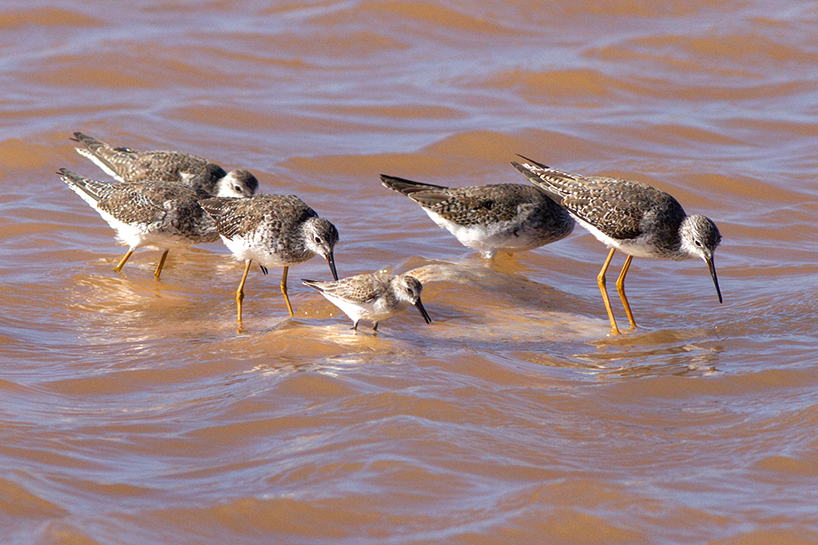
Greater & Lesser Yellowlegs
These nearly identical shorebirds mainly differ in their size and proportion. The Greater Yellowlegs is larger and has a longer bill than the Lesser Yellowlegs. One is bigger, one is smaller, both species maintain their bright yellow legs year-round, so a great name for both these birds! The main challenge here is not understanding their name, but telling one from the other.
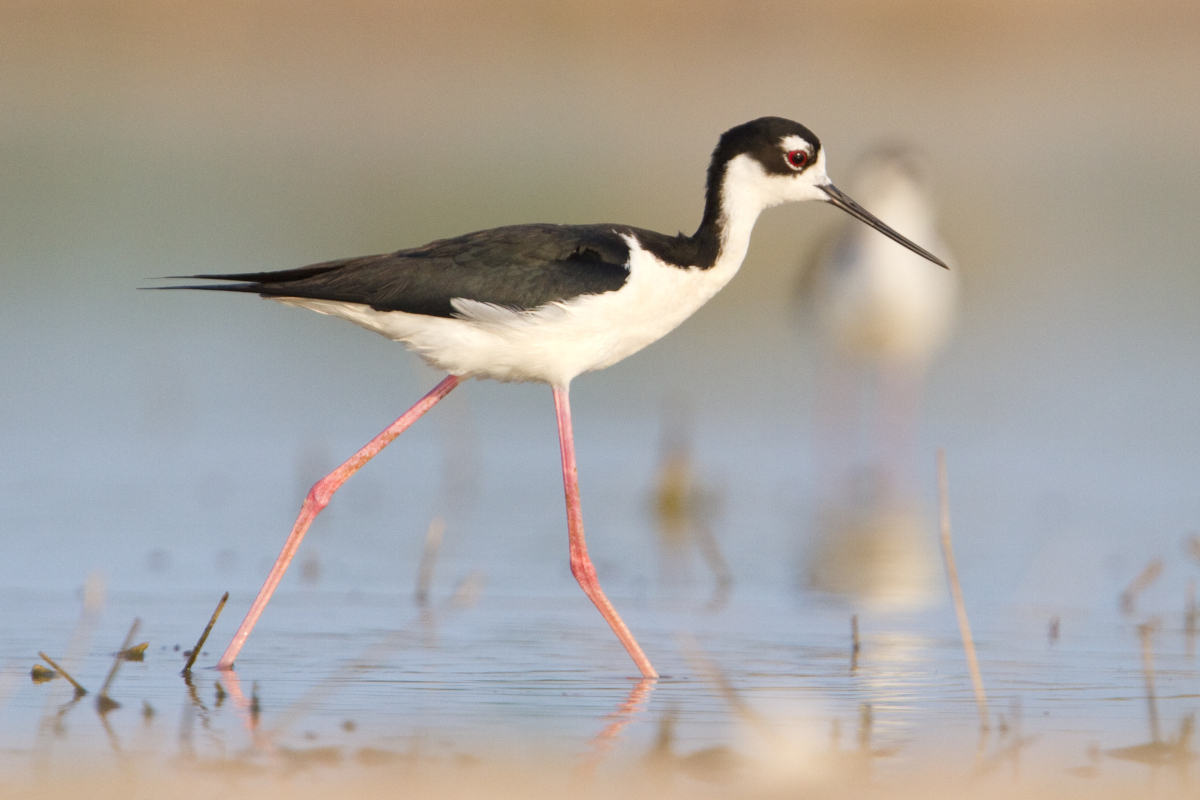
This shorebird lives up to its name in the most stylish way possible, with long bubblegum-pink legs and elegant black-and-white plumage. Only flamingos beat stilts when it comes to having the longest legs relative to body size among all birds.
The striking Black-necked Stilt has long legs for wading into deep water to find food. (Photo by Dan Pancamo)
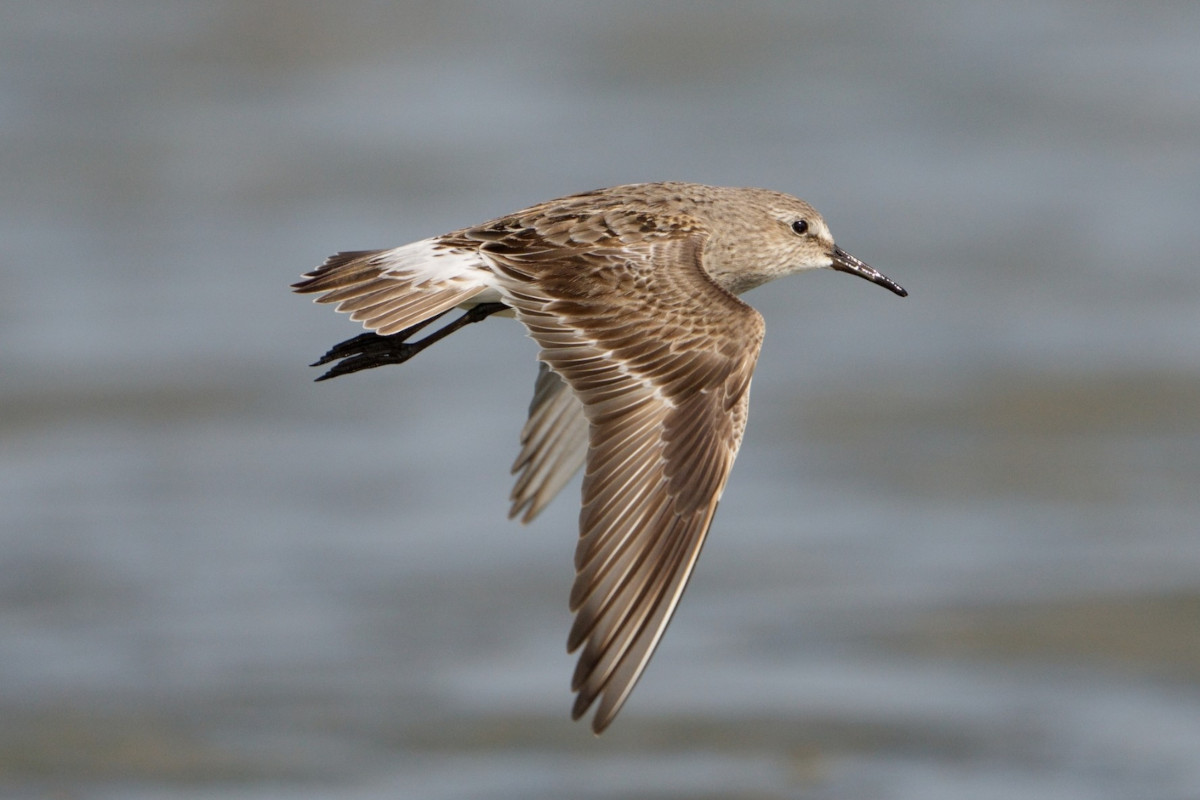
White-rumped Sandpiper
In flight, that giveaway white “rump” is all it takes to help distinguish this bird from its lookalike shorebirds. Despite its name, its actual rump is dark! That famous white patch is formed by its uppertail coverts, the feathers covering the base of the tail. And because this doesn’t change through the year, whether in breeding or non-breeding plumage, the white “rump” is always there to help you ID this bird!
White-rumped Sandpiper in flight. (Photo by Bill Thompson, Macaulay Library-ML608554779)
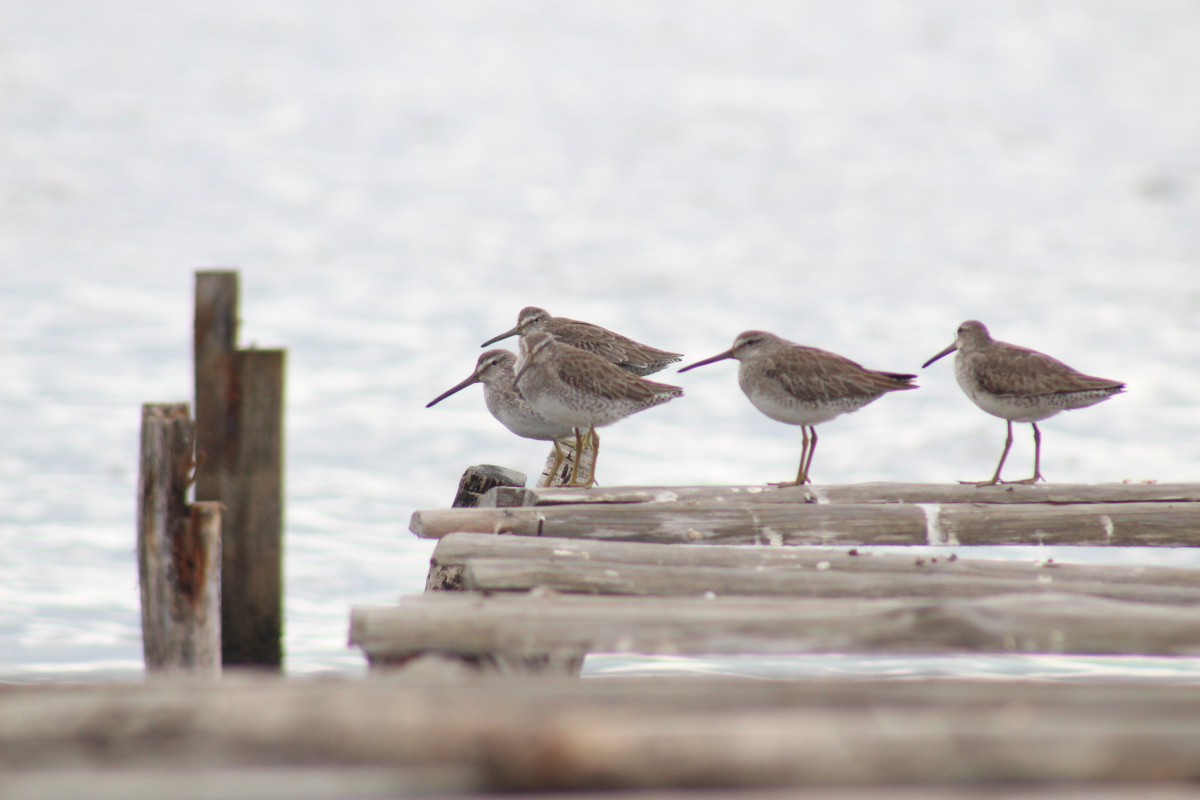
The Short-billed Dowitcher wins the award for misleading naming. It definitely has a long bill—the “short” is just a comparative nod to its lookalike, the Long-billed Dowitcher, whose bill is microscopically longer.
And what on earth is a “dowitcher”? In the late 19th century, this bird was hunted in North America. It seems that Dutch and German immigrant hunters may have referred to them as “Deutscher” or “Duitsch” snipe (i.e., “German” or “Dutch” snipe). Over time, this may have evolved into “dowitcher” or “dowitch.” Short-billed Dowitchers do have a snipe-like appearance, with long straight bills, short-ish legs, and somewhat plump bodies.
Short-billed Dowitchers resting at Playa Las Canas. (Photo by Daniela Ventura).
The English name might be confusing, but in Haiti they got this one right with their local name Bekasin mawon bèk long which more or less translates as “brown snipe with a long beak”.
This plover definitely rocks a jet black belly (and face), but only during the breeding season when it is important for them to be looking their best. Outside the season of love, look out for a drab plover with mottled gray-brown upperparts and whitish belly.
One of your best clues is actually the black wing-pits, which are present year-round and distinguish this species from the similar American Golden-Plover. But “Black-wing-pit Plover” is not a very catchy name!
Black-bellied Plover in breeding plumage. (Photo by Quinn Diaz. Macaulay Library-ML65782246)
Black-bellied Plover in non-breeding plumage. (Photo by Brad Winn)
Local Caribbean names better reflect its change to drabber plumage. In Cuba and Puerto Rico, these birds are called Pluvial Cabezón and Chorlito Cabezón, respectively, both translate to “big-headed plover.” In the Dominican Republic they’re called Chorlo Gris or “gray plover”—the same name (spelled “grey”), used in English for this wide-ranging species outside the western hemisphere (e.g., in Europe, Africa and Asia). In French, and thus in the French-speaking Caribbean, we get the much more poetic Pluvier argenté which refers to them being silvery-coloured.
If you’re looking for the red on a Red Knot, timing is everything! It only flashes that rich rust-red plumage during the breeding season, spending the rest of the year with brownish-gray upperparts and pale underparts.
Breeding Red Knot (Photo by Rick Evets)
Red Knot in winter plumage. (Photo by Beth Hamel)
Because that red color is fading or absent by the time Red Knots arrive on Caribbean islands, local names sometimes focus on other traits. In Cuba, they’re called Zarapico Raro, reflecting their status as uncommon migratory visitors to the island. In the Dominican Republic, the name is more literal: Playero Pechirrojo (“red-breasted shorebird”), perhaps because some birds still have reddish plumage during migration.
Puerto Rico, meanwhile, leans into a delightfully affectionate description: Playero Gordo, or “fat shorebird.” In French, this bird is Bécasseau maubèche, a name that references the woodcock (bécasse) and may also reflect the species’ plump appearance.
The Spotted Sandpiper wears its signature polka-dots during the breeding season, but swaps them out for a clean, plain coat when the season ends.
In Cuba it is called Zarapico Manchado, and in the Dominican Republic, Playerito Manchado. Manchado translates to “spotted,” suggesting that both local names refer to its breeding appearance. The same is true for the French-speaking islands, where its called Chevalier grivelé, or “speckled sandpiper.” They arrive in the Caribbean as early as August when they may still be sporting their breeding plumage.
Breeding Spotted Sandpiper (Photo by Paul Reeves)
Spotted Sandpiper in its winter plumage. (Photo by Darlene Friedman-Macaulay Library ML78856001)
In Puerto Rico they are called Playero Coleador. Coleador comes from cola (tail), most likely referring to the bird’s habit of bobbing its tail up and down. And in Haiti, the local name is Bekasin zèl tranble. The second part of this name means “trembling wings,” which likely refers to this species’ rapid, shallow, stiff wing-beats when it takes flight.
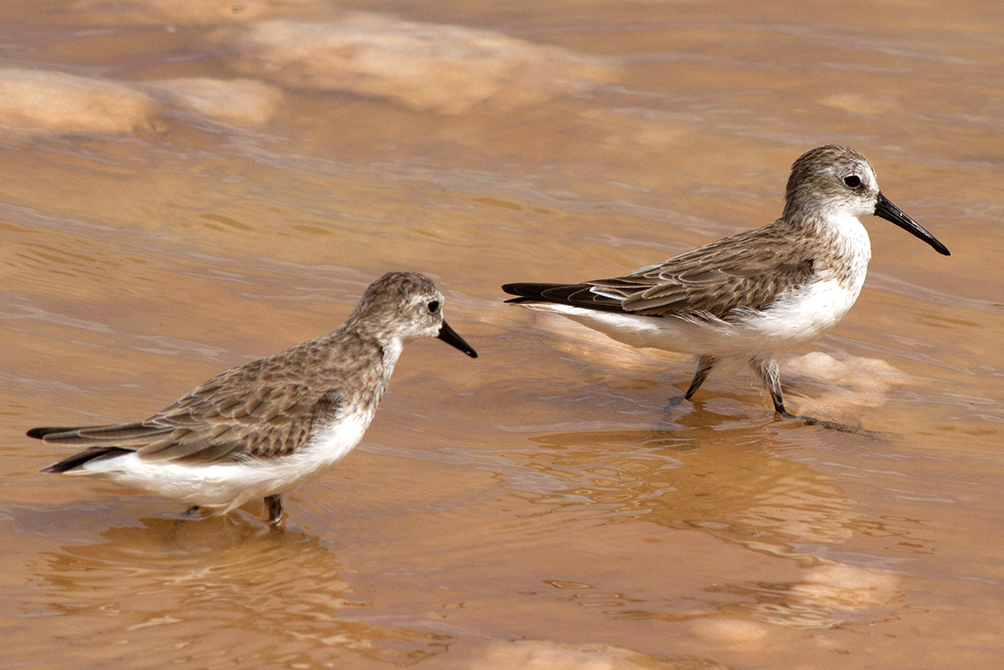
Western Sandpiper
This sandpiper sticks to its nesting grounds on the western half of North America during the breeding season, giving it a geographic edge over the similar Semipalmated Sandpiper, which has a more easterly breeding range. (Though we have to wonder: if the western bird gets a geographic name, why isn’t the Semipalmated Sandpiper called the “Eastern Sandpiper”?).
Once the breeding season wraps up and it’s time to migrate, you can spot these globe-trotters along eastern and southern coasts as well.
On the hunt for invertebrates: a Semipalmated (left) and Western Sandpiper (right) wade through a salt pond. (Photo by Jeff Gerbracht)
In Puerto Rico and the Dominican Republic the name Playero Occidental also means Western Sandpiper.But in Cuba, this bird is known as Zarapico Chico, which more or less translates to “small sandpiper.” Not the most helpful name for identification, given that several other small sandpipers can be found in Cuba!
Name that shorebird!
Naming birds can be a bit messy. If it were up to you, what would you call these birds? If you had a chance to rename them, what would you choose? Drop your best names in the comments below!
Interested in learning about the common names used for shorebirds and other bird species across the Caribbean? Visit Birds of the World species page and click on “Names” under each species main name,
Shorebirds feeding at Cargill, which is designated as Western Hemisphere Shorebird Reserve Network (WHSRN) site of regional importance, and holds important number of shorebird species such a Red Knot and Short-billed Dowitcher. (Photo by Jeff Gerbracht)
Now that you’ve been introduced… why not join the region-wide shorebird count?
Bird names might be full of quirks and surprises, but nothing beats seeing these amazing creatures in action. While you’re out looking for them at your island’s mangroves, beaches, salt ponds, and mud flats, you can help protect them, too!
With shorebird migration underway and continuing into November, it’s the perfect time to grab your binoculars and take part in the Caribbean Waterbird Census and International Shorebird Survey! The more information we gather about the wetlands our shorebirds use, the more we can learn about their populations and protect the critical places they need to survive.
As shorebirds have shown us, bird names carry history, geography, observations, language, and culture! Protecting these birds means protecting all of that, too! So the next time you spot a shorebird bobbing its tail or flipping rocks, remember: these amazing travelers, and the global community they connect, are entirely worth protecting.
The deadline for the 2027 award applications is Sunday November 8, 2026, 11:59 pm EST.
Review and announcements of awardees is anticipated to be completed by January 2027.
We have provided a brief summary of the grants available for each award here:
Questions or inquiries can be sent to: [email protected] and copied to[email protected]. Please include the name of the fund you are inquiring about in the subject line.
Note that the same proposal cannot be submitted for more than one award in a given year.
Questions or inquiries may be directed to [email protected] (Grants Committee), and copied to [email protected] and [email protected]. Please include the name of the fund you are inquiring about in the subject line.
BirdsCaribbean’s general Grant Application Guidelines and proposal submission form are available here.
Learn more about the eligibility criteria of each program by visiting their respective websites at the links in the table above.
Seeking Donors
BirdsCaribbean encourages others to consider endowments or other large awards to ensure that our grants programs continue indefinitely, or to make a donation to support our work. BirdsCaribbean is a tax-deductible organization in the United States.
Joshel Wilson, a wildlife biologist with the Environmental Awareness Group, has dedicated himself to protecting the biodiversity of both land and sea in Antigua and Barbuda, from tagging endangered sea turtles and sharks to conserving threatened island wildlife. In 2024, he decided to expand his impressive skill set by adding bird banding to his repertoire. In this piece, Joshel reflects on his experience returning to his homeland to join the third cohort of the Caribbean Bird Banding Training Workshop.
Back to my roots
In early March 2024, I embarked on a journey back to my roots in Grenada, a place that holds a special place in my heart. This time, it wasn’t my typical visit for family or familiar landscapes—I was there for the third Caribbean Bird Banding Training Workshop, hosted by BirdsCaribbean in collaboration with the Grenada Fund for Conservation, Gaea Conservation, and Klamath Bird Observatory. It was a unique opportunity to combine my passion for birds with the chance to reconnect with my homeland. I did not expect that this experience would be so much more than a technical workshop; it would be a journey into the heart of Grenada’s natural beauty, culture, and community!
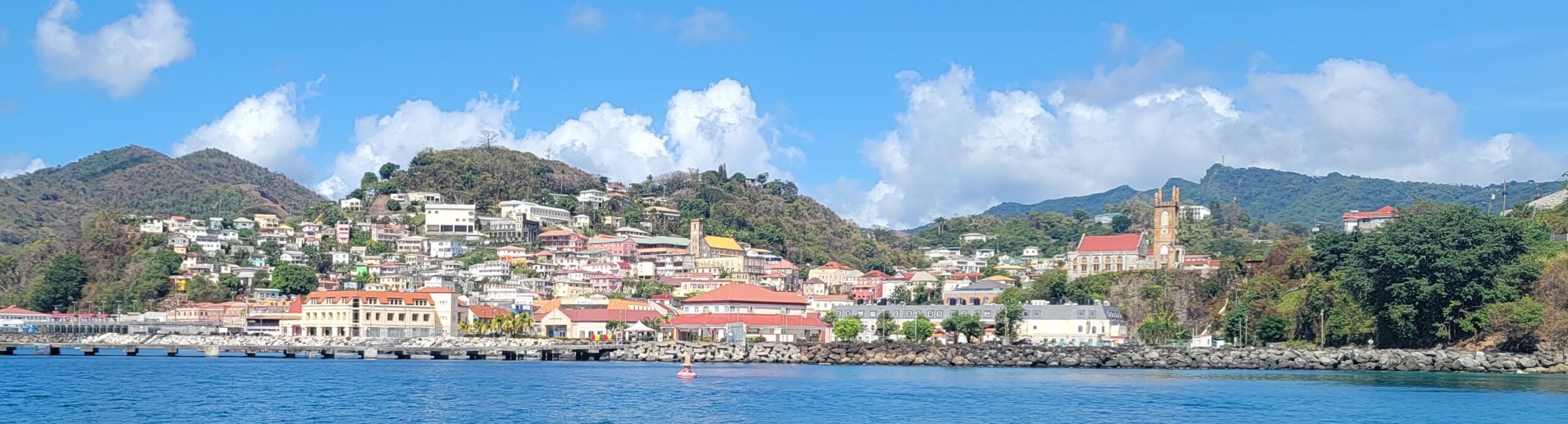
Landscape photo of St. George’s, Grenada. (photo by John Alexander)
The workshop took place over five unforgettable days, blending hands-on bird banding with the theory behind this important conservation practice. The learning, discovery, and networking began promptly at the crack of dawn, whether we were venturing into the lush Grenada Dove Sanctuary at the Mt. Hartman Estate or exploring the grounds of the Blue Horizons Garden Hotel–the headquarters for the workshop. Located close to beautiful Grand Anse Beach and nestled in the vibrant Grenadian landscape, Blue Horizons was a haven for a variety of bird species. As the sun rose over the island, the air was filled with the songs of of landbirds such as Bananaquits and Grenada Wrens—the very species we aimed to study and band. It was a powerful reminder of why I fell in love with ornithology in the first place.
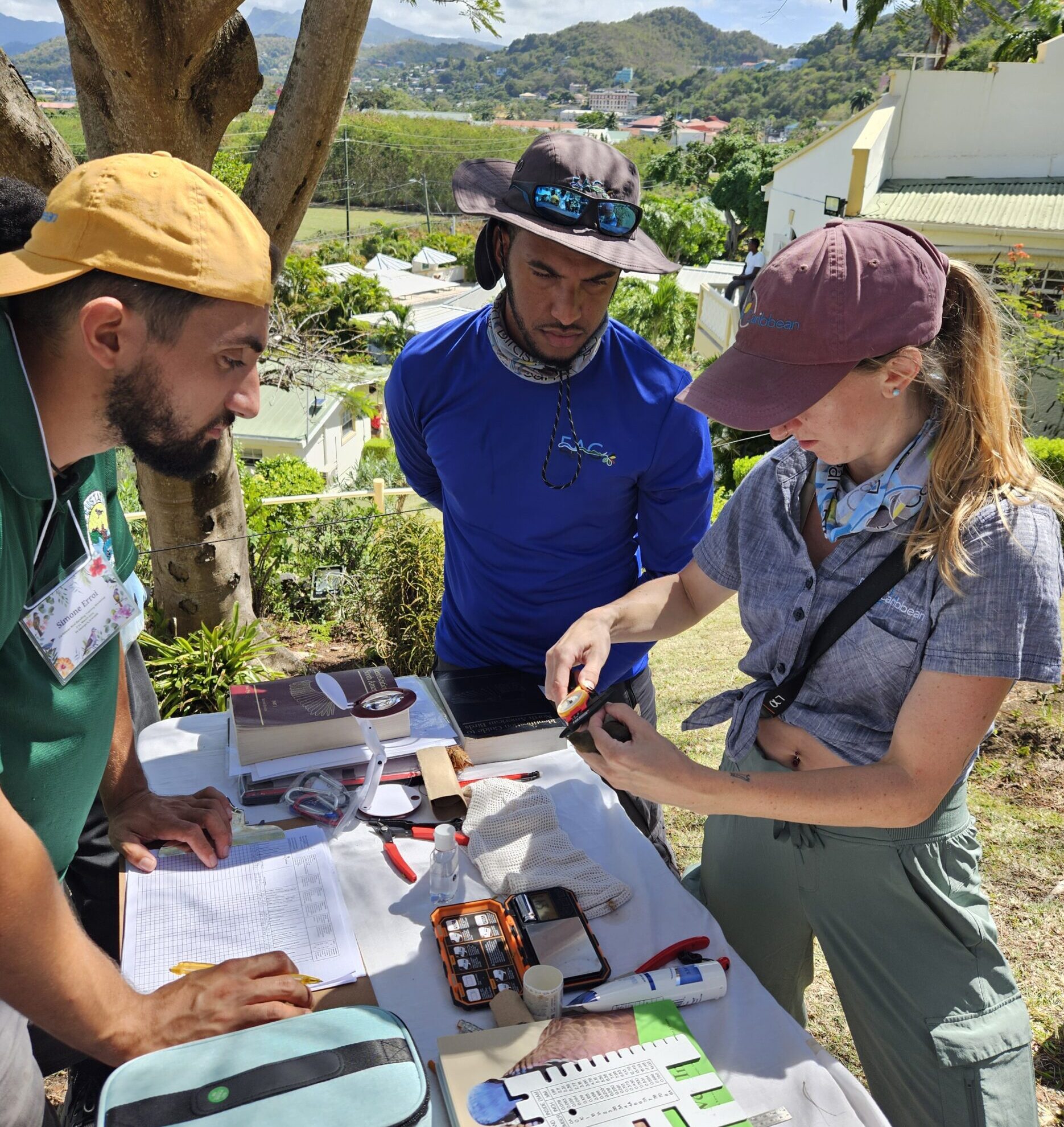
Trainer Holly Garrod shows Joshel Wilson and Simone Erroi how to measure morphometrics on a Bananaquit. (photo: Maya Wilson)
Birds, banding, and Caribbean camaraderie
While the birds and the scenery were spectacular, it was the people that truly made this workshop special. I met fellow conservationists from across the Caribbean, each bringing their own unique backgrounds and stories. There were Cubans, Puerto Ricans, Trinidadians, Saint Lucians, Saint-Martinois, Caymanians, and Grenadians like myself, all united by our shared passion for bird conservation.
The classroom sessions, led by experienced trainers and facilitators, were filled with lively discussions and bursts of laughter, especially when our Cuban colleagues, with their distinct accents, would jokingly plead, “¡Inglés, por favor!”(English, please!), hinting that the diverse Caribbean variations of English, combined with our unique accents, sometimes made conversations hard to follow.
While learning new techniques for removing birds from mist nets and mastering data recording was invaluable, the real magic happened in the connections we made. We swapped stories, compared conservation techniques, shared cultural traditions, and exchanged ideas on how to promote bird conservation in our respective countries. The mix of languages, positive energy, and camaraderie made each session feel more like a shared experience than a formal workshop.
Building Caribbean expertise
The role of BirdsCaribbean in ensuring the success of this workshop cannot be understated. The organisation’s dedication to fostering excellence in bird conservation was evident in every detail, from the well-organised, informative sessions to experiencing more of Grenada, including aboat trip arranged by the Grenada Fund for Conservation (GFC), where we enjoyed the famous Carenage and Underwater Sculpture Park.
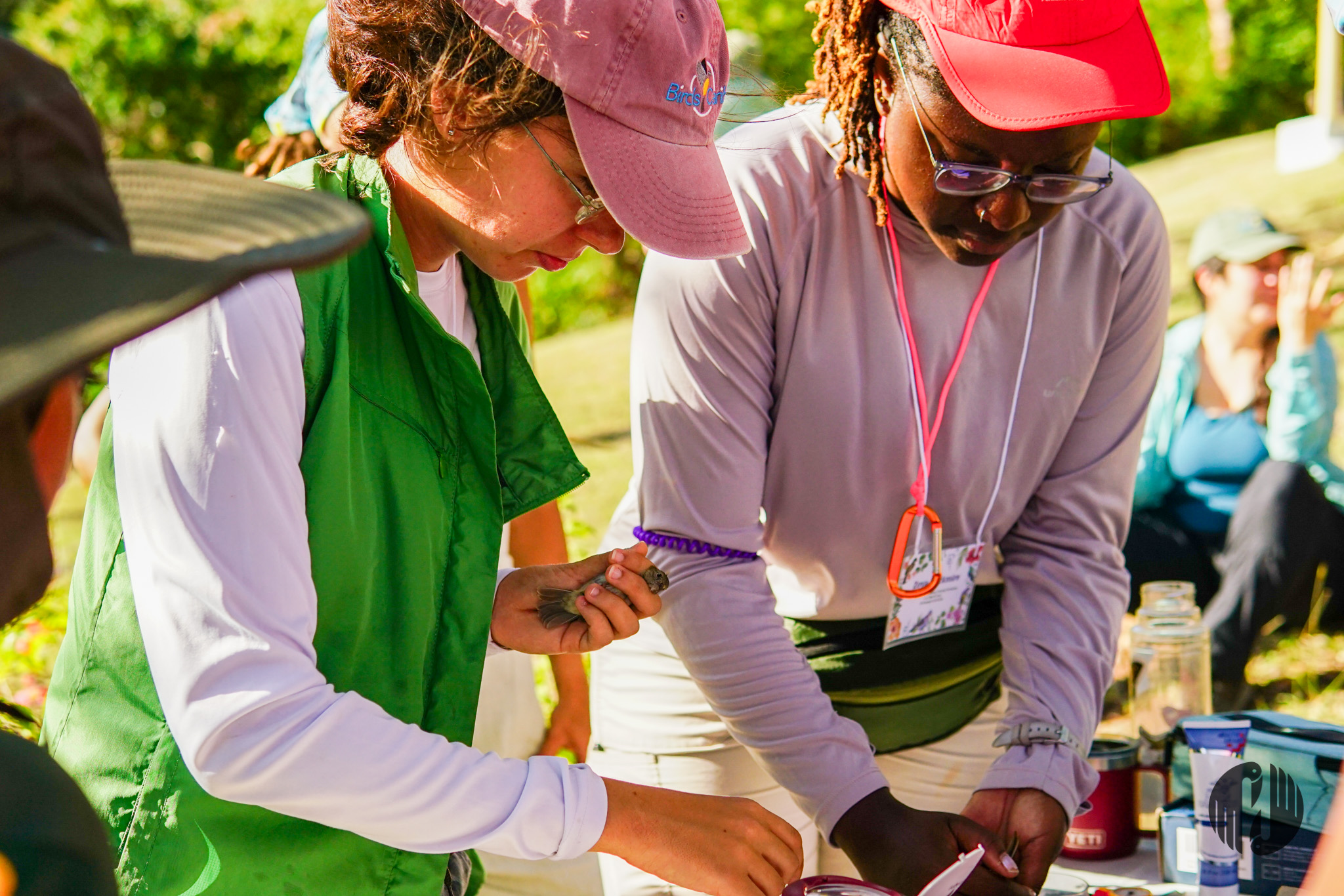
Recently certified NABC trainers Daniela Ventura (left) and Zoya Buckmire (right) band a Bananaquit together. (photo by Holly Garrod)
It was incredibly meaningful to watch the certification of two new Caribbean Bird Banding trainers, Daniela Ventura (Cuba) and Zoya Buckmire, who is also from my homeland of Grenada – what a sense of pride! This certification symbolized not only the success of the workshop but also BirdsCaribbean’s long-term goal of fostering Caribbean expertise in ornithology.
Coming home with more than new skills
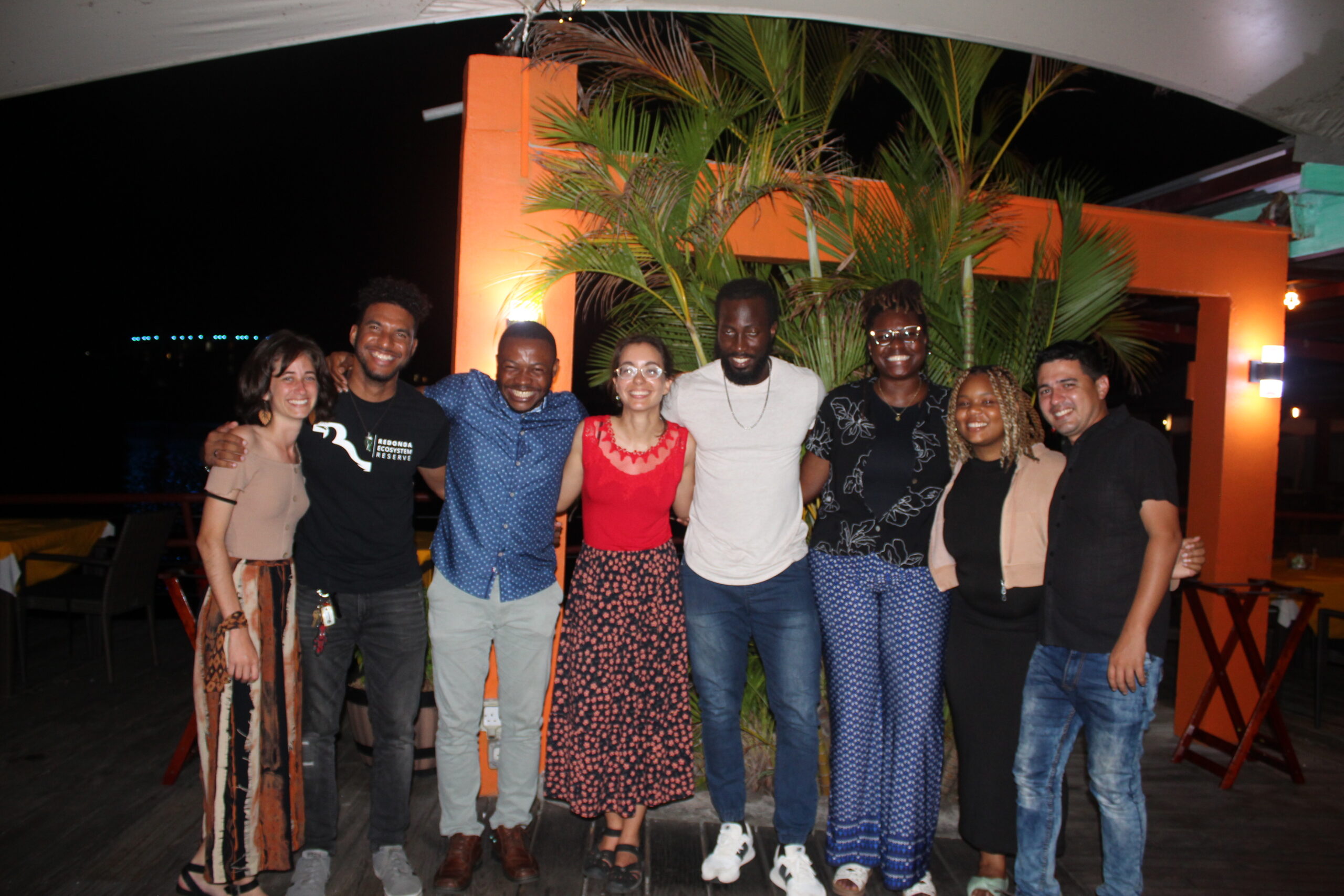
Participants (left to right) at the end of workshop banquet: Laura Arañaburo Acosta, Joshel Wilson, Kendon James, Daniela Ventura, Shawn Allard, Zoya Buckmire, Jadie Allard, Elien Domínguez Tan
As I received my Certificate of Achievement, I felt a mix of emotions. There was a sense of accomplishment for the skills I’d acquired, but also a profound sense of reconnection with my homeland. This workshop wasn’t just about learning bird banding techniques; it was about returning to Grenada, reconnecting with its people, and rediscovering the beauty of its natural world.
As I said goodbye to the friends I made and the birds I came to know, I knew this wouldn’t be the last time I would see them. This journey had reignited my passion for bird conservation and deepened my commitment to supporting the Caribbean’s ornithological community.
If you’re considering participating in a similar workshop, I can’t recommend it enough. The experience will not only enrich your knowledge but also connect you to a vibrant and welcoming community of biologists from across the Caribbean.
Trainer Juan Carlos instructs participants on how to properly set up a mist net. (photo by Holly Garrod)
Bananaquit being held in photographer’s grip. Photo: Holly Garrod
Trainer Daniela Ventura show other bird banding workshop participants how to check a bird for breeding characteristics
The first step to banding a bird is first identifying the species, as shown here comparing this Yellow-bellied Elaenia to drawings in the field guide
The endangered and endemic Grenada Dove spotted at the banding site of Mount Hartman
Shawn Allard extracts a Bananaquit from a mist net
Acknowledgements: The Caribbean Bird Banding Training Workshop was made possible through the generous support of our donors and funders, including the U.S. Fish and Wildlife Service and Zoo New England. We would also like to thank our local and international partners, including the Grenada Fund for Conservation, Gaea Conservation Network, Grenada Forestry, Klamath Bird Observatory, and Institute for Bird Populations.
Joshel Wilson is a Wildlife Biologist with a B.Sc. in Marine, Wildlife, & Conservation Biology from St. George’s University and an MSc candidate at the University of Leeds. With expertise in biodiversity conservation, endangered species management, and research methodologies, including UAS and tagging techniques, he has contributed to projects across the Caribbean. Currently a Wildlife Officer with the Environmental Awareness Group, Joshel oversees conservation efforts in Antigua, Barbuda, and Redonda. He also serves as Principal Investigator for the Antiguan Racer Census and holds certifications in marine conservation and climate resilience.
The annual BirdsCaribbean Seabird Working Group (SWG) newsletter is now available! Catch up on the latest research, conservation, restoration, and education projects happening across the Caribbean—in English, Spanish, and French.
In this issue of the SWG newsletter, learn about the removal of invasive goats from seabird nesting habitats in St. Vincent and the Grenadines; the seabird diversity across the Los Testigos Archipelago (Venezuela); how researchers are protecting seabirds from pollution and climate in the Dominican Republic; new methods to detect rats on Buck Island NWR (US Virgin Islands); how researchers are using floating rafts to provide biosecure resting and nesting habitats for shorebirds and seabirds in Anguilla, and more.
A Caribbean Seabird Census (CSC) update for you
The landmark 2023–2024 regional census confirmed the Caribbean’s critical importance for global seabird populations, identifying Sooty Terns, Bridled Terns, and Boobies as most abundant species recorded, alongside 38 Regionally Important Bird and Biodiversity Areas (IBAs) and 10 sites meeting global criteria. As the team finalized the preliminary report during a regional webinar, 100% of participating conservationists called for Caribbean-specific threat criteria to better protect smaller, vulnerable island colonies. To address data gaps for challenging species like tropicbirds and shearwaters, regional monitoring efforts and recovery groups are now mobilizing. Check out the latest Seabird Working Group newsletter for deeper insights from the CSC preliminary report and contributor updates!
Sooty Tern, Aruba. (Photo by Michiel Oversteegen)
Juliana Coffey identifying seabirds with seabird patrol volunteers, Union Island. (Alison DeGraff Ollivierre)
The light morph of the Red-footed Booby. (Photo by Andrew Wright)
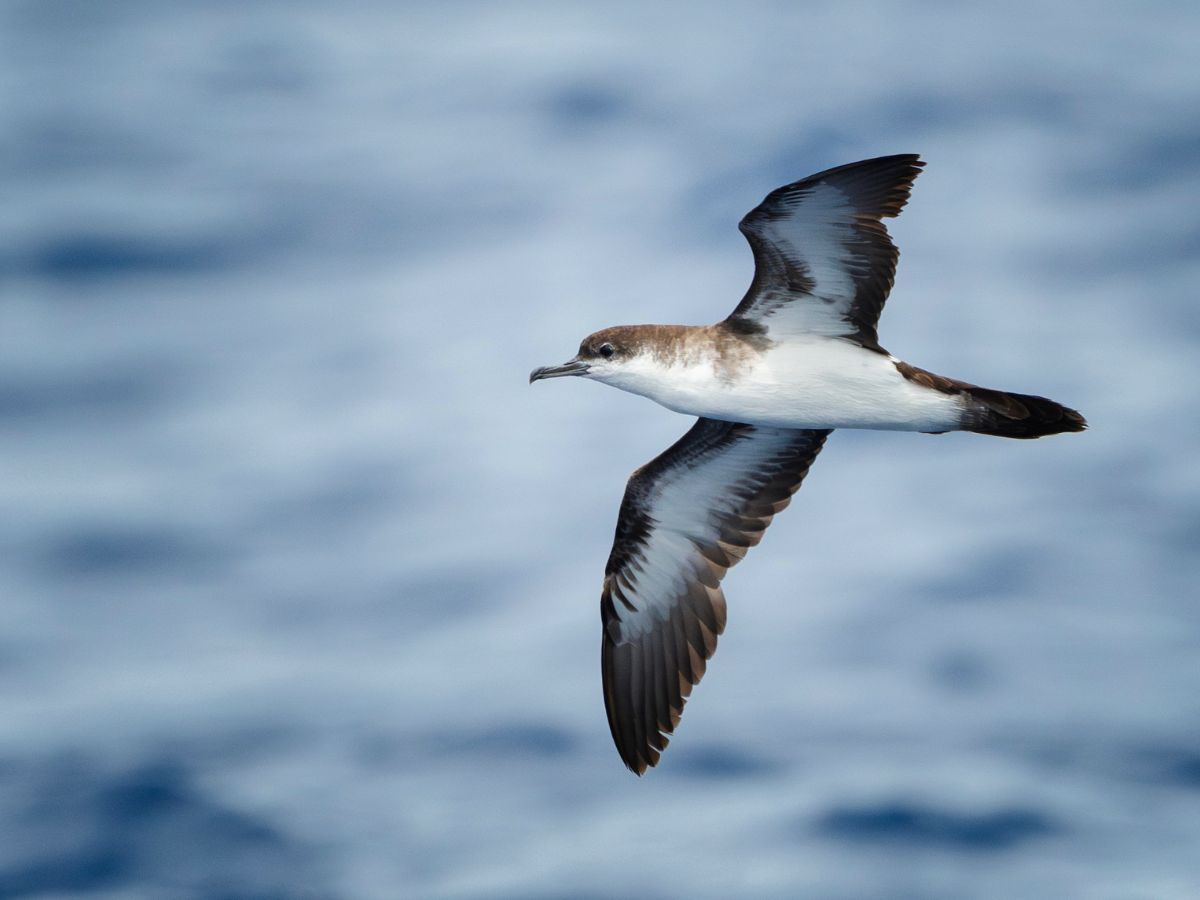
Conservation focus on the Sargasso Shearwater
The Sargasso Shearwater, recently renamed by the American Ornithological Society and split into a Caribbean (almost) endemic species, is facing heightened conservation priority due to documented population declines across the region. In response to its upcoming “Near Threatened” status on the IUCN Red List and its designation as a “Yellow-Alert Tipping Point” species by the Road to Recovery (R2R) initiative, the BirdsCaribbean Seabird Working Group (SWG) has established a new dedicated Sargasso Shearwater Recovery Group. Following a strategic workshop at the July 2026 BirdsCaribbean Conference in Trinidad, this new subgroup is actively working on a regional recovery strategy and report to address key data gaps, map population trends, and implement targeted conservation actions for this cryptic nocturnal species. Interested in joining this group? More details about the group and how to participate can be found in the newsletter.
Sargasso Shearwater. (Photo by Neo Morpheus ML620809864)
A regional first for Caribbean seabird science
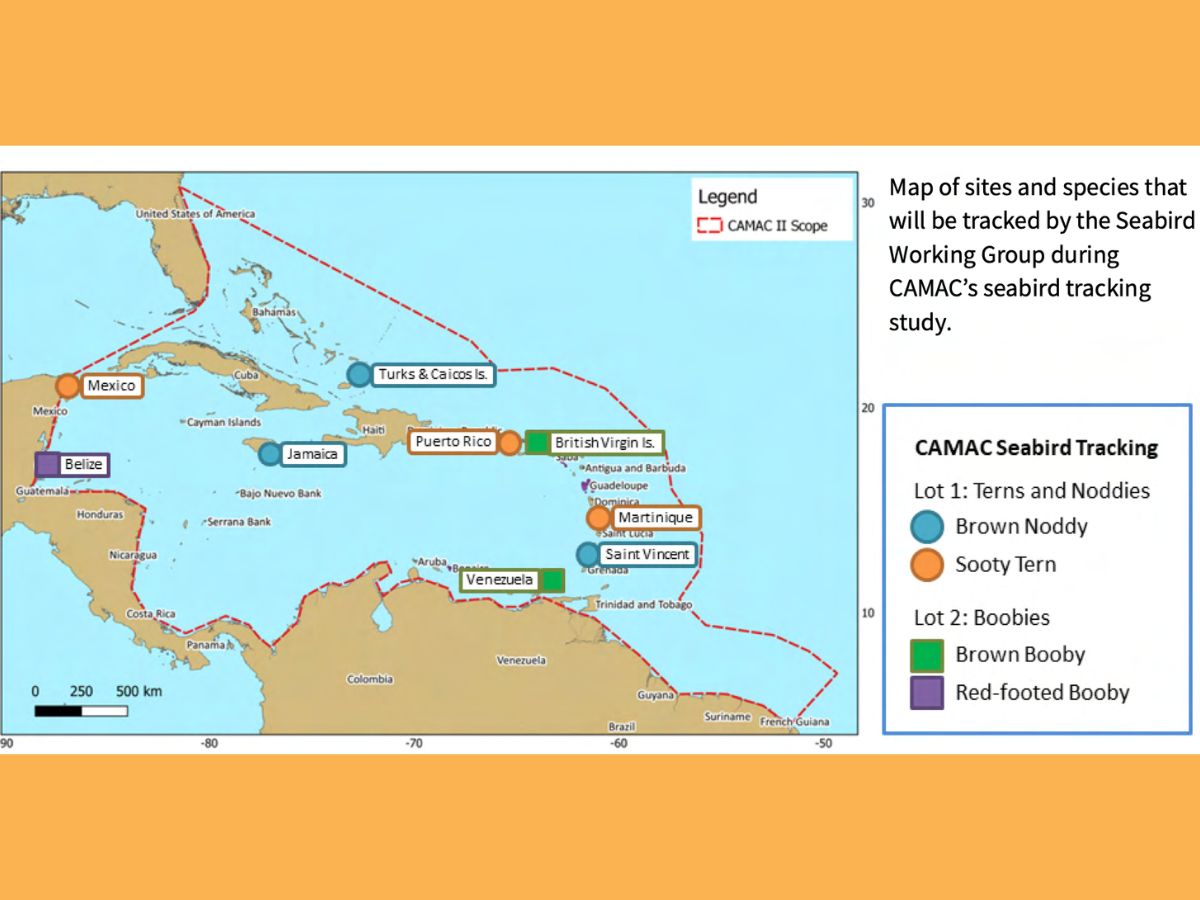
The European Union co-funded CAMAC project is partnering with the BirdsCaribbean Seabird Working Group (SWG) to better understand interactions between Caribbean marine megafauna and human activities. Following a regional survey and species selection process, the SWG successfully secured the tender to lead a groundbreaking regional tracking study targeting boobies, terns, and noddies. Between November 2026 and May 2027, solar-powered remote-download GPS devices will be deployed across multiple colony sites without requiring bird recapture. This first-of-its-kind initiative for the Caribbean basin will map seabird foraging hotspots and habitat use to directly inform marine conservation and management. Learn more about this exciting project in the newsletter.
Interested in connecting with the SWG and its members? Visit the Seabird Working Group webpages and our Seabirds Resources page to access these resources. Please take advantage of the many avenues for communication described in the newsletter, including the SWG Facebook group. If you have seabird news to share, let us know! We would love to feature your work in the next issue!
Think birding requires rugged terrain, expensive equipment, or hours on your feet? Think again. The joy of birdwatching belongs to everyone, regardless of mobility, vision, neurodivergence, or health status.
Yet, this is only true if we actively dismantle the assumption that people with disabilities or chronic illnesses are not interested in, or able to experience, the outdoors. They are, and they care deeply about birds, habitats, and community. This Birdability Week (19th–25th October 2026), under the theme “Bird Where You Are,” we are celebrating the reality that birding can happen wherever you are, exactly as you are.
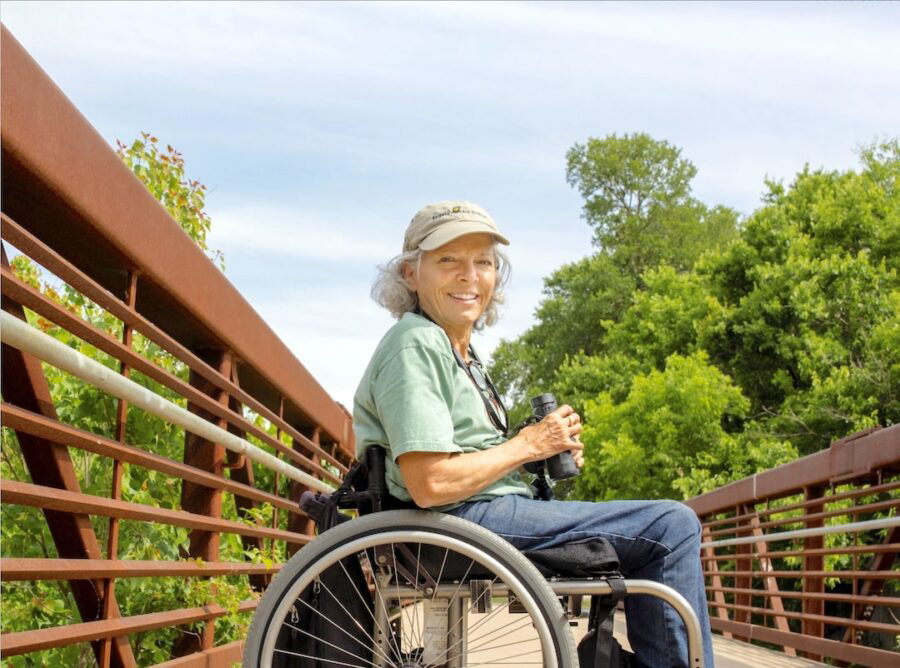
Virginia Rose, disability rights advocate and founder of the non-profit Birdability*, knows firsthand how challenging it can be to navigate nature as a disabled person but it never diminished her curiosity about the world around her. As she inspiringly shared, “the only thing that I felt really changed was that I had to manage getting around in a wheelchair.”
Founder and President of Birdability, Virginia Rose. (Photo credit: birdability.org)
It is this desire to explore and connect with the world that fueled her dedication to increasing access to nature for people of all abilities and to helping them find community. Inspired by movements like Latino Conservation Week and Let’s Go Birding Together, Virginia founded Birdability in 2020 with a vision that is simple yet profound: birding is for everyone, regardless of ability.
*Birdability focuses on people with mobility challenges, blindness or low vision, chronic illness, intellectual or developmental disabilities, mental illness, and those who are neurodivergent, deaf or hard of hearing, or have other health concerns.
Our partners in Antigua and Barbuda, the Dominican Republic, Puerto Rico, Cuba, St. Vincent and the Grenadines and Margarita Island are exploring ways to make their birding events more welcoming and inclusive. And we would love to see more of these events taking place throughout the region, whether it’s allowing visually impaired participants to “see” birds by handling carved wooden birds, as done by Sociedad Ornitólogica Puertorriqueña, or learn to ID birds using bird songs, as done by the late Simón Guerrero.
Birdability Week (19th-25th October 2026) offers the opportunity for all birding groups, non-governmental organizations, and groups of family and friends to host an accessible bird outing. With some thoughtful planning this event can be enjoyable for everybody.
Attend a virtual event and connect with differently abled birders
There are a number of virtual events already scheduled — from panel discussions about self-care while birding to how identities shape peoples’ birding experiences and how to continue making birding accessible to all for Birdability Week 2026. Check their events page for more information and follow them on Instagram and Facebook @birdability.
Help Put Accessible Birding Locations in the Caribbean on the Map!
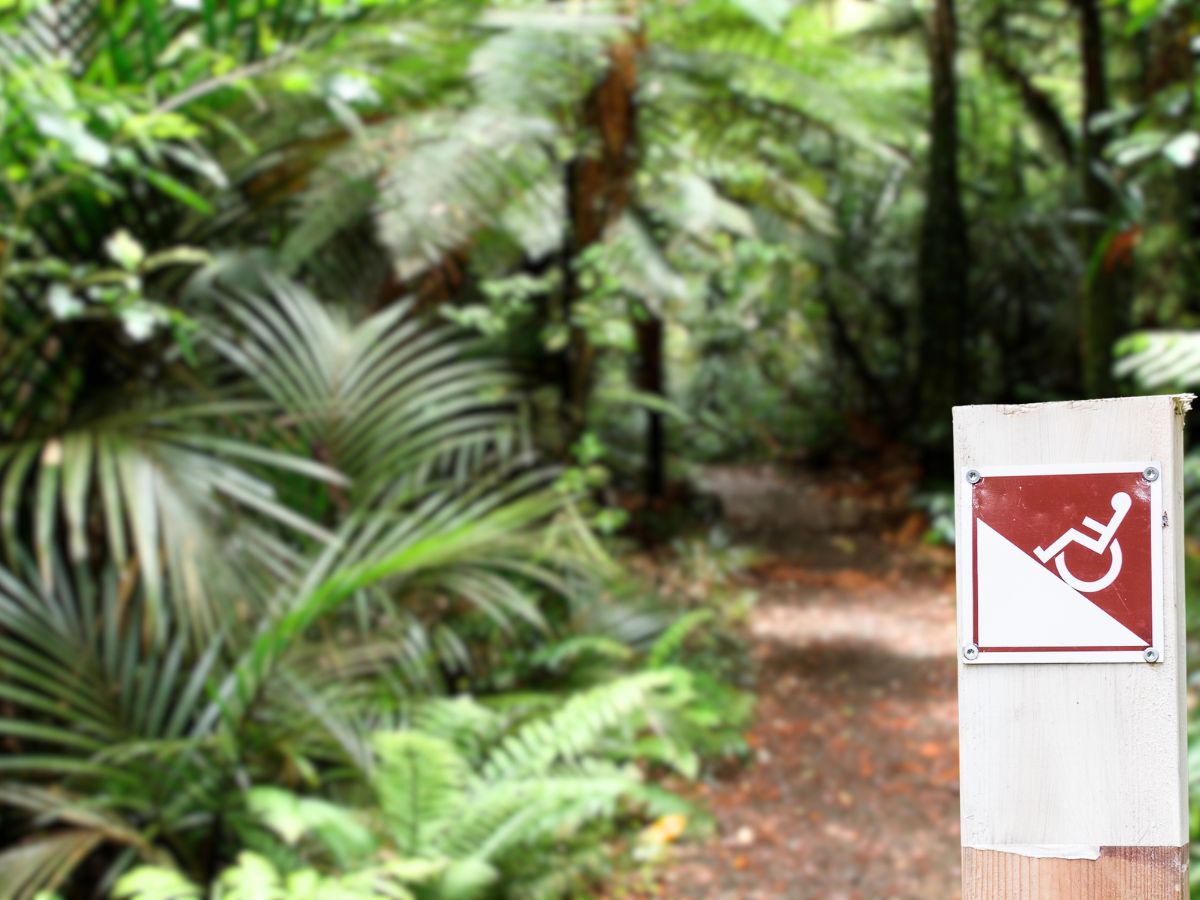
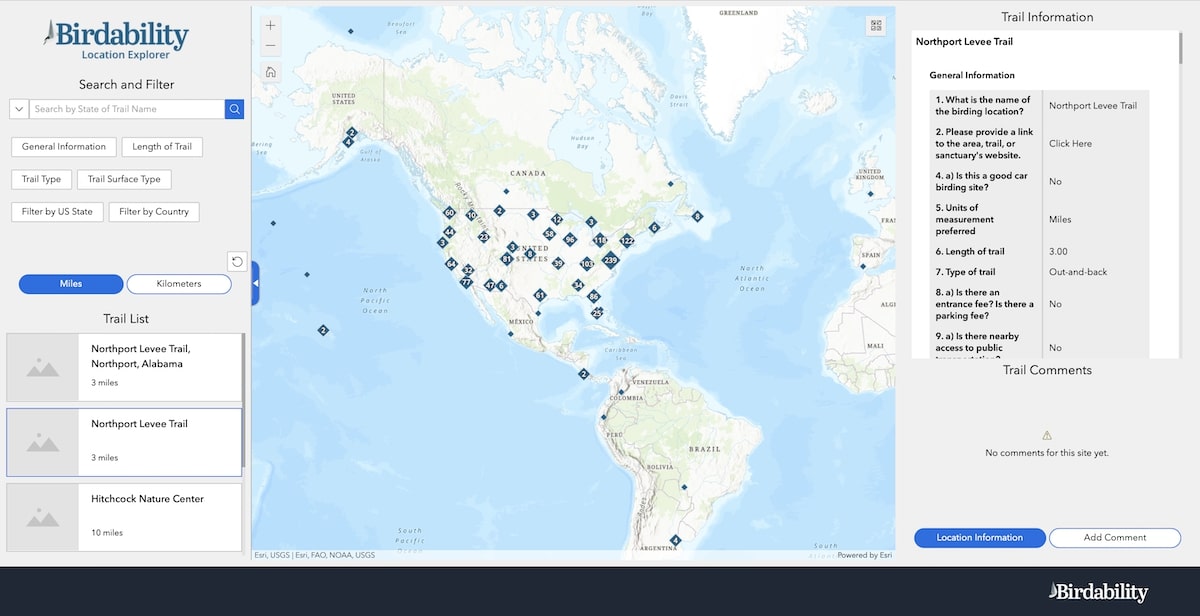
There is also a Birdability Site Map which allows you to share your accessible location, and to search for potential accessible sites near you. While the majority of mapped locations are currently in North America (with a few in Central and South America), we want to change that for the Caribbean!
Birdability Site Map showing locations of nature reserves and parks with varying degrees of accessibility. (Photo credit: birdability.org)
If you know of accessible birding locations on your island we encourage you to complete on-site, in-person Birdability Site Reviews and add them to the Birdability Map so local and visiting birders know where to go.
Together we can build a more welcoming community and ensure that the joy of birding is a shared experience for everyone, everywhere. The key is to remember that the birding community is strongest when it includes all of its members, and that a love for birds knows no bounds.
Behind every thriving forest, protected wetland, and recovered bird population in the Caribbean is a network of passionate individuals working tirelessly to make it happen. Conservation in our archipelago is driven by people: field researchers spending grueling hours under the canopy, educators sparking awe and curiosity in classrooms, grassroots leaders rallying communities, and scientists shaping policies that safeguard birds and their habitats.
On the final evening of the 2026 BirdsCaribbean International Conference, we gathered at the Closing Gala to celebrate these incredible champions. The BirdsCaribbean Awards honor those whose extraordinary dedication, leadership, and innovation elevate Caribbean ornithology and habitat conservation.
Here are the remarkable recipients of the 2026 BirdsCaribbean Awards!
Lifetime Achievement Award
The BirdsCaribbean Lifetime Achievement Award is our most prestigious honor, conferred upon remarkable individuals in the BirdsCaribbean family whose decades of dedication have helped change the future for Caribbean birds, their habitats, and the people working to conserve them.
This year, we proudly honored three outstanding champions of Caribbean ornithology, whose pioneering research, mentorship, education, and commitment to conservation have profoundly advanced our understanding and protection of Caribbean birds.
Graham White, biologist, consultant ecologist, and lifelong naturalist from Trinidad and Tobago, was honored for more than four decades of dedication to ornithology, natural history, and conservation. Graham began birding in the 1980s under the mentorship of renowned ornithologist Richard ffrench and has since become a leading figure in Trinidad and Tobago’s birding and naturalist community. A founding member of the Trinidad and Tobago Rare Birds Committee (now the T&T Birds Status and Distribution Committee), he has served continuously since its establishment in 1995, helping document and strengthen knowledge of the country’s remarkable avifauna.
He has also served as Trinidad and Tobago’s eBird Reviewer since the platform launched locally in 2014, and his expertise has informed numerous environmental impact assessments for public and private projects. Graham joined the Board of the Asa Wright Nature Centre in 2012, serving as Chairman from 2015–2020 and continuing on the Board today, and is Assistant Editor of the Trinidad and Tobago Field Naturalists’ Club’s Living World journal. The author of more than 60 publications on ornithology, conservation, natural history, and related topics, Graham’s extraordinary record of scholarship, service, and quiet dedication has made a lasting contribution to the study and conservation of Trinidad and Tobago’s birds and natural heritage.
Dr. Frank Rivera-Milán, Research Wildlife Biologist with the U.S. Fish and Wildlife Service, was recognized for his pioneering contributions to Caribbean bird population ecology and monitoring. Frank was among the first avian ecologists working in the Caribbean to apply and adapt statistical methods that account for the fact that not every bird present during a survey is detected—making it possible to produce more accurate estimates of bird abundance and population trends.
Over more than three decades, his research has informed the conservation and management of threatened and endemic species, game birds, and invasive species throughout the region, from pigeons and parrots in Puerto Rico to Grenada Doves, Cuban Amazons (Bahamas), Yellow-shouldered Amazons, and many others. His long-term monitoring has also provided invaluable insights into how Caribbean bird populations withstand and recover from major hurricanes. Just as importantly, Frank has generously shared his expertise through collaborations, workshops, and training, helping generations of Caribbean biologists and managers build stronger monitoring programs and make better-informed conservation decisions.
Dr. Jaime Collazo, retired Professor of Wildlife Ecology at North Carolina State University and Assistant Unit Leader with the U.S. Geological Survey’s North Carolina Cooperative Fish and Wildlife Research Unit, was honored for a distinguished career as a scientist, teacher, mentor, and conservation biologist. A native of Puerto Rico, Jaime has authored more than 150 peer-reviewed publications and conducted influential research on birds throughout Puerto Rico and the Caribbean.
His studies of resident and migratory shorebirds contributed to the establishment of Cabo Rojo National Wildlife Refuge, while his research demonstrated the importance of shade-grown coffee plantations for bird conservation and helped spur programs supporting their restoration. His work on Puerto Rican and Hispaniolan Amazons has advanced successful captive-rearing and release techniques and provided important insights into how parrots respond to major hurricanes. Throughout his career, Jaime has been an exceptionally effective advocate for conservation and a dedicated mentor, training generations of Puerto Rican and other Caribbean students and young biologists and strengthening the region’s capacity to conserve its wildlife.
President’s Award
The President’s Award recognizes individuals and organizations that demonstrate exceptional leadership, resilience, and commitment to environmental service, often breaking new ground in regional conservation.
This year’s President’s Award was conferred upon:
Trinidad and Tobago Field Naturalists’ Club (Accepted by Club President Elizabeth Seebaran) Founded on July 10, 1891, the Trinidad and Tobago Field Naturalists’ Club (TTFNC) is one of the oldest environmental non-governmental organizations in the Caribbean. Over its 135-year history, the Club has played a foundational role in the island’s environmental landscape. The Club established the Zoological Society of Trinidad and Tobago in 1947, giving rise to entities like the Caribbean Forest Conservation Association, and serving as a founding member of the Council for the Environment. Its advocacy has yielded critical conservation wins, including successful opposition to a monkey cull during a 1954 yellow fever outbreak and the protection of the fragile Caroni Swamp in the 1970s.
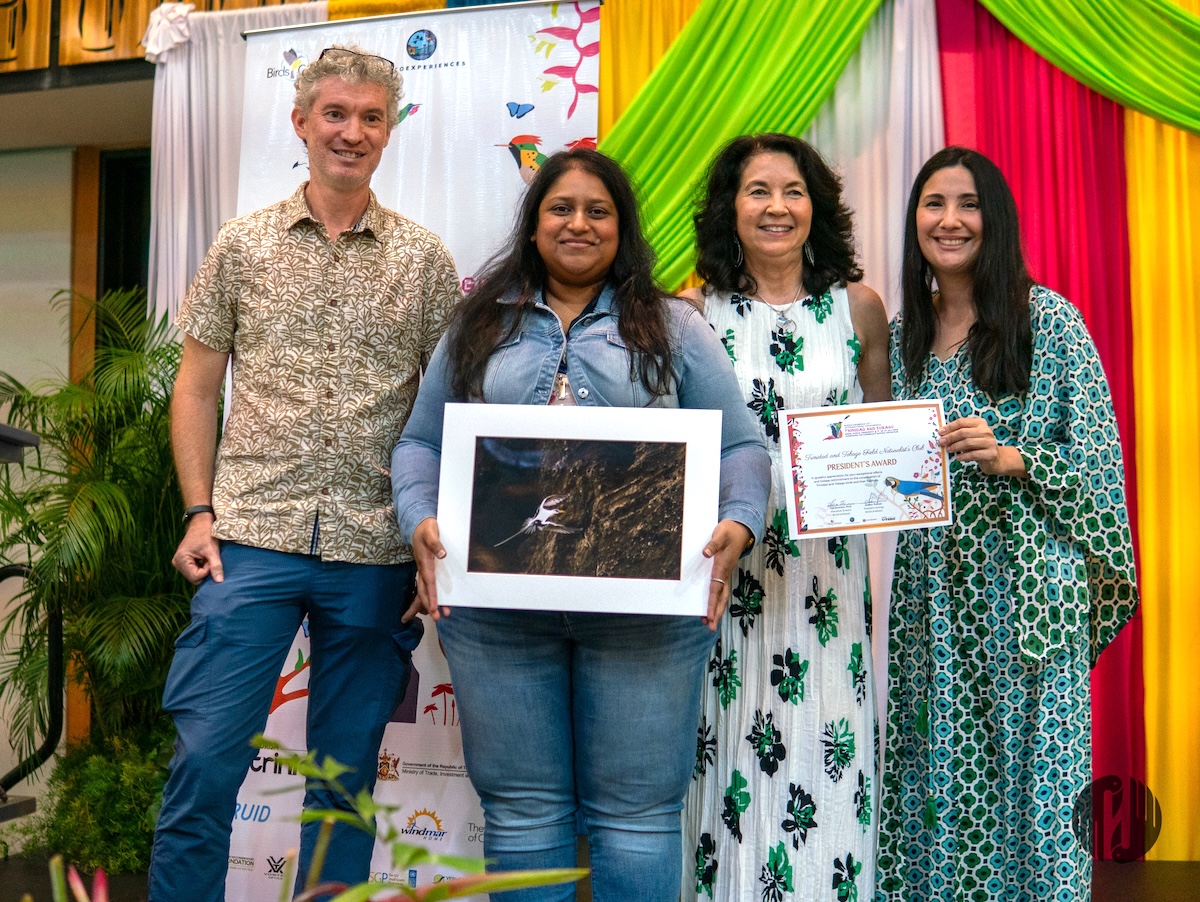
Honoring dedication, leadership, and passion. Congratulations to TTFNC President Elizabeth Seebaran on receiving the President’s Award! (Photo by Holly Garrod)
The TTFNC has also driven landmark scientific discoveries and wildlife protection initiatives across the country. Members provided early insights into local fauna, such as J.E. Tanner’s 1892 proof of leafcutter ant fungus farming and A.B. Carr’s discovery of bushmaster egg-laying, while 1960s sea turtle patrols at Matura Beach led directly to the nation’s Turtle Conservation Laws.
Daveka Boodram(Trinidad and Tobago Bird Observatory and Research Centre) Daveka Boodram learned how to bird bands in Oregon under the Klamath Bird Observatory internship program from 2002 – 2003. Daveka restarted her banding program in October 2023. Around this time she met with Giselle and Che Ragoonanan, and together they formed the Trinidad and Tobago Bird Observatory (TTBO), with the goal to continue building local capacity for bird monitoring projects and better understand many of the unique species residing on the islands.
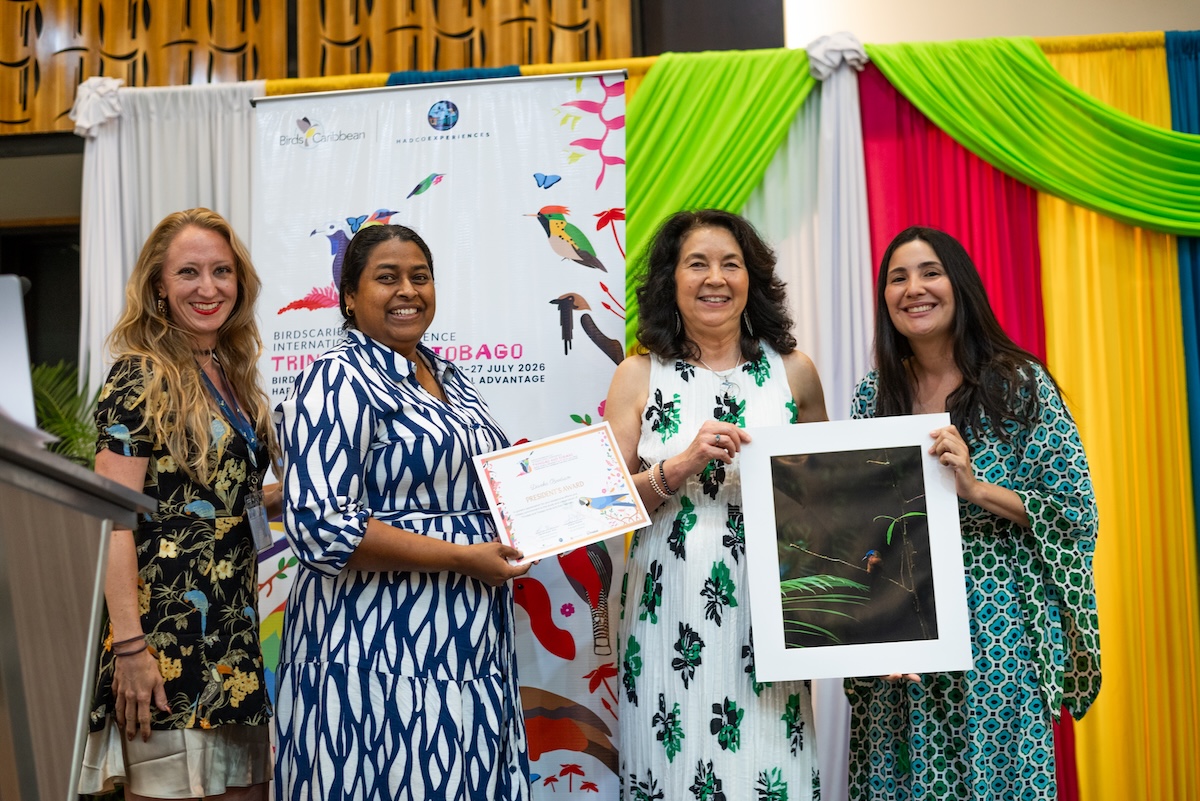
Celebrating excellence in conservation! Daveka Boodram accepts the President’s Award—a fitting tribute to her exceptional commitment to protecting birds. (Photo by Christel Mohammed)
For 20 years, Daveka used banding and point count data to assess the population and distribution of the White-tailed Sabrewing which she used to develop and implement a monitoring plan for this Near Threatened hummingbird. One of her primary objectives was to train a team of Tobagonian biologists to continue the work monitoring and studying the species. In October 2024, Daveka hosted a 5-day workshop, with Giselle and Che, to introduce banding and monitoring concepts to 21 participants. Since then, Daveka has been training a group of 12 Tobagonian biologists, many of which work for Tobago’s Forestry Department. Daveka has done much of banding and training in her free time, while still working full time as a teacher and a mom. She has been incredibly dedicated to getting these monitoring projects off the ground and ensuring Tobagonian biologists have the capacity they need to continue the monitoring work she started. She is one of the experts on the White-tailed Sabrewing, and one of the only people actively banding hummingbirds in the Caribbean.
Founders’ Award
Established in 2011, the Founders’ Award recognizes outstanding student researchers presenting exceptional science at the conference. Awardees are chosen for research whose findings directly inform the management and protection of Caribbean birds, their habitats, and ecosystems.
The Committee agreed that it was an overall fantastic group of student presentations this year! Here are the winners:
Oral Presentation
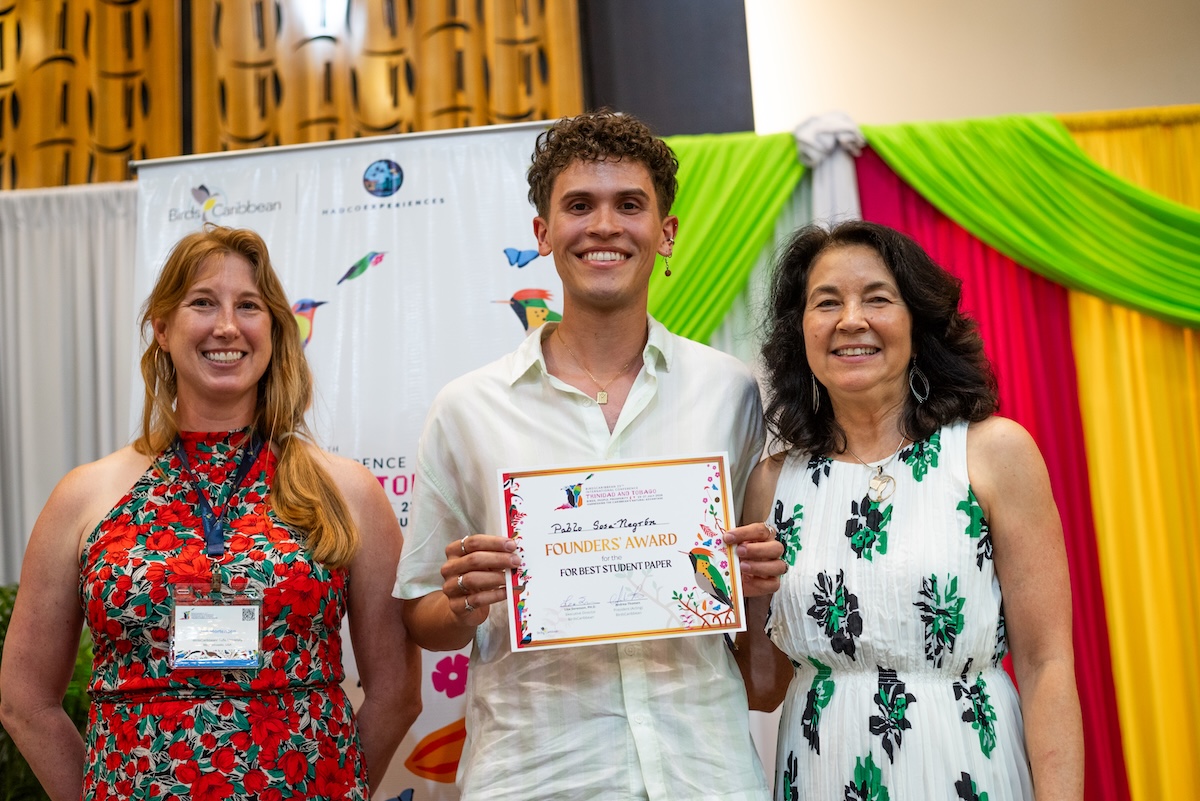
Founders’ Award for Best Student Paper: Pablo Sosa-Negrón (Masters Student- Universidade de Costa Rica) “Descending into the lowlands: microhabitat differentiation and range expansion in Puerto Rico’s sympatric Anthracothorax hummingbirds.”
Spotlighting outstanding student research! Huge congratulations to Pablo Sosa-Negrón (Universidade de Costa Rica) for winning the Founders’ Award for Best Student Paper.
Founders’ Award for Best Student Paper Honorable Mention: Michael Ocasio (PhD Candidate- University of Maryland) “Are Shiny Cowbirds Using Host Vocalizations to Find Nests?”
Founders’ Award for Best Student Paper Honorable Mention: Demonica Brown (Graduate Student- Florida International University) “Multi-scale analysis of environmental drivers of nest site selection by underground nesting Bahama Parrots (Amazona leucocephala bahamensis).”
Founders’ Award for Best Student Paper Honorable Mention: Andrew Eppedio (Undergraduate Student- Cornell University) “Foraging Niche Structure in a Caribbean Dry Forest Bird Community.”
Founders’ Award for Best Student Paper Honorable Mention: Laura Arañaburo Acosta (Undergraduate Student- University of Havana) “Composition and dynamics of bird assemblages in two phytogeographic zones of Cuba’s National Botanical Garden.”
Michael Ocasio. (Photo by Christel Mohammed)
Demonica Brown. (Photo by Christel Mohammed)
Andrew Eppedio. (Photo by Christel Mohammed)
Laura Acosta. (Photo by Christel Mohammed)
Poster presentation
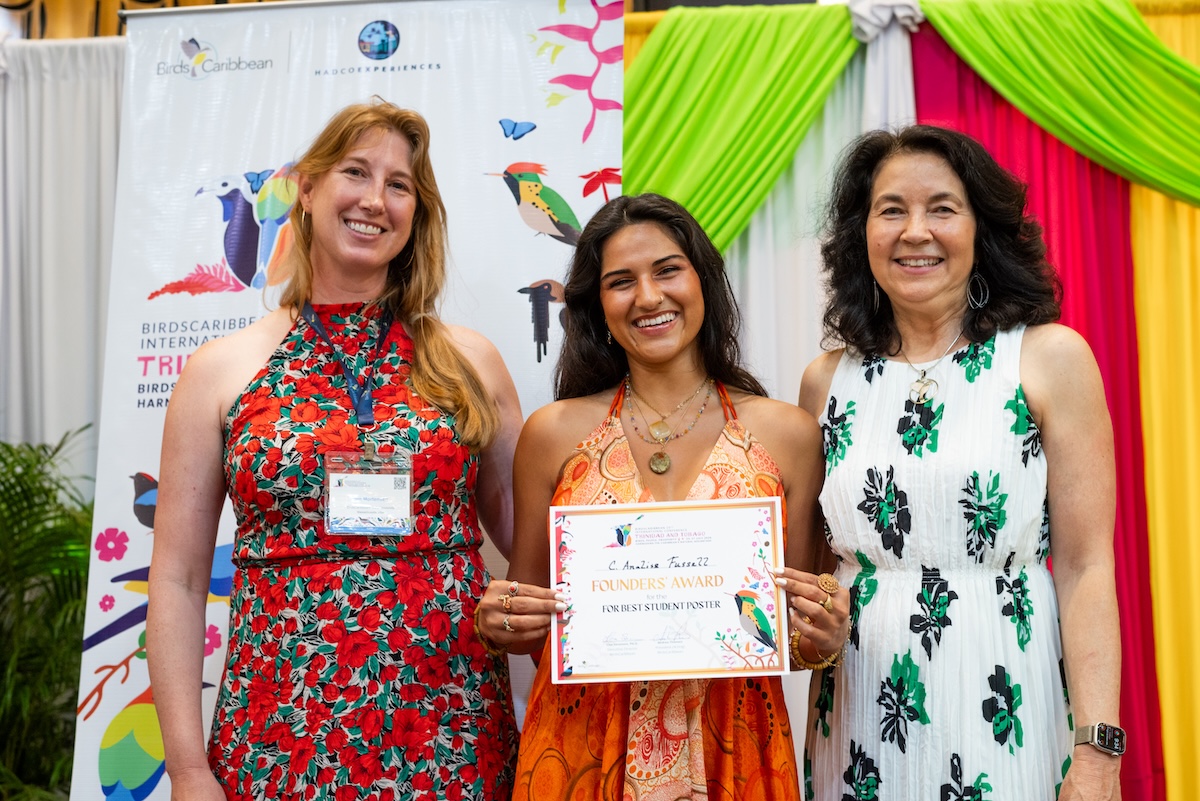
Founders’ Award for Best Student Poster: Cynthia Analise Fussell Persaud (Masters Student- University of Florida) “Assessing the potential of eBird data to track changes in abundance of wading birds in south Florida: Implications for Caribbean monitoring.”
Big congratulations to our Founders’ Award for Best Student Poster winner Cynthia Analise Fussell Persaud! (Photo by Christel Mohammed)
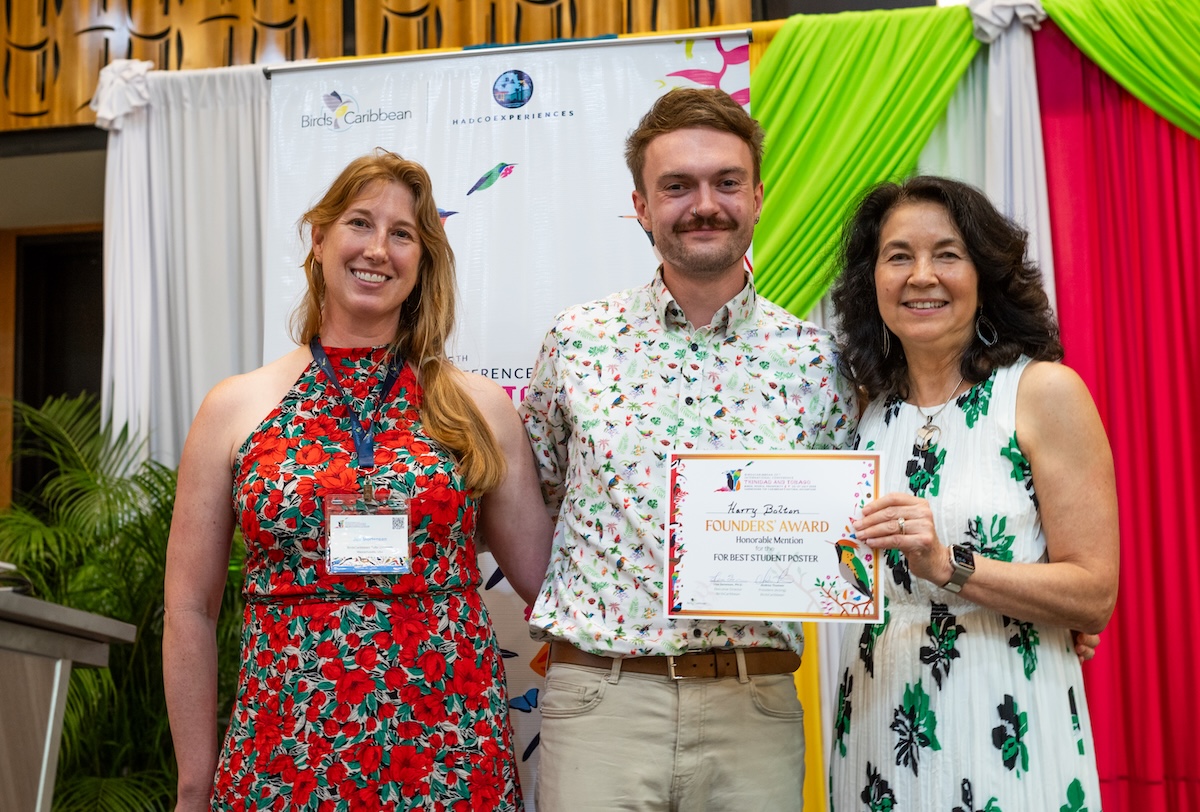
Founders’ Award for Best Student Poster Honorable Mention: Harry Bolton (PhD Student- University College London) “Energy and the origin and maintenance of island avian biodiversity.”
Harry Bolton receives his certificate. (Photo by Christel Moahmmed)
Educator’s Award
Education is the heartbeat of conservation. The Educator’s Award recognizes leaders who go above and beyond to inspire local communities, empower youth, and foster a deep, lifelong appreciation for wild birds and nature across the Caribbean.
Educator’s Award 2026 recipient Adrian Yanes Dominguez (Cuba). (Photo by Christel Mohammed)
Educator’s Award 2026 recipient Eliezer Nieves (Puerto Rico). (Photo by Hector Andujar)
Educator’s Award 2026 recipient Jethro van’t Hul (St. Eustatius). (Photo by Christel Mohammed)
This year, we celebrated three remarkable educators: Jethro van’t Hul(St. Eustatius National Parks Foundation – STENAPA),Adrian Yanes Dominguez(Empresa para la Conservation de la Ciénaga de Zapata / Flora y Fauna Matanzas, Cuba) and Eliezer Nieves Rodríguez(San Juan Bay Estuary Partnership – Estuario, Puerto Rico)
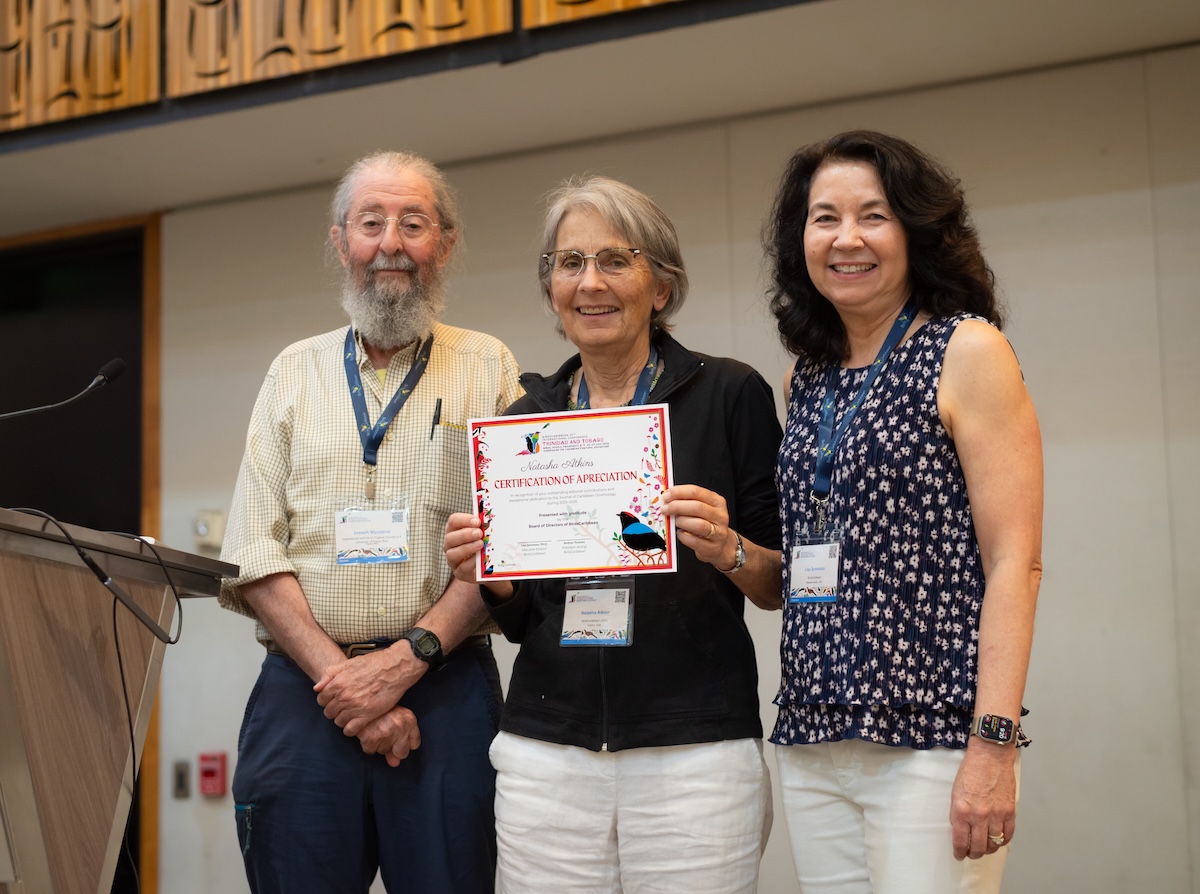
Certificates of Appreciation from BirdsCaribbean Board of Directors were awarded to persons below, in recognition of outstanding performance and editorial contributions and exceptional contributions to the Journal of Caribbean Ornithology during 2025-2026.
Dr. Jennifer Mortensen (Lead Review Editor)
Zoya Buckmire (Lead Copy Editor)
Natasha Atkins (Development Editor)
Congratulations to all of our 2026 awardees, honorable mentions, and nominees! Your passion, perseverance, and vision remind us of what is possible when a region unites for nature. Thank you for inspiring us all to keep pushing boundaries for Caribbean bird conservation.
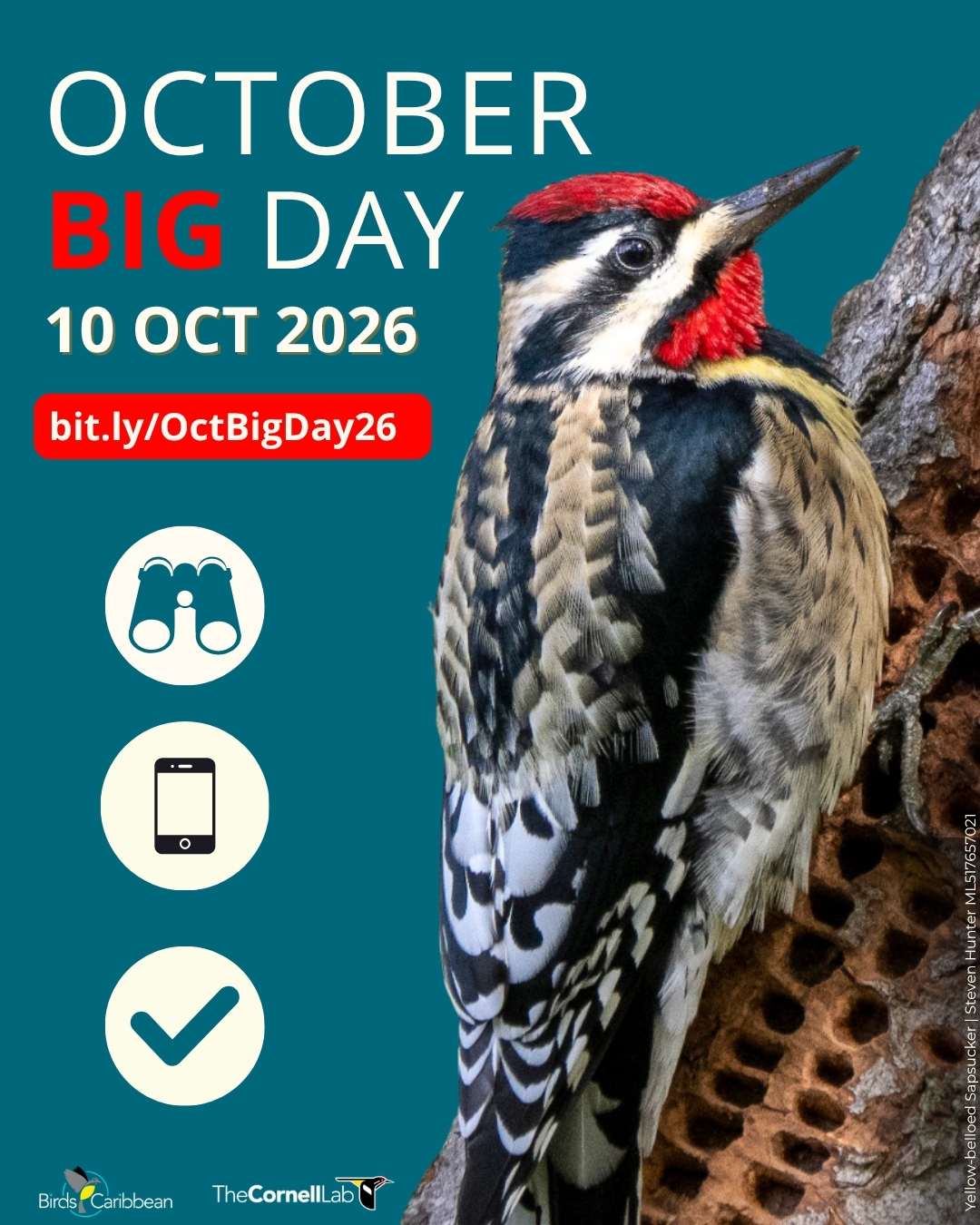
Ready, set—BIRD! It’s time again to flock together for the season’s biggest day of birding!
Get ready for a spectacular October Big Day (OBD)! This annual event, falling on Saturday, October 10, 2026, coincides with World Migratory Bird Day (WMBD) and is a thrilling celebration of our feathered friends and the vibrant birding community.
At BirdsCaribbean, we eagerly anticipate October Big Day. This massive citizen science event is a wonderful opportunity for us to unite with fellow bird lovers to share in the joy of birdwatching and the beauty of Caribbean wetlands, forests, botanical gardens, and neighborhoods. This is our chance to celebrate Caribbean birds, support science, reconnect with our communities, and strengthen our conservation efforts.
October 10 is truly the moment to puff out our chests and rack up those eBird checklists!
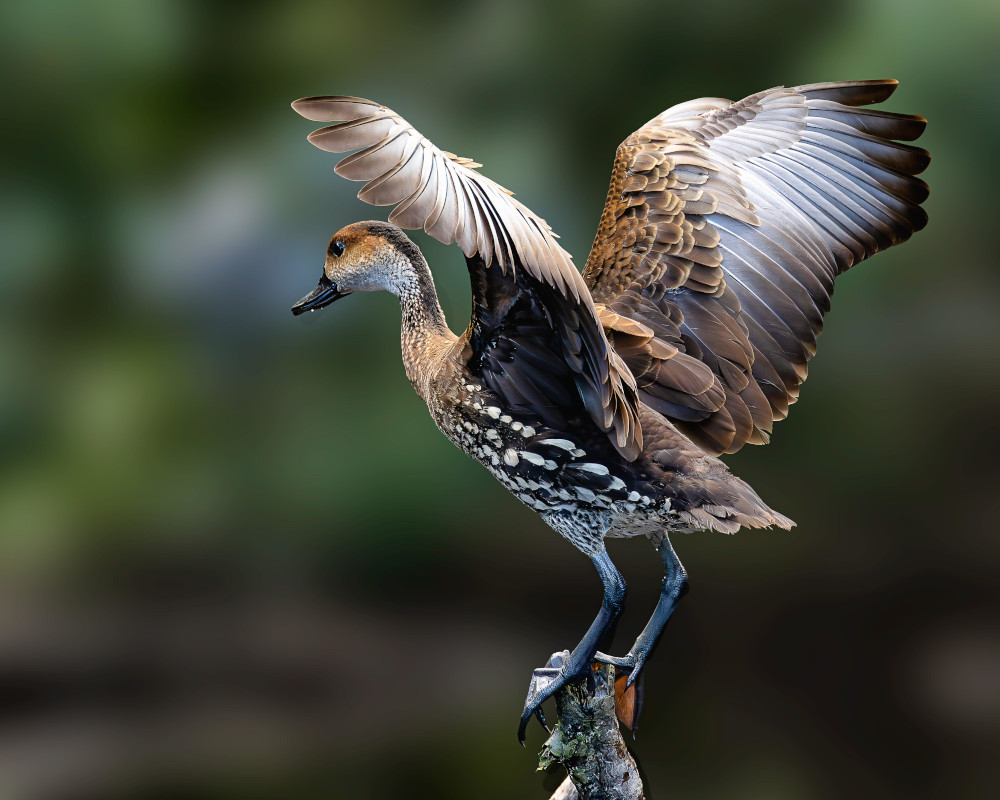
West Indian Whistling-Duck. (Photo by Rondell Smith)
Male Baltimore Oriole (Photo by Daniel W Glenn)
Roseate Tern in flight. (Photo by Karen Gallo)
A pair of Summer Tanagers. Adult males are completely red whereas females can be a rang of colors, from pale dull yellow to brighter orange.
The American Kestrel is a more frequently seen migrant to the region. (Photo by Imran Ashraf)
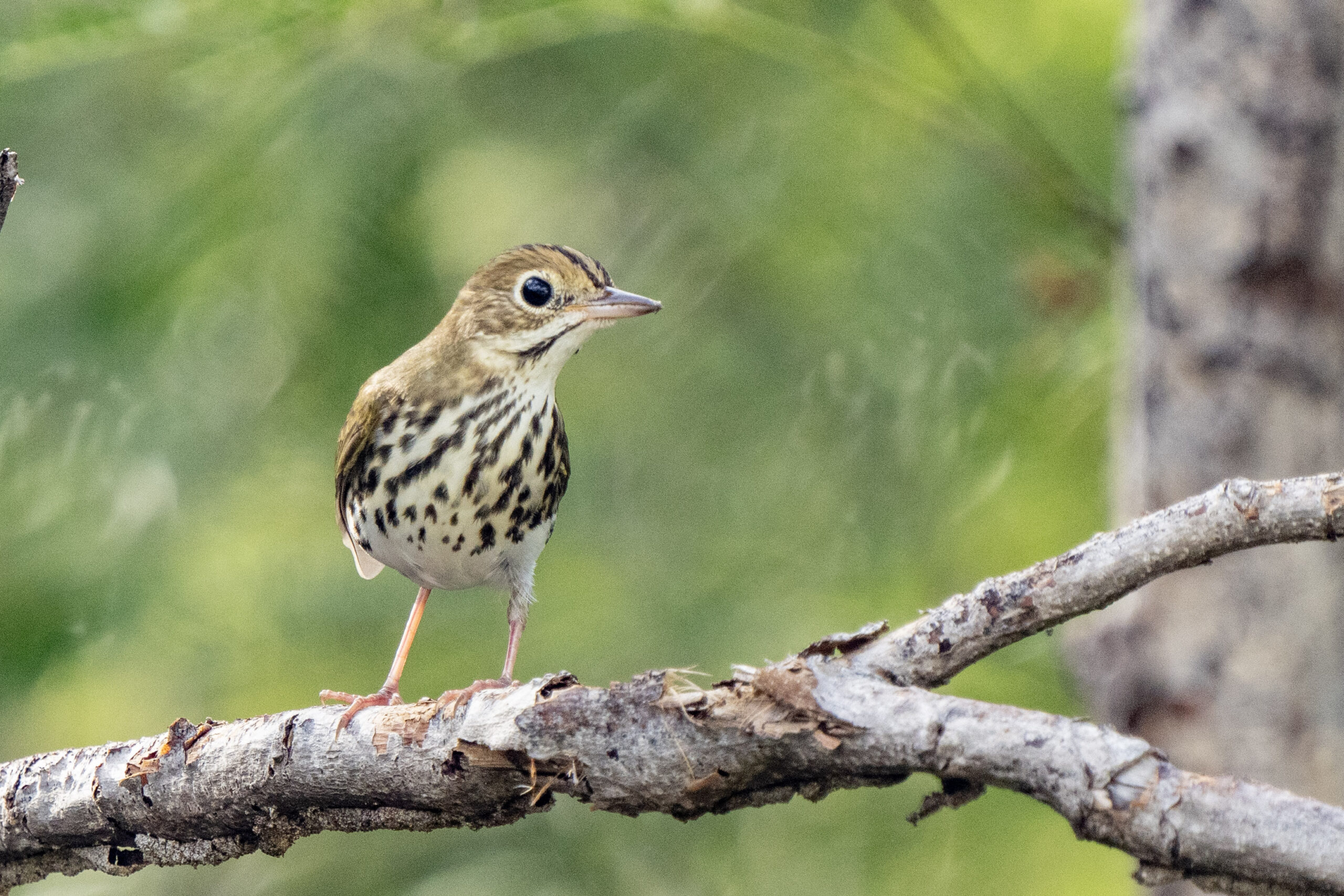
A handsome Ovenbird spotted on the trail. (Photo by Venecio Wilson)
Male Belted Kingfisher (Photo by Chuck Hantis)
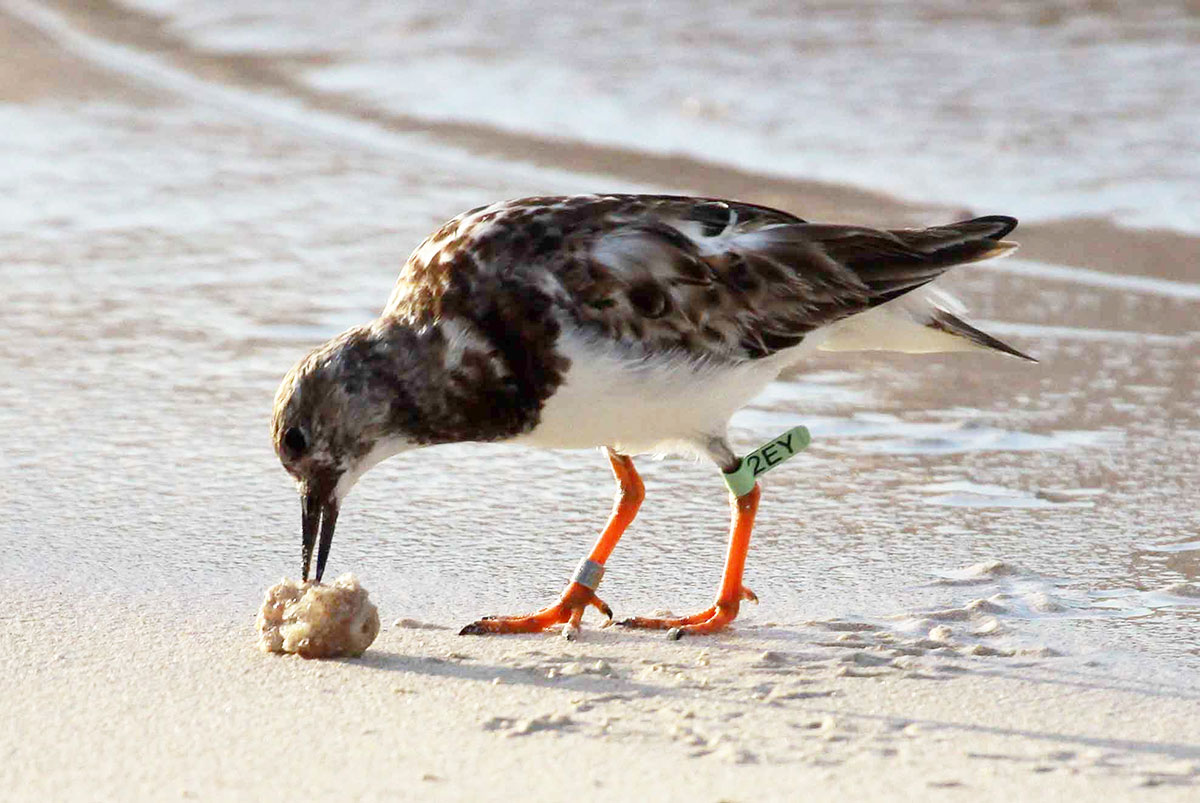
Red Knot by John Webster. Red Knot in winter plumage in Barbados. This species has one of the longest migrations of any bird, traveling more than 9,000 mi (14,000 km) from the Arctic to the southern tip of South America each year. Some individuals use Caribbean wetlands as stopover sites on migration.
And there’s more! Global Bird Weekend runs from October 9 to 11, offering even more opportunities to engage and possibly set new world records. Plus ladies, there’s a Women’s Team that anyone, from anywhere, can join!
Last October, nearly 900,000 participants set a new benchmark for collective birding action. 48,000 eBirders collectively reported 2.1 million individual bird observations and made Saturday the first day in October ever to surpass 100,000 checklists in a single day.
With birds facing habitat loss, climate change, and steep population declines, let’s push the boundary even further and make history all over again!
Checklists for conservation
Every checklist submitted gives scientists at the Cornell Lab of Ornithology and beyond, real-time, worldwide insights into bird populations, migration patterns, and important habitats that might be at risk. Without the collective effort of birdwatchers like you, gathering such a vast and diverse dataset would be impractical, making your participation essential to understanding and protecting birds in the Caribbean and across the globe.
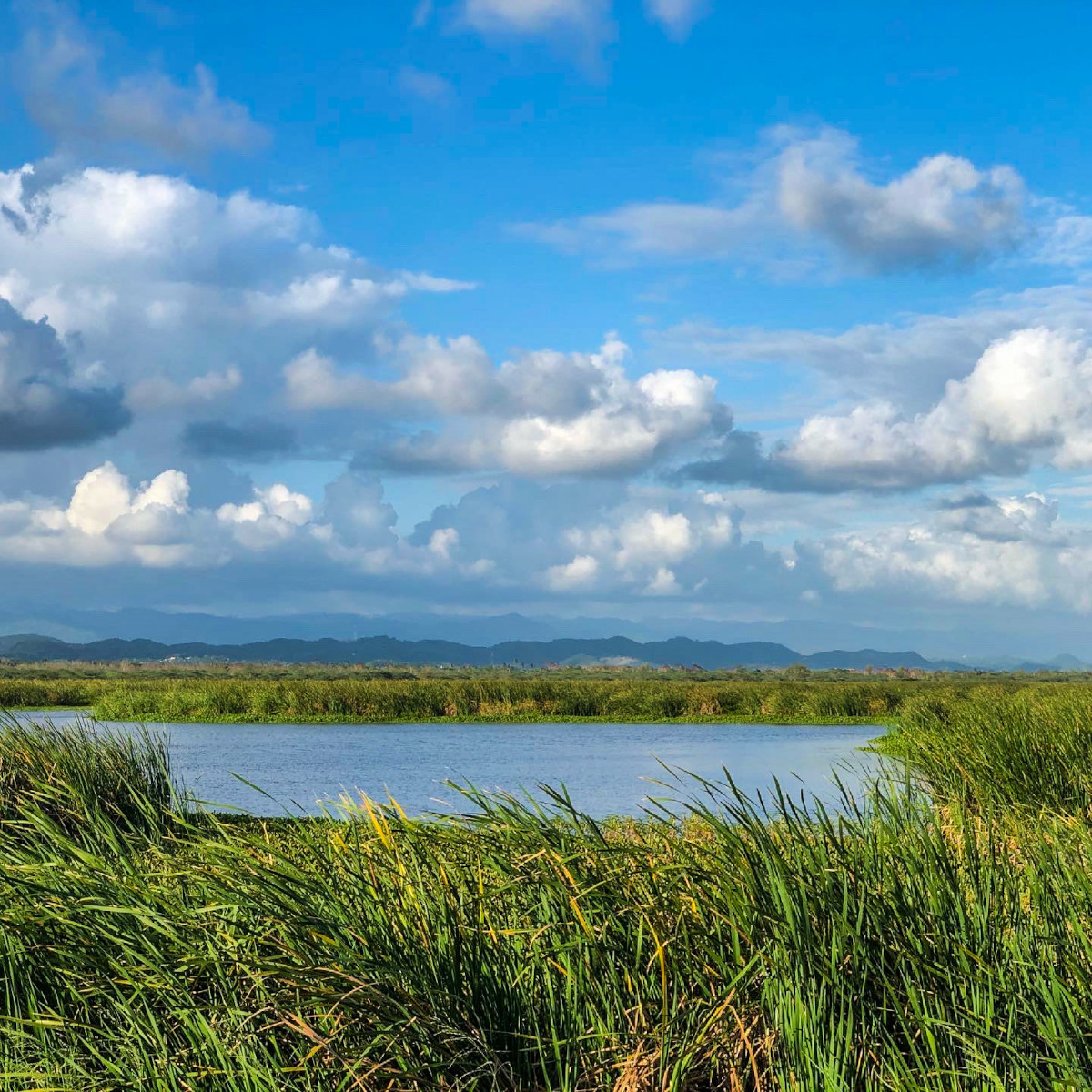
A wetland in Puerto Rico. (Photo by Rafy Rodriguez)
The information you collect and share helps paint a clearer picture of how bird populations are faring in the face of devastating threats, like habitat loss and climate change. By identifying where birds are thriving or declining, conservationists can make informed decisions about where to focus their efforts, implement protective measures, and advocate for policies that safeguard these species. Ultimately, your observations translate to the protection and survival of birds — but they also form part of your legacy, part of the mark that you chose to make on the world. A legacy of care ensures that future generations can continue to enjoy the beauty and diversity of our beloved birds.
Here are some tips to make the most of your big weekend of birding:
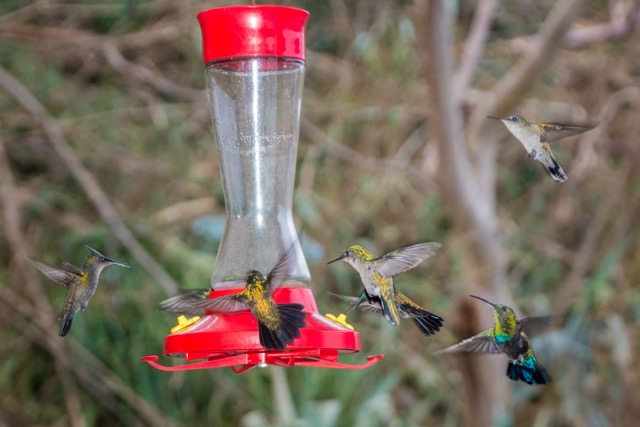
Hummingbirds flock to a feeder in Grand Case, St. Martin. (Photo by Mark Yokoyama)
Get (or dust off) your eBird account: If you don’t already have a free eBird account, it’s easy to sign up. Here’s a quick guide to using eBird. The handy mobile app lets you record and submit sightings while you’re out birding, explore nearby hotspots, and even track how far you have walked. Remember to submit your eBird checklists before October 13, 2026 to be included in the initial results announcement!
Keep checklists short and focused: Submit a separate checklist for each location you visit. These are much more valuable to science than one list covering the whole day. Learn more here.
Connect locally: Join a local event or team, or invite a friend to bird with you! Birdwatching can be a peaceful solo activity, but it’s also a fantastic social experience and a great way to make new friends. There’s so much to learn from fellow birders, too! They can help you spot and identify tricky birds (especially warblers and shorebirds), navigate the eBird app, and submit your very first checklist.
Count every bird: By submitting complete checklists of the birds you see and hear you gives scientists a comprehensive understanding of the bird community in your area. Counting birds is easy—until you encounter a huge flock especially one with multiple species! Keep calm and check out eBird’s helpful tips for counting large and mixes-species flocks here. And here’s a short reel with additional tips for counting flocks of shorebirds!
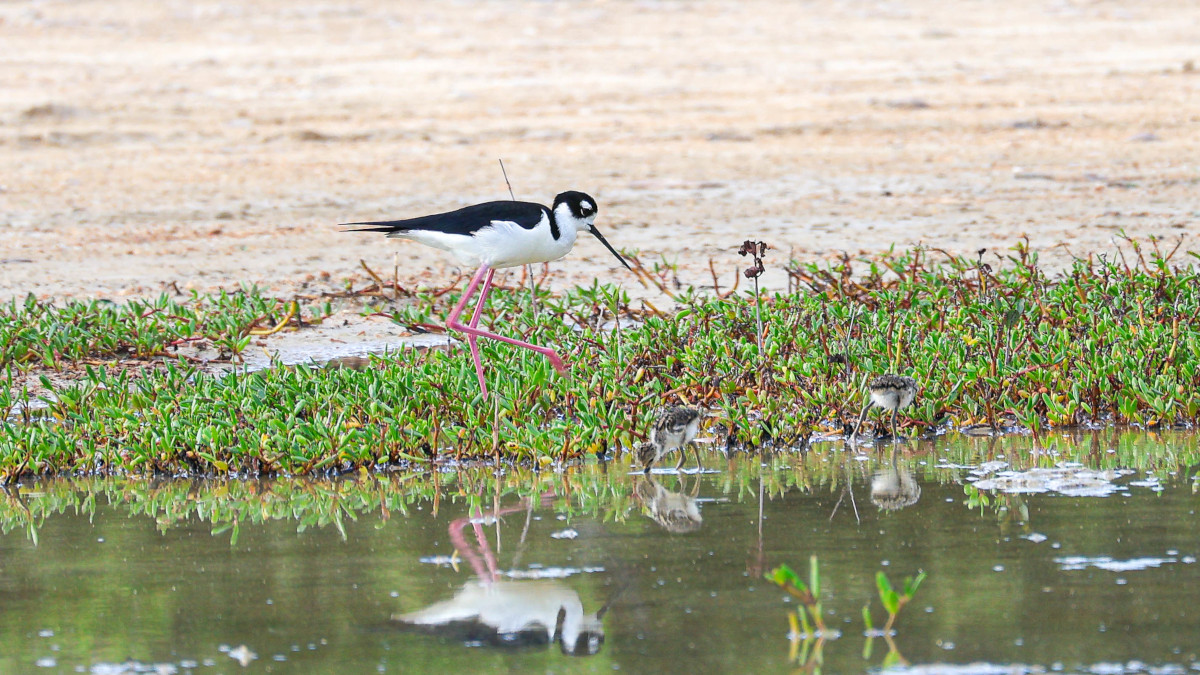
Black-necked Stilts with chicks, McKinnon’s Pond, Antigua. (Photo by Kendel Angol)Entering data into eBird. (Photo by Holly Garrod)
Some additional tips from the OBD veterans:
Don’t wing it: Make a packing list and bring a backpack! Remember your field guide, stylish (and functional!) BirdsCaribbean buff, medications, water, snacks, and other essentials. If you’re birding somewhere unfamiliar, plan ahead. Think about where to park, how long you’ll be out, and how far you want to walk. And be sure to let friends or family know where you’re going and when you expect to return.
Embrace being a beginner birder: If you’re a newbie, don’t let uncertainty keep you from discovering the wonderful world of birds! Early mornings are great for spotting warblers, while raptors often soar as the day heats up. Keep an eye out for gulls and shorebirds along the coast, and you might catch tanagers and bullfinches at their most active in the late afternoon.
Record Bird Sounds on October Big Day
Last year, 2,780 sound recordings were uploaded on October Big Day. With the new audio upload in eBird Mobile it’s easier than ever to collect bird sounds with your favorite recording app (we recommend Merlin Sound ID) and add them to your eBird checklists.
We challenge you to upload at least one sound recording on Saturday, 10 Oct following our recording best practices. We especially need more recordings from the Caribbean to improve Merlin’s ability to identify birds in the region! If every eBirder uploads one sound recording on October Big Day, that would mean 50,000 more bird sounds archived in the Macaulay Library—a 1700% increase in recordings over last year’s event, and six times as many recordings as Global Big Day 2026!
Shanna Challenger, EAG Antigua, teaches the group of first-time birders how to use binoculars.(Photo by Andrew Bowen/EAG)Participants practice identifying birds during the CBT training workshop. (Photo by WIRRED)
Show off your bird sightings and share the fun!
Don’t forget to share your birding stories and photos with us on social media. Follow us on Facebook and Instagram @birdscaribbean and tag us in your posts. If social media isn’t your thing, join our discussion group with over 950 members to share your October Big Day adventures.
And if you’re excited about diving deeper into the wonderful world of birds, why not become a BirdsCaribbean member? Enjoy discounts on products, workshops, and conferences; connect with fellow birders, scientists, educators, and conservationists across the region; and stay up to date with Caribbean bird news through our monthly newsletters.
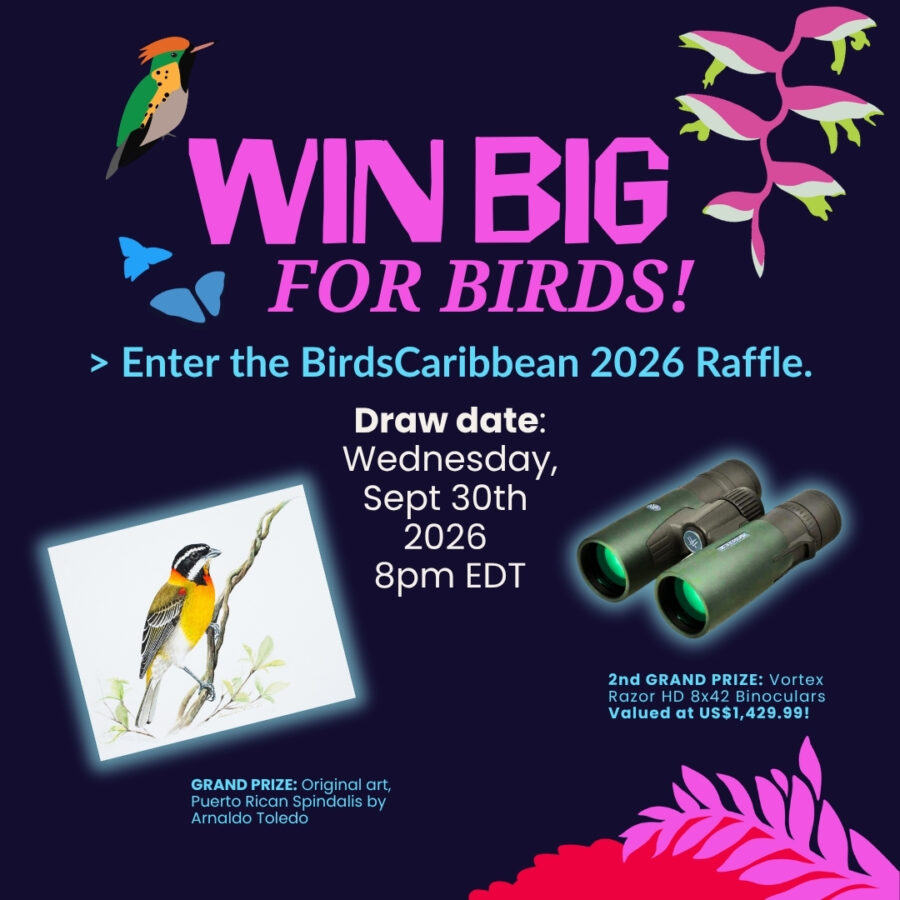
Proceeds from this raffle directly fund scientific research, fuel community education, and empower Caribbean wildlife professionals through scholarships to attend our regional workshops and conferences. Together, we can make a lasting impact for our Caribbean birds and communities.
But wait, we haven’t even mentioned the amazing prizes you could win! Are you ready to see if fortune favors you this year? This is your chance to make a tangible difference for Caribbean birds and score some incredible rewards. Talk about a win-win!
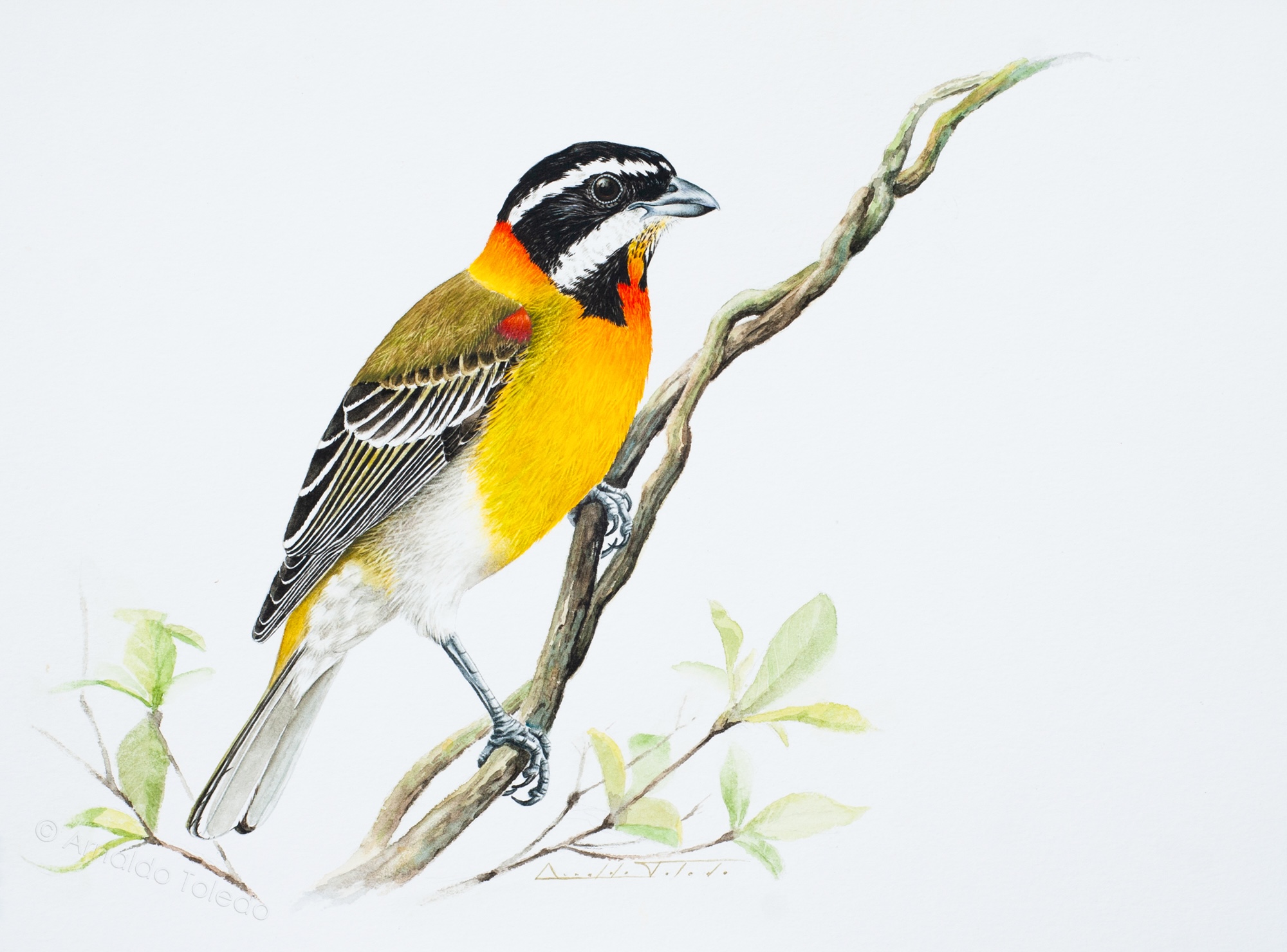
Grand Prize: “Puerto Rican Spindalis” Painting
Our Grand Prize is an exquisite original painting titled “Puerto Rican Spindalis” by award-winning Cuban scientific illustrator Arnaldo Toledo. It is one of Puerto Rico’s beloved endemics, locally called Reina Mora. Known for its sweet dawn song and show-stopping plumage, the male Puerto Rican Spindalis is a stunning bird with his bold, black-and-white striped head, fiery-orange neck collar, and bright yellow breast. This exquisite piece of art brings the bird’s radiant colors right off the treetops and into your home. Get your tickets for a chance to win!
This stunning 27×22.5 cm watercolor painting on Stonehenge Aqua paper was part of a special collection commissioned for the American Ornithological Society and BirdsCaribbean joint conference held in Puerto Rico.
In an interview, Arnaldo shared his process for creating this collection:
“I carefully researched each species and made an extensive study of reference material. This was essential for rendering each individual in a way that shows the beauty and life of the bird, as well as precisely draw and paint its field marks and diagnostic details. The pose and attitude of each bird is drawn to set the flow and balance of the composition, while at the same time showing all the splendor of these Puerto Rico endemics.”
Second Grand Prize: Vortex Razor HD 8X42 Binoculars
Vortex Razor HD 8X42 Binocular front view.
Vortex Razor HD 8X42 Binocular side view.
Birdwatchers will love the Vortex Razor HD 8×42 Binoculars, a premium-quality, award-winning optic packed with everything you need for stellar field observation. It is rugged, waterproof, compact, and its HD optical system delivers the sharpest, brightest images possible.
With so many high-end features, you might think this binocular is hefty. It is not! It is actually one of the lightest full-size binoculars on the market. To top it off, it comes with Vortex’s incredible, unconditional, lifetime VIP Warranty.
Additional Prizes: Giclée Prints by Nils Navarro
Winners will also have the chance to choose from stunning giclée prints by renowned Cuban wildlife artist and author, Nils Navarro. These beautiful prints expertly capture unique Cuban bird species and are signed, numbered, and measure approximately 8.5″ by 11″.
Cuban Trogon Giclée Print by Nils Navarro.
Blue-headed Quail Dove Giclee Print by Nils Navarro.
Cuban Tody Giclee Print by Nils Navarro.
Bee Hummingbird Giclée Print by Nils Navarro.
Get Your Tickets Now!
The Raffle drawing will take place on Wednesday, September 30th, 2026, at 8 PM EDT(Extended)
Tickets are $5 each, or you can maximize your chances and get five tickets for $20 (get one FREE). The more tickets you buy, the closer you get to taking home one of these incredible prizes!
En abril, recibí el tan esperado correo electrónico anunciando la inscripción para la 25.ª Conferencia Internacional de BirdsCaribbean. Visité el sitio web para consultar el programa previsto para los participantes y la gran variedad de excursiones —organizadas por HADCO Experiences—diseñadas para explorar la biodiversidad de estas hermosas islas. Afortunadamente, gracias a generosos donantes, pude cumplir mi sueño de participar en este importante evento para la conservación y protección de las aves y sus ecosistemas.
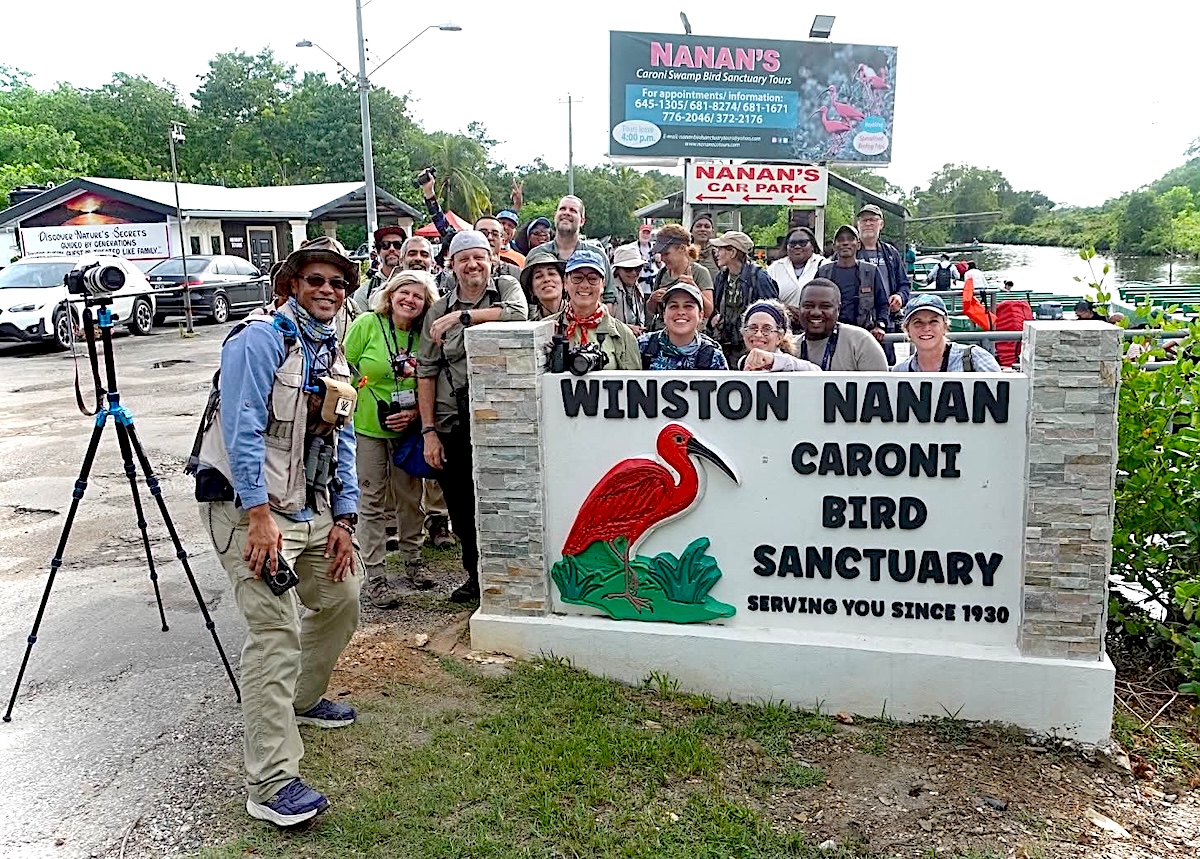
La gente de BirdsCaribbean listos para la excursión por el Caroni Bird Sanctuary. (Foto por Eliezer Nieves Rodríguez)
El programa ofrecía un día para una excursión. Tras estudiar los puntos de interés, las listas y las fotos de los cientos de especies que habitan y visitan Trinidad y Tobago, elegí la excursión que me llevaría a explorar los humedales de la costa oeste de Trinidad, culminando al atardecer en el Santuario de Aves de Caroni, reconocido a nivel mundial
Primera parada: Un templo en el mar
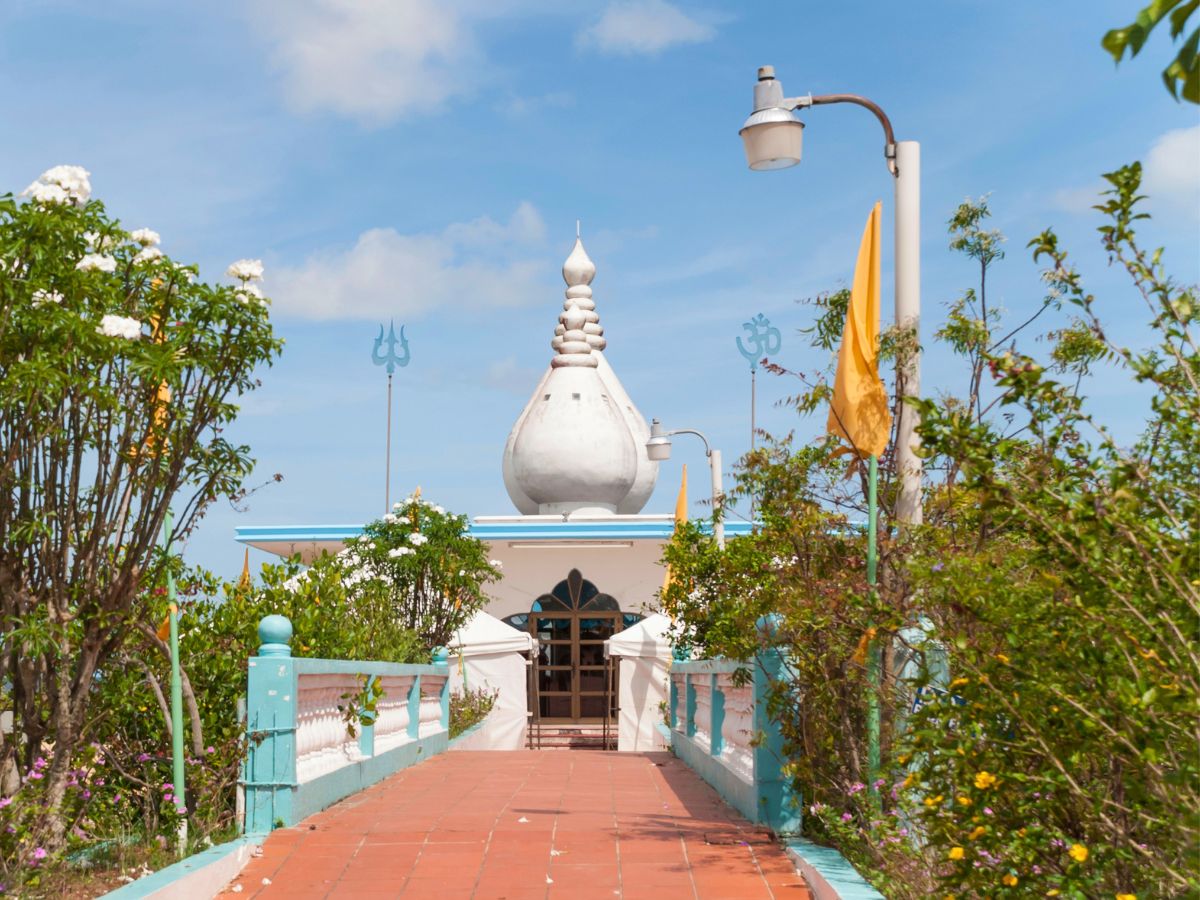
Nuestros guías, Dalini y Mukesh, llegaron al hotel puntualmente. La primera parada fue en el Templo en el Mar, un templo hindú octagonal construido en el mar después de que a su diseñador, Siewdas Sadhu, se le negara un terreno para edificarlo y trasladara su proyecto mar adentro. Allí caminamos por la arboleda que bordea la costa en busca del esquivo Vireón Cejirrufo.
Entrada al Temple in the Sea.
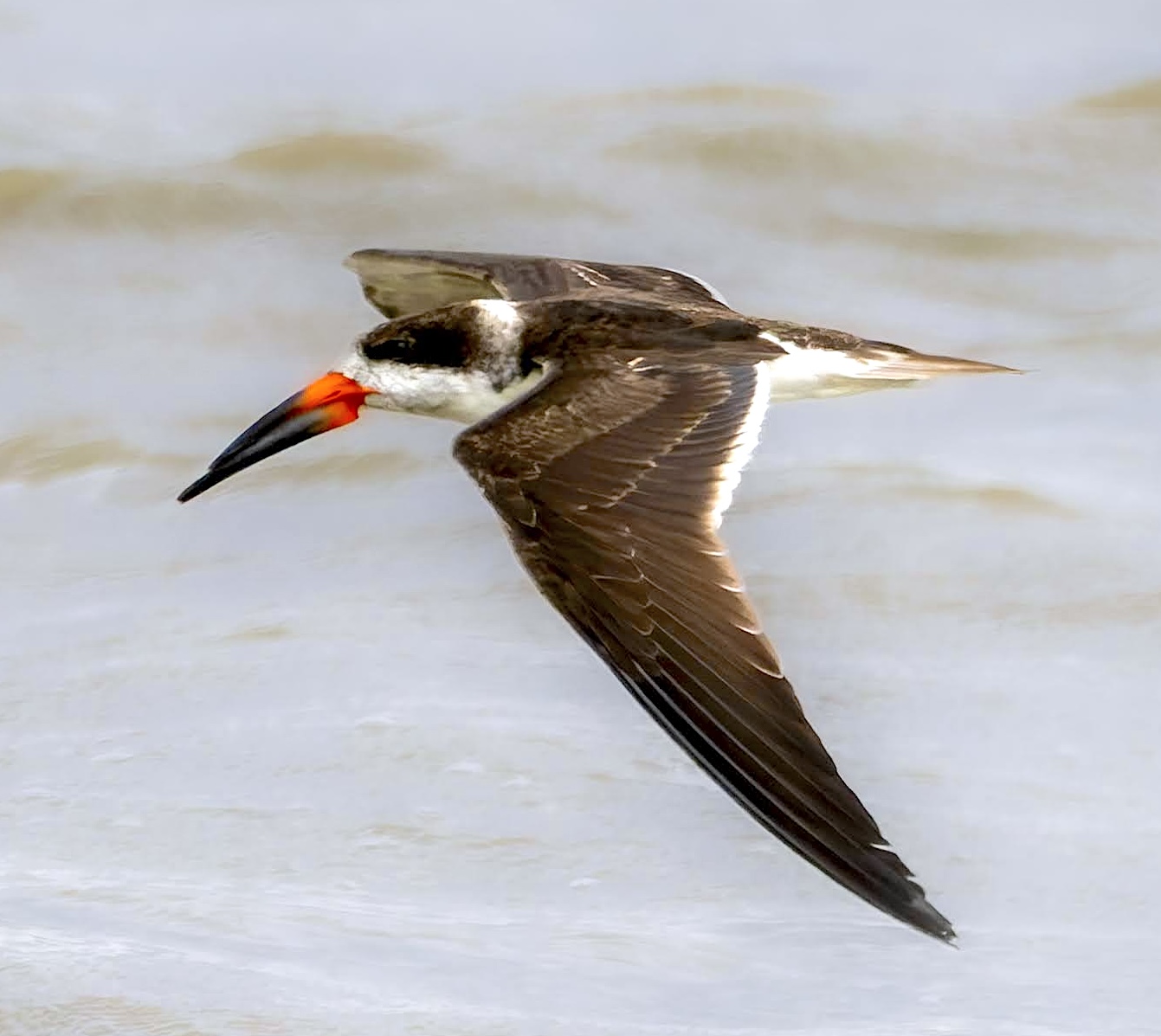
De repente, oí que alguien gritaba que se veían bandadas de Ibis Escarlata en el horizonte. Ya se alejaban, pero desde ahí divisé al Rayador Americano, una de las aves que quería ver en el viaje. Fue un espectáculo majestuoso verlo rozar el agua con su enorme pico bicolor en busca de alimento. ¡El día prometía!
Rayador americano (Rynchops niger). (Foto por Marta Torres Quiñones)
¡Ventana abajo, binoculares arriba!
Desde allí, partimos hacia Sumaria Trace, parada obligatoria para cualquier observador de aves en Trinidad: un camino rural flanqueado por humedales de gran biodiversidad. El conductor redujo la velocidad, bajamos las ventanas y me sentí como en un safari. Un solitario Flamenco Americano y unos Tordos Capuchiamarillos anunciaron su presencia y las Jacanas Sudamericanas nos mostraron sus hermosas alas amarillas en pleno vuelo.
Jacanas Sudamericanas (Jacana jacana).
Un macho de Tordos Capuchiamarillos (Chrysomus icterocephalus).
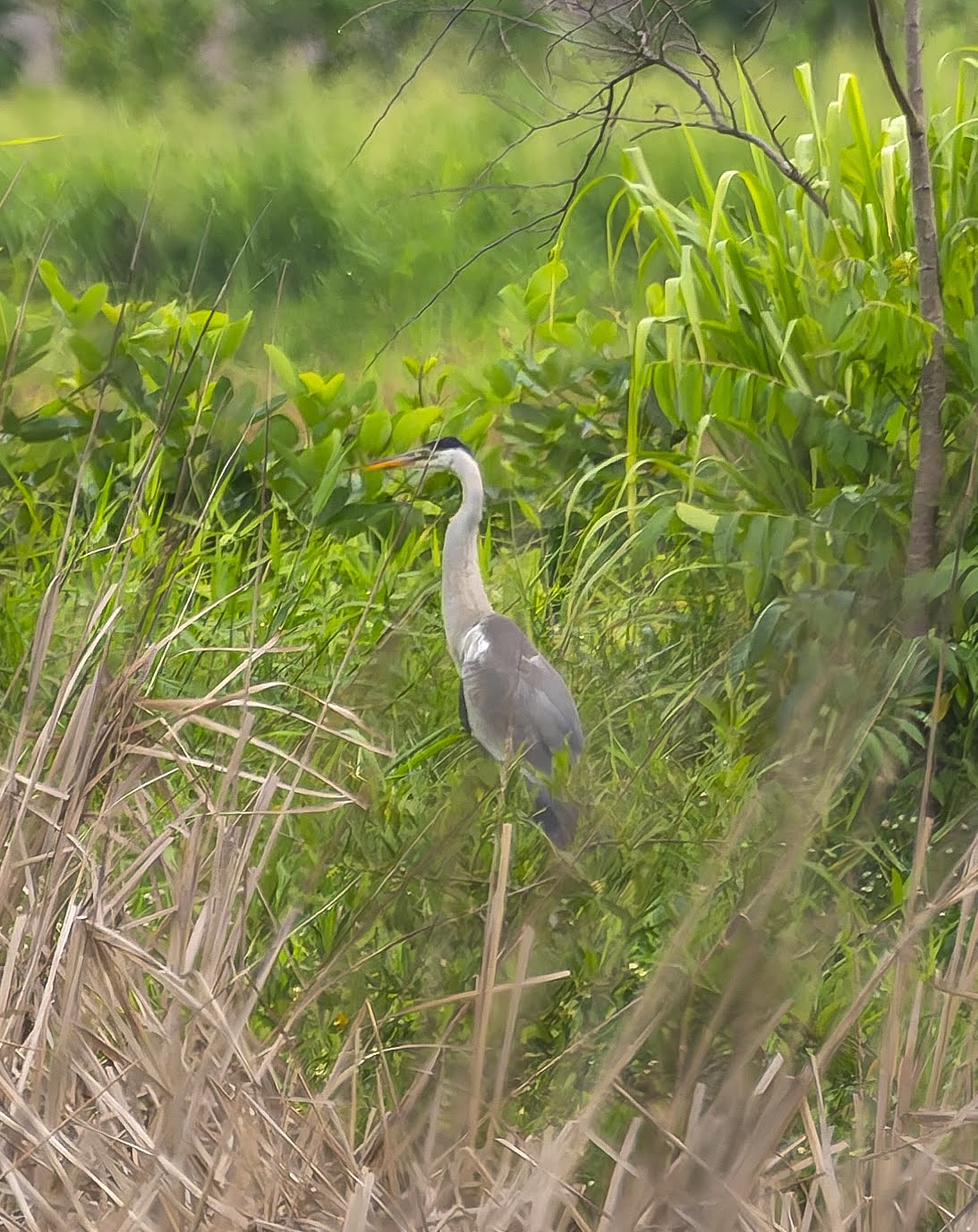
Garzón cocoi intentando jugar a las escondidas. (Foto por Marta Torres Quiñones)
Mukesh nos condujo hasta un punto en el camino donde colocó su telescopio y desde allí pudimos divisar un Garzón Cocoi camuflajeado entre la hierba alta. El grupo se dispersó para buscar e identificar aves a lo largo del camino; cada uno con su propia lista de aves que quería ver. De fondo, podía oír el clic de las cámaras y los nombres de las especies que mis compañeros de excursión estaban avistando: Aninga, Monjita Tricolor, Curutié Colorado, Garza Pechiblanca, Vencejillo Tijereta y Estrilda Común.
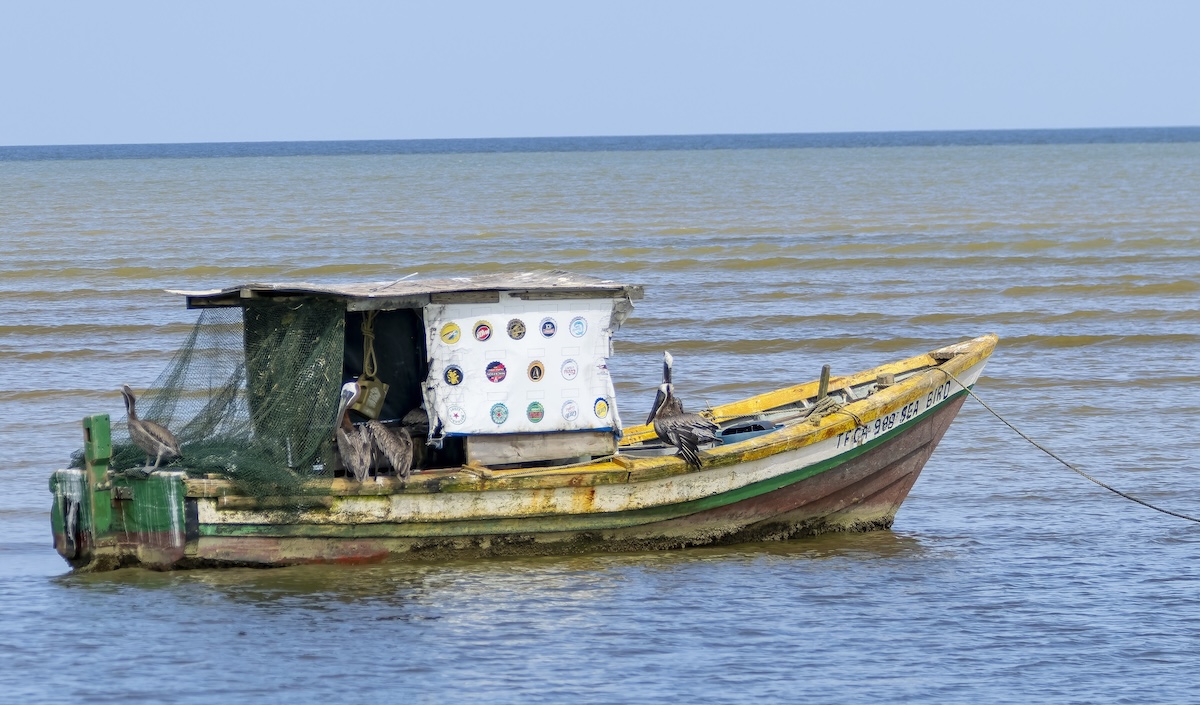
El sol quemaba y la humedad se sentía. Nuestros guías nos llamaron de vuelta al autobús para dirigirnos a Orange Valley y al Waterloo Fish Depot. La mayoría de los pescadores ya regresaban a la costa. A lo lejos grandes barcos compartían las aguas con Pelícanos Pardos y Tijeretas que sobrevolaban la zona en busca de presa fácil.
Las aves playeras son de mis favoritas y aquí pudimos observar Playeros Picocorvo Americano, Aliblancos, Agujetas Piquicortas, además de diversas garzas y otras aves acuáticas. De repente escuché una sirena… ¿de dónde provenía ese sonido? ¡Era un búho, el Mochuelo Caburé! Un grupo ya estaba intentando avistarlo, pero todos sus intentos fueron en vano.
Pelícanos pardos descansando en un bote. (Foto: Marta Torres Quiñones)
Pájaros, roti y un poco de lluvia
El cielo comenzó a nublarse y recibí una notificación de que se acercaba la lluvia. Era la señal perfecta para almorzar, así que nos dirigimos al famoso Highway Roti Shop para esperar a que pasara la lluvia. La conversación fluía entre los participantes de la excursión mientras saboreábamos un delicioso plato tradicional.
Si planifican visitar Trinidad y Tobago recomiendo se detengan en un puesto callejero para probar los deliciosos Aloo Pies (masa frita rellena de papas sazonadas), Saheenas (buñuelos hechos con una masa de guisantes partidos y hojas de taro sazonadas) y Doubles (garbanzos al curry entre dos bara fritos). ¡Para chuparse los dedos!
La magia de Caroni
Finalmente llegamos al Santuario de Aves Caroni de Winston Nanan, donde disfrutamos de un paseo en bote por el manglar y humedal más grande de Trinidad. Hermosos canales, lagunas y marismas que albergan cientos de especies de vida silvestre. Durante el recorrido avistamos murciélagos narigudos, serpientes, un pequeño oso hormiguero sedoso durmiendo y una cantidad impresionante de aves.
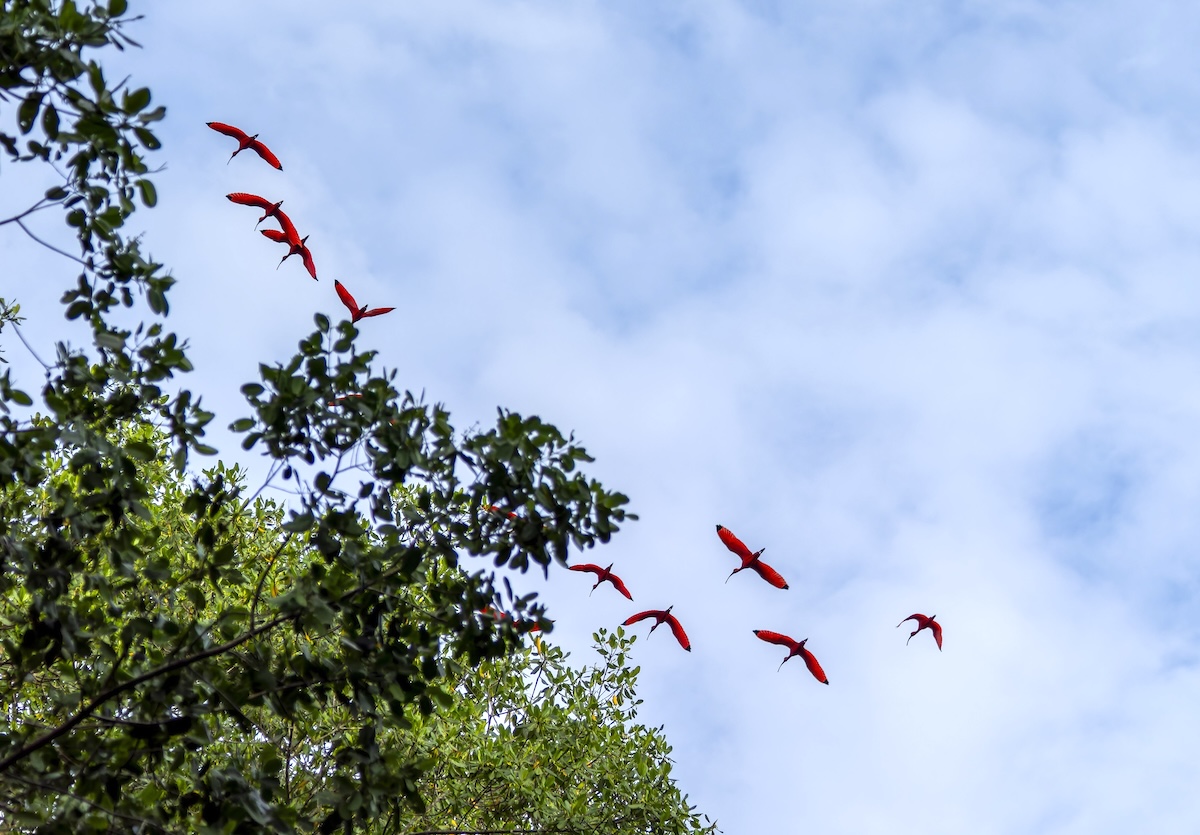
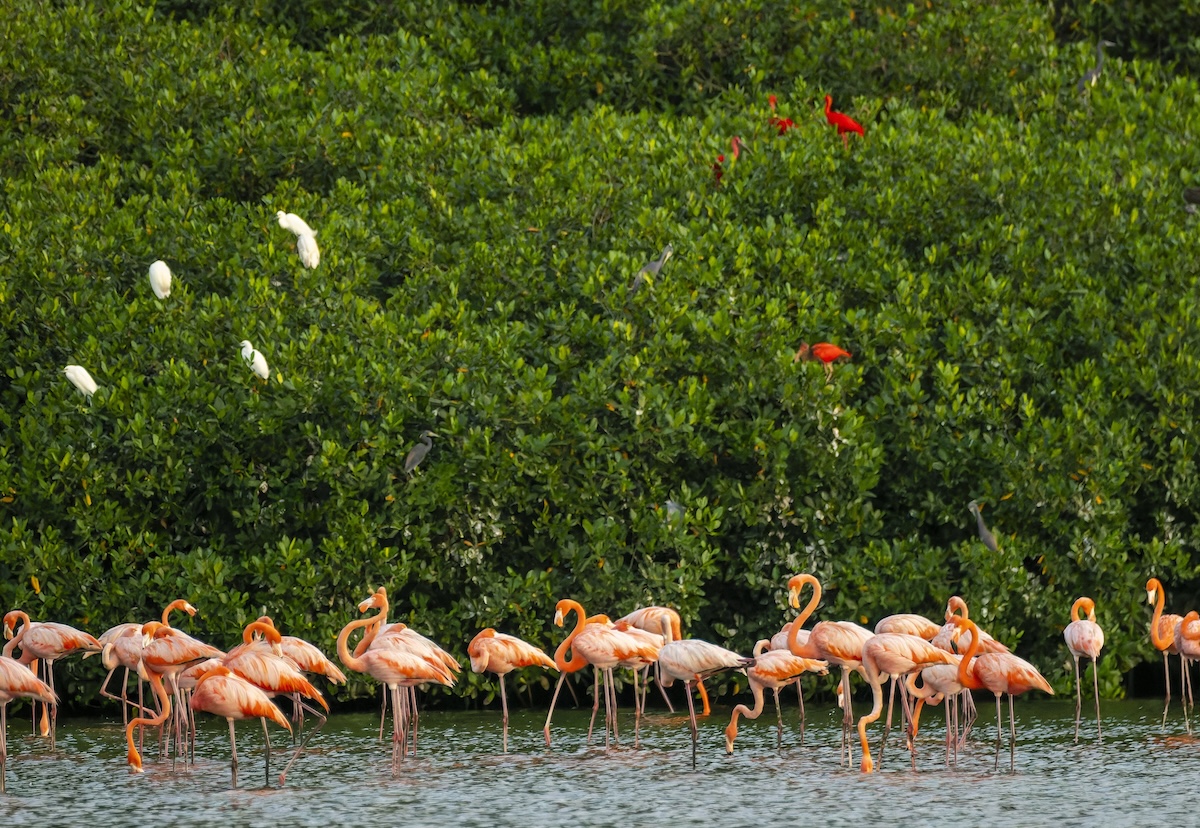
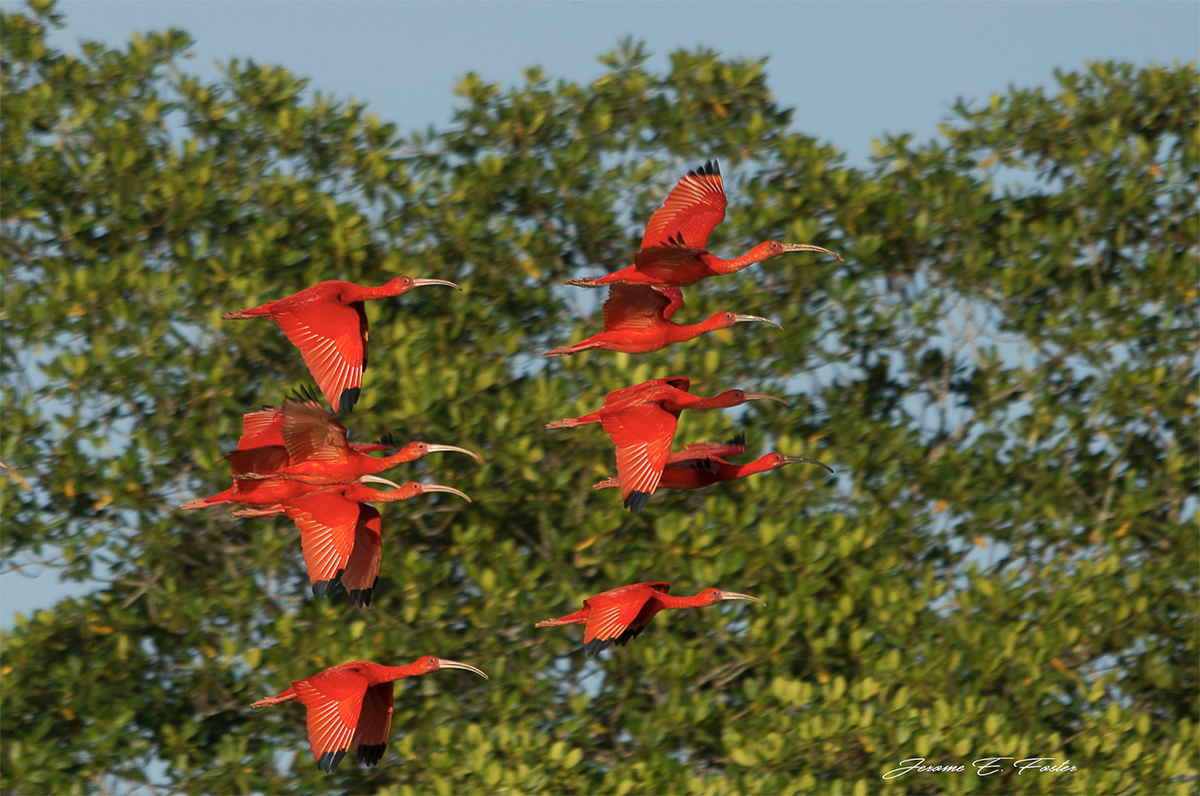
El Ibis Escarlata, ave nacional de Trinidad y Tobago, hizo su entrada volando sobre nuestras cabezas hacia su zona de anidaje. Un Martín Pescador Enano nos deleitó con un espectáculo, al volar varias veces alrededor de la embarcación, mientras los flamencos se alimentaban y se bañaban en la laguna, y los cormoranes y las garzas se preparaban para terminar su día.
Una pequeña bandada de Ibis escarlata vuela sobre el pantano. (Foto: Marta Torres Quiñones)
El tiempo se detuvo al atardecer y agradecimos la experiencia vivida. Fuimos afortunados de contar con Allister Nanan como guía en esta parte de la excursión. Él ha continuado el legado familiar de conservación y protección de este idílico ecosistema mediante acuerdos con el gobierno y la participación y educación de los miembros de la comunidad. Es un vivo ejemplo de lo que se podría emular en otras islas del Caribe al enfocarse en iniciativas que combinen el ecoturismo, la conservación y la protección de estos lugares tan especiales.
Flamencos en el Caroni Swamp. (Foto: Marta Torres Quiñones)
Mirielle Villanueva.
Mirielle Villanueva es una apasionada observadora de aves, científica ciudadana y voluntaria de diversas organizaciones sin fines de lucro, como Surfrider Puerto Rico, Para La Naturaleza, BirdsCaribbean y Tortugueros del Oeste. Durante el último año, ha liderado censos de aves en su área, incluyendo el Censo de Aves Acuáticas del Caribe (CWC), a la vez que educaba a los participantes sobre cómo las aves pueden servir como indicadores de la salud del ecosistema. Su objetivo es crear conciencia sobre la importancia del monitoreo de aves e inspirar a otros a salir a la naturaleza, reportar sus observaciones y participar en la protección y conservación de los hábitats de las aves. Mirielle también fue una participante entusiasta en nuestro reciente evento.Taller de capacitación de CWC en la Reserva Estuarina Nacional de Jobos Bay en Puerto Rico.
My Experience of Trinidad’s Wetlands with My BirdsCaribbean Peeps
In April, I received the long-awaited email announcing registration for the 25th BirdsCaribbean International Conference. I visited the website to see the planned agenda for participants and the wide variety of field trips—organized by HADCO Experiences—designed to explore the biodiversity of these beautiful islands. Fortunately, thanks to generous donors, I was able to fulfill my dream of participating in this important event for the conservation and protection of birds and their ecosystems.
The BirdsCaribbean peeps ready to tour the Caroni Bird Sanctuary. (Photo by Eliezer Nieves Rodríguez)
The program offered one day for an excursion. After studying the hotspots, lists, and photos of the hundreds of species that inhabit and visit Trinidad and Tobago, I chose the excursion that would take me to explore the wetlands on Trinidad’s west coast, culminating at sunset at the world-famous Caroni Swamp Bird Sanctuary.
First Stop: A Temple in the Sea
Our guides, Dalini and Mukesh, arrived at the hotel right on time. The first stop was at the Temple in the Sea, an octagonal-shaped Hindu temple that was built in the sea after its designer, Siewdas Sadhu, was refused land to build his temple and took his efforts offshore. Here, we walked through the grove of trees lining the coast in search of an elusive Rufous-browed Peppershrike.
Entrance to the Temple in the Sea.
Suddenly, I heard someone call out that flocks of Scarlet Ibis were visible on the horizon. They were too far away to appreciate , but from that vantage point I spotted the Black Skimmer, one of the birds on my bucket list for the trip. It was a majestic sight to see it skimming the water with its enormous two-toned beak in search of food. The day was off to a great start!
Black Skimmer (Rynchops niger) sighting at Temple in the Sea. (Photo by Marta Torres Quiñones)
Window Down, Binoculars Up!
From there, we set off for Sumaria Trace—a must-visit site on every birdwatcher’s list in Trinidad—a rural road flanked by wetlands rich in biodiversity. The driver slowed down, we rolled down the windows, and I felt like I was on a safari. A solitary American Flamingo and Yellow-hooded Blackbirds announced their presence, and Wattled Jacanas showed us their beautiful yellow wings in flight.
Wattled Jacana.
A male Yellow-hooded Blackbird.
A Cocoi Heron trying to play Hide and Seek. (Photo by Marta Torres Quiñones)
Mukesh led us to a spot along the road where he set up his scope, and from there we were able to spot a Cocoi Heron camouflaged among the tall grasses. The group spread out to search for and identify birds along the way, each of us with our own short list of “must-see” birds. In the background, I could hear the clicking of cameras and the names of species my fellow birders were spotting: Anhinga, Tricolored Munia, Yellow-chinned Spinetail, Tricolored Heron, Fork-tailed Palm Swift, and Common Waxbill.
The sun was beating down, and we could feel the high humidity. Our guides called us back to the bus so we could head to Orange Valley and the Waterloo Fish Depot. Most of the fishermen were already on their way back to shore. In the distance, large boats shared the water with Brown Pelicans, and Magnificent Frigatebirds were flying overhead in search of easy prey.
Shorebirds are among my favorites and here, we were able to observe Hudsonian Whimbrels, Willets, and Short-billed Dowitchers, along with a variety of herons and other waterbirds. Suddenly, I heard a siren… where was that sound coming from? It was a Ferruginous Pygmy-Owl! A group was already trying to spot it, but all their attempts were in vain.
Brown Pelicans resting on a boat. (Photo by Marta Torres Quiñones)
Birds, Roti, and a Little Rain
The sky began to cloud over, and I received a notification that rain was on the way. It was the perfect cue for lunch, so we headed to the famous Highway Roti Shop to wait out the rainy weather. Conversation flowed among the tour participants as we savored a delicious traditional dish.
If you’re planning to visit Trinidad and Tobago, I recommend stopping at a roadside stand to try the delicious Aloo Pies (fried dough stuffed with seasoned potatoes), Saheenas (fritters made of seasoned split-pea and dasheen leaves batter), and Doubles (curried chickpeas sandwiched between two fried bara, flatbreads). They’re finger-licking good!
The Magic of Caroni
Finally, we arrived at the Winston Nanan Caroni Bird Sanctuary, where we enjoyed a boat tour through Trinidad’s largest mangrove forest and wetland. Beautiful canals, lagoons, and marshes provide a home to hundreds of species of wildlife. During the trip, we spotted Proboscis Bats, snakes, a tiny Silky Anteater taking a nap, and a remarkable number of birds.
The Scarlet Ibis, Trinidad and Tobago’s national bird, made its entrance, flying overhead toward its nesting area. An American Pygmy Kingfisher put on a show for us, flying around the boat several times, while flamingos fed and bathed in the lagoon and cormorants and herons prepared to end their day.
A small flock of Scarlet Ibis flies over the swamp. (Photo by Marta Torres Quiñones)
Time stood still as the sun began to set, and we were thankful for the experience we’d just had. We were fortunate to have Allister Nanan as our guide for this part of the excursion. He has carried on his family’s legacy of conserving and protecting this idyllic ecosystem through agreements with the government and by involving and educating community members. It is a living example of what is possible—and an approach that could be emulated on other Caribbean islands with initiatives that bring together ecotourism, conservation, and the protection of these special places.
Flamingos at Caroni Swamp. (Photo by Marta Torres Quiñones)
Mirielle Villanueva.
Mirielle Villanueva is a passionate birder, citizen scientist, and volunteer for various non-profit organizations, such as Surfrider Puerto Rico, Para La Naturaleza, BirdsCaribbean, and Tortugueros del Oeste. For the past year she has been leading bird surveys in her area, including for the Caribbean Waterbird Census (CWC), while educating participants about how birds can serve as indicators of ecosystem health. Her goal is to raise awareness about the importance of bird monitoring and inspire others to get out into nature, report their observations, and become involved in protecting and conserving bird habitats. Mirielle was also an enthusiastic participant at our recent CWC Training Workshop at Jobos Bay National Estuarine Reserve in Puerto Rico.
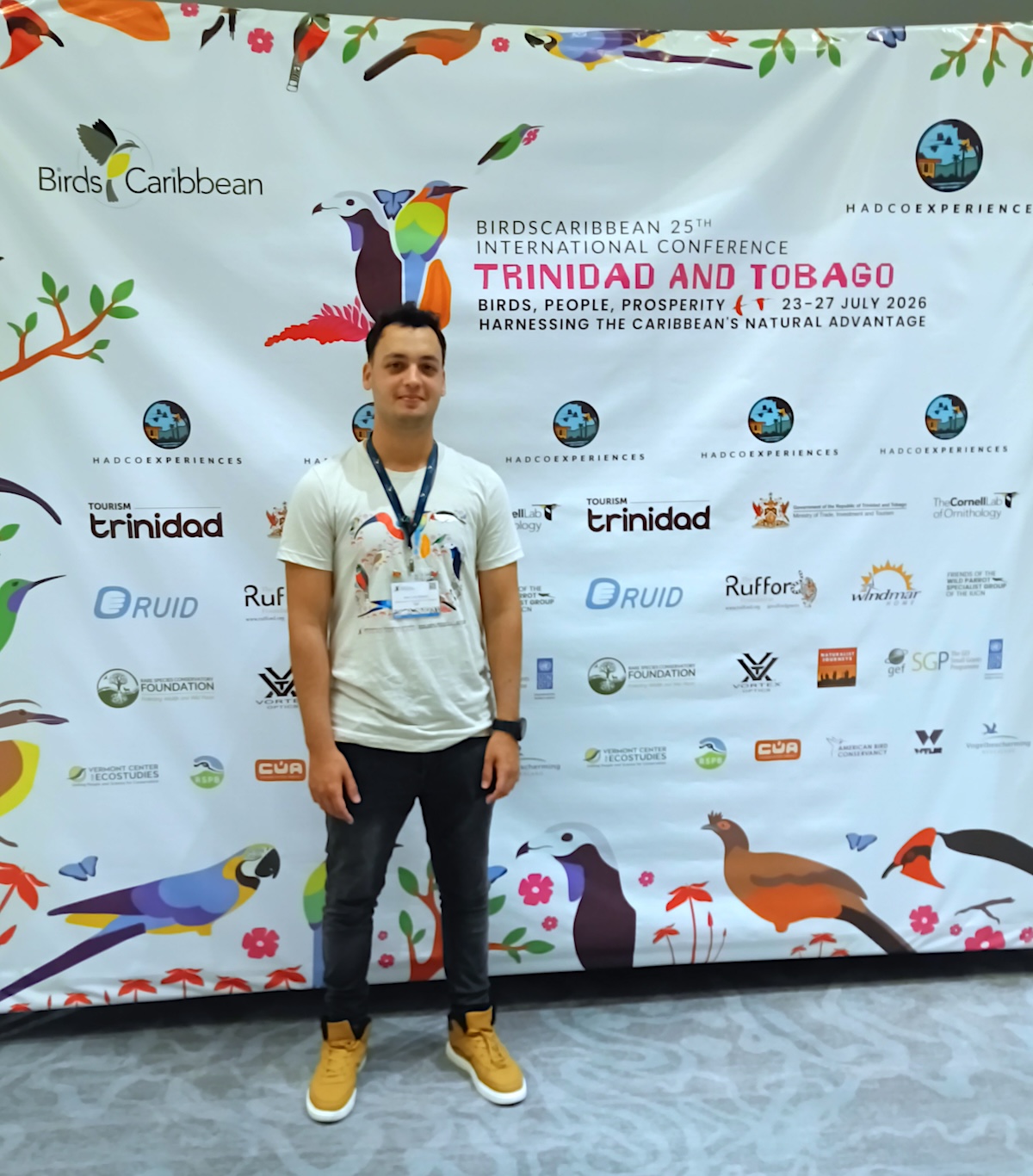
Abel Luis Simeón, ornitólogo cubano y asistente por primera vez a la Conferencia Internacional de BirdsCaribbean.
Para Abel Luis Simeón, biólogo cubano de 25 años, su primera conferencia de BirdsCaribbean supuso un hito personal. Desde los tan esperados encuentros con las extraordinarias aves de Trinidad y Tobago, pasando por el contacto con conservacionistas apasionados que comparten su profundo compromiso con la biodiversidad caribeña, hasta el intercambio de su propio trabajo en la protección de dos palomas endémicas de Cuba, Abel regresó a casa con nuevas ideas, valiosos contactos y un propósito renovado. Sigue leyendo para conocer las reflexiones de Abel sobre una experiencia transformadora en la conferencia.
Hay momentos que marcan el comienzo de un nuevo capítulo. Para mí, asistir a la 25.ª Conferencia Internacional de BirdsCaribbean en Trinidad y Tobago fue uno de ellos. Como joven biólogo y ornitólogo cubano, llevaba mucho tiempo soñando con participar en un encuentro en el que pudiera compartir experiencias con personas que, como yo, dedican su vida a la conservación de las aves del Caribe.
Aves que había soñado con ver
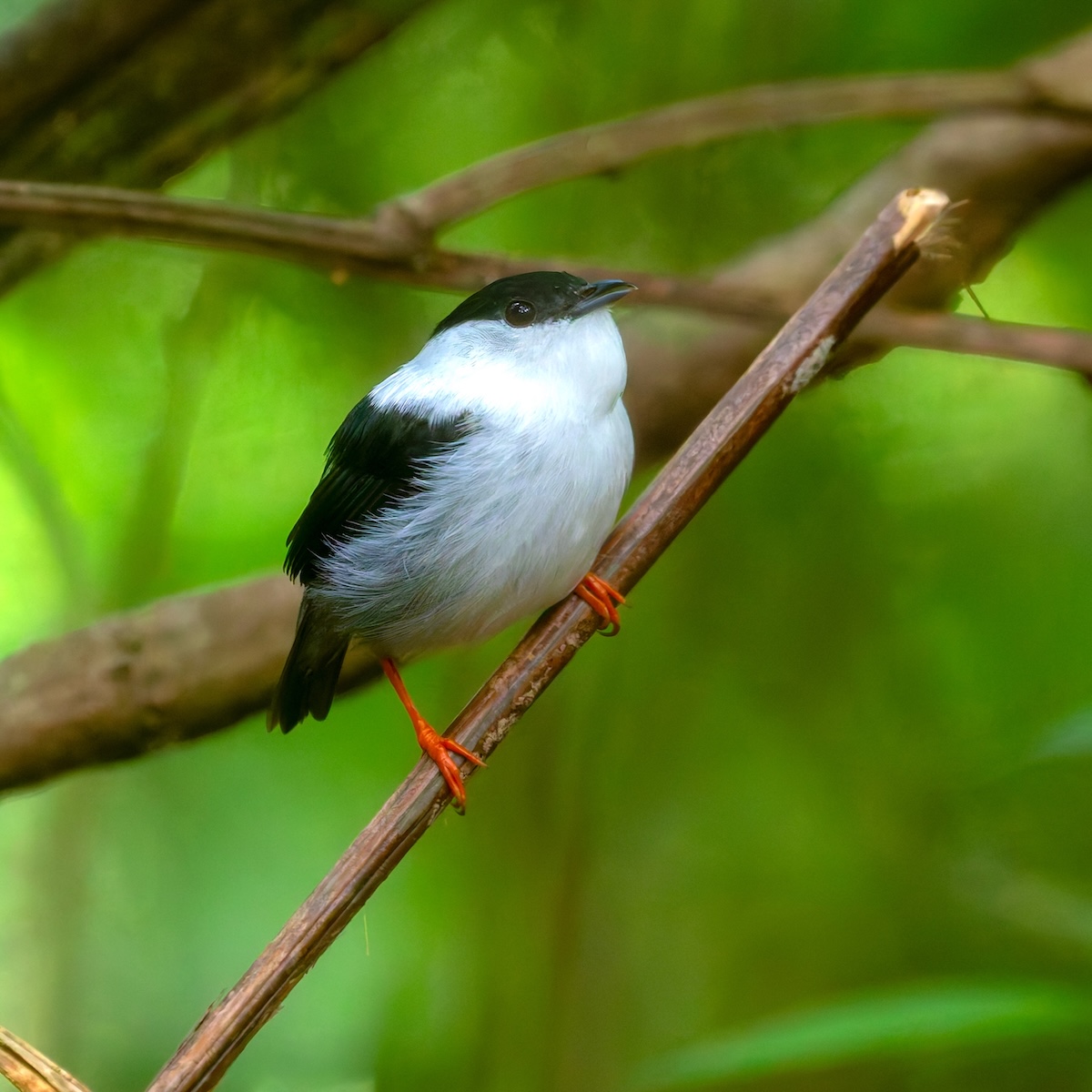
White-beared Manakin (Manacus manacus). (Photo by Abel Simeon)
Antes de viajar, una de las cosas que más ilusión me hacía era conocer Trinidad y Tobago. Siempre había oído hablar de su extraordinaria diversidad de aves y ecosistemas, y poder observarlos en persona superó mis expectativas. Uno de los recuerdos más especiales de la conferencia tuvo lugar durante la visita al Centro Natural Asa Wright. Escuchar por primera vez el canto potente y resonante de los pájaros campana barbudos fue realmente impresionante. Pero si hubo un momento que llevaba años imaginándome, fue presenciar los famosos leks de los manakins de barba blanca (Manacus manacus). Ver a los machos reunidos, realizando sus rápidos movimientos y exhibiciones mientras emitían sus característicos cantos, fue una experiencia que nunca olvidaré. Son estos momentos los que nos recuerdan por qué decidimos dedicar nuestras vidas al estudio y la conservación de las aves.
Sin embargo, lo más valioso de la experiencia fue la gente. Durante la conferencia, tuve la oportunidad de hablar con investigadores, estudiantes, conservacionistas y profesionales de todo el Caribe y más allá, todos unidos por una pasión compartida: proteger nuestras aves y los hábitats de los que dependen.
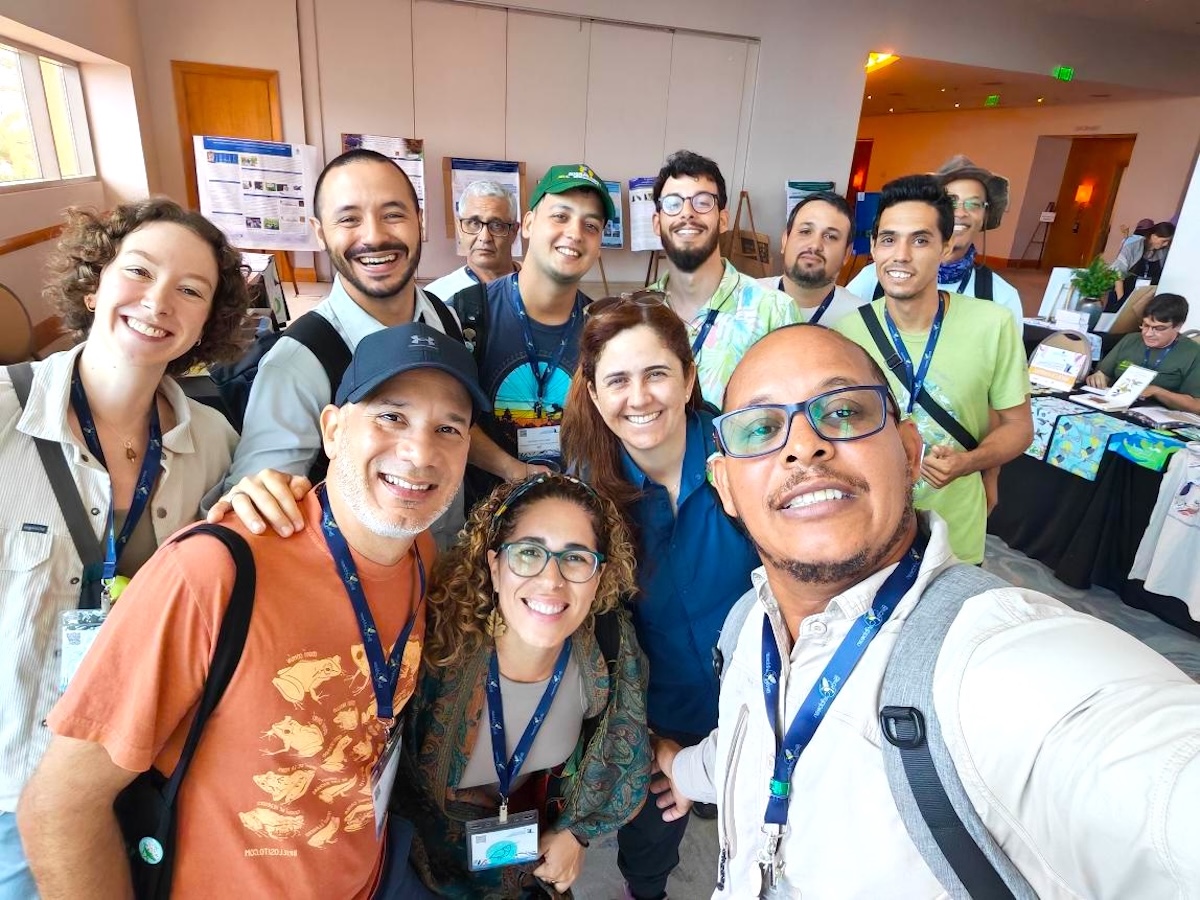
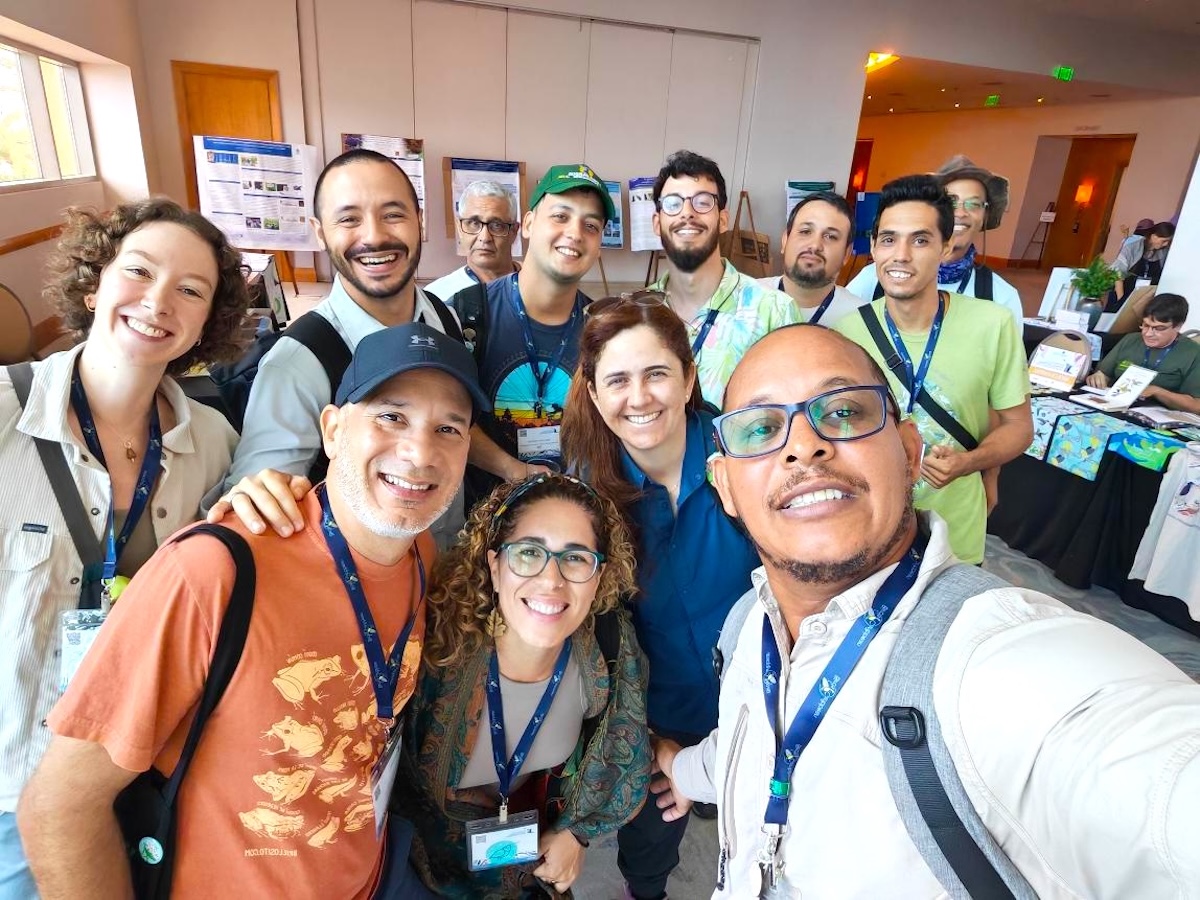
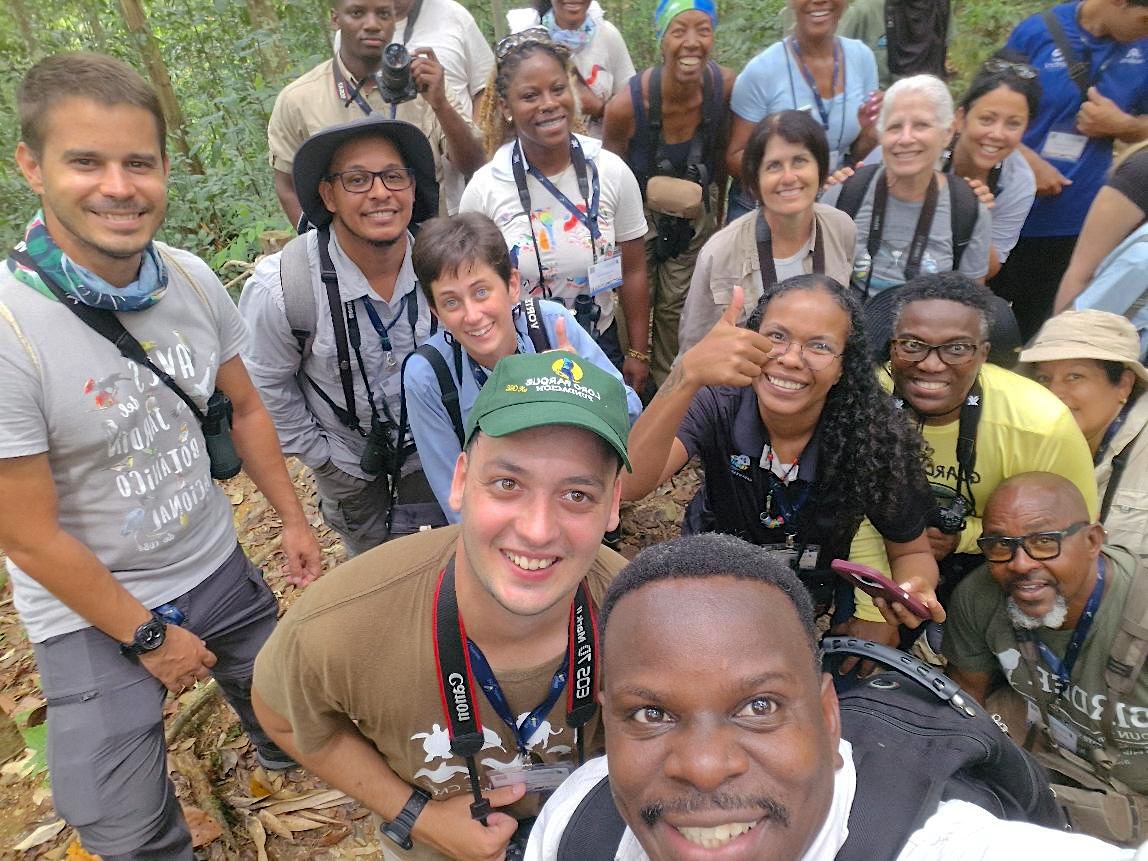
Abel (con gorra verde) junto a otros delegados de República Dominicana, Puerto Rico, Las Bahamas y Cuba. (Foto por Héctor Andújar)
Compartir mi investigación
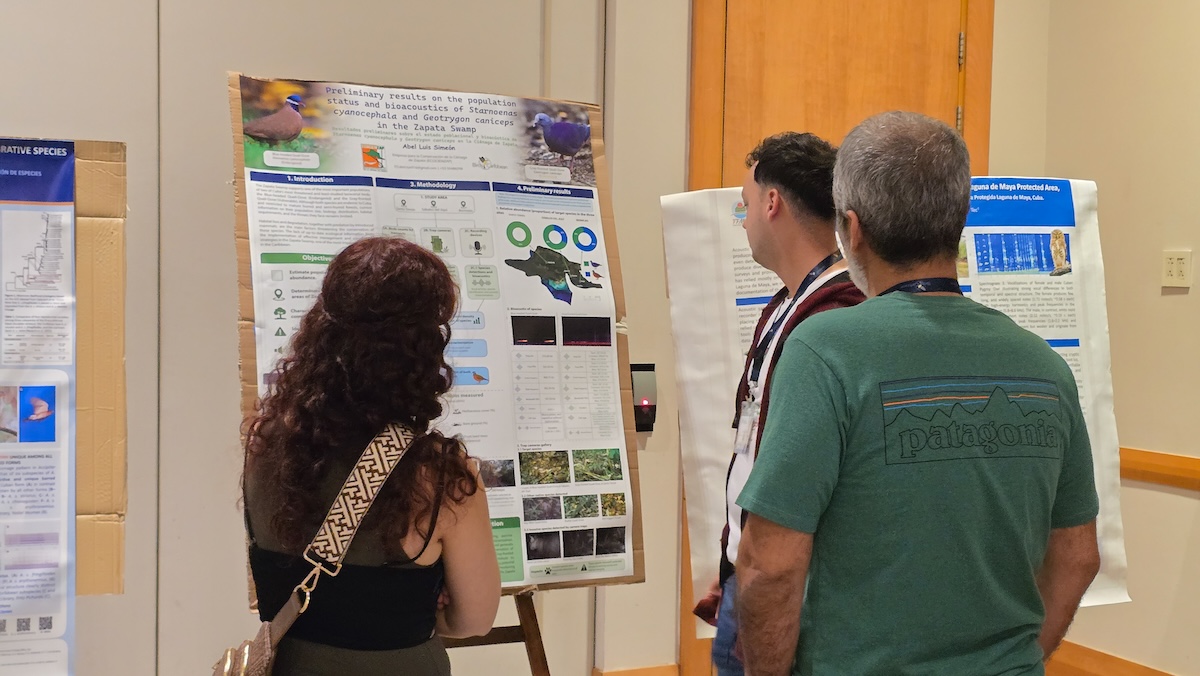
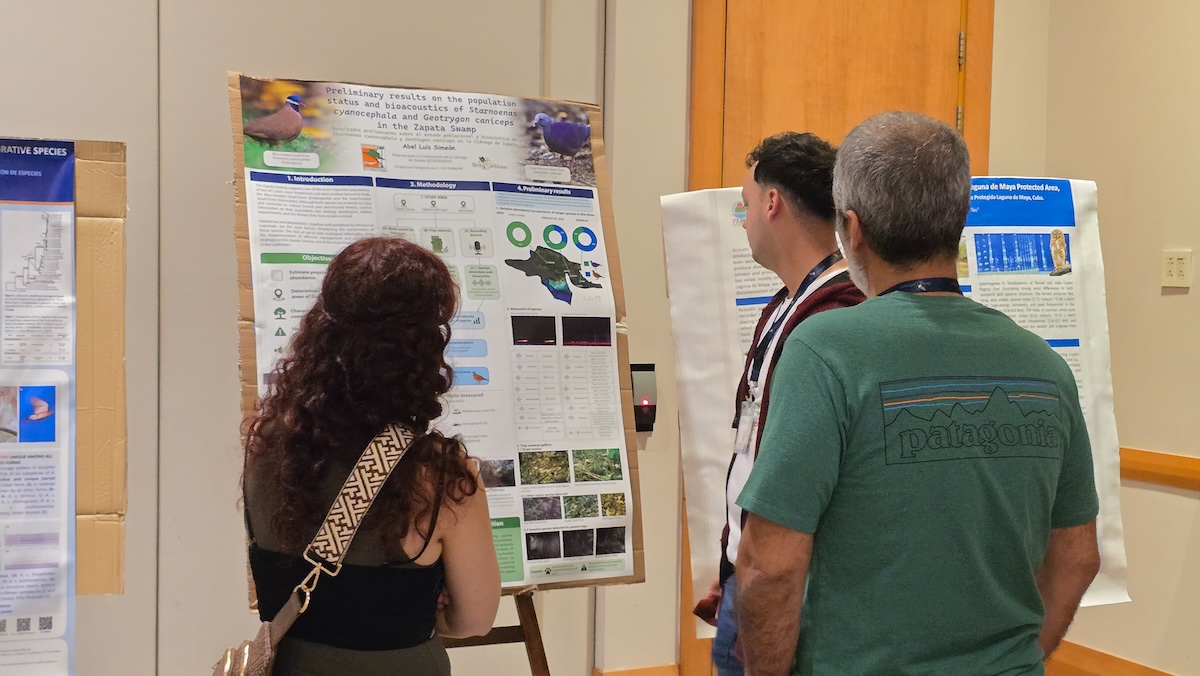
Uno de los momentos más importantes para mí fue presentar un póster sobre los resultados preliminares del proyecto que estoy desarrollando actualmente, gracias a una beca del Fondo David S. Lee para la Conservación de las Aves del Caribe. Mi investigación se centra en la conservación de dos especies de palomas endémicas y amenazadas de Cuba: la paloma perdiz (Starnoenas cyanocephala) (En Peligro de extinción) y el Camao (Geotrygon caniceps) (Vulnerable).
Blue-headed Quail-Dove (Starnoenas cyanocephala). (Photo by Aslam Ibrahim)
Gray-fronted Quail-Dove (Geotrygon caniceps). (Photo by David Ascanio)
Un cuaderno lleno de nuevas ideas
Mi presentación me brindó la oportunidad de intercambiar ideas con otros investigadores, quienes compartieron valiosas recomendaciones sobre nuevos enfoques analíticos, diferentes formas de procesar datos y herramientas que podrían reforzar aún más mi investigación. Una recomendación especialmente valiosa fue explorar Arbimon, una plataforma que no había utilizado anteriormente. Como parte de mi proyecto, estoy llevando a cabo análisis acústicos de ambas especies objetivo y, hasta ahora, había utilizado principalmente BirdNET Analyzer para detectar sus cantos en grandes volúmenes de grabaciones. Arbimon ofrece nuevas posibilidades para desarrollar y perfeccionar mi propio clasificador acústico, lo que podría hacer que la detección y el seguimiento de mis especies objetivo a lo largo de muchos días de grabaciones resultaran aún más fiables.
Abel presentando los resultados de su investigación durante la Noche de Posters. (Foto por Christel Mohammed)
También recibí recomendaciones sobre el uso de modelos de ocupación en R para analizar los datos de mis estudios de transectos. Este enfoque resulta especialmente valioso para especies crípticas como la paloma perdiz y el camao, ya que los modelos de ocupación pueden ayudar a tener en cuenta la detección imperfecta —el hecho de que una especie pueda estar presente pero no sea detectada durante un estudio—. Esto puede proporcionar una comprensión más fiable de dónde se encuentran estas especies y cómo su distribución está relacionada con los hábitats que utilizan. Regresé con un cuaderno lleno de notas, nuevas perspectivas y muchas ideas que espero incorporar a las próximas fases del proyecto.
Regreso a casa inspirado
La conferencia también me permitió ampliar mi red de contactos y conocer a personas con las que espero colaborar en el futuro. Fue inspirador ver cómo, a pesar de los numerosos retos a los que se enfrentan nuestras islas, existe una comunidad comprometida que trabaja conjuntamente para conservar la biodiversidad del Caribe. Regresé a Cuba con nuevos conocimientos, nuevas amistades y una motivación aún mayor para seguir investigando y protegiendo nuestras aves.
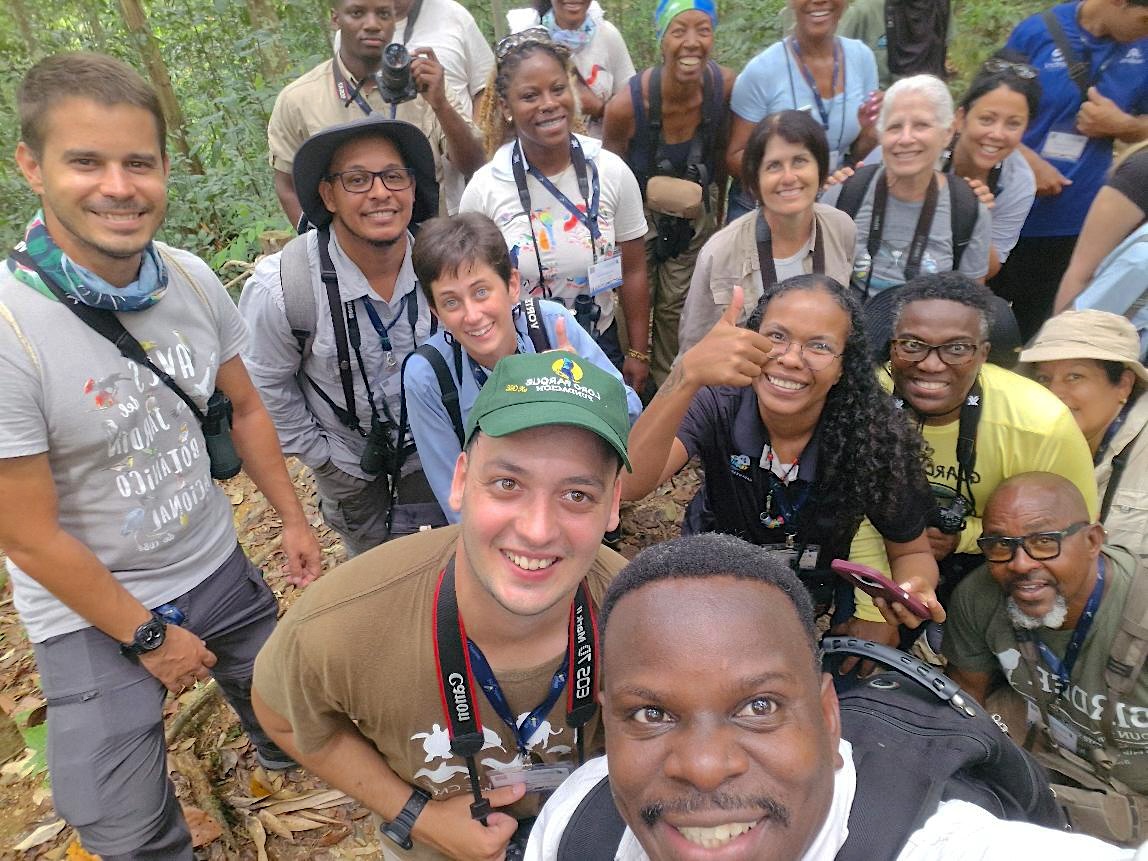
Abel (con gorra verde) observando aves junto a otros delegados en el sendero del Asa Wright Nature Centre. (Foto por Scott Johnson)
Nada de esto habría sido posible sin el apoyo de los donantes que hicieron posible mi participación. Su generosidad es una inversión en el crecimiento de los jóvenes conservacionistas y en proyectos que ayudarán a proteger la biodiversidad de nuestra región. Gracias a vosotros, pude representar a Cuba, compartir mi investigación y volver con herramientas, ideas y contactos que tendrán un impacto duradero en mi trabajo.
Esta ha sido mi primera Conferencia Internacional de BirdsCaribbean, pero espero que sea solo la primera de muchas. Me llevo recuerdos inolvidables, amistades que trascienden fronteras y la certeza de que la conservación es más fuerte cuando trabajamos juntos. ¡Gracias por creer en jóvenes investigadores como yo y por hacer posibles experiencias que inspiran y fortalecen el futuro de la conservación de las aves del Caribe!
Biografía: Abel Luis Simeón es un biólogo y ornitólogo cubano de 25 años. Su trabajo se centra en la investigación y la conservación de las aves endémicas y amenazadas de Cuba, con especial énfasis en la ecología y la conservación de la paloma codorniz de cabeza azul y la paloma codorniz de frente gris en el Parque Nacional de la Ciénaga de Zapata. Abel es uno de los galardonados de 2026 del Fondo David S. Lee para la Conservación de las Aves del Caribe.
Birds, Belonging, and New Beginnings: A Young Ornithologist’s First BirdsCaribbean Conference
Abel Luis Simeón, Cuban ornithologist and first-time attendee at the BirdsCaribbean International Conference.
For 25-year-old Cuban biologist Abel Luis Simeón, his first BirdsCaribbean conference represented a personal milestone. From long-anticipated encounters with Trinidad and Tobago’s extraordinary birds, to connecting with the passionate conservationists who share his deep commitment to Caribbean biodiversity, to sharing his own work protecting two of Cuba’s endemic doves, Abel returned home with new ideas, valuable connections, and renewed purpose. Read on for Abel’s reflections on a transformative conference experience.
There are moments that mark the beginning of a new chapter. For me, attending the 25th BirdsCaribbean International Conference in Trinidad and Tobago was one of them. As a young Cuban biologist and ornithologist, I had long dreamed of participating in a gathering where I could share experiences with people who, like me, dedicate their lives to the conservation of Caribbean birds.
Birds I had dreamed of seeing
White-beared Manakin. (Photo by Abel Simeón)
Before traveling, one of the things I was most excited about was getting to know Trinidad and Tobago. I had always heard about its extraordinary diversity of birds and ecosystems, and being able to observe them in person exceeded my expectations. One of the most special memories from the conference took place during the visit to the Asa Wright Nature Centre. Hearing the powerful, resonant song of the Bearded Bellbirds for the first time was truly impressive. But if there was one moment I’d been imagining for years, it was witnessing the famous leks of the White-bearded Manakins. Seeing the males gathered together, performing their rapid movements and displays while producing their characteristic calls, was an experience I’ll never forget. These are the moments that remind us why we chose to dedicate our lives to the study and conservation of birds.
The most valuable part of the experience, however, was the people. During the conference, I had the opportunity to talk with researchers, students, conservationists, and professionals from across the Caribbean and beyond, all united by a shared passion: protecting our birds and the habitats on which they depend.
Abel (wearing green cap) with fellow delegates from the Dominican Republic, Puerto Rico, The Bahamas and Cuba. (Photo by Hector Andujar)
Sharing my science
One of the most important moments for me was presenting a poster on the preliminary results of the project I’m currently developing, thanks to a grant from the David S. Lee Fund for the Conservation of Caribbean Birds. My research focuses on the conservation of two endemic and threatened dove species in Cuba: the Blue-headed Quail-Dove (Starnoenas cyanocephala) (Endangered) and the Gray-fronted Quail-Dove (Geotrygon caniceps) (Vulnerable).
Blue-headed Quail-Dove (Starnoenas cyanocephala). (Photo by Aslam Ibrahim)
Gray-fronted Quail-Dove (Geotrygon caniceps). (Photo by David Ascanio)
A notebook full of new ideas
Presenting my research provided an opportunity to exchange ideas with other researchers, who shared valuable recommendations on new analytical approaches, different ways to process data, and tools that could further strengthen my research. One particularly valuable recommendation was to explore Arbimon, a platform I had not previously used. As part of my project, I am conducting acoustic analyses of both target species, and until now I had primarily been using BirdNET Analyzer to help detect their calls in large volumes of recordings. Arbimon offers new possibilities for developing and refining my own acoustic classifier, which could make the detection and monitoring of my target species across many days of recordings even more robust.
Abel presenting his findings from his study during the Poster Night. (Photo by Christel Mohammed)
I also received recommendations on using occupancy models in R to analyze data from my transect surveys. This approach is especially valuable for cryptic species such as the Blue-headed and Gray-fronted Quail-Doves, because occupancy models can help account for imperfect detection i.e. when a species may be present but not detected during a survey. This can provide a more reliable understanding of where these species occur and how their distribution is related to the habitats they use. I returned with a notebook full of notes, new perspectives, and many ideas that I hope to incorporate into the next stages of the project.
Coming home inspired
The conference also allowed me to expand my network and meet people with whom I hope to collaborate in the future. It was inspiring to see how, despite the many challenges facing our islands, there is a committed community working together to conserve the Caribbean’s biodiversity. I returned to Cuba with new knowledge, new friendships, and even greater motivation to continue researching and protecting our birds.
Abel (wearing green cap) birdwatching with fellow delegates on the trail at the Asa Wright Nature Centre. (Photo by Scott Johnson)
None of this would have been possible without the support of the donors who made my participation possible. Their generosity is an investment in the growth of young conservationists and in projects that will help protect our region’s biodiversity. Thanks to you, I was able to represent Cuba, share my research, and return with tools, ideas, and connections that will have a lasting impact on my work.
This was my first BirdsCaribbean International Conference, but I hope it is only the first of many. I take with me unforgettable memories, friendships that transcend borders, and the certainty that conservation is stronger when we work together. Thank you for believing in young researchers like me and for making possible experiences that inspire and strengthen the future of Caribbean bird conservation!
Biography: Abel Luis Simeón is a 25-year-old Cuban biologist and ornithologist. His work focuses on the research and conservation of Cuba’s endemic and threatened birds, with a special emphasis on the ecology and conservation of the Blue-headed Quail-Dove and the Gray-fronted Quail-Dove in the Ciénaga de Zapata National Park. Abel is a 2026 Awardee of the David S. Lee Fund for the Conservation of Caribbean Birds.
Senior Science Officer at the Bahamas National Trust, Giselle Deane.
With 10 years as a Senior Science Officer at the Bahamas National Trust under her belt, a regional conference could easily feel like business as usual for Giselle Deane. Instead, this year’s BirdsCaribbean gathering in Trinidad felt like a warm family reunion—complete with new conservation partnerships, familiar friends, and a high-stakes birding quest to hit 500 species on her life list. Read on for Giselle’s firsthand account of the 2026 conference!
A Caribbean Homecoming
Going to Trinidad for the first time was a lot like coming home. Even the flavours of the food, which are very different from typical Bahamian cuisine, felt comforting and nostalgic to me. Growing up in a mixed Caribbean background, I often felt like I was different from everyone else. However, BirdsCaribbean constantly reminds me that we are united in both our differences and our commonalities.
As a mid-career conservationist, getting to present at and attend BirdsCaribbean Conferences feels like one of the pinnacles of my professional experience. As a Senior Science Officer at the Bahamas National Trust, where I recently celebrated 10 years, this was my third BirdsCaribbean conference. Getting paid to study and protect the birds I love? I feel like I’m working what could only be described as my dream job.
Old friends, new ideas—and a little sneaking away
The conference was nothing short of wonderful and magical. Arriving on Wednesday afternoon, I immediately hit it off with new friends and was greeted by others I hadn’t seen in years. It felt a lot like a family reunion and was something I had been looking forward to as a highlight of my year.
Living by my own personal rule of “not attending professional conferences unless I have something to present,” I spoke about my Caribbean Landbird Monitoring Small Grant Project, which explored the impacts of prescribed fire management on birds within the Abaco National Park. It was generally well received, although I personally thought I could have practiced a bit more before presenting!
Cuban Parrot, The Bahamas. (Photo by Elijah Sands)
The Bahama Swallow feeds mainly on flies and beetles. (Photo by Elijah Sands)
Bahama Warbler (Photo by Beth Hamel)
I was also invited to participate in the Sargasso Shearwater Road 2 Recovery (R2R) Workshop on Monday afternoon. This collaboration was great because it gave me ideas for future projects and potential local funding opportunities for the species. (Although I will admit, I did sneak out for a few minutes to watch the Sing-Like-a-Bird Competition — sorry Will and Jennifer!).
Aside from the professional business, I helped out at the merchandise table. It was a simple task, but a great way to meet a lot of people!
The quest for 500
Giselle photographing birds at Bajnath’s Estate Hummingbird Sanctuary. (Photo by Alvanna Johnson)
My favourite part of the conference, though, was the birds. Two days before I left, I realized I needed to see 73 new bird species to make it to 500 lifers. I thought, “Maybe that’s doable since I’m going on a few field trips.”
As it turns out,Trinidad’s unique geographic location on the edge of the Caribbean and South America made it incredibly easy! A week later, I found myself at 513 species, including 91 life birds — and I’m still missing a list or two!
Of course, I also intend to defend my title in the conference photography contest’s “Fun With Birds and People” category with my new camera lens, so stay tuned for that!
Birds connect people, too
Now that I am back home in The Bahamas, I feel rejuvenated (and a bit overwhelmed) by all of the good work going on in the region. I have been inspired to continue working not only professionally, but in a casual capacity too. I’ve made new friends and reconnected with others. Birds connect places, but I also think that people can be connected through birds.
This year, the Bahamian contingent was bigger than ever, with 19 of us representing the 242! Most of the group were newcomers, including four officers from the Bahamas Wildlife Enforcement Network (BahWEN) and four members of the Bird Club of New Providence.
A subgroup of The Bahamian delegation at the 25th BirdsCaribbean International Conference.
The conference sparked discussions and planning for new collaborations back home, including starting an educational bird banding program to build local capacity and supplement our Motus network. Several of us also attended the Sargasso Shearwater R2R Workshop, which will hopefully result in visits to two of the more accessible breeding sites in the Exuma Cays. BahWEN has also requested a donation of native plants to attract more bird species to—and beautify—their base.
I am so hopeful about the future of collaborative bird conservation as we continue to realize just how important, accessible, and connected these creatures are.
Home again, inspired again
BirdsCaribbean Conferences are like going home to a new place, and this time felt more so than ever. Getting to see familiar faces again and meeting new ones is something both expected and exciting. Being united by birds is what connects the region, and I am excited to continue my conservation career after this wonderful experience.
Spectacled Thrust (Turdus nudigenis). (Photo by Giselle Deane)
Giselle’s conference attendance was supported in part by the donors and supporters of our Global Big Day 2026 fundraiser. We extend our heartfelt thanks to everyone who made this experience—and the regional collaboration it inspired—possible!
Biography: Giselle Deane calls herself a tropical ecologist and currently works at the Bahamas National Trust as a Senior Science Officer, where she is responsible for terrestrial and bird projects across the country’s 33 national parks. Her professional interests include modern-day dinosaurs (birds and reptiles), geographic information science (maps and data), and conservation technology (drones, wildlife cameras, and audio recording units). Outside of work, she still likes birds—a lot—and is currently President of the Bird Club of New Providence. She also dabbles in fiber and craft arts and enjoys reading fiction. You can find her on Instagram @nesophlox, LinkedIn @giselle-deane and Facebook @giselle.deane.
Piping Plovers and Sanderlings, South Caicos (photo by Craig Watson).
A spectacular arrival unfolds across the Turks and Caicos Islands (TCI) in late August every year. Thousands of weary travelers touch down after extraordinary journeys spanning thousands of miles from their breeding grounds in Canada and the Arctic.
To celebrate these incredible journeys—and highlight the urgent need to protect the stopover and wintering habitats shorebirds depend on—BirdsCaribbean is proud to share this wonderful new 8-minute documentary. Explore the remarkable world of migratory shorebirds and discover why TCI’s wetlands and coastal habitats are so vital to their survival.
Storytelling that inspires conservation
This project was born from the vision and direction of Simon Busuttil, whose passion for birds and deep commitment to conservation in the Turks and Caicos Islands helped make this documentary possible. As the driving force behind the film, Simon understood that scientific data alone isn’t enough to save a species. We also need compelling stories that inspire people to care and turn knowledge into action.
By showcasing the magnificent migratory birds that depend on TCI, Simon hoped to inspire greater appreciation and stewardship of these remarkable species and the habitats they need to survive—and make their conservation a source of national pride.
Counting shorebirds on Turks and Caicos. (Photo by Simon Busuttil)
Small birds, extraordinary journeys
For many of the shorebirds visiting TCI, the journey begins on breeding grounds in the Arctic tundra. Imagine weighing only a few ounces and traveling thousands of miles—powered only by the beat of your wings! Tough travelers like the Ruddy Turnstone can bulk up to around 172 grams (6 ounces) before migration, storing precious energy reserves to fuel the extraordinary journey ahead.
Joining these incredible migrants is the plump and adorable Piping Plover. These diminutive Near Threatened shorebirds blend beautifully into coastal landscapes with their sandy-gray backs, often hiding in plain sight! You may not even realize you’re looking at one until it suddenly scurries toward the water on its bright orange legs.
But don’t let their small size and delicate appearance fool you: surviving migration requires extraordinary physiological adaptations.
Species like the Red Knot (Near Threatened), a master of long-distance travel, can fly for days without stopping. To prepare for these marathon flights, the birds undergo a dramatic physical transformation, shrinking internal organs like the intestines, liver and gizzard, and doubling their body mass by storing fat to act as high-grade fuel—remarkable adaptations that help make long-distance migration possible.
Black Rock: A haven within a haven
After burning through previous fat reserves during migration, these birds arrive at a physical breaking point, requiring healthy habitats that offer both safety and abundant food. In TCI, one such place is Black Rock, an isolated shoal cay nestled in the shallow, turquoise expanse of the Caicos Banks.
Observing thousands of shorebirds at Black Rock, Caicos Banks (Photo by Caleb Spiegel)
Its isolation from human disturbance and productive surrounding shallows make Black Rock an important refuge for birds. Mollusks and other invertebrates provide food for hungry migrants replenishing energy lost during their long journeys. Thousands of birds can gather here, including small shorebirds, larger wading birds such as egrets and herons, and even raptors.
Healthy wetlands—for birds and people
Protecting migratory shorebirds begins with protecting the habitats they depend on. TCI’s mangroves, salt ponds, tidal flats, beaches, and other coastal wetlands provide essential places for shorebirds to rest and refuel during migration, as well as vital habitat where many spend the winter.
But healthy wetlands aren’t important only for birds. Mangroves and other coastal habitats help buffer communities from storms and flooding, support fisheries and other marine life, and contribute to the extraordinary natural heritage that makes the Turks and Caicos Islands truly “Beautiful by Nature.”
By protecting these wetlands, we secure a win for birds and people alike—helping ensure that migratory shorebirds have safe havens to rely on and return to, year after year.
Watch A Haven for Migratory Shorebirds
Watch our new 8-minute documentary, A Haven for Migratory Shorebirds: The Wetlands of the Turks and Caicos Islands, and discover the extraordinary journeys connecting TCI’s shores to places thousands of miles away.
In Memory of Simon Busuttil
Simon Busuttil doing the fieldwork he loved most—surveying shorebirds and waterbirds in the Turks and Caicos Islands.
BirdsCaribbean and the wider conservation community were deeply saddened by the sudden loss of our dear friend, colleague, and mentor, Simon Busuttil, on January 31, 2026. Simon was a key leader with the RSPB’s UK Overseas Territories Caribbean Team and manager of the Darwin-funded TCI Biosecurity Project. His passion for conservation in TCI, his humor, generosity, and extraordinary warmth inspired everyone who had the privilege of birdwatching and working alongside him.
We are immensely grateful for Simon’s friendship, dedication, and conservation legacy, which lives on through projects like this documentary and through our shared commitment to protecting the extraordinary birds and biodiversity of the Caribbean.
Credits and thanks
This documentary was made possible through the vision and unwavering dedication of Simon Busuttil and the contributions of many people who recognize that migratory bird conservation has no borders. We dedicate this film to Simon’s memory, and our thoughts are with his family, loved ones, friends, and colleagues in TCI and at the RSPB.
We extend a heartfelt thank you to all the funders and partners whose support made this documentary possible: Darwin Plus Initiative, Audubon Americas, the Royal Society for the Protection of Birds (RSPB), the Turks and Caicos National Trust, the Department of Environment and Coastal Resources, and Spotlight Communications.
Together, we can help ensure that the wetlands of TCI remain a haven for migratory shorebirds for generations to come.
WMBD 2026 English poster. (Artwork by Luísa Lacerda)
Not all heroes wear capes, some use eBird, logging their bird observations for science. This World Migratory Bird Day (WMBD) 2026 communities are being encouraged to step up as local conservation heroes under the theme, “Every Bird Counts – Your Observations Matter.” Keep reading to find out how recording what you see and hear in your neighbourhood or favourite nature reserve can help make the journey for migratory birds a little less daunting.
Migratory birds are taking to the skies, leaving cooling North American temperatures and dwindling food behind to journey south, stopping along the way in the Caribbean. Our islands are already welcoming this remarkable cast of visitors: sleek shorebirds grounding themselves along our coastlines, dapper ducks touching down in local wetlands and farm ponds, and colorful songbirds darting straight into forests and backyard gardens in search of insects.
But after traveling thousands of miles, these migratory birds face dwindling habitats, pollution and humans disturbing them when they just want to rest. That is where you come in. By sharing your observations through citizen science platforms like eBird, you provide the real-time data researchers need to map stopover sites, track bird population trends, and protect the habitats they rely on. Every checklist submitted paints a clearer picture of their journey and ensures our islands remain safe havens for years to come.
The stunning and colorful male Wood Duck. (Photo by Alan D.Wilson)
Short-billed Dowitcher, Puerto Rico. (Photo by Noelia Nieves Colón)
Female Rose-breasted Grosbeak. (Photo by Linda Petersen)
WMBD is celebrated every second Saturday in October (October 10th) in the Caribbean. Similarly, our neighbors in Central and South America join in the celebration as they too welcome back tiny warblers, wading shorebirds, agile raptors, and other migrants. The event unites people across the Americas in a shared commitment to securing a bright and sustainable future for these marvelous migrants.
Students learn to use binoculars and a spotting scope to look at birds at Hope Gardens, Jamaica. (Photo by Natural History Museum of Jamaica)
Given that worldwide, 49% of all bird species are in declinewith migratory bird populations, particularly, showing a continuous decrease, this October, we’re urging Caribbean islanders to log the birds seen and heard, and submit those checklists. No expert skills or fancy equipment needed to make a real difference! Simply download the free eBird app to turn your regular outdoor walks, garden breaks, or coastal visits into useful scientific data.
While researchers work hard to safeguard our region’s biodiversity, they simply cannot cover every coastline, forest, or backyard. That is where community monitoring makes all the difference. Citizen science bridges the gap by inviting the public to record bird sightings via checklists. Every checklist you log offers concrete evidence of whether populations are increasing or decreasing, giving researchers the hard evidence required to advocate for the protection of forests, wetlands, and urban green sanctuaries.
Ready to start, but not sure where to begin?
If you are new to citizen science, our A Beginner’s Guide to Becoming A Citizen Scientistbreaks down everything you need to know from finding a project that suits you to submitting your checklist. And if you want to find out more about how to use eBird you can get all the information here.
Birdwatching on the beach. (Photo by Maria Irizarry)
The WMBD 2026 theme in other languages:
“¡Cada ave cuenta, tus observaciones importan!”
WMBD 2026 Spanish Poster. (Artwork by Luísa Lacerda)
“Chaque oiseau compte – Vos observations sont importantes!”
WMBD 2026 French Poster. (Artwork by Luísa Lacerda)
Join us to celebrate birds and nature
Our amazing community of Caribbean educators and WMBD coordinators are busy preparing exciting events, including birdwatching trips, citizen science workshops, habitat clean-ups, all-day festivals, art competitions, presentations in schools, webinars, and so much more. At these events anyone can expect to learn about migratory birds, their incredible journeys, amazing adaptations, and challenges they face. Attendees also get to be hands-on in activities that help to reduce threats to migratory birds like tree planting, habitat cleanup, and installation of bird feeders and/or bird baths around community buildings.
Building bird-friendly habitats at the WMBD event at HADCO Experiences at Asa Wright Nature Centre. (Photo by HADCO Experiences)
Students show off their decorated bird masks. (Photo by Maria Paulino)
WMBD 2025 presentation at EcoExploratorio.
Students of Walter Park Primary School reading the WMBD poster that has information on how to create bird-friendly spaces in communities. (Photo by Delores Kellman)
Birdwatching at Laguna de Maya, Cuba. (Photo by Adrian de Maya)
Jennings Secondary School students with Bird Spy Bingo card. (Photo by Sherrel Charles/EAG)
Dayamiris Candelario and her group of budding researchers.
Resources to help you plan a spectacular event
We invite all who are interested in participating in or hosting WMBD activities to contact Laura Baboolal, the WMBD Caribbean coordinator at [email protected].
If you are planning a WMBD event or two (and we hope you are!), you will find free digital resources in English, Spanish, and French on the World Migratory Bird Day Trello board.
BirdsCaribbean will also be featuring WMBD bird species that occur in the Caribbean on our Migratory Bird of the Day webpages (Birds Connect Our World). As in past years, we will provide free downloadable resources, including coloring pages, natural history information, puzzles, photos, videos and activity sheets — we invite you to check them out!
To help you host an impactful event in your community, we have put together a complete kit of free, customizable organizer templates including media invitations, volunteer call-outs, Ministry approval requests, sponsorship letter templates, and more! These resources are free to access when you join our active education network here(available in English, Spanish, and French).
Eden Garrod.
Our Migratory Bird of the Day drawings this year are featuring the art of Eden Garrod (Eden Garrod Design) – graphic designer, screen printer and illustrator living and working in the Rocky Mountains of Colorado. Living along the northern stops of the flyway, Eden brings a fresh perspective to depicting the incredible birds that winter in or pass through our Caribbean islands each year. Eden shared with us, “Making art is one of my favorite ways to engage with nature! When you sit down to capture any part of nature, all the sights and sounds, all the animals & plants you never noticed before come sharply into focus. It really makes you better appreciate the world around you.”
Meet Your 2026 Migratory Bird Ambassadors!
Every year, EFTA selects species as WMBD ambassadors. The seven focal species can be seen in the Americas Flyways and also in flyways in Europe, Africa, and Asia.
Male Cinnamon Teal Spatula cyanoptera
Male Cinnamon Teal. (Photo by Dubi Shapiro ML623737280)
Merlin Falco columbarius*
Perched Merlin (Photo by Beth Hamel)
Ruby-throated Hummingbird Archilochus colubris
Male Ruby-throated Hummingbird. (Photo by William Supulski ML261732321)
Barn Swallow Hirundo rustica*
Barn Swallow (Photo by Daniel W. Glenn)
American Oystercatcher Haematopus palliatus*
American Oystercatchers in The Bahamas. (Photo by Walker Golder)
Spoon-billed Sandpiper Calidris pygmaea
Spoon-billed Sandpiper (Photo by Natthaphat Chotjuckdikul ML79210621)
Abdim’s Stork Ciconia abdimii
Abdim’s Stork. (Photo by Giuseppe Citino ML501523651)
The species marked with an asterisk, occur in the Caribbean. Our region is critical for these traveling birds as they move to, from, across, and through our islands.
These seven migratory birds are featured in the official World Migratory Bird Day global poster. The artwork for the poster was created by Luísa Lacerda, a Brazilian artist from Rio de Janeiro whose work blends music, embroidery and a deep love of birds.Luísa artwork will be used throughout the Caribbean in this year’s WMBD events.
Interested in being considered for the artist for WMBD 2027? Contact Environment of the Americas at [email protected]
There was something special in the air in Trinidad and Tobago—and it wasn’t just the hummingbirds! For five unforgettable days, more than 310 delegates from 30 countries filled the Hyatt Regency Trinidad with ideas, laughter, spirited discussions, new collaborations, old friendships, birding adventures, and plenty of excitement about the work ahead. Here are some of the moments—and outcomes—that made this milestone gathering so special.
Our Silver Anniversary Conference, held under the theme Birds, People, Prosperity: Harnessing the Caribbean’s Natural Advantage, was much more than a chance to share research. Scientists, conservation practitioners, educators, students, government agencies, community leaders, bird guides, tourism professionals, artists, photographers, and bird and nature lovers, to learn from one another, build skills, strengthen partnerships, and advance conservation across the region.
And the energy was extraordinary. Whether delegates were mapping conservation priorities, learning new sound recording techniques to monitor rare and elusive birds, planning the future of Caribbean parrot conservation, mentoring young scientists, exploring how bird tourism can strengthen local livelihoods, reconnecting over coffee, bidding wildly at the Silent Auction, or heading into the field before sunrise, there was a wonderful spirit of sharing and collaboration throughout the week.
As one delegate reflected:
“I thought this was one of the most collegial, collaborative, and joyful conference environments I have experienced.”
Of course, no single story could capture everything that happened over five action-packed days. More detailed reports from many conference sessions will follow in the Journal of Caribbean Ornithology. For now, here are a few highlights!
Opening remarks and head table panel at the 25th BirdsCaribbean International Conference opening ceremony. At the podium: Andrea Thomen, Acting President BirdsCaribbean. At the head table (left to right): Dr. Lisa Sorenson, Executive Director BirdsCaribbean; Mr. Cornell Buckradee, Tourism Trinidad’s Manager of Investment and Business Development; and Mr. John Hadad, Co- Chief Executive Officer, HADCO Limited. (Photo by Holly Garrod)
The Land of the Hummingbird Welcomes the Caribbean
The conference kicked off with an energetic Opening Ceremony, followed by Trinidad and Tobago Day, our traditional showcase of the birds, projects, and people driving avian conservation in our host country.
Trinidad and Tobago Day presenters (L to R: Elizabeth Seebaran, Josh Bajnath, Kelson Kirk, Daveka Boodram, Shaueel Persuadee, Jaleen West, Dr. Mark Hulme, Laura Baboolal and Faraaz Abdool). (Photo by Christel Mohammed)
Eight presentations demonstrated the breadth of bird research and conservation underway across the twin-island nation—from the recovery of the Trinidad Piping-Guan (Pawi) and conservation of the White-tailed Sabrewing, to the plight of native songbirds, restoration of critical wetlands, long-term bird banding, and hummingbird tourism, all while exploring the cultural and economic value of Trinidad and Tobago’s spectacular birdlife.
Elizabeth Seebaran of the Trinidad and Tobago Field Naturalists’ Club introduced delegates to T&T’s remarkable birdlife, highlighting its South American influences, sought-after species and birding sites, and key conservation priorities. Laura Baboolal of the Environmental Management Authority demonstrated how environmental legislation was used to strengthen legal protection for the Scarlet Ibis, recognizing its ecological, socio-economic, and cultural importance, and working with diverse stakeholders to study and sustainably manage the species and its habitats.
Scarlet Ibises fly in by the hundreds at the renowned Caroni Swamp. (Photo by Jerome Foster)
Dr. Mark Hulme shared encouraging evidence that the range of the critically endangered Pawi (Trinidad Piping-Guan) has expanded, suggesting the population has likely increased since the last survey 25 years ago—results now helping guide an updated recovery plan. Daveka Boodram highlighted the GEF-BIOREACH Project’s work to conserve Tobago’s White-tailed Sabrewing through habitat restoration, species monitoring, capacity building, and youth education, demonstrating the importance of combining science with community engagement.
White-tailed Sabrewing (Photo by Jerome Foster)
The large turkey-like Trinidad Piping-Guan is only found in Trinidad’s mountainous Northern Range. (Photo by Wendell SJ Reyes (ML66246621))
Other presentations showcased the diversity of approaches to bird conservation in T&T. Jaleen West and Shaueel Persuadee reflected on six decades of wetland and waterbird conservation at the Pointe-a-Pierre Wildfowl Trust, including a breeding and release program that has returned more than 15,000 native ducks to local wetlands. Kelson Kirk and Casianna McKenna highlighted long-term bird banding at the Trinidad and Tobago Bird Observatory in Tobago’s Main Ridge Forest Reserve, combined with training for local foresters and young people. And Josh Bajnath shared how habitat enhancement and a fascination with hummingbirds transformed his family’s estate into a thriving hummingbird sanctuary and popular bird photography destination.
The day also confronted difficult conservation challenges. Faraaz Abdool described the dramatic decline of Trinidad and Tobago’s native songbirds, particularly seedeaters, through decades of trapping, trafficking, and habitat loss. He emphasized the need for stronger enforcement, monitoring, changes in cultural practices, and potentially species reintroductions to help bring these birds back.
It was a wonderful introduction to the impressive conservation work underway in our host country—and to some extraordinary birds we would be seeing throughout the week.
Parrot People Unite!
One of the conference’s most exciting firsts was the inaugural Caribbean Parrot Conservation Summit, bringing together parrot conservationists from across the region for a full day devoted to the future of the Caribbean’s remarkable endemic parrots.
Participants shared hard-won experience from islands across the Caribbean, recognizing both the tremendous expertise already present within our region and the challenges so many parrots have in common—from habitat loss and illegal trade, to important gaps in our understanding of genetics and disease.
Acting President of BirdsCaribbean,Andrea Thomen, introduces the full-day Parrot Conservation Summit. (Photo by Christel Mohammed)
Karla Camila Del Río Salmon, Science Communication Officer at BIOECO Cuba speaks about Cuban Parrot conservation efforts following Hurricane Melissa. (Photo by Christel Mohammed)
Dr. Thomas White, Wildlife Biologist at the Puerto Rican Parrot Recovery Program. (Photo by Christel Mohammed)
Discussions highlighted the need for stronger island-to-island collaboration, shared research and training, regional behavior-change campaigns, and new approaches incorporating solidarity and the rights of nature into parrot conservation.
Group photo of presenters and delegates at the Parrot Conservation Summit. (Photo by Christel Mohammed)
The work will continue through the revitalized Caribbean Parrot Working Group, which over the coming months will begin developing coordinated regional conservation plans and identifying opportunities for collaboration.
Listen Up! New Skills for Caribbean Conservation
Learning by doing has always been central to BirdsCaribbean conferences, and our Silver Anniversary Conference offered an exceptional lineup of hands-on workshops.
Inés Rodríguez practices recording bird sounds at AWNC. (Photo by Claudia Mantilla)
At the beautiful Asa Wright Nature Centre AWNC, participants in From Field to Archive: Recording, Editing, and Sharing Caribbean Bird Sounds, led by Cullen Hanks, Daniel Arias, and Jeff Gerbracht of the Cornell Lab of Ornithology, moved from classroom instruction straight into the rainforest.
Armed with smartphones and specialized recording equipment, they practiced capturing bird vocalizations in the field before returning to learn how to edit, evaluate, archive, and share their recordings through eBird and the Macaulay Library.
These vast libraries of volunteer recordings, contributed by nature enthusiasts and citizen scientists, power familiar tools like Merlin—and their effectiveness in the region depends on people adding new recordings. Daniel Arias reflected on the value of the workshop:
“These recordings not only help improve Merlin’s Sound ID model, but will also remain as a lasting record of Caribbean bioacoustics for the future.”
That afternoon, Rishi Deosaran, Dr. Mark Hulme, and Asif Khan introduced another group to Passive Acoustic Monitoring (PAM)—from deploying autonomous recorders in tropical forest to processing and analyzing the resulting data.
Farielle Mohammed attaches an autonomous recorder to a tree at the AWNC. (Photo by Ann Haynes Sutton)
Dr Mark Hulme with PAM workshop participants at AWNC. (Photo by Ann Haynes Sutton)
And these were just two of many workshops. Other practical workshops focussed on grant proposal writing, installing Motus stations, bird identification and monitoring, building a regional recovery strategy for the Sargasso Shearwater, conservation education and engagement, and much more. Learn more about the workshops offered at the conference here.
As one participant told us:
“What I enjoyed most was the number of hands-on activities…it wasn’t just theory.”
Participants left with practical skills they can now put to use at home. Some delegates are already planning new acoustic monitoring, bird-recording, banding, education, and other initiatives in their home countries.
Growing the Next Generation
One of the most gratifying moments of the week came during the Opening Ceremony, when Executive Director Lisa Sorenson asked everyone attending their first BirdsCaribbean conference to stand. Nearly half the room rose to their feet!
Our Silver Anniversary was a celebration of how far this community has come—but that moment reminded us to look forward, too. Students and early-career conservationists presented research, led discussions, participated in workshops, and connected with experienced scientists and practitioners. During a dedicated Mentorship Lunch, emerging professionals explored career pathways, publishing, skill-building, and the realities of building a life and career in conservation.
Highlights from our early-career conservationists and student presentations. (Photos by Holly Garrod and Christel Mohammed)
Ahjermae White (Montserrat) presents her research “From ashes to habitats: Colonisation of new volcanic landscapes by Least Terns (Sternula antillarum) in Montserrat.” (photo by Holly Garrod)
Adrian Dominguez (Cuba) shares his research “Results of seven years of monitoring of wintering migratory Passeriformes by the ringing method at the permanent station in Matanzas, Cuba.” (photo by Holly Garrod)
MIchelle Moyer presents her research on the Puerto Rican Oriole: Comparing elaborate signaling traits in tropical versus temperate songbirds. (photo by Holly Garrod)
Juleyska Vazquez-Cardona presents her research on vocal performance in agonistic encounters in Adelaide’s Warblers in Puerto Rico. (photo by Holly Garrod)
Jeanelle Brisbane (Dominica) presenting in the workshop: “Caribbean Conservation Movements.” (photo by Holly Garrod)
Dayamiris Candelario (Puerto Rico) presents in the workshop, “Flying Together: Environmental Interpretation for Bird and Ecosystem Conservation.” (photo by Holly Garrod)
Shanna Challenger (EAG Antigua) shares an update on conservation work in Antigua: “Building conservation from the ground up: engaging people in bird monitoring in Antigua and Barbuda.” (photo by Holly Garrod)
Dalila Lezcano (Cuba) shares her research: “Current status and dynamics of elements of marine coastal ornithological diversity in the Guanahacabibes Peninsula Biosphere Reserve.” (Photo by Holly Garrod)
Jodelia Simmons, Forestry Officer, St Vincent Dept of Forestry shared recent work to create a Conservation Action Plan for the Whistling Warbler, a threatened endemic in St Vincent and the Grenadines. (photo by Holly Garrod)
Harry Bolton, who presented on “Energy and the origin and maintenance of island avian biodiversity” (University College London (UCL), shares his research with Andrew Eppedio (Cornell Lab undergrad, studying foraging niche structure in birds in the DR), and Drew Sweet (Univ of AK studying the interactions between Caribbean birds and their parasites) during the first Poster Night. (photo by Christel Mohammed)
Analise Fussell shares her research assessing the potential of eBird data to track changes in abundance of wading birds in south Florida and its implications for Caribbean monitoring. (photo by Christel Mohammed)
One delegate was particularly inspired by the number of young people at the conference:
“How many younger people are doing amazing work with great passion in bird research and conservation—it was truly inspiring and gushed optimism and hope for the future!”
Thanks to the extraordinary generosity of our donors, sponsors, members, partners, and Global Big Day teams, BirdsCaribbean provided financial support for 90 sponsored delegates, including students, educators, researchers, conservation practitioners, and community leaders from across the region. Among them were 23 Cuban colleagues, who brought tremendous knowledge, energy, and enthusiasm to the gathering. For many, that support made participation possible—and gave them opportunities to learn, build skills, and connect with mentors and colleagues in ways that will continue well beyond the conference.
Finding your flock matters
Some of the most valuable moments at a BirdsCaribbean conference happen outside the formal sessions—in hallways, over meals, during Working Group meetings, on buses to field trips, and in those spontaneous conversations that begin with: “You work on that too?”
Jeff Gerbracht (Cornell Lab of Ornithology) and Jamaican delegates: Dr. Ann Sutton, Wendy Lee, Michelle Roberts and Justin Saunders. (Photo by Holly Garrod)
In the post-conference evaluation, many delegates told us about new collaborations and project ideas that emerged during the week. Participants reported new connections involving Motus tracking, seabird research, parrot conservation, NestWatch, bird banding, passive acoustic monitoring, bioacoustics, invasive species, habitat restoration, environmental education, bird tourism, disease surveillance, and more. Researchers discovered colleagues with complementary expertise and data, organizations found potential partners, and people connected across islands and languages around shared conservation challenges.
Spontaneous exchanges between sessions where ideas turn into potential regional collaborations. (Photo by Holly Garrod)
One delegate summed it up simply:
“The networking connections that were made will be highly beneficial to our organization for years to come.”
Another shared something even more fundamental:
“Conservation does feel lonely at times, so I felt good to know I wasn’t alone in my fight.”
These connections are one of the most important reasons we gather. We may not see their full impact for years, but they will live on in the research projects, conservation programs, friendships, mentorships, and partnerships that began—or grew stronger—in Trinidad and Tobago. Browse the gallery below to see our delegates sharing ideas and “finding their flock” throughout the week.
Read more personal reflections and stories from two of our sponsored delegates from The Bahamas and Cuba:
Lucky to win a couple of Mark’s books in the Silent Auction!
Fun with selfies!
Winning the stunning Cuckoo painting!
Damaris and friends.
Most of the Cuban participants plus the Cuban ambassador in Trinidad.
Group selfie of Dominicans and more by Garry Auguiste.
Friends catching up!
Friends reconnecting!
Participants from from Puerto Rico and beyond.
Dominicans and Lisa at the press board for one more pic!
Shanna Challenger (Antigua and Barbuda) and Ajehrmae White (Montserrat).
St. Eustatius (Statia) gang!
Another selfie by Hector!
Big ideas for moving conservation forward
Throughout the conference, five inspiring keynote speakers challenged us to think bigger about what conservation can—and must—be.
Author, activist, and National Geographic Extraordinary Birder host Christian Cooper called on us to broaden the conservation community and ensure that more people see themselves as belonging in it. “If we want to protect the world’s diversity of birds,” he emphasized, “we need a diversity of people who care about the birds.“
Camila Gómez of SELVA showed how Motus technology—combined with training, data sharing, and international collaboration—is transforming our understanding of migratory birds across the hemisphere.
Christian Cooper keynote presentation. (Photo by Holly Garrod)
Camila Gómez keynote presentation. (Photo by Holly Garrod)
Rev. Dr. LoraKim Joyner made a powerful case for pairing rigorous science with solidarity, reminding us that species recovery ultimately depends on people working together.
Nicole Leotaud, Executive Director of CANARI, explored how the rights of people and nature, environmental justice, and emerging legal frameworks can strengthen Caribbean conservation and resilience.
And Trinidadian wildlife photographer, environmental advocate, author, and international guide Faraaz Abdool celebrated the raw power of birding itself—showing how experiencing birds can build empathy, deepen our relationship with place, and inspire people to become advocates for nature.
Nicole Leotaud. (Photo by Holly Garrod)
Faraaz Abdool. (Photo by Holly Garrod)
Together, the five talks offered very different but complementary perspectives on moving conservation forward—from science and technology to collaboration, inclusion, environmental rights, and the simple but powerful experience of connecting people with birds.
Birds, People, and Prosperity
Our conference theme asked a big question: How can conserving birds and nature also help Caribbean people and communities thrive? The conversation began with John Hadad, Group Co-CEO of HADCO Group, whose opening keynote, The Evolution of Value: HADCO, Regenerative Tourism, and the Future of Caribbean Enterprise, challenged businesses to move beyond simply reducing their environmental impacts toward actively restoring ecosystems, strengthening communities, and creating lasting value. Watch John’s keynote on our YouTube channel.
These ideas were explored further in our symposium on sustainable bird and nature tourism. From William Trim’s four decades of bird guiding in Tobago and José Alberto Pérez Hechavarría’s examples of bird tourism fueling citizen science in Cuba, to regenerative tourism at Castara Retreats, conservation of Asa Wright’s remarkable Oilbird colony, the emergence of South Caicos as a birding destination, and Ancilleno Davis’s practical framework for balancing the social, economic, and environmental dimensions of sustainability, speakers demonstrated that thoughtfully designed nature tourism can do far more than attract visitors. It can create livelihoods, strengthen local pride, support protected areas, turn former hunters into guides and conservation advocates, and give communities another powerful reason to keep birds and their habitats thriving.
Dr. Ancilleno Davis. (Photo by Holly Garrod)
George ‘Skip’ Glenn. (Photo by Holly Garrod)
Lisa Sorenson shared how the Caribbean Birding Trail puts this approach into practice through its “Know the Caribbean, Bird by Bird” philosophy, using guide training, storytelling, and authentic local experiences to strengthen bird tourism while supporting conservation and local livelihoods. Marketing professor George “Skip” Glenn added another perspective, encouraging tourism practitioners to create memorable and transformative experiences that can turn visitors into lifelong champions for Caribbean nature. The symposium concluded with an energetic discussion about practical ways to advance sustainable bird and nature tourism in Trinidad and Tobago and throughout the region.
For some delegates, the conference theme itself prompted a new way of thinking:
“I have always thought about birds and people, but the concept of prosperity gave this relationship a new meaning for me.”
Featured speakers and presenters at the ‘Birds, People, Prosperity’ symposium (L to R) George ‘Skip’ Glenn, Faraaz Abdool, Dr. Ancilleno Davis, Joe Plant, Anna Zuke Lisa Sorenson, Sheena des Vignes and William Trim. (Photo by Christel Mohammed)
It’s all about balance!
Some of the most memorable conference moments happen at our social events — over “doubles,” T&T’s famous vegetarian street food; in the hallways and around posters; on buses and boats; at our social events; and, of course, on the dance floor.
Our Opening Cocktail Reception offered an unforgettable taste of Trinidad and Tobago’s music, mas, culture, food, and warmth—and soon had delegates dancing.
Traditional Mas characters, Pierrot Grenade, dressed in patchwork costume, and Midnight Robber, dressed in wide-brimmed hat and cape, famous for delivering high-flown, threatening autobiographical speeches. (Photo by Holly Garrod)
An energetic performance by violinist Darion Dennis at the outdoor Welcome Reception. (Photo by Holly Garrod)
Traditional Mas character, Dame Lorraine, is a satirical, exaggerated portrayal of a wealthy 18th-century French plantation owner’s wife. (Photo by Holly Garrod)
Reconnecting with old colleagues and meeting new partners. (Photo by Holly Garrod)
Experiencing the energy and color of local Trinidadian culture during the Welcome Reception. (Photo by Holly Garrod)
A performer showcasing traditional Indian dance during the Welcome Reception. (Photo by Holly Garrod)
Smiling faces at the BirdsCaribbean Welcome Reception.(Photo by Holly Garrod)
Then came our famously (not-so) Silent Auction. Delegates once again arrived with wonderful treasures from their home countries, and friendly bidding rivalries helped raise approximately US$6,000 for Caribbean bird conservation!
Delegates taking a closer look at the clothing at the auction. (Photo by Christel Mohammed)
Justin Procter counting down to the close of one of the tables. (Photo by Christel Mohammed)
“Gotta get my bid in!” (Photo by Holly Garrod)
Delegates browsing items during the final hours of the auction. (Photo by Christel Mohammed)
Delegates keeping an eye on the bid sheets for their items. (Photo by Christel Mohammed)
The flamingo and hummingbird table at the auction. (Photo by Christel Mohammed)
Huge thanks go to Jennifer Wheeler, Linda Fuller, Natasha Atkins, John MacLennan, our energetic auctioneers Justin Proctor and Dr. Ancilleno Davis, and the many volunteers who made the evening such a success.
The BirdsCaribbean Silent Auction Team (L to R: Natasha Atkins, Linda Fuller, John MacLennan and Jennifer Wheeler)
And what would a BirdsCaribbean Conference be without our new fan-favorite Sing Like a Bird? Our brave contestants delivered their finest avian vocalizations, leaving both us—and Merlin Sound ID–-utterly amazed!
And of course…We had to go birding!
You cannot bring hundreds of Caribbean bird people to Trinidad and Tobago and expect them to stay inside a conference hotel all week. And they didn’t!
Before, during, and after the conference, delegates fanned out across the twin-island nation with expert local guides, exploring everything from coastal lagoons, mangroves, and savannas to rainforest peaks, offshore islands, hummingbird gardens, and even Oilbird caves.
They visited Tobago’s legendary Main Ridge Forest Reserve, Asa Wright Nature Centre, Aripo Savannas, Nariva Swamp and Bush Bush Island, the Northern Range, Brasso Seco, Caroni Bird Sanctuary, Bajnath’s Estate Hummingbird Sanctuary, Little Tobago, Bon Accord Lagoon, Grande Riviere, the Royal Botanic Gardens, and many more extraordinary places. Enjoy these fun field trip photos shared by our delegates!
Delegates birding at Bajnath’s Estate. (Photo by Josh Bajnath)
The field trips weren’t only about birds. Delegates also tasted local cocoa, visited the extraordinary Pitch Lake, marveled at the Temple in the Sea, experienced Trinidad and Tobago’s cuisine and culture, and watched nesting Leatherback Turtles at Grande Riviere.
The reviews were glowing:
“The field trips were amazing.”
“WOW, what an adventure.”
And at Bajnath’s Estate, one delegate described the sheer number and diversity of hummingbirds as almost overwhelming—in the best possible way!
Trinidad and Tobago itself earned descriptions including “a paradise for birds,” “a birder’s haven,” and even “the birding Mecca of the Caribbean.”
A huge thank-you to our Co-Host, HADCO Experiences, for curating such a diverse lineup of field trips, and especially to the exceptional local guides whose knowledge, stories, enthusiasm, and sharp eyes brought these landscapes to life.
Five days went by far too quickly!
Eventually, even our packed program came to an end. Posters were taken down, the last field trips returned, and suitcases were packed. There were plenty of long hugs goodbye as more than 310 delegates scattered again across 30 countries.
But in many ways, we left with so much more than we came with. (And we’re not just talking about Silent Auction winnings!) Delegates left with new knowledge and practical skills, new colleagues and collaborators, research questions and project ideas, new friendships, and renewed determination. Judging from the conference evaluations, many also went home with something especially valuable: hope.
As one delegate reflected:
“The conference left me filled with hope, new plans and friends that hopefully will collaborate for a better future for our Caribbean.”
Another, Ailen Anido Escalona of Cuba, put into words something that captures the enduring spirit of our conferences:
“The conferences pass, but friendships, shared experiences, and the commitment to conservation remain.”
After 25 international conferences, one thing is very clear: no single person, organization, or island can secure the future of Caribbean birds alone. Bringing our community together—across islands, languages, cultures, disciplines, and generations—strengthens all of us and the work we do for Caribbean birds and people.
Bringing together researchers, educators, and conservation leaders from across the region—the official group photo of the 2026 BirdsCaribbean International Conference. (Photo by Cúa Conservation Agency)
Thank you, Trinidad and Tobago. And thank you to every person who taught, learned, presented, mentored, sponsored, volunteered, guided, organized, birded, danced, laughed, and continues to dream alongside us.
We are still riding the high—and can’t wait to see where this incredible community takes us next.
Stay tuned for upcoming working group updates, collaborative projects, and announcements for the 26th BirdsCaribbean International Conference!
More information on the conference, including the program, contests, and field trip itineraries, is available here.
BirdsCaribbean is very grateful to our Co-Host organization, HADCO Experiences, and Government and Partner Sponsors: Ministry of Trade, Investment and Tourism, and Tourism Trinidad, our Premier Trinidad Motmot Sponsor The Cornell Lab of Ornithology, and the Environmental Management Authority and the Trinidad & Tobago Field Naturalists’ Club for their tireless support and participation. We extend our gratitude to the organizations, agencies, and companies operating in Trinidad and Tobago that provided services and/or products to assist in hosting the conference.
We would also like to thank the many other funders and contributors from other parts of the Caribbean and the U.S. that provided support of this conference. This support enabled a number of Caribbean nationals to attend and participate, and also helped to cover the many costs of holding this conference.
Children recording bird calls in Laguna de Maya Wildlife Refuge. (Photo by Adrian Yanes)
From Earth Day (April 22nd) to International Biodiversity Day (May 22nd) the Caribbean came alive with nonstop watching, listening to, and recording of birds! Environmental organizations across the region united for the Caribbean Endemic Bird Festival (CEBF) to celebrate the 187 unique bird species that call our islands home. This year, the festivities took on an active focus under the theme “Every Bird Counts — Your Observations Matter.” From island to island, our partners and local communities learned to admire these birds and discovered that even their casual sightings hold the power to protect them.
“Birds are hype!” as one young Jamaican birder put it and we couldn’t agree more. But to keep these incredible birds around for years to come, we have to look out for them and we can’t protect what we don’t know. This year’s theme underscores that fundamental truth in conservation. Many of our iconic Caribbean birds are single-island endemics, making them incredibly vulnerable to habitat loss, climate change, and human impacts like pollution, illegal persecution as pests, or trapping for the pet trade. By focusing on observation, CEBF 2026 helped everyday citizens to step up as data collecting champions, proving that a community with binoculars and checklists is a powerful force for protecting birds.
Every checklist submitted and call recorded builds a regional picture, helping us learn more about these birds and guiding conservationists to ensure the habitats we all depend on remain in tip-top shape.
CEBF coordinators rallied their communities to show that conservation is a collective team effort. Through birdwatching field trips, citizen science workshops, community counts, and educational school visits, participants discovered that their individual sightings carry real scientific weight.
JAMAICA
The Caribbean Coastal Area Management (C-CAM) foundation brought the theme to life at the Portland Bight Discovery Centre through a fun-for-all-ages bird fair. The day was packed with hands-on activities, including citizen science workshops, crafting bird feeders, drawing and coloring sessions, and an exciting bird walk. Participants hit the bird hide (bird blind) and successfully logged a mix of local and migratory species, including the White Ibis, Red-tailed Hawk, John Crow (Turkey Vulture), mockingbird, flycatcher, warbler, blackbird, Snowy Egret, Green Heron, Tricolored Heron, and Killdeer. The bird walk was an absolute crowd favorite, perfectly capturing the eye-opening magic of the festival. As one participant shared, “Wow, I did not know we had so many birds in Jamaica.”
BirdLife Jamaica sparked a passion for conservation with a two-part event hosted at the Hope Botanical Gardens and Red Hills Primary School. The adventure kicked off with an introductory bird walk and count where eager students identified at least 15 different species. For many of the young participants, peering through binoculars was a brand-new experience and while mastering the focus wheels was a bit of a struggle at first, they quickly transformed into engaged birdwatchers!
The event wrapped up with a lively DIY craft session building bird feeders, which was a hit among the students. In fact one of the students, Malika, was inspired to write a poem about her experience! You can read it in full here.To ensure the daily bird-watching continues, the team launched a Birdify Your School Yaard initiative, donating 25 pounds of wild bird feed and six hummingbird feeders (supplied by BirdsCaribbean) to the school’s Grade 4, Grade 5, and Special Education divisions.
Guiding the next generation of bird lovers, one DIY feeder at a time. (Photo by Michelle Roberts)
Rounding out the incredible impact in Jamaica, the Natural History Museum of Jamaica (NHMJ-IOJ) partnered with the Tourism Product Development Company Limited (TPDCo) to launch the Climate Resilient School Gardens Initiative in St. James. Developed as a recovery response following the impacts of Hurricane Melissa, this initiative brought habitat restoration and climate awareness directly into Western Jamaica’s schools. The project was rolled out across five schools: Herbert Morrison Technical School, Montego Bay High School, Niagara Primary School, Garlands Primary School, and the Caribbean Christian Centre for the Deaf. By rolling up their sleeves to plant fruit trees, native ornamentals, and pollinator-friendly species, students and teachers rebuilt their green spaces, restored urban habitats for local wildlife, and boosted food security.
St. Eustatius National Parks Foundation (STENAPA) made a massive splash with their multi-day Statia Bird Festival. Spreading the love for birds far and wide, the festival stretched across the island including two protected areas: the lush forests of the Quill National Park and the coastal stretches of Zeelandia Beach. The team utilized everything from newspaper articles and social media campaigns to packed workshops and citizen science bird counts. Youth engagement was at the heart of the celebration, featuring an action-packed lineup of educational games, arts and crafts, and an exciting scavenger hunt along the birding trails. Hands-on conservation took center stage as participants built 12 American Kestrel nesting boxes, a practical initiative that turned out to be a crowd-pleaser. As Jethro van’t Hul, STENAPA Terrestrial Parks Manager, noted, “Building the bird houses was a huge hit.” While the multi-day festival celebrated all things birds rather than strictly endemics, its impact on the next generation was undeniable. By the end one young participant proudly declared, “I like birds now.”
Statia Bird Fest group photo. (Photo by STENAPA)
Fun bird books for all! (Photo by STENAPA)
Kite building (a popular activity during the dry season in the Caribbean) at Zeelandia Beach. (Photo by STENAPA)
Kite flying at Zeelandia Beach. (Photo by STENAPA)
Building nest boxes for American Kestrels. (Photo by STENAPA)
Nest boxes almost completed! ((Photo by STENAPA)
Nest boxes for American Kestrels completed and ready to be installed. (Photo by STENAPA)
Stopping for a break while on a hike through Quill National Park. (Photo by STENAPA)
The shy Bridled Quail-Dove makes an appearance for CEBF! (Photo by STENAPA)
The bird festivities continued into the night with trivia. (Photo by STENAPA)
DOMINICA
WildDominique organized a cross-island educational tour that spanned from the urban center of Roseau, up the coastal dry scrub of the west coast, through the dry coastal forest of Cabrits National Park, and deep into the rural communities of the Kalinago Territory and the rainforest interior along the Syndicate Nature Trail in Morne Diablotin National Park. The team kicked things off digitally by hosting a webinar to prepare the island’s youth for Global Big Day, teaching them how to log sightings using the eBird app. The training paid off massively: on Global Big Day, the team and their young observers successfully logged a spectacular 40 bird species as they tracked birds across Dominica.
Passing the binoculars to the next generation at Syndicate Natural Trail, Dominica. (Photo by Jeanelle Brisbane)
The team also brought high-energy environmental education directly into four local primary schools in urban and rural communities. Using engaging, participatory tools, they delivered tailored presentations on Wildlife Ecology and Conservation and The Importance of Birds. The classrooms came alive with interactive Bird Sleuthing exercises, Bird Bingo, a lively migratory bird game, a nature scavenger hunt, and hands-on face mask crafting. The team shared “The kids were so enthusiastic they were practically jumping out of their seats to answer questions in exchange for stickers, showcasing an impressive preexisting knowledge of local bird names.” Several students having spotted the team out in public eagerly asked when’s the next birdwatching event.
View from Syndicate Nature Trail. (Photo by Garry Auguiste)
Out in the field at Cabrits National Park, WildDominique expanded their citizen science training by teaching older youth how to use iNaturalist alongside eBird to map local biodiversity. The teens had an absolute blast, with many expressing that they can’t wait for the next count, hopefully with their own binoculars. Best of all, several participants have independently continued to submit their own checklists long after the CEBF festivities wrapped up.
MARGARITA ISLAND
Bio Zoe orchestrated a phenomenal marathon of environmental education, hosting eight diverse events across the high school areas of Liceo Dr. Francisco Antonio Risquez, Cerro La Libertad, and Parque Nacional Cerro Copey. The festival’s lineup featured everything from radio interviews and social media campaigns to five immersive bird walks and counts. A major highlight included two role-playing performances where children acted out conservation challenges to better understand their complexity, alongside detailed drawing and craft sessions focusing on local species like the Yellow-shouldered Amazon, locally called Cotorra Margariteña. As 16-year-old Camila Bastardo shared, “I loved drawing the Cotorra Margariteña… you learn to detail the colors.” Jemimah Rivera, Founder of Bio Zoe, reflected,“Taking the theory into practice is fascinating—when they paint a bird in detail, and then go outside with binoculars and realize it’s the exact same bird, it’s pure adrenaline.” Eight year old Antonio Quintero agreed: “I liked seeing birds, I saw so many… I want you (Jemimah) to come back so we can do it again!”
Children proudly display their colored in bird coloring pages. (Photo by Jemimah Rivera)
Professor Marycarmen Indriago also noted how important these experiences are for youth, sharing that they “enthuse our children to be more sensitive to the environment… and appreciate details in their environment which is good for their mental health.”
Recognizing the severe institutional crisis and high staff turnover affecting local conservation efforts, Bio Zoe also stepped up to support the island’s frontline protectors. They invited park rangers to join the field counts and hosted two specialized workshops on endemic birds. The response was appreciative. Park Ranger Rosalinda Quijada expressed, “Thank you so much for taking us into account and teaching us to appreciate nature in all its splendor.”
Empowering our park rangers! Bio Zoe founder Jemimah Rivera (black sweatshirt) with the rangers who participated in our recent bird ID workshops.
Even unexpected challenges turned into powerful teaching moments; when a few unregistered children joined a school group and began throwing stones at birds, the original students immediately called them out. Jemimah was able to step in and mediate, noting how that behavior underscored just how vital these educational spaces truly are to bridge the information gaps in homes and schools.
DOMINICAN REPUBLIC
Grupo Jaragua launched an ambitious, seven-stop national campaign that brought bird conservation into the hearts of both urban centers and rural communities. Their journey spanned seven distinct locations between April and June, taking the festival’s energy to the Museo del Hombre in Santo Domingo, Oviedo in Pedernales, the Jardín Botánico and KidsCreate School in Santiago, the Jardín Botánico Eugenio de Jesús Marcano, Escuela “La 100” in El Limón (Duvergé), and Galería 360 back in Santo Domingo. Enjoy these photos shared by Andrea Thomen, who organized and led most of the events.
The celebrations featured a vibrant blend of interactive talks on parrot conservation, guided bird walks, creative craft stations, and educational interpretive tables. In a standout hands-on effort for habitat restoration, the team also facilitated a collaborative community workshop where participants built 13 parrot nest boxes to support local breeding populations. Throughout the campaign, young attendees were completely captivated by the festival’s playful, immersive elements—especially a beloved parrot mascot costume, customized bird stickers, and lively, engaging presentations. The power of these experiences to ignite young minds was captured perfectly by one amazed child following a session, who exclaimed, “Wow, I did not know parrots were so incredible!”
SOH Conservación coordinated a landscape-scale campaign across the southwest region, seamlessly blending citizen science, habitat restoration, and community solidarity. The initiatives spanned the humid broadleaf canopy near the private reserve Bosque de las Nubes in Polo, Barahona (a critical site for ecological connectivity within the Bahoruco Oriental landscape as well as the municipalities of Duvergé and Vengan a Ver). The grand finale took place in the buffer zone of Sierra de Neiba National Park, where a coalition of local farmers, students, volunteers, environmental authorities, and community leaders rolled up their sleeves for a massive reforestation drive, successfully planting approximately 2,000 native trees including Caribbean Pine (Pinus occidentalis) and West Indian Cedar (Cedrela odorata) to reinforce the area’s watersheds.
The action-oriented approach of the festival sparked pride and connection to the land among the participants. Children and teenagers thrived outside the confines of a traditional classroom, captivated by the interactive outdoor workshops and guided birdwatching trips. One community member shared with the team, “I never imagined that planting a tree could make me feel part of something so important for the future of our communities,” while another noted that the activities “helped our children understand why forests and rivers must be protected.”
By bringing together everyday citizens and institutional leaders, the event united entire neighborhoods around long-term environmental stewardship and climate resilience, proving that protecting the Caribbean’s shared natural heritage truly is a collective team effort.
ST VINCENT AND THE GRENADINES
St. Vincent and the Grenadines Forestry Services staff proved that even when circumstances were beyond their control, scaled down yet dedicated field-based conservation makes a difference. Activities focused on strategic bird monitoring, outdoor education, and anti-poaching forest patrols in the dry forest of Pierre Hughes Barrouallie, Questelles Beach, and the rugged trail from Rose Hall Mountain to Chateaubelair.
S.V.G Forestry Officers practicing their birdwatching and ID skills. (Photos by Jodelia Simmons)
A major highlight of their outreach was an empowering outdoor educational session titled “Celebrating CEBF 2026 – Women in Forestry SVG.” This initiative put women in conservation center stage, providing participants with practical training in basic bird identification, key field marks, the distinct differences between shorebirds and landbirds, and proper binocular techniques.
The spirit of citizen science thrived as numerous eBird checklists were submitted throughout the festival month. In the field, the team used the outings to train colleagues on how to use the eBird app. While the elusive Whistling Warbler managed to dodge the ladies this time, they successfully documented two other endemics: the St. Vincent Amazon and St. Vincent Wren! To amplify their reach, the team shared informational social media posts about the St. Vincent Wren, St. Vincent and the Grenadines’ recently recognized third endemic bird species!
PUERTO RICO
Con Ciencia Ciudadana PR Incbrought the celebration to life with a fantastic blend of education and citizen science at the CROEC School in the municipality of Ceiba and within the iconic canopy of El Yunque National Forest. When it came to the crowd favorites, participants of all ages consistently shared that they loved the hands-on crafts most, with children and youth fully immersed in creating vibrant art with their own hands. Another massive hit was the Endemic Birds Memory Game, which quickly became the most popular station on-site, prompting kids to exclaim, “¡Quiero jugar otra vez!” (I want to play again!) and “Ya me aprendí todas las aves” (I already learned all the birds!).
Kids playing the bird memory game. (Photo by Con Ciencia Ciudadana PR)
A young girl coloring the Puerto Rican Amazon coloring page. (Photo by Con Ciencia Ciudadana PR)
Members of Con Ciencia Ciudadana PR at their exhibition table.
Families creating feather art. (Photo by Con Ciencia Ciudadana PR)
While the youth dominated the game stations, adults highlighted just how much they enjoyed the immersive guided nature tours through the rainforest. They appreciated learning about local habitats and endemic island species from the experts, describing the field walks as “informative,” “eye-opening,” and “beautifully guided.” From the classrooms of Ceiba to the trails of El Yunque, both youth and adults left the event feeling connected to nature, and incredibly grateful for the shared experience
Eliezer Nieves Rodríguez, alongside Coral Aviles Santiago and Dr. Natalia Rodríguez, spearheaded 13 education and outreach activities engaging participants across the San Juan Bay Estuary watershed and surrounding regions. The program masterfully engaged a diverse audience: local families, volunteers, tour guides and university students, connecting all of them directly to Puerto Rico’s rich diversity of birds.
Future citizen scientists learning to use the iNaturalist app to log their observations. (Photo by Eliezer Rodriguez)
Young citizen scientists log wildlife sightings during the Capetillo Community BioBlitz. (Photo by Eliezer Rodriguez)
The festival kicked off with community-driven citizen science in Río Piedras, hosting an iNaturalist training session followed by the 3rd Capetillo Community BioBlitz, which mobilized residents to document local wildlife alongside guided bird walks. Outreach expanded through a mix of virtual and in-person events, including a virtual educational session on the San Juan Bay Estuary watershed, an Estuary Bird Census at the Jardín Botánico de Río Piedras, and a guest lecture at the University of Puerto Rico focusing on endemic birds within the island’s unique karst landscapes. Dedicated field experiences brought families and youth into nature with interpretive tours through the Piñones State Forest in Loíza, a Global Big Day birdwatching tour, and guided walks at the Fundación Luis Muñoz Marín and Julio E. Monagas National Park in Bayamón. The team also prioritized long-term regional capacity building by hosting a specialized identification and environmental education workshop for local tour guides at the Reserva Natural Estuarina de la Laguna del Condado.
Citizen scientists ready to observe and record birds at Jardín Botánico de Río Piedras. (Photo by Eliezer Rodriguez)
Coral introduces the tour guides to the endemic birds of Puerto Rico during the workshop. (Photo by Eliezer Rodriguez)
Eliezer speaking about landbirds with the tour guides during the workshop.
Throughout the birdwatching events, participants successfully saw and recorded regional species, including the Puerto Rican Woodpecker, Puerto Rican Flycatcher (Bienteveo), Puerto Rican Bullfinch, Puerto Rican Oriole, and Adelaide’s Warbler, alongside broader Caribbean endemics like the Scaly-naped Pigeon and Zenaida Dove. For many urban residents, the festival offered profound moments of first-time discovery! One participant expressed excitement over experiencing the Monagas Forest for the very first time, while another shared their gratitude, noting it was the “first time I saw and heard the Bienteveo.” By blending urban forest monitoring, academic lectures, and hands-on field identification, the project left local communities inspired and equipped to serve as guardians of Puerto Rico’s birds and habitats.
Puerto Rican Woodpecker. (Photo by Eliezer Rodriguez)
Scaly-naped Pigeon. (Photo by Eliezer Rodriguez)
Puerto Rican Flycatcher perched, showing off its crest. (Photo by Matt Grube)
Puerto Rican Oriole. (Photo by Michael Ocasio, Macaulay Library-ML599415791)
GUADELOUPE
The local environmental organization AMAZONA celebrated the festival by taking participants deep into the heart of the lush, totally protected humid forests of the Guadeloupe National Park. A group of 19 enthusiastic adults set out on a guided birding walk, immersing themselves in the canopy soundscapes and logging an impressive total of 17 different bird species. The absolute highlight of the excursion was catching clear, easy views of the Guadeloupe Woodpecker. The group was equally thrilled to spot the secretive Forest Thrush, a regional endemic that can be tough to see but thrives in these cool, shady rainforests. Watching these spectacular forest birds foraging in their natural, undisturbed habitat was an unforgettable experience for the group.
On the trail for Gaudeloupe’s birds! (Photo by Frantz Delcroix)
Guadeloupe Woodpecker. (Photo by Judd Patterson)
Forest Thrush (Photo by Alistair Homer)
SAINT MARTIN
Les Fruits de Mer hosted a spectacular Endemic Animals Festival at Amuseum Naturalis at The Old House. The bird fair was, again, seamlessly woven into this larger, highly popular Festival, which naturally drew a massive crowd of both adults and kids eager to learn about the island’s unique wildlife and native plants. A major highlight of the festivities was a brilliant cross-border partnership that brought the whole island together. As the organizers shared, “This year we collaborated with Nature Foundation Sint Maarten, so that aspect was really fun.” Through a lively mix of hands-on arts and crafts, an interactive in-person bird fair, and engaging local newspaper features, the Festival continues to educate and inspire national pride in the island’s incredible biodiversity.
Jenn Yerkes, Co-founder of Les Fruits de Mer, welcomes attendees to the Endemic Animal Festival. (Photo by Mark Yokoyama)
Endemic Animal Festival attendees show off their hand-painted native flora tiles. (Photo by Mark Yokoyama)
Mark Yokoyama, Co-founder of Les Fruits de Mer, helps attendees answer ‘What’s in our soil?’ (Photo by Jenn Yerkes)
TOBAGO
Heading further south to Tobago, the festival took on a highly focused and specialized approach at the beautiful Bon Accord & Buccoo Wetlands. Organizers hosted an intimate “Sustainable Birder Trainer” workshop designed to deeply empower local conservation advocates. Tailored specifically for a dedicated cohort of two adult participants, this immersive session offered a close-up, intensive dive into the fundamentals of avian ecology and environmental stewardship. The trainees received hands-on, comprehensive instruction on recognizing various local bird habitats, implementing vital conservation strategies, and mastering practical bird identification techniques right in the field.
CUBA
The festival in Cuba was a testament to the sheer adaptability, resilience, and unwavering commitment of local conservationists. Coordinators refused to let the momentum stall when faced with challenges including fuel shortages and rolling power outages that frequently delayed scheduled events or forced sudden location changes. Instead, they adapted on the fly, shifting schedules and rearranging logistics to ensure that the next generation of bird protectors wouldn’t miss out on the joy of the festival.
Flora y Fauna Santiago de Cuba offered an incredible, multi-layered festival across the parks and schools of Santiago de Cuba and the municipality of Segundo Frente. The celebrations blended citizen science, art, and community action, featuring radio interviews, vibrant school competitions between Environmental Interest Groups, and a beach cleanup to restore habitats in the Estrella Aguadores protected area. Education took center stage with a special visit to the Tomás Romay Natural History Museum (home to the BIOECO research center), where the team broke down complex ecological roles, endemism, and bird biology into accessible, simple terms for the curious young crowd.
Kids birdwatching in Santiago de Cuba. (Photo by Inés Lourdes Fernández Rodríguez)
The team also hosted a hands-on crafts contest challenging the children to answer a vital question: How can we help birds from home? Yet, without a doubt, the absolute favorite activity of the festival was heading out into the city streets and local parks for urban birdwatching. The outdoor citizen science experience changed how the children saw their environment and themselves, perfectly captured by one young participant who exclaimed, “I feel like a scientist with these binoculars!”
In the community of Vista Alegre, the team from the Museo de Historia Natural “Tomás Romay Chacón” brought an inclusive and therapeutic energy to the festival. Working closely with local schools, organizers hosted a vibrant series of events that combined environmental interpretation tours, bird walks, and hands-on conservation. The children worked together to plant 50 fruit trees, including mango, guava, mamoncillo, orange, tangerine, and sugar apple (anón), creating a future food source for both local wildlife and the community.
Children waiting to plant the trees in their school yard. (Photo by Celene Forgas)
Breaking ground for a greener future in Vista Alegre.(Photo by Celene Forgas)
Creativity flowed freely across four specialized craft workshops, which included storytelling, puppetry, and animated comic-strip creation. A truly stand-out highlight of the festival was the introduction of art therapy tailored specifically for children on the autism spectrum. Blending detailed bird painting with sensory outdoor birdwatching, the initiative provided a gentle, immersive way for the children to connect with nature. The response from participants and educators was overwhelming, with many describing the inclusive sessions as precious, wonderful, educational, and full of joy.
In the Matanzas province, the Empresa Flora y Fauna de Matanzas made a massive splash by centering their festivities within the Laguna de Maya Wildlife Refuge; a protected coastal habitat flanked by mixed mangroves and semi-deciduous forests. The team maximized their outreach through radio and TV interviews, local newspaper spreads, and a large-scale coastal cleanup at the Punta Maya Lighthouse. Embracing the rich local history, they took participants to the historic Cafetal La Dionisia (established in 1820), where coffee has been sustainably cultivated under the natural forest canopy for over two centuries. To ensure the long-term survival of these coastal ecosystems, volunteers and community members rolled up their sleeves to plant native trees in the community of Carbonera and successfully restored habitats by planting seedlings of Sea Grape/Uva de Playa (Coccoloba uvifera) along the shoreline.
The crown jewel of their program was a massive in-person bird fair and a highly successful Global Big Day turnout. For this count, a passionate team of children hit the trails to record bird songs as part of the BirdsCaribbean and Grabando Aves’ Sound Recording Challenge. Participants were absolutely mesmerized to discover that spectacular, globally unique wildlife lived right in their own backyards.
Children recording their bird sightings and calls in Laguna de Maya. (Photo by Adrian Yanes)
This wave of pure excitement was captured beautifully by two young participants, Milena and Yelena:
Milena: “I discovered new birds today, and they are all so beautiful. We saw the Cuban Tody, which is one of my favorite birds. We also saw the Cuban Trogon, the Cuban Pygmy Owl, and… what’s the name of the one with the little yellow head? Oh yes, the Yellow-headed Warbler! They were all so pretty, and I loved listening to their songs.” You can watch Milena’s interview below.
Yelena: “I loved it! My favorite bird was the Cuban Tody because it’s so tiny and beautiful, with amazing colors. I also saw the Cuban Trogon, the Greater Antillean Grackle, and so many others!” You can watch Yelena’s interview below.
Riding this wave of inspiration, the youth immediately began sketching and coloring the endemic species they had just seen using the beloved educational coloring book “Aves del Jardín Botánico Nacional” by Karen Aguilar and Lourdes Múgica. For a deeper personal look at how this event touched the community, you can also check out this first-hand blog post on Patricia’s unique perspective of the festival.
Activities also stretched across the UNESCO World Heritage Site Alejandro de Humboldt National Park and the Yara-Majayara Outstanding Natural Feature in Baracoa. Despite challenging circumstances, the community turned out in full force, kicking off with a grand opening ceremony of over 150 children and wrapping up with an inspiring closing event for teenagers. The festival focused heavily on critical habitat restoration, with volunteers planting 350 native trees. This included positioning Caguairán (Guibourtia hymenaeifolia) to restore essential biological corridors for forest birds, planting Ocuje (Calophyllum antillanum) along the riparian buffer zones of the Nibujón and Santa María rivers, and undertaking the highly delicate task of planting Patabán and Yana mangrove species to strengthen coastal defenses. The community also participated in five beach cleanups across the coastal zones of Baracoa, each concluding with lively sports and cultural celebrations.
Cuban Trogon. (Photo by Jose Pantaleon)
Cuban Tody. (Photo by Ernesto Reyes)
Back in the classroom, local youth participated in lectures, drawing contests, and dynamic role-playing games where children simulated avian migration and nesting challenges. Out on the trails, deep in the lush forests, the guided birdwatching excursions became the absolute pinnacle of the festival. Watching species like the Cuban Trogon (Tocororo), the Cuban Tody (Cartacuba), and the Cuban Blackbird thrive in the wild sparked a profound wave of local pride and community resolve, beautifully captured in the participants’ own words:
“It was exciting to observe birds that only exist here and learn how we can help protect them for future generations. The birds look beautiful in their natural habitat.”
“The experience in Alejandro de Humboldt National Park allowed me to appreciate even more the natural wealth of our country… That is why we must fight to not keep birds in cages.”
“I learned that conservation is also our responsibility, the responsibility of local communities. Saving the birds is in our hands.”
Our journey through Cuba continues, heading to the coastal municipality of Gibara in the Holguín province. Here, the team from the Museo de Historia Natural Joaquín Fernández de la Vara Pi designed a campaign that directly targeted areas historically affected by wild bird trapping.
Spanning the communities of Las Marías, La Vigía, and the Cuartelón neighborhood, the museum hosted exhibition fairs to bring conservation messages straight to the heart of local families. A massive beach cleanup rallied secondary school students to protect coastal ecosystems, while students and professors from the Municipal University Center stepped up for citizen science, conducting bird counts for Global Big Day. Thanks to educational materials from BirdsCaribbean and Environment for the Americas, the team was able to bring dynamic learning to six distinct rural communities. The cultural heart of their festival was a poetry, painting, and craft contest themed “Birds Are…”, where youth poured their hearts into themes of avian freedom, in an effort to reshape how the community views pet birds.
The deep community impact and the loving energy of the organizers resonated immensely with local parents, who shared their gratitude like Lubia Mayo Ramírez who provided this comment on the event “Muchas felicidades a todos, una actividad maravillosa, todo estuvo muy bien organizado y fue creativo. Los niños aprendieron y lo disfrutaron mucho.” (Huge congratulations to everyone, a wonderful activity, everything was so well organized and creative. The children learned a lot and truly enjoyed it).
Enjoy these event photos shared by lead organizer Ailen Anido:
Rounding out our incredible journey through Cuba, Grupo de Ecología de Aves coordinated an extensive, multi-site educational campaign across Havana and neighboring Bauta in the Artemisa Province. The team relied on educational manuals like BirdSleuth Caribbean to teach communities about endemism, bird morphology, and habitat conservation. In the local community of Baracoa, the team partnered with the La Finquita del Arte to host four weekend sessions where children engaged in endemic bird puzzles, played interactive games like “Mobile Vote” and “Habitat Tag,” and created custom watercolor masks. Each child also walked away with a school art set and their own copy of the National Botanical Garden’s bird coloring book.
The team brought citizen science straight to local schools and community spaces. They visited three primary schools: Juan Gualberto Gómez, Francisco Zayas, and Ignacio Pérez Zamora. Students learned to use binoculars and conducted counts right on their school grounds. In a heartwarming milestone, the festival adapted its programming for toddlers at the Mariposita de Cristal daycare, where children brought toy birds from home to study their features and painted masks as Mother’s Day gifts. The team also hosted a day of traditional board games and coloring activities for youth at a local shelter for children without family support.
Global Big Day counts were activated across three major hubs: the National Botanical Garden, Laguna del Doctor, and Quinta de Los Molinos. At Laguna del Doctor, neighborhood children were treated to a binocular workshop and mini-safari, while the other hubs paired bird counts with advanced training workshops. This included bird banding demonstrations for students from the French School and scientific banding masterclasses for university research groups like the Grupo Científico Estudiantil Ara. Despite severe national transit constraints, the team successfully utilized grant funding to manage critical event mobility and provide refreshments for the children, ensuring that nothing stood in the way of environmental education.
The CEBF team extends a massive, heartfelt thank you to our incredible Cuban coordinators. Your passion, resourcefulness, and refusal to let these critical educational events fade out are what keep regional conservation aloft. We are profoundly grateful for your dedication to inspiring the next generation against all odds!
ANTIGUA AND BARBUDA
The Environmental Awareness Group (EAG) pulled out all the stops across Antigua and Barbuda, activating key Important Bird Areas (IBAs) like Wallings Forest, McKinnons Salt Pond, Johnson’s Point, and Darkwood Salt Pond, as well as the Codrington Lagoon National Park on Barbuda. Their jam-packed lineup featured a “Bird Maskerade,” an Earth Day Bird Celebration Fair, a fascinating bird banding demonstration, and a Global Big Day count. Hands-on habitat restoration took center stage as participants planted mango, cherry, and soursop trees. The seamless connectivity of the day’s activities fostered a beautiful sense of shared responsibility and environmental ownership among the youth, who even created a catchy impromptu song: “Mango is my favourite fruit!”
Students of New Winthorpes Primary School proudly displays their upcycled watering cans. (Photo by Johnella Bradshaw)
A student of the New Winthorpes Primary School plants a tree in his school yard. (Photo by Johnella Bradshaw)
Watering the tree with his upcycled watering can. (Photo by Johnella Bradshaw)
The tree planting crew! (Photo by Johnella Bradshaw)
Another massive highlight was an incredible, life-sized Barbuda Warbler costume that stole the hearts of the students, prompting one to exclaim, “Wow, I love the Barbuda Warbler! It is so special to our country and to me.” Between designing their own custom watering cans and planting trees, the children were so deeply engaged they simply didn’t want the day to end, begging for more time.
Boys will…birdwatch! (Photo by Johnella Bradshaw)
Of course, pulling off such a massive multi-island event brought its own unique set of logistical hurdles. Navigating event coordination right around a snap general election proved tricky, and the coordinators playfully noted that the kids’ absolute favorite tool was the binoculars, so much so that sharing was completely off the table, with every single participant demanding a pair and an activity kit entirely to themselves.
Fuel the festival, protect the birds
Festivals like CEBF—and the small grants that fund our local partners—are only possible because of bird lovers like you 💚. Consider making a donation today to help us keep these critical community conservation programs taking flight across the Caribbean!
Bring the festival to your community
Behind every successful festival is a network of passionate leaders, and we are always on the lookout for new coordinators to help bring the joy of birds to more communities! When you step up as a CEBF coordinator, you’re joining a vibrant, supportive community of like-minded bird and nature lovers. Plus, there are some great perks to joining our network, including:
Financial & Resource Support: Access to small grants to support your events, plus free educational materials, activities, and discounts on essential equipment where possible.
Professional Growth: Opportunities for advanced BirdsCaribbean research grants and specialized training workshops.
Skill Building: A chance to gain valuable, transferable skills in event planning and science communication.
This year’s CEBF is over—but don’t worry, we still have plenty of bird content for you to enjoy! Make sure you are following us on Facebook, Instagram and LinkedIn, and have joined the BirdsCaribbean mailing list, to ensure you are kept up to date with our latest news via our monthly newsletter.
Acknowledgements 😊: A massive THANK YOU to the island coordinators for your enthusiasm and dedication to making this another memorable CEBF! Each year we see a growing number of participants committed to increasing their knowledge of Caribbean birds and actively working to protect their habitats.
We also extend our gratitude to our donors and members 🙌 who help us provide the coordinators with the support and resources they need to educate and inspire future generations of bird and nature loving communities.
The Caribbean avifauna is rich and diverse, but in many ways still understudied. For smaller or less accessible islands, many bird species may be flying under the radar (pun intended), as is the case in Saba, a tiny tropical gem in the northeastern Caribbean. In a Research Note recently published in the JCO, nine (9!) species were newly documented for the island, adding to the previous checklist of 109 species. To learn more, we spoke with co-lead authors Nicole Rijsemus and Michiel Boeken for the behind-the-scenes scoop on how this work came to be.
This study was actually conceived independently by the two lead authors, both inspired by their visits to Saba and their realization that several of the species they had observed were not previously reported for the island. Michiel visited in early 2025, and took this as an opportunity to update his own 2018 New avifaunal records and checklist for the island of Saba, Caribbean Netherlands, also published in JCO. Nicole built her observations over multiple visits between 2018 and 2024. She shared: “During these trips, I combined regular work with field observations in my spare time, including contributing to atlas counts and documenting bird observations… These experiences further strengthened my interest in Caribbean birdlife and field-based research.
During my longer stay on Saba in 2023–2024, I recorded several overwintering species, including Black-throated Blue Warbler, Magnolia Warbler, Ovenbird, Black-and-white Warbler, and Hooded Warbler. These observations made me realize that more species are present than the available data suggested, likely because relatively little birding takes place during the winter months on Saba.”
Male Black-throated Blue Warbler. (Photo by Paul Chung)
Magnolia Warbler (Photo by BN Singh)
Male Black-and-White Warbler (Photo by Hemant Kishan)
Male Hooded Warbler (Photo by BN Singh)
When Nicole’s manuscript was submitted to the JCO, Michiel was recruited as one of the peer reviewers, and he shared with us that he had his own plans to publish an update to his 2018 study. Our team saw an opportunity to combine efforts and produce a more comprehensive update to the island’s avifauna. Remarkably there was almost no overlap in the two sets of observations, and these were further supplemented by records from online databases such as observation.org.
The process was not easy, of course—it took more than a year to get to this point. Michiel notes that one major challenge was “coordinating the integration of different datasets and contributions, especially when combining independently developed work into a single coherent study.” Both authors agree that it was worth it however, with Nicole adding: “Integrating the two manuscripts required a lot of additional work, and the review process with multiple rounds of feedback from reviewers and editors also took time. Although this took more time and coordination, it ultimately gave a more complete overview of bird observations on Saba.”
Tell us about a memorable moment during field research or data analysis.
For Michiel, “Everything on Saba is memorable.” He recounted several first observations, of Bank Swallow in 2020 and Masked Booby in 2025, memories tied to the specific places in which they were made.
Masked Booby adult and chick. (Photo by Ann Sutton)
Bank Swallow (Photo by Brad Imhoff ML338418891)
For Nicole, “What makes fieldwork on Saba especially memorable to me is the tropical rainforest and the way the landscape changes from the sea all the way up into the mountain scenery. Within a small area you move through very different environments, from the coast and dry forest to tropical rainforest in the clouds.
Because of this, you also find different bird species at different heights and in different habitats. Next to birds, there is also a lot of other wildlife and plant life, which makes it very interesting to spend time there.
Saba’s dramatic seacliffs (Photo by Nicole Rijsemus)
I really like the combination of ocean and rainforest. The mix of scenery, variety, and nature makes fieldwork on Saba very special to me.”
Sea view from the forest (Photo by. Nicole Rijsemus)
What are your hopes of what your research will lead to?
Both Nicole and Michiel hope that their publication encourages more observers, whether researchers or casual birders, to share their records. There are numerous citizen science platforms in use, including observation.org, eBird, and LiveAtlas. These contributions help to improve our overall knowledge of bird distribution.
Nicole: “This highlighted the importance of documenting and sharing these records, not only to improve the local knowledge base [on Saba as well as St. Eustatius and Bonaire], but also to contribute to more complete reference works such as regional field guides (e.g. Birds of the West Indies). Having more accurate and up-to-date information helps create a clearer picture of what can actually be observed in the field, and I find it especially meaningful to contribute to that process… For me personally, this project shows how valuable regular field observations can be. Even small contributions can become important when they are combined over time and across different observers. It has also strengthened my interest in continuing field-based work in the Caribbean and helping to improve knowledge of island bird populations.”
We sincerely thank the authors for their work in pulling these observations together, and helping us build a better understanding of Saba’s birds and their habitats. And we echo their call to action—bird observations, photos, and recordings are the cornerstone of Caribbean bird science and an important building block for conservation action. Here is how you can contribute too!
Global Big Day (GBD) 2026 was an absolute whirlwind of bird celebration, lively island community spirit, and talent behind the lens! We are incredibly grateful to everyone who sent in their wonderful photos and helped document the region’s fantastic birds and lively community spirit.
Now, the moment you’ve all been waiting for, after a bit of delay for preparations for the BirdsCaribbean 25th International Conference: we are thrilled to reveal the winners of the GBD 2026 Photo Contest! These spectacular photos capture the essence of our region’s birds and remind us of the incredible things we can achieve when we unite to support citizen science programs.
If you haven’t caught up on the full Global Big Day 2026 breakdown yet, click here to dive into the main highlights, review final team standings, and meet this year’s ultimate birding champions!
This massive regional effort simply wouldn’t happen without the infectious enthusiasm of our birding community, the tireless hustle of our team coordinators, and the vital generosity of our supporters. Your contributions support Caribbean conservationists in their mission to study and monitor birds and inspire community action for the long-term protection of birds and their habitats.
The Main Stage: Best Bird Photo Winners 2026
A huge round of applause goes out to this year’s First Place Best Bird Photo champion, Peter Rivera, representing Puerto Rico!
Here is what one of our judges had to say about this winning shot:
“Gorgeous capture of this special endemic duck, beautifully showing the bird’s enormous wings and rich chocolate-to-cinnamon brown plumage. I also love the tiny drop of water on the bird’s beak.”
West Indian Whistling Duck, Puerto Rico. (Photo by Peter Rivera)
Taking home Second Place Best Bird Photo is an incredible frame of Caribbean andAmerican Flamingos by Zak Ali. “A unique perspective, with the lines created by the incoming waves drawing your eye into the photo and toward the beauty of the flamingos living in this incredible landscape.”
Securing Third Place Best Bird Photo is a stunning capture of a Gray Kingbird with its chicks by Jerome Foster. “A powerful image that vividly shows how well birds have adapted to humankind’s impact on the planet.” “Seeing birds like this too is important—right here, in the middle of manmade structures—a reminder to always be mindful of and act with the understanding that we share our spaces with them.”
With so many exceptional submissions hitting our inbox, the selection process was incredibly tough, and our judges felt several more entries deserved time in the spotlight. Enjoy these standout Honorable Mentions:
La Sagra Flycatcher. (Photo by Jose Alberto)
Caribbean and American Flamingos, Trinidad. (Photo by Zakariyya Ali)
Behind every great bird is a vital habitat. These striking images turn the spotlight on the essential ecosystems like the forests, wetlands, and coastal shores where our birds feed, rest, and raise the next generation. They highlight both the artistry of our photographers and the urgent need to conserve these wild spaces.
Claiming First Place for Best Landscape Photo is New Providence, The Bahamas, captured by Lowell Coleby! You can view more of his stunning photos here.
“This image tells an important and sobering story about the relentless pace of development across the Caribbean. The small Gray Kingbird perched on a red mangrove branch is perfectly framed against a backdrop of active construction, with dredged material being loaded into a dump truck in the distance. The composition is outstanding, and the photograph succeeds as powerful visual storytelling—capturing both the resilience of wildlife and the growing pressures facing coastal habitats throughout our region.”
Second Place Best Landscape Photo:Artemisa, Cuba. (Photo by Jose Alberto)
Third Place Best Landscape Photo:Valle de Lajas. (Photo by Eric Torres)
We also want to give a massive shoutout to the rest of our talented landscape contributors. Your dedication to framing the raw beauty of these habitats is deeply appreciated!
Margarita Island. (Photo by Jemimah Rivera)
Viñales, Cuba. (Photo by Nils Navarro)
Best Behind-the-Scenes (BTS) Moments
While GBD is fundamentally about the birds, half the fun is the beautifully chaotic human adventure happening just out of frame. We love that our birders gave us a sneak peek into the hilarious, exhausting, and uplifting realities of a 24-hour birding blitz.
Climbing to the top of the leaderboard for our First Place Behind The Scenes (BTS) category is Nils Navarro from the Cuban Birding Team with “Birding by Bike!”
“Cuba is facing very difficult conditions right now, with severe shortages of fuel and electricity. Yet, as usual, the Cuban teams absolutely crushed it on Global Big Day—birding joyfully from their backyards and traveling by bicycle, on foot, and by motorbike to find birds. This photo beautifully captures the resilience, passion, and optimism of our Cuban colleagues, who always find a way to contribute and make a difference despite the challenges.”
Our Second Place Behind the Scenes honor goes to Dr. Leandra Dass for capturing her young, enthusiastic birder son doing what he loves–birdwatching, in Moruga (central-south coast of Trinidad).
“This capture is feels like a delightful moment where everything came together just right—Xavier framed in the heart foliage is technically a pretty shot—but it also captures the love and joy that we feel when birding. A beautifully charming photo!”
The Third Place Behind the Scenes award goes to Davian Amore of Simon’s TCI Royal Terns. We suspect the local birds are running a very effective distraction strategy.
“A wonderfully humorous photo of five birders in tiny South Caicos, each looking in a completely different direction through binoculars or a camera. You just know they had a fantastic day in the field. The TCI Royal Terns turned out in force this year to celebrate birds and honor the legacy of beloved team leader, Simon Busuttil, whose passion for birds and conservation continues to inspire the team.”
Special congratulations again to the TCI Royal Terns for placing 5th in the world on eBird’s official count of countries with an increase in Global Big Day eBirders from 2025!
Honorable mentions:
Birding from the truck bed. (Photo by Serene Ramjohn)
Arecibo, Puerto Rico. (Photo by Diego A. Bisbal Rodriguez)
Piping Pawis team up and about before the crack of dawn. (Photo by Leandra Dass)
Youngest GBD-er 2026
We love to see when young people connect with the incredible bird communities in their home countries and we hope to see more young naturalists participating in next year’s GBD!
Kids birdwatching in the Dominican Republic. (Photo by Andrea Thomen)
Golden Hour
Silhouettes are a beautiful way to play with light and add drama to your photos.
Brown Pelican at sunset, USVI. (Photo by Jennifer Valiulis)
You’ve got the wrong guy!
Members of the President’s Perch team in England said they were scanning the skies and tree tops for birds but sent us this photo of an adorable Water Vole. We asked our eBird guru if this counts as a furry, flightless waterfowl. He still has not replied.
Water Vole. (Photo by Andrew Dobson)
Ready for my close up
Seabird research ❎ Vogue photoshoot ✅
Masked Booby. (Photo by Jemimah Rivera)
Best hair style
This Tufted Coquette secured the crown for ‘Best Hair’ with the kind of gravity-defying volume that most salon products can only promise.
Tufted Coquette. (Photo by Josh Bajnath)
Best Team Selfie
Are field selfies an essential GBD tradition? Absolutely! We love seeing your smiling, sun-baked faces. To view these snapshots in high resolution, just click on the first image and scroll through our community gallery.
There is a beautiful parallel between the tiny endemics that call Jamaica home and the children who came out to protect them in May: neither can be underestimated because of their size! As Jamaica’s green spaces slowly bounce back from Hurricane Melissa, a new generation of backyard birders is stepping up to prove that the future of bird conservation is in capable hands.
This inspiring spirit of action was on full display during this year’s Caribbean Endemic Bird Festival (CEBF). Centered around the theme ‘Every Bird Counts—Your Observations Matter,’ BirdLife Jamaica hosted a Global Big Day event designed to help the next generation realize that their curiosity is paramount to tracking, understanding, and ultimately protecting Jamaica’s birds.
Hope Gardens (Photo by Doris Gross)
The perfect location for this was at the Hope Royal Botanical Gardens in Kingston. Often called the “green lung” of the city, these sprawling lawns, shaded forest trails, and vibrant flower beds serve as a sanctuary for Jamaica’s native wildlife and some of the country’s endemic birds like the Yellow-billed Parrot, Jamaican Woodpecker, Red-billed Streamertail and Jamaican Oriole. In the wake of Hurricane Melissa, which stripped away nesting spots and food sources, urban green spaces like Hope Gardens have become more important than ever. It was here that eager young conservationists gathered to look at and give back to their feathered friends, spending the afternoon building and decorating custom bird feeders to help local populations recover and thrive.
Red Hills Primary School student Malika with a printed copy of her poem.
Vervain Hummingbird (Photo by Suzanne Labbé ML211863431)
Among the young nature enthusiasts was Malika Smith, a student from Red Hills Primary School. Her unforgettable encounter with one of our most spectacular endemic birds perfectly captures how a single observation can spark a love for conservation. Here is the delightful poem she wrote about her big day:
The Day I Met the Vervain Hummingbird
One sunny day we went away,
To Hope Gardens for a special day.
With smiles and laughter, full of cheer,
We knew a great adventure was near.
We walked the trails and looked around,
Listening carefully to every sound.
The birds were singing in the trees,
Their sweet songs floating on the breeze.
Then something tiny caught my eye,
A little bird zooming through the sky.
It was the Vervain Hummingbird, they said,
The smallest hummingbird in the world, we read!*
It hovered softly from flower to flower,
Showing its beauty and amazing power.
Though it was tiny, it moved so fast,
A wonderful memory that will surely last.
My favorite activity was making a bird feeder, too,
Bananaquit at a feeder (Photo by Michael Stubblefield ML545532751)
If you live in one of the western parishes, you can also contact BirdLife Jamaica via email at 📧 [email protected] or call 📞 1-876-295-7766 to see if you qualify to receive hurricane relief bird feeders and specialized energy-mix bird seed.
Additionally, if you can help get bird feeders and seed to the western parishes, please get in touch with the organization today. Thank you! 🖤 💚 💛
For everyone else looking to lend a helping hand, crafting your own backyard bird feeder is a fantastic, simple project for the entire family!Using basic upcycled materials from around the house, you can create a welcoming haven for local endemics. Check out our DIY guides below:
Malika’s story reminds us that looking after nature takes a whole community. As Jamaica’s forests and gardens continue to recover from the impacts of Hurricane Melissa, our unique birds need our help more than ever to find safe spaces, food, and care.
By supporting BirdLife Jamaica and BirdsCaribbean, you directly fund vital habitat restoration, community education programs, and essential resources for youth outreach events just like this one. Your generosity ensures that more children across the region can discover the joy of birdwatching and become the environmental stewards our islands need for the future.
It’s an exciting time of year as Migratory Shorebirds start arriving in the Caribbean! This year we’re asking you to help conserve them and the wetlands they rely on by counting them for shorebird conservation. If you do at least three shorebird counts during migration your data will contribute to the Caribbean Waterbird Census (CWC) AND the International Shorebird Survey (ISS)! We are also getting ready to celebrate World Shorebirds Day on September 6. BirdsCaribbean has everything you need to help you take part. Read on to find out how to take part, and why you should join the count this year!
Our migratory shorebirds are more vulnerable than ever—they are threatened by human activities such as destruction of their habitats, pollution, disturbance, and climate change. Shorebirds in North America are declining more than any other group of birds; in fact, more than half of 28 species studied were estimated to have lost more than 50% of their abundance in the last 30 years.
The Caribbean is an important region for migratory shorebirds. They rely on our mangroves, salt ponds, beaches, sand flats, and mud flats to rest and refuel as they continue on their long migrations. Some shorebirds may even spend the entire winter with us!
Counting Shorebirds for Conservation
Data from citizen science initiatives like our CWC program are essential to help us identify and protect the key stopover and/or wintering habitats that shorebirds use. Protecting these habitats benefits people too because healthy coastal areas provide vital ecosystem services such as clean water, food, sustainable livelihoods, protection from storm surge, and much more.
Counting shorebirds. (Photo by Nahira Arocho Hernandez)
The more information we have about shorebirds using Caribbean wetlands the more we can learn about their populations and which places are most important for them. This means that carrying out multiple counts at the shorebirds’ favorite wetlands during migration season (August-October) increases our ability to conserve them.
A CWC x ISS collaboration … as easy as 1,2,3!
Monti Cristi in the Dominican Republic is estimated to host 20,000+ migrating shorebirds per year—making it a regionally important site! (Photo by Maria Paulino)
What if the CWC data you collect during shorebird migration could contribute to not one but two long-term databases that help shorebird conservation?
Well the great news is they can!
The ISS is a volunteer survey effort that has been run by Manomet Conservation since 1974! It collects shorebird count data from 100s of sites across the Americas, including the Caribbean. These counts help inform where conservation action is need and are used to estimate trends in shorebird populations. Your CWC data can be part of this effort.
Here’s how: first make sure your site is used by shorebirds—if it’s not somewhere you’ve been before, you can check eBird for what birds have been seen there. Then be sure to carry out at least three counts spread through the migration season. Be sure to add your counts to the CWC eBird project AND the ISS eBird project (for more information about using eBird see below).
ISS recommends that counts are from July 15th, through to October 15th. In the Caribbean, we suggest aiming for doing counts in August, September, and October. You can certainly do more counts if you want your data to be even more useful. For example, you can do six counts—visiting your site(s) twice in each of August, September and October OR you could try to fit counts in every 10 days (roughly three times a month). Remember though, our message to you is to do at least three CWC counts evenly spread from August to October. If you want to find out more about ISS and how to take part you can check out this excellent introduction and training webinar or if want more details about doing more then three CWC x ISS counts, and the ideal timing for these then lookhere.
Celebrate World Shorebirds Day!
World Shorebirds Day is held every year on September 6. This day celebrates shorebirds, their amazing migration journeys, and most importantly, raises awareness of the threats they face and actively promotes their monitoring and conservation. The key event associated with this day is the Global Shorebird Count (GSC), which this year runs from September 1-7. Why not make sure that one of your CWC x ISS counts happens during this week? Then you’ll be contributing to three survey efforts for shorebirds!
Shanna explains bird ID at McKinnons Pond, Antigua, during the 2025 CWC Count. (Photo by Sherrel Charles)
How do you join in?
Getting a CWC list on eBird. (Photo by EAG)
Joining is as simple as heading out to your local wetland sites, counting shorebirds, and submitting your list on eBird! Super easy! Remember to record all the species you see and/or hear (including other non-shorebird species), and to note how many individuals of each species you spot. Take your time and scan the habitats carefully for birds, but be extra careful to stand and walk only in places where you won’t disturb the birds you are trying to count!
Be sure to select “Caribbean Waterbird Census” AND “International Shorebird Survey (ISS)” from your projects when starting a new checklist. Haven’t joined these projects on eBird yet, or want to know more about how to use projects? We’ve got you! Get all the details here (you can use these instructions to join both projects). To make sure your data can help contribute to ISS you should aim to do three counts through migration (see above). The great news is that you only need to do a single checklist and as long as you select both projects when starting your list it will count towards both projects!
Remember that when you do repeated CWC counts at the same site you need to try to cover the same area, and make the conditions of your count as similar as possible e.g. spend a similar amount of time, cover a similar distance (traveling count) or stand in the same spot (stationary count), try to match the time of day and tidal conditions etc. This is also true for the ISS.
Don’t forget that any counts you do at Caribbean wetlands, mangroves, mud flats, coastal areas or beaches at any time of year can be Caribbean Waterbird Census (CWC) counts!
Finally, to contribute to World Shorebirds Day and the Global Shorebird Count, share each list you do between September 1-7 with the eBird user ‘worldshorebirdsday’. This will ensure that your checklists are included in data analyses for the Global Shorebird Count. If you are new to checklist sharing, check out this quick tutorial on how to do it.
If you do not have an account, it is easy to register—here’s a quick guide on how to enter eBird data online. Check out our helpful video here on how to use eBird and Merlin. If you have questions about eBird checklists, or need help with setting up an eBird account, do contact Dr. Alex Sansom our Waterbird Program Manager at [email protected] .
We know that Shorebirds can be tricky to identify, with some being especially difficult to tell apart. BirdsCaribbean is here to help with some useful tools! We have a Shorebird Poster and “Quick ID Guide” to get you started as well as handy Shorebird ID cards that you can download and print featuring common shorebirds of the Caribbean. Go to our shorebird resources page to find everything you need. Of course, don’t forget to take your favorite bird ID guide with you when you do your shorebird counts!
You can brush up on your CWC survey skills, waterbird ID, and shorebird ID before you go out on your surveys by watching our fantastic CWC and Shorebird ID webinars on YouTube. We also have a series of shorebird ID shorts pointing out key features to help you distinguish between those tough-to-tell-apart species. Check our latest video all about separating Willets from other similar looking shorebrids below, and see them all on our social media accounts or our YouTube Shorebirds Short Videos Playlist.
If you can get photos or even sound recording of the birds you see, these can be looked at/ listened to later. If you encounter any birds that are difficult for you to identify in the field, visual (or sound) evidence can be shared with birding colleagues and experts for ID support. If you can get photos or even sound recording of the birds you see, these can be looked at/ listened to later! Remember that every survey is a chance to sharpen your bird identification skills, learn to spot new species, and become more confident in the field!
Where to find shorebirds?
The simple answer is: anywhere there is water. This means that, as their name suggests, you can find them at the beach and on other types of shorelines. However, some shorebirds will be further inland, including in salt ponds and salinas, freshwater pools, agricultural fields, and at brackish marshes and ponds. Shorebirds will also gather on mud flats, in mangrove areas, and on tidal flats.
The Cargill Salt Ponds site also supports other habitat types, like these mangroves. (Photo by Lisa Sorenson)
Orange Valley Mudflat in Trinidad during CWC2021 (photo by Mark Hulme)
Pectoral Sandpiper. (Photo by Jesse Gordon)
You may not be quite sure of the best places to look in your area. If so, why not take a look for ‘hotspots’ at your local wetlands on eBird. Just take a look at the eBird hotspots map. Zoom in on your local area and then click on a hotspot to see what types of birds have been seen there recently. And as bonus of taking part you get a great excuse to get outdoors, to spend time in our wetlands, enjoy nature, and discover some of the Caribbean’s most beautiful habitats!
What should you do if you spot a banded bird?
While counting shorebirds you may see birds with colorful bands on their legs. These are very special birds! Do your best to record the band colors and any numbers or letters paying special attention to the location of the band or bands on the bird’s legs. Binoculars or zoom photography may allow you to clearly see the band colors and the numbers engraved onto the band—if you get a photo you will be able to send it along with your sighting. You can report your sightings and send any photos you have to BandedBirds.org and the USGS Bird Banding Lab, which oversee all banding in the United States.
Banded Ruddy Turnstone in Anguilla, “2EY” – keep an eye out for banded birds!
Bird surveys are a rewarding way to contribute to real conservation while enjoying peaceful mornings surrounded by wildlife. Taking part is also a fantastic way to meet fellow birders and nature enthusiasts, share knowledge, and make new friends with a passion for conservation. Whether you’re just starting out or have years of birding experience, every survey is an opportunity to learn something new! If you’d like to survey with others, keep an eye on social media for any posts from local organizations for survey opportunities, or get in touch with your local nature NGO or bird club to find out if they have plans for counts in your area.
We love looking at photos of shorebirds, your local wetlands, and your smiling faces; so please share the highlights of your shorebird counts with us! Use a phone or any other camera that is available, but remember to tag @birdscaribbean. We look forward to seeing and sharing your amazing photos and reading your stories!
Don’t hesitate to contact us if you have any questions about counting shorebirds. Reach out to Alex Sansom at [email protected]
Our online Conference Merch Store for the upcoming BirdsCaribbean 25th International Conference is now OPEN! Order all your #BCTT26 merchandise online for pick-up in Port-of-Spain, Trinidad and Tobago, from 23 to 27 July 2026.
As we count down the days to gathering in sweet, sweet Trinidad and Tobago, it’s time to secure your exclusive conference merch! Trinbago culture is famous for its infectious energy, rich rhythm, and unparalleled flair, and our birds have just as much attitude and beauty! To celebrate our 25th anniversary, we’ve blended that creativity with our love for Caribbean birds to bring you a collection that is pure vibes. Whether you’re liming (hanging) with friends, heading to the next pump (social event), or out in the field, these pieces are designed to make a statement.
We’ve got a wonderful variety of items on sale to delight any fashionista, bird or nature lover, including conference t-shirts, hats, and buffs. These items double as souvenirs and keepsakes that will remind you of your amazing time in the Land of the Hummingbird for years to come. Plus, we have a new t-shirt design, “Parrots of the Caribbean” featuring all 11 endemic Caribbean parrots!
These items will make unique gifts for your family and friends. But the best part? Your order will directly support our work to help Caribbean birds and people thrive.Check out all the offerings at our e-shop https://bit.ly/BC-TT-Merch
Important Pick-up Notice: All merchandise items purchased on this site must be collected during the conference at the Hyatt Regency. We cannot ship items to anyone. If you can’t attend the conference, you can arrange with a friend or colleague attending the conference, or residing in Trinidad, to pick up your items for you.
The excitement doesn’t end online! Attendees can also stop by our merch table at the Hyatt Regency for a retail therapy break in between sessions to purchase something beautiful and fun that will help them remember the conference.
Our inventory is bound to be ram-cram with eager shoppers, and quantities are limited! So, as the local saying goes, “take front before front take you” – be sure to shop early to get your desired styles, sizes, and amounts.
Our conservation impact is stronger when we work together. We can’t wait to see you in Trinidad and Tobago!
Acknowledgments: A huge thank you to Andrea González del Rey and Ariel Contreras (Cúa Conservation Agency), Jessica Cañizares (BirdsCaribbean) and Eden Garrod (Eden Garrod Design) for the incredible designs, and to Josh Bajnath (Bajnath’s Estate) for providing us with hummingbird photos to create the buff.
The countdown is officially on for the Caribbean’s biggest gathering of bird conservationists, and we have an exciting milestone to celebrate. For the first time ever, the BirdsCaribbean International Conference will feature a Caribbean Parrot Conservation Summit dedicated entirely to the conservation of our remarkable endemic parrots. Read on to learn more about this must-attend event—and how you can reserve your spot!
From July 23–27, 2026, bird conservationists, researchers, educators, students, ecotourism professionals, and bird enthusiasts will gather in Port of Spain, Trinidad and Tobago, for BirdsCaribbean’s 25th International Conference. The program features inspiring keynote speakers, skills-building workshops, memorable field trips, and—the first-everCaribbean Parrot Conservation Summit: From Science to Solutions: Parrot Conservation under the Birds, People, Prosperity Framework.
Conservation leaders working to protect our Caribbean endemic parrots have been invited to participate in this inaugural Summit, creating an unprecedented opportunity to share knowledge, strengthen partnerships, and advance parrot conservation across the region.
The Caribbean is home to 11 endemic parrot species, each found nowhere else on Earth. From the St. Vincent Amazon and Imperial Amazon to the Cuban Amazon and Puerto Rican Amazon, these remarkable birds are among the Caribbean’s most treasured natural icons.
These charismatic ambassadors face mounting threats, including habitat loss, illegal trapping for the pet trade, climate change, and persecution when viewed as agricultural pests. As a result, all 11 species are on the IUCN Red List of threatened species, with most classified as Vulnerable or Endangered.
Despite these challenges, there is hope.
Across the Caribbean, local researchers and communities are already doing incredible work on their respective islands to protect their endemic parrots. With this foundation in place, the next logical step is to connect and upscale our efforts. Recognizing this need for regional unity, our partners at SoCal Parrot and Friends of the IUCN Wild Parrot Specialist Group stepped forward to support this inaugural Summit, helping bring our shared vision of a stronger Caribbean parrot conservation network to life.
Parrot people unite!
We are bringing together a diverse network of NGOs, government agencies, researchers, educators, conservation practitioners, and policymakers from The Bahamas, Cuba, Hispaniola (Dominican Republic and Haiti), Jamaica, Puerto Rico, Dominica, Saint Lucia, Saint Vincent and the Grenadines, the Cayman Islands, Trinidad and Tobago, and the United States.
Leading the Summit is BirdsCaribbean Acting President Andrea Thomen, a conservationist from the Dominican Republic who has dedicated many years to protecting the Hispaniolan Amazon and Hispaniolan Parakeet through research, education, and community engagement to combat the illegal pet trade.
Building a united front for parrots and people
Our goal is to create a dynamic space where conservationists can share experiences, strengthen collaborations, identify common barriers, and advance practical solutions. To make this happen, the Summit is divided into two interactive components: a symposium and a workshop.
During the symposium, we’ll highlight recent advances in research, population monitoring, education, community engagement, species recovery, habitat management, policy, and conservation action across the region.
Moving beyond presentations, the interactive workshop will provide participants with the time and structure to network, identify shared priorities, and develop opportunities for cross-island collaboration.
The St Vincent Amazon Problem Tree created by workshop participants. (Photo by Lisa Sorenson)
St. Vincent Amazon Solutions Tree created by participants.
The reality is, many Caribbean parrot conservationists work on small islands with limited staff, resources, and often have few opportunities to exchange ideas face-to-face with colleagues confronting similar challenges. While every island is unique, many of the threats and opportunities are intertwined.
Together, we are stronger than any one island can be alone. By sharing what has—and hasn’t—worked, we can scale up our successes.
Our goal is for each participant to leave with new ideas, stronger partnerships, practical tools they can apply at home, and a renewed sense of momentum for parrot conservation across the region.
Whether you work directly with parrots or simply care about the future of Caribbean biodiversity, this historic Summit offers a unique opportunity to learn from colleagues across the region, build lasting partnerships, and help shape the future of parrot conservation.
Team members of Gavilán Guardians in Puerto Rico. (Photo by Brendan Burns)
In a triumphant celebration of birds and the marvelous migratory journeys that some embark on every year in Spring, this year’s Global Big Day (GBD) again brought bird enthusiasts of all ages together to observe and document the extraordinary diversity of birds. In this blog post, we dive straight into the official stats, standings, and standout moments from our GBD Teams Competition.
Every year, the BirdsCaribbean GBD Teams Competition pits island and multinational teams against each other to see which team can spot the most species overall and the most West Indian birds on Global Big Day! Team members went all out to record birds because every eBird checklist powers research—tracking habitat use, revealing global population trends, and ensuring that conservation efforts are directed where they’re needed most. Teams were also rewarded with cherished sightings of lifers, nesting birds, favorite birds, and of course—bragging rights!
Beyond the thrill of the chase, this friendly rivalry carried a profound purpose.Our amazing community helped us raise over $48 000 for Caribbean wildlife students and professionals to attend the upcoming BirdsCaribbean 25th International Conference, 23-27 July 2026, in Port-of-Spain, Trinidad and Tobago.
Down in the Caribbean
A staggering8,023 bird species were recorded by eBirders worldwide. In just 24 hours, across 203 countries, 197,640 checklists were logged.
In the West Indies, Big Day birders saw 595 West Indian species, thanks to the amazing efforts of 1,203 eBird observers submitting over 1, 018 checklists. This was the largest jump in number of checklists submitted in the past five years! There were more birds sighted, and more passionate, concerned, and awesome humans watching them in 2026 compared to previous years (Figure 1).
Figure 1: Global Big Day 2022-2026 comparisons showing changes in total number of eBird Observers in the West Indies, total species seen, and total number of eBird checklists submitted.
Overall, our teams did an incredible job of recruiting more birders this year, expanding our community of citizen scientists across the region! While every single team brought amazing energy, a special shout-out must go to Simon’s TCI Royal Terns—for getting Turks and Caicos Islands (again!) into eBird’s top 10 countries with an increase in eBirders from 2025—this year they were 5th in the world! Incredible! The Cuban Birding Team (formerly the FFMat team), the Warbling Warriors (Puerto Rico), and the President’s Perch (multinational) also managed to double their team members for 2026.
This year we were also thrilled to welcome more national (island) teams to the competition! We thank the phenomenal team leaders and members of the following teams for joining us and giving the “OG teams” a run for their checklists: Tireless Seekers (Dominican Republic), Wetland Watchers (BVI), and The Hummingbirds (Trinidad and Tobago).
The ultimate bird-off of 2026
The BirdsCaribbean Global Big Day competition is the region’s ultimate birding showdown. From local parks and gardens to dense forests and coastal wetlands, teams push their limits to log every bird in sight. It’s a high-energy challenge fueled by national pride and love of birds. And this year the competition was fierce!
First GBD 2026 photo shared by Bajan Birders & Friends team in Barbados. (Photo by Julian Moore)
Teams were up before the sun, like the Bajan Birders and Friends, who kicked things off at 6:06 AM by sharing a lovely photo from Barbados in the team leaders’ group chat. This year’s GBD was also used to pass the torch to the next generation of bird and nature enthusiasts. The One Love Jamaican Birders, Imperial Seekers, and Cuban Birding Team all included students in their Big Day adventures. They were treated to unforgettable experiences from learning how to build bird feeders in Jamaica, to trekking through Dominica’s Syndicate Nature Trail, and venturing into Cuban wetlands to spot birds and record their songs.
Birdwatching at Laguna de Maya Wildlife Refuge in Cuba. (Photo by Adrian Yanes)
Guiding the next generation of bird lovers, one DIY feeder at a time. (Photo by Michelle Roberts)
Passing the binoculars to the next generation at Syndicate Natural Trail, Dominica. (Photo by Jeanelle Brisbane)
As the day progressed, the competition and the temperature both heated up. Some team leaders—eh hem, looking at you, La Gwada Birding Team and Piping Pawis—wisely retired to breezy hammocks (and honestly, we totally get it, it was sooo hot!). Others pushed right through the swelter. The Gavilán Guardiansand Warbling Warriors kept at it, deploying members across Puerto Rico to log species in almost every habitat type. Over in Cuba, fuel shortages couldn’t stop the hustle; one dedicated Cuban Birding Team member logged an incredible 70 km on a bicycle, while others relied on electric scooters.
LGBT team leader, Anthony Levesque, takes a break from the heat.
Piping Pawis team leader, Josh Bajnath, checks his trip report from his comfy hammock.
Co-team leader of the Cuban Birding Team, Nils Navarro, went birding by electric scooter!
The passion extended far beyond the islands too, with the Badass Bobwhites joining from Maine, and members of the Far Flung Flock of Friends logging sightings from Canada. We’ll share more of these incredible moments in an upcoming photo contest blog.
Badass Bobwhites team leader, Justin Proctor, was birding from Maine on GBD. (Photo by Justin Proctor)
The adventurous Toronto, Canada contingent of the Far Flung Flock of Friends. (Photo shared by Natasha Atkins)
Amidst all the high-energy hustling, there was also a deeply moving tribute in the Turks and Caicos Islands. Simon’s TCI Royal Terns took to the field to continue a beautiful GBD tradition and honor the memory of Simon Busuttil following his untimely passing earlier this year. Simon’s passion for conservation and his efforts to inspire a love of birds and nature in TCI were legendary. The team, led by Dodly Prosper and joined on the ground by BirdsCaribbean Executive Director Dr. Lisa Sorenson, celebrated Simon’s legacy in the best way possible—by being out birding together and celebrating the birds he loved so much.
Hip-hip hooray to all of our incredible teams for going absolutely all out this year!
President’s Perch remained perched at the top with an impressive 671 species recorded. In second place, we have the Flying Pintails with 436 species, and for the first time coming in third, and bumping the Globe-trotting Todies out of the way, is the Gundlach Team, tallying 402 species. It just goes to show that the winning strategy for GBD is teamwork!
Figure 2: Global Big Day results for our BirdsCaribbean Teams. The numbers in red show which teams had the highest for each category.
And now, leading the way with the most West Indian species recorded once again is the Piping Pawis’ with 267 species. The winning champs also more than doubled their checklists from 44 in 2025 to 93 this year! In Cuba, the Gundlach Team recorded 170 species with the Cuban Birding Team following closely behind with 164 species, and in Puerto Rico the Warbling Warriors recorded an amazing 145 species.
Team leader of the Piping Pawis, Josh Bajnath, and companion. (Photo by Josh Bajnath)
Members of the Warbling Warriors team in Puerto Rico. (Photo by Carla Montalvo)
The most commonly reported birds for 2026 were: Gray Kingbird, Northern Mockingbird, Common Ground Dove, Mourning Dove, and our BirdsCaribbean flagship bird, the Bananaquit! The most abundant birds recorded were: Laughing Gull (2993), American Flamingo (2702), Gray Kingbird (2411), Greater Antillean Grackle (2351), Western Cattle-Egret (2169).
Laughing Gull in flight. (photo by Michael Stubblefield ML598441931)
We are extremely grateful to all teams for your weeks of prep, commitment through scorching hot weather and unexpected mishaps in the field, sharp eyes, and unwavering enthusiasm. Year after year, your contributions continue to elevate the profile of Caribbean birds and reinforce the importance of collaboration in conservation efforts. The 28 team trip reports shared with us are linked at the end of this blog.
Exceeding expectations
To understand the magnitude of this year’s team achievements, we looked at the numbers behind the birds. The expected species baseline was calculated from the total number of species observed during May, on each island, over the last 10 years. Shout out to Jeff Gerbracht of the eBird team for crunching the data to determine the number of species you can spot in any territory in May and revealing more about our teams’ amazing counts. A new team holds the title of Highest % of Species Seen Caribbean champions!
Congratulations to BirdersSKN (St. Kitts and Nevis SKN) who captured the title by spotting a jaw-dropping 78% of expected SKN birds! Hot on their trail was the ever-outstanding Piping Pawis, putting up an impressive showing with 77% of Trinidad and Tobago’s May species and last year’s reigning champ Statia’s Golden Warblers (St. Eustatius) who recorded 70% of their expected species.
Figure 3: Percent of ‘Expected’ Species seen for our BirdsCaribbean Island Teams.
Celebrating our solo and small squads
In the overall species count, large multinational teams like ‘President’s Perch’ led the way. However, when looking at the number of species recorded per team member, our smaller teams put in the work too. The Hummingbirds, a solo effort by just one participant (reminiscent of our one-person ‘BVI Birders’ team in 2025), recorded an incredible 48 species, in Trinidad, on their own. Tireless Seekers, with five team members in the Dominican Republic, followed with 22 species per observer, while the two members of Team Soualiga in Sint Maarten averaged 18.
Figure 4: The average number of species seen per person for our Global Big Day teams.
In search of local legends
Teams such as Bajan Birders & Friends, Cayman Birding, Piping Pawis, Warbling Warriors, La Gwada Birder Team and Wadadli Warblers successfully found all their endemic birds on Big Day.
Congratulations to all for their outstanding efforts!
Figure 5: Percent of endemics seen (by proportion) on Global Big Day, 2026.
Within the Caribbean, some birders went the extra mile to find the region’s endemic birds. So we want to give a special mention to the following birders who had 20 or more West Indies endemics on their GBD checklist on May 9th:
Hector Andujar – 45
Jorge Brocca – 40
José Alberto Pérez Hechavarría – 32
Dayron Breto – 30
Ricel Polan Hernandez – 29
Nicolás Díaz Pérez – 28
Aaron Wuori – 27
Brendan Burns – 27
Diego Bisbal – 27
Rodolfo Castro Alvarez – 26
Abel Luis Simeón – 26
Eric Torres-Rivera – 26
Amarilys Lebron – 25
Juan G. Ruaño – 25
Lenier Sori Abreu – 25
Yusneyda Alarcón Jorge – 25
Julio Salgado – 24
Ricardo Sánchez – 24
Nils Navarro – 24
Edward Hernandez – 24
Freddy Camara – 24
Manuel López Salcedo – 24
Brayan Espinal – 23
Alex David – 23
Serguei López Perez – 23
Denier Ramon Figueredo Rio – 23
Alejandro Espinosa – 21
Karlos Ross – 21
Yuzaima Ortiz – 20
ALAS INC – 20
Biggest Big Day eBirders
There are teams…and then there are the amazing individual birders.
This year we had some seriously monumental individual efforts. Topping the top team birders list was Rodolfo Castro Alvarez, who was birding in Cuba and recorded 124 species for the Gundlach Team!
Our top birders from the Caribbean and across the globe, respectively, on Big Day were:
Our top ten birders with the most species in the West Indies were:
Rodolfo Castro Alvarez – Gundlach Team – 124
Nicolás Díaz Pérez – Gundlach Team – 115
Nigel Lallsingh – Piping Pawis – 113
Ricardo Sánchez – Warbling Warriors – 108
Julio Salgado – Warbling Warriors – 108
Brendan Burns – Gavilán Guardians – 102
Xavier Ragbir – Piping Pawis – 101
Aaron Wuori – Gavilán Guardians – 100
Diego Bisbal – Gavilán Guardians – 100
Ricel Polan Hernandez – Gundlach Team – 99
Eric Torres-Rivera – Warbling Warriors – 99
Our top five birders overall on Big Day were:
Gabriel Y. Soto-Rivera – Warbling Warriors – 143
Rodolfo Castro Alvarez – Gundlach Team – 124
Jeff Gerbracht – Flying Pintails – 121
Ken Rosenberg – Flying Pintails – 119
Eduardo Iñigo Elias – Flying Pintails – 117
Birding boss, we want YOU to lead a team for GBD 2027
Scaly-naped Pigeon (Photo by Canter Photography)
Our ultimate goal is to have a team representing every island in the Caribbean. We know we have the best birds and birders who always bring BIG energy, dedication, and pride to conserving birds. Bermuda, Montserrat, St. Martin, Martinique, St. Lucia, Bonaire, Aruba and Curacao—we’re looking at you.
If you would like to lead a team on your island for GBD 2027 please get in touch with us by emailing: [email protected] and [email protected].
It’s not too soon to start plotting for #GlobalBigDayBirdsCarib 2027 domination!
Empowering conservation leaders
This year, BirdsCaribbean GBD teams raised over $48,000 to provide travel scholarships for outstanding Caribbean nationals to attend our 25th International Conference in Trinidad and Tobago. This remarkable effort was truly the work of our entire BirdsCaribbean community and we are deeply grateful to everyone who donated, birded, and helped spread the word. Your support is empowering us to stand strong for birds and our partners across the Caribbean.
If you haven’t contributed, there’s still time to make a difference. Every donation helps us continue building local capacity, protecting birds and habitats, and sparking a lifelong love of nature.
Global Big Day may be behind us, but the birding fun doesn’t stop there! The Caribbean Waterbird Census runs all year long, so there’s always a chance to grab your binoculars and contribute to science. This fall, get ready for the Global Shorebird Count (September) and October Big Day (October). These programs offer more great reasons to get outside, connect with fellow bird lovers, and make your sightings count.
2026 BirdsCaribbean Global Big Day Teams
List of teams and links to trip report pages on eBird:
Getting to grips with shorebird ID in Puerto Rico. (Photo by Lisa Sorenson)
From February 23-28, 2026, BirdsCaribbean, together with the Department of Natural and Environmental Resources of Puerto Rico and Manomet Conservation Sciences, hosted a five-day Shorebird and Waterbird Identification and Caribbean Waterbird Census (CWC) training workshop at Jobos Bay National Estuarine Research Reserve. The workshop brought together 27 conservationists from 10 Caribbean countries for a week of bird identification, wetland conservation, field surveys, and collaborative learning.
Caribbean wetlands are some of the region’s most important ecosystems. From mangroves and mudflats to salt ponds and beaches, these wetlands are special places for birds! They provide critical habitat for regional endemics like the West Indian Whistling-Duck, as well as thousands of migratory shorebirds traveling on the Atlantic Flyway. Yet these habitats continue to face mounting pressure from pollution, habitat degradation and development, disturbance, and climate change.
Monitoring helps conservationists identify and protect important sites, track population changes, understand threats, and guide management decisions. But effective monitoring requires people with the skills and confidence to identify birds, conduct surveys, and build long-term programs.
The perfect location?
Located on Puerto Rico’s southern coast, Jobos Bay NERR could not have been a better place to host a wetland and waterbird workshop. Its mangroves, salt flats, lagoons, and coastal wetlands support an impressive diversity of resident and migratory waterbirds, offering participants daily opportunities to practice identification and survey techniques in the field! Not only that, Jobos Bay has a wonderful classroom space to gather each day for presentations, quizzes and discussions. It was the ideal place to bring people together to learn about wetlands, waterbirds, and monitoring techniques. Participants gathered from across the region for a week of learning, idea-sharing, and fun.
Wetlands at Jobos Bay. (Photo by Lisa Schibley)
Wetlands at Jobos Bay, NERR. (Photo by Lisa Sorenson)
Getting to know each other… and the birds
The workshop began with introductions, as participants got to know one another and learned about Jobos Bay and the surrounding area. With so many Spanish speakers in the room it was great to have the translation services of Efrén Esquivel, to make the workshop bilingual and smooth the way for seamless introductions and information sharing for the whole week.
Once everyone knew who everyone else was and all about our special location for the week it was time to find out more about BirdsCaribbean and our partners for the week Manomet Conservation Sciences. Everyone got to grips with the plan and aims for the week – including plenty of learning both in the classroom and out in the field.
On this first day the group got an overview of the Caribbean Waterbird Census program, and about the importance of wetlands across the Caribbean. Bird ID began with a gentle introduction getting everyone to think about key field marks to look for and thinking about how different groups of birds look and behave differently. But soon it was time to dive deeper and get an introduction to some of the common shorebirds and waterbirds of the Caribbean and how to identify them.
Coral gives out a bag-full of useful waterbird resources. (Photo by Sasha Collie)
Lisa Sorenson introduces waterbird ID. (Photo by Alex Sansom)
Milton introduces the Jobos bay area. (Photo by Lisa Sorenson)
Our translator Efren and his wife Blanca help this bilingual workshop run smoothly. (Photo by Lisa Sorenson)
Everyone received a full set of resources to ensure they were ‘field-ready’, including binoculars, bird ID cards, tally counters, and survey forms. Before the end of the day it was time to put these resources to use and head into the field for the first time, for the first of many days, combining classroom learning with field practice. This made sure that everything that was learned in the classroom could be immediately practiced in the real world!
Nia birding at Jobos Bay wetlands. (Photo by Lisa Sorenson)
A Wilson’s Plover at Jobos. (Photo by Lisa Shibley)
Wading into waterbirds
The second day focused on more bird identification and introduced participants to conducting surveys and survey methods. The day kicked off with a fun field session at Lago Canta Sapo, a small pond that punched above its weight in terms of wetland bird diversity. Participants had the chance to put the ID skills they learned the day before into practice. Small groups worked through identification challenges together while instructors were on hand with helpful tips and and identification challenges suited to all skill levels. Highlights included a Ruddy Duck and Least Bittern.
Bird ID practice onf day two. (Photo by Lisa Sorenson)
Lago Canta Sapo. (Photo by Lisa Sorenson)
Birding at Lago Canta Sapo. (Photo by Lisa Sorenson)
Back in the classroom the ID learning continues with more on waterbirds, shorebirds and landbirds! The group also started on a key topic for the week – monitoring. Finding out about the Caribbean Waterbird Census (CWC) and getting a great introduction to the International Shorebird Survey (ISS). The good news for everyone was the CWC survey also ‘count’ as ISS surveys so they can contribute to two survey efforts in one go!
Alex Sansom, BirdsCaribbean’s waterbird program manager introduces CWC. (Photo by Lisa Sorenson)
Coral Aviles presents on landbird ID. (Photo by Lisa Sorenson)
Lisa Schibley from Manomet introduces the ISS. (Photo by Lisa Sorenson)
Studying shorebirds and understanding threats
The next day started early with a trip to Las Mareas – mangrove and mudflat area that is part of Jobos Bay NERR. Shorebird ID was the main focus of the morning. The birds certainly cooperated, providing everything from large Hudsonian Whimbrels down to the smallest “peeps” (small sandpipers) for participants to practice on.
Shorebird ID practice at Las Mareas. (Photo by Lisa Sorenson)
This distant shorebirds provided an excellent ID challenge for participants. This group includes Black-bellied Plover, Long-billed Dowitcher and Ruddy Turnstone. (Photo by Lisa Schibley)
Shorebird ID practice at Las Mareas. (Photo by Alex Sansom)
In the classroom sessions shifted towards thinking about wetland sites, including monitoring and conservation challenges. Participants learned how monitoring programs can document habitat change, identify emerging threats, and support conservation planning and management decisions. Discussions explored threats facing Caribbean wetlands, including coastal development, pollution, invasive species, disturbance, and climate-related impacts such as sea level rise.
Discussing threats to Caribbean wetlands. (Photo by Lisa Sorenson)
Sharing discussion outcomes. (Photo by Lisa Sorenson)
It wasn’t all doom and gloom, as the group also learned about site protection, and designation. This included an introduction to the Western Hemisphere Shorebird Reserve Network (WHSRN) and what is needed to get a site designated. This was followed up by an inspiring example of Cargill Salt Pond in Bonaire, the Caribbean’s second WHSRN site!
Juanita Fonseca from Manomet tells the group about WHSRN designation. (Photo by Lisa Sorenson)
Data, surveys, and building programs
As the week continued, participants continued to practice their bird ID at some of the wonderful wetlands in Jobos, whilst also focusing on the practical side of running monitoring programs. There had been a distinct lack of birds during pre-workshop scouting visits, so it was a huge relief when they seemingly appeared on cue throughout the week! They must have known it was important to be there! In the classroom, sessions covered survey design, data recording, and the use of tools such as eBird to store and share observations. And, of course, participants continued honing their skills in the field.
More Shorebird ID practice. (Photo by Lisa Sorenson)
Birding on day four. (Photo by Lisa Schibley)
Some of the group enjoying the wetlands at Playita. (Photo by Lisa Sorenson)
Learning about using CWC data. (Photo by Lisa Sorenson)
Learning heron an egret ID at Jobos Bay. (Photo by Alex Sansom)
Rainbows and shorebirds at Playita. (Photo by Alex Sansom)
The workshop emphasized that successful monitoring is not only about collecting data, but also about sustaining programs over time, training volunteers, and engaging local communities. Participants discussed how they might adapt what they learned to fit the realities of their own islands and organizations. By this point in the week, many participants were already talking about plans for expanding monitoring efforts back home.
Practice makes perfect
The final day brought together everything participants had learned throughout the week. The group spent the whole morning in the field at Aguirre State Forest and Punta Pozuelo. This gave everyone a final opportunity to practice identification and survey techniques before heading home. Then a quick stop by the beach and back to the Jobos Bay classroom via a fantastic local spot to cool down with some ‘Limbers’ (delicious frozen desserts in a cup).
At Aguirre Forest. (Photo by Lisa Sorenson)
The group looking at shorebirds. (Photo by Lisa Sorenson)
Bird ID at Aguirre Forest. (Photo by Lisa Sorenson)
Lisa and Israel birding on the beach at Punta Pozuelo. (Photo by Alex Sansom)
Watching shorebirds. (Photo by Lisa Sorenson)
A refreshing break for ‘Limbers’. (Photo by Lisa Sorenson)
Back at Jobos the group talked about funding and fundraising as well as discussing next steps for their local monitoring program, and local and regional collaboration and monitoring. We closed out with some fun, but highly competitive bird ID quizzes, some much deserved prizes from some of the outstanding participants from the week and certificates for everyone!
Looking ahead
Beyond the technical skills and many hours of practice in the field, the workshop also created space for Caribbean conservationists to connect, share experiences, and learn from one another. Participants left with stronger identification skills, muddy boots, memorable bird sightings, and an even stronger regional network of conservationists working toward a shared goal—protecting the Caribbean’s wetlands and waterbirds.
While the workshop was full of enthusiasm, discovery, and shared learning, it also highlighted the urgency of the work ahead. Wetlands across the region continue to face growing threats, and many migratory shorebird populations are declining. Building regional monitoring capacity is an important step toward better understanding and protecting these species and the habitats they depend on. Workshops like this help ensure that Caribbean conservationists have the knowledge, tools, and support needed to continue that work together.
We thank the US Forest Service International Programs, Vortex Optics, BirdsCaribbean donors & Cape Cod Bird Club for funding and supporting this workshop, Jobos Bay National Estuarine Research Reserve for kindly hosting us, and the Puerto Rico Department of Natural and Environmental Resources and Manomet Conservation Sciences for their invaluable partnership and support.
“The workshop highlighted how similar the conservation challenges are across the Caribbean. My favorite part was the opportunity to have discussions with people from different islands and cultures, share experiences, and learn from one another.”
“The usefulness of shorebird identification by size, shape, behavior, leg color, and other field characteristics was eye-opening. I also gained a much better understanding of how bird monitoring contributes directly to conservation action across the Caribbean.”
“There is always something new to learn from someone else. The workshop reinforced the importance of sharing knowledge and learning from people with different backgrounds and expertise.”
“I really appreciated the knowledge and quality of instruction provided by all the facilitators and organizers. I learned a tremendous amount and felt well supported throughout the workshop. I especially enjoyed the field exercises, quizzes, and the positive energy, generosity, and sense of community fostered by both the leaders and participants.”
“I learned how my local monitoring efforts can contribute to regional and global conservation programs through initiatives like the Caribbean Waterbird Census and International Shorebird Survey.”
“Big takeaways for me were that shorebirds are more than just a conservation issue—they are a fascinating group of birds. I also learned that doing counts really does feed into meaningful conservation work happening across the Caribbean.”
Before screens, it was the original escape. It was the first place you tested the limits of your independence and imagination. We’re talking about the great outdoors! Today, we’re taking you back to the days when the world was wide open and waiting to be discovered, as we see the wonders of nature and birds through a child’s eyes.
Our story begins more than 20 years ago when the Caribbean Endemic Bird Festival (CEBF) was established to spark a region-wide love for the unique birds that call our islands home. Fast forward to today, and that spark is a roaring fire. Across the Caribbean, CEBF coordinators are helping local communities rediscover their islands through birding walks, fairs with hands-on activities, and workshops, turning national pride into conservation action for birds and their habitats.
Students learn to use binoculars and a spotting scope to look at birds at Hope Gardens, Jamaica. (Photo by Natural History Museum of Jamaica)
Driving this momentum is the 2026 CEBF theme, “Every Bird Counts – Your Observations Matter.” It shines a spotlight on the power of citizen science, reminding us that you don’t need a lab coat or a PhD to contribute to science; you just need curiosity and a genuine love for nature and community.
To see this theme in action, we are zooming in on a spectacular celebration in Cuba, spearheaded by Adrián Yanes Domínguezand his passionate team at Empresa Flora y Fauna Matanzas. They brought the festival to life at the Laguna de Maya protected area, welcoming curious minds like 13-year-old Patricia. Step into her shoes (or should that be boots?) as she explores the mangroves and tells us about the vibrant birdlife of her home island.
Laguna de Maya. (Photo by Adrián Yanes Domínguez)
Located just 12 kilometers from Matanzas, Laguna de Maya Wildlife Refuge is a natural playground for nature enthusiasts and haven for birds, consisting of coastal shores, mangrove forests, and serene lagoons connected to the sea. Visitors, on marked trails or tour boats, can spot species like Roseate Spoonbills, Tricolored Herons, and woodpeckers. During the winter, the calm waters become a bustling sanctuary where local birds share their home with seasonal migratory guests, including Wood Ducks arriving from North America.
When Cartacuba Taught Me to See the Forest
This blog has been translated from Spanish to English.
My name is Patricia, I’m 13 years old, and I live in Cuba, in a place called Carbonera. This year for the Caribbean Endemic Bird Festival, we visited Laguna de Maya Wildlife Refuge, which is a very beautiful protected area where there are many birds.
Patricia (wearing white headband) and her friends excitedly look for birds. (Photo by Adrián Yanes Domínguez)
When we arrived, I took out my binoculars right away because I wanted to see everything! We walked along a trail where there were plants that grow on trees, like the Curujey (wild bromeliads), which is very useful because it stores rainwater in its leaves, and some birds drink that water! Because of their rosette shape, Curujeyes catch and store rainwater in their tightly overlapping leaves. In the dry season, they become important water sources for frogs, insects, and birds.
In the trees, we saw some little nests, like the one belonging to the thrush with red legs (Western Red-legged Thrush). We learned a lot about the birds on my island and about the plants they eat and use to build their little nests. In the protected area, there are thirteen bird species that live only in Cuba and also in the Caribbean. We saw many beautiful birds, such as the Tocororo (Cuban Trogon), which is our national bird because it has the colors of the Cuban flag; the Green Woodpecker; the Sijú Platanero (Cuban Pygmy Owl); the Cartacuba (Cuban Tody); the Toti (Cuban Blackbird); the Cabrero (Cuban Bullfinch); and one with a yellow head whose name I don’t remember. They all had very beautiful colors and songs.
The national bird of Cuba – the Cuban Trogon. (Photo by Rafy Rodriguez)
Cuban Pygmy Owl (Photo by Ernesto Reyes)
The male Cuban Bullfinch is glossy black with white wing patches. It’s bill is a little smaller than the Grand Cayman Bullfinch. (Photo by Greg Lavaty)
My favorite bird is the Cartacuba (Cuban Tody), because it’s tiny and has lots of colors. It likes to perch very close to you so I was able to take photos and videos of it with my phone. At one point, it moved its head and shifted its body to face us, as if it wanted us to look at it. It sings a lot and flits around hunting for flies, and then it lands back in the same spot. This year I discovered that my favorite bird also makes a whirring rattle sound with its wings, allowing you to identify it before you ever see it! Unlike other birds, it doesn’t like to build its nest in trees; it digs a little tunnel into a bank or slope. I just don’t know how it has so much strength for how tiny it is!
Patricia recording a Cuban Tody at Laguna de Maya Wildlife Refuge. (Photo by Adrián Yanes Domínguez)
Cuban Tody (Photo by Aslam Castellon)
I also learned that some birds, like sinsontes (mockingbirds) and the zorzales (thrushes), don’t like others, like the Sijú Platanero (Cuban Pygmy Owl), to get close to their nests because they’re taking care of their chicks.
At the festival, we played several games. The one I liked best was one where we spread our arms to see which bird we matched in wingspan. We also colored a new book from the Botanical Garden of Cuba. My teacher says it is very special because it was created by professors who help the protected area and the birds of the wetland a lot! To top it off, I also participated in a contest to record bird songs.
Patricia stands tall to see how her own ‘wingspan’ measures up against some of nature’s finest fliers. (Photo by Adrián Yanes Domínguez )
I think protecting birds is important because they eat pests, help the forest, and some, like the Zunzún (Cuban Emerald), pollinate flowers. Others eat seeds,helping new trees grow. Some of these birds only live on our island and don’t exist anywhere else in the world, so we have to take extra care of them. We kids can help by putting out water in the schoolyards, planting flowers, and not keeping them in cages. Adults can help by taking care of the trees and teaching us about nature.
I can’t wait for next year’s festival so I can see the Cartacuba again and learn more about the birds on my island! 🦜🎉🦉
CEBF coordinator Adrián with the dedicated group of participants at Laguna de Maya, united by a love for birds and nature. (Photo by Adrián Yanes Domínguez )
Patricia’s story is a beautiful reminder that conservation begins where curiosity meets nature. BirdsCaribbean has spent more than two decades fueling this curiosity and passion, proving that empowered communities can protect their natural heritage. If you want to help keep this vital work moving forward, consider supporting BirdsCaribbean with a donation. Your contribution supports youth birdwatching trips, supplies field equipment like binoculars and field guides, and materials to create fun and interactive games and experiments. Every contribution matters. Support the Caribbean Endemic Bird Festival HERE.
Keep up with the activities at Laguna de Maya on Instagram here and Facebook here.
Did you know that the simple act of noticing a bird in your backyard could be key to saving a species? From the misty peaks of the Blue Mountains in Jamaica to the sun-drenched mangroves of Bonaire, our 187 endemic bird species are a shared heritage found nowhere else on Earth—and it’s up to us to protect them. As we prepare for the 2026 Caribbean Endemic Bird Festival (CEBF), we are calling on everyone—tell your parents, your friends, even your Nan—to turn their eyes to the skies, the trees, and the ground (we can’t forget our beloved doves!). This year we are celebrating, counting, and conserving our birds together.
CEBF begins on April 22nd (Earth Day) and runs through May 22nd (International Biodiversity Day). This annual regional festival raises awareness of the amazing birds that live only in the Caribbean—their natural history, the threats to their survival, and how we can act to protect them and ensure that they thrive for generations to come.
This year’s theme “Every Bird Counts – Your Observations Matter” shines the spotlight on the power of citizen science, reminding us that you don’t need a lab coat or a PhD to contribute to science; you just need curiosity and a genuine love for nature and community. When we say “Every Bird Counts,”we mean it. Whether it is a tiny, iridescent Antillean Crested Hummingbird darting through your garden or the elusive Imperial Amazon (Sisserou) high up in the canopy in the rainforest, every single sighting you record provides a vital data point. These observations help us build a regional map showing us exactly where our endemic species are thriving and where they might be in trouble.
Dominica’s Imperial Seekers seeking out the magnificent Imperial Amazon for Global Big Day 2024. (Photo by Garry Auguiste)
The Sisserou is endangered and endemic to Dominica. (Photo by Paul Reillo)
This community-collected data is the backbone of informed conservation action because we cannot protect what we do not know. By involving everyone, from curious school children to seasoned experts, we create a massive, islands-wide “neighborhood watch” for our birds. By involving the whole community, we move people beyond casual observation and into the role of proud environmental stewards. Cool, right?
Your contributions help scientists identify which habitats need urgent protection and provide real-time results through platforms like eBird. This allows us to see population trends as they happen, giving us the power to respond faster to environmental changes and ensure our endemic birds are around for years to come.
A little more on citizen science…
While professional biologists work tirelessly to study and protect our birds, they cannot be everywhere at once. That is where you come in. Citizen science is a powerful collaboration where everyday people all around the world collect data, by watching and recording birds mostly on phones via eBird checklists—this data helps scientists solve real-world problems. In the Caribbean, many of our endemic birds live on just a single island, making them incredibly vulnerable to habitat loss, pollution, illegal trapping/killing, and climate change. To protect them, we first need to know exactly where they are and how their populations are changing. Your observations tell scientists if a species is declining or expanding its range and provide the “hard data” needed to advocate for the protection of critical forests, wetlands, and even green spaces within cities.
Entering data into eBird. (Photo by Holly Garrod)
To our fabulous island coordinators, this year is an invitation to mentor a new generation of citizen scientists, sharing your deep knowledge and passion to help the movement grow. To our new participants—welcome! This is your invitation to join your community in protecting and promoting your incredible natural heritage. If you’re new to citizen science you’ll want to read this beginner’s guide. There is an immense sense of pride in knowing that your backyard is part of a global treasure, and by participating, you are ensuring it stays that way. You don’t need expensive gear to make a difference; you just need a pair of binoculars or a keen eye. If you don’t own a pair of binoculars yet, don’t let that stop you! Your local coordinators and environmental organizations will have binoculars available for use at their CEBF events. They will teach you how to use the binoculars to get a crystal-clear look at our endemic icons, identify them, and make sure they count toward your checklist.
A lot more on community connection…
If you are looking for more than birdwatching and checklists, you have come to the right place. Our enthusiastic island coordinators and educators infuse the festival with a vibrant mix of in-person and online events that turn learning about birds into an unforgettable experience. It’s about reconnecting with nature, discovering hidden talents, strengthening our collective power to improve our communities, and taking pride in the vibrant biodiversity that defines our islands.It’s about exploring together, pulling up those boots and venturing into mangroves, dry forests, and wetlands that we often pass by every day without realizing the biodiversity they hold.
Hey! Are you taking a photo of us? Adults and children birdwatch by the pond at Hope Gardens, Jamaica.(Photo by Stuart Reeves)
Most importantly, it’s about belonging. By joining an event, you become part of a massive movement dedicated to ensuring that bird conservation becomes a seamless part of our daily lives. We want every Caribbean citizen to stand ready and knowledgeable, equipped with the facts, to speak up for our birds and the places they call home. Whether it’s advocating for the protection of a local wetland from unsustainable development, discouraging the illegal trapping and persecution of our endemic birds or simply sharing why a healthy forest matters for both birds and people, your voice is a powerful tool. When joined with a chorus of like-minded nature lovers, that voice becomes an unstoppable force for the Caribbean’s wildlife.
So what else can you expect at a CEBF event?
These events are usually held where life happens: on school grounds, in lush Botanical Gardens in cities, or at visitor centers bringing together students and teachers, local community groups, religious organizations, and service clubs like Rotary. Last year, the Environmental Awareness Group in Antigua even hosted a special birding tour for the Antigua and Barbuda Defence Force! Everyone is encouraged to come as they are: to think, to question, to challenge, and to exchange stories through:
Guided Birding Walks: Explore local hotspots with knowledgeable guides who help you spot birds and master your binoculars.
Shanna and students birdwatching at the Princess Margaret School. (Photo by Sherrel Charles)
Birds are everywhere, even at your university campus — and certainly at the University of Puerto Rico Rio Piedras campus. (Photo by Alondra Norat)
Creative Workshops: From bird-themed “Sip & Paint” sessions to photography classes and youth art contests.
Mask painting and bird identification station at the TTBO bird festival. (Photo by TTBO)
Young artists at work on bird-themed bags at Les Fruits de Mer’s Migratory Bird Festival in St. Martin. (photo by Mark Yokoyama).
Children display their completed Bee Hummingbird habitat with flowers for the bird to feed on and a water source. (Photo by TTBO)
A young girl decorating her pouch using bird stencils during the Endemic Animal Festival. (Photo by Mark Yokoyama)
Habitat Restoration: Roll up your sleeves for mangrove plantings and beach clean-ups to give our birds a cleaner, safer home.
Volunteers receive instructions before the start of the clean-up. (photo by Conservation Opportunity)
A volunteer ensures no trash is left behind. (Photo by Conservation Opportunity)
Approximately 150 pounds of trash were collected. (photo by Conservation Opportunity)
River in Charco Dos Bocas Ciales after spectacular cleanup effort by volunteers. (photo by Conservation Opportunity)
Games & Interactive Science: Get hands-on with fun experiments and games that reveal how different beaks work, to discovering all the amazing ways birds survive.
Youth learning how birds eat and build their nests through sensory play. (Photo by Amigos de El Yunque)
We did it! Students display the results of their BirdSleuth Caribbean Scavenger Hunt in Salt River, Jamaica. (photo by Emma Lewis)
“Birdscaping” Your Backyard: Learn which native plants turn your garden into the neighborhood hotspot where all the birds want to be.
Students from St. Martin Primary School in Dominica planted native plants for CEBF 2018.
Virtual Festivals: Can’t make it in person? Join webinars and social media posts that connect bird lovers across the entire Caribbean.
Here are a few members of our powerhouse alliance of local NGOs and educators across the region.
Jamaica: BirdLife Jamaica, the Natural History Museum of Jamaica (NHMJ), Caribbean Coastal Area Management
Cuba: Empresa Flora y Fauna Matanzas, Grupo Ecologia de Aves, Empresa Flora y Fauna Santiago de Cuba, Museo de Historia Natural “Tomas Romay Chacón”, BIOECO, Parque Nacional Alejandro de Humboldt, Museo de Historia Natural Joaquin Fernandez de la Vara Pi Gibara
Dominican Republic: SOH Conservacion, Grupo Jaragua
Puerto Rico: Estuario de la Bahia de San Juan, Con Ciencia Ciudadana PR Inc
Antigua & Barbuda: Environmental Awareness Group (EAG) Antigua, BarbudanGO
St Eustatius: St. Eustatius National Parks Foundation
Dominica: WildDominique
Trinidad & Tobago: Trinidad and Tobago Bird Observatory and Research and Research Centre, ECONETICS
Don’t see your island listed? Use our CEBF Coordinators Directory to connect with local conservation organizations and find out what’s going on near you!
Got a serious case of FOMOOTCEBF (fear of missing out on the CEBF)? Sign up for our mailing list HERE to ensure that you get the latest CEBF event news, and find out first about the fantastic celebrations happening on your island.
Good for our islands, great for your legacy.
Your support for the CEBF keeps nature education accessible to all, providing the tools and workshops needed to protect our shared natural heritage. From “birdscaping” backyards to youth art contests, every dollar helps us provide these resources at no cost to our communities. Join us in making a lasting impact—donate securely HERE* and help every bird count. *Under ‘Designate your gift’ please select Caribbean Endemic Bird Festival.
The biggest birding day of the year returns on Saturday, May 9th, 2026! Global Big Day (GBD) is more than a mass data collection event, it is a global celebration of magnificent birds and the incredible people who protect them, all focused on amplifying our potential to create a lasting, positive impact on our planet. On this day, bird enthusiasts and nature lovers around the world head outdoors to document as many bird species as possible in just 24 hours. These observations help scientists monitor bird populations, track migration patterns, and identify habitats in need of conservation.
What makes GBD truly special is that it’s open to everyone wherever they are. Whether you’re an expert birder chasing a rare endemic deep in the forest or just starting out with backyard birds, there’s a place for you in this global effort to understand and protect birds.
Compete for the Cause: Join Our Team Challenge!
We’re thrilled to bring back our popular teams competition for GBD 2026, and we’d love for you to be a part of it! Both national (individual islands) and multinational teams are invited to join in the effort to make a lasting impact on the birds and ecosystems of the Caribbean.
We’re especially eager to see a team representing each Caribbean island, so if you don’t see your island listed here, now’s your chance to step up and take the lead (more details below).
We are calling on you to unite with local birders to help bring attention to your island’s irreplaceable and incredible diversity of birds as well as the BirdsCaribbean programs that enhance our understanding and drive the action needed to protect these iconic species.
By participating, you and your team will play an important role in advancing our understanding of Caribbean birds and their habitats, showing the world just how incredible your island is.
Bare-legged Owl. (Photo by Aslam Ibrahim Castellon)
Green-winged Teals in flight, their green wing-patches clearly visible. (Photo by Andrew Reding)
Lesser Antillean Bullfinch in St Vincent. (Photo by Jeff Gerbracht)
Bahama Woodstar, male. The Bahama Woodstar can only be found on the Turks and Caicos Islands and The Bahamas! This near-endemic can be easily spotted in a range of habitats around TCI. (Photo by Keith Salveson)
Hispaniolan Nightjar. (Photo by Dax Roman)
Red Knot in August molting from breeding plumage to plain winter plumage which is all gray. Red Knots have declined markedly in the last 25 years. Some Red Knots winter in the Caribbean; many use the islands as a refueling stop on their long journeys to South America. (photo by Hemant Kishan)
Bridled Quail-Dove, Guadeloupe. (Photo by Birding the Islands client, Beatrice Henricot)
A pair of Hudsonian Godwits in Barbados. (Photo by John Webster)
Their entire population of Prairie Warblers spends the winter either in the Caribbean or Florida, making this a very important region for the species. During the winter Prairie Warblers like to live in coastal dry forests, mangroves, woodlands, orchards, and coffee farms; they may even show up in your garden!
The Ridgway’s Hawk is one of the most critically endangered raptors in the world and is endemic to Hispaniola. (Photo by Dax Román)
Last year we had 31 teams compete with members spanning across 47 countries and raised over $64,000US to keep our core programs going. This year let’s take it to the next level—more islands, more energy, more data—and show the world how passionate and serious we are about bird conservation!
Birding for a Cause: Empowering the Next Generation
In addition to hosting what is (unofficially) the most exciting birding competition in the region, we’ll also be raising funds to provide travel scholarships to deserving bird conservationists to attend our upcoming 25th International Conference in Trinidad and Tobago! It’s an invaluable opportunity for international networking and learning new skills to help save our Caribbean birds.
24 Joyous Hours of Birding, Exploring, and Making Friends!
During peak migration time in the spring, birders around the world head out to their favorite birding spots, or venture into new areas, to see, hear and record as many bird species as they can in a 24-hr period of time. Global Big Day runs from midnight to midnight in your local time zone. The data is entered into eBird checklists (more about using eBird below).
Members of the team BirdersSKN birdwatching on Global Big Day.
Members of The Palmchatters. (Photo by Andrea Thomen)
A few members of Statia’s Golden Warblers in St. Eustatius, Global Big Day 2025. (Photo by Jethro van’t Hul)
Beny Wilson and friends birding in Panama for the Flying Pintails.
No matter where you are—at home, a botanical garden, beach, river or nature reserve—you can contribute important data about the birds around you. You don’t need to be an expert birder or spend the entire day looking for birds. Just 10 minutes of birding in your backyard or from your balcony will count too. Imagine, while enjoying your morning coffee, you can also be contributing valuable data for bird conservation.
This is not Microsoft Teams
If you’re looking to make your GBD experience more social, consider teaming up with a friend or group. Pairs or groups can carpool, help out with tricky bird IDs, share equipment like spotting scopes.. and possibly snacks!
We are calling on our community to bird together in virtual teams (you don’t need to be birding together in the same place) during Global Big Day and engage in friendly competition to see which team can:
1) collectively see the most species of birds, and
2) raise the most funds.
Additional recognition will be given to
the team with the most creative name!
the “country/island team” that sees the highest proportion of their birds on Global Big Day (to control for differences in the number of species on each island!)
the team with the best “find” of the day (unusual, rare, plumage aberration, etc.)
the team with the best bird photo of the day (must be posted on eBird along with your list)
Last year the Piping Pawis from Trinidad and Tobago and the Gundlach Team from Cuba swept the competition. Will your team be the one to dethrone these champs?
The Best Global Big Day Starts with the Right Prep!
Ready to make the most of Global Big Day? Joining our competition is easy—just follow these simple steps to prepare for a successful birding adventure!
Getting a CWC list on eBird. (Photo by EAG)
Step 1: Get Set Up with eBird First things first, if you don’t already have one, download the eBird app and set up your account. You will need it to submit your checklist/s! It’s FREE and you can sign up here! Don’t forget to check out Getting Started with eBird to get familiar with the app.
Step 2: Join Your Island Team By joining your island team, you’ll gain access to shared resources—if you don’t have binoculars or a field guide, other birders may offer a spotting scope and copies for you to use.
Chances are that your island already has an existing team! Team Up by heading over to our Givebutter BC GBD Teams page to find your team! Just click the ‘JOIN A TEAM’ button on the campaign page to get started.
Step 3: Choose Your Birding Location/s Choose your birding location carefully. Local parks, nature reserves, and wetlands offer a wide range of species. Team leaders will be your best resource for advice on where to go and the best times to visit.
Want to Create Your Own Team?
Not seeing a team for your island and want to create your own? We love your initiative! Just email [email protected] to get set up. We’ll help you with the groundwork of getting your team set up, including setting up your must-have eBird trip report, so that you and your crew can soar to GBD success! After setup, you’ll have full control to manage it, so be sure to really make it your own with a fun name, photos, and your own lingo!
All team leaders and members should then invite family, friends, colleagues, and members of your birding community to join your team and/or donate to your team. It helps to set your own personal fundraising goal to help your team reach its overall goal!
By inviting people to your team, you’ll be:
(1) raising awareness for BirdsCaribbean and the critical bird research and conservation work we do in the region,
(2) helping to raise funds to support rising Caribbean conservation leaders, and
(3) promoting Global Big Day, citizen science, and the importance of conserving birds and their habitats.
If you can’t join the GBD team competition fun this year, you can still show support by making a donation.
Why We Really Need Your Support this Global Big Day
This Global Big Day fundraiser will fund travel scholarships for Caribbean students and wildlife professionals to attend our upcoming International Conference, 23rd – 27th July, 2026, in Port-of-Spain, Trinidad and Tobago. These are dedicated persons who are on the ground, doing the work everyday to secure a future for birds and their habitats. Attending the conference is an invaluable opportunity for them to 1) build upon or gain new skills to address threats to bird conservation on their respective islands, and 2) network with the wider conservation community, share their work, and learn from others. For Caribbean students, this experience will help to kickstart their introduction into the ornithological and conservation community and they will benefit from mentorship opportunities.
Our plan is to raise funds to help cover travel costs that will allow deserving participants to attend—including covering registration, airfare and/or hotel costs as necessary.
We hope everyone, whether or not they join a team or fundraise, will commit to spending some time (or the entire day!) birding on Global Big Day (May 9), being sure to keep track of what you see and then enter that information into eBird.
As with everything in the Caribbean, we will be successful when our whole community pitches in, so let’s do this together! We need your help to do this!
BirdsCaribbean is pleased to announce the 2026 cohort of grantees under three prestigious named awards, the David S. Lee Fund for the Conservation of Caribbean Birds, the James A. Kushlan Research and Conservation Fund, and the Betty Petersen Conservation Fund.
These ten projects aim to advance the study and conservation of avifauna in five different Caribbean countries: Cuba, Puerto Rico, the Dominican Republic, Haiti, and Trinidad and Tobago.
In this article, you can read about the exciting plans proposed by each awardee. Stay tuned for results and accomplishments featured in future issues of the Journal of Caribbean Ornithology, blog articles, and presentations at our upcoming 25th BirdsCaribbean International Conference in Trinidad and Tobago this summer.
Congratulations to these outstanding researchers and conservationists from our BirdsCaribbean community!
Comprehensive Study and Assessment of the Status of Cuba’s Endemic Quail-Dove Populations in Zapata Swamp
Abel Luis Simeón, Empresa para la Conservación de la Ciénaga de Zapata (ECOCIENZAP)
The Blue-headed Quail-Dove (Starnoenas cyanocephala) (Endangered) and the Gray-fronted Quail-Dove (Geotrygon caniceps) (Vulnerable) are two endemic species of Cuba with poorly studied biology and declining populations. The Zapata Swamp is home to key populations of both species, but the lack of up-to-date data on their density, habitat use, and specific threats hinders the implementation of effective conservation actions.
This project will assess the population status and characterize the critical habitat of both species in the Zapata Swamp using linear transects. This research will generate a robust baseline, identify direct threats to the species, and delineate the most important areas for protection. Additionally, the findings will be shared with protected area managers to update conservation strategies, published in the Journal of Caribbean Ornithology, and summarized in outreach materials for the local community, ensuring that science translates into tangible conservation.
Exploring the Persistence and Prevalence of Micro-dialects in Vervain Hummingbird Song
Katja Kochvar, Princeton University
This project aims to explore the remarkably complex song of the Vervain Hummingbird, an endemic species of Hispaniola and Jamaica that has received little scientific attention. Based on previous recordings obtained of singing males in Punta Cana, Dominican Republic, the project aims to investigate evidence of micro-dialects: localized song variations where neighboring groups of males perform distinct repertoires of unique note types.
The project aims to build upon preliminary evidence that these micro-dialects are prevalent in Punta Cana and have persisted across years, although the composition of the repertoires has experienced significant turnover. Katja will return to Punta Cana to 1) gather conclusive evidence of the prevalence and persistence of all seven identified micro-dialects, and 2) pilot a study on the impact of urban development on song clustering patterns. Ultimately, these proposed studies will not only further our understanding of micro-dialects in an understudied species but also provide important insights into cultural evolution and the impact of urban development on animal behavior.
Ecology of Bare-legged Owl (Margarobyas lawrencii), an endemic strigid in Cuba
Jean Michel De Jongh, University of Havana
The charming Bare-legged Owl (Margarobyas lawrencii) is endemic to Cuba that relies on dense forests and natural cavities for nesting. Unfortunately, accelerating habitat loss has led to its recent inclusion on the IUCN Red List, highlighting an urgent need for conservation data.
Based in western Cuba, this study pursues three primary objectives: 1) evaluating the physical characteristics and preservation status of existing collections, 2) characterizing the species’ breeding behaviors and nesting requirements, and 3) comparing seasonal shifts in prey consumption over a full annual cycle.
Migratory connectivity of passerines in two key green areas in Havana, Cuba: Unraveling their journeys
Laura Arañaburo Acosta, Bird Ecology Group, Faculty of Biology, University of Havana
Migratory bird species are highly vulnerable, especially in the Caribbean, a critical region facing habitat loss and climate change. Effective conservation requires an understanding of “migratory connectivity”—how populations are linked across their breeding and non-breeding ranges. In Cuba, a key wintering site for migratory birds is Havana where urban green spaces provide refuge for these mighty travelers. However, the breeding origins of the birds using these sites are unknown, preventing an assessment of their conservation significance and vulnerability to local threats. To address this critical gap, Laura aims to determine the degree of migratory connectivity for passerine birds in two green areas in Havana: the National Botanical Garden and the Havana’s Botanical Garden Quinta de los Molinos.
Integrated methodology of systematic bird banding, stable isotope analysis of feathers to infer breeding origins, and the deployment of Motus nanotags for direct tracking will be used in this project. The findings will pinpoint the breeding regions of these populations, enabling a rigorous evaluation of the sites’ importance and establishing a scientific baseline to inform targeted conservation strategies for migratory birds in Cuba.
Functional composition changes across an island urbanization gradient after 20 years
Miguel J. Costas Sabatier, University of Puerto Rico
Urbanization is a global challenge, fundamentally reshaping landscapes and resources in ways that often lead to a loss of biodiversity. While some species struggle to survive in cities, others actually thrive. Understanding why certain animals succeed while others fail is now a top priority for conservation.
By analyzing bird sightings in northeastern Puerto Rico—comparing data from 2005 to new samples today—this project investigates how specific physical and behavioral traits (such as diet or nesting habits) help species adapt to city life. The study aims to: 1) determine if certain traits consistently appear as neighborhoods become more urban, 2) compare how functional diversity (the variety of roles species play in an ecosystem) differs between natural forests and urban centers, and 3) pinpoint which trait combinations missing from cities to help inform future urban planning and wildlife protection.
Do the small urban wetlands of Havana city contribute to waterbird conservation in Cuba?
Alieny González Alfonso, Grupo de Ecología de Aves, Facultad de Biología, Universidad de La Habana
Wetlands are among the world’s most threatened ecosystems, directly impacting the waterbirds that depend on them for survival. While urbanization is a leading cause of wetland loss and fragmentation, small urban wetlands should not be dismissed as mere degraded remnants. Instead, these sites continue to support diverse bird populations and function as vital ecological corridors. As urban development escalates in Havana, maintaining up-to-date data on bird populations has become imperative.
This study aims to characterize waterbird assemblages across three urban coastal wetlands, describing their seasonal variations and using systematic surveys to assess the primary human disturbances affecting them.
Current status and dynamics of marine and coastal bird diversity elements in the Guanahacabibes Peninsula Biosphere Reserve in Cuba
Dalila Lezcano García, AMA-CITMA
The Guanahacabibes Peninsula Biosphere Reserve is a cornerstone of Cuban biodiversity and an Important Bird Area (IBA); its pristine condition and location support diverse bird assemblages and a steady increase in new species records. Despite its ecological importance, the aquatic component remains among the least studied at the Reserve. This project aims to conserve the Reserve’s marine and coastal birds and strengthen local management capacities.
Dalila will employ standardized seasonal monitoring via linear transects and fixed counting points to provide a detailed characterization of nesting colonies and demographic parameters for populations of these birds. These results will establish a vital baseline to identify population trends and inform specific conservation strategies for the National Park’s Management and Operational Plans. Ultimately, this work will fill existing knowledge gaps and provide the protection necessary for the future of Caribbean aquatic birdlife.
Implementation of a Strategy in Vulnerable Communities to Reduce the Illegal Capture of Wild Birds in Gibara, Cuba
Ailen Anido Escalona, Museo de Historia Natural Joaquín Fernández, Gibara, Cuba de la Vara Pi
This project aims to mitigate the capture and illegal trade of wild birds in vulnerable rural and coastal communities of Gibara, Cuba, by expanding a community-based conservation strategy successfully implemented in 2024–2025. The initiative will cover eight priority communities, including areas severely affected by Hurricane Melissa, where bird trapping has increased as an immediate economic alternative. Through an integrated approach that combines environmental education, community participation, participatory monitoring, strengthened support from local government, and ecological restoration with 1,000 native plants, the project will empower citizens—especially children, teachers, caregivers, and youth—to become active defenders of bird conservation. Activities include training workshops, school programs, cultural and artistic initiatives, community patrols alongside the Forest Rangers Corps, festivals, media campaigns, and the development of digital and audiovisual educational platforms.
Protecting the Pawi: Community Bird-Guide Training for Regenerative Conservation in Trinidad’s Northern Range
Giselle Ragoonanan, HADCO Experiences Ltd Department of Sustainability & Conservation
The Trinidad Piping-Guan (Pipile pipile), or locally called ‘Pawi’, is both Critically Endangered, and confined to Trinidad’s Northern Range. As a flagship and indicator species for the island’s montane forests, its presence reflects the health of one of the region’s most biodiverse ecosystems. This project will strengthen local stewardship of the Pawi by training ten to fifteen residents from the Brasso Seco and Morne La Croix villages as community bird guides and citizen scientists. Through hands-on field sessions led by Hadco Experiences’ Department of Biodiversity and Conservation, participants will learn bird identification, forest ecology, guiding interpretation, and wildlife documentation.
Trainees will use digital tools such as eBird to record observations and Merlin Sound ID to document Pawi vocalizations, linking local knowledge with global monitoring platforms. The training connects scientific observation with opportunity, equipping participants to develop community-run bird tours that generate income while protecting critical habitat. By coupling Pawi monitoring with ecotourism skill-building, the project creates a sustainable model for conserving Trinidad’s birds through informed, locally driven action.
Conservation of the CE Ridgway’s Hawk in Les Cayemites Islands, Haiti
Anderson Jean, Action pour la Sauvegarde de l’Écologie en Haïti (ACSEH)
Since rediscovering the Critically Endangered Ridgway’s Hawk (Buteo ridgwayi) in Haiti in 2019, field surveys, nest monitoring, and community engagement have been ongoing, thanks to funding from The Peregrine Fund and BirdsCaribbean. The estimated the current population is 40 individuals.
This project aims to work with local residents to find nests and better understand threats to the hawks from agriculture, charcoal production, and direct human persecution. To reduce these threats, the project aims to conduct education and outreach programs to create awareness in schools and communities, particularly among farmers who reside and farm near active hawk nests. To date, these efforts have reached 2000 people, or 40% of the local population.
Despite significant advances in collecting demographic data and working with local residents to reduce threats, much remains to be done to protect the hawks. The project has surveyed less than one-third of the potential nesting area, and hawks still face persecution. Additional funding aims to allow the project to continue and expand survey work and nest monitoring, while also expanding work with local communities to reduce threats to the species.
Are you working on or planning a research or conservation project with Caribbean birds?
The next call for proposals will be advertised in the fall of 2026. Members of BirdsCaribbean conducting research and conservation work are eligible to apply. Stay informed and don’t miss our announcements by subscribing to our monthly newsletter, joining our listserve, and following us on social media (@BirdsCaribbean on Instagram, Facebook, YouTube, and LinkedIn).
BirdsCaribbean thanks our generous donors for supporting these awards and encourages others to donate to these programs, as well as to consider endowments or other large awards to ensure that our vital grants programs can continue indefinitely. You can help us continue supporting these invaluable projects by making a donation here. You can select the specific Fund you would like your donation to go to by clicking on ‘Change’ under SELECTED FUND.
If you prefer to donate with a check, please make the check out to “BirdsCaribbean” and in the memo section, note the fund you are donating to. If you have questions or need to make other arrangements for donating, please feel free to contact Alexia Morales, BirdsCaribbean Operations Manager ([email protected]). Checks can be mailed to: BirdsCaribbean, 841 Worcester St. #130, Natick, MA 01760-2076
Every two years, a powerful gathering of scientists, educators, students, conservationists, tour guides, and artists from across the Caribbean and beyond come together at BirdsCaribbean’s International Conference. This year’s conference—our Silver Anniversary!—will take place in Trinidad and Tobago at the Hyatt Regency Trinidad from 23-27 July 2026. More than 300 international delegates are expected to convene in the twin-island nation to share the latest advances in Caribbean bird science, conservation and education.
The stunning Trinidad and Tobago endemic, the Trinidad Motmot, can be seen on both islands. (Photo by Vayun Tiwari)
The theme for the conference is:
“Birds, People, Prosperity: Harnessing the Caribbean’s Natural Advantage.”
The Caribbean’s environment is not a resource to be exploited and depleted — it is our competitive edge to be invested in and protected. This theme frames Caribbean biodiversity as investable capital, positioning conservation and ecotourism as engines of shared prosperity. We challenge the outdated “development vs. environment” narrative and call for a bold recognition of our region’s true strength: proudly owning, protecting, and advancing the natural assets that can power a sustainable future.
This theme highlights the power of birds and nature as drivers of resilient economic growth. By investing in conservation and nature-based tourism, Caribbean nations can transform their extraordinary biodiversity into opportunity — strengthening local economies, supporting communities, and safeguarding ecosystems. It’s a call to value our natural heritage not only as treasures to protect, but as a foundation for long-term prosperity.
“For too long, we’ve been told that economic growth must come at the expense of the environment,” said Executive Director Lisa Sorenson. “This conference challenges that narrative. By focusing on ‘Birds, People, and Prosperity,’ we are building a future, grounded in science and community leadership, where the Caribbean’s natural assets drive both resilience and regional wealth. Join us as we harness our natural advantage and build a future where nature and prosperity grow together.”
To learn more about the conference, submit an abstract, register, sign up for a field trip, and more, visit the conference website.
Scarlet Ibises fly in by the hundreds at the renowned Caroni Swamp. (Photo by Jerome Foster)
White-tailed Sabrewing (Photo by Jerome Foster)
Agenda highlights: What to expect
The 2026 program is designed to turn vision into action. From scaling the Caribbean Birding Trail and advancing landbird and seabird monitoring, to empowering communities to protect their iconic species, the agenda will feature dynamic symposia, hands-on workshops, and forward-looking discussions.
Just as important, this conference is a catalyst for professional growth. It’s where cross-island partnerships are formed, new collaborations begin, and the next generation of conservation leaders step forward. Whether you are a seasoned expert or emerging professional, this is where connections are made — and momentum builds.
We will also organize pre-, post-, and mid-conference field trips to some of Trinidad and Tobago’s most spectacular birding hotspots. Delegates will have opportunities to visit world-renowned sites, such as Asa Wright Nature Centre, Caroni Swamp, Nariva Swamp, Mt. Plaisir Estate Hotel (and the nearby Pawi Lodge!), and the oldest legally protected forest reserve in the Western Hemisphere — Tobago’s Main Ridge Forest Reserve —among many others. We’ll be offering a selection of unforgettable 1-,2-,3-day (and possibly even longer) trips over the 5 days before and after the conference — stay tuned, because you’ll want to book early!
The Tufted Coquette is a favorite sighting at HADCO Experiences at Asa Wright Nature Centre (Photo by Paul Tavares)
The Critically Endangered Trinidad Piping-Guan can be spotted the lush forest at Grand Riviere (Photo by Gareth Hughes)
Tobago’s Main Ridge Forest Reserve is the oldest legally protected forest reserve in the Western Hemisphere. (Photo by BBC Wildlife Magazine)
And what would a BirdsCaribbean conference be without our famous not-so-silent Silent Auction, the BirdsCaribbean Raffle (hello, brand-new spotting scope!), the Photo Contest (and new binoculars!), and the new crowd favorite: the Epic Caribbean Bird Song Showdown? Expect energy, laughter, and a whole lot of bird-loving fun.
Mark wins the bid! (Photo by Daniela Ventura)
David Lindo, The Urban Birder, inspired delegates with his keynote on connecting with nature in urban spaces. (Photo by Christel Mohammed)
It wouldn’t be a BirdsCaribbean Conference without dancing!
Daniela, Maya, Todd, and Saul at the poster session.
Planning is well underway. Our conference website (currently under construction) will soon feature details on the program, logistics, field trips, travel scholarships, and registration. We’ve also arranged preferred accommodation rates for our delegates and will be sharing those booking links soon!
The Call for Keynote and Plenary Speakers and Call for Proposals for Workshops, Symposia, Round-table Discussions is OPEN now – details here; deadline to submit is Friday, 27 March. The Call for Abstracts for oral and poster presentations will open by 30 March.
For now, spread the word and block the dates on your calendar.
If you haven’t already, sign up for the BirdsCaribbean listserv — the best place to receive conference updates and news about funding and training workshops. We also share all announcements on our social media so give us a follow (@BirdsCaribbean). Finally, subscribe to our monthly newsletter — we’ll send the latest news on exciting Caribbean bird research and conservation projects, as well as opportunities to get involved.
Sponsorship & Support
We’re thrilled to have HADCO Experiences — our Pawi-level sponsor and official Conference Co-Host — and the Ministry of Trade, Investment and Tourism, Government of the Rebublic of Trinidad and Tobago already on board. Their leadership and commitment to regenerative tourism and sustainable Caribbean development are helping make this landmark event possible, and we are deeply grateful for their partnership.
HADCO Experiences, who were recently awarded the prestigious Green Key certification for the Asa Wright Nature Centre and Mt Plaisir Estate Hotel, champions environmental stewardship at the core of all their operations. This partnership reflects our shared vision of a Caribbean where conservation and sustainable tourism thrive together — benefiting both people and wildlife.
To ensure the conference’s success, we need your support. For every conference, we offer travel and attendance scholarships to ensure that financial constraints do not prevent deserving delegates from attending, contributing, and benefiting from the conference proceedings. We want to ensure that BirdsCaribbean conferences always remain accessible and inclusive spaces that foster the next generation of Caribbean conservation leaders. Your contribution can help bring frontline conservationists, students, and educators from across the region to share knowledge, build skills, and strengthen our collective impact.
Interested in sponsoring a delegate or becoming a conference sponsor? Please contact: Alexia Morales — [email protected] Lisa Sorenson — [email protected]
From February to July 2026, birders and nature enthusiasts across the Caribbean are invited to record bird sounds, strengthen the region’s bird sound collections, and help train automated audio identification tools such as Merlin Sound ID.
BirdsCaribbean, in partnership with the Grabando Aves initiative, is launching the Caribbean Sound Recording Challenge 2026, a regional call to record and share bird sounds from February through July 2026, anywhere in the Caribbean.
For the purpose of this challenge, the Caribbean region includes: Bermuda, The Bahamas, the Greater Antilles, the Lesser Antilles, Aruba, Bonaire, Curaçao, Trinidad and Tobago, Providencia, San Andrés, Swan islands, and offshore islands and cays of Venezuela.
What is the challenge?
Participants of all experience levels are invited to record bird sounds and upload them to eBird, contributing to the Macaulay Library—an open-access sound library used by researchers, conservationists, and automated identification tools worldwide.
To qualify for a special prize, participants must:
Upload more than 50 bird sound recordings (from any species) during the challenge period— February to July. Recordings may have been made previously; the key requirement is that they are uploaded during the contest period.
Two prizes will be raffled among participants who meet the challenge criteria.The drawing will take place during BirdsCaribbean’s 25th International Conference, taking place 23–27 July 2026 in Trinidad.
The prize
A BRAND NEW SOUND RECORDING KIT!
The kit includes a Zoom F1 recorder and field-friendly state-of-the-art shotgun microphone! Our eardrums are tingling just thinking of the crisp audio quality you can get with this fantastic combo.
TWO PRIZES WILL BE AWARDED!
To qualify, please ensure:
Files are uncompressed files (WAV type)
Each recording is longer than 10 seconds
include at least some basic metadata, such as age/sex (if known), additional species heard, behavior observed, equipment used, and any notable background sounds.
Why bird sound recordings matter
Bird sound recordings are essential for understanding species distributions, and ecology. They are also a cornerstone for training automated audio identification systems such as Merlin Sound ID.
Each well-documented recording helps improve the accuracy and regional coverage of these tools, making bird identification more accessible and engaging, while supporting long-term monitoring and conservation efforts throughout the Caribbean.
Participating is easy
Joining the Caribbean Sound Recording Challenge is simple:
Record bird sounds in the field—even recordings made with a mobile phone are welcome.