
Caribbean Motus Collaboration
Where do Caribbean birds travel? Which habitats are most important to them throughout their lives? And how can we better protect the places they depend on?
The Caribbean Motus Collaboration (CMC) is helping answer these questions by expanding the Motus Wildlife Tracking System across the Caribbean and building the capacity of local conservationists to use this powerful technology.
The Motus Wildlife Tracking System is an international collaborative research network. Motus (Latin for movement, or motion) uses automated radio telemetry to track the movements of birds and other small animals. Birds fitted with tiny radio transmitters can be detected as they move within range of receiving stations. These detections provide valuable information about migration routes, stopover sites, habitat use, and movements that are otherwise difficult to document.
Building a Caribbean-Wide Motus Network
When BirdsCaribbean launched the CMC in 2021, there were no permanent active Motus receiving stations in the insular Caribbean. Since then, working with local and international partners, we have made tremendous progress in filling this critical gap in the global tracking network.
Since 2022, BirdsCaribbean has installed 19 Motus receiving stations, with partners installing another 12—bringing the regional network to 31 stations across 16 Caribbean islands.
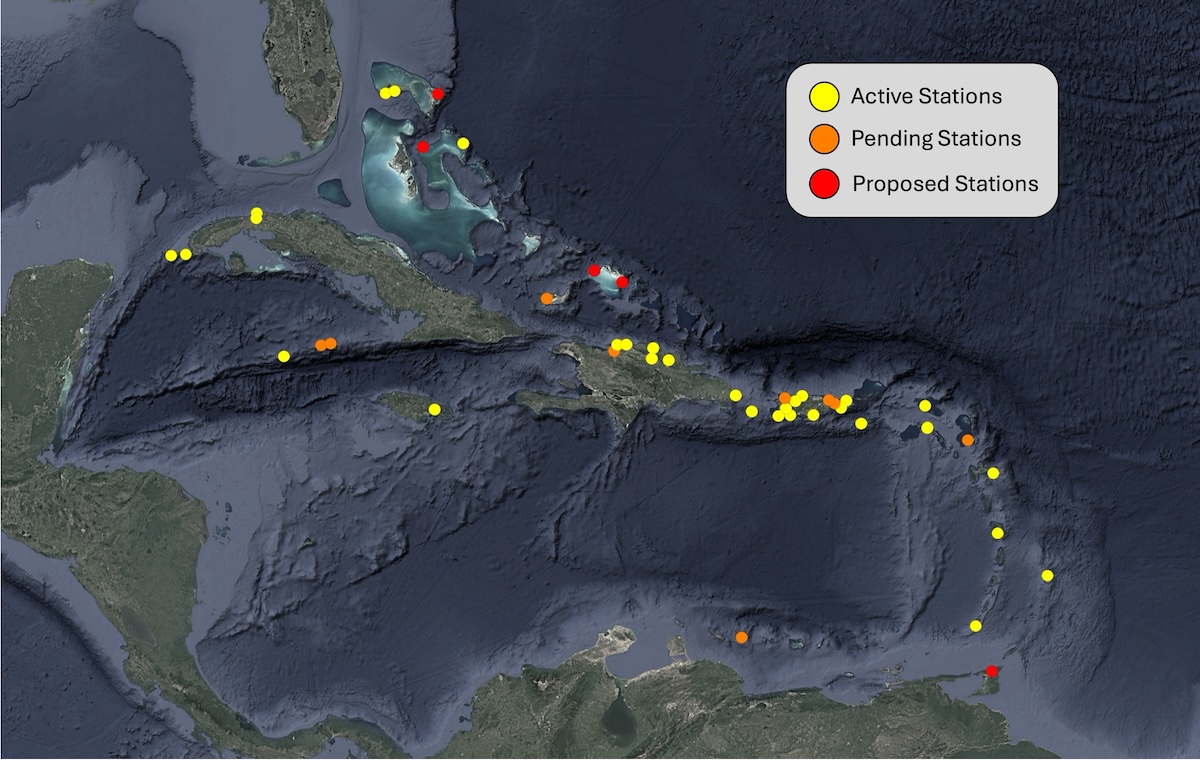
Each new station strengthens the network, creating more opportunities to detect tagged birds as they move between islands and along the Atlantic Flyway.
Turning Bird Movements into Conservation Action
The Caribbean provides essential habitats for migratory birds traveling between North and South America, as well as for resident and endemic species. Yet many important questions remain about how birds move within and among islands, which habitats they depend on, and the threats they encounter.
Through the CMC, BirdsCaribbean and its partners are working to:
- Expand and maintain the Motus network at strategic locations throughout the Caribbean.
- Track priority bird species to fill knowledge gaps in local movements, migration routes, stopover sites, habitat needs, and more.
- Train Caribbean conservationists in Motus technology, bird tagging, and data interpretation.
- Strengthen regional collaboration by connecting researchers, conservation organizations, government agencies, and local communities.
- Put science into action by providing information to guide habitat protection, management, and conservation planning.
Expanding our Impact
Building on the growing network, BirdsCaribbean is developing new research and monitoring partnerships to install more stations and tag and and study movements of the following species: Prairie Warbler, Yellow-shouldered Blackbird, Mangrove Yellow Warbler, Puerto Rican Parrot, Short-billed Dowitcher, Semipalmated Sandpiper, and Red Knot. These efforts will help identify important connections among Caribbean habitats and other sites along the Atlantic Flyway, providing information needed to protect birds across their full annual cycles.
Growing Regional Expertise and Partnerships
The CMC is about more than installing technology. Its long-term success depends on the people and organizations who maintain stations, conduct research, share data, and use the results to advance conservation.
BirdsCaribbean is committed to strengthening local expertise, providing hands-on training, and supporting a collaborative network of Caribbean scientists and conservation practitioners.
Together, we are building the knowledge, tools, and partnerships needed to conserve Caribbean birds and the habitats they depend on.
CMC NEWS and Updates
Interested in collaborating or supporting the Caribbean Motus network? Contact BirdsCaribbean to learn more about opportunities to partner with us.
Learn about BirdsCaribbean’s other Landbird Monitoring initiatives here.
Many thanks to our donors and partners, including the Puerto Rican Department of Natural Resources and Environment, the Sam Shine Foundation, US Forest Service International Programs, and the American Bird Conservancy.