Piping Plovers and Sanderlings, South Caicos (photo by Craig Watson).
A spectacular arrival unfolds across the Turks and Caicos Islands (TCI) in late August every year. Thousands of weary travelers touch down after extraordinary journeys spanning thousands of miles from their breeding grounds in Canada and the Arctic.
To celebrate these incredible journeys—and highlight the urgent need to protect the stopover and wintering habitats shorebirds depend on—BirdsCaribbean is proud to share this wonderful new 8-minute documentary. Explore the remarkable world of migratory shorebirds and discover why TCI’s wetlands and coastal habitats are so vital to their survival.
Storytelling that inspires conservation
This project was born from the vision and direction of Simon Busuttil, whose passion for birds and deep commitment to conservation in the Turks and Caicos Islands helped make this documentary possible. As the driving force behind the film, Simon understood that scientific data alone isn’t enough to save a species. We also need compelling stories that inspire people to care and turn knowledge into action.
By showcasing the magnificent migratory birds that depend on TCI, Simon hoped to inspire greater appreciation and stewardship of these remarkable species and the habitats they need to survive—and make their conservation a source of national pride.
Counting shorebirds on Turks and Caicos. (Photo by Simon Busuttil)
Small birds, extraordinary journeys
For many of the shorebirds visiting TCI, the journey begins on breeding grounds in the Arctic tundra. Imagine weighing only a few ounces and traveling thousands of miles—powered only by the beat of your wings! Tough travelers like the Ruddy Turnstone can bulk up to around 172 grams (6 ounces) before migration, storing precious energy reserves to fuel the extraordinary journey ahead.
Joining these incredible migrants is the plump and adorable Piping Plover. These diminutive Near Threatened shorebirds blend beautifully into coastal landscapes with their sandy-gray backs, often hiding in plain sight! You may not even realize you’re looking at one until it suddenly scurries toward the water on its bright orange legs.
But don’t let their small size and delicate appearance fool you: surviving migration requires extraordinary physiological adaptations.
Species like the Red Knot (Near Threatened), a master of long-distance travel, can fly for days without stopping. To prepare for these marathon flights, the birds undergo a dramatic physical transformation, shrinking internal organs like the intestines, liver and gizzard, and doubling their body mass by storing fat to act as high-grade fuel—remarkable adaptations that help make long-distance migration possible.
Black Rock: A haven within a haven
After burning through previous fat reserves during migration, these birds arrive at a physical breaking point, requiring healthy habitats that offer both safety and abundant food. In TCI, one such place is Black Rock, an isolated shoal cay nestled in the shallow, turquoise expanse of the Caicos Banks.
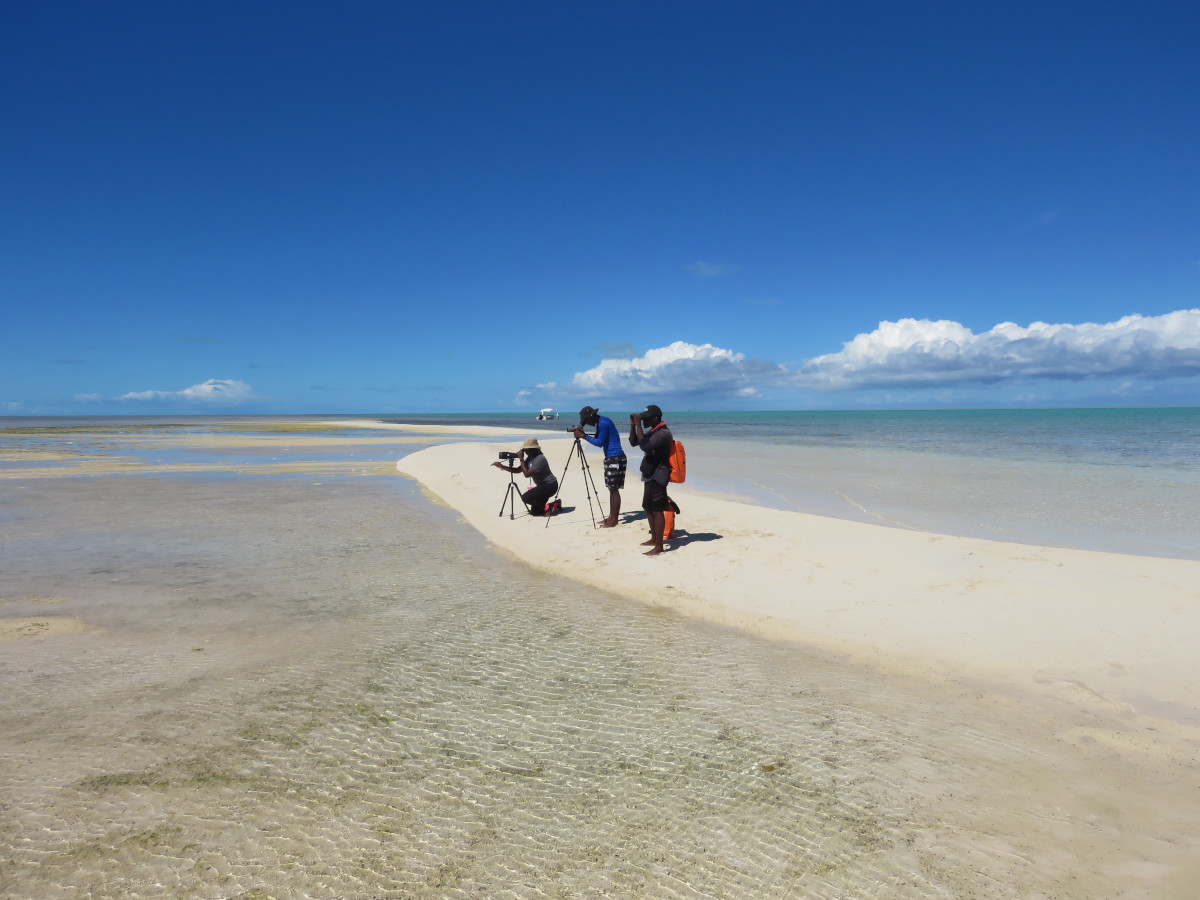
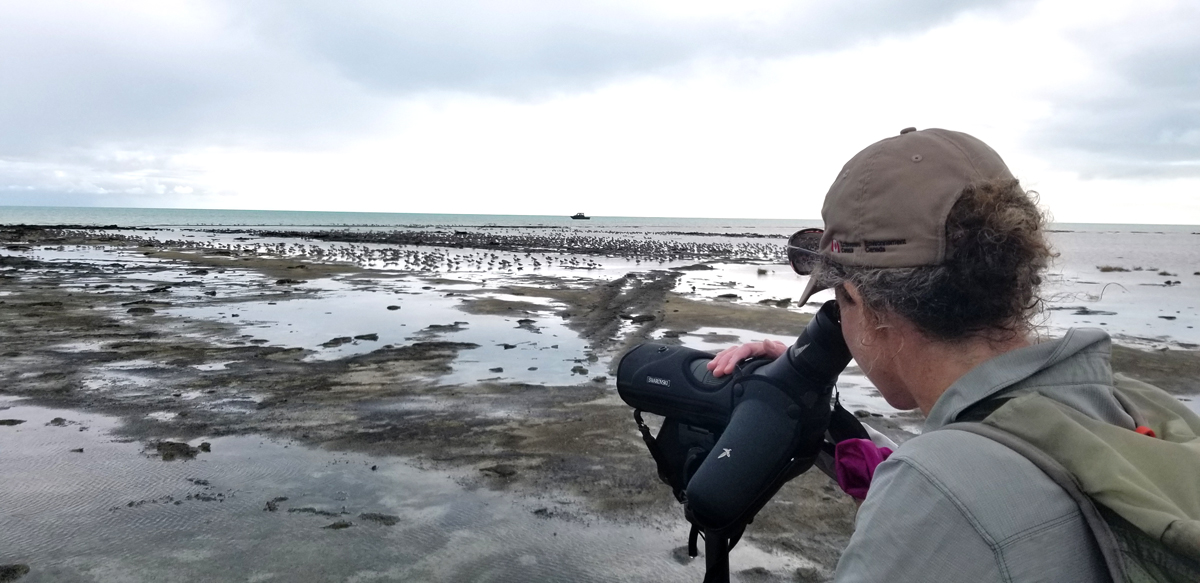
Observing thousands of shorebirds at Black Rock, Caicos Banks (Photo by Caleb Spiegel)
Its isolation from human disturbance and productive surrounding shallows make Black Rock an important refuge for birds. Mollusks and other invertebrates provide food for hungry migrants replenishing energy lost during their long journeys. Thousands of birds can gather here, including small shorebirds, larger wading birds such as egrets and herons, and even raptors.
Healthy wetlands—for birds and people
Protecting migratory shorebirds begins with protecting the habitats they depend on. TCI’s mangroves, salt ponds, tidal flats, beaches, and other coastal wetlands provide essential places for shorebirds to rest and refuel during migration, as well as vital habitat where many spend the winter.
But healthy wetlands aren’t important only for birds. Mangroves and other coastal habitats help buffer communities from storms and flooding, support fisheries and other marine life, and contribute to the extraordinary natural heritage that makes the Turks and Caicos Islands truly “Beautiful by Nature.”
By protecting these wetlands, we secure a win for birds and people alike—helping ensure that migratory shorebirds have safe havens to rely on and return to, year after year.
Watch A Haven for Migratory Shorebirds
Watch our new 8-minute documentary, A Haven for Migratory Shorebirds: The Wetlands of the Turks and Caicos Islands, and discover the extraordinary journeys connecting TCI’s shores to places thousands of miles away.
In Memory of Simon Busuttil
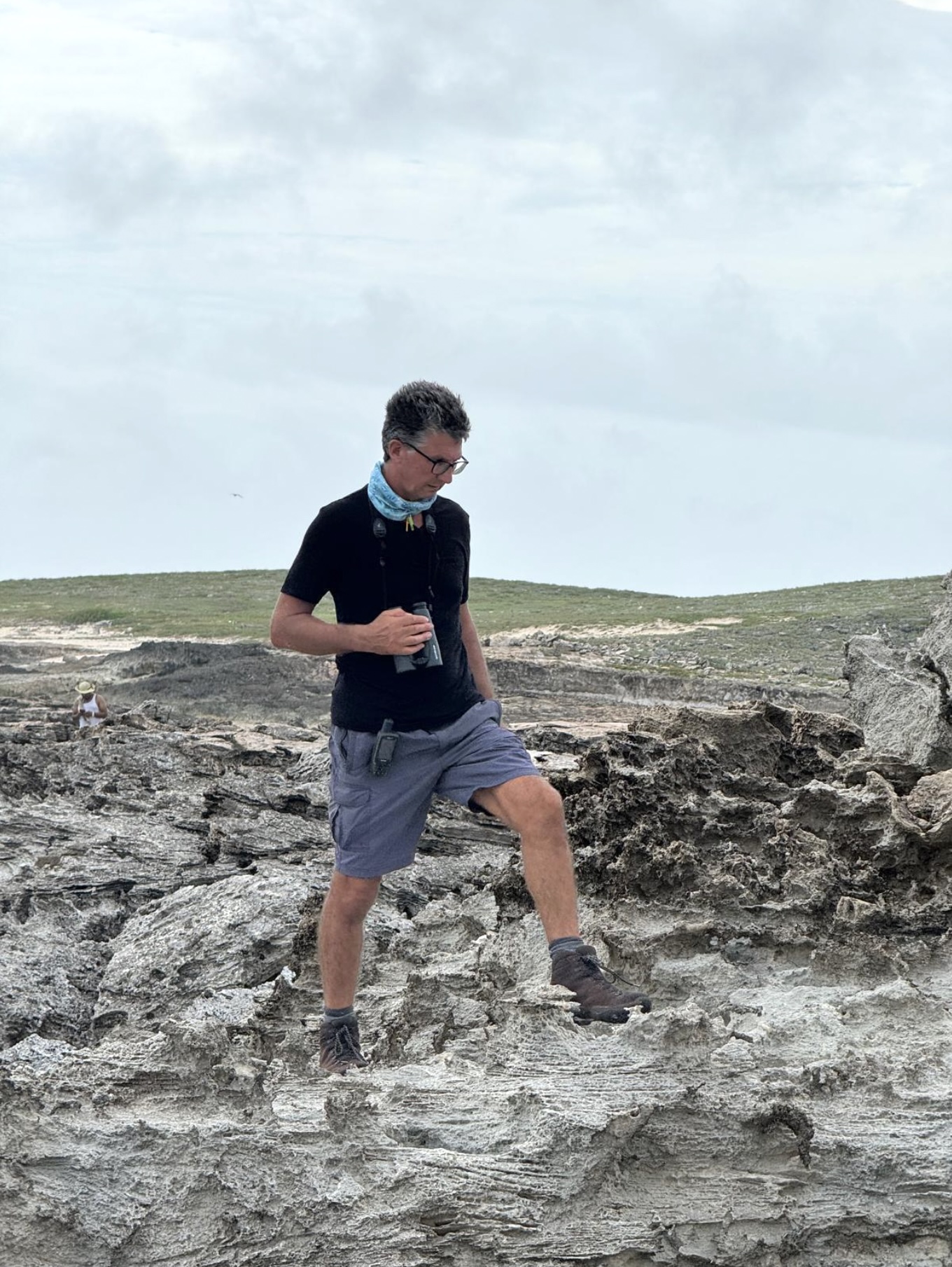
Simon Busuttil doing the fieldwork he loved most—surveying shorebirds and waterbirds in the Turks and Caicos Islands.
BirdsCaribbean and the wider conservation community were deeply saddened by the sudden loss of our dear friend, colleague, and mentor, Simon Busuttil, on January 31, 2026. Simon was a key leader with the RSPB’s UK Overseas Territories Caribbean Team and manager of the Darwin-funded TCI Biosecurity Project. His passion for conservation in TCI, his humor, generosity, and extraordinary warmth inspired everyone who had the privilege of birdwatching and working alongside him.
We are immensely grateful for Simon’s friendship, dedication, and conservation legacy, which lives on through projects like this documentary and through our shared commitment to protecting the extraordinary birds and biodiversity of the Caribbean.
Credits and thanks
This documentary was made possible through the vision and unwavering dedication of Simon Busuttil and the contributions of many people who recognize that migratory bird conservation has no borders. We dedicate this film to Simon’s memory, and our thoughts are with his family, loved ones, friends, and colleagues in TCI and at the RSPB.
We extend a heartfelt thank you to all the funders and partners whose support made this documentary possible: Darwin Plus Initiative, Audubon Americas, the Royal Society for the Protection of Birds (RSPB), the Turks and Caicos National Trust, the Department of Environment and Coastal Resources, and Spotlight Communications.
Together, we can help ensure that the wetlands of TCI remain a haven for migratory shorebirds for generations to come.
Hundreds of thousands of migratory shorebirds are already on the move, and we are getting ready to celebrate World Shorebirds Day 2023! Diverse habitats and food supply make the Caribbean an attractive destination for shorebirds and a veritable birders’ paradise, so why not take part in the Global Shorebird Count this year? BirdsCaribbean has everything you need to help you #ShowUpForShorebirds (and show out!) in the best possible way.
World Shorebirds Day is held every year on September 6. This day celebrates shorebirds, their magnificent migration journeys, and most importantly, raises awareness of the threats they face and actively promotes their monitoring and conservation. The key event associated with this day is the Global Shorebird Count (GSC), September 1-7.
Across the Caribbean (and the entire globe!), groups of birders will be out looking for and counting shorebirds and recording what they find on eBird Caribbean. Some birders will go out in ones and twos; others in small groups. Wherever you are, whoever you are with, or even if you are on your own—we welcome your participation and contribution to citizen science.
This year, we have a special mission for you: we are asking you to do more than one count if possible. Read on to find out why.
Why should you #ShowUpForShorebirds?
The answer is that our migratory shorebirds are more vulnerable than ever, threatened by human activities such as destruction of their habitats, pollution, disturbance, and climate change. Recent analyses show that shorebirds in North America are declining more than any other group of birds; in fact, more than half of 28 species studied were estimated to have lost more than 50% of their abundance in the last 30 years.
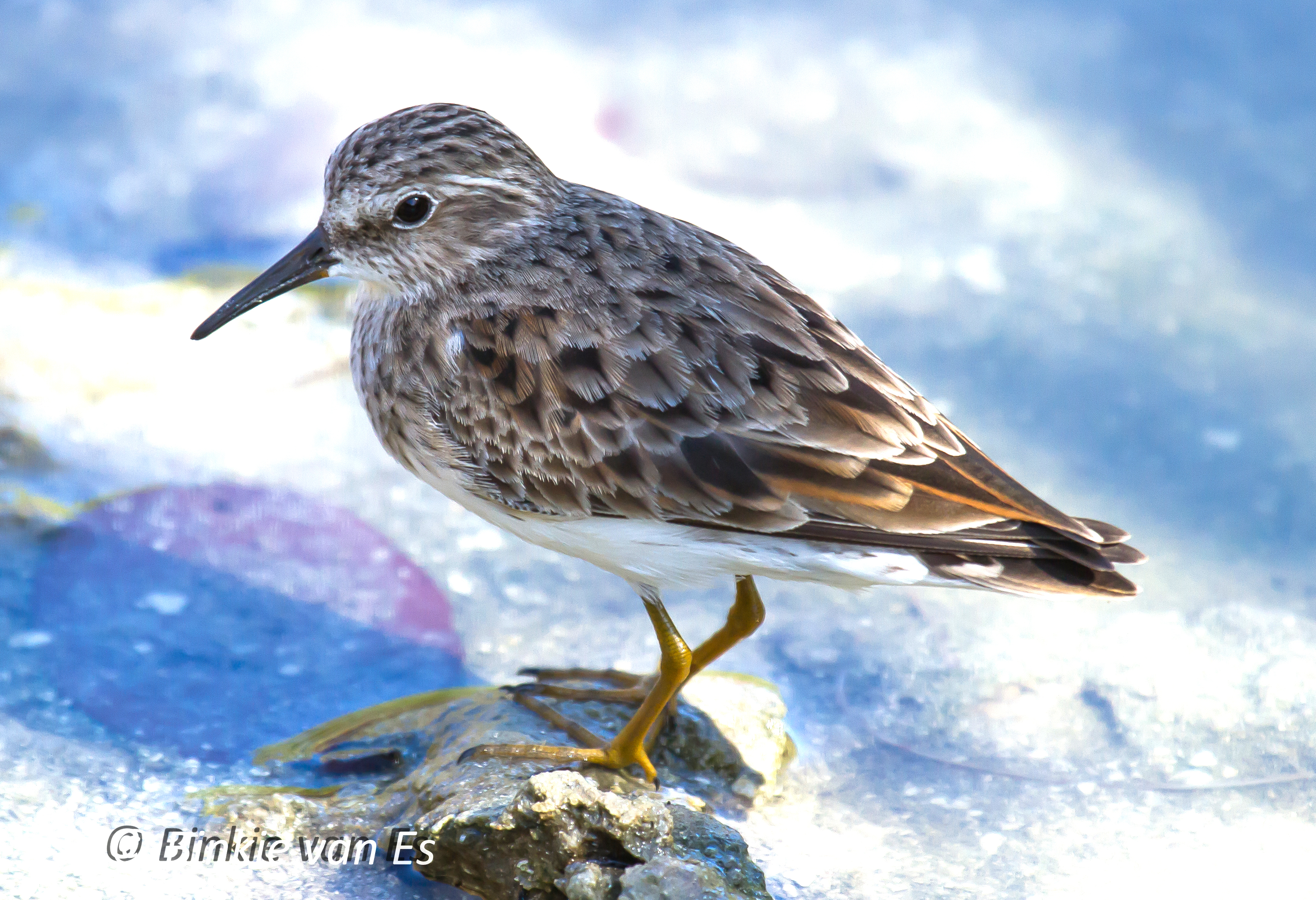
Least Sandpiper – a common migrant to the Caribbean; this one has stopped for a rest in St. Maarten (photo by Binkie van Es)
The Caribbean is an important region for migratory shorebirds. They rely on our mangroves, salt ponds, beaches, sand flats, and mud flats to rest and refuel as they continue on their long migrations, or they may spend the entire winter with us.
The Global Shorebird Count helps map the distribution of shorebirds during migration and record their numbers. This data is essential to help us identify and protect key stopover and/or wintering habitats that shorebirds use. Protecting these habitats benefits people too because healthy coastal areas provide vital ecosystem services such as clean water, food, sustainable livelihoods, protection from storm surge, and much more.
Thanks to the great work you all are doing in gathering data through the Caribbean Waterbird Census (CWC) and the Global Shorebird Count, the importance of this region for waterbirds and shorebirds is becoming better understood at a rapid rate. However, scientists are telling us that to further document numbers and long-term trends, more frequent monitoring data are needed, especially during migration. Thus, this year we invite you to visit your nearby shorebird sites and carry out 2 or 3 counts a month during migration season (August-October), ideally a week to 10 days apart. If you’re able to do this, bravo, and thank you! Your efforts will help us learn much more about shorebirds in the Caribbean—you’ll be doubling or tripling your impact for shorebirds.
We can’t do it alone
Individuals, groups and communities must come together to conserve shorebirds and the habitats we both depend upon. This is why we need you to join the GSC to help count shorebirds, invite others, and share how awesome shorebirds are. You may even discover new or rare birds on your islands! Feel free to use our cool graphics to promote World Shorebirds Day (see below), and invite your friends and family to count shorebirds too.
We’ll be here to help you every step of the way.
Grupo Acción Ecológica members counting shorebirds in the Dominican Republic. (Photo by Maria Paulino).
Fernando Simal surveying shorebirds. (Photo by Lisa Sorenson)
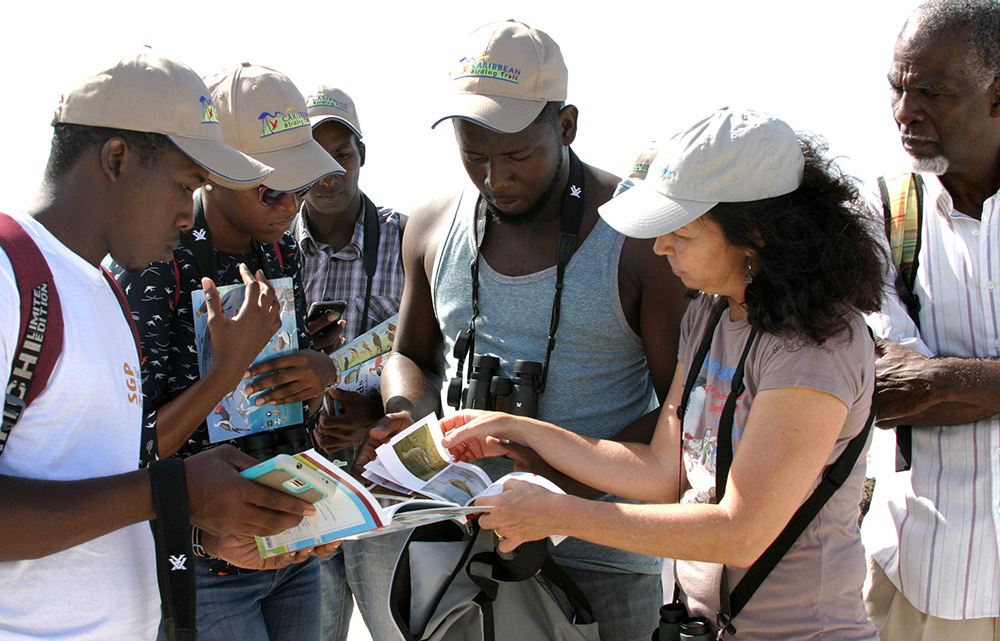
Proyecto Reverdece tu Comunidad-Working on bird ID during a bird count.
Orisha Joseph and her team counting waterbirds at Belmont Salt Pond, Union Island, St Vincent and the Grenadines.
Where to find shorebirds?
Where should you look for shorebirds? The simple answer is: anywhere there is water. This means that, as their name suggests, you can find them at the beach and on other types of shorelines. However, some shorebirds will be further inland, including in salt ponds and salinas, freshwater pools, agricultural fields, and at brackish marshes and ponds. Shorebirds will also gather on mud flats, in mangrove areas, and on tidal flats.
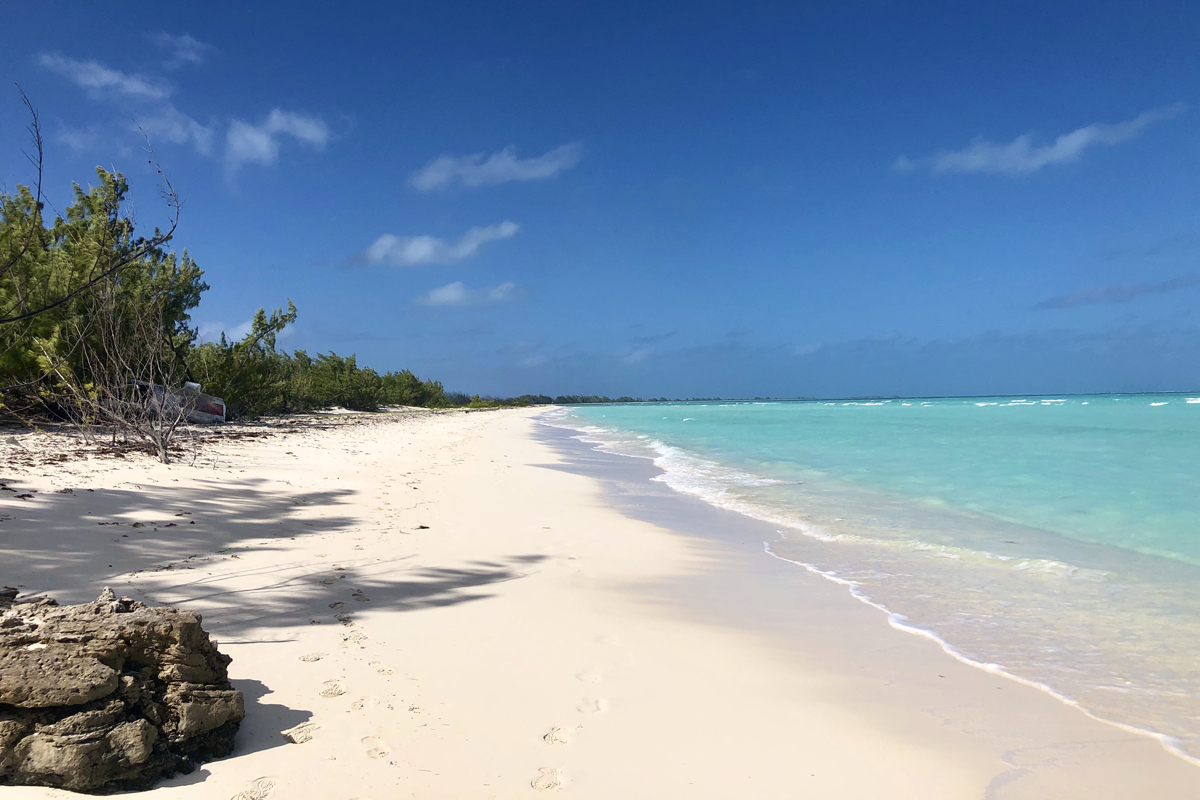
Wild Cow Run Beach, Middle Caicos, Turks and Caicos Islands (Photo by Craig Watson)
You may not be quite sure of the best places to look in your area. If so, why not take a look for ‘hotspots’ at your local wetlands on eBird. Just click on ‘Explore’ on the eBird Caribbean site, and find ‘Explore Hotspots.’ You can open hotspots on a map and then click on a hotspot to see what types of birds have been seen there recently.
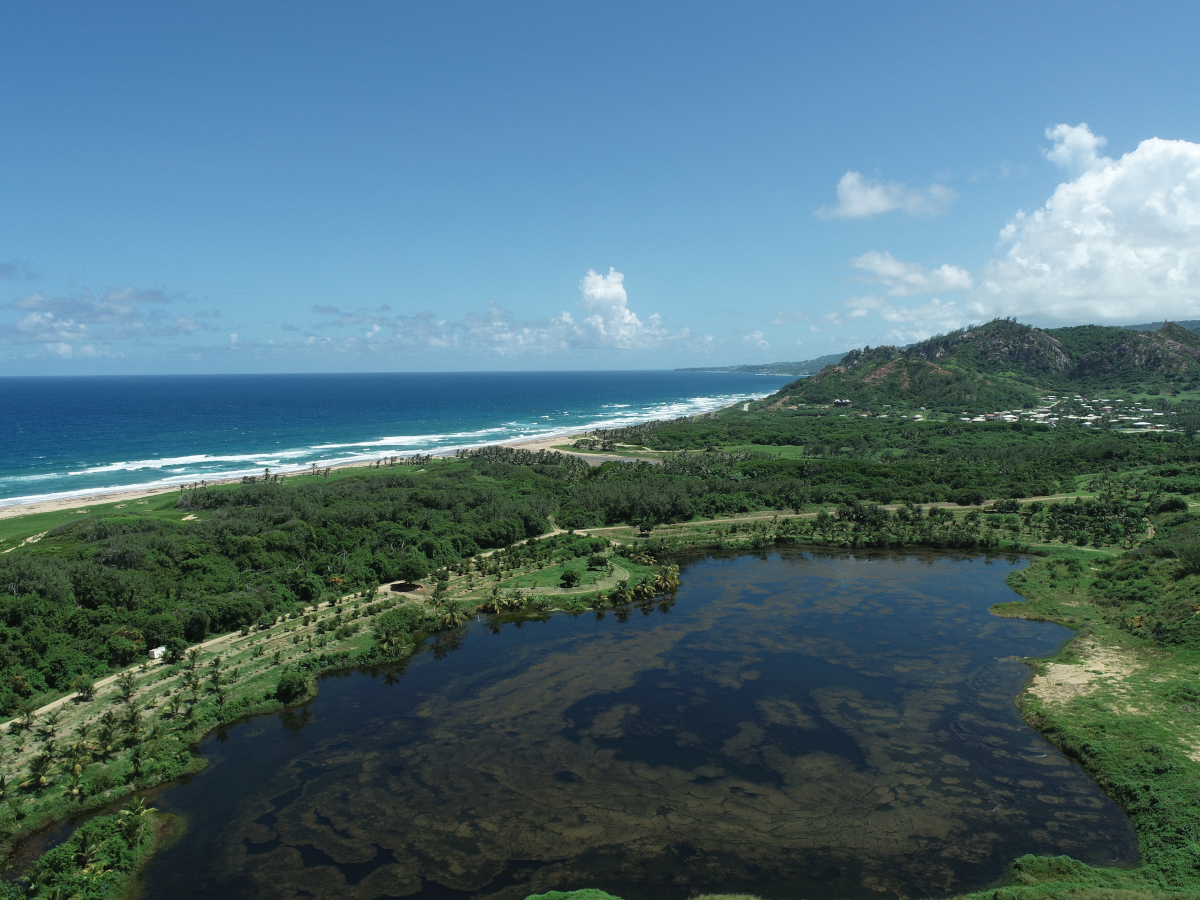
A view across the newly created wetlands and coastline at Walkers Reserve in Barbados. (Photo by Shae Warren, WIRRED)
How to participate in the count
Have an eBird account
eBird Caribbean is a critical tool for tracking and understanding bird migration and population changes—never more so than for our shorebirds. If you do not have an account, it is easy to register—here’s a quick guide to enter eBird data online.Check out our helpful video here on how to use eBird and Merlin.There is even a free eBird Essentials course to get you fully oriented. Download the free mobile app for recording your data in the field. Recording your findings on eBird is not only satisfying and enjoyable, but you are directly contributing to the global knowledge base of birds—what, when, and wherever they are to be found.
If you need help with or have questions about eBird checklists or with setting up an eBird account, do contact Alex Sansom: waterbird.manager@birdscaribbean.org
Count shorebirds
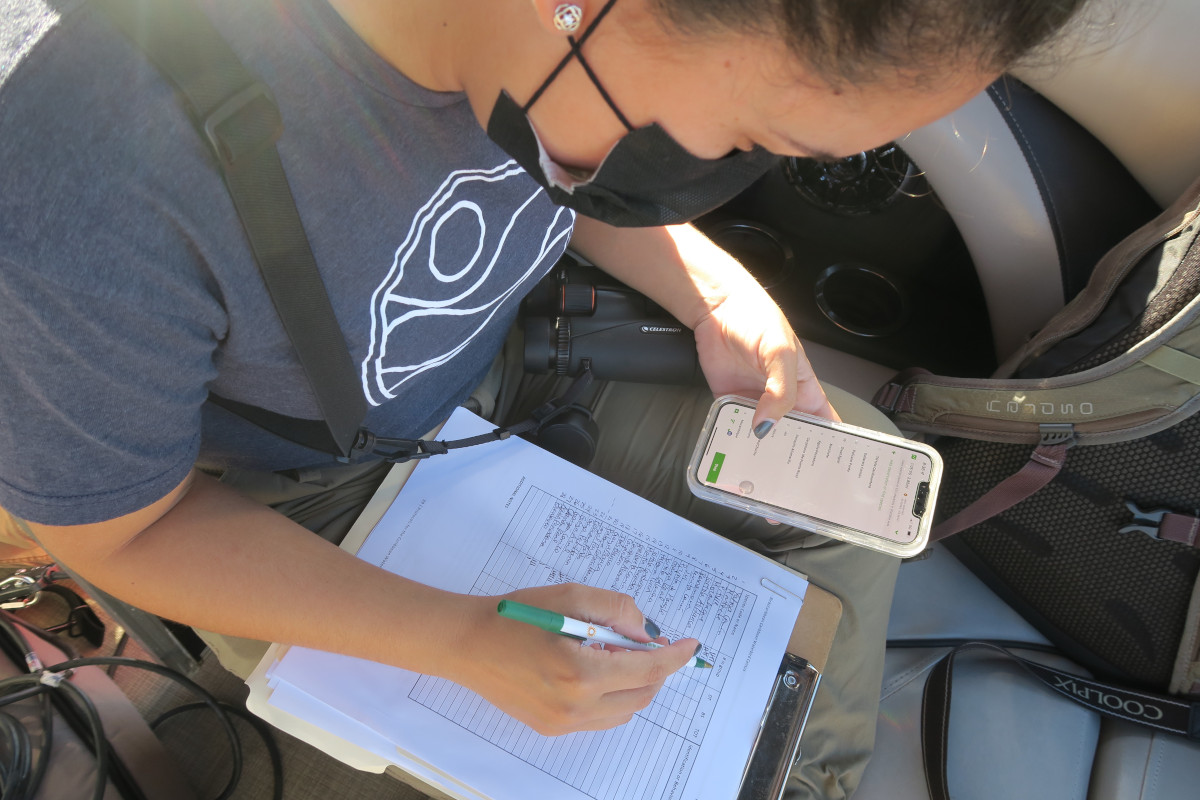
Visit your local sites where shorebirds occur and do a count. Record all the species you see and/or hear (including other non-shorebird species; see below) and how many individuals of each species. We recommend spending a minimum of 6 to 10 minutes at each site (longer if there are a lot of birds) and scanning the entire area carefully with your binoculars to detect birds, which can easily blend into their surroundings (mud, water, vegetation, etc.). Be sure to record the start time and duration of your count if you’re using a notebook (the ebird mobile app will do this for you). Start a new checklist each time you change locations.
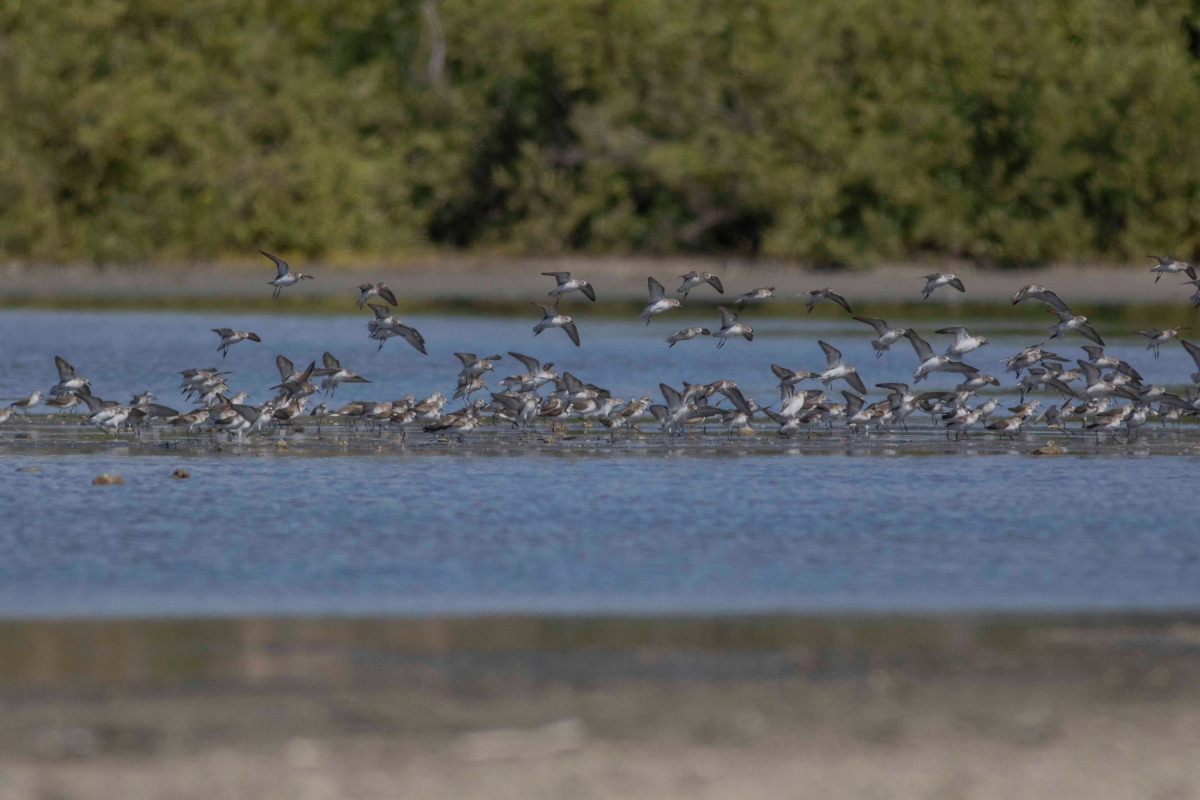
A mixed shorebird flock seen during Roots & Shoots CWC survey, Puerto Rico. (Photo by Miguel Angel Rivera)
Count shorebirds on as many different locations as you can during the Global Shorebird Count period (1-7 Sept). Then, if possible, repeat your counts at these same sites 2 or 3 times a month during fall migration (August through October). Repeated counts will greatly add to our knowledge of shorebird movements and migration patterns!
Note that shorebirds are a type of waterbird. So, any counts you do at wetlands, mangroves, mud flats, coastal areas or beaches at any time of year count as Caribbean Waterbird Census (CWC) counts. When you do your counts please choose one of the CWC protocols in the eBird app or when you submit or edit your data online. When you are using the mobile app make sure that you are using the eBird Caribbean Portal. To check or change the portal you are using, go into your settings on the app and look for “Portal” and select “eBird Caribbean.”
Each time you complete a checklist, be sure to share it with ebird username worldshorebirdsday. This will ensure that your checklists are included in data analyses for the Global Shorebird Count.
Coral Aviles listing birds on eBird, Blassina Canal Puerto Rico. (Photo by Eliezer Nieves)
Rinse and repeat
As mentioned above, we ask that, if possible, do 2 or 3 counts at your local site or sites per month during fall migration(7 to 10 days apart is ideal). Scientists are telling us that we need more data on shorebird migration through the Caribbean, including which species pass through, how many individuals, the timing of each species’ migration, how long they stopover, where they go next, etc. The best way to get this local and regional data is through repeated counts!
Shorebird ID and FREE resources for the field
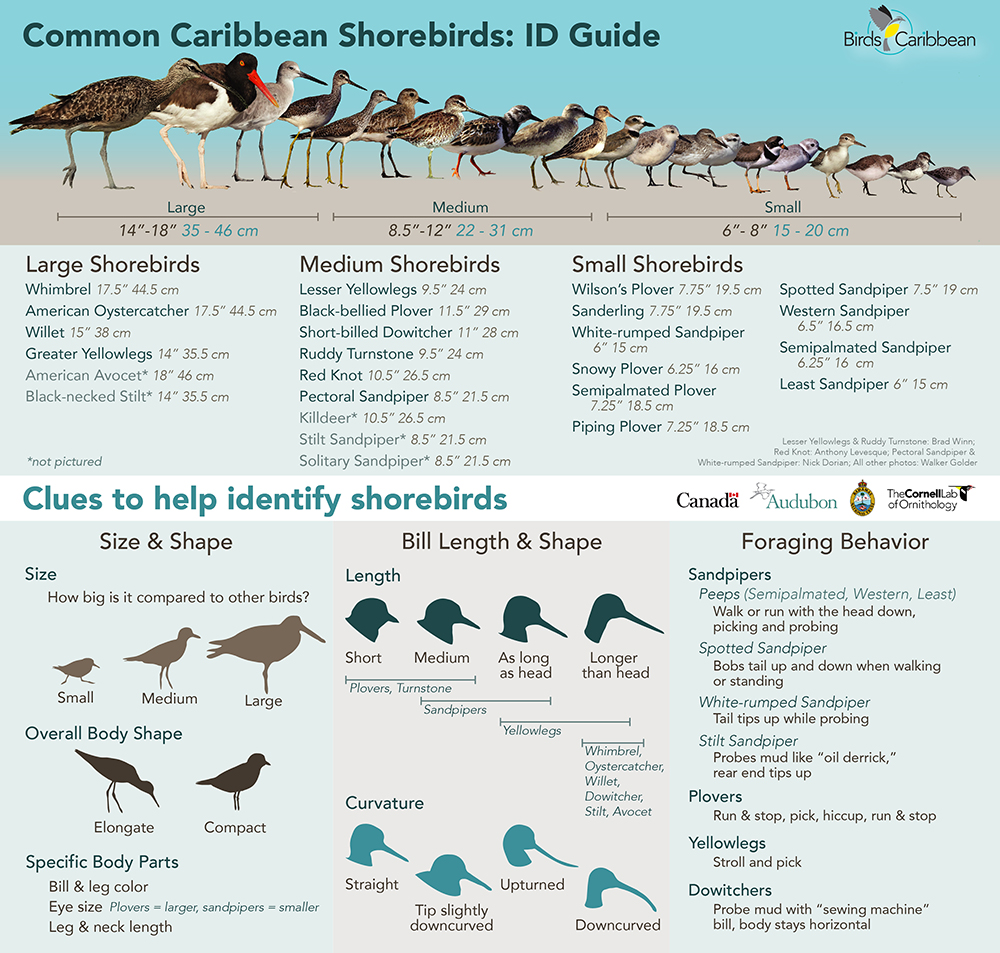
We know that Shorebirds can be tricky to identify, and some are especially difficult to tell apart. BirdsCaribbean is here to help you with some useful tools! We have a Shorebird Poster and “Quick ID Guide” to get you started as well as handy Shorebird ID cards that you can download and print featuring common shorebirds of the Caribbean.
Shorebird identification can be tricky but with practice and our ‘Quick ID Guide’ it gets easier. (Photo by Kristy Shortte)
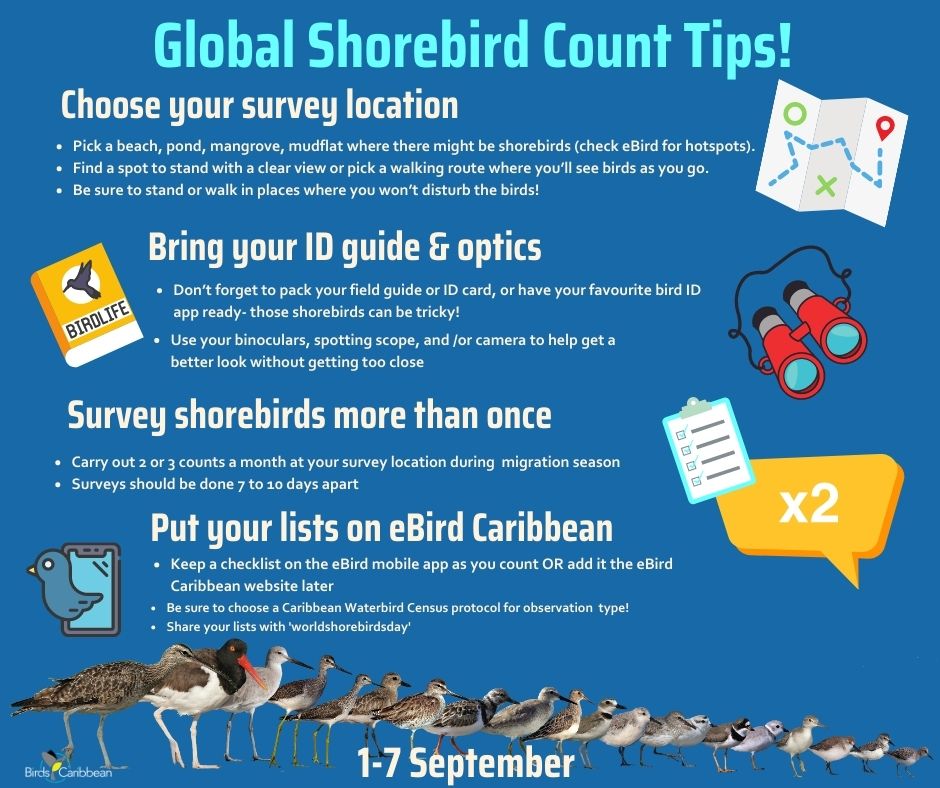
We also have a list of some best practice tips to help make your count go as smoothly as possible. You can download and share this infographic with your fellow birders. When you go out on your survey, a spotting scope or a camera with a good zoom lens, as well as binoculars, will make for very helpful tools. They will help you get a closer look to pick out the identifying features of the birds, without disturbing them. Photos can be looked at and shared later if you have any birds that were difficult for you to identify in the field. Birding colleagues and experts can explain further if they have visual evidence of the bird! (Did we say some are quite tricky to tell apart?)
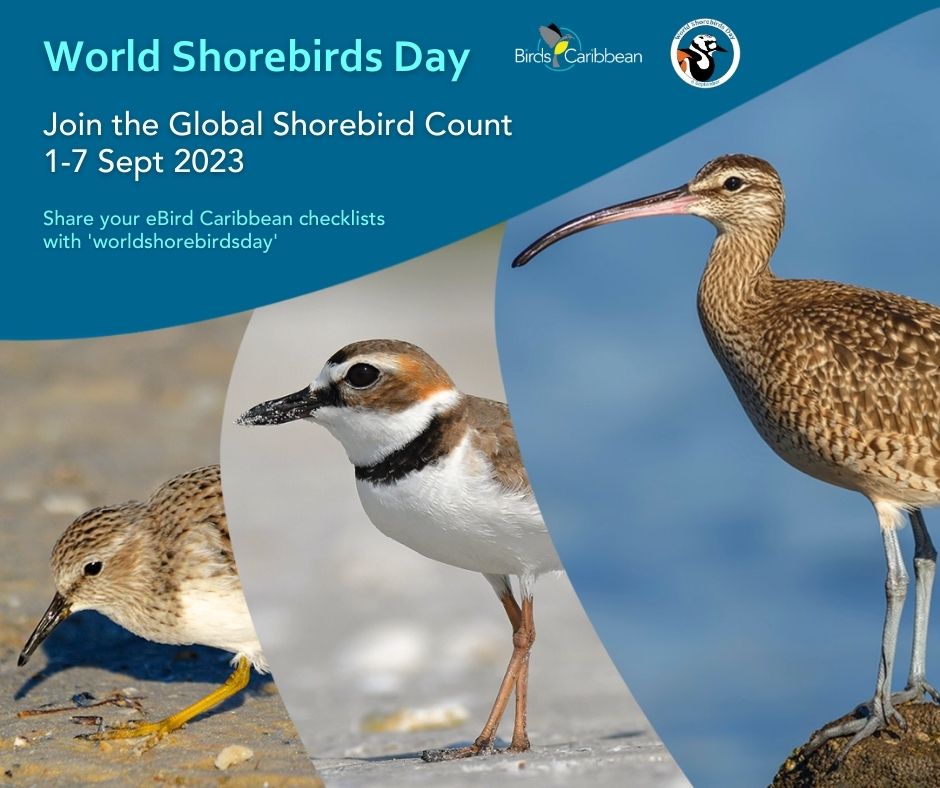
Promotional graphic templates – feel free to modify for your counts
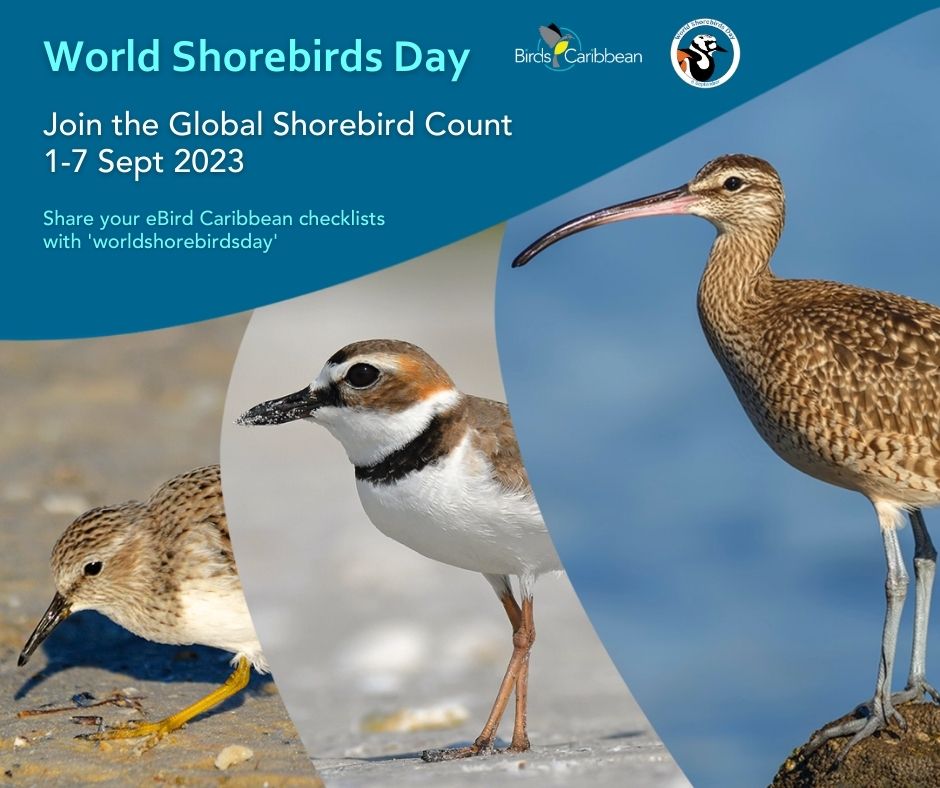
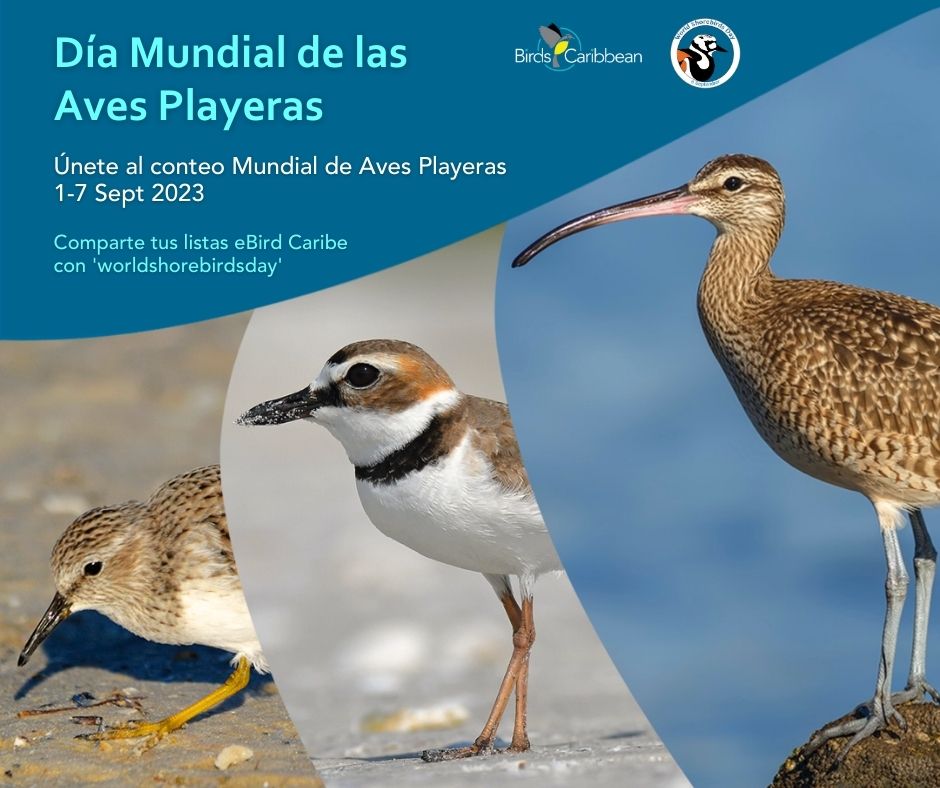
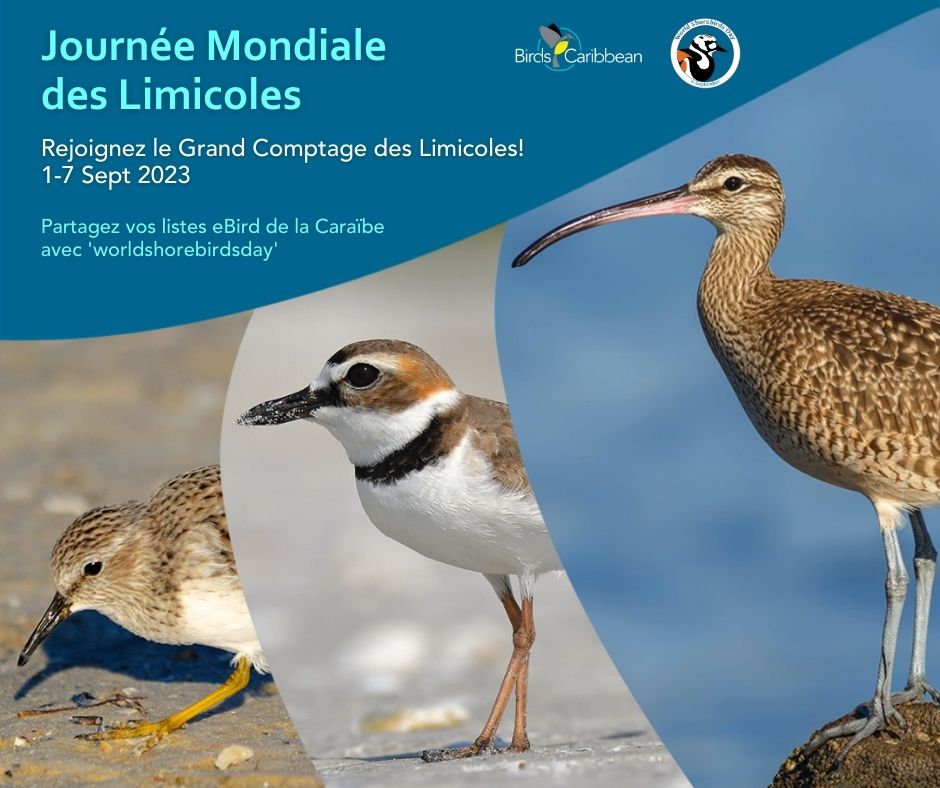
Promotional Graphics for World Shorebirds Day 2023 are available in English, Spanish and French. We also have ‘Global Shorebird Count Tips’ graphic formatted for Facebook or Instagram . You can add your own logos or event information. Click on each image in the gallery below to enlarge then right click on an enlarged image and ‘save image as’ to download. You can also use these links to Canva to use our promotional graphics as a template (each link contains graphics in all three languages):
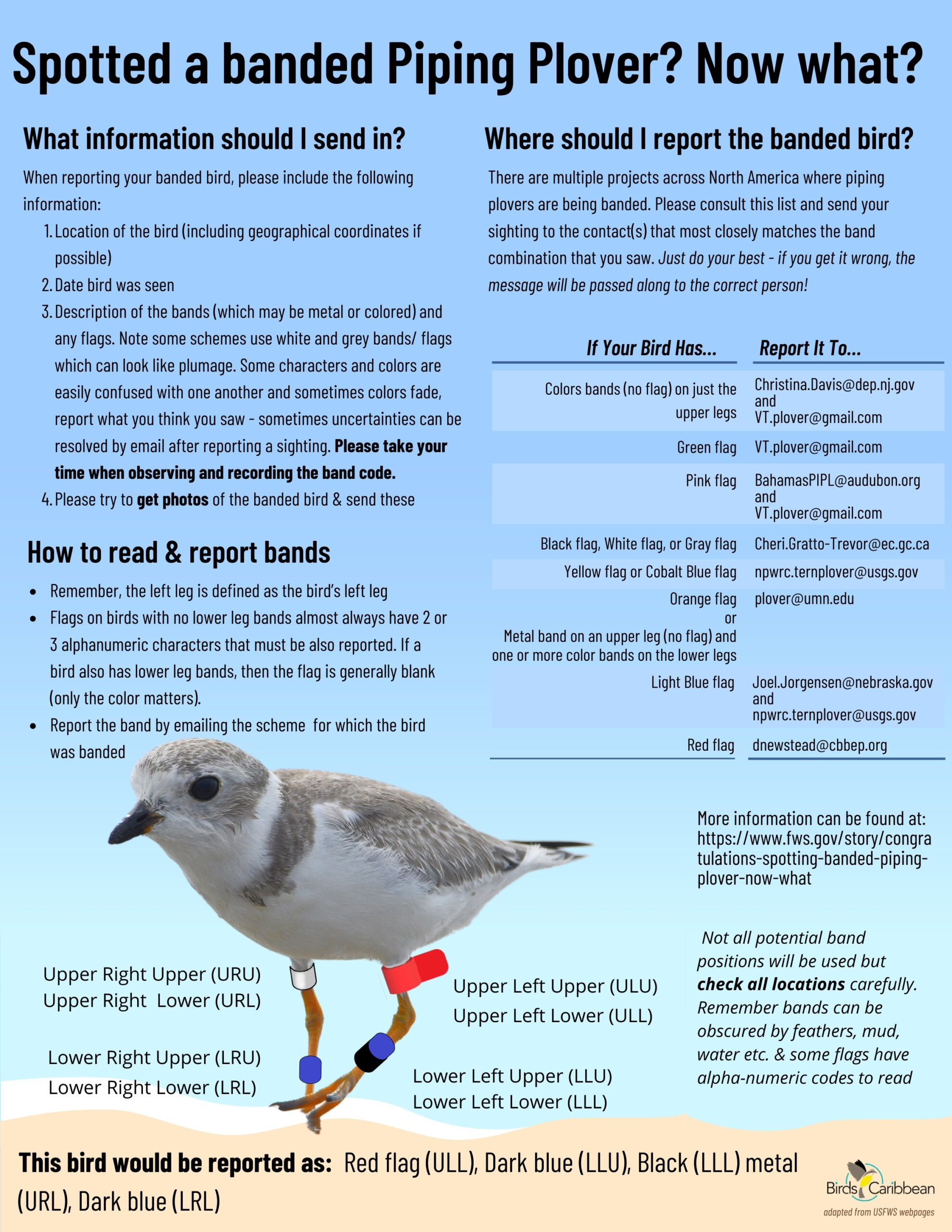
While counting shorebirds you may see birds with colourful bands on their legs. Do your best to record the band colors and any numbers or letters paying special attention to the location of the band or bands on the bird’s legs. Binoculars or zoom photography may allow you to clearly see the band colors and the numbers engraved onto the band – if you get a photo you will be able to send it along with your sighting. Look out for bands especially on Piping Plovers, Red Knots, Semipalmated Sandpipers, Semipalmated Plovers, Ruddy Turnstones, and Sanderlings. You can report your sightings and send any photos you have to BandedBirds.org and the USGS Bird Banding Lab, which oversee all banding in the United States.
Keep a sharp eye out for Piping Plovers, including banded birds!
There are several different projects banding Piping Plovers and if you see a banded Piping Plover you can report it to the correct person using the information below. This also provides a guide to reading the bands and the information that will be useful to send when you report a banded bird. The tips in this guide are useful for any banded birds you see, not just Piping Plovers! You can find out more about reporting banded Piping Plovers from the U.S. Fish and Wildlife Service here. This 1-page guide is available to download as a pdf here. We also have 2-page version with more information for you to use and share here. And a square infographic that you could share on social media here.
Share your shorebird stories
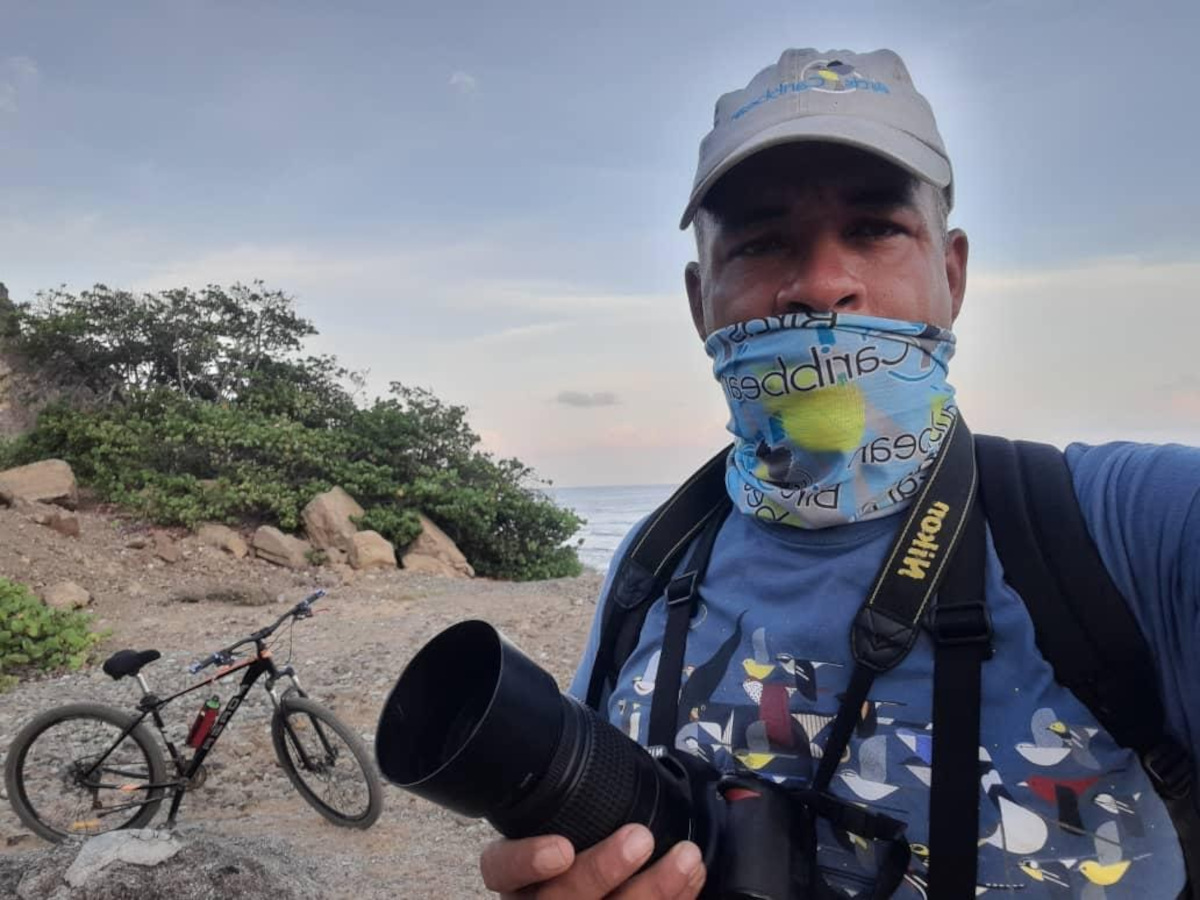
A Cuban birder takes a selfie with his bike at the beach.
Tag us in your photos on social @birdscaribbean and let us know how your counts are going and what you’e finding!
Use the hashtags #ShowUpForShorebirds #WorldShorebirdsDay2023 #GlobalShorebirdCount2023 #CaribShorebirds #DoubleTheImpact
We love looking at photos of shorebirds, your local wetlands, and smiling faces. We will be excited to share your photos and findings on our Global Shorebird Day wrap-up blog! See our 2022 blog here.
If you’ve got little explorers, be sure to download the following activity* sheets and take them with you to the beach:
Beach Scavenger Hunt. This activity is suitable for children ages 4 to 7 years old. They are asked to find plants and animals at the beach.
Beach Bird Bingo. This activity is suitable for children ages 8 to 12 years old. They are asked to find items on the list four in a row, horizontally, vertically or diagonally. They do not need to touch or collect any of the items on the list.
Talk about this with your children before beginning any of the activities. They should not touch or collect items on the lists. When observing birds they should speak softly. They do not need to get close to the birds but if they need to, ask them to do so slowly and quietly. You can check off the items (with a pencil or pen), as they are located. When everyone has had a chance to look for the items listed, come back together to chat about what they were able to find or see. For example, why is the bird’s beak long and straight?
*These activities were not designed to teach a child how to name and identify shorebirds but rather to give them space to explore and feel connected to their natural environment. Parents and guardians, you will not need to worry about your own knowledge of birds or plants. All you need to do is accompany and participate with your child in these activities.