
 There was something special in the air in Trinidad and Tobago—and it wasn’t just the hummingbirds! For five unforgettable days, more than 310 delegates from 30 countries filled the Hyatt Regency Trinidad with ideas, laughter, spirited discussions, new collaborations, old friendships, birding adventures, and plenty of excitement about the work ahead. Here are some of the moments—and outcomes—that made this milestone gathering so special.
Our Silver Anniversary Conference, held under the theme Birds, People, Prosperity: Harnessing the Caribbean’s Natural Advantage, was much more than a chance to share research. Scientists, conservation practitioners, educators, students, government agencies, community leaders, bird guides, tourism professionals, artists, photographers, and bird and nature lovers, to learn from one another, build skills, strengthen partnerships, and advance conservation across the region.
And the energy was extraordinary. Whether delegates were mapping conservation priorities, learning new sound recording techniques to monitor rare and elusive birds, planning the future of Caribbean parrot conservation, mentoring young scientists, exploring how bird tourism can strengthen local livelihoods, reconnecting over coffee, bidding wildly at the Silent Auction, or heading into the field before sunrise, there was a wonderful spirit of sharing and collaboration throughout the week.
As one delegate reflected:
“I thought this was one of the most collegial, collaborative, and joyful conference environments I have experienced.”
Of course, no single story could capture everything that happened over five action-packed days. More detailed reports from many conference sessions will follow in the Journal of Caribbean Ornithology. For now, here are a few highlights!
The Land of the Hummingbird Welcomes the Caribbean
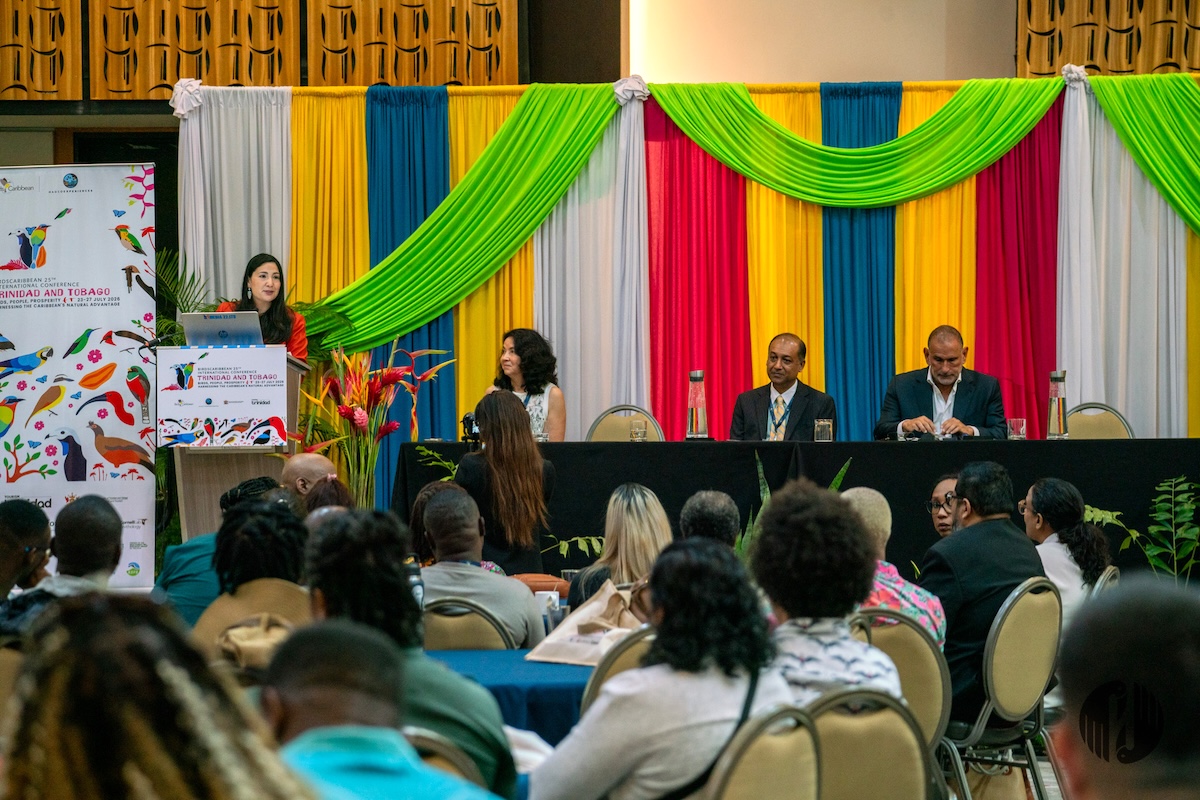
The conference kicked off with an energetic Opening Ceremony, followed by Trinidad and Tobago Day, our traditional showcase of the birds, projects, and people driving avian conservation in our host country.
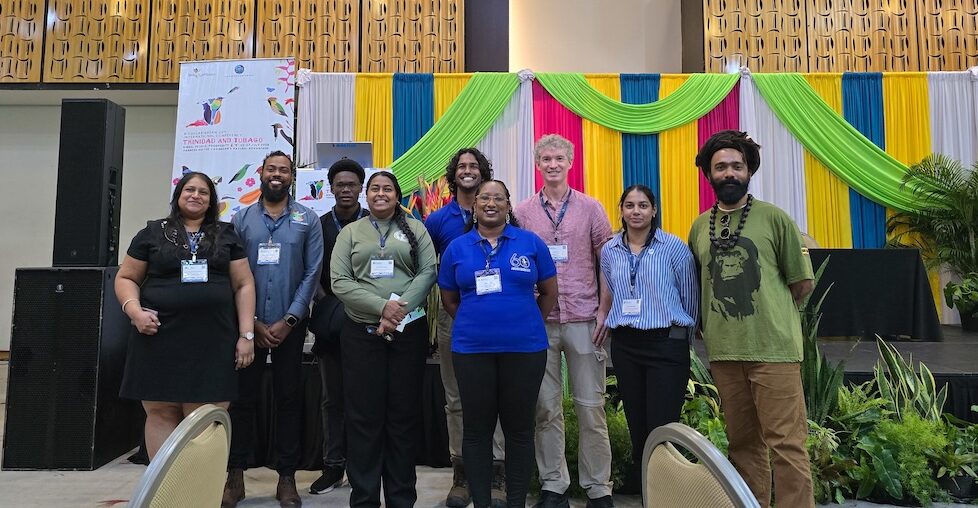
Eight presentations demonstrated the breadth of bird research and conservation underway across the twin-island nation—from the recovery of the Trinidad Piping-Guan (Pawi) and conservation of the White-tailed Sabrewing, to the plight of native songbirds, restoration of critical wetlands, long-term bird banding, and hummingbird tourism, all while exploring the cultural and economic value of Trinidad and Tobago’s spectacular birdlife.
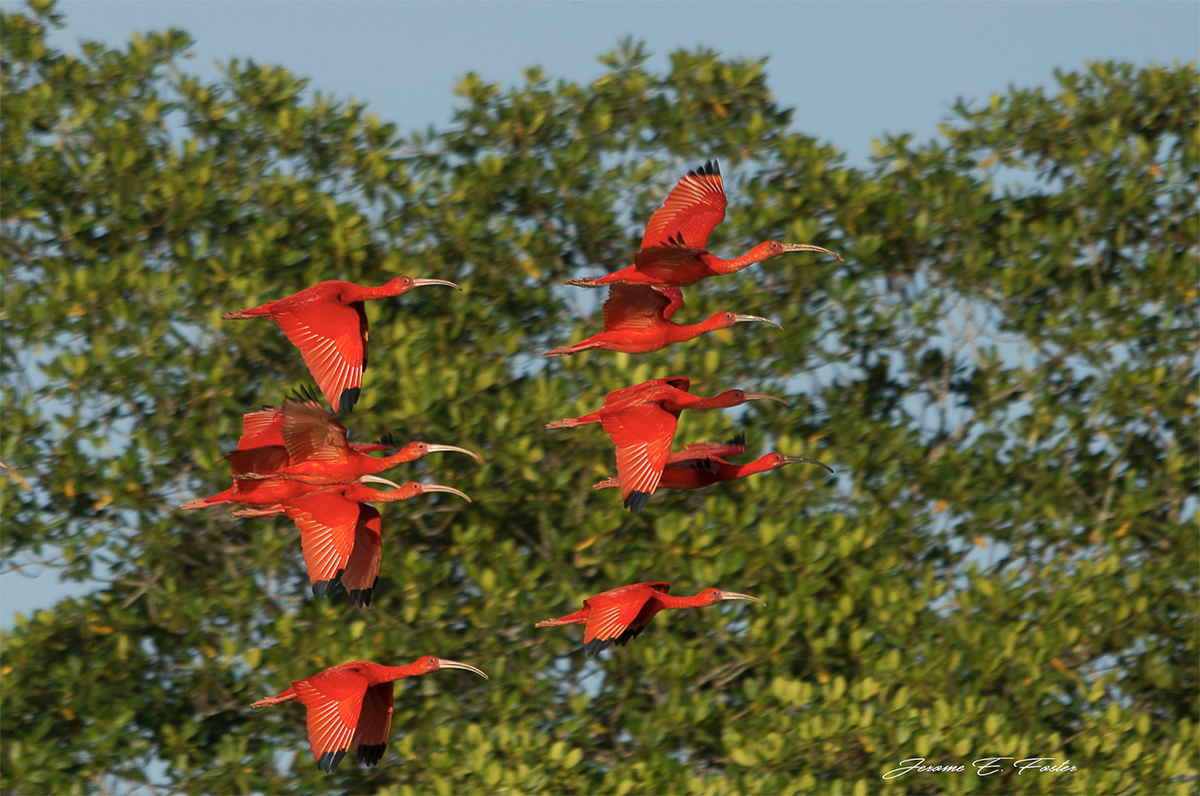
Elizabeth Seebaran of the Trinidad and Tobago Field Naturalists’ Club introduced delegates to T&T’s remarkable birdlife, highlighting its South American influences, sought-after species and birding sites, and key conservation priorities. Laura Baboolal of the Environmental Management Authority demonstrated how environmental legislation was used to strengthen legal protection for the Scarlet Ibis, recognizing its ecological, socio-economic, and cultural importance, and working with diverse stakeholders to study and sustainably manage the species and its habitats.
Dr. Mark Hulme shared encouraging evidence that the range of the critically endangered Pawi (Trinidad Piping-Guan) has expanded, suggesting the population has likely increased since the last survey 25 years ago—results now helping guide an updated recovery plan. Daveka Boodram highlighted the GEF-BIOREACH Project’s work to conserve Tobago’s White-tailed Sabrewing through habitat restoration, species monitoring, capacity building, and youth education, demonstrating the importance of combining science with community engagement.


Other presentations showcased the diversity of approaches to bird conservation in T&T. Jaleen West and Shaueel Persuadee reflected on six decades of wetland and waterbird conservation at the Pointe-a-Pierre Wildfowl Trust, including a breeding and release program that has returned more than 15,000 native ducks to local wetlands. Kelson Kirk and Casianna McKenna highlighted long-term bird banding at the Trinidad and Tobago Bird Observatory in Tobago’s Main Ridge Forest Reserve, combined with training for local foresters and young people. And Josh Bajnath shared how habitat enhancement and a fascination with hummingbirds transformed his family’s estate into a thriving hummingbird sanctuary and popular bird photography destination.
The day also confronted difficult conservation challenges. Faraaz Abdool described the dramatic decline of Trinidad and Tobago’s native songbirds, particularly seedeaters, through decades of trapping, trafficking, and habitat loss. He emphasized the need for stronger enforcement, monitoring, changes in cultural practices, and potentially species reintroductions to help bring these birds back.
It was a wonderful introduction to the impressive conservation work underway in our host country—and to some extraordinary birds we would be seeing throughout the week.
Parrot People Unite!
One of the conference’s most exciting firsts was the inaugural Caribbean Parrot Conservation Summit, bringing together parrot conservationists from across the region for a full day devoted to the future of the Caribbean’s remarkable endemic parrots.
Participants shared hard-won experience from islands across the Caribbean, recognizing both the tremendous expertise already present within our region and the challenges so many parrots have in common—from habitat loss and illegal trade, to important gaps in our understanding of genetics and disease.


Discussions highlighted the need for stronger island-to-island collaboration, shared research and training, regional behavior-change campaigns, and new approaches incorporating solidarity and the rights of nature into parrot conservation.
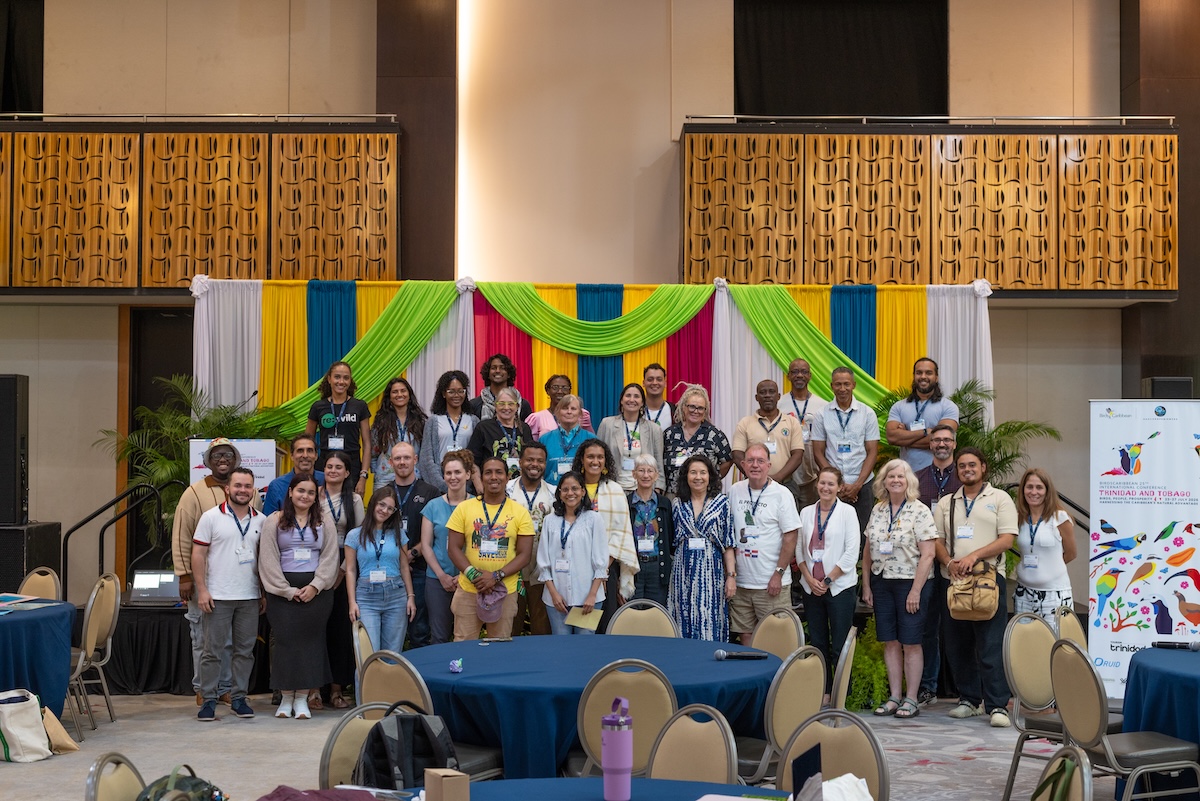
The work will continue through the revitalized Caribbean Parrot Working Group, which over the coming months will begin developing coordinated regional conservation plans and identifying opportunities for collaboration.
Listen Up! New Skills for Caribbean Conservation
Learning by doing has always been central to BirdsCaribbean conferences, and our Silver Anniversary Conference offered an exceptional lineup of hands-on workshops.
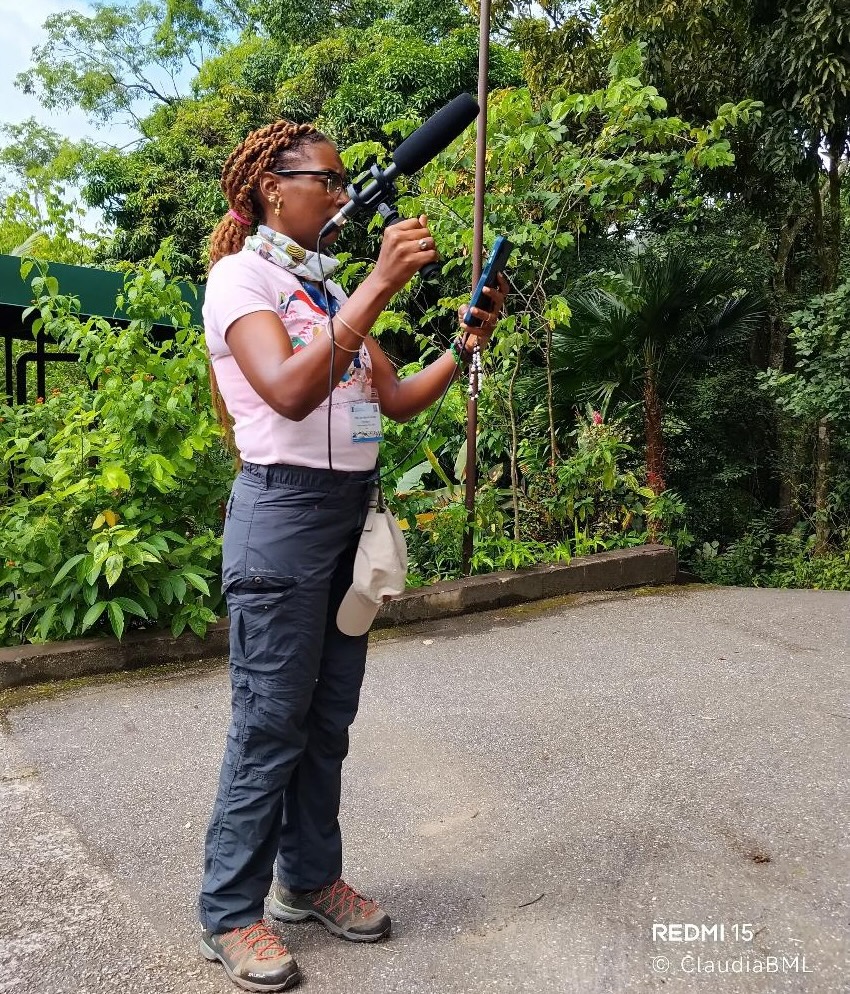
Inés Rodríguez practices recording bird sounds at AWNC. (Photo by Claudia Mantilla)
At the beautiful Asa Wright Nature Centre AWNC, participants in From Field to Archive: Recording, Editing, and Sharing Caribbean Bird Sounds, led by Cullen Hanks, Daniel Arias, and Jeff Gerbracht of the Cornell Lab of Ornithology, moved from classroom instruction straight into the rainforest.
Armed with smartphones and specialized recording equipment, they practiced capturing bird vocalizations in the field before returning to learn how to edit, evaluate, archive, and share their recordings through eBird and the Macaulay Library.
These vast libraries of volunteer recordings, contributed by nature enthusiasts and citizen scientists, power familiar tools like Merlin—and their effectiveness in the region depends on people adding new recordings. Daniel Arias reflected on the value of the workshop:
“These recordings not only help improve Merlin’s Sound ID model, but will also remain as a lasting record of Caribbean bioacoustics for the future.”
That afternoon, Rishi Deosaran, Dr. Mark Hulme, and Asif Khan introduced another group to Passive Acoustic Monitoring (PAM)—from deploying autonomous recorders in tropical forest to processing and analyzing the resulting data.


And these were just two of many workshops. Other practical workshops focussed on grant proposal writing, installing Motus stations, bird identification and monitoring, building a regional recovery strategy for the Sargasso Shearwater, conservation education and engagement, and much more. Learn more about the workshops offered at the conference here.
As one participant told us:
“What I enjoyed most was the number of hands-on activities…it wasn’t just theory.”
Participants left with practical skills they can now put to use at home. Some delegates are already planning new acoustic monitoring, bird-recording, banding, education, and other initiatives in their home countries.
Growing the Next Generation
One of the most gratifying moments of the week came during the Opening Ceremony, when Executive Director Lisa Sorenson asked everyone attending their first BirdsCaribbean conference to stand. Nearly half the room rose to their feet!
Our Silver Anniversary was a celebration of how far this community has come—but that moment reminded us to look forward, too. Students and early-career conservationists presented research, led discussions, participated in workshops, and connected with experienced scientists and practitioners. During a dedicated Mentorship Lunch, emerging professionals explored career pathways, publishing, skill-building, and the realities of building a life and career in conservation.
Highlights from our early-career conservationists and student presentations. (Photos by Holly Garrod and Christel Mohammed)


One delegate was particularly inspired by the number of young people at the conference:
“How many younger people are doing amazing work with great passion in bird research and conservation—it was truly inspiring and gushed optimism and hope for the future!”
Thanks to the extraordinary generosity of our donors, sponsors, members, partners, and Global Big Day teams, BirdsCaribbean provided financial support for 90 sponsored delegates, including students, educators, researchers, conservation practitioners, and community leaders from across the region. Among them were 23 Cuban colleagues, who brought tremendous knowledge, energy, and enthusiasm to the gathering. For many, that support made participation possible—and gave them opportunities to learn, build skills, and connect with mentors and colleagues in ways that will continue well beyond the conference.
Finding your flock matters
Some of the most valuable moments at a BirdsCaribbean conference happen outside the formal sessions—in hallways, over meals, during Working Group meetings, on buses to field trips, and in those spontaneous conversations that begin with: “You work on that too?”
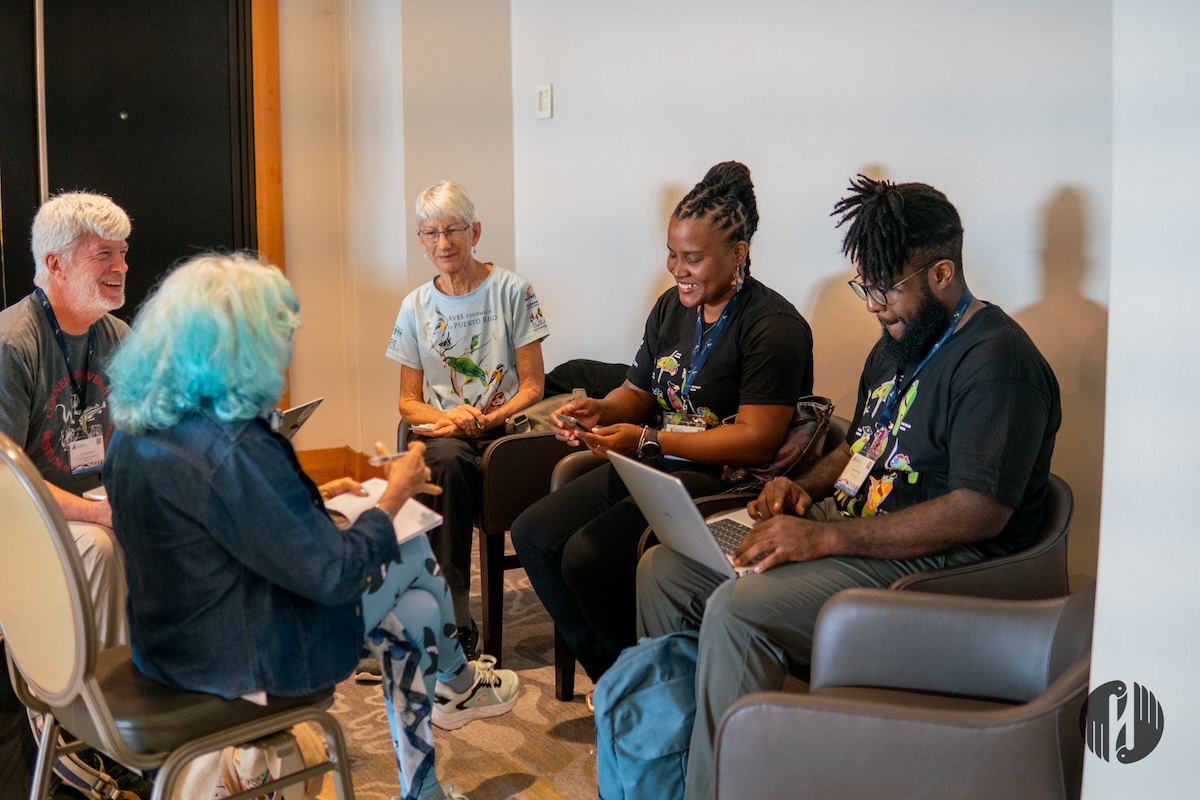
In the post-conference evaluation, many delegates told us about new collaborations and project ideas that emerged during the week. Participants reported new connections involving Motus tracking, seabird research, parrot conservation, NestWatch, bird banding, passive acoustic monitoring, bioacoustics, invasive species, habitat restoration, environmental education, bird tourism, disease surveillance, and more. Researchers discovered colleagues with complementary expertise and data, organizations found potential partners, and people connected across islands and languages around shared conservation challenges.
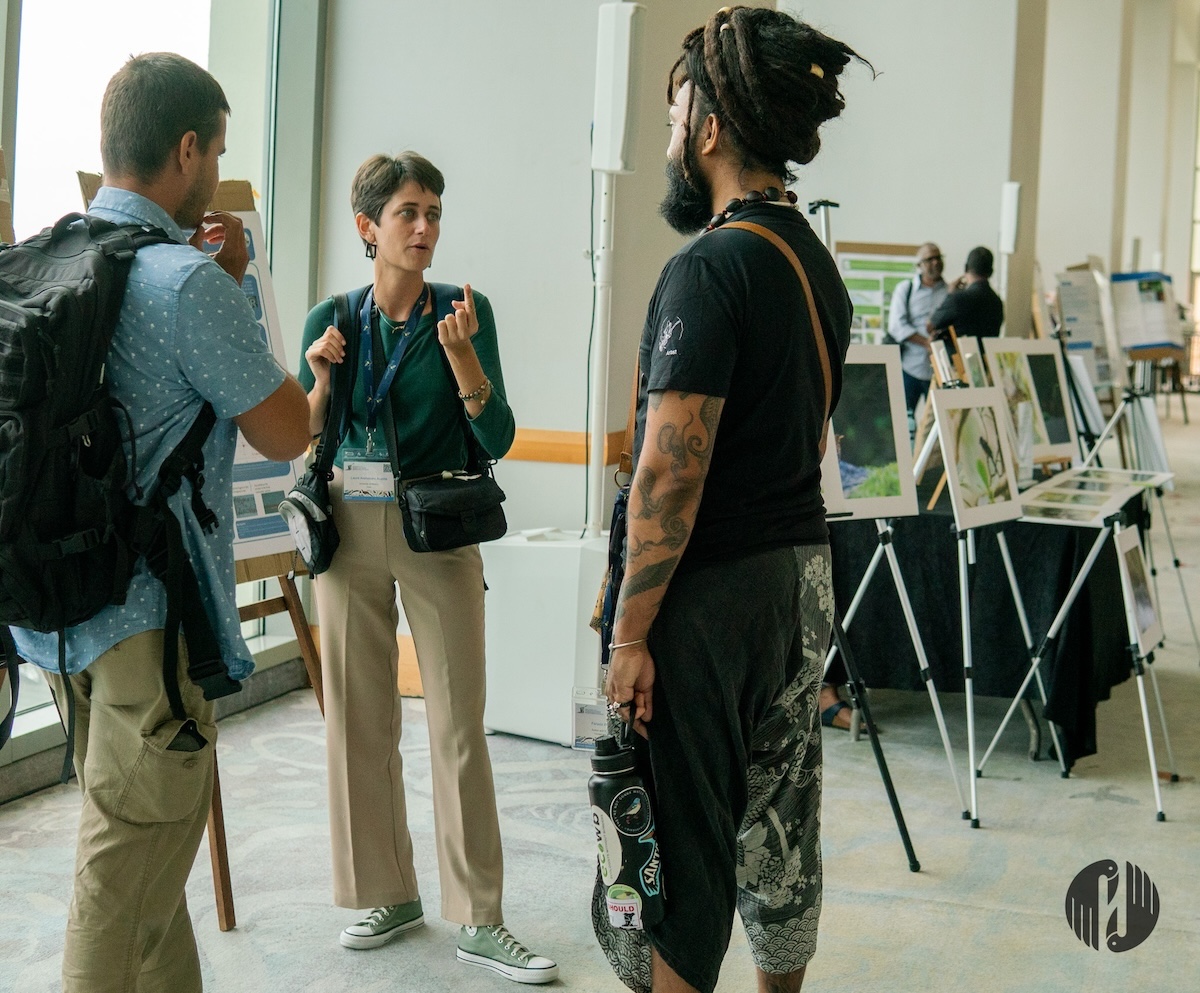
One delegate summed it up simply:
“The networking connections that were made will be highly beneficial to our organization for years to come.”
Another shared something even more fundamental:
“Conservation does feel lonely at times, so I felt good to know I wasn’t alone in my fight.”
These connections are one of the most important reasons we gather. We may not see their full impact for years, but they will live on in the research projects, conservation programs, friendships, mentorships, and partnerships that began—or grew stronger—in Trinidad and Tobago. Browse the gallery below to see our delegates sharing ideas and “finding their flock” throughout the week.
Read more personal reflections and stories from two of our sponsored delegates from The Bahamas and Cuba:
Aves, pertenencia y nuevos comienzos: la primera Conferencia BirdsCaribbean de un joven ornitólogo (English translation available)
Coming Home to a Place I’ve Never Been


Big ideas for moving conservation forward
Throughout the conference, five inspiring keynote speakers challenged us to think bigger about what conservation can—and must—be.
Author, activist, and National Geographic Extraordinary Birder host Christian Cooper called on us to broaden the conservation community and ensure that more people see themselves as belonging in it. “If we want to protect the world’s diversity of birds,” he emphasized, “we need a diversity of people who care about the birds.“
Camila Gómez of SELVA showed how Motus technology—combined with training, data sharing, and international collaboration—is transforming our understanding of migratory birds across the hemisphere.


Rev. Dr. LoraKim Joyner made a powerful case for pairing rigorous science with solidarity, reminding us that species recovery ultimately depends on people working together.
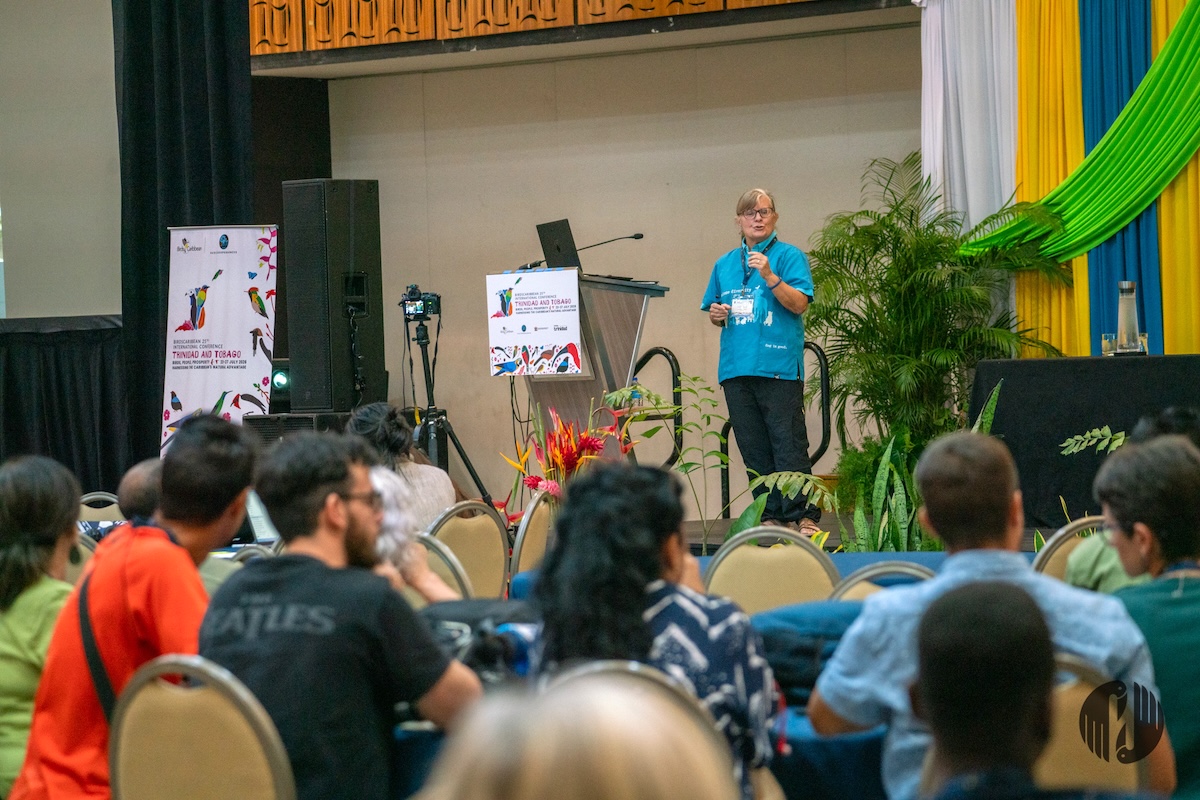
Nicole Leotaud, Executive Director of CANARI, explored how the rights of people and nature, environmental justice, and emerging legal frameworks can strengthen Caribbean conservation and resilience.
And Trinidadian wildlife photographer, environmental advocate, author, and international guide Faraaz Abdool celebrated the raw power of birding itself—showing how experiencing birds can build empathy, deepen our relationship with place, and inspire people to become advocates for nature.


Together, the five talks offered very different but complementary perspectives on moving conservation forward—from science and technology to collaboration, inclusion, environmental rights, and the simple but powerful experience of connecting people with birds.
Birds, People, and Prosperity
Our conference theme asked a big question: How can conserving birds and nature also help Caribbean people and communities thrive? The conversation began with John Hadad, Group Co-CEO of HADCO Group, whose opening keynote, The Evolution of Value: HADCO, Regenerative Tourism, and the Future of Caribbean Enterprise, challenged businesses to move beyond simply reducing their environmental impacts toward actively restoring ecosystems, strengthening communities, and creating lasting value. Watch John’s keynote on our YouTube channel.
These ideas were explored further in our symposium on sustainable bird and nature tourism. From William Trim’s four decades of bird guiding in Tobago and José Alberto Pérez Hechavarría’s examples of bird tourism fueling citizen science in Cuba, to regenerative tourism at Castara Retreats, conservation of Asa Wright’s remarkable Oilbird colony, the emergence of South Caicos as a birding destination, and Ancilleno Davis’s practical framework for balancing the social, economic, and environmental dimensions of sustainability, speakers demonstrated that thoughtfully designed nature tourism can do far more than attract visitors. It can create livelihoods, strengthen local pride, support protected areas, turn former hunters into guides and conservation advocates, and give communities another powerful reason to keep birds and their habitats thriving.


Lisa Sorenson shared how the Caribbean Birding Trail puts this approach into practice through its “Know the Caribbean, Bird by Bird” philosophy, using guide training, storytelling, and authentic local experiences to strengthen bird tourism while supporting conservation and local livelihoods. Marketing professor George “Skip” Glenn added another perspective, encouraging tourism practitioners to create memorable and transformative experiences that can turn visitors into lifelong champions for Caribbean nature. The symposium concluded with an energetic discussion about practical ways to advance sustainable bird and nature tourism in Trinidad and Tobago and throughout the region.
For some delegates, the conference theme itself prompted a new way of thinking:
“I have always thought about birds and people, but the concept of prosperity gave this relationship a new meaning for me.”
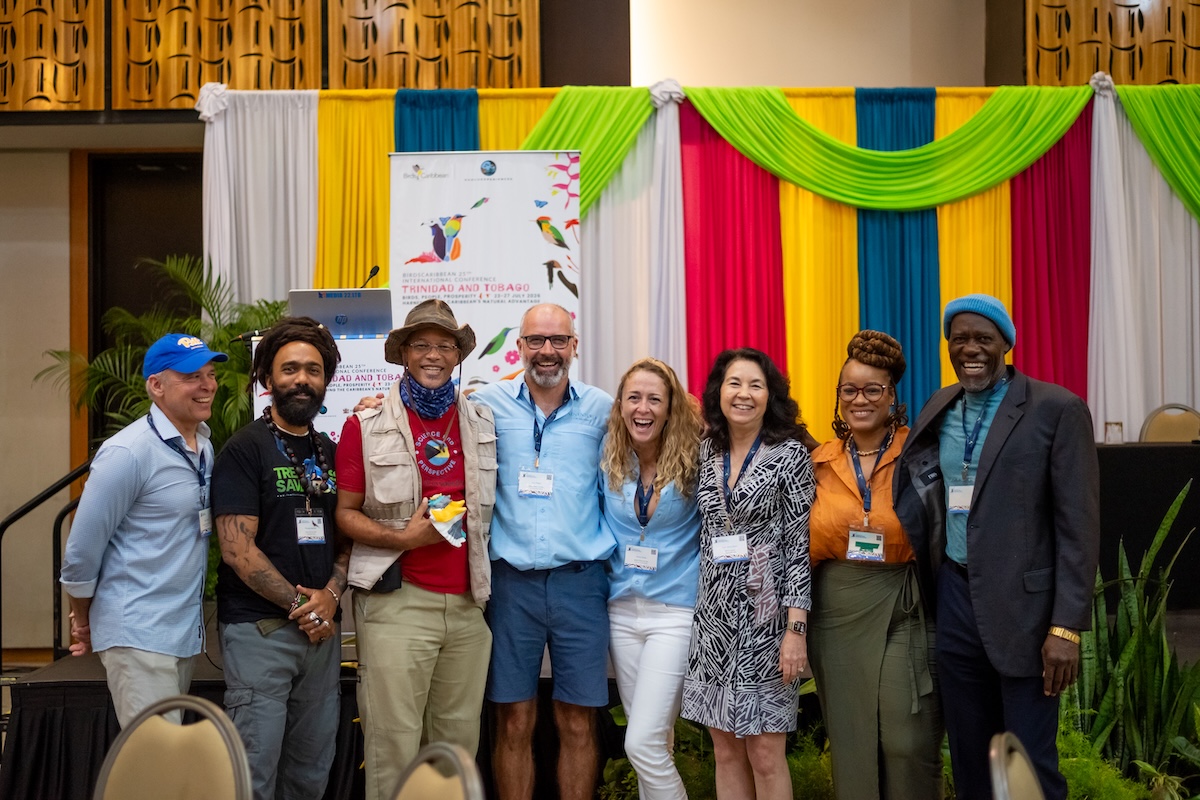
It’s all about balance!
Some of the most memorable conference moments happen at our social events — over “doubles,” T&T’s famous vegetarian street food; in the hallways and around posters; on buses and boats; at our social events; and, of course, on the dance floor.
Our Opening Cocktail Reception offered an unforgettable taste of Trinidad and Tobago’s music, mas, culture, food, and warmth—and soon had delegates dancing.


Then came our famously (not-so) Silent Auction. Delegates once again arrived with wonderful treasures from their home countries, and friendly bidding rivalries helped raise approximately US$6,000 for Caribbean bird conservation!


Huge thanks go to Jennifer Wheeler, Linda Fuller, Natasha Atkins, John MacLennan, our energetic auctioneers Justin Proctor and Dr. Ancilleno Davis, and the many volunteers who made the evening such a success.
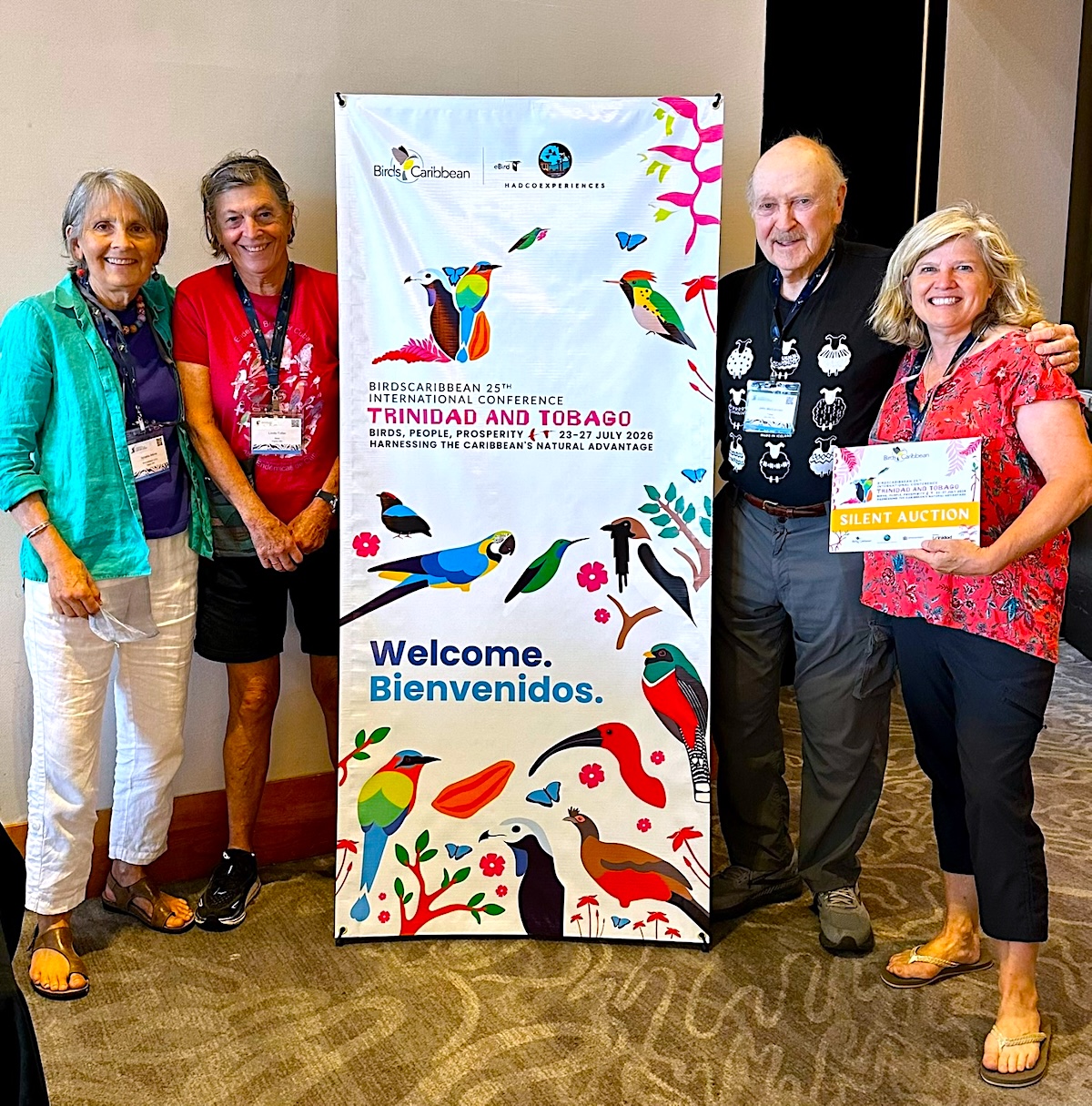
And what would a BirdsCaribbean Conference be without our new fan-favorite Sing Like a Bird? Our brave contestants delivered their finest avian vocalizations, leaving both us—and Merlin Sound ID–-utterly amazed!
And of course…We had to go birding!
You cannot bring hundreds of Caribbean bird people to Trinidad and Tobago and expect them to stay inside a conference hotel all week. And they didn’t!
Before, during, and after the conference, delegates fanned out across the twin-island nation with expert local guides, exploring everything from coastal lagoons, mangroves, and savannas to rainforest peaks, offshore islands, hummingbird gardens, and even Oilbird caves.
They visited Tobago’s legendary Main Ridge Forest Reserve, Asa Wright Nature Centre, Aripo Savannas, Nariva Swamp and Bush Bush Island, the Northern Range, Brasso Seco, Caroni Bird Sanctuary, Bajnath’s Estate Hummingbird Sanctuary, Little Tobago, Bon Accord Lagoon, Grande Riviere, the Royal Botanic Gardens, and many more extraordinary places. Enjoy these fun field trip photos shared by our delegates!


To get a taste of what these excursions were like on the ground, read about Mirielle Villanueva’s unforgettable birding adventure along Trinidad’s west coast.
The field trips weren’t only about birds. Delegates also tasted local cocoa, visited the extraordinary Pitch Lake, marveled at the Temple in the Sea, experienced Trinidad and Tobago’s cuisine and culture, and watched nesting Leatherback Turtles at Grande Riviere.
The reviews were glowing:
“The field trips were amazing.”
“WOW, what an adventure.”
And at Bajnath’s Estate, one delegate described the sheer number and diversity of hummingbirds as almost overwhelming—in the best possible way!
Trinidad and Tobago itself earned descriptions including “a paradise for birds,” “a birder’s haven,” and even “the birding Mecca of the Caribbean.”
A huge thank-you to our Co-Host, HADCO Experiences, for curating such a diverse lineup of field trips, and especially to the exceptional local guides whose knowledge, stories, enthusiasm, and sharp eyes brought these landscapes to life.
Five days went by far too quickly!
Eventually, even our packed program came to an end. Posters were taken down, the last field trips returned, and suitcases were packed. There were plenty of long hugs goodbye as more than 310 delegates scattered again across 30 countries.
But in many ways, we left with so much more than we came with. (And we’re not just talking about Silent Auction winnings!) Delegates left with new knowledge and practical skills, new colleagues and collaborators, research questions and project ideas, new friendships, and renewed determination. Judging from the conference evaluations, many also went home with something especially valuable: hope.
As one delegate reflected:
“The conference left me filled with hope, new plans and friends that hopefully will collaborate for a better future for our Caribbean.”
Another, Ailen Anido Escalona of Cuba, put into words something that captures the enduring spirit of our conferences:
“The conferences pass, but friendships, shared experiences, and the commitment to conservation remain.”
After 25 international conferences, one thing is very clear: no single person, organization, or island can secure the future of Caribbean birds alone. Bringing our community together—across islands, languages, cultures, disciplines, and generations—strengthens all of us and the work we do for Caribbean birds and people.
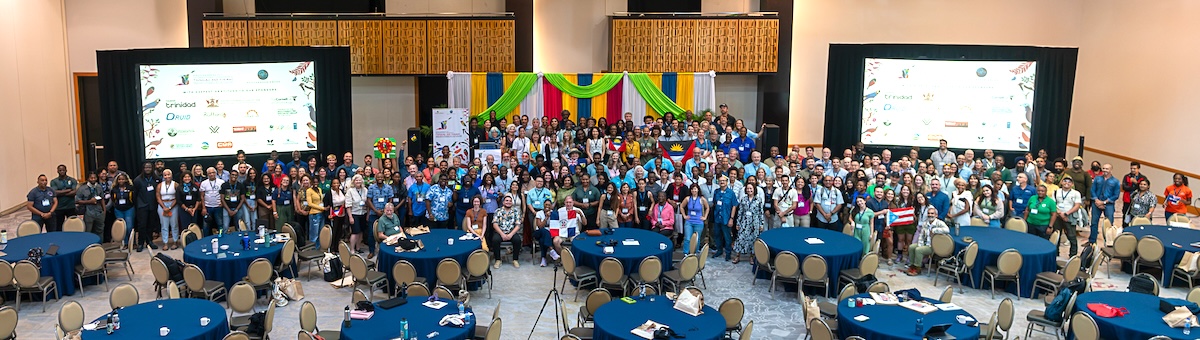
Thank you, Trinidad and Tobago. And thank you to every person who taught, learned, presented, mentored, sponsored, volunteered, guided, organized, birded, danced, laughed, and continues to dream alongside us.
We are still riding the high—and can’t wait to see where this incredible community takes us next.
Stay tuned for upcoming working group updates, collaborative projects, and announcements for the 26th BirdsCaribbean International Conference!
More information on the conference, including the program, contests, and field trip itineraries, is available here.
BirdsCaribbean is very grateful to our Co- Host organization, HADCO Experiences, and Government and Partner Sponsors: Ministry of Trade, Investment and Tourism, and Tourism Trinidad, our Premier Trinidad Motmot Sponsor The Cornell Lab of Ornithology, and the Environmental Management Authority and the Trinidad & Tobago Field Naturalists’ Club for their tireless support and participation. We extend our gratitude to the organizations, agencies, and companies operating in Trinidad and Tobago that provided services and/or products to assist in hosting the conference.
We would also like to thank the many other funders and contributors from other parts of the Caribbean and the U.S. that provided support of this conference. This support enabled a number of Caribbean nationals to attend and participate, and also helped to cover the many costs of holding this conference.
Friends of the Wild Parrot Specialist Group of the IUCN
Rare Species Conservatory Foundation
The GEF Small Grants Programme
The Royal Society for the Protection of Birds