
Celebrate World Migratory Bird Day (WMBD) with us in 2022! This year’s theme is “Dim The Lights for Birds at Night”. Have fun learning about a new migratory bird every day. We have colouring pages, puzzles, activities, and more. Download for free and enjoy nature with your family at home.
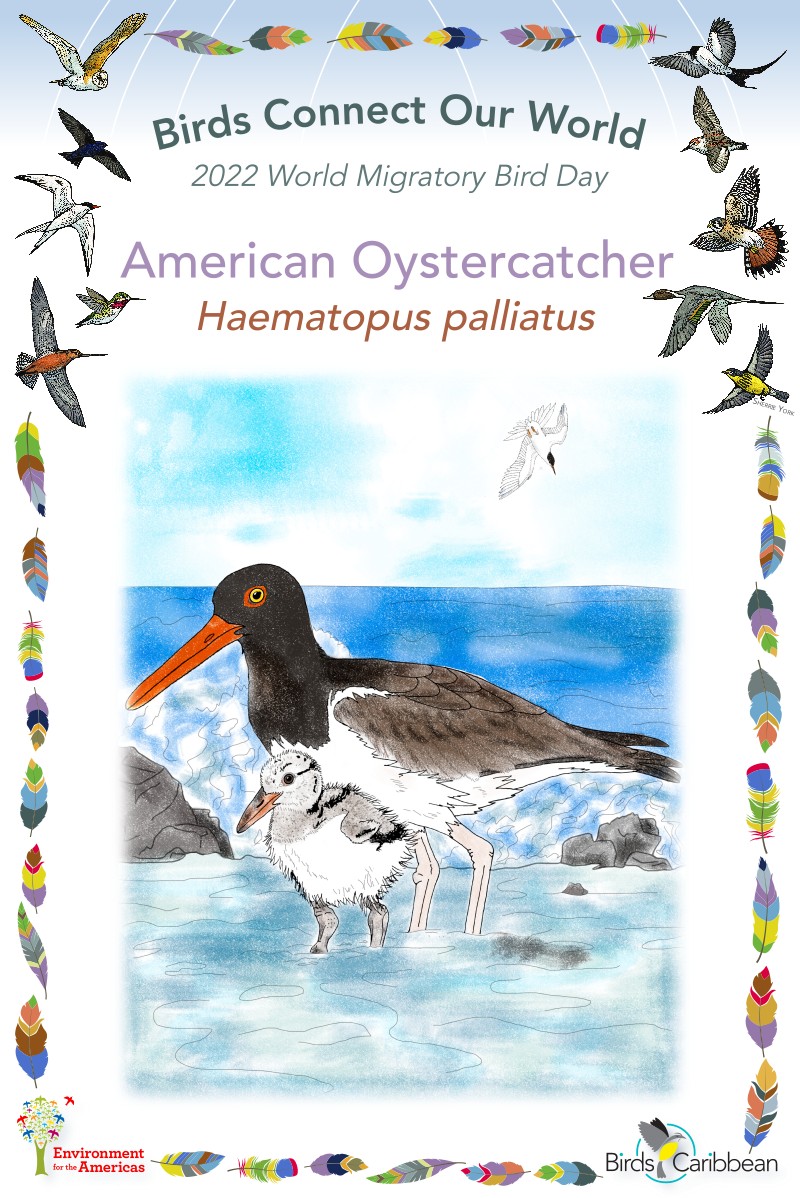
Migratory Bird of the Day: American Oystercatcher
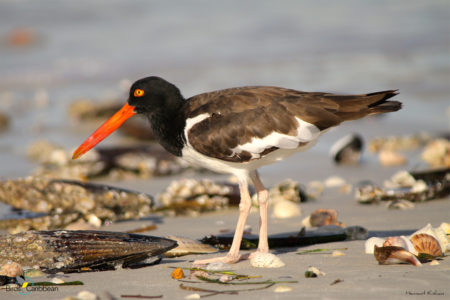
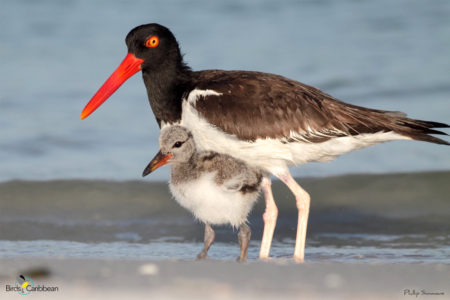
With their large size, striking black-and-white plumage, pink legs and bright orange bills, American Oystercatchers are truly unmistakable! Males and females look alike, and both have yellow eyes surrounded by red eye rings. If their size and coloring don’t make them conspicuous enough, American Oystercatchers may alert you to their presence with their loud, high-pitched “hueep hueep hueep!” calls.
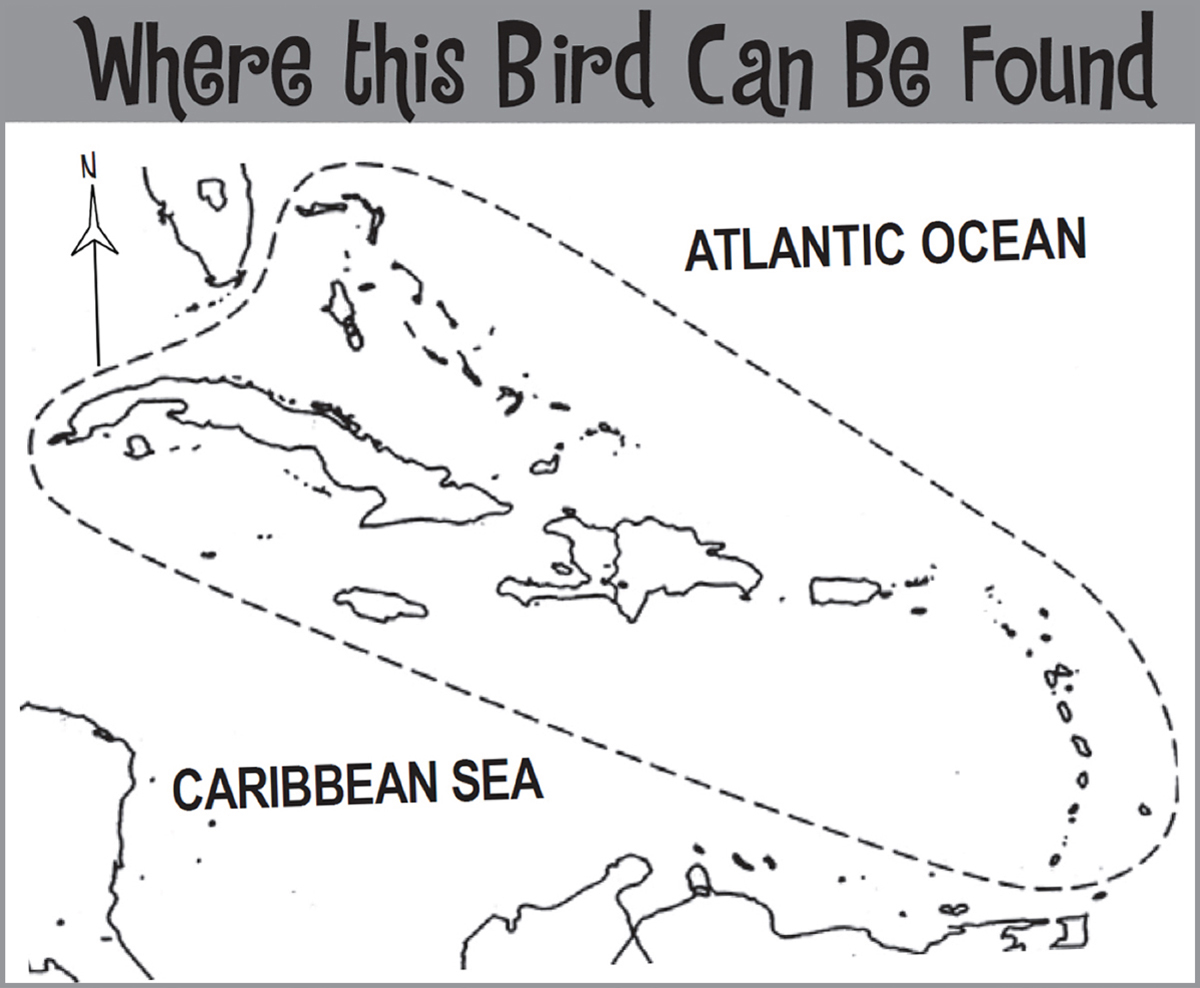
American Oystercatchers live and breed year-round on some Caribbean islands, including Cuba, The Bahamas, the Virgin Islands, Hispaniola, and some Lesser Antilles islands. Outside the breeding season, they can be found across most of the West Indies as birds migrate south in Fall from breeding areas on the U.S. Atlantic coast.
Oystercatchers are true coast lovers, and can be found on beaches, rocky shores, and offshore cays. Their orange bills might look comical, but they serve a serious purpose—as specialized tools for feeding on bivalve mollusks like oysters, clams, and mussels. An oystercatcher can slip its knife-like bill between the halves of an open shell and cut the muscle that holds the shells (or valves) shut, allowing them to extract and feed on the soft parts inside.
Because they feed along the shore, American Oystercatchers depend on coastal habitats. The IUCN lists them as Least Concern, but they are on the Partners in Flight Yellow Watch List. This is because their U.S. population size had fallen to about 10,000 birds in 2000. This led to a flurry of research and conservation actions by the American Oystercatcher Working Group.
Biologists learned that American Oystercatchers are threatened by destruction of their breeding habitat from coastal development as well as human disturbance—they are less likely to successfully raise their chicks on beaches with high levels of human activity. Management actions such as protecting nesting sites and helping people understand why these birds need space have helped the population to recover. Undisturbed coastal areas are vital for oystercatchers to thrive throughout the year in the Caribbean too. Learn more about this species, including its range, photos, and calls here.
Colour in the American Oystercatcher
Download the Migratory Birds of the Day Colouring Page! Use the picture above and the photos on this page as your guide, or you can look up pictures of the bird online or in a bird field guide if you have one. Share your coloured-in page with us by posting it online and tagging us @BirdsCaribbean #WMBD2022Carib
Listen to the calls of the American Oystercatcher
American Oystercatchers have loud high-pitched ” hueep” or “weeer” calls, which they can repeat in rapid succession (often with increasing rapidity and volume).
Puzzles of the Day
Click on the images below to do the puzzle. You can make the puzzle as easy or as hard as you like – for example, 6, 8, or 12 pieces for young children, all the way up to 1,024 pieces for those that are up for a challenge!
Activity of the Day
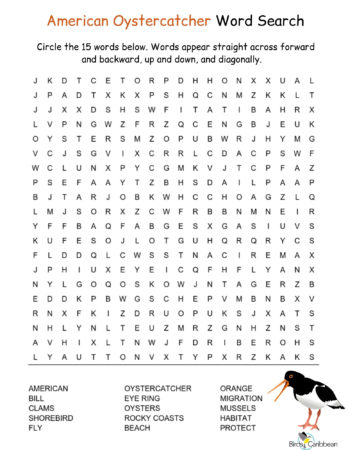 FOR KIDS: Can you find all the words in our American Oystercatcher word search? There are 15 words in total for you to look for. All the words you need to find are linked to the appearance, behaviour, food or favourite habitats of the American Oystercatcher. You can find the answers here.
FOR KIDS AND ADULTS: Don’t forget that you still have time to take part in this year’s Global Shorebird Count. This takes place between September 1 – 7! To take part all you need to do is visit your local wetland and count all the shorebirds (and other birds) that you see there. Then share your eBird Caribbean list with ‘worldshorebirdsday’. You can find out more about how to take part in our handy blog post. This is full of tips and hints for carrying out a successful survey, including links to help out with shorebird ID.
Enjoy this video of an American Oystercatcher. In the video you can see it using it’s bill as it forages on the rocky shore on some tasty mollusks!