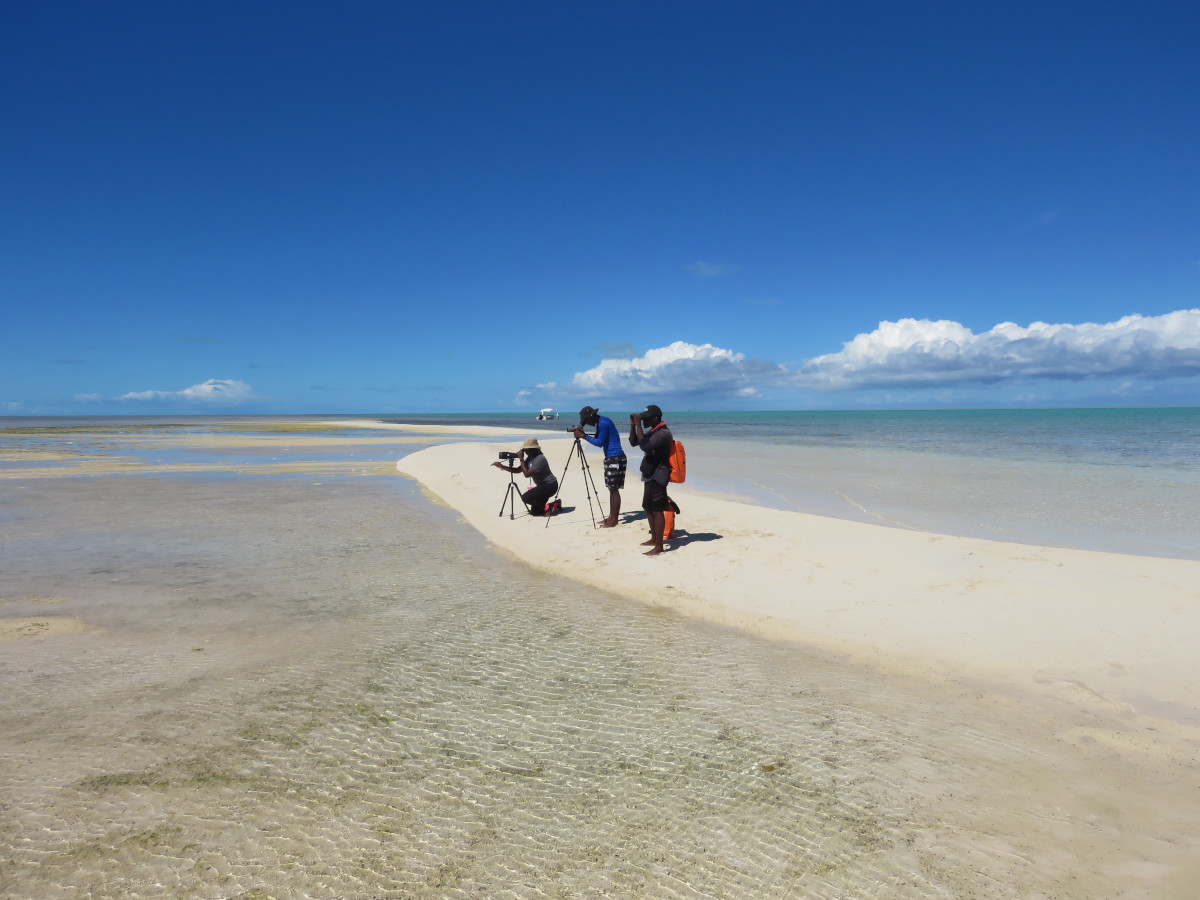
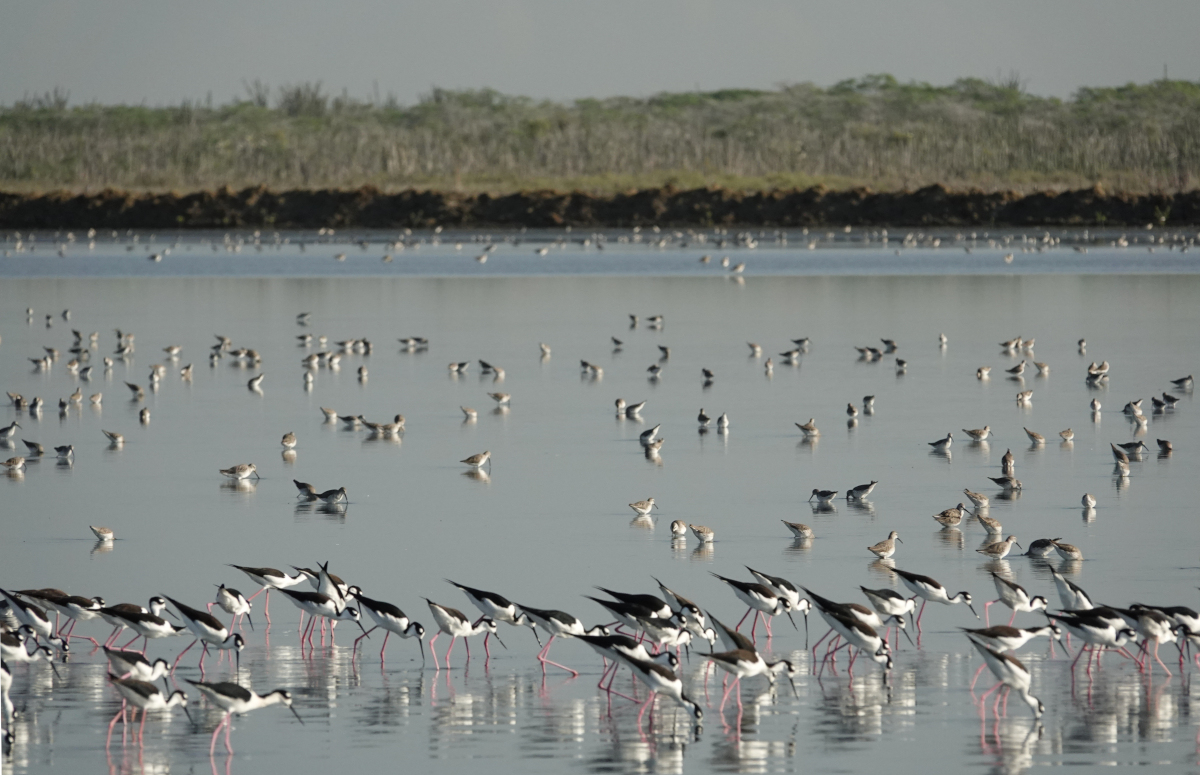
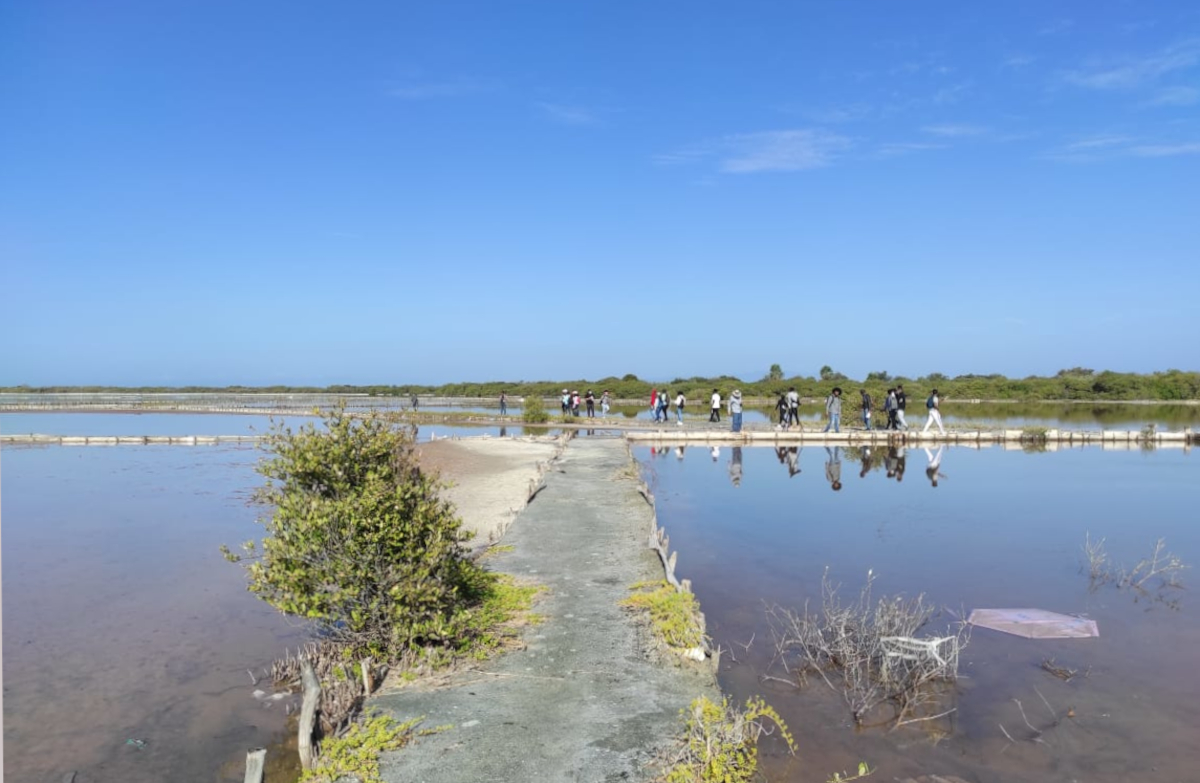
Piping Plovers and Sanderlings, South Caicos (photo by Craig Watson).
A spectacular arrival unfolds across the Turks and Caicos Islands (TCI) in late August every year. Thousands of weary travelers touch down after extraordinary journeys spanning thousands of miles from their breeding grounds in Canada and the Arctic.
To celebrate these incredible journeys—and highlight the urgent need to protect the stopover and wintering habitats shorebirds depend on—BirdsCaribbean is proud to share this wonderful new 8-minute documentary. Explore the remarkable world of migratory shorebirds and discover why TCI’s wetlands and coastal habitats are so vital to their survival.
Storytelling that inspires conservation
This project was born from the vision and direction of Simon Busuttil, whose passion for birds and deep commitment to conservation in the Turks and Caicos Islands helped make this documentary possible. As the driving force behind the film, Simon understood that scientific data alone isn’t enough to save a species. We also need compelling stories that inspire people to care and turn knowledge into action.
By showcasing the magnificent migratory birds that depend on TCI, Simon hoped to inspire greater appreciation and stewardship of these remarkable species and the habitats they need to survive—and make their conservation a source of national pride.
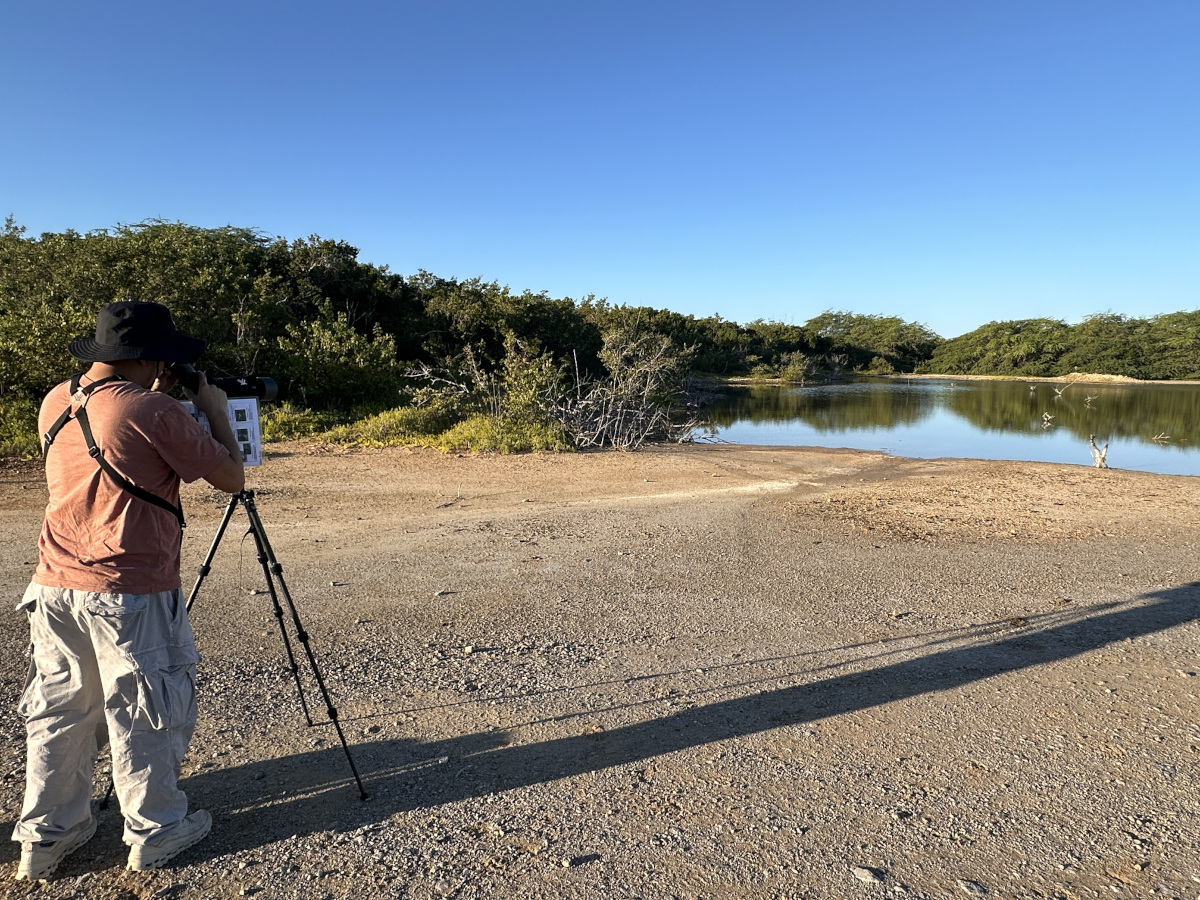
Counting shorebirds on Turks and Caicos. (Photo by Simon Busuttil)
Small birds, extraordinary journeys
For many of the shorebirds visiting TCI, the journey begins on breeding grounds in the Arctic tundra. Imagine weighing only a few ounces and traveling thousands of miles—powered only by the beat of your wings! Tough travelers like the Ruddy Turnstone can bulk up to around 172 grams (6 ounces) before migration, storing precious energy reserves to fuel the extraordinary journey ahead.
Joining these incredible migrants is the plump and adorable Piping Plover. These diminutive Near Threatened shorebirds blend beautifully into coastal landscapes with their sandy-gray backs, often hiding in plain sight! You may not even realize you’re looking at one until it suddenly scurries toward the water on its bright orange legs.
But don’t let their small size and delicate appearance fool you: surviving migration requires extraordinary physiological adaptations.
Species like the Red Knot (Near Threatened), a master of long-distance travel, can fly for days without stopping. To prepare for these marathon flights, the birds undergo a dramatic physical transformation, shrinking internal organs like the intestines, liver and gizzard, and doubling their body mass by storing fat to act as high-grade fuel—remarkable adaptations that help make long-distance migration possible.
Black Rock: A haven within a haven
After burning through previous fat reserves during migration, these birds arrive at a physical breaking point, requiring healthy habitats that offer both safety and abundant food. In TCI, one such place is Black Rock, an isolated shoal cay nestled in the shallow, turquoise expanse of the Caicos Banks.
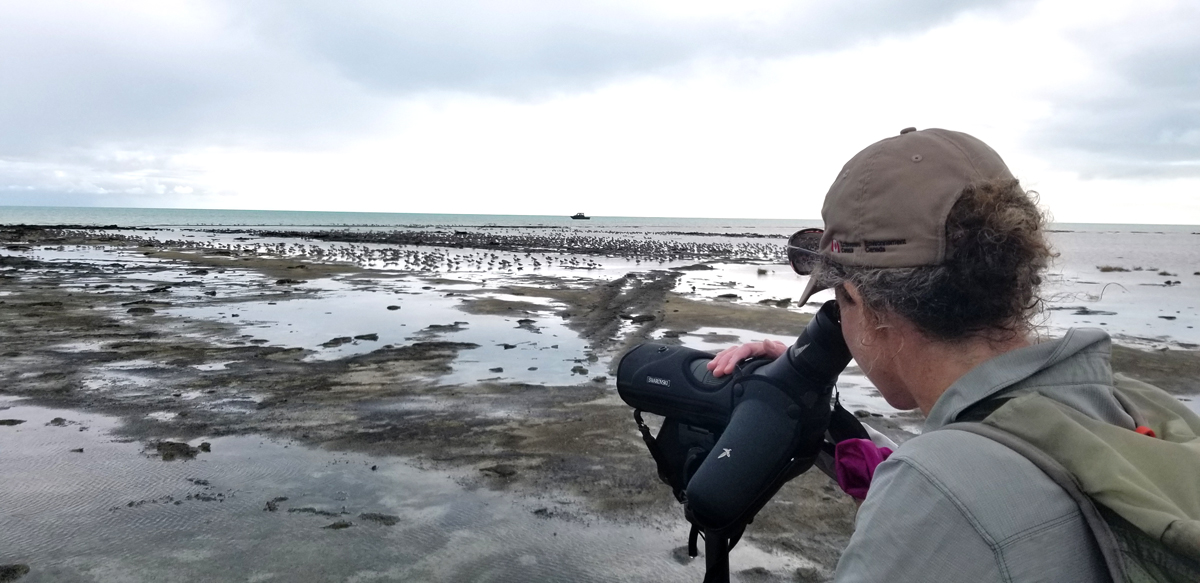
Observing thousands of shorebirds at Black Rock, Caicos Banks (Photo by Caleb Spiegel)
Its isolation from human disturbance and productive surrounding shallows make Black Rock an important refuge for birds. Mollusks and other invertebrates provide food for hungry migrants replenishing energy lost during their long journeys. Thousands of birds can gather here, including small shorebirds, larger wading birds such as egrets and herons, and even raptors.
Healthy wetlands—for birds and people
Protecting migratory shorebirds begins with protecting the habitats they depend on. TCI’s mangroves, salt ponds, tidal flats, beaches, and other coastal wetlands provide essential places for shorebirds to rest and refuel during migration, as well as vital habitat where many spend the winter.
But healthy wetlands aren’t important only for birds. Mangroves and other coastal habitats help buffer communities from storms and flooding, support fisheries and other marine life, and contribute to the extraordinary natural heritage that makes the Turks and Caicos Islands truly “Beautiful by Nature.”
By protecting these wetlands, we secure a win for birds and people alike—helping ensure that migratory shorebirds have safe havens to rely on and return to, year after year.
Watch A Haven for Migratory Shorebirds
Watch our new 8-minute documentary, A Haven for Migratory Shorebirds: The Wetlands of the Turks and Caicos Islands, and discover the extraordinary journeys connecting TCI’s shores to places thousands of miles away.
In Memory of Simon Busuttil
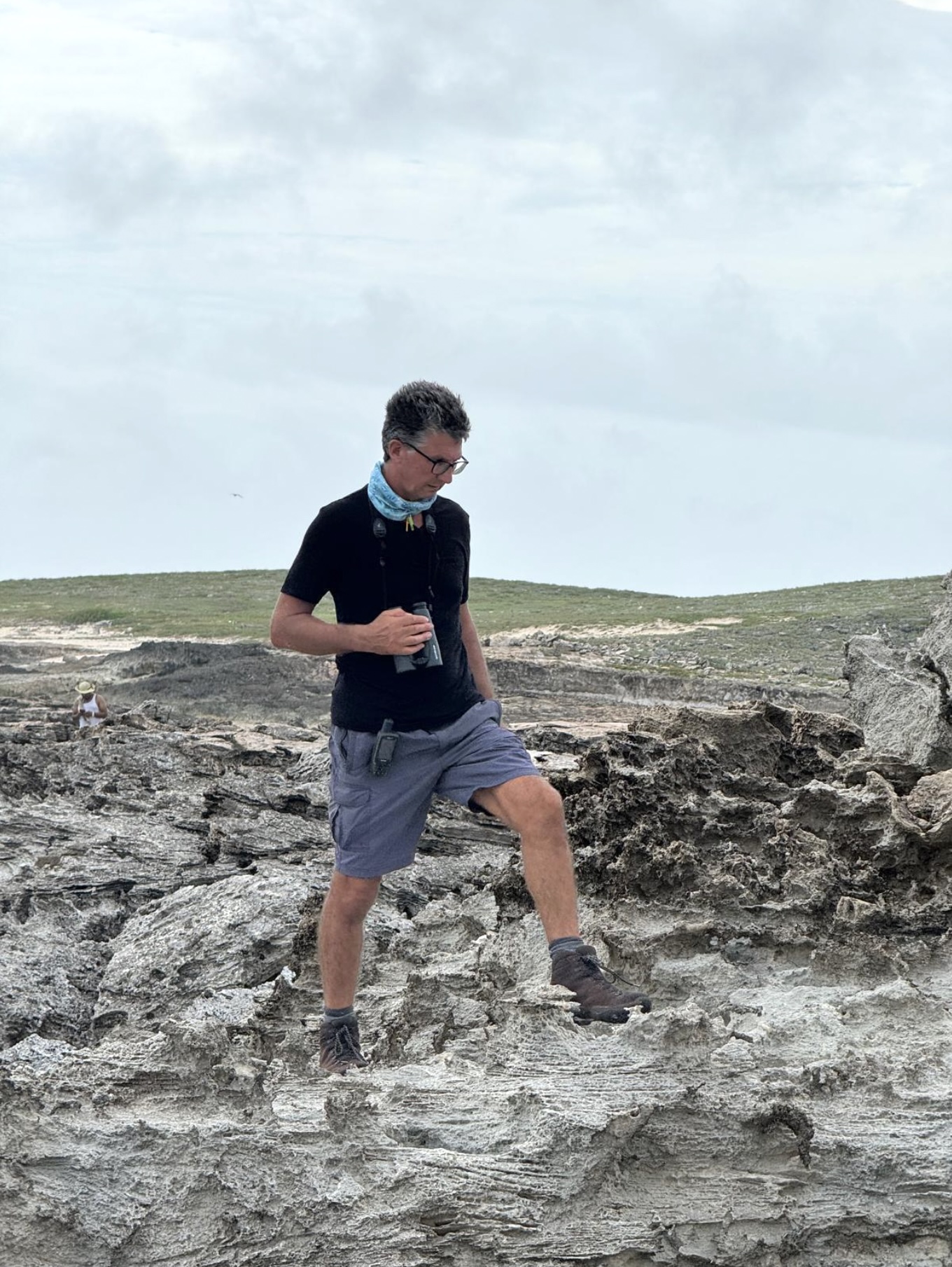
Simon Busuttil doing the fieldwork he loved most—surveying shorebirds and waterbirds in the Turks and Caicos Islands.
BirdsCaribbean and the wider conservation community were deeply saddened by the sudden loss of our dear friend, colleague, and mentor, Simon Busuttil, on January 31, 2026. Simon was a key leader with the RSPB’s UK Overseas Territories Caribbean Team and manager of the Darwin-funded TCI Biosecurity Project. His passion for conservation in TCI, his humor, generosity, and extraordinary warmth inspired everyone who had the privilege of birdwatching and working alongside him.
We are immensely grateful for Simon’s friendship, dedication, and conservation legacy, which lives on through projects like this documentary and through our shared commitment to protecting the extraordinary birds and biodiversity of the Caribbean.
Credits and thanks
This documentary was made possible through the vision and unwavering dedication of Simon Busuttil and the contributions of many people who recognize that migratory bird conservation has no borders. We dedicate this film to Simon’s memory, and our thoughts are with his family, loved ones, friends, and colleagues in TCI and at the RSPB.
We extend a heartfelt thank you to all the funders and partners whose support made this documentary possible: Darwin Plus Initiative, Audubon Americas, the Royal Society for the Protection of Birds (RSPB), the Turks and Caicos National Trust, the Department of Environment and Coastal Resources, and Spotlight Communications.
Together, we can help ensure that the wetlands of TCI remain a haven for migratory shorebirds for generations to come.
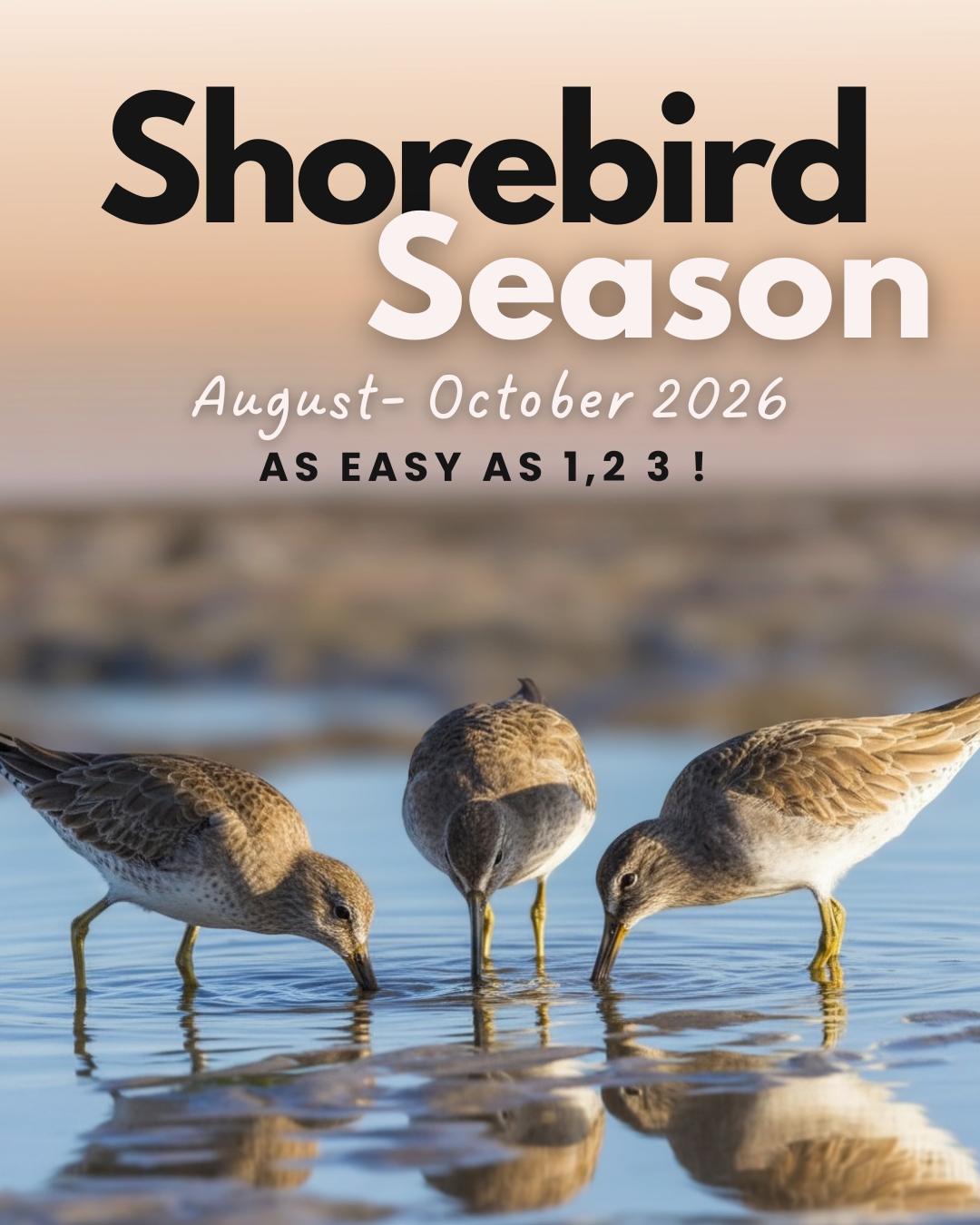
It’s an exciting time of year as Migratory Shorebirds start arriving in the Caribbean! This year we’re asking you to help conserve them and the wetlands they rely on by counting them for shorebird conservation. If you do at least three shorebird counts during migration your data will contribute to the Caribbean Waterbird Census (CWC) AND the International Shorebird Survey (ISS)! We are also getting ready to celebrate World Shorebirds Day on September 6. BirdsCaribbean has everything you need to help you take part. Read on to find out how to take part, and why you should join the count this year!
Our migratory shorebirds are more vulnerable than ever—they are threatened by human activities such as destruction of their habitats, pollution, disturbance, and climate change. Shorebirds in North America are declining more than any other group of birds; in fact, more than half of 28 species studied were estimated to have lost more than 50% of their abundance in the last 30 years.
The Caribbean is an important region for migratory shorebirds. They rely on our mangroves, salt ponds, beaches, sand flats, and mud flats to rest and refuel as they continue on their long migrations. Some shorebirds may even spend the entire winter with us!
Counting Shorebirds for Conservation
Data from citizen science initiatives like our CWC program are essential to help us identify and protect the key stopover and/or wintering habitats that shorebirds use. Protecting these habitats benefits people too because healthy coastal areas provide vital ecosystem services such as clean water, food, sustainable livelihoods, protection from storm surge, and much more.
Counting shorebirds. (Photo by Nahira Arocho Hernandez)
The more information we have about shorebirds using Caribbean wetlands the more we can learn about their populations and which places are most important for them. This means that carrying out multiple counts at the shorebirds’ favorite wetlands during migration season (August-October) increases our ability to conserve them.
A CWC x ISS collaboration … as easy as 1,2,3!
Monti Cristi in the Dominican Republic is estimated to host 20,000+ migrating shorebirds per year—making it a regionally important site! (Photo by Maria Paulino)
What if the CWC data you collect during shorebird migration could contribute to not one but two long-term databases that help shorebird conservation?
Well the great news is they can!
The ISS is a volunteer survey effort that has been run by Manomet Conservation since 1974! It collects shorebird count data from 100s of sites across the Americas, including the Caribbean. These counts help inform where conservation action is need and are used to estimate trends in shorebird populations. Your CWC data can be part of this effort.
Here’s how: first make sure your site is used by shorebirds—if it’s not somewhere you’ve been before, you can check eBird for what birds have been seen there. Then be sure to carry out at least three counts spread through the migration season. Be sure to add your counts to the CWC eBird project AND the ISS eBird project (for more information about using eBird see below).
ISS recommends that counts are from July 15th, through to October 15th. In the Caribbean, we suggest aiming for doing counts in August, September, and October. You can certainly do more counts if you want your data to be even more useful. For example, you can do six counts—visiting your site(s) twice in each of August, September and October OR you could try to fit counts in every 10 days (roughly three times a month). Remember though, our message to you is to do at least three CWC counts evenly spread from August to October. If you want to find out more about ISS and how to take part you can check out this excellent introduction and training webinar or if want more details about doing more then three CWC x ISS counts, and the ideal timing for these then lookhere.
Celebrate World Shorebirds Day!
World Shorebirds Day is held every year on September 6. This day celebrates shorebirds, their amazing migration journeys, and most importantly, raises awareness of the threats they face and actively promotes their monitoring and conservation. The key event associated with this day is the Global Shorebird Count (GSC), which this year runs from September 1-7. Why not make sure that one of your CWC x ISS counts happens during this week? Then you’ll be contributing to three survey efforts for shorebirds!
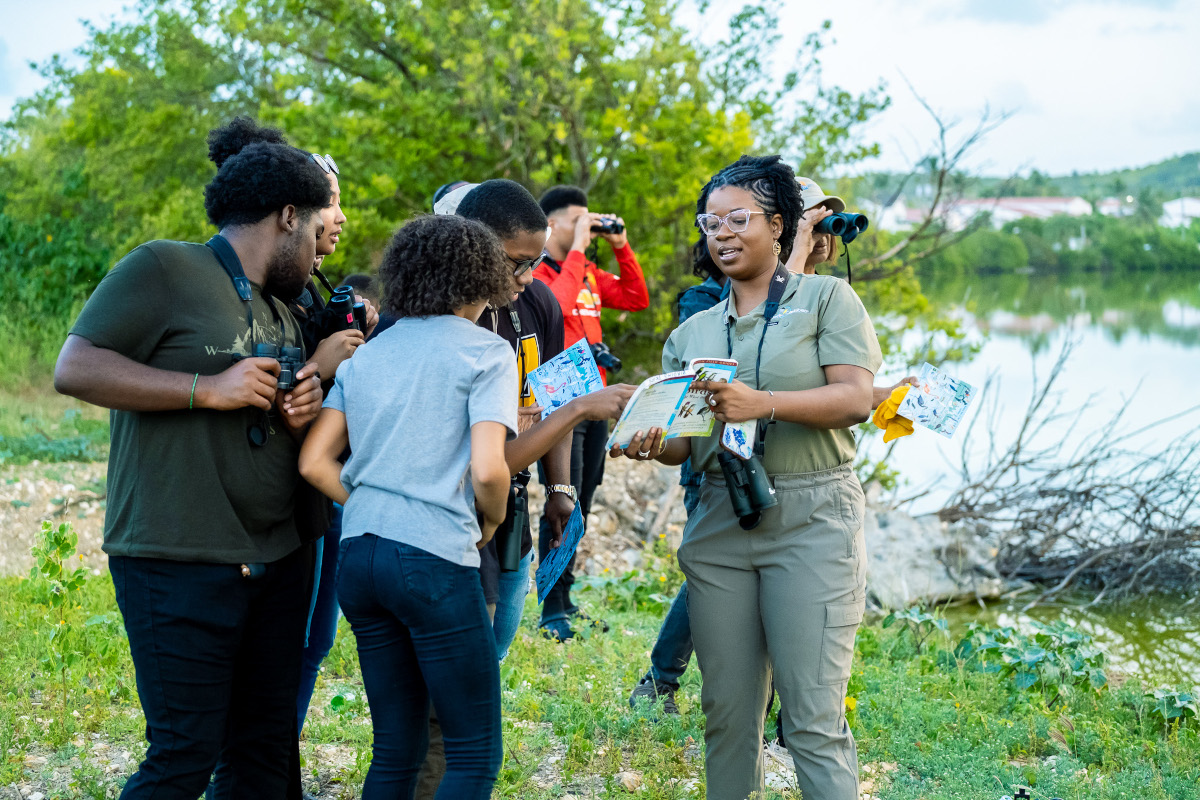
Shanna explains bird ID at McKinnons Pond, Antigua, during the 2025 CWC Count. (Photo by Sherrel Charles)
How do you join in?
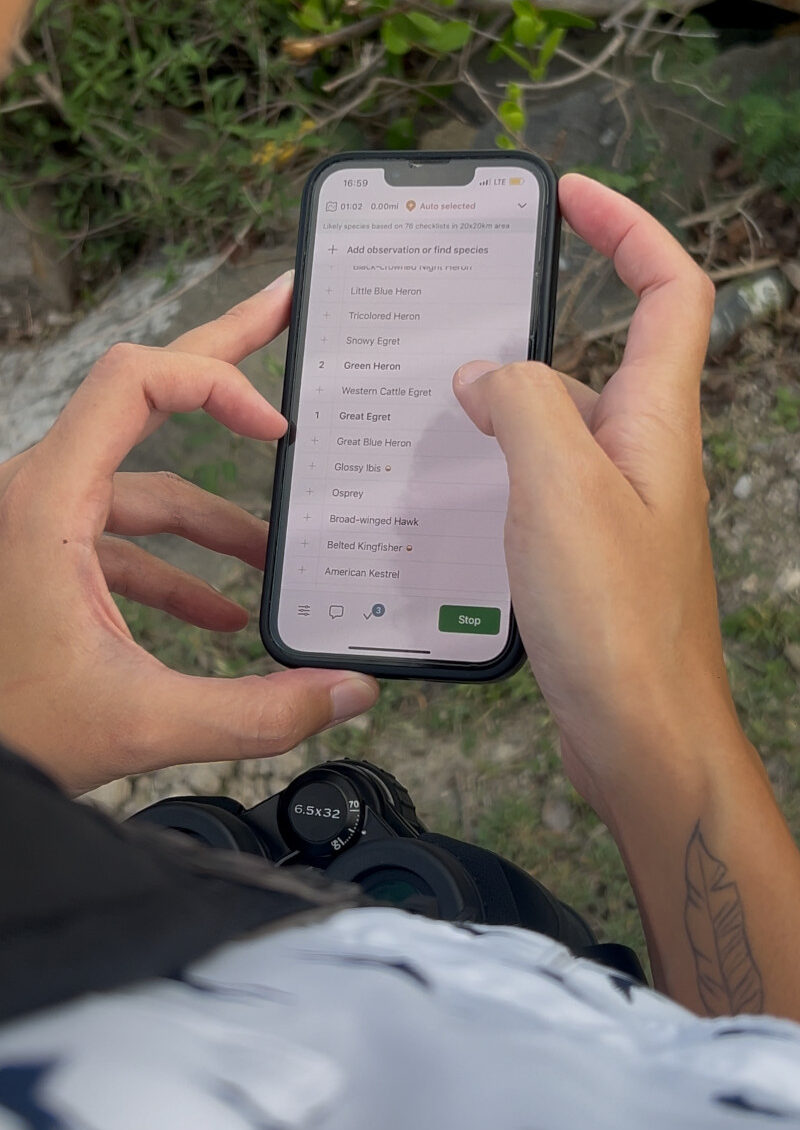
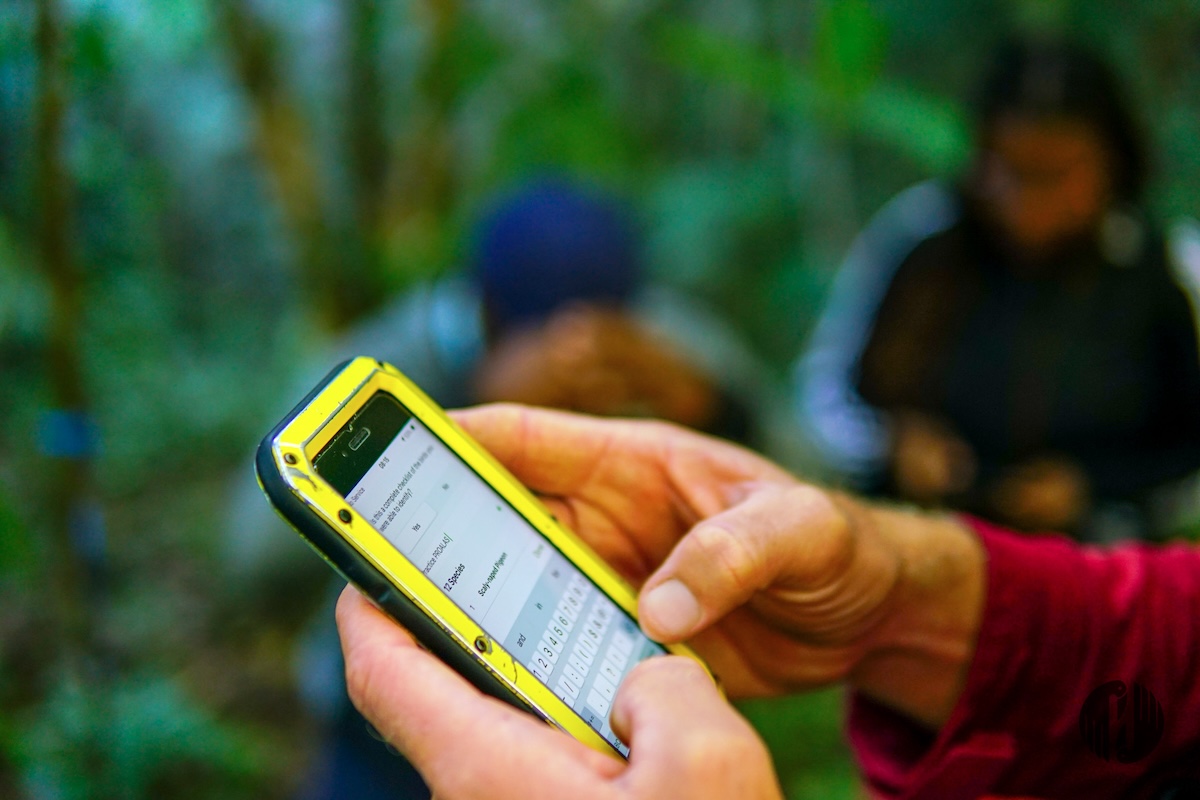
Getting a CWC list on eBird. (Photo by EAG)
Joining is as simple as heading out to your local wetland sites, counting shorebirds, and submitting your list on eBird! Super easy! Remember to record all the species you see and/or hear (including other non-shorebird species), and to note how many individuals of each species you spot. Take your time and scan the habitats carefully for birds, but be extra careful to stand and walk only in places where you won’t disturb the birds you are trying to count!
Be sure to select “Caribbean Waterbird Census” AND “International Shorebird Survey (ISS)” from your projects when starting a new checklist. Haven’t joined these projects on eBird yet, or want to know more about how to use projects? We’ve got you! Get all the details here (you can use these instructions to join both projects). To make sure your data can help contribute to ISS you should aim to do three counts through migration (see above). The great news is that you only need to do a single checklist and as long as you select both projects when starting your list it will count towards both projects!
Remember that when you do repeated CWC counts at the same site you need to try to cover the same area, and make the conditions of your count as similar as possible e.g. spend a similar amount of time, cover a similar distance (traveling count) or stand in the same spot (stationary count), try to match the time of day and tidal conditions etc. This is also true for the ISS.
Don’t forget that any counts you do at Caribbean wetlands, mangroves, mud flats, coastal areas or beaches at any time of year can be Caribbean Waterbird Census (CWC) counts!
Finally, to contribute to World Shorebirds Day and the Global Shorebird Count, share each list you do between September 1-7 with the eBird user ‘worldshorebirdsday’. This will ensure that your checklists are included in data analyses for the Global Shorebird Count. If you are new to checklist sharing, check out this quick tutorial on how to do it.
If you do not have an account, it is easy to register—here’s a quick guide on how to enter eBird data online. Check out our helpful video here on how to use eBird and Merlin. If you have questions about eBird checklists, or need help with setting up an eBird account, do contact Dr. Alex Sansom our Waterbird Program Manager at waterbird.manager@birdscaribbean.org .
We know that Shorebirds can be tricky to identify, with some being especially difficult to tell apart. BirdsCaribbean is here to help with some useful tools! We have a Shorebird Poster and “Quick ID Guide” to get you started as well as handy Shorebird ID cards that you can download and print featuring common shorebirds of the Caribbean. Go to our shorebird resources page to find everything you need. Of course, don’t forget to take your favorite bird ID guide with you when you do your shorebird counts!
You can brush up on your CWC survey skills, waterbird ID, and shorebird ID before you go out on your surveys by watching our fantastic CWC and Shorebird ID webinars on YouTube. We also have a series of shorebird ID shorts pointing out key features to help you distinguish between those tough-to-tell-apart species. Check our latest video all about separating Willets from other similar looking shorebrids below, and see them all on our social media accounts or our YouTube Shorebirds Short Videos Playlist.
If you can get photos or even sound recording of the birds you see, these can be looked at/ listened to later. If you encounter any birds that are difficult for you to identify in the field, visual (or sound) evidence can be shared with birding colleagues and experts for ID support. If you can get photos or even sound recording of the birds you see, these can be looked at/ listened to later! Remember that every survey is a chance to sharpen your bird identification skills, learn to spot new species, and become more confident in the field!
Where to find shorebirds?
The simple answer is: anywhere there is water. This means that, as their name suggests, you can find them at the beach and on other types of shorelines. However, some shorebirds will be further inland, including in salt ponds and salinas, freshwater pools, agricultural fields, and at brackish marshes and ponds. Shorebirds will also gather on mud flats, in mangrove areas, and on tidal flats.
The Cargill Salt Ponds site also supports other habitat types, like these mangroves. (Photo by Lisa Sorenson)
Orange Valley Mudflat in Trinidad during CWC2021 (photo by Mark Hulme)
Pectoral Sandpiper. (Photo by Jesse Gordon)
You may not be quite sure of the best places to look in your area. If so, why not take a look for ‘hotspots’ at your local wetlands on eBird. Just take a look at the eBird hotspots map. Zoom in on your local area and then click on a hotspot to see what types of birds have been seen there recently. And as bonus of taking part you get a great excuse to get outdoors, to spend time in our wetlands, enjoy nature, and discover some of the Caribbean’s most beautiful habitats!
What should you do if you spot a banded bird?
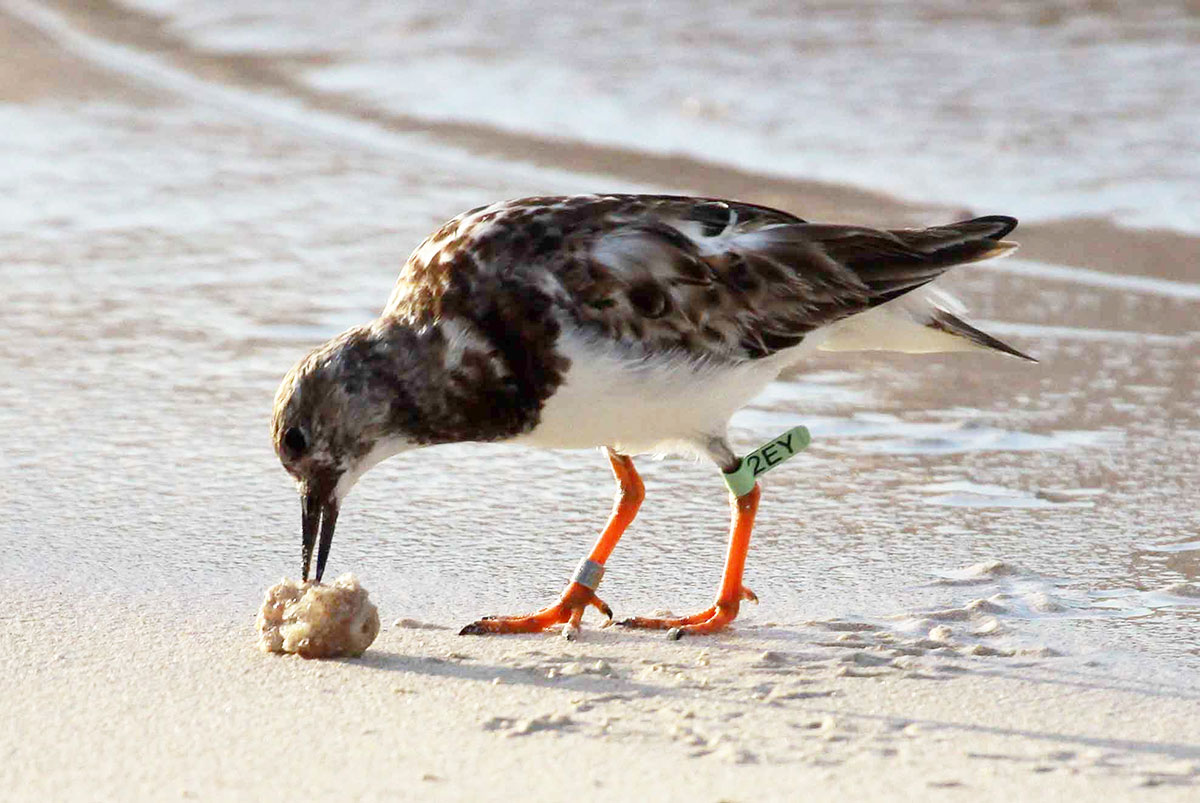
While counting shorebirds you may see birds with colorful bands on their legs. These are very special birds! Do your best to record the band colors and any numbers or letters paying special attention to the location of the band or bands on the bird’s legs. Binoculars or zoom photography may allow you to clearly see the band colors and the numbers engraved onto the band—if you get a photo you will be able to send it along with your sighting. You can report your sightings and send any photos you have to BandedBirds.org and the USGS Bird Banding Lab, which oversee all banding in the United States.
Banded Ruddy Turnstone in Anguilla, “2EY” – keep an eye out for banded birds!
Bird surveys are a rewarding way to contribute to real conservation while enjoying peaceful mornings surrounded by wildlife. Taking part is also a fantastic way to meet fellow birders and nature enthusiasts, share knowledge, and make new friends with a passion for conservation. Whether you’re just starting out or have years of birding experience, every survey is an opportunity to learn something new! If you’d like to survey with others, keep an eye on social media for any posts from local organizations for survey opportunities, or get in touch with your local nature NGO or bird club to find out if they have plans for counts in your area.
We love looking at photos of shorebirds, your local wetlands, and your smiling faces; so please share the highlights of your shorebird counts with us! Use a phone or any other camera that is available, but remember to tag @birdscaribbean. We look forward to seeing and sharing your amazing photos and reading your stories!
Don’t hesitate to contact us if you have any questions about counting shorebirds. Reach out to Alex Sansom at waterbird.manager@birdscaribbean.org
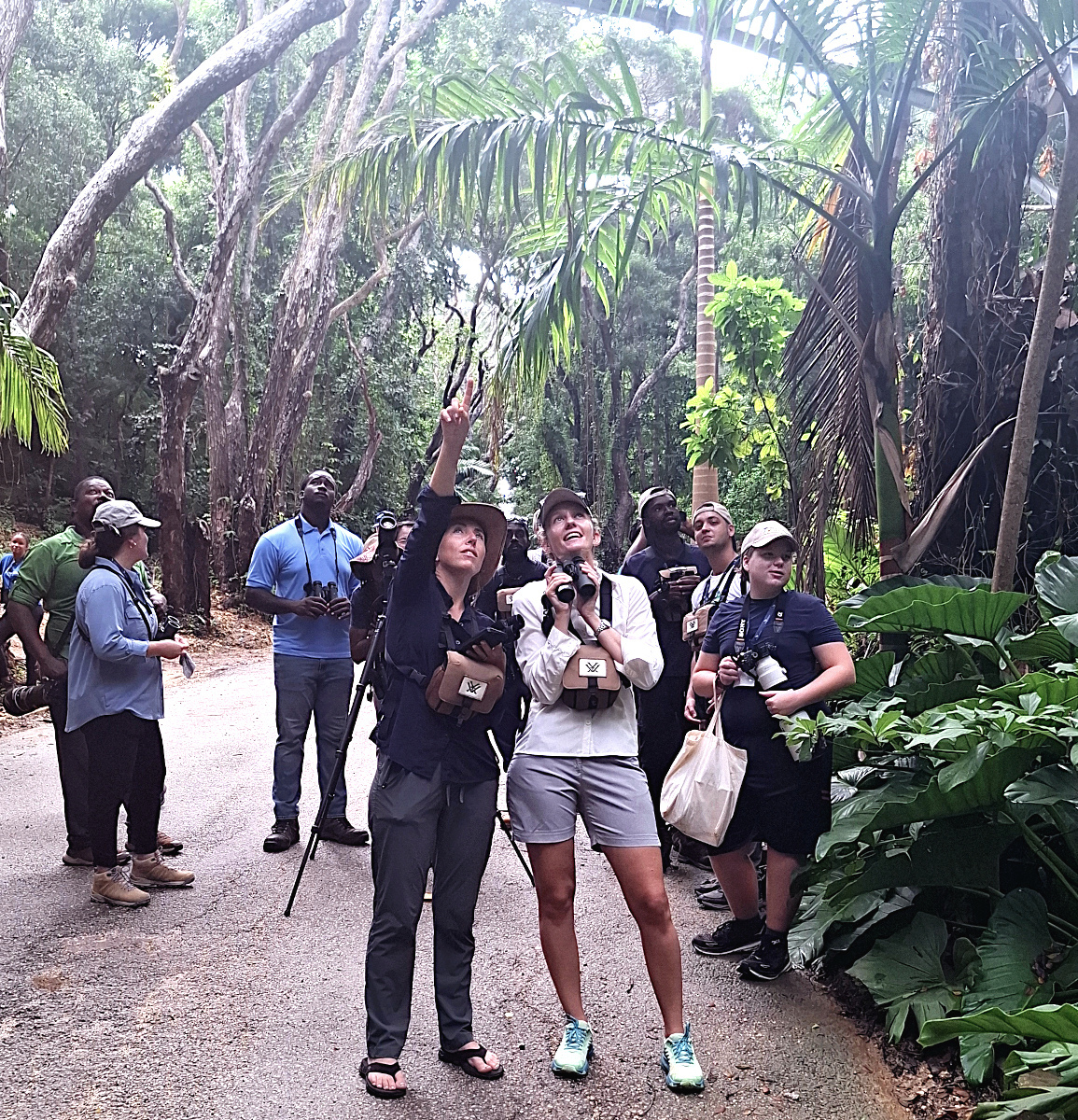
Birding at Cherry Tree Hill, Barbados. (Photo by Alex Sansom)
Imagine helping scientists make amazing discoveries, all from the comfort of your own home or backyard. That’s the power of citizen science! You don’t need a white lab coat to contribute to real research, just a curious mind and a willingness to observe the world around you. We’ve got all the details in this blog to help you take simple yet concrete actions to protect our planet.
Ever wanted to make a real difference in your community—no, make that in the world? With citizen science you actually can! Citizen science is all about scientists teaming up with everyday people who are curious, concerned, and motivated to tackle real-world problems. These people are called citizen scientists. Science needs more eyes, ears, and perspectives than any single scientist possesses to protect threatened species, safeguard natural resources, and prevent the spread of diseases. Think about it—thousands of citizen scientists, each doing a small amount of work, focused on a single goal, can collect more data in a shorter period and for less money than can any researcher or research group. Additionally, citizen scientists can collect data from places like backyards or schoolyards that may be difficult for researchers to access.
Many names with the same aim
“Community science,” “participatory science,” “crowdsourced science,” “volunteer monitoring,” and “public participation in scientific research” are common aliases for citizen science. But whatever it’s called in your neck of the woods, all citizen science projects share these four key characteristics:
Anyone can participate no matter occupation, age, background, gender, or location. Seriously, if you’re curious and willing to help, you’re in!
Everyone uses the same method. This ensures the data collected is top-notch.
Your data makes a difference. It can help scientists make amazing breakthroughs.
It’s a two-way street. Scientists and volunteers openly share data and results so everyone, including the public, can see what’s happening.
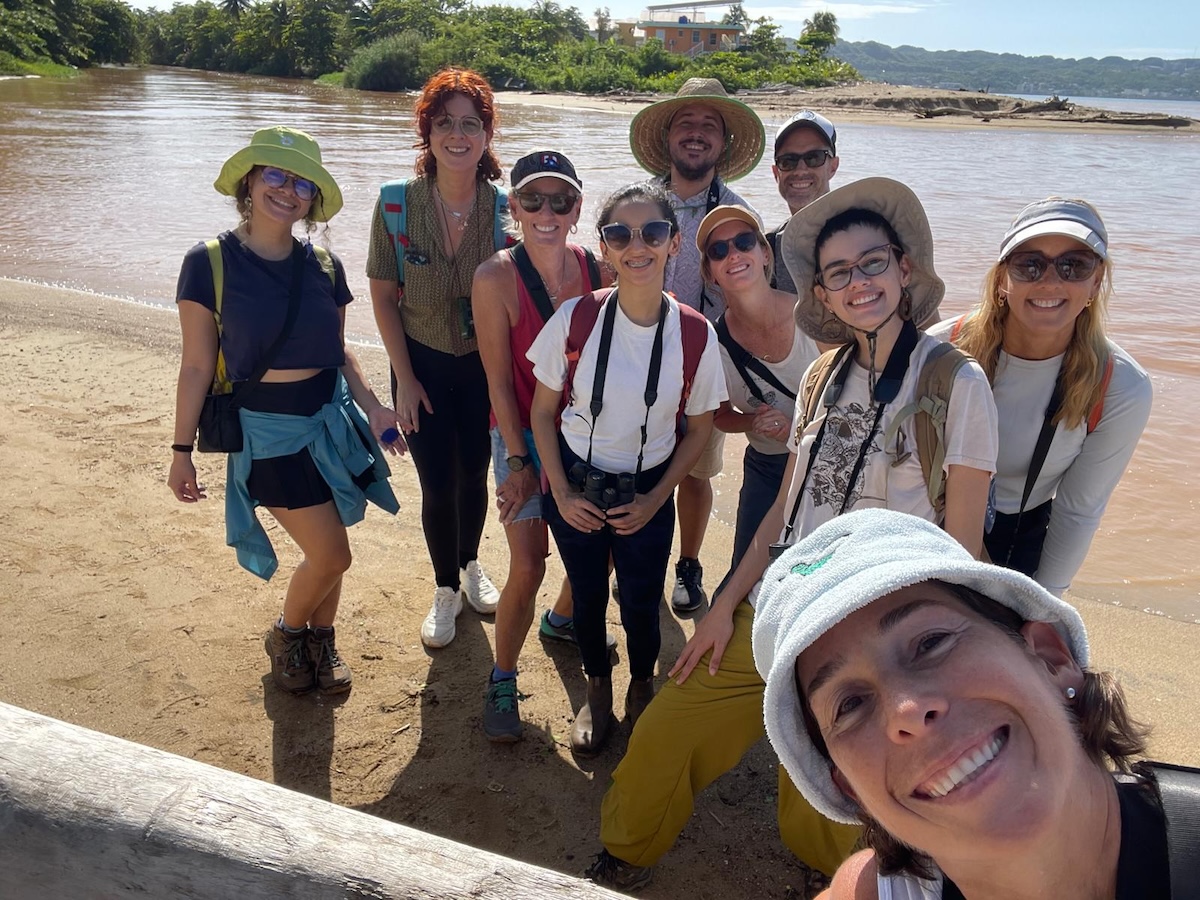
Surfrider Foundation Puerto Rico’s small but dedicated birding group at Playa Table Rock for the Caribbean Endemic Bird Festival (CEBF) and Global Big Day (GBD) 2024. (Photo by Surfrider Foundation Puerto Rico)
Citizen scientists commonly collect data. But they can also be involved in other phases of the scientific process like defining the research question, analysis, reporting, and sharing results. The work itself is also incredibly varied. Citizen scientists may be asked to watch and record birds, take photos of local streams and rivers, test water samples for pollutants, or survey marine debris on local beaches. Some projects are even as fun as playing online games to help advance health research. Whatever your interest, we’re certain there’s a project out there for you to make a difference!
The value of citizen science to YOU
Now, you’re probably wondering, “What’s in it for me?” Well, loads.
It’s a fantastic way to connect with a global community who shares your passions. Whether you’re tracking local wildlife with neighbors or collaborating on a global research project online, you’ll be part of a supportive community of volunteers and scientists. This shared purpose and teamwork can turn a solo activity into a meaningful and less daunting experience. Within this community, you’re encouraged to ask questions, share your unique viewpoint, and by doing so enrich a body of knowledge with your input.
BirdLife Jamaica members and guests take a bird walk at Source Farm. (Photo by Source Farm)
Becoming a citizen scientist also offers opportunities for hands-on learning. You’ll gain practical skills in data collection, observation, and critical thinking. You might learn how to identify different bird species, use scientific instruments to test water quality, or build your scientific literacy.
Painted Buntings, a gorgeous migrant to the Caribbean, feast at a backyard feeder in Grand Bahama, The Bahamas. (Photo by Erika Gates)
For example, you join a citizen science project like the Great Backyard Bird Count and notice a bird you’ve never seen before in your backyard. You snap a picture and share with your local birding group or through an online search or field guide to learn how to identify it. This bird now has a name! You’ve come this far, can’t stop now. You then learn what it eats, where it builds its nest, and that your backyard is providing it with food and shelter. Just like that, your backyard goes from being a small green patch to an important part of a local ecosystem—and now you’re actively participating in understanding and protecting it.
You’ve also unlocked the art of noticing your world deeply—increasing your sense of presence, and helping you be more connected to the everyday wonder that surrounds you.
Ultimately, citizen science is all about you. It’s a chance to put your curiosity to work on your own terms. You can choose a project that aligns with your interests, and set your own schedule—contributing as much or as little as you like, from your house, backyard, neighbourhood park, or nature reserve. This self-directed approach empowers you to be a part of something bigger while feeling a sense of ownership and pride in the work you do.
What a difference your data makes!
Entering data into eBird. (Photo by Holly Garrod)
It may sound implausible that simple actions like recording the birds you see or taking photos of rivers and streams can lead to big changes. But your data is a real-game changer in how we think about and conserve our natural resources.
When conservation efforts are steered by sound data, the results can be truly magnificent for birds, habitats and people!
Thanks to the collective power of citizen scientists—heading out, recording the birds they saw, then submitting those sightings to eBird—researchers were able to complete the first-ever Caribbean-wide assessment of shorebird use in the region, via the Caribbean Waterbird Census, now in its sixteenth year.
For ten years, volunteers continuously contributed more than 211,000 shorebird observations through more than 78,000 eBird checklists. This immense pool of data allowed the researchers to identify critical conservation hotspots that were previously unknown. This breakthrough is a huge deal, finally giving the Caribbean the recognition it deserves as a crucial region for North American shorebirds, so important given alarming declines in shorebirds in our region. The study highlighted that Humedal Sur de Pinar del Río in Cuba and Monte Cristi in the Dominican Republic should be priority areas for shorebird conservation. As these sites each support over 20,000 shorebirds annually like Short-billed Dowitchers, Black-bellied Plovers, Wilson’s Plovers, and Black-necked Stilts they are also candidates to be designated as WHSRN (Western Hemisphere Shorebird Reserve Network) sites of regional importance.
Over 20,000 shorebirds rely on the wetlands at Monte Cristi in the Dominican Republic during migration every year – making this a regionally important site and a critical lifeline for shorebirds. (Photo by GAE)
This study also pinpointed at least 15 additional sites that are crucial for shorebird populations and may now qualify for international designations. This massive effort by thousands of volunteers has provided the evidence needed to protect these habitats and ensure a safer future for migratory shorebirds. You can read the full article here!
With countless opportunities available, it’s easy to find and join a citizen science project. But before you begin your new adventure in science, here are some tips to get you started on the right foot.
Your first step should be to find a project that genuinely interests you. Do you love to hike? There are projects for tracking wildlife. Are you interested in birds? You can help monitor populations. Do you want to help your local community? You can help monitor water quality or noise pollution. It’s important to choose a project that aligns with your interests. This will make the experience more fun and rewarding.
Participants at bird walk led by Miguel A Landestoy and Grupo Jaragua team at Las Salinas, DR. (Photo by Grupo Jaragua)
Once you’ve zoned in on the type of project you’d like to join, ‘google it!’ A quick search will connect you with platforms that host thousands of projects. If you’re a bird lover, eBird is our absolute favorite. eBird offers projects, courses and news to help you get started and stay up-to-date with everything citizen science. We’ve also got some great longstanding citizen science projects in the Caribbean too, more on this below.
After selecting a citizen science project you’ll typically have to download a free app or visit a website, sign up, and follow the simple instructions to collect and submit your data.
If you’re completely new to the citizen science scene, here are some additional tips:
Start small and local. The good news is that you don’t have to be an expert or commit a lot of time. Many projects can be done in as little as 15 minutes, and every single observation helps. (There’s no bad news!) Also, follow the instructions. Each project has a specific set of instructions to ensure the data is high-quality. Reading and carefully following the instructions will make your contribution even more valuable. And of course, when in doubt, ask questions! The community is here to support everyone, from beginners to experts.
Looking for shorebirds for a CWC Count at Old Harbour mudflats, Jamaica. (Photo by BirdLife Jamaica)
Shanna explains bird ID at McKinnons Pond, Antigua, during the 2025 CWC Count. (Photo by Sherrel Charles)
Finally, and most importantly—have fun! You are helping to make ripples of impact while having an adventure of a lifetime so give yourself the space and time to enjoy the process of discovery, learning, and contributing.
Bonus tip: Citizen science is all about community. Invite a friend to be your fellow explorer!
A few members of Statia’s Golden Warblers in St. Eustatius, Global Big Day 2025. (Photo by Jethro van’t Hul)
Members of the team BirdersSKN birdwatching on Global Big Day.
Brendan Burns and Skyler Bol of Gavilán Guardians in Puerto Rico, Global Big Day 2025. (Photo by Brendan Burns)
Mirielle and Kathleen surveying birds at Anasco, Puerto Rico, 2025 Global Big Day. (Photo by Marisol Villanueva Mendez)
Ready to start your Citizen Science adventure with BirdsCaribbean?
If you’re ready to start your citizen science adventure, here are some great projects to join throughout the year:
Global Shorebird Count (September 2025): If you love plump adorable animals, then we think you’re going to love this project! Learn more about the Global Shorebird Count here and get the resources (for FREE) to help with your count here.
Shorebirds like the Short-billed Dowitcher and Stilt Sandpiper are long distance migrants that spend part of their year in the Caribbean. (Photo by Mark Yokoyama)
October Big Day (October 2025): A global event where you can join thousands of birders to find and report as many bird species as possible in a single day. And get this, you can watch birds right from the comfort of your backyard or balcony! However, if your feet are itching to cover more ground, birders also head to botanical gardens, wetlands, and nature reserves. Learn more here.
Caribbean Waterbird Census (January- February 2026): For over 16 years, BirdsCaribbean has been monitoring waterbird populations thanks to the efforts of a region-wide network of amazing birders and bird lovers! While the official count happens in January, you can submit waterbird observations throughout the year to this important program. Click here to learn more about this incredible citizen scientist project and access free resources like webinars, bird ID guides and more.
Counting shorebirds on Turks and Caicos. (Photo by Simon Busuttil)
Global Big Day (May 2026): Join birders from around the world to find and count birds on a single day in May. Be sure to check out this year’s recap of the event and get ready to participate, wave your country flag high, win fabulous prizes, show off your best shots and raise funds to protect Caribbean birds and build local conservation capacity, next year!
You’ve got the tools. You’ve got the drive. Now go make history! Your observations are the building blocks of a better world. The projects are waiting for you, and so are we. The only thing missing is you!