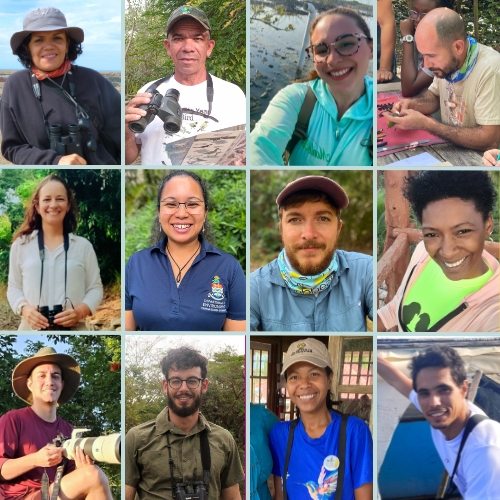
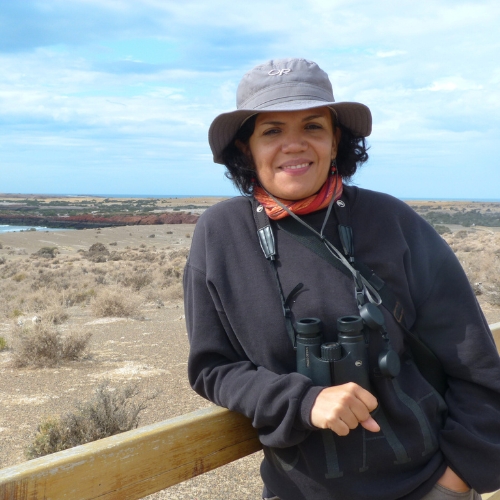
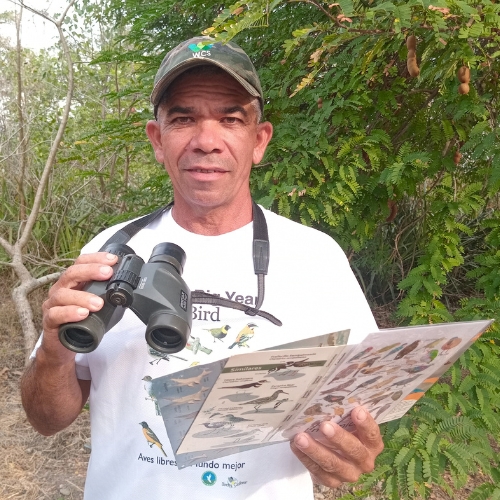
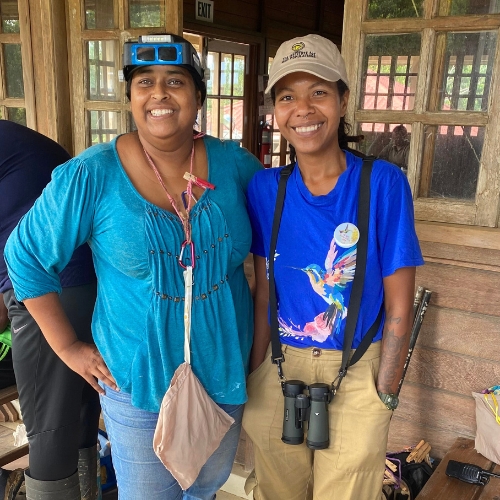
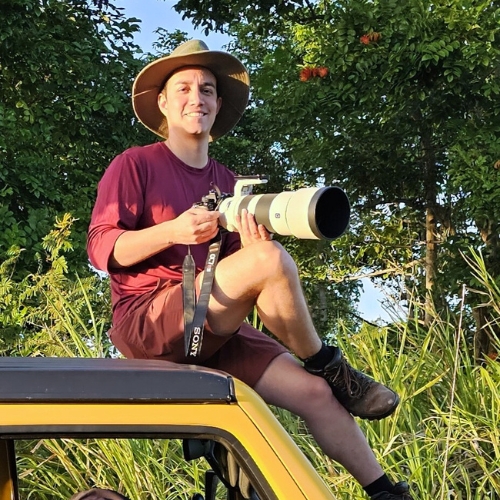
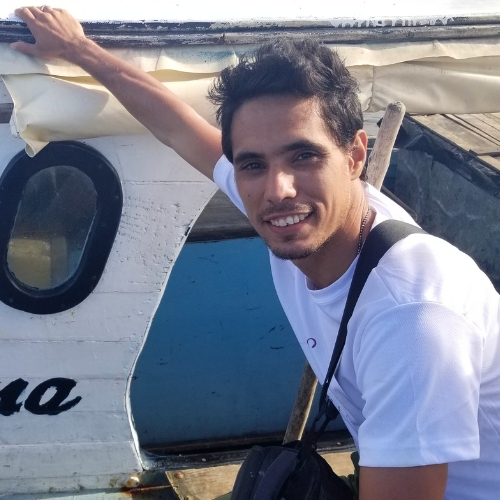
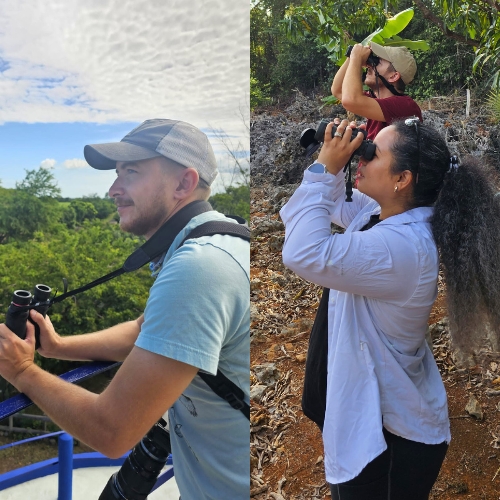
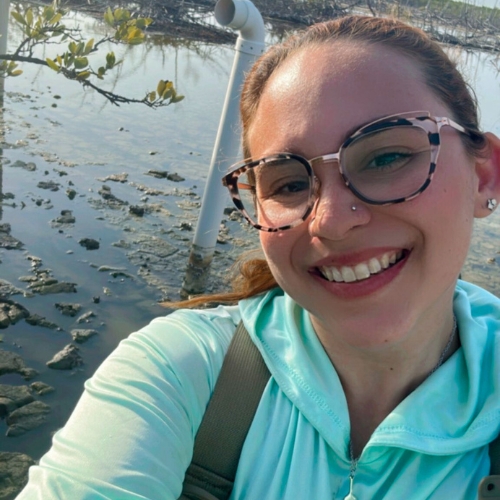
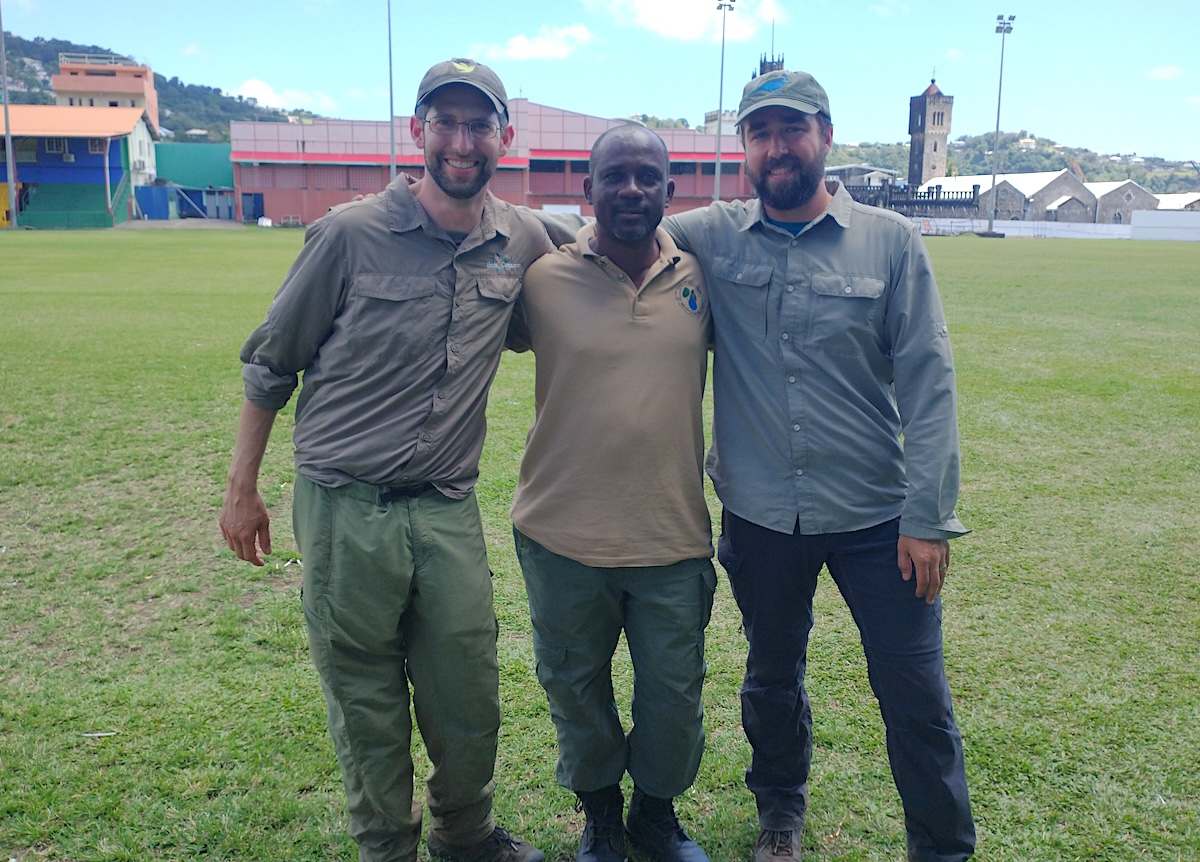
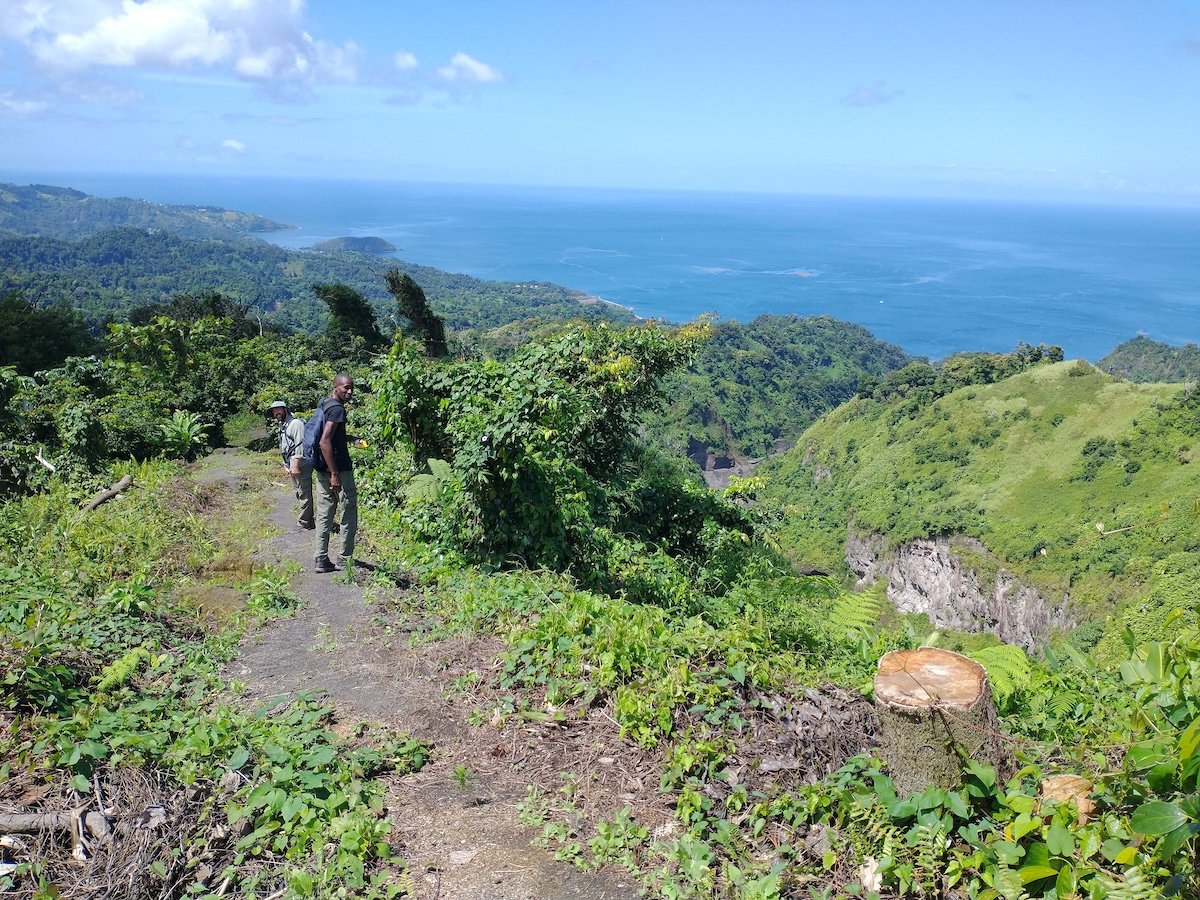
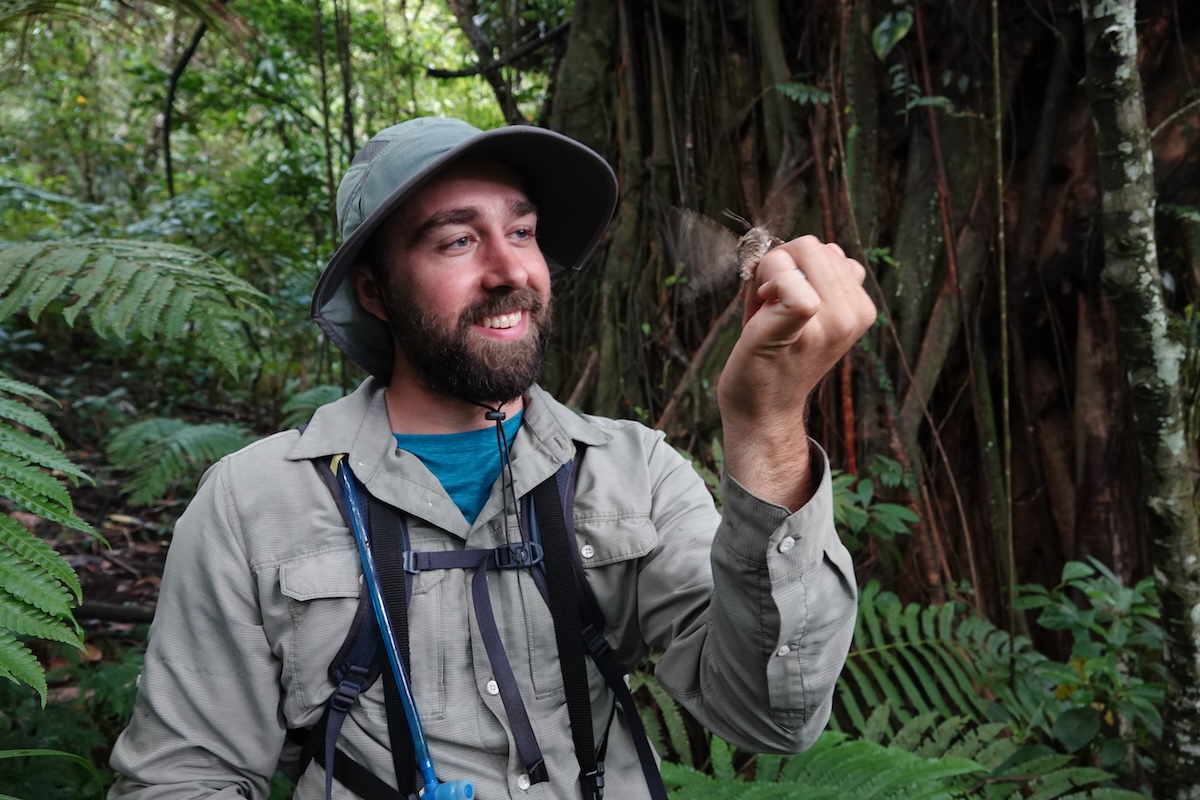
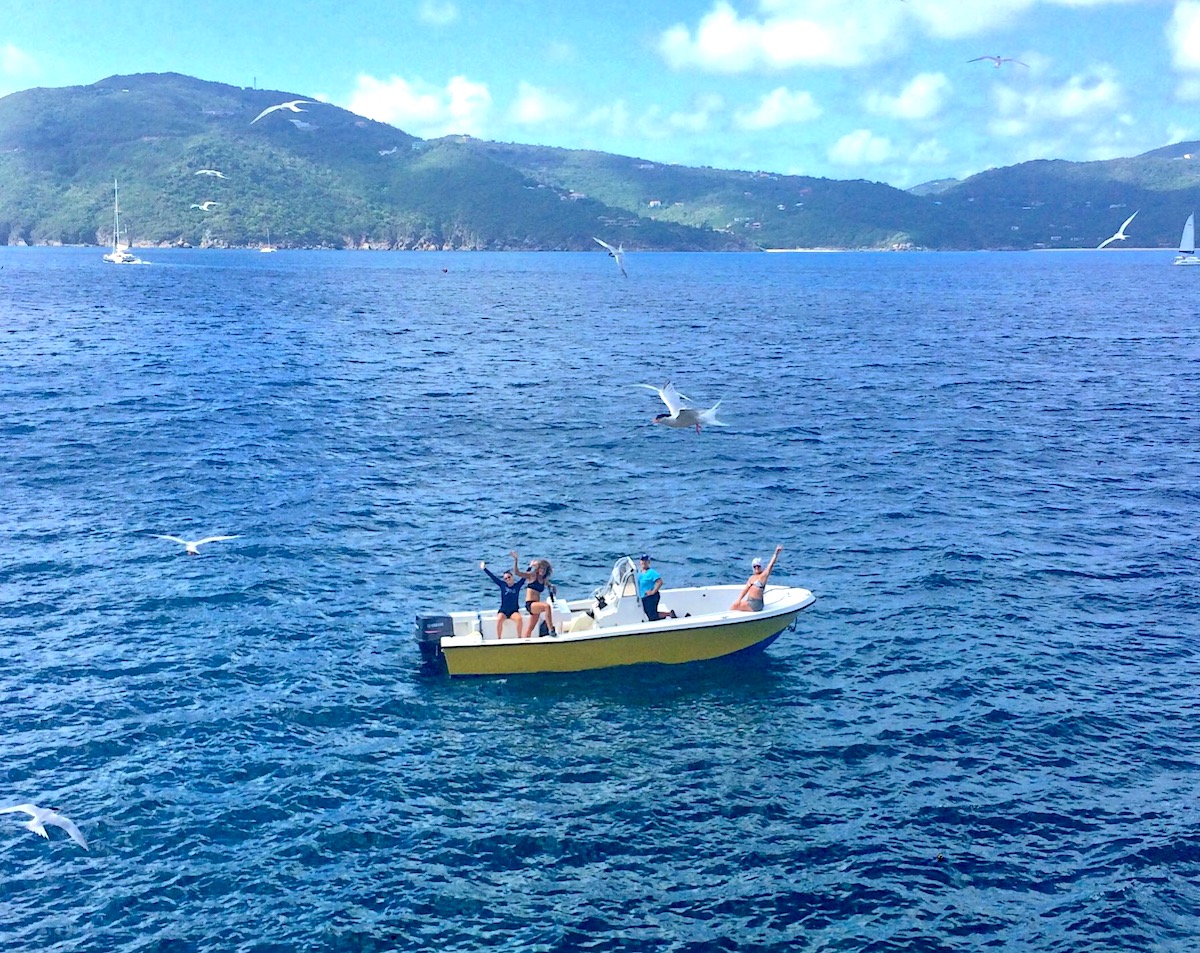
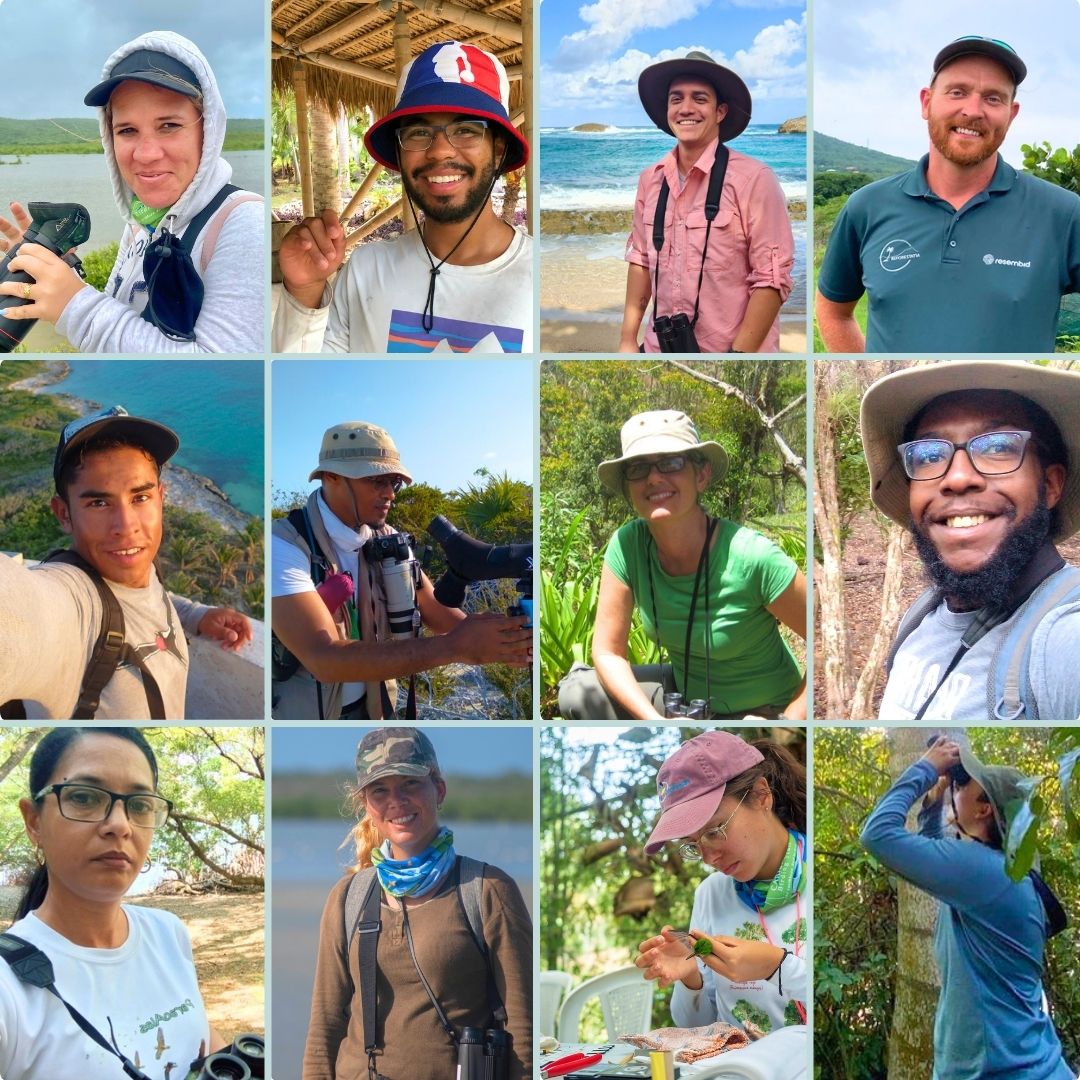
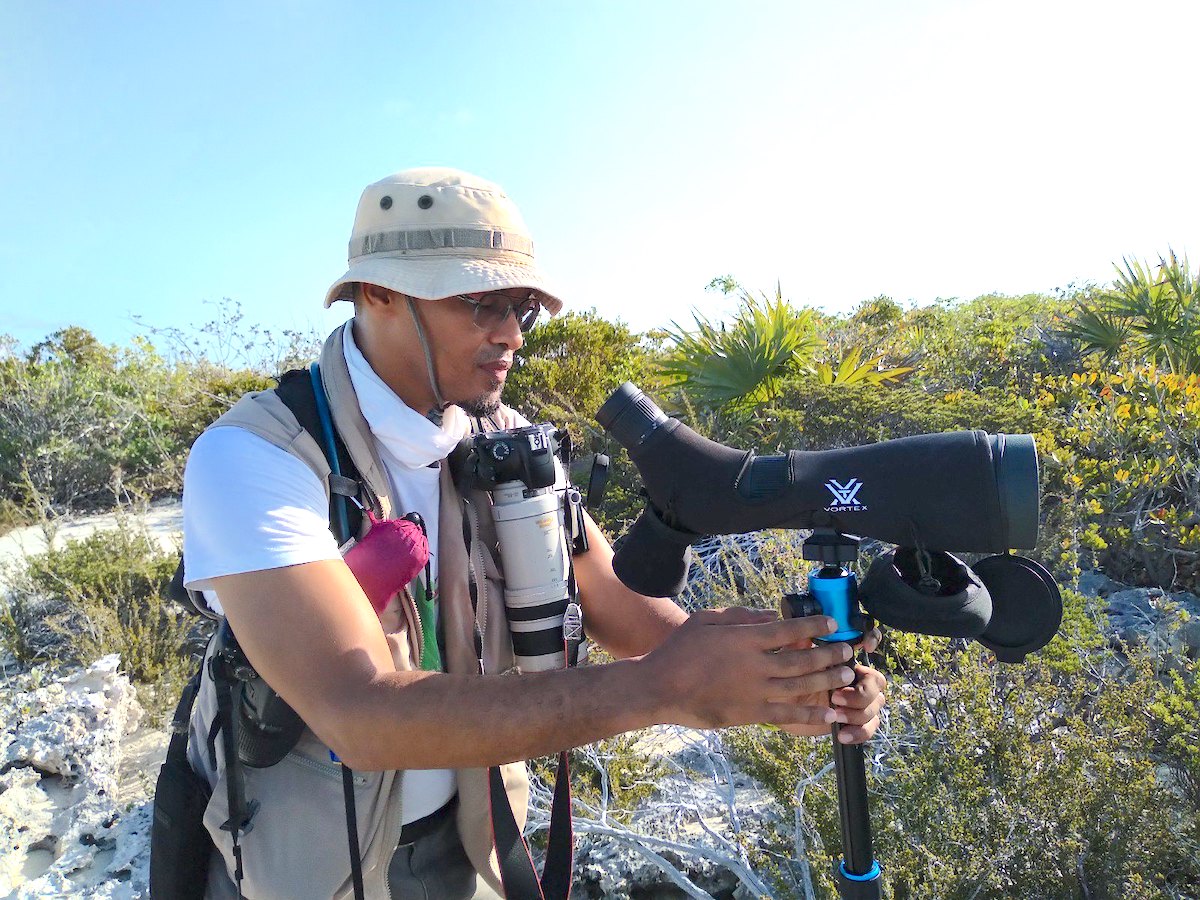
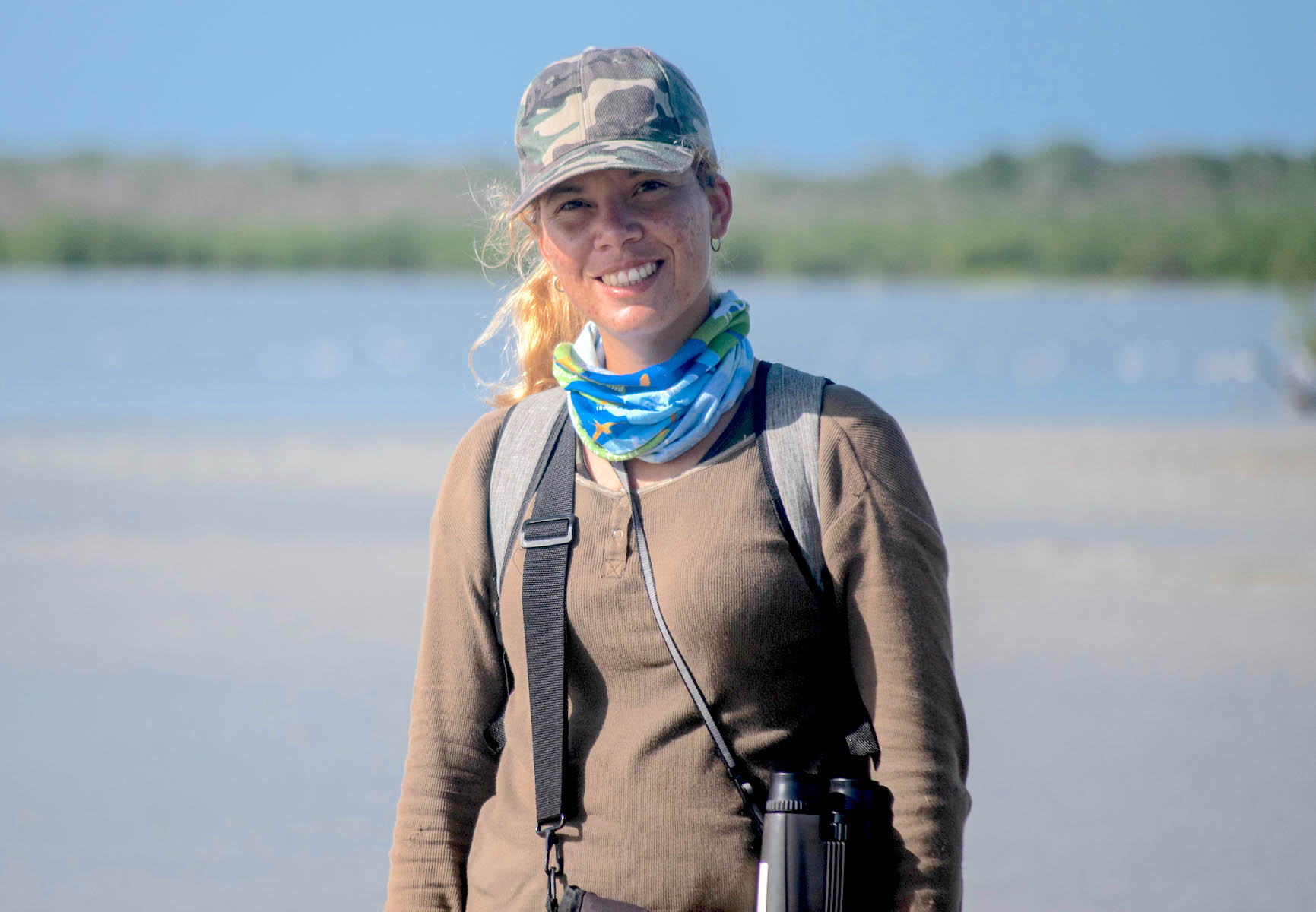
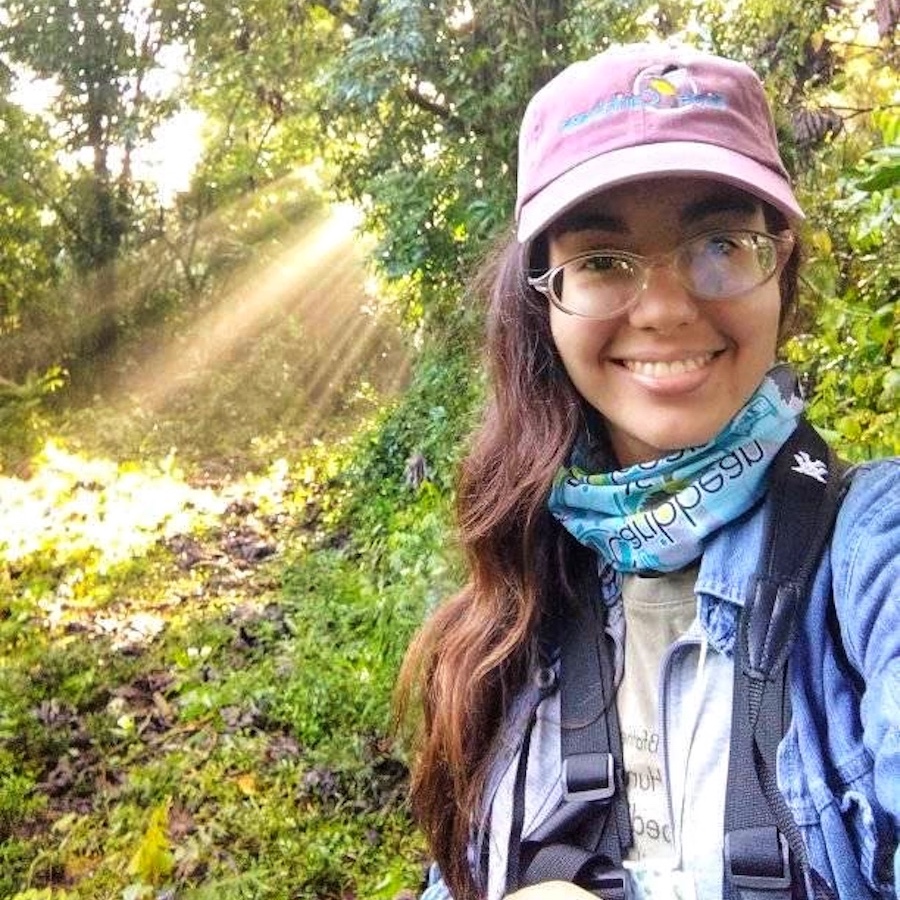
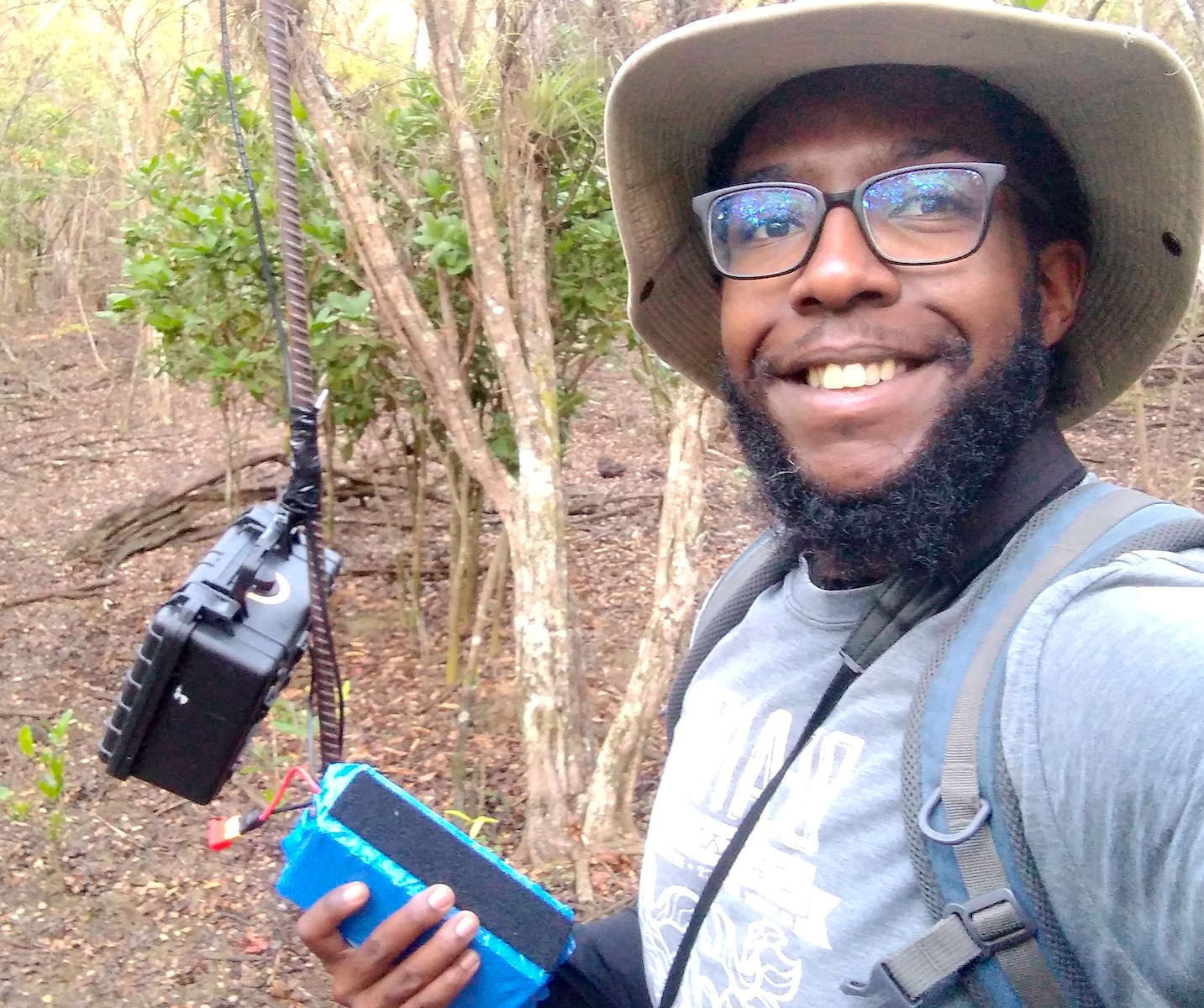
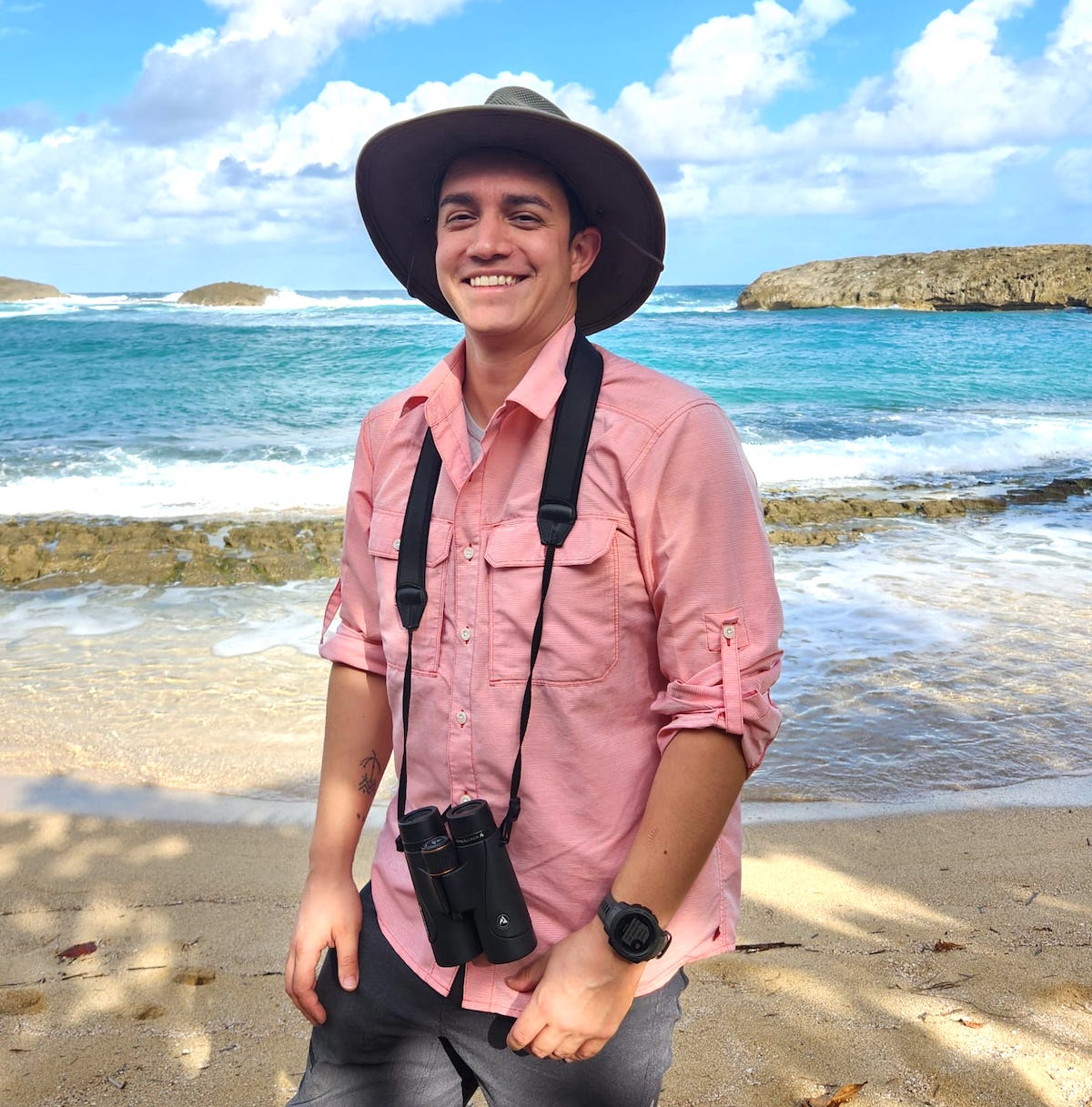
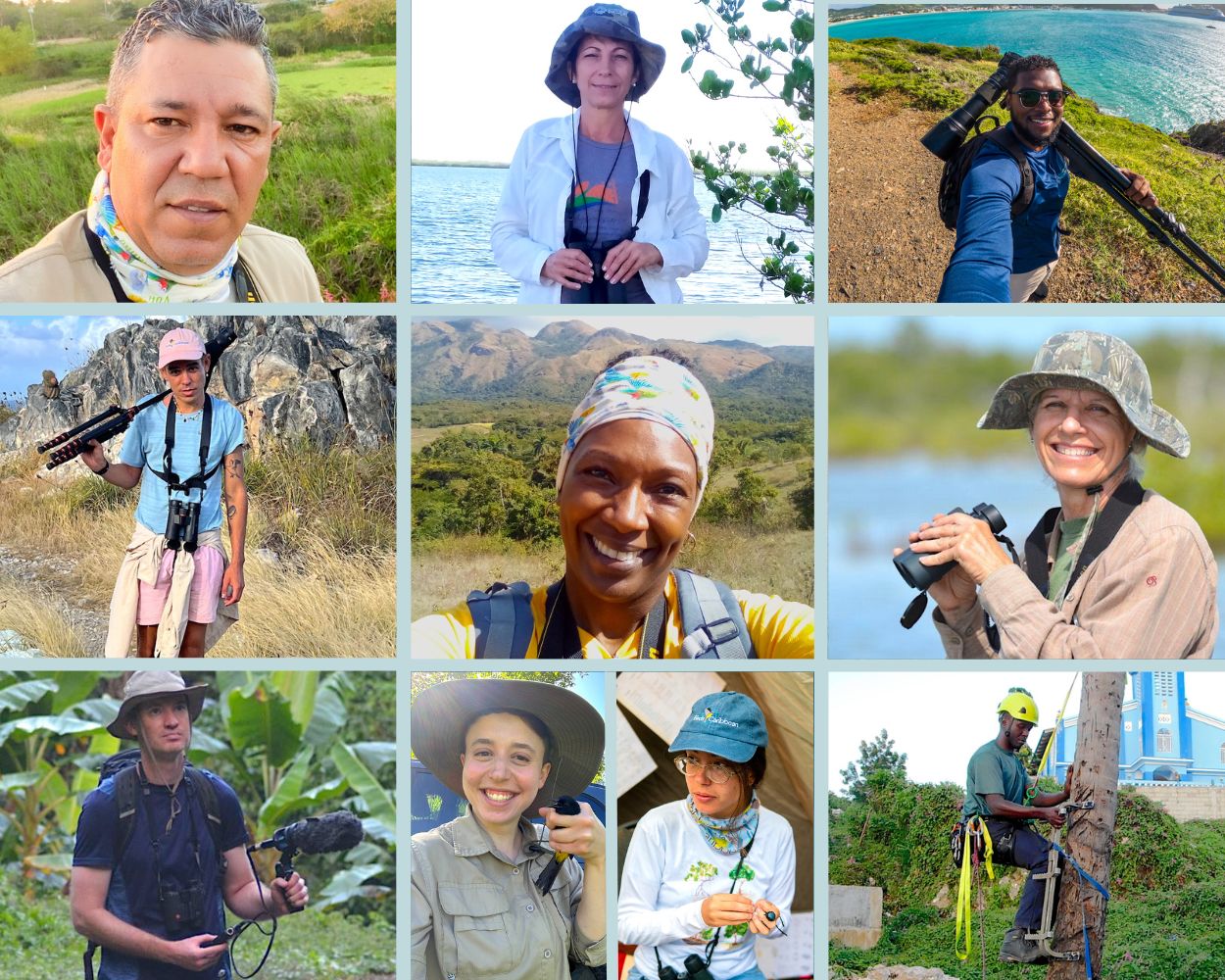
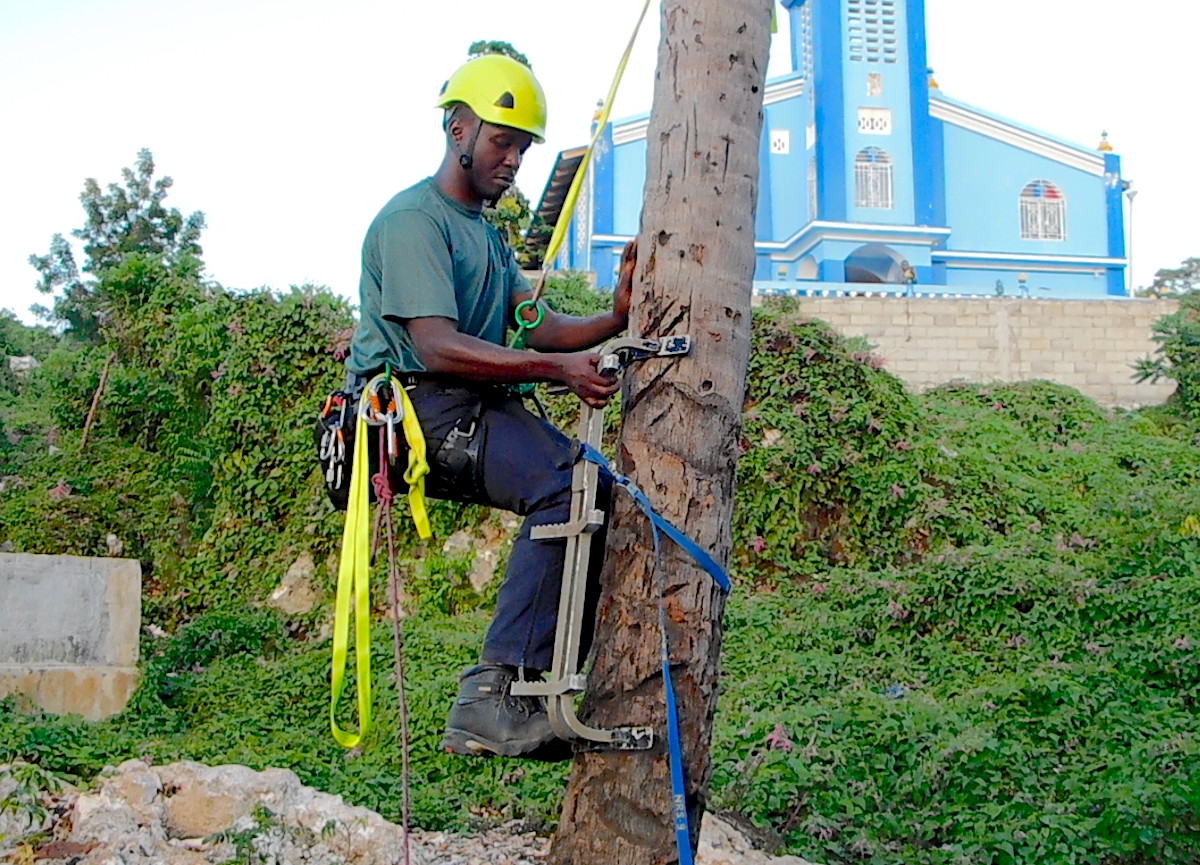
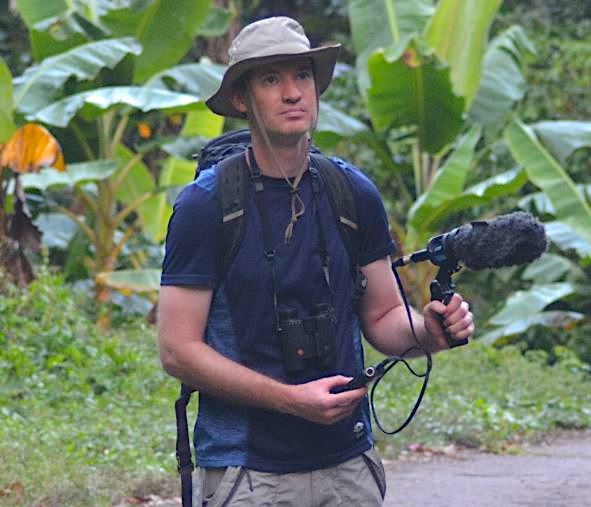
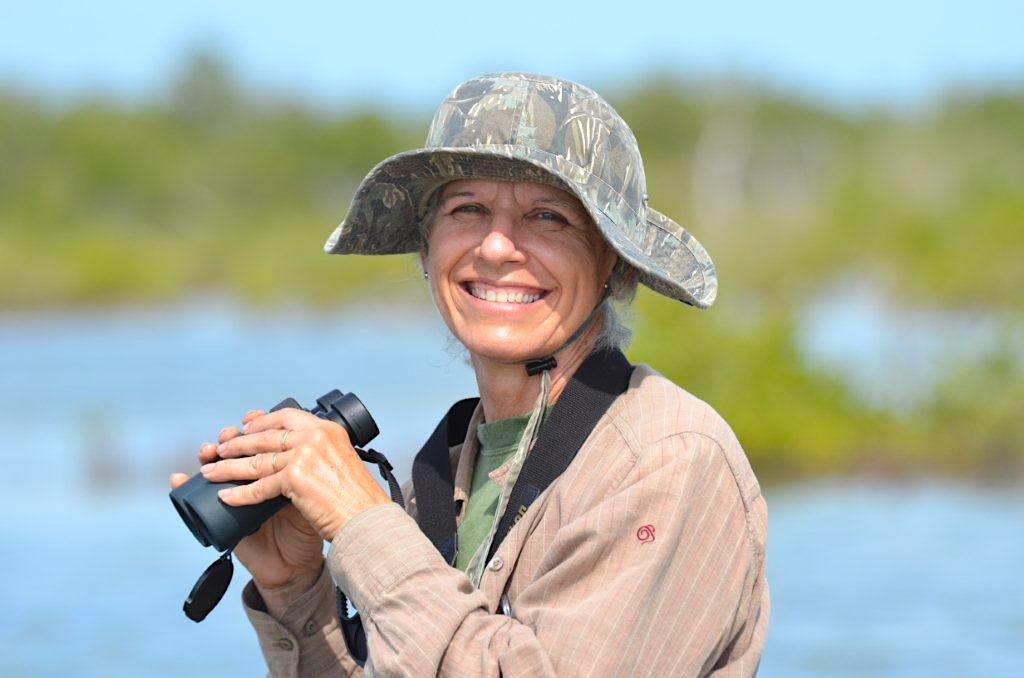
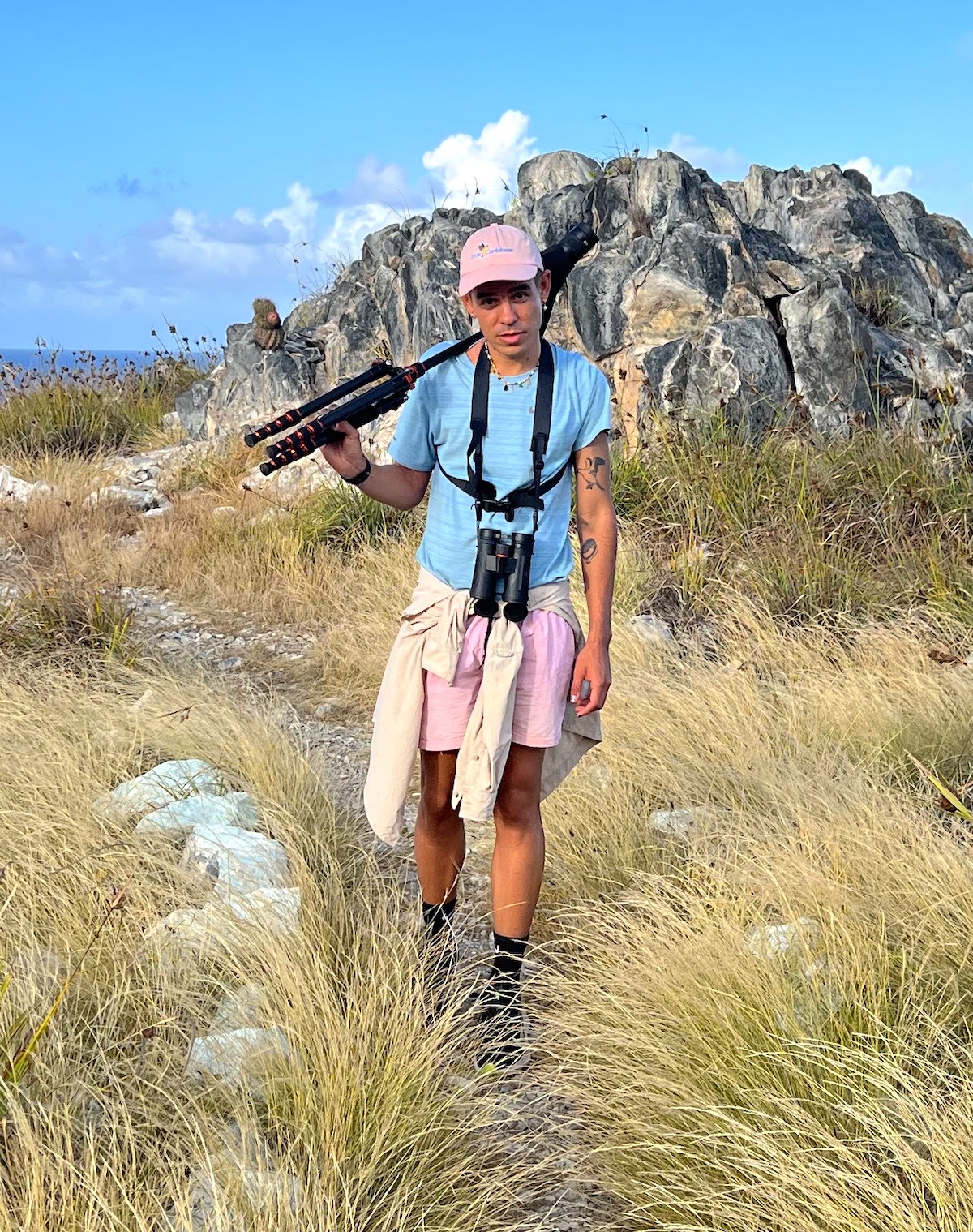
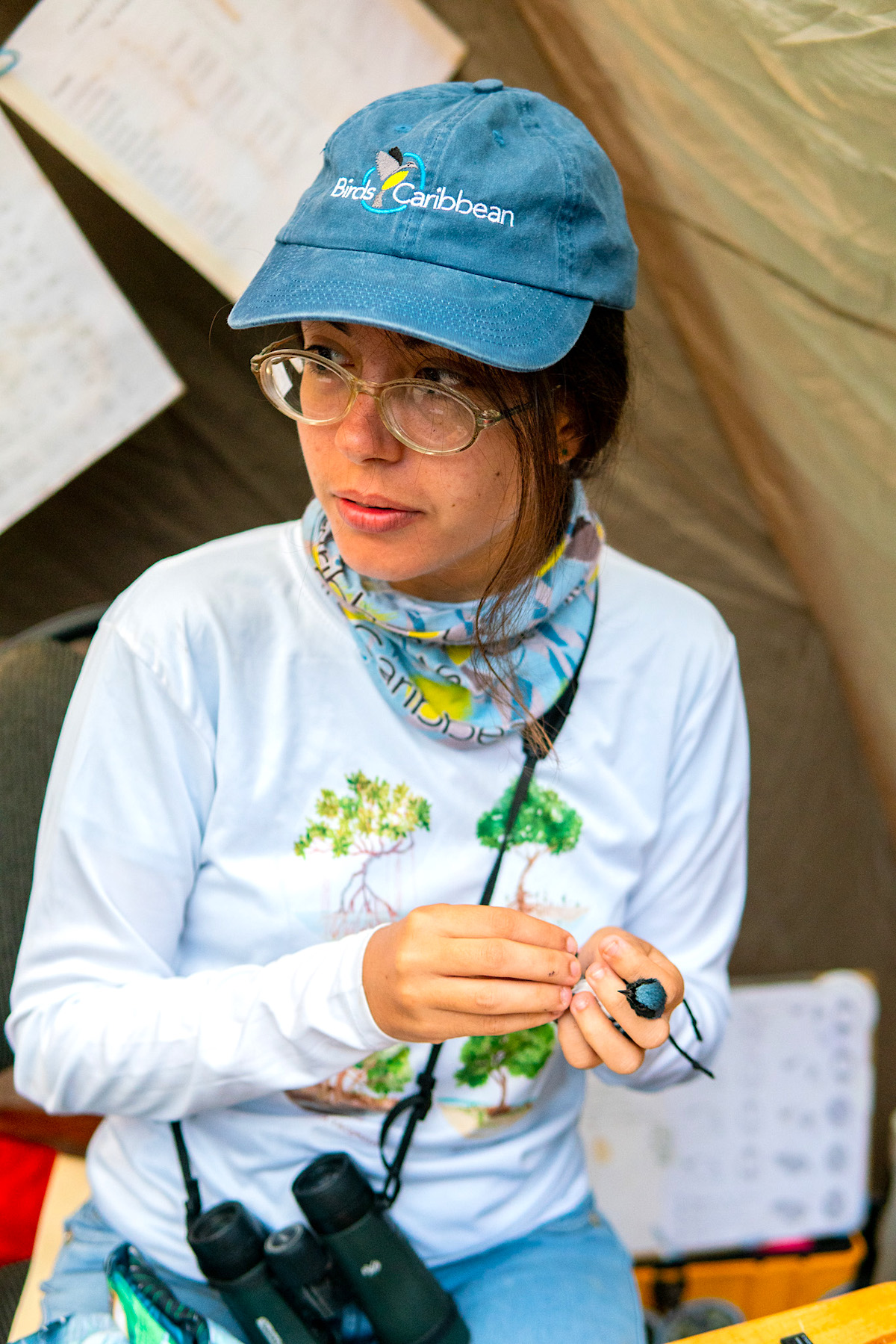
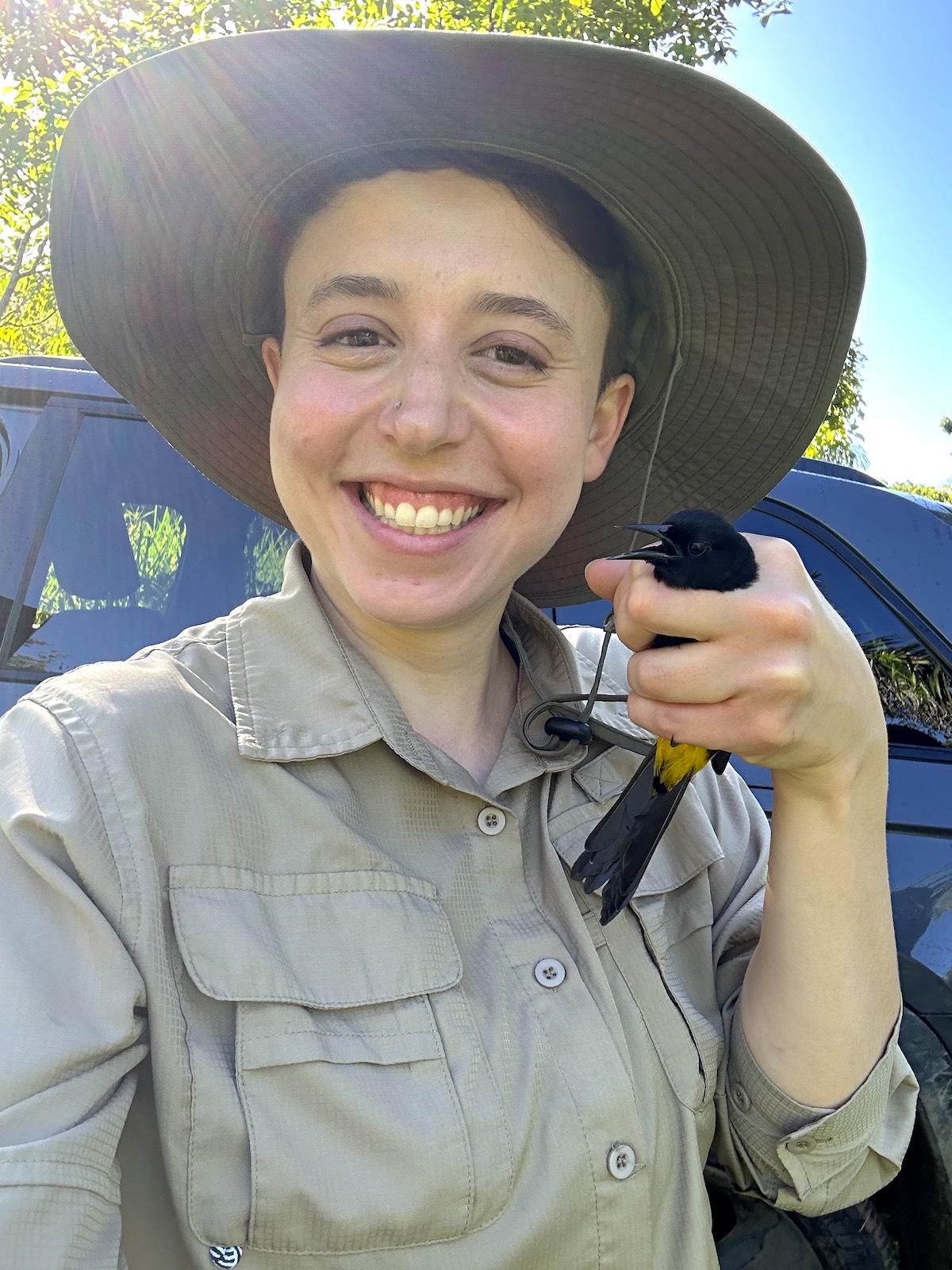
Joshel Wilson, a wildlife biologist with the Environmental Awareness Group, has dedicated himself to protecting the biodiversity of both land and sea in Antigua and Barbuda, from tagging endangered sea turtles and sharks to conserving threatened island wildlife. In 2024, he decided to expand his impressive skill set by adding bird banding to his repertoire. In this piece, Joshel reflects on his experience returning to his homeland to join the third cohort of the Caribbean Bird Banding Training Workshop.
Back to my roots
In early March 2024, I embarked on a journey back to my roots in Grenada, a place that holds a special place in my heart. This time, it wasn’t my typical visit for family or familiar landscapes—I was there for the third Caribbean Bird Banding Training Workshop, hosted by BirdsCaribbean in collaboration with the Grenada Fund for Conservation, Gaea Conservation, and Klamath Bird Observatory. It was a unique opportunity to combine my passion for birds with the chance to reconnect with my homeland. I did not expect that this experience would be so much more than a technical workshop; it would be a journey into the heart of Grenada’s natural beauty, culture, and community!
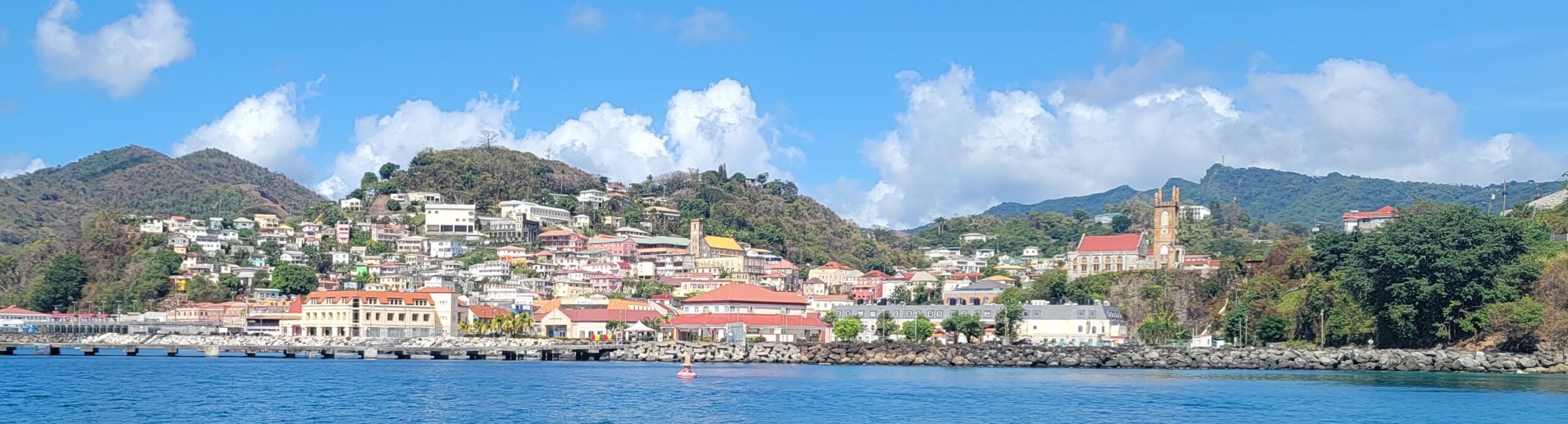
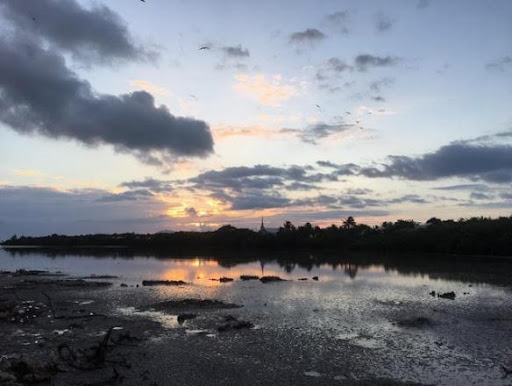
Landscape photo of St. George’s, Grenada. (photo by John Alexander)
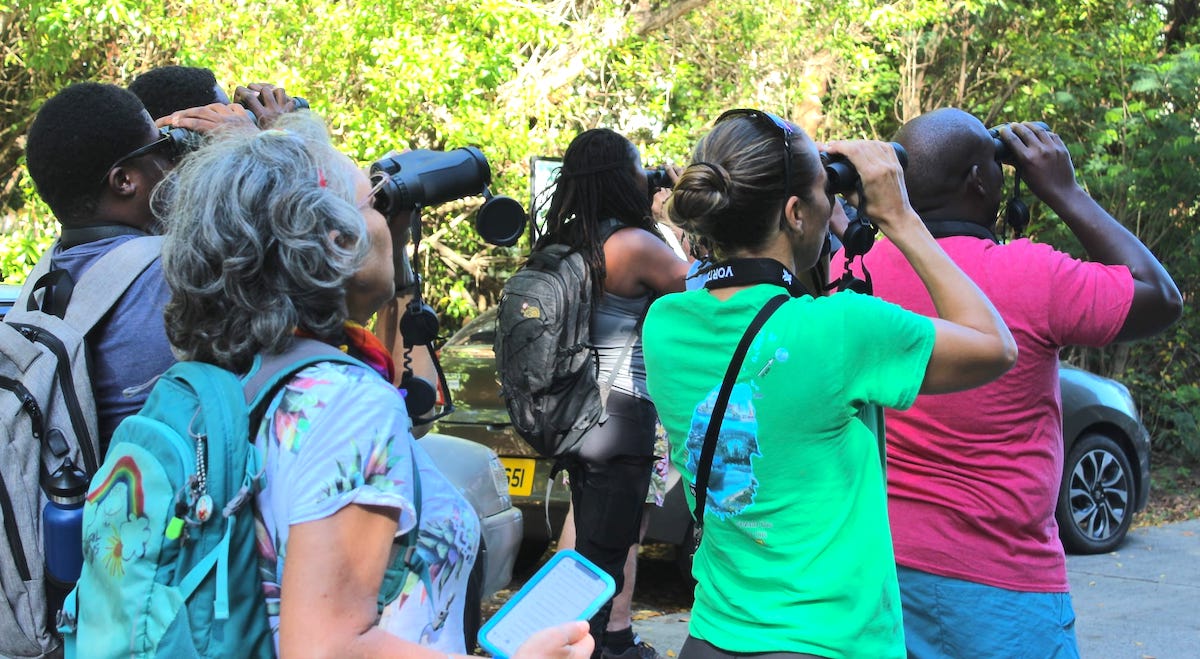
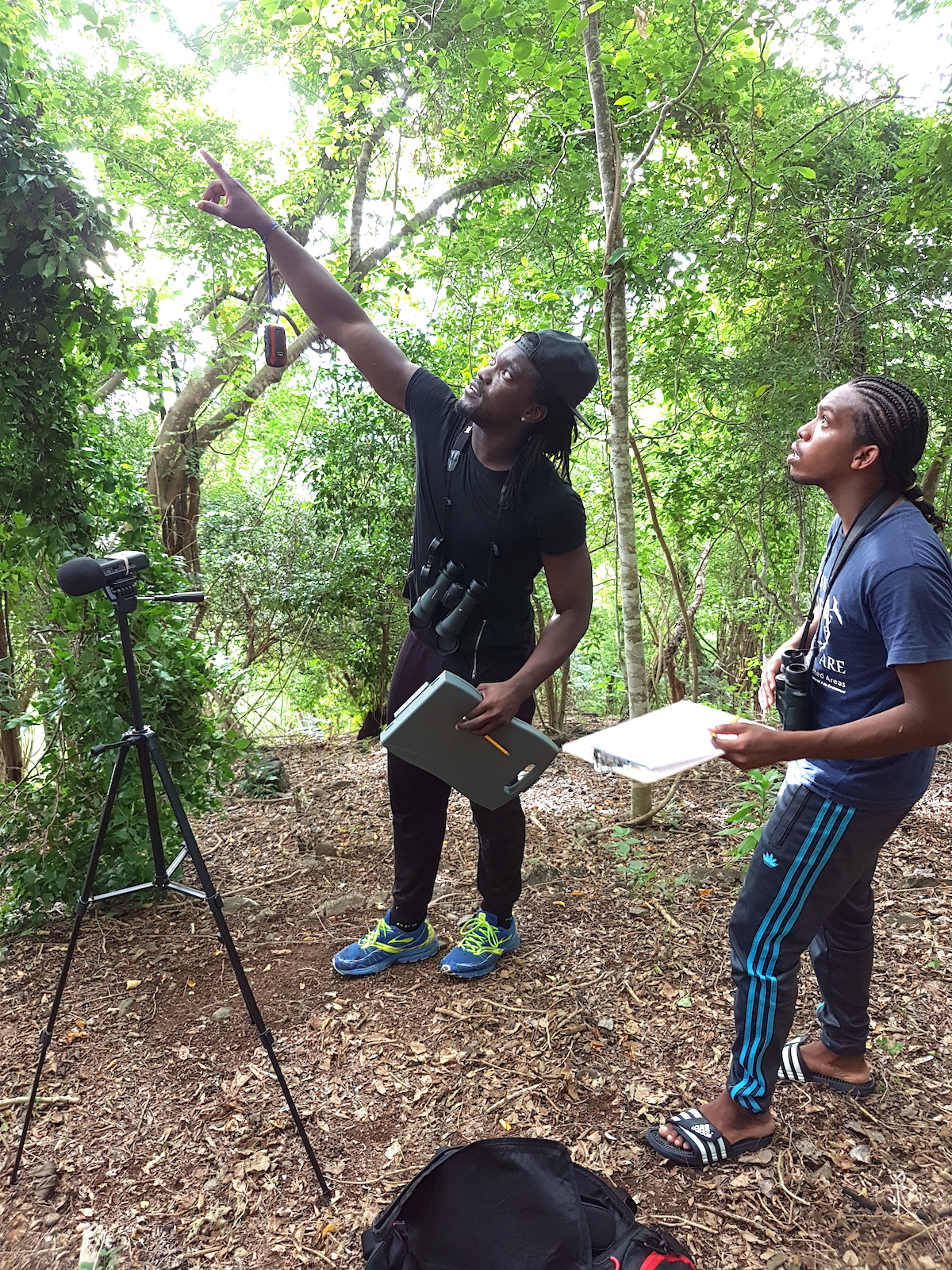
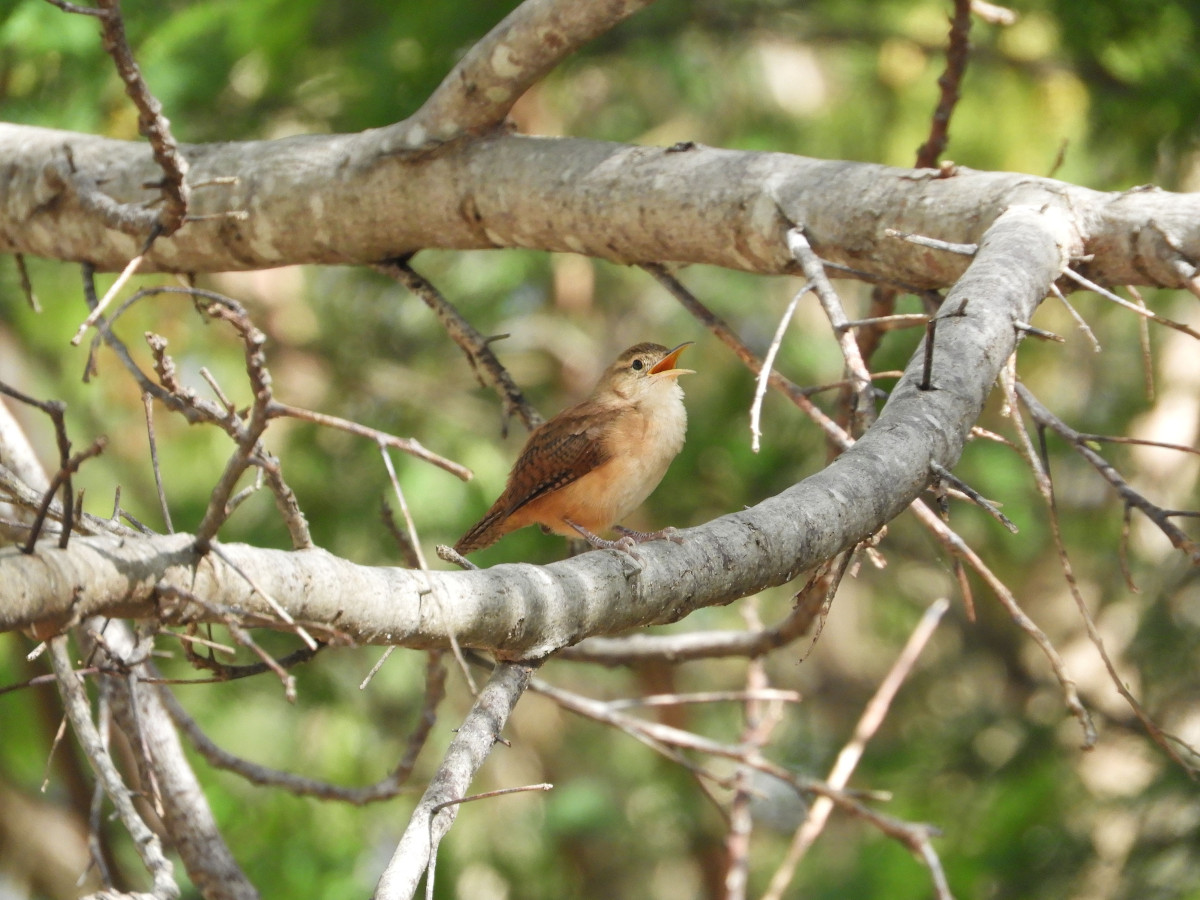
The workshop took place over five unforgettable days, blending hands-on bird banding with the theory behind this important conservation practice. The learning, discovery, and networking began promptly at the crack of dawn, whether we were venturing into the lush Grenada Dove Sanctuary at the Mt. Hartman Estate or exploring the grounds of the Blue Horizons Garden Hotel–the headquarters for the workshop. Located close to beautiful Grand Anse Beach and nestled in the vibrant Grenadian landscape, Blue Horizons was a haven for a variety of bird species. As the sun rose over the island, the air was filled with the songs of of landbirds such as Bananaquits and Grenada Wrens—the very species we aimed to study and band. It was a powerful reminder of why I fell in love with ornithology in the first place.
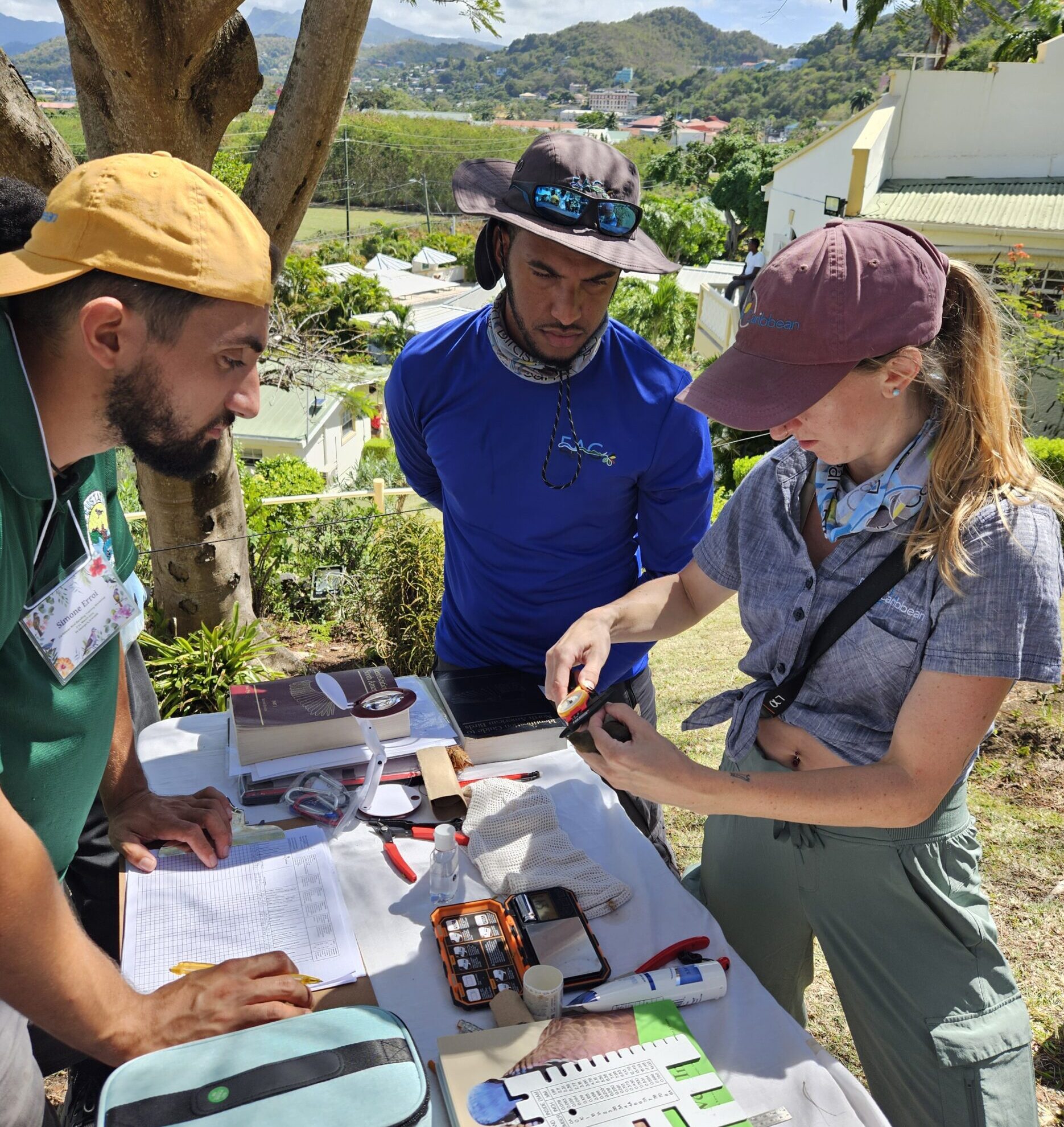
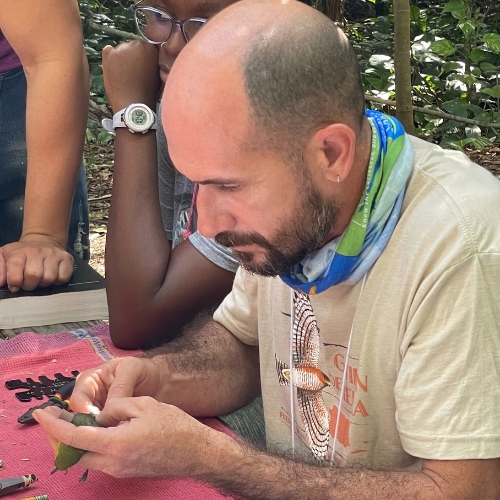
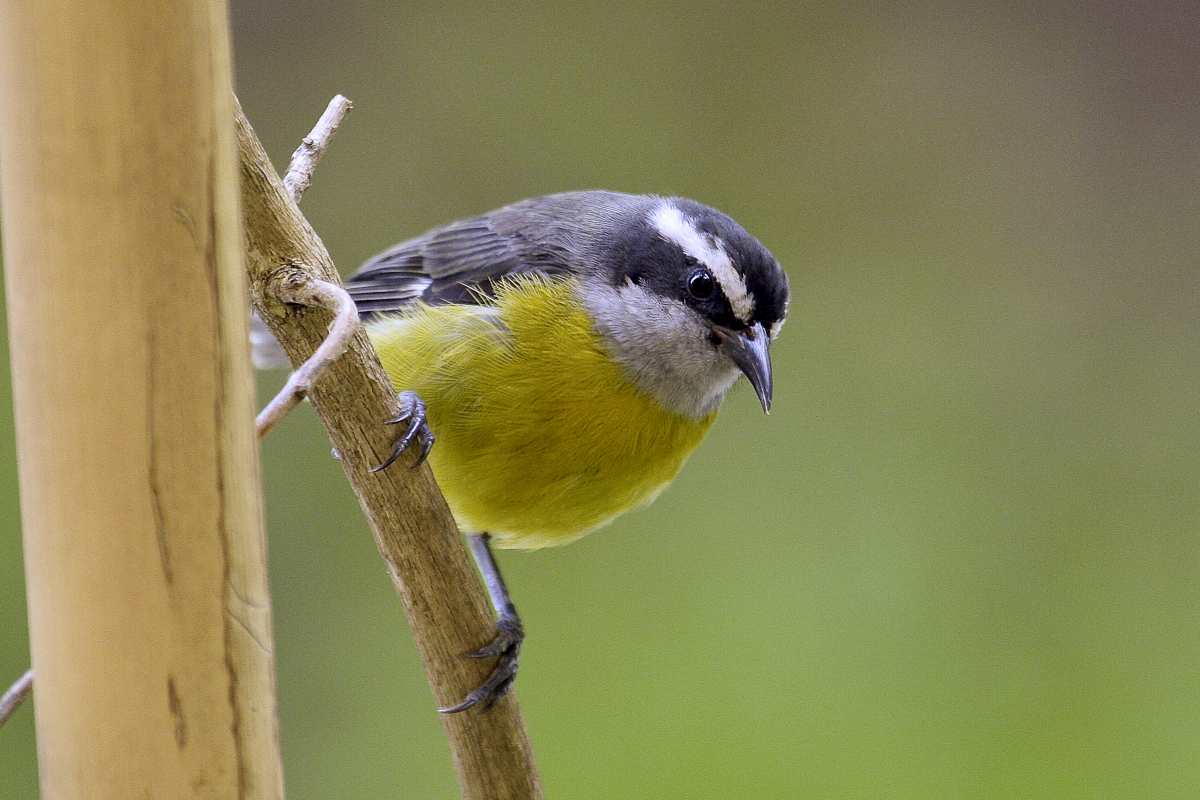
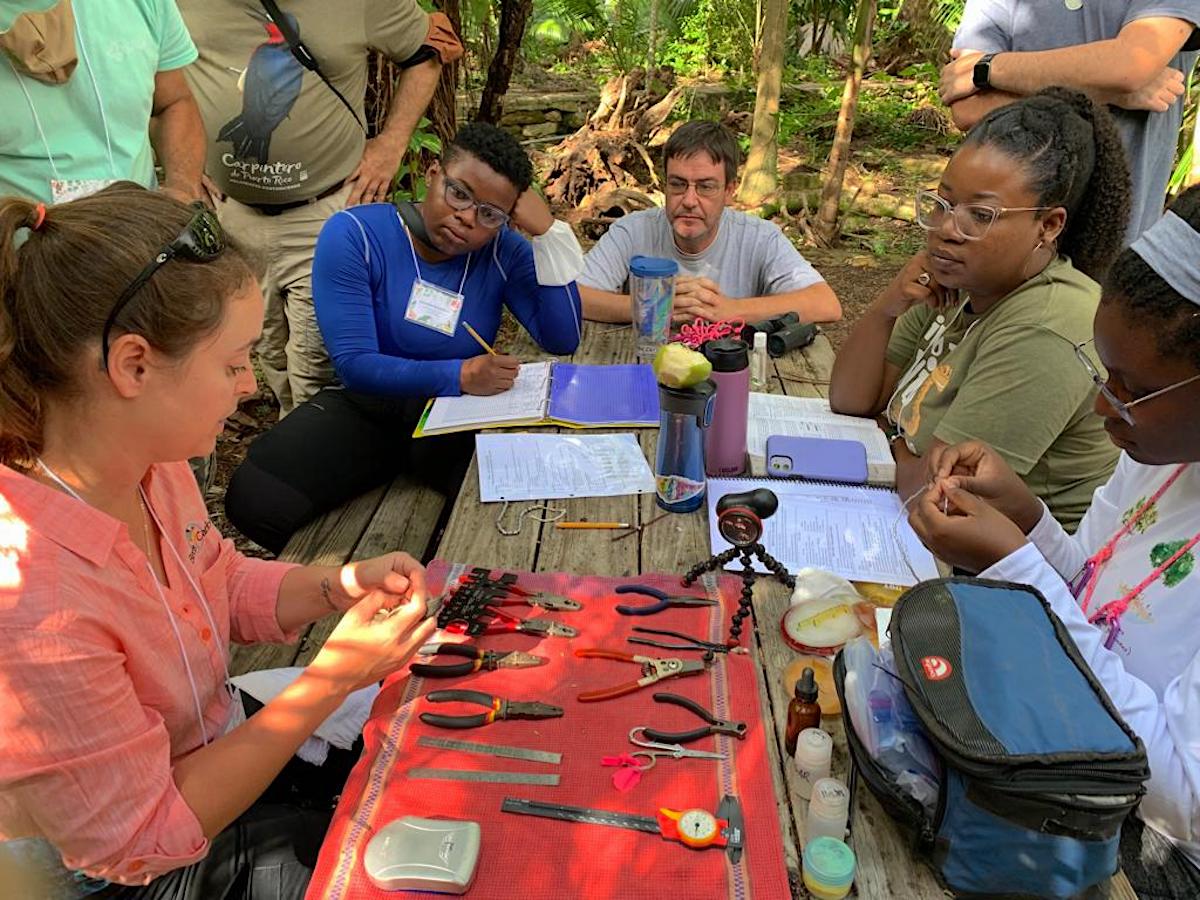
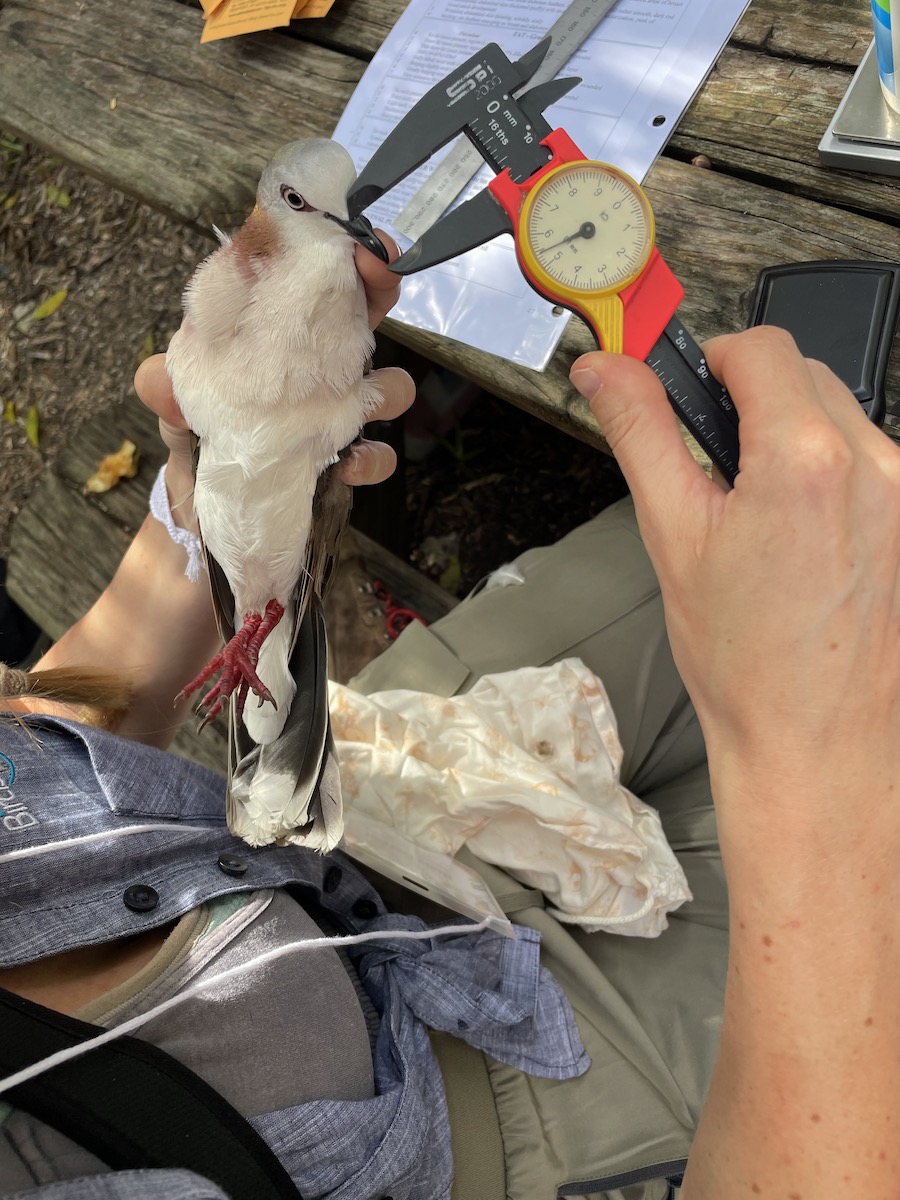
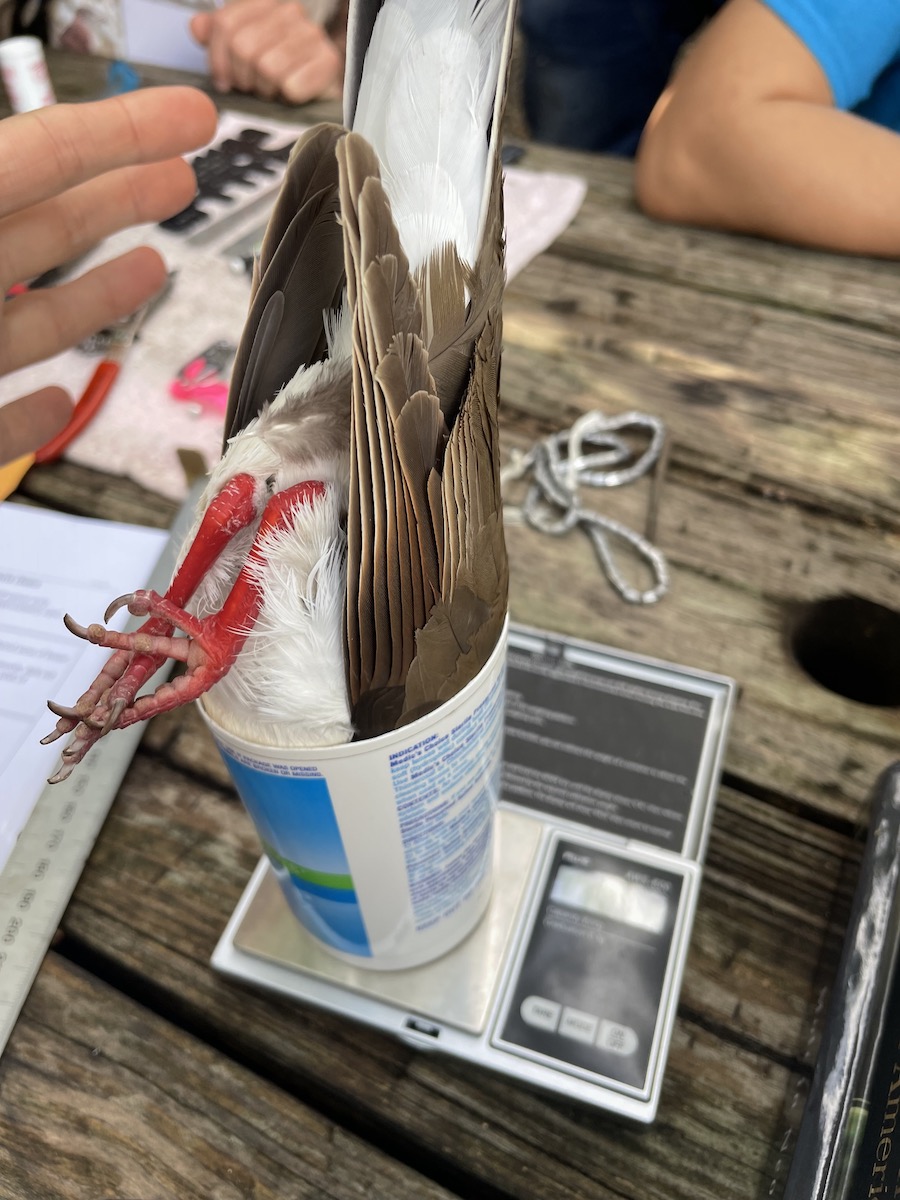
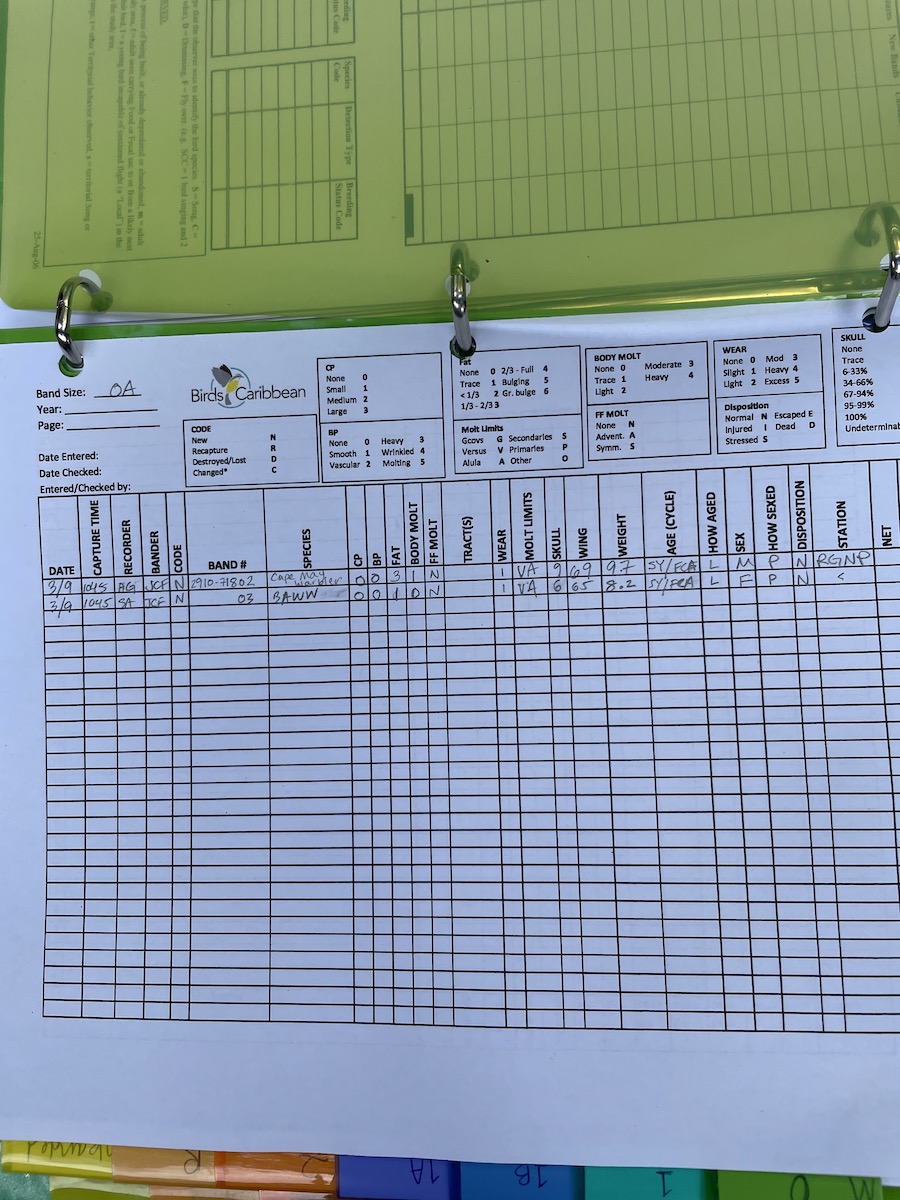
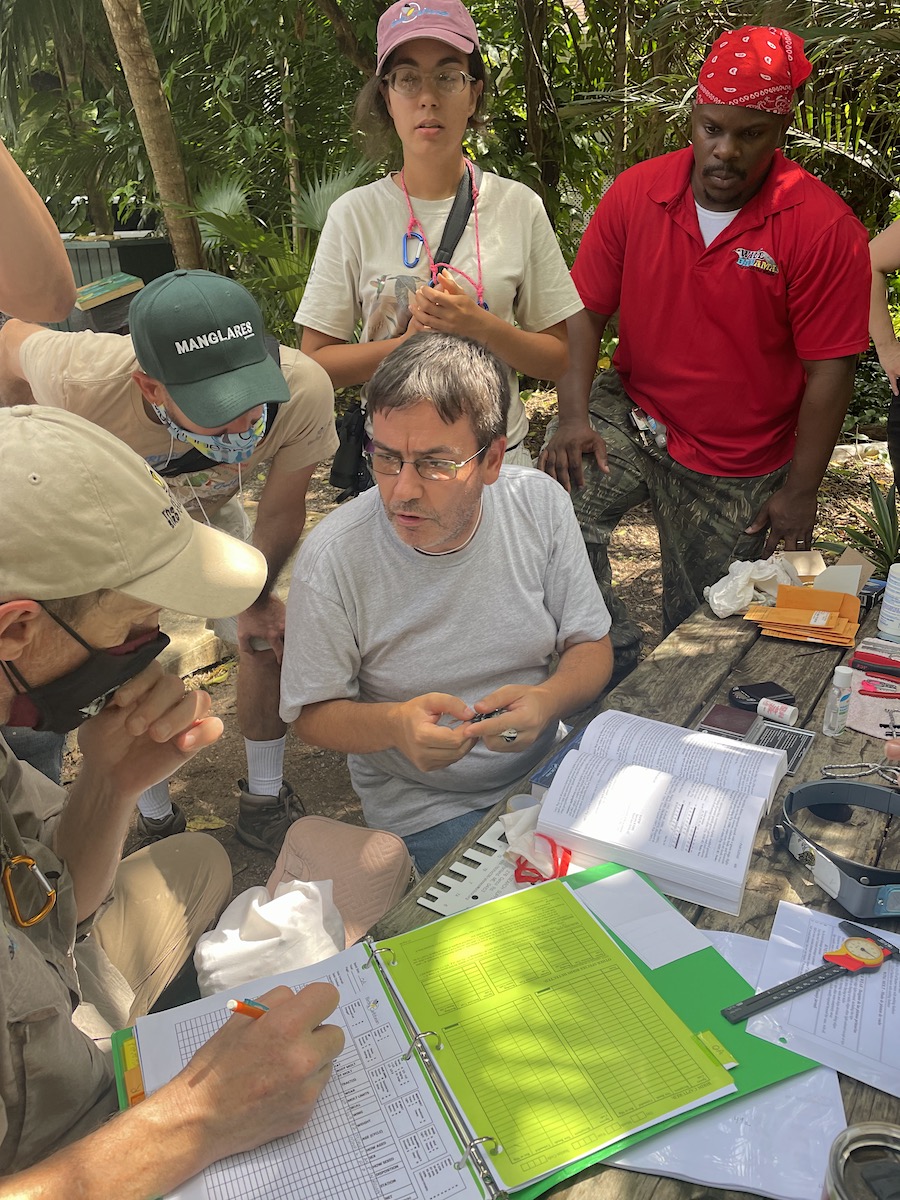
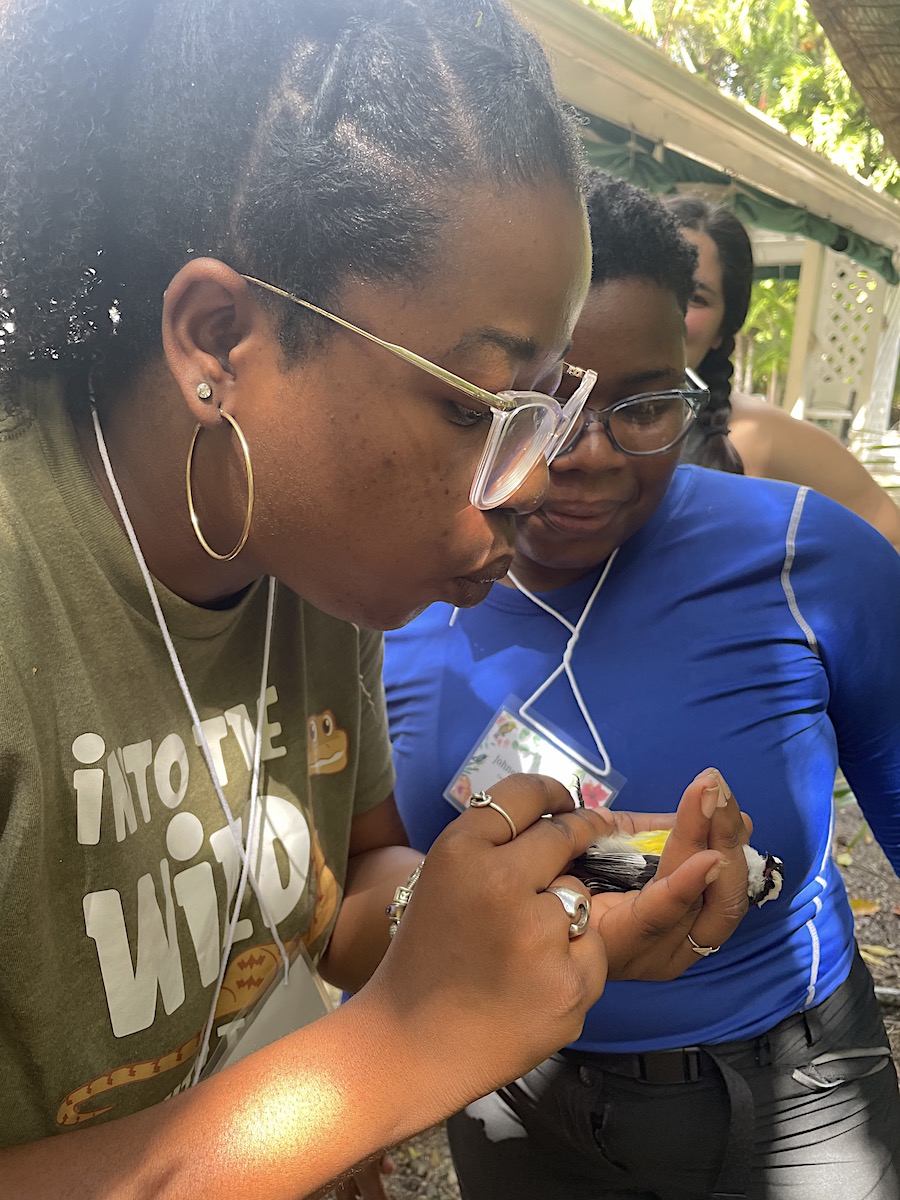
Trainer Holly Garrod shows Joshel Wilson and Simone Erroi how to measure morphometrics on a Bananaquit. (photo: Maya Wilson)
Birds, banding, and Caribbean camaraderie
While the birds and the scenery were spectacular, it was the people that truly made this workshop special. I met fellow conservationists from across the Caribbean, each bringing their own unique backgrounds and stories. There were Cubans, Puerto Ricans, Trinidadians, Saint Lucians, Saint-Martinois, Caymanians, and Grenadians like myself, all united by our shared passion for bird conservation.
The classroom sessions, led by experienced trainers and facilitators, were filled with lively discussions and bursts of laughter, especially when our Cuban colleagues, with their distinct accents, would jokingly plead, “¡Inglés, por favor!”(English, please!), hinting that the diverse Caribbean variations of English, combined with our unique accents, sometimes made conversations hard to follow.
While learning new techniques for removing birds from mist nets and mastering data recording was invaluable, the real magic happened in the connections we made. We swapped stories, compared conservation techniques, shared cultural traditions, and exchanged ideas on how to promote bird conservation in our respective countries. The mix of languages, positive energy, and camaraderie made each session feel more like a shared experience than a formal workshop.
Building Caribbean expertise
The role of BirdsCaribbean in ensuring the success of this workshop cannot be understated. The organisation’s dedication to fostering excellence in bird conservation was evident in every detail, from the well-organised, informative sessions to experiencing more of Grenada, including aboat trip arranged by the Grenada Fund for Conservation (GFC), where we enjoyed the famous Carenage and Underwater Sculpture Park.
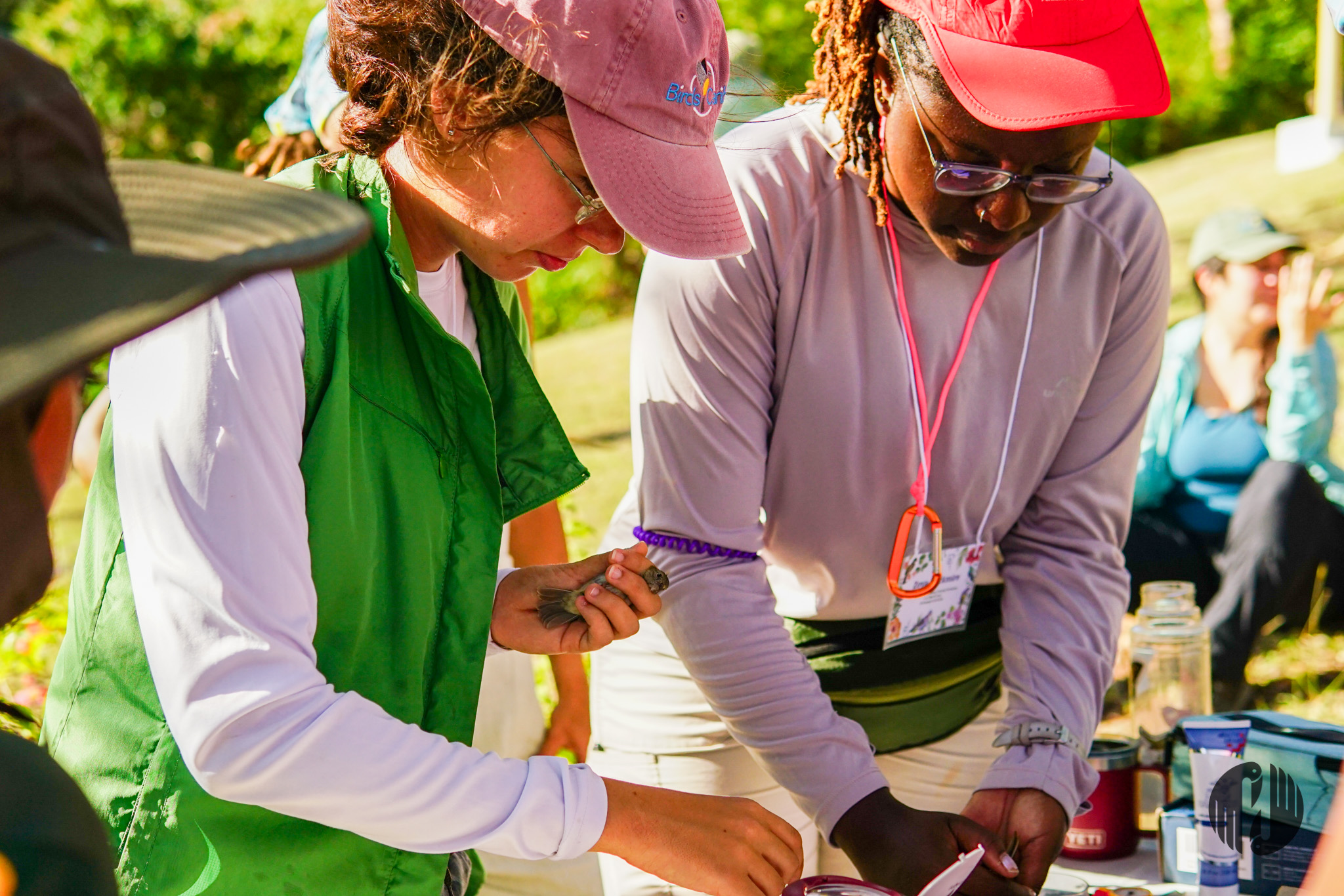
Recently certified NABC trainers Daniela Ventura (left) and Zoya Buckmire (right) band a Bananaquit together. (photo by Holly Garrod)
It was incredibly meaningful to watch the certification of two new Caribbean Bird Banding trainers, Daniela Ventura (Cuba) and Zoya Buckmire, who is also from my homeland of Grenada – what a sense of pride! This certification symbolized not only the success of the workshop but also BirdsCaribbean’s long-term goal of fostering Caribbean expertise in ornithology.
Coming home with more than new skills
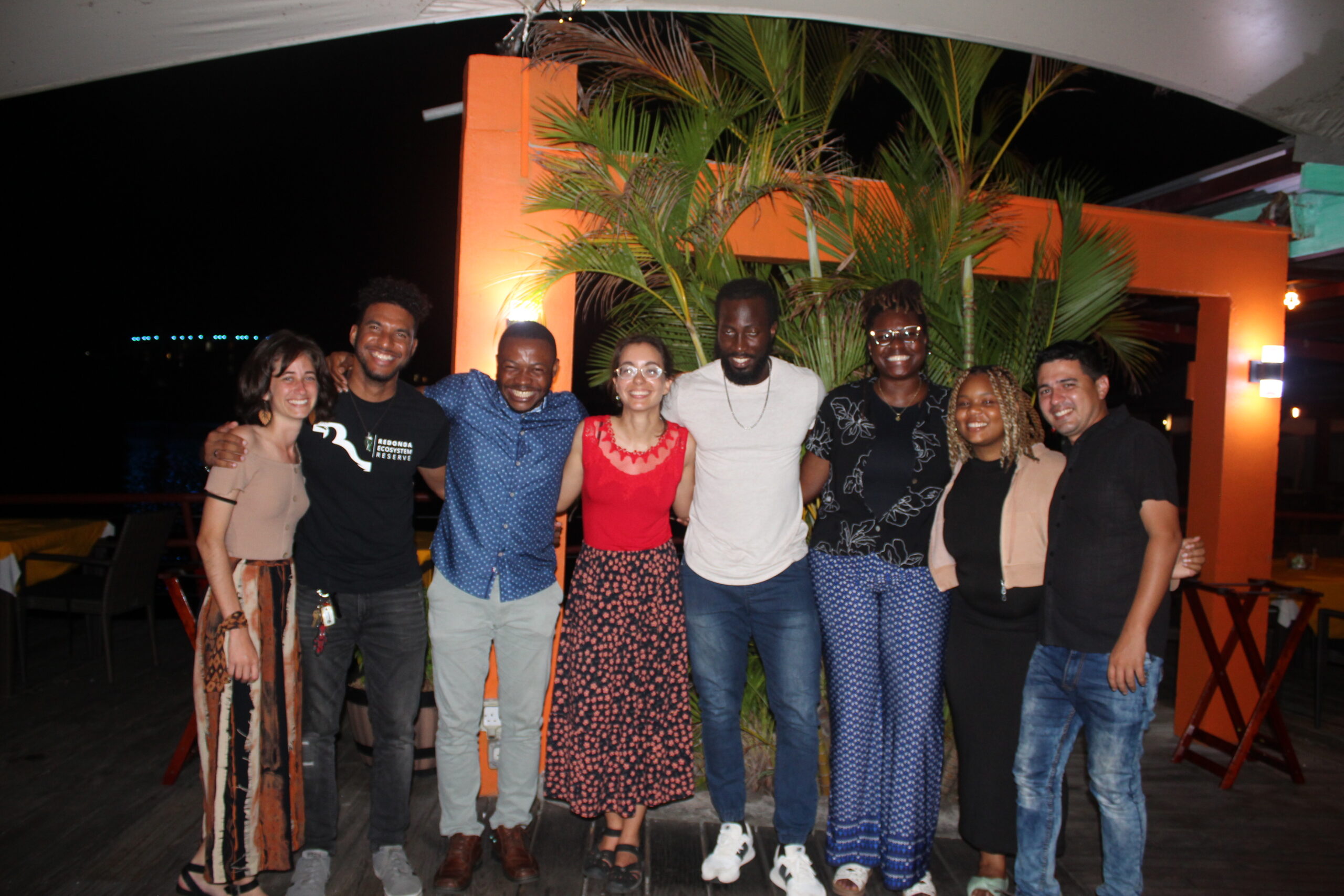
Participants (left to right) at the end of workshop banquet: Laura Arañaburo Acosta, Joshel Wilson, Kendon James, Daniela Ventura, Shawn Allard, Zoya Buckmire, Jadie Allard, Elien Domínguez Tan
As I received my Certificate of Achievement, I felt a mix of emotions. There was a sense of accomplishment for the skills I’d acquired, but also a profound sense of reconnection with my homeland. This workshop wasn’t just about learning bird banding techniques; it was about returning to Grenada, reconnecting with its people, and rediscovering the beauty of its natural world.
As I said goodbye to the friends I made and the birds I came to know, I knew this wouldn’t be the last time I would see them. This journey had reignited my passion for bird conservation and deepened my commitment to supporting the Caribbean’s ornithological community.
If you’re considering participating in a similar workshop, I can’t recommend it enough. The experience will not only enrich your knowledge but also connect you to a vibrant and welcoming community of biologists from across the Caribbean.
The first step to banding a bird is first identifying the species, as shown here comparing this Yellow-bellied Elaenia to drawings in the field guide
Trainer Daniela Ventura show other bird banding workshop participants how to check a bird for breeding characteristics
Shawn Allard extracts a Bananaquit from a mist net
The endangered and endemic Grenada Dove spotted at the banding site of Mount Hartman
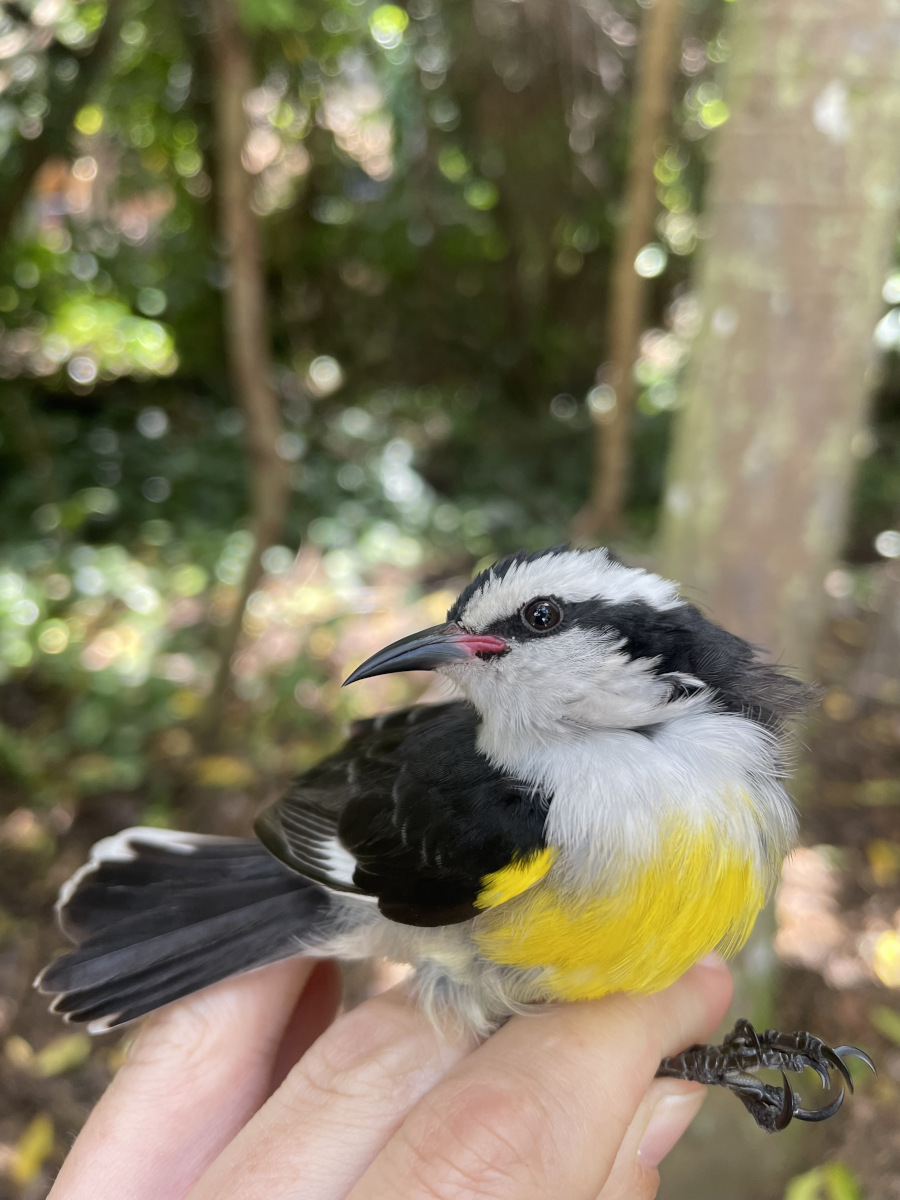
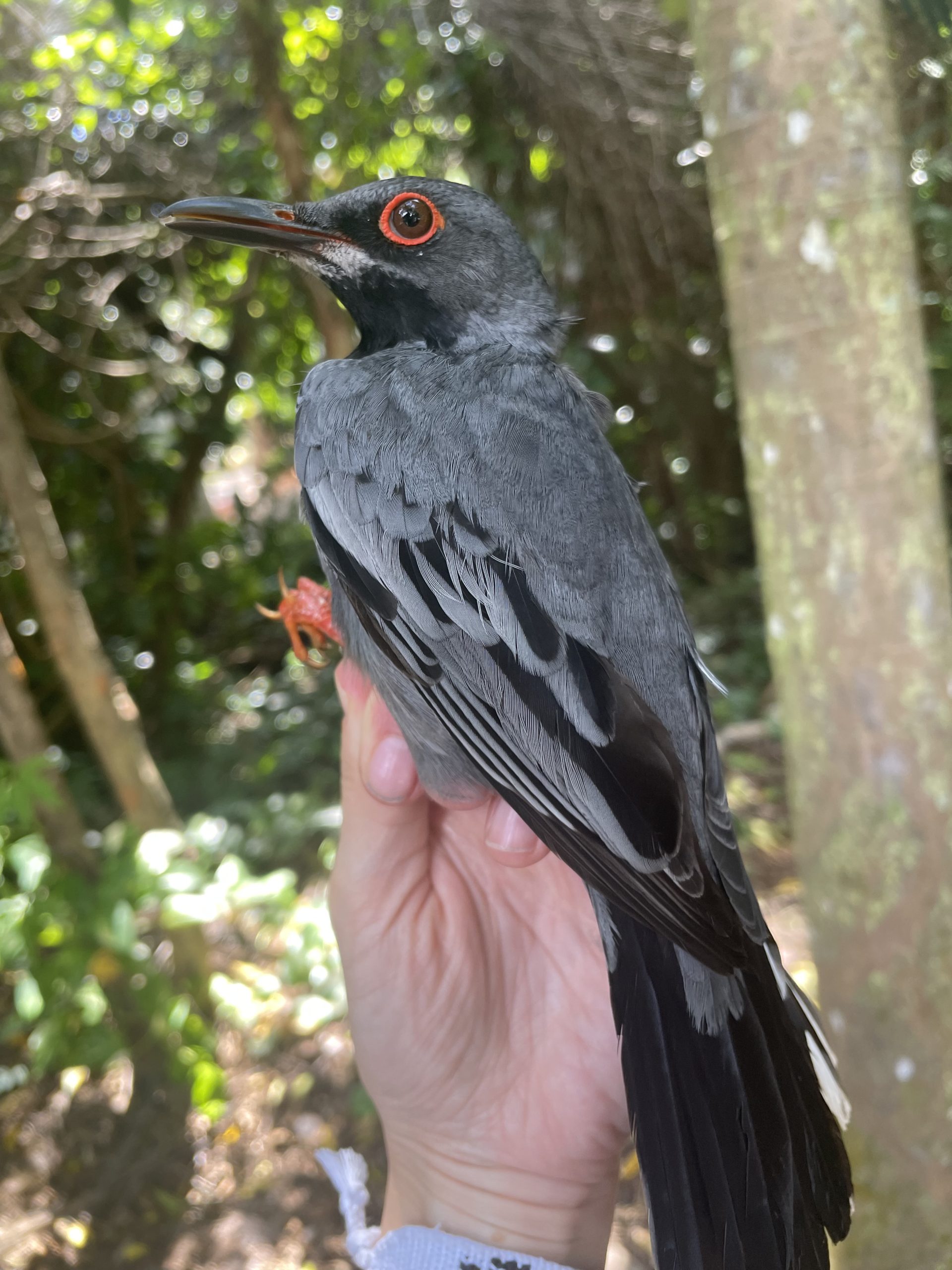
Bananaquit being held in photographer’s grip. Photo: Holly Garrod
Trainer Juan Carlos instructs participants on how to properly set up a mist net. (photo by Holly Garrod)
Acknowledgements: The Caribbean Bird Banding Training Workshop was made possible through the generous support of our donors and funders, including the U.S. Fish and Wildlife Service and Zoo New England. We would also like to thank our local and international partners, including the Grenada Fund for Conservation, Gaea Conservation Network, Grenada Forestry, Klamath Bird Observatory, and Institute for Bird Populations.
Joshel Wilson is a Wildlife Biologist with a B.Sc. in Marine, Wildlife, & Conservation Biology from St. George’s University and an MSc candidate at the University of Leeds. With expertise in biodiversity conservation, endangered species management, and research methodologies, including UAS and tagging techniques, he has contributed to projects across the Caribbean. Currently a Wildlife Officer with the Environmental Awareness Group, Joshel oversees conservation efforts in Antigua, Barbuda, and Redonda. He also serves as Principal Investigator for the Antiguan Racer Census and holds certifications in marine conservation and climate resilience.
BirdsCaribbean’s Caribbean Motus Collaboration program is excited to invite applications for a 5-day Motus Tagging Training Workshop. In partnership with the Puerto Rico Department of Natural and Environmental Resources, this hands-on training will be held at the Jobos Bay National Estuarine Research Reserve in Salinas, Puerto Rico, from 2-6 March 2026.
What is Motus?
The Motus Wildlife Tracking System is a global collaborative research network that uses automated radio telemetry to track the movements of small animals. The network is centrally managed by Birds Canada (motus.org), and consists of thousands of receiving stations worldwide that detect tagged animals as they move through the landscape.
Motus station at Holywell Park in the Blue and John Crow Mountains National Park, Jamaica; installed in collaboration with the Jamaica Conservation and Development Trust in March 2023 (Photo by Holly Garrod).
When the Caribbean Motus Collaboration (CMC) was launched in 2021, there were no permanent Motus receiving stations in the insular Caribbean. Thanks to the efforts of many regional and international partners, the Caribbean Motus network is growing rapidly—there are now 24 active stations in the region, with plans for many more!
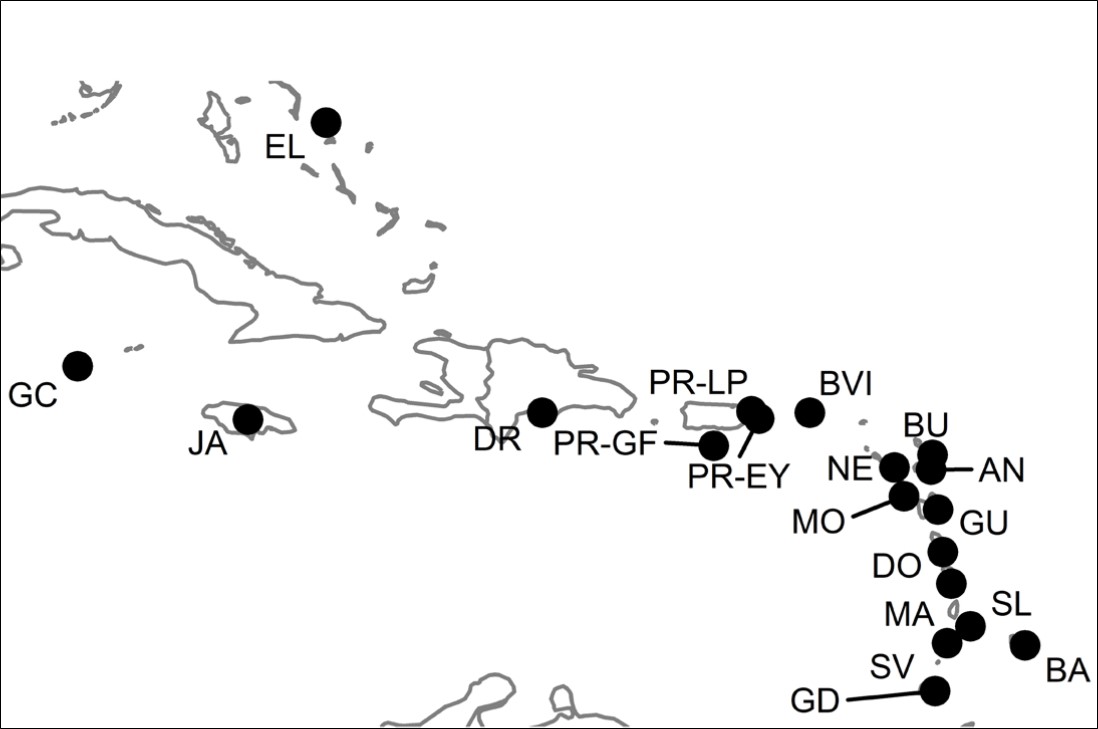
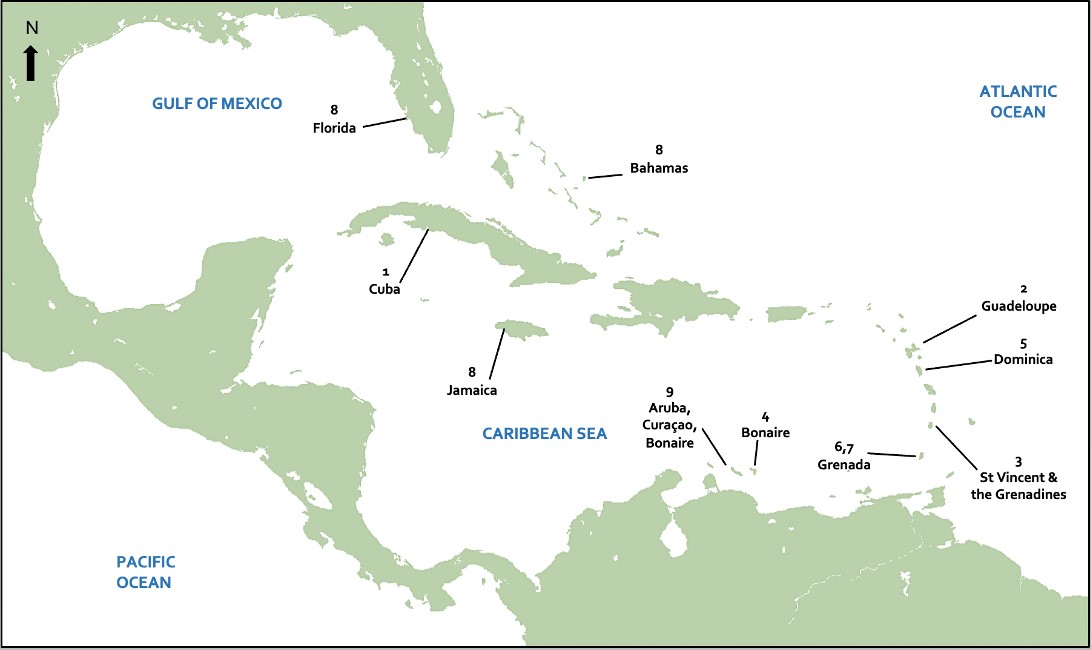
Motus Stations in the Caribbean.
Why do we need to tag birds in the Caribbean?
As this critical geographical gap in the Motus network is filled, migratory birds tagged outside the Caribbean are increasingly being detected at Caribbean stations and providing valuable new insights into migration routes, timing, and stopover use across the region. For example, this Red Knot—a species of conservation concern experiencing significant population declines—was one of many tagged in Argentina and later detected at a Caribbean station during its long journey to breeding grounds in the Arctic.
This Red Knot was tagged in Argentina and detected by a Motus station in Barbados while migrating back to its breeding ground in North America.
Red Knot stopping over in Barbados on its long migration. (photo by John Webster)
Tagging birds within the Caribbean allows us to better understand populations that depend on the islands for all or part of their life cycles. For migratory species, this includes information on movement patterns, stopover duration, departure decisions, and carry-over effects—how conditions in one part of the bird’s life cycle (such as the quality of non-breeding habitat) influence its health, survival, and breeding success later on. Motus tracking is being used to study overwintering populations of species of conservation concern such as Bicknell’s Thrush in the Dominican Republic. Motus can also fill important knowledge gaps for resident species, including movements within and between islands, dispersal distances, and habitat use.
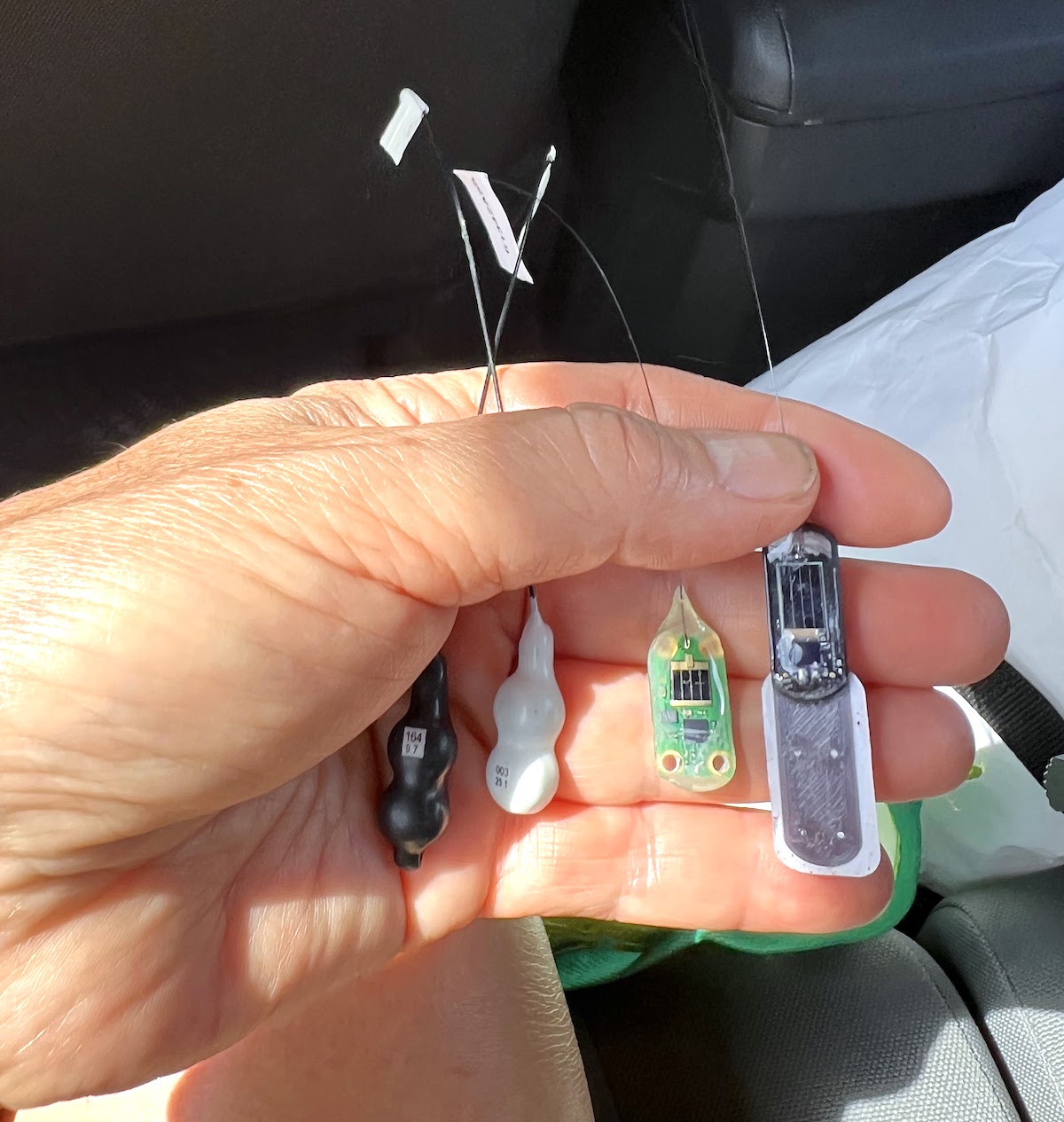
The various types of Motus tags that can be attached to animals to track their movement. (Photo by Lisa Sorenson)
New Motus stations and tagging projects are continually being developed across the region, and we are only beginning to tap into the full potential of this powerful research network. Now is the time to build regional capacity to use Motus data and contribute meaningfully to collaborative tracking efforts.
About the workshop
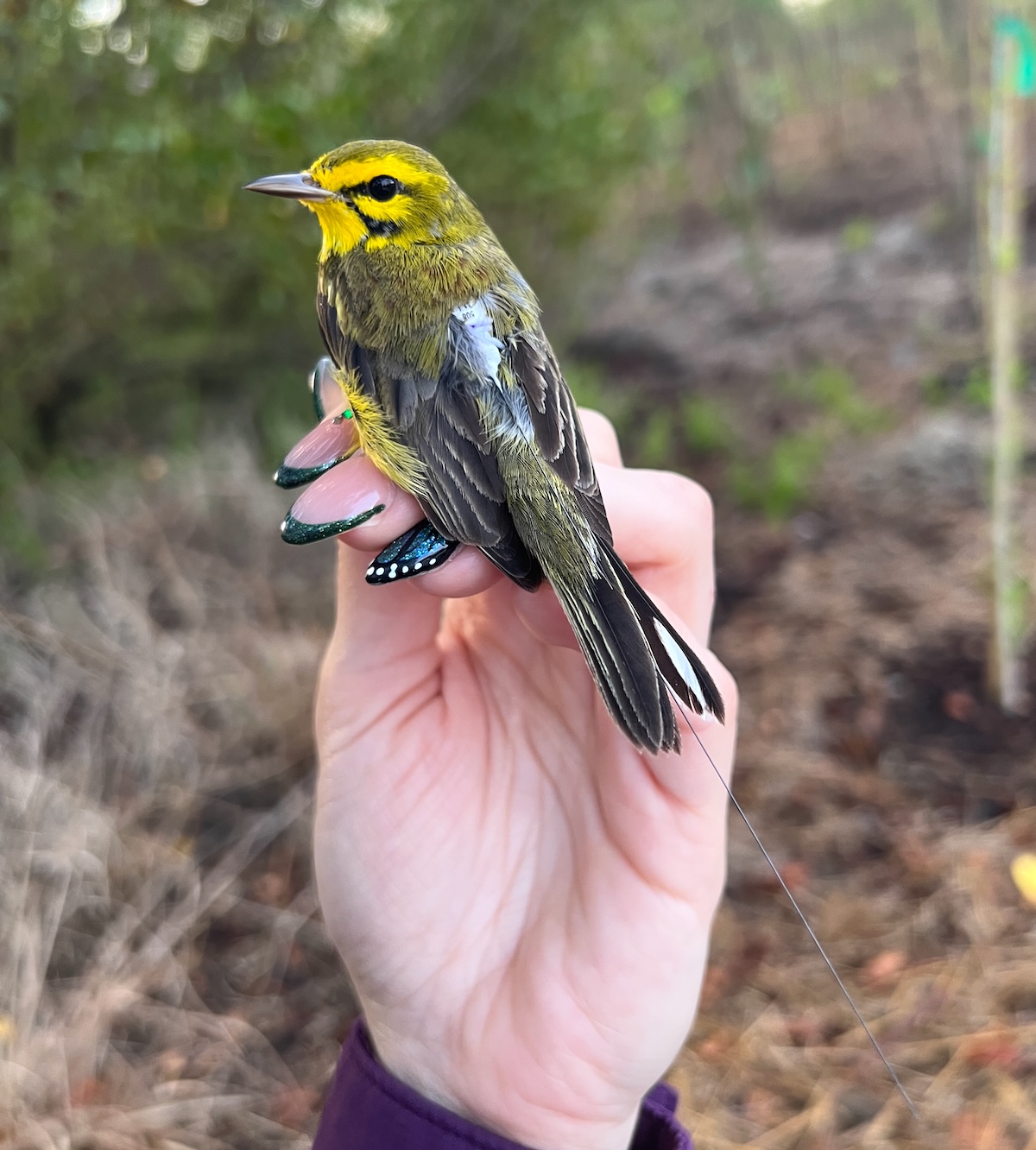
Prairie Warbler wearing a new Motus tag, attached with a leg loop harness, in Puerto Rico. (Photo by Holly Garrod)
The Motus Tagging Training Workshop workshop is designed for Caribbean wildlife professionals who are interested in actively participating in Motus research on birds in the insular Caribbean, and have the capacity to apply this training through ongoing or planned projects.
This bilingual (English/Spanish) workshop will focus on tagging landbirds, with an emphasis on passerines. We hope to provide training opportunities for other bird groups in the future.
The workshop will provide hands-on training in:
Safely attaching Motus tags using approved harness methods
Activating tags in the field
Deploying tags within projects on the Motus network
Data management and best practices for collaborative tracking studies.
Because tag attachment requires careful handling and manipulation of birds in the hand, prior experience withbird handling and banding (particularly passerines) is required.
Who should apply?
This workshop is best suited for wildlife professionals, researchers, and conservation practitioners who are:
Based in the insular Caribbean (especially in Puerto Rico and the U.S. Virgin Islands)
Actively involved in existing or planned Motus projects, or have a clear pathway to becoming involved
Experienced with bird banding and handling, especially with passerines (priority will be given to applicants who have handled 300+ birds)
Committed to applying this training as well as networking with the Caribbean conservation community to support long-term research and conservation in the region
Funding and logistics
We anticipate selecting approximately 15 participants. BirdsCaribbean has funding available for a limited number of need and merit-based scholarships to help cover travel and participation costs. Applicants who are able to cover part or all of their costs help us to include additional participants, but financial ability will not determine selection.
Participants should plan to arrive in Puerto Rico by 1 March and depart on 7 March, 2026.
How to apply
If you are interested in participating, please complete the application form by 20 January 2026.
Oportunidad de capacitación: Taller de etiquetado Motus
El programa Caribbean Motus Collaboration de BirdsCaribbean se complace en invitar a presentar solicitudes para un taller de formación sobre el marcado con Motus de 5 días de duración. En colaboración con el Departamento de Recursos Naturales y Ambientales de Puerto Rico, esta formación práctica se llevará a cabo en la Reserva Nacional de Investigación Estuarina de la Bahía de Jobos, en Salinas, Puerto Rico, del 2 al 6 de marzo de 2026.
¿Qué es Motus?
El sistema de seguimiento de fauna silvestre Motus es una red de investigación colaborativa global que utiliza telemetría automática por radio para rastrear los movimientos de pequeños animales. La red está gestionada de forma centralizada por Birds Canada (motus.org) y consta de miles de estaciones receptoras en todo el mundo que detectan a los animales marcados a medida que se desplazan por el terreno.
Cuando se puso en marcha la Colaboración Motus del Caribe (CMC) en 2021, no había estaciones receptoras Motus permanentes en el Caribe insular. Gracias a los esfuerzos de muchos socios regionales e internacionales, la red Motus del Caribe está creciendo rápidamente: ahora hay 24 estaciones activas en la región, ¡y hay planes para muchas más!
¿Por qué necesitamos marcar aves en el Caribe?
A medida que se va llenando este vacío geográfico crítico en la red Motus, las aves migratorias marcadas fuera del Caribe se detectan cada vez más en las estaciones caribeñas y proporcionan nuevos y valiosos conocimientos sobre las rutas migratorias, los tiempos y el uso de las escalas en toda la región. Por ejemplo, este Calidrus canutus, una especie de interés para la conservación que está experimentando un importante descenso de su población, fue uno de los muchos marcados en Argentina y posteriormente detectados en una estación caribeña durante su largo viaje hacia las zonas de reproducción en el Ártico.
El marcado de aves en el Caribe nos permite comprender mejor las poblaciones que dependen de las islas durante todo o parte de su ciclo de vida. En el caso de las especies migratorias, esto incluye información sobre los patrones de movimiento, la duración de las escalas, las decisiones de partida y los efectos de arrastre, es decir, cómo las condiciones en una parte del ciclo de vida de las aves (como la calidad del hábitat no reproductivo) influyen en su salud, supervivencia y éxito reproductivo posterior. El seguimiento con Motus se está utilizando para estudiar las poblaciones invernantes de especies de interés para la conservación, como Catharus bicknellien la República Dominicana. Motus también puede llenar importantes lagunas de conocimiento sobre las especies residentes, incluidos los movimientos dentro y entre las islas, las distancias de dispersión y el uso del hábitat.
Se están desarrollando continuamente nuevas estaciones Motus y proyectos de marcado en toda la región, y apenas estamos empezando a aprovechar todo el potencial de esta potente red de investigación. Ahora es el momento de desarrollar la capacidad regional para utilizar los datos de Motus y contribuir de manera significativa a los esfuerzos de seguimiento colaborativo.
Acerca del taller
El taller de formación sobre el marcado con Motus está diseñado para profesionales de la fauna silvestre del Caribe que estén interesados en participar activamente en la investigación de Motus sobre las aves en el Caribe insular y que tengan la capacidad de aplicar esta formación a través de proyectos en curso o previstos.
Este taller bilingüe (inglés/español) se centrará en el marcado de aves terrestres, con especial énfasis en los paseriformes. Esperamos poder ofrecer oportunidades de formación para otros grupos de aves en el futuro.
El taller proporcionará formación práctica sobre:
La colocación segura de etiquetas Motus utilizando métodos de arnés aprobados.
La activación de etiquetas sobre el terreno.
El despliegue de etiquetas en proyectos de la red Motus.
La gestión de datos y las mejores prácticas para estudios de seguimiento colaborativos.
Dado que la colocación de las etiquetas requiere un manejo cuidadoso de las aves en la mano, se requiere experiencia previa en el manejo y anillamiento de aves (en particular paseriformes).
¿Quiénes pueden inscribirse?
Este taller es ideal para profesionales de la vida silvestre, investigadores y conservacionistas que:
Residan en el Caribe insular (especialmente en Puerto Rico y las Islas Vírgenes de los Estados Unidos).
Participen activamente en proyectos Motus existentes o previstos, o tengan una vía clara para participar.
Tengan experiencia en el anillamiento y manejo de aves, especialmente de paseriformes (se dará prioridad a los solicitantes que hayan manejado más de 300 aves).
Estén comprometidos con la aplicación de esta formación, así como con la creación de redes con la comunidad conservacionista del Caribe para apoyar la investigación y la conservación a largo plazo en la región.
Financiación y logística
Prevemos seleccionar aproximadamente 15 participantes. BirdsCaribbean dispone de fondos para un número limitado de becas basadas en las necesidades y los méritos, con el fin de ayudar a cubrir los gastos de viaje y participación. Los solicitantes que puedan cubrir parte o la totalidad de sus gastos nos ayudan a incluir a más participantes, pero la capacidad financiera no determinará la selección.
Los participantes deben planificar su llegada a Puerto Rico antes del 1 de marzo y su salida el 7 de marzo de 2026.
Solicitudes
Si estás interesado en participar en este taller, llena este formulario antes del 20 de enero de 2026.
Break out your life lists — the 66th supplement to the American Ornithological Society’s (AOS) Checklist of North and Middle American Birds, published in August 2025, brought several taxonomic changes that Caribbean birders will want to be aware of. We’re taking a closer look at the updates that matter most for our region.
Taxonomy — the science of naming and classifying organisms — is always evolving. The AOS maintains the official checklist for birds from the Arctic down to the Panama–Colombia border, including Bermuda, the West Indies, and the Hawaiian Islands. Each year, ornithologists review the list and evaluate proposals for taxonomic revisions.
Usually, the most attention-grabbing changes involve species level shifts: “splits,” where one wide-ranging species is divided into two or more localized ones; or “lumps,” where similar species are combined. But in this supplement, many changes affecting the Caribbean occur at higher taxonomic levels, offering new insights into evolutionary relationships rather than altering species counts.
Taxonomy 101
To understand what these AOS updates mean, let’s take a quick refresher on how taxonomy works!
When we’re birding, we usually rely on common names—think “Killdeer” or “Carib Grackle.” Depending on where you are in the Caribbean, you may even hear different local names for the same species. Bananaquits, for example, are called “sugarbirds” in Trinidad, “beeny birds” in Jamaica, and “see-see birds” in Grenada! But every species also has a universally recognized scientific name made up of two parts: the genus and the species epithet. These names are always italicized, a convention going back to Swedish biologist Carl Linnaeus, who wanted scientific names to stand out clearly in manuscripts.
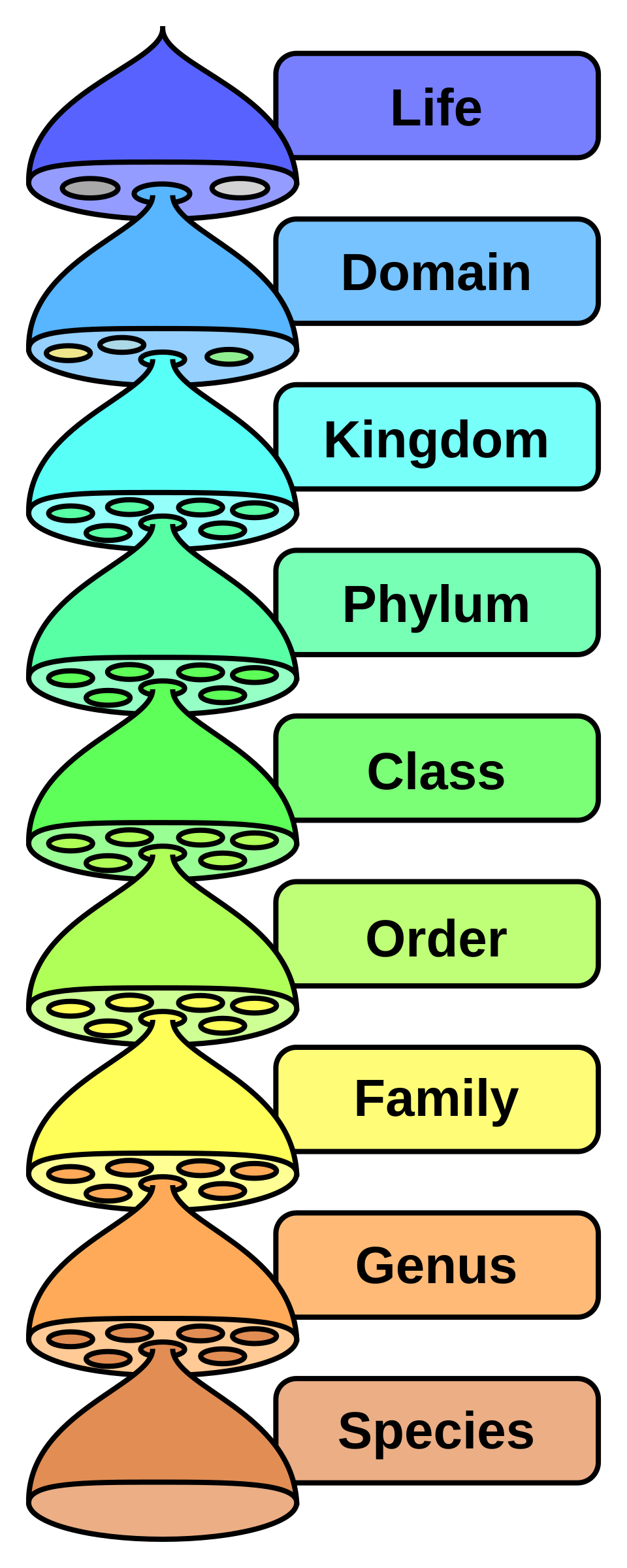
When categorizing organisms, the genus groups very closely related birds together; the species epithet distinguishes one species from another within that genus. When we zoom out, genera (the plural of genus) are grouped into families. Closely-related families are grouped into orders. And one level above that is the class, where all birds fall under Aves.
So the main taxonomic categories look like this:
Species – a single, distinct type of bird
Genus – a small group (sometimes just one!) of closely related species
Family – a group of related genera
Order – a group of related families
Class – the broad category that includes all birds (Aves)
A cool tip: In animal taxonomy, all family names end in “-idae”, and all bird orders end in “-iformes.” Once you spot those endings, you’ll know exactly where you are in the taxonomic hierarchy.
To illustrate further..
Let’s look at a familiar Caribbean species: the Least Tern or Sterna antillarum. The genus Sterna contains several tern species, but the species epithet ‘antillarum’ tells us we’re talking specifically about the Least Tern.
Least Tern in flight. (Photo by Sam Miller Macaulay Library-ML161558471)
If we think about birds similar to terns, gulls, noddies, and skimmers might come to mind — all of which belong to the avian family Laridae. And if we think further about birds similar to gulls and terns, other beach-going birds might come to mind, like shorebirds or plovers, and maybe other seabirds like skuas. All these birds (plus a few others) are grouped together within the avian order Charadriiformes. If you’re ever unsure where a bird fits taxonomically — just flip through your favorite field guide—most are arranged first by order, then by family.
Primer complete — and you passed with flying colors!
With that foundation, let’s turn back to the AOS checklist update. The changes in this supplement include moving species from one genus to another more closely related genus, shifting species between families, and revising the order-level placement of certain bird groups. These updates are almost always based on new genetic research — and they help refine our understanding of how birds are truly related.
Black morph of the Bananaquit in Grenada. (Photo by Paul Des Brisay)
Normal morph of the Bananaquit, photo from Jamaica. (Photo by Stuart Reeves)
In the Caribbean, many species remain understudied, so each AOS supplement often brings valuable new insights. Sometimes a species that appears widespread across multiple islands turns out to comprise several distinct island endemics — especially if birds rarely move between islands and can no longer interbreed. Over time, isolated populations can evolve unique traits, such as the melanism seen in Bananaquits from the Lesser Antilles.
Just last year, two major taxonomic splits added six new endemic species to the Caribbean, underscoring the region’s extraordinary biodiversity. And, as always, continued study will undoubtedly reveal even more.
So — with your refreshed understanding of taxonomy, are you ready to explore the latest in Caribbean bird updates?
Breaking news — our Caribbean tanagers are more related than we thought!
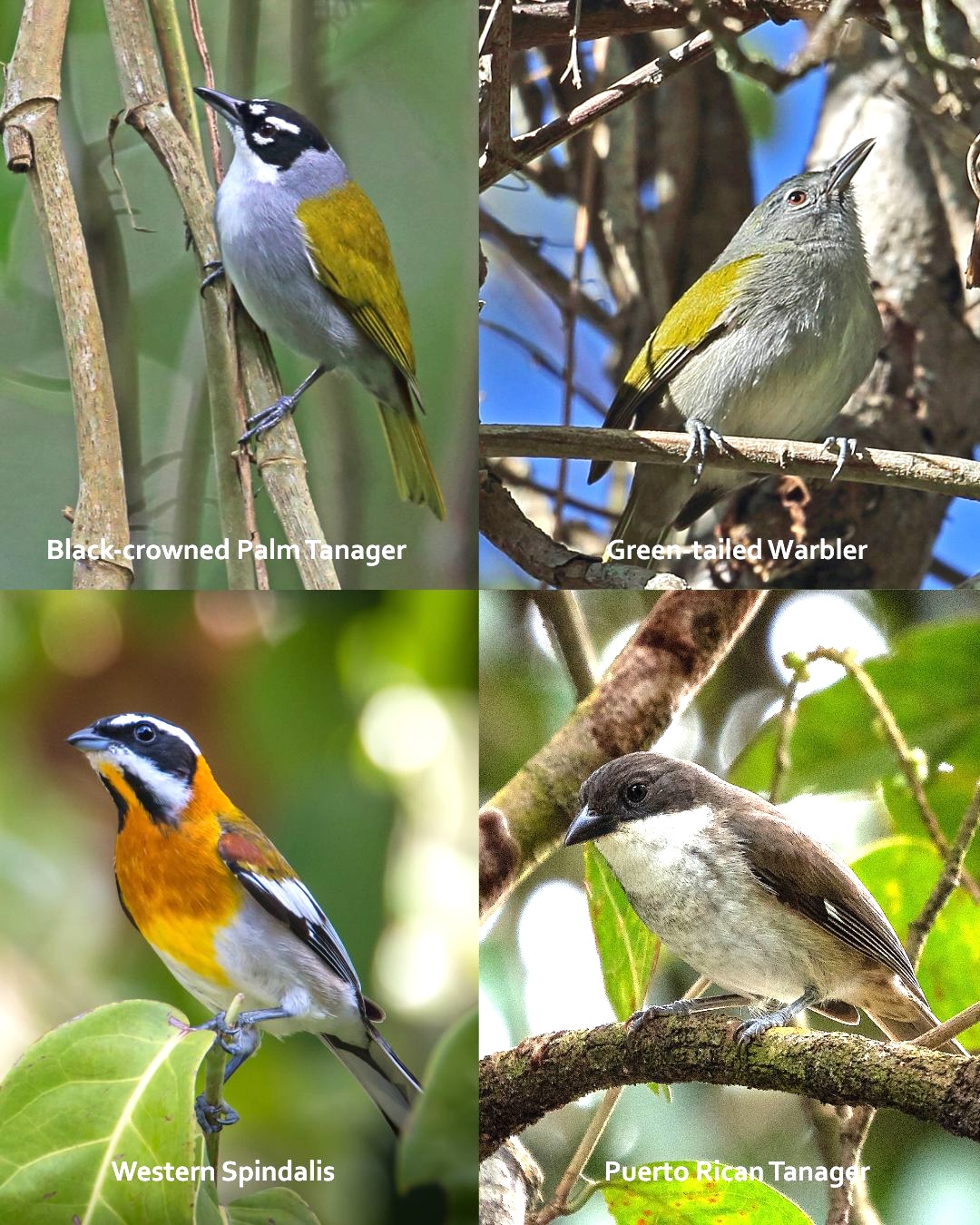
These endemic tanagers have all been lumped into the Phaenicophilidae family.
Until now, Caribbean tanagers were split across three different families: the Spindalidae (Spindalis), Phaenicophilidae (Hispaniolan tanagers such as the Gray-crowned and Black-crowned Palm-Tanagers, White-winged Warbler, and Green-tailed Warbler), and Nesospingidae (Puerto Rican Tanager). But new genetic research shows they are much more closely related than previously believed. All of these species are now united under one family: Phaenicophilidae, also known as the Greater Antillean Tanagers.
Don’t worry — they haven’t lost all their individuality. Spindalis species and the Puerto Rican Tanager now form the subfamily Spindalinae, while the Hispaniolan tanagers fall within Phaenicophilinae. Subfamilies group genera that share more characteristics than the broader family, so this nuance helps keep their evolutionary story intact.
Importantly, our Caribbean tanagers remain a family entirely endemic to the Caribbean, and still very much distinct from the New World tanagers in the large and diverse family Thraupidae.
In short: while we originally thought all the Greater Antillean Tanagers were distinct enough to reside in their own families, this new genetic data shows that they are actually one happy Caribbean family!
What are you hawking about?
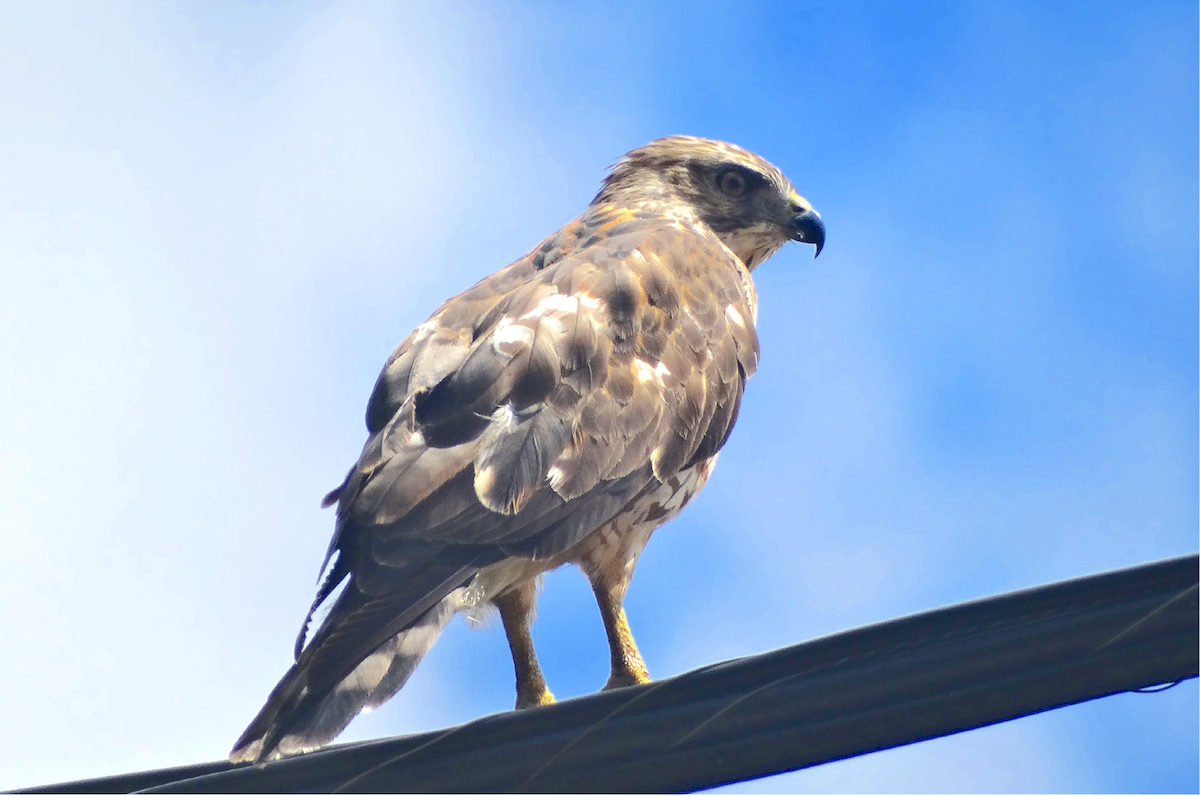
Next up: hawks. We also have a division within the familiar hawk genus, Accipiter. Accipiters are known for their long tails and shorter wings, making them agile forest predators who often seek out small songbirds for lunch. While Accipiter hawks were all thought to be closely related, new research has revealed that there’s more to the story — and a new genus of hawks, Astur, has emerged.
Cuban Sharp-shinned Hawk. (Photo by Roberto Jovel)
Sharp-shinned Hawk in Puerto Rico. (Photo by Skyler Bol ML559082281)
For those familiar with birding in North America, you may have struggled telling apart Sharp-shinned and Cooper’s Hawks due to their similarities. But these similarities have actually arisen not due to them being closely related — but through convergence. This is an evolutionary process where unrelated species evolve to be very similar, usually attributed to them filling a similar ecological niche. Cooper’s Hawks have now been reassigned to the genus Aster while Sharp-shinned Hawks remain in the Accipiter genus.
What does this mean for the Caribbean? Our own Gundlach’s Hawk, long considered an Accipiter, has also now been moved in the Astur genus. No split (yet!) for our Caribbean Sharp-shinned Hawks—but there’s always next year’s supplement. . .
Gulls just want to have fun!
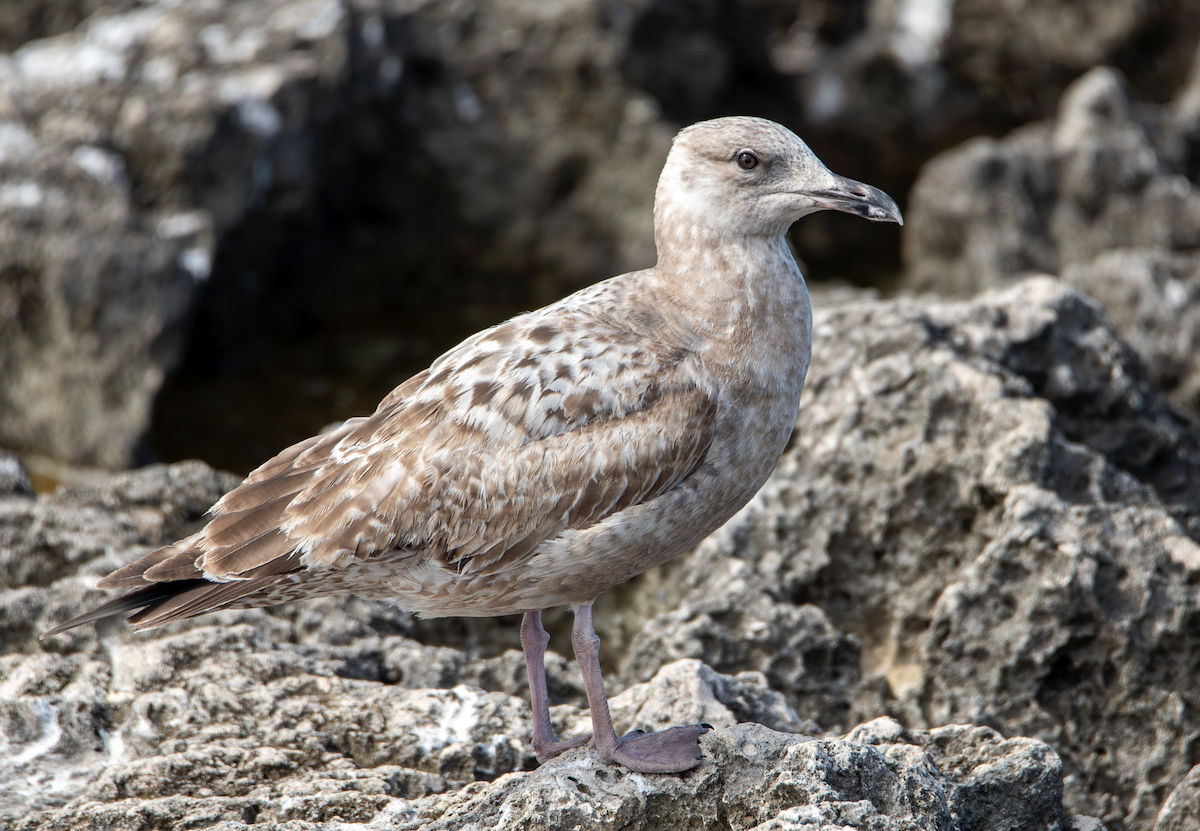
And now gull enthusiasts get a treat: the old, widespread Herring Gull has been split into four species — American Herring Gull, European Herring Gull, Vega Gull, and Mongolian Gull. We’ll be seeing the American Herring Gull around our Caribbean seas, but be sure to look out for the others!
Around the Caribbean, you’ll most often see the American Herring Gull, but keep your eyes open — winds and weather occasionally deliver surprising visitors from across the ocean.
Within the gull family Laridae, there’s more movement. Brown Noddies have been shifted out of the tern subfamily Sterninae and into their own distinct grouping, Anoinae, alongside White Terns . Physical traits, vocalizations, and even archaeological evidence show these birds stand apart from the classic tern lineage.
American Herring Gull spotted in the Cayman Islands. (Photo by Denny Swaby ML629237235)
In summary, this year’s updates bring some fascinating shifts:
Greater Antillean tanagers are now united into a single Caribbean-endemic family, Phaenicophilidae.
Gundlach’s Hawk is finds its new home in the genus Astur, refining our understanding of its evolutionary relationships.
Herring Gull is now four species, with one regular Caribbean visitor, American Herring Gull, with eyes on the lookout for transatlantic surprises.
While this supplement didn’t add new endemic species to the Caribbean, it did deepen our understanding of how unique — and evolutionarily distinctive — our birds truly are and how they fit within the larger ornithological world. And there’s still more to be discovered! Our Caribbean avifauna, including taxonomy, remains understudied. Only through more research and observations, can we gain a deeper knowledge of how remarkable our island birds really are, and how best to protect and conserve them.
Please consider making a contribution to our research and grants programs here. Your support makes critical Caribbean bird research and conservation possible.
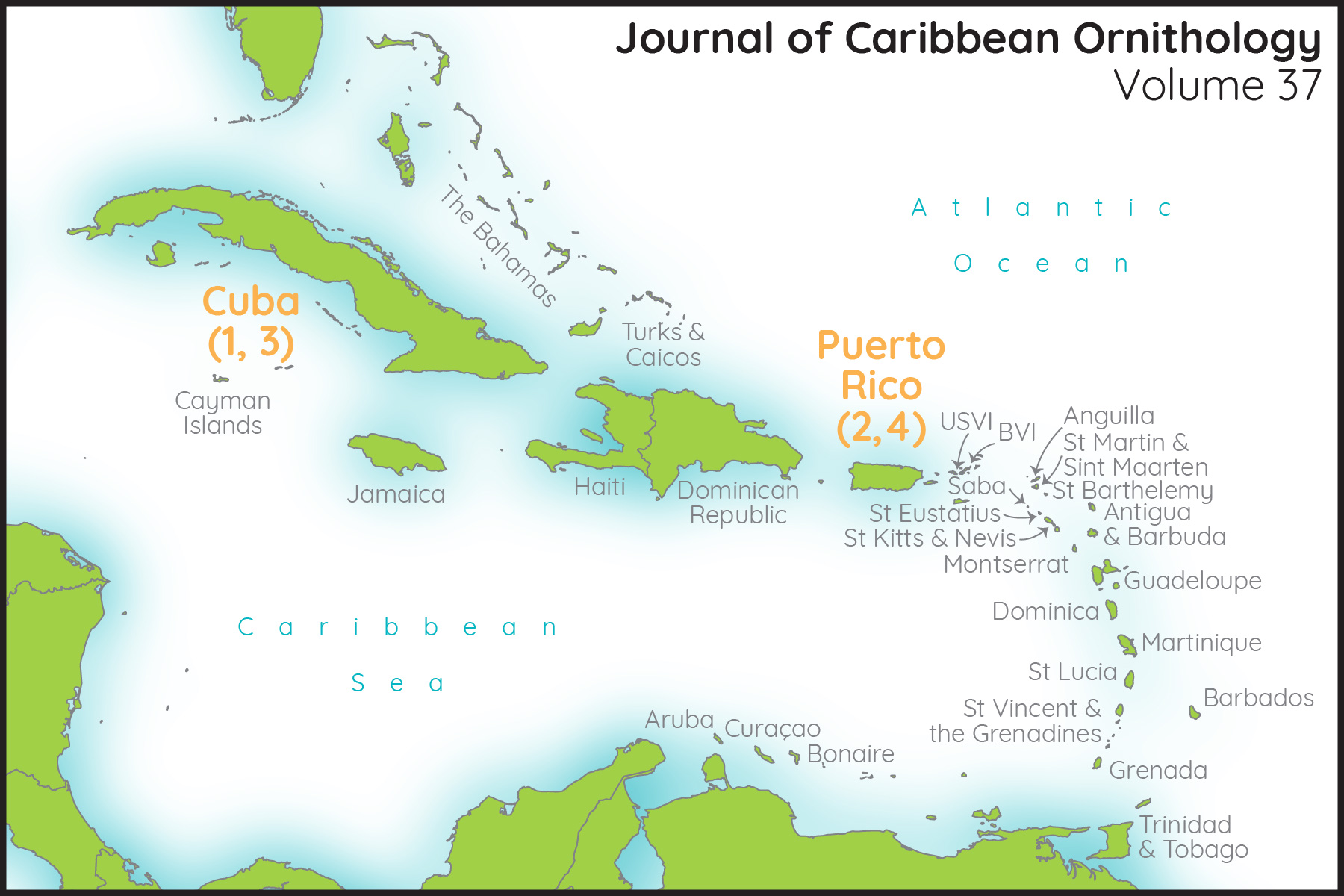
The Journal of Caribbean Ornithology (JCO) continues to publish peer-reviewed research that advances our understanding of Caribbean birds and ecosystems, providing critical insights for conservation. In this annual roundup, the JCO staff is proud to highlight the outstanding work of researchers across the Caribbean.
Volume 37 features a wide range of studies, including population dynamics, habitat use, bird behavior, and monitoring methods. Of the 13 articles, four focus on nocturnal or elusive species, providing valuable information for conservation planning. This issue also reflects JCO’s deep ties to the Caribbean bird science and conservation community, as reflected in two In Memoriam tributes to Virginia Sanz D’Angelo and Orlando Garrido, two esteemed ornithologists who passed away this year. Additionally, Steven Latta contributes another installment of “Recent Ornithological Literature” and three insightful book reviews.
We are deeply grateful to our dedicated team of editors, reviewers, copyeditors, translators, proofreaders, and production specialists, whose hard work ensures the continued excellence of our publications. We also extend our appreciation to the 77 authors who entrusted JCO to share their open-access research. With the support of our non-profit partner, BirdsCaribbean, JCO remains committed to fostering early-career researchers, publishing content in three languages, and maintaining an open-access archive dating back to our very first volume in 1988. Join us in sustaining this vital resource—become a JCO supporter today!
Christopher C. Rimmer, Nicasio Viña Davila, John D. Lloyd, Yves Aubry, Carmen Placencia León, Yasit Segovia Vega, Freddy Rodríguez Santana, Jose Ramon Fuentes, and Alejandro Llanes Sosa
The elusive Bicknell’s Thrush breeds in a narrow corridor along the eastern U.S. and Canada and overwinters exclusively in the Greater Antilles, primarily in Hispaniola. However, other islands, including Cuba, also play a key role in its wintering habitat mosaic. In this paper, Chris Rimmer and colleagues present findings from their long-term research on Bicknell’s Thrush in Cuba, which began in the late 1990s. Their study maps the species’ distribution and assesses its status in Cuba, providing valuable insights into how to protect this vulnerable migratory bird throughout its annual cycle.
Leanne A. Grieves, Quinlan M. Mann, Michael J. Morel, and James S. Quinn
National parks and wildlife refuges play a vital role in conserving native birds, especially endemic and endangered species. The Puerto Rican Nightjar, once believed to be extinct from the late 1800s to the mid-1900s, now thrives in a network of state forests in southern and southeastern Puerto Rico. In this research note, Grieves and colleagues describe the first records of the species within the Cabo Rojo National Wildlife Refuge. Their findings underscore the importance of protected areas for species recovery and highlight the need for further surveys to assess the nightjar’s population status and habitat use.
Some widespread species remain poorly studied, like the elusive Stygian Owl (Asio stygius siguapa). This owl has a fragmented distribution across Central and South America and the western Caribbean. The Cuban subspecies, A. s. siguapa, inhabits Isla de la Juventud, a special municipality south of mainland Cuba, but is rarely observed. In this research note, Amaro-Valdés shares new insights into the species, including descriptions of its nest and eggs, diet, and distribution on the island. These observations contribute valuable knowledge to the life history and ecology of this mysterious Neotropical owl.
Luis A. Ramos-Vázquez, Nahíra Arocho-Hernández, Cielo Figuerola-Hernández, José L. Herrera-Giraldo, Eduardo A. Ventosa-Febles, Ana M. Román, and Silmarie Padrón
Just off the west coast of Puerto Rico lies Desecheo Island, a small, uninhabited island managed as a National Wildlife Refuge. Home to several seabird species, the island also harbored invasive mammals that preyed on breeding birds. After an extensive eradication effort, Desecheo was declared free of invasive mammals in 2017, allowing seabird populations to recover. In this article, Ramos-Vázquez and his team report the first evidence of Audubon’s Shearwaters nesting on the island, marking a hopeful sign for the species’ future in the region.
Howard P. Nelson, David N. Ewert, Mark Hulme, Daniel J. Lebbin, Jennifer Mortensen, Holly Robertson, Bonnie Rusk, Lisa Sorenson, Ann M. Haynes-Sutton, Adrianne Tossas, Amy Upgren, George E. Wallace, Maya Wilson, and Eleanor S. Devenish-Nelson
Identifying priority conservation issues is a critical first step to conservation action, as threats to species and biodiversity are often too numerous and complicated to tackle all at once. This holds especially true for endemic and threatened birds in the Caribbean, where habitat loss and degradation, invasive species, and climate change (to name a few) all interact to drive species declines. In 2022, the Endemic and Threatened Species Working Group (ETSWG) conducted a survey to assess conservation priorities for Caribbean birds and evaluate the region’s capacity to address these challenges. In this conservation report, ETSWG members share key findings from the study and outline recommendations to strengthen avian conservation efforts in the Caribbean.
Thomas W. Sherry, José González Díaz, Felisa Collazo Torres, Raúl A. Pérez-Rivera, Justin Proctor, Herbert Raffaele and Adrianne Tossas
Endemic species are often a source of national pride, garnering love and support even from people with otherwise little connection to nature. The Puerto Rican Tody (Todus mexicanus)—an adorable and charismatic bird—belongs to the Todidae family, which is found only in the Caribbean. However, its scientific name is misleading and geographically inaccurate. How did this Puerto Rican endemic end up with a name referencing Mexico? And could this misnomer impact national pride and conservation efforts? In this Perspectives and Opinions piece, Sherry and colleagues unravel the history behind this taxonomic mix-up and discuss its potential implications, as well as possible solutions to set the record straight.
Historical misidentifications and taxonomic mysteries can persist for centuries, shaping our understanding of species past and present. One such enigma is Gosse’s Blue Partridge, a bird reportedly observed in Jamaica in the 1700s and later described by naturalist P.H. Gosse in the 1800s. With no confirmed sightings since, the species remains an open question—was it a now-extinct bird, or a misidentification of an existing species? In this Perspectives and Opinions piece, Levy and Koenig revisit this ornithological puzzle, examining 18th-century illustrations and historical records to shed new light on the identity of Jamaica’s mysterious “Blue Partridge.”
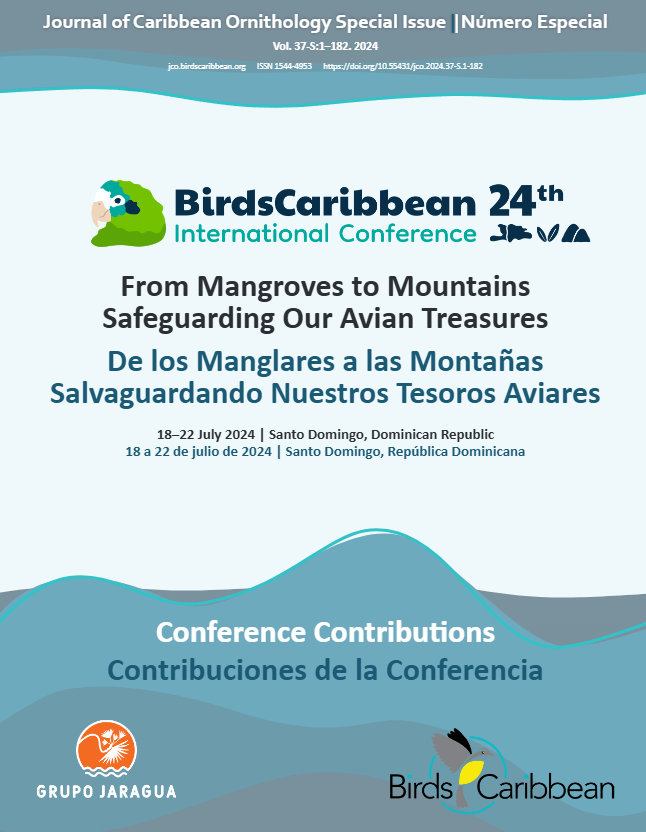
The JCO is proud to present a comprehensive volume of conference proceedings from BirdsCaribbean’s 2024 International Conference. Held in Santo Domingo and co-hosted by BirdsCaribbean and Grupo Jaragua, the conference united researchers, conservationists, and bird enthusiasts under the theme “From Mangroves to Mountains: Safeguarding Our Avian Treasures.”
From Mangroves to Mountains – Explore JCO Special Issue Vol. 37!
Over five days of engaging presentations—plus pre- and post-conference workshops and field trips—more than 300 delegates from 31 countries shared their research, exchanged ideas, and strengthened networks for Caribbean bird conservation. The conference proceedings, available as a Special Issue in Volume 37, serve as a lasting reference, featuring over 170 pages of contributions from keynotes, workshops, roundtables, symposia, and oral and poster presentations. Fully bilingual (English and Spanish), this issue highlights the latest advancements in ornithology and conservation across the region.
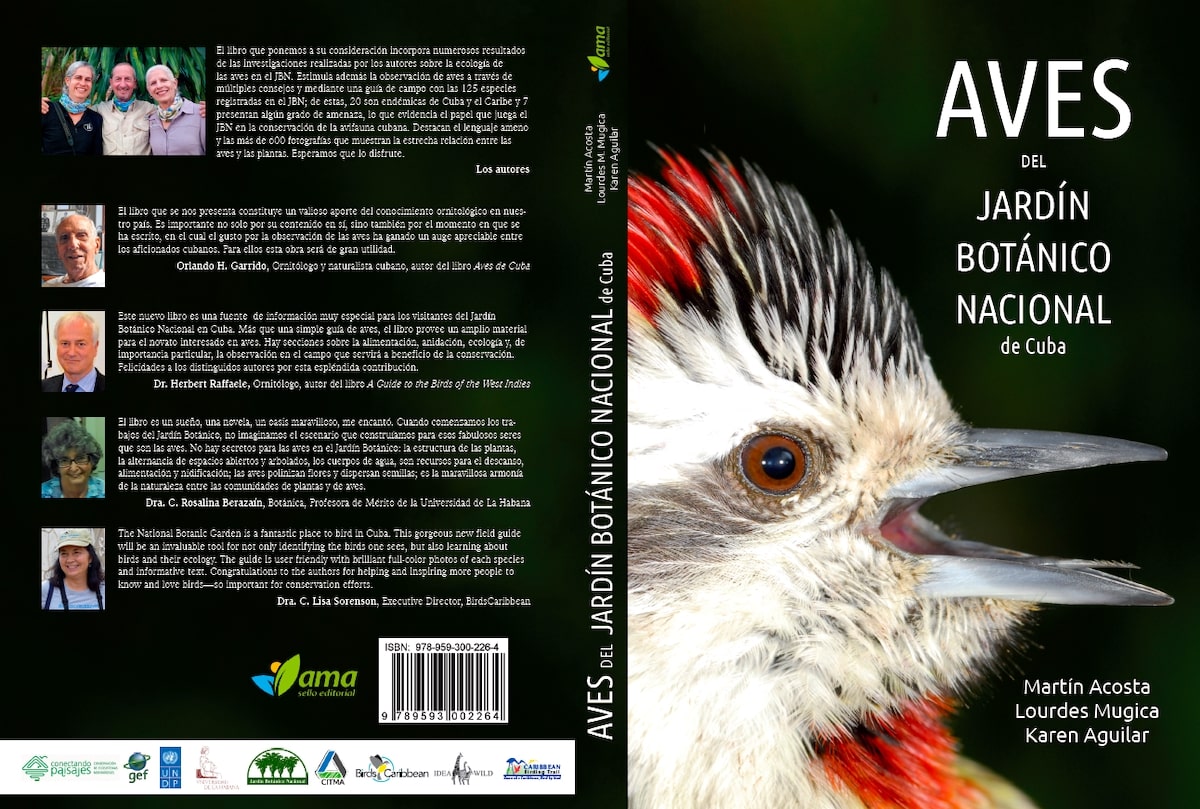
Book Authors: Martín Acosta, Lourdes Mugica, and Karen Aguilar
Book Review by: Steven C. Latta
Front and back covers of the book. The Cuban Green Woodpecker (Xiphidiopicus percussus), on the front cover, is the only representative of the Cuban endemic genus Xiphidiopicus.
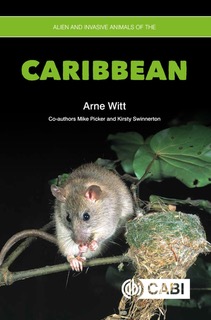
Book Authors: Arne Witt, Mike Picker, and Kirsty Swinnerton
Book Review by: Steven C. Latta
Front cover of a Guide to the Alien and Invasive Animals of the Caribbean.
RECENT ORNITHOLOGICAL LITERATURE (ROL) FROM THE CARIBBEAN
This annual compilation, curated and annotated by Steve Latta, highlights the most important ornithological articles published in other journals. The Recent Ornithological Literature (ROL) section serves as a valuable resource for researchers, conservationists, and bird enthusiasts by summarizing key studies on Caribbean birdlife. This collection ensures that the latest scientific findings remain accessible to those working to protect and understand the region’s avian diversity.
Article by
Zoya Buckmire – Lead Copy Editor for the Journal of Caribbean Ornithology;
Stefan Gleissberg – Managing and Production Editor for the Journal of Caribbean Ornithology
The Journal of Caribbean Ornithology relies on donations to keep our publications free and open-access. Your support helps give a voice to Caribbean ornithologists and their critical research while ensuring that conservation knowledge is accessible to all. Join us in sustaining this vital resource—become a JCO supporter today!
The link to the field guide on Amazon is an “affiliate” link. If you purchase through this links, a portion of the sale supports BirdsCaribbean at NO additional cost to you. Thank you!
BirdsCaribbean is excited to announce the 2025 cohort of grantees under two prestigious named awards, the David S. Lee Fund for the Conservation of Caribbean Birds, and the James A. Kushlan Research and Conservation Fund.
These eleven projects will advance the study and conservation of avifauna in six different Caribbean countries: Cuba, Puerto Rico, the Cayman Islands, Trinidad and Tobago, Mexico (offshore islands in the Caribbean Sea), and Venezuela (Caribbean coast).
Keep reading to discover what exciting plans have been proposed by each awardee, and stay tuned for results and accomplishments in future issues of the Journal of Caribbean Ornithology and blog articles.
Congratulations to these outstanding researchers and conservationists from our BirdsCaribbean community!
Trophic Ecology as a Tool to Understand Differences in the Reproductive Success of Two Species of Terns (Onychoprion fuscata and Onychoprion anaethetus) in the Mexican Caribbean
Adriana Vallarino Moncada, Escuela Nacional de Estudios Superiores Unidad Mérida, Universidad Nacional Autónoma de México
More than half of the world’s seabirds are declining, but there is so much still to learn about many of our seafaring species. Two of these are the Sooty Tern (O. fuscata) and the Bridled Tern (O. anaethetus), where population trends and ecology are poorly understood. This project aims to address this lack of knowledge by studying these two terns at Isla Mujeres. This is the only place these birds nest in the Mexican Caribbean! Building on work already done monitoring the nesting colony and banding chicks, Adriana is taking this applied research a step further by using GPS tracking, stable isotope analysis, and diet studies. This work will shed light on how climate, ocean conditions, and human activities impact the survival of these terns. The data collected will identify key feeding areas and potential threats, providing critical information to help keep these breeding colonies thriving. In addition, the project will expand community outreach programs in Isla Mujeres and Cancún, raising awareness and getting more local people involved in protecting these remarkable seabirds.
Discovering the Birds of the Monte Cabaiguán Wetland, Las Tunas, Cuba
Manuel López Salcedo, Provincial Enterprise for the Protection of Flora and Fauna, Las Tunas. Delta del Cauto Protected Area, Monte Cabaniguán Sector
Monte Cabaiguán is a wetland that plays a crucial role in protecting coastal areas from erosion and filtering pollutants. Home to thriving mangroves and bustling colonies of waterfowl, it supports a rich variety of wildlife. This unspoilt wetland is essential for the breeding and survival of many migratory and resident bird species. The goal of this project is to update the baseline data on the wetland’s birdlife, assess the health of its ecosystems, and develop strategies for sustainable conservation. This project has local communities at it’s heart, with plans for environmental education and the promotion of conservation; safeguarding this unique natural treasure for future generations!
Monitoring Breeding Colonies, Nesting Success and Productivity of White-tailed Tropicbirds (Phaeton lepturus catesbyi) in the North-west Coastal Cliffs Important Bird Area in Puerto Rico
Alcides L. Morales-Pérez, Independent Researcher
Northwestern Puerto Rico is home to the Acantilados del Noroeste (north-west cliffs) Important Bird Area (IBA). Amongst their rich biodiversity, these cliffs are home to an important nesting population of White-tail Tropicbirds, a bird at risk in the Caribbean. This one of the few White-tailed Tropicbird breeding colonies on the Puerto Rican mainland. To help protect and gain more knowledge about these beautiful seabirds Alcides will host a workshop to engage the local community, students, and other stakeholders in seabird conservation, focusing on White-tailed Tropicbirds. Participants will be trained to monitor nests and actively contribute to data collection. Through colony surveys, nest monitoring, and adult survival assessments the project aims to better understand how these birds are faring. It also aims to estimate the size and extent of the colonies on the cliffs, with local volunteers playing a key role.
Diversity, Abundance, Reproductive Colonies and Distribution of Waterbirds at Los Testigos Archipelago, Venezuela
Jemimah Rivera, INPARQUES, División de Investigación y Monitoreo Ambiental
The Los Testigos Archipelago in Venezuela is known for its incredible biodiversity. But the area has been largely overlooked by researchers due to its remote location, with only two bird expeditions in the last 50 years. While little is known about the area, it’s believed to be an important breeding ground for several seabird species. This project aims to assess the conservation status of the archipelago’s seabirds and landbirds. During the project Jemimah and her intrepid team will take on the challenge to explore the 16 islands of Los Testigos! They will study the birdlife of the islands including their seabird breeding colonies. The team will conduct surveys on foot and by boat, counting nests, eggs, and chicks. This research will be a major step in understanding the birds of the South Caribbean. With threats like invasive species, pollution, and overfishing, this study is crucial to help protect these birds for the future.
Establishing Year-Round Bird Banding stations to Monitor Resident and Migratory Species in Trinidad and Tobago
Giselle Ragoonanan, Trinidad and Tobago Bird Observatory and Research Centre
The Trinidad and Tobago Bird Observatory (TTBO) is setting up year-round bird banding stations to monitor both resident and migratory bird populations across the islands. These stations will collect crucial data on bird life cycles, migration, and population health, helping to identify trends and habitat needs. This data will guide conservation efforts, ensuring the protection of key areas for breeding and survival. The TTBO also plans to involve the local community through outreach programs, raising awareness and encouraging citizen participation in bird conservation. Additionally, the continuous monitoring will help track rare species and migration events, providing much needed insights into changing bird populations in the Caribbean.
Conservation Ecology of the Puerto Rican Oriole
Michael Ocasio, University of Maryland, Baltimore County
The Puerto Rican Oriole is a Caribbean endemic bird facing significant conservation challenges. One major threat is brood parasitism by Shiny Cowbirds, which lay their eggs in oriole nests. As a result, Puerto Rican Orioles often raise cowbird chicks instead of their own, leading to low reproductive success. This project will compare the oriole’s abundance, survival, and reproductive success in both lowland and highland habitats. Through surveys, banding, nest monitoring, and Motus tracking, the project will explore how habitat type affects their breeding and provide insights into their movements and territory use throughout the year. The findings will support conservation efforts in Puerto Rico and contribute to international programs like the IUCN Red List.
Study of the Reproductive and Trophic Ecology of Gundlach’s Hawk (Astur gundlachi), an Endemic and Threatened Bird of Cuba
Ernesto Vergara Llano, Faculty of Biology, University of Havana
Gundlach’s Hawk, a critically endangered raptor endemic to Cuba, is facing population declines and fragmented habitats, but much of its breeding and feeding behavior remains a mystery. This exciting project will dive into the secret life of this elusive hawk, focusing on two key areas in western Cuba: the National Botanical Garden and the Ecological Reserve of Los Petriles. Using camera traps to avoid disturbing the hawks, researchers will capture the hawks’ breeding behaviors, nest sites, and feeding habits. The results will provide crucial information to help protect this incredible species and improve habitat management efforts, giving the Gundlach Hawk a fighting chance for survival!
A Comparison of Avian Species Richness between Protected and Disturbed Areas in Grand Cayman, using Passive Avian Acoustic Monitoring
Matthew Southgate and Simone Williams
This exciting project will uncover the birdlife of Grand Cayman using passive acoustic recorders to capture birds’ calls and songs! With bird populations facing major threats from habitat loss due to development, it’s crucial to understand what helps them thrive. The goal is to assess the health of protected areas and guide decisions on conservation and development. The team will measure bird species richness in protected areas, compare it with nearby disturbed land, and identify the factors that influence it. Citizen scientists and student interns will be involved in monitoring, bird surveys, and community outreach. Plus, the project will contribute audio recordings to improve the Merlin Bird ID app, making it easier for this app to identify native species. By understanding bird populations, this project will help protect ecosystems, prevent environmental damage, guide future restoration efforts and promote bird-friendly development.
Action Plan for the Conservation of Psittacidae in the Pico Cristal National Park, Cuba
Inés Lourdes Fernández Rodríguez, Empresa Flora y la Fauna Santiago de Cuba
Pico Cristal National Park in Cuba is home to the island’s vibrant parrot (psittacidae) species, including the Near Threatened Cuban Amazon and the Vulnerable Cuban Parakeet, or “Catey”. These colorful birds are facing serious threats from habitat loss, hunting, and being captured for the pet trade. This project aims to create and carry out a comprehensive Action Plan to protect these endangered species. Building on past efforts like providing artificial nests to help with breeding, the project will monitor bird populations, identify important conservation areas, and study their ecological and nutritional needs. Students, researchers, and the local community will all be involved, with a focus on raising awareness and supporting bird conservation across Cuba.
Impact of Nest Temperatures on Mortality Rates of the Endangered Yellow-shouldered Blackbird (Agelaius xanthomus) in Southwestern Puerto Rico
Retsel Gonzalez, University of Puerto Rico
The Yellow-shouldered Blackbird, an endangered endemic found mainly in southwestern Puerto Rico. It faces ongoing challenges to its reproductive success, despite ongoing conservation efforts. A recent study suggested that the elevated temperatures inside artificial nests might be contributing to the high mortality rates among eggs and chicks. This project will compare survival rates and temperature levels in both artificial and natural nests to determine if temperature is a key factor impacting reproduction. The findings will help refine current conservation strategies, improve nest management, and hopefully boost recovery efforts for this iconic species.
Ecology of Bare-legged Owl (Margarobyas lawrencii) an endemic strigid in Cuba
Jean Michel De Jongh González, Botanical National Garden, Havana University.
The Bare-legged Owl is endemic to Cuba and the only member of its genus, Margarobyas. It relies on dense forests and natural cavities for nesting, but it faces serious risks from habitat loss, which has led to its recent listing on the IUCN Red List of Threatened Species. This study will take place in the Sierra del Rosario Biosphere Reserve in western Cuba and will focus on two main areas: understanding the owl’s behavior and diet, and studying its use of habitats and nesting sites. The project will also tap into local knowledge from nearby communities and Havana. Fieldwork will be done during both the breeding season and off-season to gain a deeper understanding of this unique and remarkable bird.
Are you working on or planning a research or conservation project with Caribbean birds?
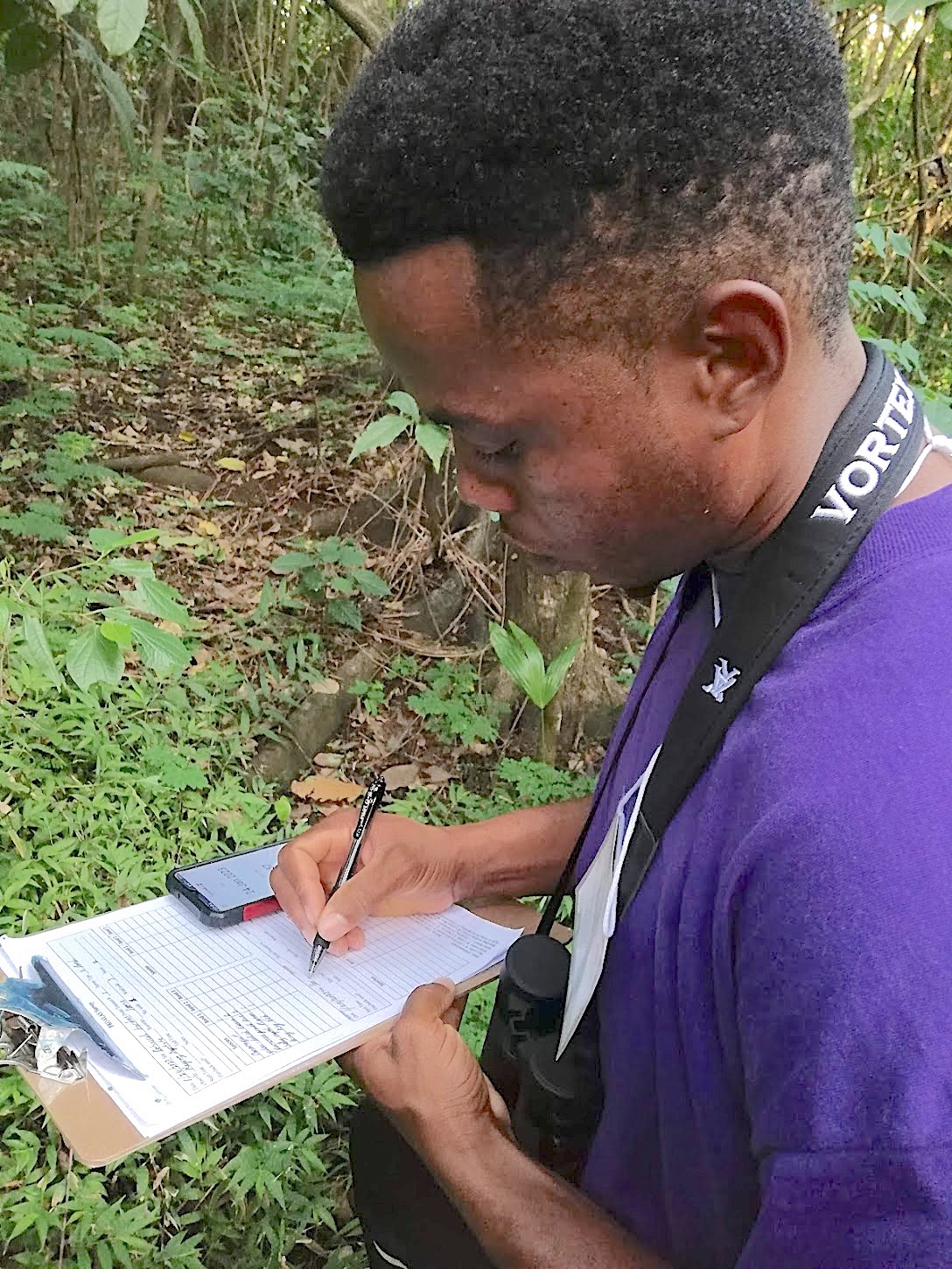
Kayroy Baptiste (Union Island Environmental Alliance) entering data into PROALAS survey sheet during a line transect survey of birds behind Anglican Pastoral Centre in St. Vincent.
Our next call for proposals will be advertised in the fall of 2025. Members of BirdsCaribbean conducting research and conservation work are eligible to apply. Stay informed and don’t miss our announcements by subscribing to our monthly newsletter,joining our Listserv, and following us on social media (@BirdsCaribbean on Instagram, Facebook, Twitter, Youtube, and LinkedIn).
BirdsCaribbean thanks our generous donors for supporting these awards, and encourages others to donate to these programs, as well as to consider endowments or other large awards to ensure that our vital grants programs can continue indefinitely. You can help us to continue supporting these invaluable projects by making a donation here.
If you prefer to donate via check, please make this out to “BirdsCaribbean” and in the memo section, note the fund you are donating to. If you have questions, or would like to make other arrangements for donating, feel free to contact Alexia Morales, BirdsCaribbean Operations Manager ([email protected]). Checks can be mailed to: BirdsCaribbean, 841 Worcester St. #130, Natick, MA 01760-2076
I wanted to get to know the elusive Whistling Warbler on the island of Saint Vincent — which meant that we needed to go up. Straight up some very steep slopes!
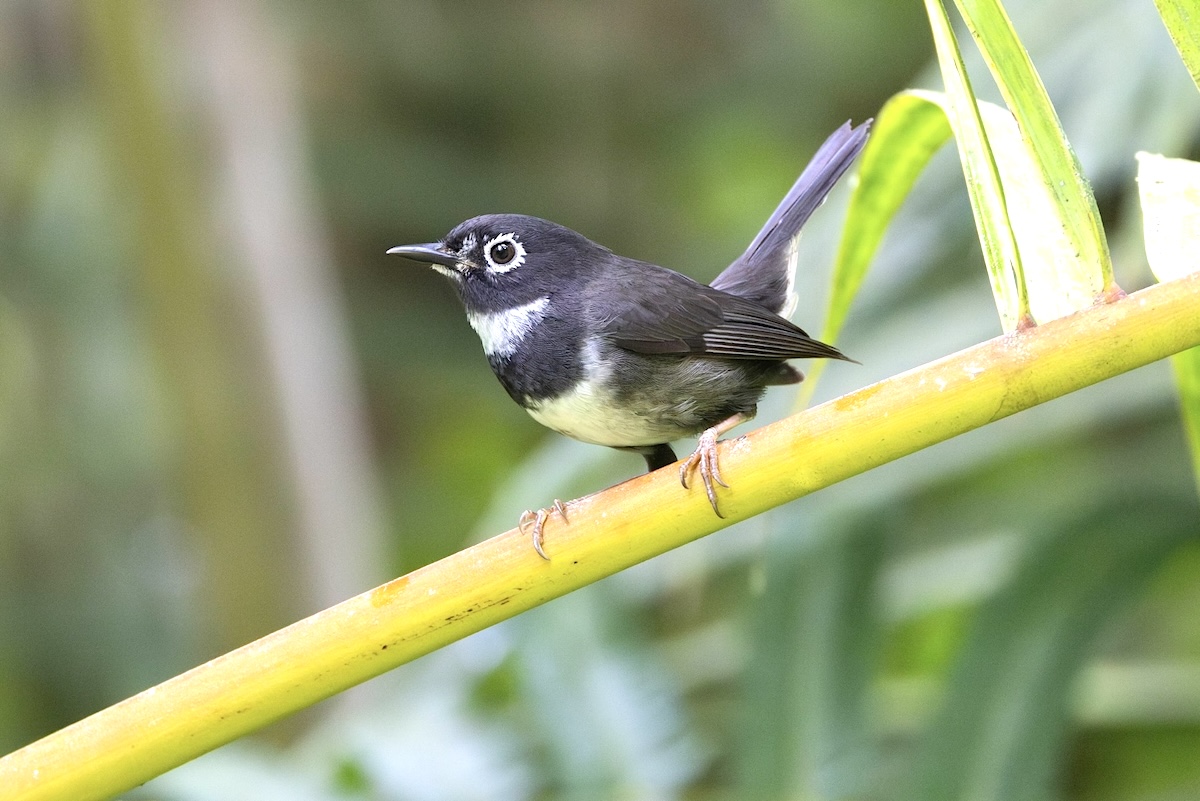
Whistling Warbler spotted on La Soufriere Windward Trail. (Photo by Jonathan Slifkin ML621602299)
The Whistling Warbler (Cathoropeza bishopi) is an endangered, endemic species of bird that lives on the Lesser Antillean island of Saint Vincent. When we say a species is endemic, it means that the species exists nowhere else on the planet other than at a discrete location. This is a common designation for many island species. When a species is endemic and endangered, that can be a ‘code red’ for conservationists — because the species has nowhere else to go to disperse from threats! In the case of the Whistling Warbler, those threats come mainly from deforestation, land use change, hurricanes (exacerbated by climate-change), and the recent explosive eruption of Saint Vincent’s La Soufrière volcano in 2021, the largest to occur in the Caribbean in the last 250 years.
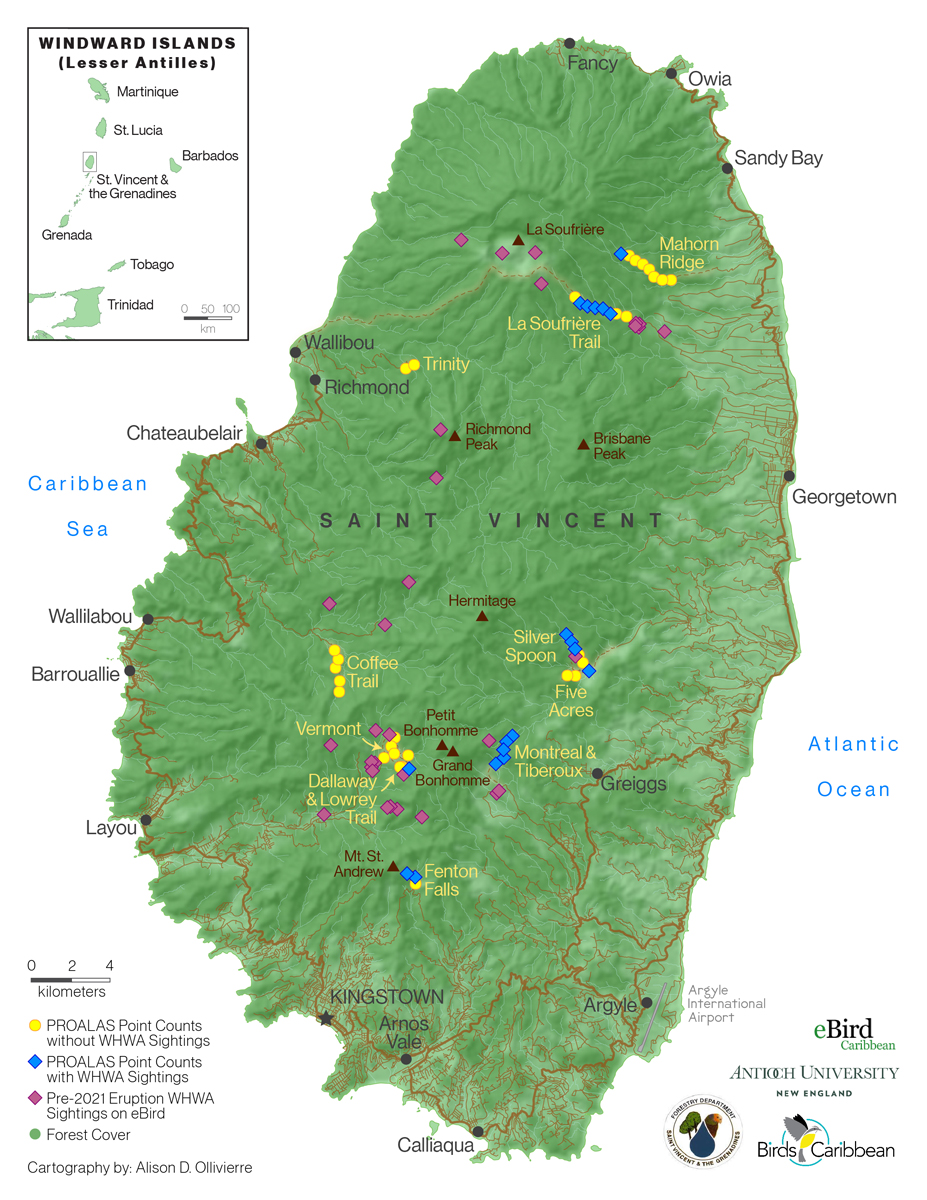
Figure 1. Map of St Vincent showing locations of our PROALAS Point Counts without Whistling Warbler (WHWA) sightings, with warbler sightings, and eBird Caribbean sightings prior to the April 2021 eruption of La Soufriére Volcano.
So where is the Whistling Warbler to be found? Well, this charming bird (whose plumage delightfully brings to mind an Oreo cookie!) appears to require a specific kind of natural forest for habitat: forests growing in steep, wet, montane environments. These mostly grow on the windward (east) side of the island. However, these forests have been experiencing a great deal of “wear and tear” in recent years. Some have been cut to grow non-native tree plantations, or terraced to provide farmland, in some cases for the illegal cultivation of Cannabis. Many of the northern areas were decimated by wind and volcanic ash from the 2021 volcanic eruption. The windward forests also take the brunt of hurricanes moving west across the Atlantic, which can wreak havoc on the essential habitat of the warbler. Hurricane Beryl just recently tore through St. Vincent and the Grenadines (SVG); the extent of the damage to the mainland forests (and the warbler) is currently unknown, though nearby Union Island has been devastated. These growing and more frequent impacts of climate change cannot be overlooked.
And yet, the Whistling Warbler has so far been able to hold on in small numbers, in the face of these daunting challenges to its habitat. Much of its success is thanks to conservation efforts that protect and restore their habitat. Now, it is absolutely vital that the warbler population is actively monitored to ensure its survival, and to inform future conservation efforts aimed at protecting its habitat. Part of the challenge here is that there is still so little known about this bird. We don’t know much about their habitat requirements; their nest construction; and when and where they breed. It is critical to understand these aspects of the warbler’s life cycle to make effective management decisions. We can only find this information by getting people out into the forest to make these discoveries and to monitor the population.
Preparing for the trip: some homework required
I am a graduate student at Antioch University New England studying Conservation Biology. Antioch Professor Dr. Mike Akresh has been working with Caribbean birds for over a decade, and when he asked if I would like to accompany him on a two-week field study trip in March 2024 to Saint Vincent, I was initially apprehensive. Leaving my young child and a pile of school work at home for two weeks sounded daunting, but I knew there was important work to be done on Saint Vincent as there is not an overabundance of researchers working on the Whistling Warbler. I made the decision to go.
The Vulnerable St Vincent Parrot. (Photo by Mike Akresh)
A pair of Rufous-throated Solitaire in St. Vincent (Photo by Frantz Delcroix)
Lesser Antillean Tanager on St. Vincent. (Photo by Steven Hunter ML200625941)
Firstly, I went into an intense learning period focussed on the birds of Saint Vincent; it was especially important to learn their calls. With the help of eBird, the Merlin App, and a handy field guide to the “Birds of the West Indies,” I familiarized myself with most of the birds we could expect to encounter on the trip. How were we going to monitor for the Whistling Warbler? Well, we were planning to work with the PROALAS landbird monitoring protocol, which requires us to document every bird seen and heard during a specific period of time at a point or transect. Every bird has a story to tell about the environment; birds are regarded as indicator species. This means that the presence of certain species or lack thereof provides critical insights about the impacts of land use change, climate change, and volcanic activity; in other words, the obstacles and challenges that the Whistling Warbler faces.
The song of the Whistling Warbler consists of an ascending trill of loudly whistled notes.
Our enthusiastic team on Saint Vincent
Our collaborators on the island were the talented and professional members of the SVG Forestry Department. Our point of contact and monitoring collaborator was the energetic Glenroy Gaymes, who has been working closely with the Whistling Warbler conservation efforts. Glenroy is an expert birder and naturalist, whose passion for conservation on Saint Vincent is infectious. With invaluable help from Glenroy and other Forestry staff such as Felicia Baptiste, Romano Pierre, Caswin Caine, and Kishbert Richards, we reached the steep and remote areas where the warbler lives. Glenroy and the Forestry Department have also been monitoring the endemic and endangered Saint Vincent Parrot (Amazona guildingii) and many other non-bird species.
Mike Akresh, Glenroy Gaymes and Christian Carson in Kingstown, St. Vincent.
Our days on Saint Vincent were demanding, but rewarding. We did find the Whistling Warbler!
Mike hiking nearly straight uphill. Accessing the Whistling Warbler’s habitat is not easy. (Photo by Christian Carson)
Primary Forest in St. Vincent. (Photo by Christian Carson)
Every morning we would wake up before sunrise, and head up into the sawtooth-like mountains, shrouded in mist. You may have seen these impressive mountains before if you have seen the Pirates of the Caribbean movies, which were largely filmed on Saint Vincent. Fortunately, we encountered the Whistling Warbler several times at various locations. In keeping with previous observations, most or all of our encounters with the Whistling Warbler took place over 300 meters and in steep, wet forests. Did I mention that we had to go up high? The slopes of the misty mountains of Saint Vincent were steep and slippery.
Notes from the field
When studying where Whistling Warblers like to live, we found that they prefer primary forests with lots of moss. Younger and older secondary forests had fewer warblers. Interestingly, palm brakes were about the same as primary forests for warbler sightings, especially near certain trails. Detection was low in elfin woods, which seem to be unsuitable habitat for them. The drier, western side of the island has less of the wet montane forest they prefer.
We noticed that Whistling Warblers really like wetter forests, especially where there’s a lot of moss. For example, at one site – Silver Spoon, where the forest is very wet, we found lots of warblers. However, on the leeward side of the island, the forests were dry and grassy, and we didn’t find any warblers there.
We didn’t look for warblers in the northern part of the island because it’s too dry and no warblers have ever been found there. Tree plantations were the least likely place to find Whistling Warblers because these areas have trees, like Blue Mahoe and Big-leaf Mahogany, that are all the same age and don’t provide enough food or shelter for the birds. Overall, we also noticed that there were fewer other forest birds around areas affected by the volcano. Birds like Bananaquits and House Wrens were common near the volcano, but other species like Cocoa Thrush and Ruddy Quail-Doves were missing. The ash from the volcano may have made it harder for some birds to find food. However, some of these birds are starting to come back now, so we’ll keep studying and monitoring the area to learn more.
Christian and Kishbert surveying for the Whistling Warbler on La Soufrière. (Photo by Mike Akresh)
We still need more information on the mysterious Whistling Warbler!
Over the past few years and during this current trip, we have come across several nests that might possibly be those of the Whistling Warbler, but without a positive ID of a warbler using the nest, we cannot say for sure. Finding a nest is particularly important for conservation efforts because it allows us to better understand the warbler’s breeding ecology and habitat requirements. We also do not know how successful the warbler is in breeding; invasive mongoose or black rat populations may prey on eggs or fledglings. But it must be acknowledged that without more research, we cannot know for sure. There are limited resources available to protect the Whistling Warbler, so the more specifics we have about this species, the better those resources can be utilized to have the greatest conservation impact. We need to know more, so that we can do a better job at protecting this species, which is listed as Endangered on the IUCN Red List.
With the data we have been able to collect while on Saint Vincent, we aim to create a conservation action plan (CAP) specifically for the Whistling Warbler. Without the dedicated work of the Saint Vincent Forestry Department, BirdsCaribbean, and donors small and large, this work would not be possible, and the Whistling Warbler would likely be added to the alarming (and growing) number of species lost forever.
We owe it to the Whistling Warbler, up there in the remote rainforest and beautiful mountains of Saint Vincent.
Christian holding a Sphinx Moth. (Photo by Mike Akresh)
Christian Carson is a graduate student at Antioch University New England studying conservation biology. He is interested in ways people seek and find meaning in the living world, and how this meaning (or lack thereof) shapes global environmental issues. He lives with his partner and three-year-old son in Western Massachusetts. He enjoys quiet walks in the woods, flying kites, and sitting zazen. You can reach him at [email protected].
Acknowledgements: BirdsCaribbean is grateful to the Critical Ecosystems Partnership Fund (CEPF) and the United Nations Development Programme (UNDP) for funding our Conservation of the Endangered Whistling Warbler Project, launched in 2022. We are also deeply grateful to Mr. Fitzgerald Providence and his staff at the St. Vincent Forestry Department for their help and support. Special thanks Glenroy Gaymes, who has been working closely with us on the warbler project. Finally, we thank BirdsCaribbean members, partners, and donors for your support, which made this work possible.
The deadline for the 2025 award applications is Sunday, November 10, 2024, 11:59 pm EDT.
Review and announcements of awardees will be announced by mid-December, 2024.
We have provided a brief summary of the grants available for each award here:
Questions or inquiries can be sent to: [email protected] (Grants Committee), copied to[email protected]. Please include the name of the fund you are inquiring about in the subject line.
Note that the same proposal cannot be submitted for more than one award in a given year.
BirdsCaribbean’s general Grant Application Guidelines are available here.
Learn more about the eligibility criteria of each program by visiting their respective websites.
Seeking Donors
BirdsCaribbean encourages others to consider endowments or other large awards to ensure that our grants programs continue indefinitely. You may also make a donation to support our work. BirdsCaribbean is a tax-deductible organization in the United States.
The annual BirdsCaribbean Seabird Working Group (SWG) newsletter is now available! Catch up on the latest research, conservation, restoration, and education projects happening across the Caribbean—in English, Spanish, and French!
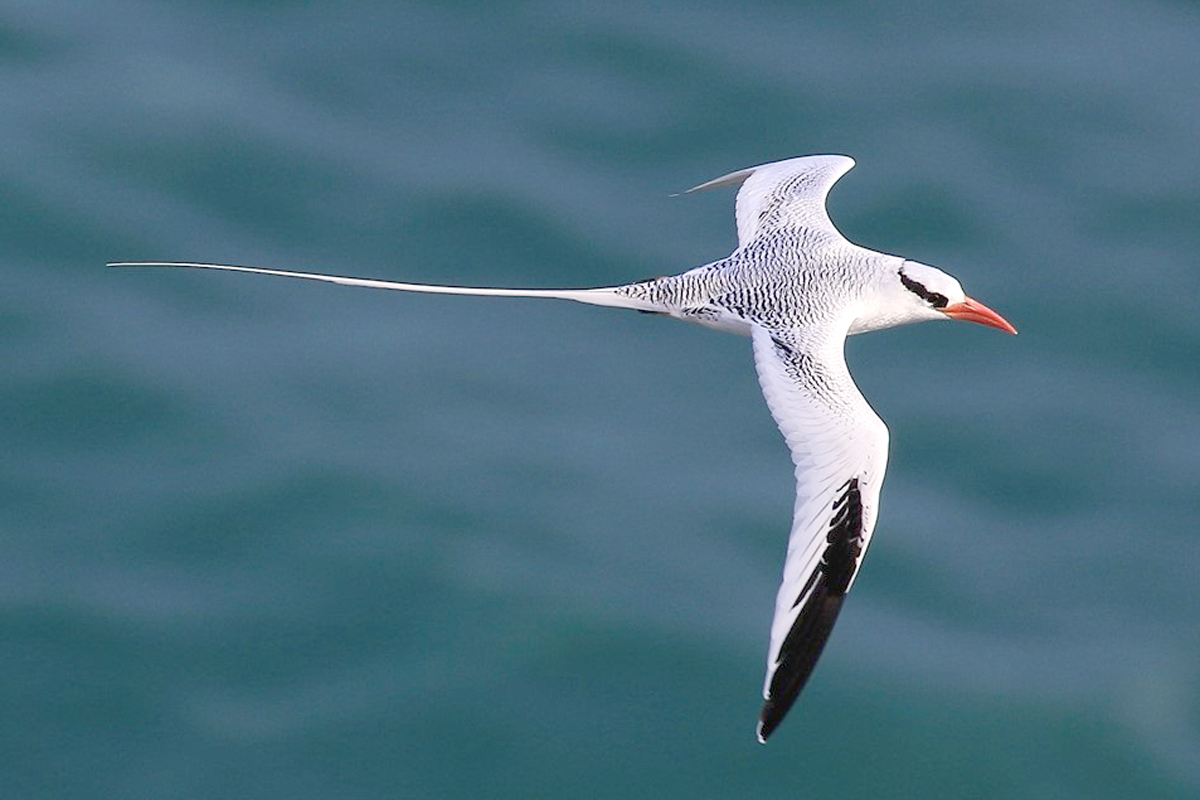
In this issue of the SWG newsletter learn about the spread of herpes virus in Magnificent Frigatebird populations; recent and ongoing regional projects and publications, including habitat modeling of seabird breeding sites in Cuba; census results of an extensive survey of breeding seabirds in the Virgin Islands; a conservation action plan for Red-billed Tropicbirds in the Dutch Caribbean; and more.
We suggest also getting your popcorn ready because seabird conservationists in the Turks and Caicos Islands have produced two fantastic short documentaries about seabird monitoring and research efforts in the archipelago. Links are provided in the newsletter. Admission is FREE.
Field crew off the coast of Guana Island, USVI. (Photo by Paige Byerly)
Red-billed Tropicbird. (Photo by Birding the Islands client, Keith Clarkson)
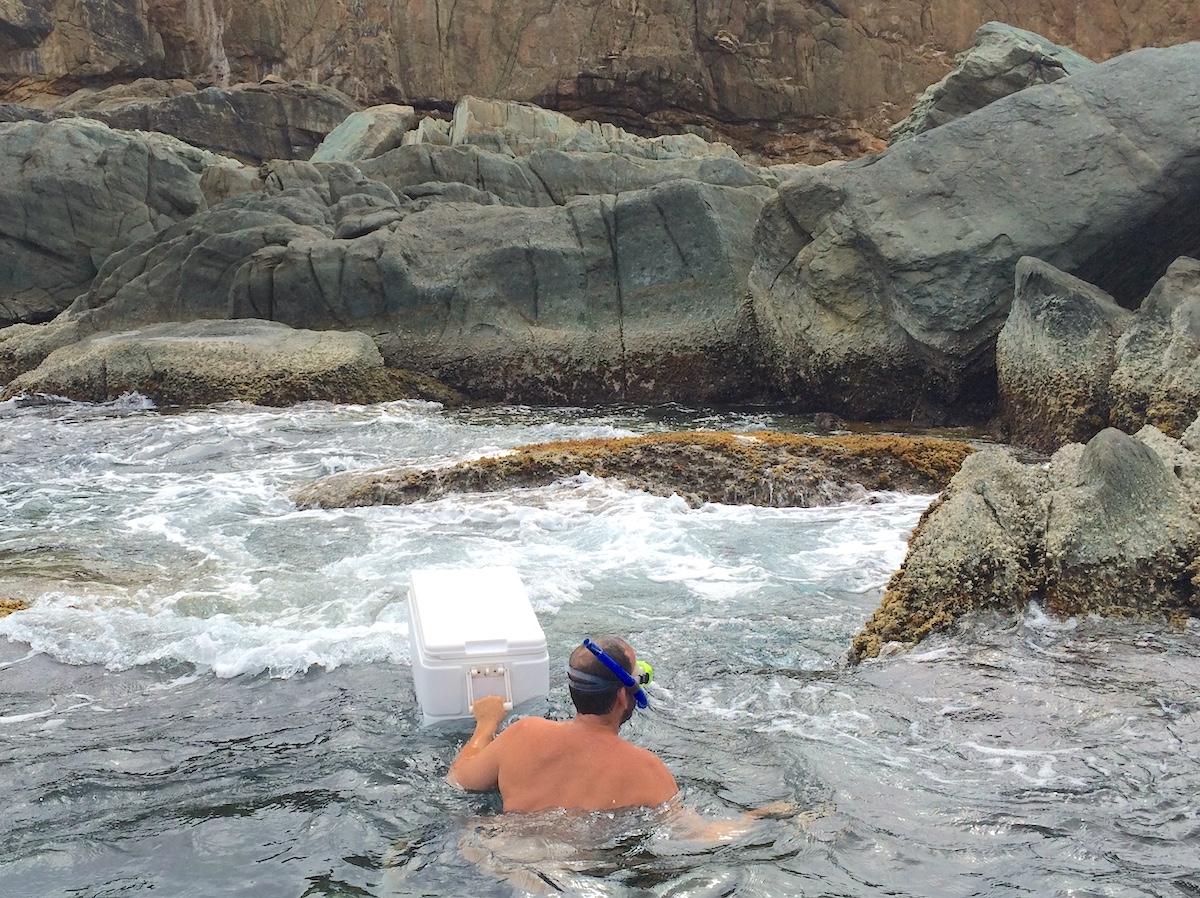
Researcher Daniel Nellis swimming gear out to Congo Island, USVI. (Photo by Paige Byerly)
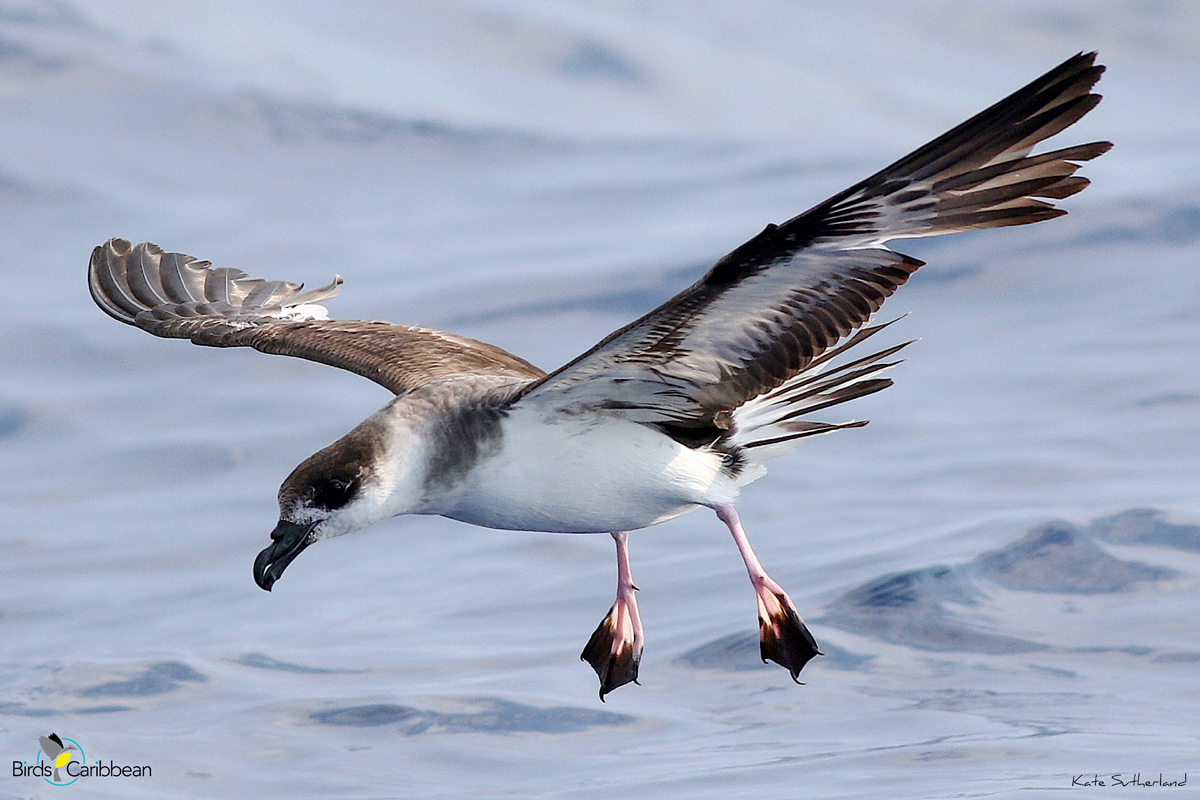
The newsletter also provides updates from the International Black-capped Petrel Conservation Group and shares future conservation plans that entail continuing the searching for the petrel’s nesting areas, techniques to attract breeders to suitable nesting sites, and intensified predator surveillance and control among others.
Black-capped Petrel in flight, spotted in May, at sea in North Carolina. (Photo by Kate Sutherland Macaulay Library-ML343236161)
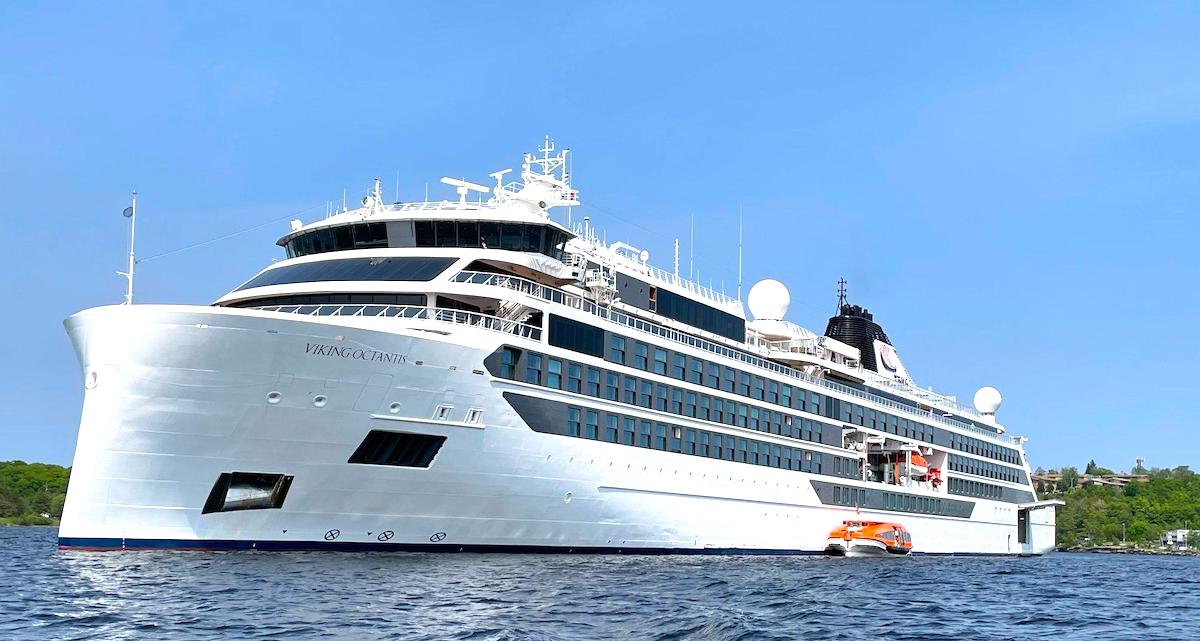
The Caribbean Seabird Census (ongoing) added a cruise ship to its list of enumerators! While Viking Octantis sailed from the Panama Canal to Ft. Lauderdale, onboard Ornithology Specialist, Dr. Jeff Skevington, conducted seabird surveys. You can learn more about this data collection method and the seabirds recorded with the link to the Viking Octantis’ eBird trip report in the newsletter.
While Viking Octantis sailed from the Panama Canal to Ft. Lauderdale, onboard Ornithology Specialist, Dr. Jeff Skevington, conducted seabird surveys for the Caribbean Seabird Census (CSC).
If you would like to contribute to the Caribbean Seabird Census (and we hope you do!), SWG members have created a suite of resources (webinars, bird ID cards, and books) to ensure you are well equipped for your seabird census. Visit the Seabird Working Group webpages and our Seabirds Resources page to access these resources.
Interested in connecting with the SWG and its members? Please take advantage of the many avenues for communication described in the newsletter, including their Facebook group, and if you have seabird news to share, let us know! We would love to feature your work in the next issue!
Enjoy!
-Yvan, Rhiannon and Ann
P.S. If you’ll be attending the BirdsCaribbean 24th International Conferencein the Dominican Republic, do plan to attend our Seabird symposium where we will be discussing Caribbean seabird conservation, research, and monitoring in a changing world. We would love to connect with you in person!
Click on the Flipbooks below to read and/or download this newsletter along with past issues.
Click on the individual images below to download a PDF of the newsletter in your preferred language.
BirdsCaribbean brings you highlights from the Journal of Caribbean Ornithology in our feature “Just Published in JCO.” Here, Zoya Buckmire, the Lead Copy Editor for the Journal of Caribbean Ornithology, explores the innovative methods Caribbean researchers are using to overcome the challenges of monitoring bird populations.
Roseate Tern adult on its nest incubating an egg and panting in the heat. Shark Cay, St. Thomas, U.S. Virgin Islands. (Photo by Daniel Nellis)
Long-term monitoring of bird populations would be a breeze if scientists had unlimited time and money. In the real world, however, monitoring efforts are limited by funding, access, trained personnel, and time. This is the case throughout the Caribbean, especially on the more remote islands and cays. So how do we navigate these many challenges to collect the critical information we need to manage and conserve our bird populations? In three papers recently published inVolume 36 of the Journal of Caribbean Ornithology, researchers across the region explore our options—from synthesizing historical data to exploring new technologies, to maximizing the power of citizen science!
The value in historical surveys
Quality bird survey data is worth its weight in gold, but surveys conducted over different periods with different objectives and priorities can be difficult to compare. Nevertheless, these comparisons are necessary to identify trends in populations. Where consistent long-term monitoring data are lacking, it is possible to compare even a single season’s worth of historical data with current surveys to approximate trends.
This is precisely what Dr. Paige Byerly and her colleagues did with seabird data from the Virgin Islands, a region which is critical for breeding seabirds in the Caribbean. In their article “Current status and 21st century population trends of breeding seabirds in the U.S. and British Virgin Islands,” the researchers focused on seven species of seabirds (boobies, terns, and pelicans) known to breed in the archipelago, and compared data from the early 2000s with their own surveys conducted in 2016-2018. Whilst the population trends they found were dismaying, they were incredibly timely and necessary for the effective management of these birds and their breeding sites. Paige and colleagues demonstrate here that it is not impossible to form a cohesive picture from various disparate surveys over time—thus highlighting one way to make the most of the limited data available in the Caribbean.
Extent of study region in the U.S. and British Virgin Islands with locations of important seabird nesting islands.
A pair of breeding Brown pelicans and their hungry chick. (Photo by Nelson Biffar)
The light morph of the Red-footed Booby. (Photo by Andrew Wright)
New technologies for monitoring
The logistical problems of access and funding for surveys are compounded on the remote cays that are preferred by seabirds. A few miles east of the Virgin Islands, in Anguilla, the National Trust has been exploring their options to increase the efficiency of their monitoring efforts. Passive acoustic monitoring (PAM) is an emerging tool that uses recording units and automated species recognition software to identify the birds present at a site. In 2020, Dr. Louise Soanes and her former colleagues at the Anguilla National Trust launched a pilot project to test the utility of this tool in the Caribbean context. By deploying recording units at several study sites and ground-truthing with regular point counts, they were able to compare the accuracy and effectiveness of PAM to more traditional point counting.
PAM is not without its kinks, of course, as species recognition software is not yet well developed for Caribbean birds (and their many dialects), which leads to many misidentifications. However, with time and additions to the database (which you can contribute to!), these automated identifications will improve. In their paper “Passive acoustic monitoring of birds in the Lesser Antilles—a useful tool for monitoring remote sites?”, Louise and colleagues describe these results and present recommendations for the best use of PAM throughout the region. With further testing and more widespread implementation, this tool has the potential to significantly increase the efficiency of monitoring, especially in remote and hard-to-access areas, and can support the establishment of more long-term monitoring programs in the region.
Some common birds on Anguilla, like the Mangrove Cuckoo, were only detected by ARUs during the survey. (Photo by Mark Yokoyama)
The SwiftOne Autonomous Recording Unit enhances research and conservation efforts by offering better energy efficiency, a more precise clock, greater customization for frequency settings, voice memos, and greater microphone sensitivity. (Photo by Cornell Lab of Ornithology)
A few species of birds, like the Pied-billed Grebe, were not detected by the ARUs possibly because they were too far from the unit for vocalizations to be recorded. (Photo by Becky Matsubara)
Small wading birds that are rarely recorded on Anguilla, like the Wilson’s Plover, were detected by the ARUs but not point counts. (Photo by Andy Morffew)
Dr. Soanes is also the Seabird Census Coordinator for the BirdsCaribbean Seabird Working Group, which recently shared preliminary results from thefirst-ever Caribbean Seabird Census in a webinar you can watchhere!
Making the most of citizen science
Citizen science data, like eBird records and community-mobilized surveys, provide a seemingly obvious solution to the various logistical and resource challenges of data collection in the Caribbean, but using these data comes with its own challenges. Because survey methods are unstandardized and user experience can vary greatly, from novice and casual birders to trained ornithologists, citizen science data must be taken—and analyzed—with a grain of salt. Some questions to consider are: how does observer experience affect detectability of birds in the field? And do observers perform differently depending on survey design (single- or double-observer) and who they are paired with? To answer these questions and more, graduate student Nicholas Bergen conducted his thesis research in Grenada using a citizen science experiment.
Detailed in their article “Effects of observer skill and survey method on forest bird abundance data: recommendations for citizen science conservation monitoring in the Caribbean,” Nicholas and colleagues involved 34 different observers (myself included!) in over 400 surveys across the island. By pairing observers of different skill levels and conducting both point-count and transect surveys, they were able to identify the most efficient survey type for citizen scientists (spoiler alert: it was point counts) and draw correlations between observer skill level and the detectability of different species. The authors provide several practical recommendations for the design and implementation of citizen science-based monitoring programs in the region including ideal timing, protocols, and observer pairings for the surveys.
Birding along L’Anse Aux Epines road, Grenada. (Photo by Gaea Conservation Network)
However, you do not have to create your own citizen science programs from scratch! eBirdis an incredible but underutilized resource in the Caribbean. Millions of observations from around the world and thousands of checklists from the Caribbean have been verified by Cornell Lab and uploaded to the database. The Cornell Lab of Ornithology, creator and maintainer of the eBird database, has produced acomprehensive guide to the use of eBird data, including accounting for its various biases. With these challenges in mind, it is a goldmine of observations that can tell us lots about understudied areas and islands in the region, from “recording” new (previously unreported) species to identifying trends of decline. A few years ago, in our Volume 33,Ruby Bagwyn et al. used eBird data from The Bahamas to identify over 40 bird populations that had not been recorded over an 8-year period, highlighting the areas and species most in need of updated surveys. They suggested that we should use eBird to harness “the observational power of birdwatchers…to provide timely notice of declining or missing populations,” and spur us into action to prevent their extinction or extirpation.
These three examples from Volume 36 are just a sample of the incredible and innovative work being done across the Caribbean by researchers invested in our birds and their wellbeing. BirdsCaribbean is continually supporting monitoring in the region by adding to the skill sets and knowledge of Caribbean researchers through our capacity building efforts, including through our Seabird Working Group,Caribbean Waterbird Census program, Landbird Monitoring Network, and Caribbean Bird Banding Network. You can support our efforts to equip Caribbean nationals with the skills and resources they need to protect the region’s endemic, resident, and migratory birds here.
The Journal of Caribbean Ornithology is a peer-reviewed journal covering all aspects of ornithology within the Caribbean region, publishing in English, Spanish, and French. We welcome manuscripts covering the biology, ecology, behavior, life history, and conservation of Caribbean birds and their habitats. The JCO also publishes conservation reports and mentors inexperienced authors to help them develop their manuscript for publication. The JCO relies on donations to keep all of our publications free and open-access. Support our non-profit mission and give a voice to Caribbean ornithologists and their work by becoming a supporter of JCO.
BirdsCaribbean brings you highlights from the Journal of Caribbean Ornithology in our feature “Just Published in JCO.” Here, Zoya Buckmire, the Lead Copy Editor for the Journal of Caribbean Ornithology, gives us a behind-the-scenes look at various research on birds and their conservation in Grenada.
Ramon Williams and John Holas conducting bird surveys on Hog Island.
Our feathered friends do not have it easy in today’s world. They face a myriad of threats from hunting, to habitat loss and land-use change, to climate change and all its related impacts. These challenges are especially felt by bird communities on Small Island Developing States (SIDS) like those in the Caribbean. These small islands are subject to unique economic, social, and ecological pressures, which translate to a unique set of challenges for resident fauna, and puzzling questions for those of us involved in their conservation. How are birds using and responding to natural and anthropogenic habitats on these islands? In what ways does this use differ from the well-studied continental regions? And critically, how should this inform conservation and management measures here in the Caribbean?
Using Grenada as a case study for his master’s thesis research, Ramon Williams, a local biologist, sought to explore some of these questions. In their recently published article “Avian use of anthropogenic and natural habitats in a Small Island Developing State,” Ramon and his advisors present some of their critical findings, including habitat preferences for some of the regionally endemic and range-restricted species we know and love. Ramon recently shared his findings in a webinar hosted by Gaea Conservation Network, which you can viewhere. We wanted to learn even more about his behind-the-scenes process, so Zoya Buckmire, Lead Copy Editor of the Journal of Caribbean Ornithology (JCO) and fellow Grenadian, reached out to the author with the following questions (responses have been edited for flow).
How did you first conceive of this study, and what motivated you to conduct this research?
We conceived this study because Grenada was lacking a comprehensive scientific survey to shed light on how anthropogenic disturbance affects the terrestrial bird community. As Grenada is a SIDS that has been undergoing rapid developmental changes, we found it important to understand the effects of these environmental changes on birds so that adequate conservation strategies could be implemented to help conserve both avian species and their habitats.
Comprehensive surveys for Grenada are few and far between, but Ramon’s work built upon the Ellie Devenish-Nelson and Howard Nelson’s “Abundance and density estimates of landbirds on Grenada,” published just two years prior in the JCO.
Tell us about a memorable moment during field research or data analysis.
My best memory during field research was when I had an incidental observation of the endemic Grenada Hook-billed Kite (Chondrohierax uncinatus mirus). Although we did not observe any Hook-billed Kites during our scheduled surveys, the incidental observation was spectacular! On 2 August 2017, we had to cancel our data collection due to rainy weather. At about noon, it was raining heavily, and as I stood on the balcony of my residence in La Fortune, Saint Patrick—I noticed a Hook-billed Kite up in the secondary forest canopy! I grabbed my binoculars and my phone and went out into the pouring rain to capture some low-quality photos and video of the kite.
Grenada’s endemic subspecies of the Hook-billed Kite is considered to be Endangered. (Photo by Andrea Easter-Pilcher)
A Grenada Hook-billed Kite chick. Female and male Hook-billed Kites work together to build their nests, which are shallow and cup-shaped and built from small twigs and sticks.
Male Hook-billed Kites tend to be a solid bluish-gray color on their heads and backs, while their breasts are grayish and adorned with pale streaking in horizontal bars. (Photo by Andrea Easter-Pilcher)
Tell us about a challenge you had to overcome during fieldwork or data analysis.
Our biggest challenge was navigating the unpredictable weather during fieldwork. On 1 August 2017, we went to Hog Island (one of Grenada’s many cays) to conduct one of our field surveys. While the survey was successful, the rain started pouring around 9 am and we had nowhere to shelter our field equipment on the uninhabited island. We resorted to using a trash bag to shelter our equipment from water damage.
Ramon and his team had to navigate unpredictable weather on Hog Island but they persevered and completed the bird surveys.
Run for cover! Ramon had to quickly use a trash bag to protect his equipment from the sudden rain.
Quincy Augustine, one of Ramon’s field assistants, attempting to navigate a flooded trail.
One of the key findings from Ramon’s research was that the birds in Grenada used a variety of habitats, including anthropogenic ones like agricultural and rural areas. While these human-altered landscapes supported higher densities of birds than natural cloud and secondary forests, the latter hosted more habitat specialists and species of conservation concern. Regional endemics like the Grenada Flycatcher (restricted to the Grenada Bank) rely on secondary forest and mature lowlands including mangroves. This demonstrates that while “natural” habitats are critical for birds, human-altered landscapes are also an important part of the available habitat mosaic—and they should all be maintained for our feathered friends.
What are your hopes for what your research will lead to?
We hope that our research can serve as a baseline for further research and help inform conservation decisions. As anthropogenic development continues in Grenada and other Caribbean islands with similar species and habitat requirements, further research is needed to monitor how the avian community is responding to the changing environment.
Will this work impact your own research agenda going forward?
Yes, we are continuing to conduct research on Grenada’s birds, and are currently working on research with Bananaquits—of which we have a melanistic subspecies in Grenada (Coereba flaveola aterrima).
Bananaquits are found throughout the Caribbean. They have a sharp, curved bill, black head and upperparts with a white eyestripe, gray throat, and yellow underparts. (Photo by Dominic Sherony)
The majority of Bananaquits in Grenada are of the black morph. (Photo by Paulson Des Brisay)
Is there anything else you would like to share?
We conducted a field outreach exercise on the island of Carriacou with both elementary and high school students. The primary goal of the exercise was to help the children with bird identification and hopefully inspire future ornithologists. The exercise had two phases: the first phase was a presentation on the defining identification characteristics of terrestrial birds; and the second phase involved a brief birdwatching exercise.
Ramon with primary school students in Carriacou after his bird identification presentation.
School students in Carriacou were led, by Ramon, through a short birdwatching activity around the school’s grounds.
Other recent work from Grenada
A heartening amount of important bird research has been published about Grenada’s birds in the last few years, most of which emerged from the former Koper Lab at the University of Manitoba (now at the University of Northern British Columbia). As a Koper Lab alum myself, I actually got my first exposure to the lab and their work through assisting with Nicholas Bergen’scitizen science experiment in 2016. From the lab’s bird banding activities, Alexandra Heathcote et al. publishedmorphological comparisons of a few resident landbird species, and Christopher De Ruyck did his dissertation onlandbird diets and the importance of agroecosystems as habitat. Those same banding activities led to the recognition of thesong variation of Grenada’s House Wrens and documentation of theirmorphological differences, contributing to Grenada’s population being declared its own subspecies (Troglodytes aedon grenadensis)!
Grenada House Wren singing. (Photo by Kim Wetten)
Ezra Campbell, another local biologist and Koper Lab alum, researched native raptors for her thesis, and her findings on theBroad-winged Hawk population were also published in the JCO in 2022. That same year, Arnaud Lenoble and colleagues published their research on theHook-billed Kite’s diet on the island. Ezra’s study found that Broad-winged Hawks are doing well in Grenada, where they are widely distributed and adapting well to changing environments, possibly to the detriment of the more specialized Hook-billed Kites. The hawks were even observed using old kite nesting trees and exhibiting aggressive behavior towards them, possibly pushing the endemic raptor out of its optimal habitat. A case of mistaken identity—where kites are often prosecuted for the chicken-stealing activities of the hawk (aptly nicknamed “chicken hawk” on the island)—further puts the kites at risk. Combined with Arnaud’s findings of the kite’s preference for medium-sized snails, which vary with the seasons and site and restrict the availability of suitable habitat, this endemic subspecies seems to have the odds stacked against it. Both of these studies emphasize the importance of further research to identify and protect suitable habitat for both species.
Broad-winged Hawk. (Photo by Ezra Campbell)
And a lot remains yet unpublished. For instance,eBird records indicate the presence/occurrence of 171 species in Grenada, a significant increase over the last record of 153 species from the 2019Complete Checklist of the Birds of the West Indies. Many of these “new” species have been recorded in the last 5 years by avid birders on the island, and if/when these records get published, they will contribute to our knowledge of the biodiversity, species distributions and population statuses across the region. Grenada is also part of the Caribbean Landbird Monitoring Network, with several local biologists being trained over the last few years in bird banding and landbird surveys using the PROALAS protocol. In fact, our next Bird Banding Workshop is being hosted in Grenada in early March, so stay tuned for updates on this! Together, these advances reassure me that for Grenada, the future of ornithology—and of the birds we are working to preserve—is bright.
The Journal of Caribbean Ornithology is a peer-reviewed journal covering all aspects of ornithology within the Caribbean region. We welcome manuscripts covering the biology, ecology, behavior, life history, and conservation of Caribbean birds and their habitats. The JCO also publishes conservation reports and mentors inexperienced authors to help them develop their manuscript for publication. The JCO relies on donations to keep all of our publications free and open-access. Support our non-profit mission and give a voice to Caribbean ornithologists and their work by becoming a supporter of JCO.
BirdsCaribbean is pleased to announce the 2024 cohort of grantees under two prestigious named awards, the David S. Lee Fund for the Conservation of Caribbean Birds, and the James A. Kushlan Research and Conservation Fund.
These twelve projects aim to advance the study and conservation of avifauna in seven different Caribbean countries: Cuba, Jamaica, Puerto Rico, Dominican Republic, Mexico (offshore islands in the Caribbean Sea), St. Eustatius, and The Bahamas.
In this article you can read about the exciting plans proposed by each awardee. Stay tuned for results and accomplishments featured in future issues of the Journal of Caribbean Ornithology, blog articles, and presentations at our upcoming 24th BirdsCaribbean International Conference in Dominican Republic this summer.
Congratulations to these outstanding researchers and conservationists from our BirdsCaribbean community!
Establishing baselines in research, data and science for birds (BiRDS for birds) in The Bahamas
Dr Ancilleno Davis, Science and Perspective & University of The Bahamas
Baselines in Research, Data, and Science for birds (BiRDS for birds) is a program to establish baseline data for bird diversity, population estimates, and research or scientific standards that can be applied to research and conservation activities throughout The Bahamas. The program will provide training in the use of bird monitoring protocols and access to optical equipment to local students along with opportunities to participate in wildlife assessments. It is expected that this project will improve local biodiversity knowledge, and ultimately, will help trainees to have better opportunities for obtaining jobs in conservation in The Bahamas and insular Caribbean.
Distribution shifts of the Oriente Warbler: species assessment in Villa Clara province, Cuba
Claudia Mantilla, Center for Environmental Studies and Services of Villa Clara, Cuba
The Oriente Warbler (Teretistris fornsi) is endemic to central-eastern Cuba. In recent years, occasional sightings have been recorded in provinces outside its known range, such as south of Cienfuegos and north of Villa Clara. In this project, Claudia will conduct population surveys and bird banding to understand the species’ distribution in the westernmost part of the central region of the country (Matanzas, Cienfuegos, and Villa Clara), where it also overlaps with the congeneric Yellow-headed Warbler (T. fernandinae). The goal of this study is to determine the ecological requirements of the Oriente Warbler in order to promote the conservation of its habitat, since only 16% of its distribution is within protected areas.
Understanding the importance of a small urban park for conserving migratory and resident bird species in Havana
Daniela Ventura, University of Havana, Cuba
Havana is home for 47% of the bird species of Cuba, and is an important stopover and wintering site for migratory birds. Research efforts have been conducted in green spaces located in the less densely populated municipalities of the capital. Thus, to obtain a better understanding of urban bird communities within Havana, Daniela plans to expand a banding scheme initiated as part of BirdsCaribbean’s Caribbean Bird Banding Network to the Quinta de Los Molinos Park. Specifically, she intends to evaluate the migration phenology of Neotropical migratory birds that use the site as a stopover or wintering area, and determine the survival and overall physical conditions of migrant and resident bird species. The project will provide an indirect measure of the importance of urban forest fragments for supporting biodiversity, and will increase the awareness of park visitors about the need to protect wild birds.
Raising awareness and education on the endangered Jamaican Blackbird in a National Park
Justin Saunders, BirdLife Jamaica
In this project, Justin and a team of collaborators from BirdLife Jamaica, aim to create an innovative public education campaign to raise awareness about the endangered Jamaican Blackbird (Nesopsar nigerrimus) and its habitat in the Blue and John Crow Mountains National Park. The project includes the development of educational signs within the park and the creation of a basic virtual tour to engage a broader audience. The educational outcomes will be evaluated at educational events at the park. The plan will be implemented in partnership with the Jamaica Conservation Development Trust, Jamaica Environment Trust, and the National Environment Planning Agency.
Conservation ecology of the Puerto Rican Oriole
Michael Ocasio, University of Maryland, Baltimore County
Conserving Caribbean island endemics, like the Puerto Rican Oriole (Icterus portoricensis), requires an increased and specific understanding of the threats faced by these species. Notably, the Puerto Rican Oriole has shown worrying signs of reproductive challenges, including high rates of brood parasitism and low reproductive success. In this project, Michael aims to assess the oriole’s population dynamics through point counts, banding, radio tracking, and nest monitoring across different habitats and elevations. His results on the species abundance, survival, and reproductive success will contribute to the Puerto Rico State Wildlife Action Plan, the USGS list of Species of Greatest Conservation Need, and the IUCN Red List of Threatened Species, while also fostering collaborative and effective conservation efforts in the Caribbean.
Investigating male and female vocalizations of an understudied endemic Caribbean songbird in Puerto Rico
Michelle Moyer, University of Maryland, Baltimore County
The Puerto Rican Oriole (Icterus portoricensis), one of 18 endemic species on the island of Puerto Rico, remains significantly understudied. Improving our understanding of how the orioles use sex-specific songs is necessary to develop effective conservation management plans. Preliminary work in 2023 indicated that male and female orioles may sing different songs, but at similar rates. Increasing the sample size by recording additional individuals is crucial for gaining an accurate understanding of the singing behavior of this species. Through this project, Michelle will engage undergraduate students from the University of Puerto Rico in point counts and mist-netting, and intends to co-develop management strategies in collaboration with Para La Naturaleza.
Understanding the social and spatial organization of the Palmchat in the Dominican Republic
Qwahn Kent, Princeton University
In this project, Qwahn aims to investigate the social and spatial organization of the Palmchat (Dulus dominicus), a communally breeding bird endemic to Hispaniola. The Palmchat plays a crucial role in the ecosystem—it disperses seeds and provides nesting sites for several species, including the critically endangered Ridgway’s Hawk, which nests on top of Palmchat nests. Qwahn will band individual Palmchats and will use a social network analysis to understand their complex organizations. Morphological features of nesting trees will be measured, and a machine learning algorithm will be developed to predict Palmchat nest locations. This research has conservation implications, since the spatial organization of Palmchat nests and their movement patterns influence both patterns of seed dispersal, as well as nest site availability for the hawks.
Help the Bridled Tern return to Isla Contoy National Park, Quintana Roo, Mexico
Jonathan Nochebuena, Mexican Association for the Conservation of Birds and their Habitats (AMCAH)
The Bridled Tern (Onychoprion anaethetus) breeds on Isla Contoy, a small Island off the Caribbean coast of Yucatan, Mexico, which is considered a site of international importance for the conservation of seabirds. In 2019, AMCAH started a project to protect the terns’ nesting areas, with the support of park managers and the local group Friends of Isla Contoy. This new project intends to continue the monitoring and banding efforts with community participation, and to develop measures to help increase the species’ population. This initiative will also help raise community awareness about threats to seabirds in general.
Avifauna of Las Balsas wetland, Gibara, Holguín, Cuba
Ailen Anido, Museo de Historia Natural Joaquín Fernández de la Vara, Gibara
The wetland Balsas de Gibara in Holguin consists of a large area of mangroves, coastal lagoons, mudflats, and salt marshes located between two rivers that flow into Gibara Bay. High concentrations of waterfowl have been reported in this site, including new bird species for Cuba. Ailen and her team will carry out an inventory of the birdlife of this important site using BirdsCaribbean’s Caribbean Waterbird Census protocols. They will train local residents in bird identification and survey techniques to engage them in the field work throughout the year. She also intends to increase awareness of the high ecological value of this protected area by promoting sustainable practices, such as the creation of a birdwatching club and bolstering bird and nature tourism.
Update of the status and trends of American Flamingos in Cuba
Susana Aguilar, University of Havana
The Cuban population of the American Flamingo (Phoenicopterus ruber), the only flamingo distributed through the Caribbean, is one of the most important in the region. The species depends on estuaries and saline lagoons, making it vulnerable to climate change. In this project, Susana seeks to update the information about the status of the American Flamingo in the island by assessing its current distribution, and estimating its abundance and number of nests in the breeding sites. She and her team will carry out field expeditions to verify new potential nesting sites in remote coastal wetlands of central Cuba, using drones in their surveys. Results are expected to contribute to the improvement of management decisions for the species in Cuba.
Characterization of the community of aquatic birds associated with the wetland of the San Miguel de Parada Fauna Refuge
Yanelis Sánchez, Empresa Flora y Fauna, Santiago de Cuba
Cuban wetlands are important stopover and wintering areas for numerous species of migratory waterbirds. However, they are increasingly being polluted by industrial discharge of solid and liquid waste, like the case of San Miguel de Parada Wildlife Refuge in the province of Santiago, Cuba. Yanelis will be conducting monthly surveys in this wetland throughout the year to determine the composition and structure of the waterfowl community. Moreover, she intends to identify and monitor nesting colonies from May to June, describe their habitat characteristics, and assess the breeding success for different species. As part of the project, she also wants to promote the recovery and conservation of the Santiago de Cuba Bay by implementing effective management actions and educational campaigns.
Enhancing conservation initiatives for Red-billed Tropicbirds in Boven National Park, St. Eustatius
Jethro van’t Hul, St. Eustatius National Parks (STENAPA)
The Red-Billed Tropicbird (Phaethon aethereus), an iconic seabird species with striking red bills and long tail streamers, faces imminent threats to its population on the Caribbean island of St. Eustatius. Previous research estimated only 300-500 breeding pairs. Through this study, Jethro aims to reassess the population on Pilot Hill, and compare counts with a second study site on the cliffside area of Boven National Park where no data has been collected previously. Monthly surveys will be conducted in both locations, and video recordings will be taken to estimate the number of potential nesting pairs in a section of the Boven cliffs. His goal is to obtain a more accurate population estimate of nesting pairs to support further conservation efforts in Boven National Park.
Are you working on, or planning a research or conservation project with Caribbean birds?
Jennifer Mortensen, from the University of Arkansas, retrieving camera trap data with a team of conservationists from the Saint Lucia Forestry Department, including Stephen Lesmond, Therence Eugene, Jeannette Victor, and Jonathan Cornibert (from right to left).
Our next call for proposals will be advertised in the fall of 2024. Members of BirdsCaribbean conducting research and conservation work are eligible to apply. Stay informed and don’t miss our announcements by subscribing to our monthly newsletter,joining our Listserv, and following us on social media (@BirdsCaribbean on Instagram, Facebook, Twitter, Youtube, and Linked In).
BirdsCaribbean thanks our generous donors for supporting these awards, and encourages others to donate to these programs, as well as to consider endowments or other large awards to ensure that our vital grants programs can continue indefinitely. You can help us to continue supporting these invaluable projects by making a donation here.
If you prefer to donate via check, please make this out to “BirdsCaribbean” and in the memo section, note the fund you are donating to. If you have questions, or would like to make other arrangements for donating, feel free to contact Alexia Morales, BirdsCaribbean Operations Manager ([email protected]). Checks can be mailed to: BirdsCaribbean, 841 Worcester St. #130, Natick, MA 01760-2076
The Journal of Caribbean Ornithology publishes peer-reviewed science on Caribbean birds and their environment that is critical to informing conservation work. In this annual blog feature, JCO’s staff is proud to show off the amazing research from scientific teams around the Caribbean. Volume 36 demonstrates the wide range of research conducted by our authors; from population and habitat use studies, to documentations of behavior, to methods-centered papers on bird monitoring. About ten articles focus on land birds, while three concentrate on waterbirds.
The JCO is immensely grateful for its dedicated team of editors, reviewers, copyeditors, translators, proofreaders, and production specialists that have worked together so well again this past year to produce high-quality publications. We also thank the 57 authors behind the 16 Research Articles and Notes for their trust in the JCO to publish their open-source work in the best form. The JCO and our non-profit publisher, BirdsCaribbean, continue to emphasize support for early-career researchers, trilingual content, open access, and a comprehensive archive going back to the very first volume from 1988.
Map depicting research locations of studies published in Volume 36.
A few glimpses behind the scenes of JCO’s operations in 2023:
JCO has welcomed Dr. Susana Aguilar, our Birds of the World (BOW) Coordinator for Cuba. Susana has an intimate knowledge of Cuban ornithology and we are very happy that we could recruit her to facilitate the revision of BOW accounts from the largest Caribbean island. Our Production Assistant and Designer since 2019, Diane Tessaglia-Hymes is pursuing another professional opportunity. She has tremendously helped with typesetting and, being an Adobe InDesign wizard, has optimized several “under the hood” features. Our Associate Editor team expanded with Yvan Satgé of Clemson University and Dr. Kathryn Peiman, from Ontario, Canada joining the team. Sadly, we learned that one of our Associate Editors, Dr. Virginia Sanz D’Angelo (Centro de Ecología, IVIC, Caracas, Venezuela) has passed away. Her dedication to JCO leaves a big gap.
It took a little longer than hoped, but our (all part-time!) staff finally pulled together a voluminous (94 pages) Special Issue with Caribbean-themed conference contributions from the AOS-BC conference in San Juan in 2022. Because it sometimes takes authors a while to fully publish research, these conference presentations and poster abstracts provide a more timely glimpse into what’s happening in Caribbean bird research and conservation.
We hope to see many of our readers, authors, editors, and team members in July at the BirdsCaribbean 2024 Conference in the Dominican Republic!
— Joseph M. Wunderle, Jr., JCO Editor-in-Chief,
— Stefan Gleissberg, JCO Managing Editor
— Zoya Buckmire, JCO Lead Copyeditor
The Journal of Caribbean Ornithology relies on donations to keep all of our publications free and open-access. Support our non-profit mission and give a voice to Caribbean ornithologists and their work by becoming a supporter of JCO. Consider being a sustainer with a monthly contribution of $5 or more!
Like humans, birds are susceptible to parasitic infections, including avian malaria, and similarly, variations in hemoglobin structure may influence their susceptibility to these infections. Using one of the most widespread West Indian species, the Bananaquit (Coereba flaveola), Humphries and Ricklefs aimed to relate variation in hemoglobin structure and avian malaria infection across several islands. In this paper, they present the results of this fascinating study, with suggestions for appropriate markers for further biogeographic analyses.
In the midst of the central Bahamas archipelago lies the tiny Conception Island National Park. This multi-island park is designated as an Important Bird Area, but until now, its bird diversity was poorly documented. In this paper, Reynolds and Buckner present the first avifaunal list for this park in over a century, with a whopping 68 species, 3 of which are Bahamian endemics.
As human influence over the environment increases, so too does the distribution of artificial materials in natural spaces. More and more birds are encountering human debris in their habitat and interacting with these materials in various ways—whether mistaking them for food or becoming entangled in them. In this research note, Madden and Danielson-Owczynsky document landbirds in St. Eustatius using human debris in an interesting but dangerous way, a fascinating discovery that hints at the pervasiveness of our impact on the world around us.
Anderson Jean, Maxon Fildor, Marta Curti, Eladio Fernandez, Christine D. Hayes, and Thomas I. Hayes
Few things are more exciting than the rediscovery of a once-extirpated species, and the case of the Ridgway’s Hawk (Buteo ridgwayi) is no exception. This Hispaniolan endemic was once well-distributed across the island, but had not been recorded in Haiti since 1962. A chance encounter in 2019 prompted hope and follow-up studies in subsequent years as the authors sought to confirm sightings of the species. In this research note, Jean et al. document their rediscovery of this unique hawk in Haiti.
Joshua LaPergola, C. Justin Proctor, Hodali Almonte, and Kate J. Wallace
Birds eat bugs—or at least, that is how it’s supposed to go. The roles are sometimes reversed in the natural world, with one noteworthy example being parasitism. Philornis sp. larvae are a well-known parasite for birds, but we are still figuring out which species are affected by these parasites. In this paper, LaPergola et al. document the first record of Philornis sp. larvae parasitizing a swift, in this case an Antillean Palm-Swift (Tachornis phoenicobia) in the Dominican Republic. This expands our understanding of parasitism by this genus and adds to the ever-growing list of threats to Caribbean birds, especially aerial insectivores like swifts.
Nicholas Bergen, Christopher C. De Ruyck, and Nicola Koper
Citizen science provides a seemingly obvious solution to the various logistical and resource challenges of data collection in the Caribbean, but it is not without its own challenges. How does observer experience affect detectability of birds in the field? And do observers perform differently depending on who they are paired with? Bergen et al. conducted an experiment in Grenada to answer these questions and more, involving 34 different observers in over 400 surveys across the island. In this paper, the authors present the results of their study, along with several practical recommendations for the design and implementation of citizen science-based monitoring programs in the region.
Louise M. Soanes, Devon Carter, Laurel B. Symes, Jennifer C. Daltry, Holger Klinck, Clarissa Lloyd, and Farah Mukhida
If we as scientists had unlimited time and money, then long-term monitoring of bird populations would be a breeze. In the real world, however, monitoring efforts are limited by funding, access, and personnel, especially on remote islands and cays. Passive acoustic monitoring (PAM) is an emerging tool with the potential to significantly increase the efficiency of monitoring efforts, and a recent pilot project in Anguilla aimed to test the utility of this tool in the Caribbean context. In this paper, Soanes et al. describe the results of their pilot, with recommendations for the best use of PAM throughout the region.
Samantha J. Hagler, Kara Abbott, Christine D. Hayes, Thomas I. Hayes, and André A. Dhondt
The Critically Endangered Ridgway’s Hawk (Buteo ridgwayi) is a charismatic species that has received lots of conservation attention in recent years, but there still remain major gaps in knowledge about this species’ life history and behavior, especially pre-breeding. In this research article, Hagler et al. present their results from tracking 3 established breeding pairs of Ridgway’s Hawks in the Dominican Republic, adding critical information to the body of knowledge about this endangered and endemic species.
Yaroddys Rodríguez Castaneda y Nils Navarro Pacheco
The wild bird trade is a growing threat to Caribbean birds, with species targeted for their bright plumages and/or beautiful songs. This industry is especially prevalent in Cuba, with over 3,000 birds trapped in one month (October 2021). Dozens of species are trapped and sold, including species that may not have been previously recorded for the island. In this Spanish-language paper, Rodríguez Castaneda and Navarro Pacheco document a new species for Cuba, discovered through the ongoing bird trade, suggesting that Cuba’s true avian diversity may be even higher than estimated.
El tráfico de aves silvestres es una amenaza creciente a las aves del Caribe, con las aves elegidas para sus plumajes brillantes y/o sus bonitos cantos. Esta industria es especialmente frecuente en Cuba, con más que 3000 aves capturadas en un mes (octubre 2021). Docenas de especies son capturadas y vendidas, incluyendo unas especies que quizás no eran reportadas para la isla. En este artículo español, Rodríguez Castaneda y Navarro Pacheco documentan una especie nueva para Cuba, descubierta por el tráfico continuado de aves, sugiriendo que la verdadera diversidad de aves de Cuba puede ser aún más alta que la estimada anteriormente.
Ramon J.T. Williams, Miyako H. Warrington, and Nicola Koper
Small Island Developing States (SIDS) are subject to unique ecological pressures, and the bird populations on these islands are no different. How are birds using and responding to natural and anthropogenic habitats on these islands? In what ways does this use differ from the well-studied continental regions? And importantly, how does this inform conservation and management measures here, in the Caribbean? In this paper, Williams et al. explore all these questions and more using resident landbird species in Grenada.
Kara L. Lefevre, Elizabeth Forys, Adam DiNuovo, and Adam D. Smith
Black Skimmers (Rynchops niger) are a charismatic—and admittedly odd-looking—colonial seabird distributed throughout the coastal Americas. Populations in Florida (R. niger niger) are under threat, and to inform conservation measures, Lefevre et al. set out to track the dispersal and movements of skimmer chicks from breeding colonies in Florida. In this paper, the authors describe their use of various tracking methods, some more successful than others, and present important recommendations on how to design future studies.
Parrots and parakeets (Psittaciformes) are some of the most widely introduced species in the Caribbean, and Puerto Rico is no exception. There, the White-winged Parakeet (Brotogeris versicolurus) was introduced in the late 1960s and has since become “the most successful invasive psittacine species on the island”. However, until now, not much was known about their life history or population status in Puerto Rico. In this article, Falcón and Tremblay report on the status of two breeding populations with estimates of their growth rates, as well as other critical information including the species’ diet and nesting habits on the island.
Paige A. Byerly, Susan Zaluski, Daniel Nellis, Judy Pierce, and Paul L. Leberg
Effective management of bird populations requires quality data, but quality data is often difficult to come by. Where studies do exist, methods may vary greatly based on differing research questions, objectives, and priorities, but as Byerly et al. demonstrate here, it is not impossible to form a cohesive picture from various disparate surveys. Comparing data from surveys in the early 2000s with their own in 2016-2018, the authors produce up-to-date trends on the populations of 7 seabirds in the Virgin Islands—and none of them are good. In this paper, Byerly et al. present these timely population status updates, a call for action, and a great example of how to make the best of the limited data we have in the Caribbean to conserve and manage our birds.
Nils Navarro Pacheco, Roberto Jovel Lara, Wisdenilde Navarro Méndez, Juan Carlos Lobaina Montero, Noel Coutín Lobaina, and Carlos Hernández
The Cuban subspecies of the Sharp-shinned Hawk (Accipiter striatus fringilloides) is relatively understudied, with no documented nesting records for Cuba—until now. In this Spanish-language article, Navarro Pacheco et al. present the first record of a nest found in Guantanamo, Cuba, with detailed descriptions of the nest, eggs, breeding behavior, and other aspects of the reproductive biology of this endemic subspecies.
El Gavilancito Cubano (Accipiter striatus fringilloides) es relativamente poco estudiado, con ningunos registros de nidificación documentados para Cuba—hasta ahora. En este artículo español, Navarro Pacheco y otros presentan el primer registro de un nido encontrado en Guantánamo, Cuba, con descripciones detalladas del nido, los huevos, el comportamiento de reproducción, y otros aspectos de la biología reproductiva de esta subespecie endémica.
Avery Young, David Aborn, Steven C. Latta, and Jennifer Nagel Boyd
The way wildlife interacts with food systems is an increasingly important topic as food production expands and encroaches upon habitat. In the Dominican Republic, a major driver of habitat loss is the conversion of forests to avocado farms to meet demand. How does habitat differ between the natural forests and these farm systems? How are birds responding to these differences? And does avian response vary depending on whether the birds are endemic, resident, or migratory? In this research article, Young et al. answer these questions and more, and offer recommendations to balance habitat preservation with our food production needs.
Malo Braquier, Anthony Levesque, Jérémy Delolme, and Charlotte Francesiaz
How long do birds live in the wild? Lifespan of course differs by family and species, and even within species as birds face varying threats within their habitats, migration routes, and from the humans they encounter. Shorebirds like plovers can live into their teens, and for the Wilson’s Plover (Charadrius wilsonia), the previous longevity record was 10 years. In this research note, Braquier et al. report a new longevity record for this species from their resightings of a previously banded Wilson’s Plover in Guadeloupe.
The annual compilation of the most important articles that appeared elsewhere, annotated by Steve Latta.
Article by
Zoya Buckmire – Lead Copy Editor for the Journal of Caribbean Ornithology;
Stefan Gleissberg – Managing Editor JCO
TheJournal of Caribbean Ornithology relies on donations to keep all of our publications free and open-access. Support our non-profit mission and give a voice to Caribbean ornithologists and their work by becoming a supporter of JCO.
BirdsCaribbean brings you highlights from the Journal of Caribbean Ornithology in our feature “Just Published in JCO”. Here, Zoya Buckmire, the Lead Copy Editor for the Journal of Caribbean Ornithology, gives us a behind-the-scenes look at various research on the Critically Endangered and endemic Ridgway’s Hawk.
The Ridgway’s Hawk is one of the most critically endangered raptors in the world with fewer than 400 individuals remaining. It is endemic to Hispaniola. (Photo by Dax Román)
Few things are more exciting than the rediscovery of a once-extirpated species, and the case of the Ridgway’s Hawk (Buteo ridgwayi) is no exception! This Critically Endangered raptor is endemic to Hispaniola (Haiti and the Dominican Republic), but despite its historically widespread distribution, it had not been spotted in Haiti since 1962. A chance encounter on one of Haiti’s satellite islands prompted hope and a follow-up study as Anderson Jean and colleagues sought to confirm their suspected sighting of the species. Thus began an epic scavenger hunt to rediscover this unique hawk on the Haitian side of Hispaniola! The authors shared a behind-the-scenes look at their discovery and their ongoing work to conserve the Ridgway’s Hawk.
Map showing current known Ridgway’s Hawk distribution on Hispaniola. (Map by Leah Dunn of The Peregrine Fund)
The first sighting in 2019 was entirely by chance—or rather, by fate. Anderson Jean andMaxon Fildorwere conducting a rapid ornithological assessment of Les Cayemites, two islands off the southwestern coast of Haiti, as part of a baseline study for the recently declared Baradères-Cayemites protected area. They were compiling information on the terrestrial vertebrates present to inform the management plan for the region. It was then that they spotted two raptors in flight—rushing to document what they could, they speedily took pictures, videos, and audio recordings to aid in identification. One of those two birds was later identified as a juvenile Ridgway’s Hawk, the first sighting of the species in Haiti in over 50 years, and the first sighting for Les Cayemites in over a century.
Juvenile Ridgway’s Hawk spotted by Anderson Jean and colleagues on Petite Cayemite. (Photo by Anderson Jean)
Adult female Ridgway’s Hawk with a green vine snake on Petite Cayemite. (Photo by Thomas Hayes)
With this confirmation, the authors returned the following year with a purpose, partnering with The Peregrine Fund to conduct systematic surveys on the Baradères Peninsula and both Petite and Grande Cayemite. Between 2020 and 2021, the group detected as many as 19 Ridgway’s Hawks in the region—a veritable population! And not only is a population present, it also has the potential to persist as the birds are breeding.
The authors describe their most memorable moment as the instance, in 2021, when they found two nests on Grande Cayemite for the first time. Whilst the nest was located high in a tree on a weak branch too high and risky to climb, the evidence of breeding was enough. On the smaller cay, Petite Cayemite, they have only observed one breeding pair to date, but that pair has nested every single year since they were spotted in 2019. Another exciting development is that the authors banded their first Ridgway’s Hawk chick in 2023, which will surely provide more insights to this ongoing research.
Ridgway’s Hawk nest in a gumbo limbo tree with a juvenile hawk perched above. (Photo by Anderson Jean)
Ultimately, Jean and colleagues hope that their research will contribute to the body of knowledge on this charismatic species, and help conservationists understand the causes of population decline and to increase the population size in Les Cayemites. They are continuing their search in nearby areas like Pestel, Grand Boukan, and Gonâve Island. Although White et al. did not find any sign of the species in their 2012 raptor survey of Gonave Island, it is possible that Ridgway’s Hawk have recolonized the island in the decade that has since passed. Anderson Jean and his colleagues hope to eventually witness the reintroduction of the species throughout its historical range.
La Gonâve Island, Haiti. (Photo by Justin White)
Amidst this exciting rediscovery in Haiti, on the other side of the island of Hispaniola, another fascinating investigation was underway! Samantha Hagler and colleagues studied the breeding behavior of the species—looking particularly at pre-breeding behavior—observing and recording the birds to gain insights into how they form and strengthen pair bonds. This research supports ongoing conservation efforts to restore the Ridgway’s Hawk population, including a past project by The Peregrine Fund that translocated hawks to create a new population in Punta Cana. Translocating the hawks was a challenge within itself, with initial successes limited by high mortality rates due to power poles near the sites. Dwyer et al. document the creative solutions that had to be used to minimize hawk mortality, leading to eventual success of the program.
Ridgway’s Hawks hatched in Punta Cana, Dominican Republic thanks to The Peregrine Fund’s Assisted Dispersal Program. (Photo by The Peregrine Fund)
Ridgway’s Hawk parent feeding its chick in the nest. (Photo by Dax Román)
At the newly established population in Punta Cana, Hagler et al. tracked three established breeding pairs to compare them (and their behaviors) to the source population in the Los Haitises National Park. Interestingly, pre-breeding behaviors actually differed between the two groups. This could be a function of the populations’ size, density, or different levels of development—and raises even more questions that will be critical to better understanding and conserving the species.
Between these two populations in the Dominican Republic and the newly found population in southwestern Haiti, the future of the Ridgway’s Hawk looks brighter than in previous years. Thanks to the award of a BirdsCaribbean Betty Petersen Conservation Fund grant, Anderson Jean is continuing his urgent work to map and protect Ridgway’s Hawk populations in Haiti. His surveys will be further extended to the larger island of Grand Cayemite. To additionally address anthropogenic threats, the team will initiate an educational campaign directed at local communities, especially schoolchildren and farmers. Outreach materials will be distributed in the communities and a special curriculum will be presented in local schools.
We look forward to further research and reports on this important endangered and endemic raptor, as it provides hope for the conservation of other raptors throughout the Caribbean.
The Journal of Caribbean Ornithology publishes the peer-reviewed science on Caribbean birds and their environment that is so important to inform conservation work. All of the publications are free and open-access.
MORE FEATURED ARTICLES FROM “JUST PUBLISHED IN THE JCO”
Black Skimmers are tern-like seabirds with stark black and white plumage and a distinctive uneven bill.
While all birds are unique (of course!), Black Skimmers (Rhynchops niger) really stand out, with their long, knife-like, red-and-black bill with its unique long lower mandible. Unlike the related terns and gulls, eyesight is less important for catching prey; skimmers forage by slicing the water with their long lower mandible. Upon touching a small fish, their bill snaps shut to catch the fish. This feeding method allows for evening and nightly meals.
Dr. Kara Lefevre, now an Associate Dean of the Faculty of Science at Thompson Rivers University in British Columbia, became interested in skimmers while at Florida Gulf Coast University at Fort Myers, Florida. In their JCO article, “Insights from attempts to track movement of Black Skimmer (Rynchops niger) fledglings in the southern Gulf of Mexico with automated telemetry and band resighting,” Lefevre and colleagues tested whether they could track the movements of 3-week old skimmer youngsters that were raised at two colonies in south Florida, close to the Caribbean. Learning about dispersal of young skimmers from natal colonies would be of great value to learn about population dynamics and design conservation measures.
Black Skimmer chick with nanotag attached to its feathers, St Pete Beach August 2018. (Photo by Kara Lefevre)
Tagged juvenile Black Skimmer at the breeding colony on Marco Island, August 2018. (Photo by Jean Hall)
Although Black Skimmers are classified as Least Concern by the IUCN, skimmer colonies are negatively affected by human disturbance and modifications of their coastal habitat. Kara and her team attempted to use the Motus network to follow fledgling skimmers equipped with signal-emitting tags. Dr. Stefan Gleissberg, Managing Editor of JCO, asked Kara to tell us about her experiences while conducting her research—a more personal perspective that usually does not make it into an academic article.
How did you first conceive of this study, and what motivated you to conduct this research?
The Black Skimmer is known for its striking appearance and unique fishing behavior, and its large colonies along the Gulf of Mexico coast make it emblematic of Florida’s beaches. The proximity of Florida to the Caribbean makes it an interesting place to study skimmers because they occur across the Americas, yet little is known about juvenile dispersal and migration. We were interested in studying topics that support conservation of this majestic species while testing new methods of tracking bird movements.
Tell us about a memorable moment during field research or data analysis.
We witnessed many intense disturbances of these coastal breeding birds during our field studies. That includes human recreation along with major tropical storms like Hurricane Irma in 2017. A vivid memory is a prolonged Red Tide that was killing marine wildlife including skimmers and many other species of seabirds and shorebirds in southwest Florida in 2018. One day I was out surveying the colony at Marco Island from across a lagoon, and far in the distance noticed a large reddish hump on the shore that didn’t make sense. After zooming in with a spotting scope, I realized it was a dead beached manatee that was attracting scavenging animals. For me, that sad sight was emblematic of negative human impacts on coastal ecosystems, and a reminder of why we do this kind of research.
Dr Lefevre’s colleagues and volunteers reading Black Skimmer leg bands at the Marco Island colony, September 2018. (Photo by Kara Lefevre)
Tell us about a challenge you had to overcome; maybe an unexpected turn of events during field work or data analysis?
Working with finicky technology can create so many challenges! We faced hurdles related to permissions to do the research, technical challenges with setting up the array of telemetry stations, and storms that impacted receiving abilities. Probably the trickiest part was interpreting the data; we had to decipher whether automated telemetry detections in unexpected locations were actually real (spoiler alert: they were most likely false detections).
Dr Lefevre stops to take a selfie while manually tracking nanotagged skimmers at Marco Island.
A pair of Black Skimmers in flight.
Getting their toes wet during field work—co-author Adam DiNuovo surveying skimmers at Marco Island during low tide. (Photo by Kara Lefevre)
What are your hopes for what your research will lead to? Will this work impact your own research agenda going forward?
We hope this attempt to track juveniles will support broader study of skimmer dispersal and migration. In the years since we started our fieldwork, much of that is already underway. Newer and more powerful tracking technologies continue to develop rapidly, which is why researchers refer to this time as the “Golden Age” for bird migration research. In terms of my own research agenda, I plan to continue studies that support the conservation of seabird populations and their habitats while raising public awareness. The fieldwork for my PhD took place 20 years ago in Tobago—I would love to visit those rainforests again!
Black Skimmer and other seabird colonies can benefit from the use of modern tracking technologies that allow us to identify and protect important nesting and post natal habitats.
Anything else you’d want to share?
This is an exciting time for young people in the Caribbean who are interested in studying and protecting wildlife. With the availability of web conferencing and open tools, sharing of resources and expertise is easier than ever before. There is also growing attention to the need for training the next generation of conservation professionals in their places of origin—organizations like BirdsCaribbean are supporting that effort. Folks can also seek encouragement from professional groups that promote diversity and inclusion and provide resources for students and early-career professionals (see linked examples from the Society for Canadian Ornithologists, Association of Field Ornithologists).
In attempting to track the movements of Black Skimmer fledglings, Dr Lefevre’s findings raised several interesting questions—like why skimmer chicks from different colonies seem to move further south than others, and whether some skimmers might be moving from Florida even further afield to the Caribbean! Access Dr Lefevre’s full paper here to explore the study’s findings.
The Journal of Caribbean Ornithology is a peer-reviewed journal covering all aspects of ornithology within the Caribbean region. We welcome manuscripts covering the biology, ecology, behavior, life history, and conservation of Caribbean birds and their habitats. This journal provides immediate open access to its content on the principle that making research freely available to the public supports a greater global exchange of knowledge.
For as long as we have been here, human activity has fundamentally altered our environment. In this blog, forensic scientist and ornithologist, Dr Jessica Oswald, and archaeologist and curator, Dr Michelle LeFebvre, discuss their latest research into changes in parrot diversity after human arrival to the Caribbean. Their study analyzed ancient DNA from fossils and archaeological specimens to show how even cultures and peoples that are largely lost, have shaped the diversity and distributions of species, and changed ecosystems.
Dr LeFebvre elaborates, “As we enter what many are calling the “Age of Humans” (or the Anthropocene), it is more and more apparent that conservation must consider how species can survive in a human-dominated world. In the Caribbean, parrot conservation is exemplary of this need! This study provides a long-term blueprint, or baseline, of past human impacts on parrots from which to think about the future of extant parrot species distribution, vulnerability to loss, and hopefully persistence across Caribbean landscapes increasingly impacted by people.” Dr Oswald adds, “Only through deep time perspectives of diversity with paleontological (pre-human), archaeological (human associated) and modern samples from museum specimens, can we begin to reveal the complexity of our role in shaping our natural world.”
Co-authors Michelle LeFebvre (left) and Jessica Oswald (middle), pictured with graduate student Cristina Oliveira (right), combined DNA from modern museum specimens with ancient DNA from fossils and archaeological specimens to find out how humans altered the distribution of parrots. (Photo by Kristen Grace/Florida Museum)
Understanding the long-term impact of humans on biodiversity is critical for sound conservation. Parrots are one of the most enigmatic and beloved animals worldwide. For thousands of years, they have been valued as pets, for their feathers, and as a source of food. They are also among some of the most endangered birds today as they face extinction due to habitat loss and the pet trade. Parrot conservation efforts include reintroduction to places previously occupied by parrots and breeding programs. However, knowing the natural (pre- human) distributions of parrots is nearly impossible with modern day distributions because of thousands of years of trade and habitat loss. The conservation of parrot species thus greatly benefits from knowledge about past parrot diversity and distributions prior to encountering people for the first time. We can obtain this information through fossils and bones from paleontological (pre-human) and archaeological (human associated) sites.
Humans have been altering the natural world for longer than we thought
The Caribbean is a well-known biodiversity hotspot. Yet, the region has lost more than half of its native parrot diversity since the arrival of humans around 6,000 years ago, including macaws, parakeets, and even a tiny sparrow-sized parrot called a parrotlet that once inhabited the islands. Today, there are only 12 remaining parrots native to the Caribbean, which compete for space and resources with 12 non-native parrot species that have been recently introduced to the islands. Fossil and archaeological records and historical documents, all suggest that the remaining species were once far more abundant than they are today. For example, while exploring The Bahamas over 500 years ago, Columbus wrote that flocks of parrots were so abundant that they “obscure[d] the sun.”
All species of Amazona parrots are in decline and their pre-human, native distributions are not well understood. Through our work recently published in the Proceedings of the National Academy of Sciences, we aimed to understand how diversity and distribution of Amazona parrots changed before and after humans arrived in the Caribbean. Our primary focus was on the Cuban Parrot (A. leucocephala) and the Hispaniolan Parrot (A. ventralis), which have excellent archaeological and paleontological records. These records allowed us to reconstruct historical distributions and diversity over ~10,000 years—a period called the Holocene—through the ancient DNA found in these remains. Through this effort we also investigated the genetic relationships of living or recently lost (in the 20th century) Cuban Parrot populations and the relationships of all Amazona species using modern specimens curated in natural history museum collections. We combined this molecular data with carbon dating and evolutionary analysis to produce a comprehensive baseline of Caribbean parrot diversity through time.
DNA from Hispaniolan Parrot Amazona ventralis (top) and Cuban Parrot A. leucocephala (middle) specimens, and their bones (bottom) were sampled for this project. The left two (humeri) bones are from fossil sites while the rightmost is from a modern specimen. (Photo by Kristen Grace/Florida Museum)
The endemic Hispaniolan Parrot was once native . . . to The Bahamas!
In our study, we found that Caribbean parrots were much more diverse earlier in the Holocene and prior to human arrival to the region. Parrot extinctions started upon the arrival of Indigenous peoples ~6,000 years ago, accelerated through colonization by European settlers at the end of the 15th century, and they continue today. Within Amazona parrots, we found evidence that a population of Cuban Parrots in the Turks and Caicos was genetically distinct and is now extinct. The Hispaniolan Parrot, now endemic to Hispaniola, was once also native to The Bahamas prior to human settlement. Our results also suggest that the Hispaniolan Parrot was transported to islands beyond their native ranges, including Montserrat in the Lesser Antilles. From the perspective of Caribbean parrot conservation, our results suggest that many species have been lost due to human impacts and there is evidence of long-term human introductions of species beyond their native ranges.
Hispaniolan Parrot eating. (Photo by Dax Roman)
The findings from our study provide the most detailed view of Caribbean parrot diversity and distribution across the Holocene and show that the shifts in parrot diversity and distributions were strongly influenced by people across millennia. The results clarify that notions about whether a species is native or restricted to a region or island requires data across long time scales, rather than relying purely on the lens of the present. Deep-time historical sciences and perspectives are key to conservation as we navigate biodiversity loss and conservation in the present and future.
Pair of Cuban Parrots. (Photo by Ger Bosma)
Jessica A. Oswald is a Michigan native who earned her PhD from the University of Florida. She has spent her career building a research program that uses a variety of data, like fossils and genomic data, to understand the diversity and distributions of birds. Her hope is that these data can be used for conservation applications and will provide insight into the importance of paleontological data in biogeographic, phylogenetic, and ecological studies.
Michelle J. LeFebvre is an archaeologist and a curator of archaeology at the Florida Museum of Natural History, University of Florida. With a focus on how interactions between people and animals in the past have impacted animal diversity and distribution in the present, she collaborates with paleontologists, biologists, Indigenous peoples, and local resource managers to support the conservation of biological and cultural diversity in the Anthropocene. Her passion lies in exploring the ways in which human culture and nature are linked and shape the world around us.
The deadline for the 2024 award applications is Friday, November 17, 2023, 11:59 pm EDT.
Review and announcements of awardees should be completed by December 17, 2023.
We have provided a brief summary of the grants available for each award here:
Questions or inquiries can be sent to: [email protected] (Grants Committee), copied to[email protected]. Please include the name of the fund you are inquiring about in the subject line.
Note that the same proposal cannot be submitted for more than one award in a given year.
BirdsCaribbean’s general Grant Application Guidelines are available here.
Learn more about the eligibility criteria of each program by visiting their respective websites.
Seeking Donors
BirdsCaribbean encourages others to consider endowments or other large awards to ensure that our grants programs continue indefinitely. You may also make a donation to support our work. BirdsCaribbean is a tax-deductible organization in the United States.
Hundreds of thousands of migratory shorebirds are already on the move, and we are getting ready to celebrate World Shorebirds Day 2023! Diverse habitats and food supply make the Caribbean an attractive destination for shorebirds and a veritable birders’ paradise, so why not take part in the Global Shorebird Count this year? BirdsCaribbean has everything you need to help you #ShowUpForShorebirds (and show out!) in the best possible way.
World Shorebirds Day is held every year on September 6. This day celebrates shorebirds, their magnificent migration journeys, and most importantly, raises awareness of the threats they face and actively promotes their monitoring and conservation. The key event associated with this day is the Global Shorebird Count (GSC), September 1-7.
Across the Caribbean (and the entire globe!), groups of birders will be out looking for and counting shorebirds and recording what they find on eBird Caribbean. Some birders will go out in ones and twos; others in small groups. Wherever you are, whoever you are with, or even if you are on your own—we welcome your participation and contribution to citizen science.
This year, we have a special mission for you: we are asking you to do more than one count if possible. Read on to find out why.
Why should you #ShowUpForShorebirds?
The answer is that our migratory shorebirds are more vulnerable than ever, threatened by human activities such as destruction of their habitats, pollution, disturbance, and climate change. Recent analyses show that shorebirds in North America are declining more than any other group of birds; in fact, more than half of 28 species studied were estimated to have lost more than 50% of their abundance in the last 30 years.
Least Sandpiper – a common migrant to the Caribbean; this one has stopped for a rest in St. Maarten (photo by Binkie van Es)
The Caribbean is an important region for migratory shorebirds. They rely on our mangroves, salt ponds, beaches, sand flats, and mud flats to rest and refuel as they continue on their long migrations, or they may spend the entire winter with us.
The Global Shorebird Count helps map the distribution of shorebirds during migration and record their numbers. This data is essential to help us identify and protect key stopover and/or wintering habitats that shorebirds use. Protecting these habitats benefits people too because healthy coastal areas provide vital ecosystem services such as clean water, food, sustainable livelihoods, protection from storm surge, and much more.
Thanks to the great work you all are doing in gathering data through the Caribbean Waterbird Census (CWC) and the Global Shorebird Count, the importance of this region for waterbirds and shorebirds is becoming better understood at a rapid rate. However, scientists are telling us that to further document numbers and long-term trends, more frequent monitoring data are needed, especially during migration. Thus, this year we invite you to visit your nearby shorebird sites and carry out 2 or 3 counts a month during migration season (August-October), ideally a week to 10 days apart. If you’re able to do this, bravo, and thank you! Your efforts will help us learn much more about shorebirds in the Caribbean—you’ll be doubling or tripling your impact for shorebirds.
We can’t do it alone
Individuals, groups and communities must come together to conserve shorebirds and the habitats we both depend upon. This is why we need you to join the GSC to help count shorebirds, invite others, and share how awesome shorebirds are. You may even discover new or rare birds on your islands! Feel free to use our cool graphics to promote World Shorebirds Day (see below), and invite your friends and family to count shorebirds too.
We’ll be here to help you every step of the way.
Grupo Acción Ecológica members counting shorebirds in the Dominican Republic. (Photo by Maria Paulino).
Fernando Simal surveying shorebirds. (Photo by Lisa Sorenson)
Proyecto Reverdece tu Comunidad-Working on bird ID during a bird count.
Orisha Joseph and her team counting waterbirds at Belmont Salt Pond, Union Island, St Vincent and the Grenadines.
Where to find shorebirds?
Where should you look for shorebirds? The simple answer is: anywhere there is water. This means that, as their name suggests, you can find them at the beach and on other types of shorelines. However, some shorebirds will be further inland, including in salt ponds and salinas, freshwater pools, agricultural fields, and at brackish marshes and ponds. Shorebirds will also gather on mud flats, in mangrove areas, and on tidal flats.
Wild Cow Run Beach, Middle Caicos, Turks and Caicos Islands (Photo by Craig Watson)
You may not be quite sure of the best places to look in your area. If so, why not take a look for ‘hotspots’ at your local wetlands on eBird. Just click on ‘Explore’ on the eBird Caribbean site, and find ‘Explore Hotspots.’ You can open hotspots on a map and then click on a hotspot to see what types of birds have been seen there recently.
A view across the newly created wetlands and coastline at Walkers Reserve in Barbados. (Photo by Shae Warren, WIRRED)
How to participate in the count
Have an eBird account
eBird Caribbean is a critical tool for tracking and understanding bird migration and population changes—never more so than for our shorebirds. If you do not have an account, it is easy to register—here’s a quick guide to enter eBird data online.Check out our helpful video here on how to use eBird and Merlin.There is even a free eBird Essentials course to get you fully oriented. Download the free mobile app for recording your data in the field. Recording your findings on eBird is not only satisfying and enjoyable, but you are directly contributing to the global knowledge base of birds—what, when, and wherever they are to be found.
If you need help with or have questions about eBird checklists or with setting up an eBird account, do contact Alex Sansom: [email protected]
Count shorebirds
Visit your local sites where shorebirds occur and do a count. Record all the species you see and/or hear (including other non-shorebird species; see below) and how many individuals of each species. We recommend spending a minimum of 6 to 10 minutes at each site (longer if there are a lot of birds) and scanning the entire area carefully with your binoculars to detect birds, which can easily blend into their surroundings (mud, water, vegetation, etc.). Be sure to record the start time and duration of your count if you’re using a notebook (the ebird mobile app will do this for you). Start a new checklist each time you change locations.
A mixed shorebird flock seen during Roots & Shoots CWC survey, Puerto Rico. (Photo by Miguel Angel Rivera)
Count shorebirds on as many different locations as you can during the Global Shorebird Count period (1-7 Sept). Then, if possible, repeat your counts at these same sites 2 or 3 times a month during fall migration (August through October). Repeated counts will greatly add to our knowledge of shorebird movements and migration patterns!
Note that shorebirds are a type of waterbird. So, any counts you do at wetlands, mangroves, mud flats, coastal areas or beaches at any time of year count as Caribbean Waterbird Census (CWC) counts. When you do your counts please choose one of the CWC protocols in the eBird app or when you submit or edit your data online. When you are using the mobile app make sure that you are using the eBird Caribbean Portal. To check or change the portal you are using, go into your settings on the app and look for “Portal” and select “eBird Caribbean.”
Each time you complete a checklist, be sure to share it with ebird username worldshorebirdsday. This will ensure that your checklists are included in data analyses for the Global Shorebird Count.
Coral Aviles listing birds on eBird, Blassina Canal Puerto Rico. (Photo by Eliezer Nieves)
Rinse and repeat
As mentioned above, we ask that, if possible, do 2 or 3 counts at your local site or sites per month during fall migration(7 to 10 days apart is ideal). Scientists are telling us that we need more data on shorebird migration through the Caribbean, including which species pass through, how many individuals, the timing of each species’ migration, how long they stopover, where they go next, etc. The best way to get this local and regional data is through repeated counts!
Shorebird ID and FREE resources for the field
We know that Shorebirds can be tricky to identify, and some are especially difficult to tell apart. BirdsCaribbean is here to help you with some useful tools! We have a Shorebird Poster and “Quick ID Guide” to get you started as well as handy Shorebird ID cards that you can download and print featuring common shorebirds of the Caribbean.
Shorebird identification can be tricky but with practice and our ‘Quick ID Guide’ it gets easier. (Photo by Kristy Shortte)
We also have a list of some best practice tips to help make your count go as smoothly as possible. You can download and share this infographic with your fellow birders. When you go out on your survey, a spotting scope or a camera with a good zoom lens, as well as binoculars, will make for very helpful tools. They will help you get a closer look to pick out the identifying features of the birds, without disturbing them. Photos can be looked at and shared later if you have any birds that were difficult for you to identify in the field. Birding colleagues and experts can explain further if they have visual evidence of the bird! (Did we say some are quite tricky to tell apart?)
Promotional graphic templates – feel free to modify for your counts
Promotional Graphics for World Shorebirds Day 2023 are available in English, Spanish and French. We also have ‘Global Shorebird Count Tips’ graphic formatted for Facebook or Instagram . You can add your own logos or event information. Click on each image in the gallery below to enlarge then right click on an enlarged image and ‘save image as’ to download. You can also use these links to Canva to use our promotional graphics as a template (each link contains graphics in all three languages):
While counting shorebirds you may see birds with colourful bands on their legs. Do your best to record the band colors and any numbers or letters paying special attention to the location of the band or bands on the bird’s legs. Binoculars or zoom photography may allow you to clearly see the band colors and the numbers engraved onto the band – if you get a photo you will be able to send it along with your sighting. Look out for bands especially on Piping Plovers, Red Knots, Semipalmated Sandpipers, Semipalmated Plovers, Ruddy Turnstones, and Sanderlings. You can report your sightings and send any photos you have to BandedBirds.org and the USGS Bird Banding Lab, which oversee all banding in the United States.
Keep a sharp eye out for Piping Plovers, including banded birds!
There are several different projects banding Piping Plovers and if you see a banded Piping Plover you can report it to the correct person using the information below. This also provides a guide to reading the bands and the information that will be useful to send when you report a banded bird. The tips in this guide are useful for any banded birds you see, not just Piping Plovers! You can find out more about reporting banded Piping Plovers from the U.S. Fish and Wildlife Service here. This 1-page guide is available to download as a pdf here. We also have 2-page version with more information for you to use and share here. And a square infographic that you could share on social media here.
Share your shorebird stories
A Cuban birder takes a selfie with his bike at the beach.
Tag us in your photos on social @birdscaribbean and let us know how your counts are going and what you’e finding!
Use the hashtags #ShowUpForShorebirds #WorldShorebirdsDay2023 #GlobalShorebirdCount2023 #CaribShorebirds #DoubleTheImpact
We love looking at photos of shorebirds, your local wetlands, and smiling faces. We will be excited to share your photos and findings on our Global Shorebird Day wrap-up blog! See our 2022 blog here.
If you’ve got little explorers, be sure to download the following activity* sheets and take them with you to the beach:
Beach Scavenger Hunt. This activity is suitable for children ages 4 to 7 years old. They are asked to find plants and animals at the beach.
Beach Bird Bingo. This activity is suitable for children ages 8 to 12 years old. They are asked to find items on the list four in a row, horizontally, vertically or diagonally. They do not need to touch or collect any of the items on the list.
Talk about this with your children before beginning any of the activities. They should not touch or collect items on the lists. When observing birds they should speak softly. They do not need to get close to the birds but if they need to, ask them to do so slowly and quietly. You can check off the items (with a pencil or pen), as they are located. When everyone has had a chance to look for the items listed, come back together to chat about what they were able to find or see. For example, why is the bird’s beak long and straight?
*These activities were not designed to teach a child how to name and identify shorebirds but rather to give them space to explore and feel connected to their natural environment. Parents and guardians, you will not need to worry about your own knowledge of birds or plants. All you need to do is accompany and participate with your child in these activities.
Don’t hesitate to contact us if you have any questions about counting shorebirds: Alex Sansom: [email protected]
We hope you have a great Global Shorebird Count 2023!
The annual BirdsCaribbean Seabird Working Group (SWG) newsletter is now available! Catch up on the latest research, conservation, restoration, and education projects happening across the Caribbean – in English, Spanish, and French!
In this issue of the SWG newsletter learn about the ongoing Caribbean Seabird Census and how you can get involved. SWG members have created a suite of resources (webinars, bird ID cards, trendy field apparel, and much more!) to ensure you are well equipped for your seabird census. Visit the Seabird Working Group webpages and our Seabirds Resources page to access these resources.
Click on the images to view and download newsletters in English, Spanish and French.
The newsletter also provides updates on the spread of Avian Influenza in the Caribbean and recent and ongoing regional projects and publications, including a seabird conservation plan for the Cayman Islands, Brown Pelican monitoring project on Sint Maarten, GPS tracking of Red-footed Boobies in St Vincent and the Grenadines, and more.
Also in this issue’s “seabird spotlight” meet Cuban seabird researcher Antonio Garcia Quintas! He is using traditional, modern, and state-of-the-art methods to help us better understand the breeding behavior and requirements of nesting terns and gulls in Cuba.
Interested in connecting with the SWG and its members? Please take advantage of the many avenues for communication described in the newsletter, including their Facebook group, and if you have seabird news to share, let us know! We would love to feature your work in the next issue!
Lastly, the SWG expects that the group will continue to thrive with the support, dedication, and ideas of new members. The SWG welcomes everyone – from experienced researchers to citizen scientists and casual seabird spotters.If you have any questions or are interested in joining, do not hesitate to contact them!
BirdsCaribbean is bringing you some highlights from the Journal of Caribbean Ornithology in our new feature “Just Published in JCO.” Here Zoya Buckmire, the Lead Copy Editor for the Journal of Caribbean Ornithology, tells us all about a research note documenting the use of manmade materials by birds to build their nests.
Black-faced Grassquit nest with linen and cotton twine, and strands of plastic interwoven with natural materials. (Hannah Madden)
As human influence over the environment increases, so too does the distribution of man-made materials in natural spaces. More and more birds are encountering human debris in their habitat and interacting with these materials in various, often life-threatening, ways, such as mistaking them for food or becoming entangled in them. In this research note, Hannah Madden and Hailley Danielson-Owczynsky document landbirds in St. Eustatius using human debris in an interesting but potentially dangerous way. Their observations shows how pervasive our impact is on the world around us.
But how did this study come about? Our authors found the first nest almost by accident. As they were doing some yard work at Hannah’s property, the two came across a Black-faced Grassquit nest with plastic woven through it. Though they didn’t think much of it at first, a few days later they regrouped and decided to intentionally search the surrounding areas for more nests to see how common the phenomenon was.
They found a total of 19 nests, two which contained man-made debris, including linen, cotton, and polyester fibers and twine and pieces of white and clear plastic bags.
The second nest (shown in the photo below), belonging to a Bananaquit, wasn’t even found by the authors! Hannah’s daughter Lalia takes the credit for that, as she tagged along to the field visit. “She has a very sharp eye,” commented Hannah. “She helped us find the second nest, located along a fairly busy road, that I had overlooked entirely.”
Bananaquit nest with white and gray polyester fibers interwoven with natural materials. (Hannah Madden)
The biggest challenge to this research was the vegetation—acacia and other thorny plants provided many a hazard in the field. The authors were also discouraged by the “depressing amount of garbage in the vicinity, which of course, only makes this study that much more important.
The authors noted that the light-colored man-made materials may increase their visibility to predators leading to higher predation rates, but this needs further study. Their hopes are that their work “will encourage more people in the Caribbean to look out for man-made materials in landbird nests and conduct their own simple study,” said Hannah. “There is so little published literature about this phenomenon, yet it is likely a pervasive issue in the region.” Indeed, plastic pollution is severe throughout the Caribbean. Only through studying its many impacts on bird populations can we begin to understand – and address – this issue.
The Journal of Caribbean Ornithology is a peer-reviewed journal covering all aspects of ornithology within the Caribbean region. We welcome manuscripts covering the biology, ecology, behavior, life history, and conservation of Caribbean birds and their habitats. This journal provides immediate open access to its content on the principle that making research freely available to the public supports a greater global exchange of knowledge.
Bananaquits have a wide distribution and are found throughout the Caribbean, making them a perfect species to use in this study. (Photo by Carlos Henrique L.N. Almeida)
BirdsCaribbean are bringing you some highlights from the Journal of Caribbean Ornithology in our new feature “Just Published in JCO”. Here Zoya Buckmire, the Lead Copy Editor for the Journal of Caribbean Ornithology, tells us all about an article exploring the topic of Avian Malaria using data from Bananaquits.
Like humans, birds are susceptible to parasitic infections, including avian malaria. Similarly, they show variations in hemoglobin structure (a protein contained in red blood cells that is responsible for the delivery of oxygen to tissues) that may influence their susceptibility to these infections. Using one of the most widespread West Indian species, the Bananaquit (Coereba flaveola), Humphries and Ricklefs aimed to relate variation in hemoglobin structure to avian malaria infection across several islands. In this paper, they present the results of this fascinating study, with suggestions for appropriate markers for further biogeographic analyses.
Figure 2 for the article in JCO shows the locations that the samples came from, reflecting the wide distribution of Bananaquits in the region
This study came about from Humphries’ general interest in the varying distribution of avian malaria parasites and infections across the Caribbean. Bananaquits were a great focal species for this study, being so widespread throughout the region and with documented variability in their parasites among populations, even on the same islands!
The existence of a long-term dataset of Bananaquit blood samples, collected from 2004 to 2017 by Ricklefs and numerous former students of his graduate lab, perfectly set the scene for Humphries to dig into her questions. As the samples were already collected, Humphries was able to skip the field work and jump straight into data analysis. Humphries comments “Although I prefer being in the field in general, data analysis for this project was an adventure!”
She was able to design and optimize the protocols to analyze the blood samples, looking for a link between the structure of specific blood markers and infection by avian malaria parasites.
A Bananaquit in the hand (caught for banding). (Photo by Holly Garrod)
While the authors intended to study the structure of both alpha and beta globin (two key components of hemoglobin), they could not isolate the beta globin, they say “This is especially unfortunate because in humans, it is the beta globin that enables malaria resistance”. This important link may have had implications for human health and further studies of the disease in birds. For the alpha globin, the results were still not ‘significant’, as they did not find any relation between it and susceptibility to avian malaria.
Even though the study results were not as expected, there is always an opportunity to learn. Humphries still felt it was important to publish their results, and we agree. “Publishing null results is a good thing to do! This will save the next researcher the effort of asking the same questions I did and may stimulate someone else to track down that beta globin after all!” Plus, the alpha globin has potential as a genetic marker for further biogeographic studies, and this sets the foundation for a better understanding of population variation, avian malaria, and by extension, malaria in humans.
The Journal of Caribbean Ornithology publishes the peer-reviewed science on Caribbean birds and their environment that is so important to inform conservation work. All of the publications are free and open-access.
More featured articles from “just published in the jco”
We are pleased to share with you the new edition of the Annotated Checklist of the Birds of Cuba, number 6, 2023, by Nils Navarro Pacheco.
The Annotated Checklist of the Birds of Cuba is an annual publication that constitutes the most complete and updated official list of Cuban avifauna. It is the result of a deep and thorough bibliographic review and updating from the field. It serves as a basis for generating regional and global listings and is standardized for use with eBird.
The main objective is to provide up-to-date annual listings of Cuban birds, including reference information on each new report and general statistics about Cuban birdlife, and to serve as a reference platform for ornithological studies in the country. The new list has been enriched with 8 new records for Cuba for a total of 402 species.
This year’s cover highlights the Cuban Sharp-shinned Hawk (Accipiter striatus fringilloides), which could be separated at a specific level very soon. The photo of this beautiful bird was taken by Nils; it is the second most endangered raptor in Cuba.
The 2023 checklist is now available in PDF for free download from the BirdsCaribbean website (see below). The printed version is available on Amazon at a good price. It is not intended to be a field identification guide but is a checklist, updated in accordance with the 63rd supplement of AOS. Nils and the publisher, Ediciones Nuevos Mundos, hope this publication fulfills its role and is useful to all persons interested in Cuban birds and ornithology. Nils welcomes questions or suggestions about the checklist (Nils Navarro).
This checklist edition is dedicated to the memory of Jim Wiley, a great friend, extraordinary person and scientist, a guiding light of Caribbean ornithology. He crossed many troubled waters in pursuit of expanding our knowledge of Cuban birds.
If you are looking for a Field Guide to the Birds of Cuba, you can purchase it here or on Amazon.
Past checklists are all available for download, click on the images below to download a pdf of each.
BirdsCaribbean is pleased to announce the 2023 cohort of grantees under our three named awards, the David S. Lee Fund for the Conservation of Caribbean Birds, the Betty Petersen Conservation Fund, and the new James A. Kushlan Research and Conservation Fund.
These are ten exciting projects that promote the study and conservation of avifauna in six different Caribbean countries. A total of $74,500 was awarded to these projects through the three funds. Learn here about each recipient’s proposed plans, and stay tuned for results and accomplishments featured in future Journal of Caribbean Ornithology and blog articles.
Congratulations to these outstanding researchers and conservationists from our BirdsCaribbean community, we wish you all the best and can’t wait to hear about your results!
Ridgway’s Hawk Conservation and Education Project in Haiti
Anderson Jean, Action pour la Sauvegarde de l’Ecologie en Haïti (ACSEH)
The Ridgway’s Hawk (Buteo ridgwayi), found only on the island of Hispaniola, is one of the most endangered raptors in the world. It is estimated that there are fewer than 400 individuals remaining. Only two populations were known from the Dominican Republic, until 2019 when Anderson and biologists from ACSEH discovered the hawks on Petite Cayemite Island, located off the coast of southwestern Haiti. Since then, they have found more individuals and breeding pairs. These funds will allow the extension of surveys to the larger island of Grand Cayemite. To address anthropogenic threats to this Critically Endangered species, the team will initiate an educational campaign directed at local communities, especially schoolchildren and farmers. Outreach materials will be distributed in the communities and a special curriculum will be presented in two local schools. The project will also organize, for the first time, a Ridgway’s Hawk Festival in May, in collaboration with the mayor and government officials of Les Cayemites.
Birdwatching movement in Cuba as a way to improve the knowledge of Cuban avifauna and promote conservation efforts based on citizen science
Yaro Rodríguez, Cuba Birders Club
Illegal trapping and trafficking of wild birds in Cuba have long been a serious problem in Cuba. However, due to the rise of social media and economic problems caused in part by the pandemic, it has recently reached a crisis point, with tens of thousands of residents and migratory birds captured every year. Yaro along with partner Nils Navarro plan to address this critical problem through growing a nascent bird watching movement in Cuba. These new birders will a) help to put pressure on the authorities to enforce laws protecting wild birds, and b) provide valuable citizen science data to eBird Caribbean, thereby increasing our knowledge of the status and trends of Cuban birds, including further identification of hotspots for endemism and migration stopover sites. The project will provide binoculars and training to community and group leaders that will engage in bird monitoring and share the data through eBird Caribbean. The teams will grow local birding clubs and raise awareness in communities throughout Cuba of the need to protect birds and their habitats through community education and social media. They also plan to increase the interest of participants in birdwatching by organizing a second Cuban Big Year for 2024.
Promoting conservation of birds and nature on St Maarten through education, birding, and bird guide training
Kevin Sammy, Nature Foundation St. Maarten (NFSM)
Many of the local population on St Maarten did not receive education in relation to local flora and fauna, and therefore feel little responsibility to protect the environment. Conservation and preservation efforts have proven to be challenging when community members are not in touch with the importance of a balanced ecosystem, and therefore don’t value local natural resources. Introducing and connecting others to and educating them on the beautiful bird populations on the island form the foundation on which to build preservation efforts. Nature Foundation Sint Maarten will recruit and train local people to become birdwatchers and bird guides with the goal of increasing awareness of the importance of protecting bird species and their habitats as well as supporting sustainable livelihoods. The trainees will participate in an intensive workshop, led by trainer, Binkie Van es, (graduate of our Caribbean Birding Trail Guide Training Program) to learn about the island’s flora and fauna. In addition, trainees will receive birding equipment and educational resources to help them in their work as guides and to conduct annual bird counts. Participants will be able to practice their skills in a new bird observation deck planned to be built this year. In addition, a public awareness and education campaign will be launched that includes talks and field trips with youth and communities.
Facilitating community involvement in Pawi (Trinidad Piping-Guan) research and conservation
Mark Hulme, University of the West Indies, St Augustine, Trinidad & Tobago
The Critically Endangered Trinidad Piping-Guan or Pawi, is Trinidad’s only endemic bird. Its population has been estimated at only 77 to 231 individuals, restricted to moist forested habitats. The main threats to the species are illegal hunting, disturbance, and habitat destruction through quarrying, logging, agriculture, and construction. Mark’s project aims to recruit members of communities in and close to the habitat to participate in the first species survey in 20 years, and foster enhanced awareness of the Pawi and involvement in its conservation. Community members will receive training in Passive (remote) Acoustic Monitoring, a technique that works well for sparse and cryptic arboreal birds. In addition, the recordings will provide them with a soundscape of all the wildlife in their landscape for other research projects, to develop a sense of pride, and for other uses, such as education and ecotourism.
Bird Conservation in the Botanical Garden: Publication of a new field guide
Lourdes Mugica, University of Havana, Cuba
Cuba’s National Botanical Garden is a crucial institution to promote bird conservation in Havana city since it receives 300,000 visitors annually. In surveys initiated in 1983, members of the Ecology Group of the University of Havana have reported 125 bird species in the garden’s diverse landscape that covers almost 500 ha. This funding will cover the printing costs of an exciting new field guide, Aves del Jardín Botánico Nacional de Cuba (The Birds of the National Botanic Garden of Cuba), and other educational materials, including a bird identification card, a checklist, and a map of the trails. With this project, Lourdes and her colleagues want visitors to experience birdwatching firsthand, learning about the many endemic, resident, and migratory birds that live in or visit the garden seasonally. Their ultimate goal is to increase awareness and appreciation of Cuba’s incredible avifauna, to help reduce local threats such as trapping and keeping wild birds in cages as pets.
Does Los Roques Archipelago continue to be a safe place for breeding colonies of seabirds of Brown Booby, Red-footed Booby, and Audubon’s Shearwater in the Caribbean?
Josmar Márquez, AveZona
Los Roques Archipelago, off the coast of Venezuela, is an important breeding site for seabirds, including the Brown Booby, Red-footed Booby, and Audubon’s Shearwater, with more than 12,000 nesting pairs reported overall. However, the sustainability of these breeding colonies is threatened by a growing tourism industry. Josmar, along with partners from AveZona and other Venezuelan NGOs, proposes to conduct intensive seabird surveys to determine the population sizes and reproductive success of these species, with the aid of camera traps in nests and drones to reach remote areas. Moreover, they will be engaging people from the local communities in the counts, by providing educational materials, training on seabird identification and conservation, and even reaching out to hotels and inns to provide birdwatching opportunities as an income source.
Reproductive management with artificial nests and its effect on the populations of Psittacidae in the Pico Cristal National Park. Cuba
Inés Fernández, Flora and Fauna Enterprise, Santiago de Cuba
The Cuban Parakeet and Cuban Parrot are two threatened endemic species confined to small remnant forest fragments mainly in protected areas in Cuba. However, they maintain their degree of threat, due to all the negative actions to which they are subjected. These include loss of their natural habitats, and illegal hunting and capture for the pet trade. Inés will work on the implementation of an Artificial Nests Program to collect information about the breeding biology of both species in Pico Cristal National Park in eastern Cuba. The project will include a strong educational component for the communities surrounding the park, including the preparation and dissemination of brochures, manuals, and posters, and the recruitment of local residents to be monitors and technicians that will oversee the protection of these ptsittacids. A national awareness campaign will extend through mass media, including TV, radio, and newspapers, to discourage the illegal capture of these birds.
Establishing a long-term bird banding station in the National Botanical Garden in Havana, Cuba
Daniela Ventura del Puerto, University of Havana
Neotropical migrants have shown steep population declines since the 1970s. These include a diversity of migratory passerines that spend the winter months in the Caribbean region. In addition, the current status of resident bird populations in Cuba is poorly known, and there are no reliable demographic estimates due to very few marking and monitoring methods and their integration into a system that allows large-scale analysis. This makes it difficult to assess impacts on bird populations from loss and damage to habitats, illegal hunting and trade, and many other threats. Daniela proposes to establishing a permanent bird banding station in the National Botanical Garden in Havana. Her objectives are to 1) evaluate the migration phenology of Neotropical bird species that stop over or winter at the gardens, 2) describe the molt strategies and assess the physical condition, survival, and demographic parameters of both migratory and resident birds, 3) describe the reproductive phenology and population dynamics of the resident and endemic birds, and 4) build capacity among undergraduate and graduate students and volunteers in Cuba through their participation in the bird banding and monitoring activities. Daniela recently completed BirdsCaribbean Monitoring Training and Bird Banding Training workshops and is an active member of BirdsCaribbean’s new Bird Banding Network. The banding and monitoring data will provide invaluable quantitative data to evaluate species population trends and fill gaps in our knowledge of natural history and migration and breeding ecology of many resident and migratory birds.
Investigating male and female vocalizations of an understudied endemic Caribbean songbird
Michelle Moyer, University of Maryland, Baltimore County
The Caribbean has eight endemic species of orioles, with half of them considered globally threatened. The Puerto Rican Oriole, is one of eight species of Icterids endemic to the Caribbean, but its behavior, ecology, and conservation status are understudied. In addition, this species and others are threatened by human-caused habitat loss and degradation, introduced invasive species, and climate change, including increasing severe hurricanes and drought. This study intends to compare the singing behavior of males vs females, to understand aspects of its breeding behavior, including pair-bond maintenance, and territoriality in Hacienda La Esperanza, northern Puerto Rico. Individuals from different territories will be identified with the aid of colored and aluminum leg bands, to allow a quantitative analysis of their songs using the software Raven Pro. Knowledge of song rates (both males and females) has the potential to vastly improve population estimates, since point counts are based largely on auditory detection of songs.
First Field Inventory of the Avifauna in Los Colorados ́s Archipelago, northwestern Cuba
Ivalut Ruiz, Managed Resources Protected Area, Cuba
Los Colorados, north of the province of Pinar del Río, is the least explored of the four Cuban archipelagos. Its 28,260 ha were designated as a protected area as recently as September 2021. Ivalut proposes to determine the bird species richness and distribution, and identify the most important nesting, roosting, and feeding areas. This pilot study will help design a long-term monitoring protocol emphasizing the breeding season of species that are particularly vulnerable to climate change, like the Least Tern (Sternula antillarum), whose nesting areas are determined by modifications to sandbars. The data will also allow the development of conservation strategies that can be used by the Protected Area Managed Resources agency and the selection of the best site for the establishment of a field station. The project will engage local residents, particularly by increasing their awareness of the need to protect bird species and their habitats, and how to generate income from nature tourism.
Are you working on or planning a research or conservation project with Caribbean birds? The next call for proposals will be advertised in the fall of 2023. Members of BirdsCaribbean conducting research and conservation work are eligible to apply. Stay informed and don’t miss our announcements by subscribing to our monthly newsletter, joining our listserve and following us on social media (@BirdsCaribbean on Instagram, Facebook, Twitter, Youtube and Linked In).
BirdsCaribbean thanks the scientists and conservationists that provided thoughtful and constructive review of the proposals. We are also indebted to our generous donors for making these awards possible. We are pleased and proud to be able to support a diversity of projects in the Caribbean that advance the development of young Caribbean wildlife professionals and contribute to the conservation of Caribbean birds.
If you would like to help us support future projects, please click here to donate. We also encourage you to consider endowments or other large awards to ensure that our grants programs can continue long into the future.
If you prefer to donate with a check, please make the check out to “BirdsCaribbean” and in the memo section, note the fund you are donating to. If you have questions or to make other arrangements for donating, please feel free to contact Jennifer Wheeler, BirdsCaribbean Financial Officer ([email protected])
Checks can be mailed to: BirdsCaribbean, 841 Worcester St. #130, Natick, MA 01760-2076
The Journal of Caribbean Ornithology publishes the peer-reviewed science on Caribbean birds and their environment that is so important to inform conservation work. In this annual blog feature, JCO’s staff is proud to show off the amazing research from scientific teams around the Caribbean. Let your curiosity lure you into exploring:
Warblers eat lizards and fish? What is the preferred snail diet of the Grenada Hook-billed Kite? How can nesting success of terns be improved? There was once a Giant Barn Owl roaming Guadeloupe?
Look back and discover how James Bond, a pioneer of Caribbean ornithology, relied on the expertise of little-known Caribbean experts. Or look forward and reflect on the future prospects for bird conservation in our age of unprecedented human impact on Caribbean nature.
As JCO’s Managing Editor, I am immensely grateful for a dedicated team of editors, reviewers, copyeditors, proofreaders, and production specialists that have worked together so well this past year to produce high-quality publications. And of course, our fabulous authors that do the work on the ground to help us better understand the biodiverse Caribbean and the challenges it faces. With the non-profit BirdsCaribbean as our publisher, JCO emphasizes access: trilingual content, support for early-career researchers, and open access–from the latest article to the very first volume from 1988.
While our 100% open-access publication policy is the most prominent and public-facing feature of our work at the journal, there has been a lot going on “behind the scenes” as well.
In 2022, JCO welcomed Caroline Pott, our new Birds of the World (BOW) Coordinator, and huge thanks to our outgoing first BOW coordinator, Maya Wilson! Caroline works with authors and the Cornell Lab of Ornithology to produce BOW accounts of Caribbean bird species. Zoya Buckmire took the reins as the new JCO Lead Copy Editor, and helped to recruit Laura Baboolal and Kathryn Peiman to the copyediting team. Dr. Fred Schaffner will join us for editorial help with English manuscripts from authors for which English is not their first language. Joining our Associate Editor board were Dr. Virginia Sanz D’Angelo, Caracas, Venezuela, Dr. Jaime Collazo, North Carolina, and Dr. Chris Rimmer, Norwich, Vermont. We are looking forward to hearing from you, our readers and supporters, and working with the JCO team in 2023!
With Volume 35, JCO introduced the assignment of a unique Digital Object Identifier (DOI) to each article, making it easier fo the scientific community to locate an author’s work in the published literature.
Map depicting research locations of the studies published in Volume 35.
The Journal of Caribbean Ornithology relies on donations to keep all of our publications free and open-access. Support our non-profit mission and give a voice to Caribbean ornithologists and their work by becoming a supporter of JCO. Consider being a sustainer with monthly contributions of $5 or more!
The Cueva Martín Infierno protected area in Cuba is well-known for its cave and stalagmite formations, but what about its bird community? Located in the Guamuhaya Mountains, one of Cuba’s biodiversity hotspots, this protected area is sure to support a thriving bird community, but this aspect is previously undocumented. In this paper, Montes and Sánchez-Llull present the first comprehensive record of birds in Cueva Martín Infierno, including several endemics and species of conservation concern.
Monica Gala, Véronique Laroulandie, and Arnaud Lenoble
What has two talons, feeds on large rodents, and used to roam the Caribbean night sky? Giant owls! Giant barn owls (Tytonidae) once inhabited the Caribbean in precolonial times, as evidenced by recent palaeontological research. In this paper, Gala et al. describe a bone fragment of an unspecified giant barn owl found on Guadeloupe, the second such record for the Lesser Antilles.
Plastic waste is an increasing source of pollution worldwide, especially in marine environments. Seabirds are particularly vulnerable to marine litter, as they can ingest, become entangled in, or incorporate this waste into their colonies and nests. In this research note, Coffey reports on two Brown Noddy (Anous stolidus) interactions with marine litter in the Grenadines, one instance of nest incorporation and another of entanglement and mortality.
Fernando Simal, Adriana Vallarino, and Elisabeth Albers
The hypersaline lagoons of northern Bonaire are home to several populations of seabirds, making it a regionally significant nesting site in the southern Caribbean. Among the species that breed there are the Eastern Least Tern (Sternula antillarum antillarum), Common Tern (Sterna hirundo), Royal Tern (Thalasseus maximus), and Cayenne Tern (Thalasseus sandvicensis eurygnathus). In this paper, Simal et al. quantify breeding success for the terns at these sites in Bonaire, and provide timely recommendations for increasing tern populations, such as island creation and predator exclusion.
Andrew Fairbairn, Ian Thornhill, Thomas Edward Martin, Robin Hayward, Rebecca Ive, Josh Hammond, Sacha Newman, Priya Pollard, and Charlotte Anne Palmer
How are hurricanes affecting Caribbean landbirds? Like other native species in the region, birds likely evolved under the threat of hurricanes, but as climate change increases the frequency and intensity of storms, this question becomes increasingly important. In the aftermath of Hurricane Maria in 2017, Fairbairn et al. sought to compare the bird community on Dominica to that pre-hurricane. In this paper, they present those results, including the disproportionate effects on some functional groups that may predict which species fare better long-term.
Arnaud Lenoble, Laurent Charles, and Nathalie Serrand
It’s a well-known fact that Hook-billed Kites eat snails- their wonderfully adapted bills tell us that much. But, will any old snail do, or do these high-flying molluscivores have a preference? In this paper, Lenoble et al. present their observations on the diet of the Grenada Hook-billed Kite (Chondrohierax uncinatus mirus), with prey availability and distribution having the potential to inform conservation planning for this endemic subspecies.
Ezra Angella Campbell, Jody Daniel, Andrea Easter-Pilcher, and Nicola Koper
How is the Antillean Broad-winged Hawk (Buteo platypterus antillarum) faring habitat loss and degradation across its small-island ranges? Campbell et al. aim to investigate the status and distribution of this species in Grenada, comparing its distribution by habitat, elevation, and season. In this paper, they present their results as well as recommendations for the conservation of this species that are applicable both to Grenada and across its Caribbean range.
Michael E. Akresh, Steven Lamonde, Lillian Stokes, Cody M. Kent, Frank Kahoun, and Janet M. Clarke Storr
Wood warbler (Parulidae) diets are varied and interesting, from arthropods to fruits and sometimes even nectar. Occasionally, wood warblers may also consume vertebrate species, primarily Anolis lizards, but these instances are not well documented and have not previously been compiled. In this paper, Akresh et al. present a comprehensive literature review on wood warbler vertebrate consumption throughout the Caribbean and USA, and also describe three new observations from The Bahamas, Jamaica, and Florida.
Jeffrey V. Wells, Elly Albers, Michiel Oversteegen, Sven Oversteegen, Henriette de Vries, and Rob Wellens
The Red-billed Tropicbird (Phaethon aethereus) is a stunningly charismatic seabird without many documented or published records in the southern Caribbean until recently. To shed light on this species’ distribution and trends over the decades, Wells et al. sought to compile records from near the islands of Aruba, Curaçao, and Bonaire. This review accompanies an erratum note in this issue, and details all previous sightings of the species, with records as far back as 1939.
James Bond, renowned ornithologist of the 20th century and the namesake of 007, contributed dozens of publications to the field of Caribbean ornithology. Throughout his decades of work, he established a network of scientists and laypeople alike, without whom his work would not have been possible. In this Perspectives and Opinions piece, Aubrecht compiles the biographies of Bond’s most important contributors, highlighting the importance of collaboration and networking in advancing scientific study across the region.
The Caribbean Biodiversity Hotspot is well-known for its avian diversity, with over 700 species! Of which more than 180 are endemic. Unfortunately, the wellbeing of these avian populations is often constrained by the inherent challenges of small island developing states, increasing effects of climate change, and colonial histories. In this piece, Nelson and Devenish-Nelson explore these challenges, with concrete examples of endemic birds across the region, and describe a possible way forward for regional conservation of our species as we navigate the Anthropocene.
The annual compilation of the most important articles that appeared elsewhere, annotated by Steve Latta.
Article by
Zoya Buckmire – Lead Copy Editor for the Journal of Caribbean Ornithology
Stefan Gleissberg – Managing and Production Editor for the Journal of Caribbean Ornithology
TheJournal of Caribbean Ornithology relies on donations to keep all of our publications free and open-access. Support our non-profit mission and give a voice to Caribbean ornithologists and their work by becoming a supporter of JCO.
BirdsCaribbean is delighted to announce its very first endowed fund, the James A. Kushlan Research and Conservation Fund.
The Fund will provide support on an annual basis for biological, ecological and conservation research on waterbirds in the Caribbean region.
“This is a first for us, a tremendous donation for BirdsCaribbean, and a great opportunity to promote waterbird research in the region,” said Executive Director of BirdsCaribbean Lisa Sorenson, expressing her appreciation for the donation.
“We are very much looking forward to receiving proposals from the Caribbean and to awarding our first grant this fall. We will be announcing a call for proposals in the next couple of weeks.”
Through this generous donation by Dr. Kushlan, BirdsCaribbean will award a competitive grant every year to a deserving waterbird project, based on written proposals. Calls for proposals will advertise the size of the grant (~$4,000 to $4,500), which will provide funds up-front for a project and not require matching funds. Grants will be awarded to anyone (individuals or organizations) without restriction as to academic credentials or affiliation. Applicants from the Caribbean will be given consideration over other nationalities. Studies on rare, endemic, resident, and at risk species and studies leading to their conservation in the Caribbean will be prioritized.
Dr. James A. Kushlan is a distinguished ornithologist, writer, educator, and conservationist, with long ties to BirdsCaribbean and the region through his research on waterbirds and as a co-member of The Waterbird Council. Professionally, he has served as research associate at the Smithsonian Institution, director of Patuxent Wildlife Research Center, professor of biology at the University of Misssissippi and Texas A&M, and wildlife biologist with the U.S. National Park Service. He is the author of ten books and over 250 technical papers and articles.
Dr. Kushlan has served as president of the American Ornithologists’ Union (now American Ornithological Society) and Waterbird Society. He is the founder and past chair of Heron Conservation (the IUCN Heron Specialist Group), the North American Waterbird Conservation Initiative and Waterbird Conservation for the Americas, the Bahamas Environment Fund, and the Bird Conservation Alliance, and was a founding member of the North American Bird Conservation Initiative and Wetlands International. Visitors to the Fairchild Tropical Botanic Garden in Miami, Florida, may explore the Kushlan Bird Walk, supported by the James A. Kushlan .
Waterbirds like this Tricolored Heron, photographed in Cuba, will benefit from research funding through our new Kushlan Fund. (Photograph by Aslam Ibrahim)
“The focus of my studies and conservation work in the Caribbean has been on waterbirds, including wading birds such as herons, storks, and ibises,” said Dr. Kushlan. “Many waterbird species are under threat due to habitat loss, climate change, and other factors. I hope that these funds will encourage Caribbean conservationists to conduct some ground-breaking research into these fascinating birds, which deserve greater attention.”
Further details on when and how to apply will be supplied in an announcement in early October.
Naturalist, illustrator, and shorebird researcher Josmar Márquez, who has just produced an online graphic novel “Sami The Snowy Plover: Stories of Survival” shares some encouraging news from the offshore islands and cays of his native Venezuela. His research and field work on Coche Island and Margarita Island for AveZona was supported by BirdsCaribbean through the David S. Lee Fund for Conservation.
Snowy Plover chick on salt crystals at Saline San Pedro de Coche, Coche Island. (photo by Sabino Silva)
The Snowy Plover is a special bird, in so many ways. Known in Venezuela as Frailecito it runs across the sand, pauses, and quickly catches its food (flies are its favorite) from the surface. Listed as Near Threatened on the IUCN Red List, its population is decreasing. It needs our protection! Let’s take care and share the beach, which is home to these and other shorebirds. Many have migrated long distances, and others use the beach as a breeding area. The Snowy Plovers breed from January to March on these islands. They build their nests by making a small depression in the sand, where they lay three to four eggs. The pair take turns incubating the eggs.
AveZona’s work in monitoring the Snowy Plover population began on Coche Island in 2018. During this year and into 2019, we were able to establish a positive relationship with people in the community. This has helped us to continue periodic counts of this wonderful species in the Saltpans of San Pedro de Coche, despite the restrictions of the Covid-19 pandemic. All the results of these years of research will be published shortly in The Journal Caribbean Ornithology.
Sabino Rafael Silva, resident of Coche Island, has faithfully monitored the Snowy Plovers and other birds on the salt pans and salinas of Coche Island.
Buff-breasted Sandpiper locally called Playerito dorado (Calidris subruficollis). (Photo by Sabino Silva)
Working under tough conditions…
Coche Island resident, Sabino Rafael Silva, was a major supporter of this project. Due to the travel limitations during the pandemic, when others were not able to visit the island, he was the one who spent many hours walking under the burning sun and extreme conditions on the salt flats. He managed to observe and count the population of Snowy Plovers, and also observe other species of shorebirds in this study area. In other areas of the Isla de Coche, he also observed species not previously reported for the island and for this region of Venezuela.
Anahy and Sabino walking in the Restinga Lagoon National Park, Margarita Island. (Photo by Josmar Marquez)
Josmar, Sabino and other members of his team in the Restinga National Park, Margarita Island. (Photo by Josmar Marquez)
Additional important members of the team were Anahy Marcano, Guilberto Figueroa, Carlos Amundarain and Zenaida Martinez. They are “Margariteños” who were able to record the Snowy Plover on several occasions in the Marites Lagoon Natural Monument, a protected area on Margarita island, near Coche Island. These observations were made in conjunction with the Caribbean Flamingo Monitoring Project.
…and involving local residents through volunteerism
Just like Sabino, Anahy, Guilberto, Carlos and Zenaida are volunteers and friends of AveZona who have carried out valuable work on Coche and Margarita Islands. This is a growing group of community members who are now paying greater attention to their birds and the conservation of the islands’ biodiversity. This is an example of “participatory science,” engaging local communities in a conservation project.
Group of young birders in the Marites Lagoon National Monument, Margarita Island. (Photo by AveZona)
AveZona’s programs offer a great learning and bonding opportunity for children, youth and adults in the island region of Venezuela, establishing a sincere and respectful relationship with local communities. These groups will be able to observe, share information, and protect the birds and biodiversity of the islands of Venezuela.
The Snowy Plover, traveling between islands
One of these seven “Frailecito,” tagged with the black band, which can be read from a distance, is individual 6A, banded on Coche Island in February 2020 by Josmar Márquez and Antonio Ros.
6A has since been observed and photographed three times on Margarita island, flying 14 km one way and 14 km back, over the Caribbean Sea. This tagged Snowy Plover has shown us that the plovers that breed in the salt flats of Coche Island may travel between nearby islands and possibly to the coast of mainland Venezuela.
It is possible that all the populations on the Island of Coche are closely related to those observed in the Marites Lagoon Natural Monument and other areas of Margarita Island. We estimated there were 96 (95% CI: 46-201) and 116 (95% CI = 61-220) Snowy Plovers in the Coche Island salt flats in February and December, respectively.
As shown in the table, several of the individuals were seen frequently in the Coche Island salt pan, while others have not been seen since the day of banding. This raises several questions about the survival rates, migration, or dispersal of many of the individuals. As explained above, a population of 96-116 individuals is estimated in the Coche Island salt flats, thus, it may not be possible to observe all the banded individuals.
We hope to hear soon from some individual birds, such as the 4A, 5A, 6A, and 7A that have not been resighted often or at all. We wish 6A the best of luck in his travels to Margarita Island. Perhaps 6A may decide to settle on this Island. In the future, we hope to be able to use other monitoring methods such as Motus nanotags in this population and in the entire population of Snowy Plovers on different islands of Venezuela.
Snowy Plover banded with tag ‘6A’ on Coche Island in February 2020 seen again walking on the mud flat at Margarita Island on September 9, 2021. (photo by Josmar Marquez)
Another photo of ‘6A’ on September 9, 2021 at Las Marites Lagoon, Margarita Island. (Photo by Josmar Marquez)
Snowy Plover ‘3A’ tagged on Coche Island and photographed on July 17th, 2021. (Photo by Sabino Silva)
Exciting news! Two new protected areas on Coche Island may shelter shorebirds
A great victory for the shorebirds of the island of Coche is the recent creation of the first two areas protecting the biodiversity of this island. Under Official Decree No. 4,550, a Reserve of Wild Fauna was declared for Bahía El Saco, with an area of Four hundred and Eighty-Nine hectares (489 ha).
Map showing the new Bahía el Saco Wildlife Reserve (green polygon), 489 hectares, and in orange the towns. Map by the Ministry of Ecosocialism of the Bolivarian Republic of Venezuela.
Under Official Decree No. 4,551, a Reserve of Wild Fauna in Punta El Palo was declared, with an area of Two thousand Nine Hundred Sixteen hectares (2,916 ha). These two areas are of utmost importance for the population of shorebirds and seabirds on the island of Coche.
The new Punta de Palo Wildlife Reserve, in green the polygon of the Protected Area (2,916 hectares, in orange the towns and in yellow the tourist hotels. Map by the Ministry of Ecosocialism of the Bolivarian Republic of Venezuela.
If you spot any of these Snowy Plovers or other shorebirds banded with black flags and white code, please report it to www.paave.net (website of the Bird Banding Program in Venezuela) or at https://www.pwrc.usgs.gov/BBL/bblretrv/
Acknowledgments: I greatly appreciate support from IDEA WILD for providing equipment for the execution of this project, and to the David S. Lee Fund for the Conservation of Caribbean Birds for funding for the field work.
Josmar Esteban Marquez, from AveZona, has lead bird monitoring projects on Coche Island in Venezuela since 2018. In addition to data collection, his work involves mentoring young conservationists, creating artwork to educate about birds, and promoting nature-friendly behavior changes in the local community of the island.
Holly Garrod, one of the BirdsCaribbean’s trainers at this year’s bird banding workshop in The Bahamas, describes some highlights of the event. Wildlife professionals and students from 7 Caribbean countries had the opportunity to get together in person for hands-on learning in the science and skill of banding birds.
Our first Caribbean Bird Banding Training Workshop took place in The Retreat Garden in Nassau, The Bahamas, from March 8-12, 2022. The workshop was part of our newly launched Caribbean Landbird Monitoring Project and was organized in collaboration with The Bahamas National Trust. Wildlife professionals from all skill levels arrived from across the region for non-stop learning on the many ways bird banding serves as a valuable tool for monitoring birds. Some participants came to the workshop having already banded thousands of birds, while others had never even held a wild bird before. Our skilled facilitators ensured, however, that everyone left learning something new about birds in the hand. In the perfect green oasis of The Retreat Garden, participants went directly from the field to the classroom to learn all about what it takes to band birds.
The group observes a bird banding demonstration. Workshop Facilitator, Claire Stuyck, bands a Cape May Warbler.
Bird banding is a complex field technique that involves catching birds passively (no lures or bait to attract them) by using thin nets set up throughout vegetation. Bird banders check the nets every half hour (much like fishing), untangle any birds and place them in small bird bags to help them keep calm. The bird bags are then carried to the banding table.
At the banding table, birds are given unique, numbered bands that identify each individual for the rest of their life. Banders then proceed to take a variety of measurements; they look at bird fat scores and reproductive characteristics, they measure different bird body parts like bill and wing length, and they open up the wing to look at molt patterns, which is used to help determine age. These differences between young and old feathers are called molt limits, and there’s still a lot we’re learning about molt patterns in Caribbean birds! After this short inconvenience, birds are safely released to go about their business. But how can catching and banding these birds help us to understand bird populations?
Examining the molt on a Caribbean Dove. (Photo by Holly Garrod)
Measuring the bill length on a Caribbean Dove. (Photo by Holly Garrod)
Weighing a Caribbean Dove. (Photo by Holly Garrod)
A bird in the hand is worth two in the bush
Bird banding gives us the opportunity to learn first-hand how birds are doing. We can use molt patterns and plumage characteristics to age birds, allowing us to better understand demographic patterns. Older birds and younger birds may take different migratory routes or have access to different resources. Banding also gives us insights into the lives of birds.
Recoveries of bands have allowed us to understand just how long some of these birds live – some migratory warblers can live 10-11 years! Most importantly, birds are indicator species—their presence, absence, or abundance reflects environmental conditions. Using bird banding data, we can look at the health of birds using metrics like fat scores and weight, allowing us to better assess habitat quality, especially for breeding residents and migratory birds.
Red-legged Thrush is examined. (Photo by Holly Garrod)
Bird banding data sheet. (Photo by Holly Garrod)
Within the Caribbean, there are very few active banding operations. Through the Caribbean Bird Banding (CBB) Network, we are aiming to expand and unite banding programs in the region. Workshops like this one provide the opportunity to learn about this valuable monitoring tool and can contribute toward gaining the necessary experience to safely band birds.
A truly international collaboration
Workshop Facilitator, Juan Carlos Fernández Ordóñez, explains bird banding basics.
Our first CBB Training Workshop was truly an international affair! Participants came from 7 different countries/islands — Antigua and Barbuda, Cuba, Grenada, Jamaica, Puerto Rico, The Bahamas, and Venezuela. Trainers came from highly reputable organizations in the U.S. with stellar training programs, including Klamath Bird Observatory and the Institute for Bird Populations.
Following this workshop, we are very proud to announce that the CBB Network has our very own North American Banding Council (NABC) certified banding trainer, Juan Carlos Fernández Ordóñez! The NABC certification has three levels: assistant (qualified to assist a banding operation), bander (qualified to band independently), and trainer (qualified to train people how to band birds). This certification is a rigorous process where banders are tested on a full suite of bird banding knowledge. The NABC certification helps ensure that everyone banding birds upholds the highest quality bird banding technique—prioritizing people safety, bird safety, and ethical data collection. As part of our goals for the CBB Network, we hope to certify more Caribbean residents so that we can continue to build capacity in the Caribbean! Congratulations JC!
What are the next steps?
Workshop participant from Antigua and Barbuda, Shanna Challenger, checks the fat on a Bananaquit. (Photo by Holly Garrod)
Everyone came away learning something from this workshop, whether it was a new molt pattern of a Caribbean resident bird or banding their very first bird. These workshops provide a great jump-start into the world of banding, but they always leave participants wanting more.
To quench their thirst for molt limits, we are facilitating bird banding internships to select participants that are able to migrate northwards for a bit. Participants will be spending time at long-standing, internationally renowned programs to continue honing their banding skills. They will need to pack their sweaters, as these programs include Long Point Bird Observatory and Prince Edward Point Bird Observatory in Canada, Klamath Bird Observatory in Oregon, Audubon Rockies in Wyoming, and the Willistown Conservation Trust in Pennsylvania. And once the winter really starts to hit, they’ll migrate back south to work with NABC certified trainers and practice banding birds on their home islands.
Then, get ready because we have another upcoming Bird Banding Workshop! We’ll be returning to the beautiful ecolodge of Rancho Baiguate in Jarabacoa, Dominican Republic (the same place we held our Landbird Monitoring Training Workshop, if it sounds familiar) in early 2023.
We’re also getting ready to share our brand new bird banding database and Caribbean bird bands. Stay tuned!
Acknowledgments: Special thanks to our Workshop Facilitators John Alexander, Claire Stuyck, Holly Garrod, and Steve Albert. Huge thanks also to The Bahamas National Trust for their support in making this workshop a success.
Testimonials
Participants shared their thoughts on the workshop and how the practical knowledge shared will augment their conservation efforts.
Carlos Peña, Center of Investigation and Environmental Services, Holguín, Cuba
This workshop exceeded my expectations and allowed me to incorporate knowledge related to the techniques of the whole process of bird banding: set up of mist nets, safe extraction of birds from the nets, and biometric measurements.
One of the most valuable experiences was related to the learning of molt cycles and plumage sequences, this experience has encouraged me to get involved in their knowledge, to use it as another tool for the study of bird communities and particular species. The workshop has given me the opportunity to broaden my knowledge, it has encouraged me to improve it and to participate and contribute to bird banding.
Daniela Ventura del Puerto, Student at Havana University, Cuba
Muchas gracias a BirdsCaribbean and The BahamasNational Trust for organizing and hosting this fantastic workshop! I’m so happy and honored to be part of the Caribbean Banding Network with so many enthusiastic and well-prepared people! Looking forward to more enjoyable days in the field at the beautiful Retreat Garden in Nassau, more molt talks and fabulous discussions among participants. Can’t wait to see how this effort will translate into more knowledge and conservation actions of our Caribbean birds.
Scott Johnson, Environmental Officer at BRON Ltd, The Bahamas
Spent the week with BirdsCaribbean, The Bahamas National Trust, and an amazing group of people from across the Caribbean, learning about bird molts and proper bird banding etiquette. BirdsCaribbean continues to shape Caribbean bird conservation through stellar workshops, conferences, and materials to foster a greater appreciation for our bird fauna. Thanks to the BNT for hosting such an amazing event. Now to put what I learned to good use.
Shanna Challenger, Offshore Islands Conservation Program Coordinator, Environmental Awareness Group, Antigua and Barbuda
Just came back from BirdsCaribbean’s regional capacity-building workshop on bird banding and was able to use my new skills to rescue this sweet little Lesser Antillean Bullfinch who got stuck in our museum! I couldn’t resist checking his plumage for molt limits (my new obsession thanks to Workshop Facilitator Holly Garrod).
Gallery
Enjoy more photos from the Bird banding Workshop below. Click the images to enlarge and see their captions.
A juvenile Bananaquit is observed before banding. (Photo by Holly Garrod)
Mist net set-up activity with the group. (Photo by Holly Garrod)
Workshop participant from Grenada, Zoya Buckmire, checks the fat on a Red-legged Thrush. (Photo by Holly Garrod)
Participant selfie at Bird Banding Workshop. (Photo by Scott Johnson)
Tools used to band birds. (Photo by Holly Garrod)
Thick-billed Vireo is observed in the hand. (Photo by Holly Garrod)
Workshop facilitators. From left to right: Claire Stuyck, John Alexander, Holly Garrod, and Steve Albert.
Red-legged Thrush is examined before being banded. (Photo by Holly Garrod)
Classroom session. (Photo by Holly Garrod)
Workshop participants Josmar Marquez, Adrianne Tossas, and JC-Fernandez Ordonez.
Participant Josmar Marquez in the process of examining and banding a bird. (Photo by Holly Garrod)
Red-legged Thrush is examined before being banded. (Photo by Holly Garrod)
Group photo after certificate ceremony.
Looking for molt limits on a Caribbean Dove. (Photo by Holly Garrod)
This May, the core committee of the BirdsCaribbean Seabird Working Group (SWG) will begin a series of webinars to help conservation practitioners across the Caribbean prepare for engagement in a 2023 regional seabird census.
To accommodate varying levels of expertise, the series begins with the basics and will build in complexity as the weeks progress. The first webinar in the series is Caribbean Seabird Identification, scheduled to be held on May 31, from 4–5PM EDT. Noted seabird biologist and conservationist J. Christopher Haney will share stunning photos to help participants identify the 22 species of seabirds that nest on the Caribbean’s beaches, cliffs and mangroves.
“Even if you are a seasoned pro, we think you will find the webinar enjoyable,” shared Jennifer Wheeler, core member of the SWG. “Chris has many years of experience training seabird observers and presents in casual, conversational style. He will provide tips and tricks on ID, and there will also be time for Q&A segment at the end.”
Join us! Take advantage of this fun opportunity to gain, sharpen or test your identification skills and prepare for the upcoming Caribbean seabird census. Register here bit.ly/CaribSeabirdID
Caribbean Seabird Identification Webinar
The SWG webinars are designed to be interactive – with quizzes to test your new-found knowledge, and question and answer sessions at the end of each event. Participants will be able to meet renowned seabird specialists and learn from their knowledge and experience.
Topics for the webinars include design, preparation, logistics, and protocols of seabird surveys; data management; and other needed skills for monitoring seabirds. The SWG welcomes input on the topics you would like to be covered, let us know your ideas! Contact: Juliana Coffey ([email protected]) and Hannah Madden ([email protected]).
BirdsCaribbean Seabird Working Group Newsletter – click on the image to view and download a PDF, OR read on your device as a full-screen flipbook (click below). For Spanish and French versions, click on the images below.
The annual BirdsCaribbean Seabird Working Group (SWG) newsletter is now available! Catch up on the latest research, conservation, restoration, and education projects happening across the Caribbean Basin – in English, Spanish, and French!
This issue outlines the outcomes of the 2021 Seabird Fest and presents plans for a 2023 regional seabird census – which includes an informative seabird webinar series, focused on the techniques required to survey seabirds in the Caribbean.
Review updates on recent and ongoing regional projects and publications, covering Least Terns, Red-billed Tropicbirds, and Brown Pelicans, among others. The newsletter also features a “seabirder spotlight” on Patricia Bradley, conservationist stalwart in the Cayman islands and the wider Caribbean region.
Learn about the Seabird Working Group’s co-chairs, who are working hard behind the scenes to ramp up activities and communications, and find out the many ways that you can connect with the Seabird WG and its members, including our Facebook group!
Interested in getting involved? Please take advantage of the many avenues for communication described in the newsletter and if you have seabird news to share, let us know! We would love to feature your work in the next issue!
P.P.S. We are keen to hear from you if you enjoyed our newsletter! Please let us know if you have any recommendations on how to improve future editions.
BirdsCaribbean Seabird Working Group Newsletter in Spanish – click on the image to view and download the PDF.BirdsCaribbean Seabird Working Group Newsletter in French – click on the image to view and download the PDF.
Patricia Bradley arrived on Grand Cayman in 1982 and began to put together comparative monthly records of bird sightings on all three islands. In the four decades since, she has authored several field guides and natural history books, and a British Ornithologists’ Union checklist. She is a founding and Life member of the Cayman Islands National Trust, chairing and serving on its Environmental Advisory Committee, and she has served many years on the Cayman Government’s National Conservation Council. She was instrumental in establishing the Cayman Islands’ Important Bird Areas, and developing the nature tourism project in the Sister Islands, including design of interpretative signage at lookouts on Cayman Brac and Little Cayman. Patricia’s contributions to conservation extend well beyond the Caymans. She has long been a member and supporter of BirdsCaribbean, including as a past co-chair of the Seabird Working Group (SWG), and co-edited the book ‘An Inventory of the Breeding Seabirds of the Caribbean’ in 2009.
Jennifer Wheeler: Hello Patricia! I understand this is your fortieth year in the Caribbean. When you arrived in the early 1980s, did you imagine you would become one of the most respected names in Caribbean ornithology?
Patricia Bradley: Well, I’m not sure I believe THAT. But, I do feel that I have had the opportunity to contribute and add to the efforts of bird conservation and habitats, when bird data was sparse in the 1980s. But so much remains to be done in the region to stem the loss of species, especially seabirds, whose breeding and foraging areas continue to decline. Cayman is now doing a great job.
JW: What brought you to the Caribbean? And did you come with a love of nature?
PB: I was born and lived in Ireland up until the age of 24. My parents brought me up outdoors and my mother was a very keen birder. At University, I studied Biology. After graduation, I stayed on to teach and participate in field projects. I began a PhD, but my husband was offered a job in Africa, so off we went to begin our international life together, and we never went back to Ireland.
JW: Where did you go?
PB: Our first station was in Malawi, where I worked on game counts and spent a year with the Locust Research Council tracking swarm development in the wetlands; then Botswana and more birds. In 1972, my husband went to work with the UN. First to Antigua, then the British Virgin Islands, and then the Turks and Caicos Islands where I set up the National Trust, and helped establish the large Ramsar Site that encompasses the Caicos wetlands. In each location, I gathered and submitted birding records to the British Ornithological Union as there was a dearth of information. People in Europe didn’t understand what a birding hotspot the Caribbean was!
Patricia talks to ecotourists at Booby Pond, Little Cayman. (Photo courtesy naturecayman.com)
In 1982, we reached the Cayman islands, and I began to compile a checklist of birds of the 3 islands. Cayman birds were little known both here and overseas. Over a 20 year period, aiming to put a monetary value on Cayman’s undervalued and underrated natural areas, I wrote field guides, set up forest and wetland signed trails on Little Cayman and Cayman Brac (linked to maps and a website – a first for the region), and invited bird tour leaders to put us on their route. Also raising awareness locally through the National Trust we had set up.
JW: So birding records led to field guides that led to a career in developing bird conservation projects in Cayman Islands and elsewhere in the Caribbean! In 2003, you and Robert Norton commenced An Inventory of the Breeding Seabirds of the Caribbean (Bradley and Norton 2009). Do you have a special interest in seabirds?
PB: Yes, seabirds are very important in my life. I find them especially beautiful, with their combination of freedom in the air and vulnerability on the ground. Rob and I were focused on sea level rise and the effects of tropical storms, which combined with habitat loss are major threats to seabirds. Also, my mentor, John Croxall (a foremost expert in seabird conservation globally), was working in the Antarctic on fisheries and albatross and he shared with me what the international community was doing for seabird protection.
Thinking about the plight of seabirds, especially given regional climate change threats, we realized that assessing seabird numbers across the Caribbean was essential. We needed a comprehensive snapshot of the state of things – recent population numbers, threats, and declines – so we could begin to understand the changes that were occurring. The Inventory of Breeding Caribbean Seabirds was finally finished in 2009, building on the works of both van Halewyn and Norton 1984; and Schreiber and Lee 2000.
JW: Talking about the 2009 book must be bittersweet due to the recent passing of Rob Norton.
PB: Absolutely. I lament the loss of this wonderful, dedicated, and courageous man. We go back to the early 1980s when I began sending him birding records from the Cayman Islands. Our friendship cemented when we met in Jamaica in 1985 and on Turks and Caicos in 1987, and continued until his death.
Bird field guide author Patricia Bradley was awarded the title of “Conservationist of the Year” in the 2016 Governor’s Conservation Awards. (Photo courtesy the Cayman Compass)
JW: Finding and persuading seabird specialists from each island to contribute must have been a challenge.
Patricia Bradley and Yves-Jacques Rey-Millet at the Birds of Cayman Islands Launch, 2013.
PB: The editing process was a huge challenge, with an embryonic internet! But it was also great fun as we worked with English, Dutch, French, and Spanish ornithologists, and got to know many of the corners where seabirds hang out! Thank goodness for Rob’s exhaustive understanding of the regions’ birds, and GIS data and maps brilliantly provided by William Mackin. The meetings of the Society for the Conservation and Study of Caribbean Birds (now BirdsCaribbean) provided an essential structure and backbone for the work.
JW: Chapter 30 of the Inventory presents Conservation Issues and Proposals. Some of these have progressed nicely, some not at all. How are you feeling about the state of things?
PB: Yes, well, conservation activities often wax and wane, depending on opportunities, funding, and crises like hurricanes, social unrest, and of course, COVID-19. Unfortunately, the effects of climate change – rising seas, changes in ocean chemistry, and prey base – are an increasing threat to Caribbean seabirds. Reports estimate that many populations have decreased in the last 20 years. In the Cayman Islands, we have lost 50% of what was one of largest colonies of Red-footed Boobies in the region. Preliminary results indicate that food shortages contributed to decreased breeding success, plus cat predation.
That’s why the Seabird Working Group’s promotion of a region-wide census is so critical. Previously lack of continuity has been a major issue, with data collection dependent on one individual who either moved country or lost funding. I hope the 2023 census will change that, to go beyond the census to establish a regional monitoring database updated regularly, to allow a rapid response to threats to be addressed.
Booby Pond, Little Cayman. (Photo by Rhiannon Austin)
JW: Any signs of hope for seabirds?
PB: Of course! There is always hope. And there are waves of progress… More people got started in seabird conservation following the BirdsCaribbean seabird project from 2011 to 2013. I’m thinking about people like Hannah Madden and Juan-Carlos Fernandez-Ordonez. And Dr. Patrick Jodice’s engagement, which led to more seabird tracking research on frigatebirds, boobies, and petrels. The Bermuda Petrel story is extremely heartening. And support by the Darwin Initiative has helped several of the United Kingdom Overseas Territories (UKOTs), including the Cayman Islands, to advance its seabird monitoring.
One exciting thing happening now is the use of National Capital Accountancy by the Cayman Islands Government, and 2 other OTs, to produce an economic valuation of ecological services provided by the national resources. We recommended this approach in the Inventory – calculating the concrete values of interconnected resources: marine, wetlands, forests, relating the ecological value of seabirds to fishing, coral reef health, nature tourism, etc. The Government intends to adopt this approach, presently in its infancy with only the mangrove asset value determined. It will have profound influence in recognizing and conserving natural resources as part of the financial balance sheet of the country, and incorporation into the legislation in Cayman, as well as providing a model for the region.
JW: What’s your advice for the BirdsCaribbean Seabird Working Group for the regional Caribbean Seabird Census push?
PB: Keep pushing! It’s not easy coordinating the efforts across a region as diverse as the Caribbean. I know this and it often takes lots of persuasion! Take advantage of the people that have become trained and confident in seabird monitoring to encourage and coach others to assist in surveys. This should help to forge a new generation who will continue the work. And figure out a way to fill some of the gaping holes – it’s shocking how little attention the seabirds on the offshore cays in Cuba and The Bahamas are receiving. We know costs are prohibitive with thousands of cays to census, but somehow we have to get creative to fund people to get out there! Additionally, the crisis that Caribbean seabirds are facing must be elevated at National levels so that monitoring becomes a Government responsibility, as has occurred in Cayman since 2016, and in the US islands for generations. However, where Government support and funds are not forthcoming, international NGOs and BirdsCaribbean will need to continue their search for funding to ensure that this brilliant initiative does not stall. It is the only way management plans for each species and site can go forward.
Jennifer Wheeler and Patricia Bradley at the 2007 International Conference in San Juan, Puerto Rico. (Photo by Jennifer Wheeler)
JW: Thank you so much for your time, it’s great to catch up. I can’t remember when you and I first met, but I definitely remember hanging out at the 2007 BirdsCaribbean conference in San Juan, Puerto Rico. Will I see you this summer at the upcoming conference in the same location?
PB: Alas, no, making that trip isn’t possible. But I will engage virtually! Keep me in the loop for remote attendance, especially the Seabird Working Group symposium and discussion!
Journal of Caribbean Ornithology, Volume 35, featuring new weblink.
The Journal of Caribbean Ornithology (JCO), BirdsCaribbean’s peer reviewed scientific journal, is committed to increasing the visibility of its publications to researchers, conservationists, and other interested users. To further this goal, JCO has recently enrolled in Crossref, a non-profit registration agency that issues Digital Object Identifiers, DOIs for short. A unique DOI will be applied to each article published in JCO, which will facilitate its identification and discovery while searching the internet.
Dr. Stefan Gleissberg, JCO’s Managing Editor who oversees the implementation, is excited about how this will impact the journal and its Caribbean community:
“This is an important step for our efforts at the JCO to increase visibility and raise the profile of our journal in the academic community. DOIs make it easier for readers, researchers, reviewers, and funding agencies to find JCO publications because of the permanent weblink these identifiers create. It will boost the impact of our authors’ research and help them better connect with the important work of other researchers.”
JCO has begun implementing these DOIs into its 35th volume that has just been launched, and over time will retroactively assign these identifiers to back volumes and articles as well. Other BirdsCaribbean publications and reports can also be issued DOIs.
Past JCO Publications.
The JCO editorial team will be hosting a roundtable at the AOS/BC 2022 conference in San Juan, Puerto Rico this summer, to discuss this and other recent developments at the journal. This will be a great opportunity to receive input from the ornithological community, so we hope you can join us!