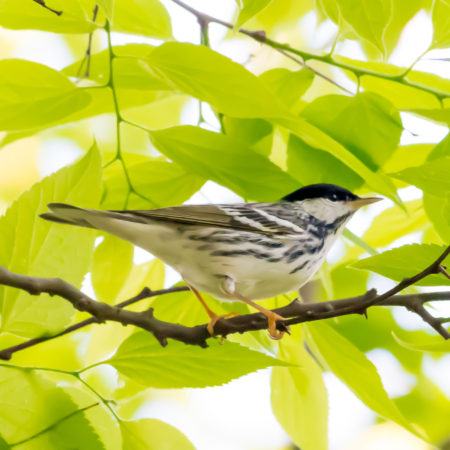
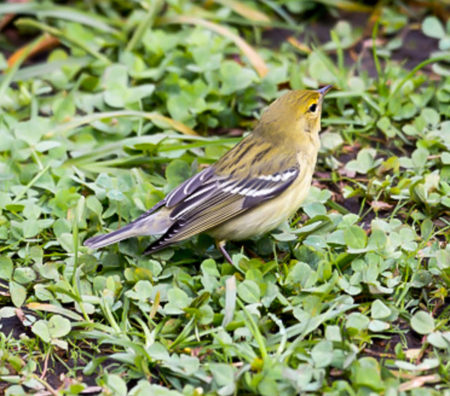
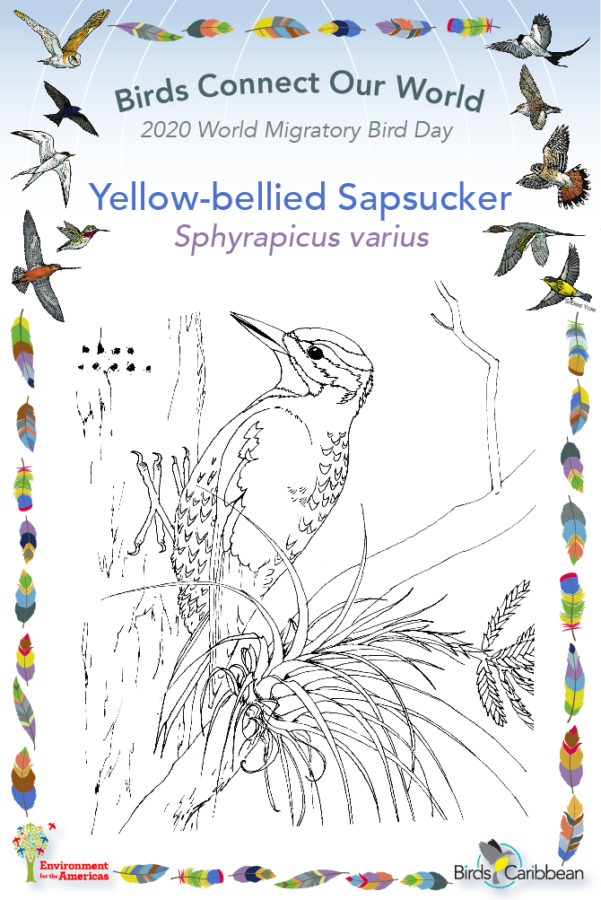
Celebrate World Migratory Bird Day (WMBD) with us in 2023! This year’s theme is “Water: Sustaining Bird Life”. Have fun learning about a new migratory bird every day. We have coloring pages, puzzles, activities, and more. Download for free and enjoy nature with your family at home.
Migratory Bird of the Day: Lesser Yellowlegs
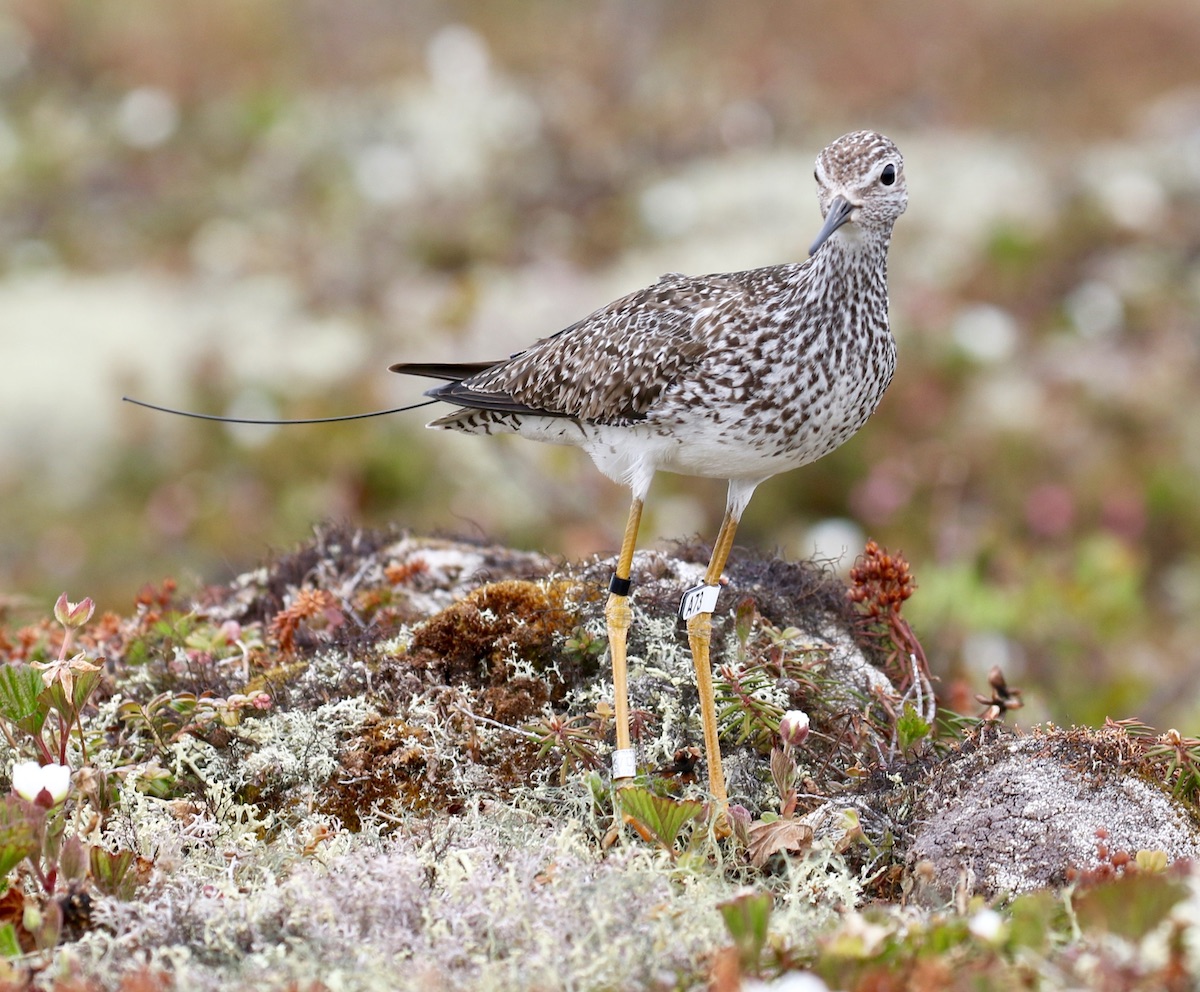
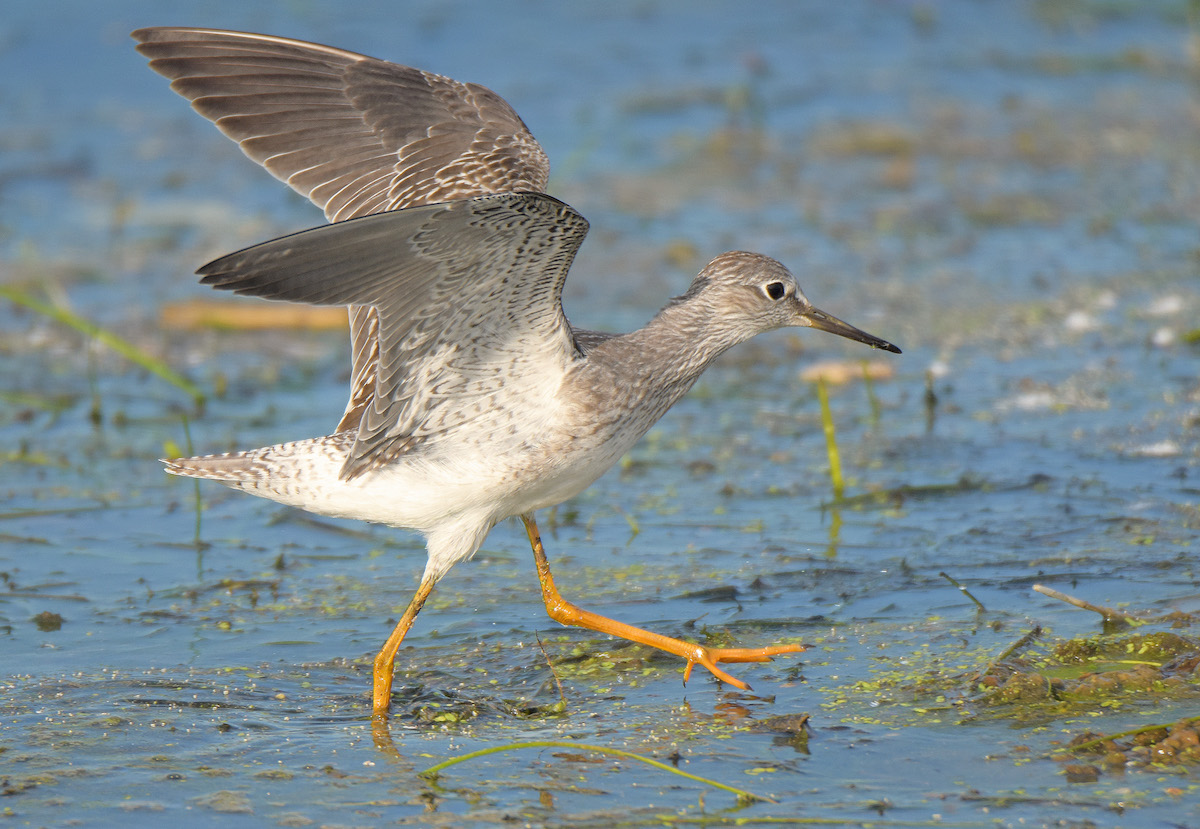
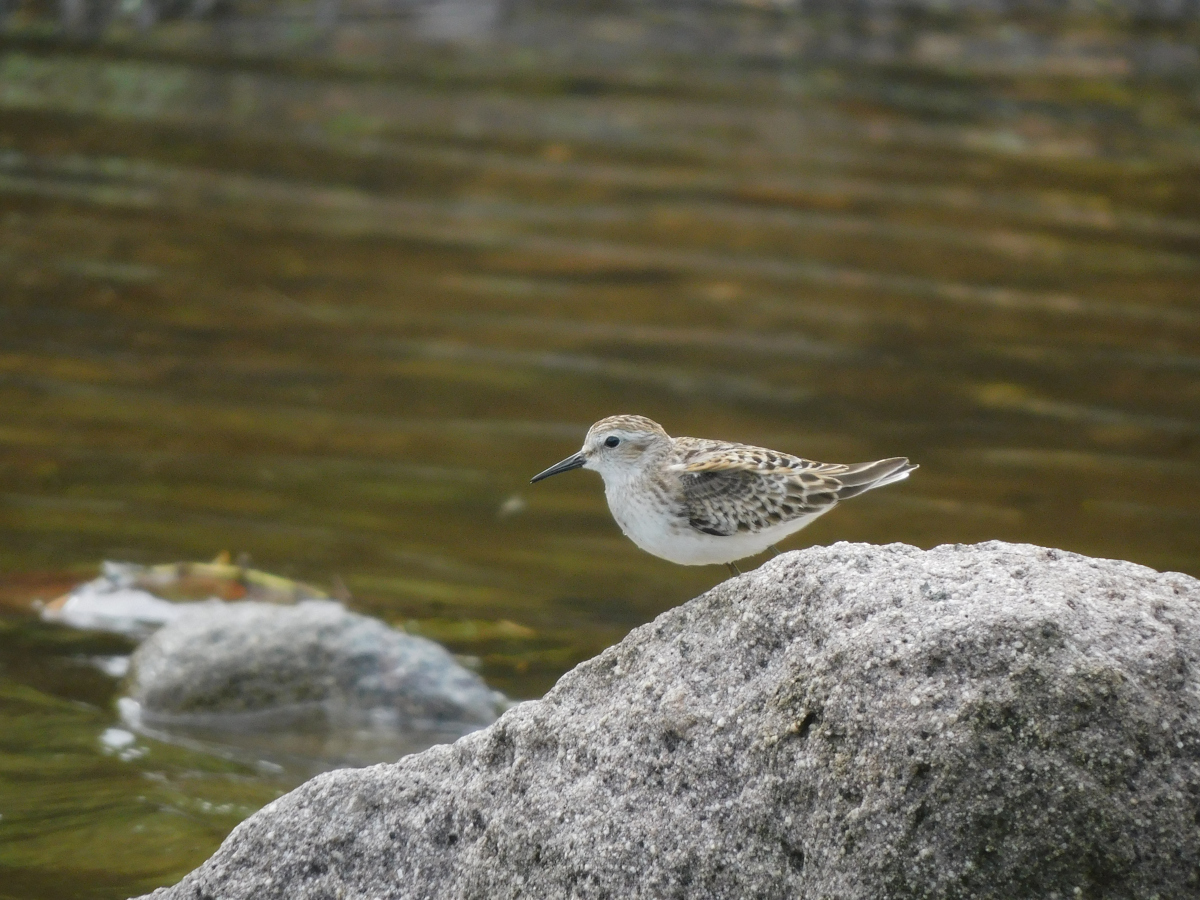
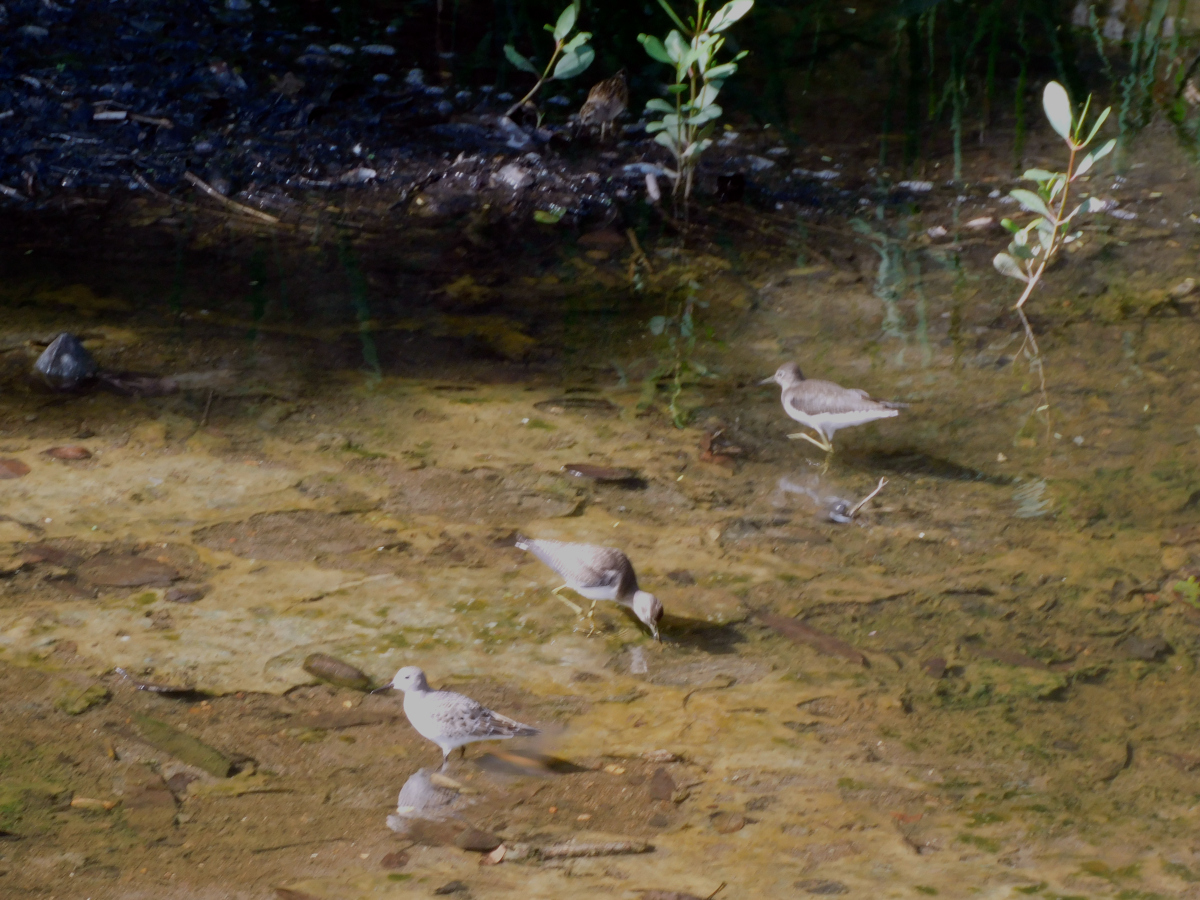
With their long bright-yellow legs, you might spot these elegant shorebirds at the water’s edge searching the shallows for food. Lesser Yellowlegs are mottled grayish-brown above, with pale underparts. These slender-looking, long-billed birds can be easy to pick out from the crowd with their distinctive leg color. However, take care as this shorebird has a ‘cousin’—the Greater Yellowlegs!
Greater Yellowlegs are much larger and more heavily built. If you spot the two together, you’ll be in no doubt as to who is who. But you can also pick out Lesser Yellowlegs from its relatively shorter bill-length compared to Greater Yellowlegs. Lesser Yellowlegs also have a distinctive whistled “tu-tu” call, typically one or two notes, while the Greater Yellowlegs call is a stronger “tu-tu-tu!” of 3 to 4 notes. You can find more ID tips in our video here.
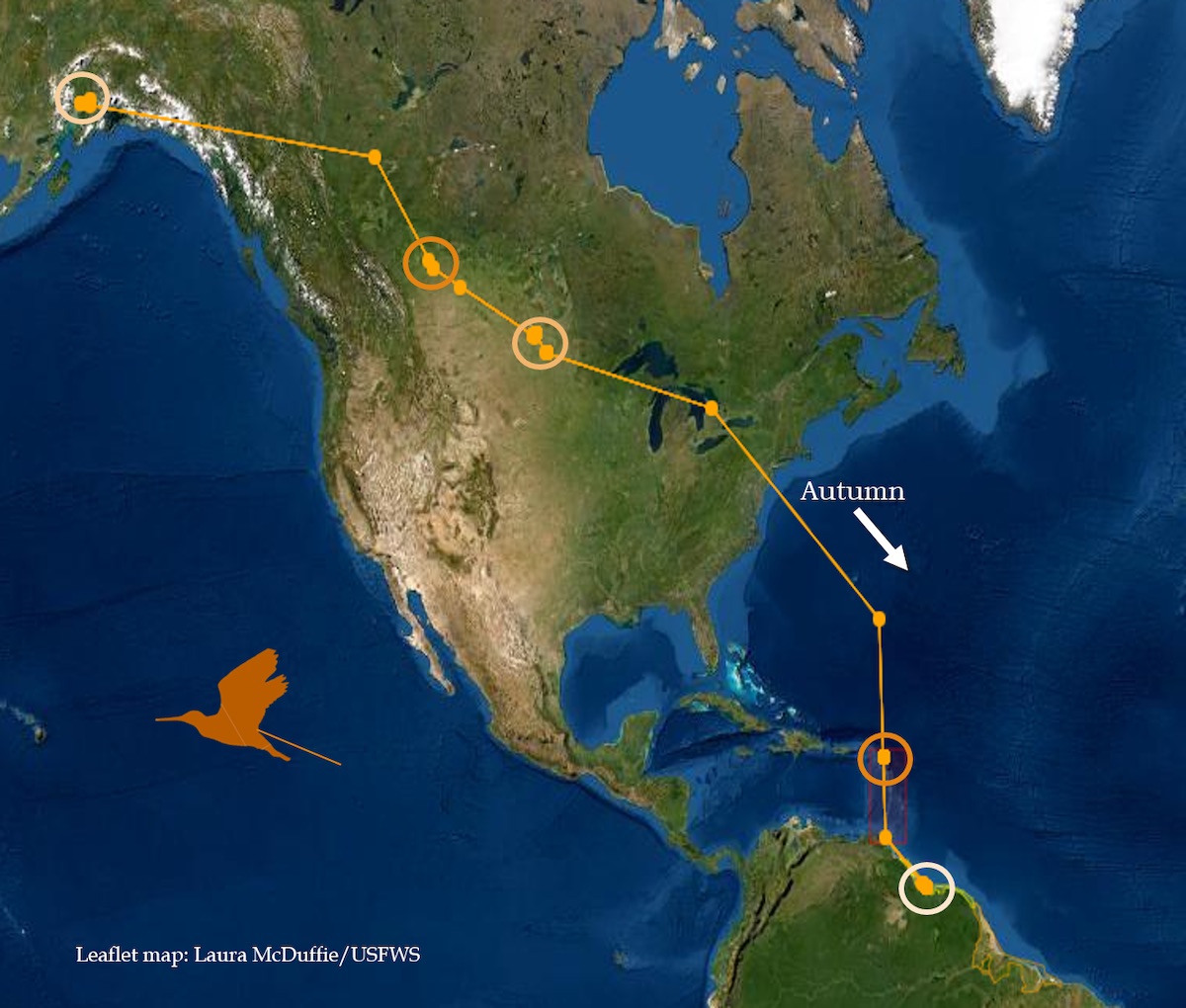
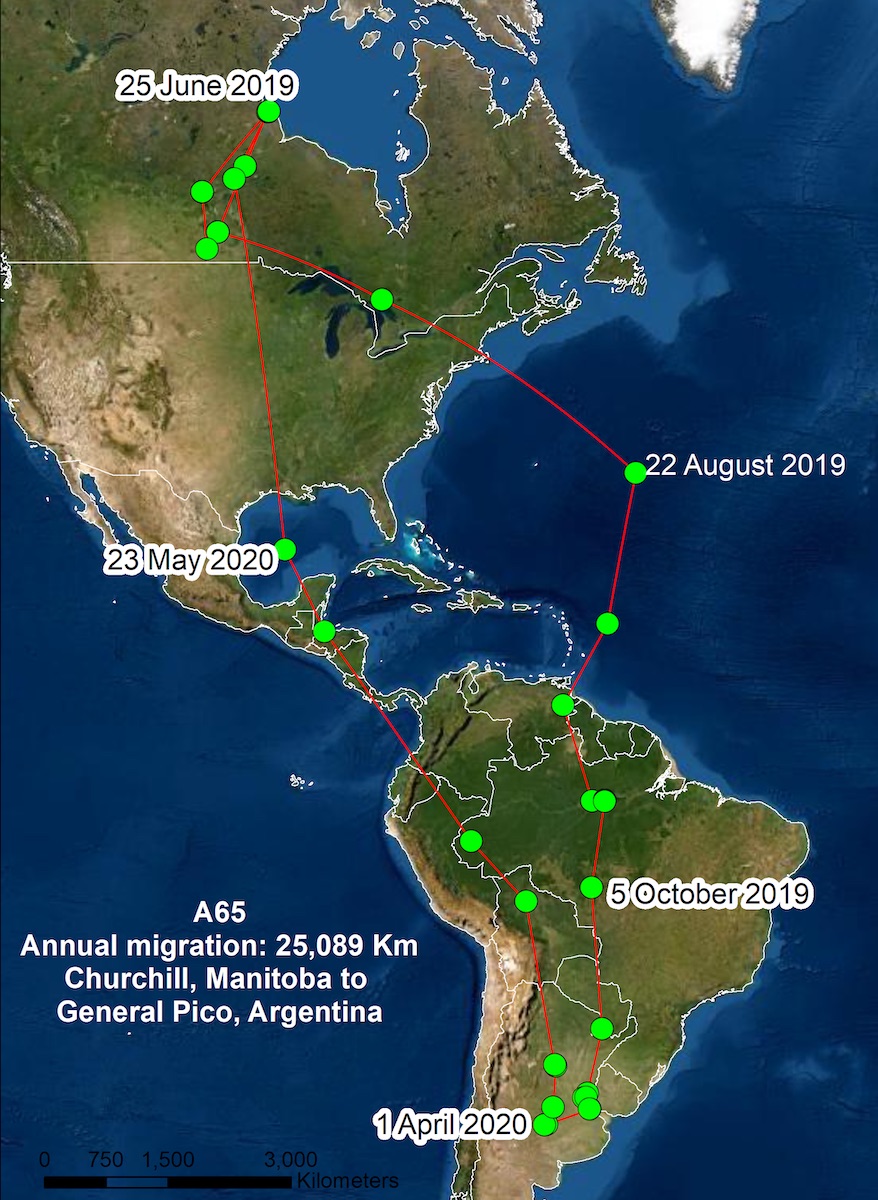
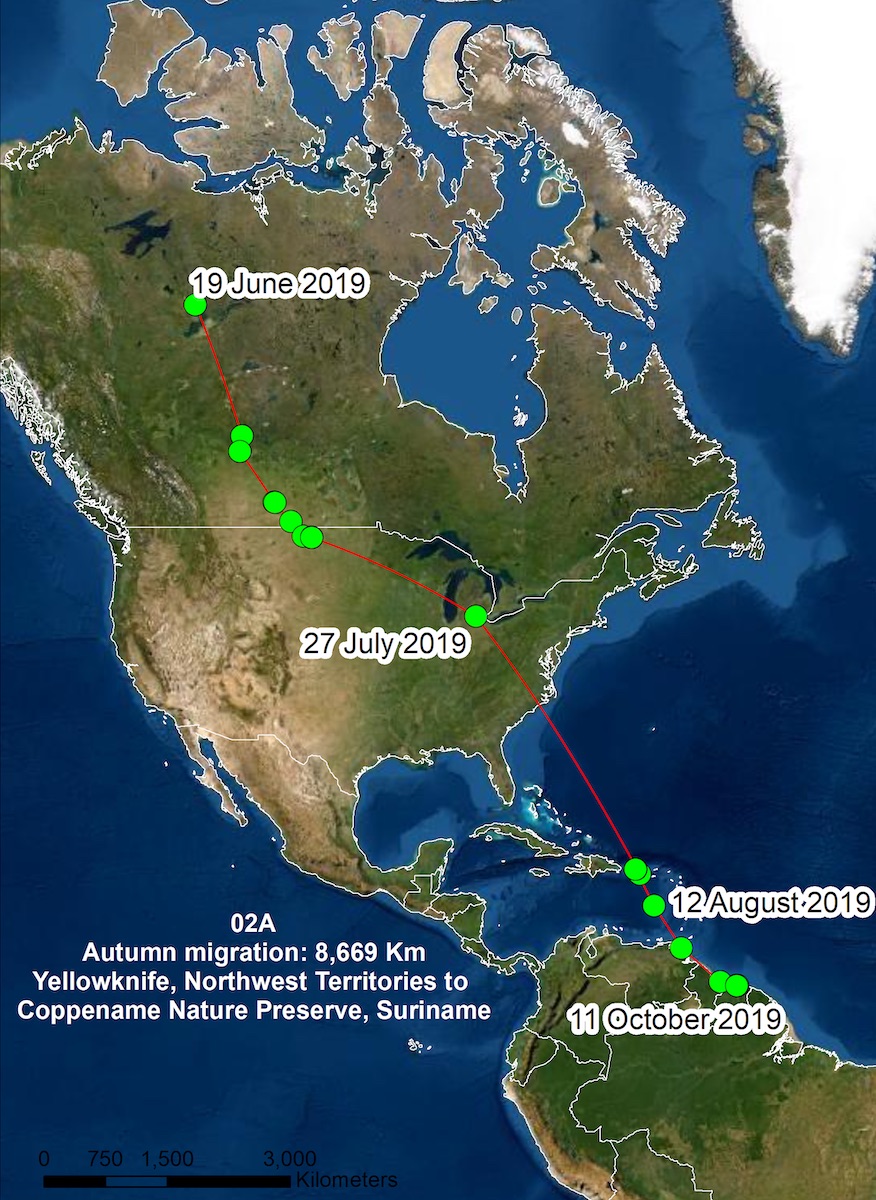
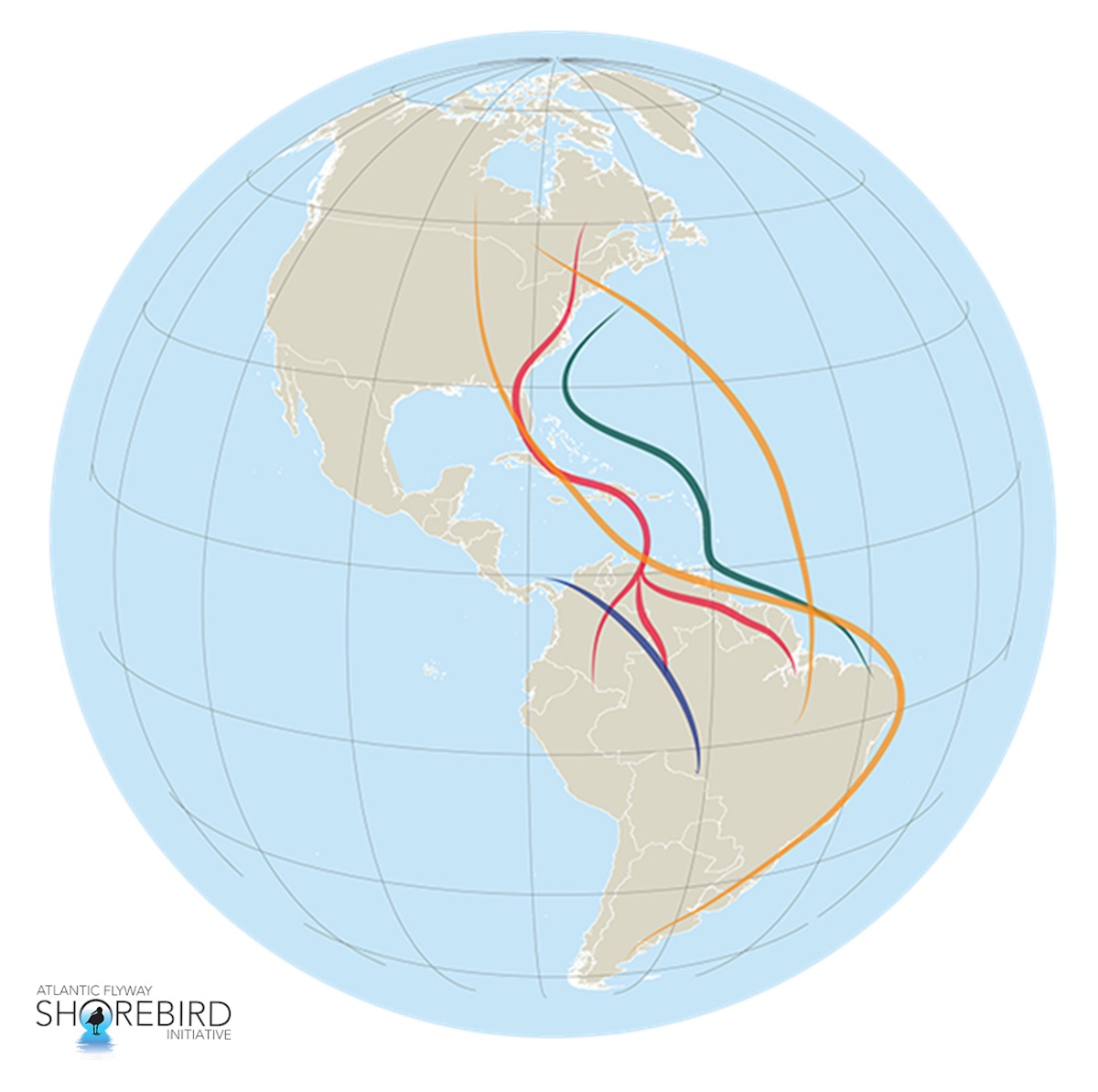
Lesser Yellowlegs breed in the Boreal forests in the far north of North America. They head south after breeding, making amazing migratory journeys of thousands of kilometers. They can start to arrive in the Caribbean from July and August. Some Lesser Yellowlegs will continue on to South America, but others will spend the winter here. Lesser Yellowlegs can be found in wetlands, both freshwater and on the coast. They show up on mud flats, ponds, lagoons, and on mangrove edges. They will also use agricultural areas, with flocks of thousands of individuals sometimes using flooded rice fields.
Lesser Yellowlegs are one of the most common shorebirds using the Atlantic Flyway. They are currently listed as “Least Concern” by the IUCN. Sadly, however, Lesser Yellowlegs populations have declined by a shocking 63-70% since the 1970s! Loss of habitat, climate change, and unsustainable hunting and trapping at several non-breeding locations have all contributed to this decline. Conserving our Caribbean wetlands will help Lesser Yellowlegs and many other species. They provide food-rich havens for birds to refuel on migration or to spend the winter.Learn more about this species, including its range, photos, and calls here.
Color in the Lesser Yellowlegs
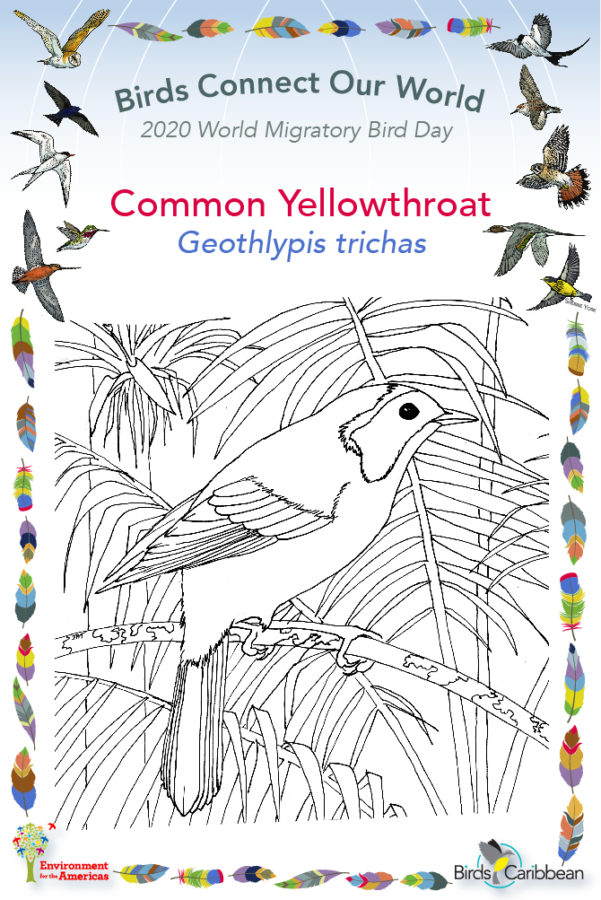
Download the Migratory Birds of the Day Coloring Page! Use the picture above and the photos on this page as your guide, or you can look up pictures of the bird online or in a bird field guide if you have one. Share your colored-in page with us by posting it online and tagging us @BirdsCaribbean #WMBD2023Carib
Listen to the calls of the Lesser Yellowlegs
The calls of the Lesser Yellowlegs are a whistled “tu-tu” with one or two notes, often repeated rapidly.
Puzzles of the Day
Click on the images below to do the puzzle. You can make the puzzle as easy or as hard as you like – for example, 6, 8, or 12 pieces for young children, all the way up to 1,024 pieces for those that are up for a challenge!
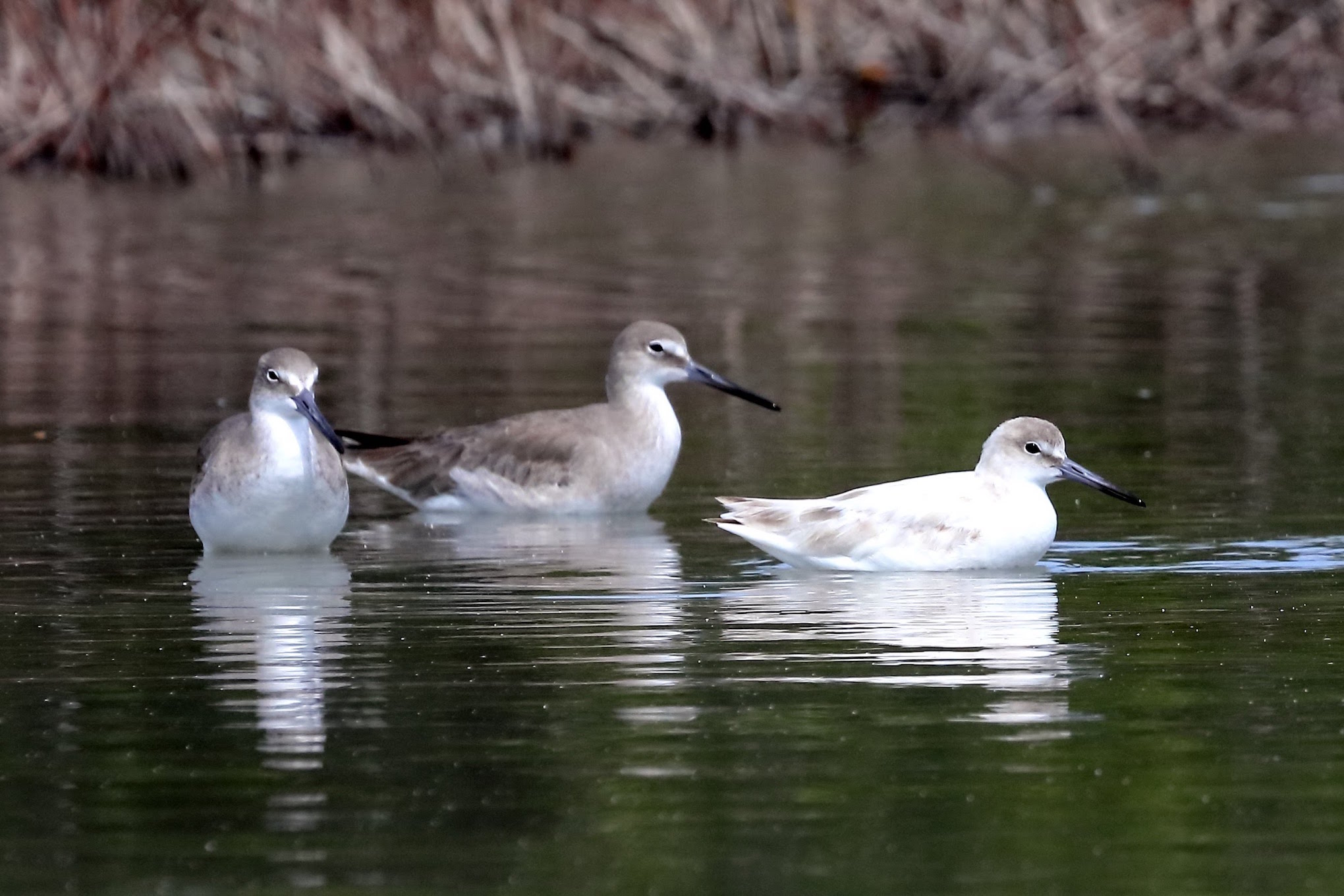
Lesser Yellowlegs. Did you know that despite their similar appearance, Greater and Lesser Yellowlegs are not each other’s closest relatives? The Lesser Yellowlegs is more closely related to the Willet! (Photo by Franz Delcroix)
Lesser Yellowlegs mainly feed on invertebrates including snails and flies, beetles, and dragonflies. (Photo by Hemant Kishan)
Activity of the Day
FOR KIDS: Birds, like the Lesser Yellowlegs, that are typically found at the shore and other coastal habitats like mudflats and lagoons are called shorebirds.
These birds come in different sizes and shapes. They are always on the move, checking the shoreline for food. They have special bills that help them poke into the mud or sand and in between rocks. Their bills and leg lengths are different depending on what they eat and where they find their food. All of this can help us to identify them!
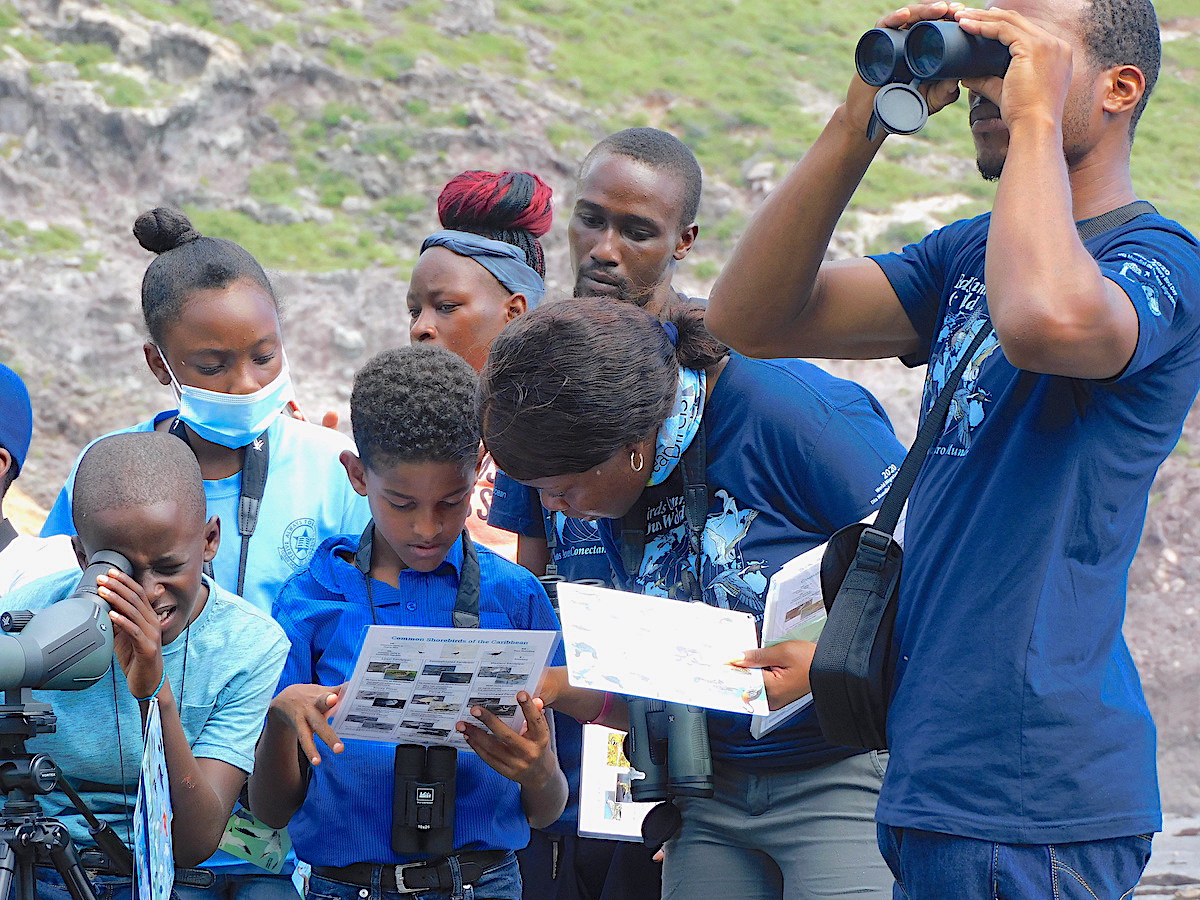
Why not go Birding at the beach? Or at any other wetland! We have made some suggestions of who you can look out for whilst you’re there. You can also download and print out our handy guide to help you identify the different types of shorebirds we find in the Caribbean. You can find more helpful tips, activities and video on our Shorebird Resources page.
FOR KIDS AND ADULTS: Enjoy these videos of Lesser Yellowlegs
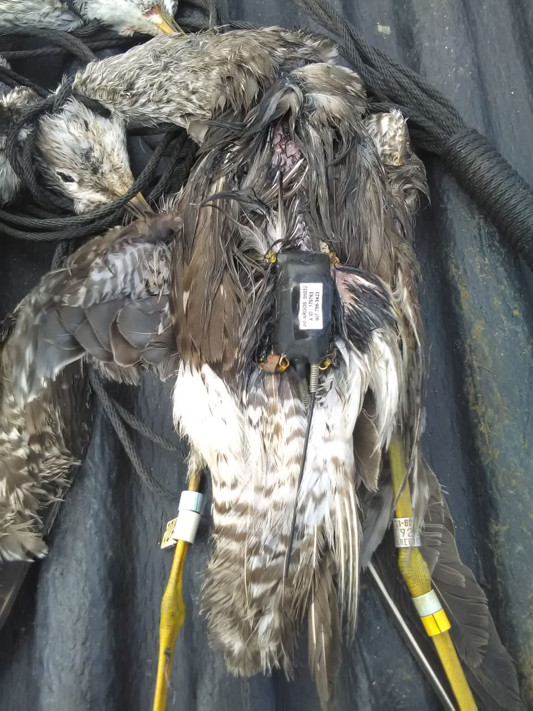
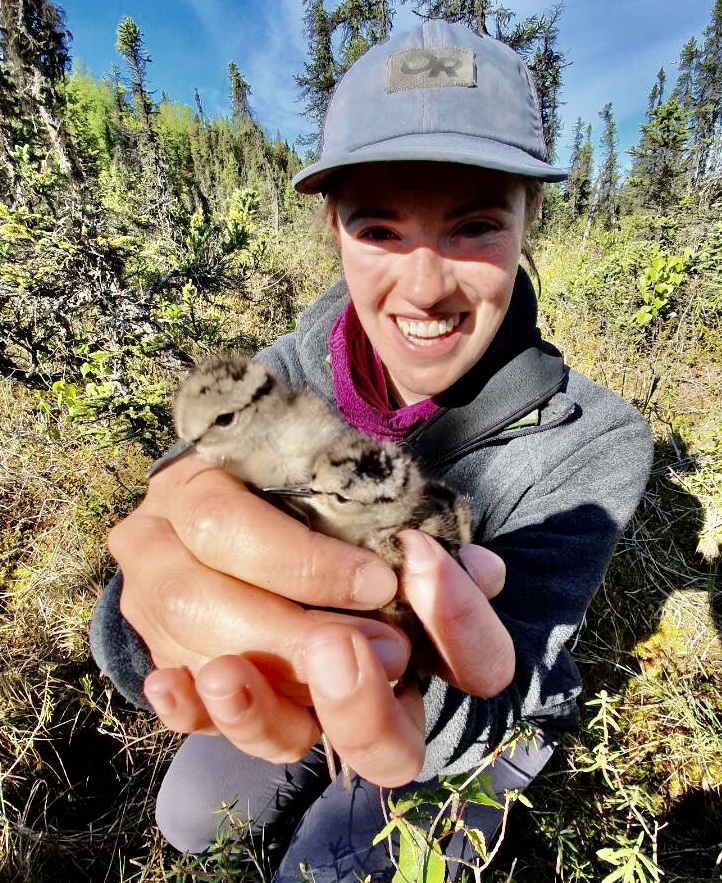
Read all about the fascinating work tracking Lesser Yellowlegs: Biologist Laura McDuffie has tracked the movements of these long distance migrants as they travelled to and from their breeding areas. Find out more about Laura’s work, the amazing journeys that Lesser Yellowlegs make each year and the threats they face along the way!
Calling all Caribbean bird lovers! Let’s be on the alert, and scan the skies for our migrating birds!
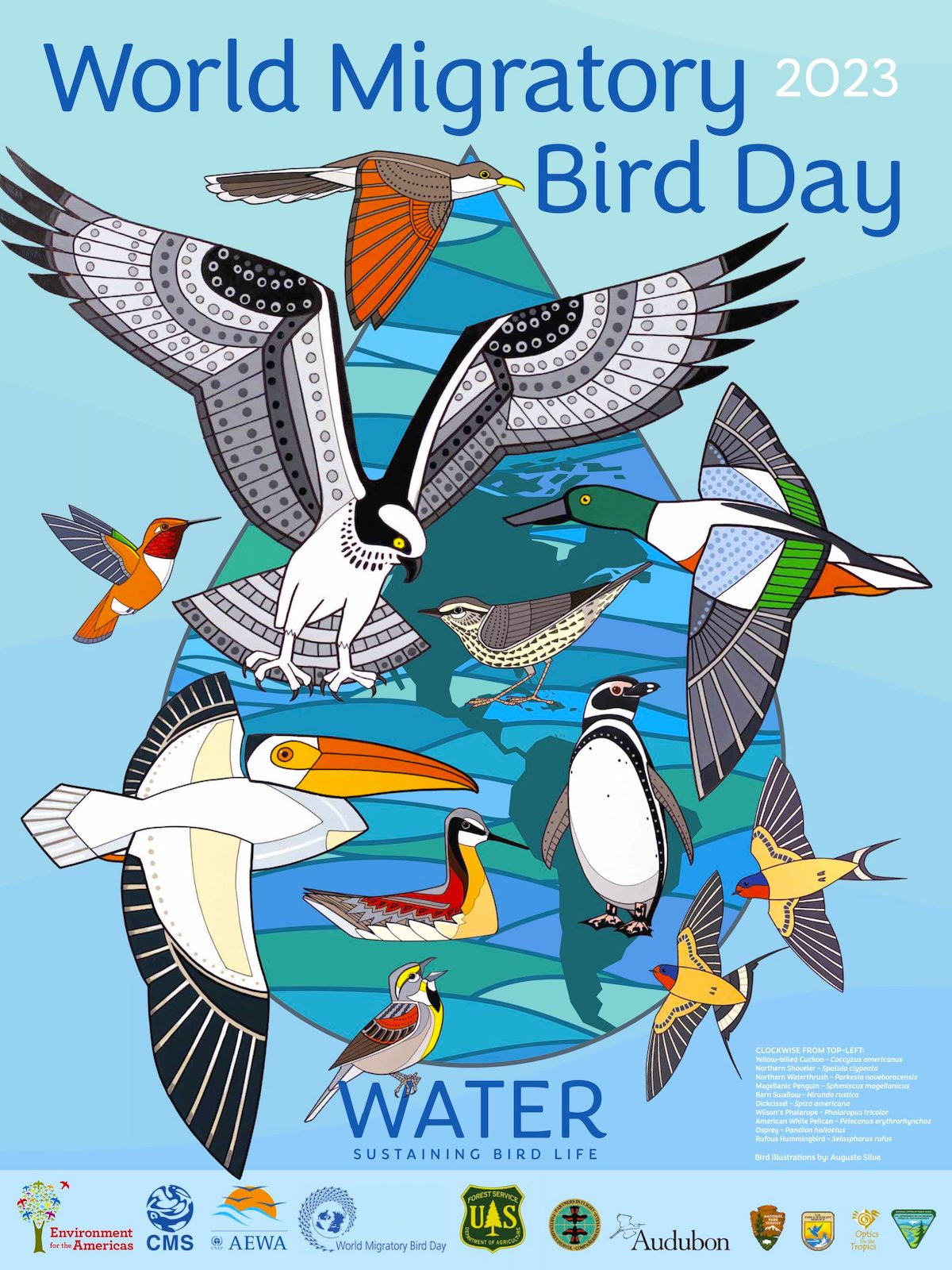
World Migratory Bird Day 2023 poster featuring artwork by Nicaraguan artist Augusto Silva.
October 14th, 2023 marks the official date for World Migratory Bird Day (WMBD) in the Caribbean and Central and South America; it’s celebrated in May in North America. It’s one of the most exciting times of year for birdwatchers and reflects the awesome nature of bird migration—the exact timing of which varies between the northern and southern hemispheres. It’s the time when migratory birds appear, as if by magic, in Caribbean gardens, forests, coastlines, and hillsides—returning to their favorite spots where food and shelter are plentiful.
While we welcome our wonderful warblers, shorebirds, landbirds, hawks and others back “home” to spend the winter months on our islands, we also recognise that WMBD is a global campaign. It is a platform for citizens worldwide to learn more about migratory birds, to realize their value—and, most importantly, to understand the need to conserve them.
This year’s WMBD theme highlights the impact of the growing water crisis on migratory birds. This theme resonates in the Caribbean, where islands have been enduring longer-lasting and more severe droughts. It is not only farmers and householders who are feeling the effects of lower than normal rainfall patterns. Birds are, too! This October, 2023, the Caribbean will be a part of the worldwide campaign—adopting the theme “Water: Sustaining Bird Life.”
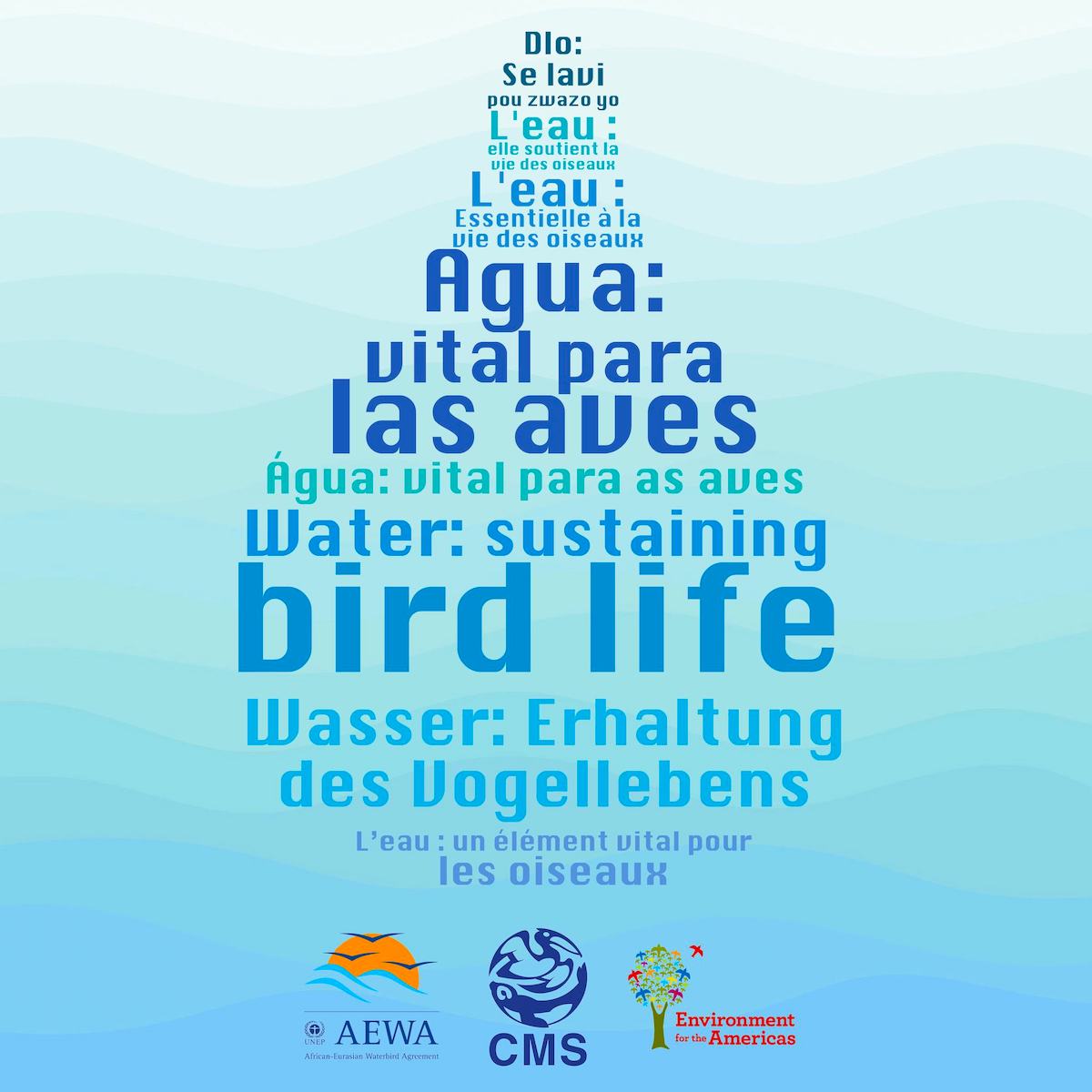
Here is the WMBD 2023 theme in other regional languages:
Agua: vital para las aves
L’eau: Source de vie pour les oiseaux
As the saying goes, “Water is life.”
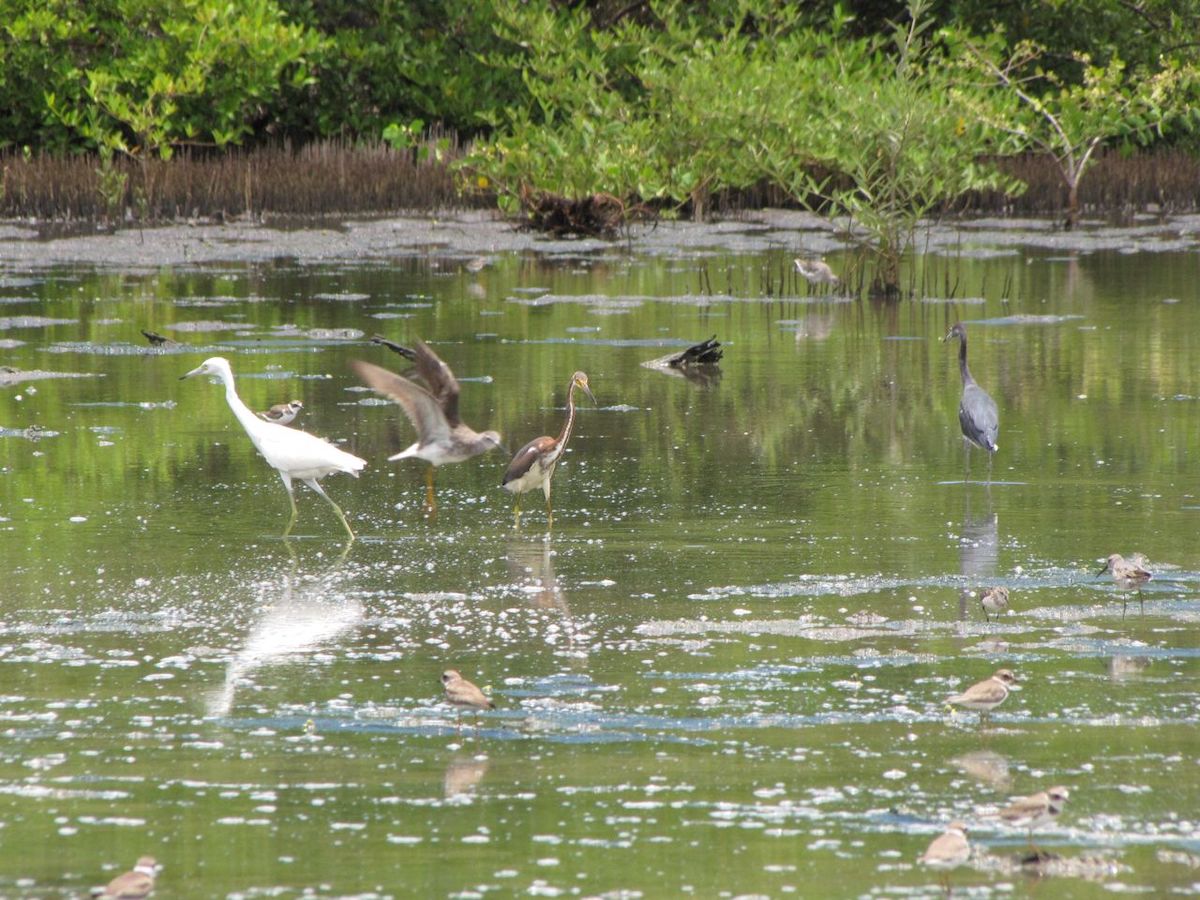
Water is essential for the survival of all living organisms on this “Blue Planet.” Migratory birds depend on watery places for resting, breeding and feeding. These include rivers and streams, swamps and wetlands, ponds and gullies; and of course, coastal waters.
The wetlands of Monte Cristi are a fantastic place for waterbirds, including many migratory shorebirds. (photo by Maria Paulino)
Zapata Swamp in Cuba is an incredibly important place for waterbirds and people. (photo by Garry Donaldson)
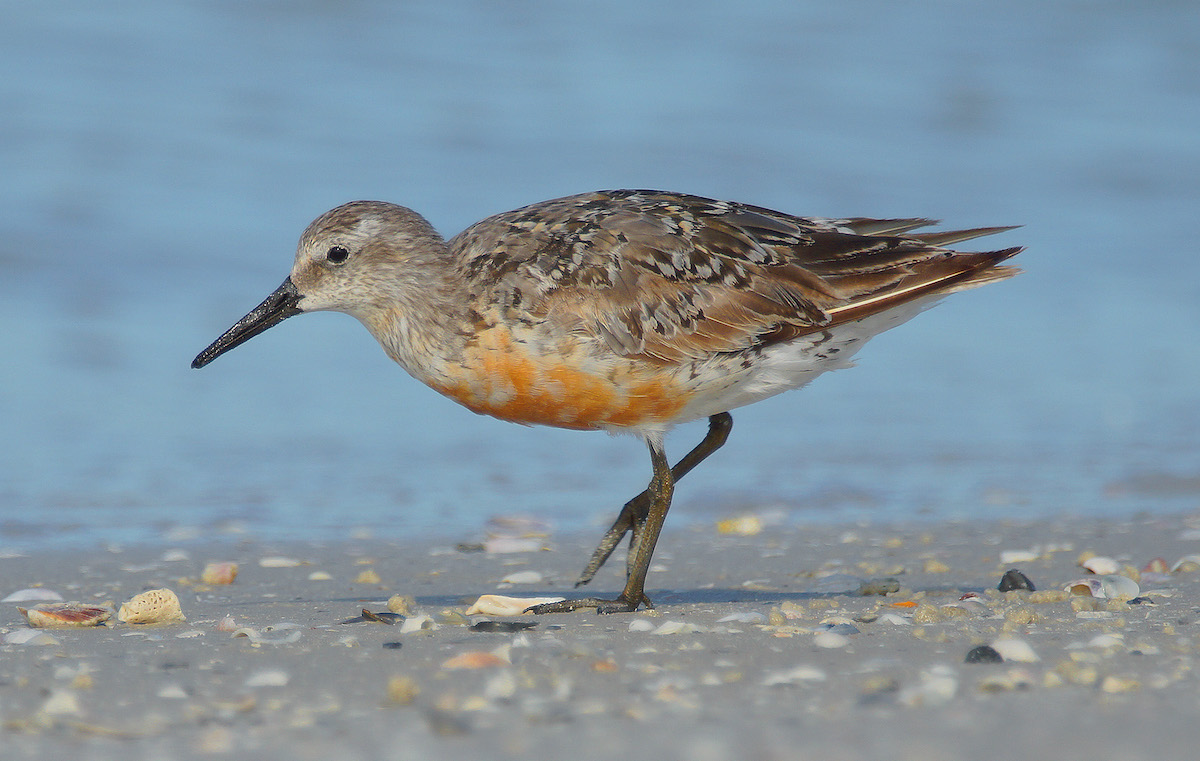
The world famous Bonaire salt ponds support large numbers of many species of migratory shorebirds, including the Semipalmated Sandpiper, Least Sandpiper, Stilt Sandpiper, Red Knot, Lesser Yellowlegs, Semipalmated Plover, and Sanderling.
The Layou River in St. Vincent is an important freshwater site. (Photo by Lisa Sorenson)
The Anasco River in Puerto Rico provides a home to species like the West Indian Whistling-Duck and it is a source of fresh water on the island. (photo by Adrienne Tossas)
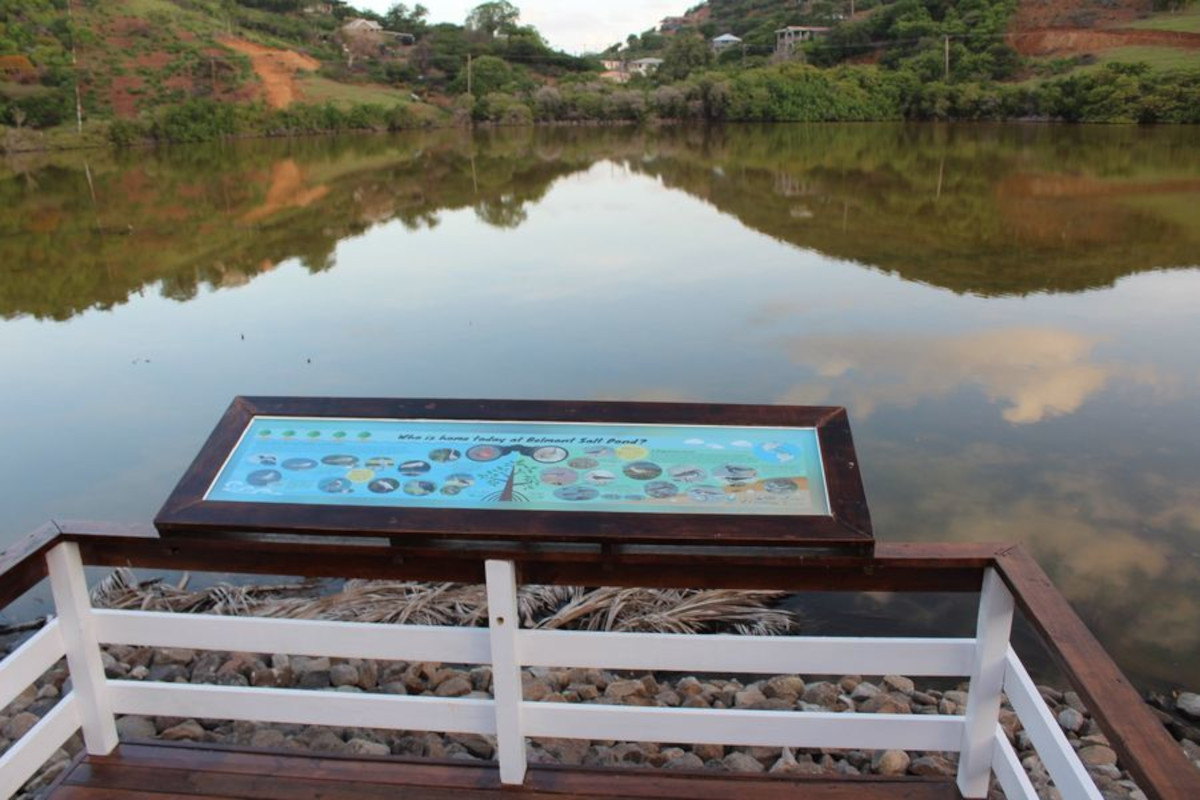
Wetlands are wonderful places for birds, recreation and learning. View of the Twin Bridges, Ashton Lagoon, Union Island, St Vincent and the Grenadines. (Photo by Sustainable Grenadines, Inc.)
As Caribbean residents may have noticed during this intensely hot summer, birds have flocked to bird baths, drains, and water sources of all kinds to quench their thirst and preen their feathers, especially in more urban areas. However, the extreme heat and drought, fueled by climate change, are not the only challenges facing migratory birds. The quantity and quality of freshwater supplies are declining. Pollution (pesticides, chemicals, sewage, and plastic pollution) threatens many bird habitats. With ongoing tourism and housing developments, especially along the coast, the demand for freshwater for human use is growing.
A huge diversity of waterbirds and shorebirds call the Mt. Hartman wetlands in Grenada home, including both resident and migratory species. (photo by Lisa Sorenson)
We can all help our migratory birds
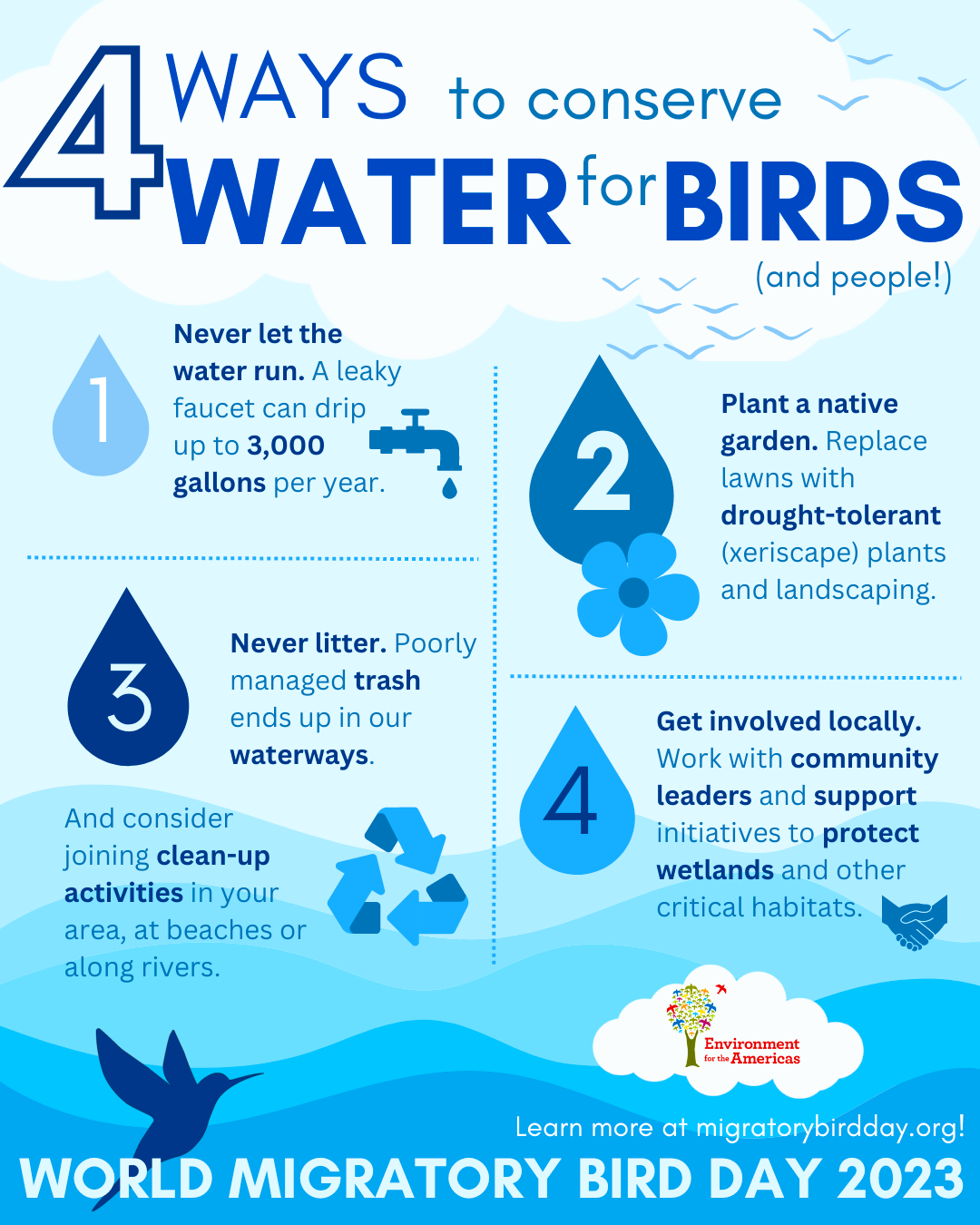
This WMBD join us in spreading the message that water conservation is important for all life on Earth, including birds! You can also help birds by planting native trees that require less watering and provide food and habitat, disposing of your garbage properly, lending a hand to clean up critical bird habitats, and making water conservation part of your daily routine by taking shorter showers, immediately fixing leaking faucets and pipes, and washing full loads only.
A homemade birdbath is another great way to provide birds with a reliable source of clean water. Every bird-friendly garden needs a spot for birds to drink from, clean themselves, or to just cool down on a hot day! These are so easy to put together and can be made from materials around your house and yard. This is also a great way to attract birds that don’t eat seeds or drink nectar to your garden—talk about a win-win!
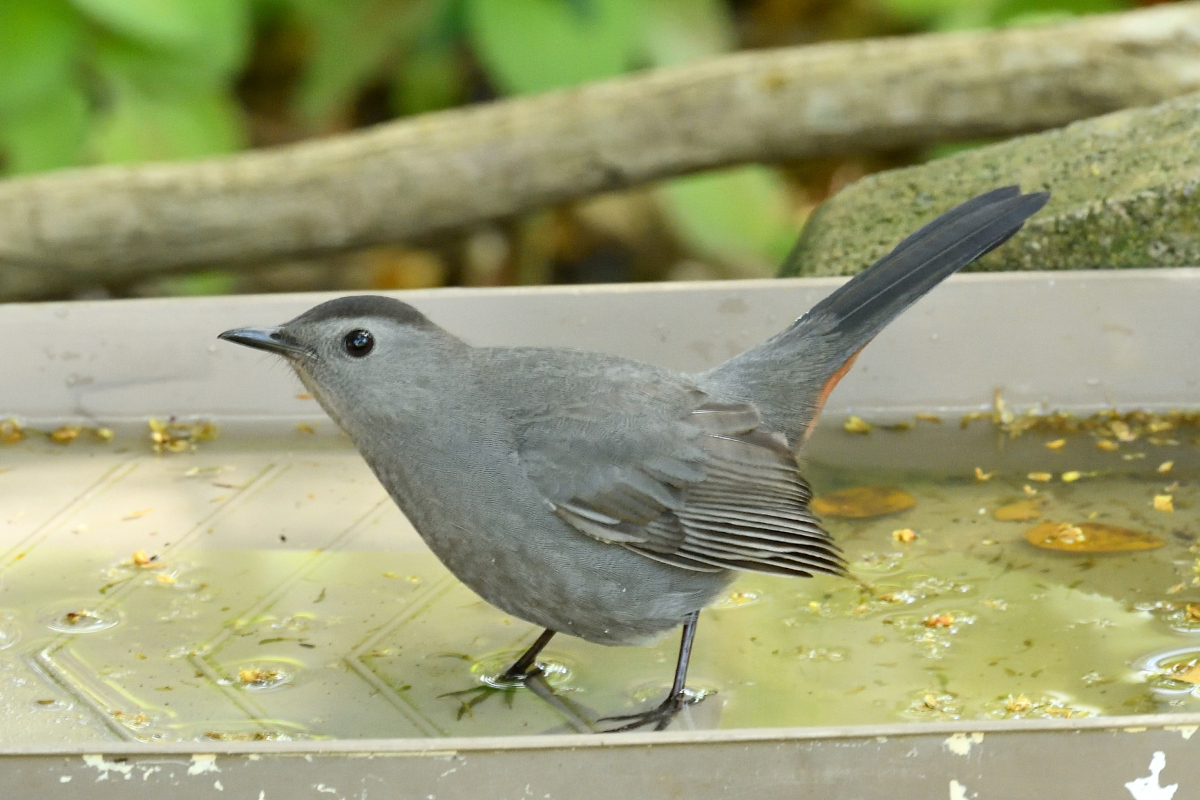
Gray Catbird “Yo Bath needs refilling”. (Photo by Stuart Reeves)
Clear the runway because coming in for landing is..
Every year, Environment for the Americas focuses on ten “special” species to feature in promotions. For this year’s WMBD the ten focal species selected are:
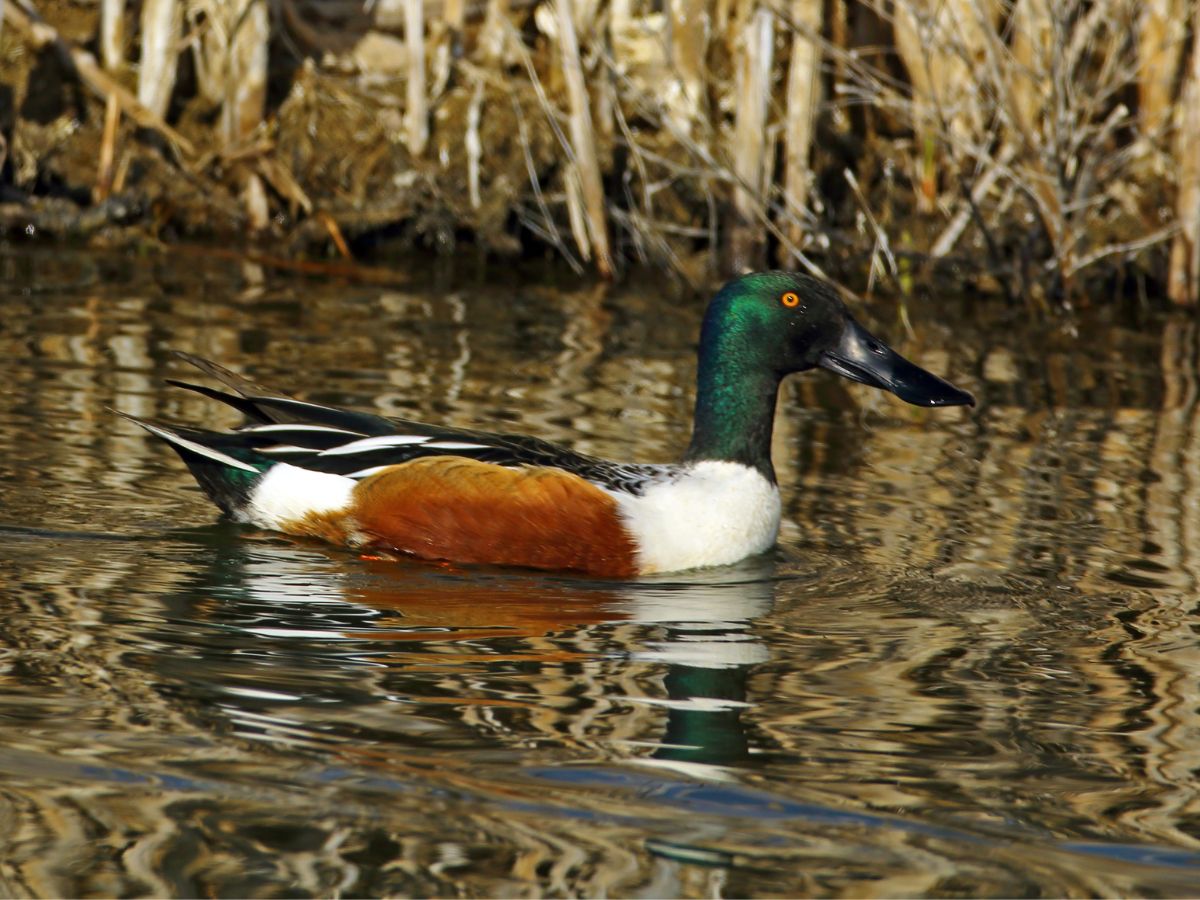
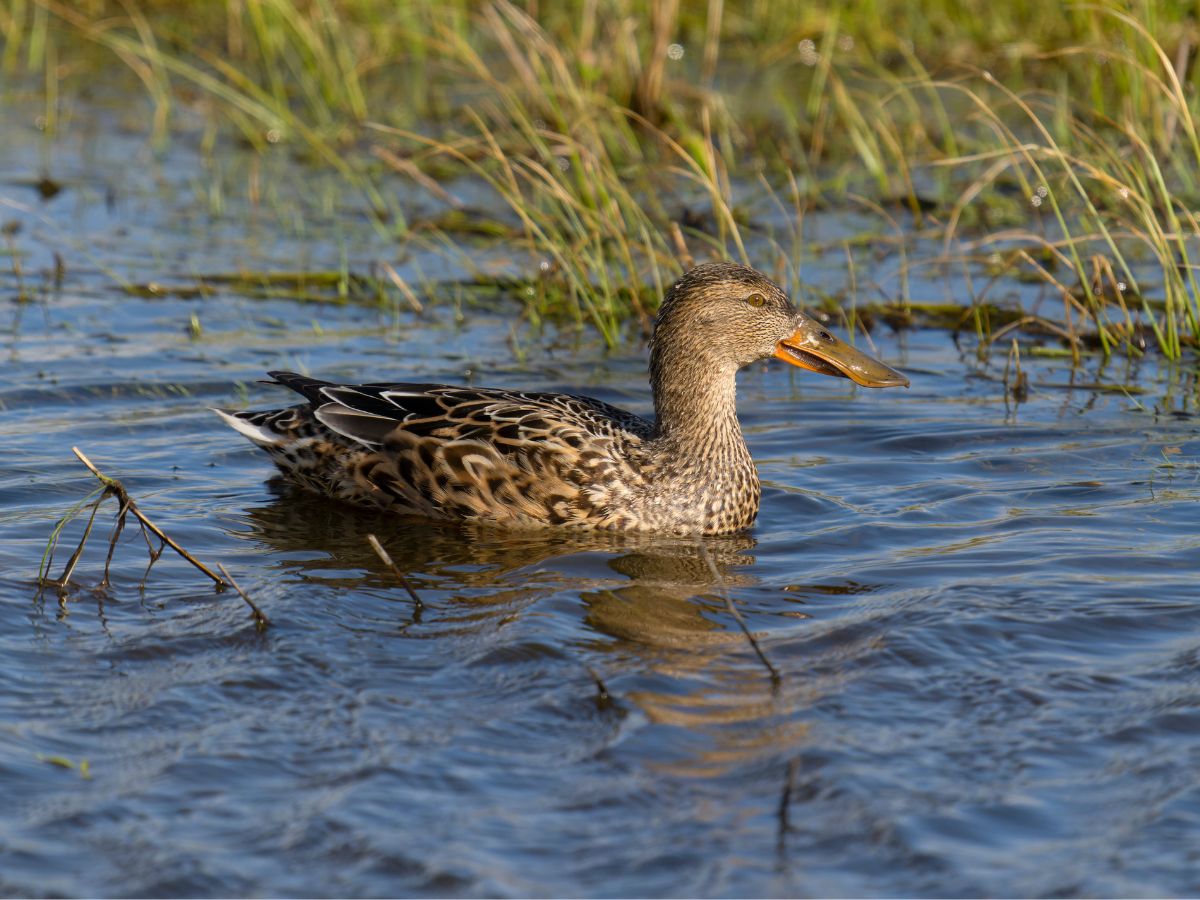
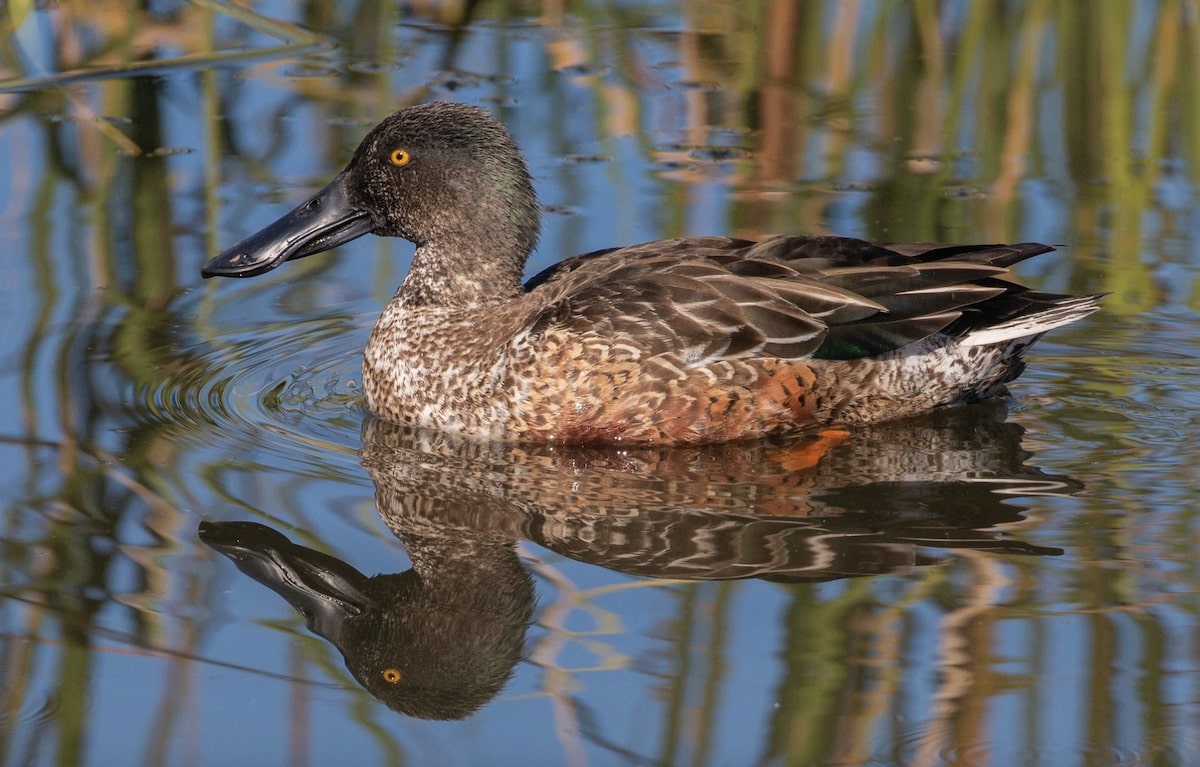
Northern Shoveler*
Male Northern Shoveler in breeding plumage. Note the huge, spoon-shaped bill.
Female Northern Shoveler also has the distinctive spatulate bill but she is buffy-brown.
Male Northern Shoveler in nonbreeding plumage. (photo by Steve Metchis ML291848121)
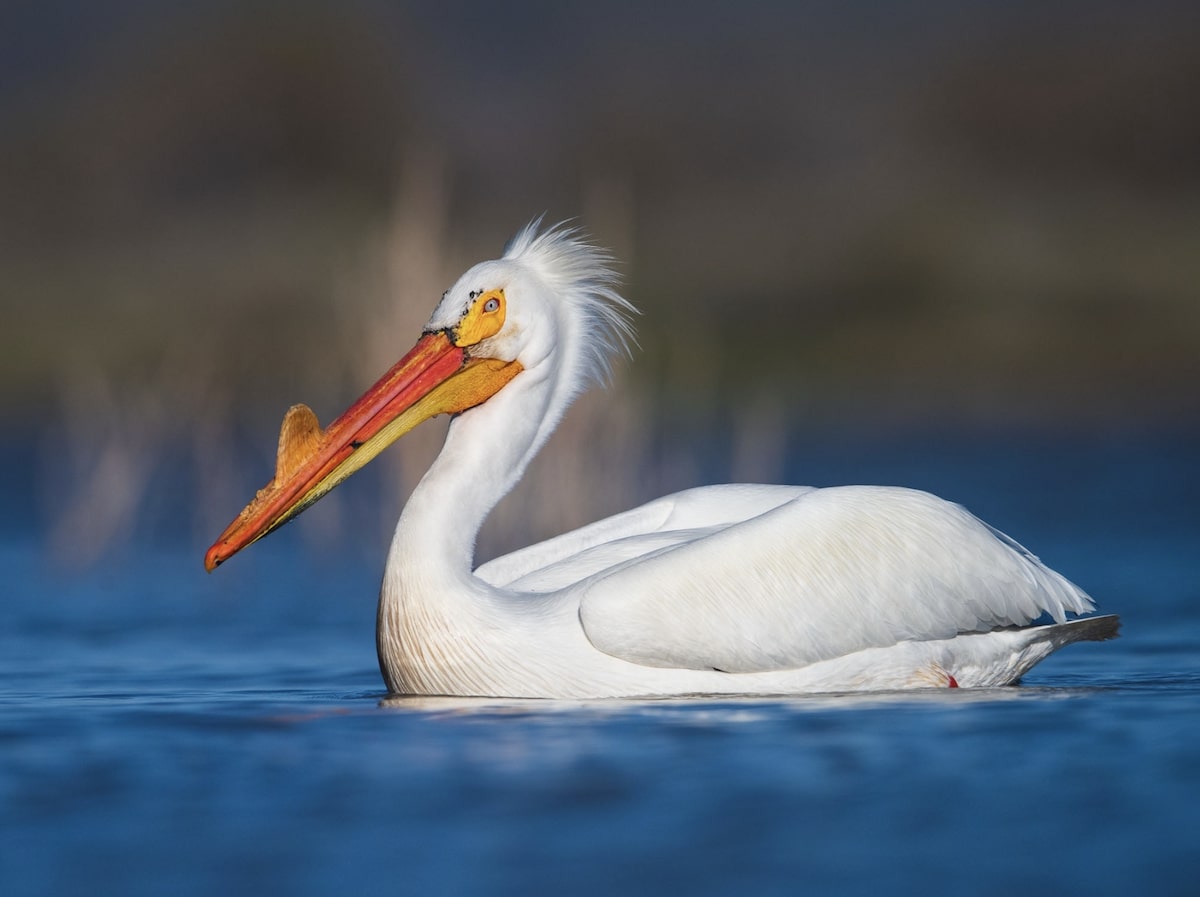
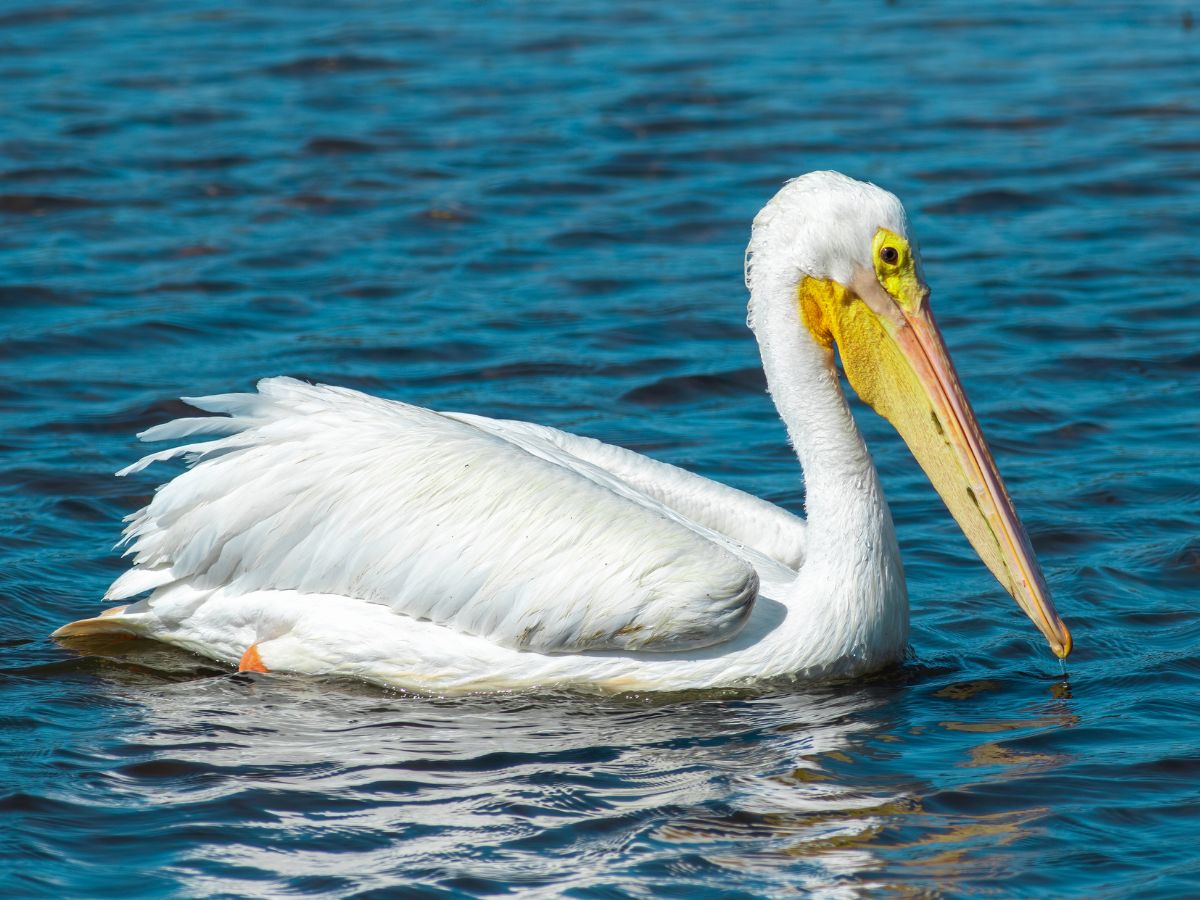
American White Pelican*
American White Pelican in breeding plumage. A yellow plate forms on the upper bill of breeding adults. (photo by Gerrit Vyn ML192450401)
American White Pelican in nonbreeding plumage.
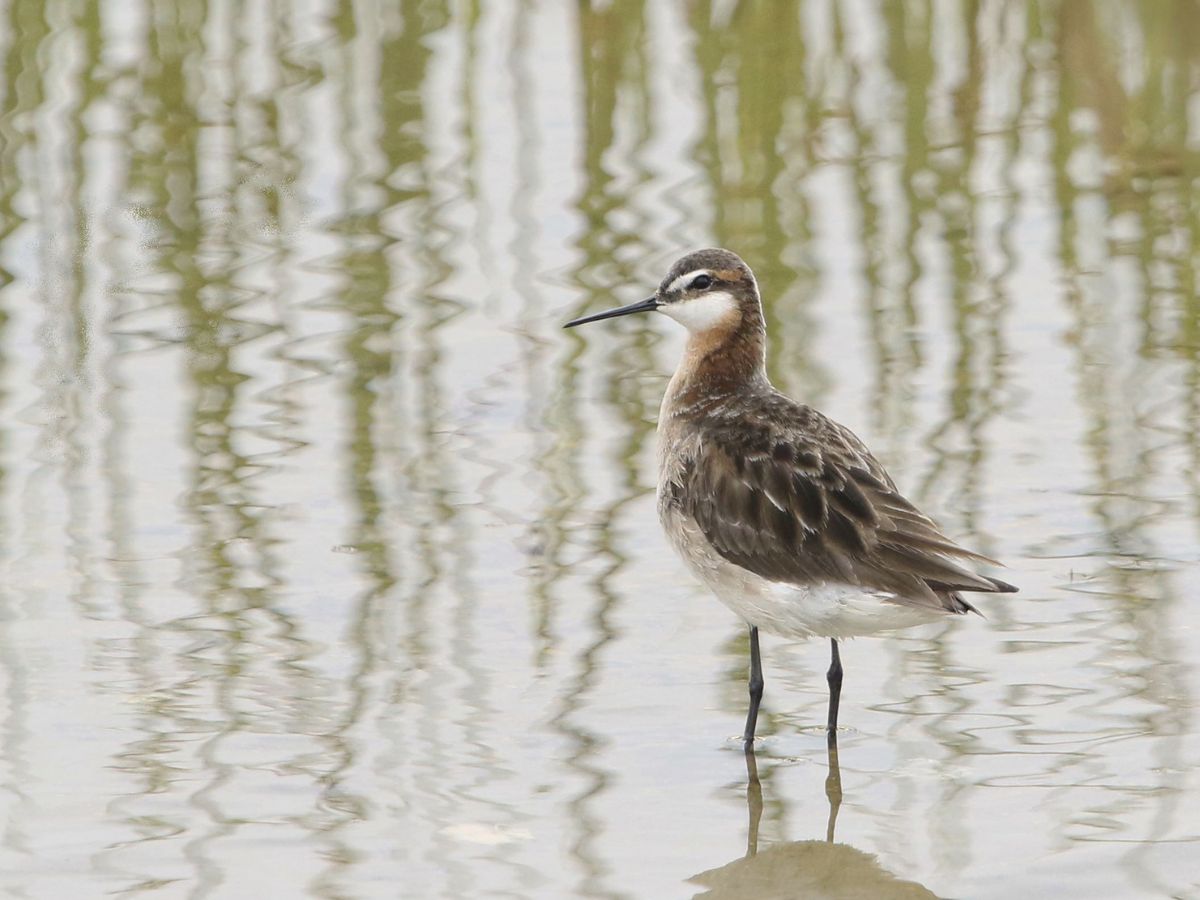
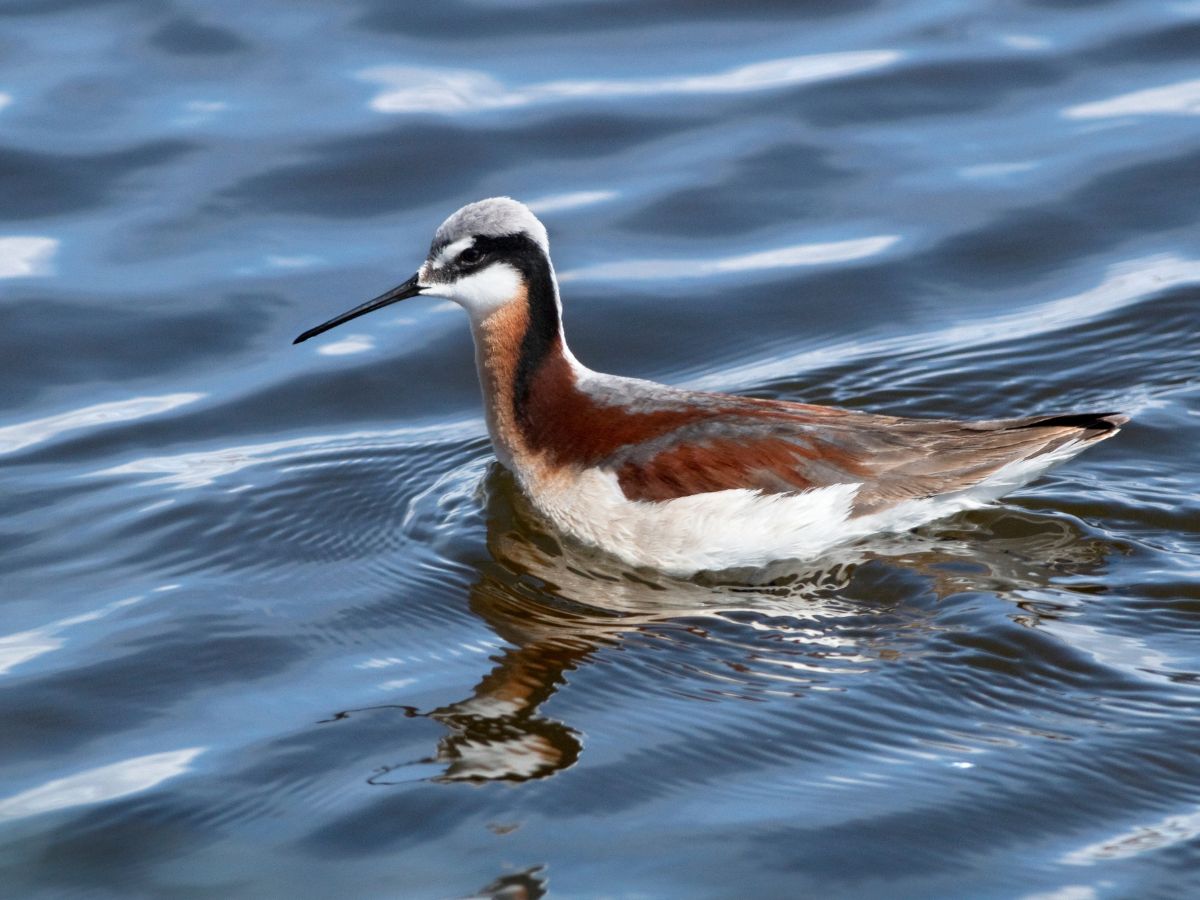
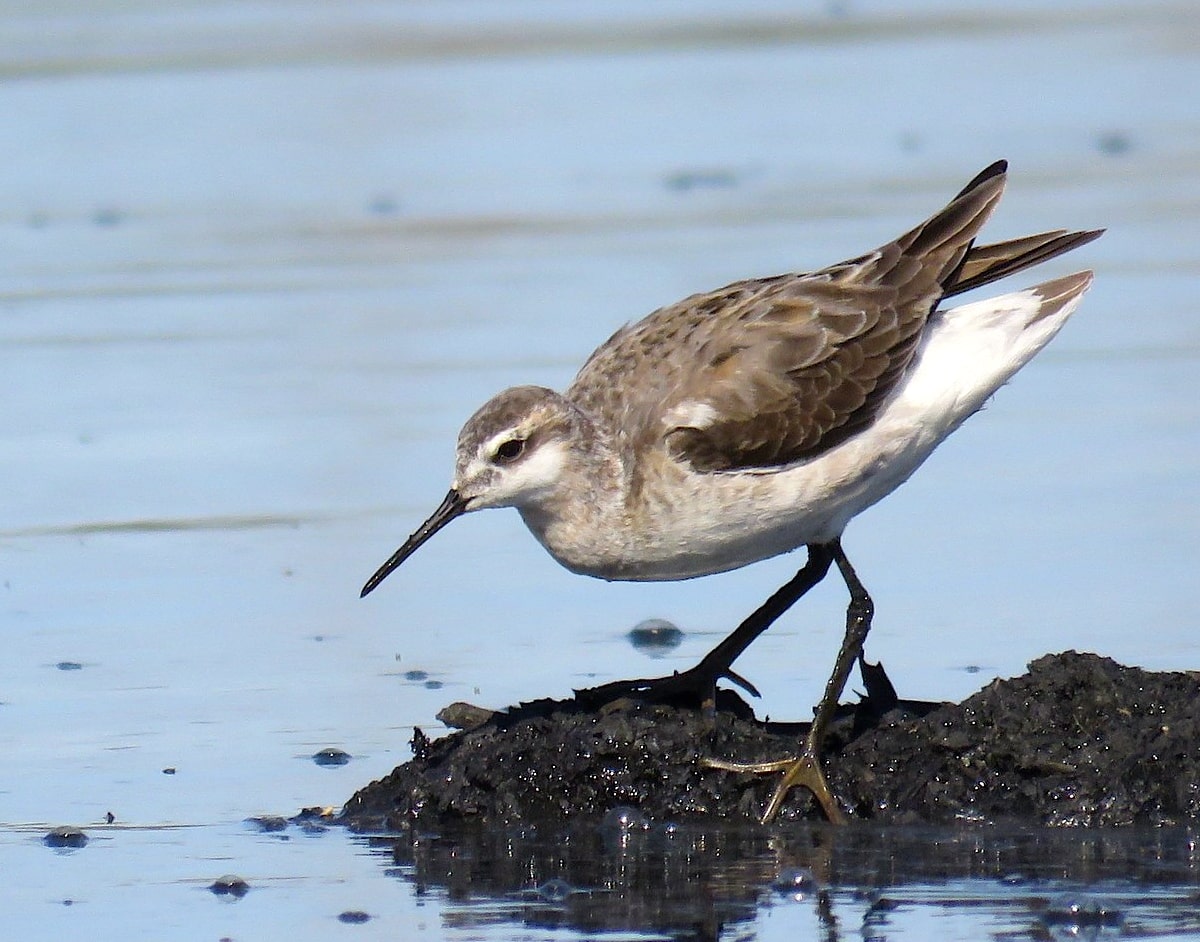
Wilson’s Phalarope*
Male Wilson’s Phalarope in breeding plumage. It lacks the neck stripe seen in the female.
Female Wilson’s Phalarope in breeding plumage. Note that she is more colorful than the male!
Wilson’s Phalarope in nonbreeding plumage. (photo by Josh Fecteau ML58365021
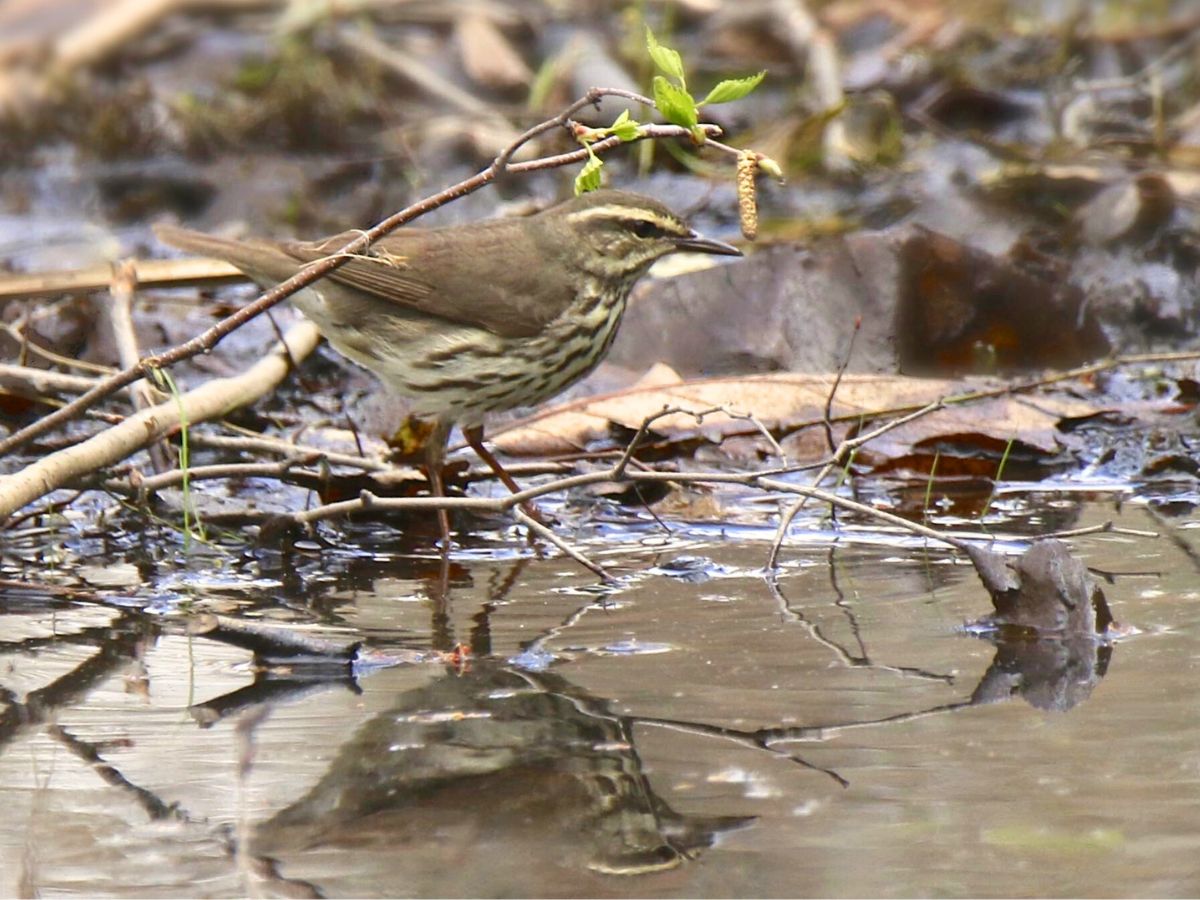
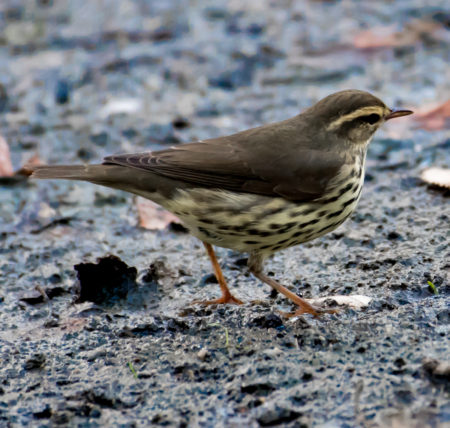
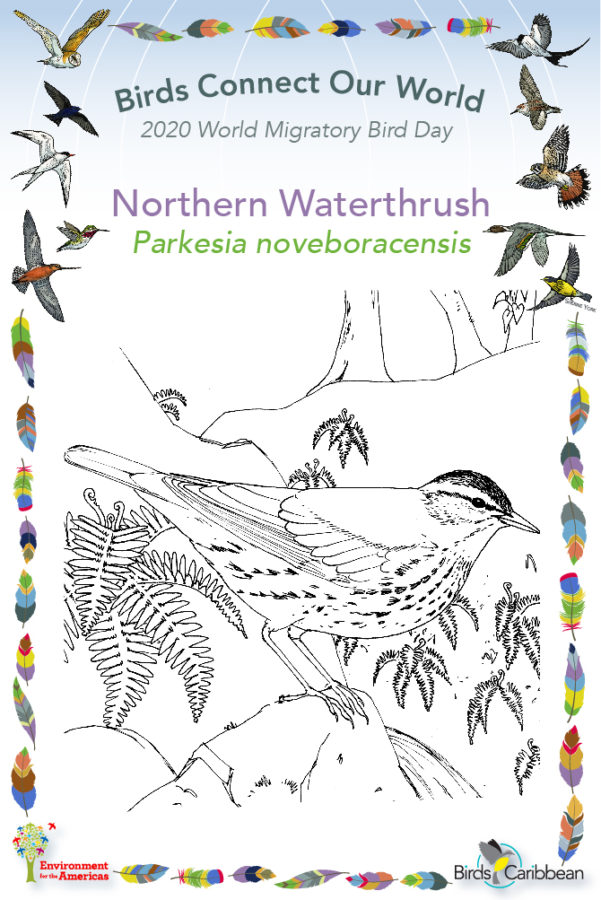
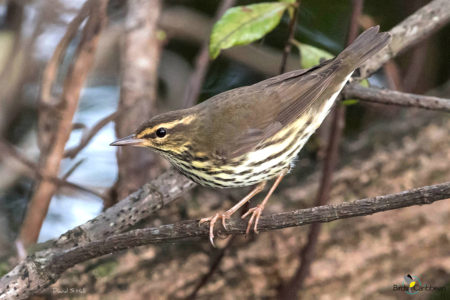
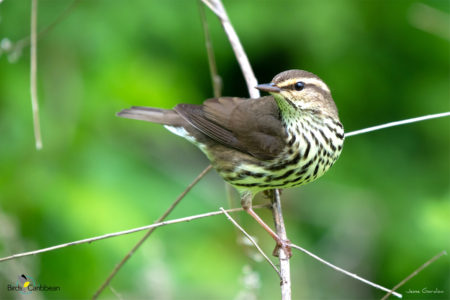
Northern Waterthrush*
Northern Waterthrush. Look for this migratory bird along the water’s edge.
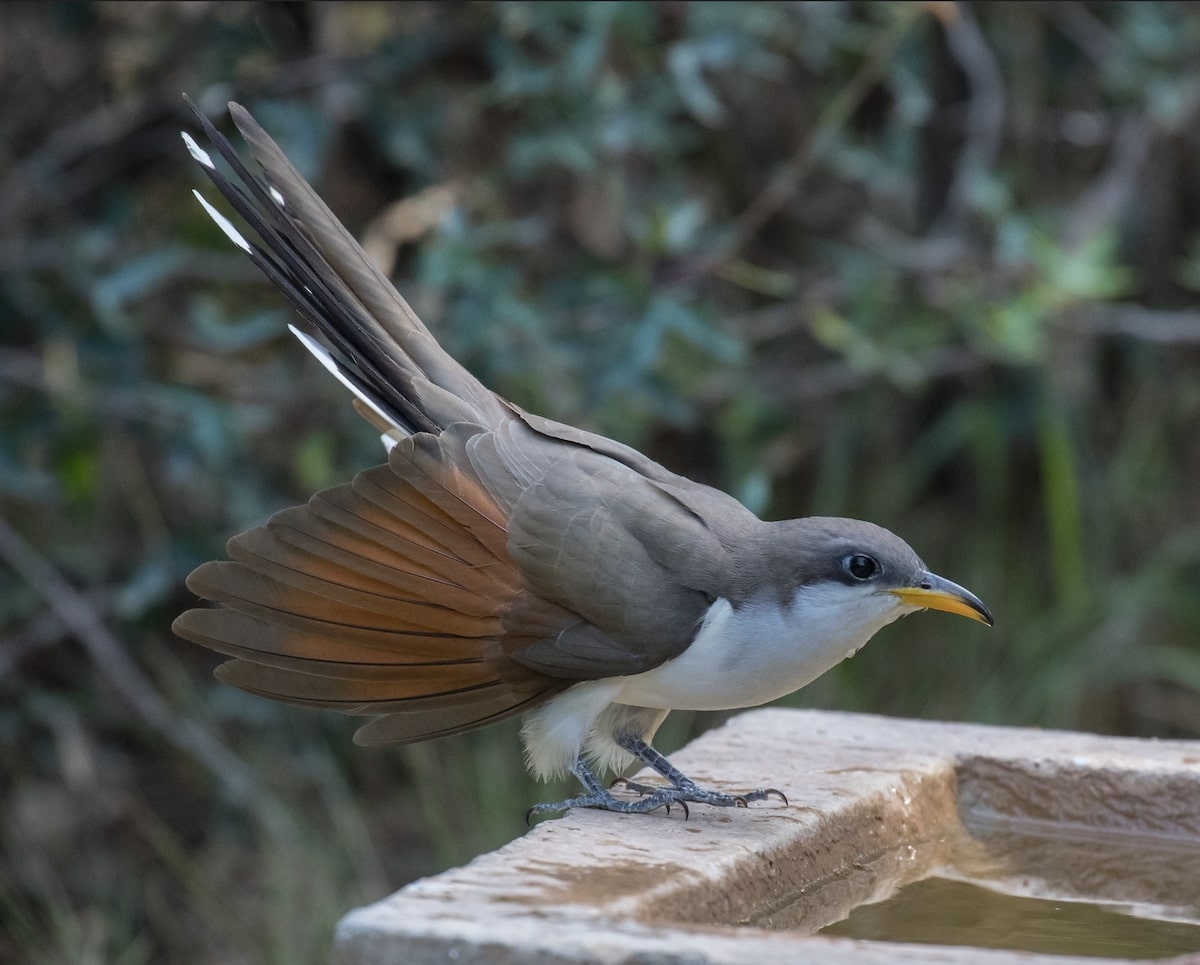
Yellow-billed Cuckoo*
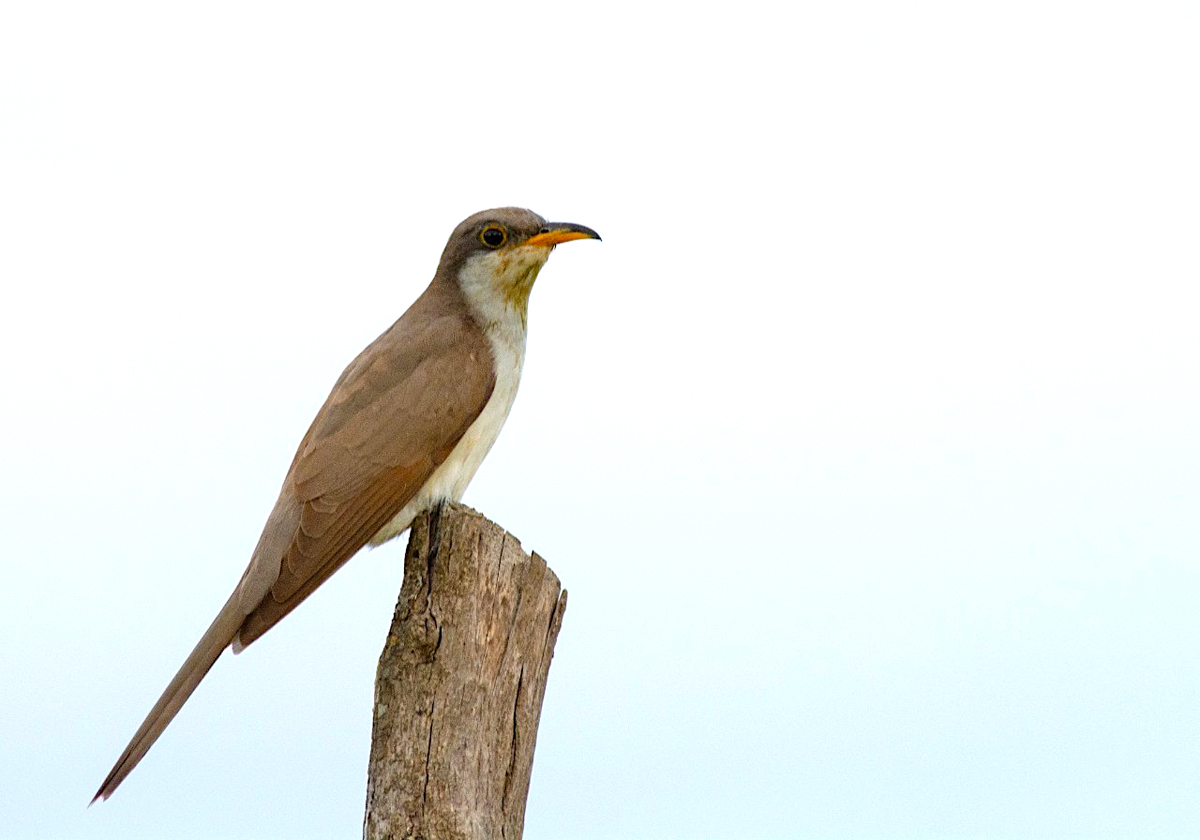
Yellow-billed Cuckoo having a drink at a bird bath. (photo by Edward Plumer ML103092191)
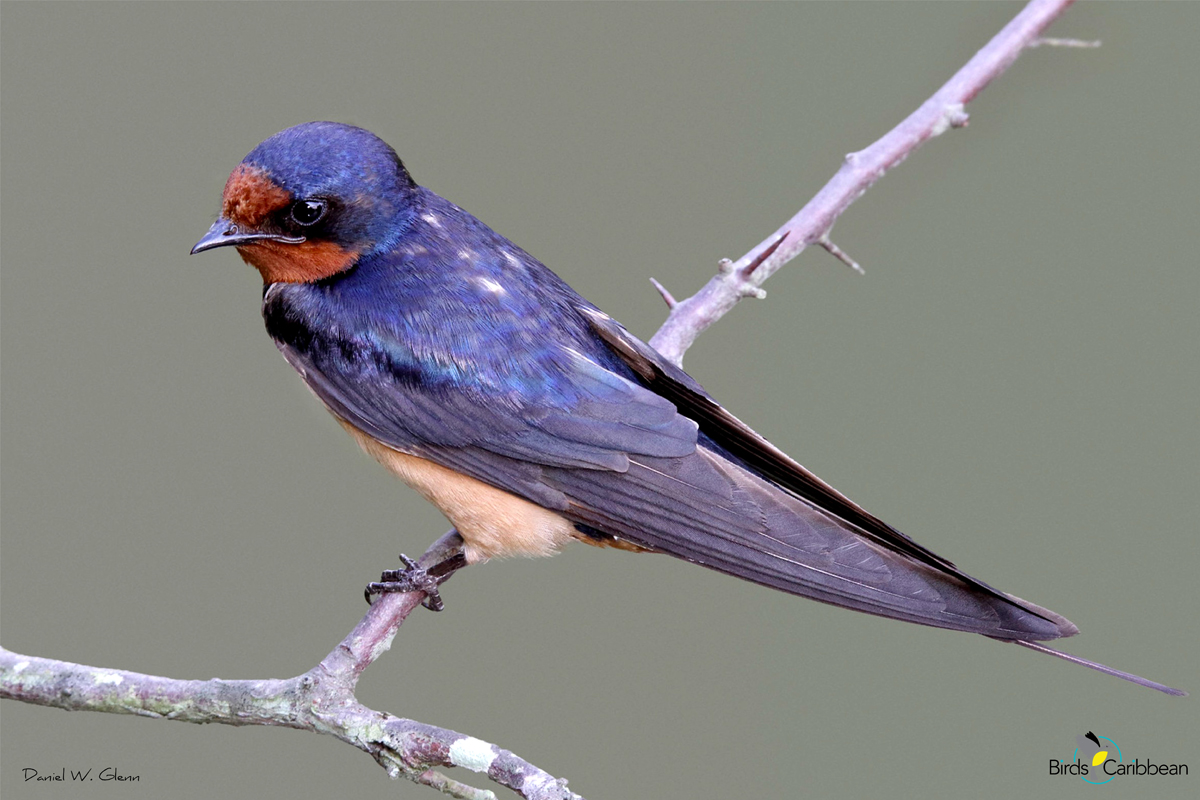
Barn Swallow*
Barn Swallow, male. (Photo by Daniel W. Glenn)
Rufous Hummingbird
Dickcissel*
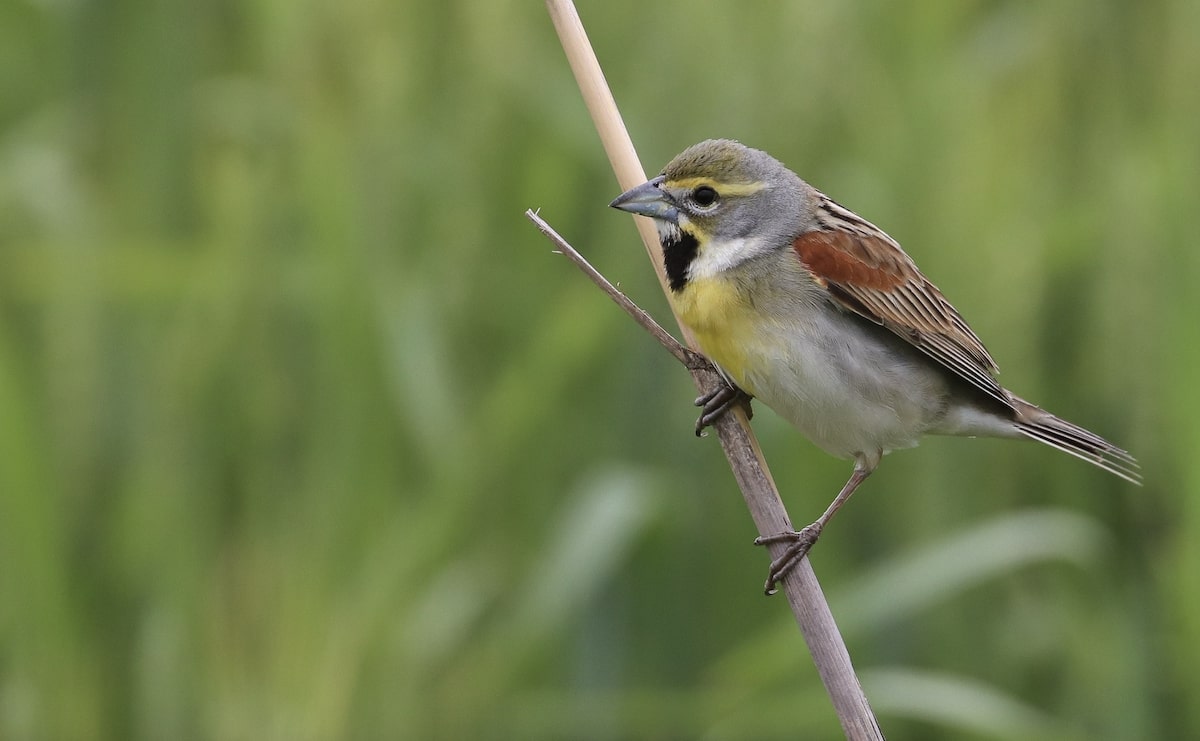
Male Dickcissel in breeding plumage. Note the black V on the throat. (photo by Martina Nordstrand ML232134471)
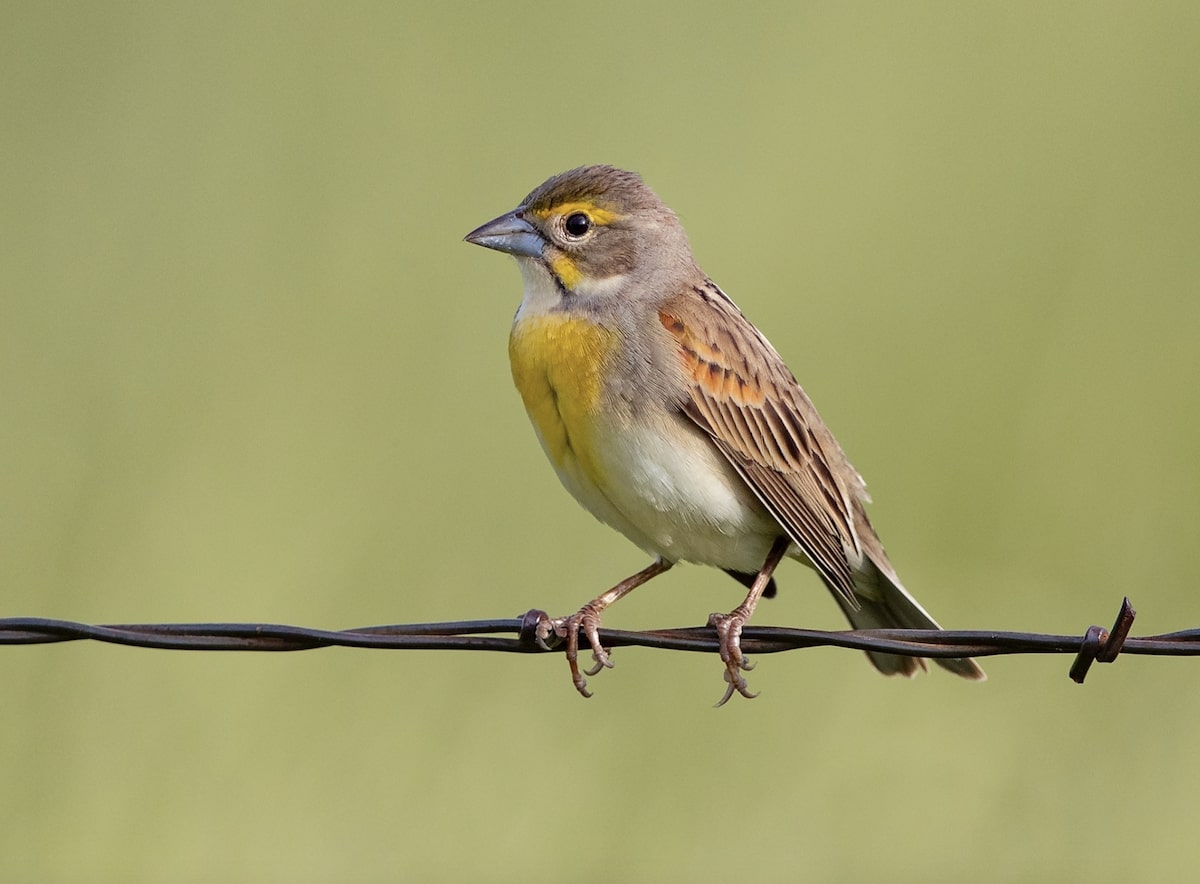
The female Dickcissel has a pale yellow breast and eyebrow. (photo by Mike Cameron ML156064841)
Magellanic Penguin
Osprey*
Osprey with a fresh catch of fish in Bonaire. (photo by Gérard Cachon)
Some of these birds are quite familiar to us in the Caribbean; at least eight of them—those with an asterisk—occur on Caribbean islands, though they are not all common. The region is significant for these traveling birds who move to, from, across, and through the region.
WMBD celebrations would not be complete without some spectacular artwork!
This year’s artist, Augusto Silva of Nicaragua, is well known for his geometric and colorful style. In aquatic blues and greens, Augusto’s art perfectly captures the WMBD 2023 theme. His work is influenced by the traditional life of the Afro-Caribbean indigenous community and pre-Columbian petroglyphs—and inspired by Nature.
WMBD 2023 artist Augusto Silva.
Free WMBD resources for educators and conservationists
So, how can we continue to raise awareness on the importance of water (agua, l’eau) for our migrating birds? The good news is that you, our Caribbean educators, are helping to do just that. As you join the WMBD campaign, you may request WMBD educational materials by contacting Laura Baboolal, the WMBD Caribbean coordinator at lbaboolal@environmentamericas.org.
EFTA provides posters, stickers, fact sheets, and art and craft materials and more to coordinators hosting WMBD events across Latin American and the Caribbean.
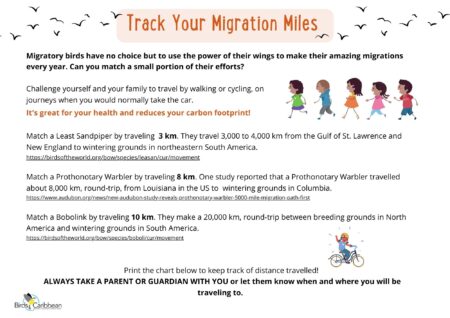
Track Your Migration Miles is a fun activity that helps both kids and adults to learn about wildlife migration. Click on the photo to download the activity.
If you are planning a WMBD event or two (and we hope you are!), you will find useful digital educational resources at: https://trello.com/b/mmiiYE3A/wmbd-2023
BirdsCaribbean will also be featuring WMBD bird species that occur in the Caribbean on our Migratory Bird of the Day webpages (Birds Connect Our World). Our drawings this fall are featuring the art of Christine Elder – naturalist, educator and biological illustrator extraordinaire! Be sure to check out her website and follower on social media!
As in past years, we will provide free downloadable resources, including coloring pages, natural history information, puzzles, photos, videos and activity sheets—we invite you to check it out!
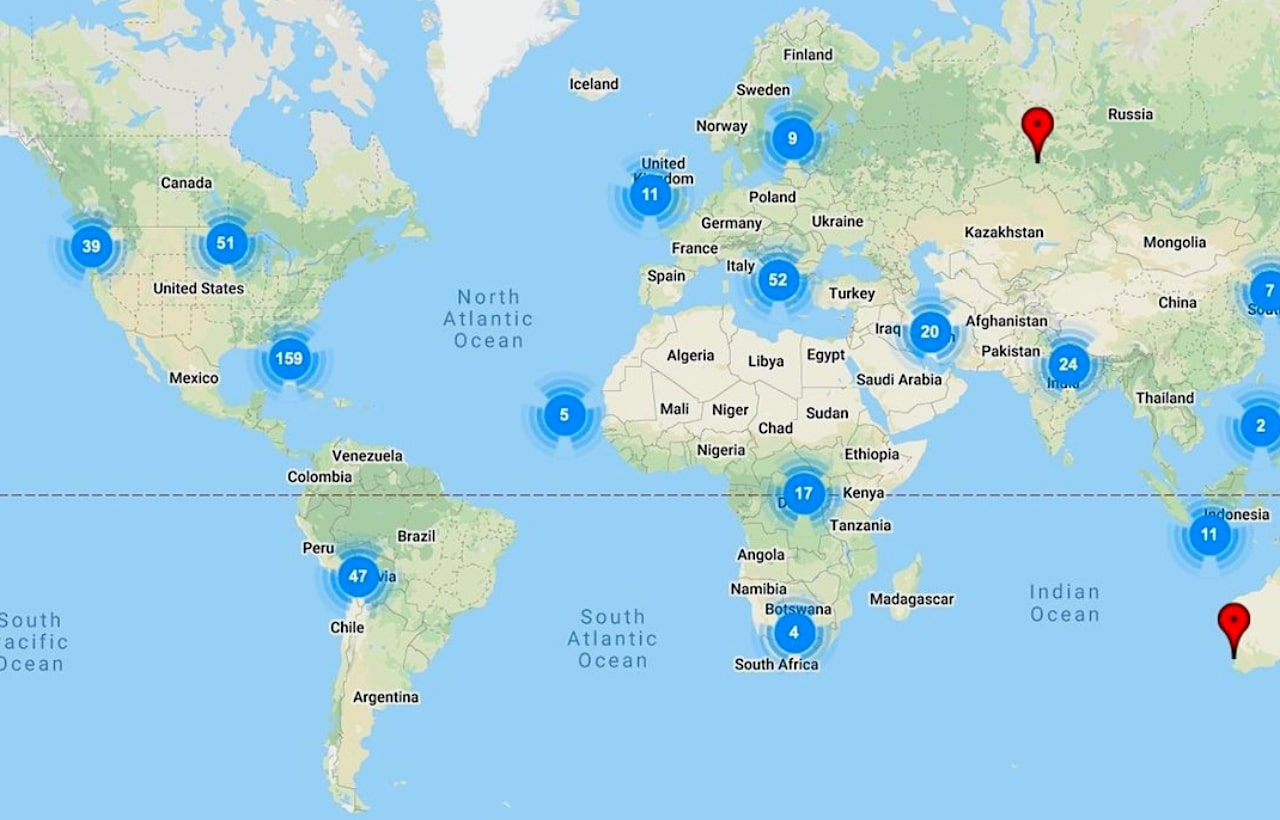
We also encourage you to add your events to the interactive map, so we can see where WMBD activities are taking place throughout the Caribbean: https://www.worldmigratorybirdday.org/events-map
Add your event to the WMBD 2023 Events Map and let the world know how you will be celebrating in the Caribbean!
How you can celebrate and help migratory birds . . . & we want to see your bird baths!
Celebrate WMBD this fall!
Go birding with your family and friends and see how many migratory birds you can spot. If you’re at a wetland or beach, do a Caribbean Waterbird Census (CWC) Count. Don’t forget to upload your checklists to eBird or eBird Caribbean!
Learn more! Look for a WMBD event happening near you and try to attend. Enjoy and download the many free online resources about migratory birds – see above links. Share what you learn with your friends and family.
Thank about the ways that you can help conserve water – see the handy infographic above and do your part by taking shorter showers, fixing leaky faucets and running toilets, planting a drought-friendly native plant garden, supporting conservation of wetlands, and much more.
Finally, since this year’s theme is Water: Sustaining Bird Life we want to see the best bird baths in your backyards! We’re looking for pretty, funky, fun, and functional watery oases. Bird baths may be ready-made or DIY.
Snap a pic or record a short video and email it to Laura at lbaboolal@environmentamericas.org and/or tag us, @birdscaribbean and @environmentamericas, on social media.
Be sure to include your name, country, and a few sentences about your bird bath—for example, the household materials that were reused to make it, and the variety of birds that visit the bird bath!
All suitable submissions will be shared on the BirdsCaribbean and Environment For The Americas websites and social media accounts.
Celebrating World Migratory Bird Day in the Dominican Republic. (Photo by Maria Paulino)
Every year thousands of birds make epic journeys south, visiting our region on the way. Throughout the fall we celebrated these amazing migratory birds in the Caribbean during World Migratory Bird Day. Check out the fun and creative ways that Caribbean organizations got involved from Laura Baboolal, the Caribbean Coordinator, of World Migratory Bird Day for Environment for the Americas.
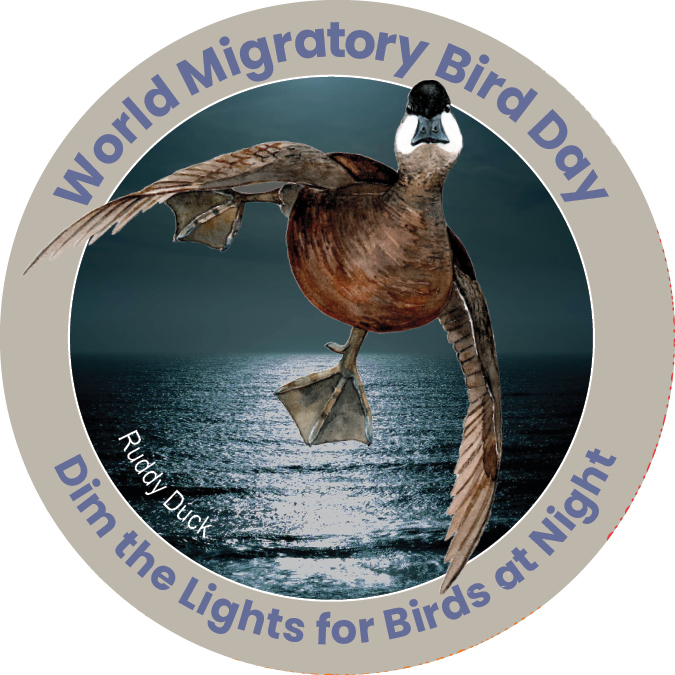
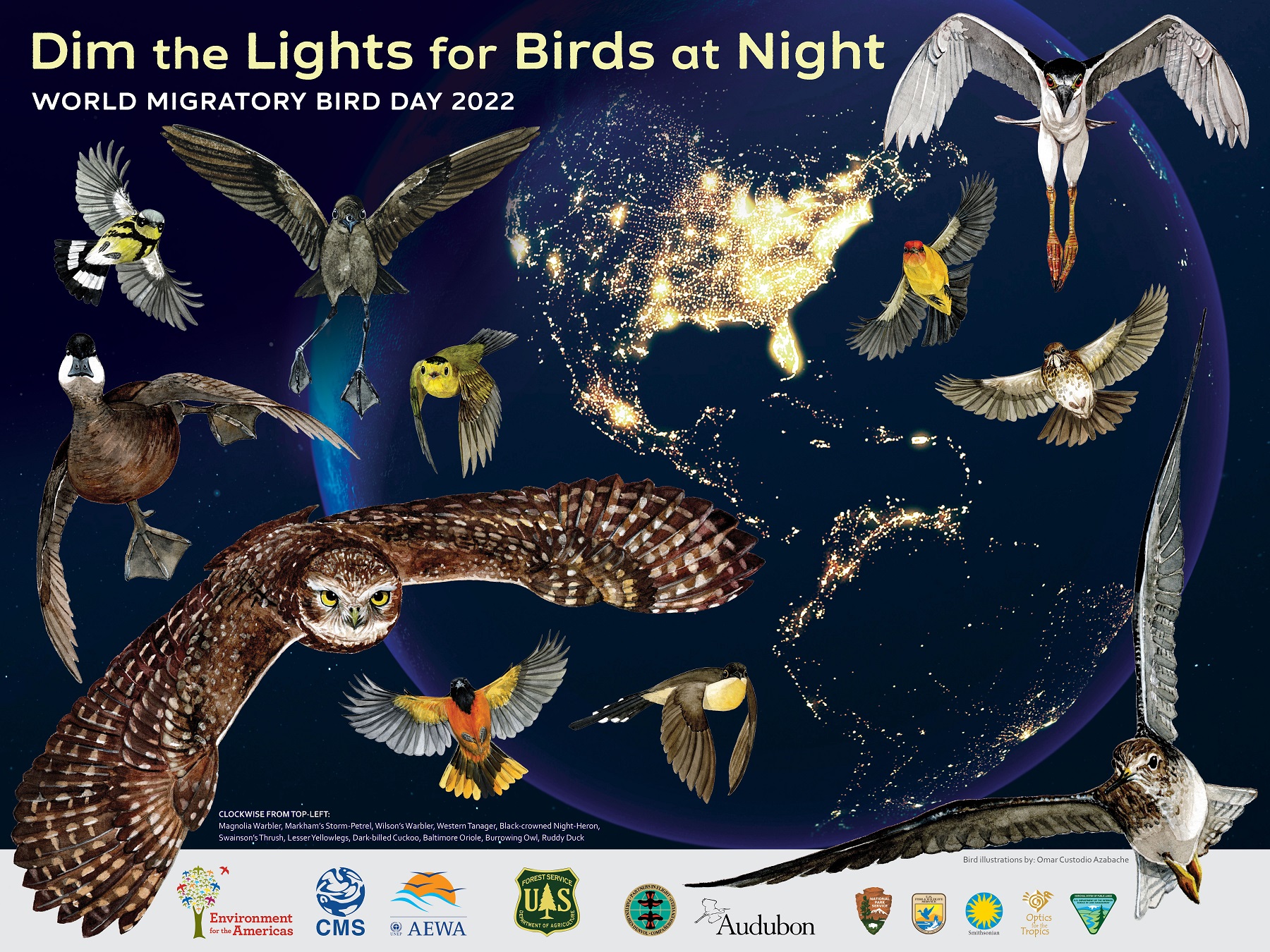
October 8th, 2022 marked the official date for World Migratory Bird Day (WMBD) in the Caribbean. However, it is celebrated throughout the fall migration season. This year’s theme for WMBD was “Dim the Lights for Birds at Night.”
Light pollution is known to adversely affect wildlife. For migratory birds in particular, it causes disorientation when they fly at night, leading to collisions with buildings. It also interferes with their internal clocks, which they use to time their migrations.
The good news is that more and more cities are taking measures to dim their lights at night, especially during spring and fall migration phases. Find out how the Caribbean is doing its part to ensure the safety of birds during migration.
Since the lifting of COVID-19 restrictions on most islands in the Caribbean, educators were all excited to get back out there hosting in-person WMBD. Activities were held in Anguilla, the Bahamas, Antigua and Barbuda, Puerto Rico, Dominican Republic, Cuba, Bonaire, Montserrat, Grenada, and Trinidad and Tobago, just to name a few.
Here we highlight some of this year’s WMBD activities!
On a learning curve in Puerto Rico
In Puerto Rico several organizations joined together to celebrate WMBD 2022. Víctor Cuevas from US Forest Service, Hilda Morales from Asociación Puertorriqueña de Interpretación and Educación (APIE), Emilio Font from Sociedad Ornitológica Puertorriqueña (SOPI), and Yaritza Bobonis from Fundación Amigos de El Yunque hosted birding walks, talks about the importance of birds, migration, how to observe birds, and other educational activities.
Click on images to enlarge
Víctor Cuevas from US Forest Service, Hilda Morales from Asociación Puertorriqueña de Interpretación and Educación (APIE), Emilio Font from Sociedad Ornitológica Puertorriqueña (SOPI), and Yaritza Bobonis from Fundación Amigos de El Yunque. (Photo by Nancy Merlo)
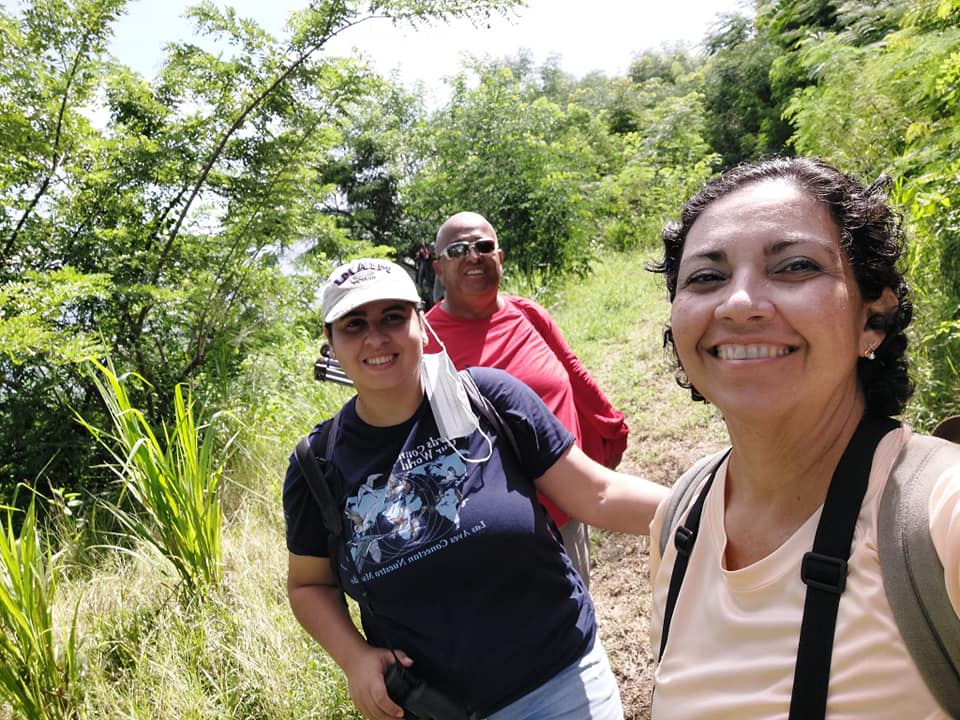
A WMBD birding walk in Puerto Rico. (Photo by Brenda Peña )
Learning about migratory birds and light pollution. (Photo by Yaritza Bobonis)
A swampy experience in Trinidad and Tobago
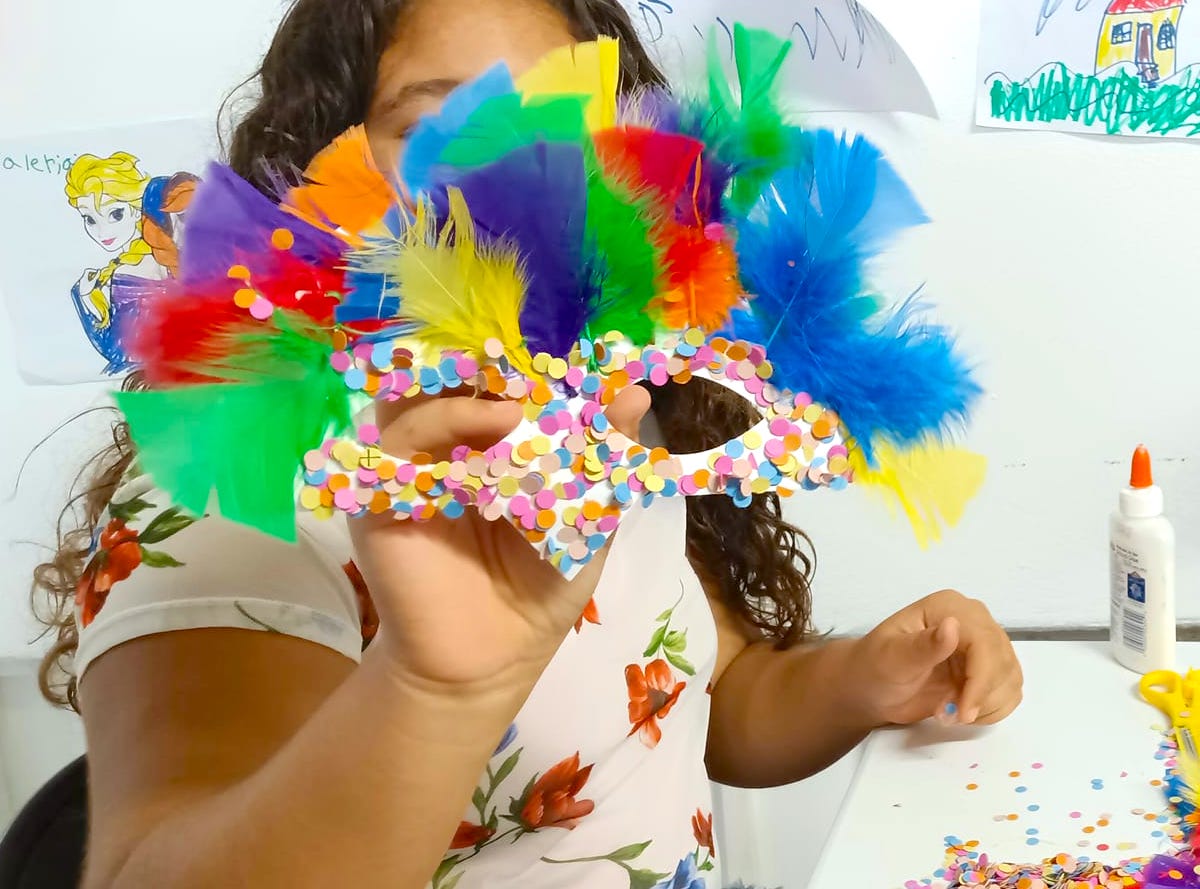
Across in Trinidad and Tobago, a local school teacher Sabira Ali, who hosts private birding activities for children, celebrated WMBD for the first time with her group of 14 students. The activity included a presentation at the Caroni Swamp Visitor’s Centre about migratory birds followed by an art activity – decorating bird masks. Afterwards, the children enjoyed a casual bird walk at the swamp. The evening was spent checking birds off their checklists. We are also happy to share that the group sent letters to local businesses, requesting that they turn off building lights at night (and explaining how this helps the birds).
Click on images to enlarge
Decorating bird masks in Trinidad! (Photo by Sabira Ali)
Learning about migratory birds at Caroni Swamp. (Photo by Sabira Ali)
Taking a walk at Caroni Swamp Trinidad. (Photo by Laura Baboolal)
Birding delight in the Dominican Republic
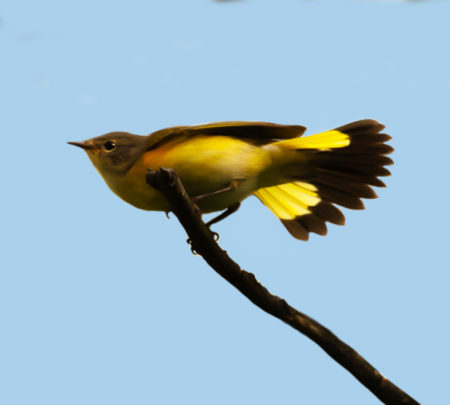
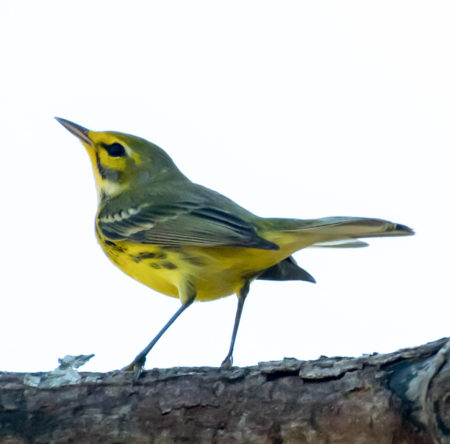
In the Dominican Republic the search was on for migratory birds. At El Jardín Botánico Nacional (The National Botanical Garden) students from el Politécnico Movearte (Movearte Polytechnical School), el Liceo Panamericano (the Pan-American High School) and el Liceo Benito Juárez (the Benito Juárez High School), went birdwatching and were delighted to see the following species: Cape May Warbler, Prairie Warbler, American Redstart, and Merlin.
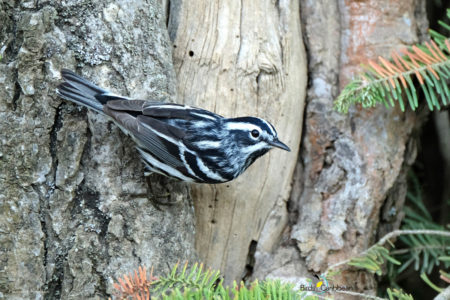
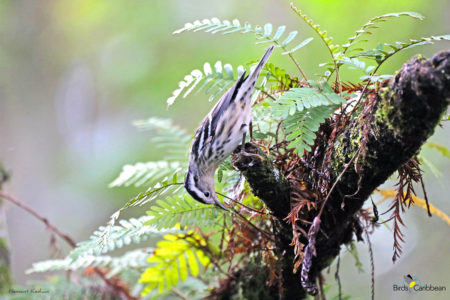
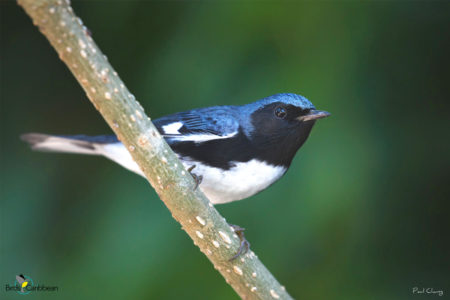
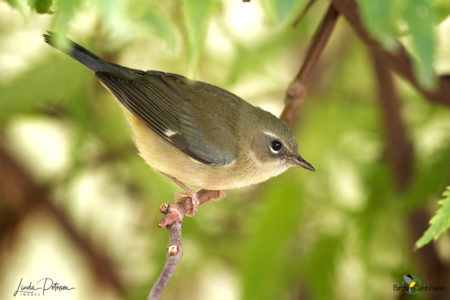
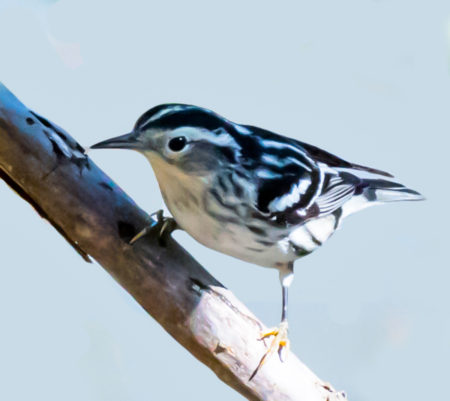
Maria Paulino, of local environmental NGO Grupo Acción Ecológica, hosted a 3-day workshop entitled “Introducción al Maravilloso Mundo de las Aves” (Introduction to the Wonderful World of Birds) for fifth grade students of Grado del Colegio Doulos (Doulos College) in Jarabacoa. One day was designated Observation Day, where participants could see birds in their natural habitats; these included several migratory species such as the Black-throated Blue Warbler, Ovenbird and Black-and-White Warbler.
Click on images to enlarge
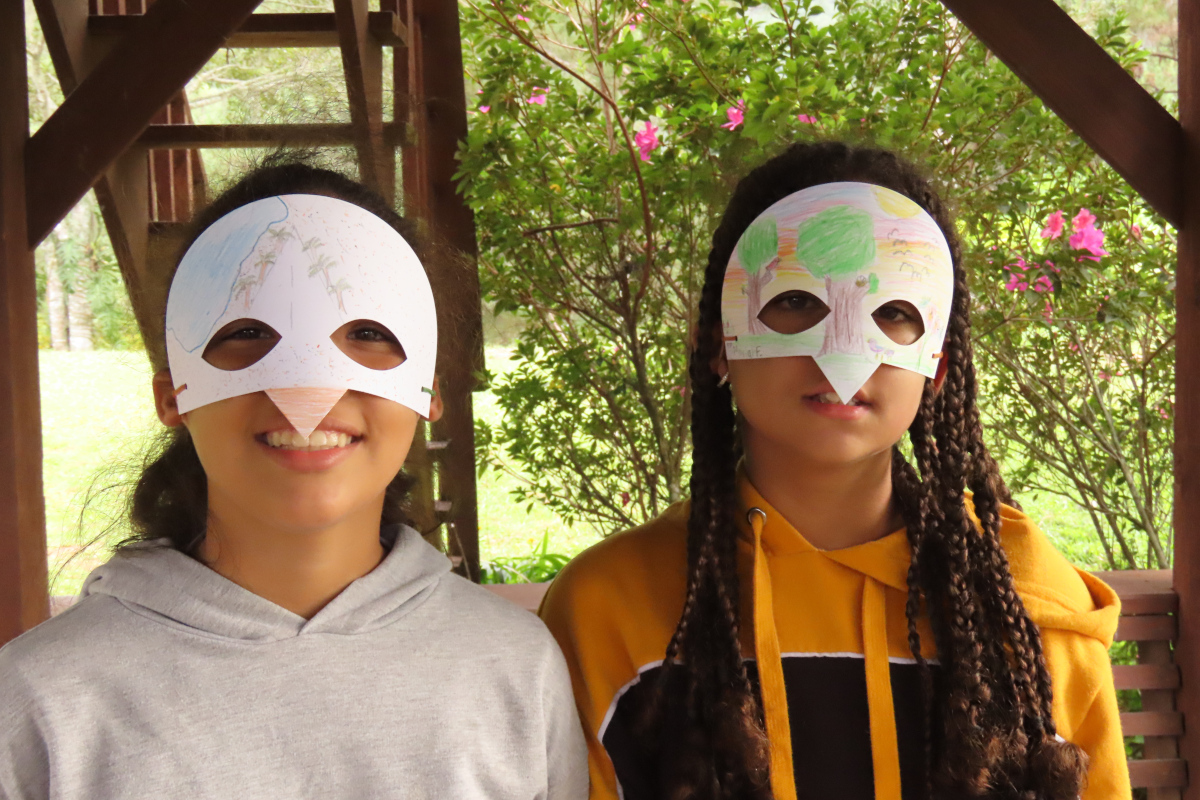
Making bird masks in the Dominican Republic. (Photo by Maria Paulino)
A School group enjoying WMBD activities in the Dominican Republic. (Photo by Maria Paulino)
Birding in the Botanic Gardens. (Photo by Maria Paulino)
Light can be a bad thing for birds…
On Antigua and Barbuda, the Environmental Awareness Group (EAG) encouraged students and teachers to think about light pollution and its effects on migratory birds. Presentations were given at Antigua State College and St. Anthony’s Secondary School, by Joshel Wilson.
Click on images to enlarge.
Learning about light pollution and migratory Birds with Joshel Wilson from EAG. (Photo by EAG)
Joshel talks to School group about World Migratory Bird Day. (Photo by EAG)
Members of the Wadadli Warblers, a local birding club on the island, also joined in the WMBD festivities. They carried out several point counts at various locations around Antigua and Barbuda, which were then uploaded to eBird Caribbean.
We extend a massive thank you to all the amazing people and organizations celebrating WMBD – this year and every year! We look forward to learning more about your fantastic activities planned for 2023.
World Migratory Bird Day 2023—Announcement of the theme!
World Migratory Bird Day 2023 is just around the corner! We have already started planning the campaign, which will focus on the topic of water and its importance for the survival of migratory birds. Water is fundamental to life on our planet. The vast majority of migratory birds rely on aquatic ecosystems during their life cycles. Inland and coastal wetlands, rivers, lakes, streams, marshes, and ponds are all vital for feeding, drinking, or nesting, and also as places to rest and refuel during their long journeys.
Unfortunately, these watery ecosystems are becoming increasingly threatened around the world – and so are the migratory birds that depend on them. The increasing human demand for water, as well as pollution and climate change, are having a direct impact on the availability of clean water and the conservation status of many migratory birds. The campaign will seek to highlight and identify key actions for protecting water resources and aquatic ecosystems.
Water is so precious!
If you are interested in celebrating WMBD in your country, we encourage you to visit the WMBD website for more information or contact the Caribbean Regional Coordinator, Laura Baboolal, at lbaboolal@environmentamericas.org. If you have an event planned, you can register it and put the Caribbean on the global events map.
Celebrate World Migratory Bird Day (WMBD) with us in 2022! This year’s theme is “Dim The Lights for Birds at Night”. Have fun learning about a new migratory bird every day. We have colouring pages, puzzles, activities, and more. Download for free and enjoy nature with your family at home.
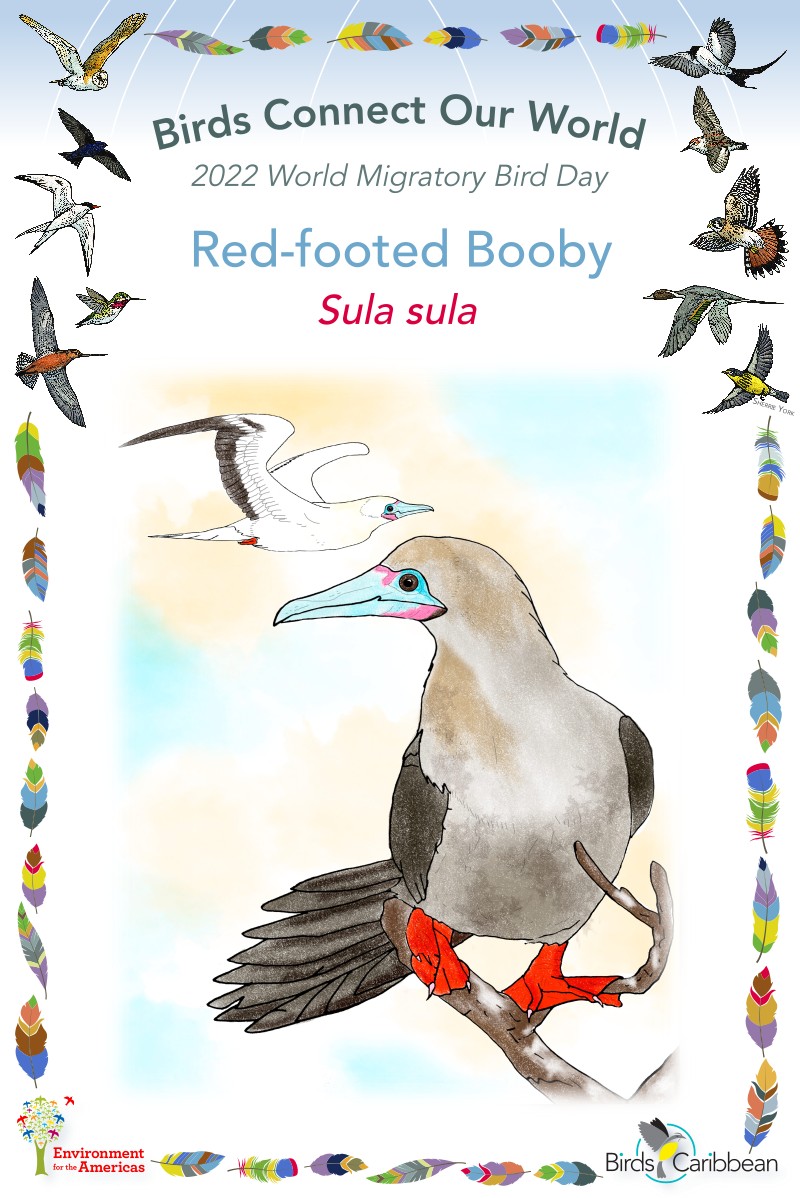
Migratory Bird of the Day: Red-footed Booby
If you were asked to name one of the most colorful birds of the Caribbean, would you choose a seabird? Probably not, but think about it. There is a seabird in the Caribbean that has black piercing eyes surrounded by a ring of ultramarine blue skin and a patch of cobalt blue (sometimes iridescent lime green in males). Its pointy bill looks like it was dipped in a rainbow, going from velvety black at the base, to orange, then blue and pale blue at the tip! If that wasn’t enough, there is one another touch of color in this bird, some say the most important splash of color: its feet are bright red.
Say hello to the Red-footed Booby, the most colorful seabird of the tropics. These colorful seabirds have even more variation, with a “white morph” that is the most common and a less common “brown morph” that has chocolate-brown feathers all over.
Red-footed Boobies are pelagic seabirds, which means that they travel far offshore to fish. They feed by plunge diving from great heights, targeting mostly flying fish and squid. Although these birds do not technically migrate they will disperse out to sea after nesting. This means you can see Red-footed Boobies at sea year-round, you will have better luck enjoying their colorful features on land – it is best to do so with binoculars, from a respectful distance.
Of the three booby species in the Caribbean (the others are the Masked Booby and the Brown Booby), the Red-footed Booby has the most restricted range. It breeds on a limited number of small islands and cays, mainly in the Lesser Antilles and the offshore islands of northern Venezuela, though an internationally-important population can be found in the Cayman Islands. During the breeding season, from October to May, Red-footed Boobies form colonies of up to a hundred nests in trees or shrubs.
The construction of the nest is part of the Red-footed Booby’s courtship ritual. Once he is joined by a female, the male starts collecting nest material. After he finds a good stick, he flies back to the nest with the stick in its bill, then presents it to his mate who may, or may not, accept it. If she does take it, the male watches her place the stick – sometimes he may grab one end of it and work with the female. Needless to say, for Red-footed Boobies, building a nest can take some time! They lay a single, white egg which they incubate for a month and a half, and raise their chick for three and a half months.
As for many seabirds, the biggest threat affecting Red-footed Boobies on land is the destruction of nesting habitat for human development. The first step to better conserve this magnificent species (and all the other Caribbean seabirds) is to record the location of its colonies. In fact, in 2023, seabird conservation partners are planning to count nesting seabirds across the Caribbean. So, if you know of a colony of Red-footed Boobies near you, you can help by informing your local conservation group! Learn more about this species, including its range, photos, and calls here.
Colour in the Red-footed Booby
Download the Migratory Birds of the Day Colouring Page! Use the picture above and the photos on this page as your guide, or you can look up pictures of the bird online or in a bird field guide if you have one. Share your coloured-in page with us by posting it online and tagging us @BirdsCaribbean #WMBD2022Carib
Listen to the calls of the Red-footed Booby
Red-footed Booby’s will be mostly silent during the non-breeding period. The make several sounds during the breeding season including a series of guttural “karuk” calls.
Puzzles of the Day
Click on the images below to do the puzzle. You can make the puzzle as easy or as hard as you like – for example, 6, 8, or 12 pieces for young children, all the way up to 1,024 pieces for those that are up for a challenge!
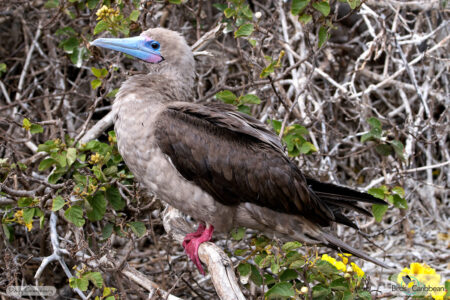
The dark morph of the Red-footed Booby. (Photo by Doug Greenberg)
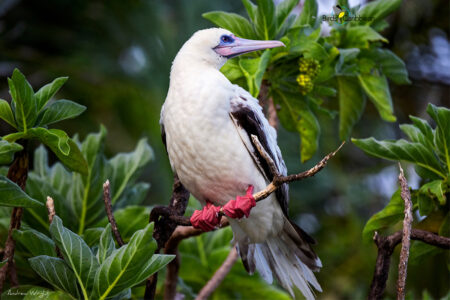
The light morph of the Red-footed Booby. (Photo by Andrew Wright)
Activity of the Day
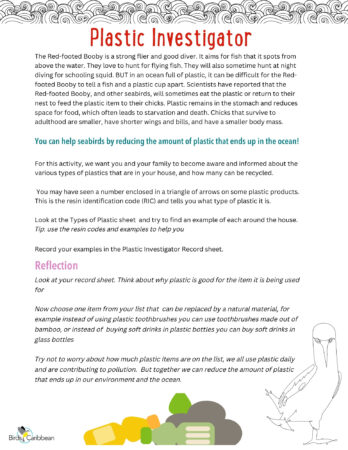
FOR KIDS: The Red-footed Booby feeds on fish and squid. They dive into the water to pluck out prey with their long, pointed bills . Like many of our seabirds Red-footed Boobies can be harmed by plastic in the seas and oceans. In an ocean full of plastic, it can be difficult for the Red-footed Booby to tell a fish and a plastic cup apart!
You can help seabirds by reducing the amount of plastic that ends up in the ocean, and by becoming a Plastic Investigator! For this activity, we want you and your family to become aware and informed about the various types of plastics that are in your house, and how many can be recycled. You can download out activity sheet here for more information and instructions on how to take part. Try to find an example of each type of plastic around your house. Record your examples in the Plastic Investigator Record sheet (included with the activity sheet).
FOR KIDS AND ADULTS: Enjoy this video of a light morph Red-footed Booby in the wild! These birds nest in trees along coasts and on offshore islands in the Caribbean. During migration and in winter you will see them plunge diving into the sea for fish.
Celebrate World Migratory Bird Day (WMBD) with us in 2022! This year’s theme is “Dim The Lights for Birds at Night”. Have fun learning about a new migratory bird every day. We have colouring pages, puzzles, activities, and more. Download for free and enjoy nature with your family at home.
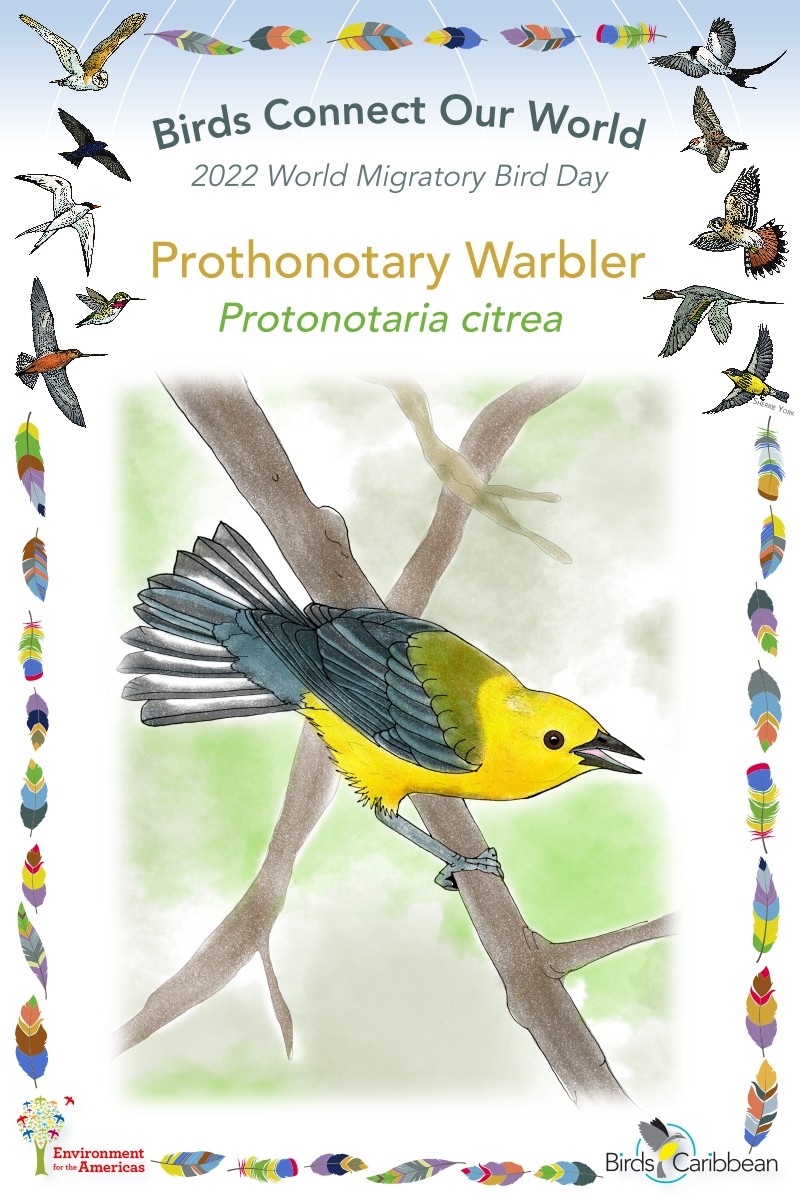
Migratory Bird of the Day: Prothonotary Warbler
Who’s that spot of sunshine in the swamp? It’s the Prothonotary Warbler! These bright wood warblers were named for their dapper plumage, as the yellow is reminiscent of the robes of papal cloaks or “prothonotaries” in the Catholic church.
And would you believe that these warblers assisted with the conviction of a spy? When alleged spy, Alger Hiss, denied his affiliations, those same affiliations came forward with knowledge of his recent amateur birding expeditions – including an exciting find of the Prothonotary Warbler! When Alger Hiss admitted to recently adding this warbler to his life list, his secret was out and his affiliation exposed!
These sunny wood warblers are the only warbler to nest in cavities, breeding in the southeastern U.S. In the Caribbean, Prothonotary Warblers are considered an uncommon migrant in both spring and fall. The best chance at spotting them is likely in Cuba, Grand Cayman Islands, or the Bahamas, though unusual vagrants have been reported in Bermuda. We don’t typically see them as often in the Caribbean because they take a trans-gulf route, crossing over the Greater Antilles to arrive in Mexico and continue further south.
During migration, Prothonotary Warblers expand their habitat selection from their usual preference of woody swamps. Though we still lack information on their habitat use during migration and overwintering, look for them along coastal areas like marshes and inland watercourses.
These little balls of sunshine often move together in small flocks. In the spring, males will head north sooner than females (to set up a territories on the breeding grounds), though no differences in sex or age have been noted in the fall. Prothonotary Warblers are fairly well studied in their breeding range, but we still lack a lot of critical information, especially how habitat loss has affected migratory and overwintering populations. These warblers have been heavily impacted by deforestation. Like many other songbirds, they migrate at night, making it extra important to turn off your lights so as to not disorient these and other birds. Learn more about this species, including its range, photos, and calls here.
Colour in the Prothonotary Warbler
Download the Migratory Birds of the Day Colouring Page! Use the picture above and the photos on this page as your guide, or you can look up pictures of the bird online or in a bird field guide if you have one. Share your coloured-in page with us by posting it online and tagging us @BirdsCaribbean #WMBD2022Carib
Listen to the calls of the Prothonotary Warbler
The Prothonotary Warbler makes a loud, piercing series of repeated “tsweet” calls.
Puzzles of the Day
Click on the images below to do the puzzle. You can make the puzzle as easy or as hard as you like – for example, 6, 8, or 12 pieces for young children, all the way up to 1,024 pieces for those that are up for a challenge!
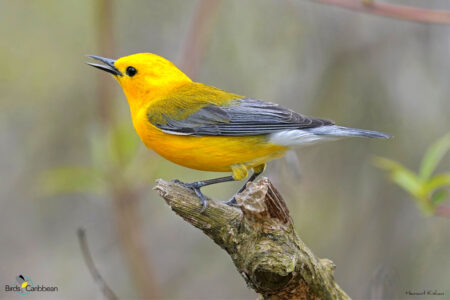
A bright yellow Male Prothonotary Warbler perched. He will sing during the breeding season to hold his territory. But it’s not just his song that helps, males that are brighter yellow gain access to better nest sites than less colorful males! (Photo by Hemant Kishan)
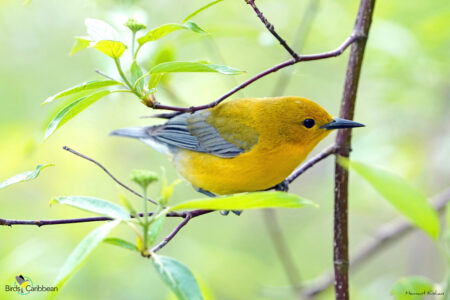
Female Prothonotary Warbler. She is slightly less bright than the male, with a greenish crown and nape. (Photo by Hemant Kishan)
Activity of the Day
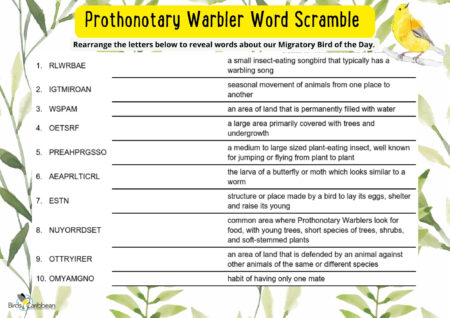
FOR KIDS: Make sure that you have read the information given above. The facts here will help you with todays activity. Use what you read and the clues on the sheet to untangle our our word scramble – all about the Prothonotary Warbler- our Migratory Bird of the Day! You will be finding words that are about where this small yellow bird lives, what it eats and how it behaves. Once you think you have found or the words, or cannot work out any more clues you can find all the answers here.
FOR KIDS AND ADULTS: Enjoy this video of a Prothonotary Warbler in the wild! This bird is bringing nesting material, it is one of the very few warbler species that builds its nest in cavities. They breed in wet forests, mainly in the southeastern U.S. So although you won’t see this little bird nest building in the Caribbean you can look out the small ‘sunny’ birds during their fall migration.
Find Warblers difficult to identify? Don’t worry we are here to help you out!
Celebrate World Migratory Bird Day (WMBD) with us in 2022! This year’s theme is “Dim The Lights for Birds at Night”. Have fun learning about a new migratory bird every day. We have colouring pages, puzzles, activities, and more. Download for free and enjoy nature with your family at home.
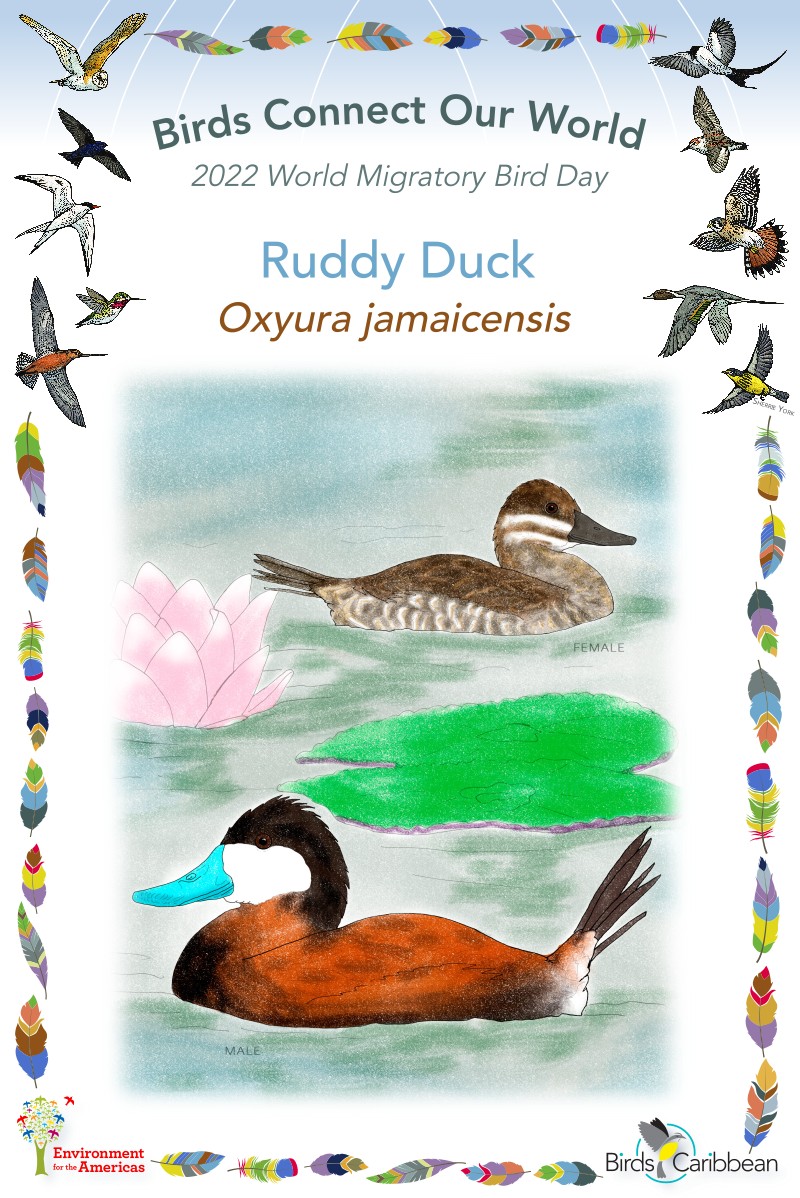
Migratory Bird of the Day: Ruddy Duck
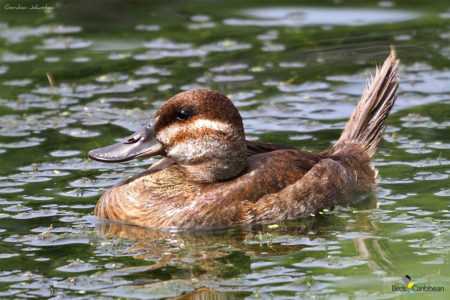
A common member of the stifftail family, the Ruddy Duck is a small, compact duck with a scoop-shaped bill. This duck has a long, stiff, spiky-looking tail often held upright. The Male has a black cap and bright white cheeks. During the breeding season, he sports a bright sky-blue bill and chestnut-coloured upperparts. He pairs this ‘ensemble’ with unusual but entertaining courtship displays. In the non-breeding season males are a bit less flashy with -brown upperparts and blackish bills. Females and immatures are brown overall with a dark cap and a distinct dark stripe across the pale cheek.
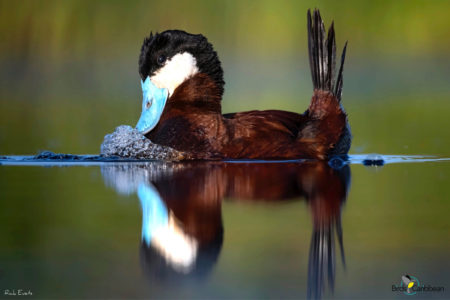
When breeding males perform a ‘bubbling’ display, the male will hold his tail straight up while striking his bill against his inflated neck. Bubbles are created in the water as air is forced from the feathers. A courting male may also drop his tail and run across the water, making popping sounds with his feet. Males also utters a nasal “raa-anh” call during courtship displays, but outside the breeding season these small ducks are mainly silent .
Ruddy Ducks are resident in parts in the Caribbean, found in the Bahamas, Greater Antilles, Virgin Islands and Barbados. Here they use open fresh-water and brackish ponds and lagoons. They feed mainly on aquatic insects, crustaceans, and other invertebrates, as well as small amounts of aquatic plants and seeds. They forage almost exclusively by diving, but are occasionally seen skimming food from the water surface. During fall and winter the Caribbean population is swelled by migratory Ruddy Ducks that breed in the Prairie Pothole region of North America. After breeding they head south to the Caribbean as well as the Gulf Coast, Mexico, and East Coast of the US to spend the winter.
Since Ruddy Ducks depend upon wetlands for their survival, they are directly impacted by threats to these areas such as pollution, habitat loss, and invasive species. It is vital to conserve and protect our wetlands. They provide habitats for the Ruddy Duck and many other species.They also provide invaluable services to humans such as flood protection, improved water quality, natural products, recreation, and so much more! Learn more about this species, including its range, photos, and calls here.
Colour in the Ruddy Duck
Download the Migratory Birds of the Day Colouring Page! Use the picture above and the photos on this page as your guide, or you can look up pictures of the bird online or in a bird field guide if you have one. Share your coloured-in page with us by posting it online and tagging us @BirdsCaribbean #WMBD2022Carib
Listen to the calls of the Ruddy Duck
Outside the breeding season Ruddy Ducks are often silent, but you might hear a nasal “raanh” call
Puzzles of the Day
Click on the images below to do the puzzle. You can make the puzzle as easy or as hard as you like – for example, 6, 8, or 12 pieces for young children, all the way up to 1,024 pieces for those that are up for a challenge!
A male Ruddy Duck during the breeding season performs his display. This involves him raising his tail and making the a distinctive sound and causing the water to bubble by slapping his bill against his chest. (Photo by Rick Evets)A female Ruddy Duck. She does not have the distinctive bright blue bill of the breeding male but her small size and stiff up-pointed tail are characteristic of this species. (Photo by Gordon Johnston-Macaulay Library-ML354838041)
Activity of the Day
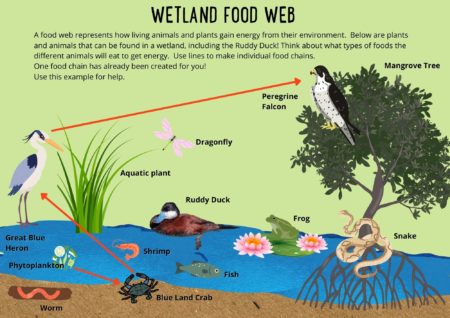
FOR KIDS: Ruddy Ducks can be found on ponds, reservoirs and in other wetlands all teaming with life! Ruddy Ducks like to feed on invertebrates and small crustaceans as well as plants. But within a wetland ecosystem all sorts of interactions take place as each animal living there looks for enough food to eat. A food web represents how living animals and plants gain energy from their environment. Take a look at our wetland ecosystem, including the Ruddy Duck, and see how many different links you can find! Think about what types of foods the different animals will eat to get energy. Use lines to make individual food chains. You can find some answers here.
FOR KIDS AND ADULTS: Enjoy this video of a male Ruddy Duck feeding in the wild! He is diving down to find food, perhaps he is looking for some aquatic vegetation or invertebrates? Notice that now the breeding season is over this male has a black bill (rather than the blue one he has when breeding).
Celebrate World Migratory Bird Day (WMBD) with us in 2022! This year’s theme is “Dim The Lights for Birds at Night”. Have fun learning about a new migratory bird every day. We have colouring pages, puzzles, activities, and more. Download for free and enjoy nature with your family at home.
Migratory Bird of the Day: Bobolink
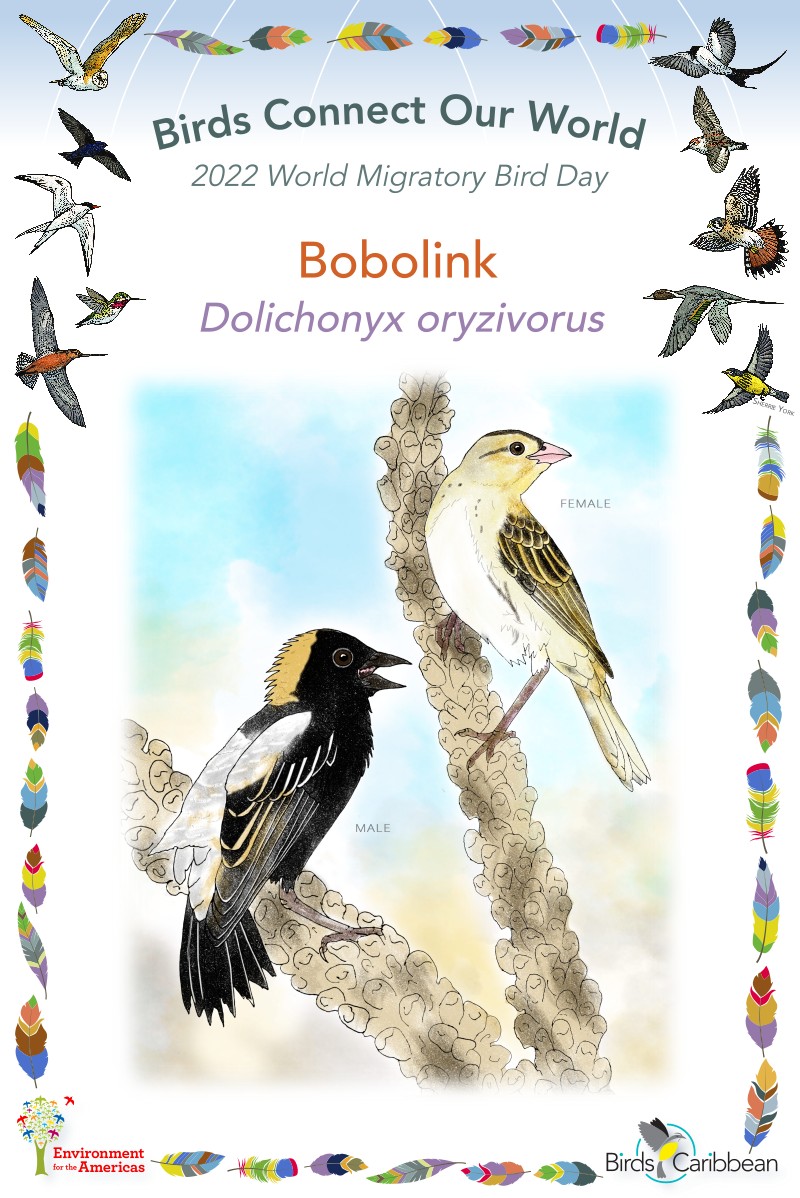
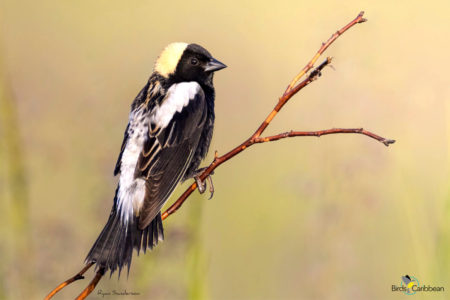
Be on the lookout for migratory Bobolinks! Known as the “backwards tuxedo bird” or “skunk bird,” breeding males have a bold black plumage with a white rump and soft yellow nape. However, females and non-breeding males have a more subtle beauty, boasting a buffy yellow-brown plumage with fine brown streaking all over the body and a distinct stripe through the eye. Be sure to look for their distinct spikey tail. It’s speculated that the Bobolink may have received their unique name from the poem “Robert of Lincoln” by American poet William Cullen, as the sight of large flocks of these birds was likely the inspiration for the poem.
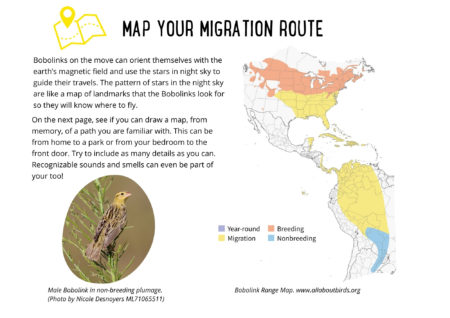
During migration, Bobolinks can often be found in large flocks. They are quite an impressive migrant, known to log an approximate 20,000 km round trip from geolocater data (birds tagged with small backpacks that can log their location and tell us more about migratory movements). Bobolinks breed in the grasslands of the Northeastern US. They follow the Eastern flyway and migrate through the Caribbean, taking an extended stopover in Venezuela before continuing south to their overwintering grounds in Argentina, Paraguay, and Bolivia.
Boblinks have been reported to have a high site fidelity, both to their breeding and overwintering grounds. Some farmers in South America have reported having large flocks of Boblinks in their rice fields for 50 years!
In the early 20th century these birds were so numerous migrating through the Caribbean that non-stop flights from Jamaica were termed “Bobolinks!” In the Caribbean, Bobolinks can be found during migration in the Bahamas, Jamaica, and many of the lesser Antilles. Banding data has shown us that during migration, especially before crossing the Caribbean, these birds can increase their body weight by up to a third, going from 38g to 50g!
Unfortunately Bobolinks face a variety of threats on their migratory journeys. In the US, Argentina, and Bolivia their affinity for grasslands has labeled them as an agricultural pest. This has led to birds being shot or poisoned to save crops. On their breeding grounds birds may abandon nests due to mowing of agricultural lands. In Jamaica and Cuba, these birds are often caught for the domestic and international caged bird trade, and are sometimes even eaten. These threats mean the Bobolink is now considered a Near-Threatened species by the International Union for Conservation of Nature (IUCN). It is also a Species of Conservation Concern in eight states in the US and is protected under the US Migratory Bird Treaty Act. Protection of grasslands has helped their breeding populations as has banning of dangerous pesticides in Bolivia and Argentina. Learn more about this species, including its range, photos, and calls here.
Colour in the Bobolink
Download the Migratory Birds of the Day Colouring Page! Use the picture above and the photos on this page as your guide, or you can look up pictures of the bird online or in a bird field guide if you have one. Share your coloured-in page with us by posting it online and tagging us @BirdsCaribbean #WMBD2022Carib
Listen to the calls of the Bobolink
Bobolinks have a distinctive “pink ” call they use all-year round. You might also hear the rambling, metallic sounding, multi-note male song.
Puzzles of the Day
Click on the images below to do the puzzle. You can make the puzzle as easy or as hard as you like – for example, 6, 8, or 12 pieces for young children, all the way up to 1,024 pieces for those that are up for a challenge!
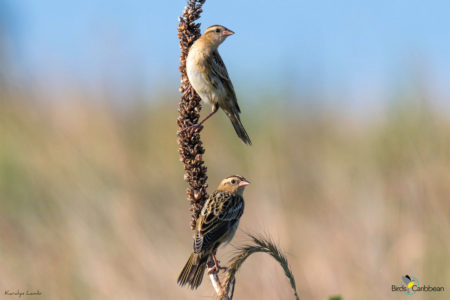
Male Bobolink in breeding plumage. (Photo by Ryan Sanderson- Macaulay Library-ML342377131)Bobolink females. Male and female Bobolinks have similar plumage in the non-breeding season. Look out for flocks of these sparrow-like birds during migration. (Photo by Karalyn Lamb-Macaulay-ML4702854910)
Activity of the Day
FOR KIDS: Bobolinks on the move can orient themselves with the earth’s magnetic field and use the stars in night sky to guide their travels. The pattern of stars in the night sky are like a map of landmarks that the Bobolinks look for so they will know where to fly. Bobolinks use the stars in the same way we might look for familiar buildings, trees on landscape features like hills and rivers to find our way from one place to another. In fact the stars are just like these types of landmarks for Bobolinks! Think about a path you are familiar and see if you can draw a map, from memory, of this route. You could include sounds and smells as well as the things you see along the way!
FOR KIDS AND ADULTS: Neonicotinoids are a type of pesticide and this group of chemicals are widely used in America. They can be found in a large proportion of corn crops groups in the US and nearly half of soybeans. Neonicotinoids can impact on the critical functions of songbirds, including effecting their metabolism, reproduction and migration patterns. Given that they are so widely used these effects on songbirds are deeply worrying. You can read more in the article below, about how pesticide use is affecting songbirds, including the Bobolink, in North America.
Laura Baboolal, the World Migratory Bird Day Caribbean Coordinator for Environment for the Americas (EFTA) encourages us to celebrate the amazing journeys of birds during World Migratory Bird Day 2022! Keep reading to find out how you can help migratory birds this year and where to find resources to help you celebrate.
It’s that time of year again—birds are on the move! Bird migration is a global phenomenon where individuals of many different species of birds will fly hundreds or thousands of kilometers south to spend the winter in warmer climates with abundant food. World Migratory Bird Day (WMBD) is officially celebrated on the second Saturday in October in the Caribbean. This year it’s on October 8th, but you can celebrate anytime in the fall that is convenient for you.
We encourage everyone to celebrate World Migratory Bird Day (WMBD) 2022, as you have celebrated the Caribbean Endemic Bird Festival (CEBF) with great success!
Light Pollution is Bad News for Birds
This year, the theme focuses on light pollution with the slogan, “DIM THE LIGHTS FOR BIRDS AT NIGHT!”
Light pollution is a growing threat to wildlife, especially migrating birds. It causes birds to become disorientated when they fly at night. Every year, light pollution contributes to the death of millions of birds. Artificial light can alter the migration patterns and foraging behaviours of birds. Attracted by artificial light at night migrating birds become confused and may end up circling in illuminated areas. This depletes their energy reserves and puts them at risk of exhaustion and predation. Lights at night also cause fatal collisions with buildings. With growing global human populations, artificial light is increasing by at least 2% annually. While in the Caribbean light pollution is not a significant issue compared to our continental neighbours we can still take action.
Take Action!
Every action you take counts and contributes to reducing the impact of light pollution on migratory birds. Take action at home, school, work, community or city! Turn off unnecessary outdoor lights at night or use a motion sensor light and shut curtains at night. Lobby for downward facing street lights in your community. Work with businesses and building owners to switch off unnecessary lights at night especially during migratory season. Consider advocating for no artificial lighting to be used close to important habitats for birds and at places that are on migratory pathways.
Raise awareness about the threat of light pollution to migratory birds and be an advocate for dark skies!
How to celebrate
World Migratory Bird Day can be celebrated any time of the year and there are many ways that you can do this. Why not visit an event? Hundreds of World Migratory Bird Day events and activities take place throughout the year. Check EFTA’s global event map to see what’s happening near you. Follow, like, and share! Follow EFTA’s pages for tips and facts about light pollution and migratory birds. Share these messages through social media and other outlets to increase awareness of this important issue. Use EFTA’s resources from coloring pages and stickers to posters and other educational materials and social media resources—to help you celebrate World Migratory Bird Day. You can download these here.
Information on migratory birds in the Caribbean, including coloring pages, activity sheets , photos, videos, and puzzles are available from BirdsCaribbean at this link. You, together with your local birding group, are also encouraged to go out and enjoy the birds. Most of all, have fun!
For now, you can enjoy and share this animation following a small migratory songbird as it is lured into the dangers of the city by intense lights. The threats it faces are common for migrating birds trying to navigate urban environments.
This 2-minute animation has been produced and made available by The Cornell Lab of Ornithology. It can be used in any promotional activities related to World Migratory Bird Day 2022. All language versions of the animation can be downloaded via this download folder: https://bit.ly/3w68a0g
Check out ETFAs Social Media Packet for lots of digital resources. Click here.
Learn more about the featured species for 2022, art created by Omar Custodio Azabache from Peru. Click here.
Last, but not least, don’t forget to share your WMBD events and experiences on social media with EFTA and BirdsCaribbean. You can find us on all major platforms. Thanks for helping to raise awareness about migratory birds and the threats they face, and we hope you get outside to see some migrants this fall!
Celebrate World Migratory Bird Day (WMBD) with us in 2022! This year’s theme is “Dim The Lights for Birds at Night”. Have fun learning about a new migratory bird every day. We have colouring pages, puzzles, activities, and more. Download for free and enjoy nature with your family at home.
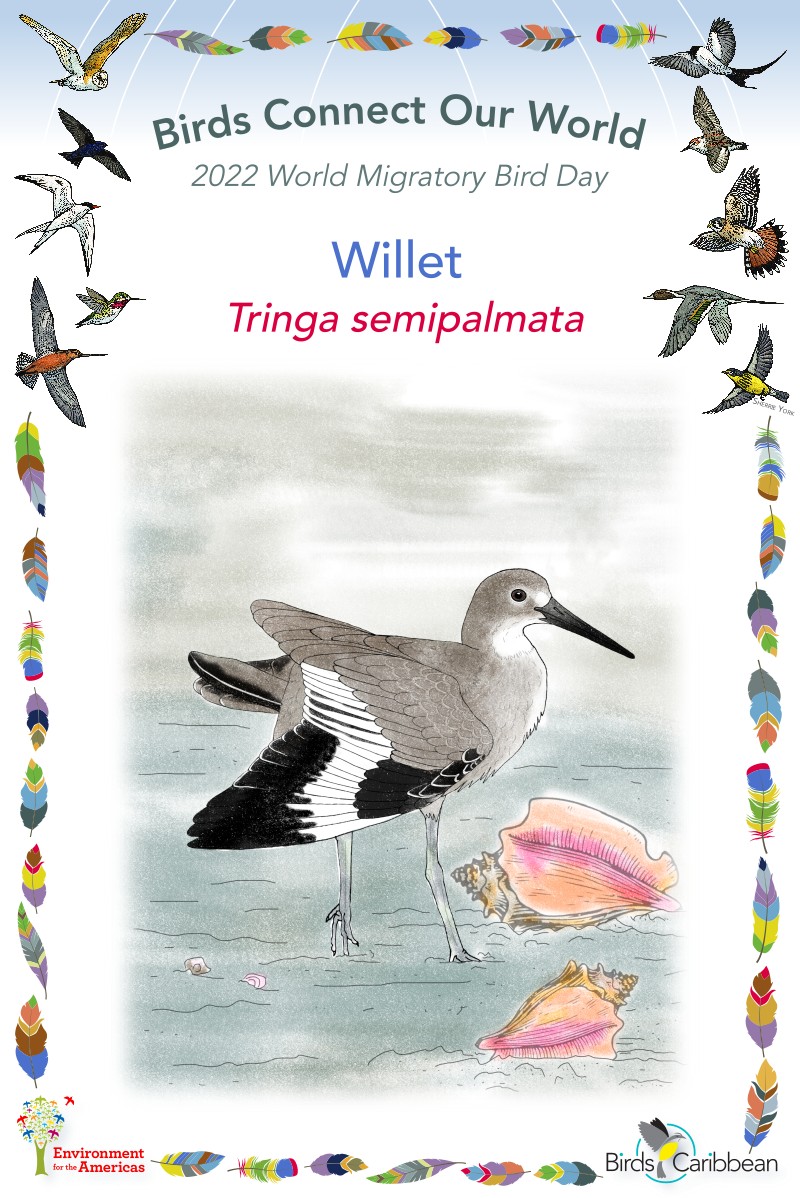
Migratory Bird of the Day: Willet
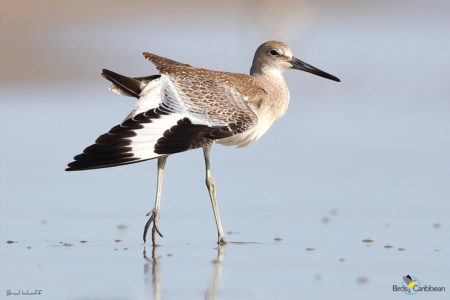
Willets are large shorebirds with long gray legs and a dark straight, slightly heavy bill, which is sometimes pale at the base. Overall, Willets can look quite nondescript and dull-colored in their winter plumage, with plain gray-brown plumage above and pale feathers below. However, when they take flight look out for the bold white-and-black striped pattern on their wings. This is a give away that you’ve seen a Willet, as none of the other similar-sized shorebirds have this wing-pattern. You can also listen out for their “kip-kip-kip” call which they might make if alarmed or agitated.
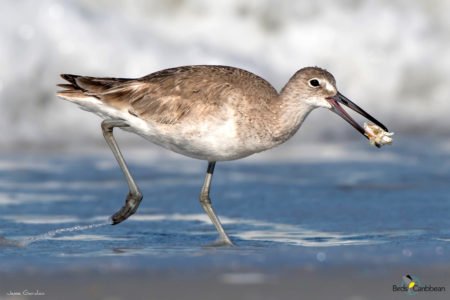
Most of the Willets that we see in the Caribbean are long-distance migrants, coming south from their in-land breeding and coastal breeding areas in North America. During fall and winter they can be found on our beaches, mudflats, and other coastal wetland areas. Here they feed on small crabs, worms, clams, and other invertebrates. Willets are often found feeding together in small flocks.
A very small number of Willets actually breed in some parts of the Caribbean including on Puerto Rico, Cuba and Anguilla. During the breeding season they are still overwhelmingly gray-brown in appearance, however their feathers become more streaked, mottled and slightly darker.
As with so many shorebirds, Willets are likely to be negatively affected by habitat loss and degradation across their breeding, migration, and wintering ranges. These changes are occurring through increased agriculture, commercial fishing, shrimp aquaculture, and tourism development. Willets are also hunted in parts of their range. Although currently listed as “Least Concern” by the IUCN it is important that wetland habitats are conserved for Willets and all of our shorebirds. Learn more about this species, including its range, photos, and calls here.
Colour in the Willet
Download the Migratory Birds of the Day Colouring Page! Use the picture above and the photos on this page as your guide, or you can look up pictures of the bird online or in a bird field guide if you have one. Share your coloured-in page with us by posting it online and tagging us @BirdsCaribbean #WMBD2022Carib
Listen to the calls of the Willet
During migration and in winter you might hear Willets make a “kyah-yah” often in flight or as they take flight.
Photos of the Day
Willets are gray-brown in appearing and quite dull looking, until they open their wings an reveal a striking white and black pattern. (Photo by Brad Imhoff)In winter Willets can be found on beaches and mudflats, where they use their long bills to probe for food. (Photo by Jesse Gordon)
Activity of the Day
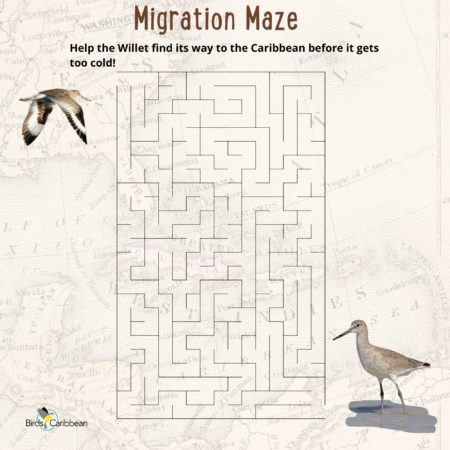
FOR KIDS: Shorebirds, like Willets, make long migratory journeys in the Fall and Spring between their breeding areas and the places where they will spend the winter. Often their migrations can cover 1000s of kilometres and might involved several re-fuelling stop-offs on the way! Shorebirds ‘wintering grounds’ are often far to the south of where the birds breed. This is so that Shorebirds can survive through the winter in warmer climates, away from the freezing conditions further north. Warmer weather on the wintering grounds also means that food is more abundant and easier to find for these hungry shorebirds. Can you help this Willet find its way on its long migratory journey? Can you help this Willet find its way on its long migratory journey? Find the route through the maze to guide it to warm weather and plenty of food on its wintering grounds. You can find the solution here.
FOR KIDS AND ADULTS: Need some help with your Shorebird ID? We know that these long-legged, long billed, gray-brown birds can be confusing sometimes! If you struggle to pick out Willets from the somewhat similar Short-billed Dowitcher take a read of this blog post by Allison Caton who has some handy tips for you.
Finally enjoy this video of Willets, moulting into winter plumage, feeding on the beach! Notice how they probe the sand with their long bills, in search of tasty bivalves and crabs.
Celebrate World Migratory Bird Day (WMBD) with us in 2022! This year’s theme is “Dim The Lights for Birds at Night”. Have fun learning about a new migratory bird every day. We have colouring pages, puzzles, activities, and more. Download for free and enjoy nature with your family at home.
Migratory Bird of the Day: American Oystercatcher
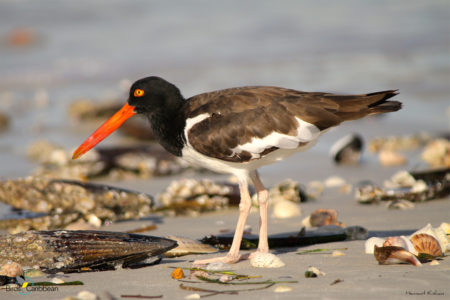
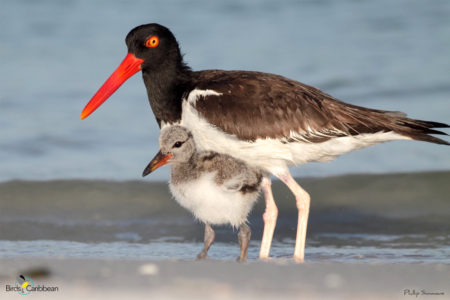
With their large size, striking black and white plumage, pink legs and carrot-like orange bills, American Oystercatchers are truly unmistakable! Males and females look the same, and in addition to their distinctive plumage they have yellow eyes with a red eye ring. If their size and coloring don’t make them conspicuous enough American Oystercatchers will be sure to alert you to their presence with their loud, excited, high-pitched “hueep hueep hueep!” calls.
American Oystercatchers can be found year-round and breed in some islands of the Caribbean, including Cuba, the Bahamas, Virgin Islands, Hispaniola, and some Lesser Antilles islands. Outside of the breeding season they can be found across most of the West Indies, with birds migrating south in Fall from breeding areas on the Atlantic coast of the U.S.
Oystercatchers are true coast-lovers, and can be found in areas of rocky shoreline and on beaches and offshore cays. Their orange bills might look comical but they serve a serious purpose. These shorebirds specialize on feeding on bivalve mollusks. Their bills are powerful with razor-sharp edges for breaking into tightly closed clams, oysters and mussels.
The diet of American Oystercatchers means they are restricted to coastal areas. Although they are not currently considered to be of conservation concern by the IUCN, they are on the Partners in Flight’s Yellow Watch List. This is because their population size was estimated at only 10,000 birds in 2000. This led to a flurry of research on the species and conservation actions by the “American Oystercatcher Working Group.”
Biologists learned that American Oystercatchers are threatened by direct loss of their breeding habitat from coastal development and the impacts of human disturbance. They are less likely to breed successfully on beaches with high levels of human activity. Management actions such as raising public awareness and protecting breeding sites from disturbance are helping the population to recover. Undisturbed coastal areas are vital to help them thrive throughout the year in the Caribbean too. Learn more about this species, including its range, photos, and calls here.
Colour in the American Oystercatcher
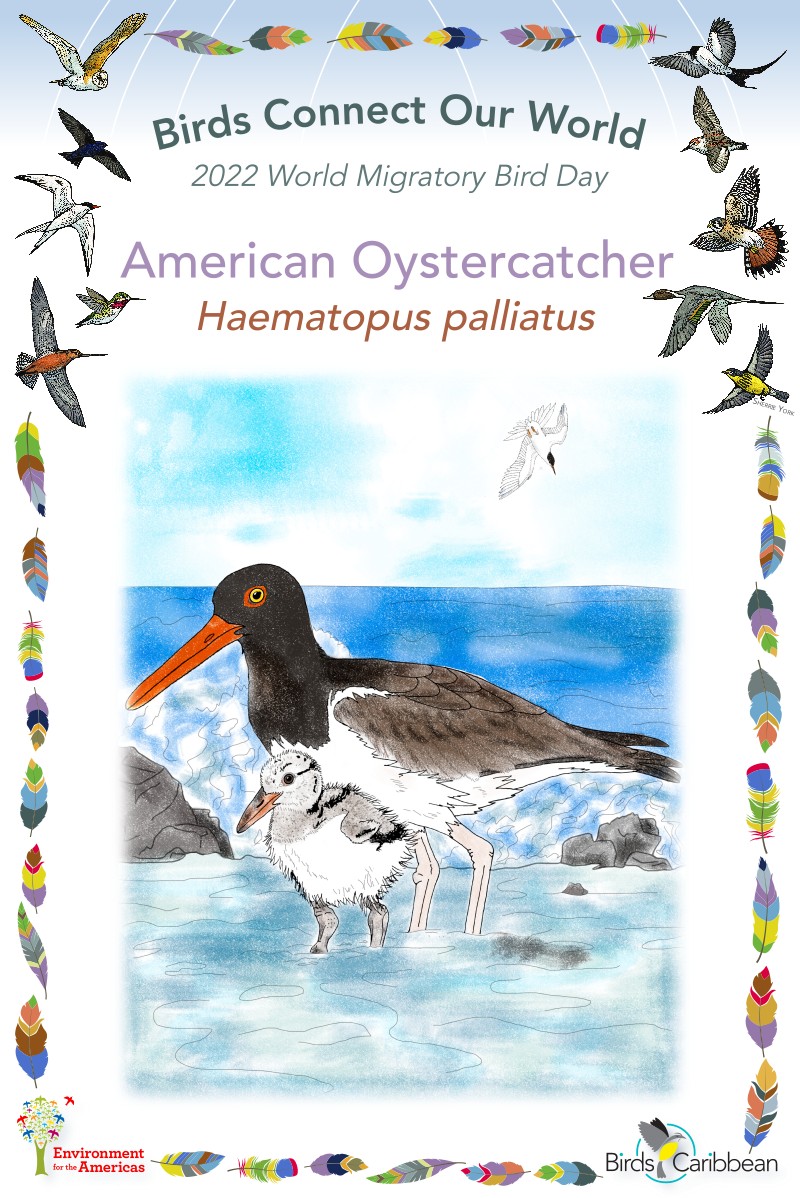
Download the Migratory Birds of the Day Colouring Page! Use the picture above and the photos on this page as your guide, or you can look up pictures of the bird online or in a bird field guide if you have one. Share your coloured-in page with us by posting it online and tagging us @BirdsCaribbean #WMBD2022Carib
Listen to the calls of the American Oystercatcher
American Oystercatchers have loud high-pitched ” hueep” or “weeer” calls, which they can repeat in rapid succession (often with increasing rapidity and volume).
Puzzles of the Day
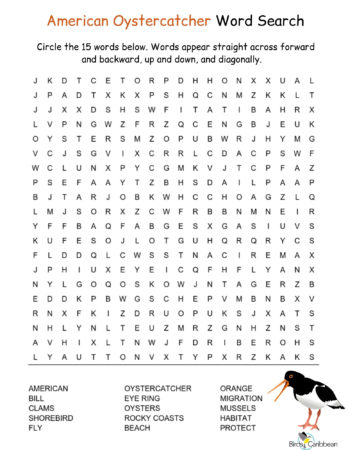
Click on the images below to do the puzzle. You can make the puzzle as easy or as hard as you like – for example, 6, 8, or 12 pieces for young children, all the way up to 1,024 pieces for those that are up for a challenge!
American Oystercatcher. American Oystercatchers use their sturdy, strong bills to pry open mussels, clams, and other bivalves. (Photo by Hemant Kishan)American Oystercatcher with Chick. Oystercatchers nest in some islands in the the Caribbean, but are just winter visitors on other islands. (Photo by Phillip Simmons)
FOR KIDS AND ADULTS: Don’t forget that you still have time to take part in this year’s Global Shorebird Count. This takes place between September 1 – 7! To take part all you need to do is visit your local wetland and count all the shorebirds (and other birds) that you see there. Then share your eBird Caribbean list with ‘worldshorebirdsday’. You can find out more about how to take part in our handy blog post. This is full of tips and hints for carrying out a successful survey, including links to help out with shorebird ID.
Enjoy this video of an American Oystercatcher. In the video you can see it using it’s bill as it forages on the rocky shore on some tasty mollusks!
Celebrate World Migratory Bird Day (WMBD) with us in 2022! This year’s theme is “Dim The Lights for Birds at Night”. Have fun learning about a new migratory bird every day. We have colouring pages, puzzles, activities, and more. Download for free and enjoy nature with your family at home.
Migratory Bird of the Day: Least Sandpiper
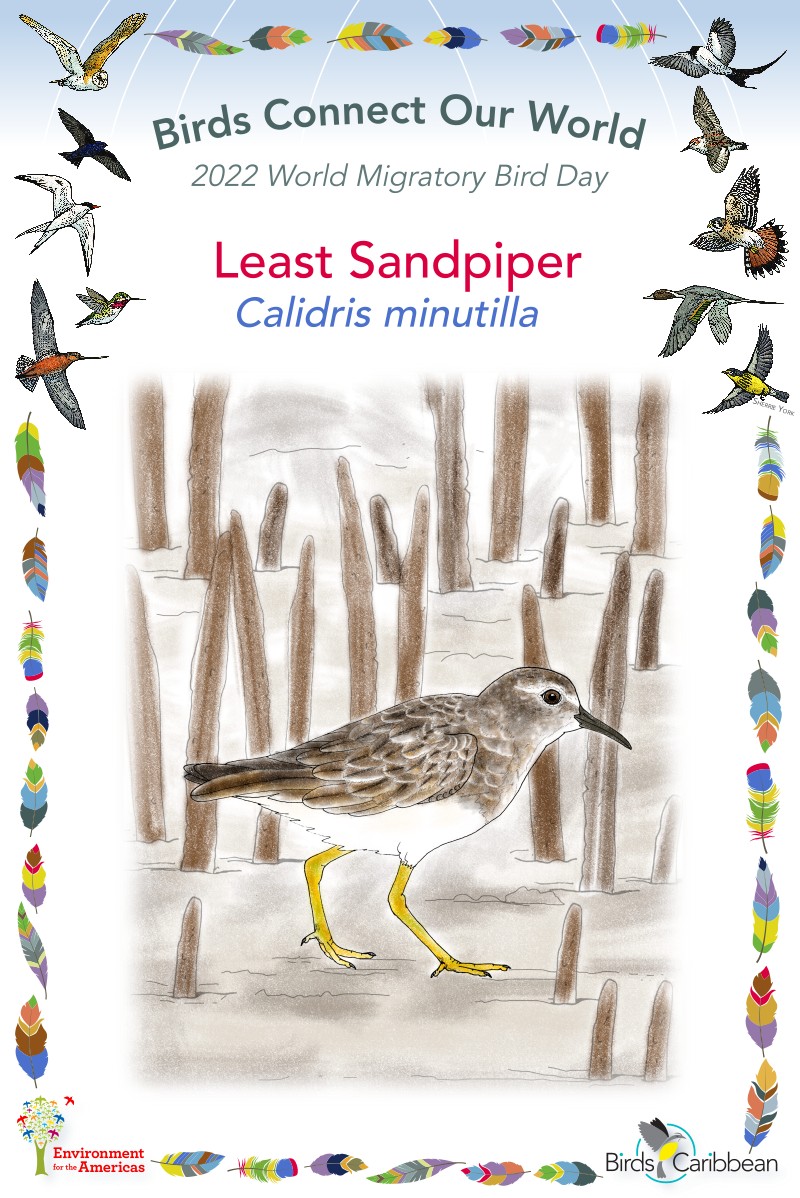
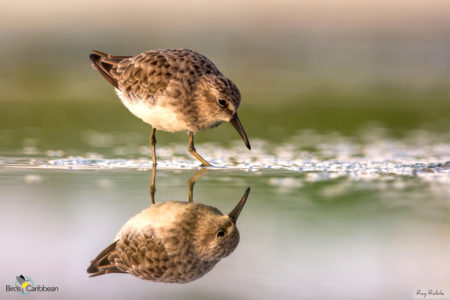
Meet our smallest Caribbean shorebird, the Least Sandpiper! Even the second part of their scientific name “Calidris minutilla” means “very small” in medieval latin. In fact, these tiny sandpipers, part of the group of shorebirds known as ‘peeps’ are not much bigger than a sparrow. These diminutive wetland inhabitants have a compact body, with brown or reddish-brown plumage above and white below. They have a thin slightly down-curved bill, which is black.
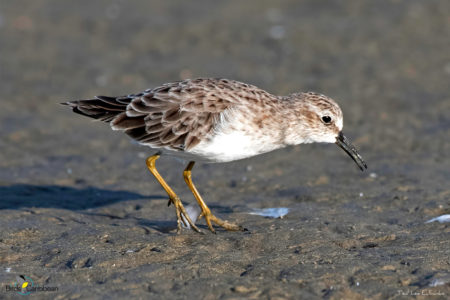
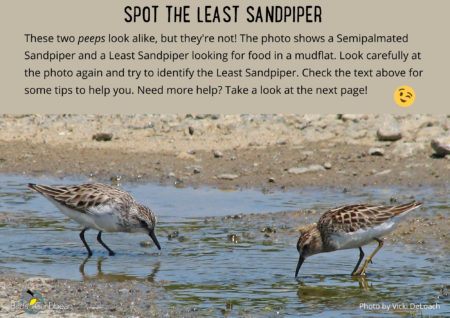
Their legs are quite short for a shorebird, and are a distinctive yellowish green color. Look out for these yellow-colored legs, they are a great way to tell Least Sandpipers apart from other very similar looking peeps, such as Western and Semipalmated Sandpipers, who have black legs. Take care though—their legs are sometimes covered in dark mud making the yellow difficult to spot! In addition to their slightly smaller size, yellowish legs and thin, slightly down-curved bill, another way to tell them apart from other peeps is to look for a warmer, browner tone to their plumage. Listen also for their distinctive cheep call.
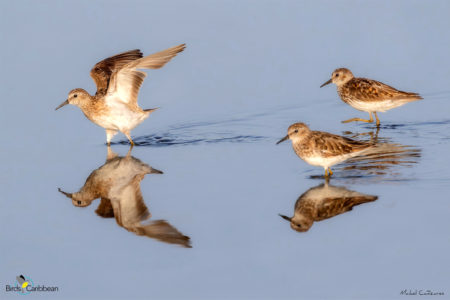
Least Sandpipers might be small but that doesn’t stop them from making an amazing long-distance migration in the Fall. These birds head south from breeding grounds in subarctic regions in the far north of North America. They travel 1000s of km to winter in the Caribbean, Central and South America. Least Sandpipers will migrate in groups and once they arrive in their winter areas they also like to stay in a flock. They can be found in muddy areas of wetlands, both on the coast and inland. Here they can be seen in a typical ‘hunched over’ posture feeding on tiny invertebrates on the mud surface.
Least Sandpipers are listed as “Least Concern” by the IUCN. However, like all shorebirds they are threatened by disturbance from humans and habitat loss. During migration and overwinter these tiny birds rely on the food that wetlands provide for their survival. Protecting our wetlands is vital to helping conserve shorebirds like the Least Sandpiper! Learn more about this species, including its range, photos, and calls here.
Colour in the Least Sandpiper
Download the Migratory Birds of the Day Colouring Page! Use the picture above and the photos on this page as your guide, or you can look up pictures of the bird online or in a bird field guide if you have one. Share your coloured-in page with us by posting it online and tagging us @BirdsCaribbean #WMBD2022Carib
Listen to the calls of the Least Sandpiper
Least Sandpipers make a distinctive high-pitched “greeep!” call. You might heard this as a small flock takes flight.
Puzzle of the Day
Click on the images below to do the puzzle. You can make the puzzle as easy or as hard as you like – for example, 6, 8, or 12 pieces for young children, all the way up to 1,024 pieces for those that are up for a challenge!
Look out for browner colored plumage and yellowish legs to be sure you are seeing a Least Sandpiper and not a different small sandpiper. Also note the pointed down-curved bill (Photo by Ray Robles).Least Sandpipers will often flock together in a loose group. Listen out for their rolling “cheep” call as they take flight (Photo by Maikel Canizares).
A Least Sandpiper searches for food on the mud. Least Sandpipers often feed further from the water on dryer parts of the mud, compared to other ‘peeps’ (Photo by Ted Lee Eubanks).
Activity of the Day
FOR KIDS: Test your shorebird ID skills with our “Spot the Least Sandpiper” challenge! Small sandpipers or ‘peeps’ as they are known can look very similar to each other. As well as their small size they share other features such plumage that is brown or grey above and white below, pointed black-coloured bills and a habit of feeding in muddy wetland areas. But Least Sandpiper so have things that help you pick them out from the crowd, read the text above and look closely at the pictures of Least Sandpipers we have shared. Once you’ve done this take a look and see if you can pick out the Least Sandpiper! (there are some extra tips for you on the second page if you get stuck). You can find the correct answer here.
FOR KIDS AND ADULTS: Don’t forget that from September 1 – 7 it is the Global Shorebird Count – with World Shorebirds Day taking place on September 6. Take part by heading to your local wetland and counting all the shorebirds that you see, then making sure to share your list with ‘worldshorebirdsday’ on eBird Caribbean. Need some extra help with your shorebird ID? No worries, we have you covered, check out our shorebird resources page here. Find out more about the Global Shorebird Count and World Shorebirds day below.
It was an extraordinary year. But then, so was 2020! Despite the ongoing roller coaster ride that was the COVID-19 pandemic, BirdsCaribbean pressed on. While some activities were necessarily curtailed, with our ever-enthusiastic partners we “pivoted,” adapted to the changing circumstances, and overcame obstacles. We had some great successes. We also turned to highlighting some pressing issues impacting our Caribbean birds. Now, we are looking forward to an exciting 2022, full of potential and possibilities!
We are feeling very positive about this new year. The theme of our upcoming conference in Puerto Rico (June 27 to July 2), which we are co-hosting for the first time with the American Ornithological Society (AOS), is “On the Wings of Recovery: Resilience and Action.”
This theme reflects the focus of our activities in the past year, supporting our partners as they work on solutions to the many challenges facing the region’s birds. We are also looking forward to hosting workshops in the Dominican Republic and The Bahamas, on Landbird Monitoring and Bird Banding, respectively.
In case you missed it, here’s an overview of BirdsCaribbean happenings in 2021:
It was a “quiet” year, but…
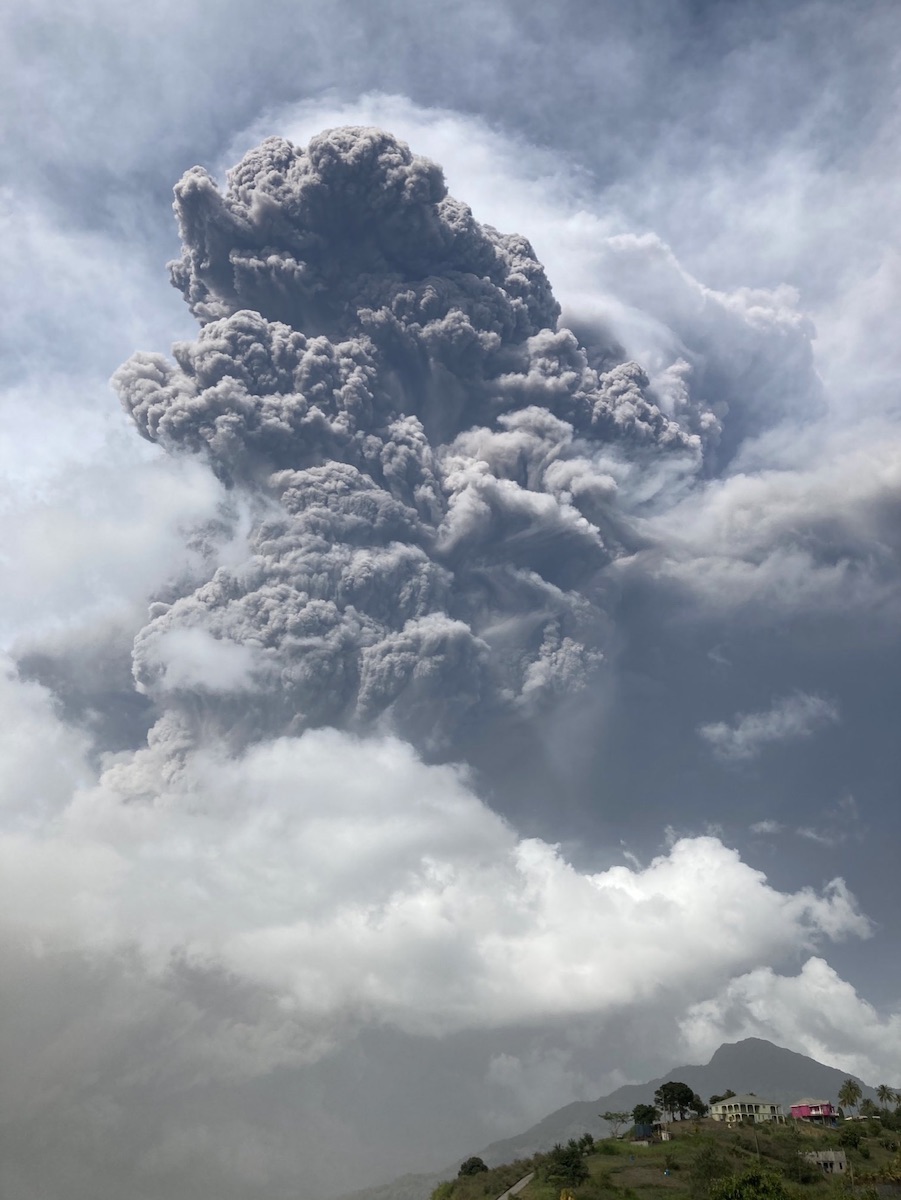
Ash plume on April 9th at 4 PM, the first day of eruptions (photo by Richard Robertson, UWI Seismic Research Centre)
Thankfully for the islands, the hurricane season was not as devastating as in previous years, although climate change is still with us. Year after year, the region continues to suffer from droughts, coastal erosion, and floods after heavy rains, damaging habitats and creating havoc in communities. However, there was still some unexpected drama this year.
The explosive eruptions of La Soufrière, a volcano in St. Vincent, began on April 9th, 2021, and continued spewing volcanic ash and debris into the atmosphere for weeks – displacing thousands and blanketing forests and towns in many inches of volcanic ash. Although it has now quietened down (its eruptive phase was declared over at the end of November, 2021) there was considerable damage to trees and river valleys from pyroclastic material, rocky debris and mudflows.
In the wake of the destruction, concerns for the St. Vincent Parrot and several other endemic bird species rose and we were thankful for the valiant efforts of the St. Vincent and the Grenadines Forestry Department. With generous donations from friends and donors to the BirdsCaribbean fundraising site, we were able to ship a range of supplies to the Department, including field equipment, food, veterinary supplies, and much more. We also supported intensive surveys of the St. Vincent Parrot by Forestry staff in December, 2021 – more news on their status soon!
A Turkey Vulture costume, the biggest Big Day, and CWC was busy too
As usual, bird festivals were important days in our calendar. Island residents hosted at least scaled-down activities – whether virtual, in person, or a “hybrid” mixture, since COVID regulations varied from time to time.
Héctor Fidel Ravelo Romanguera wins first prize in the WMBD costume competition for his amazing Turkey Vulture costume. (Photo by Ines Lourdes Fernandez)
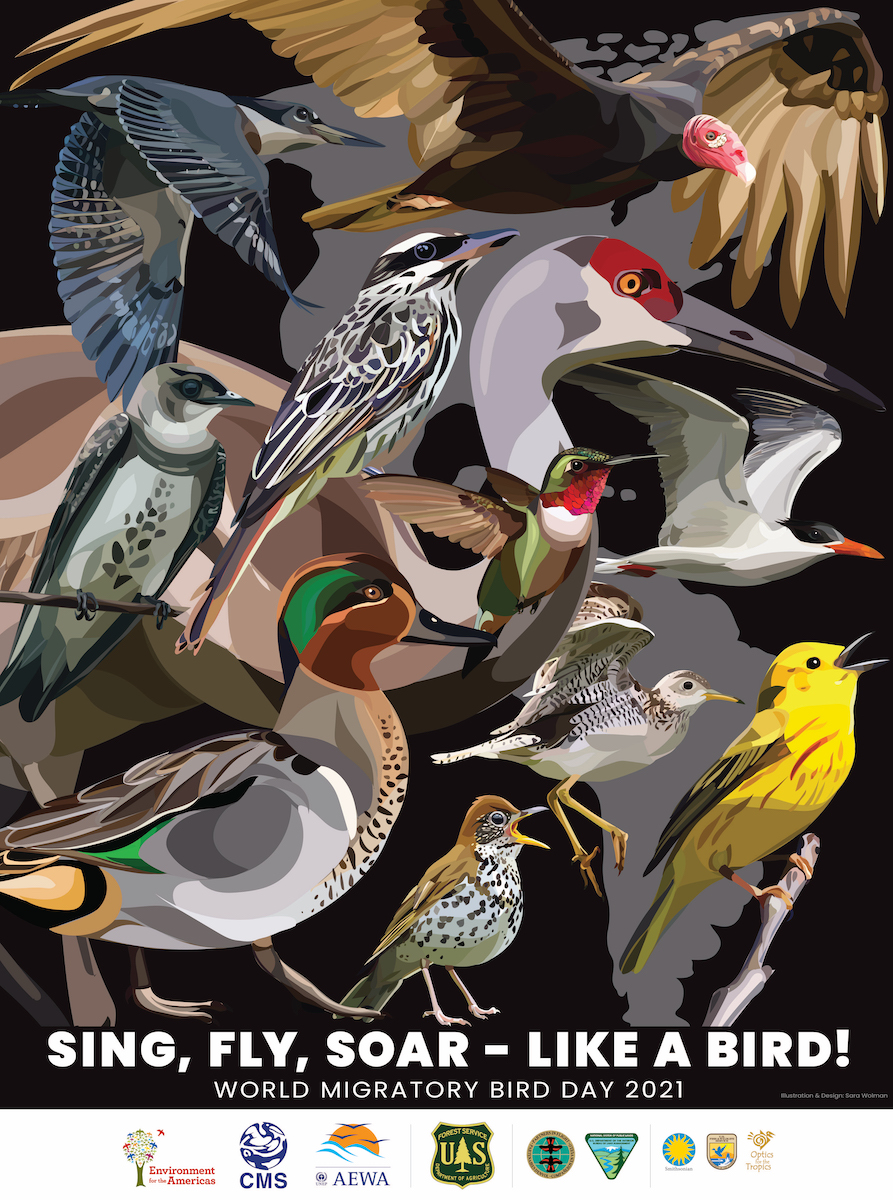
World Migratory Bird Day (WMBD) in Fall, when our beautiful “winter visitors” start to appear in gardens, fields and forests across the Caribbean, is always an opportunity for fun activities, especially with young people. This year’s theme, “Sing, Fly, Soar Like a Bird” inspired bird walks, field trips and an exciting Bird Costume Party, won by creative schoolchildren in Cuba. The winning Turkey Vulture costume was stunning! Many thanks to Environment for the Americas for assisting with educational materials.
Our Caribbean Endemic Bird Festival (CEBF), which we have hosted for the past twenty years, is always a delight. 2021 did not disappoint. After all, we have no less than 171 endemic species to choose from! The theme “Sing, Fly, Soar Like a Bird” provided ample opportunities for fun activities and important learning through webinars, birding field trips, and activities and online resources for families and youth to celebrate. Check out the exciting webinars here! Our partners shared what the theme meant to them in short inspiring videos – these can be viewed here.
The 12th annual Caribbean Waterbird Census (CWC) was another important activity, which was highly successful. From mid January to early February, birders fanned out across wetlands and beaches to record their sightings on eBird Caribbean. From the offshore islands of Venezuela to the wetlands of Kingston Harbour, Jamaica, there was a great turnout of birders. Anguillan partners were excited to spot Piping Plovers, while in Antigua, a young birding group participated in a “Mask-erade.”
We did mention successes, didn’t we? Global Big Day 2021 (Saturday, May 8) was – well, big! Close to 2,000 checklists were submitted from the Caribbean – a big jump in participation. 364 species were spotted, beating last year’s record. Cuba, Puerto Rico and the Bahamas were stars, and fifteen teams participated, raising funds for Motus bird monitoring stations. Some wonderful photos were taken of birds and people, enjoying the day; take a look here at the winners of our Photography Awards.
An exciting project is about to unfold…
Earlier this year, we announced our plans for a new bird monitoring initiative, the Caribbean Motus Collaboration, to set up a Motus Wildlife Trafficking System that will use nano-tags tracked by receivers to gain valuable data on the movement of birds across our region. We are grateful to Birds Canada and the Northeast Motus Collaboration for their support. For full details and if you are interested in contributing in any way, please complete a short survey or make a contribution here.
A wealth of online material – yes, we went virtual again
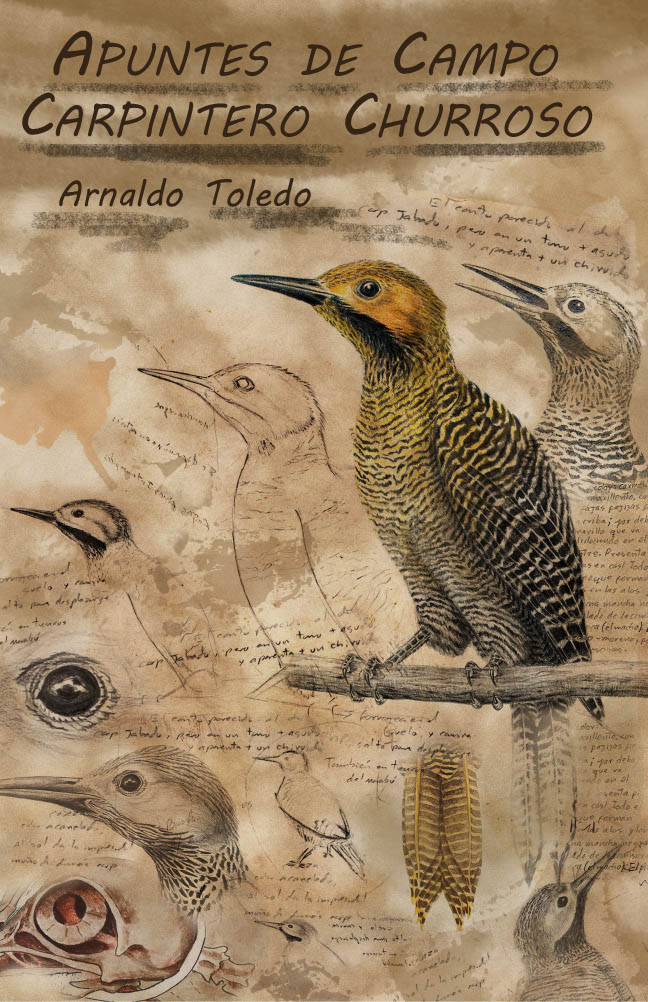
Cover of Arnaldo Toledo’s amazing Grand Prize winning bird Zine
To enhance these programs and special calendar events, and also to boost our advocacy for birds, we were very busy throughout the year designing and producing a whole range of online products. In 2021, we again broadcast virtually “From the Nest” with an Endemic Bird of the Day for the CEBF, accompanied by related puzzles, games and coloring pages. Our very first “Bird Zine” contest garnered some beautiful, artistic products from contestants in various age groups, with winners from Cuba, Puerto Rico, and Trinidad and Tobago. For the Caribbean Waterbird Census we started off with no less than three webinars, helping us to identify tricky species and with an additional webinar on Puerto Rican waterbird species.
For the 2021 Caribbean Waterbird Census, we gave webinars on how to participate in the CWC, including presentations on using eBird Caribbean and Merlin, how to do a CWC count, and how to identify waterbirds and shorebirds – always challenging! Check out our helpful webinars on our Youtube channel CWC playlist.
For World Migratory Bird Day, we produced a series of four videos highlighting our migratory shorebirds, many of which are endangered. One species, the Lesser Yellowlegs, is in particular trouble, with a drastic decline in numbers since the 1970s. At a free webinar on October 8, wildlife biologist for the U.S. Fish and Wildlife Service Migratory Bird Management Program Laura McDuffie explained the work she and colleagues are doing to track, monitor and gain more information on these vulnerable birds.
A major highlight of our year was the opportunity to present at the 2021 AOS Virtual Meeting, from August 9 – 13. BirdsCaribbean was thrilled to present a three-part symposium entitled “Resilient Caribbean Birds – Surviving and Thriving in a Challenging World,” in which we highlighted recent avian research and conservation projects in the region, on August 11 and 12. Our presentations were well attended and online networking and information sharingtook place.
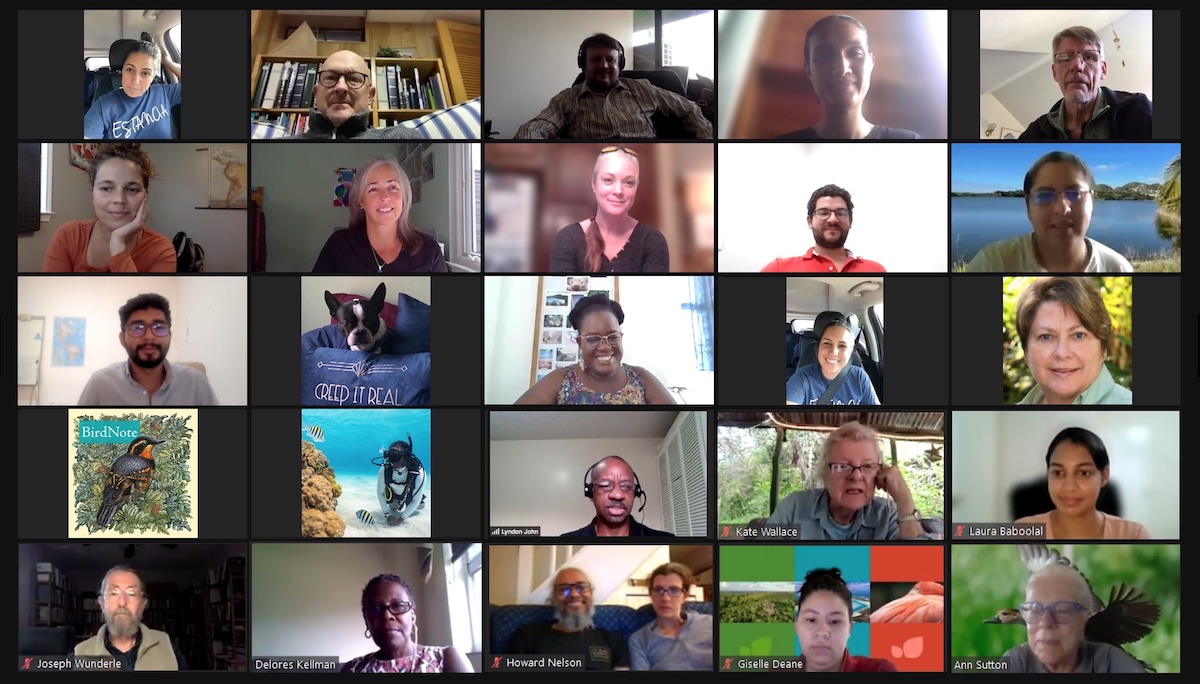
And then, to business. Our General Business Meeting on October 28 had over 80 participants and lasted for over two hours (there was a lot to tell our members and supporters about!) providing a comprehensive update on BirdsCaribbean’s activities.
General Business Meeting 2021 Group Photo on Zoom 1
General Business Meeting 2021 Group Photo on Zoom 2
General Business Meeting 2021 Group Photo on Zoom 3
One memorable online event was the Seabird Fest on December 2, organized by our dynamic Seabird Working Group. The meeting provided a thorough update on the group’s impressive activities, from the Isla Contoy National Park (Island of Birds) off the Yucatan peninsula to Bermuda and the Cayman Islands – and all islands in between. There are 20 resident seabird species in the Caribbean, not all regularly monitored. The hope is to organize a big seabird monitoring effort in 2023. While it faces challenges, we applaud this group’s work. If you would like to know more, sign up for their recently launched newsletter!
Our advocacy for birds continues…
Our focus on shorebirds tied in with ongoing concerns among ornithologists and bird lovers regarding the hunting of these migratory gems on the islands of Guadeloupe, Martinique, and to a lesser extent Barbados. In a short video “Caribbean Shorebirds Under Fire” (available in English, French and Spanish here) that is at times distressing to watch we sought to explain this complex issue. We continued to support our partners’ efforts to have as many species as possible protected and to reduce this devastating harvest of endangered birds, through email petitions to the French authorities.
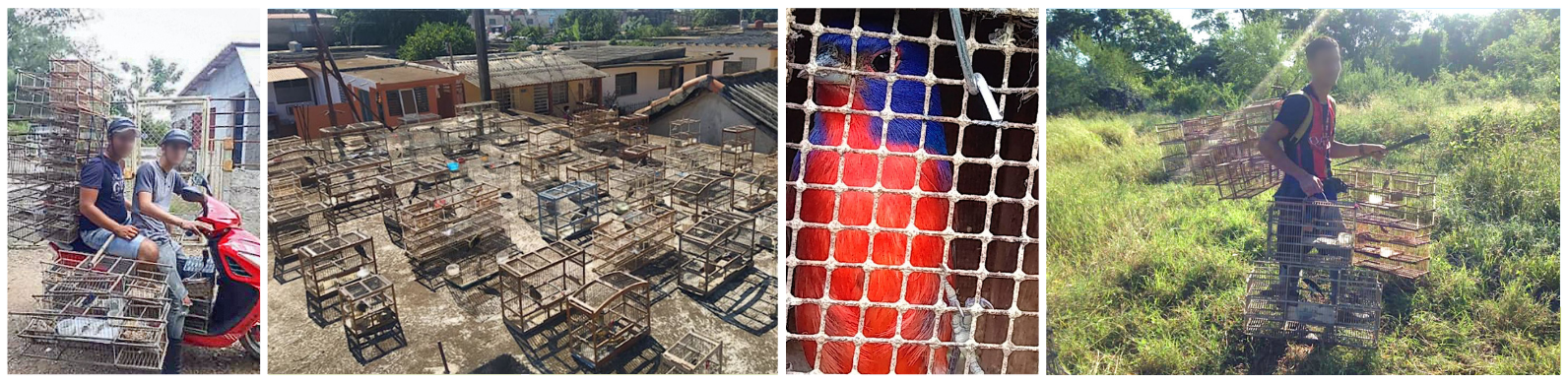
Images of wild bird trafficking in Cuba.
Many migratory species are also under threat on the island of Cuba, due to the illegal capture and sale of wild birds as they arrive on the island in the autumn months. Endemic and resident species are also targeted by trappers. BirdsCaribbean is extremely concerned at the dramatic increase in the trafficking of a range of species, both at home and extending overseas. We highlighted this growing concern recently in our investigative report, urging Cuban authorities to enforce wildlife protection laws. We are raising funds to help our colleagues combat this problem and we need your support! We will continue to shine the spotlight on these and other issues that are affecting our birds negatively.
We have had a frantically busy year, as you can see. Despite the difficulties of the pandemic, with the support of our wonderful donors and the boundless enthusiasm, dedication, and hard work of our partners on the ground, we feel a sense of achievement, and look forward to what 2022 will bring.
Wishing you all a happy, peaceful and prosperous New Year!
Héctor Fidel Ravelo Romanguera wins first prize in the WMBD costume competition for his amazing Turkey Vulture costume. (Photo by Ines Lourdes Fernandez)
October 9th, 2021 is the official date for World Migratory Bird Day (WMBD) in the Caribbean, but we celebrate throughout the fall, welcoming home our returning migratory birds. We love the extra color and activity these avian gems bring to our backyards, forests, wetlands, and beaches. This year’s theme — “Sing, Fly, Soar—Like a Bird” — provided a fantastic opportunity for learning and birding fun. Find out how we celebrated across the Caribbean!
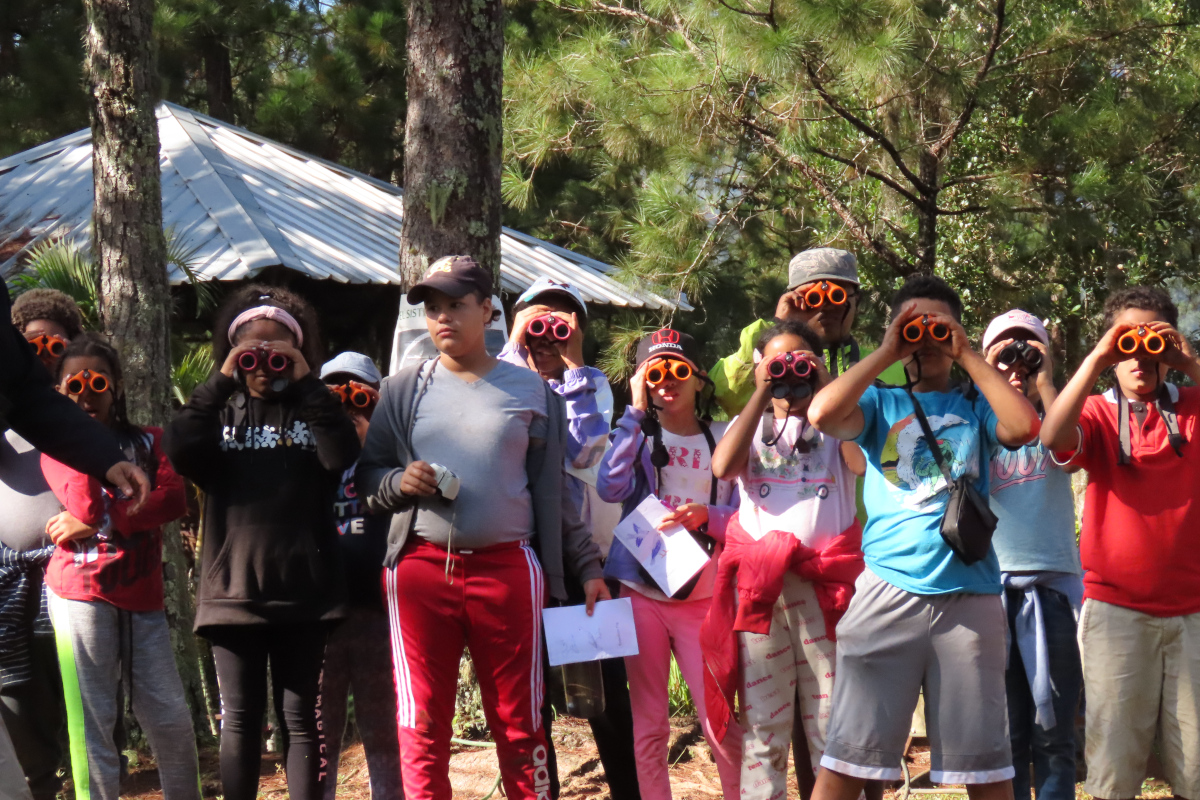
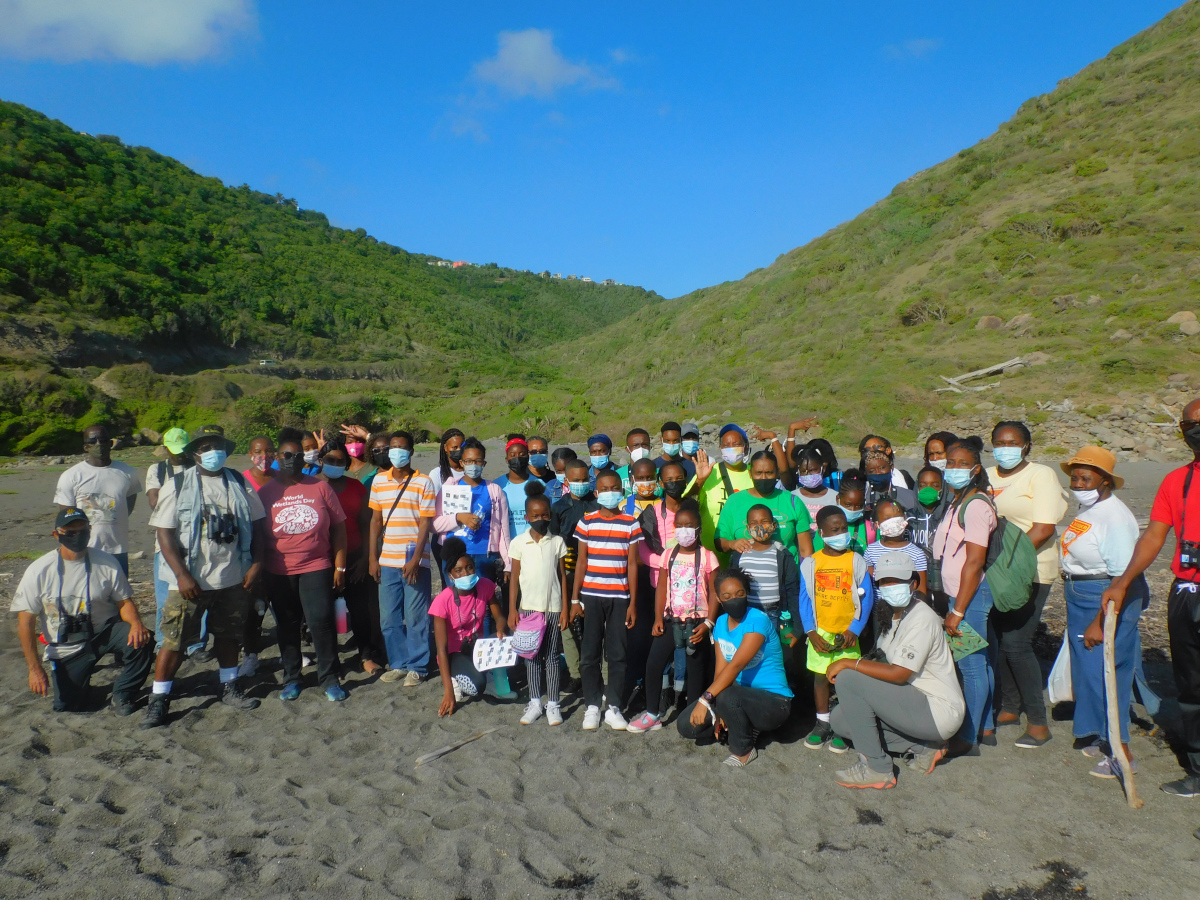
Despite the challenges faced during the pandemic, educators and students throughout the Caribbean celebrated WMBD with a range of activities. Caribbean coastlines got busy, with young students wielding binoculars and checklists, guided by their teachers. In some countries in-person events were hosted when possible; otherwise, virtual events or “hybrid” activities – a combination of the two – took place. Islands including Anguilla, Bahamas, Antigua and Barbuda, Puerto Rico, Dominican Republic, Cuba, Bonaire, Montserrat, Grenada, and Trinidad and Tobago participated, just to name a few. Many more islands are hosting events, activities and are still celebrating this special time for Caribbean birds.
BirdsCaribbean recognized WMBD by hosting several activities with a focus on the region’s endangered migratory shorebirds. At a webinar entitled “A Year in the Life of the Lesser Yellowlegs” Laura McDuffie, a wildlife biologist for the U.S. Fish and Wildlife Service Migratory Bird Management Program revealed the amazing journeys made by a shorebird species that is facing particular challenges at this time. The webinar and accompanying video (in English, Spanish, and French) can be viewed on BirdsCaribbean’s YouTube channel and below.
A series of four short videos, boosted by social media posts, aimed to raise awareness of the importance of the Caribbean region to migratory shorebirds and the threats, they face, including hunting. These can be viewed on our YouTube channel in English, Spanish and French. BirdsCaribbean partners also shared short, inspiring and amusing videos on what the theme meant to them. October Big Day was an opportunity to go out and see some migratory birds – with excellent results, despite the lingering effects of COVID-19 limitations on some islands.
Highlights from this year’s WMBD activities!
Puerto Rico
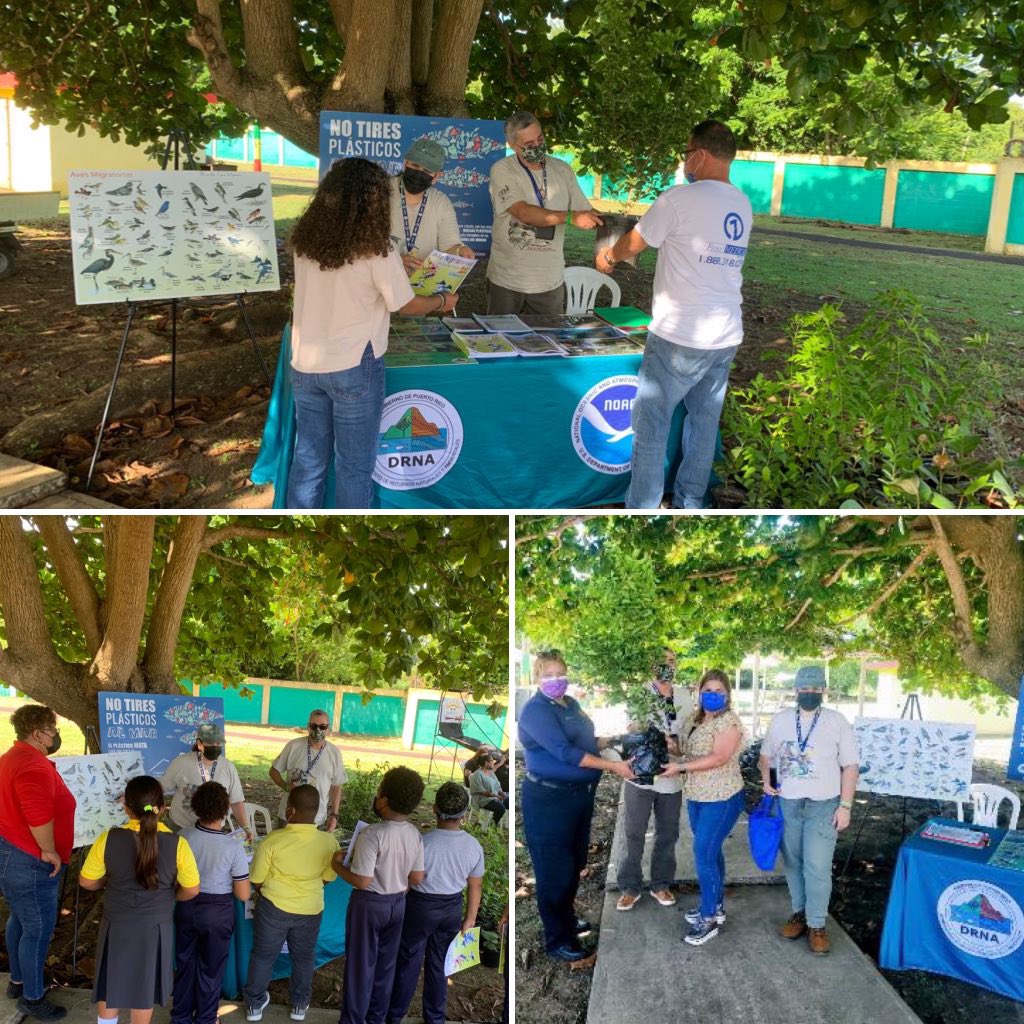
Staff at the Puerto Rico Department of Natural and Environmental Resources educated participants on migratory birds and plastic pollution. They also donated native trees as gifts at the Service Fair organized by Senator Marissita Jiménez in the Cueva María de la Cruz de Loíza Historical Park.
The Puerto Rico Department of Natural and Environmental Resources staff sharing information and giving out trees from their booth. (Photo by Ingrid M. Flores/ DRNA)
Roots and Shoots, celebrate WMBD on a bird watching trip, Puerto Rico. (Photo by Carla Montalvo Martinez)
Dominican Republic
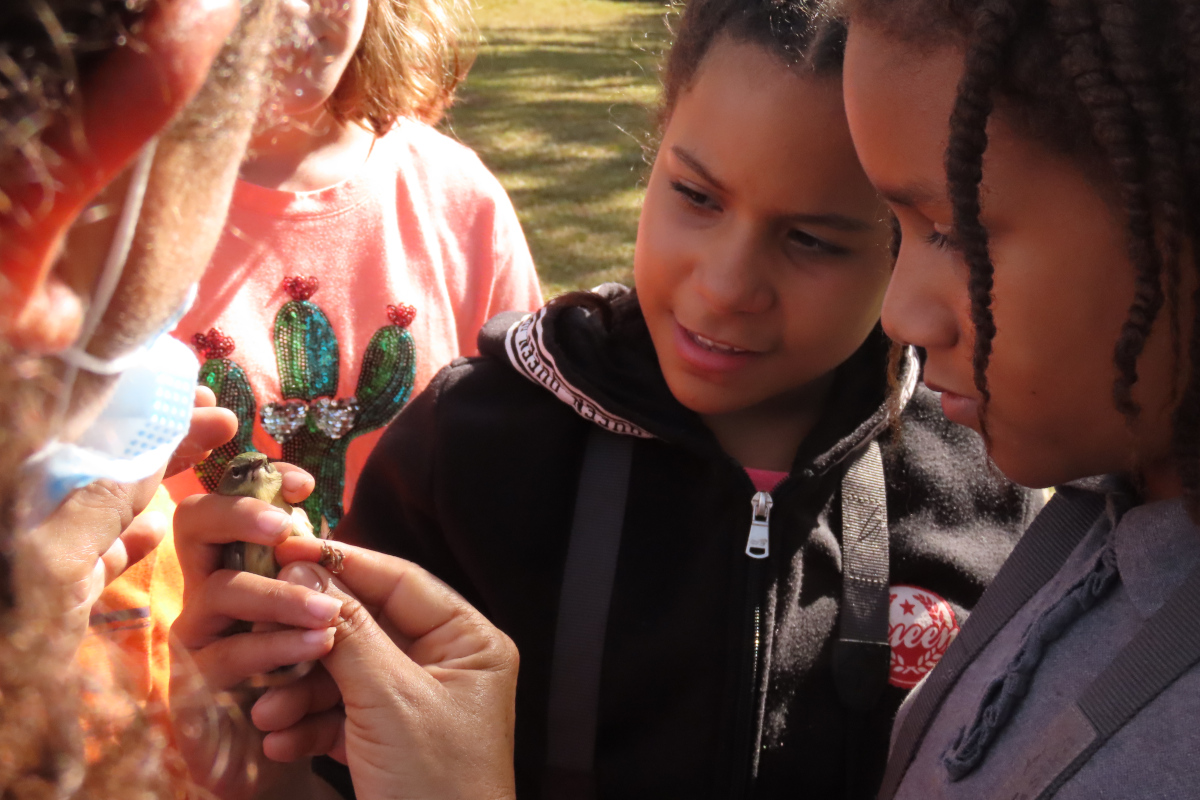
In the second week of October, Babeque Secondary School organized some activities to celebrate the enthusiasm for birds with international institutions. This year they visited the Museum of Natural History Professor Eugenio de Js. Marcano, where the volunteer students learned about the birds that visit the island and participated in lively activities based on the knowledge they had absorbed. Grupo Acción Ecológica (GAE) carried out a variety of activities in the Dominican Republic to celebrate WMBD. They organized a talk and walk, in the National Botanical Garden with Dr. Rafael M. Moscoso. They also held workshops and outreach events with schools and community groups, including with the Doulus de Jarabacoa School. Celebrating with talks, walks and bird watching with the 5th graders. Of course, they also went out to look for migratory birds and caught a female (Black-throated Blue Warbler) as part of their monitoring!
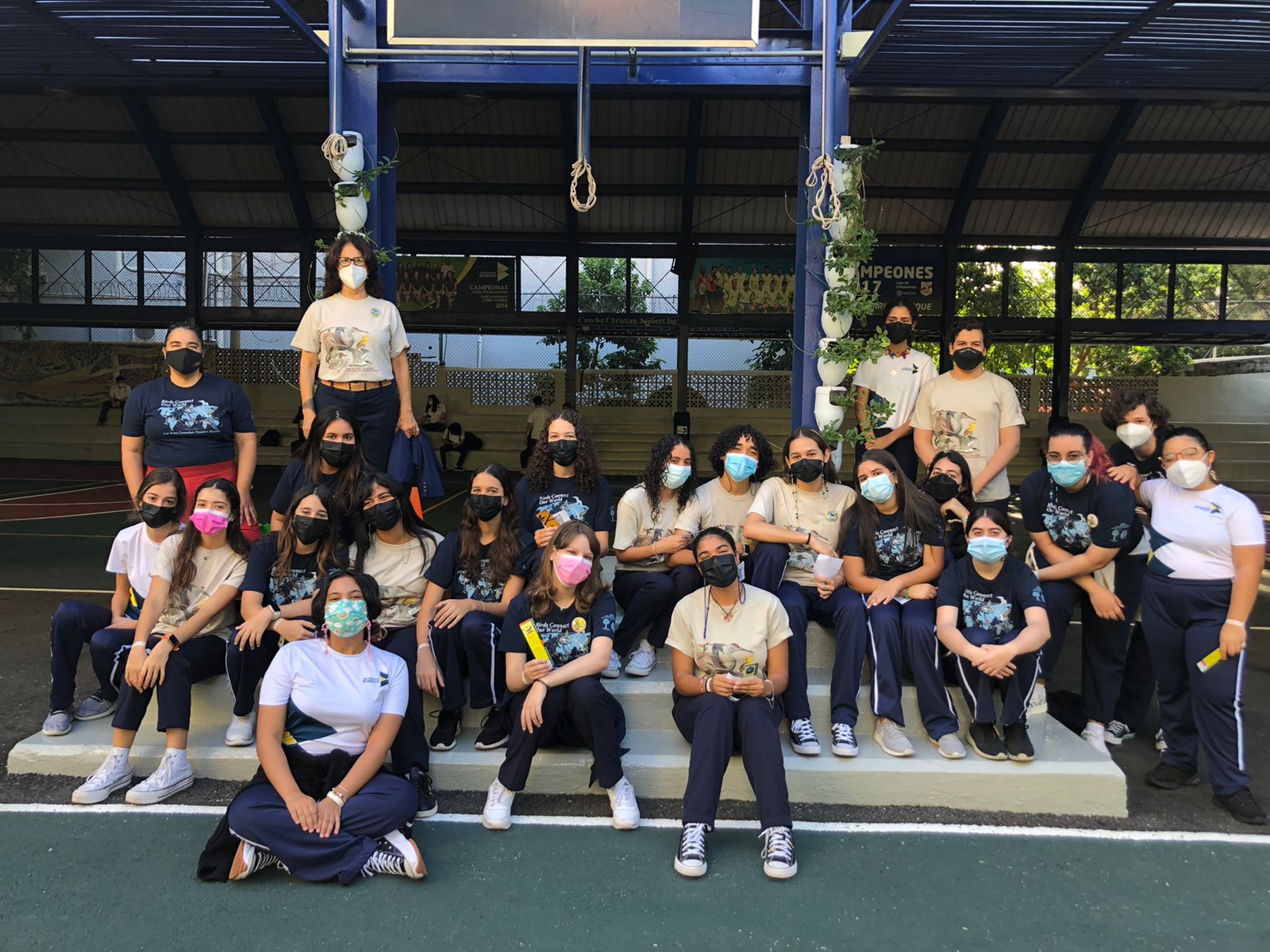
Celebrating migratory birds with Secundaria Babeque, Dominican Republic. (Photo by Monika Gomez)
Kids bird watching during WMBD activities with Doulos school, Jarabocoa, Dominican Republic. (Photo by Maria Paulino/ GAE).
Learning all about bird banding on WMBD, Dominican Republic. (Photo by Maria Paulino/ GAE).
Montserrat
The Department of Environment made an early start to WMBD events in September! They hosted a riveting presentation focused on shorebirds with a church group. Two site visits to observe shorebirds followed.
Later on, in October, the staff made a presentation on bird migration to 4th form biology students at the Montserrat Secondary School, highlighting a few of the bird species that traverse the island during the migratory season. This was followed by a word search race, which included the names of twenty-two migratory species that can be found on Montserrat.
Local radio also played a role, with a spot aired on the national radio station on October 8th and 9th.
A church group in Montserrat enjoyed a shorebird watching trip to celebrate WMBD. (Photo by Ajhermae White)
Bonaire
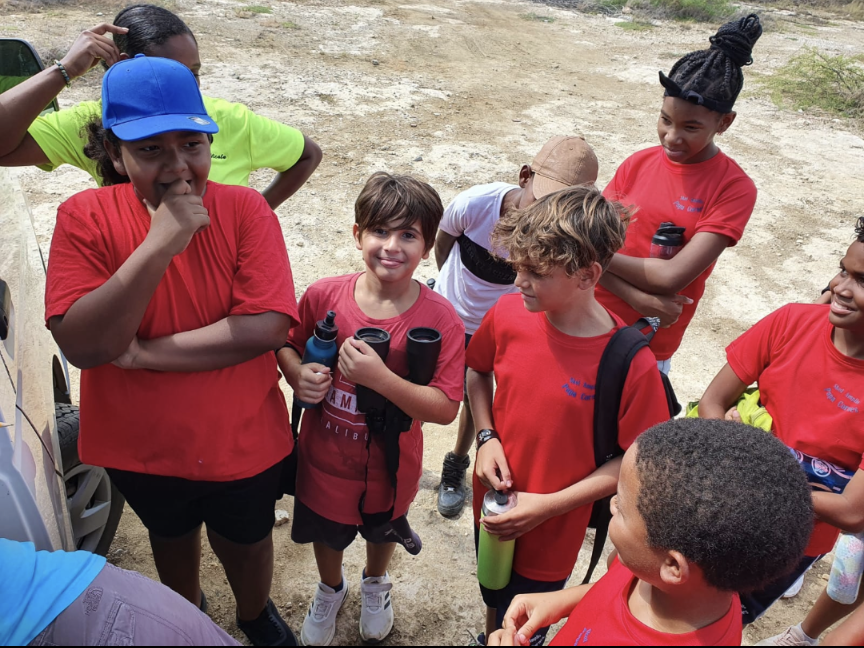
For WMBD Monique Grol and her colleagues at STINAPA visited all the primary schools on the island! They taught grade 7 classes all about migratory birds, talking to children in the classroom and taking them out on bird watching trips to local Salinas. With 100s of school kids getting involved.
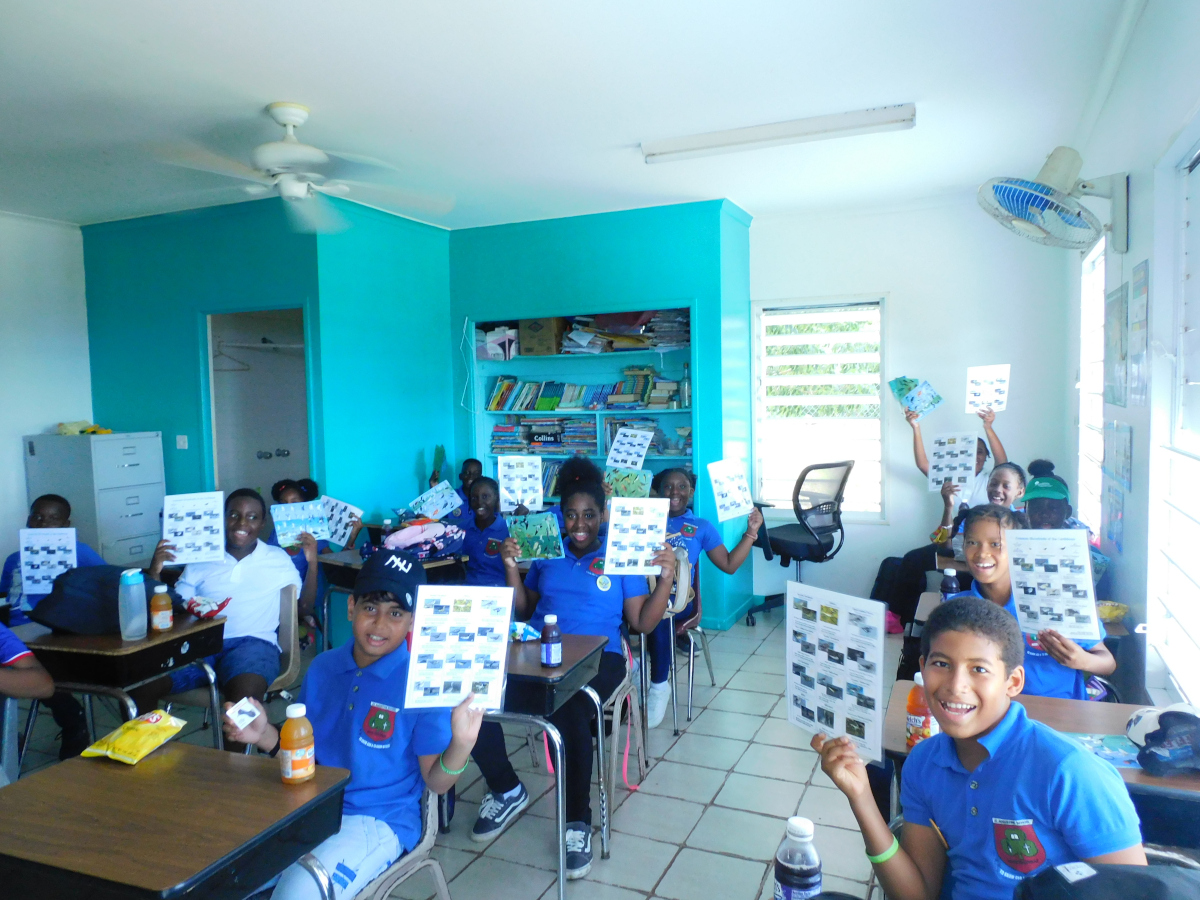
The children of Bonaire learned all about what migratory birds feed on and how bird beaks are different depending on what each type of food each bird eats. All the classes got poster of migratory birds to hang up in their classrooms. Out in the field the intrepid birding groups had great fun using binoculars and ID cards find and identify any birds they could spot!
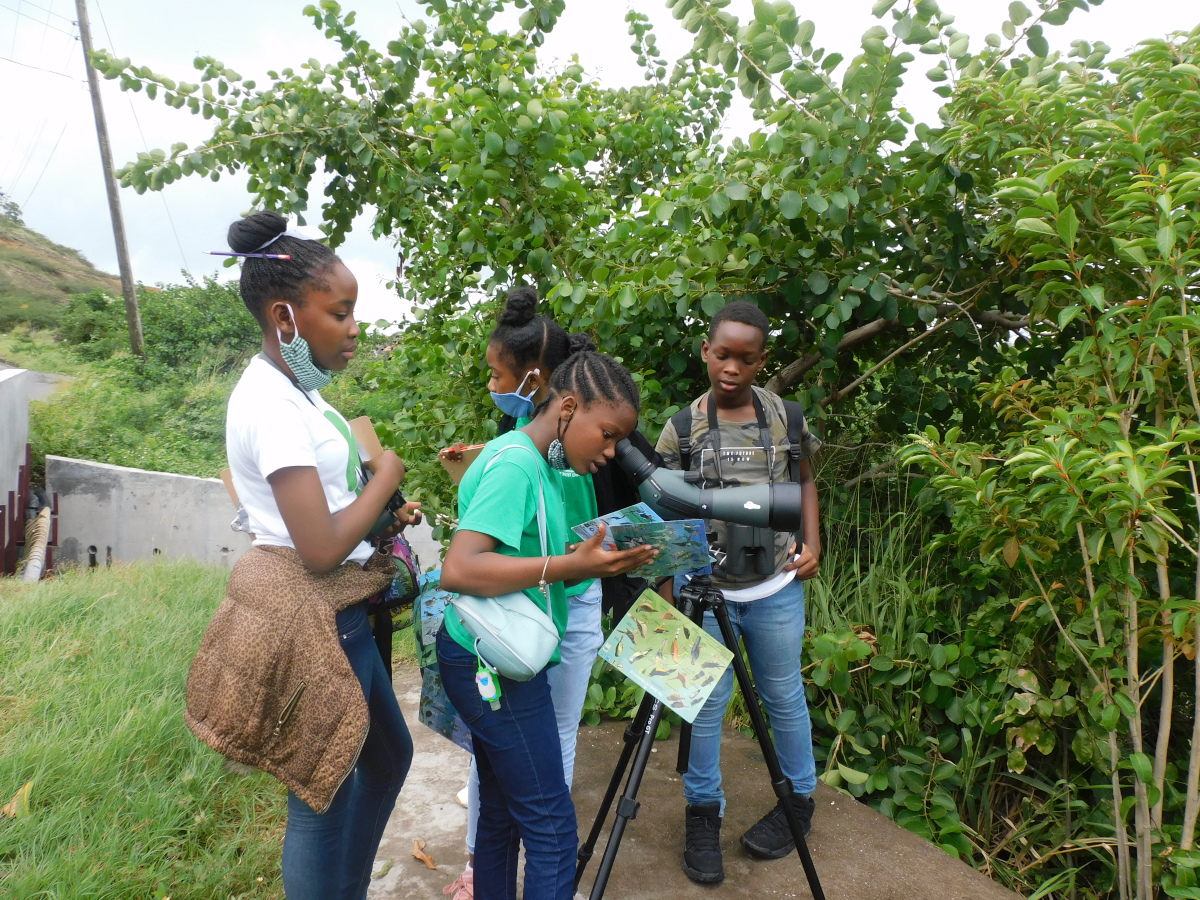
Grade 7 children looking for birds on a bird watching outing on Bonaire. (Photo by Monique Grol/ STINAPA)
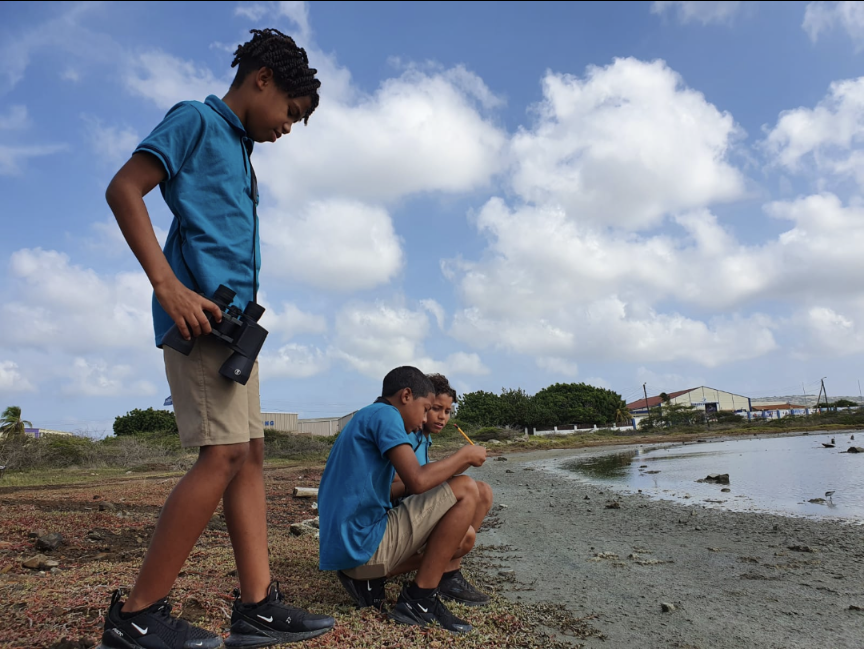
Grade 7 students enjoy birdwatching at a nearby wetland after a classroom session on migratory birds. (Photo by Monique Grol/ STIMAPA)
Bird Costume Party Winners!
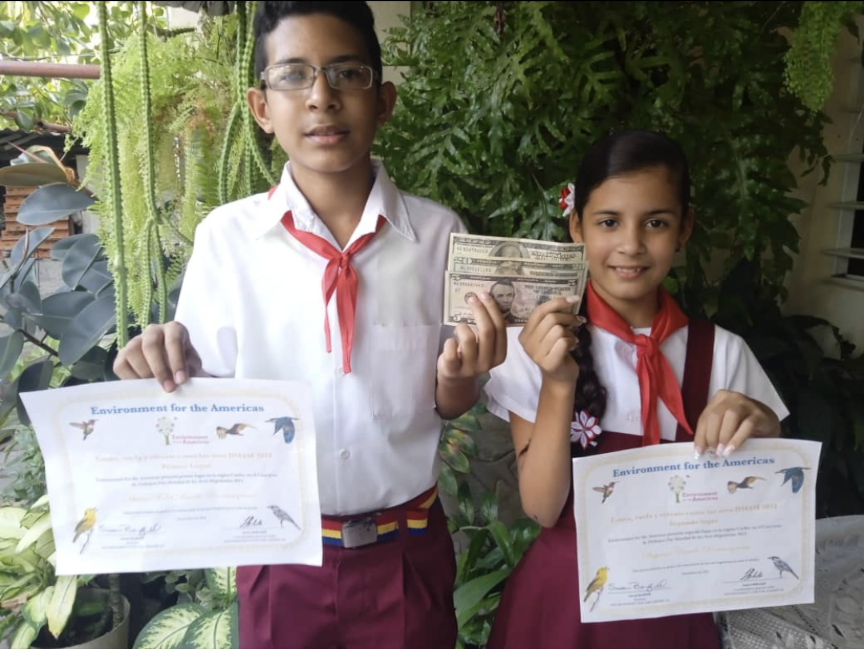
Winner of the WMBD bird costume competition, collect their prizes and certificates. (Photo by Ines Lourdes Fernandez).
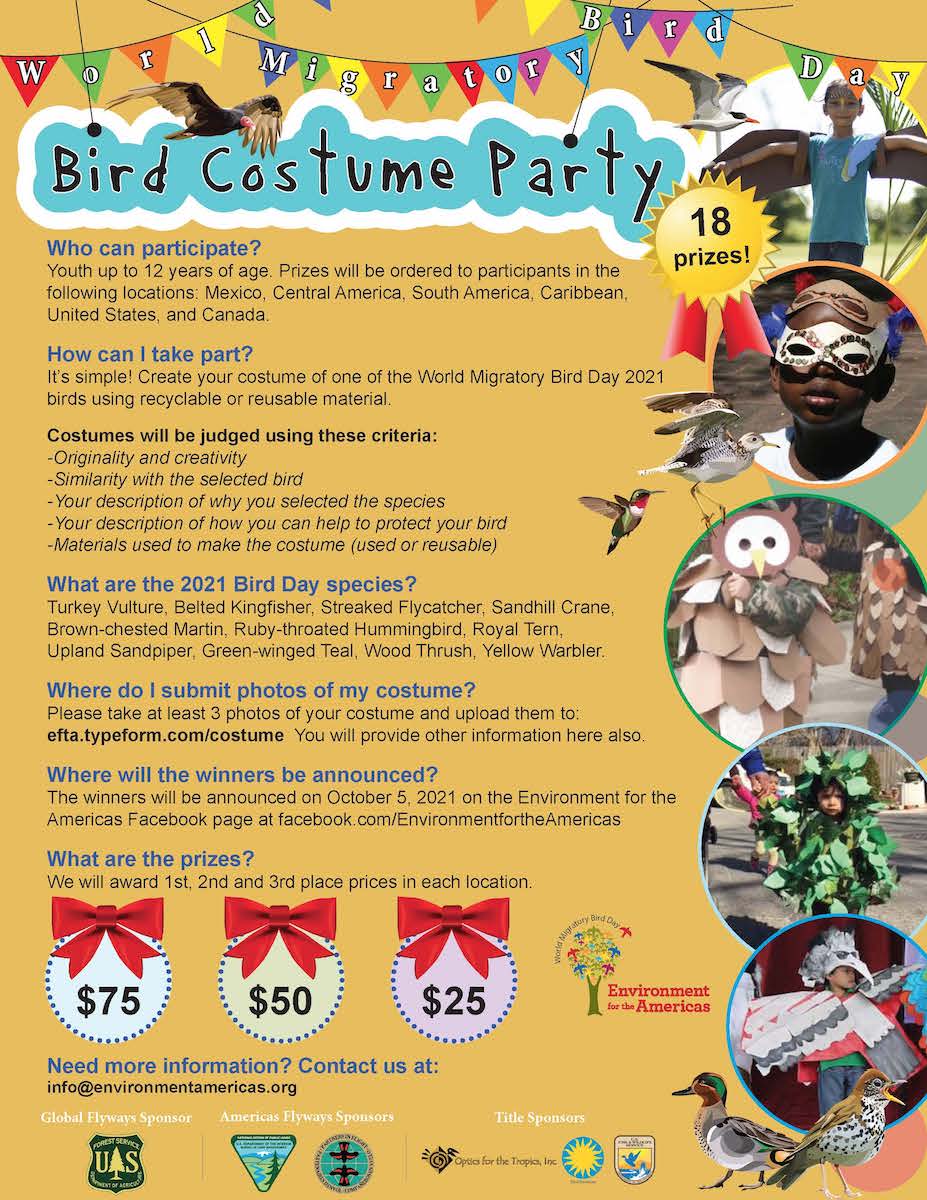
Congratulations to our Bird Costume Party winners from Cuba! Dayami Ravelo Romanguera was runner up in a gorgeous Yellow Warbler costume. Héctor Fidel Ravelo Romanguera won first prize in his dramatic Turkey Vulture costume.
The contest encouraged young Caribbean citizens to take migratory birds seriously, and to consider celebrating and protecting them in the future. The competition was open to children up to 12 years old, who were asked to depict one of the featured eleven species selected by Environment for the Americas this year. Costumes used only recyclable or reusable materials, encouraging the children to think about environmental sustainability.
Thank you to all of the amazing people and organizations in the Caribbean that celebrate WMBD every year and especially during this challenging year! We look forward to celebrating WMBD 2022 with you all!
If you are interested in celebrating WMBD in your country, we encourage you to visit the WMBD website for more information or contact the Caribbean Regional Coordinator, Laura Baboolal, at lbaboolal@environmentamericas.org. If you have an event planned, you can register it and put the Caribbean on the global events map.
WMBD 2021 digital materials from EFTA are available in English and Spanish, at this link.
Information on migratory birds in the Caribbean, including colouring pages, activity sheets , photos, videos, and puzzles are available from BirdsCaribbean at this link.
Last, but not least, don’t forget to share your WMBD events and experiences on social media with EFTA and BirdsCaribbean. You can find us on all major platforms. If pandemic restrictions allow on your island, go out and enjoy the birds. Most of all, have fun!
Enjoy these photos from WMBD celebrations across the Caribbean!
Celebrating WMBD in Trinidad and Tobago. (Photo by Noor ud din Mohammed)
Roots and Shoots, bird watching on WMBD, Ponce, Puerto Rico. (Photo by Carla Montalvo Martinez)
Roots and Shoots, bird watching on WMBD, Ponce, Puerto Rico. (Photo by Carla Montalvo Martinez)
Roots and Shoots, bird watching on WMBD, Ponce, Puerto Rico. (Photo by Carla Montalvo Martinez)
Roots and Shoots, bird watching on WMBD, Ponce, Puerto Rico. (Photo by Carla Montalvo Martinez)
Roots and Shoots, celebrate WMBD on a bird watching trip, Puerto Rico. (Photo by Carla Montalvo Martinez)
Flyer adverting a Webinar about migratory birds of Puerto Rico, organized as part of the WMBD celebrations in Puerto Rico.
Celebrating WMBD at the Natural History Museum, Dominican Republic. (Photos by Monika Gomez)
Social media post about WMBD activities by Secundaria Babeque. (Photo by Monika Gomez).
Social media post about WMBD activities by Secundaria Babeque. (Photo by Monika Gomez).
Flyer advertising a birding walk in the National Botanic Gardens, Dominican Republic. (Photo by GAE)
WMBD activities with Doulos school, Jarabocoa, Dominican Republic. (Photo by Maria Paulino/ GAE).
Learning all about bird banding on WMBD, Dominican Republic. (Photo by Maria Paulino/ GAE).
Celebrating migratory birds with students from the ABC school, Dominican Republic. (Photo by Maria Paulino/ GAE)
Holding a workshop about migratory birds, Dominican Republic. (Photo by Maria Paulino/ GAE)
Celebrating global big day with students from the ABC school, Dominican Republic. (Photo by Maria Paulino/ GAE)
Celebrating migratory birds with local communities in the Dominican Republic. (Photo Maria Paulino/ GAE).
Looking for birds on WMBD in the Dominican Republic. (Photo by Maria Paulino/ GAE)
Bird watching walk to celebrate WMBD in the Dominican Republic. (Photo by Maria Paulino/ GAE)
Birding with the local communities for WMBD, Dominican Republic. (Photo by Maria Paulino/ GAE)
Watching in the Botanic Gardens for WMBD, Dominican Republic. (Photo by Maria Paulino/GAE)
A Bird watching walk in the Botanic Gardens for WMBD, Dominican Republic. (Photo by Maria Paulino/GAE)
A bird costume party celebrating WMBD on Cuba. (Photo by Ines Lourdes Fernandez)
Celebrating WMBD on Cuba with a bird-themed costume party . (Photo by Ines Lourdes Fernandez)
Dayami Ravelo Romanguera’s Yellow Warber was the runner up in the WMBD costume competition. (Photo by Ines Lourdes Fernandez)
Celebrating migratory birds with bird-themed cakes at the costume party, Cuba. (Photo by Ines Lourdes Fernandez)
School kids on a bird watching outing at a Salina in Bonaire. (Photo by Monique Grol/ STINAPA)
STINAPA flyer all about migratory birds.
Looking for birds on a watching outing at a Salina in Bonaire. (Photo by Monique Grol/ STINAPA)
We used the same theme, “Sing, Fly, Soar—Like a Bird,” for our Caribbean Endemic Bird Festival (CEBF) in spring 2021. Check out the highlights from CEBF 2021 here. And here are the fabulous webinars we held, including talks by David Sibley on bird flight, Marta Curti on the Ridgway’s Hawk, and many more.
Laura McDuffie, a wildlife biologist for the U.S. Fish and Wildlife Service Migratory Bird Management Program, has been tracking the movements of Lesser Yellowlegs on their migration. Find out more about Laura’s work, the amazing journeys that Lesser Yellowlegs make each year and the threats they face along the way! Scroll down to see Laura’s webinar on the Lesser Yellowlegs with much more information on her research. Also check out our NEW short video on Lesser Yellowlegs and hunting in the Caribbean (below and on our YouTube).
Typically, when people think of shorebirds, they envision gangly, long-billed birds probing for invertebrates along sandy or rocky coastlines. But this is not where you are likely to find our study species, the Lesser Yellowlegs! This medium-sized shorebird breeds in the boreal forests of Alaska and Canada. They can be found in a diversity of wetland habitats during migration and overwintering in the Caribbean and Central and South America. This includes salt, brackish, and freshwater ponds and swamps, mud flats, mangroves, and other water edges. They are particularly fond of freshwater swamps and may also be found in large numbers on flooded agricultural fields (especially rice fields) if available, as in Suriname, Cuba, and Trinidad.
Shorebirds in Trouble
Over the past five decades, shorebirds have declined at an unprecedented rate. Factors causing this decline include habitat destruction and alteration, agrochemical applications, climate change, and for some shorebirds, including the Lesser Yellowlegs, unsustainable harvest at several non-breeding locations. Harvest occurs as sports hunting in the Caribbean, as well as hunting and trapping for sale as food, as a source of income in other parts of the flyway. Lesser Yellowlegs populations have declined by an alarming 63 ̶70% since the 1970s!
Keeping Track of Lesser Yellowlegs
Tagged Lesser Yellowlegs. (Photo By Laura McDuffie)
In May 2016, the U.S. Fish and Wildlife Service Migratory Bird Management Program began deploying tracking devices (light-level geolocators) on breeding Lesser Yellowlegs in Anchorage, Alaska. Our goal was to determine where the species occurs during the non-breeding season. In 2017, birds returned to the breeding sites. To our dismay, however, they were incredibly difficult to recapture so that we could retrieve the tags and the data. This serious predicament ultimately made us have a “rethink” about our objectives for the Program. As a result, we expanded the range of our study to include collaborations with Kanuti National Wildlife Refuge, Alaska; Yellowknife, Northwest Territories; Ft. McMurray, Alberta; Churchill, Manitoba; James Bay, Ontario, and Mingan Archipelago, Quebec.
During the summers of 2018-2021, partners at Alaska Department of Fish and Game (Katherine Christie), USFWS (Christopher Harwood), Environment and Climate Change Canada (Jennie Rausch, Christian Friis, and Yves Aubrey), and Trent University (Erica Nol) deployed Lotek wireless GPS pinpoint tags on breeding adults. These tags record data via satellite so recaptures are not required! The GPS tags are accurate to ~10m, which has allowed us to examine the occurrence of Lesser Yellowlegs in countries where shorebirds are harvested. Since 2018, we have successfully deployed 115 GPS tags on Lesser Yellowlegs!
Amazing Journeys Revealed
Each bird we tag and release has their movements tracked, which mean we can identify the different countries they visit and specific sites they use during migration and overwintering. This information can help us to identify the potential bottlenecks and threats that birds experience each year.
Map showing JP’s Migration.
Here is just one amazing journey made by “JP” who was tagged in Anchorage, Alaska in 2018. The tag revealed that he travelled at least 10,576 km on his southward migration, taking in Alberta and Manitoba, Canada, and Devils Lake, North Dakota, on his way through North America. JP then spent a whole month on Barbuda! This highlights how important the Caribbean can be as a rest and refueling spot for some shorebirds. Finally, JP made it to Middenstandspolder, in Suriname, where his tag went offline in February 2019.
We don’t know why JP’s tag stopped transmitting. It was not uncommon in our study to have incomplete tracklines. For these birds, the battery of the tag may have failed, or the harness could have fallen off and left the tag lying covered in mud, unable to recharge and transmit. However, we do know that some birds don’t survive the long journey.
Thanks to strong collaborations with biologists working in the Caribbean, we were able to receive some shorebird harvest reports. In fall 2020, we learned that two of our tagged birds “O2A” and “A65” were shot by hunters in Guadeloupe and Martinique, respectively. This shows that hunting isn’t only a “predicted threat” to the birds we studied, but also a real and observed threat.
Migration map of Lesser Yellowlegs “A65” wearing a GPS tracking tag. A65 was harvested in fall 2020 in Martinique, French West Indies.
Lesser Yellowlegs with GPS tag “A65” was harvested in Martinique by a hunter on its southbound migration. We are thankful to hunters for reporting tagged birds to us!
Migration map of Lesser Yellowlegs “O2A” wearing a GPS tracking tag. O2A was harvested in fall 2020 in Guadeloupe, French West Indies.
find out more about Lesser Yellowlegs and hunting in the Caribbean in this short video
Globally, Lesser Yellowlegs are in steep decline, with likely only 400,000 individuals remaining. Our research on the species has helped identify several potential threats, but we still need to learn more about the hazards these birds face. So, we must rely on assistance from local biologists, managers, hunters, and the public in the Caribbean and beyond.
The proper management of a species ensures that it will be around for future generations to enjoy and utilize. Awareness and education about the species decline and an understanding of the threats it faces can go a long way! When the general public is aware of an issue, they are more likely to take actions. These might include helping to monitor birds, conserving local wetlands, or ensuring that hunting laws protect vulnerable species. They may even participate in scientific efforts, such as submitting shorebird harvest records to managers. Awareness, information gathering and partnerships are critical components in helping us to protect these unique shorebirds.
Laura McDuffie, in the field, with Lesser Yellowlegs chicks. (Photo by Zak Pohlen)
Laura McDuffie has been studying the breeding and migration ecology of Alaska’s shorebirds and landbirds since 2014. In spring 2021, Laura completed her master’s degree in biological sciences at the University of Alaska Anchorage. Laura’s thesis is entitled “Migration ecology and harvest exposure risk of Lesser Yellowlegs.”
This study would not have been possible without the tremendous efforts of our collaborators. Our gratitude goes out to the following people: Brad Andres, Yves Aubry, Erin Bayne, Christophe Buidin, Katherine Christie, Ken Foster, Christian Friis, Autumn-Lynn Harrison, Christopher Harwood, James Johnson, Kevin Kardynal, Benoit Laliberte, Peter Marra, Erica Nol, Jennie Rausch, Yann Rochepault, Sarah Sonsthagen, Audrey Taylor, Lee Tibbitts, Ross Wood, Jay Wright, and all the field technicians that helped with banding. Kristy Rouse, Cassandra Schoofs, and Brent Koenen with Joint Base Elmendorf-Richardson’s 673rd CES/CEIS supported the project from the beginning and were instrumental in the DoD’s recognition of lesser yellowlegs as a Species of Special Concern. Funding sources include the Alaska Department of Fish and Game, Bird Studies Canada; Environment and Climate Change Canada, the Smithsonian Institution; the 673rd CES/CEIS, U.S. Department of the Air Force; and the U.S. Fish and Wildlife Service.
Learn more details about Laura’s fascinating research on lesser yellowlegs’ migration by watching this webinar, recorded for world migratory bird day, OCtober, 2021.
They have their flyways, and they bring their songs. Our migratory birds are on the move again, and on October 9, World Migratory Bird Day, they will be “officially” welcomed and celebrated in style in the Caribbean.
For our region, World Migratory Bird Day (WMBD) is on October 9th, 2021 (but we encourage everyone to celebrate anytime during fall migration that works best for you). By this date, gardens, parks, forests, mountains, and seashores are filled with feathered newcomers, who have traveled thousands of miles and are either passing through or settling down for the milder winter months in the Caribbean.
The WMBD 2021 theme is “Sing, Fly, Soar—Like a Bird!” Activities organized by Environment for the Americas (EFTA), BirdsCaribbean, and our partners throughout the region will tap into this lively concept and, focus on some of the eleven featured species selected this year. Some of these, such as the Turkey Vulture, Royal Tern, Yellow Warbler, and Belted Kingfisher, are either resident or fairly common migrant species in the region. Others, such as the Green-winged Teal, Wood Thrush, Upland Sandpiper, and Ruby-throated Hummingbird, are rare. The Sandhill Crane is an uncommon resident in Cuba.
This year, EFTA will be hosting a live online event, or series of events from October 7 to 9, entitled “World Migratory Bird Day Live.” Friday, October 8 will be a special day reserved for youth and schools. Caribbean educators are valuable partners, helping to convey the messages of conservation and protection of birds and habitats. The creative arts – including a “sing like a bird” competition, videos, and art demonstrations, will play a role this year, besides informational speakers and workshops.
A featured WMBD webinar this year will be on the Lesser Yellowlegs, a shorebird that is undergoing an alarming decline. The webinar, hosted by BirdsCaribbean, will be presented by US Fish and Wildlife Service biologist, Laura McDuffie. Laura has been tracking these birds on their long migrations and has some fascinating and enlightening results to share with us. The webinar will take place on Friday, October 8 at 3:00 p.m. Eastern Time. Here is the link to register: https://bit.ly/LesserYellowlegs
Most of all, WMBD promises to have a strong element of fun. EFTA is hosting a bird costume party and competition for children up to 12 years old, with the focus on one of the featured eleven species. Costumes should use only recyclable or reusable material – new materials should not be used. The deadline for submission of costume entries is Friday, October 1. Prizes will be awarded on October 9th.
There is also a Bird Song Contest!Submit your song inspired by birds anytime between now and October 8th for a chance to win a cash prize! Winners will be announced on October 9th – See details in the Flyer below.
If you are interested in celebrating WMBD in your country, we encourage you to visit the WMBD website for more information or contact the Caribbean Regional Coordinator, Laura Baboolal, at lbaboolal@environmentamericas.org. If you have an event planned, you can register it and put the Caribbean on the global events map.
WMBD 2021 digital materials from EFTA are available in English and Spanish, at this link.
Information on migratory birds in the Caribbean, including colouring pages, activity sheets , photos, videos, and puzzles are available from BirdsCaribbean at this link.
Last, but not least, don’t forget to share your WMBD events and experiences on social media with EFTA and BirdsCaribbean. You can find us on all major platforms. If pandemic restrictions allow on your island, go out and enjoy the birds. Most of all, have fun!
On World Shorebirds Day, Benoit Laliberté, a Shorebird Biologist with the Canadian Wildlife Service, tells us about the connections between the shorebirds that breed in Canada and the Caribbean and shares his thoughts on the main conservation issues for shorebirds in the Caribbean.
Shorebirds are fascinating. Given their size, it can be hard to even try to imagine the incredible journeys they accomplish every year on migration. For example, Red Knots can fly more than 30,000 km annually! It is amazing that these birds weigh only 180g but can fly from the Canadian tundra to the tip of Tierra del Fuego, and back, within 10 months. Because these birds travel to (and stop over in) so many different countries, their conservation requires us to take a multi-national approach.
Enjoy our short video, created in honor of World Shorebirds Day 2021!
Conservation Across Borders
How do we address this cross-border challenge? To do this, the shorebird conservation community has developed flyway conservation initiatives. Flyways are major routes, like ‘migration highways,’ that shorebirds use to travel from breeding to wintering areas and back. Here in the Americas they are: the Atlantic, the Pacific and the Mid-continental Flyways. The Caribbean islands are located in the Atlantic Flyway
Migration routes of shorebirds on the Atlantic Flyway; many other migratory birds follow these same routes. (map courtesy of the Atlantic Flyway Shorebird Initiative)
The Atlantic Flyway Shorebird Initiative (AFSI) aims to conserve and protect the 30 or so species of shorebirds that use this route. These birds range from the small Plovers and Sandpipers to the large Whimbrels and Godwits. Unfortunately, the ongoing, ceaseless deterioration of our planet has led to large declines in shorebird populations. Across all shorebird species that occur in Canada – most of which also travel to the Caribbean – this decrease in numbers is estimated at -40% since 1970. However, the drop is much steeper for some species, like the Red Knot (-70% since 2000) or the Lesser Yellowlegs (-65% since 1970). In fact, many shorebirds are at the top of the list of ‘species of conservation concern’ worldwide.
Why are Shorebirds in Trouble?
Lesser Yellowlegs are a common migratory shorebird in the Caribbean; they are also one of the most hunted shorebirds in the Atlantic Flyway. (photo by Hemant Kishan)
The main threats to shorebirds in the Atlantic Flyway are hunting, predators, human disturbance, habitat loss and change, and climate change. Most of these occur in the Caribbean, but the threats of hunting, habitat loss, and climate change are the most relevant for the region.
We know that shorebirds are hunted on Barbados, Martinique and Guadeloupe. If we are able to address the threat of hunting, we in the conservation community can make rapid gains. This does not mean that hunting should be banned. In Canada and the United States, we have more than 100 years of experience working with hunters to develop sustainable hunting policies and working with the hunting community to conserve and restore bird habitats. We need to focus on raising awareness about this threat, measuring its impacts, and developing sustainable hunting policies that will allow birds to thrive and hunters to pursue their hobby – now, and in the future.
Habitat loss is more difficult for us to tackle. Shorebirds use a variety of habitats, whether it is beaches, intertidal sandflats and mudflats, mangroves, or salt, brackish, and freshwater ponds. This means that multiple types of developments and changes, for example those that alter the wetland’s hydrology, can threaten the shorebirds’ homes. Secondly, changes to habitat can ‘creep’ in slowly, with both human developments and the impacts of climate change gradually changing the places where shorebirds live – or removing those places altogether. Damaged habitats can take a long time to recover, so it is imperative to ensure that those that are still relatively intact are conserved for future generations.
What Can We Do the Help Shorebirds?
Red Knot in August molting from breeding plumage to plain winter plumage which is all gray. Red Knots have declined markedly in the last 25 years. Some Red Knots winter in the Caribbean; many use the islands as a refueling stop on their long journeys to South America. (photo by Hemant Kishan)
We need to make sure that key places for shorebirds are identified. To do this we need to carry out surveys such as the Caribbean Waterbird Census (CWC). Information from these surveys can help identify and increase protection for vital shorebird habitats. Local communities have a key role to play. Anyone can carry out CWC surveys! BirdsCaribbean has provided training for people across the region on Shorebird ID and how to carry out surveys, both online and in person.
Shorebirds need safe habitats with clean water and abundant invertebrate food, when they stop during migration. As climate change increases the frequency and severity of hurricanes, it is possible that the Caribbean will play a bigger role for migrating shorebirds. Shorebirds are migrating through the region during the peak hurricane season. The wetland habitats on Caribbean islands should serve as refuge for these birds. This means local initiatives to restore and clean-up habitats can help shorebirds. Recent projects to restore mangroves in Puerto Rico and increase awareness of shorebirds in Montserrat, through community initiatives like beach clean-ups, will help both shorebirds and people!
Curbing the decline of shorebird populations needs global cooperation. It might seem like an overwhelming task, but every little step helps. To ensure future generations are in a good position to continue the work we start today, we need to spread the word. As a child, I was fortunate to get involved in activities that got me interested in nature and birds, and this inspired me to pursue a career in conserving biodiversity. Outreach and education programs, such as BirdsCaribbean’s BirdSleuth Caribbean, Wondrous West Indian Wetlands, World Migratory Bird Day, and the Caribbean Endemic Bird Festival help to raise awareness and build a sense of responsibility in our communities. They do have long-term positive impacts, especially among our younger citizens.
As a final remark, I hope that as you read this post you have learned a little bit more about shorebird conservation and are reminded that small actions can make a difference. Learning is knowing. Knowing is loving. And loving is caring.
Ajhermae White helps students of the Grade 5 class of Look Out Primary School with shorebird ID during their field trip at Marguerita Bay. (Photo by Stephen Mendes)
Please enjoy and share our video!
Many thanks to Environment and Climate Change Canada, the US Fish and Wildlife Service, the Atlantic Flyways Shorebird Initiative, US Forest Service International Programs, film maker Esther Figueroa, talented photographers and videographers, and our partners, members, and donors for your generous support to create this video (second in a series!) and carry out Caribbean shorebird and waterbird conservation initiatives.
We hope that you will be able to visit many areas across your island and invite local birders and/or birding groups to get involved. Note that shorebirds are a type of waterbird; any tallies you do, whether it is at wetlands, mangroves, mud flats, coastal areas or beaches, are also considered as Caribbean Waterbird Census (CWC) counts. To increase the value of your count to science, be sure to count ALL birds at your site, including seabirds, herons and egrets, land birds, and so on.
Complete instructions on how to do a Global Shorebird Count/ Caribbean Waterbird Census count are available here and here; Shorebird ID resources are available here. Before you head out, it might well be helpful to watch our webinars on Waterbird ID and Shorebird ID to bone up on your ID skills!
World Shorebirds Day, on Monday, September 6, is just around the bend. In honor of this annual global event, BirdsCaribbean created a new video to celebrate Caribbean shorebirds. From plump plovers to wave-catching Sanderlings to stately Stilt Sandpipers, shorebirds are delightful birds to get to know and love. Enjoy our short video and learn more about how you can help to conserve these treasures of our beaches and wetlands.
It is prime time to learn about and celebrate the diversity of shorebirds in the Caribbean. During late summer and early fall, our resident shorebirds, like the Killdeer and Wilson’s Plover, are joined by long-distance migrants, such as the Lesser Yellowlegs, Willet, Spotted Sandpiper, and many more. These migratory birds have just completed their breeding seasons, hopefully with much success, in the northern U.S. and Canada. Now, many are passing through the Caribbean, stopping to rest and feed as they travel to wintering areas further south. Other bird arrivals may stay with us for the entire winter.
Shorebirds are a diverse group of wading birds that live close to water—you can find them on our beaches, mangroves, marshes, salt ponds, and mudflats. Many can be easily identified by their long legs or unique bills, which are especially adapted to their diet and habitat. For example, the long, thin, probing bill of the Black-necked Stilt is ideal for plucking worms and crabs from sticky mud; while the Ruddy Turnstone, with his short, stubby bill, is adept at flipping over stones and shells to find tasty insects on the beach.
Hover over each image to see the caption; click on each photo to see it larger and to view images as a gallery
A Ruddy Turnstone in winter plumage. This shorebird is easy to identify from its short bright orange legs and stout ‘triangular’ bill. (Photo By Charles Sharp).
The Killdeer is one of our Caribbean residents, and can be found here year-round. (Photo By Lorie Shaull).
The striking Black-necked Stilt has long legs for wading into deep water to find food. (Photo by Dan Pancamo)
Migratory shorebirds make amazing journeys of thousands of kilometres! Beforehand, they need to store enough energy in the form of fat reserves to migrate. These small birds will eat until they are about double their normal weight. You may think that flying at their top weight would slow shorebirds down, but they are the marathon-winners of flight. Incredibly, this group of birds does not do any soaring, they are physically flapping the entire way!
Sadly, shorebird numbers have declined by roughly forty percent over the last 50 years, due to a number of threats. An increase in developments and various types of pollution have resulted in their habitats being degraded or even lost altogether. Human disturbance, hunting, and climate change…All these factors threaten shorebirds. Please join us this World Shorebirds Day to learn more about these fascinating birds and what you can do to help protect them.
Join the Global Shorebird Count, September 1 to 7 – every shorebird counts!
One of the main activities of World Shorebirds Day is the Global Shorebird Count. We encourage bird enthusiasts in the region to go out and count shorebirds from the 1st to 7th September 2021.
Spot the difference! A leucistic Willet seen in Zapata Swamp, Cuba. (Photo By Ernesto Reyes).
Your counts will help us to understand which species (and how many) are stopping to rest and feed in the Caribbean. This allows us to assess the health of populations and to determine whether they are increasing, decreasing, or stable. The data you collect will also help scientists to coordinate follow-up research and conservation actions, such as protecting important sites – or even taking immediate action to reduce threats to shorebirds and their environments, if necessary.
So, grab your binoculars, hat, waterboots, and field guide and head to your favorite muddy, sandy, or watery birding spot! Yes, it might get messy. You never know what new birds you might see, and there have been some remarkable discoveries over the years. Since the beginning of the Global Shorebird Count and the Caribbean Waterbird Census, new species have been recorded in the Caribbean. For example, in 2016 Ann Sutton spotted the first Piping Plover ever seen in Jamaica on Pedro Pond, and in 2018 a BirdsCaribbean birding tour in Cuba came across a leucistic (white) Willet in the Zapata Swamp. In addition, we have also greatly expanded our knowledge and conservation of the habitats and sites that shorebirds use across the region, thanks to our many citizen science shorebirders.
We hope that you will be able to visit many areas across your island and invite local birders and/or birding groups to get involved. Note that shorebirds are a type of waterbird; any tallies you do, whether it is at wetlands, mangroves, mud flats, coastal areas or beaches, are also considered as Caribbean Waterbird Census (CWC) counts. To increase the value of your count to science, be sure to count ALL birds at your site, including seabirds, herons and egrets, land birds, and so on.
Complete instructions on how to do a Global Shorebird Count/ Caribbean Waterbird Census count are available here and here; Shorebird ID resources are available here. Before you head out, it might well be helpful to watch our webinars on Waterbird ID and Shorebird ID to bone up on your ID skills!
Be sure to follow your country’s COVID-19 safety guidelines, have fun and definitely tag us, @birdscaribbean, in your photos on Facebook, Instagram and Twitter. We look forward to seeing your amazing photos and reading your stories!
Please enjoy and share our video!
Many thanks to Environment and Climate Change Canada, the US Fish and Wildlife Service, the Atlantic Flyways Shorebird Initiative, US Forest Service International Programs, film maker Esther Figueroa, talented photographers and videographers, and our partners, members, and donors for your generous support to create this video (first in a series!) and carry out Caribbean shorebird and waterbird conservation initiatives.
Kristy Shortte, a Program Officer at the NGO Sustainable Grenadines, Inc.
A local community that understands the value of natural habitats and the wildlife that lives there is key to successful long-term conservation. Find out how this happens from Kristy Shortte, a Program Officer at the NGO ‘Sustainable Grenadines,’ on Union Island in St. Vincent and the Grenadines. From building observation platforms at vital wetlands, to garbage clean-ups and installing information signs, to training locals to identify and help monitor birds, Kristy describes the amazing and inspiring range of work carried out by her organization, local partners – and of course, the local community!
At the trans-boundary NGO Sustainable Grenadines Inc (SusGren) we know that conserving the places where birds live is key to their survival. But how do we achieve this? So many of our habitats are under threat—from pollution and degradation by human activities, to outright destruction for development. When there are competing demands on the use of our natural resources, we need to make wise decisions. Sometimes we need to educate our local citizens about the immense value of these areas to people and wildlife, and to get them actively involved in their conservation. It’s a hands-on approach with community partners. Showing people the benefits of managing and protecting habitats is the best way to ensure the long-term health of bird populations and the habitats on which they depend.
Finding the best ways to protect birds and their habitats
Residents of Union island, harvesting salt at Belmont Salt Pond. (Photo by Radio Grenadines).
Here at SusGren, we have taken the initiative to support birds and protect the places they live through two projects – both completed during the pandemic of 2020! SusGren believes that some areas are so special that they need to be protected – no ifs, ands, or buts!!!!
After many years of hard work to restore Ashton Lagoon and develop it as a bird and nature sanctuary for enjoyment by all, we turned our attention to Belmont Salt Pond. This is the second largest ecosystem on the island of Union and one of the last two remaining salt ponds in the entire St. Vincent and the Grenadines (he other salt pond is on Mayreau). Salt picking is still practiced at Belmont, providing economic benefits to locals.
So…what’s so special about Belmont Salt Pond?
The Belmont Salt Pond area is significant, in that it provides habitat to many species of resident and migratory birds. Here you can see Whimbrels, Willets, Blue-winged Teal, Greater and Lesser Yellowlegs, Mangrove Cuckoo, and even the American Flamingo on occasion. Migratory birds use Belmont as a place to rest and feed. This can be for a few days or weeks, before they continue with their migration, while others stay from fall to spring. For other birds, the Salt Pond is ‘home’ all year round.
Blue-winged Teal female spotted at Belmont Salt Pond. (Photo by Sustainable Grenadines Inc)
American Flamingo Spotted at Belmont Salt Pond. (Photo by Sustainable Grenadines Inc)
With this rich history and biodiversity and the salt pond threatened by human activities, SusGren decided to enhance the area for enjoyment by locals and visitors alike. This would help ensure the protection of the area’s biodiversity and would increase ecotourism opportunities in Union Island, following our successful restoration of nearby Ashton Lagoon 2 years ago. The platform would also help us to continue the long-term bird monitoring of our wetlands through participation in the Caribbean Waterbird Census.
Taking a community-based approach
The ‘’Clean up Squad’’ at Belmont Salt Pond. (Photo by Zoe Jennett)
Due to a lack of community knowledge of the importance of the area, it was being used for the burning of charcoal and dumping garbage. We knew that over time these activities would damage Belmont Salt Pond and biodiversity would be negatively impacted. So at Susgren we decided to carry out a project in partnership with members of the community, to ensure that such behavior is reduced and eventually eliminated.
As part of this approach, SusGren contributed towards a cleanup organized by a local group of 10 people called “Union Island Cleanup Squad.” They held massive cleaning up sessions at the Belmont Salt Pond on May 7th and May 13th, 2020. A total of 30 bags of trash was collected during the first session, and 40 additional bags of trash were picked up at the second cleanup around the edges of the pond. It was great to see local community groups actively taking up the stewardship mantle of their island!
Follow the signs!
Interpretive sign at Belmont Salt Pond. (Photo by Sustainable Grenadines Inc)
Our project also involved the construction of viewing platforms at Belmont Salt Pond, designed to provide people with a fantastic overview of the wetland and the birds living there. At each of the Belmont Salt Pond platforms – and at the Ashton Lagoon Eco Trail – we installed interpretive signs displaying resident and migratory birds. We worked with BirdsCaribbean to design signs that included land birds, wetland birds, and shorebirds likely to be seen at each of the sites. At Ashton Lagoon, one sign also provides visitors with knowledge about the marine and terrestrial species of animals found in the area.
Our interpretive signs include features on bird identification. Thus, someone using the platforms at Belmont Salt Pond or our bird towers at Ashton Lagoon can receive a “self-crash-course” in basic bird identification. Moreover, there are now three 4 x 6 billboard signs installed at Belmont Salt Pond that explain the history of the area and its cultural and environmental importance. Two ‘rules’ signs also notify visitors about appropriate behavior in the area.
Keeping the trash at bay
“Bird branded” garbage bins and signs at Belmont Salt Pond. (Photo by Sustainable Grenadines Inc)
To reduce the problem of litter, we installed attractive garbage receptacles at both Belmont Salt Pond and Ashton Lagoon. The bright green receptacles are adorned with images of the various birds one can see in the area. Our hope is that this will help build local pride and community ownership and encourage people to dispose of their garbage in a responsible way.
Since the installation of 4 bins at each location, we are gratified to see that people are using them. The local solid waste management company ‘’Uni Clean’ assists with the weekly disposal of trash from these areas.
Reaching out in different ways
We found different ways of reaching out to our stakeholders and the general public. Normally, we would have been hosting lots of in-person outreach and birding activities and events with the community and schools during the last year. But due to the pandemic and schools closing, we used radio and social media platforms to engage the community and key stakeholders. We made phone calls and delivered letters with updates on our projects. We also sent out a media blast with the local telecommunications company on the island, so that recipients could obtain a poster of the activities being undertaken at Belmont Salt Pond on their phones.
Finally, we had a hugely successful radio interview and webinar with the show, “Conversation Tree” on Radio Grenadines. SusGren’s Program Director, Orisha Joseph and I gave a presentation and discussed our activities with the radio host. This was seen by over 2,000 people and was very well-received.
World Shorebirds Day
Kristy Shortte pointing out and identifying birds on a guided birding walk. (Photo by Sustainable Grenadines Inc).
To further community involvement in our work and help people develop a love for the environment and birds, we collaborated with Katrina Collins-Coy, Union Island Environmental Attackers, and celebrated World Shorebirds Day in September, 2020. Eleven students and two teachers from the Stephanie Browne Primary School participated.
The celebration involved a birding walk with Bird Bingo and a Bird Identification tour along the Ashton Lagoon Trail. The children also enjoyed activities in the classroom, such as learning about the Parts of a Bird, bird games, and bird arts and crafts. We were elated to see the enthusiastic students and teachers come out as early as 5:30 am to be a part of the session!
Birds of Belmont Salt Pond – A New Resource!
Through this project (with matched funding from the SVG Conservation Fund) we also developed a booklet entitled “Birds of Belmont Salt Pond.” The booklet includes notes from SusGren’s directors, information on the project’s team, a brief history of the Belmont Salt Pond, photographs of resident and migratory birds found there, and a full checklist and space for taking notes while bird watching and monitoring. Thirty copies were printed and distributed to key stakeholders in the community and other organizations in St. Vincent and the Grenadines. We hope this will be a great resource for visitors.
Belmont Salt Point. (Photo by Sustainable Grenadines Inc)
Bird Identification Training Workshop—“Conserving Caribbean Shorebirds and their Habitats”
Participants taking part in a Caribbean Waterbird Census (CWC) Basic Bird ID Training Workshop. (Photo by Sustainable Grenadines Inc)
We weren’t finished yet! We also held a five-day bird identification training workshop as part of the project, during October 2020. The workshop was facilitated by Lystra Culzac, who is the Founder and Manager of Science Initiative for Environmental Conservation and Education (SCIENCE) and graduate of our Conserving Caribbean Shorebirds and their Habitats Training Workshop in 2019 (as is Kristy!). Those taking part represented a wide range of professions, from Park Rangers, Tourism Division, Environmental Groups, and regular community members. As part of the training, a bird monitoring trip took place at the newly installed platforms, making good use of our new booklet “Birds of Belmont Salt Pond.”
We included training in seabird monitoring as part of the workshop and participants took a trip to Catholic Island and Tobago Cays Marine Park. Here they got the opportunity to learn firsthand how to identify a wider variety of the seabird species in their natural habitats. Following the bird watching trip in the Tobago Cays, SusGren, in partnership with SCIENCE, collaborated on a clean-up effort at Petit Bateau, one of the cays in the Marine Park and a known seabird habitat. A total of 6 bags of trash was collected.
Continued CWC Monitoring
At both Ashton Lagoon and Belmont Salt Pond we have been carrying out Caribbean Waterbird Census (CWC) surveys for many years. These surveys help us to keep track of which birds are using these sites, while keeping an eye out for any changes or threats to the habitats. During the project we carried out 9 CWC surveys across Ashton Lagoon and Belmont Salt Pond, making visits twice a month. Now that the project is over we plan to continue to monitor the birds at both sites using CWC surveys. With all our newly trained birders on Union island, equipped with binoculars and copies of the ‘Birds of Belmont Salt Point,’ we should have plenty of support to do this!
How did the community respond to our work?
During an Attitude and Perception survey interview done with residents on the island, persons expressed excitement and satisfaction with the new development. One noted interviewee was Benjamin Wilson, a Tobago Cays Park Ranger. Wilson said, “Before the enhancement, I would have passed the salt pond straight – but now I have to gaze at the work that was done.’’ SusGren believes that this project was the first step towards having a local community that value ‘their’ wetland. The wildlife viewing platform is now being regularly used by locals and tourists alike!
Mission accomplished? Yes, for that phase, which is a first step in the right direction towards bird and habitat conservation.
This project was made possible with funding and support from BirdsCaribbean via the US Fish and Wildlife Service NMBCA program and BirdsCaribbean members and donors, with matching funds from the SVG Conservation Fund.
Kristy Shortte has worked with Sustainable Grenadines Inc since 2013, starting out as an Administrative and Research Assistant. Since 2017 she has served as a Program Officer. Kristy has qualifications in Business Studies, and since working at Sustainable Grenadines, she has been dedicated to using her business knowledge and environmental training and experience to empower her community in the Grenadines to protect and develop their resources sustainably. She has grown to love and be inspired by nature and birds since working for SusGren. She comments, “A lot of times I would look at birds and observe how they are so fearless and free in the sky and by looking at these creatures you learn from them about how to create a beautiful life.”
Salt being produced at Belmont. (Photo by Radio Grenadines)
One of the new signs showing the bird of Belmont Salt Pond. (Photo by Sustainable Grenadines Inc)
The new platform at Belmont Salt Pond. (Photo by Sustainable Grenadines Inc)
Lesser Yellowlegs at Belmont Salt Pond. (photo by Sustainable Grenadines Inc)
Kids with BirdSleuth Caribbean Bird Bingo-cards. (Photo by Sustainable Grenadines Inc)
Kids learning about birds with BirdSleuth Caribbean and World Migratory Bird Day materials. (Photo by Sustainable Grenadines Inc)
Belmont Salt Pond. (Photo by Sustainable Grenadines Inc)
Viewing Platform at Belmont Salt Pond. (Photo by Sustainable Grenadines Inc)
Viewing Platform at Belmont Salt Pond. (Photo by Sustainable Grenadines Inc)
American Flamingo Spotted at Belmont Salt Pond. (Photo by Sustainable Grenadines Inc)
Ajhermae White helps students of the Grade 5 class of Look Out Primary School with shorebird ID during their field trip at Marguerita Bay. (Photo by Stephen Mendes)
Enthusiasm is a key ingredient when observing, teaching, and talking about birds. For Ajhermae White, organizing a shorebird education initiative funded by BirdsCaribbean on her native Montserrat was a learning experience for her as well as her audiences, and a deeply satisfying one all around. Here is Ahjermae’s account of her journey as a shorebird educator – with young children, frigatebirds, and Government officials thrown into the mix.
The ‘Education on Shorebirds in Montserrat’ project is an initiative carried out by the island’s Department of Environment and sponsored by BirdsCaribbean. The aim is to spread awareness of shorebirds and their habitats. Once island residents learn more about these birds and understand their significance, the likelihood of threats to shorebirds, such as habitat destruction and human disturbance, will be reduced. As the project leader, I was really excited about the possible outcomes of this initiative.
The journey of being a shorebird educator has been a fulfilling experience. It has been a real privilege for me as the project leader to be given the opportunity to educate the local populace, in schools and among the general population about this fascinating topic. This has afforded me personal growth in addition to the enormous pleasure of sharing my passion for birds and their habitats.
Cleaning Up the Beaches Where Shorebirds Hang Out
Young girls participating in the clean-up. (Photo by Stephen Mendes)
The first major activity of this project was hosting a beach clean-up, in August 2020. Together with my colleagues from the Department of Environment, we brought the local community together to clean a shorebird habitat ahead of the migratory season.
We chose Marguerita Bay, which is located on the eastern side of the island, for this clean-up. Debris is constantly deposited on this beach as a consequence with the tides of the Atlantic Ocean. Nonetheless, this beach has been a popular site for shorebirds on Montserrat during the migratory season.
It was a good turnout of volunteers of all ages, from various community groups. I found it quite surprising to see the various types of items that were collected from the beach. These included items such as fishnets, clothing items, shoes, and even a 20 pound propane bottle! This clean-up was a success. An amazing 1,300 pounds of trash was removed from the beach. As such, the beach was much cleaner for the 2020 fall migrants.
Click on photos to enlarge
Some of the participants of the beach clean-up. (Photo by Stephen Mendes)
Participants collecting trash at the beach clean-up. (Photo by Stephen Mendes)
Working in Schools and Communities
Ajhermae White giving a shorebird presentation to the Grade 6 students of the Brades Primary School. (Photo by Rianna Thomas)
During the month of October 2020, we were out in the schools and communities, conducting outreach sessions. We gave presentations and organized field trips. We conducted outreach sessions with The Rotaract Club; grade classes in three primary schools; two groups with members of the public; and last but not least, an After School Club of four to six-year-olds.
For most of the school engagements, we made presentations in the afternoons. The following morning, we took the students out on the field trip, as soon as the school day started.
The students listened intently and participated actively in all the presentations, which was impressive. We talked to them about “What is a shorebird?” and went on to discuss their habitats, feeding habits, and threats to their survival. We then described some common shorebirds on Montserrat.
Semipalmated Sandpiper at Marguerita Bay during the field trip with the Grade 6 students of the Brades Primary School.
We made sure that these presentations included many pictures and videos of shorebirds and their habitats. Some classes had interesting questions. I specifically recall that during one presentation a student asked whether the Killdeer was the adult version of the Semipalmated Plover. When the student asked this, I felt a sense of gratification. This not only demonstrated that they were paying attention but that they were engrossed sufficiently to spot the similarities and differences and between the different species.
After every presentation, we gave the students a short quiz with spot prizes. After the quiz, every student was given a token (badge, sticker, pamphlet, or bird band). Needless to say, they were very excited to be “little ambassadors” for migratory shorebirds with their stickers and other tokens.
Meanwhile, Out in the Field…Frigatebirds Were a “Hit”
Our first stop for every field trip was the recently-cleaned Marguerita Bay, where students were thrilled to see shorebirds like the Sanderling, Pectoral Sandpiper, and the Semipalmated Sandpiper. However, as the month of October progressed, there were fewer sightings, as the shorebirds were moving on.
During every field trip at Marguerita Bay, we could count on the Magnificent Frigatebirds to put on a show by flying very low and putting on acrobatic performances when swooping down to drink water from the pond. It was as if they enjoyed the attention from the young bird-watchers, who could observe the sexual dimorphism in this species.
Even if there weren’t many shorebirds to see at the beach at the time of the visit, the Frigatebirds captivated the students. The After School Club birders (4-6 year olds) were mesmerized by the Magnificent Frigatebirds. I recall that I wasn’t certain whether these little ones would understand terms like “female”, “male” and “juvenile,” so to simplify for these kindergartners, I told them which frigatebirds were “girls”, “boys” and “babies”. They kept shouting out “That one’s a baby bird!” They were so funny.
Some of the information about the shorebirds was in Spanish, so I made sure that any student who spoke Spanish as a first language was able to see the Spanish names as well for the various species. Those students also received a Spanish Shorebird poster.
All Went Well With the Student Birders!
Students from the After-School Club are excited to identify shorebirds with Scriber at Marguerita Bay, Montserrat (photo by Ajhermae White)
The second stop during the field trips was to Carr’s Bay. This area is near a busy road so we always took extra precautions when visiting this area. Students spotted species like the Sanderling, LesserYellowlegs, GreaterYellowlegs, SolitarySandpiper, and others wading in the water. There were also a few other wetland bird species that the students were able to identify, such as the Common Gallinule and the Snowy Egret.
When we returned to the classroom we distributed refreshments and provided additional tokens. I gave students a shorebird word search that I created online, to help them remember the names of the shorebirds of Montserrat.
Students of the Brades Primary School identifying shorebirds at Carr’s Bay. (Photo by Ajhermae White)
Although I always felt a little anxious before leading a field trip, I felt relieved afterwards, because they were successful and went ahead without mishaps. This was quite a responsibility for me, especially with the smallest bird enthusiasts. The students were able to see shorebirds and many other birds. Fortunately, there were no accidents during the field trips and even if it was a rainy day, the rain stopped long enough for the field trips to take place.
Engaging with the students was really gratifying. After the first few educational events, I started feeling more confident about putting myself out there to educate more students and the public. The enthusiasm that the students displayed showed me how much potential there is to impart knowledge to the younger generation, so that they can become more intensely aware of the avian biodiversity on Montserrat.
Students of the Grade 6 class of the St Augustine Primary School showing their shorebird identification cards after their field trip. (Photo by Thiffanie Williams)
Radio, a Powerful Medium for Reaching People
We used radio a great deal during this project. We recorded a few radio spots to inform the public about shorebirds, their habitats and migration, playing shorebird calls to grab the listeners’ attention. The spots also informed listeners about some of the threats that these birds face, such as habitat loss and pollution. A few of our outreach activities were scheduled around World Migratory Bird Day (WMBD) so this celebration got coverage on the local news and the public was informed about the activities planned.
The Department of Environment was featured on the Ministry of Agriculture’s radio program called “MALHE VIBES” in October. On this live program, James ‘Scriber’ Daley (Forest Ranger) and I spoke about shorebirds and their habitats, informed listeners about our activities throughout the month, and used the opportunity to invite people to a public shorebird educational event. (See the end of this post for links to all Ajhermae’s radio appearances during this project!).
Great Support for Public Events – and a Government Minister, Too
We hosted public events to educate people in the community about shorebirds and give them opportunities to see shorebirds in their habitat. We advertised these events on the radio and on Facebook. I was really grateful to my co-worker, Thiffanie Williams, who created digital flyers to advertise the public events of this project.
Digital flyer for the first public shorebird educational event. Created by Thiffanie Williams, Montserrat Dept of Environment.
For the public events Scriber and I conducted presentations, starting at 6:30 am. This presentation covered the same topics as the school presentations – but this time, people of all ages attended these sessions. We also gave a mini-quiz to participants, with the opportunity to win a BirdsCaribbean tote bag. After stocking up on refreshments and equipping them with binoculars, the participants boarded a bus at 7:00 am. Just like the school field trips, we took the participants to Marguerita Bay and then to Carr’s Bay. At Marguerita Bay we didn’t see as many shorebirds as we had hoped to see but some seabirds were present.
The Minister of Agriculture, Hon. Crenston Buffonge, looking at shorebirds in the spotting scope. (Photo by Ajhermae White)
The radio sessions had clearly paid off, as residents of all ages attended the public birding events. I was particularly grateful that the Minister of Agriculture, Lands Housing and the Environment (MALHE), Hon. Crenston Buffonge and the Parliamentary Secretary, the Hon. Veronica Dorsette-Hector, each attended one of our public outreach sessions. It made me really pleased that these members of Parliament took part in these educational events and publicly showed their support for the project. This gave me hope for the future of wetlands on Montserrat.
Shorebirds at Carr’s Bay during the first public field trip on October 17th 2020. (Photo by Ajhermae White)
Carr’s Bay never disappointed us! On the first public birding trip, we saw fifteen different bird species at this site, including various species of shorebirds, like the Spotted Sandpiper and the Least Sandpiper! The first public birding trip was quite fulfilling for me because I saw two bird species that I had never seen before: the Merlin, and one that had eluded me many times – the Belted Kingfisher. The Minister jokingly commented that perhaps he and the other participants brought the good luck that allowed me to see these species.
It was quite satisfying to see when someone got an ‘aha moment’ after learning something new or finding out the name of a bird that they’ve often seen. A young girl, Kearah Ryan, who joined the second public birding trip, wrote a lovely blog about her experience. During that trip, Scriber and I were interviewed live on the radio by phone, informing the listeners about shorebirds, their habitats, migration, and the importance of protecting these birds. To my further delight, this clip was featured on ZJB Radio on the local news the following Monday. This served to boost my confidence as a shorebird educator.
Kearah Ryan looking through the spotting scope at Carr’s Bay. Be sure to check out Kearah’s lovely blog and photos on her first shorebirding experience! (link above) (Photo by Ajhermae White)
An Impactful Project, a Great Personal Experience
Participants of the second bird watching trip. (Photo by Ajhermae White)
Overall, this project has been a resounding success! The Covid-19 pandemic had minimal impact on this educational project, as we have been fortunate in that Montserrat recorded no active cases between July 2020 and February 2021. With the use of the radio spots, the radio program, and the news, we effectively reached and educated many people locally about shorebirds and raised awareness about the threats that this group of birds face. So far we have directly engaged 145 persons, including two elected politicians. The feedback has been positive!
It is fair to say that I experienced personal growth while undertaking this project. It allowed me to sharpen my organizational skills, as quite a lot of planning and coordination was required to organize the clean-up and field trips. Additionally, with the wide coverage through the media and in-person presentations, my communication skills were also enhanced. As a direct consequence of this and the feedback I received, I am more confident to take on other projects in the future. I am therefore thankful to BirdsCaribbean for firstly, igniting my interest in birds, which allowed me to gain knowledge about avian species. Secondly, through their generous funding of this project I had the opportunity to educate Montserrat about this fascinating group of birds.
Ajhermae White and James ‘Scriber’ Daley with the participants of the first public shorebird outreach session. (Photo by Stephon Hixon)
Ajhermae White is an Environment Officer from the Department of Environment in Montserrat. She received a small grant from BirdsCaribbean to support her in this project to help educate people on Montserrat about shorebirds, their habitats and conservation. Thank you to the US Fish and Wildlife Service, US Forest Service, Canadian Wildlife Service, and Manomet for supporting our Caribbean Waterbird Census and Shorebird Monitoring and Conservation Projects!
Check out the awesome live interviews of Ajhermae White and James “Scriber” Daley (Montserrat Dept of Environment) for their shorebird education events:
On Thursday 22nd October 2020, the Department of Environment were the guests on the Ministry of Agriculture’s radio program “MALHE Vibes” where they spoke about out shorebirds and the activities that they had been conducting for the Shorebird Education project (start at 2:34):
While on the Public bird watching trip at Carr’s Bay, Ajhermae got a chance to go live on ZJB Radio to let everyone know about our birding trip. Here is a link to that snippet of the radio program:
One of the mini-birders on the public birding trip, Kearah Ryan, wrote a lovely blog post and shared photos about her shorebirding experience on Saturday. Here is a link to her blog:
BirdsCaribbean note: We are so proud of Ajhermae White, a young conservation leader in Montserrat! Ajhermae attended our Conservation Caribbean Shorebirds International Training Workshop in Cabo Rojo, Puerto Rico in February 2019. Thank you to the Dept of Environment and James Scriber Daley for their incredible support! Many thanks also to the US Fish and Wildlife Service, Neotropical Migratory Bird Conservation Act Fund, Vortex Optics, Optics for the Tropics, and to our generous members and donors for supporting this project.
World Migratory Bird Day (WMBD) had a different “feel” to it this year, like so many other activities. And like other organizations, BirdsCaribbean “pivoted” and decided to take the event online, as many of our partners and supporters were in various stages of lockdown due to the COVID-19 pandemic. Here are some highlights.
Migrating Online—To a Wider Audience
“Birds Connect Our World” was the theme for our online series, celebrating a different migratory bird each day. The series turned into a marathon, with 41 species highlighted! For each bird there are coloring pages from the Migratory Birds of the West Indies coloring book, besides puzzles, quizzes and various activities that will keep the children (and you!) quiet for a while. These fun learning pages were shared widely on social media (join us on Facebook, Twitter and Instagram) and are still available online.
“It was a challenging period for us all, but we were very pleased at the response from members, supporters and members of the public to our online offerings,” said Executive Director of BirdsCaribbean Lisa Sorenson. “While our partner organizations and citizen scientists faced hurdles and many were unable to get outdoors, this was an opportunity to get creative and to hone new skills and ways of communicating.”
A Wealth of Webinars
Several partners, such as Sociedad Ornitologica Puertorriquena (SOPI) and BirdLife Jamaica, turned to online education, highlighting migratory bird species that visit their islands. BirdsCaribbean and Environment for the Americas offered free webinars throughout the fall and especially around October 10, addressing a variety of topics and drawing good attendance. BirdsCaribbean Executive Director Lisa Sorenson talked about the extraordinary “love life” of the Northern Pintail, while viewers learned how to draw the bird from naturalist and artist Christine Elder. Adrianne Tossas gave a talk on the migratory birds of Puerto Rico. Conservation ecologist Dr. Peter Marra shared some of his findings from 30 years of research on Jamaica’s migratory birds, highlighting the importance of high-quality winter habitat for survival and reproduction. Jen Yerkes of Les Fruits de Mer in St. Martin presented “Killer Fashion,” an epic story of a fashion trend that drove birds to the brink of extinction—and how women jumpstarted the conservation movement to save them. Finally, Josmar Esteban Marquez, prepared several fun videos about migratory birds and how to draw them, for example, the Wilson’s Snipe, Snowy Plover, and Yellow-throated Warbler.
Stormy Weather Brings Surprise Visitors
October was an unusually stormy month in parts of the Caribbean, which also curtailed birding activities. After Hurricane Delta passed by Jamaica, there was a huge surprise for birders on October 11. Large numbers of Yellow-billed Cuckoos (over 100 in one flock) showed up in an area of dry scrub on the island’s south coast, where they gorged themselves on caterpillars, and then moved on further south. The bird is normally a rare passage migrant. The exciting phenomenon was reported in the Jamaica Observer newspaper.
Yellow-billed Cuckoo, making a migration stopover in large numbers, in Jamaica (photo by Wayne Sutherland)
Speaking of storms (and a record-breaking 2020 hurricane season), BirdsCaribbean partner, the St. Croix Environmental Association (SEA) created an engaging video series on supporting birds before, during and after hurricanes. Narrator Jen Valiulus provided detailed tips on how to help birds recover during the critical post-hurricane period. BirdsCaribbean sent seed and bird feeders to SEA in 2017, when the Virgin Islands were hit by two major hurricanes in a two-day time period and bird habitats took a major hit. Check out their excellent videos here!
October Big Day Was the Biggest Ever
Despite the twofold challenge of climate change and the pandemic, October Big Day 2020 (October 17) was a remarkable success. eBird called it “a global birding phenomenon,” with the highest number of species ever recorded in a single day around the world – 7,115. Lockdowns there were, but this did not stop 33,000 intrepid birders from observing in their backyards and beyond. Close to 80,000 checklists were submitted and according to eBird, 4,434 participants were “first-timers.” BirdsCaribbean also acquired new members through its October Big Day Membership Drive. In the Caribbean, Puerto Rico came out on top with 163 species, while Dominican Republic and the Bahamas followed with 145 and 139 respectively. October Big Day was part of the Global Bird Weekend (October 17 and 18).
A Young Shorebirds Advocate in Montserrat
Our island partners faced up to the challenges of social distancing with creative outreach projects. One outstanding example was the work of Ajhermae White in Montserrat. An Environment Officer for the Department of Environment, she has the full support of her boss, Ernestine Corbett, and colleagues. James “Scriber” Daley—well-known as the island’s “bird man”—has been mentoring Ajhermae. The recipient of a BirdsCaribbean small grant, she organized a beach clean-up attended by the Minister of Environment and public birding trips and made appearances on local television and radio, talking about the Shorebird Education Project. Primary school students enjoyed classroom sessions, field trips and activities guided by Ajhermae on October 9. While wetlands on Montserrat are scarce (their largest was destroyed by the 1995 volcanic eruption), plans are in place to restore and enhance remaining shorebird habitats with support from the Royal Society for the Protection of Birds (RSPB).
Ajhermae White giving presentation to Grade 6 class of BPSStudents of the Grade 5 class of LOPS birding at Marguerita Bay
Clean Ups and Kids’ Sessions
Antigua’s Environmental Action Group (EAG) organized a major beach clean-up – at ten locations across the island – recording their results on the CleanSwell phone app. #TrashChallengeAntigua (for this second year subtitled #CoastalCOVIDCleanup) encouraged small groups to sign up. 205 volunteers collected close to 11 tonnes of trash from beaches and mangroves—important resting and stopover places for migratory birds. Way to go team EAG!
#TrashChallengeAntigua Team (Photo by Environmental Action Group)#TrashChallengeAntigua (Social Media Post by Environmental Action Group)
In the Bahamas, EARTHCARE Eco Kids and volunteers on Grand Bahama Island were able to join Bridget Davis from Bahamas National Trust for a talk on bird migration, birding, and how to encourage birds to your garden. There were prizes and surprises with BirdsCaribbean merchandise for the youngsters to win.
Bridget Davis receives World Migratory Bird Day shirt from EARTHCARE Eco Kids Team Leader, Shakada Hutson (Photo by Gail Woon)
“While we at BirdsCaribbean played our part, our partner organizations and citizens once again demonstrated resilience and did not forget our migratory birds,” concluded Lisa Sorenson. “This made our celebrations of World Migratory Bird Day as impactful as ever. We learned a great deal and we all enjoyed the creativity.”
Huge thanks to the US Fish and Wildlife Service, US Forest Service, Canadian Wildlife Service, Environment for the Americas, and our members and donors for supporting our World Migratory Bird Day celebration!
Yellow-billed Cuckoos stopped over in Jamaica on their southbound migration in the hundreds this October (photo by Wayne Sutherland)
Celebrate World Migratory Bird Day (WMBD) with us in our virtual “Birds Connect Our World” edition! Have fun learning about a new migratory bird every day. We have colouring pages, puzzles, activities, and more. Download for free and enjoy nature with your family at home.
Migratory Bird of the Day: Black-and-white Warbler
Our final ‘migratory bird of the day’ is the distinctive Black-and-white Warbler. These active little birds are easily recognised by the bold black-and-white stripes over their entire body and head. Look closely and you’ll see that some birds have black ear patches while others have gray. The ones with black are adult males. Females and immature birds are also paler and have a white throat.
Black-and-white Warblers creep up and down the trunks and branches of trees, probing in the bark with their slightly down-curved bill for insects and spiders. They can even hang upside down as they feed—an extra-long hind claw helps them hold onto and move around on bark. Their local name in Jamaica is ‘Ants Bird’ or ‘Ants Picker,’ reflecting their fondness for picking ants off of tree bark.
Black-and-white Warblers breed in forests across eastern parts of the US and Canada. Starting in late August, this long distance migrant heads south to winter in Florida, Mexico, Central America, northern South America, and the Caribbean. During winter these warblers can be found across the Caribbean, although they are more common in the Bahamas, Greater Antilles, Cayman Islands, and Virgin Islands. This species clearly enjoys the Caribbean, as June is the only month of the year when it has not been recorded in the region!
Black-and-white Warblers can be found in a wide range of habitats. As well as forests and woodlands, they can be seen in gardens, shade-coffee plantations, wetlands, and mangroves. These warblers are very territorial, even during winter! They will chase away any other Black-and-white Warblers who come into their ‘patch,’ even if they are feeding with a group of other species. Learn more about this species, including its range, photos, and calls here.
Colour in the Black-and-white Warbler!
Download the page from Migratory Birds of the West Indies Colouring Book. Use the photos below as your guide, or you can look up pictures of the bird online or in a bird field guide if you have one. Share your coloured-in page with us by posting it online and tagging us @BirdsCaribbean #WMBD2020Carib
Listen to the calls of the Black-and-white Warbler
The calls of the Black-and-white Warbler are a sharp “chit” or “pit.”
Puzzle of the Day
Click on the images below to do the puzzles. You can make the puzzle as easy or as hard as you like – for example, 6, 8, or 12 pieces for young children, all the way up to 1,024 pieces for those that are up for a challenge!
Male Black-and-white Warbler on Tree. Like nuthatches, Black-and-white Warblers creep up and down the trunks and branches of trees, probing in the bark with their slightly down-curved bill for insects and spiders (Photo by Hemant Kishan)Female Black-and-white Warbler Foraging on Tree. She has gray ear-patches rather than black, and a paler chest. In winter they can be found in forests and woodlands, gardens, shade-coffee plantations, wetlands, and mangroves (Photo by Hemant Kishan)
Activity of the Day
FOR KIDS: We have met many migratory birds during this series. You can see all of them here in this colourful graphic! Use this as a reminder and test your memory with our Migratory Bird Memory Game . Can you match up all the pictures of the different migratory birds to their names? Each correct match will reveal an interesting fact.
FOR KIDS AND ADULTS:
Take a walk and see if you can spot any migratory warblers, look up in the trees to look for any Black-and-white Warblers creeping along the trunk or branches. Use a bird field guide or the FREE Merlin bird ID app to help you identify the birds you are seeing.
Enjoy the videos below of Black-and-White Warblers in the wild! The first shows a bird feeding on a tree – do you think it’s a male or a female? You can see the typical ‘creeping’ behaviour of this Warbler, as it moves across the bark looking for food. The second video shows a male perched up in a tree, you can hear him singing. They mainly sing only during the breeding season, in winter you might hear their “chit” calls.
Visit MigratoryBirdDay.org for many more free activities and resources to learn about migratory birds, their threats and conservation actions you can take.
Celebrate World Migratory Bird Day (WMBD) with us in our virtual “Birds Connect Our World” edition! Have fun learning about a new migratory bird every day. We have colouring pages, puzzles, activities, and more. Download for free and enjoy nature with your family at home.
Migratory Bird of the Day: Ovenbird
Ovenbirds are olive-brown above and have bold dark streaks on a white breast. Their coloration might make you think you’re looking at a small thrush, but these birds are actually warblers! They also have an orange crown stripe bordered by black on both sides and a white eyering. Ovenbirds also behave like thrushes. They are often seen on the ground, with their tail up in the air, searching through leaf litter for food. If you look carefully you’ll notice they walk, rather than hop like a thrush.
You might wonder how this bird got its curious name. Ovenbirds are named after the shape of the nest. These are made on the ground and have a woven dome above them, which looks like an outdoor bread-oven. Ovenbirds breed in forests across the northeastern US and Canada. Although they are not the most colourful birds they do make their presence known during the breeding season with their very loud tea-cher, tea-cher, tea-cher calls.
Ovenbirds are long distance migrants and head south in fall to spend the winter in Mexico, Central America, Florida and the Caribbean. They are most commonly seen in the Bahamas and Greater Antilles, from August through to May. They also winter in the Virgin and Cayman Islands, and can sometimes be seen in the Lesser Antilles. Our winter visitors will be birds that nested on the Eastern Side of the Appalachian mountains.
During winter Ovenbirds can be found in a wide variety of habitats, including forests, woodlands, scrub, mangroves, and shade coffee plantations, often near streams or pools. Ovenbirds search for ants, beetles, and other insects on the forest floor. They bob their heads and flick their tails when walking, but their dull colours make them difficult to see. Ovenbirds often migrate with storm fronts, which affect the route they take. If these fronts pass by cities large numbers of Ovenbirds can be victims of collisions with tall buildings. Learn more about this species, including its range, photos, and calls here.
Colour in the Ovenbird!
Download the page from Migratory Birds of the West Indies Colouring Book. Use the photos below as your guide, or you can look up pictures of the bird online or in a bird field guide if you have one. Share your coloured-in page with us by posting it online and tagging us @BirdsCaribbean #WMBD2020Carib
Listen to the calls of the Ovenbird
During the winter Ovenbirds do not tend to sing, but do make a sharp “tsuk” call which they repeat.
Puzzle of the Day
Click on the images below to do the puzzles. You can make the puzzle as easy or as hard as you like – for example, 6, 8, or 12 pieces for young children, all the way up to 1,024 pieces for those that are up for a challenge!
Ovenbird Singing . Ovenbirds breed in forests across the northeastern US and Canada they have a loud their very loud tea-cher, tea-cher, tea-cher song during the breeding season. (Photo by BN Singh)Ovenbird on ground. Ovenbirds search for ants, beetles, and other insects on the forest floor. They bob their heads and flick their tails when walking, but their dull colours make them difficult to see. (Photo by Hemant Kishan)
Activity of the Day
FOR KIDS: We have met many migratory birds during this series. Download this poster showing some of them! On the poster you can see some routes of the amazing migratory journeys that these birds make- twice every year! The poster is also available to download here in French. There are also version in Spanish for CubaPuerto Rico and the Dominican Republic.
FOR KIDS AND ADULTS:
Take a walk and see if you can spot any migratory warblers, look up in the trees to look for any American Redstarts flitting about amongst the leaves. Use a bird field guide or the FREE Merlin bird ID app to help you identify the birds you are seeing.
Enjoy the videos below of Ovenbirds in the Wild! The first shows a bird on the ground, searching for food. This is typical behaviour for Ovenbirds, notice it walks rather than hops! The second video shows a bird perched up in a tree and singing during the breeding season. You will hear the distinctive and loud “Tea-cher, Tea-cher Tea-chear” refrain.
Visit MigratoryBirdDay.org for many more free activities and resources to learn about migratory birds, their threats and conservation actions you can take.
Celebrate World Migratory Bird Day (WMBD) with us in our virtual “Birds Connect Our World” edition! Have fun learning about a new migratory bird every day. We have colouring pages, puzzles, activities, and more. Download for free and enjoy nature with your family at home.
Migratory Bird of the Day: Black-throated Blue Warbler
A striking, bold colored Warbler that you will be able to recognize and identify even as a beginning birder! Just looking at the male’s colors will give you his name: predominantly slate-blue head and back, black throat, face and sides, and snow-white underparts – and here is your Black-throated Blue Warbler! Now it becomes difficult as he and his mate have almost nothing in common. As a matter of fact, this pair looks so different from each other that they were originally described as two separate species! She is greenish-gray above, light tan below, sports a white stripe above the eye, and a white arc below. The only fieldmark they share is a white little “handkerchief” tucked into their wings!
Black-throated Blue Warblers do not spend much time in the treetops so you will not get a case of “warbler neck” observing this bird! They prefer foraging for insects, small berries, and even sips of nectar from blossoms in the understory of the forest.
Black-throated Blue Warblers raise their families in the boreal forest of the Eastern Canadian Provinces, around the Great Lakes and the northeastern US down to the Carolinas and Tennessee. In September their migratory journey takes them south to the Bahamas, Cuba, Hispaniola, Cayman Islands, Jamaica, and Puerto Rico. There they remain until family responsibilities awaken within them and they begin their return trip north in April. Unlike other warblers that molt into “confusing” fall plumage, male Black-throated Blue Warblers keep their distinctive plumage year around.
Listen for their call during their visit to our region – a distinct “tick, tick, tick” coming from the thick understory. And don’t forget to get your bird bath or the soft spray of an upside down hose nozzle ready if you want to attract this little warbler jewel to your backyard!
Download the page from Migratory Birds of the West Indies Colouring Book. Use the photos below as your guide, or you can look up pictures of the bird online or in a bird field guide if you have one. Share your coloured-in page with us by posting it online and tagging us @BirdsCaribbean #WMBD2020Carib
Listen to the calls of the Black-throated Blue Warbler
The calls of the Black-throated Blue Warbler are a sharp repeated ‘tick’
Puzzle of the Day
Click on the images below to do the puzzles. You can make the puzzle as easy or as hard as you like – for example, 6, 8, or 12 pieces for young children, all the way up to 1,024 pieces for those that are up for a challenge!
Male Black-throated Blue Warbler with his striking easily recognised colours. Unlike other warblers that molt into “confusing” fall plumage, male Black-throated Blue Warblers keep their distinctive plumage year around (Photo by Paul Chung)Female Black-throated Blue Warbler . She looks so different from the male that they were originally described as two separate species! Look out for the small white patch on her wing to help identify her (Photo by Linda Petersen).
Activity of the Day
FOR KIDS: During migration we see many different warblers arriving in the Caribbean. They can be tricky to identify! For some warblers, if you look carefully at their colours, it can really help you to narrow down which species you are seeing. Help to hone your knowledge of warbler colour with our colour matching game. Look carefully at the pictures of each species and match to the correct colour palette. You can find the answers here.
FOR KIDS AND ADULTS:
Take a walk and see if you can spot any migratory warblers, you might see a Black-throated Blue Warbler. Use a bird field guide or the FREE Merlin bird ID app to help you identify the birds you are seeing.
Enjoy the videos below of Black-throated Blue Warblers spending the winter in Cuba! The first shows a male perched on the ground, you can see his beautiful blue plumage and black throat, which give this warbler its name. In the second you can see a female, she is not a colourful as the male but she has the small white patch in her wing, which gives away which species she is!
Visit MigratoryBirdDay.org for many more free activities and resources to learn about migratory birds, their threats and conservation actions you can take.
Celebrate World Migratory Bird Day (WMBD) with us in our virtual “Birds Connect Our World” edition! Have fun learning about a new migratory bird every day. We have colouring pages, puzzles, activities, and more. Download for free and enjoy nature with your family at home.
Migratory Bird of the Day: Belted Kingfisher
The Belted Kingfisher is easy to spot, sitting on a branch or wire overlooking water. It has a big head with a shaggy crest, stout pointed bill, and short legs. Both males and female birds have a slate-blue head and back, white collar and underparts with a blue breast band. Unlike many birds the female is more colorful than the male! They have an orange-brown lower band and sides. Juveniles are similar to adults, but with a browner chest band.
Belted Kingfisher breed across North America, from the southern US all the way up to Canada and Alaska. They nest in burrows in earth banks close to water. During the fall and winter some Belted Kingfishers will stay put, as long as there is plenty of unfrozen water for them to continue to feed in. Many others head south and spend the winter in Mexico, Central America, northern South America, and the Caribbean, where they can be seen from September to April. In most islands they are the only Kingfisher species present. But be careful not to confuse the Belted Kingfisher with the resident Ringed Kingfisher in Dominica, Martinique and Guadeloupe. This species is larger, has a heavier bill and more extensive reddish-brown underparts.
Belted Kingfishers live up to their name by catching and eating fish. They also eat crayfish, other crustaceans and insects. This diet means you are most likely to spot them close to water. They watch for fish perched on branches over water and telephone wires, then dive head-first to grab prey with their hefty bills. They also sometimes hover over water when fishing. Learn more about this species, including its range, photos, and calls here.
Colour in the Belted Kingfisher!
Download the page from Migratory Birds of the West Indies Colouring Book. Use the photos below as your guide, or you can look up pictures of the bird online or in a bird field guide if you have one. Share your coloured-in page with us by posting it online and tagging us @BirdsCaribbean #WMBD2020Carib
Listen to the calls of the Belted Kingfisher
Belted Kingfishers make distinctive loud ‘rattling’ calls – you might hear one before seeing it!
Puzzle of the Day
Click on the images below to do the puzzles. You can make the puzzle as easy or as hard as you like – for example, 6, 8, or 12 pieces for young children, all the way up to 1,024 pieces for those that are up for a challenge!
Male Belted Kingfisher, with a fish. These birds will plunge into the water head-first, from a perch to catch fish; or sometimes they can be seen hovering above the water as they search for fish. (Photo by Chuck Hantis)Juvenile Male Belted Kingfisher. During the fall and winter some Belted Kingfishers will stay put, as long as there is plenty of unfrozen water for them to continue to feed in. Many others head south and spend the winter in Mexico, Central America, northern South America, and the Caribbean (Photo by Daniel W Glenn)
Activity of the Day
FOR KIDS: Find out more about Belted Kingfishers with this colourful Information sheet. With more facts about their natural history, Including their breeding behaviour and what they eat. Also find out how they can be affected by plastic pollution.
FOR KIDS AND ADULTS:
Take a walk and see if you can spot any migratory birds. Use a bird field guide or the FREE Merlin bird ID app to help you identify the birds you are seeing.
Enjoy the videos below of Belted Kingfishers at the waters edge! The first is an amazing ‘perch eye’ view of a female hunting for, catching, and eating a fish! In the second you can see a male Belted Kingfisher calling from his perch.
Visit MigratoryBirdDay.org for many more free activities and resources to learn about migratory birds, their threats and conservation actions you can take.
Celebrate World Migratory Bird Day (WMBD) with us in our virtual “Birds Connect Our World” edition! Have fun learning about a new migratory bird every day. We have colouring pages, puzzles, activities, and more. Download for free and enjoy nature with your family at home.
Migratory Bird of the Day: Antillean Nighthawk
Querebebé! Querebebé! That is the Spanish name for the Antillean Nighthawk, and it is the sound you’ll hear at dusk when these birds take to the sky. (Local names in English-speaking countries are pid-i-mi-dix or gimme-me-bit). Look up and enjoy the show, because there’s nothing that isn’t awesome about Antillean Nighthawks.
Take for example their flight. You might at first think you’re seeing some sort of falcon because of their long, dark, pointed wings and their fast, agile flight. But an obvious white patch on the underside of the outer wing feathers will be the give-away that you’re seeing a nighthawk. And the somewhat erratic flight behavior you observe is the result of this large bird being in constant pursuit of airborne insects—from ballooning spiders to mayflies to mosquitos. To help them catch their aerial prey, Antillean Nighthawks have evolved wide mouths with a specialized jaw that can open both vertically and horizontally, creating a bigger “net.” They also have large and specially modified eyes that allow them to see acutely and in low-light conditions.
Antillean Nighthawks can be found throughout the northern Caribbean islands during their summer breeding season. Outside of that time, however, their whereabouts have remained mysterious. A few years ago in Guadeloupe, however, researchers caught a female Antillean Nighthawk on her summer nest, and tagged her with a solar-powered geolocator. A year later, she returned, and they were able to recapture her. When they downloaded the data of where she’d been during the rest of the year, they discovered that she had headed to South America, where she spent much of the time in the heart of the Brazilian rainforest! Read more about this incredible journey here.
During the day Antillean Nighthawks rest on limbs or on the ground where their mottled brown and gray plumage make them very difficult to see. Your best chance to see them is by taking a walk at dusk, listening for their characteristic call, “Querebebé!”. Learn more about this species, including its range, photos, and calls here.
Colour in the Antillean Nighthawk!
Download the page from Migratory Birds of the West Indies Colouring Book. Use the photos below as your guide, or you can look up pictures of the bird online or in a bird field guide if you have one. Share your coloured-in page with us by posting it online and tagging us @BirdsCaribbean #WMBD2020Carib
Listen to the calls of the Antillean Nighthawk
The calls of the Antillean Nighthawk are a distinctive “pid-i-mi-dix” or “querebebé”, often repeated.
Puzzle of the Day
Click on the images below to do the puzzles. You can make the puzzle as easy or as hard as you like – for example, 6, 8, or 12 pieces for young children, all the way up to 1,024 pieces for those that are up for a challenge!
Antillean Nighthawk, the coloration of these birds can make them perfectly camouflaged in their environment. This makes them hard to see- so listen out for their characteristic ‘Querebebé!’ calls (Photo by Dax Roman).Antillean Nighthawk takes flight. When you see them fly you might at first think you’re seeing some sort of falcon because of their long, dark, pointed wings and their fast, agile flight. But an obvious white patch on the underside of the outer wing feathers will be the give-away that you’re seeing a nighthawk. (Photo by Dax Roman)Antillean Nighthawk Chicks. Antillean Nighthawks breed in the Northern Islands of the Caribbean. They migrate south outside the breeding season. Until recently their destination was a mystery, but recent tracking has shown at least one bird headed to Brazilian rainforest! (Photo by Dax Roman)
Activity of the Day
FOR KIDS: The colours of the Antillean Nighthawk can make them blend in with their surroundings. Especially when they are sitting on the ground! This make then very hard to see. Can you spot all 7 hiding Antillean Nighthawks? Find the answers here.
FOR KIDS AND ADULTS:
Take a walk and see if you can spot any migratory birds. Use a bird field guide or the FREE Merlin bird ID app to help you identify the birds you are seeing.
Enjoy the videos below of the Antillean Nighthawks in the Caribbean! The first shows a bird perched on the branch of a tree, keeping perfectly still, to maintain its camouflage. In the second you can see an Antillean Nighthawk calling from the ground. In the final video you can see what Antillean Nighthawks look like when they are flying.
Visit MigratoryBirdDay.org for many more free activities and resources to learn about migratory birds, their threats and conservation actions you can take.
Some warblers are resident in the Caribbean year-round, some spend the whole winter with us and others are brief visitors in Fall and Spring. These beautiful, active little birds can sometimes be a challenge to identify! Gail Karlsson tells us about her warbler encounters in the Virgin Islands and provides some helpful hints for warbler watching.
Migrating warblers generally arrive in the Virgin Islands without great fanfare. They are small and don’t travel in big groups. Then after they land, they hide in the treetops or underbrush. And although they are songbirds, they usually sing to attract mates during their breeding season up north and are pretty quiet when they are here.
I only recently began looking for migrating warblers. It takes a lot of patience, but if you look carefully, you can probably spot some of these tiny travelers.
Adelaide’s Warblers On The Move
The Yellow Warblers I do see near the mangroves are mostly permanent residents. At first, I thought those were the only ones living in the Virgin Islands year-round, but then I heard that some Adelaide’s Warblers had begun to move over to the Virgin Islands from Puerto Rico. I learned about them from Richard Veit, a professor from the College of Staten Island and the City University of New York Graduate Center, who for many years brought students to St. John for a Tropical Ecology course.
A resident male Yellow Warbler, with distinctive chestnut streaking on his chest. Females and young Yellow Warblers are less brightly colored and do not have this streaking. Listen out for its sweet song when breeding or its metallic ‘chipping’ calls (Photo Gail Karlsson).
The Adelaide’s Warblers were first reported on St. Thomas in 2012. Then in January 2015, Professor Veit and his colleagues counted five near Lameshur Bay, far out on the south shore of St. John. They identified at least three different males that were singing and appeared to have established breeding territories. When they counted again in January 2016, there were eight birds. Soon after that, I trekked out along the south shore trail with a visiting birder friend and we were thrilled to actually see, and hear, a pair of them – although only after we spent quite a long time searching and waiting.
Adelaide’s Warblers recently started living in the Virgin Islands. This bird has gray upperparts and is yellow below. It can be found in woodlands and scrub, actively gleaning insects from leaves and twigs. It sings with sweet rapidly accelerating notes (Photo Richard Veit).
After the Storms
Then in January 2019, I had an unexpected opportunity to go out warbler hunting in connection with a field study to assess the impacts of Hurricanes Irma and Maria, which hit the islands hard in September 2017. Many resident birds were lost during the storms and others went hungry because the trees and plants they relied on as food sources were destroyed. The warbler field study was done by Robert Askins, a researcher from Connecticut College, and his colleague David Ewert from Michigan, who had done previous studies of birds in the Virgin Islands National Park on St. John.
When I went along on one of the early morning bird hunts, I was surprised that the experts were not actually looking for the warblers – just listening.
The Elusive Warblers: Keeping Ears and Eyes Open
Although warblers don’t usually sing unless they are breeding, they do make small ‘chip’ sounds to communicate with each other. I learned that there are slight differences in the ‘chips’ produced by different birds, which experts can recognize. I couldn’t do that, so I was mostly looking around for movement in the trees, but I did get interested in spotting warblers.
I started paying more attention when I heard little ‘chip’ sounds in the trees and spent more time quietly waiting for the birds to show themselves. After a while I began to be able to identify some of them by how they moved around.
It also helps to learn more about which types of migrating warblers visit the Virgin Islands, and what they look like.
Black and White Warblers generally crawl along a tree’s trunk or branches, looking for bugs.
Black and White Warblers are distinctively black-and-white striped birds, with males and females looking similar. They have an extra-long hind claw to help them hold onto bark as they crawl along trunks and branches, picking insects from within moss and bark. (Photo Gail Karlsson)
American Redstarts flit around in the tops of trees, using their bright tails to scare up insects.
Female American Redstart. She is grey and olive colored, you can see the yellow patches on her sides and tail, she also has yellow on the wings. Males are black with orangey-red patches in the same places. These are very active little birds, constantly hopping about in canopy of trees. (Photo Gail Karlsson)
Northern Parulas often quietly chase moths and other bugs in upland trees.
Northern Parula, these are tiny colorful warblers with bluish upper-parts, yellow throat and breast, white belly, two white wing bars and white eye-arcs. Note that males have black and reddish chest bands when breeding. There might be some faint remains of this still visible during fall migration (Photo Gail Karlsson)
Occasionally I will see a bright, yellow Prairie Warbler near the mangroves, bobbing its tail as it hunts for insects.
Prairie Warbler, with its bright yellow face and belly. Despite its name, the Prairie Warbler does not in fact breed in the open prairies. It breeds in forests and scrubby areas in the southeastern US. The entire population of this species spends the winter either in the Caribbean or Florida (Photo Gail Karlsson)
Northern Waterthrushes creep around low down in the wetlands hunting for insects and small crustaceans. They are usually well-concealed but announce their presence by making really loud ‘chips’.
Northern Waterthrush, although its name and coloration suggest that this bird is a thrush, it is actually a warbler. These birds migrate from Canada and the Norther US to spend the winter in the Caribbean, Central America, and northern South America. When you hear them call look out for them along the water’s edge bobbing their tails (Photo Gail Karlsson)
The Blackpoll Warblers’ Exhausting Journey
Recently, I was also excited to spot a few Blackpoll Warblers. Warblers generally move north in the spring to take advantage of the seasonal burst of plants and insects to feed their young. The Blackpolls go really long distances – some flying up from South America and then across the northern United States and Canada, as far west as Alaska. In breeding season, the male Blackpolls have distinctive black caps, and black and white streaks on their bodies.
Male Blackpoll Warbler summer, he has a distinctive black cap and white face. He also has orange legs. These birds weigh less than 14g, but they make some epic journeys on migration. They can fly nonstop for up to 3 days! (Photo Gail Karlsson)
In the fall, the Blackpolls look totally different. The males have no caps, and they all have a dull olive-greenish color.
Blackpoll Warbler winter. Both the male and female become more uniformly olive. But the orange legs and wing bars help to identify them. They can be found in many places, such as mangroves, scrubby areas, and woodlands (Photo Gail Karlsson)
On their way back to South America in the fall, the Blackpolls gather along the northern part of the east coast (a 3000-mile trip for the ones in Alaska). They wait for a night when there is a favorable tailwind blowing out of the northwest, and then take off. They head away from the coast far out into the Atlantic Ocean, flapping their tiny wings about 20 times per second. After a few tiring days, they get far enough south to be pushed back eastward towards South America by the trade winds.
A few Blackpolls sometimes stop in the Virgin Islands during their fall migration, though they don’t usually stay long. What a thrill to see them on their journey.
The Importance of Native Trees
For people living in the Caribbean, one of the best ways to be able to see wintering warblers is to preserve native trees that support a variety of insects. Non-native plants are often unattractive to local insects, and so are not useful for bug-eating birds. Also, cutting down trees, and using pesticides can eliminate important food supplies for birds.
It can be frustrating to try to see the visiting warblers. But I like the way that looking for birds gets me out exploring – walking in the woods or along the shoreline, feeling connected to the great rhythms of nature, and forgetting about the day’s troubles and turmoil for a while.
________________________________________
Gail Karlsson is an environmental lawyer, writer and photographer – author of The Wild Life in an Island House, plus the guide book Learning About Trees and Plants – A Project of the Unitarian Universalist Fellowship of St. John. She writes frequently about connecting with nature, including for the St. John Source. See gvkarlsson.blogspot.com and uufstjohn.com/treeproject. Follow her on Instagram @gailkarlsson.
This story is adapted in part from a recent St. John Source article.
Celebrate World Migratory Bird Day (WMBD) with us in our virtual “Birds Connect Our World” edition! Have fun learning about a new migratory bird every day. We have colouring pages, puzzles, activities, and more. Download for free and enjoy nature with your family at home.
Migratory Bird of the Day: Yellow-bellied Sapsucker
As their name suggests, Yellow-bellied Sapsuckers are woodpeckers that eat sap from trees. They feed by drilling rows of small holes into tree bark with their stout, sharply pointed bills. This creates sap ‘wells’ from which to drink or ‘suck’ the oozing sap. They maintain these holes to keep the sap flowing and even defend them from other birds.
Yellow-bellied Sapsuckers have a bright red crown, black-and-white striped face and back, and a large white wing patch. Their underparts are buffy or yellowish and they have a broad black breast band. Adult males have a red throat and females have a white throat. Juveniles are brownish-gray all over.
Yellow-bellied Sapsuckers breed in eastern North America and Canada, mainly in boreal forest. It is the only woodpecker in eastern North America that is completely migratory. Some individuals travel only a short distance. Others travel as far south as Mexico, Central America and the West Indies. From October to April Yellow-bellied Sapsuckers can be found in the northern Caribbean. They are most common in the Bahamas and Cuba, but also occur in Jamaica, Hispaniola, Turks and Caicos Islands, the Cayman Islands, Puerto Rico, and the Virgin Islands.
Females tend to migrate further south than males. In Central America three females for each male have been counted! If you see a Yellow-bellied Sapsucker, look at its throat color to check if it is male or female. Do you see more females than males here in the Caribbean?
In addition to eating sap from trees Yellow-bellied Sapsuckers also eat fruit, seeds, and insects, including those attracted by the sticky sweet sap. During the winter they can be found in many places, as long as there are trees. Including forests, gardens, woodlands, and coastal areas. Learn more about this species, including its range, photos, and calls here.
Colour in the Yellow-bellied Sapsucker!
Download the page from Migratory Birds of the West Indies Colouring Book. Use the photos below as your guide, or you can look up pictures of the bird online or in a bird field guide if you have one. Share your coloured-in page with us by posting it online and tagging us @BirdsCaribbean #WMBD2020Carib
Listen to the calls of the Yellow-bellied Sapsucker
In winter, you might hear this soft mew call which they often repeat. But you are more likely to find them by their drumming, which they use to communicate with each other as well as feed.
Puzzle of the Day
Click on the images below to do the puzzles. You can make the puzzle as easy or as hard as you like – for example, 6, 8, or 12 pieces for young children, all the way up to 1,024 pieces for those that are up for a challenge!
Male Yellow-bellied Sapsucker, these woodpeckers make ‘wells’ in tree bark and drink sap. They also eat insects that are attracted to the sweet sap. They will return to the same trees many times. (Photo by Stephen Buckingham)Male Yellow-bellied Sapsucker , you can tell the difference between males and females from the color of their throats. Males have red throats, in females throats are white (Photo by C Hantis)Female Yellow-bellied Sapsucker, these birds arrive in the Caribbean in Fall. Some individuals only travel a short distances within North American on migration. However, others travel as far south as Mexico, Central America and the West Indies (Photo by Scott Hecker)
Activity of the Day
FOR KIDS: Hone your observation skills and go on a Nature Scavenger Hunt! Print the cards on sturdy paper and use a clipboard or piece of cardboard as a writing surface outside. Younger children can do side 1 of the card, older children side 2. English, Spanish and French versions are available for free download here!
FOR KIDS AND ADULTS:
Take a walk and see if you can spot any migratory birds, listen out for any drumming woodpeckers. Use a bird field guide or the FREE Merlin bird ID app to help you identify the birds you are seeing.
Enjoy the videos below of Yellow-bellied Sapsuckers in the wild! The first show a male (notice his red throat) drinking saps from ‘well’s he has made in a tree. The second shows a female (with a white throat), on her wintering grounds in Cuba.
Visit MigratoryBirdDay.org for many more free activities and resources to learn about migratory birds, their threats and conservation actions you can take.
Celebrate World Migratory Bird Day (WMBD) with us in our virtual “Birds Connect Our World” edition! Have fun learning about a new migratory bird every day. We have colouring pages, puzzles, activities, and more. Download for free and enjoy nature with your family at home.
Migratory Bird of the Day: Northern Waterthrush
Although its name and plumage suggest this bird is a thrush, the Northern Waterthrush is in fact a warbler. This large, long-legged, long-tailed warbler spends much of its time on the ground. It has dark olive-brown upperparts, and buffy or yellowish underparts. The underparts are marked with dark brown streaks that become finer on the throat. It has a prominent, buffy stripe above the eye, usually narrowing towards the nape. The sexes are identical.
The Northern Waterthrush is sparsely distributed across a vast breeding range from Alaska eastward across Canada, with some birds breeding in the northern US. They are long-distance migrants and travel to the Caribbean, Central America, and northern South America in fall. In winter, Northern Waterthrushes can be found throughout the Caribbean. Some birds will stay for the whole winter, but many more will pass through the islands for wintering grounds further south.
As their name suggests, Northern Waterthrushes occur in wet habitats. On the breeding grounds, these include wooded swamps, bogs, or other wetlands bordered by shrubs or thickets. On the wintering grounds, Northern Waterthrush are most often found in or near mangroves or other wetlands.
In the Caribbean, Northern Waterthrushes are solitary and hold territories. They frequently advertise their presence with loud, metallic, chink calls. If you hear one, look for it walking along the water’s edge. It bobs and teeters, jumps over obstacles, and rhythmically pumps its tail. Northern Waterthrushes feed mainly on aquatic insects, but they may also take snails, small clams, and crabs. The Northern Waterthrush is not currently threatened, but the loss of mangroves through development and climate change may be impacting this species. Learn more about this species, including its range, photos, and calls here.
Colour in the Northern Waterthrush!
Download the page from Migratory Birds of the West Indies Colouring Book. Use the photos below as your guide, or you can look up pictures of the bird online or in a bird field guide if you have one. Share your coloured-in page with us by posting it online and tagging us @BirdsCaribbean #WMBD2020Carib
Listen to the calls of the Northern Waterthrush
The calls of the Northern Waterthrush are a loud sharp “tchip”
Puzzle of the Day
Click on the images below to do the puzzles. You can make the puzzle as easy or as hard as you like – for example, 6, 8, or 12 pieces for young children, all the way up to 1,024 pieces for those that are up for a challenge!
Northern Waterthrush, although its name and coloration suggest that this bird is a thrush, it is actually a warbler. These birds migrate from Canada and the Norther US to spend the winter in the Caribbean, Central America, and northern South America (Photo by David S Hall)Northern Waterthrush. Often seen close to water, listen for their loud repeated ‘chinking’ calls and look from them as the walk along the water’s edge bobbing their tails. (Photo by Jesse Gordon)
Activity of the Day
FOR KIDS: Some warblers give you a big clue to the group of birds they belong to in their names, like ‘Hooded Warbler’ or ‘Yellow-rumped Warbler’. But some other warblers do not! Do you remember which of our migratory birds are warblers? Test your knowledge in our “Warbler or Not a Warbler” game. You can find the answers by looking at previous blog posts. You can find the answers here.
FOR KIDS AND ADULTS:
Take a walk and see if you can spot any migratory warblers. Use a bird field guide or the FREE Merlin bird ID app to help you identify the birds you are seeing.
Enjoy the videos below of Northern Waterthrushes in the wild! The first show a bird foraging on the ground in a mangrove, bobbing its tail up and down. The second shows a bird repeatedly giving its loud distinctive call, hearing this call is often a first clue that a Northern Waterthrush is around.
Visit MigratoryBirdDay.org for many more free activities and resources to learn about migratory birds, their threats and conservation actions you can take.
Celebrate World Migratory Bird Day (WMBD) with us in our virtual “Birds Connect Our World” edition! Have fun learning about a new migratory bird every day. We have colouring pages, puzzles, activities, and more. Download for free and enjoy nature with your family at home.
Migratory Bird of the Day: Indigo Bunting
Indigo Buntings are well named. Males in breeding plumage are bright blue all over, with a purple-blue hue on the head. Females are cinnamon brown above, and paler below with faint streaking on the breast, and a blue tinge on the wings and tail. During fall and winter, males are a ‘patchy’ mix of brown and blue. Immature males resemble females. These stocky birds have finch-like conical bills and short tails.
Indigo Buntings breed across eastern North America. Most migrate in flocks to their wintering grounds in Mexico, Central America, southern Florida, and the northern Caribbean. You can follow their movements throughout the year on this ebird science page. These birds migrate at night, and use the stars to find their way. Unfortunately, Indigo Buntings are popular birds for the pet trade and are the target of illegal bird trappers in many countries, including Cuba, where they are prized for their beautiful songs.
Indigo Buntings are in the Caribbean from October through to early May. They are most commonly seen in the Bahamas, Cuba, Cayman Islands, Puerto Rico, and the Virgin Islands. They can also be found on other islands, such as Jamaica, Hispaniola, northern Less Antilles, but are less common there. In the Caribbean you might spot a bright blue male Indigo Bunting during spring, just before they head back to their breeding areas.
Indigo Buntings often feed in groups, and can be quite vocal as they flock together. Listen for their sharp twit calls. These shy birds can be found in grassy areas, rice-fields, woodlands, pasture edges, and dry scrub. They feed on small seeds, berries and a variety of insects. Indigo Buntings will also come to seed-feeders, so if you have one, keep an eye out for this lovely bird in your garden.Learn more about this species, including its range, photos, and calls here.
Colour in the Indigo Bunting!
Download the page from Migratory Birds of the West Indies Colouring Book. Use the photos below as your guide, or you can look up pictures of the bird online or in a bird field guide if you have one. Share your coloured-in page with us by posting it online and tagging us @BirdsCaribbean #WMBD2020Carib
Listen to the calls and song of the Indigo Bunting
The calls of the Indigo Bunting are repeated emphatic “chip” sounds
The song of the Indigo Bunting sound like, “Sweet, sweet–where, where–here, here—see it, see it.”
Puzzle of the Day
Click on the images below to do the puzzles. You can make the puzzle as easy or as hard as you like – for example, 6, 8, or 12 pieces for young children, all the way up to 1,024 pieces for those that are up for a challenge!
Female Indigo Bunting. Indigo Buntings arrive in the Caribbean from October and stay until early May. They migrate at night, from North America, using the stars to navigate. (Photo by Karen Gallo)Male Indigo Bunting , in breeding plumage they are bright blue all over. During fall and winter, males are a ‘patchy’ mix of brown and blue. (Photo by Stephen Buckingham)
Activity of the Day
FOR KIDS: How much do you know about Indigo Buntings? Test your knowledge with this Indigo Bunting Word Scramble. You can find the answers by reading the text in this blog post, and by looking at the pictures of Indigo Buntings. You can find the answers here.
FOR KIDS AND ADULTS:
Take a walk and see if you can spot any migratory birds, perhaps you might spot and Indigo Bunting. Use a bird field guide or the FREE Merlin bird ID app to help you identify the birds you are seeing.
Enjoy the videos below of Indigo Buntings in the wild! The first shows a male Indigo Bunting feeding on seeds at a bird feeder. He is moulting so has patches of blue and brown feathers. The second shows the all-brown female foraging on the ground. In the third video a completely blue male, in breeding plumage, is feeding on seeds from a plant.
Visit MigratoryBirdDay.org for many more free activities and resources to learn about migratory birds, their threats and conservation actions you can take.
Celebrate World Migratory Bird Day (WMBD) with us in our virtual “Birds Connect Our World” edition! Have fun learning about a new migratory bird every day. We have colouring pages, puzzles, activities, and more. Download for free and enjoy nature with your family at home.
Migratory Bird of the Day: Common Yellowthroat
Common Yellowthroats are small active warblers, olive colored above with a bright yellow throat and upper breast. Males have a striking black ‘bandit’ mask, edged above with whitish gray. Females are plainer but show a contrast between a yellow throat and olive-brown face.
This warbler tends to skulk and hide in thick vegetation, often staying near to the ground. In fact, ‘Geothlypis’ the name of the genus (group of birds) this warbler is in, means ‘earth finch.’ It’s ground-dwelling foraging habits also give this bird its local name ‘Reinita Pica Tierra’ in Puerto Rico. Although often out of sight, you can find this warbler by listening for its call—a distinctive loud tchuck.
Common Yellowthroats breed across a huge area of the US and Canada. After breeding their behaviour varies, some birds stay put while others migrate. Some make long journeys, travelling from Canada to Central America. Others spend the winter in the Caribbean. They are most common in the Bahamas, Greater Antilles and Cayman Islands. In the Bahamas take care not to confuse Common Yellowthroats with the Bahama Yellowthroat! This endemic bird looks very similar but is larger, slow moving, has a longer heavier looking bill, and more uniformly yellow underparts.
During the winter you can find Common Yellowthroats in a variety of habitats, including pine, dry and montane forests, pastures, shade coffee, mangroves, and bushy areas often close to wetlands. They eat insects, which they often search for on the ground. Their diet includes flies, beetles, ants, termites, bees, wasps, grasshoppers, dragonflies, damselflies, moths, butterflies, and caterpillars! Like many warblers Common Yellowthroats migrate at night, making them vulnerable to collisions with buildings and other man-made structures. Learn more about this species, including its range, photos, and calls here.
Colour in the Common Yellowthroat!
Download the page from Migratory Birds of the West Indies Colouring Book. Use the photos below as your guide, or you can look up pictures of the bird online or in a bird field guide if you have one. Share your coloured-in page with us by posting it online and tagging us @BirdsCaribbean #WMBD2020Carib
Listen to the calls of the Common Yellowthroat
The calls of the Common Yellowthroat are a strong “chuck” sound.
Puzzle of the Day
Click on the images below to do the puzzles. You can make the puzzle as easy or as hard as you like – for example, 6, 8, or 12 pieces for young children, all the way up to 1,024 pieces for those that are up for a challenge!
Breeding Male Common Yellowthroat with his striking black ‘bandit’ mask, edged above with whitish gray. During the winter you can find Common Yellowthroats in a variety of habitats, including pine, dry and montane forests, pastures, shade coffee, mangroves, and bushy areas often close to wetlands. (Photo by Hemant Kishan)Female Common Yellowthroat, she doesn’t have a mask but still has a yellowthroat. This warbler tends to skulk and hide in thick vegetation, often staying near to the ground. (Photo by Linda Petersen)
Activity of the Day
FOR KIDS: Watching a birds behaviour can be a really great way to helping to identify which species you are seeing. Especially with tricky birds like warblers that can look similar to each other. Practice your bird behaviour watching skills with our bird behaviour bingo game. Spend some time watching birds and tick off behaviours as you spot them.
FOR KIDS AND ADULTS:
Take a walk and see if you can spot any migratory warblers. Use a bird field guide or the FREE Merlin bird ID app to help you identify the birds you are seeing.
Enjoy the videos below of Common Yellowthroats in the wild! The first shows a male in breeding pluming, singing his characteristic “whichity-whichity-whichity” song; in the Caribbean you might hear this in spring before males migrate northwards. The second video shows a female Common Yellowthroat perched, you can see the difference in plumage between her and the male. Finally there is a Common Yellowthroat in winter plumage feeding on the ground, where this species can often be found!
Visit MigratoryBirdDay.org for many more free activities and resources to learn about migratory birds, their threats and conservation actions you can take.

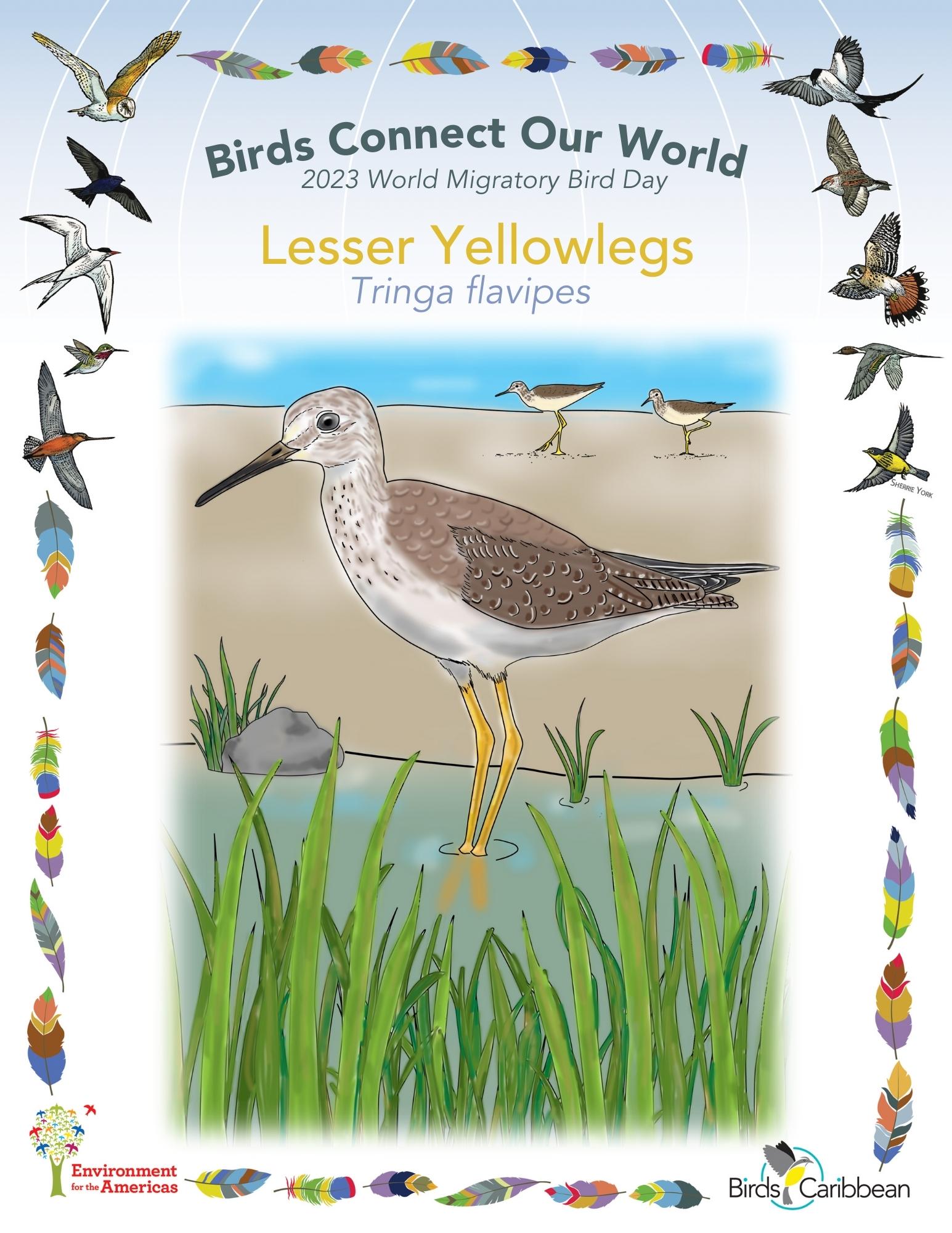
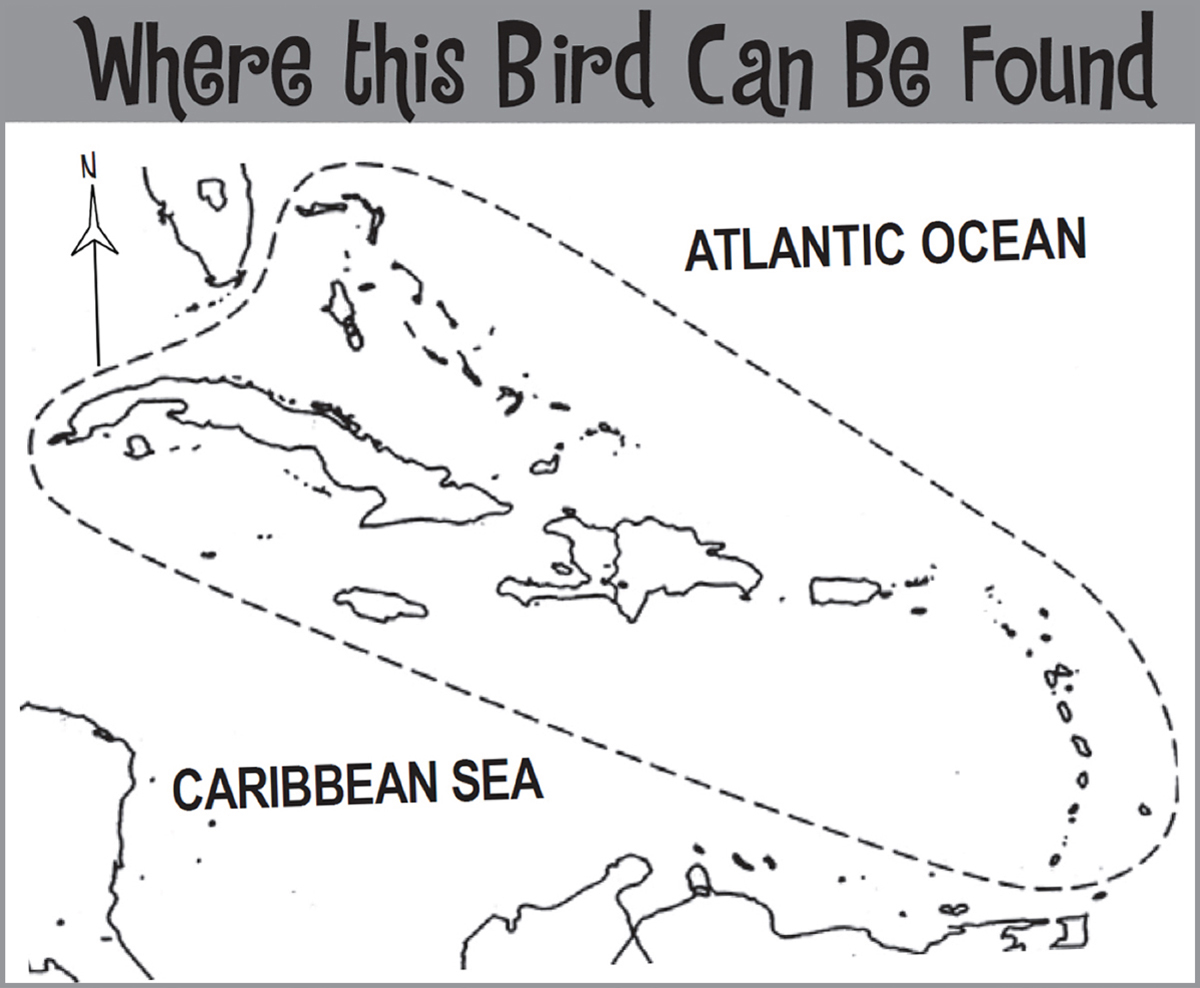
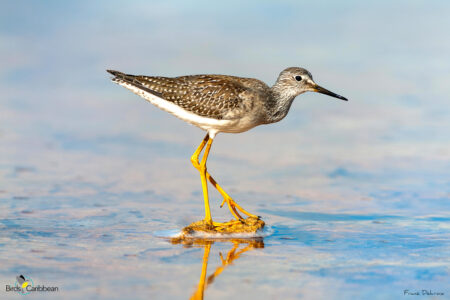
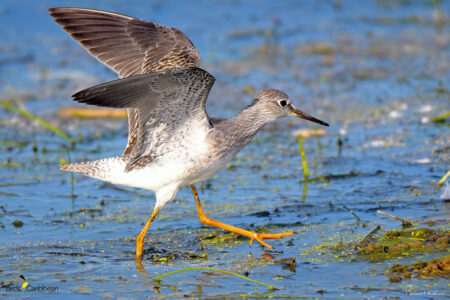
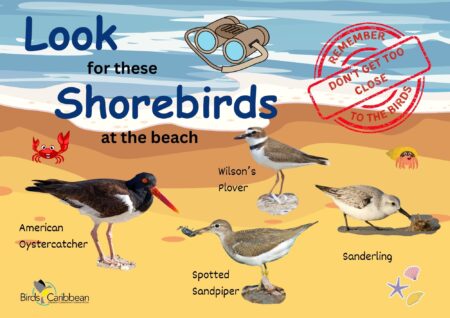 FOR KIDS: Birds, like the Lesser Yellowlegs, that are typically found at the shore and other coastal habitats like mudflats and lagoons are called shorebirds.