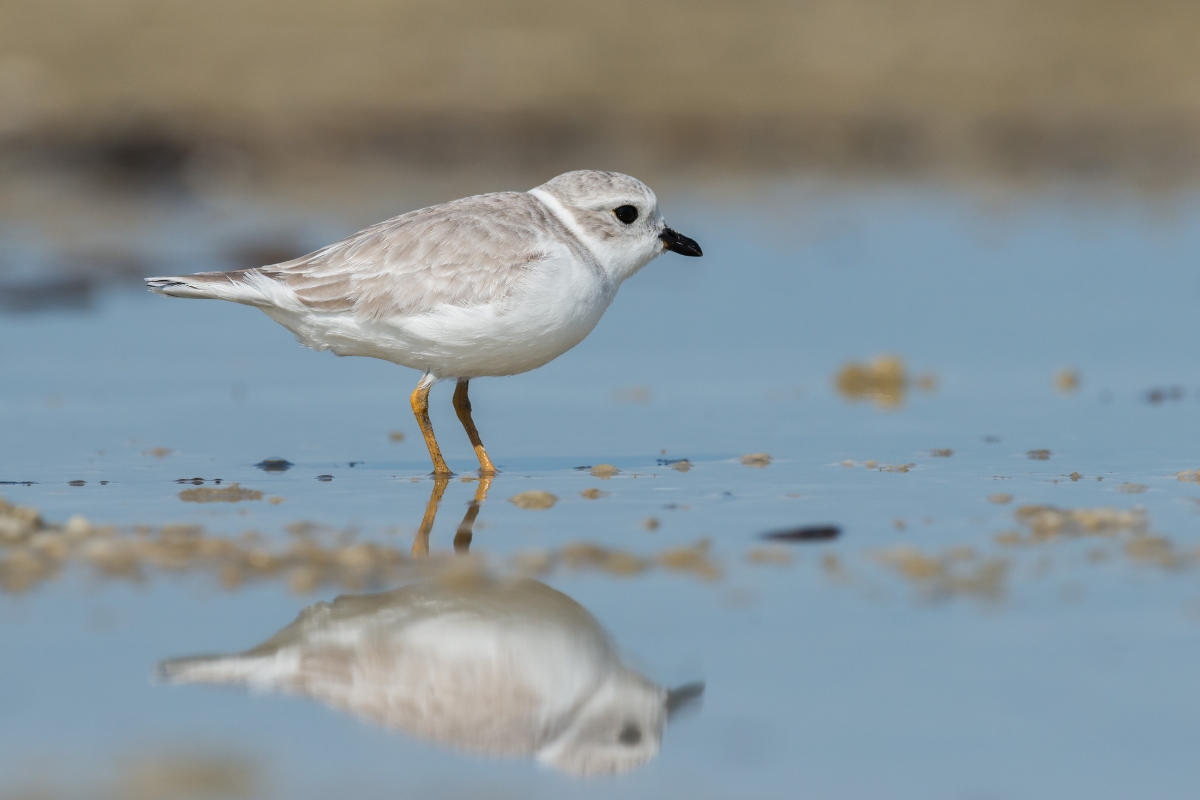
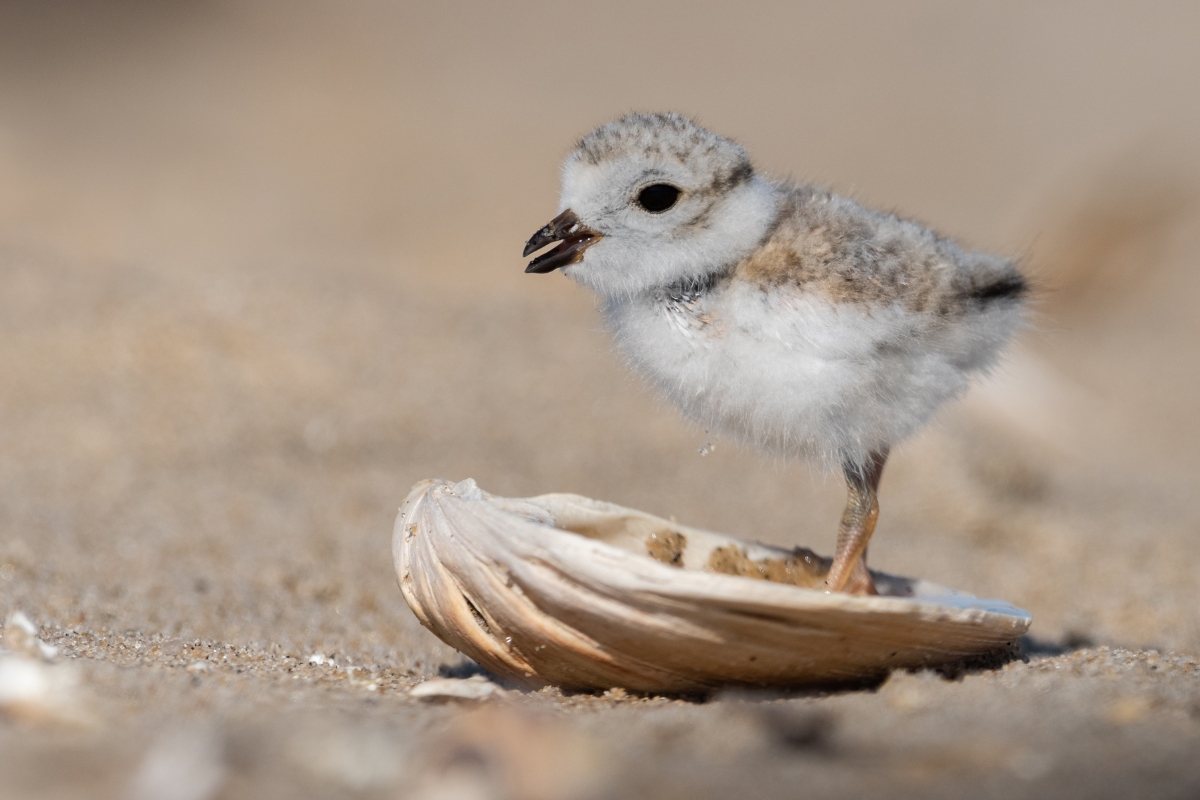
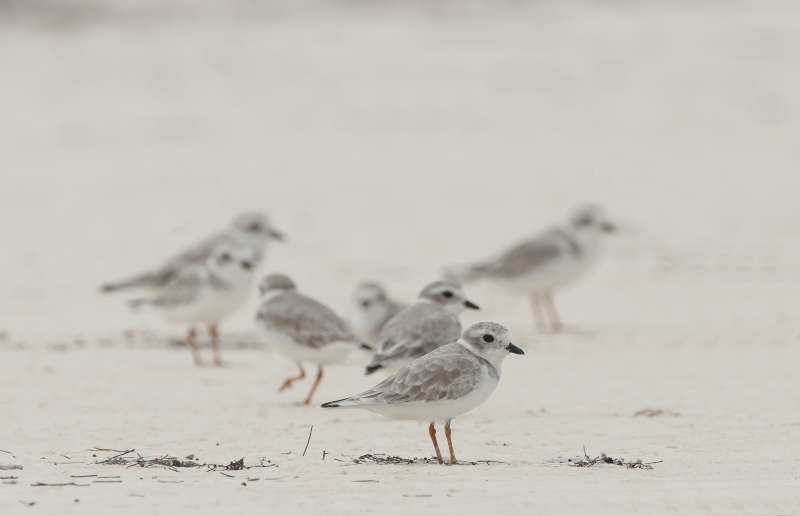
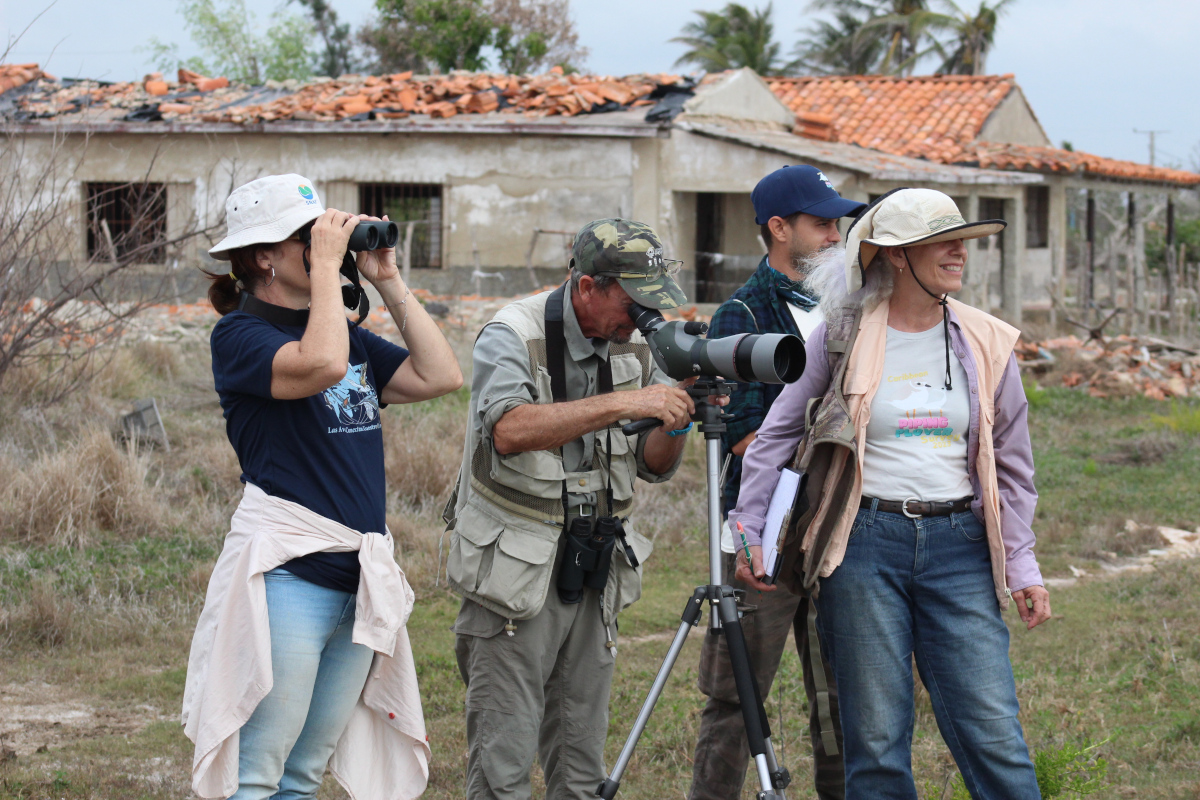
The Endemic and Threatened Species Working Group (ETSWG) newsletter is now available, and it’s brimming with exciting updates and achievements! From celebrating conservation leaders to spotlighting critical challenges, this issue highlights the latest research, conservation, and education activities taking place across the region—available in English, Spanish, and French!
Your latest dose of Caribbean endemic bird news just got a lot more exciting—seriously! Alongside fascinating taxonomic changes that increase the number of Caribbean endemic species, this issue includes updates from the Caribbean Landbird Monitoring Programme, highlights from the Caribbean Endemic Bird Festival, and conservation news from across the islands. From honoring local champions to calling for urgent action for our most threatened endemics, this newsletter showcases the dedication of our community to the iconic birds that rely on our care.
Scroll to the bottom of the page to view the newsletter in Spanish and French.
Across the Caribbean, conservationists are working tirelessly to better understand and protect the birds we love. In The Bahamas, students are creating artwork for a Young Artist’s calendar, while the One Eleuthera Foundation has completed a nature trail that brings the island’s endemics into closer focus for the public.
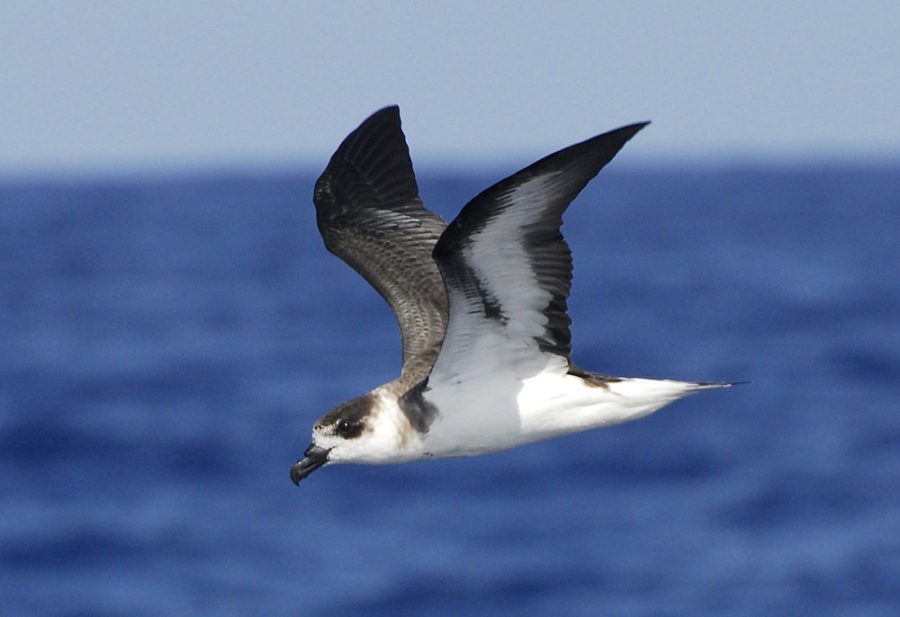
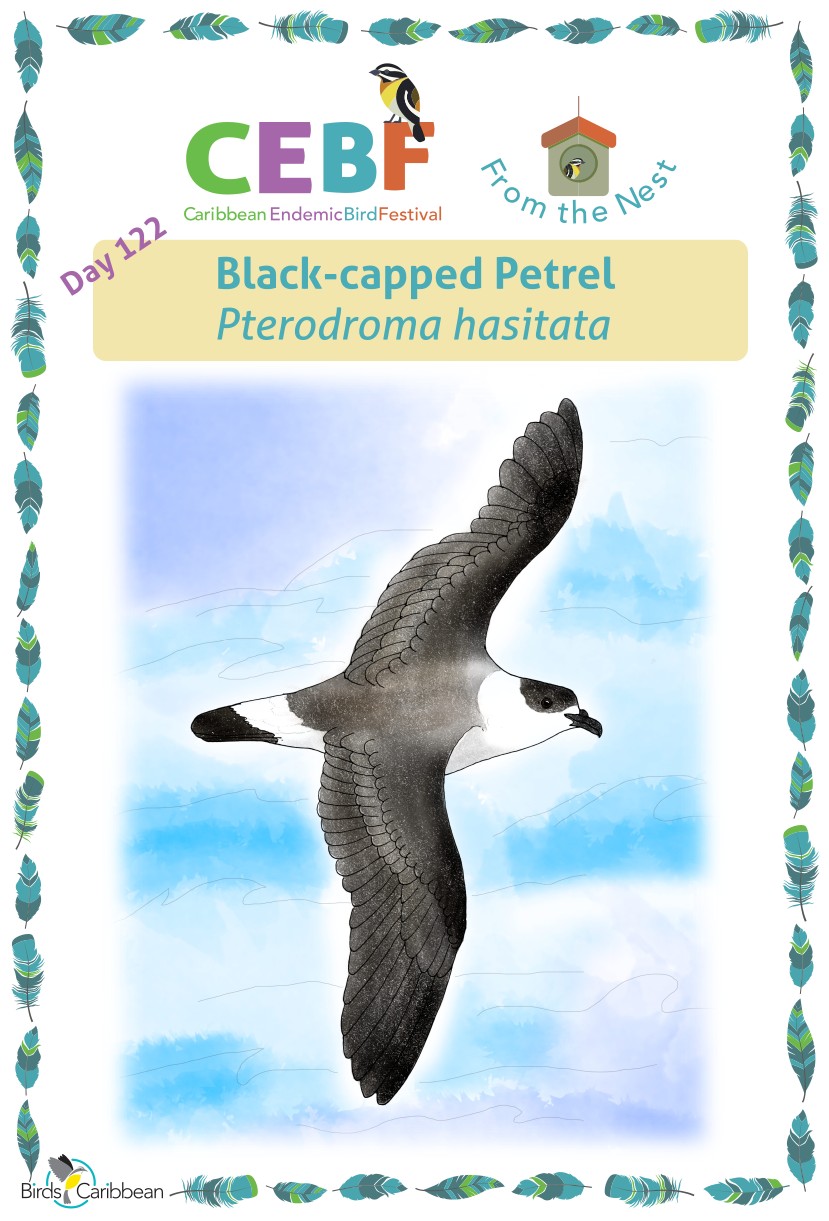
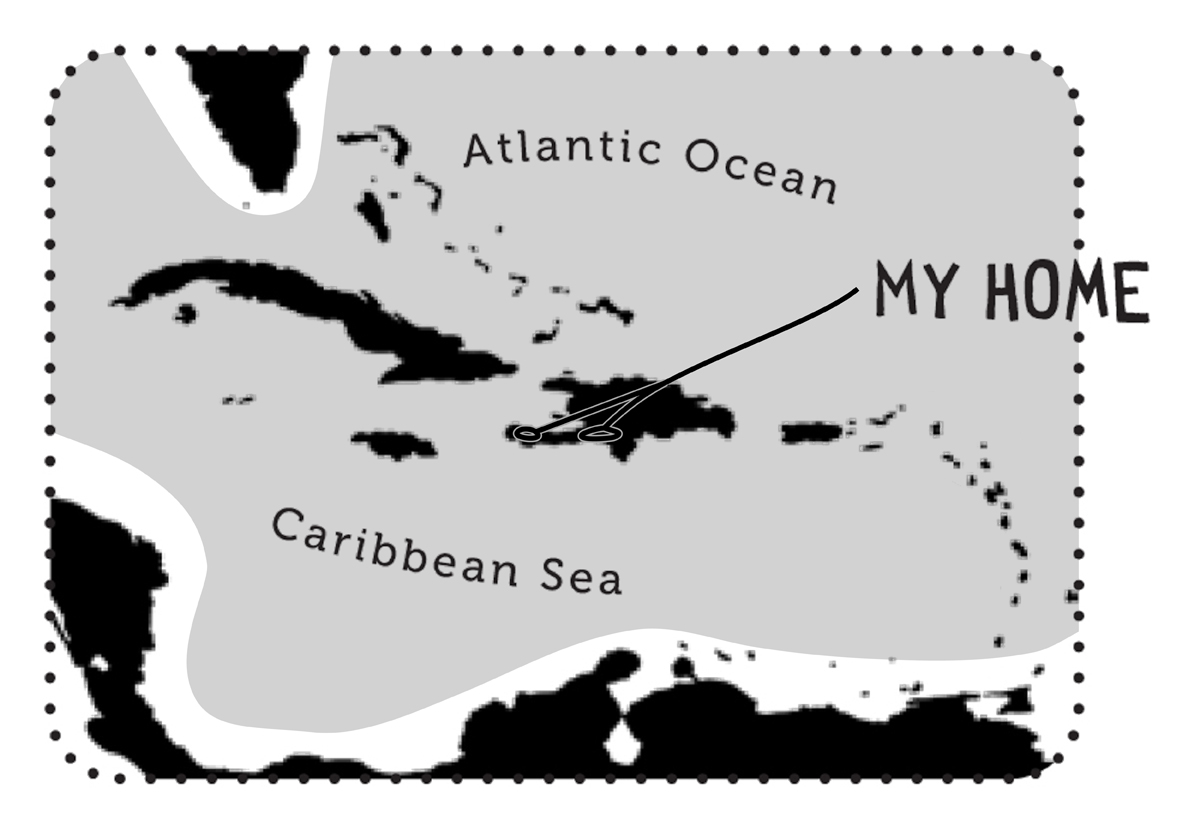
Nearby, in the Dominican Republic, plans are underway to remove invasive species from Isla Alto Velo, helping to restore habitat for the Black-capped Petrel. Meanwhile, in St. Vincent and the Grenadines and Grenada, international and local researchers are finalizing Conservation Action Plans for the Whistling Warbler, St. Vincent Amazon, and Grenada Dove.
Grenada Dove—endemic to Grenada and Critically Endangered. The cinnamon-brown plumage and white stripe in front of the wing are key field marks to distinguish the Grenada Dove from other dove species on the island. (photo by Arthur Daniel)
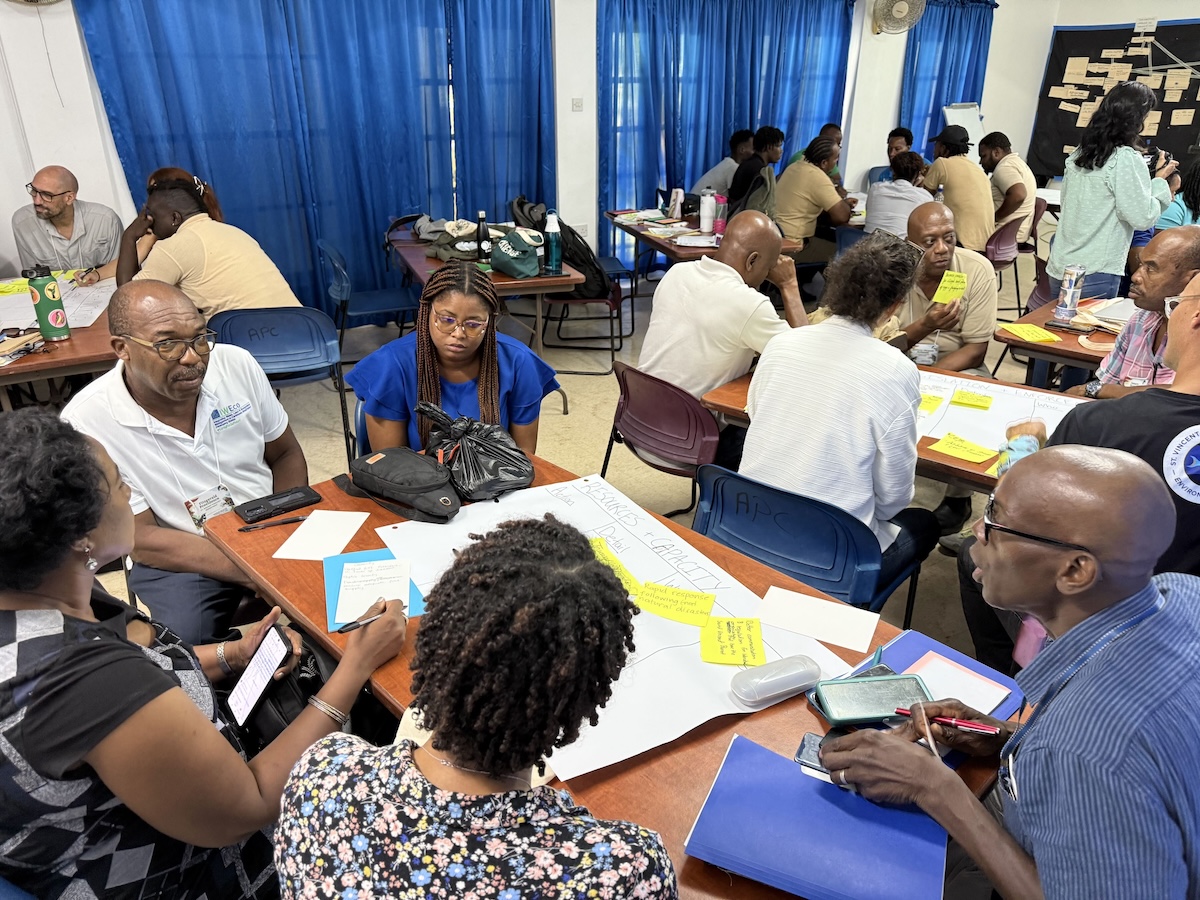
Focused faces on Day 1 of the workshop. (Photo by Gaea Conservation)
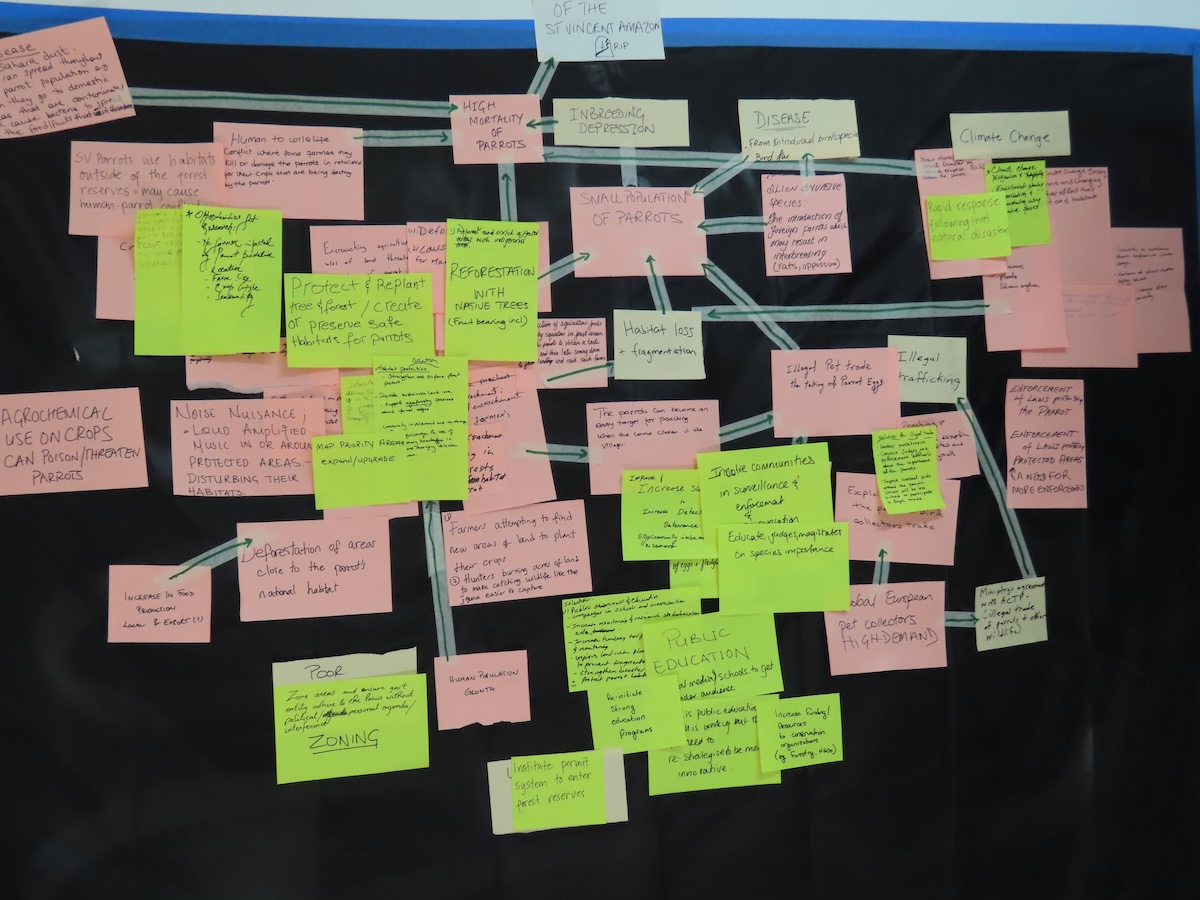
St. Vincent Amazon Solutions Tree created by participants.
Habitat Restoration and Protection group.
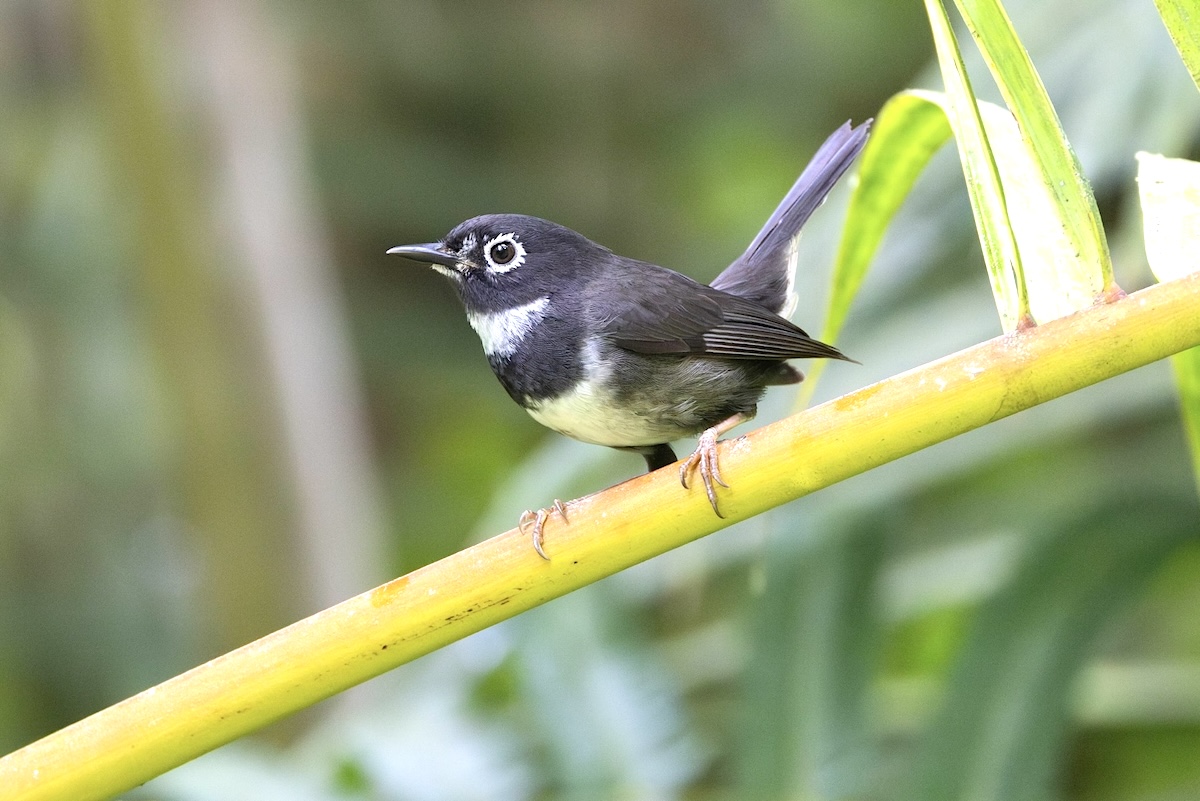
Whistling Warbler spotted on La Soufriere Windward Trail. (Photo by Jonathan Slifkin ML621602299)
This issue also features recent conference presentations by local conservationists, both online and in person. If you’re craving even more endemic bird research, we’ve got you covered—including a list of recent publications on Caribbean endemic and threatened species. Most are free to access; when they’re not, we encourage you to reach out directly to the authors, who are usually happy to share their work. Lastly, be sure to check the ‘Save the Date’ section for exciting upcoming conferences in 2026.
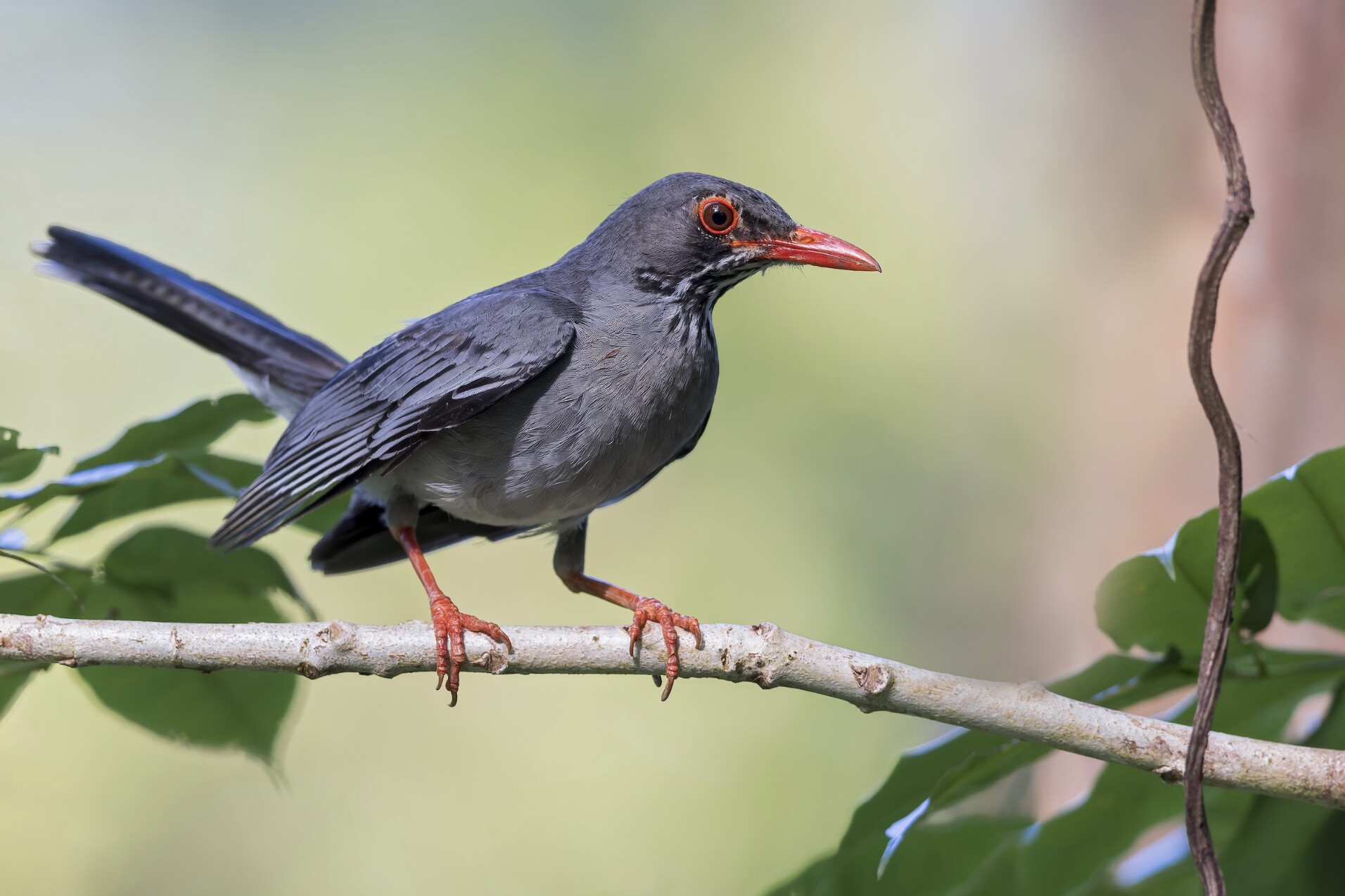
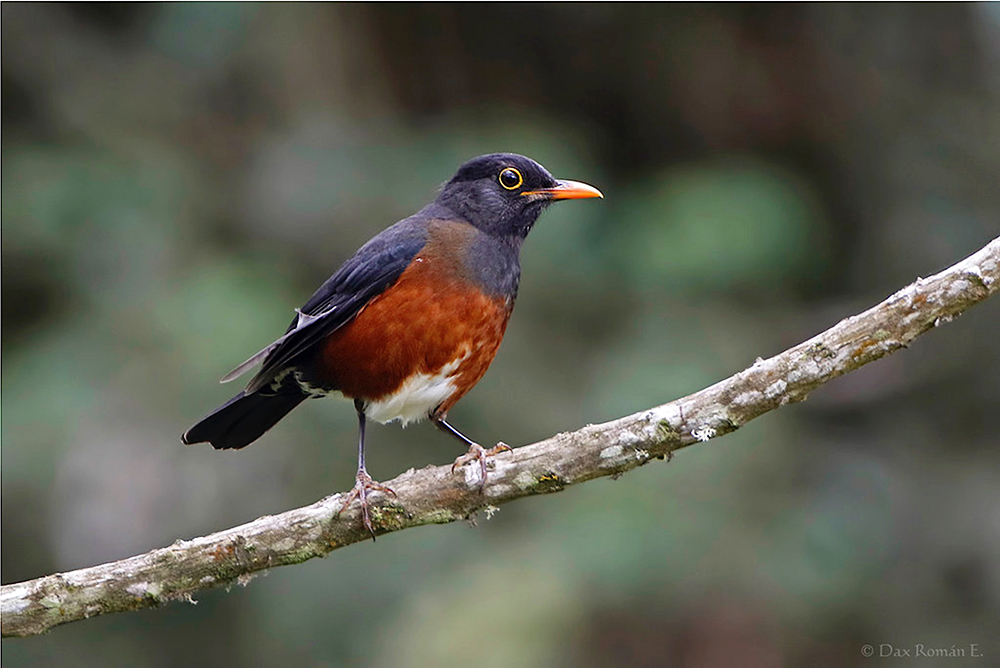
Eastern Red-legged Thrush. (Photo by Dubi Shapiro ML500774021)
These highlights represent just a fraction of the vital work underway to conserve Caribbean endemics—and we want more! If you have projects or updates to share, please contact us. We’ve already begun gathering content for the 2026 edition.
Nestled in the eastern Caribbean, St. Vincent and the Grenadines is more than a multi-island travel destination offering stunning coastlines. The lush peaks and valleys of mainland St. Vincent are home to rare wildlife, including two species of profound importance: the vibrant St. Vincent Amazon, localled called ‘Vincy Parrot,’ and the elusive Whistling Warbler. These birds, found nowhere else on Earth, are fundamental to the island’s natural heritage and national identity.
St. Vincent Amazon. (Photo by Faraaz Abdool ML572563461)
However, their habitats face significant threats. The catastrophic eruption of La Soufrière volcano in 2021, after 40 years of low activity, followed by the devastating impact of Hurricane Beryl in 2024, underscored the urgent need for focused conservation efforts. These events brought attention to the uniqueness of the island’s biodiversity and led to a renewed commitment to safeguarding its threatened species.
Dense and steep mountains in Silver Spoon, a well-known Whistling Warbler habitat. (Photo by Kaitlyn Okrusch)
Following the 2021 eruption, a conservation emergency group led by BirdsCaribbean quickly raised funds to assist the St. Vincent and the Grenadines Forestry Department (SVGFD). On-the-ground efforts included providing supplemental food to parrots, searching for injured parrots and administering first-aid, and repairing park infrastructure like observation decks and signs. The SVGFD also conducted a census of the St. Vincent Amazon at watch points across the parrot’s range.
Whistling Warbler spotted on La Soufriere Windward Trail. (Photo by Jonathan Slifkin ML621602299)
Over the last several years, projects funded by CEPF and UNDP were launched to research the ecology of the St. Vincent Amazon and Whistling Warbler, build local landbird monitoring capacity, and prepare Conservation Action Plans.
The primary goal of this workshop was to unite species experts, natural resource managers, environmental advocates, and other stakeholders to create strategic Conservation Action Plans for the Whistling Warbler and the St. Vincent Amazon. A wide coalition of partners, including BirdsCaribbean, Re:wild, the SVGFD, Science Initiative for Environmental Conservation and Education (SCIENCE), St. Vincent and the Grenadines Environment Fund (SVGEF), Ministry of Tourism, Civil Aviation, Sustainable Development and Culture, National Parks, Rivers and Beaches Authority, Amazona Nest, Sustainable Grenadines Inc., Wild Dominique, and researchers from Florida International University and Antioch University, convened in St. Vincent.
This collaborative effort is a pivotal milestone, leveraging existing partnerships and scientific insights to forge a unified strategy for the conservation of these birds. As Cuthbert Knights, Permanent Secretary of the Ministry of Agriculture, Forestry, Fisheries, Rural Transformation, Industry, and Labour stated in his opening remarks, “This workshop is a demonstration of our shared purpose to protect the St. Vincent Amazon and Whistling Warbler. These birds are more than national treasures, they are living symbols of our natural heritage…there is an urgent need to understand and better protect the island’s rich biodiversity. ”
So what exactly is a Conservation Action Plan?
Each Conservation Action Plan is a unique roadmap tailored to conserve a species or habitat within specific ecological and social contexts. It provides a structured approach, outlining specific, measurable goals and objectives along with the actions, timelines, and resources required to achieve them. The plan guides all stakeholders, helping them work together to safeguard the future of the species or habitat.
Before we begin…
To set the stage for discussions during the workshop, BirdsCaribbean and partners from Florida International University, Cornell Lab of Ornithology and Antioch University hosted two webinars to equip registered participants with the latest research and findings on the Whistling Warbler and St. Vincent Amazon.
Post-Eruption Assessment and Habitat Associations of the Whistling Warbler: Insights for Conservation Action (Dr. Lisa Sorenson and Dr. Mike Akresh)
Spatial and Temporal Distribution of the St. Vincent Amazon (Amazona guildingii) Using Passive Acoustic Monitoring (Dr. Cristina Gomes and Dr. Vijay Ramesh):
]
Three Days of Focused Conservation
The three-day workshop, held at the Anglican Pastoral Centre in Kingstown, explored the multitude of interconnected reasons to conserve both species, identified key challenges to their protection, and developed practical solutions to overcome these hurdles.
While most people agree that protecting threatened species secures healthy ecosystems and a better future for everyone, the reasons for conserving the St. Vincent Amazon are deeply personal.
Justin Springer welcomes participants to the workshop. (Photo by Lisa Sorenson)
Day 1 of the workshop: Collaboration is in session!
When workshop facilitator and Re:wild’s Caribbean Program Officer, Justin Springer, asked the group why we should conserve the parrot, the response was immediate and unanimous: the parrot is an essential element of their national identity, heritage, and culture. The discussion also expanded to the parrot’s role as a plant mutualist, acting as a seed disperser, and its importance for avitourism. Participants agreed the parrot holds an inherent value independent of its use to humans, celebrated simply for its beauty.
SVG Forestry Officer Samuel Harry writes down his reason for conserving the St. Vincent Amazon. (Photo by Lisa Sorenson)
The ecological, cultural, and economic importance of the St. Vincent Amazon highlighted by participants. (Photo by Lisa Sorenson)
Adding a moral dimension, U.S. Fish and Wildlife Service (USFWS) Wildlife BiologistDr. Thomas White offered a powerful call to action, sharing: “Humans are the main drivers of extinction. We have the ability to recognize the damage we have done and it is morally incumbent upon us to right that wrong.”
While the reasons for conserving the St. Vincent Amazon were rooted in identity and heritage, the discussion around the Whistling Warbler focused a bit more on its ecological role. Participants highlighted the need to protect the species because of its importance in controlling insect pest populations. They also noted the uniqueness of he warbler, being endemic to the island, and that it deserved to be similarly celebrated and conserved. The group also noted the lack of ecological information about the Whistling Warbler, with Forestry Officer III Leon Matthews noting, “We don’t know a lot about the Whistling Warbler.”
Forestry Officer Felicia Baptiste adds her reason for conserving the Whistling Warbler.
The ecological, cultural, and economic importance of the Whistling Warbler highlighted by participants. (Photo by Lisa Sorenson)
Peril in Paradise
The workshop then shifted its focus to the challenges faced in protecting the St. Vincent Amazon and Whistling Warbler.
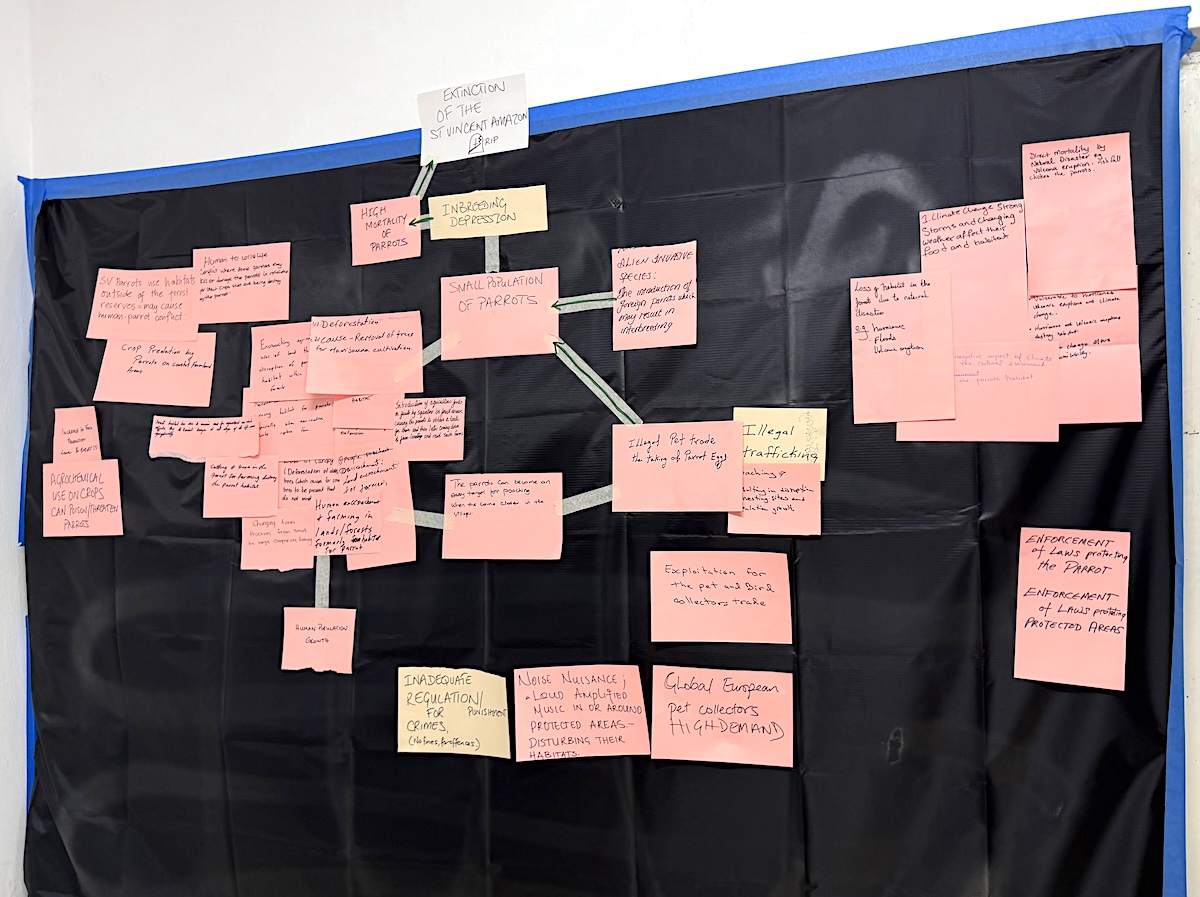
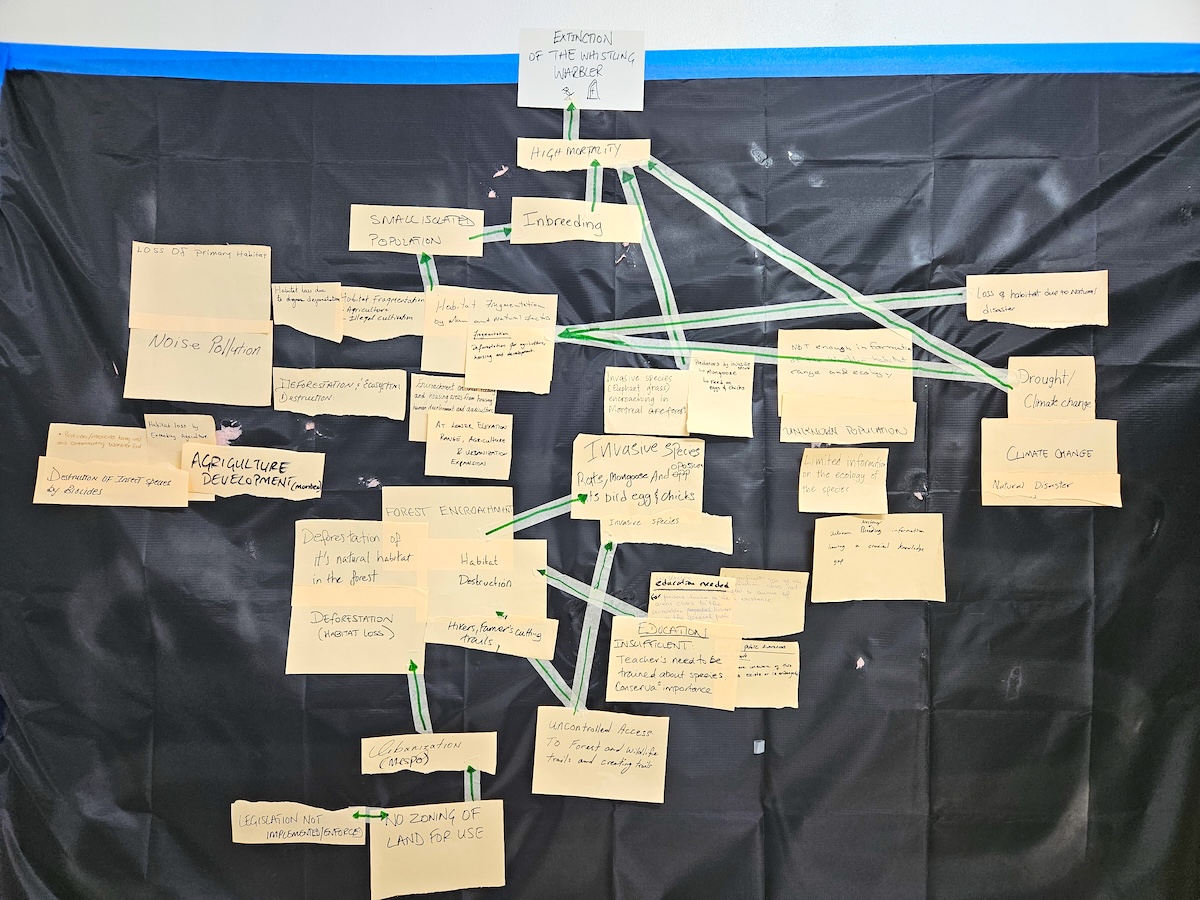
To tackle these complex challenges, Justin introduced a structured approach. He asked everyone to write down the various threats they had identified on individual sheets of paper. These were then used to construct a “problem tree” on a wall, with the core issue “extinction of the Whistling Warbler/ St. Vincent Amazon” at the crown of the tree and the various challenges forming the branches. This visual method offered several key benefits. It allowed the group to see the interconnectedness of the challenges, prioritize issues that need urgent attention, identify root causes of the problems, and build understanding and consensus among the diverse group.
Justin explains what is a Problem Tree before asking participants to list threats to the survival of the St. Vincent Amazon. (Photo by Lisa Sorenson)
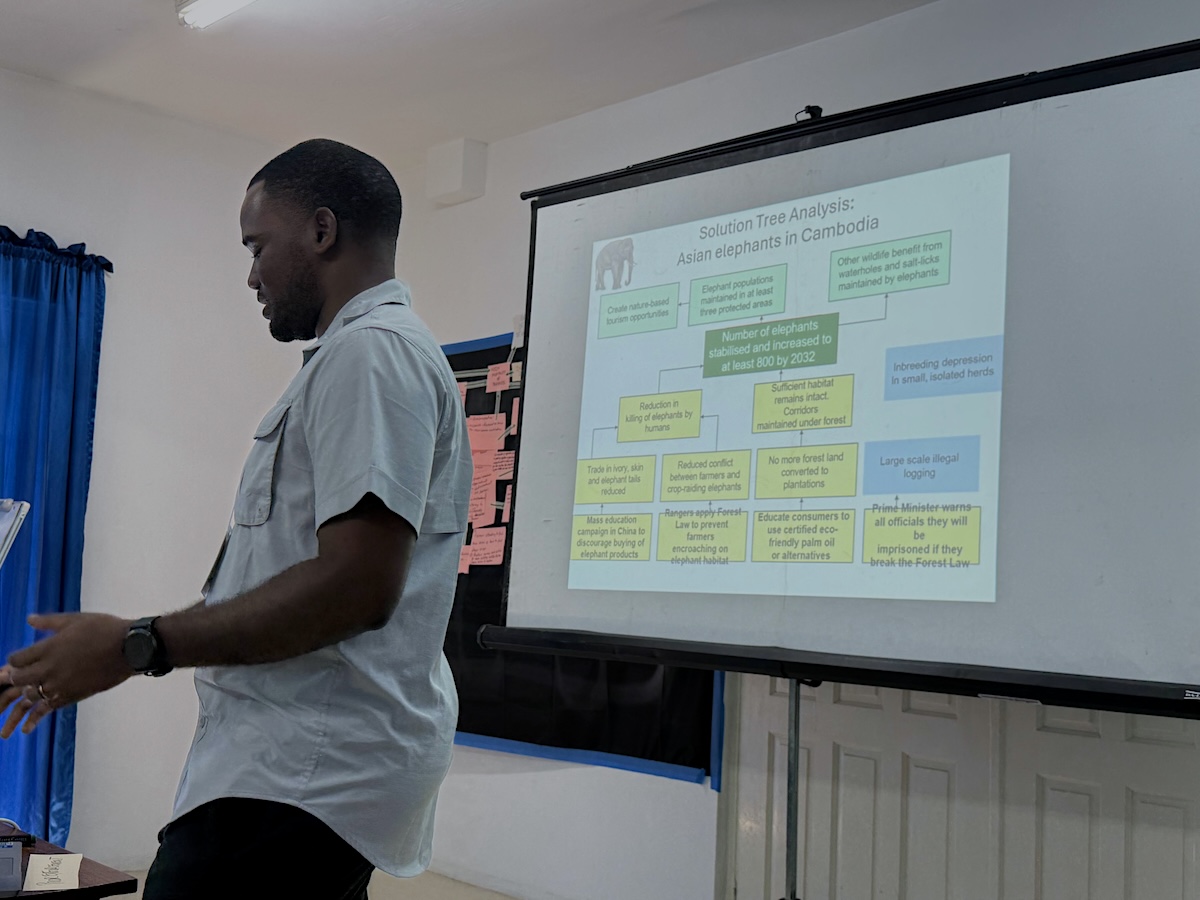
Justin uses the Asian Elephant extinction crisis to explain how a problem tree is created and then analyzed. (Photo by Lisa Sorenson)
The threats to the St. Vincent Amazon are numerous and complex. They include weak legislation and enforcement—first-time offenders caught possessing, harming, or killing a parrot often face minimal fines of only $2,000–$5,000 ECD, though penalties of up to $10,000 ECD are allowed by law. Other challenges include human–wildlife conflict, as parrots sometimes feed on crops such as passion fruit, an important export for small farmers. Poaching of eggs and chicks also persists, with birds occasionally trafficked overseas. Limited customs capacity and training make it difficult to detect and prevent illegal exports.
Adding to these concerns is a long history of controversy surrounding the Association for the Conservation of Threatened Parrots (ACTP), a private organization based in Germany. Over the past decade, investigative reports have raised serious questions about transparency, accountability, and financial motives behind international parrot transfers carried out in the name of conservation. Recent exposés by German journalists on ACTP’s expanded trade in rare and endangered wildlife highlight how protected species (including the St Vincent Amazon) are exploited for profit, renewing calls for stronger oversight, transparent permitting, and a genuine focus on in-country conservation to keep this iconic parrot safe in its natural habitat. Read more here.
The St Vincent Amazon Problem Tree created by workshop participants. (Photo by Lisa Sorenson)
Habitat encroachment through agriculture and housing developments also emerged as a major threat, compounded by the escalating impacts of climate change. In a reflection on his 40-year career, recently retired Director of Forestry Fitzgerald Providence noted that while the threats have remained consistent, the intensity and frequency of storms and droughts impacting the island have increased, leaving little time for recovery between events. Interestingly, the group also agreed that many locals lacked knowledge about the parrot: where it lives, what it eats, the threats it faces, and actions that can be taken to protect it, suggesting that the parrot, whilst being the national bird, may be a symbol of the nation rather than a symbol for the nation.
With the threats to the St. Vincent Amazon laid out, the workshop turned its attention to the equally pressing challenges facing the Whistling Warbler.
The group identified several key issues, including deforestation from both legal and illegal agriculture. They also extensively discussed the lack of dedicated zoning for farming and housing, which contributes to loss of primary forest and healthy habitats for both species. Invasive species like rats and mongoose were noted as a potential threat, likely preying on the warbler’s eggs and chicks. A major concern raised by Dr. Joanne Justo-Gaymes (wildlife veterinarian and SCIENCE education officer) and Fitzgerald Providence was the rapid spread of elephant grass, which is already outcompeting native plants in the warbler’s montane habitats in places like Montreal.
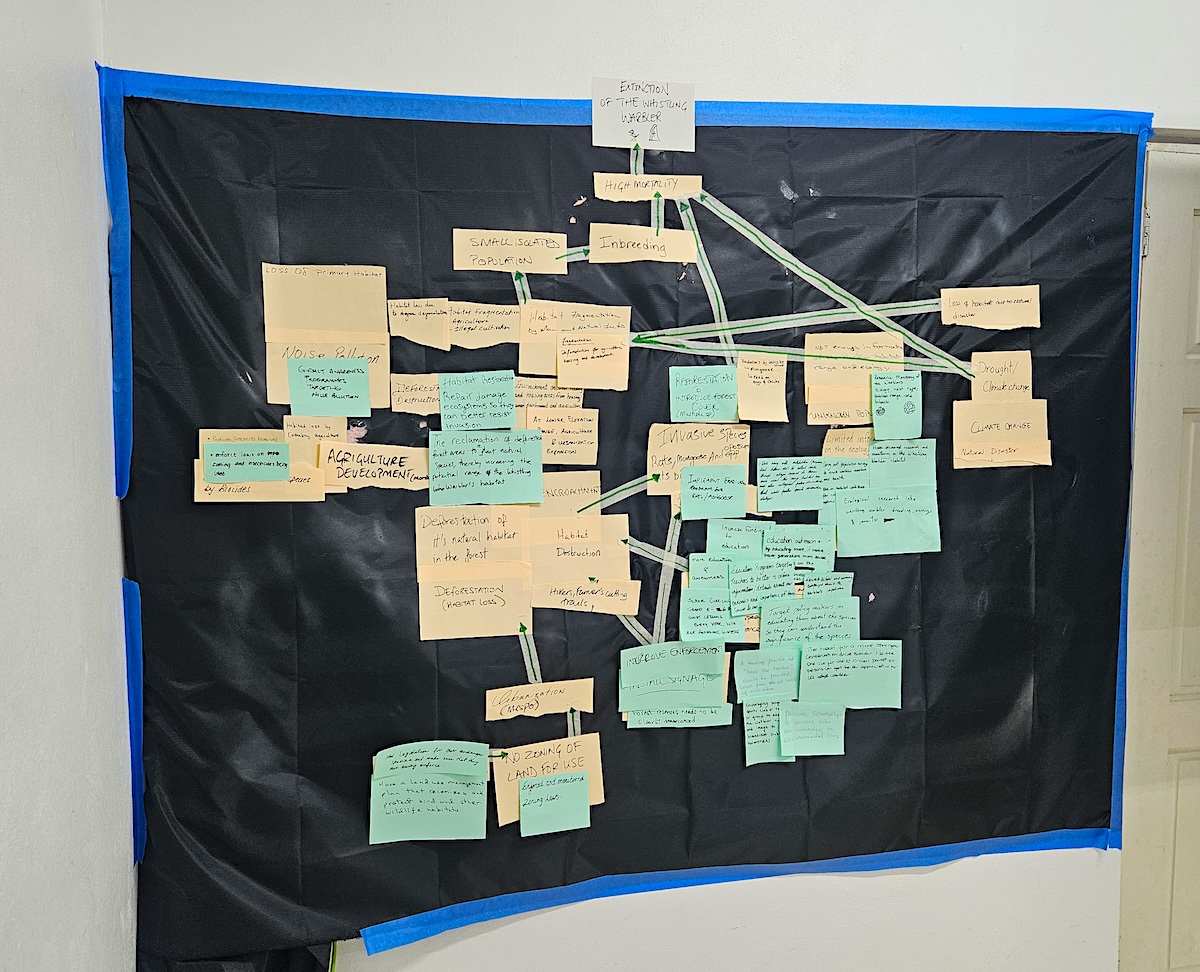
The Whistling Warbler Problem Tree created by workshop participants.
Illegal entry and trail cutting by farmers and community members makes the problem worse, as it gives invasive species easier access to warbler nests. According to Bradford Latham of the Forest Law and Compliance Unit, a key reason for this is that local communities are unaware that entering protected areas without permission from the St. Vincent and the Grenadines Forestry Department (SVGFD) is illegal. Furthermore, even with a permit, people are not allowed to cut vegetation, clear new trails, or remove any plants or wildlife.
Climate change was cited as a serious threat, with both droughts and hurricanes impacting the warbler’s habitats. A crucial challenge underlying all of these issues is a lack of information about the species. As one Forestry Officer in the Forest Mapping Inventory Unit, Samuel Harry, succinctly explained, “We can’t protect what we don’t understand.”
Crafting solutions for St. Vincent’s birds
With the problems clearly defined and visually organized, the group tackled the development of solutions. Using their local knowledge and diverse expertise, participants worked together to propose practical and effective remedies for each challenge. Their ideas were then added to the “problem tree” to transform it into a “solution tree.” This exercise helped turn their collective concerns into strategies to safeguard St. Vincent’s endemic birds.
Justin explains how to develop a solutions tree using the conservation of Asian elephants as an example. (Photo by Lisa Sorenson)
Drawing on their on-the-ground experience, participants then refined their suite of practical solutions, overlapping in some areas, for both the St. Vincent Amazon and Whistling Warbler. These included reforesting areas with native plants that provide food and shelter for wildlife. This includes thinning plantations of non-native Blue Mahoe and Mahogany, which were planted primarily for soil management. Participants also underscored the need for more research to better understand the parrot’s population size and seasonal movements, as well as the nature of crop damage to support farmers in mitigating any loss.
St. Vincent Amazon Solutions Tree created by participants.
Similarly for the warbler, it was highly recommended that more research be carried out on its habitat use, distribution, and nesting behaviour. Local environmentalist Marlon Mills stressed the importance of accurate data for proper resource management, emphasizing, “We need to take care of our own. If we don’t, we won’t be able to depend on them in the future. But first—we need to understand the needs of the species.“
Whistling Warbler Solutions Tree created by participants.
Other key strategies focused on improving land use planning to better protect the birds’ habitats, and fostering greater collaboration among various sectors, such as tourism and law enforcement.
The power of public education
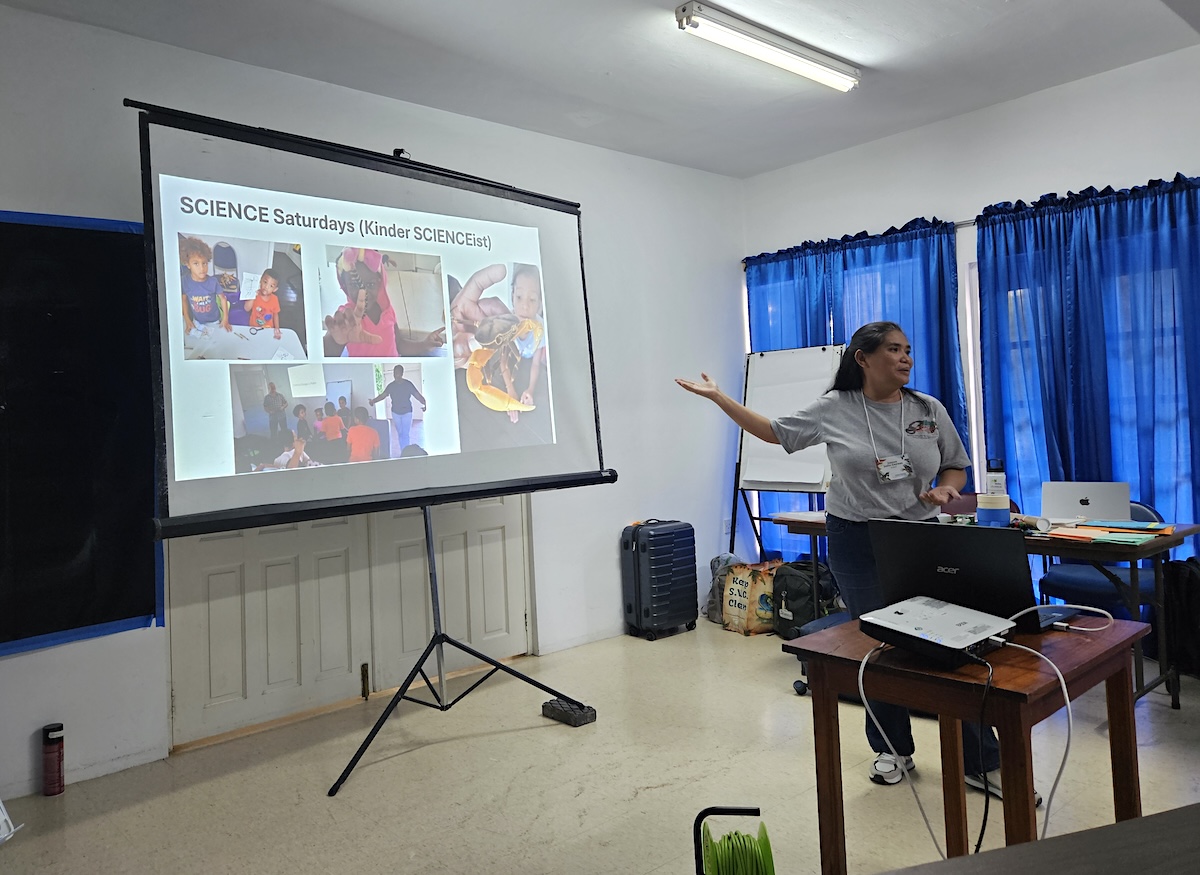
While local NGO SCIENCE and the SVGFD have already done substantial work in educating the public about the St. Vincent Amazon and Whistling Warbler, the group agreed that this message now needs to be built into the national science curriculum. In support of this solution, Dr. Joanne Gusto-Gaymes delivered a powerful presentation on the impactful public education and outreach programs currently run by SCIENCE. The organization’s science camps, which were originally created for primary school students, were so popular that they had to expand their age limit to include secondary school students as well.
Dr Joanne Gusto-Gaymes speaks about SCIENCE’S education and outreach initiatives.
The success of these programs is evident: teachers now volunteer as activity leaders at the science camps to better connect with the national science curriculum, and a former student is even pursuing a degree in Conservation Biology at the university level. Through immersive field trips with visiting researchers and public wildlife exhibitions, SCIENCE instills in its students the core belief that “in order to preserve our heritage, we need to do the research to learn more about our species.” This dedication to hands-on learning and scientific inquiry should be a key component of the island’s long-term conservation strategy.
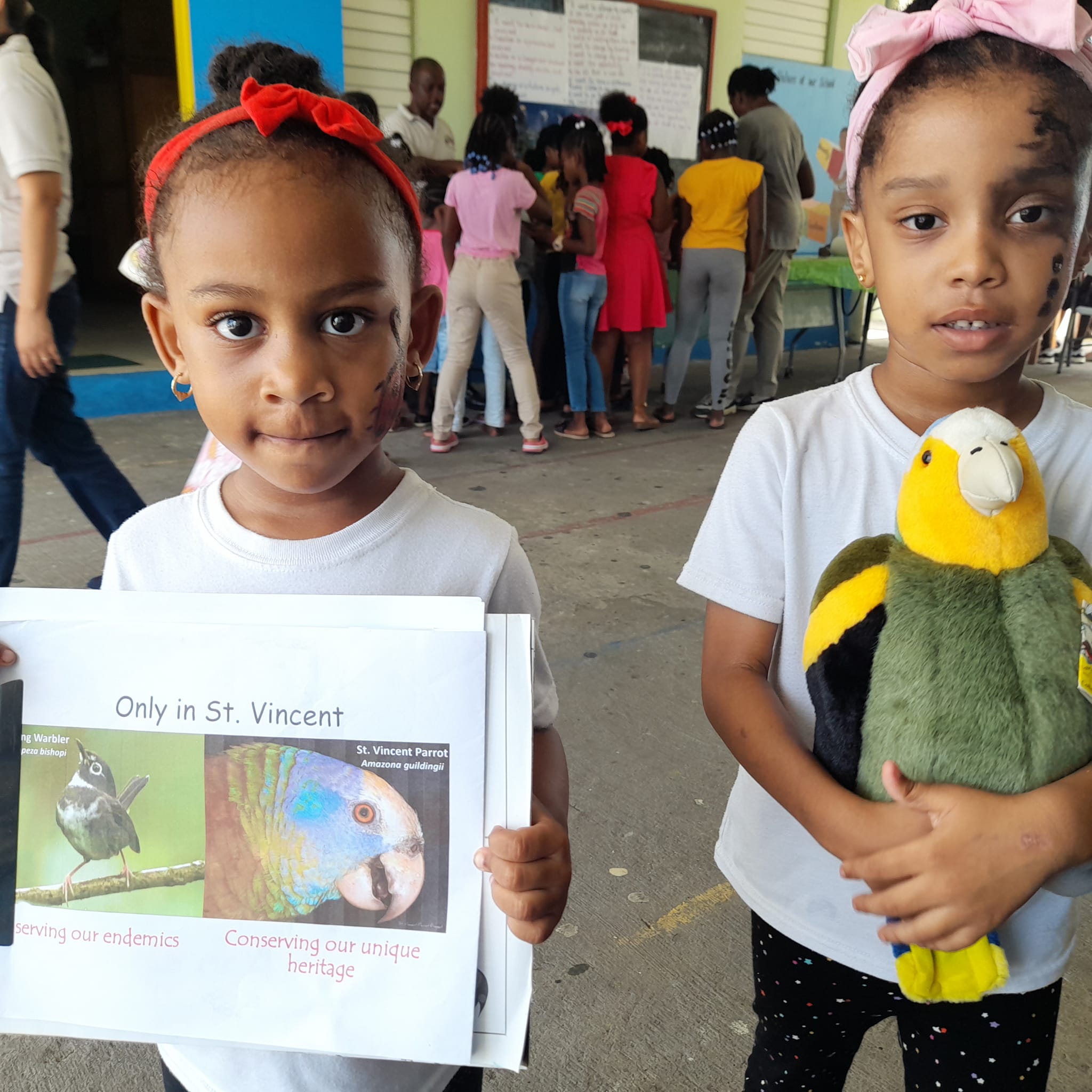
Students at Sandy Bay Primary School with a St Vincent Parrot plushie during CEBF celebrations. (Photo by Science SVG)
A Collaborative Effort
Following the identification of problems and solutions, the group moved on to setting clear goals for the action plans. Participants were asked to draft their own 10-year goals for both the St. Vincent Amazon and the Whistling Warbler. The facilitators then synthesized these ideas into a single, cohesive goal and several objectives for each bird. This draft was presented to the entire group, for their comments and revisions to ensure the final goals and objectives reflected the group’s shared vision.
Participants defining actionable steps to help them achieve their objectives.
After the goals and objectives were finalized, the group divided into break-out groups to outline specific actions to achieve the objectives, rating each action’s priority from low to high. This approach ensured that each objective had a clear pathway to being achieved.
Research and Monitoring group.
Legislation group.
The information gathered from the workshop is currently being compiled into a comprehensive draft Conservation Action Plan for each bird. These drafts will be shared with all stakeholders for an iterative editing process. Both the St. Vincent Amazon Conservation Action Plan and Whistling Warbler Conservation Action Plan are to be completed by fall 2025.
Habitat Restoration and Protection group.
Education and Outreach Group.
A Splash of Color and Creativity
The workshop also had a fun side that sparked creativity and connection among participants. They eagerly dove into a coloring competition, bringing to life St. Vincent’s spectacular endemic birds—the St. Vincent Amazon, the St. Vincent Wren, and the Whistling Warbler, beautifully drawn by Cuban artist, Arnaldo Toledo. This hands-on activity kept minds sharp and creativity flowing, helping everyone to stay engaged and contribute meaningfully. Of course, the atmosphere was also fueled by delicious coffee breaks and lunches, where lively conversations spilled over, allowing people to build relationships, and lay the groundwork for future partnerships.
St. Vincent Amazon colored artwork and line drawing are by Cuban ornithologist and scientific illustrator Arnaldo Toledo.
FIU Graduate student Kaylin shows off her colored in St. Vincent Amazon art. (Photo by Lisa Sorenson)
Forestry Officer flex their creative muscles during the workshop.
FIU Graduate student Alyssa shows off her colored in St. Vincent Wren art. (Photo by Lisa Sorenson)
Kisha McFarlene, Project and Community Officer for SusGren, with her colored in St. Vincent Amazon art. (Photo by Lisa Sorenson)
Local environmental advocate Marlon Mills shows off her colored in St. Vincent Amazon art. (Photo by Lisa Sorenson)
In-person meetings are an excellent chance to share resources, and this workshop was no exception. We seized the opportunity to distribute more custom stickers created for use by NGOs and government partners during their outreach events carrying the message to “Protect & Love our Endemic Birds” and helping to inspire the next generation of conservationists. We also provided Fact Sheets for both the parrot and warbler, as well as notecards about St Vincent’s three endemics.
Conservation chat over coffee.
Delicious food catered and served by Snagg Cuisine.
Garry Auguiste (Wild Dominique) and Jodelia Simmons (SVGFD Forestry Officer) also received monitoring equipment and field guides. They will use these to continue monitoring of the parrot and warbler populations on the island.
A Heartfelt Thank You
We extend our deepest gratitude to the Critical Ecosystems Partnership Fund (CEPF), the United Nations Development Programme (UNDP), and BirdsCaribbean members and donors for their generous support which made this workshop possible. Special thanks to Re:wild, particularly Justin Springer, for support with workshop planning and facilitation, and to our project partners, including the St. Vincent and the Grenadines Forestry Department, SCIENCE, SVG Environmental Fund, Florida International University, Antioch University, and the Cornell Lab of Ornithology.
We also want to express our sincere appreciation to all the participants for their invaluable contributions and enthusiastic engagement. A special thank you goes to the staff at the Anglican Pastoral Centre for their exceptional support in fulfilling all our venue requests and for their quick assistance with any issues that arose. We are also grateful to the caterers, Snagg Cuisine, for providing delicious meals that fueled our discussions. Finally, a huge thank you to Arnaldo Toledo for providing the beautiful artwork.
Building on the momentum and collaborative spirit of the workshop, the future of bird conservation on the island looks brighter than ever. We are proud to be a part of this journey and BirdsCaribbean looks forward to the successful completion and application of these conservation plans!
For all the latest news on this and other BirdsCaribbean programs, be sure to join our mailing list. We’ll deliver just the right amount of exciting Caribbean bird conservation news straight to your inbox. No spam. We promise. Click here to sign up!
With Migratory Shorebirds already arriving in the Caribbean we are getting ready to celebrate World Shorebirds Day on September 6! This year we’re asking you to show some love to our shorebirds and join the Global Shorebird Count, which runs from September 1 to 7. BirdsCaribbean has everything you need to help you take part. Read on to find out how to take part, and why you (and your friends!) should join the count this year!
World Shorebirds Day is held every year on September 6. This day celebrates shorebirds, their amazing migration journeys, and most importantly, raises awareness of the threats they face and actively promotes their monitoring and conservation. The key event associated with this day is the Global Shorebird Count (GSC), which this year runs from September 1-7.
Whether you’re new to the GSC or a seasoned shorebird counter, you can rally around shorebirds in the Caribbean by joining our “Count. Rest. Repeat.” campaign! Your data will help scientists protect these special, threatened birds.
How do you join in?
Joining is as simple as heading out to your local wetland sites and counting shorebirds! Really—it’s that easy! Don’t be intimidated if you’re a first-timer, this blog will walk you through everything you need to know to get out there—and start contributing valuable data for shorebird conservation! First tip: Remember to record all the species you see and/or hear (including other non-shorebird species), and to note how many individuals of each species you spot. Take your time and scan the habitats carefully for birds, but be extra careful to stand and walk only in places where you won’t disturb the birds you are trying to count!
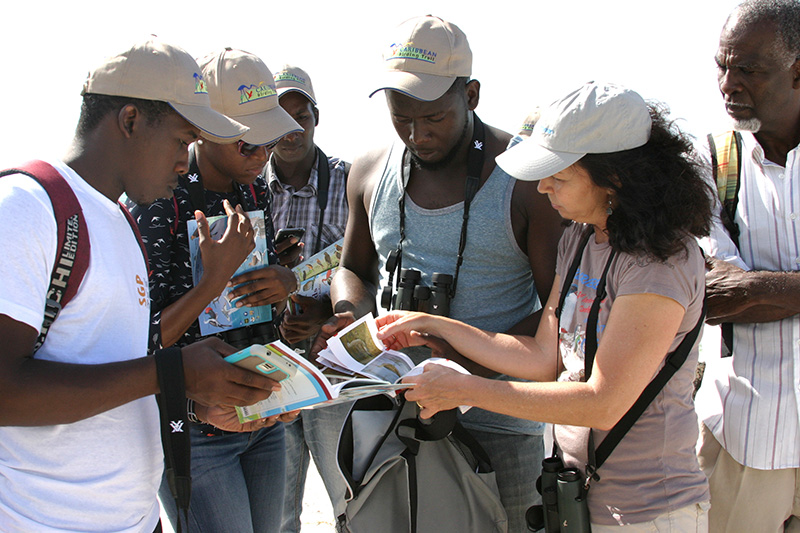
Caribbean Birding Trail participants study shorebird ID in the field, Union Island. (Photo by Kristy Shortte)
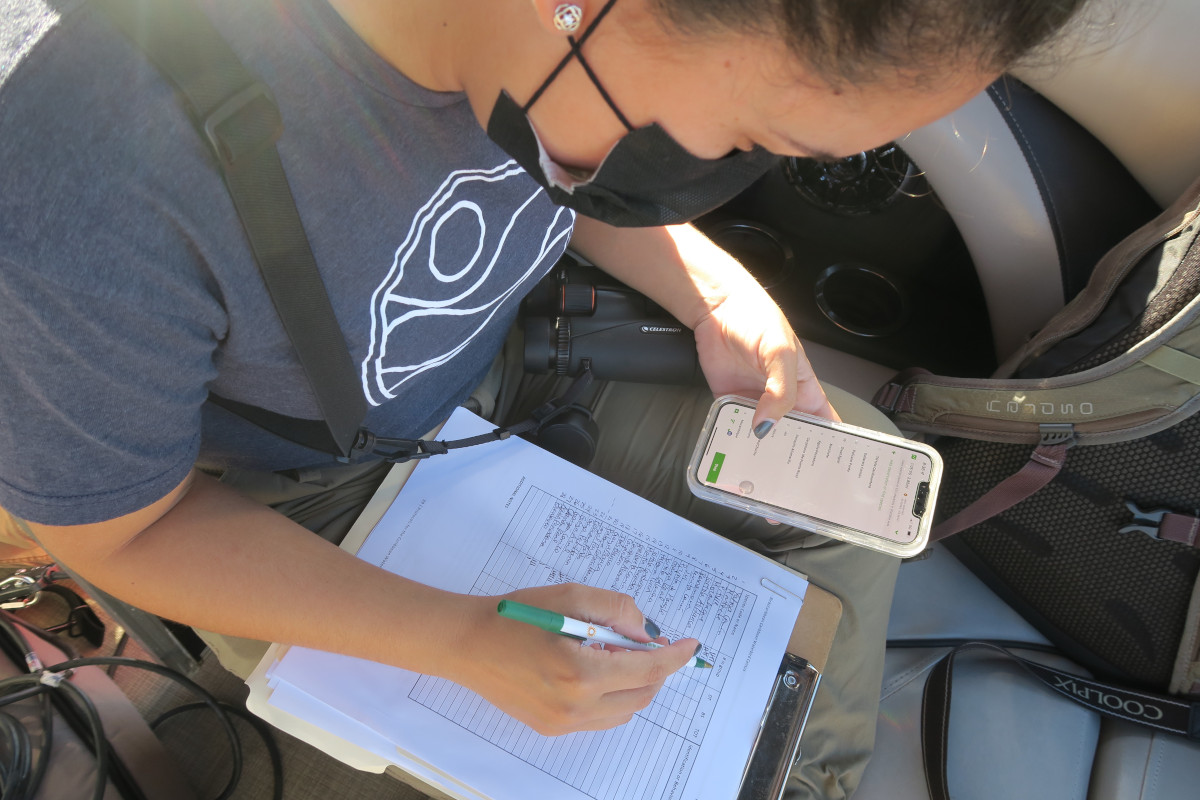
Make sure to record what you are seeing, and to start a new bird list for each location. The best way to do this is using the eBird app on your phone. This powerful citizen science app is totally free, and get this—you don’t even need data to use it in the field! If you are recording your birds in a notebook be sure to note the start and finish time of your count and add your list to the eBird website once you are home.
Any counts you do at Caribbean wetlands, mangroves, mud flats, coastal areas or beaches at any time of year can be Caribbean Waterbird Census (CWC) counts. If you are in the Caribbean, be sure to select “Caribbean Waterbird Census” from your projects when starting a new checklist. Haven’t joined the CWC project on eBird yet, or want to know more about how to use projects? Like we said—we got you! Get all the details here.
Finally, to contribute to the Global Shorebird Count, share each list on eBird with the eBird user ‘worldshorebirdsday’. This will ensure that your checklists are included in data analyses for the Global Shorebird Count. If you are new to checklist sharing, check out this quick tutorial on how to do it.
The answer is that our migratory shorebirds are more vulnerable than ever—they are threatened by human activities such as destruction of their habitats, pollution, disturbance, and climate change. Recent analyses show that shorebirds in North America are declining more than any other group of birds; in fact, more than half of 28 species studied were estimated to have lost more than 50% of their abundance in the last 30 years.
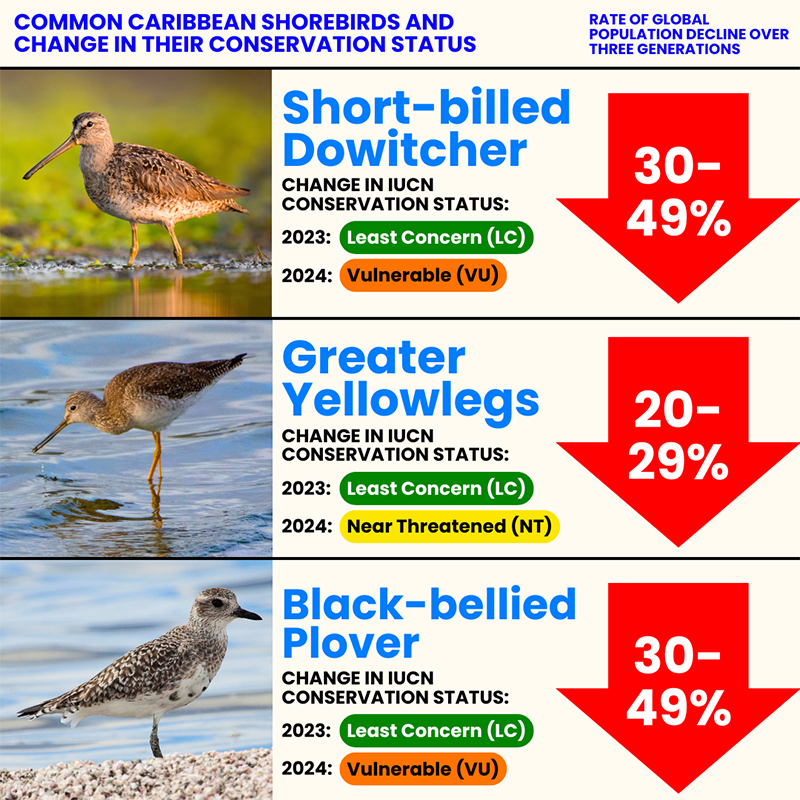
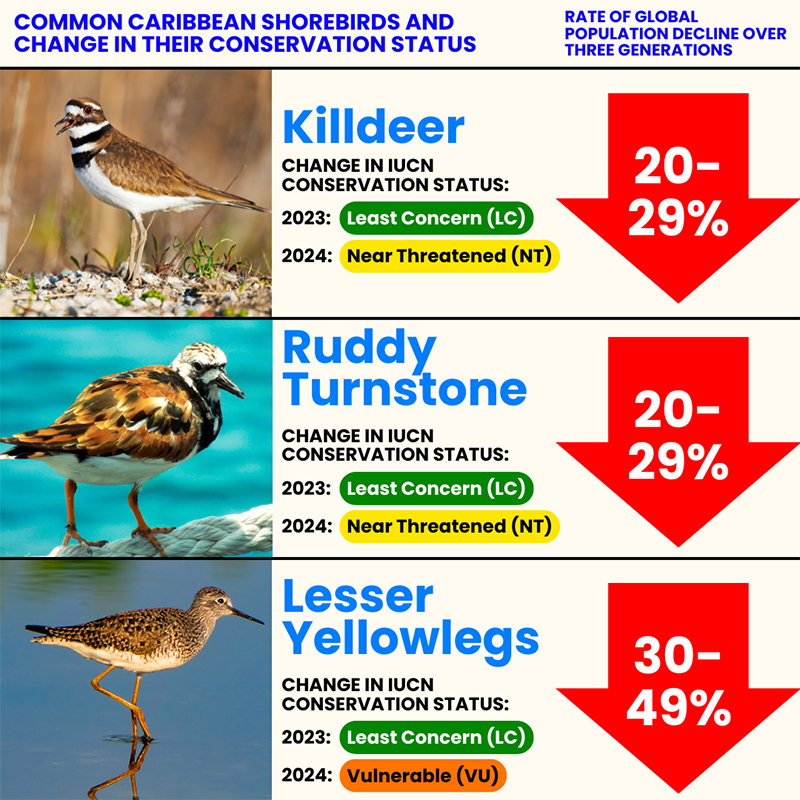
Alarmingly, 16 shorebird species were recently reclassified to higher threat categories on the International Union for the Conservation of Nature (IUCN) Red List. Many of these, like the the Lesser Yellowlegs, now classified as “Vulnerable,” and the Greater Yellowlegs, listed as “Near Threatened”, are familiar visitors to the Caribbean, reflecting our region’s vital role in their life cycles.
Protecting critical sites for migratory shorebirds in the Caribbean is more urgent than ever. Shorebirds rely on our mangroves, salt ponds, beaches, sand flats, and mud flats to rest and refuel as they continue on their long migrations. Some shorebirds even spend the entire winter with us!
This is where the Global Shorebird Count comes in: the GSC helps to both map the distribution of shorebirds during migration, and to record their numbers. Data from citizen science initiatives like this and our Caribbean Water Bird Census are needed to identify and protect the key stopover and/or wintering habitats that shorebirds use. Protecting these habitats benefits people too because healthy coastal areas provide vital ecosystem services such as clean water, food, sustainable livelihoods, protection from storm surge, and much more.
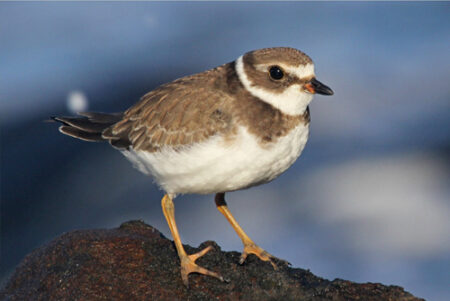
Semipalmated Plover (Photo by Jeffrey Offerman)
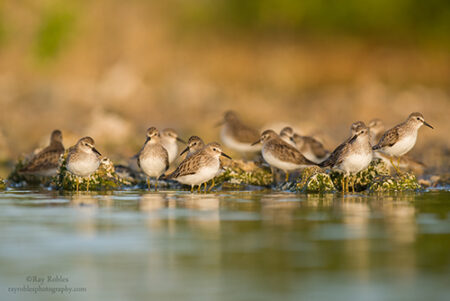
Least Sandpiper flock, Cayman Islands (Photo by Ray Robles)
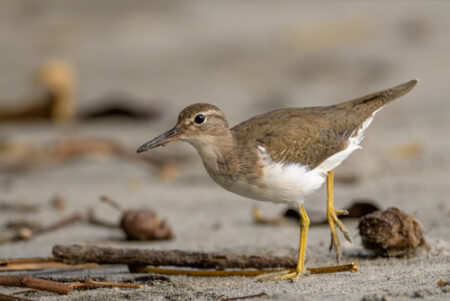
Spotted Sandpiper (Photo by Becky Matsubara)
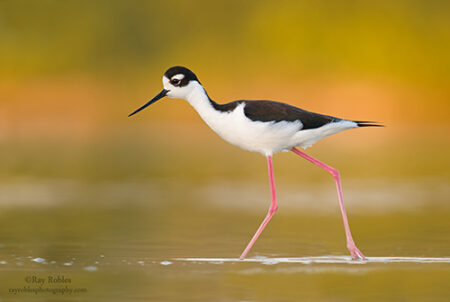
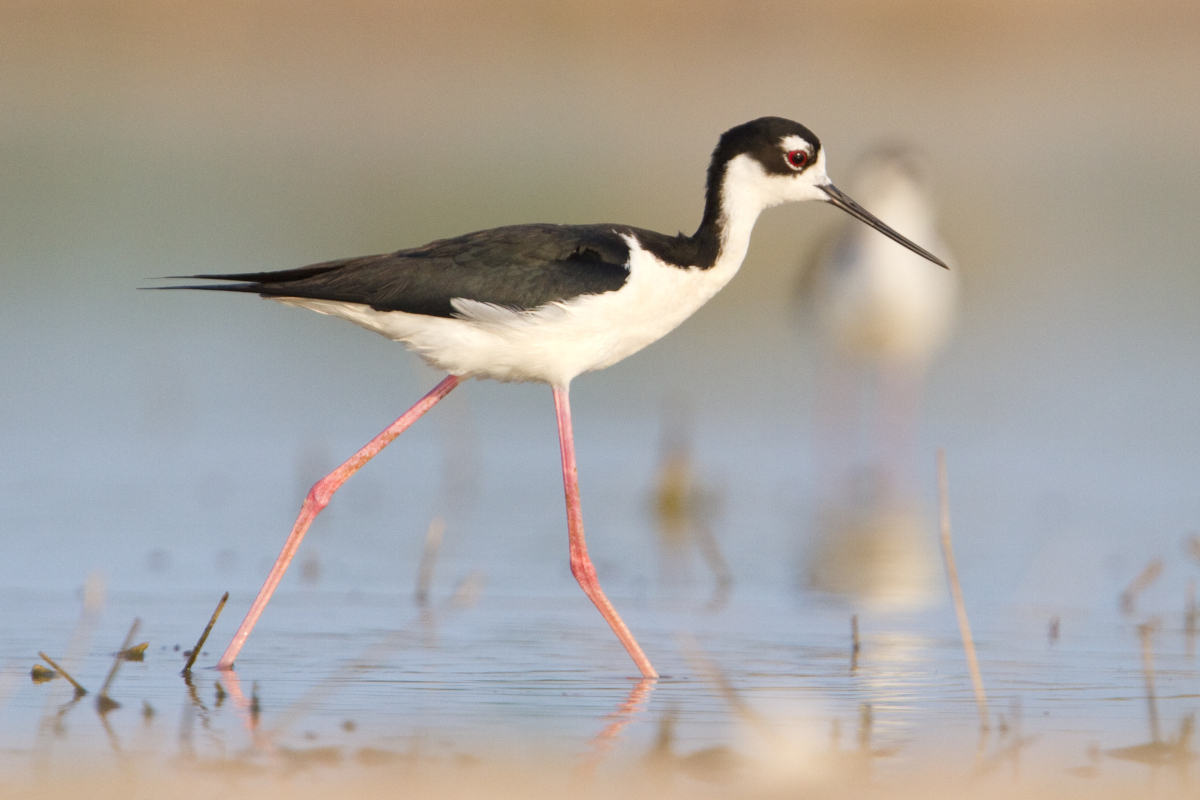
Black-necked Stilt (Photo by Ray Robles)
Count, Rest, and then please—Repeat!
The more information we have about shorebirds using Caribbean wetlands, the more we can learn about their populations and which places are most important for them. So, if you want to show some extra love to the shorebirds, and increase our ability to conserve Caribbean shorebirds, consider carrying out several counts at the same wetland(s) during migration season (August-October).
Monti Cristi in the Dominican Republic is estimated to host 20,000+ migrating shorebirds per year—making it a regionally important site! (Photo by Maria Paulino)
If possible you can try to do 2 or 3 counts at your local shorebird hotspots per month during fall migration(August-October). And if you are able to do more, even better! More frequent counts can help us better understand important aspects of shorebird migration in our region—like how many individuals use Caribbean wetlands, the timing of migration, and how long they stopover at different sites.
Need some help with shorebird ID?
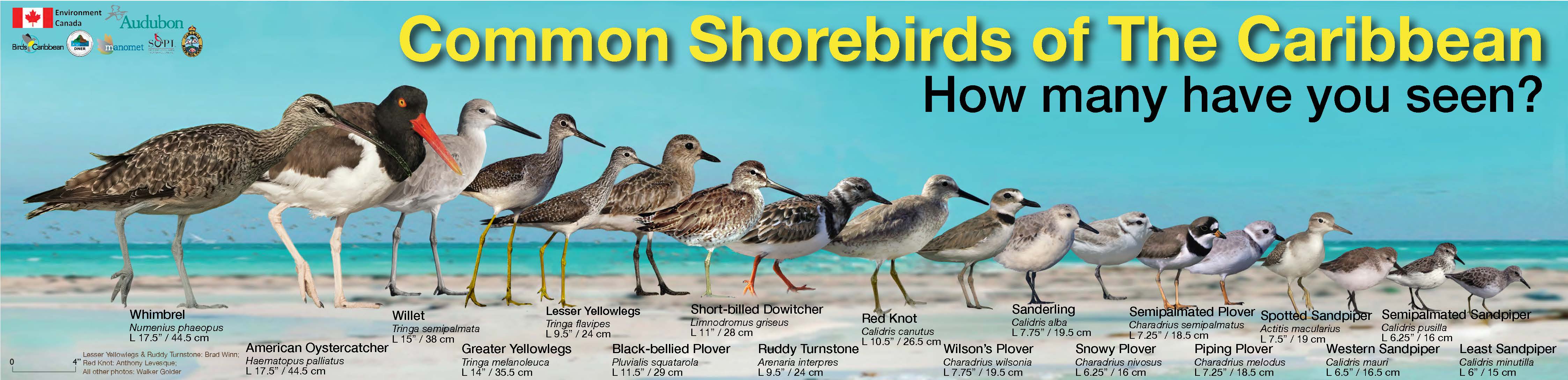
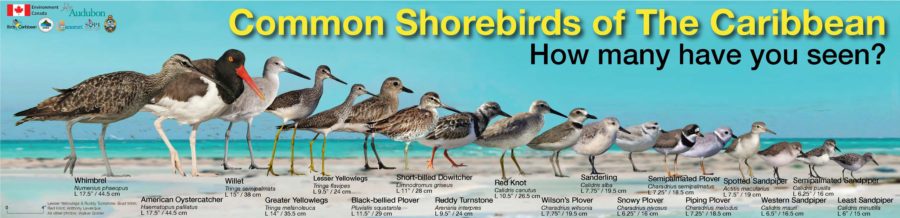
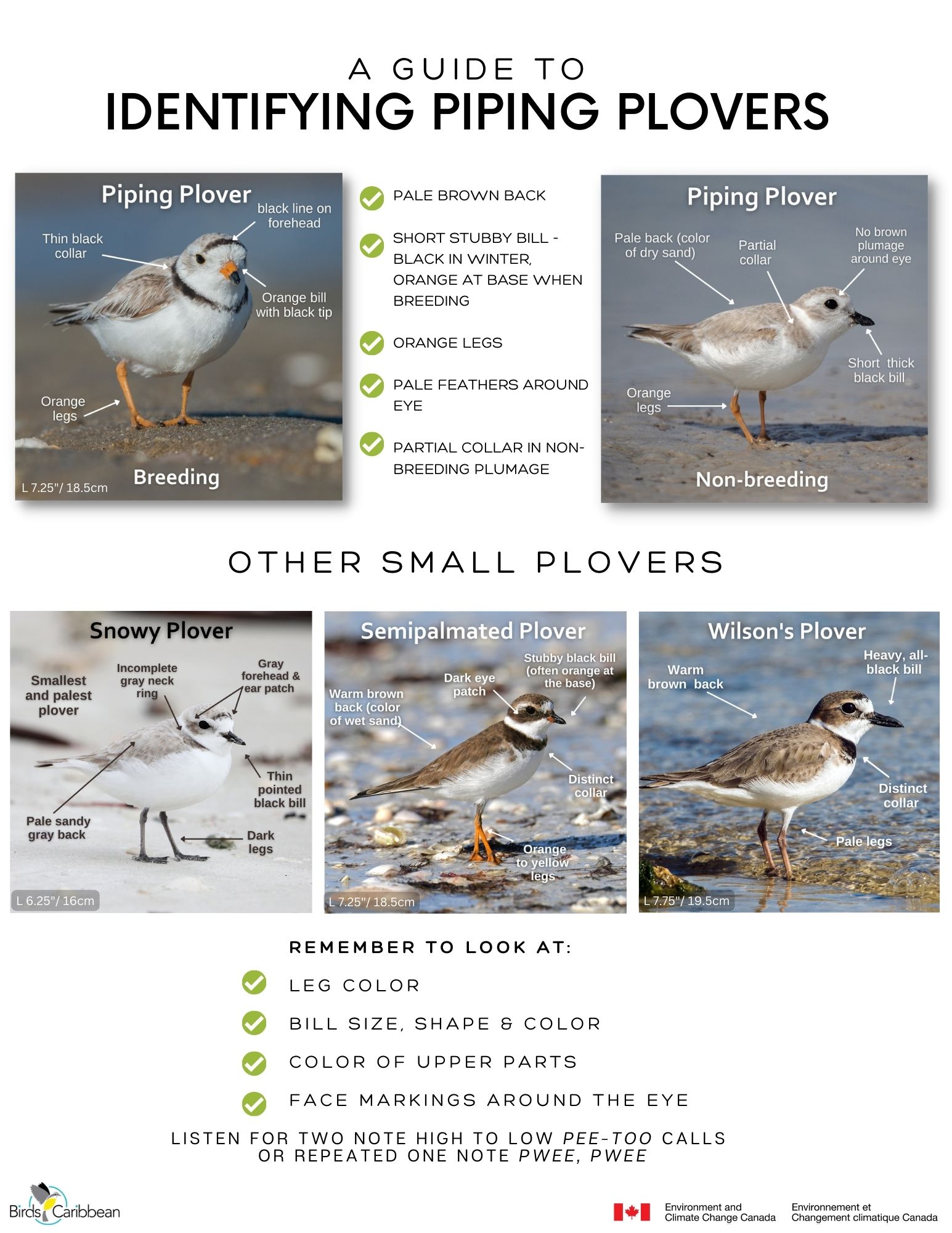
We know that Shorebirds can be tricky to identify, with some being especially difficult to tell apart. BirdsCaribbean is here to help with some useful tools! We have a Shorebird Poster and “Quick ID Guide” to get you started as well as handy Shorebird ID cards that you can download and print featuring common shorebirds of the Caribbean. Go to our shorebird resources page to find everything you need. Of course, don’t forget to take your favorite bird ID guide with you when you do your shorebird counts!
You can brush up on your CWC survey skills, waterbird ID, and shorebird ID before you go out on your surveys by watching our fantastic CWC and Shorebird ID webinars on YouTube. We also have series of shorebird ID shorts pointing out key features to help you distinguish between those tough-to-tell-apart species. Check our latest video all about Spotted and Solitary Sandpipers below, and see them all on our social media accounts or our YouTube Shorebirds Short Videos Playlist.
If you can get photos or even sound recording of the birds you see, these can be looked at/ listened to later. If you encountered any birds that were difficult for you to identify in the field, visual (or sound) evidence can be shared with birding colleagues and experts for ID support!
Where to find shorebirds?
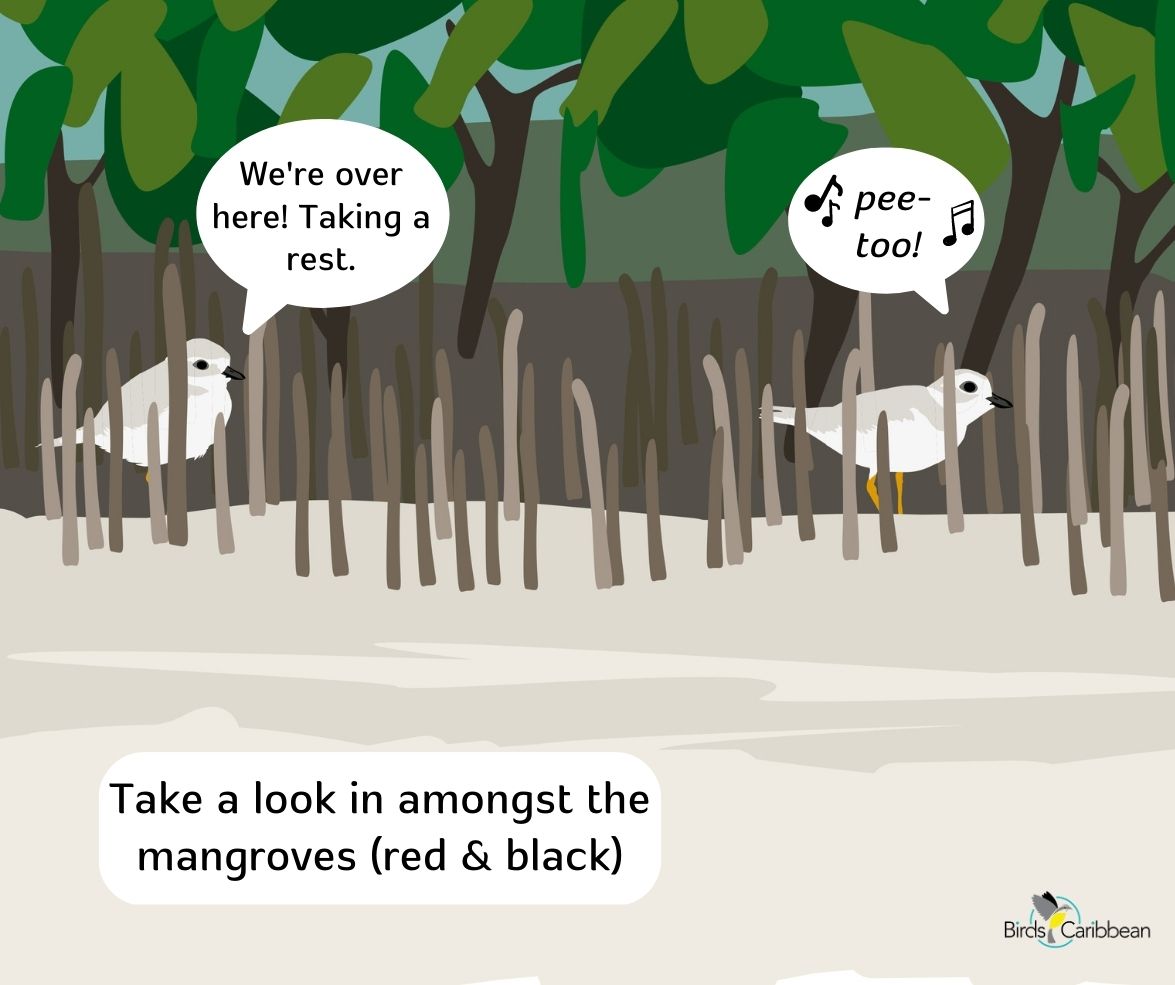
The simple answer is: anywhere there is water. This means that, as their name suggests, you can find them at the beach and on other types of shorelines. However, some shorebirds will be further inland, including in salt ponds and salinas, freshwater pools, agricultural fields, and at brackish marshes and ponds. Shorebirds will also gather on mud flats, in mangrove areas, and on tidal flats.
Martha Cartwright and Cesar Montero searching for Wilson’s Plovers at Barbery Beach, Grand Bahama. (Photo by Lisa Sorenson)
Large flock of shorebirds spotted by the EAG Antigua team during CWC24 (Photo by EAG Antigua)
Migrant shorebirds in flight on the Berry Islands of The Bahamas. (Photo by Walker Golder)
You may not be quite sure of the best places to look in your area. If so, why not take a look for ‘hotspots’ at your local wetlands on eBird. Just take a look at the eBird hotspots map. Zoom in on your local area and then click on a hotspot to see what types of birds have been seen there recently.
What should you do if you spot a banded bird?
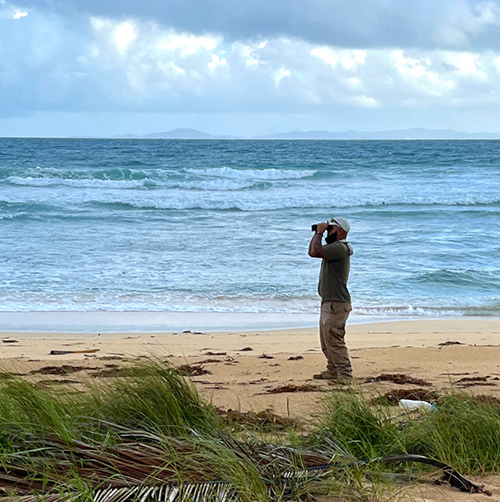
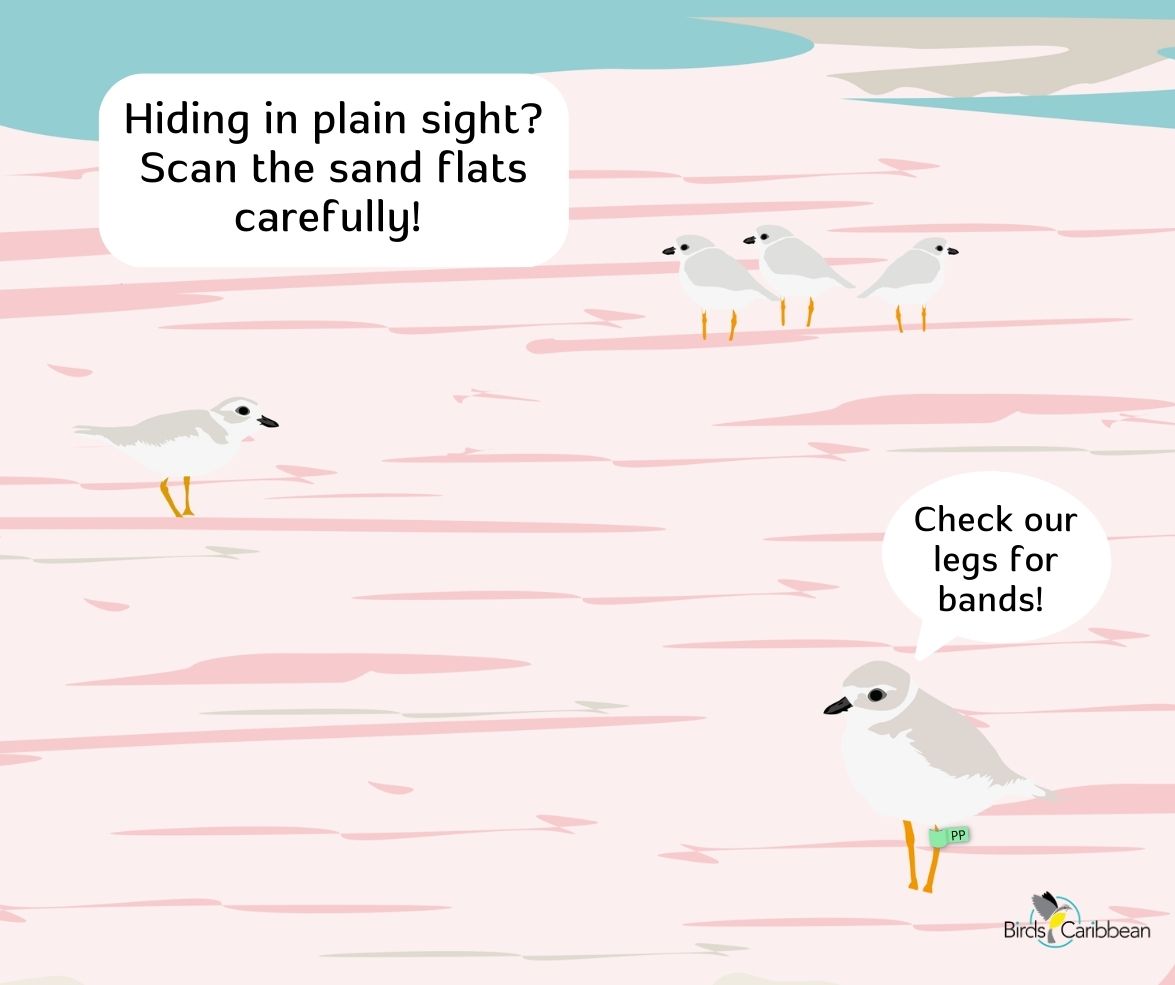
While counting shorebirds you may see birds with colourful bands on their legs. Do your best to record the band colors and any numbers or letters paying special attention to the location of the band or bands on the bird’s legs. Binoculars or zoom photography may allow you to clearly see the band colors and the numbers engraved onto the band—if you get a photo you will be able to send it along with your sighting. You can report your sightings and send any photos you have to BandedBirds.org and the USGS Bird Banding Lab, which oversee all banding in the United States.
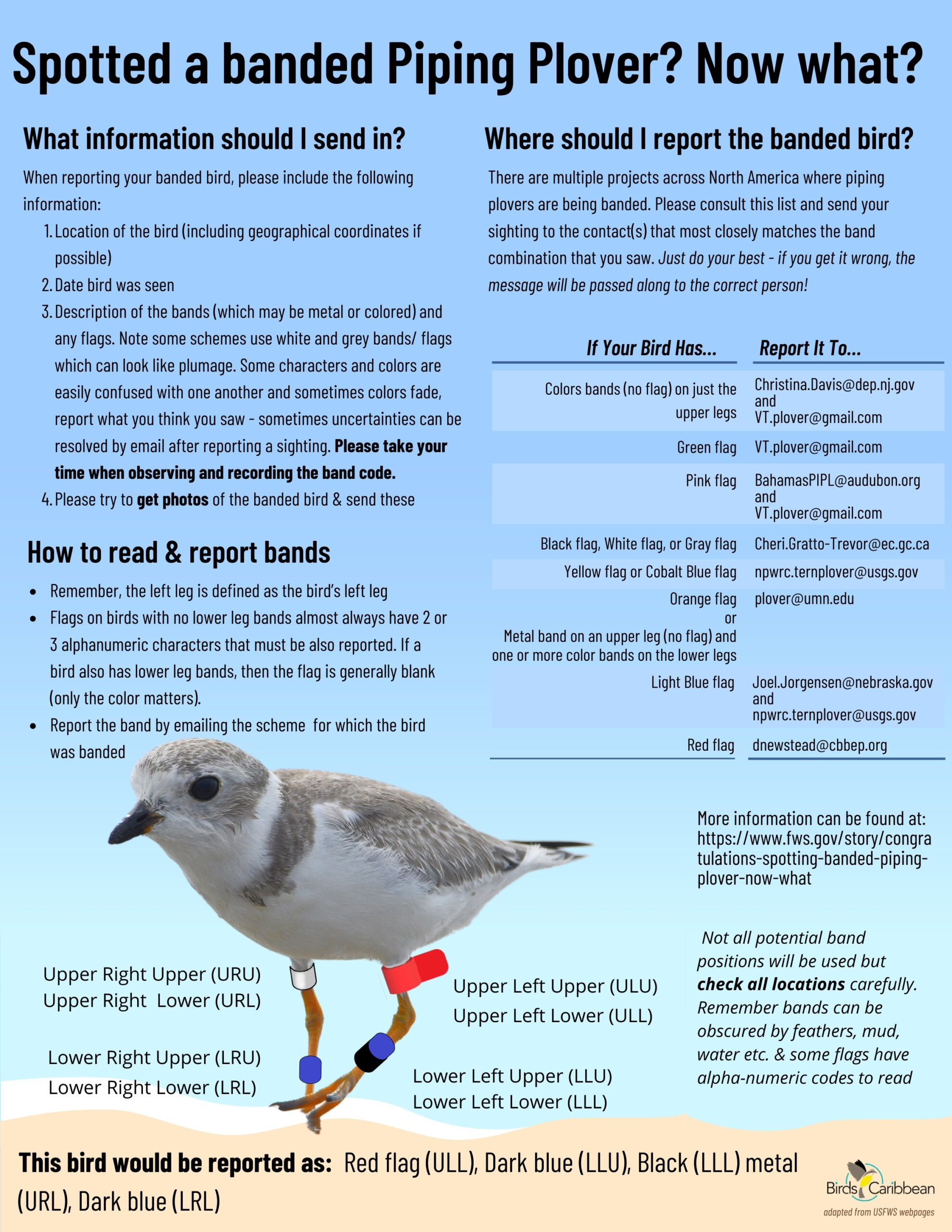
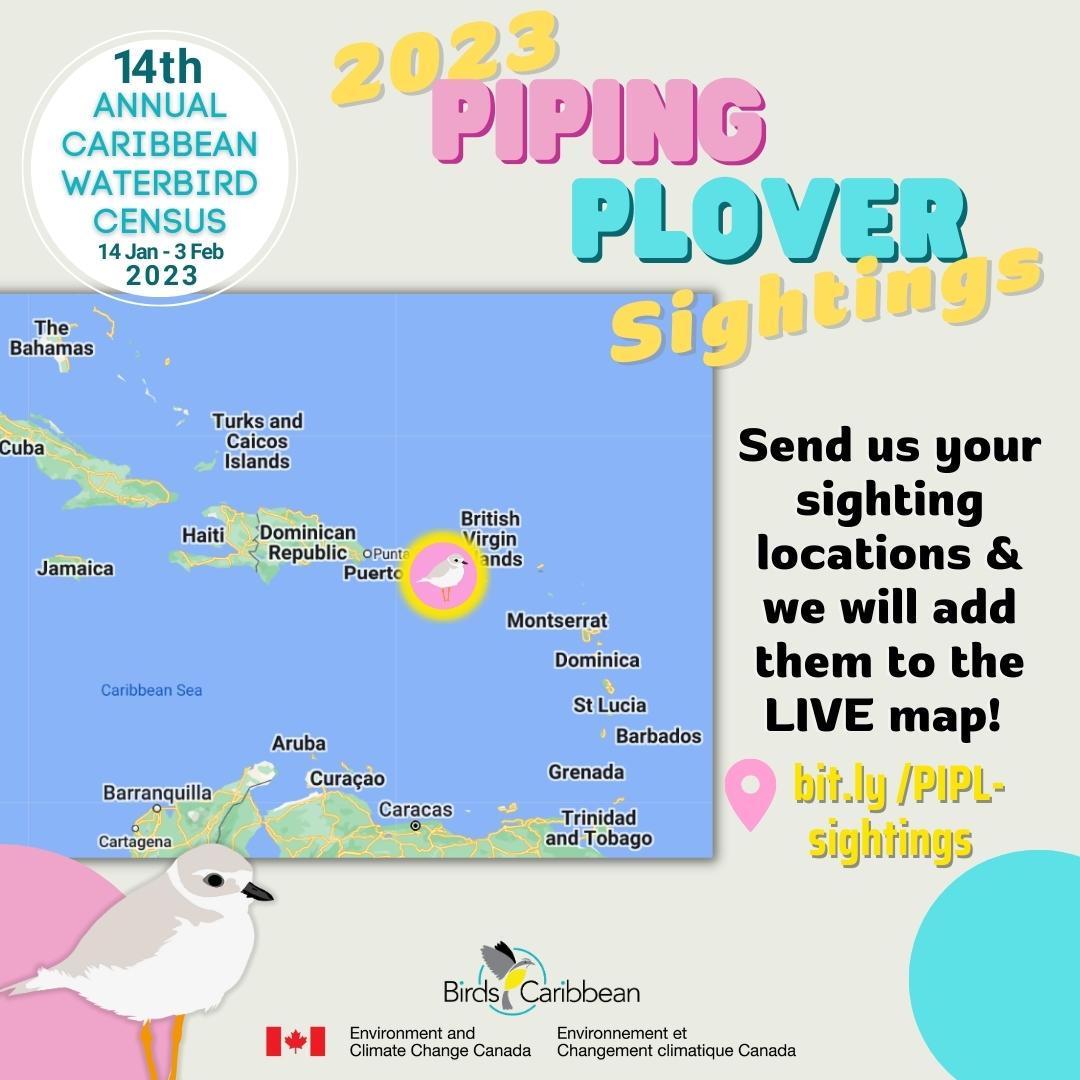
Spotted a banded Piping Plover?
There are several projects that have banded Piping Plovers. The Caribbean is one of the wintering areas for these cute plovers (they are mainly found in The Bahamas, Turks and Caicos Islands, and Cuba, but are also recorded on other islands), so it’s always possible you might spot one! This 1-page guide which details what to do when you see a banded Piping Plover is available to download as a pdf here. We also have 2-page version with more information for you to use and share here. You can find out more about reporting banded Piping Plovers from the U.S. Fish and Wildlife Service at this link.
Be social with your shorebird counts
Looking for shorebirds at Vieques during CWC25, Puerto Rico (Photo by Daphne Gemmill)
We love looking at photos of shorebirds, your local wetlands, and your smiling faces; so please share the highlights of your shorebird counts with us! Use a phone or any other camera that is available, but remember to tag @birdscaribbean and use the hashtags #WorldShorebirdsDay #GlobalShorebirdCount #ShowSomeLoveForShorebirds #CountRestRepeat when sharing on social media. We look forward to seeing and sharing your amazing photos and reading your stories!
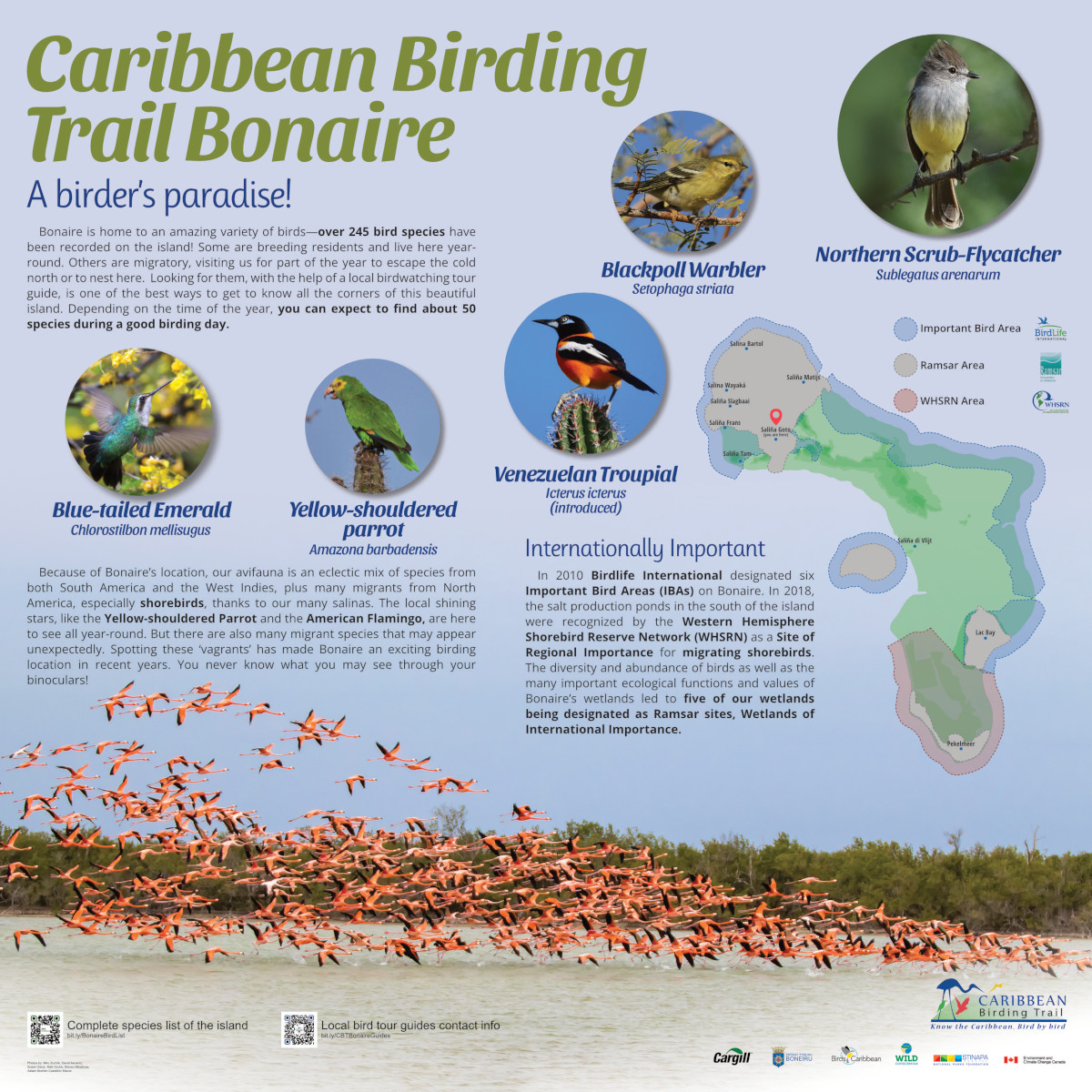
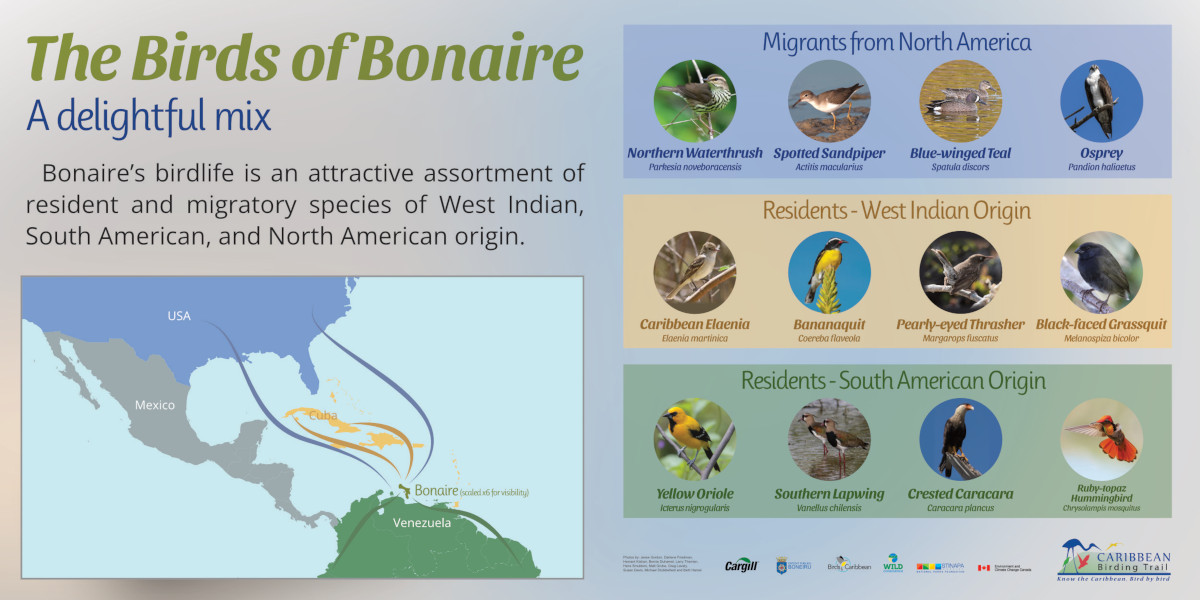
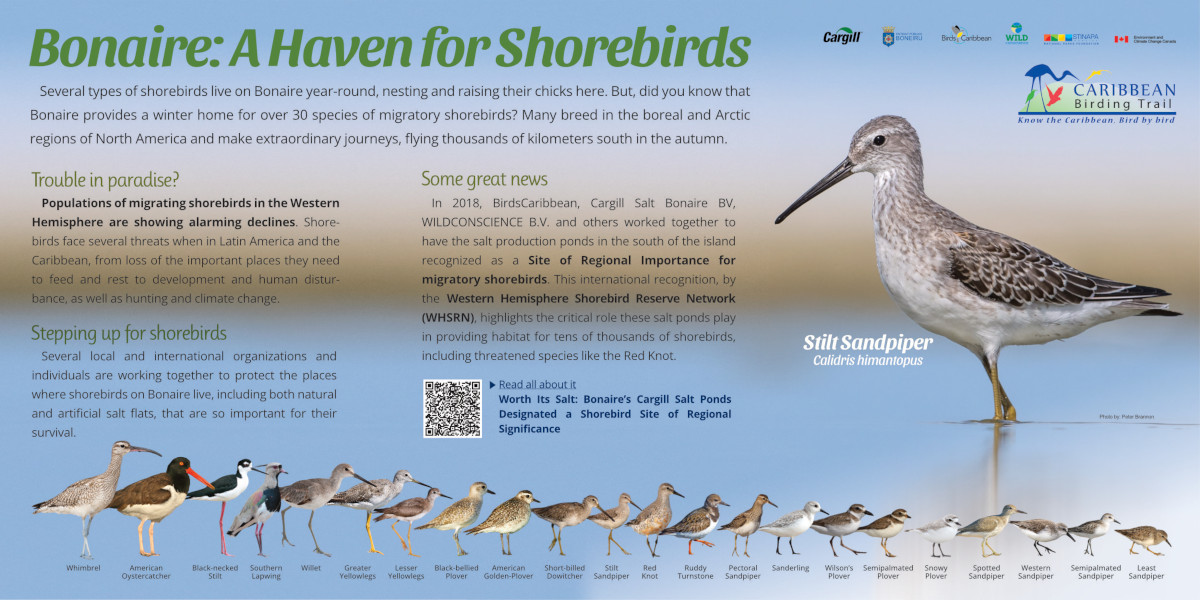
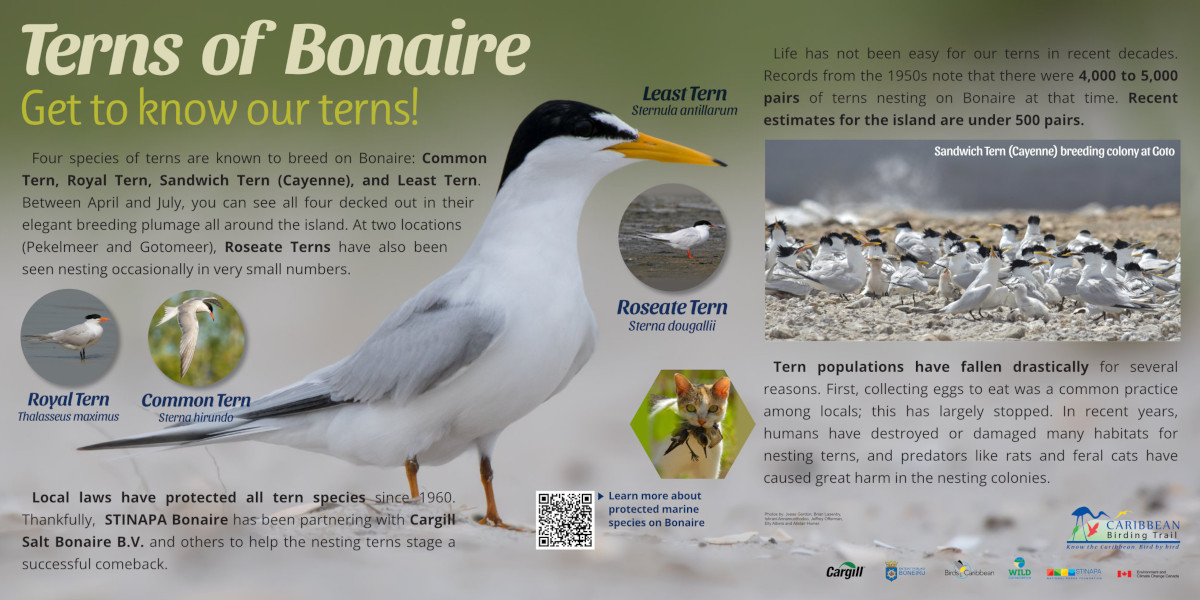
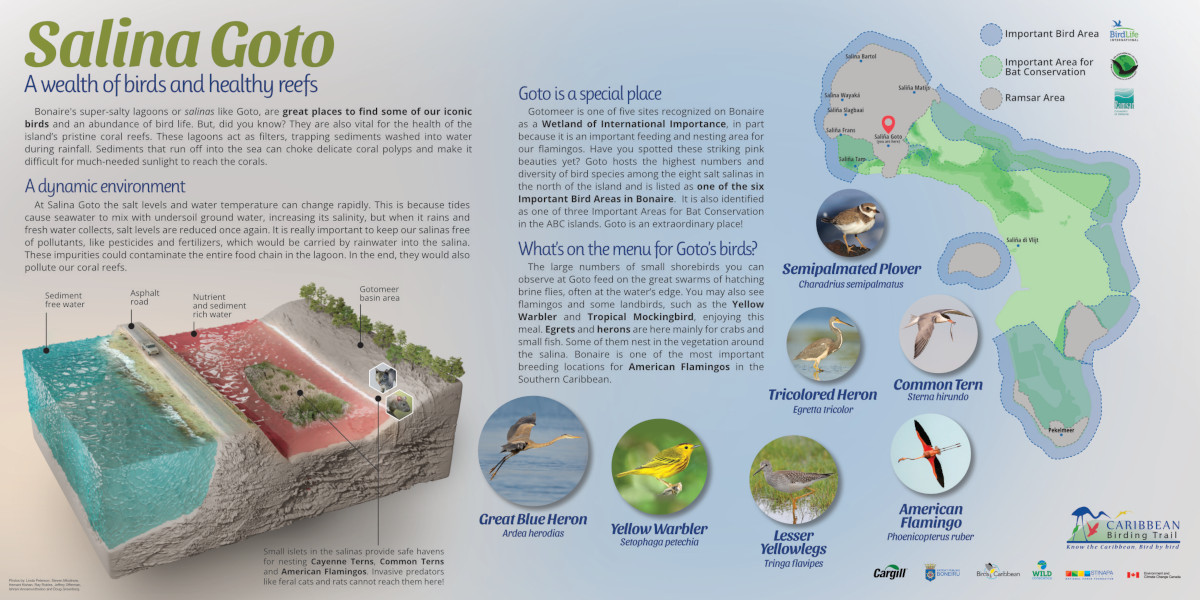
Bonaire is a birder’s paradise, with 250 species recorded on this small Caribbean island, which measures just 3 to 7 miles wide and approximately 24 miles long. To celebrate and share the island’s incredible avian diversity, a new set of interpretive signs has been installed at key birding sites across the island—thanks to a longstanding and inspiring partnership between BirdsCaribbean, WILDCONSCIENCE, and Cargill Salt, LLC. With input from local birders, tour guides, and conservation organizations, these beautiful signs invite residents and visitors alike to explore, learn about Bonaire’s birds, wetlands, and unique ecosystems and will help people to find some great places for bird watching on Bonaire!
The story of these new signs began in 2014, when Daniel DeAnda, General Manager at Cargill Salt, attended a BirdsCaribbean Wetlands Education Training Workshop hosted by local NGO STINAPA. The two-day workshop addressed the destruction and degradation of wetlands due to a widespread lack of awareness about their ecological value—and how education, especially through teachers, could help reverse this trend. The workshop emphasized wetlands as vital habitats for birds, and the powerful role that birds can play in connecting people to nature.
After the first day of the workshop, Daniel approached facilitators Lisa Sorenson, Executive Director of BirdsCaribbean, and Michele Kading, a wetlands educator, with an invitation: “I think you need to visit our salt ponds—you might like what you see there.” (That turned out to be a major understatement!) The team toured the salt ponds that evening and was astonished by the thousands of shorebirds present—an ecological treasure that, at the time, was largely unrecognized.
Cargill Salt Ponds, Bonaire.
Least Sandpiper and Western Sandpiper walking on salt crystals at Cargill Salt Ponds. (Photo by Jeff Gerbracht)
The Cargill Salt Ponds site also supports other habitat types, like these mangroves. (Photo by Lisa Sorenson)
Red Knots and Short-billed Dowitchers at the Cargill Salt Ponds. (Photo by Lisa Sorenson)
American Flamingos also utilize the Cargill ponds and there is a large breeding colony nearby! (photo by Lisa Sorenson
Whimbrels are a fairly common migratory shorebird in Bonaire. (photo by Susan Davis)
This visit marked the beginning of a long and productive partnership. Although hesitant at first, Cargill gave permission to BirdsCaribbean to conduct waterbird surveys of the salt ponds. Over the next three years, biologist Fernando Simal of WILDCONSCIENCE, led intensive surveys revealing that the ponds were a regionally important stopover site for tens of thousands of migratory shorebirds, including Near Threatened Red Knots and Vulnerable Short-billed Dowitchers.
Soon after, building on our growing partnership with STINAPA Bonaire and the Dutch Conservation Nature Alliance (DCNA), BirdsCaribbean launched the Caribbean Birding Trail (CBT) on the island with an Interpretive Guide Training Workshop in 2016. Since then, bird tourism has steadily grown, and awareness of Bonaire’s birdlife has flourished.
From Vision to Reality: Signs for Birds, People, and Place
To build on this momentum, the CBT team envisioned a network of interpretive signs at key birding locations across Bonaire. These are the kinds of signs you might see in a museum or nature reserve—designed to tell engaging stories about the place you’re visiting, fostering deeper connection, greater appreciation, and lasting impressions.
The goal?To engage visitors and locals alike in learning about the island’s amazing birdlife and its vital role as a stopover and wintering site for thousands of migratory shorebirds, as well as providing homes for many resident species.
Fernando Simal counting shorebirds with salt mountains looming in the distance. (photo by Lisa Sorenson)
With generous funding from Cargill Salt and support from BirdsCaribbean, Fernando assembled a working group of local bird guides, photographers, and conservation professionals. The Caribbean Birding Trail Bonaire (CBTB) group—20 enthusiastic participants—helped scout locations, review drafts, and even contributed photos for the signs.
A virtual meeting of some of the CBTB group at the start of the project
Some members of the CBTB group scouting for the best sign locations during the Covid pandemic.
Field trips were organized to select the best locations—sites where visitors could safely observe birds with minimal disturbance. These visits informed the development of content that is both impactful and informative, highlighting not only Bonaire’s birdlife, but also the island’s geology, wetland ecology, and conservation efforts. These elements are deeply connected, offering a holistic understanding of Bonaire’s unique ecosystems and their vital role in supporting both migratory and resident birds.
Beautiful Signs, Built to Last
Once the locations and content were finalized, local graphic designer, Juan C. Riveros, brought the signs to life. Guided by the CBTB group and working closely with BirdsCaribbean and WILDCONSCIENCE, Juan designed 15 vibrant interpretive signs to place at key birding sites. He also created a set of eye-catching “CBT Birding Site Marker” signs to point the way to upcoming birding locations. His striking layouts combine text, imagery, and color in a way that’s both visually engaging and highly informative.
A selection of Juan’s beautiful designs
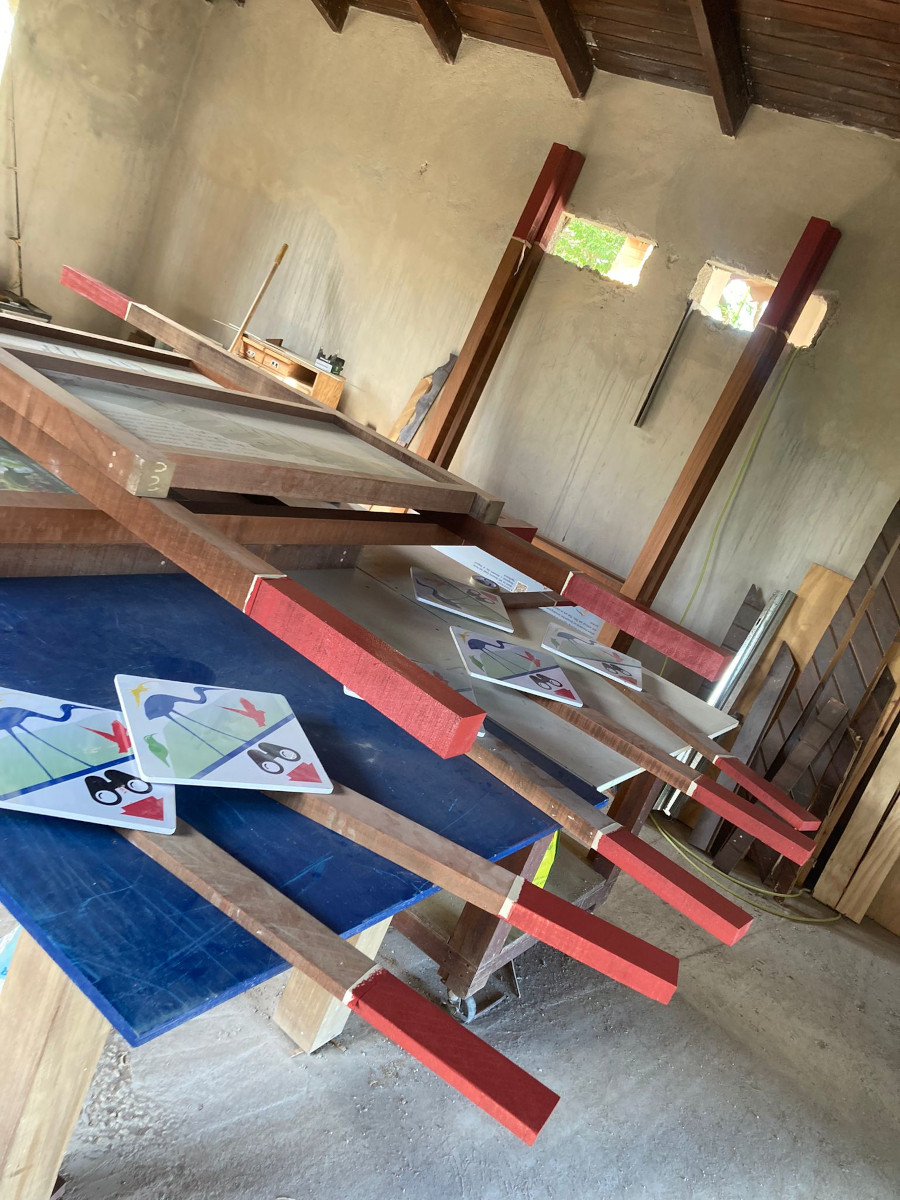
In Bonaire’s harsh environment, we wanted the signs to not only look beautiful, but stay beautiful for as long as possible. To ensure durability, we used PVC panels with the designs printed on weather-treated vinyl. And to minimize environmental impact, the signs were sized to fit exactly within standard PVC panels, meaning there was zero material waste at the end!
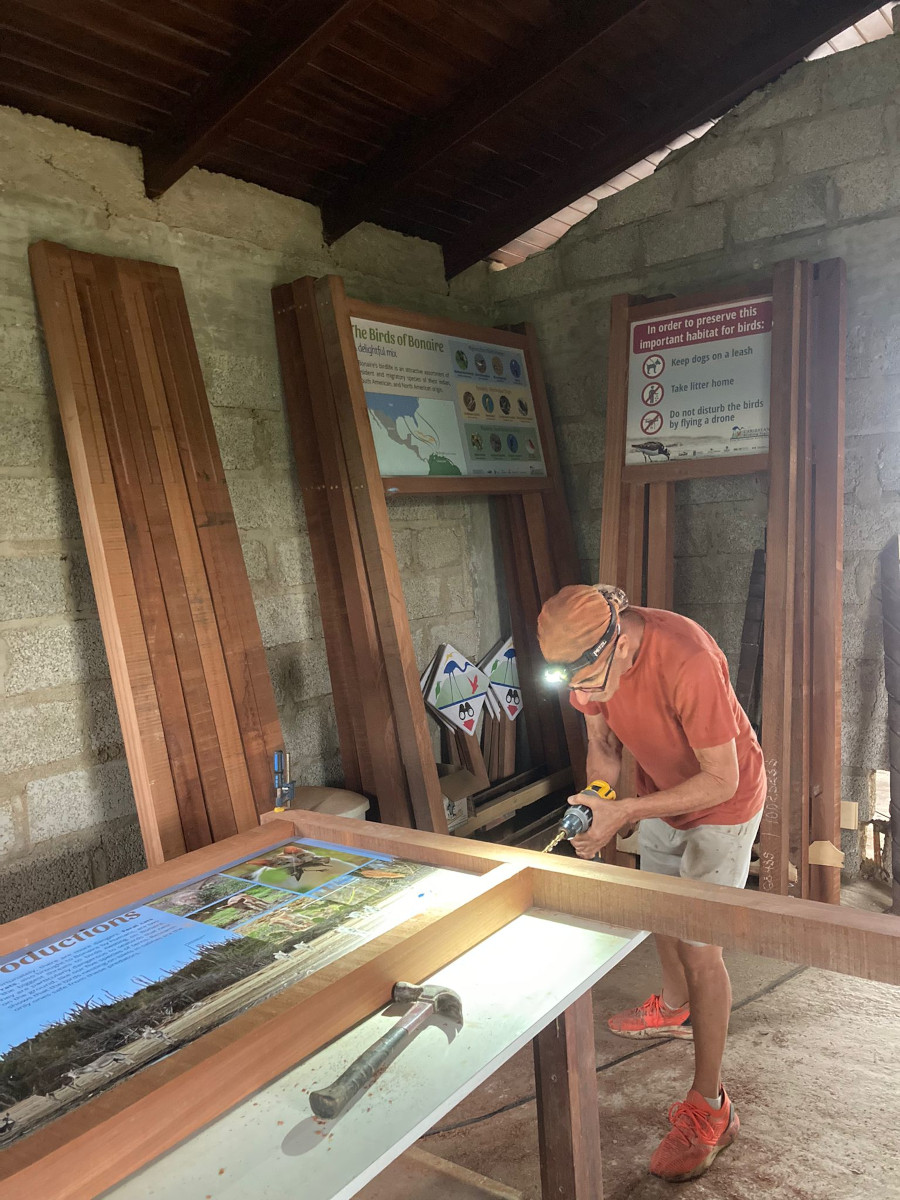
The finished panels were mounted on beautiful custom hardwood frames, handcrafted by Juan and Fernando at the WILDCONSCIENCE workshop.
Juan and Fernando’s carpentry skills brought the signs to life—sturdy, beautiful, and built to last.
Fernando works on the wood frames
Making sure the signs are protected from rotting.
Installation: A Team Effort
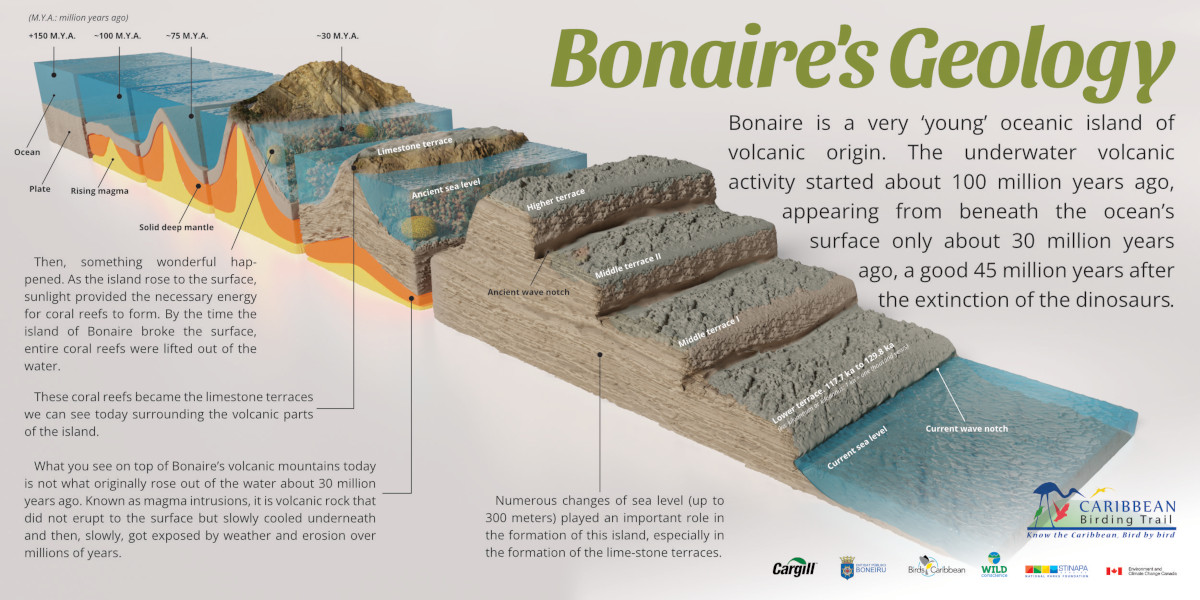
As our Geology sign explains, one thing Bonaire is not known for is soft soil! So getting sign posts firmly into the ground across multiple locations in the island’s rocky limestone terrain was going to be tough work!
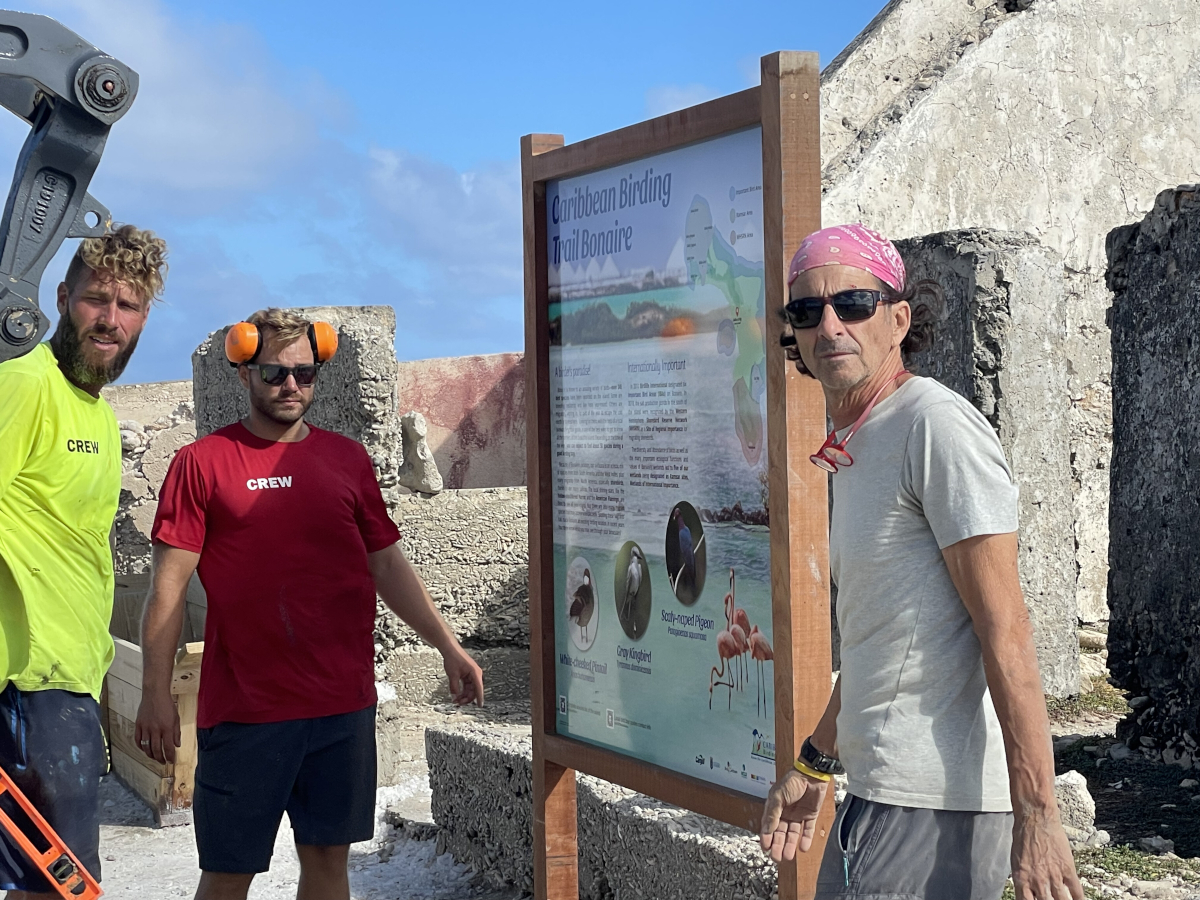
Enter BonBèrdè, a local reforestation and land management company that stepped in with heavy equipment to help drill into the tough limestone. It was great to see heavy machinery working for nature, not against it!
Thanks to the hard work of the BonBèrdè crew and the entire team on the ground, the signs are now securely in place. Seeing the final products installed—ready to educate and inspire visitors and locals alike about Bonaire’s incredible birdlife and natural heritage—was an incredibly satisfying moment at the end of a long and rewarding process.
Fernando and the Bon Bèrdè team with the final sign to be installed. (Photo by Sophie Zeegers)
Celebrating the Results
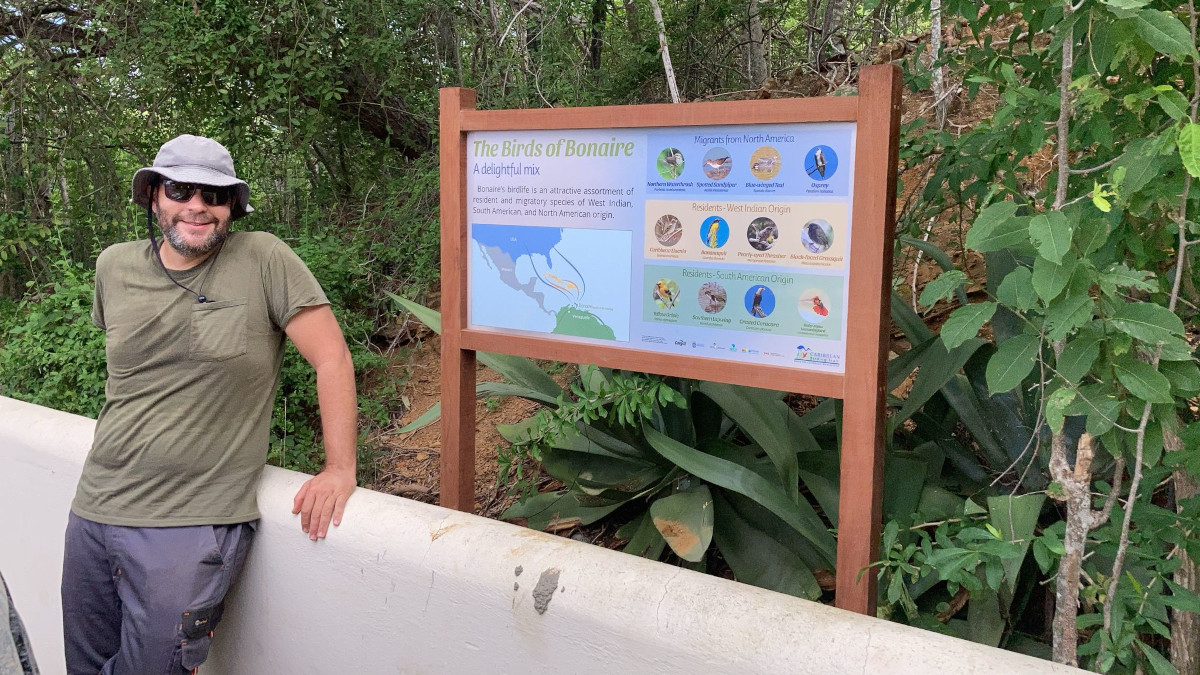
The signs are already making an impact—birders and tourists are stopping to read and explore. Susan Davis, a CBT-trained guide and founder of Bonaire Bird Tours, shared: “The signs are beautiful. They help people identify the local birds and understand the value of our wetlands—especially important on an island where development is accelerating.”
Susan also notes that many visiting birders are intrigued by the broader concept of the Caribbean Birding Trail, especially once they realize that Bonaire is just one stop along a network of birding destinations throughout the region. She’s delighted to see how engaged they are—stopping to read every sign and marveling at the colorful depictions of local species. “I want to find this bird!” some exclaim, excited to spot a potential new lifer.
What’s more, she has noticed even travelers drawn to Bonaire for its world-class diving, snorkeling, or windsurfing often pause to read the signs. This unexpected engagement helps introduce birding to a wider audience. Bonaire’s slogan, “It’s in our nature,” rings especially true—visitors come for the island’s natural beauty, and the new signs reveal yet another layer of its rich ecological appeal.
Some of the newly installed signs:
A CBT marker signs pointing out a birding spot. (Photo by Fernando Simal)
Sophie and Fernando with a new sign. (Photo by Sophie Zeegers)
A new sign highlights the importance of Bonaire for Shorebirds. (Photo by Fernando Simal)
Lisa Sorenson, Executive Director of BirdsCaribbean, reflected on the journey during a recent call with Daniel DeAnda: “From that first tour of the salt ponds in 2014 to WHSRN designation, guide training, and now these amazing signs—this has been a truly meaningful partnership. Conservation doesn’t happen overnight. It takes time, trust, and collaboration. These signs will inspire people to learn about, respect, and actively protect Bonaire’s natural heritage for years to come.”
Daniel added: “When I first met Lisa, I was a bit apprehensive about the whole ‘birding’ thing. But over time, I’ve come to see the importance of our wetlands and the birds that depend on them. With the signs now up, everything has come full circle. They help people recognize the value of these incredible migratory birds that rely on Bonaire’s wetlands to rest and refuel. I’m proud that Cargill has played a part in their conservation.”
Fernando shared: “From all the years of data collection and the science that created the knowledge, to the final products now shared with the people of Bonaire, it was a privilege—and a lot of fun—to be part of every single phase of this 10-year process.”
Juan stands with one of his signs. (Photo by Fernando Simal)
Next Steps for the Caribbean Birding Trail in Bonaire
The work doesn’t stop here! The next phase of the CBT in Bonaire includes building bird-viewing platforms with shade and benches to further enhance visitor experiences and encourage even more people to discover and enjoy the island’s spectacular birdlife. With its iconic flamingos, abundant waterbirds, and striking landbirds, Bonaire is quickly becoming a top destination for birders—bringing a welcome boost to the local economy and creating new livelihoods for trained guides.
Visit Bonaire—and Explore the Caribbean Birding Trail
Today, Bonaire’s birds and wetlands are not only celebrated by scientists and tour guides, but also by visitors, local residents, and young birders. These new interpretive signs are helping to establish Bonaire as a must-see stop on the Caribbean Birding Trail, while raising awareness of the vital role this island plays in regional and global conservation.
Come see for yourself—Bonaire’s birds are waiting to welcome you.
American Flamingos. (Photo by Susan Davis)
Brown Pelican. (Photo by Hans Smulders)
Brown-throated Parakeet. (Photo by Duncan Vesrteegh)
Carib Grackle. (Photo by Hans Smulders)
Crested Caracara. (Photo by Hans Smulders)
Pearly-eyed Thrasher. (Photo by Susan Davis)
Ruby Topaz hummingbird. (Photo by Duncan Versteegh)
Yellow Oriole builds a nest. (Photo by Susan Davis)
Yellow-shouldered Amazons. (Photo by Duncan Versteegh)
Thanks to all the members of the CBTB group who shared their beautiful bird photos with us for potential use on the signs.
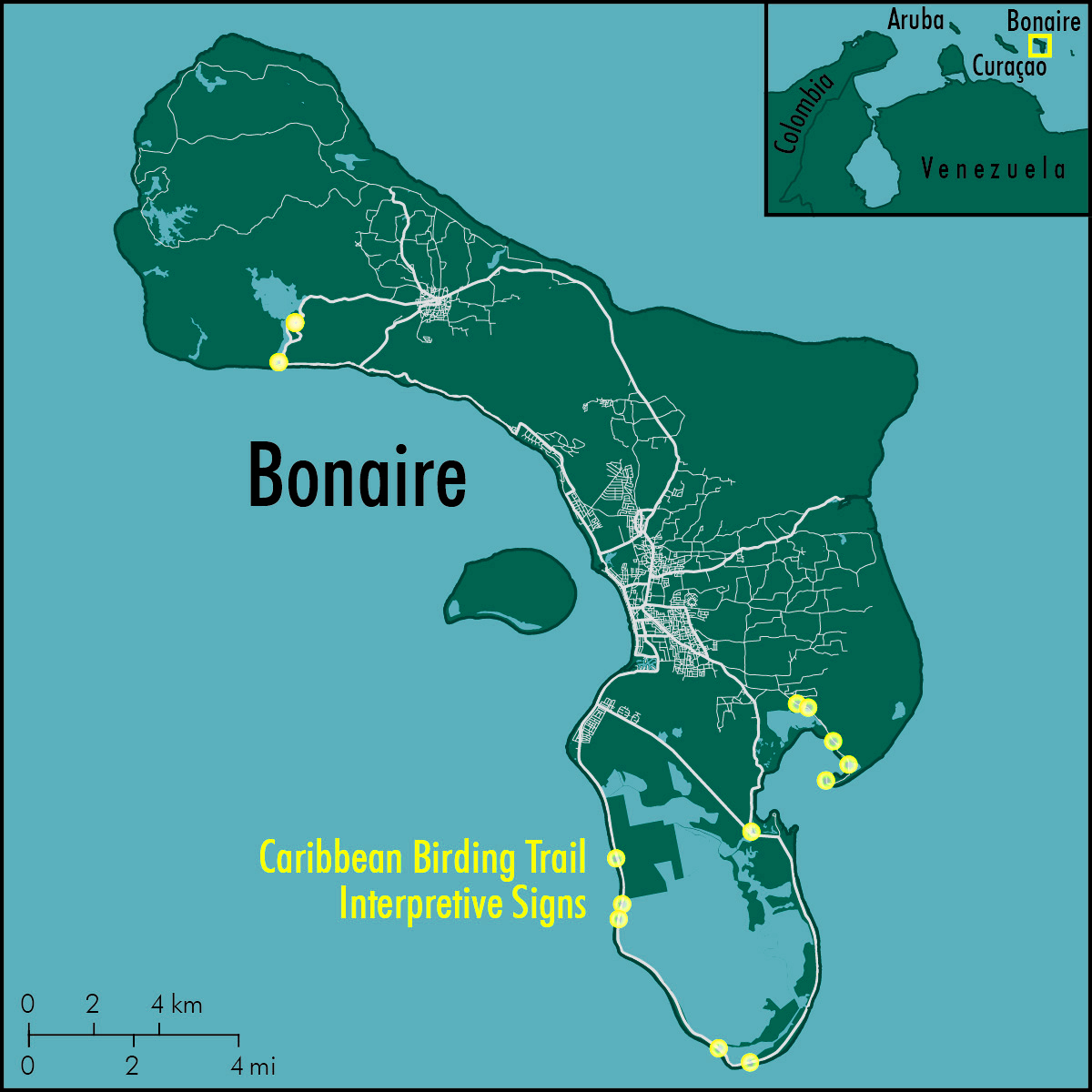
You can find the signs in the locations marked on the map below!
CBT Interpretive Sign locations at various wetlands and salinas around Bonaire. Cargill Salt Ponds are located in the south of the island. (map by Alison DeGraff Ollivierre)
celebrating creating the new signs: watch the procss unfold
The CBT connects people to the region’s extraordinary birds, landscapes, and cultures through sustainable bird and nature tourism. Training local guides and developing low-impact infrastructure are central to the CBT’s mission—helping to foster authentic experiences that benefit local communities while encouraging the protection of birds and their habitats across the region.
Acknowledgements
We are deeply grateful to Cargill Salt LLC, and especially Daniel DeAnda, for their long-standing partnership and generous support in funding the development, design, printing, and installation of these beautiful interpretive signs.
Special thanks to our long-time collaborator, Fernando Simal of WILDCONSCIENCE, for his dedicated leadership on the ground and hands-on work installing the signs. We are also immensely grateful to Juan C. Riveros, whose stunning designs brought the vision to life—and who remained endlessly patient throughout many rounds of feedback and edits.
We sincerely thank the members of the Caribbean Birding Trail Bonaire (CBTB) group, whose thoughtful input guided the selection of sign locations and helped shape the content. Their local knowledge, enthusiasm, and generosity were key to the success of this project.
Finally, we thank Environment and Climate Change Canada for their generous funding support to assist with the planning and development of these signs.
Can’t make it to Bonaire? You can see all the new sign designs here:
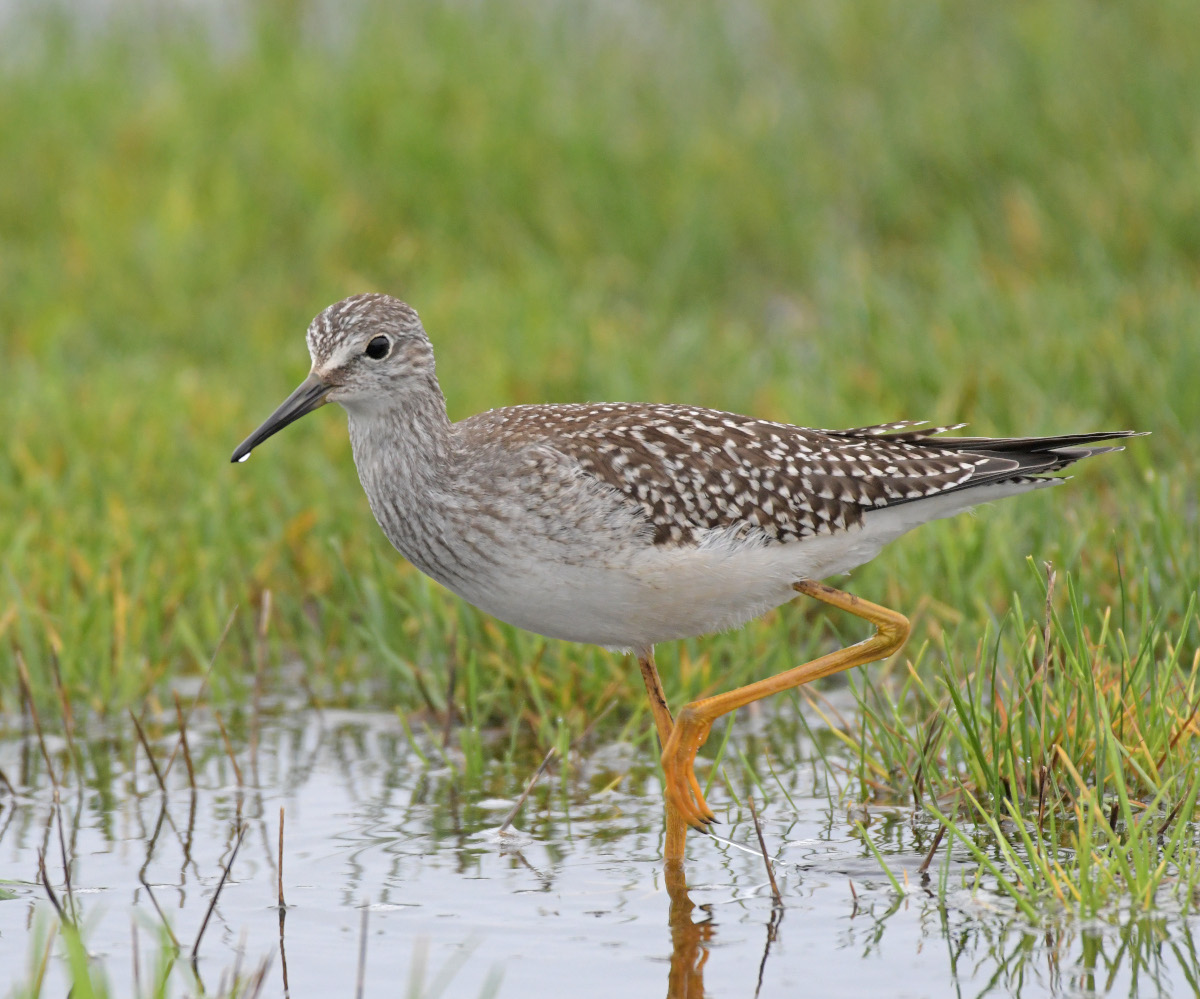
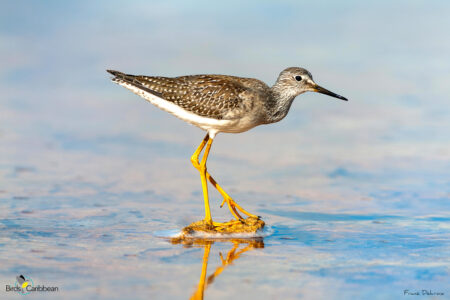
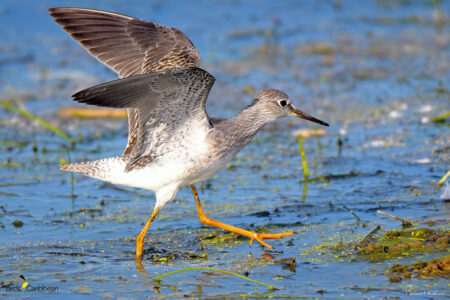
The Lesser Yellowlegs, a medium-sized shorebird widespread in the Caribbean, has suffered a population decline of 30 to 49%. Its IUCN threat level has been raised from Least Concern to Vulnerable. (Photo by Hemant Kishan)
BirdsCaribbean is sounding the alarm over the significant declines in shorebird populations, highlighted in a recent update to the International Union for the Conservation of Nature (IUCN) Red List. The report, released during the COP16 UN Biodiversity Conference in November, reveals that 16 shorebird species have been moved to higher threat categories, with some populations plummeting by least 30% over the past three generations.
“This is a wake-up call,” said Lisa Sorenson, Executive Director of BirdsCaribbean. “The Caribbean is a lifeline for migratory shorebirds, providing critical stopover and wintering sites along the Atlantic Flyway. When these habitats are lost or degraded, or disappear, these birds face severe challenges.”
Many of the reclassified species are familiar visitors to the Caribbean, reflecting the region’s vital role in their life cycles. Among the newly listed species are the Lesser Yellowlegs, now classified as “Vulnerable,” and the Greater Yellowlegs, listed as “Near Threatened.” Other widespread species like the Ruddy Turnstone are also in decline, facing threats such as habitat loss, disturbance, and climate change-related impacts. The Short-billed Dowitcher has also experienced worrying population declines.
The Role of Coastal Habitats
Coastal wetlands, including mangroves, swamps, ponds, beaches, sand flats, and mud flats, are essential for shorebird survival, yet they are disappearing at an alarming rate. According to the Caribbean Biodiversity Fund (CBF), 12% of the world’s global mangroves are found in the Caribbean, but nearly 7,000 square kilometers were lost between 1980 and 2010. At this rate, the CBF surmises, “the Caribbean’s mangroves could disappear in the next 60 years.”
Over 20,000 shorebirds rely on the wetlands at Monte Cristi in the Dominican Republic during migration every year – making this a regionally important site and a critical lifeline for shorebirds. (Photo by GAE)
Shorebirds feeding at Cargill, which is designated as Western Hemisphere Shorebird Reserve Network (WHSRN) site of regional importance, and holds important number of shorebird species such a Red Knot and Short-billed Dowitcher. (Photo by Jeff Gerbracht)
Over 100 Piping Plovers, classified as Near Threatened by the IUCN, along with many other wintering shorebirds, were counted on Andros and nearby cays in The Bahamas during our 15th Caribbean Waterbird Census. (Photo by Chris Allieri)
Mangroves across the region are experiencing degradation from multiple pressures, including pollution, unsustainable development, and the effects of climate change. (Photo by Maria Paulino)
A Call to Action
“The destruction and degradation of Caribbean coastal habitats from increased tourism, housing and agricultural developments, pollution, and extreme weather events has devastating consequences,” Sorenson noted. “We must act now to protect these vital ecosystems and the shorebirds that depend on them.”
A volunteer uses a Shorebird ID card at a Caribbean Waterbird Census count. (Photo by Dayamiris Candelario OPAS)
Counting waterbirds at Las Salinas, Zapata Swamp.
A flock of Willets and Short-billed Dowitchers take flight in Las Salinas mangroves, Zapata Swamp, Cuba (photo by Ernesto Reyes)
BirdsCaribbean is urging governments and citizens alike to step up:
Governments can lead the way by prioritizing wetland conservation and enforcing policies that safeguard mangroves and coastal habitats from pollution and unsustainable development practices.
Citizens can contribute by supporting habitat protection and restoration efforts, joining cleanups, participating in bird monitoring programs like the Caribbean Waterbird Census—essential for tracking bird populations and habitat use—and reducing pesticide use to protect waterways from pollution.
Together, these actions can create a lasting impact, safeguarding our birds and the vital habitats they depend on.
The first annual BirdsCaribbean Endemic and Threatened Species Working Group (ETSWG) newsletter is now available, and it’s brimming with exciting updates and achievements! From celebrating conservation leaders to spotlighting critical challenges, read about all the latest research, conservation, and education activities taking place across the region—in English, Spanish, and French!
In the newsletter we celebrate some of the Caribbean’s emerging researchers and leaders advancing the study and protection of Caribbean endemic and threatened species. We also provide a roundup of the 24th BirdsCaribbean Conference in the Dominican Republic this past July—endemic and threatened species took center stage in sessions on habitat restoration, species monitoring, and the effects of climate change. We share the latest news about thrilling taxonomic changes that have increased the number of Caribbean endemic species, the Caribbean Endemic Bird Festival, and Caribbean Landbird Monitoring Programme, as well as research and conservation updates from across the islands. From celebrating conservation leaders to spotlighting critical challenges, this issue is packed with news that showcases the resilience and dedication of our community. Click here to view the newsletter in Spanish or French.
Across the Caribbean, exciting projects are underway. Conservation efforts for the critically endangered Grenada Dove include predator control and public education, while surveys for the Trinidad Piping-Guan are set to inform a new recovery plan. In Cuba, citizen science initiatives and artificial nest programs are enhancing protection for endemic species like the Cuban Parakeet.
Grenada Dove. With fewer than 190 individuals left in the wild, we must act NOW to secure its survival. (Photo by Greg Homel)
Trinidad Piping-Guan, locally known as “Pawi.” Acoustic surveys will reveal vital data about the Pawi’s abundance and habitat. (Photo by Josh Bajnath)
Cuban Parakeet. With support from a Betty Petersen Conservation Fund award, an Artificial Nest Program is being implemented. (Photo by Aslam Castellón Maure)
The Caribbean’s 2024 hurricane season was one of the most severe on record, with significant impacts on both human and avian communities. The newsletter explores the challenges posed by increasingly intense storms and highlights recovery efforts, like habitat restoration and emergency appeals.
Ashton Lagoon trail destroyed by Hurricane Beryl, the earliest hurricane to reach Category 5 intensity. (Photo by Orisha Joseph)
The Endangered Bahama Warbler is restricted to Grand Bahama and Abaco Islands, where it is resident. Hurricane Dorian decimated its population in 2019. In this issue, researchers explore the warbler’s habitat preferences. (Photo by Scott Johnson)
Recovering Caribbean Nature
This issue also rounds up recent publications on endemic and threatened Caribbean birds, and invites collaborators to join critical initiatives, including monitoring high-elevation endemic species and contributing to Birds of the World accounts. Check out opportunities to partner on projects that make a lasting impact.
Are you working on research on a high elevation species, like the La Selle Thrush, or a high elevation habitat? We’d love to partner with you! (Photo by Dax Román)
If you’re interested in getting involved with the Endemic and Threatened Species Working Group (we hope you are!) please get in touch with us by signing up to our listserv.
Finally, our newsletter highlights just some of the many amazing activities on endemics in the region—we’d love to hear from you if you’ve got news to contribute to next year’s newsletter!
– ETSWG co-chairs, Ellie and Howard
P.S. The WG is also looking for an additional co-chair so let us know if you’d be interested in joining us!
Click on the Flipbooks below to read and/or download this newsletter.
Click on the individual images below to download a PDF of the newsletter in your preferred language.
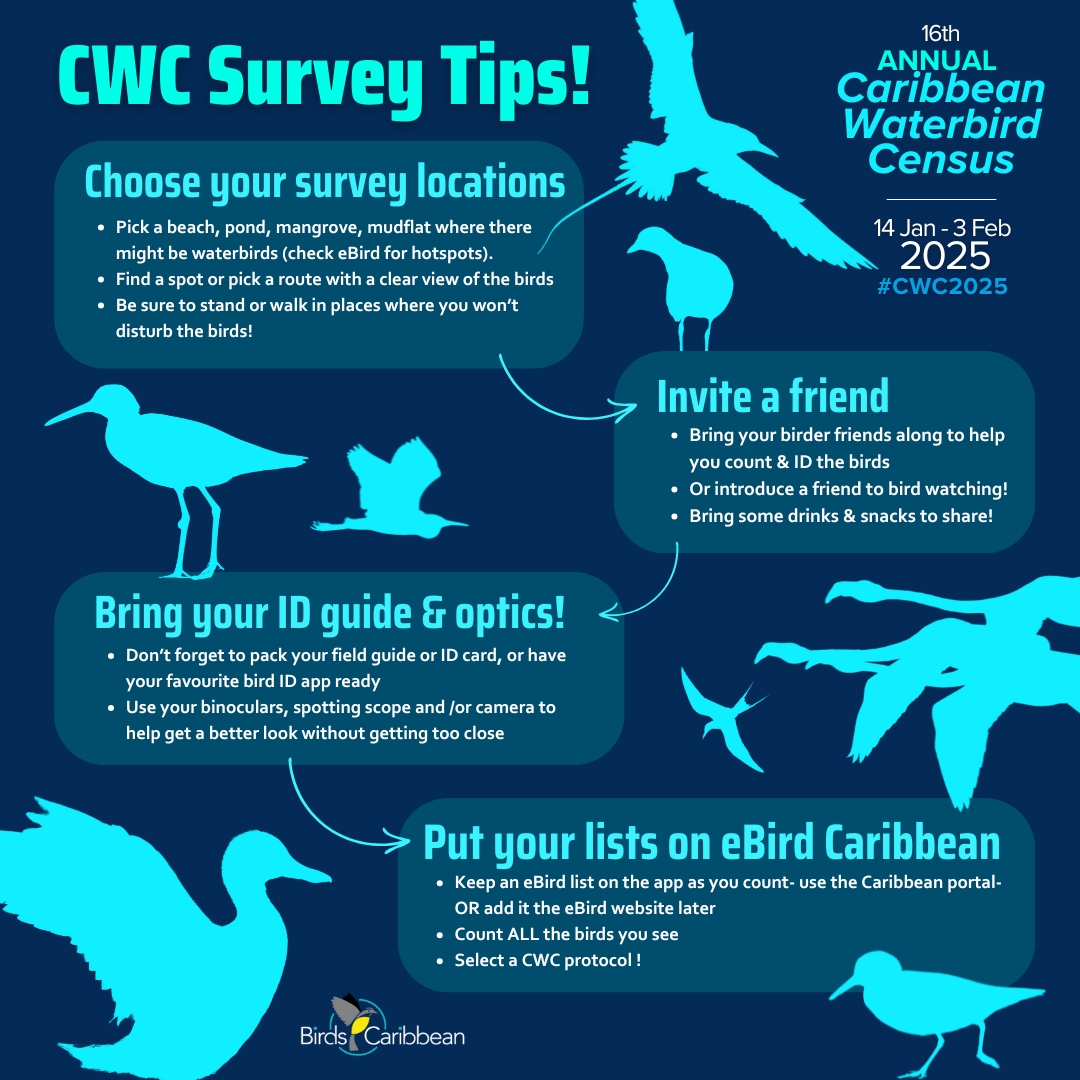
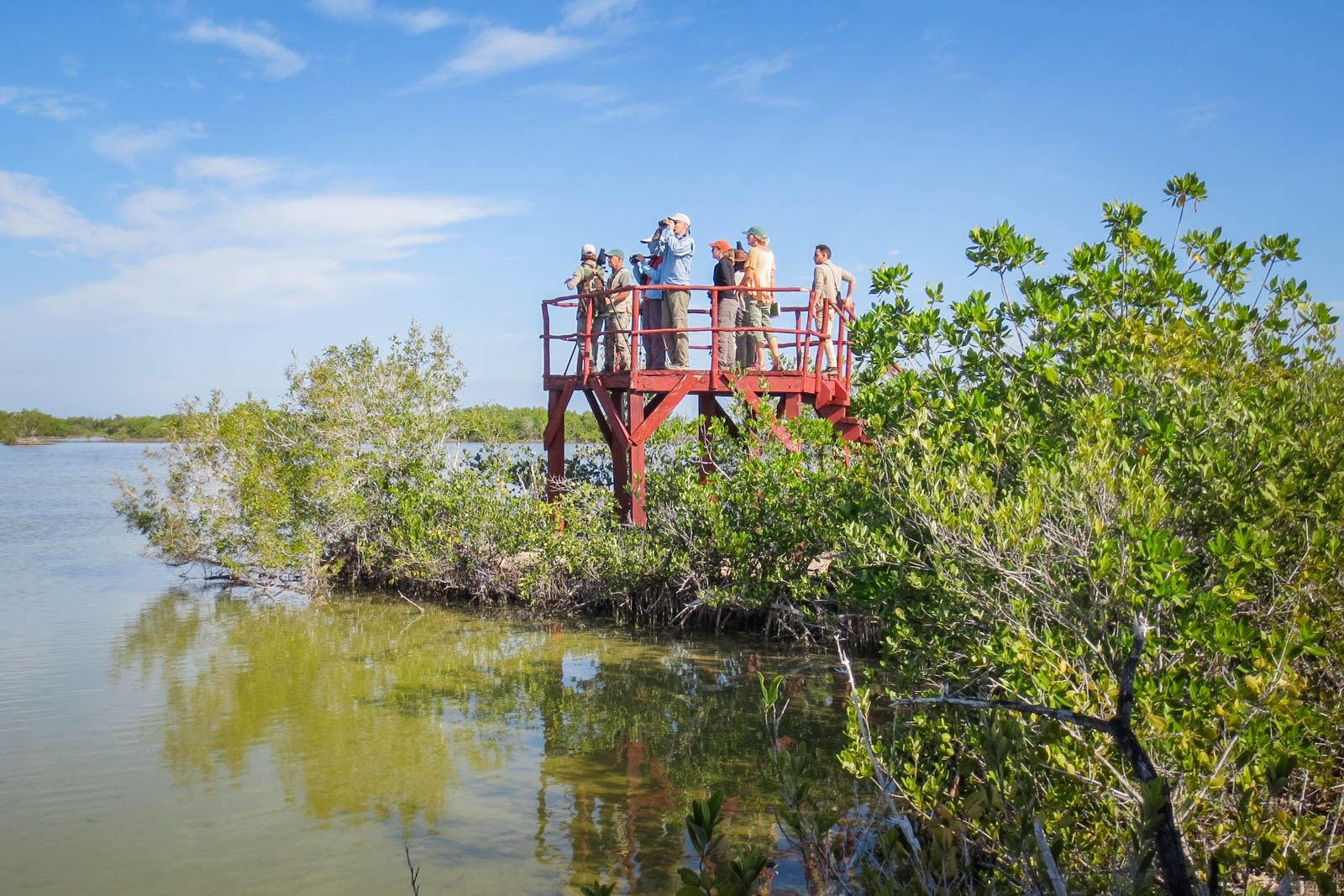
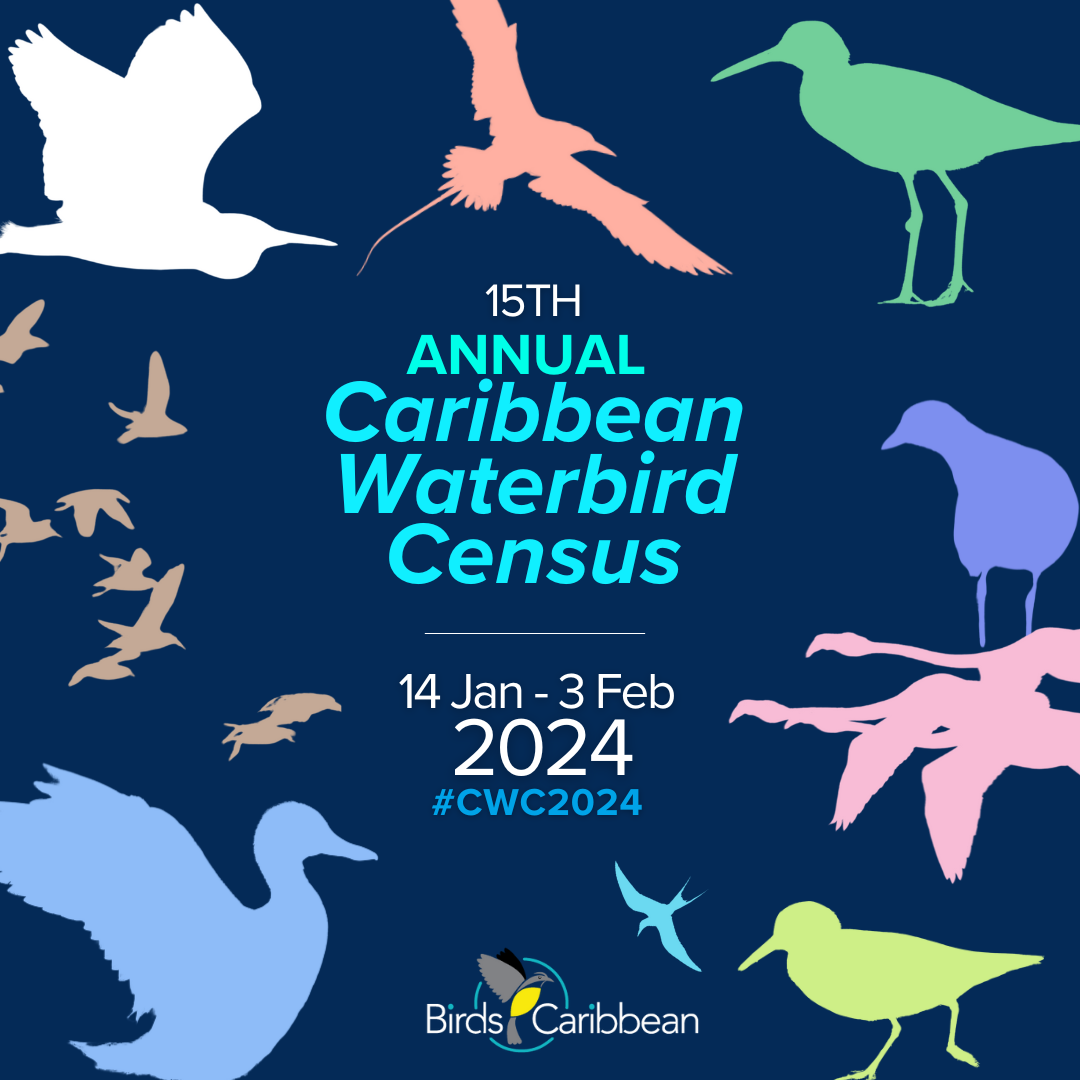
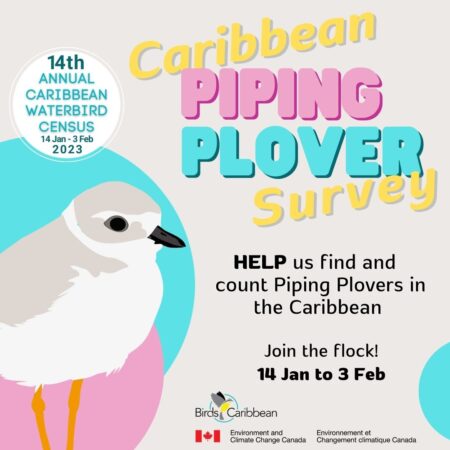
Get ready for the 16th annual Caribbean Waterbird Census (CWC) Region-Wide count! From January 14th to February 3rd 2025, you can make a direct impact on waterbird conservation in the Caribbean. Want to know more? Keep reading to find out everything you need to know about our CWC 2025 regional count.
The data collected from the past 15 years of the CWC has been invaluable in helping us conserve waterbirds in the region! Your survey efforts can help us identify and protect important places for waterbirds in the Caribbean. For instance the Cargill Salt Ponds in Bonaire were designated a Western Hemisphere Shorebird Reserve Network (WHSRN) site of Regional Importance as a direct result of survey efforts. CWC surveys are also critical in tracking waterbird populations and threats to waterbirds and their wetland homes.
Cargill Salt Ponds, Bonaire.
Least Sandpiper and Western Sandpiper walking on salt crystals at Cargill Salt Ponds. (Photo by Jeff Gerbracht)
Flamingo at the Cargill Salt Ponds, Bonaire.
Caribbean wetlands are home to over 185 species of waterbirds making them a treasure to explore and vital to protect. Our wetlands host endemic and globally threatened species, along with many migratory birds. The data you help us collect through this ongoing, standardized survey is crucial for understanding how to conserve these exceptional species and manage their habitats effectively.
Ready, set, count! Get out there and enjoy the waterbirds
Why not wade into the wonderful world of waterbirds? Everyone is welcome to join in with the CWC in 2025! You can do your waterbird counts solo, team up with friends, or even reach out to a local environmental NGO for support and guidance. It’s as easy as heading out to your nearest wetland, and recording all the birds you see.
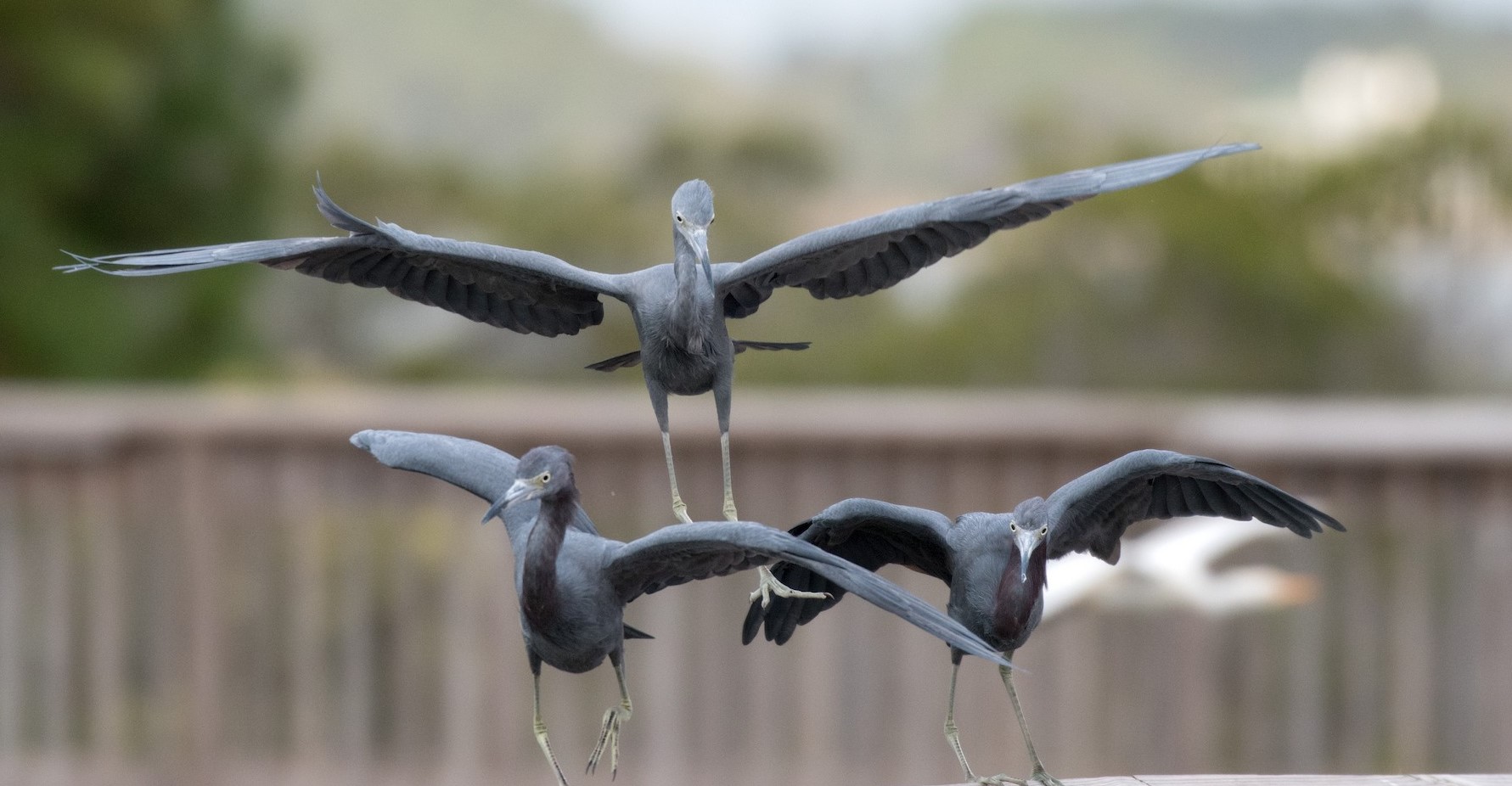
A small flock of Little Blue Herons comes in to land. (Photo by Matthew Addicks Macaulay Library-ML189076771)
For the CWC, a wetland is any area where water is the primary factor controlling what lives there. This wide broad definition includes covers coastal wetlands like mangroves, mud flats, lagoons and beaches, as well as inland wetlands like lakes, ponds, swamps, areas around rivers and streams and even some types of agriculture (e.g. rice fields).
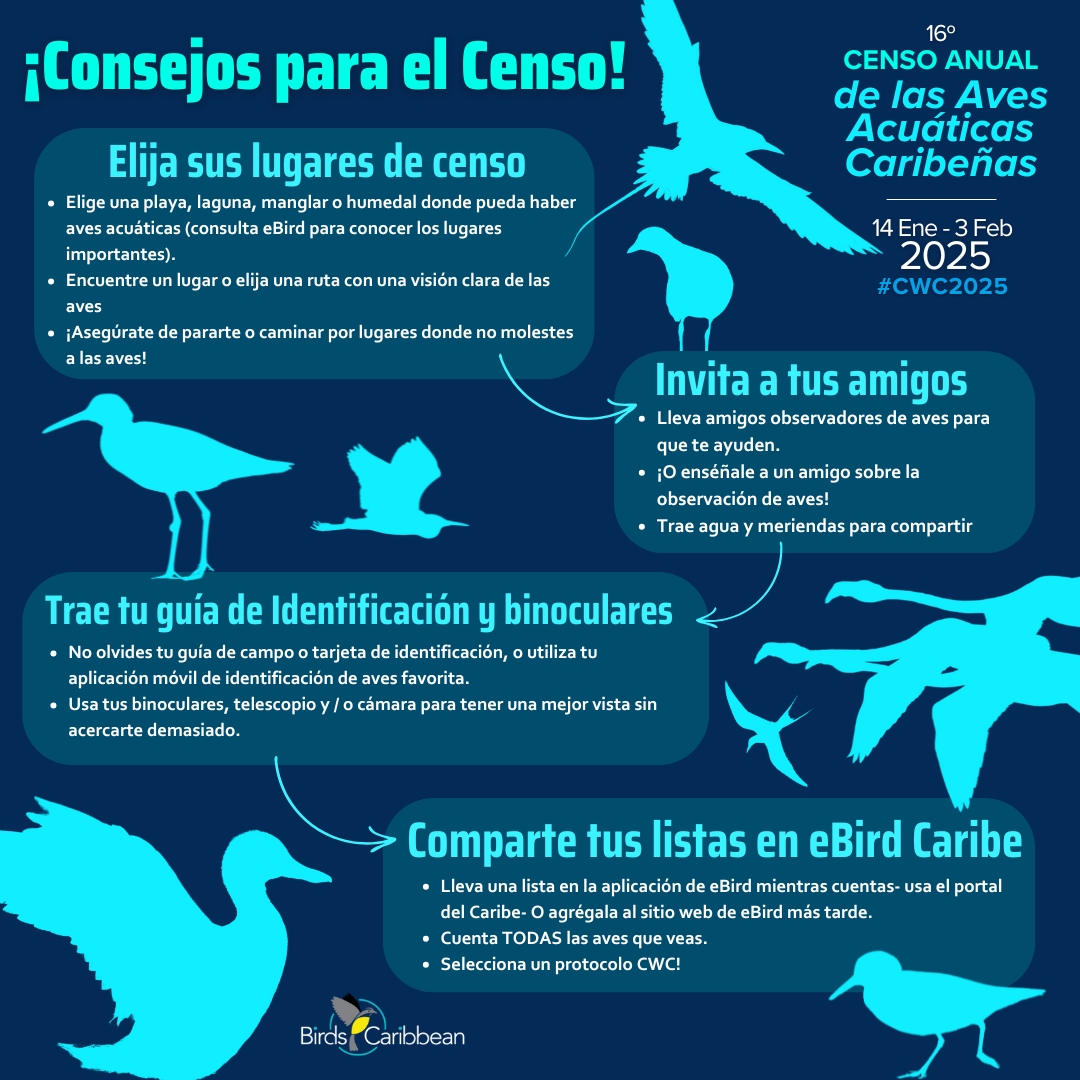
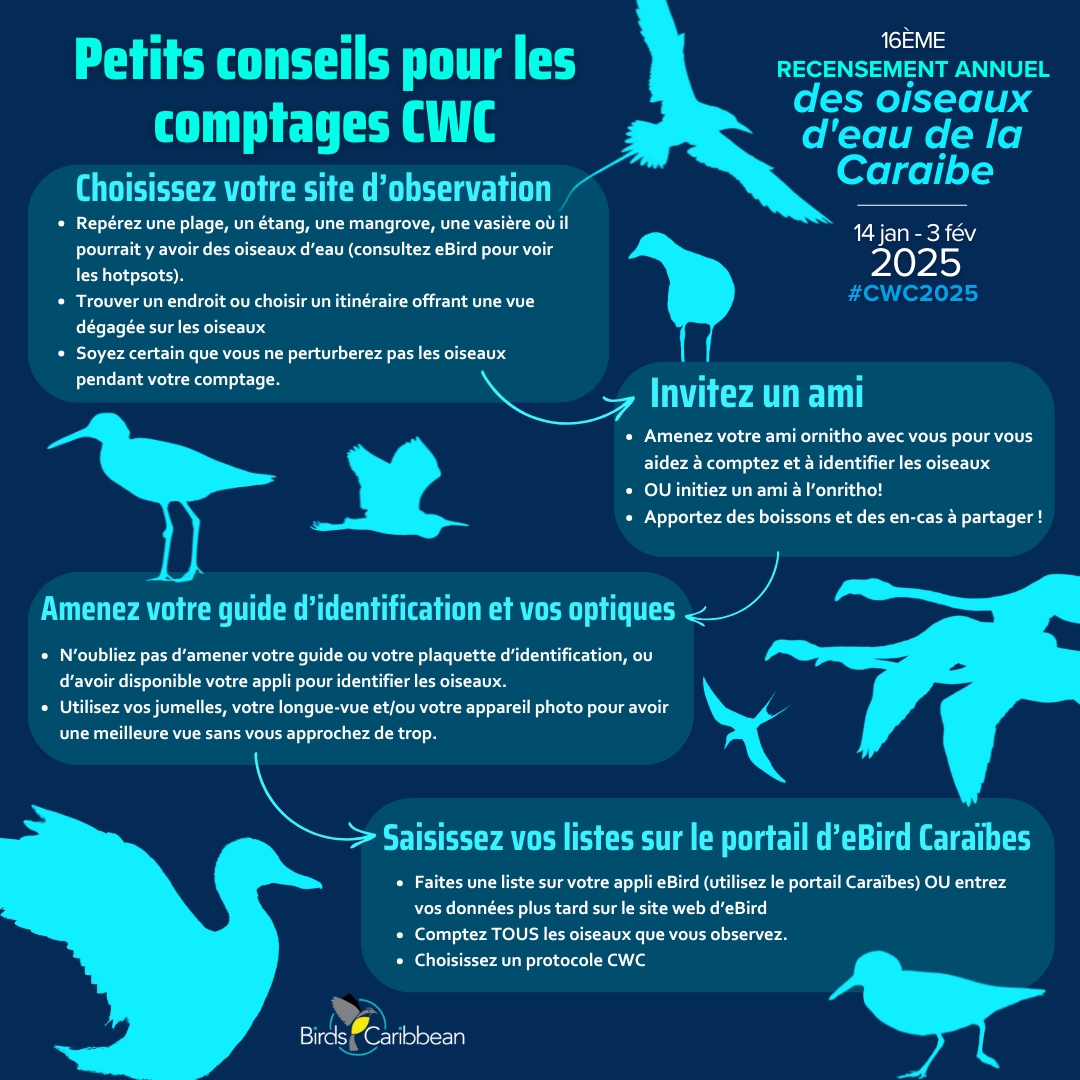
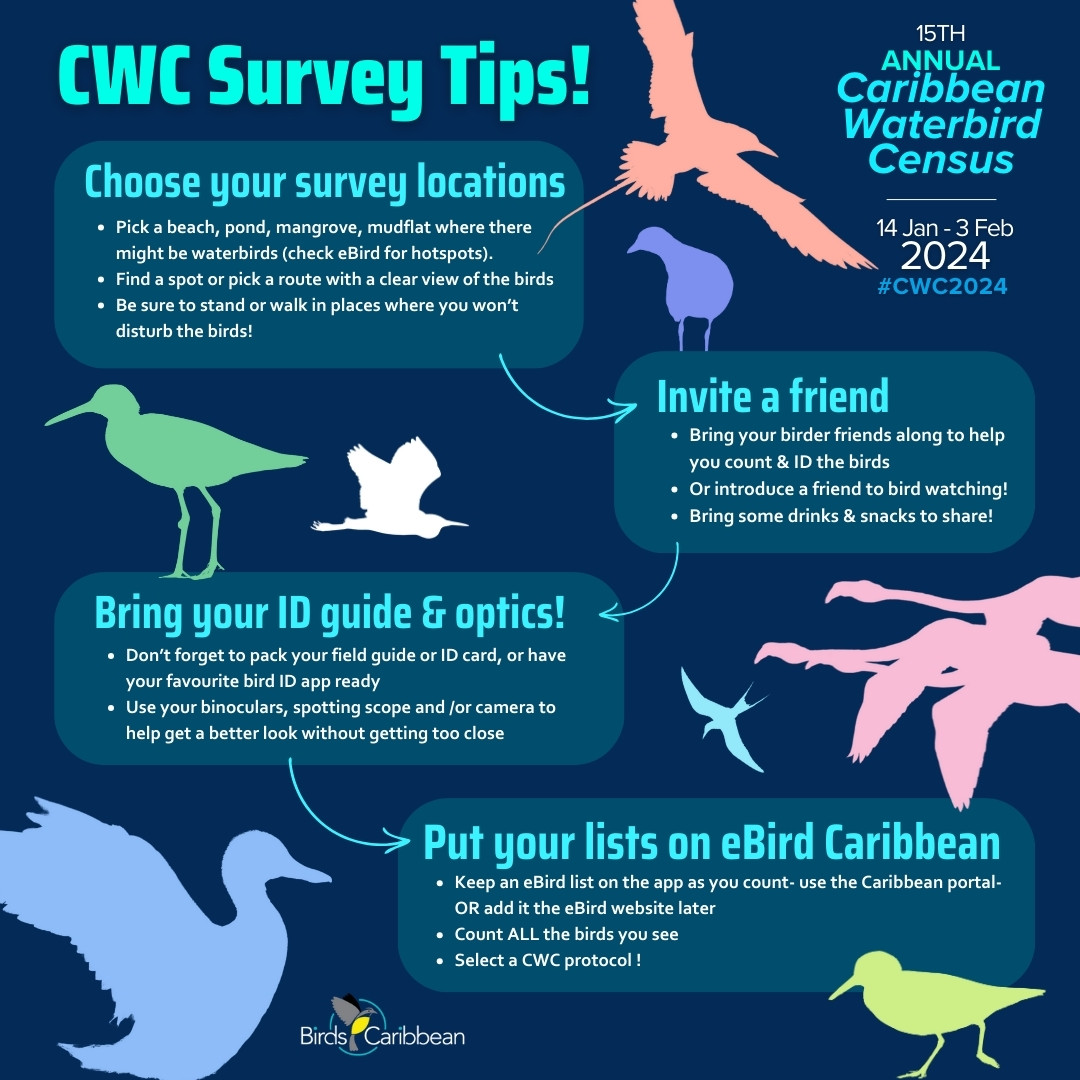
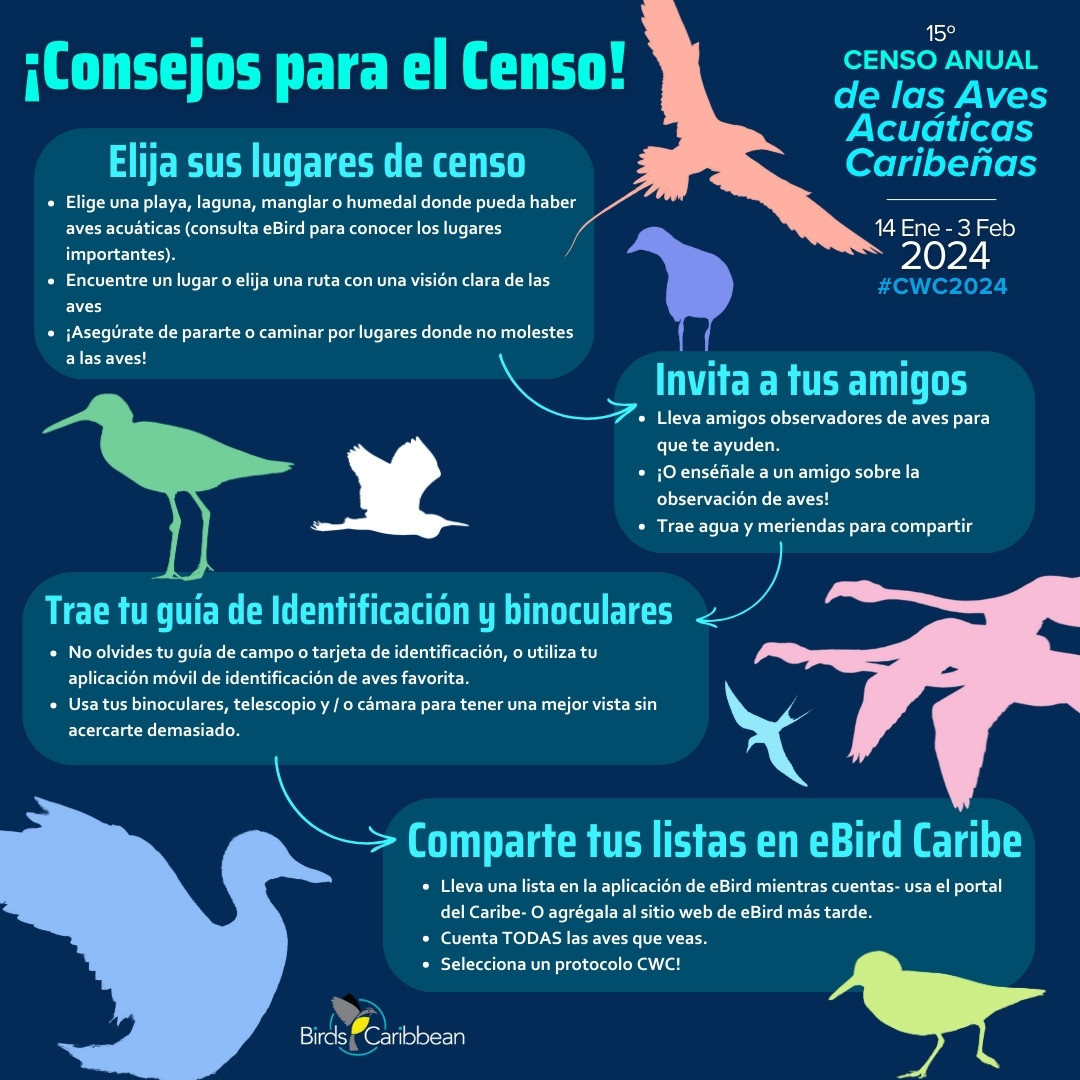
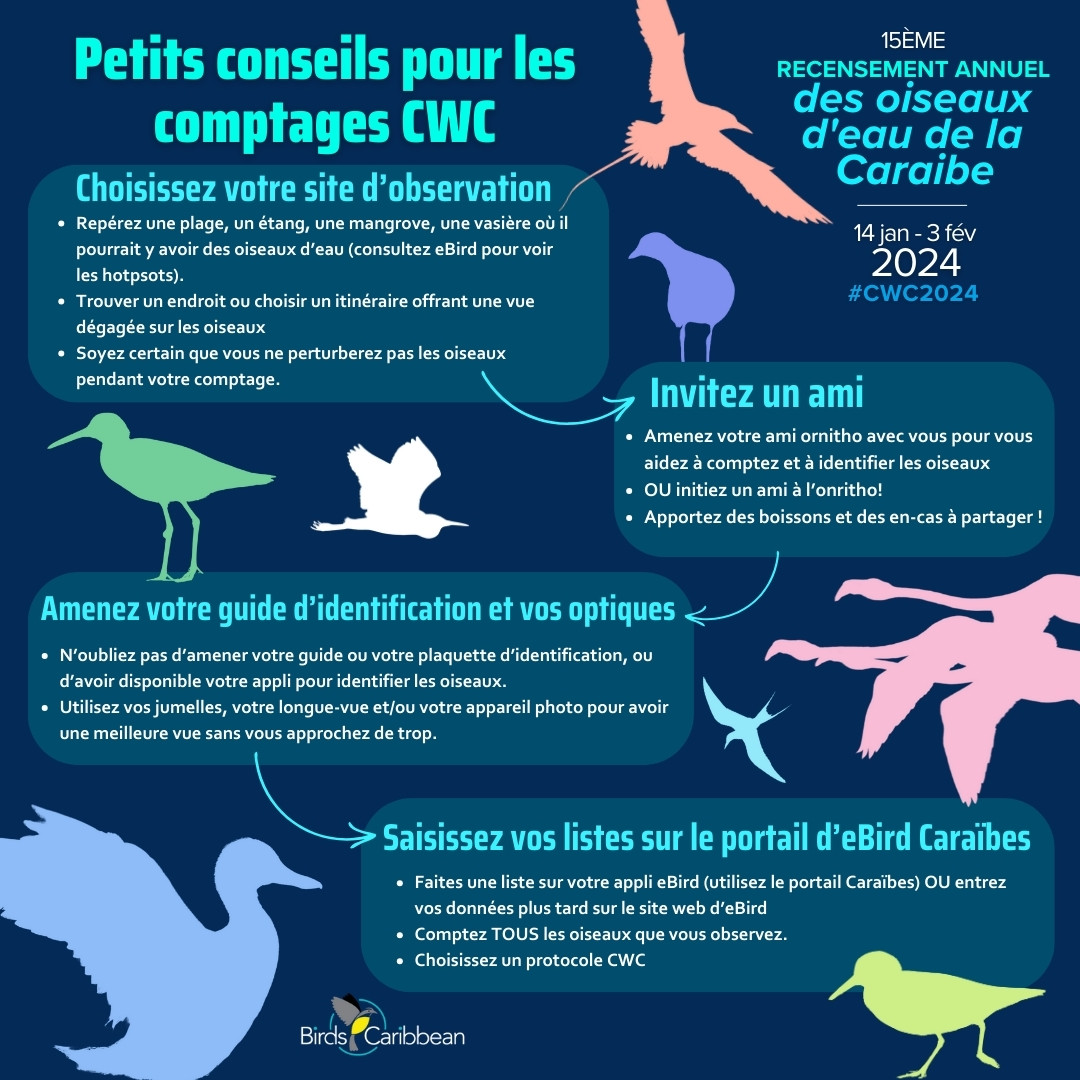
Of course, to participate in the Caribbean Waterbird Census, you need to be in the Caribbean when you do your counts! Check out our handy survey tips below to help you get started with your CWC surveys:
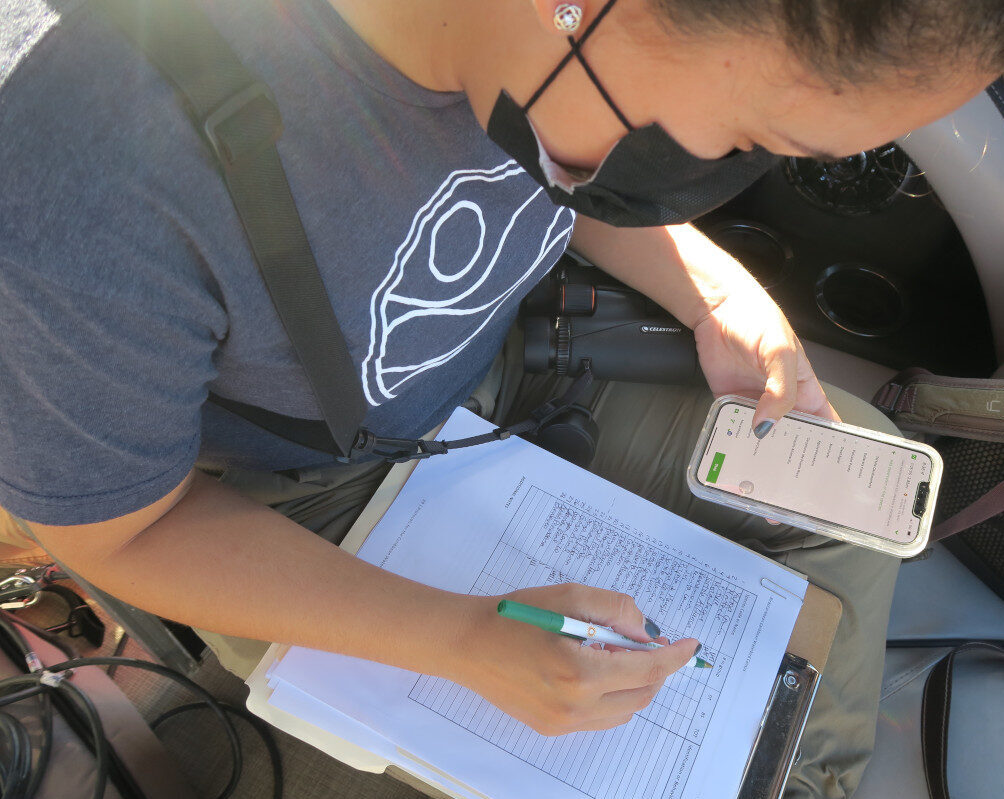
Coral Aviles listing the birds in the CWC list on eBird, Blassina Canal Puerto Rico. (Photo by Eliezer Nieves)
Want to be sure that your counts count? Then use eBird AND chose one of the CWC protocols. Data from the CWC is all stored on eBird Caribbean but to make sure your count is included in the CWC you must use one of the CWC protocols for your list.
Using one of these protocols in eBird is critical, without it we will not know that you have done a CWC count and your data will not be logged in our CWC database.
When you submit your sightings on Step 2, under “Observation Type” be sure to pick one of the CWC options. Simply making an eBird list during the regional count dates is not enough—selecting the appropriate protocol is required for it to be ‘counted’ as CWC data. If you are using the mobile eBird app to collect and submit your data, don’t forget that you need to use the eBird Caribbean portal to see the CWC protocol options (check in your settings). If you’re new to eBird, check out our helpful video here on how to use eBird and Merlin.
Finally, whilst you’ll be on the lookout for waterbirds (ducks, herons, egrets, shorebirds etc.) you should be sure to count all the birds that you see and hear during your survey visits. If you need help with eBird submissions, have questions about which CWC protocol to choose, or with setting up an eBird account, please contact Alex Sansom: waterbird.manager@birdscaribbean.org
We’re here to help!
New to the CWC survey or need a refresher? Don’t worry! We’ve put together amazing resources that will make your counts easy, enjoyable and successful. To help you get started or refresh your memory, watch our YouTube webinar that walks you through the CWC survey steps!
What’s that? You need a hand with your waterbird ID? You’ve come to the right place—brush up on your ID skills using our videos on YouTube!
Part I covers herons, egrets, ducks, marsh birds, and seabirds.
A volunteer uses a Shorebird ID card at a Caribbean Waterbird Census count. (Photo by Dayamiris Candelario OPAS)
Handy Caribbean shorebird ID card
Studying shorebird identification in the field with Lisa Sorenson. (Photo by Kristy Shortte)
If you need more help with those troublesome shorebirds you can also check out our series of short videos. Each of these deals with ID-ing some of the shorebirds that are more difficult separate, like Lesser and Greater Yellowlegs and Peeps!
Have fun out there!
We hope you have a great time exploring your country’s wetlands and counting birds during the regional CWC count. Remember every count completed helps protect waterbirds! Please stay safe and carry out your counts responsibly. This means taking care not to disturb the birds or damage their habitats. See how many of your local wetlands you can visit during this three-week period and make an even greater impact on waterbird conservation.
If you find yourself having a fab time with your CWC counts and want to spot more waterbirds, the fun doesn’t stop at the regional count! You can do a CWC survey at any time of the year—just head to a Caribbean wetland and count all the birds you see!
Counting flamingos, herons, egrets, and many other waterbirds at Las Salinas, Zapata Swamp.
Good luck! We look forward to hearing about your findings. If you need help with bird ID, or have photos and exciting observations to share, please post to our Waterbird Group Listserv (everyone is welcome to join) and/or on our BirdsCaribbean Facebook page. For sharing on social media, use hashtags: #CaribbeanWaterbirdCensus and #WaterbirdsCount AND please tag us: @BirdsCaribbean
Promotional Social Media Graphics – Please feel free to download these graphics and use these to promote your Caribbean Waterbird Census surveys (just open the graphic you want to use right click and choose ‘save image as’) .
I wanted to get to know the elusive Whistling Warbler on the island of Saint Vincent — which meant that we needed to go up. Straight up some very steep slopes!
Whistling Warbler spotted on La Soufriere Windward Trail. (Photo by Jonathan Slifkin ML621602299)
The Whistling Warbler (Cathoropeza bishopi) is an endangered, endemic species of bird that lives on the Lesser Antillean island of Saint Vincent. When we say a species is endemic, it means that the species exists nowhere else on the planet other than at a discrete location. This is a common designation for many island species. When a species is endemic and endangered, that can be a ‘code red’ for conservationists — because the species has nowhere else to go to disperse from threats! In the case of the Whistling Warbler, those threats come mainly from deforestation, land use change, hurricanes (exacerbated by climate-change), and the recent explosive eruption of Saint Vincent’s La Soufrière volcano in 2021, the largest to occur in the Caribbean in the last 250 years.
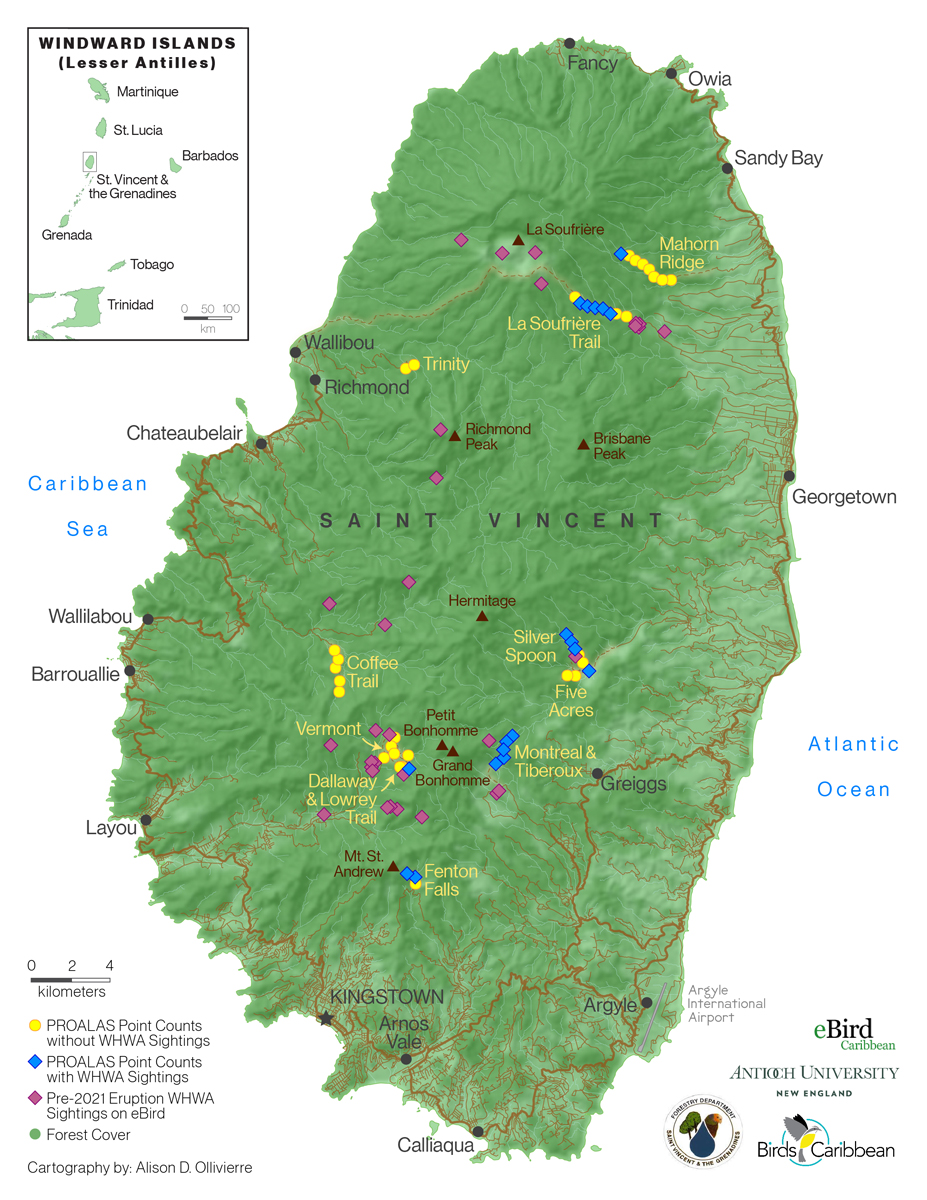
Figure 1. Map of St Vincent showing locations of our PROALAS Point Counts without Whistling Warbler (WHWA) sightings, with warbler sightings, and eBird Caribbean sightings prior to the April 2021 eruption of La Soufriére Volcano.
So where is the Whistling Warbler to be found? Well, this charming bird (whose plumage delightfully brings to mind an Oreo cookie!) appears to require a specific kind of natural forest for habitat: forests growing in steep, wet, montane environments. These mostly grow on the windward (east) side of the island. However, these forests have been experiencing a great deal of “wear and tear” in recent years. Some have been cut to grow non-native tree plantations, or terraced to provide farmland, in some cases for the illegal cultivation of Cannabis. Many of the northern areas were decimated by wind and volcanic ash from the 2021 volcanic eruption. The windward forests also take the brunt of hurricanes moving west across the Atlantic, which can wreak havoc on the essential habitat of the warbler. Hurricane Beryl just recently tore through St. Vincent and the Grenadines (SVG); the extent of the damage to the mainland forests (and the warbler) is currently unknown, though nearby Union Island has been devastated. These growing and more frequent impacts of climate change cannot be overlooked.
And yet, the Whistling Warbler has so far been able to hold on in small numbers, in the face of these daunting challenges to its habitat. Much of its success is thanks to conservation efforts that protect and restore their habitat. Now, it is absolutely vital that the warbler population is actively monitored to ensure its survival, and to inform future conservation efforts aimed at protecting its habitat. Part of the challenge here is that there is still so little known about this bird. We don’t know much about their habitat requirements; their nest construction; and when and where they breed. It is critical to understand these aspects of the warbler’s life cycle to make effective management decisions. We can only find this information by getting people out into the forest to make these discoveries and to monitor the population.
Preparing for the trip: some homework required
I am a graduate student at Antioch University New England studying Conservation Biology. Antioch Professor Dr. Mike Akresh has been working with Caribbean birds for over a decade, and when he asked if I would like to accompany him on a two-week field study trip in March 2024 to Saint Vincent, I was initially apprehensive. Leaving my young child and a pile of school work at home for two weeks sounded daunting, but I knew there was important work to be done on Saint Vincent as there is not an overabundance of researchers working on the Whistling Warbler. I made the decision to go.
The Vulnerable St Vincent Parrot. (Photo by Mike Akresh)
A pair of Rufous-throated Solitaire in St. Vincent (Photo by Frantz Delcroix)
Lesser Antillean Tanager on St. Vincent. (Photo by Steven Hunter ML200625941)
Firstly, I went into an intense learning period focussed on the birds of Saint Vincent; it was especially important to learn their calls. With the help of eBird, the Merlin App, and a handy field guide to the “Birds of the West Indies,” I familiarized myself with most of the birds we could expect to encounter on the trip. How were we going to monitor for the Whistling Warbler? Well, we were planning to work with the PROALAS landbird monitoring protocol, which requires us to document every bird seen and heard during a specific period of time at a point or transect. Every bird has a story to tell about the environment; birds are regarded as indicator species. This means that the presence of certain species or lack thereof provides critical insights about the impacts of land use change, climate change, and volcanic activity; in other words, the obstacles and challenges that the Whistling Warbler faces.
The song of the Whistling Warbler consists of an ascending trill of loudly whistled notes.
Our enthusiastic team on Saint Vincent
Our collaborators on the island were the talented and professional members of the SVG Forestry Department. Our point of contact and monitoring collaborator was the energetic Glenroy Gaymes, who has been working closely with the Whistling Warbler conservation efforts. Glenroy is an expert birder and naturalist, whose passion for conservation on Saint Vincent is infectious. With invaluable help from Glenroy and other Forestry staff such as Felicia Baptiste, Romano Pierre, Caswin Caine, and Kishbert Richards, we reached the steep and remote areas where the warbler lives. Glenroy and the Forestry Department have also been monitoring the endemic and endangered Saint Vincent Parrot (Amazona guildingii) and many other non-bird species.
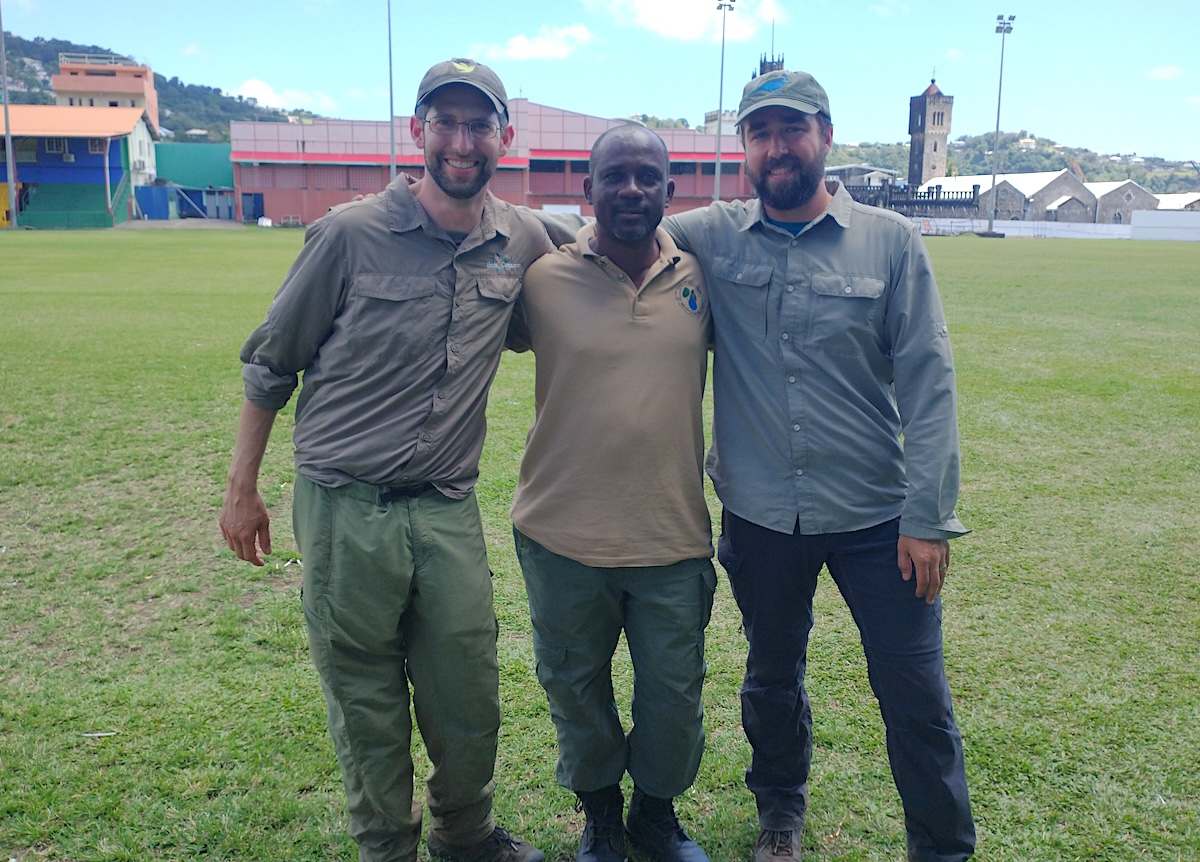
Mike Akresh, Glenroy Gaymes and Christian Carson in Kingstown, St. Vincent.
Our days on Saint Vincent were demanding, but rewarding. We did find the Whistling Warbler!
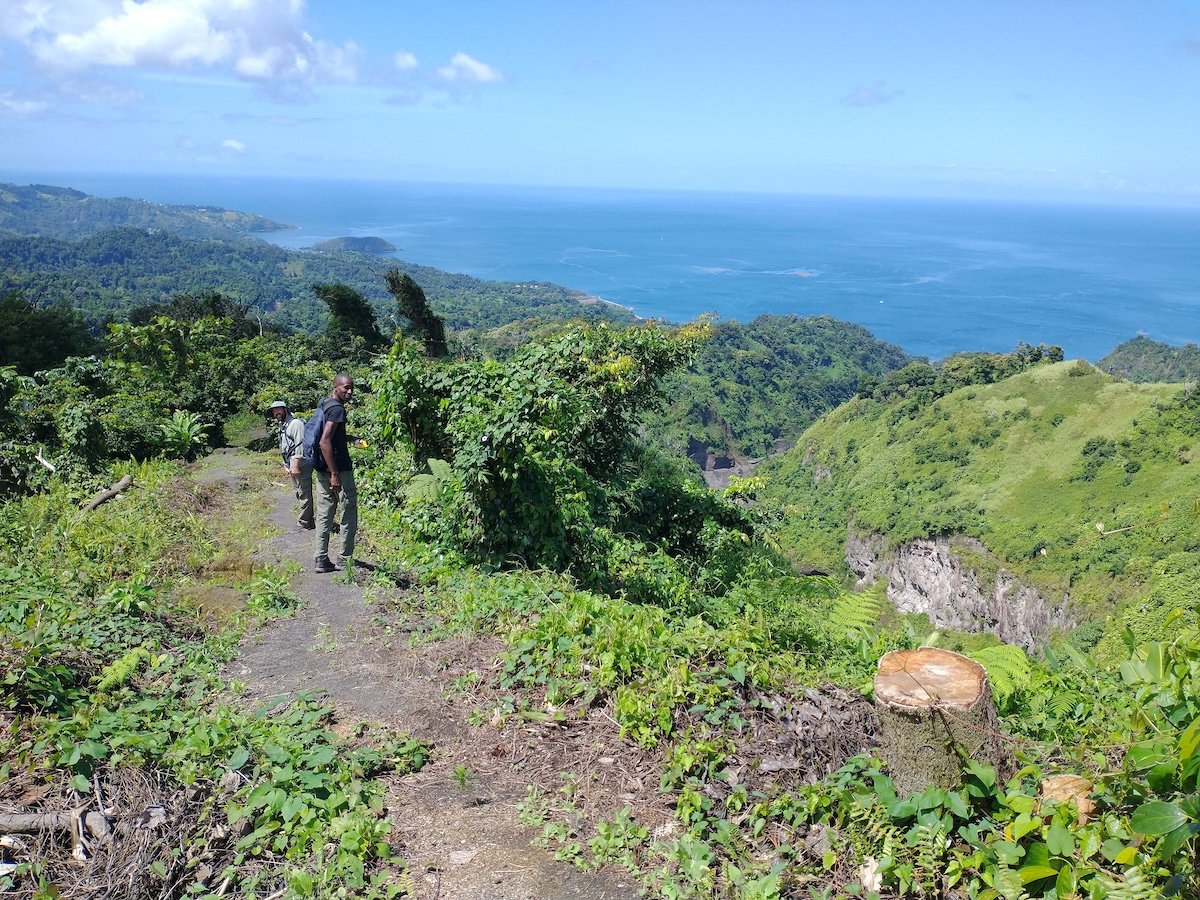
Mike hiking nearly straight uphill. Accessing the Whistling Warbler’s habitat is not easy. (Photo by Christian Carson)
Primary Forest in St. Vincent. (Photo by Christian Carson)
Every morning we would wake up before sunrise, and head up into the sawtooth-like mountains, shrouded in mist. You may have seen these impressive mountains before if you have seen the Pirates of the Caribbean movies, which were largely filmed on Saint Vincent. Fortunately, we encountered the Whistling Warbler several times at various locations. In keeping with previous observations, most or all of our encounters with the Whistling Warbler took place over 300 meters and in steep, wet forests. Did I mention that we had to go up high? The slopes of the misty mountains of Saint Vincent were steep and slippery.
Notes from the field
When studying where Whistling Warblers like to live, we found that they prefer primary forests with lots of moss. Younger and older secondary forests had fewer warblers. Interestingly, palm brakes were about the same as primary forests for warbler sightings, especially near certain trails. Detection was low in elfin woods, which seem to be unsuitable habitat for them. The drier, western side of the island has less of the wet montane forest they prefer.
We noticed that Whistling Warblers really like wetter forests, especially where there’s a lot of moss. For example, at one site – Silver Spoon, where the forest is very wet, we found lots of warblers. However, on the leeward side of the island, the forests were dry and grassy, and we didn’t find any warblers there.
We didn’t look for warblers in the northern part of the island because it’s too dry and no warblers have ever been found there. Tree plantations were the least likely place to find Whistling Warblers because these areas have trees, like Blue Mahoe and Big-leaf Mahogany, that are all the same age and don’t provide enough food or shelter for the birds. Overall, we also noticed that there were fewer other forest birds around areas affected by the volcano. Birds like Bananaquits and House Wrens were common near the volcano, but other species like Cocoa Thrush and Ruddy Quail-Doves were missing. The ash from the volcano may have made it harder for some birds to find food. However, some of these birds are starting to come back now, so we’ll keep studying and monitoring the area to learn more.
Christian and Kishbert surveying for the Whistling Warbler on La Soufrière. (Photo by Mike Akresh)
We still need more information on the mysterious Whistling Warbler!
Over the past few years and during this current trip, we have come across several nests that might possibly be those of the Whistling Warbler, but without a positive ID of a warbler using the nest, we cannot say for sure. Finding a nest is particularly important for conservation efforts because it allows us to better understand the warbler’s breeding ecology and habitat requirements. We also do not know how successful the warbler is in breeding; invasive mongoose or black rat populations may prey on eggs or fledglings. But it must be acknowledged that without more research, we cannot know for sure. There are limited resources available to protect the Whistling Warbler, so the more specifics we have about this species, the better those resources can be utilized to have the greatest conservation impact. We need to know more, so that we can do a better job at protecting this species, which is listed as Endangered on the IUCN Red List.
With the data we have been able to collect while on Saint Vincent, we aim to create a conservation action plan (CAP) specifically for the Whistling Warbler. Without the dedicated work of the Saint Vincent Forestry Department, BirdsCaribbean, and donors small and large, this work would not be possible, and the Whistling Warbler would likely be added to the alarming (and growing) number of species lost forever.
We owe it to the Whistling Warbler, up there in the remote rainforest and beautiful mountains of Saint Vincent.
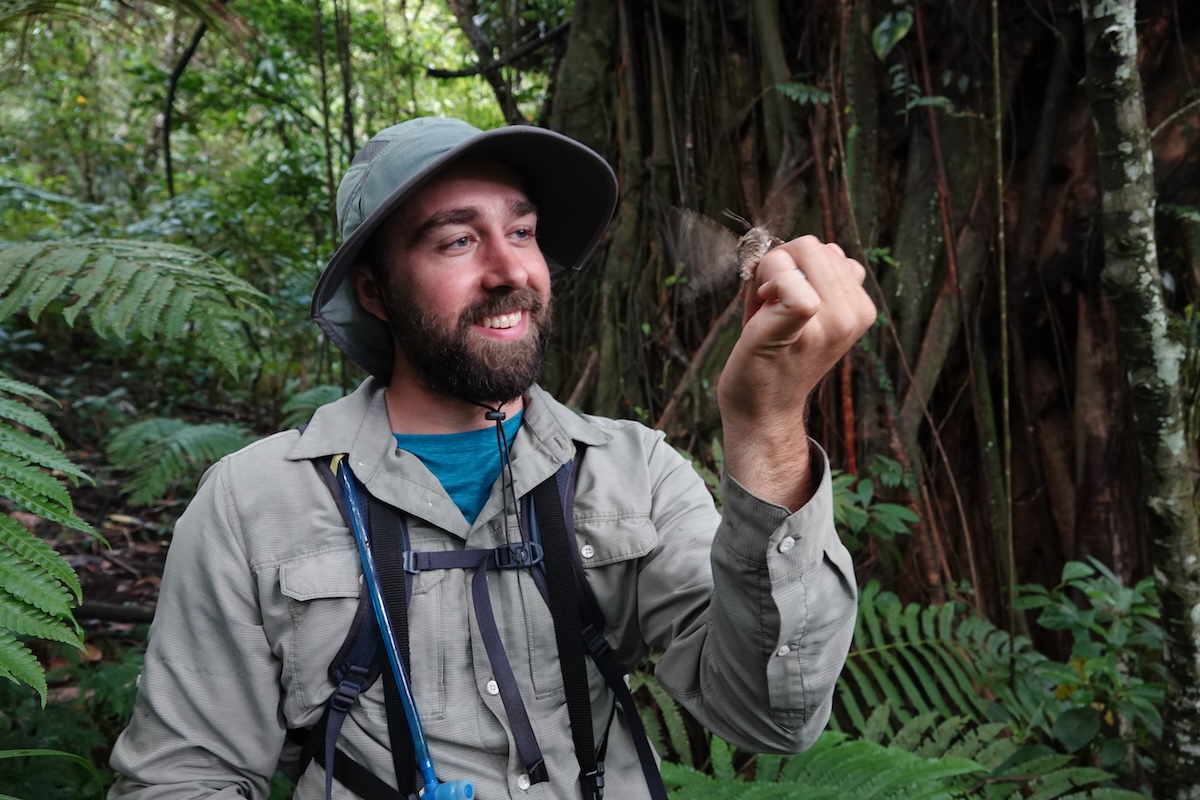
Christian holding a Sphinx Moth. (Photo by Mike Akresh)
Christian Carson is a graduate student at Antioch University New England studying conservation biology. He is interested in ways people seek and find meaning in the living world, and how this meaning (or lack thereof) shapes global environmental issues. He lives with his partner and three-year-old son in Western Massachusetts. He enjoys quiet walks in the woods, flying kites, and sitting zazen. You can reach him at ccarson@antioch.edu.
Acknowledgements: BirdsCaribbean is grateful to the Critical Ecosystems Partnership Fund (CEPF) and the United Nations Development Programme (UNDP) for funding our Conservation of the Endangered Whistling Warbler Project, launched in 2022. We are also deeply grateful to Mr. Fitzgerald Providence and his staff at the St. Vincent Forestry Department for their help and support. Special thanks Glenroy Gaymes, who has been working closely with us on the warbler project. Finally, we thank BirdsCaribbean members, partners, and donors for your support, which made this work possible.
Note that the same proposal cannot be submitted for more than one award in a given year.
BirdsCaribbean’s general Grant Application Guidelines are available here.
Learn more about the eligibility criteria of each program by visiting their respective websites.
Seeking Donors
BirdsCaribbean encourages others to consider endowments or other large awards to ensure that our grants programs continue indefinitely. You may also make a donation to support our work. BirdsCaribbean is a tax-deductible organization in the United States.
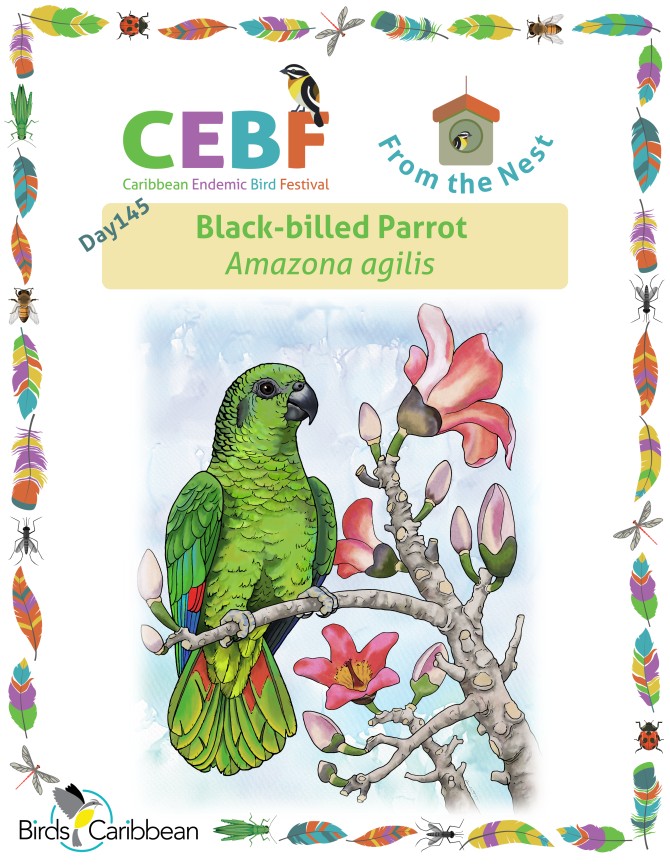
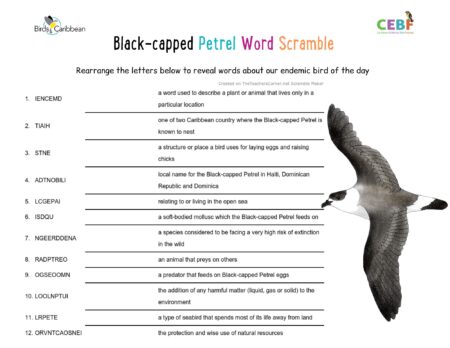
Celebrate the Caribbean Endemic Bird Festival (CEBF) with us! Our theme in 2024 is “Protect Insects, Protect Birds”—highlighting the importance of protecting insects for birds and our environment. Have fun learning about a new endemic bird every day. We have colouring pages, puzzles, activities, and more. Download for free and enjoy learning about and celebrating nature!
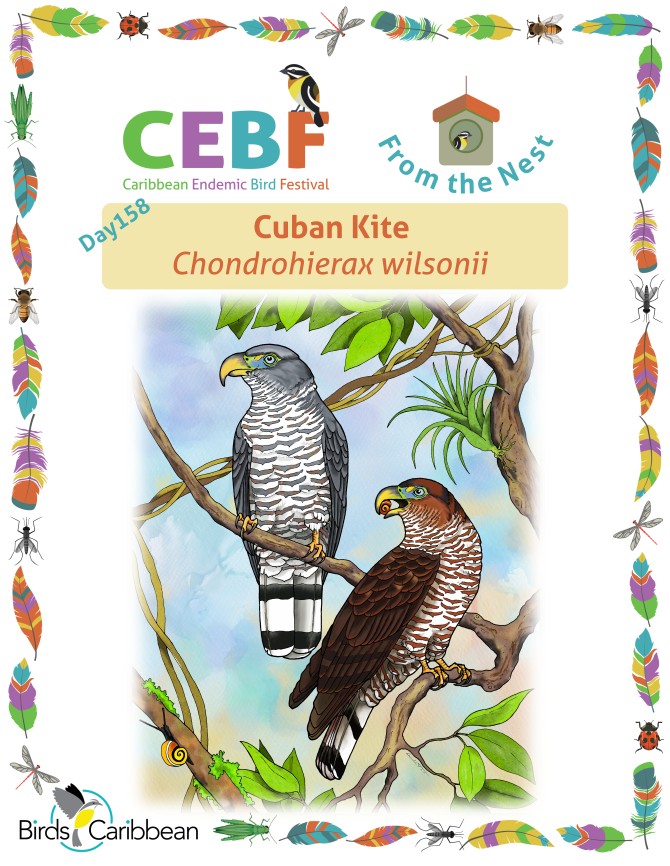
Endemic Bird of the Day: Cuban Kite
Today we delve into the natural history of a fascinating, elusive, and controversial bird—the Cuban Kite (Chondrohierax wilsonii)! It is a distant and mysterious relative of the widely known Hook-billed Kite (Chondrohierax uncinatus). The Cuban Kite is an endemic species confined to the beautiful island of Cuba where it is called Gavilán Caguarero.
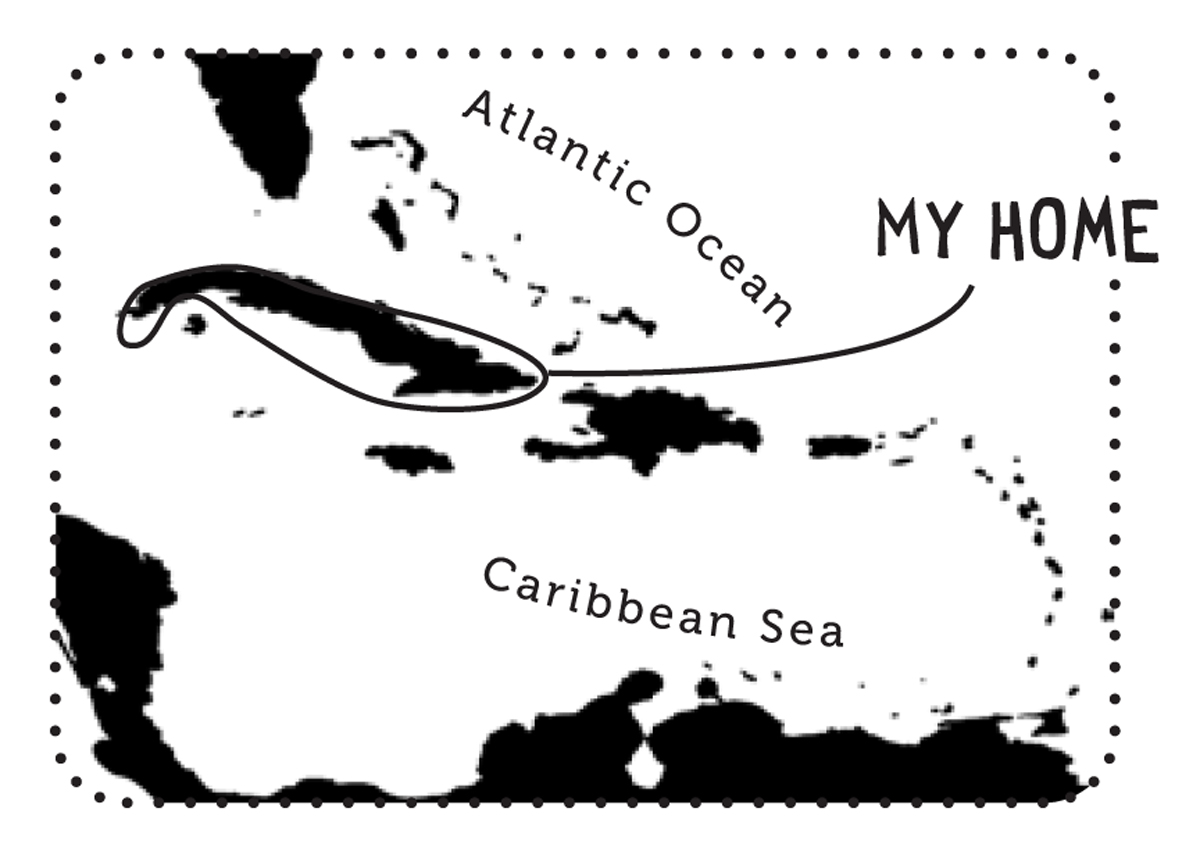
Although once sighted in various regions, from the lush savannas of Cienfuegos to the wetlands of the Zapata Swamp, its presence nowadays is restricted to the far eastern part of Cuba, specifically in the provinces of Holguín and Guantánamo. Unfortunately, its appearance in these territories has become so rare that there are serious concerns about its possible extinction, or at least its imminent functional disappearance.
The taxonomic history of the Cuban Kite has been as intriguing as its existence in the wild. Named by the prominent ornithologist John Cassin in the 19th century, this bird has gone through periods of uncertainty regarding its taxonomic status, oscillating between being considered an independent species and then as a subspecies of the Hook-billed Kite. However, it has recently regained its status as a separate species, a well-deserved recognition for this marvelous raptor.
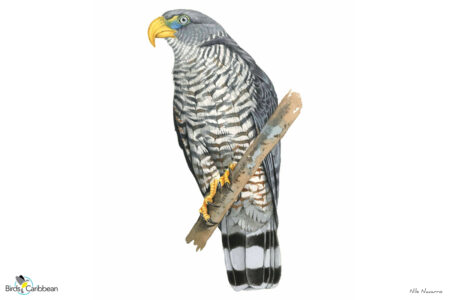
One of the most distinctive features of the Cuban Kite is its plumage and massive bill, which reveal its unique identity. With its broad wings and barred tail, and a notably large and hooked yellow bill, this elegant raptor stood out in the Cuban landscape. It was once incorrectly believed that the Cuban Kite feasted on birds, especially doves, and the occasional lizard. But this Cuban emblem has a more sophisticated palate and prefers escargot. This bird feeds exclusively on tree snails! In the eastern part of Cuba its primary food source is the Cuban painted snail (Polymicta picta), however this species does not occur in its former range in west-central Cuba, where tree snails of the genus Liguus (presumably L. fasciatus and L. vittatus, based on range) might be its alternative food source. The Cuban Kite uses its strong hooked bill to pierce or crush the mollusk’s shell before slurping up the soft snail. As a famous animated lion cub once said, “Slimy…yet satisfying!”
Currently there are no sound recordings for the Cuban Kite, but in flight calls are believed to be very similar to that of the Hook-billed Kite. Additionally, with just a handful of sightings, most recently in 2010, information on its breeding ecology, and other social or antagonistic behaviours remain unknown.
However, ornithologists are certain that the survival of the Cuban Kite is in jeopardy. Habitat destruction, indiscriminate snail collection, and direct persecution by farmers who mistakenly believe it preys on their poultry represent significant threats to its existence. The shells of the snails that the kite feeds on come in a wide variety of colors: pastel yellow and pink, brick red and black, pearly white and ochre and are sought by collectors who sell them to tourists or trade them to the US and Europe.
The Cuban Kite reminds us of the fragility of wildlife and the importance of our role as stewards of nature. It is crucial to organize expeditions to search for the Cuban Kite and implement urgent conservation measures, ranging from the protection of its vital habitat to public awareness of the importance of preserving this unique and little-known species. Every effort to protect this majestic bird contributes to maintaining Cuba’s rich biodiversity and preserving an invaluable treasure for future generations. Learn more about this species, including its range, photos, and calls here. Great news! If you’re in the Caribbean, thanks to BirdsCaribbean, you have free access to Birds of the World and you can find out even more in the full species account of this bird!
Thanks to Arnaldo Toledo for the illustration and Nils Navarrofor the text!
Colour in the Cuban Kite
Download our West Indies Endemic Bird colouring page. Use the photos below as your guide, or you can look up pictures of the bird online or in a bird field guide if you have one. Share your coloured-in page with us by posting it online and tagging us @BirdsCaribbean #CEBFfromthenest
Puzzle of the Day
Click on the image below to do the puzzle. You can make the puzzle as easy or as hard as you like – for example, 6, 8, or 12 pieces for young children, all the way up to 1,024 pieces for those that are up for a challenge!
The Cuban Kite was once seen across Cuba. Today its presence is likely restricted to the far eastern part of Cuba, specifically in the provinces of Holguín and Guantánamo. Unfortunately, sightings of this bird are so rare that there are serious concerns about its possible extinction, or at least its imminent functional disappearance. (Art by Nils Navarro)
Activity of the Day
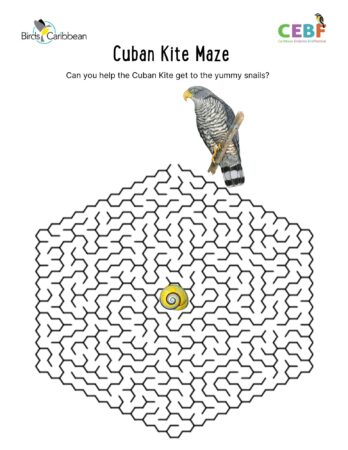
FOR KIDS : The only food theCuban Kite will eat is tree snails! They use their huge strong hooked bills to pierce or crush the snail’s shell, before slurping up its soft insides.
Can you help this hungry Cuban Kite find its way through our maze to to grab some tasty snails?
The annual BirdsCaribbean Seabird Working Group (SWG) newsletter is now available! Catch up on the latest research, conservation, restoration, and education projects happening across the Caribbean—in English, Spanish, and French!
In this issue of the SWG newsletter learn about the spread of herpes virus in Magnificent Frigatebird populations; recent and ongoing regional projects and publications, including habitat modeling of seabird breeding sites in Cuba; census results of an extensive survey of breeding seabirds in the Virgin Islands; a conservation action plan for Red-billed Tropicbirds in the Dutch Caribbean; and more.
We suggest also getting your popcorn ready because seabird conservationists in the Turks and Caicos Islands have produced two fantastic short documentaries about seabird monitoring and research efforts in the archipelago. Links are provided in the newsletter. Admission is FREE.
Field crew off the coast of Guana Island, USVI. (Photo by Paige Byerly)
Red-billed Tropicbird. (Photo by Birding the Islands client, Keith Clarkson)
Researcher Daniel Nellis swimming gear out to Congo Island, USVI. (Photo by Paige Byerly)
The newsletter also provides updates from the International Black-capped Petrel Conservation Group and shares future conservation plans that entail continuing the searching for the petrel’s nesting areas, techniques to attract breeders to suitable nesting sites, and intensified predator surveillance and control among others.
Black-capped Petrel in flight, spotted in May, at sea in North Carolina. (Photo by Kate Sutherland Macaulay Library-ML343236161)
The Caribbean Seabird Census (ongoing) added a cruise ship to its list of enumerators! While Viking Octantis sailed from the Panama Canal to Ft. Lauderdale, onboard Ornithology Specialist, Dr. Jeff Skevington, conducted seabird surveys. You can learn more about this data collection method and the seabirds recorded with the link to the Viking Octantis’ eBird trip report in the newsletter.
While Viking Octantis sailed from the Panama Canal to Ft. Lauderdale, onboard Ornithology Specialist, Dr. Jeff Skevington, conducted seabird surveys for the Caribbean Seabird Census (CSC).
If you would like to contribute to the Caribbean Seabird Census (and we hope you do!), SWG members have created a suite of resources (webinars, bird ID cards, and books) to ensure you are well equipped for your seabird census. Visit the Seabird Working Group webpages and our Seabirds Resources page to access these resources.
Interested in connecting with the SWG and its members? Please take advantage of the many avenues for communication described in the newsletter, including their Facebook group, and if you have seabird news to share, let us know! We would love to feature your work in the next issue!
Enjoy!
-Yvan, Rhiannon and Ann
P.S. If you’ll be attending the BirdsCaribbean 24th International Conferencein the Dominican Republic, do plan to attend our Seabird symposium where we will be discussing Caribbean seabird conservation, research, and monitoring in a changing world. We would love to connect with you in person!
Click on the Flipbooks below to read and/or download this newsletter along with past issues.
Click on the individual images below to download a PDF of the newsletter in your preferred language.
Celebrate the Caribbean Endemic Bird Festival (CEBF) with us! Our theme in 2024 is “Protect Insects, Protect Birds”—highlighting the importance of protecting insects for birds and our environment. Have fun learning about a new endemic bird every day. We have colouring pages, puzzles, activities, and more. Download for free and enjoy learning about and celebrating nature!
Endemic Bird of the Day: Black-billed Parrot
Upon approaching Jamaica’s verdant Cockpit Country in the early morning, you will, depending on the time of year, see pairs or flocks of emerald green parrots flying purposefully across valleys, their flight ‘bugles’ echoing through the forested hills. Landing noisily in the treetops, they call to each other with a variety of squawks and warbles. These raucous birds are Black-billed or Yellow-billed Parrots—both of which are endemic to Jamaica! Their populations are restricted to the wet limestone forests of the Cockpit Country, the John Crow Mountains, and moist mountain forests of central Jamaica.
The Black-billed Parrots, simply called ‘Black Bill’ in Jamaica, are smaller and darker than the more colourful Yellow-billed Parrots. They are most closely related to another Caribbean endemic parrot, the Puerto Rican Parrot. Overall, Black-billed Parrots are a dark, forest green with flecks of scarlet above the grayish-black beak. Most Black-billed Parrots also sport a row of small, scarlet feathers in their wings, which show as a red flash in flight. The leading edges of the flight feathers progress from deep blue to turquoise, with the trailing edges grading from black to green. Splashes of red and yellow show in the tail feathers when the tail is spread.
Courtship for Black-billed Parrots begins as early as January when pairs can be seen flying apart from flocks. They are cavity nesters—they excavate a deep chamber in the trunk of a large tree which they use to nest, lay 3-4 eggs, and raise their young. Most nesting activity happens in March. Females incubate the eggs during which time their mates will bring food for them throughout the day. Eggs hatch after about 24 days and both parents feed and raise the hatchlings. Baby parrots are born completely featherless and with their eyes and ear openings fused shut. They’re also born with large feet which prevent them from toppling over when food is being regurgitated into their beaks. They grow baby feathers first which initially give them a decidedly spiky appearance! These eventually lay smooth as they continue to grow. Baby Black-billed Parrots play with small leaves and sticks—this activity strengthens the muscles which they will need to make long flights in search of food. After about 60 days, the young parrots are ready to leave the nest.
Black-billed Parrots forage over a wide area of forest, eating a variety of fruits, seeds, berries, blossoms, and even the leaves of trees. Like other parrots, they transport fruits and seeds using their beaks and feet, which they disperse over long distances—making them important but often overlooked seed dispersers of the forest.
The Black-billed Parrot is listed as Endangered. Threats to their survival include loss of forest habitat and the increasingly hot and dry climate. Hot, dry, and windy conditions are perfect for bushfires that destroy fruiting trees and kill baby parrots that are unable to fly. Predation by the endemic Jamaican Boa contributes to a high rate of nest failure (over 50%) in Black-billed Parrots. Poaching for the illegal pet trade has also increased, with parrots being sold along the roadside and through social media outlets—deleterious activities that rarely face enforcement action. Bauxite mining is an imminent threat to the blackbills’ stronghold in northeastern Cockpit Country. The survival of the Black-billed Parrot will depend on the protection of this important area, as well as enforcement of Jamaica’s Wildlife Protection Act.
Thanks to Arnaldo Toledo for the illustration and Wendy Lee for the text!
Colour in the Black-billed Parrot
Download our West Indies Endemic Bird colouring page. Use the photos below as your guide, or you can look up pictures of the bird online or in a bird field guide if you have one. Share your coloured-in page with us by posting it online and tagging us @BirdsCaribbean #CEBFfromthenest
Listen to the calls of the Black-billed Parrot
The calls of the Black-billed Parrot include a harsh “mwah” as well as scratchy sounding “uh-luh” calls often given in flight.
Puzzle of the Day
Click on the image below to do the puzzle. You can make the puzzle as easy or as hard as you like – for example, 6, 8, or 12 pieces for young children, all the way up to 1,024 pieces for those that are up for a challenge!
Black-billed Parrots are listed as Endangered by the IUCN and their population is declining. Some of main threats to these birds include habitat loss, removal in birds from the wild for the pet trade, and nest predation by invasive predators. (Photo by John Oates)Black-billed Parrots eat a variety of fruits, seeds, berries, blossoms, and even the leaves of trees. They are important seed dispersers in the forest. (Photo by Bobby Wilcox, Macaulay Library-ML415820601)Black-billed and Yellow-billed Parrots on Jamaica are most closely related to the Puerto Rican Parrot. (Photo by Wendy Lee)
Activity of the Day
FOR KIDS : Discover the birds of the Caribbean with Origami, the Japanese art of paper folding, and learn how to fold a Parrot out of paper with this video!
All you need is a square sheet of paper – 24 x 24 cm is ideal. The video will show you step by step how to fold and create your Parrot! Enjoy also our photos of the many parrots that are endemic to the Caribbean islands at the end of the video!
FOR KIDS AND ADULTS : Enjoy this video of a Black-billed Parrot in the wild!
BirdsCaribbean switched into top gear for 2023. With a lot of ground to cover, we were quickly up and running! Here are some of the highlights of the year…
Focus on one adorable but elusive waterbird…
Our Caribbean Waterbird Census (CWC) region-wide count, from January 14 to February 3 2023, included an ‘added’ Caribbean-wide Piping Plover survey. This species is listed as “Near Threatened” by the IUCN with an estimated global breeding population of just 8,400 birds. The search was enhanced by beautiful graphics and merchandise by Josmar Esteban Marquez. Sightings were tracked live and plotted on a map. During the survey, these attractive but vulnerable birds were spotted in The Bahamas (a great success!), the British Virgin Islands, and Puerto Rico. Word of our search spread far and wide and we also received sightings from the Caribbean coast of Mexico! Please continue to keep a sharp eye open for these small, round birds, which are often seen in small flocks on sand flats and might also be found in mangroves, mudflats, and other shoreline areas.
A Piping Plover in winter plumage with an all-black bill.
A Piping Plover chick. Piping Plovers breed in restricted areas of North America.
A small flock of Piping Plovers in winter plumage. (Photo by Walker Golden)
click to download as a pdf
During CWC 2023, an abundance of waterbirds were spotted across the region by diligent birders, young and old, as they kept their eyes peeled for the elusive Plover! Some of the wonderful waterbirds seen on our 2023 census included a white-morph Great Blue Heron on Bonaire (a rare sight outside Florida and Cuba); a diverse gathering of shorebirds on Cuba (including Dunlins, Sanderlings, Short-billed Dowitchers, Least and Western Sandpipers, Semipalmated and Wilson’s Plovers and many others); and and some ducks enjoying some winter sun on Jamaica (including Green-winged Teals, Ring-necked Ducks, and Lesser Scaups).
Survey team in Cuba searching for Piping Plovers during CWC2023. (Photo by Daniela Ventura)
Looking for landbirds…
After the volcanic eruption of April, 2021, St. Vincent’s landbirds, especially two vulnerable endemic species, the threatened St. Vincent Parrot, and endangered Whistling Warbler, faced new dangers—both in the short and long term. We thought it fitting to continue building the capacity of Caribbean conservationists to identify and monitor landbirds using standardized survey protocols.
Thanks to funding from theCritical Ecosystems Partnership Fund (CEPF), the United Nations Development Programme (UNDP), and BirdsCaribbean members, partners and donors, we organized a Landbird Monitoring Workshop on St. Vincent with 24 participants, including from neighboring islands(Grenada, St. Lucia, and Montserrat).
Participants and facilitators of the Caribbean Landbird Monitoring Workshop at Montreal Gardens, St Vincent.
Bob and Maya constructing the base frame. (Photo by Demonica Brown)
Cesar and Todd attaching the antenna to the Motus tower at the Lucayan National Park. (Photo by Maya Wilson)
Demonica Brown and Maya Wilson assemble the Motus antenna. (photo by Lisa Sorenson)
Demonica and Bob Davies digging the hole for the base of the tower at the Lucayan National Park. (Photo by Maya Wilson)
Grand Bahama Motus Installation team: Lisa Sorenson, Todd Alleger, Bradley Pinder, Cesar Montero, Maya Wilson, Demonica Brown and, David Cooper. (photo by Lisa Sorenson)
Maya and Todd checking cables. (Photo by Lisa Sorenson)
We were out and about again! Celebrating our beautiful endemics
Did you know we now have 180 endemic birds in the Caribbean region? And we celebrated these one-of-a-kind birds during our Caribbean Endemic Bird Festival (CEBF) from April 22 to May 22, 2023—with a special emphasis on water conservation. What would our birds (and we humans) do without water? With the increased heat (it was a very hot summer) we may have seen our birds drinking at bird baths—they get thirsty like we do! With the climate change crisis pressing on us, this was a very important theme to emphasize, and our partners across the region took it on enthusiastically.
A Conservation Opportunity member sensitises participants about the threats posed by marine pollution. (Photo by Conservation Opportunity)
Jamaican Mango, perched. (Photo by Clive Daelman)
Ashy-faced Owl, Dominican Republic. (Photo by Jay McGowan- Macaulay Library-ML162362421)
Children and ARC Conservation members wear their hand crafted masks.
Felix Raul Figueroa, photographer and member of Grupo Ecología de Aves, looks on as students from Ciénaga de Zapata color the Cuban Parrot. (Photo by Grupo de Ecología de Aves)
A young girl plays a bird game during the CEBF festivities as a member of the Luis-Munos Marin Foundation looks on. (Photo by Eliezer Nieves Rodriguez)
Birding along L’Anse Aux Epines road, Grenada. (Photo by Gaea Conservation Network)
Students help plant native trees for birds and other wildlife at the National Botanical Garden.
Information about the festival and endemic birds of Cuba was shared via radio interviews.
Yaritza Bobonis with Lola the Puerto Rican Parrot mascot. (Photo by Fundación Amigos De El Yunque)
In 2023, the CEBF once again hosted in-person events and the response was tremendous—over 10,000 persons participated from The Bahamas down to Trinidad and Tobago! Our citizen scientists of all ages were out in numbers, with mangrove explorations, BirdSleuth Caribbean’s learning activities, school visits, habitat cleanups, art workshops, a birding for kids excursion, and even a floating classroom field trip!
On the Caribbean Birding Trail in Turks and Caicos
As the year-end drew closer, discovery, learning, and empowerment were words that came to mind during the Caribbean Birding Trail (CBT) Interpretive Guide Training Workshop in Turks and Caicos Islands, which took place from October 23 to 27, 2023. Twenty-four participants were trained in the Islands’ beautifully unique environment during an intensive five-day workshop. The trail now includes 138 birding sites and ten hotels and eco-lodges in 24 countries—all combining amazing birding experiences with learning and information on ecosystems, cultural and natural heritage, and more.
Beny leads the group along the Bird Rock Point Trail. Several field trips throughout the week allowed participants to get acquainted with TCI’s best birding sites! (Photo by Christel Mohammed)
Tangles of red mangrove prop roots at Wheeland Pond. This extensive wetland is a haven for birdlife and a true shorebirder’s delight!
Flamingo Pond is a must-visit spot for American Flamingo lovers! Depending on the time of the year, flocks at this wetland on North Caicos can number in the thousands!
Class is in session! 24 participants from a range of backgrounds formed our CBT TCI cohort.
Ecotour guide and participant Geneile Robinson thumbs through her Birds of the West Indies field guide while distinguishing between waterbirds!
Lisa gives the class one of the toughest pop quizzes of all! How many different species of shorebirds are in the picture?
Participant and Biology teacher Amanda Brittain consults her Seabirds of the Caribbean card for gull ID support.
Rick’s demonstration of an interpretive talk where he played the role of a hammock salesman was so transportive that the class was convinced that he really was trying to hawk them hammocks for a while!
This was our seventh CBT training. We are deeply thankful to our Turks and Caicos sponsors—the Sandals Foundation, the Turks and Caicos National Trust, Darwin Plus Initiative, the Turks and Caicos Department of Environment and Coastal Resources, the Royal Society for the Protection of Birds, Marshall Reynolds Foundation, Shika Shika, and Vortex Optics.
Bonding over Bird Banding! Workshop #2 in the Dominican Republic
Bird banding is an essential component of birding science worldwide. It is a complex and technical issue that requires longer training sessions. We returned to the Dominican Republic again in March of last year (the location of this year’s International Conference), continuing our work of nurturing a committed community of trained banders. The response from our highly intelligent group of trainees was enthusiastic.
Participants learned to set up and close mist nets during the workshop. (Photo by Josh Covill)
Participants at the banding workshop, earlier this year, in the Dominican Republic. (Photo by Joshua Covill)
Daniela Ventura del Puerto (Cuba) provides instruction on bird molt to workshop participants Giselle Raganoonan (Trinidad) and Elvin Manual Vargas Estevez (Dominican Republic).
Caribbean bird banders have gone abroad!
We sent some of our bird banders off to the United States and Brazil for immersive banding experiences. The interns reported back to us (Grenadian Zoya Buckmire at Klamath Bird Observatory in Oregon, Puerto Rican Dayamiris Candelario at Willistown Conservation Trust in Pennsylvania) on their exploration of new landscapes, new ecosystems—and, of course, new birds! We would like to thank all our partner organizations and generous donors who supported these internships. Once again, we were happy to add new dimensions to our young trainees’ experiences, so they may return to their countries to establish new programs and projects. Empowerment is key!
Seabirds under pressure
Despite a range of challenges, our dynamic Seabird Working Group has been addressing the critical state of Caribbean seabirds for some time now. The first-ever Caribbean-wide Seabird Census is ongoing, for 2023 and 2024. Over 300,000 pairs of breeding seabirds have already been counted at over 58 sites! Caribbean seabirds, like those in other areas of the world, are threatened by human activities—including pollution (especially plastics), climate change, invasive species, and unsustainable fishing practices. The Census continues! Please contribute your thoughts and findings, watch the webinar updates, and follow the admirable work of our Seabird Working Group this year!
Map 1: Countries participating in the Caribbean Seabird Census. Note that for large countries, the whole country is colored even though only a few localized sites may be censused.
Juliana Coffey identifying seabirds with seabird patrol volunteers, Union Island. (Alison DeGraff Ollivierre)
Grenadines Guardians seabird survey. (Photo by Juliana Coffey)
Magnificent Frigatebird nesting colony. (Photo: Jeff Gerbracht)
Masked Booby adult and chick. (Photo by Ann Sutton)
More direct funding for research and conservation work!
From combating the illegal bird trade in Cuba, to surveys of our most endangered endemic Caribbean hawk in Haiti, thanks to our grant awards, 10 innovative new projects are helping us to protect and learn more about the region’s understudied birds and habitats! Stay tuned for our upcoming blogs sharing exciting project results and accomplishments.
The 2023 cohort of grantees under our three named awards, the David S. Lee Fund for the Conservation of Caribbean Birds, the Betty Petersen Conservation Fund, and the new James A. Kushlan Research and Conservation Fund.
Have we forgotten something? Oh, yes…
Last but by no means least, Global Big Day 2023 was another huge success, with increased numbers of Caribbean birders participating. Our region saw more birds (a total of 515 species) and more humans (511 posting on eBird) than on any other Global Big Day. Once again, competition among our teams was heated—and once again, our Executive Director Lisa Sorenson’s multinational “Flying Pintails” dominated! Hmmm…
NOTE: Please remember to record ALL your bird sightings, whether in your backyard or out on a birding excursion, on eBird Caribbeanvia their website or phone app. Your bird notes make a difference in helping scientists identify the “what, when, how many, and where” of our region’s birds!
Networking is key…
As you can see, building and strengthening networks across the region has always been a significant part of our work, and it was the same in 2023. Our network of scientists (including citizen scientists), students, educators, non-governmental and community organizations, as well as nature-friendly companies and government entities, continues to grow.
Talking birds: Justin Saunders lends a listening ear to a young birder. (Photo by Stuart Reeves)
Daniela and Elvin take a closer look at a bird’s wing while another participant John Holas looks on. (Photo by Josh Covill)
Yvan Satge discusses birds at sea with fishermen. (Photo by Jacob Gonzalez-Solis)
María Paulino hosts a group discussion with students at the National Botanical Garden.
Levardo, Estefania, and Junel discuss the finer points of binocular adjustment.
In addition to the Caribbean Bird Banding Network, the Caribbean Motus Collaboration, and the Caribbean Landbird Monitoring Network, we are also building a vibrant group of trained interpretive guides through the Caribbean Birding Trail. This person-to-person aspect of our work is important for knowledge-sharing, interaction, and “comparing notes” with each other. A great deal of teamwork goes into all these endeavors, as you can see from our reports. All of this creates a positive and nurturing environment. We have great faith in our newly-trained Caribbean citizens, who are both enthusiastic and action-oriented. They want to see progress and improvements for our wonderful birds and their habitats.
We look forward to keeping in touch with you all! Here’s to 2024!
A huge thank you to all of our members, partners, and donors. This work would not be possible without your dedication, passion, hard work, and financial support.
The Journal of Caribbean Ornithology publishes peer-reviewed science on Caribbean birds and their environment that is critical to informing conservation work. In this annual blog feature, JCO’s staff is proud to show off the amazing research from scientific teams around the Caribbean. Volume 36 demonstrates the wide range of research conducted by our authors; from population and habitat use studies, to documentations of behavior, to methods-centered papers on bird monitoring. About ten articles focus on land birds, while three concentrate on waterbirds.
The JCO is immensely grateful for its dedicated team of editors, reviewers, copyeditors, translators, proofreaders, and production specialists that have worked together so well again this past year to produce high-quality publications. We also thank the 57 authors behind the 16 Research Articles and Notes for their trust in the JCO to publish their open-source work in the best form. The JCO and our non-profit publisher, BirdsCaribbean, continue to emphasize support for early-career researchers, trilingual content, open access, and a comprehensive archive going back to the very first volume from 1988.
Map depicting research locations of studies published in Volume 36.
A few glimpses behind the scenes of JCO’s operations in 2023:
JCO has welcomed Dr. Susana Aguilar, our Birds of the World (BOW) Coordinator for Cuba. Susana has an intimate knowledge of Cuban ornithology and we are very happy that we could recruit her to facilitate the revision of BOW accounts from the largest Caribbean island. Our Production Assistant and Designer since 2019, Diane Tessaglia-Hymes is pursuing another professional opportunity. She has tremendously helped with typesetting and, being an Adobe InDesign wizard, has optimized several “under the hood” features. Our Associate Editor team expanded with Yvan Satgé of Clemson University and Dr. Kathryn Peiman, from Ontario, Canada joining the team. Sadly, we learned that one of our Associate Editors, Dr. Virginia Sanz D’Angelo (Centro de Ecología, IVIC, Caracas, Venezuela) has passed away. Her dedication to JCO leaves a big gap.
It took a little longer than hoped, but our (all part-time!) staff finally pulled together a voluminous (94 pages) Special Issue with Caribbean-themed conference contributions from the AOS-BC conference in San Juan in 2022. Because it sometimes takes authors a while to fully publish research, these conference presentations and poster abstracts provide a more timely glimpse into what’s happening in Caribbean bird research and conservation.
We hope to see many of our readers, authors, editors, and team members in July at the BirdsCaribbean 2024 Conference in the Dominican Republic!
— Joseph M. Wunderle, Jr., JCO Editor-in-Chief,
— Stefan Gleissberg, JCO Managing Editor
— Zoya Buckmire, JCO Lead Copyeditor
The Journal of Caribbean Ornithology relies on donations to keep all of our publications free and open-access. Support our non-profit mission and give a voice to Caribbean ornithologists and their work by becoming a supporter of JCO. Consider being a sustainer with a monthly contribution of $5 or more!
Like humans, birds are susceptible to parasitic infections, including avian malaria, and similarly, variations in hemoglobin structure may influence their susceptibility to these infections. Using one of the most widespread West Indian species, the Bananaquit (Coereba flaveola), Humphries and Ricklefs aimed to relate variation in hemoglobin structure and avian malaria infection across several islands. In this paper, they present the results of this fascinating study, with suggestions for appropriate markers for further biogeographic analyses.
In the midst of the central Bahamas archipelago lies the tiny Conception Island National Park. This multi-island park is designated as an Important Bird Area, but until now, its bird diversity was poorly documented. In this paper, Reynolds and Buckner present the first avifaunal list for this park in over a century, with a whopping 68 species, 3 of which are Bahamian endemics.
As human influence over the environment increases, so too does the distribution of artificial materials in natural spaces. More and more birds are encountering human debris in their habitat and interacting with these materials in various ways—whether mistaking them for food or becoming entangled in them. In this research note, Madden and Danielson-Owczynsky document landbirds in St. Eustatius using human debris in an interesting but dangerous way, a fascinating discovery that hints at the pervasiveness of our impact on the world around us.
Anderson Jean, Maxon Fildor, Marta Curti, Eladio Fernandez, Christine D. Hayes, and Thomas I. Hayes
Few things are more exciting than the rediscovery of a once-extirpated species, and the case of the Ridgway’s Hawk (Buteo ridgwayi) is no exception. This Hispaniolan endemic was once well-distributed across the island, but had not been recorded in Haiti since 1962. A chance encounter in 2019 prompted hope and follow-up studies in subsequent years as the authors sought to confirm sightings of the species. In this research note, Jean et al. document their rediscovery of this unique hawk in Haiti.
Joshua LaPergola, C. Justin Proctor, Hodali Almonte, and Kate J. Wallace
Birds eat bugs—or at least, that is how it’s supposed to go. The roles are sometimes reversed in the natural world, with one noteworthy example being parasitism. Philornis sp. larvae are a well-known parasite for birds, but we are still figuring out which species are affected by these parasites. In this paper, LaPergola et al. document the first record of Philornis sp. larvae parasitizing a swift, in this case an Antillean Palm-Swift (Tachornis phoenicobia) in the Dominican Republic. This expands our understanding of parasitism by this genus and adds to the ever-growing list of threats to Caribbean birds, especially aerial insectivores like swifts.
Nicholas Bergen, Christopher C. De Ruyck, and Nicola Koper
Citizen science provides a seemingly obvious solution to the various logistical and resource challenges of data collection in the Caribbean, but it is not without its own challenges. How does observer experience affect detectability of birds in the field? And do observers perform differently depending on who they are paired with? Bergen et al. conducted an experiment in Grenada to answer these questions and more, involving 34 different observers in over 400 surveys across the island. In this paper, the authors present the results of their study, along with several practical recommendations for the design and implementation of citizen science-based monitoring programs in the region.
Louise M. Soanes, Devon Carter, Laurel B. Symes, Jennifer C. Daltry, Holger Klinck, Clarissa Lloyd, and Farah Mukhida
If we as scientists had unlimited time and money, then long-term monitoring of bird populations would be a breeze. In the real world, however, monitoring efforts are limited by funding, access, and personnel, especially on remote islands and cays. Passive acoustic monitoring (PAM) is an emerging tool with the potential to significantly increase the efficiency of monitoring efforts, and a recent pilot project in Anguilla aimed to test the utility of this tool in the Caribbean context. In this paper, Soanes et al. describe the results of their pilot, with recommendations for the best use of PAM throughout the region.
Samantha J. Hagler, Kara Abbott, Christine D. Hayes, Thomas I. Hayes, and André A. Dhondt
The Critically Endangered Ridgway’s Hawk (Buteo ridgwayi) is a charismatic species that has received lots of conservation attention in recent years, but there still remain major gaps in knowledge about this species’ life history and behavior, especially pre-breeding. In this research article, Hagler et al. present their results from tracking 3 established breeding pairs of Ridgway’s Hawks in the Dominican Republic, adding critical information to the body of knowledge about this endangered and endemic species.
Yaroddys Rodríguez Castaneda y Nils Navarro Pacheco
The wild bird trade is a growing threat to Caribbean birds, with species targeted for their bright plumages and/or beautiful songs. This industry is especially prevalent in Cuba, with over 3,000 birds trapped in one month (October 2021). Dozens of species are trapped and sold, including species that may not have been previously recorded for the island. In this Spanish-language paper, Rodríguez Castaneda and Navarro Pacheco document a new species for Cuba, discovered through the ongoing bird trade, suggesting that Cuba’s true avian diversity may be even higher than estimated.
El tráfico de aves silvestres es una amenaza creciente a las aves del Caribe, con las aves elegidas para sus plumajes brillantes y/o sus bonitos cantos. Esta industria es especialmente frecuente en Cuba, con más que 3000 aves capturadas en un mes (octubre 2021). Docenas de especies son capturadas y vendidas, incluyendo unas especies que quizás no eran reportadas para la isla. En este artículo español, Rodríguez Castaneda y Navarro Pacheco documentan una especie nueva para Cuba, descubierta por el tráfico continuado de aves, sugiriendo que la verdadera diversidad de aves de Cuba puede ser aún más alta que la estimada anteriormente.
Ramon J.T. Williams, Miyako H. Warrington, and Nicola Koper
Small Island Developing States (SIDS) are subject to unique ecological pressures, and the bird populations on these islands are no different. How are birds using and responding to natural and anthropogenic habitats on these islands? In what ways does this use differ from the well-studied continental regions? And importantly, how does this inform conservation and management measures here, in the Caribbean? In this paper, Williams et al. explore all these questions and more using resident landbird species in Grenada.
Kara L. Lefevre, Elizabeth Forys, Adam DiNuovo, and Adam D. Smith
Black Skimmers (Rynchops niger) are a charismatic—and admittedly odd-looking—colonial seabird distributed throughout the coastal Americas. Populations in Florida (R. niger niger) are under threat, and to inform conservation measures, Lefevre et al. set out to track the dispersal and movements of skimmer chicks from breeding colonies in Florida. In this paper, the authors describe their use of various tracking methods, some more successful than others, and present important recommendations on how to design future studies.
Parrots and parakeets (Psittaciformes) are some of the most widely introduced species in the Caribbean, and Puerto Rico is no exception. There, the White-winged Parakeet (Brotogeris versicolurus) was introduced in the late 1960s and has since become “the most successful invasive psittacine species on the island”. However, until now, not much was known about their life history or population status in Puerto Rico. In this article, Falcón and Tremblay report on the status of two breeding populations with estimates of their growth rates, as well as other critical information including the species’ diet and nesting habits on the island.
Paige A. Byerly, Susan Zaluski, Daniel Nellis, Judy Pierce, and Paul L. Leberg
Effective management of bird populations requires quality data, but quality data is often difficult to come by. Where studies do exist, methods may vary greatly based on differing research questions, objectives, and priorities, but as Byerly et al. demonstrate here, it is not impossible to form a cohesive picture from various disparate surveys. Comparing data from surveys in the early 2000s with their own in 2016-2018, the authors produce up-to-date trends on the populations of 7 seabirds in the Virgin Islands—and none of them are good. In this paper, Byerly et al. present these timely population status updates, a call for action, and a great example of how to make the best of the limited data we have in the Caribbean to conserve and manage our birds.
Nils Navarro Pacheco, Roberto Jovel Lara, Wisdenilde Navarro Méndez, Juan Carlos Lobaina Montero, Noel Coutín Lobaina, and Carlos Hernández
The Cuban subspecies of the Sharp-shinned Hawk (Accipiter striatus fringilloides) is relatively understudied, with no documented nesting records for Cuba—until now. In this Spanish-language article, Navarro Pacheco et al. present the first record of a nest found in Guantanamo, Cuba, with detailed descriptions of the nest, eggs, breeding behavior, and other aspects of the reproductive biology of this endemic subspecies.
El Gavilancito Cubano (Accipiter striatus fringilloides) es relativamente poco estudiado, con ningunos registros de nidificación documentados para Cuba—hasta ahora. En este artículo español, Navarro Pacheco y otros presentan el primer registro de un nido encontrado en Guantánamo, Cuba, con descripciones detalladas del nido, los huevos, el comportamiento de reproducción, y otros aspectos de la biología reproductiva de esta subespecie endémica.
Avery Young, David Aborn, Steven C. Latta, and Jennifer Nagel Boyd
The way wildlife interacts with food systems is an increasingly important topic as food production expands and encroaches upon habitat. In the Dominican Republic, a major driver of habitat loss is the conversion of forests to avocado farms to meet demand. How does habitat differ between the natural forests and these farm systems? How are birds responding to these differences? And does avian response vary depending on whether the birds are endemic, resident, or migratory? In this research article, Young et al. answer these questions and more, and offer recommendations to balance habitat preservation with our food production needs.
Malo Braquier, Anthony Levesque, Jérémy Delolme, and Charlotte Francesiaz
How long do birds live in the wild? Lifespan of course differs by family and species, and even within species as birds face varying threats within their habitats, migration routes, and from the humans they encounter. Shorebirds like plovers can live into their teens, and for the Wilson’s Plover (Charadrius wilsonia), the previous longevity record was 10 years. In this research note, Braquier et al. report a new longevity record for this species from their resightings of a previously banded Wilson’s Plover in Guadeloupe.
The annual compilation of the most important articles that appeared elsewhere, annotated by Steve Latta.
Article by
Zoya Buckmire – Lead Copy Editor for the Journal of Caribbean Ornithology;
Stefan Gleissberg – Managing Editor JCO
TheJournal of Caribbean Ornithology relies on donations to keep all of our publications free and open-access. Support our non-profit mission and give a voice to Caribbean ornithologists and their work by becoming a supporter of JCO.
BirdsCaribbean brings you highlights from the Journal of Caribbean Ornithology in our feature “Just Published in JCO”. Here, Zoya Buckmire, the Lead Copy Editor for the Journal of Caribbean Ornithology, gives us a behind-the-scenes look at various research on the Critically Endangered and endemic Ridgway’s Hawk.
The Ridgway’s Hawk is one of the most critically endangered raptors in the world with fewer than 400 individuals remaining. It is endemic to Hispaniola. (Photo by Dax Román)
Few things are more exciting than the rediscovery of a once-extirpated species, and the case of the Ridgway’s Hawk (Buteo ridgwayi) is no exception! This Critically Endangered raptor is endemic to Hispaniola (Haiti and the Dominican Republic), but despite its historically widespread distribution, it had not been spotted in Haiti since 1962. A chance encounter on one of Haiti’s satellite islands prompted hope and a follow-up study as Anderson Jean and colleagues sought to confirm their suspected sighting of the species. Thus began an epic scavenger hunt to rediscover this unique hawk on the Haitian side of Hispaniola! The authors shared a behind-the-scenes look at their discovery and their ongoing work to conserve the Ridgway’s Hawk.
Map showing current known Ridgway’s Hawk distribution on Hispaniola. (Map by Leah Dunn of The Peregrine Fund)
The first sighting in 2019 was entirely by chance—or rather, by fate. Anderson Jean andMaxon Fildorwere conducting a rapid ornithological assessment of Les Cayemites, two islands off the southwestern coast of Haiti, as part of a baseline study for the recently declared Baradères-Cayemites protected area. They were compiling information on the terrestrial vertebrates present to inform the management plan for the region. It was then that they spotted two raptors in flight—rushing to document what they could, they speedily took pictures, videos, and audio recordings to aid in identification. One of those two birds was later identified as a juvenile Ridgway’s Hawk, the first sighting of the species in Haiti in over 50 years, and the first sighting for Les Cayemites in over a century.
Juvenile Ridgway’s Hawk spotted by Anderson Jean and colleagues on Petite Cayemite. (Photo by Anderson Jean)
Adult female Ridgway’s Hawk with a green vine snake on Petite Cayemite. (Photo by Thomas Hayes)
With this confirmation, the authors returned the following year with a purpose, partnering with The Peregrine Fund to conduct systematic surveys on the Baradères Peninsula and both Petite and Grande Cayemite. Between 2020 and 2021, the group detected as many as 19 Ridgway’s Hawks in the region—a veritable population! And not only is a population present, it also has the potential to persist as the birds are breeding.
The authors describe their most memorable moment as the instance, in 2021, when they found two nests on Grande Cayemite for the first time. Whilst the nest was located high in a tree on a weak branch too high and risky to climb, the evidence of breeding was enough. On the smaller cay, Petite Cayemite, they have only observed one breeding pair to date, but that pair has nested every single year since they were spotted in 2019. Another exciting development is that the authors banded their first Ridgway’s Hawk chick in 2023, which will surely provide more insights to this ongoing research.
Ridgway’s Hawk nest in a gumbo limbo tree with a juvenile hawk perched above. (Photo by Anderson Jean)
Ultimately, Jean and colleagues hope that their research will contribute to the body of knowledge on this charismatic species, and help conservationists understand the causes of population decline and to increase the population size in Les Cayemites. They are continuing their search in nearby areas like Pestel, Grand Boukan, and Gonâve Island. Although White et al. did not find any sign of the species in their 2012 raptor survey of Gonave Island, it is possible that Ridgway’s Hawk have recolonized the island in the decade that has since passed. Anderson Jean and his colleagues hope to eventually witness the reintroduction of the species throughout its historical range.
La Gonâve Island, Haiti. (Photo by Justin White)
Amidst this exciting rediscovery in Haiti, on the other side of the island of Hispaniola, another fascinating investigation was underway! Samantha Hagler and colleagues studied the breeding behavior of the species—looking particularly at pre-breeding behavior—observing and recording the birds to gain insights into how they form and strengthen pair bonds. This research supports ongoing conservation efforts to restore the Ridgway’s Hawk population, including a past project by The Peregrine Fund that translocated hawks to create a new population in Punta Cana. Translocating the hawks was a challenge within itself, with initial successes limited by high mortality rates due to power poles near the sites. Dwyer et al. document the creative solutions that had to be used to minimize hawk mortality, leading to eventual success of the program.
Ridgway’s Hawks hatched in Punta Cana, Dominican Republic thanks to The Peregrine Fund’s Assisted Dispersal Program. (Photo by The Peregrine Fund)
Ridgway’s Hawk parent feeding its chick in the nest. (Photo by Dax Román)
At the newly established population in Punta Cana, Hagler et al. tracked three established breeding pairs to compare them (and their behaviors) to the source population in the Los Haitises National Park. Interestingly, pre-breeding behaviors actually differed between the two groups. This could be a function of the populations’ size, density, or different levels of development—and raises even more questions that will be critical to better understanding and conserving the species.
Between these two populations in the Dominican Republic and the newly found population in southwestern Haiti, the future of the Ridgway’s Hawk looks brighter than in previous years. Thanks to the award of a BirdsCaribbean Betty Petersen Conservation Fund grant, Anderson Jean is continuing his urgent work to map and protect Ridgway’s Hawk populations in Haiti. His surveys will be further extended to the larger island of Grand Cayemite. To additionally address anthropogenic threats, the team will initiate an educational campaign directed at local communities, especially schoolchildren and farmers. Outreach materials will be distributed in the communities and a special curriculum will be presented in local schools.
We look forward to further research and reports on this important endangered and endemic raptor, as it provides hope for the conservation of other raptors throughout the Caribbean.
The Journal of Caribbean Ornithology publishes the peer-reviewed science on Caribbean birds and their environment that is so important to inform conservation work. All of the publications are free and open-access.
MORE FEATURED ARTICLES FROM “JUST PUBLISHED IN THE JCO”
Get ready for the 15th annual Caribbean Waterbird Census (CWC) Region-Wide count! From January 14th to February 3rd 2024, you can directly contribute to Caribbean Waterbird conservation—keep reading to find out everything you need to know about our CWC 2024 count.
We are now a fantastic 15 years into the CWC Annual Regional Count. This year, you can help us add to this important long-term dataset! The 2024 count begins on Sunday January 14 and runs until Wednesday, February 3.
The Caribbean is home to over 185 species of waterbirds, including a number of endemic and globally threatened species and many migrants. The data you help us collect in this ongoing, standardized survey is essential for helping us understand how to best conserve this exceptional group of birds and manage their habitats. Over the 15 years of the CWC regional count the data collected has helped us in so many ways! For example, the Cargill Salt Ponds in Bonaire were designated a Western Hemisphere Shorebird Reserve Network (WHSRN) site of Regional Importance as a direct result of survey efforts. In addition, surveys in Turks and Caicos have revealed important sites for many shorebird species, including birds of conservation concern such as the Piping Plover and rufa Red Knot! CWC surveys are also critical in keeping up to date with any changes and threats to waterbirds and their wetland homes.
Anyone can participate in the CWC—just head out to your nearest wetland or beach, and record the birds you see. You can find detailed information about how to conduct surveys here. Why not wade into the wonderful world of waterbirds?
The striking Black-necked Stilt has long legs for wading into deep water to find food. (Photo by Dan Pancamo)
West Indian Whistling-Ducks swimming through duckweed at Negril Royal Palm Reserve in Jamaica. (photo by Ann Sutton)
Yellow-crowned Night-Heron seen by Nature Explorers Anguilla during their CWC survey (Photo by Nature Explorers Anguilla)
What makes a wetland?
During the CWC count you’ll be looking for waterbirds so you need to head out to *drumroll please*—a wetland! That may seem obvious, but what ‘counts’ as a wetland? For the CWC we include any areas where water is the primary factor controlling what lives there. This wide definition includes coastal wetlands like mangroves, mud flats, lagoons and beaches, as well as inland wetlands like lakes, ponds, swamps, areas around rivers and streams and even some types of agriculture (e.g. rice fields). Of course because this is the Caribbean Waterbird Census you need to be in the Caribbean to take part! Finally, whilst you’ll be on the lookout for waterbirds (ducks, herons, egrets, shorebirds etc.) you should be sure to count all the birds that you see and hear during your survey visits.
Fernando Simal braves harsh conditions at the Cargill salt ponds in Bonaire.
Flooded ricefields, like these ones in Trinidad, can be great places to look for waterbirds
The Zapata Swamp in Cuba is a birding hotspot for some of the island’s endemics but it also provides food and refuge for migratory birds.
Birding on the beach in Montserrat
From planning your surveys to waterbird ID to—we’re here to help!
Never done a CWC survey before or need a refresher? Don’t worry! We’ve pulled together some amazing resources that will help you with your counts. If you are not sure about how to get started planning your CWC surveys, check out our helpful youtube webinar that takes you through the steps of how to participate in the CWC!
We also have a handy “CWC Survey Tips” graphic to guide you on your way when planning your surveys. This is available in English, Spanish and French! As well as following the useful tips, you can download this graphic and share with others on social media (just open the graphic you want to use, right click and choose ‘save image as’).
Tips for the 2024 Caribbean Waterbird Census.
What’s that? You need a hand with your waterbird ID? You’ve come to the right place—why not brush up on your ID skills using our helpful videos on youtube! Part I covers herons, egrets, ducks, marsh birds, and seabirds. Part II tackles those tricky shorebirds! We also have even more ID, survey planning tips, and outreach resources that are available for you to use and download on this page. This includes information on what to do if you see a banded bird during your surveys as well as our handy ID Guide to Common Caribbean Shorebirds, which can print and take with you on your surveys.
Make your counts count—get them on eBird!
Coral Aviles listing the birds in the CWC list on eBird, Blassina Canal Puerto Rico. (Photo by Eliezer Nieves)
Data from the CWC is all stored on eBird Caribbean. If you take part in the CWC, it is very important that you enter your data using a CWC protocol in eBird. When you submit your sightings on Step 2, under “Observation Type” be sure to pick one of the CWC options. Simply making an eBird list during the regional count dates is not enough—selecting the appropriate protocol is required for it to be ‘counted’ as CWC data.
If you are using the mobile eBird app to collect and submit your data, don’t forget that you need to use the eBird Caribbean portal to see the CWC protocol options (check in your settings).
If you’re new to eBird, check out our helpful video here on how to use eBird and Merlin. And if you need help with eBird submissions (it’s really not complicated!) or with setting up an eBird account, please contact Alex Sansom: waterbird.manager@birdscaribbean.org
Have fun out there!
We hope you have a great time exploring your country’s wetlands and counting birds during the regional CWC count! Please remember to stay safe and carry out your counts responsibly. This means taking care not to disturb the birds or damage their habitats. Enjoy counting birds and see how many of your local wetlands you can visit during this three-week period! Finally, if you enjoy your CWC experience remember that CWC counts are not limited to the regional count. You can do a CWC survey at any time of year as long as you are in a Caribbean wetland and count all the birds you see!
Good luck! We look forward to hearing about your findings. If you need help with bird ID, or have photos and exciting observations to share, please post to our Waterbird Group Listserv (everyone is welcome to join) and/or on our BirdsCaribbean Facebook page. For sharing on social media, use hashtags: #CaribbeanWaterbirdCensus and #WaterbirdsCount AND please tag us: @BirdsCaribbean
Promotional Social Media Graphics – Please feel free to download these graphics and use these to promote your Caribbean Waterbird Census surveys (just open the graphic you want to use right click and choose ‘save image as’) .
If you would prefer to customize our graphic, to add your logo or organization name or want to promote a CWC survey you are organizing you can use our Canva templates to create your own custom CWC 2024 graphics! (these are available in English, Spanish and French in both sizes).
The Peregrine Falcon is famously known as the fastest animal on Earth, reaching speeds of up to 240mph when in a dive. (Beth Hamel)
Birds of prey are magnificent, powerful creatures, with a mystique all their own. They play an essential role in Caribbean ecosystems. Sadly, however, their significance as the only native terrestrial predators in the region is often underestimated and misunderstood.
Hispaniola Program Director at The Peregrine Fund, Marta Curti, is one of those conservationists who believe that raptors don’t get the attention they deserve. To inspire others with her own personal passion for the birds, she has written a remarkable new 200-page publication entitled “Raptors of the Caribbean: Education and Conservation Resource Guide.” It is available in Haitian Creole, Spanish and English, and divided into four chapters, each including fun and enlightening educational activities and a learning evaluation. The guide covers identification of raptor species, conservation techniques, and—most importantly—explains “Why Raptors Matter.”
Cover of the new Raptors of the Caribbean Education & Conservation Resource Guide.
“I believe the completion of this guide is a major milestone for raptor conservation throughout the Caribbean,” says Marta. “I hope this guide will help in fostering passion and compassion for the region’s birds of prey and will inspire students, teachers, biologists, and others to work to conserve these amazing birds.”
The workshop includes hands-on, dynamic activities including constructing life-sized hawks using recyclable materials, participating in “raptor Olympics,” a “food chain relay race,” and putting on a play. Marta’s goal is to extend these workshops across the region—while at the same time “training the trainers” to continue teaching students, community members, and educators about the importance of our amazing hawks, falcons, and kites.
Nature sketching and bird observation. (Marta Curti)
Training Workshop practicing bird observation skills. (Marta Curti)
Building a life sized Ridgway’s Hawk out of recyclable materials (Marta Curti)
Caribbean birds of prey vary greatly in size, behavior, and their preferred habitats. Some are migratory or passage migrants, transiting through the region, such as the Peregrine Falcon itself, which may be becoming more common in urban areas. Another speedy and powerful hawk, the Merlin, also migrates from north to south in the winter. Others such as the American Kestrel and the Red-tailed Hawk are seen more often. While some raptors are quite adaptable to new environments, several endemic species and subspecies are in need of help: for example, the Ridgway’s Hawk, Cuban Kite, Grenada Hook-billed Kite, and Puerto Rican Sharp-shinned Hawk. Climate change, deforestation, hunting, and persecution are among the dangers they face.
The Ridgway’s Hawk is one of the most critically endangered raptors in the world, with fewer than 500 individuals remaining. (Dax Roman)
Merlin Female taking off. (Phoo Chan)
The American Kestrel is a more frequently seen migrant to the region. (Photo by Imran Ashraf)
Since the printing of the new guide, Marta has completed two training workshops for a total of 39 people, including teachers, field technicians with the Ministry of the Environment, biology students, and women from rural communities who she hopes to involve more in our conservation efforts through a Women’s Conservation Fellowship. One of the best comments we received from participants were: “These activities really show how much we know about the Ridgway’s Hawk,” and “I am so surprised about how much we have learned in just two days.” Another great comment was short and sweet, “I haven’t laughed this hard in a long time as I have during this workshop.”
If you’re interested in learning more about the workshops and/or how to access a copy of the Raptor Education Guide, please contact: Marta Curti
BirdsCaribbean is proud to support this groundbreaking initiative, through the Betty Petersen Conservation Fund; along with the VanTienhoven Foundation, ACSEH, and National Aviary and partners in the Dominican Republic: Fundación Propagas, Fundación Grupo Puntacana, the Dominican Republic Ministry of the Environment and Natural Resources, and ZOODOM (National Zoo of Santo Domingo).
Celebrate World Migratory Bird Day (WMBD) with us in 2023! This year’s theme is “Water: Sustaining Bird Life”. Have fun learning about a new migratory bird every day. We have coloring pages, puzzles, activities, and more. Download for free and enjoy nature with your family at home.
Migratory Bird of the Day: Lesser Yellowlegs
With their long bright-yellow legs, you might spot these elegant shorebirds at the water’s edge searching the shallows for food. Lesser Yellowlegs are mottled grayish-brown above, with pale underparts. These slender-looking, long-billed birds can be easy to pick out from the crowd with their distinctive leg color. However, take care as this shorebird has a ‘cousin’—the Greater Yellowlegs!
Greater Yellowlegs are much larger and more heavily built. If you spot the two together, you’ll be in no doubt as to who is who. But you can also pick out Lesser Yellowlegs from its relatively shorter bill-length compared to Greater Yellowlegs. Lesser Yellowlegs also have a distinctive whistled “tu-tu” call, typically one or two notes, while the Greater Yellowlegs call is a stronger “tu-tu-tu!” of 3 to 4 notes. You can find more ID tips in our video here.
Lesser Yellowlegs breed in the Boreal forests in the far north of North America. They head south after breeding, making amazing migratory journeys of thousands of kilometers. They can start to arrive in the Caribbean from July and August. Some Lesser Yellowlegs will continue on to South America, but others will spend the winter here. Lesser Yellowlegs can be found in wetlands, both freshwater and on the coast. They show up on mud flats, ponds, lagoons, and on mangrove edges. They will also use agricultural areas, with flocks of thousands of individuals sometimes using flooded rice fields.
Lesser Yellowlegs are one of the most common shorebirds using the Atlantic Flyway. They are currently listed as “Least Concern” by the IUCN. Sadly, however, Lesser Yellowlegs populations have declined by a shocking 63-70% since the 1970s! Loss of habitat, climate change, and unsustainable hunting and trapping at several non-breeding locations have all contributed to this decline. Conserving our Caribbean wetlands will help Lesser Yellowlegs and many other species. They provide food-rich havens for birds to refuel on migration or to spend the winter.Learn more about this species, including its range, photos, and calls here.
Color in the Lesser Yellowlegs
Download the Migratory Birds of the Day Coloring Page! Use the picture above and the photos on this page as your guide, or you can look up pictures of the bird online or in a bird field guide if you have one. Share your colored-in page with us by posting it online and tagging us @BirdsCaribbean #WMBD2023Carib
Listen to the calls of the Lesser Yellowlegs
The calls of the Lesser Yellowlegs are a whistled “tu-tu” with one or two notes, often repeated rapidly.
Puzzles of the Day
Click on the images below to do the puzzle. You can make the puzzle as easy or as hard as you like – for example, 6, 8, or 12 pieces for young children, all the way up to 1,024 pieces for those that are up for a challenge!
Lesser Yellowlegs. Did you know that despite their similar appearance, Greater and Lesser Yellowlegs are not each other’s closest relatives? The Lesser Yellowlegs is more closely related to the Willet! (Photo by Franz Delcroix)
Lesser Yellowlegs mainly feed on invertebrates including snails and flies, beetles, and dragonflies. (Photo by Hemant Kishan)
Activity of the Day
FOR KIDS: Birds, like the Lesser Yellowlegs, that are typically found at the shore and other coastal habitats like mudflats and lagoons are called shorebirds.
These birds come in different sizes and shapes. They are always on the move, checking the shoreline for food. They have special bills that help them poke into the mud or sand and in between rocks. Their bills and leg lengths are different depending on what they eat and where they find their food. All of this can help us to identify them!
Why not go Birding at the beach? Or at any other wetland! We have made some suggestions of who you can look out for whilst you’re there. You can also download and print out our handy guide to help you identify the different types of shorebirds we find in the Caribbean. You can find more helpful tips, activities and video on our Shorebird Resources page.
FOR KIDS AND ADULTS: Enjoy these videos of Lesser Yellowlegs
Read all about the fascinating work tracking Lesser Yellowlegs: Biologist Laura McDuffie has tracked the movements of these long distance migrants as they travelled to and from their breeding areas. Find out more about Laura’s work, the amazing journeys that Lesser Yellowlegs make each year and the threats they face along the way!
The Black-capped Petrel or “Diablotin” is the region’s only endemic seabird and it’s Critically Endangered. (Photo by David Hollie)
During February 2023 members of the International Black-capped Petrel (aka Diablotin) Conservation Group traveled to Dominica to carry out a search for one of the Caribbean’s most fascinating, but threatened, birds. Looking for the elusive Diablotin, an endangered seabird that comes to land only at night, to nest in burrows was a challenge. This was only made harder by the need to search its preferred habitat – the rugged and heavily vegetated peaks of the Island. This year the group had some assistance from a four-legged friend!
As well as searching for burrows the team aimed to raise awareness of the Diablotin on Dominica and forge a strong research-media partnership. Through visits to schools, and interviews on local TV and radio, they made sure the Diablotin got the attention it deserves! Read on to find out more about how the trip went and what the team found.
The environmental club at The Convent School, Dominica. (Photo by The Convent School)
Students in Dominica have a charming way of thanking guest speakers. After a presentation, a selected volunteer formally gives thanks on behalf of the class and states an appreciation for the topics covered and the time spent. Being thanked this way is gratifying to any speaker, of course. Even more satisfying is when students engage by asking questions and relating their own experiences! It helps if the topic is compelling and relatable to the audience. We found this to be the case for the education and outreach activities associated with the 2023 Diablotin Expedition to Dominica.
Jennifer Wheeler takes a picture with the Diablotin Expedition Team in Dominica (L-R): Jeannelle Brisbane and Stephen Durand (active and retired Dominica Forestry), Yvan Satgé (Environmental Protection in the Caribbean (EPIC) & Clemson University, Department of Forestry and Environmental Conservation), Jacob Solis-Gonzalez (Universidad de Barcelona), Sea McKeon (American Bird Conservancy), and detection dog Africa. (Photo by Jennifer Wheeler)
Expedition Diablotin took place February 8-17, 2023. It consisted of field work to collect evidence that a rare seabird (also known as the Pterodroma hasitata or Black-capped Petrel) continues to nest on Dominica. The work included hikes up mountain peaks to listen and look for flying birds, use of a trained dog to detect the scent of burrows used by petrels, a boat trip to look for petrels in coastal waters, and engagement with citizens to sleuth out local knowledge. Scientists and conservationists believe it is highly likely that Diablotin breed on Dominica because of evidence in recent decades, but nesting has not been confirmed in the scientific literature since 1862!
Yvan interviewing fishermen. Since the Diablotin forages at sea during the day and only flies to and from the mountains at night, those working the coastal waters are most likely to see the Diablotin. (Photo by Jacob Solis-Gonzalez)
The scarcity of Diablotin explains why few Dominicans or visitors are familiar with this bird. Most people that we met were surprised to discover that the country’s tallest mountain, Morne Diablotin [elevation 1,447 m; 4,747 ft] received its name from a seabird. Early European and African arrivals to Dominica were frightened by eerie noises in the darkness, which were actually vocalizations by the Diablotin during nighttime courtship flights. However, people do tend to know that the volcano-formed Dominica hosts tall peaks, steep ridges and deep valleys, and is largely undeveloped with much of its forest intact. They are aware that they live on “The Nature Island” which harbors unique wildlife…even if not all the wildlife is understood or appreciated.
A preserved specimen of a breeding-aged female Diablotin grounded in 2007, along with a life-sized model chick made of yarn, stickers and brochures, were used as educational tools. (Photo by Jennifer Wheeler)
During media interviews and school presentations, we explained why the once-abundant Diablotin birds disappeared. One reason is that humans over-harvested the birds for food. People ate both the adults and the chicks (small, fluffy puffballs of fat raised on fish oils!). The animals that accompanied humans to Dominica – rats, cats, dogs, and pigs – also ate their share of petrels. Finally, small nesting populations could have been wiped out on an island prone to landslides and hurricanes
Arlington James, former Director of Forestry, was able to join Jeannelle and Jennifer at one of the school presentations. This was a special treat since Arlington was personally involved in the recognition, collection, and preservation of the 2007 specimen.
We presented to about 80 students at four schools: Geography students at Dominica State College; 4-H students at St. Mary’s High School for Boys; Science students at Community High School; and the Environmental Club at Convent High School for Girls. A fun tidbit is that Jeanelle formed this club when she was a Convent student!
There is nothing like live demonstrations to engage an audience. In two classrooms, Africa was available to demonstrate her detection dog abilities, sniffing out a dog toy placed out of sight.
A St. Mary’s Teacher who acted as a hazardous power line poses with the student “petrel fledgling” that survived the Diablotin Obstacle Course. (Photo by Jennifer Wheeler)
In another class, Jeannelle set up a Diablotin Obstacle Course – a game modified from Migration Challenge in the Birdsleuth Curriculum. Students pretended to be petrel fledglings on their first flight from nest to ocean. Others became the obstacles: snatching with their hands to mimic introduced predators, holding up extension cords to serve as power lines or a long strip of cellophane to serve as a lighted glass structure. Others threw paper balls mimicking owls or other aerial hazards or whirled around the room as hurricanes. Given all these challenges, it’s unsurprising that few of the “fledglings” made it across the classroom!
Stickers were created as outreach and education tools for the Diablotin Expedition.
Prizes and mementos are popular outreach and educational tools. Students able to answer questions about the Diablotin, its history, and its threats were rewarded with stickers. Stickers and even yarn chicks were awarded to students who voluntarily asked questions – the most satisfying being a version of, “How can I help?” Students were urged to spend time in the forest as a way to get to know its wild inhabitants. If they preferred an indoor job, we suggested pursuing an education to contribute to conservation as a laboratory scientist, software programmer, equipment engineer, or land-use policy-maker.
The Expedition was covered in the local newspaper
Kairi Radio interview
Interviews on four of Dominica’s media services hopefully reached a large proportion of Dominica’s 72,000 inhabitants.
Radio and television allows for a far-greater reach than in-person presentations. We had interviews with four media services:
Government Information Services
Dominica Broadcast Station
Kairi Radio
Vibes Radio
In interviews for the media, we described the Diablotin and emphasized the importance of habitat conservation in preserving biodiversity. We congratulated Dominica for its unique position as a country with more than 60% of its forest intact.
In the end, Expedition Diablotin covered 50 km of trails and 3,800 meters in altitude through thick Dominica’s forest. We had Africa, thermal binoculars, a loudspeaker, and spotlights and lots of mud, rain, fog, and wind. Alas, we found no clear evidence that the Diablotin is still in Dominica. However, there were some possible burrow detections (to be monitored by camera) and lessons learned to apply to future expeditions.
Importantly, we did find many Dominican citizens and visitors very interested in the fate of the Diablotin and receptive to another reason to conserve their forest. Considering that, as well as the number of students and other citizens now inspired to lend their eyes and ears to the search for this special bird, the Expedition Diablotin was clearly a success.
enjoy some more photos from the 2023 Diablotin expedition
In the classroom. (Photo by Jeanelle Brisbane)
Team recovering after a long rainy evening up a mountain. (Photo by Jennifer Wheeler)
Africa posed by the Diablotin logo
“Have you seen the Diablotin Bird?” Flyer used in Dominica
Team Diablotin prepares to climb a peak. (Jennifer Wheeler)
Looking for Diablotins in the mountains of Dominica involved rain, mud, darkness and a lot of climbing. (Photo by Yvan Satgé)
Africa, the sniffer/detection dog practices looking for petrel scents using feather samples. (Photo by Jacob Gonzalez-Solis)
“Have you seen the Diablotin Bird?” Flyer used in Dominica
Jeanelle Brisbane, Arlington James, and Jennifer Wheeler after a school presentation.
Jennifer admires a giant stick insect on the way down from a Diablotin search. (Photo by Jeanelle Brisbane)
Gorgeous rainbow over the hills
Stephen Durand and Yvan Satge prepare for a survey. (Photo by Jennifer Wheeler)
Yvan Satge discusses birds at sea with fishermen. (Photo by Jacob Gonzalez-Solis)
Checking a map
Stephen Durand strategizing for Diablotin searches. (Photo by Yvan Satgé)
“Have you seen the Diablotin Bird?” Flyer used in Dominica
Stephen Durand, Yvan Satge, and Jacob Gonzalez-Solis prepare for a wet night of Diablotin searching. (Photo by Jennifer Wheeler)
Yvan and detection dog Africa set up a trail camera. (Photo by Jennifer Wheeler)
Jeanelle Brisbane, Arlington James, and Jennifer Wheeler after a school presentation.
Jennifer Wheeler shares information on national TV about the search for the Endangered Diablotin (Black-capped Petreo).
This effort involved partners from Seabird Ecology, the American Bird Conservancy, U.S. Fish and Wildlife Service, WildDominique, Dominica’s Forestry, Wildlife & Parks Division, BirdsCaribbean, Universitat de Barcelona, and the International Black-capped Petrel Working Group. Thank you to our members and donors who helped make this trip possible!
You can read the full trip report from this expedition by Yvan Satgé, Jacob González-Solís and Stephen Durand here. And, find out more about Black-capped Petrel conservation efforts in the Caribbean and the activities of the Black-capped Petrel Working Group in the posts below!
Celebrate the Caribbean Endemic Bird Festival (CEBF) with us! Our theme in 2023 is “Water: Sustaining Bird Life” highlighting the importance of water conservation to both humans and birds. Have fun learning about a new endemic bird every day. We have colouring pages, puzzles, activities, and more. Download for free and enjoy nature with your family at home.
Endemic Bird of the Day: Black-capped Petrel
Imagine being up on one of the tallest mountains in the Caribbean. Imagine being there at night on a moonless February night. You can feel the fog all around you and can hear the sounds of a few frogs and insects. Suddenly, out of nowhere and everywhere at the same time, comes an eerie call, between a laugh and a lament. In ancient times, some thought these were the calls of the devil or witches. But today you can be assured that you are lucky enough to be near one of the few courtship areas of the Black-capped Petrel.
This mysterious seabird is the only seabird endemic to the Caribbean! Is is known as Diablotin (“the little devil”) in Haiti, the Dominican Republic, and Dominica, and Pajaro de la Bruja (“the witch’s bird”) in Cuba. It used to be widespread in the Caribbean but is now only known to nest in Haiti and the Dominican Republic, and possibly in Cuba, Dominica, Jamaica, and Guadeloupe.
The Black-capped Petrel has long wings (dark above, white below), a white nape and rump, and the black cap that gives it its English name. Its diet is not well known but consists mostly of fish and squid. A pelagic seabird, it spends most of its life far out at sea and comes to land only to breed, between November and June.
It is very difficult to see the Black-capped Petrel on land because it comes back to its burrow only after sunset and leaves long before sunrise, flying up and down river flyways in the dark. At sea, it is active day and night and lucky birdwatchers may see it near the coast of those Caribbean islands where it breeds. However, the best place to see a Black-capped Petrel would be just off the Guajira Peninsula in Colombia (where petrels from Hispaniola come to feed) and off Cape Hatteras, a hotspot for migrating petrels near the southeastern coast of the USA. There, you will notice its characteristic “roller-coaster” flight where it soars above the ocean and then dips to just above the water.
The Black-capped Petrel has a small population (estimated at 2,000-4,000 individuals) and is considered globally endangered. The main threats affecting the species on land are the loss of forested habitat, introduced predators (mainly mongoose, feral cats, and feral dogs), and collision with telecommunication towers. At sea, the petrel is affected by pollution (such as mercury and plastics), production of marine energy (oil and gas, and offshore wind), and attraction to lighted ships.
The Black-capped Petrel has long been part of Caribbean culture. Songs tell its story and mountains bear its name: in Dominica, two of the highest mountains (Morne Diablotin and Morne aux Diables) are named after it. The International Black-capped Petrel Conservation Group is hard at work to keep the Black-capped Petrel flying up and down Caribbean mountains. Protection of its forested breeding habitat and protection from predators is key to its long-term survival. You can learn more about this mysterious seabird at diablotin.org. Learn more about this species, including its range, photos, and calls here.
Thanks to Yvan Satge for the text!
Colour in the Black-capped Petrel
Download our West Indies Endemic Bird colouring page. Use the photos below as your guide, or you can look up pictures of the bird online or in a bird field guide if you have one. Share your coloured-in page with us by posting it online and tagging us @BirdsCaribbean #CEBFfromthenest
Listen to the calls of the Black-capped Petrel
The calls of the Black-capped Petrel at nesting areas include a drawn out “awwwww” – these ‘spooky’ noises they make from nesting burrows give them their “Little Devil” name. Away from nests, when at sea they are usually silent but sometime give a short high-pitched ‘yelp’ call.
Puzzle of the Day
Click on the image below to do the puzzle. You can make the puzzle as easy or as hard as you like – for example, 6, 8, or 12 pieces for young children, all the way up to 1,024 pieces for those that are up for a challenge!
Black-capped Petrel in flight, spotted in May at-sea in North Carolina. (Photo by Kate Sutherland, Macaulay Library, ML343236161)Black-capped Petrel in flight. (Photo by Tom Benson)
Activity of the Day
FOR KIDS: Use the information above and the clues on the sheet to untangle our our word scramble – all about the Black-capped Petrel. You’ll need to know about where is lives, what it eats, and how it behaves. You can find all the answers to the clues here.
FOR KIDS AND ADULTS: Find out more about community-based conservation of Black-capped Petrels in the Caribbean and join Adam Brown as he takes us on a trip to Haiti, to the remote mountain village of Boukan Chat. This village and the people who live there are the focus of conservation efforts to save the elusive and endangered Black-capped Petrel. Click below to see more about village life and how sustainable agriculture has been helping both the people and the petrels.
Big Year Cuba 2022 was a year-long birdwatching extravaganza, with birders—old, new, and in-between—across the largest island in the Caribbean competing to observe and record the highest number of species. Our Executive Director, Dr Lisa Sorenson, attended the Awards Ceremony in January. Here we share the amazing results of the competition and its likely impact upon the Cuban population and bird conservation.
The Big Year Cuba 2022 poster featured the charismatic and endemic Cuban Tody.
Together, Cuba’s pandemic crisis and the rise in the access to and use of social media, escalated the local tradition of keeping wild migratory and endemic birds in cages into a likely harmful and unsustainable illegal bird trade. Songbird capture and sales increased dramatically in Cuba over the period 2020-2022 and traffickers smuggling birds from Cuba have been seized at airports in Miami. Both Cuban and international conservation NGOs were alarmed by this dramatic increase. In response, they organized a ‘Big Year Cuba’ in 2022.
The year-long competition encouraged Cubans to don their Citizen Scientist caps and explore their island, while enjoying the birds in their natural habitats rather than in cages. Cuban birder and conservationist, Yaro Rodriguez, came up with the idea for Big Year Cuba. It was his hope that this competition would increase the number of birdwatchers in Cuba and birding hotspots on the island. Most importantly, however, Yaro’s goal was to strengthen and unify the position of the Cuban community of birdwatchers in their role as conservationists.
A small organizing committee was formed in Fall 2021 to plan the rules and guidelines for the competition. This included Yaro, Nils Navarro (Cuban artist, ornithologist and bird guide), Vladimir Mirabel (editor, The Cuban Birder magazine), Jeff Gerbracht (Cornell Lab of Ornithology) and Lisa Sorenson (BirdsCaribbean). Generous sponsors (BirdsCaribbean, Optics for the Tropics, Environment for the Americas, and Caribbean Conservation Trust) kindly stepped up to offer cash and other prizes for the winners as well additional prizes for all who competed.
The contest was shared widely via social media on active and growing Cuban Birding Facebook pages and through The Cuban Birder magazine. Competing birdwatchers were required to submit their observations, via checklists, to eBird.
It was an intense year of fraternal competition among the Cuban birdwatchers to register the highest number of species, and the results were amazing. A total of 79 birders from 13 provinces (out of 15) were registered for the competition; 13 were women. Five birdwatchers recorded more than 200 species during the year and more than half of the competitors reported 100 species or more. Today almost the entire island is covered by active observers, contributing to eBird checklists daily.!
Awards Ceremony of the Big Year Cuba 2022
The Awards Ceremony was held at the ranch of the Monte Barreto Ecological Park on January 28, 2023, and attended by Cuban birdwatchers, ornithologists, and conservationists, along with colleagues from Optics for the Tropics, Environment for the Americas, and the Caribbean Conservation Trust. BirdsCaribbean’s Executive Director, Dr Lisa Sorenson, was also present at the ceremony to celebrate this historic achievement and help with awarding of prizes.
BirdsCaribbean Executive Director Dr. Lisa Sorenson congratulating the Organizing Committee and all birdwatchers for making it a highly successful event.
Renowned Cuban artist and ornithologist Nils Navarro opened the ceremony, sharing some of the challenges and rewards of organizing a competition of this magnitude. He highlighted the importance of joining other conservation projects in Cuba to make it a success. He also expressed his pleasure in seeing the genuine enthusiasm among Cuban birdwatchers. As a result of this initiative, areas that no one had observed before can now be explored, as in the case of Media Luna, in the south of Granma. Nils said that his colleague Ricel Polán was able to document, for the first time in the history of Cuban ornithology, the presence of the Caribbean Swallow (Progne dominicensis) nesting in that area!
Members of the organizing committee with winners of the Big Year Cuba competition.
Following this introduction, the highly anticipated winners of the Big Year Cuba 2022 were announced. Alejandro Llanes Sosa won 1st Place with a record of 261 species observed, Carlos Hernández Peraza came in 2nd Place with 242 species, and Sergio Luis del Castillo took home 3rd Place with 223 species. Their full testimonies can be found in the February 2023 issue of The Cuban Birder. Special Mentions were given to other birders who observed and recorded over 100 species. Lastly, Muhammed Halim Machado was recognized for having registered the 400th species in Cuban avifauna: the Great-tailed Grackle (Quiscalus mexicanus).
First Place winner Alejandro Sosa.
Second Place winner Carlos Peraza.
Third Place winner Sergio del Castillo.
The ceremony ended with old and new friends mingling over delicious Cuban food and drink, including mojitos.
Invited guests mingle over mojitos at the Awards Ceremony.
The truth is in the eBird data
First place winner Alejandro Llanes in the field making sure he does not miss a bird.
According to eBird statistics, during 2022 Cuba showed a sustained growth in the number of uploaded checklists – placing it, for several months, among the most dynamic countries in the world. For example, in November 2022 the number of checklists grew by 145% compared to November of the previous year; in August, by 126%; in April, by 338% and in March, by 185%.
Between 2015 and 2018, only 30 Cubans signed up for eBird. This number rose to 161 between 2019 and 2022. There has been a significant increase in the number of active Cubans on the platform in the last 4 years!
With respect to participation in Global Big Day, from 2018 to 2020 only 43 observers participated. However, between 2021 and 2022 the participation was significantly higher with a total of 193 birdwatchers.
The number of birding hot spots also increased in Cuba from 237 in June 2021 to 361 at the end of December 2022. The number of reported species also grew in the same period from 361 to 375.
The future of birdwatching and conservation in Cuba
Big Year Cuba 2022 was met with great enthusiasm and commitment by Cubans to expand their knowledge of the incredible bird diversity on the island. The Organizing Committee is already thinking about the next Big Year Cuba competition in 2024, but until then they will continue to foster respect for wild birds and their habitats, across the island.
As a result of Big Year Cuba, many new birding clubs have launched in a number of individual provinces, encouraging more Cubans to enjoy watching and studying wild birds rather than trapping and keeping them in cages. Cuban Birding Facebook pages, including Club de Observadores de Aves Cuba and Aves de Cuba and others, have also seen a dramatic increase in their membership during the last 3 years, with many people sharing their sightings and actively following the pages. BirdsCaribbean and our partners will continue to support these efforts, such as recent grants to our Cuban colleagues through our ongoing grant programs.
Ultimately this effort has helped spark a passion for birding and bird conservation and is helping to raise awareness of threats birds face and the irreversible damage the illegal bird trade can have on wild populations. The Committee is hopeful that, through these initiatives, Cuban society will become well informed to make pro-bird conservation choices, including reporting of illegal wild bird sales and refusing to buy wild birds. We shall keep you updated on our collective efforts!
Big Year Cuba winners, after receiving their awards, took photos with their fellow birders. From left to right: Alejandro Llanes Sosa, Carlos Peraz, Vladimir Mirabel and Sergio del Castillo.
Thank you to the Organizing Committee for your hard work on this initiative and congrats on the overwhelming success of your first Big Year Cuba! Many thanks to our partners who sponsored cash and other prizes and donations of educational materials to Cuban birders. And huge thanks to our members and donors, whose generous support helped to make the Cuba Big Year and our other programs to support Cuban bird research and conservation, possible.
BirdsCaribbean is pleased to announce the 2023 cohort of grantees under our three named awards, the David S. Lee Fund for the Conservation of Caribbean Birds, the Betty Petersen Conservation Fund, and the new James A. Kushlan Research and Conservation Fund.
These are ten exciting projects that promote the study and conservation of avifauna in six different Caribbean countries. A total of $74,500 was awarded to these projects through the three funds. Learn here about each recipient’s proposed plans, and stay tuned for results and accomplishments featured in future Journal of Caribbean Ornithology and blog articles.
Congratulations to these outstanding researchers and conservationists from our BirdsCaribbean community, we wish you all the best and can’t wait to hear about your results!
Ridgway’s Hawk Conservation and Education Project in Haiti
Anderson Jean, Action pour la Sauvegarde de l’Ecologie en Haïti (ACSEH)
The Ridgway’s Hawk (Buteo ridgwayi), found only on the island of Hispaniola, is one of the most endangered raptors in the world. It is estimated that there are fewer than 400 individuals remaining. Only two populations were known from the Dominican Republic, until 2019 when Anderson and biologists from ACSEH discovered the hawks on Petite Cayemite Island, located off the coast of southwestern Haiti. Since then, they have found more individuals and breeding pairs. These funds will allow the extension of surveys to the larger island of Grand Cayemite. To address anthropogenic threats to this Critically Endangered species, the team will initiate an educational campaign directed at local communities, especially schoolchildren and farmers. Outreach materials will be distributed in the communities and a special curriculum will be presented in two local schools. The project will also organize, for the first time, a Ridgway’s Hawk Festival in May, in collaboration with the mayor and government officials of Les Cayemites.
Birdwatching movement in Cuba as a way to improve the knowledge of Cuban avifauna and promote conservation efforts based on citizen science
Yaro Rodríguez, Cuba Birders Club
Illegal trapping and trafficking of wild birds in Cuba have long been a serious problem in Cuba. However, due to the rise of social media and economic problems caused in part by the pandemic, it has recently reached a crisis point, with tens of thousands of residents and migratory birds captured every year. Yaro along with partner Nils Navarro plan to address this critical problem through growing a nascent bird watching movement in Cuba. These new birders will a) help to put pressure on the authorities to enforce laws protecting wild birds, and b) provide valuable citizen science data to eBird Caribbean, thereby increasing our knowledge of the status and trends of Cuban birds, including further identification of hotspots for endemism and migration stopover sites. The project will provide binoculars and training to community and group leaders that will engage in bird monitoring and share the data through eBird Caribbean. The teams will grow local birding clubs and raise awareness in communities throughout Cuba of the need to protect birds and their habitats through community education and social media. They also plan to increase the interest of participants in birdwatching by organizing a second Cuban Big Year for 2024.
Promoting conservation of birds and nature on St Maarten through education, birding, and bird guide training
Kevin Sammy, Nature Foundation St. Maarten (NFSM)
Many of the local population on St Maarten did not receive education in relation to local flora and fauna, and therefore feel little responsibility to protect the environment. Conservation and preservation efforts have proven to be challenging when community members are not in touch with the importance of a balanced ecosystem, and therefore don’t value local natural resources. Introducing and connecting others to and educating them on the beautiful bird populations on the island form the foundation on which to build preservation efforts. Nature Foundation Sint Maarten will recruit and train local people to become birdwatchers and bird guides with the goal of increasing awareness of the importance of protecting bird species and their habitats as well as supporting sustainable livelihoods. The trainees will participate in an intensive workshop, led by trainer, Binkie Van es, (graduate of our Caribbean Birding Trail Guide Training Program) to learn about the island’s flora and fauna. In addition, trainees will receive birding equipment and educational resources to help them in their work as guides and to conduct annual bird counts. Participants will be able to practice their skills in a new bird observation deck planned to be built this year. In addition, a public awareness and education campaign will be launched that includes talks and field trips with youth and communities.
Facilitating community involvement in Pawi (Trinidad Piping-Guan) research and conservation
Mark Hulme, University of the West Indies, St Augustine, Trinidad & Tobago
The Critically Endangered Trinidad Piping-Guan or Pawi, is Trinidad’s only endemic bird. Its population has been estimated at only 77 to 231 individuals, restricted to moist forested habitats. The main threats to the species are illegal hunting, disturbance, and habitat destruction through quarrying, logging, agriculture, and construction. Mark’s project aims to recruit members of communities in and close to the habitat to participate in the first species survey in 20 years, and foster enhanced awareness of the Pawi and involvement in its conservation. Community members will receive training in Passive (remote) Acoustic Monitoring, a technique that works well for sparse and cryptic arboreal birds. In addition, the recordings will provide them with a soundscape of all the wildlife in their landscape for other research projects, to develop a sense of pride, and for other uses, such as education and ecotourism.
Bird Conservation in the Botanical Garden: Publication of a new field guide
Lourdes Mugica, University of Havana, Cuba
Cuba’s National Botanical Garden is a crucial institution to promote bird conservation in Havana city since it receives 300,000 visitors annually. In surveys initiated in 1983, members of the Ecology Group of the University of Havana have reported 125 bird species in the garden’s diverse landscape that covers almost 500 ha. This funding will cover the printing costs of an exciting new field guide, Aves del Jardín Botánico Nacional de Cuba (The Birds of the National Botanic Garden of Cuba), and other educational materials, including a bird identification card, a checklist, and a map of the trails. With this project, Lourdes and her colleagues want visitors to experience birdwatching firsthand, learning about the many endemic, resident, and migratory birds that live in or visit the garden seasonally. Their ultimate goal is to increase awareness and appreciation of Cuba’s incredible avifauna, to help reduce local threats such as trapping and keeping wild birds in cages as pets.
Does Los Roques Archipelago continue to be a safe place for breeding colonies of seabirds of Brown Booby, Red-footed Booby, and Audubon’s Shearwater in the Caribbean?
Josmar Márquez, AveZona
Los Roques Archipelago, off the coast of Venezuela, is an important breeding site for seabirds, including the Brown Booby, Red-footed Booby, and Audubon’s Shearwater, with more than 12,000 nesting pairs reported overall. However, the sustainability of these breeding colonies is threatened by a growing tourism industry. Josmar, along with partners from AveZona and other Venezuelan NGOs, proposes to conduct intensive seabird surveys to determine the population sizes and reproductive success of these species, with the aid of camera traps in nests and drones to reach remote areas. Moreover, they will be engaging people from the local communities in the counts, by providing educational materials, training on seabird identification and conservation, and even reaching out to hotels and inns to provide birdwatching opportunities as an income source.
Reproductive management with artificial nests and its effect on the populations of Psittacidae in the Pico Cristal National Park. Cuba
Inés Fernández, Flora and Fauna Enterprise, Santiago de Cuba
The Cuban Parakeet and Cuban Parrot are two threatened endemic species confined to small remnant forest fragments mainly in protected areas in Cuba. However, they maintain their degree of threat, due to all the negative actions to which they are subjected. These include loss of their natural habitats, and illegal hunting and capture for the pet trade. Inés will work on the implementation of an Artificial Nests Program to collect information about the breeding biology of both species in Pico Cristal National Park in eastern Cuba. The project will include a strong educational component for the communities surrounding the park, including the preparation and dissemination of brochures, manuals, and posters, and the recruitment of local residents to be monitors and technicians that will oversee the protection of these ptsittacids. A national awareness campaign will extend through mass media, including TV, radio, and newspapers, to discourage the illegal capture of these birds.
Establishing a long-term bird banding station in the National Botanical Garden in Havana, Cuba
Daniela Ventura del Puerto, University of Havana
Neotropical migrants have shown steep population declines since the 1970s. These include a diversity of migratory passerines that spend the winter months in the Caribbean region. In addition, the current status of resident bird populations in Cuba is poorly known, and there are no reliable demographic estimates due to very few marking and monitoring methods and their integration into a system that allows large-scale analysis. This makes it difficult to assess impacts on bird populations from loss and damage to habitats, illegal hunting and trade, and many other threats. Daniela proposes to establishing a permanent bird banding station in the National Botanical Garden in Havana. Her objectives are to 1) evaluate the migration phenology of Neotropical bird species that stop over or winter at the gardens, 2) describe the molt strategies and assess the physical condition, survival, and demographic parameters of both migratory and resident birds, 3) describe the reproductive phenology and population dynamics of the resident and endemic birds, and 4) build capacity among undergraduate and graduate students and volunteers in Cuba through their participation in the bird banding and monitoring activities. Daniela recently completed BirdsCaribbean Monitoring Training and Bird Banding Training workshops and is an active member of BirdsCaribbean’s new Bird Banding Network. The banding and monitoring data will provide invaluable quantitative data to evaluate species population trends and fill gaps in our knowledge of natural history and migration and breeding ecology of many resident and migratory birds.
Investigating male and female vocalizations of an understudied endemic Caribbean songbird
Michelle Moyer, University of Maryland, Baltimore County
The Caribbean has eight endemic species of orioles, with half of them considered globally threatened. The Puerto Rican Oriole, is one of eight species of Icterids endemic to the Caribbean, but its behavior, ecology, and conservation status are understudied. In addition, this species and others are threatened by human-caused habitat loss and degradation, introduced invasive species, and climate change, including increasing severe hurricanes and drought. This study intends to compare the singing behavior of males vs females, to understand aspects of its breeding behavior, including pair-bond maintenance, and territoriality in Hacienda La Esperanza, northern Puerto Rico. Individuals from different territories will be identified with the aid of colored and aluminum leg bands, to allow a quantitative analysis of their songs using the software Raven Pro. Knowledge of song rates (both males and females) has the potential to vastly improve population estimates, since point counts are based largely on auditory detection of songs.
First Field Inventory of the Avifauna in Los Colorados ́s Archipelago, northwestern Cuba
Ivalut Ruiz, Managed Resources Protected Area, Cuba
Los Colorados, north of the province of Pinar del Río, is the least explored of the four Cuban archipelagos. Its 28,260 ha were designated as a protected area as recently as September 2021. Ivalut proposes to determine the bird species richness and distribution, and identify the most important nesting, roosting, and feeding areas. This pilot study will help design a long-term monitoring protocol emphasizing the breeding season of species that are particularly vulnerable to climate change, like the Least Tern (Sternula antillarum), whose nesting areas are determined by modifications to sandbars. The data will also allow the development of conservation strategies that can be used by the Protected Area Managed Resources agency and the selection of the best site for the establishment of a field station. The project will engage local residents, particularly by increasing their awareness of the need to protect bird species and their habitats, and how to generate income from nature tourism.
Are you working on or planning a research or conservation project with Caribbean birds? The next call for proposals will be advertised in the fall of 2023. Members of BirdsCaribbean conducting research and conservation work are eligible to apply. Stay informed and don’t miss our announcements by subscribing to our monthly newsletter, joining our listserve and following us on social media (@BirdsCaribbean on Instagram, Facebook, Twitter, Youtube and Linked In).
BirdsCaribbean thanks the scientists and conservationists that provided thoughtful and constructive review of the proposals. We are also indebted to our generous donors for making these awards possible. We are pleased and proud to be able to support a diversity of projects in the Caribbean that advance the development of young Caribbean wildlife professionals and contribute to the conservation of Caribbean birds.
If you would like to help us support future projects, please click here to donate. We also encourage you to consider endowments or other large awards to ensure that our grants programs can continue long into the future.
If you prefer to donate with a check, please make the check out to “BirdsCaribbean” and in the memo section, note the fund you are donating to. If you have questions or to make other arrangements for donating, please feel free to contact Jennifer Wheeler, BirdsCaribbean Financial Officer (jennifer.wheeler@birdscaribbean.org)
Checks can be mailed to: BirdsCaribbean, 841 Worcester St. #130, Natick, MA 01760-2076
The Journal of Caribbean Ornithology publishes the peer-reviewed science on Caribbean birds and their environment that is so important to inform conservation work. In this annual blog feature, JCO’s staff is proud to show off the amazing research from scientific teams around the Caribbean. Let your curiosity lure you into exploring:
Warblers eat lizards and fish? What is the preferred snail diet of the Grenada Hook-billed Kite? How can nesting success of terns be improved? There was once a Giant Barn Owl roaming Guadeloupe?
Look back and discover how James Bond, a pioneer of Caribbean ornithology, relied on the expertise of little-known Caribbean experts. Or look forward and reflect on the future prospects for bird conservation in our age of unprecedented human impact on Caribbean nature.
As JCO’s Managing Editor, I am immensely grateful for a dedicated team of editors, reviewers, copyeditors, proofreaders, and production specialists that have worked together so well this past year to produce high-quality publications. And of course, our fabulous authors that do the work on the ground to help us better understand the biodiverse Caribbean and the challenges it faces. With the non-profit BirdsCaribbean as our publisher, JCO emphasizes access: trilingual content, support for early-career researchers, and open access–from the latest article to the very first volume from 1988.
While our 100% open-access publication policy is the most prominent and public-facing feature of our work at the journal, there has been a lot going on “behind the scenes” as well.
In 2022, JCO welcomed Caroline Pott, our new Birds of the World (BOW) Coordinator, and huge thanks to our outgoing first BOW coordinator, Maya Wilson! Caroline works with authors and the Cornell Lab of Ornithology to produce BOW accounts of Caribbean bird species. Zoya Buckmire took the reins as the new JCO Lead Copy Editor, and helped to recruit Laura Baboolal and Kathryn Peiman to the copyediting team. Dr. Fred Schaffner will join us for editorial help with English manuscripts from authors for which English is not their first language. Joining our Associate Editor board were Dr. Virginia Sanz D’Angelo, Caracas, Venezuela, Dr. Jaime Collazo, North Carolina, and Dr. Chris Rimmer, Norwich, Vermont. We are looking forward to hearing from you, our readers and supporters, and working with the JCO team in 2023!
With Volume 35, JCO introduced the assignment of a unique Digital Object Identifier (DOI) to each article, making it easier fo the scientific community to locate an author’s work in the published literature.
Map depicting research locations of the studies published in Volume 35.
The Journal of Caribbean Ornithology relies on donations to keep all of our publications free and open-access. Support our non-profit mission and give a voice to Caribbean ornithologists and their work by becoming a supporter of JCO. Consider being a sustainer with monthly contributions of $5 or more!
The Cueva Martín Infierno protected area in Cuba is well-known for its cave and stalagmite formations, but what about its bird community? Located in the Guamuhaya Mountains, one of Cuba’s biodiversity hotspots, this protected area is sure to support a thriving bird community, but this aspect is previously undocumented. In this paper, Montes and Sánchez-Llull present the first comprehensive record of birds in Cueva Martín Infierno, including several endemics and species of conservation concern.
Monica Gala, Véronique Laroulandie, and Arnaud Lenoble
What has two talons, feeds on large rodents, and used to roam the Caribbean night sky? Giant owls! Giant barn owls (Tytonidae) once inhabited the Caribbean in precolonial times, as evidenced by recent palaeontological research. In this paper, Gala et al. describe a bone fragment of an unspecified giant barn owl found on Guadeloupe, the second such record for the Lesser Antilles.
Plastic waste is an increasing source of pollution worldwide, especially in marine environments. Seabirds are particularly vulnerable to marine litter, as they can ingest, become entangled in, or incorporate this waste into their colonies and nests. In this research note, Coffey reports on two Brown Noddy (Anous stolidus) interactions with marine litter in the Grenadines, one instance of nest incorporation and another of entanglement and mortality.
Fernando Simal, Adriana Vallarino, and Elisabeth Albers
The hypersaline lagoons of northern Bonaire are home to several populations of seabirds, making it a regionally significant nesting site in the southern Caribbean. Among the species that breed there are the Eastern Least Tern (Sternula antillarum antillarum), Common Tern (Sterna hirundo), Royal Tern (Thalasseus maximus), and Cayenne Tern (Thalasseus sandvicensis eurygnathus). In this paper, Simal et al. quantify breeding success for the terns at these sites in Bonaire, and provide timely recommendations for increasing tern populations, such as island creation and predator exclusion.
Andrew Fairbairn, Ian Thornhill, Thomas Edward Martin, Robin Hayward, Rebecca Ive, Josh Hammond, Sacha Newman, Priya Pollard, and Charlotte Anne Palmer
How are hurricanes affecting Caribbean landbirds? Like other native species in the region, birds likely evolved under the threat of hurricanes, but as climate change increases the frequency and intensity of storms, this question becomes increasingly important. In the aftermath of Hurricane Maria in 2017, Fairbairn et al. sought to compare the bird community on Dominica to that pre-hurricane. In this paper, they present those results, including the disproportionate effects on some functional groups that may predict which species fare better long-term.
Arnaud Lenoble, Laurent Charles, and Nathalie Serrand
It’s a well-known fact that Hook-billed Kites eat snails- their wonderfully adapted bills tell us that much. But, will any old snail do, or do these high-flying molluscivores have a preference? In this paper, Lenoble et al. present their observations on the diet of the Grenada Hook-billed Kite (Chondrohierax uncinatus mirus), with prey availability and distribution having the potential to inform conservation planning for this endemic subspecies.
Ezra Angella Campbell, Jody Daniel, Andrea Easter-Pilcher, and Nicola Koper
How is the Antillean Broad-winged Hawk (Buteo platypterus antillarum) faring habitat loss and degradation across its small-island ranges? Campbell et al. aim to investigate the status and distribution of this species in Grenada, comparing its distribution by habitat, elevation, and season. In this paper, they present their results as well as recommendations for the conservation of this species that are applicable both to Grenada and across its Caribbean range.
Michael E. Akresh, Steven Lamonde, Lillian Stokes, Cody M. Kent, Frank Kahoun, and Janet M. Clarke Storr
Wood warbler (Parulidae) diets are varied and interesting, from arthropods to fruits and sometimes even nectar. Occasionally, wood warblers may also consume vertebrate species, primarily Anolis lizards, but these instances are not well documented and have not previously been compiled. In this paper, Akresh et al. present a comprehensive literature review on wood warbler vertebrate consumption throughout the Caribbean and USA, and also describe three new observations from The Bahamas, Jamaica, and Florida.
Jeffrey V. Wells, Elly Albers, Michiel Oversteegen, Sven Oversteegen, Henriette de Vries, and Rob Wellens
The Red-billed Tropicbird (Phaethon aethereus) is a stunningly charismatic seabird without many documented or published records in the southern Caribbean until recently. To shed light on this species’ distribution and trends over the decades, Wells et al. sought to compile records from near the islands of Aruba, Curaçao, and Bonaire. This review accompanies an erratum note in this issue, and details all previous sightings of the species, with records as far back as 1939.
James Bond, renowned ornithologist of the 20th century and the namesake of 007, contributed dozens of publications to the field of Caribbean ornithology. Throughout his decades of work, he established a network of scientists and laypeople alike, without whom his work would not have been possible. In this Perspectives and Opinions piece, Aubrecht compiles the biographies of Bond’s most important contributors, highlighting the importance of collaboration and networking in advancing scientific study across the region.
The Caribbean Biodiversity Hotspot is well-known for its avian diversity, with over 700 species! Of which more than 180 are endemic. Unfortunately, the wellbeing of these avian populations is often constrained by the inherent challenges of small island developing states, increasing effects of climate change, and colonial histories. In this piece, Nelson and Devenish-Nelson explore these challenges, with concrete examples of endemic birds across the region, and describe a possible way forward for regional conservation of our species as we navigate the Anthropocene.
The annual compilation of the most important articles that appeared elsewhere, annotated by Steve Latta.
Article by
Zoya Buckmire – Lead Copy Editor for the Journal of Caribbean Ornithology
Stefan Gleissberg – Managing and Production Editor for the Journal of Caribbean Ornithology
TheJournal of Caribbean Ornithology relies on donations to keep all of our publications free and open-access. Support our non-profit mission and give a voice to Caribbean ornithologists and their work by becoming a supporter of JCO.
We are tracking where Piping Plovers have been seen during CWC 2023. Send us your sightings as you make them and we will update the map. This means you can track our progress in finding Piping Plovers live during the survey. You can check back to this post to see map updates or follow them on our Caribbean Piping Plover Survey page.
Zoom in or out to view your region or the whole Caribbean. Click the icon in the top right corner to see a larger map. You can share your sightings, including a grid reference and your count of Piping Plovers at that location (if more than one was seen) with waterbird.manager@birdscaribbean.org or on the BirdsCaribbean listserv.
NOTE: If you are not within the Caribbean but have seen a Piping Plover during the CWC survey period you can still share your sightings and we will add them to the map! And we will continue to add all sightings of Piping Plovers in 2023 to this map, so please continue your CWC counts and send us your eBird Caribbean checklists. Remember that although we have one annual 3-week regional count period (14 Jan-3 Feb), we encourage everyone to carry out CWC counts year-round, especially during fall and spring migration. We need much more information on all the habitats that shorebirds and waterbirds use throughout the year. Thanks!!!
Why Join the Survey?
This small, round shorebird is listed as “Near Threatened” by the IUCN with an estimated global breeding population of just 8,400 birds. They breed in restricted areas of North America but migrate south in fall with some birds spending their winter in the Caribbean. It’s vital that we continue to learn more about the numbers and distribution of this rare shorebird in our region.
We already know about some of the main islands and areas where Piping Plovers spend the winter in the Caribbean, including the Bahamas, Cuba, and Turks and Caicos Islands. We also know they have been spotted in smaller numbers in other countries, including Puerto Rico and its offshore islands and cays, the Dominican Republic, Jamaica, the US and British Virgin Islands, St Kitts, Guadeloupe, Anguilla, and Bonaire (there are just one or two records for some of these countries). But in the ‘right’ habitat there are likely more Piping Plovers to be found, both in ‘new’ locations on islands where they have been seen before and perhaps some islands where they haven’t been seen yet. We need more people out there looking for them!
Share Your Survey Experience
As well as sharing your Piping Plover locations with us we’d love for you to send us any photos or videos from your CWC surveys! These can be of the birds you see or the amazing places you visit during your surveys or of you and your survey buddies taking part in CWC! You can share your photos and videos with us on social media, tag us @birdscaribbean in your posts and use #CWC2023 or share with waterbird.manager@birdscaribbean.org or on the BirdsCaribbean listserv.
We look forward to finding out where you spot Piping Plovers during CWC2023!
Resources to Help With Surveys
ID Resources
Piping Plovers are small, round shorebirds with ‘stubby’ black bills and orange legs. Their upper parts are pale brown, the colour of dry sand, and they are white below. We have made a handy ID guide to help you pick out Piping Plovers from some of the other small plovers that winter in the Caribbean.
They also have a unique two-note high to low pee-too call that you can listen out for.
Piping Plovers can be quite vocal, even during the winter. They often give a mellow two-part whistle, that drops in pitch, pee-too. Sometimes they only give the first part of this call as single, repeated with several seconds between each call: pee … pee … pee.
Don’t forget to scan the legs of any Piping Plovers you see for colour bands. Finding and reporting these bands can help us learn more about where different breeding populations spend the winter. You can find out how to report bands in our helpful guide (above). More information and different versions of this guide to reporting banded Piping Plovers are available to download on our Shorebird Resources webpage.
Guide to Piping Plover Habitats
Piping Plovers in the Caribbean are often seen in small flocks resting and feeding on sand flats. Even here, out in the open, they can be tricky to spot with their ‘dry sand’ coloured plumage blending with their surroundings. Be sure to also check any seaweed (wrack) on the beach as this is another favourite haunt of theirs. Other places Piping Plovers might be found include mudflats, mangroves, and along rocky areas of shoreline, where again they blend in beautifully, especially if they are resting. Check out and share our handy graphics, with artwork by Josmar Esteban Márquez, to remind you where to look.
Click on each image to enlarge then right click to “save as….” a jpeg. Use these links to download each image in higher resolution as a pdf: Sand Flats, Mangroves, Beach Wrack, Rocky Shore
We want as many people as possible to join in our effort to look for Piping Plovers during the 2023 CWC regional count period. Be sure to watch Sidney Maddock’s webinar before you plan your surveys. You can also use and share these survey tips to get the most out of your Piping Plover surveys.
When you do your surveys please treat them like all your other CWC surveys. This means you should count all the bird species that you see (in addition to any Piping Plovers). Make sure you enter your data in eBird Caribbean using one of the CWC protocols on Step 2 of data entry (online). If using the eBird app, set your portal to eBird Caribbean to access the CWC options for your checklists.
Look and listen out for Piping Plovers during CWC2023. (Artwork by Josmar Esteban Márquez)
This year we have featured seven waterbirds in our Caribbean Water Census graphic! Find out more about each of these beautiful birds in our blog posts and on social media.
The Caribbean Waterbird Census starts today! And our featured bird is the small, round, sand-colored Piping Plover.
These plump shorebirds have ‘stubby’ bills that are orange at the base with a black tip in summer and completely black in winter. When they are breeding they have a black band all or part of the way around their neck and breast. In the autumn and winter some birds will completely lose this band. Piping Plovers are white below and their ‘dry sand’ colored plumage above can make them tricky to spot. Don’t forget to look out for their orange legs! You can listen out for their distinctive two-note “pee-too” whistling call to help you locate them.
Listed as “Near Threatened” by the IUCN the small global Piping Plover population only breeds in restricted areas of North America. Developments on beaches and lake shores mean Piping Plovers have lost some of their breeding habitat. This means Piping Plovers are now far less common than they used to be. Nesting areas on beaches are now often protected from disturbance to try to help the population increase.
Look out for banded birds and be sure to report and sightings. (Photo by Patrick Leary)
A Piping Plover in winter plumage with an all-black bill.
A Piping Plover chick. Piping Plovers breed in restricted areas of North America.
A small flock of Piping Plovers in winter plumage. (Photo by Walker Golden)
Piping Plovers wintering in Cuba. How many can you see in this flock? (Photo by Martin Acosta)
Juvenile Piping Plover. (Photo by Stephen Buckingham)
A Piping Plover in breeding plumage. (Photo by Stephen Buckingham)
Wintering Piping Plover on a sand flat. (Photo by Lisa Sorenson)
CWC 2023 starts on Saturday January 14th and runs through Friday February 3rd. See below for detailed instructions and free downloadable resources to help you make the most of your waterbird counts and don’t forget to keep an eye out for Piping Plovers!
This small, round shorebird is listed as “Near Threatened” by the IUCN with an estimated global breeding population of just 8,400 birds. They breed in restricted areas of North America but migrate south in fall with some birds spending their winter in the Caribbean. It’s vital that we continue to learn more about the numbers and distribution of this rare shorebird in our region. Read on to find out how you can help us.
The 14th annual Caribbean Waterbird Census (CWC) Region-Wide count will be taking place at the start of 2023, from January 14 to February 3. This year we are asking you to make a special effort to find and count Piping Plovers. You can do this by planning your CWC surveys in places where Piping Plovers have been seen before (explore their sightings on eBird). Or by doing surveys in places where there might be suitable habitat for wintering Piping Plovers. We have plenty of information and resources to help you plan your surveys and pick out Piping Plovers from the pack!
Track Piping Plover Sightings Live!
We are tracking where Piping Plovers have been seen during CWC 2023. Send us your sightings as you make them and we will update the map. This mean you can track our progress in finding Piping Plover live during the survey. Click on each point for more information about each sighting.
Zoom in or out to view your region or the whole Caribbean. Click the icon in the top right corner to see a larger map. You can share your sightings, including a grid reference and your count of Piping Plovers at that location (if more than one was seen) with waterbird.manager@birdscaribbean.org or on the BirdsCaribbean listserv.
NOTE: If you are not within the Caribbean but have seen a Piping Plover during the CWC survey period you can still share your sightings and we will add them to the map! And we will continue to add all sightings of Piping Plovers in 2023 to this map, so please continue your CWC counts and send us your eBird Caribbean checklists. Remember that although we have one annual 3-week regional count period (14 Jan-3 Feb), we encourage everyone to carry out CWC counts year-round, especially during fall and spring migration. We need much more information on all the habitats that shorebirds and waterbirds use throughout the year. Thanks!!!
What to look for
Piping Plovers are small, round shorebirds with ‘stubby’ black bills and orange legs. Their upper parts are pale brown, the colour of dry sand, and they are white below. We have made a handy ID guide to help you pick out Piping Plovers from some of the other small plovers that winter in the Caribbean.
They also have a unique two-note high to low pee-too call that you can listen out for.
Piping Plovers can be quite vocal, even during the winter. They often give a mellow two-part whistle, that drops in pitch, pee-too. Sometimes they only give the first part of this call as single, repeated with several seconds between each call: pee … pee … pee.
These little birds can sometimes be very tricky to spot and blend in to their surrounding so you’ll need to look carefully to find them! If you do find any Piping Plovers don’t forget to scan their legs for colour bands. Finding and reporting these bands can help us learn more about where different breeding populations spend the winter. You can find out how to report bands in our helpful guide (above). More information and different versions of this guide to reporting banded Piping Plovers are available to download on our Shorebird Resources webpage.
Where to look
Thanks to dedicated survey efforts over the past few years, we already know about some of the main islands and areas where Piping Plovers spend the winter in the Caribbean, including the Bahamas, Cuba, and Turks and Caicos Islands. We also know they have been spotted in smaller numbers in other countries, including Puerto Rico and its offshore islands and cays, the Dominican Republic, Jamaica, the US and British Virgin Islands, St Kitts, Guadeloupe, Anguilla, and Bonaire (there are just one or two records for some of these countries). But in the ‘right’ habitat there are likely more Piping Plovers to be found, both in ‘new’ locations on islands where they have been seen before and perhaps some islands where they haven’t been seen yet. We need more people out there looking for them!
Piping Plovers in the Caribbean are often seen in small flocks resting and feeding on sand flats. Even here, out in the open, they can be tricky to spot with their ‘dry sand’ coloured plumage blending with their surroundings. Be sure to also check any seaweed (wrack) on the beach as this is another favourite haunt of theirs. Other places Piping Plovers might be found include mudflats, mangroves, and along rocky areas of shoreline, where again they blend in beautifully, especially if they are resting. Check out and share our handy graphics, with artwork by Josmar Esteban Márquez, to remind you where to look.
Click on each image to enlarge then right click to “save as….” a jpeg. Use these links to download each image in higher resolution as a pdf: Sand Flats, Mangroves, Beach Wrack, Rocky Shore
We want as many people as possible to join in our effort to look for Piping Plovers during the 2023 CWC regional count period. Be sure to watch Sidney Maddock’s webinar before you plan your surveys. You can also use and share these survey tips to get the most out of your Piping Plover surveys.
When you do your surveys please treat them like all your other CWC surveys. This means you should count all the bird species that you see (in addition to any Piping Plovers). Make sure you enter your data in eBird Caribbean using one of the CWC protocols on Step 2 of data entry (online). If using the eBird app, set your portal to eBird Caribbean to access the CWC options for your checklists.
Thanks to Environment and Climate change Canada for helping to funding these resources and our efforts to survey Piping Plovers during our 2023 CWC!
BirdsCaribbean warmly congratulates Haitian environmental hero Anderson Jean on receiving Stanford University’s top environmental prize, the 2022 Bright Award, on its tenth anniversary!
Anderson Jean (center) with Haitian schoolchildren planting trees for the Caribbean Endemic Bird Festival.
“Anderson’s determination and commitment to Haiti’s birds, despite a number of challenges, is truly inspiring to us all. His work is an expression of hope, seeking to instill a love of birds in future generations,” said Lisa Sorenson, Executive Director of BirdsCaribbean.
“Anderson’s optimistic spirit is a marvelous example to other conservationists working hard in the field. BirdsCaribbean has been proud to support his work on the critically endangered Black-capped Petrel – funded in part by the Betty Petersen Conservation Fund – creating awareness at the grassroots level. He has also been instrumental in the rediscovery of the endangered Ridgway’s Hawk in Haiti,” added Sorenson.
Trained in Agroforestry and Environmental Sciences, Jean is based in Les Cayes, Haiti. He began volunteering with U.S. researchers surveying the country’s biodiversity. After 13 years in search of the Ridgway’s Hawk, he and a colleague found the endangered raptor in August 2019 on Petite Cayemite Island – a tremendously exciting achievement for him personally, fueling hope for the future.
Adult Ridgway’s Hawk (Photo by Pedro Genaro)
Jean also founded the annual festival celebrating the Black-capped Petrel (Diablotin), getting farmers, schoolchildren and entire communities involved in learning about and protecting this remarkable seabird. After training with the Cornell Lab of Ornithology and Vermont Centre for Ecostudies, Jean served for three years as field biological survey coordinator for Société Audubon Haïti.
Black-capped Petrel mascot leading the parade for the Diablotin Festival in Boukan Chat, Haiti (Photo by EPIC)
In 2017, he founded Action pour la Sauvegarde de l’Écologie en Haïti, which has quickly established itself as a leading advocate for the country’s environment. He currently works with our partner Environmental Protection in the Caribbean (EPIC).
Anderson is a long-time member of BirdsCaribbean and has attended a number of our training workshops and conferences. He received a David S. Lee Conservation Fund Award from BirdsCaribbean in 2019 to survey waterbirds at 5 wetlands in Haiti after attending our Shorebird Conservation Training Workshop in Cabo Rojo, Puerto Rico.
On his Facebook page, Jean expressed his appreciation: “Thank you to every single one of you who contributed to strengthen my capacity in conservation biology and make me win today the Stanford Bright Award 2022.”
Like BirdsCaribbean, Anderson Jean believes in engaging local residents, inspiring them with a love of birds as an integral part of their own culture. This ensures the sustainability of conservation projects. He is committed to his country, its birdlife – and its people.
Anderson Jean with colleagues from around the Caribbean at BirdsCaribbean’s Shorebird Monitoring and Conservation Workshop in Cabo Rojo, Puerto Rico, 2019. (photo by Lisa Sorenson)
Congratulations on your achievement, Anderson! We look forward to continued work with you and wish you all the best in your future research and collaborations. May you stay strong and become ever more successful in support of Haiti’s birds!
To understand more about Anderson Jean’s ground-breaking work, watch his beautiful video, “Haiti, My Love, My Home” – a moving tribute to his country and to the fragile Black-capped Petrel and a discussion on how people and birds can live together, on YouTube (see video below).
Jennifer Wheeler, Chair of the Black-capped Petrel Working Group, shares an exciting annual update on research and on-the-ground conservation activities for this Endangered species.
The Critically Endangered “Diablotin” or Black-capped Petrel in flight. (Photo by Kate Sutherland)
The Black-capped Petrel is locally called the Diablotín (“little devil”) because of the creepy call it makes upon return to its mountaintop burrow in the evening. But nothing is more sinister than the threats this seabird is facing—habitat loss and invasive species. Fortunately, our Black-capped Petrel Working Group has been hard at work minimizing these threats to create a brighter future for these birds. In our latest blog Jennifer Wheeler, Chair of this Working Group shares an exciting annual update on research and on-the-ground conservation activities for this Endangered species.
The full annual update is available on our blog (link above) but here are a few noteworthy highlights:
A number of new confirmed nests have been located in the Dominican Republic and Haiti. In fact, the team located nests on Pic La Selle, Haiti’s tallest mountain. This area is where some of the first Black-capped Petrels were rediscovered in Haiti by David Wingate in 1961 and 1963!
Over in Guadeloupe, researchers stepped up detection efforts with military-grade thermal binocular-camera equipment designed to detect, observe, and recognize objects that emit heat. Curious to find out what the camera picked up? Check out the report.
More evidence for persistence of petrels on Guadeloupe, Dominica and Cuba has come to light. A week-long expedition confirms the presence of the Diablotín on Dominica and has led to recommendations for future work, already in the planning stage. Specifically, the Group hopes to employ a four-legged companion to detect the petrels.
Lab analyses have revealed that petrels carry a tremendous load of mercury in their bodies and that their diet might be quite different from closely-related species.
Meanwhile, the people living and working in areas of key petrel habitat also carry on in spite of natural, social and economic calamities, showing resilience and fortitude. Environmental education programs for youth continue in Boukan Chat, Haiti and educational outreach opportunity presents itself in Pedernales, DR.
BirdsCaribbean is delighted to announce the publication of a new graphic novel, just in time for World Shorebirds Day (September 6, 2022). “Sami the Snowy Plover: Stories of Survival” focuses on the vulnerability of these charming little shorebirds, which overwinter and nest on sandy beaches and salt flats on some islands throughout the Caribbean. You can leaf through this beautifully illustrated book here below or online in English or Spanish.
Josmar E. Márquez, the author and illustrator of the book, is passionate about these fragile shorebirds, whose IUCN status is Near Threatened. As he leads monitoring projects on Coche Island in his native Venezuela, his observations have made him come to love these round-bodied, pale brown plovers as they hurry across the sand. He also recognized the Snowy Plover’s susceptibility to human impacts and disturbances. He decided that he wanted to use his skills as an artist to tell stories that the reading public could empathize with, as he does. Hence little Sami’s story was born.
A naturalist and shorebird researcher and member of BirdsCaribbean and local NGO AveZona, Josmar is Coordinator of the Snowy Plover Monitoring Project in the offshore islands and cays of Venezuela. He explained that the idea of the novel grew in 2020 from a colouring book he created on the Snowy Plover. He worked with BirdsCaribbean’s Executive Director Lisa Sorenson and her team to make it a reality.
The Snowy Plover is a small, plump ground-nesting shorebird. In the Caribbean, they are primarily found in open, sandy areas near water like beaches, salt ponds, sand and mud flats, and barrier islands. (Photo by Hemant Kishan)
“Getting people to understand the risks faced by many shorebirds, especially Snowy Plover, is a personal goal. I have seen how Snowy Plovers are affected by human activity in their habitat,” says Márquez. To him, the book is “beautiful, tragic and hopeful.”
One of the pages from the book, highlighting the disturbance posed by driving vehicles on the beach causing stress and harm to the Snowy Plover and other ground-nesting shorebirds.
Please take a read through the poignant stories of little Sami, which also have a message for all of us to take to heart. We would also welcome your feedback!
Josmar Esteban Marquez in the field.
You can read the graphic novel online in both English and Spanish on our Flipsnack account where it is also available for free download. Please share with your networks!
Thanks to Josmar for creating this heart-warming but impactful resource!
Josmar Marquez, from AveZona, has lead bird monitoring projects on Coche Island in Venezuela since 2018. In addition to data collection, his work involves mentoring young conservationists and promoting nature-friendly behavior changes in the local community of the island.
Cover of the new Raptors of the Caribbean Education & Conservation Resource Guide.
Marta Curti of the Peregrine Fund shares her thoughts on (and love for) our magnificent Caribbean raptors, including several threatened endemic species and subspecies; and introduces a brand new Resource Guide, which will help conservationists, educators, and community members understand raptors better.
I am just going to say it. Raptors are cool! Their laser-like eyesight, powerful hunting skills, acrobatic and graceful flight, coupled with their penetrating stare, have been a source of fascination for humans probably since the first time someone locked eyes with one of these spectacular birds. But they are so much more than attractive and awe-inspiring birds.
More and more research has shown the important roles raptors play in the ecosystems in which they live. They act as top predators, bio-indicators, and umbrella species. They provide important ecosystem services for humans, and many are keystone species. In short, their role in an ecosystem is large in comparison to their numbers and their removal from that system would cause a cascade of negative effects on numerous other organisms – including humans.
Despite this, raptors are one of the most threatened bird groups in the world. And raptors in the Caribbean are no different. Populations across the region are in decline and there are even several endemic species and subspecies that need our help. These include the Ridgway’s Hawk, Cuban Kite, Grenada Hook-billed Kite, and Puerto Rican Sharp-shinned Hawk. With this in mind, you would imagine that the study of raptors and conservation programs to protect them would be widespread. But sadly, despite the critical roles they play in our ecosystems, and the many threats they face, there are few research and environmental education programs focused on raptors across the Caribbean.
We set out to change all of that.
Together with support from BirdsCaribbean, we at The Peregrine Fund have written a 200-page training manual entitled “Raptors of the Caribbean: Education and Conservation Resource Guide.” The guide is divided into four chapters:
What are Birds of Prey,
Identification of Birds of Prey of the Caribbean,
Why Raptors Matter, and
How One Can Help Conserve Raptors.
Each chapter is followed by two learning activities and one evaluation activity, as well as additional learning materials. Though written in English, we are now in the process of translating it into Spanish and Haitian Creole (Kreyòl), so it will have greater impact throughout the Caribbean.
But the creation of the guide is just the first step. The next stage is to train conservationists, community leaders, and educators in its use. During the AOS-BirdsCaribbean Conference in Puerto Rico in June 2022, we held a condensed workshop for 12 participants. After a short presentation on birds of prey, the action started. We began by breaking into teams and building life-sized raptors out of recyclable materials. Participants created a Stygian Owl, a Ridgway’s Hawk, and even a massive Secretarybird out of nothing but cardboard, plastic bottles, newspaper, and some tape to hold them all together. Creativity took flight!
One group is busy constructing a Secretarybird (photo by Gabriela Diaz)
Group works together to construct their Stygian Owl. (photo by Gabriela Diaz)
Team proudly shows off their completed life sized Secretarybird built out of recyclable materials plumes prey and all! (photo by Lisa-Sorenson)
One group plans the activity they will teach to the rest of the workshop participants. (Photo by Gabriela Diaz)
Close-up view of Secretarybird constructed of recycleable materials. (photo by Gabriela Diaz)
Group shares their Stygian Owl masterpiece (photo by Lisa Sorenson)
For the next activity, groups reviewed the guide and chose an activity they were going to teach to the rest of us. We played games, wrote poems, and engaged in a “memory” challenge. One participant kept repeating “I am having so much fun!” A positive sign indeed!
We had carried out a pre- and post-evaluation and saw that in the four short hours of the mini-workshop, participants learned a lot about raptors that they hadn’t known before – such as what they eat, where they live, and the important functions they perform in their environment. It was an intense, hands-on learning experience.
Thanks to support from BirdsCaribbean and the Betty Petersen Conservation Fund, the manual is now completed. Our dream is to carry out extended workshops of two or more days in countries around the Caribbean. Participants will gain experience – including conservation-based lessons that use raptors to teach math, language, art, and even physical education in their programs.
One team proudly shows of their Ridgway’s Hawk, made of recyclable materials. (photo by Tahira Carter)
In these longer workshops, we aim to offer participants training in environmental education techniques and methods. These would include developing a guided nature walk; giving an impactful presentation; how to speak about sensitive issues one-on-one with community members; and utilizing whatever materials are available on-hand to create fun and dynamic learning experiences for participants’ target audiences. They would also learn about raptors in their countries, food chains, threats to wildlife, and possible conservation solutions.
Several participants from each country would then be trained to lead these workshops, so we can form a chain of raptor-based environmental education workshops throughout the Caribbean and help to promote interest in raptor research and conservation. From our understanding, this is the only raptor-based conservation-themed workshop in the region. We are excited to embark on these workshops and look forward to sharing our results!
We are currently raising funds to make these education workshops a reality. Ongoing training is so vital to ensure the long-term survival of these magnificent birds. If you would like to support this work, please click here.
The “Raptors of the Caribbean” Training Manual and Guide is currently undergoing a final review, and will be available for FREE download in late September, 2022. Stay tuned!