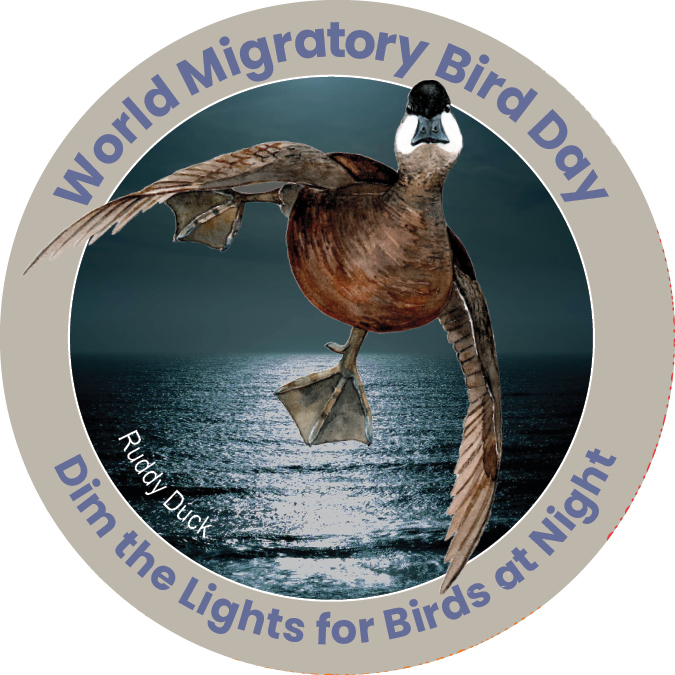
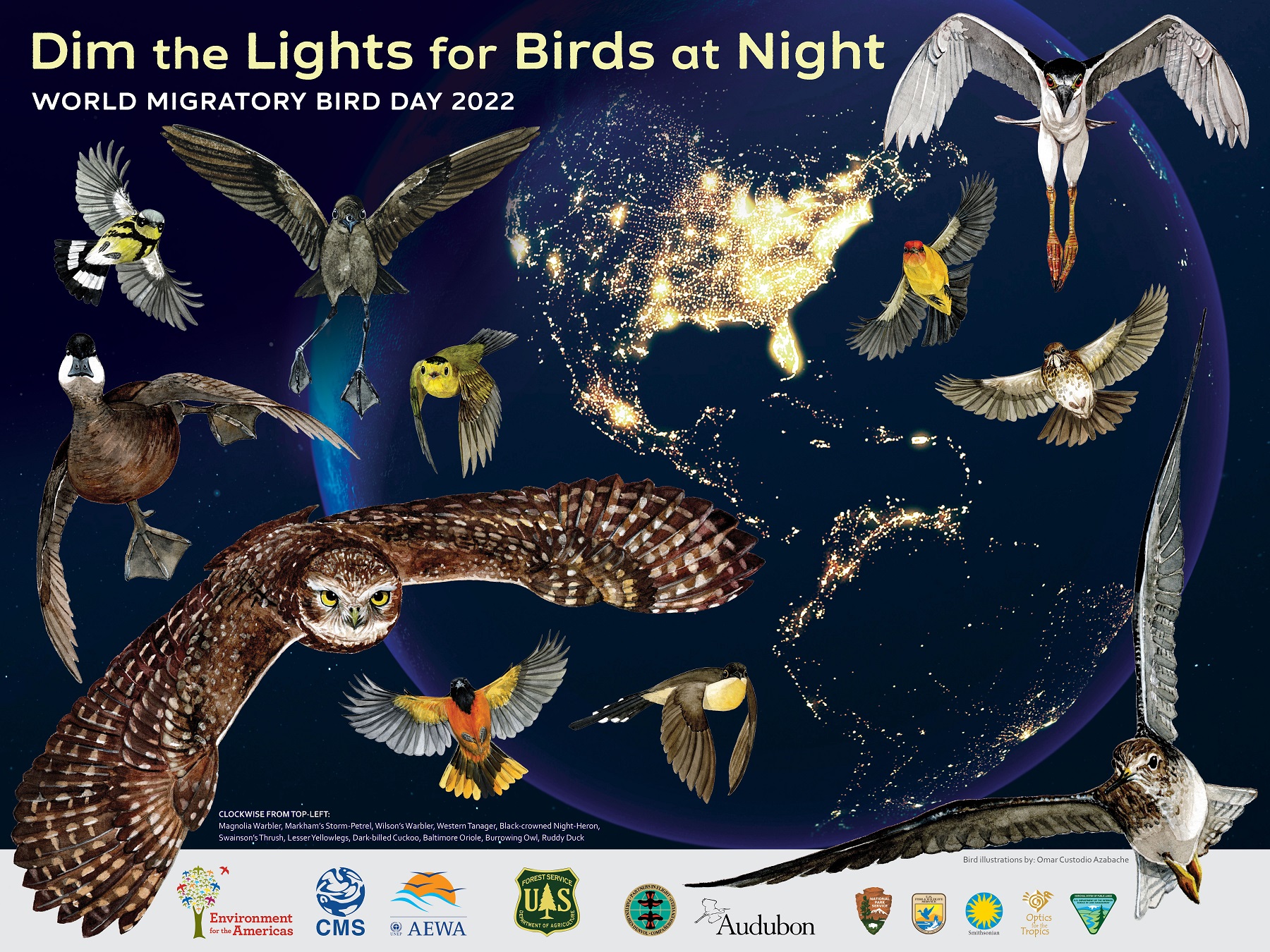
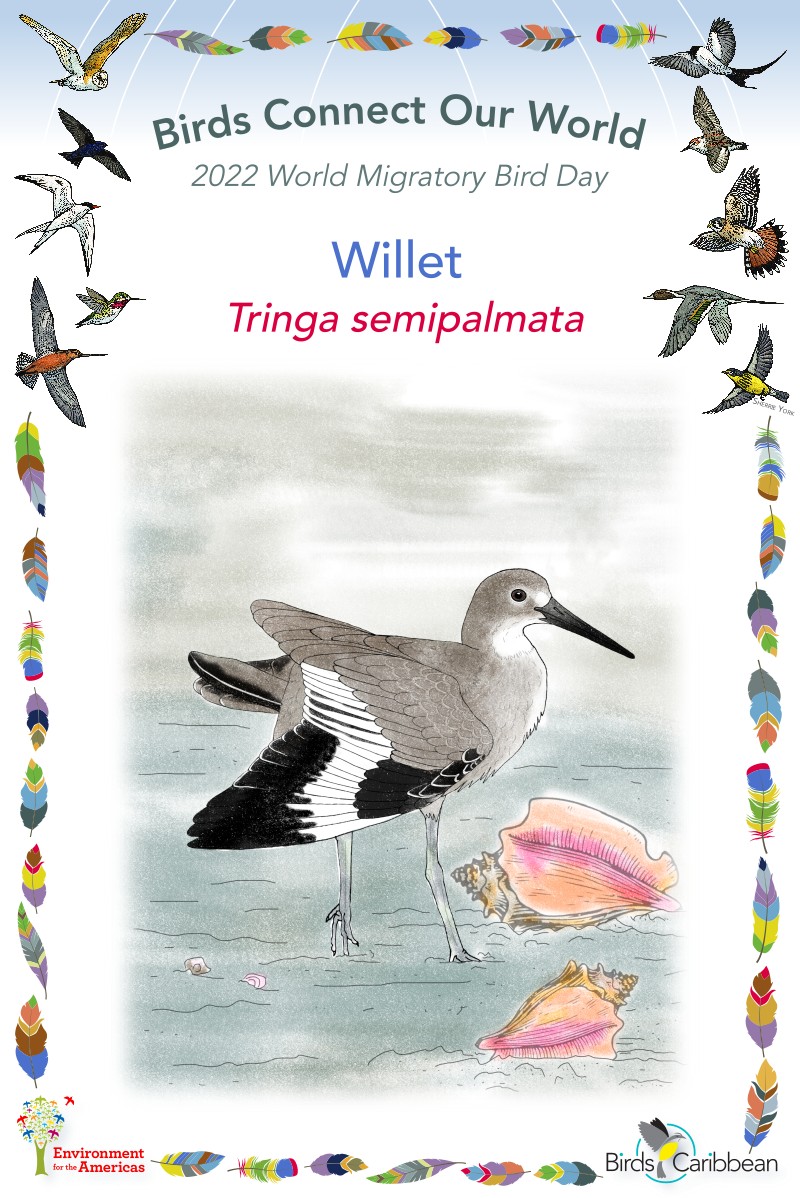
Celebrate World Migratory Bird Day (WMBD) with us in 2022! This year’s theme is “Dim The Lights for Birds at Night”. Have fun learning about a new migratory bird every day. We have colouring pages, puzzles, activities, and more. Download for free and enjoy nature with your family at home.
Migratory Bird of the Day: Black-crowned Night-Heron
While birdwatching at your local wetland, you are most likely to see the Black-crowned Night-Heron perched on trees near the water during the day. As the sun sets, it becomes active searching for food and calling out “Woc” or “Quock.”
Scientists think they feed at night when competition for food is low, since other herons and egrets feed during the day. But they are not picky eaters and will feed during the day in the breeding season. They eat a variety of foods including leeches, earthworms, insects, crayfish, clams, fish, frogs, snakes, eggs, carrion, plants, and even garbage from landfills!
The Black-crowned Night Heron is a medium-sized stocky heron with a short neck and legs – giving it a hunched appearance. Adults have a white head with a distinctive black cap and upper back. Wings, rump, and tail are gray with white to pale gray underparts. Eyes are red and legs yellow-green. During the breeding season, their yellow-green legs turn pink, they develop long white head plumes, and the black on the head and back acquires a blue-green gloss. Juveniles are noticeably different – brown all over with white flecks and yellow eyes.
There are resident populations of Black-crowned Night-Herons on many Caribbean islands, including the Bahamas, Greater Antilles, Virgin Islands, Cayman Islands, and possibly Barbados. The breeding season varies from as early as January to as late as August. Like many herons they nest in colonies. Males choose the nest site up in a tree and begin to build the twig and stick nest, which they then advertise to prospective mates. Colonies in good locations, free from predators and other disturbances, may be used for 30-50 years!
During fall and winter Black-crowned Night-Herons from colder climates migrate south. Some will travel from as far as Massachusetts or Alberta to spend winter in Florida, Mexico and the Caribbean. Mudflats, shallow ponds, creeks, swamps, and marshes are important areas for this bird and should be protected. Black-crowned Night-Heron may even be able to tell you how healthy these areas are. Because they are high-up in the food chain, have a widespread distribution, and are colonial nesters, they make excellent environmental indicators of contamination. Learn more about this species, including its range, photos, and calls here.
Colour in the Black-crowned Night-Heron
Download the Migratory Birds of the Day Colouring Page! Use the picture above and the photos on this page as your guide, or you can look up pictures of the bird online or in a bird field guide if you have one. Share your coloured-in page with us by posting it online and tagging us @BirdsCaribbean #WMBD2022Carib
Listen to the calls of the Black-crowned Night-Heron
The calls of the Black-crowned Night-Heron include a croaking abrupt “Woc“
Puzzles of the Day
Click on the images below to do the puzzle. You can make the puzzle as easy or as hard as you like – for example, 6, 8, or 12 pieces for young children, all the way up to 1,024 pieces for those that are up for a challenge!
An adult Black-crowned Night-Heron, showing the long white plums they grow during the breeding season. (Photo by Stephen Buckingham)A Juvenile Black-crowned Night-Heron skulks low down in vegetation. (Photo by Alan D Wilson)
Activity of the Day
FOR KIDS: What facts can you remember about todays migratory bird – the Black-crowned Night-Heron? Test your knowledge by filling in the missing words in our Black-crowned Night-Heron facts! We have given you all the correct words to use but can you put them into the right fact? You can re-read the information all about this bird above, or search on the BirdsCaribbean webpages or online for lots more information about the Black-crowned Night-Heron! Then, when you have completed all the sentences, you can check your answers here.
FOR KIDS AND ADULTS: Enjoy this video of a Black-crowned Night-Heron in the wild! You can see this bird in the classic ‘hunched over’ posture that this species adopted. Watch it as it hunts for food using a ‘stabbing’ motion with its sharp pointed bill- and eventually catches a fish!
Celebrate World Migratory Bird Day (WMBD) with us in 2022! This year’s theme is “Dim The Lights for Birds at Night”. Have fun learning about a new migratory bird every day. We have colouring pages, puzzles, activities, and more. Download for free and enjoy nature with your family at home.
Migratory Bird of the Day: Peregrine Falcon
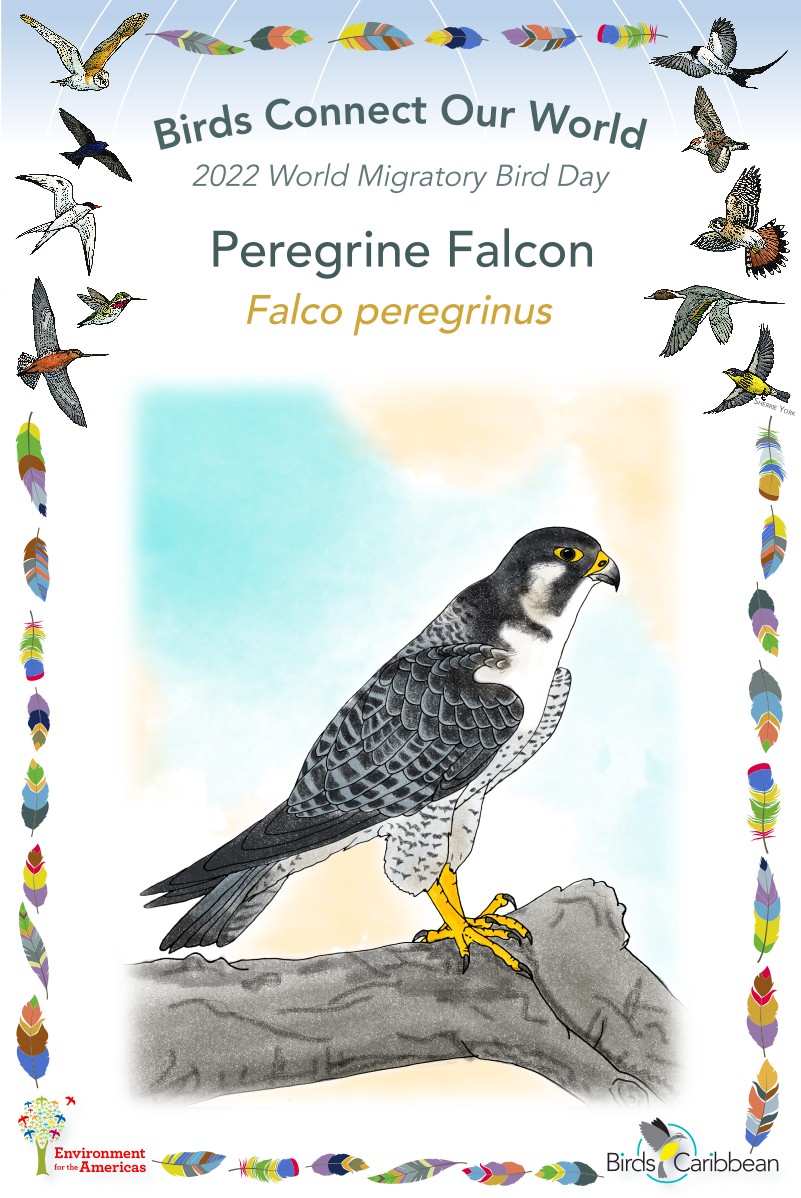
It’s a bird, it’s a plane, it’s the fastest bird in the world – the Peregrine Falcon! Dropping out of the sky at 240 mph Powerful and fast-flying, the Peregrine Falcon is a large crow-size falcon, dark gray above, and cream-colored with dark barring below. Pointed wings, long, narrow tail and rapid pigeon-like flight identify it on the wing. When perched, its mask-like head pattern is distinctive. Immatures can be identified by a brown back with a cream-colored belly with heavy brown streaking.
The Peregrine is an uncommon to rare migratory bird in the Caribbean. It can be found throughout the islands primarily from October to April in coastal areas, offshore cays and rocks, woodlands, forests and cities. One breeding record exists for Cuba and another for Dominica. Peregrines are one of the most widespread birds in the world, found on all continents except Antarctica and on many oceanic islands.
Peregrines eat mostly birds, especially flocking doves, waterfowl, songbirds, waders, and pigeons. They take birds on the wing, usually while flying low to the ground and surprising their prey from behind as they take off. Peregrines also dive on prey from high above, striking with their feet. They are said to be the fastest animal in the world, reaching speeds over 320 km/h (200 mph) or more during hunting dives!
Peregrine populations crashed in 1950-1970 due to the use of pesticides, especially DDT, and it was declared an Endangered Species. Following the ban on DDT in the early 1970s as well as protection of nesting places and releases of captive-bred birds to the wild, the species recovered enough to be removed from the Endangered Species List in 1999 – a conservation success story! Learn more about this species, including its range, photos, and calls here.
Colour in the Peregrine Falcon
Download the Migratory Birds of the Day Colouring Page! Use the picture above and the photos on this page as your guide, or you can look up pictures of the bird online or in a bird field guide if you have one. Share your coloured-in page with us by posting it online and tagging us @BirdsCaribbean #WMBD2022Carib
Listen to the calls of the Peregrine Falcon
The alarm call of the Peregrine Falcon are series of harsh “kak, kak, kak.” calls
Puzzles of the Day
Click on the images below to do the puzzle. You can make the puzzle as easy or as hard as you like – for example, 6, 8, or 12 pieces for young children, all the way up to 1,024 pieces for those that are up for a challenge!
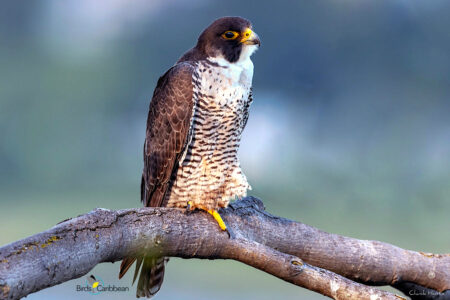
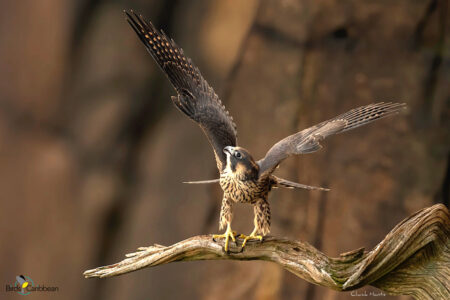
A Peregrine Falcon taking a rest. This is one of the most widespread birds in the world. It is found on all continents except Antarctica! (Photo by Chuck Hantis)A young Peregrine Falcon spreads its wings. (Photo by Chuck Hantis)
Activity of the Day
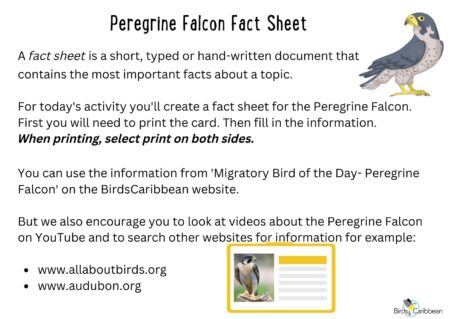
FOR KIDS: Peregrine Falcon’s are fascinating birds, with loads of interesting facts out there to be discovered! Like where they live, what they eat, their nesting behavior and migration. So why not get started on todays activity and make your own Peregrine Falcon fact sheet! Follow our instructions, gather together your favorite Peregrine facts and then use the template we provide. You can get your Peregrine facts from the information above and you can also look this raptor up on eBird, or on “All About Birds” from the Cornell Lab. Once you’ve found all the interesting and fun facts you need go ahead and make your fact sheet.
FOR KIDS AND ADULTS: Enjoy this beautiful video of a Peregrine Falcon in the wild!
Video by Don DesJardin.
Read all about Raptor Conservation in the Caribbean!
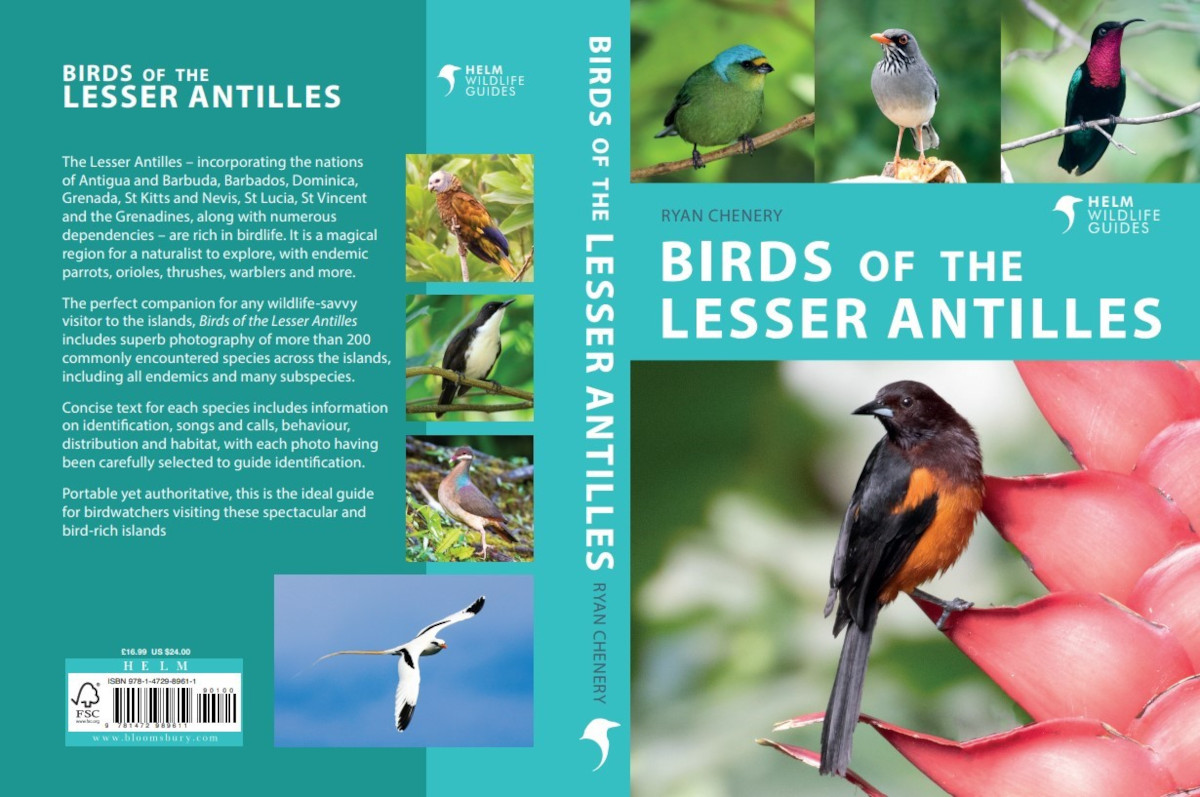
It’s here at last! We are thrilled to announce the recent publication of the highly anticipated, one-of-a-kind Birds of the Lesser Antilles field guide.
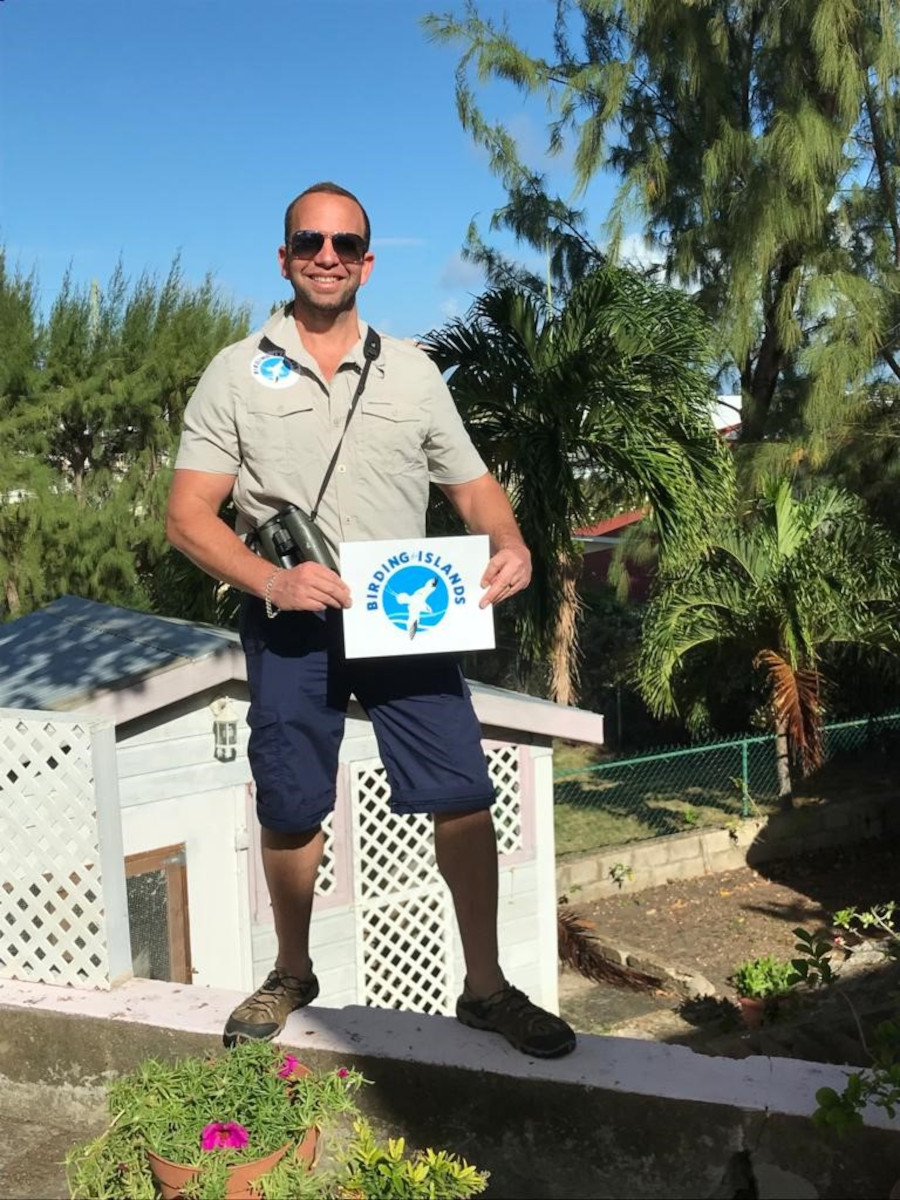
The author, Ryan Chenery, is the Barbados-born director of Birding the Islands – a locally owned and operated birding tour company specializing in organizing and delivering both single and multi-island bird tours throughout the Lesser Antilles.
Popular holiday destinations such as St. Lucia, Dominica, Barbados, Guadeloupe, and the other islands dotted along this south-easterly region of the Caribbean now have a comprehensive bird field guide dedicated exclusively to them. Previously these islands have tended to be incorporated into all encompassing Birds of the West Indies field guides. Drawing on over twenty years of experience, the author focuses solely on species that can be seen in the Lesser Antilles. By excluding species unique to other islands in the wider Caribbean region – this field guide allows readers to easily identify all the birds they could possibly find, from Anguilla in the north of the chain to Grenada in the south.
Some important features of this exciting new book are:
The full list of islands covered is as follows: Anguilla; Saint Martin; Sint Maarten; Antigua and Barbuda; St. Kitts and Nevis; Montserrat; Guadeloupe; Dominica; Martinique; St. Lucia, Barbados, St. Vincent and the Grenadines; and Grenada.
Each of the field guide’s more than 400 stunning photos has been carefully selected to highlight the key identifying features of each species. Photos include perched birds and those in flight, and importantly also depict notable differences in gender, age and breeding status.
Special attention has been paid to endemics, near-endemics, and the host of regional specialties unique to the islands of the Lesser Antilles – with notable attention even being paid to detailing differences between subspecies on various islands.
With the region such a rich area for migratory birds, the publication includes every migrant species likely to be seen, along with the most commonly recorded vagrants and introduced species.
In clear and helpful language, the key physical characteristics of each species are described to assist with accurate identification. Vocalizations are also included in each species account, along with the island where the bird can be seen.
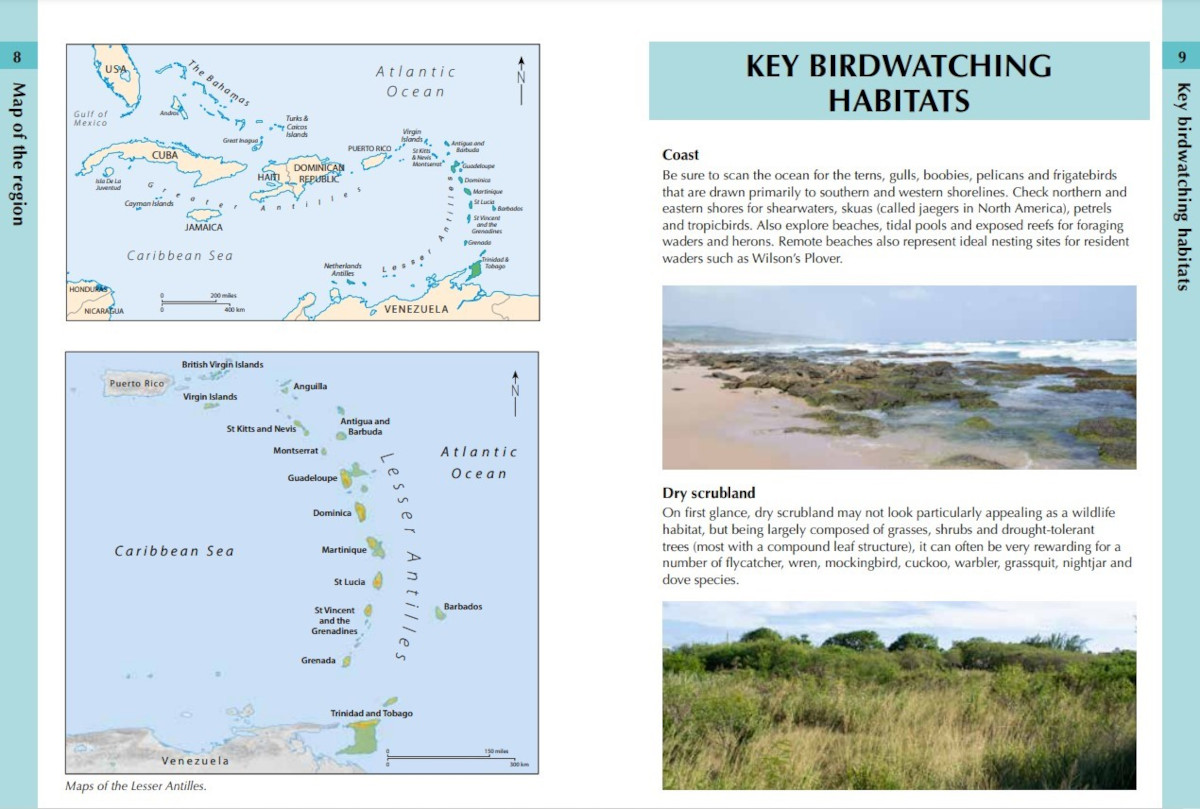
The best birding locations, key habitats to focus on and the likely species to be encountered in each location are also detailed. From marine and coastal habitats to wetlands and montane forest – this book covers them all.
click each image to enlarge
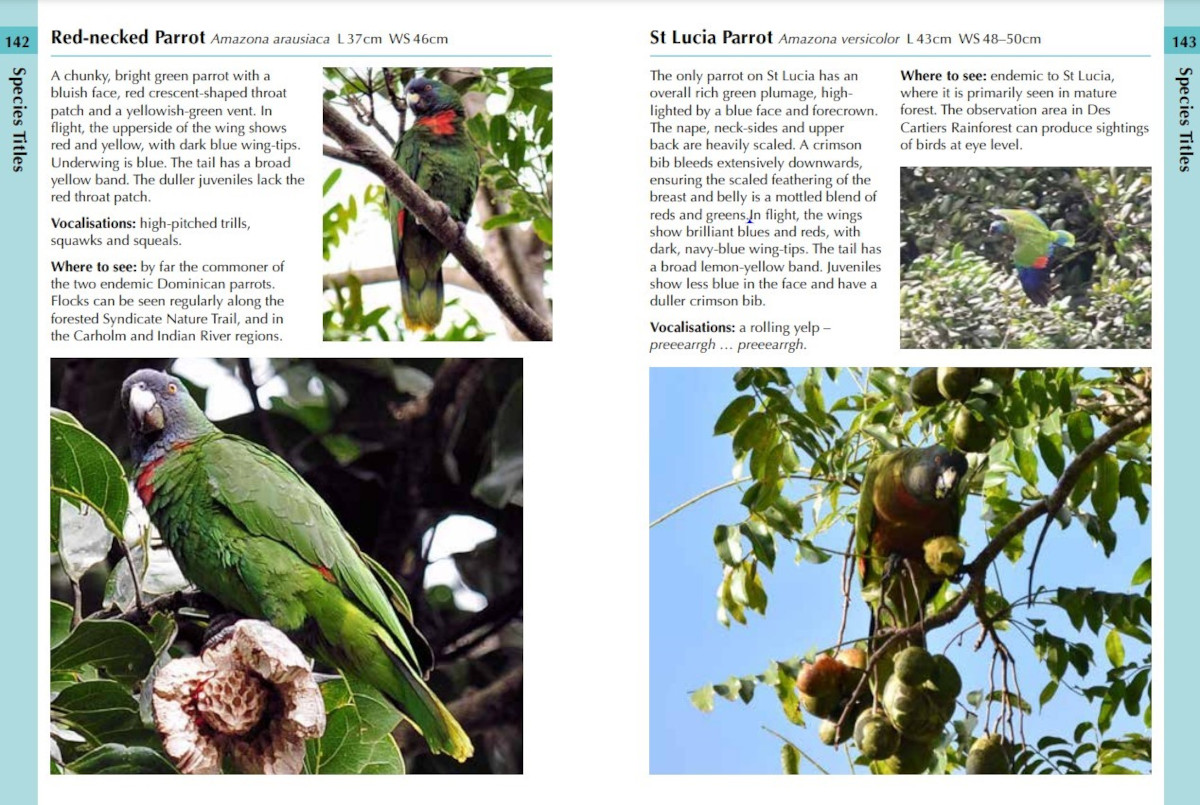
A sneak preview of the guide showing two endemic parrots from the region.
The book contains maps, a guide to types of habitats for birds and much more!
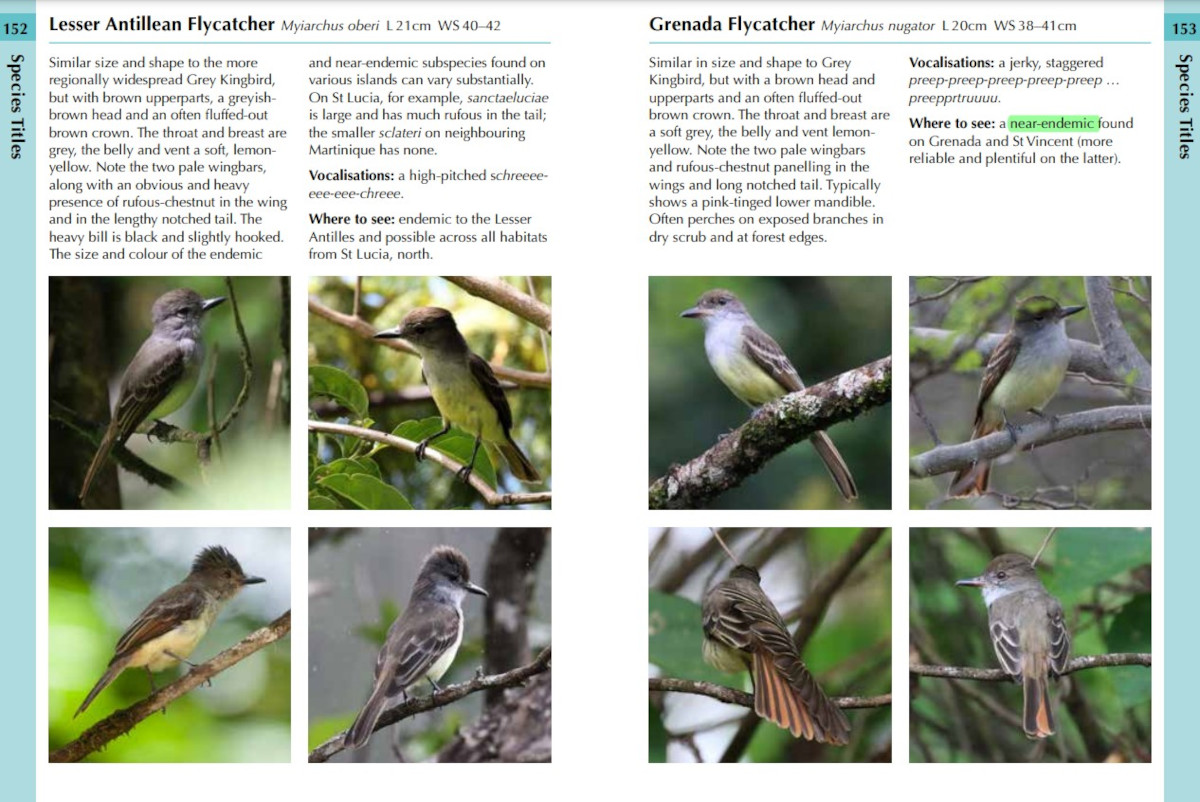
The guide includes multiple photos of the same species to best show their ID traits.
The islands of the Lesser Antilles are rapidly becoming more popular in the birding community, as well as with holiday visitors. If you are planning a trip to any of these remarkable small islands, whether for a holiday or any other reason, you just have to pack this highly portable guide in your bag!
If you find yourself on an island in the Lesser Antilles, staring at a bird….odds are you’ll find it in the pages of this book!
About the author: Born in Barbados, Ryan (aka the Bajan Birder) has been leading birding tours in the Caribbean for nearly two decades and is Birding the Islands’ head birding guide. Before starting the company in 2017, Ryan combined leading his birding excursions with a full-time career in conservation. During this time, he was employed as Chief Naturalist and Eco-guide Manager at Graeme Hall Nature Reserve in Barbados; Environmental Consultant for PAA Management Ltd, Barbados; Field Researcher with Global Vision International in the Ecuadorian Amazon; Development Officer with the Royal Society for the Protection of Birds (RSPB) at one of its flagship reserves in the UK; and finally Parks Officer with North York Moors National Park in North Yorkshire, UK. Ryan leads Birding the Islands’ Every Endemic trips through the Lesser Antilles and Trinidad, as well as Endemics of the Solomon Islands tours, but still enjoys branching off to do other projects – including authoring this guide book, and writing episode scripts for a US Fish and Wildlife Service and Canadian Wildlife Service Nature Documentary on shorebird migration through the Lesser Antilles.
We encourage you to visit Birding the Islands website and consider signing up for one of their amazing tours (or build your own tour). Ryan and Birding the Islands are an official partner of our Caribbean Birding Trail program and he donates a portion of the proceeds to BirdsCaribbean from every tour to help conserve Caribbean birds and habitats.
How to get your copy of Birds of the Lesser Antilles:
Celebrate World Migratory Bird Day (WMBD) with us in 2022! This year’s theme is “Dim The Lights for Birds at Night”. Have fun learning about a new migratory bird every day. We have colouring pages, puzzles, activities, and more. Download for free and enjoy nature with your family at home.
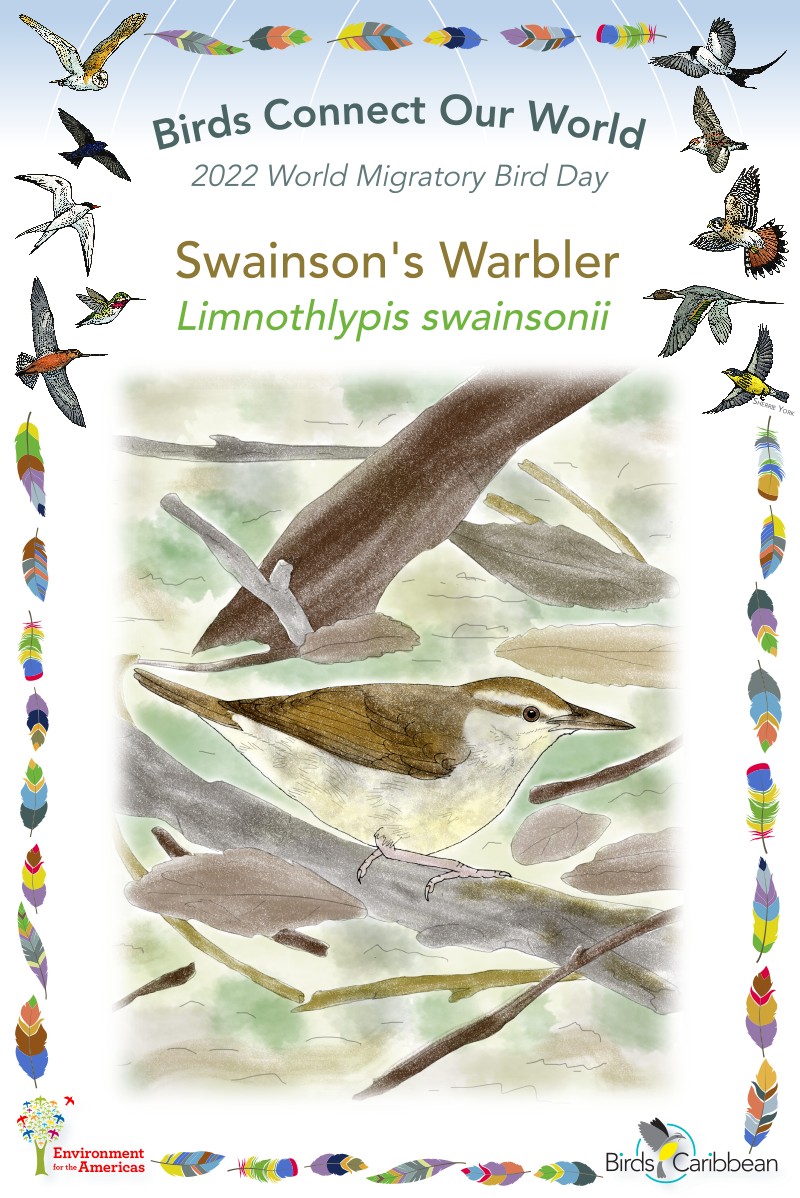
Migratory Bird of the Day: Swainson’s Warbler
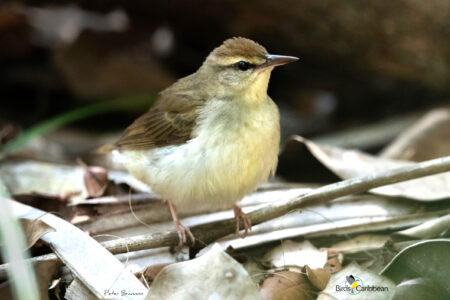
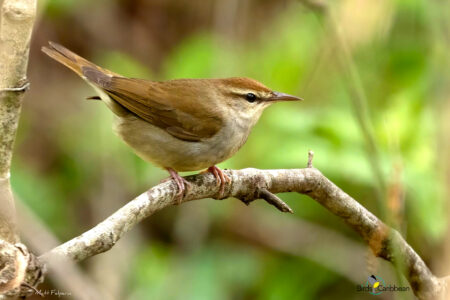
Swainson’s Warbler isn’t known to be one of the brightest or more eye-catching warblers. In fact on first appearances it’s a pretty plain little bird with a brown back, buffy-white chest, rusty cap, and white eyebrow. However plain this bird may be it is still an exciting find for many birders due to their very secretive nature.
Their affinity for swamps and marshes originally earned them the name “Swamp Warbler” when described by Audubon in 1833. He named it after his friend and fellow ornithologist, William Swainson. And while Audubon is credited with the discovery of this warbler, evidence suggests Georgia artist and naturalist, John Abbot, made paintings of the bird as early as 1801.
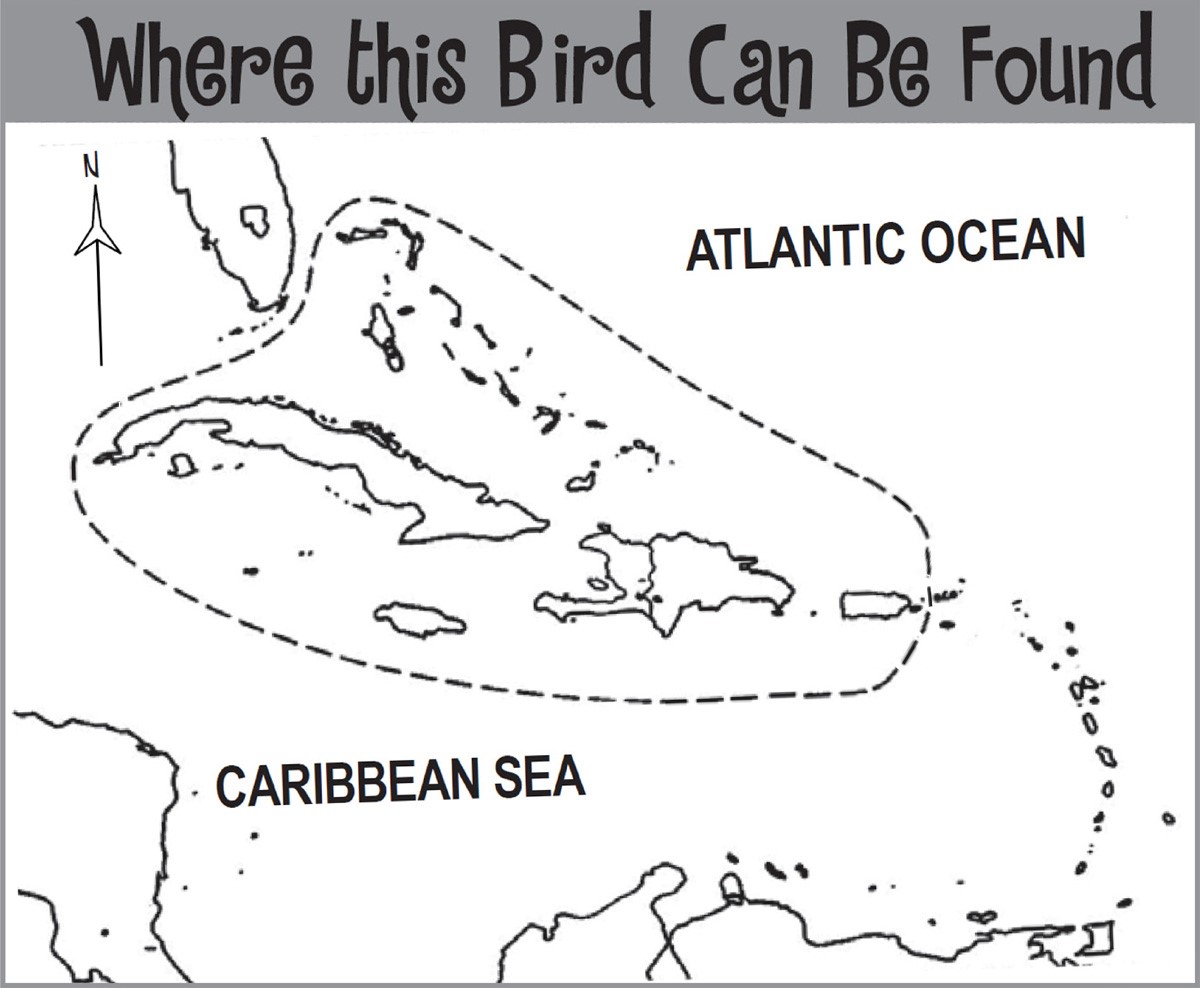
These swamp warblers are medium-distance migrants. They breed in the Southeastern US and spend winter in the Caribbean, Southeastern Mexico, Belize, and Guatemala. Within the Caribbean, in winter most birders find them in Jamaica, Cuba, the Bahamas, and the Cayman Islands. But, keep an eye out for them during migration in the Dominican Republic, Puerto Rico, and occasionally Aruba! In the Caribbean you can find them in many types of forest, including mangroves and montane forests, as long as there is a dense understory for them to hide in.
We still have a lot to learn about their overwintering range, as their skulky nature means they often go undetected. Fortunately BirdsCaribbean’s Landbird Monitoring Team will be deploying 10 motus tags on Swainson’s Warblers in Jamaica to better understand both their migratory routes and overwintering ecology. Learn more about this species, including its range, photos, and calls here.
Colour in the Swainson’s Warbler
Download the Migratory Birds of the Day Colouring Page! Use the picture above and the photos on this page as your guide, or you can look up pictures of the bird online or in a bird field guide if you have one. Share your coloured-in page with us by posting it online and tagging us @BirdsCaribbean #WMBD2022Carib
Listen to the calls of the Swainson’s Warbler
The calls of the Swainson’s Warbler sharp, loud repeated “chips” given by both males and females.
Puzzles of the Day
Click on the images below to do the puzzle. You can make the puzzle as easy or as hard as you like – for example, 6, 8, or 12 pieces for young children, all the way up to 1,024 pieces for those that are up for a challenge!
Swainson’s Warbler. This little brown warbler can be very hard to spot as it skulks in the undergrowth (Photo by Peter Brannon)Swainson’s Warbler. The male and female look the same and this migrant does not change it’s plumage colouration between the winter and breeding season. (Photo by Matt Felperin- Macaulay Library- ML439968381)
Activity of the Day
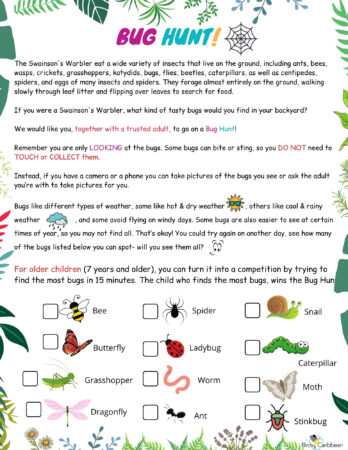
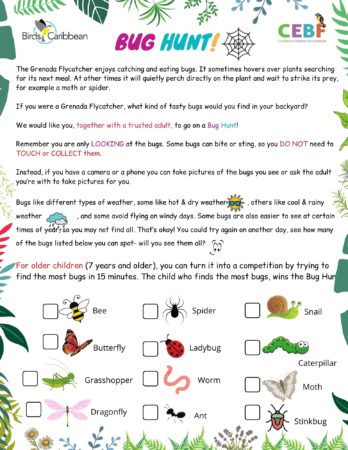
FOR KIDS: Swainson’s Warblers catch insects to eat. They feed in the forest canopy and on the ground. Sometimes, in dry weather, they dig under the leaf litter in search of insects. Imagine you are a Swainson’s Warbler in search of food and find out what bugs there are in your backyard in our fun bug hunt! Follow our instructions and see how many different types of bugs you can find! Perhaps you will spot a butterfly or a bee flitting past? Remember just to look at the bugs and not to touch or collect them. You can check the ones you see off on our list and perhaps take some photos of them?
FOR KIDS AND ADULTS: Enjoy this video of a Swainson’s Warbler in the wild! We aren’t likely to hear this little bird singing whilst they are migrating through the Caribbean, but you can enjoy their loud cascading song here. During the breeding season males will sing defending their territory, whilst the females build the nest.
Celebrate World Migratory Bird Day (WMBD) with us in 2022! This year’s theme is “Dim The Lights for Birds at Night”. Have fun learning about a new migratory bird every day. We have colouring pages, puzzles, activities, and more. Download for free and enjoy nature with your family at home.
Migratory Bird of the Day: Red-footed Booby
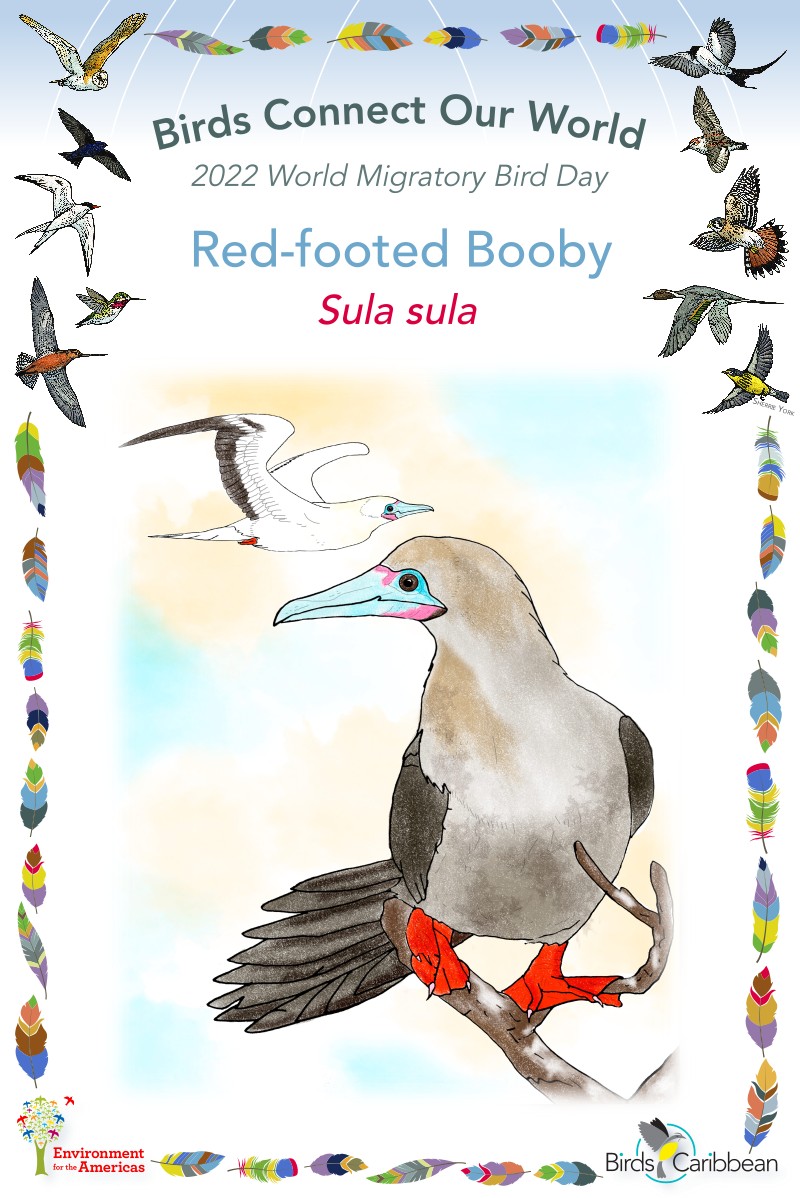
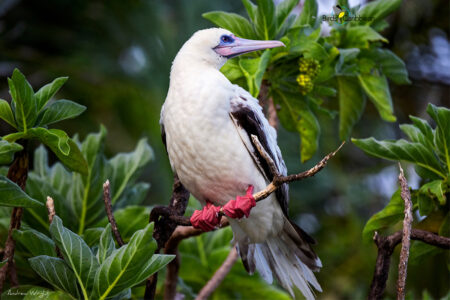
If you were asked to name one of the most colorful birds of the Caribbean, would you choose a seabird? Probably not, but think about it. There is a seabird in the Caribbean that has black piercing eyes surrounded by a ring of ultramarine blue skin and a patch of cobalt blue (sometimes iridescent lime green in males). Its pointy bill looks like it was dipped in a rainbow, going from velvety black at the base, to orange, then blue and pale blue at the tip! If that wasn’t enough, there is one another touch of color in this bird, some say the most important splash of color: its feet are bright red.
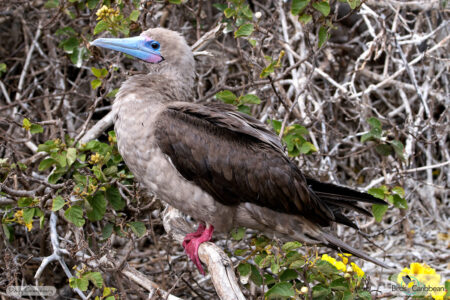
Say hello to the Red-footed Booby, the most colorful seabird of the tropics. These colorful seabirds have even more variation, with a “white morph” that is the most common and a less common “brown morph” that has chocolate-brown feathers all over.
Red-footed Boobies are pelagic seabirds, which means that they travel far offshore to fish. They feed by plunge diving from great heights, targeting mostly flying fish and squid. Although these birds do not technically migrate they will disperse out to sea after nesting. This means you can see Red-footed Boobies at sea year-round, you will have better luck enjoying their colorful features on land – it is best to do so with binoculars, from a respectful distance.
Of the three booby species in the Caribbean (the others are the Masked Booby and the Brown Booby), the Red-footed Booby has the most restricted range. It breeds on a limited number of small islands and cays, mainly in the Lesser Antilles and the offshore islands of northern Venezuela, though an internationally-important population can be found in the Cayman Islands. During the breeding season, from October to May, Red-footed Boobies form colonies of up to a hundred nests in trees or shrubs.
The construction of the nest is part of the Red-footed Booby’s courtship ritual. Once he is joined by a female, the male starts collecting nest material. After he finds a good stick, he flies back to the nest with the stick in its bill, then presents it to his mate who may, or may not, accept it. If she does take it, the male watches her place the stick – sometimes he may grab one end of it and work with the female. Needless to say, for Red-footed Boobies, building a nest can take some time! They lay a single, white egg which they incubate for a month and a half, and raise their chick for three and a half months.
As for many seabirds, the biggest threat affecting Red-footed Boobies on land is the destruction of nesting habitat for human development. The first step to better conserve this magnificent species (and all the other Caribbean seabirds) is to record the location of its colonies. In fact, in 2023, seabird conservation partners are planning to count nesting seabirds across the Caribbean. So, if you know of a colony of Red-footed Boobies near you, you can help by informing your local conservation group! Learn more about this species, including its range, photos, and calls here.
Colour in the Red-footed Booby
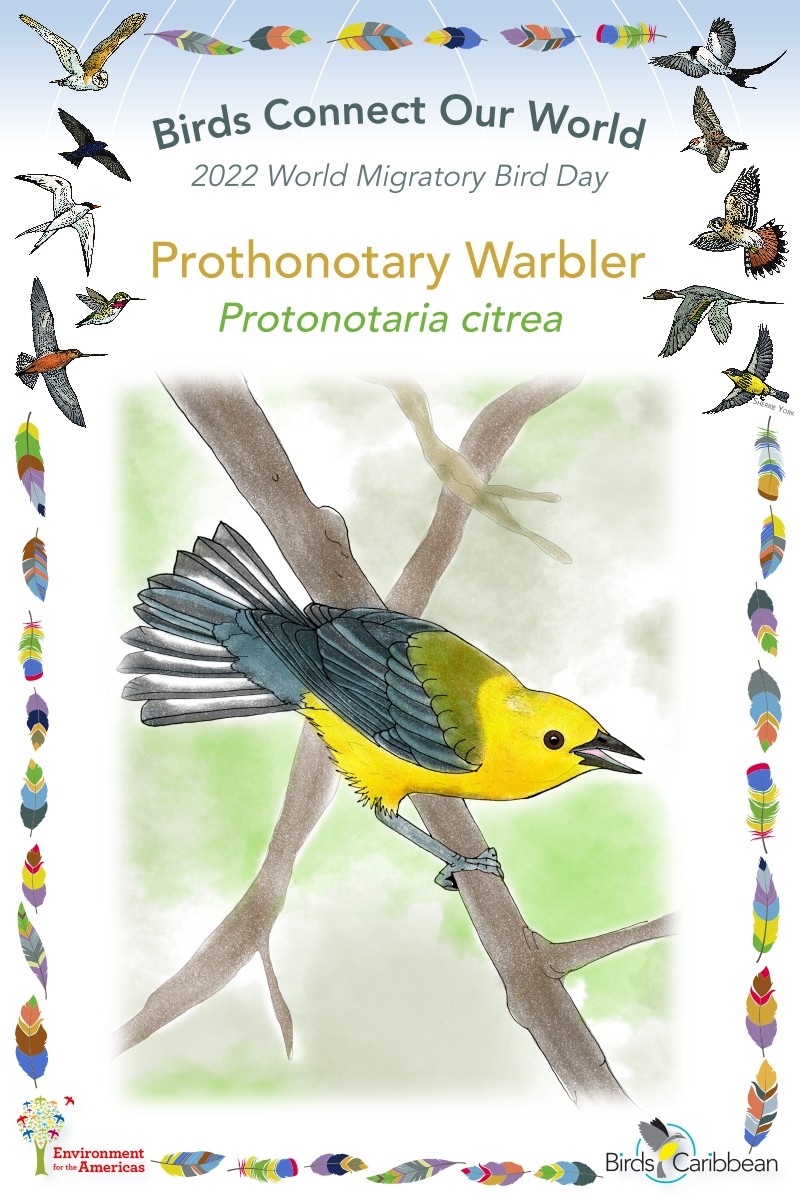
Download the Migratory Birds of the Day Colouring Page! Use the picture above and the photos on this page as your guide, or you can look up pictures of the bird online or in a bird field guide if you have one. Share your coloured-in page with us by posting it online and tagging us @BirdsCaribbean #WMBD2022Carib
Listen to the calls of the Red-footed Booby
Red-footed Booby’s will be mostly silent during the non-breeding period. The make several sounds during the breeding season including a series of guttural “karuk” calls.
Puzzles of the Day
Click on the images below to do the puzzle. You can make the puzzle as easy or as hard as you like – for example, 6, 8, or 12 pieces for young children, all the way up to 1,024 pieces for those that are up for a challenge!
The dark morph of the Red-footed Booby. (Photo by Doug Greenberg)
The light morph of the Red-footed Booby. (Photo by Andrew Wright)
Activity of the Day
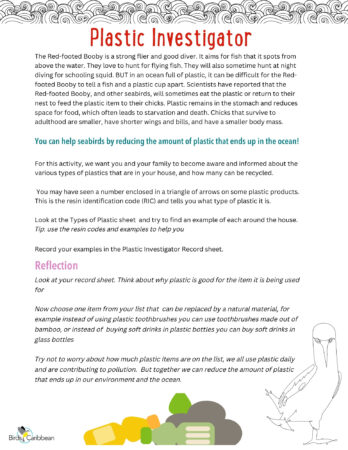
FOR KIDS: The Red-footed Booby feeds on fish and squid. They dive into the water to pluck out prey with their long, pointed bills . Like many of our seabirds Red-footed Boobies can be harmed by plastic in the seas and oceans. In an ocean full of plastic, it can be difficult for the Red-footed Booby to tell a fish and a plastic cup apart!
You can help seabirds by reducing the amount of plastic that ends up in the ocean, and by becoming a Plastic Investigator! For this activity, we want you and your family to become aware and informed about the various types of plastics that are in your house, and how many can be recycled. You can download out activity sheet here for more information and instructions on how to take part. Try to find an example of each type of plastic around your house. Record your examples in the Plastic Investigator Record sheet (included with the activity sheet).
FOR KIDS AND ADULTS: Enjoy this video of a light morph Red-footed Booby in the wild! These birds nest in trees along coasts and on offshore islands in the Caribbean. During migration and in winter you will see them plunge diving into the sea for fish.
Celebrate World Migratory Bird Day (WMBD) with us in 2022! This year’s theme is “Dim The Lights for Birds at Night”. Have fun learning about a new migratory bird every day. We have colouring pages, puzzles, activities, and more. Download for free and enjoy nature with your family at home.
Migratory Bird of the Day: Prothonotary Warbler
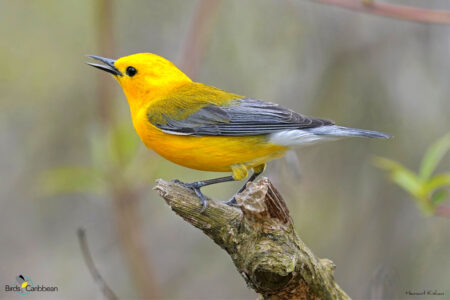
Who’s that spot of sunshine in the swamp? It’s the Prothonotary Warbler! These bright wood warblers were named for their dapper plumage, as the yellow is reminiscent of the robes of papal cloaks or “prothonotaries” in the Catholic church.
And would you believe that these warblers assisted with the conviction of a spy? When alleged spy, Alger Hiss, denied his affiliations, those same affiliations came forward with knowledge of his recent amateur birding expeditions – including an exciting find of the Prothonotary Warbler! When Alger Hiss admitted to recently adding this warbler to his life list, his secret was out and his affiliation exposed!
These sunny wood warblers are the only warbler to nest in cavities, breeding in the southeastern U.S. In the Caribbean, Prothonotary Warblers are considered an uncommon migrant in both spring and fall. The best chance at spotting them is likely in Cuba, Grand Cayman Islands, or the Bahamas, though unusual vagrants have been reported in Bermuda. We don’t typically see them as often in the Caribbean because they take a trans-gulf route, crossing over the Greater Antilles to arrive in Mexico and continue further south.
During migration, Prothonotary Warblers expand their habitat selection from their usual preference of woody swamps. Though we still lack information on their habitat use during migration and overwintering, look for them along coastal areas like marshes and inland watercourses.
These little balls of sunshine often move together in small flocks. In the spring, males will head north sooner than females (to set up a territories on the breeding grounds), though no differences in sex or age have been noted in the fall. Prothonotary Warblers are fairly well studied in their breeding range, but we still lack a lot of critical information, especially how habitat loss has affected migratory and overwintering populations. These warblers have been heavily impacted by deforestation. Like many other songbirds, they migrate at night, making it extra important to turn off your lights so as to not disorient these and other birds. Learn more about this species, including its range, photos, and calls here.
Colour in the Prothonotary Warbler
Download the Migratory Birds of the Day Colouring Page! Use the picture above and the photos on this page as your guide, or you can look up pictures of the bird online or in a bird field guide if you have one. Share your coloured-in page with us by posting it online and tagging us @BirdsCaribbean #WMBD2022Carib
Listen to the calls of the Prothonotary Warbler
The Prothonotary Warbler makes a loud, piercing series of repeated “tsweet” calls.
Puzzles of the Day
Click on the images below to do the puzzle. You can make the puzzle as easy or as hard as you like – for example, 6, 8, or 12 pieces for young children, all the way up to 1,024 pieces for those that are up for a challenge!
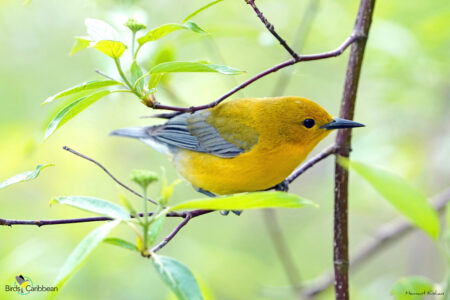
A bright yellow Male Prothonotary Warbler perched. He will sing during the breeding season to hold his territory. But it’s not just his song that helps, males that are brighter yellow gain access to better nest sites than less colorful males! (Photo by Hemant Kishan)
Female Prothonotary Warbler. She is slightly less bright than the male, with a greenish crown and nape. (Photo by Hemant Kishan)
Activity of the Day
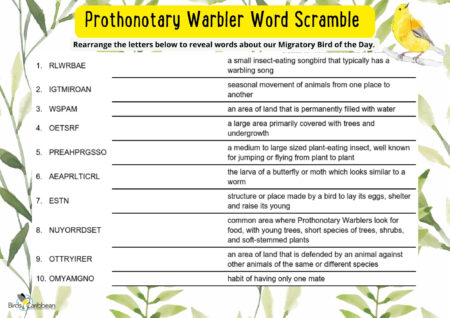
FOR KIDS: Make sure that you have read the information given above. The facts here will help you with todays activity. Use what you read and the clues on the sheet to untangle our our word scramble – all about the Prothonotary Warbler- our Migratory Bird of the Day! You will be finding words that are about where this small yellow bird lives, what it eats and how it behaves. Once you think you have found or the words, or cannot work out any more clues you can find all the answers here.
FOR KIDS AND ADULTS: Enjoy this video of a Prothonotary Warbler in the wild! This bird is bringing nesting material, it is one of the very few warbler species that builds its nest in cavities. They breed in wet forests, mainly in the southeastern U.S. So although you won’t see this little bird nest building in the Caribbean you can look out the small ‘sunny’ birds during their fall migration.
Find Warblers difficult to identify? Don’t worry we are here to help you out!
Celebrate World Migratory Bird Day (WMBD) with us in 2022! This year’s theme is “Dim The Lights for Birds at Night”. Have fun learning about a new migratory bird every day. We have colouring pages, puzzles, activities, and more. Download for free and enjoy nature with your family at home.
Migratory Bird of the Day: Ruddy Duck
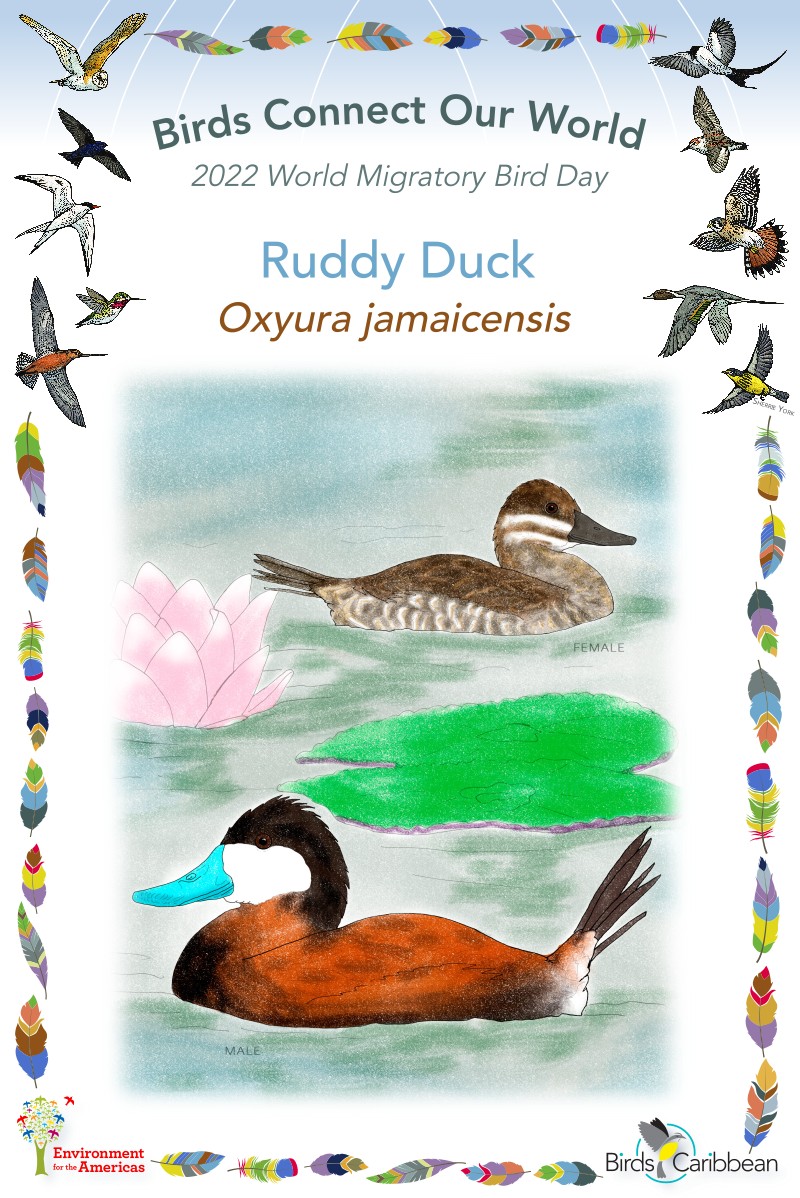
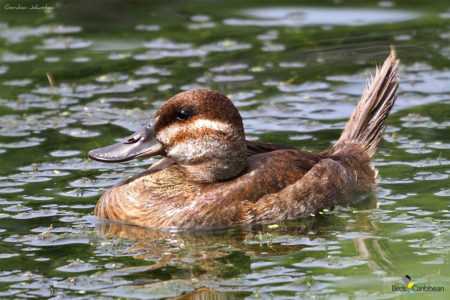
A common member of the stifftail family, the Ruddy Duck is a small, compact duck with a scoop-shaped bill. This duck has a long, stiff, spiky-looking tail often held upright. The Male has a black cap and bright white cheeks. During the breeding season, he sports a bright sky-blue bill and chestnut-coloured upperparts. He pairs this ‘ensemble’ with unusual but entertaining courtship displays. In the non-breeding season males are a bit less flashy with -brown upperparts and blackish bills. Females and immatures are brown overall with a dark cap and a distinct dark stripe across the pale cheek.
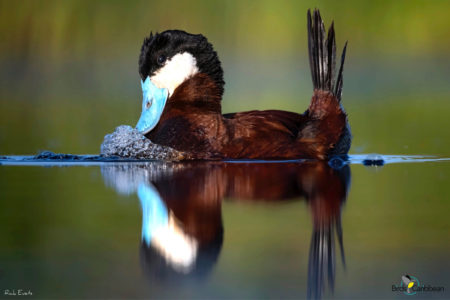
When breeding males perform a ‘bubbling’ display, the male will hold his tail straight up while striking his bill against his inflated neck. Bubbles are created in the water as air is forced from the feathers. A courting male may also drop his tail and run across the water, making popping sounds with his feet. Males also utters a nasal “raa-anh” call during courtship displays, but outside the breeding season these small ducks are mainly silent .
Ruddy Ducks are resident in parts in the Caribbean, found in the Bahamas, Greater Antilles, Virgin Islands and Barbados. Here they use open fresh-water and brackish ponds and lagoons. They feed mainly on aquatic insects, crustaceans, and other invertebrates, as well as small amounts of aquatic plants and seeds. They forage almost exclusively by diving, but are occasionally seen skimming food from the water surface. During fall and winter the Caribbean population is swelled by migratory Ruddy Ducks that breed in the Prairie Pothole region of North America. After breeding they head south to the Caribbean as well as the Gulf Coast, Mexico, and East Coast of the US to spend the winter.
Since Ruddy Ducks depend upon wetlands for their survival, they are directly impacted by threats to these areas such as pollution, habitat loss, and invasive species. It is vital to conserve and protect our wetlands. They provide habitats for the Ruddy Duck and many other species.They also provide invaluable services to humans such as flood protection, improved water quality, natural products, recreation, and so much more! Learn more about this species, including its range, photos, and calls here.
Colour in the Ruddy Duck
Download the Migratory Birds of the Day Colouring Page! Use the picture above and the photos on this page as your guide, or you can look up pictures of the bird online or in a bird field guide if you have one. Share your coloured-in page with us by posting it online and tagging us @BirdsCaribbean #WMBD2022Carib
Listen to the calls of the Ruddy Duck
Outside the breeding season Ruddy Ducks are often silent, but you might hear a nasal “raanh” call
Puzzles of the Day
Click on the images below to do the puzzle. You can make the puzzle as easy or as hard as you like – for example, 6, 8, or 12 pieces for young children, all the way up to 1,024 pieces for those that are up for a challenge!
A male Ruddy Duck during the breeding season performs his display. This involves him raising his tail and making the a distinctive sound and causing the water to bubble by slapping his bill against his chest. (Photo by Rick Evets)A female Ruddy Duck. She does not have the distinctive bright blue bill of the breeding male but her small size and stiff up-pointed tail are characteristic of this species. (Photo by Gordon Johnston-Macaulay Library-ML354838041)
Activity of the Day
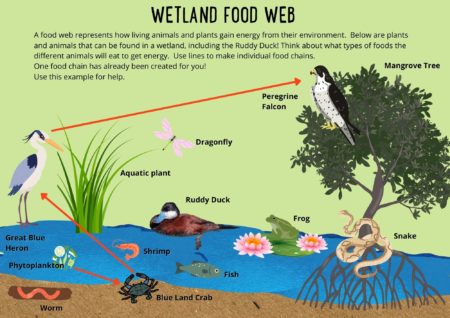
FOR KIDS: Ruddy Ducks can be found on ponds, reservoirs and in other wetlands all teaming with life! Ruddy Ducks like to feed on invertebrates and small crustaceans as well as plants. But within a wetland ecosystem all sorts of interactions take place as each animal living there looks for enough food to eat. A food web represents how living animals and plants gain energy from their environment. Take a look at our wetland ecosystem, including the Ruddy Duck, and see how many different links you can find! Think about what types of foods the different animals will eat to get energy. Use lines to make individual food chains. You can find some answers here.
FOR KIDS AND ADULTS: Enjoy this video of a male Ruddy Duck feeding in the wild! He is diving down to find food, perhaps he is looking for some aquatic vegetation or invertebrates? Notice that now the breeding season is over this male has a black bill (rather than the blue one he has when breeding).
Disclaimer: The content of this article is provided for general information only. Please, always obtain professional or specialist advice when seeking to address your personal mental health issues and concerns.
“The bird will see you now…”
World Mental Health Day, recognized by the World Health Organization since 1992, takes place on October 10 every year. On this day, social media posts, events, and activism on and offline help raise awareness of mental health problems and solutions. This year’s World Mental Health Day theme is
‘Make mental health and wellbeing for all a global priority’
So, how do birds help to improve our wellbeing? Well, birds can be our very best therapists, if we give them the chance. They can help us through the tough times.
The BirdsCaribbean community knows this! Watching, photographing (Birdlife Jamaica member Stuart Reeves shares his photography experience, and tips, during the COVID-19 lockdown) and attracting birds to one’s yard are truly enjoyable experiences that support a healthy and happy lifestyle. Walking through nature – your backyard, neighborhood park, a national park or botanical garden – in search of your favorite bird offers many benefits. We have listed five below.
1. Community and Togetherness
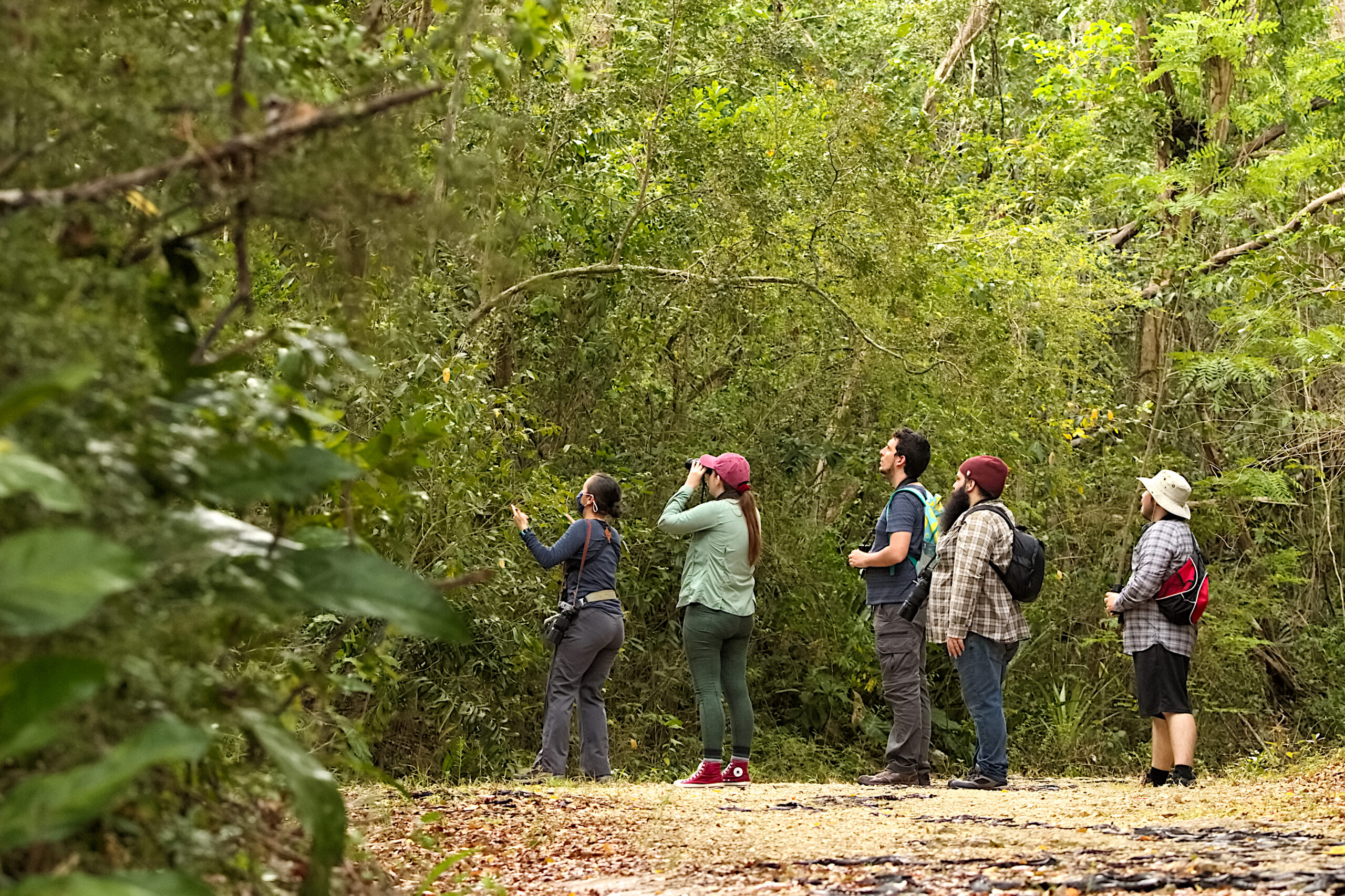
Birdwatching does not have to be a lonely pursuit. It can be a way to bond with family and friends. You might even meet new people along the way! Being a member of the birding community satisfies our very human need to belong. Members of a birding group share knowledge and experiences with each other. In some cases, birdwatching with others helps us to define our sense of self and social identity, and to achieve goals that might be harder to reach if we worked alone. A bird that a companion points out to you might be one that you would never have seen otherwise – even a “lifer,” perhaps!
Find your flock! Birding in a group can be rewarding and fun. (Photo by Edward Hernandez Lara)
Regardless of gender, age, socioeconomic status, ability and experience, birding can be enjoyed by all. It’s an inclusive experience, when you have company. You can discuss the birds that you have seen, the places you have visited, and especially those birds you so badly want to see in the wild. If you’re planning a solo birdwatching trip soon, remember: you don’t have to do it alone. You can contact your local birding group or ask a relative or neighbor to see if they would like to join you. Birding can help strengthen relationships!
2. Time away from screens
We are bombarded with media on all sides; isn’t that true? It’s not always very good for our mental health and can actually increase our anxiety.
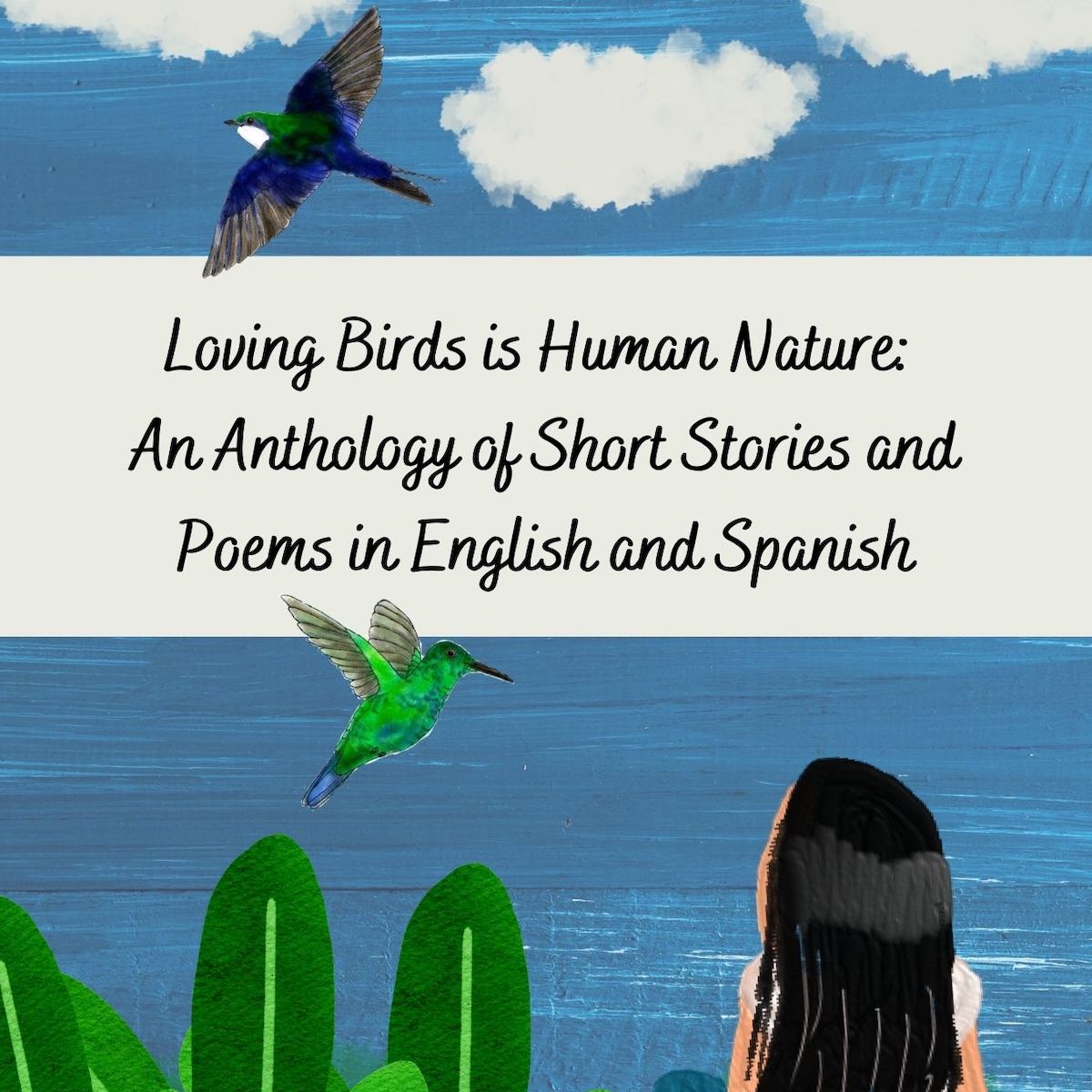
On the other hand, birdwatching can be a very reflective activity, almost like meditation. It is an opportunity to spend time in a quiet place, removed from distractions like social media and movie streaming service providers (you know exactly what we’re talking about! We all experience it these days). The different colors, scents, and sounds found in nature can occupy the mind and push out, if just temporarily, worrying and stressful thoughts. Find out how people found comfort in birds during the pandemic in our recently published booklet Loving Birds is Human Nature: An anthology of short stories and poems in English and Spanish. Immersing oneself in nature for a few hours can also help us “reconnect.” Hearing a familiar birdsong or spotting a particular plant, for example, can help people recall fond memories from their youth. We sometimes tend to forget how much our natural environment was, and remains, part of our human experience. It’s always good to remember.
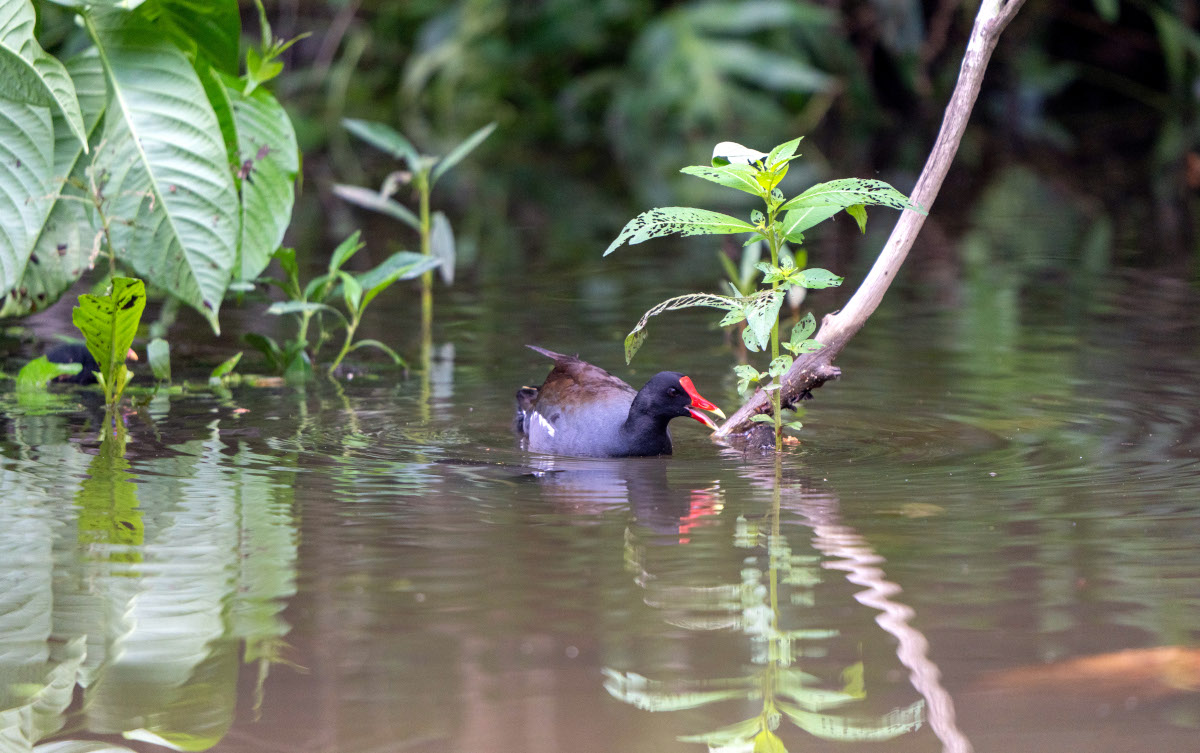
A Common Gallinule reflected in the water. (Photo by Dorian Rose)
3. See new places
It is so easy to fall into a comfortable daily routine. Get up, go to work, return home, and repeat. Seeking out birds in their natural habitats is a great way to snap us out of the monotony of our normal routines. Birdwatching can also be enjoyed from inside the house, it is true; but getting out and about is a better choice. A short trip to a nearby park will provide a change of scenery, and it is even better if you can visit a nature reserve. Make a point of exploring new places, where new and different bird species may be waiting for you!
Belair lookout point Carriacou, Grenada
Watching the sunrise over a mountain, going out into the forests or swamps to look for potoos, even going to a reservoir to see a rare waterbird—all of these are bound to take us on a welcome detour from our everyday experiences. Once they have become familiar with the birds in their immediate area, for many birders there is an insatiable curiosity about species elsewhere in the world. Birding can be the motivation to move out of your comfort zone and be rewarded with new travel experiences.
4. Exercise for the brain and body
The brain is like a muscle. It needs exercise!
Keeping our minds active and alert is important for our overall well being. If you are new to birdwatching, identifying the birds you see can be a challenging mental puzzle. Take shorebirds, for example, which are notoriously hard to identify! Give your brain a good challenge. Experienced birders can still learn new things every day about bird behavior. There is no end to the bird knowledge we can acquire. Researchers have reported that new neural paths are formed from these kinds of brain activities and can help fight back against diseases like Alzheimer’s and other forms of dementia, as well as Parkinson’s.
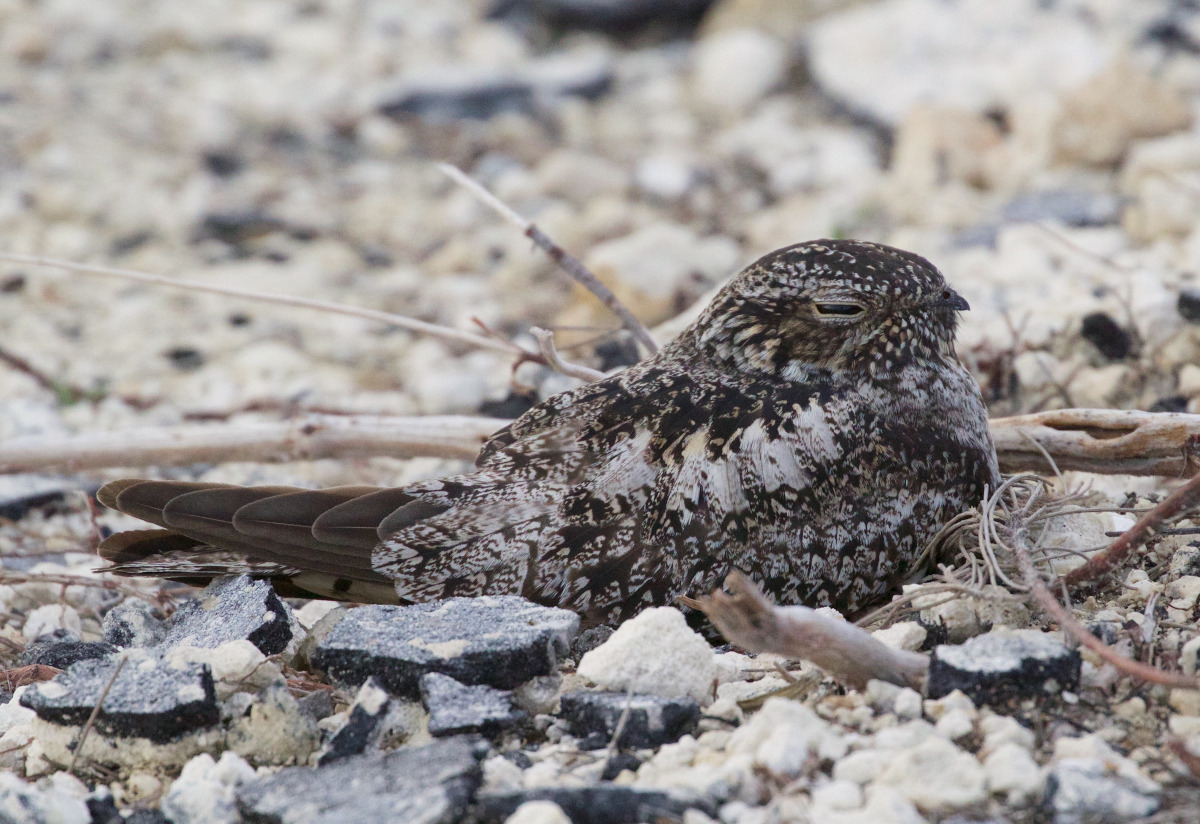
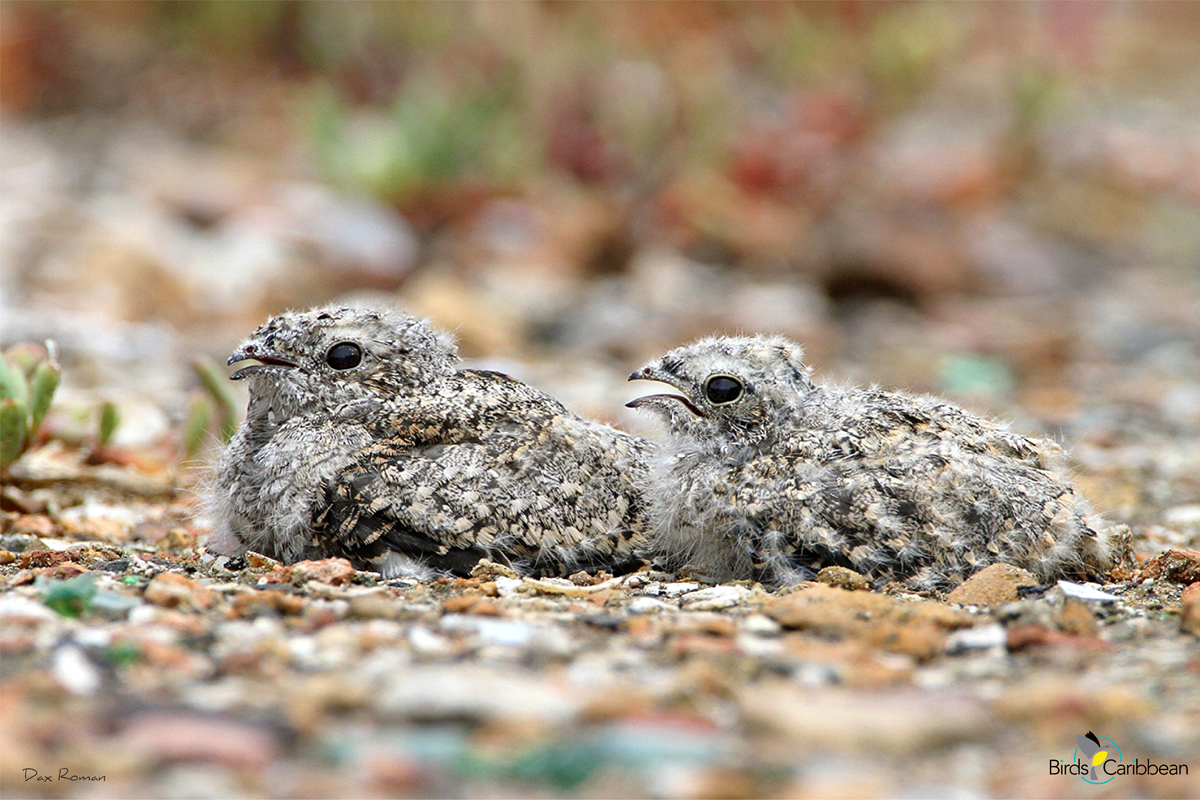
An Antillean Nighthawk on it’s nest in the Bahamas. These birds are well camouflaged and can be tricky to spot! (Photo by Scott Hecker)
Some birds are harder to find than others. Without even realizing it, you can walk for several miles while actively looking and listening, before you find the bird you’re looking for. Some species remain higher up in hills and mountains, forcing birders to really do some uphill work for the prize! You can go at your own speed, though. Birders always pace themselves. There is always enough time to catch your breath and notice the beautiful biodiversity that surrounds you: butterflies, fungi, lizards, ferns and wildflowers. This can improve your cardiovascular health. You will be soaking up the sun’s vitamin D, which helps the body absorb and retain calcium and phosphorus. Just remember to stay hydrated!
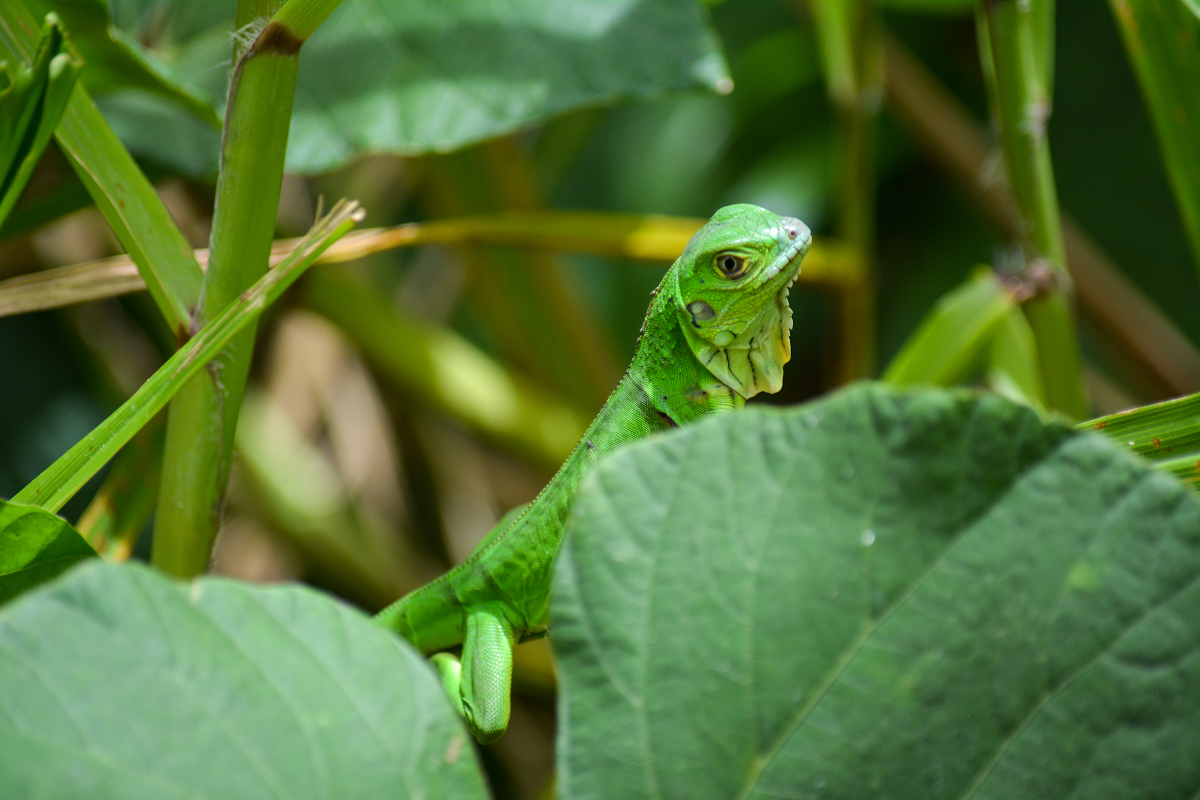
Keep your eyes open and who knows what you might spot! A Green Iguana amongst the leaves. (Photo by Karla Kelly)
5. The amazing variety of birds
As we mentioned already, life can get dull. Sometimes it’s good to add some variety. Monotony encourages boredom and fatigue, which have a negative impact on our mood and our mental health. Birds offer a ridiculous amount of variety, don’t they? An array of colors, shapes, sizes, calls and behaviors awaits you on the birding trail. You can research and make a list before heading out to a birding spot – but always be prepared for some totally unexpected birds to pop up. Birds literally keep you on your toes, open to new possibilities. Birds’ remarkable variety – no two birding trips are ever the same, even if you visit the same birding site – can encourage a more energized and positive mindset.
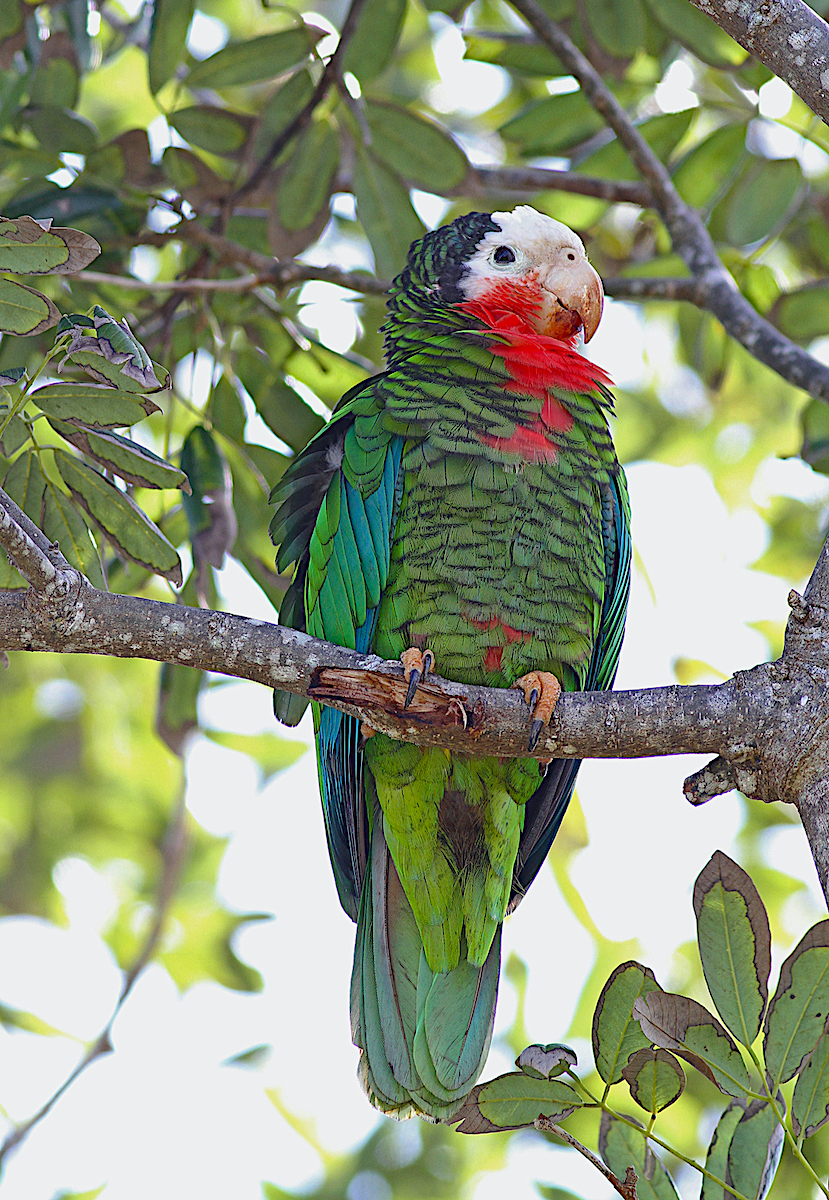
The Cuban Parrot. (Photo by Gerlinde Taurer)
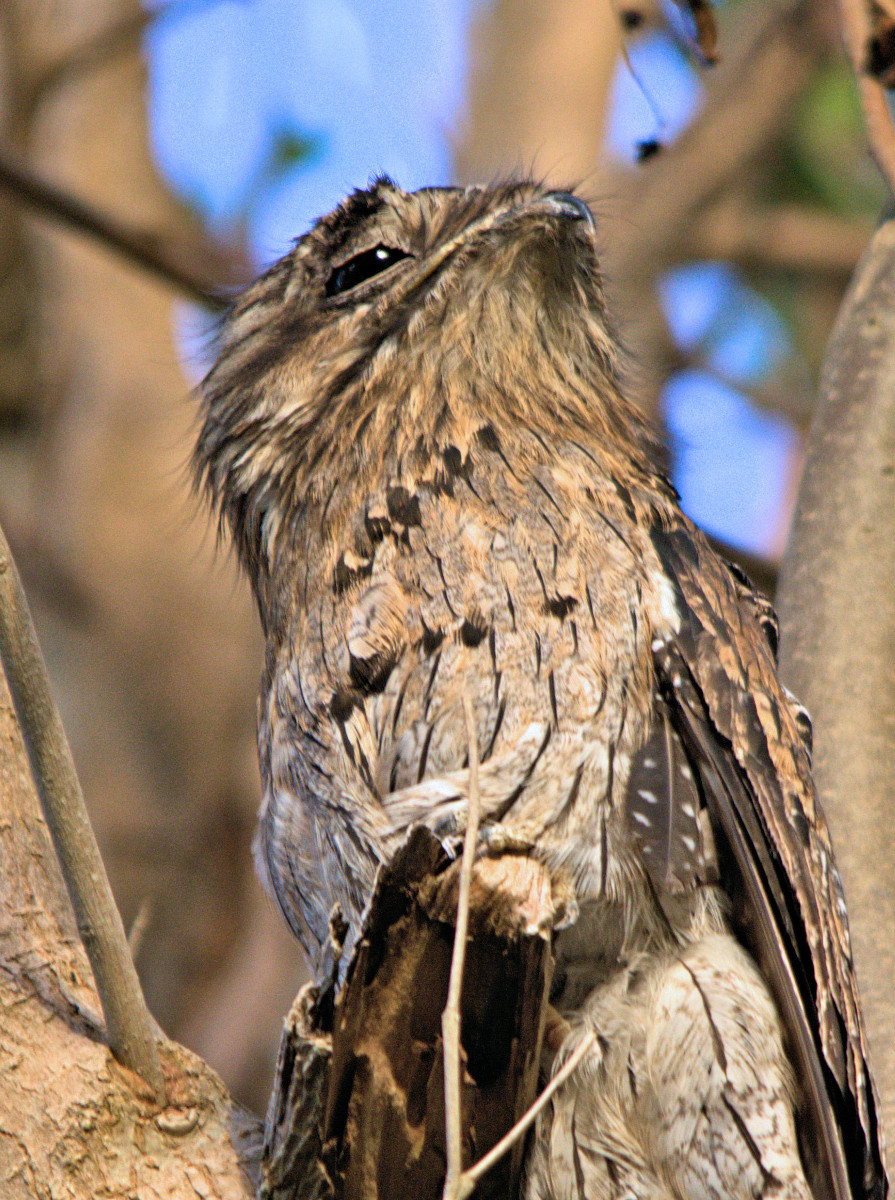
A Northern Potoo in Jamaica. (Photo by John Webster)
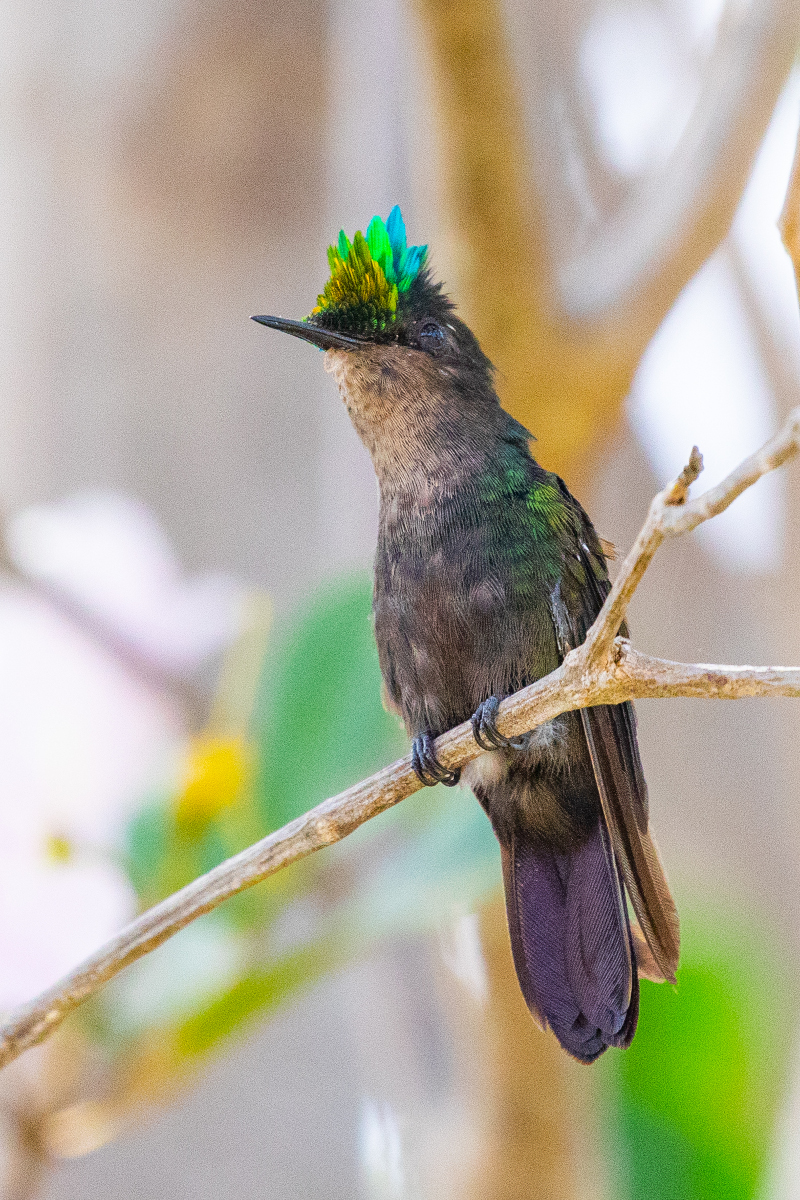
Antillean Crested Hummingbird. (Photo by Xianoni Xu)
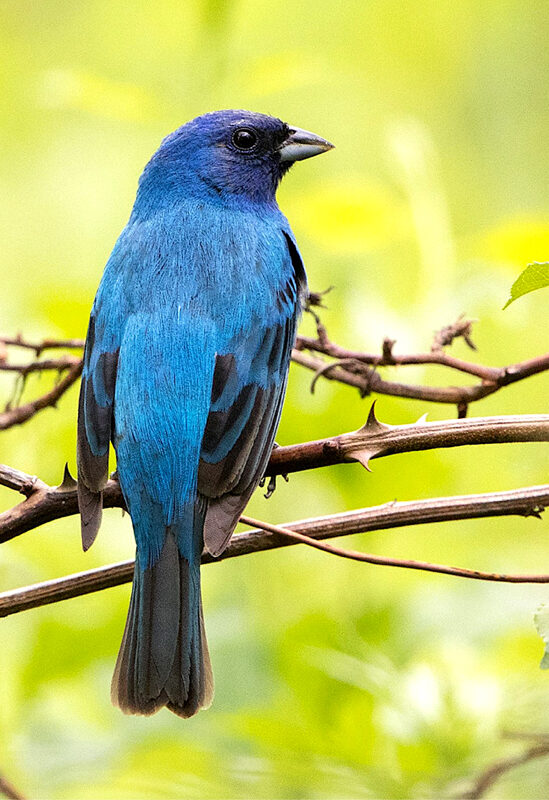
Male Indigo Bunting. (Photo by Stephen Buckingham)
So give yourself a mental “booster” this month
Before the COVID-19 pandemic hit, it was estimated that one person in eight was living with a mental disorder. The pandemic worsened the global crisis for mental health, fueling short- and long-term stress and anxiety. Growing social and economic inequalities, conflicts, violence and public health emergencies decreased skills and funding available for mental health, especially in low and middle income countries. However, we are hopeful that the ability to reconnect in-person this year will provide everyone the opportunity to revitalize their efforts to protect and improve their mental health.
Everyone can join in, birding in a group can help you learn new things. (Photo by John Webster)
And now, as we emerge from the COVID-19 period, it’s definitely time to give yourself a healthy dose of birding. It’s October, which means migratory birds are making their way to the Caribbean. We encourage you to reach out to a trusted friend, relative, or local birding group and plan a birdwatching trip. A walk along the seashore will reveal that many migratory shorebirds are already enjoying the warm weather and pottering along at the water’s edge in search of food. Check out our shorebird resources for help with identifying these marvelous migratory shorebirds birds. If you’re hoping to spot some warblers, here is a blog to help with warbler identification. But if you’re completely new to birding and don’t know where to begin, we’ve got 10 tips to get you started and a Birding 101 webinar.
So, relax and enjoy some good bird therapy!
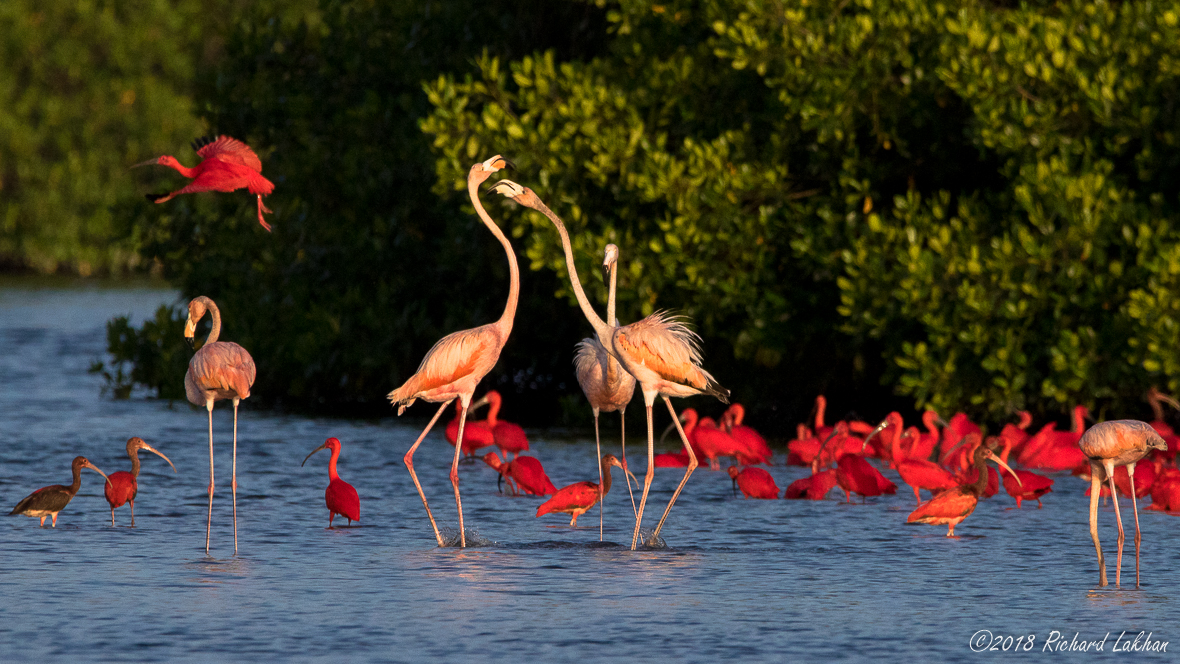
American Flamingo and Scarlet Ibis in Caroni Swamp. (Photo by Richard Lakhan)
Celebrate World Migratory Bird Day (WMBD) with us in 2022! This year’s theme is “Dim The Lights for Birds at Night”. Have fun learning about a new migratory bird every day. We have colouring pages, puzzles, activities, and more. Download for free and enjoy nature with your family at home.
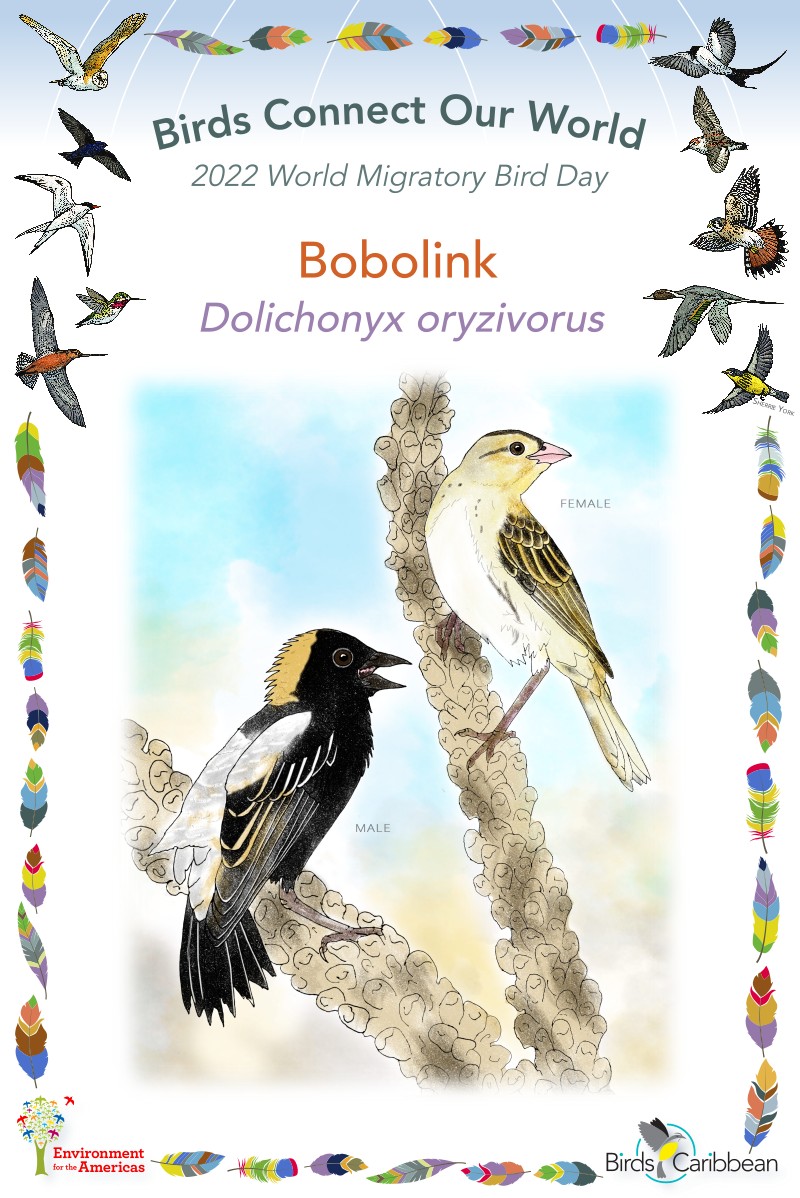
Migratory Bird of the Day: Bobolink
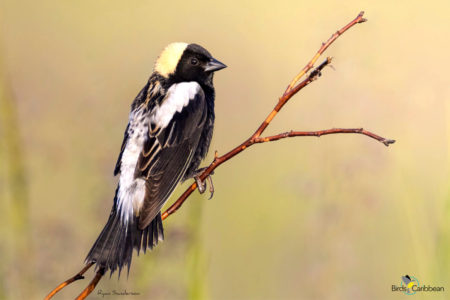
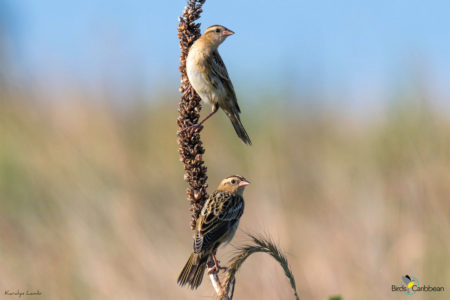
Be on the lookout for migratory Bobolinks! Known as the “backwards tuxedo bird” or “skunk bird,” breeding males have a bold black plumage with a white rump and soft yellow nape. However, females and non-breeding males have a more subtle beauty, boasting a buffy yellow-brown plumage with fine brown streaking all over the body and a distinct stripe through the eye. Be sure to look for their distinct spikey tail. It’s speculated that the Bobolink may have received their unique name from the poem “Robert of Lincoln” by American poet William Cullen, as the sight of large flocks of these birds was likely the inspiration for the poem.
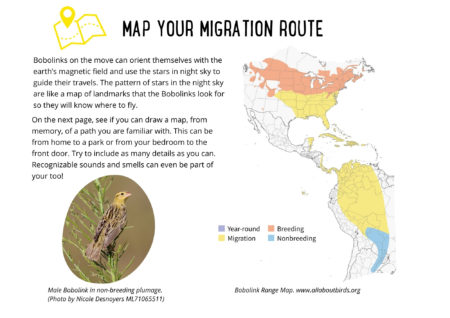
During migration, Bobolinks can often be found in large flocks. They are quite an impressive migrant, known to log an approximate 20,000 km round trip from geolocater data (birds tagged with small backpacks that can log their location and tell us more about migratory movements). Bobolinks breed in the grasslands of the Northeastern US. They follow the Eastern flyway and migrate through the Caribbean, taking an extended stopover in Venezuela before continuing south to their overwintering grounds in Argentina, Paraguay, and Bolivia.
Boblinks have been reported to have a high site fidelity, both to their breeding and overwintering grounds. Some farmers in South America have reported having large flocks of Boblinks in their rice fields for 50 years!
In the early 20th century these birds were so numerous migrating through the Caribbean that non-stop flights from Jamaica were termed “Bobolinks!” In the Caribbean, Bobolinks can be found during migration in the Bahamas, Jamaica, and many of the lesser Antilles. Banding data has shown us that during migration, especially before crossing the Caribbean, these birds can increase their body weight by up to a third, going from 38g to 50g!
Unfortunately Bobolinks face a variety of threats on their migratory journeys. In the US, Argentina, and Bolivia their affinity for grasslands has labeled them as an agricultural pest. This has led to birds being shot or poisoned to save crops. On their breeding grounds birds may abandon nests due to mowing of agricultural lands. In Jamaica and Cuba, these birds are often caught for the domestic and international caged bird trade, and are sometimes even eaten. These threats mean the Bobolink is now considered a Near-Threatened species by the International Union for Conservation of Nature (IUCN). It is also a Species of Conservation Concern in eight states in the US and is protected under the US Migratory Bird Treaty Act. Protection of grasslands has helped their breeding populations as has banning of dangerous pesticides in Bolivia and Argentina. Learn more about this species, including its range, photos, and calls here.
Colour in the Bobolink
Download the Migratory Birds of the Day Colouring Page! Use the picture above and the photos on this page as your guide, or you can look up pictures of the bird online or in a bird field guide if you have one. Share your coloured-in page with us by posting it online and tagging us @BirdsCaribbean #WMBD2022Carib
Listen to the calls of the Bobolink
Bobolinks have a distinctive “pink ” call they use all-year round. You might also hear the rambling, metallic sounding, multi-note male song.
Puzzles of the Day
Click on the images below to do the puzzle. You can make the puzzle as easy or as hard as you like – for example, 6, 8, or 12 pieces for young children, all the way up to 1,024 pieces for those that are up for a challenge!
Male Bobolink in breeding plumage. (Photo by Ryan Sanderson- Macaulay Library-ML342377131)Bobolink females. Male and female Bobolinks have similar plumage in the non-breeding season. Look out for flocks of these sparrow-like birds during migration. (Photo by Karalyn Lamb-Macaulay-ML4702854910)
Activity of the Day
FOR KIDS: Bobolinks on the move can orient themselves with the earth’s magnetic field and use the stars in night sky to guide their travels. The pattern of stars in the night sky are like a map of landmarks that the Bobolinks look for so they will know where to fly. Bobolinks use the stars in the same way we might look for familiar buildings, trees on landscape features like hills and rivers to find our way from one place to another. In fact the stars are just like these types of landmarks for Bobolinks! Think about a path you are familiar and see if you can draw a map, from memory, of this route. You could include sounds and smells as well as the things you see along the way!
FOR KIDS AND ADULTS: Neonicotinoids are a type of pesticide and this group of chemicals are widely used in America. They can be found in a large proportion of corn crops groups in the US and nearly half of soybeans. Neonicotinoids can impact on the critical functions of songbirds, including effecting their metabolism, reproduction and migration patterns. Given that they are so widely used these effects on songbirds are deeply worrying. You can read more in the article below, about how pesticide use is affecting songbirds, including the Bobolink, in North America.
BirdsCaribbean is delighted to announce its very first endowed fund, the James A. Kushlan Research and Conservation Fund.
The Fund will provide support on an annual basis for biological, ecological and conservation research on waterbirds in the Caribbean region.
“This is a first for us, a tremendous donation for BirdsCaribbean, and a great opportunity to promote waterbird research in the region,” said Executive Director of BirdsCaribbean Lisa Sorenson, expressing her appreciation for the donation.
“We are very much looking forward to receiving proposals from the Caribbean and to awarding our first grant this fall. We will be announcing a call for proposals in the next couple of weeks.”
Through this generous donation by Dr. Kushlan, BirdsCaribbean will award a competitive grant every year to a deserving waterbird project, based on written proposals. Calls for proposals will advertise the size of the grant (~$4,000 to $4,500), which will provide funds up-front for a project and not require matching funds. Grants will be awarded to anyone (individuals or organizations) without restriction as to academic credentials or affiliation. Applicants from the Caribbean will be given consideration over other nationalities. Studies on rare, endemic, resident, and at risk species and studies leading to their conservation in the Caribbean will be prioritized.
Dr. James A. Kushlan is a distinguished ornithologist, writer, educator, and conservationist, with long ties to BirdsCaribbean and the region through his research on waterbirds and as a co-member of The Waterbird Council. Professionally, he has served as research associate at the Smithsonian Institution, director of Patuxent Wildlife Research Center, professor of biology at the University of Misssissippi and Texas A&M, and wildlife biologist with the U.S. National Park Service. He is the author of ten books and over 250 technical papers and articles.
Dr. Kushlan has served as president of the American Ornithologists’ Union (now American Ornithological Society) and Waterbird Society. He is the founder and past chair of Heron Conservation (the IUCN Heron Specialist Group), the North American Waterbird Conservation Initiative and Waterbird Conservation for the Americas, the Bahamas Environment Fund, and the Bird Conservation Alliance, and was a founding member of the North American Bird Conservation Initiative and Wetlands International. Visitors to the Fairchild Tropical Botanic Garden in Miami, Florida, may explore the Kushlan Bird Walk, supported by the James A. Kushlan .
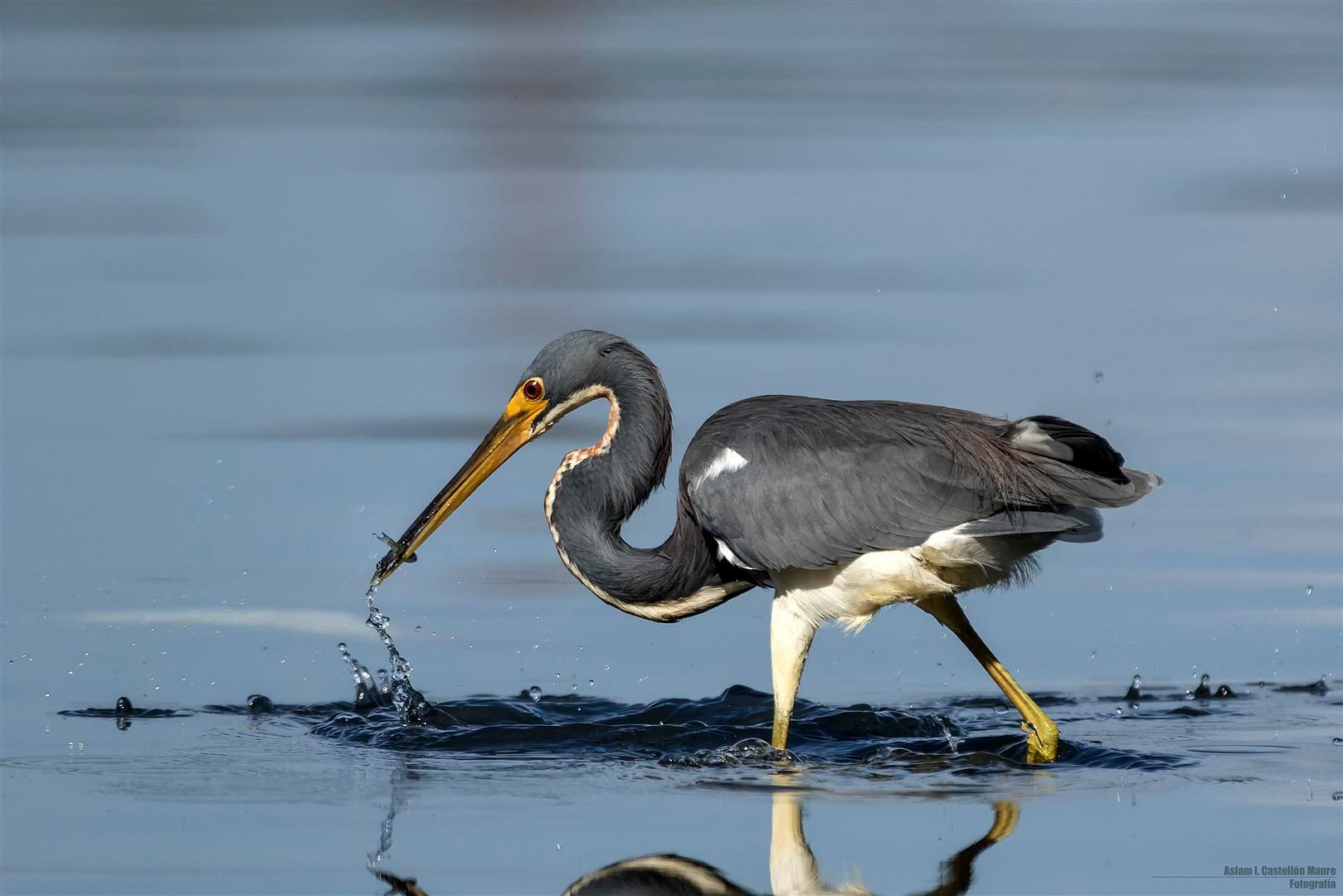
Waterbirds like this Tricolored Heron, photographed in Cuba, will benefit from research funding through our new Kushlan Fund. (Photograph by Aslam Ibrahim)
“The focus of my studies and conservation work in the Caribbean has been on waterbirds, including wading birds such as herons, storks, and ibises,” said Dr. Kushlan. “Many waterbird species are under threat due to habitat loss, climate change, and other factors. I hope that these funds will encourage Caribbean conservationists to conduct some ground-breaking research into these fascinating birds, which deserve greater attention.”
Further details on when and how to apply will be supplied in an announcement in early October.
Laura Baboolal, the World Migratory Bird Day Caribbean Coordinator for Environment for the Americas (EFTA) encourages us to celebrate the amazing journeys of birds during World Migratory Bird Day 2022! Keep reading to find out how you can help migratory birds this year and where to find resources to help you celebrate.
It’s that time of year again—birds are on the move! Bird migration is a global phenomenon where individuals of many different species of birds will fly hundreds or thousands of kilometers south to spend the winter in warmer climates with abundant food. World Migratory Bird Day (WMBD) is officially celebrated on the second Saturday in October in the Caribbean. This year it’s on October 8th, but you can celebrate anytime in the fall that is convenient for you.
We encourage everyone to celebrate World Migratory Bird Day (WMBD) 2022, as you have celebrated the Caribbean Endemic Bird Festival (CEBF) with great success!
Light Pollution is Bad News for Birds
This year, the theme focuses on light pollution with the slogan, “DIM THE LIGHTS FOR BIRDS AT NIGHT!”
Light pollution is a growing threat to wildlife, especially migrating birds. It causes birds to become disorientated when they fly at night. Every year, light pollution contributes to the death of millions of birds. Artificial light can alter the migration patterns and foraging behaviours of birds. Attracted by artificial light at night migrating birds become confused and may end up circling in illuminated areas. This depletes their energy reserves and puts them at risk of exhaustion and predation. Lights at night also cause fatal collisions with buildings. With growing global human populations, artificial light is increasing by at least 2% annually. While in the Caribbean light pollution is not a significant issue compared to our continental neighbours we can still take action.
Take Action!
Every action you take counts and contributes to reducing the impact of light pollution on migratory birds. Take action at home, school, work, community or city! Turn off unnecessary outdoor lights at night or use a motion sensor light and shut curtains at night. Lobby for downward facing street lights in your community. Work with businesses and building owners to switch off unnecessary lights at night especially during migratory season. Consider advocating for no artificial lighting to be used close to important habitats for birds and at places that are on migratory pathways.
Raise awareness about the threat of light pollution to migratory birds and be an advocate for dark skies!
How to celebrate
World Migratory Bird Day can be celebrated any time of the year and there are many ways that you can do this. Why not visit an event? Hundreds of World Migratory Bird Day events and activities take place throughout the year. Check EFTA’s global event map to see what’s happening near you. Follow, like, and share! Follow EFTA’s pages for tips and facts about light pollution and migratory birds. Share these messages through social media and other outlets to increase awareness of this important issue. Use EFTA’s resources from coloring pages and stickers to posters and other educational materials and social media resources—to help you celebrate World Migratory Bird Day. You can download these here.
Information on migratory birds in the Caribbean, including coloring pages, activity sheets , photos, videos, and puzzles are available from BirdsCaribbean at this link. You, together with your local birding group, are also encouraged to go out and enjoy the birds. Most of all, have fun!
Contact the World Migratory Bird Day Caribbean Coordinator, Laura Baboolal at [email protected] to get involved!
For now, you can enjoy and share this animation following a small migratory songbird as it is lured into the dangers of the city by intense lights. The threats it faces are common for migrating birds trying to navigate urban environments.
This 2-minute animation has been produced and made available by The Cornell Lab of Ornithology. It can be used in any promotional activities related to World Migratory Bird Day 2022. All language versions of the animation can be downloaded via this download folder: https://bit.ly/3w68a0g
Check out ETFAs Social Media Packet for lots of digital resources. Click here.
Learn more about the featured species for 2022, art created by Omar Custodio Azabache from Peru. Click here.
Last, but not least, don’t forget to share your WMBD events and experiences on social media with EFTA and BirdsCaribbean. You can find us on all major platforms. Thanks for helping to raise awareness about migratory birds and the threats they face, and we hope you get outside to see some migrants this fall!
Celebrate World Migratory Bird Day (WMBD) with us in 2022! This year’s theme is “Dim The Lights for Birds at Night”. Have fun learning about a new migratory bird every day. We have colouring pages, puzzles, activities, and more. Download for free and enjoy nature with your family at home.
Migratory Bird of the Day: Willet
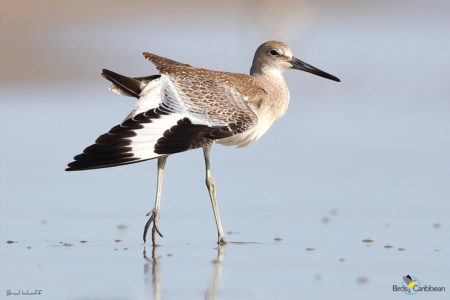
Willets are large shorebirds with long gray legs and a dark straight, slightly heavy bill, which is sometimes pale at the base. Overall, Willets can look quite nondescript and dull-colored in their winter plumage, with plain gray-brown plumage above and pale feathers below. However, when they take flight look out for the bold white-and-black striped pattern on their wings. This is a give away that you’ve seen a Willet, as none of the other similar-sized shorebirds have this wing-pattern. You can also listen out for their “kip-kip-kip” call which they might make if alarmed or agitated.
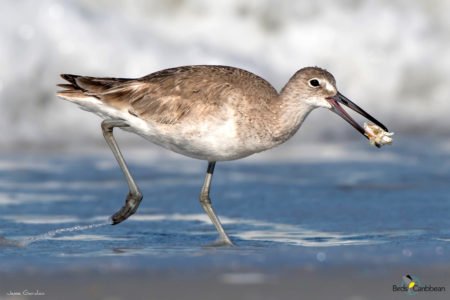
Most of the Willets that we see in the Caribbean are long-distance migrants, coming south from their in-land breeding and coastal breeding areas in North America. During fall and winter they can be found on our beaches, mudflats, and other coastal wetland areas. Here they feed on small crabs, worms, clams, and other invertebrates. Willets are often found feeding together in small flocks.
A very small number of Willets actually breed in some parts of the Caribbean including on Puerto Rico, Cuba and Anguilla. During the breeding season they are still overwhelmingly gray-brown in appearance, however their feathers become more streaked, mottled and slightly darker.
As with so many shorebirds, Willets are likely to be negatively affected by habitat loss and degradation across their breeding, migration, and wintering ranges. These changes are occurring through increased agriculture, commercial fishing, shrimp aquaculture, and tourism development. Willets are also hunted in parts of their range. Although currently listed as “Least Concern” by the IUCN it is important that wetland habitats are conserved for Willets and all of our shorebirds. Learn more about this species, including its range, photos, and calls here.
Colour in the Willet
Download the Migratory Birds of the Day Colouring Page! Use the picture above and the photos on this page as your guide, or you can look up pictures of the bird online or in a bird field guide if you have one. Share your coloured-in page with us by posting it online and tagging us @BirdsCaribbean #WMBD2022Carib
Listen to the calls of the Willet
During migration and in winter you might hear Willets make a “kyah-yah” often in flight or as they take flight.
Photos of the Day
Willets are gray-brown in appearing and quite dull looking, until they open their wings an reveal a striking white and black pattern. (Photo by Brad Imhoff)In winter Willets can be found on beaches and mudflats, where they use their long bills to probe for food. (Photo by Jesse Gordon)
Activity of the Day
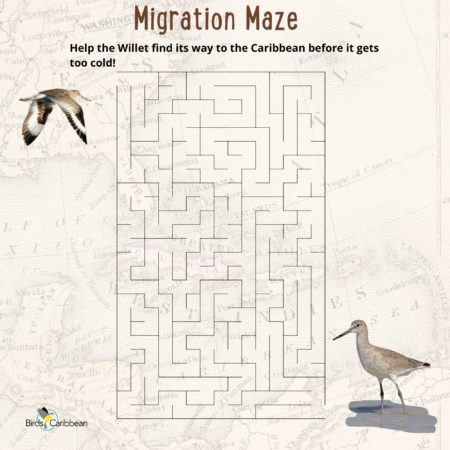
FOR KIDS: Shorebirds, like Willets, make long migratory journeys in the Fall and Spring between their breeding areas and the places where they will spend the winter. Often their migrations can cover 1000s of kilometres and might involved several re-fuelling stop-offs on the way! Shorebirds ‘wintering grounds’ are often far to the south of where the birds breed. This is so that Shorebirds can survive through the winter in warmer climates, away from the freezing conditions further north. Warmer weather on the wintering grounds also means that food is more abundant and easier to find for these hungry shorebirds. Can you help this Willet find its way on its long migratory journey? Can you help this Willet find its way on its long migratory journey? Find the route through the maze to guide it to warm weather and plenty of food on its wintering grounds. You can find the solution here.
FOR KIDS AND ADULTS: Need some help with your Shorebird ID? We know that these long-legged, long billed, gray-brown birds can be confusing sometimes! If you struggle to pick out Willets from the somewhat similar Short-billed Dowitcher take a read of this blog post by Allison Caton who has some handy tips for you.
Finally enjoy this video of Willets, moulting into winter plumage, feeding on the beach! Notice how they probe the sand with their long bills, in search of tasty bivalves and crabs.
Celebrate World Migratory Bird Day (WMBD) with us in 2022! This year’s theme is “Dim The Lights for Birds at Night”. Have fun learning about a new migratory bird every day. We have colouring pages, puzzles, activities, and more. Download for free and enjoy nature with your family at home.
Migratory Bird of the Day: Sanderling
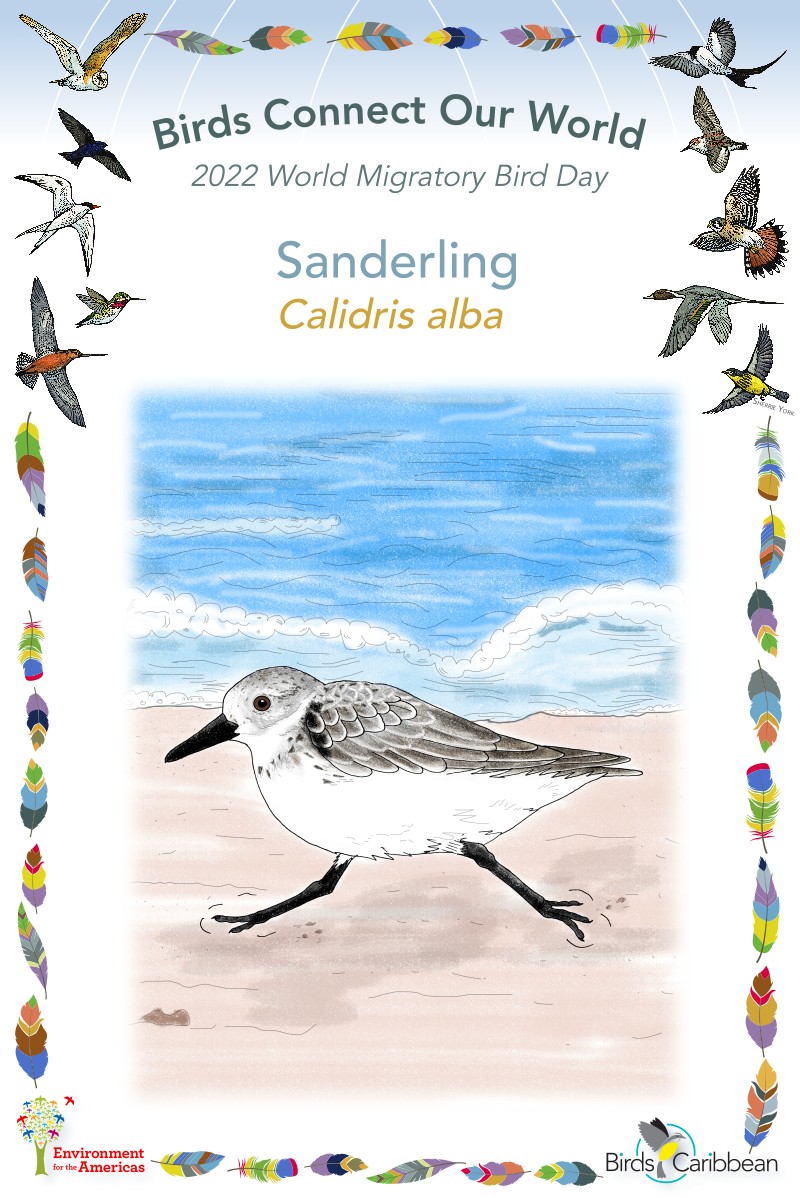
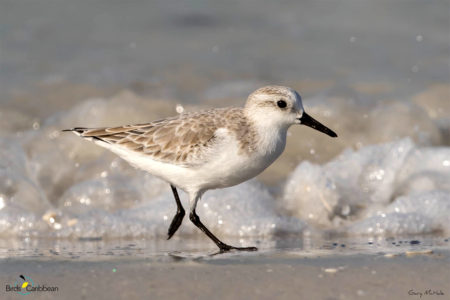
These striking pale-coloured sandpipers are easy to pick-out from other ‘peeps’ (small sandpipers). In their winter colors they have an almost black and white appearance, with black legs and bill and plumage that is pale gray above and white below. You can also look out for a distinctive black shoulder bar, which helps you to be sure you’re seeing a Sanderling. However, perhaps it is their behavior that really gives them away. These ‘wave-catchers’ are constantly running into and out of the surf edge in search of food. Often you’ll see small flocks of them, dashing back and forth along the sand in a blur of black legs and white feathers.
During the breeding season the Sanderlings gray plumage becomes a striking brick-red. They nest in the far north, in high-arctic tundra. But in winter, these ultra long-distance migrants become one of the most wide-spread shorebirds in the world! At this time of year they can be found on almost any temperate or tropical sandy beach, anywhere across the globe. Of course, with our beautiful beaches, this includes the Caribbean.
During each year a proportion of juvenile Sanderling, who are not ready to breed, choose to take a beach holiday. Rather than making the long journey back to the arctic to breed they stay on their wintering grounds. This means they get an extra long rest, and have a better chance to build up their energy reserves before their long migration north the next year.
As a very wide-spread bird, Sanderling populations are not considered to be under threat. However, because Sanderlings love to hang out at beaches, just like people, in some places they are losing access to their habitat. This is from both coast development and increased disturbance by humans at beaches. It’s important that we remember to make space for our birds and share the shore with these beautiful wave-catchers.Learn more about this species, including its range, photos, and calls here.
Colour in the Sanderling
Download the Migratory Birds of the Day Colouring Page! Use the picture above and the photos on this page as your guide, or you can look up pictures of the bird online or in a bird field guide if you have one. Share your coloured-in page with us by posting it online and tagging us @BirdsCaribbean #WMBD2022Carib
Listen to the calls of the Sanderling
Sanderling call softly to each other within a flock with a squeaky “wick wick” call.
Puzzles of the Day
Click on the images below to do the puzzle. You can make the puzzle as easy or as hard as you like – for example, 6, 8, or 12 pieces for young children, all the way up to 1,024 pieces for those that are up for a challenge!
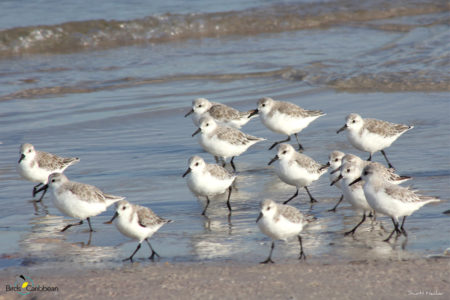
Sanderling in the surf – its favorite habitat! (Photo by Gary McHale)Sanderlings foraging on a beach in a flock. Feeding in a group helps reduce the risk of being caught by a predator. (Photo by Scott Hecker)
Activity of the Day
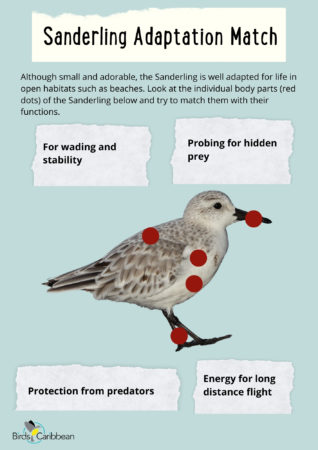
FOR KIDS: Many migratory shorebirds have special features that mean they are perfectly adapted for life on on the mud and sand. These adaptations can range from the shape of their bill and the position of eyes, to the length of their legs and the colours of their feathers. Of course Sanderlings spend a lot of time at the beach. Can you match the Sanderling adaptations to their functions ?
There are four ways in which Sanderlings are adapted for a beach life given, all you need to do is match them up to the correct body part on the Sanderling. You can find the correct answers here. Sanderlings are often seen feeding and flying together in groups. When you download our Sanderling adaptations answer sheet you can also read all about some of the reasons why Sanderlings like to feed together in flocks, and about how this helps protect them from predators, like birds of prey.
FOR KIDS AND ADULTS: Enjoy this video of a flock of Sanderlings feeding together at a the beach! You can see them running back and forth into and out of the waves in search of food. This is typical Sanderling behaviour and is why some people call them ‘wave-catchers’.
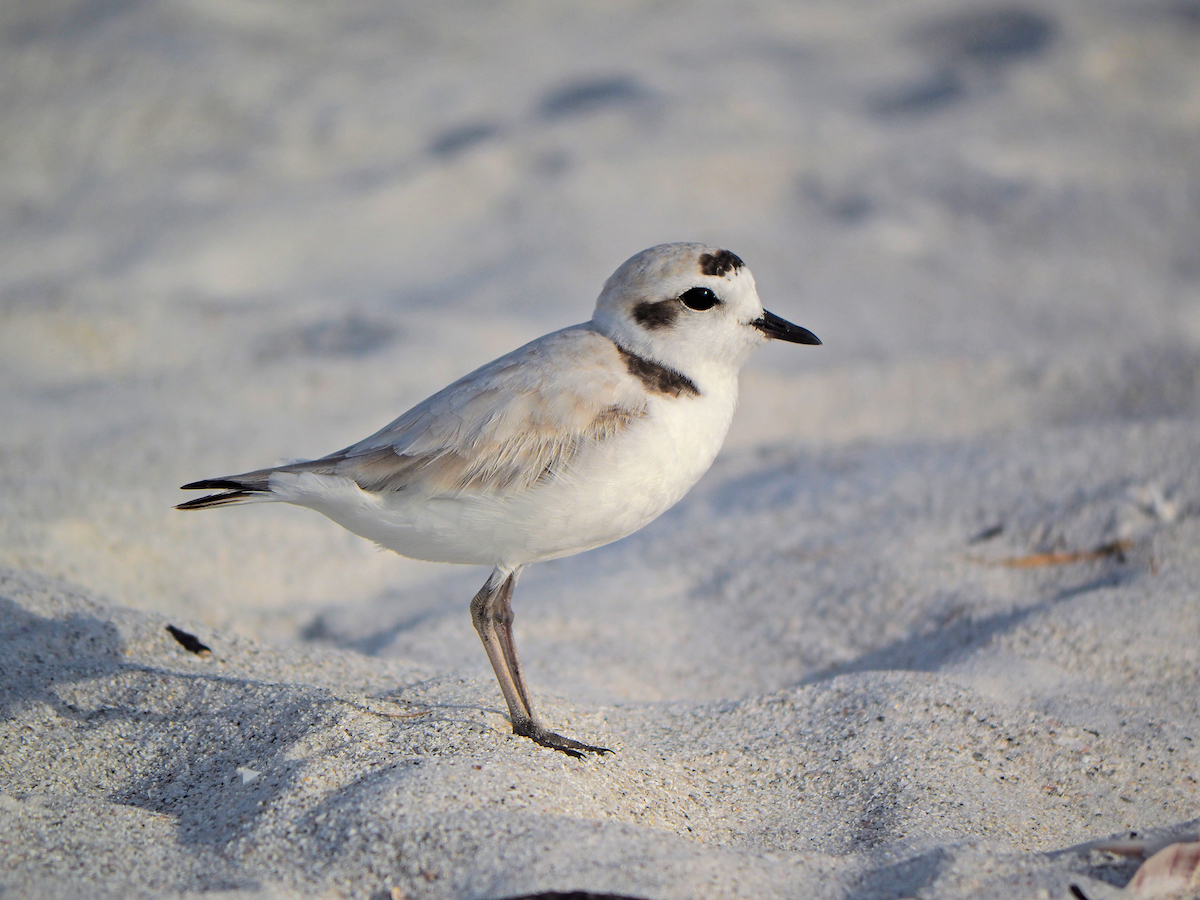
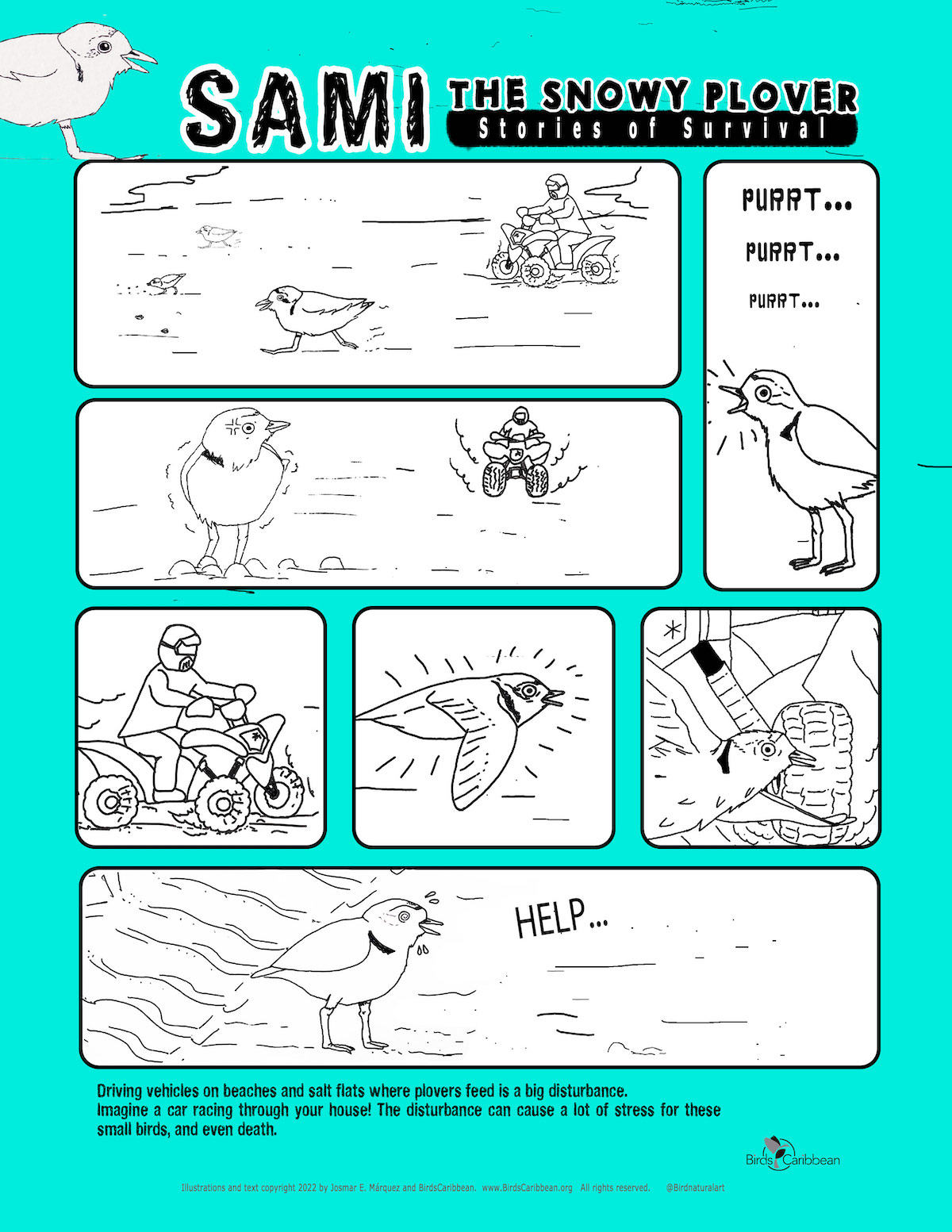
BirdsCaribbean is delighted to announce the publication of a new graphic novel, just in time for World Shorebirds Day (September 6, 2022). “Sami the Snowy Plover: Stories of Survival” focuses on the vulnerability of these charming little shorebirds, which overwinter and nest on sandy beaches and salt flats on some islands throughout the Caribbean. You can leaf through this beautifully illustrated book here below or online in English or Spanish.
Josmar E. Márquez, the author and illustrator of the book, is passionate about these fragile shorebirds, whose IUCN status is Near Threatened. As he leads monitoring projects on Coche Island in his native Venezuela, his observations have made him come to love these round-bodied, pale brown plovers as they hurry across the sand. He also recognized the Snowy Plover’s susceptibility to human impacts and disturbances. He decided that he wanted to use his skills as an artist to tell stories that the reading public could empathize with, as he does. Hence little Sami’s story was born.
A naturalist and shorebird researcher and member of BirdsCaribbean and local NGO AveZona, Josmar is Coordinator of the Snowy Plover Monitoring Project in the offshore islands and cays of Venezuela. He explained that the idea of the novel grew in 2020 from a colouring book he created on the Snowy Plover. He worked with BirdsCaribbean’s Executive Director Lisa Sorenson and her team to make it a reality.
The Snowy Plover is a small, plump ground-nesting shorebird. In the Caribbean, they are primarily found in open, sandy areas near water like beaches, salt ponds, sand and mud flats, and barrier islands. (Photo by Hemant Kishan)
“Getting people to understand the risks faced by many shorebirds, especially Snowy Plover, is a personal goal. I have seen how Snowy Plovers are affected by human activity in their habitat,” says Márquez. To him, the book is “beautiful, tragic and hopeful.”
One of the pages from the book, highlighting the disturbance posed by driving vehicles on the beach causing stress and harm to the Snowy Plover and other ground-nesting shorebirds.
Please take a read through the poignant stories of little Sami, which also have a message for all of us to take to heart. We would also welcome your feedback!
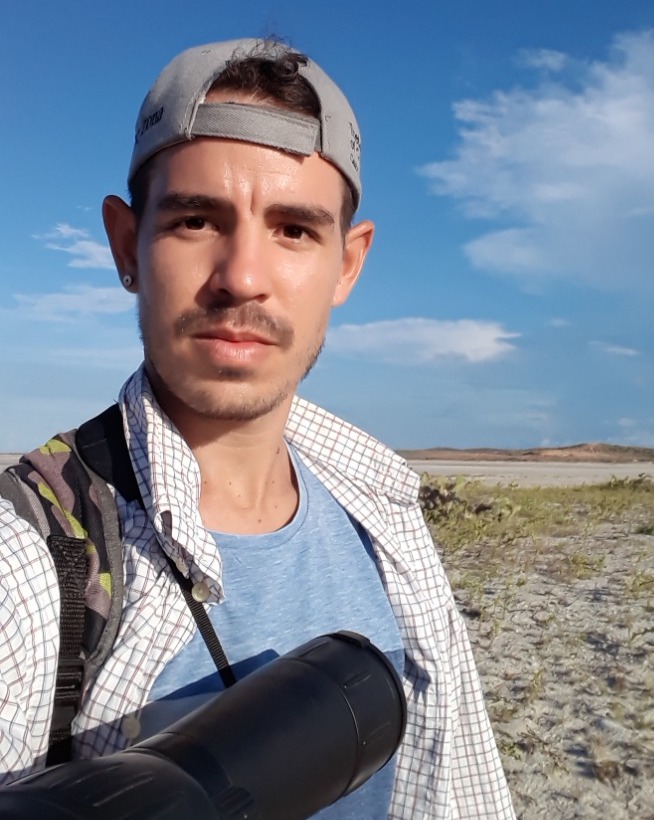
Josmar Esteban Marquez in the field.
You can read the graphic novel online in both English and Spanish on our Flipsnack account where it is also available for free download. Please share with your networks!
Thanks to Josmar for creating this heart-warming but impactful resource!
Josmar Marquez, from AveZona, has lead bird monitoring projects on Coche Island in Venezuela since 2018. In addition to data collection, his work involves mentoring young conservationists and promoting nature-friendly behavior changes in the local community of the island.
Celebrate World Migratory Bird Day (WMBD) with us in 2022! This year’s theme is “Dim The Lights for Birds at Night”. Have fun learning about a new migratory bird every day. We have colouring pages, puzzles, activities, and more. Download for free and enjoy nature with your family at home.
Migratory Bird of the Day: American Oystercatcher
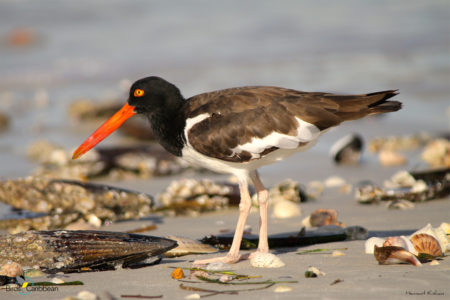
With their large size, striking black-and-white plumage, pink legs and bright orange bills, American Oystercatchers are truly unmistakable! Males and females look alike, and both have yellow eyes surrounded by red eye rings. If their size and coloring don’t make them conspicuous enough, American Oystercatchers may alert you to their presence with their loud, high-pitched “hueep hueep hueep!” calls.
American Oystercatchers live and breed year-round on some Caribbean islands, including Cuba, The Bahamas, the Virgin Islands, Hispaniola, and some Lesser Antilles islands. Outside the breeding season, they can be found across most of the West Indies as birds migrate south in Fall from breeding areas on the U.S. Atlantic coast.
Oystercatchers are true coast lovers, and can be found on beaches, rocky shores, and offshore cays. Their orange bills might look comical, but they serve a serious purpose—as specialized tools for feeding on bivalve mollusks like oysters, clams, and mussels. An oystercatcher can slip its knife-like bill between the halves of an open shell and cut the muscle that holds the shells (or valves) shut, allowing them to extract and feed on the soft parts inside.
Because they feed along the shore, American Oystercatchers depend on coastal habitats. The IUCN lists them as Least Concern, but they are on the Partners in Flight Yellow Watch List. This is because their U.S. population size had fallen to about 10,000 birds in 2000. This led to a flurry of research and conservation actions by the American Oystercatcher Working Group.
Biologists learned that American Oystercatchers are threatened by destruction of their breeding habitat from coastal development as well as human disturbance—they are less likely to successfully raise their chicks on beaches with high levels of human activity. Management actions such as protecting nesting sites and helping people understand why these birds need space have helped the population to recover. Undisturbed coastal areas are vital for oystercatchers to thrive throughout the year in the Caribbean too. Learn more about this species, including its range, photos, and calls here.
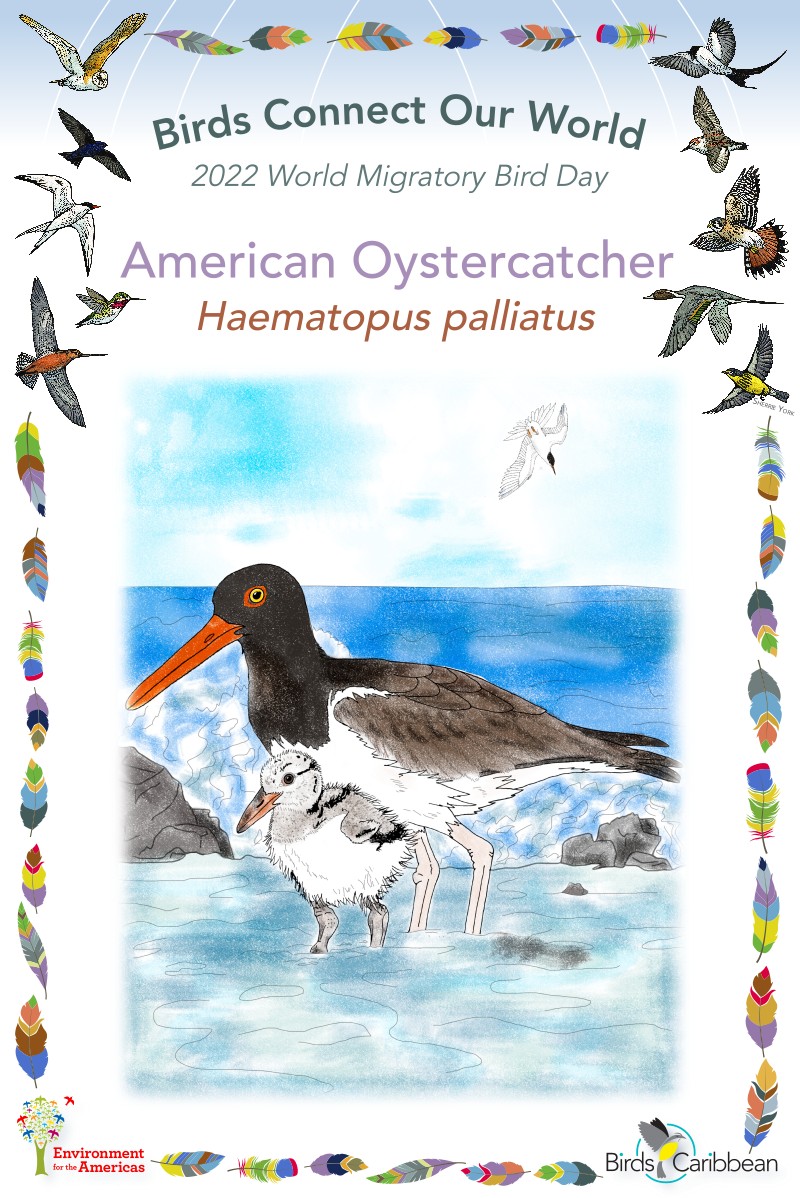
Colour in the American Oystercatcher
Download the Migratory Birds of the Day Colouring Page! Use the picture above and the photos on this page as your guide, or you can look up pictures of the bird online or in a bird field guide if you have one. Share your coloured-in page with us by posting it online and tagging us @BirdsCaribbean #WMBD2022Carib
Listen to the calls of the American Oystercatcher
American Oystercatchers have loud high-pitched ” hueep” or “weeer” calls, which they can repeat in rapid succession (often with increasing rapidity and volume).
Puzzles of the Day
Click on the images below to do the puzzle. You can make the puzzle as easy or as hard as you like – for example, 6, 8, or 12 pieces for young children, all the way up to 1,024 pieces for those that are up for a challenge!
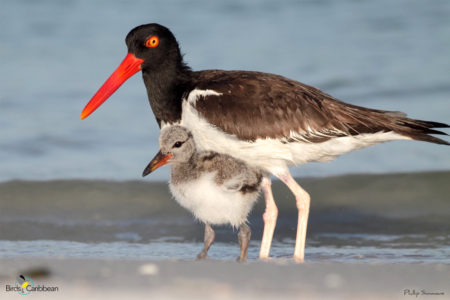
American Oystercatcher. American Oystercatchers use their sturdy, strong bills to pry open mussels, clams, and other bivalves. (Photo by Hemant Kishan)American Oystercatcher with Chick. Oystercatchers nest in some islands in the the Caribbean, but are just winter visitors on other islands. (Photo by Phillip Simmons)
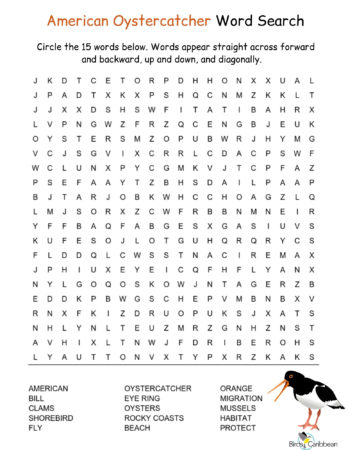
FOR KIDS AND ADULTS: Don’t forget that you still have time to take part in this year’s Global Shorebird Count. This takes place between September 1 – 7! To take part all you need to do is visit your local wetland and count all the shorebirds (and other birds) that you see there. Then share your eBird Caribbean list with ‘worldshorebirdsday’. You can find out more about how to take part in our handy blog post. This is full of tips and hints for carrying out a successful survey, including links to help out with shorebird ID.
Enjoy this video of an American Oystercatcher. In the video you can see it using it’s bill as it forages on the rocky shore on some tasty mollusks!
Celebrate World Migratory Bird Day (WMBD) with us in 2022! This year’s theme is “Dim The Lights for Birds at Night”. Have fun learning about a new migratory bird every day. We have colouring pages, puzzles, activities, and more. Download for free and enjoy nature with your family at home.
Migratory Bird of the Day: Least Sandpiper
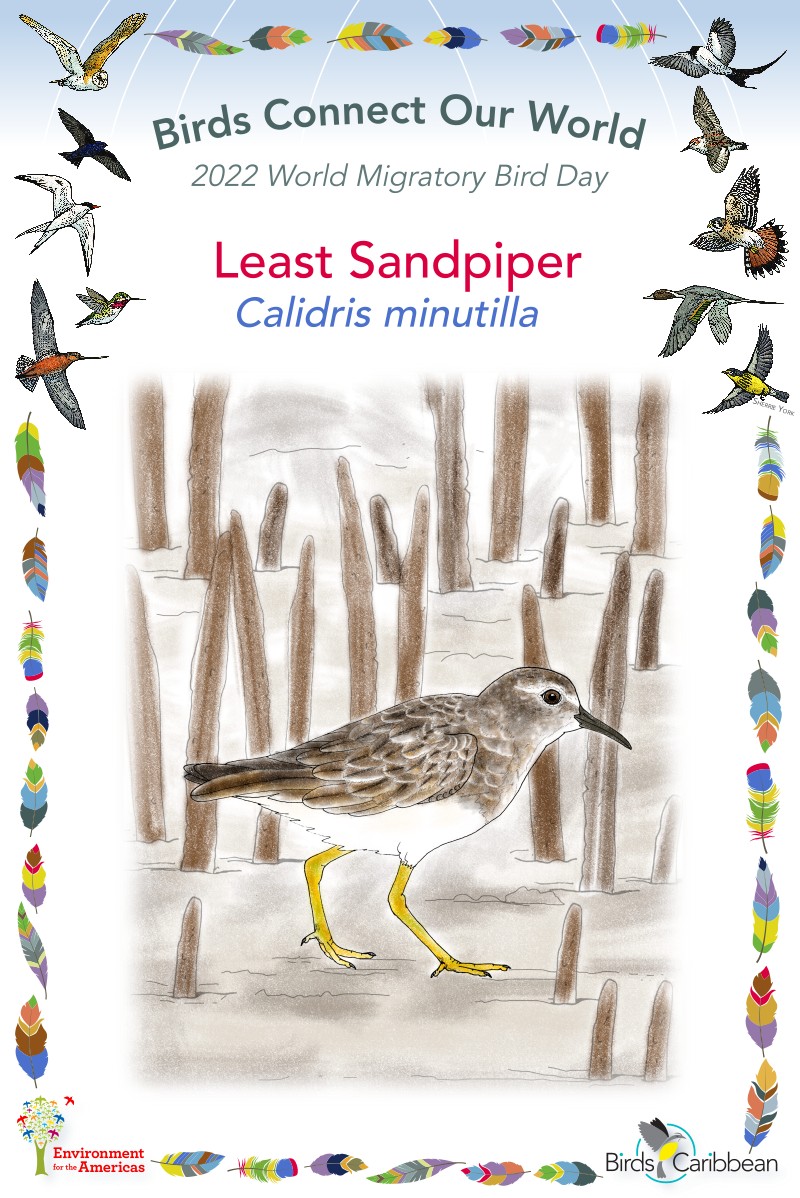
Meet our smallest Caribbean shorebird, the Least Sandpiper! Even the second part of their scientific name “Calidris minutilla” means “very small” in medieval latin. In fact, these tiny sandpipers, part of the group of shorebirds known as ‘peeps’ are not much bigger than a sparrow. These diminutive wetland inhabitants have a compact body, with brown or reddish-brown plumage above and white below. They have a thin slightly down-curved bill, which is black.
Their legs are quite short for a shorebird, and are a distinctive yellowish green color. Look out for these yellow-colored legs, they are a great way to tell Least Sandpipers apart from other very similar looking peeps, such as Western and Semipalmated Sandpipers, who have black legs. Take care though—their legs are sometimes covered in dark mud making the yellow difficult to spot! In addition to their slightly smaller size, yellowish legs and thin, slightly down-curved bill, another way to tell them apart from other peeps is to look for a warmer, browner tone to their plumage. Listen also for their distinctive cheep call.
Least Sandpipers might be small but that doesn’t stop them from making an amazing long-distance migration in the Fall. These birds head south from breeding grounds in subarctic regions in the far north of North America. They travel 1000s of km to winter in the Caribbean, Central and South America. Least Sandpipers will migrate in groups and once they arrive in their winter areas they also like to stay in a flock. They can be found in muddy areas of wetlands, both on the coast and inland. Here they can be seen in a typical ‘hunched over’ posture feeding on tiny invertebrates on the mud surface.
Least Sandpipers are listed as “Least Concern” by the IUCN. However, like all shorebirds they are threatened by disturbance from humans and habitat loss. During migration and overwinter these tiny birds rely on the food that wetlands provide for their survival. Protecting our wetlands is vital to helping conserve shorebirds like the Least Sandpiper! Learn more about this species, including its range, photos, and calls here.
Colour in the Least Sandpiper
Download the Migratory Birds of the Day Colouring Page! Use the picture above and the photos on this page as your guide, or you can look up pictures of the bird online or in a bird field guide if you have one. Share your coloured-in page with us by posting it online and tagging us @BirdsCaribbean #WMBD2022Carib
Listen to the calls of the Least Sandpiper
Least Sandpipers make a distinctive high-pitched “greeep!” call. You might heard this as a small flock takes flight.
Puzzle of the Day
Click on the images below to do the puzzle. You can make the puzzle as easy or as hard as you like – for example, 6, 8, or 12 pieces for young children, all the way up to 1,024 pieces for those that are up for a challenge!
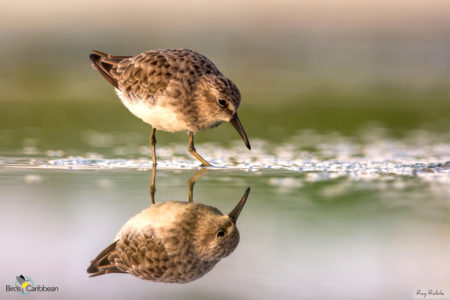
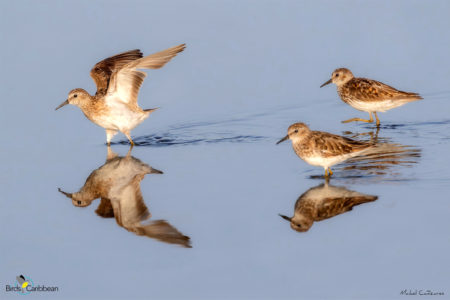
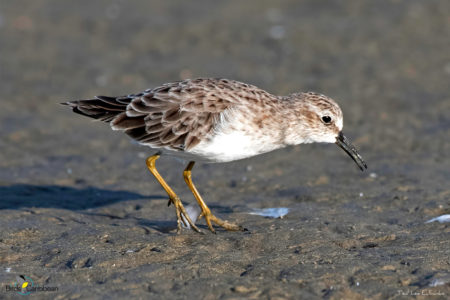
Look out for browner colored plumage and yellowish legs to be sure you are seeing a Least Sandpiper and not a different small sandpiper. Also note the pointed down-curved bill (Photo by Ray Robles).Least Sandpipers will often flock together in a loose group. Listen out for their rolling “cheep” call as they take flight (Photo by Maikel Canizares).
A Least Sandpiper searches for food on the mud. Least Sandpipers often feed further from the water on dryer parts of the mud, compared to other ‘peeps’ (Photo by Ted Lee Eubanks).
Activity of the Day
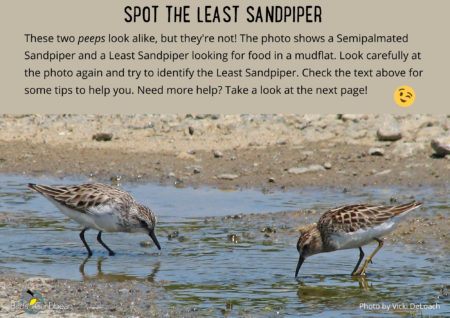
FOR KIDS: Test your shorebird ID skills with our “Spot the Least Sandpiper” challenge! Small sandpipers or ‘peeps’ as they are known can look very similar to each other. As well as their small size they share other features such plumage that is brown or grey above and white below, pointed black-coloured bills and a habit of feeding in muddy wetland areas. But Least Sandpiper so have things that help you pick them out from the crowd, read the text above and look closely at the pictures of Least Sandpipers we have shared. Once you’ve done this take a look and see if you can pick out the Least Sandpiper! (there are some extra tips for you on the second page if you get stuck). You can find the correct answer here.
FOR KIDS AND ADULTS: Don’t forget that from September 1 – 7 it is the Global Shorebird Count – with World Shorebirds Day taking place on September 6. Take part by heading to your local wetland and counting all the shorebirds that you see, then making sure to share your list with ‘worldshorebirdsday’ on eBird Caribbean. Need some extra help with your shorebird ID? No worries, we have you covered, check out our shorebird resources page here. Find out more about the Global Shorebird Count and World Shorebirds day below.
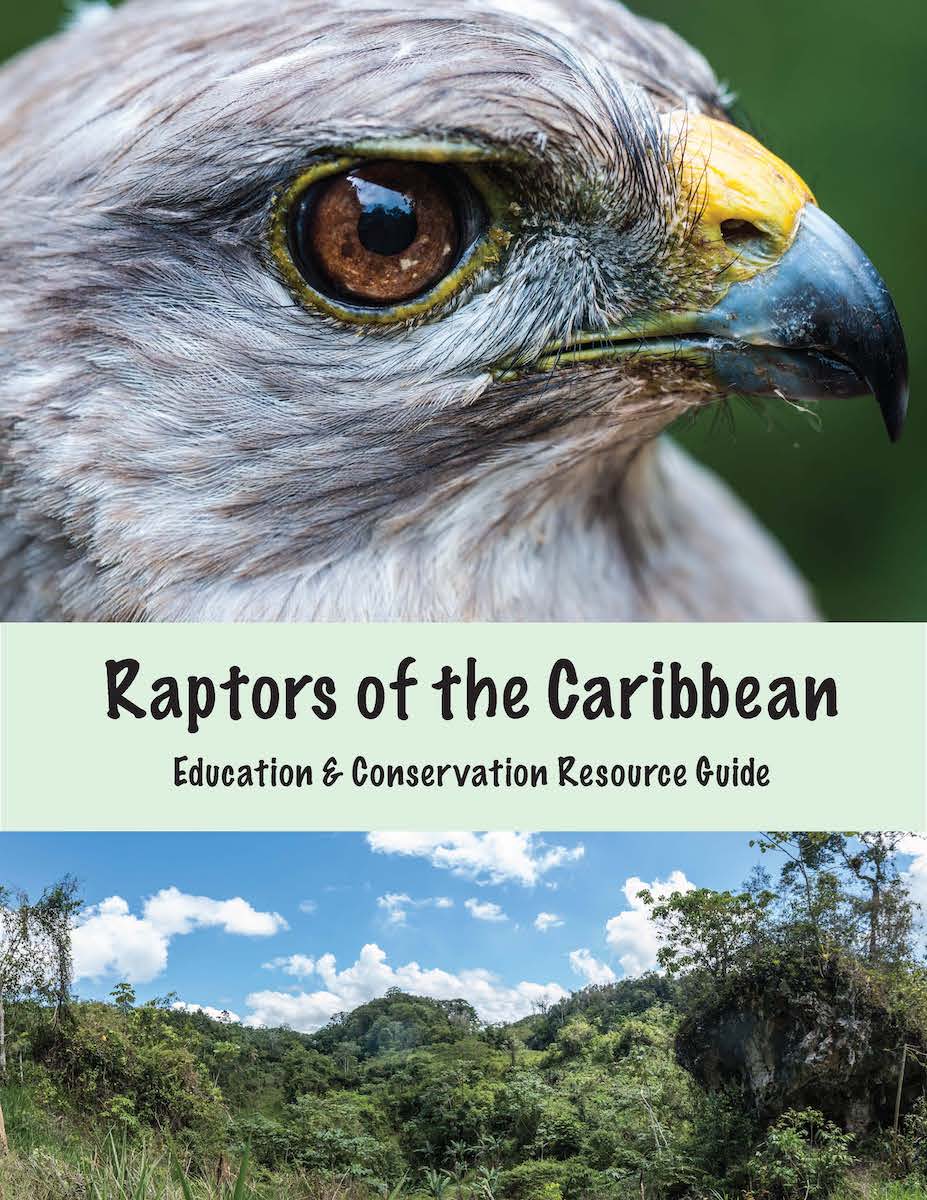
Cover of the new Raptors of the Caribbean Education & Conservation Resource Guide.
Marta Curti of the Peregrine Fund shares her thoughts on (and love for) our magnificent Caribbean raptors, including several threatened endemic species and subspecies; and introduces a brand new Resource Guide, which will help conservationists, educators, and community members understand raptors better.
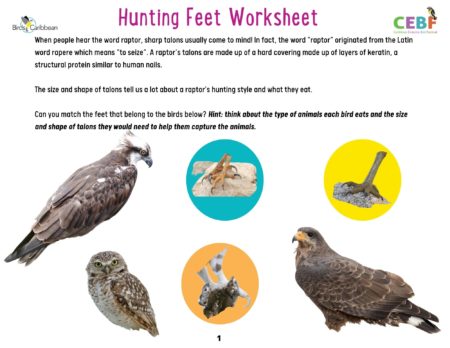
I am just going to say it. Raptors are cool! Their laser-like eyesight, powerful hunting skills, acrobatic and graceful flight, coupled with their penetrating stare, have been a source of fascination for humans probably since the first time someone locked eyes with one of these spectacular birds. But they are so much more than attractive and awe-inspiring birds.
More and more research has shown the important roles raptors play in the ecosystems in which they live. They act as top predators, bio-indicators, and umbrella species. They provide important ecosystem services for humans, and many are keystone species. In short, their role in an ecosystem is large in comparison to their numbers and their removal from that system would cause a cascade of negative effects on numerous other organisms – including humans.
Despite this, raptors are one of the most threatened bird groups in the world. And raptors in the Caribbean are no different. Populations across the region are in decline and there are even several endemic species and subspecies that need our help. These include the Ridgway’s Hawk, Cuban Kite, Grenada Hook-billed Kite, and Puerto Rican Sharp-shinned Hawk. With this in mind, you would imagine that the study of raptors and conservation programs to protect them would be widespread. But sadly, despite the critical roles they play in our ecosystems, and the many threats they face, there are few research and environmental education programs focused on raptors across the Caribbean.
We set out to change all of that.
Together with support from BirdsCaribbean, we at The Peregrine Fund have written a 200-page training manual entitled “Raptors of the Caribbean: Education and Conservation Resource Guide.” The guide is divided into four chapters:
What are Birds of Prey,
Identification of Birds of Prey of the Caribbean,
Why Raptors Matter, and
How One Can Help Conserve Raptors.
Each chapter is followed by two learning activities and one evaluation activity, as well as additional learning materials. Though written in English, we are now in the process of translating it into Spanish and Haitian Creole (Kreyòl), so it will have greater impact throughout the Caribbean.
But the creation of the guide is just the first step. The next stage is to train conservationists, community leaders, and educators in its use. During the AOS-BirdsCaribbean Conference in Puerto Rico in June 2022, we held a condensed workshop for 12 participants. After a short presentation on birds of prey, the action started. We began by breaking into teams and building life-sized raptors out of recyclable materials. Participants created a Stygian Owl, a Ridgway’s Hawk, and even a massive Secretarybird out of nothing but cardboard, plastic bottles, newspaper, and some tape to hold them all together. Creativity took flight!
Group works together to construct their Stygian Owl. (photo by Gabriela Diaz)
Group shares their Stygian Owl masterpiece (photo by Lisa Sorenson)
One group plans the activity they will teach to the rest of the workshop participants. (Photo by Gabriela Diaz)
One group is busy constructing a Secretarybird (photo by Gabriela Diaz)
Close-up view of Secretarybird constructed of recycleable materials. (photo by Gabriela Diaz)
Team proudly shows off their completed life sized Secretarybird built out of recyclable materials plumes prey and all! (photo by Lisa-Sorenson)
For the next activity, groups reviewed the guide and chose an activity they were going to teach to the rest of us. We played games, wrote poems, and engaged in a “memory” challenge. One participant kept repeating “I am having so much fun!” A positive sign indeed!
We had carried out a pre- and post-evaluation and saw that in the four short hours of the mini-workshop, participants learned a lot about raptors that they hadn’t known before – such as what they eat, where they live, and the important functions they perform in their environment. It was an intense, hands-on learning experience.
Thanks to support from BirdsCaribbean and the Betty Petersen Conservation Fund, the manual is now completed. Our dream is to carry out extended workshops of two or more days in countries around the Caribbean. Participants will gain experience – including conservation-based lessons that use raptors to teach math, language, art, and even physical education in their programs.
One team proudly shows of their Ridgway’s Hawk, made of recyclable materials. (photo by Tahira Carter)
In these longer workshops, we aim to offer participants training in environmental education techniques and methods. These would include developing a guided nature walk; giving an impactful presentation; how to speak about sensitive issues one-on-one with community members; and utilizing whatever materials are available on-hand to create fun and dynamic learning experiences for participants’ target audiences. They would also learn about raptors in their countries, food chains, threats to wildlife, and possible conservation solutions.
Several participants from each country would then be trained to lead these workshops, so we can form a chain of raptor-based environmental education workshops throughout the Caribbean and help to promote interest in raptor research and conservation. From our understanding, this is the only raptor-based conservation-themed workshop in the region. We are excited to embark on these workshops and look forward to sharing our results!
We are currently raising funds to make these education workshops a reality. Ongoing training is so vital to ensure the long-term survival of these magnificent birds. If you would like to support this work, please click here.
The “Raptors of the Caribbean” Training Manual and Guide is currently undergoing a final review, and will be available for FREE download in late September, 2022. Stay tuned!
Over 700 species of birds live in the Caribbean. This includes 176 species that can be found nowhere else in the world! There is no doubt that birds add music and a splash of color to our lives. Many people enjoy watching wild birds since it distracts them from the pressures of their daily lives. Additionally, birds provide invaluable ecosystem services—they control insect populations, pollinate flowers, disperse seeds, and clean the environment. They continue to be important indicators of ecosystem health and can tell us if we are succeeding as stewards of our planet. Unfortunately, these services are almost always overlooked.
Vervain Hummingbird, Jamaica. (Photo by Sadik Kassam)
Birds are still threatened by development, agriculture, pollution, natural disasters, and hunting for meat or pets. For geographically restricted Caribbean birds, both resident and migratory, the effects can be disastrous leading to severe population declines, extirpation, or even extinction.
It’s up to all of us to take care of our birds, and to make sure they are around for future generations to enjoy. You can help birds thrive by taking a few simple, everyday actions.
Here are 10 ideas to get you started:
1. Keep Birds Safe from Pets
Unleashed dogs and outdoor cats can disturb, chase, and kill birds. Around the world, billions of birds die each year when they are caught by birds. Cats are natural predators, even if well fed. Outdoor cats also live shorter, harsher lives—they may suffer from injury or die if attacked by a dog or poisoned, can contract diseases and cause unwanted litters of kittens, if unspayed or unneutered. Keeping your cat indoors (or on a leash outdoors) is good for your cat and birds. Check this website for helpful resources.
Keep pets on a leash when outdoors. Cats kill millions of birds every year. This cat in Montserrat has killed a migratory shorebird, a Western Sandpiper. (photo on right by Alistair Homer)
2. Avoid Using Chemicals on your Lawn
Birds may accidentally eat pesticide and herbicide pellets or prey (e.g., insects) that have been poisoned. This can kill a bird or have toxic effects on their health. You can reduce your use of harmful chemicals by weeding by hand, landscaping with native plants, grasses and flowers that attract birds and provide food for them, and using organic insecticides like neem, and/ or make your own (try a mixture of white vinegar, salt, and dish soap for ridding your garden of weeds.
Keep your lawn pesticide free.
3. Leave Fledglings Where You Find Them
Young birds may spend a few days on the ground before they are able to fly well. Typically parents are nearby continue to care for them and feed them. You can help by keeping people and pets away. If you think a bird is truly an orphan, call a local wildlife rehabilitator for instructions.
Students from the St. Martin Primary School plant a tree, Dominica.
5. Share What You See
Citizen scientists such as yourself help us monitor our bird populations and environment. The observations entered into eBird Caribbean, from interested people across the region, provide data at an amazing scale and level of sophistication. If you’re interested in birds and nature, chances are there’s a BirdsCaribbean citizen-science project that can benefit from your participation. Caribbean Waterbird Census, Global Big Day, Global Shorebird Count
Coral Aviles entering the birds she saw in her Caribbean Waterbird Census (CWC) count on eBird Caribbean, Blassina Canal Puerto Rico. (Photo by Eliezer Nieves)
6. Prevent Window Collisions
During the day, windows reflect plants and trees or the sky, making them look like places to fly into. Sadly, the bird often dies, even when it is only temporarily stunned and can still fly away. Many times these birds die later from internal bleeding or bruising, especially on the brain.The good news is that you can greatly reduce the danger your home’s windows pose to birds. You can explore options like decals, netting, or mosquito screens to keep birds away from your windows during the day. Check out ideas and resources here.
Glass panes that reflect trees and greenery can be problematic for birds.
7. Drink Coffee that is Good for the Birds
You might be looking to satisfy a craving but did you know you can preserve critical habitat for birds, and other wildlife, and support farmers that are committed to sustainable farming, by brewing a cup of coffee? The Smithsonian Bird Friendly certification ensures farmers follow strict growing standards to prevent irreversible damage to bird habitats by protecting tree diversity and foliage cover. Find a store or coffee shop near you, or have it shipped right to your door.
Bird Friendly Coffee.
8. Don’t Buy Illegally Caged Birds
Although trade is illegal, many Caribbean parrots, parakeets and songbirds are still harvested for both the local and international trade. Report the capture and sale of wild birds to the authorities. Learn more here about the Cuban songbird trade.
Hispaniolan Parakeets, native to Hispaniola, are illegally captured and sold for pets or smuggled out of the country for the pet trade.
9. Create Communities
Share your passion for birds with family and friends. And expand your backyard bird oasis into a larger neighborhood oasis by working with neighbors and managers of nearby parks, schoolyards, golf courses, and farms. Together you will help restore habitat and provide safe spaces for birds to find food, hide from predators and raise their families. Restoring bird habitat can also provide cooler spaces for people, absorb stormwater runoff, and combat the spread of invasive plants.
Kids planting trees in Haiti. (Photo by Anderson Jean)
10. Support BirdsCaribbean
At BirdsCaribbean, we’re committed to conserving birds and their habitats. We have been successful in empowering local people to enjoy, study, and monitor local birds, as well as alleviate threats to their survival and their habitats. However, there is still much more to be done for Caribbean birds, people, economies, and ecosystems that are under constant threat of development, agricultural expansion, pollution, climate change, and more. We’re a member-supported nonprofit and we rely on donations for our annual funding. We are extremely grateful to our generous and dedicated members and donors, and we invite you to join us as we continue to build a future where birds and people thrive.
Building capacity to study, monitor and conserve Caribbean seabirds
BirdsCaribbean booth at NAOC, 2016.
Serving on the BirdsCaribbean Board of Directors is an enriching experience, where you can really make an impact.
Group photo with Orlando at his home in Havana. BirdsCaribbean Cuba Bird Tour, January 2019.
Learning all about bird banding on WMBD, Dominican Republic. (Photo by Maria Paulino/ GAE).
Carefree Birding group enjoys the waterbirds in Sint Maarten with Binkie Van Es, BirdsCaribbean member and Caribbean Birding Trail trained guide. (photo by Carefree Birding)
Thanks to educators at the National Environment and Planning Agency (NEPA), youth in Jamaica were treated to a field trip that included birding and a nature scavenger hunt using BirdSleuth Caribbean materials published by BirdsCaribbean. (photo courtesy of NEPA)
The results of our first Short Story and Poetry Contest are in! We would like to congratulate the winners of this year’s competition for their creativity and skill at conveying emotion. We received fantastic submissions from the Cayman Islands, Jamaica, Cuba, Dominican Republic, Puerto Rico, Antigua and Barbuda, St Lucia, Trinidad and Tobago and Venezuela and are extremely grateful to each writer and poet for sharing their personal encounters with some of the Caribbean’s best birds.
We decided to host this short story and poetry contest as a way to highlight this year’s Caribbean Endemic Bird Festival theme “Loving Bird is Human Nature” by documenting the powerfully innate connection we have with birds. The result was an overwhelmingly talented pool of writers and poets, and outstanding stories and poems to choose from.
Short Story Winners
We are pleased to announce that the short story winners are:
3rd Place: “The Root of the Murder” by Chloe Bramble (Antigua and Barbuda)
The following stories also captivated the judges and they received Honorable Mentions:: “Jairo y el Frailecito” by Yohana Rivero Pérez (Venezuela), “Hide and Seek” by Adriana Cintrón (Puerto Rico) and “Guerreras del aire” by Alicia Marlene Ríos Pérez (Cuba).
Poetry Winners
And the poetry winners are:
1st Place: “To Wonder At Birds” by Brianna Salmon (Jamaica)
2nd Place: “Paloma Querida” by Wanda I. Rodríguez López (Puerto Rico)
3rd Place: “Bird Love” by Yashid Charles (St Lucia)
The judges believed the following poets were also able to powerfully express their ideas and emotions, and they received “Honorable Mentions.”: “Up Close First Encounter” by Alliah Francis (Jamaica), “Las aves de paso” by Yamilaiki Osorio Sánchez (Cuba) and “Miradas al mar” by Génesis Parra Rivero (Venezuela).
The entire CEBF team offers a sincere thanks to everyone who submitted. We invite you to read all submissions, including the winning short stories and poems in both Spanish and English, at this link OR click on the book below. to view here!
We would love to see this collection of short stories and poems grow! Please contact [email protected] and [email protected] if you would like to contribute a short story, poem, or both!
Celebrate the Caribbean Endemic Bird Festival (CEBF) with us! Our theme in 2022 is “Loving Birds is Human Nature”. Have fun learning about a new endemic bird every day. We have colouring pages, puzzles, activities, and more. Download for free and enjoy nature with your family at home.
Endemic Bird of the Day: Cuban Pewee
Often seen darting from a perch to grasp insects from the air, the Cuban Pewee is full of energy and character. It is a species of flycatcher, a group of birds well known for catching their insect prey on the wing. Unlike other species with vibrant colors (think Western Spindalis, Yellow Warbler, and Painted Bunting) this small bird has rather drab olive-brown plumage with an olive-gray crown and tufted crest. Its underparts are lighter beige-gray with yellowish wash. Look for the bold white crescent behind the eye to distinguish this bird from other flycatchers.
Formerly called the Crescent-eyed Pewee, the Cuban Pewee is a Caribbean endemic, found in only two countries: Cuba and The Bahamas. There are four subspecies, three in Cuba and one in The Bahamas, which vary slightly in plumage. In The Bahamas, you can find them on the northern islands of Grand Bahama, Abaco, New Providence, Andros, Eleuthera and Cat Island. They are wide-spread throughout Cuba from the coast to moderate elevations. Their habitat includes pine and broad-leafed forests, forest edges, tree plantations, brushy scrub, mangroves, and swamp edges.
A great way to find this bird is to listen out for its song, Tswee-ooooooooo.” The first part is explosive and the second a long descending whistle. It’s call is a short “peep peep,” or the Bahamas, “peeep peep peep!”
Like other flycatchers, the Cuban Pewee typically uses a low perch from which it flies to catch insects on the wing. It mainly eats small insects, but will also eat fruits. Breeding is thought to occur in February-March in the Bahamas and March to June in Cuba. The nest is a finely-made cup of roots, hair, dried grass, lichens, and moss placed in the fork of a tree branch or shrub. Eggs (2-4) are pale with dark dots, crowned with lilac or grayish dots at the broad end.
Download our West Indies Endemic Bird colouring page. Use the photos below as your guide, or you can look up pictures of the bird online or in a bird field guide if you have one. Share your coloured-in page with us by posting it online and tagging us @BirdsCaribbean #CEBFfromthenest
Listen to the song of the Cuban Pewee
The song of the Cuban Pewee song is a “Tswee-ooooooo.” The short sharp initial “Tweee” is followed by a drawn-out descending whistle.
Puzzle of the Day
Click on the image below to do the puzzle. You can make the puzzle as easy or as hard as you like – for example, 6, 8, or 12 pieces for young children, all the way up to 1,024 pieces for those that are up for a challenge!
A Cuban Pewee in the Bahamas. (Photo by Christopher Johnson)A Cuban Pewee. This small flycatcher live in open woodlands and scrub. (Photo by Sergey Uryadnikov)
Activity of the Day
FOR KIDS AND ADULTS: How much can you remember about the birds we have featured during the Caribbean Endemic Bird Festival 2022? Test your memory of your newly gained knowledge of these wonderful birds with our 2022 Caribbean Endemic Bird Quiz! Today we have Part Two of a two-part Bird Trivia Quiz. Try to answer all the questions without checking back to our posts or looking up the answers online or in your bird guides! But just in case you do get stuck you or if you want to do some studying before you try the quiz you can read about all our featured endemic birds here or take a browse on ebird. Once you’ve finished the quiz you can click on the “View Score” link to see how many you got right and find out the correct answers! Note: the page might look blank when you finish, but if you scroll back up you should be able to find the link to “View Score”.
Now you’ve completed our quiz – enjoy this video of a Green-tailed Warbler the wild!
Celebrate the Caribbean Endemic Bird Festival (CEBF) with us! Our theme in 2022 is “Loving Birds is Human Nature”. Have fun learning about a new endemic bird every day. We have colouring pages, puzzles, activities, and more. Download for free and enjoy nature with your family at home.
Endemic Bird of the Day: Blue-headed Hummingbird
Arguably the most beautiful hummer in the Lesser Antilles region, the Blue-headed Hummingbird is not to be missed! If you find yourself in high elevations of rainforest to elfin woodlands on Dominica and Martinique, be sure to look out for this naturally bold bird. During the breeding season, you may be treated to a special sight as females will sit on their nests just inches away from people! This medium-sized hummer is ~9-11cm. Males are deep blue all over with some metallic green on their back and underparts, and a sparkling “gem blue” color on the head. Females are slightly shorter in length and resemble a bigger version of the Antillean Crested Hummingbird, with pale underparts, green head, more green on the back, and longer beak. She carries a white tip on her tail, which looks like a little lady wearing a skirt.
Polygynous in nature, the male will mate with several females but guards specific small groups of flowers for different females. He keeps busy trying to prevent other birds from coming to these flowers, though he is often unsuccessful. The male prefers a variety of flowers, which include Palicourea crocea, Psychotria urbaniana, and Rudgea citrifolia—all belonging to the coffee family (Rubiaceae). Males and females feed on the same flowers, but females are often seen at the fringe edges of forests, adjacent to citrus and coffee plantations, feeding.
From February to June, the female engages in nesting with no assistance from the male. On her own, she constructs an intricate cup nest with very fine plant fibers, which include fluff from silk cotton trees and the furry part of tree ferns. Spider webs are used on the inner part of the cup, which becomes elastic as the chicks grow. The outer part of the nest is walled with lichens, which creates a camouflage effect. This is useful given that she nests in very small trees that are at eye-level for most humans. Clutch size is two small off-white eggs.
The voice of the male Blue-headed Hummingbird is a strong click-click-click which sounds like snapping of the fingers. The female is somewhat softer and often drags the syllables especially when nesting.
The Blue-Headed Hummingbird is high on the list of birders who visit Dominica for birding. They are not globally threatened but are a restricted-range species occurring on just two islands. Their populations should be monitored carefully as they are highly vulnerable to and recover slowly from severe hurricanes which are increasing in the Caribbean with climate change.Learn more about this species, including its range, photos, and calls here.
Colour in the Blue-headed Hummingbird
Download our West Indies Endemic Bird colouring page. Use the photos below as your guide, or you can look up pictures of the bird online or in a bird field guide if you have one. Share your coloured-in page with us by posting it online and tagging us @BirdsCaribbean #CEBFfromthenest
Listen to the calls of the Blue-headed Hummingbird
The calls of the Blue-headed Hummingbird include a metallic-sounding trill.
Puzzle of the Day
Click on the image below to do the puzzle. You can make the puzzle as easy or as hard as you like – for example, 6, 8, or 12 pieces for young children, all the way up to 1,024 pieces for those that are up for a challenge!
A Blue-headed Hummingbird on Dominica. (Photo by Gabriel Kornbluh -Macaulay Library- ML393651351)A female Blue-headed Hummingbird on her nest. (Photo by Paul Reillo)
Activity of the Day
FOR KIDS AND ADULTS: How much can you remember about the birds we have featured during the Caribbean Endemic Bird Festival 2022? Test your memory of your newly gained knowledge of these wonderful birds with our 2022 Caribbean Endemic Bird Quiz! Today we have Part One of a two-part bird trivia quiz. Try to answer all the questions without checking back to our posts or looking up the answers online or in your bird guides! But just in case you do get stuck you or if you want to do some studying before you try the quiz you can read about all our featured endemic birds here or take a browse on ebird. Once you’ve finished the quiz you can click on the “View Score” link to see how many you got right and find out the correct answers! Note: the page might look blank when you finish, but if you scroll back up you should be able to find the link to “View Score”.
Now that you’ve completed our quiz – enjoy this short video of a Blue-headed Hummingbird in the wild!
Celebrate the Caribbean Endemic Bird Festival (CEBF) with us! Our theme in 2022 is “Loving Birds is Human Nature”. Have fun learning about a new endemic bird every day. We have colouring pages, puzzles, activities, and more. Download for free and enjoy nature with your family at home.
Endemic Bird of the Day: Green-tailed Warbler
The Green-tailed Warbler has an understated beauty, without bright colors or a melodious song. This small, somewhat secretive, bird is an endemic species of the island of Hispaniola and can only be found on this island. Green-tailed warblers typically inhabit mature broadleaf forests, thickets and scrub in both wet and semi-dry areas. While mostly in the central mountain ranges in both the Dominican Republic and Haiti, they can also be found at any elevation from sea level to the highest peaks (although not much in pine forests) over most of the central part of the island.
Sightings of this bird have been reported from a wide range of habitats, such as desert-scrub close to the coast of Puerto Alejandro near Barahona; the Guaraguao trail in Cotubanamá National Park; and in the rain forest on the coast in the Los Haitises National Park. It is also a regular sight in places like Ebano Verde Nature Preserve in the Central Mountains, and its stronghold anywhere in the Sierra de Bahoruco.
The gray plumage of the body and head has a soft, silky appearance, and contrasts with the back and wings which are a fairly bright olive-green. The irises are red with a black pupil, and it has a notable split white eye-ring which takes the form of crescents above and below the eyes. The tail is fairly long for its 12 to 14 centimeter total length. The bill is gray and is slightly chunky. Its diet consists mainly of insects.
The Green-tailed Warbler’s scientific name, Microligea palustris alludes, first, to its voice: Micro means small, and Ligea means shrill or high pitched. This describes the sharp, squeaky notes this bird makes. The word palustris means swamp or wetland, which is not the best suited since this bird is not restricted to wet habitats.
Breeding occurs from May to June, in the mountains, and possibly earlier than May, in the lowlands. Nests are cup-shaped and clutch size is 2-4 pale green, spotted eggs.
This species was classified with the New World Wood Warblers for many years, but recent studies have confirmed that it is not closely related to that large group of birds.Rather, it is part of a small family on Hispaniola – including the two palm-tanager species and the White-winged Warbler, which it resembles somewhat and can be found within mixed-species feeding flocks.
While the White-winged Warbler is considered Vulnerable due to its more restricted range, the Green-tailed Warbler population is not considered to be threatened. The destruction of broad-leafed and midrange forests, mainly from uncontrolled logging and the clearing of forests for agriculture, however, still pose a threat to the continued well-being of this species in the wild.
Download our West Indies Endemic Bird colouring page. Use the photos below as your guide, or you can look up pictures of the bird online or in a bird field guide if you have one. Share your coloured-in page with us by posting it online and tagging us @BirdsCaribbean #CEBFfromthenest
Listen to the calls of the Green-tailed Warbler
The Green-tailed Warbler makes repeated sharp “tsip” calls.
Puzzle of the Day
Click on the image below to do the puzzle. You can make the puzzle as easy or as hard as you like – for example, 6, 8, or 12 pieces for young children, all the way up to 1,024 pieces for those that are up for a challenge!
Green-tailed Warbler in Parque Jaragua, Dominican Republic. (Photo by Dax Roman)Green-tailed Warbler. (Photo by Dax Roman)
Activity of the Day
FOR KIDS: Get out your colouring pencils, pens, or paints and get ready to be creative with our “My Caribbean Bird” art activity! Choose your favourite endemic Caribbean bird and draw or paint its portrait.
You can download our colourful frame and get started. Not sure which bird you want to draw? want to check where your bird lives? or what its call is? Check back to all our featured Caribbean endemic birds here. OR let you imagination run wild and create your very own imaginary endemic bird using other endemic Caribbean birds as your inspiration!
Have fun making up a name for your ‘new’ Caribbean endemic bird! Where do you think your imaginary bird might live? And what sound does it make?
FOR KIDS AND ADULTS: Enjoy this video of a Green-tailed Warbler the wild!
Celebrate the Caribbean Endemic Bird Festival (CEBF) with us! Our theme in 2022 is “Loving Birds is Human Nature”. Have fun learning about a new endemic bird every day. We have colouring pages, puzzles, activities, and more. Download for free and enjoy nature with your family at home.
Endemic Bird of the Day: Jamaican Woodpecker
In Jamaica, most early mornings boast the iconic soundtrack of the Jamaican Woodpecker at work – boring holes in dead trees or light poles.
Endemic to Jamaica, this bird can be found throughout the island, from the coast to the highest point, 2256m in the Blue Mountains. They are also tolerant to human disturbance, often found in gardens in more urban areas, such as the capital Kingston.
The Jamaican Woodpecker has a red hind neck, white face, and pale underparts with a yellow wash, upperparts and wings are generally black and densely streaked with white and the tail is blackish. Males and females can be easily identified by their forecrown. Males sport a striking red forecrown, while females have a brownish-olive forecrown. Size ranges from 24 to 26 cm. Jamaican Woodpeckers tend to travel alone, but are also observed in pairs or small groups. Their main diet consists of insects on the surface of trees or fruits. They are often seen feeding on the Ackee (Blighia sapida), the national fruit of Jamaica, and commonly also foraging in epiphytes for insects.
Breeding typically occurs from December to August, sometimes in other months. Nests are excavated at ~5–15 m in the trunk or branch of a dead tree or in a utility pole. Clutch size is usually 3–5 white eggs, laid at daily intervals. Incubation is performed by both sexes.
Jamaican Woodpeckers are very loud and vocal, making an auditory detection perhaps more frequent than a sighting. The main call is rolling churp churp churp, however, one call given frequently is very similar to the crok! of a Black-crowned Night-heron (Nycticorax nycticorax).
Download our West Indies Endemic Bird colouring page. Use the photos below as your guide, or you can look up pictures of the bird online or in a bird field guide if you have one. Share your coloured-in page with us by posting it online and tagging us @BirdsCaribbean #CEBFfromthenest
Listen to the calls of the Jamaican Woodpecker
The calls of the Jamaican Woodpecker emphatic, slightly rasping “urp“
Puzzle of the Day
Click on the image below to do the puzzle. You can make the puzzle as easy or as hard as you like – for example, 6, 8, or 12 pieces for young children, all the way up to 1,024 pieces for those that are up for a challenge!
Male Jamaican Woodpecker. (Photo by Tim Avery- Macaulay Library- ML87028941)Female Jamaican Woodpecker. (Photo by Larry Therrien)
Activity of the Day
FOR KIDS: We hope that you have enjoyed learning all about our Caribbean endemic birds! Sadly some of the birds we have featured are endangered and many others are under pressure, often from human activities. This means our special endemic birds and many of the other beautiful birds that live in or visit us in the Caribbean need your help. Even simple things like picking up litter or being sure never to disturb birds when they are feeding, resting and nesting can make a difference.
You can download and print our pledge to help birds. Then sign your name and get started helping our birds by following some of the simple actions listed in the pledge. You can also colour in the picture on the pledge and perhaps hang it up somewhere at home to remind you and others of how you can help birds.
You can look at all the Caribbean endemic birds we have featured so far, from all our Caribbean Endemic Bird Festivals here.
FOR KIDS AND ADULTS: Enjoy this video of a Jamaican Woodpecker the wild!
Celebrate the Caribbean Endemic Bird Festival (CEBF) with us! Our theme in 2022 is “Loving Birds is Human Nature”. Have fun learning about a new endemic bird every day. We have colouring pages, puzzles, activities, and more. Download for free and enjoy nature with your family at home.
Endemic Bird of the Day: Yellow-shouldered Blackbird
If you find yourself birding near the coasts of Puerto Rico, you may be lucky enough to witness the Yellow-shouldered Blackbird (Agelaius xanthomus) showing off its golden epaulets on the base of its wings. The yellow feathers that give it its name contrast beautifully with the shiny dark plumage that covers the rest of its body and boldly announces its rank as the “capitán” (Spanish for “captain” and one of its common names in Puerto Rico) of Puerto Rican birds.
Their size ranges from 20 to 23cm with males usually slightly larger than females. However, both sexes are identical when it comes to plumage. Their common call consists of a short “check” or nasal “chwip,” usually performed while perched on a branch and flicking their tail. Although considered by some as mostly insectivorous (feeding mainly on insects), Yellow-shouldered Blackbirds have a diverse diet that includes mollusks, fruits, seeds, nectar, animal feed, and processed food such as granulated sugar.
At the end of the 19th century, the Yellow-shouldered Blackbird was found throughout the entire archipelago of Puerto Rico. However, it is currently classified as Endangered, its decline due to loss of habitat and brood parasitism by the invasive Shiny Cowbird. Introduced predators like rats and the Indian Mongoose have also had a serious impact on the blackbird’s population size. Currently, due to all these threats, the Yellow-shouldered Blackbird can only be found on coastal habitats scattered throughout the main island of Puerto Rico and Mona Island. The largest population resides in southwestern Puerto Rico with approximately 500 individuals.
The Yellow-shouldered Blackbird’s breeding season typically occurs between the months of March and September but can stretch through November in rainy years. They make a nest in the form of a cup where the female lays between 2 to 5 speckled, light-blue eggs. Nests are commonly built on branches of mangroves or cavities of dead trees. However, they may also place their nests on palm leaves, coastal cliffs, and manmade structures. In southwestern Puerto Rico, to help conserve the species, biologists have been experimenting with providing Yellow-shouldered Blackbirds with PVC structures in which to place their nest. It was hoped that these structures would reduce the risk of predation by mammals and simplify the monitoring and control of brood parasitism. These have been highly successful at helping increase this species’ reproductive success. Nevertheless, multiple studies are being conducted to determine how these could be modified to further increase the reproductive success of this unique species.Learn more about this species, including its range, photos, and calls here.
Colour in the Yellow-shouldered Blackbird
Download our West Indies Endemic Bird colouring page. Use the photos below as your guide, or you can look up pictures of the bird online or in a bird field guide if you have one. Share your coloured-in page with us by posting it online and tagging us @BirdsCaribbean #CEBFfromthenest
Listen to the calls of the Yellow-shouldered Blackbird
The calls of the Yellow-shouldered Blackbird include a sharp “chulp” sound.
Puzzle of the Day
Click on the image below to do the puzzle. You can make the puzzle as easy or as hard as you like – for example, 6, 8, or 12 pieces for young children, all the way up to 1,024 pieces for those that are up for a challenge!
Yellow-shouldered Blackbird. These almost entirely black birds can look a bit like Shiny Cowbirds when their yellow wing-patches are hidden! Remember that Shiny Cowbirds have glossier plumage and shorter, thicker bills. (Photo by Beny Diaz)Yellow-shouldered Blackbird in flight where you can clearly see the distinctive yellow wing patches which give this bird its name. (Photo by Mike Morel)
Activity of the Day
FOR KIDS: Todays featured endemic bird, the Yellow-shouldered Blackbird, builds its nests in on branches of isolated mangroves, in crevices or hollows of dead trees, and sometimes in palm trees. The females build the nest using dried grass, twigs and leaves, making the perfect place in which to lay their eggs and raise their chicks. You could give the birds nesting near your house or in your garden a helping hand with making their perfect nest, with our nest-material activity.
With an adult helping you can gather twigs, grasses and other safe things birds like to use for their nests from around your home and garden. Put out these materials, and see who arrives to make use of them! You can download full instructions here.
Be sure to follow our suggestions for nest materials, these have been selected especially to be suitable for bird nests, some things might be dangerous for birds and their chicks if they put them in their nests. You can keep note of who visits and which things they choose to include in their nests – do some birds have a favourite type of nest material?
FOR KIDS AND ADULTS: Watch this report from Puerto Rico below about how using man-made nest boxes can help Yellow-shouldered Blackbirds!In this video you can find out about the PVC “drainpipe” like structure that biologists are providing for Yellow-shouldered Blackbirds to nest in. These nest boxes have be very successful in boosting the numbers of Yellow-shoulder Blackbird chicks that fledge! They also make it easier for biologists to monitor Blackbird nests and chicks. For example, via the David S. Lee Fund for the Conservation of Caribbean Birds, BirdsCaribbean are funding Jean Gonzalez Crespo track Blackbird chicks after they fledge from the nest and estimate their survival during this critical period. His work will help local and federal agencies determine whether survival rates before breeding are contributing to population declines, and identify the factors that influence survival.
You can also enjoy this video of a Yellow-shouldered Blackbird the wild!
Celebrate the Caribbean Endemic Bird Festival (CEBF) with us! Our theme in 2022 is “Loving Birds is Human Nature”. Have fun learning about a new endemic bird every day. We have colouring pages, puzzles, activities, and more. Download for free and enjoy nature with your family at home.
Endemic Bird of the Day: Cuban Black Hawk
If you’re lucky enough to visit the beautifully preserved wetlands of the Cuban archipelago, you may be surprised by the call of a large, dark bird of prey that seems to say “Ba-tis-ta.” This call explains why the Cuban Black Hawk is known locally as “Gavilán Batista,” although for English speakers it seems to say “uiit-uiit-uiu.” Although the Cuban Black Hawks is a bird of prey, it is possibly the tamest wild bird in Cuba. If you wait for it to perch, you can approach and observe it – sometimes as close as five meters away – an opportunity rarely offered by birds of prey, which are generally very elusive.
The Cuban Black Hawk ranges between ~43 to 52 cm in length (17-20.4 inches) and weighs ~650 g (22.5 oz). It has broad wings with white patches below and a short and wide tail with a very visible white band. Bill, legs, and feet are orange-yellow to yellow. Juveniles are mostly brown above and pale streaked below. This raptor, endemic to Cuba, prefers to live in wetlands such as mangroves, coastal lagoons, beaches, estuaries and swamps.
It breeds from January to July and both sexes build a cup-shaped nest with sticks and leaves, usually from mangroves, at a height of ~3 to 8m. It lays one to two grayish-white eggs with a bluish-green tint and some dark or reddish-brown blotches. It feeds on crabs, centipedes, lizards, rats, and is even known to hunt some birds.
The International Union for Conservation of Nature considers it Near Threatened. However, in Cuba the bird is considered Threatened due to a 75% reduction in its original distribution range and, above all, because its habitats are threatened by tourism development and the rise in sea level caused by climate change.Learn more about this species, including its range, photos, and calls here.
Colour in the Cuban Black Hawk
Download our West Indies Endemic Bird colouring page. Use the photos below as your guide, or you can look up pictures of the bird online or in a bird field guide if you have one. Share your coloured-in page with us by posting it online and tagging us @BirdsCaribbean #CEBFfromthenest
Listen to the calls of the Cuban Black Hawk
The calls of the Cuban Black Hawk are a loud, high-pitched, thin “weet-WEET-whew”
Puzzle of the Day
Click on the image below to do the puzzle. You can make the puzzle as easy or as hard as you like – for example, 6, 8, or 12 pieces for young children, all the way up to 1,024 pieces for those that are up for a challenge!
A Cuban Black Hawk calling- listen out for the squeaky “weet-WEET-whew” or the harsh scream they sometimes make. (Photo by David Ascanio).
An adult Cuban Black Hawk in flight. You can see the white patches below on the wing and the clear white band on it’s short, wide tail . (Photo by Rafy Rodrigues)
Activity of the Day
FOR KIDS: The Cuban Black Hawk is in a group of birds often known as birds of prey or “raptors”. They feed by catching other animals, often using their strong and powerful feet which have sharp talons. In fact, the word “raptor” means “to seize” or “grasp” in Latin! Can you Match the Feet to the correct Raptor in our fun activity? Look at the size and shape of the talons and think about what types of things each bird eats to help you pick the right answers
Once you think you have matched them up you can check your answers here. When you’ve checked your answers you can also learn a bit more about who each bird pictured in this activity is and what their favourite foods are.
FOR KIDS AND ADULTS: Enjoy this video of a Cuban Black Hawk in the wild!
Celebrate the Caribbean Endemic Bird Festival (CEBF) with us! Our theme in 2022 is “Loving Birds is Human Nature”. Have fun learning about a new endemic bird every day. We have colouring pages, puzzles, activities, and more. Download for free and enjoy nature with your family at home.
Endemic Bird of the Day: Thick-billed Vireo
The raspy, hoarse call “zzhhe” of the Thick-billed Vireo (Vireo crassirostris) can be heard echoing throughout the coppice and pine forests of the Greater Antilles. The song is also unmistakable—a bubbly, scratchy, jumbled “chick, didderwid-weee-zhee, chip” repeated over and over.
The distribution of the Thick-billed Vireo is limited to specific islands in the Caribbean basin: The Bahamian Archipelago (where they can be found on all islands); Turks and Caicos Islands (found only on the Caicos islands); the Cayman Islands (Grand Cayman and Cayman Brac); Tortuga Island (Haiti); Cuba; and can be a vagrant/accidental to Florida.
The Thick-billed Vireo can be identified by two white wing bars, yellow spectacles, grayish bill, and underparts varying from dull olive to yellow. This species can be distinguished from the similar migratory White-eyed Vireo (Vireo griseus) as the White-eyed Vireo’s throat and breast color are dull gray, flanks are yellowish, and the silvery-white iris that the Thick-billed Vireo lacks.
These energetic birds are typically found in dense scrubby habitats, as well as mixed pine forests with second-growth understory. They mainly eat insects, gleaning them from leaves and branches. They also eat some fruits such as Gum Elemi (Bursera simaruba).
Thick-billed Vireo nests are primarily made of leaves and grass, although small twigs and spider webs can also be utilized. Nests are typically cup-shaped and positioned in the forks or crooks of trees and bushes. Females usually lay 2-3 eggs and incubation is shared between both the male and female.
Download our West Indies Endemic Bird colouring page. Use the photos below as your guide, or you can look up pictures of the bird online or in a bird field guide if you have one. Share your coloured-in page with us by posting it online and tagging us @BirdsCaribbean #CEBFfromthenest
Listen to the song of the Thick-billed Vireo
The song of the Thick-billed Vireo consists scratchy jumbled variations of “chick, didderwid-weee-zhee, chip”
Puzzle of the Day
Click on the image below to do the puzzle. You can make the puzzle as easy or as hard as you like – for example, 6, 8, or 12 pieces for young children, all the way up to 1,024 pieces for those that are up for a challenge!
Thick-billed Vireos can be found in scrubland, thickets, and brushy forest edges where they will look for food within dense cover. (Photo by Chris Johnson)
Thick-billed Vireo, on the Bahamas. (Photo by Spencer Jablonski-Macaulay Library-ML100342241)
Activity of the Day
FOR KIDS: Thick-billed Vireo, and many other birds, enjoy munching on insects. Encourage more insects into your backyard or garden by making our Butterfly Feeder! As well as providing food for birds, some insects can help reduce pests like aphids and caterpillars. They also help to pollinate your plants!
Print out out the template and follow our easy instructions. To make this feeder you will need an adult to help you find and use the following:
An old postcard or any other sturdy material that is easy to draw on and cut (cereal box, shoebox)
A Pencil, Coloring pencils, markers
Screw bottle cap
Straw or craft stick
Glue
Scissors
Sponge or cotton balls
Flower template (optional)
Sugar
Water
FOR KIDS AND ADULTS: Enjoy this video of a Thick-billed Vireo in the wild!
Celebrate the Caribbean Endemic Bird Festival (CEBF) with us! Our theme in 2022 is “Loving Birds is Human Nature”. Have fun learning about a new endemic bird every day. We have colouring pages, puzzles, activities, and more. Download for free and enjoy nature with your family at home.
Endemic Bird of the Day: Puerto Rican Nightjar
Just look at that mouth!
This is how the Puerto Rican Nightjar got its generic name, Antrostomus – combining the Ancient Greek word “antron,” meaning “cavern” with ‘stoma,” meaning “mouth.” In the late evening, early morning, or at night, this endemic bird feeds on moths and other large insects. It snares them out of the air with that gaping mouth, which has modified feathers called bristles, used to detect insects in flight.
The Puerto Rican Nightjar is cryptically colored; it camouflages itself, resembling leaves and bark, with mottled gray, brown, and black plumage and some reddish tones. Males have a black throat bordered by a white band, and white outer tail feathers. Females have buff-colored throats and outer tail feathers. They are ~22-23 cm in length and weigh ~ 40-41 grams.
Where will you find this rather mysterious bird? If you look closely enough, you will find Puerto Rican Nightjars mainly in dry coastal and lower montane forests with open understory and abundant leaf litter. During the day, they roost on the ground or on tree limbs, perching along the branch rather than across it, blending in perfectly with their surroundings. Heard more often than seen, their song is a repeated “whip, whip, whip, whip…”
This species nests between the months of February to July. Puerto Rican Nightjars do not build a nest; the female lays eggs directly on the ground on a layer of leaf litter. She lays 1 to 2 buffy brown eggs covered with brownish-purplish spots. Both parents incubate the eggs and care for the chicks, taking turns brooding and feeding them. When a predator approaches, the parents try to distract it, flapping their wings and tail as if wounded, to draw the predator’s attention away from the chicks. Juvenile nightjars remain in their parents’ territory for some time after fledging.Learn more about this species, including its range, photos, and calls here.
Colour in the Puerto Rican Nightjar
Download our West Indies Endemic Bird colouring page. Use the photos below as your guide, or you can look up pictures of the bird online or in a bird field guide if you have one. Share your coloured-in page with us by posting it online and tagging us @BirdsCaribbean #CEBFfromthenest
Listen to the song of the Puerto Rican Nightjar
The calls of the Puerto Rican Nightjar are an emphatic, high-pitched and repeated “whip, whip, whip“
Puzzle of the Day
Click on the image below to do the puzzle. You can make the puzzle as easy or as hard as you like – for example, 6, 8, or 12 pieces for young children, all the way up to 1,024 pieces for those that are up for a challenge!
Puerto Rican Nightjar. Their mottled grey and brown plumage can make them extremely difficult to see as they rest on the ground during the day. (Photo by Guillermo Plaza)Puerto Rican Nightjar perched in a tree. If you see one of these birds in flight look at the outer tail feathers, in male birds these are white, but females only have buff tips of outer tail feathers (Photo by Mike Morel).
Activity of the Day
FOR KIDS: Can you find the words in our Puerto Rican Nightjar word search? Circle the words as you find them and remind yourself of some of the interesting facts about todays endemic bird. There are 15 hidden worlds for you to look for! Remember the words can appear forwards and backwards, and can be horizontal, vertical and diagonal! Need some help? Or want to check your answers? You can see where all the words were here.
FOR KIDS AND ADULTS: Enjoy this video of a Puerto Rican Nightjar in the wild!
Puerto Rican Nightjars blend in beautifully with their environment, they are active mainly at night. This means that they can be very hard to spot as they sleep and nest amongst the leaf litter on the ground. Luckily, we have shared this video with you so you do not have to find this difficult to see bird. This Puerto Rican Nightjar is on a nest – keep an eye out for the tiny nightjar chicks!
Celebrate the Caribbean Endemic Bird Festival (CEBF) with us! Our theme in 2022 is “Loving Birds is Human Nature”. Have fun learning about a new endemic bird every day. We have colouring pages, puzzles, activities, and more. Download for free and enjoy nature with your family at home.
Endemic Bird of the Day: Grenada Flycatcher
Connecting the islands from Grenada all the way north to St. Vincent is one special little endemic: the Grenada Flycatcher. This subtly beautiful bird is more closely related to the South American Brown-crested Flycatcher than other Antillean species, forming a bubble of endemism in the southern Lesser Antilles.
The Grenada Flycatcher has the white chest, light wing bars, and upright posture of other tyrant flycatchers in its range. However, a brown back and often vibrant yellow belly set it apart from the Gray Kingbird, Caribbean Elaenia, and Yellow-bellied Elaenia. It is also larger than the elaenias, averaging 20 cm long. Its colloquial nickname (in Grenada) “Johnny Muff” or “Johnny Head” is an ode to its hairstyle – a sleek mohawk of brown feathers that hardly ever appears ruffled. This bird is often heard before seen, with a high-pitched single-note “quip” (think sneakers squeaking on tiles). Once spotted though, it kindly gives you the chance to take in its beauty, staying perched for long periods.
Found in numerous habitats, from high-elevation forests to coastal mangroves, the Grenada Flycatcher is a true generalist. As the name suggests, it is primarily an insectivore, using a technique called “sallying” where it darts from a perch to catch insects midair. It has also been observed eating small lizards and berries to supplement its insect-rich diet.
Grenada Flycatchers nest between March and October, but can be seen collecting nest material as early as February. They nest in cavities, including hollowed-out mangrove snags. Their lifespan is at least 3 years, as revealed by sightings of previously color-banded birds on Grenada. However, more research is needed to shed light on the biology and life history of this unique tyrant. The species is not currently threatened (considered “Least Concern” by the IUCN) but as an endemic and range-restricted species, it is vulnerable to habitat loss from unsustainable development and climate change.Learn more about this species, including its range, photos, and calls here.
Colour in the Grenada Flycatcher
Download our West Indies Endemic Bird colouring page. Use the photos below as your guide, or you can look up pictures of the bird online or in a bird field guide if you have one. Share your coloured-in page with us by posting it online and tagging us @BirdsCaribbean #CEBFfromthenest
Listen to the calls of the Grenada Flycatcher
The calls of the Grenada Flycatcher includes a loud, repeated “quip” or harsh queuk.
Puzzle of the Day
Click on the image below to do the puzzle. You can make the puzzle as easy or as hard as you like – for example, 6, 8, or 12 pieces for young children, all the way up to 1,024 pieces for those that are up for a challenge!
Grenada Flycatcher. You can find this large flycatcher in St Vincent, the Grenadines and of course in Grenada! (Photo by Knut Hansen)
Grenada Flycatcher. Look out for this bird in open woodlands and scrub including towns, and especially in areas near palms. (Photo by Pete Rogers)
Activity of the Day
FOR KIDS: The Grenada Flycatcher catches and insects to eat. Sometimes this bird will flit between plants searching for its next meal. At other times it will perch perfectly still on a twig or branch and wait to strike its prey – perhaps catching a moth, fly or spider! Imagine you are a Grenada Flycatcher and find out what bugs there are in your backyard in our fun bug hunt! Follow our instructions and see how many different types of bugs you can find! Perhaps you will spot a butterfly or a bee flitting past? Remember just to look at the bugs and not to touch or collect them. You can check the ones you see off on our list and perhaps take some photos of them?
FOR KIDS AND ADULTS: Enjoy this video of a Grenada Flycatcher in the wild! Listen carefully and you will also hear it calling quip …quip …quip…quip...quip.
Celebrate the Caribbean Endemic Bird Festival (CEBF) with us! Our theme in 2022 is “Loving Birds is Human Nature”. Have fun learning about a new endemic bird every day. We have colouring pages, puzzles, activities, and more. Download for free and enjoy nature with your family at home.
Endemic Bird of the Day: St. Lucia Warbler
This eye-catching little bird is endemic to the island of St. Lucia and locally known as “Sucrier babad.” The St. Lucia Warbler (Setophaga delicata) is a common bird on the island, it is found in most forest types but more so in middle and upper level forests. It can be identified by its bluish-gray upperparts, two white wingbars, bright yellow throat and underparts, broad yellow eyebrow stripe and cheek patch. It has a black crescent below the eye and a narrow black stripe on the edge of the crown. The tail is gray with white outer feathers. Females differ from males by having less white in the tail, and less pronounced black edging to crown stripe.
The only other species occurring in St. Lucia with yellow underparts are the Yellow Warbler (Setophaga petchia) and the Bananaquit (Coereba flaveola). The Yellow Warbler has yellow upper parts and under tail coverts, more plain yellow face, and no white wing bars. It is more commonly found in drier scrub & mangrove forests. The Bananaquit has a yellow rump patch, white eyebrow stripe, down-curved bill, and a small square patch on its wing. It is found in most forest types.
The St. Lucia Warbler is an active bird and can thus be difficult to spot, as it flits from branch to branch, searching for insects and spiders. It is a small warbler measuring between 12–12.5 cm. When in the forest, listen out for its song—a loud trill, variable in pitch and speed, which often ends in “which-you.” The call is a single loud sweet chip.
St. Lucia Warblers typically breed from March to June, but the seasons can vary based on nest success, the weather, and other variables. They commonly build their nests in the fork of a shrub or tree, in a thickly vegetated location. Nest heights range from 0.2m-6m. Nests are small, cup-shaped, made with fine grasses, and lined with feathers. They normally lay between 2-4 eggs, which are flecked with reddish-brown spots at the broad end.
Major threats to the success of St. Lucia Warbler nests are the Shiny Cowbird which may parasitize their nests, the Carib Grackle, who rob nests and eat the eggs, and drought. Although currently listed as a species of Least Concern, the long-term survival of this single-island endemic and most of our wildlife, is threatened by loss of forest habitats to development and climate change, which will likely increase droughts. Learn more about this species, including its range, photos, and calls here.
Colour in the St. Lucia Warbler
Download our West Indies Endemic Bird colouring page. Use the photos below as your guide, or you can look up pictures of the bird online or in a bird field guide if you have one. Share your coloured-in page with us by posting it online and tagging us @BirdsCaribbean #CEBFfromthenest
Listen to the song of the St. Lucia Warbler
The song of the St. Lucia Warbler is highly varied, with rich, liquid notes in a trill often ascending or descending at the end.
Puzzle of the Day
Click on the image below to do the puzzle. You can make the puzzle as easy or as hard as you like – for example, 6, 8, or 12 pieces for young children, all the way up to 1,024 pieces for those that are up for a challenge!
The St. Lucia Warbler or sucrier babad, is one of the most common birds on the island of St. Lucia. (Photo by Frantz Delcroix- Macaulay Library- ML20078251)St. Lucia Warbler. Although this bird not currently of conservation concern, one of the main threats to populations of St. Lucia Warblers is the loss of forest habitats to tourist developments. (Photo by Judd Patterson)
Activity of the Day
FOR KIDS: There are many different warblers in the the Caribbean, as well as other small bird they might be confused with! Some warblers migrate and are only in the Caribbean for part of the year whilst others, like the St. Lucia Warbler are endemic! How much can you remember about warblers? Test your knowledge and see if you can pick our today’s bird in our Warbler Memory Matching Game!
FOR KIDS AND ADULTS: Enjoy this video of a St. Lucia Warbler in the wild!
Celebrate the Caribbean Endemic Bird Festival (CEBF) with us! Our theme in 2022 is “Loving Birds is Human Nature”. Have fun learning about a new endemic bird every day. We have colouring pages, puzzles, activities, and more. Download for free and enjoy nature with your family at home.
Endemic Bird of the Day: Jamaican Owl
The Jamaican Owl Pseudoscops grammicus and the Barn Owl Tyto alba, locally known as Patoos are probably the most misunderstood birds in Jamaica. Many people are afraid of them and will kill them on sight. These fears have their roots in local mythology. Some people think they are omens of death. Others think that at night the owls leave their skins, and turn into witches that fly around committing evil deeds. Therefore, they believe that if you find an owl, you should kill it, skin it, and put salt in the skin to prevent it from coming back.
In reality, the small and irresistibly cute little brown fluffy Jamaica Owls are uniquely Jamaican and ecologically important. Not only are they endemic to Jamaica, but there are no other species in the genus Pseudoscops anywhere else in the world! Their reddish brown plumage, with large jet-black eyes and distinctive ear tufts, make them unmistakable. The downy chicks are white and fluffy with huge eyes, like a baby Yoda.
During the day you might be lucky to spot an adult or a pair in a wetland, dry forest, montane forest, wooded pasture, or a garden. They may be perched on a branch or twig, in the center or edge of a large tree, such as an old West Indian Cedar Cedrella odorata, which is covered with bromeliads – anywhere where there are trees that are large enough to support their nests. Nests can be in cavities in trees, or under a bromeliad. Jamaican Owls lay two eggs but usually only rear one chick, which will hang around and be fed by its parents for almost a year.
At dusk falls, the adults prepare for the evening’s hunt by preening, stretching, and calling. The calls are deep and rasping – something between a silky “wow” and a bark. If you listen carefully you may hear them calling to each other. Unlike people, the male makes the higher pitched call. The juvenile’s begging calls are high-pitched and very loud. The parents respond by flying out of the roost trees to capture insects, lizards, tree frogs, mice, small birds, and even an occasional bat.
Although they are harassed in many places, Jamaican Owls are common in suitable habitats, especially mid-level wooded pastures, where every karst hilltop may support a pair or a family group of two adults and a juvenile. Owls play an important role in maintaining the ecological balance of the forests, and enrich the experience of visiting forests. They deserve to be better understood. This means more environmental education, better protection of habitats, and increased enforcement of the laws that protect the species.Learn more about this species, including its range, photos, and calls here.
Colour in the Jamaican Owl
Download our West Indies Endemic Bird colouring page. Use the photos below as your guide, or you can look up pictures of the bird online or in a bird field guide if you have one. Share your coloured-in page with us by posting it online and tagging us @BirdsCaribbean #CEBFfromthenest
Listen to the calls of the Jamaican Owl
The calls of the Jamaican Owl include a low hoot, as well as a “wa-waaa-o” growling sound (see amazing video below).
Puzzle of the Day
Click on the image below to do the puzzle. You can make the puzzle as easy or as hard as you like – for example, 6, 8, or 12 pieces for young children, all the way up to 1,024 pieces for those that are up for a challenge!
Jamaican Owl. This unmistakable bird, with black eyes, and a rufous overall coloration can be found in open woodland, forest edge, open parkland, and even gardens. (Photo by Matt Grube)
Jamaican Owl are generalist predators, the will eat insects, spiders, rodents, lizards and tree frogs. (Photo by Matt Grube)
Activity of the Day
FOR KIDS: Time to get active and play our fun “Hide and Squeak” Jamaican Owl game! For this game you will need four people to play – one ‘Owl’ and at least three people to be ‘hunted’ as different types of animals that the Owl would eat. You will also need:
Something to act as a blindfold for the ‘owl’ (if you don’t have a blindfold you could us a scarf of cloth etc.)
A marker pen
Some name tags
How good are you at finding ‘prey’ only using your ears? You can play more than once, taking it in terns to be the ‘owl’!
FOR KIDS AND ADULTS: Enjoy this video of a Jamaican Owl in the wild! You will hear the ‘growling’ noise that these birds sometimes make.
Take a virtual camping trip in Jamaica and discover more about the Jamaican Owl in this colourful and fun ‘Zine’ made by Sarita Emmanuel for the Caribbean Endemic Bird Festival in 2021.

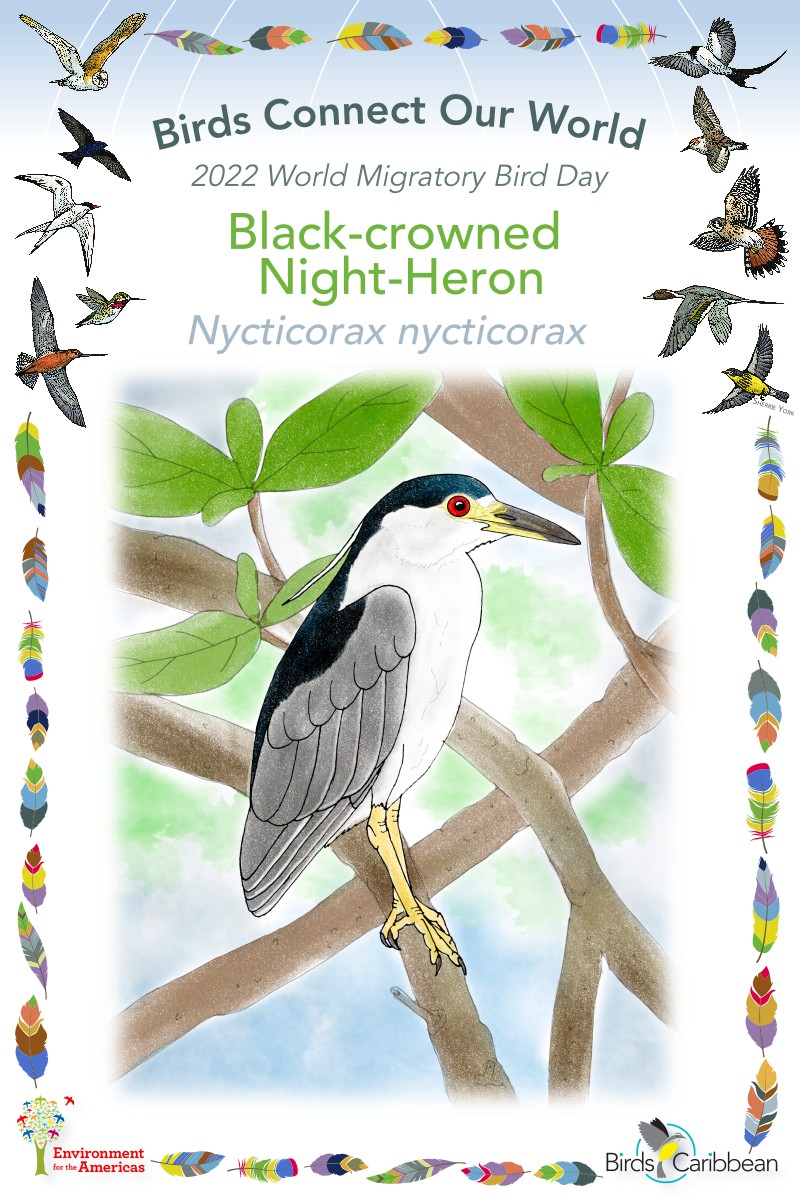
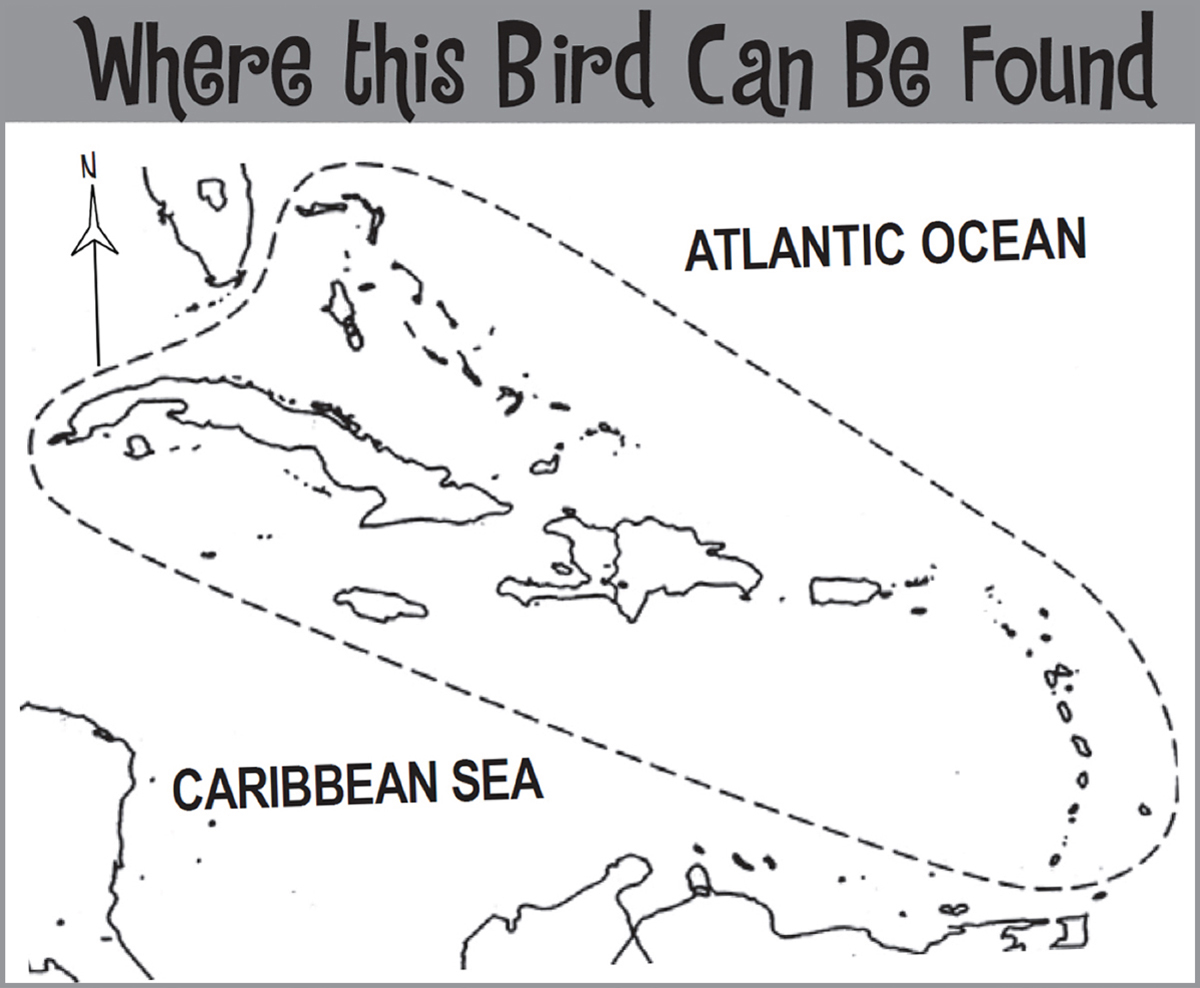
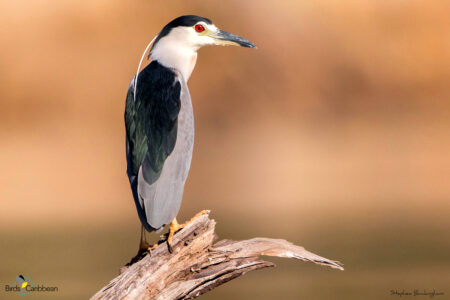
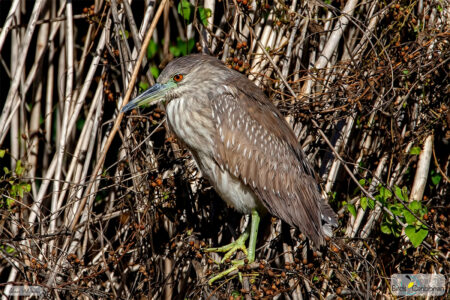
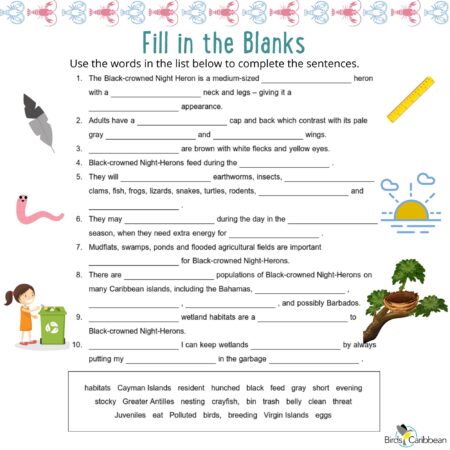 FOR KIDS: What facts can you remember about todays migratory bird – the Black-crowned Night-Heron? Test your knowledge by filling in the missing words in our Black-crowned Night-Heron facts! We have given you all the correct words to use but can you put them into the right fact? You can re-read the information all about this bird above, or search on the BirdsCaribbean webpages or online for lots more information about the Black-crowned Night-Heron! Then, when you have completed all the sentences, you can check your answers here.