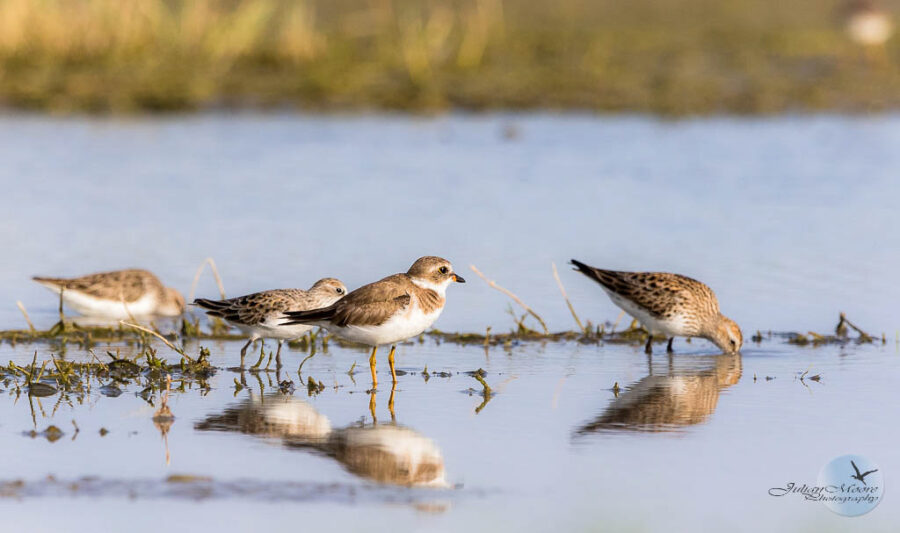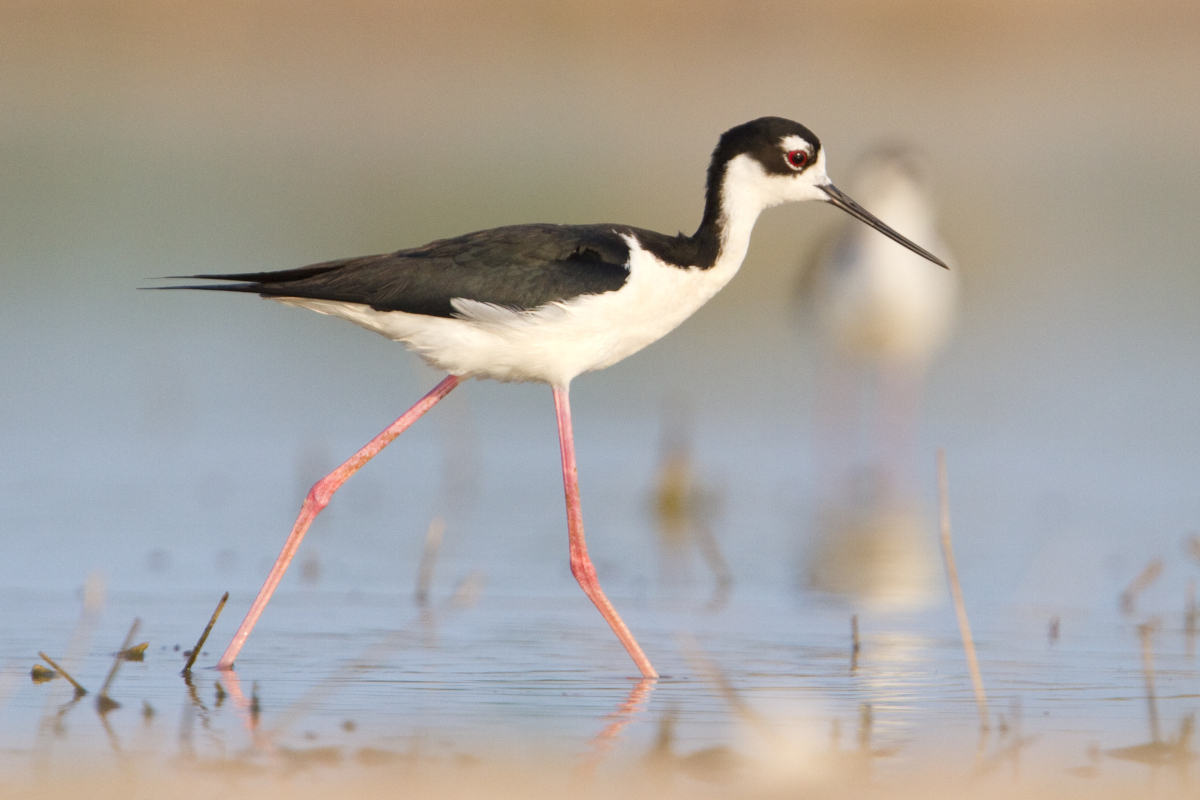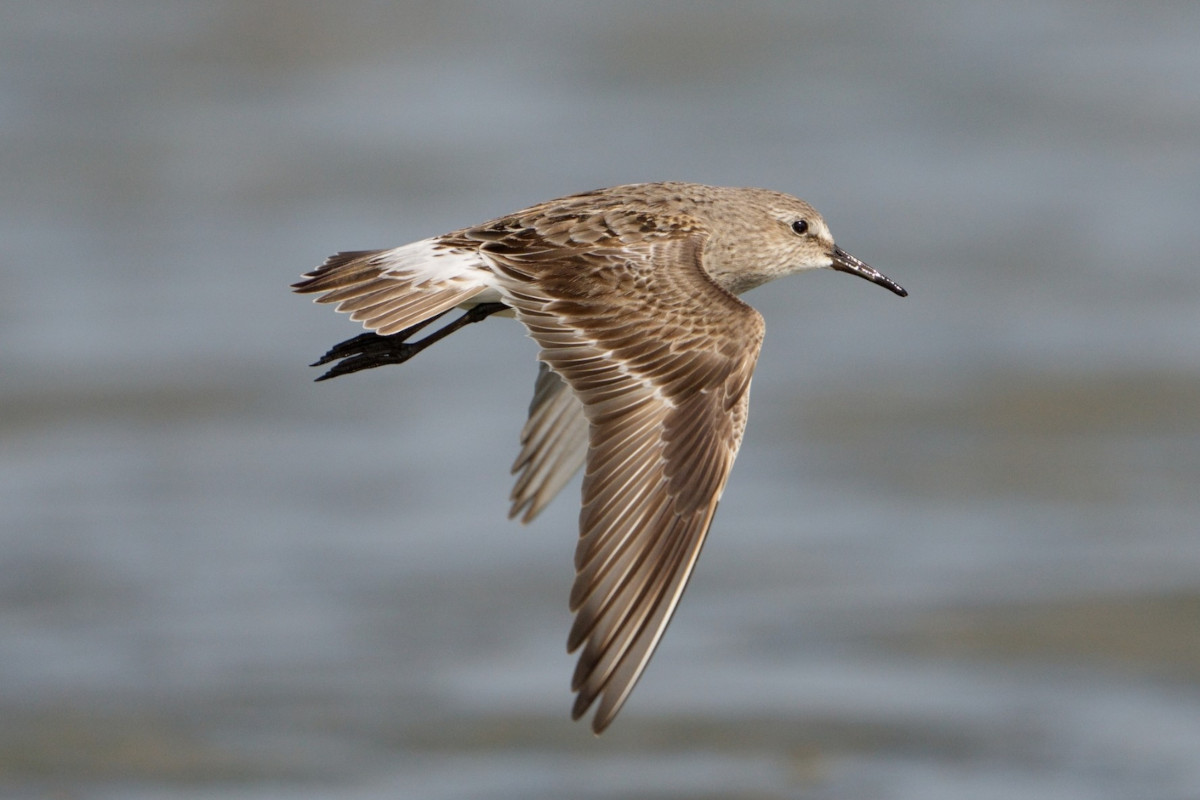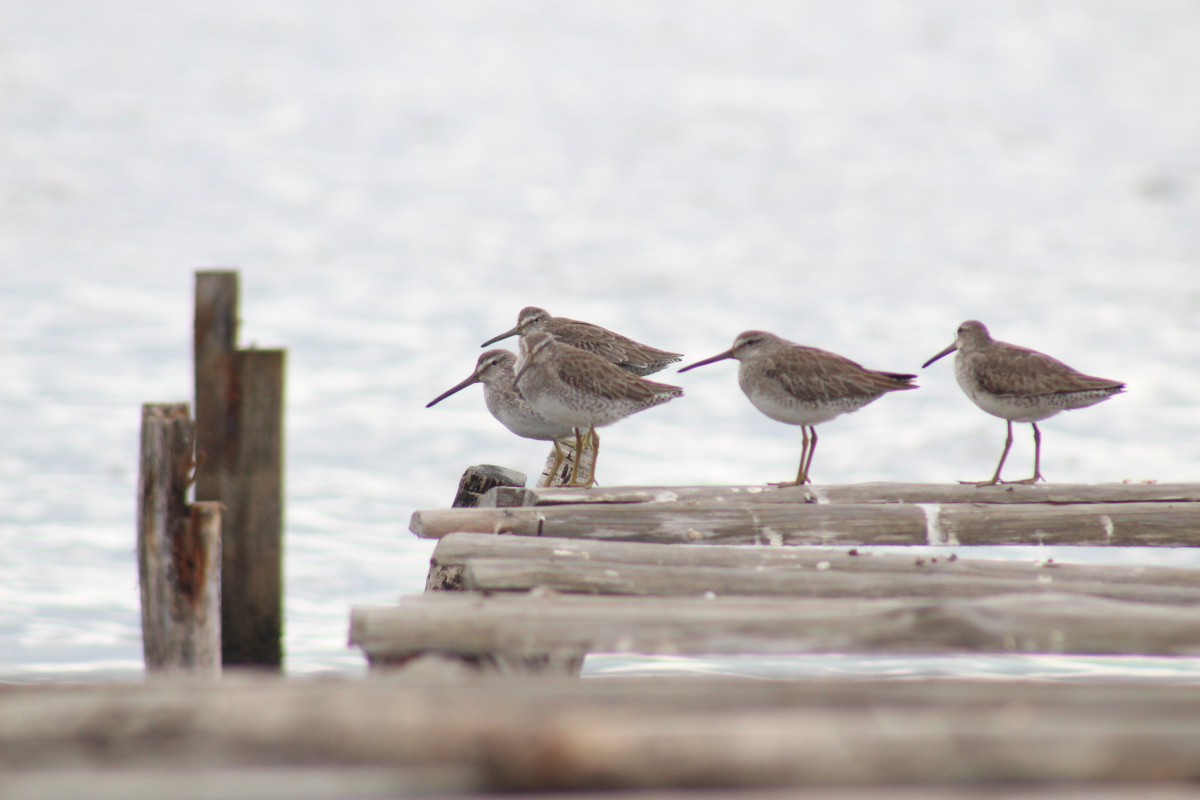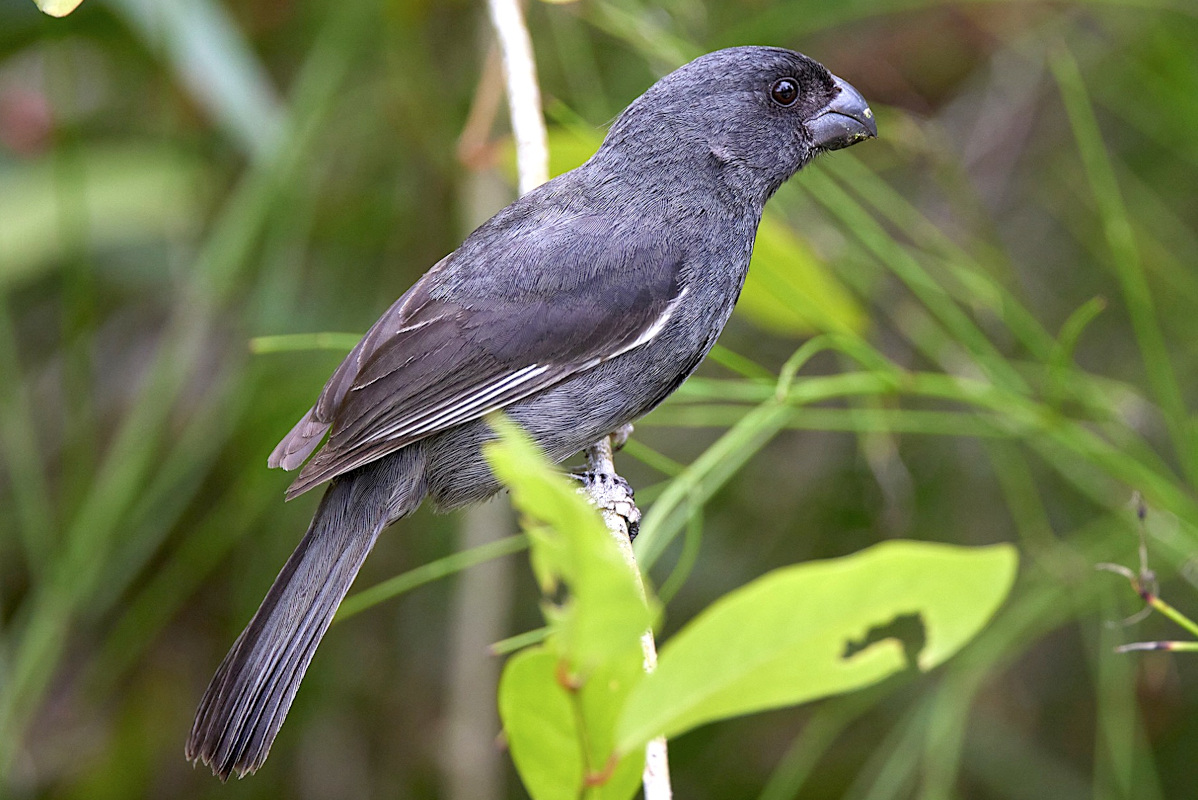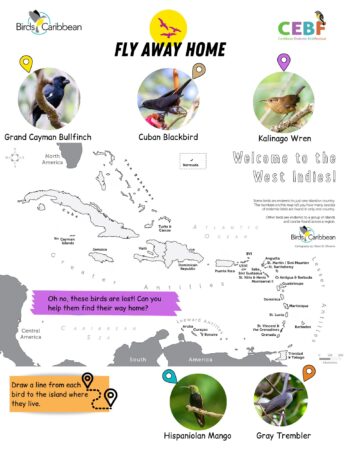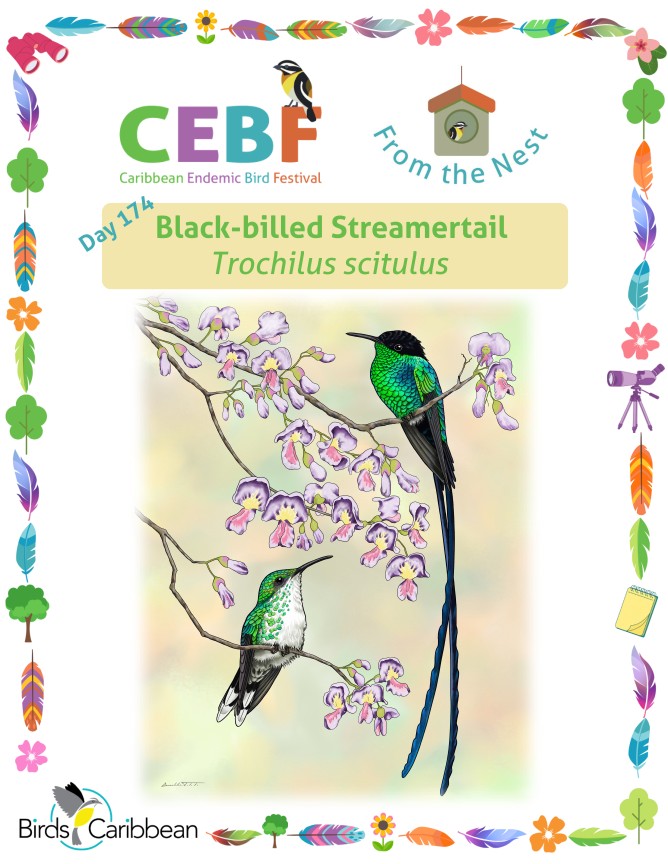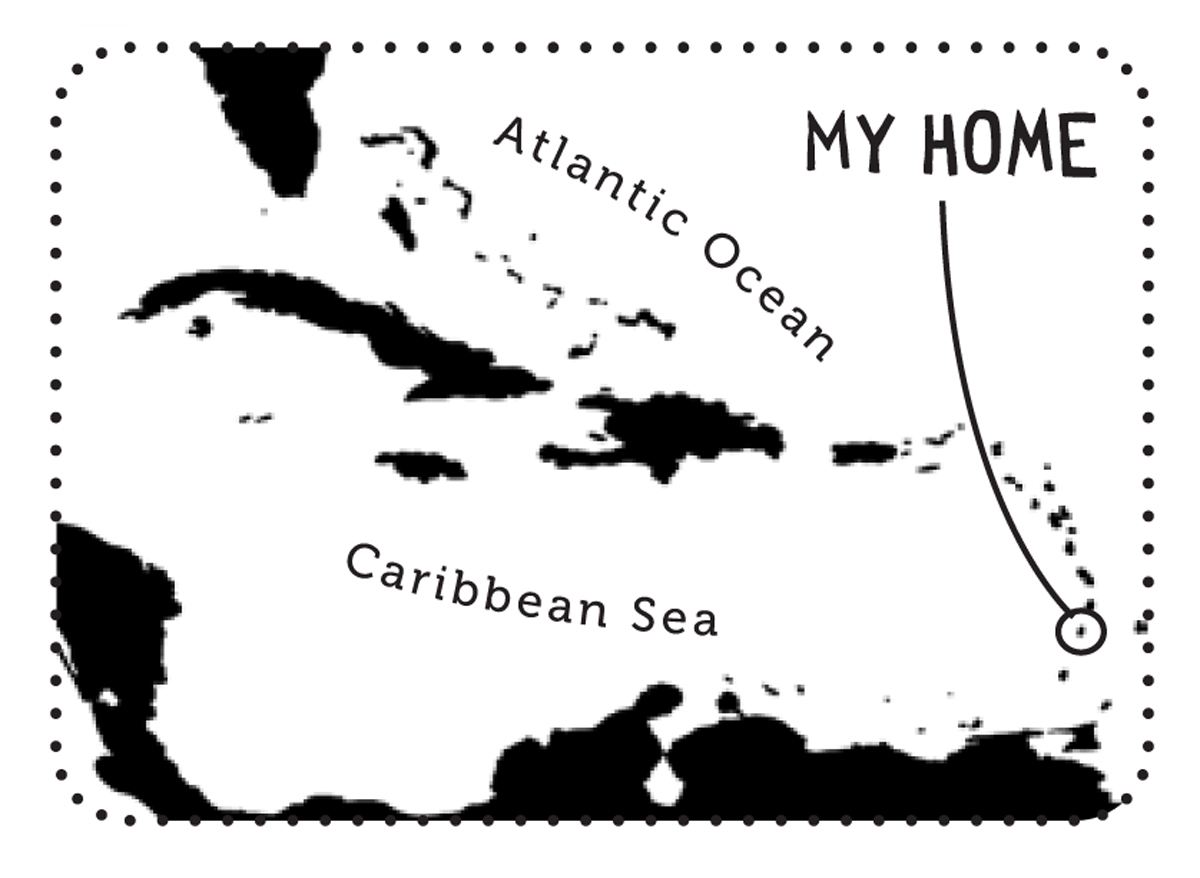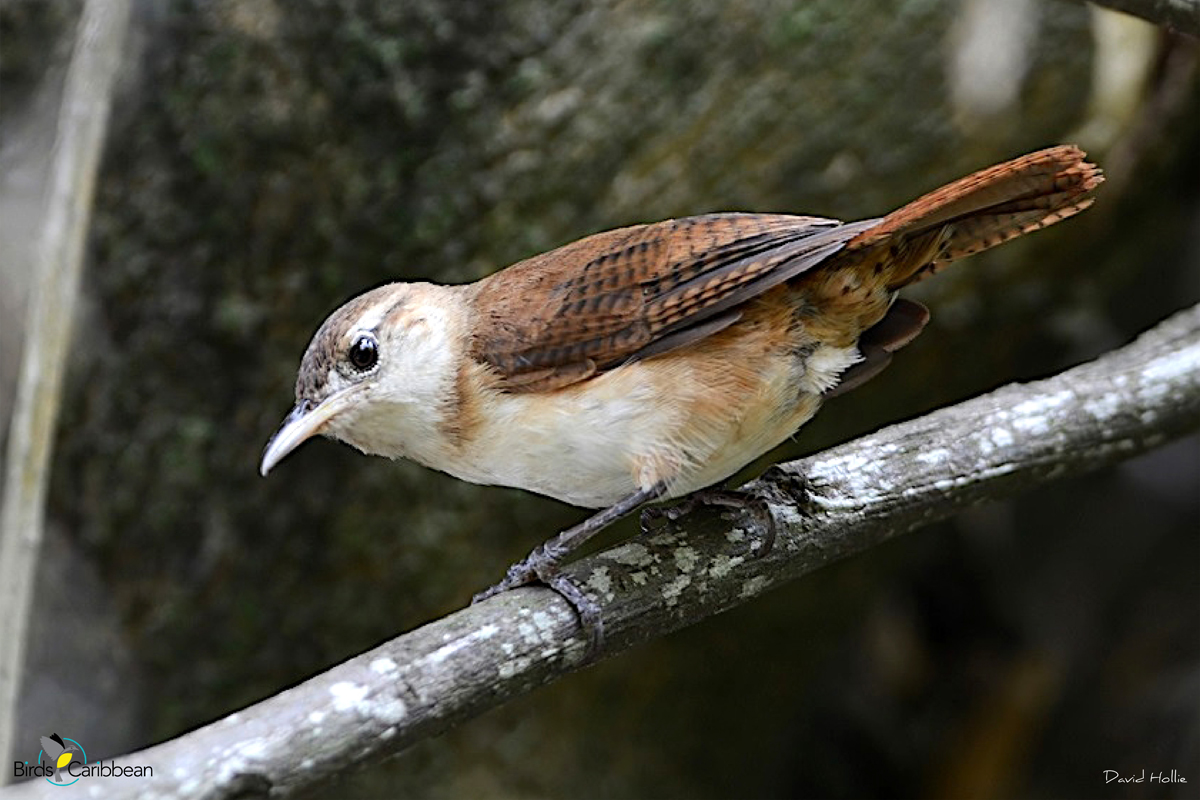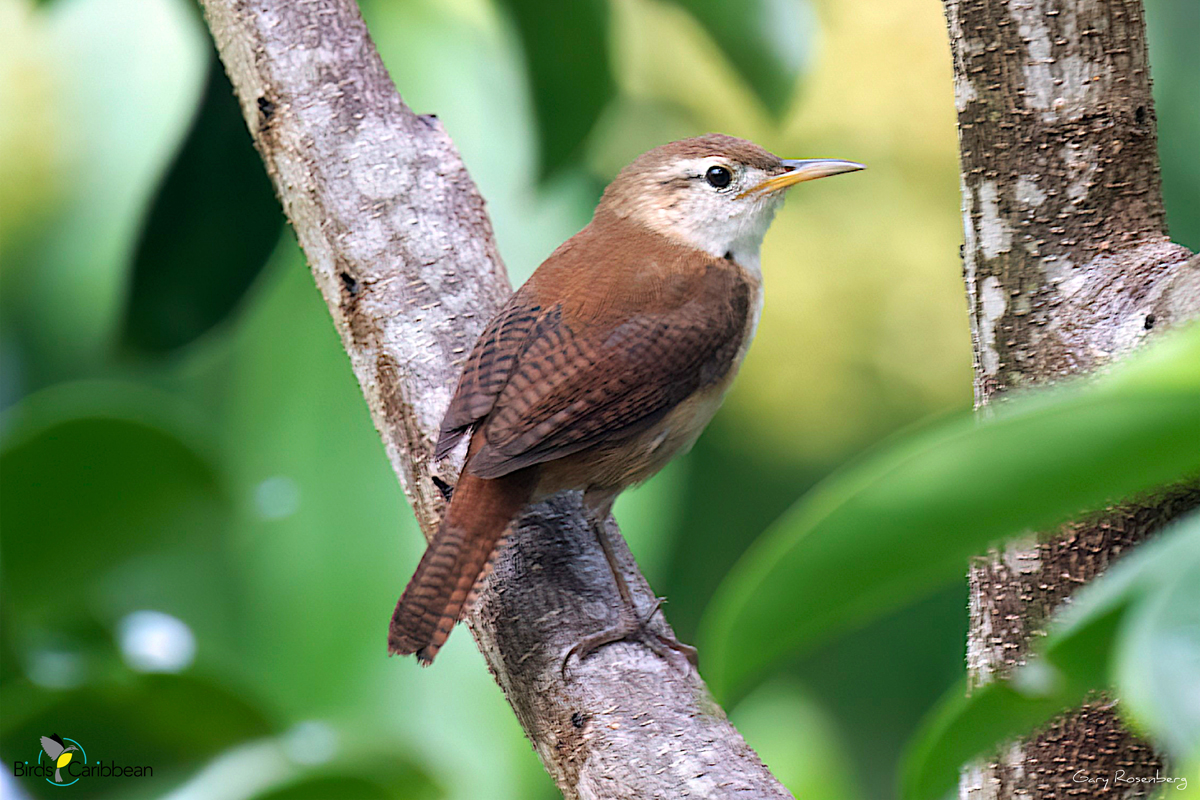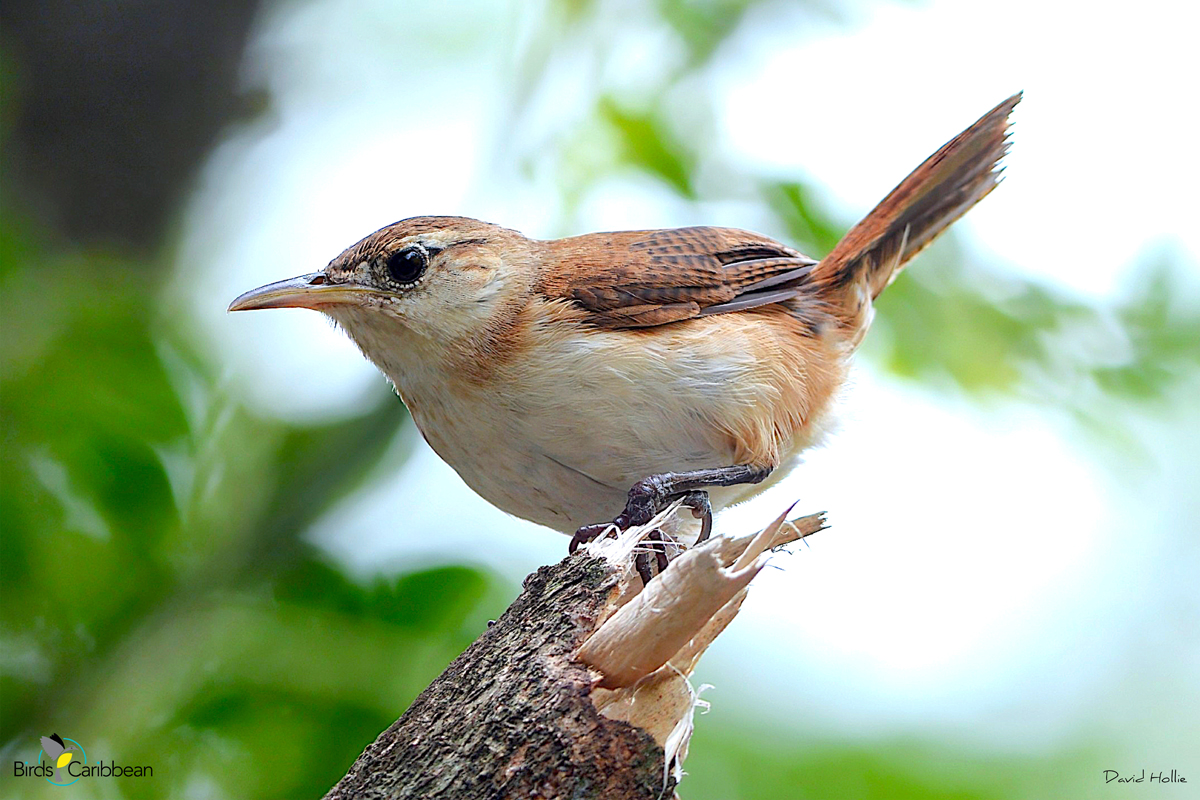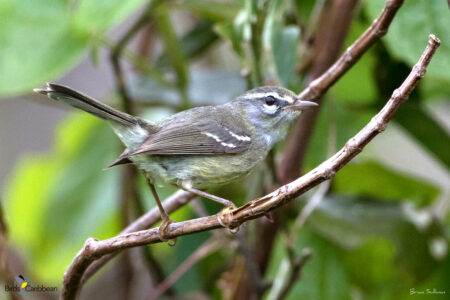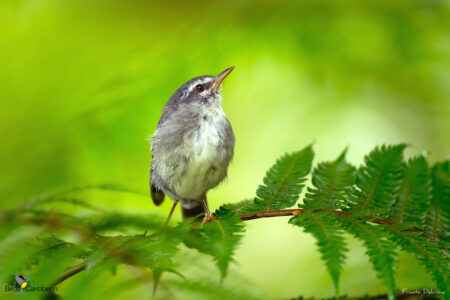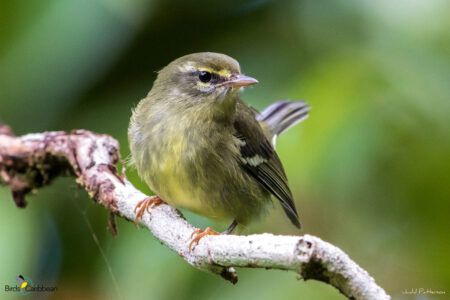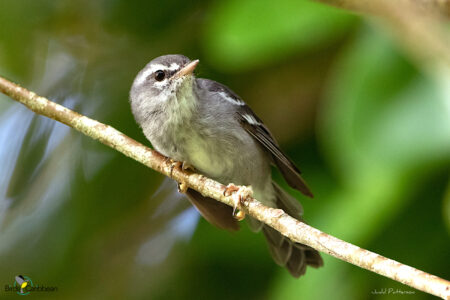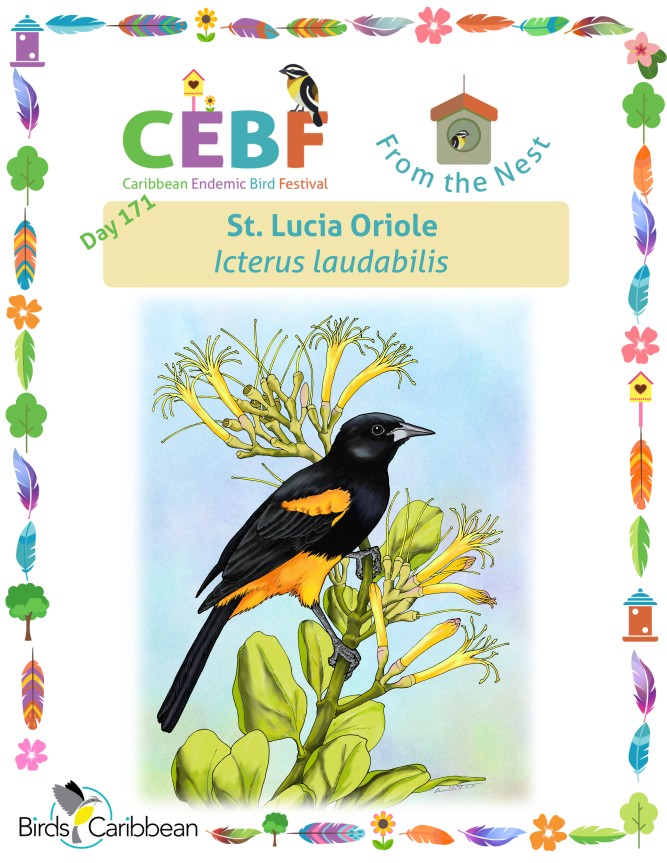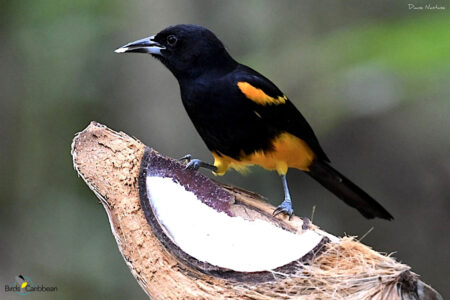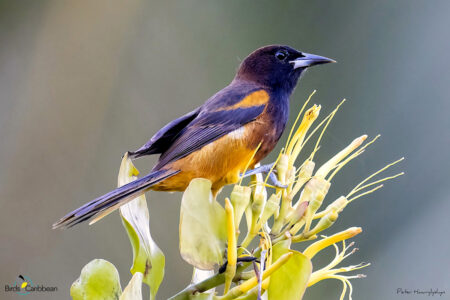
Celebrate the Caribbean Endemic Bird Festival (CEBF) with us! Our theme in 2026 is “Every Bird Counts – Your Observations Matter” — shining the spotlight on the power of citizen science, reminding us that you don’t need a lab coat or a PhD to contribute to science; you just need curiosity and a genuine love for nature and community. Have fun learning about a new endemic bird every day. We have colouring pages, puzzles, activities, and more. Download for free and enjoy learning about and celebrating nature!
Endemic Bird of the Day: Black-billed Streamertail
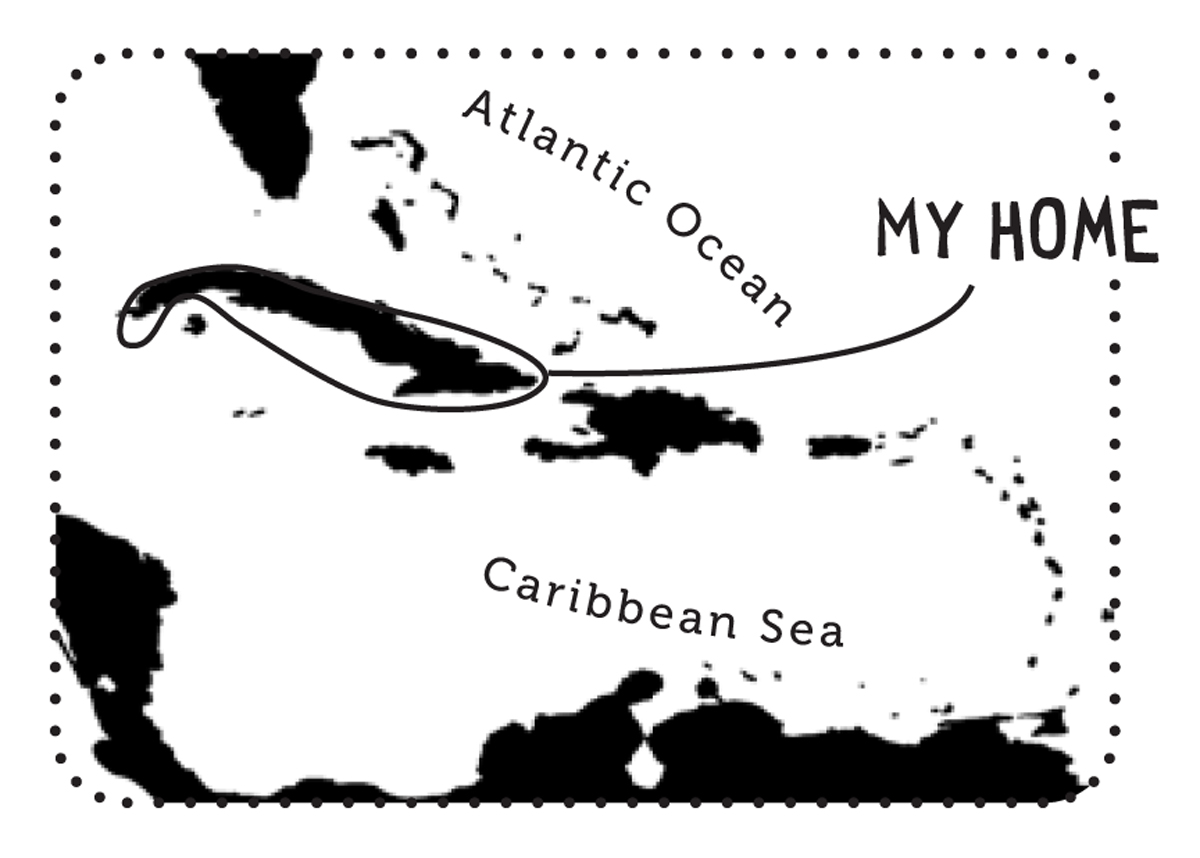
The Streamertail is a symbol of Jamaica’s national pride and our rich biodiversity. While the average Jamaican may not be able to easily differentiate the Black-billed Streamertail from its more widespread compatriot, the Red-billed Streamertail, this striking bird still captures the eyes and hearts of Jamaicans and visitors alike.
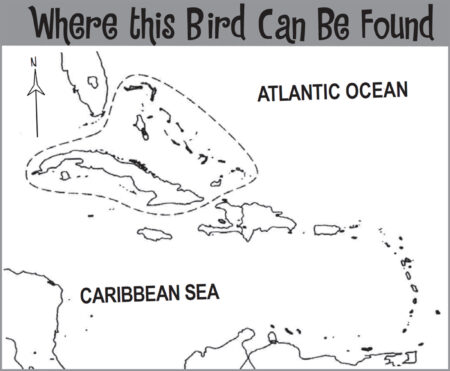
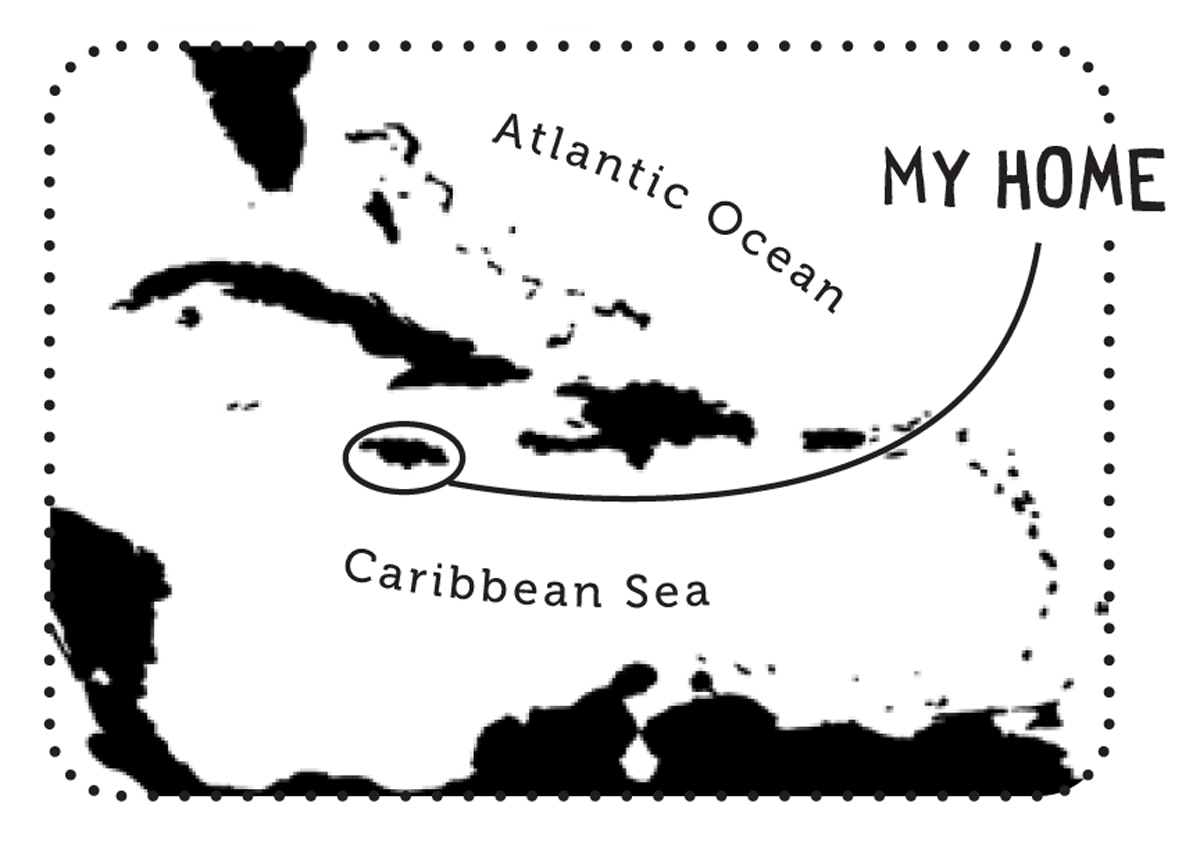
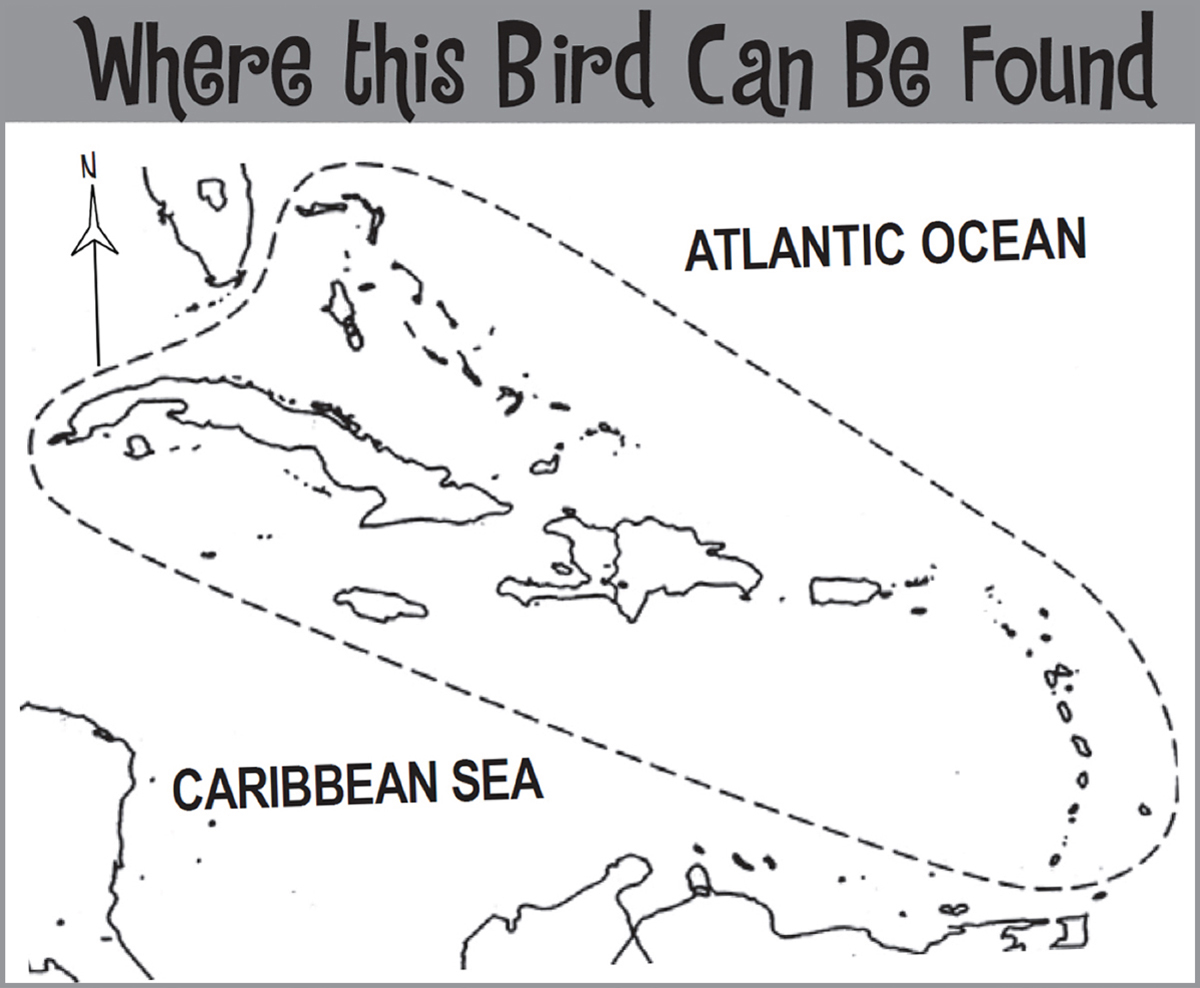
It is primarily found in eastern Jamaica, particularly in the parishes of Portland, St. Thomas, and parts of St. Mary. It is closely related to the Red-billed Streamertail known locally as “Doctor Bird”, but the two are distinct species, separated by both geography and subtle differences in appearance and behavior.
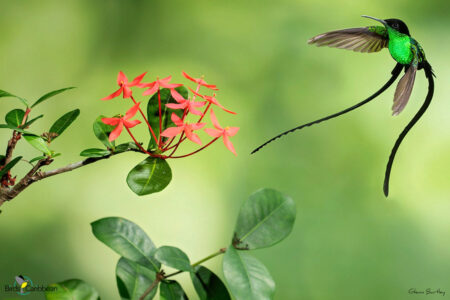
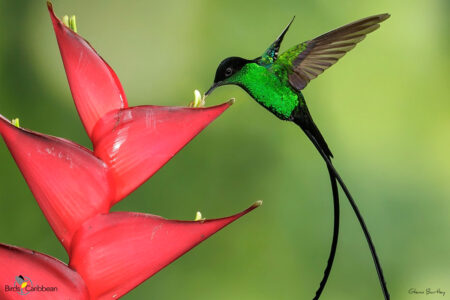
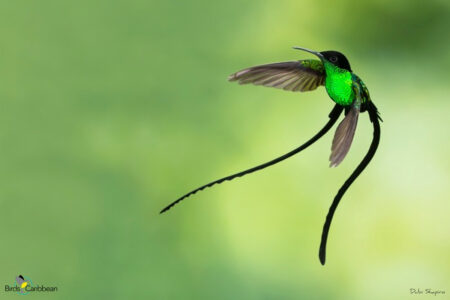
Measuring about 22-24 cm in body length including their tail streamers—long, prominent trailing tail feathers for which the male Black-billed Streamertail is most famous for! These tail streamers, which curve and flutter behind it as it flies, produce a distinctive humming sound. Males are an iridescent emerald green with a black bill, while females lack the extravagant tail and have a duller greenish-brown appearance with a white belly. The females of both species are very similar and not always distinguishable in the field. Identity is usually assumed based on location.
Black-billed Streamertails are nectarivores (primarily feed on nectar). They feed on the flowers of native plants like heliconias, wild bananas, and mistletoe; in doing so, they play a critical role in pollination, transferring pollen from flower to flower. They also snack on small insects and spiders to get the protein they need to stay strong. These agile birds are fiercely territorial, often defending feeding sites from rivals and other nectar-feeding species.
During breeding season, females build tiny cup-shaped nests out of plant fibers, moss, and cobwebs, usually attaching them to tree branches or vines. They lay one or two tiny eggs, which they incubate alone, while males focus on displaying and defending their territories.
Although currently classified as “Least Concern” by the IUCN, the Black-billed Streamertail faces threats from habitat loss due to deforestation, agricultural expansion, and infrastructure development. Conservation efforts, including habitat protection and responsible land management, are crucial to ensuring the survival of this extraordinary hummingbird.
A true gem of Jamaica’s forests, the Black-billed Streamertail is always a treat for nature lovers with its dazzling plumage and acrobatic flight, serving as a reminder of the island’s unique and fragile ecosystems.Learn more about this species, including its range, photos, and calls here. Great news! If you’re in the Caribbean, thanks to BirdsCaribbean, you have free access to Birds of the World and you can find out even more in the full species account of this bird!
Thanks to Justin Saunders for the text and Arnaldo Toledo for the lovely illustration.
Colour in the Black-billed Streamertail
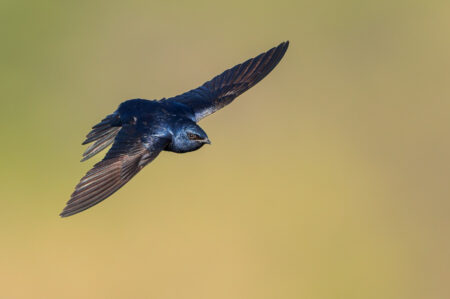
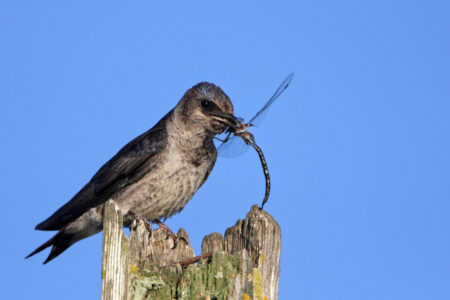
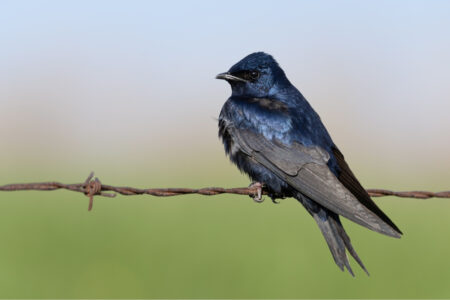
Download our West Indies Endemic Bird colouring page. Use the photos below as your guide, or you can look up pictures of the bird online or in a bird field guide if you have one. Share your coloured-in page with us by posting it online and tagging us @BirdsCaribbean #CEBFfromthenest
Listen to the call of the Black-billed Streamertail
The calls of the Black-billed Streamertail are a high pitched ‘twink–twink–twink’
Puzzle of the Day
Click on the images below to do the puzzles. You can make the puzzle as easy or as hard as you like – for example, 6, 8, or 12 pieces for young children, all the way up to 1,024 pieces for those that are up for a challenge!
Black-billed Streamertail looks for food. (Photo by Glenn Bartley)Black-billed Streamertail feeding on nectar. (Photo by Glenn Bartley)Black-billed Streamertail in flight. (Photo by Dubi Shapiro, Macaulay Library-ML205120501)
Activity of the Day
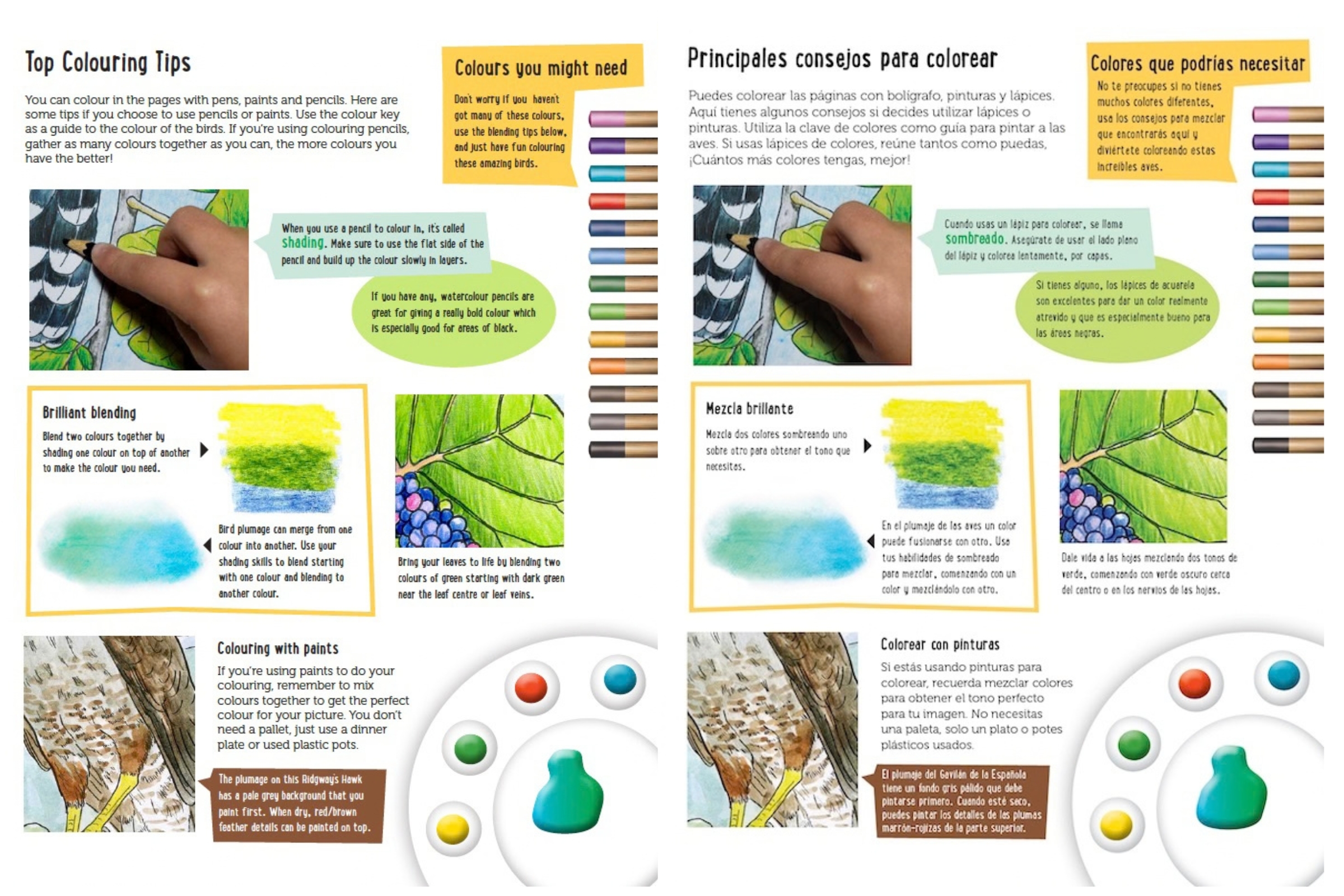
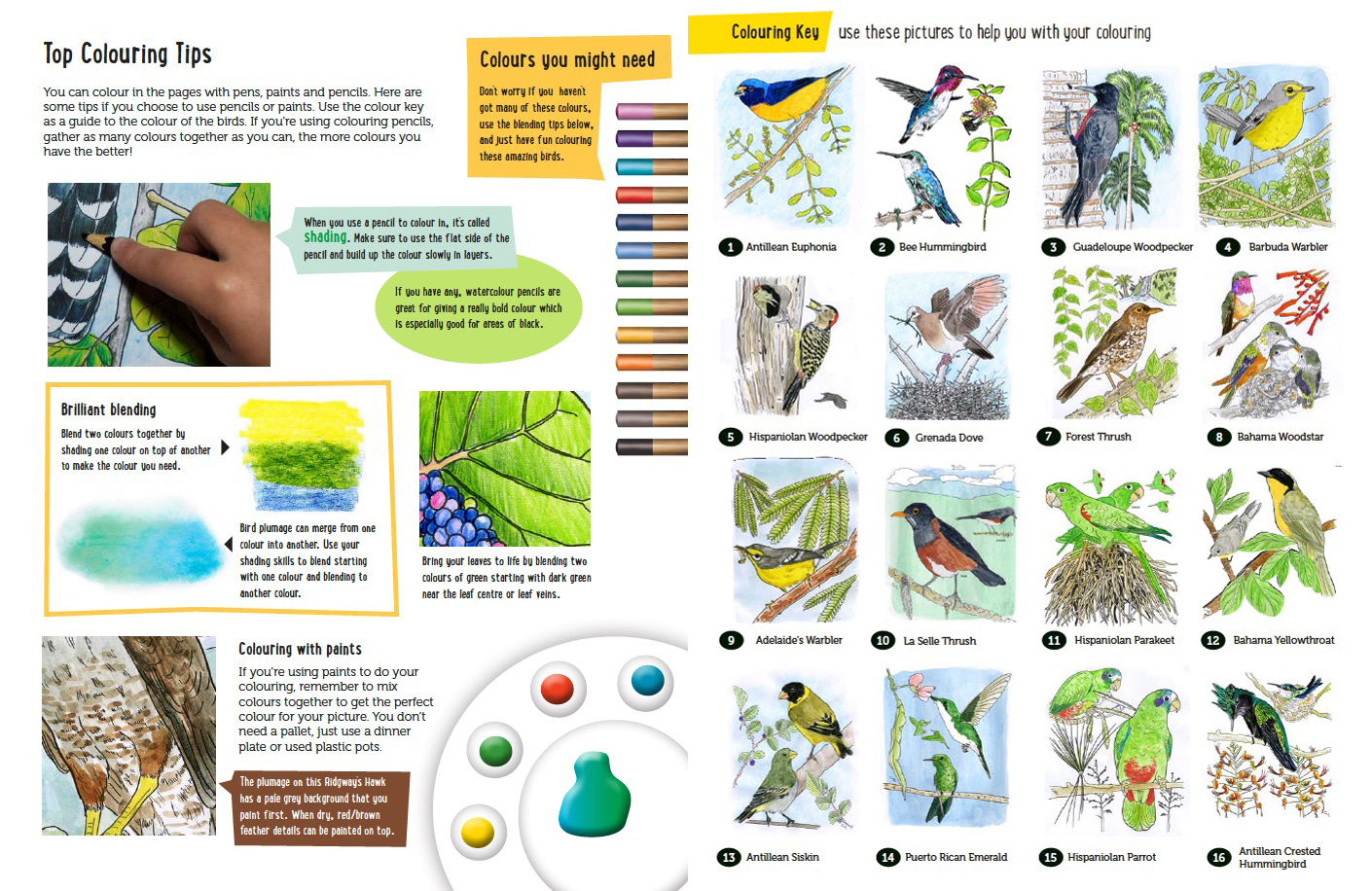
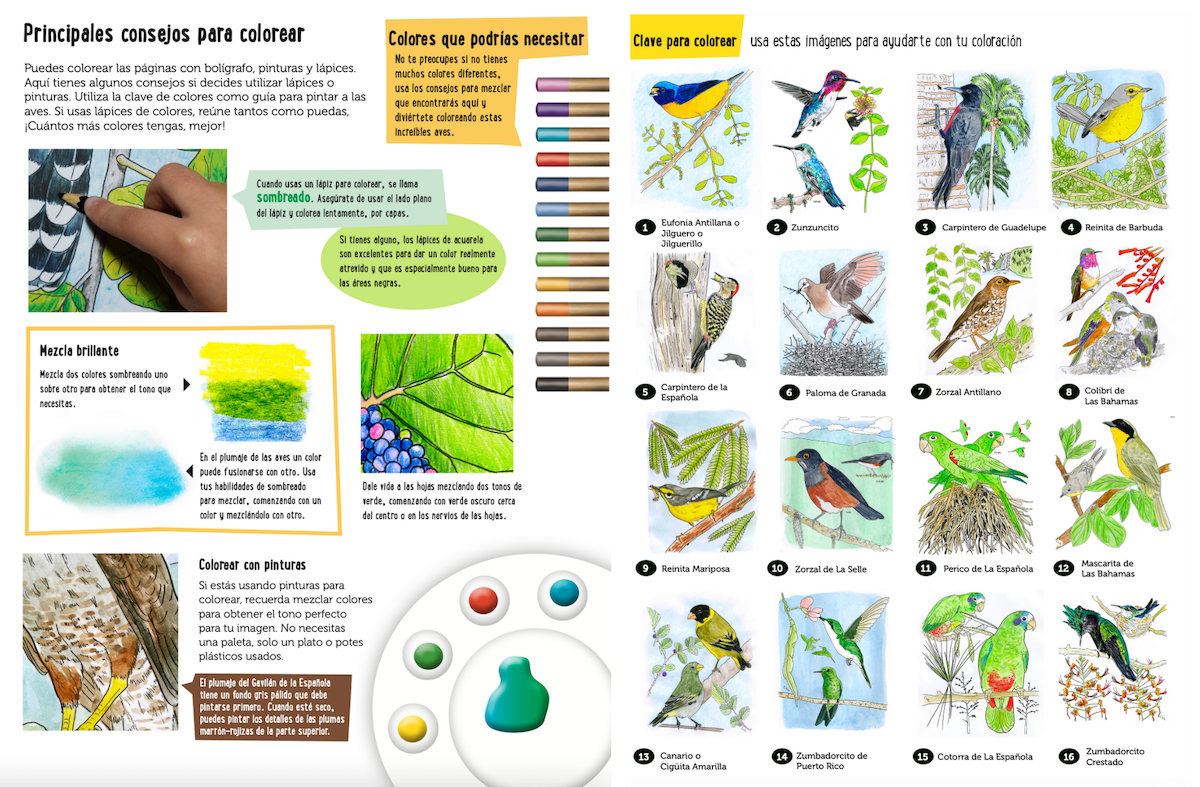
FOR KIDS AND ADULTS: During our 2026 celebration of Caribbean endemic birds we will be sharing a beautiful colouring page for every single bird we feature! These lovely pages were created for us by Arnaldo Toledo, who also created a coloured in version of each bird as inspiration. Get your colour pencils ready, and read these super helpful colouring in tips below. Then go ahead, download and print each bird, and get colouring! Enjoy!
These tips are also available in Spanish:
Discover the birds of the Caribbean with Origami, the Japanese art of paper folding, and learn how to fold a hummingbird out of paper with this video! All you need is a square sheet of paper – 24 x 24 cm is ideal. The video will show you step by step how to fold and create your hummingbird!
Enjoy this video of a Black-billed Streamertail in the wild!
Blue-winged Teals take flight. (Photo by Sam Zhang, Macaulay Library-ML363398841)
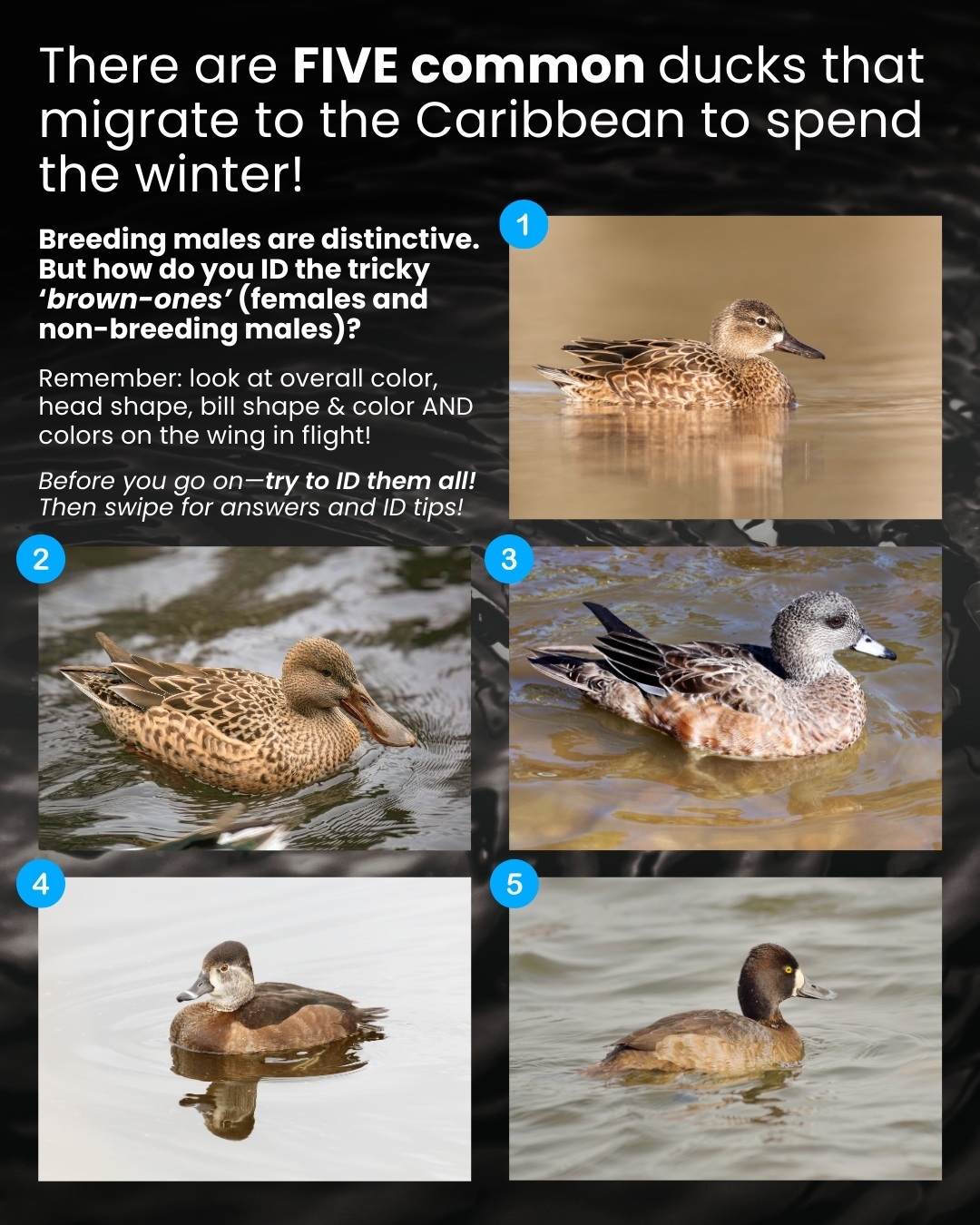
In the Caribbean we are blessed with more than 30 species of ducks, with resident species joined by migratory visitors in fall and winter — with the occasional (exciting) ‘rare’ bird showing up too! Male ducks in breeding plumage typically sport colorful features that make identification easier, even when species look similar.
But, what about females, immatures, and males out of breeding plumage (known as ‘eclipse males’)? Fear not — we’re here to help you identify the tricky ‘brown ones’. Read on for some great tips!
In this guide we’ll focus on females of five common migratory ducks that pass through or winter in the Caribbean, with ‘bonus’ tips on four additional, less common species. We will also touch on some of the rarer species that visit the Caribbean which can be easily mixed up with the common ones.
Before you dive in — take a look and see how many of our five species you can already identify!
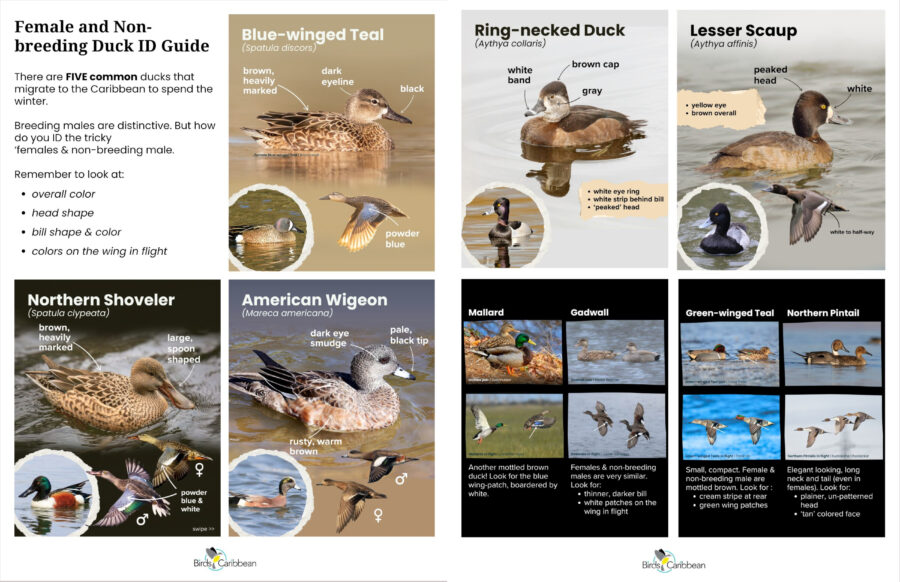
Blue-winged Teal
These are one of the most common duck visitors to the Caribbean! Even females are often unmistakable in flight thanks to the powder-blue on the wing. This is shared by Northern Shoveler (see next), but the blue for the shoveler is less extensive and they also have bold white on the wing — which the teals lack.
When swimming look for the dark eye-line and black bill. Males in eclipse plumage may also show a faint ‘ghost’ of the white ‘crescent’ mark behind the bill, seen when they are in breeding plumage.
While similar, Green-winged Teal females (see below) are a warmer brown, and have a cream stripe at the rear. You may also spot some of the green on the wing, even when they are swimming.
Northern Shoveler
This duck might be known as the ‘Hollywood Mallard’ for the male’s flashy looks — but females are more demure. Like many female ducks, they show heavily marked brown-buff plumage — but their large spoon-shaped bill is a dead giveaway.
You can also look for a wash of powder blue on the leading edge of the wing in flight, combined with a white stripe.
American Wigeon
Breeding male American Wigeons bring glamour to the wetland! With a green eye patch and white crown, males are hard to mis-identify. Females and non-breeding males are more subtle, but you can recognize these short-billed ducks from the rusty, warm brown tones of their body plumage.
Females look plainer and less mottled than other female brown ducks, with a gray-brown head with that dark smudge around the eyes. Look also for the pale bill with a black tip.
The similar Eurasian Wigeon is a rare visitor to the Caribbean and can cause confusion. Breeding male American and Eurasian Wigeons look quite different. The American Wigeon shows a striking green stripe behind the eye, has a gray brown head and white cap. In contrast Eurasian males have a chestnut head and buff cap. However, females can be hard to separate. Look for the grayer, ‘colder’ colored head in the American Wigeon — and in flight, American Wigeons show white under the wing, whilst Eurasians are silvery gray.
A Quick Feeding Tip!
The way ducks feed can also help narrow down your ID. The ducks above are all ‘dabbling ducks’ — you’re likely to see them in shallow water, tipping head down, tail up in the air.
The next two species are ‘diving ducks’ — they dive head-first underwater when feeding, completely disappearing beneath the surface.
Ring-necked Duck
Despite the name, the male’s chestnut collar across its black neck is hard to see in the field—so don’t rely on it! Females have a brown-gray body, and pale white feathers around the base of the bill. Their heads feature a brown cap that contrasts with its gray face and white eye-ring.
Their bills are also helpful: look for the distinctive white a white band across it near the tip. Males in eclipse plumage display a brown plumage with brown-black head, breast, and back. They can be distinguished from females by their bright yellow eyes and lack of an eye-ring.
Lesser Scaup
Female Less Scaups are a warm chocolate brown. Unlike the Ring-necked Duck, their head and face is almost entirely brown, with a white patch that varies in size just behind the bill, and yellow eyes.
Males have black heads with purple/green iridescence, a black neck and breast, white sides, and greyish marbled looking backs. Both sexes have a white wing-stripe, which runs half-way along the trailing edge of the upper wing, and is visible in flight.
This species is very similar to the far rarer Greater Scaup. The best way to tell them apart is by head shape — the Lesser Scaup’s head is narrower and egg-shaped with a peak near the back of the head, while the head of the Greater Scaup is more rounded. In addition, the sides and back of the Greater Scaup are lighter.
And the rest…
We’ve covered the five most common species of migratory ducks found in the Caribbean — let’s now consider a few less common but noteworthy species.
The Mallard is what most people think of when they picture a duck. Males have a distinctive glossy green head, yellow bill, and bright orange legs and feet. Females and young males are mottled brown, with a dark bill. They may resemble female shovelers but lack the massive bill! In flight, look for the blue wing-patch bordered with white.
Gadwalls are subtly patterned and can look dull at first glance. Females can resemble female mallards, but have a thinner, darker bill and no blue-wing patch. In flight, look for small, white wing patches that are a distinctive feature of this species .
Male Green-winged Teals have a green stripe behind the eye, similar to American Wigeons, but lack the white ‘forehead’ and are MUCH smaller. Females can look like female blue-winged Teals, but again are smaller (see above). Remember, you can look for the cream stripe at the rear of Green-winged Teals — and in flight, as the name suggests, they have green wing patches.
Finally, let’s consider the Northern Pintail. This duck has a distinctive elegant silhouette that sets both the males and females apart. They are long necked and long tailed. Even though the female is brown, her silhouette distinguishes her from other ‘brown ducks’. Whilst she does not have the VERY long tail of the male, she still appears longer in the tail than other ducks. She also has a chestnut-coloured face that is less patterned and plainer looking than other female ducks.
We hope this guide has set you on the path of duck ID enlightenment! There are of course several other species of duck that are found in the region, either as year-round residents or rarer visitors. We highly recommend using your field guide, taking photos when possible, and exploring resources like Birds of the World, which is free to access in the Caribbean thanks to our partnership with the Cornell Lab of Ornithology. For trickier, rarer migrants, be sure to check out the All About Birds pages from Cornell, where you can compare similar species side-by-side.
Good luck and happy duck spotting!
You can view all the graphics, plus a ‘bonus’ quiz in this pdf booklet:
We’ve made an ID card that you can download, print as a two-sided 8.5×11 page, and laminate for easy reference in the field.
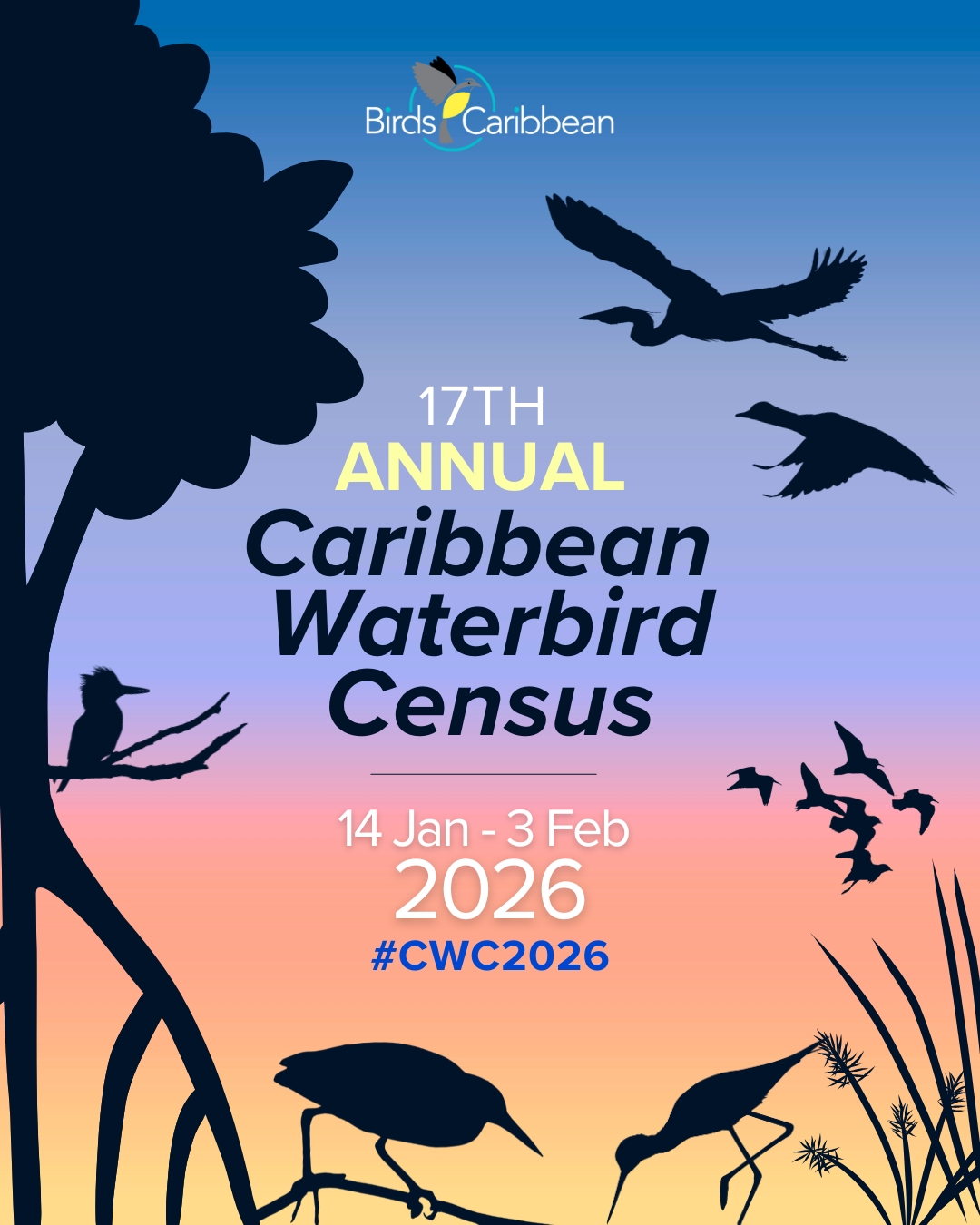
Get ready for the 17th annual Caribbean Waterbird Census (CWC) Region-Wide count! This year is extra special as we mark the 60thyear of the International Waterbird Census (IWC) — a global effort to collect waterbird data, of which the CWC is a part. From January 14th to February 3rd 2026, you can directly contribute to Caribbean Waterbird conservation.
Did you know that when you take part in our CWC regional count you are part of something much bigger? Since 1967, thousands of people around the world have headed to their local wetlands to take part in the International Waterbird Census (IWC). That’s 60 years of global citizen science efforts, all dedicated to tracking the health of waterbird populations and the wetlands they depend on! And our very own CWC has been part of this for the past 16 years! You can find out more about this special 60th anniversary of the IWC here.
Supporting over 185 species of waterbirds, Caribbean wetlands are great places to explore to discover amazing birds and habitats. You might see one of our Caribbean endemics like the West Indian Whistling Duck, or ones of the many globally threatened species that live there, including many migrants such as shorebirds like Lesser Yellowlegs and Short-billed Dowitchers. Our wetlands are threatened by coastal development, pollution and the impacts of climate change, so it’s critical that we protect these special places. The data you collect in this ongoing, annual, standardized survey is essential for helping us understand how to best protect these amazing habitats and protect these birds. CWC surveys are also critical in keeping up to date with the changes and threats to waterbirds and their wetland homes.
How to be part of the bigger picture
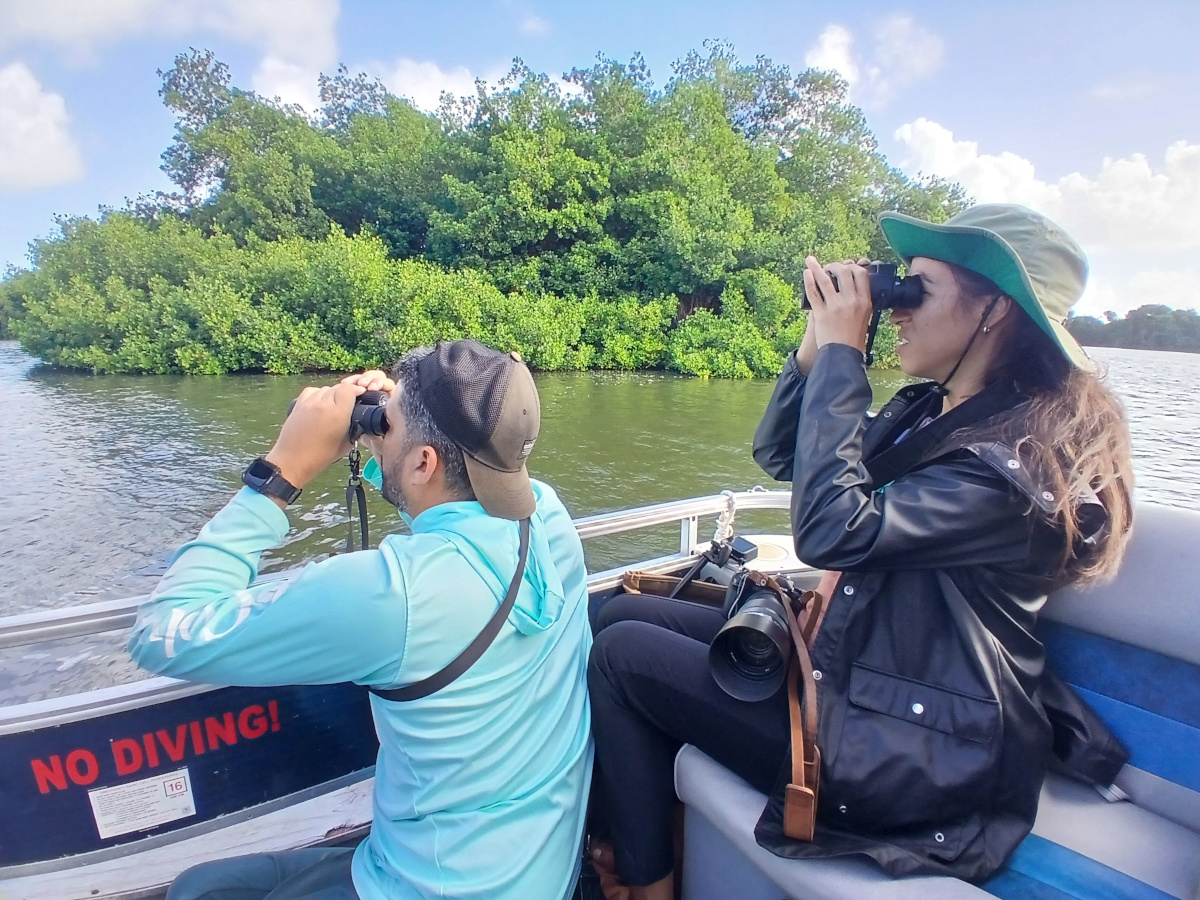
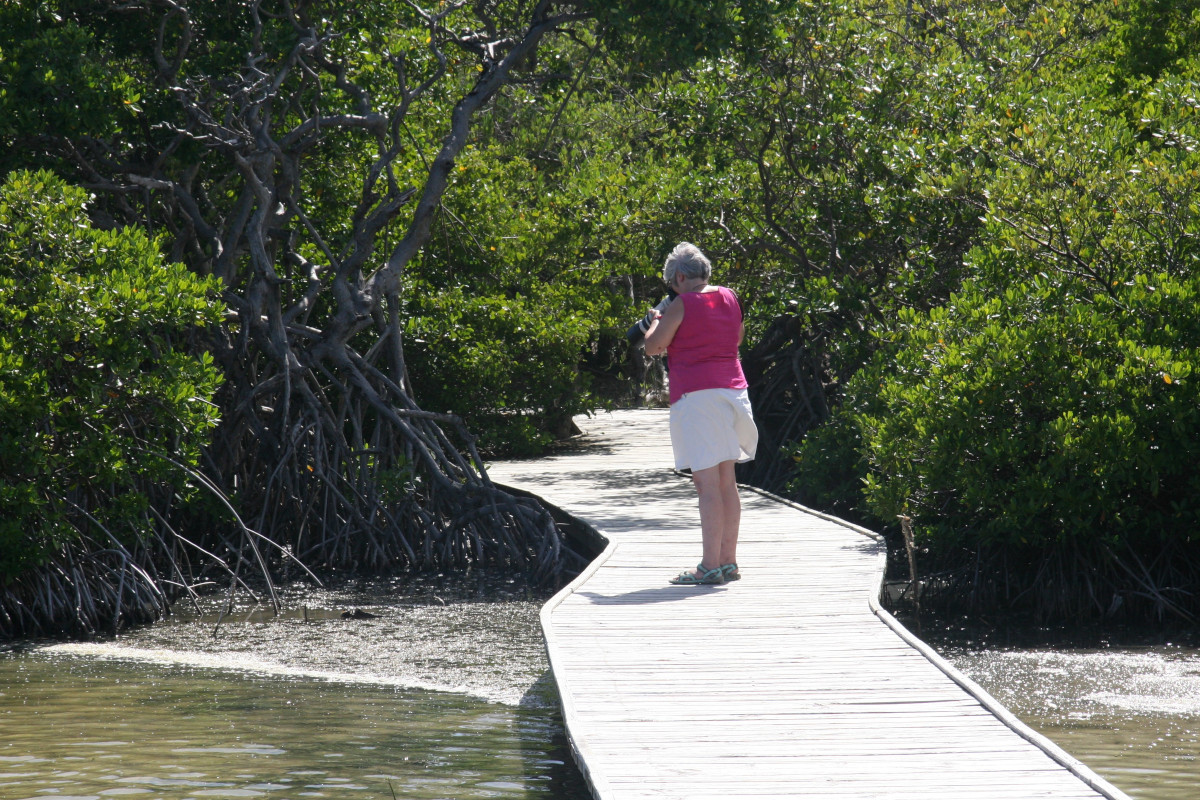
As we mark our 17th year, you can play an important role in this global effort to protect waterbirds and wetlands! Anyone can participate in the CWC –— just head out to your nearest wetland, and record the birds you see — don’t wait, just wade right into the wonderful world of waterbirds!
Birding at Hellshire Wetlands, Jamaica. (Photo by Damion Whyte)
The Lesser Yellowlegs, a medium-sized shorebird widespread in the Caribbean, has suffered a population decline of 30 to 49%. Its IUCN threat level has been raised from Least Concern to Vulnerable. (Photo by Hemant Kishan)
The Cargill Salt Ponds site also supports other habitat types, like these mangroves. (Photo by Lisa Sorenson)
West Indian Whistling-Duck & Wetlands Conservation
For CWC, a wetland is any area where water is the primary factor controlling what lives there. These include any place where water is covering the land or is just below the surface. This wide definition includes coastal wetlands like mangroves, mud flats, lagoons and beaches, as well as inland wetlands like lakes, ponds, swamps, areas around rivers and streams and even some types of agriculture (e.g. rice fields). Of course, because this is the Caribbean Waterbird Census, you need to be in the Caribbean to take part! You can find more information about how to conduct surveys here.
Get with the project
Getting a CWC list on eBird. (photo by EAG)
All our CWC data is still stored on eBird, but earlier in 2025 CWC became a project in eBird. This means that you need to be part of the project on eBird to ensure that your counts contribute to our amazing database!
Here’s the good news—if you’ve ever submitted a checklist using a CWC protocol in the past—you’ve likely been automatically added to the project! Check out the CWC project pages here to confirm you’ve joined.
If you’re new to CWC or if for some reason you’ve not been joined, just visit the CWC Project Page and click “Learn how to join.” Review the info about the project, scroll to the end and then click “Join Project.” If you are not logged into eBird you will be prompted to “Login to Join Project.”
Once you’ve joined the CWC project, it’s easy to add your CWC lists to our database on the eBird app or on the website.
Here’s how:
CWC in the eBird Mobile App:
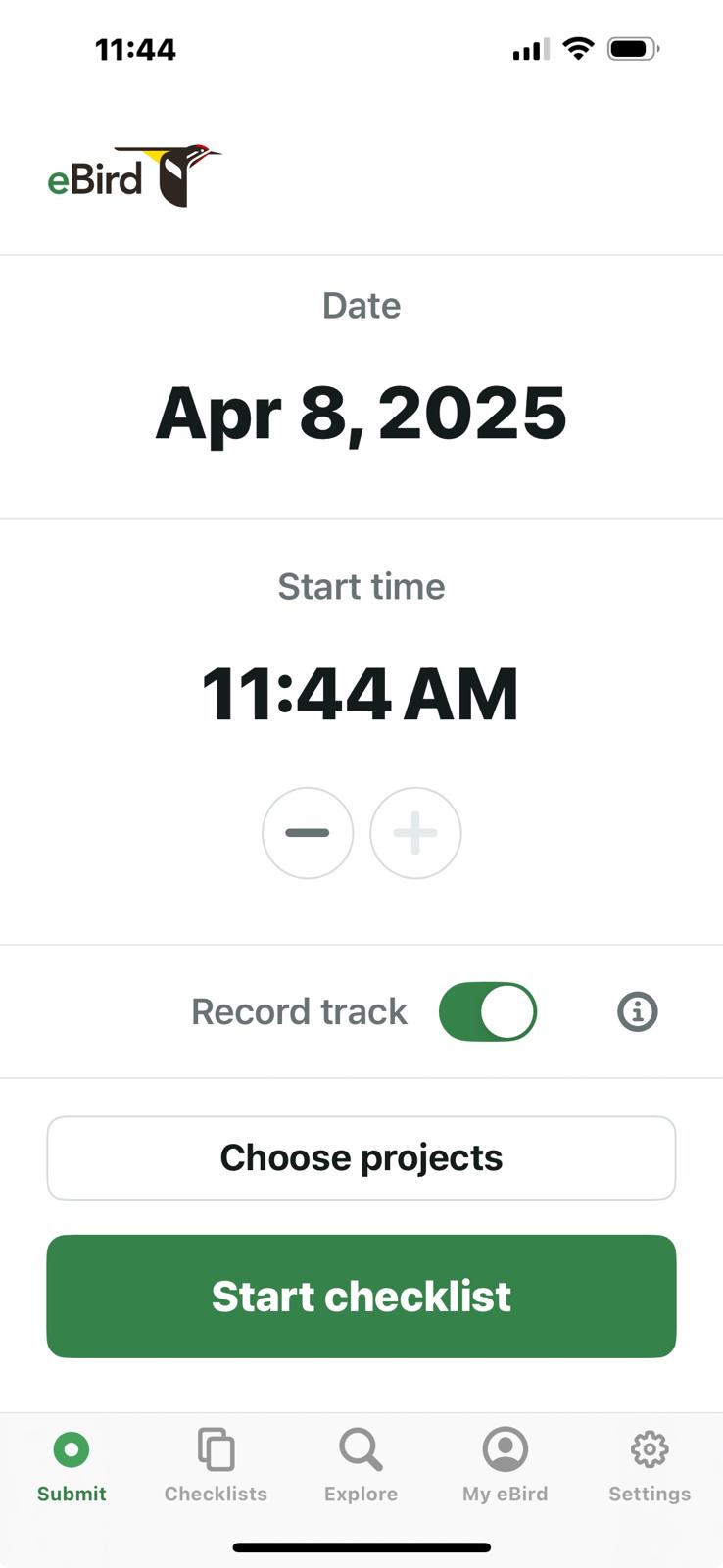
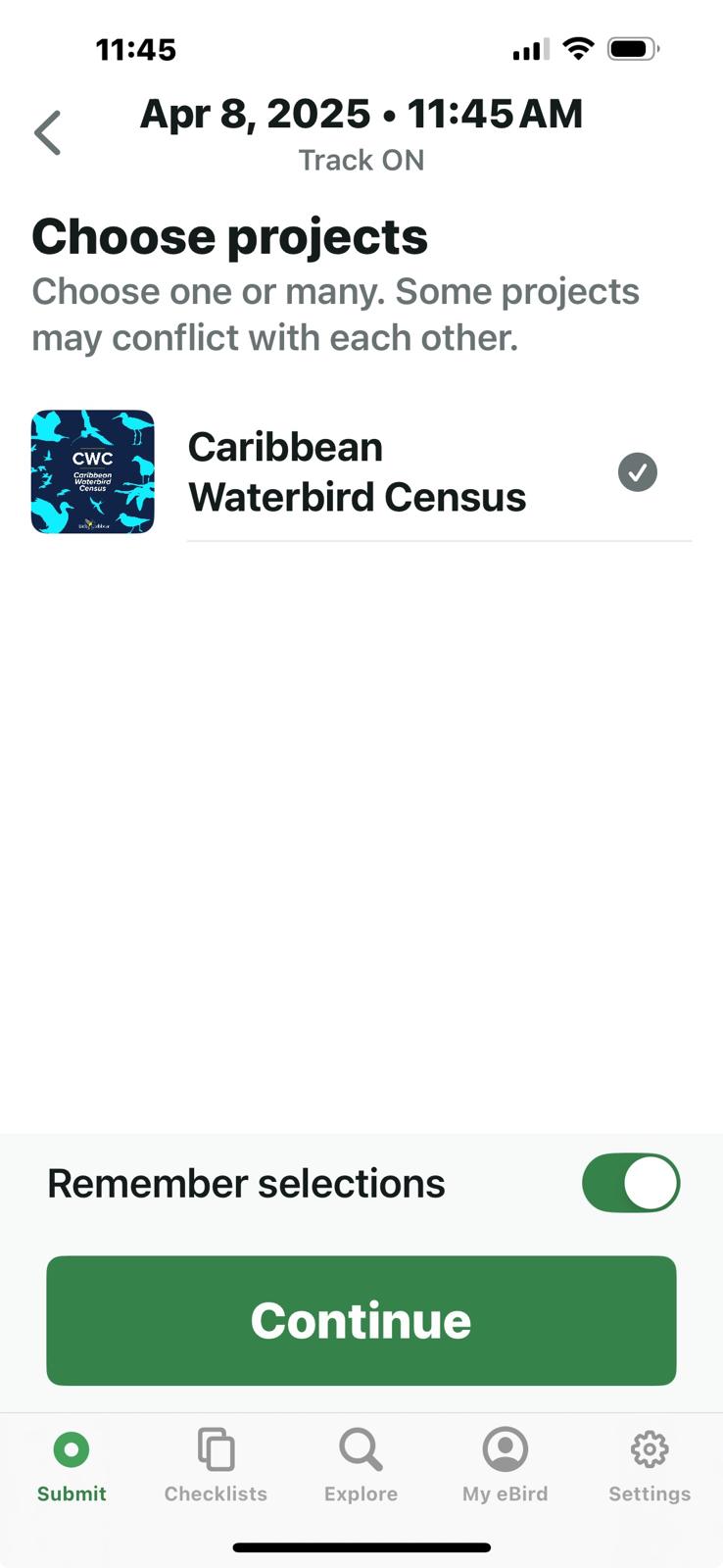
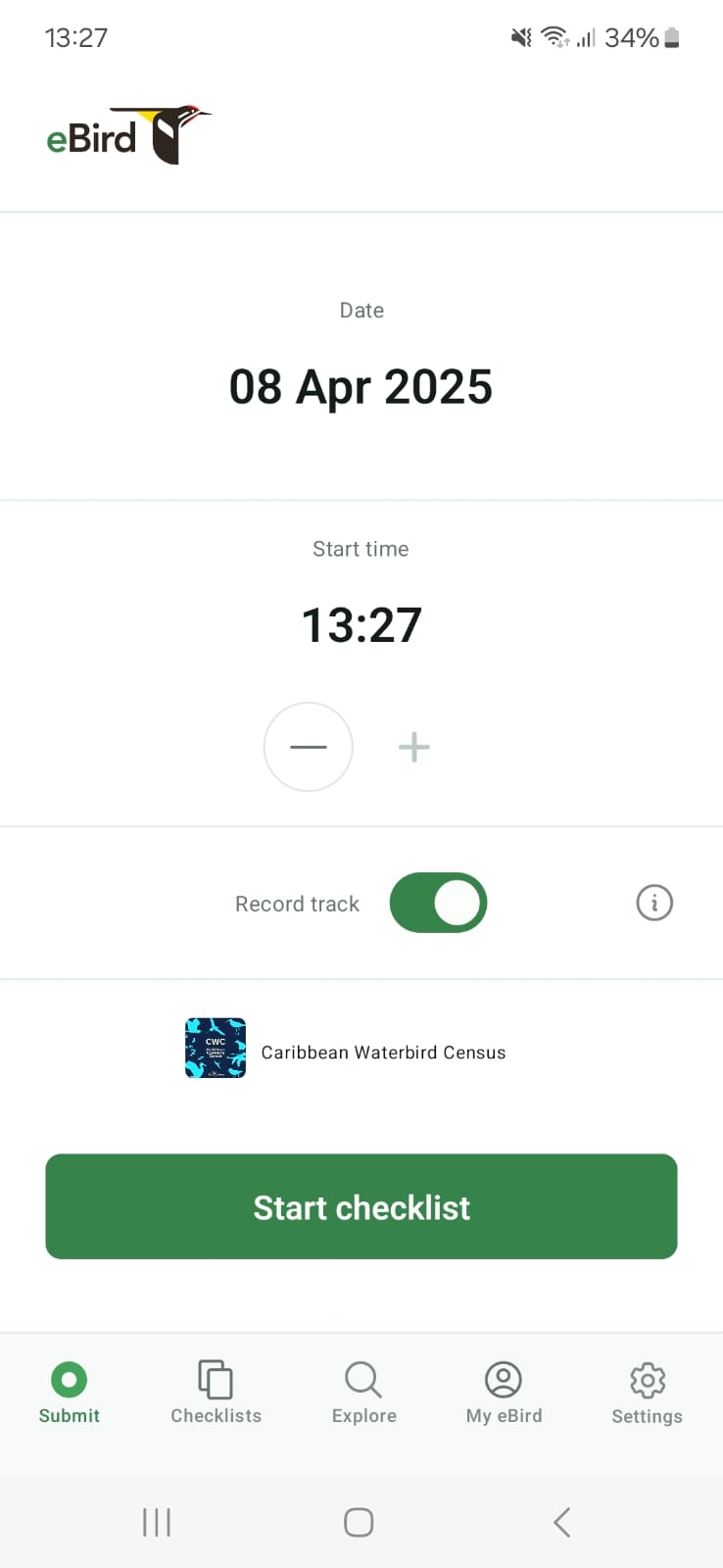
Tap “Choose projects” above the “Start checklist”’ button.
Select the CWC project, and, if you like, ask the app to remember this choice for future submissions. If you do this CWC will appear automatically above the “Start checklist” button next time you use App.
Tap “Continue” and do your count (it’s that simple!)
Next time you do a count at a Caribbean wetland, select “Caribbean Waterbird Census” above the “Start checklist” button.
CWC on the eBird Website:
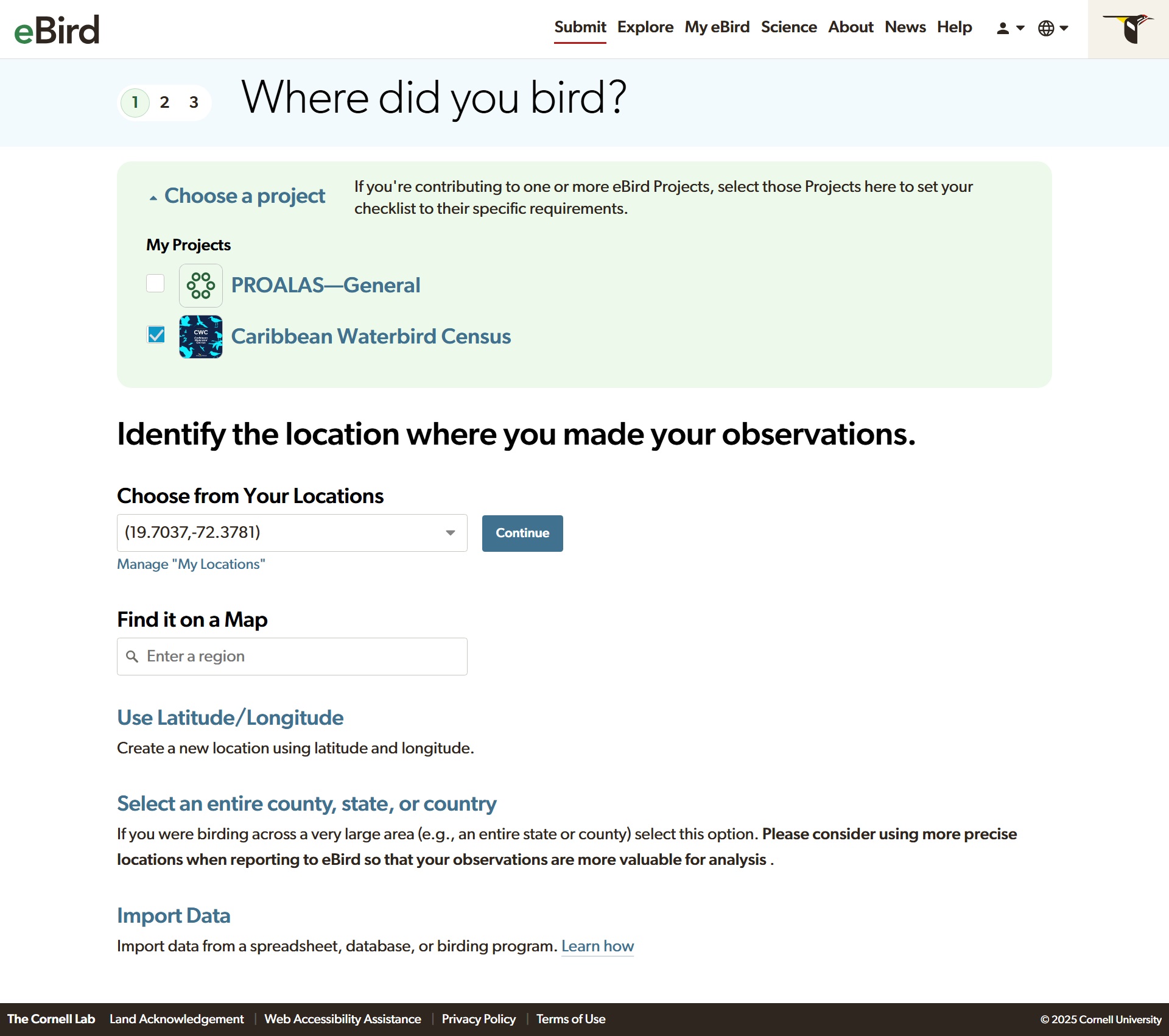
Go to the Submit page.
Use the “Choose a Project” dropdown to check the box next to “Caribbean Waterbird Census.”
Then follow the steps below to add your list details as normal.
Now that CWC is a project there are no longer specific ‘CWC protocols’ in eBird, you just need to select the “Traveling” or “Stationary” protocol before submitting.
Remember that although these are waterbird counts, you should be sure to count all the birds that you see and hear during your survey visits, not just the waterbirds. If you need help with eBird submissions, have questions about which protocol to choose, or with setting up an eBird account, please contact Alex Sansom: waterbird.manager@birdscaribbean.org
You can learn more about the CWC project on eBird here. And if you’re completely new to eBird, start by looking at this page that will guide you through opening an account and adding data.
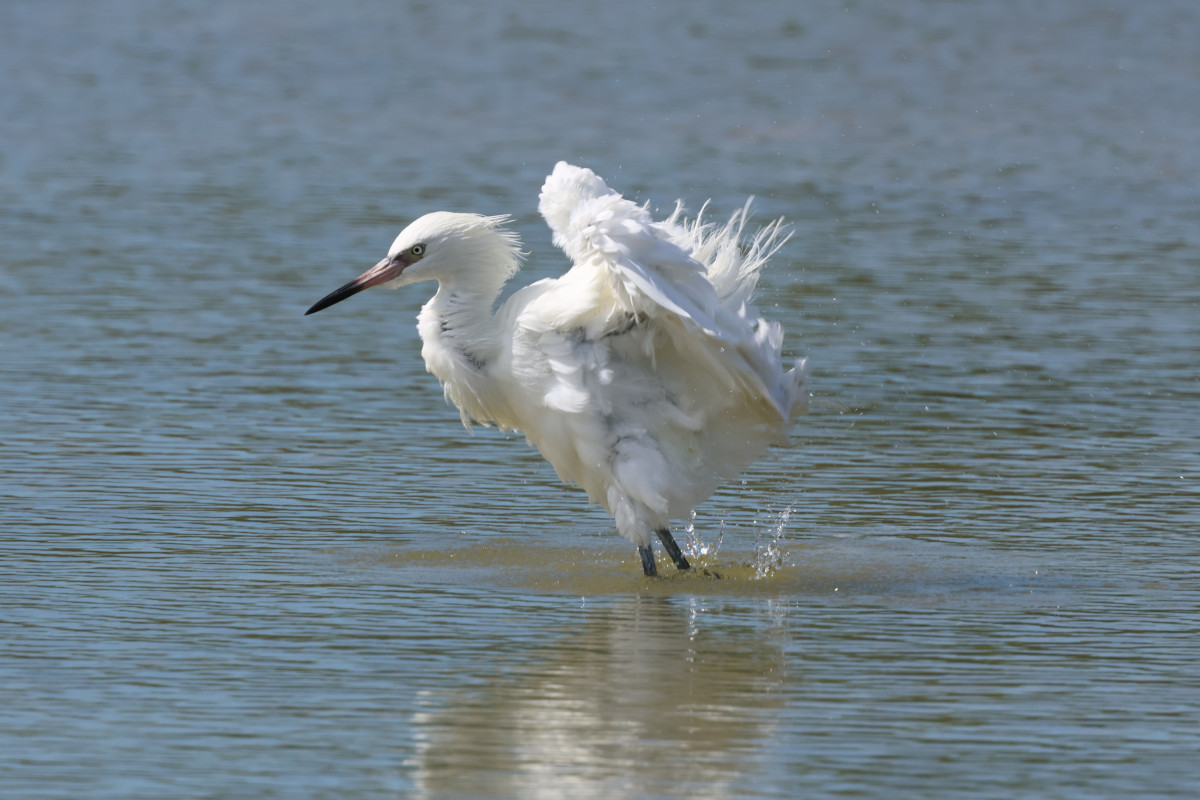
Reddish Egret at Las Salinas De Brito, Cuba (Photo Andrew Dobson)
Forget to choose the CWC project in eBird?
You went out in the field, you started your list in eBird and did your CWC survey and submitted the list…. THEN you realize that you forgot the “choose a project” step at the start! It happens! This means your list will not be ‘counted’ as part of the CWC- yet. But don’t worry it can be fixed, you just need add it to the project after you have submitted.
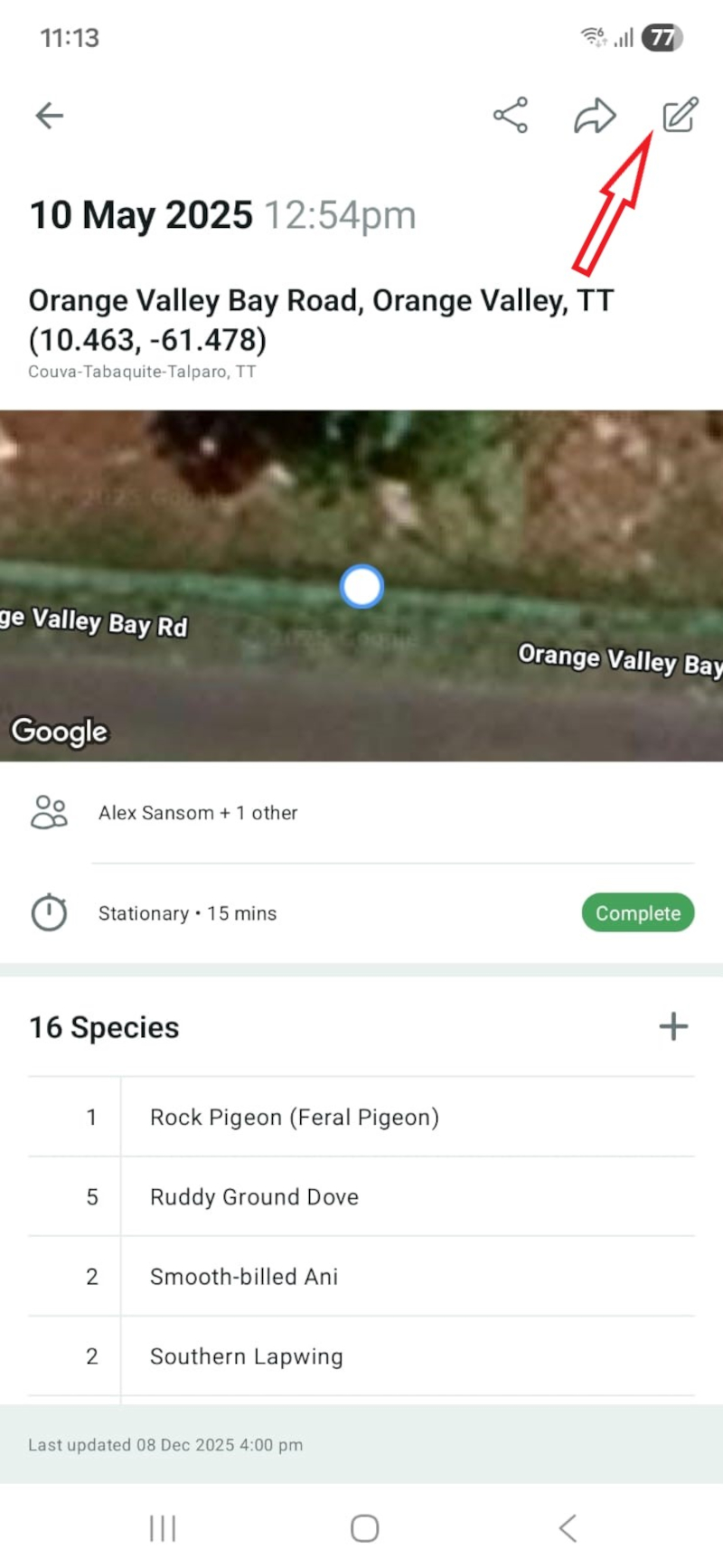
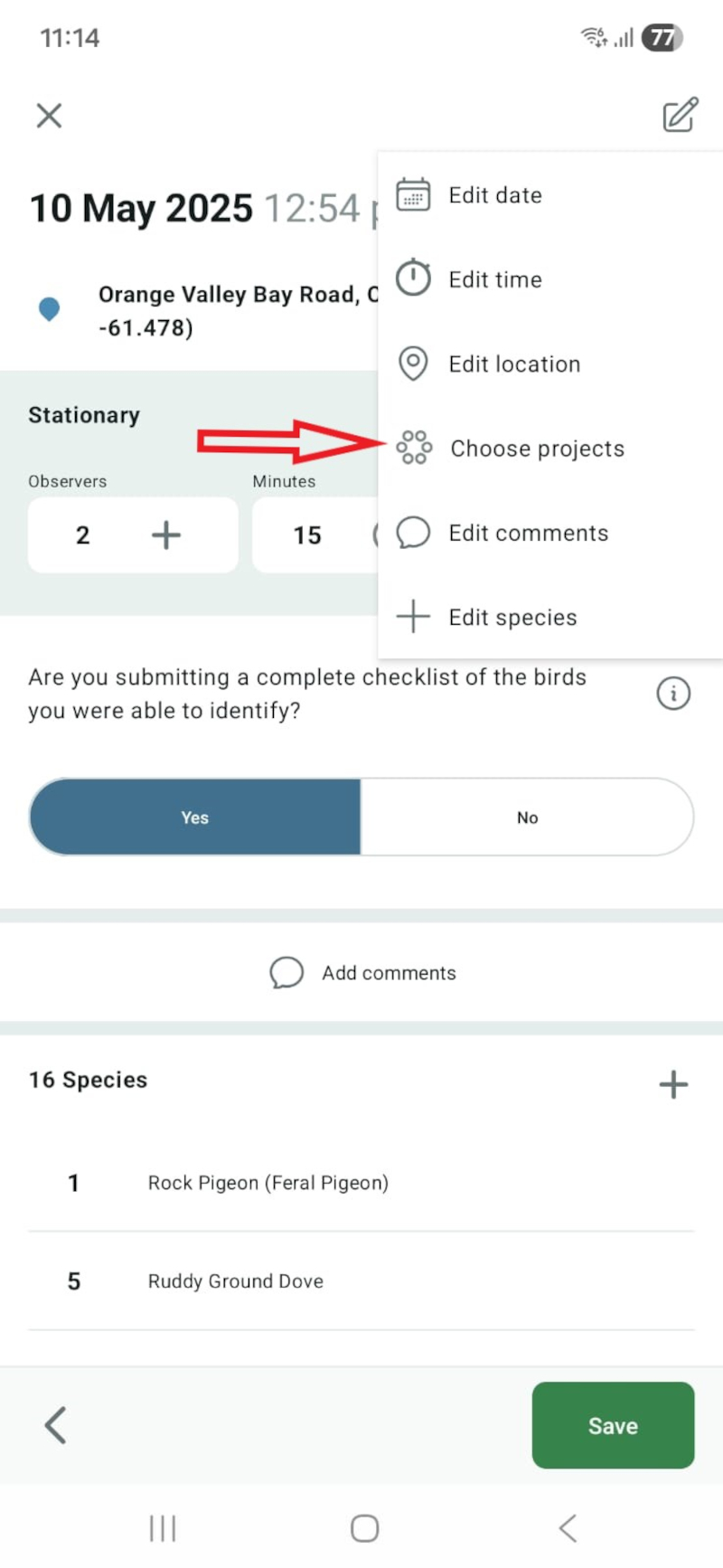
On the eBird app, go to “checklists”, then toggle to show your submitted lists. Next find the list that should have been in the CWC project and open it. Open the ‘edit checklist’ menu (click on the edit icon on the top right), then once in ‘edit’ mode, choose the ‘edit’ menu icon again (again in the top right). Here you will see a menu with the option to ‘choose projects’. Click on this and select the Caribbean Water Census from your projects (of course you need to have joined the project already to do this!). Then save your changes.
On the eBird website it’s slightly different. You can go to ‘My Checklists’, and choose the one you want to add to the CWC project. Once this list is open, you need to select the ‘Edit Location’ option. When you click on this you will see the ‘choose project’ option, at the top of the page under the ‘Where did you bird?’ heading. Just select the Caribbean Waterbird Census project and save the changes.
Surveying in San Juan estuary. (Photo by Emilio Font SOPI)
We’re here to help!
Never done a CWC survey before or need a refresher? Don’t worry! We’ve pulled together some amazing resources that will help you with your counts. To help you get started on your CWC survey journey or give you a reminder about how to take part check out our helpful YouTube webinar that takes you through the steps of how to participate in the CWC*!
*This is a great introduction to the CWC and how to plan your counts and carry out surveys, but the information on adding data to eBird has been updated since it was recorded. Please use the information provided above and here. Join the project, then remember to choose the project when making your eBird list to make sure your data gets included as CWC in eBird.
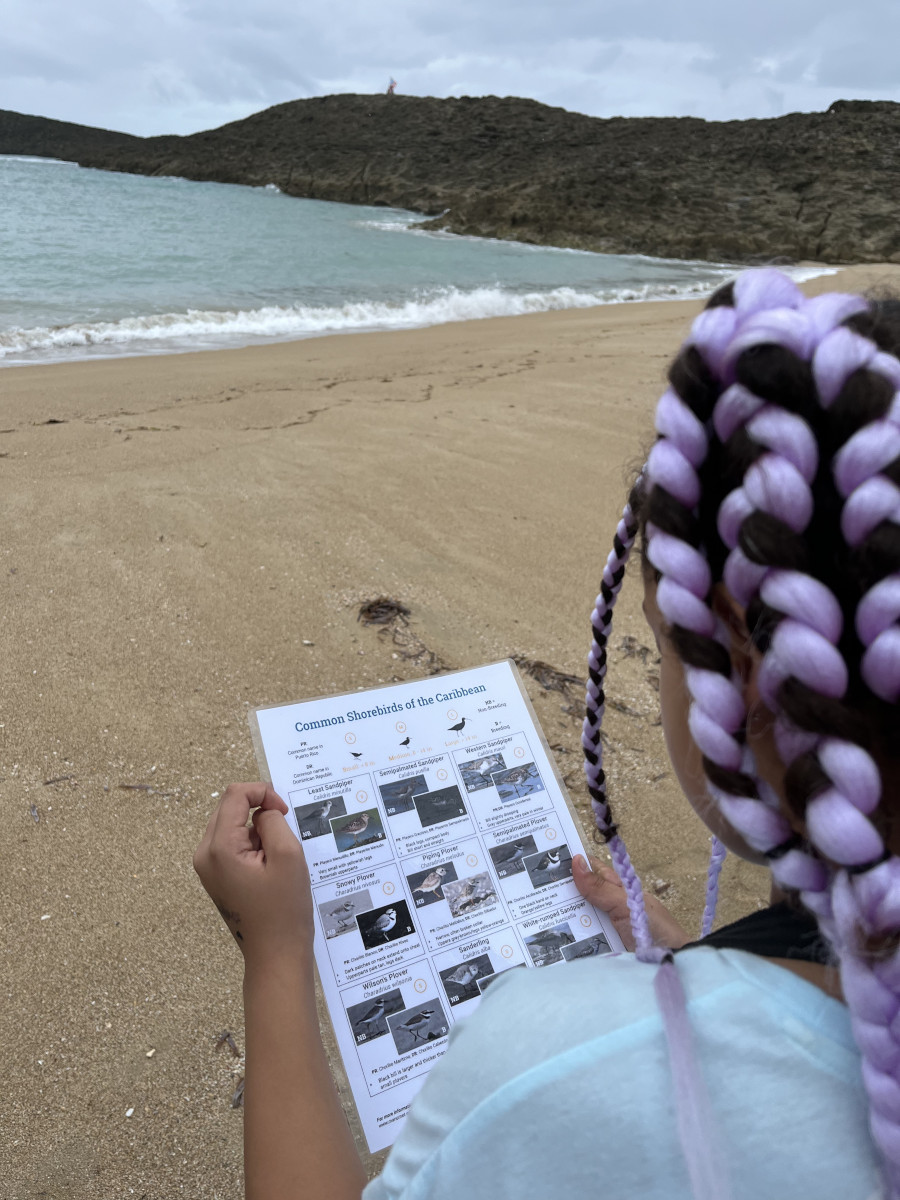
If you need a hand with your waterbird ID you’ve come to the right place—why not brush up on your ID skills using our helpful videos on YouTube! Part I covers herons, egrets, ducks, marsh birds, and seabirds. Part II tackles those tricky shorebirds! We also have even more ID, survey planning tips, and outreach resources that are available for you to use and download on this page. This includes information on what to do if you see a banded bird during your surveys as well as our handy ID Guide to Common Caribbean Shorebirds, which can print and take with you on your surveys.
Shanna explains bird ID at McKinnons Pond, Antigua, during the 2025 CWC Count. (Photo by Sherrel Charles)
Ajhermae White helps students of the Grade 5 class of Look Out Primary School with shorebird ID during their field trip at Marguerita Bay. (Photo by Stephen Mendes)
If you need more help with those troublesome shorebirds you can also check out our series of short videos. Each of these deals with ID-ing some of the shorebirds that are more difficult separate, even those tricky small sandpipers!
Have fun out there!
We hope you have a great time exploring your country’s wetlands and counting birds during the regional CWC count! Please remember to stay safe and carry out your counts responsibly. This means taking care not to disturb the birds or damage their habitats. Enjoy counting birds and see how many of your local wetlands you can visit during this three-week period! Finally, if you enjoy your CWC experience remember that CWC counts are not limited to the regional count. You can do a CWC survey at any time of year as long as you are in a Caribbean wetland and count all the birds you see!
Good luck! We look forward to hearing about your findings. If you need help with bird ID, or have photos and exciting observations to share, please post to our Waterbird Group Listserv (everyone is welcome to join) and/or on our BirdsCaribbean Facebook page. For sharing on social media, use hashtags: #CaribbeanWaterbirdCensus #CWC2026 #WaterbirdsCount and for this special IWC anniversary year #IWC60 AND please tag us: @BirdsCaribbean
The Caribbean Waterbird Census is an ongoing, long-term survey effort that provides important data that helps us keep track of the birds using Caribbean wetlands, understand the threats they face, and raise awareness. With 27,000+ CWC lists in our long-term database, we’re building an invaluable resource for bird conservation across the region. You can support the CWC here.
Promotional Social Media Graphics – Please feel free to download these graphics and use these to promote your Caribbean Waterbird Census surveys (just open the graphic you want to use right click and choose ‘save image as’) .
Celebrate World Migratory Bird Day (WMBD) with us in 2025! This year’s theme is “Shared Spaces: Creating Bird-friendly Cities and Communities”. Have fun learning about a new migratory bird every day. We have coloring pages, interesting facts, activities, and more. Download for free and enjoy nature with your family at home.
Migratory Bird of the Day: Northern Yellow Warbler
A ray of sunshine visiting from the north—it’s the Northern Yellow Warbler! Formally known as the Yellow Warbler, this species—which once included a whopping 37 subspecies—was recently split into two: the Northern (migratory) and Mangrove (resident) Yellow Warblers. As of October 2025, ornithologists officially recognize them as distinct species. We’ll share more on this split soon, but as we celebrate migratory birds, let’s learn more about the northern traveler.
True to its name, the Northern Yellow Warbler is almost entirely yellow with beady black eyes and stout bill. Males shine in bright yellow plumage with a yellow-green back and reddish streaks on the breast. Females are also yellow overall, but paler, and immatures range from dull yellow to brownish to grayish. At just 12–13 cm long and around 10 grams in weight—about the weight of a chopstick—these tiny birds are a burst of color and energy in any landscape.
They breed across most of North America in shrubby thickets and woodlands, particularly along streams, swamps, and lakeshores. Their neat, cup-shaped nests are usually tucked into shrubs or low trees, carefully woven from plant fibers, grass, and down.
Few sounds capture the joy of spring quite like their sweet, musical song—“sweet-sweet-sweet, I’m-so-sweet!”—one of the easiest warbler songs to recognize. During the non-breeding season, you’ll be far more likely to hear them making persistent, repeated chip calls as they move through mangrove, scrub, wetland edges, forest and even the trees in your garden!
These remarkable migrants travel thousands of kilometers from their breeding grounds to wintering sites in Central and northern South America, flying nonstop across the Gulf of Mexico. They’re regular passage migrants through The Bahamas and Greater Antilles, with a few migratory birds also possibly passing through Lesser Antilles. In Puerto Rico and Cuba, these bright birds are woven into local folklore as cheerful omens of rain and renewal. During migration they can be seen beside resident Mangrove Yellow Warblers. Males of the resident species are distinctive, with heavier streaking on the breast and varying amounts of reddish-chestnut on the crown and head, but females are notoriously tricky to tell apart!
Feeding mainly on insects—caterpillars, mosquitos, beetles, flies, spiders, and more—Northern Yellow Warblers play a vital role in natural pest control. In coffee farms of Costa Rica, both Northern and Mangrove Yellow Warblers help coffee farmers by reducing infestations of coffee berry borers. In other areas, they help keep mosquito numbers down, much to the relief of the human population.
Like other migratory birds, they depend on healthy forests, wetlands, and mangroves for their survival. There are many ways you can help them! Why not plant and/ or protect patches of native trees and shrubs for shelter and foraging? You should also avoid pesticides—warblers rely on insects for food! Learn more about this species, including its range, photos, and calls here. Great news! If you’re in the Caribbean, thanks to BirdsCaribbean, you have free access to Birds of the World and you can find out even more in the full species account of this bird!
Thanks to Jethro van’t Hul for the text and Arnaldo Toledo for the lovely illustration!
Color in the Northern Yellow Warbler
Download the Migratory Birds of the Day Coloring Page! Use the picture above and the photos on this page as your guide, or look up pictures of the bird online or in a bird field guide if you have one. Share your colored-in page with us by posting it online and tagging us @BirdsCaribbean #WMBD2025Carib
Listen to the calls of the Northern Yellow Warbler
The call of the Northern Yellow Warbler is short, repeated ‘chip’
Enjoy these photos of Northern Yellow Warblers
Female Northern Yellow Warbler. (Photo by Linda Petersen)
Male Northern Yellow Warbler. (Photo by Jesse Gordon)
Activity of the Day
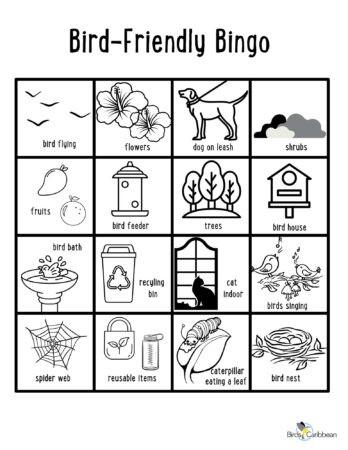
FOR KIDS: Get ready to head out on a bird-friendly adventure with our bird-friendly bingo game! Ask a trusted adult if you can take a walk in your backyard, or go with them on a walk around your neighbourhood. As you walk around look carefully for things that help keep birds safe in your community. You can then mark them off on the bingo card we provide in our game! Get out there and see what you can find!
FOR KIDS AND ADULTS: Enjoy this video of a Northern Yellow Warbler in the wild!
Want to brush up your shorebird ID skills or learn how to conduct Caribbean Waterbird Census (CWC) counts? Keep reading for details about this exciting opportunity!
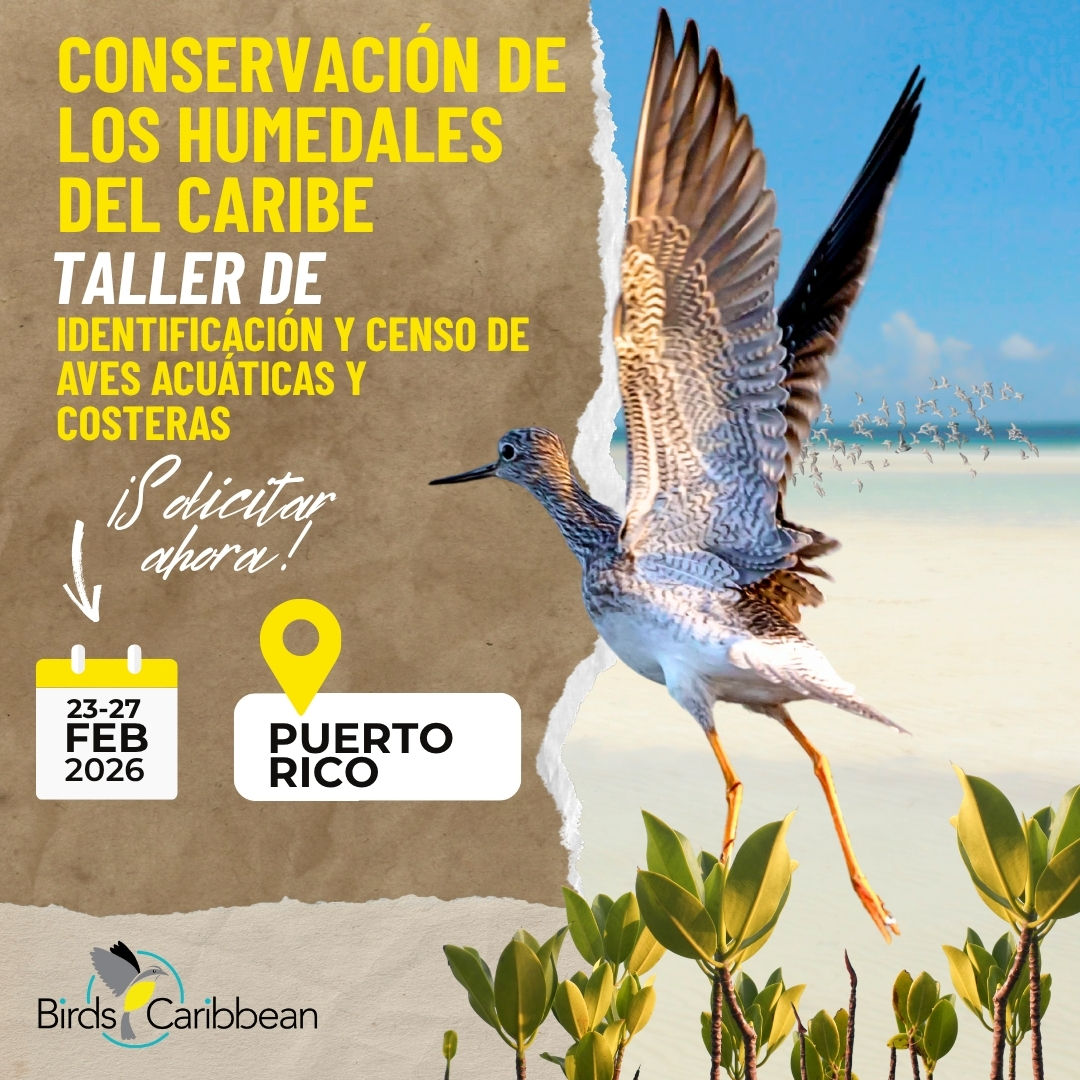
BirdsCaribbean is pleased to invite applications for a five-day training workshop focused on shorebird and waterbird identification and CWC survey methods. Participants will strengthen their ID skills, and learn counting and survey techniques through a blend of classroom and field-based activities. We’ll also explore key threats to shorebirds and wetlands and discuss conservation solutions.
We’re delighted to host this workshop at Jobos Bay National Estuarine Research Reserve in Puerto Rico, thanks to a partnership with JBNERR. from 23-27 February, 2026 — mark your calendars! JBNERR is on the Southern coast of Puerto Rico. With mangroves, salt flats, and seasonal lagoons it’s a haven for thousands of migratory shorebirds, and hosts a wonderful diversity of other waterbirds. It’s the perfect place to learn more about CWC and waterbird ID!
Why count shorebirds and waterbirds?
Wetlands across the Caribbean are critical for numerous resident and migratory waterbirds — yet they face mounting threats, from coastal development and pollution to land-use change and climate change impacts. In addition, migratory shorebirds are experiencing alarming declines over the last decades, and need our help. Protecting birds starts with understanding where they go and what habitats they rely on.
Out in Jobos bay doing CWC surveys by boat. (Photo by Carmen Maldonado)
Monti Cristi in the Dominican Republic is estimated to host 20,000+ migrating shorebirds per year—making it a regionally important site! (Photo by Maria Paulino)
Great Blue Heron, Blassina Puerto Rico. (Photo by Eliezer Nieves)
Systematic bird monitoring allows us to:
Identify key habitats and stopover sites
Understand migration patterns and threats
Prioritize areas for protection or restoration
Track the success of conservation and management actions
Critical data on shorebird migration, especially during fall migration, are still lacking in the Caribbean. Expanded monitoring across regional wetlands will help identify and safeguard priority sites—advancing Caribbean biodiversity goals and supporting global shorebird conservation efforts.
About the workshop
This will be the 6th CWC Training Workshop in the region — and the first in seven years! Like our 2019 event, it will cover essential topics in waterbird monitoring and conservation.
This bilingual (English and Spanish) workshop is designed for Caribbean wildlife professionals and volunteers interested in strengthening their waterbird and shorebird ID and survey skills. Prior experience is helpful, but not required. The workshop is open to anyone eager to learn more about waterbird monitoring techniques—especially those who wish to initiate or expand waterbird and wetland monitoring programs in their home countries. Preference will be given to individuals working in protected areas, wetland conservation, or bird monitoring with government agencies or NGOs in the Caribbean, as well as those committed to launching or growing a CWC monitoring program.
Field trip within Cabo Rojo National Wildlife Refuge. (Photo by Lisa Sorenson)
The goals of the workshop are to:
Increase awareness and appreciation of the Caribbean’ importance for shorebirds and waterbirds
Build confidence in identifying common Caribbean shorebirds
Share information waterbird ecology and the threats that they face
Provide participants with the knowledge, skills, and tools needed to conduct CWC surveys and contribute to regional monitoring
Inspire and facilitate involvement in conservation action, including raising public awareness, alleviating threats, and restoring habitats that have been damaged
Grow our regional network of CWC monitors and stewards of our shared waterbirds
The workshop will be a mixture of classroom and field trip sessions, meaning there will be daily opportunities to practice survey and identification skills.
Topics covered
Participants will gain comprehensive training in:
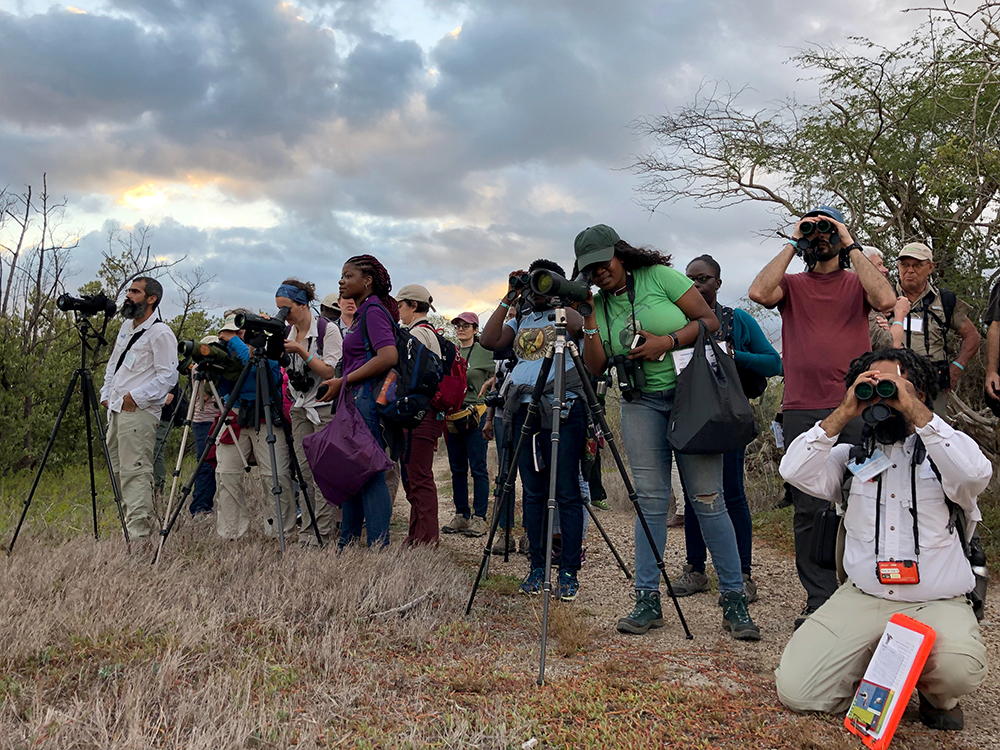
A volunteer uses a Shorebird ID card at a Caribbean Waterbird Census count. (Photo by Dayamiris Candelario OPAS)
Caribbean Waterbird Census (CWC) overview: How to design and implement a monitoring program
Field training in shorebird ID, counting, and wetland habitat monitoring using standardized CWC monitoring techniques
Threats to shorebirds and their wetland habitats (e.g., dumping, habitat destruction and degradation, water mismanagement, invasive species, disturbance, etc.) and education, conservation, and management strategies to mitigate these threats
Engaging citizen scientists and sustaining long-term monitoring
Data entry and use of eBird
Sharing results with decision-makers and the public
By the end of the workshop, you will have received comprehensive training in both CWC survey techniques and field identification of Caribbean shorebirds. You will be equipped to monitor wetland sites (including changes in condition and threats), recruit and train new volunteers, and raise awareness about waterbird conservation in your community.
Funding and Logistics
We aim to include approximately 25 participants in this workshop. BirdsCaribbean has funding for a limited number of need- and merit-based scholarships to cover travel and participation costs. Specific funds are available for nationals of Puerto Rico and the US Virgin Islands, and we strongly encourage applications from these islands.
Please note: Participants who are not U.S. citizens or permanent residents will need to obtain the appropriate U.S. visa or travel authorization in advance. We strongly encourage you to check your national visa requirements and apply early to ensure entry to Puerto Rico. Find out more here.
Participants who are able to contribute part or all of their expenses will help us include more participants. We encourage applications from all candidates who are well-suited to make use of this training, regardless of their financial ability.
Participants should plan to arrive Puerto Rico by February 22 and depart on February 28.
Applications
If you’re interested in participating in this workshop, please complete the application form by November 25, 2025.
If you have any questions, please send an email to: Alex Sansom (Waterbird.Manager@BirdsCaribbean.org)
We are grateful to the US Forest Service International Programs and Cape Cod Bird Club for providing funding support and to the staff at Jobos Bay National Estuarine Research Reserve for kindly hosting this workshop.
Oportunidad de Capacitación: Conservación de los Humedales del Caribe- Taller de Identificación y Censo de Aves Acuáticas y Costeras
¿Quiere refrescar sus habilidades de identificación de aves playeras o aprender a realizar recuentos del Censo de Aves Acuáticas del Caribe (CWC)? ¡Siga leyendo para obtener más detalles sobre esta emocionante oportunidad!
BirdsCaribbean se complace en invitar a presentar solicitudes para un taller de capacitación de cinco días centrado en la identificación de aves playeras y los métodos de estudio del CWC. Los participantes reforzarán sus habilidades de identificación y aprenderán técnicas de recuento y estudio mediante una combinación de actividades en el aula y en el campo. También exploraremos las principales amenazas para las aves playeras y los humedales y discutiremos soluciones de conservación.
Estamos encantados de organizar este taller en la Reserva Nacional de Investigación Estuarina de la Bahía de Jobos en Puerto Rico, gracias a la colaboración con JBNERR. Del 23 al 27 de febrero de 2026: ¡apúntelo en su calendario! JBNERR se encuentra en la costa sur de Puerto Rico. Con manglares, salinas y lagunas estacionales, es un refugio para miles de aves playeras migratorias y alberga una maravillosa diversidad de otras aves acuáticas. ¡Es el lugar perfecto para aprender más sobre CWC y la identificación de aves acuáticas!
¿Por qué contar las aves costeras y acuáticas?
Los humedales del Caribe son fundamentales para numerosas aves acuáticas residentes y migratorias, pero se enfrentan a amenazas cada vez mayores, desde el desarrollo costero y la contaminación hasta los cambios en el uso del suelo y los efectos del cambio climático. La protección de las aves comienza por comprender adónde van y de qué hábitats dependen.
Out in Jobos bay doing CWC surveys by boat. (Photo by Carmen Maldonado)
Monti Cristi in the Dominican Republic is estimated to host 20,000+ migrating shorebirds per year—making it a regionally important site! (Photo by Maria Paulino)
Great Blue Heron, Blassina Puerto Rico. (Photo by Eliezer Nieves)
El monitoreo sistemático de las aves nos permite:
Identificar hábitats clave y lugares de parada
Comprender los patrones migratorios y las amenazas
Priorizar las áreas para su protección o restauración
Hacer un seguimiento del éxito de las medidas de conservación y gestión
En el Caribe aún se carece de datos críticos sobre la migración de las aves costeras, especialmente durante la migración otoñal. La ampliación del monitoreo en los humedales regionales ayudará a identificar y salvaguardar los sitios prioritarios, lo que contribuirá a avanzar en los objetivos de biodiversidad del Caribe y respaldará los esfuerzos mundiales de conservación de las aves costeras.
Acerca del Taller
Este será el sexto taller de capacitación de la CWC en la región, ¡y el primero en siete años! Al igual que nuestro evento de 2019, cubrirá temas esenciales sobre el monitoreo y la conservación de las aves acuáticas.
Este taller bilingüe (inglés y español) está diseñado para profesionales y voluntarios del ámbito de la vida silvestre del Caribe interesados en mejorar sus habilidades para identificar y estudiar aves playeras. Se valora la experiencia previa, pero no es imprescindible. El taller está abierto a cualquier persona que desee aprender más sobre las técnicas de monitoreo de aves acuáticas, especialmente a aquellas que deseen iniciar o ampliar programas de monitoreo de aves acuáticas y humedales en sus países de origen. Se dará preferencia a las personas que trabajen en áreas protegidas, conservación de humedales o monitoreo de aves con agencias gubernamentales u ONG en el Caribe, así como a aquellas comprometidas con el establecimiento o el crecimiento de un programa de monitoreo de la CWC.
Los objetivos del taller son:
Aumentar la concienciación y la apreciación de la importancia del Caribe para las aves playeras y acuáticas.
Fomentar la confianza en la identificación de las aves playeras comunes del Caribe.
Compartir información sobre la ecología de las aves acuáticas y las amenazas a las que se enfrentan.
Proporcionar a los participantes los conocimientos, las habilidades y las herramientas necesarias para realizar estudios de aves acuáticas y contribuir al monitoreo regional.
Inspirar y facilitar la participación en acciones de conservación, incluyendo la sensibilización del público, la mitigación de amenazas y la restauración de hábitats que han sido dañados.
Ampliar nuestra red regional de monitoreos de la CWC y guardianes de nuestras aves acuáticas comunes.
El taller será una combinación de sesiones en el aula y excursiones, lo que significa que habrá oportunidades diarias para practicar las habilidades de estudio e identificación.
Temas de Discusión
Los participantes recibirán una capacitación completa en:
Descripción general del Censo de Aves Acuáticas del Caribe (CWC): cómo diseñar y poner en práctica un programa de monitoreo.
Capacitación de campo en identificación de aves costeras, recuento y monitoreo de hábitats de humedales utilizando técnicas de monitoreo estandarizadas del CWC.
Amenazas para las aves costeras y sus hábitats de humedales (por ejemplo, vertidos, destrucción y degradación del hábitat, mala gestión del agua, especies invasoras, perturbaciones, etc.) y estrategias de educación, conservación y gestión para mitigar estas amenazas.
Participación de científicos ciudadanos y mantenimiento de un monitoreo a largo plazo.
Introducción de datos y uso de eBird.
Compartir los resultados con los responsables de la toma de decisiones y el público.
Al finalizar el taller, habrá recibido una capacitación completa tanto en las técnicas de estudio de la CWC como en la identificación de campo de las aves playeras del Caribe. Estará preparado para supervisar los humedales (incluidos los cambios en su estado y las amenazas), reclutar y formar a nuevos voluntarios y sensibilizar a su comunidad sobre la conservación de las aves playeras.
Financiación y Logística
Nuestro objetivo es incluir aproximadamente 25 participantes en este taller. BirdsCaribbean dispone de fondos para un número limitado de becas basadas en las necesidades y los méritos, que cubren los gastos de viaje y participación. Hay fondos específicos disponibles para los ciudadanos de Puerto Rico e Islas Vírgenes de los Estados Unidos, por lo que animamos encarecidamente a los residentes de estas islas a que presenten su solicitud.
Nota: Los participantes que no sean ciudadanos estadounidenses ni residentes permanentes deberán obtener con antelación el visado estadounidense o la autorización de viaje correspondientes. Le recomendamos encarecidamente que verifique los requisitos de visado de su país y lo solicite con antelación para garantizar su entrada a Puerto Rico. Más información aquí.
Los participantes que puedan contribuir con parte o la totalidad de sus gastos nos ayudarán a incluir a más participantes. Animamos a todos los candidatos que reúnan los requisitos para aprovechar esta capacitación a que presenten su solicitud, independientemente de su capacidad económica.
Los participantes deben planificar su llegada a Puerto Rico para el 22 de febrero y su salida para el 28 de febrero.
Solicitudes
Si está interesado en participar en este taller, complete el formulario de solicitud antes del 25 de noviembre de 2025.
Si tiene alguna pregunta, envíe un correo electrónico a: Alex Sansom (Waterbird.Manager@BirdsCaribbean.org)
Agradecemos al US Forest Service International Programs y al Cape Cod Bird Club su apoyo financiero y al personal de la Jobos Bay National Estuarine Research Reserve por aceptar acoger este taller.
The 60th anniversary of the International Waterbird Census (IWC) is coming up! We’d love for the Caribbean to contribute to the celebration that Wetlands International is planning. They are collecting waterbird survey stories from all around the world to share, showing the amazing breadth and enthusiasm for waterbird monitoring and conservation. You can make sure the Caribbean is showcased. Read on to find out how!

The Caribbean Waterbird Census (CWC) is one of five regional International Waterbird Census –which means counts from the CWC regional count contribute to this amazing global database! It also means that YOU can be part of the IWC 60th anniversary celebrations.
Wetlands International is sharing these ‘post cards from the field’ on a story map. Currently the Caribbean is looking a little bit empty but by adding your story you can change that!
Your ‘story’ can be very short (just one paragraph). You can share about who you are and where your do your counts; or about a memorable day in the field or an exciting bird you’ve seen during your counts or anything else you’d like to tell people about the birds and wetlands you do CWC counts in! If you need some inspiration for the type of story that might work, take a look at https://iwc.wetlands.org/postcards where you can see other people’s contributions.
Will you send a postcard from the field? All you need to do is:
Grab your fave photo from any CWC count
Write some short text about your CWC counts
Share them using the Google form (below)
You can share your story in English, French or Spanish, just chose your preferred language and click on the link to the form:
Celebrate World Migratory Bird Day (WMBD) with us in 2025! This year’s theme is “Shared Spaces: Creating Bird-friendly Cities and Communities”. Have fun learning about a new migratory bird every day. We have coloring pages, interesting facts, activities, and more. Download for free and enjoy nature with your family at home.
Migratory Bird of the Day: American Golden-Plover
This shorebird is golden! In breeding plumage the American Golden-Plover, a medium-sized, bowling-pin shaped shorebird, is spangled with golden flecks across its wings and back. This beautiful plumage contrasts with a black face and underside, bordered with white on the head and neck. They are a striking sight!
Outside the breeding season they have a change of wardrobe, molting into a more demure plumage. Males and females are both speckled brown with a pale eyebrow and dark cap. They lose their black underparts which become buffy and speckled. In non-breeding plumage American Golden-Plovers can be easy to confuse with Black-bellied Plovers. American Golden-Plovers are smaller and slighter looking, with a finer bill. They also lack the black ‘wing-pits’ sported by the Black-bellied Plover, you can get more ID tips here.
American Golden-Plovers breed in the Arctic, laying their eggs in ‘scrapes’ (a shallow depression on the ground), on the tundra. When breeding is over and it is time for them to head south these shorebirds really are migration masters! They make an epic journey south, with many individuals making the long flight from the east coast of North America down to South America without stopping once! Adults head off in late July and August, but they leave their chicks behind to follow later. These young birds might stay in the north until October, after which they also head to South America.
In the Caribbean we mainly see American Golden-Plovers during fall migration. Birds not able to do a non-stop trip all the way to South America will land to rest and refuel in Caribbean wetlands. American Golden-Plovers like to flock together and you might also spot them hanging out with other ‘shorebird friends’ like the Pectoral Sandpiper. You can look for them in wet grassy areas, agricultural areas like rice fields as well as on mudflats, and shorelines. Here they will be feeding on a variety of insects and insect larvae, as well as worms and mollusks.
Unfortunately, American Golden-Plover populations are declining and they have lost more than 50% of their population in the past 50 years. One of the main threats to them during migration is loss of habitat. This includes changes caused by unfavorable agricultural practices including, intensification, drainage and pesticides, and the conversion of their habitats to other uses such as residential developments and conversion of grasslands to row-crops. This beautiful shorebird relies on wet grasslands with healthy insect populations so switching to organic fertilizers and reducing pesticide use can help them out. Learn more about this species, including its range, photos, and calls here. Great news! If you’re in the Caribbean, thanks to BirdsCaribbean, you have free access to Birds of the World and you can find out even more in the full species account of this bird!
Thanks to Alex Sansom for the text and Arnaldo Toledo for the lovely illustration!
Color in the American Golden-Plover
Download the Migratory Birds of the Day Coloring Page! Use the picture above and the photos on this page as your guide, or look up pictures of the bird online or in a bird field guide if you have one. Share your colored-in page with us by posting it online and tagging us @BirdsCaribbean #WMBD2025Carib
Listen to the calls of the American Golden-Plover
The call of the American Golden-Plover is a plaintive “pleedoo”
Enjoy these photos of American Golden-Plovers
American Golden-Plover in non-breeding plumage. (Photo by Hemant Keshan)American Golden-Plover in flight. (Photo by James MacKenzie, Macaulay Library- ML481014871)
Flock of American Golden-Plovers molting out of their breeding plumage. (Photo by Jack Starret, Macaulay Library-ML623806656)
Activity of the Day
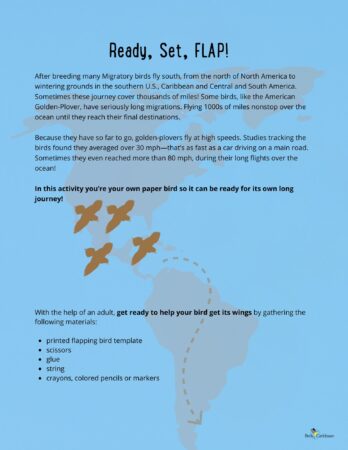
FOR KIDS: American Golden-Plovers have seriously long migrations. Flying 1000s of miles nonstop over the ocean until they reach their final destinations. Because they have so far to go, golden-plovers fly at high speeds. Studies tracking the birds found they averaged over 30 mph—that’s as fast as a car driving on a main road. Sometimes they even reached more than 80 mph, during their long flights over the ocean!
In this activity you’re your own paper bird so it can be ready for its own long journey!
With the help of an adult, get ready to help your bird get its wings by gathering the following materials:
printed flapping bird template
scissors
glue
string
crayons, colored pencils or markers
You can download all the information, instructions and worksheet here.
FOR KIDS AND ADULTS: Enjoy this video of a American Golden-Plover in the wild!
Celebrate World Migratory Bird Day (WMBD) with us in 2025! This year’s theme is “Shared Spaces: Creating Bird-friendly Cities and Communities”. Have fun learning about a new migratory bird every day. We have coloring pages, interesting facts, activities, and more. Download for free and enjoy nature with your family at home.
Migratory Bird of the Day: Hudsonian Godwit
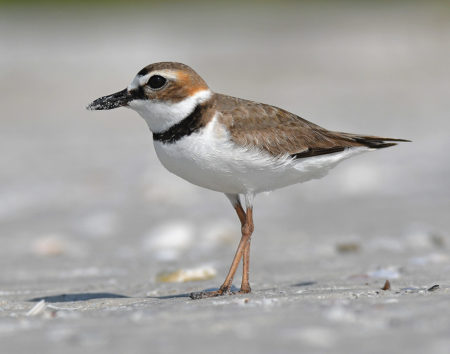
With long elegant legs and a long uptilted bill the Hudsonian Godwit certainly stands out from the crowd. This large shorebird is rusty red in the breeding season, but molts to a pale gray-brown with a white belly for the rest of the year. On migration you might still spot traces of rusty coloration. The bill is bi-colored, with pink at the base and black at the tip. In flight you will spot a white rump and wing-stripe together with dark underwings. This can help you separate them from other, rarer, godwits which might be seen in the Caribbean. Marbled Godwits have cinnamon washed underwings, while Black-tailed Godwits share the white wing stripe and white rump, but have a black tail and do not have a dark underwing.
Hudsonian Godwits breed in the arctic, in areas where boreal forest transitions into wet tundra meadows and bogs. The exact breeding range of this shorebird is not well understood and there are likely to be breeding areas that we don’t yet know about! We do know however that after breeding, Hudsonian Godwits make an incredible migration of nearly 10,000 miles from the arctic, all the way down to their wintering habitat near the southernmost tip of South America. Some birds have even been recorded in the Falkland Islands! This journey involves non-stop flights of thousands of miles, some of it over open ocean.

Hudsonian Godwits are not common visitors to the Caribbean, but they do sometimes take a break here to rest and refuel on their epic migration. You might spot a solo godwit, though sometimes they’ll hang out in small groups. You can find them by ponds or large rainwater pools on flooded agricultural areas (including rice farms) or wet pastures. They also rely on coastal areas including brackish swamps, estuaries, lagoons, and beaches. Hudsonian Godwits mainly eat soil dwelling invertebrates, probing for them in the mud with their long, but surprisingly flexible bills. Their flexible bill-tips allow godwits to bend their bill tip to grasp their prey in thick mud.
Hudsonian Godwits are listed as Vulnerable by the IUCN and their population is thought to be decreasing. This bird already has a relatively small global population, with a fragmented breeding range and a very restricted wintering area. In the Caribbean we can help by supporting wetland habitat protection and restoration efforts and joining wetland clean-ups wetlands; making sure there are places for godwits and other shorebirds to get the resources needed to successfully complete their long journeys. Learn more about this species, including its range, photos, and calls here. Great news! If you’re in the Caribbean, thanks to BirdsCaribbean, you have free access to Birds of the World and you can find out even more in the full species account of this bird!
Thanks to Alex Sansom for the text and Arnaldo Toledo for the lovely illustration!
Color in the Hudsonian Godwit
Download the Migratory Birds of the Day Coloring Page! Use the picture above and the photos on this page as your guide, or look up pictures of the bird online or in a bird field guide if you have one. Share your colored-in page with us by posting it online and tagging us @BirdsCaribbean #WMBD2025Carib
Listen to the calls of the Hudsonian Godwit
In wintering areas the Hudsonian Godwits are typically silent, but you might hear a flock makes soft “wheet, wheet” calls.
Enjoy these photos of Hudsonian Godwits
Hudsonian Godwit. (Photo by Kyle Tansley, Macaulay Library-ML278029941)
Hudsonian Godwit in flight, showing the white rump and wing stripe, and the dark underwing. (Photo by Luke Seitzt, Macaulay Library-ML66903611)
Hudsonian Godwit molting out of breeding plumage. (Photo by Peter Brannon)
Activity of the Day
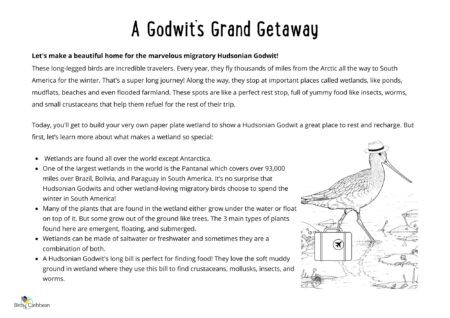
FOR KIDS: Hudsonian Godwits are incredible travelers! Every year, they fly thousands of miles from the Arctic all the way to South America for the winter. That’s a super long journey! Along the way, they stop at important places called wetlands, like ponds, mudflats, beaches and even flooded farmland. These spots are like a perfect rest stop, full of yummy food like insects, worms, and small crustaceans that help them refuel for the rest of their trip.
With help from an adult, gather the following materials:
A paper plate
Small pebbles
Small sticks
moss
Plastic animals- optional
White cardstock or bristol board
Paints
Markers
Glue
Glue gun (optional)
Once you’ve gathered your materials, it’s time to make a wetland habitat no Hudsonian Godwit can resist! You can download all the information, instructions and worksheet here.
FOR KIDS AND ADULTS: Enjoy this video of a Hudsonian Godwit the wild!
Celebrate World Migratory Bird Day (WMBD) with us in 2025! This year’s theme is “Shared Spaces: Creating Bird-friendly Cities and Communities”. Have fun learning about a new migratory bird every day. We have coloring pages, interesting facts, activities, and more. Download for free and enjoy nature with your family at home.
Migratory Bird of the Day: American Kestrel
North America’s smallest falcon is also one of the most widespread raptors in the Western Hemisphere—found from Alaska and Canada all the way south to Tierra del Fuego, Argentina. Roughly the size of a Mourning Dove, this tiny falcon is strikingly colorful. Males have warm rusty backs and tails contrasting with slate-blue wings, while females are reddish-brown above with dark barring. Both sexes have pale underparts with brownish spotting, distinctive black vertical slashes on the sides of their faces—a “mustache” and a “sideburn”— and two black spots or “false eyes” on the back of the head, thought to deter potential attackers from the rear! Males sport a single black tail band, while females show multiple bars.
Small but mighty, kestrels feed mainly on insects (grasshoppers, cicadas, beetles, dragonflies, butterflies) and arachnids (spiders, scorpions), along with small rodents (mice, rats, voles, shrews, bats). These opportunistic hunters also eat lizards, reptiles, and even small songbirds. Their preferred hunting style is “sit-and-wait”— perching on wires or posts to watch for unsuspecting prey to pounce on. They’re also skilled at hover-hunting—hanging in mid-air as they scan below for savory grasshoppers, a favorite snack.
There are three unique subspecies in the Caribbean that look slightly different from each other: one found only on Hispaniola, an Eastern Caribbean race (Puerto Rico, Virgin Islands, and Lesser Antilles to Grenada), and a Cuban race (Bahamas, Cuba, and Jamaica). These resident island forms are joined on some islands by migrants of the northern subspecies escaping the cold winter.
American Kestrels rely on cavities for nesting—using old woodpecker holes, natural tree hollows, rock crevices, and human structures, including nest boxes. If nest sites are scarce, kestrels will fight off or evict other animals like birds and squirrels to secure their spot. The male finds potential nesting sites and presents them to the female, who makes the final selection. She typically lays four or five eggs, which are cream to yellowish or light reddish-brown, and beautifully mottled with violet-magenta, gray, or brown.
Though widespread, American Kestrel populations are declining in parts of their range. Habitat loss from land clearing, removal of dead trees, and pesticide use threaten both their nesting sites and food supply. “Clean” farming practices, i.e., eliminating hedgerows and brush, also reduce their prey and nesting sites.
To help conserve American Kestrels and their insect prey, protect their natural habitats, preserve old trees, install nest boxes, and support sustainable farming practices that preserve hedgerows and natural spaces. Every action counts in ensuring a brighter future for these charismatic falcons and the ecosystems they rely on! Learn more about this species, including its range, photos, and calls here. Great news! If you’re in the Caribbean, thanks to BirdsCaribbean, you have free access to Birds of the World and you can find out even more in the full species account of this bird!
Thanks to Holly Garrod and Aliya Hosein for the text and Arnaldo Toledo for the lovely illustration!
Color in the American Kestrel
Download the Migratory Birds of the Day Coloring Page! Use the picture above and the photos on this page as your guide, or look up pictures of the bird online or in a bird field guide if you have one. Share your colored-in page with us by posting it online and tagging us @BirdsCaribbean #WMBD2025Carib
Listen to the calls of the American Kestrel
The American Kestrel makes a series of high-pitched “killi-killi-killi” calls.
Enjoy these photos of American Kestrels
American Kestrel with prey in Cuba, whilst these raptors feed primarily on insects they also eat rodents, small birds and sometimes lizards and frogs. (Photo by Richard Grey, Macaulay Library-ML622485602)
American Kestrel in flight in the Dominican Republic. American Kestrel can often be seen hovering, facing into the wind, flapping and adjusting their long tails to stay in place. (Photo by Holger Teichmann, Macaulay Library-ML209799141)
American Kestrel of the Hispaniola race, seen in the Dominican Republic. The resident Kestrels on some Caribbean islands are joined by migrants from North America, who come to spend the winter in a warmer climate. (Photo by Juan Sangiovanni, Macaulay Library-ML623355248)
Activity of the Day
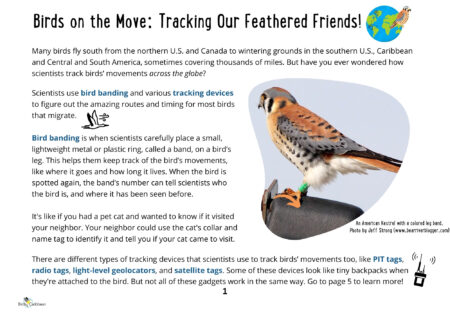
FOR KIDS: Many of the migratory birds we see in the Caribbean are flying south from the northern U.S. and Canada to wintering grounds either here on our islands or further South into South America. Sometimes they will cover thousands of miles on these trips, often stopping along the way. But have you ever wondered how scientists track birds’ movements across the globe?
In today’s activity you will learn more about how birds are tracked and find out about how radio telemetry can be used to understand bird movements. Radio telemetry is one type of technology that helps scientists find out where birds and other animals are located, using radio signals. It works by using three main pieces of equipment 1. A radio tag (which goes onto the bird to sends out a signal) 2. An antenna, which is either fixed in place at a station or carried by a scientist. This will detect the signal sent by the tagged animal 3. A receiver to log the data. You can download all the information, instructions and worksheet here.
FOR KIDS AND ADULTS: Enjoy this video of an American Kestrel feeding in the wild!
Celebrate World Migratory Bird Day (WMBD) with us in 2025! This year’s theme is “Shared Spaces: Creating Bird-friendly Cities and Communities”. Have fun learning about a new migratory bird every day. We have coloring pages, interesting facts, activities, and more. Download for free and enjoy nature with your family at home.
Migratory Bird of the Day: Solitary Sandpiper
While many sandpipers like to flock together, meet the one that literally stays away from the crowd—the Solitary Sandpiper! As its name suggests this bird is a bit of a loner. Medium-sized and gray-brown above with white underparts, it shows fine white speckling on the wings and a bold white eye-ring. In flight, look for dark underwings, a dark rump, and lots of white on the tail.
During the non-breeding season, it’s easy to mix this bird up with the similar Spotted Sandpiper. The Solitary Sandpiper lacks the Spotted’s “white shoulder,” and though it bobs up and down occasionally, it doesn’t dip and ‘teeter’ quite so much. You can find more ID tips for these two species here.
Like many migratory shorebirds found in the Caribbean, Solitary Sandpipers nest across northern North America. But unlike nearly all other sandpipers that nest on the ground, the Solitary Sandpiper does something unusual—it nests in trees! These resourceful birds will ‘upcycle’ old songbird nests in forested wetlands, likely to keep their eggs safe from predators. After breeding, they migrate south to spend the winter in Central and South America and throughout the Caribbean.
Because of their ‘lone wolf’ lifestyle, Solitary Sandpipers can be easy to overlook. But they’re not fussy about habitats—you might spot them at streams, lakes, pond edges, mangroves, roadside ditches, and even puddles in flooded agricultural areas. Wherever they are, they’ll be probing for crunchy insects and other mud-loving invertebrates.
The good news? Solitary Sandpipers are not currently threatened. Their solitary habits and wide habitat tolerance have made them less vulnerable than other shorebirds to threats like hunting and development. Still, they depend on clean wetlands and healthy insect populations, so opting for organic fertilizers, reducing pesticide use, and protecting waterways remain vital for their future.
Thanks to Alex Sansom for the text and Arnaldo Toledo for the lovely illustration!
Color in the Solitary Sandpiper
Download the Migratory Birds of the Day Coloring Page! Use the picture above and the photos on this page as your guide, or look up pictures of the bird online or in a bird field guide if you have one. Share your colored-in page with us by posting it online and tagging us @BirdsCaribbean #WMBD2025Carib
Listen to the calls of the Solitary Sandpiper
The Solitary Sandpiper makes a high-pitched two-note “tsee-weet!” call.
Enjoy these photos of Solitary Sandpipers
Solitary Sandpiper in flight. Look out for the dark, underwings, a great way to seperate this species from Spotted Sandpipers that have pale underwings. (Photo by Lev Frid, Macaulay Library-ML608359979)Solitary Sandpipers can be found in a variety of habitats, from streams, to lakes, ponds, mangroves, and ditches, to flooded fields. (Photo by Hemant Kishan)Look out for the white ‘spectacles’ on this bird. (Photo by Gary Robinette)
Activity of the Day
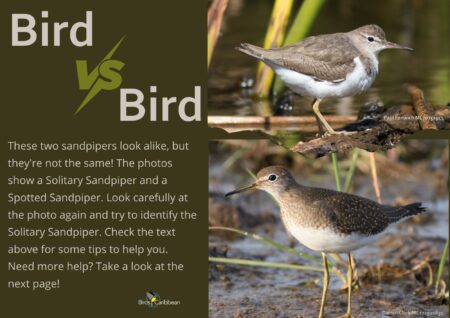
FOR KIDS : in non-breeding plumage Solitary Sandpipers are a medium sized gray-brown sandpiper with pale underparts. Spotted Sandpipers are also a medium sized gray-brown sandpiper with pale underparts. Both also have mid-length bills!
So we have two sandpipers look alike, but they’re not EXACTLY the same! There are some handy way you can tell them apart. Learn all about the differences between these birds in our ‘Bird vs Bird’ ID activity!
Can you tell the difference between the two birds in the photos? If not check out the tips and then try again! Scroll down the page and see if you got it right!
FOR KIDS AND ADULTS: Enjoy this video of a Solitary Sandpiper in the wild!
Learn how to tell the difference between Solitary and Spotted Sandpipers!
Celebrate World Migratory Bird Day (WMBD) with us in 2025! This year’s theme is “Shared Spaces: Creating Bird-friendly Cities and Communities”. Have fun learning about a new migratory bird every day. We have coloring pages, interesting facts, activities, and more. Download for free and enjoy nature with your family at home.
Migratory Bird of the Day: Wilson’s Snipe
What’s that small brown shorebird lurking in the grass? Chances are, it’s a Wilson’s Snipe! These plump, long-billed migrants love to skulk in wet grassy habitats. They are true masters of disguise with their cryptic brown and buff coloration. If you’re lucky enough to spot one in the open, you’ll see they have very long bills and highly patterned plumage with four long buffy-white streaks down the back (“snipe stripes”) and a striped head. Often, though, you won’t know one is there until it bursts from under your feet with a rasping ‘scaap’ call and a distinctive zigzagging escape flight.
Wilson’s Snipe breed across northern North America where they favor wet, marshy settings, and areas close to rivers and ponds. After breeding, some remain in the northwest, but many fly south, to the southern U.S., Central America, Venezuela, and the Caribbean. During the non-breeding season, they love those same soggy habitats, turning up in muddy wetlands, marshes, rice fields, wet agricultural areas, and near rivers and ponds. Here they probe in the mud for a delicious meal of insect larvae, snails, crustaceans, and worms.
Wilson’s Snipe are most active at dawn and dusk, often spending the day tucked away snoozing. If you catch them during spring migration or on their breeding grounds, you might witness their famous display flight, performed as a threat display and to advertise the territory. Known as “winnowing,” it involves the snipe circling high in the air, then diving down. During the dive you’ll hear an eerie, whirring ‘hu-hu-hu’ sound. This ”winnowing” isn’t a call, it’s made by air rushing over the outspread tail feathers!
On the ground, breeding Wilson’s Snipe can be just as dramatic. To protect its nest, a parent may feign injury—fluttering, flopping, or dragging itself as though wounded—luring predators away from its eggs or chicks.
Though their populations are currently stable, Wilson’s Snipe rely on wetlands, which are threatened by drainage for agriculture and development. Let’s protect our wetlands and make sure there are lots of places for these birds to hide, rest, and feed. Simple actions like minimizing single use plastics, recycling and fixing leaky taps reduce pressures on these fragile ecosystems and keep them safe for snipe and countless other species. Learn more about this species, including its range, photos, and calls here. Great news! If you’re in the Caribbean, thanks to BirdsCaribbean, you have free access to Birds of the World and you can find out even more in the full species account of this bird!
Thanks to Alex Sansom for the text and Arnaldo Toledo for the lovely illustration!
Color in the Wilson’s Snipe
Download the Migratory Birds of the Day Coloring Page! Use the picture above and the photos on this page as your guide, or look up pictures of the bird online or in a bird field guide if you have one. Share your colored-in page with us by posting it online and tagging us @BirdsCaribbean #WMBD2025Carib
Listen to the sounds of the Wilson’s Snipe
The Wilson’s Snipe will make a rasping call when flushed. During display flights on the breeding grounds, they produce a rapid series of ‘hu-hu-hu’ noises using outer tail feathers. These Winnowing Flights are used to threaten other birds, but may also function in attracting a mate.
Enjoy these photos of Wilson’s Snipe
Wilsons Snipe, out in the open. (Photo by Josiah Santiago, Macaulay Library-ML625634968)
Wilson’s Snipe in flight. (Photo by Rick-Evets)
Wilson’s Snipe, hiding in the grass; note the “snipe stripes” running down the back. (Photo by Dorian Anderson, Macaulay Library-ML620143387)
Activity of the Day
FOR KIDS AND ADULTS: Draw and colour the Wilson’s Snipe!
Gather your paper and coloring pencils and draw along with Josmar Esteban Marquez. He will guide you step-by-step to make your own beautiful drawing of this migratory shorebird.
Stretching from the Virgin Islands south through the Lesser Antilles, the 17 island groups of the Eastern Caribbean are a hotbed for biodiversity, boasting an astonishing array of plants and animals found nowhere else on Earth. Whether you delight in dragonflies, bask in the beauty of birds, or even harbour a fascination for land crabs, the Eastern Caribbean offers endless discoveries for every kind of nature lover. Yet despite its extraordinary richness, there hasn’t been an individual field guide that brought together the region’s birds, mammals, amphibians, reptiles, land crabs, dragonflies, and butterflies in one accessible volume —until now!
We are delighted to welcome Wildlife of the Eastern Caribbean—the first photographic field identification guide for the region. Conceptualized by husband-and-wife team Gill and Steve Holliday, after a 2000 visit to the region that sparked their curiosity, the guide grew from their search for exactly such a resource. When they couldn’t find one, they set out to create it themselves.
The result? A landmark book showcasing more than 420 species via 850+ stunning photographs. It highlights regional endemics, “don’t miss” wildlife for each island group, suggested sites to get the most out of your visit, and even practical notes on site accessibility. This indispensable guide is certain to become a must-have for travelers, naturalists, nature lovers, and residents alike.
In this interview, Gill and Steve share how their love affair with the Eastern Caribbean began, recount their most challenging photo expeditions, and reveal what it took to bring this monumental project to life.
Gill searching for mangrove crabs, Tortola. (Photo by Steve Holliday)
Gill and Steve on the Mount Scenery Trail, Saba.
Guided walk, Scrub Island, Anguilla. (Photo by Steve Holliday)
About the Field Guide
What inspired you to create this field guide? We first visited the Eastern Caribbean in 2000 and wanted to know more about the fantastic range of wildlife we came across. There were excellent field guides to birds of the West Indies, but books on bats, amphibians, reptiles, butterflies and dragonflies were either out of print, limited in scope, or not available in a handy guide. We knew the type of identification guide we wanted, which ideally would cover the groups of land animals you could most expect to see on the islands. We waited many years for someone to write it, but when no-one did, we decided to have a go ourselves! We were then fortunate to find support from Princeton University Press whose Wildlife Explorer Series was the perfect format for the guide.
What makes the Eastern Caribbean a unique and important biodiversity hotspot? The islands are volcanic in origin and formed over millions of years along lines of past and current volcanic activity. Today they span 500 miles from the Virgin Islands through the Lesser Antilles to Grenada and while some islands joined to form island banks during periods of fluctuating sea levels, most have remained isolated. Any plants and animals that crossed the ocean and reached the islands, have had time to evolve in relative isolation. This has led to high levels of endemism, especially among amphibians and reptiles. Of 578 species referred to in the guide, 30% are endemic to the Eastern Caribbean, most only found on a single island or island bank.
How long did it take to complete this guide? We’ve used notes and photos from our visits to the region spanning 25 years, but the main research, writing, editing and image sourcing was completed on and off over the past five years or so. Even then, it has only been possible thanks to the contributions from so many people; experts in their field, staff in local forestry departments, national parks and conservation organisations, local guides and enthusiasts, and especially photographers. The sections on dragonflies and butterflies took longer to compile as they needed much more research in the field.
What was one of the most surprising things you learned about birds in the Eastern Caribbean while creating this field guide? Distribution both on-island and between islands. While many species of bird can be found across the eastern Caribbean, every island is subtly different; each one having its own endemic species, sub-species or what we’ve called ‘speciality species’. Here’s a few examples: the Snowy Plover is more common on the Virgin Islands and northern Lesser Antilles where it is a real specialty; the Purple-throated Carib is a Lesser Antillean endemic and widespread in rainforests but absent in the dry forests of lower-lying islands. It was also surprising to find how rare and restricted some species are: the entire world population of the critically endangered Grenada Dove is found in just a few fragments of forest on Grenada.
Besides birds, what was a fascinating discovery you made about another group of animals (e.g., reptiles, amphibians, insects, marine life) in the Eastern Caribbean during your research for the guide? There are some amazing land crabs! We just fell in love with them and found them fascinating to watch. From the tiny, but so aggressive fiddler crabs around mangrove-edged lagoons, to the outrageous petrol-blue of the male Blue Land Crab. The latter is the largest of the land crabs; its burrows and untidy piles of excavated mud can litter the floor of mangrove swamps. We also fondly remember watching the endemic Yellow Land Crab (only found from Guadeloupe to St Vincent) along a stream high in a rainforest on St Vincent when a Common Black Hawk flew into a perch above us; the hawk is a main predator of this crab on the island!
Observing Fiddler Crabs, Martinique. (Photo by Steve Holliday)
About the Process
Creating a field guide is a monumental undertaking. How did you keep up the motivation to complete this field guide? Did you have specific routines or personal inspiration to help keep you on track? You’re right—it was a monumental undertaking, and we quickly realised why it had never been done before! We lived by the spreadsheet and the page plan to keep us on track and then it was down to putting the hours in: we tried to work most mornings. We focused on one section at a time, reading and rewriting until we were satisfied with every word. For inspiration we really enjoyed the challenge of keeping the species text succinct and accessible without compromising on key identification features.
How did you gather photos for the guide? We have our own extensive library of images, but some species are notoriously difficult to even see, never mind photograph! Our aim, which we largely achieved, was for as many photos as possible to have been taken in the region; each had to be of sufficient quality for publication and demonstrate key identification features. We are forever grateful to the numerous people who provided their images for us, including BirdsCaribbean members Mark Yokoyama, Anthony Levesque and Frantz Delcroix.
What was the most unexpected challenge you encountered? And how did you overcome this challenge? Data—especially for dragonflies and butterflies! There’s been a lot of work across most of the groups covered in the guide, but dragonfly and butterfly data are limited on some islands. With dragonflies we are particularly indebted to Dennis Paulson and Francois Meurgey who were so helpful with ID. We spent a lot of time in the field to fill distribution gaps for both dragonflies and butterflies, and we had to develop field identification criteria for some species. It was also challenging to keep up to date with changes to common names and taxonomic updates. For example, as the book was with the copy editor and designer, several new endemic bird species were recognized (four wrens and two thrashers), which had to be added to what was supposedly the final text and design!
Were there any particularly challenging photo expeditions? Any photographic expedition into a rainforest presents challenges, as any photographer will know; poor and shaded light, humidity, difficult trails, and biting insects! And forest birds are notoriously elusive and hard to see when high in the canopy. For these reasons, it’s just incredibly difficult to get good photos of some forest species. For example, we have been unable to find a usable upperwing image of the Dominican Leafwing butterfly, a species found only on Dominica, Martinique, and St Lucia.
What was the most rewarding experience while writing this field guide? We got to know some amazing people, both in person and online; some are renowned experts in their field, some enthusiastic amateurs, but all shared a passion for the wildlife of the Eastern Caribbean. We can’t thank everyone enough for their support.
About the Authors
What do you love most about the Eastern Caribbean? The friendliness and generosity of people on all the islands, alongside spectacular landscapes, amazing wildlife, beautiful seas, and the sense of adventure which we still get every time we set off to explore a forest trail or a small offshore island.
What’s one non-essential gear item you always bring with you when you’re out in the field? Thermal coffee mugs!!! When we’re out before sunrise, fresh coffee keeps us going!
Steve getting to grips with shorebirds on Martinique (Photo by Gill Holliday)
On the trail in Montserrat. (Photo by Gill Holliday)
Gill photographing Red-billed Tropicbirds, Statia. (Photo by Steve Holliday)
What do you hope readers will gain from using this guide? We really hope this guide will encourage people to take more interest in the region’s wildlife and enjoy the challenge of identifying and being able to put names to what they are seeing. The guide covers 420+ species, so there’s plenty to go at! We also hope that people gain some understanding of the conservation challenges of the region, including the devastating impact of invasive species such as Small Indian Mongoose and Cane Toad. Over 100 of the species in the guide are on the IUCN Red List of globally threatened species; looking after the amazing habitats that they depend upon and ensuring space for nature is essential for these species to survive for future generations to enjoy.
Sample pages from ‘Wildlife of the Eastern Caribbean’:
Front cover of the Wildlife of the Eastern Caribbean field guide.
What’s next for you? Are there any plans for future editions, companion guides, or other projects related to Eastern Caribbean wildlife? We will of course continue to visit the region and keep up to date with what’s happening that affects species in the region such as the recently produced AviList, a new unified global checklist with up-to-date taxonomy. It has been an incredible experience researching and writing this guide and we’ve learned so much about the whole process of book design and production. Hopefully we can put this experience to good use, so we’ll have to wait and see what’s next for us!
With so many islands to explore, each with their own special sights and surprises, Wildlife of the Eastern Caribbean is the perfect traveling companion for new adventures, or for seeing your local patch with fresh eyes. You can get your own copy of this fantastic guide here.
Steve Holliday has had a long career in wildlife conservation and Gill Holliday has provided images for several wildlife publications. They have been supporting conservation projects for more than 20 years and are lead authors/photographers of bird and wildlife guides for Anguilla and Montserrat.
Celebrate the Caribbean Endemic Bird Festival (CEBF) with us! Our theme in 2025 is “Shared Spaces: Creating Bird-friendly Cities and Communities”—highlighting the crucial role bird-friendly cities and communities can have in addressing the decline in bird populations caused by threats like habitat loss, predation, and climate change. Have fun learning about a new endemic bird every day. We have colouring pages, puzzles, activities, and more. Download for free and enjoy learning about and celebrating nature!
Endemic Bird of the Day: St. Vincent Wren
The melodic song of the St. Vincent Wren (Troglodytes musicus) echoes across the island of St. Vincent, the only place in the world where this extraordinary bird is found. Formerly considered a subspecies of the widespread House Wren (Troglodytes aedon), it was officially recognized as a distinct species in 2024—one of seven wrens split from the complex that year. Its new name proudly reflects its status as one of just three endemic bird species on the island.
This lively wren is recognized by its rufous-brown upperparts and whitish underparts, distinct dark barring on its wings and tail, a pale eyebrow stripe and face, and warm cinnamon hues on the breast, sides, and undertail—sometimes accented by small brown speckles. Its buzzy call “chih-chih-chih-chih” call and sweet, musical song “chih-chih-twee-twee-deedle-di-di-di” make it a beloved symbol of the island’s natural charm.
Highly adaptable, the St. Vincent Wren inhabits a range of environments—from montane evergreen forests and brushy woodlands to agricultural areas and even towns, where it often nests in the eaves of buildings. It plays an important ecological role by feasting on a variety of invertebrates such as spiders, cockroaches, and worms, helping to control insect populations.
The species is thought to lay two whitish-brown eggs per clutch, though little is known about its breeding habits. Rather than constructing elaborate nests, it uses dried grasses, straw, and even scraps of paper to line cavities in trees, caves, tunnels, or man-made structures—a testament to its resourcefulness and adaptability.
Despite its resilience, the St. Vincent Wren faces growing threats from habitat loss due to deforestation, urban expansion, and conversion of forest to pasture for agriculture. Climate change—including more intense storms and prolonged droughts—may also impact its survival and breeding success. Protecting this unique bird will require ongoing research to better understand its ecology and population status, along with community engagement. Simple actions like preserving roof nests and planting native vegetation can make a meaningful difference in ensuring the St. Vincent Wren continues to sing for generations to come.
Thanks to Jodelia Simmons for the text and Arnaldo Toledo for the lovely illustration.
Colour in the St. Vincent Wren
Download our West Indies Endemic Bird colouring page. Use the photos below as your guide, or you can look up pictures of the bird online or in a bird field guide if you have one. Share your coloured-in page with us by posting it online and tagging us @BirdsCaribbean #CEBFfromthenest
Listen to the song of the St. Vincent Wren
The song of the St. Vincent Wren is made up of clear trills and loud chatters.
Puzzle of the Day
Click on the images below to do the puzzles. You can make the puzzle as easy or as hard as you like – for example, 6, 8, or 12 pieces for young children, all the way up to 1,024 pieces for those that are up for a challenge!
St. Vincent Wren. (Photo by David Hollie, Macaulay Library-ML598496181)St. Vincent Wren. (Photo by Gary Rosenberg, Macaulay Library-ML631883463)St. Vincent Wren. (Photo by David Hollie, Macaulay Library-ML598496141)
Activity of the Day
FOR KIDS :The St. Vincent Wrens can be found in forests but also urban areas. In fact this is true of many species of wrens in the Caribbean and beyond, meaning they are often common ‘backyard birds’. You can make your garden, or schoolyard safe for all of our backyard birds by building bird-friendly shelters like the birdhouse in our “Home Tweet Home” crafting activity. Together we can help create cities and communities where people and birds can thrive together!
For this activity you will need:
One empty 1L cardboard juice or milk container (clean and dry)
Popsicle sticks (about 20–24)
Acrylic paints
Paint brushes
Glue gun and glue sticks
Scissors
Hole punch (handheld)
A small stick (6–7” long) for a perch
Twine for hanging
A circular object, big enough, to trace an entrance hole for the birds
You can find full step-by-step instructions here. You will need a parent or trusted adult to help you with this activity.
FOR KIDS AND ADULTS : Enjoy this video of a St. Vincent Wren in the wild!
Celebrate the Caribbean Endemic Bird Festival (CEBF) with us! Our theme in 2025 is “Shared Spaces: Creating Bird-friendly Cities and Communities”—highlighting the crucial role bird-friendly cities and communities can have in addressing the decline in bird populations caused by threats like habitat loss, predation, and climate change. Have fun learning about a new endemic bird every day. We have colouring pages, puzzles, activities, and more. Download for free and enjoy learning about and celebrating nature!
Endemic Bird of the Day: Plumbeous Warbler
The Plumbeous Warbler is a magnificent little warbler, weighing in a just ten grams, about the weight of a ballpoint pen! Adults are dark gray above and lighter below, with two crisp wing bars, a white eyebrow, and a pale half-crescent beneath the eye. Juveniles are similar but show a greenish wash to the gray plumage and buffy to yellowish underparts, facial markings, and wingbars.
While its plumage may be modest, the Plumbeous Warbler more than makes up for it with its lovely and varied song. Throughout the day, you can hear their melodic “pa-pi-a” or “de-de-diu.” During the midday, it switches to a soft, whisper-like version of its song. When aggravated, it lets out a long, rolling rattle.
Endemic to Guadeloupe and Dominica, this warbler inhabits a wide variety of forest types—from sea level to elevations over 1,200m. In Guadeloupe, it is particularly abundant in swamp forests.
Within these habitats, the Plumbeous Warbler roams the undergrowth, searching for wriggly, crunchy, and sometimes gooey insects, and the occasional juicy berry. Its breeding season runs from March to August, with a peak in May. Nests are constructed in forked branches of shrubs or small trees using leaves and rootlets. A typical clutch contains 2–3 eggs.
Although it is still relatively common in the main islands of its range, the ecology and habits of this species remain poorly studied. A small population persists on Marie-Galante, a small island south of the “mainland” Guadeloupe, but the bird may have disappeared from Terre-de-Haut, an even smaller offshore island in the Les Saintes archipelago of Guadeloupe.
The Plumbeous Warbler is protected under Guadeloupe’s 1989 ministerial decree. Though classified as “Least Concern” by the IUCN at both regional and international levels, recent monitoring reveals a cause for concern: a 42% decline in population size between 2014 and 2024, as shown by our Breeding Bird Survey in Guadeloupe.
Confined to forested areas, the Plumbeous Warbler is mainly threatened by the destruction of its habitat from development and human activities. Better protection and restoration of forested areas—especially efforts to strengthen the ecological corridor (Green Network) between Basse-Terre and Grande-Terre——would go a long way in securing the future of this beautiful endemic warbler.Learn more about this species, including its range, photos, and calls here. Great news! If you’re in the Caribbean, thanks to BirdsCaribbean, you have free access to Birds of the World and you can find out even more in the full species account of this bird!
Thanks to Arnaldo Toledo for the illustration and Anthony Levesque for the text!
Colour in the Plumbeous Warbler
Download our West Indies Endemic Bird colouring page. Use the photos below as your guide, or you can look up pictures of the bird online or in a bird field guide if you have one. Share your coloured-in page with us by posting it online and tagging us @BirdsCaribbean #CEBFfromthenest
Listen to the song & call of the Plumbeous Warbler
The song of the Plumbeous Warbler is made up of whistles notes, the first three are given at the same pitch. They have a dry, rattling call.
Puzzle of the Day
Click on the images below to do the puzzles. You can make the puzzle as easy or as hard as you like – for example, 6, 8, or 12 pieces for young children, all the way up to 1,024 pieces for those that are up for a challenge!
Plumbeous Warbler. (Photo by Nathan Goldberg, Macaulay Library- ML631686480)Plumbeous Warbler. (Photo by Brian Sullivan, Macaulay Library-ML89353671)Plumbeous Warbler. (Photo by Frantz Delcroix)Plumbeous Warbler. (Photo by Judd Patterson)Plumbeous Warbler. (Photo by Judd Patterson)
Activity of the Day
FOR KIDS : The Plumbeous Warbler loves to feed on insects! In fact insects are an important delicacy for many types of birds. For our dazzling hummingbirds, our captivating todies, swooping swifts and swallows, darting flycatchers, pewees and potoos, drilling woodpeckers, and of course, our warblers —insects are an essential protein source.
we’ve compiled our top six activities into an activity book for you to enjoy! Our theme is “Protect Insects, Protect Birds,” and these activities have been purposely created to help children learn about insects.
Our “Incredible Insects” activity book is available for download directly from Flipsnack in both English and Spanish or download the PDFs.
Celebrate the Caribbean Endemic Bird Festival (CEBF) with us! Our theme in 2025 is “Shared Spaces: Creating Bird-friendly Cities and Communities”—highlighting the crucial role bird-friendly cities and communities can have in addressing the decline in bird populations caused by threats like habitat loss, predation, and climate change. Have fun learning about a new endemic bird every day. We have colouring pages, puzzles, activities, and more. Download for free and enjoy learning about and celebrating nature!
Endemic Bird of the Day: St. Lucia Oriole
Locally known as Kawouge, the Saint Lucia Oriole is one of the island’s most striking endemic birds. The name Karwouge was likely derived from the French term “Carouge“, which is used as a name for New World blackbirds.
I remember seeing this oriole for the first time when I was about five years old, feeding on a ripe pawpaw near my family home. It was a sight to to behold! My grandmother told me its name: Kawouge. What she may not have known—and what I later discovered as an adult working with the Forestry Department—is that this bird lives only in Saint Lucia.
With bold shiny-black plumage and bright orange-yellow belly, shoulders, and rump, the male Saint Lucia Oriole is unmistakable. Females are similar but duller in color, and immatures sport a more muted yellow-green overall. The pointed dark bill, with a grayish-blue base, completes the bird’s distinctive look. There is simply no other bird like it on the island.
The Saint Lucia Oriole primarily inhabits rainforests, but can also be found in dry forests, coastal scrub, and even near towns—provided there are enough large trees. It has a varied diet, including insects, spiders, fruits, and nectar.
Breeding takes place from April to June. The female weaves a tidy hanging nest from grasses and plant fibers, often suspending it from large leaves such as banana, balizier, coconut, or palm. She lays up to three speckled eggs and incubates them herself. Like many songbirds, both parents work hard to feed and protect their young until they fledge.
Sadly, the Saint Lucia Oriole is under serious threat and is listed as Endangered by the IUCN. Several factors are suspected to contribute to its decline, though more research is needed. One major concern is brood parasitism by the Shiny Cowbird (Molothrus bonariensis), an invasive species that lays its eggs in other birds’ nests, tricking them into raising cowbird chicks. As cowbirds thrive in cleared, human-altered areas, their impact is expected to grow.
Another possible threat comes from the Bare-eyed Thrush (Turdus nudigenis), which may harass orioles, especially during nesting. There’s also concern that orioles living near banana plantations—where they often forage—may be exposed to pesticides through contaminated food or water. However, the actual effects of cowbirds, thrushes, or agrochemicals remain poorly understood due to a lack of detailed studies.
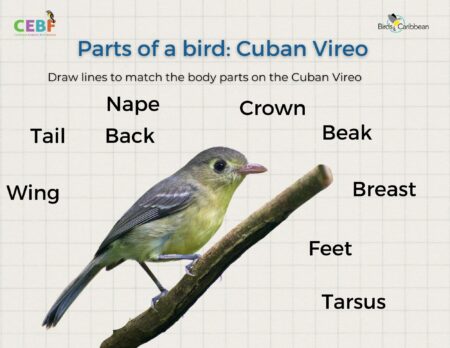
What is clear is that protecting forest habitats and maintaining healthy forest edges is essential. These buffer zones help limit contact between orioles and cowbirds by preserving ecological separation.
With continued habitat protection and research, there is hope that the Saint Lucia Oriole will remain a cherished part of the island’s unique natural heritage for generations to come.Learn more about this species, including its range, photos, and calls here. Great news! If you’re in the Caribbean, thanks to BirdsCaribbean, you have free access to Birds of the World and you can find out even more in the full species account of this bird!
Thanks to Arnaldo Toledo for the illustration and Adams Toussaint for the text!
Colour in the St. Lucia Oriole
Download our West Indies Endemic Bird colouring page. Use the photos below as your guide, or you can look up pictures of the bird online or in a bird field guide if you have one. Share your coloured-in page with us by posting it online and tagging us @BirdsCaribbean #CEBFfromthenest
Listen to the song of the St. Lucia Oriole
The song of the St. Lucia Oriole is a rapid jumble of whistles and squeaks
Puzzle of the Day
Click on the image below to do the puzzle. You can make the puzzle as easy or as hard as you like – for example, 6, 8, or 12 pieces for young children, all the way up to 1,024 pieces for those that are up for a challenge!
St. Lucia Oriole feeding on coconut. (Photo by Diane Nastase, Macaulay Library-ML613309393)Juvenile St. Lucia Oriole. (Photo by Peter Hawrylyshyn, Macaulay Library-ML614479814)St. Lucia Oriole. (Photo by Brian Sullivan, Macaulay Library-ML89373141)St. Lucia Oriole. (Photo by Adams Toussaint)
Activity of the Day
FOR KIDS :The female Saint Lucia Oriole is an expert weaver. She builds strong, hidden nests by carefully twisting and weaving natural materials like grass, vines, and palm fibers. These nests hang securely from tree branches, keeping her eggs safe and dry. Today, you’ll practice your own weaving skills—just like a mother oriole!
Celebrate the Caribbean Endemic Bird Festival (CEBF) with us! Our theme in 2025 is “Shared Spaces: Creating Bird-friendly Cities and Communities”—highlighting the crucial role bird-friendly cities and communities can have in addressing the decline in bird populations caused by threats like habitat loss, predation, and climate change. Have fun learning about a new endemic bird every day. We have colouring pages, puzzles, activities, and more. Download for free and enjoy learning about and celebrating nature!
This crow sticks to lowland habitats—open areas dotted with palm groves and tall trees. Unlike its Hispaniolan cousin, it’s not found in pine forests. Sadly, it’s now very rare and only occurs in scattered pockets of western and central Cuba. With such a limited range and growing threats to its habitat, the Cuban Palm-Crow is listed as Endangered in Cuba’s national Red Data Book.
At a glance, it looks like your classic crow: glossy black plumage with a subtle purple-blue sheen. But here’s the kicker—it shares its home with another nearly identical species, the Cuban Crow, making field ID tricky even for seasoned birders. Fortunately, their calls are distinct: the Cuban Palm-Crow gives a nasal “craaa, craaa,” while the Cuban Crow sounds more like a parrot. Still want more clues? The Palm-Crow has longer nasal bristles that cover its nostrils, and its bill shape differs slightly too—the bill’s commissure (where upper and lower mandible meets) extends below the eye in the Cuban Crow, while in the Cuban Palm-Crow, it only reaches the front of the face. Sharp-eyed birders, take note!
Diet-wise, the Cuban Palm-Crow isn’t picky. With a short, sturdy bill, it feeds on fruits, insects, and other invertebrates, foraging both in trees and on the ground—sometimes even along roadsides. It’s often seen in pairs or small groups, but gatherings of up to 20 birds aren’t uncommon.
There’s still a lot we don’t know about its natural history, especially its breeding behavior. What we do know: it builds a typical crow nest—a stick platform lined with soft materials—usually in tree branches or nestled under palm fronds (yep, that’s where the name comes from!). Breeding takes place from March through July, with clutches of 3–4 pale green, speckled eggs. Though likely solitary nesters, small groups have been spotted mobbing predators to defend nests.
Crows have long been saddled with spooky reputations in Western culture, but it’s time to flip the script. In the Caribbean, crows like the Cuban Palm-Crow are not omens of bad luck, they’re indicators of healthy forests. And with half of our Caribbean crow species now threatened, protecting them is more urgent than ever. So next time you see a crow calling from a palm grove, take it as a good sign—you’ve found a patch of forest worth protecting.Learn more about this species, including its range, photos, and calls here. Great news! If you’re in the Caribbean, thanks to BirdsCaribbean, you have free access to Birds of the World and you can find out even more in the full species account of this bird!
Thanks to Arnaldo Toledo for the illustration and Daniela Ventura for the text!
Colour in the Cuban Palm-Crow
Download our West Indies Endemic Bird colouring page. Use the photos below as your guide, or you can look up pictures of the bird online or in a bird field guide if you have one. Share your coloured-in page with us by posting it online and tagging us @BirdsCaribbean #CEBFfromthenest
Listen to the calls of the Cuban Palm-Crow
The call of the Cuban Palm-Crow is nasal “raaah“.
Puzzle of the Day
Click on the image below to do the puzzle. You can make the puzzle as easy or as hard as you like – for example, 6, 8, or 12 pieces for young children, all the way up to 1,024 pieces for those that are up for a challenge!
Cuban Palm-Crow. (Photo by Neil Hilton)Cuban Palm-Crow. (Photo by Arturo Kirkconnell Jr. Macaulay Library-ML90721851)Cuban Palm-Crow. (Photo by Adrian Cobas, Macaulay Library-ML610215948)
Activity of the Day
FOR KIDS : In the story, “The Crow and the Pitcher,” a thirsty crow finds a pitcher with a little water at the bottom. The crow can’t reach the water but doesn’t give up. It drops pebbles into the pitcher and slowly, the water rises, and the crow is able to drink! Clever, right?
Did you know this story isn’t just a fable? Scientists have discovered that crows, like the Cuban Palm-Crow, are really smart. They use tools, solve puzzles, and even plan ahead!
In The Clever Crow Challenge you willrecreate the crow’s clever experiment to understand why dropping pebbles into the pitcher caused the water to rise.
You will need:
1 tall, clear container (a plastic water bottle or glass vase works well)
Water
Bottle cap
Small pebbles or marbles (at least 20–30)
Measuring cup
Marker or tape (to mark water levels)
FOR KIDS AND ADULTS : Enjoy this video of a Cuban Palm-Crow in the wild!
Celebrate the Caribbean Endemic Bird Festival (CEBF) with us! Our theme in 2025 is “Shared Spaces: Creating Bird-friendly Cities and Communities”—highlighting the crucial role bird-friendly cities and communities can have in addressing the decline in bird populations caused by threats like habitat loss, predation, and climate change. Have fun learning about a new endemic bird every day. We have colouring pages, puzzles, activities, and more. Download for free and enjoy learning about and celebrating nature!
Endemic Bird of the Day: Jamaican Pewee
Pewuee! Pewuee! Pewuee! Wee-oh! Pee-wee!
What’s that plaintive sound echoing through the trees!? Those are the beautiful notes of the Jamaican Pewee—Jamaica’s very own flycatcher, affectionately known as simply the Pewee. While its song is sometimes described as sad or mournful, listen closely and you’ll hear soft, exhaled notes that speak more of peaceful rest than sorrow.
A plain-looking yet remarkable bird, the Jamaican Pewee is small and dark olive-brown with paler buffy-gray underparts, faint buff wing bars, and no eye-ring. Despite its understated appearance, it’s not easily confused with the other resident flycatchers on the island. The Pewee often perches alertly, with a slightly peaked head, flicking its wings and tail as it scans for its next meal.
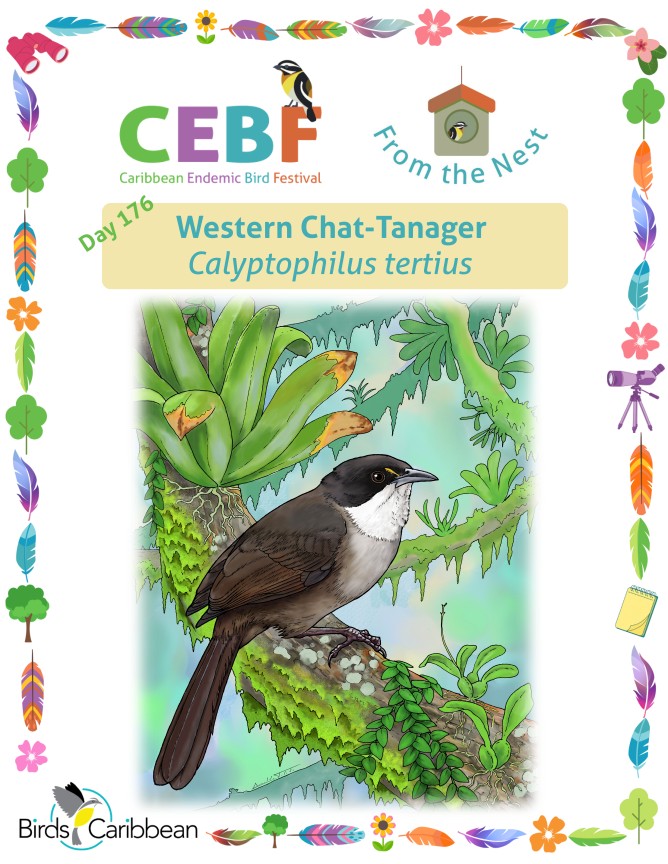
This aerial hunter thrives in humid montane and lowland forests, especially in areas with plenty of shade and tall trees. Watch for it perched on an exposed mid-level branch, sitting motionless before darting out to snatch flying insects—beetles, moths, flies, and anything else that dares to buzz past—right out of the air. With sharp eyes and quick reflexes, it returns to its perch to repeat the ambush. How cool is that?
Jamaican Pewees breed from April to June and may nest twice per year. Their cup-shaped nests, built from woven plant fibers, grasses and Spanish moss, are typically placed in tree forks.
Though currently listed as a species of Least Concern, the Jamaican Pewee’s population is declining due to the ongoing habitat destruction in Jamaica. Protecting this species means preserving its forest home, supporting reforestation with native trees, and controlling invasive species. Reducing pesticide use and creating bird-friendly spaces by planting native trees—even in towns and urban parks—can also make a difference. Public education, research, and strong environmental policies that protect natural areas are key to ensuring this soulful songbird continues to thrive.
Thanks to Arnaldo Toledo for the illustration and Michelle Roberts for the text!
Colour in the Jamaican Pewee
Download our West Indies Endemic Bird colouring page. Use the photos below as your guide, or you can look up pictures of the bird online or in a bird field guide if you have one. Share your coloured-in page with us by posting it online and tagging us @BirdsCaribbean #CEBFfromthenest
Listen to the song of the Jamaican Pewee
The song of the Jamaican Pewee includes a plaintive “uh-weee-oo” with the ‘weee’ syllable being upslurred. An upslurred “wee-wee” call with the second note louded, and a slightly rough, whistled “weeah.”
Puzzle of the Day
Click on the image below to do the puzzle. You can make the puzzle as easy or as hard as you like – for example, 6, 8, or 12 pieces for young children, all the way up to 1,024 pieces for those that are up for a challenge!
Jamaican Pewee, Blue Mountains. (Photo by Daniel Fedorowicz, Macaulay Library-ML629361966)Jamaican Pewee. (Photo by David Chernack, Macaulay Library- ML616475521)Jamaican Pewee, Blue Mountains. (Photo by Matt Grube)
Activity of the Day
FOR KIDS : Can you find the words in our Jamaican Pewee word search? Read the text above all about this endemic bird to remind yourself of some of the interesting facts and information, as you look for all 15 hidden words!
Remember the words appear forwards and backwards, as are horizontal, vertical and diagonal! Need some help? Or want to check your answers? You can see where all the words were here.
FOR KIDS AND ADULTS : Enjoy this video of a Jamaican Pewee in the wild!
Celebrate the Caribbean Endemic Bird Festival (CEBF) with us! Our theme in 2025 is “Shared Spaces: Creating Bird-friendly Cities and Communities”—highlighting the crucial role bird-friendly cities and communities can have in addressing the decline in bird populations caused by threats like habitat loss, predation, and climate change. Have fun learning about a new endemic bird every day. We have colouring pages, puzzles, activities, and more. Download for free and enjoy learning about and celebrating nature!
Endemic Bird of the Day: Puerto Rican Euphonia
The Puerto Rican Euphonia is a triple threat: dazzling plumage, a melodious voice, and undeniable charm! Endemic to Puerto Rico, it’s affectionately known by locals as Canario del País or simply Eufonia. If you’re lucky, you might catch this lively little bird flitting through the canopy in places like El Yunque National Forest, Luquillo Experimental Forest, and the Carite, Maricao, and Guánica State Forests.
Adult males are striking, with a vivid orange-yellow forehead and a sky-blue cap that extends from the crown to the nape. The rest of the upperparts are a rich violet-blue, offset by a bright yellow rump and upper tail coverts. Their underparts start with a yellow throat that deepens to an orange-yellow on the breast and belly. Females, while more subdued, are equally beautiful—olive-green overall with a sky-blue cap with a sky blue helmet and yellowish forehead patch. Their yellow throats gradually deepen to a muted olive-yellow on the remaining underparts.
You’ll find these fashionable birds in a range of habitats, including mountain forests, lowland dry forests, and even shade-coffee plantations. They’ve been recorded in the Tabonuco, Palo Colorado, Palm, and Elfin (Dwarf) forests. Although usually high in the canopy, Puerto Rican Euphonias often come lower to forage along forest edges and in clearings—especially wherever mistletoe (Loranthaceae) grows, one of their favorite foods. They also snack on other small fruits like Yerba Capitana and Capulín (Muntingia calabura). Energetic and vocal, they hop busily through the trees, calling out with sharp “chit-it” notes and a cheerful “wheeee.” Their song is a rapid mix of squeaky, tinkling, and whistled notes.
Though much remains to be learned about their breeding behavior, we do know that Puerto Rican Euphonias nest year-round, with activity peaking from March to June. They build dome-shaped nests 3–20 meters above the ground, tucked into forks of branches or nestled near epiphytes. The nests are crafted from moss, lichen, and bark, bound with spider silk and lined with banana leaves and soft bark fibers. Clutch size ranges from 2 to 4 white eggs speckled with mauve or reddish-brown.
This species faces ongoing threats from deforestation, and hurricanes—bringing strong winds and tree fall—can also limit fruit availability. Supporting local environmental efforts to remove invasive species and restore native trees is key to making forests more resilient. With continued conservation, the Puerto Rican Euphonia and other forest birds can continue to thrive across the island.Learn more about this species, including its range, photos, and calls here. Great news! If you’re in the Caribbean, thanks to BirdsCaribbean, you have free access to Birds of the World and you can find out even more in the full species account of this bird!
Thanks to Arnaldo Toledo for the illustration and Dimaris Colón for the text!
Colour in the Puerto Rican Euphonia
Download our West Indies Endemic Bird colouring page. Use the photos below as your guide, or you can look up pictures of the bird online or in a bird field guide if you have one. Share your coloured-in page with us by posting it online and tagging us @BirdsCaribbean #CEBFfromthenest
Listen to the song of the Puerto Rican Euphonia
The song of the Puerto Rican Euphonia is mixture of whistles and tinkling, and squeaky notes.
Puzzle of the Day
Click on the image below to do the puzzle. You can make the puzzle as easy or as hard as you like – for example, 6, 8, or 12 pieces for young children, all the way up to 1,024 pieces for those that are up for a challenge!
Male Puerto Rican Euphonia. (Photo by Manuel Seda, Macaulay Library-ML626933664)Female Puerto Rican Euphonia. (Photo by Ricardo Sanchez, Macaulay Library-ML477816071)
Male Puerto Rican Euphonia. (Photo by John C. Sullivan, Macaulay Library-ML628015174-
Activity of the Day
FOR KIDS : Puerto Rican Euphonias love to feed on small fruits, especially mistletoe berries!
Can you help this hungry Puerto Rican Euphonia find its way through our maze to to grab some tasty mistletoe?
Celebrate the Caribbean Endemic Bird Festival (CEBF) with us! Our theme in 2025 is “Shared Spaces: Creating Bird-friendly Cities and Communities”—highlighting the crucial role bird-friendly cities and communities can have in addressing the decline in bird populations caused by threats like habitat loss, predation, and climate change. Have fun learning about a new endemic bird every day. We have colouring pages, puzzles, activities, and more. Download for free and enjoy learning about and celebrating nature!
Endemic Bird of the Day: Hispaniolan Nightjar
If you ever find yourself walking through the forests of Hispaniola at night, listen closely. A ghostly call—pi-tan-guaaaa—echoes through the trees. This mysterious sound belongs to the Pitanguá, or Hispaniolan Nightjar, a bird so elusive that many locals recognize its voice but have never seen it.
The Hispaniolan Nightjar is a master of camouflage. Its mottled dark brown and grayish plumage blends perfectly with the leaf-strewn forest floor. Males can be distinguished by the white tips on their outer tail feathers, while females have buff-colored tips. Its cryptic coloration and nocturnal habits make it one of the most difficult birds to observe in the wild.
Endemic to Hispaniola, this nightjar favors mid-elevation forests in the Dominican Republic, especially in the Cordillera Central, Sierra de Bahoruco, and Loma de Cabrera. It is typically found between 300 and 750 meters above sea level, often in broadleaf forest. While its current status in Haiti today is uncertain, historical records indicate it was once more widespread across the island.
LIttle is known about tis diet, but like other nightjars, A. ekmani is an aerial insectivore. With a wide, bristle-lined mouth, it catches insects on the wing, feeding almost exclusively at night.
Its distinctive call—a prolonged pi-tan-guaaaa—is repeated throughout the night and inspired its local name. The sound carries throughout the forest and is often described as haunting or mournful, contributing to the bird’s near-mythical reputation. According to local legend, the Pitanguá’s song is believed to be the voice of wandering spirits calling out through the night forest.
The Pitanguá nests directly on the ground, laying two greenish-white eggs with brown blotches in a shallow depression hidden among the leaves. Breeding occurs from April to July, and the species relies on its excellent camouflage to avoid predators. Without a constructed nest, the eggs’ survival depends on how well-hidden they are.
BirdLife International currently considers its population trend to be stable. However, the Pitanguá has suffered significant declines due to habitat destruction and invasive species. Deforestation—especially in Haiti—has severely reduced its breeding range. Like many nocturnal birds, it is also sometimes persecuted due to superstition. More research is needed to determine its current status in Haiti and to monitor remaining populations in the Dominican Republic.
The Hispaniolan Nightjar remains one of the island’s most mysterious birds—rarely seen, but often heard. With continued conservation efforts—and a bit of luck—future generations will still hear its eerie, beautiful pi-tan-guaaaa echoing through the night.Learn more about this species, including its range, photos, and calls here. Great news! If you’re in the Caribbean, thanks to BirdsCaribbean, you have free access to Birds of the World and you can find out even more in the full species account of this bird!
Thanks to Arnaldo Toledo for the illustration and Elvin Vargas Esévez for the text!
Colour in the Hispaniolan Nightjar
Download our West Indies Endemic Bird colouring page. Use the photos below as your guide, or you can look up pictures of the bird online or in a bird field guide if you have one. Share your coloured-in page with us by posting it online and tagging us @BirdsCaribbean #CEBFfromthenest
Listen to the song of the Hispaniolan Nightjar
The song of the Hispaniolan Nightjar a burry “pit, whoo-vore?” often repeated.
Puzzle of the Day
Click on the image below to do the puzzle. You can make the puzzle as easy or as hard as you like – for example, 6, 8, or 12 pieces for young children, all the way up to 1,024 pieces for those that are up for a challenge!
A Hispaniolan Nightjar spreads its wings. (Photo by Dax Roman)Hispaniolan Nightjar. (Photo by Dax Roman)
Activity of the Day
FOR KIDS : Birds like the Hispaniolan Nightjar are very good at hiding in plain sight. Their colours help them to blend in with their environment. Insects also use camouflage to blend in with their environment and keep them safe from other animals that love munching on them. But note that it also helps some insects catch prey that doesn’t see them! Their colours, patterns and even physical shape make them indistinguishable from their surroundings.
In this activity you’re going to go outside (with an adult) and help insects and birds find the best spot for them to blend in such as in the grass, amongst fallen leaves, branches, leaves, flowers, dirt, tree trunks, and other plants.
You will need:
pencil
scissors
clipboard (optional)
copy of Masters of Camouflage page
Can you find the ‘Masters of Camouflage’ page to print (in colour or black and white) and full instructions of this activity here!
FOR KIDS AND ADULTS : Enjoy this video about why Hispaniolan Nightjar was made a seperate species!
Celebrate the Caribbean Endemic Bird Festival (CEBF) with us! Our theme in 2025 is “Shared Spaces: Creating Bird-friendly Cities and Communities”—highlighting the crucial role bird-friendly cities and communities can have in addressing the decline in bird populations caused by threats like habitat loss, predation, and climate change. Have fun learning about a new endemic bird every day. We have colouring pages, puzzles, activities, and more. Download for free and enjoy learning about and celebrating nature!
Endemic Bird of the Day: Barbados Bullfinch
The Barbados Bullfinch, affectionately known as “Sparrow” or “Sparky” by locals, is a ubiquitous and endearing resident of the island. Arguably the easiest West Indian endemic to spot, it often finds you rather than the other way around. This charming bird, the only endemic species (so far!) on Barbados, is a testament to resilience and adaptability.
Measuring just 5-6 inches (14-15 cm) in length, the Barbados Bullfinch presents a subtle beauty. Both sexes have similar plumage: dark olive upperparts with brownish wings, and a light grey underbelly that may show faint streaking on the breast and belly. Males have a solid black, cone-shaped bill, while females sport a paler lower mandible. Their vocal repertoire is varied, ranging from rapid “tse tse tse tse tse” calls to harsh “schipp-schipp-schipp” sounds, and a drawn-out “schrrrrrrp.”
Despite its limited range—confined to just 166 square miles of Barbados—the species is classified as “Least Concern” on the IUCN Red List. This favorable status is largely due to its extraordinary adaptability. The Bullfinch thrives in nearly every habitat across the island, from dense woodlands and mangroves to grasslands and highly urbanized areas.
Its diet is just as flexible. Though primarily a seed eater—gleaning seeds from the ground or grasses—it supplements its diet with fruits and berries. On rainy days, it can be observed eating insects—darting from branches to catch them in mid-air like a flycatcher. It’s become remarkably tame, frequenting hotels, restaurants, and backyards, and is often seen accepting hand-fed treats, including processed foods like sugar. Studies have also shown the Bullfinch’s impressive problem-solving skills. In urban environments and lab settings, they’ve been observed opening sugar packets and pulling strings to access food (Lefebvre et al., 2016).
Their nesting habits are equally adaptable. Both sexes contribute to building a domed nest with a side entrance, constructed from woven dry grass or other locally available materials. While typically built in trees and shrubs, they readily adapt to man-made structures. Females usually lay 3-4 eggs, which hatch after about 14 days of incubation.
Though currently thriving, the Barbados Bullfinch faces several threats that should be monitored, including predation by feral and domestic cats, the non-native Mongoose and by African Green Monkeys. They are also subject to brood parasitism by Shiny Cowbirds.
Thanks to Arnaldo Toledo for the illustration and Julian Moore for the text!
Colour in the Barbados Bullfinch
Download our West Indies Endemic Bird colouring page. Use the photos below as your guide, or you can look up pictures of the bird online or in a bird field guide if you have one. Share your coloured-in page with us by posting it online and tagging us @BirdsCaribbean #CEBFfromthenest
Listen to the calls and song of the Barbados Bullfinch
The song of the Barbados Bullfinch is rapid “tsee-tsee-tsee-tsee…” or “tsit-tsit-tsit-tsit…”. The call is a a sharp “tseet.”
Puzzle of the Day
Click on the image below to do the puzzle. You can make the puzzle as easy or as hard as you like – for example, 6, 8, or 12 pieces for young children, all the way up to 1,024 pieces for those that are up for a challenge!
Barbados-Bullfinch. (Photo by John Webster)Barbados Bullfinch. (Photo by Lauren Tucker)Barbados Bullfinch. (Photo by David Hollie, Macaulay Library-ML608647927)
Activity of the Day
FOR KIDS : Our 2025 CEBF theme “Shared Spaces: Creating Bird-friendly Cities and Communities” highlights the many challenges our endemic birds face due to human activities and expanding urban development. To combat these challenges conservation efforts need to incorporate bird-friendly actions, making sure that our communities become havens for these unique birds. Anyone from national and local governments, businesses, community groups, and individuals can help out by being “bird-friendly”!
What does “bird-friendly” mean? “Bird-friendly” means making our environment safe and welcoming for birds. We can do this by planting native plants, providing clean water, and avoiding the use of harmful chemicals. As well as in other ways by making choices about how we use resources like electricity and our shopping choices. Why not see how bird-friendly you, and your community are, by taking part in the ” Bird-Friendly Community Challenge“. This will help you think about ways in which we can all be friends to birds!
Celebrate the Caribbean Endemic Bird Festival (CEBF) with us! Our theme in 2025 is “Shared Spaces: Creating Bird-friendly Cities and Communities”—highlighting the crucial role bird-friendly cities and communities can have in addressing the decline in bird populations caused by threats like habitat loss, predation, and climate change. Have fun learning about a new endemic bird every day. We have colouring pages, puzzles, activities, and more. Download for free and enjoy learning about and celebrating nature!
Endemic Bird of the Day: Bermuda Petrel
The Bermuda Petrel, or Cahow, is Bermuda’s only endemic bird—found nowhere else on Earth! Fittingly, it is the national bird of Bermuda, and a source of great pride for Bermudians. Like many seabirds, Cahows spend nearly their entire lives at sea, returning to land only to breed—and they nest underground, in burrows!
Few people have ever seen a Cahow in the wild. These elusive birds return to their breeding grounds under the cover of night, arriving in October or November and departing again in May or June. Juveniles are even more mysterious: after fledging, they may remain out at sea for up to four years before returning to land to breed. Incredible!
Cahows closely resemble the Black-capped Petrel, but can be distinguished by a dark gray cap that extends over the face, nape, and sides of the neck, forming a “cowl.” Their forehead and throat are white, and their upperparts are mostly gray with a white fringe bordering the darker rump. Their underparts are mostly white, and they have very long wings, with a one-meter wingspan. A powerful and agile flier, the Cahow is easily distinguished from the smaller, fluttery storm-petrels.
Why the scientific name Pterodroma cahow? Pterodroma means “winged runner,” a fitting name for a seabird that thrives in strong winds and rarely rests on land. The name “Cahow” comes from the eerie cries these birds make at night—calls that once spooked sailors and earned Bermuda the nickname “Isle of Devils.” Most likely, those ghostly sounds belonged to Cahows.
When the first settlers arrived in the 1600s, the Cahow was abundant, with an estimated half a million pairs nesting throughout the Bermuda archipelago. But within a few short years, the population had been decimated. Adults and chicks were taken by the thousands from their burrows and eaten. By around 1620, the Cahow was believed to be extinct.
During the first half of the 20th Century, four Cahow specimens were recovered, inspiring a search for its breeding grounds, which were rediscovered in 1951. That event was headline news in newspapers around the world. This led to the launch of the Cahow Recovery Program under the leadership of Dr. David Wingate, Bermuda’s first Conservation Officer (1957 to 2000), and since 2000, continued by his successor Jeremy Madeiros.
Thanks to decades of tireless effort, the Cahow has made a remarkable comeback: from just 18 nesting pairs (and 8 fledglings) in 1960, to 62 pairs (32 fledglings) in 2001, and 165 nesting pairs (76 fledglings) in 2024.
The path to recovery has not been easy. Threats included pesticide exposure (leading to thin eggshells and breeding failure), competition for nest sites from White-tailed Tropicbirds, egg predation by rats, and even predation by Peregrine Falcons. Today, rising sea levels pose a new and serious threat.
To give the Cahow every chance at success, conservationists developed wooden baffles to keep out the larger Longtails (White-tailed Tropicbirds), allowing only Cahows to access the burrows. Artificial burrows have also been installed to accommodate the growing population.
Thanks to Arnaldo Toledo for the illustration and Andrew Dobson for the text!
Colour in the Bermuda Petrel
Download our West Indies Endemic Bird colouring page. Use the photos below as your guide, or you can look up pictures of the bird online or in a bird field guide if you have one. Share your coloured-in page with us by posting it online and tagging us @BirdsCaribbean #CEBFfromthenest
Listen to the calls of the Bermuda Petrel
The calls of the Bermuda Petrel include a high pitcher “oooooooooooooo-EEK” made by males during courtship, and an answering growl of “aaaaaaaawww-AK” made by females.
Puzzle of the Day
Click on the image below to do the puzzle. You can make the puzzle as easy or as hard as you like – for example, 6, 8, or 12 pieces for young children, all the way up to 1,024 pieces for those that are up for a challenge!
A Bermuda Petrel in flight. (photo by Friedemann Arndt, Macaulay Library- ML608756232)A Bermuda Petrel at sea near Bermuda. (Photo by Friedemann Arndt, Macaulay Library- ML608756195)Close-up of a Bermuda Petrel. (Photo by Tom Johnson, Macaulay Library-ML40621211)
Activity of the Day
FOR KIDS : The Bermuda Petrel is a beautiful seabird, related to gulls, albatrosses, shearwaters and many more groups of sea loving birds! Another group of birds that can be found along our Caribbean coastline are the shorebirds. At first glance, shorebirds and seabirds might seem like they’re they are very similar. Both groups are typically found near water, and can often be seen in similar places! But when delve a bit deeper you can see that these two groups of birds are quite distinct. There are differences not just in where they typically live, how they live, and also in how they typically look (although of course in both groups there are some exceptions to the rules!).
Why not think about some of these differences and try out our “seabirds or shorebirds?” activities. Remember that whilst there are several differences between these two groups there are sometime overlaps in their lifestyles! Full instructions of this activity in here ! And you can find the answers here.
FOR KIDS AND ADULTS : Enjoy this video of a Bermuda Petrel at a nest, in the wild!
Celebrate the Caribbean Endemic Bird Festival (CEBF) with us! Our theme in 2025 is “Shared Spaces: Creating Bird-friendly Cities and Communities”—highlighting the crucial role bird-friendly cities and communities can have in addressing the decline in bird populations caused by threats like habitat loss, predation, and climate change. Have fun learning about a new endemic bird every day. We have colouring pages, puzzles, activities, and more. Download for free and enjoy learning about and celebrating nature!
Endemic Bird of the Day: Kalinago Wren
Say hello to the Kalinago Wren, Dominica’s newest officially recognized single-island endemic bird, named in 2024 to honor the island’s Indigenous people, the Kalinago. Previously considered a subspecies of the House Wren, Troglodytes martinicensis rufescens is now celebrated as its own distinct species—thanks to new research highlighting its unique genetics, song, and behavior.
Locals affectionately call it syòl, sinyòl, wòsinyòl, èsiyòl, òsiyòl, and Madam tètchyen. That last name, “Madam tètchyen” (or “Mrs. Boa Constrictor”), stems from local folklore. The wren is said to frequent the forest floor where the native boa, or tètchyen, is often found—like a husband-and-wife pair in nature. Spot a Kalinago Wren, and you may be near a boa!
Formerly found in Guadeloupe and Martinique, the Kalinago Wren has been extirpated from both islands, likely due to habitat loss and the impacts of invasive predators. That makes Dominica its last remaining stronghold—and a vitally important island for its continued survival.
You can find the Kalinago Wren throughout Dominica’s moist and dry forests, rural landscapes, and even near homes—though it tends to steer clear of towns. Its ability to adapt to human environments (including nesting in gutters and concrete blocks) is impressive and likely helped it recover after Hurricane Maria in 2017.
Its diet includes insects and even small lizards like juvenile anoles, and it’s often seen flitting low across the forest floor while foraging. Its powerful voice makes it easier to hear than see!
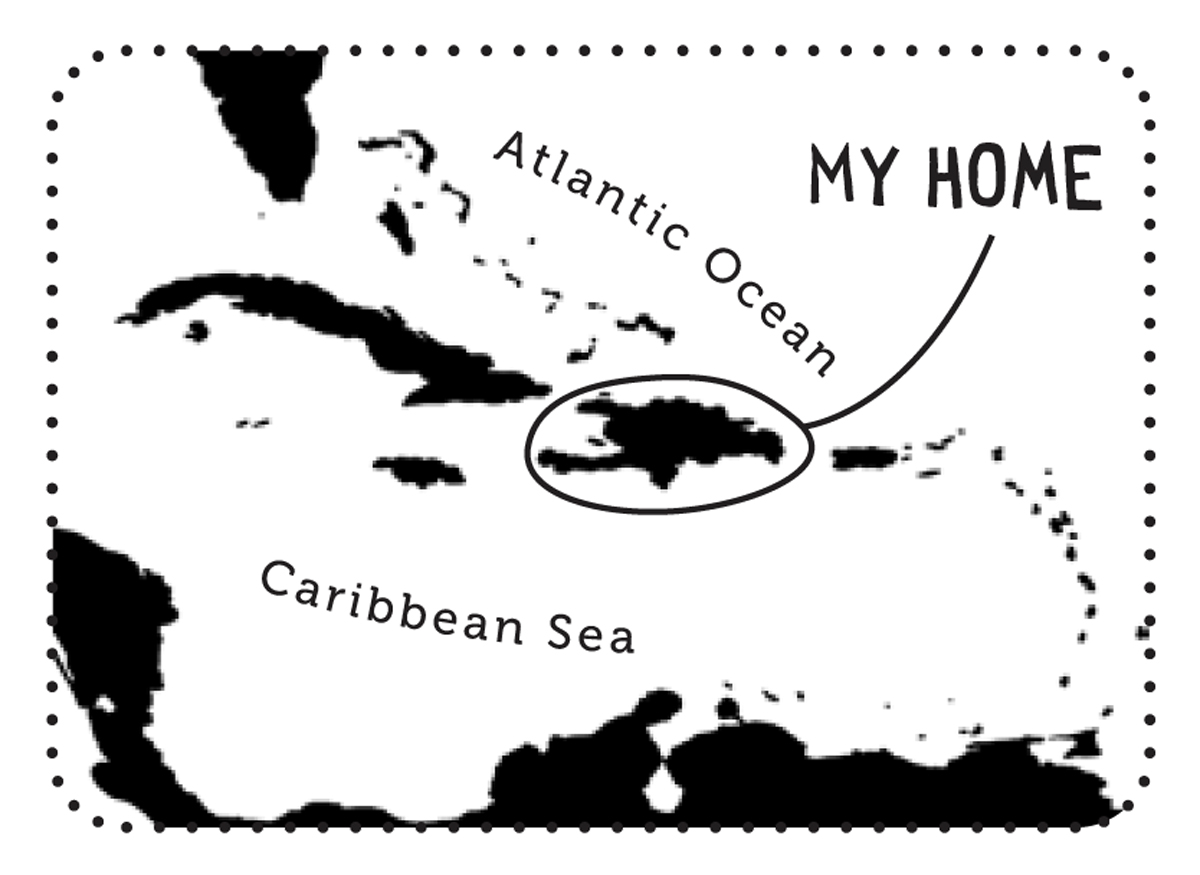
While still understudied, the Kalinago Wren is believed to have two breeding seasons, from May–August and November–December. However, some nesting activity has also been reported from February–April, suggesting there could be three annual breeding cycles—a topic ripe for further research! Nests are built in tree cavities from twigs, and the birds have shown clever adaptability by using human structures like gutters and concrete blocks. Clutches typically contain 2–6 whitish eggs with reddish-brown speckles.
Although its exact population size and conservation status have not yet been formally assessed, the Kalinago Wren appears widespread and stable. Still, as a single-island endemic, it is vulnerable to habitat loss and natural disasters—particularly hurricanes. That makes it a priority species for monitoring, research, and conservation efforts.Learn more about this species, including its range, photos, and calls here. Great news! If you’re in the Caribbean, thanks to BirdsCaribbean, you have free access to Birds of the World and you can find out even more in the full species account of this bird!
Thanks to Arnaldo Toledo for the illustration and Garry Auguiste for the text!
Colour in the Kalinago Wren
Download our West Indies Endemic Bird colouring page. Use the photos below as your guide, or you can look up pictures of the bird online or in a bird field guide if you have one. Share your coloured-in page with us by posting it online and tagging us @BirdsCaribbean #CEBFfromthenest
Listen to the song of the Kalinago Wren
The song of the Kalinago Wren is loud with chatters and trills.
Puzzle of the Day
Click on the image below to do the puzzle. You can make the puzzle as easy or as hard as you like – for example, 6, 8, or 12 pieces for young children, all the way up to 1,024 pieces for those that are up for a challenge!
A Kalinago Wren singing. (Photo by Yann Muzika, Macaulay Library- ML631840540)A Kalinago Wren. (Photo by Holger Teichmann)
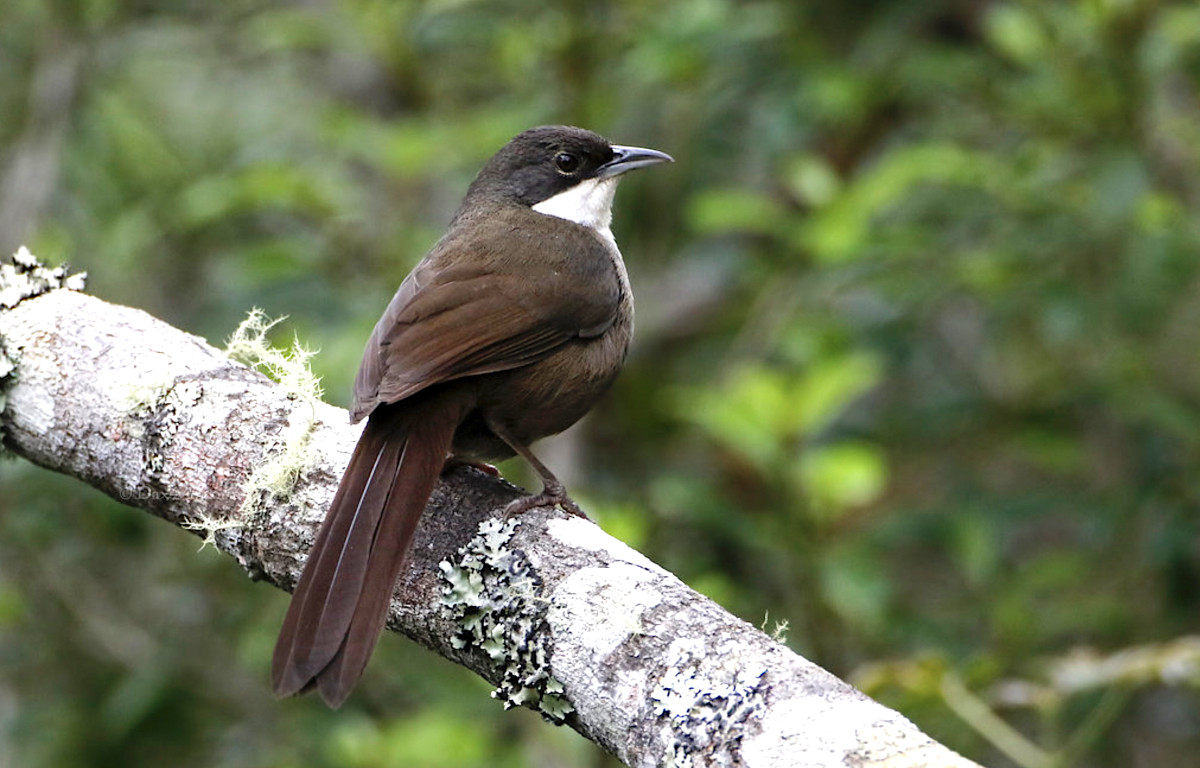
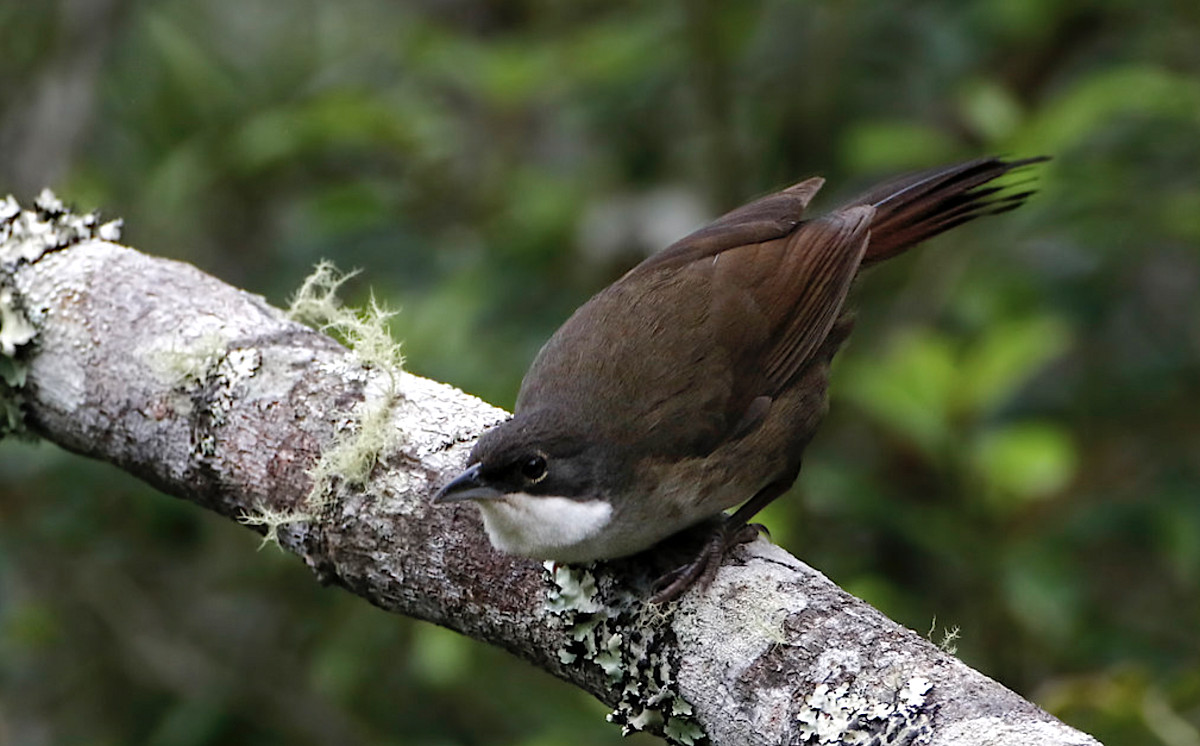
Activity of the Day
FOR KIDS : Can you find the words in our Kalinago Wren word search? Read the text above all about this endemic bird to remind yourself of some of the interesting facts and information, as you look for all 15 hidden words!
Remember the words appear forwards and backwards, as are horizontal, vertical and diagonal! Need some help? Or want to check your answers? You can see where all the words were here.
FOR KIDS AND ADULTS : Enjoy this video of a Kalinago Wren in the wild!
Global Big Day is almost here! Read our top tips to keep your birding bonanza from going off the rails.
Rondel Smith is ready for GBD – but are you? (Global Big Day 2024).
Global Big Day is the most anticipated birding event of the year. Birders around the globe head out into their backyards, neighborhoods, forests, and wetlands, to look at birds and submit their observations via eBird checklists. Sounds simple, right? Well, not always! Birds can be unpredictable, and surprises like sudden rain or a dead phone battery can throw you off your game.
But don’t worry! It doesn’t have to be stressful. If you’re feeling excited, but a little overwhelmed—you’ve come to the right place! Firstly, THANK YOU for stepping up as a citizen scientist. Every checklist you submit through eBird will help scientists track bird populations, understand migration patterns, and identify where conservation efforts are urgently needed so that key habitats can be protected before they’re lost. Your participation isn’t just fun—it’s powerful.
We’ve gathered top tips from seasoned BirdsCaribbean GBDers on what not to do, so you can avoid common pitfalls and focus on watching the birds.
Don’t just Wing it!
Puerto Rican Lizard Cuckoo in flight
Don’t just fly out the door with vague plans to ‘find some birds’! If you want a fun day full of great bird sightings, consider planning and even scouting out your route if it’s somewhere you haven’t been before. Think about where you want to go and what you want to see.
Aiming to maximize your species count? Then you definitely want to bird different habitats! eBird hotspots can tell you the best places to find specific birds. You’ll also need to think about environmental factors that affect what birds you might see—like time of day or height of the tide (for coastal areas). Check the weather forecast—rain predicted for early morning? Maybe there is still somewhere you can birdwatch where this will be less of a problem!
One big advantage of joining one of our BirdsCaribbean Global Big Day teams is that team leaders often coordinate group efforts, spreading birders across different habitats: forests, swamps, coastlines, and even urban areas to maximize the number of species spotted.
You can’t plan for everything! What if you hear about a rare bird on the eBird grapevine? You’re going to have to change your plans! Sudden rainstorm? Why not take a break to take shelter and refuel (even in your car—who knows you might spot something great through the rain-soaked windscreen!). Stay flexible!
eBird or bust
So, you’ve seen a lot of birds, and you’re basking in the glow of adding a ‘lifer’ to your Big Day list. But, remember—you need to get your bird sightings on eBird for them to count! Submitting your checklists to eBird is what turns your birding into real data that powers conservation. Make sure you’re eBird ready before the Big Day with these helpful resources:
Enter sightings with eBird Mobile—Install the app, adjust your preferences, and download your regional “Pack” for your island or state. (Packsare lists of birds you are likely to see in a given region of the world)
Coral Aviles listing the birds in the CWC list on eBird, Blassina Canal Puerto Rico. (Photo by Eliezer Nieves)
Also, check with your team leader to ensure your checklists are added to the official team Trip Report so every bird you log increases your team’s chances of spotting the most species!
There are two ways to make sure your checklists are included:
Join the Trip Report in advance. Ask your team leader to invite you. When you get the email, be sure to click JOIN Trip Report (top right corner of the page). That’s it—all your checklists will be added automatically, and you can watch your team’s progress in real time throughout the day. (Find your team’s Trip Report link in column E)
Share each checklist manually:Use your team’s username in column B to share each checklist. This also works—but your team leader has to manually accept each one, so results may not appear right away.
Not on one of our island or multinational teams yet? What are you waiting for? Join today on GiveButter!
Pro tip: Once you’ve joined your team trip report you could spend the whole day obsessively refreshing the page and checking your team’s species total, but we strongly recommend you spend some time birding!
One list does NOT rule them all
You’ve got the eBird app, you’re in your team trip report, you’ve made a plan, and you’re excited and ready to bird! BUT don’t just hit start on your checklist as the Big Day sunrises and then only hit stop as you roll exhausted into bed! The BEST way to eBird is to do multiple lists.
Changed locations or habitat type? Start a new list.
Stationary for more than an hour? New list.
Traveling for more than a mile? New list.
Changed the type of birding you’re doing (i.e., going from a stationary to traveling count or vice versa)? You guessed it—new list! (T-shirts coming soon.)
Birding in Arecibo, Puerto Rico. (Photo by Edward Hernandez Lara)
eBird explains it simply and best: the shorter the duration and distance of your checklist, the more valuable your data becomes. Long checklists that cover large areas make it hard to pinpoint exactly where and when birds were present. For more eBird best practices click here.
You can easily check your total species seen from the day across all your lists by looking at your contribution to your team’s eBird trip report!
Pro tip: Make sure your checklists are complete (i.e., report every species you were able to ID by sight or sound) for the best scientific value.
Gear up or go home
Kearah Ryan looking through the spotting scope at Carr’s Bay. (Photo by Ajhermae White)
Nothing kills a good birding moment like forgotten binoculars or a dead phone. Test your gear before you hit the trail. Charge everything. Know how it works. Thank us later.
We recommend packing light but packing smart. Your GBD survival kit should include:
phone (with eBird app)
field guide
binoculars or scope
camera (memory cards installed please!)
batteries (charged)
water (don’t forget to stay hydrated, champ!)
medicine
snacks
spare clothes, and
anything else you’ll need to stay comfortable and focused in the field
A little prep goes a long way toward making your day smooth and successful.
Pro tip: On GBD snacks aren’t just treats, they’re for morale! And trust us, you’ll need a lot of morale if you’re birding for long periods of time. So pack the trail mix AND the gummies.
Smart Birding is Safe Birding
Think like a Bananaquit and get plenty of water and sugar during GBD!
FOMO is real but please pace yourself. Injury or exhaustion isn’t going to help you see more birds. To keep you and your team safer check the weather (and tides if relevant) before heading out so you’re prepared for outdoor conditions. If flying solo, stick to places you know well to avoid unexpected challenges or getting lost.
Don’t forget to take regular breaks. Take this time to hydrate, chat with other birders, maximize your snack intake, and post about your #BirdsCaribGlobalBigDay experience to your socials. We insist that you tag us @birdscaribbean in your photos and videos so we can cheer you on.
Pro Tip: Laying down on the ground in the field is a great way to take a rest. Just point your binoculars skyward and tell people you are checking the treetops for birds (beware of ants when following this tip!).
Don’t Miss the Night Shift
Bare Shanked Screech Owl, spotted during Global Big Day. (Photo by Beny Wilson)
Who doesn’t love owls with their round, watchful eyes and silent flight?! Be sure to include some birding in the dark to add some fascinating nighttime species to your list!. Choose a place you know well by daylight and plan your route ahead of time. Exploring unfamiliar places at night is risky, so stick to familiar ground to stay safe and make the most of your nocturnal birding adventure.
Carry a flashlight—it will help you find your way and pick out wildlife in the dark (but don’t use it to disturb the birds or other animals!)
Use your ears—this is the best way to bird at night. Listen out for nocturnal calls and see if you can identify the birds you hear!
Bonus: Nighttime birding is eerie, magical, and wildly underrated.
What You Don’t Know CAN Hurt (Your Species Count)
You’ve checked and rechecked your field guide, but you are still not sure just what that small brown bird is. Don’t go it alone! You can try using the Merlin ID app to help you nail your species ID, or even better, share your photos or audio recordings with your big day team. Remember you’re all in it together to get the highest species total (and dethrone the Piping Pawis).
Pro Tip: On the ‘All About Birds’ pages from Cornell you can get some great side-by-side comparisons of similar species to help with ID.
Final Thoughts:Embrace the excitement! Not everything will go as planned, but that’s part of the fun. Global Big Day is all about adventure, unexpected moments, and, of course, incredible and wondrous birds. Keep your spirits high, enjoy the experience, and remember: every observation (that you submit to eBird) counts!
Go forth and bird boldly. We’re cheering for you!
Members of Gundlach Team in matching birding kit. (Photo by Yaro Rodriguez)
Celebrate the Caribbean Endemic Bird Festival (CEBF) with us! Our theme in 2025 is “Shared Spaces: Creating Bird-friendly Cities and Communities”—highlighting the crucial role bird-friendly cities and communities can have in addressing the decline in bird populations caused by threats like habitat loss, predation, and climate change. Have fun learning about a new endemic bird every day. We have colouring pages, puzzles, activities, and more. Download for free and enjoy learning about and celebrating nature!
Endemic Bird of the Day: Cuban Blackbird
Let’s talk about the Cuban Blackbird (Ptiloxena atroviolacea)—or as it’s affectionately known on the island, the Totí. Ask almost any Cuban, and they’ll recognize the name. This striking all-black bird is a familiar sight across Cuba, from busy cities to rural areas, and it’s even embedded in Cuban culture and sayings. Locals sometimes call someone the Totí when they end up taking the blame for something—just because.
At first glance, the Cuban Blackbird looks entirely black, but catch it in the right light and you’ll see beautiful flashes of blue and purple iridescence in its plumage. Its beak and legs are black, and the eye is a dark brown. Males and females look similar, though females are slightly smaller. About 25–28 cm long, one of the best ways to tell it apart from similar black birds is its distinctive square-shaped tail. For comparison, the Greater Antillean Grackle—another all-black species—has yellow eyes and a long, V-shaped tail, while the Shiny Cowbird is smaller with more intense violet tones.
This bird is endemic to mainland Cuba, and you can find it just about anywhere—forests, grasslands, agricultural lands, towns, and cities. Its varied, musical song can often be heard echoing through both natural and urban environments. The Cuban Blackbird is adaptable and opportunistic, often seen foraging on the ground alone, in pairs, or in mixed flocks with other blackbirds. Its diet includes insects, seeds, small vertebrates, and even nectar—clearly not a picky eater!
Breeding takes place from April to August. Pairs build cup-shaped nests out of rootlets, hair, and feathers, where they typically lay 3 to 5 eggs.
While the Cuban Blackbird is common and widespread today, it’s still important not to take its presence for granted. There’s much we don’t know about this species, and as climate change and habitat loss intensify, even adaptable birds can face unexpected challenges. As the saying goes, “The time to protect a species is while it’s still common.”Learn more about this species, including its range, photos, and calls here. Great news! If you’re in the Caribbean, thanks to BirdsCaribbean, you have free access to Birds of the World and you can find out even more in the full species account of this bird!
Thanks to Arnaldo Toledo for the illustration and Saúl González Rosales for the text!
Colour in the Cuban Blackbird
Download our West Indies Endemic Bird colouring page. Use the photos below as your guide, or you can look up pictures of the bird online or in a bird field guide if you have one. Share your coloured-in page with us by posting it online and tagging us @BirdsCaribbean #CEBFfromthenest
Listen to the calls of the Cuban Blackbird
The calls of the Cuban Blackbird include a metallic “schee-o” and loud “chuck,” as well as a “chok, chok, chok, lee, lee, lee” series.
Puzzle of the Day
Click on the image below to do the puzzle. You can make the puzzle as easy or as hard as you like – for example, 6, 8, or 12 pieces for young children, all the way up to 1,024 pieces for those that are up for a challenge!
A Cuban Blackbird. (Photo by Lutz Durselen, Macaulay Library- ML204086391)A Cuban Blackbird enjoys a feeder. (Photo by Rosie Howard, Macaulay Library-ML172657491)A Cuban Blackbird perched on a flower. (Photo by Andy Goris, Macaulay Library-ML614707075)
Activity of the Day
FOR KIDS : The Cuban Blackbird looks black. But when the sunlight hits it at different angles,
colors of purple and blue are revealed. This beautiful effect is known as iridescence! Several birds have feather like this, and you might also have seen this in shiny bubbles or on butterfly wings.
You can create your own iridescent bookmark using simple materials. Just like the glossy feathers of the Cuban Blackbird. Your bookmark will shimmer and shine as you move it in the light.
You will need:
paper We recommend using black card stock because iridescence shows up best on dark colors. But you can use any kind of paper as long as it’s thick enough to go in water and doesn’t have a shiny or slippery coating.
Celebrate the Caribbean Endemic Bird Festival (CEBF) with us! Our theme in 2025 is “Shared Spaces: Creating Bird-friendly Cities and Communities”—highlighting the crucial role bird-friendly cities and communities can have in addressing the decline in bird populations caused by threats like habitat loss, predation, and climate change. Have fun learning about a new endemic bird every day. We have colouring pages, puzzles, activities, and more. Download for free and enjoy learning about and celebrating nature!
Endemic Bird of the Day: Gray Trembler
The Gray Trembler really knows how to put on a show! When it sings, its entire body trembles with excitement—its wings droop and quiver, and its tail pulses in a rhythmic shake. This bird’s got serious moves! While it sticks to one signature dance, its vocal performance is anything but predictable. One of its common songs is a series of quavering whistles that slide downward in pitch. Other times, it belts out elaborate warbles reminiscent of its cousin, the mockingbird—or switches to simpler chortling trills. It even has a raspy, buzzy call that sounds like it’s giving someone a good scolding!
If you want front-row seats to this performance, you’ll need to visit Martinique or St. Lucia–the only two places in the world where this endemic species lives. They’re year-round residents, and within these islands, they use a variety of habitats: lush lower montane rainforests, coastal dry forests, open woodlands, and even gardens. But don’t expect to find them in large numbers—they’re widespread but never abundant.
So, if you’re lucky enough to be in the right place, what should you look for besides the dancing? True to its name, the Gray Trembler is mostly gray, with a slightly darker face mask that frames a piercing yellow eye, rimmed in red. It sports a long tail, long wings, and an impressively long, curved bill. You’ll often spot it close to the forest floor, using that strong bill to flip over leaves—sometimes launching them high into the air—or to probe into crevices between vines and tree trunks. What’s on the menu? Pretty much anything it can catch: snails, beetles, small lizards, frogs, even centipedes!
We still have more to learn about the Gray Trembler’s breeding behavior, but here’s what we do know: they breed during the rainy season (April to August), laying striking greenish-blue eggs, usually laid in clutches of two to three. Their nests are open cups, built from dead leaves and twigs, placed high up in medium-sized trees. Both parents share the job of feeding the nestlings, offering a varied diet that includes fruit. And one more fun fact—they seem curious about technology—Gray Tremblers have been caught on video pecking at the cameras used to monitor their nests!
While the Gray Trembler isn’t globally threatened, it’s considered range-restricted, since it’s found only on two islands. That makes it especially vulnerable to environmental changes. One major concern is the degradation and destruction of the forests it calls home. Protecting these forests is essential, not just for the trembler, but for many other unique species that live alongside it.
What can you do? Start small: reduce waste, recycle, and avoid products that contribute to deforestation. You can also support local environmental groups, join tree-planting efforts, and share the story of the Gray Trembler and the importance of its forest habitats. Every action—big or small—helps. Learn more about this species, including its range, photos, and calls here. Great news! If you’re in the Caribbean, thanks to BirdsCaribbean, you have free access to Birds of the World and you can find out even more in the full species account of this bird!
Thanks to Arnaldo Toledo for the illustration and Dr Jennifer Mortensen for the text!
Colour in the Gray Trembler
Download our West Indies Endemic Bird colouring page. Use the photos below as your guide, or you can look up pictures of the bird online or in a bird field guide if you have one. Share your coloured-in page with us by posting it online and tagging us @BirdsCaribbean #CEBFfromthenest
Listen to the song of the Gray Trembler
The song of the Gray Trembler a slow jumble of wavering rich whistles. They also have a raspy, harsh sounding alarm call.
Puzzle of the Day
Click on the image below to do the puzzle. You can make the puzzle as easy or as hard as you like – for example, 6, 8, or 12 pieces for young children, all the way up to 1,024 pieces for those that are up for a challenge!
Gray Trembler calling. (Photo by Michael Stubblefield, Macaulay Library-ML604068631)Gray Trembler, St Lucia. (Photo Kevin-Berkoff, Macaulay Library- ML323551711)A Gray Trembler on Martinique. (Photo by Noam Markus, Macaulay Library-ML132338751)
Activity of the Day
FOR KIDS : Use the information above and the clues on the sheet to untangle our our word scramble – all about the Gray Trembler. You’ll need to know about where it lives, what it eats, and how it behaves. You can find all the answers here.
FOR KIDS AND ADULTS : Enjoy this video of a Gray Trembler in the wild!
Celebrate the Caribbean Endemic Bird Festival (CEBF) with us! Our theme in 2025 is “Shared Spaces: Creating Bird-friendly Cities and Communities”—highlighting the crucial role bird-friendly cities and communities can have in addressing the decline in bird populations caused by threats like habitat loss, predation, and climate change. Have fun learning about a new endemic bird every day. We have colouring pages, puzzles, activities, and more. Download for free and enjoy learning about and celebrating nature!
Endemic Bird of the Day: Jamaican Oriole
“Auntie Katie! You-cheat, you-cheat-you, you-cheat-you and If-you-want-it-free, don’t-ask-me!”
These whimsical lyrics mimic the melodious song of the Jamaican Oriole (Icterus leucopteryx leucopteryx), known locally as Auntie Katie, Banana Katie, or Banana Bird. This medium-sized songbird, about 20 cm long, fills the air with its rich, flute-like whistles—especially in the early morning and late afternoon. Its song, made up of rapid, down-slurred patterns, adds a bright, musical flair to Jamaica’s natural soundscape.
The Jamaican Oriole is unmistakable with its bold contrast of yellow and black. It sports a black throat, face, and upper chest; a greenish-yellow head, nape, and mantle; and a vibrant yellow belly and rump. Its wings and tail are mostly black, with a large white patch on the wing patch. Females look similar but slightly duller, while immatures are olive-green with less black on the head and dusky green tails. These adaptable birds thrive in all kinds of habitats—from forests at all elevations to gardens and towns. They’re omnivores with a sweet tooth, often seen in fruit trees feasting on bananas, mangoes, Otaheite apples, and papayas. They also enjoy the nectar provided by flowers—and will eagerly tear flowers apart to get to their nectaries. These resourceful birds also feed on insects—using their pointy beaks to probe into tree bark, bromeliads, and seed pods, or picking prey right off leaves.
Jamaican Orioles are also nature’s engineers, weaving hanging pouch-like nests out of grass, thread, fibers, and Spanish moss. These nests sway beneath tree branches and are cleverly hidden among the leaves to protect chicks from predators. Females typically lay 3–5 white eggs with brown markings, and both parents pitch in to feed and care for their young.
Although the Jamaican Oriole is currently listed as Least Concern by the IUCN, it still faces challenges. Habitat loss from deforestation and poorly planned urban expansion threatens its future. It also falls victim to the invasive Shiny Cowbird (Molothrus bonariensis), a brood parasite that lays its eggs in oriole nests, tricking orioles into raising cowbird chicks instead of their own. Planting native trees, preserving green spaces, and supporting local conservation efforts are great ways to help this charismatic bird continue to thrive.
While the Jamaican Oriole subspecies (Icterus leucopteryx leucopteryx) is found only in Jamaica, a related subspecies occurs on San Andrés, Colombia. Sadly, the species is now extinct on Grand Cayman. The Jamaican Oriole also holds a special place in the island’s birding culture—it appears on the logo of the Gosse Bird Club, founded in the 1950s, and which continues today as BirdLife Jamaica. Learn more about this species, including its range, photos, and calls here. Great news! If you’re in the Caribbean, thanks to BirdsCaribbean, you have free access to Birds of the World and you can find out even more in the full species account of this bird!
Thanks to Arnaldo Toledo for the illustration and Damany Calder for the text!
Colour in the Jamaican Oriole
Download our West Indies Endemic Bird colouring page. Use the photos below as your guide, or you can look up pictures of the bird online or in a bird field guide if you have one. Share your coloured-in page with us by posting it online and tagging us @BirdsCaribbean #CEBFfromthenest
Listen to the song of the Jamaican Oriole
The song of the Jamaican Oriole is series of rich, whistled, and slurred phrases and “cheat-you, cheat-you, cheat-you, cheat-you, cheat.”
Puzzle of the Day
Click on the image below to do the puzzle. You can make the puzzle as easy or as hard as you like – for example, 6, 8, or 12 pieces for young children, all the way up to 1,024 pieces for those that are up for a challenge!
Jamaican Oriole. (Photo by Anthony VanSchoor)A Jamaican Oriole spotted in Portland, Jamaica. (Photo by Joseph Priniotakis, Macaulay Library-ML558197951)Male Jamaican Oriole. (Photo by Peter-Hawrylyshyn, Macaulay Library-ML541878121)
Activity of the Day
FOR KIDS : Get ready to head out on a bird-friendly adventure with our bird-friendly bingo game! Ask a trusted adult if you can take a walk in your backyard, or go with them on a walk around your neighbourhood. As you walk around look carefully for things that help keep birds safe in your community. You can then mark them off on the bingo card we provide in our game! Get out there and see what you can find!
FOR KIDS AND ADULTS : Enjoy this video of a Jamaican Oriole in the wild!
Celebrate the Caribbean Endemic Bird Festival (CEBF) with us! Our theme in 2025 is “Shared Spaces: Creating Bird-friendly Cities and Communities”—highlighting the crucial role bird-friendly cities and communities can have in addressing the decline in bird populations caused by threats like habitat loss, predation, and climate change. Have fun learning about a new endemic bird every day. We have colouring pages, puzzles, activities, and more. Download for free and enjoy learning about and celebrating nature!
Endemic Bird of the Day: Hispaniolan Mango
What’s better than one mango? Two mangos. And while we’re all about that juicy, vitamin-packed fruit of the Caribbean, today we’re talking about a different kind of treat—a dazzling hummingbird!
Not too long ago, the Puerto Rican Mango and Hispaniolan Mango were thought to be the same species, called the Antillean Mango. But in 2022, scientists split them into two distinct species after discovering key differences in their size, shape, and colors.
The male Hispaniolan Mango is a stunner, with a glittering green throat, metallic green head, and upperparts, velvety black underparts, and a reddish-purple tail with blue-black edges. female is a bit more subdued, with a whitish throat and gray belly, but still quite the looker. When her tail is fanned out, the outer feathers show a broad reddish band followed by a dark band and white tips.
Trying to tell the Hispaniolan Mango apart from other hummingbirds on the island? You might mix it up with the Hispaniolan Emerald—but don’t worry, they’re easy to distinguish! The Emerald is smaller, has a straight beak, and a green belly. The Mango, on the other hand, is larger, has a longer, slightly curved beak, a sleek, black underside, and a flashier tail.
And how about that voice? The Mango’s call is a sharp, high-pitched “chip!”— like a quick “tsk!” It often repeats the call in fast little pairs or long, chatty strings, like it’s gossiping to itself in the treetops.
Found only on Hispaniola and nearby islands, including Tortue, Gonâve, Vache, and Beata, the Hispaniolan Mango lives in moist and dry forests, forest clearings, gardens, and even coffee plantations. It hovers or perches to sip nectar from flowers, and also hunts insects mid air or gleans them from leaves and tree trunks. In coffee plantations, its favorite snack comes from the Pois Doux/ Ice Cream Bean (Inga vera) tree!
Though tiny, the Mango isn’t afraid to show some attitude. It’s been seen mobbing much larger birds—like the mighty Ridgway’s Hawk and Gray Kingbirds, if it thinks they’re invading its space or favorite flowers.
During the breeding season, which runs from December to August, the female builds a cozy, cup-shaped nest using plant fibers, coated with bark flakes, lichen, and moss—all bound to the nest with sticky spider silk. She handles incubation and chick-raising all on her own, just like other hummingbird moms.
Luckily, the Hispaniolan Mango isn’t threatened, but it still needs our help to keep thriving! By planting native flowers, reducing pesticide use, and supporting reforestation efforts, we can make sure these tiny, fierce, and fabulous birds light up our skies for years to come. Learn more about this species, including its range, photos, and calls here. Great news! If you’re in the Caribbean, thanks to BirdsCaribbean, you have free access to Birds of the World and you can find out even more in the full species account of this bird!
Thanks to Arnaldo Toledo for the illustration and Holly Garrod for the text!
Colour in the Hispaniolan Mango
Download our West Indies Endemic Bird colouring page. Use the photos below as your guide, or you can look up pictures of the bird online or in a bird field guide if you have one. Share your coloured-in page with us by posting it online and tagging us @BirdsCaribbean #CEBFfromthenest
Listen to the calls of the Hispaniolan Mango
The calls of the Hispaniolan Mango include a thin trill and sharp chipping notes.
Puzzle of the Day
Click on the image below to do the puzzle. You can make the puzzle as easy or as hard as you like – for example, 6, 8, or 12 pieces for young children, all the way up to 1,024 pieces for those that are up for a challenge!
Male Hispaniolan Mango in flight. (Photo by Carl-Hackman, Macaulay Libarary-ML398939841)A Male Hispaniolan Mango takes a rest. (Photo by Carlos Gomez)
Activity of the Day
FOR KIDS : The Hispaniolan Mango is a striking bird with vivid shining colours of glittering green, inky black and vibrant violet!But who says you have to travel to the Dominican Republic or Haiti to see these beautiful colours?
In this activity you’ll make a suncatcher—a decoration that catches rays of sunlight and casts them as rainbow hued patterns across the room!
Here is a list of materials you will need:
empty clear plastic milk jug, washed and dried
permanent markers
scissors
utility Knife
hole punch
twine, string or yarn
You can download full instructions here including a bird template for you to use. This activity involves using a knife and scissors.
Make sure you have an adult to help you with the cutting.
FOR KIDS AND ADULTS : Enjoy this video of a male Hispaniolan Mango in the wild!
Bonaire is a birder’s paradise, with 250 species recorded on this small Caribbean island, which measures just 3 to 7 miles wide and approximately 24 miles long. To celebrate and share the island’s incredible avian diversity, a new set of interpretive signs has been installed at key birding sites across the island—thanks to a longstanding and inspiring partnership between BirdsCaribbean, WILDCONSCIENCE, and Cargill Salt, LLC. With input from local birders, tour guides, and conservation organizations, these beautiful signs invite residents and visitors alike to explore, learn about Bonaire’s birds, wetlands, and unique ecosystems and will help people to find some great places for bird watching on Bonaire!
The story of these new signs began in 2014, when Daniel DeAnda, General Manager at Cargill Salt, attended a BirdsCaribbean Wetlands Education Training Workshop hosted by local NGO STINAPA. The two-day workshop addressed the destruction and degradation of wetlands due to a widespread lack of awareness about their ecological value—and how education, especially through teachers, could help reverse this trend. The workshop emphasized wetlands as vital habitats for birds, and the powerful role that birds can play in connecting people to nature.
After the first day of the workshop, Daniel approached facilitators Lisa Sorenson, Executive Director of BirdsCaribbean, and Michele Kading, a wetlands educator, with an invitation: “I think you need to visit our salt ponds—you might like what you see there.” (That turned out to be a major understatement!) The team toured the salt ponds that evening and was astonished by the thousands of shorebirds present—an ecological treasure that, at the time, was largely unrecognized.
Cargill Salt Ponds, Bonaire.
Least Sandpiper and Western Sandpiper walking on salt crystals at Cargill Salt Ponds. (Photo by Jeff Gerbracht)
The Cargill Salt Ponds site also supports other habitat types, like these mangroves. (Photo by Lisa Sorenson)
Red Knots and Short-billed Dowitchers at the Cargill Salt Ponds. (Photo by Lisa Sorenson)
American Flamingos also utilize the Cargill ponds and there is a large breeding colony nearby! (photo by Lisa Sorenson
Whimbrels are a fairly common migratory shorebird in Bonaire. (photo by Susan Davis)
This visit marked the beginning of a long and productive partnership. Although hesitant at first, Cargill gave permission to BirdsCaribbean to conduct waterbird surveys of the salt ponds. Over the next three years, biologist Fernando Simal of WILDCONSCIENCE, led intensive surveys revealing that the ponds were a regionally important stopover site for tens of thousands of migratory shorebirds, including Near Threatened Red Knots and Vulnerable Short-billed Dowitchers.
Soon after, building on our growing partnership with STINAPA Bonaire and the Dutch Conservation Nature Alliance (DCNA), BirdsCaribbean launched the Caribbean Birding Trail (CBT) on the island with an Interpretive Guide Training Workshop in 2016. Since then, bird tourism has steadily grown, and awareness of Bonaire’s birdlife has flourished.
From Vision to Reality: Signs for Birds, People, and Place
To build on this momentum, the CBT team envisioned a network of interpretive signs at key birding locations across Bonaire. These are the kinds of signs you might see in a museum or nature reserve—designed to tell engaging stories about the place you’re visiting, fostering deeper connection, greater appreciation, and lasting impressions.
The goal?To engage visitors and locals alike in learning about the island’s amazing birdlife and its vital role as a stopover and wintering site for thousands of migratory shorebirds, as well as providing homes for many resident species.
Fernando Simal counting shorebirds with salt mountains looming in the distance. (photo by Lisa Sorenson)
With generous funding from Cargill Salt and support from BirdsCaribbean, Fernando assembled a working group of local bird guides, photographers, and conservation professionals. The Caribbean Birding Trail Bonaire (CBTB) group—20 enthusiastic participants—helped scout locations, review drafts, and even contributed photos for the signs.
A virtual meeting of some of the CBTB group at the start of the project
Some members of the CBTB group scouting for the best sign locations during the Covid pandemic.
Field trips were organized to select the best locations—sites where visitors could safely observe birds with minimal disturbance. These visits informed the development of content that is both impactful and informative, highlighting not only Bonaire’s birdlife, but also the island’s geology, wetland ecology, and conservation efforts. These elements are deeply connected, offering a holistic understanding of Bonaire’s unique ecosystems and their vital role in supporting both migratory and resident birds.
Beautiful Signs, Built to Last
Once the locations and content were finalized, local graphic designer, Juan C. Riveros, brought the signs to life. Guided by the CBTB group and working closely with BirdsCaribbean and WILDCONSCIENCE, Juan designed 15 vibrant interpretive signs to place at key birding sites. He also created a set of eye-catching “CBT Birding Site Marker” signs to point the way to upcoming birding locations. His striking layouts combine text, imagery, and color in a way that’s both visually engaging and highly informative.
A selection of Juan’s beautiful designs
In Bonaire’s harsh environment, we wanted the signs to not only look beautiful, but stay beautiful for as long as possible. To ensure durability, we used PVC panels with the designs printed on weather-treated vinyl. And to minimize environmental impact, the signs were sized to fit exactly within standard PVC panels, meaning there was zero material waste at the end!
The finished panels were mounted on beautiful custom hardwood frames, handcrafted by Juan and Fernando at the WILDCONSCIENCE workshop.
Juan and Fernando’s carpentry skills brought the signs to life—sturdy, beautiful, and built to last.
Fernando works on the wood frames
Making sure the signs are protected from rotting.
Installation: A Team Effort
As our Geology sign explains, one thing Bonaire is not known for is soft soil! So getting sign posts firmly into the ground across multiple locations in the island’s rocky limestone terrain was going to be tough work!
Enter BonBèrdè, a local reforestation and land management company that stepped in with heavy equipment to help drill into the tough limestone. It was great to see heavy machinery working for nature, not against it!
Thanks to the hard work of the BonBèrdè crew and the entire team on the ground, the signs are now securely in place. Seeing the final products installed—ready to educate and inspire visitors and locals alike about Bonaire’s incredible birdlife and natural heritage—was an incredibly satisfying moment at the end of a long and rewarding process.
Fernando and the Bon Bèrdè team with the final sign to be installed. (Photo by Sophie Zeegers)
Celebrating the Results
The signs are already making an impact—birders and tourists are stopping to read and explore. Susan Davis, a CBT-trained guide and founder of Bonaire Bird Tours, shared: “The signs are beautiful. They help people identify the local birds and understand the value of our wetlands—especially important on an island where development is accelerating.”
Susan also notes that many visiting birders are intrigued by the broader concept of the Caribbean Birding Trail, especially once they realize that Bonaire is just one stop along a network of birding destinations throughout the region. She’s delighted to see how engaged they are—stopping to read every sign and marveling at the colorful depictions of local species. “I want to find this bird!” some exclaim, excited to spot a potential new lifer.
What’s more, she has noticed even travelers drawn to Bonaire for its world-class diving, snorkeling, or windsurfing often pause to read the signs. This unexpected engagement helps introduce birding to a wider audience. Bonaire’s slogan, “It’s in our nature,” rings especially true—visitors come for the island’s natural beauty, and the new signs reveal yet another layer of its rich ecological appeal.
Some of the newly installed signs:
A CBT marker signs pointing out a birding spot. (Photo by Fernando Simal)
Sophie and Fernando with a new sign. (Photo by Sophie Zeegers)
A new sign highlights the importance of Bonaire for Shorebirds. (Photo by Fernando Simal)
Lisa Sorenson, Executive Director of BirdsCaribbean, reflected on the journey during a recent call with Daniel DeAnda: “From that first tour of the salt ponds in 2014 to WHSRN designation, guide training, and now these amazing signs—this has been a truly meaningful partnership. Conservation doesn’t happen overnight. It takes time, trust, and collaboration. These signs will inspire people to learn about, respect, and actively protect Bonaire’s natural heritage for years to come.”
Daniel added: “When I first met Lisa, I was a bit apprehensive about the whole ‘birding’ thing. But over time, I’ve come to see the importance of our wetlands and the birds that depend on them. With the signs now up, everything has come full circle. They help people recognize the value of these incredible migratory birds that rely on Bonaire’s wetlands to rest and refuel. I’m proud that Cargill has played a part in their conservation.”
Fernando shared: “From all the years of data collection and the science that created the knowledge, to the final products now shared with the people of Bonaire, it was a privilege—and a lot of fun—to be part of every single phase of this 10-year process.”
Juan stands with one of his signs. (Photo by Fernando Simal)
Next Steps for the Caribbean Birding Trail in Bonaire
The work doesn’t stop here! The next phase of the CBT in Bonaire includes building bird-viewing platforms with shade and benches to further enhance visitor experiences and encourage even more people to discover and enjoy the island’s spectacular birdlife. With its iconic flamingos, abundant waterbirds, and striking landbirds, Bonaire is quickly becoming a top destination for birders—bringing a welcome boost to the local economy and creating new livelihoods for trained guides.
Visit Bonaire—and Explore the Caribbean Birding Trail
Today, Bonaire’s birds and wetlands are not only celebrated by scientists and tour guides, but also by visitors, local residents, and young birders. These new interpretive signs are helping to establish Bonaire as a must-see stop on the Caribbean Birding Trail, while raising awareness of the vital role this island plays in regional and global conservation.
Come see for yourself—Bonaire’s birds are waiting to welcome you.
American Flamingos. (Photo by Susan Davis)
Brown Pelican. (Photo by Hans Smulders)
Brown-throated Parakeet. (Photo by Duncan Vesrteegh)
Carib Grackle. (Photo by Hans Smulders)
Crested Caracara. (Photo by Hans Smulders)
Pearly-eyed Thrasher. (Photo by Susan Davis)
Ruby Topaz hummingbird. (Photo by Duncan Versteegh)
Yellow Oriole builds a nest. (Photo by Susan Davis)
Yellow-shouldered Amazons. (Photo by Duncan Versteegh)
Thanks to all the members of the CBTB group who shared their beautiful bird photos with us for potential use on the signs.
You can find the signs in the locations marked on the map below!
CBT Interpretive Sign locations at various wetlands and salinas around Bonaire. Cargill Salt Ponds are located in the south of the island. (map by Alison DeGraff Ollivierre)
celebrating creating the new signs: watch the procss unfold
The CBT connects people to the region’s extraordinary birds, landscapes, and cultures through sustainable bird and nature tourism. Training local guides and developing low-impact infrastructure are central to the CBT’s mission—helping to foster authentic experiences that benefit local communities while encouraging the protection of birds and their habitats across the region.
Acknowledgements
We are deeply grateful to Cargill Salt LLC, and especially Daniel DeAnda, for their long-standing partnership and generous support in funding the development, design, printing, and installation of these beautiful interpretive signs.
Special thanks to our long-time collaborator, Fernando Simal of WILDCONSCIENCE, for his dedicated leadership on the ground and hands-on work installing the signs. We are also immensely grateful to Juan C. Riveros, whose stunning designs brought the vision to life—and who remained endlessly patient throughout many rounds of feedback and edits.
We sincerely thank the members of the Caribbean Birding Trail Bonaire (CBTB) group, whose thoughtful input guided the selection of sign locations and helped shape the content. Their local knowledge, enthusiasm, and generosity were key to the success of this project.
Finally, we thank Environment and Climate Change Canada for their generous funding support to assist with the planning and development of these signs.
Can’t make it to Bonaire? You can see all the new sign designs here:
Celebrate the Caribbean Endemic Bird Festival (CEBF) with us! Our theme in 2025 is “Shared Spaces: Creating Bird-friendly Cities and Communities”—highlighting the crucial role bird-friendly cities and communities can have in addressing the decline in bird populations caused by threats like habitat loss, predation, and climate change. Have fun learning about a new endemic bird every day. We have colouring pages, puzzles, activities, and more. Download for free and enjoy learning about and celebrating nature!
Endemic Bird of the Day: Greater Antillean Bullfinch
Small but striking, the Greater Antillean Bullfinch is endemic to the islands of The Bahamas, Turks and Caicos, Hispaniola, and Jamaica. Measuring around 14 cm in length, and weighing just 18-22 grams—about the same as five sugar packets—this lively songbird is easy to spot if you know what to look for.
Males are glossy black, accessorized with bold reddish-orange eyebrow stripe, throat and undertail-coverts (feathers under the tail). Their shrill, whistle-like “t’zeet, t’zeet, t’seet, t’seet, seet, seet, seet” calls have earned them the endearing nickname ‘police bird’ in The Bahamas. Females look similar to males but are a duller black with more muted red markings. Juveniles are grayish-olive and have similar but smaller reddish-orange markings, especially on the throat,
This bullfinch’s short, thick black beak is perfectly built for cracking open seeds from a wide variety of plants. But it’s not a picky eater—it also feeds on flower buds and petals, many different fruits, like green plantain, coffee and peppers, as well as insects and even snails! This versatile diet helps the Greater Antillean Bullfinch thrive in many habitats, from dry coastal shrublands and gardens to lush mountain forests. You’re most likely to spot them foraging in the understory, either alone or in small, lively groups.
During courtship, males put on a show by puffing out their feathers and performing their signature little hop around the female. Once paired, the female builds a cozy bowl-shaped nest using strips of palm fronds and tree bark. She typically lays 3 to 4 bluish-white eggs marked with fine red-brown and yellow-brown speckles between March and June.
This captivating bird is currently listed as ‘Least Concern’ on the IUCN Red List, thanks to its wide range and adaptable nature. Although tree cover has declined in many areas across its range, its population remains stable. These hardy birds have shown a remarkable ability to adapt—even surviving in degraded forests.
Still, this species faces increasing challenges. Habitat loss from development and the growing impacts of climate change pose real threats to their survival. Protecting the Greater Antillean Bullfinch means taking action now—planting native trees where they live—including your backyard, switching to organic pesticides that won’t harm the insects they feed on, and supporting efforts to conserve forests and restore habitats across the region. Learn more about this species, including its range, photos, and calls here. Great news! If you’re in the Caribbean, thanks to BirdsCaribbean, you have free access to Birds of the World and you can find out even more in the full species account of this bird!
Thanks to Arnaldo Toledo for the illustration and Soraya Halkitisfor the text!
Colour in the Greater Antillean Bullfinch
Download our West Indies Endemic Bird colouring page. Use the photos below as your guide, or you can look up pictures of the bird online or in a bird field guide if you have one. Share your coloured-in page with us by posting it online and tagging us @BirdsCaribbean #CEBFfromthenest
Listen to the song of the Greater Antillean Bullfinch
The song of the Greater Antillean Bullfinch is a series of high-pitched “zit” or “seet” notes, sometimes followed by high thin buzz.
Puzzle of the Day
Click on the image below to do the puzzle. You can make the puzzle as easy or as hard as you like – for example, 6, 8, or 12 pieces for young children, all the way up to 1,024 pieces for those that are up for a challenge!
Male Greater Antillean Bullfinch. (Photo by Dax Roman)Female Greater Antillean Bullfinch – she is dull black or slaty-black compared to the glossy dark black of the male. (Photo by Matt Grube)Immature Greater Antillean Bullfinch. (Photo by Christoph Moning, Macaulay Library-ML65069001)
Activity of the Day
FOR KIDS : During our 2025 celebration of Caribbean endemic birds we will be sharing a beautiful colouring page for every single bird we feature! These lovely pages were created for us by Arnaldo Toledo, who also created a coloured in version of each bird as inspiration. Get your colour pencils ready, and read these super helpful colouring in tips below. Then go ahead, download and print each bird, and get colouring! Enjoy!
Estos consejos también están disponibles en español:
FOR KIDS AND ADULTS : Enjoy this video of a Greater Antillean Bullfinch in the wild!
We have exciting news about how to participate in the Caribbean Waterbird Census (CWC) using eBird! Whether you’re a long-time contributor to the CWC, use CWC protocols in eBird, or are just getting started with waterbird surveys in the Caribbean, there’s now a better and easier way to ensure your data is added to this incredible long-term program!
The Cornell Lab of Ornithology has launched a powerful new feature, eBird Projects, that makes it easier than ever to take part in targeted data collection efforts like the CWC. If you’ve contributed to our amazing 16-year citizen science database using the CWC protocols in eBird in the past, the process has now changed slightly in eBird.
You no longer need to search the dropdown menu for CWC protocols in the “Other” options. Now, simply join the CWC project in eBird and select “Caribbean Waterbird Census” from your projects when starting a new checklist. This ensures your counts are properly tagged and included in the official CWC database. Read on for step-by-step instructions for both the eBird app and website. You can also learn more about eBird Projects here.
How to join the CWC Project
Great news—if you’ve ever submitted a checklist using a CWC protocol—you’ve likely been automatically added to the project! Check out the CWC project pages here to confirm you’ve joined, explore CWC stats, see the latest checklists, and meet our “Top CWC eBirders.” If for some reason you’ve not been joined, just go to the ‘about’ section on the project page, scroll down, and click “Join Project.”
New to CWC? No problem! Just visit the CWC Project Page and click“Learn how to join.” Review the info about the project, scroll to the end and then click “Join Project.” If you are not logged into eBird you will be prompted to “Login to Join Project.”
Anyone can join—we welcome new contributors!
Survey team in Cuba searching for Piping Plovers during CWC2023. (Photo by Daniela Ventura)
Never too young to start CWC! Counting waterbirds with the EAG at McKinnon’s Salt Pond, Antigua. (Photo by Sherrel Charles)
Make sure your checklists count as CWC!
Once you’ve joined the CWC project, it’s easy to add your CWC lists to our database on the eBird app or on the website. Here’s how:
CWC in the eBird Mobile App
IMPORTANT: Projects are only supported in version 3.1.3 or later of the eBird app. If you’ve joined a Project but are not seeing it on eBird Mobile, go to Settings>Check for updates in the app—you may need to update in the Google Play Store (android) or App Store (iPhone). Project options will not appear immediately after the update, you will need to wait for a few minutes before you see this.
Once updated:
Launch the app.
Tap “Choose projects” above the “Start checklist”’ button.
Select the CWC project, and, if you like, ask the app to remember this choice for future submissions. If you do this CWC will appear automatically above the “Start checklist” button next time you use App.
Tap “Continue” and do your count (it’s that simple!)
Next time you do a count at a Caribbean wetland, select “Caribbean Waterbird Census” above the “Start checklist” button.
CWC on the eBird Website:
Go to the Submit page.
Use the “Choose a Project” dropdown to check the box next to “Caribbean Waterbird Census.”
Then follow the steps below to add your list details as normal.
For your CWC lists, be sure to:
Do a complete checklist of all birds you were able to identify by sight or sound (to the best of your ability). Check out why this is important and best practices for ebird here.
Select the appropriate protocol (Traveling or Stationary) before submitting.
Now that you’ve joined the project, you can easily identify which of your eBird checklists are part of the CWC! Just view your checklists in eBird—those included in any eBird project will display a small green circular icon in the upper right corner.
Click on the list to see details, including which project it is associated with.
What happened to the CWC Area Search Protocol?
The CWC Area Search protocol was previously available for counts where it was possible to move through the habitat on a predetermined route to count all the birds in the area. Now that eBird allows you to enter the survey area size manually as part of a Traveling Count, this separate protocol is no longer needed. If you previously used Area Search, we recommend switching to the CWC Traveling Count—especially for sites with trails, boardwalks, or navigable waterways. Just be sure to enter the Surveyed Area (in hectares or acres) in your checklists!
Black-crowned Night Heron with nesting material. (Photo by Diana Robinson)
A Willet feeding. (Photo by Jesse Gordon)
Female Blue-winged Teal in flight (Ray Robles)
Where in the Caribbean does the CWC take place?
The CWC Project Region*includes:
Bermuda, The Bahamas, Greater and Lesser Antilles
Aruba, Bonaire, Curaçao, Trinidad and Tobago
Providencia, San Andrés, Swan islands
offshore islands and cays of Venezuela.
*Only checklists from within our region can be added to the CWC Project in eBird.
What habitats should be covered by CWC counts?
Any accessible wetland in the CWC region can be surveyed using CWC protocols, including:
Mangroves, salt ponds, freshwater swamps, marshes, lagoons
Carla Montalvo and Alexia Morales look for waterbirds at Natural Reserve Punta Cucharas, Puerto Rico. (Photo by De Pajareo Puerto Rico)
Flooded ricefields, like these ones in Trinidad, can be great places to look for waterbirds
Salt being produced at Belmont. (Photo by Radio Grenadines)
Hiding in the mangrove, Bahamas. (Photo by Martha Cartwright)
Zapata Swamp, Cuba. (Photo by Margaret Kinnaird)
Need help?
For general help with eBirds projects (joining/ leaving projects, editing checklists, etc.), visit the help page on eBird.
If you have questions specifically about joining the CWC project, using the CWC project pages, or the CWC program at large, reach out to our Waterbird Program Manager.
Why your participation matters
The Caribbean Waterbird Census is a long-term region-wide initiative to track birds using Caribbean wetlands, identify the threats they face, and raise awareness. Your data plays a critical role in shaping conservation actions and priorities across the Caribbean.
The CWC has compiled thousands of checklists—thanks to YOU! Visit our CWC eBird Project Page to explore the impressive stats and see the top contributors.
While the annual regional count takes place from January 14 to February 3—providing a valuable winter snapshot—CWC counts areimportant year-round, especially during fall and spring migration. Whether you’re monitoring resident or migratory species, every count matters.
If you’ve never done a CWC count before, now is the perfect time to start. Just remember to select the CWC Project in eBird every time you do a count at a Caribbean wetland.