
Celebrate the Caribbean Endemic Bird Festival (CEBF) with us! Our theme in 2026 is “Every Bird Counts – Your Observations Matter” — shining the spotlight on the power of citizen science, reminding us that you don’t need a lab coat or a PhD to contribute to science; you just need curiosity and a genuine love for nature and community. Have fun learning about a new endemic bird every day. We have colouring pages, puzzles, activities, and more. Download for free and enjoy learning about and celebrating nature!
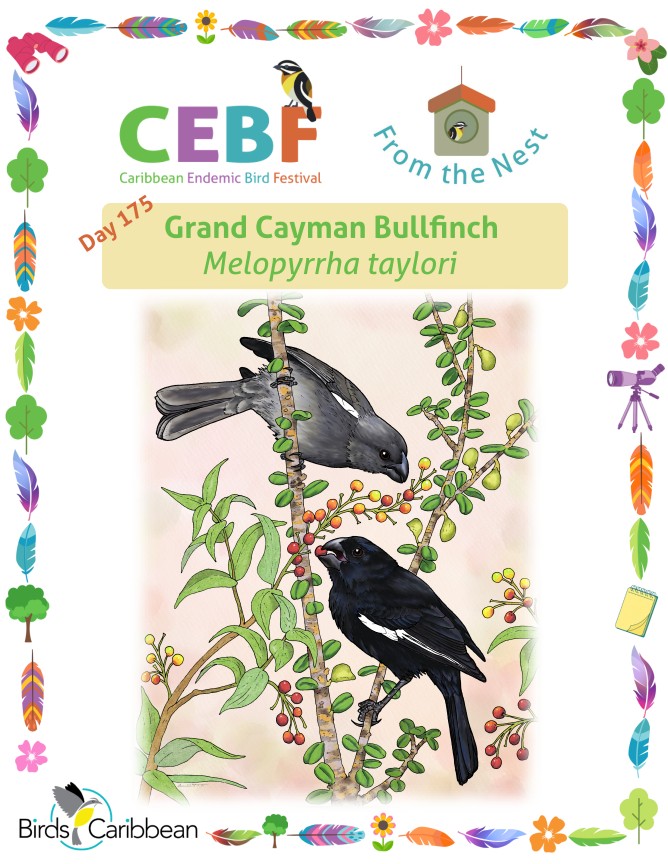
Endemic Bird of the Day: Grand Cayman Bullfinch
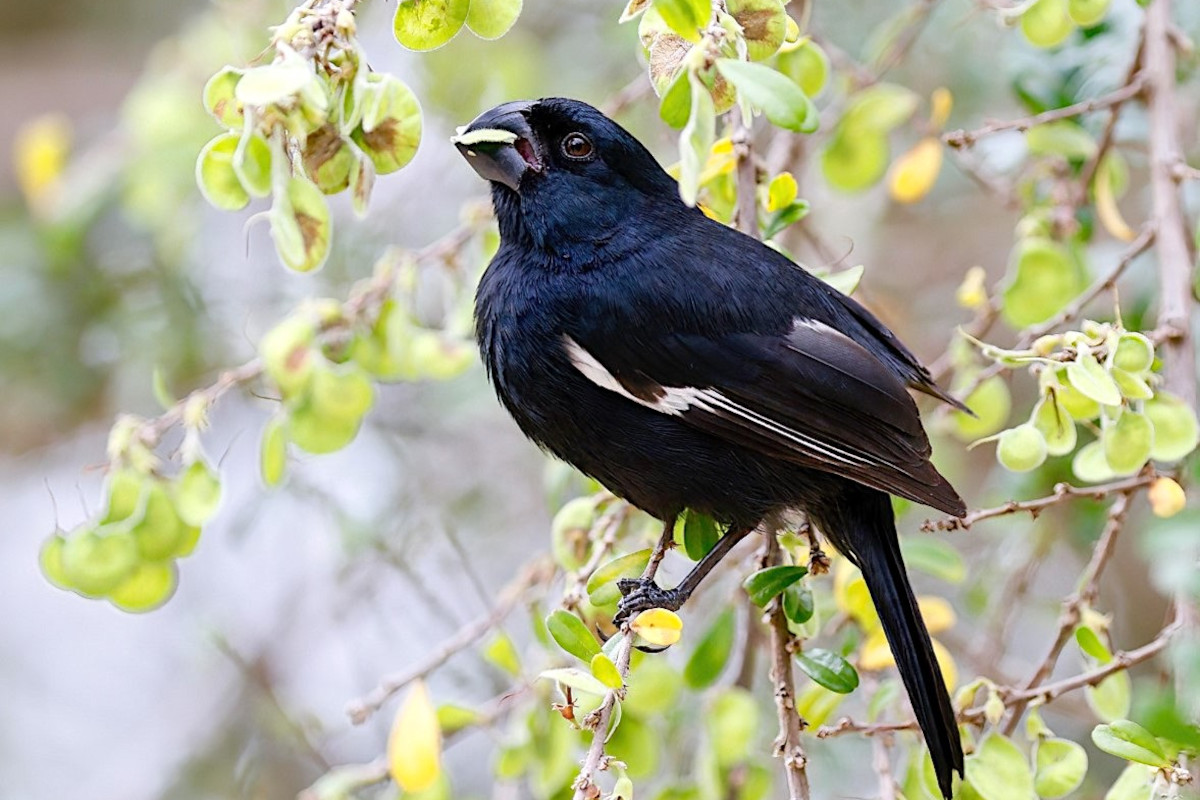
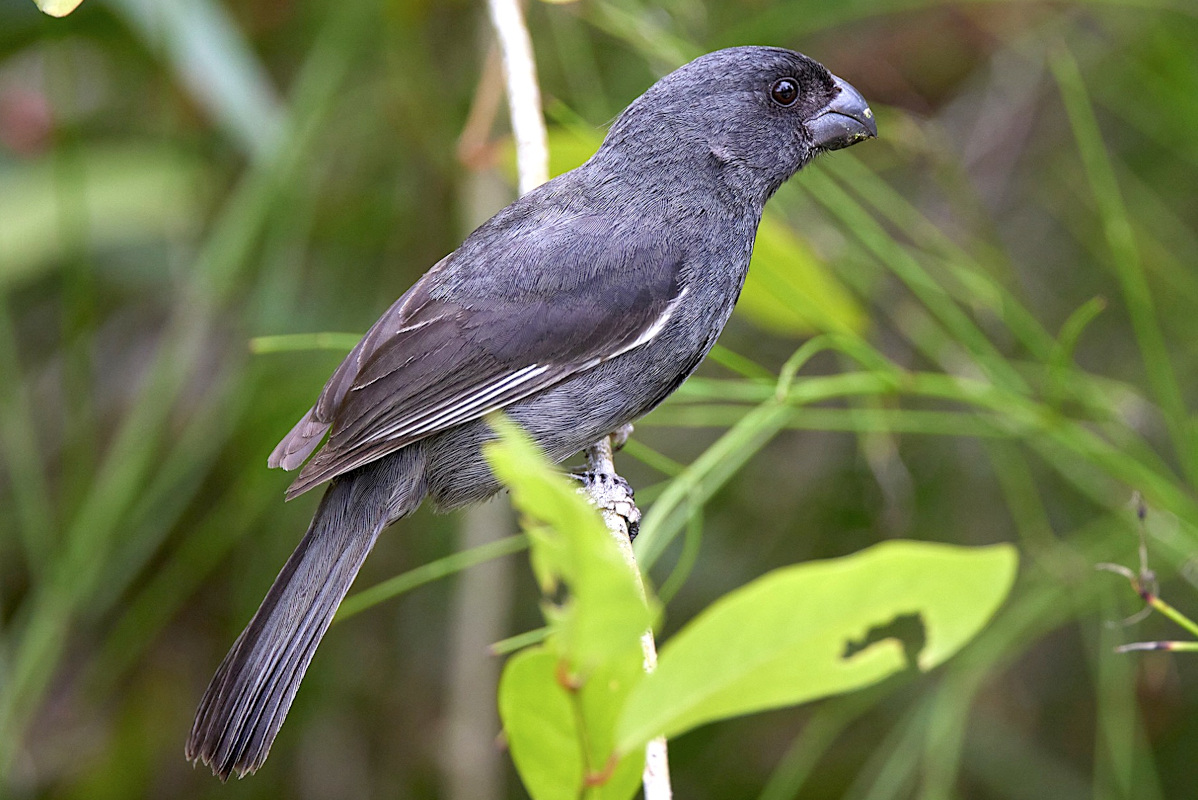
 Also known as the “Black Sparrow”, the Grand Cayman Bullfinch bears no resemblance to any other birds in its neighborhood. With a body size and shape typical to finches, the Grand Cayman Bullfinch is only around 5.5 inches long, entirely black) and sports a sleek white stripe along the borders of a closed wing. Females and immatures are duller, grayish olive with a darker head. The stubby, thick and strong bill tells us it’s a seed-eater who forages on fruits in different kinds of habitats.
With a distinctive look, and perhaps an even more distinctive insect-like call “chi-p and zee zee”, the endemic Grand Cayman Bullfinch has only recently been recognized as a full species. Up until July 2023, the Bullfinch found on Grand Cayman was considered a subspecies of the Cuban Bullfinch. The split marks exciting news for the islands, since the only other endemic and full species to inhabit Grand Cayman was the Grand Cayman Thrush, last seen in 1938—and now only found to adorn the local one cent copper coins.
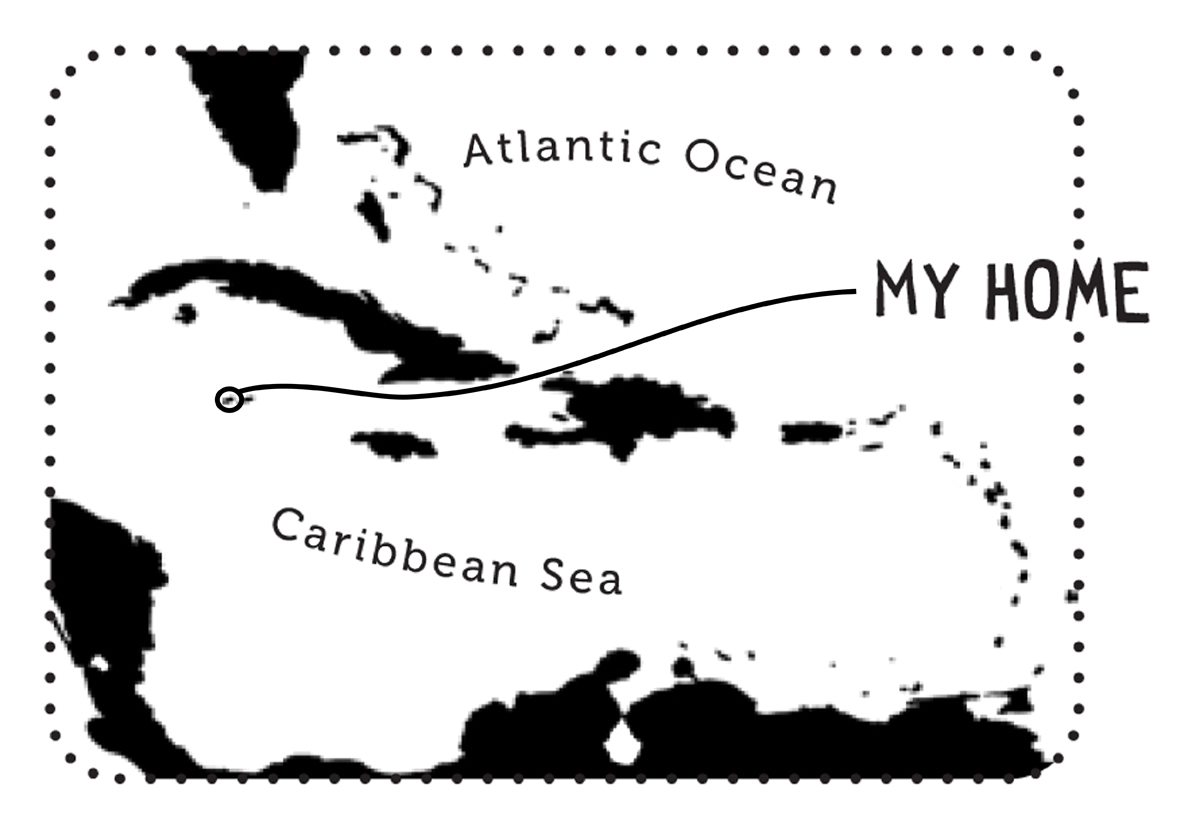
Despite relatively low detections, the Department of Environment (DoE) has in 2023 estimated the population of the Grand Cayman Bullfinch at around 2,500 birds; however, data is sparse so this number should be understood as a guide only. Historically found throughout the small island of Grand Cayman (76 square miles), the bullfinch has been pushed further and further east due to the rapid rate of development and general urbanization. Usually seen in small flocks and inhabiting primary forest as well as dry shrubland, pastures, and buttonwood, the species is found foraging at ground level as well as at the top of the canopy.
Globular nests are built by both parents, usually using an intricate web woven of multiple materials such as grasses, roots, and vines. The nest entrance is found to the side whereby both parents come and go to feed their young after the successful hatching of their 2 – 4 whitish-green eggs with brown spots.
Interestingly, the DoE recorded bullfinch detections west of Savannah during the 2025 population monitoring effort, which is uncommon in recent times due to the above-mentioned development encroachment of eastward habitat. IUCN Red List reclassification of this species to a Near Threatened species of Global Concern is likely to occur in the future given the bullfinch’s restricted range as a single island endemic.
Retaining wild and natural vegetation is a key first step to protecting this Bullfinch and avoiding the monotone short lawns and/or stone gardens which offer little to no value to it. Letting patches of grass and shrubbery stand tall and wild will provide seeds and fruits and tall trees will offer protection and nesting resources. Learn more about this species, including its range, photos, and calls here. Great news! If you’re in the Caribbean, thanks to BirdsCaribbean, you have free access to Birds of the World and you can find out even more in the full species account of this bird!
Thanks to Jane Haakonsson for the text and Arnaldo Toledo for the lovely illustration.
Colour in the Grand Cayman Bullfinch
Download our West Indies Endemic Bird colouring page. Use the photos below as your guide, or you can look up pictures of the bird online or in a bird field guide if you have one. Share your coloured-in page with us by posting it online and tagging us @BirdsCaribbean #CEBFfromthenest
Listen to the song of the Grand Cayman Bullfinch
The song of the Grand Cayman Bullfinch is a buzzy trill dropping in pitch then rising again.
Enjoy these photos of the Grand Cayman Bullfinch
Activity of the Day
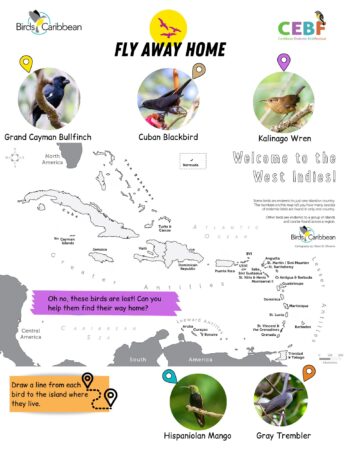 FOR KIDS AND ADULTS: Test your knowledge of where Caribbean endemic birds live with our ‘Fly away home’ Map Matching Activity!
Draw lines from the picture of each Caribbean endemic bird to match each one with its home. You can find out more about Caribbean endemic birds by reading our posts each day or you can go back and find all the endemic birds that we have featured in previous years here. You can also find out all about our Endemic Birds of the West Indies Colouring Book with even more birds to colour in!
Here is the Answer Key – don’t look until you have completed the activity!!!