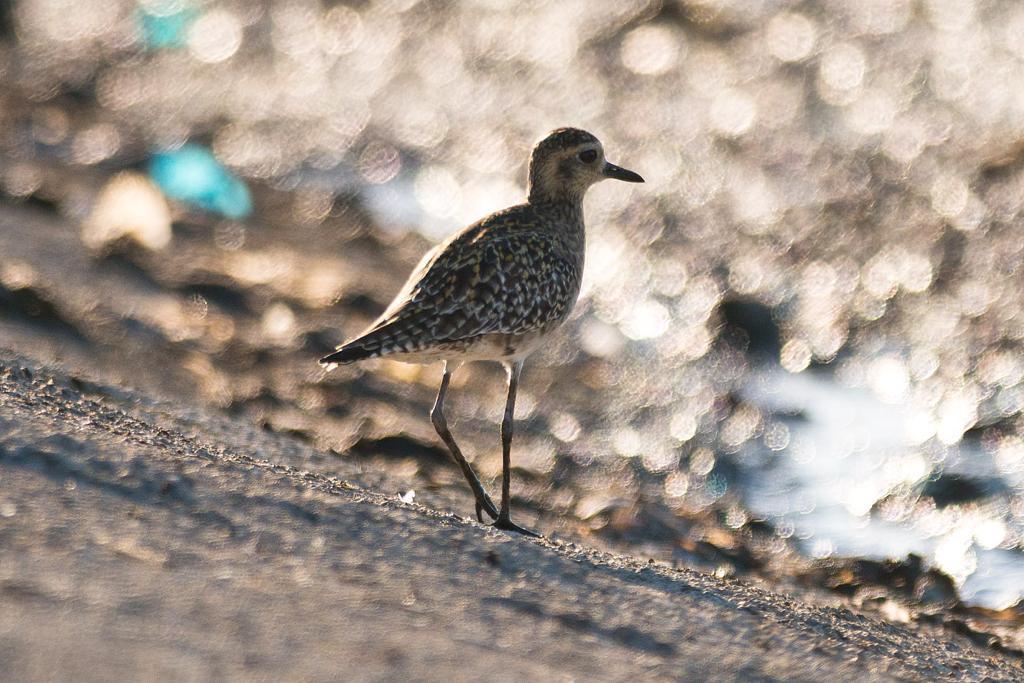
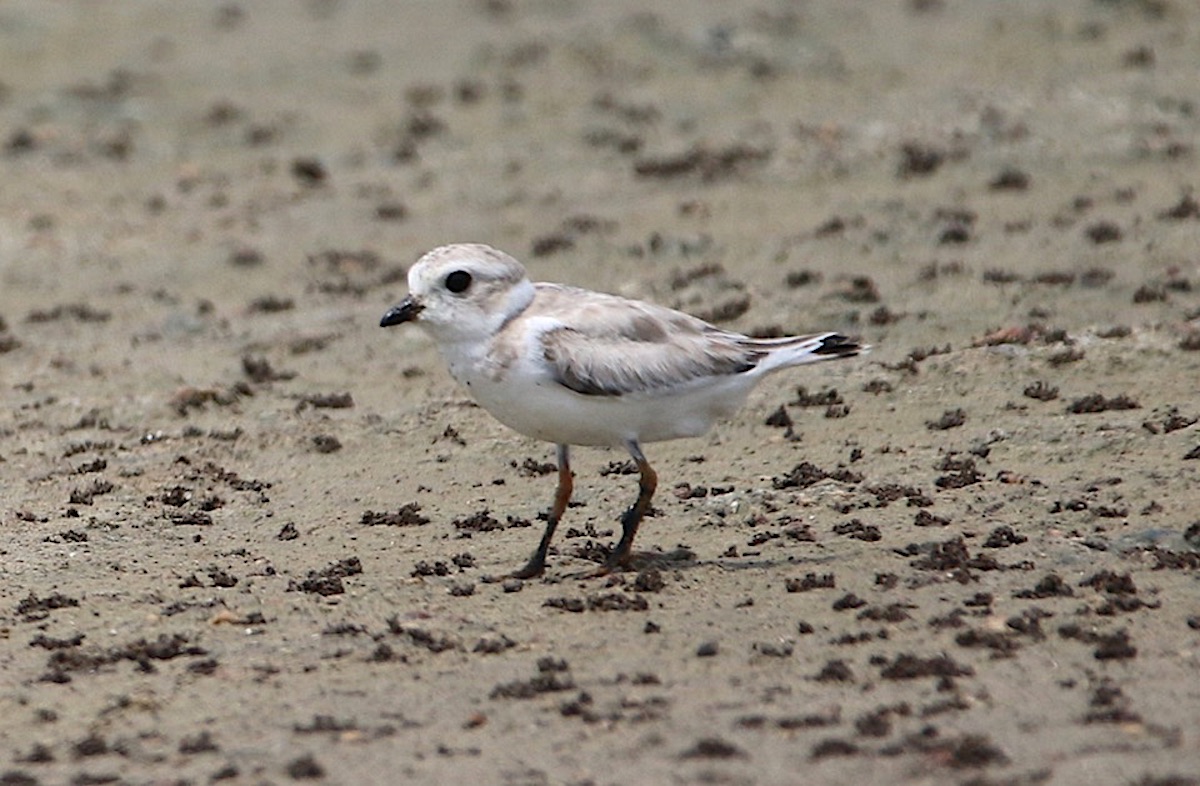
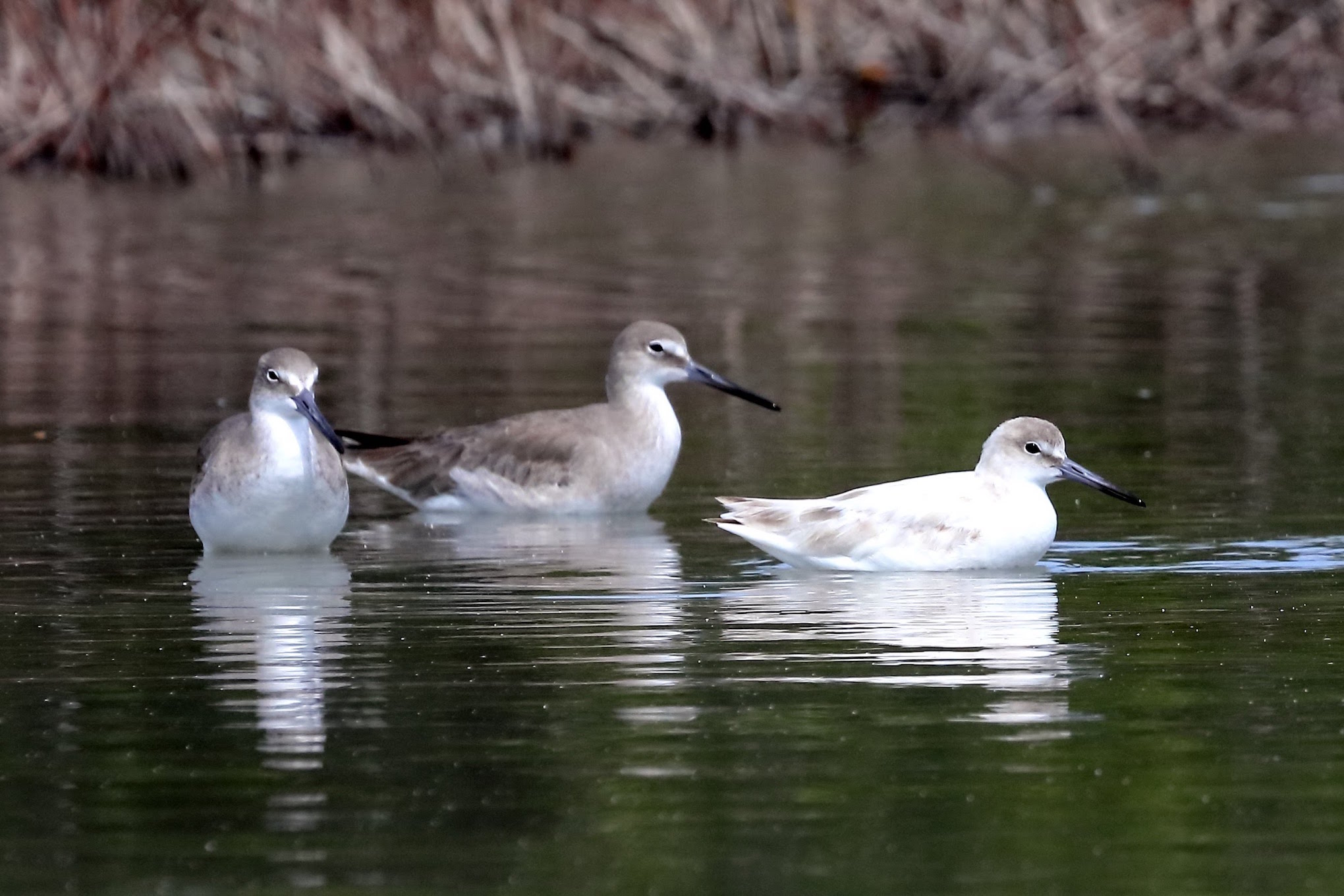
Shorebirds to look out for in the Caribbean, from left to right: Sanderling, Semipalmated Plover, Willet, American Oystercatcher. Photos from Macaulay Library: Sanderling by Adam Jackson-ML374383651, Semipalmated Plover by Matthew Addicks-ML267273921, Willet by Brad Imhoff-ML172089971, American Oystercatcher by Isaias Morataya-ML187534121)
As September draws closer and migratory shorebirds are making their way south, we are getting ready to celebrate World Shorebirds Day 2022! This year, why not show up and take part in the Global Shorebird Count? From help with bird ID to counting tips, BirdsCaribbean has everything you need to make your survey a success.
Mark your calendars for Tuesday September 6, 2022 – World Shorebirds Day. A reminder, though, that Global Shorebird Count can take place anytime from September 1 to 7. You will be part of an army of recorders worldwide! Across the Caribbean, groups of birders will be out looking for and counting shorebirds and recording what they find on eBird Caribbean. Some birders will go out in ones and twos. Whoever you are with, or even if you are on your own – why not join the counters and make your contribution to citizen science?
Well, you may ask: why should I? Why is this important? The answer is that our migratory shorebirds are more vulnerable than ever, threatened by human activities such as destruction of their habitats, pollution, disturbance, and climate change. Recording how many birds are around during migration – as well as where you find them – can help us conserve where they live and where they stop over.
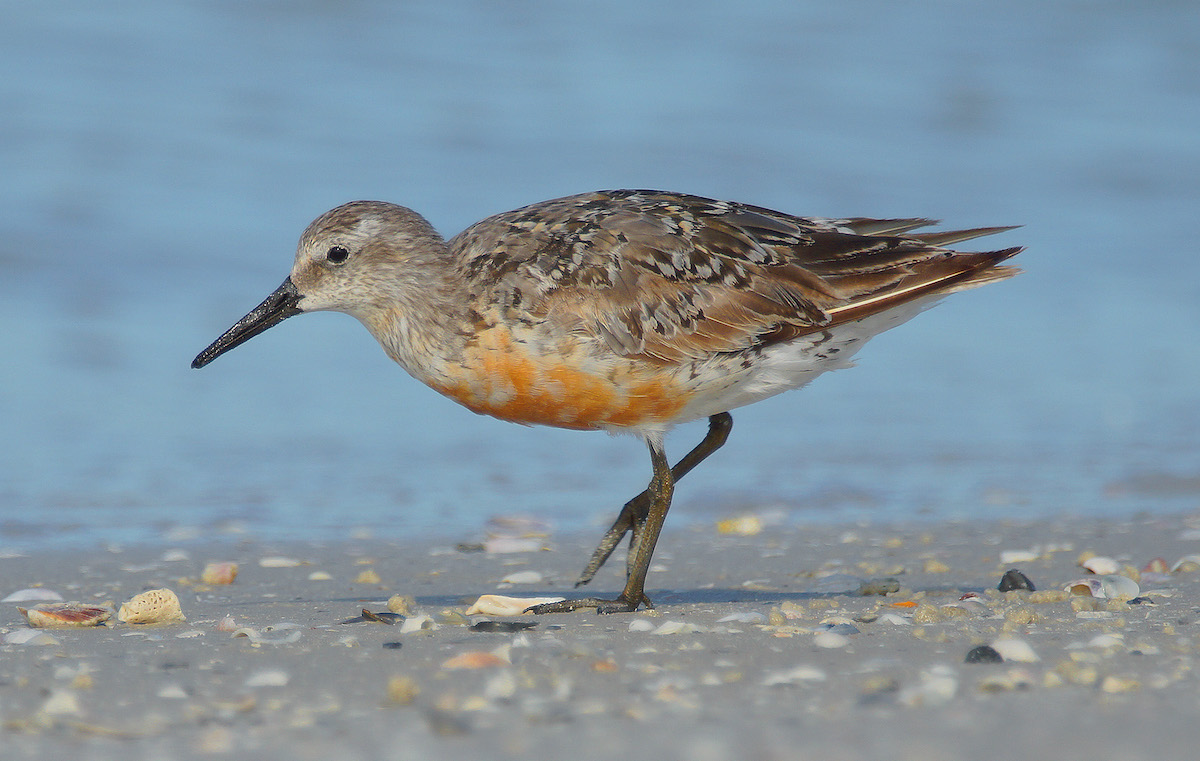
Sanderling are often spotted running along the shorelines of sandy beaches. (Photo by Gary McHale)
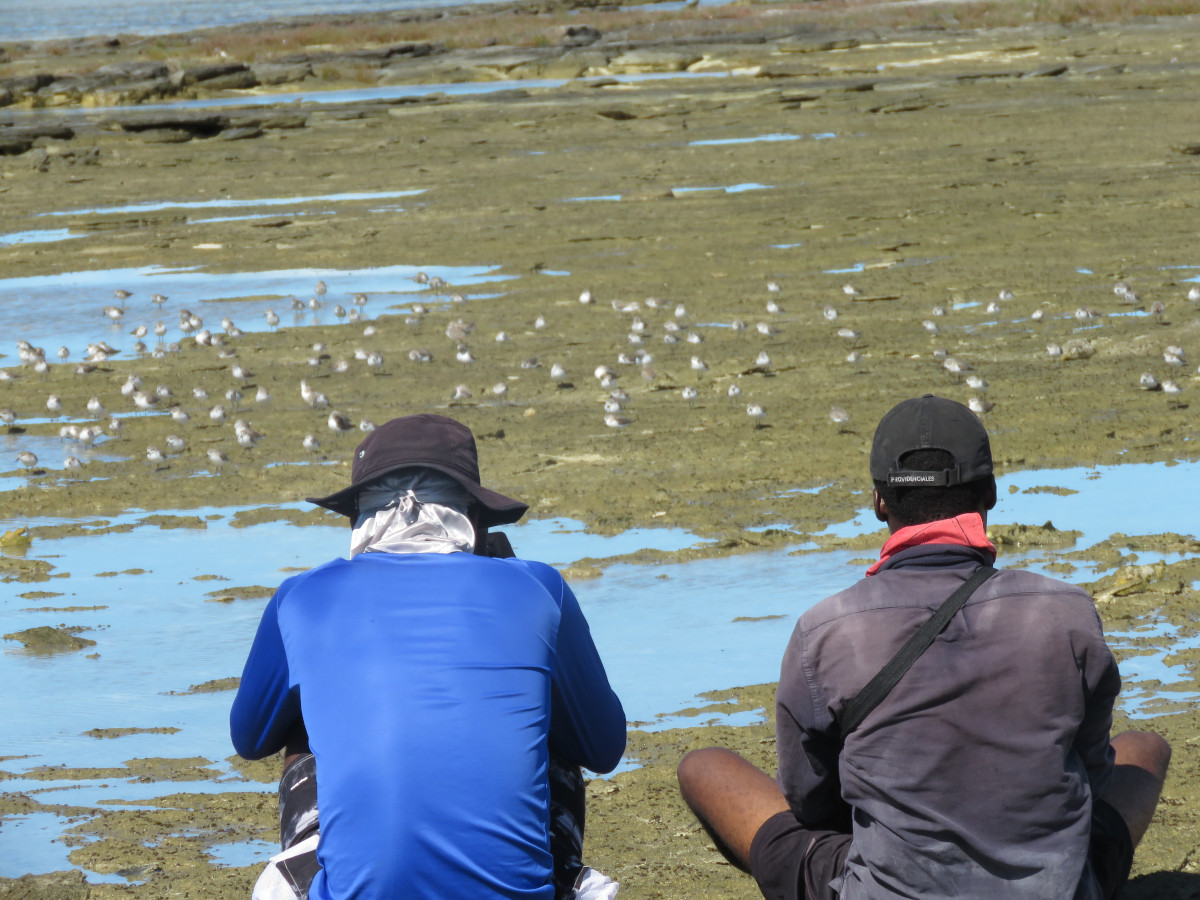
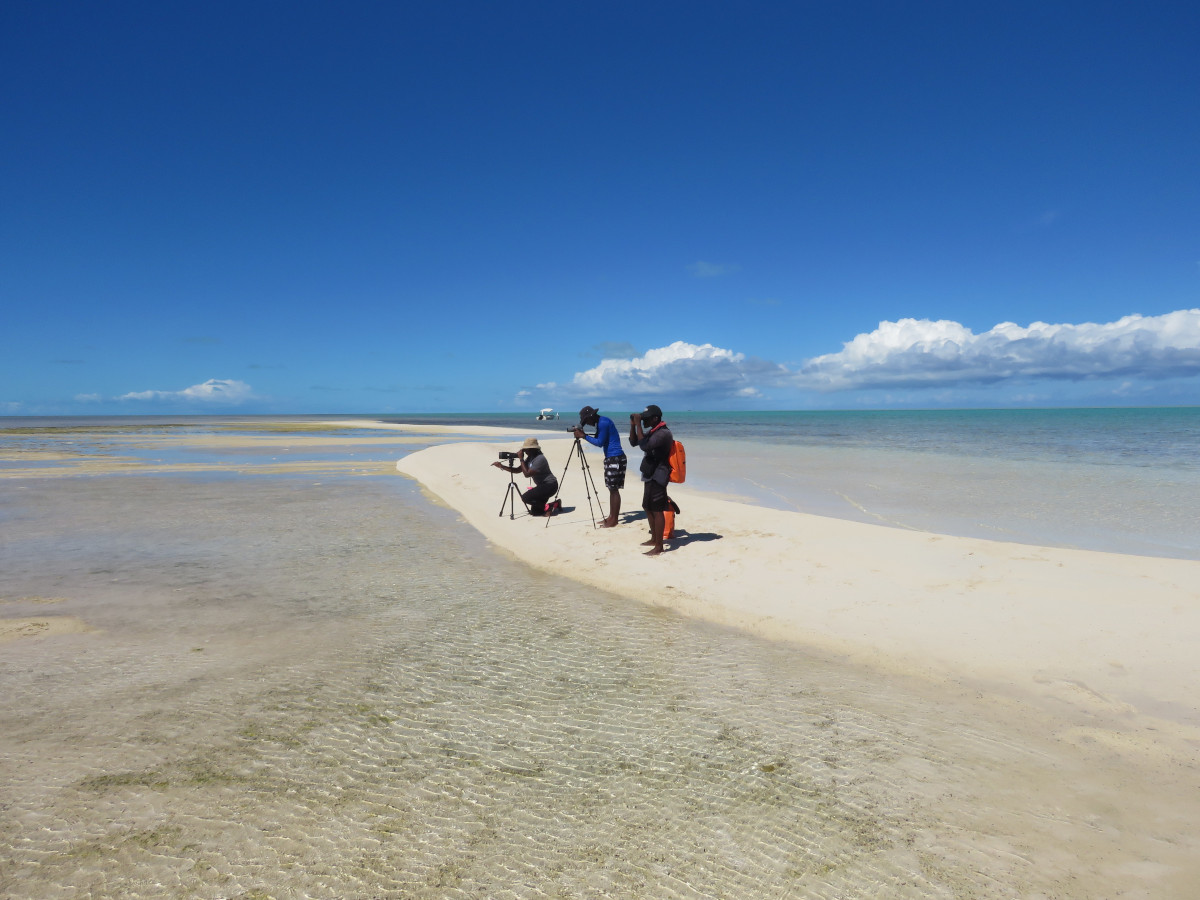
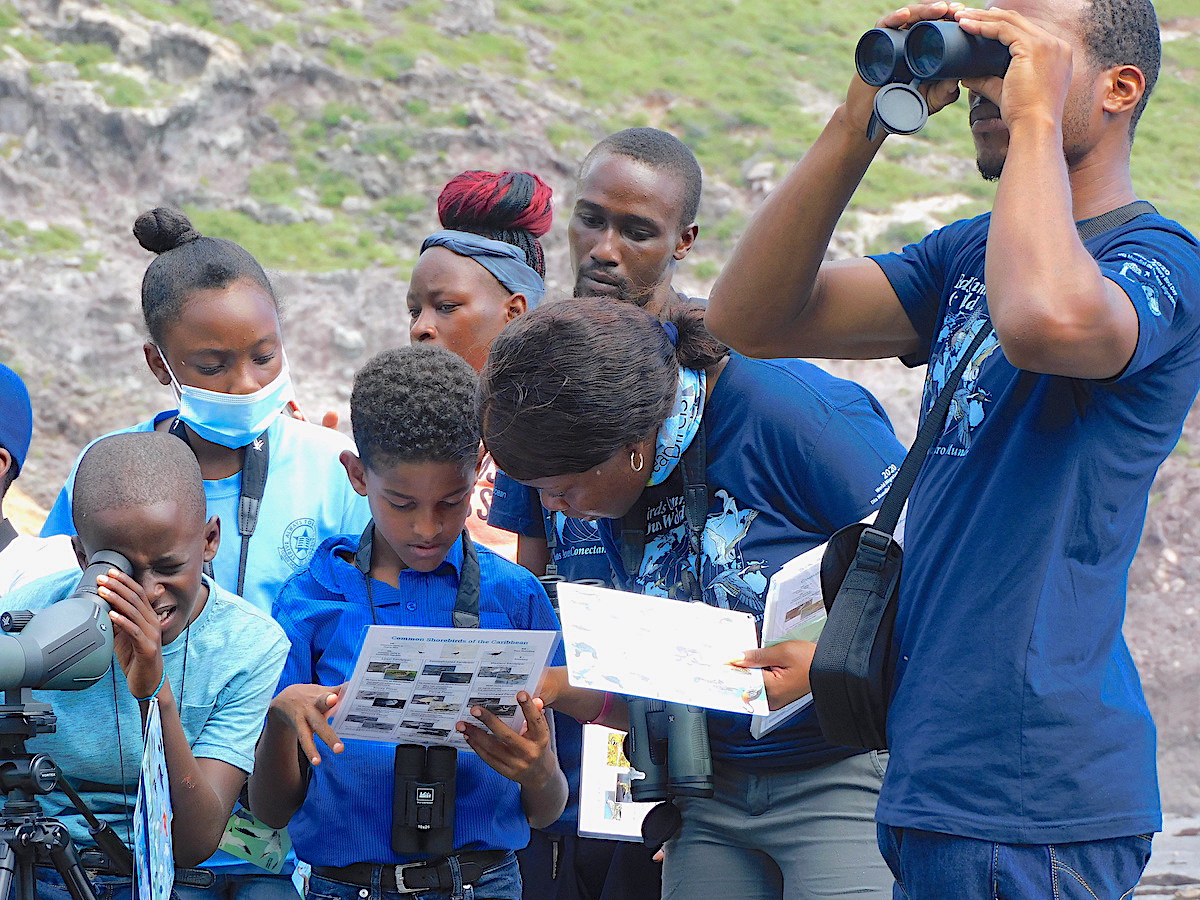
Counting shorebirds on Turks and Caicos. (Photo by Simon Busuttil)
Spotted Sandpiper in its winter plumage. (Photo by Darlene Friedman-Macaulay Library ML78856001)
Where to find shorebirds
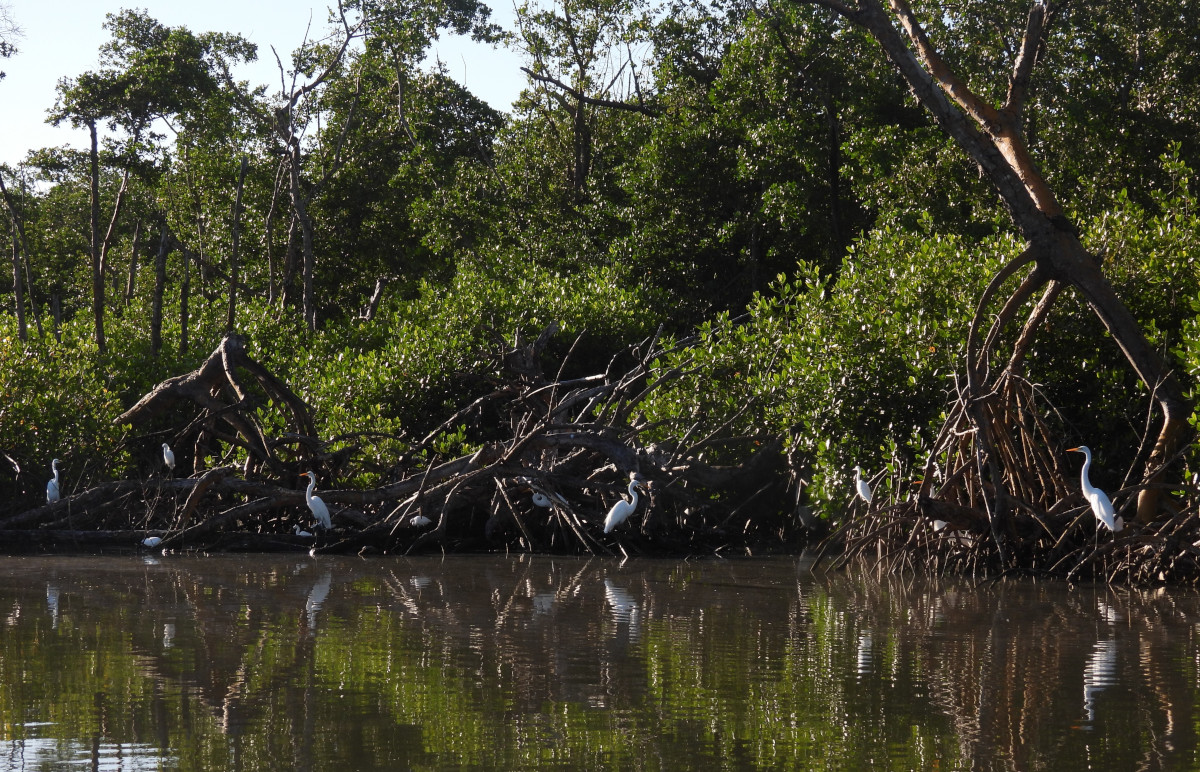
Willets and Short-billed Dowitcher, using a mangrove in the Bahamas. (Photo by Walker Golder)
Where should you be searching for shorebirds? That’s a big question. The simple answer is: anywhere there is water. This means that, as their name suggests, you can find them at the beach and on other types of shorelines. However, some shorebirds will be further inland, including in salt ponds and salinas, freshwater pools, and at brackish marshes and ponds. Shorebirds will also gather on mud flats, in mangrove areas, and on tidal flats.
You may not be quite sure of the best places to look in your area. If so, why not take a look for ‘hotspots’ at your local wetlands on eBird. Just click on ‘Explore’ on the eBird Caribbean website, and find ‘Explore Hotspots.’ You can open hotspots in a map and then click on a hotspot to see what types of birds have been seen there recently.
Everything you need to count shorebirds
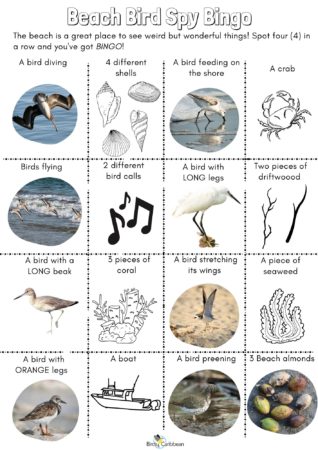
We know that Shorebirds can be tricky to identify, and some are especially difficult to tell apart. BirdsCaribbean is here to help you with some useful tools! We have a Shorebird Poster and “Quick ID Guide” to get you started as well as handy Shorebird ID cards that you can download and print featuring common shorebirds of the Caribbean.
You can also brush up on your CWC survey skills, waterbird ID, and shorebird ID before you go out on your surveys by watching our fantastic CWC and Shorebird ID webinars on YouTube. Go to our shorebird resources page to find everything you need. Of course, don’t forget to take your favorite bird ID guide with you when you do your shorebird counts.
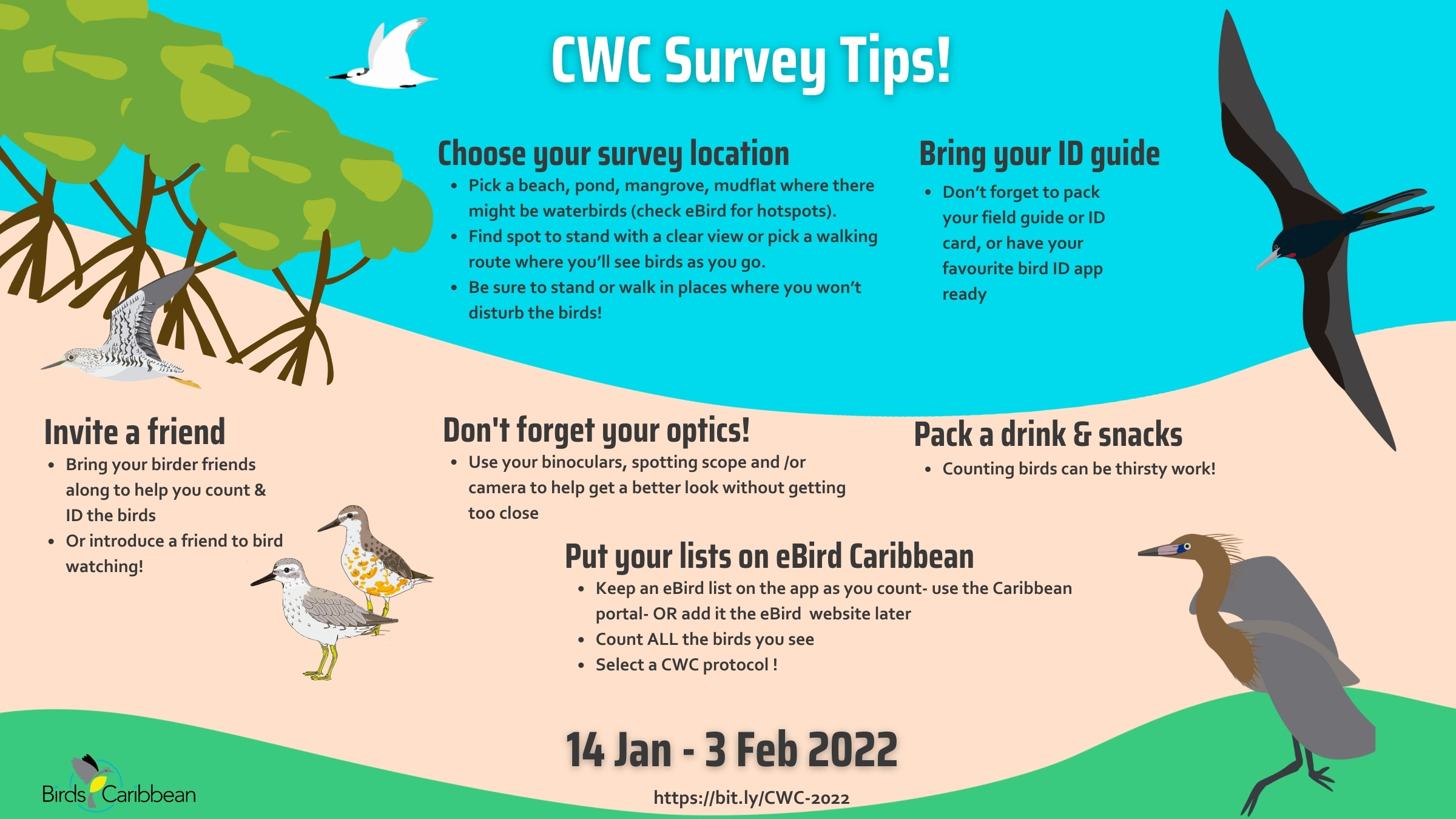
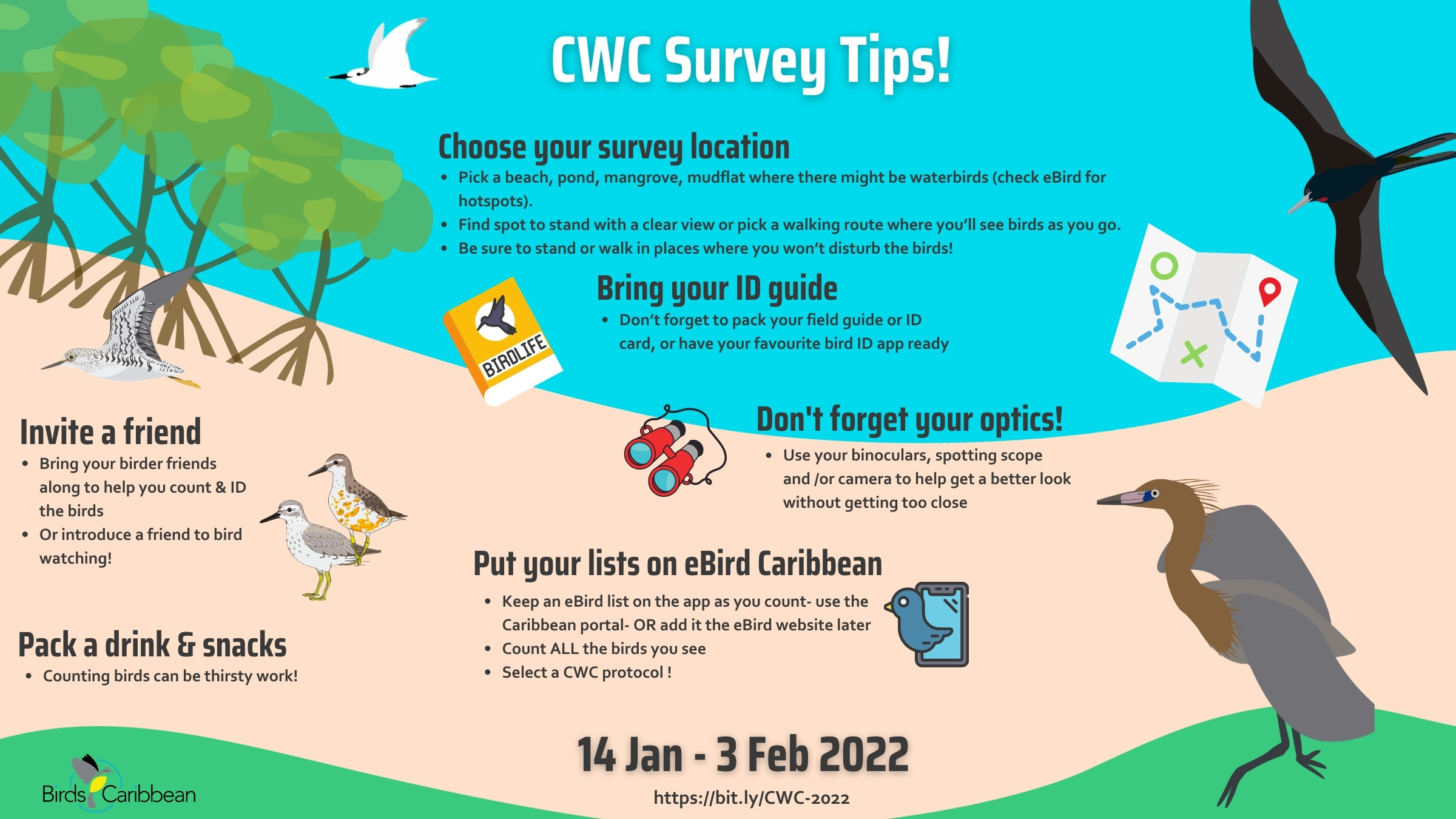
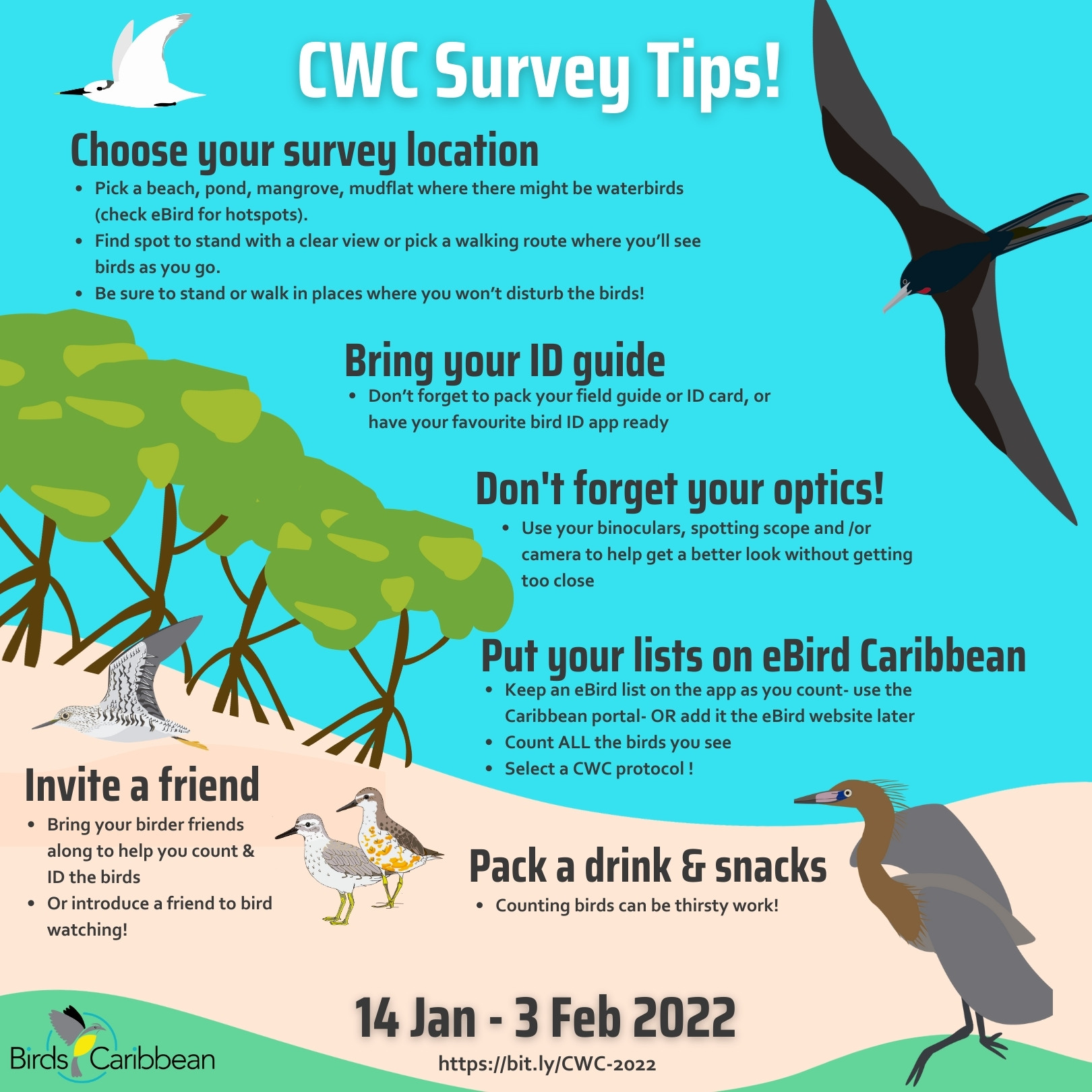
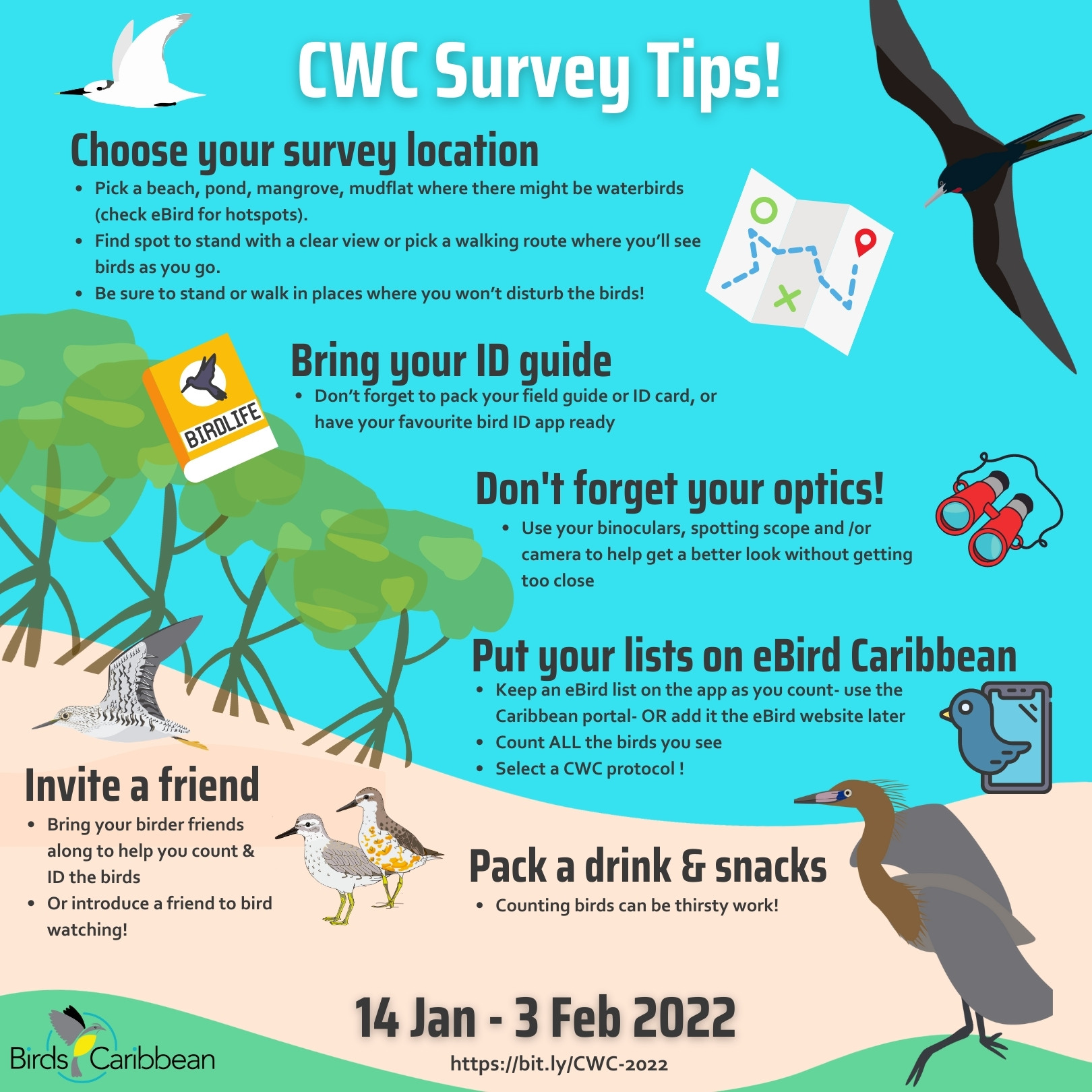
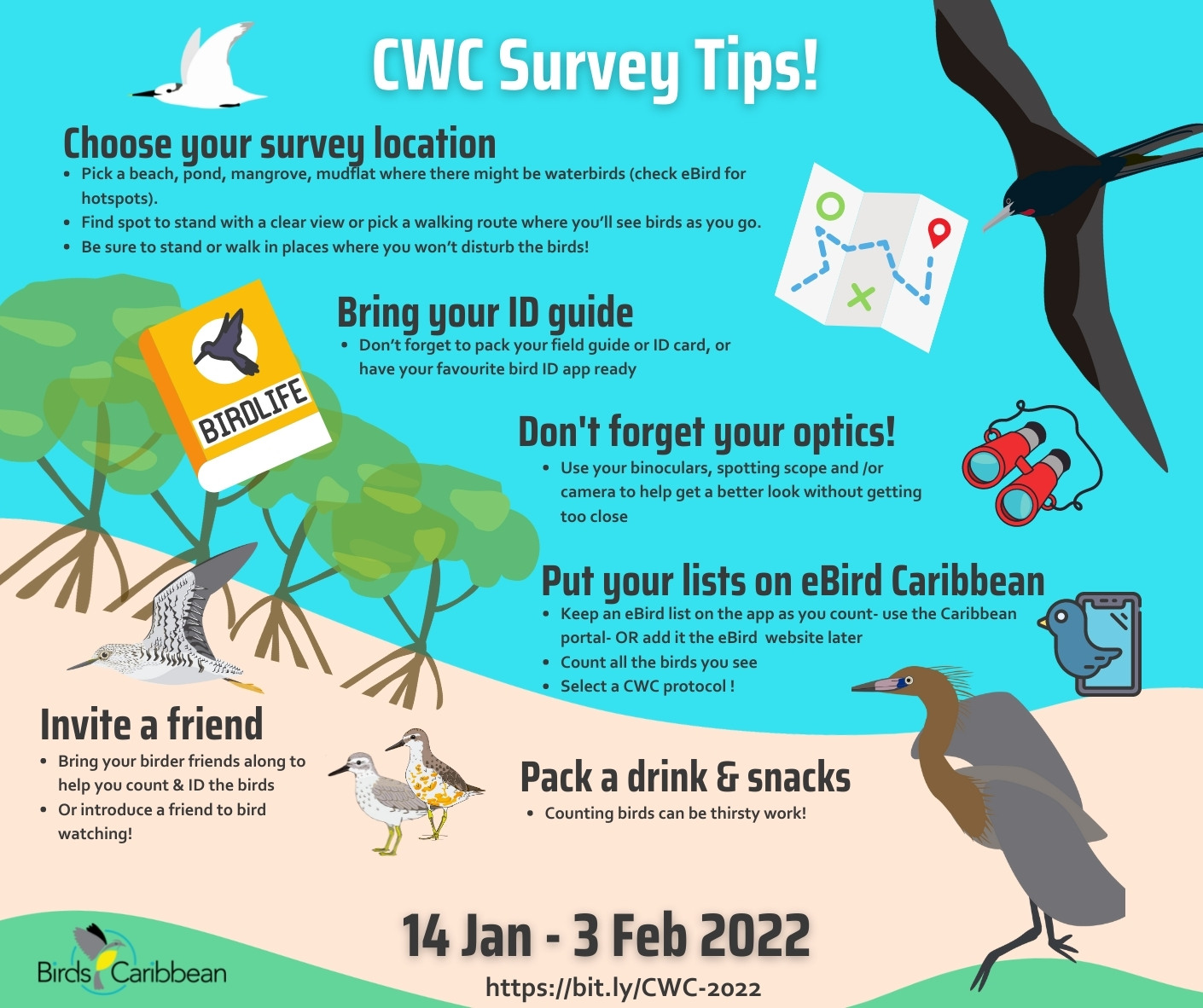
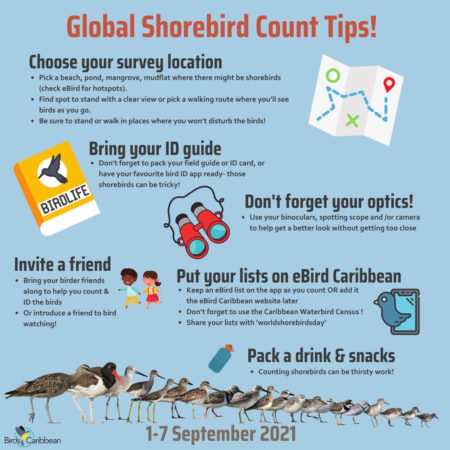
Now, sometimes there’s a trick to these things. We also have a list of some best practice tips to help make your count go as smoothly as possible. You can download and share this infographic with your fellow birders. When you go out on your survey, a spotting scope or a camera with a good zoom lens, as well as binoculars, will make for very helpful tools. They will help you get a closer look to pick out the identifying features of the birds, without disturbing them. Photos can be looked at and shared later if you have any birds that were difficult for you to identify in the field. Birding colleagues and experts can explain further if they have visual evidence of the bird! (Did we say some are quite tricky to tell apart?)
Make your Counts Count
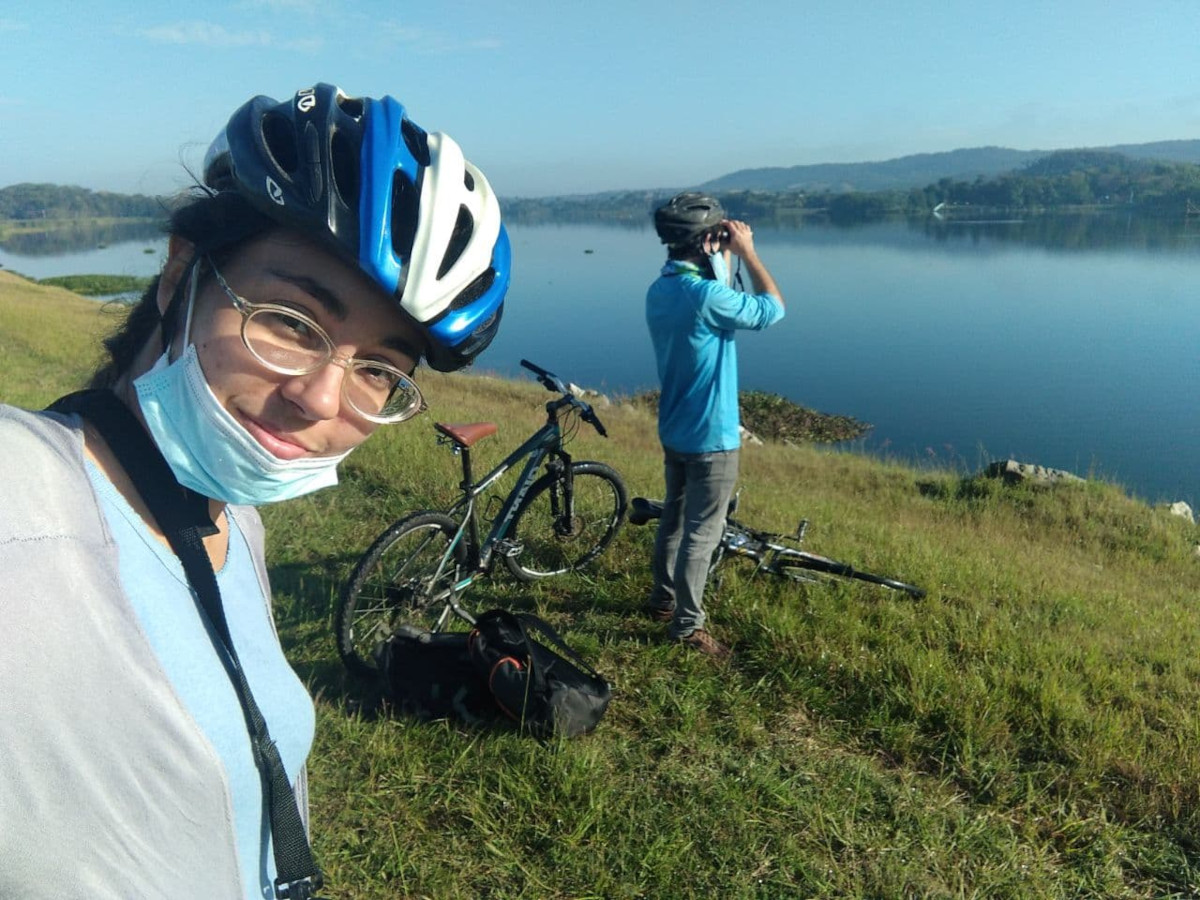
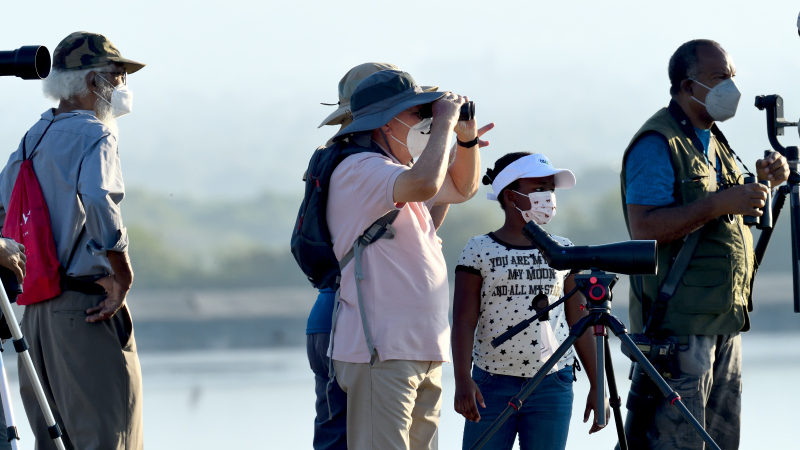
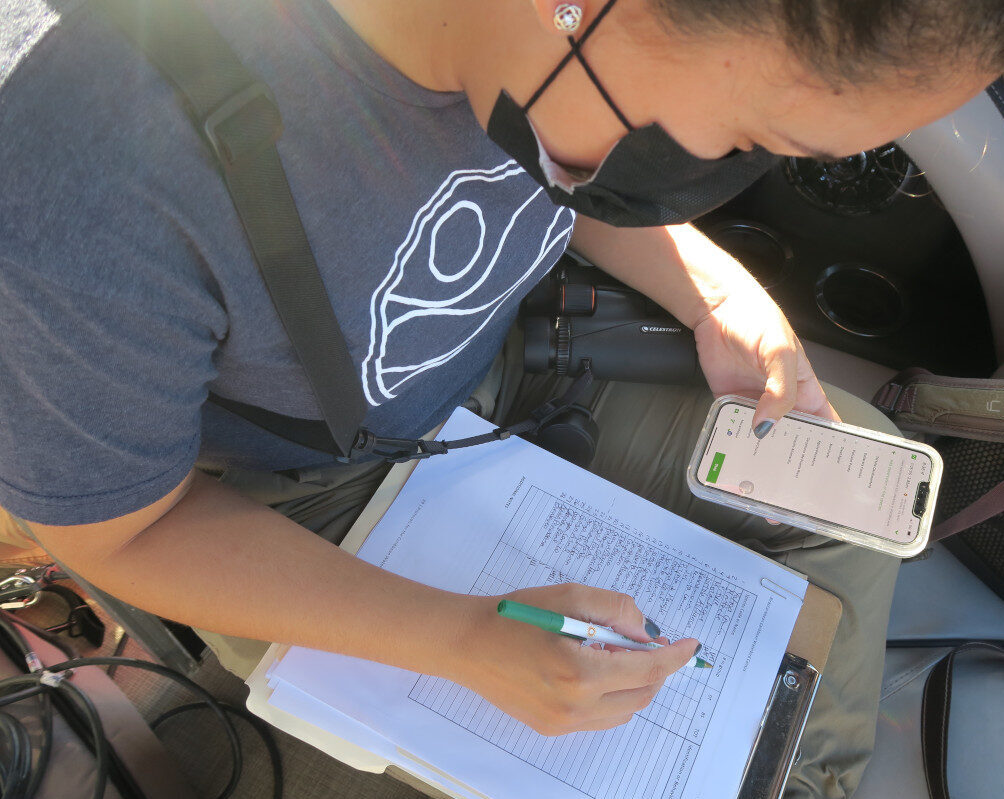
A survey team looking for shorebirds in the Dominican Republic. (Photo by Maria Paulino)
We encourage you to register to participate in the count and be sure to share your eBird Caribbean checklist(s) with worldshorebirdsday – the eBird username of World Shorebirds Day. You can find guidelines for sharing checklists here. eBird Caribbean is a critical tool for tracking and understanding bird migration and population changes – never more so than for our shorebirds. If you do not have an account, it is easy to register – here’s a quick guide to enter eBird data online. There is even a free eBird Essentials course to get you fully oriented. Download the free mobile app for recording your data in the field. Recording your findings on eBird is not only satisfying and enjoyable, but you are directly contributing to the global knowledge base of birds – what, when and wherever they are to be found. EBird is a good habit to get into!
Note that shorebirds are a type of waterbird. So, any counts you do at wetlands, mangroves, mud flats, coastal areas or beaches at any time of year count as Caribbean Waterbird Census (CWC) counts. When you do your counts please choose one of the CWC protocols in the eBird app or when you submit or edit your data online. When you are using the app make sure that you are using the eBird Caribbean Portal. To check or change the portal you are using, go into your settings on the app and look for “Portal”. To increase the value of your count to science, be sure to count ALL birds at your site, including seabirds, herons and egrets, land birds, etc.
Spotted a Banded Bird?
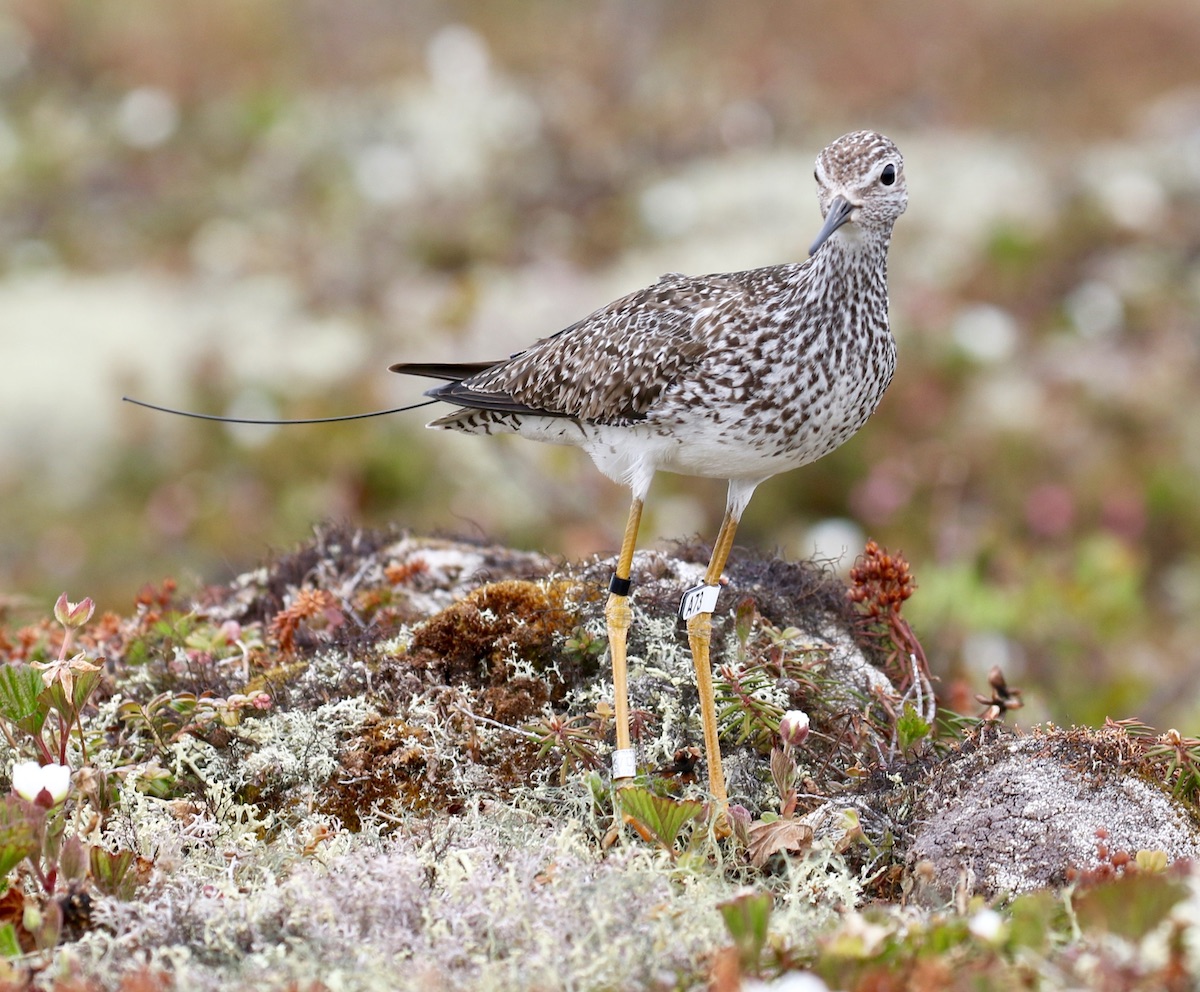
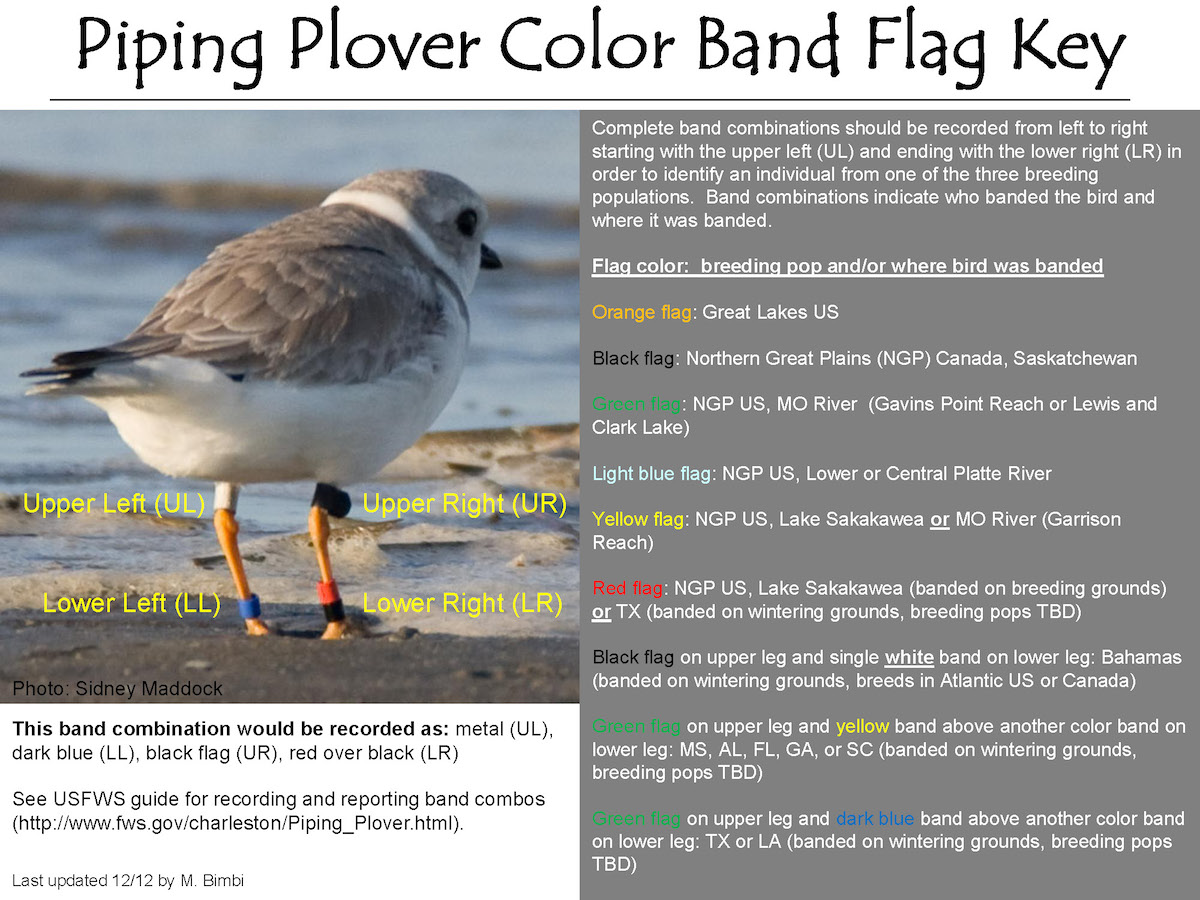
Banded Turnstone and Sanderling spotted in Jamaica in 2021.
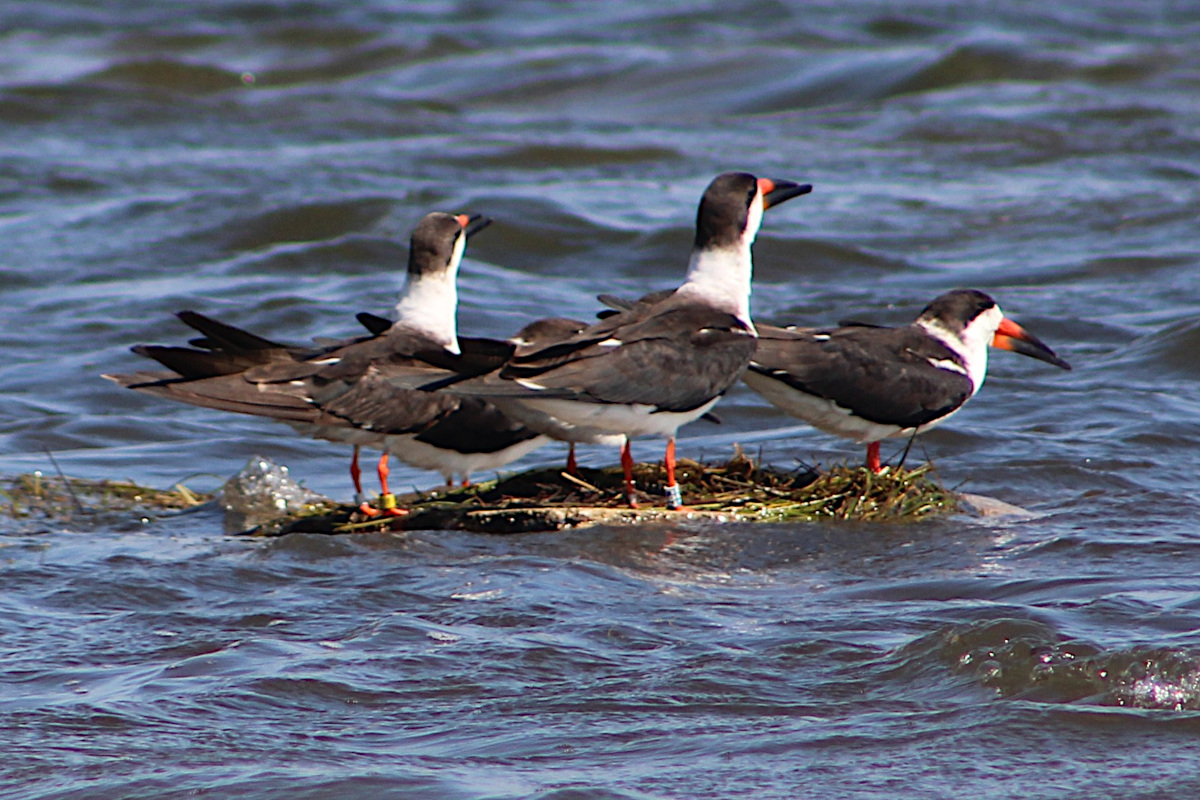
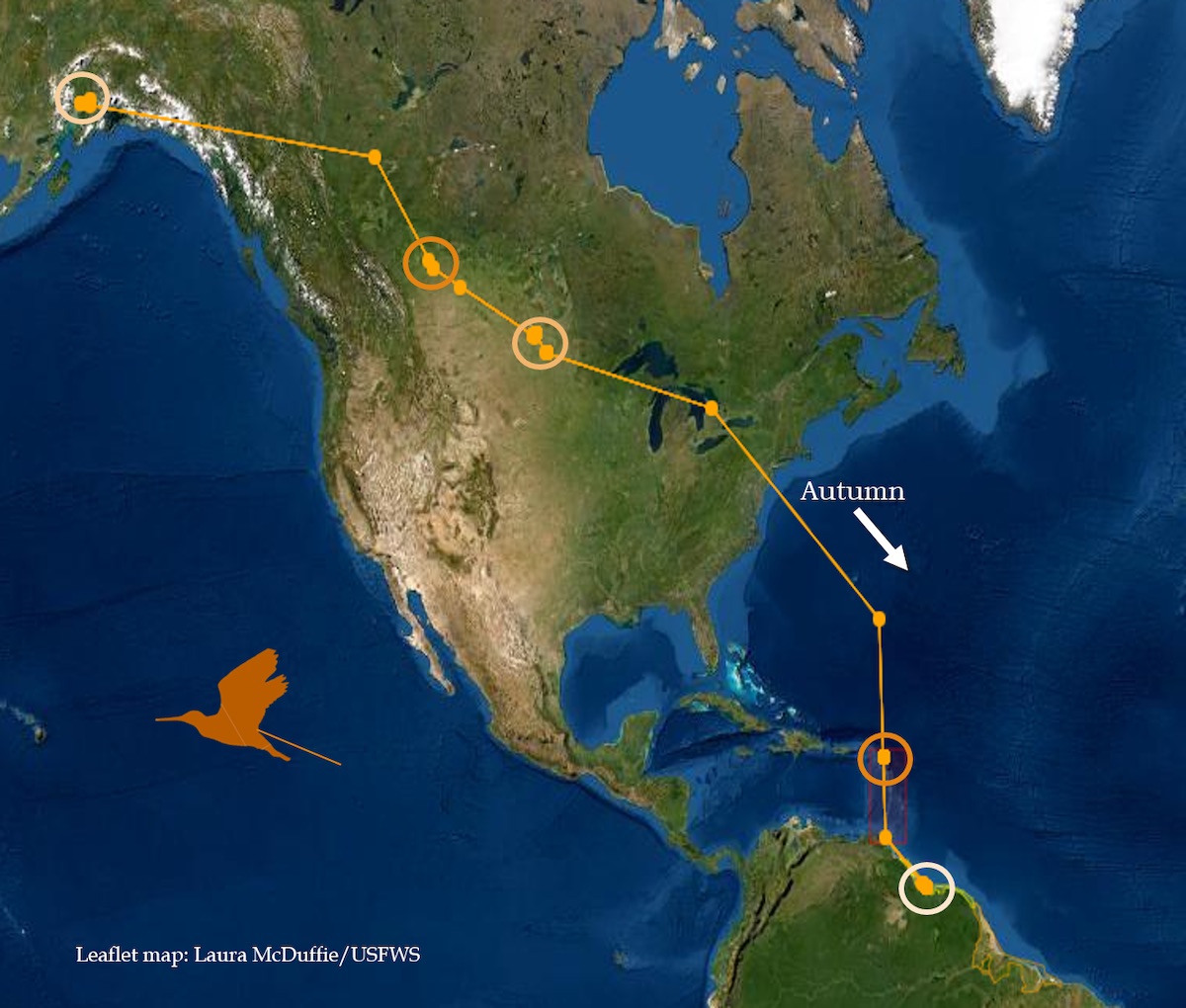
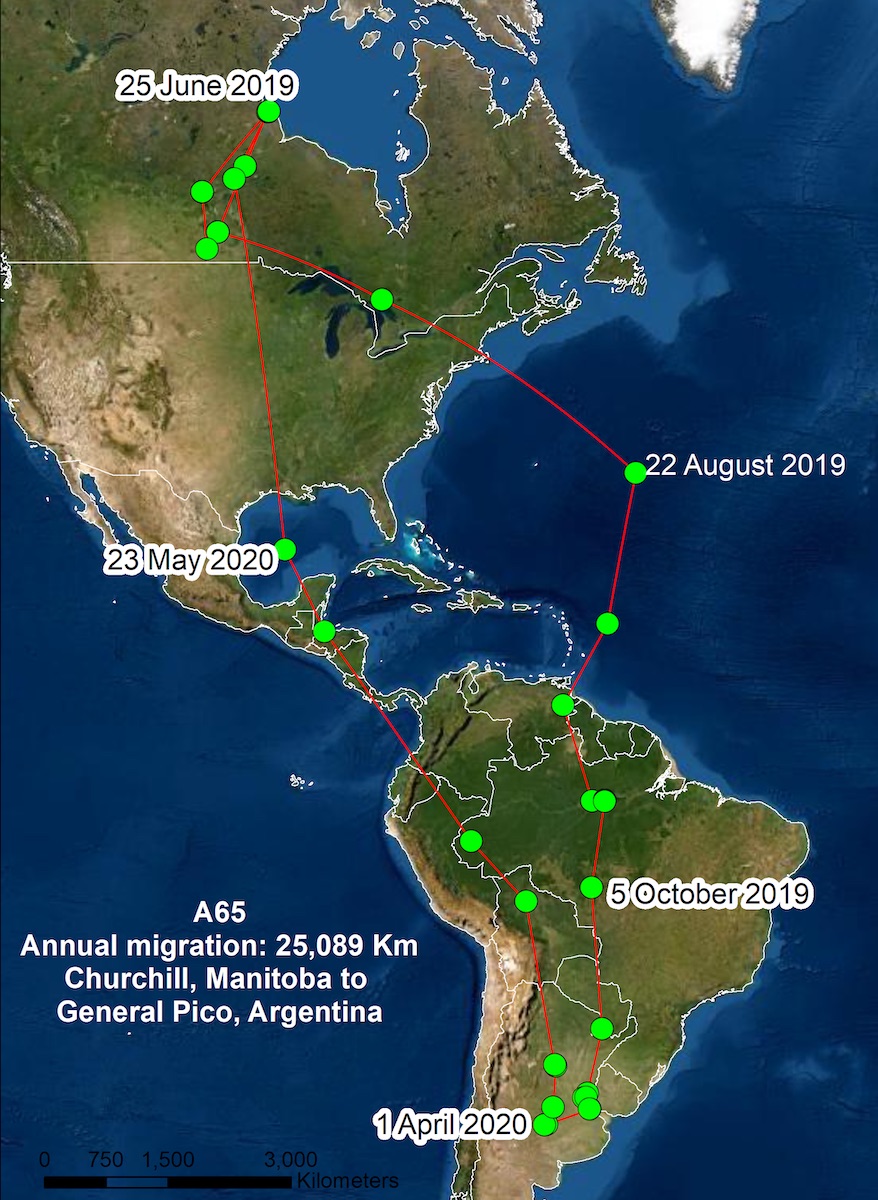
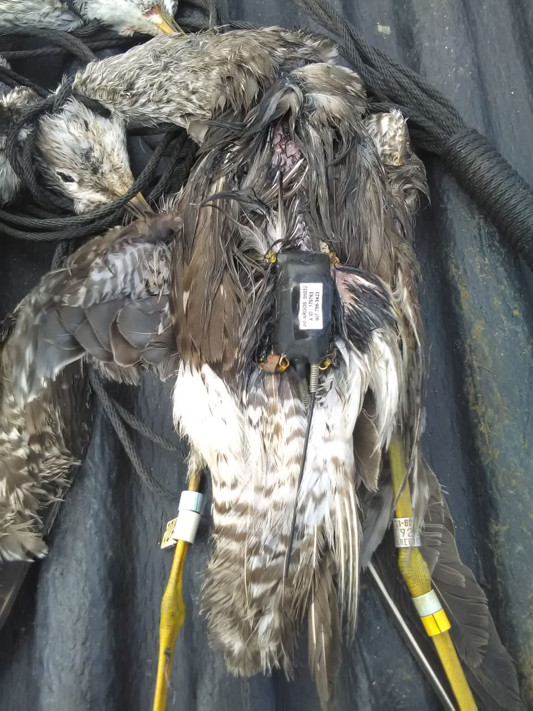
Banded birds are special! If you spot a bird with a band on its leg, do your best to record the band colors and any numbers or letters. Binoculars or zoom photography may allow you to clearly see the band colors and the numbers engraved onto the band. Look out for bands especially on Piping Plovers, Red Knots, Semipalmated Sandpipers, Semipalmated Plovers, Ruddy Turnstones, and Sanderlings. Scientists use this information to track bird populations and migrations and have made some exciting findings from records of banded birds.
You can report your sightings and send any photos you have to BandedBirds.org and the USGS Bird Banding Lab, which oversee all banding in the United States.
Share your Shorebird Stories
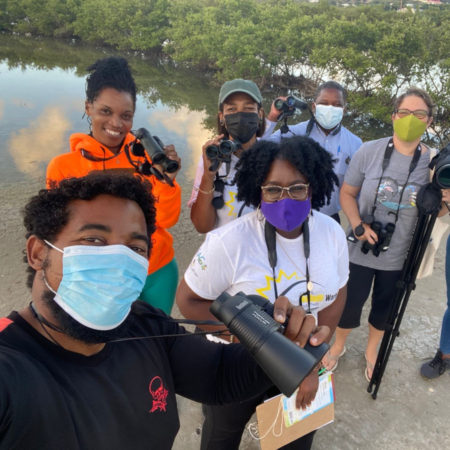
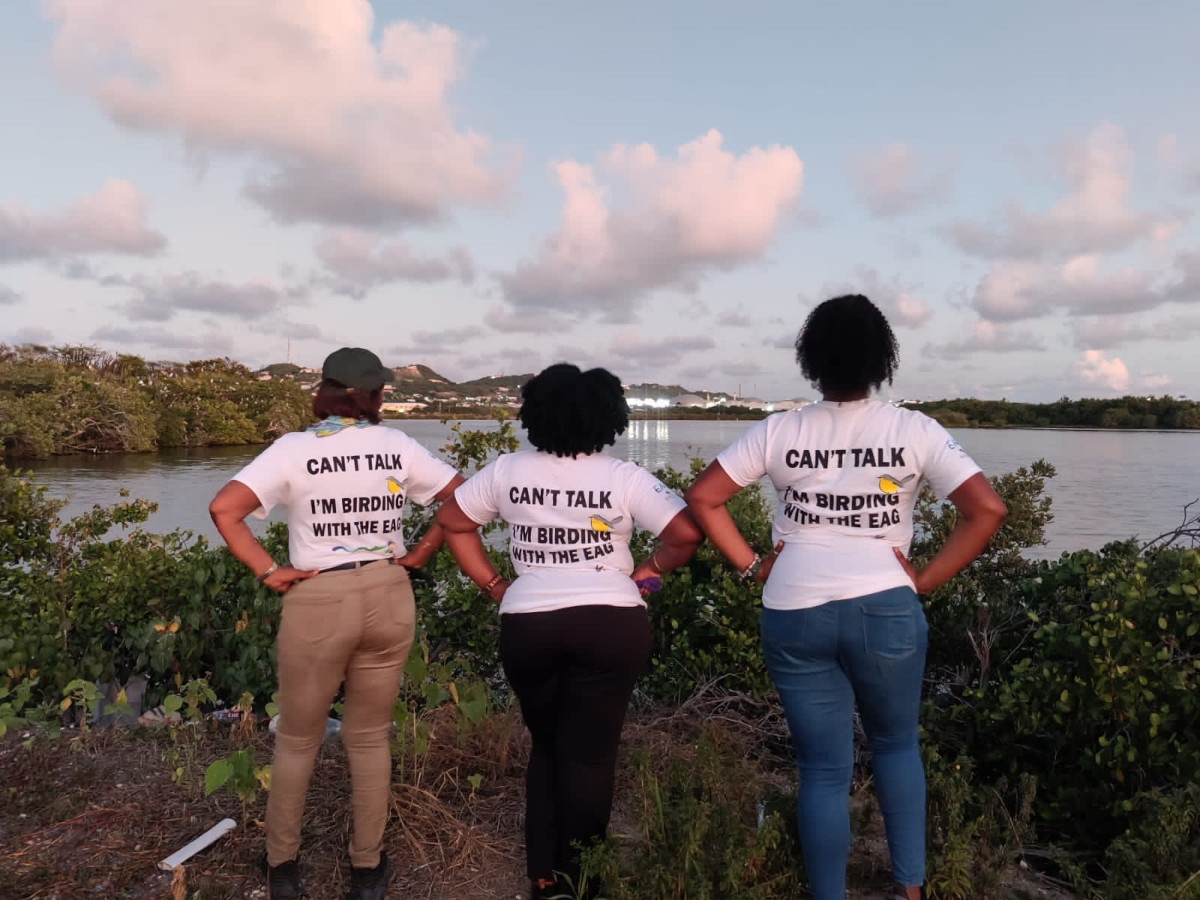
The Wadadli Warblers birding group out on a waterbird survey in Antigua. (Photo by EAG/ Wadadli Warblers)
Why not take photos of the birds you see, your local wetland, or of you and your survey crew and share them on social media? Don’t forget to use the hashtags #worldshorebirdsday and #ShowUpForShorebirds
We’d love to hear all about your surveys and find out about some of the birds that you see, so remember to tag us @birdscaribbean when you post on social media! Thanks in advance for your participation in this important citizen science initiative to understand and conserve our beautiful shorebirds!
Get out there, Show up for Shorebirds, take part and have fun!
If you would like you use our graphic to promote World Shorebirds Day & the Global Shorebird Count, you can follow the links below to work with a template in Canva. You can add your own logos and extra information if needed. The templates include the graphic in English, Spanish and French for you to use. Please don’t forget to credit the photographers !
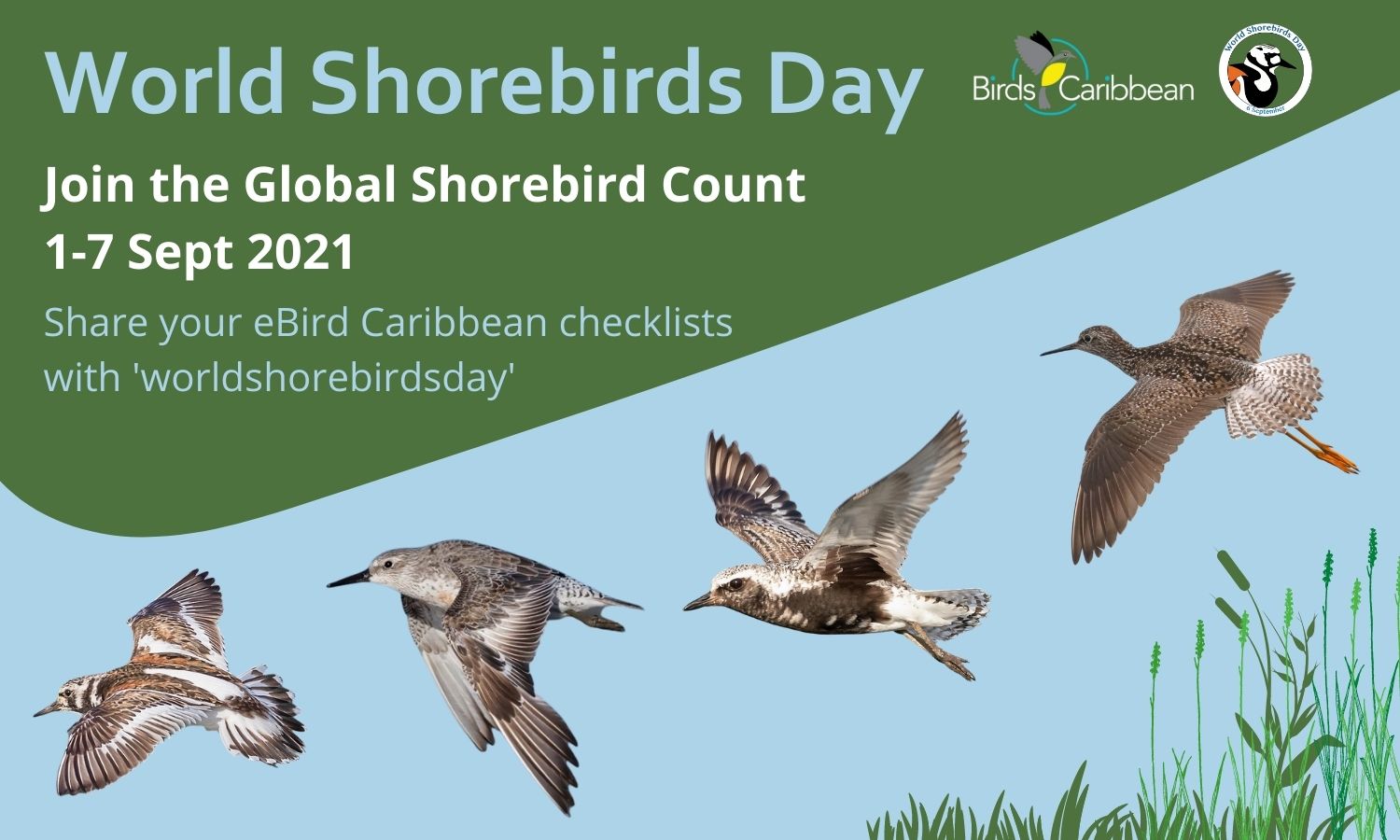
Shorebirds to look out for in the Caribbean, from left to right: Sanderling, Semipalmated Plover, American Oystercatcher. Photos from Macaulay Library: Sanderling by Adam Jackson-ML374383651, Semipalmated Plover by Matthew Addicks-ML267273921, American Oystercatcher by Isaias Morataya-ML187534121)
Shorebirds to look our for in the Caribbean, from left to right: Sanderling, Semipalmated Plover, Willet, American Oystercatcher. Photos from Macaulay Library: Sanderling by Adam Jackson-ML374383651, Semipalmated Plover by Matthew Addicks-ML267273921, Willet by Brad Imhoff-ML172089971, Oystercatcher by Isaias Morataya-ML187534121)
Over 700 species of birds live in the Caribbean. This includes 176 species that can be found nowhere else in the world! There is no doubt that birds add music and a splash of color to our lives. Many people enjoy watching wild birds since it distracts them from the pressures of their daily lives. Additionally, birds provide invaluable ecosystem services—they control insect populations, pollinate flowers, disperse seeds, and clean the environment. They continue to be important indicators of ecosystem health and can tell us if we are succeeding as stewards of our planet. Unfortunately, these services are almost always overlooked.
Vervain Hummingbird, Jamaica. (Photo by Sadik Kassam)
Birds are still threatened by development, agriculture, pollution, natural disasters, and hunting for meat or pets. For geographically restricted Caribbean birds, both resident and migratory, the effects can be disastrous leading to severe population declines, extirpation, or even extinction.
It’s up to all of us to take care of our birds, and to make sure they are around for future generations to enjoy. You can help birds thrive by taking a few simple, everyday actions.
Here are 10 ideas to get you started:
1. Keep Birds Safe from Pets
Unleashed dogs and outdoor cats can disturb, chase, and kill birds. Around the world, billions of birds die each year when they are caught by birds. Cats are natural predators, even if well fed. Outdoor cats also live shorter, harsher lives—they may suffer from injury or die if attacked by a dog or poisoned, can contract diseases and cause unwanted litters of kittens, if unspayed or unneutered. Keeping your cat indoors (or on a leash outdoors) is good for your cat and birds. Check this website for helpful resources.
Keep pets on a leash when outdoors. Cats kill millions of birds every year. This cat in Montserrat has killed a migratory shorebird, a Western Sandpiper. (photo on right by Alistair Homer)
2. Avoid Using Chemicals on your Lawn
Birds may accidentally eat pesticide and herbicide pellets or prey (e.g., insects) that have been poisoned. This can kill a bird or have toxic effects on their health. You can reduce your use of harmful chemicals by weeding by hand, landscaping with native plants, grasses and flowers that attract birds and provide food for them, and using organic insecticides like neem, and/ or make your own (try a mixture of white vinegar, salt, and dish soap for ridding your garden of weeds.
Keep your lawn pesticide free.
3. Leave Fledglings Where You Find Them
Young birds may spend a few days on the ground before they are able to fly well. Typically parents are nearby continue to care for them and feed them. You can help by keeping people and pets away. If you think a bird is truly an orphan, call a local wildlife rehabilitator for instructions.
Students from the St. Martin Primary School plant a tree, Dominica.
5. Share What You See
Citizen scientists such as yourself help us monitor our bird populations and environment. The observations entered into eBird Caribbean, from interested people across the region, provide data at an amazing scale and level of sophistication. If you’re interested in birds and nature, chances are there’s a BirdsCaribbean citizen-science project that can benefit from your participation. Caribbean Waterbird Census, Global Big Day, Global Shorebird Count
Coral Aviles entering the birds she saw in her Caribbean Waterbird Census (CWC) count on eBird Caribbean, Blassina Canal Puerto Rico. (Photo by Eliezer Nieves)
6. Prevent Window Collisions
During the day, windows reflect plants and trees or the sky, making them look like places to fly into. Sadly, the bird often dies, even when it is only temporarily stunned and can still fly away. Many times these birds die later from internal bleeding or bruising, especially on the brain.The good news is that you can greatly reduce the danger your home’s windows pose to birds. You can explore options like decals, netting, or mosquito screens to keep birds away from your windows during the day. Check out ideas and resources here.
Glass panes that reflect trees and greenery can be problematic for birds.
7. Drink Coffee that is Good for the Birds
You might be looking to satisfy a craving but did you know you can preserve critical habitat for birds, and other wildlife, and support farmers that are committed to sustainable farming, by brewing a cup of coffee? The Smithsonian Bird Friendly certification ensures farmers follow strict growing standards to prevent irreversible damage to bird habitats by protecting tree diversity and foliage cover. Find a store or coffee shop near you, or have it shipped right to your door.
Bird Friendly Coffee.
8. Don’t Buy Illegally Caged Birds
Although trade is illegal, many Caribbean parrots, parakeets and songbirds are still harvested for both the local and international trade. Report the capture and sale of wild birds to the authorities. Learn more here about the Cuban songbird trade.
Hispaniolan Parakeets, native to Hispaniola, are illegally captured and sold for pets or smuggled out of the country for the pet trade.
9. Create Communities
Share your passion for birds with family and friends. And expand your backyard bird oasis into a larger neighborhood oasis by working with neighbors and managers of nearby parks, schoolyards, golf courses, and farms. Together you will help restore habitat and provide safe spaces for birds to find food, hide from predators and raise their families. Restoring bird habitat can also provide cooler spaces for people, absorb stormwater runoff, and combat the spread of invasive plants.
Kids planting trees in Haiti. (Photo by Anderson Jean)
10. Support BirdsCaribbean
At BirdsCaribbean, we’re committed to conserving birds and their habitats. We have been successful in empowering local people to enjoy, study, and monitor local birds, as well as alleviate threats to their survival and their habitats. However, there is still much more to be done for Caribbean birds, people, economies, and ecosystems that are under constant threat of development, agricultural expansion, pollution, climate change, and more. We’re a member-supported nonprofit and we rely on donations for our annual funding. We are extremely grateful to our generous and dedicated members and donors, and we invite you to join us as we continue to build a future where birds and people thrive.
Building capacity to study, monitor and conserve Caribbean seabirds
BirdsCaribbean booth at NAOC, 2016.
Serving on the BirdsCaribbean Board of Directors is an enriching experience, where you can really make an impact.
Group photo with Orlando at his home in Havana. BirdsCaribbean Cuba Bird Tour, January 2019.
Learning all about bird banding on WMBD, Dominican Republic. (Photo by Maria Paulino/ GAE).
Carefree Birding group enjoys the waterbirds in Sint Maarten with Binkie Van Es, BirdsCaribbean member and Caribbean Birding Trail trained guide. (photo by Carefree Birding)
Thanks to educators at the National Environment and Planning Agency (NEPA), youth in Jamaica were treated to a field trip that included birding and a nature scavenger hunt using BirdSleuth Caribbean materials published by BirdsCaribbean. (photo courtesy of NEPA)
On April 9th, 2021, La Soufrière Volcano, on the Caribbean island of Saint Vincent, began to erupt for the first time in 42 years. These explosive eruptions left the conservation community gravely concerned about impacts to the island’s wildlife and vegetation. Using funds raised through our volcano recovery campaign, BirdsCaribbean, the Saint Vincent Department of Forestry, and Antioch University were able to begin assessing the effects. Here, we report on field work from our successful two-week pilot season surveying for the endemic Whistling Warbler and other forest species in May of 2022. Field Assistant Kaitlyn Okrusch shares her experiences—read on!
There is something indescribable about witnessing a creature that so few have laid eyes on. Not because it makes you lucky over others. Rather, this creature, this other living thing, has somehow managed to stay hidden from our pervasive (and distinctly) human nature. This thought crossed my mind several times as I glimpsed a view of the Whistling Warbler—a really rare bird found only on one island and restricted to mountainous forest habitat. As I gazed up at this endemic gem, I imagined its secretive life. With its stocky body, bold white eye-ring, cocked tail, and tilted head, it looked back down at me, just as curious.
When Mike Akresh, a conservation biology professor at Antioch University New England, asked if I wanted to assist a pilot study for the Whistling Warbler on the Caribbean island of Saint Vincent, I paused. “The Whistling Warbler?” I thought, “Saint Vincent?” I had never heard of the bird nor the island. Now, I don’t know how I could ever forget either.
Saint Vincent is located in the southern Lesser Antilles, and has a kite tail of 32 smaller islands and cays (the Grenadines) dotting southward. Its indigenous name is ‘Hairouna,’ which translates to the Land of the Blessed. The people, the culture, and the biodiversity are truly remarkable—blessed indeed. In addition to the warbler, the islands are home to the national bird, the colorful and endemic Saint Vincent Parrot, and host to six other bird species that are found only in the Lesser Antilles.
The rumblings, then eruptions, that ignited our work
At the northernmost point of this island lives the active volcano, La Soufrière, which last erupted in 1979. In December of 2020, this powerful mountain showed signs of life with effusive eruptions and growth of the lava dome for several months. On April 9th 2021, explosive eruptions began that sent plumes of ash as high as 16 kilometers. In addition, pyroclastic flows and lahars (very fast-moving, dense mudflows or debris flows consisting of pyroclastic material, rocky debris, ash and water) caused considerable damage along river valleys and gullies.
Multiple eruptions in April damaged trees and blanketed the forests and towns in thick layers of gray ash, leaving many parts of the island barren for months. Upwards of 20,000 people were evacuated in the Red and Orange Zones (northern half of the island), and, thanks to this decision, there was no loss of life. Remarkably, the 2021 eruption of La Soufriere is the largest to occur in the entire Caribbean of at least the last 250 years.
Massive ash cloud from La Soufriére volcano explosion on St. Vincent and the Grenadines, April 13, 2021. There were multiple powerful eruptions in April, starting on April 9th. (Photo by Dr. Richard Robertson, UWI).
There was grave concern for the welfare of the Saint Vincent Parrot, Whistling Warbler, and other wildlife. BirdsCaribbean launched a fundraising campaign and our community stepped up to provide funding and supplies for volcano recovery efforts, both short and longer-term. This natural disaster was destructive for both the people and the land; the impacts are still being seen and felt today. But, out of this catastrophe arose an opportunity to assess the status of Saint Vincent’s iconic birds and to plan for their conservation moving forward.
The eruption of La Soufrière called attention to the urgent need for collaboration and research efforts regarding biodiversity conservation on Saint Vincent. With such limited baseline knowledge pertaining to most of the forest birds on the island, locals worried that some species (like the Whistling Warbler and the Saint Vincent Parrot) might disappear. No one was sure how these eruptions had impacted their populations.
This opened the door for concerted efforts between the Saint Vincent and the Grenadines Department of Forestry (SVGF), BirdsCaribbean, and Antioch University, to complete a pilot season surveying for the elusive and endangered Whistling Warbler and other endemic landbirds. SVGF and researchers from Florida International University (led by Dr. Cristina Gomes) were already in the process of specifically re-surveying the Saint Vincent Parrot population, so our surveys focused on other landbirds (stay tuned for a blog post on this work!).
La Soufriére Volcano Trail sign. (Photo by Lisa Sorenson)
Volcanic remnants near the northeast town of Georgetown. (Photo by Kaitlyn Okrusch)
Headquarters of the Saint Vincent and the Grenadines Department of Forestry, located in Campden Park near Kingstown. We met several times with Forestry staff during our visit to plan and discuss the field work. (Photo by Kaitlyn Okrusch)
Ash deposits on the coast at Wallibou, just north of the Wallibou River in the northwest, Glenroy is looking towards La Soufriére volcano. (Photo by Mike Akresh)
Trees on the La Soufriére trail—one year later you can still see the damage to the canopy from the April 2021 eruptions. (photo by Lisa-Sorenson)
Touching down for the “oreo” bird
Flying into Saint Vincent. (Photo by Kaitlyn Okrusch)
My eyes grew wide as the plane touched down and I stepped out into the humid, salty air. Lisa Sorenson (the executive director of BirdsCaribbean) had been down here for the previous few days with her husband, Mike Sorenson, and colleagues Jeff Gerbracht (Cornell Lab of Ornithology and long time BirdsCaribbean member) and Mike Akresh. They had been scouting out potential locations for our surveys of the warbler using the PROALAS point count protocol with SVGF and specifically SVGF Wildlife Unit Head, Glenroy Gaymes.
Lisa and Mike A. picked me up from the Argyle International Airport in a silver Suzuki jeep—driver’s side on the right, drive on the left. I hopped in the car and we zipped off into the narrow (and steep!) hillside roads of Arnos Vale—a small community north of the capital of Kingstown. Lisa had been down here before. She drove us around like a local: confident and happy, despite the crazy traffic and winding roads! I rolled down the window and the sun brushed my face. Our first stop before our home base was a local fruit stand, well equipped with juicy mangoes, soursop, plantains, pineapple, and grapefruits. Island life and fresh fruits—nothing quite compares!
As Lisa and Mike picked out the various ripe fruits they wanted, Lisa didn’t miss an opportunity to ask the stand tenders if they had ever heard of or seen the Whistling Warbler. She took out her phone, pulled up the Merlin Bird ID app, and displayed some of the few captured sounds and photographs of this bird. She held it up for them to see. “Ahhhh, yes, we’ve heard that before!” the man said, after listening to the song. A smile crept onto his face. The unmistakable call of this bird, as I would come to observe, has been ingrained into the minds of many locals—without them even knowing who was making it. “We hear that many times when we are in the forest,” the woman said.
The song of the Whistling Warbler is a crescendo trill of loudly whistled notes.
Many locals (and non locals) are unaware that the Whistling Warbler is endemic to Saint Vincent. On the other hand, many are aware that the beautiful and iconic Saint Vincent Parrot is endemic. Endemic species are naturally more vulnerable to extinction due to their specific nature: their limited distribution leaves them particularly vulnerable to threats like habitat destruction, climate change, invasive predators, or overhunting. On top of those reasons—as noted above—their survival may be even more perilous after a devastating volcanic eruption. It is well known that often the large, flamboyantly colored birds captivate, motivate, and receive more funding when it comes to conservation. Sometimes the smaller, less colorful birds quite literally get lost in the shadows. Because of a lack of research and funding, there are large knowledge gaps pertaining to the Whistling Warbler’s ecology and population status.
Whistling Warbler perched on a branch. (Photo by the Saint Vincent Ministry of Tourism)
There are only two scientific papers out there (one unpublished) that contain what little we know about the Whistling Warbler. Consequently, you often see “no information” listed under the various tabs if you search for this species on the Birds of the World website. What is its breeding biology? Do we actually understand the plumage variations between sexes and ages? What about habitat preference and home range size? Diet? Perceived versus actual threats regarding its conservation?
Furthermore, this warbler is interesting because it is also monotypic. It’s in a genus all of its own, and there are no subspecies. This makes the warbler especially unique, and it may be susceptible to changes that we could be causing (and accelerating).
Unfortunately, as with many endemic birds throughout the Caribbean, the lack of capacity, funding, and previous interest has limited our ability to answer these research questions and better conserve these endemic species. Few have had the time (or the funding) to put into fielding these research questions. These are some of the motivations to try and research—to understand—this unique bird and its ecology. We hope to try and figure out the status of this endangered warbler and build local capacity to monitor the warbler and other birds.
Hiking, Birding, and Counting, Oh My!
Most birders acknowledge that in order to see a bird, you need to be a bird. This means getting up at unpleasantly early times, 4 am for example. But, more often than not, it is well-worth the short night of sleep, driving in the dark, and arduous hiking, to watch and hear the lush green forest wake up. On our first field morning, we headed to a trail called Montréal, a steep ascent up the mountain, that became Tiberoux trail, once you reached the saddle and hiked down the other side. This was an area that SVGF staff had both seen and heard our small, feathered friend before.
Montreal farm field with Glenroy Gaymes and Mike Akresh. Glenroy points the way to hike into the mountains on the Montréal trail to survey for the warbler. (Photo by Kaitlyn Okrusch)
Utilizing local and SVGF staff knowledge was a crucial aspect of our surveying strategy. Our team visited sites and hiking trails where the warbler was known to be seen or heard in the past. We then conducted point counts within these areas to collect data on the presence/absence of the warbler and other forest species. Glenroy (AKA “Pewee”) has a wealth of knowledge about Saint Vincent’s forests and wildlife. His deep connection with the land comes from inherent connection and diligent observation: being a part of and not apart from the land. He has been walking these trails for 30+ years, patiently learning. Now, he was going to try and teach us about one of his favorite birds.
At first glance, the Whistling Warbler seems nearly impossible to study, partly due to its elusive nature, and partly due to its apparent habitat preference. This bird is found in dense, mountainous forests on extreme slopes of ridges and slippery ravines. This, as you can imagine, makes it difficult to track the bird, let alone nest search. One wrong step, and you can be sent flying down the mountain.
Luckily, with Glenroy’s knowledge and our protocol incorporating a playback song of this species, we were given glimpses here and there as the warbler flitted through the dense, dark, mid-canopy. Digging our heels into the steep sides of the trail, we would all anxiously listen for and await our prized subject. You could feel the tension rising as each of us swiveled our heads back and forth, looking for any sign of movement. “I see it, I see it, right there!” one of us would whisper—the others getting our binoculars ready.
For this two week pilot season, we wanted to rely on local knowledge to understand where to place our PROALAS point counts. PROALAS is a protocol used throughout Central America, and is now beginning to be implemented with BirdsCaribbean’s new Caribbean Landbird Monitoring Project. The protocol includes a standardized set of survey methods for monitoring birds, specially designed for tropical habitats. For our study, we would stop and do a 10-minute point count, noting every single bird that we see and/or hear every 200 meters along a designated trail. This methodology is a quick and systematic way to get an understanding of the landbirds in an area.
Additionally, we collected vegetation and habitat data which can then be used to understand species-habitat relationships. In our case, since we were focusing on the Whistling Warbler, we also did an additional five-minute point count just for it. For the first two minutes, we would play a continuous variety of Whistling Warbler calls and songs and visually looked for the bird to come in. For the final three minutes, we would turn off the playback, and listen to see if the warbler called back. At several locations, we also set out Autonomous Recording Units (ARUs), which are small devices that record bird songs for days at a time without us being physically present at the site.
All of this data was entered into eBird, available to local stakeholders and forever stored in the global database (see our Trip report here: https://ebird.org/tripreport/58880). Needless to say, Lisa, Mike, Jeff, Mike Akresh, and myself all got a crash course in Saint Vincent bird ID in the field.
Jeff, Mike, and Kaitlyn hiking on Tiberoux trail. (Photo by Lisa Sorenson)
Mike Akresh setting up the AudioMoth acoustic monitoring device in the field. (Photo by Lisa Sorenson)
Winston “Rambo” Williams and Mike doing a point count on the Vermont Nature Trail. (Photo by Kaitlyn Okrusch)
Team on the Vermont Nature Trail. (Photo by Mike Akresh)
Warbler and Parrot teams on the Silver Spoon trail. (Photo by Lisa Sorenson)
Glenroy Gaymes walking through Mahorn Ridge. The orange flowering bush is Palicourea croceoides; common names Yellow Cedar and Caribbean Red Cappel Plant. (Photo by Kaitlyn Okrusch)
Audiomoth Automatic Recording Unit (ARU) set up on a tree to record songs and calls of forest birds. (photo by Lisa Sorenson).
So, how are the warblers doing?
Figure 1. Map of St Vincent showing locations of our PROALAS Point Counts without Whistling Warbler (WHWA) sightings, with warbler sightings, and eBird Caribbean sightings prior to the April 2021 eruption of La Soufriére Volcano.
The good news is we found some warblers! After surveying 8 sites, 46 points, and conducting 100+ point counts, we detected the Whistling Warbler, by sight and/or sound, at around 35% of the point locations (see Figure 1). Warblers had higher abundance on the eastern (windward) side of the island compared to the western (leeward) side, and appeared to be present on steep, mountainous, wetter slopes with natural (non-planted) forest.
Interestingly, we detected a number of Whistling Warblers along the La Soufrière Trail, an area that was highly impacted by the volcano eruption, so the warbler seems to be doing ok despite the habitat destruction! However, the impacted northern areas were definitely quieter and a number of other forest birds seemed to be missing, like the Cocoa Thrush and Ruddy Quail-Dove. One hypothesis might be that the heavy ash deposits closer to the volcano affected insects living on the ground—the food resources needed by ground-foraging bird species.
We also noted that a few other bird species were especially rare on the island after the volcano eruption. For instance, we did not detect any Antillean Euphonias, and only briefly saw or heard the Rufous-throated Solitaire at two locations. The Green-throated Carib, Brown Trembler, and Scaly-breasted Thrasher also had fairly low numbers throughout the island. This may have been due to the habitat we focused on and/or the time of year of our surveys. Clearly, more surveys are needed to assess these other species.
Fenton Falls trail, where Whistling Warblers were detected. (Photo by Lisa Sorenson)
Mike Akresh, Jeff Gerbracht, and Mike Sorenson along the Fenton Falls trail. (Photo by Lisa Sorenson)
Possible non-active Whistling Warbler nest. (Photo by Lisa Sorenson)
Whistling Warbler looks out from a branch. (Photo by Mike Akresh)
Whistling Warbler (possible juvenile or female). (Photo by Kaitlyn Okrusch)
Nature is resilient!
After traversing much of this island in search of the warbler, it is hard to imagine that this devastating eruption happened only one year ago. We saw the remnants of the ash on the trails; trees drooping over from the sheer weight of the volcanic ash upon their branches, and huge swaths in the north part of the island mostly devoid of large canopy trees. Yet, there was also life flourishing around us, green and growing up towards the light.
Glenroy commented that after the April eruptions, the forests were so eerily quiet, he felt like he was in outer space. He told us that in some areas, there was not one creature to be seen or heard for months, not even the ever-present mosquitos. Despite this devastating natural disaster, here we were though, both hearing and seeing many of the forest birds coming back. This also often included hearing the unmistakable crescendo whistling song of the Whistling Warbler, much to our delight.
Spathoglottis plicata, Philippine Ground Orchid (invasive species) in bloom. (Photo by Lisa Sorenson)
White Peacock Butterfly (Anartia jatrophae) (Photo by Mike Akresh)
Glenroy Gaymes with a St Vincent Hairstreak butterfly (endemic to St Vincent). (Photo by Mike Akresh)
Jeff and Mike Sorenson at the Parrot Lookout on the Vermont Nature Trail. Yes, we saw parrots! (Photo by Lisa Sorenson)
“Life From Death” interpretive sign along the Vermont Nature Trail. (Photo by Lisa Sorenson)
Mike Sorenson looking for birds in dense forest habitat. (photo by Lisa Sorenson)
Optimistic for the future: Our next steps
Kaitlyn Okrusch on the Coffee Trail with a rainbow in the background. (Photo by Glenroy Gaymes)
BirdsCaribbean, in partnership with Antioch University, SVGF, and others, are hoping to better understand how (and if) the Whistling Warbler and other species are recovering. Based on our knowledge of bird population resilience following catastrophic hurricanes, some species may quickly rebound to their former population sizes, while it may take years for other species to recover, and some may even become extinct. For instance, the Bahama Nuthatch, with a previously extremely small population, has not been seen since the devastating Hurricane Dorian passed through Grand Bahama island in 2019.
Next steps are to further examine the audio recordings we collected, carry out more surveys, and conduct a training workshop next winter to help build SVGF’s capacity to continue to monitor the warbler and other forest birds next year and in future years. We also plan to work together with SVGF to write a comprehensive Conservation Action Plan (CAP) which will help guide monitoring and conservation of the warbler for many years to come.
Finally, we will work with SVGF to elevate the status of the warbler in the eyes of locals—educate about this special little bird through school visits, field trips, and a media campaign. This endemic bird will hopefully become a source of pride, alongside the Saint Vincent Parrot, so that local people will join the fight to save it from extinction. It takes a village to work for the conservation of anything—especially birds—and we are excited to be partners on a fantastic project.
I keep returning to a quote from Senegalese conservationist, Baba Dioum: “In the end, we will conserve only what we love, we will love only what we understand, and we will understand only what we are taught.” Through collaboration with Vincentians and SVGF, I do believe we can better understand how this bird lives, and what this bird needs. It is, and will be, hard work. With help from Glenroy and other Forestry staff who have a wealth of knowledge and appreciation for the land and its wildlife, hopefully all Vincentians will come to know and love the Whistling Warbler as we have, and help us to conserve it and Saint Vincent’s other forest birds.
Lisa at the Silver Spoon Parrot watch lookout. (Photo by Jeff Gerbracht)
The team at work. L-R: Mike Akresh, Jeff Gerbracht, Lisa and Mike Sorenson. (Photo by Mike Sorenson)
Acknowledgments
We thank Glenroy Gaymes for working with us in the field nearly every day, generously sharing his vast knowledge of the birds, plants, and other wildlife of Saint Vincent’s forests. We are also grateful to Mr. Fitzgerald Providence, Director of Forestry, and other SVGF staff for supporting our work, including Winston “Rambo” Williams, Lenchford Nimblet, and Cornelius Lyttle. Thanks also to Lystra Culzac for sharing her knowledge about the Whistling Warbler and St Vincent’s forest birds and providing helpful advice and insights to our field work. Funding for this pilot study came from BirdsCaribbean’s Volcano Recovery Fund—thank you so much to everyone who donated to this fund and to the “emergency group” that came together to assist with funding support and recovery . We also thank Antioch University’s Institute for International Conservation for providing additional funding.
Blog by Kaitlyn Okrusch (with Lisa Sorenson, Mike Akresh, Jeff Gerbracht, & Glenroy Gaymes). Kaitlyn is a graduate student at Antioch University of New England. She is obtaining a M.S. in Environmental Studies as well as getting her 7-12 grade science teaching licensure. She has worked and volunteered for various bird organizations over the past six years – both conducting research (bird-banding, nest searching) as well as developing curriculum and educating. These most recently include University of Montana Bird Ecology Lab (UMBEL), Hawk Ridge Bird Observatory (HRBO), and Owl Research Institute (ORI). Her passion is fueled by connecting people with the wild spaces they call home – especially through birds.
Help us to continue this work!
Once again, we thank the many generous members of our community who donated to help with the recovery effort for birds in St Vincent impacted by the April 2021 explosive eruptions of La Soufrière Volcano. If you would like to donate to help with our continued work with the Forestry Department and local communities, please click here and designate “St Vincent Volcano Recovery” as the specific purpose for your donation. Thank you!
*The “emergency group” that came together to assist with funding support and recovery of the St Vincent Parrot, Whistling Warbler, and other wildlife consisted of the following organizations: BirdsCaribbean, Rare Species Conservatory Foundation, Fauna and Flora International, Caribaea Initiative, Houston Zoo, Grenada Dove Conservation Programme, UNDP Reef to Ridge Project, Houston Zoo, IWECo Project St. Vincent and the Grenadines, and the Farallon Islands Foundation. We thank our amazing local partners SCIENCE Initiative, the St. Vincent & the Grenadines Environment Fund, and the Forestry Department for your support and hard work.
Gallery
Antillean Crested Hummingbird. (Photo by Kaitlyn Okrusch)
Lobster Claw Heliconia (Heliconia bihai). (Photo by Lisa Sorenson)
Fenton Falls Trailhead. (Photo by Lisa Sorenson)
Cattle Egret coming in for a landing. (Photo by Kaitlyn Okrusch)
Jeff Gerbracht walking on Montreal Trail towards the mountains with a boom mic. (Photo by Lisa Sorenson)
La Soufriere in the clouds on the east side of the island. (Photo by Kaitlyn Okrusch)
Common Black Hawk in the Calabash mangroves. (Photo by Kaitlyn Okrusch)
Lisa and Mike at Fenton Falls. (Photo by Mike Akresh)
Purple-Throated Carib on the Silver Spoon Trail. (Photo by Kaitlyn Okrusch)
Two-year old Maeson Gaymes (incredible little hiker!) on the La Soufriere Trail for Global Big Day 2022 in St Vincent. (Photo by Lisa Sorenson)
Mangroves down by the ocean in Kingstown. (Photo by Kaitlyn Okrusch)
St Vincent Hairstreak (Pseudolycaena cybele), also called Marsyus Hairstreak, St Vincent endemic butterfly, rests on a flower. (Photo by Mike Akresh)
Freshly picked Guava on the coffee trail. (Photo by Kaitlyn Okrusch)
Old Trinity Road on the west side of the island, near the volcano. (Photo by Kaitlyn Okrusch)
Purple-Throated Carib nest found by Jeff, Lisa and Mike S. on Montreal. (Photo by Lisa Sorenson)
Scaly-breasted Thrasher sits on a branch. (Photo by Kaitlyn Okrusch)
Saint Vincent Bush Anole Anolis trinitatis). (Photo by Mike Akresh)
St. Vincent Whistling Frog (Pristimantis shrevei, IUCN endangered) in Glenroy Gaymes’ hands. (Photo by Mike Akresh)
Plumrose or Water Apple flowers found on the Coffee Trail. (Photo by Kaitlyn Okrusch)
White Peacock Butterfly (Anartia jatrophae) (Photo by Mike Akresh)
Lystra Culzac and Lisa Sorenson – mango sisters reunited! Lystra generously shared her knowledge about St Vincent’s forest birds and provided excellent advice for our field work. (photo by Mike Sorenson)
Lovely pastoral scene, nursing calf in Montreal. (photo by Lisa Sorenson)
Warbler and Parrot Crews at Silver Spoon Trail. (Photo by Glenroy Gaymes)
Acomat Boucan (Sloanea-caribaea) – Large tree with buttress roots in the forest. (photo by Lisa Sorenson)
Gommier (Dacryodes excelsa) dominant large tree in St Vincent. (photo by Lisa Sorenson)
In March 2022, we installed the first two Motus stations that are part of BirdsCaribbean’s effort to expand the Motus network in the Caribbean region. Three installation experts from the Northeast Motus Collaboration and 12 trainees came together in Puerto Rico to put up stations at Cabo Rojo National Wildlife Refuge and Hacienda La Esperanza Nature Reserve.
The rumors are true – Motus stations in the Caribbean are growing! It took months of hard work and preparation but, during the week of March 22-29, 2022, a team of Motus experts and novices interested in the installation of Motus stations successfully added two more stations (and two more dots) to the Motus Wildlife Tracking System.
“It was so satisfying to watch those tiny yellow dots appear on the Motus station map,” commented Maya Wilson, Project Manager for the Caribbean Motus Collaboration, noting that the Caribbean region greatly needs more tracking stations.
Two yellow dots have been added to the Motus Receiver Locations map (motus.org/data/receiversMap), representing the Motus stations at Cabo Rojo National Wildlife Refuge and Hacienda La Esperanza Nature Reserve.
But what is Motus, and why is it important?
Motus (Latin for movement) is a powerful research network that uses automated radio telemetry to track the movements of small flying animals. The power of Motus lies in its collaborative nature, combining hundreds of projects that have installed 1400+ receiver stations and deployed nearly 34k+ tags on 287 species, mostly birds. Adding receiving stations in the Caribbean is critical, since the region is an important migratory pathway and overwintering region for many bird species.
Motus is one of three monitoring networks that we are aiming to build in the Caribbean as part of our newLandbird Monitoring Project. But with growing interest in Motus in the region, we’ve expanded our efforts into theCaribbean Motus Collaboration (CMC).
Expanding Motus in the Caribbean
Our timely development and implementation of the CMC has been possible largely due to our ongoing partnership with the Northeast Motus Collaboration (NMC). The NMC has put up around 120 stations over the last several years (with plans to reach 150 by the end of the year!), and they have been generously sharing their knowledge with us. Recently, Lisa Kizuik and Todd Alleger presented in our webinar series to providean introduction to Motus and plans for the Caribbean, and some guidance onhow to plan your Motus station.
First stop – Puerto Rico!
To kick things off, we traveled to southwestern Puerto Rico to install a station at Cabo Rojo National Wildlife Refuge. This station is the result of a partnership with the U.S. Fish and Wildlife Service’s National Wildlife Refuge System, adding to the larger network of stations on National Wildlife Refuges.
We gathered at the Centro Interpretativo Las Salinas, where visitors to the refuge can see and learn about the legendary salt flats. Most of us had never assembled yagi antennas or deployed a SensorStation before. But lucky for us, three experts from the NMC – Todd Alleger, Mallory Sarver, and Aaron Coolman – led the team through each step.
As a base for the station, a telescoping mast was bracketed to the corner of a building on the refuge. The six antennas (3 of each frequency) were assembled, coaxial cables were attached and labeled, and then each one was hoisted up the ladder to be attached to the mast. The coaxial cables were run through a slatted window to be connected to a SensorStation housed inside. The next day, we returned to add some extra concrete support to the base of the station, add a grounding rod, and deploy the SensorStation. With that, the first station was up – constantly listening for tagged birds on the salt flats, dry forest, mangroves, and other important bird habitats throughout the refuge.
Todd, Mallory, and Aaron guide the team through the process of assembling yagi antennas. (Photo by Maya Wilson)
Six antennas (3 of each frequency) with coaxial cables are lined up to be attached to the mast on a building at Cabo Rojo National Wildlife Refuge. (Photo by Maya Wilson)
Aaron Coolman begins the process of attaching antennas to the mast, while Cesar Montero supports the ladder. (Photo by Maya Wilson)
Todd Alleger supports the ladder as Aaron Coolman attaches the fourth out of six antennas. (Photo by Maya Wilson)
Mallory Sarver and Aarron Collman install the grounding rod, connecting it to the mast over the concrete base that has been poured earlier that day. (Photo by Maya Wilson)
Almost there! All antennas attached, base secured in concrete and grounded, and coaxial cables are run through the slatted window to be connected to the SensorStation. (Photo by Maya Wilson)
Todd Alleger describes the process of testing and deploying the SensorStation receiver to Ivelisse Rodrigues, Sheylda Diaz, Cesar Montero, Kendrick Weeks, and Maya Wilson. (Photo by Aaron Coolman)
Labeled coaxial cables have been connected to the SensorStation receiver, which is then tested and deployed to begin collecting data. (Photo by Maya Wilson)
Most of the installation team next to the complete Motus station at Cabo Rojo. From left to right: Todd Alleger, Kendrick Weeks, Mallory Sarver, Maya Wilson, Aaron Coolman, Jedai Diaz, Ivelisse Rodrigues, Sheylda Diaz, and Cesar Montero. (Photo by Aaron Coolman)
One down… One to go!
From Cabo Rojo, we headed to Puerto Rico’s northern coast to install another station at Hacienda La Esperanza Nature Reserve. In partnership with Para La Naturaleza (PLN), this station is the first of several stations that will be installed as part of our Landbird Monitoring Project. Attached to the recently rebuilt sawmill building on the reserve, the station will detect any tagged birds moving through or within the karst and coastal forests, wetlands, fields, and other habitats.
Bird’s eye view: A yagi antenna (5-element, 166 Mhz) at Hacienda La Esperanza points over the restored sugarcane field toward the karst forests. (Photo by Aaron Coolman)
The main structure for this station is a 30-ft Rohn tower, which meant that we had to start by making sure that the base was solid. PLN had already built a wooden cast for the cubic yard of concrete that we had to mix and pour in around the Rohn base. Once the cast was leveled in its place and the 5-ft Rohn section was stabilized, the concrete mixing began. Rotating through team members, we made relatively quick work of the 48 60-lb bags in the bucket of a tractor. As a final natural touch, we pressed leaves and flowers into the concrete.
Todd Alleger, Mallory Sarver, and William Burgos secure the short Rohn section in the cast to pour the concrete for the base. (Photo by Lisa Sorenson)
Aaron Coolman, Alcides Morales, and William Burgos empty concrete bags (48, 60-lb bags total!) into the bucket of the tractor. (Photo by Lisa Sorenson
Aaron Coolman, Alcides Morales, and Maya Wilson add one of many batches of concrete to the cast. (Photo by Lisa Sorenson)
William Burgos levels the concrete base. (Photo by Lisa Sorenson)
Lisa Sorenson, Aaron Coolman, and others press leaves and flowers into the concrete to add a natural touch to the base of the station. (Photo by Maya Wilson)
Teamwork definitely made this dream work!
While the concrete started drying, we assembled the 8 antennas (4 of each frequency) and coaxial cables in preparation for the tower assembly the following day.
Aaron Coolman, Claudia Babiou, Emilio Font, Ivelisse Rodriguez, Kendrick Weeks, and Omar Manzon assemble one of eight yagi antennas. (Photo by Lisa Sorenson)
Ivelisse Rodrigues practices stripping coaxial cables and attaching connectors with Mallory Sarver. (Photo by Lisa Sorenson)
At the end of the first day, all 8 yagi antennas and coaxial cables are ready to be attached to the station. (Photo by Maya Wilson)
The next morning, we started by putting the three 10-ft Rohn sections together, then carefully raised the tower and lifted it onto the base. Once the tower was bracketed to the building, Todd climbed to the top and we began passing him the antennas. After a couple more hours of hard work in the hot Puerto Rican sun, the antennas were attached, and the coaxial cables were securely run into the top level of the building where they were connected to the SensorStation.
Todd Alleger and Mallory Sarver show the team how to connect the 3, 10-ft Rohn tower sections. (Photo by Lisa Sorenson)
Once the tower is in place, it is secured to the base with heavy-duty bolts. (Photo by Lisa Sorenson)
Todd Alleger briefs the team on how the tower will be raised. Everyone helps get the job done safely! (Photo by Lisa Sorenson)
Aaron Coolman and Kendrick Weeks prepare to lift the 434 Mhz antennas up to Todd on the tower. (Photo by Lisa Sorenson)
Todd Alleger attached the 434 Mhz antennas to the top of the tower. (Photo by Lisa Sorenson)
Using a few ropes, the team on the ground passes another antenna to Todd on the tower. (Photo by Lisa Sorenson)
After all antennas have been attached, Todd takes a break and Aaron climbs to the top to secure the coaxial cables. (Photo by Lisa Sorenson)
The CMC is just getting started – we may be in your island soon!
Now that both stations are officially on the Motus station map, we are eagerly watching them to see which tagged birds visit or travel through these areas! But this is only the beginning – the excitement and momentum behind the Caribbean Motus Collaboration is still going strong. Just over the next year or so, you can expect to see many other stations pop up in Barbados, The Bahamas, Dominican Republic, Jamaica, the Cayman Islands, Saba, and several other Caribbean islands.
To find out more about the CMC and or to let us know if you are interested in contributing, please contact Maya Wilson at [email protected].
Acknowledgments: We want to say thank you to the Northeast Motus Collaboration for their constant help and support. Special thanks to Todd Alleger, Mallory Sarver, and Aaron Coolman for leading us through our first CMC installations! We are grateful to our partners in Puerto Rico, the U.S. Fish and Wildlife Service, and Para La Naturaleza, particularly Adam Smith, Ricardo Antonetti, and Alcides Morales, for helping us plan, install, and watch over these stations. Thanks to our funders, the U.S. Fish and Wildlife Service’s Neotropical Migratory Bird Conservation Act grant, and our generous supporters who have donated to the Caribbean Motus Collaboration. And of course, thank you to everyone who joined the team in Puerto Rico to learn about the installation process and helped to get these stations up, including staff and members of Sociedad Ornitológica Puertorriqueña, BirdsCaribbean, Reserva Estuarina Bahía de Jobos, Environment for the Americas, North Carolina Wildlife Resources Commission, and the Vieques National Trust.
Enjoy this short video of the Hacienda La Esperanza Installation!
Gallery
Enjoy more photos of the team working on our Motus installation in Puerto Rico below. Click the images to enlarge and see their captions.
Lisa Sorenson, Adrianne Tossas, and Sheylda Diaz. (Photo by Lisa Sorenson)
Visit to Jose Colon’s property. (Photo by Lisa Sorenson)
Adrianne Tossas, Emilio Font, and Maya Wilson lay out lunch for the group. (Photo by Lisa Sorenson)
The group enjoys lunch together at Hacienda La Esperanza. (Photo by Lisa Sorenson)
Lisa Sorenson, Alcides Morales, Adrianne Tossas, and Ivelisse Rodrigues. (Photo by Lisa Sorenson)
Mallory Sarver, Lisa Sorenson, and Maya Wilson at Hacienda La Esperanza. (Photo by Lisa Sorenson)
Kendrick Weeks, Maya Wilson, Mallory Sarver, Todd Alleger, and Aaron Coolman with finished Motus station at Hacienda La Esperanza. (Photo by Aaron Coolman)
A curious Greater-Antillean Grackle checks out our work. (photo by Aaron Coolman)
When the world seemed to stop at the behest of the pandemic, forcing most of us to remain at home, our BirdsCaribbean community kept going — birding, monitoring, and sharing our stories from safe spaces in our neighborhoods, community parks, and backyards.
Nearly three years and countless virtual meetings later, the anticipation of an in-person reunion was palpable. In partnership with the American Ornithological Society (AOS), and with invaluable support from local partners Para La Naturaleza and Sociedad Ornitológica Puertorriqueña, Inc. (SOPI), we successfully hosted our biggest conference to date — AOS & BC 2022— welcoming over 800 wildlife professionals from 34 countries to the tropical shores of Puerto Rico from June 27-July 2, 2022.
The conference, held under the theme “On the Wings of Recovery: Resilience and Action”, was a true celebration of the perseverance of our community featuring 146 poster presentations, 143 oral presentations across 14 symposia, 280 contributed papers, 8 roundtable discussions, and 93 student presentations.
Keynote speakers Dr. Howard P. Nelson, professor and wildlife biologist from Trinidad and Tobago and professor of conservation leadership at Fauna & Flora International, and Dr. Herbert Raffaele, retired chief of the U.S. Fish and Wildlife Service’s Division of International Conservation, spoke to the importance of resilience and action as the Caribbean region faces the conservation challenges of the future. Speaking to packed auditoriums at the Convention Center in San Juan, Dr. Nelson addressed “Island Futures: Pathways to Resilient Conservation of Caribbean Birds,” and Dr. Raffaele outlined “Saving Our World’s Birds: A Plan for the Future.”
Plenary speaker, Dr. Kristen Camille Ruegg gave a fascinating talk on: “The Bird Genoscape Project — Unlocking the Secrets of Bird Migration Using DNA in the Tip of a Feather.” And Dr. Purnima Devi Barman received a standing ovation for her inspiring presentation to save the Greater Adjutant Stork, locally known as the Hargila: “The Rewilding Revolution: Using the Magic of Community Action to Save the Hargila,.
“Our international conferences are always special because they give members of our diverse community a chance to meet, network, and learn about cutting-edge research and conservation solutions,” commented Executive Director, Dr. Lisa Sorenson. “This year was exceptional because the pandemic added a new layer of complexity to our work and our plans for the future. Partnering with the AOS allowed us a unique opportunity to widen our network of enthusiastic conservationists. The high level of participation and engagement over these five days of learning in Puerto Rico augurs well for the future of the Caribbean region and the safeguarding of its natural resources, particularly its birds and their habitats.”
BirdsCaribbean Highlights at the Conference
Workshops
BirdSleuth Caribbean: Connecting Youth to Nature and Science through Birds
Birds are an engaging and fun way to get youth interested in nature, science, and inquiry-based learning. The BirdSleuth Caribbean Workshop sought to inspire participants to consider ways they, and their organizations, might support teachers and youth through educational programs in school as well as in camps and afterschool programs.Facilitated by Jennifer Fee, Cornell Lab of Ornithology, and Dr. Lisa Sorenson, BirdsCaribbean, the full-day workshop reviewed the innovative BirdSleuth Caribbean curriculum — a resource that engages kids in scientific study through fun activities, games, and real data collection through the eBird citizen-science project.
BirdSleuth Caribbean Workshop group photo.
Participants learn the basics of bird identification. (Photo by Lisa Sorenson)
BirdSleuth Workshop participants identify birds outdoors. (Photo by Lisa Sorenson)
Ingrid shows off her drawing. (Photo by Lisa Sorenson)
Participants sketch birds at the BirdSleuth workshop. (Photo by Lisa Sorenson)
Raptors of the Caribbean: Education and Conservation Resources
This highly-anticipated workshop focused on teaching participants about raptors, one of the most threatened bird groups in the world. Globally, we recognize there to be a basic lack of knowledge about raptors, as well as a lot of misinformation about birds of prey in general. Although raptors in the Caribbean are suffering population declines, they often remain excluded from environmental education guides and outreach programs.
Through the use of a brand new, hot-off-the-press resource, Environmental Education Guide: Raptors of the Caribbean, workshop facilitators Marta Curti and Gabriela Diaz from The Peregrine Fund engaged participants in dynamic, hands-on activities, and group work to better understand the importance raptors play in the ecosystems where they live. These activities helped participants gain practice and increase their confidence in teaching others about birds of prey using/adapting the materials and activities presented in the education guide.
Participants in the Raptors of the Caribbean Workshop show off their bird of prey, made from recycled materials.
The Power of Film and Video to Drive Conservation Impact
In the age of social media, and faced with the phenomenon of rapidly declining attention spans, the importance of video as a tool for storytelling cannot be underestimated. New research shows that 83% of people prefer watching videos as a means to learn vs. reading text. In this workshop, Elijah Sands, Senior Communications Officer at the Bahamas National Trust, with support from Tahira Carter, Communications Manager at BirdsCaribbean, engaged participants on the use of the most dynamic form of digital communication — video — to inspire change and drive impact.
Inspirational message recorded especially for the group by Paul Nicklen, acclaimed Canadian photographer, film-maker, author and marine biologist. (Photo by Tahira Carter)
Workshop Facilitator, Elijah Sands, from the Bahamas National Trust, uses videos from his portfolio to explain key concepts to the group. (Photo by Tahira Carter)
Caribbean Landbird Monitoring Training Workshop
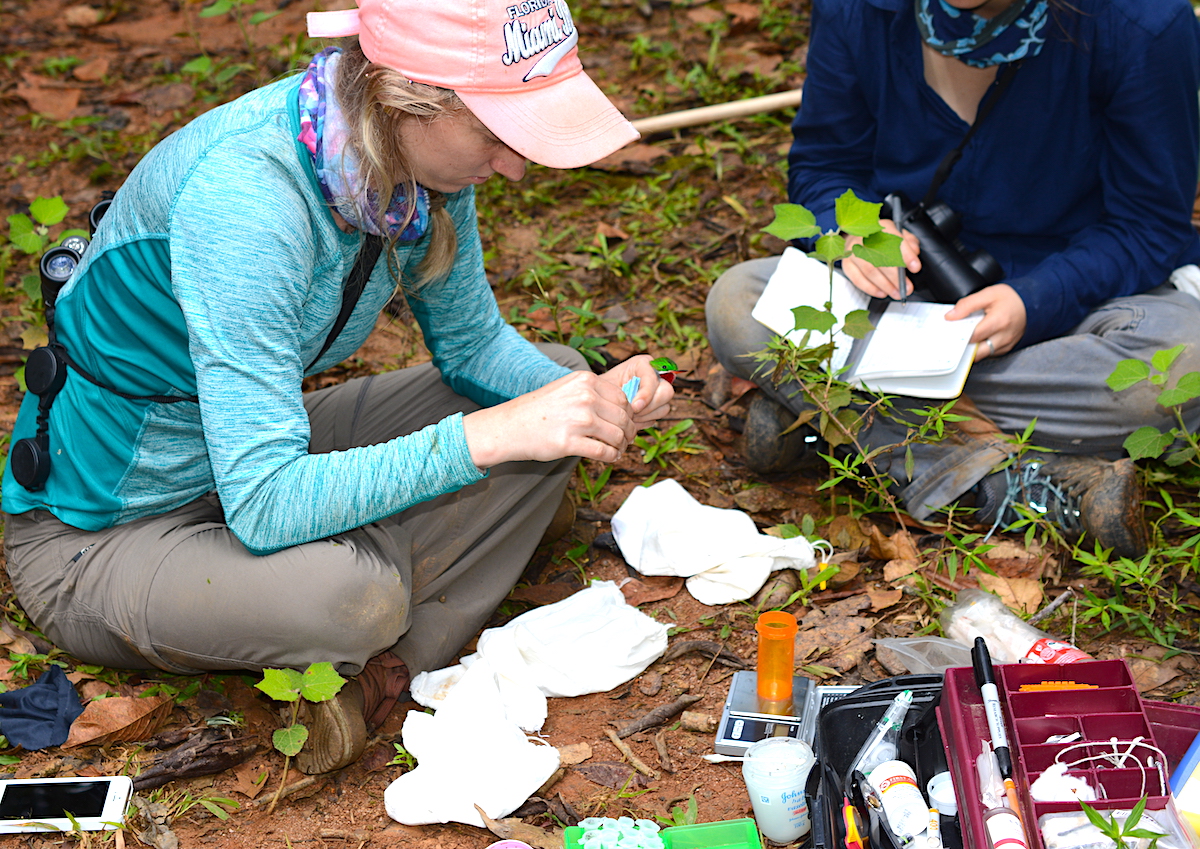
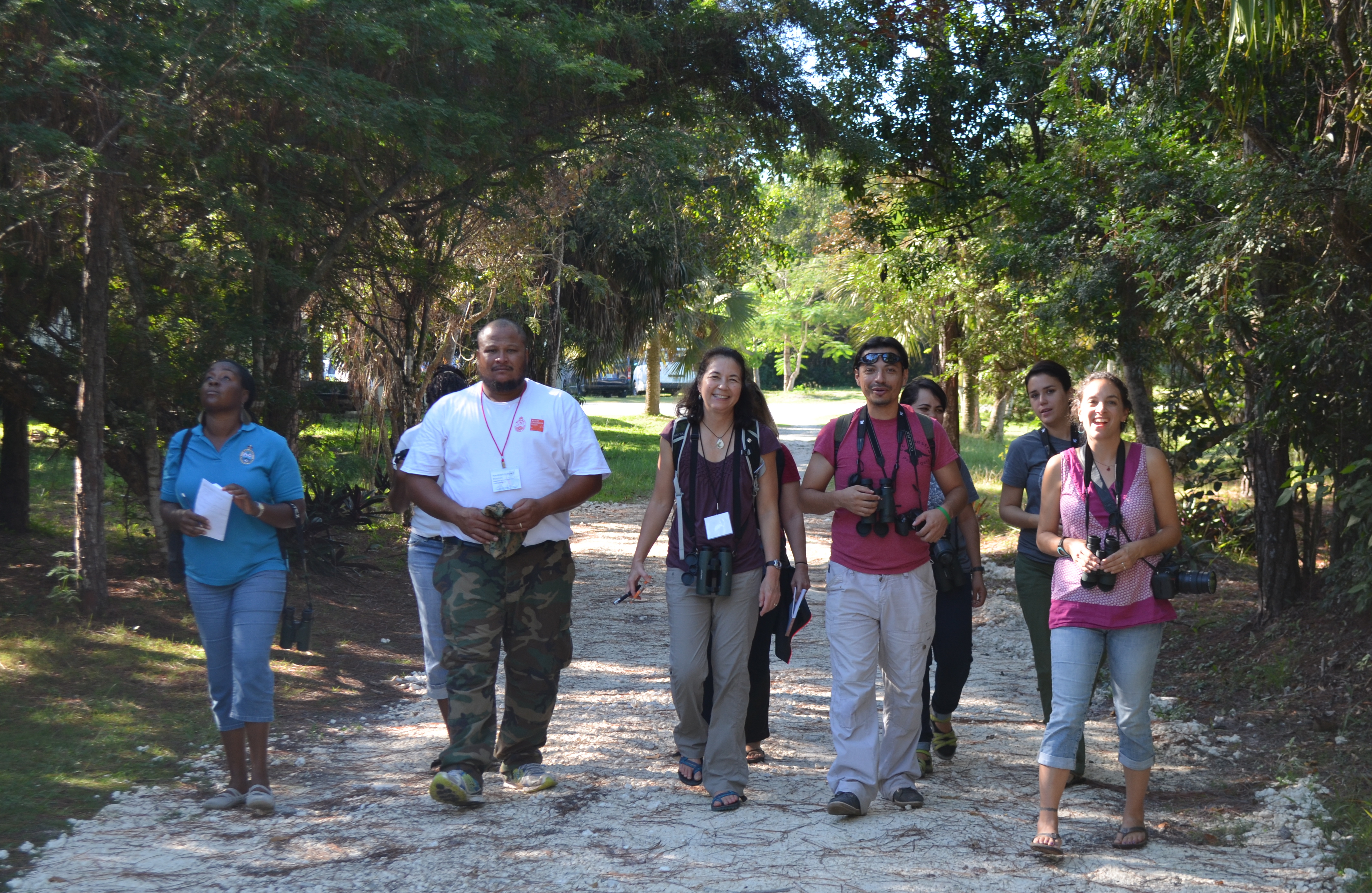
This workshop was held as part of BirdsCaribbean’s Landbird Monitoring Project, which seeks to inspire and facilitate landbird monitoring and conservation efforts in the Caribbean — including raising public awareness, alleviating threats, and managing and restoring habitats. Through a blend of classroom and field-based activities, workshop facilitators Jeff Gerbracht (Cornell Lab of Ornithology), Maya Wilson (BirdsCaribbean), Ingrid Molina (Our Coffee Our Birds), Holly Garrod (BirdsCaribbean), Coral Aviles (San Juan Bay Estuary Program), and Alcides Morales and Omar Monzon (Para La Naturaleza) introduced participants to landbird identification, monitoring techniques, and eBird data entry. The group practiced bird ID and counting techniques at Hacienda La Esperanza Nature Reserve and Cambalache State Forest. Participants will join a regional network of people involved in standardized monitoring and conservation of landbirds in the Caribbean.
Participants in the Landbird Monitoring Workshop look for birds in the forest. (Photo by Holly Garrod)
Puerto Rican Emerald. (Photo by Holly Garrod)
Participants in the Landbird Monitoring Workshop engage in classroom sessions before going out into the field. (Photo by Holly Garrod)
Puerto Rican Woodpecker. (Photo by Holly Garrod)
Participants in the Landbird Monitoring Workshop engage in classroom sessions before going out into the field. (Photo by Holly Garrod)
Symposia
Puerto Rico Day: Bird Diversity and Conservation in the “Island of Enchantment”
As traditionally done by BirdsCaribbean, the first day of the conference launched with presentations of local ornithological work. This symposium consisted of two sessions with 11 presentations that included research, conservation, and education conducted by biologists representing different agencies and organizations. In the opening talk, Adrianne Tossas summarized the status and distribution of the avifauna throughout the island, emphasizing threats and current advances in habitat and species protection. Team efforts by the PR Department of Natural and Environmental Resources (PR DNER) and US Fish and Wildlife to save the charismatic and Endangered Puerto Rican Parrot were presented by Tanya Martínez and Thomas White, respectively. Also from PR DNER, Katsí Ramos spoke about the accomplishments of the Endangered Yellow-shouldered Blackbird Recovery Program, and Ingrid Flores focused on the agency’s numerous activities to increase local awareness on biodiversity conservation.
Joseph Wunderle from the USDA Forest Service, gave an overview of the increasing challenges bird populations face from climate change, as revealed from population responses to severe hurricanes across the region in recent years. University of Mississippi biologist, Francisco Vilella, summarized his contribution to the knowledge of the biology of the Puerto Rico Nightjar and raptor species. Marconi Campos, Rainforest Connection, shared recent collaborative work in bird conservation with technological advances that allow remote acoustic sampling of birds in over 600 sites in the island. Hana Weaver gave an update on The Peregrine Fund’s efforts to improve the reproductive rates of the Endangered Puerto Rican Sharp-shinned Hawk, while Laura Fidalgo talked about the contribution of members in bird monitoring programs of the Sociedad Ornitológica Puertorriqueña. Finally, Omar Monzón, from Para La Naturaleza, emphasized on the organization’s role in the protection of private lands and the engagement of volunteers in citizen science.
Francisco Vilella
Hana Weaver
Ingrid Flores
Joseph Wunderle
Katsí Ramos
Laura Fidalgo
Marconi Campos
Thomas White
Tanya Martínez
Omar Monzón
Shorebirds of the Atlantic Flyway:How Recent Work to Conserve Wetlands is Contributing to Species and Habitat Resilience in the Caribbean and Beyond
With 15 fantastic talks across three sessions this symposium moved from highlighting the importance of Caribbean and Atlantic Fly wetlands for migrating shorebirds, to the threats shorebirds and wetlands face, and on to the exciting outreach and restoration work. Presenters from 13 different countries shared their recent work and experiences. During the symposium, participants heard how the Caribbean Waterbird Census can highlight where the important places for shorebirds are and the threats they face; data from 12 years of the CWC were presented. We also learned about development that is having devastating impacts on Caribbean wetlands and mangroves, and ongoing battles to halt the destruction. But there were also inspiring stories of hope and community engagement, showing how outreach and education can inspire people to love shorebirds and value their wetlands. Even when all seems lost we learned that wetlands can be restored and created to provide havens for shorebirds, other wildlife and people to enjoy. It was clear that shorebird and wetland conservation in the Caribbean and throughout the Atlantic Flyway is full of challenges. However, working together with local communities we can help protect these beautiful birds and their valuable habitats.
Some of the presenters and organizers of the Shorebirds Symposia, from left to right: Benoit Laliberte, Juliana Almeida, Maxon Fildor, Alex Sansom, Elio Dortilus, Lisa Sorenson, Debra Baker, Ajhermae White, Elijah Sands, Devon Carter (photo by Chris Johnson)
Planning for Resiliency of Caribbean Island Endemics – Strategies for Post-2020 recovery
This symposium included two sessions with fantastic talks from 11 speakers covering the conservation perspectives on island endemics from across the Caribbean islands from The Bahamas, Puerto Rico, Hispaniola, the Cayman Islands, and Jamaica in the north to Saint Lucia and Trinidad in the south. The symposium provided an opportunity for conservation practitioners to reflect on the status of the endemics on their islands, share insights on recovery patterns after disturbance, and reflect on the implications of the current post-2020 discussions at the Convention on Biological Diversity for the conservation of birds on their islands. Clear themes from these two sessions included the need for realistic targets, much greater financial and technical support for species management interventions, and sustained efforts on practices that are having an impact.
Seabirds in Peril: How Recent Knowledge is Contributing to Conservation Priorities and Species Resilience in the Face of Environmental Change
Organized by BirdsCaribbean’s Seabird Working Group, the seabird symposium included 14 presentations spread out throughout the whole day. Speakers presented exciting studies from North America to Antarctica, by way of the Caribbean. The day started with a heartfelt call for active restoration of imperiled seabirds globally. Following speakers shared tools to better assess the health of seabird populations, from survey methods using drones (in Puerto Rico) to cutting-edge artificial intelligence to analyze drone and airplane imagery, and from tracking studies of Caribbean seabirds to studies of links between oceanographic features, forage fish and seabirds in the western North Atlantic. participants closely listened when speakers shared about the importance of long-term studies on land (in Jamaica and Antarctica) and at sea (in Gulf Stream waters off the U.S. coast) to assess changes in seabird populations. Finally, conservationists shared inspiring conservation projects, from assessing the presence of predators in the Grenadines to addressing issues of plastic pollution in the Gulf of Maine, and about restoration success stories in Anguilla and Puerto Rico.
The Caribbean Seabird Working Group (with members representing Puerto Rico, Jamaica, the Dominican Republic, the U.S. and British Virgin Islands, Anguilla, Montserrat, the Grenadines, Bonaire, and Curaçao) was able to use gaps in the schedule to discuss its push for a region-wide Seabird Census in 2023.
Working Group Meetings
Endemics and Threatened Species Working Group (ETSWG)
The BirdsCaribbean ETSWG meeting was attended by 15 members. The meeting reviewed the outcomes of the needs assessment survey prepared by the 2 co-chairs (Ellie Devenish-Nelson & Howard Nelson). Members were also briefed on the status of the Alliance for Zero Extinction by the participants from the American Bird Conservancy (Amy Upgren, Dan Lebbin, Dave Ewert). The participants also discussed key issues for the group including broadening participation across the islands in the working group, data management, funding, and key projects that the various members were working on including monitoring efforts on endemic and threatened species in their countries. The group reviewed the chairmanship and there was unanimity that the current co-chairs would continue to chair the group until the next BirdsCaribbean conference. The Chairs also discussed the development of group activities in the intervening year, and agreed to improve its presence on the BC website and the frequency of members contribution to a working group blog.
Bird Education & Festivals Working Group and Educators’ Awards
Caribbean Bird Educators reconnected and discussed the themes and activities for this year’s World Migratory Bird Day and Caribbean Endemic Bird Festival. WMBD Coordinators, Laura Baboolal and Miguel Matta, gave a brief overview and handed out Happy Kits to all educators—a wonderful set of materials to educate about this year’s theme—Dim the Lights for Birds at Night. Participants also received a fabulous set of nine different sticker sheets featuring the artwork of talented artist, Josmar Esteban Marquez. The stickers include a variety of Caribbean birds (endemics, residents, waterbirds, shorebirds, migrants, etc.) to use in the next Caribbean Endemic Bird Festival and other bird education activities. Thanks to Daniel Serva for his incredible efforts to carry two heavy suitcases on a long journey from Venezuela to Puerto Rico – he shared the incredible tale of his journey that included a harrowing 6 hour interrogation by US Customs when he arrived in San Juan, who were convinced that Daniel was transporting drugs on the stickers!
Educators group photo at the Bird Education-Bird Festivals Working Group Meeting at the conference.
A highlight of the meeting were the awards given to ten different educators who did a fantastic job celebrating WMBD and/or CEBF in the last two years, consistently organizing creative and fun activities for youth and local communities, and also sending in their reports and photos. All recipients received binoculars and a certificate of recognition. Educators’ Awards went to Shanna Challenger (Environmental Awareness Group, Antigua and Barbuda), Maria Paulino (Grupo Acción Ecológica, Dominican Republic), Josmar Esteban Márquez (AveZona) Inés Lourdes Fernández (La Empresa Flora y Fauna Santiago, Cuba), Ingrid Flores (DRNA, Puerto Rico), Carla Montalvo (Roots and Shoots, Puerto Rico), Ajhermae White (Dept of Environment, Montserrat), Monika Gomez (DR), Natalya Lawrence (Antigua and Barbuda), Shirley Droz (post-humous award, Puerto Rico), and Marisa Awai (Bahamas). Congratulations to all the winners!
Laura Baboolal presenting an Educators’ Award to Giselle Dean for Marisa Awai (Bahamas). (photo by Lisa Sorenson)
Laura Baboolal and Lisa Sorenson presenting an Educators’ Award to Ingrid Flores (Puerto Rico). (photo by Daniel Serva)
Laura Baboolal and Lisa Sorenson presenting an Educators’ Award to Ajhermae White (Montserrat). (photo by Daniel Serva)
Laura Baboolal presenting a posthumous Educators’ Award to Carla for Shirley Droz(Puerto Rico). (photo by Lisa Sorenson)
Daniel Serva telling the harrowing story of his journey bringing the stickers to Puerto Rico (photo by Lisa Sorenson)
Laura Baboolal presenting an Educators’ Award to Joshel Wilson for Natalya Lawrence (Antigua). (photo by Lisa Sorenson)
Laura Baboolal and Lisa Sorenson presenting an Educators’ Award to Shanna Challenger (Antigua). (photo by Daniel Serva)
Laura Baboolal and Lisa Sorenson presenting an Educators’ Award to Maria Paulino (Dominican Republic). (photo by Daniel Serva)
Laura Baboolal and Lisa Sorenson presenting an Educators’ Award to Daniel Serva for Josmar Esteban Marquez (Venezuela). (photo by Daniel Serva)
Laura Baboolal, Miguel Matta, Carla Montalvo, Sheylda Díaz-Méndez, and Lisa Sorenson. (photo by Daniel Serva)
Laura Baboolal and Lisa Sorenson presenting an Educators’ Award to Carla Montalvo (Puerto Rico). (photo by Daniel Serva)
Roundtables
Action Learning for Building Resiliency in Island Endemic Species Recovery
The roundtable on species recovery used an action learning approach to deliver on a specific need identified by the Endemics and Threatened Species Working Group’s needs assessment survey – more training on species recovery. The session consisted of two segments, the first enabled the 20 participants to learn from three guest speakers from The Bahamas, the Dominican Republic, and Antigua and Barbuda, who shared their experiences undertaking species recovery actions on their islands. The second part of the round-table permitted all participants to interact directly with the speakers and each other in small working groups, which enabled workshopping the challenges each participant was experiencing with species recovery on their respective islands. Feedback from the participants suggested that the workshop provided an excellent forum for learning from each other’s professional experiences as well as improving the informal networks between species recovery practitioners.
The Journal of Caribbean Ornithology (JCO) at 34—an Open Discussion on How our Regional Journal can Best Meet your Needs
The JCO editorial team at the conference. From left: Editor-in-Chief Joe Wunderle, Lead Copy Editor Zoya Buckmire, Managing Editor Stefan Gleissberg, Development Editor Natasha Atkins, Review Editor Jen Mortensen, and BC Vice President Justin Proctor.
The JCO–BirdsCaribbean’s peer reviewed scientific journal–welcomed fellow editors, authors, and other conference participants for a brainstorming session about the role of our journal in the Caribbean research and conservation communities. Managing Editor Dr. Stefan Gleissberg opened up the discussion with an overview, and Editor-in-Chief Dr. Joe Wunderle was available throughout to answer questions. JCO occupies a rather unique niche serving a biodiverse region which at the same time is also culturally and politically diverse. To limit access barriers to critical information on Caribbean birds, JCO publishes in three languages, provides immediate open access, keeps a comprehensive online archive, and has only modest publication charges. A vital point of the journal’s work is to assist early-career and first-time authors, and those who’s research is not conducted with the support system of an academic institution, in order to achieve the highest-possible impact of their work. Roundtable participants contributed valuable ideas. Conversation points included ethical and permit compliance, and how these vary widely among islands and territories. Following a request by a participant, JCO now explores how abstracts from the conference can be published in the journal, increasing visibility.
The most prestigious award — The Lifetime Achievement Award — went to two conservation stalwarts (1) Dr. John Faaborg, Emeritus Professor, University of Missouri and (2) Mr. Eric Carey, Executive Director, Bahamas National Trust and Past President of BirdsCaribbean. This award honors individuals who have helped change the future of Caribbean birds and their habitats for the better through a lifetime of work and dedication.
Elijah Sands accepts the BirdsCaribbean Lifetime Achievement Award on behalf of Mr. Eric Carey, Bahamas National Trust.
Eight individuals, representing three organizations – U.S. Fish and Wildlife Service’s Puerto Rican Parrot Recovery Program, Terrestrial Ecology Division,Puerto Rico’s Department of Natural and Environmental Resources; and Sociedad Ornitológica Puertorriqueña, Inc. (SOPI)– were hand selected by our President Dr Adrianne Tossas for the President’s Award. In choosing recipients several things are considered, particularly their ability to adapt in challenging times and master their skills ultimately raising the bar of service in conservation. This year’s Founders’ Award recipient was Julissa Irizarry from Puerto Rico, for her outstanding paper entitled Evaluating avian biodiversity in Puerto Rico’s urban neighborhoods: A test of the “luxury effect”. And finally Russell Campbell received the Video Workshop Award for showing the most initiative in the field following the training session at the conference. Read all the details and award citations here.
Recipients of the BirdsCaribbean President’s Award: Ricardo López-Ortiz, Katsí R. Ramos-Álvarez, and Roseanne Medina from the Terrestrial Ecology Division of Puerto Rico’s Department of Natural and Environmental Resources.
Elijah Sands accepts Lifetime Achievement Award from Executive Director Dr Lisa Sorenson on behalf of Emma Lewis.
Ex-President of the Sociedad Ornitológica Puertorriqueña, Inc. (SOPI), Gabriel Lugo, receives the BirdsCaribbean President’s Award on behalf of SOPI President, Laura Fidalgo, and Executive Director Emilio Font.
BirdsCaribbean President Dr Adrianne Tossas and Executive Director Dr Lisa Sorenson with BirdsCaribbean President’s Award recipient Tanya Martinez of the Terrestrial Ecology Division in Puerto Rico’s Department of Natural and Environmental Resources.
Recipients of the BirdsCaribbean President’s Award, 2022, for their work in the conservation of the Puerto Rican Parrot and the Yellow-shouldered Blackbird.
Silent Auction
The Silent Auction is an important fundraising activity and always a fun event at BirdsCaribbean conferences. Among the many items donated by our members for auction this year was the once-in-a-lifetime experience to zipline with BirdsCaribbean Executive Director Dr Lisa Sorenson! It is worth mentioning that Lisa wasn’t even aware this item was up for bid until too late, but seized the moment and fulfilled her ziplining duties in great form for the birds!A huge thank you to our members who donated a record-breaking 600 items for auction this year, helping us to raise US$6,000! All proceeds from the auction support our ongoing conservation efforts and provide much-needed travel scholarships to help Caribbean wildlife students and professionals attend our meetings.
Dr Howard Nelson and Ellie Nelson consider which books they’d like to bid on. (Photo by Holly Garrod)
Bidding at the Silent Auction. (Photo by Holly Garrod)
Silent Auction organizer, Jennifer Wheeler, announces the start of the event with the traditional blowing of the conch shell. (Photo by Tahira Carter)
The excitement builds as the bidding comes to a close. (Photo by Adrianne Tossas)
Lisa finds out that she is the feature of a surprise auction item – a zipline experience! (Photo by Tahira Carter)
Tody Trot
This year’s 5k Fun Run, the Tody Trot, was named in honor of one of Puerto Rico’s most fascinating endemic bird species, the Puerto Rican Tody. 5k organizers, Maggie MacPherson and Justin Proctor, were excited to welcome 75 runners and walkers to the starting line. The course took participants along sandy beaches, beautiful ocean views, and even a castle, finishing in style on a rocky peninsula with waves crashing all around.
Tody Trot participants socialize after the race.
Tody Trot participants on the course.
Merchandise
This year, we partnered with award-winning biological illustrator, Arnaldo Toledo, and past president of Sociedad Ornitológica Puertorriqueña Inc. and Tour Operator for Wildside Nature Tours, Gabriel Lugo, to create a series of eye-catching designs! Arnaldo and Gabriel combined art, birds, and fashion to bring attention to Puerto Rico’s iconic bird species and the threats they face. The AOS-BC Conference collection included t-shirts, hats, buffs, stickers, and a poster that all featured the gorgeous illustrations of talented Cuban artist Arnaldo Toledo. These items and many others, such as local bird-friendly coffee and field guides from Puerto Rico and the West Indies, make great souvenirs from the conference and unique gifts for family and friends! Limited merchandise items from the conference are still available for purchase in Puerto Rico, please contact the Sociedad Ornitológica Puertorriqueña Inc. for more information (Gabriel Lugo and Emilio Font)
Endemic Birds of Puerto Rico T-shirt, AOS-BC Conference Merchandise.
Endemic Birds of Puerto Rico Hats, AOS-BC Conference Merchandise.
Tody Buff, AOS-BC Conference Merchandise.
Endemic Birds of Puerto Rico Poster, AOS-BC Conference Merchandise
Field Guides & Books on Puerto Rico and the West Indies by Dr Herbert Raffaele and Mark Oberle.
Endemic Birds of Puerto Rico Stickers, AOS-BC Conference Merchandise
Raffle
Fernando stylishly sells raffle tickets at the conference. (Photo by Lisa Sorenson)
Thanks to our generous partners, we are hosting another amazing Raffle to support our ongoing conservation efforts. All proceeds directly impact scientific research and support programs and activities that build the capacity of Caribbean wildlife professionals — like our regional training workshops and conferences.The items offered this year are so good that we have two grand prizes — an original watercolor “Puerto Rican Tody” by award-winning Cuban Wildlife Artist and Illustrator, Arnaldo Toledo; and the Vortex Razor HD 8×42 Binocular, valued at US$1,279.99!
Other fabulous prizes include more stunning bird art — limited edition, high-quality giclee prints of Cuban endemic birds, signed and numbered by acclaimed Cuban artist and author, Nils Navarro.The grand prize drawing will take place on Saturday, 27 August 2022 so enter now for a chance to win! bit.ly/Raffle-2022 With each ticket purchase, you can help Caribbean nationals create better tomorrows for the birds and the communities that live alongside them.
Exploring Puerto Rico: Excursions and Endemics
We could not come to Puerto Rico, home to some of the region’s most stunning endemic birds, and not explore the beauty of our host island. Local hosts, Para La Naturaleza and SOPI ensured that conference attendees had the opportunity to discover as much of Puerto Rico’s rich flora and fauna as possible. Tours included visits to El Yunque National Forest in Río Grande, Medio Mundo y Daguao in Ceiba, the Cabezas de San Juan Nature Reserve in Fajardo, the Antiguo Acueducto del Río Piedras and the Parque Central de San Juan.
Acknowledgements
A huge thank you to everyone that helped make this conference a tremendous success! It was a pleasure to work with our co-host, the American Ornithological Society, and our local partners, Para la Naturaleza and Sociedad Ornitológica Puertorriqueña to organize the conference. We are very grateful to all the conference sponsors and donors, including the National Science Foundation, Dept of Natural Resources and Environment, Puerto Rico, the Cornell Lab of Ornithology, Windmar Home, Audubon, US Fish and Wildlife Service, Para la Naturaleza, Richard King Mellon Foundation, US Geological Survey, American Bird Conservancy, Vermont Center for Ecostudies, and the US Forest Service – we could not have held this conference without you! We are especially grateful to all those that provided funding and donated to help us provide travel scholarships to 40 Caribbean wildlife professionals and students, including those that participated and donated to our 2022 Global Big Day teams fundraising event in May. As you can see in the photos and videos, the conference provided an incredible opportunity for learning and networking. It also helped us to reconnect, recharge, and become newly inspired to continue our vital conservation work, after a long period of covid isolation. Thank you to all of you from the bottom of our hearts!!!
Gallery
Hover over each photo in the gallery to see the caption or click on a photo to view as a slide show.
Dr Howard Nelson delivers Keynote Address. (Photo by Holly Garrod)
Dr Herbert Raffaele delivers Keynote Address. (Photo by Holly Garrod)
Lisa and Justin are ready to zip! (Photo by Lisa Sorenson)
Browsing books at the Silent Auction. (Photo by Holly Garrod)
Jose Colon assists with sales at the BIrdsCaribbean merchandise table.
Lisa introduces keynote speaker Dr Herbert Raffaele. (Photo by Christine Schmidt)
Participant group photo. (Photo by Tahira Carter)
Lisa Sorenson, Mike Webster, Bruce Lyon, and Andre Dondt.
Lisa takes a photo with students after the closing ceremony. (Photo by Lisa Sorenson)
Justin zooms by on the zipline. (Photo by Edward Hernández-Lara)
JC manages sales at the BirdsCaribbean Merchandise Table. (Photo by Tahira Carter)
Group photo of Caribbean delegates at AOS-BC Conference 2022 in San Juan, Puerto Rico.
View of the Convention Center that shows the zipline. (Photo by Lisa Sorenson)
Various items for sale at the BirdsCaribbean merchandise table. (Photo by Adrianne Tossas)
Lisa and Dr Birdy at the airport. (Photo by Lisa Sorenson)
Laura Baboolal participates in the Tody Trot.
Lisa and Justin spot a Puerto Rican Parrot on the way up. (Photo by Lisa Sorenson)
Ellie Devenish-Nelson and Howie Nelson chat with Chris Mulvaney at the Merch table.
Adrianne and colleagues. (Photo by Adrianne Tossas)
Group Photo of the Caribbean and US Delegation.
Recently constructed Motus Station. (Photo by Holly Garrod)
Shoppers make their final bids at the Silent Auction jewelry table. (Photo by Tahira Carter)
Branded BirdsCaribbean shirts on sale. (Photo by Holly Garrod)
Reunion of Caribbean colleagues at the Opening Reception of our AOS-BC Conference in San Juan, Puerto Rico (27 June-1 July 2022).
Bird-friendly Coffee and a Puerto Rican Tody Mug – the perfect gift package! (Photo by Holly Garrod)
Participant gets ready to head into the field, with a new friend. (Photo by Holly Garrod)
Caribbean women group photo.
Lisa Sorenson and team present their Ridgeway’s Hawk, “Enriquillo”. (Photo by Tahira Carter)
Lisa, Ivelisse, Farah, Shanna, and Ingrid at the Closing ceremony after party. (Photo by Lisa Sorenson)
Tyrone, Jordan, Zoya at their posters. (Photo by Lisa Sorenson)
Sociedad Ornitológica Puertorriqueña, Inc. (SOPI) table. (Photo by Christine Schmidt)
Lisa and Justin smile for a photo after their zipline experience. (Photo by Daniel Serva)
Participants in the Landbird Monitoring Workshop, Puerto Rico, look for birds in the forest. (Photo by Holly Garrod)
Justin and Giselle show off the Puerto Rican Tody Buff. (Photo by Holly Garrod)
Dr Herbert Raffaele delivers Keynote Address. (Photo by Holly Garrod)
JC and Joshel help Chris select an endemic birds of Puerto Rico hat. (Photo by Lisa Sorenson)
Lisa and Jennifer send love to our Cuban colleagues (note the bracelet!). (Photo by Holly Garrod)
Meeting up with colleagues at the Opening Reception on the Terrace – Maya Wilson, Junel Blaise, Dodly Prosper, Howard Nelson (photo by Tahira Carter)
Caribbean colleagues from our Endemic and Threatened Species Working Group discussion at AOS-BC 2022 in San Juan, Puerto Rico.
Dr Howard P. Nelson delivers Keynote Address. (Photo by Tahira Carter)
Holly helps customers at the merchandise table. (Photo by Lisa Sorenson)
Natasha helps a customer at the BirdsCaribbean merch table. (Photo by Christine Schmidt)
Dr Howard Nelson delivers Keynote Address. (Photo by Holly Garrod)
Delores, Josh, Justin, Adrianne and Lisa pause for a photo during conference prep. (Photo by Tahira Carter)
Ingrid Flores Vallejo manages the DRNA & NOAA table. (Photo by Christine Schmidt)
Jordan, Tyrone, Zoya, and Lisa. (Photo by Tahira Carter)
The Silent Auction jewelry table is busy with bidders! (Photo by Holly Garrod)
Participants in the Landbird Monitoring Workshop pause to discuss what they’ve observed. (Photo by Holly Garrod)
Justin helps out with sales at the merchandise table. (Photo by Holly Garrod)
Shoppers browse items at the Para La Naturaleza table.
Tyrone, Ellie, Howie, Jordan, Lisa and Zoya. (Photo by Lisa Sorenson(
Photo frame fun: Christine Schmidt and Lauren Gates.
Puerto Rican Emerald sits on a branch. (Photo by Holly Garrod)
Tahira and Jennifer manage sales at the merchandise table. (Photo by Holly Garrod)
Silent Auction offer to zipline with Lisa Sorenson. (Photo by Tahira Carter)
Caribbean men group photo.
Lisa Sorenson, Herbert Raffaele, Ann Sutton, and Justin Proctor sending love to our Cuban colleagues.
Photo frame fun: Adrianne, Shanna, and Lisa.
Participants in the Landbird Monitoring Workshop engage in classroom sessions before going out into the field. (Photo by Holly Garrod)
Group photo with the AOS-BC Photo Frame. (Photo by Lisa Sorenson)
Adrianne and Adolfo pose for a photo. (Photo by Adrianne Tossas)
Dr Herbert Raffaele delivers Keynote Address. (Photo by Christine Schmidt)
Lisa is suited up and ready for her first-ever zipline experience! (Photo by Justin Proctor)
Field Guides on display at the BirdsCaribbean merchandise table. (Photo by Holly Garrod)
Justin Ziplining across the Convention Center courtyard. (Photo by Edward Hernández-Lara)
All eyes on that vintage Society of Caribbean Ornithology T-shirt. (Photo by Adrianne Tossas)
Puerto Rican Lizard-Cuckoo. (Photo by Holly Garrod)
Alex Sansom presenting author of a talk by Jessica Cañizares on the Caribbean Waterbird Census (CWC) – what we have learned from the last 12 years. (photo by Lisa Sorenson)
Adrianne, Ingrid and colleagues take a photo frame pic. (Photo by Adrianne Tossas)
Participants in the Raptors of the Caribbean Workshop show off their bird of prey, a Secretary Bird, made from recycled materials. (Photo by Tahira Carter)
Elijah Sands, from the Bahamas National Trust, reviews technical elements of video production at The Power of Video Workshop. (Photo by Holly Garrod)
Ingrid, Ivelisse and JC pose for the camera in our fun AOS-BC photo frame. (Photo by Lisa Sorenson)
Lisa finds out about the surprise ziplining experience at the Silent Auction. (Photo by Tahira Carter)
Photo frame fun with Lisa, Adrianne, Delores, Tahira and Ann.
Lisa Sorenson, Maya Wilson, Lisa Kiziuk, and Holly Garrod.
Josh Pergola and Justin Proctor show off their new endemic birds of Puerto Rico t-shirt. (Photo by Lisa Sorenson)
Environment of the Americas table. (Photo by Christine Schmidt)
Caribbean group jumping for joy! (Photo by Lisa Sorenson)
Yvan, Lisa and Christopher at the Closing ceremony after party.
Adrianne and Lisa take a group photo with students.
Keynote Speaker Dr Howard P. Nelson addresses a packed ballroom at the AOS-BC Conference opening ceremony. (Photo by Tahira Carter)
Zoya Buckmire at her poster. (Photo by Lisa Sorenson)
Adrianna, Purnima and Lisa.
Carlos, Luis and JC take a selfie. (Photo by Juan Carlos Fernandez)
Ajhermae White poses for a photo in the conference photo frame. (Photo by Lisa Sorenson)
Lisa Ziplining across the Convention Center courtyard. (Photo by Edward Hernández-Lara)
Handmade wooden and crochet birds, from Cuba and Venezuela respectively, are displayed at the merch table. (Photo by Holly Garrod)
Dr Adrianne Tossas delivers remarks at the AOS-BC Conference opening ceremony. (Photo by Tahira Carter)
Puerto Rican Woodpecker. (Photo by Holly Garrod)
Dr Herbert Raffaele delivers Keynote Address. (Photo by Holly Garrod)
Volunteers pause for a photo at the BirdsCaribbean merchandise table. (Photo by Adrianne Tossas)
Howie, Yvan, Lisa, Christopher and Ellie at the Closing ceremony after party.
Adrianne and colleagues take a group photo. (Photo by Adrianne Tossas)
Lisa Ziplining across the Convention Center courtyard. (Photo by Edward Hernández-Lara)
Jose Colon stands next to his Silent Auction donation – a vintage Society of Caribbean Ornithology T-shirt. (Photo by Adrianne Tossas)
Safety first! Justin gets suited up for the zipline experience. (Photo by Lisa Sorenson)
Keynote Speaker Dr Herbert Raffaele delivers address at AOS-BC Conference in Puerto Rico. (Photo by Christine Schmidt)
Photo frame fun: Adrianne, Ingrid, and Lisa.
Lisa, Emilio, Omar and JC take a selfie at the Para La Naturaleza welcome ceremony. (Photo by Lisa Sorenson)
Sustained harassment of nesting Brown Pelicans (Pelecanus occidentalis) in Le Gosier, Guadeloupe, in recent years, has resulted in the abandonment of the largest colony of this species in the French Caribbean islands. BirdsCaribbean is greatly concerned by this unfortunate development and urges French authorities to take action to stop any harassment and ensure the birds return to breed in this important colony. (en français ci-dessous)
Brown Pelicans in the Caribbean rarely nest in urban settings, and yet this colony is just a few steps away from both a library and primary school. BirdsCaribbean regrets that the pelican colony in Le Gosier did not receive adequate consideration and protection from the local authorities of the town that proudly takes its name from the Brown Pelican. This indeed is a missed opportunity for education where, with the right will and incentives, the name-sake of the town can turn a human-wildlife ‘neighborhood dispute’ into a source of pride for the small town of Le Gosier.
A pair of Brown Pelicans cares for its three young chicks in the Le Gosier colony, during the 2013-2014 nesting period (Photo by Association pour la Sauvegarde de la Faune des Antilles – Régis Gomès).
History of Brown Pelicans on Guadeloupe
Part of the pelican Le Gosier colony during the 2013-2014 breeding period (Photo: Association pour la Sauvegarde de la Faune des Antilles – Régis Gomès). Note numerous chicks (white plumage with brown wings) on nests – a sign of a healthy and fully functional colony.
Brown Pelicans were extirpated from Guadeloupe in the 19th century following hunting and persecution. Low numbers nested in the archipelago in 1984 and 1996 but the species only resumed breeding permanently in 2007. This is the same year that a few nests with chicks were rediscovered at the Le Gosier colony. From a handful of nests in 2010-2011, this colony increased in size to reach a maximum of 117 nests in 2016-2017, covering a large area on the spectacular sea cliffs of Boulevard Amédée Clara. This made it one of the largest nesting colonies of Brown Pelicans in the Lesser Antilles. It hosted as many breeding pairs as the other three colonies known to have re-established in Guadeloupe combined, and represented the largest colony of this species in the French Caribbean islands. In fact, the town of Le Gosier takes its name from “gwan gosyé”, the traditional Créole name for the Brown Pelican. This majestic bird is also the town’s emblem and, as such, appears on numerous buildings and monuments.
For the first time since 2007, Brown Pelicans did not nest at the Le Gosier colony in 2020-2021 and 2021-2022. This fact was brought to the attention of BirdsCaribbean in November, 2020 by the Association pour la Sauvegarde de la Faune des Antilles (ASFA). Visits by rangers of Parc National de la Guadeloupe in December 2020, and by Association AMAZONA in January 2021, confirmed the abandonment of this breeding site. Visits by ASFA in early 2022 confirmed that Brown Pelicans did not renest in 2021-2022.
“When, in 2007, we announced that we had discovered a Brown Pelican colony in Le Gosier, we thought it would stimulate decision-makers to make the return of the Brown Pelican in Guadeloupe a success. The loss of this colony is a resounding defeat for the recovery of this species.” — Association pour la Sauvegarde de la Faune des Antilles
As early as 2014, ASFA alerted relevant French authorities of the potential human-wildlife conflicts that could arise from the growth of the colony, but no action was taken by the administration. Indeed, intentional disturbances directed at the nesting Brown Pelicans accelerated. ASFA shared with BirdsCaribbean that, over the years, people were observed deliberately and regularly throwing rocks at nests from both the top and bottom of the cliffs; demolition works directly above the colony repeatedly disturbed pelicans during nest initiation; and vegetation that supported nests was cut or degraded before or during the breeding season. Although the Arrêté du 17 février 1989 makes it unlawful to hurt or kill pelicans and their chicks or eggs, it does not protect them against disturbance (whether accidental or intentional), nor does it protect their breeding and resting sites from intentional destruction.
Estimated sizes of the Brown Pelican population in Guadeloupe between 2011 and 2021. Counts of fledgelings, and resulting estimates of productivity, were only carried out until 2018. (Data from Association pour la Sauvegarde de la Faune des Antilles.)
The failure of France to curb these threats to a protected species partly results from the long-overdue revision of this arrêté, stuck in negotiations. BirdsCaribbean urges the French government to hasten the acceptance of the revision of Arrêté du 17 février 1989 to actually provide full protection to the Guadeloupean birds it seeks to protect. Furthermore, the Brown Pelican colony of Le Gosier did not receive the protection it needed from French authorities as pledged under the SPAW protocol, despite France being a signatory and ratifying country, and Guadeloupe hosting the offices of the Regional Activity Centre that oversees its implementation.
“The case of the Brown Pelican is a good example: France should make a priority of revising our weak national regulations. It could also easily compensate for the loss of breeding habitat for the Brown Pelican by protecting îlet Rousseau, a public land with strong potential not only for pelicans, but also for Magnificent Frigatebirds.” — Association pour la Sauvegarde de la Faune des Antilles
Brown Pelicans breeding at the Le Gosier colony during the 2013-2014 nesting period. In the upper left corner, note the three big chicks sharing a nest – a sign of a healthy and fully functional colony. (Photo by Association pour la Sauvegarde de la Faune des Antilles – Régis Gomès).
Next Steps
The Brown Pelican colony at Le Gosier was a jewel of Caribbean wildlife, one that was enjoyed by local people and visitors alike, but no longer – it only took only a few misplaced acts to destroy it.
BirdsCaribbean calls on the government and local administration to:
1) investigate and document what happened to the colony in 2020-2021;
2) put into place an action plan to avert a similar tragedy happening in 2022-2023 and the future;
3) monitor the areas where Brown Pelicans return and nest again, ensuring that they are not disturbed;
4) educate the local community to instill pride in the town’s name-sake, showing that it deserves our protection;
5) complete the revision of the Arrêté du 17 février 1989, and ensure that adequate legislation is in place to protect wildlife from disturbance and destruction.
En Francais
BirdsCaribbean est extrêmement préoccupée par l’abandon en 2020, 2021 et 2022 de la colonie de nidification de pélicans bruns du Gosier, en Guadeloupe, suite à des dérangements prolongés.
BirdsCaribbean est extrêmement préoccupée par les dérangements répétés de pélicans bruns (Pelecanus occidentalis) nicheurs ayant eu lieu au Gosier, en Guadeloupe, ces dernières années. Ces dérangements ont provoqué l’abandon de cette importante colonie de reproduction durant les saisons de reproduction 2020-2021 et 2021-2022. Les autorités responsables doivent agir pour arrêter et prévenir tout dérangement, et assurer le retour en nidification lors de la saison 2022-2023. Ceci aura des bénéfices économiques et pédagogiques pour la commune du Gosier. Dans les Caraïbes, les pélicans bruns nichent rarement dans des zones urbaines : malgré tout, la colonie ayant subi les dérangements n’est qu’à quelques pas de deux écoles et d’une médiathèque, dans une ville qui prend son nom de ces mêmes pélicans !
Photographie 1: Un couple de pélicans bruns s’occupe de ses trois jeunes poussins à la colonie du Gosier, pendant la saison de reproduction 2013-2014. (Association pour la Sauvegarde de la Faune des Antilles – Régis Gomès).
Histoire des pélicans bruns en Guadeloupe
Pour la première fois depuis 2007, les pélicans bruns n’ont pas niché à la colonie du Gosier en 2020-2021 et 2021-2022, une information que l’Association pour la Sauvegarde de la Faune des Antilles (ASFA) a partagé avec BirdsCaribbean dès novembre 2020. Des visites effectuées par des gardes du Parc National de la Guadeloupe en décembre 2020, et par l’Association AMAZONA en janvier 2021 ont confirmé l’abandon de ce site de nidification. Des visites de l’ASFA début 2022 ont montré que les pélicans n’avaient pas re-niché en 2021-2022.
Photographie 2: Une partie de la colonie de pélicans bruns du Gosier, pendant la saison de reproduction 2013-2014. (Photo: Association pour la Sauvegarde de la Faune des Antilles – Régis Gomès). Noter les nombreux poussins (plumage blanc et ailes brunes) sur les nids, signe en bonne santé écologique.
Le pélican brun a été éradiqué de Guadeloupe au cours du XIXième siècle par la chasse et la persécution. Des effectifs limités ont niché sur l’archipel en 1984 et 1996 mais l’espèce n’a recommencé à nicher de façon permanente qu’en 2007. Cette même année, des nids avec des poussins étaient découverts à la colonie du Gosier. De quelques nids en 2010-2011, cette colonie a ensuite gagné en taille pour atteindre, à son maximum, 117 nids en 2016-2017, utilisant alors une grande partie des falaises spectaculaires du Boulevard Amédée Clara. Ceci en faisait l’une des colonies de nidification les plus grandes des Petites Antilles. Elle abritait autant de couples nicheurs que les trois autres colonies recensées en Guadeloupe combinées, et était alors la plus grande colonie de cette espèce dans les Antilles françaises. La ville du Gosier prend justement son nom du “gwan gosyé”, le nom créole du pélican brun. Cet oiseau majestueux est aussi l’emblème de la ville et, en conséquent, il apparaît sur de nombreux bâtiments et monuments.
“En annonçant, en 2007, que nous avions découvert une colonie de pélicans bruns, qui plus est, dans la ville du Gosier, nous pensions susciter une mobilisation des décideurs pour que ce retour de l’espèce en tant que nicheuse sur l’Archipel guadeloupéen soit un succès. L’abandon de la colonie sonne le glas d’une pleine reconquête de l’espèce.” —Association pour la Sauvegarde de la Faune des Antilles
Menaces sur le pélican brun des Caraïbes
Malgré sa présence familière sur nos côtes, la population caribéenne du pélican brun est toujours considérée comme à risque dans la région. Elle est aussi listée comme strictement protégée au titre du protocole SPAW, protocole dont la France est signataire. En Guadeloupe, les pélicans bruns nicheurs sont listés comme Vulnérables sur la Liste Rouge des Espèces Menacées de France et sont protégés par l’Arrêté du 17 février 1989. En vertu de cet arrêté, toute forme de destruction, capture ou enlèvement de cet oiseau marin, de ses œufs ou de son nid est interdite.
Dès 2014, l’ASFA a alerté les autorités françaises compétentes des potentiels conflits qui pourraient découler de l’expansion de la colonie de nidification du Gosier, mais l’administration n’a pris aucune mesure. Au contraire, les dérangements intentionnels envers les pélicans bruns nicheurs se sont accélérés. L’ASFA a d’ailleurs informé BirdsCaribbean que, au fil des ans, des personnes ont été observées en train de jeter des pierres sur les nids, depuis le haut et le bas des falaises, de manière délibérée et régulière ; des travaux de démolition juste au-dessus de la colonie avaient dérangé les pélicans à plusieurs reprises au commencement de la nidification ; et la végétation sur laquelle les nids étaient construits avait été coupée ou dégradée avant ou pendant la saison de reproduction. L’Arrêté du 17 février 1989 rend illégal la destruction et la mutilation des pélicans, de leurs poussins et de leurs oeufs, mais il ne les protège pas des dérangements (accidentels ou intentionnels), et ne protège pas non plus leurs sites de reproduction et de repos de destructions intentionnelles.
Figure 1. Effectifs de population du pélican brun en Guadeloupe entre 2011 et 2021. Les comptages de jeunes à l’envol, et les estimations de productivité en découlant, n’ont pas pu être effectués après 2018. Données : Association pour la Sauvegarde de la Faune des Antilles.
L’incapacité de la France à limiter ces menaces à l’encontre d’une espèce protégée est en partie le résultat de son incapacité à réviser l’Arrêté du 17 février 1989. BirdsCaribbean exhorte donc les autorités françaises à finaliser la révision de l’Arrêté du 17 février 1989 afin de véritablement offrir l’entière protection de la loi aux oiseaux de la Guadeloupe que cet arrêté prétend protéger. Par ailleurs, la colonie de pélicans bruns du Gosier n’a pas reçu la protection des autorités françaises, en directe opposition avec le protocole SPAW qu’elles ont pourtant signé et ratifié, et malgré le fait que les bureaux du Centre Régional d’Activité qui supervise la mise en application dudit protocole se trouvent en Guadeloupe.
“Cet échec est un bon exemple : la révision de la réglementation nationale devrait être la priorité de la France. Il serait aussi facilement réalisable de compenser les pertes survenues sur la colonie du Gosier en protégeant l’îlet Rousseau, un terrain public à fort potentiel non seulement pour les pélicans mais aussi pour les Frégates.” — Association pour la Sauvegarde de la Faune des Antilles
Photographie 3: Des pélicans bruns en nidification à la colonie du Gosier, pendant la saison de reproduction 2013-2014. (Association pour la Sauvegarde de la Faune des Antilles – Régis Gomès). Dans le coin en haut à gauche, noter les trois grands poussins dans un même nid, un signe d’une colonie en bonne santé écologique.
BirdsCaribbean regrette que la colonie du Gosier, qui est située face à la médiathèque et aux écoles du Boulevard Amédée Clara, n’ait pas reçu une considération appropriée de la part des autorités locales d’une ville qui emprunte fièrement son nom au pélican brun. Nous regrettons, par ailleurs, que cette opportunité pédagogique et économique ait étée négligée : avec des bonnes intentions et des soutiens adaptés, l’espèce qui prête son nom à la ville aurait pu transformer un “conflit de voisinage” entre humains et faune sauvage en une source de fierté pour la petite ville du Gosier.
Prochaines étapes
La colonie de pélicans bruns du Gosier était un joyau de la faune des Caraïbes, autant appréciée par les locaux que par les visiteurs, mais elle n’existe plus : il n’a fallu que quelques actes déplacés pour la détruire. Par conséquent, BirdsCaribbean demande au gouvernement français et aux administrations locales de
1) enquêter et documenter ce qui est arrivé à la colonie de pélicans bruns du Gosier en 2020-2021 ;
2) de mettre en place un plan d’action pour éviter qu’une tragédie similaire ait lieu en 2022-2023et dans le futur ; 3) de suivre les zones où les pélicans bruns pourraient revenir et nicher, afin d’assurer leur protection ;
4) de développer des programmes pédagogiques à destination des communautés locales, afin d’inspirer de la fierté pour l’espèce qui prête son nom à la ville et de montrer qu’elle mérite notre protection ; et
5) de finaliser la révision de l’Arrêté du 17 février 1989 et de s’assurer qu’une législation appropriée soit en place pour protéger la faune sauvage des dérangements et des destructions.
En attendant de recevoir de vos nouvelles rapidement, je vous remercie pour votre assistance.
Once again, on Saturday 14th May 2022 the Caribbean birding community showed up and showed out for Global Big Day! Global Big Day is an annual celebration of the birds around you. Birders and bird lovers across the globe spend the day observing and recording essential data about the birds they see. Some also take this opportunity to visit new birding spots, reconnect with colleagues, and tick lifers off their lists.
This year, globally, 7,724 species were recorded from 201 countries by 52,761 people!
Observers found 473 species in the West Indies—beating last year’s recordby a whopping 109 species! (see Figure 1). This was made possible by 461 eBird observers in the West Indies— increased by 96 persons from 2021. The total number of checklists submitted was an impressive 1,870— increased by 200! (see Figure 1). Way to go!!!
Figure 1: Global Big Day 2020, 2021, and 2022 comparisons showing that the total number of eBird Observers in the West Indies, total species seen, and total number of eBird checklists submitted all increased from 2020 to 2021 to 2022.
Including data from all eBirders, Cuba clinched the lead for most species seen—166 – congratulations! This was followed by The Bahamas at an impressive 141 species, Puerto Rico and Trinidad close behind with 135 and 134 species, respectively, Caribbean Netherlands swinging in at a nice 86, and Jamaica finishing sixth with a solid tally of 93 species. Read on for all the exciting details and final team stats…
Fundraising to help build capacity for Caribbean bird conservation
Once again many teams helped raise funds for bird conservation in the Caribbean. This year, those funds will help deserving Caribbean wildlife professionals and students to attend the AOS & BC Conference in Puerto Rico in June. Our Global Big Day was hugely successful on all fronts, with 15 teams participating, including 11 national teams! (up from 10 teams in 2021). Together, so far, we raised over $13, 900 US—nearly 3/4 to our goal of $20,000 – congrats and thank you to everyone for your participation and support!
We have been busy awarding travel scholarships to meet the needs of over 40 Caribbean nationals who applied for funding to attend the conference. We still need to reach our goal of $20K! If you have not had a chance to donate yet and would like to help, please visit: https://givebutter.com/BCGBD2022
BirdsCaribbean President Adrianne Tossas birding with her family on GBD – she finished in the mountains with 44 species!
BirdsCaribbean Global Big Day (BCGBD) Teams
How did all the BirdsCaribbean teams perform overall? The multinational Flying Pintails, led by Executive Director Lisa Sorenson, claimed the title for the most species observed: 496 (see Figure 3). The Bee Hummers Dream Team, the Cuban national team led by BC board member Maikel Cañizares, and President’s Perch, led by our past president Andrew Dobson came in second and third with 474 and 472 species seen, respectively. The Bee Hummers, named after the smallest bird in the world, made a big splash in two other categories with the most eBird observers (66), and most West Indies endemics (49). The Peeping Cuckoos, the Puerto Rican team led by our president Adrianne Tossas, claimed victory for most eBird checklists submitted (283).
Figure 2: Global Big Day results for our 15 BirdsCaribbean Teams, which included 11 national teams. The numbers in red show which team had the highest number for each category. A total of 1,078 species and 121 endemics were observed by all 15 teams combined.
Tracking the Endemics on our GBD Teams
It would not be a ‘big’ day of birding if none of our fabulous Caribbean endemics were recorded. We would expect Jamaica, Cuba or the Dominican Republic to win this category year after year since they have the highest number of endemics. In order to level the playing field, however, we calculate this as the highest proportion of the island’s endemic birds seen on Global Big Day. There were two winners of this title: Grenada Hook-billed Kites and Bajan Birders & Friends, recording the single-island endemic Grenada Dove and Barbados Bullfinch for their islands, respectively. The Peeping Cuckoos (Puerto Rico), Bee Hummers (Cuba), and One Love Jamaica (Jamaica) teams saw over 80% of their island endemics. (See Figure 4).
Figure 4: Percent of endemics seen (by proportion) on Global Big Day, 2022.
Hard-working team members – small was beautiful!
Once again smaller and/or more local teams also had their advantages. When the total number of species seen was divided by the number of people on the team, President’s Perch came in first, with an average of 26 species observed per person (see Figure 4). Bajan Birders & Friends were a close second with 22 species per person, followed by the the Far Flung Flock of Friends (18), Man-O-War Primary Eco-Club (17), Flying Pintails (16), Bahama Snipers (15), and TCI Royal Terns (15).
Figure 3: The average number of species seen observed per person for each of the 15 Global Big Day teams. Presidents Perch was the winner in this category with an average of 26 species/person. Bajan Birders & Friends came in second with 22, followed by the Far Flung Flock of Friends (18), Man-O-War EcoClub (17), Flying Pintails (16), Bahama Snipers (15), and the TCI Royal Terns (15).
MVB – Most Valuable Birders
2021 reigning champions for most birds seen – Holly Garrod and Josh Covill (on team Flying Pintails) returned to demolish the competition again. Birding together in icy-cold Montana weather for 16 hours, they recorded an incredible 155 species!
Holly Garrod and Josh Covill once again won the competition for most species seen—braving icy cold Montana weather and recording 155 species for the day – congrats!
We must salute the die-hard birders in the Caribbean as well. Special commendations go out to the following birders who had 20 or more West Indies Endemics on their GBD checklist on May 14th:
The Baracoa chapter of the Bee Hummers Team of Cuba. (Photo by Roberto Jovel.)
Adrian Cobas (Cuba)- 21
Rodolfo Castro Alvarez (Cuba)- 26
Ann Sutton (Jamaica)- 28
Veda Tate (Jamaica)- 28
Maikel Cañizares Morera (Cuba)- 21
Xochitl Ayón Güemes (Cuba)- 21
Thank You for a fantastic #GlobalBigDay and fundraiser
A huge thank you to our team leaders and everyone that participated in this year’s GBD! Thanks also to everyone that helped us raise funds and donated!!! Our hardworking teams got the word out to family, friends, and colleagues and thanks to you all, we have so far raised nearly US$14,000 for Caribbean bird conservation! Funds are being used used to cover travel and attendance costs for Caribbean wildlife students and professionals at the upcoming AOS & BC Conference, June 27-July 2, 2022, in San Juan, Puerto Rico. Unfortunately our Cuban colleagues will be unable to attend the conference this June because it’s in the U.S., therefore all money raised by the Cuban team will go towards installing Motus stations in Cuba!
Most of us know how beneficial scientific conferences and meetings are in making professional connections, developing new collaborations, and learning about cutting-edge research and conservation initiatives. It is here, surrounded by like-minded individuals, where each of us is newly inspired and armed with new knowledge and tools to protect birds and their habitats.
To date, thanks to you, we have awarded 35 travel scholarships, but more funds are needed to assist remaining applications!
Help us to reach our fundraising goal and continue to develop the next generation of Caribbean conservationists by donating today! Visit givebutter.com/BCGBD2022 to make a contribution.
St Vincent crew at the end of Global Big Day, tired but happy! Mike and Lisa Sorenson, Joanne, Maeson, and Glenroy Gaymes and Jeff Gerbracht.
2022 BirdsCaribbean Global Big Day Teams
You can visit each birding team’s page profile on eBird to see maps of the team’s countries/ islands where birds were sighted and their checklists. You can also visit each team’s GiveButter page and donate to specific teams to help them reach their fundraising goal, or donate to the general campaign.
Cuban Vireo seen on Global Big Day, Cuba. (Photo by Roberto Jovel)
Enjoy the below photos captured by members of BirdsCaribbean’s various Global Big Day teams on May 14, 2022. Click on images to enlarge.
Smooth-billed Ani. (Photo by Roberto Jovel)
Cuban Parrots sit in a tree, The Bahamas. (Photo by Elijah Sands)
Bahama Swallow, The Bahamas. (Photo by Elijah Sands)
Bahama Woodstar, Grand Bahama. (Photo by Steven Oxley)
Red-winged Blackbird, Grand Bahama. (Photo by Steven Oxley)
Cuban Parrot, The Bahamas. (Photo by Elijah Sands)
Stilt Sandpiper, Georgia, USA. (Photo by Yve Morrell)
The Bahama Swallow feeds mainly on flies and beetles. (Photo by Elijah Sands)
Cuban Parrot, The Bahamas. (Photo by Elijah Sands)
Maeson Gaymes in St Vincent, one of the youngest birders, getting ready to bird and hike the La Soufrierre Trail, St Vincent
Scaly-naped Pigeon, Grenada. (Photo by Zoya Buckmire)
Antillean Nighthawk, Grand Bahama. (Photo by Steven Oxley)
Scaly-breasted Munia, California, USA. (Photo by George Cummins)
Red-necked Phalarope, California, USA. (Photo by George Cummins)
Cuban Emerald, The Bahamas. (Photo by Elijah Sands)
Black-necked Stilts, Grand Bahama. (Photo by Steven Oxley)
Saffron Finch, Puerto Rico. (Photo by Coral Avilés Santiago)
Blue-winged Teal, Grand Bahama. (Photo by Steven Oxley)
Puerto Rican Spindalis, Puerto Rico. (Photo by Eliezer Nieves-Rodriguez)
Forest Kingfisher, Australia. (Photo by James Lambert)
Cuban Green Woodpecker captured on Global Big Day in Cuba. (Photo by Roberto Jovel)
Puerto Rican Spindalis, Puerto Rico. (Photo by Eric Torres Rivera)
Killdeer, Grand Bahama. (Photo by Steven Oxley)
Wilson’s Plover chick, Grand Bahama. (Photo by Steven Oxley)
Cave Swallows, Cuba. (Photo by Roberto Jovel)
Red-legged Thrush, Puerto Rico. (Photo by Eliezer Nieves-Rodriguez)
Black-whiskered Vireo, Cuba. (Photo by Roberto Jovel)
Long-billed Dowitcher, Georgia, USA. (Photo by Yve Morrell)
Long-billed Dowitcher, Montana, USA. (Photo by Joshua Covill)
Scaly-breasted Munia, California, USA. (Photo by George Cummins)
Mark Hulme birding in Trinidad.
Lesser Yellowlegs, Georgia, USA. (Photo by Yve Morrell)
Glenroy Gaymes points the way to the Montreal Trail, St Vincent.
Bahama Mockingbird, The Bahamas. (Photo by Elijah Sands)
Wilson’s Plover, Grand Bahama. (Photo by Steven Oxley)
Bahama Swallow, The Bahamas. (Photo by Elijah Sands)
Black-necked Stilt, Grand Bahama. (Photo by Steven Oxley)
White-winged Dove, Puerto Rico. (Photo by Eliezer Nieves-Rodriguez)
Turkey Vulture sits on a palm branch. (Photo by Roberto Jovel)
Pied-billed Grebes, Puerto Rico. (Photo by Coral Avilés Santiago)
Cattle Egret, Cuba. (Photo by Roberto Jovel)
Pigeon Guillemot, Washington, USA. (Photo by Mark Oberle)
Eurasian Collared-Dove, Grand Bahama. (Photo by Steven Oxley)
Executive Director Lisa Sorenson was in St Vincent for this year’s GBD along with her husband Mike and Jeff Gerbracht. They had a fabulous day of birding with Forestry Officer Glenroy Gaymes, his wife Joanne, and son Maeson.
Bananaquit, Puerto Rico. (Photo by Amarilys Lebron)
Killdeer, Puerto Rico. (Photo by Coral Avilés Santiago)
Green Heron, Grenada. (Photo by Zoya Buckmire)
Sunrise at Jennings Valley, St Vincent – first stop of the day to see the St Vincent Parrot (photo by Lisa Sorenson)
Saffron Finch Flock, Jamaica. (Photo by Wendy Lee)
Australasian Darter, Australia. (Photo by James Lambert)
American Wigeon, Texas, USA. (Photo by John Thomlinson)
Dark-eyed Junco (Pink-sided), Montana, USA. (Photo by Joshua Covill)
Killdeer, Grand Bahama. (Photo by Steven Oxley)
Glenroy and Joanne Gaymes hiking up to Jennings Valley overlook at 6 AM (photo by Lisa Sorenson)
BirdsCaribbean Seabird Working Group Newsletter – click on the image to view and download a PDF, OR read on your device as a full-screen flipbook (click below). For Spanish and French versions, click on the images below.
The annual BirdsCaribbean Seabird Working Group (SWG) newsletter is now available! Catch up on the latest research, conservation, restoration, and education projects happening across the Caribbean Basin – in English, Spanish, and French!
This issue outlines the outcomes of the 2021 Seabird Fest and presents plans for a 2023 regional seabird census – which includes an informative seabird webinar series, focused on the techniques required to survey seabirds in the Caribbean.
Review updates on recent and ongoing regional projects and publications, covering Least Terns, Red-billed Tropicbirds, and Brown Pelicans, among others. The newsletter also features a “seabirder spotlight” on Patricia Bradley, conservationist stalwart in the Cayman islands and the wider Caribbean region.
Learn about the Seabird Working Group’s co-chairs, who are working hard behind the scenes to ramp up activities and communications, and find out the many ways that you can connect with the Seabird WG and its members, including our Facebook group!
Interested in getting involved? Please take advantage of the many avenues for communication described in the newsletter and if you have seabird news to share, let us know! We would love to feature your work in the next issue!
P.P.S. We are keen to hear from you if you enjoyed our newsletter! Please let us know if you have any recommendations on how to improve future editions.
BirdsCaribbean Seabird Working Group Newsletter in Spanish – click on the image to view and download the PDF.BirdsCaribbean Seabird Working Group Newsletter in French – click on the image to view and download the PDF.
Patricia Bradley arrived on Grand Cayman in 1982 and began to put together comparative monthly records of bird sightings on all three islands. In the four decades since, she has authored several field guides and natural history books, and a British Ornithologists’ Union checklist. She is a founding and Life member of the Cayman Islands National Trust, chairing and serving on its Environmental Advisory Committee, and she has served many years on the Cayman Government’s National Conservation Council. She was instrumental in establishing the Cayman Islands’ Important Bird Areas, and developing the nature tourism project in the Sister Islands, including design of interpretative signage at lookouts on Cayman Brac and Little Cayman. Patricia’s contributions to conservation extend well beyond the Caymans. She has long been a member and supporter of BirdsCaribbean, including as a past co-chair of the Seabird Working Group (SWG), and co-edited the book ‘An Inventory of the Breeding Seabirds of the Caribbean’ in 2009.
Jennifer Wheeler: Hello Patricia! I understand this is your fortieth year in the Caribbean. When you arrived in the early 1980s, did you imagine you would become one of the most respected names in Caribbean ornithology?
Patricia Bradley: Well, I’m not sure I believe THAT. But, I do feel that I have had the opportunity to contribute and add to the efforts of bird conservation and habitats, when bird data was sparse in the 1980s. But so much remains to be done in the region to stem the loss of species, especially seabirds, whose breeding and foraging areas continue to decline. Cayman is now doing a great job.
JW: What brought you to the Caribbean? And did you come with a love of nature?
PB: I was born and lived in Ireland up until the age of 24. My parents brought me up outdoors and my mother was a very keen birder. At University, I studied Biology. After graduation, I stayed on to teach and participate in field projects. I began a PhD, but my husband was offered a job in Africa, so off we went to begin our international life together, and we never went back to Ireland.
JW: Where did you go?
PB: Our first station was in Malawi, where I worked on game counts and spent a year with the Locust Research Council tracking swarm development in the wetlands; then Botswana and more birds. In 1972, my husband went to work with the UN. First to Antigua, then the British Virgin Islands, and then the Turks and Caicos Islands where I set up the National Trust, and helped establish the large Ramsar Site that encompasses the Caicos wetlands. In each location, I gathered and submitted birding records to the British Ornithological Union as there was a dearth of information. People in Europe didn’t understand what a birding hotspot the Caribbean was!
Patricia talks to ecotourists at Booby Pond, Little Cayman. (Photo courtesy naturecayman.com)
In 1982, we reached the Cayman islands, and I began to compile a checklist of birds of the 3 islands. Cayman birds were little known both here and overseas. Over a 20 year period, aiming to put a monetary value on Cayman’s undervalued and underrated natural areas, I wrote field guides, set up forest and wetland signed trails on Little Cayman and Cayman Brac (linked to maps and a website – a first for the region), and invited bird tour leaders to put us on their route. Also raising awareness locally through the National Trust we had set up.
JW: So birding records led to field guides that led to a career in developing bird conservation projects in Cayman Islands and elsewhere in the Caribbean! In 2003, you and Robert Norton commenced An Inventory of the Breeding Seabirds of the Caribbean (Bradley and Norton 2009). Do you have a special interest in seabirds?
PB: Yes, seabirds are very important in my life. I find them especially beautiful, with their combination of freedom in the air and vulnerability on the ground. Rob and I were focused on sea level rise and the effects of tropical storms, which combined with habitat loss are major threats to seabirds. Also, my mentor, John Croxall (a foremost expert in seabird conservation globally), was working in the Antarctic on fisheries and albatross and he shared with me what the international community was doing for seabird protection.
Thinking about the plight of seabirds, especially given regional climate change threats, we realized that assessing seabird numbers across the Caribbean was essential. We needed a comprehensive snapshot of the state of things – recent population numbers, threats, and declines – so we could begin to understand the changes that were occurring. The Inventory of Breeding Caribbean Seabirds was finally finished in 2009, building on the works of both van Halewyn and Norton 1984; and Schreiber and Lee 2000.
JW: Talking about the 2009 book must be bittersweet due to the recent passing of Rob Norton.
PB: Absolutely. I lament the loss of this wonderful, dedicated, and courageous man. We go back to the early 1980s when I began sending him birding records from the Cayman Islands. Our friendship cemented when we met in Jamaica in 1985 and on Turks and Caicos in 1987, and continued until his death.
Bird field guide author Patricia Bradley was awarded the title of “Conservationist of the Year” in the 2016 Governor’s Conservation Awards. (Photo courtesy the Cayman Compass)
JW: Finding and persuading seabird specialists from each island to contribute must have been a challenge.
Patricia Bradley and Yves-Jacques Rey-Millet at the Birds of Cayman Islands Launch, 2013.
PB: The editing process was a huge challenge, with an embryonic internet! But it was also great fun as we worked with English, Dutch, French, and Spanish ornithologists, and got to know many of the corners where seabirds hang out! Thank goodness for Rob’s exhaustive understanding of the regions’ birds, and GIS data and maps brilliantly provided by William Mackin. The meetings of the Society for the Conservation and Study of Caribbean Birds (now BirdsCaribbean) provided an essential structure and backbone for the work.
JW: Chapter 30 of the Inventory presents Conservation Issues and Proposals. Some of these have progressed nicely, some not at all. How are you feeling about the state of things?
PB: Yes, well, conservation activities often wax and wane, depending on opportunities, funding, and crises like hurricanes, social unrest, and of course, COVID-19. Unfortunately, the effects of climate change – rising seas, changes in ocean chemistry, and prey base – are an increasing threat to Caribbean seabirds. Reports estimate that many populations have decreased in the last 20 years. In the Cayman Islands, we have lost 50% of what was one of largest colonies of Red-footed Boobies in the region. Preliminary results indicate that food shortages contributed to decreased breeding success, plus cat predation.
That’s why the Seabird Working Group’s promotion of a region-wide census is so critical. Previously lack of continuity has been a major issue, with data collection dependent on one individual who either moved country or lost funding. I hope the 2023 census will change that, to go beyond the census to establish a regional monitoring database updated regularly, to allow a rapid response to threats to be addressed.
Booby Pond, Little Cayman. (Photo by Rhiannon Austin)
JW: Any signs of hope for seabirds?
PB: Of course! There is always hope. And there are waves of progress… More people got started in seabird conservation following the BirdsCaribbean seabird project from 2011 to 2013. I’m thinking about people like Hannah Madden and Juan-Carlos Fernandez-Ordonez. And Dr. Patrick Jodice’s engagement, which led to more seabird tracking research on frigatebirds, boobies, and petrels. The Bermuda Petrel story is extremely heartening. And support by the Darwin Initiative has helped several of the United Kingdom Overseas Territories (UKOTs), including the Cayman Islands, to advance its seabird monitoring.
One exciting thing happening now is the use of National Capital Accountancy by the Cayman Islands Government, and 2 other OTs, to produce an economic valuation of ecological services provided by the national resources. We recommended this approach in the Inventory – calculating the concrete values of interconnected resources: marine, wetlands, forests, relating the ecological value of seabirds to fishing, coral reef health, nature tourism, etc. The Government intends to adopt this approach, presently in its infancy with only the mangrove asset value determined. It will have profound influence in recognizing and conserving natural resources as part of the financial balance sheet of the country, and incorporation into the legislation in Cayman, as well as providing a model for the region.
JW: What’s your advice for the BirdsCaribbean Seabird Working Group for the regional Caribbean Seabird Census push?
PB: Keep pushing! It’s not easy coordinating the efforts across a region as diverse as the Caribbean. I know this and it often takes lots of persuasion! Take advantage of the people that have become trained and confident in seabird monitoring to encourage and coach others to assist in surveys. This should help to forge a new generation who will continue the work. And figure out a way to fill some of the gaping holes – it’s shocking how little attention the seabirds on the offshore cays in Cuba and The Bahamas are receiving. We know costs are prohibitive with thousands of cays to census, but somehow we have to get creative to fund people to get out there! Additionally, the crisis that Caribbean seabirds are facing must be elevated at National levels so that monitoring becomes a Government responsibility, as has occurred in Cayman since 2016, and in the US islands for generations. However, where Government support and funds are not forthcoming, international NGOs and BirdsCaribbean will need to continue their search for funding to ensure that this brilliant initiative does not stall. It is the only way management plans for each species and site can go forward.
Jennifer Wheeler and Patricia Bradley at the 2007 International Conference in San Juan, Puerto Rico. (Photo by Jennifer Wheeler)
JW: Thank you so much for your time, it’s great to catch up. I can’t remember when you and I first met, but I definitely remember hanging out at the 2007 BirdsCaribbean conference in San Juan, Puerto Rico. Will I see you this summer at the upcoming conference in the same location?
PB: Alas, no, making that trip isn’t possible. But I will engage virtually! Keep me in the loop for remote attendance, especially the Seabird Working Group symposium and discussion!
It’s that time of year again! We’ll be hosting our annual celebration of Global Big Day—the biggest birding day of the year—on Saturday, May 14, 2022. This time, we are raising funds for travel scholarships to help Caribbean students and wildlife professionals attend the AOS-BC Conference in Puerto Rico this June*.
We are bringing back our popular teams competition from 2021, and celebrating together the energy, excitement, and camaraderie that’s associated with Global Big Day.
Last year was a resounding success, with people from 192 countries reporting 7,234 species in a single day—the biggest Global Big Day turnout ever! For BirdsCaribbean, our numbers were also impressive—15 teams with members from 36 countries reported a total of 1,348 species and raised over $20,000, and we had so much fun doing this. Let’s make this year even better!
What is Global Big Day (GBD)?
Twice a year, during peak migration times (once in spring and once in fall) birders around the world go out (often in small groups) and travel around an area trying to observe as many bird species as they can in a 24-hr period of time. The checklists that the global community collects and submit to eBird are hugely valuable for science and conservation!
This annual event raises the profile of birds and conservation issues, and gathers a snapshot of bird distribution around the globe—and we need your help to do it!
The “Join a Team” button can be found just below the header graphic.
Joining a team is easy! Sign up with your email or Facebook account, scroll through the list in the dropdown menu and select the team you’d like to join. If you’d like to create a new team, you can do so by clicking the words “create a new team” to the right of the blue button.
Once on a team, invite family, friends, colleagues, or members of your birding community to join your team and/or donate to your team. Learn more in this “how to” guide.
and/or . . .
Simply making a donation to one of the birding and fundraising teams.
and/or . . .
Committing to spending some time (or the entire day!) birding on Global Big Day (May 14), being sure to keep track of what you see and then entering that information into eBird.
You can bird from your backyard for as little as 10 minutes, or visit sites throughout the day to see as many birds as you can. By being on a team, your observations will contribute to that team’s total list for the day. Who will win top prizes this year for most species seen and most checklists submitted and most endemics seen?! Someone needs to contest the Bee Hummers Dream Team, who cleaned up last year!
This will be a fun event to fundraise for and get excited about! Be ready to go birdwatching for as much of the day as possible, knowing that all of your teammates, friends, and BirdsCaribbean community members are doing the same!
Everyone should plan to submit their observations to eBird (or eBird Caribbean if you’re in the islands). Then we’ll tally them up and see how we all did! We will send out more information about this as the event draws closer.
https://youtu.be/ErkKZZ1aKEw
Why this is Important
The insular Caribbean is a critical region for birds. There are 171 species that occur here and nowhere else in the world! In addition, the islands provide a winter home for numerous migrants—many stay 6 months or longer while others rely on the islands as stopover sites to rest and refuel during their long journeys north and south.
The development of a strong regional conservation community, through capacity-building training and career development opportunities at the island level for local people, is critical to ensure the sustainable preservation of island birds and their habitats.
How your Gift Will be Used
This Global Big Day fundraiser will fund travel scholarships for Caribbean wildlife students and professionals to attend our upcoming AOS & BC Conference, June 27-July 2, 2022, in San Juan, Puerto Rico*. These are dedicated persons who are on the ground, doing the everyday work to secure a future for birds and their habitats. Attending the conference is an invaluable opportunity for them to 1) build upon or gain new skills to address threats to bird conservation on their respective islands, and 2) network with the wider conservation community, share their work, and learn from others. For Caribbean students, this experience will help to kickstart their introduction into the ornithological and conservation community and they will benefit from mentorship opportunities.
Our plan is to raise funds to help cover travel costs that will allow deserving participants to attend, including covering registration, airfare and/or hotel costs as necessary.
As with everything in the Caribbean, we will be successful when our whole community pitches in, so let’s do this together! We need your help to do this!
Prizes will be awarded to
the team that raises the most funds
the team with the most creative name and stylish fundraising page
the team that sees the most bird species on Global Big Day
the “country/island team” that sees the highest proportion of their birds on Global Big Day (to control for differences in the number of species on each island!)
the team with the best “find” of the day (unusual, rare, plumage aberration, etc.)
the team with the best bird photo of the day (must be posted on eBird along with your list)
And others, TBD!
Safety
While COVID is decreasing in many islands and more and more people are getting vaccinated, it’s still important to be cautious. Be sure to choose birding locations that (1) comply with your municipality’s COVID-19 safety guidelines (i.e. social distancing, wearing a mask, and travel guidelines), and (2) comply with your personal safety preferences. And so whether you will be birding at local parks, reserves, wetlands, beaches, neighborhood or backyard, we will all be enjoying the opportunity to distract ourselves with some safe, fun birdwatching. Additionally, we will all be birdwatching “together” for a great cause that unites us!
*Note: Since our Cuban colleagues, very sadly, are unable to attend the conference this June because it’s in the U.S., any money the Cuban team raises will go towards installing Motus stations in Cuba – plans are in the works for this!
Scaly-naped Pigeon in St. Lucia (Jerome Foster)
Part of a group of Western and Semipalmated Sandpipers resting on Trinidad’s west coast during spring migration. (Photo by Jerome Foster)
Youth spotting birds for Global Big Day, Puerto Rico.
Greater Yellowlegs (Niels Larsen)
Red-billed Streamertail – endemic in Jamaica. (Photo by Claude Fletcher)
Maria Paulino (gray shirt) leading a group of urban birders in Santo Domino, Dominican Republic on Global Big Day, 2021.
A yellow warbler on a small island in the Portland Bight Protected Area, Jamaica. (Photo: Robin Moore)
Daniela Ventura, a Cuban student and dedicated ornithologist, describes her impressions and experiences at BirdsCaribbean’s first Landbird Monitoring Workshop in the Dominican Republic this past February.
Daniela in the field in the DR. This was her first trip abroad from her native Cuba.(Photo by Daniela Ventura).
“What do you do for a living?” is among the top-ten questions you will be asked throughout your life, whether it comes from a stranger—like the immigration officer at the airport—or from close friends and even family. “I am an ornithologist,” is a tricky answer because, for most people, counting birds may not sound like a real job. In these situations, where you’re often met with a blank stare or a judging look, it’s best to respond with your sweetest smile – knowing that few people understand the complexity of the skills needed for proper bird identification in the wild. In the case of close friends and family, you can invite them on a field trip to become an “ornithologist” for one day. Then, you’ll only need to sit back and enjoy watching their eyes, as they are mesmerized trying to figure out and make some sense of so many shapes, colors, sounds, and behaviors.
Counting birds is not easy. And even less so if you’re trying to do it scientifically and methodically, to make a real impact on our understanding of bird population dynamics and aid in conservation. This was the purpose of my trip to the Dominican Republic from February 16th-20th, 2022 – to attend the first Caribbean Landbird Monitoring Training Workshop. Bird lovers and conservationists from across the Caribbean gathered at the beautiful town of Jarabacoa to learn from experts how to count and monitor birds more efficiently and meaningfully. I consider myself lucky to have participated in this life-changing experience. In this blog, I will try to do this incredible training justice and translate into words the whirlwind of emotions, feelings, and events that come to my mind, when I recall those memorable and intense days. This is the account of “La Cubanita,” as the charming and welcoming Dominicans called me.
Adventure Awaits
Dominican Republic first impressions. (Photo by Daniela Ventura).
My first memory of the Dominican Republic is dream-like. A foamy sea of golden clouds, tinged with orange and pink reflections, dotted at intervals by green-crowned mountains and river beds. Just as the sun was setting and the early stars appeared in the sky, I beheld the first lights of Santo Domingo. My heart was pumping fast. I couldn’t be happier. As a Cuban, I carry with me the Caribbean pride in my blood and soul. This, my first trip abroad, was taking me into the home of a sister island. I was ready to dive in and immerse myself with all my senses. I knew this would be a defining professional and personal experience.
What quirky turn of the road brought me here? I must say, I’ve found that the best things in life are the result of a perfect balance between perseverance and mere chance. Instead of worrying too much and asking oneself unhelpful questions like, “do I deserve this?” it’s better to be thankful, make the most of every opportunity, and be ready to do the same for others.
Santo Domingo lights to misty Jarabacoa mountains
A giant mural greets visitors upon arrival at the International Airport: “Las noches de Santo Domingo” (The nights of Santo Domingo). The welcome couldn’t have been more precise. My first contact with the city happened at dusk. I barely had time to make sense of the blurry city lights before the taxi hired to take me to the central mountains of the Dominican Republic whisked me away towards my destination. Three hours later, I arrived in Jarabacoa, “the land of waters,” named by the original inhabitants of the island. This name was also just right, as I was greeted by a cold drizzle and the humid air coming through my lungs. When I disembarked the taxi at Rancho Baiguate, almost everyone had already gone to bed. All but Maya Wilson, the tireless workshop organizer, who kindly welcomed me with a belated dinner, and my first taste of Dominican cuisine. For my hungry tummy, it felt like a kiss from home.
Maria Paulino and Ivan Mota, the local trainers, were also up late making the last arrangements for their early morning presentations. Maria’s big and warm smile swept away all the cold of the Jarabacoa night. This was the first time I experienced the world-famous hospitality and friendliness of the Dominican people. Over the next few days, I would have the huge privilege of enjoying such generosity on countless occasions.
The nights of Santo Domingo. (Photo by Daniela Ventura).
The sound of the forest
I woke up very early the next morning. There was no use wasting time in bed, while there were so many things to see and learn. I dressed quickly, grabbed my binoculars, and stepped out of my room to greet the cloudy forest. It was cold outside, the leaves were heavy with dew. I took a few steps, and then it dawned on me – the forest looked familiar but SOUNDED so different. I was not able to recognize even one bird song. Even the common and widespread Red-legged Thrushes were speaking a totally distinct language. It felt so bizarre. Cuba and the Dominican Republic, both so close, and yet our shared birds were almost acting like different species. I had so much to see, and so much to learn. Still dazed by the discovery, I headed towards the conference facilities with my mind filled with expectations.
Rancho Baiguate in the morning, Jarabacoa, Dominican Republic. (Photo by Daniela Ventura).
Sunrise in the forest. (Photo by Daniela Ventura).
Caribbean waves
The workshop had one major goal: to train participants in the use of the PROALAS protocol – a standardized set of survey methods for monitoring birds, specially designed for tropical habitats. Identifying birds in a Caribbean or Latin American rainforest can prove a hard pill to swallow for even the most experienced birder. But, before diving into the more difficult topics of the workshop, we had a lovely welcome session. The fantastic organizers, Maya Wilson, Holly Garrod, and Jeff Gerbracht did their best to make us feel at ease from the beginning.
Their jobs were made easier by two important elements. First, we were situated in the incredibly beautiful setting at Rancho Baiguate. We had the conference sessions at an outdoor facility next to the Rancho’s pool, and a few steps away from the Baiguate river and the cloud forest. It was easy to get distracted by the noisy Bananaquits and the purple shine of the Antillean Mangos.
During the first break, I skipped coffee and ran to the nearby trees to try my luck on lifers. I was extremely fortunate that the first bird I glimpsed was the stunning Black-crowned Palm Tanager, a Hispaniolan endemic! The bird kindly allowed me to enjoy its beautiful green-olive feathers and the black crown spotted with white that makes it look as if it has four eyes (“cuatrojos” in Spanish). I could have spent all day contemplating this fascinating bird, but a call from the conference room brought me back to reality. We had some PROALAS to learn.
PROALAS practice exercise (Pictured: Miguel Landestoy, Demonica Brown, David Walters, Holly Garrod, Ivan Mota, Laura Baboolal, Shanna Challenger, and Jilly Sarpong). (Photo by Daniela Ventura).
The second thing that made us feel at home from the start was the people. No matter where they were from in the Caribbean: the Dutch islands, the British, or the Spanish-speaking countries, it seemed as if the fact that all of us are bathed by the same warm and bright-blue Caribbean sea, magically turns us into a one-big family. After the initial presentations, we were all long-time friends. The shared passion for our birds and our unique ecosystems brings us together despite barriers of language or political systems.
The conference sessions started with an introduction given by Maya Wilson, the Landbird Monitoring Program Manager for BirdsCaribbean. I barely managed to keep seated quietly, because the excitement of being part of such a fascinating project was too much to handle for a ‘hatchling’ like me. While Maya was detailing the goals and scope of the program, my mind was racing, already picturing how much could be done across our islands with such a powerful tool, like PROALAS, to widen our knowledge of our resident and endemic birds. I was not alone in this. The discussions began just as soon as Maya finished her presentation. It was my first glimpse into the amazing community of conservationists gathered in the room.
I learned from the challenges that face birds and their habitats in small and tourism-driven islands like Aruba, Bonaire, or Trinidad and Tobago. I learned first-hand about the hard and successful work done in Antigua to get rid of some invasive species. I marveled at the community-based initiatives that organizations like Para La Naturaleza in Puerto Rico, and Grupo Jaragua and Grupo Acción Ecológica in the Dominican Republic are doing to increase awareness and engage local actors in conservation efforts. And that was just the beginning. Everyone had something to share and while sessions went by, the newly acquired tools made the debates richer and more stimulating for all.
But soon the talks delved into more detailed aspects of landbird monitoring. Entire sessions on the theory behind point counts and transects, survey design and bias minimization, distance estimation, and eBird as a tool for gathering scientific data, comprised most of the morning and afternoon classroom sessions. And of course, how could I forget the introductions into everyone’s favorite subject: statistics. Hopefully, you’ll notice my sarcasm in the last sentence. But I have to give credit to our outstanding teachers: Holly Garrod, Jeff Gerbracht, and especially to Ingrid Molina. Ingrid reminded us all that Costa Rica also shares some Caribbean waves and her special charm and her ease at teaching made it a lot easier for all of us, as we tried to grasp the essentials of occupancy models.
Class on Statistics. (Photo by Daniela Ventura).
Field activity at Ebano Verde. (Photo by Daniela Ventura).
Broad-billed Tody in a tree. (Photo by Zara Palmer).
Field Training or Boot Camp?
PROALAS is not a thing you can master just from a classroom. You will need field sessions and some hands-on practice to have a more complete understanding of how it works and how it can be effectively employed for addressing basic research or management objectives. Jarabacoa was the perfect setting for the workshop practice activities. It is home to incredible birds like the endemic Todies (two species!) and the Palmchat, with a variety of habitat encompassing recovered cattle pastures as well as well-preserved evergreen forests.
The morning and afternoon field trips were the most cherished moments of the day for me. They offered the chance to get to know my colleagues more closely and the opportunity to immerse myself in the stunning biodiversity of the Dominican Republic. To meet the first objective, I joined a different field group every time I could. I first hung out with the so-called ‘Latin team’ during the first bird ID training sessions. It was really chaotic for me trying to make sense of the different names we Cubans, Dominicans, and Puerto Ricans have for the same birds. Bijirita, Ciguita, Reinita – all of them just for warblers. Sometimes we have the same names, but use them for different species, like the name ‘Ruiseñor’, which is the Dominican name for the Northern Mockingbird, while for Cubans it refers to our endemic Cuban Solitaire.
This cultural chaos was just superficial, however. The Latin team felt like home. The large group from the DR consistently exhibited the well-deserved fame of incredibly gracious hosts. I won’t single anyone out because they all, students and trainers alike, left such a profound impact on me that I don’t want to miss out any names. I learned from them all, and their sympathy and good humor made my days in the Dominican Republic one of the most precious memories of my short life. And what to say about the Puerto Ricans! Just that the motto that states that Cuba and Puerto Rico are the two wings of the same bird couldn’t be more accurate and meaningful in this particular setting.
Team Latino (L-R: Daniela Ventura, Omar Monzón, Alcides Morales-Pérez, Coral Avilés, and Pablo Feliz). (Photo by Daniela Ventura).
Practice at Rancho Baiguate (L-R: Daniela Ventura, Tadzio Bervoets, Lauren Dombowsky, Kai Wulf, and Giancarlo Nunes). (Photo by Daniela Ventura).
The Latin team was surprised to see that I decided to spend some time with the Dutch Caribbean participants during the next morning’s field trip. I really enjoyed learning how culturally different we are despite being so geographically close. I also, at the cost of some personal embarrassment, realized there were islands which I had never heard of before, like Saba. Even though I felt bad about it, it was an invaluable lesson and represented personal growth. As a result, I updated my 2022 New Year’s resolutions: getting to know more of our Caribbean shared history, nature, and culture.
After a very productive training session establishing PROALAS point counts and transects, and my first time watching the Narrow-billed Tody, we were all back to Rancho Baiguate for more talks. The Latin team was waiting for me to rub my nose in the unique experience that I missed during their trip. They had an amazing opportunity to watch the Antillean Euphonia from a photographer’s perspective. I almost cried.
Before I move on, I must share two more highlights from our field trip experiences, both closely intertwined. First —and the other workshop participants won’t let me lie— never take Holly’s word regarding the trip’s difficulty level as a good standard measure. If Holly assures you that the field paths are going to be child’s play, be sure they WON’T and that you will enjoy, but also suffer every minute of it. And if Holly tells you that it will be a hard and strenuous trail to walk – run for your life, and NEVER, EVER go that way!
The Barbed Wire Deluxe Team can attest to this. Holly is made from another brew not yet understood by us, common folks, and her resistance and fieldwork aptitudes are simply admirable. We deduced that the many years working in the Jarabacoa mountains have made her immune to fatigue. Shanna Challenger, and her other team members, learned that lesson all too well, when, while trying to set some PROALAS point counts they had to jump, climb, and roll (sometimes all at once) to pass a barbed wire fence. Shanna’s witty mind, and contagious sense of humor, came up with the hilarious name of Barbed Wire Deluxe to baptize their team. She made all of us laugh at the joke; it made the event an unforgettable anecdote of the DR workshop.
The inspiration for Team Barbed Wire. (Photo by Daniela Ventura).
Participants engage in point counts. (Photo by Daniela Ventura).
Ébano Verde and bitter-sweet goodbyes
The days go fast when you’re having fun. During the daily hustle and bustle of setting PROALAS point counts, practicing distance estimation, enjoying the incredible bird diversity of Jarabacoa, and the constant discussions and idea-sharing moments, it was easy to forget what day of the week it was. But Sunday was swiftly approaching and with it, the last day of the workshop. When we thought all the surprises were exhausted, it turned out the organizers were just leaving the best for the end.
The trip to the Scientific Reserve of Ébano Verde, a rainforest paradise rising 800 feet above sea level, was the perfect choice for spending the last moments with our new friends. The stunning diversity of the mountains of the Dominican Republic left us all blown away. There, trees and ferns have a different shade of green. Birds seemed to be aware of that, and their songs were like an ode in celebration of beauty.
Hispaniolan Trogon. (Photo by Jose M. Pantaleon)
Now, I have a confession to make. In Ébano Verde, I felt my national pride quiver. I was lucky to admire the elegant and majestic Hispaniolan Trogon. This vision brought doubts in my mind as to which one was the prettiest: the Cuban Trogon or the Hispaniolan Trogon? This thought haunted me during the entire walk. I almost forgot my internal questioning when I had the chance to watch the other Tody, the Broad-billed, or admire the shiny blend of sky-blue and orange of the Antillean Euphonia, or marveled at the melodious song of the Rufous-Throated Solitaire.
I became easily distracted by birds, and for a moment I was separated from the group. Then, at a twist of the road, my eyes encountered a magical scene. There they were, the Dominicans, triggering with their constant jokes the boisterous laughter from the guys of the Dutch Caribbean. Somewhere close, the Puerto Ricans were showing some birds (and plants) to the girls from Grenada and The Bahamas. A little ahead in the same path were Holly, Ingrid, and Jeff doing some PROALAS point counts with the students from Antigua, Jamaica, and Cayman Islands. And then, the answer came as a realization. It didn’t matter which Trogon was the prettiest. This was not about a contest. All birds are equally important and deserve our utmost commitment to their conservation. That’s why we were there: to learn new skills that will empower us to make more accurate assessments of the health of their populations. To create a strong community of partners across our islands that can work together and spread knowledge and success stories in conservation.
The main lesson I learned during the workshop, I must admit, was not PROALAS-related. The main lesson was that, since birds don’t know or care about borders, countries, or nationalities, we, the “Humans of BirdsCaribbean,” must try to overcome these differences, in order to achieve our supreme goal: jointly working for the conservation of birds and their habitats.
Daniela Ventura is a Cuban ornithologist working in the Bird Ecology Group at the University of Havana. She became interested in birds during her first year in college, where she conducted undergraduate research on the Reddish Egret´s trophic behavior. She is currently a master’s student working on the movement ecology of resident Turkey Vultures. Daniela considers herself a molt nerd, so her future careergoal encompasses creating a permanent banding station at the National Botanical Garden in Havana to study molt patterns of Cuba’s resident birds.
Gallery
Waterfall at Ebano Verde. (Photo by Daniela Ventura).
Mobile photography in the field. (Photo by Zara Palmer).
Rancho Baiguate, Jarabacoa, Dominican Republic. (Photo by Daniela Ventura).
Baiguate River, Jarabacoa, Dominican Republic.
PROALAS point counts. (Photo by Daniela Ventura).
Waterfall at Ebano Verde. (Photo by Daniela Ventura).
In the field with colleagues. (Photo by Daniela Ventura).
Out in the field. (Photo by Zara Palmer).
Rancho Baiguate, Jarabacoa, Dominican Republic. (Photo by Daniela Ventura).
Looking for Todies
Group Photo at Certificate Ceremony.
Winning team at Ebano Verde. (Photo by Daniela Ventura).
Dominican Republic Landscapes.
Up close views. (Photo by Zara Palmer).
Counting birds. (Photo by Zara Palmer).
Ebano Verde. (Photo by Daniela Ventura).
Peering through the trees, birdwatching. (Photo by Zara Palmer).
Acknowledgments: BirdsCaribbean is grateful to the US Fish and Wildlife Service for funding to develop our new Landbird Monitoring Program and hold this training workshop. We are also grateful to the US Forest Service International Programs, Environment and Climate Change Canada, and the Dutch Conservation Nature Alliance for additional funding support. Thanks also to Optics for the Tropics and Vortex Optics for providing binoculars for all participants, and to the friendly and helpful staff at Rancho Baiguate for hosting us. A special thank you to interpreter, Efrén Esquivel-Obregón, for his excellent and patient work with the group all week. Finally, we thank BirdsCaribbean members, partners, and donors for your support, which made this work possible.
Want to go birding? Here are 10 tips to get you started!
Junior Prosper and son out birding, Antigua and Barbuda. (Photo by Shanna Challenger)
Stop, Look and Listen. Birds are everywhere – you don’t need to know anything about birds to get enjoyment from watching them – in your garden, at the beach, on your way to work – providing attraction and pleasure for us all. Your eyes and ears are all you need to start watching birds. Start looking at bird shapes, sizes, colors, posture, and where they live (habitat). Are they small like a bananaquit or large like a hawk? Is the tail long and pointed or short and forked? Are they all one color or multi-color? Are they feeding on the ground or high in trees? Do they hang in groups or solo? Take a cup of coffee out to your porch in the morning and listen to their calls and songs – you’ll soon start to notice differences between species. Do they sing with a pleasant song or with a constant trill? You’ll start to find patterns and learn to recognize your local neighborhood birds!
Zoom In. If you decide to get more serious about birding, find a pair of binoculars to take a closer look – any old binoculars will do to start. If you’re looking to buy binoculars, we recommend 7 x 35 or 8 x 42. Vortex, Nikon, Bushnell, and Celestron all have some great options for beginner birders. No binoculars? Try a camera to take photos – even a phone camera can take a good bird photo. Use your binoculars or camera to really look at the detail of the bird. Is the bill small and fine like a warbler’s or short and stout like a seed-cracking grassquit? Does the bird have distinctive patches or patterns of color that stand out, called field marks, or is it more plain? Are the legs black, yellow, green or pink? Does it fly with regular wingbeats, hover, or soar?
Youth birding with Damion White and Ricardo Miller, Botanical Gardens, Jamaica.
Read Up. Try and get hold of a bird field guide for your region or island – Birds of the West Indies is an excellent one for the Caribbean. Spend some time getting familiar with the layout of the book. Many books will have checklists and distribution maps of birds you might expect to find in your area. Look at the pictures, and read the species description as it’ll tell you what distinguishing features to look for. You’ll also find it useful to read the habitat description to compare with where you saw the bird. Check out the vocalization descriptions too – you can also find many audio recordings of bird calls online. If you want a mobile version, download the Merlin app and the bird pack for your region. Merlin comes equipped with range maps, photos, description, and audio calls all in the convenience of your phone!
Find your Flock! If you’re getting hooked, it’s now time to find a local birding group. Meeting more experienced birders will help you learn to identify species that might be difficult to distinguish. All bird species are different from each other in some way, but some are so similar they can take years to become expert at identifying. You might even sign up for the “rare bird alerts” on eBird so you can know when unusual species have been found in your area!
Wadadli Warblers Bird Club in Antigua out on a Caribbean Waterbird Census (CWC) survey. (Photo by EAG/ Wadadli Warblers)
Make your Yard Bird-friendly. Provide some bushes and trees for cover and plant native plants that have flowers, fruit, and/or seeds that birds can eat. A free ebook, Heritage Plants, features dozens of native Caribbean plants that are of particular value to local birds as well as techniques for creating a great backyard bird habitat. A free webinar, Native Plants for a Bird-Friendly Backyard, features Caribbean bird, plant and habitat restoration experts.
Bring the Birds to You! It’s easy to make your yard a bird haven. Purchase an inexpensive bird feeder, or better yet make one from materials you have laying around your house! Here’s a helpful video to get you started. Nectar feeders are also a great way to attract hummingbirds, Bananaquits, and even warblers. Providing water can be as simple as putting out a clay pot dish or plastic roller paint pan. Fill it with fresh water every day and you will soon have avian visitors coming for a drink or a bath.
Prairie Warbler stands on the edge of a paint roller pan filled with water. “Looks a little bit too deep at this end”. (Photo by Stuart Reeves)
Talk the Talk. Learn the lingo of experienced birders, like Lifer (a bird species that you’ve seen for the first time); Twitcher (a birder obsessed with keeping a life list and going to great efforts to add to it), Dipping (missing out on the bird you specifically went looking for); Pishing (making a sound, pishhhh pishhhh, with your lips to get songbirds to come out or come closer); Peeps (a term used to refer to small, almost identical-looking sandpipers); LBJs (little brown jobs – a blanket term for drab songbirds that are difficult to distinguish); Patch (a local area frequented by birders); Spark Bird (the species of bird that sparked a life-long passion for birding); Vagrant (a bird straying well outside of its usual range); or Skulker (a cryptic, notoriously difficult bird to see).
Take Notes. Get a small notebook to record your observations. Taking notes on date, location, weather conditions, and detailed information on the birds seen will improve your powers of observation and memory and help you remember each birding session or trip accurately. You should describe in detail the field marks of any unidentified birds and later look through your field guides. With good notes, there is a strong chance you will be able to identify the bird later. Keep track of what you are seeing, i.e., your checklists, and at the same time contribute to science with a powerful app called eBird. (If you’re in the Caribbean, use eBird Caribbean). eBird is an invaluable tool for birders, storing all your sightings, so you know when a bird is a new lifer. You can also explore species range maps and learn about the best birding spots, called hotspots, near you. That’s it! You’re on your way to becoming a birder and a citizen scientist!
Coral Aviles listing the birds in the CWC list on eBird, Blassina Canal Puerto Rico. (Photo by Eliezer Nieves)
Respect. Birding should be a fun experience for everyone. Make sure that you’re respecting the space of the birds. While it can be tempting to get that NatGeo shot, make sure you’re not upsetting a nesting bird that is already expending a lot of energy breeding and maintaining a territory. And respect extends out to your fellow birders. Your neighbor might have the perfect vagrant patch, but make sure you always ask permission before birding someone’s property. This extends to National Parks too, those visitor fees help keep the park a safe space for birds and birders alike! Don’t skimp out on park fees and make sure you take all your trash back out with you.
Practice, Practice, Practice . . . and Have Fun! Like anything else in life, to become a really good birder takes practice, in other words, lots of time in the field observing, listening, and studying your field guide. Before you know it, you’ll be identifying those LBJs and Peeps! Whatever level you’re at, the most important thing is to get out there and enjoy seeing some birds!
Birding fun in Cayo Coco, Cuba (Photo by Garry Donaldson)
Resources
Some of BirdsCaribbean’s flagship programs can help you or your kids to get involved in bird watching. Check out our BirdSleuth and Caribbean Waterbird Census programs to find out more. Wondering where to go? Check out the Caribbean Birding Trail.
Bird Silhouettes Poster, BirdSleuth Caribbean
Bird Body Part Diagram, Black-throated Green Warbler.
Support Bird Conservation
If you’d like to get more involved in the protection and preservation of Caribbean birds, consider joining the BirdsCaribbean community! You can support our work in a number of ways: volunteering, bird monitoring, and becoming a member. Membership has many benefits, including discounts on annual conferences and events; and a free annual subscription to Birds of the World, the most comprehensive database of ALL the world’s bird species (a $49 value).
Sign up for our monthly newsletter, to stay informed on BirdsCaribbean news and activities near you, and follow us on social media @BirdsCaribbean!
Grandmom enjoys birding with grandson in Puerto Rico.
Useful Links
Check out these Bird ID webinars and short videos on BirdsCaribbean’s YouTube channel:
The Wadadli Warblers birding group out on a CWC survey in Antigua. (Photo by EAG/ Wadadli Warblers)
Once again, it was that time of year when we ask you to head out to your wetlands and take stock of our amazing waterbirds! For the 13th year in a row many of you did just that, so a huge thank you goes out to everyone who contributed to the Caribbean Waterbird Census (CWC) in 2022.
As always, we had people participating from all across the region, exploring many of our beaches, mangroves, salt ponds, and other fantastic wetlands – both large and small. Here are just some of the highlights from our partners taking part in this year’s CWC. Be sure to click on the photos in each section below to see them larger and view them as a slide show – ENJOY!
On St. Eustatius, Hannah Madden and Oliver Jones did their CWC survey on Zeelandia Beach, counting over 20 Red-billed Tropicbirds as they glided gracefully through the air, their long tail feathers streaming behind. Hannah tells us that it’s not unusual to see tropicbirds during the CWC as St. Eustatius supports a globally significant breeding population of an estimated 300-500 pairs! During their survey, they also spotted Brown Pelicans, Yellow-crowned Night Herons, and a Spotted Sandpiper.
Ducks a plenty – but not for everyone!
Brown Pelicans and herons also featured in the surveys carried out on Antigua. 2022 was the Environmental Awareness Group (EAG) Wadadli Warblers Bird Club’s second year of participating in the CWC. This year they covered eight wetland sites across Antigua! At McKinnon’s Salt Pond, the group were equally thrilled and dumbfounded by the number of ducks that were present. With their trusty bird guides to help with ID they were undaunted by the challenge! The Wadadli Warblers say that they can’t wait for CWC 2023!
A beautiful male Northern Pintail, spotted during a CWC survey on Antigua, along with White-cheeked Pintails. (Photo by EAG/ Wadadli Warblers)
“Can’t Talk I’m Birding with the EAG” . (Photo by EAG/ Wadadli Warblers)
Brown Pelican (Photo by EAG/ Wadadli Warblers)
Another duck-filled day was had by Daniela Ventura on Cuba. She told us the CWC this year involved traveling 30 km by bike to La Coronela Dam in Artemisa. Here, they saw more than 300 Lesser Scaups (which was a lifer for Daniela!). This was then surpassed by the 1,000 Lesser Scaups in the Niña Bonita Dam on the way back! Daniela says it was, “A really enjoyable birding and biking day.” At Playa Las Cañas in the South of Pinar del Río, Cuba, there was a report of some banded Black Skimmers (see photo). These were reported and photographed by Zaimiuri Hernández Gonzalez.
These Black Skimmers, that had been banded, were spotted in Cuba during CWC surveys. (Photo by Zaimiuri Hernández Gonzalez)
Birding by bike in Cuba. (Photo by Daniela Ventura)
Anthony Levesque, on Guadeloupe, had less luck with ducks during his CWC surveys this year. He tells us that the number of Blue-winged Teals was very low – 56 in 2022 vs. 498 in 2021. Did others find Blue-winged Teal numbers were lower than expected? Or were these ducks somewhere else this year?
Shorebird highlights
Over on Turks and Caicos Islands, shorebirds were the stars of the show. With funding from Environment Canada, a team of four birders carried out waterbird monitoring at several sites. Highlights included counting over 1% of the flyway population for Short-billed Dowitchers on the Caicos Middle Banks (2,200 individuals were counted!). In the same area, 100 Red Knots were counted and at Sand Bore Cay, near South Caicos, 77 Piping Plovers were seen!
Counting shorebirds on Turks and Caicos during CWC surveys. (Photo by Simon Busuttil)
Shorebirds take flight during a CWC survey on Turks and Caicos. (Photo by Simon Busuttil)
Counting shorebirds on Turks and Caicos during CWC surveys. (Photo by Simon Busuttil)
As the CWC 2022 rolled around, BirdLife Jamaica members were galvanized into action. The group set out in search of waterbirds at a particularly odorous place, the Soapberry Wastewater Treatment Plant in St. Catherine – where there was, as expected, additional wildlife to be found in the form of American Crocodiles! Everyone was checking off new finds. Blue-winged Teal, Great Blue Heron, Great Egret, Green Heron, Black-crowned Night-heron, Glossy Ibis, Black-necked Stilt, and more! One fantastic ‘new’ bird for everyone was a Pacific Golden Plover. This shorebird sighting is a first record for Jamaica! This bird must have seriously veered off its usual, more westerly route along the Pacific Flyway.
Out birding in Jamaica during CWC2022. (Photo by Stuart Reeves)
Not just birds- this Croc was spotted during the CWC survey in Jamaica this year. (Photo by Stuart Reeves)
Mr and Mrs Blue-winged Teal take a rest during a CWC survey in Jamaica. (Photo by Stuart Reeves)
A Pacific Golden Plover, spotted during CWC, this is the 1st record of this species on Jamaica! (Photo by Ricardo Miller)
CWC in Puerto Rico – Remembering Shirley Droz & ongoing efforts
Several groups headed out to wetlands in Puerto Rico in search of waterbirds as part of ongoing surveys using the CWC protocol. The San Juan Bay Estuary Program carried out a CWC survey at Blassina Canal in Carolina. This is part of a program that plans to conduct quarterly waterbird censuses during 2022. Eliezer Nieves from the program says, “We are ready to carry on counting water birds at the CWC for the well-being of our estuarine ecosystems.” This is a fantastic initiative, and we wish them well in the rest of their CWC surveys this year!
Coral Aviles listing the birds in the CWC list on eBird, Blassina Canal Puerto Rico. (Photo by Eliezer Nieves)
Lots of Great and Snowy Egrets along Blassina Canal, Puerto Rico. (Photo by Eliezer Nieves)
Great Blue Heron, Blassina Puerto Rico. (Photo by Eliezer Nieves)
Roots and Shoots, Puerto Rico, did their CWC to celebrate the life of their late friend, partner and mentor Shirley Droz. They chose to do their survey at the Natural Reserve Punta Cucharas in Ponce. Shirley Droz was a bird lover and science teacher who inspired others about conserving wildlife, including birds, reptiles, butterflies, and how to be strong and fight for what you love. Carla Montalvo Martinez says, “She inspired us every day and that’s why we wanted to remember her in her favorite place with her family, students, and friends. It was a lovely experience and we enjoyed every moment we spent together remembering all the good times we had with her and learning more about the different species we can find in that place.” The group plans to go back to conduct monthly surveys in an effort to continue Shirley’s work. They have also named their Christmas Bird Census after her, as a tribute.
Remembering Shirley Droz, during CWC2022. (Photo by Miguel Angel Rivera)
Little Blue Heron spotted by Roots & Shoots during their CWC survey. (Photo by Miguel Angel Rivera)
Members of Roots & Shoots counting birds during their CWC survey. (Photo by Miguel Angel Rivera)
Wilson’s and Semipalmated Plovers, Puerto Rico. (Photo by Miguel Angel Rivera)
Heading South
Down in Trinidad and Tobago, CWC surveys were carried out at a wide variety of different wetlands, including Caroni Swamp, Caroni Rice Fields, two sites along Trinidad’s west coast mudflats, Bon Accord Sewage Treatment Ponds, Bon Accord Canals, Magdalena Golf Course and Ponds and Canaan Sewage Ponds. Waterbirds seen and counted included shorebirds, herons, egrets, and ducks – a reminder that man-made wetlands can also support a diversity of wetland birds.
Scarlet Ibis were counted as they flew in to roost at Caroni Swamp, Trinidad. (Photo by Mark Hulme)
Mark Hulme records birds in eBird during a CWC survey at the west coast mudflats, Trinidad. (Photo by Alex Sansom)
White-cheeked Pintail, seen at the sewage ponds on Tobago. (Photo by Matt Kelly)
Laura Baboolal and Alex Sansom doing a CWC survey at Caroni rice fields, Trinidad. (Photo by Mark Hulme)
Birders on Bonaire were waiting with bated breath as they watched the final nest preparations of two amorous Least Grebes. Throughout the CWC, the two grebes completed their nest, then produced and incubated eggs. For the birders watching this wonderful process, it was almost like they were the expecting parents! Today, there are two very young Least Grebes swimming in a freshwater pond on Bonaire!
Least Grebe nest with its clutch of eggs-but will they hatch? (Photo by Susan Davis)
Least Grebe sitting on its nest in Bonaire. (Photo Susan Davis)
Least Grebe adult with its chick, Bonaire. (Photo by Susan Davis)
January always heralds the main breeding season of Bonaire’s iconic bird, the American Flamingo. Hundreds, if not thousands, of flamingos can congregate in the protected area of the flamingo sanctuary, deep in the heart of the Cargill Salt Ponds. Birders are looking forward to seeing the next generation of Bonaire’s famous flamingos soon.
January is the main breeding season of Bonaire’s iconic bird, the American Flamingo. (Photo by Susan Davis)
Thousands, of flamingos congregating to breed in Bonaire. (Photo by Susan Davis)
Reddish Egret spotted during CWC surveys on Bonaire. (Photo by Susan Davis)
In Venezuela, as in previous years, Josmar Esteban Marques, with Ave Zona, continued to monitor offshore islands and cays during the CWC. This year Josmar and his team counted approximately 500 breeding pairs of Brown Booby on Los Roques. All nesting on a single cay!
The Caribbean Waterbird Census is an ongoing, long-term survey effort and provides us with important data that helps to keep track of the birds using Caribbean wetlands, understand threats, and to raise awareness. We appreciate every single CWC count that gets done during the annual 3-week regional census in winter. Thank you to all those who sent us highlights and all those who led or joined a CWC survey this year. If you missed this year’s regional census don’t worry – you can do a CWC count at any time of year! Counts are valuable at any time of year and add to our knowledge of the resident and migratory birds using our wetlands and beaches. Just be sure to use a CWC protocol in eBird Caribbean to enter your data and do your best to do a complete count, i.e., record all the birds you see and hear.
Enjoy more photos from CWc around the caribbean in 2022!
A Hooded Warbler. (Photo by EAG/ Wadadli Warblers)
Students carry out CWC surveys Puerto Rico’s northwest coast
White Ibis seen a Blassina, Puerto Rico. (Photo by Eliezer Nieves)
Some of the 1000s of Short-billed Dowitchers seen during CWC counts on Turks and Caicos. (Photo by Simon Busuttil)
Students carry out CWC surveys Puerto Rico’s northwest coast
A Gray Kingbird. (Photo by EAG/ Wadadli Warblers)
Lots of black-and-white birds! A Black-crowned Nigh Heron joined by two Black-necked Stilts on Jamaica. (Photo by Stuart Reeves)
Caroni rice fields at sunrise during CWC in Trinidad. (Photo by Mark Hulme)
Perched Pelican seen during CWC2022 on Antigua. (Photo by EAG/ Wadadli Warblers)
Black-whiskered Vireo spotted on Antigua. (Photo by EAG/ Wadadli Warblers)
Cayman Birding post about CWC on Instagram
A Pacific Golden Plover (in the foreground- Black-bellied Plover behind), spotted on Jamaica during CWC. (Photo by Ricardo Miller)
Yellow-crowned Night Heron on Tobago. (Photo by Matt Kelly)
Wilson’s Plovers in flight, spotted during Roots & Shoots CWC survey Puerto Rico. (Photo by Miguel Angel Rivera)
Members of Roots & Shoots during their CWC survey. (Photo by Miguel Angel Rivera)
A Black-necked Stilt spotted preening during CWC2022 on Antigua. (Photo by EAG/ Wadadli Warblers)
Semipalmated Sandpiper spotted during Roots & Shoots CWC survey in Puerto Rico. (Photo by Miguel Angel Rivera)
Ducks a plenty, the Wadadli Warblers on Antigua saw these White-Cheeked Pintails. (Photo EAG/ Wadadli Warblers)
Wilson’s Plovers on Antigua. (Photo by EAG/ Wadadli Warblers)
Students carry out CWC surveys Puerto Rico’s northwest coast
Filling in a CWC site description form on Antigua. (Photo by EAG/ Wadadli Warblers)
The salt ponds on Antigua are home to many waterbirds, Wadadli Warblers did a great job doing CWC surveys in these habitats. (Photo by EAG/ Wadadli Warblers)
Celebrating the life of Shirley Droz during CWC2022. (Photo by Miguel Angel Rivera)
Birds in flight during Roots & Shoots CWC surveys in Puerto Rico. (Photo by Miguel Angel Rivera)
Grenada Fund for Conservation encourage people to take part in CWC2022
A small flock of Ruddy Turnstones seen in Jamaica. (Photo by Stuart Reeves)
Least Grebe Chick, Bonaire. (Photo by Susan Davis)
A group of Egrets (mainly Cattle) spotted during CWC surveys on Antigua. (Photo by EAG/ Wadadli Warblers)
This Peregrine was seen on Antigua. (Photo by EAG/ Wadadli Warblers)
A mixed shorebird flock seen during Roots & Shoots CWC survey, Puerto Rico. (Photo by Miguel Angel Rivera)
Least Grebe adult with its chick, Bonaire. (Photo by Susan Davis)
Birding by bike in Cuba. (Photo by Lourdes Mugica)
Greater Yellowlegs seen in the rice fields of Trinidad during CWC. (Photo by Mark Hulme)
Brown Pelican. (Photo by EAG/ Wadadli Warblers)
Least Grebes build a nest on Bonaire. (Photo by Susan Davis)
Least Grebe adult with its chick, Bonaire. (Photo by Susan Davis)
A Great Egret preening. (Photo by EAG/ Wadadli Warblers)
A mixed flock of shorebirds seen on Jamaica during CWC2022. (Photo by Stuart Reeves)
It’s tiny stature and yellow legs are a give away that this is a Least Sandpiper, seen on Jamaica during CWC. (Photo by Stuart Reeves)
A distant view of a Spotted Sandpiper on Antigua. (Photo by EAG/ Wadadli Warblers)
A Mangrove Cuckoo spotted during CWC2022 on Antigua. (Photo by EAG/ Wadadli Warblers)
Roots & Shoots bird watching and celebrating the life of Shirely Droz during CWC2022. (Photo by Miguel Angel Rivera)
The Wadadli Warblers on Antigua saw both White-cheeked and Northern Pintails on their surveys. (Photo by EAG/ Wadadli Warblers)
Harold Manrique, the Water Monitor coordinator, looking at the water oxygen levels during a CWC survey, Blassina Puerto Rico. (Photo by Eliezer Nieves)
A Whimbrel flies over a salt salt pond on Antigua. (Photo by EAG/ Wadadli Warblers)
Least Grebe adult ready to feed a damselfly to its chick, Bonaire. (Photo Susan Davis)
San Juan Bay Program Staff and the captain of the boat ready for the CWC at the Blassina Canal. (Photo by Eliezer Nieves)
Cayman Birding post about CWC on Instagram
Cayman Birding post about CWC on Instagram
A Pacific Golden Plover, spotted on during CWC, this is the 1st record of this species on Jamaica! (Photo by Ricardo Miller)
Roots & Shoots did their CWC survey at Punta Cucharas, Puerto Rico. (Photo by Miguel Angel Rivera)
Brown Pelican. (Photo by EAG/ Wadadli Warblers)
Great Blue Heron, Blassina Puerto Rico. (Photo by Eliezer Nieves)
Sometimes you have to get wet feet on surveys! (Photo by EAG/ Wadadli Warblers)
Out on a CWC survey in Antigua. (Photo by EAG/ Wadadli Warblers)
White-cheeked Pintails spotted in Anguilla. (Photo by Nature Explorers Anguilla)
Roots & Shoots did their CWC survey at Punta Cucharas, Puerto Rico. (Photo by Miguel Angel Rivera)
Green Heron spotted during CWC at Blassina, Puerto Rico. (Photo by Eliezer Nieves)
Northern Waterthrush spotted in Antigua. (Photo by EAG/ Wadadli Warblers)
Yellow-crowned Night Heron, Blassina Canal, Puerto Rico. (Photo by Eliezer Nieves)
Roots & Shoots did their CWC survey at Punta Cucharas, Puerto Rico. (Photo by Miguel Angel Rivera)
Black-necked Stilts and American Avocets in Anguilla. (Photo by Nature Explorers Anguilla)
Common Gallinule. (Photo by EAG/ Wadadli Warblers)
A Mangrove Cuckoo spotted during CWC2022 on Antigua. (Photo by EAG/ Wadadli Warblers)
Common Gallinules. (Photo by EAG/ Wadadli Warblers)
A Jacana spotted during CWC2022 on Jamaica. (Photo by Stuart Reeves)
This fish loving Osprey was seen by the Wadadli Warblers during their surveys. (Photo by EAG/ Wadadli Warblers)
Black-whiskered Vireo spotted on Antigua. (Photo by EAG/ Wadadli Warblers)
Common Gallinule chicks seen during CWC surveys at Blassina Canal, Puerto Rico. (Photo by Eliezer Nieves)
Students carry out CWC surveys Puerto Rico’s northwest coast
Members of Roots & Shoots counting birds during their CWC survey. (Photo by Miguel Angel Rivera)
Roots & Shoots remembering Shirley Droz during CWC. (Photo by Miguel Angel Rivera)
Shorebirds in flight during CWC survey in Puerto Rico. (Photo by Miguel Angel Rivera)
A Pacific Golden Plover, spotted on during CWC, this is the 1st record of this species on Jamaica! (Photo by Ricardo Miller)
Some of the ducks spotted during CWC2022 on Antigua. (Photo by EAG/ Wadadli Warblers)
Juvenile Little Blue Heron seen during CWC on Tobago. (Photo by Matt Heron)
Students carry out CWC surveys Puerto Rico’s northwest coast
A majestic Great Blue Heron spotted on Jamaica. (Photo by Stuart Reeves)
Least Grebe adult feeds a damselfly to its chick, Bonaire. (Photo Susan Davis)
Wilson’s Plover, Antigua. (Photo by EAG/ Wadadli Warblers)
Cattle and Great Egrets seen on Tobago during CWC. (Photo by Matt Kelly)
Lovely colors catching the light on this Glossy Ibis, seen on Jamaica. (Photo by Stuart Reeves)
Reddish Egret searches for food, Bonaire. (Photo by Susan Davis)
Greater Yellowlegs foraging on Tobago. (Photo by Matt Kelly)
Least Grebe Chick, Bonaire. (Photo by Susan Davis)
“Conserving the Diablotin” informed by a decade of exploration and research
The Endangered “Diablotin” or Black-capped Petrel in flight. (Photo by Kate Sutherland)
The Endangered Black-capped Petrel is a seabird so secretive that ten years ago, only one active nest had ever been located and monitored.
Despite this tremendous gap in knowledge, the International Black-capped Petrel Conservation Group created an action plan in 2012 to guide the conservation of this rare seabird. Now, after a decade of searches, studies, and management actions, producing tremendous advancements in our understanding of this species, partners have released a new guide to empower petrel conservationists. The recently released “Conserving the Diablotin: Black-capped Petrel Conservation Update and Action Plan” lays out nine strategies to enable conservation and address threats to the species and its habitat.
The Black-capped Petrel is the rarest nesting seabird in the Caribbean, with only an estimated 2,000 breeding pairs remaining worldwide. Conservationists have now located more than 100 nests on the island of Hispaniola, and found evidence of smaller populations possibly breeding on Dominica, Guadeloupe, and Cuba. Once common in the Caribbean, the species’ population was decimated over the past two centuries by overhunting, the introduction of mammalian predators, and the destruction of its forested nesting habitat. Predation and habitat loss continue to threaten the species; just this past season, a number of petrels were killed and nests lost due to predators and habitat destruction.
In the new Conservation Update and Action Plan, the authors identified the strategies and actions most likely to combat the threats of predation and habitat loss. Community engagement, already begun at some petrel sites, is key to habitat preservation. Other strategies, including continued searches for the petrel, capacity building of local conservation organizations, restoration approaches, and advocacy for the species when at sea, are in place or in planning. Preventing petrel extinction requires that all of these strategies be complementary and employed together.
“This new road map to the recovery of the Black-capped Petrel calls for a multi-organizational approach to implementation. Fortunately, efforts on behalf of the species thus far have been notable for a high level of cooperation and communication. It’s been very gratifying,” stated Jennifer Wheeler, lead author of the document.
The core team that authored “Conserving the Diablotin” come from a varied group of organizations, including BirdsCaribbean, Clemson University, Cornell University, Environmental Protection in the Caribbean, Grupo Jaragua, and American Bird Conservancy. The authors drew on the expertise of a long list of collaborators from around the world and applied lessons learned from a number of successful projects with related species facing similar conservation problems.
The release of “Conserving the Diablotin” is a milestone for the group of individuals and organizations working to protect and study the Black-capped Petrel for so many years. This work was made possible by the financial support of many donors, chief among them the U.S. Fish and Wildlife Service.
For more information on the Black-capped Petrel, please visit the below links:
Our mission is to raise awareness, promote sound science, and empower local partners to build a region where people appreciate, conserve and benefit from thriving bird populations and ecosystems.
Contribuir a la conservación de la biodiversidad de la isla La Española y los servicios ambientales que se deriven de ella, con la participación de las comunidades locales y apoyándose en la ciencia.
Conservian is setting sail again this May for important shorebird and seabird conservation and research – join us! The mission is a continuation of on-the-ground protection and restoration measures at key shorebird and seabird sites in The Bahamas with support from Conservian, BirdsCaribbean, Bahamas National Trust, and partners.
Volunteers Needed for Shorebird Habitat Conservation & Restoration!
We need your help to protect beach-nesting birds, nests and young. Conservian is seeking a weekly crew of 10 enthusiastic volunteers for our Bahamas Shorebird Habitat Conservation Program in May 2022 aboard our 75ft research schooner. Crews fly to The Bahamas each week to designated airports for shuttle transport to the schooner. All trips include bunk, onboard meals, drinks, and ground transportation associated with the project. A valid passport is required. Airfare and health travel insurance are not included. Trip cost is $1875 per person/week. Please go to Coastalbird.org for more info!
This is a wonderful opportunity to gain field experience and shorebird ID skills or simply a once-in-a-lifetime experience! In 2018, BirdsCaribbean’s own Jennifer Wheeler joined the trip. Read all about her amazing adventures here. And check out an article by Margo about one of the past expeditions.
Conservian, BirdsCaribbean, Bahamas National Trust, and partners continue on-the-ground protective measures to limit human-caused disturbance and restore coastal habitats at key shorebird/seabird sites.
May 2022 Expedition Dates & Locations:
Choose one week or more! Each week includes 7 nights aboard the schooner.
Week 1: May 1-8 – Joulter Cays & S. Andros (Nassau Int Apt)
Week 2: May 8-15 – Exumas & Great Exuma (Nassau Int Apt/Exuma Int. Apt)
Week 3: May 15-22 – Cat Island & Eleuthera (Exuma Int. Apt/Nassau Int. Apt)
Long Island flats. (Photo by Margo Zdravkovic)
To join our conservation pirate crew please contact Margo Zdravkovic at [email protected] Watch the short video below, and visit Coastalbird.org for more information on our 2022 expedition itinerary and Conservian’s coastal bird conservation work.
Expedition flyer (Click to open as a pdf).
IMPORTANT: Applicants must be responsible, adventurous, in good physical condition, enjoy working in teams, and be capable of walking several miles during warm weather on Bahamas beaches. Applicants must be comfortable living communally onboard a schooner for a week and riding in small boats to access survey sites.
Volume 34 of the Journal of Caribbean Ornithology (JCO) presents a wide spread of original contributions, from methodical surveys of seabirds and landbirds, to the documentation of rarely seen behaviors, that all add to the knowledge of the Caribbean avifauna. Despite ongoing challenges posed by the Covid-19 pandemic, our team of editors, reviewers, other JCO staff, and valued authors worked together to provide all these publications to the scientific and conservation communities around the Caribbean. Thank you all!Behind the scenes, Dr. Stefan Gleissberg has taken over the reins as JCO Managing Editor, learning the ropes from Justin Proctor, who continues to work on behalf of JCO as BirdsCaribbean’s Vice President. See below short summaries of the 12 regular articles reporting from 7 island territories. Free access to the journal’s entire content also includes 4 book reviews and the annual review of ornithological literature from the Caribbean by Dr. Steven Latta. Please take some time to enjoy all of Volume 34. If you enjoyed reading an article, please send the authors or the Managing Editor a quick email letting them know. — Joseph M. Wunderle, Jr., JCO Editor-in-Chief | [email protected]— Stefan Gleissberg, JCO Managing Editor | [email protected]
Map depicting research locations of the studies published in Volume 34.
Luis A. Ramos-Vázquez, Nahíra Arocho-Hernández, Cielo Figuerola-Hernández, José L. Herrera-Giraldo, and Jan P. Zegarra-VilaThe Cordillera Reef Nature Reserve, an island chain just off the northeast coast of Puerto Rico, provides critical breeding habitat for seabirds in the Caribbean; however, little is known about the seabird populations, and the threats they face, on these islands. To address this, Ramos-Vásquez et al. conducted seabird surveys and an invasive animal detection assessment across the nature reserve, providing updated information that highlights the importance of the reserve for seabird colonies and the need for effective, well-planned invasive species management.
Vivan M. Lee, Alejandra Pérez, Olive Onyekwelu, Jordan M. Chan, Dominic E. Cannady-Lindner, Alexander A. Levitskiy, María Teresa Reinoso-Pérez, and André A. DhondtAre Broad-billed Todies territorial during the non-breeding season? To answer this, Lee et al. conducted playback experiments in native scrub forest in the Dominican Republic to assess responses to three distinct Broad-billed Tody vocalizations. Todies responded more rapidly and intensely to song playbacks compared to other sounds, suggesting that they aggressively defend their habitats even during the non-breeding season.
Karina Velazco Pérez, Felix Noel Estrada Piñero, Hiram González Alonso, and Alina Pérez HernándezThe Ovenbird (Seiurus aurocapilla) is a common winter resident and one of the most abundant migratory species in the Cuban Archipelago; however, little is known about the species’ migration dynamics. In this study, Velazco Pérez et al. conducted mist-net surveys on the Guanahacabibes peninsula to establish a baseline for both the physiological and ecological characteristics of the Ovenbird’s autumnal arrival in Cuba.
Ted GillilandIt’s a bird-eat-bird world! Pearly-eyed Thrashers (Margarops fuscatus), known for their aggressive interspecific interactions, are suspected predators of other resident birds, including Bananaquits (Coereba flaveola). Northern Parulas (Setophaga americana) are neotropical migrants that regularly mob predators in defense and to gain information. In this research note, Gilliland documents a chance observation in Puerto Rico of Northern Parulas mobbing a Pearly-eyed Thrasher, a behavior with implications for social learning and future predator avoidance.
Pascal Villard, Alain Ferchal, Philippe Feldmann, Claudie Pavis, and Christophe BonenfantOrganochlorine insecticides can have lasting and devastating effects on bird populations, by altering bird behaviour and reproductive success. Almost three decades after the cessation of its use in Guadeloupe, the organochlorine “chlordecone” persists in the soils and waterways of the island. The Ringed Kingfisher (Megaceryle torquata) is one of the species likely affected by this persistent pollutant, and in this paper, Villard et al. explore the possible links between remnant chlordecone pollution and habitat selection by Ringed Kingfishers.
Alexandra Heathcote, Paulson Des Brisay, Christopher De Ruyck, Paula Grieef, and Nicola KoperHow are birds on small, species-poor islands like Grenada different from their neighboring conspecifics? Lower species diversity on islands can lead to more generalist behaviour in birds, where these island populations live in more varied habitats and eat a more varied diet than elsewhere. This phenomenon is called “ecological release”. In this paper, Heathcote et al. explore the morphological effects of ecological release on four common Grenada bird species, comparing them to their neighbors throughout the Caribbean Basin and providing evidence that these Grenadian birds are perhaps even more different than we thought.
Pedro M. Alarcón-Elbal, Holly M. Garrod, Spencer C. Schubert, and Alonso Santos MurgasLouse flies (Hippoboscidae) are obligate parasites that often live on birds. The louse fly Ornithoctona erythrocephala has been documented with avian hosts of all sizes throughout the Caribbean, though it is previously unreported on tanagers (Thraupidae). In this research note, Alarcón-Elbal et al. describe the first record of this fly parasitizing the Black-faced Grassquit (Melanospiza bicolor) and Green Heron (Butorides virescens) in the Dominican Republic, an observation with implications for avian health and the direction of ornithological and entomological research in the region.
Juliana Coffey and Natalia CollierThe Grenadine islands are one of the remaining hotspots for breeding seabird populations in the Caribbean. There, as elsewhere, introduced mammals threaten the survival of seabirds through predation and habitat degradation. In this paper, Coffey and Collier present the most thorough inventory ever compiled of invasive mammals throughout the Grenadines, a critical first step to conservation planning for mammal eradication and habitat restoration.
Jean P. González-Crespo and Alberto R. Puente-RolónBlackbirds (Icteridae) have been known to engage in some cutthroat nesting behaviours, such as brood parasitism (e.g., the infamous Shiny Cowbird [Molothrus bonariensis]) and nest piracy or usurpation. Nest usurpation involves stealing another individual’s nest for breeding, and the usurper will forcefully remove all obstacles in its way, including any unfledged nestlings. In this research note, González-Crespo and Puente-Rolón present the first record of nest usurpation by the Yellow-shouldered Blackbird (Agelaius xanthomus) in Puerto Rico, with implications for the reproductive success of this endemic and Endangered species.
Cielo E. Figuerola-Hernández, Rickard S. Toomey III, Patricia Kambesis, José L. Herrera-Giraldo, and Nick D. HolmesInvasive mammals pose a threat to seabird populations throughout the Caribbean, and Mona Island—off the coast of Puerto Rico—is no exception. The Audubon’s Shearwater (Puffinus lherminieri) and the Bridled Tern (Onychoprion anaethetus) are two cave-breeding seabirds whose habitat is limited by the presence of rats, cats, and other invasive mammals. In this research note, Figuerola-Hernández et al. present evidence of breeding of these two species in caves on Mona Island, the first documented nests in over eight decades.
Eleanor S. Devenish-Nelson and Howard P. NelsonResident landbirds are an ubiquitous yet unique part of the avifauna in the Caribbean, but they are relatively understudied. Several of these species are also endemic to the region, making the documentation and monitoring of their populations all the more important. On Grenada, there are approximately 36 resident landbird species, of which at least 25% are regionally endemic. In this paper, Devenish-Nelson and Nelson present abundance and density estimates for these species, from one of the first island-wide surveys since the 1980s.
Andrew le F. Dobson, Andrea Webb, Ingela Perrson, Richard Brewer, Luke Foster, and Miguel A. MejíasIn this research note from Bermuda, Dobson et al. document a vagrant Mountain Bluebird (Sialia currucoides), a western North American species discovered by local birders among Eastern Bluebirds (Sialia sialis). The observation represents the first record of the species outside the continent.
Steven LattaThe annual compilation of the most important articles that appeared elsewhere, annotated by Steve Latta. Article by:(1) Zoya Buckmire – Copy Editor for the Journal of Caribbean Ornithology; (2) Joe Wunderle –Editor-in-Chief for the Journal of Caribbean Ornithology(3) Justin Proctor –Vice President of BirdsCaribbean(4) Stefan Gleissberg – Managing and Production Editor for the Journal of Caribbean OrnithologyThe Journal of Caribbean Ornithology relies on donations to keep all of our publications free and open-access. Support our non-profit mission and give a voice to Caribbean ornithologists and their work by becoming a supporter of JCO.
13th Annual Caribbean Waterbird Census – please join our regional count which helps us to monitor and conserve our amazing waterbirds.
It’s time to brush off those water boots! And get out your binoculars, of course.
The Caribbean Waterbird Census (CWC) kicks off on Friday, January 14 and the last day is Thursday, February 3, 2022. This period includes World Wetlands Day (February 2), which this year has the theme: Wetlands Action for People and Nature. During that time, you are encouraged to venture out to seashores, beaches, and wetlands to count as many waterbirds as possible. Count all the birds you see!
Why is the CWC important? The Caribbean is home to 185 species of waterbirds (which include seabirds, wading birds, shorebirds, and waterfowl) – many of which are migratory. This varied and critical group of birds also includes many endemic species and a number that are endangered globally. The CWC is a valuable tool, helping us to assess how these remarkable birds are doing. They breed, rest, and feed in habitats that are themselves facing a range of threats, including development, pollution, human activities, and climate change impacts. Learn more about the CWC and access more resources here.
Note: Our CWC promotional graphics are available for free download in English, Spanish and French, and also as a template in Canva so that you can add your logo and modify for your events – see links below.
Those confusing waterbirds!
Now, which sandpiper is that? Is that a Greater or Lesser Yellowlegs? How can I identify a mixed group of birds? Sometimes it’s a learning curve!
If you are not feeling too confident with waterbirds, BirdsCaribbean is here to help! We have free online resources that will help you identify those tricky little sandpipers and plovers in their winter plumage, as they patrol our shorelines or fly in groups over the water. Before you start, why not download our ID Guide to Common Caribbean Shorebirds, which you may like to print and take with you? Also, take a look at the accompanying shorebird poster and other resources on this page.
It might also be worth your while to take in our two webinars on waterbird ID, which you can find on our YouTube pages (please subscribe, like and share!). Part I covers herons, egrets, ducks, marsh birds, and seabirds. Part II covers those fun and challenging shorebirds!You will also find a “how to participate” video guide there and detailed instructions here. For some more background information, you might enjoy our overview of the past ten years of the CWC, presented at last year’s Symposium at the North American Ornithological Congress (NAOC) online meeting.
Getting it all down on eBird
An important aspect of the CWC is that it is all captured and stored on eBird Caribbean. As you enter your sightings, you must be sure to use the CWC protocol on Step 2, under “Observation Type.” eBird is playing an increasingly crucial role in the CWC process. If you’re new to eBird, check out our helpful video here on how to use eBird and Merlin. If you need help with eBird submissions (it’s really not complicated!) or with setting up an eBird account, do contact Alex Sansom: [email protected]
All that remains to say is: have fun! Count responsibly and enjoy your day (or days) of counting during this three-week period.
Footnote: We recognize that some territories are still under restrictions of various kinds due to the ongoing pandemic. We urge everyone to stick to your local COVID-19 protocols, while enjoying your Caribbean Waterbird Count! Stay safe and well!
Promotional Graphics for CWC 2022 are available in English, Spanish and French. This year we also have ‘CWC Survey Tips’ graphics (in English) formatted for Facebook, Instagram and Twitter. Click on each image in the gallery below to enlarge. You can add your own logos or event information: right click on an enlarged image and ‘save image as’ to download. You can also download our graphics from Dropbox here (including high-res version for printing) or use these links to Canva to use our promotional graphics as a template (each link contains graphics in all three languages):
The online Seabird Fest on December 2 really made waves! It was a tremendous success, with a substantial participation by over 50 partners and individuals involved in seabird research and monitoring. The online meeting, over two hours long, was a sweeping and extensive overview of BirdsCaribbean’s Seabird Working Group’s (SWG) activities and findings, followed by a discussion on ways in which its members’ work can be strengthened. Reports came in from islands off the coast of Yucatan (including the Isla Contoy National Park, or Island of the Birds) to Bermuda, the Grenadines, and all the way to the offshore islands of Venezuela – and many islands in between.
Seabird Fest 2021 Group Photo on Zoom
A Caribbean Seabird Census?
The SWG is hoping to organize a major seabird monitoring effort in 2023, along the lines of the Caribbean Waterbird Census. A major part of the Seabird Fest was not only to report on activities and results, but also to seek ideas on the way forward, especially in regard to the proposed count. The goal was also to obtain feedback from partners on their needs and challenges. Would it be training, personnel, funds – or all of the above?
What is the Seabird Working group?
Rhiannon Austin, a seabird ecologist working in the UK Overseas Territories since 2015, gave a short introduction to the work of the SWG. Its core objectives are to connect people, share knowledge, promote conservation, and advocate for seabirds. In the past year the SWG has done a revamp of its web pages, updated its database, and is seeking to create new ways of sharing information – for example, they now have a Facebook group and have launched a Seabird Newsletter. And funding and support is always needed!
Seabirds are one of the most threatened groups of birds in the world, both at sea and on land.
Participants in a Seabird-focused Workshop in San Salvador, 2013 (Photo by Jennifer Wheeler)
Building capacity to study, monitor and conserve Caribbean seabirds
Grenadian biologists conducting a seabird survey at Diamond Rock (Photo by A. Mitchell)
There are some 23 resident seabird species in the Caribbean – not all regularly monitored. There are some gaps in information. At the Seabird Fest, participants shared updates on the work they have been doing and the status of seabirds in their area. Most of the published information only extended up to 2012, so updates were greatly needed.
Austin noted that many partners need help with planning, as well as support for seabird research, education and training. With this in mind, a series of workshops and webinars is planned for 2022.
Cats, rats, and humans – a problem for nesting seabirds
Tweet shared during Miguel Landestoy’s presentation on seabird monitoring in the Dominican Republic – Seabird Fest 2021
As each island reported on its progress, it became apparent that partners involved in seabird monitoring had several issues in common. Invasive species and human disturbances were of concern in almost all the territories, including Dominican Republic, where Miguel Landestoy reported that surveys of inland salt ponds where Least Terns breed can only be done on foot. From the offshore islands of Belize, however, Dominique Lizama was happy to report that Half Moon Caye is “rat-free.” In the Cayman Islands, where seabird monitoring by the Department of Environment is supported by the Darwin Plus Project, cats remain a significant problem. On Anguilla, mouse eradication has been successful but the work continues to prevent reinvasions.
As noted, there are information gaps in some islands, for example in Trinidad and Tobago, where there is no national monitoring of the four species that breed there, according to Shivam Mahadeo. There are many challenges in the Grenadines also, where there are more than eighty islands, islets and cays with three globally important seabird colonies and more than 18 of regional significance. The islands have 12 breeding species and a number of non-breeding and migrant species. What a task to monitor them all!
The impact of climate change
Some islands face even greater challenges, many due to aspects of climate change. Dominica, for example, currently has no seabird monitoring on the island; Hurricane Maria in 2017 had a very negative impact on White-tailed Tropicbird colonies and seabird records were all lost in the storm. Bermuda’s report was mixed: its population of Common Terns has been badly impacted by numerous storms, and sea level rise has also affected breeding sites. Anguilla is also suffering from coastal flooding.
Seabirds are under pressure in many areas. For example, in Turks and Caicos Islands, where there are very large numbers, tourism development is taking place on many of the cays, while up to date information and management plans are needed. In the US and British Virgin islands, the numbers of boobies have “crashed.” Developments and the inability to monitor privately owned islands is an issue in some areas.
A busy Working Group with good news to report
However, the seabirds are fighting back, thanks to SWG members: the Bermuda Petrel or Cahow has benefited from a sixty-year long recovery program, now with 155 breeding pairs. Sixty years is truly long term! Their White-tailed Tropicbirds make up the North Atlantic’s largest breeding population, supported by no less than 800 artificial nests of fiber glass, installed on cliffs.
Bermuda Petrel (Cahow) chick receiving a health check on Global Big Day, Nonsuch Island, Bermuda (photo by Lisa Sorenson)
A Bermuda Petrel, also known as a Cahow. (Photo by Andrew Dobson)
SWG members are working hard. In the French Caribbean, partners are working on a Seabird Atlas, which includes a summary of all historical data of the 20th/21st centuries. The Environmental Awareness Group in Antigua (with 51 offshore islands) reported that it is conducting training and capacity building of volunteers and members of its bird club, who conduct surveys as citizen scientists. The UK territory of Montserrat, covered by the Darwin Plus Project, has been conducting surveys and has recently rediscovered a previously known nesting site of the Audubon’s Shearwater during a boat survey.
More resources needed – including funding!
For many of the islands, financial and trained human resources are in short supply. For example, in St. Kitts and Nevis, there is a need for equipment and boat time, according to Lynelle Bonaparte. Similarly, Dr. Ann Haynes Sutton reported from Jamaica that monitoring of its 14 breeding seabird species is “very much constrained” and funding is badly needed for training. Cuba also reported that it requires more technical personnel for monitoring, and funding to support field work. In Puerto Rico, funds are needed for boat time and to pay surveyors; training is also a great need.
Executive Director of BirdsCaribbean Lisa Sorensen wrapped up the lengthy session by encouraging participants to give talks, write articles, make videos, and raise awareness of seabirds in their countries. She also reminded partners to make sure to record sightings on eBird Caribbean.
BirdsCaribbean is committed to supporting all its Working Groups, and looks forward to working with them in 2022. If you would like to assist the Seabird WG in any way, you may contact them on their home page or via Facebook. We wish the Seabird WG all the best for the New Year as they get into their boats to go checking on those seabirds!
A BIG thank everyone that presented and participated in the Seabird Fest webinar of 2 December, 2021. Thanks also for taking the time to look through your data and share your work. We found it very exciting to learn about what is happening on the islands: despite many difficulties, there is a lot of work being done! We will soon share a written report summarizing all the information shared. If you missed the Seabird Fest, you can watch it here: n the meantime, you can watch the recording here.
Thanks also to EPIC (Environmental Protection in the Caribbean) for co-hosting the Seabird Fest with us!
We are following up on the suggestions made during the Seabird Fest and will organize quarterly online meetings to catch up and chat.
BirdsCaribbean is excited to invite applications to participate in a 5-day training workshop focused on bird banding, an important tool for research and monitoring! Through a blend of classroom and field-based activities, participants will learn about the basics of bird banding, from setting up a mist net to examining molt patterns.
We’ll also discuss and demonstrate some of the benefits of joining our new Caribbean Bird Banding Network. In partnership with the Bahamas National Trust, the workshop will take place at The Retreat Garden in Nassau, The Bahamas from March 8-12, 2022.
Why do we need to band birds?
Bird surveys, like those we will cover in our upcoming Landbird Monitoring Training Workshop, provide valuable information about bird communities. Bird banding is another tool that can give us deeper insight into how our birds are doing. By individually marking and assessing birds in the hand, we can collect data that can tell us about their demography and health, including: looking at fat scores and weights to assess the body condition of birds in different habitats and at different times of the year; aging birds using plumage to investigate demographic patterns; using recapture records to learn about survivorship and longevity; using the presence of breeding characteristics to understand phenology. Over the long-term, banding can also help us understand patterns and trends of bird populations.
Launching the Caribbean Bird Banding (CBB) Network
As part of BirdsCaribbean’s new Landbird Monitoring Project, we are excited to work with our partners to initiate the Caribbean Bird Banding (CBB) Network, which aims to grow and unify bird banding activities in the Caribbean. In addition to training opportunities, the CBB Network will provide:
Caribbean Bird Bands. We are creating our own bird bands to distribute to qualified banders throughout the Caribbean. Our system will be similar to the USGS system, which no longer distributes bands outside of the U.S. The bands will be stamped with contact information so that anyone who finds a band can report it and find out where it came from!
Bird Banding Database. We want to make it easy for banding data to be collected consistently across the islands, and compiled to find recaptured birds. To do so, we are developing a user-friendly bird banding database that can be used by CBB banders.
Connection. We also want to facilitate communication and collaboration among bird banders throughout the Caribbean. We will work with members of the CBB to set up chats (e.g., WhatsApp) where banders can share information and ask questions, whether it be about molt patterns for resident species or sex and age of a rare migratory bird captured We will also include our banding partners on the CBB website (coming soon!) so that those looking to collaborate or volunteer with banders in the Caribbean can easily find this information.
About the workshop
This workshop is designed for Caribbean wildlife professionals and volunteers who are interested in gaining more experience with bird banding. The workshop also officially launches our Caribbean Bird Banding (CBB) Network! This workshop will focus on banding landbirds, although we hope to provide banding training opportunities for other bird groups in the future.
The purpose of the workshop is to:
Provide participants with a basic understanding of bird banding techniques and best practices.
Discuss what it takes to set-up and run a bird banding station.
Prepare participants for additional bird banding training and potential North American Banding Council (NABC) certifications.
Share information about the resources that will be available through the CBB Network.
Our banding trainer, Holly Garrod, banding a Tody in the Dominican Republic for her M.S. thesis research.
Several NABC-certified trainers will share their knowledge in the classroom, at the mist net, and at the banding table, covering topics like:
Proper set-up and placement of a mist-net
Extracting birds from mist-nets using the body-grasp technique
Starting a banding station
Bird first-aid and safety
Bird banding ethics and basics
Using bird banding for education and public demonstrations
Aging birds using both WRP and Howell-Pyle terminology
Molt patterns
Bird banding is a complex skill to learn. This workshop is intended to be a starting point, and participants should not expect to leave the workshop with the necessary qualifications to band birds independently. To become fully immersed and practice what was learned at the workshop, participants will have the opportunity to be considered for a bird banding internship at one of several bird observatories in the U.S. and Canada. Following this, we are aiming for interns to continue working with a trainer in the Caribbean, providing the opportunity to band Caribbean species and include additional local professionals and volunteers in bird banding activities.
In an effort to decrease the amount of time spent in the classroom, some workshop sessions will be held virtually prior to the in-person workshop. These virtual sessions will also be made available to a wider audience. Stay tuned for more information!
Funding and logistics
We are aiming to include approximately 12 participants in this workshop. BirdsCaribbean has limited funding to cover the cost of travel, meals, accommodation, and workshop materials. Participants who are able to contribute all or part of their costs can help us enhance the workshop content and allow us to include additional participants/trainers. Participants should plan to arrive in The Bahamas on March 7 and depart on March 13.
COVID-19 Policy: BirdsCaribbean is committed to the safety of all workshop participants, trainers, and local communities. Proof of full vaccination will be required to participate in this workshop. Additional guidelines (e.g., negative tests, masks) will be provided to participants prior to the start of the workshop based on the most updated information.
Applications
If you are interested in participating in this workshop, please fill out this form by 5 PM EST on January 13th, 2022. (note: this workshop opportunity was posted on our BirdsCaribbean listserve in December; if you are not on this groups.io listserve, please consider signing up to receive announcements about workshops and other opportunities and bird news. Thanks!)
Participants and facilitators enjoying a birding walk at The Retreat, Bahamas National Trust, Nassau, Bahamas.
The Retreat Garden is a national park located in Nassau, The Bahamas. The 11-acre botanical garden was the previous headquarters for the Bahamas National Trust, showcasing a mix of rare native and exotic plants. Resident and migratory birds are drawn to this oasis, making it the most popular birding spot on the island. In particular, participants can expect to see many migratory warbler species (hopefully, in the hand!), such as the Prairie Warbler, Black-throated Blue Warbler, and Worm-eating Warbler.
If you have any questions, please send an email to:
BirdsCaribbean is excited to invite applications to participate in a 5-day training workshop focused on the monitoring and conservation of landbirds in the Caribbean. Through a blend of classroom and field-based activities, this comprehensive workshop will cover landbird identification, monitoring techniques, eBird data entry, basic data analysis, and more. The workshop will take place at Rancho Baiguate in Jarabacoa, Dominican Republic from February 16-20, 2022.
This training workshop is part of BirdsCaribbean’s new project that aims to build capacity to monitor and conserve landbirds in the Caribbean. The long-term goal of this project is to enhance full life cycle conservation of Caribbean landbirds. Working with our many partners, we will build regional networks to increase awareness and appreciation of our landbirds and enable on-the ground conservation actions, including protecting, managing, and restoring important habitats.
We know that this dream can become a reality. We have seen the impact of bird monitoring initiatives like the Caribbean Waterbird Census (CWC), which has provided novel information and helped designate and protect sites that are crucial to the survival of bird populations.
About the workshop
This “train the trainer” workshop is designed for Caribbean wildlife professionals and volunteers who are interested in expanding or establishing a landbird monitoring program.
The purpose of the workshop is to:
Share information on landbirds in the Caribbean and the threats that they face
Provide participants with the knowledge and skills to train a monitoring team and institute a sustainable, local landbird monitoring program.
Inspire and facilitate landbird monitoring and conservation efforts, including raising public awareness, alleviating threats, and managing and restoring habitats
Build a regional network of people involved in standardized monitoring and conservation of our shared landbirds
Workshop participants will learn about the Programa de América Latina para las Aves Silvestres (PROALAS) Manual bird survey protocols. Developed in Latin America to target tropical habitats, this manual includes detailed guidance on designing and implementing multi-level survey methods. The manual also incorporates the use of eBird as a user-friendly data entry and storage platform, and outlines occupancy-based analysis of monitoring data.
During daily field trips, we will practice landbird identification and survey techniques. After the workshop, participants will have the opportunity to apply for a small grant (~1k to $10k) to implement or amplify their own landbird monitoring and conservation projects.
The Cape May Warbler a declining landbird that winters in the Caribbean. (Photo by Hemant Kishan)
Dominican field crew surveying Louisiana Waterthrush. (Photo by Steve Latta)
Broad-billed Tody perched in a tree. (Photo by Holly Garrod)
Topics to be covered in the 5-day workshop include:
Overview of the PROALAS Manual survey protocols
Guidance on how to design and implement a monitoring program
Field training to identify and count landbirds
Threats to landbirds and their habitats, and strategies to conserve and manage them
Case studies for successful landbird monitoring and conservation
Data entry and use of e-bird as a data storage platform
Basic analysis of monitoring data
In an effort to decrease the amount of time spent in the classroom, some workshop sessions will be held virtually prior to the in-person workshop. These virtual sessions will also be made available to a wider audience. Stay tuned for more information!
Funding and logistics
We are aiming to include approximately 24 participants in this workshop. BirdsCaribbean has limited funding to cover the cost of travel, meals, accommodation, and workshop materials. Participants who are able to contribute all or part of their costs can help us enhance the workshop content and allow us to include additional participants/trainers. Participants should plan to arrive in the Dominican Republic on February 15th and depart on February 21st.
COVID-19 Policy: BirdsCaribbean is committed to the safety of all workshop participants, trainers, and local communities. Proof of full vaccination will be required to participate in this workshop. Additional guidelines (e.g., negative tests, masks) will be provided to participants prior to the start of the workshop based on the most updated information.
If you are interested in participating in this workshop, please fill out this form by 5 PM EST on December 10, 2021.
Rancho Baiguate is an eco-lodge in the Jarabacoa valley of the Cordillera Central of the Dominican Republic. At 500m elevation, Jarabacoa is known as the “city of eternal spring,” with warm sunny days and cool refreshing evenings. Rancho Baiguate is located on the Rio Baiguate, where participants can walk through restored riparian tropical forest and mixed edge habitat within sustainable agriculture. Birds abound in these varied habitats, and participants will easily see many of Hispaniola’s charismatic endemic bird species, including the two beloved todies (Broad-billed Tody and Narrow-billed Tody) and the national bird, the Palmchat. The town of Jarabacoa is an easy 5 minute drive from the lodge, and participants can visit any of the three stunning waterfalls nearby. Field trips may include visits to nearby reserves such as Ebano Verde. After the workshop, participants are welcome to extend their stay and try any of Rancho Baiguate’s adventurous activities including white water rafting, canyoning, or horse back riding. Come learn more about landbird monitoring with some of the Dominican Republic’s finest birds!
If you have any questions, please send an email to Project Manager Maya Wilson ([email protected]).
BirdsCaribbean would like to thank J.C. Fernández-Ordóñez for Spanish translation.
Cuban birders ready for October Big Day. (Photo by Maikel Canizares-Morera)
October Big Day is a chance for people around the world a get out and count, enjoy, and celebrate birds! In this 24-hour period enthusiastic participants add their bird-sightings to eBird contributing to our knowledge of birds and our ability to help conserve them. Find out how October Big Day 2021 went and how people in the Caribbean contributed to this amazing citizen science project!
October Big Day is always special, happening during the peak of Fall migration, it is an exciting time to be out looking for birds! This year, October 9, 2021 broke records globally. Much larger numbers of birders across the Planet turned out – in total, 33,658 participants spotted 7,293 species, according to ebird.org. In the global rankings, Colombians came in first, spotting a stunning 1,347 species. There was hot competition in South and Central America, with Peru, Ecuador, Brazil and Bolivia racing to catch up. Argentina, Costa Rica, and Mexico were also among the “Bird Species Top Ten.”
How did the Caribbean do?
In total, Caribbean ebirders reported 353 species and submitted 1,093 checklists. This was an improvement from 2020, when fewer checklists (866) and slightly fewer species (344) were reported. This was likely due to restrictions related to the COVID pandemic in 2020, which have since been eased somewhat on some islands.
We always want to know who beat the competition! Well, in terms of participation Puerto Rico topped the list, with 364 checklists containing 161 species (94 species were recorded in the Cabo Rojo area). Bahamas came in second place with 131 species coming up on 192 checklists. The Cayman Islands came third, just ahead of Cuba (although the Caymans saw fewer species, the number of checklists was an impressive 114).
Caribbean regions on October Big Day ranked by number of checklists
Caribbean regions on October Big Day ranked by number of species seen
Cuban birders spotted an amazing 189 species on the day and rolled in at #52 in the overall global ranking, followed by Puerto Rico at #61. Trinidad and Tobago registered 136 species; Dominican Republic and Caribbean Netherlands did well with 129 and 78 species recorded, respectively.
Who was the top Caribbean eBirder? Well, Cuba’s Rodolfo Castro Alvarez spotted 148 species, while Julio Salgado and Eric Torres-Rivera, two birders from Puerto Rico were extremely busy. Congratulations to all and good work Caribbean eBirders!
What about the birds?
Now, a postscript on the birds. Which species do you think had the highest count? Well, our top Caribbean eBirder in Cuba logged three species of waterbird in the thousands in Pinar del Rio: the Blue-winged Teal, Double-crested Cormorant, and Short-billed Dowitcher. In New Providence, the Bahamas, 400 White-cheeked Pintail were spotted; and in North Side, Cayman Islands, over 300 Snowy Egrets were counted.
Barbados Bullfinch, one of the Caribbean Island endemics spotted. (Photo by Julian Moore)
Red-breasted Merganser, Cuba. One of the less common species spotted during October Big Day (Photo by Maikel Canizares-Morera)
Some migratory visitors. Hudsonian Godwits at Woodbourne Shorebird Refuge, Barbados. (Photo by Julian Moore)
As would be expected at this time of year migratory shorebirds and warblers featured in many of the eBird lists from the Caribbean. Many of the ‘usual suspects’ were present, such as Semipalmated Sandpipers, Hudsonian Godwits and Yellow Warblers. A few far less common visitors were spotted, such as the Red-breasted Merganser seen at Pinar del Rio in Cuba. On the Cayman Islands, Cayman Birding was 1 of 201 teams that celebrated October Big Day by participating in the Global Bird Weekend with global birding. Their 7 members, who were spread across all three islands, recorded at total of 79 species and submitted 27 checklists! Overall Caribbean Big Day birders spotted a fantastic mixture of migratory birds, residents and of course some of their island endemics! With many birders sharing their birds and birding trips on social media.
October Big Day is a milestone in the year, when migratory birds spread out across the region. The date “sticks a pin” in the calendar. We look forward to another record-breaking year in 2022 – for the Caribbean!
Thank you to all the birders across the Caribbean who took part this year whether exploring across their islands or doing some ‘back-yard’ birding you all contributed to the amazing success of October Big Day 2021! Enjoy some more of the photos and social media posts shared from across the Caribbean during October Big Day below.
Flock of flamingoes at Margarita Island, Venezuela. (Photo by Josmar Marquez)
Children celebrating World Migratory Bird Day on October Big Day Venezuela (Photo by Josmar Marquez)
Children bird watching Margarita Island, Venezuela. (Photo by Josmar Marquez)
Black-necked Stilts Anguilla. (Photo by Anguilla National Trust)
Birding by the roadside, Anguilla. (Photo by Anguilla National Trust)
Birders in action, Anguilla. (Photo by Anguilla National Trust)
Bird banding workshop being held in Venezuela. (Photo by Josmar Marquez)
Bird banding workshop being held in Venezuela. (Photo by Josmar Marquez)
Western Spindalis, spotted in Cuba during October Big Day. (Photo by Maikel Canizares)
Ruddy Turnstones, Barbados. (Photo by Julian Moore)
Red-breasted Merganser, Cuba. (Photo by Maikel Canizares-Morera)
Puerto Rican birders. (Photo by Adrianne Tossas)
Prairie Warbler, Cuba (Photo by Jorge-Uria)
Early Moring Birding at NorthSound Golf Club, Cayman Islands (Photo by Cayman Birding)
Early Moring Birding at NorthSound Golf Club, Cayman Islands (Photo by Cayman Birding)
Northern Parula, Cuba. (Photo by Jorge Uria)
Maybel Rodriguez-and Daniela Ventura at del Puerto Crocodile Lagoon Peninsula de-Guanahacabibes, Cuba
Juvenile Laughing Gull, Barbados. (Photo by Julian Moore)
Cuban birders in action. (Photo by Maikel Canizares-Morera)
Cayman Parrots. (Photo by Cayman Birding)
American Avocet, Cuba. (photo by Maikel Canizares-Morera)
All set for October Big Day in Cuba. (Photo by Maybel Maria Rogriguez-Perez)
Adrianne Tossas birding at Hacienda La Esperanza, Puerto Rico
Laura McDuffie, a wildlife biologist for the U.S. Fish and Wildlife Service Migratory Bird Management Program, has been tracking the movements of Lesser Yellowlegs on their migration. Find out more about Laura’s work, the amazing journeys that Lesser Yellowlegs make each year and the threats they face along the way! Scroll down to see Laura’s webinar on the Lesser Yellowlegs with much more information on her research. Also check out our NEW short video on Lesser Yellowlegs and hunting in the Caribbean (below and on our YouTube).
Typically, when people think of shorebirds, they envision gangly, long-billed birds probing for invertebrates along sandy or rocky coastlines. But this is not where you are likely to find our study species, the Lesser Yellowlegs! This medium-sized shorebird breeds in the boreal forests of Alaska and Canada. They can be found in a diversity of wetland habitats during migration and overwintering in the Caribbean and Central and South America. This includes salt, brackish, and freshwater ponds and swamps, mud flats, mangroves, and other water edges. They are particularly fond of freshwater swamps and may also be found in large numbers on flooded agricultural fields (especially rice fields) if available, as in Suriname, Cuba, and Trinidad.
Shorebirds in Trouble
Over the past five decades, shorebirds have declined at an unprecedented rate. Factors causing this decline include habitat destruction and alteration, agrochemical applications, climate change, and for some shorebirds, including the Lesser Yellowlegs, unsustainable harvest at several non-breeding locations. Harvest occurs as sports hunting in the Caribbean, as well as hunting and trapping for sale as food, as a source of income in other parts of the flyway. Lesser Yellowlegs populations have declined by an alarming 63 ̶70% since the 1970s!
Keeping Track of Lesser Yellowlegs
Tagged Lesser Yellowlegs. (Photo By Laura McDuffie)
In May 2016, the U.S. Fish and Wildlife Service Migratory Bird Management Program began deploying tracking devices (light-level geolocators) on breeding Lesser Yellowlegs in Anchorage, Alaska. Our goal was to determine where the species occurs during the non-breeding season. In 2017, birds returned to the breeding sites. To our dismay, however, they were incredibly difficult to recapture so that we could retrieve the tags and the data. This serious predicament ultimately made us have a “rethink” about our objectives for the Program. As a result, we expanded the range of our study to include collaborations with Kanuti National Wildlife Refuge, Alaska; Yellowknife, Northwest Territories; Ft. McMurray, Alberta; Churchill, Manitoba; James Bay, Ontario, and Mingan Archipelago, Quebec.
During the summers of 2018-2021, partners at Alaska Department of Fish and Game (Katherine Christie), USFWS (Christopher Harwood), Environment and Climate Change Canada (Jennie Rausch, Christian Friis, and Yves Aubrey), and Trent University (Erica Nol) deployed Lotek wireless GPS pinpoint tags on breeding adults. These tags record data via satellite so recaptures are not required! The GPS tags are accurate to ~10m, which has allowed us to examine the occurrence of Lesser Yellowlegs in countries where shorebirds are harvested. Since 2018, we have successfully deployed 115 GPS tags on Lesser Yellowlegs!
Amazing Journeys Revealed
Each bird we tag and release has their movements tracked, which mean we can identify the different countries they visit and specific sites they use during migration and overwintering. This information can help us to identify the potential bottlenecks and threats that birds experience each year.
Map showing JP’s Migration.
Here is just one amazing journey made by “JP” who was tagged in Anchorage, Alaska in 2018. The tag revealed that he travelled at least 10,576 km on his southward migration, taking in Alberta and Manitoba, Canada, and Devils Lake, North Dakota, on his way through North America. JP then spent a whole month on Barbuda! This highlights how important the Caribbean can be as a rest and refueling spot for some shorebirds. Finally, JP made it to Middenstandspolder, in Suriname, where his tag went offline in February 2019.
We don’t know why JP’s tag stopped transmitting. It was not uncommon in our study to have incomplete tracklines. For these birds, the battery of the tag may have failed, or the harness could have fallen off and left the tag lying covered in mud, unable to recharge and transmit. However, we do know that some birds don’t survive the long journey.
Thanks to strong collaborations with biologists working in the Caribbean, we were able to receive some shorebird harvest reports. In fall 2020, we learned that two of our tagged birds “O2A” and “A65” were shot by hunters in Guadeloupe and Martinique, respectively. This shows that hunting isn’t only a “predicted threat” to the birds we studied, but also a real and observed threat.
Migration map of Lesser Yellowlegs “A65” wearing a GPS tracking tag. A65 was harvested in fall 2020 in Martinique, French West Indies.
Lesser Yellowlegs with GPS tag “A65” was harvested in Martinique by a hunter on its southbound migration. We are thankful to hunters for reporting tagged birds to us!
Migration map of Lesser Yellowlegs “O2A” wearing a GPS tracking tag. O2A was harvested in fall 2020 in Guadeloupe, French West Indies.
find out more about Lesser Yellowlegs and hunting in the Caribbean in this short video
Globally, Lesser Yellowlegs are in steep decline, with likely only 400,000 individuals remaining. Our research on the species has helped identify several potential threats, but we still need to learn more about the hazards these birds face. So, we must rely on assistance from local biologists, managers, hunters, and the public in the Caribbean and beyond.
The proper management of a species ensures that it will be around for future generations to enjoy and utilize. Awareness and education about the species decline and an understanding of the threats it faces can go a long way! When the general public is aware of an issue, they are more likely to take actions. These might include helping to monitor birds, conserving local wetlands, or ensuring that hunting laws protect vulnerable species. They may even participate in scientific efforts, such as submitting shorebird harvest records to managers. Awareness, information gathering and partnerships are critical components in helping us to protect these unique shorebirds.
Laura McDuffie, in the field, with Lesser Yellowlegs chicks. (Photo by Zak Pohlen)
Laura McDuffie has been studying the breeding and migration ecology of Alaska’s shorebirds and landbirds since 2014. In spring 2021, Laura completed her master’s degree in biological sciences at the University of Alaska Anchorage. Laura’s thesis is entitled “Migration ecology and harvest exposure risk of Lesser Yellowlegs.”
This study would not have been possible without the tremendous efforts of our collaborators. Our gratitude goes out to the following people: Brad Andres, Yves Aubry, Erin Bayne, Christophe Buidin, Katherine Christie, Ken Foster, Christian Friis, Autumn-Lynn Harrison, Christopher Harwood, James Johnson, Kevin Kardynal, Benoit Laliberte, Peter Marra, Erica Nol, Jennie Rausch, Yann Rochepault, Sarah Sonsthagen, Audrey Taylor, Lee Tibbitts, Ross Wood, Jay Wright, and all the field technicians that helped with banding. Kristy Rouse, Cassandra Schoofs, and Brent Koenen with Joint Base Elmendorf-Richardson’s 673rd CES/CEIS supported the project from the beginning and were instrumental in the DoD’s recognition of lesser yellowlegs as a Species of Special Concern. Funding sources include the Alaska Department of Fish and Game, Bird Studies Canada; Environment and Climate Change Canada, the Smithsonian Institution; the 673rd CES/CEIS, U.S. Department of the Air Force; and the U.S. Fish and Wildlife Service.
Learn more details about Laura’s fascinating research on lesser yellowlegs’ migration by watching this webinar, recorded for world migratory bird day, OCtober, 2021.
Save the date for a workshop where we celebrate our successes and plan our future work together!
We all love seabirds: the soaring Magnificent Frigatebirds, the Boobies’ expert diving, the entrancing Tropicbirds. But…what is a Seabird Fest?
Well, it is a half-day workshop, hosted by the BirdsCaribbean Seabird Working Group (SWG) planned for Thursday, December 2, 2021, 12 to 3 pm EST. During this event we want to hear from you with brief updates from the islands on how the seabirds are doing. The SWG will learn more – and share more – on what is taking place across the Caribbean in terms of seabird monitoring and conservation. Be sure to REGISTER HERE!
The purpose of the Seabird Fest is more than information gathering and sharing, however, although that is important. The SWG plans to discuss ways forward for a Caribbean Seabird Census (CSC) programme, modeled on the successful Caribbean Waterbird Census (CWC). We hope to introduce the CSC in 2023!
Caribbean Seabirds
The Caribbean is home to over twenty species of seabirds, with many more visiting the region’s marine environment on a yearly basis. Understanding where seabirds breed, and in what numbers, is essential for determining the pressures that they may face. This, in turn, helps managers minimise threats to their populations. However, monitoring seabird populations within our suite of remote and inaccessible islands in the Caribbean is no easy task!
Although great strides have been made in recent years with monitoring populations on some islands (e.g., the Grenadines, Antigua’s offshore cays, Cayman Islands etc.), many islands have not been routinely surveyed, and population estimates that do exist are outdated. Furthermore, formal regional overviews of seabird population information are a decade old (see Seabird Resources). Considering the range of factors with potential to cause change in the marine and coastal environments around our shores, such as large-scale events like Hurricanes Irma and Maria in 2017, there is an urgent need to monitor seabirds.
The initial goal will be to update our knowledge on the status of and threats to seabird populations in the Caribbean. If repeated regularly, seabird surveys will go on to help conservation scientists and managers understand how seabird populations are changing over time in our region, supporting efforts to protect them. By forming partnerships among interested groups and individuals that monitor seabirds, we can better tackle the logistical challenges of surveying hundreds of islands and cays. For this, we need to get as many interested organisations, communities and individuals involved in the effort as possible!
Why count seabirds?
Project Assistant Quincy Augustine and Wildlife Biologist Wayne Smart lead a team of Grenadian biologists conducting seabird surveys at Diamond Rock (Photo by Q. Augustine)
Understanding seabird populations and monitoring changes in the size and health of populations is extremely important for conserving them. On land, many breeding sites are under threat from coastal development, introduced predators, disturbance, and egging. At sea, seabirds contend with threats from fishing activities, pollution, climate change, and offshore development.
Monitoring colonies and understanding population trends is therefore more important than ever. While some Caribbean islands already have active seabird monitoring programmes in place, others are home to large populations of seabirds that are not currently monitored. As such, our Seabird Working Group is working hard to try and secure funding for this programme, which will allow for training, data collection, and community engagement, particularly on islands where there are gaps in capacity for these activities.
Be sure to register for the Seabird Fest here, and keep an eye on our Seabird Working Group webpages, listserv and facebook group in the coming months for updates on Seabird Fest! Our SWG co-chairs are also looking for help to plan the event, as well as other ongoing SWG tasks, so please get in touch with us if you are interested!
Learn more about Seabird activities in the Caribbean below!
Birders around the world are polishing up their binoculars and scopes as they prepare for one of their busiest weekends of the year. This 24-hour opportunity called October Big Day – Saturday, October 9, 2021 – has been extended for the second time into a Global Bird Weekend (October 8, 9 and 10). The goal is to watch, record, and celebrate birds, whether it is in your backyard, neighborhood park, seashore or woodland. October Big Day coincides with World Migratory Bird Day (October 9). It is hoped that this concerted effort will bring in a record number of bird sightings from citizen scientists around the world, contributing to bird knowledge and a deeper understanding of conservation.
Where are the birds, and what are they doing?
The data collected will be used by birders and scientists to better understand and protect birds. This is also an opportunity for the individual birdwatcher to contemplate birds, their behavior, and the places where they may be found. For example, are there birds you are only likely to see in the late morning or early afternoon? And if so, are they at specific locations? Tanagers and bullfinches are often very active during the morning hours. As the day heats up, you may see raptors soaring above. Seagulls and shorebirds can be observed at almost any time of day. Migratory warblers generally show up in early morning or evening hours, feeding and bathing in suburban gardens and parks.
Make your birding count—submit & share your data!
Participating is easy with the essential tool, eBird, where you should record all the birds you see (and even hear) on Saturday 9th October via the eBird website or mobile app. If you’re in the Caribbean, be sure to use eBird Caribbean (and choose the eBird Caribbean portal in your eBird app settings on mobile). If you do not already have one, it’s easy to sign up for a free eBird account and here’s a quick guide on how to use eBird. Eager birders should spot as many birds as they can from midnight to midnight in their local time zone on October 9th. Or bird anytime during the weekend of Oct. 8-10 for the Global Bird Weekend. The handy mobile app allows you to keep and submit lists while you’re still out birding, perhaps exploring nearby Hotspots. It will even track how far you have walked while watching birds. Remember to submit eBird checklists before October 13, 2021 to be included in the initial results announcement!
In the past year, many Caribbean islands have restricted movements and gatherings in public spaces, due to the pandemic. Since many of these are still in place and vary from country to country, please keep local regulations in mind and observe all protocols. Remember, too, that there is always the option of birding at home.
Share your sightings with us, and join BirdsCaribbean!
We look forward to seeing your stories and photos on social media. You can find us on Facebook and on Twitter and Instagram @birdscaribbean. Be sure to tag us! If you’re not on social media, consider joining our discussion group where you’ll be able to share your October Big Day experience with over 850 members.
May we remind you that BirdsCaribbean membership has so many benefits; for a reasonable membership fee you are entitled to a FREE subscription to Birds of the World ($49 value) – the most comprehensive online resource on birds. Additionally, you may receive discounts on our products, workshops and conferences; meet and network with fellow birders, scientists, educators and conservationists across the region; and keep in touch with birding trends and news through our monthly newsletters (free sign-up here). Join us today and help us save our Caribbean birds and their important habitats!
See you on October Big Day 2021 – and let’s see some birds!
Bridled Quail-dove (Geotrygon mystacea) in the Quill (photo by Hannah Madden)
The Bridled Quail-Dove is a quiet, retiring bird. It has reason to be nervous, because it is facing a doubtful future on the Dutch-speaking island of St. Eustatius (Statia). Hannah Madden, a Terrestrial Ecologist in St. Eustatius, gives us an important update on how this special bird is faring.
Two years ago we shared the worrying news that the Bridled Quail-Dove population had suffered a significant decline on Statia. This was as a direct result of the powerful and destructive Hurricanes Irma and Maria, which followed each other closely, in September 2017. Four years on, has the situation improved?
The Bridled Quail-Dove (Geotrygon mystacea) is a ground-dwelling species that is endemic to the Caribbean. It spends its day foraging in the forest understory for fruits, seeds and the occasional gecko. Quail-Doves prefer undisturbed forests with a closed canopy. They are very sensitive to changes in their natural habitat. And those changes are happening. Unfortunately the impacts of human-induced climate change mean more intense and more frequent hurricanes, which could spell trouble for this vulnerable species.
The Quill – Before and After
I began surveying Bridled Quail-Doves in the Quill National Park in 2016. The Quill is a dormant volcano that rises to 600 meters with a large, accessible crater. It is the dove’s only home on Statia. Pre-hurricane, Quail-Doves were relatively common and observant birders could almost certainly spot one or two while hiking along the trails. The species breeds in May, when its mournful and unmistakable ‘whooooos’ can be heard echoing through the forest.
Hover over each image to see the caption; click on each photo to see it larger and to view images as a gallery
Hannah Madden during fieldwork in May 2021. Some 100 meter transects took up to 20 minutes to complete due to the steep and challenging environment (photo by Oliver Jones)
Overgrazed understory in the Quill National Park, St. Eustatius (photo by Hannah Madden)
Then there are the goats!
In addition, we have a very serious goat problem in the park—one that has been pervasive for decades. These are non-native, free-ranging goats that graze excessively in areas that are already damaged. This results in a limited food supply and reduced understory cover for the Bridled Quail-Dove (as well as other species that depend on the forest). There is nowhere for the birds to find food and shelter. Feral chickens disturb ground cover and compete for the same food source. Invasive black rats and feral cats, both of which are present in the Quill prey on nests and take eggs and chicks. The Bridled Quail-Dove’s survival rate – and its chances of bringing up a family – are slim. There is no evidence that adult birds have come in from nearby islands. The Bridled Quail-Doves of Statia are physically and genetically isolated. We became concerned for the welfare of the Bridled Quail-Dove. We were grateful for the funds from many generous donors, including BirdsCaribbean, allowing us to conduct our surveys.
In search of the Quail-Dove
I conducted surveys of the Bridled Quail-Dove in the Quill National Park, walking previously established transects (walking routes) within the dove’s range (~150 to 600 m). We surveyed during peak breeding season (May), so that we could hear as well as see the birds. Once I saw or heard a Quail-Dove, I measured the distance to the bird. I also recorded how high up they were, and the height of the forest canopy. Once surveys were complete, I pooled all data from 2016 – 2021 to obtain abundance and density estimates per year.
Map of St. Eustatius showing transects (red lines) in the Quill National Park (440 ha).
Greater effort, disappointing results
As shown in the graph below, we increased the extent of our survey from 1,200 m of transects in 2016 to over 15,000 m in 2021. Our coverage increased 13-fold, and yet we were able to find only around one third of the number of doves that were counted in 2016, before the hurricanes. It was challenging work. As you can imagine, repeating so many surveys is physically demanding.
Number of detections (left axis; red line) and survey effort (right axis; blue line) between 2016 and 2021 (no surveys were conducted in 2020).
Unfortunately, estimates of the numbers of Bridled Quail-Dove on St. Eustatius have declined significantly since 2016. The current estimate is just 123 individuals (somewhere between a minimum of 72 and a maximum of 210). This is less than half of the 2019 estimate, and less than 5% of the 2016 estimate. So, numbers have continued to dwindle since the hurricanes.
After assessing the influence of covariates (factors that might influence the presence or absence of the dove, like weather, time of day, elevation, condition of the vegetation, etc.) on Bridled Quail-Dove presence, I found that doves were more likely to be found at higher elevations in habitats with a higher canopy (such as inside the crater, along the rim, and on the upper outer slopes of the Quill). It became clear also that in the years following hurricanes Irma and Maria, doves were less and less likely to be present in the survey area.
Abundance estimates of the Bridled Quail-Dove on St. Eustatius between 2016 (pre-hurricane) and 2021 (post-hurricane). No surveys were conducted in 2020.
Urgent action is needed to save the Bridled Quail-Dove on Statia!
We are extremely worried about the Bridled Quail-Dove on St. Eustatius. This lovely bird’s ongoing decline is caused by a combination of two factors: the destruction of the places it calls home, and the invasive species that prey on it. Its long-term survival is now uncertain unless urgent action is taken to save it. Even if the dove does keep going, such a small and isolated population faces additional risks, such as inbreeding.
Climate change is here to stay, and this means that hurricanes are likely to become more frequent and more powerful. This could be catastrophic for the Statia population, and others in the region. Recently the International Union for the Conservation of Nature (IUCN) proposed that the conservation status of the Bridled Quail-Dove be reassessed, based on our work on Statia. This means the classification could be changed from Least Concern to Near Threatened or Vulnerable. However, apart from Statia, data are still lacking from many islands. We encourage enthusiastic birders to conduct their own surveys so that local populations can be evaluated.
An Action Plan for a precious bird
We will be working with local conservation NGO St. Eustatius National Parks (STENAPA) to create an Action Plan for the Bridled Quail-Dove. To effectively protect the species locally, it is likely that we will have to take action on several fronts, Goats, cats and feral chickens will need to be removed from the park and rodent will need to be controlled. For this, we will need the support of the local government and the community.
Monitoring Bridled Quail-Doves on Statia is a tremendous effort. To make life easier, we are suggesting trying out passive acoustic monitoring (PAM) devices during the breeding season. How does this work? Recording units can be placed in the field for up to a month to record and interpret calls. Using these devices will allow us to collect data in less accessible areas, helping us to broaden our study.
The work will continue as we seek to find help for this iconic bird. Hopefully, by combining conservation efforts with field surveys and PAM, we will have better news in the coming years.
Thank you to BirdsCaribbean and all the generous donors who supported BirdsCaribbean’s Hurricane Relief Fund – my survey work on the Bridled Quail-Dove would not have been possible without your support!
Hannah Madden works with the Caribbean Netherlands Science Institute, based on St. Eustatius. She is also a member of the IUCN Pigeon and Dove Specialist Group. She also works as a bird and nature guide in her spare time, sharing the beauty and diversity of Statia with visitors. Hannah is an active member of BirdsCaribbean and has participated in several training workshops and conferences. She has published papers on different taxonomic groups, but especially enjoys working on birds.
On World Shorebirds Day, Benoit Laliberté, a Shorebird Biologist with the Canadian Wildlife Service, tells us about the connections between the shorebirds that breed in Canada and the Caribbean and shares his thoughts on the main conservation issues for shorebirds in the Caribbean.
Shorebirds are fascinating. Given their size, it can be hard to even try to imagine the incredible journeys they accomplish every year on migration. For example, Red Knots can fly more than 30,000 km annually! It is amazing that these birds weigh only 180g but can fly from the Canadian tundra to the tip of Tierra del Fuego, and back, within 10 months. Because these birds travel to (and stop over in) so many different countries, their conservation requires us to take a multi-national approach.
Enjoy our short video, created in honor of World Shorebirds Day 2021!
Conservation Across Borders
How do we address this cross-border challenge? To do this, the shorebird conservation community has developed flyway conservation initiatives. Flyways are major routes, like ‘migration highways,’ that shorebirds use to travel from breeding to wintering areas and back. Here in the Americas they are: the Atlantic, the Pacific and the Mid-continental Flyways. The Caribbean islands are located in the Atlantic Flyway
Migration routes of shorebirds on the Atlantic Flyway; many other migratory birds follow these same routes. (map courtesy of the Atlantic Flyway Shorebird Initiative)
The Atlantic Flyway Shorebird Initiative (AFSI) aims to conserve and protect the 30 or so species of shorebirds that use this route. These birds range from the small Plovers and Sandpipers to the large Whimbrels and Godwits. Unfortunately, the ongoing, ceaseless deterioration of our planet has led to large declines in shorebird populations. Across all shorebird species that occur in Canada – most of which also travel to the Caribbean – this decrease in numbers is estimated at -40% since 1970. However, the drop is much steeper for some species, like the Red Knot (-70% since 2000) or the Lesser Yellowlegs (-65% since 1970). In fact, many shorebirds are at the top of the list of ‘species of conservation concern’ worldwide.
Why are Shorebirds in Trouble?
Lesser Yellowlegs are a common migratory shorebird in the Caribbean; they are also one of the most hunted shorebirds in the Atlantic Flyway. (photo by Hemant Kishan)
The main threats to shorebirds in the Atlantic Flyway are hunting, predators, human disturbance, habitat loss and change, and climate change. Most of these occur in the Caribbean, but the threats of hunting, habitat loss, and climate change are the most relevant for the region.
We know that shorebirds are hunted on Barbados, Martinique and Guadeloupe. If we are able to address the threat of hunting, we in the conservation community can make rapid gains. This does not mean that hunting should be banned. In Canada and the United States, we have more than 100 years of experience working with hunters to develop sustainable hunting policies and working with the hunting community to conserve and restore bird habitats. We need to focus on raising awareness about this threat, measuring its impacts, and developing sustainable hunting policies that will allow birds to thrive and hunters to pursue their hobby – now, and in the future.
Habitat loss is more difficult for us to tackle. Shorebirds use a variety of habitats, whether it is beaches, intertidal sandflats and mudflats, mangroves, or salt, brackish, and freshwater ponds. This means that multiple types of developments and changes, for example those that alter the wetland’s hydrology, can threaten the shorebirds’ homes. Secondly, changes to habitat can ‘creep’ in slowly, with both human developments and the impacts of climate change gradually changing the places where shorebirds live – or removing those places altogether. Damaged habitats can take a long time to recover, so it is imperative to ensure that those that are still relatively intact are conserved for future generations.
What Can We Do the Help Shorebirds?
Red Knot in August molting from breeding plumage to plain winter plumage which is all gray. Red Knots have declined markedly in the last 25 years. Some Red Knots winter in the Caribbean; many use the islands as a refueling stop on their long journeys to South America. (photo by Hemant Kishan)
We need to make sure that key places for shorebirds are identified. To do this we need to carry out surveys such as the Caribbean Waterbird Census (CWC). Information from these surveys can help identify and increase protection for vital shorebird habitats. Local communities have a key role to play. Anyone can carry out CWC surveys! BirdsCaribbean has provided training for people across the region on Shorebird ID and how to carry out surveys, both online and in person.
Shorebirds need safe habitats with clean water and abundant invertebrate food, when they stop during migration. As climate change increases the frequency and severity of hurricanes, it is possible that the Caribbean will play a bigger role for migrating shorebirds. Shorebirds are migrating through the region during the peak hurricane season. The wetland habitats on Caribbean islands should serve as refuge for these birds. This means local initiatives to restore and clean-up habitats can help shorebirds. Recent projects to restore mangroves in Puerto Rico and increase awareness of shorebirds in Montserrat, through community initiatives like beach clean-ups, will help both shorebirds and people!
Curbing the decline of shorebird populations needs global cooperation. It might seem like an overwhelming task, but every little step helps. To ensure future generations are in a good position to continue the work we start today, we need to spread the word. As a child, I was fortunate to get involved in activities that got me interested in nature and birds, and this inspired me to pursue a career in conserving biodiversity. Outreach and education programs, such as BirdsCaribbean’s BirdSleuth Caribbean, Wondrous West Indian Wetlands, World Migratory Bird Day, and the Caribbean Endemic Bird Festival help to raise awareness and build a sense of responsibility in our communities. They do have long-term positive impacts, especially among our younger citizens.
As a final remark, I hope that as you read this post you have learned a little bit more about shorebird conservation and are reminded that small actions can make a difference. Learning is knowing. Knowing is loving. And loving is caring.
Ajhermae White helps students of the Grade 5 class of Look Out Primary School with shorebird ID during their field trip at Marguerita Bay. (Photo by Stephen Mendes)
Please enjoy and share our video!
Many thanks to Environment and Climate Change Canada, the US Fish and Wildlife Service, the Atlantic Flyways Shorebird Initiative, US Forest Service International Programs, film maker Esther Figueroa, talented photographers and videographers, and our partners, members, and donors for your generous support to create this video (second in a series!) and carry out Caribbean shorebird and waterbird conservation initiatives.
We hope that you will be able to visit many areas across your island and invite local birders and/or birding groups to get involved. Note that shorebirds are a type of waterbird; any tallies you do, whether it is at wetlands, mangroves, mud flats, coastal areas or beaches, are also considered as Caribbean Waterbird Census (CWC) counts. To increase the value of your count to science, be sure to count ALL birds at your site, including seabirds, herons and egrets, land birds, and so on.
Complete instructions on how to do a Global Shorebird Count/ Caribbean Waterbird Census count are available here and here; Shorebird ID resources are available here. Before you head out, it might well be helpful to watch our webinars on Waterbird ID and Shorebird ID to bone up on your ID skills!
September is right around the corner and migratory shorebirds are making their way south. Please join us this World Shorebirds Day to learn more about these fascinating birds and what you can do to help protect them. Take part in this year’s Global Shorebird Count and check out our cool resources for honing your ID skills and count techniques. We also have free, fun activities for kids and the whole family – read on!
Global Shorebird Count 2021
This year’s Global Shorebird Count will take place from September 1 to 7, 2021. All across the Caribbean and beyond, intrepid birders will be compiling checklists from island to island and recording them on eBird Caribbean. BirdsCaribbean urges you to participate! Our migratory shorebirds are more vulnerable than ever, threatened by human activities such as destruction of their habitats, pollution, disturbance, and climate change. In some countries they are hunted. Altogether this has led to severe declines in populations of shorebirds around the world.
Where are these fascinating birds to be found? While you will find them on shores and beaches, some shorebirds use habitats further inland, including freshwater and brackish marshes and ponds. Shorebirds are also fond of salt ponds, mud flats, mangrove areas, and tidal flats. Check out the new video we created in honor of this year’s World Shorebirds Day!
Make Your Shorebirds Count—Submit & Share Your Data!
A Piping Plover – the first seen in Jamaica! (Photo by Ann Sutton).
We encourage you to register to participate in the count and be sure share your eBird Caribbean checklist(s) with worldshorebirdsday – the eBird username of World Shorebirds Day. You can find guidelines for sharing checklists here.
eBird Caribbean is a critical tool for tracking and understanding bird migration and population changes – never more so than for our shorebirds. If you do not have an account, it is easy to register – here’s a quick guide to enter eBird data online. There is even a free eBird Essentials course to get you fully oriented. Download the free mobile app for recording your data in the field.
Note that shorebirds are a type of waterbird and any counts you do at wetlands, mangroves, mud flats, coastal areas or beaches at any time of year count as Caribbean Waterbird Census (CWC) counts. When you do your counts Please choose one of the CWC protocols in the eBird app or when you submit or edit your data online. When you are using the app make sure that you are using the eBird Caribbean Portal. To check or change the portal you are using go into your settings on the app and look for “Portal”. To increase the value of your count to science, be sure to count ALL birds at your site, including seabirds, herons and egrets, land birds, etc.
What if you spot a bird with a band on its leg?
While counting shorebirds you may see birds; especially Piping Plovers, Red Knots, Semipalmated Sandpipers, Semipalmated Plovers, Ruddy Turnstones, and Sanderlings, with colourful bands around their legs. Do your best to record the band colors and any numbers or letters – see guidance in the handy graphic. Binoculars or zoom photography may allow you to clearly see the band colors and the numbers engraved onto the band. Scientists use this information to track bird populations and migrations.
Handout from the US Fish and Wildlife Service that provides information about Piping Plover banding locations and how to read the flags.
Global Shorebird Count 101
After years of participating in the Global Shorebird Count we have created a list of some best practice tips to help make your count go as smoothly as possible. You may download and share this infographic with your fellow birders.
If you do not already have a favorite place to look at shorebirds, before doing your Global Shorebird Counts, you might need to choose your birding spot. Shorebirds can show up in many different types of wetlands from mangroves, to mudflats, saltponds, marshes, and beaches! If you are unsure where to find shorebirds near you why not take a look for ‘hotspots’ at your local wetlands on eBird. Just click on ‘Explore’ on the eBird Caribbean website, and find ‘Explore Hotspots’. You can open hotspots in a map and then click on a hotspot to see what type of birds have been seen there recently. When you visit your shorebird spot be sure to find a good place to count birds from – you need to have a clear view of the birds, but not be so close you disturb them!
Shorebirds can be challenging to identify, and some species are especially difficult to tell apart. If you have binoculars, a spotting scope or a camera with a good zoom lens don’t forget to take them along. These will help you get a closer look to pick out the ID features, without disturbing the birds. Of course, don’t forget to take you favorite bird ID guide with you when you do your shorebird counts. You might want to print out one of our handy Shorebird ID cards! In fact, you could even do a bit of ‘shorebird studying’ before you go using our useful reference guides and our CWC and Shorebird ID webinars. You can find all these free resources here.
Fun activities to engage kids in exploring wetlands and beaches
These activities were not designed to teach a child how to name and identify shorebirds but rather to give them space to explore and feel connected to their natural environment. Parents and guardians, you will not need to worry about your own knowledge of birds or plants. All you need to do is accompany and participate with your child in these activities.
Beach Scavenger Hunt. This activity is suitable for children ages 4 to 7 years old. They are asked to find plants and animals at the beach.
Beach Bird Bingo. This activity is suitable for children ages 8 to 12 years old. They are asked to find items on the list four in a row, horizontally, vertically or diagonally. They do not need to touch or collect any of the items on the list.
Talk about this with your children before beginning any of the activities. They should not touch or collect items on the lists. When observing birds they should speak softly. They do not need to get close to the birds but if they need to, ask them to do so slowly and quietly. You can check off the items (with a pencil or pen), as they are located. When everyone has had a chance to look for the items listed, come back together to chat about what they were able to find or see. For example, why is the bird’s beak long and straight?
World Shorebirds Day 2021 postcard. This activity is suitable for any age. Print and colour the postcard – sides 1 and 2. Then share it with a friend or family member.
Don’t forget to reward your junior birders with a scoop of their favourite ice cream!
They may also enjoy this Snowy Plover colouring book. You can print the colouring book and carry to the beach, just remember to pack the colouring pencils or crayons.
Get Social for Shorebirds
Celebrating World Wetlands day on Jamaica (Photo by Paula-Anne Porter)
This activity is suitable for anyone 12 years and older. Take photos at your local wetland, beach, mud flat, salt pond, or swamp, and share them on social media; Facebook, Instagram and Twitter, and tag us @birdscaribbean and use the hashtag #worldshorebirdsday2021. The categories are:
Caribbean Shorebirds: snap a pic of a shorebird you saw at your local beach, mud flat, pond or swamp. Please also use the hashtag: #Caribshorebirds
Share the Shore: show us how you are helping shorebirds. For tips on how you can help shorebirds when you visit the beach, check out this blog. Please also use the hashtag: #sharetheshore
My Local Wetland: share a beautiful landscape or seascape photo of your local wetland or if you’re not camera shy, take a selfie in the habitat. Please also use the hashtag: #mylocalwetland and #HumansofBirdsCaribbean
Use a phone or any other camera that is available, but you must tag @birdscaribbean and use the hashtags provided. We look forward to seeing and sharing your amazing photos and reading your stories.
World Shorebirds Day, on Monday, September 6, is just around the bend. In honor of this annual global event, BirdsCaribbean created a new video to celebrate Caribbean shorebirds. From plump plovers to wave-catching Sanderlings to stately Stilt Sandpipers, shorebirds are delightful birds to get to know and love. Enjoy our short video and learn more about how you can help to conserve these treasures of our beaches and wetlands.
It is prime time to learn about and celebrate the diversity of shorebirds in the Caribbean. During late summer and early fall, our resident shorebirds, like the Killdeer and Wilson’s Plover, are joined by long-distance migrants, such as the Lesser Yellowlegs, Willet, Spotted Sandpiper, and many more. These migratory birds have just completed their breeding seasons, hopefully with much success, in the northern U.S. and Canada. Now, many are passing through the Caribbean, stopping to rest and feed as they travel to wintering areas further south. Other bird arrivals may stay with us for the entire winter.
Shorebirds are a diverse group of wading birds that live close to water—you can find them on our beaches, mangroves, marshes, salt ponds, and mudflats. Many can be easily identified by their long legs or unique bills, which are especially adapted to their diet and habitat. For example, the long, thin, probing bill of the Black-necked Stilt is ideal for plucking worms and crabs from sticky mud; while the Ruddy Turnstone, with his short, stubby bill, is adept at flipping over stones and shells to find tasty insects on the beach.
Hover over each image to see the caption; click on each photo to see it larger and to view images as a gallery
A Ruddy Turnstone in winter plumage. This shorebird is easy to identify from its short bright orange legs and stout ‘triangular’ bill. (Photo By Charles Sharp).
The Killdeer is one of our Caribbean residents, and can be found here year-round. (Photo By Lorie Shaull).
The striking Black-necked Stilt has long legs for wading into deep water to find food. (Photo by Dan Pancamo)
Migratory shorebirds make amazing journeys of thousands of kilometres! Beforehand, they need to store enough energy in the form of fat reserves to migrate. These small birds will eat until they are about double their normal weight. You may think that flying at their top weight would slow shorebirds down, but they are the marathon-winners of flight. Incredibly, this group of birds does not do any soaring, they are physically flapping the entire way!
Sadly, shorebird numbers have declined by roughly forty percent over the last 50 years, due to a number of threats. An increase in developments and various types of pollution have resulted in their habitats being degraded or even lost altogether. Human disturbance, hunting, and climate change…All these factors threaten shorebirds. Please join us this World Shorebirds Day to learn more about these fascinating birds and what you can do to help protect them.
Join the Global Shorebird Count, September 1 to 7 – every shorebird counts!
One of the main activities of World Shorebirds Day is the Global Shorebird Count. We encourage bird enthusiasts in the region to go out and count shorebirds from the 1st to 7th September 2021.
Spot the difference! A leucistic Willet seen in Zapata Swamp, Cuba. (Photo By Ernesto Reyes).
Your counts will help us to understand which species (and how many) are stopping to rest and feed in the Caribbean. This allows us to assess the health of populations and to determine whether they are increasing, decreasing, or stable. The data you collect will also help scientists to coordinate follow-up research and conservation actions, such as protecting important sites – or even taking immediate action to reduce threats to shorebirds and their environments, if necessary.
So, grab your binoculars, hat, waterboots, and field guide and head to your favorite muddy, sandy, or watery birding spot! Yes, it might get messy. You never know what new birds you might see, and there have been some remarkable discoveries over the years. Since the beginning of the Global Shorebird Count and the Caribbean Waterbird Census, new species have been recorded in the Caribbean. For example, in 2016 Ann Sutton spotted the first Piping Plover ever seen in Jamaica on Pedro Pond, and in 2018 a BirdsCaribbean birding tour in Cuba came across a leucistic (white) Willet in the Zapata Swamp. In addition, we have also greatly expanded our knowledge and conservation of the habitats and sites that shorebirds use across the region, thanks to our many citizen science shorebirders.
We hope that you will be able to visit many areas across your island and invite local birders and/or birding groups to get involved. Note that shorebirds are a type of waterbird; any tallies you do, whether it is at wetlands, mangroves, mud flats, coastal areas or beaches, are also considered as Caribbean Waterbird Census (CWC) counts. To increase the value of your count to science, be sure to count ALL birds at your site, including seabirds, herons and egrets, land birds, and so on.
Complete instructions on how to do a Global Shorebird Count/ Caribbean Waterbird Census count are available here and here; Shorebird ID resources are available here. Before you head out, it might well be helpful to watch our webinars on Waterbird ID and Shorebird ID to bone up on your ID skills!
Be sure to follow your country’s COVID-19 safety guidelines, have fun and definitely tag us, @birdscaribbean, in your photos on Facebook, Instagram and Twitter. We look forward to seeing your amazing photos and reading your stories!
Please enjoy and share our video!
Many thanks to Environment and Climate Change Canada, the US Fish and Wildlife Service, the Atlantic Flyways Shorebird Initiative, US Forest Service International Programs, film maker Esther Figueroa, talented photographers and videographers, and our partners, members, and donors for your generous support to create this video (first in a series!) and carry out Caribbean shorebird and waterbird conservation initiatives.
BirdsCaribbean extends heartfelt congratulations to our dedicated partners from the Bird Ecology Group (BEG) in Cuba, led by Dr. Martin Acosta Cruz. The group has received the American Ornithological Society’s (AOS) Ralph W. Schreiber Conservation Award. We applaud BEG members: Lourdes M. Mugica Valdés, Alieny González Alfonso, Ianela García Lau, Alejandro Rodriguez Ochoa, Daniela Ventura del Puerto, and Elio A. Fontes Otero; and former BEG members Orlando Torres Fundora, Dennis Denis Ávila, Ariam Jiménez Reyes Antonio, Rodríguez Suarez, and Jose L. Ponce de León García. Hats off to you all, we are so proud!
Part of the current Bird Ecology Group at the University of Havana, Cuba. Left to right: Elio Fontes, Ianela Garcia, Martín Acosta, Alieny González Alfonso, Lourdes Mugica, Daniela Ventura y Alejandro Rodriguez
Who was Dr. Schreiber?
The annual AOS award, named for Dr. Ralph Schreiber, honors extraordinary conservation-related scientific contributions by an individual or small team. Dr. Schreiber was an ornithologist and curator of birds and mammals at the Natural History Museum of Los Angeles County. He is well known for his studies of Pacific seabirds, including the Brown Pelican, and the effects of El Niño on bird and mammal populations. The El Niño phenomenon occurs when the surface of the tropical Pacific Ocean becomes unusually warm, especially at the equator and along the coasts of South and Central America, disrupting the availability of fish populations that these birds feed on.
All about the Bird Ecology Group (BEG)
Drs. Martin Acosta and Lourdes Mugica in the field in Cuba.
Since 1978, the BEG has dedicated its research work to Cuban bird ecology. Motivated by their unwavering fascination for birds, its members have worked hard, overcoming many financial and logistic al obstacles. The BEG has combined university teaching with research, capacity building, and environmental education, to contribute significantly to the knowledge and conservation of Cuban birds.
The group’s research has led to the publication of 128 peer-reviewed papers and 18 books. The most recently published book, Ecología de las aves acuáticas en las arroceras de Cuba (Ecology of Waterbirds in the Rice Fields in Cuba), describes research on the birds that are connected with the second most important agricultural crop in the country, and the importance of the rice paddies for their conservation.
The BEG has proposed two new protected areas in two important coastal wetlands: those south of Los Palacios, and the Delta del Agabama. It has supported the proposal for five Cuban Important Bird Areas (IBAs): CU003 Humedal Sur de Pinar del Río; CU006 Ciénaga de Zapata; CU009 Humedal Sur de Sancti Spiritus; CU014 Río Máximo-Cayo Guajaba, and CU020 Delta del Cauto. The group also recommended the inclusion of the West Indian Whistling-Duck and the Masked Duck in the Red Book of Threatened Species of Cuba and the Birdlife Red Data Bird List. BEG members are engaged in the study of waterbird species; the structure of bird communities in coastal ecosystems; the ecology of birds using rice paddies and shrimp farms; and birds using Havana city ecosystems (mangroves, parks, and botanical gardens).
The BEG: Busy with Piping Plovers
Since 2016, the BEG has annually surveyed between 68 to 180 km of coastline to assess the conservation status of wintering Piping Plovers frequenting the Cuban archipelago. In this same year they reported the highest number of individuals for Cuba:104 plovers! Through many hours of dedicated band resighting (finding and reporting band numbers of plovers that have come to Cuba for the winter) they have also helped to identify the breeding origin of wintering Piping Plovers on Cuban coastlines. And while other islands continue to battle with hunting quotas and regulations, the BEG has successfully banned the hunting of two historical game species in Cuba: the endemic and threatened West Indian Whistling-Duck and White-Crowned Pigeon. The group has also carried out years of vital Caribbean Waterbird Census counts at Cuba’s many important wetlands to learn more about numbers and trends of resident and migratory waterbirds and shorebirds.
A group of Piping Plovers foraging in Cayo Paredon Grande, Cuba. (Photo by Martin Acosta)A banded Piping Plover sighted by the Bird Ecology Group at Guanabo Beach, Cuba, east of Havana City (photo by Karen-Aguilar)
BEG has received many awards and plaudits!
Both internationally and locally, the BEG has received significant commendations for its efforts to protect Cuban birds and expand our understanding of bird ecology. In the past 42 years the small team has accepted 48 prestigious awards. Internationally, the BEG received the Whitley Award for Birdlife Conservation in 2002 and the Continuation Award; and the Silver Award from BP Conservation Award in 2002. Dr. Martin Acosta Cruz and Lourdes M. Mugica Valdés have received Lifetime Achievement Awards in 2001 and 2017, respectively, from BirdsCaribbean. Ianela García Lau received the Founders Award from BirdsCaribbean for outstanding student research, while she and Alieny González Alfonso received the Educators Award for their leadership in organizing bird festivals and bird education projects in Cuba. Lourdes was honored with an Honorary Fellowship from AOS in 2020.
The Bird Ecology Group after receiving the National Environment Award from the Cuban government in 2008. From left to right: Antonio Rodriguez, Alieny Gonzalez, Martin Acosta, Lourdes Mugica, José Luis Ponce.
The local scientific community has also recognized their invaluable contributions. Two members have received the Carlos J. Finlay Order (the highest recognition given by the Cuban government for personal outstanding contributions to science). Martin and Lourdes have each received the Lifetime Achievement Award from the Havana University President. The BEG remains the only research group to have won the National Environmental Award, given by the Cuban Government. They have also won five Academy Awards from the Cuban Academy of Sciences.
Nurturing the ornithologists and educators of the future
The BEG also places emphasis on training and supporting the future ornithologists of Cuba and beyond. So far, nine PhD theses, 14 Masters theses. and 46 undergraduate theses have been supervised by BEG ornithologists. Three more PhD theses and 2 Master theses are in progress.
In addition to providing quality tertiary education to students, the BEG extends its capacity building to staff from Cuban protected areas and other conservation institutions. Over 127 participants have benefited from these workshops. The group has also provided teacher-training workshops for primary and secondary school teachers – a total of 120 participants, in both urban and rural regions of the island. These workshops have enabled teachers to encourage student enquiry, feed their curiosity, and deepen their understanding of ornithological concepts.
Dr. Lourdes Mugica and the Bird Ecology Group share educational materials on birds with the local community and children, Caribbean Endemic Bird Festival.
The thriving Caribbean Endemic Bird Festival in Cuba
For the past 15 years, the BEG has been the Cuban organizers of the Caribbean Endemic Bird Festival, a month-long festival to celebrate birds only found within the region. BEG members have worked to promote the value of and foster respect for Cuban birds and ecosystems among the public, using a mix of traditional (TV, radio, print) and new media (social media and apps). An astonishing 3,622 activities have taken place in the 15 Cuban provinces, with the participation of about 166,000 people, mainly children.
We are extremely proud to support and work alongside the Bird Ecology Group to study, conserve, and educate about Cuban birds and look forward to continuing our vibrant partnership. We wish the team many more years of success!
Alieny Gonzalez shows a young child how to use binoculars to see a bird for the Caribbean Endemic Bird Festival in Cuba. (photo by Lourdes Mugica)Ianela Garcia (left) and Alieny González (right) during a shorebirds habitat use study in Rïo Máximo Fauna Refuge. (photo by Lourdes Mugica)
The majority of bananaquits in Grenada are of the black morph. (Photo by Paulson Des Brisay)
Did you know that the same species of Caribbean birds can be a bit different on each island? Find out more from Nicky Koper, who visited Grenada with her team, to compare the Grenadian birds with those across the Caribbean.
Every island in the Caribbean has its own feel, vibe, and ultimately, its own ecosystems. It is not surprising, then, that the Caribbean’s bird communities have adapted a little differently to every island they are found on. This makes each island population genetically and ecologically distinct. Our team from the University of Manitoba and Oak Hammock Marsh Interpretive Centre (in Manitoba, Canada) wanted to learn more about why this happens.
Recently, the team published two papers highlighting how and why birds on different Caribbean islands are distinct from one another. We paid special attention to land birds of Grenada, because to the best of our knowledge, the unique forms and structures of land birds here have only been studied in depth for one species before (Bananaquits, by Dr. Joseph Wunderle). While we collected lots of primary data from Grenada in our field trips there, these papers represent one of those special projects that really came about through collaborations with and contributions from many scientists, who generously contributed their data from other islands (and Venezuela) to enable this research (see our thank-you*, below!).
Common Ground Doves had longer tarsi on Grenada than on any other island. (Photo by Paulson Des Brisay)
Although we caught 19 species in Grenada in mist-nets from 2015 to 2017, we focused our analyses on just 4 of these, for which we had lots of data (> 400 individuals per species) from Grenada and other islands: Bananaquit, Black-faced Grassquit, Lesser Antillean Bullfinch, and Common Ground Dove.
Personally, I found our results extremely interesting, as we found many differences between the populations on Grenada compared with other islands, as published in our recent Journal of Caribbean Ornithology paper. In fact, every one of the 4 species we studied on Grenada differed in at least one way from every other population we studied. In a few cases, the Grenada populations were exceptional; for example, Lesser Antillean Bullfinches were smaller on Grenada than anywhere else, while Common Ground Doves had longer tarsi (lower leg bones) than any other population.
Black-faced Grassquits had relatively long wings on Grenada compared with other islands. (Photo by Paulson Des Brisay)
We also really wanted to find out what might have contributed to the unique adaptations of these species across the Caribbean. In our paper in the journal Ornithology, we show that islands with lower avian diversity have populations with characteristics suggesting evidence of “ecological release” – on islands with fewer species, there is less competition among species, which allows for that population to use a wider variety of habitats or niches. This, in turn, tends to result in morphological characteristics that help birds to successfully use a wider variety of resources.
While ecological release seems to be the most important single driver affecting evolution of physical traits in the species we studied, it’s definitely not the only one. Grassquits had longer wings and ground doves had longer tarsi on islands with mongoose, which might mean that these species have begun to adapt to the recent increase in predation risk from that animal. The stronger they can fly or lever off of the ground, the better they can escape mongoose. Morphology of several species also varied with climatic differences among islands.
We think the key take-home messages from this research are that Grenada’s bird populations – and indeed, the populations on all the Caribbean islands – are ecologically unique. Our conservation and management of these islands shouldn’t focus just on species that are endemic; we also need to recognize that each island population contributes to the diversity of its species, so we really need to conserve the species on every island on which they occur.
Lesser Antillean Bullfinches were lighter on Grenada than on any other island. (Photo by Paulson Des Brisay)
*We sincerely thank these researchers for generously sharing their morphological data with us: Floyd Hayes, Miguel Lentino, Chris Rimmer, Kent MacFarlane, John D. Lloyd, Stewart White, Bob Wilkerson, and The Institute for Bird Populations. Many thanks to George Wallace for directing us to a publicly accessible database compiled from years of research. Many thanks to our volunteer banders and assistants, including Chelsea Enslow, Christoph Ng, Laura Burns, Ezra Campbell, Nicholas Bergen, Marie-Ève Cyr, Hannah Carey, and Alice Davey.
Dr. Nicola Koper is a Professor in the Natural Resources Institute of the University of Manitoba. She studies avian conservation biology in Canada and the Neotropics. Currently, she is focusing on effects of anthropogenic noise, oil and gas activity, and agroecology of birds.

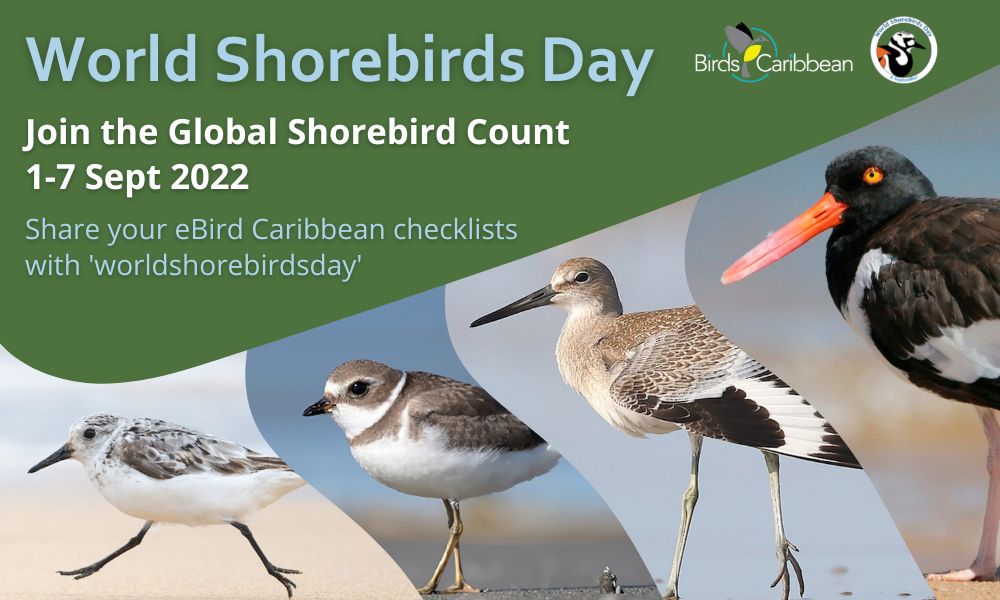
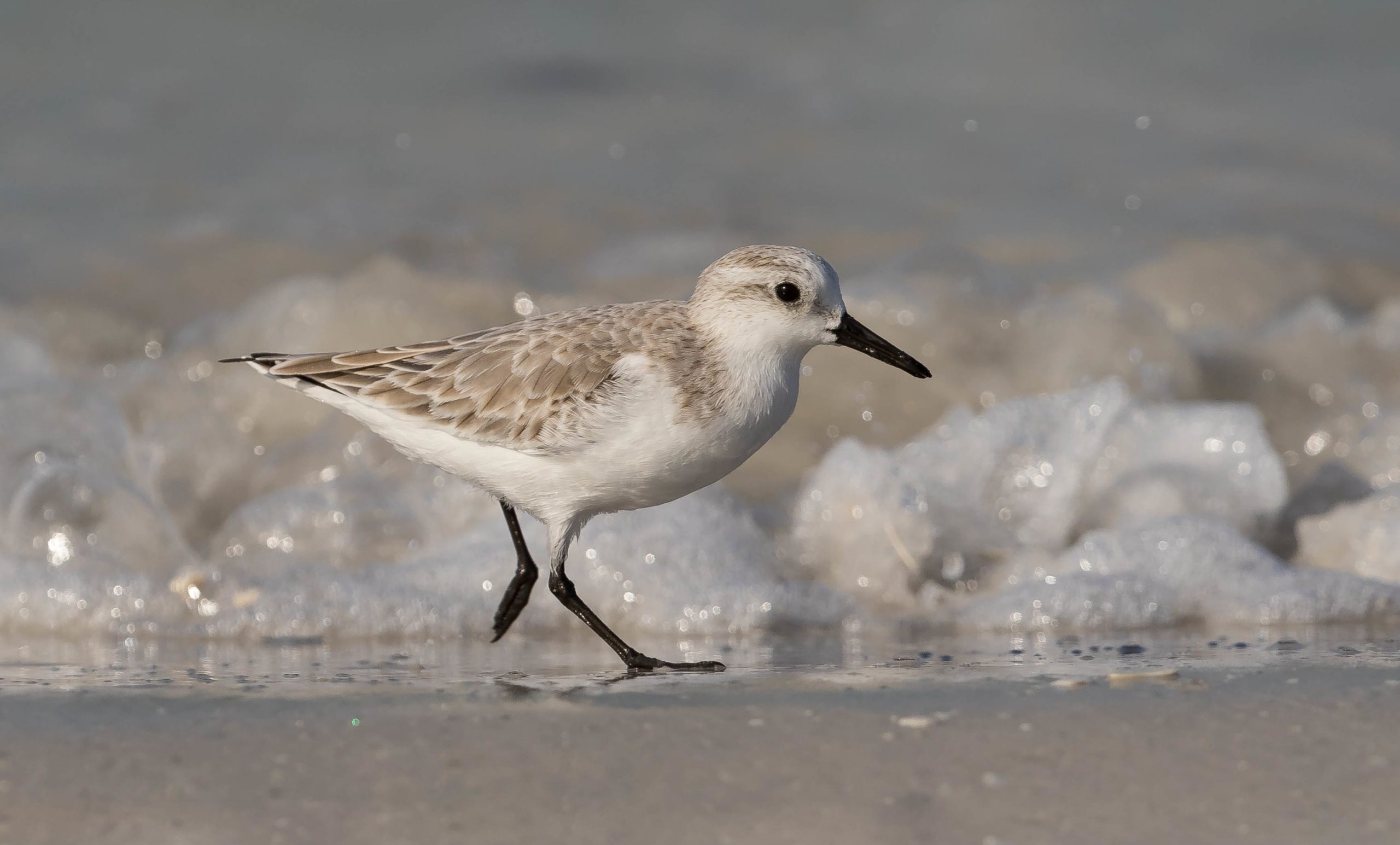
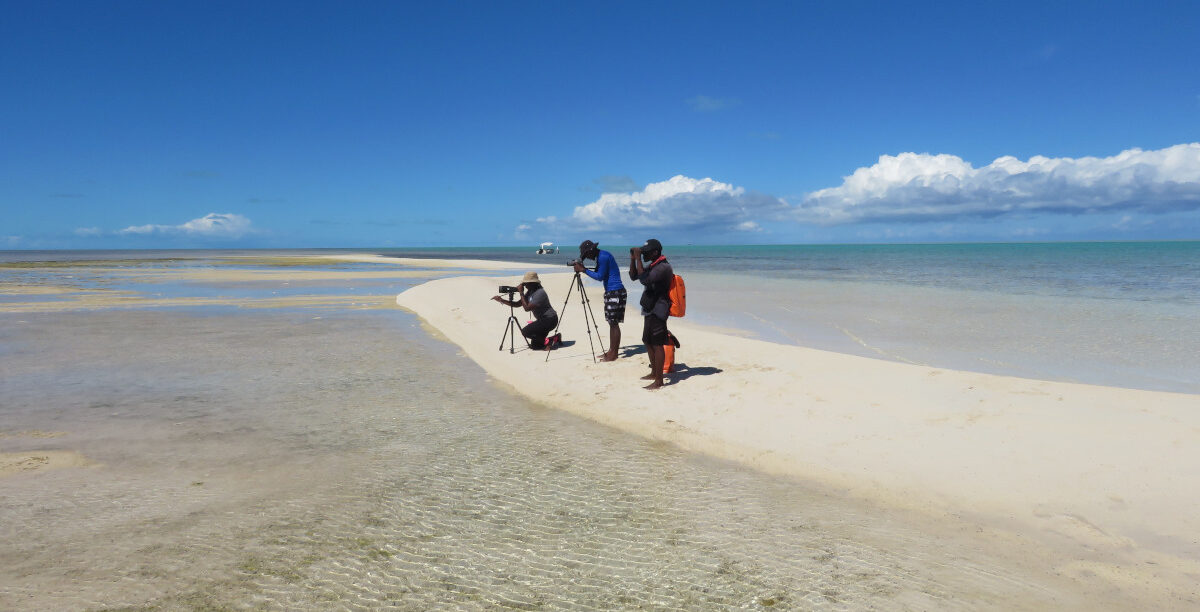
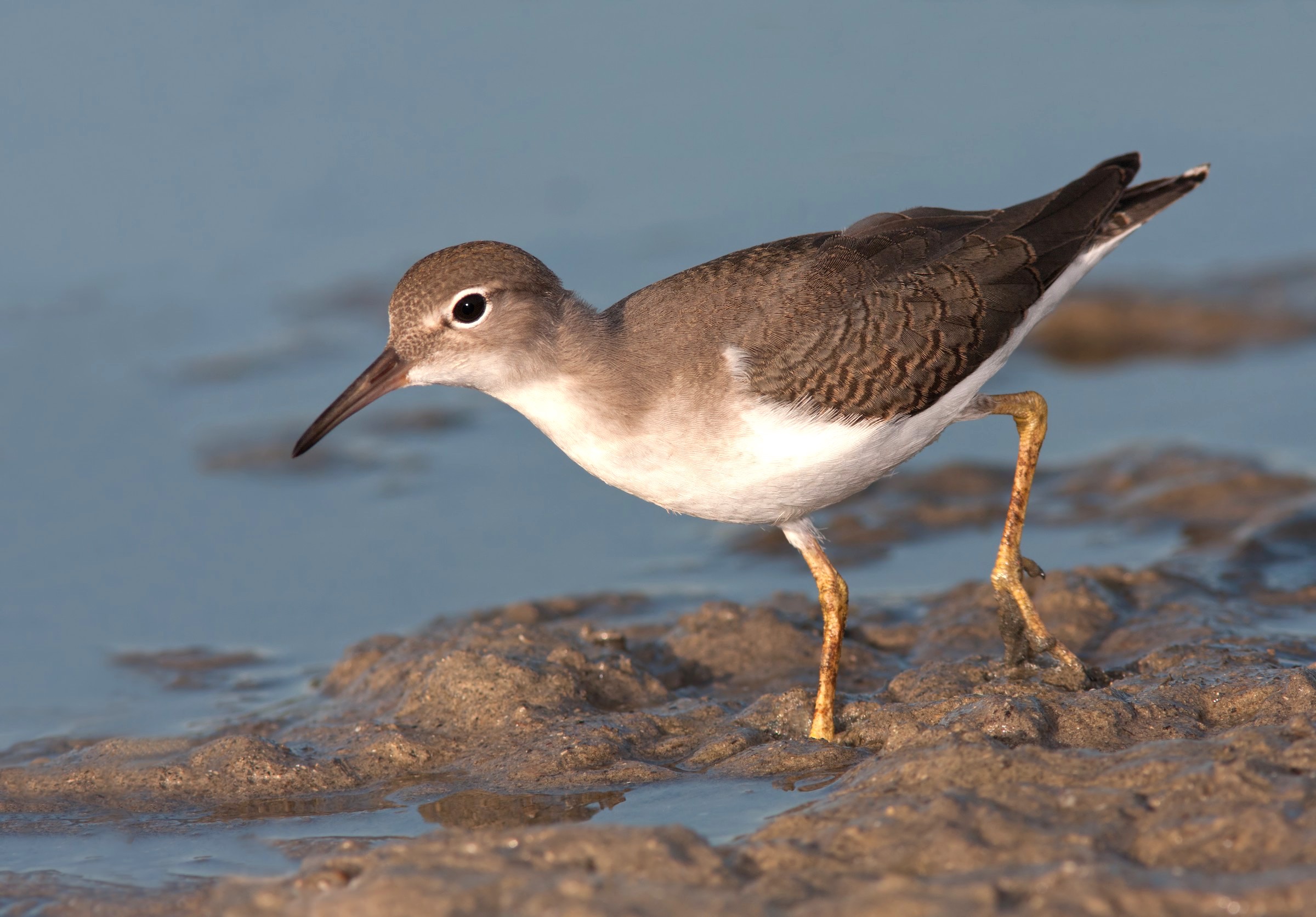
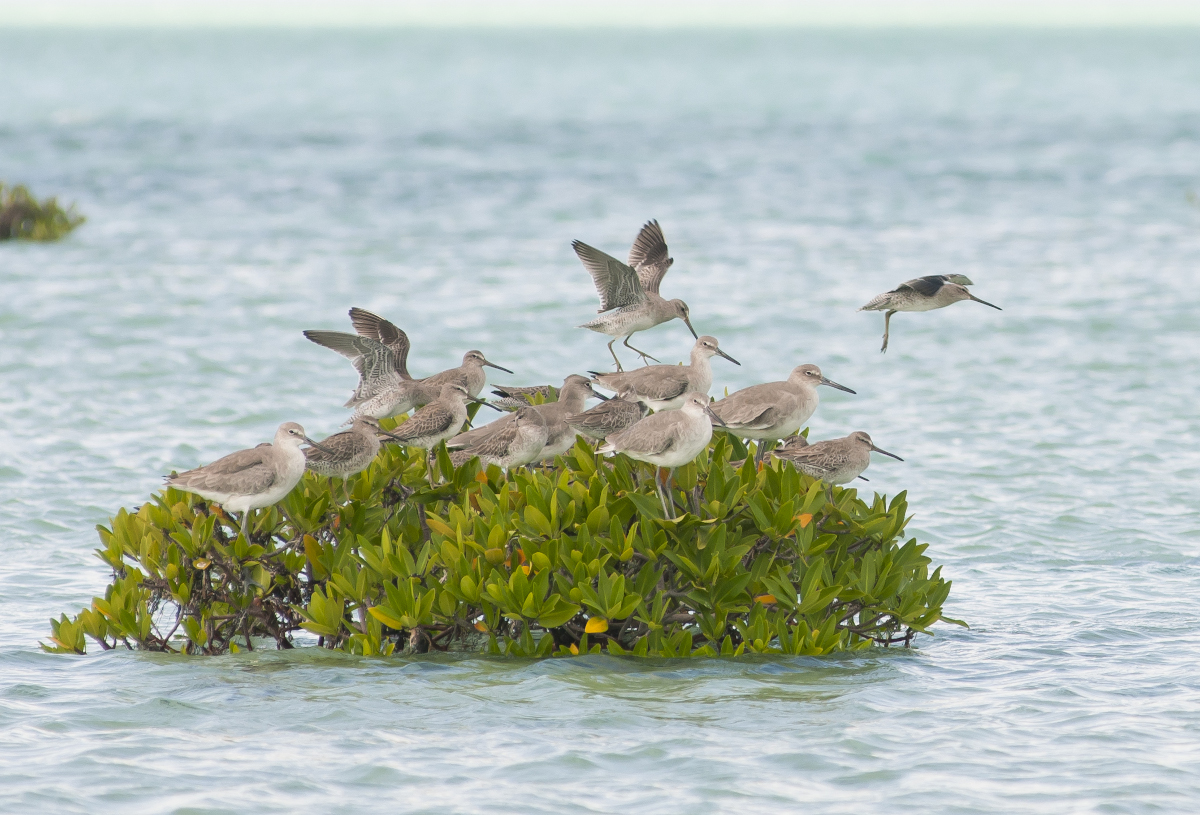
 You can also brush up on your CWC survey skills, waterbird ID, and shorebird ID before you go out on your surveys by watching our fantastic CWC and Shorebird ID webinars on YouTube. Go to our shorebird resources page to find everything you need. Of course, don’t forget to take your favorite bird ID guide with you when you do your shorebird counts.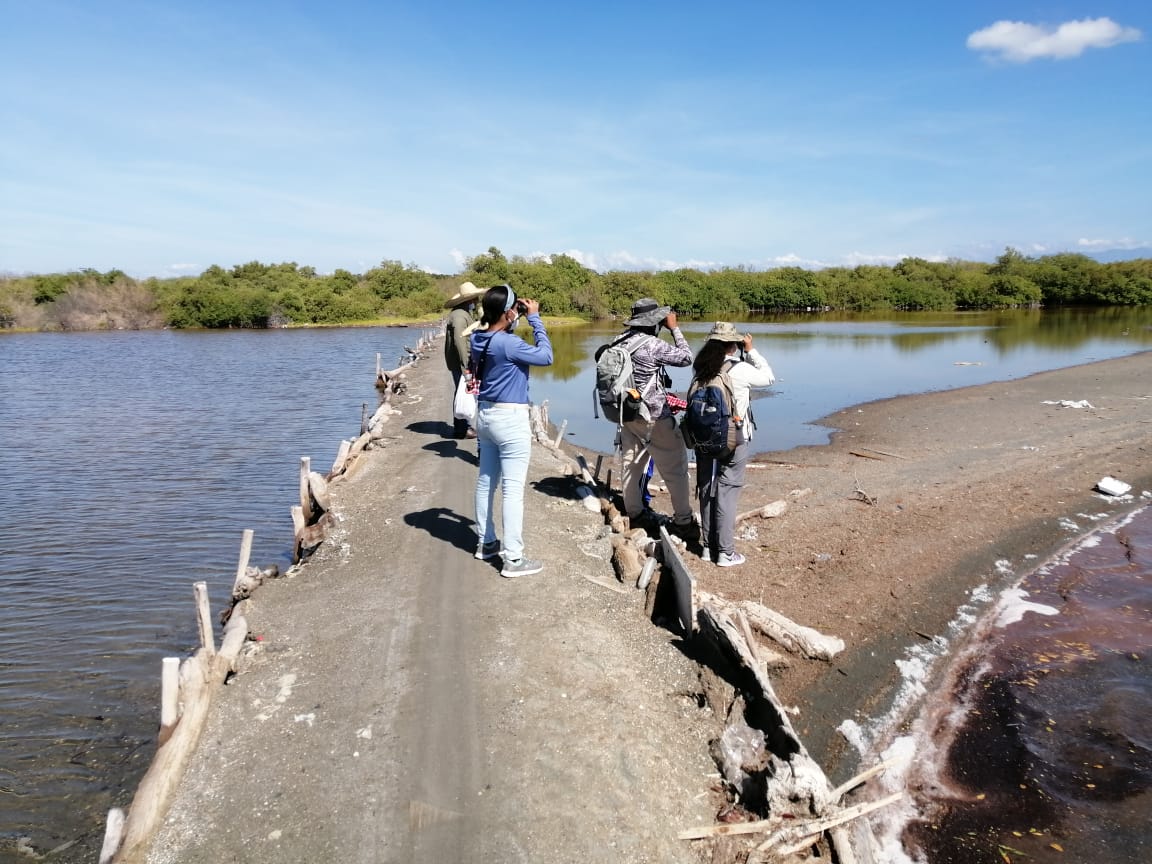
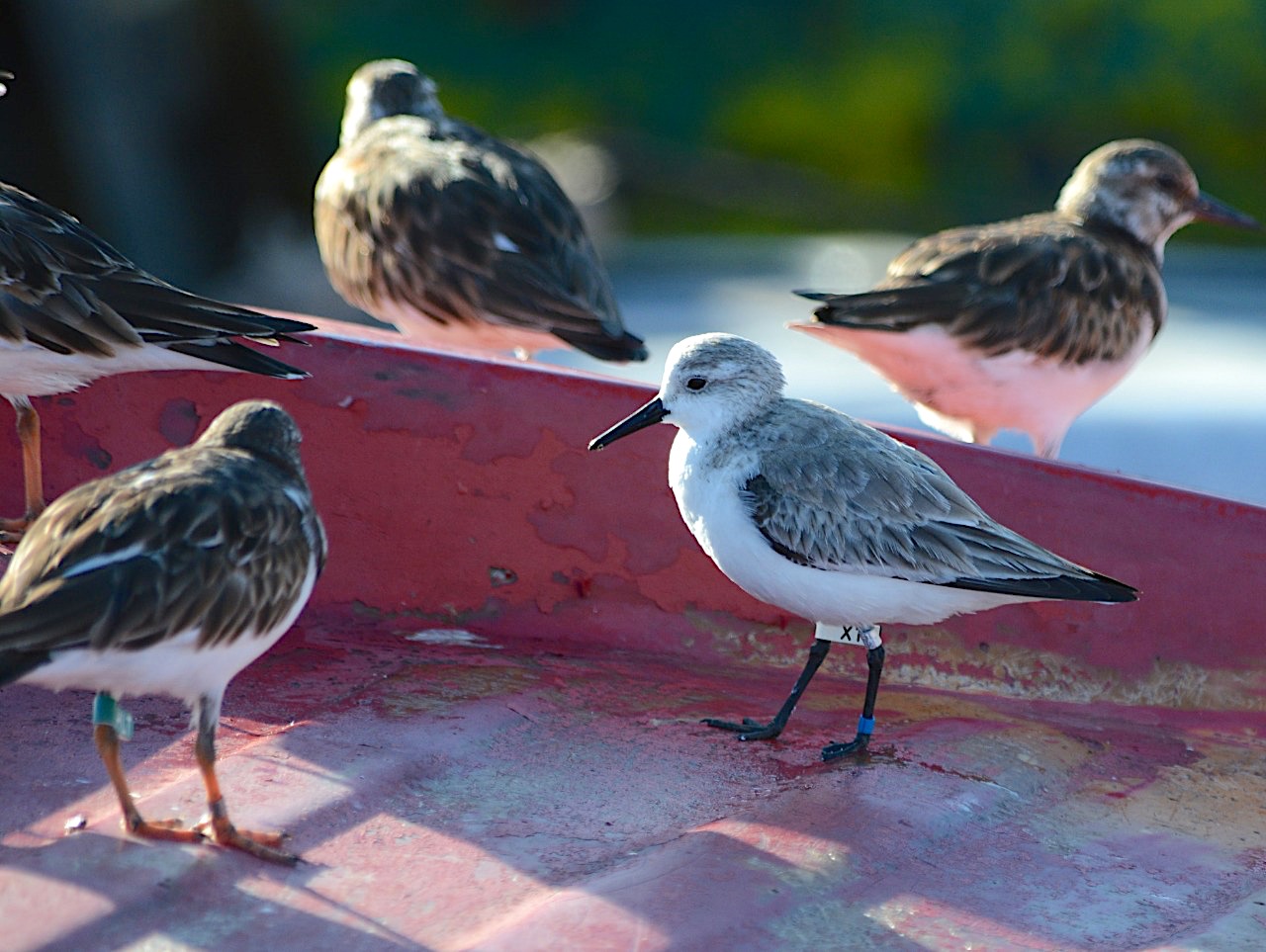
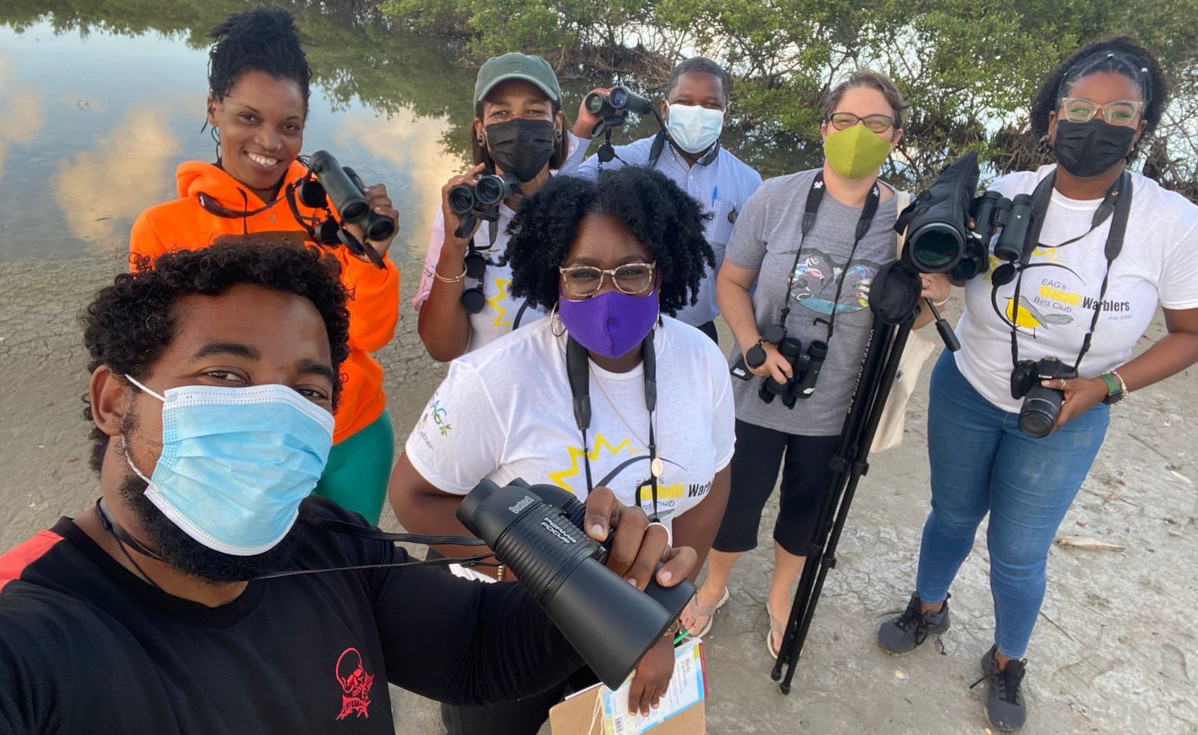
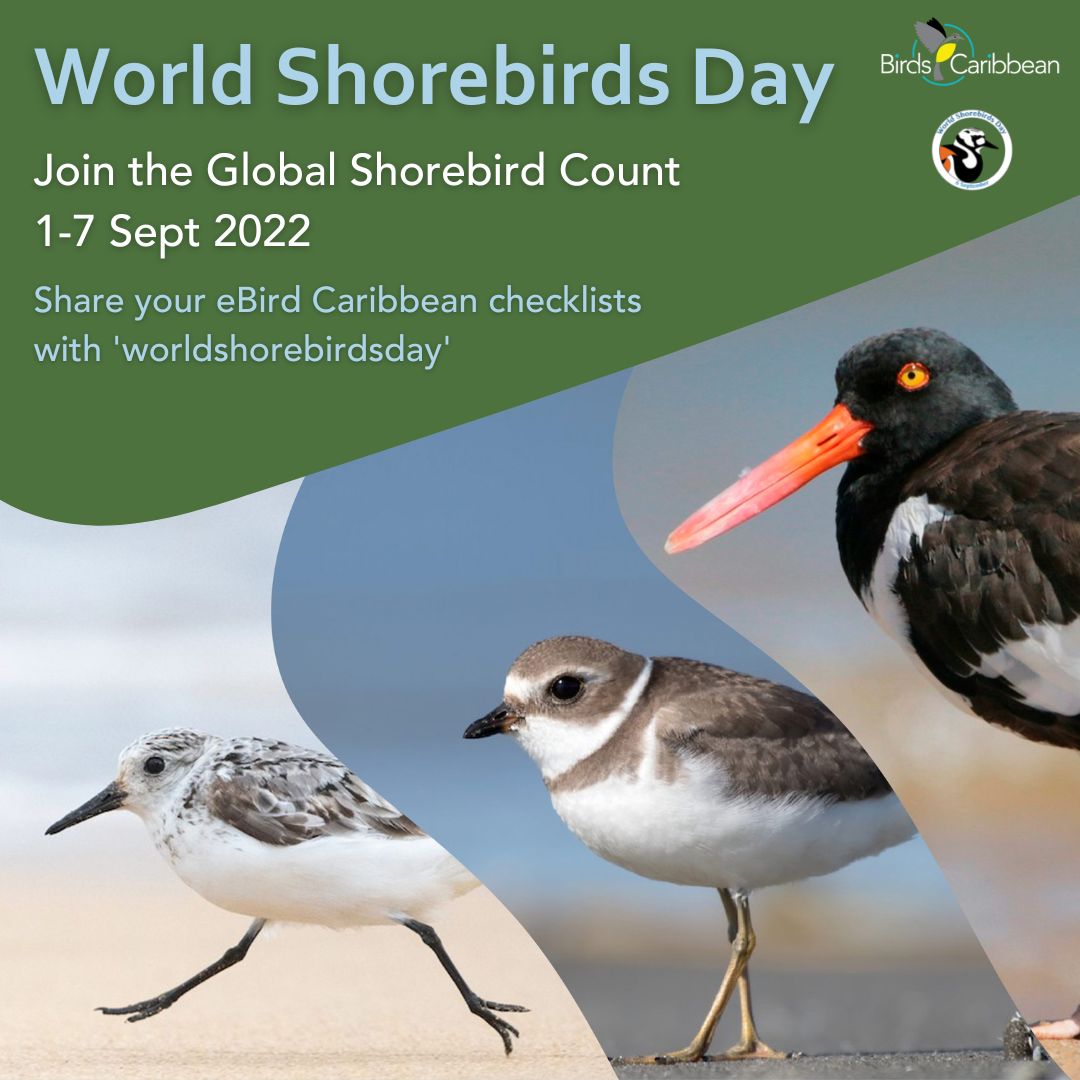
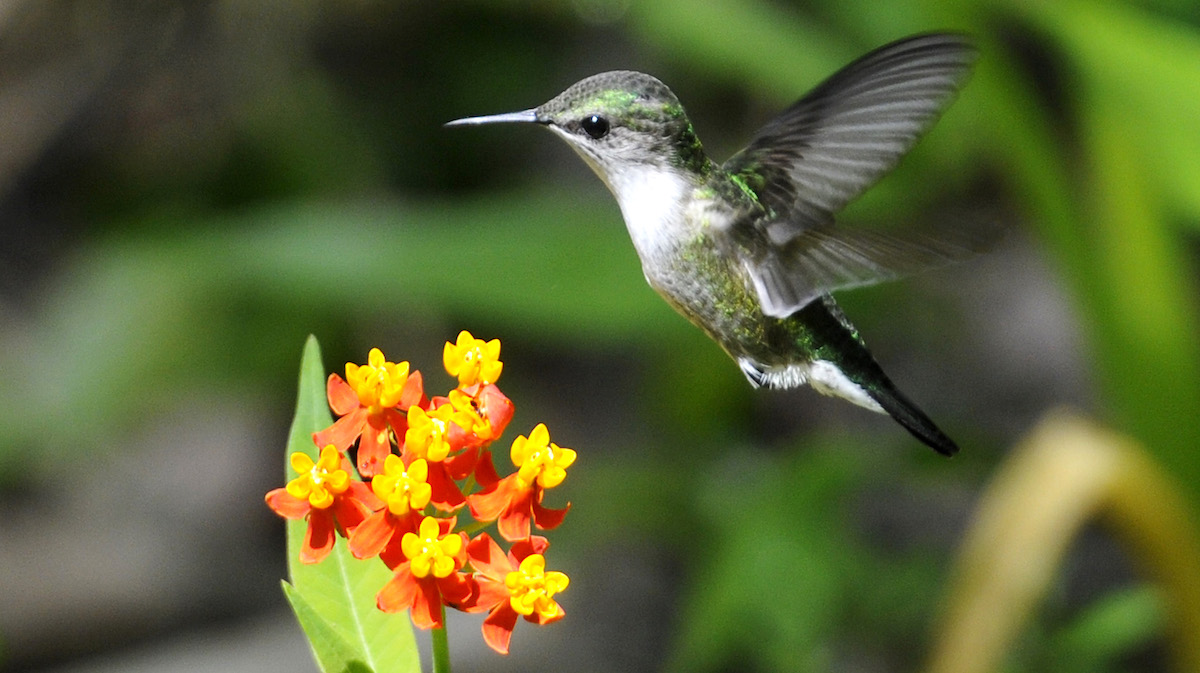
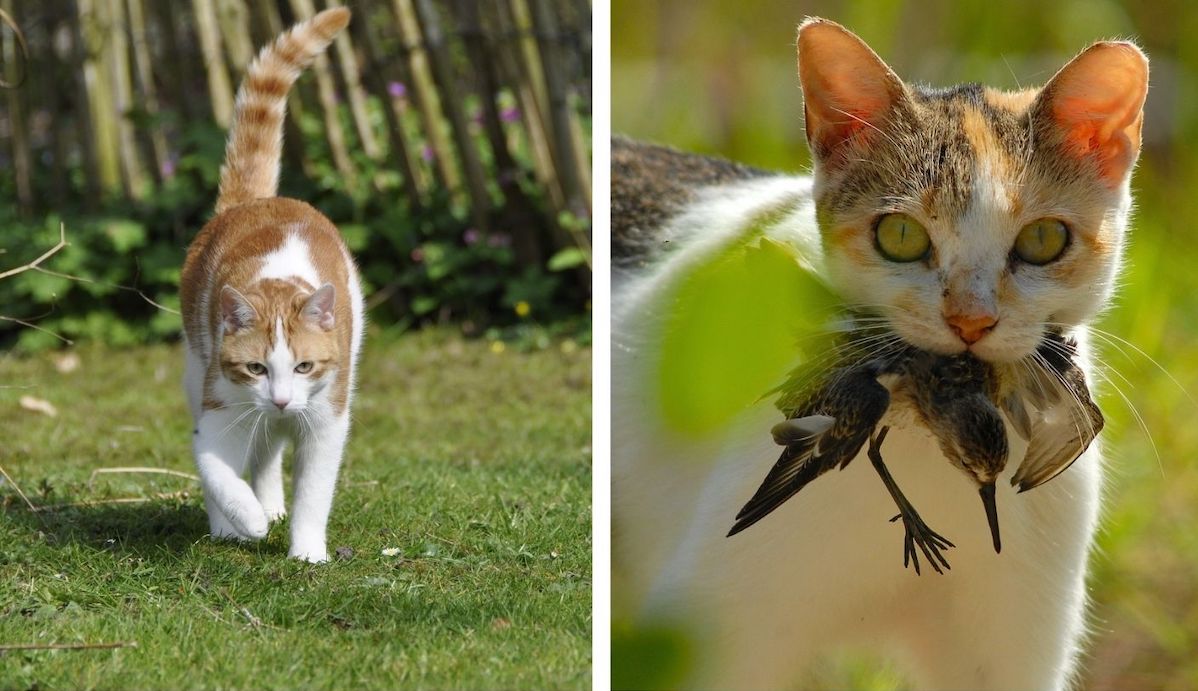
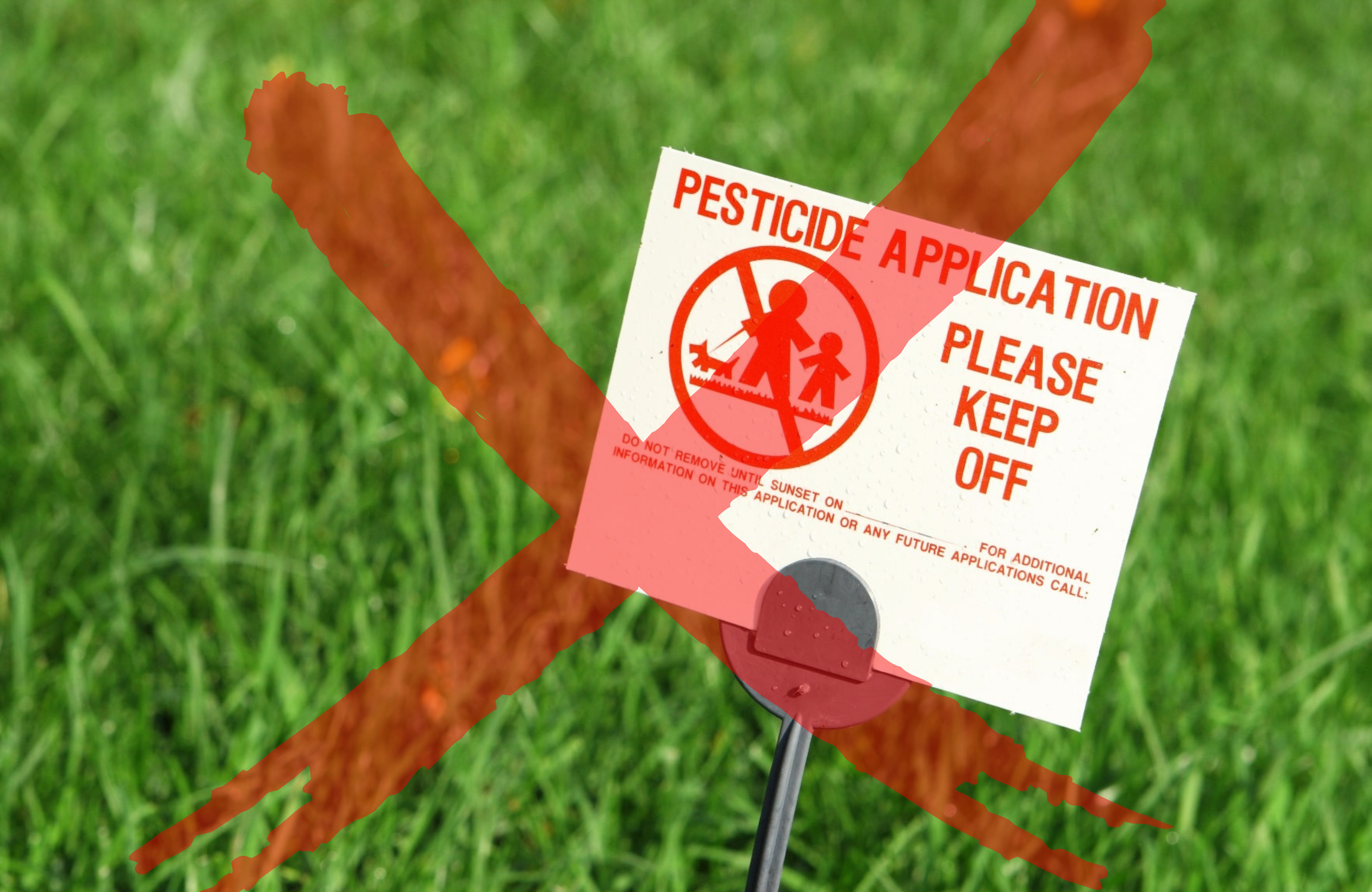
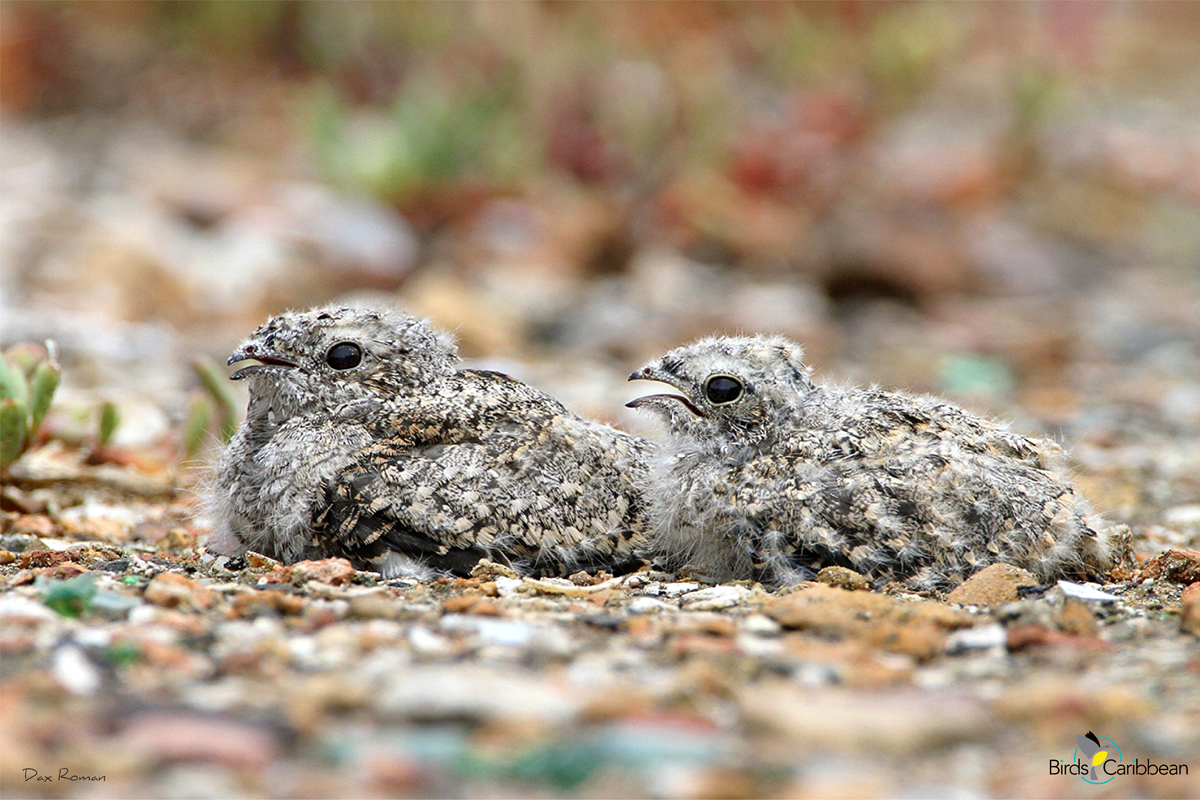
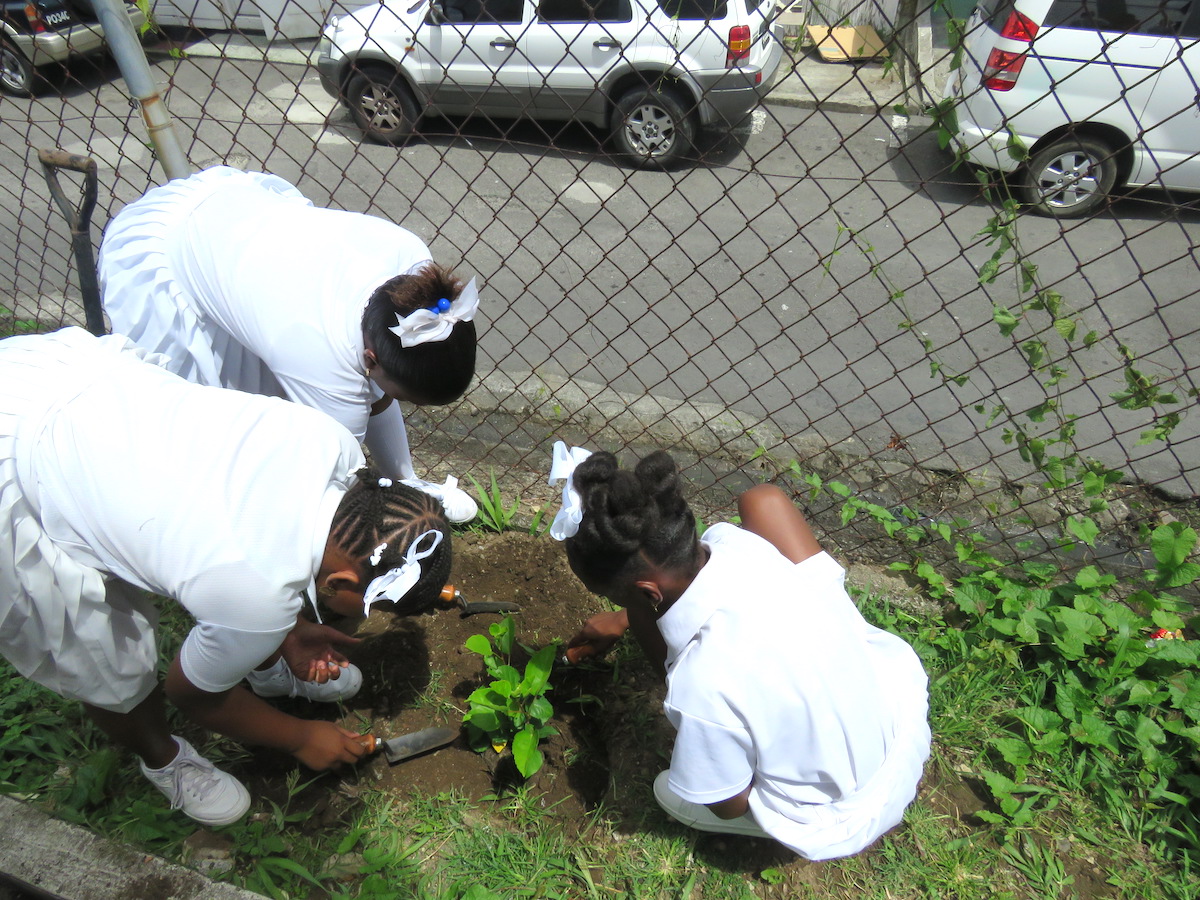
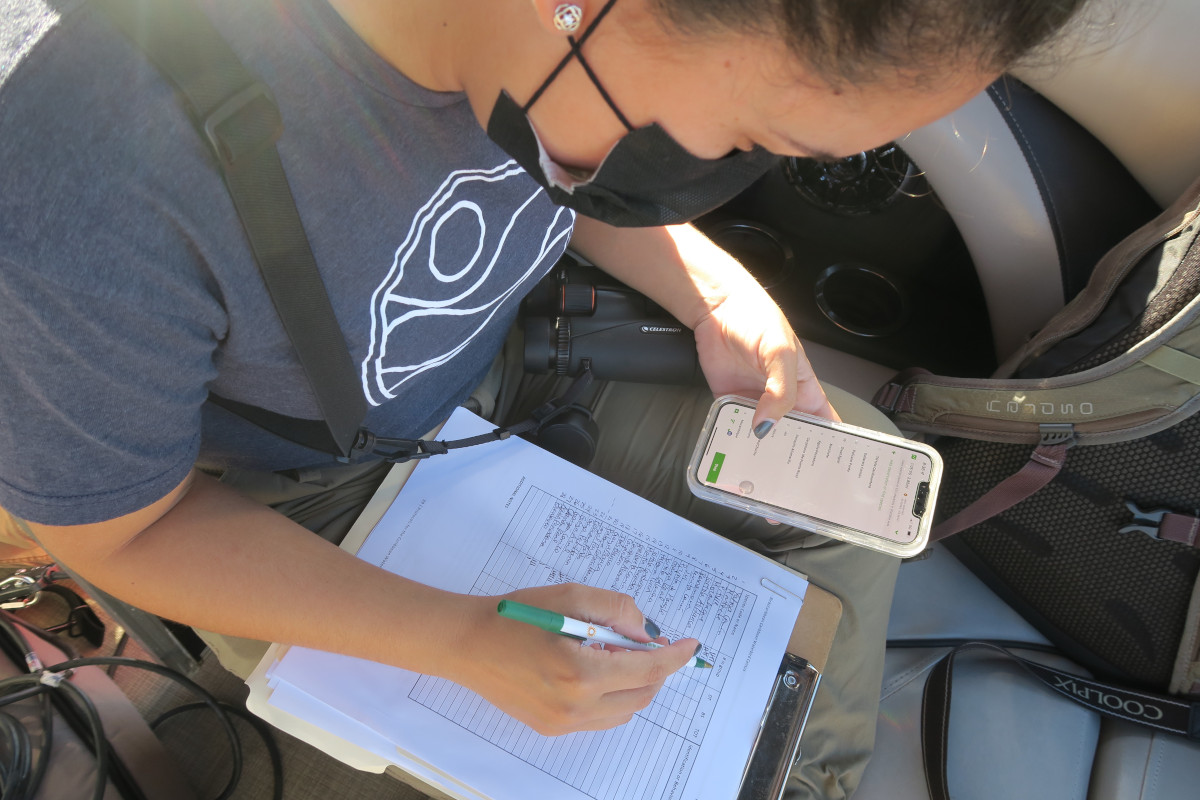


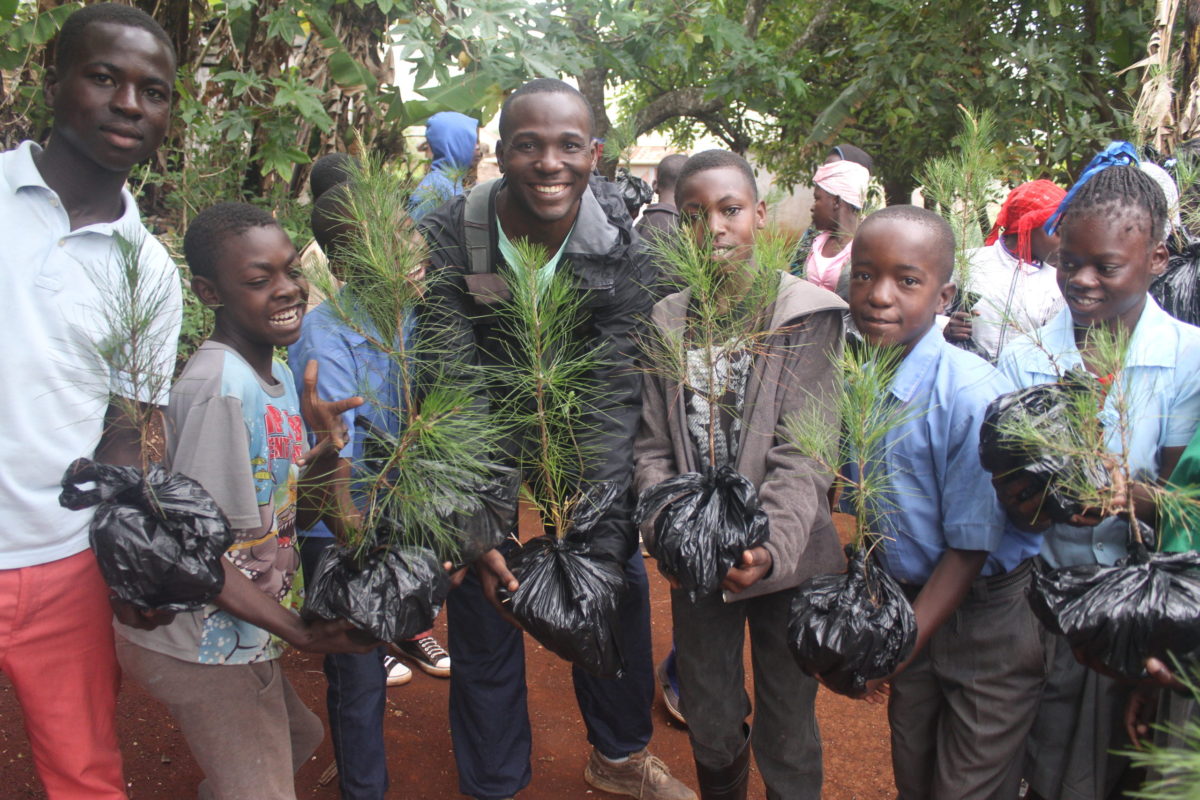


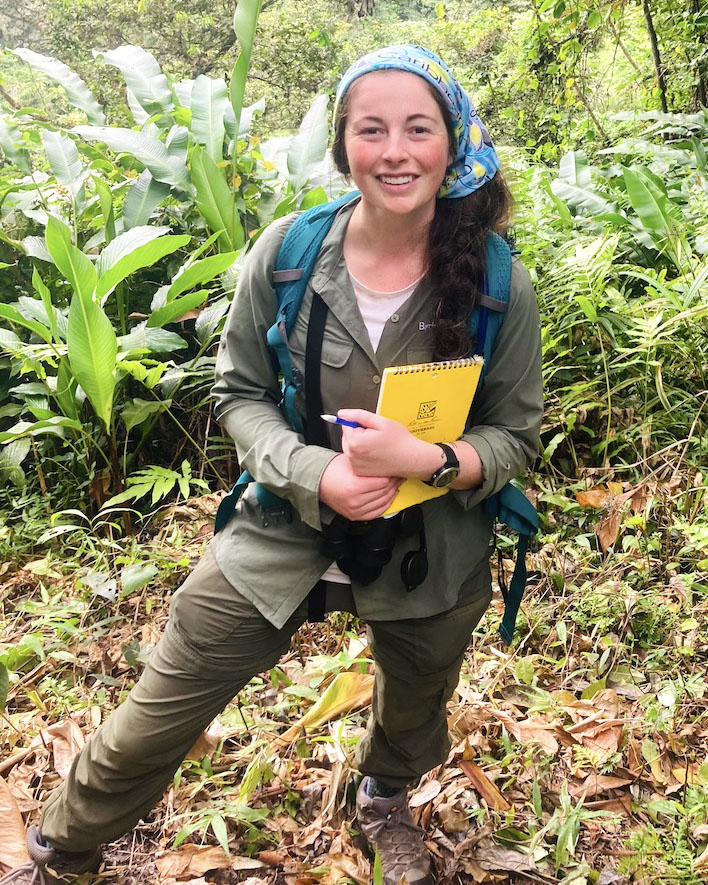
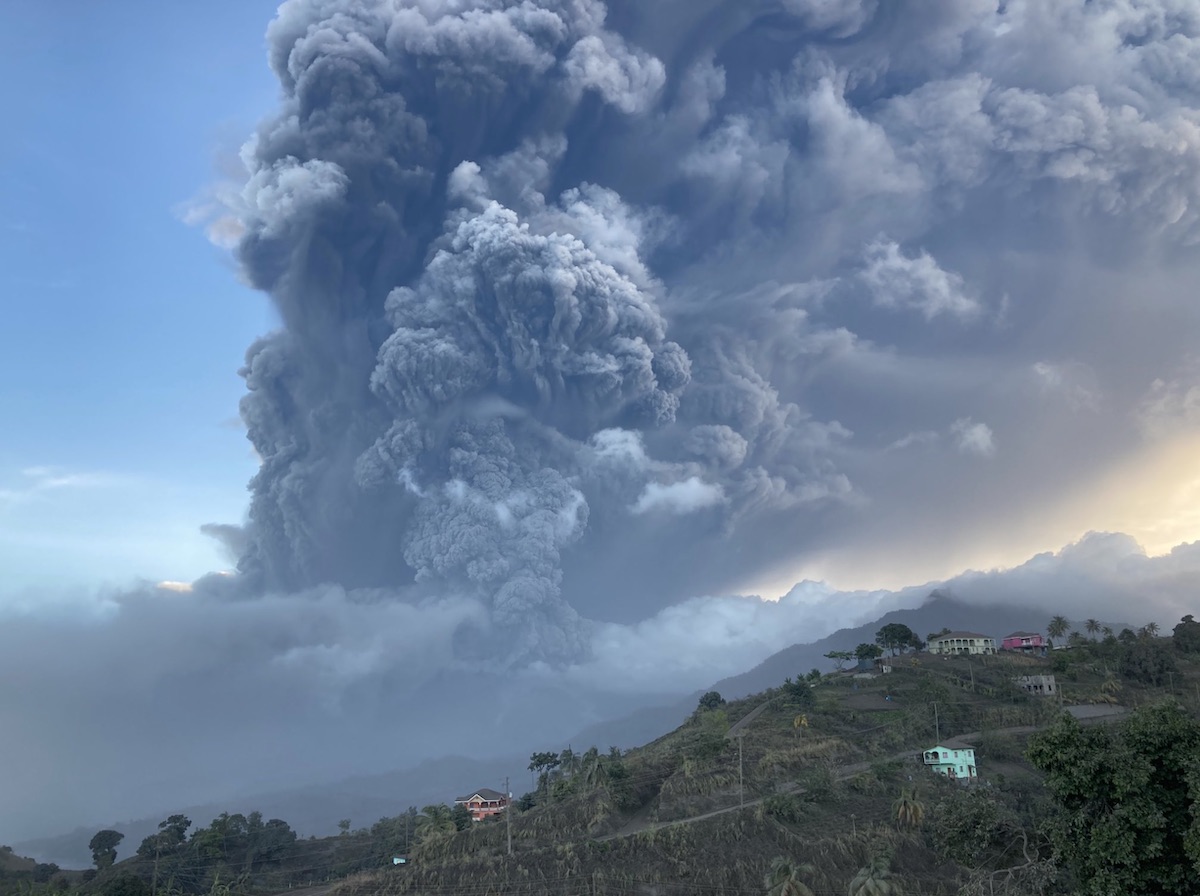


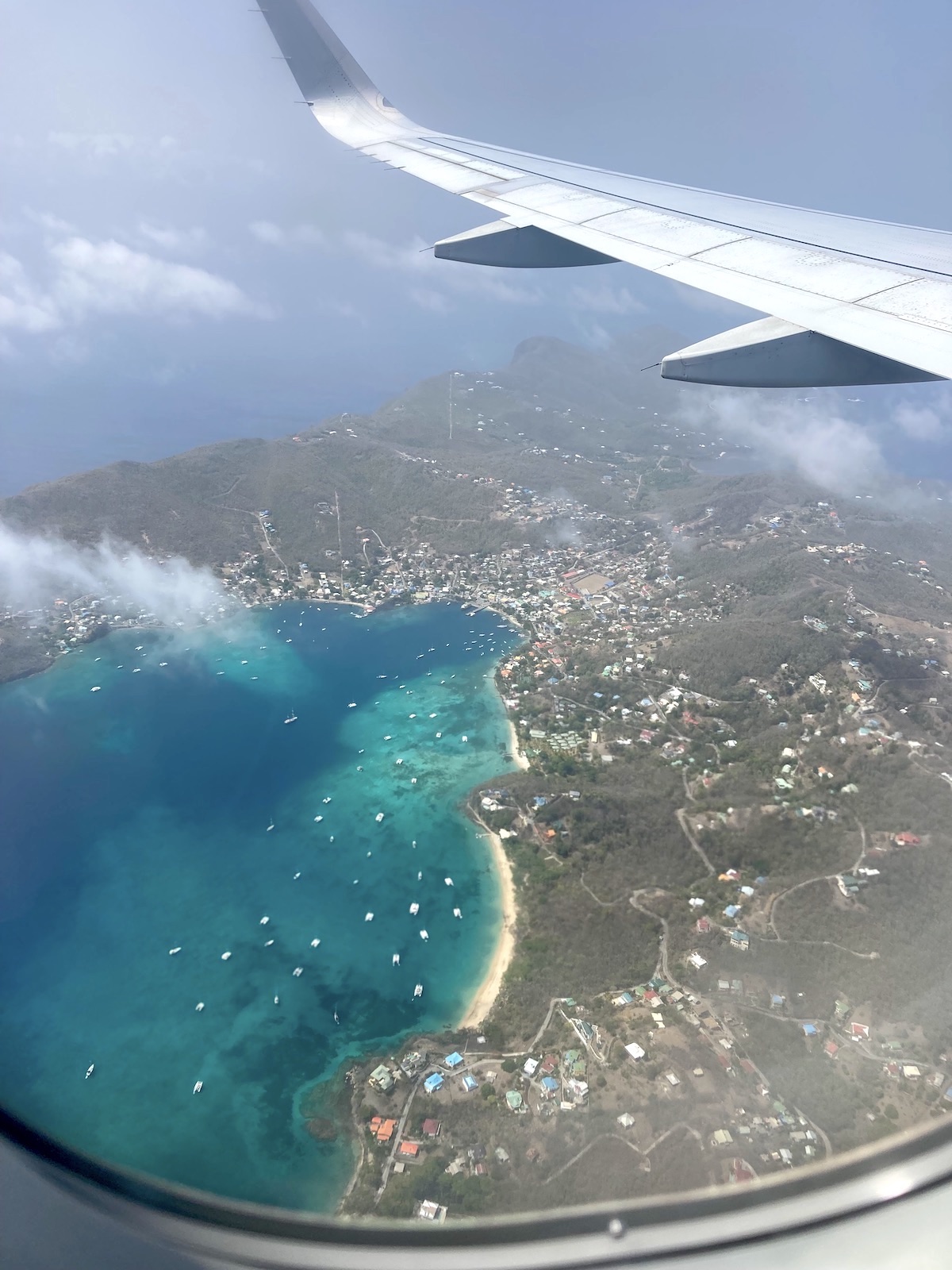
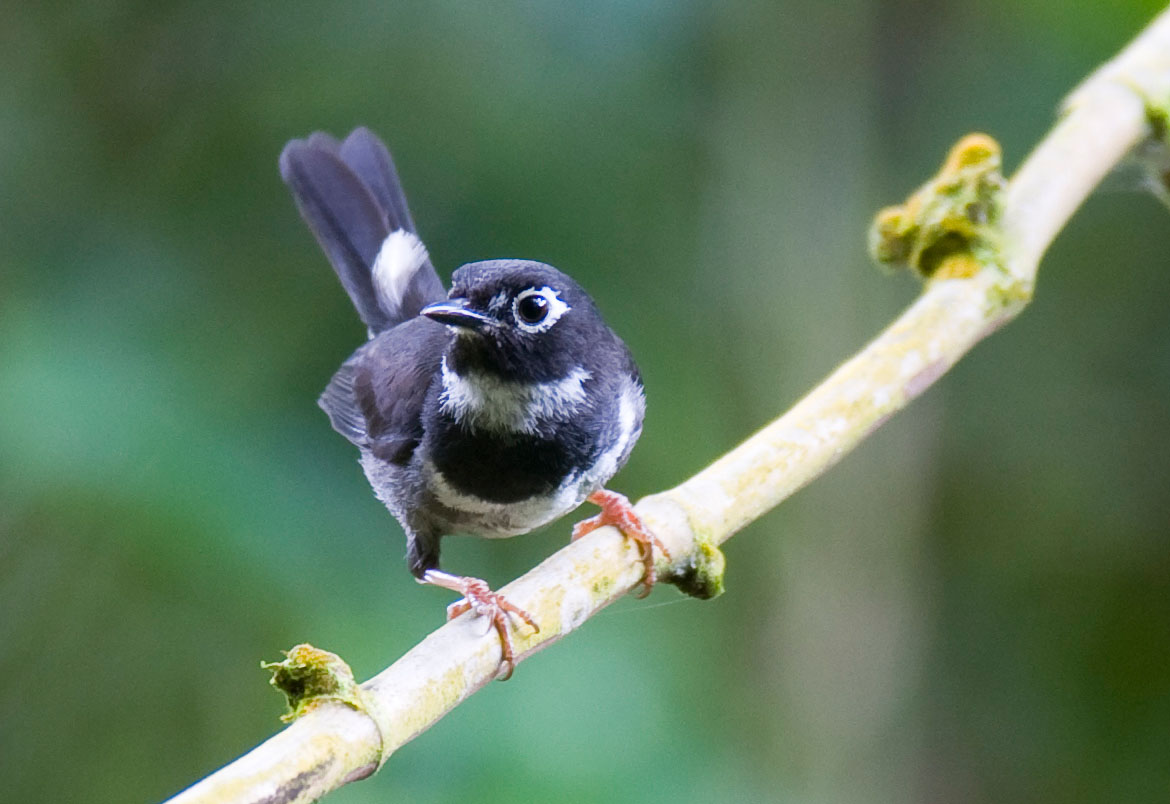
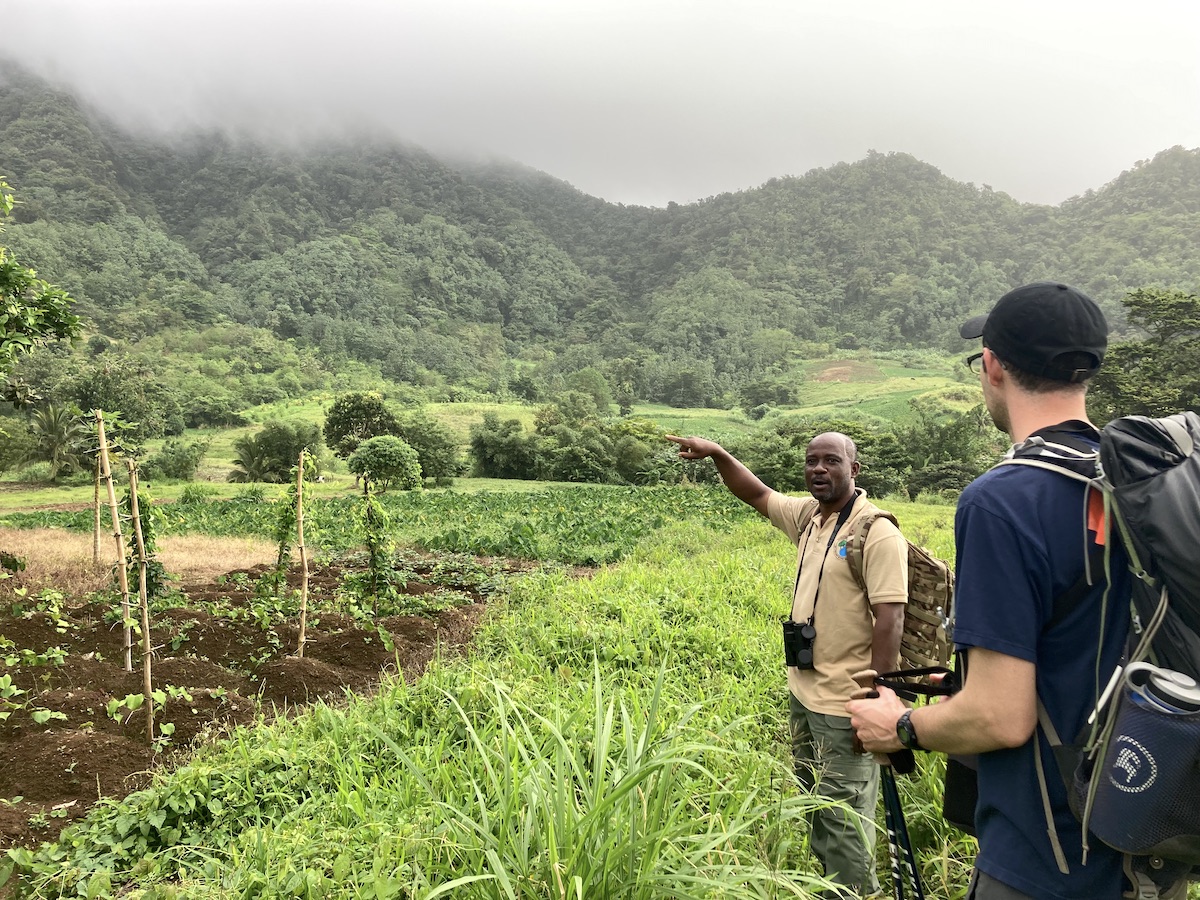


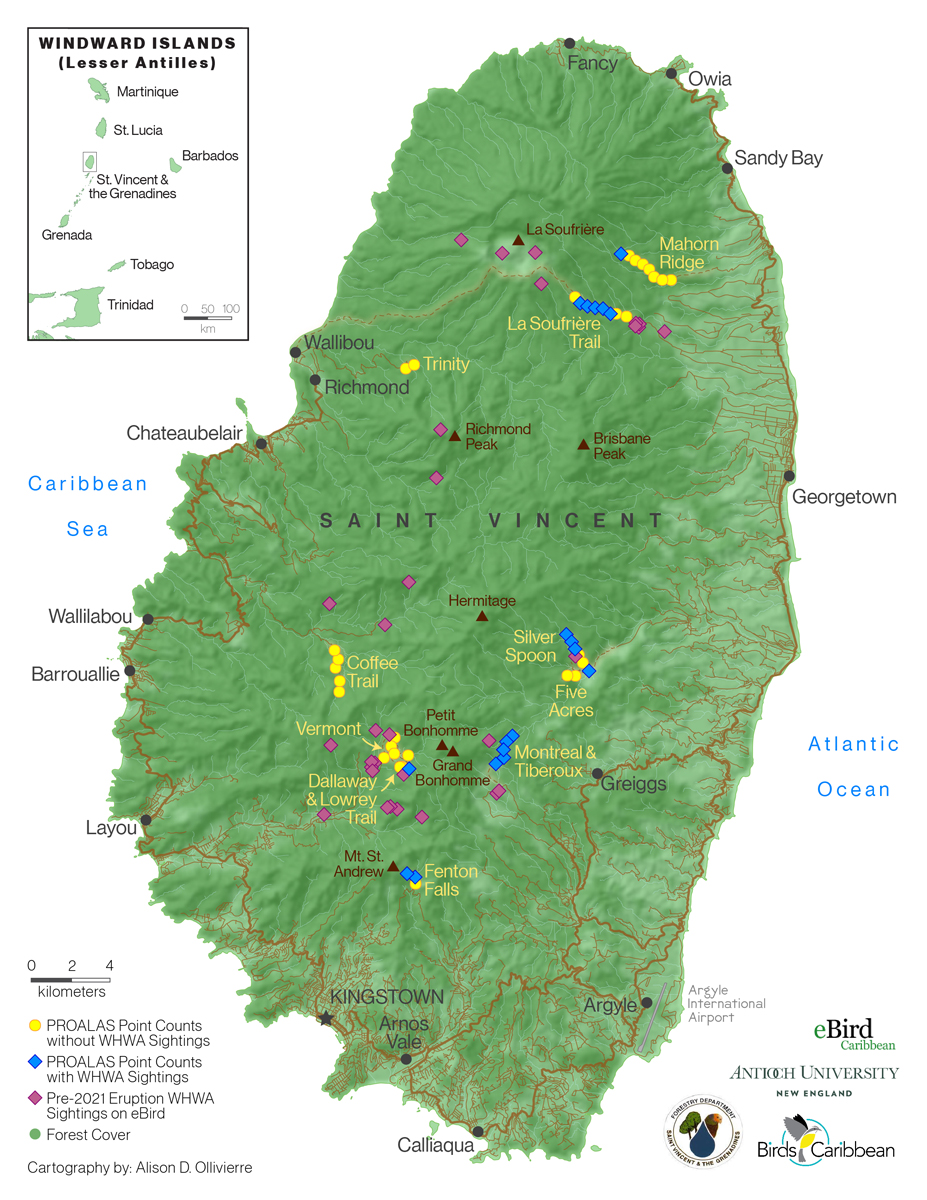


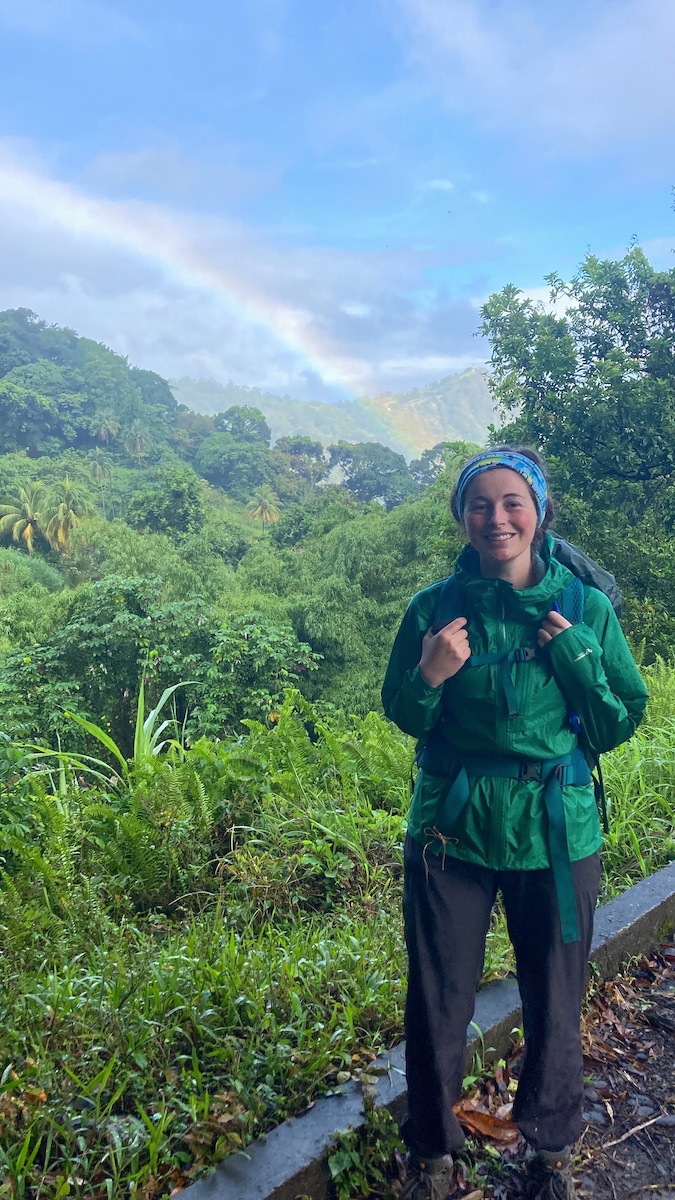


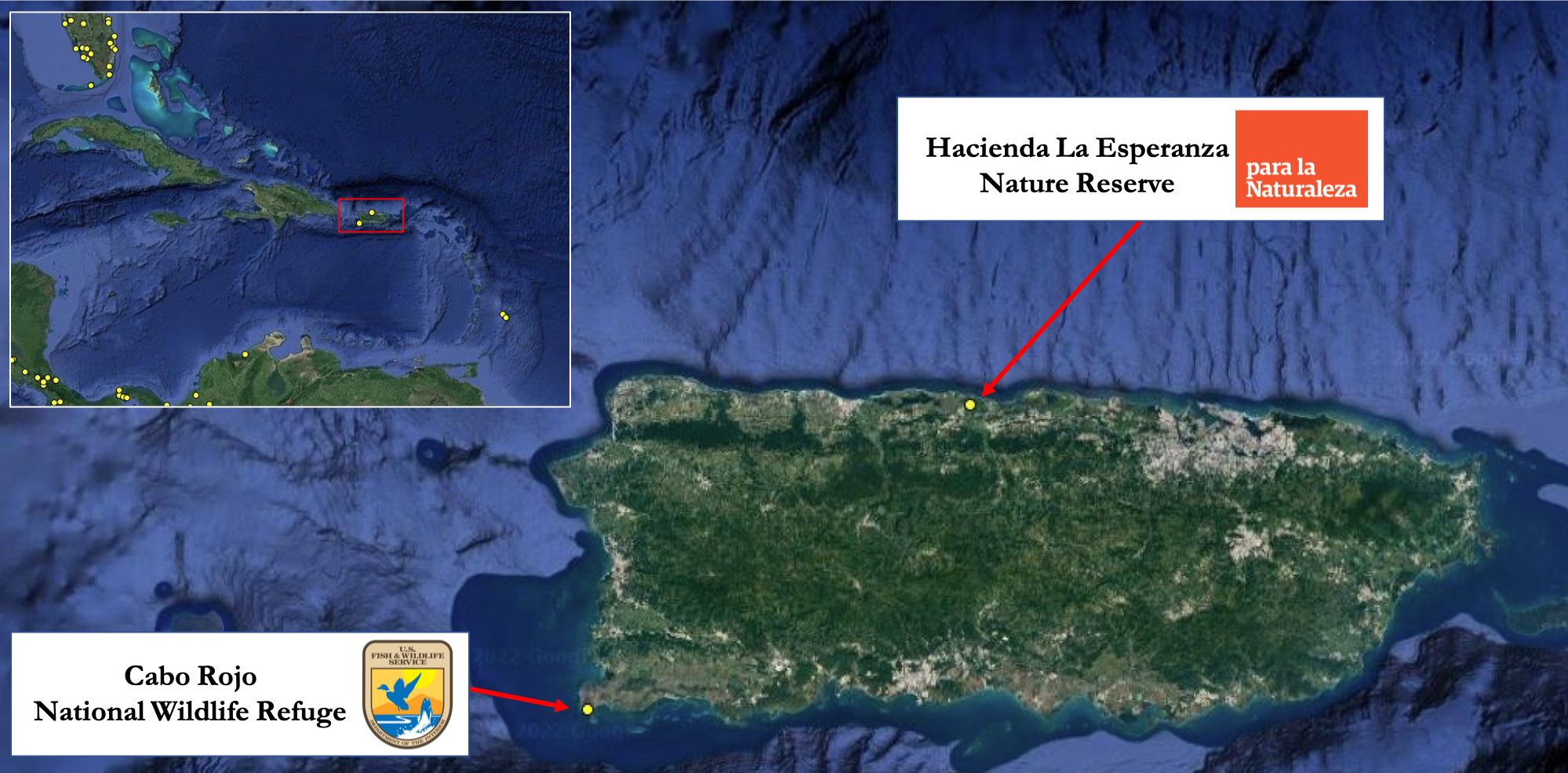


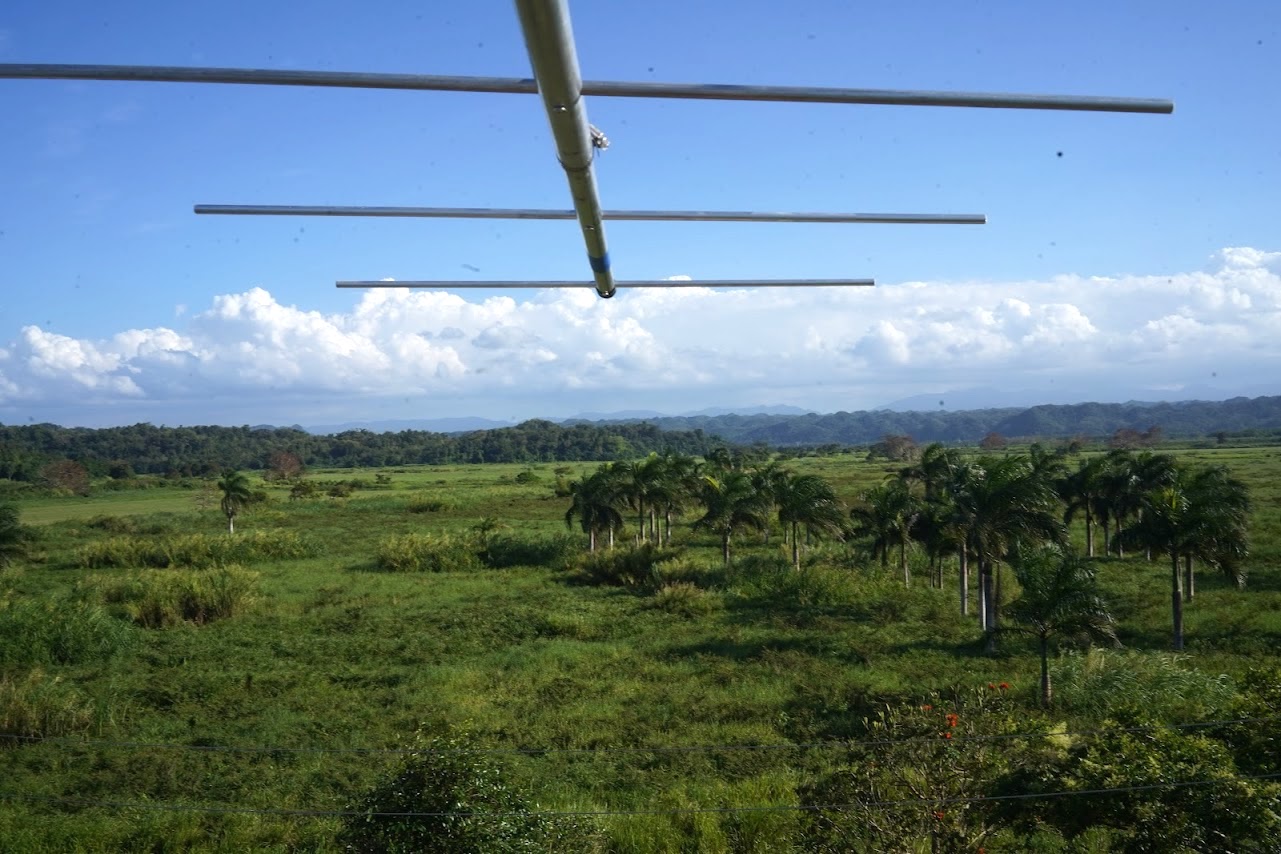




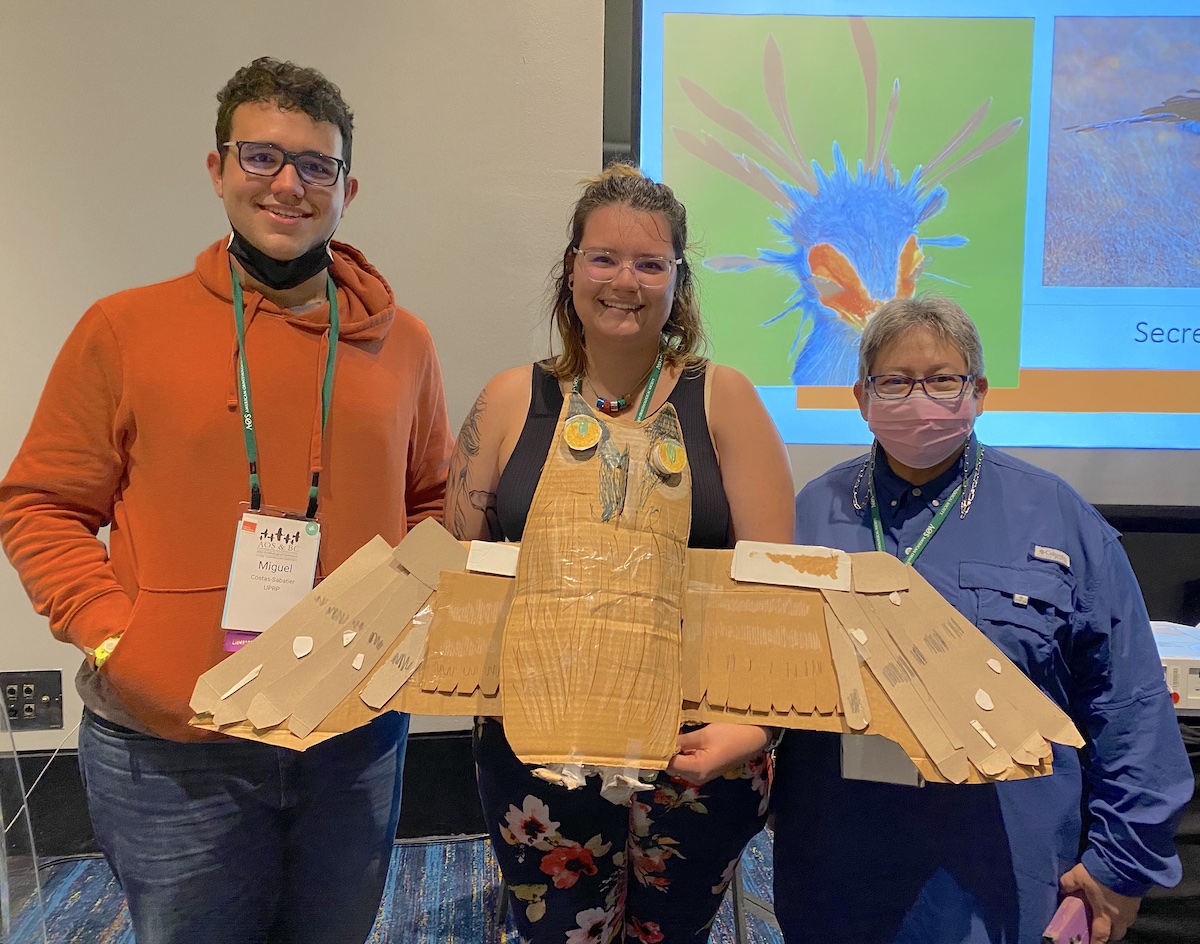
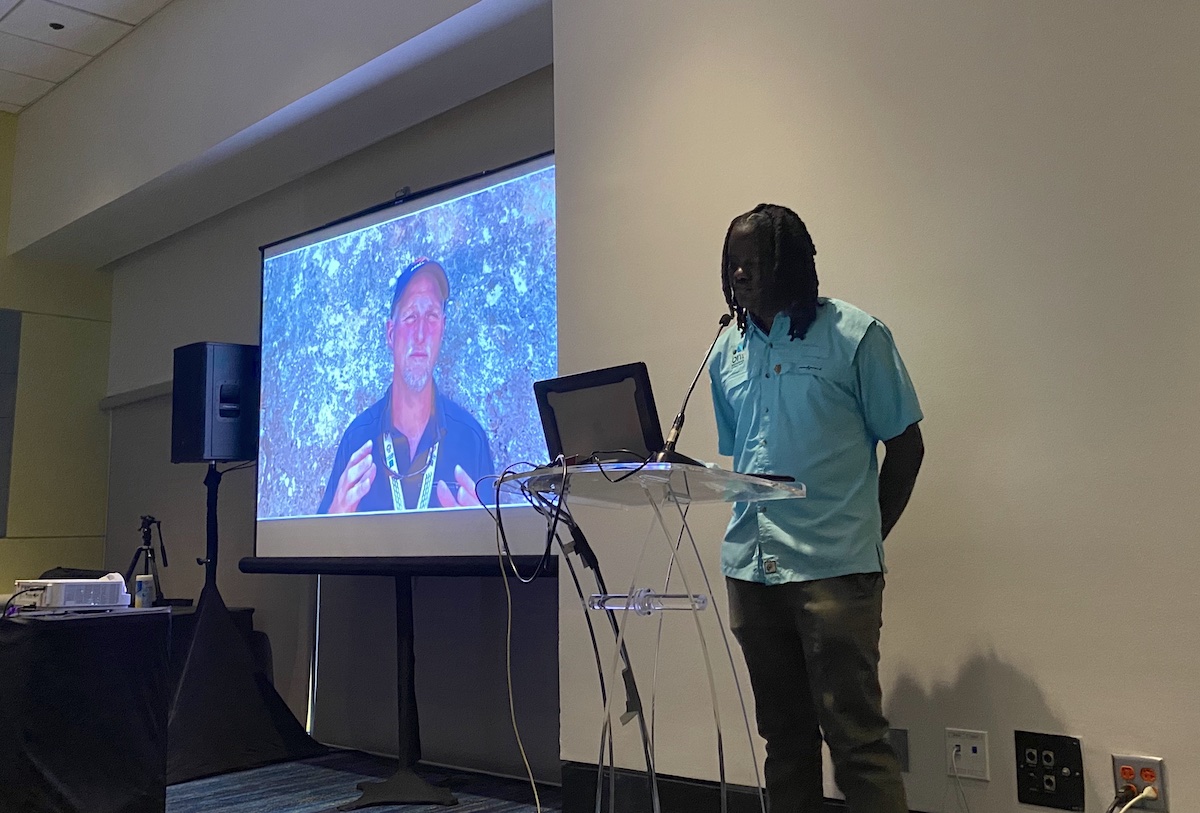
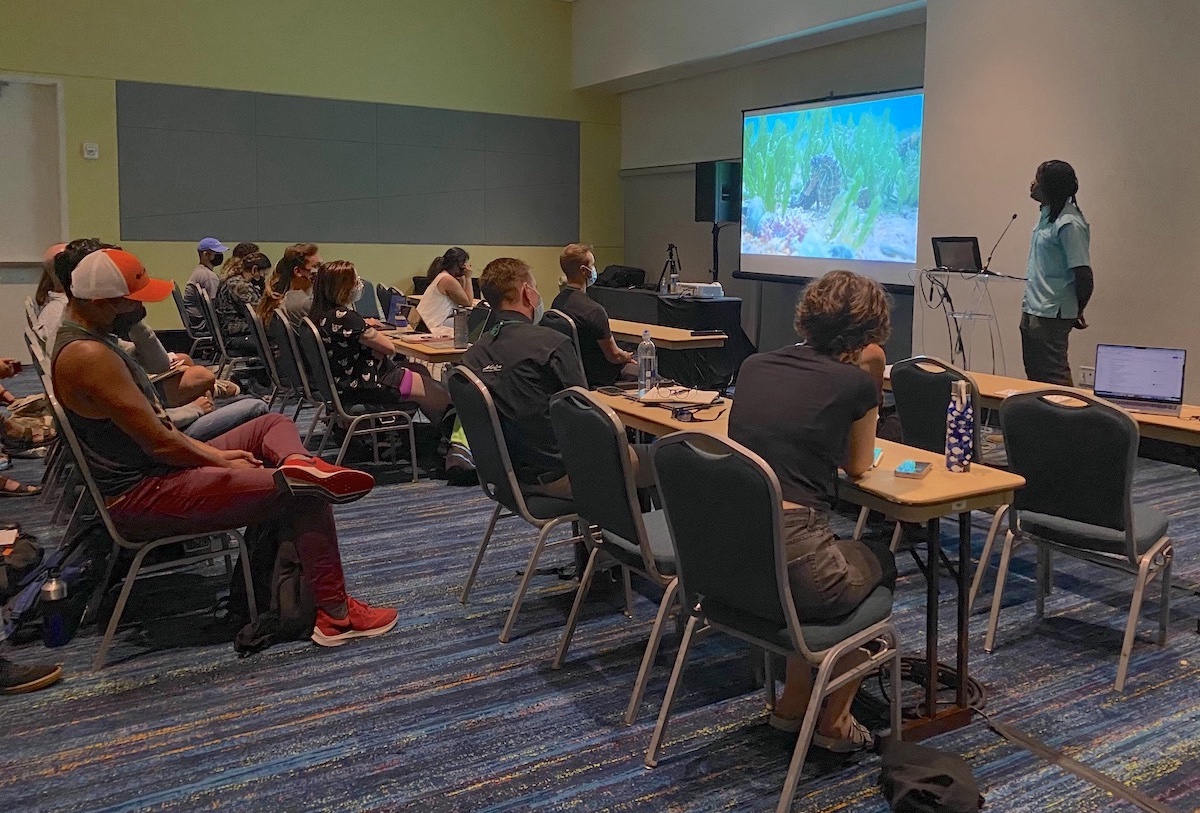


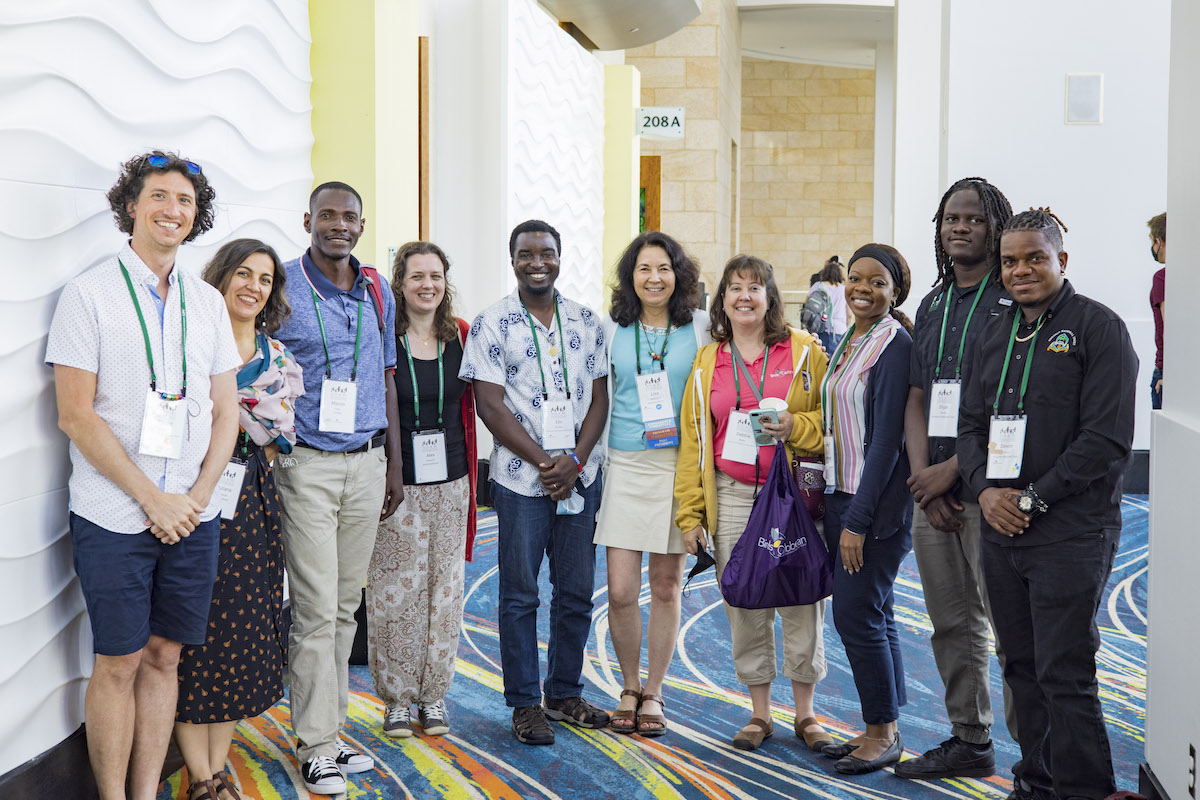
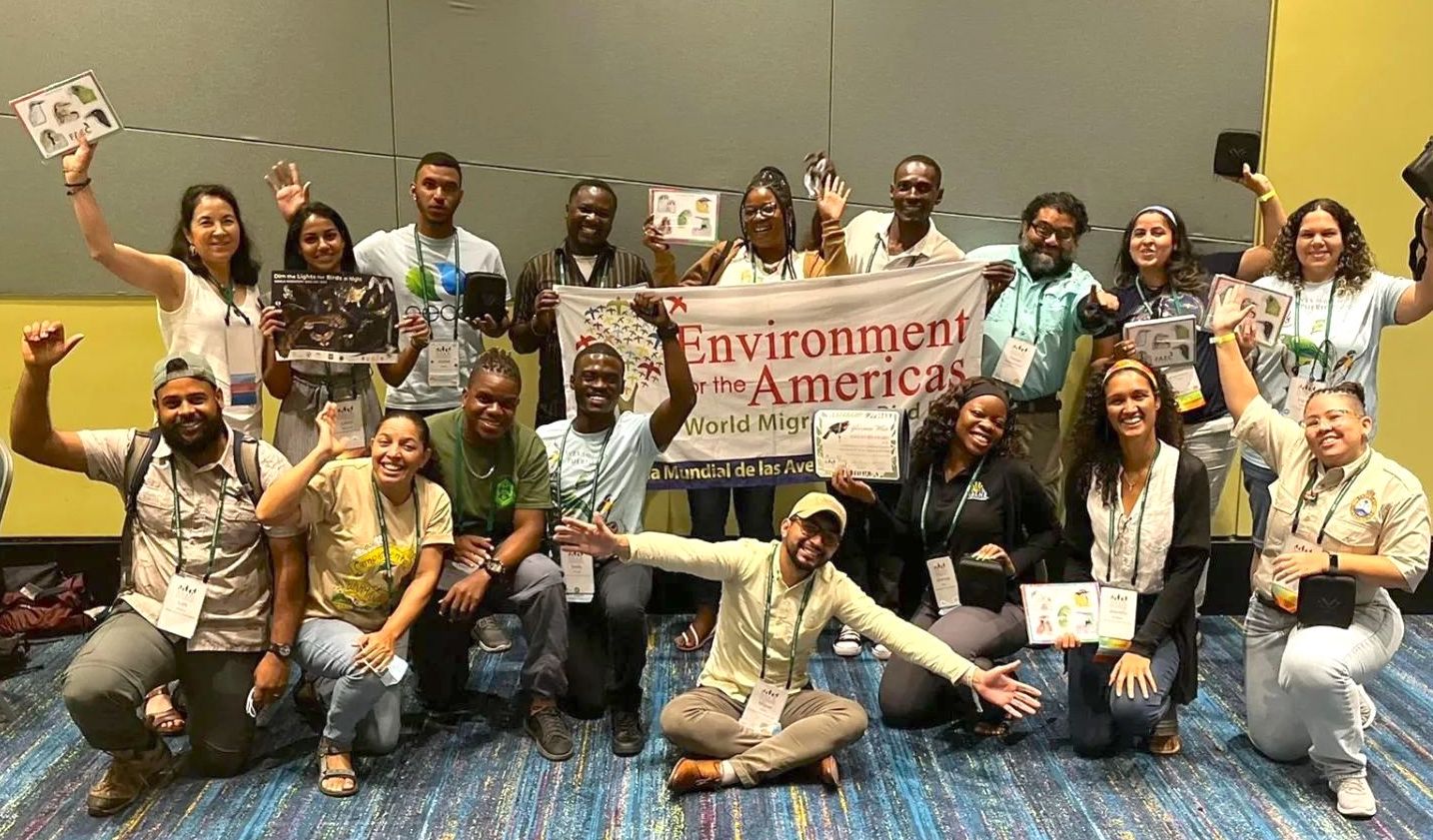


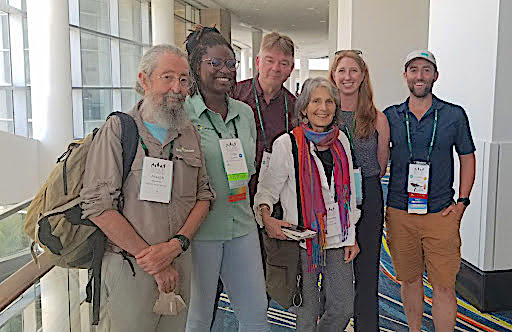
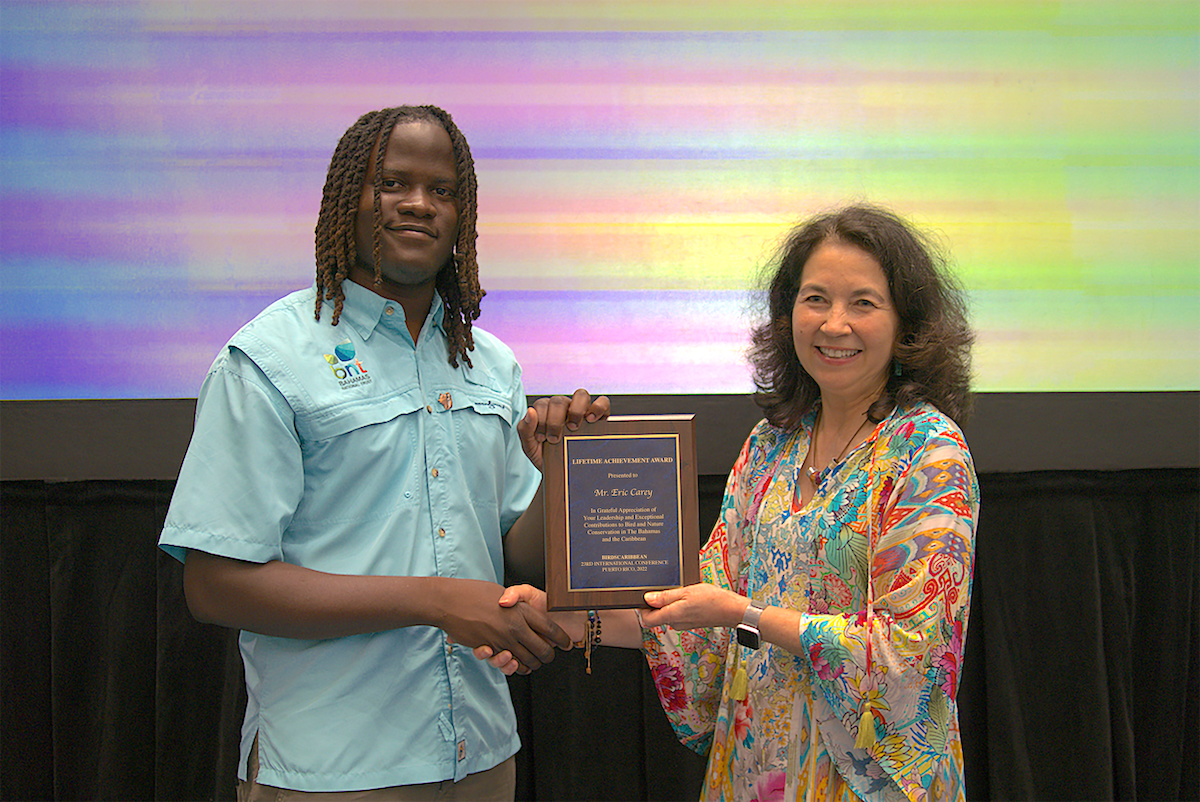


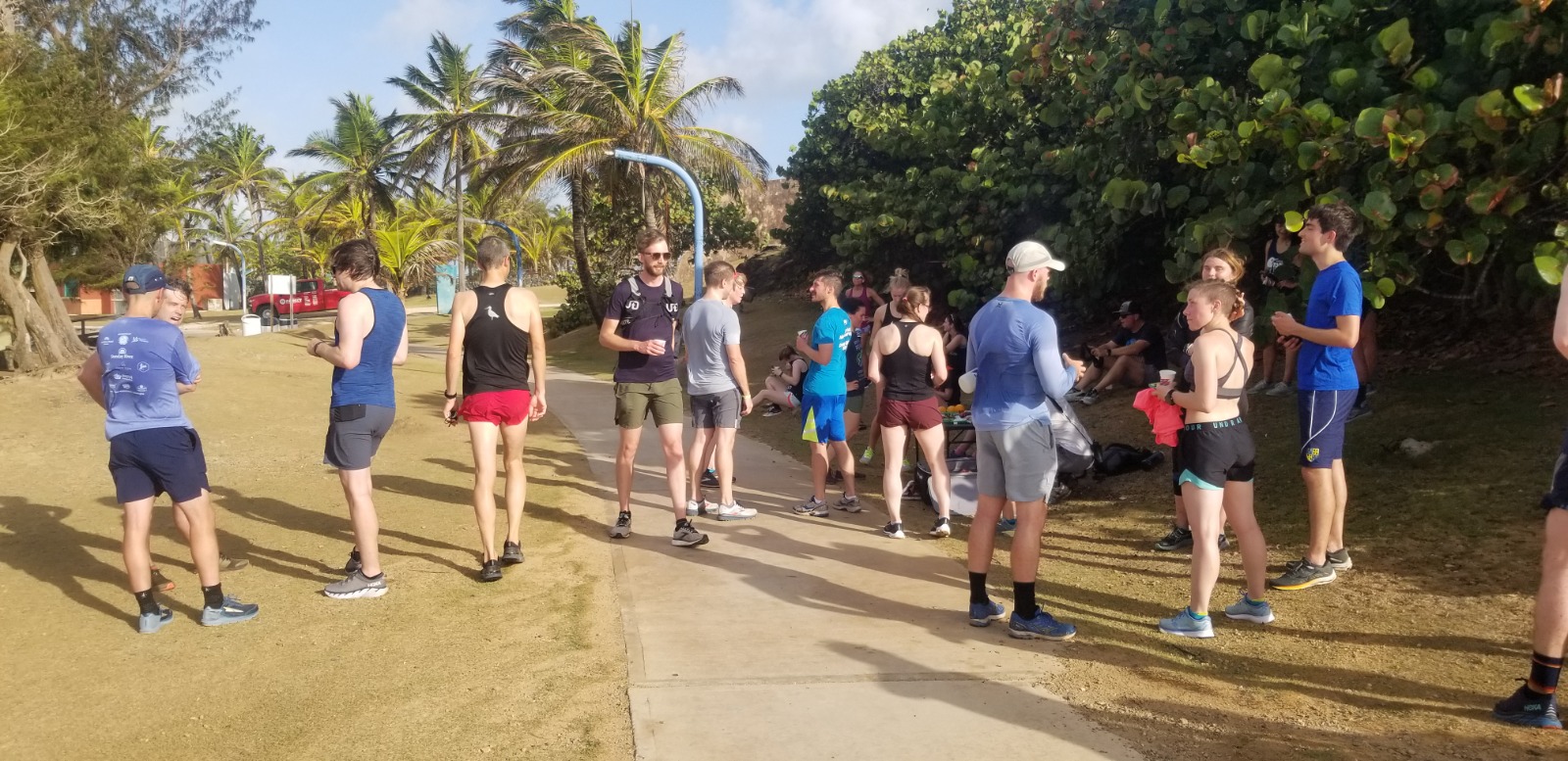


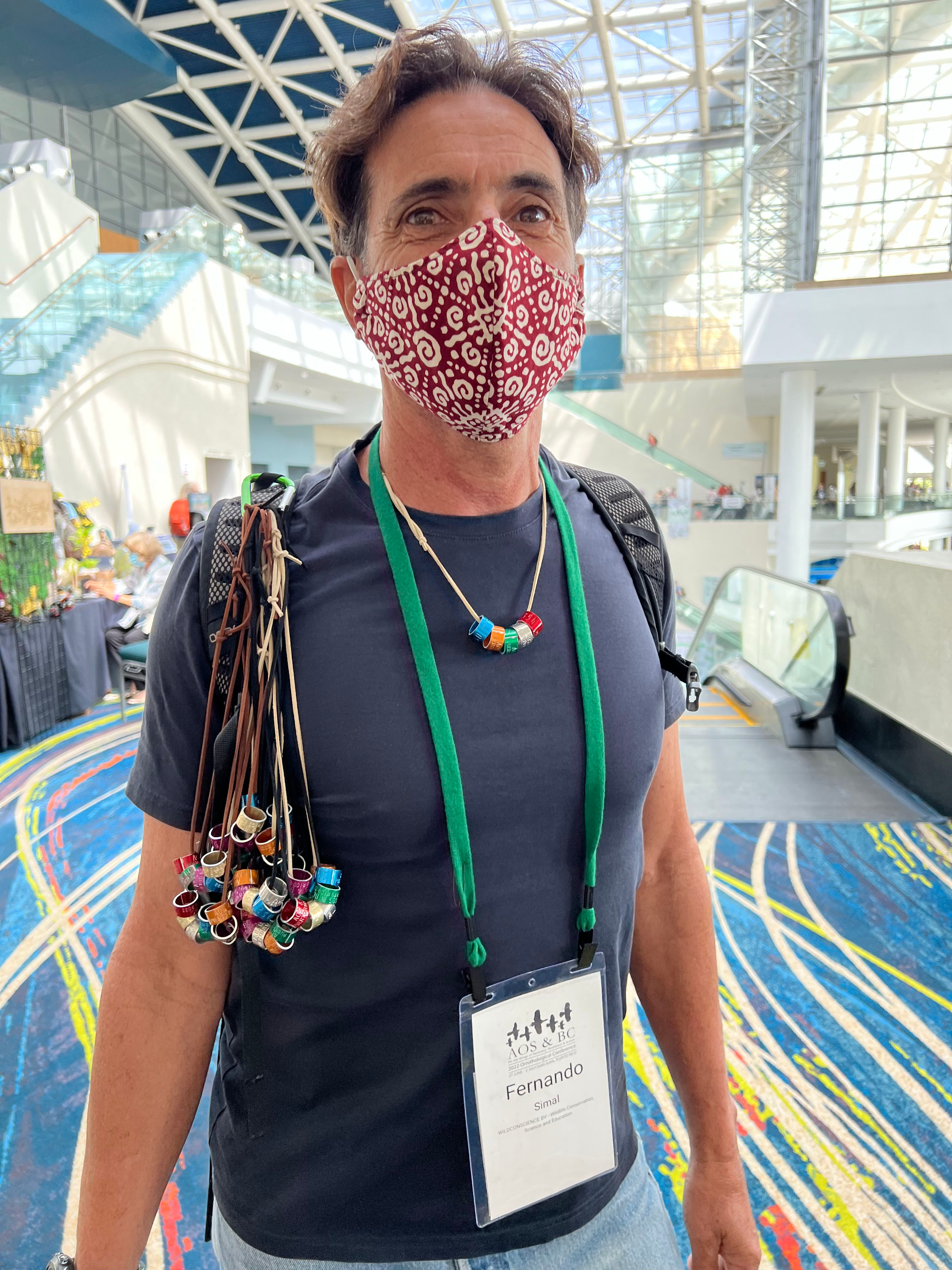
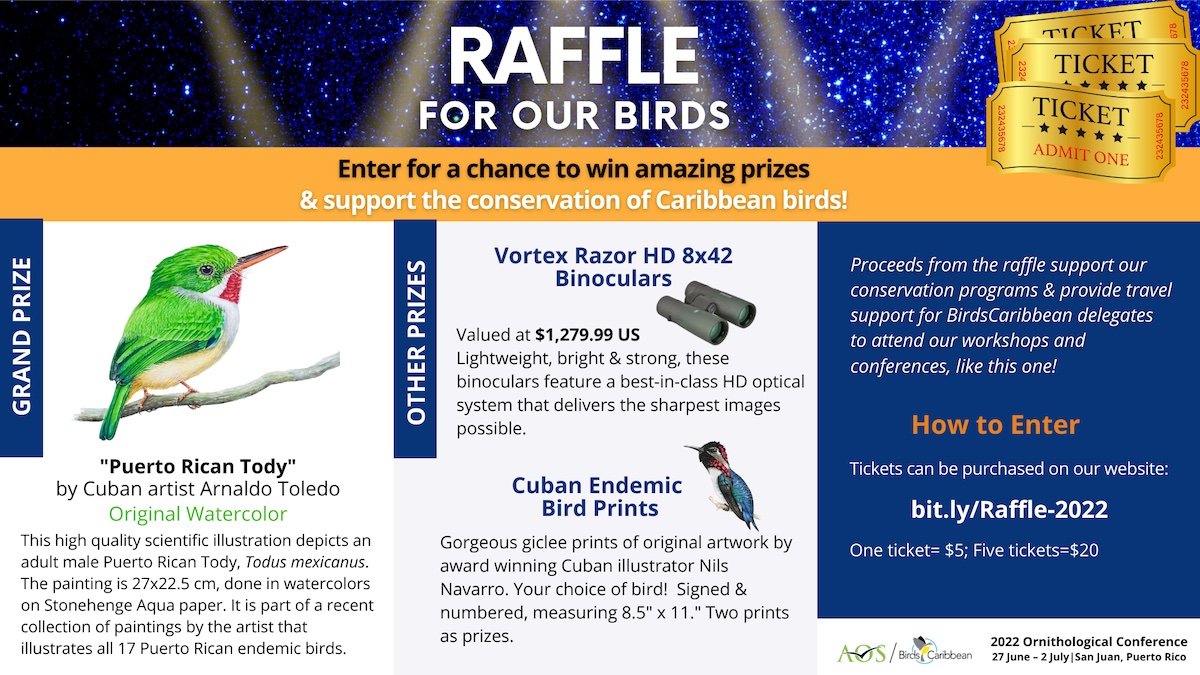


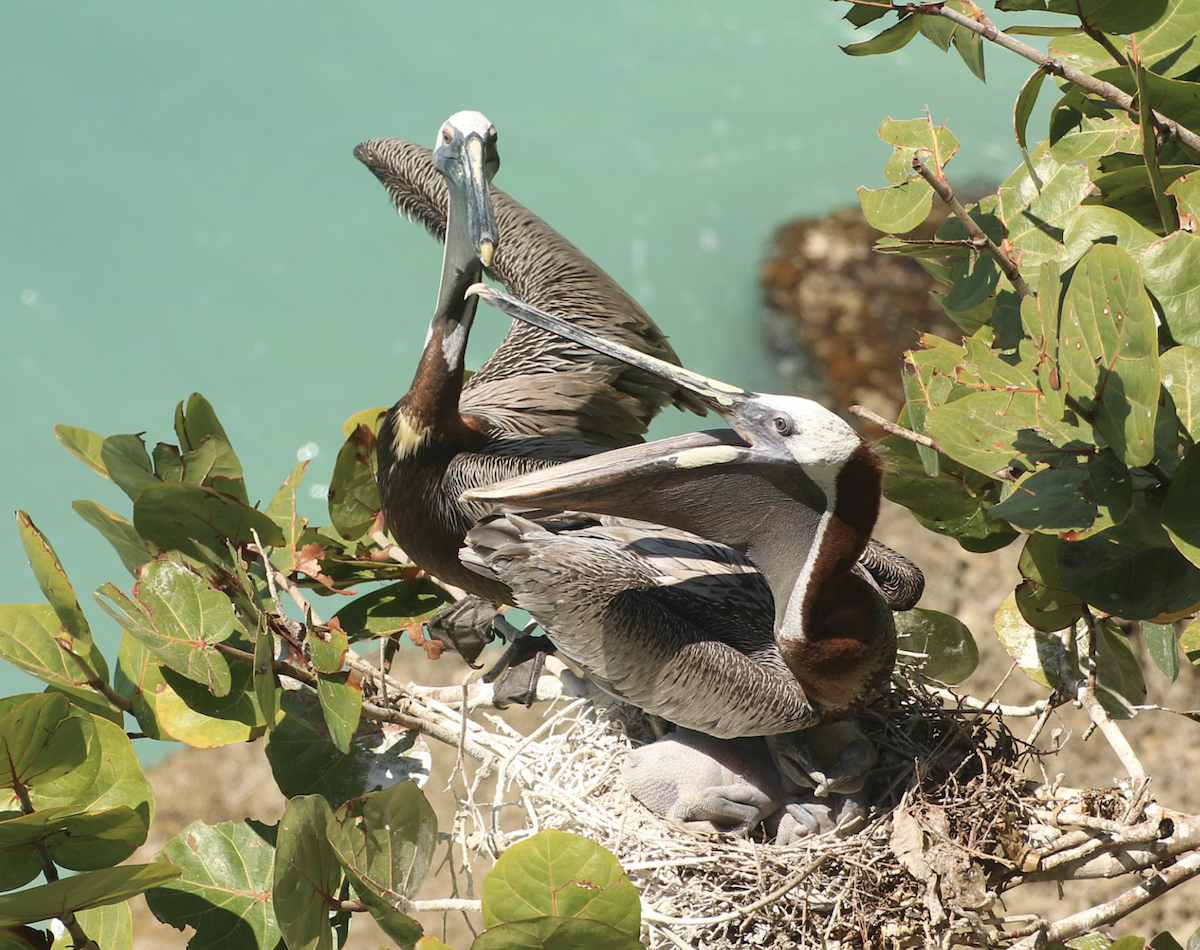
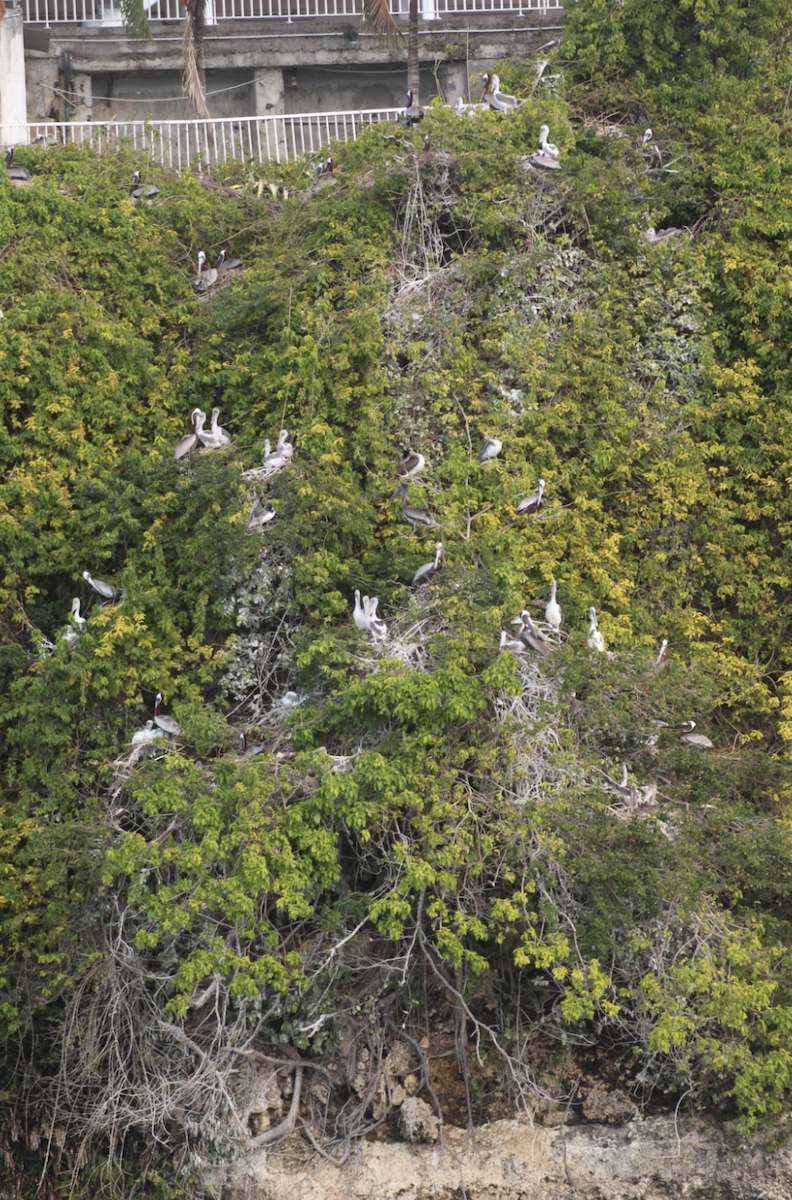
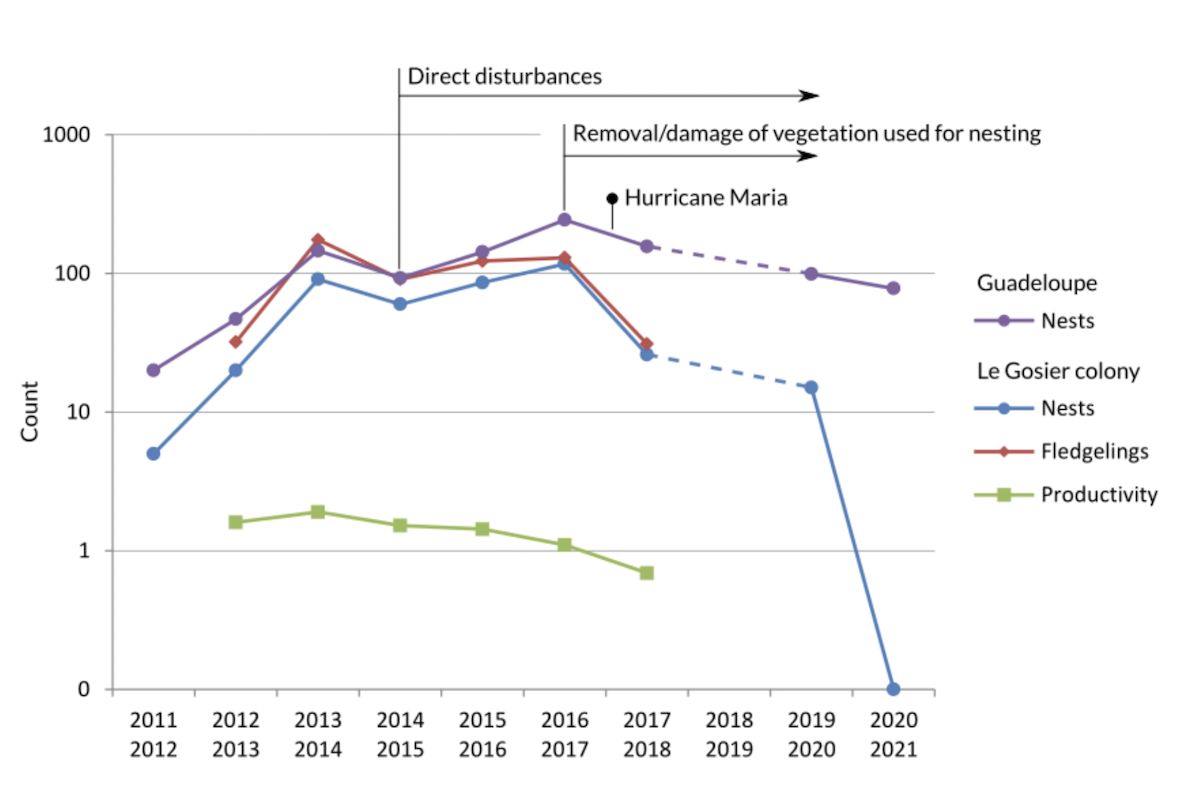
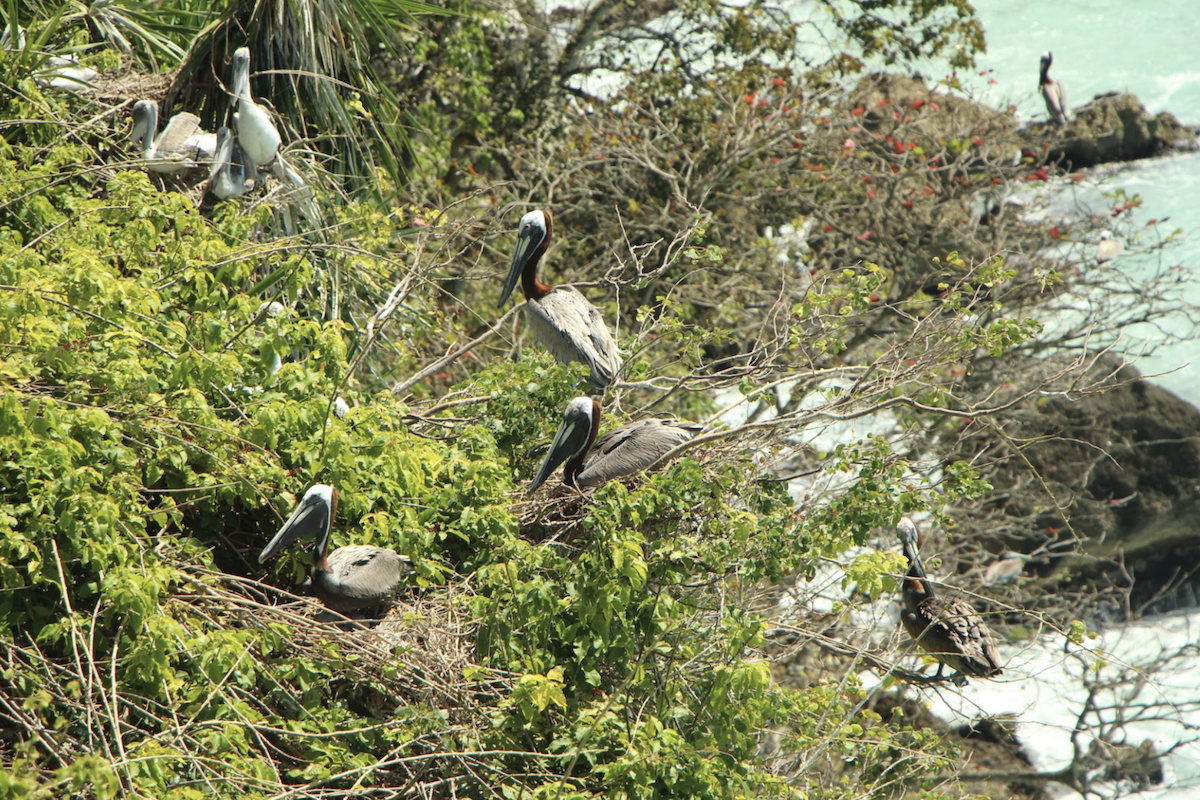
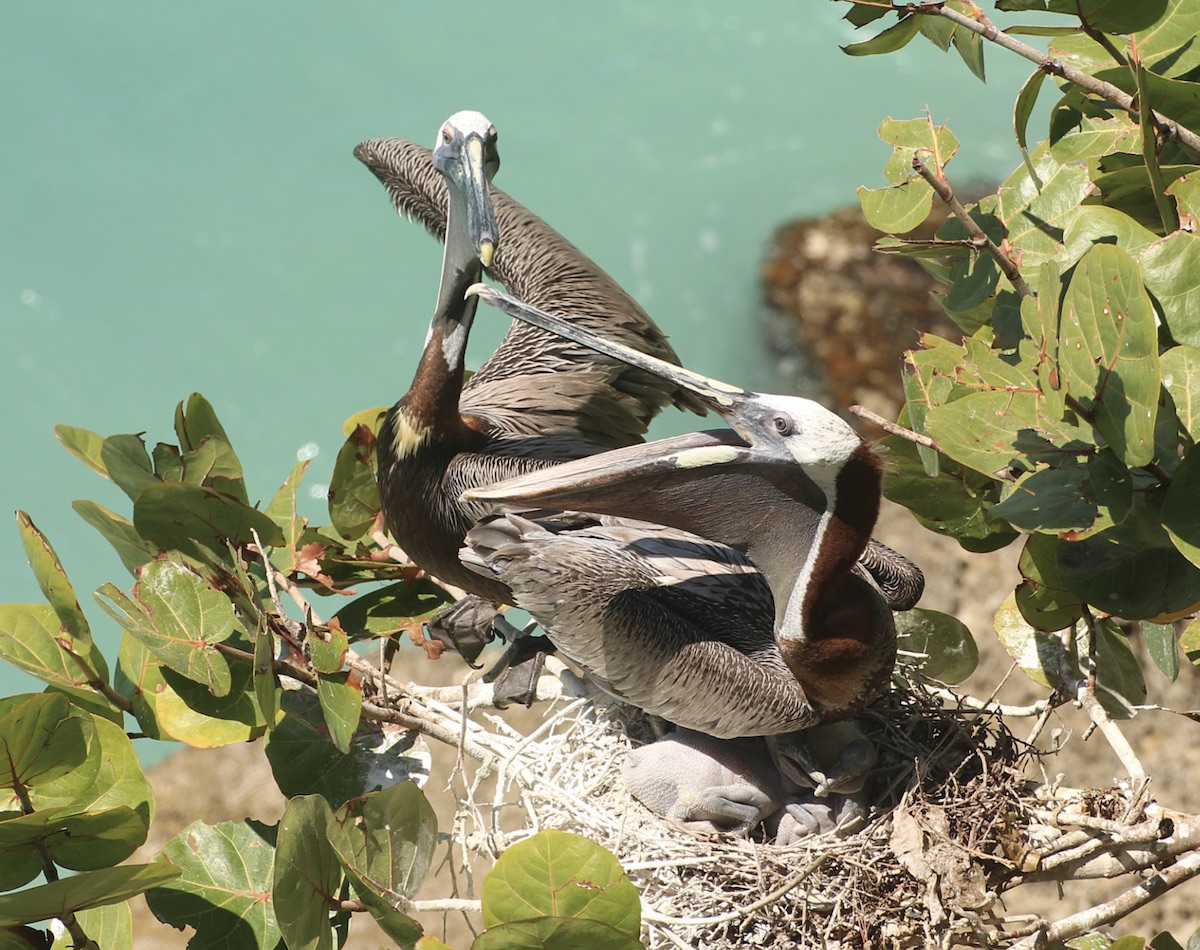
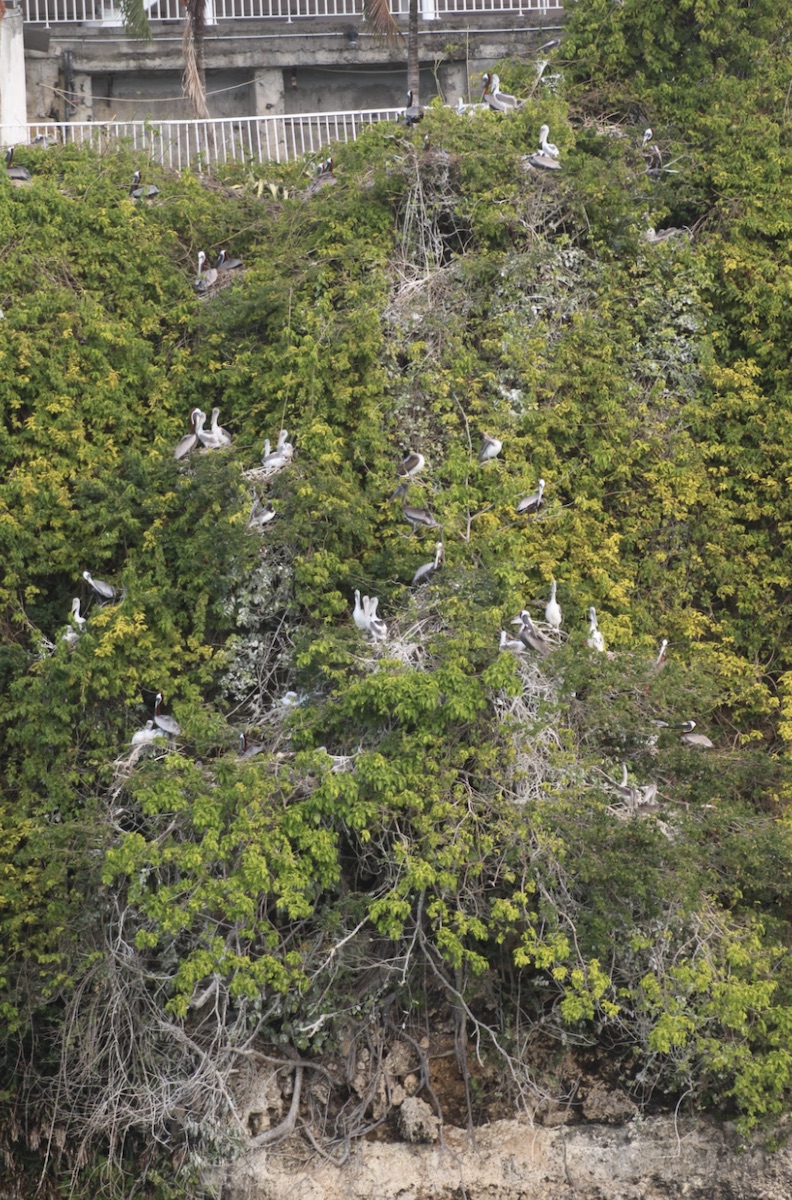
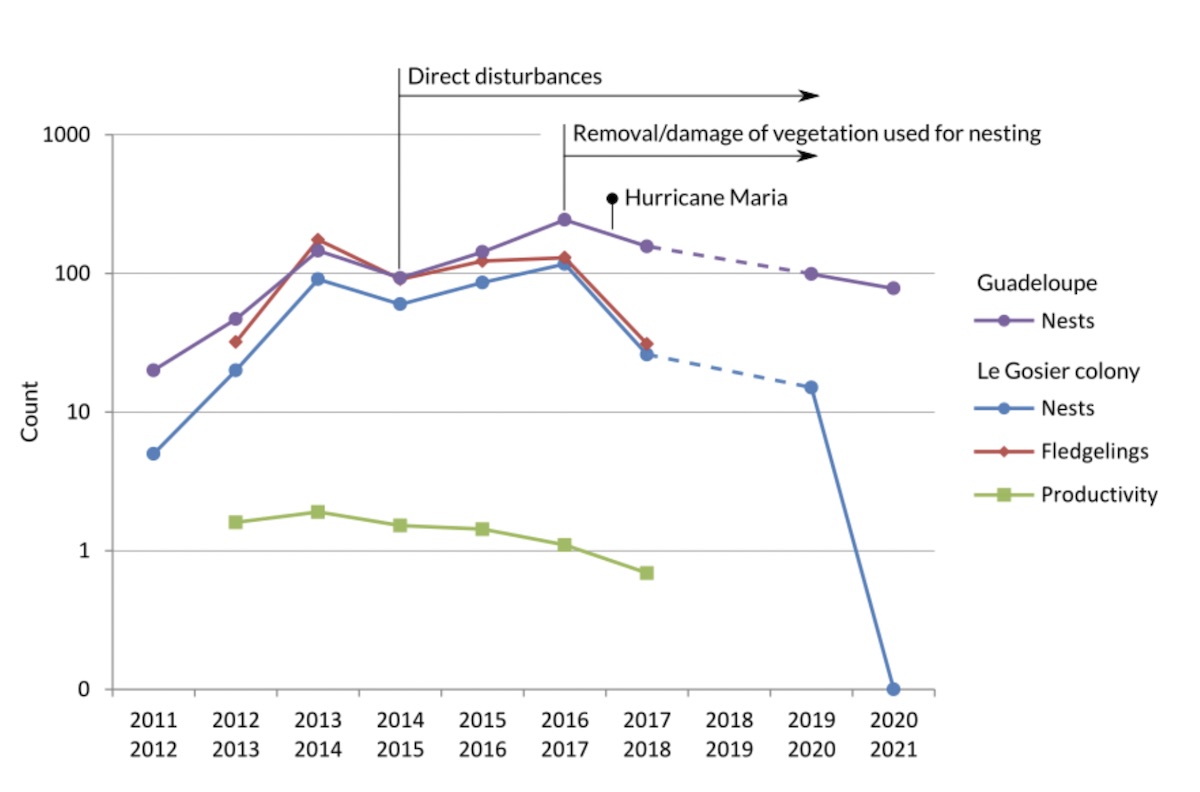
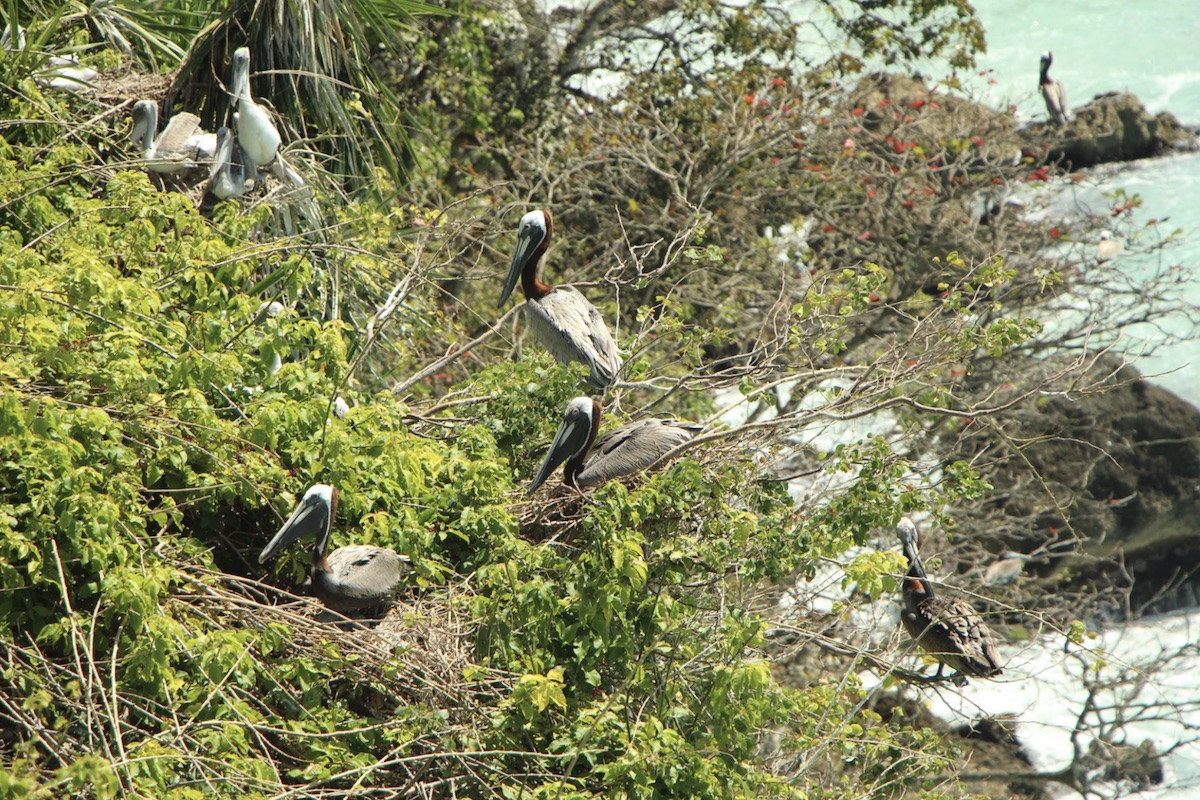
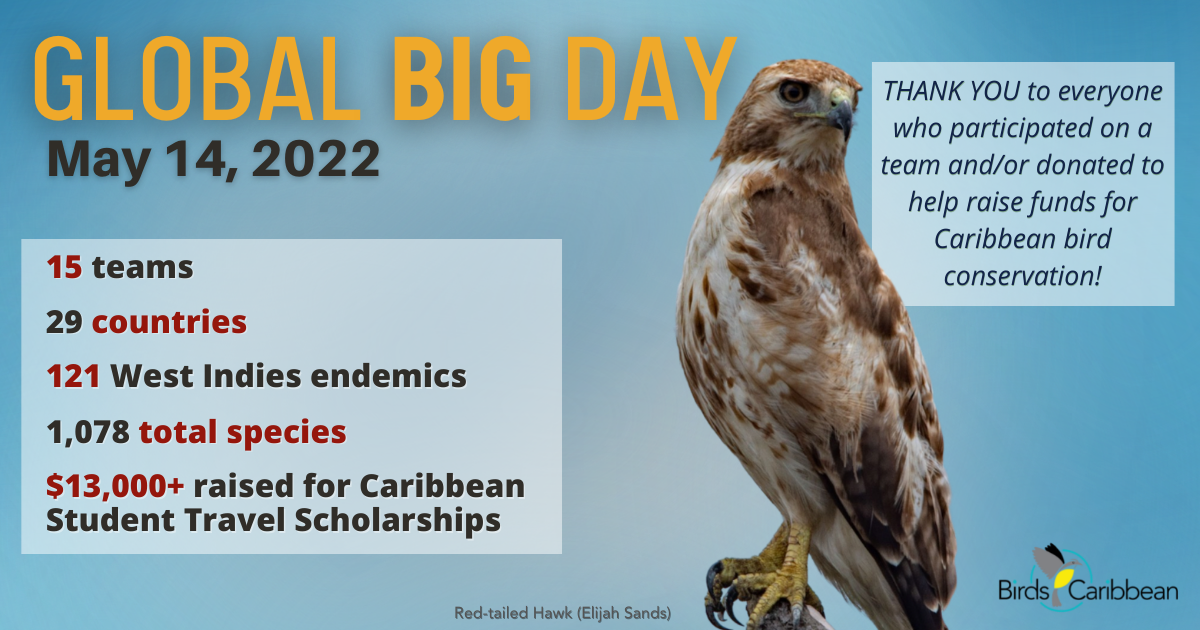
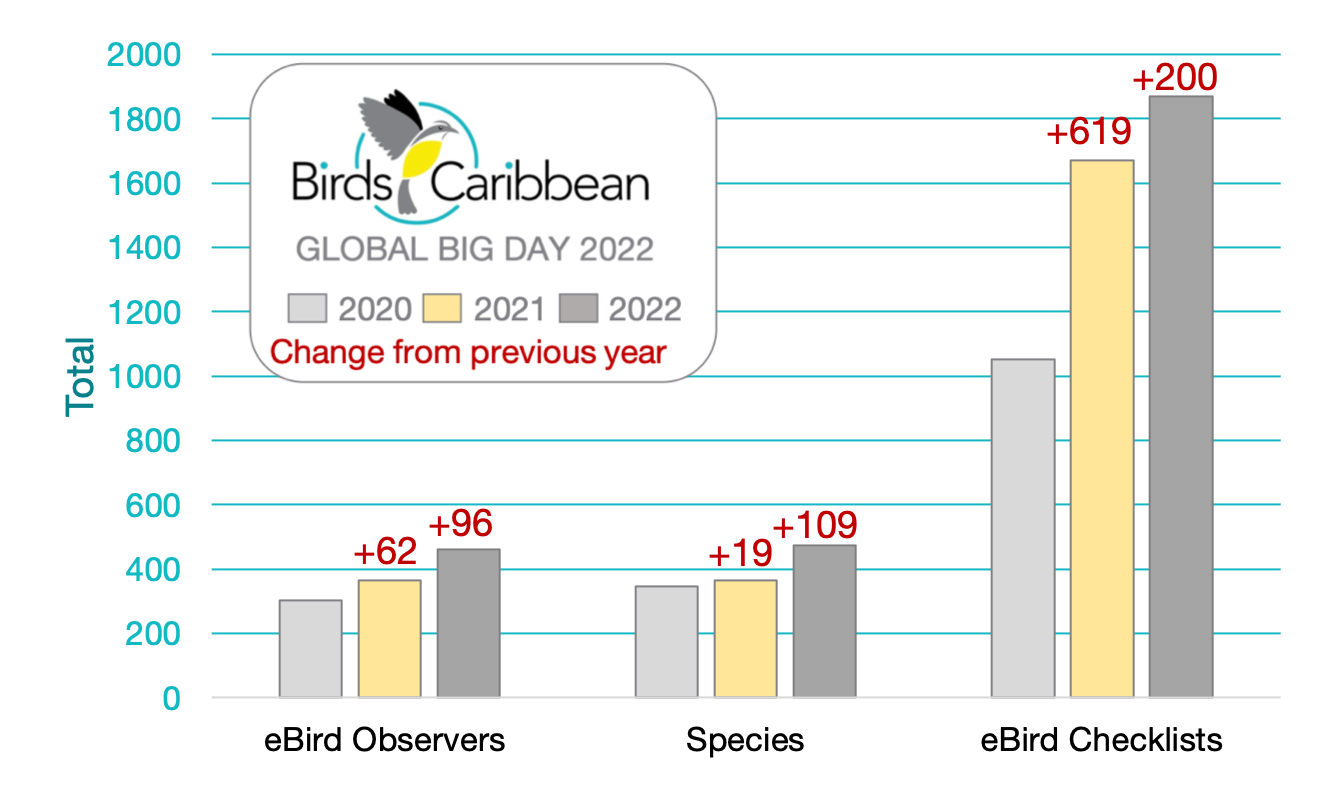
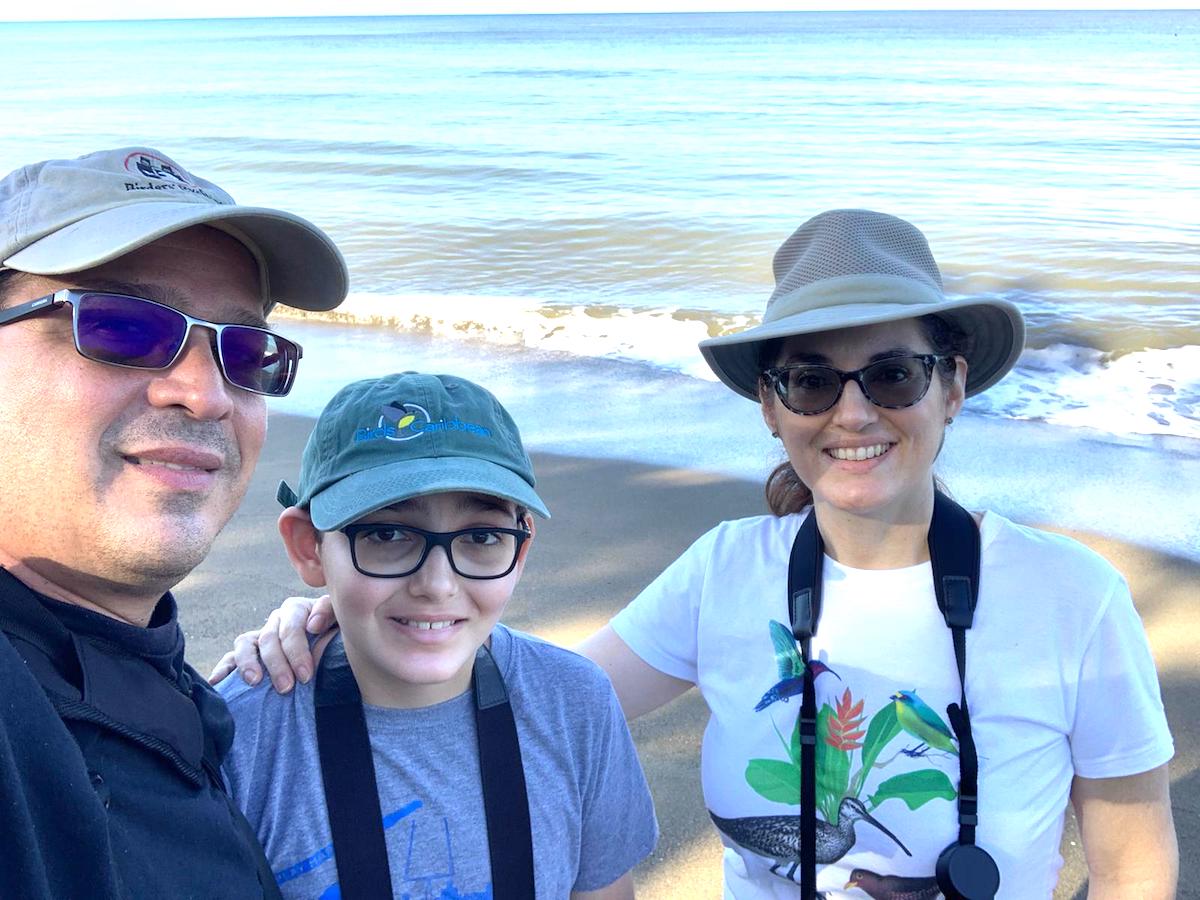
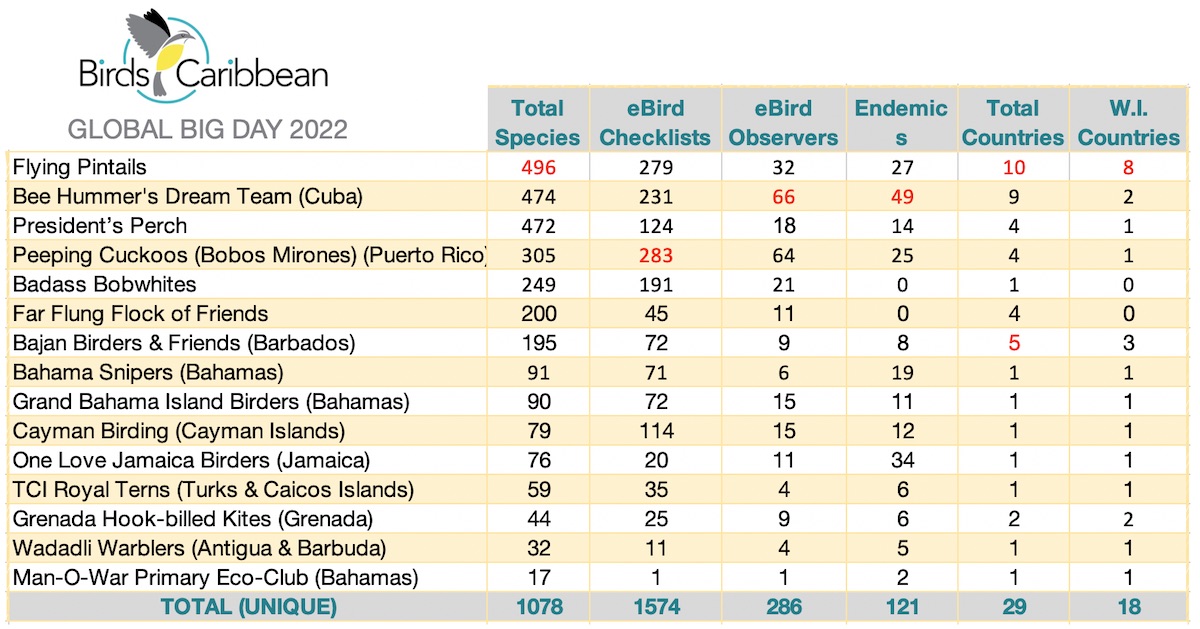
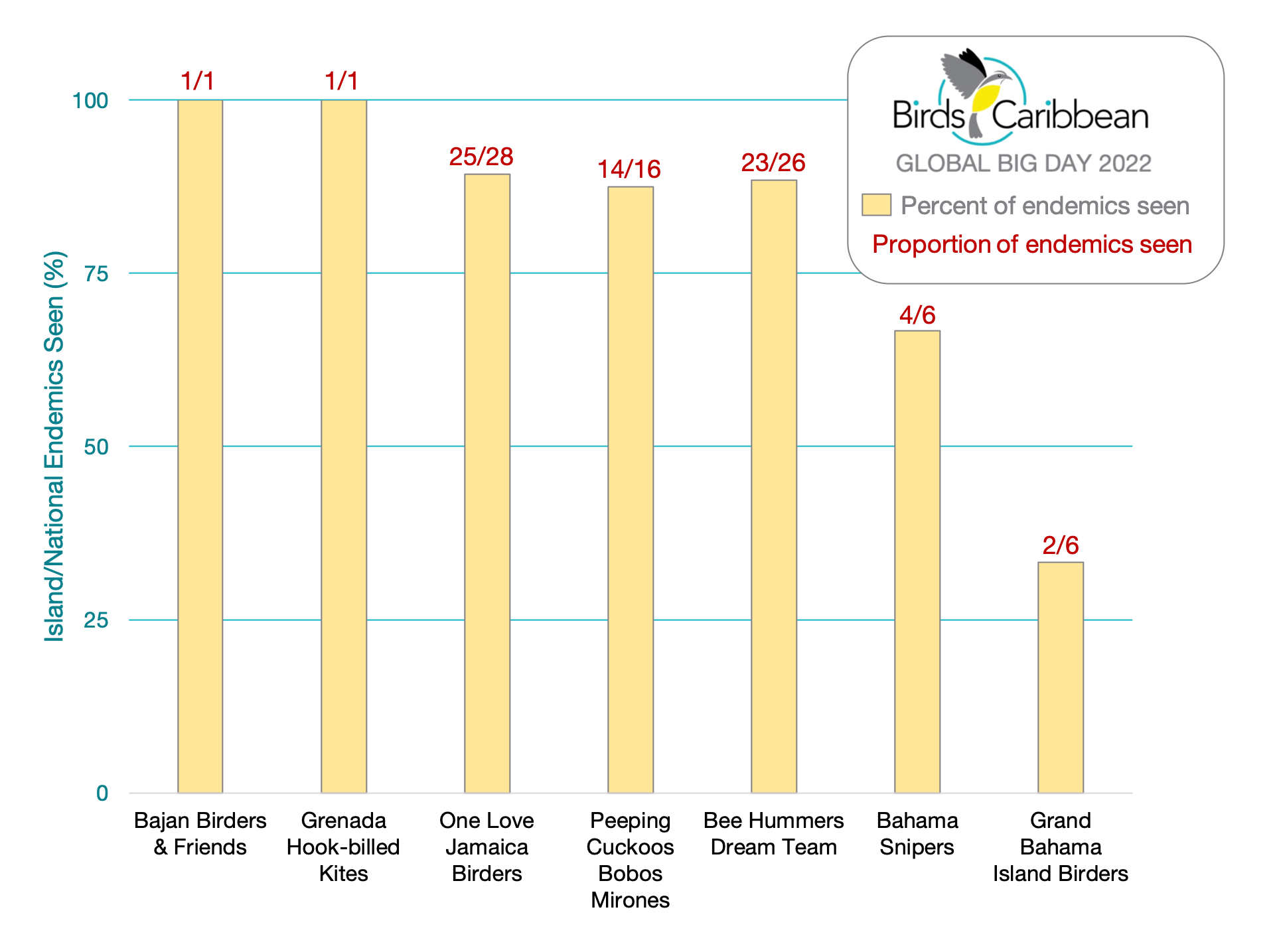
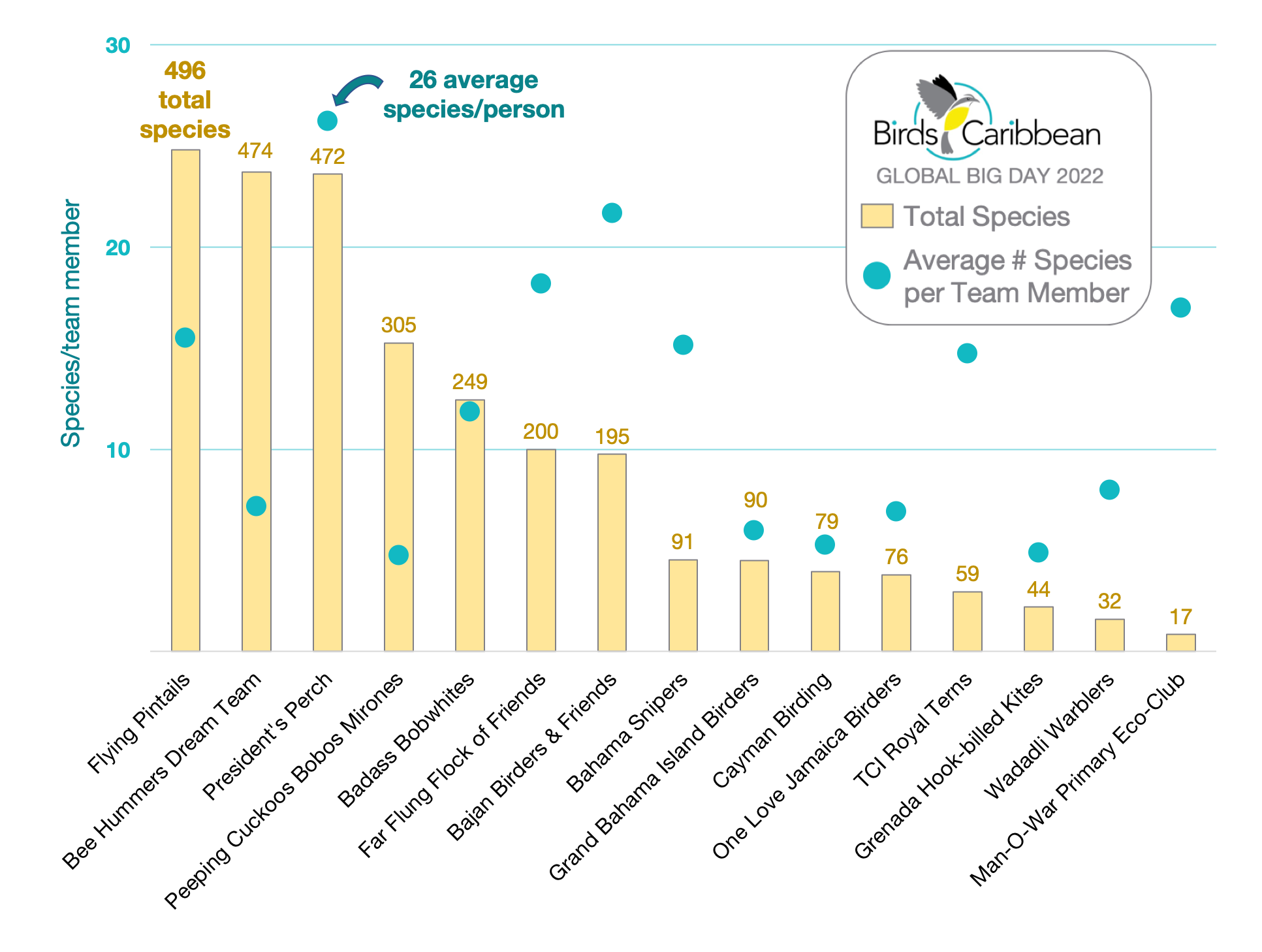
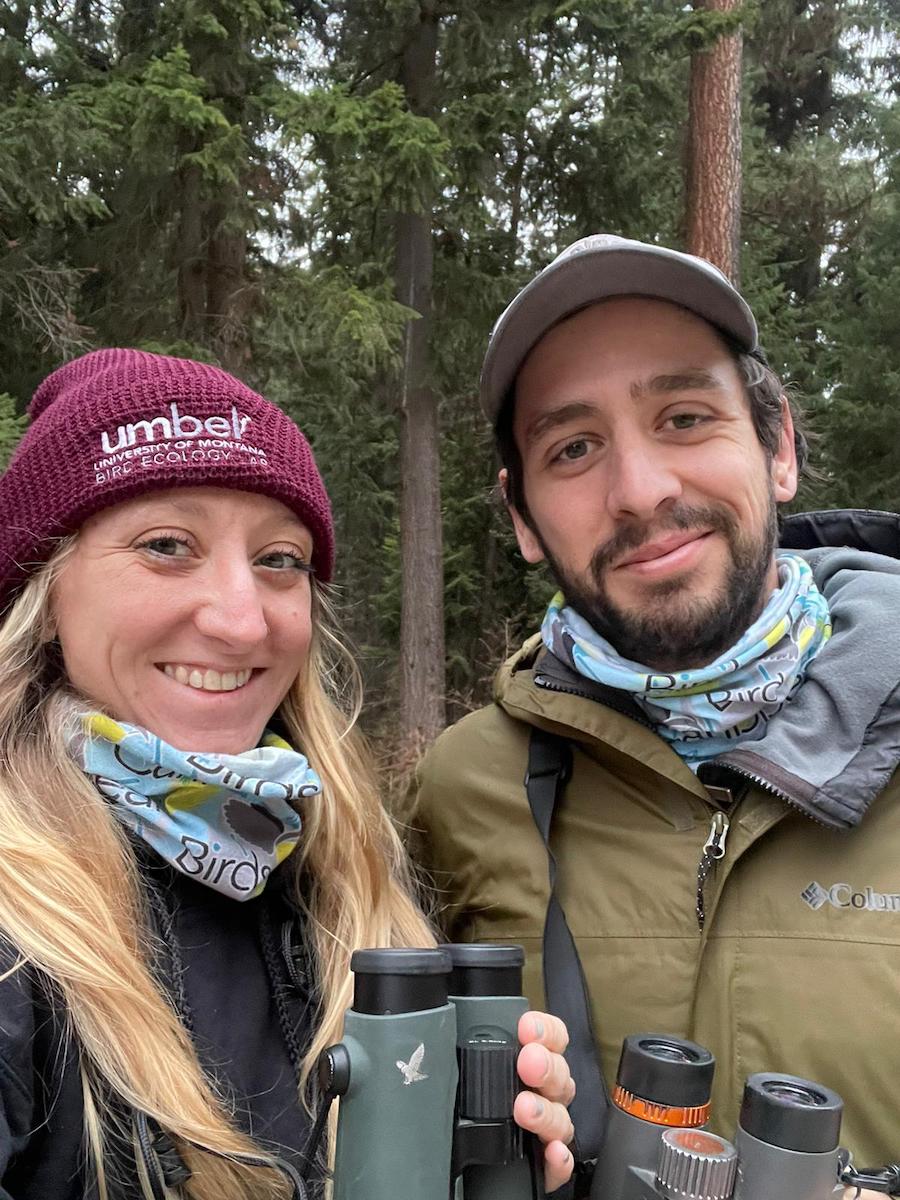
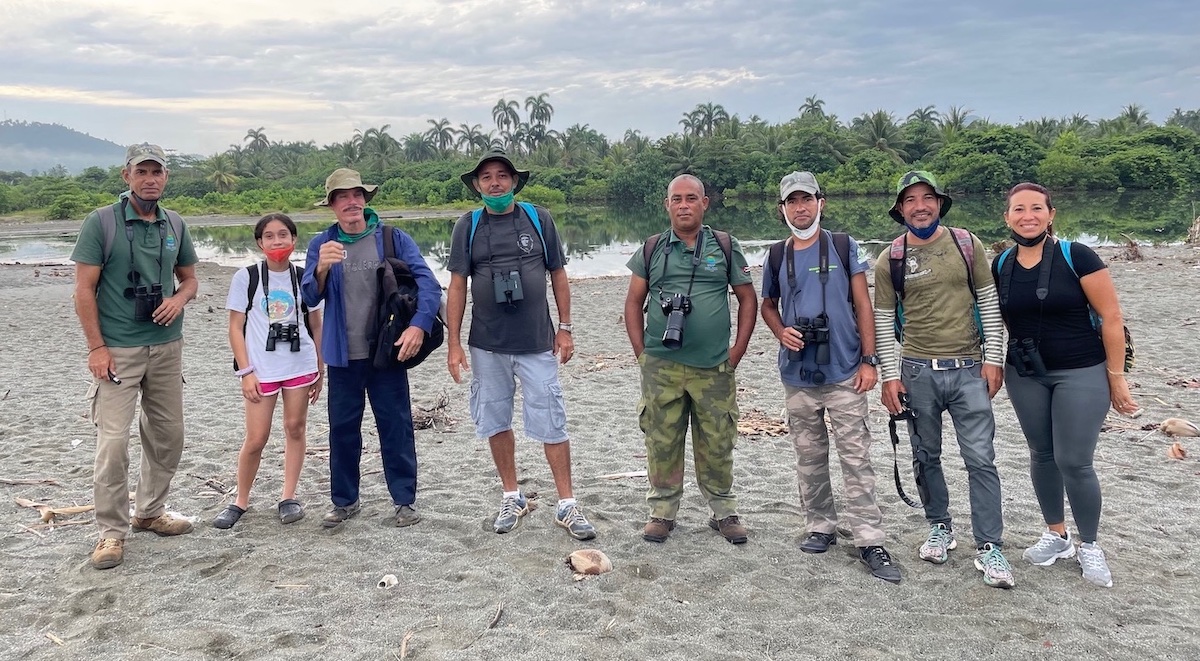
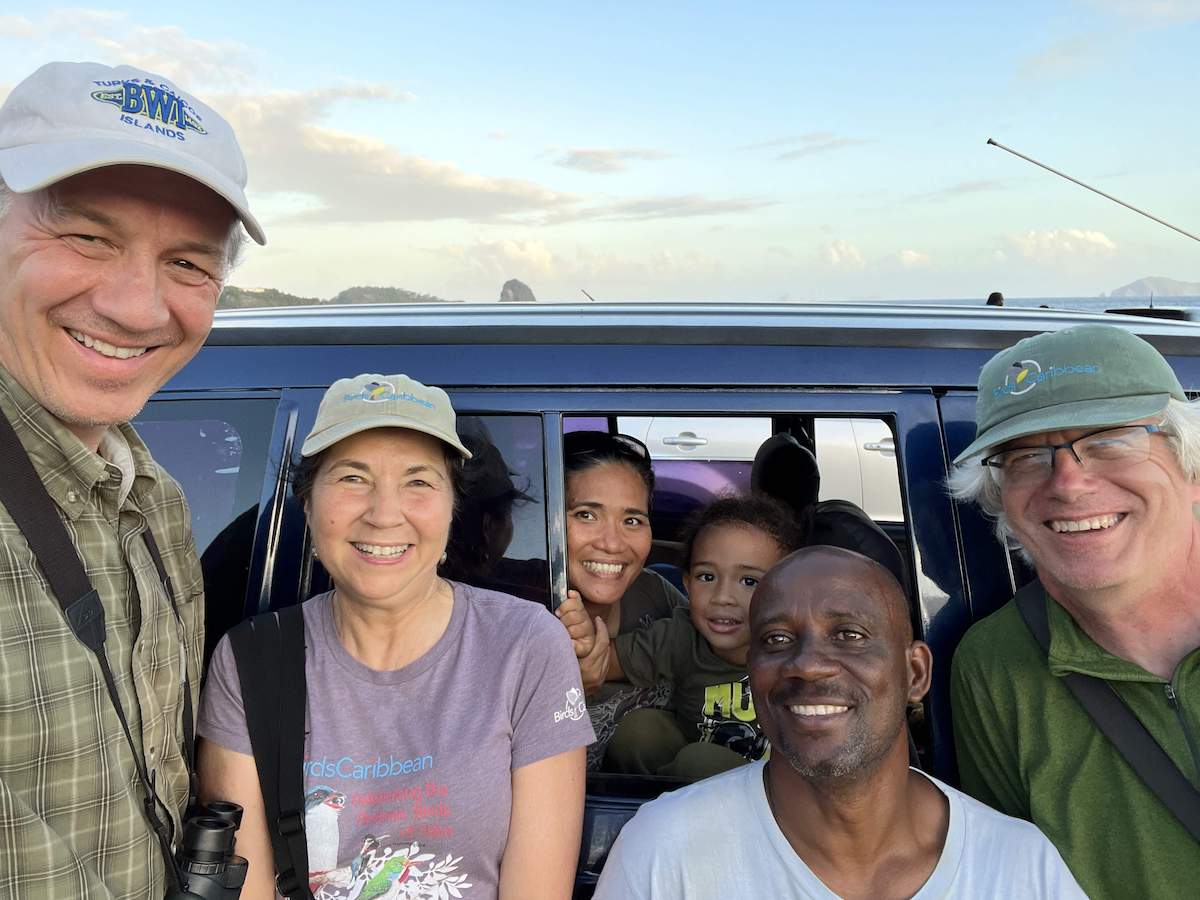


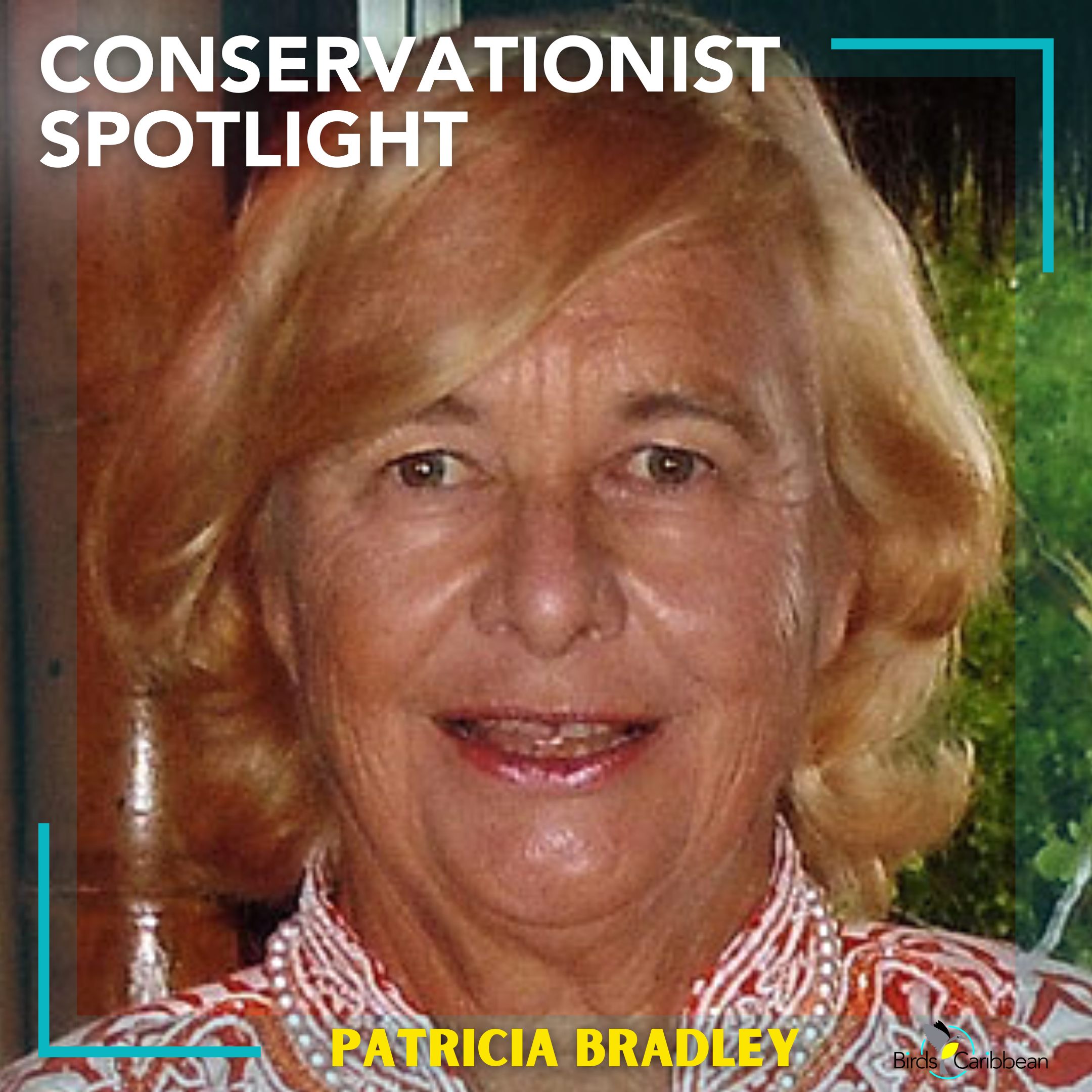
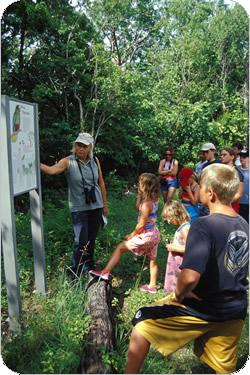
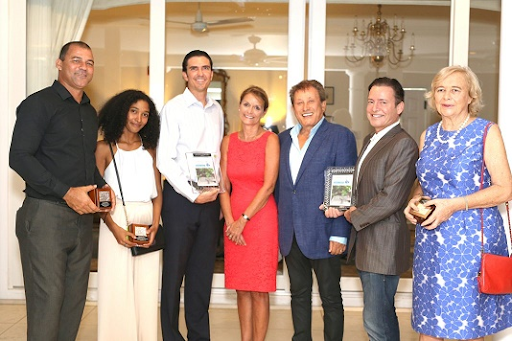
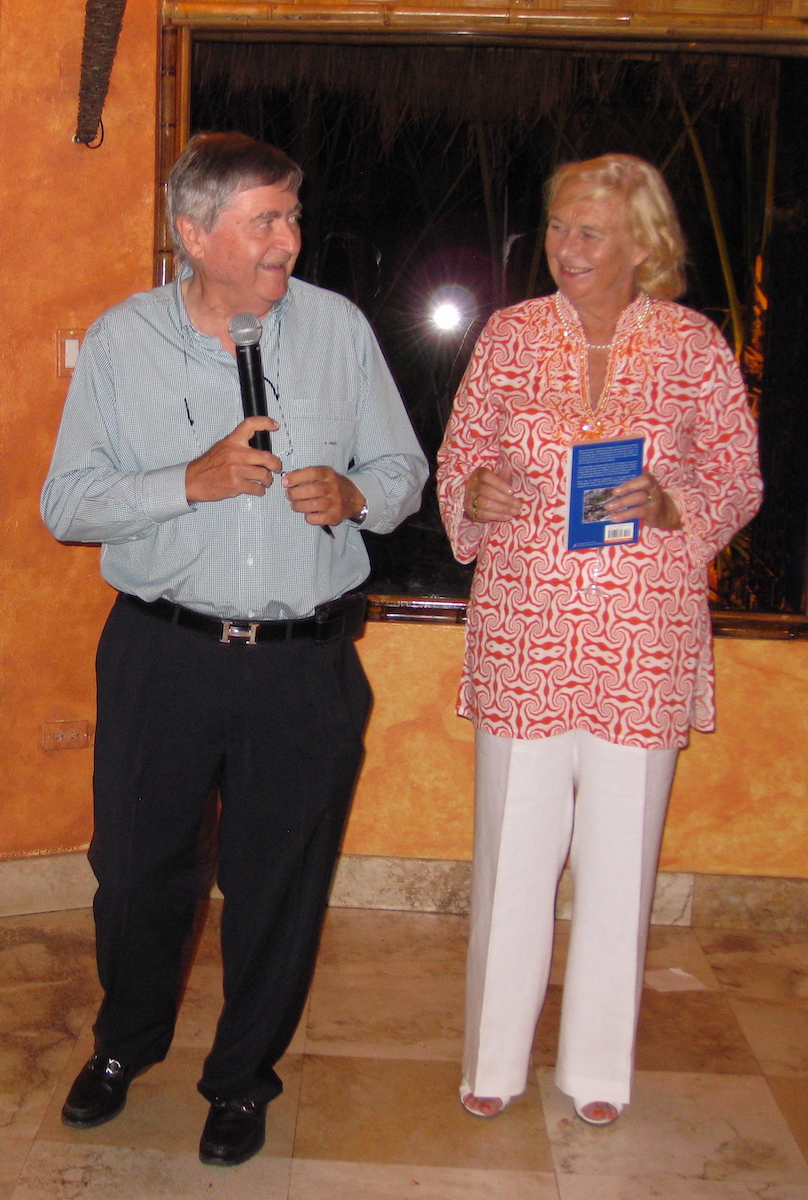
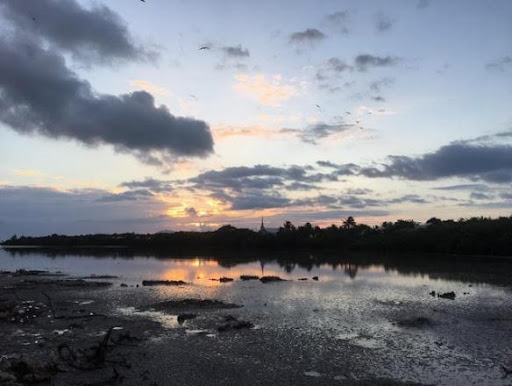
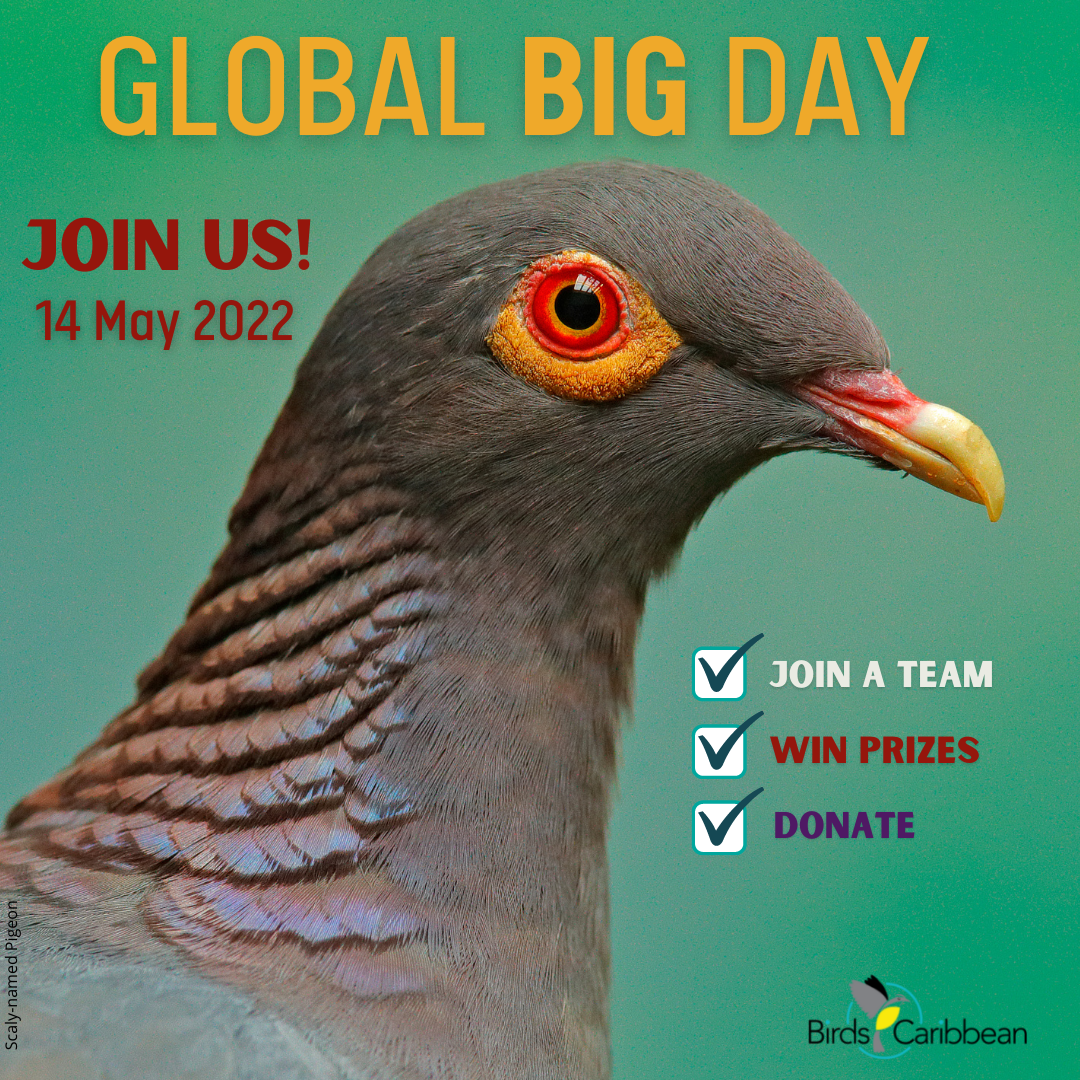



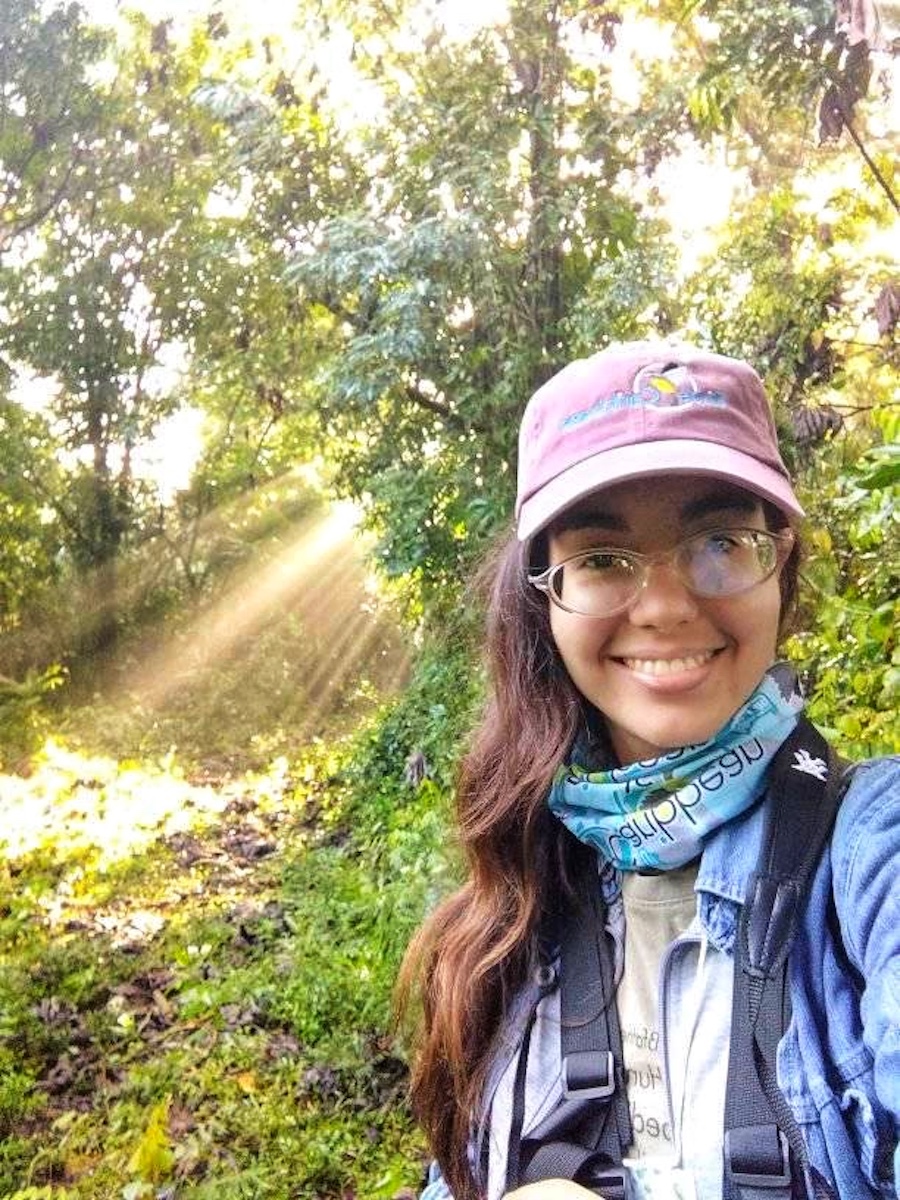
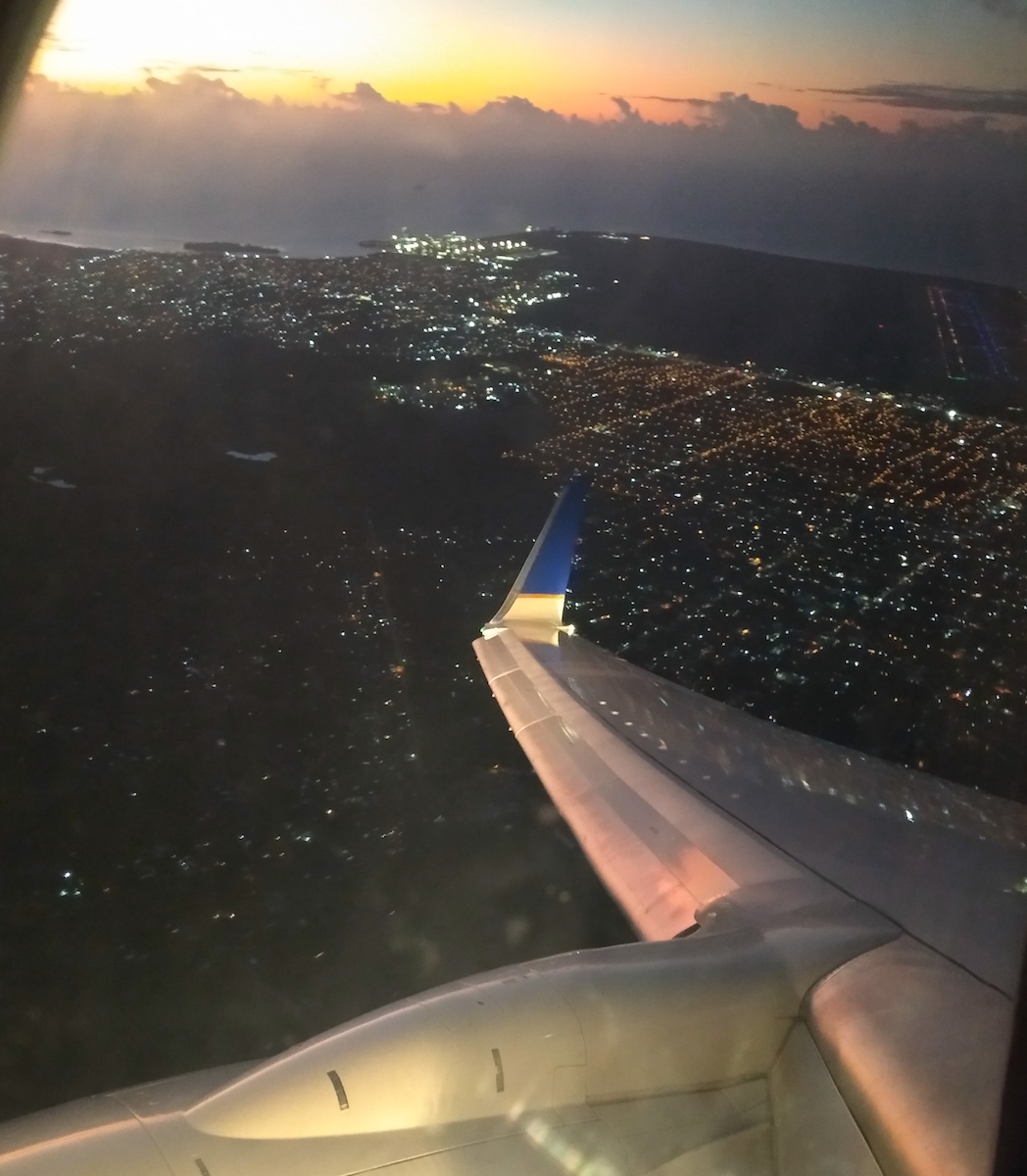
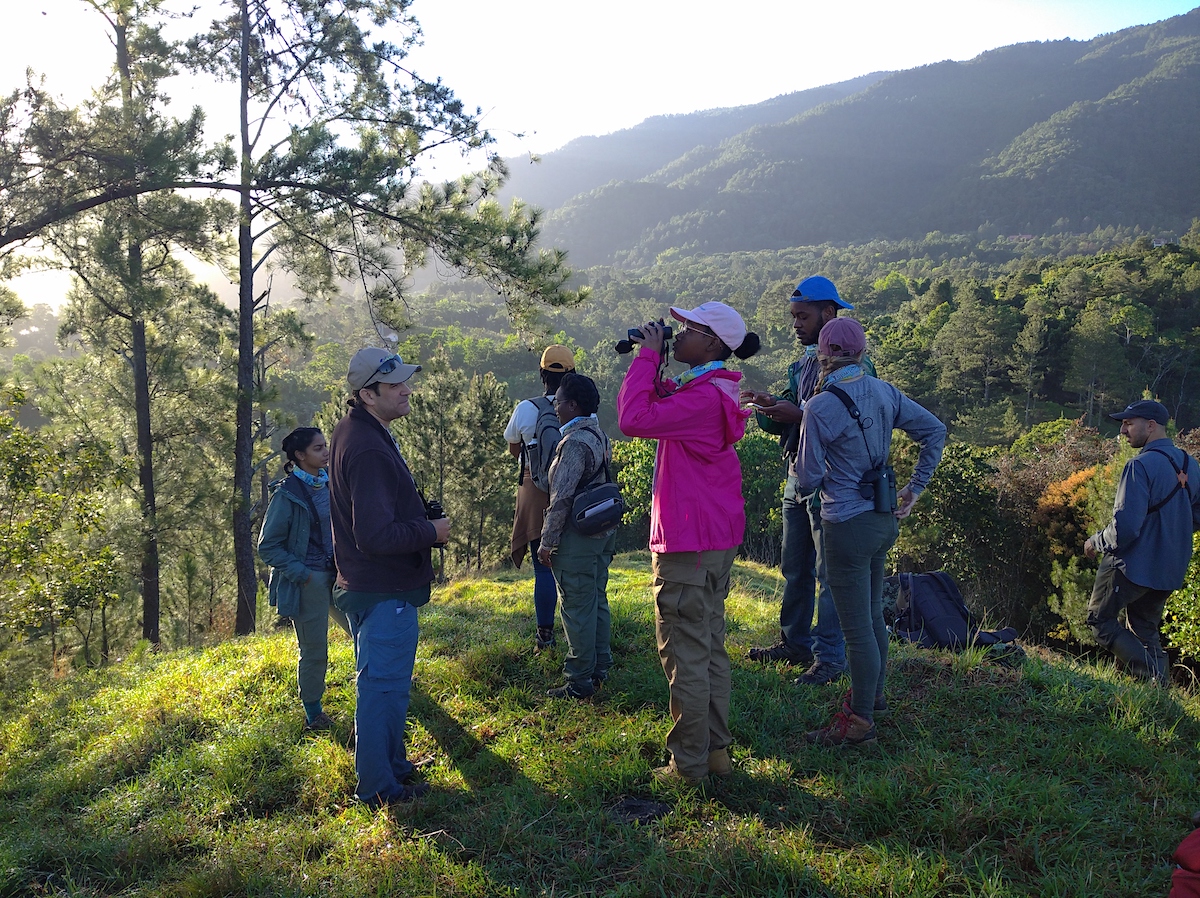
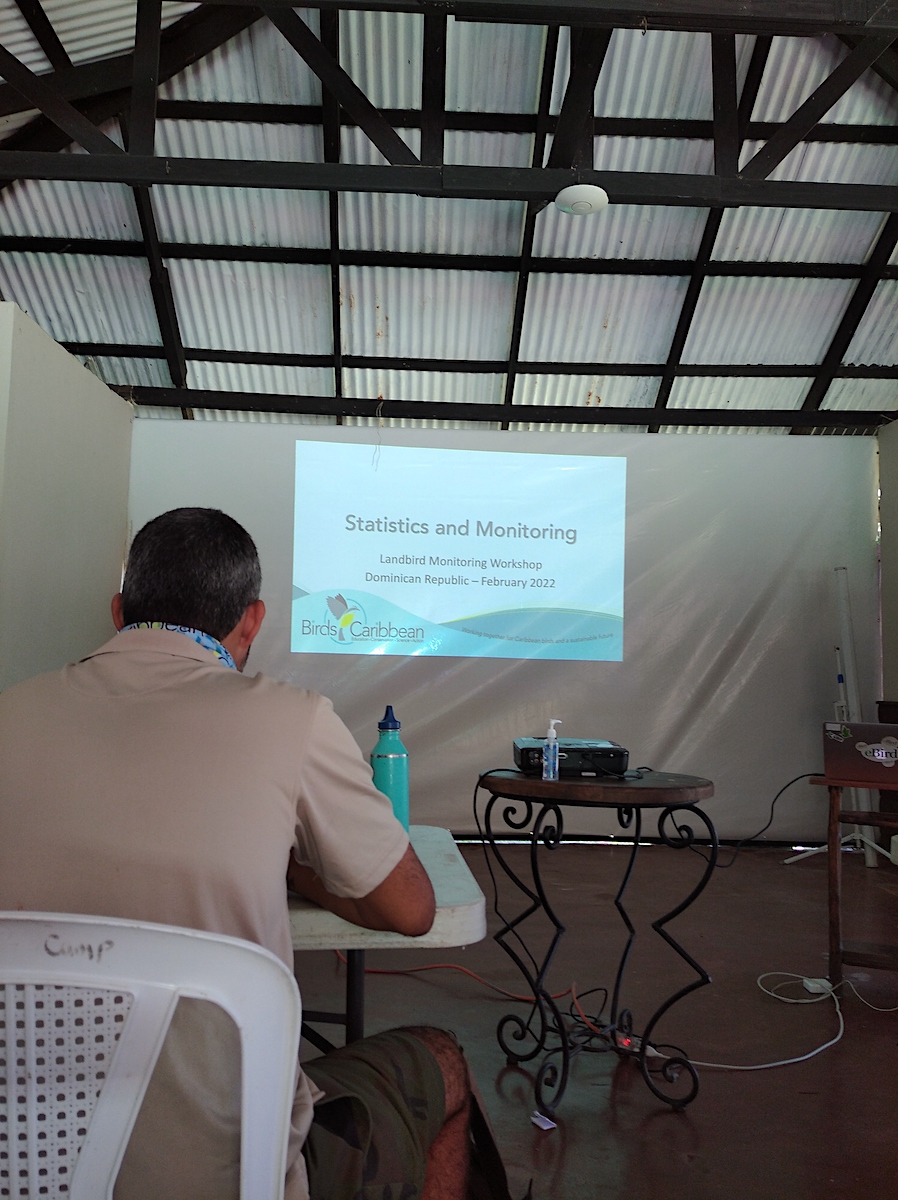
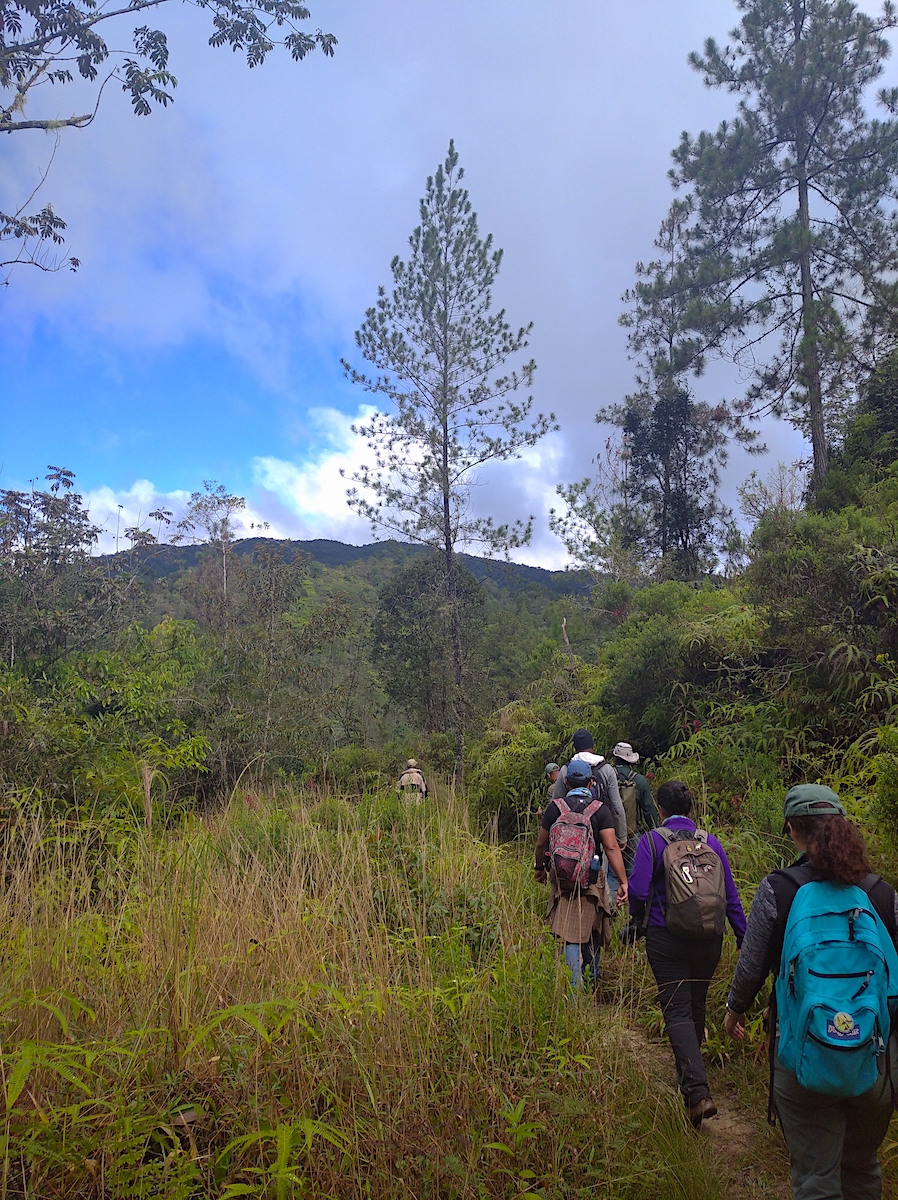
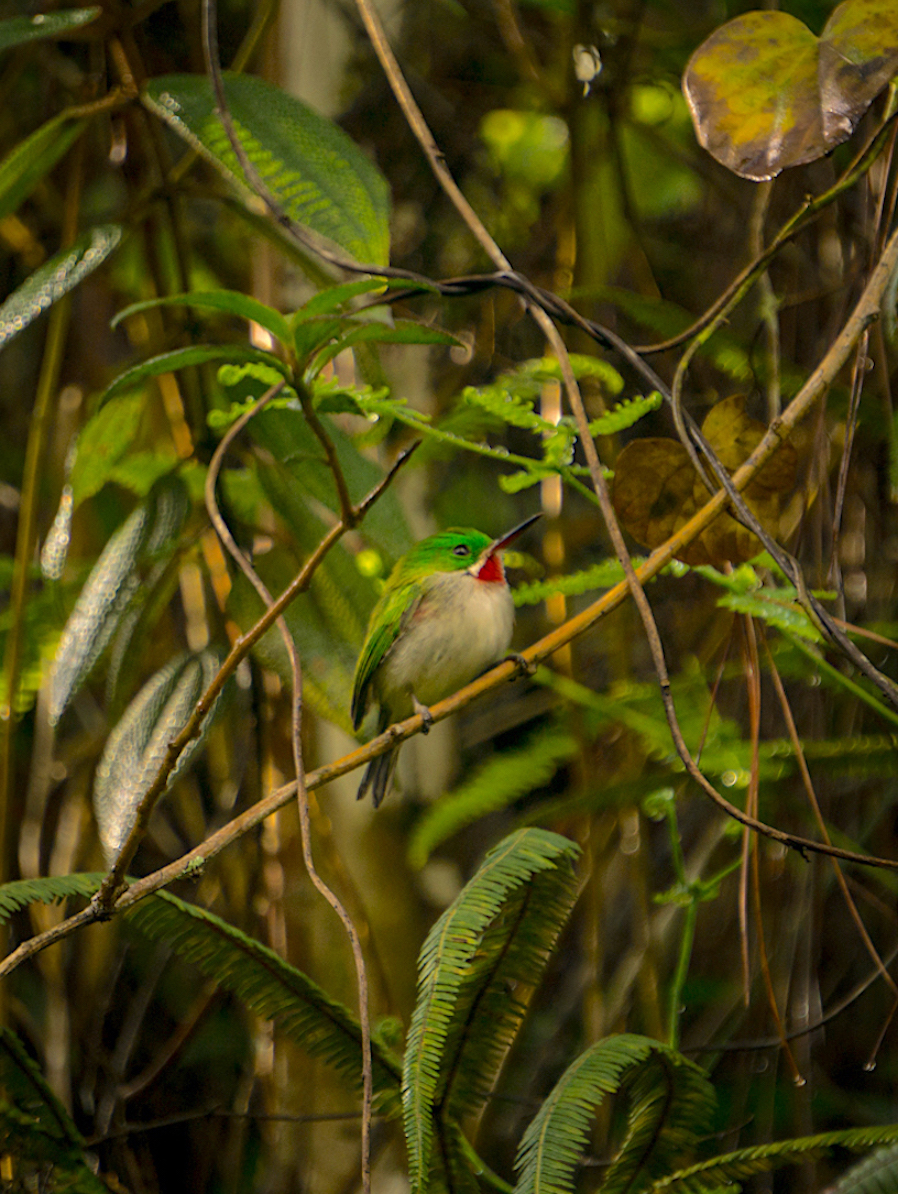
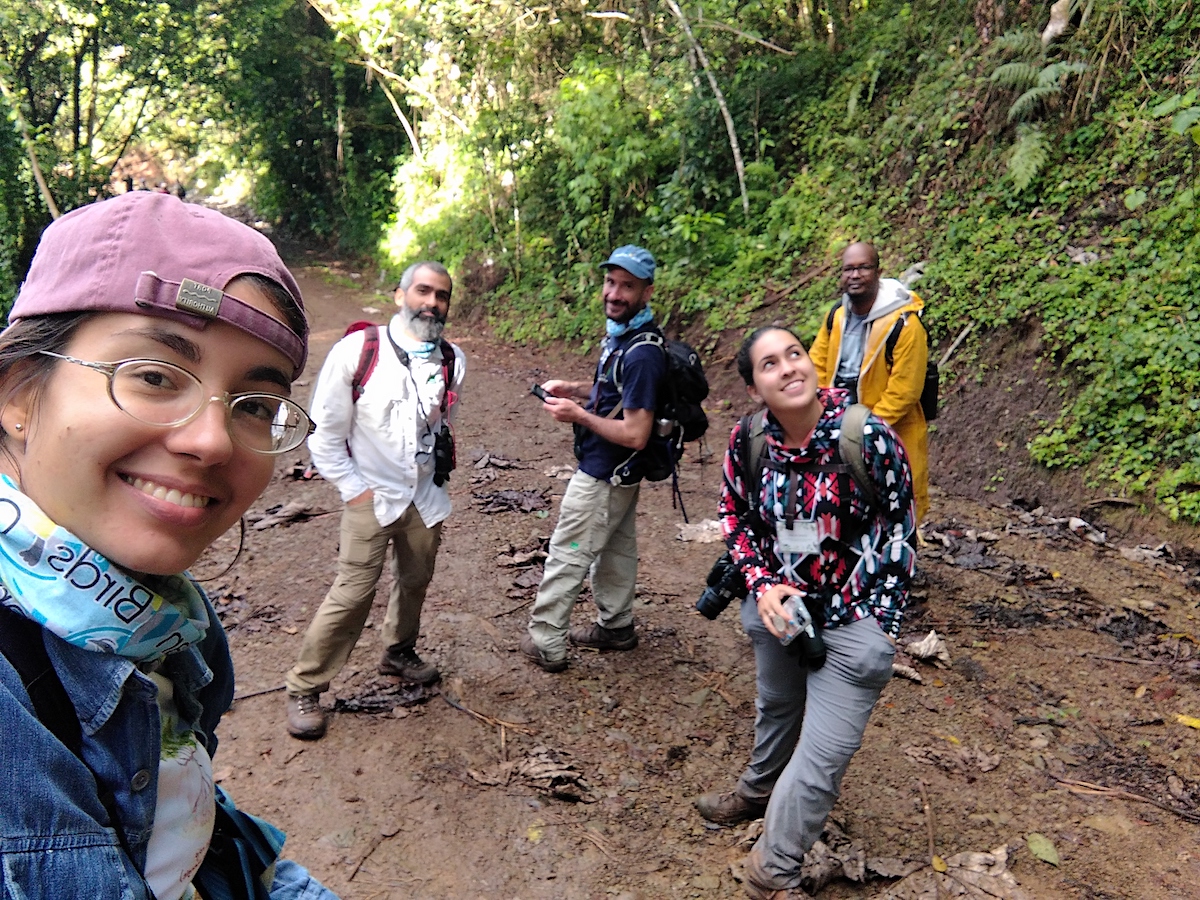
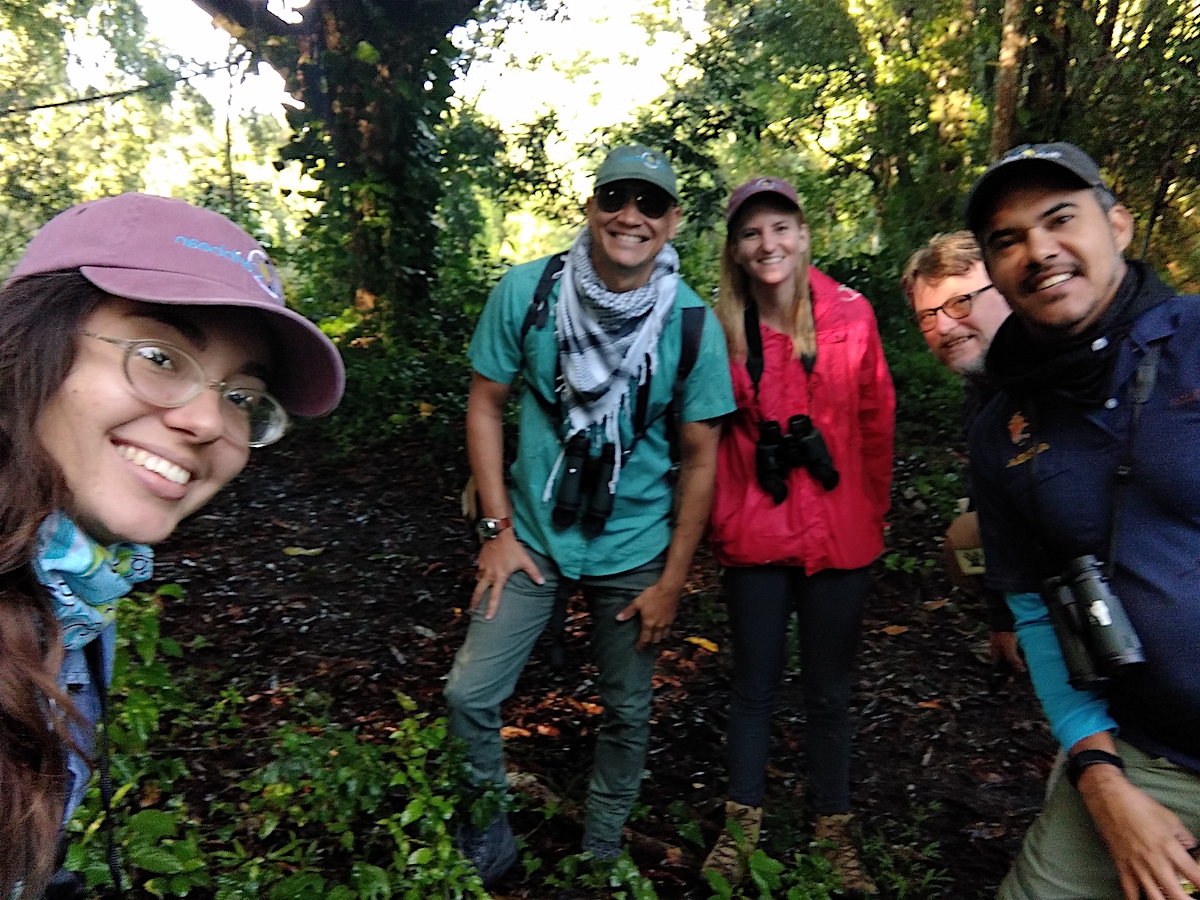
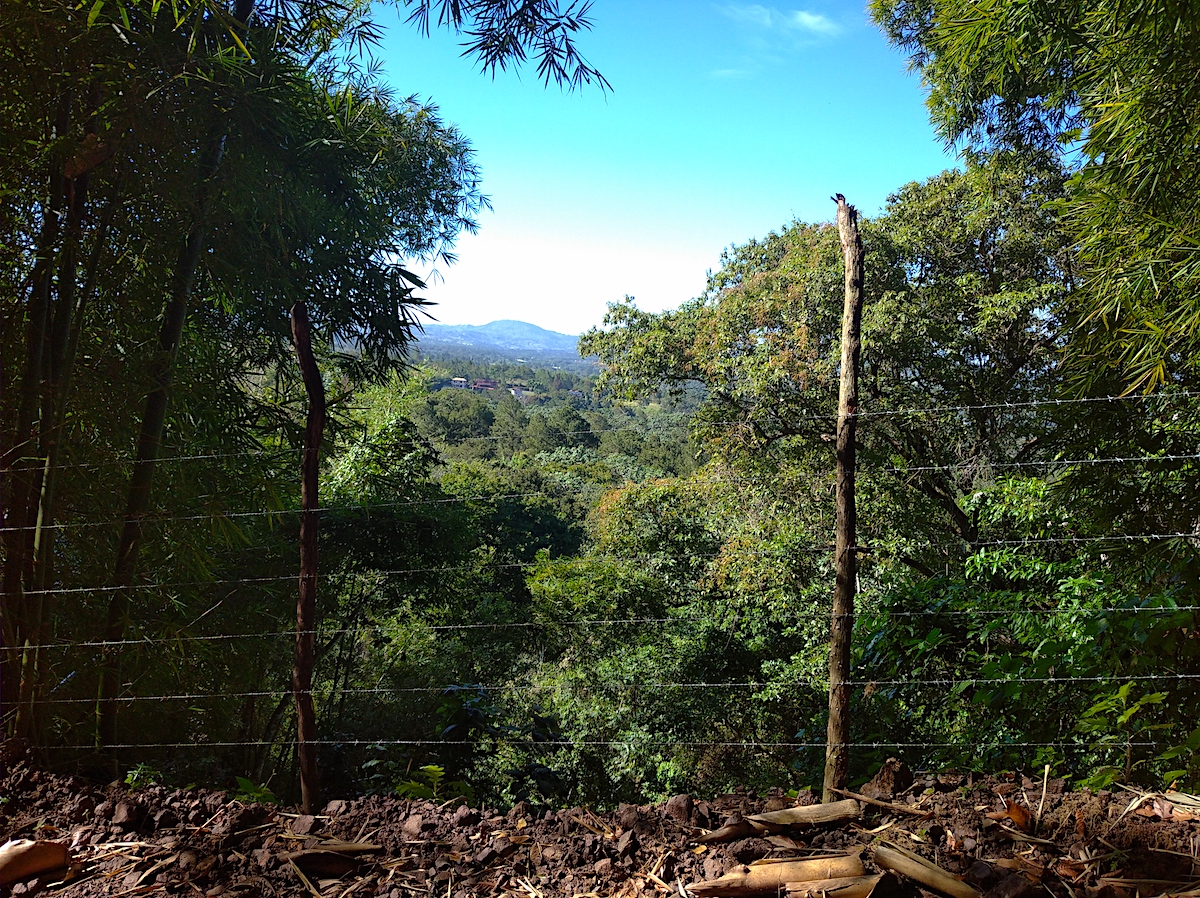
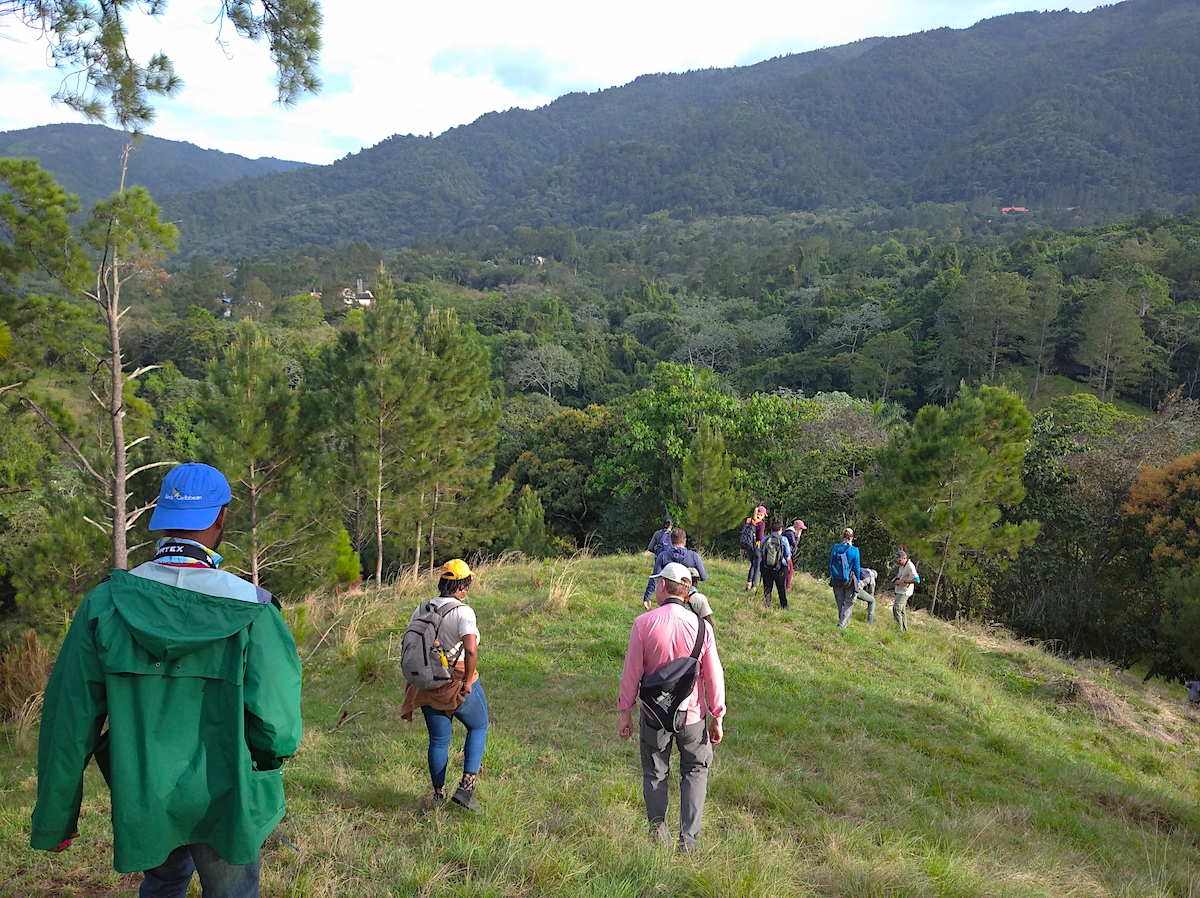
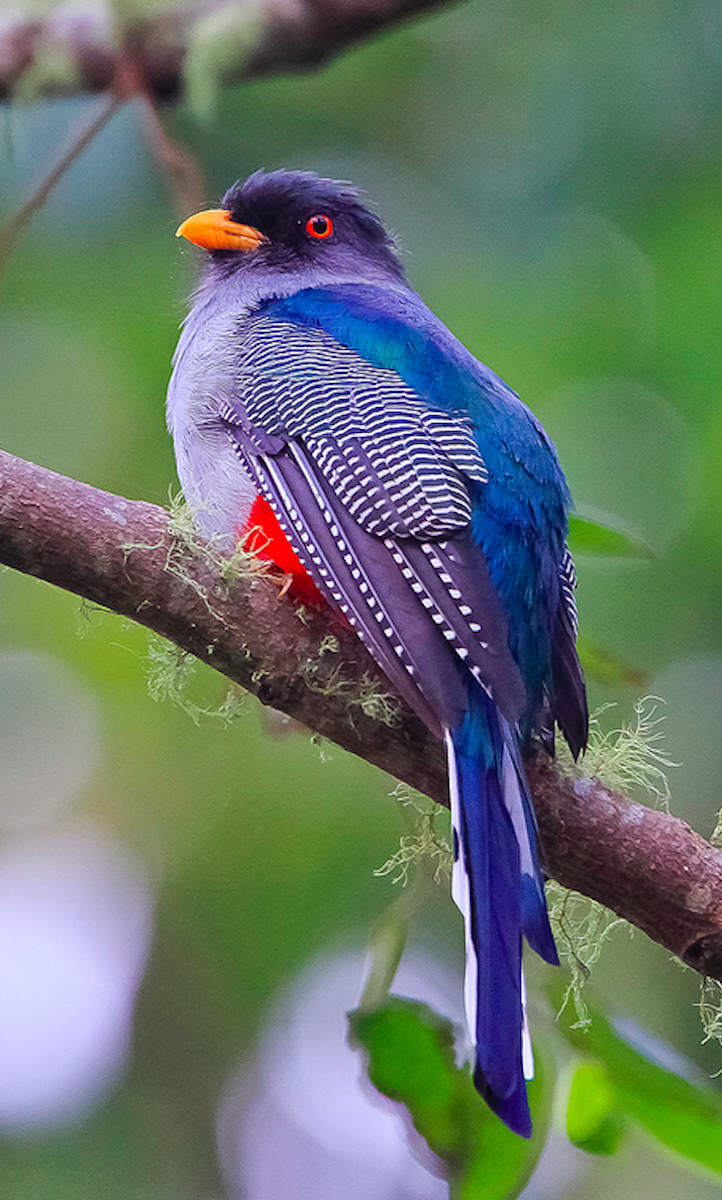


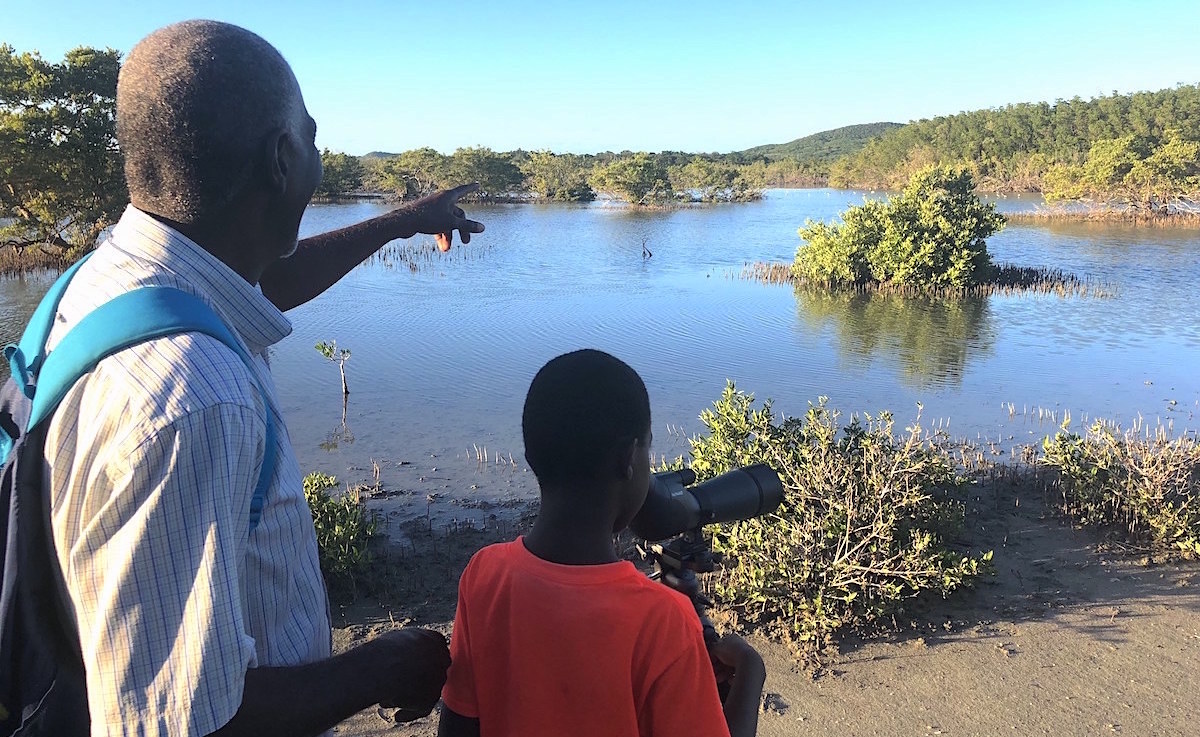
 Stop, Look and Listen.
 Zoom In.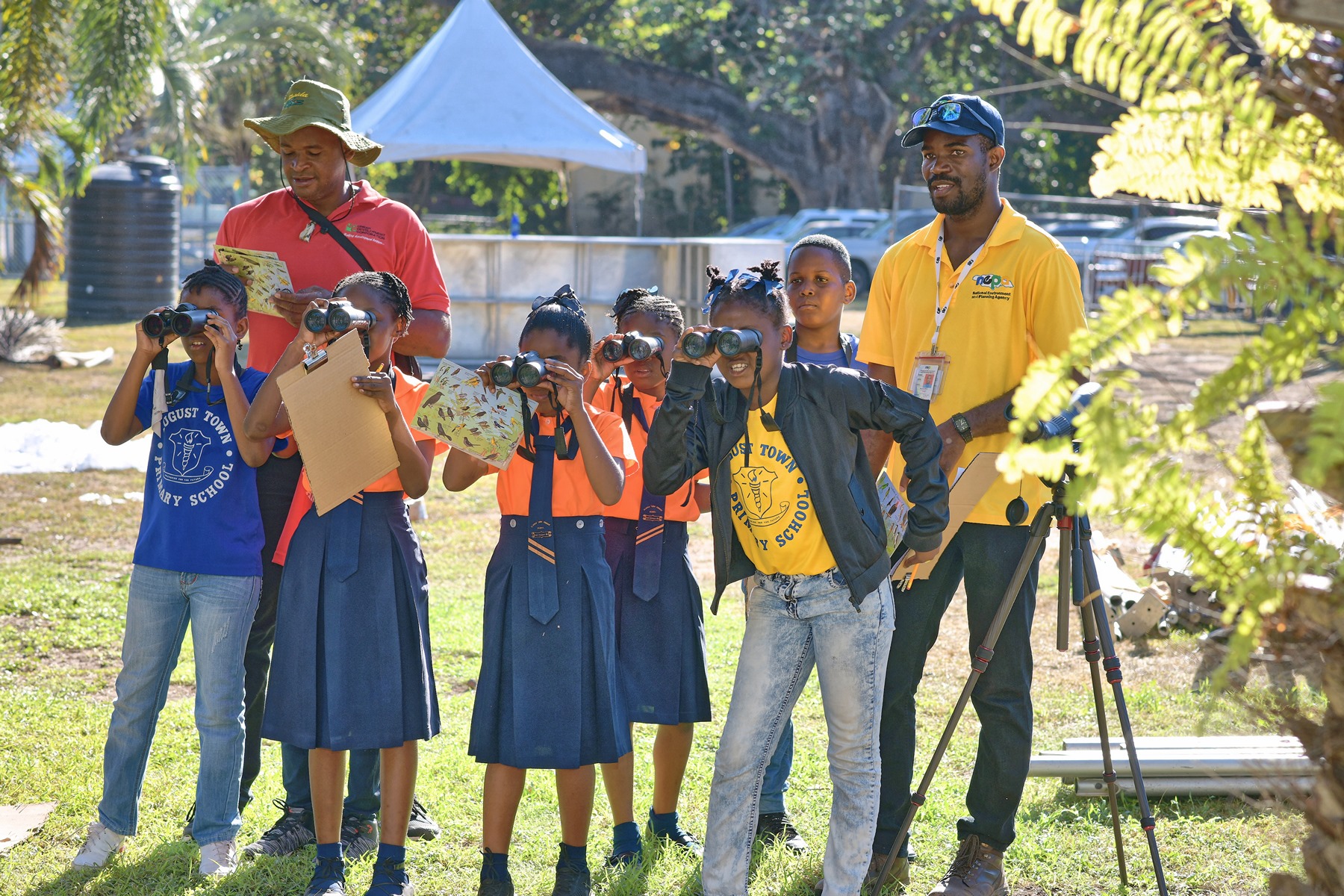
 Read Up.
 Find your Flock!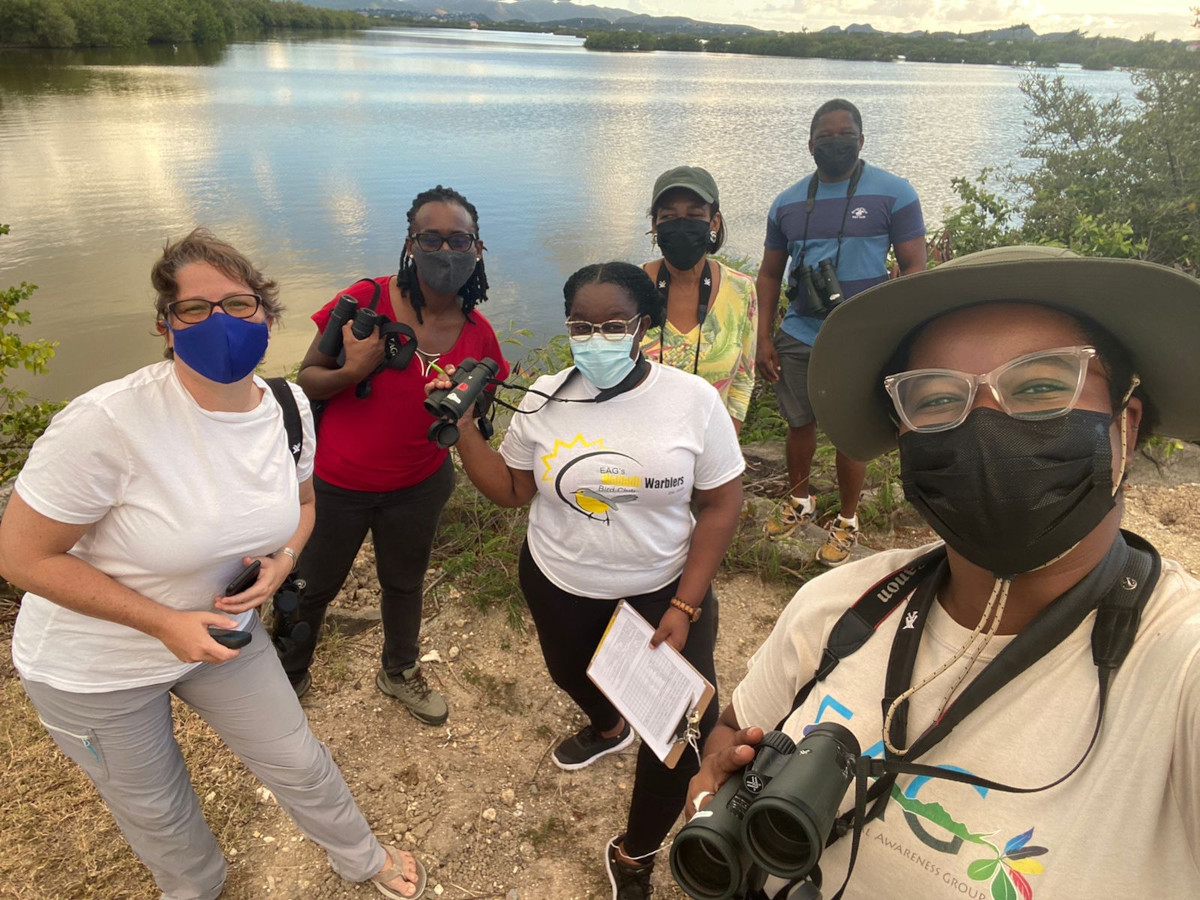
 Make your Yard Bird-friendly.
 Bring the Birds to You!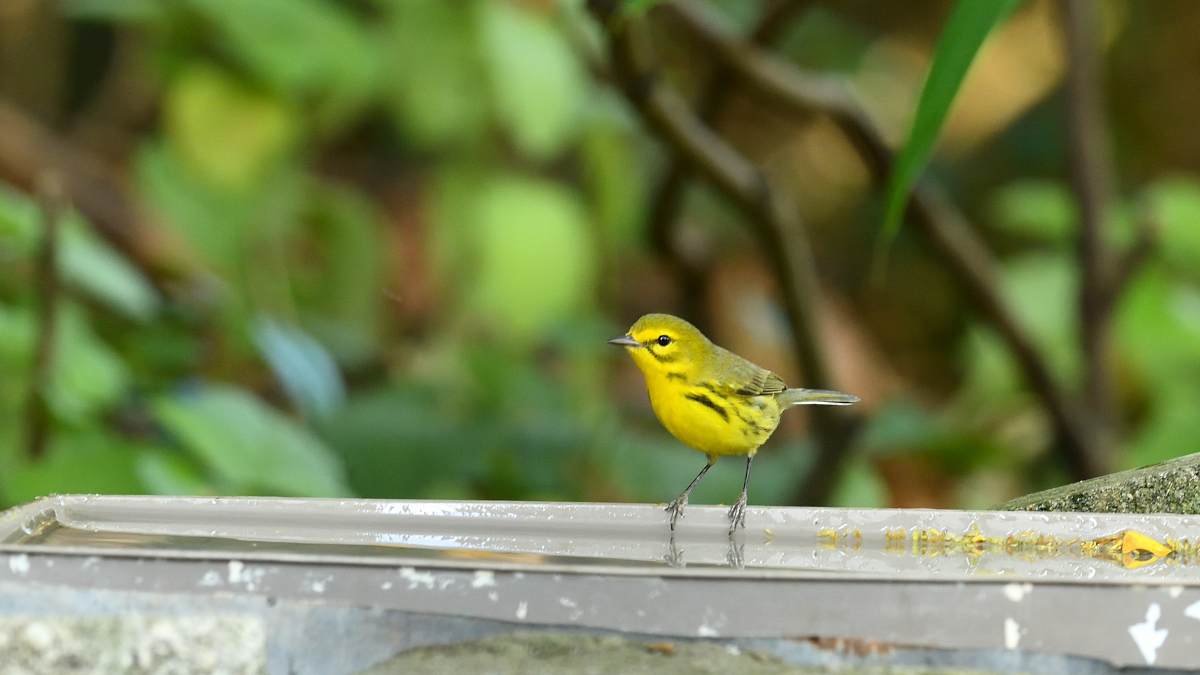
 Talk the Talk.
 Take Notes.
 Respect.
  Practice, Practice, Practice . . . and Have Fun!