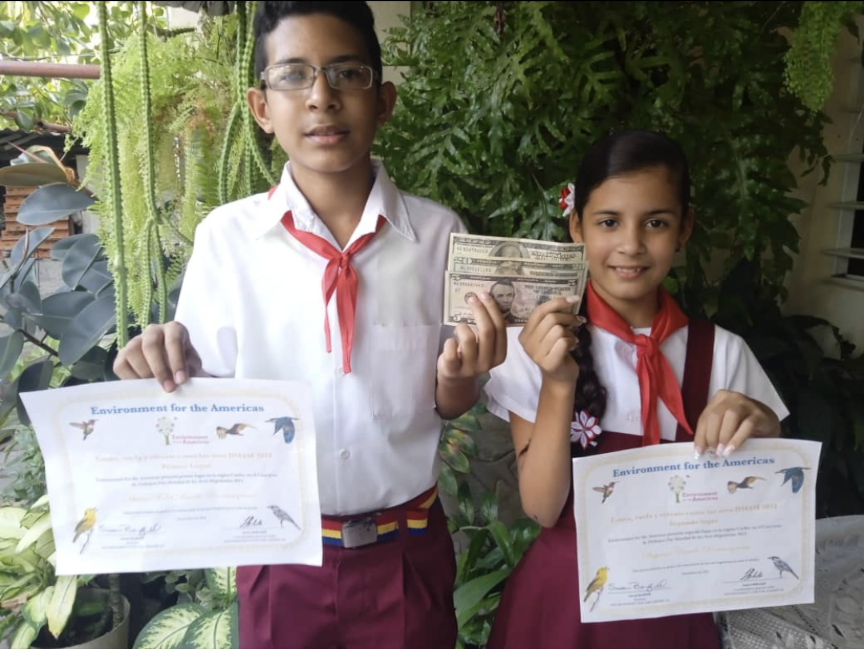
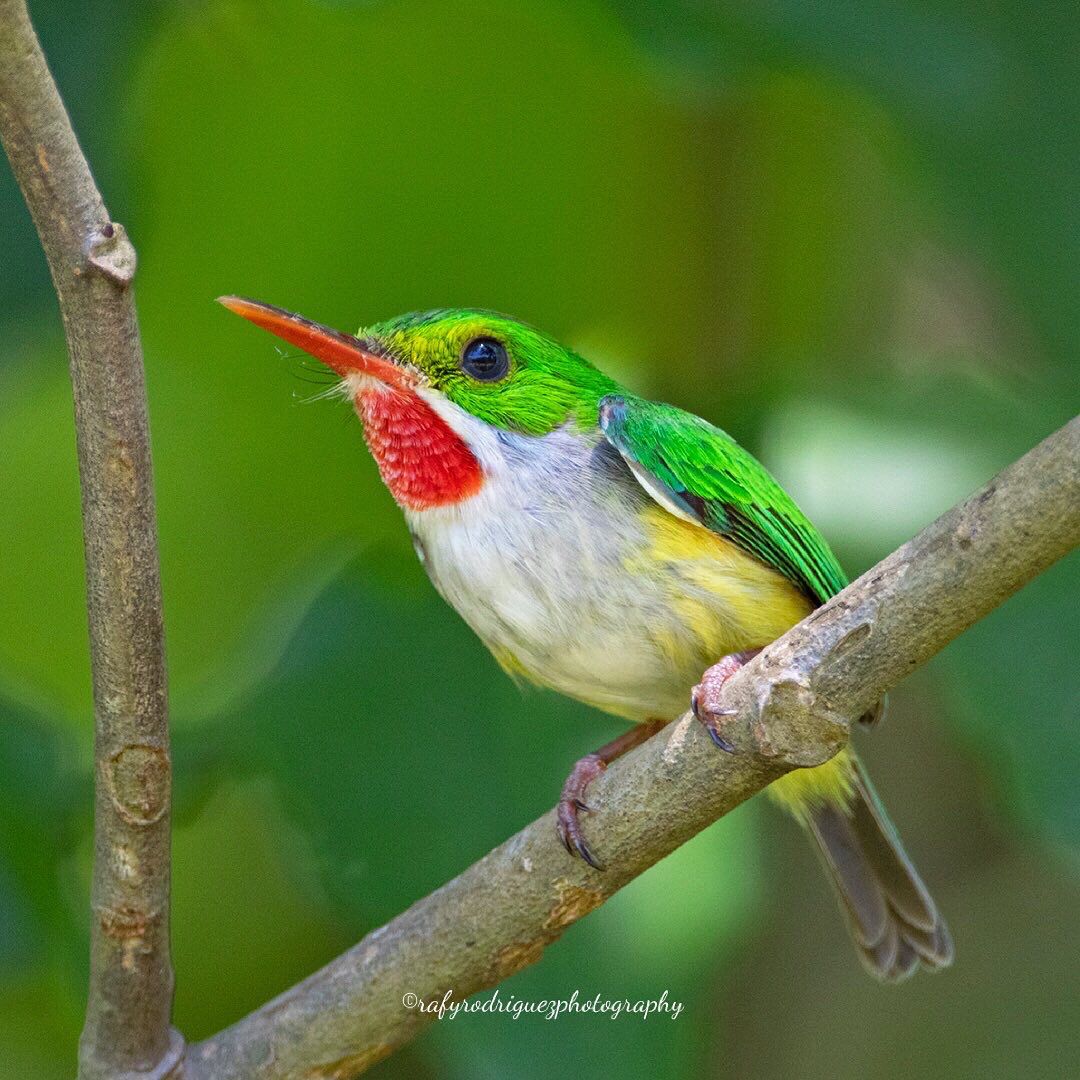
Héctor Fidel Ravelo Romanguera wins first prize in the WMBD costume competition for his amazing Turkey Vulture costume. (Photo by Ines Lourdes Fernandez)
October 9th, 2021 is the official date for World Migratory Bird Day (WMBD) in the Caribbean, but we celebrate throughout the fall, welcoming home our returning migratory birds. We love the extra color and activity these avian gems bring to our backyards, forests, wetlands, and beaches. This year’s theme — “Sing, Fly, Soar—Like a Bird” — provided a fantastic opportunity for learning and birding fun. Find out how we celebrated across the Caribbean!
Despite the challenges faced during the pandemic, educators and students throughout the Caribbean celebrated WMBD with a range of activities. Caribbean coastlines got busy, with young students wielding binoculars and checklists, guided by their teachers. In some countries in-person events were hosted when possible; otherwise, virtual events or “hybrid” activities – a combination of the two – took place. Islands including Anguilla, Bahamas, Antigua and Barbuda, Puerto Rico, Dominican Republic, Cuba, Bonaire, Montserrat, Grenada, and Trinidad and Tobago participated, just to name a few. Many more islands are hosting events, activities and are still celebrating this special time for Caribbean birds.
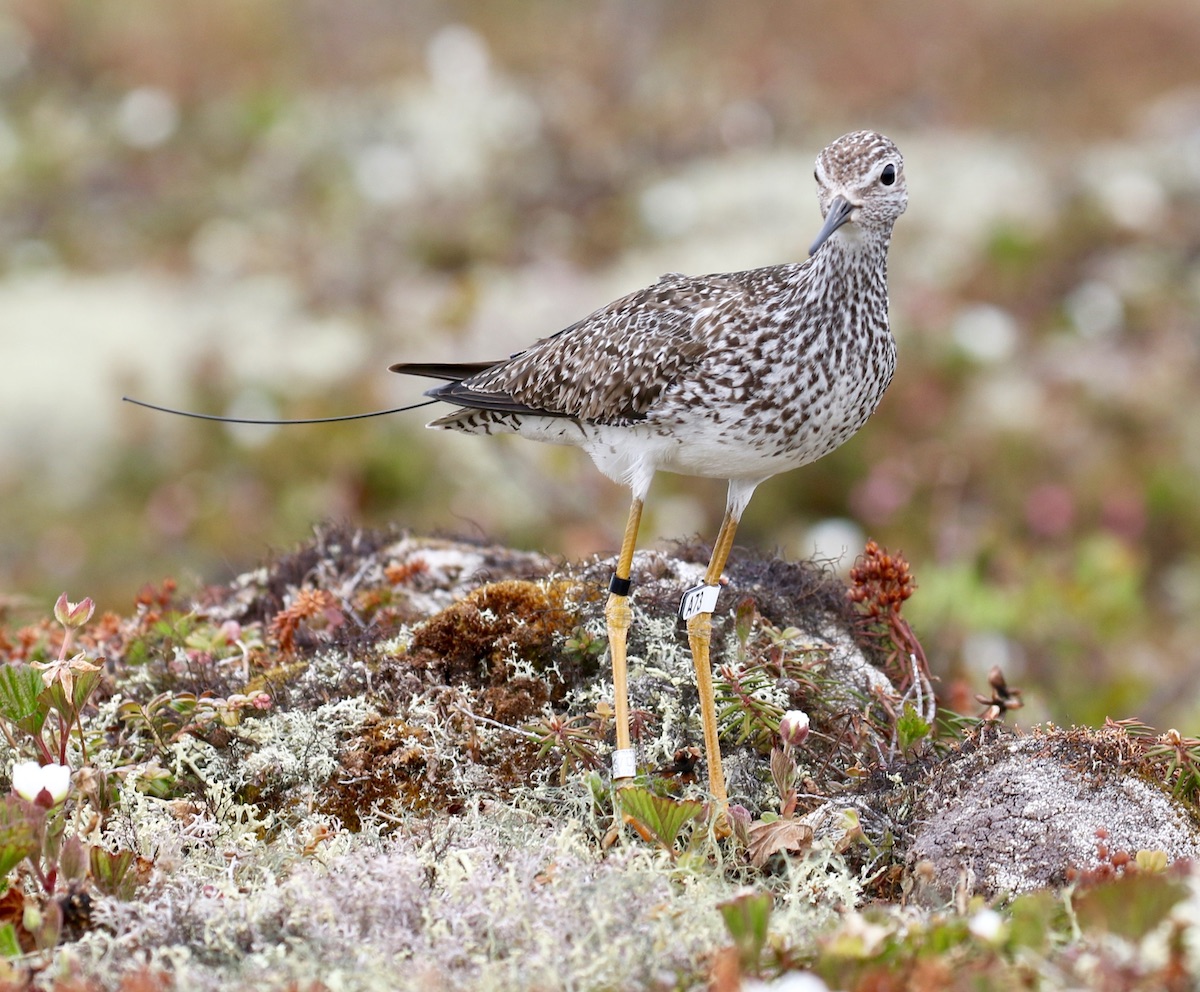
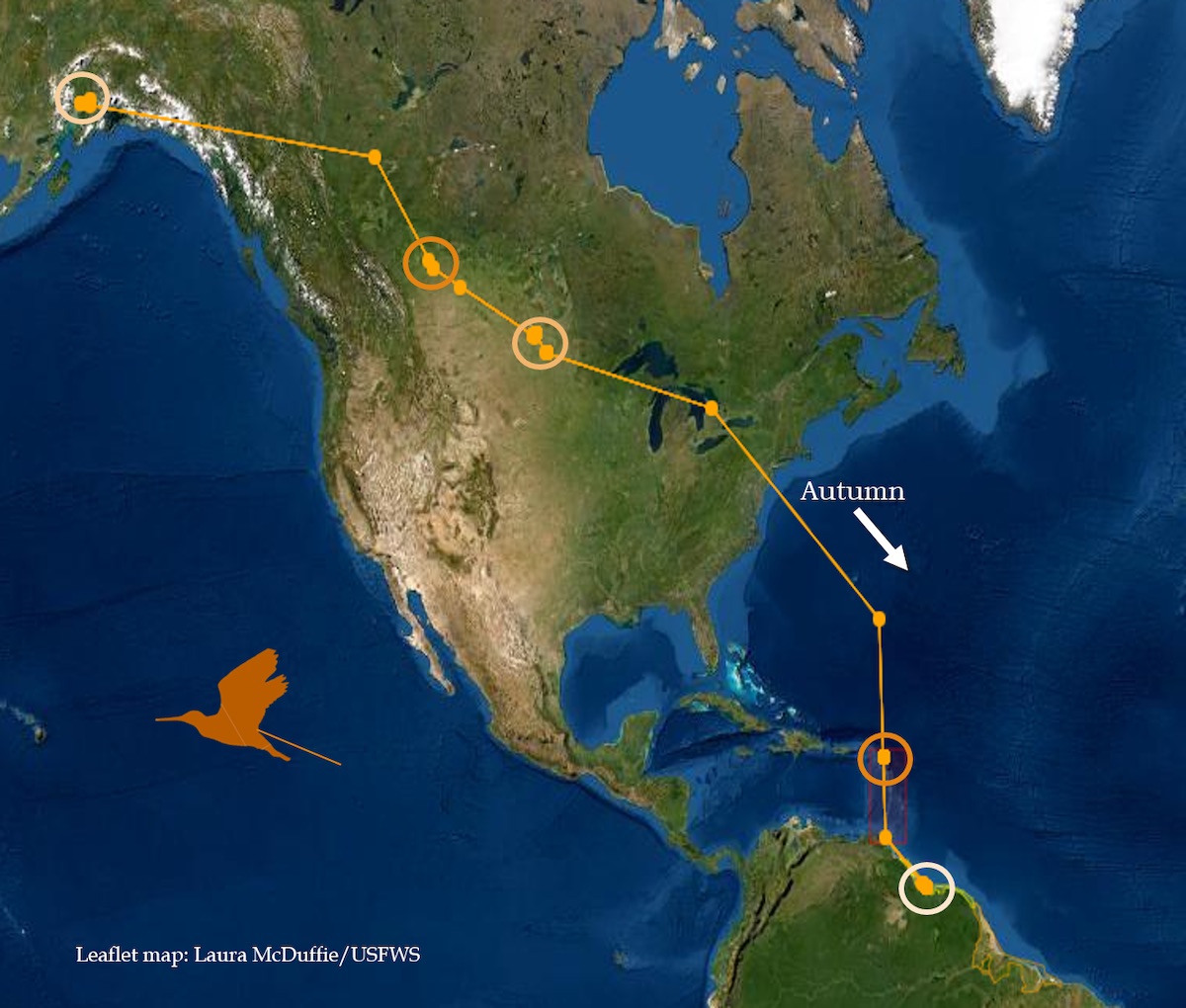
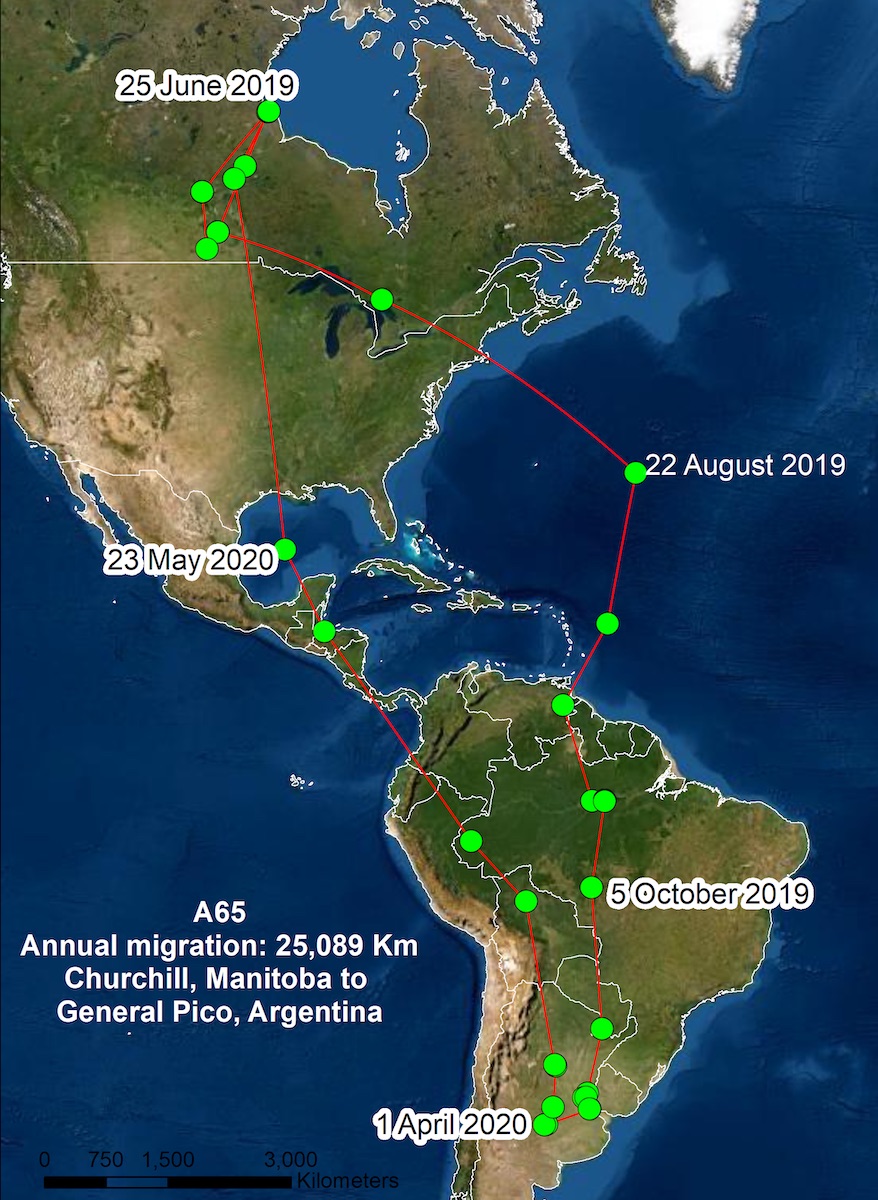
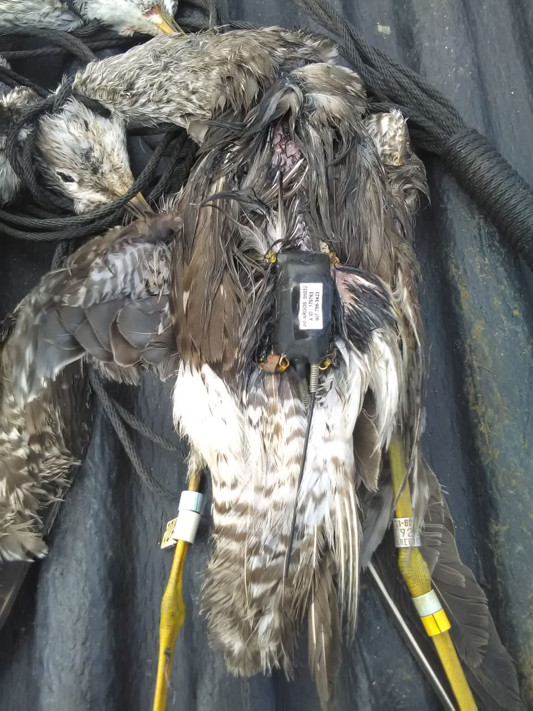
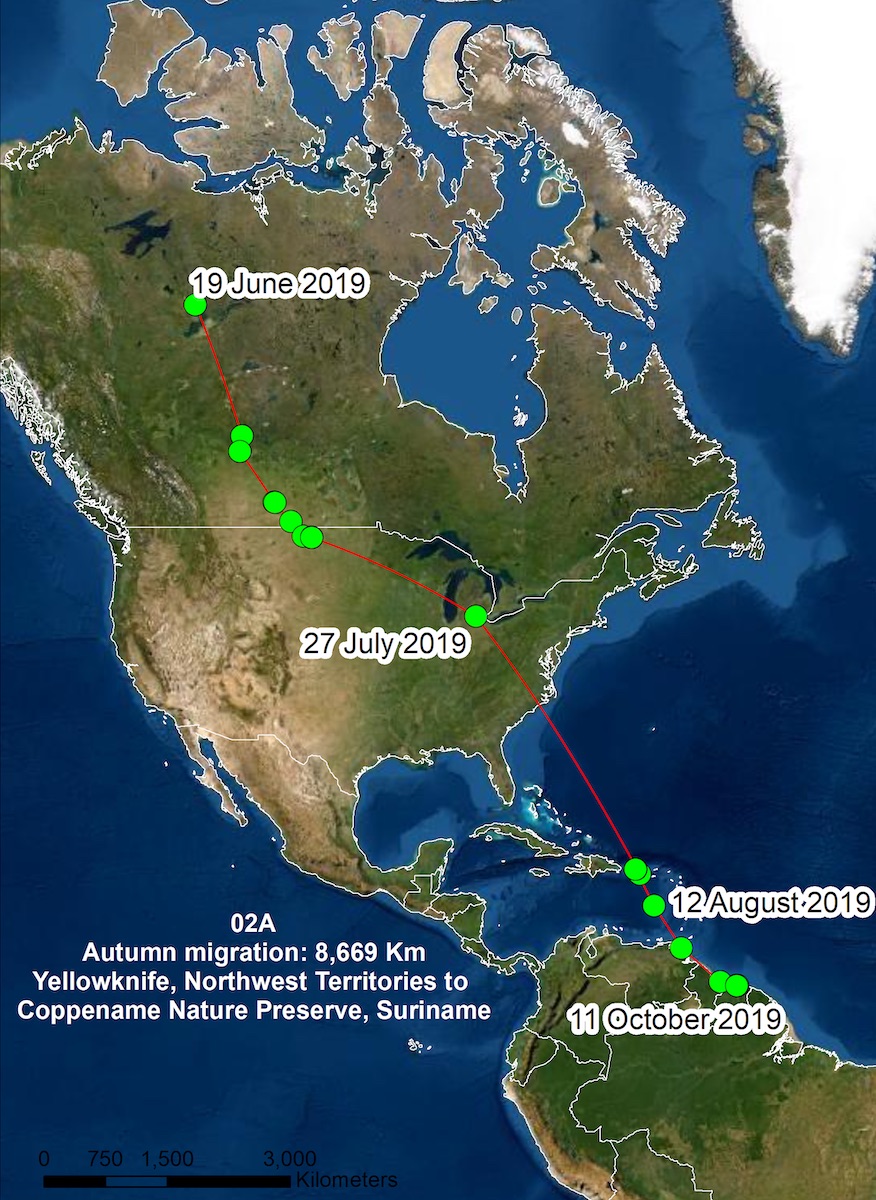
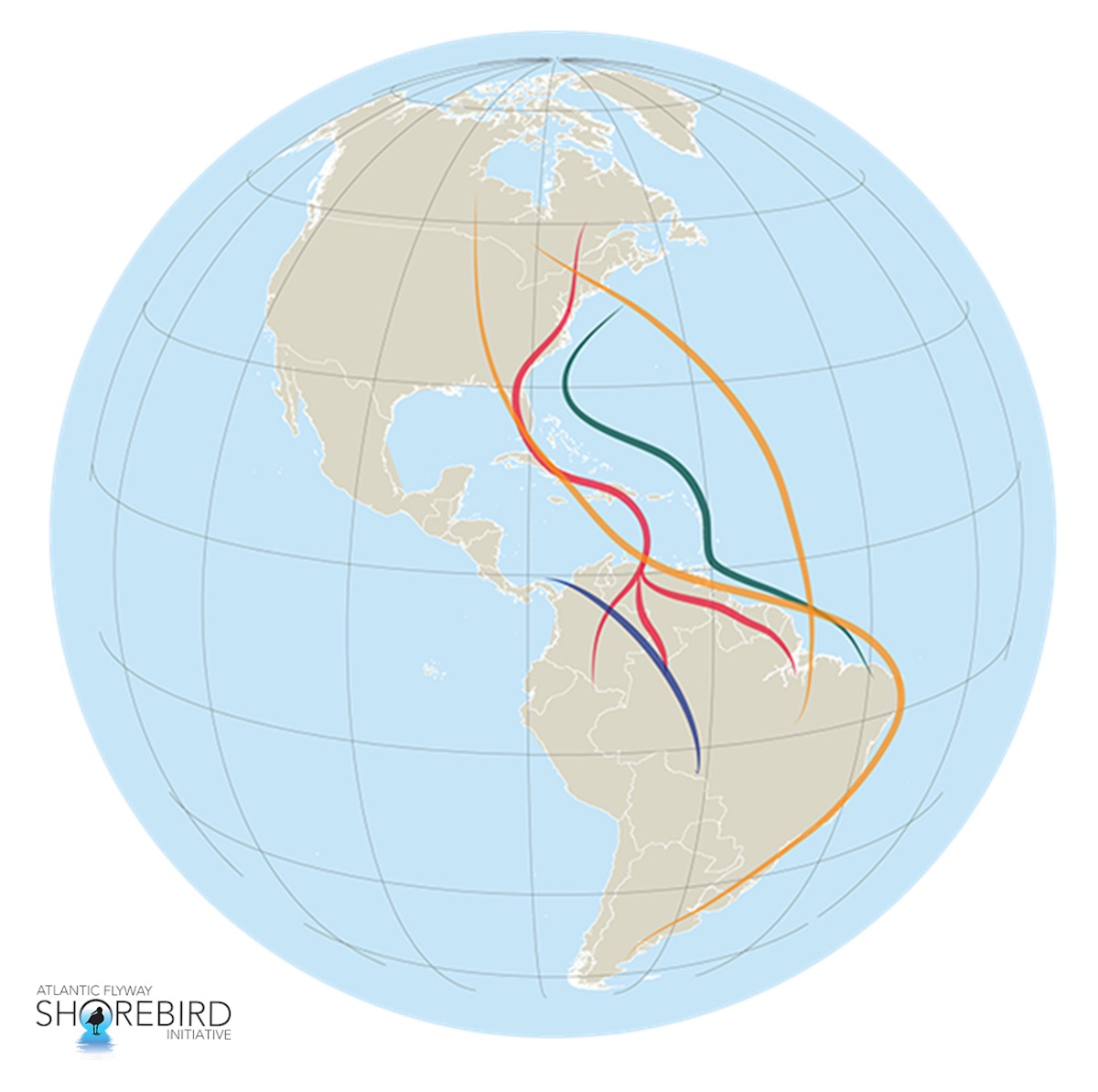
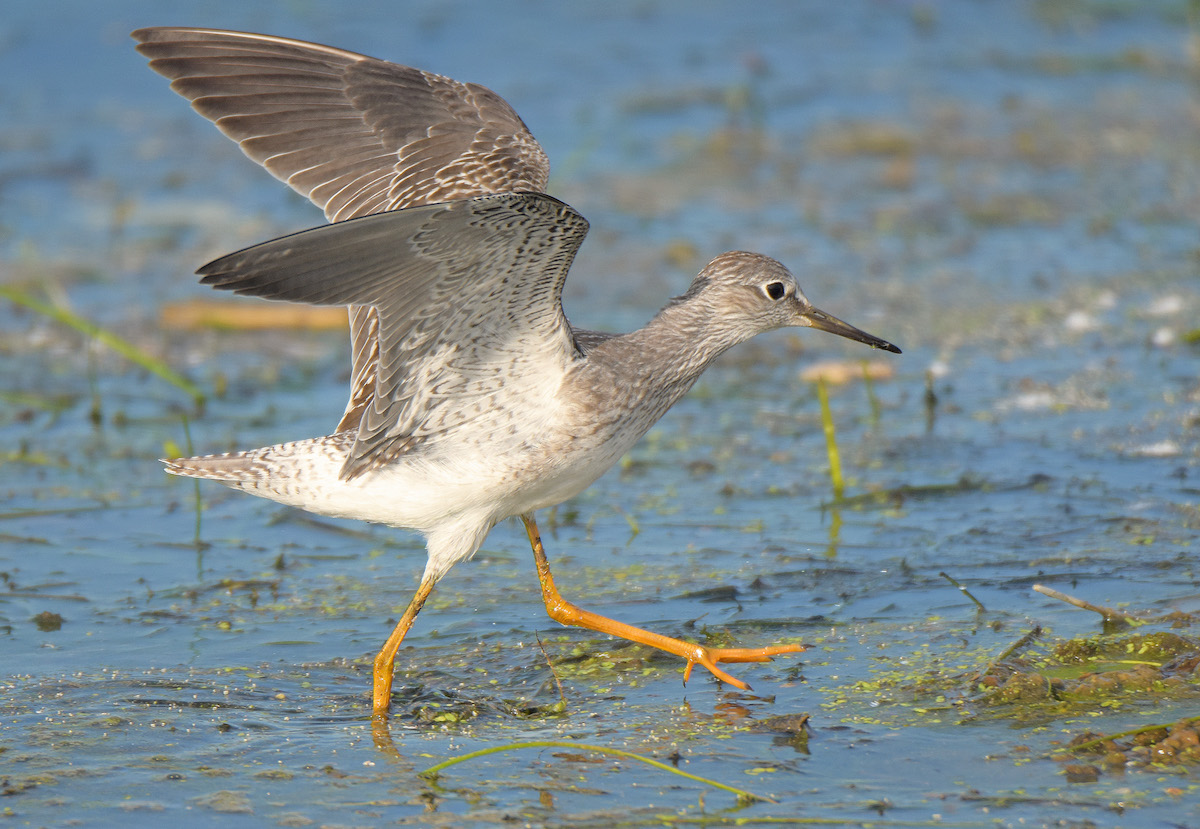
BirdsCaribbean recognized WMBD by hosting several activities with a focus on the region’s endangered migratory shorebirds. At a webinar entitled “A Year in the Life of the Lesser Yellowlegs” Laura McDuffie, a wildlife biologist for the U.S. Fish and Wildlife Service Migratory Bird Management Program revealed the amazing journeys made by a shorebird species that is facing particular challenges at this time. The webinar and accompanying video (in English, Spanish, and French) can be viewed on BirdsCaribbean’s YouTube channel and below.
A series of four short videos, boosted by social media posts, aimed to raise awareness of the importance of the Caribbean region to migratory shorebirds and the threats, they face, including hunting. These can be viewed on our YouTube channel in English, Spanish and French. BirdsCaribbean partners also shared short, inspiring and amusing videos on what the theme meant to them. October Big Day was an opportunity to go out and see some migratory birds – with excellent results, despite the lingering effects of COVID-19 limitations on some islands.
Highlights from this year’s WMBD activities!
Puerto Rico
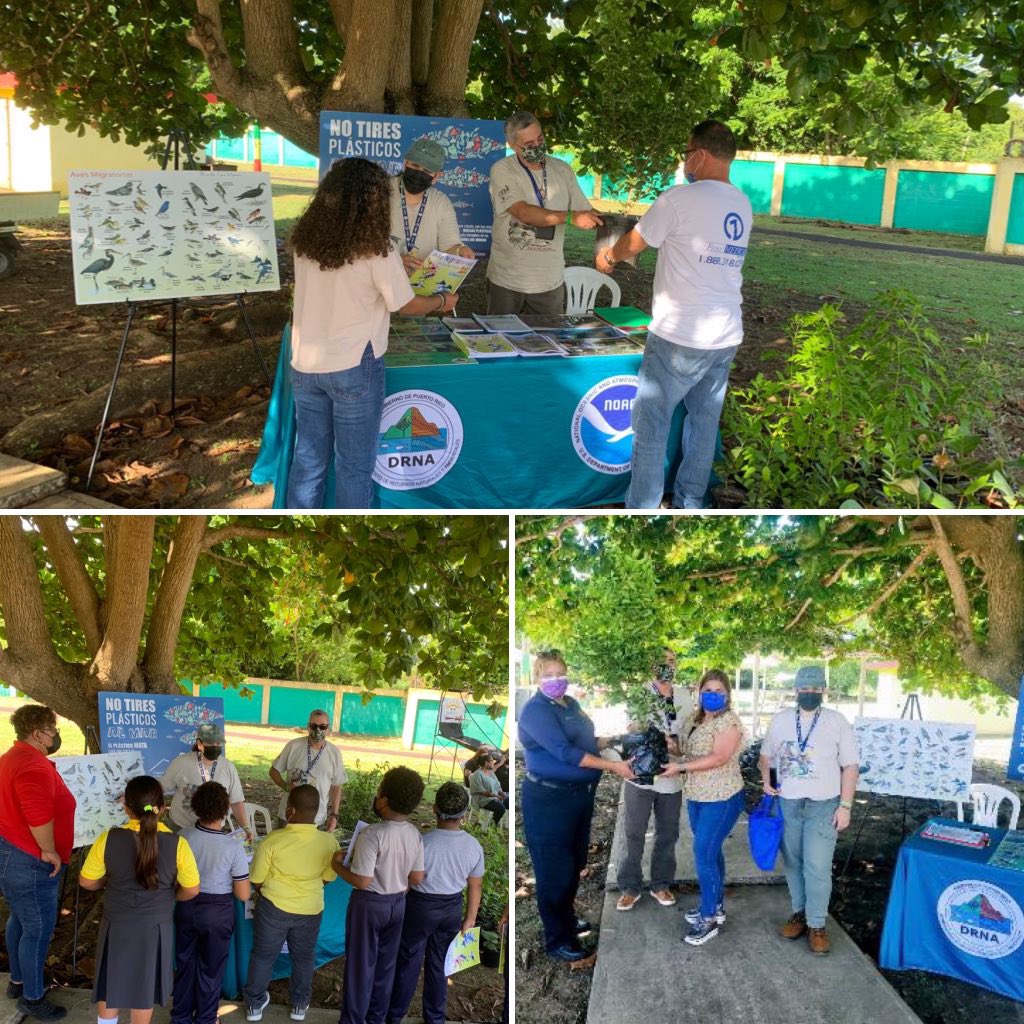
Staff at the Puerto Rico Department of Natural and Environmental Resources educated participants on migratory birds and plastic pollution. They also donated native trees as gifts at the Service Fair organized by Senator Marissita Jiménez in the Cueva María de la Cruz de Loíza Historical Park.
The Puerto Rico Department of Natural and Environmental Resources staff sharing information and giving out trees from their booth. (Photo by Ingrid M. Flores/ DRNA)
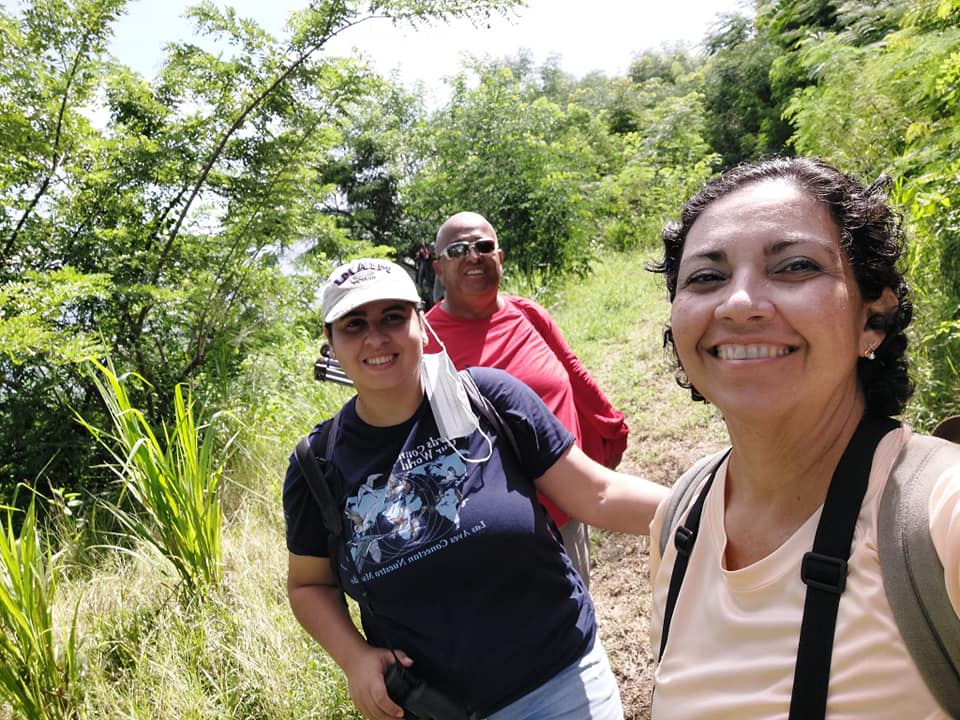
Roots and Shoots, celebrate WMBD on a bird watching trip, Puerto Rico. (Photo by Carla Montalvo Martinez)
Dominican Republic
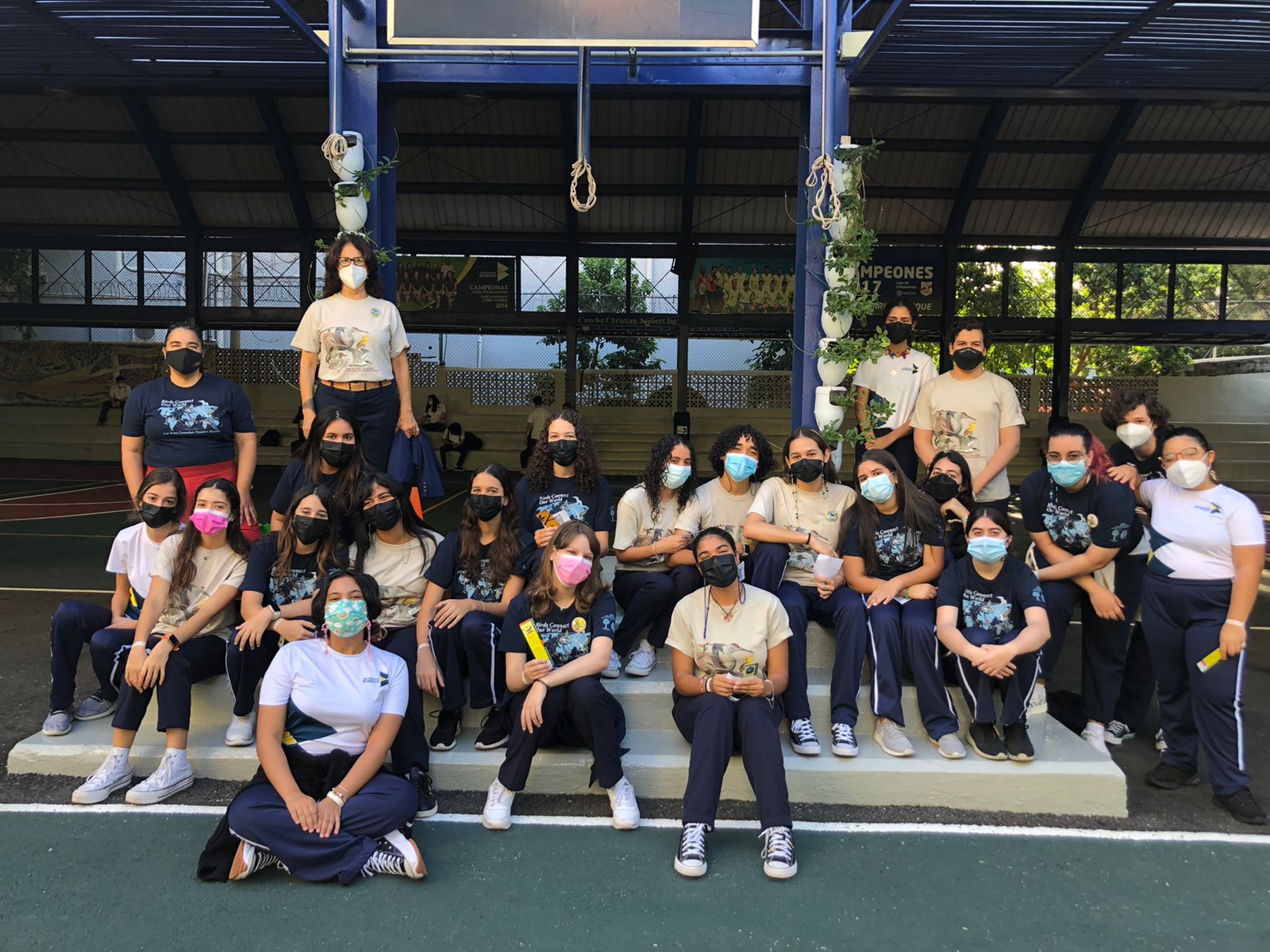
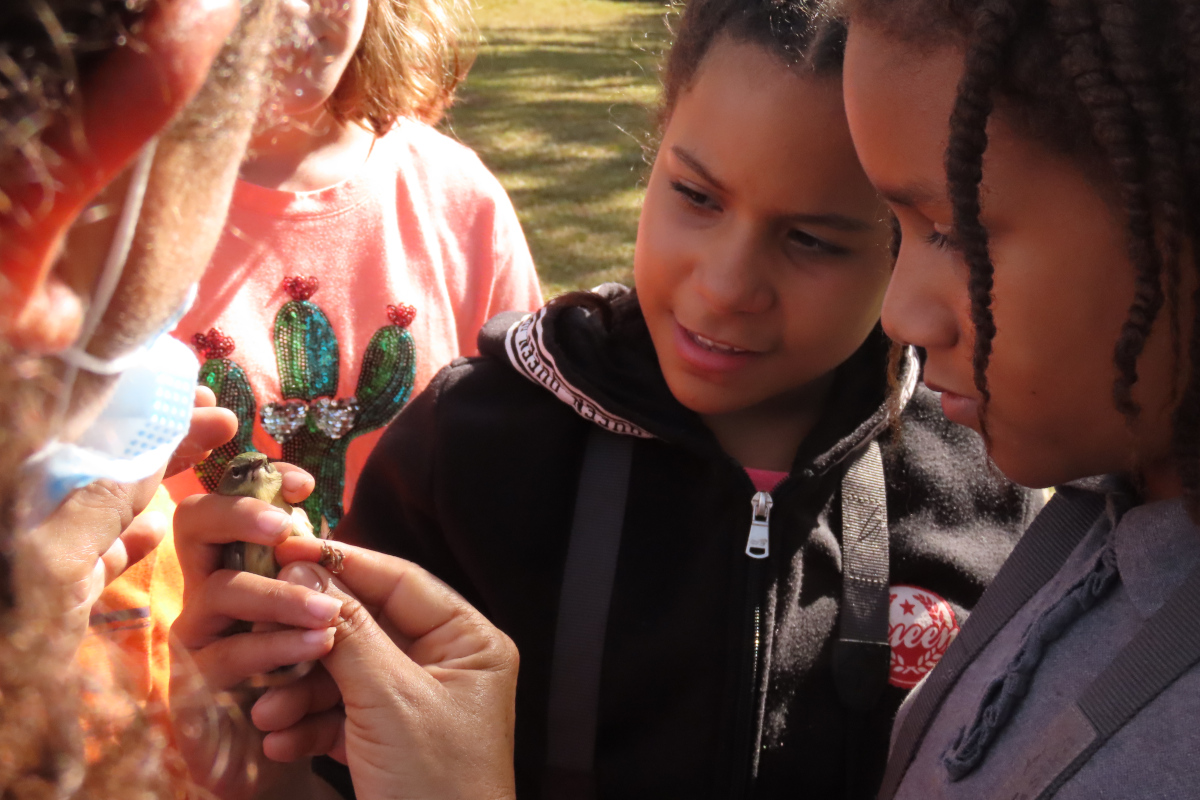
In the second week of October, Babeque Secondary School organized some activities to celebrate the enthusiasm for birds with international institutions. This year they visited the Museum of Natural History Professor Eugenio de Js. Marcano, where the volunteer students learned about the birds that visit the island and participated in lively activities based on the knowledge they had absorbed. Grupo Acción Ecológica (GAE) carried out a variety of activities in the Dominican Republic to celebrate WMBD. They organized a talk and walk, in the National Botanical Garden with Dr. Rafael M. Moscoso. They also held workshops and outreach events with schools and community groups, including with the Doulus de Jarabacoa School. Celebrating with talks, walks and bird watching with the 5th graders. Of course, they also went out to look for migratory birds and caught a female (Black-throated Blue Warbler) as part of their monitoring!
Celebrating migratory birds with Secundaria Babeque, Dominican Republic. (Photo by Monika Gomez)
Kids bird watching during WMBD activities with Doulos school, Jarabocoa, Dominican Republic. (Photo by Maria Paulino/ GAE).
Learning all about bird banding on WMBD, Dominican Republic. (Photo by Maria Paulino/ GAE).
Montserrat
The Department of Environment made an early start to WMBD events in September! They hosted a riveting presentation focused on shorebirds with a church group. Two site visits to observe shorebirds followed.
Later on, in October, the staff made a presentation on bird migration to 4th form biology students at the Montserrat Secondary School, highlighting a few of the bird species that traverse the island during the migratory season. This was followed by a word search race, which included the names of twenty-two migratory species that can be found on Montserrat.
Local radio also played a role, with a spot aired on the national radio station on October 8th and 9th.
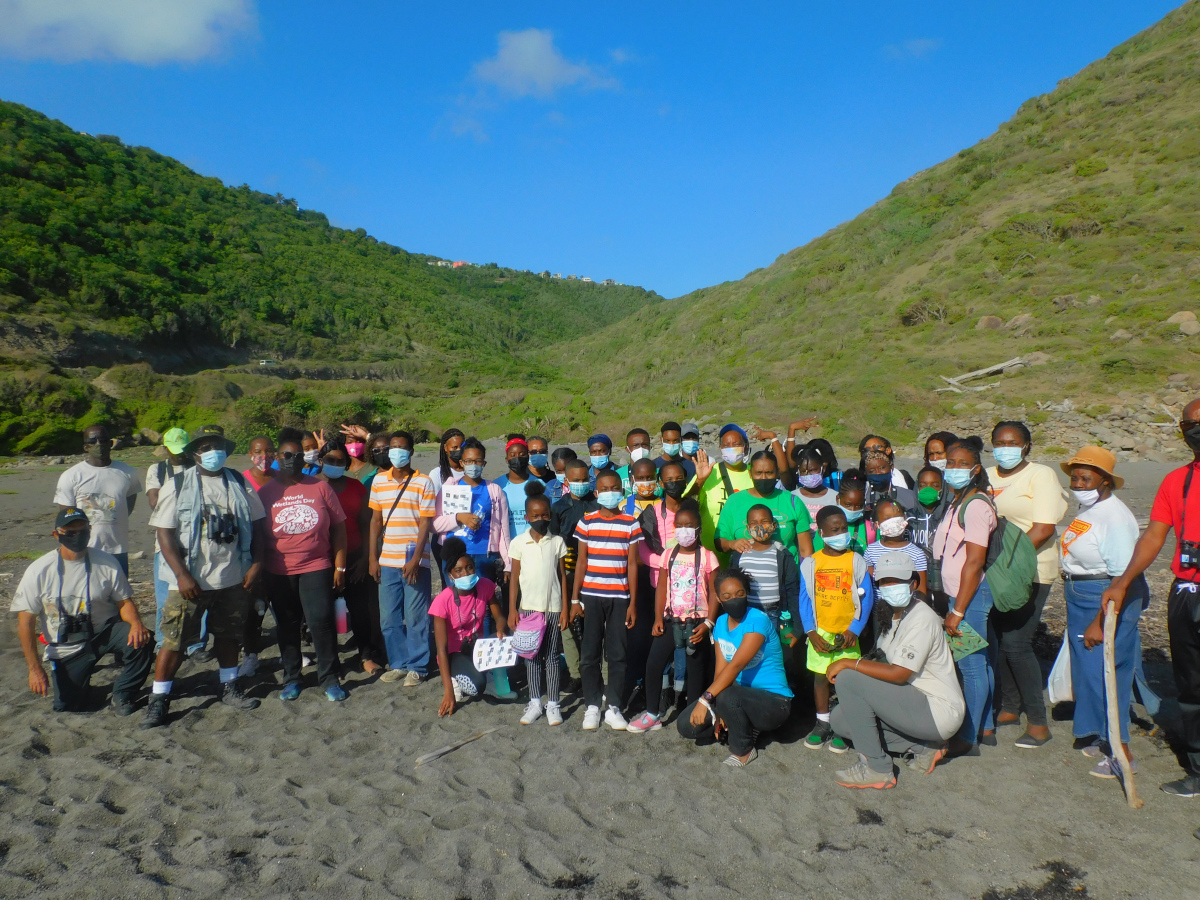
A church group in Montserrat enjoyed a shorebird watching trip to celebrate WMBD. (Photo by Ajhermae White)
Bonaire
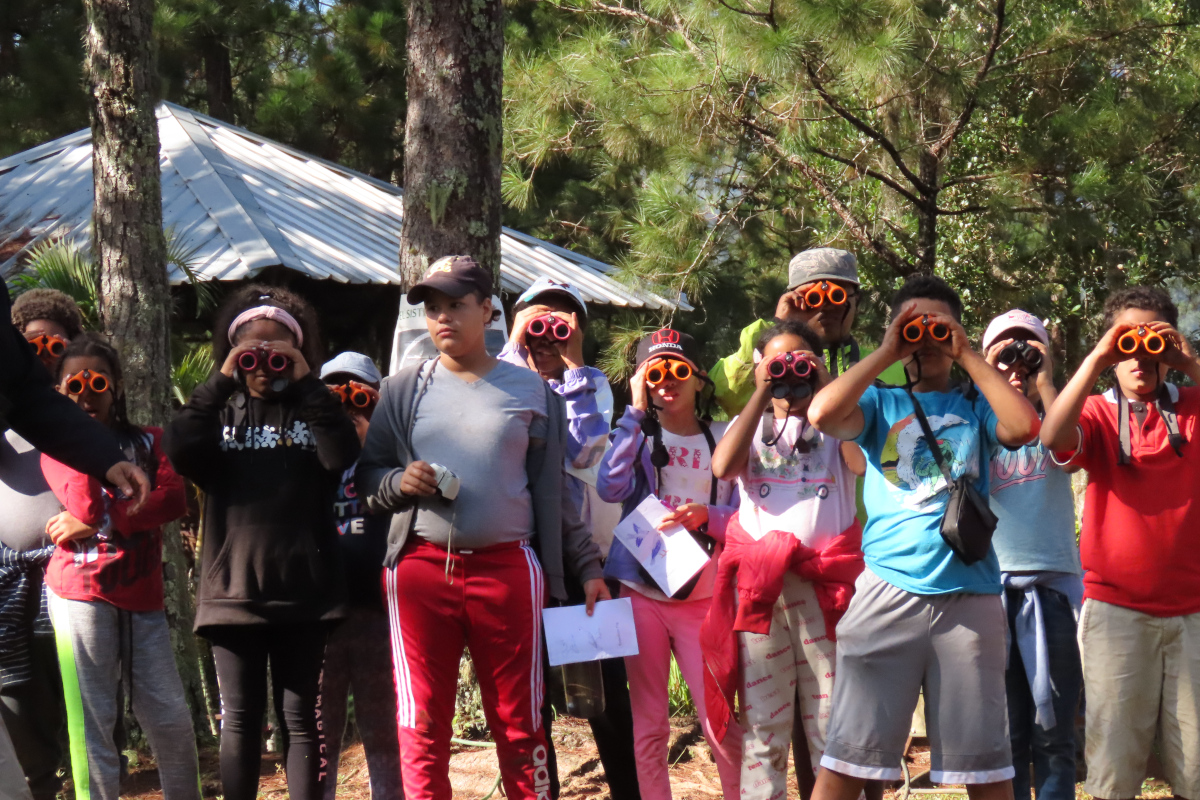
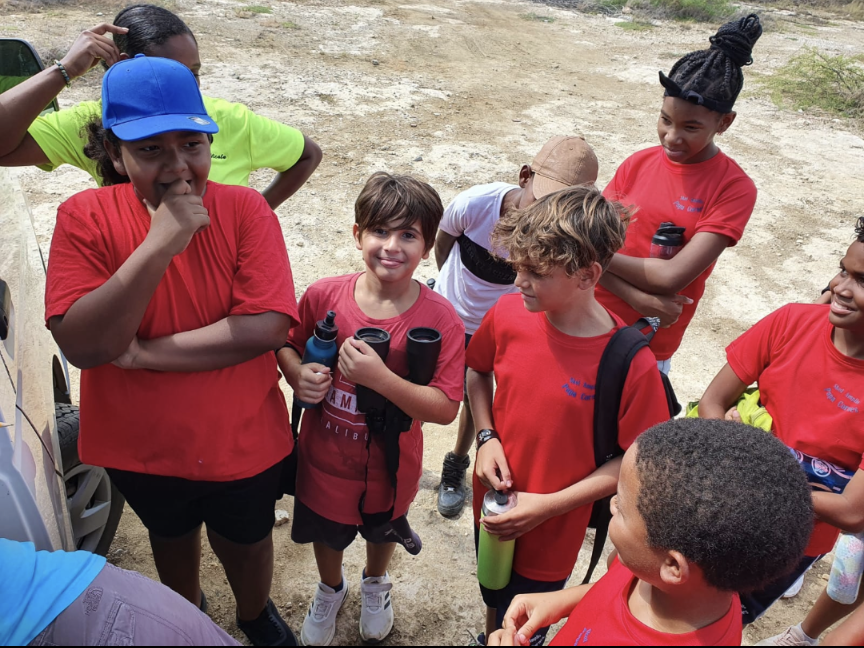
For WMBD Monique Grol and her colleagues at STINAPA visited all the primary schools on the island! They taught grade 7 classes all about migratory birds, talking to children in the classroom and taking them out on bird watching trips to local Salinas. With 100s of school kids getting involved.
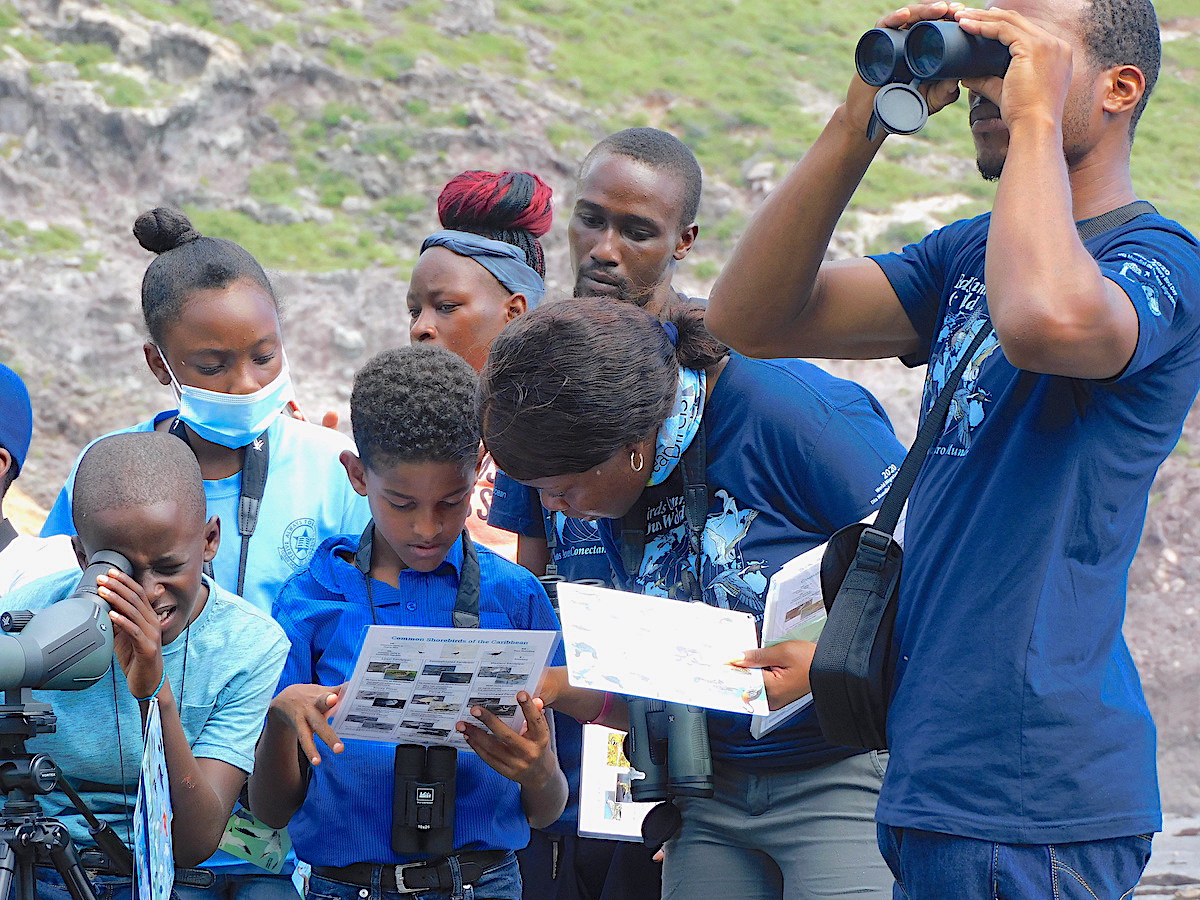
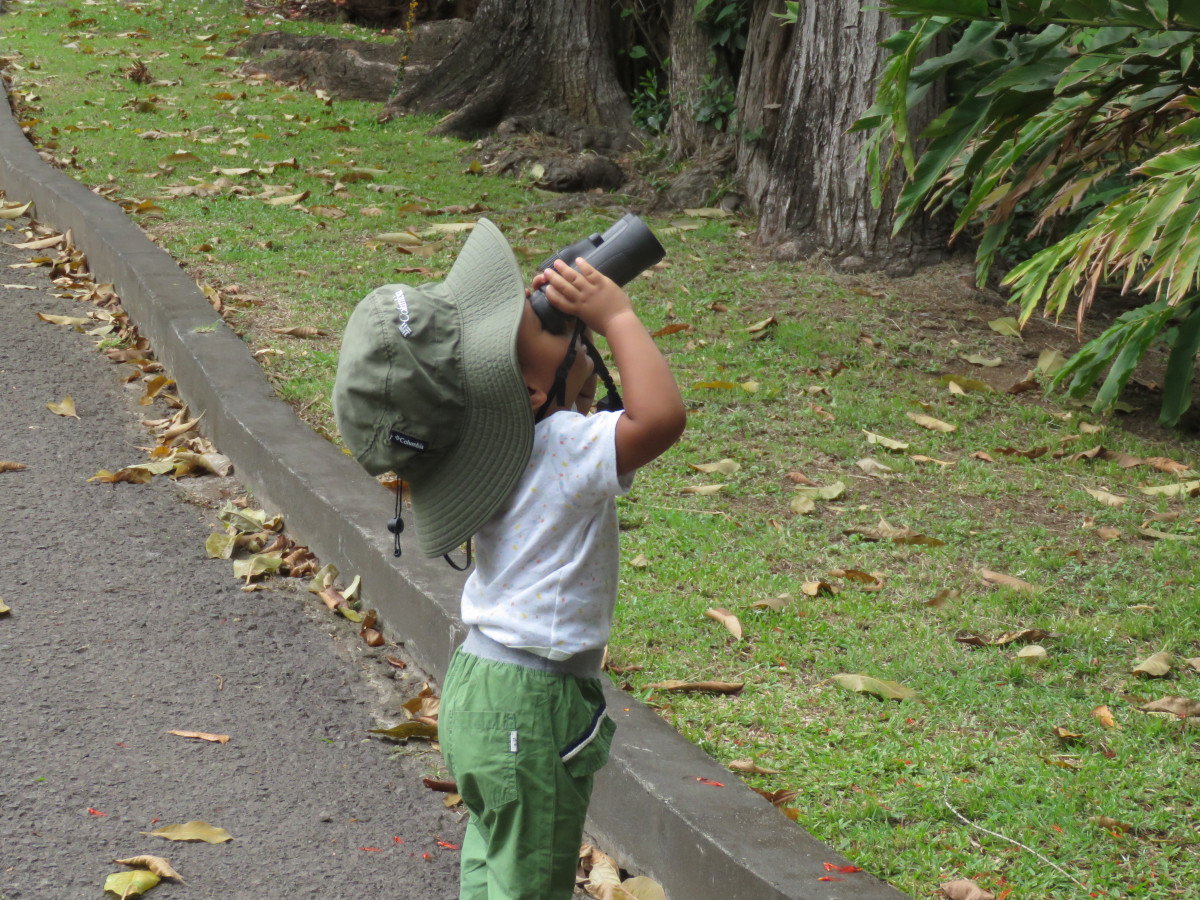
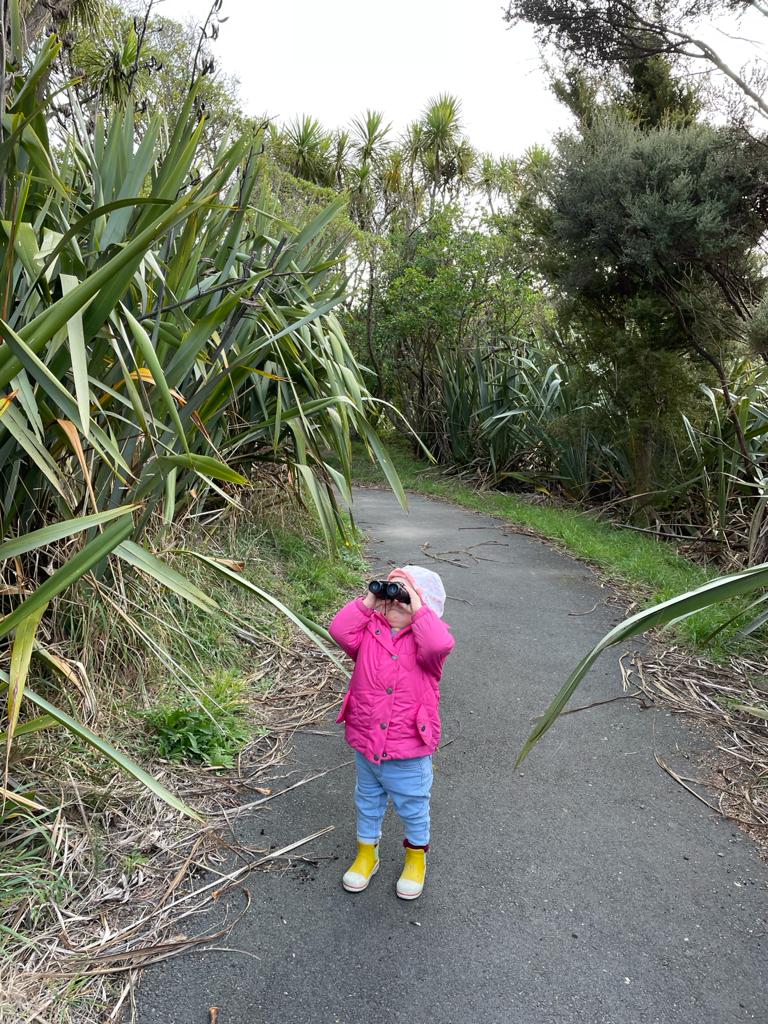
The children of Bonaire learned all about what migratory birds feed on and how bird beaks are different depending on what each type of food each bird eats. All the classes got poster of migratory birds to hang up in their classrooms. Out in the field the intrepid birding groups had great fun using binoculars and ID cards find and identify any birds they could spot!
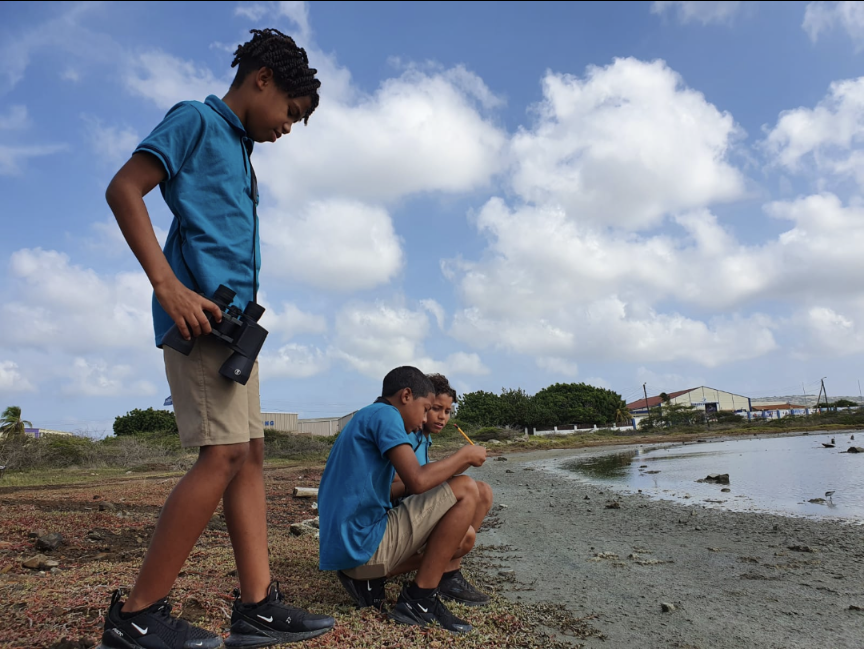
Grade 7 children looking for birds on a bird watching outing on Bonaire. (Photo by Monique Grol/ STINAPA)
Grade 7 students enjoy birdwatching at a nearby wetland after a classroom session on migratory birds. (Photo by Monique Grol/ STIMAPA)
Bird Costume Party Winners!
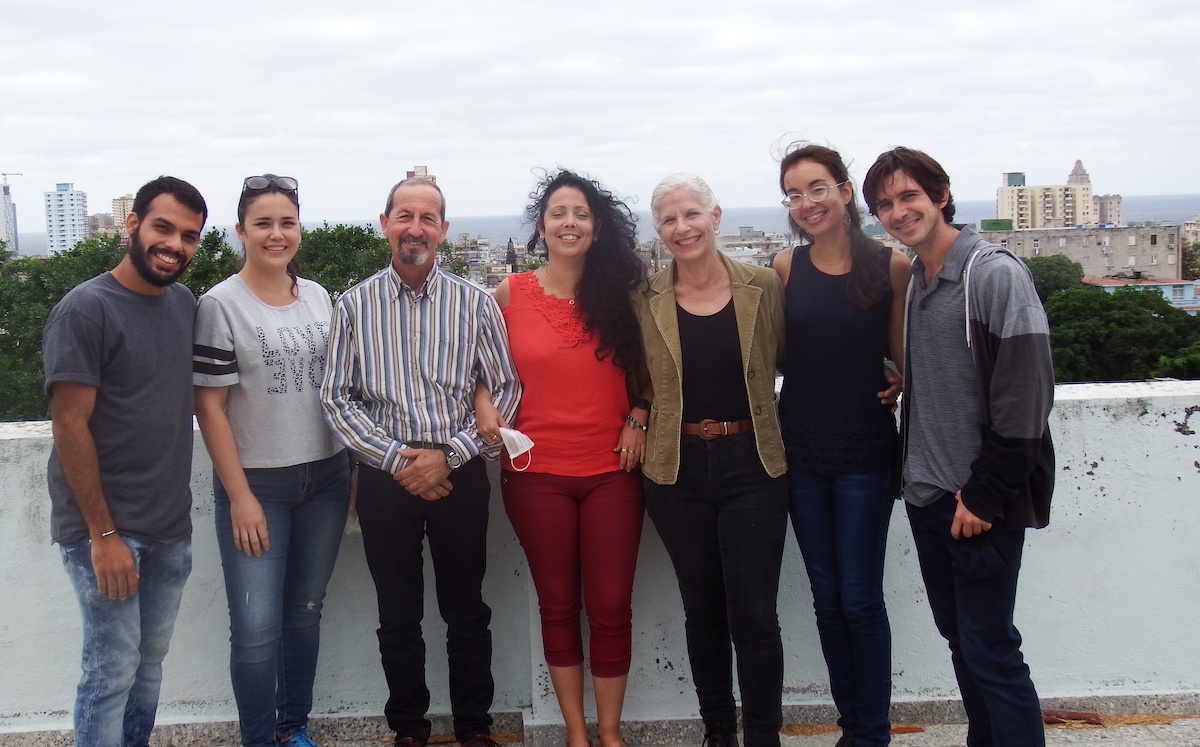
Winner of the WMBD bird costume competition, collect their prizes and certificates. (Photo by Ines Lourdes Fernandez).
Congratulations to our Bird Costume Party winners from Cuba! Dayami Ravelo Romanguera was runner up in a gorgeous Yellow Warbler costume. Héctor Fidel Ravelo Romanguera won first prize in his dramatic Turkey Vulture costume.
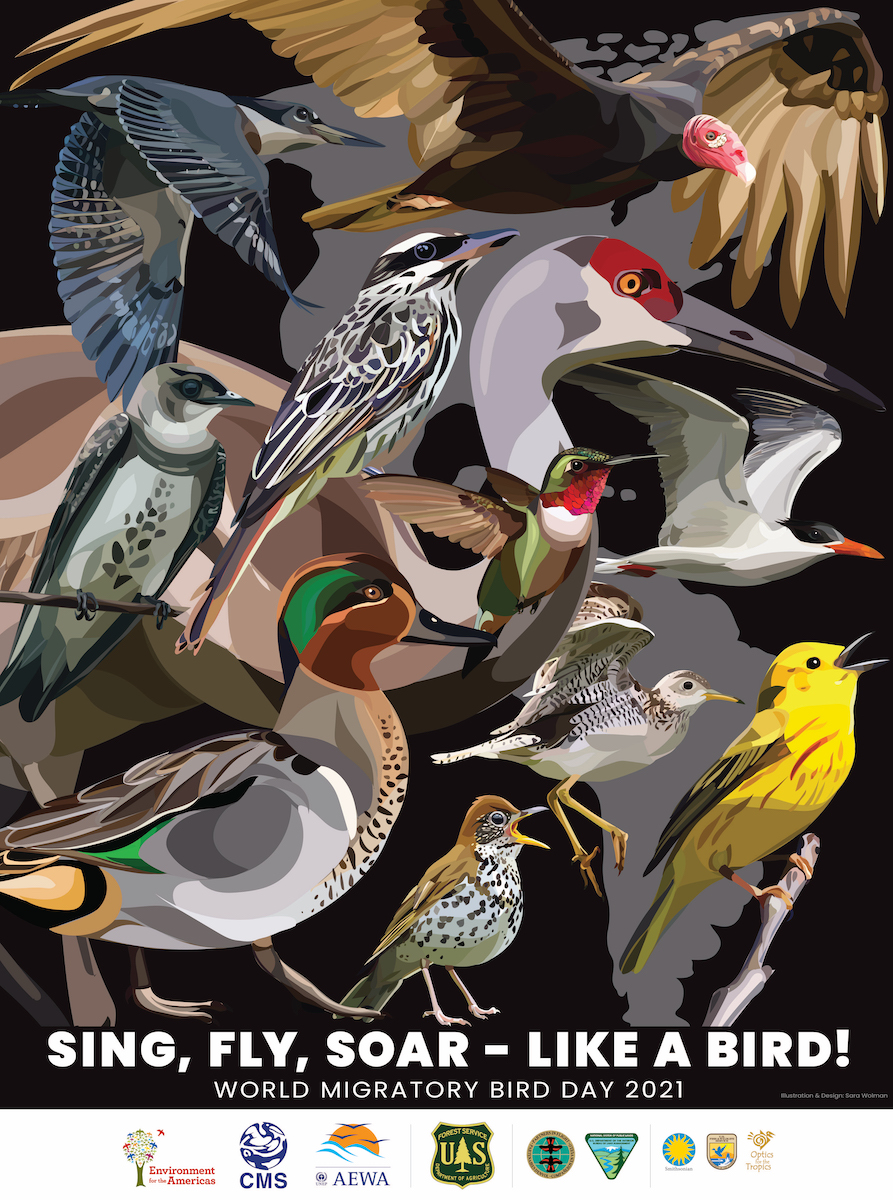
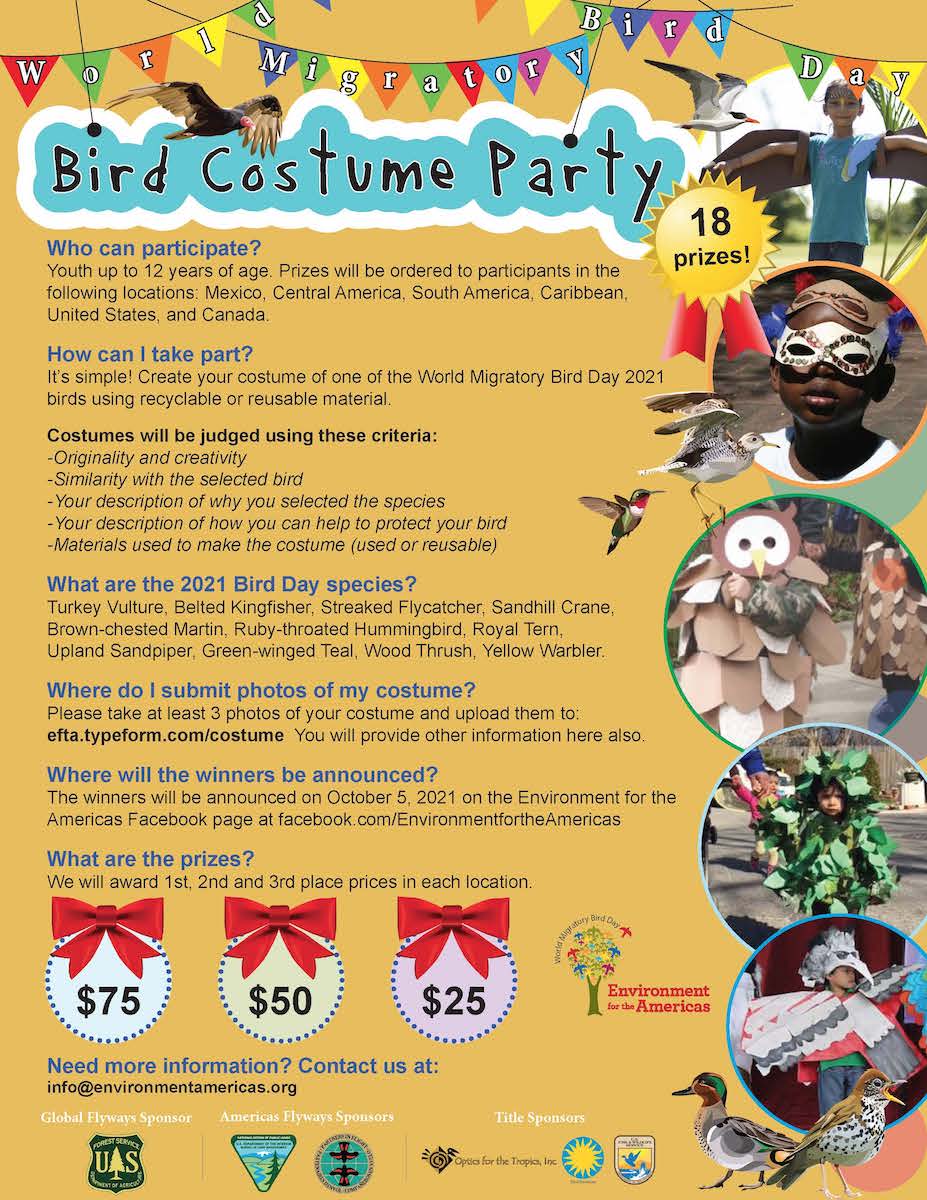
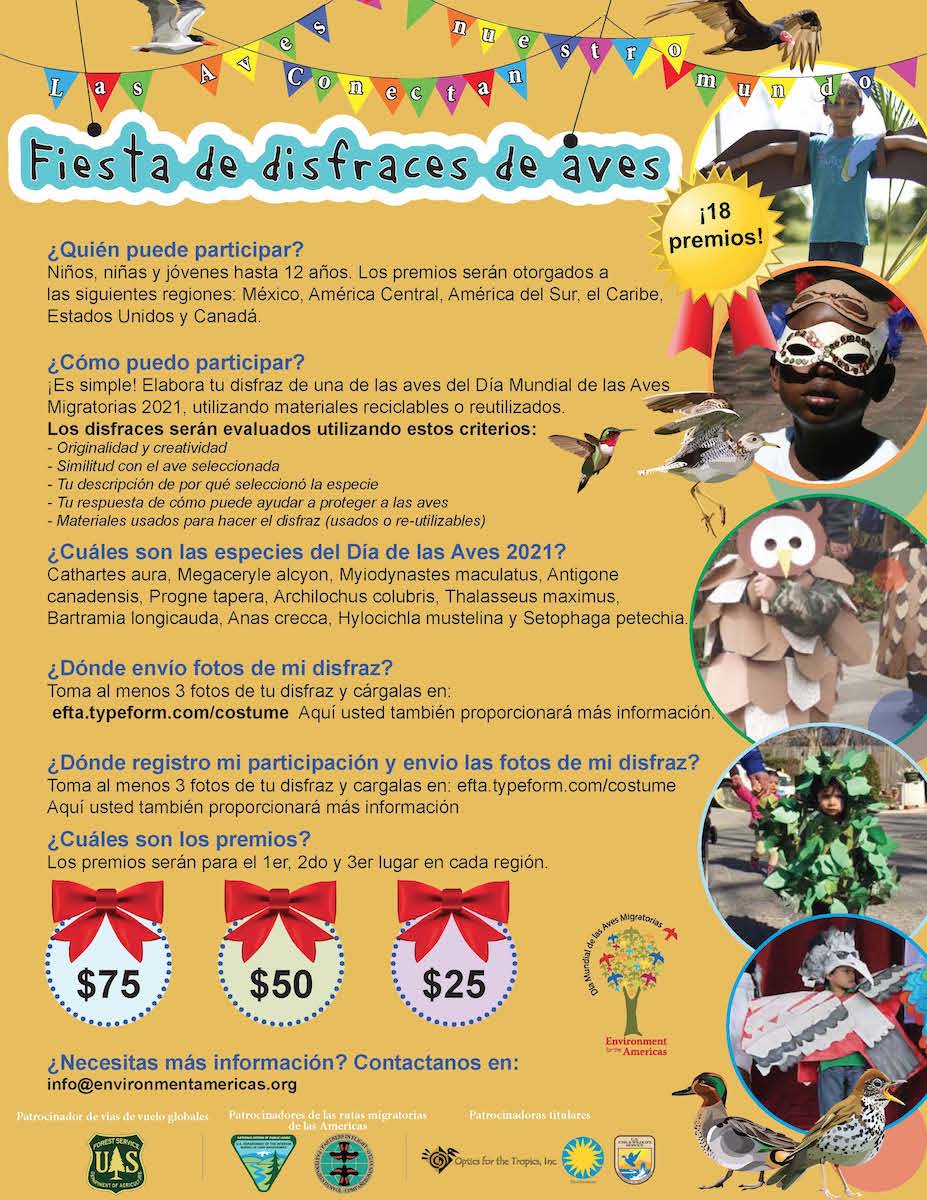
The contest encouraged young Caribbean citizens to take migratory birds seriously, and to consider celebrating and protecting them in the future. The competition was open to children up to 12 years old, who were asked to depict one of the featured eleven species selected by Environment for the Americas this year. Costumes used only recyclable or reusable materials, encouraging the children to think about environmental sustainability.
Thank you to all of the amazing people and organizations in the Caribbean that celebrate WMBD every year and especially during this challenging year! We look forward to celebrating WMBD 2022 with you all!
If you are interested in celebrating WMBD in your country, we encourage you to visit the WMBD website for more information or contact the Caribbean Regional Coordinator, Laura Baboolal, at [email protected]. If you have an event planned, you can register it and put the Caribbean on the global events map.
WMBD 2021 digital materials from EFTA are available in English and Spanish, at this link.
Information on migratory birds in the Caribbean, including colouring pages, activity sheets , photos, videos, and puzzles are available from BirdsCaribbean at this link.
Last, but not least, don’t forget to share your WMBD events and experiences on social media with EFTA and BirdsCaribbean. You can find us on all major platforms. If pandemic restrictions allow on your island, go out and enjoy the birds. Most of all, have fun!
Enjoy these photos from WMBD celebrations across the Caribbean!
Celebrating WMBD in Trinidad and Tobago. (Photo by Noor ud din Mohammed)
Roots and Shoots, bird watching on WMBD, Ponce, Puerto Rico. (Photo by Carla Montalvo Martinez)
Roots and Shoots, bird watching on WMBD, Ponce, Puerto Rico. (Photo by Carla Montalvo Martinez)
Roots and Shoots, bird watching on WMBD, Ponce, Puerto Rico. (Photo by Carla Montalvo Martinez)
Roots and Shoots, bird watching on WMBD, Ponce, Puerto Rico. (Photo by Carla Montalvo Martinez)
Roots and Shoots, celebrate WMBD on a bird watching trip, Puerto Rico. (Photo by Carla Montalvo Martinez)
Flyer adverting a Webinar about migratory birds of Puerto Rico, organized as part of the WMBD celebrations in Puerto Rico.
Celebrating WMBD at the Natural History Museum, Dominican Republic. (Photos by Monika Gomez)
Social media post about WMBD activities by Secundaria Babeque. (Photo by Monika Gomez).
Social media post about WMBD activities by Secundaria Babeque. (Photo by Monika Gomez).
Flyer advertising a birding walk in the National Botanic Gardens, Dominican Republic. (Photo by GAE)
WMBD activities with Doulos school, Jarabocoa, Dominican Republic. (Photo by Maria Paulino/ GAE).
Learning all about bird banding on WMBD, Dominican Republic. (Photo by Maria Paulino/ GAE).
Celebrating migratory birds with students from the ABC school, Dominican Republic. (Photo by Maria Paulino/ GAE)
Holding a workshop about migratory birds, Dominican Republic. (Photo by Maria Paulino/ GAE)
Celebrating global big day with students from the ABC school, Dominican Republic. (Photo by Maria Paulino/ GAE)
Celebrating migratory birds with local communities in the Dominican Republic. (Photo Maria Paulino/ GAE).
Looking for birds on WMBD in the Dominican Republic. (Photo by Maria Paulino/ GAE)
Bird watching walk to celebrate WMBD in the Dominican Republic. (Photo by Maria Paulino/ GAE)
Birding with the local communities for WMBD, Dominican Republic. (Photo by Maria Paulino/ GAE)
Watching in the Botanic Gardens for WMBD, Dominican Republic. (Photo by Maria Paulino/GAE)
A Bird watching walk in the Botanic Gardens for WMBD, Dominican Republic. (Photo by Maria Paulino/GAE)
A bird costume party celebrating WMBD on Cuba. (Photo by Ines Lourdes Fernandez)
Celebrating WMBD on Cuba with a bird-themed costume party . (Photo by Ines Lourdes Fernandez)
Dayami Ravelo Romanguera’s Yellow Warber was the runner up in the WMBD costume competition. (Photo by Ines Lourdes Fernandez)
Celebrating migratory birds with bird-themed cakes at the costume party, Cuba. (Photo by Ines Lourdes Fernandez)
School kids on a bird watching outing at a Salina in Bonaire. (Photo by Monique Grol/ STINAPA)
STINAPA flyer all about migratory birds.
Looking for birds on a watching outing at a Salina in Bonaire. (Photo by Monique Grol/ STINAPA)
We used the same theme, “Sing, Fly, Soar—Like a Bird,” for our Caribbean Endemic Bird Festival (CEBF) in spring 2021. Check out the highlights from CEBF 2021 here. And here are the fabulous webinars we held, including talks by David Sibley on bird flight, Marta Curti on the Ridgway’s Hawk, and many more.
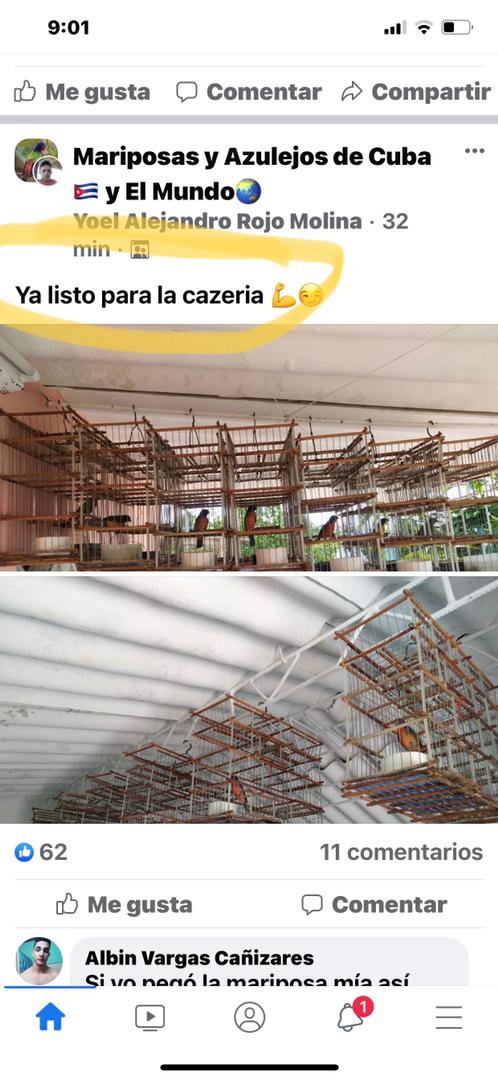
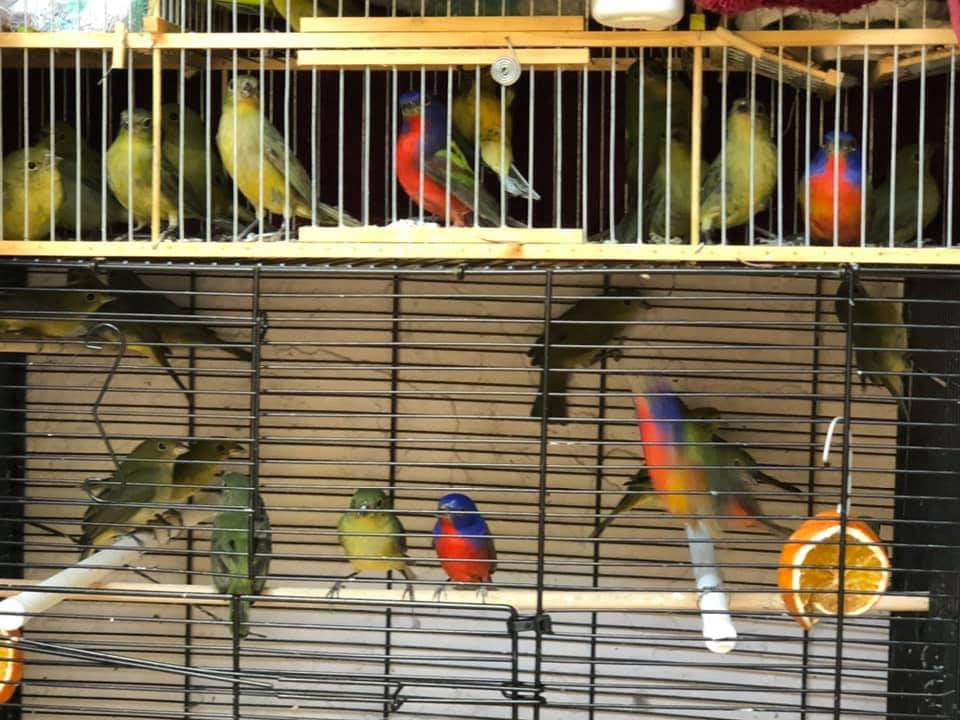
Un joven sonriente camina por el campo, cargando una docena de jaulas caseras en su espalda y en sus manos, cada una con aves silvestres. Una calurosa azotea urbana está repleta con unas cincuenta jaulas llenas de pájaros para la venta. Un niño sostiene una pequeña jaula con una nueva mascota, un Azulejo atrapado mientras migraba hacia el sur. Una página de Facebook con miles de suscriptores anuncia la venta de 39 degollados recién capturados. Estas son algunas de las imágenes del tráfico de aves silvestres en la isla de Cuba.
HAGA CLIC EN LAS IMÁGENES PARA AMPLIARLAS Y DESPLAZARSE POR LA GALERÍA
Un joven sonriente camina por el campo, cargando una docena de jaulas caseras en su espalda y en sus manos, cada una con aves silvestres
Una calurosa azotea urbana está repleta de unas cincuenta jaulas llenas de pájaros para la venta
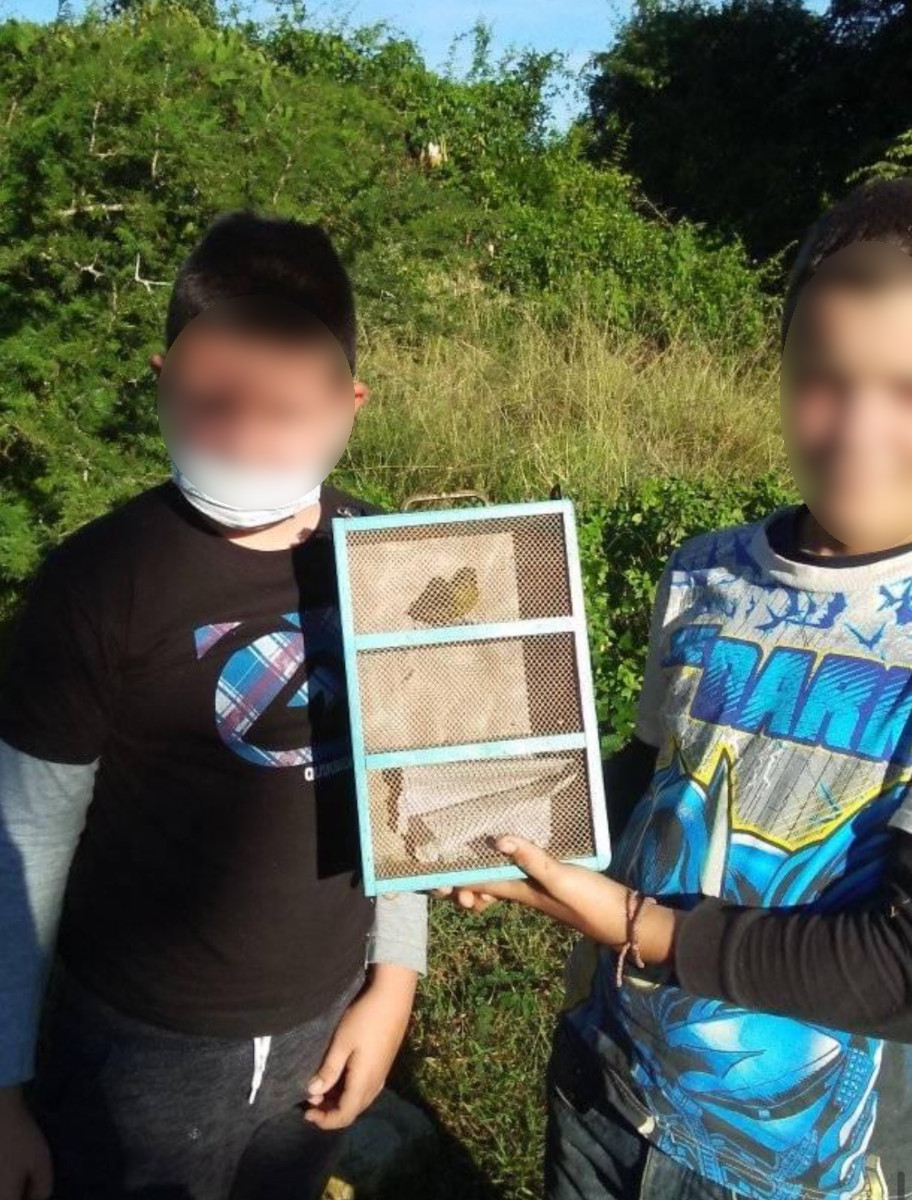
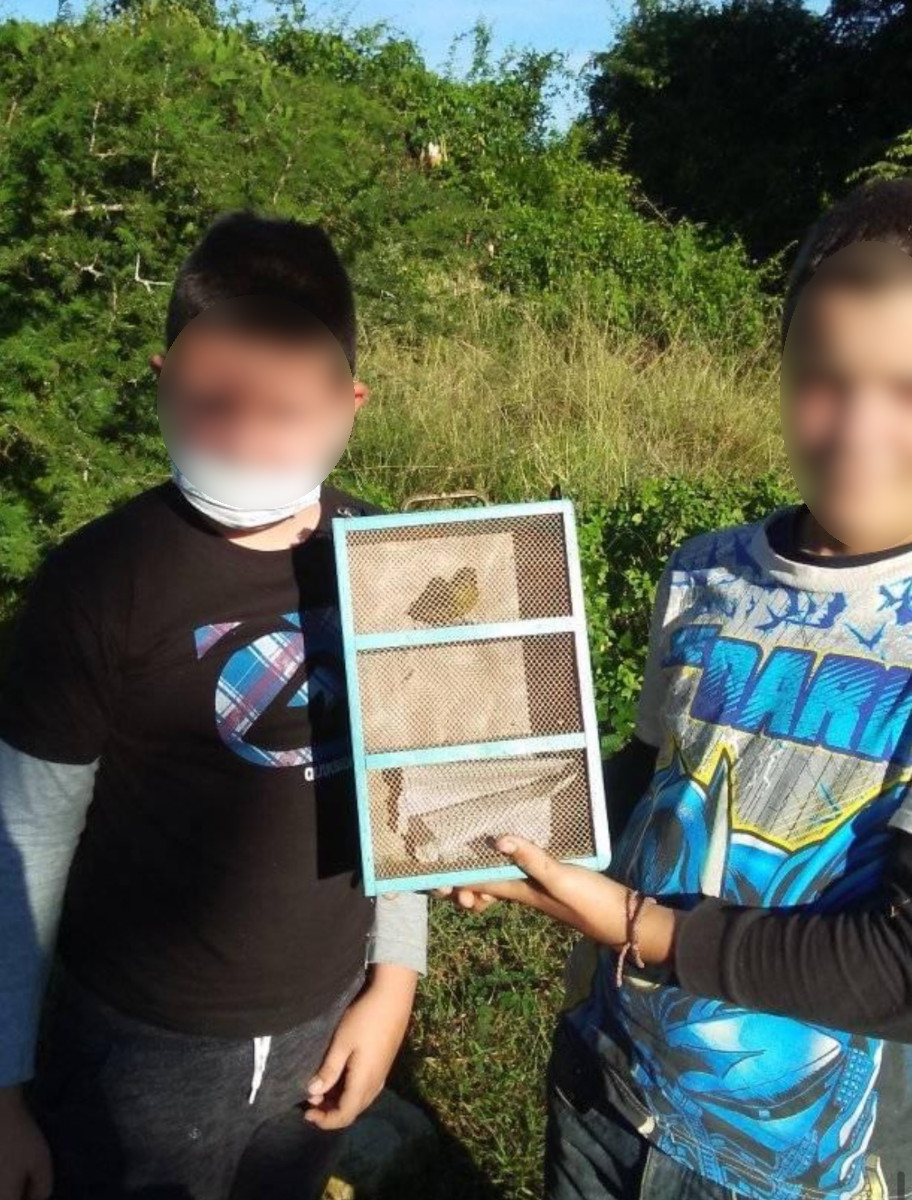
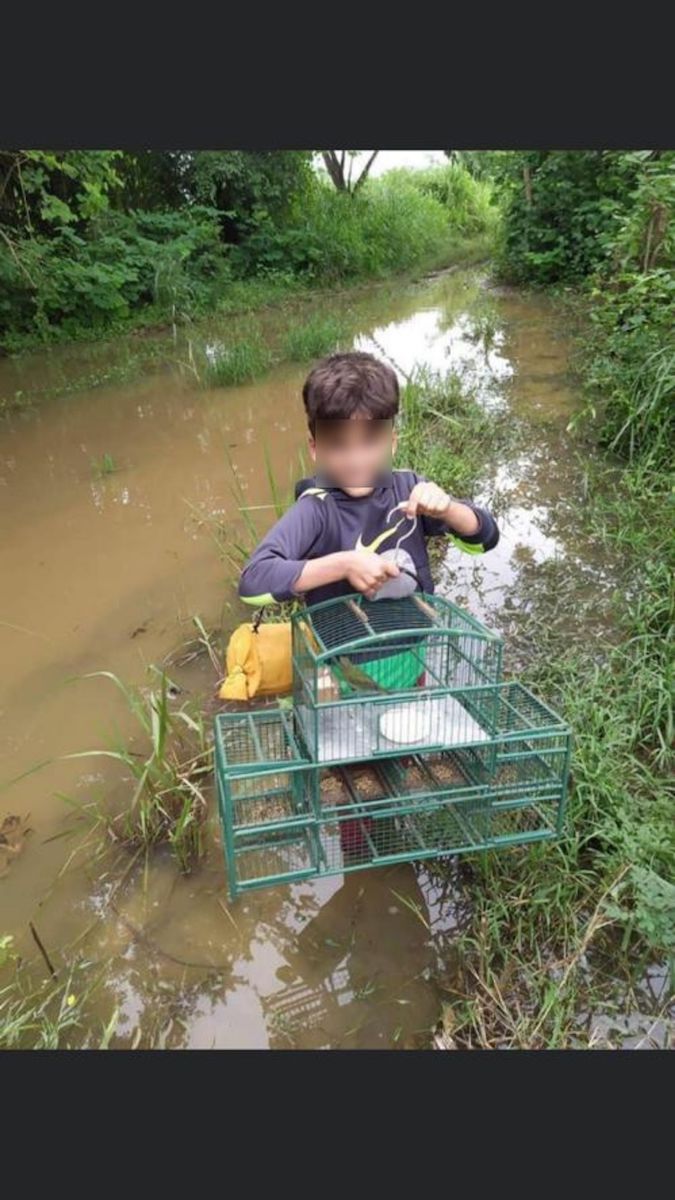
Un niño sostiene una pequeña jaula con una nueva mascota, un Azulejo atrapado mientras migraba hacia el sur
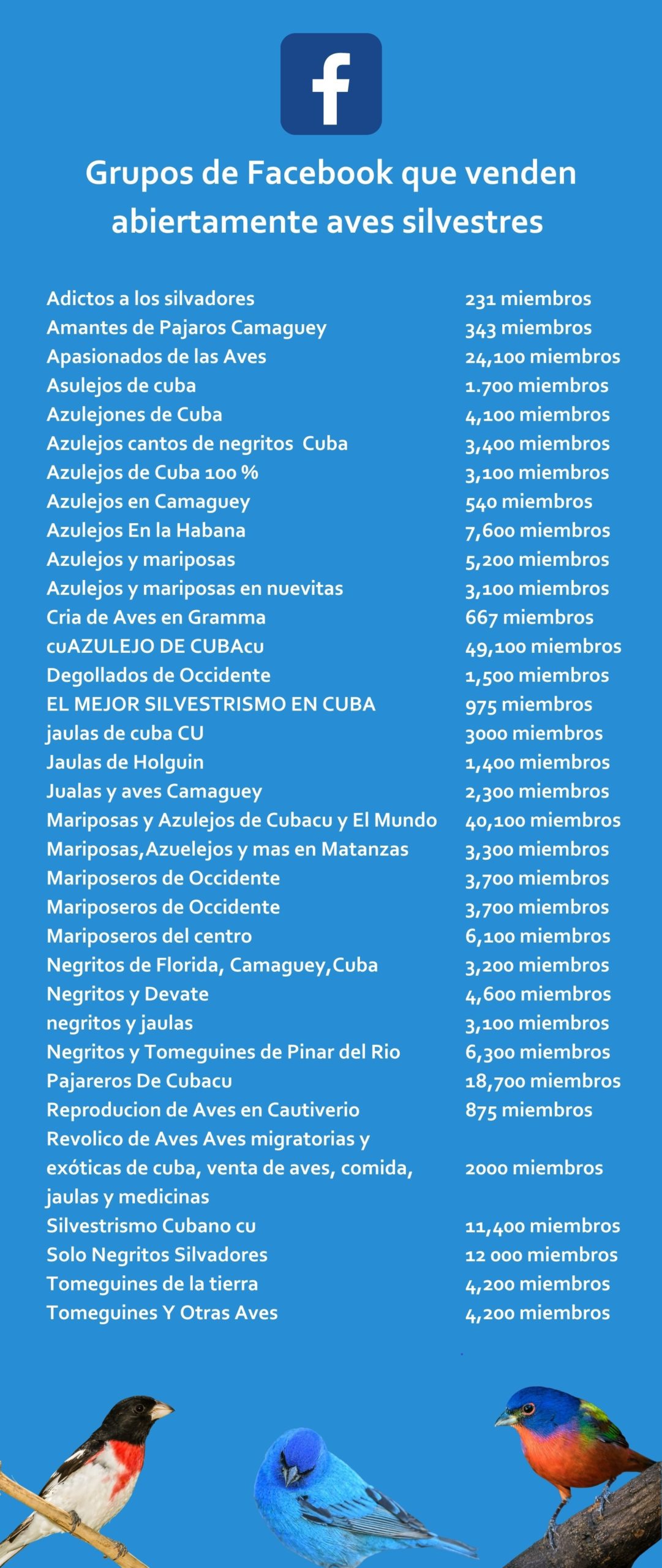
Una página de Facebook con más de de 49 000 suscriptores anuncia la venta de 39 degollados recién capturados.
BirdsCaribbean está profundamente preocupada por la captura y el tráfico ilegal de aves silvestres en Cuba, actividades que han aumentado considerablemente en los últimos dos años. Hacemos un llamado al Gobierno Cubano para que haga mucho más para proteger su vida silvestre residente y migratoria, las cuales contituyen piezas vitales de su patrimonio natural y orgullo nacional. La comunidad conservacionista internacional puede ayudar con este trabajo vital, compartiendo métodos para detener la captura ilegal que han tenido éxito en otras partes del mundo.
Atrapar y tener aves silvestres enjauladas es una tradición común y extendida en Cuba que se remonta a la época colonial del dominio español. Las aves, incluidas las migratorias, las residentes y las endémicas, eran mantenidas como mascotas en hogares y comunidades. Sin embargo, en los últimos años, , con el surgimiento de las redes sociales en Cuba y especialmente a medida que las condiciones económicas se deterioraron debido a la pandemia de la COVID-19 y se fortaleció el bloqueo estadounidense contra Cuba (que provocó la peor crisis económica y humanitaria de la historia reciente), la captura de aves silvestres ha aumentado drásticamente. La captura y venta de aves ofrece una oportunidad para que los residentes aumenten sustancialmente sus ingresos, incluso entre los ciudadanos cubanos más jóvenes.
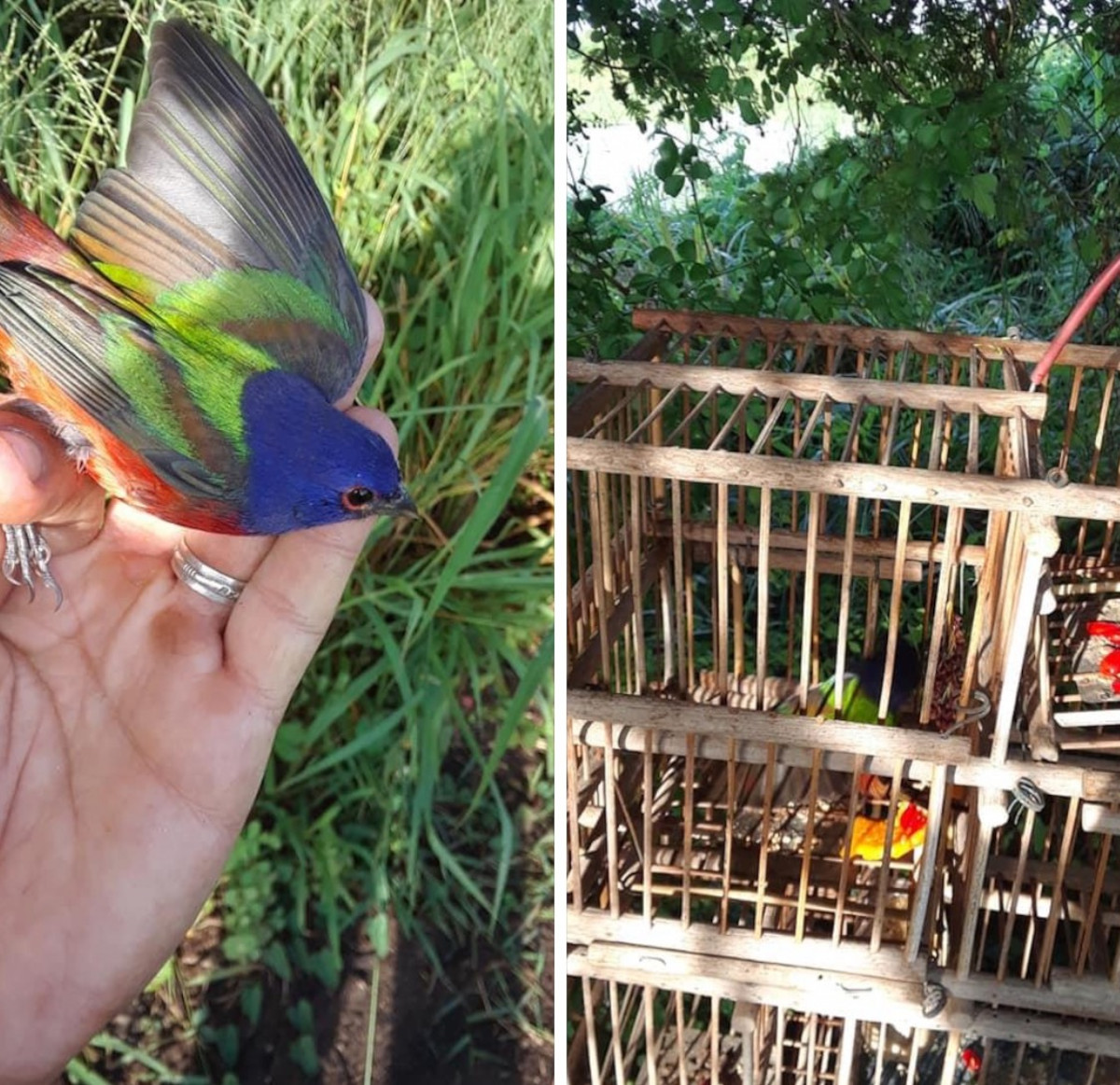
Una Mariposa (macho) capturada, en la mano y en una jaula. La Mariposa es una de las aves más populares para los cazadores en Cuba, está en la Lista de Aves de Preocupación para la Conservación 2021 del Servicio de Pesca y Vida Silvestre de los EE. UU.
Con el aumento de las redes sociales, las ventas online de aves silvestres se ha incrementado dramáticamente en línea (a través de Facebook y WhatsApp) y los cazadores pueden comercializar sus aves con una audiencia mucho más amplia. También ha dado un giro más siniestro convirtiéndose en parte del mortal, pero altamente rentable, comercio mundial de vida silvestre. En otras palabras, el comercio cubano de aves se ha internacionalizado. Existe una gran demanda de aves entre la comunidad cubana en la Florida (Estados Unidos) y varios cargamentos de Cuba han sido incautados en los aeropuertos de Miami y Cuba. En Miami, se pagan cifras altas (por ejemplo 500 dólares) por un Negrito (Melopyrrha nigra) o un Tomeguín del Pinar (Phonipara canora).
Según un informe de mayo de 2021 publicado por TRAFFIC, una organización no gubernamental que trabaja a nivel mundial contra el comercio de animales y plantas silvestres, los animales más comúnmente traficados en América Latina y el Caribe por vía aérea durante la última década fueron las aves, vinculando no menos de 53 países de todo el mundo. Los traficantes de aves internacionales no solo ejercen su comercio por vía aérea. En muchos casos, existen vínculos con redes de delincuencia organizada que organizan diferentes rutas y métodos de transporte para evitar a las fuerzas del orden. Al rastrear las incautaciones en las que elementos de la vida silvestre estaba oculta en el cuerpo del traficante o en sus efectos personales, al menos el 77% eran animales vivos. Las aves representaron el 92% de las incautaciones en esta categoría, aproximadamente un tercio de ellas fueron aves canoras.
Las redes sociales revelan impactantes cifras de aves capturadas
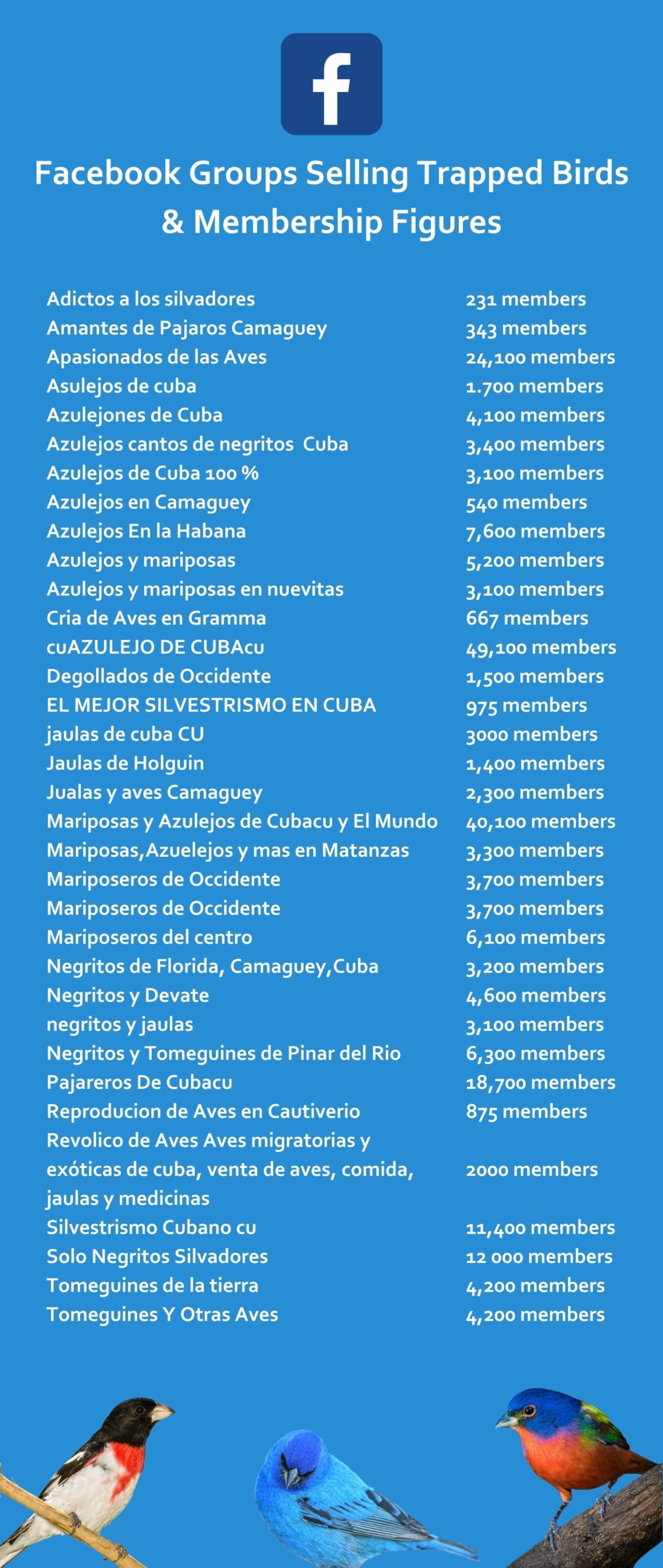
Asimismo, esta escalada del comercio ilegal se produce en un momento en el que el claro y presente peligro del cambio climático y los fenómenos meteorológicos extremos, así como la pérdida de hábitat y otros factores, están afectando la supervivencia de las aves caribeñas. La edición de noviembre de “The Cuban Birder” incluyó una lista de 36 grupos de Facebook que venden abiertamente aves silvestres y están compuesto desde unos pocos de cientos hasta más de 49.000 miembros. La revisión de estas páginas de Facebook muestra datos alarmantes: las aves a la venta a menudo se mantienen en condiciones precarias e inhumanas y es muy probable que los incidentes de captura de aves sumen decenas de miles de aves capturadas cada temporada.
BirdsCaribbean monitoreó uno de estos grupos de Facebook (con 46.000 miembros) durante el mes de octubre de 2021, registrando las capturas diarias publicadas por los cazadores de aves. Nuestros datos muestran que entre las publicaciones subidas, por 356 miembros, las aves atrapadas fueron las siguientes: 2.041 Azulejos o Azulillos Índigo (Passerina cyanea), 785 Mariposas o Azulillos Sietecolores (Passerina ciris), 235 Degollados o Picogruesos Pechirrosados (Pheucticus ludovicianus) y muchos otros, hasta un total de 3.270 aves de 28 especies diferentes.
Estos datos solo son de un mes y de uno de los 36 grupos de Facebook, e incluyen solo capturas que se publican en línea. Aunque creemos que este es el grupo de Facebook más grande, hay otros 35 grupos en diferentes regiones de Cuba. Sin lugar a dudas, la cantidad de aves atrapadas anualmente se puede estimar en decenas de miles y esa es probablemente una estimación conservadora. Además, las transacciones también se realizan a través de grupos de WhatsApp, que no son fáciles de rastrear. Cabe señalar que los grupos de Facebook pueden ser denunciados por sus actividades ilegales.
“Monitoreando un solo grupo de Facebook durante un mes, nuestros datos muestran que fueron atrapadas un total de 3.270 aves de 28 especies diferentes”
Una lista trágicamente larga de especies capturadas
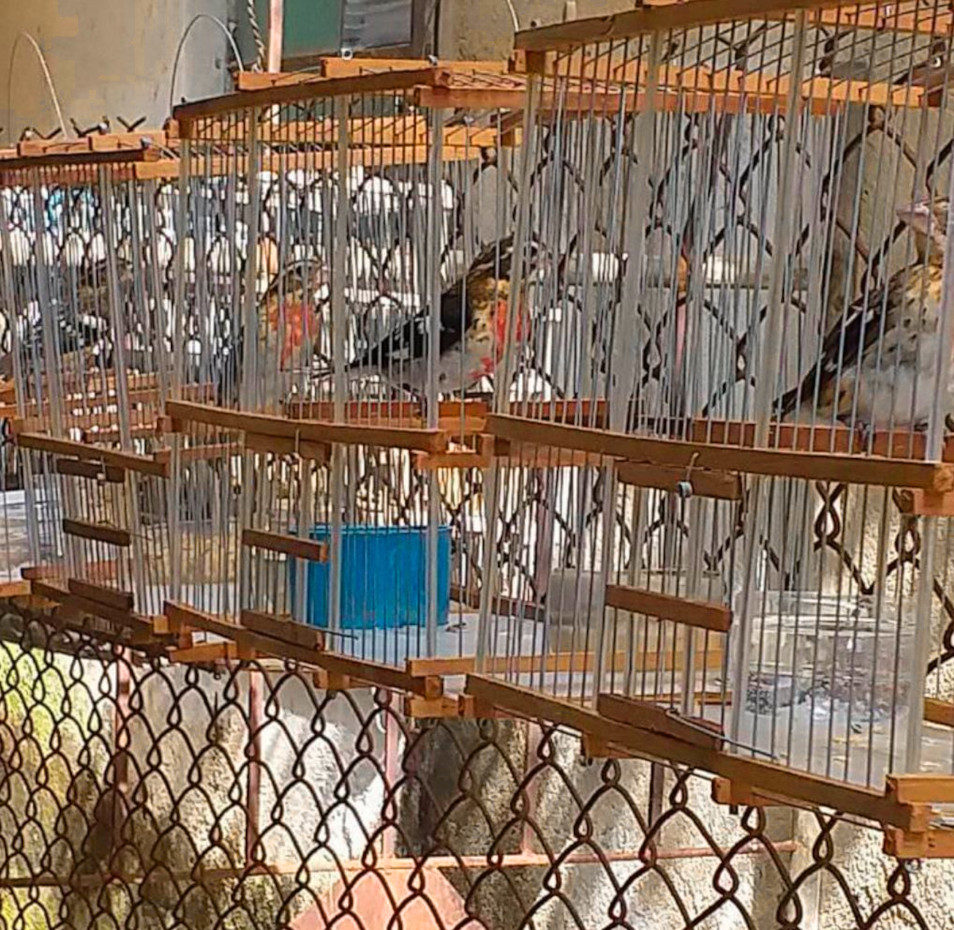
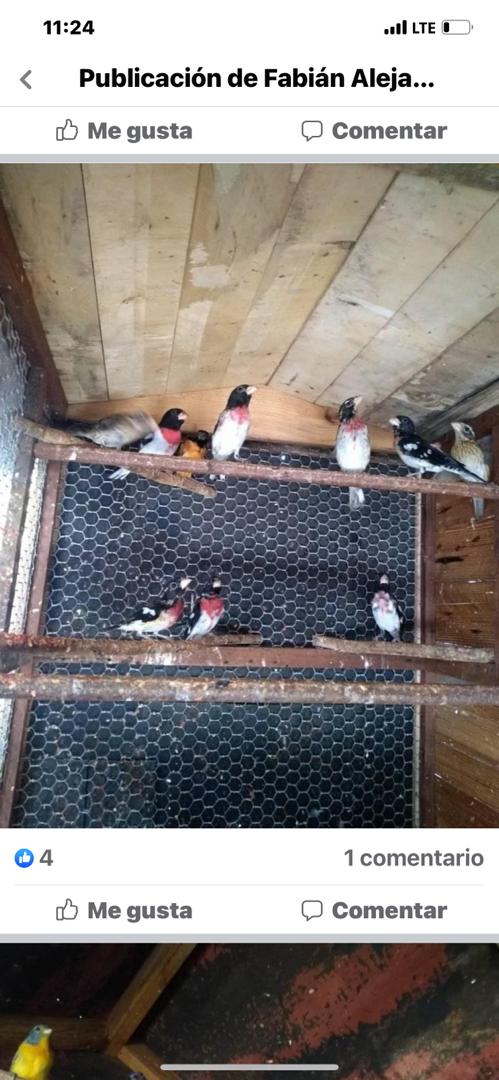
Una hilera de jaulas que contienen Degollados o Picogruesos Pechirrosados. Estas son Aves de Preocupación para la Conservación del USFWS, lo que significa que sus poblaciones están disminuyendo y la especie podría considerarse En Peligro si no se toman medidas de conservación.
Irónicamente, los cazadores se refieren a sí mismos como “pajareros” y desconocen que estas aves migratorias también son cubanas, presumiendo de poder capturarlas por no ser cubanas. Algunas de estas aves pasan más tiempo en la isla que en el continente y juegan un papel importante en el equilibrio ecológico de la misma.
Los cazadores prefieren los pájaros machos, lo que provoca un desequilibrio en los sexos de las poblaciones reproductoras restantes. Las aves se capturan principalmente con redes de niebla, jaulas trampas y “lira.” Esta última consiste en un palo untado con la resina de un árbol (Ficus), muy pegajosa y similar a un pegamento, cuando el pájaro la toca queda adherido a ella. De las aves que se capturan, las aves migratorias suelen ser el objetivo. Las especies capturadas son mayormente migratorias, tenga en cuenta que las especies migratorias constituyen aproximadamente el 70% de la población total de aves de Cuba y pasan al menos la mitad de cada año en la isla. También se están atrapando aves endémicas y residentes, las cuales son emblemáticas de la isla y una parte invaluable de los magníficos paisajes y del patrimonio natural de Cuba.
Aquí se muestra una lista de las docenas de especies que son víctimas de tramperos o cazadores en la isla. Solo tres especies pueden cazarse legalmente: el Pato de la Florida o Cerceta Aliazul (Spatula discors), la Paloma Rabiche (Zenaida macroura) y la Becasina o Agachadiza de Wilson (Gallinago delicata). Muchas otras aves, como patos y palomas, son cazadas y atrapadas ilegalmente (por ejemplo, con grandes redes) para vender su carne. Las aves rapaces a veces son matadas por alimentarse de pollos que deambulan libremente, un problema común en muchos países.
Entre los más populares, para el comercio de aves, se encuentran los pájaros cantores migratorios como el Azulillo, un hermoso pajarito con un canto melodioso; la Mariposa, de colores brillantes, y el Degollado. El Negrito, una especie endémica que también canta dulcemente, se encuentra entre los más frecuentemente solicitados y capturados. Otras especies capturadas populares incluyen al Azulejón o Azulillo Grande (Passerina caerulea), al Turpial de Baltimore (Icterus galbula), al Cardenal Rojo o Piranga Roja (Piranga rubra), al Cardenal Alinegro o Piranga escarlata (Piranga olivacea), la Bijirita o Reinita Atigrada (Setophaga tigrina), la Bijirita o Reinita Protonotaria (Protonotaria citrea), la Bijirita o Reinita de Garganta Amarilla (Setophaga dominica), la Bijirita o Reinita Azul de Garganta Negra (Setophaga caerulescens), el Tomeguín del Pinar, el Tomeguín de la Tierra (Tiaris olivaceus) y el Sinsonte Norteño (Mimus polyglottos). La colorida Cotorra Cubana (Amazona leucocephala) y el Catey o Aratinga Cubana (Psittacara euops) también son aves popularmente enjauladas.
La lista es desgarradoramente larga. Muchas de estas aves han ido disminuyendo y algunos de las migratorias atrapadas figuran en la Lista de Aves de Preocupación para la Conservación 2021 del Servicio de Pesca y Vida Silvestre de EE. UU. (BCC 2021). La BCC 2021 designa las especies que tienen la máxima prioridad de conservación, es decir, especies que probablemente se convertirán en candidatas a ser incluidas en la lista de la Ley de Especies en Peligro de Extinción si no se toman rápidamente medidas de conservación.
Debido a los crueles métodos, en los meses de otoño, hay muchas víctimas
Los tramperos ilegales aprovechan los meses de la migración otoñal (septiembre, octubre y noviembre), con un pico de actividad a mediados de octubre, cuando grandes bandadas de aves migratorias del Neártico llegan a las costas de Cuba, cansadas y hambrientas. Algunas de estas aves serán residentes de invierno, mientras que otras pasarán por Cuba y solo repostarán antes de dirigirse más al sur. Desafortunadamente, todo esto crea una oportunidad para que estos cazadores atrapen a miles de ellas cada temporada. Los cazadores se esconden en un área donde las aves descansan en las primeras horas de la mañana cargados con jaulas, señuelos, pegamentos y redes de niebla (que pueden comprar en línea). La captura continúa durante todo el invierno y aumenta nuevamente en la primavera, para atrapar a los migrantes que regresan al norte para su temporada de reproducción.
Durante la captura, las aves pueden resultar gravemente heridas, este paseriforme (izquierda) ha resultado muerto y a la derecha se observa a un Judío (Crotophaga ani) sostenido en una mano. Nuestros colegas cubanos han notado que muchas de las especies de aves atrapadas están disminuyendo, incluso los propios cazadores dicen que ya no hay tantas aves como en el pasado, aunque algunos individuos aún atrapan docenas o más durante las grandes arribadas de migrantes.
Si bien la captura en sí misma elimina muchas aves vivas de la naturaleza, también hay una tasa de mortalidad considerable que ocurre durante el proceso. Por ejemplo, cuando se usa un pegamento fuerte y se extiende en una rama (es decir, una trampa con lira), muchos pájaros atrapados se rompen sus patas o pierden muchas plumas en su lucha por escapar y simplemente los dejan morir. Los que sobreviven atrapados siguen siendo vulnerables a otros riesgos. A algunas aves les inyectan testosterona para hacerlas mudar y cantar para los concursos de canto, que pueden ser letales. También se han documentado otras prácticas inhumanas, como sacarles los ojos para estresarlos y hacer que canten más.
Desafortunadamente, los rituales sagrados de la religión afrocubana, la santería, se han sumado al problema. En 2018, las autoridades publicaron un vídeo que mostraba 175 aves muertas, entre las que se incluían 37 especies, al menos 7 de las cuales eran endémicas (19 Tocororos o Trogones Cubanos muertos), confiscadas a alguien que las vendía para ser utilizadas en ceremonias de la santería.
Se hace necesaria una aplicación rigurosa de las leyes
El propio presidente cubano, Miguel Díaz-Canel Bermúdez, ha declarado en su cuenta de Twitter que erradicar el tráfico de vida silvestre es uno de sus objetivos ambientales. De hecho, perseguir este objetivo también ayudará a mejorar la reputación de la isla como un país que busca conservar su asombroso patrimonio natural, como ya lo hace con sus numerosos Parques Nacionales y Áreas Protegidas.
Y no todo es malo. Hay algunas nuevas leyes nacionales que merecen elogios, incluido el Decreto-Ley de Bienestar Animal recientemente aprobado. Además, se han incrementado las multas por tráfico de vida silvestre. Junto con varias otras leyes de años anteriores, esto debería proporcionar un buen marco regulatorio para la protección de aves y otros animales y es sin duda un paso en la dirección correcta. El gobierno local de La Habana Vieja también prohibió las aves enjauladas en negocios privados en septiembre de 2019.
Sin embargo, como se desprende de las fotos y publicaciones en docenas de grupos de redes sociales, las leyes que protegen a las aves silvestres no se están aplicando lo suficiente. Las actividades de captura son desenfrenadas. Los tramperos y compradores hacen negocios abiertamente con poco o ningún temor de ser atrapados o de enfrentar consecuencias o sanciones significativas (por ejemplo, arresto y enjuiciamiento). Como parte contratante de la Convención sobre el Comercio Internacional de Especies Amenazadas de Fauna y Flora Silvestres (CITES) desde 1990, también es importante que el Gobierno Cubano demuestre que sus organismos encargados de hacer cumplir la ley hacen cumplir las normativas internacionales que protegen a las aves del tráfico ilegal.
El potencial del ecoturismo como alternativa
Disfrutando de una gran vista para observar aves acuáticas en Las Salinas, Ciénaga de Zapata (Foto: Garry Donaldson)
En un movimiento positivo, Cuba volvió a abrir sus puertas al turismo el 15 de noviembre de 2021 y ahora tiene una tasa de vacunación entre su población de más del 84% (a 15 de diciembre). Los esfuerzos continuos y ampliados para aumentar la conciencia ambiental deben extenderse a los visitantes que llegan a la isla. Cuba tiene mucho de qué enorgullecerse en términos de su notable biodiversidad y variedad de hábitats naturales. Por lo tanto, varias formas de turismo comunitario, incluidos los recorridos para observar aves y naturaleza, podrían expandirse como medios de vida alternativos, atendiendo a un mercado turístico cada vez más consciente del medio ambiente y que está dispuesto a pagar por la experiencia única de la naturaleza y la cultura cubanas. La visión de traficantes pululando por las calles con jaulas y pájaros enjaulados en muchos hogares y negocios ha empañado (y seguirá dañando) la imagen de Cuba ante los ojos de los visitantes internacionales.
Deben continuar los esfuerzos para combatir el problema
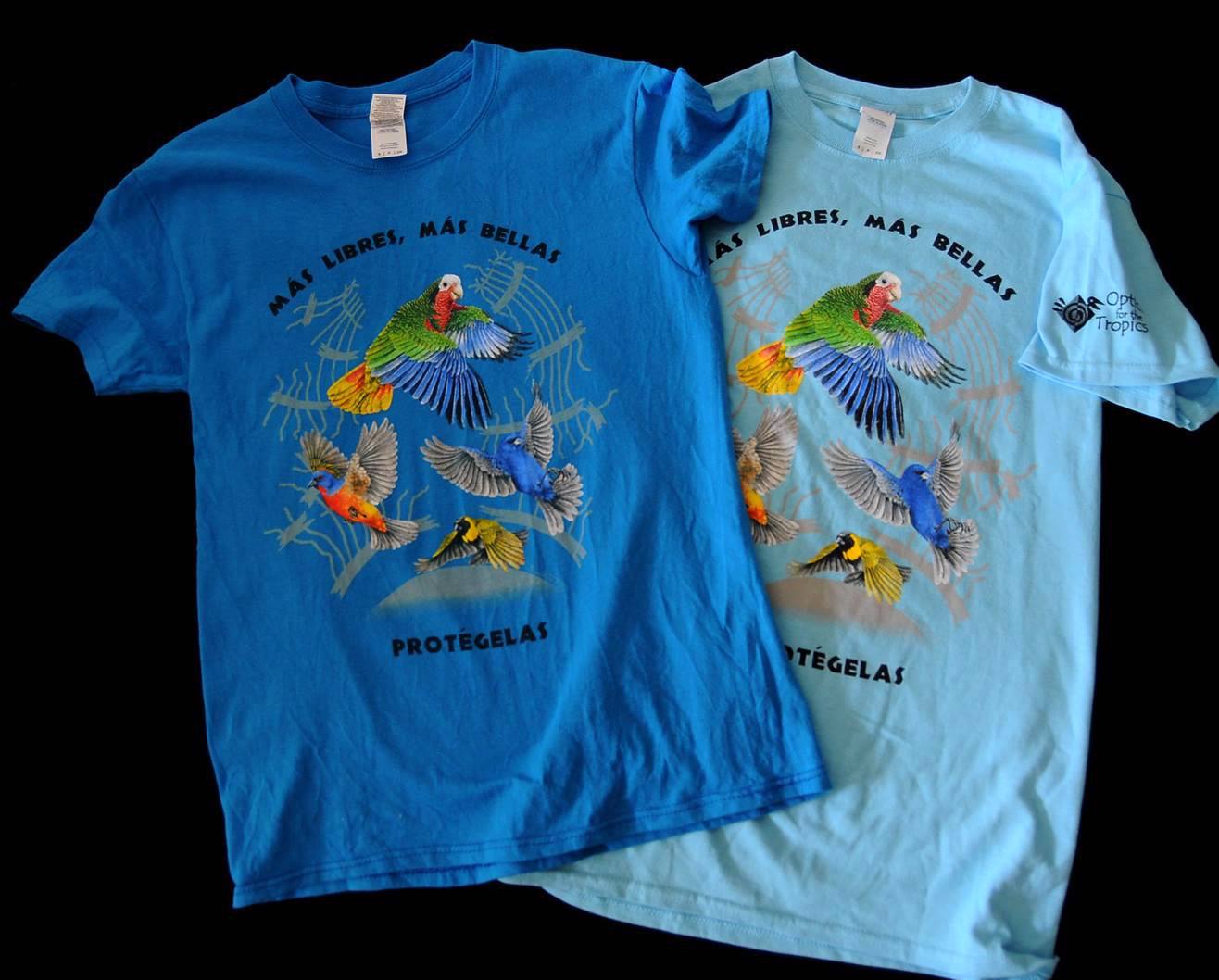
Camisetas de la campaña educativa con ilustraciones de Arnaldo Toledo. Gracias a Optics for the Tropics, a todos los que ayudaron con esta iniciativa y a nuestros colegas cubanos por sus dedicados esfuerzos.
Nos gustaría reconocer, con gratitud, que un grupo de dedicados ornitólogos y conservacionistas cubanos han estado trabajando diligentemente con el tema de las aves enjauladas durante muchos años. Hace tiempo que se reconoce la necesidad de una campaña intensiva de educación ambiental, no solo en las escuelas, sino también en las comunidades y los medios de comunicación nacionales. Más recientemente, en la conferencia BirdsCaribbean 2017 en Cuba, se realizó un taller sobre el tema. Se discutieron estrategias y acciones para abordar los problemas y se formó un Grupo de Trabajo de Aves Enjauladas. Desde entonces, se han realizado algunas acciones positivas.
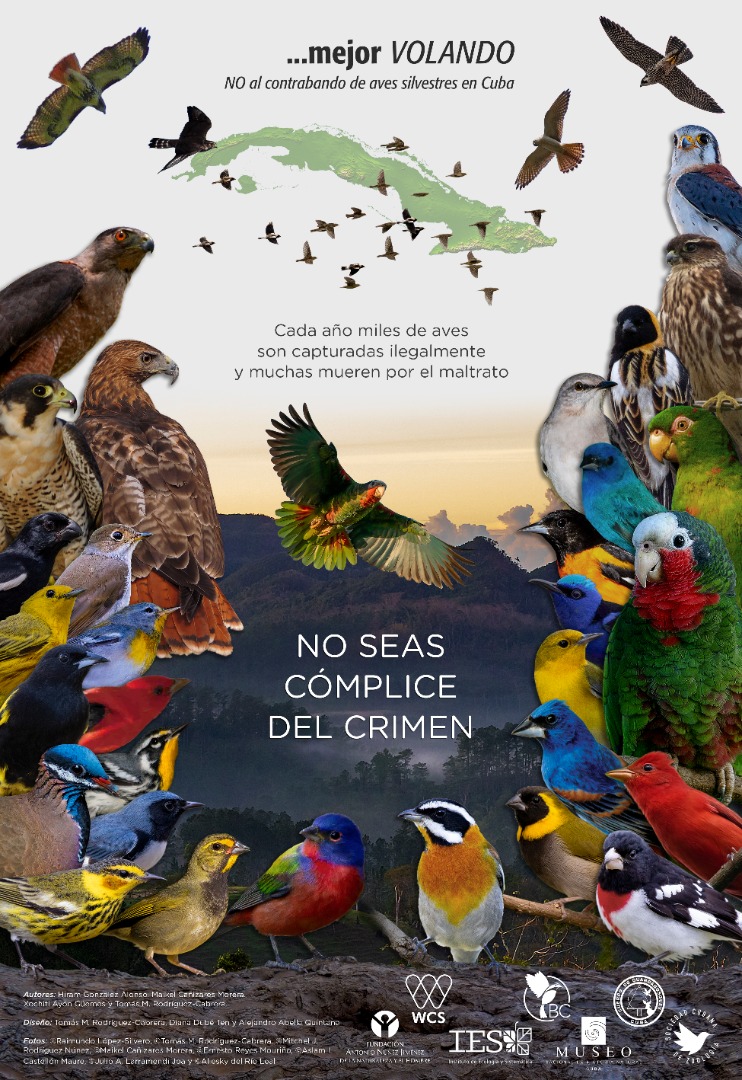
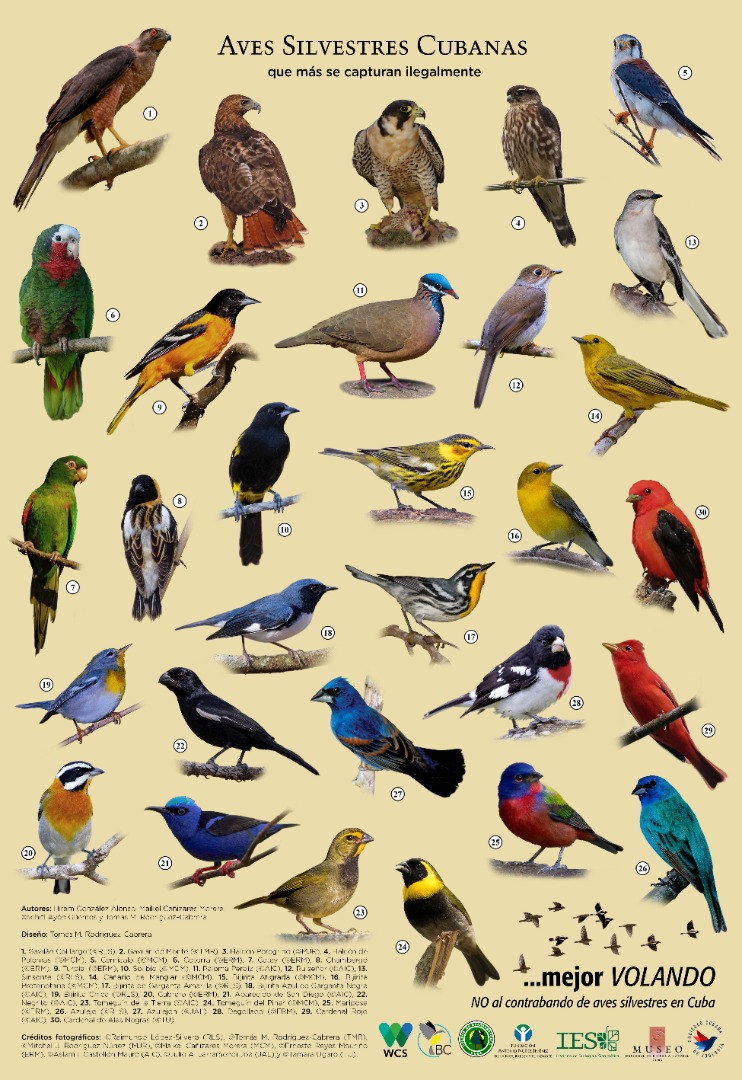
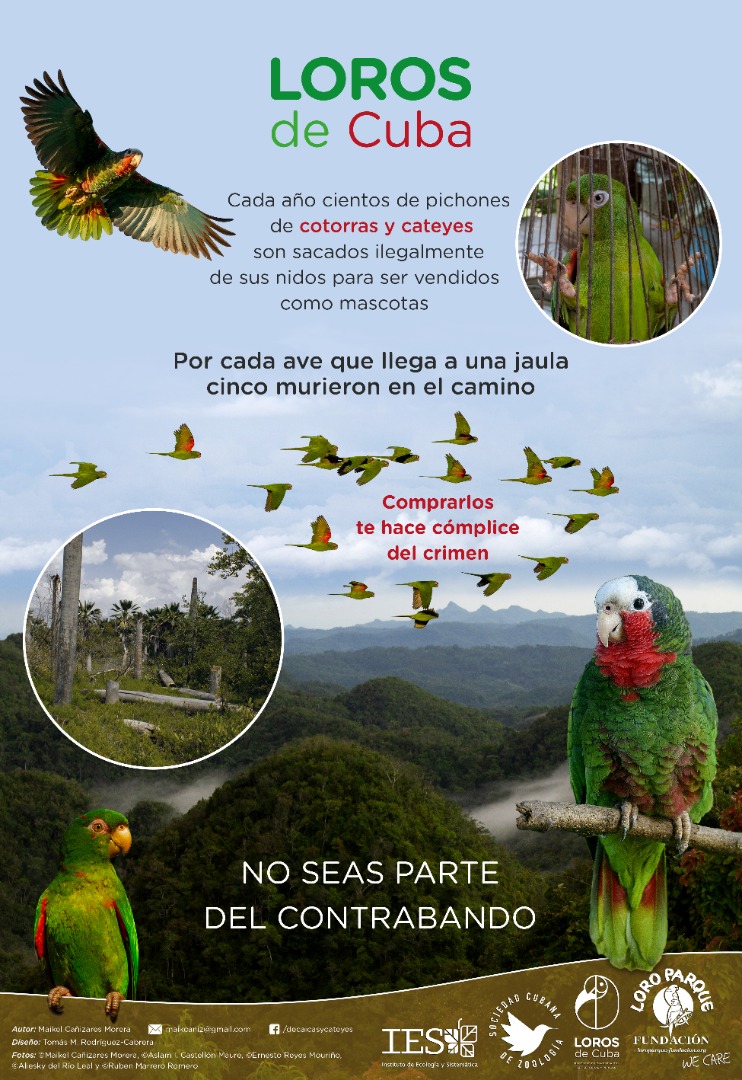
Se encargaron obras ilustraciones especiales, a un artista cubano, para apoyar una campaña de educación que incluyó la producción de cientos de camisetas para niños y miembros de las comunidades. Se imprimió y distribuyó un folleto y una serie de atractivos carteles que transmitían el mensaje de que la captura de aves silvestres es ilegal y se compartió en la televisión cubana el documental Aves de Cuba, que incluía información sobre la amenaza de las aves enjauladas. Los conservacionistas cubanos han escrito cartas y realizado llamadas telefónicas a las autoridades informando sobre actividades de captura y los funcionarios de aduanas han sido capacitados y se les ha proporcionado una guía de identificación Aves silvestres más capturadas ilegalmente en Cuba: Guía de identificación. Los ciudadanos cubanos también se han manifestado en contra de las trampas en las redes sociales, ayudando a promover el debate y crear conciencia.
HAGA CLIC EN LAS IMÁGENES PARA AMPLIARLAS Y DESPLAZARSE POR LA GALERÍA
Aunado a todo esto, nuestros colegas cubanos también participan cada año en el Festival de las Aves Endémicas del Caribe de BirdsCaribbean y en el Día Mundial de las Aves Migratorias, llevando a cabo su propio Festival de las Aves Endémicas del Caribe en Cuba. También participan en el evento mundial de observación de aves del Global Big Day y han producido vídeos para la televisión nacional y las redes sociales, todo para promover una cultura de conservación y fomentar el monitoreo de aves con ciencia ciudadana a través de eBird. Todo este trabajo, ya sea individual o colectivamente, debe continuar y la educación en las escuelas y los esfuerzos de concienciación pública deben ampliarse.
Entonces, ¿por qué esto no es suficiente?
La captura de aves silvestres se ha generalizado tanto, y la venta de aves silvestres se realiza tan abiertamente, que los esfuerzos de divulgación de nuestros colegas cubanos simplemente no son suficientes para detener o incluso frenar el problema. Las impactantes implicaciones de nuestra encuesta de Facebook que muestra la captura y venta de aves desenfrenadas subrayan la necesidad urgente de realizar esfuerzos más concertados para hacer cumplir las leyes y evitar que los cazadores continúen (y amplíen) sus actividades sin ninguna consecuencia. Por ejemplo, la policía local podría encargarse de detener a los cazadores (algo común en Cuba), liberar a las aves capturadas, destruir sus jaulas e imponer las multas correspondientes. (Haga clic en las imágenes para ampliarlas y desplazarse por la galería)
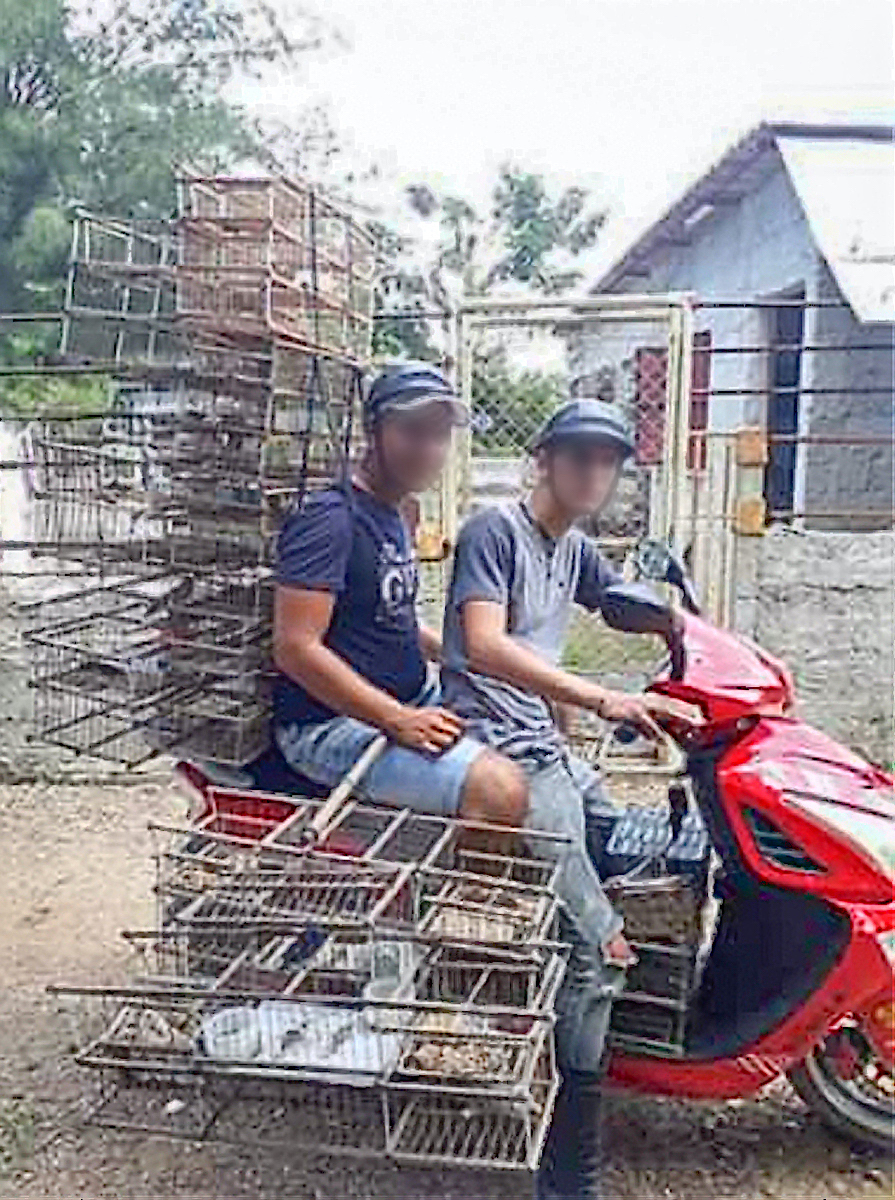
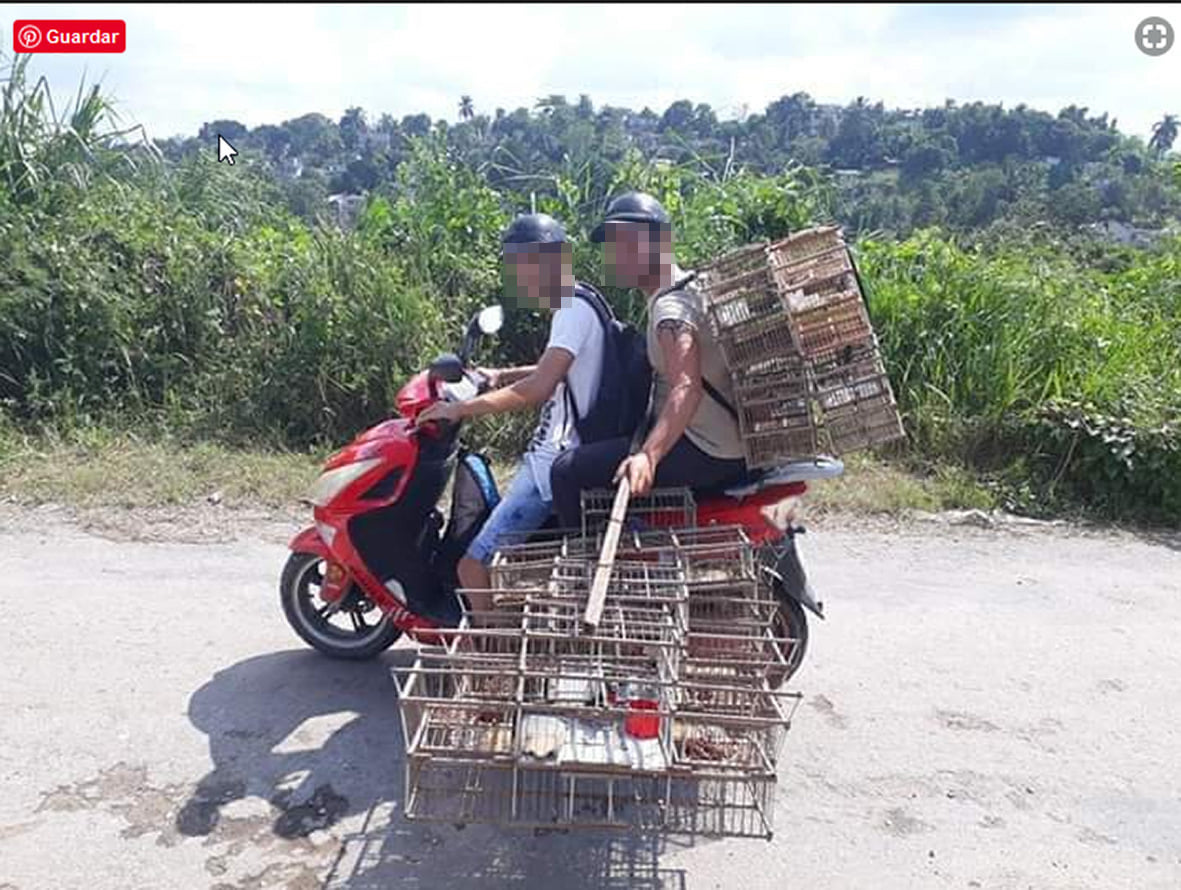
Dos jóvenes transportan jaulas apiladas con aves silvestres capturadas, en una motocicleta.
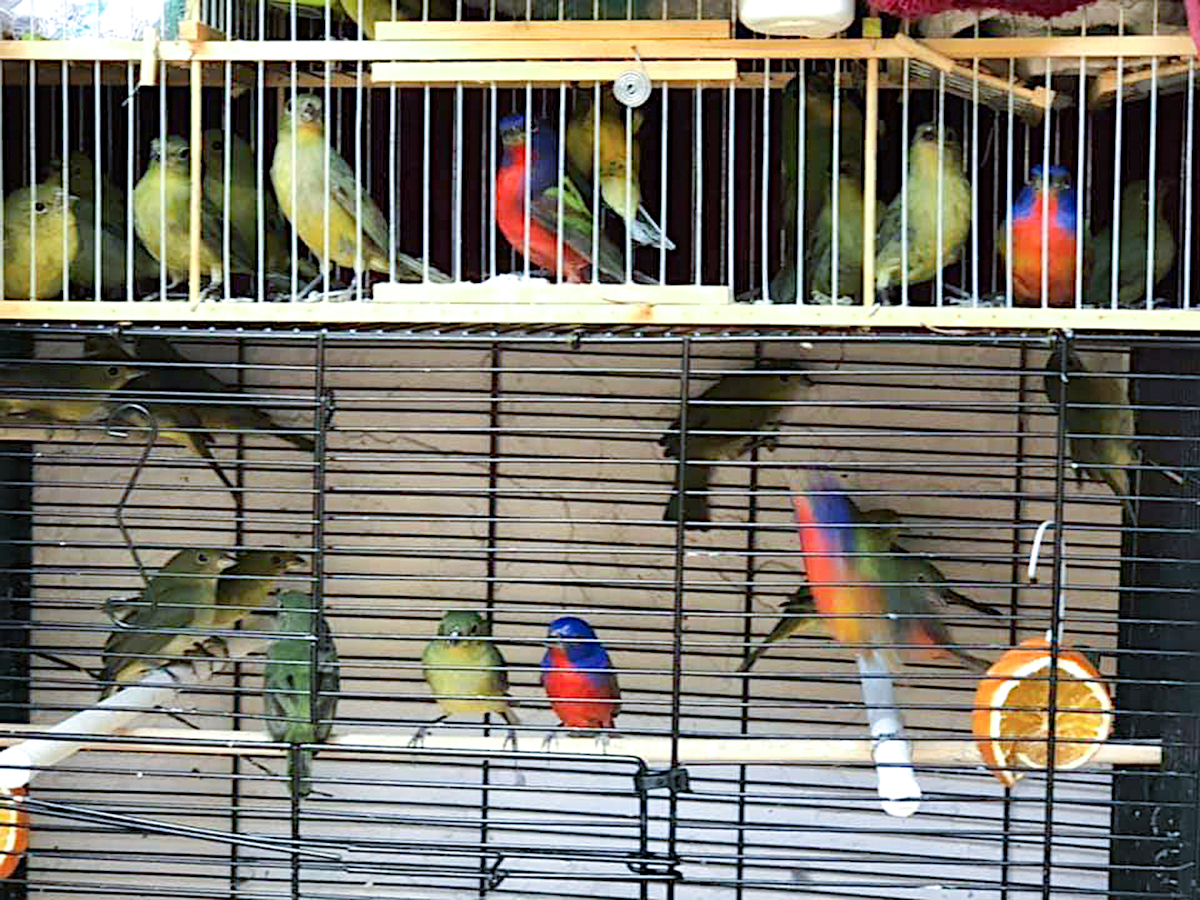
Una gran cantidad de Mariposas enjauladas. Esta especie está en la Lista de Aves de Preocupación para la Conservación 2021 del Servicio de Pesca y Vida Silvestre de EE. UU.
Muchachos con una mariposa juvenil en una pequeña caja. Cada vez hay más niños involucrados en la captura de aves.
Los esfuerzos de nuestros colegas para educar sobre el tema también deben expandirse en gran medida, a través de la educación ambiental en las escuelas y mediante campañas y programas de concienciación pública en las comunidades, y en la radio y la televisión. Estas actividades ayudarán a los ciudadanos a reconocer que las aves son esenciales para miles de servicios en los ecosistemas que son fundamentales para la salud de las comunidades y su calidad de vida. Los cubanos de todas las edades pueden conectarse mejor con el valor de su vida silvestre nativa a través de actividades como plantar patios amigables para las aves, ofrecer conectividad a las comunidades y escuelas con viajes locales de observación de aves y hacer comederos para pájaros para disfrutar de las aves mientras las mantiene libres.
Necesitamos invertir en capacitación para medios de vida alternativos y actividades que brinden incentivos para proteger a la vida silvestre en lugar de destruirla, como es el aumento del turismo comunitario que incluya guías de observación aves y naturaleza, y programas de monitoreo y anillamiento de aves. Se necesita con urgencia el apoyo de la comunidad conservacionista internacional y las agencias de recaudación de fondos para todo este trabajo.
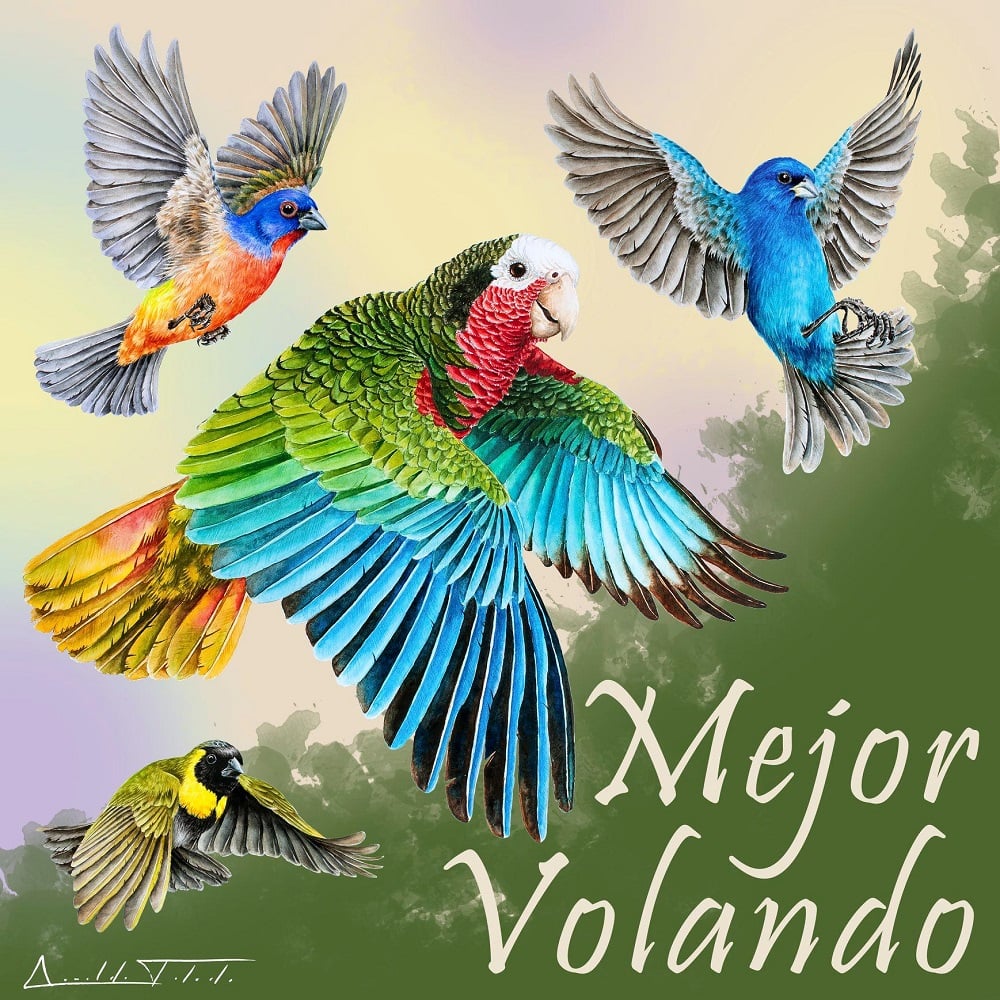
¡Protejamos y disfrutemos de nuestras aves… #MásLibresMásBellas!
Ilustración de Arnaldo Toledo
Si bien a algunas personas les gusta admirar a las aves enjauladas, ellas son mucho más hermosas cuando se las ve volando en libertad por el bosque y en nuestros parques y jardines. Se necesitan mayores esfuerzos para protegerlas haciendo cumplir la legislación vigente.
No queremos que estas maravillosas aves lleguen al “punto sin retorno”. Hacemos un llamado urgente al Gobierno Cubano para que exprese su orgullo nacional por su biodiversidad haciendo más para hacer cumplir sus leyes ambientales. Pedimos a la comunidad conservacionista internacional que ayude a Cuba en sus esfuerzos para detener la caza y el tráfico ilegal de aves. También deben continuar los esfuerzos para elevar el nivel de educación y conciencia sobre las hermosas y únicas aves de Cuba, muchas de las cuales están disminuyendo gravemente en número.
BirdsCaribbean apoya los esfuerzos continuos de formación en conservación, educación y medios de vida alternativos en Cuba, y le gustaría seguir haciéndolo. Entre otras iniciativas, existe un plan para establecer clubes de observación de aves en cada provincia. También nuestro objetivo es proporcionar más binoculares y materiales educativos a nuestros socios, para ayudarlos a llegar a más comunidades y jóvenes, y recopilar más datos sobre el alcance y los impactos del trampeo. Si desea ayudarnos en este trabajo, haga una donación aquí.
¡Las increíbles aves endémicas de Cuba y nuestras migratorias compartidas se lo agradecerán!
HAGA CLIC EN LAS IMÁGENES PARA AMPLIARLAS Y DESPLAZARSE POR LA GALERÍA, Y VEA LOS VIDEOS A CONTINUACIÓN
Dos Mariposas inmaduras en una jaula y un joven cazador sosteniendo un ave.
Muchacho acarreando muchas jaulas en su espalda.
Hilera de pequeñas jaulas con Degollados.
Publicación de aves a la venta en Facebook, febrero de 2020.
Dos jóvenes en una motocicleta llevando muchas jaulas con aves.
Reinita Hornera, un ave migratoria, en manos de un trampero.
Imágenes de un producto hormonal que los cazadores inyectan a las aves para hacerlas cantar. Los cazadores lo venden en Facebook a otros cazadores.
Machos de Mariposas y un Azulillo mantenidos en una jaula.
Summer Tanager (Hembra)
Red de niebla comprada en línea por un trampero y mostrada en su Facebook (estas redes de nailon son dañinas para los pájaros cantores pequeños).
Degollados a la venta.
A man walks carrying several cages with birds.
Joven con muchas jaulas.
Screenshot
Un niño sostiene una pequeña jaula con una nueva mascota, un Azulejo atrapado mientras migraba hacia el sur
El letrero dice: “¡No es una jaula vacía, es un pájaro libre!”
Hay más de 50 Mariposas en esta jaula en Cuba, en enero.
Reinita Hornera, un ave migratoria, en manos de un trampero.
Una Mariposa, padeciendo alguna enfermedad, en cautiverio.
Parula Norteña (macho), una reinita migratoria en la mano de un trampero.
Degollados atrapados y mantenidos en cautiverio. Esta especie está en la Lista de Aves de Preocupación para la Conservación 2021 del USFWS.
Cernícalo Americano en una pequeña jaula.
Polluelos de Cotorras Cubanas, robados de un nido en estado silvestre para venderlos en el mercado negro. Esta especie está clasificada como Casi Amenazada.
Esta persona anuncia la venta de jaulas, pájaros y comida para pájaros. Su propiedad es un negocio con todas las herramientas necesarias para fabricar jaulas en buenas cantidades. Muestra el proceso de fabricación de las jaulas.
Hay más de 25 Mariposas en esta jaula en Cuba, en enero.
Mariposa (macho) en una jaula diminuta.
Un joven Gavilán Colilargo, endémico de Cuba y en peligro de extinción. Este ejemplar fue capturado por alguien que ilegalmente cortó el árbol y destruyó el nido. El polluelo se vendió a otra persona y lo mantiene en condiciones deplorables.
Tomeguín del Pinar al que se le han arrancado las plumas para aplicarle un producto químico y así activar su capacidad de lucha.
Jóvenes tramperos con Mariposas enjauladas.
Folleto educativo (página 2).
cinco Summer Tanagers (macho) capturadas ilegalmente
Catorce jaulas con aves silvestres atrapadas.
Muchas aves enjauladas para la venta, en Miami (Florida, Estados Unidos).
Mariposas mantenidas en jaula, primavera de 2021.
Folleto educativo (página 1).
Mariposas hacinadas en una pequeña jaula casera.
Una publicación en Facebook anunciando la venta de aves.
Jaulas caseras para pájaros, casi terminadas, como se muestra en Facebook.
Padre e hijo con un Azulillo juvenil.
Reinita Atigrada (macho) en la mano de un trampero. Esta especie está en la Lista de Aves de Preocupación para la Conservación 2021 del USFWS.
Niño sosteniendo un macho juvenil de Mariposa.
Azulillos, Tomeguines del Pinar y Negritos para la venta a un comprador privado.
Una Mariposa mantenida en una bolsa plástica, diciembre de 2021.
Reinita Protonotaria en una jaula. Esta especie está en la Lista de Aves de Preocupación para la Conservación 2021 del USFWS.
Reunión de nueve hombres con sus aves enjauladas.
“La colección completa de rapaces que tengo en este momento… 1 Gavilán Colilargo, 2 Sijú Cotunto, 3-4 Gavilanes de Monte o de Cola Roja…”
Cabrero, un endemismo del Caribe, en mano.
Un tuit sobre algunos cazadores de pájaros que fueron capturados, donde se muestran las jaulas que fueron destruidas por los agentes del orden.
Trampero sosteniendo a dos Reinitas Azules de Garganta Negra.
La Reinita de Garganta Amarilla es un ave popular para los cazadores, vea el vídeo de más de 130 ejemplares en una jaula.
Candelita Migratoria (macho) en la mano de un trampero
Muchas aves enjauladas para la venta, en Miami (Florida, Estados Unidos).
Joven trampero sosteniendo tres Mariposas juveniles.
Tres jóvenes tramperos sosteniendo tres Mariposas: dos machos y una hembra.
Reinita Atigrada (hembra o inmaduro). Esta especie está en la Lista de Aves de Preocupación para la Conservación 2021 del USFWS.
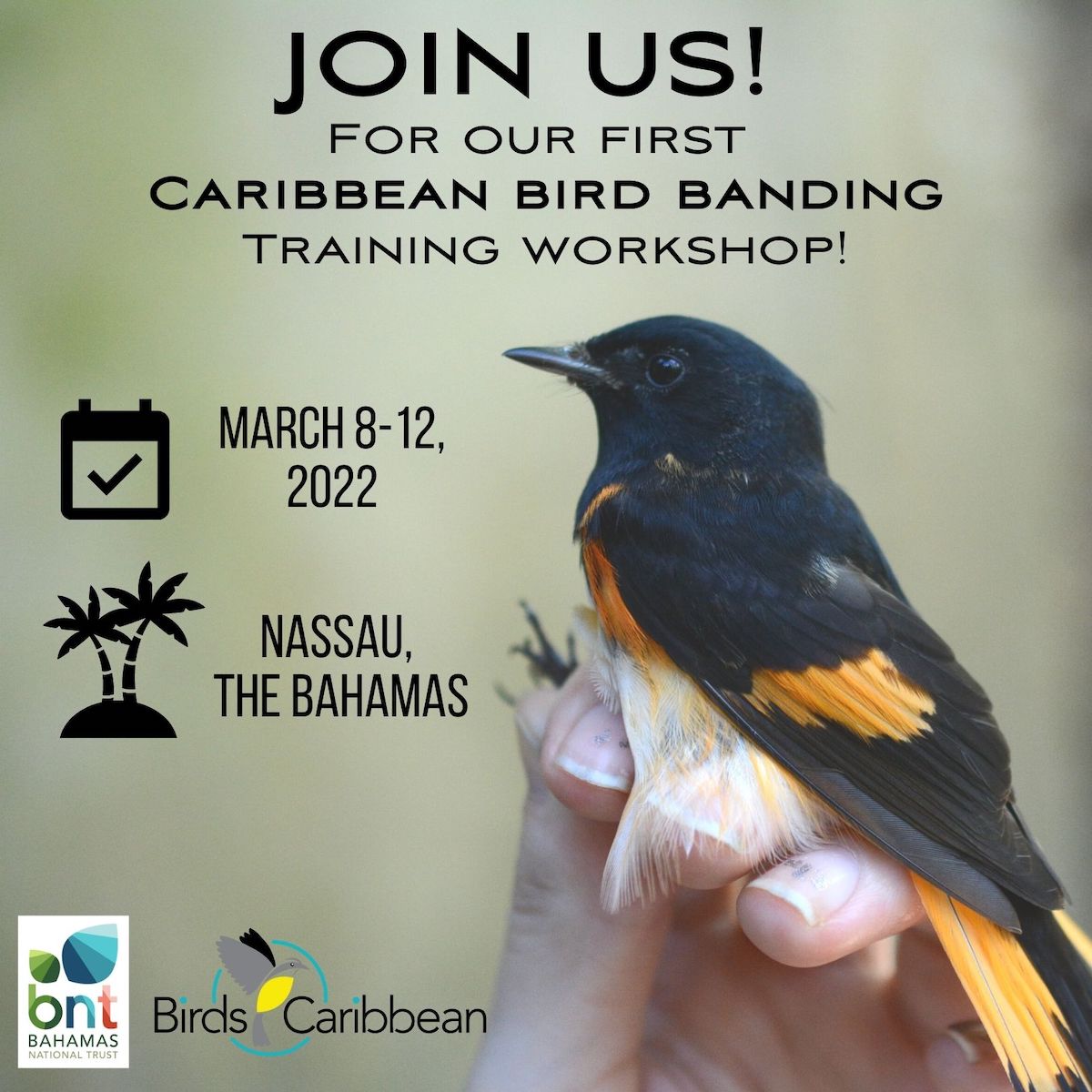
BirdsCaribbean is excited to invite applications to participate in a 5-day training workshop focused on bird banding, an important tool for research and monitoring! Through a blend of classroom and field-based activities, participants will learn about the basics of bird banding, from setting up a mist net to examining molt patterns.
We’ll also discuss and demonstrate some of the benefits of joining our new Caribbean Bird Banding Network. In partnership with the Bahamas National Trust, the workshop will take place at The Retreat Garden in Nassau, The Bahamas from March 8-12, 2022.
Why do we need to band birds?
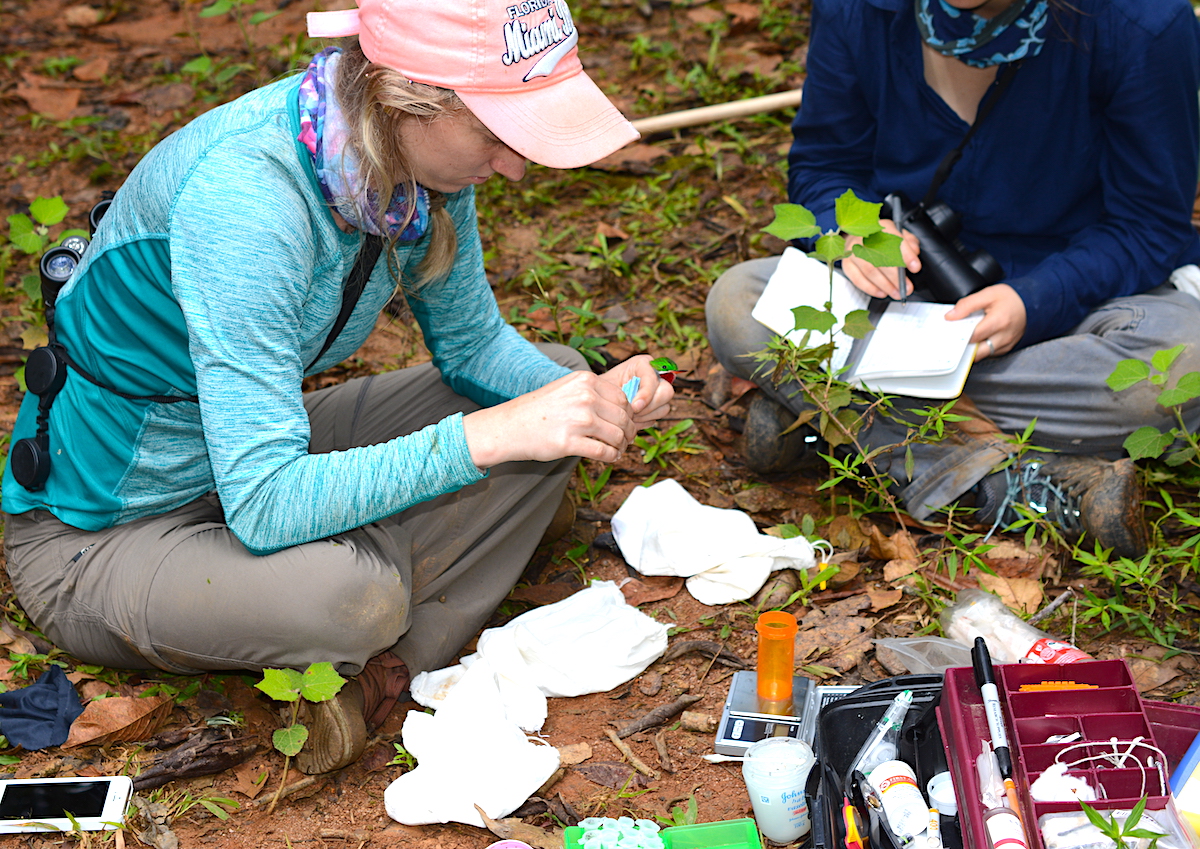
Bird surveys, like those we will cover in our upcoming Landbird Monitoring Training Workshop, provide valuable information about bird communities. Bird banding is another tool that can give us deeper insight into how our birds are doing. By individually marking and assessing birds in the hand, we can collect data that can tell us about their demography and health, including: looking at fat scores and weights to assess the body condition of birds in different habitats and at different times of the year; aging birds using plumage to investigate demographic patterns; using recapture records to learn about survivorship and longevity; using the presence of breeding characteristics to understand phenology. Over the long-term, banding can also help us understand patterns and trends of bird populations.
Launching the Caribbean Bird Banding (CBB) Network
As part of BirdsCaribbean’s new Landbird Monitoring Project, we are excited to work with our partners to initiate the Caribbean Bird Banding (CBB) Network, which aims to grow and unify bird banding activities in the Caribbean. In addition to training opportunities, the CBB Network will provide:
Caribbean Bird Bands. We are creating our own bird bands to distribute to qualified banders throughout the Caribbean. Our system will be similar to the USGS system, which no longer distributes bands outside of the U.S. The bands will be stamped with contact information so that anyone who finds a band can report it and find out where it came from!
Bird Banding Database. We want to make it easy for banding data to be collected consistently across the islands, and compiled to find recaptured birds. To do so, we are developing a user-friendly bird banding database that can be used by CBB banders.
Connection. We also want to facilitate communication and collaboration among bird banders throughout the Caribbean. We will work with members of the CBB to set up chats (e.g., WhatsApp) where banders can share information and ask questions, whether it be about molt patterns for resident species or sex and age of a rare migratory bird captured We will also include our banding partners on the CBB website (coming soon!) so that those looking to collaborate or volunteer with banders in the Caribbean can easily find this information.
About the workshop
This workshop is designed for Caribbean wildlife professionals and volunteers who are interested in gaining more experience with bird banding. The workshop also officially launches our Caribbean Bird Banding (CBB) Network! This workshop will focus on banding landbirds, although we hope to provide banding training opportunities for other bird groups in the future.
The purpose of the workshop is to:
Provide participants with a basic understanding of bird banding techniques and best practices.
Discuss what it takes to set-up and run a bird banding station.
Prepare participants for additional bird banding training and potential North American Banding Council (NABC) certifications.
Share information about the resources that will be available through the CBB Network.
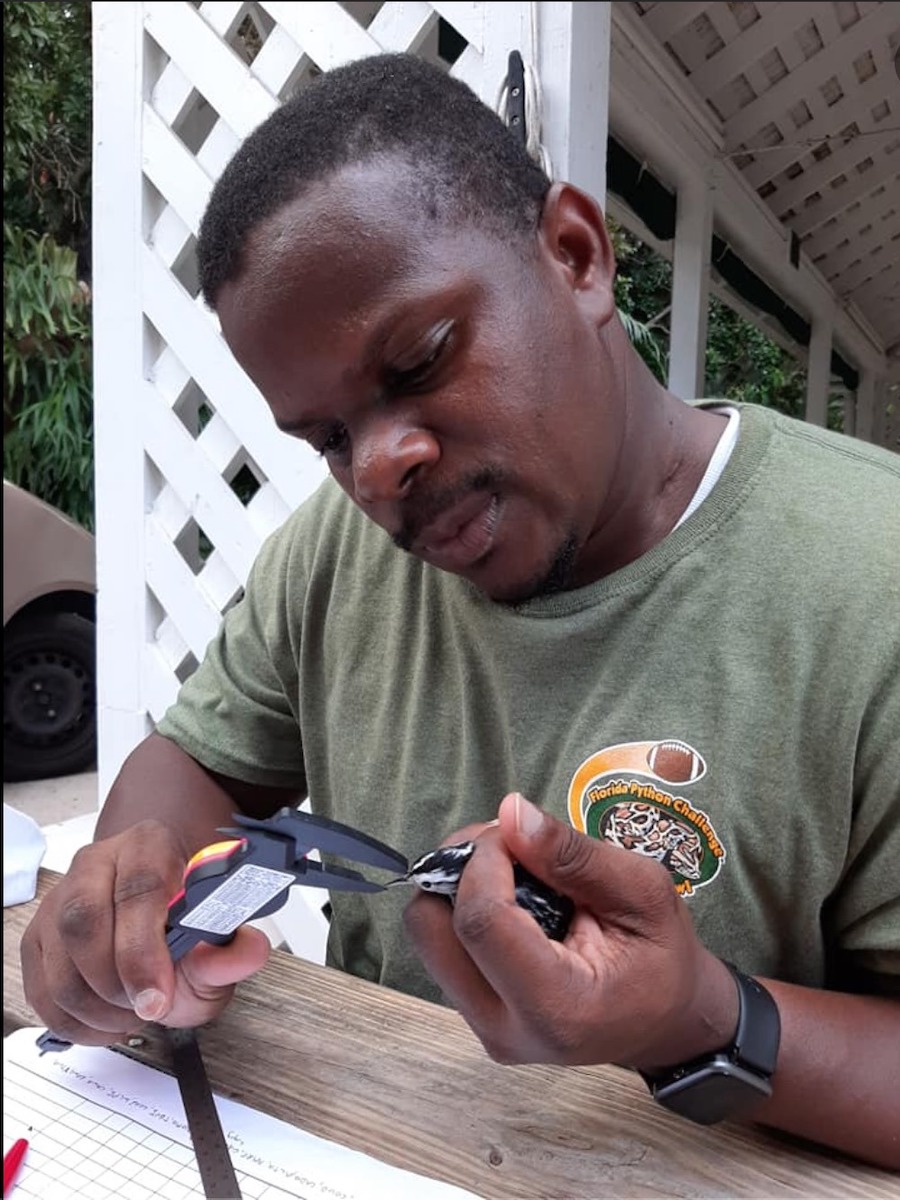
Our banding trainer, Holly Garrod, banding a Tody in the Dominican Republic for her M.S. thesis research.
Several NABC-certified trainers will share their knowledge in the classroom, at the mist net, and at the banding table, covering topics like:
Proper set-up and placement of a mist-net
Extracting birds from mist-nets using the body-grasp technique
Starting a banding station
Bird first-aid and safety
Bird banding ethics and basics
Using bird banding for education and public demonstrations
Aging birds using both WRP and Howell-Pyle terminology
Molt patterns
Bird banding is a complex skill to learn. This workshop is intended to be a starting point, and participants should not expect to leave the workshop with the necessary qualifications to band birds independently. To become fully immersed and practice what was learned at the workshop, participants will have the opportunity to be considered for a bird banding internship at one of several bird observatories in the U.S. and Canada. Following this, we are aiming for interns to continue working with a trainer in the Caribbean, providing the opportunity to band Caribbean species and include additional local professionals and volunteers in bird banding activities.
In an effort to decrease the amount of time spent in the classroom, some workshop sessions will be held virtually prior to the in-person workshop. These virtual sessions will also be made available to a wider audience. Stay tuned for more information!
Funding and logistics
We are aiming to include approximately 12 participants in this workshop. BirdsCaribbean has limited funding to cover the cost of travel, meals, accommodation, and workshop materials. Participants who are able to contribute all or part of their costs can help us enhance the workshop content and allow us to include additional participants/trainers. Participants should plan to arrive in The Bahamas on March 7 and depart on March 13.
COVID-19 Policy: BirdsCaribbean is committed to the safety of all workshop participants, trainers, and local communities. Proof of full vaccination will be required to participate in this workshop. Additional guidelines (e.g., negative tests, masks) will be provided to participants prior to the start of the workshop based on the most updated information.
Applications
If you are interested in participating in this workshop, please fill out this form by 5 PM EST on January 13th, 2022. (note: this workshop opportunity was posted on our BirdsCaribbean listserve in December; if you are not on this groups.io listserve, please consider signing up to receive announcements about workshops and other opportunities and bird news. Thanks!)
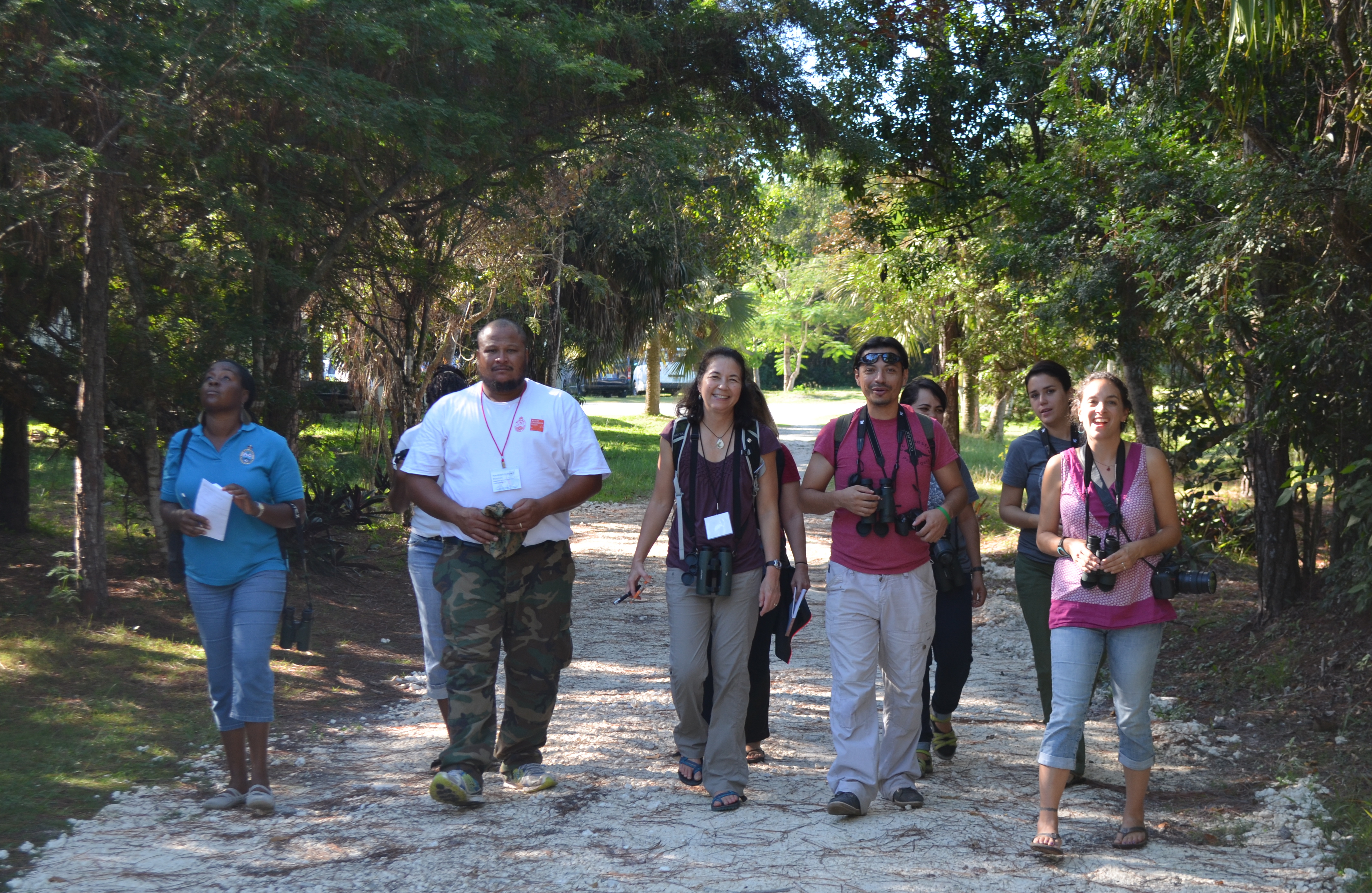
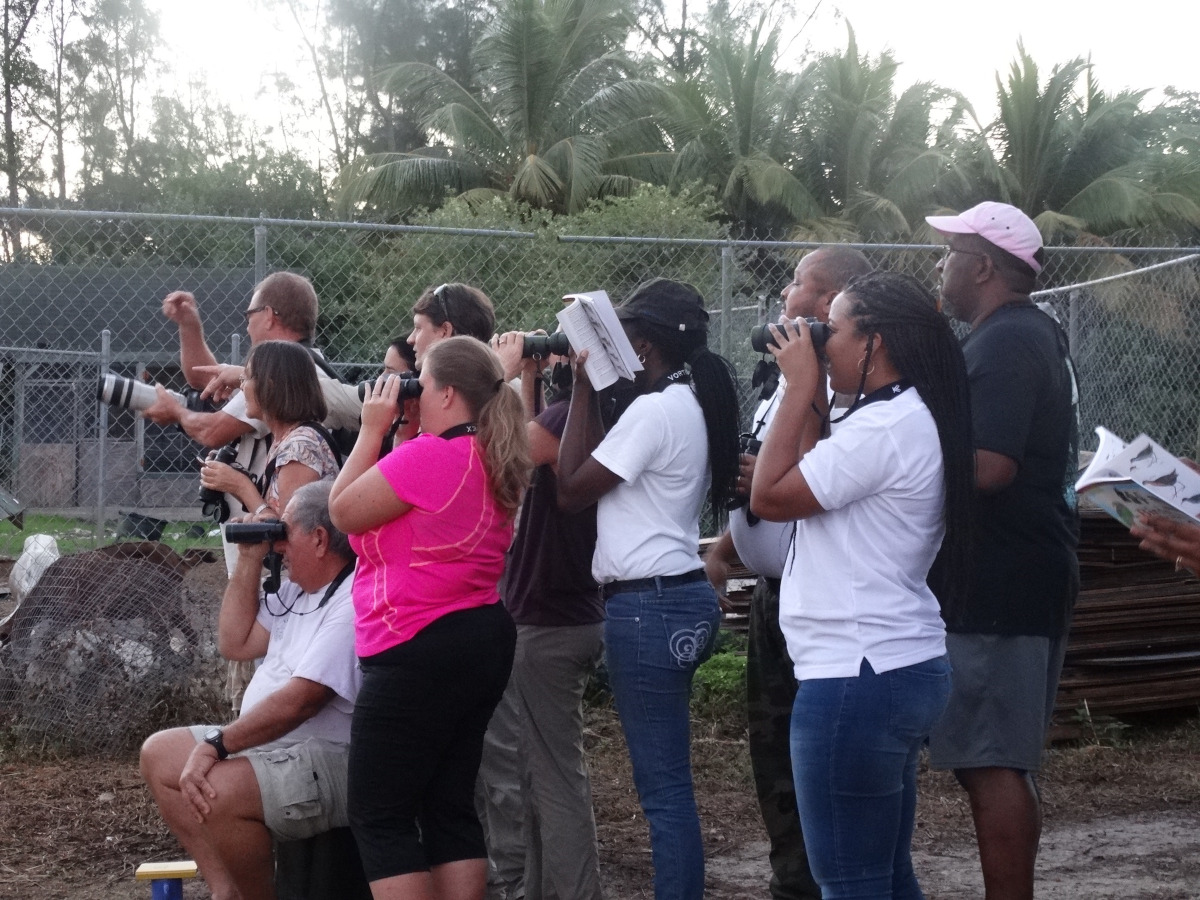
Participants and facilitators enjoying a birding walk at The Retreat, Bahamas National Trust, Nassau, Bahamas.
The Retreat Garden is a national park located in Nassau, The Bahamas. The 11-acre botanical garden was the previous headquarters for the Bahamas National Trust, showcasing a mix of rare native and exotic plants. Resident and migratory birds are drawn to this oasis, making it the most popular birding spot on the island. In particular, participants can expect to see many migratory warbler species (hopefully, in the hand!), such as the Prairie Warbler, Black-throated Blue Warbler, and Worm-eating Warbler.
If you have any questions, please send an email to:
A smiling young man walks through a field, carrying a dozen home-made cages on his back and in his hands, each packed with birds from the wild. A hot urban rooftop is crowded with some fifty cages filled with birds for sale. A child holds up a tiny cage holding a new pet, an Indigo Bunting trapped as it was migrating south. A Facebook page with thousands of subscribers advertises the sale of 39 freshly caught Rose-breasted Grosbeaks. These are some of the images of wild bird trafficking on the island of Cuba.
click on images to enlarge and scroll through the gallery
Young man walking in field carrying many cages, full of wild-trapped birds.
Many bird cages on a hot rooftop, holding birds trapped from the wild.
A young boy holding a Juvenile Painted bunting in a small cage
A Facebook page with thousands of subscribers announces the sale of 39 recently caught Rose-breasted Grosbeaks. Community birding groups are vigilant and report illegal trapping activities on social media to the authorities.
BirdsCaribbean is deeply concerned over the illegal capture and trafficking of wild birds in Cuba, which has greatly increased over the last two years. We are appealing to the Cuban Government to do much more to protect their resident and migratory wildlife, a vital piece of their natural heritage and national pride. The international conservation community can help with this vital work; sharing methods to stop illegal trapping that have been been successful in other parts of the world.
Catching and keeping wild birds in cages is a common and widespread tradition in Cuba that dates back to the colonial days of Spanish rule. The birds, including migrants, residents, and endemics, were kept as pets in families and communities. In recent years, however, with the advent of social media in Cuba and especially as economic conditions deteriorated due to the COVID-19 pandemic and the strengthening of the US blockade of Cuba (causing the worst economic and humanitarian crisis in recent history), the trapping of wild birds has increased dramatically. Trapping and selling birds offers an opportunity for residents to substantially boost their income, including among younger Cuban citizens.
A trapped Painted Bunting (male) in the hand and in a cage. The Painted Bunting, one of the most popular birds for trappers in Cuba, is on the US Fish and Wildlife Service Birds of Conservation Concern List 2021. This means that the species is seriously declining and could become Endangered if conservation actions are not taken soon.
With the rise in social media, the selling of wild birds has expanded dramatically online (via Facebook and WhatsApp), with trappers able to market their birds to a much larger audience. It has also taken a more sinister turn, becoming a part of the deadly but highly profitable global wildlife trade. In other words, Cuba’s trade in trapped birds has gone international. There is great demand for the birds among the Cuban-American community in Florida, and several shipments from Cuba have been seized at the airports in Miami and Cuba. In Miami, high figures (e.g. $500) are paid for a Cuban Bullfinch (Negrito) or a Cuban Grassquit (Tomeguín del Pinar).
According to a May 2021 report published by TRAFFIC, a non-governmental organization that works globally on wild animal and plant trade, the most commonly trafficked animals in Latin America and the Caribbean by air during the last decade were birds – linking no less than 53 countries globally. International bird smugglers not only ply their trade via air. In many cases there are links with organized crime networks that arrange different routes and methods of transportation to avoid law enforcement agencies. Tracking seizures where wildlife was hidden on the trafficker’s body or in their personal effects, at least 77% were live animals. Birds made up 92% of seizures in this category – approximately one third of them songbirds.
Shocking numbers of trapped birds revealed by social media
Moreover, this escalation of the illegal trade comes at a time when the clear and present danger presented by climate change and resulting extreme weather events, as well as habitat loss and other factors, is impacting Caribbean birds’ very survival. The November issue of The Cuban Birder included a list of 36 Facebook groups that are openly selling wild birds – each group composed of from a few hundred up to 49,000 members. Reviewing these Facebook pages shows alarming facts – the birds on sale are often kept in poor and inhumane conditions and the incidents of bird captures very likely adds up to tens of thousands of birds caught each season.
BirdsCaribbean monitored one of these Facebook groups (with 46,000 members) for the month of October 2021, recording the daily catches posted by bird trappers. Our data shows that among the posts uploaded by 356 members, the following birds were trapped: 2,041 Indigo Buntings, 785 Painted Buntings, 235 Rose-breasted Grosbeaks, and many others – totaling 3,270 birds from 28 different species. This data is from just one month and for one of 36 Facebook groups, and it includes only catches that are posted online. Although we think this is the largest Facebook group, there are 35 other groups across different regions of Cuba.
Undoubtedly, the number of birds trapped annually can be estimated in the tens of thousands – and that is most likely a conservative estimate. Moreover, transactions are also made via WhatsApp groups, which are not easy to track. It should be noted that Facebook groups can be reported for their illegal activities.
“Monitoring a single Facebook group for one month, our data shows that a total of 3,270 birds of 28 different species were trapped.”
A tragically long list of captured species
A line of cages containing Rose-breasted Grosbeaks. These are USFWS Birds of Conservation Concern, meaning populations are declining and the species could become Endangered if conservation actions are not taken.
Ironically, the trappers refer to themselves as “bird watchers” and they are unaware that these migratory birds are also Cuban; they boast of being able to capture them because they are not Cuban. Some of these birds spend more time in Cuba than on the mainland and play an important role in the ecological balance of the island. Other species use Cuba as an important stopover site to rest and refuel during their long migrations to countries in Central and South America. This makes the Cuban archipelago a critical area for the conservation of species, since the survival of each of these birds depends on it.
Trappers prefer the male birds, resulting in an imbalance in the sexes of remaining breeding populations. Birds are caught primarily in mist nets, cages, and lyres. The latter is a stick/ perch smeared with a sticky glue-like Ficus tree resin; when the bird lands it becomes trapped on the resin. Of the birds that are captured, migratory birds are often targeted. Note that migratory bird species make up approximately 70% of Cuba’s total bird population and spend at least half of each year on the island.
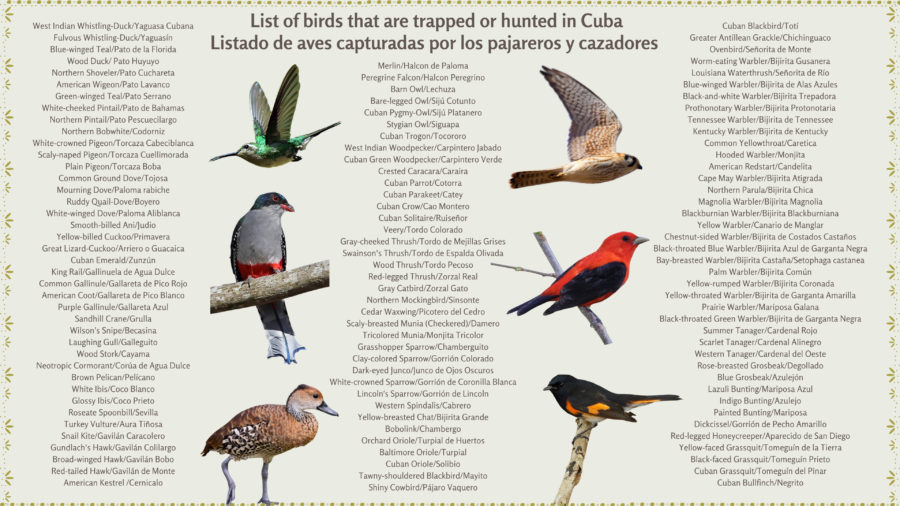
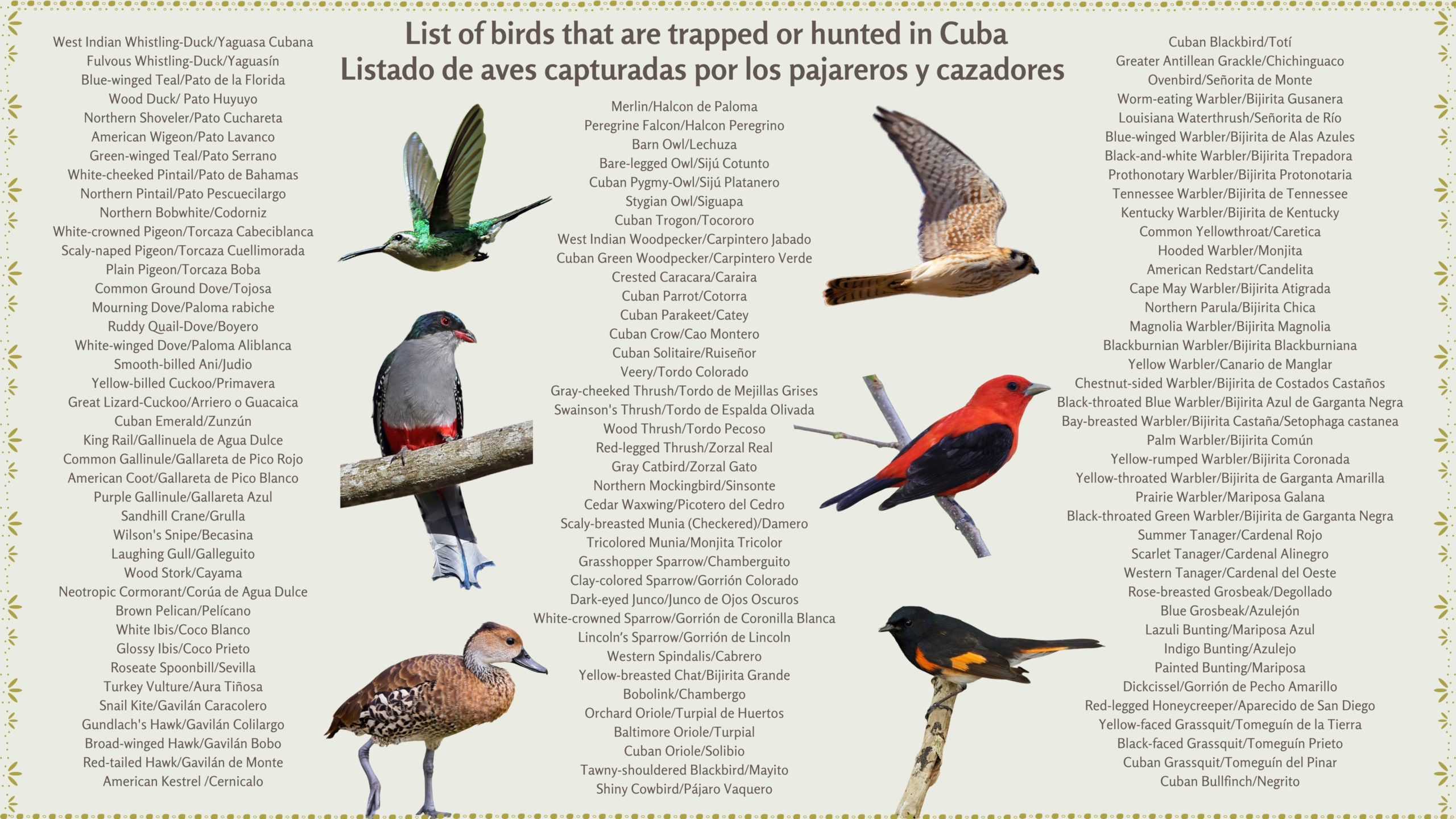
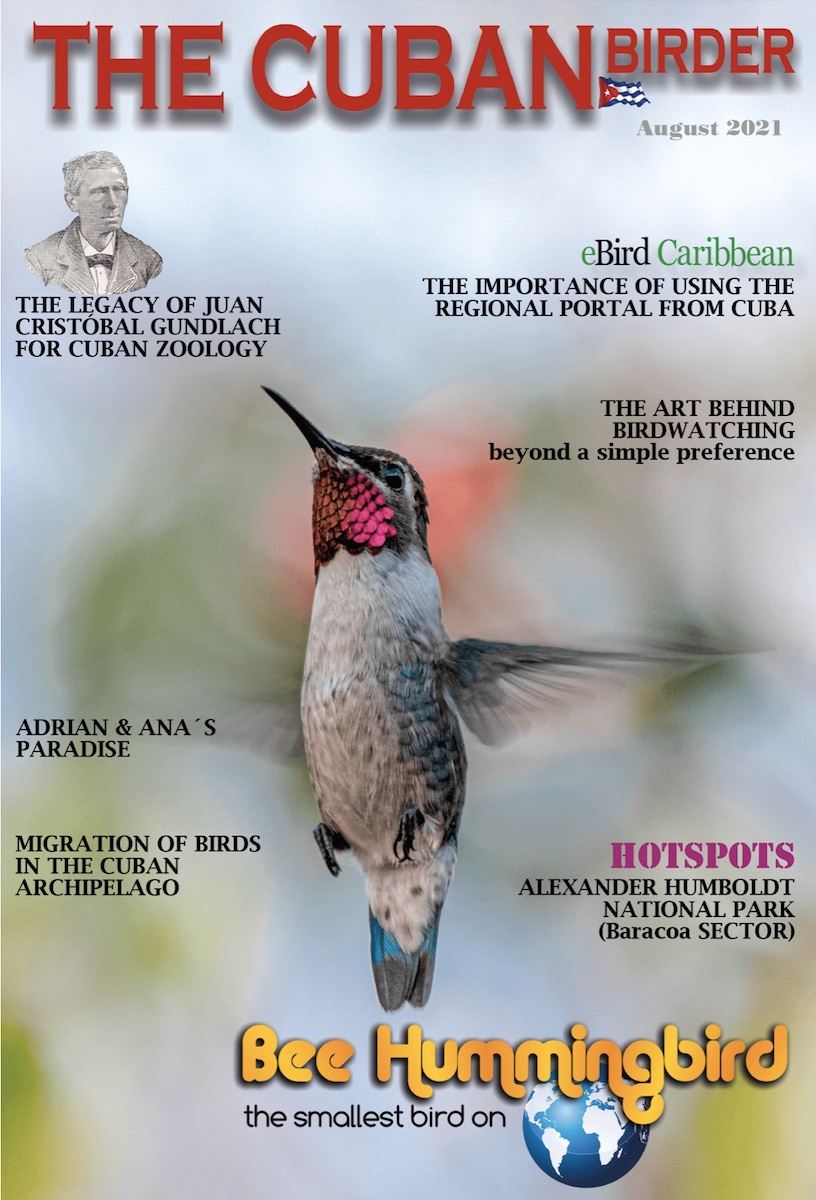
Endemic and resident birds are also being trapped; these are iconic species for the island, and an invaluable part of Cuba’s magnificent landscapes and natural heritage. Here is a list of the dozens of species that fall victim to trappers and hunters on the island. We also provide this list in a spreadsheet with more detailed information on the status of each species (residence, abundance, and breeding status in the West Indies from The Checklist of the Birds of the West Indies; conservation status according to the US Fish & Wildlife Service “Birds of Conservation Concern List 2021,” and conservation status according to the IUCN Red List). Data are from the 3 websites that are linked here.
Here is a list of the dozens of species that fall victim to trappers or hunters on the island. Only 3 species are legal to hunt; Blue-winged Teal, Mourning Dove and Wilson’s Snipe. Many birds, like ducks and pigeons, are hunted and trapped illegally (e.g., with big nets) to sell for their meat. Raptors are sometimes killed because they prey on free-roaming chickens, a common issue in many countries.
Among the most popular for the bird trade are migratory songbirds like the Indigo Bunting, a beautiful little bird with a melodious song; the brilliantly colored Painted Bunting, and the Rose-breasted Grosbeak. The Cuban Bullfinch, an endemic species that also sings sweetly is among those most in demand and frequently captured. Other popular captured species include the Blue Grosbeak, Baltimore Oriole, Summer Tanager, Scarlet Tanager, Summer Tanager, Cape May Warbler, Prothonotary Warbler, Yellow-throated Warbler, Black-throated Blue Warbler, Cuban Grassquit, Yellow-faced Grassquit, and Northern Mockingbird. The colorful Cuban Parrot and the Cuban Parakeet are also popular caged birds. The list is heartbreakingly long.
Many of these birds have been declining and some of the trapped migrants are on the US Fish and Wildlife Birds of Conservation Concern List 2021 (BCC 2021). The BCC 2021 designates species that are the highest conservation priority, i.e., species that are likely to become candidates for listing under the Endangered Species Act if conservation action is not taken quickly.
In the autumn months, many casualties fall due to cruel methods
Criminal trappers use the autumn migration months (September, October, and November), with peak activity in mid-October when large flocks of Nearctic migratory birds arrive on Cuba’s coasts, tired and hungry. Some of these birds will be winter residents while others are passing through Cuba and refueling before heading further south. Unfortunately, they all create an opportunity for these trappers to catch thousands of them each season. The trappers hide in area where the birds come to rest in the early hours of the morning loaded with cages, lures, lyres, and mist nets (which they are able to purchase online). Trapping continues throughout winter and increases again in the spring, to trap migrants returning north for the breeding season.
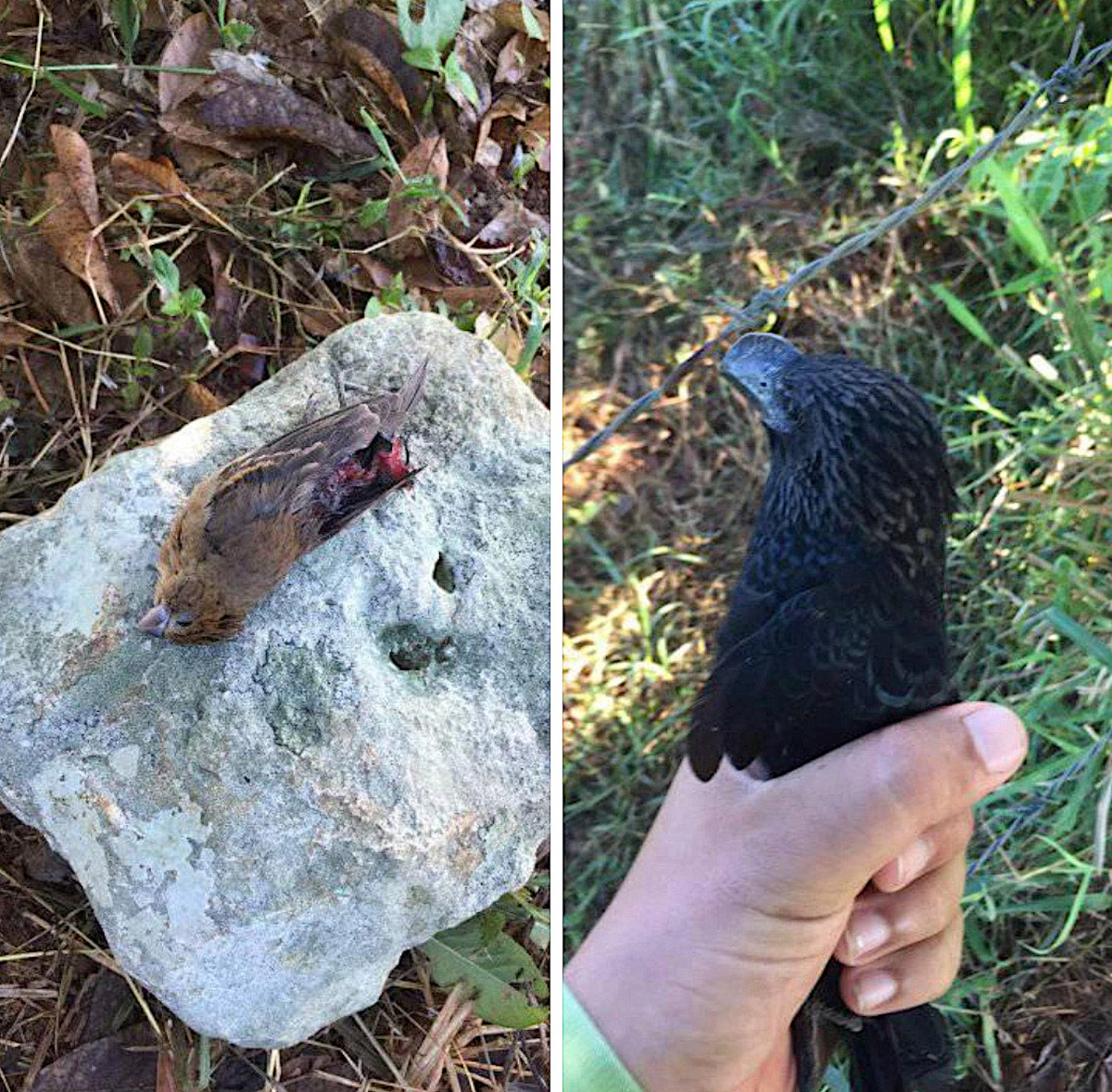
During trapping birds can get badly injured, this songbird (left) has died, on the right is a trapped Smoot-billed Ani in the hand. Our Cuban colleagues have noticed that many of the bird species that are trapped are declining; even the trappers say there are not as many birds as in the past, although individuals can still catch dozens or more during fallouts.
While the trapping itself removes many live birds from the wild, there is also a considerable fatality rate that occurs during the process. For example, when a strong glue is used and spread along a branch (i.e., lyre trap), many entrapped birds break or lose a leg or feathers in their struggle to escape and are left to die. Those that survive being trapped are still vulnerable to other risks. Testosterone is injected into birds to make them molt and sing for Singing Competitions, which can be lethal. Other inhumane practices have also been documented, including gouging out the eyes of birds to stress them into singing more.
Unfortunately, the sacred rituals of the Afro-Cuban religion, Santería, has added to the problem. In 2018 one authority posted a video showing 175 dead birds, which included 37 species, at least 7 of which were endemic (19 dead Cuban Trogons), confiscated from someone selling the birds to be used in Santería ceremonies.
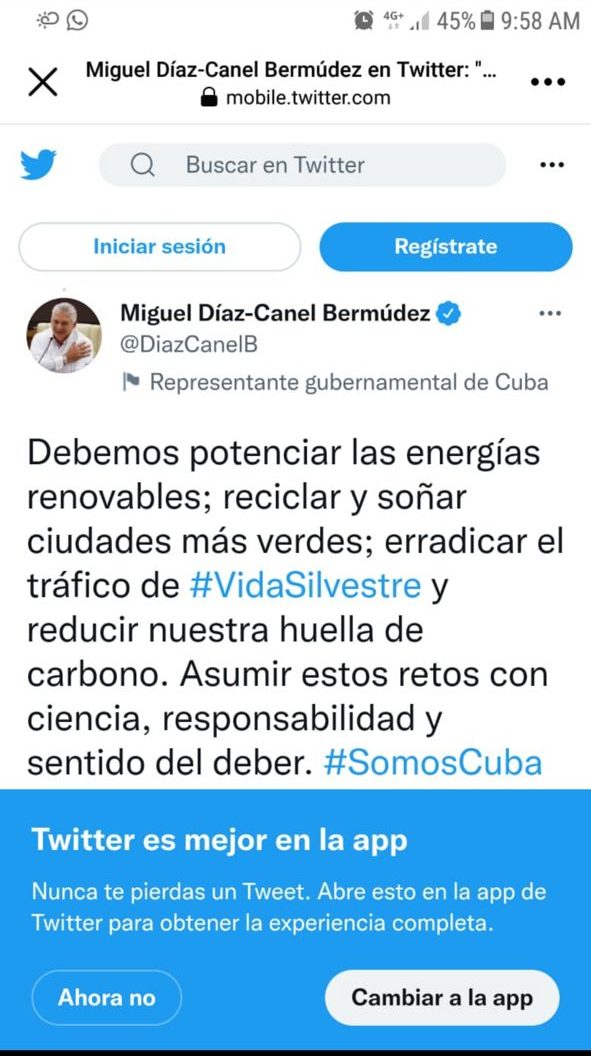
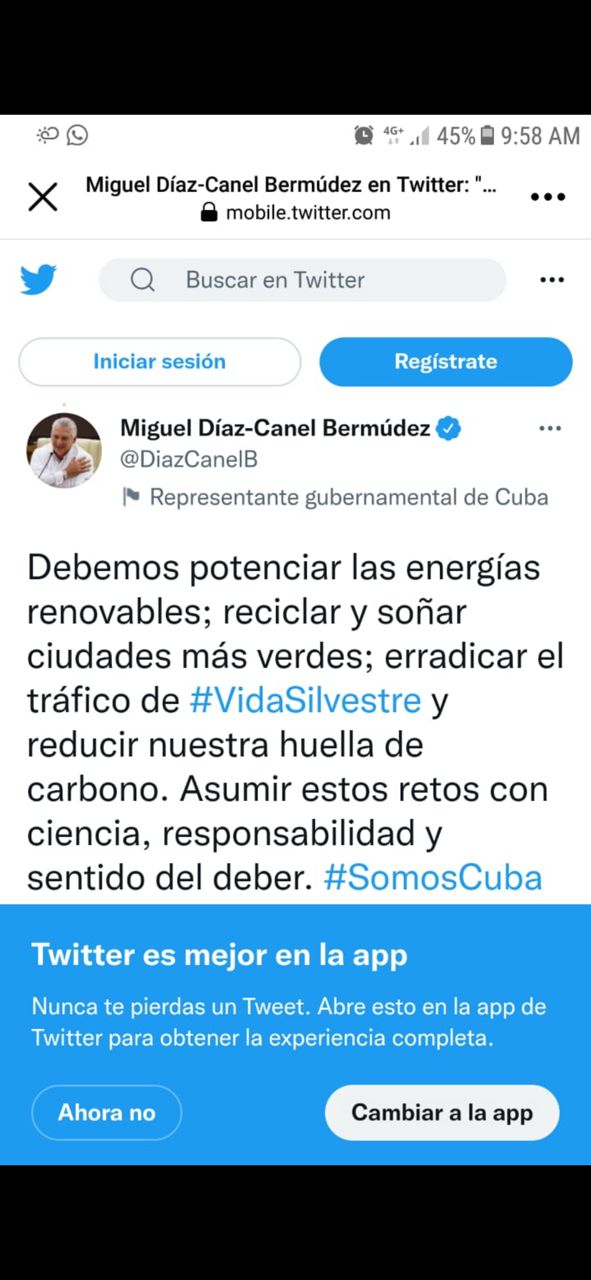
Cuban President Miguel Díaz-Canel Bermúdez has himself stated on his twitter feed that eradicating wildlife trafficking is among his environmental goals. Indeed, pursuing this goal will also help to enhance the reputation of the island as a country that seeks to conserve its amazing natural heritage, as it already does with its many National Parks and Protected Areas.
And not all is bad. There are some new domestic laws to be praised, including the recently passed Animal Welfare Decree-Law. In addition, fines have been increased for wildlife trafficking. Along with several other pieces of legislation in earlier years, this should provide a good regulatory framework for the protection of birds and other animals and is certainly a step in the right direction. The local government in Old Havana also banned caged birds in private businesses in September 2019.
However, as is evident from the photos and posts on dozens of social media groups, the laws that protect wild birds are not being enforced nearly enough. Trapping activities are rampant. Trappers and buyers are openly doing business with little or no fear of being caught, or facing meaningful consequences or penalties (e.g, arrest and prosecution). As a contracting party to the Convention on International Trade in Endangered Species of Wild Fauna and Flora (CITES) since 1990, it is also important for the Cuban Government to show their law enforcement agencies are enforcing international laws protecting birds from trafficking.
The potential of eco-tourism as an alternative
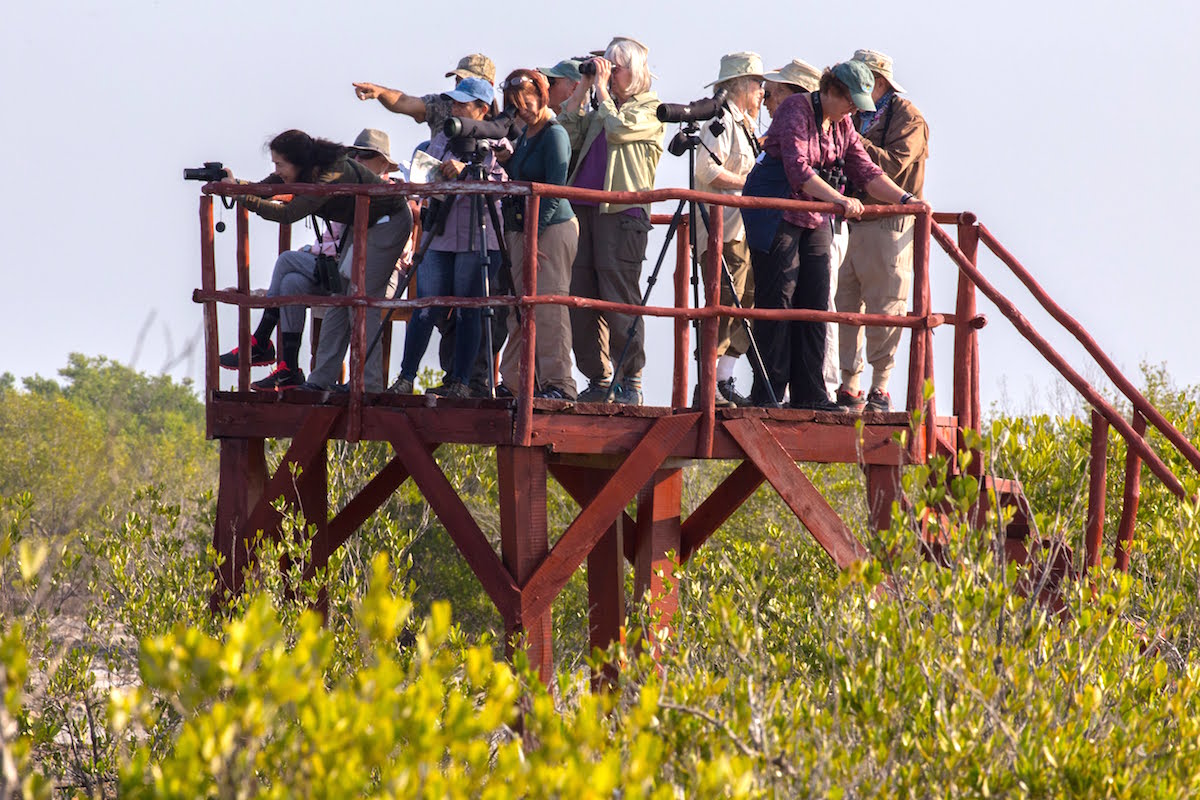
Enjoying a great view of waterbirds at Las Salinas, Zapata Swamp, BirdsCaribbean Cuba Bird Tour, part of our Caribbean Birding Trail Program (photo by Garry Donaldson)
In a positive move, Cuba opened its doors to tourism again on 15 November 2021 and now has a vaccination rate among its population of >84% (as of December 15th). Ongoing and amplified efforts to raise environmental awareness should be extended to visitors arriving to Cuba. Cuba has so much to be proud of in terms of its remarkable biodiversity and variety of natural habitats. Thus, various forms of community-based tourism including bird and nature tours could be expanded as alternative livelihoods, catering to an increasingly environmentally conscious tourism market that is willing to pay for the unique Cuban nature and culture experience. The sight of traffickers swarming the streets with cages of wild birds and caged birds in many homes and businesses has tarnished the image of Cuba in the eyes of international visitors, and will continue to do harm to that image.
Efforts to combat the problem must continue
Education campaign T-Shirts with artwork by Arnaldo Toledo. Thanks to Optics for the Tropics and others for assisting with this initiative and our Cuban colleagues for their dedicated efforts.
We would like to recognize, with gratitude, that a group of dedicated Cuban ornithologists and conservationists have been working diligently on the caged bird issue for many years. The need for an intensive environmental education campaign, not only in schools but also in communities and national media has long been recognized.
More recently, at the BirdsCaribbean 2017 conference in Cuba, a workshop was held on the issue. Strategies and actions to address the problems were discussed and a Caged Bird Working Group was formed.
Since then, some positive actions have been taken. Special artwork by a Cuban artist was commissioned to support an education campaign that included the production of hundreds of t-shirts for children and community members. A brochure and series of attractive posters conveying the message that trapping of wild birds is illegal were printed and distributed and a documentary Aves de Cuba that included information on the caged bird threat was shared on Cuban television. Cuban conservationists have written letters and made phone calls to the authorities reporting trapping activities, and customs officers have been trained and supplied with an identification guide Aves Silvestres más capturadas ilegalmente en Cuba: Guía de identificación. Cuban citizens have also been speaking out against the trapping on social media, helping to promote discussion and raise awareness.
click on images to enlarge and scroll through the gallery
In addition, our Cuban colleagues also participate in BirdsCaribbean’s Caribbean Endemic Bird Festival and World Migratory Bird Day celebrations every year, carrying out their own Festival de las Aves Endemicas del Caribe en Cuba. They also participate in Global Big Day birding and have produced videos for national television and social media, all to promote a culture of bird conservation and encourage citizen science bird monitoring through eBird. All this work, whether by individuals or the group, must continue and education in schools and public awareness efforts must be expanded.
So, why is this not enough?
Trapping of wild birds has become so widespread, with the sale of wild birds taking place openly, that the outreach efforts by our Cuban colleagues are simply not enough to stop or even slow the problem. The shocking implications of our survey of Facebook showing rampant bird captures and sales underlines the urgent need for more concerted efforts to enforce the laws, and to prevent the trappers from continuing (and expanding) their activities without any consequences. For example, local police could be charged with stopping trappers (a common site in Cuba), releasing the birds they’ve caught, destroying their cages, and imposing the fine. (Click on images to enlarge and scroll through gallery)
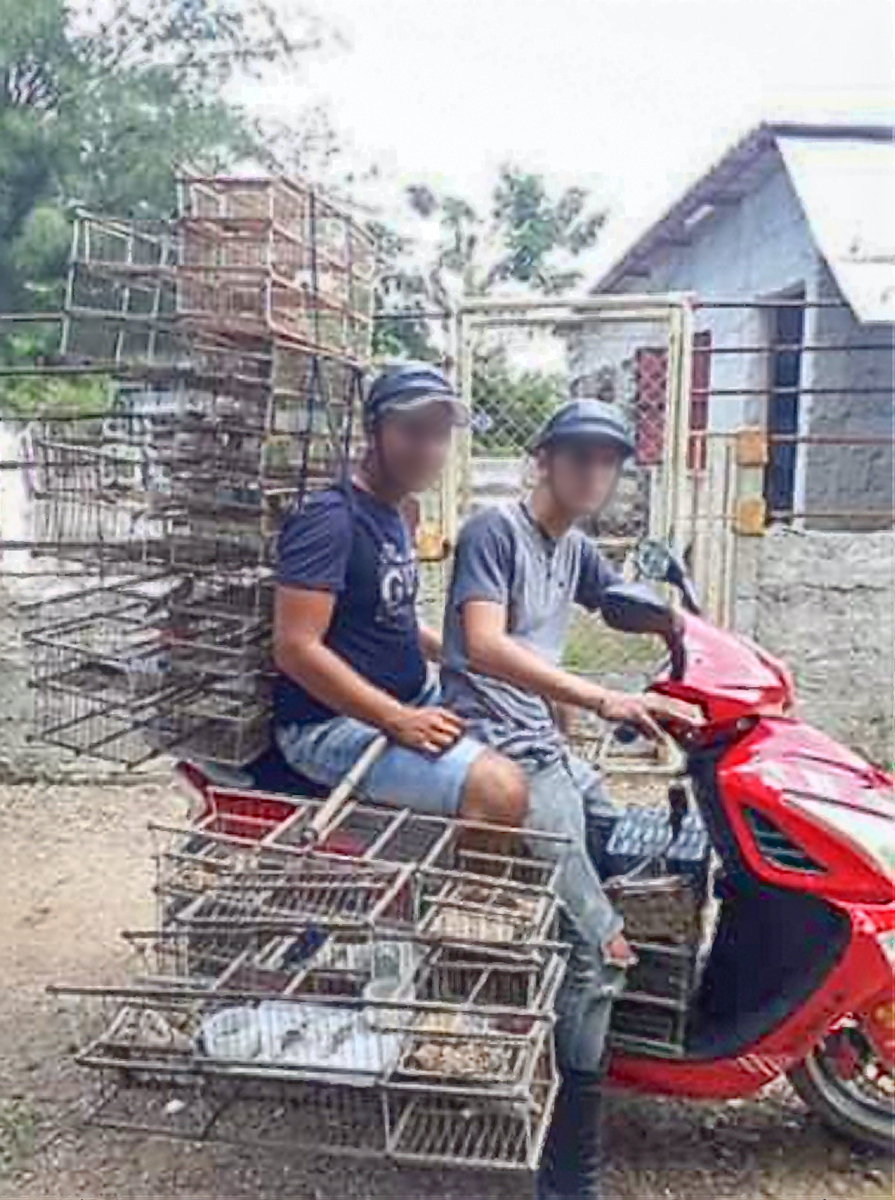
Two young men on motorbike with lots of cages
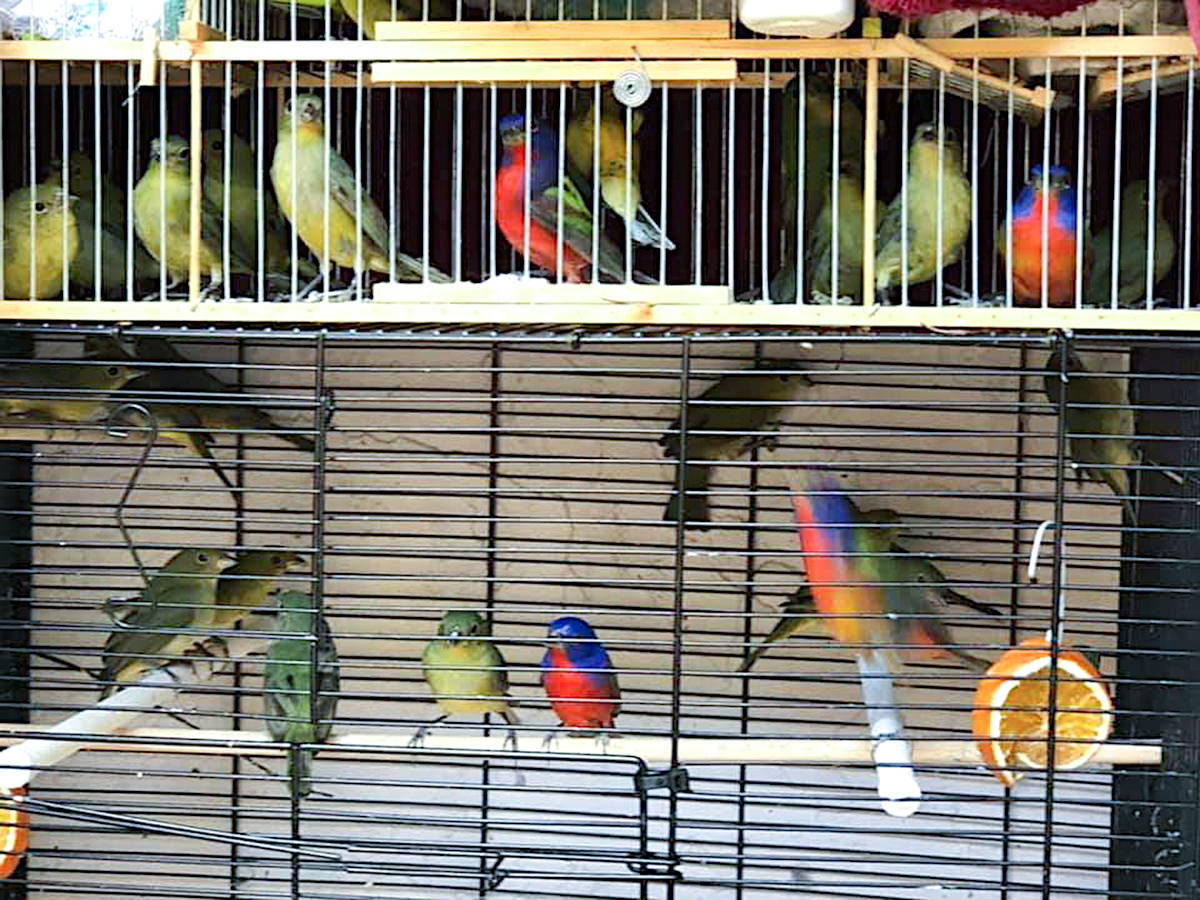
A large number of Painted Buntings held in a cage. This species is on the U.S. Fish and Wildlife Service’s 2021 List of Birds of Conservation Concern.
Boys with a juvenile painted bunting in a small box. More and more children are involved in catching birds.
Our colleagues’s efforts to educate about the issue must also be greatly expanded, through environmental education in schools, and through campaigns and public awareness programs in communities, and on radio and television. These will help citizens recognize that birds are essential for myriad ecosystem services that are critical for the health of communities and their quality of life. Cubans of all ages can become better connected with the value of their native wildlife through activities such as planting bird-friendly yards, offering communities and schools connectivity with local birdwatching trips, and making bird feeders to enjoy birds while keeping them wild.
We need to invest in training for alternative livelihoods and activities that provide incentives for protecting wildlife instead of destroying it, such as more community-based tourism that includes bird and nature guides, and bird monitoring and banding programs. The support of the international conservation community and fundraising agencies are urgently needed for all this work.
Let’s protect and enjoy our birds…more free, more beautiful! #MásLibresMásBellas
Artwork by Arnaldo Toledo
While some people like to admire birds in cages, these birds are so much more beautiful when seen wild and free, flying through the forest and in our parks and gardens. Greater efforts are needed to protect them by enforcing the laws that are in place. We do not want these wonderful bird species to reach the “point of no return.” We are urgently appealing to the Cuban Government to express its national pride in its biodiversity by doing more to enforce its environmental laws.
We ask the international conservation community to help Cuba in its efforts to put a stop to bird trapping and trafficking. Efforts to raise the level of education and awareness of Cuba’s beautiful and unique bird species – many of which are seriously declining in numbers – must also continue.
BirdsCaribbean supports ongoing conservation, education and alternative livelihood training efforts in Cuba, and would like to continue doing so. Among other initiatives, there is a plan to establish birding clubs in each province. We also aim to provide more binoculars and educational materials to our partners, to assist them in reaching more communities and youth, and to gather more data on the extent and impacts of trapping. If you would like to help us in this work, please donate here.Cuba’s amazing endemic birds and our shared migrants will be grateful!
click on images to enlarge and scroll through the gallery and see videos below
Painted Buntings for sale in Miami, Florida.
American Kestrel in a small cage.
Two immature Painted Buntings in a cage and a young trapper holding a bird
There are over 50 Painted Buntings in this cage in Cuba in January.
Young boy carrying many bird cages on his back
Young man with lots of cages
Northern Parula (male), a migratory warbler in the hand of a trapper.
The Cuban president shares a tweet about bird trapping
American Redstart (male) in the hand of a trapper.
A tweet about some bird hunters who were captured, showing the cages that were destroyed by law enforcement officers.
A Painted Bunting being held in a plastic bag, December 2021
Trapper holding two Black-throated Blue Warblers
Trapped Rose-breasted Grosbeaks kept in captivity. This species is on the USFWS Birds of Conservation Concern List 2021.
A Prothonotary Warbler, trapped and held in captivity. This species is on the USFWS 2021 List of Birds of Conservation Concern.
Fourteen cages containing trapped wild birds.
Homemade bird cages, almost finished, shown on Facebook.
Cuban Bullfinches for sale.
Images of a hormone product that trappers inject into birds to make them sing. Hunters sell it on Facebook to other hunters.
Young trapper holding three juvenile Painted Buntings
Five male Summer Tanagers illegally captured in Cuba.
A post on Facebook advertising birds for sale
Group of nine men with their birds in cages
Young trappers with Painted Buntings in cages
Educational brochure – page 2
Indigo Buntings, Cuban-Grassquits, Cuban-Bullfinches for sale to a private buyer.
“The complete collection of birds of prey that I have at the moment …1 Gundlach’s hawk, 2 Bare-legged owls, 2-3 Red-tailed hawks…”
This person is advertising cages, birds and bird food for sale. His property is a business with all the tools needed to manufacture cages in good quantities. He shows the process of making the cages.
Line of small cages holding Rose-breasted Grosbeaks
Trapped Painted Buntings being kept in a cage, Spring 2021
A Cuban Grassquit whose feathers have been plucked to apply a chemical product and make it fight.
Many birds in cages for sale in Miami, FL.
Male Painted Buntings and Indigo Bunting being kept in a cage
An Ovenbird, a migratory warbler, in the hand.
Father and son with a juvenile Indigo Bunting
The sign reads: “It is not an empty cage, it is a free bird!!”
A young Gundlach’s Hawk, endemic to Cuba and Endangered. This bird was captured by someone who illegally cut down the tree and destroyed the nest. The hawk chick was sold to someone else and is being kept in terrible conditions.
Mist-net purchased online by trapper, shown on his Facebook – these nylon mist-nets are harmful to small songbirds.
Young boy holding a juvenile male Painted Bunting
A male Painted Bunting, suffering from some disease, in captivity.
Cuban Parrot chicks, stolen from a nest in the wild, to be sold on the black market. This species is classified as Near Threatened.
Posting birds for sale on Facebook, February 2020.
Painted Bunting (male) in a tiny cage.
Rose-breasted Grosbeaks for sale
A man walks down a dirt road carrying several cages with birds
Three young bird trappers holding Painted Buntings- two males and one female
Two young men on a motorbike carrying mang cages with birds in
Cape May Warbler (female or immature). This species is on the USFWS 2021 List of Birds of Conservation Concern.
Educational brochure – page 1
Painted Buntings crammed into a tiny home-made cage
Caption: “It died when I took it in my hand taking it out of the aviary to throw it into a cage until it got wet and everything but nothing, what could have happened? Greetings and thank you.”
Cape May Warbler (male) in the hand of a trapper. This species is on the USFWS Birds of Conservation Concern List 2021.
There are over 50 Painted Buntings in this cage in Cuba in January.
Summer Tanager (female) illegally captured in Cuba.
A Western Spindalis, a Caribbean endemic, in the hand.
The Yellow-throated Warbler is a popular bird for hunters, watch the video of more than 130 specimens in a cage.
Ovenbird, a migratory warbler, in the hands of a trapper.
BirdsCaribbean is excited to invite applications to participate in a 5-day training workshop focused on the monitoring and conservation of landbirds in the Caribbean. Through a blend of classroom and field-based activities, this comprehensive workshop will cover landbird identification, monitoring techniques, eBird data entry, basic data analysis, and more. The workshop will take place at Rancho Baiguate in Jarabacoa, Dominican Republic from February 16-20, 2022.
This training workshop is part of BirdsCaribbean’s new project that aims to build capacity to monitor and conserve landbirds in the Caribbean. The long-term goal of this project is to enhance full life cycle conservation of Caribbean landbirds. Working with our many partners, we will build regional networks to increase awareness and appreciation of our landbirds and enable on-the ground conservation actions, including protecting, managing, and restoring important habitats.
We know that this dream can become a reality. We have seen the impact of bird monitoring initiatives like the Caribbean Waterbird Census (CWC), which has provided novel information and helped designate and protect sites that are crucial to the survival of bird populations.
About the workshop
This “train the trainer” workshop is designed for Caribbean wildlife professionals and volunteers who are interested in expanding or establishing a landbird monitoring program.
The purpose of the workshop is to:
Share information on landbirds in the Caribbean and the threats that they face
Provide participants with the knowledge and skills to train a monitoring team and institute a sustainable, local landbird monitoring program.
Inspire and facilitate landbird monitoring and conservation efforts, including raising public awareness, alleviating threats, and managing and restoring habitats
Build a regional network of people involved in standardized monitoring and conservation of our shared landbirds
Workshop participants will learn about the Programa de América Latina para las Aves Silvestres (PROALAS) Manual bird survey protocols. Developed in Latin America to target tropical habitats, this manual includes detailed guidance on designing and implementing multi-level survey methods. The manual also incorporates the use of eBird as a user-friendly data entry and storage platform, and outlines occupancy-based analysis of monitoring data.
During daily field trips, we will practice landbird identification and survey techniques. After the workshop, participants will have the opportunity to apply for a small grant (~1k to $10k) to implement or amplify their own landbird monitoring and conservation projects.
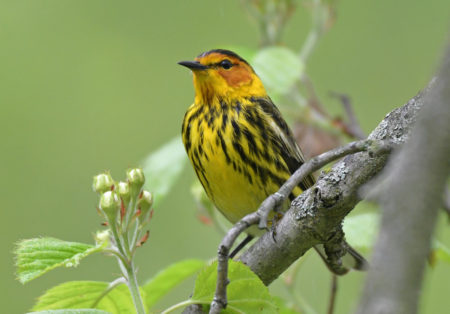
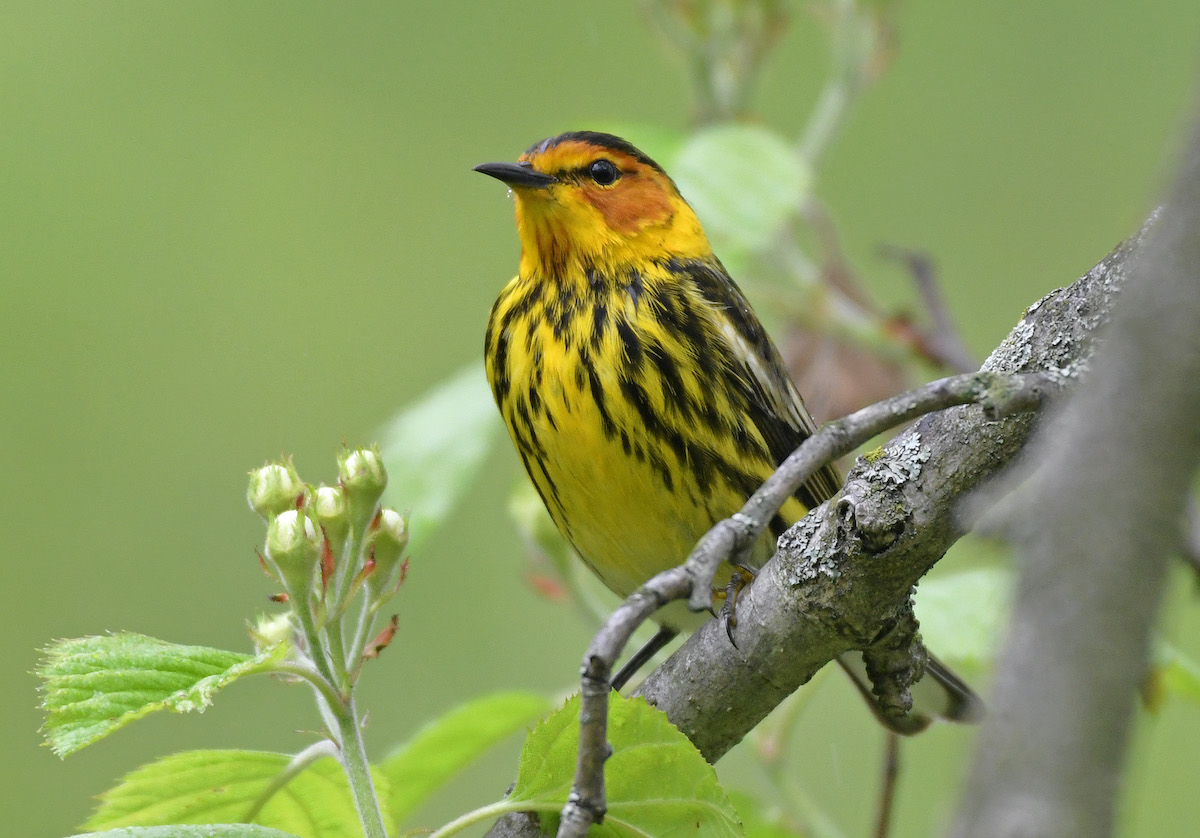
The Cape May Warbler a declining landbird that winters in the Caribbean. (Photo by Hemant Kishan)
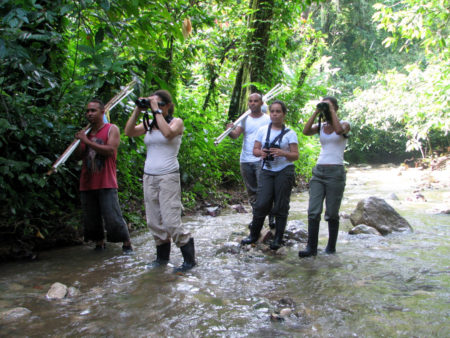
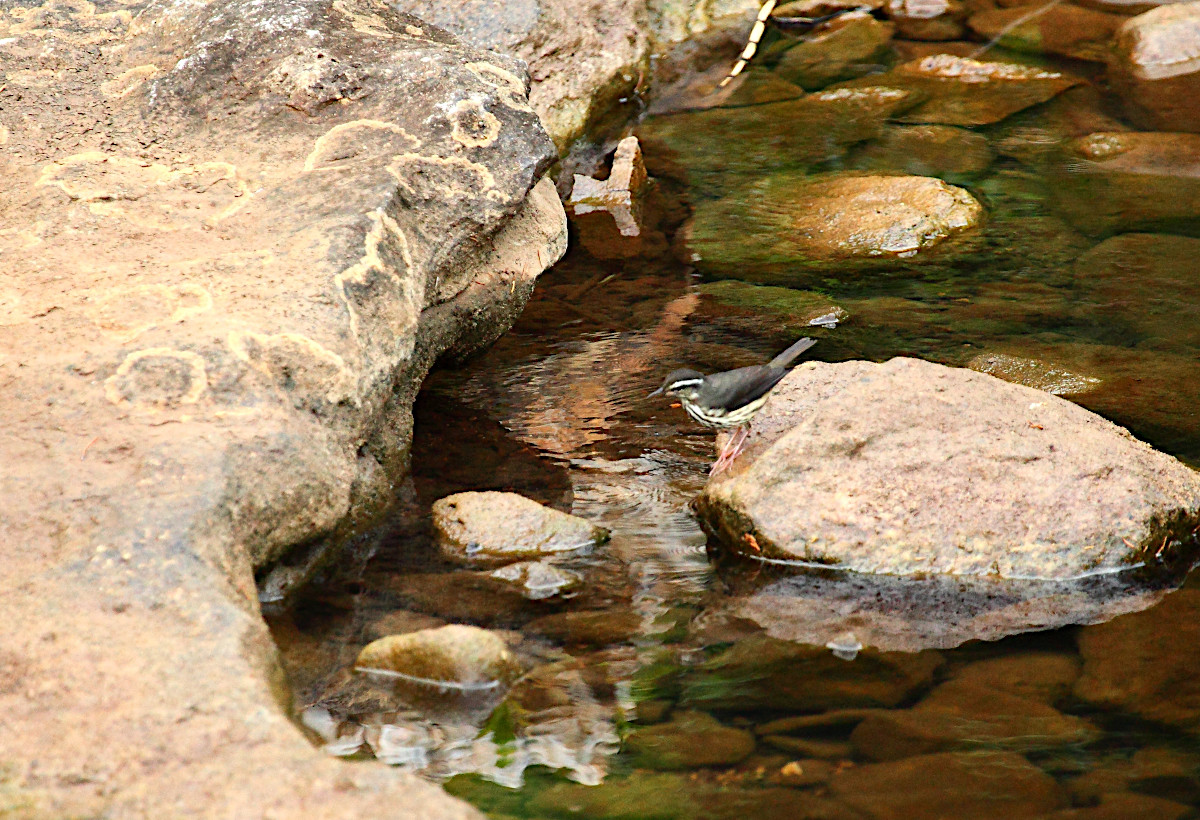
Dominican field crew surveying Louisiana Waterthrush. (Photo by Steve Latta)
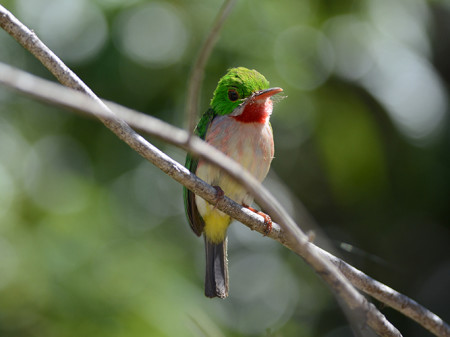
Broad-billed Tody perched in a tree. (Photo by Holly Garrod)
Topics to be covered in the 5-day workshop include:
Overview of the PROALAS Manual survey protocols
Guidance on how to design and implement a monitoring program
Field training to identify and count landbirds
Threats to landbirds and their habitats, and strategies to conserve and manage them
Case studies for successful landbird monitoring and conservation
Data entry and use of e-bird as a data storage platform
Basic analysis of monitoring data
In an effort to decrease the amount of time spent in the classroom, some workshop sessions will be held virtually prior to the in-person workshop. These virtual sessions will also be made available to a wider audience. Stay tuned for more information!
Funding and logistics
We are aiming to include approximately 24 participants in this workshop. BirdsCaribbean has limited funding to cover the cost of travel, meals, accommodation, and workshop materials. Participants who are able to contribute all or part of their costs can help us enhance the workshop content and allow us to include additional participants/trainers. Participants should plan to arrive in the Dominican Republic on February 15th and depart on February 21st.
COVID-19 Policy: BirdsCaribbean is committed to the safety of all workshop participants, trainers, and local communities. Proof of full vaccination will be required to participate in this workshop. Additional guidelines (e.g., negative tests, masks) will be provided to participants prior to the start of the workshop based on the most updated information.
If you are interested in participating in this workshop, please fill out this form by 5 PM EST on December 10, 2021.
Rancho Baiguate is an eco-lodge in the Jarabacoa valley of the Cordillera Central of the Dominican Republic. At 500m elevation, Jarabacoa is known as the “city of eternal spring,” with warm sunny days and cool refreshing evenings. Rancho Baiguate is located on the Rio Baiguate, where participants can walk through restored riparian tropical forest and mixed edge habitat within sustainable agriculture. Birds abound in these varied habitats, and participants will easily see many of Hispaniola’s charismatic endemic bird species, including the two beloved todies (Broad-billed Tody and Narrow-billed Tody) and the national bird, the Palmchat. The town of Jarabacoa is an easy 5 minute drive from the lodge, and participants can visit any of the three stunning waterfalls nearby. Field trips may include visits to nearby reserves such as Ebano Verde. After the workshop, participants are welcome to extend their stay and try any of Rancho Baiguate’s adventurous activities including white water rafting, canyoning, or horse back riding. Come learn more about landbird monitoring with some of the Dominican Republic’s finest birds!
If you have any questions, please send an email to Project Manager Maya Wilson ([email protected]).
BirdsCaribbean would like to thank J.C. Fernández-Ordóñez for Spanish translation.
Our new video, “Caribbean Shorebirds Under Fire,” is the fourth in our series on the plight of our shorebirds, which are facing a drastic decline in numbers. This video highlights the need for well-regulated, sustainable hunting on several Caribbean islands where it is a traditional way of life. It can be disturbing, but we are looking for the way forward. We owe it to our beautiful shorebirds. We hope you will watch, share, and help us find solutions. Content Warning: Birds that have been shot.
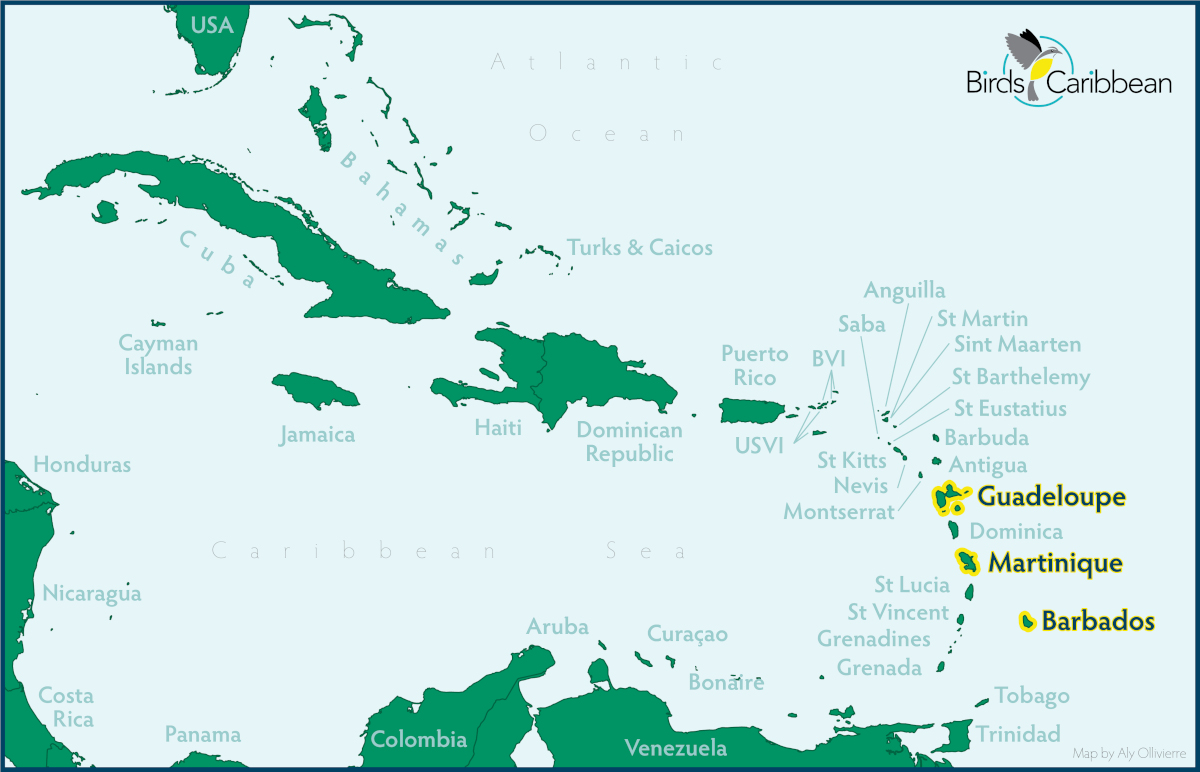
Hunting has a strong tradition in the Caribbean, with shorebird hunting being especially prevalent on the islands of Guadeloupe, Martinique, and Barbados.
Map of the west Indies with Guadeloupe, Martinique and Barbados highlighted. These islands are important stopover and wintering sites for hundreds of thousands of migratory shorebirds, but many are killed by hunters during migration and winter. (map by Aly Ollivierre)
For example, the history of shorebirds harvest on Barbados dates back to the to the mid-seventeenth century, in the early colonial period when Barbados was settled. As shorebirds visit the region on their fall migration and during winter, they use Caribbean wetlands to rest and refuel, take refuge from adverse weather, and as a winter home.
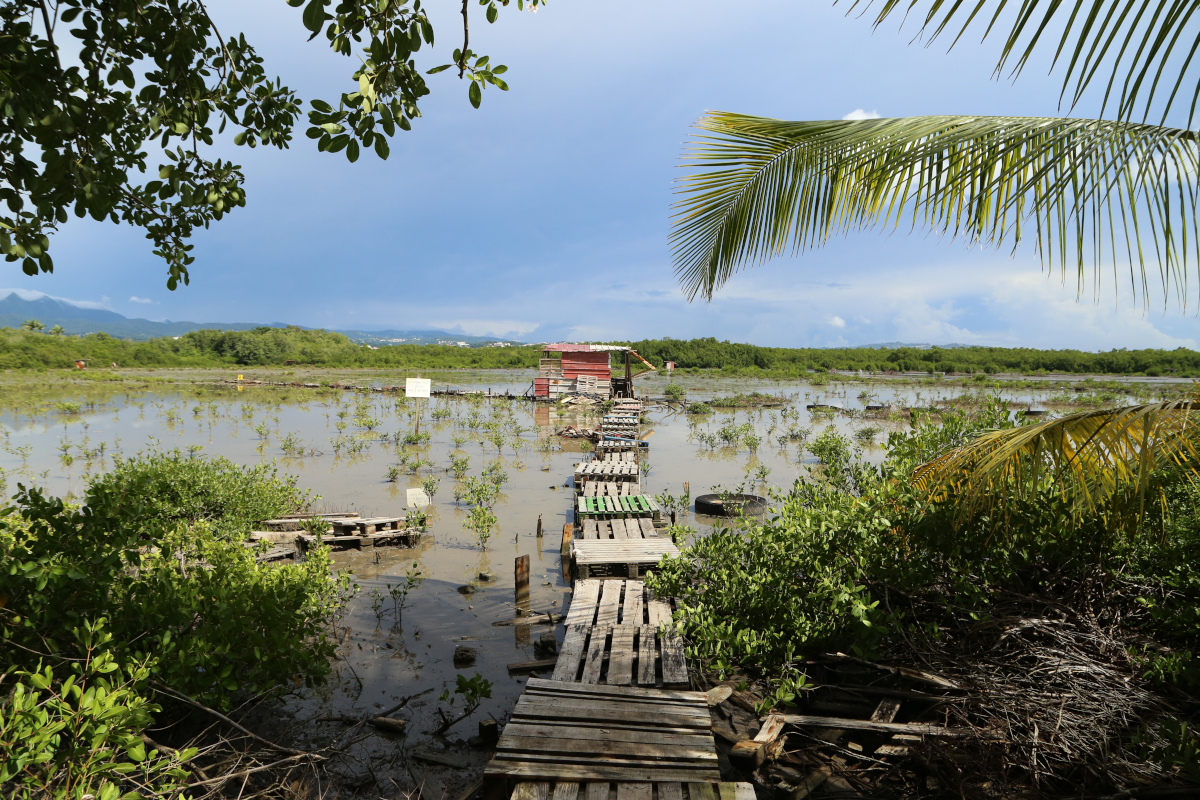
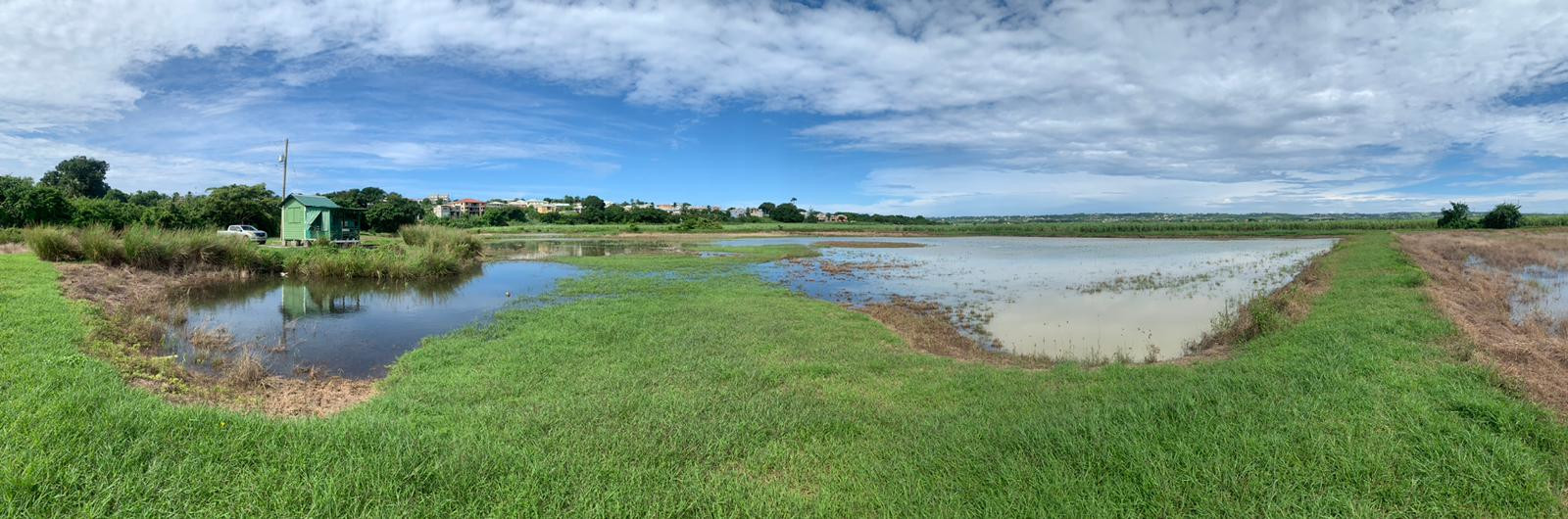
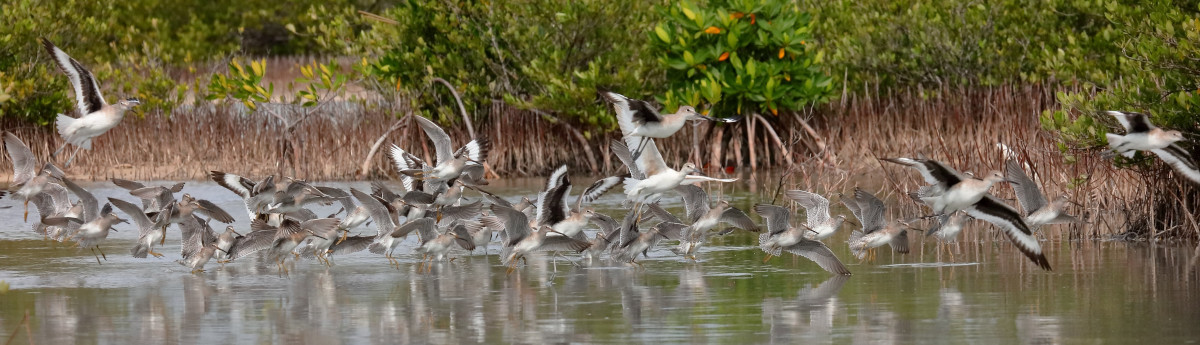
Some hunters – for example in Barbados – provide such habitats, managing small wetlands (“shooting swamps”) to attract shorebirds. The habitat is vitally important for tired and hungry migrant shorebirds but its use comes at a cost to the birds, as many then become the targets of sport hunting. On the islands of Guadeloupe and Martinique, however, wetlands are more abundant and the opportunities for hunting shorebirds are much broader. Targeted species include Lesser Yellowlegs, Pectoral Sandpiper, Stilt Sandpiper, Short-billed Dowitcher, Greater Yellowlegs, Whimbrel, and American Golden-Plover. We know that these and other shorebird populations in the Atlantic Flyway and the entire planet have drastically declined in numbers (50-90%) over the past 3 decades.
The Sad Story of Machi and Goshen
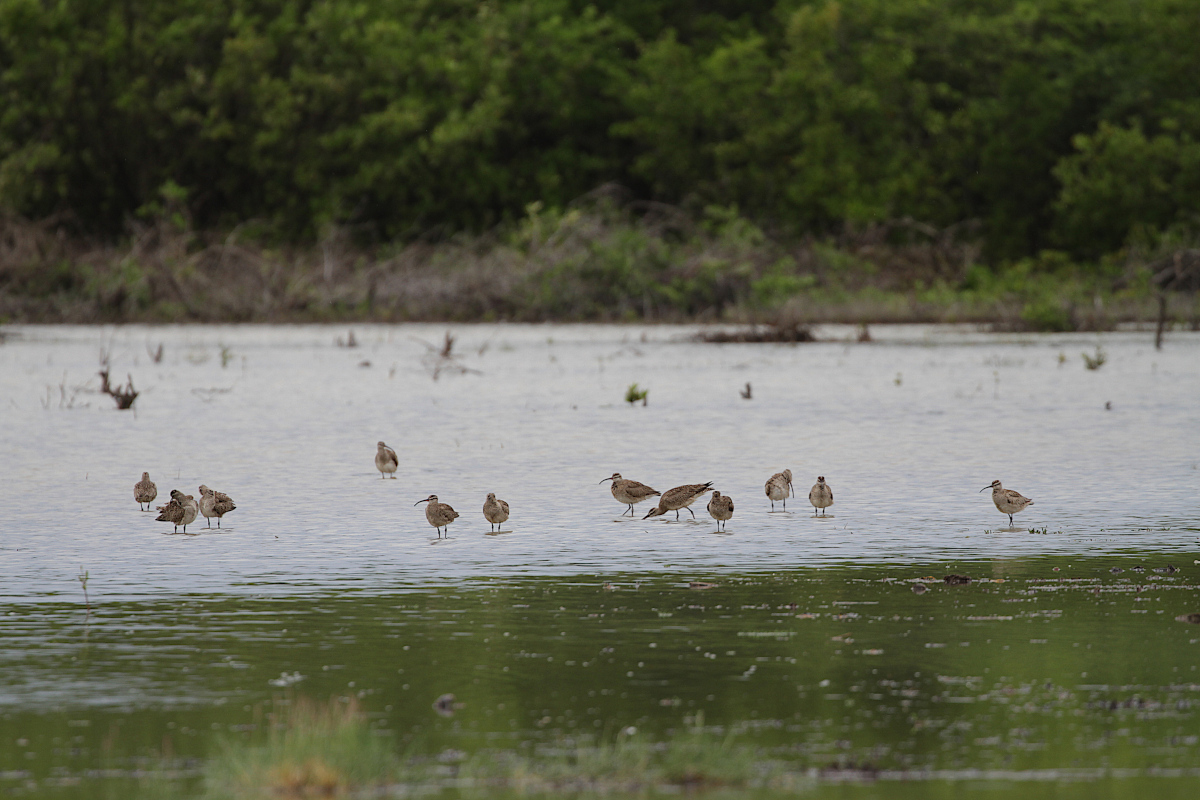
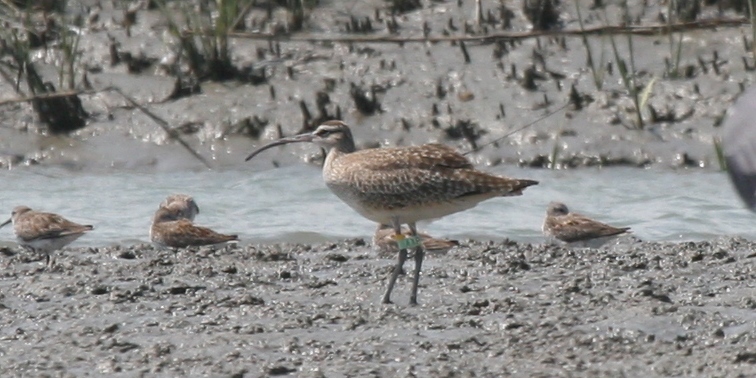
Whimbrels using a wetland on Guadeloupe. (Photo by Anthony Levesque)
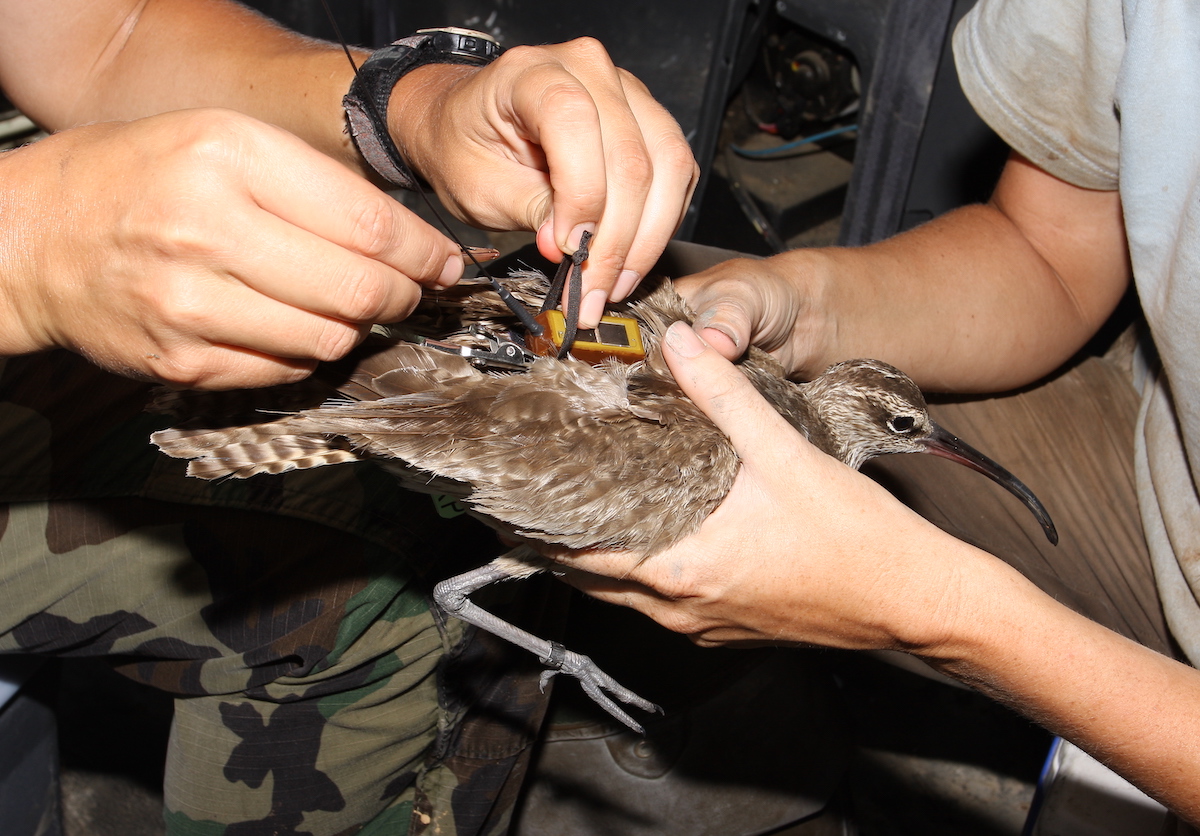
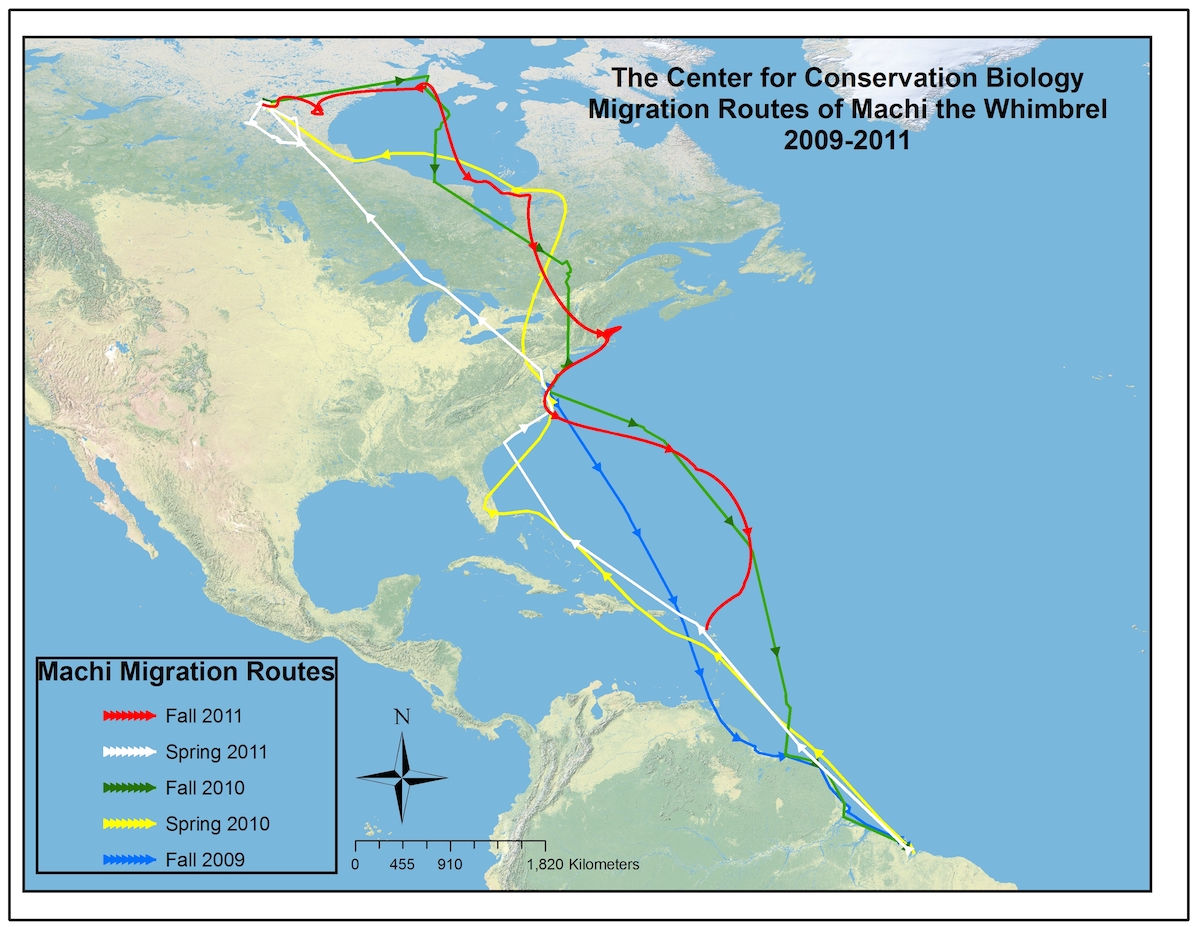
Machi and Goshen were two Whimbrels fitted with satellite tracking tags by scientists at the Center for Conservation Biology. We learned that these two sturdy birds took detours around the violent tropical storms of 2011 and made their way further south through the eastern Caribbean. Machi, in particular, had taken some extraordinary trips in his lifetime, clocking many thousands of miles since he was first tagged in 2009.
But in 2011 – just ten years ago now – a sad fate awaited them. News broke that Machi had been shot by hunters at a swamp in Guadeloupe. The news of Goshen’s death, in the same area, swiftly followed. They had weathered the storms, only to end their lives at the barrel of a gun.
A Flood of Letters, and a Change in Guadeloupe
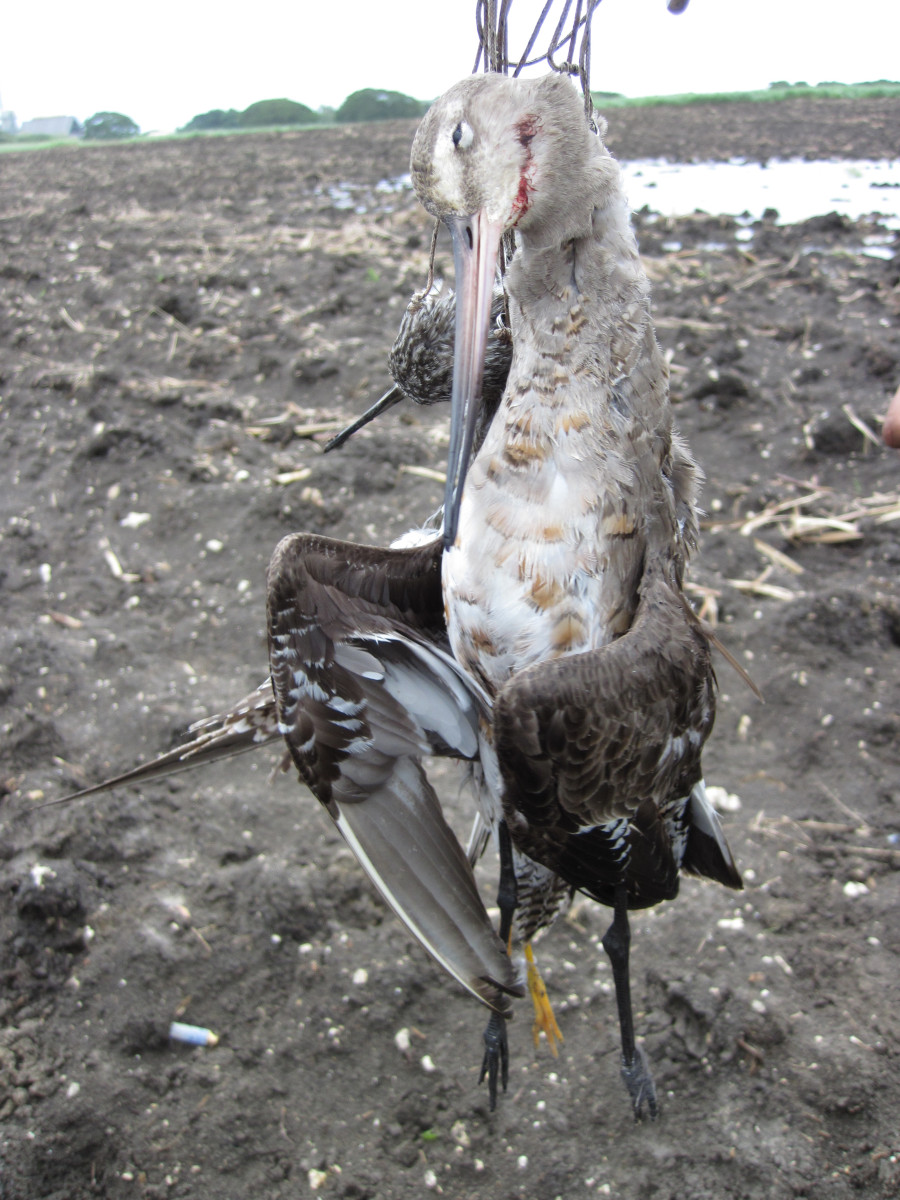
A Hudsonian Godwit as part of a hunters bag on Guadeloupe. (Photo by Anthony Levesque)
At the time, hunting in Guadeloupe and nearby Martinique had few or no regulations on which species could be shot, how many could be shot, or the number of days hunting was allowed. With the spotlight on the issue of shorebird hunting, BirdsCaribbean (then the SCSCB – Society for the Conservation and Study of Caribbean Birds) and partners organized a letter writing campaign. Letters went out in the hundreds – to decision makers in the environmental departments of the French Government, as well as to other key institutions and international organizations. Please, make the harvest of shorebirds more sustainable, the letters urged.
After this campaign, some positive progress was made to Guadeloupe’s hunting regulations. In 2012 and 2013 Red Knot and Solitary Sandpipers were removed from the list of shorebirds that could be hunted. Daily bag limits (20 shorebirds per hunter per day) were introduced and regulations set specific days when hunting was not permitted, giving shorebirds some respite.
On Martinique Red Knots were also removed from the hunting list. However, no bag limits or ‘days off’ were set. It was also clear that on both islands, many declining and threatened shorebird species were still being shot by hunters in numbers that might not be sustainable.
We Must Celebrate the Successes!
So…let’s look at the positives.
Each year in Guadeloupe and Martinique hunting regulations are set by decree (separately for each island). In 2021, besides previous restrictions, shooting of Whimbrels on Guadeloupe was not permitted and the hunting of Hudsonian Godwits was set at two per day. On Martinique shorebird hunting was still allowed for 206 days of the year, with no ‘days off’ from hunting. Although some bag limits were set on Martinique, most were deemed by conservationists to be too high to be sustainable.
A Shooting Swamp on Martinique. (Photo by Yves Aubry)
In the fall of 2021, an alliance of nature protection groups* came together to oppose the 2021-22 decrees in both Guadeloupe and Martinique. They requested the suspension of hunting of the Hudsonian Godwit on Guadeloupe—a species of conservation concern and rare on Guadeloupe. On Martinique, they requested the suspension of hunting of 10 shorebirds and four songbirds, all with poor conservation status on the island. Many BirdsCaribbean members and partners sent in emails (over 1,000) opposing the hunting decree.
Ruling on these requests, a judge banned the hunting of five shorebirds on Martinique (Whimbrel, Hudsonian Godwit, Short-billed Dowitcher, American Golden Plover, and Black-bellied Plover). Martinique also set a bag limit of 20 Lesser Yellowlegs per day per hunter in 2020/21, the first time a restriction has been put in place for this species! On Guadeloupe the hunting of Hudsonian Godwits was also stopped.
It was not an easy task, but the efforts and passion of non-governmental organizations, their members and supporters deserves a huge pat on the back. This was a “win” for shorebirds!
Some Positive Changes to Hunting in Barbados
Hunting decoys, used to attract shorebirds, at a swamp in Barbados. (Photo by John Webster)
Barbados is a small, low-lying island on the far eastern edge of the Lesser Antilles. Because of its rather far-flung position, many shorebirds land on the island to avoid severe storms. Hunting in the early years when birds were abundant provided an opportunistic harvest of shorebirds for food and sport. Over time, opportunistic harvest transitioned to managing land to make it more attractive to shorebirds.
With few remaining natural wetlands, the shooting swamps developed by hunters on the island provide excellent habitats for shorebirds and many non-target waterbird species, both resident and migrants. They will likely rely on these managed wetlands even more in the future as severe storms and drought increase with climate change.
The good news is that shorebird hunting in Barbados has been in decline since the 1990s. A number of shooting swamps have closed, with only five active today. By the late 2000s harvesting had declined from roughly 20– 30,000 to approximately 10,000 annually. Why is this? Well, this is partly because younger people have lost interest in hunting and the cost of hunting is rising. Also, the Barbados Wildfowlers Association, representing a number of shooting swamp owners, decided to self-regulate. The Association recommended voluntary measures to reduce daily and total harvest using suggested daily and seasonal bag limits.
Refuge from the Storm for Shorebirds on Barbados?
On a small island, land and water are precious commodities. Abandoned swamps get used for other purposes, such as agriculture, reducing wetland habitats for birds. So, to maintain such habitats, shorebird refuges came into being. In 2008, the first shorebird refuge was created: Woodbourne Shorebird Refuge as a haven for shorebirds. The greater awareness and appreciation of the value of these wetlands by some members of the hunting community has also contributed to preserving some non-active shooting swamps for shorebirds. They may not be large, but they are some of the best places to observe a wonderful diversity of shorebirds and waterbirds on the island.
Woodbourne Shorebirds Refuge, Barbados. (Photo by John Webster)
Secondly, we believe that we can make a difference if conservationists and hunters work together to build a well-managed, sustainable hunting program. Historically, hunters have played an important role in conservation; for example, the nonprofit Ducks Unlimited has worked with landowners and federal and state agencies to conserve, restore, and manage millions of hectares of wetland habitats for ducks, other wildlife, and people. The dialogue among all stakeholders must continue. We all know that regulations and monitoring are essential, going forward, or the steady decline in shorebirds, most of which are migratory, will continue with disastrous results. So, enforcement of the laws that already exist, and development of future ones, is vital.
It is all doable!
Barbados Needs More Wetlands – Hunters Could Play a Role
As we have noted, Barbados does not have large natural wetlands. What they do have needs to be protected and maintained. Just as in Canada and the United States today, hunters can, and often do, play a vital role in conserving habitat. Now, will hunting become less popular as a pastime in Barbados? If so, the shooting swamps hunters created could become shorebird refuges. If a network of such wetland refuges, including former shooting swamps, could be gradually developed, how marvelous that would be for the shorebirds, for other wildlife – and for the people of Barbados. They could even be the basis for an expansion of eco-tourism, including birding trails for locals and visitors to enjoy.
Let’s Work Together
On Guadeloupe and Martinique, much work needs to be done to bring a sense of balance to the situation. Working together, conservation groups, the island governments and the hunting community can foster a less confrontational state of affairs. The work must continue, because we are all aware that this year’s ruling does not guarantee the same restrictions will apply to the 2022/23 shorebird hunting regulations.
A mixed flock of shorebirds, including Willets and Short-billed Dowitchers, enjoying a Caribbean wetland. (Photo by Ernesto Reyes)
Our shorebirds are under pressure like never before, and we must stop their precipitous decline. Shorebird hunting can be sustainable, with shorebirds thriving for everyone to enjoy. Please take a look at our latest video on shorebird hunting. We welcome your comments, suggestions and support, as we seek solutions. Please share and “like” our shorebird posts on social media.
We promise we will stay focused on this important issue for our precious shorebirds and will update you on any new developments as we go along.
It’s for the shorebirds of the Caribbean!
We thank Environment and Climate Change Canada, the US Fish and Wildlife Service, the Atlantic Flyways Shorebird Initiative, US Forest Service International Programs, film maker Esther Figueroa, talented photographers and videographers, and our partners, members, and donors for your generous support to create this video (fourth in a series!) and carry out Caribbean shorebird and waterbird conservation initiatives.
* Organizations asking for changes to hunting rules: AMAZONA, Association pour la Protection des Animaux Sauvages, Association pour l’Étude et la protection des Vertébrés et végétaux des petites Antilles, L’Association Francophone des Soigneurs Animaliers, Le Carouge, and Ligue pour la Protection des Oiseaux
To learn more about Caribbean shorebirds and our work to conserve them, check out the following articles and links therein:
Cuban birders ready for October Big Day. (Photo by Maikel Canizares-Morera)
October Big Day is a chance for people around the world a get out and count, enjoy, and celebrate birds! In this 24-hour period enthusiastic participants add their bird-sightings to eBird contributing to our knowledge of birds and our ability to help conserve them. Find out how October Big Day 2021 went and how people in the Caribbean contributed to this amazing citizen science project!
October Big Day is always special, happening during the peak of Fall migration, it is an exciting time to be out looking for birds! This year, October 9, 2021 broke records globally. Much larger numbers of birders across the Planet turned out – in total, 33,658 participants spotted 7,293 species, according to ebird.org. In the global rankings, Colombians came in first, spotting a stunning 1,347 species. There was hot competition in South and Central America, with Peru, Ecuador, Brazil and Bolivia racing to catch up. Argentina, Costa Rica, and Mexico were also among the “Bird Species Top Ten.”
How did the Caribbean do?
In total, Caribbean ebirders reported 353 species and submitted 1,093 checklists. This was an improvement from 2020, when fewer checklists (866) and slightly fewer species (344) were reported. This was likely due to restrictions related to the COVID pandemic in 2020, which have since been eased somewhat on some islands.
We always want to know who beat the competition! Well, in terms of participation Puerto Rico topped the list, with 364 checklists containing 161 species (94 species were recorded in the Cabo Rojo area). Bahamas came in second place with 131 species coming up on 192 checklists. The Cayman Islands came third, just ahead of Cuba (although the Caymans saw fewer species, the number of checklists was an impressive 114).
Caribbean regions on October Big Day ranked by number of checklists
Caribbean regions on October Big Day ranked by number of species seen
Cuban birders spotted an amazing 189 species on the day and rolled in at #52 in the overall global ranking, followed by Puerto Rico at #61. Trinidad and Tobago registered 136 species; Dominican Republic and Caribbean Netherlands did well with 129 and 78 species recorded, respectively.
Who was the top Caribbean eBirder? Well, Cuba’s Rodolfo Castro Alvarez spotted 148 species, while Julio Salgado and Eric Torres-Rivera, two birders from Puerto Rico were extremely busy. Congratulations to all and good work Caribbean eBirders!
What about the birds?
Now, a postscript on the birds. Which species do you think had the highest count? Well, our top Caribbean eBirder in Cuba logged three species of waterbird in the thousands in Pinar del Rio: the Blue-winged Teal, Double-crested Cormorant, and Short-billed Dowitcher. In New Providence, the Bahamas, 400 White-cheeked Pintail were spotted; and in North Side, Cayman Islands, over 300 Snowy Egrets were counted.
Barbados Bullfinch, one of the Caribbean Island endemics spotted. (Photo by Julian Moore)
Red-breasted Merganser, Cuba. One of the less common species spotted during October Big Day (Photo by Maikel Canizares-Morera)
Some migratory visitors. Hudsonian Godwits at Woodbourne Shorebird Refuge, Barbados. (Photo by Julian Moore)
As would be expected at this time of year migratory shorebirds and warblers featured in many of the eBird lists from the Caribbean. Many of the ‘usual suspects’ were present, such as Semipalmated Sandpipers, Hudsonian Godwits and Yellow Warblers. A few far less common visitors were spotted, such as the Red-breasted Merganser seen at Pinar del Rio in Cuba. On the Cayman Islands, Cayman Birding was 1 of 201 teams that celebrated October Big Day by participating in the Global Bird Weekend with global birding. Their 7 members, who were spread across all three islands, recorded at total of 79 species and submitted 27 checklists! Overall Caribbean Big Day birders spotted a fantastic mixture of migratory birds, residents and of course some of their island endemics! With many birders sharing their birds and birding trips on social media.
October Big Day is a milestone in the year, when migratory birds spread out across the region. The date “sticks a pin” in the calendar. We look forward to another record-breaking year in 2022 – for the Caribbean!
Thank you to all the birders across the Caribbean who took part this year whether exploring across their islands or doing some ‘back-yard’ birding you all contributed to the amazing success of October Big Day 2021! Enjoy some more of the photos and social media posts shared from across the Caribbean during October Big Day below.
Flock of flamingoes at Margarita Island, Venezuela. (Photo by Josmar Marquez)
Children celebrating World Migratory Bird Day on October Big Day Venezuela (Photo by Josmar Marquez)
Children bird watching Margarita Island, Venezuela. (Photo by Josmar Marquez)
Black-necked Stilts Anguilla. (Photo by Anguilla National Trust)
Birding by the roadside, Anguilla. (Photo by Anguilla National Trust)
Birders in action, Anguilla. (Photo by Anguilla National Trust)
Bird banding workshop being held in Venezuela. (Photo by Josmar Marquez)
Bird banding workshop being held in Venezuela. (Photo by Josmar Marquez)
Western Spindalis, spotted in Cuba during October Big Day. (Photo by Maikel Canizares)
Ruddy Turnstones, Barbados. (Photo by Julian Moore)
Red-breasted Merganser, Cuba. (Photo by Maikel Canizares-Morera)
Puerto Rican birders. (Photo by Adrianne Tossas)
Prairie Warbler, Cuba (Photo by Jorge-Uria)
Early Moring Birding at NorthSound Golf Club, Cayman Islands (Photo by Cayman Birding)
Early Moring Birding at NorthSound Golf Club, Cayman Islands (Photo by Cayman Birding)
Northern Parula, Cuba. (Photo by Jorge Uria)
Maybel Rodriguez-and Daniela Ventura at del Puerto Crocodile Lagoon Peninsula de-Guanahacabibes, Cuba
Juvenile Laughing Gull, Barbados. (Photo by Julian Moore)
Cuban birders in action. (Photo by Maikel Canizares-Morera)
Cayman Parrots. (Photo by Cayman Birding)
American Avocet, Cuba. (photo by Maikel Canizares-Morera)
All set for October Big Day in Cuba. (Photo by Maybel Maria Rogriguez-Perez)
Adrianne Tossas birding at Hacienda La Esperanza, Puerto Rico
Laura McDuffie, a wildlife biologist for the U.S. Fish and Wildlife Service Migratory Bird Management Program, has been tracking the movements of Lesser Yellowlegs on their migration. Find out more about Laura’s work, the amazing journeys that Lesser Yellowlegs make each year and the threats they face along the way! Scroll down to see Laura’s webinar on the Lesser Yellowlegs with much more information on her research. Also check out our NEW short video on Lesser Yellowlegs and hunting in the Caribbean (below and on our YouTube).
Typically, when people think of shorebirds, they envision gangly, long-billed birds probing for invertebrates along sandy or rocky coastlines. But this is not where you are likely to find our study species, the Lesser Yellowlegs! This medium-sized shorebird breeds in the boreal forests of Alaska and Canada. They can be found in a diversity of wetland habitats during migration and overwintering in the Caribbean and Central and South America. This includes salt, brackish, and freshwater ponds and swamps, mud flats, mangroves, and other water edges. They are particularly fond of freshwater swamps and may also be found in large numbers on flooded agricultural fields (especially rice fields) if available, as in Suriname, Cuba, and Trinidad.
Shorebirds in Trouble
Over the past five decades, shorebirds have declined at an unprecedented rate. Factors causing this decline include habitat destruction and alteration, agrochemical applications, climate change, and for some shorebirds, including the Lesser Yellowlegs, unsustainable harvest at several non-breeding locations. Harvest occurs as sports hunting in the Caribbean, as well as hunting and trapping for sale as food, as a source of income in other parts of the flyway. Lesser Yellowlegs populations have declined by an alarming 63 ̶70% since the 1970s!
Keeping Track of Lesser Yellowlegs
Tagged Lesser Yellowlegs. (Photo By Laura McDuffie)
In May 2016, the U.S. Fish and Wildlife Service Migratory Bird Management Program began deploying tracking devices (light-level geolocators) on breeding Lesser Yellowlegs in Anchorage, Alaska. Our goal was to determine where the species occurs during the non-breeding season. In 2017, birds returned to the breeding sites. To our dismay, however, they were incredibly difficult to recapture so that we could retrieve the tags and the data. This serious predicament ultimately made us have a “rethink” about our objectives for the Program. As a result, we expanded the range of our study to include collaborations with Kanuti National Wildlife Refuge, Alaska; Yellowknife, Northwest Territories; Ft. McMurray, Alberta; Churchill, Manitoba; James Bay, Ontario, and Mingan Archipelago, Quebec.
During the summers of 2018-2021, partners at Alaska Department of Fish and Game (Katherine Christie), USFWS (Christopher Harwood), Environment and Climate Change Canada (Jennie Rausch, Christian Friis, and Yves Aubrey), and Trent University (Erica Nol) deployed Lotek wireless GPS pinpoint tags on breeding adults. These tags record data via satellite so recaptures are not required! The GPS tags are accurate to ~10m, which has allowed us to examine the occurrence of Lesser Yellowlegs in countries where shorebirds are harvested. Since 2018, we have successfully deployed 115 GPS tags on Lesser Yellowlegs!
Amazing Journeys Revealed
Each bird we tag and release has their movements tracked, which mean we can identify the different countries they visit and specific sites they use during migration and overwintering. This information can help us to identify the potential bottlenecks and threats that birds experience each year.
Map showing JP’s Migration.
Here is just one amazing journey made by “JP” who was tagged in Anchorage, Alaska in 2018. The tag revealed that he travelled at least 10,576 km on his southward migration, taking in Alberta and Manitoba, Canada, and Devils Lake, North Dakota, on his way through North America. JP then spent a whole month on Barbuda! This highlights how important the Caribbean can be as a rest and refueling spot for some shorebirds. Finally, JP made it to Middenstandspolder, in Suriname, where his tag went offline in February 2019.
We don’t know why JP’s tag stopped transmitting. It was not uncommon in our study to have incomplete tracklines. For these birds, the battery of the tag may have failed, or the harness could have fallen off and left the tag lying covered in mud, unable to recharge and transmit. However, we do know that some birds don’t survive the long journey.
Thanks to strong collaborations with biologists working in the Caribbean, we were able to receive some shorebird harvest reports. In fall 2020, we learned that two of our tagged birds “O2A” and “A65” were shot by hunters in Guadeloupe and Martinique, respectively. This shows that hunting isn’t only a “predicted threat” to the birds we studied, but also a real and observed threat.
Migration map of Lesser Yellowlegs “A65” wearing a GPS tracking tag. A65 was harvested in fall 2020 in Martinique, French West Indies.
Lesser Yellowlegs with GPS tag “A65” was harvested in Martinique by a hunter on its southbound migration. We are thankful to hunters for reporting tagged birds to us!
Migration map of Lesser Yellowlegs “O2A” wearing a GPS tracking tag. O2A was harvested in fall 2020 in Guadeloupe, French West Indies.
find out more about Lesser Yellowlegs and hunting in the Caribbean in this short video
Globally, Lesser Yellowlegs are in steep decline, with likely only 400,000 individuals remaining. Our research on the species has helped identify several potential threats, but we still need to learn more about the hazards these birds face. So, we must rely on assistance from local biologists, managers, hunters, and the public in the Caribbean and beyond.
The proper management of a species ensures that it will be around for future generations to enjoy and utilize. Awareness and education about the species decline and an understanding of the threats it faces can go a long way! When the general public is aware of an issue, they are more likely to take actions. These might include helping to monitor birds, conserving local wetlands, or ensuring that hunting laws protect vulnerable species. They may even participate in scientific efforts, such as submitting shorebird harvest records to managers. Awareness, information gathering and partnerships are critical components in helping us to protect these unique shorebirds.
Laura McDuffie, in the field, with Lesser Yellowlegs chicks. (Photo by Zak Pohlen)
Laura McDuffie has been studying the breeding and migration ecology of Alaska’s shorebirds and landbirds since 2014. In spring 2021, Laura completed her master’s degree in biological sciences at the University of Alaska Anchorage. Laura’s thesis is entitled “Migration ecology and harvest exposure risk of Lesser Yellowlegs.”
This study would not have been possible without the tremendous efforts of our collaborators. Our gratitude goes out to the following people: Brad Andres, Yves Aubry, Erin Bayne, Christophe Buidin, Katherine Christie, Ken Foster, Christian Friis, Autumn-Lynn Harrison, Christopher Harwood, James Johnson, Kevin Kardynal, Benoit Laliberte, Peter Marra, Erica Nol, Jennie Rausch, Yann Rochepault, Sarah Sonsthagen, Audrey Taylor, Lee Tibbitts, Ross Wood, Jay Wright, and all the field technicians that helped with banding. Kristy Rouse, Cassandra Schoofs, and Brent Koenen with Joint Base Elmendorf-Richardson’s 673rd CES/CEIS supported the project from the beginning and were instrumental in the DoD’s recognition of lesser yellowlegs as a Species of Special Concern. Funding sources include the Alaska Department of Fish and Game, Bird Studies Canada; Environment and Climate Change Canada, the Smithsonian Institution; the 673rd CES/CEIS, U.S. Department of the Air Force; and the U.S. Fish and Wildlife Service.
Learn more details about Laura’s fascinating research on lesser yellowlegs’ migration by watching this webinar, recorded for world migratory bird day, OCtober, 2021.
They have their flyways, and they bring their songs. Our migratory birds are on the move again, and on October 9, World Migratory Bird Day, they will be “officially” welcomed and celebrated in style in the Caribbean.
For our region, World Migratory Bird Day (WMBD) is on October 9th, 2021 (but we encourage everyone to celebrate anytime during fall migration that works best for you). By this date, gardens, parks, forests, mountains, and seashores are filled with feathered newcomers, who have traveled thousands of miles and are either passing through or settling down for the milder winter months in the Caribbean.
The WMBD 2021 theme is “Sing, Fly, Soar—Like a Bird!” Activities organized by Environment for the Americas (EFTA), BirdsCaribbean, and our partners throughout the region will tap into this lively concept and, focus on some of the eleven featured species selected this year. Some of these, such as the Turkey Vulture, Royal Tern, Yellow Warbler, and Belted Kingfisher, are either resident or fairly common migrant species in the region. Others, such as the Green-winged Teal, Wood Thrush, Upland Sandpiper, and Ruby-throated Hummingbird, are rare. The Sandhill Crane is an uncommon resident in Cuba.
This year, EFTA will be hosting a live online event, or series of events from October 7 to 9, entitled “World Migratory Bird Day Live.” Friday, October 8 will be a special day reserved for youth and schools. Caribbean educators are valuable partners, helping to convey the messages of conservation and protection of birds and habitats. The creative arts – including a “sing like a bird” competition, videos, and art demonstrations, will play a role this year, besides informational speakers and workshops.
A featured WMBD webinar this year will be on the Lesser Yellowlegs, a shorebird that is undergoing an alarming decline. The webinar, hosted by BirdsCaribbean, will be presented by US Fish and Wildlife Service biologist, Laura McDuffie. Laura has been tracking these birds on their long migrations and has some fascinating and enlightening results to share with us. The webinar will take place on Friday, October 8 at 3:00 p.m. Eastern Time. Here is the link to register: https://bit.ly/LesserYellowlegs
Most of all, WMBD promises to have a strong element of fun. EFTA is hosting a bird costume party and competition for children up to 12 years old, with the focus on one of the featured eleven species. Costumes should use only recyclable or reusable material – new materials should not be used. The deadline for submission of costume entries is Friday, October 1. Prizes will be awarded on October 9th.
There is also a Bird Song Contest!Submit your song inspired by birds anytime between now and October 8th for a chance to win a cash prize! Winners will be announced on October 9th – See details in the Flyer below.
If you are interested in celebrating WMBD in your country, we encourage you to visit the WMBD website for more information or contact the Caribbean Regional Coordinator, Laura Baboolal, at [email protected]. If you have an event planned, you can register it and put the Caribbean on the global events map.
WMBD 2021 digital materials from EFTA are available in English and Spanish, at this link.
Information on migratory birds in the Caribbean, including colouring pages, activity sheets , photos, videos, and puzzles are available from BirdsCaribbean at this link.
Last, but not least, don’t forget to share your WMBD events and experiences on social media with EFTA and BirdsCaribbean. You can find us on all major platforms. If pandemic restrictions allow on your island, go out and enjoy the birds. Most of all, have fun!
Birders around the world are polishing up their binoculars and scopes as they prepare for one of their busiest weekends of the year. This 24-hour opportunity called October Big Day – Saturday, October 9, 2021 – has been extended for the second time into a Global Bird Weekend (October 8, 9 and 10). The goal is to watch, record, and celebrate birds, whether it is in your backyard, neighborhood park, seashore or woodland. October Big Day coincides with World Migratory Bird Day (October 9). It is hoped that this concerted effort will bring in a record number of bird sightings from citizen scientists around the world, contributing to bird knowledge and a deeper understanding of conservation.
Where are the birds, and what are they doing?
The data collected will be used by birders and scientists to better understand and protect birds. This is also an opportunity for the individual birdwatcher to contemplate birds, their behavior, and the places where they may be found. For example, are there birds you are only likely to see in the late morning or early afternoon? And if so, are they at specific locations? Tanagers and bullfinches are often very active during the morning hours. As the day heats up, you may see raptors soaring above. Seagulls and shorebirds can be observed at almost any time of day. Migratory warblers generally show up in early morning or evening hours, feeding and bathing in suburban gardens and parks.
Make your birding count—submit & share your data!
Participating is easy with the essential tool, eBird, where you should record all the birds you see (and even hear) on Saturday 9th October via the eBird website or mobile app. If you’re in the Caribbean, be sure to use eBird Caribbean (and choose the eBird Caribbean portal in your eBird app settings on mobile). If you do not already have one, it’s easy to sign up for a free eBird account and here’s a quick guide on how to use eBird. Eager birders should spot as many birds as they can from midnight to midnight in their local time zone on October 9th. Or bird anytime during the weekend of Oct. 8-10 for the Global Bird Weekend. The handy mobile app allows you to keep and submit lists while you’re still out birding, perhaps exploring nearby Hotspots. It will even track how far you have walked while watching birds. Remember to submit eBird checklists before October 13, 2021 to be included in the initial results announcement!
In the past year, many Caribbean islands have restricted movements and gatherings in public spaces, due to the pandemic. Since many of these are still in place and vary from country to country, please keep local regulations in mind and observe all protocols. Remember, too, that there is always the option of birding at home.
Share your sightings with us, and join BirdsCaribbean!
We look forward to seeing your stories and photos on social media. You can find us on Facebook and on Twitter and Instagram @birdscaribbean. Be sure to tag us! If you’re not on social media, consider joining our discussion group where you’ll be able to share your October Big Day experience with over 850 members.
May we remind you that BirdsCaribbean membership has so many benefits; for a reasonable membership fee you are entitled to a FREE subscription to Birds of the World ($49 value) – the most comprehensive online resource on birds. Additionally, you may receive discounts on our products, workshops and conferences; meet and network with fellow birders, scientists, educators and conservationists across the region; and keep in touch with birding trends and news through our monthly newsletters (free sign-up here). Join us today and help us save our Caribbean birds and their important habitats!
See you on October Big Day 2021 – and let’s see some birds!
On World Shorebirds Day, Benoit Laliberté, a Shorebird Biologist with the Canadian Wildlife Service, tells us about the connections between the shorebirds that breed in Canada and the Caribbean and shares his thoughts on the main conservation issues for shorebirds in the Caribbean.
Shorebirds are fascinating. Given their size, it can be hard to even try to imagine the incredible journeys they accomplish every year on migration. For example, Red Knots can fly more than 30,000 km annually! It is amazing that these birds weigh only 180g but can fly from the Canadian tundra to the tip of Tierra del Fuego, and back, within 10 months. Because these birds travel to (and stop over in) so many different countries, their conservation requires us to take a multi-national approach.
Enjoy our short video, created in honor of World Shorebirds Day 2021!
Conservation Across Borders
How do we address this cross-border challenge? To do this, the shorebird conservation community has developed flyway conservation initiatives. Flyways are major routes, like ‘migration highways,’ that shorebirds use to travel from breeding to wintering areas and back. Here in the Americas they are: the Atlantic, the Pacific and the Mid-continental Flyways. The Caribbean islands are located in the Atlantic Flyway
Migration routes of shorebirds on the Atlantic Flyway; many other migratory birds follow these same routes. (map courtesy of the Atlantic Flyway Shorebird Initiative)
The Atlantic Flyway Shorebird Initiative (AFSI) aims to conserve and protect the 30 or so species of shorebirds that use this route. These birds range from the small Plovers and Sandpipers to the large Whimbrels and Godwits. Unfortunately, the ongoing, ceaseless deterioration of our planet has led to large declines in shorebird populations. Across all shorebird species that occur in Canada – most of which also travel to the Caribbean – this decrease in numbers is estimated at -40% since 1970. However, the drop is much steeper for some species, like the Red Knot (-70% since 2000) or the Lesser Yellowlegs (-65% since 1970). In fact, many shorebirds are at the top of the list of ‘species of conservation concern’ worldwide.
Why are Shorebirds in Trouble?
Lesser Yellowlegs are a common migratory shorebird in the Caribbean; they are also one of the most hunted shorebirds in the Atlantic Flyway. (photo by Hemant Kishan)
The main threats to shorebirds in the Atlantic Flyway are hunting, predators, human disturbance, habitat loss and change, and climate change. Most of these occur in the Caribbean, but the threats of hunting, habitat loss, and climate change are the most relevant for the region.
We know that shorebirds are hunted on Barbados, Martinique and Guadeloupe. If we are able to address the threat of hunting, we in the conservation community can make rapid gains. This does not mean that hunting should be banned. In Canada and the United States, we have more than 100 years of experience working with hunters to develop sustainable hunting policies and working with the hunting community to conserve and restore bird habitats. We need to focus on raising awareness about this threat, measuring its impacts, and developing sustainable hunting policies that will allow birds to thrive and hunters to pursue their hobby – now, and in the future.
Habitat loss is more difficult for us to tackle. Shorebirds use a variety of habitats, whether it is beaches, intertidal sandflats and mudflats, mangroves, or salt, brackish, and freshwater ponds. This means that multiple types of developments and changes, for example those that alter the wetland’s hydrology, can threaten the shorebirds’ homes. Secondly, changes to habitat can ‘creep’ in slowly, with both human developments and the impacts of climate change gradually changing the places where shorebirds live – or removing those places altogether. Damaged habitats can take a long time to recover, so it is imperative to ensure that those that are still relatively intact are conserved for future generations.
What Can We Do the Help Shorebirds?
Red Knot in August molting from breeding plumage to plain winter plumage which is all gray. Red Knots have declined markedly in the last 25 years. Some Red Knots winter in the Caribbean; many use the islands as a refueling stop on their long journeys to South America. (photo by Hemant Kishan)
We need to make sure that key places for shorebirds are identified. To do this we need to carry out surveys such as the Caribbean Waterbird Census (CWC). Information from these surveys can help identify and increase protection for vital shorebird habitats. Local communities have a key role to play. Anyone can carry out CWC surveys! BirdsCaribbean has provided training for people across the region on Shorebird ID and how to carry out surveys, both online and in person.
Shorebirds need safe habitats with clean water and abundant invertebrate food, when they stop during migration. As climate change increases the frequency and severity of hurricanes, it is possible that the Caribbean will play a bigger role for migrating shorebirds. Shorebirds are migrating through the region during the peak hurricane season. The wetland habitats on Caribbean islands should serve as refuge for these birds. This means local initiatives to restore and clean-up habitats can help shorebirds. Recent projects to restore mangroves in Puerto Rico and increase awareness of shorebirds in Montserrat, through community initiatives like beach clean-ups, will help both shorebirds and people!
Curbing the decline of shorebird populations needs global cooperation. It might seem like an overwhelming task, but every little step helps. To ensure future generations are in a good position to continue the work we start today, we need to spread the word. As a child, I was fortunate to get involved in activities that got me interested in nature and birds, and this inspired me to pursue a career in conserving biodiversity. Outreach and education programs, such as BirdsCaribbean’s BirdSleuth Caribbean, Wondrous West Indian Wetlands, World Migratory Bird Day, and the Caribbean Endemic Bird Festival help to raise awareness and build a sense of responsibility in our communities. They do have long-term positive impacts, especially among our younger citizens.
As a final remark, I hope that as you read this post you have learned a little bit more about shorebird conservation and are reminded that small actions can make a difference. Learning is knowing. Knowing is loving. And loving is caring.
Ajhermae White helps students of the Grade 5 class of Look Out Primary School with shorebird ID during their field trip at Marguerita Bay. (Photo by Stephen Mendes)
Please enjoy and share our video!
Many thanks to Environment and Climate Change Canada, the US Fish and Wildlife Service, the Atlantic Flyways Shorebird Initiative, US Forest Service International Programs, film maker Esther Figueroa, talented photographers and videographers, and our partners, members, and donors for your generous support to create this video (second in a series!) and carry out Caribbean shorebird and waterbird conservation initiatives.
We hope that you will be able to visit many areas across your island and invite local birders and/or birding groups to get involved. Note that shorebirds are a type of waterbird; any tallies you do, whether it is at wetlands, mangroves, mud flats, coastal areas or beaches, are also considered as Caribbean Waterbird Census (CWC) counts. To increase the value of your count to science, be sure to count ALL birds at your site, including seabirds, herons and egrets, land birds, and so on.
Complete instructions on how to do a Global Shorebird Count/ Caribbean Waterbird Census count are available here and here; Shorebird ID resources are available here. Before you head out, it might well be helpful to watch our webinars on Waterbird ID and Shorebird ID to bone up on your ID skills!
Are you looking for a good birding read? We recommend that you log on to “The Cuban Birder,” a quarterly, digital, free magazine, published in English and Spanish. Richly illustrated and packed with information, it is a gem of a publication for birders in all walks of life, and the first of its kind in Cuba. An initiative of Birding Havana, its third issue was released in August 2021, and it is supported by BirdsCaribbean.
The magazine is more than just a substantial and fascinating read. The goal of the publication is simple: to get Cubans – especially the younger generations – excited about birds, so that they can take it up as a hobby. After all, Cuba has the highest number of recorded species in the insular Caribbean (397), of which around 262 are migratory. Once new devotees learn more and become engaged, this will lead to a deeper understanding of how the environment works, as well as a desire to protect and conserve the birds and the places where they live. In other words, it is hoped that the magazine will light a spark of awareness about Cuban birds and the serious, pressing challenges they face. The first issues have already received good readership.
The Cuban Birder has been a long-cherished dream of Birding Havana’s founding director Mr Vladimir Mirabal, former diplomat, lawyer, photographer and passionate birder. He says: “We have needed a magazine like this for a long time. There is great joy in birdwatching, and we want to express this through our publication. It is an educational tool that we hope will support our plans to rebuild a Cuban Birdwatchers Movement. Already, the Cuban Birders Club (Club de Observadores de Aves Cubanas) has experienced growth of over 3,000 new members in the past two months.” All who are seeking more information on Cuban birds and birding activities may join the Club’s Facebook page.
Helping to combat the caged bird threat
The magazine is especially timely as Cuba’s birds and nature face an uncertain future. The threats of climate change and habitat destruction loom large for Cuba, as they do for other Caribbean countries. Another significant threat is capturing and keeping wild birds to sell and keep as pets. Although illegal, this practice, long part of the culture, is growing among the Cuban population. Parrots, parakeets, grassquits, the Cuban Bullfinch, and many songbirds (residents, endemics, and migrants) are trapped, sold, and trained to compete in songbird competitions and kept as pets.
Fall migration is prime “hunting season” for the trappers and private Facebook groups in Cuba show off hundreds of migratory birds for sale, including Painted Buntings, Rose-breasted Grosbeaks, and dozens of warbler species. Even children are involved in the trapping. BirdsCaribbean will continue to assist with efforts to reduce these harmful behaviors by supplying birding gear and educational materials to help promote birding and develop Bird Clubs in each province. Bird watchers are a growing voice in Cuba. Vladimir commented, “With your support we will be able to reach out to a lot more people in our communities as part of our efforts to replace bird cages and traps with binoculars and field guides by increasing the appreciation for Cuban birds and supporting conservation efforts.” Many of our Cuban colleagues and partners have been working hard to educate and raise awareness about this issue for many years, but it remains a huge challenge. If you would like to donate to help us send binoculars and field guides to Cuba, please click here and select “Reducing bird trapping in Cuba” for your gift designation.
“The first bird of the season fell” – August 2021 Facebook post by a bird trapper in Cuba showing a migratory warbler, the Northern Parula.The caption reads “Ready for the hunt.” Painted Buntings in cages for sale – August 2021 Facebook post by a bird trapper in Cuba.Rose-breasted Grosbeaks, a migratory warbler in a cage in Cuba, for sale on a private Facebook group.Cuban boy trapping wild birds, posted on Cuban social media.Bird hunters in Cuba heading out with their traps, shared on social media.Painted Buntings in cages in Cuba – this colorful bird is a popular species for the caged bird trade.
The legacy of Juan Cristóbal Gundlach in Cuba
So what will you find, as you turn the digital pages of this third issue of The Cuban Birder? If you love science history, you will enjoy browsing through articles on the life and work of Juan Cristóbal Gundlach (1810 – 1896), who was born in Germany but left a rich legacy in Cuban scientific discovery. The author of the first major work on Cuban ornithology, among other studies, his name is included in the Latin names of no less than sixty animal species – among the birds he discovered, these included the Gundlach’s Hawk and the Cuban Vireo.
According to a 1915 account, the avid collector and descriptor of thousands of species did not drink and was a frugal eater, often departing in the morning with a biscuit and a sandwich in his pocket – which he forgot to eat during the day. He was tall and reportedly had a bit of a limp, but he was quiet and unassuming, traveling from one end of the island to the other. What a dedicated man! You will enjoy getting to know Juan Cristóbal Gundlach better in the pages of the Cuban Birder. This fascinating section of the magazine, about a significant figure in Cuban natural history is illustrated with photographs of some of the birds he discovered, accompanied by his own descriptions.
Don Juan, as he was known, was also the man who first discovered the smallest bird in the world – the Bee Hummingbird, which is the topic of another article in The Cuban Birder. Noting the tiny bird’s mating ritual, Gundlach noted, rather sweetly: “I have also seen the male when he is in love, go up perpendicularly with a non-progressive flight, sometimes singing, others not, stop, hover for a moment at the female, and then drop down.” Unfortunately, it is not as widely distributed as it was in Gundlach’s day, and is listed as Near Threatened on the IUCN Red List. You can read a detailed description of this exquisite but endangered bird in the magazine. On another page, there is a very useful fact sheet on Hummingbirds; there are some 343 species identified in the Americas, and they are surprisingly aggressive for their size!
This is just a taste of what you can find in the latest issue of The Cuban Birder. It is an absorbing read that also includes helpful advice on the art of birdwatching and the best cameras for wildlife photography; as well as a gorgeous photo feature on the Alexander Humboldt National Park. A section on identifying hotspots using the Cornell Lab of Ornithology’s eBird Caribbean includes how to determine the criteria for a hotspot, and how to navigate the website to suggest one. This section also emphasizes the importance of using the portal, which is specially designed for the Caribbean – especially on days when there are special “counts,” such as the eleven-year-old Caribbean Waterbird Census (CWC) established by BirdsCaribbean. Data on Cuban birds – and our island birds in general – is more important than ever!
Previous issues have featured interviews with well-known Caribbean scientists like the legendary Orlando Garrido, and artist and naturalist, Nils Navarro, author of Field Guide to the Endemic Birds of Cuba. The magazine is also packed with tips on how to photograph birds, how to identify them, and places to visit and stay to enjoy Cuba’s amazing bird life.
We warmly recommend this digital magazine to our BirdsCaribbean members, and to anyone who wants to learn about and protect Cuba’s birds. We congratulate the editorial team and all the contributors, and hope that readers will share the publication widely online – including, of course, on social media. We eagerly look forward to the next issue of The Cuban Birder!
Here are some readers’ reviews:
José Eugenio Martínez González:
I have been very excited about this idea. You have given us a nice surprise. As a birder, which I have practiced alone or in the company of my family, without equipment, but with a lot of desire, I take my hat off to this initiative.
Daniela Ventura del Puerto:
Excellent! I hope this magazine contributes to more people leaving the cages and changing them for cameras and binoculars. Success in that work!
Alejandro Padrón:
Excellent work for Cuban nature. Congratulations to all the members of this Club. I will follow you with attention.
Agustín Dimas López Guevara:
What good news! Graphic showcase and sample of the work of this great team that brings to light, with image, nature; fauna and flora, beauties to appreciate.
Lázaro Ramón Sosa Morell:
Great initiative, something very worthy of the culture of respect in our country and the effort that so many people have made for years to make it so! Congratulations!
To get on the mailing list for this quarterly magazine, write to: [email protected]
September is right around the corner and migratory shorebirds are making their way south. Please join us this World Shorebirds Day to learn more about these fascinating birds and what you can do to help protect them. Take part in this year’s Global Shorebird Count and check out our cool resources for honing your ID skills and count techniques. We also have free, fun activities for kids and the whole family – read on!
Global Shorebird Count 2021
This year’s Global Shorebird Count will take place from September 1 to 7, 2021. All across the Caribbean and beyond, intrepid birders will be compiling checklists from island to island and recording them on eBird Caribbean. BirdsCaribbean urges you to participate! Our migratory shorebirds are more vulnerable than ever, threatened by human activities such as destruction of their habitats, pollution, disturbance, and climate change. In some countries they are hunted. Altogether this has led to severe declines in populations of shorebirds around the world.
Where are these fascinating birds to be found? While you will find them on shores and beaches, some shorebirds use habitats further inland, including freshwater and brackish marshes and ponds. Shorebirds are also fond of salt ponds, mud flats, mangrove areas, and tidal flats. Check out the new video we created in honor of this year’s World Shorebirds Day!
Make Your Shorebirds Count—Submit & Share Your Data!
A Piping Plover – the first seen in Jamaica! (Photo by Ann Sutton).
We encourage you to register to participate in the count and be sure share your eBird Caribbean checklist(s) with worldshorebirdsday – the eBird username of World Shorebirds Day. You can find guidelines for sharing checklists here.
eBird Caribbean is a critical tool for tracking and understanding bird migration and population changes – never more so than for our shorebirds. If you do not have an account, it is easy to register – here’s a quick guide to enter eBird data online. There is even a free eBird Essentials course to get you fully oriented. Download the free mobile app for recording your data in the field.
Note that shorebirds are a type of waterbird and any counts you do at wetlands, mangroves, mud flats, coastal areas or beaches at any time of year count as Caribbean Waterbird Census (CWC) counts. When you do your counts Please choose one of the CWC protocols in the eBird app or when you submit or edit your data online. When you are using the app make sure that you are using the eBird Caribbean Portal. To check or change the portal you are using go into your settings on the app and look for “Portal”. To increase the value of your count to science, be sure to count ALL birds at your site, including seabirds, herons and egrets, land birds, etc.
What if you spot a bird with a band on its leg?
While counting shorebirds you may see birds; especially Piping Plovers, Red Knots, Semipalmated Sandpipers, Semipalmated Plovers, Ruddy Turnstones, and Sanderlings, with colourful bands around their legs. Do your best to record the band colors and any numbers or letters – see guidance in the handy graphic. Binoculars or zoom photography may allow you to clearly see the band colors and the numbers engraved onto the band. Scientists use this information to track bird populations and migrations.
Handout from the US Fish and Wildlife Service that provides information about Piping Plover banding locations and how to read the flags.
Global Shorebird Count 101
After years of participating in the Global Shorebird Count we have created a list of some best practice tips to help make your count go as smoothly as possible. You may download and share this infographic with your fellow birders.
If you do not already have a favorite place to look at shorebirds, before doing your Global Shorebird Counts, you might need to choose your birding spot. Shorebirds can show up in many different types of wetlands from mangroves, to mudflats, saltponds, marshes, and beaches! If you are unsure where to find shorebirds near you why not take a look for ‘hotspots’ at your local wetlands on eBird. Just click on ‘Explore’ on the eBird Caribbean website, and find ‘Explore Hotspots’. You can open hotspots in a map and then click on a hotspot to see what type of birds have been seen there recently. When you visit your shorebird spot be sure to find a good place to count birds from – you need to have a clear view of the birds, but not be so close you disturb them!
Shorebirds can be challenging to identify, and some species are especially difficult to tell apart. If you have binoculars, a spotting scope or a camera with a good zoom lens don’t forget to take them along. These will help you get a closer look to pick out the ID features, without disturbing the birds. Of course, don’t forget to take you favorite bird ID guide with you when you do your shorebird counts. You might want to print out one of our handy Shorebird ID cards! In fact, you could even do a bit of ‘shorebird studying’ before you go using our useful reference guides and our CWC and Shorebird ID webinars. You can find all these free resources here.
Fun activities to engage kids in exploring wetlands and beaches
These activities were not designed to teach a child how to name and identify shorebirds but rather to give them space to explore and feel connected to their natural environment. Parents and guardians, you will not need to worry about your own knowledge of birds or plants. All you need to do is accompany and participate with your child in these activities.
Beach Scavenger Hunt. This activity is suitable for children ages 4 to 7 years old. They are asked to find plants and animals at the beach.
Beach Bird Bingo. This activity is suitable for children ages 8 to 12 years old. They are asked to find items on the list four in a row, horizontally, vertically or diagonally. They do not need to touch or collect any of the items on the list.
Talk about this with your children before beginning any of the activities. They should not touch or collect items on the lists. When observing birds they should speak softly. They do not need to get close to the birds but if they need to, ask them to do so slowly and quietly. You can check off the items (with a pencil or pen), as they are located. When everyone has had a chance to look for the items listed, come back together to chat about what they were able to find or see. For example, why is the bird’s beak long and straight?
World Shorebirds Day 2021 postcard. This activity is suitable for any age. Print and colour the postcard – sides 1 and 2. Then share it with a friend or family member.
Don’t forget to reward your junior birders with a scoop of their favourite ice cream!
They may also enjoy this Snowy Plover colouring book. You can print the colouring book and carry to the beach, just remember to pack the colouring pencils or crayons.
Get Social for Shorebirds
Celebrating World Wetlands day on Jamaica (Photo by Paula-Anne Porter)
This activity is suitable for anyone 12 years and older. Take photos at your local wetland, beach, mud flat, salt pond, or swamp, and share them on social media; Facebook, Instagram and Twitter, and tag us @birdscaribbean and use the hashtag #worldshorebirdsday2021. The categories are:
Caribbean Shorebirds: snap a pic of a shorebird you saw at your local beach, mud flat, pond or swamp. Please also use the hashtag: #Caribshorebirds
Share the Shore: show us how you are helping shorebirds. For tips on how you can help shorebirds when you visit the beach, check out this blog. Please also use the hashtag: #sharetheshore
My Local Wetland: share a beautiful landscape or seascape photo of your local wetland or if you’re not camera shy, take a selfie in the habitat. Please also use the hashtag: #mylocalwetland and #HumansofBirdsCaribbean
Use a phone or any other camera that is available, but you must tag @birdscaribbean and use the hashtags provided. We look forward to seeing and sharing your amazing photos and reading your stories.
World Shorebirds Day, on Monday, September 6, is just around the bend. In honor of this annual global event, BirdsCaribbean created a new video to celebrate Caribbean shorebirds. From plump plovers to wave-catching Sanderlings to stately Stilt Sandpipers, shorebirds are delightful birds to get to know and love. Enjoy our short video and learn more about how you can help to conserve these treasures of our beaches and wetlands.
It is prime time to learn about and celebrate the diversity of shorebirds in the Caribbean. During late summer and early fall, our resident shorebirds, like the Killdeer and Wilson’s Plover, are joined by long-distance migrants, such as the Lesser Yellowlegs, Willet, Spotted Sandpiper, and many more. These migratory birds have just completed their breeding seasons, hopefully with much success, in the northern U.S. and Canada. Now, many are passing through the Caribbean, stopping to rest and feed as they travel to wintering areas further south. Other bird arrivals may stay with us for the entire winter.
Shorebirds are a diverse group of wading birds that live close to water—you can find them on our beaches, mangroves, marshes, salt ponds, and mudflats. Many can be easily identified by their long legs or unique bills, which are especially adapted to their diet and habitat. For example, the long, thin, probing bill of the Black-necked Stilt is ideal for plucking worms and crabs from sticky mud; while the Ruddy Turnstone, with his short, stubby bill, is adept at flipping over stones and shells to find tasty insects on the beach.
Hover over each image to see the caption; click on each photo to see it larger and to view images as a gallery
A Ruddy Turnstone in winter plumage. This shorebird is easy to identify from its short bright orange legs and stout ‘triangular’ bill. (Photo By Charles Sharp).
The Killdeer is one of our Caribbean residents, and can be found here year-round. (Photo By Lorie Shaull).
The striking Black-necked Stilt has long legs for wading into deep water to find food. (Photo by Dan Pancamo)
Migratory shorebirds make amazing journeys of thousands of kilometres! Beforehand, they need to store enough energy in the form of fat reserves to migrate. These small birds will eat until they are about double their normal weight. You may think that flying at their top weight would slow shorebirds down, but they are the marathon-winners of flight. Incredibly, this group of birds does not do any soaring, they are physically flapping the entire way!
Sadly, shorebird numbers have declined by roughly forty percent over the last 50 years, due to a number of threats. An increase in developments and various types of pollution have resulted in their habitats being degraded or even lost altogether. Human disturbance, hunting, and climate change…All these factors threaten shorebirds. Please join us this World Shorebirds Day to learn more about these fascinating birds and what you can do to help protect them.
Join the Global Shorebird Count, September 1 to 7 – every shorebird counts!
One of the main activities of World Shorebirds Day is the Global Shorebird Count. We encourage bird enthusiasts in the region to go out and count shorebirds from the 1st to 7th September 2021.
Spot the difference! A leucistic Willet seen in Zapata Swamp, Cuba. (Photo By Ernesto Reyes).
Your counts will help us to understand which species (and how many) are stopping to rest and feed in the Caribbean. This allows us to assess the health of populations and to determine whether they are increasing, decreasing, or stable. The data you collect will also help scientists to coordinate follow-up research and conservation actions, such as protecting important sites – or even taking immediate action to reduce threats to shorebirds and their environments, if necessary.
So, grab your binoculars, hat, waterboots, and field guide and head to your favorite muddy, sandy, or watery birding spot! Yes, it might get messy. You never know what new birds you might see, and there have been some remarkable discoveries over the years. Since the beginning of the Global Shorebird Count and the Caribbean Waterbird Census, new species have been recorded in the Caribbean. For example, in 2016 Ann Sutton spotted the first Piping Plover ever seen in Jamaica on Pedro Pond, and in 2018 a BirdsCaribbean birding tour in Cuba came across a leucistic (white) Willet in the Zapata Swamp. In addition, we have also greatly expanded our knowledge and conservation of the habitats and sites that shorebirds use across the region, thanks to our many citizen science shorebirders.
We hope that you will be able to visit many areas across your island and invite local birders and/or birding groups to get involved. Note that shorebirds are a type of waterbird; any tallies you do, whether it is at wetlands, mangroves, mud flats, coastal areas or beaches, are also considered as Caribbean Waterbird Census (CWC) counts. To increase the value of your count to science, be sure to count ALL birds at your site, including seabirds, herons and egrets, land birds, and so on.
Complete instructions on how to do a Global Shorebird Count/ Caribbean Waterbird Census count are available here and here; Shorebird ID resources are available here. Before you head out, it might well be helpful to watch our webinars on Waterbird ID and Shorebird ID to bone up on your ID skills!
Be sure to follow your country’s COVID-19 safety guidelines, have fun and definitely tag us, @birdscaribbean, in your photos on Facebook, Instagram and Twitter. We look forward to seeing your amazing photos and reading your stories!
Please enjoy and share our video!
Many thanks to Environment and Climate Change Canada, the US Fish and Wildlife Service, the Atlantic Flyways Shorebird Initiative, US Forest Service International Programs, film maker Esther Figueroa, talented photographers and videographers, and our partners, members, and donors for your generous support to create this video (first in a series!) and carry out Caribbean shorebird and waterbird conservation initiatives.
BirdsCaribbean extends heartfelt congratulations to our dedicated partners from the Bird Ecology Group (BEG) in Cuba, led by Dr. Martin Acosta Cruz. The group has received the American Ornithological Society’s (AOS) Ralph W. Schreiber Conservation Award. We applaud BEG members: Lourdes M. Mugica Valdés, Alieny González Alfonso, Ianela García Lau, Alejandro Rodriguez Ochoa, Daniela Ventura del Puerto, and Elio A. Fontes Otero; and former BEG members Orlando Torres Fundora, Dennis Denis Ávila, Ariam Jiménez Reyes Antonio, Rodríguez Suarez, and Jose L. Ponce de León García. Hats off to you all, we are so proud!
Part of the current Bird Ecology Group at the University of Havana, Cuba. Left to right: Elio Fontes, Ianela Garcia, Martín Acosta, Alieny González Alfonso, Lourdes Mugica, Daniela Ventura y Alejandro Rodriguez
Who was Dr. Schreiber?
The annual AOS award, named for Dr. Ralph Schreiber, honors extraordinary conservation-related scientific contributions by an individual or small team. Dr. Schreiber was an ornithologist and curator of birds and mammals at the Natural History Museum of Los Angeles County. He is well known for his studies of Pacific seabirds, including the Brown Pelican, and the effects of El Niño on bird and mammal populations. The El Niño phenomenon occurs when the surface of the tropical Pacific Ocean becomes unusually warm, especially at the equator and along the coasts of South and Central America, disrupting the availability of fish populations that these birds feed on.
All about the Bird Ecology Group (BEG)
Drs. Martin Acosta and Lourdes Mugica in the field in Cuba.
Since 1978, the BEG has dedicated its research work to Cuban bird ecology. Motivated by their unwavering fascination for birds, its members have worked hard, overcoming many financial and logistic al obstacles. The BEG has combined university teaching with research, capacity building, and environmental education, to contribute significantly to the knowledge and conservation of Cuban birds.
The group’s research has led to the publication of 128 peer-reviewed papers and 18 books. The most recently published book, Ecología de las aves acuáticas en las arroceras de Cuba (Ecology of Waterbirds in the Rice Fields in Cuba), describes research on the birds that are connected with the second most important agricultural crop in the country, and the importance of the rice paddies for their conservation.
The BEG has proposed two new protected areas in two important coastal wetlands: those south of Los Palacios, and the Delta del Agabama. It has supported the proposal for five Cuban Important Bird Areas (IBAs): CU003 Humedal Sur de Pinar del Río; CU006 Ciénaga de Zapata; CU009 Humedal Sur de Sancti Spiritus; CU014 Río Máximo-Cayo Guajaba, and CU020 Delta del Cauto. The group also recommended the inclusion of the West Indian Whistling-Duck and the Masked Duck in the Red Book of Threatened Species of Cuba and the Birdlife Red Data Bird List. BEG members are engaged in the study of waterbird species; the structure of bird communities in coastal ecosystems; the ecology of birds using rice paddies and shrimp farms; and birds using Havana city ecosystems (mangroves, parks, and botanical gardens).
The BEG: Busy with Piping Plovers
Since 2016, the BEG has annually surveyed between 68 to 180 km of coastline to assess the conservation status of wintering Piping Plovers frequenting the Cuban archipelago. In this same year they reported the highest number of individuals for Cuba:104 plovers! Through many hours of dedicated band resighting (finding and reporting band numbers of plovers that have come to Cuba for the winter) they have also helped to identify the breeding origin of wintering Piping Plovers on Cuban coastlines. And while other islands continue to battle with hunting quotas and regulations, the BEG has successfully banned the hunting of two historical game species in Cuba: the endemic and threatened West Indian Whistling-Duck and White-Crowned Pigeon. The group has also carried out years of vital Caribbean Waterbird Census counts at Cuba’s many important wetlands to learn more about numbers and trends of resident and migratory waterbirds and shorebirds.
A group of Piping Plovers foraging in Cayo Paredon Grande, Cuba. (Photo by Martin Acosta)A banded Piping Plover sighted by the Bird Ecology Group at Guanabo Beach, Cuba, east of Havana City (photo by Karen-Aguilar)
BEG has received many awards and plaudits!
Both internationally and locally, the BEG has received significant commendations for its efforts to protect Cuban birds and expand our understanding of bird ecology. In the past 42 years the small team has accepted 48 prestigious awards. Internationally, the BEG received the Whitley Award for Birdlife Conservation in 2002 and the Continuation Award; and the Silver Award from BP Conservation Award in 2002. Dr. Martin Acosta Cruz and Lourdes M. Mugica Valdés have received Lifetime Achievement Awards in 2001 and 2017, respectively, from BirdsCaribbean. Ianela García Lau received the Founders Award from BirdsCaribbean for outstanding student research, while she and Alieny González Alfonso received the Educators Award for their leadership in organizing bird festivals and bird education projects in Cuba. Lourdes was honored with an Honorary Fellowship from AOS in 2020.
The Bird Ecology Group after receiving the National Environment Award from the Cuban government in 2008. From left to right: Antonio Rodriguez, Alieny Gonzalez, Martin Acosta, Lourdes Mugica, José Luis Ponce.
The local scientific community has also recognized their invaluable contributions. Two members have received the Carlos J. Finlay Order (the highest recognition given by the Cuban government for personal outstanding contributions to science). Martin and Lourdes have each received the Lifetime Achievement Award from the Havana University President. The BEG remains the only research group to have won the National Environmental Award, given by the Cuban Government. They have also won five Academy Awards from the Cuban Academy of Sciences.
Nurturing the ornithologists and educators of the future
The BEG also places emphasis on training and supporting the future ornithologists of Cuba and beyond. So far, nine PhD theses, 14 Masters theses. and 46 undergraduate theses have been supervised by BEG ornithologists. Three more PhD theses and 2 Master theses are in progress.
In addition to providing quality tertiary education to students, the BEG extends its capacity building to staff from Cuban protected areas and other conservation institutions. Over 127 participants have benefited from these workshops. The group has also provided teacher-training workshops for primary and secondary school teachers – a total of 120 participants, in both urban and rural regions of the island. These workshops have enabled teachers to encourage student enquiry, feed their curiosity, and deepen their understanding of ornithological concepts.
Dr. Lourdes Mugica and the Bird Ecology Group share educational materials on birds with the local community and children, Caribbean Endemic Bird Festival.
The thriving Caribbean Endemic Bird Festival in Cuba
For the past 15 years, the BEG has been the Cuban organizers of the Caribbean Endemic Bird Festival, a month-long festival to celebrate birds only found within the region. BEG members have worked to promote the value of and foster respect for Cuban birds and ecosystems among the public, using a mix of traditional (TV, radio, print) and new media (social media and apps). An astonishing 3,622 activities have taken place in the 15 Cuban provinces, with the participation of about 166,000 people, mainly children.
We are extremely proud to support and work alongside the Bird Ecology Group to study, conserve, and educate about Cuban birds and look forward to continuing our vibrant partnership. We wish the team many more years of success!
Alieny Gonzalez shows a young child how to use binoculars to see a bird for the Caribbean Endemic Bird Festival in Cuba. (photo by Lourdes Mugica)Ianela Garcia (left) and Alieny González (right) during a shorebirds habitat use study in Rïo Máximo Fauna Refuge. (photo by Lourdes Mugica)
Flock together with us this August for the AOS 2021 Virtual Meeting! The meeting, August 9-13, features a fantastic line-up of keynote and plenary speakers, workshops, symposia, discussions, and social events. The meeting theme, Birds of Many Feathers Flock Together, aims to harness the power of all the individuals who study, conserve, and educate about birds. BirdsCaribbean is excited to be a part of the meeting through several events, including a symposium, and a meet and greet social hour. Mark your calendars, be sure to register, and read more about these events below!
BirdsCaribbean Symposium Will Showcase Caribbean Research and Conservation
On August 11th and 12th, BirdsCaribbean will host a three-part symposium entitled, “Resilient Caribbean Birds—Surviving and Thriving in a Challenging World.” This symposium will highlight lessons learned from recent avian research and conservation projects in the Caribbean that focus on the resilience of birds and people to cope with numerous threats, including storms and hurricanes, invasive species, habitat destruction, and more. Sixteen ornithologists and conservationists will share their work and there will be time for Q&A and discussion. See the full abstract below; the AOS Meeting program and abstracts are available for download here.
Get Social with Us!
BirdsCaribbean will host a Meet and Greet Social Hour on Tues Aug 10 from 4-5pm EDT. We all miss live events and getting to catch up in person. We’re hoping you’ll join us on Zoom, where we can all grab our favorite Caribbean cocktails and see your smiling faces! Our Meet and Greet is a fantastic opportunity for BirdsCaribbean members to reconnect and for new recruits to meet some friendly colleagues. Come mingle with our amazing community and hopefully get inspired to learn more during our three-part symposium over the following two days. We’ll be starting out with some ice breakers (think favorite Caribbean bird and Caribbean cocktail), followed by a fun bird trivia quiz to test how well you know your Caribbean birds (studying encouraged!).
BirdsCaribbean Symposium Abstract: Resilient Caribbean birds: Surviving and thriving in a challenging world
Organizers: Lisa G. Sorenson and Adrianne G. Tossas
The insular Caribbean is recognized as one of the top five global biodiversity conservation hotspots, yet this important region’s wildlife face numerous threats, from destruction of habitats for development to more frequent and extreme weather events exacerbated by climate change. The region is of exceptional importance to birds, hosting 171 endemic species. It also serves as a key migratory route for more than 100 migrants, whose journeys between the North and South American mainlands depend on quality habitat throughout the islands. BirdsCaribbean and its wide network of partners across the Caribbean have recognized that in order for birds and their habitats to survive and thrive during these times of rapid change, conservationists and communities must share resources, collaborate, and flock together to stem the tides of avian loss.
During our symposium, members of the BirdsCaribbean community—scientists, conservationists, students, and volunteers—will share their work and lessons learned on building resilience for the region’s resident and migratory bird species. The diversity of research and accomplishments showcased in this symposium is a testament to the region’s tenacious spirit, camaraderie, resourcefulness, and inherent passion for their natural world. It is also a testament to the resilience of birds, demonstrating that many species of birds can survive if we give them the chance to do so, by alleviating threats, protecting habitats, and engaging communities in conservation.
Scott Johnson of the Bahamas National Trust bands a Black-and-white Warbler. Banding birds gives us a picture of what condition birds are in. Together with surveys and tracking birds, these monitoring tools can help fill the knowledge gaps we have about landbirds in the Caribbean. (photo by Giselle Dean)
BirdsCaribbean is excited to announce that we were recently awarded a Neotropical Migratory Bird Conservation Act (NMBCA) Grant! With the help of matching funds from our partners, we were awarded US$200,000 to implement a project that will increase capacity to monitor landbirds in the Caribbean!
So the next step, of course, is landbirds! Landbirds spend the majority of their lives over land, and include birds like parrots, hummingbirds, songbirds, woodpeckers, todies, and raptors. Many landbird species are declining, including our resident and endemic birds, as well as over 100 migratory species. Monitoring is essential to filling gaps in our knowledge about the status, trends, and habitat use of their populations.
Our new Landbird Monitoring project will increase capacity to monitor landbirds in the Caribbean using three different, yet complementary, monitoring tools: standardized surveys, bird banding, and the Motus Wildlife Tracking System.
Caribbean Landbird Monitoring (CLM) Network
A group carries out a bird survey in Adelaide, The Bahamas, at a past BirdsCaribbean Workshop. Using standardized monitoring protocols means we can compare data from different places and observers and helps build a better picture of how birds are doing. (Photo by Deb Reynolds)
Currently, there is not a standardized set of protocols for observing and recording landbirds in the Caribbean. The Programa de América Latina para las Aves Silvestres (PROALAS) Manual was developed in Latin America, and was designed specifically with the tropics in mind. We plan to further adapt these protocols to fit our unique Caribbean ecosystems. The multi-level survey protocols in the manual also incorporate the use of eBird, which will help us get a more complete picture of how our Caribbean birds are faring! Standardized surveys are one of the best ways to monitor landbirds, and entering survey data into eBird ensures its longevity.
These standard protocols will be made available as soon as they are ready, and we will be offering several training workshops to our Caribbean colleagues to get hands-on experience using them.
Caribbean Bird Banding (CBB) Network
Carefully measuring and banding a Broad-billed Tody in the Dominican Republic. Bird banding can provide extra information about birds, like body condition and survival rates, that surveys cannot provide. (Photo by Holly Garrod)
Bird banding is a monitoring technique used throughout the world to gain valuable demographic and health information from birds in the hand. While surveys give us a broader picture of landbird communities, banding gives us deeper insights into how these birds are doing, allowing for assessments of body condition, survival, and more. Birds are captured and given bands with unique identifying numbers so they’ll be recognized if they are captured again, no matter where they travel to. There are several ongoing and pending bird banding operations in the Caribbean, and we are hoping to unite them under the Caribbean Bird Banding (CBB) Network!
As part of the CBB Network, we will create Caribbean bird bands and distribute them to permitted and qualified banders in the region. Our system will be similar to the USGS system, which no longer distributes bands outside of the U.S. Our bands will be stamped with contact information so that anyone can report a bird band or banded bird they find. The banding network will also include a database so that banding data can be collected consistently across the islands, and compiled to easily find recaptured birds.
Joining the network will connect banders to the other banding operations throughout the Caribbean, enabling them to discuss, share information, and learn about topics like banding techniques and molt patterns. NMBCA funding will allow us to develop the CBB Network and also offer training workshops and internships so people can learn how to band birds and improve their banding techniques.
CLICK ON EACH PHOTO BELOW TO VIEW LARGER.
A Bahama Warbler in the hand during banding. (Photo by Scott Johnson)
Banding a Broad-billed Tody in the Dominican Republic.
Black-throated Blue Warbler during banding in the Dominican Republic (Photo by Holly Garrod).
Motus Wildlife Tracking in the Caribbean
The Cape May Warbler is a declining landbird that winters in the Caribbean; increased monitoring will help fill gaps in knowledge of the species. (Photo by Hemant Kishan)
Motus (Latin for movement) is a collaborative research network managed by Birds Canada that allows us to better understand bird migration patterns. The powerful tracking technology uses automated radio telemetry stations to detect tagged birds (and other small flying animals like bats and insects) as they move across the landscape.
Motus stations have been popping up all over the Eastern U.S. and Canada, and the network is starting to expand in Central and South America. The Caribbean is one of the remaining empty gaps in the network – but that’s soon to change! Thanks to NMBCA, we now have enough funding to put Motus stations on multiple Caribbean islands and train local conservation groups to help maintain them! We’re also going to tag some of our shared migratory birds on their Caribbean wintering grounds to get a better sense of where exactly they migrate to.
In addition to the Motus component of our Landbird Monitoring project, we’ve accelerated our efforts to expand the network in the Caribbean through our Caribbean Motus Collaboration. Special thanks to everyone who participated and donated to this initiative during our Global Big Day campaign!
Thank you!
We are very excited to officially launch our Caribbean Landbird Monitoring project in partnership with our widespread collaborators! We look forward to working with you!
If you are interested in getting involved, be sure to join our BirdsCaribbean Monitoring Working Group listserv to receive updates and learn about upcoming training workshops and other opportunities. Simply send an email to [email protected] (Note: this will also subscribe your email address to our main BirdsCaribbean listserv).
If you have specific questions, please email the Project Manager, Maya Wilson: [email protected]
Ovenbird during banding, in the Dominican Republic (Photo by Holly Garrod)
A female American Redstart during banding in the Dominican Republic. (Photo by Holly Garrod)
A Worm-eating Warbler caught for banding, in September on The Bahamas. (Photo by Scott Johnson)
Male Cape May Warbler, a migratory bird that arrives in the Caribbean in Fall. (Photo by David S Hall)
A Prairie Warbler, another migratory visitor to the Caribbean. (Photo by Stephen Buckingham)
Red Knots are known for their extraordinary long-distance migrations. On the Atlantic Flyway they head north from their main wintering areas in South America to breed in the Arctic, traveling as far as 15,000 km each way! Here in the Caribbean, they winter in small numbers on various islands, and we see them also during Fall and Spring migration. Counts of birds on northward migration are way down from previous years, causing great concern. Did something different happen this year? Where are the missing Red Knots? We need your help to find out!
Target count dates are July 10-20, but counts at any time during July are welcome!
When Red Knots migrate north to their breeding grounds they will stop along the way to refuel, gathering in large flocks at key sites to rest and feed. These sites are vital for Red Knots and other shorebirds to re-build fat reserves before completing their long journeys north to breed. Counting birds at these sites can give us an indication of how the populations of these birds are faring.
You may have heard that this year, on spring migration, a very steep decline in Red Knot numbers was recorded at one such site. The count of Red Knots at Delaware Bay (New Jersey, and Delaware) where knots gather in huge numbers to gorge on the eggs of spawning Horseshoe Crabs, was just 6,800. This is an alarmingly low count compared to the 19,000 seen last year, and 30,000 seen in 2018 and 2019. In fact, this year’s count was the lowest recorded since the 1980s when the population was about 90,000.
Help Us Find Out What Happened: CWC count July 10-20
We are asking for your help in July to try to understand what happened. It is possible that some of the ‘missing’ Red Knots decided not to migrate north and spent the breeding season in their wintering areas or stopped their journeys before reaching this key stopover site. As part of an international coordinated effort, we would like you to carry out a Caribbean Waterbird Census (CWC) count at wetlands and beaches you know are good for shorebirds, from July 10 – 20. These are the key dates for the coordinated count, but if you cannot make it out during this period doing a CWC count atany time in July will also help.
Red Knots in Trouble
A Red Knot, in in September still showing some remnants of breeding plumage. (Photo by Hemant Kishan)
We already know that Red Knots are in trouble, like many other shorebirds. They are threatened by climate change, loss of habitat, reduction in food resources, human disturbance, and hunting. The birds using Delaware Bay as a stopover site are of the Rufa sub-species of Red Knots, listed as Threatened since 2014. This sub-species also migrates through the Caribbean on the Atlantic Flyway and winters in small numbers in the islands. The population of rufa Red Knots is estimated to have declined by 75% in recent years and the USFWS say threats to this sub-species put it “in danger of extinction in the next few decades.” So, it is vital that we try to understand what has happened to Red Knots this year!
Ornithologists report that although horseshoe crab eggs were abundant at Delaware Bay, numbers of some of the other migratory shorebirds that stop there, like Ruddy Turnstones, Semipalmated Sandpipers, and Sanderlings were also lower than expected this year. One factor that may have contributed to low numbers of knots was poor reproduction on the breeding grounds last year (there is some evidence for this). Or perhaps migration was delayed due to poor weather, or there was abundant food at another stopover site and so not as many birds used Delaware Bay.
It’s also possible that more birds than usual may have stayed in the Caribbean or other parts of their nonbreeding range instead of migrating north—some juvenile Red Knots do not reproduce in their first year and spend the breeding season in different places across the Americas. Or perhaps some unknown factor (e.g., disease, a storm, etc.), caused the demise of a large numbers of birds. We hope that this is not the case!
Red Knot ID Tips – Click on each photo below to view larger.
Red Knot in breeding plumage. (Photo by Rick Evets)
Red Knots molting from breeding to non-breeding plumage. (Photo by Stephen Buckingham)
Red Knot in winter plumage. (Photo by Beth Hamel)
Your CWC Count Data is needed!
We need our CWC monitors throughout the Caribbean to help this international effort to try and understand why numbers of Red Knots and other shorebirds are down this year. Please carry out as many counts as you can during the period July 10-20. When you do your CWC count, remember to keep an eye out for other shorebird species at the same time, and that you should count all the birds you see (of any species, including “landbirds”) on each count—doing a complete count greatly increases the value of your data to science and conservation.
Don’t forget to enter your data in eBird Caribbean using one of the CWC protocols on Step 2 of data entry. If using eBird mobile, set your portal to eBird Caribbean to access the CWC options for your checklists/ counts at wetlands and beaches). Thanks to you, we now have 11+ years of CWC data and counting, and are able to look at status and trends for many species at different sites and in the region overall. Remember that CWC counts can be done at any time of year—whenever you are conducting a count at a wetland, mangrove, salt pond, or beach, make it a CWC count.
Share this special CWC July Count, Red Knot edition, with your networks!
As mentioned above this is an international collaborative effort, thus, we would like people to carry out counts throughout the Caribbean and the Americas! We have prepared promotional graphics (portrait, landscape, square) in English, Spanish, and French for our partners in the Caribbean – you can download them here. If you would like to use and adapt these graphics for your country, you are welcome to do so! Contact [email protected].
Please, do remember to follow any COVID rules and precautions in your country when doing surveys.
Thank you for contributing to our knowledge base, as we try to solve the mystery of the missing Red Knots.
Did you ever wish you had an interactive bird guide in your pocket wherever you go? For smartphone users in Puerto Rico and the northern Lesser Antilles, your dream has come true. “All Birds Puerto Rico, Virgin Islands & northern Lesser Antilles” birding app has recently been released!
The new ALL BIRDS app covers Puerto Rico, the Virgin Islands, Saint-Martin, Saint Eustatius, Saint-Barthélemy, Saint Kitts and Nevis, Saba, Montserrat, Antigua-Barbuda, and Anguilla! This unique app encompasses not only common birds but also all migrants, vagrants, and established introduced species.
This bilingual (English & Spanish) app features all 415 bird species found from Puerto Rico east to Antigua and Montserrat. The mobile app expands the previous version called “Puerto Rico and Virgin Islands Birds in Photos and Audio.” It is the perfect companion in the field.
This user-friendly app lets you identify birds by browsing alphabetically or taxonomically, or selecting on individual islands or on specific features or colors. Beginning birders looking to identify the species in their backyards can filter listings to display only common species. Users can also use the app to record their own bird sightings and even export this information.
Listings for each bird include detailed species accounts and 2,570 outstanding photos showing distinct plumages, including variations and subspecies. Advanced birders will love the audio that is included for each species: over 670 bird songs and calls are just a touch away. The resource section includes information about Caribbean birds and introductions to key topics like biogeography, conservation and migratory birds.
You can download the app from the Apple App Store or Google Play Store. The Apple version is compatible with iPhone, iPad, iPod Touch and Mac M1 chip. Once downloaded no internet connection is needed and all updates are free of charge.
BirdsCaribbean is excited to finally announce all of our Global Big Day 2021 photography winners and share some of the many awesome photos that were taken on Global Big Day! We already reported on the team and individual stats and awards – click here if you missed the results from our record-breaking day!
Thanks to everyone that participated, especially our team leaders and generous donors, Global Big Day 2021 was a huge success. We had a record number of teams participating (15). And thanks to a game-changing challenge grant from a member of the President’s Perch team, we were able to raised close to $20,000 for our new Caribean Motus Collaboration – so amazing! Congrats to all the winners – enjoy the photos and gallery below!!!
PHOTOGRAPHY AWARDS
Best Bird Photo: Rafy Rodriguez – Puerto Rican Tody
Second Best Bird Photo: Roberto Jovel — Cuban Sharp-shinned Hawk, Cuba
Third Best Bird Photo: Jerome Foster — Little Blue Heron, immature (molting), St. Lucia
Best Shorebird: Julian Moore — Ruddy Turnstone, Barbados
Youngest GBDer: (1) Joanne Gaymes – Maeson Gaymes in St. Vincent; (2) Anneke Mace – Holly Mace birding in New Zealand
Best Smiles: Andrew Dobson and teammates Patricia Zurita and Katrina-Dobson – UK
Best Selfie: Maikel Cañizares – The Bee Hummers Cuban Dream team, Cuba
Most Beautiful Landscape: Rafy Rodriguez
Urban Birds: Jerome Foster – Gray Kingbird on nest, St. Lucia
Life in the Wild: (1) Jerome Foster – American Kestrels mating, St. Lucia; (2) John Kricher – Mute Swan parent banishing Canada Goose; (3) Joanne Gaymes – Black-faced Grassquit female collecting nesting material, St. Vincent
Sweetest Fluffiest Birds: (1) John Kricher – Mute Swan cygnets; (2) Rafy Rodriguez – Green Heron immature
Enjoy this gallery of bird, people and scenery photos taken on Global Big Day by various team members in the Caribbean, US, UK, Costa Rica, Panama, Netherlands, and more!
Laughing Gulls and Maeson Gaymes in St Vincent (Joanne Gaymes)
Long-billed Dowitcher in Barbados (Julian-Moore)
Pied-billed Grebe submerged in Barbados (Julian Moore)
Kristy Shortte, a Program Officer at the NGO Sustainable Grenadines, Inc.
A local community that understands the value of natural habitats and the wildlife that lives there is key to successful long-term conservation. Find out how this happens from Kristy Shortte, a Program Officer at the NGO ‘Sustainable Grenadines,’ on Union Island in St. Vincent and the Grenadines. From building observation platforms at vital wetlands, to garbage clean-ups and installing information signs, to training locals to identify and help monitor birds, Kristy describes the amazing and inspiring range of work carried out by her organization, local partners – and of course, the local community!
At the trans-boundary NGO Sustainable Grenadines Inc (SusGren) we know that conserving the places where birds live is key to their survival. But how do we achieve this? So many of our habitats are under threat—from pollution and degradation by human activities, to outright destruction for development. When there are competing demands on the use of our natural resources, we need to make wise decisions. Sometimes we need to educate our local citizens about the immense value of these areas to people and wildlife, and to get them actively involved in their conservation. It’s a hands-on approach with community partners. Showing people the benefits of managing and protecting habitats is the best way to ensure the long-term health of bird populations and the habitats on which they depend.
Finding the best ways to protect birds and their habitats
Residents of Union island, harvesting salt at Belmont Salt Pond. (Photo by Radio Grenadines).
Here at SusGren, we have taken the initiative to support birds and protect the places they live through two projects – both completed during the pandemic of 2020! SusGren believes that some areas are so special that they need to be protected – no ifs, ands, or buts!!!!
After many years of hard work to restore Ashton Lagoon and develop it as a bird and nature sanctuary for enjoyment by all, we turned our attention to Belmont Salt Pond. This is the second largest ecosystem on the island of Union and one of the last two remaining salt ponds in the entire St. Vincent and the Grenadines (he other salt pond is on Mayreau). Salt picking is still practiced at Belmont, providing economic benefits to locals.
So…what’s so special about Belmont Salt Pond?
The Belmont Salt Pond area is significant, in that it provides habitat to many species of resident and migratory birds. Here you can see Whimbrels, Willets, Blue-winged Teal, Greater and Lesser Yellowlegs, Mangrove Cuckoo, and even the American Flamingo on occasion. Migratory birds use Belmont as a place to rest and feed. This can be for a few days or weeks, before they continue with their migration, while others stay from fall to spring. For other birds, the Salt Pond is ‘home’ all year round.
Blue-winged Teal female spotted at Belmont Salt Pond. (Photo by Sustainable Grenadines Inc)
American Flamingo Spotted at Belmont Salt Pond. (Photo by Sustainable Grenadines Inc)
With this rich history and biodiversity and the salt pond threatened by human activities, SusGren decided to enhance the area for enjoyment by locals and visitors alike. This would help ensure the protection of the area’s biodiversity and would increase ecotourism opportunities in Union Island, following our successful restoration of nearby Ashton Lagoon 2 years ago. The platform would also help us to continue the long-term bird monitoring of our wetlands through participation in the Caribbean Waterbird Census.
Taking a community-based approach
The ‘’Clean up Squad’’ at Belmont Salt Pond. (Photo by Zoe Jennett)
Due to a lack of community knowledge of the importance of the area, it was being used for the burning of charcoal and dumping garbage. We knew that over time these activities would damage Belmont Salt Pond and biodiversity would be negatively impacted. So at Susgren we decided to carry out a project in partnership with members of the community, to ensure that such behavior is reduced and eventually eliminated.
As part of this approach, SusGren contributed towards a cleanup organized by a local group of 10 people called “Union Island Cleanup Squad.” They held massive cleaning up sessions at the Belmont Salt Pond on May 7th and May 13th, 2020. A total of 30 bags of trash was collected during the first session, and 40 additional bags of trash were picked up at the second cleanup around the edges of the pond. It was great to see local community groups actively taking up the stewardship mantle of their island!
Follow the signs!
Interpretive sign at Belmont Salt Pond. (Photo by Sustainable Grenadines Inc)
Our project also involved the construction of viewing platforms at Belmont Salt Pond, designed to provide people with a fantastic overview of the wetland and the birds living there. At each of the Belmont Salt Pond platforms – and at the Ashton Lagoon Eco Trail – we installed interpretive signs displaying resident and migratory birds. We worked with BirdsCaribbean to design signs that included land birds, wetland birds, and shorebirds likely to be seen at each of the sites. At Ashton Lagoon, one sign also provides visitors with knowledge about the marine and terrestrial species of animals found in the area.
Our interpretive signs include features on bird identification. Thus, someone using the platforms at Belmont Salt Pond or our bird towers at Ashton Lagoon can receive a “self-crash-course” in basic bird identification. Moreover, there are now three 4 x 6 billboard signs installed at Belmont Salt Pond that explain the history of the area and its cultural and environmental importance. Two ‘rules’ signs also notify visitors about appropriate behavior in the area.
Keeping the trash at bay
“Bird branded” garbage bins and signs at Belmont Salt Pond. (Photo by Sustainable Grenadines Inc)
To reduce the problem of litter, we installed attractive garbage receptacles at both Belmont Salt Pond and Ashton Lagoon. The bright green receptacles are adorned with images of the various birds one can see in the area. Our hope is that this will help build local pride and community ownership and encourage people to dispose of their garbage in a responsible way.
Since the installation of 4 bins at each location, we are gratified to see that people are using them. The local solid waste management company ‘’Uni Clean’ assists with the weekly disposal of trash from these areas.
Reaching out in different ways
We found different ways of reaching out to our stakeholders and the general public. Normally, we would have been hosting lots of in-person outreach and birding activities and events with the community and schools during the last year. But due to the pandemic and schools closing, we used radio and social media platforms to engage the community and key stakeholders. We made phone calls and delivered letters with updates on our projects. We also sent out a media blast with the local telecommunications company on the island, so that recipients could obtain a poster of the activities being undertaken at Belmont Salt Pond on their phones.
Finally, we had a hugely successful radio interview and webinar with the show, “Conversation Tree” on Radio Grenadines. SusGren’s Program Director, Orisha Joseph and I gave a presentation and discussed our activities with the radio host. This was seen by over 2,000 people and was very well-received.
World Shorebirds Day
Kristy Shortte pointing out and identifying birds on a guided birding walk. (Photo by Sustainable Grenadines Inc).
To further community involvement in our work and help people develop a love for the environment and birds, we collaborated with Katrina Collins-Coy, Union Island Environmental Attackers, and celebrated World Shorebirds Day in September, 2020. Eleven students and two teachers from the Stephanie Browne Primary School participated.
The celebration involved a birding walk with Bird Bingo and a Bird Identification tour along the Ashton Lagoon Trail. The children also enjoyed activities in the classroom, such as learning about the Parts of a Bird, bird games, and bird arts and crafts. We were elated to see the enthusiastic students and teachers come out as early as 5:30 am to be a part of the session!
Birds of Belmont Salt Pond – A New Resource!
Through this project (with matched funding from the SVG Conservation Fund) we also developed a booklet entitled “Birds of Belmont Salt Pond.” The booklet includes notes from SusGren’s directors, information on the project’s team, a brief history of the Belmont Salt Pond, photographs of resident and migratory birds found there, and a full checklist and space for taking notes while bird watching and monitoring. Thirty copies were printed and distributed to key stakeholders in the community and other organizations in St. Vincent and the Grenadines. We hope this will be a great resource for visitors.
Belmont Salt Point. (Photo by Sustainable Grenadines Inc)
Bird Identification Training Workshop—“Conserving Caribbean Shorebirds and their Habitats”
Participants taking part in a Caribbean Waterbird Census (CWC) Basic Bird ID Training Workshop. (Photo by Sustainable Grenadines Inc)
We weren’t finished yet! We also held a five-day bird identification training workshop as part of the project, during October 2020. The workshop was facilitated by Lystra Culzac, who is the Founder and Manager of Science Initiative for Environmental Conservation and Education (SCIENCE) and graduate of our Conserving Caribbean Shorebirds and their Habitats Training Workshop in 2019 (as is Kristy!). Those taking part represented a wide range of professions, from Park Rangers, Tourism Division, Environmental Groups, and regular community members. As part of the training, a bird monitoring trip took place at the newly installed platforms, making good use of our new booklet “Birds of Belmont Salt Pond.”
We included training in seabird monitoring as part of the workshop and participants took a trip to Catholic Island and Tobago Cays Marine Park. Here they got the opportunity to learn firsthand how to identify a wider variety of the seabird species in their natural habitats. Following the bird watching trip in the Tobago Cays, SusGren, in partnership with SCIENCE, collaborated on a clean-up effort at Petit Bateau, one of the cays in the Marine Park and a known seabird habitat. A total of 6 bags of trash was collected.
Continued CWC Monitoring
At both Ashton Lagoon and Belmont Salt Pond we have been carrying out Caribbean Waterbird Census (CWC) surveys for many years. These surveys help us to keep track of which birds are using these sites, while keeping an eye out for any changes or threats to the habitats. During the project we carried out 9 CWC surveys across Ashton Lagoon and Belmont Salt Pond, making visits twice a month. Now that the project is over we plan to continue to monitor the birds at both sites using CWC surveys. With all our newly trained birders on Union island, equipped with binoculars and copies of the ‘Birds of Belmont Salt Point,’ we should have plenty of support to do this!
How did the community respond to our work?
During an Attitude and Perception survey interview done with residents on the island, persons expressed excitement and satisfaction with the new development. One noted interviewee was Benjamin Wilson, a Tobago Cays Park Ranger. Wilson said, “Before the enhancement, I would have passed the salt pond straight – but now I have to gaze at the work that was done.’’ SusGren believes that this project was the first step towards having a local community that value ‘their’ wetland. The wildlife viewing platform is now being regularly used by locals and tourists alike!
Mission accomplished? Yes, for that phase, which is a first step in the right direction towards bird and habitat conservation.
This project was made possible with funding and support from BirdsCaribbean via the US Fish and Wildlife Service NMBCA program and BirdsCaribbean members and donors, with matching funds from the SVG Conservation Fund.
Kristy Shortte has worked with Sustainable Grenadines Inc since 2013, starting out as an Administrative and Research Assistant. Since 2017 she has served as a Program Officer. Kristy has qualifications in Business Studies, and since working at Sustainable Grenadines, she has been dedicated to using her business knowledge and environmental training and experience to empower her community in the Grenadines to protect and develop their resources sustainably. She has grown to love and be inspired by nature and birds since working for SusGren. She comments, “A lot of times I would look at birds and observe how they are so fearless and free in the sky and by looking at these creatures you learn from them about how to create a beautiful life.”
Salt being produced at Belmont. (Photo by Radio Grenadines)
One of the new signs showing the bird of Belmont Salt Pond. (Photo by Sustainable Grenadines Inc)
The new platform at Belmont Salt Pond. (Photo by Sustainable Grenadines Inc)
Lesser Yellowlegs at Belmont Salt Pond. (photo by Sustainable Grenadines Inc)
Kids with BirdSleuth Caribbean Bird Bingo-cards. (Photo by Sustainable Grenadines Inc)
Kids learning about birds with BirdSleuth Caribbean and World Migratory Bird Day materials. (Photo by Sustainable Grenadines Inc)
Belmont Salt Pond. (Photo by Sustainable Grenadines Inc)
Viewing Platform at Belmont Salt Pond. (Photo by Sustainable Grenadines Inc)
Viewing Platform at Belmont Salt Pond. (Photo by Sustainable Grenadines Inc)
American Flamingo Spotted at Belmont Salt Pond. (Photo by Sustainable Grenadines Inc)
It’s that time of year again—spring migration! And that means birders from around the globe will be gathering for Global Big Day, happening on May 8th, 2021. This year, BirdsCaribbean is excited to be hosting another fundraiser that harnesses the energy, excitement, and comradery of Global Big Day (GBD), and uses the money to further conservation work in the Caribbean!
Last year’s GBD, at the peak of our pandemic lockdown, was a welcome respite from isolation as we connected with each other through birding. We want to do it again this year and make it even bigger and better! Read on for more details!
What is Global Big Day (GBD)?
Twice a year, during peak migration times (once in spring and once in fall) birders gather (often in teams) and travel around an area trying to observe as many bird species as they can in a 24-hr period of time.
BirdsCaribbean virtual teams will bird “together” and engage in friendly competition to (1) raise the most funds, and (2) collectively see the most species of birds on Global Big Day.
This year we’re excited to announce all the money raised from participating BirdsCaribbean GBD teams will benefit BirdsCaribbean’s exciting new Caribbean Motus Collaboration! And new this year, all funds raised by Caribbean island teams will go directly to fund Motus stations in their countries.
Because of continued safety concerns with COVID-19, many of us will be birding again individually, and from a safe place*.
If you choose to create a team, personalize it with a fun name, photos and your own lingo. NOTE: if you are outside the US or Canada, we will need to assist you with the first step of creating your own team; after this you will be able to manage the team (email [email protected] and she will get you set up pronto!)
All team leaders and members should then invite family, friends, colleagues, and members of your birding community to join your team and/or donate to your team. It helps to set your own personal fundraising goal to help your team reach it’s overall goal!
By inviting people to your team, you are (1) raising awareness for BirdsCaribbean and the Caribbean Motus Collaboration, (2) helping to raise funds for Caribbean Motus, and (3) promoting Global Big Day, citizen science, and the importance of conserving birds and their habitats.
and/or . . .
Simply making a donation to one of the birding and fundraising teams.
By doing so, you will have (1) helped advance knowledge and conservation through supporting Caribbean Motus Collaboration, and (2) encouraged that team to bird as hard as they can on Global Big Day.
and/or . . .
Committing to spending some time (or the entire day!) birding on Global Big Day (May 8), being sure to keep track of what you see and then entering that information into eBird. We hope everyone will do this, whether or not they join a team or fundraise.
This will be a fun event to fundraise for and get excited about birds! Be ready to visit birding hotspots or set yourself up in a safe place* and bird for as much of the day as possible, knowing that all of your teammates, friends, and BirdsCaribbean community members are doing the same!
Why This is Important
The insular Caribbean is a critical region for birds. There are 171 species that occur here and nowhere else in the world! In addition, the islands provide essential habitat for over 100 migratory birds. Many stay 6 months or longer while others rely on the islands as stopover sites to rest and refuel during their long journeys.
As vital as the region is for birds, we still lack basic information on many species. In addition, Caribbean birds face a whole range of threats, including habitat loss and fragmentation, pollution, invasive species, and climate change.
We plan to address these issues by identifying the most critical sites and habitats for our birds. We will use an exciting new monitoring tool: the Motus Wildlife Tracking System. Motus, Latin for movement, is a powerful collaborative research network that uses automated radio telemetry to monitor the movements of small animals. The system consists of hundreds of receiver stations and tens of thousands of deployed bird tags.
Motus is also a great tool for engaging the public and youth in science and conservation – we plan to involve local communities and schools in our efforts!
Data from the Motus network has already expanded our understanding of bird migration. The Motus network is widely established in Canada and the US, and beginning to spread throughout Central and South America. Currently, however, there are no active receiver stations in the Caribbean, and many species of conservation concern have not yet been tagged. We want to fill this critical geographical gap!
Our plan is to raise funds for Motus stations and work with our partners to install them in priority areas throughout the islands. We need your help to do this!
We need to raise funds to install and maintain Motus receiver stations in strategic locations throughout the islands. The components of stations cost approximately ~$4,800, and the total cost of a station (including shipping, installation, maintenance, etc.) is ~$10K.
Keep in mind that each station is able to detect thousands of tagged birds flying by, every second of the year, and that the more stations we install, the more detailed information we learn about critically important migration flyways and stopover sites throughout the Caribbean.
We also need to deploy nanotags on priority bird species in the islands to track their movements. Each tag costs ~$225.
Any amount that we can raise is helpful! This is a highly tangible way to get involved in the conservation of Caribbean species.
As with everything in the Caribbean we will be successful when our whole community pitches in, so let’s do this together. We know we can count on you to help!
About Global Big Day
Global Big Day is organized by the Cornell Lab of Ornithology. Last year, more than 50,000 people across 175 countries collectively reported an astounding 120,000 eBird checklists. Learn more here about this citizen scientist initiative.
Prizes will be Awarded to
(1) the team that raises the most funds
(2) the team with the most creative name and stylish fundraising page
(3) the team that sees the most bird species on Global Big Day
(4) the “country/island team” that sees the highest proportion of their birds on Global Big Day (to control for differences in the number of species on each island!)
(5) the team with the best “find” of the day (unusual, rare, plumage aberration, etc.)
(6) the team with the best bird photo of the day (must be posted on eBird along with your list)
And others, TBD! Remember that all funds raised by island/country teams will go to support Motus in that country!
*Safety
While COVID is decreasing in some islands and more and more people are getting vaccinated, it’s still important to be cautious. Be sure to choose birding locations that (1) comply with your municipality’s COVID-19 safety guidelines (i.e. social distancing, wearing a mask, and travel guidelines), and (2) comply with your personal safety preferences. And so whether you will be birding at local parks, reserves, wetlands, beaches, neighborhood or backyard, we will all be enjoying the opportunity to distract ourselves with some safe, fun birdwatching. Additionally, we will all be birdwatching “together” for a great cause that unites us!
Thanks in advance for participating and supporting our fundraiser, however you can! We hope to see lots of teams forming throughout the Caribbean, US, Canada ,and beyond! We will keep you updated with more news and details about our Global Big Day, such as how to keep a count of your birds and enter your data on line – stay tuned!
BirdsCaribbean is very excited to announce that we are launching a new bird monitoring initiative — the Caribbean Motus Collaboration. And we need your help and involvement! Read on to learn more about this program and how you can help.
What is Motus?
Kirtland’s Warbler fitted with a lightweight nano-tag. These tiny transmitters, which weigh as little as 0.2 g, allow researchers to track the movements of small animals with precision across thousands of miles. (photo by Scott Weidensaul)
The Motus Wildlife Tracking System is a powerful collaborative research network developed by Birds Canada. Named after the Latin word for movement, Motus uses automated radio telemetry arrays to study the movements and behavior of flying animals (birds, bats, and insects) that are nano-tagged and tracked by Motus receivers.
Motus’ main objective is to enable conservation and ecological research by tracking the movement of animals. The system consists of hundreds of receiver stations and thousands of deployed nanotags on 236+ species, mostly birds. Data from this network have already expanded our understanding of bird movements, including pinpointing migration routes and key stopover sites, as well as movements, habitat use, and behavior during breeding and non-breeding seasons. We are only just beginning to tap into the enormous potential of this new technology and growing network of partnerships and data sharing for conservation.
Motus technology is also a valuable educational tool that can advance conservation education both in and out of the classroom. Birds Canada and the Northeast Motus Collaboration have developed a curriculum that combines interactive classroom activities with Motus tracking tools that can be used to teach local children about birds, migration, and conservation.
Expanding the Motus Network in the Caribbean
Motus is widely established in Canada and the US, and beginning to spread throughout Central and South America; however, there are currently no active receiver stations in the Caribbean. The more Motus stations we can put up, the more we can increase our understanding of where tagged birds are moving. In addition, many species of conservation concern that live in or migrate through/ to the region have not yet been tagged. We want to fill this critical geographical gap.
Yellow dots represent the active Motus receiver stations. The white box outlines the insular Caribbean. A few Motus stations that were put up in several islands have been damaged by storms and hurricanes, and need repair.
The Caribbean Motus Collaboration (CMC) is developing a multi-pronged strategy to expand the Motus network by installing and maintaining receiver stations in strategic locations throughout the islands, deploying nanotags on priority bird species, and implementing a specially adapted Caribbean educational curriculum.
Why is this Important?
Our birds are declining at alarming rates.
The Painted Bunting is a declining songbird that winters in FL, Cuba, the Bahamas, Mexico, and Central America. (photo by Ray Robles)
The insular Caribbean is a global biodiversity conservation “hotspot” that is home to over 700 species of birds. Roughly half of these bird species are residents in the Caribbean, including 171 that are endemic – meaning they are found nowhere else in the world! The other half are migratory, splitting their time between temperate and tropical habitats in the Americas, and shared among multiple countries along the way.
For some migratory birds, the Caribbean islands are the perfect winter retreat — they arrive in early fall and stay until spring. Others use one or more islands as stopover sites to rest and refuel as they fly between their breeding and wintering grounds further south. Whether they stay or move on, they are much-loved visitors, reflecting the seasons and inspiring our cultural expressions.
Unfortunately, bird populations are declining. Fifty-nine Caribbean species are at risk of extinction, listed as Vulnerable (30), Endangered (24), or Critically Endangered (5) by the International Union for Conservation of Nature. A recent study found that nearly 30% of the bird populations in North America since 1970 have been lost, and Caribbean species are among the many that are in trouble.
Birds in the Caribbean face an entire suite of threats, including habitat loss and fragmentation, pollution, and invasive species. In addition, climate change has become a constant danger to the region, not only to people, but also to wildlife. The Caribbean is experiencing increasingly intense hurricanes, long droughts, and dramatic changes to the marine environment. The threats are growing for our vulnerable birds, and we can’t afford to lose any more.
Needed now: An effective bird monitoring system in the Caribbean
Research on our birds has progressed considerably in recent decades, but we still lack basic information on many species. We need to understand them better if we are to save them.
We need to identify the most critical sites and habitats for our migratory, resident, and endemic birds, and we need to assess the threats they face. Importantly, we need to raise awareness about why all of this matters.
At BirdsCaribbean we partner with international, regional, and local partners to develop long-term monitoring programs, e.g. our Caribbean Waterbird Census program. We are using several strategic tools for doing so, and we are confident that the Motus Wildlife Tracking System will become an invaluable resource for strengthening our efforts.
Motus receiving stations function similar to automated toll booths on a highway – every time a bird passes over the station it’s recorded, just as automated toll booths record license plates. The stations have a range of about 9 miles or 15 km. (Ruddy Turnstone photo by Maikel Cañizares)
The Caribbean Motus Collaboration (CMC) can inform and promote bird conservation
Colleagues from the Northeast Motus Collaboration stand by a newly installed Motus station in Pennsylvania. (photo credit: Northeast Motus Collaboration)
Our partners are eager to build the Motus network in the Caribbean. The initiative is gaining momentum quickly and the time to act is now! As a regional organization, BirdsCaribbean is keen to facilitate this effort and assist our partners.
Our collaboration will enhance the efforts of those working to grow the network in other regions of the Americas. And it will shed light on the movements and habitat use of bird species of conservation concern. This knowledge is essential to safeguarding birds throughout their full life cycles and reversing population declines.
Caribbean natural resource managers, including many of our partner organizations throughout the region, will be able to use information from the Motus network to identify the most important sites and habitats for our resident and migratory birds. Once identified, those in the Caribbean network and beyond will be able to focus our work on these most critical areas, alleviating threats and protecting these sites. By building the capacity to use this powerful tool, we will also be contributing to the development of local research and environmental education programs. The knowledge, skills, and appreciation for birds will multiply. It’s a “win-win” for the birds, and for those who work to conserve them in the region.
We Need Your Help!
To grow the CMC, we are seeking funding from granting agencies and private donors, and looking to establish partnerships with international and regional organizations, landowners, and businesses in the Caribbean.
Can you suggest a good site for a Motus receiver station? Stations should be located in secure areas that are optimal for detecting movements of birds (e.g., migration flyways, prime habitat for resident and migratory birds). Receivers can be installed as independent structures that are powered by solar panels. However, installing a station on existing structures (e.g., building roofs, fire towers, abandoned telephone towers, radio towers, etc.), especially those with access to electricity, can significantly reduce costs.
Would you or your organization be willing to maintain Motus receiver stations on your island? Motus stations should require minimal maintenance. However, depending on the station setup, data might need to be downloaded a few times each year. It is also important to regularly check that the stations are in working order, particularly following a storm or other disturbance.
Are you interested in sponsoring a Motus receiver station or nanotags, or know of an individual, organization, or business who would be? The components of receiver stations cost approximately ~$4,800, and the total cost of a station (including installation, maintenance, personnel, etc.) is ~$10k. Nanotags, which will be deployed on priority species to track their movements, cost ~$225 each. But any amount is helpful! This is a highly tangible way to get involved in the conservation of Caribbean species.
*NOTE: This year, our fundraiser for Global Big Day (May 8th, 2021) will raise funds for the Caribbean Motus Collaboration. We hope that you will participate – stay tuned!
If you are interested in contributing to the CMC in any capacity, we want to hear from you! Please fill out this short survey so that we can gather information and follow up with you.
Special thanks to the Northeast Motus Collaboration for their generous help, advice, and encouragement in developing this project!
Steven Latta assessing the condition of a banded Louisiana Waterthrush. Photo by Bob Mulvihill.
The Louisiana Waterthrush is a neotropical migratory warbler that links North America, where it breeds, to the Caribbean, where is spends the winter. Steven Latta PhD has worked on this species for more than a decade. Here he shares some fascinating insights into how water quality impacts the health and survival of this small bird, and what this means for people as well as birds.
Clean water is something that is essential to each and every one of us. There is, however, a rising tide of water quality threats facing Neotropical migratory birds – both in their North American breeding grounds and their Caribbean wintering spots. Water pollution and water diversions can wreak havoc on the quality of the water that supports plant, animal and aquatic life. This also negatively impacts the health and welfare of humans who also depend on that water resource.
I have used a migratory songbird, the Louisiana Waterthrush, for more than a decade to monitor changes in water quality, and to understand the impacts of water quality on birds and other life that depend on riparian ecosystems – that is, rivers, streams and wetlands.
Although somewhat reminiscent of a thrush, the Louisiana Waterthrush is actually a large, mostly terrestrial warbler. It is uniformly dark olive-brown above and white below, with dark brown streaks on its breast and sides, and flanks washed buffy. Distinctive field marks include a white supercilium (eyebrow stripe) which flares and broadens behind the eye, and an unspotted white throat. In both its breeding and wintering grounds, the waterthrush inhabits freshwater streams and associated riparian vegetation in forested hills and mountains. The Louisiana Waterthrush is considered a Species of Conservation Concern in several Bird Conservation Regions. Its dependence on a specialized habitat, now threatened by a number of environmental stressors, makes the species more vulnerable.
The Louisiana Waterthrush, Parkesia motacilla, a bioindicator of water quality and ecosystem integrity in forested headwater streams. Photo by Mike Doughtery.
Waterthrush Warnings
Long-term studies in Pennsylvania and the Dominican Republic have sought to understand the role of water quality and other factors in determining the population size of the Louisiana Waterthrush
In the Caribbean, Louisiana Waterthrush are solitary and territorial. They forage mostly on the ground by walking in a deliberate manner along the water’s edge, jumping over obstacles, characteristically bobbing and teetering, as they capture aquatic insects and similar prey.
I have worked closely with my colleagues, Danilo Mejía and Maria Paulino, from the Dominican environmental organization, Grupo Acción Ecológica, in a long-term study of this charismatic species. Every year, our work has taken us from studies in wintering areas in the Cordillera Septentrional of the Dominican Republic, to research in the breeding grounds in the Laurel Highlands of Pennsylvania.
At both ends of the annual cycle, we have shown how the waterthrush can serve as a warning sign, pointing to the deteriorating condition of waterways, and the presence of toxins and harmful chemicals. In areas where the bird breeds such as Pennsylvania, water quality is affected by acid precipitation, acid mine drainage from abandoned coal mines and agricultural run-off. Most recently. metals associated with hydraulic fracturing for natural gas deposits have impacted the condition of the fresh water. On the wintering grounds, the sites we visit suffer adverse effects from sedimentation and run-off from agriculture and human settlements.
Water Quality: A Critical But Deteriorating Factor
By tracking nesting, breeding success, and survival of individual birds, we have been able to quantify the impacts of reduced water quality. Contamination may directly impact the Louisiana Waterthrush. For example, we have shown that because of its position at the top of the food chain along rivers and streams, the waterthrush will accumulate within its body the metals associated with hydraulic fracturing of deep shale layers for natural gas. Studies with our collaborator, Mack Frantz, have further suggested that this shale gas development may even result in epigenetic effects on gene expression in waterthrush. This means there may be changes in the genetic structure itself that may affect long‐term population survival and fitness.
Dominican field crew sets out to survey and capture Louisiana Waterthrush returning to overwinter territories in the Cordillera Septentrional. Photo by Steve Latta.
But reduced water quality can also have more subtle effects on birds. For example, Louisiana Waterthrush that nest on acidified streams are fewer in number and hold larger territories, presumably because they need more space to find enough food. Notably, the birds in contaminated areas delay nesting, producing fewer, smaller chicks, and fewer of these nesting adults return to the same stream the following year. These results suggest that waterthrush suffer pronounced declines in populations as the result of poor water quality.
A similar situation exists on the Caribbean wintering grounds. Louisiana Waterthrush on lower quality streams require longer territories, and pass the winter in poorer body condition. Fewer birds from low quality territories return the following year as compared to high quality territories. This suggests that reduced water quality in wintering grounds also reduces the birds’ survival rates.
How Does Poor Water Quality Affect the Birds?
Collaborating with two graduate students, we have been able to show why water quality affects Louisiana Waterthrush so dramatically. Brian Trevelline and Brandon Hoenig have combined traditional habitat sampling with advanced molecular techniques such as DNA metabarcoding of feces to analyze diets. They have demonstrated that when water quality declines with increased acidity or other contamination, the availability of preferred aquatic insect prey, such as mayflies, declines. The waterthrush compensate for this by altering their typical aquatic foraging behavior and diet. They venture further away from the stream to consume more terrestrial prey such as crickets, moths and spiders.
While these findings suggest that migrants may be able to adapt to environmental degradation, such behavioral changes may carry additional costs. Alternative food sources may have less nutritive value, resulting in physiological impacts on nestlings or adults. The breeding season is one of the most energetically demanding periods for birds; flying further away from the nest in search of alternative food in unfamiliar places could incur physiological costs. Moreover, it makes the predation of eggs, nestlings, or even adult birds more likely.
Aquatic stream insects are collected in the Cordillera Septentrional of the Dominican Republic to assess availability of food resources. Photo by Steven Latta.
“You Are What You Eat:” The Waterthrush’s Evolving Diet
On the Dominican wintering grounds we also found shifts in diet among the streams that form the birds’ habitat. The diet of Louisiana Waterthrush in the Caribbean consists of fewer aquatic prey species and more terrestrial beetles, flies, and caterpillars. While the wintering waterthrush appears to feed on a wider range of species, these data suggest that on the wintering grounds, it is more of a dietary generalist. This highlights the importance of studying birds across their entire annual cycle to better understand their ecology and conservation needs.
These changes in the birds’ diet, which depend on the quality of habitat and the seasons, have vitally important consequences. On the breeding grounds, we have shown that nestlings from high quality streams that feed largely on mayflies grow faster and larger, and this has survival consequences. On the wintering grounds, variation in diet is also thought to impact survival. We showed that birds occupying higher quality territories with better food resources achieve a better body condition (i.e., they gain more muscle and fat) during the overwinter period. Body condition, in turn, was important in determining whether birds return the following winter, with the healthier birds returning at higher rates.
Brian Trevelline from Duquesne University collects Waterthrush fecal samples to analyze diet. Photo by Danilo Mejía
Good Quality Fresh Water: Important for the Birds, and Humans Too
This body of work links water quality to availability of preferred food resources. Our findings provide linkages among events during the breeding season and the overwintering period that affect the birds’ physiological condition, reproductive success, and annual survival. These studies show that changes in water quality from human activities, impacting the aquatic creatures that form the birds’ diet, can carry over across seasons. These changes accumulate over more than one life-history period, before manifesting themselves in a pattern of reduced survival.
The community of La Joya comes together to clean up trash from streams near their homes. Photo by Danilo Mejía.
Taken together, these studies emphasize the critical importance of water quality as it affects aquatic insect prey and as a result, impacts Louisiana Waterthrush at both ends of its annual migratory cycle. However, water quality also affects human communities. This is a message we have communicated through annual summer fairs and other activities in rural communities near our Dominican stream sites. Clean water is something that is essential to each and every one of us; we are pleased to be using birds as a tool, helping to protect watersheds and water quality across the range of the Louisiana Waterthrush.
Dr. Steven C. Latta is the Director of Conservation and Field Research at the National Aviary in Pittsburgh. He obtained his Ph.D. in Avian Ecology from the University of Missouri-Columbia. He has worked in the Caribbean islands and Latin America for more than 25 years where his research has focused on the winter ecology of migratory birds, and understanding how migrant and resident species respond to natural and anthropogenic changes to their habitat. Dr. Latta has authored several books on the birds of Hispaniola, has published over 125 articles and book chapters, and is dedicated to training young biologists in developing countries in field research and monitoring techniques, and to educating the general public on the importance of conservation.
SELECTED PUBLICATIONS from Steven Latta:
Almonte-Espinosa, H. and S. C. Latta. 2011. Aspectos del comportamiento de forrajeo de la cigüita del río Parkesia motacilla (Aves: Passeriformes: Parulidae) en época no reproductiva. Novitates Caribaea 4:100-108.
Frantz, M. W., P. B. Wood, S. C. Latta, and A. Welsh. 2020. Epigenetic response of Louisiana Waterthrush (Parkesia motacilla) related to shale gas development. Ibis 162(4):1211-1224. https://doi.org/10.1111/ibi.12833
Latta, S. C. and R. S. Mulvihill. 2010. The Louisiana Waterthrush as an indicator of headwater stream quality in Pennsylvania. Pp. 246-258 in S. K. Majumdar, T. L. Master, M. C. Brittingham, R. M. Ross, R. S. Mulvihill, and J. E. Huffman (eds.), inAvian ecology and conservation: A Pennsylvania focus with national implications. The Pennsylvania Academy of Science, Easton, PA.
Latta, S. C., L. C. Marshall, M. W. Frantz, and J. D. Toms. 2015. Evidence from two shale regions that a riparian songbird accumulates metals associated with hydraulic fracturing. Ecosphere 6 (9):1-10. http://www.esajournals.org/doi/pdf/10.1890/ES14-00406.1
Latta, S. C., S. Cabezas, D. A. Mejia, M. M. Paulino, H. Almonte, C. Miller-Butterworth, and G. R. Bortolotti. 2016. Carry-over effects provide linkages across the annual cycle of a Neotropical migratory bird, the Louisiana Waterthrush. Ibis 158:395-406
Mattsson, B. J., S. C. Latta, R. J. Cooper, and R. J. Mulvihill. 2011. Latitudinal variation in reproductive strategies by the migratory Louisiana Waterthrush. Condor 113:412-418
Mulvihill, R. S., S. C. Latta, and F. L. Newell. 2009. Temporal constraints on the incidence of double brooding in the Louisiana Waterthrush (Seiurus motacilla). The Condor 111:341-348
Mulvihill, R. S., F. L. Newell, and S. C. Latta. 2008. Effects of acidification on the breeding ecology of a stream-dependent songbird, the Louisiana Waterthrush (Seiurus motacilla). Freshwater Biology 53: 2158-2169.
Trevelline, B., T. Nuttle, B. A. Porter, N. L. Brouwer, B. D. Hoenig, Z. D. Steffensmeier, and S. C. Latta. 2018a. Stream acidification and reduced aquatic prey availability are associated with dietary shifts in an obligate riparian Neotropical migratory songbird. PeerJ 6:e5141; DOI 10.7717/peerj.5141
Trevelline, B. K., T. Nuttle, B. D. Hoenig, N. L. Brouwer, B. A. Porter, and S. C. Latta. 2018b. DNA metabarcoding of nestling feces reveals provisioning of aquatic prey and resource partitioning among Neotropical migratory songbirds in a riparian habitat. Oecologia 187:85-98
Trevelline, B. K., S. C. Latta, L. C. Marshall, T. J. Nuttle, and B. A. Porter. 2016. Molecular analysis of nestling diet in a long-distance Neotropical migrant, the Louisiana Waterthrush (Parkesia motacilla). Auk 133:415-428.
Machi being fitted with satellite transmitter in August, 2009. (Photo by Bart Paxton)
When “Machi”, a Whimbrel carrying a satellite transmitter, was shot and killed in Guadeloupe in September 2011, the international bird conservation community had a rude wake-up call about what was happening to migrating shorebirds in the French West Indies.
The fact was that tens of thousands of shorebirds representing several species were being shot by hunters each fall. Swift action by BirdsCaribbean (then the Society for the Conservation of Caribbean Birds – SCSCB) and its members and partners, including AMAZONA (the local bird conservation organization), has resulted in significant progress on the issue of shorebird hunting.
Whimbrels are amazing long distance migrants. Machi had been tracked for over 27,000 miles (44,000 km) back and forth between the breeding grounds in the Hudson Bay Lowlands of Canada to wintering grounds on the coast of Brazil. In 2011, we had learned from the satellite tracking study being conducted by the Center for Conservation Biology that Machi, after hunkering down in Montserrat during Tropical Storm Maria, flew to Guadeloupe where she met her end. Ongoing tracking studies have shown that Whimbrels like Machi and other shorebirds utilize the Caribbean islands to rest and refuel, take refuge from dangerous storms, or spend the winter. However, the journey ends for many that attempt to stop in Guadeloupe, Martinique, or Barbados, where sport hunting of shorebirds remains a popular tradition.
At the time when Machi and a second satellite-tagged Whimbrel named Goshen were killed, there were no daily bag limits in the French West Indies, and no protection for species of conservation concern, such as the Red Knot. Thankfully, due to proactive advocacy, there have been some positive changes in hunting regulations since Machi’s death.
Following the shooting of the two shorebirds and in light of the fact that populations of many shorebird species are declining in the Americas, BirdsCaribbean organized a letter writing campaign targeting decision makers in environmental departments of the French government as well as other key authorities and international organizations. Many BirdsCaribbean members and partners sent letters to these officials, urging them to take actions in support of a more sustainable and responsible harvest. They also wrote about the issue in their local newspapers, websites, and blogs.
Map showing the long-distance migration of Machi from 2009 to 2011, before being shot in Guadeloupe. Machi was tagged with a satellite transmitter. (map courtesy of Fletcher Smith)
As a result of this international campaign and months of dedicated work by the National Hunting and Wildlife Agency (ONCFS) in Guadeloupe, together with other departments and local hunters, there has been a change in policy which benefits migratory shorebirds that rely on these islands’ mangroves and wetlands as wintering and critical stopover sites during their long migrations.
The Ministère de l’Environnement and the Fédération Départementale des Chasseurs de la Guadeloupe and Fédération Départementale des Chasseurs de la Martinique have acted to place some restrictions on shorebird harvest: First, the Red Knot (beginning in 2012) and Solitary Sandpiper (2013) were closed to hunting on Guadeloupe and the Red Knot was closed to hunting on Martinique in 2013. The Ministère de l’Environnement in Paris is also considering long-term removal of the Red Knot from the list of hunted species. Second, a bag limit of 20 birds per day per hunter was instituted in Guadeloupe in 2013. This action of setting bag limits, initiated by an Overseas Department, is a rare action for the French hunting community and regulatory agency. Finally, a three-year moratorium on the shooting of Whimbrels and Hudsonian Godwits was put in place in Martinique in 2013.
The BirdsCaribbean community is encouraged by these outcomes. Lisa Sorenson, Executive Director of BirdsCaribbean commented, “Machi’s death drew attention to the fate that awaits hundreds of thousands of other shorebirds that pass through the Caribbean in the future, and provided an opportunity to encourage these governments to adopt more sustainable hunting regulations.There is still much work to be done, but we consider the change in hunting laws to be a very important and significant conservation outcome. Machi did not die in vain.”
Machi on a Caribbean mudflat. (photo by Barry Truitt)
Said Howard Nelson, President of BirdsCaribbean, “We applaud the French government’s and the Fédérations des Chasseurs of Guadeloupe and Martinique actions on this issue, and we want to thank our members and partners for their help in bringing about this positive change.” He added, “We all need to remain vigilant about issues like this throughout the region as we continue to work to conserve resident and migratory birds for future generations to enjoy.” Nelson remarked that BirdsCaribbean supports broader social and ecological values of shorebirds and that in the longer term, he was hopeful that this would support meaningful behavior change on the islands.
Sincere thanks to all of our members, partners, and donors who wrote letters and supported this campaign – we could not have done it without your help.
Links to Articles on the Shooting of Machi and Goshen