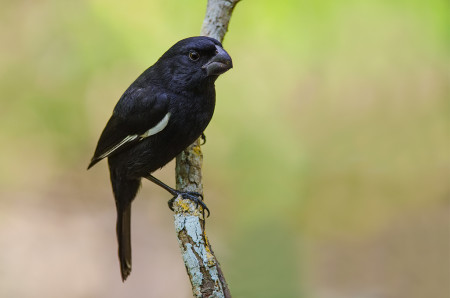
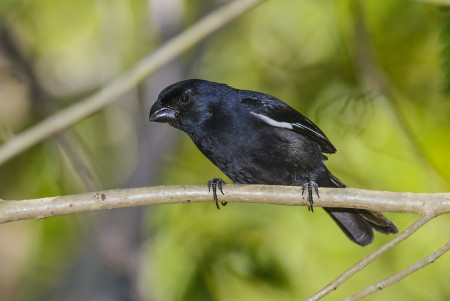
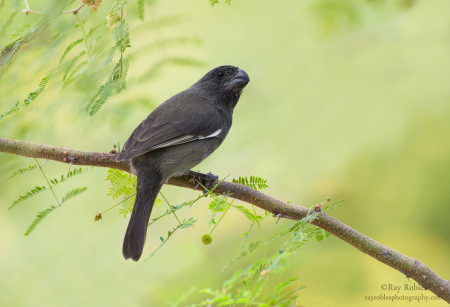
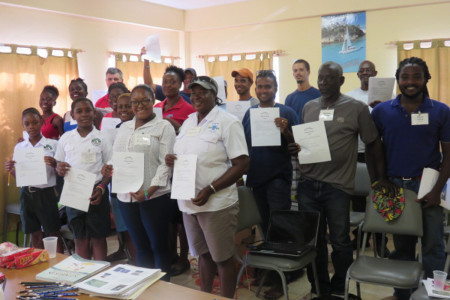
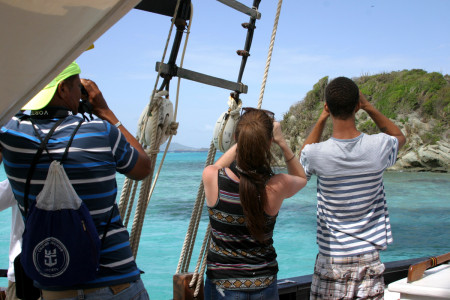
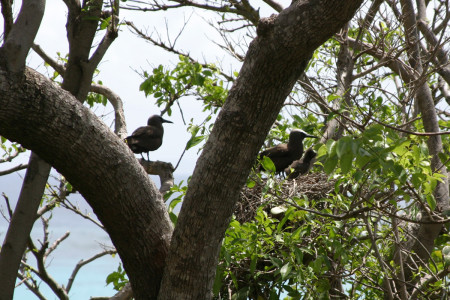
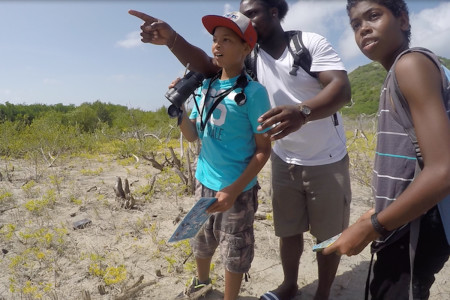
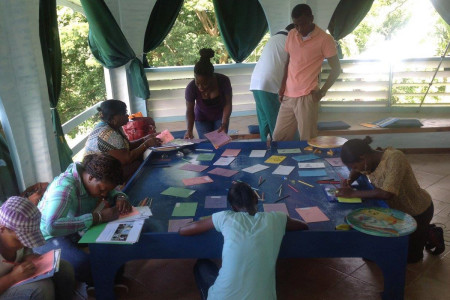
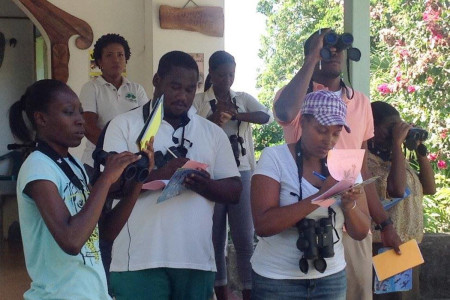
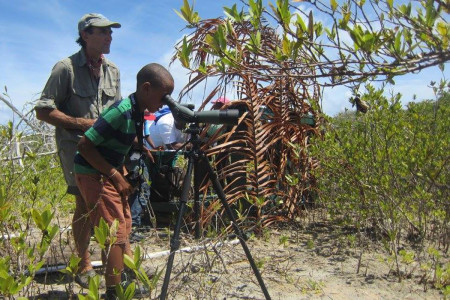
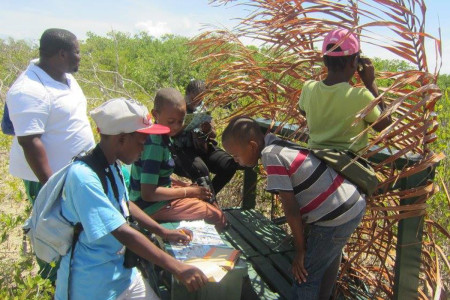
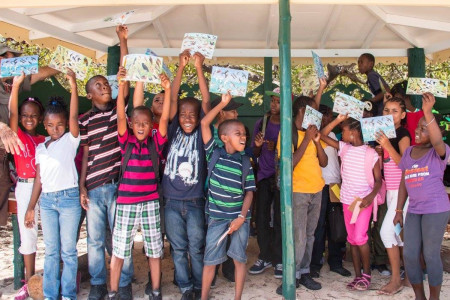
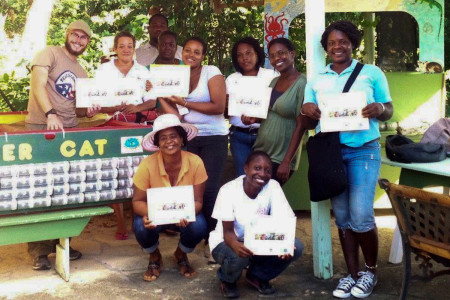
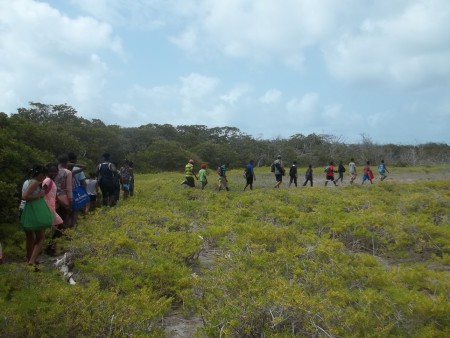
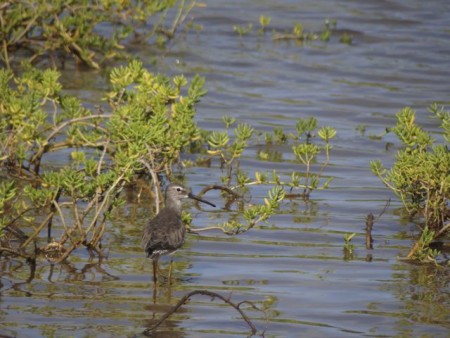
Warbler found! The first Barbuda Warbler spotted by Andrea Otto and Joseph Prosper of the Environmental Awareness Group on their survey trip to Barbuda on Sept. 22nd. No warblers were seen on the first survey trip to the island on Sept. 15th. (Photo by Andrea Otto.)
On Wednesday, September 6, Hurricane Irma engulfed the tiny Caribbean island of Barbuda with 185 mph winds, leaving most of the population homeless and a landscape ravaged by wind and surging waves.
Since the storm passed, the Caribbean birding community has been increasingly anxious about one bird in particular: the endemic Barbuda Warbler, a Near Threatened Species. Had this charming little bird survived the storm?
Well, at last there is some good news. BirdsCaribbean is delighted to report that, during a one-day survey trip to Barbuda on September 22, a team from its Antiguan partner Environment Awareness Group (EAG) and the Department of the Environment discovered a total of eight Barbuda Warblers.
As the only endemic species on the island and country of Antigua and Barbuda, the Barbuda Warbler has a special place in the small community’s hearts. The bird has a perky posture and constantly flits around, searching for insects in trees, thorny scrub and coastal areas. Its estimated population is between 1,000 and 2,500, but before the hurricane its population trends were not determined.
The first bird was spotted by EAG’s Andrea Otto and colleague Junior Prosper in a fallen acacia tree. “I saw a flash of grey…” Otto reports. “I whispered to Junior – it’s a Barbuda Warbler!” They managed to get a good view and confirmation of the smart little warbler’s grey and yellow plumage. After that, “It took us a while to get a clear photograph of the bird as irrefutable proof of its survival,” notes Otto. The team recorded the birds in a relatively small area near the secondary school in Codrington, the main settlement on the island.
Joseph Prosper walking through town in Barbuda surveying the catastrophic damage from Hurricane Irma and searching for Barbuda Warblers. All residents have been temporarily evacuated. (photo by Andrea Otto).
BirdsCaribbean is supporting the EAG and Department of Environment to conduct bird and wildlife surveys over the next five weeks. They are helping the team design a survey plan that will cover the habitat on the island and provide an estimate of the warbler’s population size. Ornithologists and other skilled birders in the region and beyond will assist with an intensive survey effort in the coming weeks and months. The team will also devise a plan to help the Barbuda Warbler and other wildlife on the island recover, such as replanting native trees and mangroves that were destroyed in the hurricane.
Editor’s Note:BirdsCaribbean has launched a fundraising effort for hurricane relief for our Caribbean partners and birds. All the funds will be distributed to bird conservation partners across the Greater and Lesser Antilles islands to help them get back on their feet and replace what was lost in the storm—from notebooks, materials and binoculars to offices and infrastructure. The Fund will also support field surveys to assess the status of endemic, resident and many migrant species, as well as recovery and habitat rehabilitation actions by our partners, such as planting native trees that feed birds and provide habitat. Sincere thanks to those that have donated already!
If you would like to donate to help the people of Barbuda rebuild their homes, schools and businesses following 90% destruction on the island, please click here.
Take care of yourselves and, once you and your loved ones are safe, remember our birds and consider their plight.
Flooding caused by Hurricane Irma in Old Havana, Cuba. (Photo by Juvenal Balán)
There is no doubt that the landscape on some islands has already changed, perhaps irreversibly so, after the passage of the strongest hurricane on record in the Caribbean. The Codrington Lagoon on Barbuda, for example – a beautifully preserved RAMSAR site – is home to the largest colony of Magnificent Frigatebirds in the region (around 2,500 pairs). It was breached during the storm and the sea has flowed in. Barbuda itself is now a scene of devastation, with almost all buildings damaged or destroyed and most inhabitants evacuated. So, what of the endemic Barbuda Warbler, a small bird that is Near Threatened (likely less than 2,000 individuals) – did it survive?
Moreover, human activity is already contributing to the changing island landscape on a perhaps unprecedented level. Barbuda itself is the proposed site of a tourism development that has already triggered controversy because of its possible impact on its fragile environment. Other large tourism and housing developments, mining and other industrial activities and urbanization are all threatening bird habitats across the region. The unchecked over-development of the Houston area, which replaced wetlands and woodlands with concrete was a major contributing factor to the excessive flooding.
The Barbuda Warbler is endemic to the tiny island of Barbuda which was decimated by Hurricane Irma. (Photo by Ted Eubanks)
While discussion and research into the impact of climate change on tropical weather patterns (in particular, the link to hurricanes) continues, issues such as rising sea levels and warming seas are becoming increasingly evident in the Caribbean. All of these factors combined increase the chance that a single event like Hurricane Irma may cause a species, such as the Barbuda Warbler to go extinct.
Last year, we recorded the devastating impact of Hurricane Matthew on birds in the Bahamas and Haiti, in particular. We also noted that some species “bounce back” more quickly than others. After the storm passes, those birds that survive face long-term problems. In the path of the storm, trees and shrubs lose all their leaves, buds, flowers and fruits. Trees (often the older, larger trees that provide food and shelter) may be uprooted. Riverbanks are scoured and whole neighborhoods transformed. In hills and mountains, there is the threat of landslides. Damage to reefs and seagrass beds may decrease marine productivity. Nesting beaches may be washed away. Birds may lose their nests, shelter and food. Others get displaced to new areas, where they may not thrive.
What happens to birds in a hurricane?
Casper Burrows, a Bahamas National Trust Park Warden on Great Inagua, home to 40,000+ breeding American Flamingos, was elated to spot resident flamingoes feeding just after Hurricane Irma roared through the island. The flamingos had taken shelter in the mangrove vegetation. (Photo by Casper Burrows)
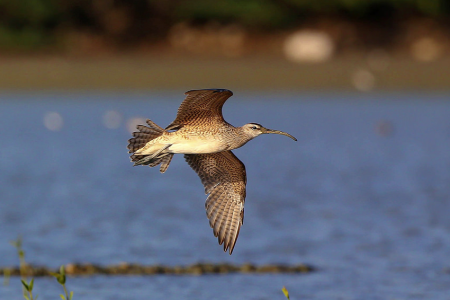
We know that many species can respond to the indicators that a storm is nearby, such as a drop in barometric pressure, changes in temperature, rainfall and light. In some species these changes trigger them to change location. The Bahamas National Trust notes that its flamingoes, for example, will fly away ahead of a storm and some seabirds on the wing will increase their altitude to try to get above the storm. Many other species respond to threats by trying to hunker down in safe places. Migratory birds may change their plans, and depart earlier than usual. Some very brave Whimbrels have even been recorded flying directly into a storm – for example, one named Chinquapin, braved Hurricane Irene in 2011. Read more here.
During and just after the passage of Hurricane Irma, Bahamian flamingoes were spotted, sheltered by coastal forest and mangroves, in storm conditions on the island of Great Inagua; and Cuban Parrots (Bahamas subspecies) were seen feeding on guinep fruit off the trees, which had somehow managed to retain its fruits. Some birds are true survivors, but with such a large and powerful storm as Irma, nowhere is entirely safe. Evidence is just now coming to light that many birds were killed outright during the storm, including thousands of flamingos in the Cayo Coco Cays of Cuba. Juvenile birds will fare worse than the adults. Often the impacts – on breeding cycles, for example – are indirect and more long term.
In 1998, Hurricane Gilbert displaced Black-billed Streamertail hummingbirds about 35 miles east from the dense wet limestone forests of eastern Jamaica to Kingston. A kind citizen found many of these streamertails on her veranda, weak and hardly able to fly. She went from putting out two or three small bottles of sugar water to supplying more than 2 gallons a day. Her efforts undoubtedly saved hundreds of birds.
What can we do to help birds after a hurricane?
It may take weeks, months or decades for our forests, wetlands and gardens to return to their former glory. In the meantime, you can do a lot to help your local birds.
A Black-throated Blue Warbler feeding on fruit; this species winters in the Caribbean. (Photo by Anne Sutton)
Remember the birds as you stock up with supplies, and maintain your hummingbird and seed feeders and bird baths.
Provide food for birds following the storm. Feeding birds does not require expensive feeders or equipment.
Seeds. Many pigeons and doves will eat cracked corn and small seed-eaters will take cracked rice. Watch out for changes in bird behaviour which may indicate food shortages. For example, White-crowned Pigeons may suddenly start feeding on the ground. If you see this, put out food in suitable places (ideally where birds are not vulnerable to cats).
Sugar water. You can make a hummingbird feeder from a bottle with a screw on cap by piercing a small hole in the cap. Fill it with sugar water (1 part sugar to 4 parts water). Use some wire to suspend the bottle at an angle in a place where hummingbirds will find it. You may need to put something red on the bottle to attract the birds initially.
Fruit. To provide fruit for birds, use a horizontal stake with 2 inch nails driven into it to put out left over fruit skins for birds.
What else can we do?
Unfortunately, many flamingos in the Cayo Coco Cays on the the north coast of Cuba did not survive the hurricane. (Photo by Granma.cu)
We need to document the impacts of hurricanes on birds so that we can determine which species have been affected and what we can do to help them. As soon as you can after the storm, take photographs and videos or take notes about:
the extent of damage to habitats (and the process of recovery);
observations of unusual behaviour by familiar birds;
observations of threatened or rare species in their habitat (that might indicate that they survived);
Note that because birds may travel to or get blown off course to other islands during storms and hurricanes, it’s just as important to survey birds in other islands that were NOT affected. For example, the more southern Lesser Antillean islands (Grenada, St. Lucia and St. Vincent and the Grenadines) may serve as a refuge from hurricane events. Please go out and do some surveys and keep an eye out for different birds and vagrants in your islands!
Donate to help our Caribbean partners and birds recover
BirdsCaribbean has launched a fundraising effort for hurricane relief for our Caribbean partners and birds. All the funds will be distributed to bird conservation partners across the Greater and Lesser Antilles islands to help them get back on their feet and replace what was lost in the storm—from notebooks, materials and binoculars to offices and infrastructure. The Fund will also support field surveys to assess the status of endemic, resident and many migrant species, as well as recovery and habitat rehabilitation actions by our partners, such as planting native trees that feed birds and provide habitat. Sincere thanks to those that have donated already!
In the long-term
A Magnificent Frigatebird chick, part of the large nesting colony in Barbuda. (Photo by Ted Eubanks)
We need to take the opportunity to remind our policy-makers of the importance of maintaining and protecting our natural areas, and to continue public education among stakeholders. Intact mangroves provide the most effective protection from storm surge for coastal settlements and infrastructure. Wetlands soak up and store excess rain and protect surrounding areas and property from flooding. Forests prevent land slippage and flash flooding. Caribbean residents – whether town dwellers, farmers or fishermen – are seeing this for themselves in their daily lives.
Hurricane Irma will perhaps serve as a reminder that the delicate balance of our widely varied ecosystems is in jeopardy. As the University of Oklahoma’s Jeremy D. Ross notes in his September 9 article, if we do not maintain a healthy natural environment, “We stand to lose not just an isolated songbird most people have never heard of, but potentially the vibrancy of entire ecosystems that provide the Caribbean its inherent allure.”
World Shorebirds Day logo featuring a Ruddy Turnstone.
World Shorebirds Day, September 6th, is right around the corner. According to the founder of this annual event, Gyorgy Szimuly, “World Shorebirds Day is a special day to celebrate shorebirds and the hard-working people dedicated to saving them.” Since it’s inception four years ago, the event has received a wonderful response with people from all over the planet joining together to enjoy shorebirds and promote their conservation.
One of the main activities of World Shorebirds Day is the Global Shorebird Count—hundreds of enthusiasts, including birdwatchers, educators, conservationists, researchers, politicians, and even hunters, will take part between 1-7 September. “The Caribbean region has been a great supporter since the beginning,” commented Gyorgy. “We hope that people from many different islands plan an event and again participate in the count. It would be fantastic to hit an all-time high in the number of registered sites in 2017!”
Registration is open and available at this link. For committed and returning counters there is even a Loyalty Program – read about it on the blog. Everyone is encouraged to register through the form on this page and have a chance to win one of the fantastic prizes.
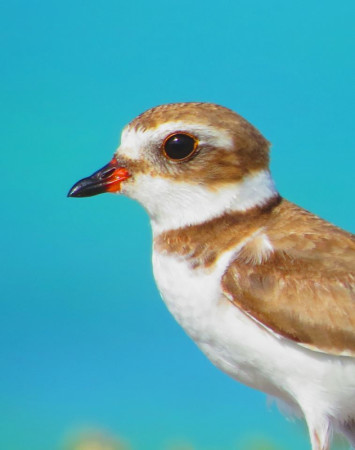
Piping Plover on Pedro Pond, Jamaica – spotted during last year’s World Shorebirds Day, first record for the island. (photo by Ann Sutton)
You never know what exciting new birds you might see on World Shorebirds Day. For example, last year Ann Sutton spotted the first Piping Plover ever seen in Jamaica on Pedro Pond! All observations are valuable, however. Many shorebird species are declining and we still know very little about shorebird migration in the Caribbean, such as where birds are stopping to rest and feed on migration and numbers of each species. So be sure to head out and find some shorebirds for World Shorebirds Day and enter your checklists for your Global Shorebird Count in eBird Caribbean. If you’re new to eBird, check out this Quick Start guide.
To make your submitted data visible to World Shorebirds Day, please be sure to share your checklist with worldshorebirdsday eBird username of World Shorebirds Day (WorldShorebirdsDay) or add shorebirdsday@gmail.com email address, to your contact list, and share all your related checklists with us (only checklists made during the World Shorebirds Day count period between 1–7 September 2017 are eligible). Guidelines for sharing checklists are here.
Don’t forget also that any counts carried out at a wetland or beach count as a Caribbean Waterbird Census (CWC) count; enter your data as a CWC count on step 2 of data entry on eBird Caribbean. In addition, your shorebird count can be part of the International Shorebird Survey, which we are just beginning to encourage in the Caribbean – read more here.
Hat’s off to our partner in Puerto Rico, Sociedad Ornitológica Puertorriqueña (SOPI), who are going all out this year with their World Shorebirds Day celebration. They have organized the 1st Shorebird Festival—a 3-day event from September 1-3. A variety of exciting activities are planned including educational talks, shorebird identification workshops, activities for children, live music, shorebird artwork, and a photographic exhibition of shorebirds presented by local photographers. According to organizer Luis Ramos, “We want to educate the community about the great variety of shorebirds that migrate to the island and promote the conservation and restoration of habitats for them.” If you live in Puerto Rico, be sure to participate!
Good luck to SOPI on their festival! And we look forward to hearing back from many of you about your findings on World Shorebirds Day!
First Shorebird Festival in Puerto Rico, organized by Sociedad Ornitológica Puertorriqueña (SOPI).
Schedule of activities for the 1st Shorebird Festival in Puerto Rico – join the fun!
Here’s your chance to win one of four fabulous prizes and support conservation of Caribbean birds!
Raffle prizes include gorgeous endemic bird artwork and a fantastic pair of Vortex binoculars.
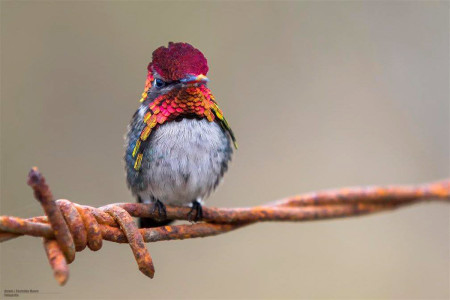
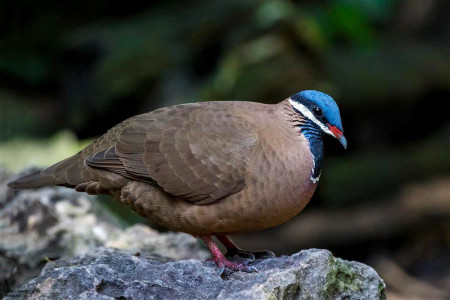
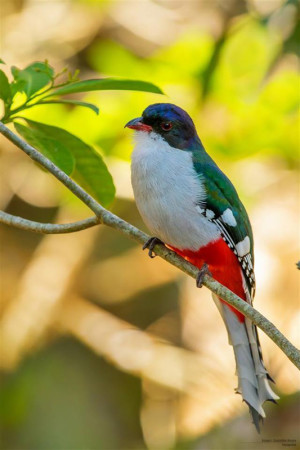
BirdsCaribbean’s 1017 Raffle features Cuban Endemic Bird Original Art: the Bee Hummingbird (the world’s smallest bird), the charismatic Cuban Tody, and the gorgeous Cuban Trogon (national bird of Cuba). These paintings are by acclaimed Cuban wildlife artist Nils Navarro and were generously donated by the artist. The giclee prints are signed and numbered, and ~8.5 x 11 inches in size.
The fourth prize is a brand new pair of binoculars—Vortex VIPER HD 8X42 ROOF PRISM BINOCULAR. This premium-quality, award winning binocular is packed with everything you need and nothing you don’t. It is rugged, waterproof, compact and lightweight (one of the lightest full-size binoculars on the market)! In addition, the binoculars come with Vortex’s amazing unlimited, unconditional life-time VIP Warranty! Thanks to Vortex Optics for kindly donating this prize!
The drawing for the Raffle is on Saturday October 21st, 2017. Now is the time to purchase tickets! Proceeds from the raffle support our conservation programs and provide travel support for BirdsCaribbean delegates to attend our workshops and conferences.
Tickets are $5 each or five for $20.Contact us to let us know how many tickets you would like. You can pay for the tickets online, or request other payment options when you contact us. Remember to get your tickets before October 21st, and good luck!
It only takes one to win, but you can’t win without one!
Cuban Tody was one of the 26 species reported from Cuba on Global Big Day. (photo by Photo by Yeray Seminario/ Macaulay Library)
Birds are inspiring creatures. Their amazing migrations and behaviors capture our imagination, and their global presence lets us appreciate them wherever we are in the world. The power that birds have to bring people together across cultures, languages, and international borders is truly exceptional. Global Big Day is the realization of the magic of birds—a single day where the birding world unites in a shared pursuit, seeking to answer the simple question: how many birds can be seen in one day?
On 13 May 2017, almost 20,000 birders from 150 countries around the world joined together as a global team, contributing more than 50,000 checklists containing 6,564 species—more than 60% of the world’s birds. This is a new record for the number of bird species reported in a single day!
Crested Quail-Dove, endemic to Jamaica, was spotted by Ann Sutton. (photo by Sam Woods)
With one of the highest endemic species ratios, the avifauna of the West Indies is important to have represented on Global Big Day. In the eBird Caribbean region*, 280 species were seen – Check out the list of species reported. Ninety-two participants submitted 334 checklists. These totals are lower than last year’s Global Big Day, but perhaps some people still have not entered their data. Note that it is not too late – your checklists will still be counted!
Birders in Trinidad and Tobago sighted the most number of species—164 in the region. The Bahamas and Puerto Rico were in second and third place with 129 and 95 species observed, respectively, and there was participation through many of the islands—21 countries/islands submitted checklists (see how your country compared to the rest of the region and world here). Thanks to all of you that helped spread the word and participated!
Global Big Day is a celebration of birds. By bringing people together, Global Big Day showcases the great birds from each region—helping bring awareness to birding and conservation regionally and globally. Cornell Lab of Ornithology reports that this year (as in previous Global Big Days), the friendly competition in South America continued to evolve as an inspiring story, with four countries topping 1,000 for the single-day tally: Brazil, Ecuador, Peru, and Colombia. In past years Brazil and Peru had always vied for the #1 slot for species totals, and in 2017 there is a new champion: Colombia. Next year, let’s set a goal for the West Indies to see the most endemics in a region, it can be done!
Thanks again to everyone who participated and made this Global Big Day successful. We hope you had a great time and will continue to participate in eBird Caribbean and future Global Big Days. Of course, eBird Caribbean doesn’t only exist on one day of the year. Global Big Day is just one of 365 opportunities/year to be a part of a global network of birdwatchers, researchers, and conservationists working together with a shared passion for birds. Any bird that you see, anywhere, at any time, can become a part of this global resource—helping your fellow birdwatchers as well as the birds that we all care about. So take a look at eBird Mobile, or how to find birds near you. Go out, explore, have fun, and let all of us know what you saw. Your sightings can help change the world. We’ll see you out there.
*The countries comprising the eBird Caribbean portal consist of the West Indies plus Trinidad and Tobago, Aruba, Bonaire, Curaçao, and Bermuda.
For a more complete report on Global Big Day, click here.
Lisa Sorenson and Jennifer Wheeler wave from one of the many beautiful waterfalls at Topes de Collantes National Park. (photo by Maikel Canizares)
The BirdsCaribbean International Conferences, which take place every two years, are always enriching experiences for scientists, ornithologists, conservationists, students, teachers and bird enthusiasts from across the Caribbean. This year’s conference, which will take place in the beautiful Topes de Collantes region of southern Cuba from 13-17 July, 2017, promises to be no exception.
This year’s theme is “Celebrating Caribbean Diversity.” The organizers aim to make the 2017 meeting even more exciting than the 2015 meeting in Jamaica, which was attended by over 260 delegates. The planned conference program offers a taste of what’s in store. Distinguished keynote speakers will discuss a range of topics of significance to the region’s ecology and biodiversity, including conservation challenges, technological advances, civil society outreach and the latest research and educational programs.
Dr. Lourdes Mugica Valdez, ornithologist and professor at the University of Havana, Cuba.
Headlining the all-star line-up of international keynote speakers is award-winning ornithologist Professor Lourdes Mugica Valdés of the University of Havana. Dr. Mugica will discuss her three decades of work on Cuba’s aquatic birds and their wetland habitats conducted with the University’s Bird Ecology Group.
Dr. Hiram González will present the work of Cuba’s Institute of Ecology and Systematics group on bird migration. Cuba is an incredibly important stopover and wintering site for migratory birds and the Cuban government has set up an impressive network of protected areas to conserve biodiversity, including Cuba’s 26 endemic bird species. As more and more tourists and birders flock to Cuba, however, there is more to be done with international partners to ensure that as many important habitats as possible are not destroyed for development.
Dr. Robert Ricklefs, Ornithologist and Ecologist, Curators’ Professor of Biology at the University of Missouri, St. Louis.
Dr. Robert Ricklefs, Ornithologist and Ecologist and Curators’ Professor of Biology at the University of Missouri, St. Louis, will give a talk focusing on the conference theme of diversity, highlighting how the Caribbean is a global hotspot for birds. He will provide an overview of the evolutionary history of Caribbean birds, island biogeography, and host-parasite evolution (i.e., birds and malaria), using his own research in the Caribbean as well as others, to illustrate how populations expand(which may lead to the formation of new species), and decline over time. He will show how understanding genetic differences between avian populations also informs us about evolutionary uniqueness of island birds and can help us to develop conservation programs.
David Winkler, professor of ecology and evolutionary biology (EEB) at Cornell University.
Cornell University’s Professor of Ecology and Evolutionary Biology, Dr. David W. Winkler, will talk about his comparative research on swallows in the genus Tachycineta with partners throughout the Western Hemisphere. He will also share the work he is doing with engineers to develop new technologies for tracking bids and discovering more about their lives, including very lightweight, long-lasting radio tags with ever-expanding capabilities.
Conservation issues are always high on the agenda, and Dr. Nicasio Viña Dávila, Technical Coordinator of the Caribbean Biological Corridor of the United Nations Environment Programme, will present his perspective on those burning issues directly impacting conservation in the Caribbean.
Dominican Republic-based consultant Ms. Leida Buglass, who is Secretary for the International Union for the Conservation of Nature (IUCN) Caribbean Regional Committee, will talk about how important it is to engage with partners in civil society to advance bird and habitat conservation, including case studies and lessons learned from many years of community work.
Dr. Nicasio Viña Dávila, Conservation Biologist, Technical Coordinator of the Caribbean Biological Corridor.
And there’s more. Informative sessions and training workshops include promoting sustainable bird tourism and updates on the Caribbean Birding Trail, bird education, the use of media to promote conservation issues, the state of Caribbean forest endemic birds, ecology of migrants, and many more.
There will also be a special Cuba Day, where local ornithologists will share the work they are doing to study and conserve the island’s rich bird life and habitats. There is much to learn and enjoy!
For additional information and registration information, visit the meeting website here. Read more about the conference here and other speakers and sessions here.
Thank you so much to the generous sponsors supporting our conference!
Young “bird sleuths” in Jamaica play the Bird Detective Game (Lesson 8) in BirdSleuth Caribbean curriculum. (photo courtesy of Jamaica Environment Trust).
In the Caribbean and around the world, teachers and other educators are looking for new ways to engage students with the natural environment, inspire an interest in science and math and help youth learn to work together as a team. Some environmental educators believe birds may be the perfect focal point for accomplishing these goals, and the BirdSleuth Caribbean program was developed. During an intensive three-day training session in the Bahamas, Caribbean educators learned the program and are now poised to spread the program throughout the region.
The Retreat is a small national park nestled amongst the hustle and bustle of Nassau, Bahamas. Inside The Retreat, two dozen educators and conservationists from different islands throughout the Caribbean gathered October 15 to 17, 2014 to learn the BirdSleuth Caribbean curriculum. After their training, they returned to their islands ready to share this program with teachers and students.
Workshop participants and faciliators enjoying a birding walk at The Retreat, Bahamas National Trust, Nassau, Bahamas.
BirdSleuth Caribbean is a program designed to teach youth how to study, appreciate and conserve Caribbean birds. It is part of a larger BirdSleuth program developed by the Cornell Lab of Ornithology. The original, US-based BirdSleuth program was adapted specifically for the Caribbean and its birds. At this workshop, each attendee was trained in the program and return with a full kit of supplies to implement the program. Over the coming months and years, workshops will be held throughout the Caribbean to train local teachers this program so they can share these activities with their classes.
The BirdSleuth curriculum includes many fun, hands-on activities, like creating a bird journal, learning to use binoculars and doing bird counts that can be entered into the citizen science website eBird Caribbean and used in actual scientific research. One benefit of the program is the opportunity to get kids out into nature where they can be active and forge a connection with the animals around them. The citizen science component, learning to identify birds and enter them into eBird, also teaches kids that their observations can help scientists learn more about topics like bird migration.
Workshop participants Portia Sweeting (Bahamas National Trust), Sabrina Compton (Grenada Fund for Conservation and ECO), and Scott Johnson (Bahamas National Trust) spot and ID birds on one of the field trips. (Photo by Lisa Sorenson)
Of course, many teachers and students may feel they don’t have enough experience with birds to teach this curriculum. One key component of the program is training the teachers and students to observe and identify birds. They learn to do this by observing physical characteristics, but also by looking at behavior, habitat and what birds are found in the area. The program also shows that we often know more about birds that we think. Almost everyone can already distinguish a duck from a seagull or an egret.
“The BirdSleuth training workshop was hands down the best training experience I’ve had to date,” commented Falon Cartwright, Preserve Manager for the Bahamas National Trust Leon Levy Native Plant Preserve in Eleuthera, Bahamas. “The curriculum is well designed, thorough, and super engaging and the level of organization and expertise demonstrated by our facilitators made the three days an absolute pleasure. I am so excited to use the BirdSleuth curriculum to encourage young people in Eleuthera to learn about and value our local birds.”
Israel Guzman (Sociedad Ornitológica Puertorriqueña Inc., Puerto Rico) had this to say: “Birds Caribbean, the Cornell Lab of Ornithology and the Bahamas National Trust teamed up to bring us one of the best workshops ever. Learning by doing and sharing experiences made us all get the most from this workshop based on the BirdSleuth Curriculum. The whole experience will be replicated to provide students with the right tools to reconnect them to nature, and lead them to love and care about birds and conservation.”
Educators navigate hazards during the Migration Obstacles Game (Lesson 6). (Photo by Lisa Sorenson)
Birds are a powerful tool to help kids and people of all ages connect with nature and develop a conservation mentality. Birds are fantastic ambassadors for nature because they are found everywhere, easy to see and identify and endlessly fascinating. Studying birds is a great tool for encouraging interest in both science and in the outdoors. Collaborative activities like many of the ones in the BirdSleuth program also help kids learn teamwork and cooperation skills.
We thank the Neotropical Migratory Bird Conservation Act Fund of the US Fish and Wildlife Service, International Programs of the US Forest Service, the Royal Society for the Protection of Birds, Optics for the Tropics, Franklin Dodd Communications, Tropical Shipping, and Vortex Optics for funding and support of the BirdSleuth Caribbean Project. The Wildlife Without Borders program of the US Fish and Wildlife Service provided funding for the pilot project to develop the BIrdSleuth Caribbean curriculum. We also thank the Bahamas National Trust for hosting our International Training Workshop and our many partners and educators for participating in the project and doing an amazing job training teachers and educating youth in their home countries.
28 participants from 23 different countries/islands participated in the BIrdSleuth Caribbean International Training Workshop, November 2014, Nassau, Bahamas.
Kirtland’s Warbler spotted on Cayo Guillermo Cay off the northern coast of Cuba. The bird (male) is identified by its yellow underparts with black streaks on flanks, white undertail coverts, blue-gray upperparts with black streaks, and conspicuous white eye-crescents that contrast with black lores and forehead. This appears to be a first winter male as the bird shows some brown on its upperparts and face. (photo by Anne Goulden)
Anne Goulden, from Sarnia, Ontario, spotted and photographed a Kirtland’s Warbler (Setophaga kirtlandii) on a recent birding trip to Cuba, making this the first “official” sighting of the bird on Cuba.
Anne Goulden has been an avid birder for ten years. “Birding has been a hobby—make that an obsession—since 2007,” she says. Anne had just finished a 9-day birding tour in Cuba with Eagle Eye Tours and had arranged to stay on an extra three nights at their last stop, the Cayo Coco Cays located along the northern coast of Cuba. She wanted to bird at a leisurely pace on her own before returning home. The group was staying at the Iberostar Playa Pilar Hotel in Cayo Guillermo, one of the Cayo Coco Cays, known as a birding hot spot because of the Cuban and regional Caribbean endemics that live in the area.
On February 22nd Anne’s tour group birded for about 1 km along the road between their hotel and the Playa Pilar Beach looking for a Bahama Mockingbird, a species found only in a few locales in Cuba, Jamaica, and in the Bahamas and Turks and Caicos Islands. “We were out for about an hour and were lucky enough to find a few Bahama Mockingbirds in addition to warblers and a few local birds,” Ann commented. The bus returned to the hotel to send everyone off to the airport to return home.
This photo shows the yellow throat, breast and belly, white undertail coverts and black lores of the Kirtland’s Warbler. The broken white eye ring is also clearly visible. Female Kirtland’s are similar to males but have no black on the face and their upperparts and face are more brown. (photo by Anne Goulden)
The next morning, February 23rd, Ann set out at on her own at about 7am along the same road to see what else she could find. She spotted an unfamiliar bird in a tree with red berries about an hour into her walk. “I wish I could say I knew what it was, but I didn’t,” said Anne. “I knew it was a warbler, but that was about it. I managed to get a few poor photos before it flew off.”
After Anne returned home she looked through her pictures, but still couldn’t place the bird. Ann was disappointed that her photos were not in sharp focus, but she knew that they were clear enough for an ID. She sent the pictures to two local birders who both suggested Kirtland’s Warbler, but it wasn’t even in Anne’s book so she did not include it in her e-bird checklist until the bird was also positively identified as a Kirtland’s by her two tour leaders, Hector Gomez de Silva and Colin Jones (the ID was also confirmed by eBird Caribbean reviewers). The individual appears to be a juvenile male (first winter).
The road where the Kirtland’s Warbler was spotted on Cayo Guillermo, one of the Cayo Coco Cays on the northern coast of Cuba. The road leads to Playa Pilar beach and beyond that to a new hotel under construction. (photo by Anne Goulden)
“I was very excited to have this bird confirmed as a Kirtland’s Warbler,” exclaimed Anne. “I live in Ontario so know about the Kirtland’s and what a rare bird it is, but I never expected to see one in Cuba. I have only had a fleeting look at this bird once before, in Ontario in 2014.”
One of the rarest songbirds in North America, the Kirtland’s Warbler is listed as “Endangered” under the Endangered Species Act of 1973. Its current status is Near Threatened on the IUCN “Red list of Threatened Species,” upgraded from Vulnerable in 2005, thanks to successful recovery efforts.
The Kirtland’s Warbler winters primarily in the Bahamas Archipelago, which includes The Commonwealth of The Bahamas and the Turks and Caicos Islands. It inhabits early successional broadleaf scrub or shrubby habitats, where it feeds on fruits, insects and spiders. Recent surveys indicate that the warblers most commonly winter in the central islands of The Bahamas including Eleuthera, Cat Island, San Salvador, and Long Island.
The Kirtland’s Warbler was spotted feeding on berries of the Gumbo Limbo tree (Bursera simaruba), a very important food source for many birds, including migratory warblers fattening up in their Caribbean wintering grounds for their long journey north to their breeding grounds in spring. (photo by Anne Goulden)
Kirtland’s Warblers are known to overwinter outside of the archipelago, however, as documented by a photograph of an individual during a Christmas bird count on Bermuda in 2004, and a bird photographed in Key West, Florida this past winter. In addition, there have been sight records of wintering Kirtland’s Warblers from northern Mexico, Dominican Republic, and Cuba. Unfortunately sight records alone are insufficient for “official” documentation, which requires either a good photo or a specimen of the bird. Thus, the fact that Ms. Goulden photographed a Kirtland’s Warbler (with typical field marks visible) verifies for the first time the “official” presence of the warbler in Cuba.
The habitat where the bird was found and the photo of the warbler feeding on the fruit of Gumbo Limbo or Gum Elemi (Bursera simaruba) are all typical of the habitat and behavior of the wintering Kirtland’s Warblers observed in The Bahamas. In addition, the first Cuban sight record of the warbler in 2006 was also from the Cayo Coco cays. The cays located off Cuba’s north coast have typical scrub vegetation including Black Torch (Erithalis fruticosa), Wild Sage (Lantana involucrata), and Snowberry (Chiococca spp.) which also produce the fruits favored by the warbler. The cays also host specialties such as the Bahama Mockingbird and Thick-billed Vireo, both of which are typical birds of the Bahamian bush.
A beautiful Western Spindalis spotted on Cayo Guillermo; this bird is endemic to Cuba, the Bahamas, Cayman Islands and Cozumel. (photo by Anne Goulden)
In recent years, more and more observations of the Kirtland’s Warblers have been made during the winter months. Some of the increase in observations might be attributable to more birders in the field in the warbler’s habitat. The more likely explanation, however, is that increased wintering grounds observations are attributable to the increase in the size of the Kirtland’s Warbler population at least since the 1970s and 1980s. This increase in the population of the warblers is directly attributable to the success of the intensive recovery effort focused on the warbler’s breeding grounds in Michigan.
Kirtland’s Warbler breeds in early successional Jack Pine (Pinus banksiana) habitat primarily in Michigan with recent breeding now established in similar habitat in southern Ontario and Wisconsin. Habitat loss and degradation coupled with nest parasitism by Brown-headed Cowbirds were the primary factors contributing to the species decline to record low populations of the 1970s and 80s. In that period, counts of approximately 200 singing males on the breeding grounds were typical, whereas today, thanks to habitat management and cowbird control, the recent breeding ground censuses of singing males is approximately 2,350 singing males. [The biologists are not being sexist, its just that females are difficult to detect and count in contrast to the males which are obvious as they sing on their territories in early spring; the sex ratio is assumed to be 50:50]. Thus the abundance of recent winter observations of the Kirtland’s Warbler is a testament of the success of the conservation program directed at the recovery of this endangered species.
Cuban Bullfinch on Cayo Guillermo, endemic to Cuba and the Cayman Islands. (photo by Anne Goulden)
A recently published article by Dr. Nathan Cooper and his colleagues from the Smithsonian Institution suggests the possibility of some Kirtland’s Warblers occurring in Cuba. The research, based on use of light-sensitive geolocators to track the warbler suggests the occurrence of Kirtland’s Warblers wintering in Cuba; the photo obtained by Ms. Goulden establishes the fact. Congratulations to Ms. Goulden!
“I don’t live far from Michigan and hope in the next year or two to make a trip to the Kirtland’s Warbler’s famed breeding grounds,” said Anne. “Seeing this rare bird on its wintering grounds is, however, probably the most exciting thing that is likely to ever happen to me as a birder! I’m thrilled I was in the right place at the right time and managed to get a photo of the bird. It’s certainly rewarding for ordinary citizens like myself to contribute to science through our birding activities and use of eBird Caribbean!”
By Lisa Sorenson and Joe Wunderle
Anne Goulden’s checklist from 23 February, 2017 with the Kirtland’s Warbler can be viewed at this link.
Andrew Dobson’s checklist from 19 December, 2004 with the Kirtlands Warbler can be viewed at this link.
Congratulations to Anne Goulden for her first official sighting of the Kirkland’s Warbler in Cuba. “Seeing this rare bird on its wintering grounds is probably the most exciting thing that is likely to ever happen to me as a birder! ” she exclaimed.
Cape May Warbler, a common wintering warbler in Cuba and throughout the entire Caribbean region, was also seen in the Cayo Coco Cays. (photo by Anne Goulden)
A male White-cheeked Pintail preening. This beautiful sedentary tropical duck is common on a number of Caribbean islands, including Antigua and Barbuda. (photo by Binkie van Es)
Let’s face it: Coffee table books often lie on the table, mostly untouched unless you pick them up in a moment of boredom, flick through the pages, and put them down again. However, once you open Simply Antigua Barbuda, you will become immersed. It is far more varied than the average tourism publication, with a rich diversity of topics – from finely drawn sketches of the islands’ National Heroes to – yes, an article on Birding in Barbuda, and a strong focus on sustainable living and conservation for future generations. As its authors and publishers note, it is“designed to be dipped into” – not only to enjoy the gorgeous photographs but also to obtain detailed information on the history, culture and environment of the twin-island nation. And this 264-page, high-quality publication was all put together in six months!
Magnificent Frigatebird male inflates his bright red throat pouch to attract a mate at Barbuda’s Frigatebird Colony, the largest in the Caribbean. (photo by Kate Lavasseur)
The exquisite photographs portray the islands’ natural beauty, from the calm, unsullied blue of Barbuda’s Codrington Lagoon to hidden hiking trails and Antigua’s 365 famous beaches (“one for every day of the year”). An article authored by Daryl George, board member of Antigua’s Environmental Awareness Group (EAG), includes stunning close up photographs of Hawksbill and Leatherback Turtle hatchlings. EAG and BirdsCaribbean member Natalya Lawrence reminds the reader that there is much more to Antigua & Barbuda than beaches, focusing on the offshore islands. She describes the success of the Offshore Islands Conservation Programme, which has resulted in the removal of alien and invasive species and a surge in numbers in bird populations and native species in the past 20 years. Natalya also highlights the Floating Classroom program, which has opened the eyes of young Antiguans to natural wonders on their doorstep.
The section on Barbuda – a low-key tourism destination that has encountered environmental challenges – emphasizes the welcome move towards low impact, sustainable tourism and programs such as the Blue Halo Initiative, a collaborative coastal zoning project that is helping to protect the island’s fragile coastline and marine ecosystems. Barbuda has the largest Frigatebird Sanctuary in the western hemisphere. This extraordinary bird is among those highlighted in an article by EAG and BirdsCaribbean member Joseph (Junior) Prosper, edited by BirdsCaribbean’s Lisa Sorenson. Striking photographs by other BirdsCaribbean members (Andrea Otto, Binkie van Es and Ted Eubanks) of the supremely elegant West Indian Whistling-Duck, the Barbuda Warbler and other species enhance the text.
Simply Antigua Barbuda Tourism Coffee Table Book
The book beautifully integrates tips on sustainable living with the many attractions Antigua has to offer – including cuisine. There are delicious recipes for the invasive Lionfish, and important information on the closed seasons for the Queen Conch, Parrotfish, Spiny Lobster and several other important marine species. Dr. Evelyn Weekes of the Agro-Ecology Society of Antigua describes several climate-smart projects that help to enhance the tourism product as well as the lives of Antiguans.
Joseph Prosper observes in his article Birds of Barbuda: “Let’s choose a tomorrow that does not succumb to the bulldozer but instead preserves this natural wealth for all to experience and enjoy.” This gem of a book reminds us of the fragility of the region’s island ecosystems, and the need to preserve them – not only for tourists.
The book is available to order online at this link.
The online version of the book can be viewed here.
By Emma Lewis, frequent blogger for BirdsCaribbean and member of BirdsCaribbean’s Media Working Group. Find me at Petchary’s Blog!
Wilson’s Plover chick. This is an excellent opportunity to gain multi-species shorebird ID and monitoring experience.
Your help is needed to protect beach-nesting birds, nests, and young. Conservian is planning for Year 2 of their shorebird and habitat conservation program in the Bahamas. Come join them for the adventure of a lifetime!
Conservian is seeking a weekly crew of 8 to 12 enthusiastic volunteers for our Bahamas shorebird habitat conservation project in May 2017 aboard the 75ft schooner “Dream Catcher”. This is an excellent opportunity to gain field experience and shorebird ID skills. Trip cost for one week is $1,250 and includes your bunk, onboard meals, water, and ground transportation associated with project. Participants will fly to the Bahamas to designated airports for shuttle transport to schooner. A valid passport is required. Airfare and insurance are not included.
Project Summary
In 2017, Conservian and partners will continue on-the-ground protective and restorative measures to limit human-caused disturbance, and control invasive Australian pine at key Piping Plover, shorebird, and seabird sites in the Bahamas. Field volunteers will participate in collecting new data on shorebirds and seabirds of the Bahamas. Selected sites include Globally Important and locally Important Bird Areas and national parks of the Bahamas, such as Lucaya National Park IBA, Peterson Cay National Park IBA, Joulter Cays National Park IBA, and the Berry Islands, as well as additional key shorebird sites on Grand Bahama Island and Great Abaco. Read about our exciting and successful field season in 2016 here.
Our days will be filled with much adventure. The focus of the work is surveying for beach-nesting bird breeding pairs, nests and young, and working with local volunteers to implement protective measures in the field. Focal species include Wilson’s Plovers, American Oystercatchers, Least Terns and other colonial nesting species. We will work in both populated and remote areas, sail blue Caribbean waters, visit white sandy beaches, boat to little islands, conduct ground surveys for beach-nesting birds, nests, and downy chicks, and meet new people. We will work with local volunteers to post and sign shorebird sites and control invasive Australian pine. Field crew will assistant with collecting data on breeding pairs, habitat assessment and human-created disturbance. Field crew will also assist with shipboard duties; sailing, cooking and cleaning. There will be time to fish, snorkel, and visit local island towns.
Our days will be filled with much adventure aboard the 75ft schooner “Dream Catcher”.
Project partners include: BirdsCaribbean, Bahamas National Trust, International Conservation Fund of Canada, USFWS/NMBCA, LightHawk, Dow AgroSciences, Grand Bahama Nature Tours, Optics for the Tropics, Grand Bahama Port Authority, Bahamas Public Parks & Beaches Authority, Bahamas Environment, Science & Technology Commission, Rand Nature Center, Abaco Friends of the Environment, Treasure Cay Community Center, Royal Bahamas Police Force/Marine Support.
Project Activities:
Protect, post & sign shorebird & seabird sites
Collect new data on nesting shorebirds & habitat
Observe/assist with bird banding (conditions permitting)
Control invasive Australian pine on beach habitats
Work with local volunteers to accomplish the above goals
Qualifications: Applicants must be responsible, adventurous, in good physical condition, enjoy working in teams and be capable of walking several miles during warm weather in the Caribbean. Applicants must be comfortable living communally onboard a schooner and riding in small boats to access survey sites.
May expedition schedule and locations (final dates TBD)
Assist for one week or more:
Week 1: Grand Bahama Island- (Freeport GBI Int. Airport)
Week 2: Great Abaco, west- (Freeport/Marsh Harbour Airport)
Week 3: Great Abaco, east- (Marsh Harbour Airport)
If you would like to join our conservation crew for a week or more as part of our Volunteer Field Crew:
Please send 1) letter of interest 2) resume 3) names, email addresses and phone numbers of 2 references to Margo Zdravkovic. Please label all attachments with your name. The review of applicants is ongoing and will continue until positions are filled.
What a start to the year! I am excited and honored to be serving you as President of BirdsCaribbean as 2017 gets under way. It is a wonderful opportunity to work with so many passionate and experienced conservationists in the region and beyond. I hope you will support our organization’s efforts to protect the Caribbean’s amazing birds and their habitats.
Let me tell you a little about myself, and my passion for the islands’ birds. My relationship with BirdsCaribbean began in 2002, when I attended the international meeting in Cuba. As my interest grew, I wrote a Birdwatching Guide to Bermuda in that same year. From 2005 – 2008, I served as President of the Society for the Conservation and Study of Caribbean Birds, which is now BirdsCaribbean. I have served on the executive of the Bermuda Audubon Society since 1990 – including many terms as President – and published the Society’s newsletter for a number of years. I have been a regional editor for the journal North American Birds since 1995. In Bermuda, where I live, I have enjoyed coordinating BirdsCaribbean’s outreach programs, such as the Caribbean Endemic Bird Festival and International Migratory Bird Day
My love of birds began as a small boy in England. My parents maintained nest boxes in the garden. We didn’t own a car, so weekends were spent on local family walks, which led to a growing appreciation for nature. When I landed my first job, I bought some binoculars; and when I went off to university I was fortunate to meet a birding mentor. Similarly, since I arrived in Bermuda, Dr. David Wingate has been a great inspiration. While I have had a lifetime career as a high school teacher, I have also immersed myself in the world of birds. I am continually fascinated by the variety of bird species in the Caribbean. I especially enjoy getting out in the field, running birdwatching courses and leading field trips – including an annual bird camp. And like many of you, bird photography is something I love to do.
The Caribbean is a biodiversity hotspot, with an impressive 172 endemic species found in the region. It is home to more than 560 bird species. The region is also a vital seasonal home for over 180 migratory species that winter in the region or pass through on migration. However, there are so many threats to our birdlife, such as habitat loss, invasive species, hunting, the pet trade and the effects of climate change.
BirdsCaribbean is leading efforts to reduce these major challenges through a series of innovative programs and projects. Through our new BirdSleuth Caribbean program we are training teachers in the Caribbean to get young people involved in exploring the natural world and in building their science skills. The Caribbean Waterbird Census Program was set up to study, monitor and conserve these birds and the habitats they need to survive. The Caribbean Birding Trail is an exciting initiative that aims to promote birdwatching as a tool to facilitate the conservation of the birds and habitats endemic to the Caribbean, one of the most biodiverse regions of the planet. By promoting birding, showcasing the best birding sites, and training and equipping guides, the program creates jobs and other incentives to preserve habitats.
Andrew Dobson birding with his daughters in Bermuda.
We appreciate your support for our important programs in raising awareness of and halting threats to birds; and we need your continued help to build the capacity of local organizations to tackle these problems. These local organizations are BirdsCaribbean’s lifeblood: they advocate on behalf of birds, and boost Caribbean citizens’ avian knowledge as we seek to advance science and conservation. If we are going to look after our special Caribbean birds, we need to continue to foster an appreciation for the natural environment and the need to protect bird habitat. Above all, we need to get young people on board – not only interested, but also actively involved in the organization, to ensure a future generation of conservationists.
So how about a New Year’s resolution to take some young people birding? I was thrilled when both of my daughters asked for binoculars as birthday presents without my prompting. They now record their sightings in eBird Caribbean. When they were home from university at Christmas, they once again insisted on helping me with the annual Christmas Bird Count. We discovered the first record of a Common Eider in Bermuda – how cool was that! Special moments like that can inspire a lifetime interest in birds.
I look forward to working with you all to save our region’s magnificent birds and their habitats.
Sincerely,
Andrew Dobson
President, BirdsCaribbean
p.s. With your support, together we can build a future where the Caribbean’s unique natural heritage can flourish and form the basis for a future rooted in sustainable relationships between people and the environment. I encourage you to become a member or corporate sponsor of BirdsCaribbean today. If you are already a member, please consider donating your time, efforts and financial gifts to our cause, contact us about volunteer opportunities, come to one of our meetings or training sessions, go on one of our trips, participate in one of our programs, and encourage others to join in our efforts. I promise you will find it one of the most rewarding experiences in your life.
Female Common Eider, spotted 19 December 2016, first record for Bermuda. (photo by Andrew Dobson)
White-crowned Pigeon-feeding on the ground on fallen berries after Hurricane Matthew in Grand Bahama. (photo by Erika Gates)
Can Caribbean bird populations survive hurricanes? Or perhaps we should ask, how do they manage to live through the storms’ fierce onslaught as well as survive the aftermath when there is little food and shelter?
In Part 1 we looked at the terrible damage caused by Hurricane Matthew to the human life, infrastructure, wildlife and ecosystems on some of our islands. Matthew arrived just a couple of months ago. Some communities are only just picking up the pieces, and for many, life remains a struggle.
Just as with humans, some birds can “get back on their feet” faster than others. If forests are lost, as in Haiti during Hurricane Matthew, birds are essentially homeless, like a man whose house has blown down, and their chances of survival are not good. As humans are rebuilding their lives, birds have to struggle on with theirs, too, in an environment that has become bleak and hostile, almost overnight. It will take time to restore some kind of normality. Fortunately, like humans, birds are remarkably resilient and they can (and do) bounce back.
Shorebirds like Piping Plovers that spend the winter in the Caribbean are vulnerable to being killed by hurricanes as their habitat takes a direct hit from the storm and they have no place to hide. In addition, their sand dune roosting habitat can be damaged. (photo by Walker Golder)
Recent studies of hurricane effects on birds indicate that these storms have both direct and indirect effects on birds. Direct effects are most likely to cause mortality in those birds that have no place to hide, especially aquatic bird such as waterfowl, pelicans, gulls and terns, sandpipers, plovers, herons and egrets. In a severe storm, their habitats will likely be swamped by storm surges, and the strong winds (often most powerful along the coast) will destroy them. Heavy rains, resulting in floods and landslides, will swamp them. Many land birds can avoid the direct effects of hurricanes by hunkering down on the ground or sheltering in low vegetation, but land birds are also killed by hurricanes.
Hurricanes often destroy favorite feeding trees such as Sea Grape (shown here) and Pigeon Plum, beloved by fruit eating birds, leaving many birds hungry and wandering in search of alternative food sources after a hurricane. (photo by Lisa Sorenson)
Indirect effects, however, may not only cause mortality but have the longest lasting impact on bird populations. These include loss of food resources or foraging substrates, increased risk of predation, loss of nests and nest or roost sites, and microclimate changes.
In the short-term, birds respond to these indirect effects by changing their diet, habitat, and foraging locations. It should be no surprise that after hurricanes birds will quickly abandon heavily damaged and exposed sites and move into less damaged sites where there is a better food supply and cover from predators. Often birds will wander widely in search of food in the aftermath of storms and feed on foods that are not normally in their diet (as described in Part 1 of this article).
In the first breeding season after a hurricane, breeding is usually disrupted as some species may not be able to find good nesting places, or food may not be sufficient for females to build up the reserves needed to lay eggs and undergo incubation. There might also be shortages of food to feed young. And of course, a number of breeding birds may have fallen victim to the storm. These factors usually result in a decline in breeding success and consequently fewer baby birds post-hurricane for many species, which can shift population age structure.
White-cheeked Pintails are opportunistic breeders and sometimes nest in the fall following a hurricane when ponds become flooded and abundant aquatic macro invertebrates provide food for breeding females and their ducklings. (photo by Jackie Cestero)
In tropical climates where some birds breed opportunistically or all year-round, such as grassquits, they can begin to breed again as soon as conditions improve. As vegetation recovers, terrestrial birds may respond to outbreaks of herbivorous insects (e.g., caterpillars) as defoliated plants leaf out, and to increases in flowering and fruiting. These food resource blooms several months or years after a hurricane can eventually increase breeding success as pairs may produce multiple clutches in a season due to abundant food. Similarly, tropical waterbirds such as White-cheeked Pintails may nest opportunistically in the fall in the weeks following a hurricane when heavy rainfall floods wetlands leading to flushes of aquatic macro-invertebrates, the high protein food that females need to lay a clutch of eggs.
Which bird species are most at risk during and after a hurricane? These tend to be those with a diet of fruit, nectar or seeds (hummingbirds, bananaquits, pigeons, doves and parrots, among others). Birds that live or forage in large, old trees – such as woodpeckers, owls and more – may also suffer; sadly, these noble trees often bear the brunt of the storm. Birds that live in closed forest canopy, that depend on a particular “niche” ecosystem with its own peculiar mini-climate, and/or that live in habitats in which the vegetation recovers slowly are all vulnerable.
The Grenada Dove population suffered a substantial decline and is still recovering from Hurricane Ivan, a Category 5 which hit Grenada in 2004. (photo by Greg Home).
These vulnerability traits may increase the risk of severe population decline in those species with small populations isolated in small habitat fragments which includes many of the islands’ endangered endemics of course. For example, the Grenada Dove suffered a substantial decline in its already small population as a result of Hurricane Ivan in 2004 (estimated at 180 doves before Hurricane Ivan), although obtaining a precise population estimate was challenging as the doves moved out of their traditional sites and stopped calling. The most recent census (2013) suggests that the dove is still recovering from this loss many years later.
How can we humans help birds after the passage of a hurricane? One important way is by providing food. Hang up bird feeders – including hummingbird feeders, as nectar from flowering plants and trees is likely to be in short supply, and bird seed. This can help birds survive until their natural foods recover. We should not forget water either! There is usually either too much or too little water available after a hurricane. Birds need plenty of clean water to recondition their battered feathers and of course, to drink. Birds do get dehydrated quite quickly, especially in the hot weather. We should also try to replant as soon as possible – both slow- and fast-growing native trees and plants – to provide shelter, food, and nesting sites.
Painted Buntings returned to Grand Bahama in late December, proof that Hurricane Matthew could not keep this beloved winter visitor away, despite the devastated habitat! (photo by Erika Gates)
Hurricanes such as Matthew are tests of endurance, resilience and adaptability. With climate change life will likely not get any easier, and we can expect the unexpected. While people can prepare for more intense storms that may come our way in the future, our birds cannot plan for the future. Let us see what we can do to protect our birds – whose lives are literally turned upside down by such storms – and their habitats. And, if the worst happens, let us try to help them recover; it’s the least we can do.
By Emma Lewis, frequent blogger for BirdsCaribbean and member of BirdsCaribbean’s Media Working Group. Find me at Petchary’s Blog! Many thanks to Joe Wunderle and Lisa Sorenson for their contributions to this article.
An American Redstart that fell victim to Hurricane Matthew. (photo by Linda Barry Cooper)
Well, the Atlantic hurricane season is finally over, and island dwellers in the Caribbean can breathe a sigh of relief. The 2016 season that ended on November 30 was an “above normal” one, with 15 named storms, including 7 hurricanes – the deadliest season since 2005. It was unusual in many ways; a certain storm named Matthew certainly behaved strangely – and extremely badly. Matthew was a long-stay visitor to the Caribbean, moving very slowly, and far to the south; then turning north, as if he was doing a tour of the islands. At that point, Matthew decided to wreak havoc in Haiti, eastern Cuba and the Bahamas before descending on the southeastern seaboard of the United States. Matthew was a high-intensity storm, and he was mean.
A woman stands in a field of destroyed trees after the passing of Hurricane Matthew, in Sous Roche in Les Cayes, in Southwest Haiti, on October 6, 2016. AFP Photo / Hector Retamal
An estimated 1,700 people lost their lives as a result of Matthew and damage amounted to some US$10–12 billion. But what of the ecological harm, and in particular the damage to birds and their habitats? The Caribbean is still counting the cost. Matthew made landfall on Haiti’s Tiburon Peninsula on October 4th as an intense Category Four storm – the strongest storm to directly impact Haiti since 1964. Haiti’s infrastructure is weak, and deforestation remains a major problem. Matthew brought very heavy rainfall along with him, and widespread flooding and landslides occurred, taking hundreds of lives. Worse still, the strong winds (well over 100 miles per hour) destroyed forest habitat as well as crops.
Erika Gates inspects damage at Sea Gate Lane.
The hurricane was a huge setback for reforestation efforts in Haiti, which had achieved 17 per cent tree cover – almost half of this forest in the Grand’ Anse Department (also the nation’s “breadbasket”). Sadly, this southern region was one of the worst affected by Matthew. As a result of the loss of trees there, bird populations suffered terribly. Dead birds (doves, woodpeckers etc) were found. It is feared that during Hurricane Matthew birds had no safe place to weather the storm, and large numbers perished. In the aftermath, the already degraded habitat was largely destroyed, offering little or no food or shelter for surviving birds.
A Black-throated Blue-Warbler male gorging on berries right after Hurricane Matthew passed through Grand Bahama. (photo by Erika Gates)
Reports from the Bahamas were also quite grim, post-Matthew. Grand Bahama took a direct hit from the storm’s eyewall and suffered extensive damage. In some areas, almost all homes were damaged or destroyed and there was widespread flooding. Fortunately, there were no casualties – on the human side. However, bird guide Erika Gates reported the loss of all native mature trees (Poisonwood, Gumbo Limbo, Mahogany, and more) at her Garden of the Gates bird sanctuary and in the Westend and Freeport areas. Nevertheless, many small bushes remained, providing food for the birds after the storm.
Greater Antillean Bullfinch at seed feeder. (photo by Erika Gates)
Pericles Maillis reported from New Providence that he had hundreds of starving White-crowned Pigeons on his farm after the hurricane. “Black clouds” of them fed ravenously on cracked corn he put out, a food source that they normally do not come to like other doves.
There is always hope. Many migrants were observed two days after the storm, Erika reported. She surmised they must have survived by staying low on the ground, or in limestone cavities. Despite sustained high winds for more than eight hours, many wading birds such as ibises, egrets and herons – with their long, fragile legs – seem to have survived. One wonders how and where they sheltered! Hummingbirds such as the Bahama Woodstars and Cuban Emeralds were scarce for a while, however, due to the lack of nectar, and some birds appeared to have changed their feeding habits, at least temporarily; for example, the Greater Antillean Bullfinch was observed feeding on seed, instead of fruit. Other birds such as the Black-Throated Blue Warbler fed voraciously after the storm, almost ignoring the presence of humans close by. Some warblers were even seen feeding from trash cans!
Roaring winds, endless heavy rains and tempestuous seas – all those who have lived through hurricanes have vivid memories of this frightening and unnerving experience. The aftermath is often depressing and harrowing. How our fragile birds survive the storm and adapt to stressful conditions afterwards is nothing short of a miracle. In some ways, perhaps, they are more resilient than we humans!
Aerial photos before and after Hurricane Matthew that show the impact of the hurricane on structures and tree cover.
Check out this link with side-by-side UAV (drone) photos that show the impact of Matthew on structures and tree cover. You can pan around in the photos and see that in the area covered there are no trees at all left standing. It is possible that the impact on birds and vegetative cover here may be longer term than other places with larger forest reserves – and lower daily demand for wood as fuel.
By Emma Lewis, frequent blogger for BirdsCaribbean and member of BirdsCaribbean’s Media Working Group. Find me at Petchary’s Blog! Many thanks to Jim Goetz, Anthony Levesque, Erika Gates, and Lisa Sorenson for their contributions to this article.
Bahama Oriole adult on Andros. It could be a male or a female, as both sexes have this striking black and yellow coloration. (photo Daniel Stonko, UMBC)
The Bahama Oriole (Icterus northropi) is the most endangered bird in the Bahamas. It is now restricted just to the Andros Island complex. There may be as few as several hundred individuals left, making it also one of the most endangered endemic birds in the entire Caribbean. Of greatest concern is that the oriole was driven from the Abaco Islands in the 1990s for unknown reasons. It is one thing to have a known killer lurking, but in the case of the oriole, what caused it to go extinct on Abaco is unknown. We hope to help preserve this charismatic and colorful species on Andros, which surprisingly is not that difficult to observe on certain parts of the island. Like many tropical birds, both the females and the males have elaborate coloration – both sexes are jet black with bright yellow patches over much of the body.
We began the Bahama Oriole Project last year with the overall goal of preventing the extinction of this beautiful oriole. The project is a collaboration between the University of Maryland, Baltimore County (UMBC) and the Bahamas National Trust (BNT). We have conducted several field trips to begin to determine how many orioles are left, and to learn what the major threats are to this species. We also need to learn much more about where the oriole spends its time throughout the year, including what it eats, how widely it ranges, and what its preferred habitats are for feeding and nesting. The last published estimates suggest as few as 300 individuals may remain. However, in May 2016 our field team, including students from the Bahamas and from UMBC, discovered previously unknown breeding populations deep in Andros’ vast pine forests. For several reasons, we are guardedly optimistic that good science and dedicated conservation measures can save this species from extinction.
eBird Caribbean sightings of the Bahama Oriole. The oriole is now confined to the Andros island complex, roughly 150 miles SE of Miami. Much of Andros is undisturbed wilderness, just a 15 minute flight from the huge resorts in Nassau. The oriole is now completely absent from the Abaco complex north of New Providence. (Recent sightings are shown in red, sightings older than 30 days shown in blue.)
Our first need is to recruit a PhD student to lead this research effort for the next five years. The student would be advised by Kevin Omland in the Biology Department at UMBC, in collaboration with researchers in the Geography Department at UMBC (Collin Studds and Matt Fagan) and researchers at the Smithsonian Conservation Biology Institute (Scott Sillett). The student could choose to focus on any one or two aspects of the project including: 1) population size estimation and habitat usage, 2) breeding ecology including cowbird parasitism and predation by introduced predators, 3) remote sensing and details of habitat usage in breeding and non-breeding season (in relation to fire and climate change), and 4) conservation genetics of populations on three different parts of Andros. Please contact Kevin Omland ([email protected]) and send a CV and short paragraph on research interests. The application target date for full consideration by the UMBC Biology Department is Jan 1, 2017.
We are grateful for the support and advice given to the project by BirdsCaribbean, and we plan to give updates on the project through blog posts and newsletter items. Meanwhile, we invite you to come to Andros to see all the great migratory and endemic birds there! Be sure to add to our knowledge by posting all sightings of Bahama Orioles to eBird Caribbean and to the “Bahama Oriole Project” on Facebook: https://www.facebook.com/BahamaOrioleProject/
Finally, the project needs ongoing assistance with everything from housing to transportation on Andros, so please consider either monetary or in-kind donations to the project through BirdsCaribbean. Thank you!
By Kevin Omland, Ph.D., Professor, Biology Dept., University of Maryland, Baltimore County
As the holiday season gets underway, we’d like to bring your attention to the most recent batch of articles published in the Journal of Caribbean Ornithology. All three studies stem from islands within the Greater Antilles, and all are valuable contributions to our growing knowledge of Caribbean birds. As all of the JCO’s publications are free and open-access, please don’t hesitate to pass them around, discuss them with colleagues, and reach out to the authors themselves if you are interested in learning more about their research.
Hispaniolan Woodpeckers (Melanerpes striatus) hanging around a nesting cavity excavated in a living Royal Palm (Roystonea borinquena). Hernandez found them to be very common in his Dominican agricultural field site, along with the country’s national bird, the Palm Chat (Dulus dominicus). (photo by J. P. Hernandez)
1. We start off in the Espaillat Province of the Dominican Republic with an article entitled, Avian biodiversity in a pasture-dominated ecosystem, by Jason P. Hernandez. The work focused on gaining a better understanding of bird diversity in altered ecosystems; in this case, agricultural lands. Additionally, Jason collected data on the presence/absence of the Royal Palm (a tree species known to serve as important nesting habitat for several bird species in Hispaniola) as well as seedling recruitment success in pastureland that is heavily trafficked by cattle.
Thirty-three species – 32 of which are residents – were observed at the study site. Fourteen colonies of the endemic Hispaniolan Woodpecker were observed, all utilizing either dead or living Royal Palms, and 76% of the recorded bird species were thought to be tree dependent in some way. Royal Palm seedlings were considerably more abundant in riparian corridors compared to adjacent open pasture land, though both areas contained similar percentages of cattle paths. Though Royal Palms are known to regularly re-establish themselves in disturbed habitats, Jason hypothesizes that the hotter, drier conditions experienced in open pastures compared to cooler, more shaded riparian areas may explain the differences in recruitment. Jason suggests that beyond the good practice of leaving already-established trees throughout agricultural land, seedling recruitment must be considered to ensure future habitat. The replacement of conventional open pastures with sylvopastoral systems may become essential to supporting avian diversity in the presence of continued grazing practices.
Endemic to its namesake, the Puerto Rican Oriole (Icterus portoricensis) is a tropical songbird now shown for the first time to exhibit both male and female song. (photo by Jose A. Colon Lopez)
2. Moving eastward from the island of Hispaniola, we find ourselves in Puerto Rico’s Maricao State Forest. Documentation of female song in a newly recognized species, the Puerto Rican Oriole (Icterus portoricensis) is written by authors Susanna K. Campbell, Alcides L. Morales-Perez, John F. Malloy, Oliver C. Muellerklein, Jin A. Kim, Karan J. Odom, and Kevin E. Omland. Campbell et al. set out to determine if female Puerto Rican Orioles sing, how that compares to their male counterparts, and finally how that information fits into the role of female song across the Caribbean oriole clade. The authors point out that female song is especially common in the tropics, whereas the majority of research on bird vocalizations has emanated from temperate regions, a geographic bias that only recently has gained more attention.
Results from the study were positive in confirming the first documented case – and in general – female song in the Puerto Rican Oriole, that males and females sing similar songs, and that when this is incorporated into the phylogenetic reconstruction of the Caribbean oriole clade, there is evidence that this clade likely had a common ancestor that had female song. Furthermore, the Puerto Rican Oriole is a tropic endemic displaying female song, providing further support that female song is correlated with tropical residence. Interestingly, female song was lost in one of the outgroup species of the clade, the Orchard Oriole, when the species moved to temperate residence and breeding. Campbell et al. theorize that female song may be more prevalent in the tropics because longer breeding seasons result in year-round territory holding, increasing the likelihood of female-female competition and the need for joint territory defense.
The beautiful, migratory Black-throated Blue Warblers (Setophaga caerulescens) were among the most commonly mist-netted birds in Jamaican coffee farms during the winter months of Spidal and Johnson’s study. (photo by M. D. Johnson)
3. For the third article, we leap-frog back over Hispaniola to the island of Jamaica, where Aaron B. Spidal and Matthew D. Johnson bring us their work on Sexual habitat segregation in migrant warblers along a shade gradient of Jamaican coffee farms. Spidal and Johnson point out that in the face of ongoing declines in many species of Neotropical migratory birds, attention towards habitat modifications in tropical agricultural landscapes is important. In particular, the authors focus on coffee farms and the degree to which eight different farms across Jamaica vary in percent shade cover over their respective stands of coffee bushes.
Birds and canopy cover were sampled at each site during the winter months of 2010-2011 and 2011-2012. 298 mist-net captures produced 14 species of migratory warblers, the most common being Black-throated Blue Warbler, American Redstart, and Prairie Warbler. Canopy cover ranged from 0 to 89% with a mean of 56.7%. Spidal and Johnson found that across all species, there was a significant correlation between proportion male and percent canopy cover, with positive correlations occurring in each of the three common warbler species. This suggests that segregation between sexes may be occurring within a single habitat along a gradient of habitat quality, which may be explained by superior food availability available to insectivorous warblers existing higher in the canopy compared with that found in the coffee bushes below. The authors intend this work to set the stage for additional studies testing for whether the degree of sex class segregation of migrant warblers can be indicative of habitat quality on coffee farms.
Map depicting locations of the three most recent studies published by the Journal of Caribbean Ornithology in the latter half of 2016.
We want to conclude by taking the opportunity to thank the greater Caribbean ornithological community for giving the Journal of Caribbean Ornithology another great year of contributions. To all of the researchers, reviewers, and other contributors – thank you for all of the hard work you do. Your time, energy, input, and feedback are what collectively build the JCO into a stronger peer-reviewed publication.
By Justin Proctor; member of the JCO Editorial and Production team and regular contributor to the BirdsCaribbean blog.
Students from the Jose Horacio Cora School, Arroyo, Puerto Rico, were delighted to learn how to use binoculars to spot Magnificent Frigatebirds, Royal Terns, and Osprey feeding in the waters at the Jobos Bay National Estuarine Research Reserve. (Photo by Ernesto Olivares)
As migratory birds arrived to settle in the Caribbean for the winter, a series of festivals celebrating these birds swept through the region’s islands as well. In Cuba, a group of local and international students learned about how birds are captured and banded for research, as well as identified a plethora of migrant warblers in a birding walk. Students in the Dominican Republic visited the National Botanical Garden to spot migratory birds and participate in a bird art competition organized by Grupo Acción Ecológica.
Members of the public in St. Martin were treated to a variety of presentations and activities in a day-long event, including learning about aquatic insects that sustain migratory birds in a Portable Pond Discovery Station, and how two women laid the groundwork for major conservation treaties in efforts to save egrets from exploitation by the fashion industry. Over in Puerto Rico, a group of students were delighted to learn how to use binoculars to spot Magnificent Frigatebirds, Royal Terns, and Osprey feeding in the waters of the Jobos Bay National Estuarine Research Reserve.
Local and international students learn about how migratory birds are captured and banded for research in the Boca de Canasí Ecological Reserve in Cuba. (Photo by Juan Luis Leal)
What was all the fun about? It was the annual fall celebration of International Migratory Bird Day (IMBD), a hemispheric festival highlighting the fascinating story of bird migration. The festival is coordinated in the Caribbean by BirdsCaribbean, a regional non-profit dedicated to raising awareness about and conserving the region’s birds and habitats. Energetic partners at refuges, parks, museums, schools, botanical gardens and protected areas throughout the region hosted dozens of events, including birding walks and talks, art activities, games, tree plantings, clean-ups and more.
This year the IMBD theme was Spread Your Wings for Bird Conservation, in recognition of the Centennial of the U.S. Migratory Bird Treaty, which made it unlawful to pursue, hunt, take, capture, kill or sell migratory birds. Local organizations and coordinators in each island highlighted how laws, treaties and protected areas help conserve our migratory birds, and what the average citizen can do to help, such as never buying wild-caught birds, reporting the capture and sale of wild birds to the authorities, planting native trees for birds, and supporting local environmental groups that work to conserve nature.
Thanks to educators at the National Environment and Planning Agency (NEPA), students from Port Royal Primary in Jamaica were treated to a field trip that included birding and a nature scavenger hunt using BirdSleuth Caribbean materials published by BirdsCaribbean. (photo courtesy of NEPA)
At IMBD events throughout the region, many participants were surprised to learn that the Caribbean islands provide a winter home for dozens of different migratory bird species. However, from ducks to shorebirds, warblers to hawks, many of these species have unfortunately been experiencing declines in recent years due to destruction of native habitats, pollution, hunting, poaching and other threats. “The annual festival provides a unique opportunity to involve people in learning about these birds, and how important our coastlines, wetlands, forests, protected areas and gardens are in sustaining these birds, as well as people,” commented Regional Coordinator, Ingrid Flores.
Abelardo Díaz Alfaro Elementary School of San Juan, Puerto Rico celebrated a week-long Migratory Bird Festival, including the creation of a beautiful collage, a mural and presentations by students about how they can help conserve birds. Meanwhile, others visited protected areas like the Vieques National Wildlife Refuge in Puerto Rico, which held a week-long open house with presentations and videos about migratory birds and the value of the refuge and bird art activities for kids. Youth in Jamaica were treated to a field trip that included birding and a nature scavenger hunt, thanks to the National Environment and Planning Agency.
Fifth grade students from Abelardo Díaz Alfaro Elementary School in San Juan, Puerto Rico gave talks to their classmates about birds and their conservation as part of the school IMBD Festival Week. (photo by Joanna Oquendo)
After a hugely successful 2016 festival, planning is already underway for IMBD celebrations in 2017, which will focus on the importance of “stopover sites”—places for migratory birds to rest and “refuel” during their long migrations. The Caribbean islands host a wealth of such sites, providing another opportunity to get people outside enjoying nature and our colorful and endlessly fascinating winter visitors.
Students from the Herrera Catholic School of Dominican Republic visited the Santo Domingo National Botanical Garden and participated of a drawing competition. (Photo by María Paulino)
By Ingrid Flores, Regional Coordinator, International Migratory Bird Day and Caribbean Endemic Bird Festival, BirdsCaribbean
Port Royal Primary School students in Jamaica learned how to use binoculars for a field trip to view seabirds. (Photo by Ava Tomlinson, NEPA – Jamaica)Second grade students from Abelardo Díaz Alfaro Elementary School in San Juan, PR made a banner with as part of the school IMBD Festival Week. ( Photo by Zuleima Sanchez)Migratory birds and the importance of protected areas were the subject of Vieques National Wildlife Refuge celebration of Refuge Week. (Photo by Erick Bermúdez)Students from the 1st, 2nd and 3rd grade of the Luciano Rios Elementary School visited the Pterocarpus Forest in Palmas del Mar of Humacao, PR to learn about nature, migratory birds and to raise awareness of the importance of habitat conservation. (Photo by Janisse Rivera)Students from the Luciano Rios Elementary School were being motivated to take action to protect birds with the Chart Your Bird Conservation Growth — PLEDGE TO CONSERVE BIRDS as part of IMBD 2016 in the Pterocarpus Forest in Palmas del Mar of Humacao, Puerto Rico, coordinated by Ingrid Flores. (Photo by Janisse Rivera)Students from the Luciano Rios Elementary School connecting with nature and looking for migratory birds in the boardwalk of the Pterocarpus Forest in Palmas del Mar of Humacao, PR as part of IMBD 2016 coordinated by Ingrid Flores. (Photo by Janisse Rivera)
Workshop participants collect aquatic invertebrates from the indoor classroom pond. (Activity 2-C, Pour-a-Pond, in Wondrous West Indian Wetlands—Teachers’ Resource Book, photo by Jessica Rozek)
Protecting Jamaica’s wetlands through a combination of artistic expression, role playing scenarios and traditional science.
“Tell it your school,
Tell it to your church,
Tell it to your community:
We and the wetlands must live in unity!”
These are the words written and creatively performed by Phillip, an employee of the Government of Jamaica, on the first day of the Wetlands Education Training Workshop in Salt River, Jamaica. The participatory song described the wonders of Jamaican mangroves from their biodiversity to the ecosystem services they provide and also highlighted their current threats such as clearing and pollution.
Demonstration of a simple experiment testing the absorption capacity of different natural substrates. (Activity 3-C, Water Soakers, in Wondrous West Indian Wetlands—Teachers’ Resource Book, photo by Jessica Rozek)
Artistic expression, such as Phillip’s song, is just one of the many approaches to wetland education that workshop attendees learned about and participated in during the two-day training event. The goal of this ongoing regional workshop effort is to train enthusiastic community leaders about birds and wetlands and provide them with the skills and materials to teach others in their community. The 29 attendees were varied in their backgrounds, hailing from primary and secondary schools, the Urban Development Corporation, the Forestry Department, NGOs and the local Salt River community. The workshop was held over November 8th and 9th, the best time of year to see and learn about resident and migratory bird species.
A handsome Green Heron, one of many wetland birds spotted in the Portland Bight Protected Area (photo by Lisa Sorenson)
Each participant received a copy of Wondrous West Indian Wetlands: Teachers’ Resource Book, a teacher’s guide packed with foundational information and creative activities to engage students of all levels in wetland conservation and ecology. The book provided the backbone of the first day, which focused on content and classroom activities. The program was led by Lisa Sorenson (Executive Director, BirdsCaribbean) and Michele Kading (Wetlands Educator, BirdsCaribbean) and tailored to mirror the book chapters, with many break-out sessions of small group activities. In addition to Phillip’s song, workshop participants created games for learning wetland functions, conducted simple experiments about water storage and fresh-salt water interactions, and participated in stakeholder role-playing scenarios. One of the most exciting activities was the creation of an indoor classroom pond, complete with aquatic invertebrates and all the tools necessary for identification.
Group photo of workshop participants at the site of C-CAM’s Discovery Center.
The training was hosted by the Caribbean Coastal Area Management Foundation (C-CAM). Established in 1997, C-CAM’s mission is to promote coastal conservation in Jamaica. The organization is situated within the beautiful and diverse Portland Bight Protected Area (PBPA), a large region located southeast of Kingston comprised of mixed land use, dry limestone forests and wetlands. The PBPA, an Important Bird Area, is home to the largest mangrove forest in Jamaica, and includes Goat Island, a recent conservation triumph.
C-CAM is anxiously awaiting the debut of their next success story: The Discovery Center, a modern wetland interpretation facility that will cater to the public, tourists and school groups. The main building is surrounded by tidal mud flats and mangroves with winding walking paths, boardwalks and an observation blind.
Participants creating an acoustic map of the different sounds they hear while in the mangrove forest. (Activity 6-J, Sounds Wild, in Wondrous West Indian Wetlands—Teachers’ Resource Book, photo by Jessica Rozek)photo by Jessica Rozek)
Of course, The Discovery Center was the perfect place to start the second day of the workshop: field trips to local wetlands! During the morning visit, the mangrove area was bustling with nesting Cattle Egrets, and noisy Northern Waterthrushes and Green Herons. In drier habitat on the property, everyone had the delightful opportunity to view a pair of Green-rumped Parrotlets feeding on cacti through the spotting scope.
Participants used their new Caribbean Mangrove identification guides, illustrated Caribbean wetland, sea and land bird identification cards, and The Photographic Guide to the Birds of Jamaica (generously donated by Ann Haynes- Sutton) to navigate and experience their familiar surroundings in a new way.
The beginning of the field trip day started with exploring the mangroves in Salt River at C-CAM’s new Discovery Centre. (photo by Lisa Sorenson)
In the tidal flats of Portland Cottage, the group was able to observe and identify Black-necked Stilts, Little Blue Herons, Tricolored Herons, and Greater Yellowlegs. The most challenging bird of the day- a juvenile white morph Reddish Egret- was also the most fun to identify by slowing working through the steps of large wader identification (plumage, bill color, leg color, feet color). In addition to bird watching, the field sites also provided other learning opportunities such as plant identification through transects and plots, evaluation of ecosystem services, and understanding threats to wetlands.
The new Wetland Discovery Center viewed from dried mudflats. (photo by Jessica Rozek)
Each of the activities demonstrated during the classroom and field trip portions of the workshop are described in the Teachers’ Resource Book and the materials for each activity are available in a complete workshop kit donated to C-CAM. When the Discovery Center is open for business, leaders of school and other youth groups will be able to access the materials to facilitate their field trip lessons. Whether it is through bird watching, games, science experiments or artistic expression, the varied educational approaches shared through this workshop will help students and adults better understand, appreciate and advocate for their local natural wetland ecosystems.
Ann Haynes-Sutton teaches participants about line transects through coastal ecosystems. (Activity 6-L, From the Land to the Sea, in Wondrous West Indian Wetlands—Teachers’ Resource Book, photo by Jessica Rozek)
By Jessica Rozek, graduate student, Tufts University. Jessica is researching Caribbean wetland conservation issues for her Ph.D. We were grateful to have her assistance with this workshop!
Plant identification in a 1-meter plot. (Activity 6-L, From the Land to the Sea, in Wondrous West Indian Wetlands—Teachers’ Resource Book, photo by Jessica Rozek)
Urban Barbados Bullfinch (Loxigalla barbadensis) are better problem-solvers and bolder than the rural counterparts. They show highly localised innovative behaviours, such as opening sugar packets. It is classified as ‘Least Concern’. (photo by Arlene Ripley)
Ellie Devenish-Nelson and Howard Nelson share a recent assessment of how our forest endemic birds are doing. The results are sobering, but you can help us turn the situation around – read on!
We are lucky in the Caribbean to have an incredible diversity of forest-dependent endemic birds. Did you know that the Cuban Bee hummingbird is the smallest bird in the world, the Jamaican Streamertail hummingbird has the longest tail of any hummingbird, the Barbados Bullfinch are renowned for their problem-solving behaviour, and the Pearly-eyed Thrasher is famous as an ‘intrepid poacher’ and ‘supertramp’?!
But, the majority of these Caribbean forest birds are also declining and many are threatened. Semper’s warbler hasn’t been seen in St Lucia since 1961 and the Jamaican Pauraque has not been recorded since 1860. Hurricane Ivan wiped out about a third of the Grenada Doves in 2004, only about 120 pairs of Ridgway’s Hawk remain in one Hispaniolan national park, and the Bahama Oriole is now only found on one Bahamian island complex.
Howard presenting at the BirdsCaribbean/NAOC meeting. (photo by Ellie Devenish-Nelson).
Several years ago, Howard Nelson thought it would be useful to bring together folks working on forest-dependent endemic birds in the Caribbean, to share their findings. These birds are often hard to study, partly because of the terrain of their forest habitats, yet exciting research and management is happening that is important to share. So, at the BirdsCaribbean 2015 Jamaica meeting, Howard chaired a session on the status of Caribbean forest endemics.
Following on from the success of this 2015 session, BirdsCaribbean hosted a well-received symposium on Caribbean forest endemics at the 2016 North American Ornithological Congress, where Howard presented on the ‘Red List Status of Caribbean Forest Endemic Birds.’ It was an incredible opportunity to raise the profile of the Caribbean’s special birds, at such a huge gathering of ornithologists. Here, we summarise some of our current work on the status of Caribbean forest endemics.
There may be less than 200 critically endangered Grenada Dove (Leptotila wellsi) left in the world. These birds are restricted to just a few areas of dry forest on Grenada and are sensitive to habitat disturbance and natural disasters. (photo by Howard Nelson)
So, how did we go about this research? To understand extinction risk in this group, we first needed to look at how much we actually know. We asked: are species that should be getting attention, getting attention? Are data that we need to manage species available and being published? What is the quality of data, if it exists at all?
To answer these questions we conducted an extensive review of the published scientific literature for each endemic species. We also examined information from the IUCN Red List and the BirdLife Data Zone estimates of the quality of data used for these Red List assessments.
What did we find? Of the 167 IUCN assessed forest-dependent endemic species (there are an additional two recently split species that are not yet assessed by IUCN), 26% are threatened. An overwhelming 53% are in decline, including 79% of all threatened species. Only 4% of all species may be increasing (the rest are 32% stable and 11% unknown). This means that even though the majority of endemics are not considered threatened, most species are not doing well. Only 7% of all species are under active species management, as reported by the IUCN Red List. All these managed species are threatened, but that still constitutes less than a third of all the species that are threatened.
When we looked at the quality of this data, we found that for a staggering 95% of these species, the trend estimates available are either of poor or of unknown quality. Without good quality data it’s hard for us to know how these species might respond to changes in their environment and, whether we need to start managing them.
What about research effort? One way to measure research effort is to count the number of published studies for a given species. We collated over 1,500 records of published research since 1989 for all the Caribbean forest endemics. On average, for the 96% of this group that had some research effort, there were about 9 published studies per species; but the variation around this average was high, meaning there were lots of species at either extreme.
The vulnerable St Vincent Parrot (Amazona guildingii) is one of nine extant parrot species endemic to the Caribbean. Major threats to these birds include hunting and habitat loss. (photo by Howard Nelson)
Which species are studied most? We compared the research effort with what we might expect if research was equivalent across bird families. Some families had much more research, such as the parrots, with an impressive four times more effort than any other family. Other families had a lot less than you would expect, with the cuckoos having a disturbing six times less research than expected.
What does this mean? This definitely does not mean we should stop researching parrots. Quite the contrary. Even though parrots have comparatively more research effort and better quality data than other families, there is still so much we don’t know about them (e.g. survival rates are unknown for most Caribbean parrot species). We think these results point out just how much research we need for all forest endemics, to allow us to begin to understand these birds.
The Bee Hummingbird (Mellisuga helenae), endemic to Cuba, is the world’s smallest bird weighing less than 2g, and is not much bigger than a bee. It is classified as ‘Near Threatened’. (photo by Ernesto Reyes)
What about the data that we need to manage? We probably don’t need to know everything about a bird to be able to manage it, but we do need to know some basics, such as population size for instance. Sadly, we found that 90% of species did not even have a published population size estimate. This doesn’t mean that these estimates don’t exist somewhere, as we only searched the published literature. What it does suggest is a general lack of research and, good quality, accessible data.
An underlying assumption by conservation biologists, is that we use our research to prioritise which species deserve attention and need help first. Thus, a key question we had was whether threat status affects how much research effort a species received. Our preliminary analysis suggests that research is not higher in threatened than non-threatened forest endemics. So, contrary to what we might expect, a higher extinction risk does not appear to direct our research efforts.
The Critically Endangered Bahama Oriole (Icterus northropi) is now only found in the Andros island complex in the Bahamas. It is threatened by habitat loss, Shiny Cowbird (Molothrus bonariensis) parasitism and disease killing off its preferred nesting palm. (photo by D. Belasco)
Is research effort increasing? Worryingly, we found that total research output on Caribbean forest endemic birds has not significantly increased since the late 1980s. This concerns us greatly, given the continued, and often increasing threats to the habitats of these species.
What are the conservation implications of existing data gaps? Our findings highlight how worried we should be about families with much less than expected research, given how many species are declining. We’re increasingly seeing throughout the world that common species are undergoing population crashes. The alarming lack of data for many Caribbean forest endemics suggests there’s a real risk that species could move into threatened categories before we even realise they’re in trouble. One positive finding was that for species with active management (e.g. parrots) we can have confidence in the data that exist. So, it’s not yet the Las’ Lap for our Caribbean forest endemics.
The regional endemic Pearly-eyed Thrasher (Margarops fuscatus) is a very successful nest predator and has a superior ability to colonize and adapt to new habitats. It is classified as ‘Least Concern’. (photo by Hannah Madden, St. Eustatius)
Another uplifting finding of our study was the value of BirdsCaribbean’s Journal of Caribbean Ornithology (JCO) for disseminating research by regional and international researchers and managers on Caribbean forest endemic birds.
How you can help
BirdsCaribbean offers a way for everyone interested in Caribbean endemic birds to get involved in the conservation of the region’s iconic birds. Each year the Caribbean Endemic Bird Festival is celebrated across the region. The Caribbean Birding Trail tour guides can help you spot these unique endemics, and the working groups are a hub for researchers and practitioners. In 2017, JCO will publish a Special Issue on the Caribbean’s forest-dependent endemic species. This issue will highlight some of the fantastic research our members are doing on this group. You can read more about our research in the JCO’s Special Issue.
Finally, a really exciting outcome of Howard’s NAOC presentation was our team being invited to take part in the Ornithology Challenge hosted by the Experiment crowdfunding platform. Find out here how you can help us increase our knowledge of Caribbean endemics.
By Ellie Devenish-Nelson (Research Associate, University of Chester) and Howard Nelson (Past President, BirdsCaribbean, Lecturer, University of Chester), with thanks to Doug Weidemann for comments.
The striking White Ibis uses its long down-curved bill to probe for prey in shallow water. It is locally common on some wetlands in the Bahamas and Greater Antilles, including Cuba, Turks and Caicos Islands, Hispaniola, Puerto Rico, Cayman Islands and Jamaica. (photo by David Raynor)
Earlier this year we asked our dedicated partners in the Caribbean who participate in the Caribbean Waterbird Census (CWC) to share their experiences and some photos with us. We are grateful to those that took the time to do so. Some of these photos were shared on our BirdsCaribbean Instagram and published on Wetlands International’s website in celebration of the 50th anniversary of the International Waterbird Census (of which the CWC is a part), under the theme, The Biggest Count Ever. We’ve taken the stories and photos and turned them into a beautiful Shutterfly book that you can purchase or view online!
From stilts to sandpipers, ducks to dowitchers, a great diversity of waterbirds were observed and counted by over 260 participants in our 7th annual CWC, including large concentrations of waterbirds in previously unknown sites and many sightings of threatened birds, such as the Piping Plover and Red Knot. We want to thank everyone for making the 2016 regional CWC count another great success (although 2016 is not over and we hope folks are still out there doing their fall migration counts!).
Engaging the local community is key in achieving long-term success for waterbird conservation in the Dominican Republic.
This book was created in honor of the fine work that our partners are doing, such as Maria Paulino from the Dominican Republic, who understands the value of the CWC in engaging communities as well as contributing to science and conservation.
Maria commented, “During the time we’ve been doing this count we have come to realize that our country has a wealth that man can put no economic value on; it is a gift from nature that is still hidden for many. We have discovered the wonders of our wetlands thanks to these counts, and realized that bird species we once considered rare are actually quite common, that these species are there and are part of our fauna. These counts have also served to involve communities so that they can learn about, appreciate and care for these wetlands. We as a group have managed to integrate new people in the counts and they have learned to regard wetlands differently, because they see a great number of beautiful birds. We have also discovered new places in our country with a variety of wonderful birds. It is a pleasure to be a part of the CWC – we are committed to continuing monitoring and protecting wetland habitats, and we look forward to expanding our counts elsewhere in the future.”
The CWC is also an excellent tool for engaging young people to learn about birds, as demonstrated by the National Environment Planning Agency in Jamaica.
Andrea Otto and her team, members of the Environmental Awareness Group in Antigua, as well as many others noted the impact the drought has been having on the region’s wetlands and waterbirds and the vital importance of conservation. “Many areas were devoid of water, highlighting the importance of more permanent wetlands, like McKinnon’s Pond, where the team sighted many species of ducks, shorebirds, herons, egrets and seabirds,” declared Andrea. “The presence of all these birds and many more at McKinnon’s Pond in spite of the severe drought, has cemented its absolute importance as a wetland which should be preserved with herculean effort.”
Below we share with you a small selection of photos from the 2016 CWC, but you can see many more and read stories about the birds that were seen via the link to the Shutterfly book. We will be giving away two copies of this photo book to persons that participated in the 2016 CWC (random drawing). To learn how to participate in the CWC, visit this link – all are welcome!
One of the CWC surveyors at Ashton Lagoon, Union Island, St. Vincent and the Grenadines. (photo by Kristy Shortte)
CWC surveyors at Wheeland Pond, Turks and Caicos Islands. (photo by Eric Salamanca)
A group of Lesser Yellowlegs rests in the shallow water in a Curacao wetland. (photo by Robyn Fidanque)
Fernando Simal braving the elements during Bonaire’s CWC. (photo by Lisa Sorenson)
CWC surveyors in The Bahamas. (photo by David Jones)
A flock of Sanderlings feeds along the beach at Cayo Jutia, Cuba. (photo by Alieny Gonzalez)
View of East Seal Dog Island taken from West Seal Dog Islands. (photo by Jost Van Dykes Preservation Society)
Like jewels in the sea, the tiny cays of the British Virgin Islands are scattered around the coast. These dramatically beautiful islets are not just postcard pretty – they provide habitat for some of the most important seabird colonies in the region. Seabirds are one of the most threatened groups of birds in the Caribbean and the world. They are also among the least well known, especially in the eastern Caribbean. Thus in 2015, the Jost Van Dykes (BVI) Preservation Society (JVDPS) and partners, seeking to understand and conserve our breeding seabirds, launched the BVI Seabird Recovery Planning Programme (2015-2017).
With funding from the Darwin Plus Initiative, we are surveying seabird colonies on 43 islands, assessing threats at breeding sites, exploring the use of artificial nest boxes, and writing operational plans to control invasive species such as rats that are destroying some colonies. The information we gather will be used to develop a prioritization plan for BVI-wide seabird recovery.
Roseate Tern in Flight (photo by Jenny Daltry)
One of the BVI’s most important breeding species is the Roseate Tern, which is listed as “Threatened” by the US Department of the Interior. In the Virgin Islands, Roseate Terns nest on small, sparsely vegetated rocky cays. The tiny terns shift breeding sites annually but tend to favor a few spots. Their top choice has usually been 14-acre Green Cay, where until the late 1990s, they habitually nested in considerable numbers. In 1997, 1,755 of the approximately 2,000 total V.I. population’s nesting pairs chose the site. Sadly, as development crept its way across the BVI, rats also found Green Cay. As rats feasted on tern eggs, nest numbers dwindled. By 2015, there was no longer active nesting on the island.
Fortunately, a few small BVI colonies survive, including 2.5 acre East Seal Dog and 6.5 acre West Seal Dog Islands (which supported a few hundred breeding pairs of Roseate terns in 2014 and 2015). Although we also recorded rat predation of tern eggs on the West Seal Dog, these smaller cays provide an important refuge for Roseate Terns from which other sites might in the future be recolonized. Through this project we were able to begin collecting baseline data and working on feasibility and operational plans to rid the Seal Dog Islands of rats. In March 2016, the project carried us to the islands for winter surveys, and we recorded nesting Red-billed Tropicbird and Audubon Shearwater, further demonstrating the importance of these sites for the BVI’s breeding seabirds.
Dr. Louise Soanes, University of Roehampton, working on Seal Dog Islands. (photo by Jost Van Dykes Preservation Society)
Thanks to the Darwin Plus Initiative, we were able to look at sites across the entire network of islands and cays in the BVI including many small sites that had been overlooked because of a previous focus on avian ‘hotspots’ such as the BVI’s three Important Bird Areas (IBAs): Great Tobago, Anegada and Green Cay. If our work had focused on single sites or just the IBAs, the Seal Dog Islands might have easily been overlooked. The BVI Seabird Recovery Planning Programme helped to elevate the profile of these other smaller, but also important sites.
I am happy to report that our work has resulted in new funding to control rat populations at both Seal Dog Islands and Green Cay. While Green Cay is recognized as a globally important site, rat control at the site will prove to be challenging, since it is so close to other inhabited islands that rats can swim over to and recolonize. Rat control is being carried out first at Seal Dog Islands, which will form a critical step in building our local BVI capacity to carry out small island restorations. Through lessons learnt on those cays, we will become better equipped to restore Green Cay and to identify other potential sites for similar conservation actions throughout the Territory.
The BVI Seabird Recovery Programme is led by Roehampton University and organized locally in the BVI by the Jost Van Dykes (BVI) Preservation Society. Other partners include the Royal Society for the Protection of Birds, the National Parks Trust of the Virgin Islands and the BVI Conservation & Fisheries Department. We are also grateful to BirdsCaribbean for the many ways in which their seabird capacity-building and training workshops (funded in part through the National Fish and Wildlife Foundation) and the Seabird Working Group network have helped to provide us with access to technical experts, opportunities for skills-building and materials (such as the nestboxes for tropicbirds) to directly benefit this project.
By Susan Zaluski, Director, Jost Van Dykes (BVI) Preservation Society.
Youth field assistant conducting rat bait trials on East Seal Dog Island. (photo by Jost Van Dykes Preservation Society)BVI Conservation Department’s Atoya George in the field at Fallen Jerusalem. (photo by Jost Van Dykes Preservation Society)Endeavor II, JVDPS’s locally-built island sloop at Seal Dogs, used for project transport. (photo by Jost Van Dykes Preservation Society)
White-rumped Sandpiper during spring migration in Bonaire. (photo by Sipke Stapert)
Are you a shorebird fan and want to support their conservation? Do you already carry out counts for the Caribbean Waterbird Census? Then join the International Shorebird Survey (ISS). Lisa Sorenson explains how to participate.
It’s that time of year when our islands are inundated with avian visitors —a great variety of delightful birds that have winged their way south to escape the soon-to-be-frozen north and take refuge in our sunny isles. They brighten our backyards, parks and ponds, and make birding ventures much more fun and interesting – what new migrant might surprise us today? I have had the good fortune to spend a little time in both Cuba and Bonaire the last few weeks and carry out surveys at various wetlands and coastal sites on each island – the large number of shorebirds at some sites, hungrily probing for invertebrates in the mud or snapping up brine flies out of the air was amazing.
Thanks to the great work you all are doing in gathering data through the Caribbean Waterbird Census (CWC) and International Piping Plover Census, the importance of this region for waterbirds and shorebirds is becoming better understood at a rapid rate. Your counts are revealing that many shorebirds use the region as a winter home or as a place to rest and refuel during their long migrations. Your counts are also showing that a number of sites are of critical importance to migratory shorebirds, a group that has been showing serious population declines for the last 15 years. In order to further document numbers and long-term trends and gather additional information to help conserve these sites, there is a need for more regular monitoring data, especially during migration.
Knowing that many of you already go out to count waterbirds for the CWC, we would like to invite you to schedule some extra counts during the migration season in the Caribbean and with that, become a volunteer for the International Shorebird Survey (ISS).
ISS is an initiative organized by Manomet since 1974 and is a volunteer-based monitoring program specifically focusing on counting shorebirds during the southbound and northbound migration. These surveys are implemented throughout the Western Hemisphere and the data that has been gathered by volunteers has proven key to shorebird conservation planning.
How to participate? Easy!
A Short-billed Dowitcher probing for critters at one of Bonaire’s incredibly important salinas for migratory shorebirds. (photo by Sipke Stapert)
Just go to a/your nearby shorebird site two or three times a month during the migration season (August-October and March-May) and count all shorebirds. As the ISS protocol is basically the same as your CWC protocol—you can do both counts at the same time. Simply do a CWC count, making sure to count all birds, and enter your data as usual choosing choosing one of the CWC Count Protocols (Point Count, Traveling Count or Area Search) on Step 2 of “Submit observations” in eBird Caribbean (make sure you use our Caribbean eBird portal to be able to choose the CWC protocol).
More information on the ISS is in these flyers (English, Spanish), which you are welcome to distribute to other potential volunteers. You can also learn more on this website.
If you are interested but have further questions, please do not hesitate to contact Arne Lesterhuis ([email protected]) or Lisa Sorenson ([email protected]).
Many thanks in advance for helping us to document the importance of our islands to shorebirds (see for example, Bonaire). We hope to see folks participating in the ISS soon!
By Lisa Sorenson, Shorebird Enthusiast and Executive Director of BirdsCaribbean
p.s. Here is a link to some helpful resources for counting shorebirds, a very challenging group to identify. It takes years of experience to become really good at shorebird ID, but learning is great fun. Here are some quick tips:
Go out and practice as often as possible. Spend as many hours as you can watching shorebirds, noting their overall size and body shape, feeding method, color and shape of bill, color and length of legs, call and behavior. Based on body and bill size and shape, learn to recognize groups, such as plovers vs. sandpipers. You will need to be a detective and work out the identification based on multiple subtle clues.
Try to learn a few common species really well that will serve as a reference (‘marker bird”) for size comparisons with species that you know less well.
If you are not sure about the ID, don’t guess! It’s much better to enter the data as “plover sp” or “peep sp” or “large shorebird” – various options like this are provided on eBird Caribbean – then enter inaccurate information.
Take photos of any species you are not sure of and send them to us for help with ID. This will help ensure that data quality remains high and help you to become proficient at identifying shorebirds.
Arm yourself with really great field guides, study them and make notes on the pages. In addition to Birds of the West Indies, by Raffaele et al, we recommend StokesBeginners Guide to Shorebirds by Don and Lillian Stokes (excellent small book with KEY ID tips and great photos!). The Shorebird Guide by O’Brien, Crossley and Karlson is also great.
Do not attempt, unless you are a ram goat (or a swallow), advises Justin Proctor.
Ram Goat Cave; photo taken from Barbecue Bottom with a fixed Canon EF 400mm f/5.6L USM lens. (Photo by Justin Proctor)
From January 15th to February 12th and March 24th to 27th 2015, I surveyed the greater Cockpit Country region of Jamaica in search of the critically endangered Jamaican Golden Swallow (Tachycineta euchrysea euchrysea), accompanied by two other Cornell alumni: Seth Inman (La Paz Group) and John Zeiger (currently with the Aldo Leopold Foundation). One of the goals of the expedition was to spend considerable time censusing where the species had last been unequivocally observed in 1982, the Ram Goat Cave area of Barbecue Bottom.
However, in our efforts to research – and then ultimately find – Ram Goat Cave, we came across considerably more fiction than fact. The internet, multiple maps, a guide book or two, and many good-intentioned locals did a very noteworthy job of filling us up with misleading information and sending us down some dark and abrasive dead ends. For the record, we’re not complaining; the road less traveled in Jamaica always seemed to produce one of those classic “let’s not bring this up for a few years, but the grandkids will love it” stories. Yet in the end we did find Ram Goat Cave, and so here we aim to bring a little more clarification to a topic that few available resources seem to agree upon. We also begin to highlight the ornithological significance that the cave once may have had and where that finds us now.
To orient you, Cockpit Country is a roughly 1,160 km2 designation of land, known by its undulating karst limestone topography, situated in west-central Jamaica. On the east-central side of Cockpit Country, running roughly north to south between the towns of Kinloss and Albert Town, is a relatively flat valley floor known as Barbecue Bottom. The geological fault that created this aberration also left some stretches of the valley’s western flank lined with exposed cliff sides. It is about two-thirds of the way up one those vertical rock faces that the notorious Ram Goat Cave continues to endure. It is important to point out that an old dirt and gravel road (named Burnt Hill Road if approaching from the south and Barbecue Bottom Road if approaching from the north, sometimes referred to in older texts as the “carriage trail”), runs parallel to Barbecue Bottom. For the most part, the road has been etched into – and snakes along – the upper hillsides, offering the wayward traveler some incredible views along the way. There is a point along this road that positions an observer directly above Ram Goat Cave, although without prior knowledge of this it would be impossible to discern, as no view of the cave is afforded from any point along the road. Meanwhile, down within Barbecue Bottom, a now mostly overgrown “bridle trail” can be found meandering along the valley floor. It is from this trail that views of Ram Goat Cave are possible.
Satellite imagery of Jamaica, West Indies with the Cockpit Country region enlarged. The red line denotes the most current boundary of the Cockpit Country (source: Windsor Research Centre), and the yellow rectangle indicates Barbecue Bottom.
Much like us, the Jamaican Caves Organization (JCO) had quite the adventure tracking down this cave. But eventually, they did find it, and they do reveal its approximate location. However, even with the information from their account, one would still struggle to “find” Ram Goat Cave, because due to the location and orientation of the cave, as well as the density of the wet limestone forest that blankets the landscape below, it can only be viewed from certain vantage points, all of which are located down within Barbecue Bottom. Adding to that, Barbecue Bottom, despite once being populated and cleared for drying considerable quantities of coffee and pimento, is now, as the locals would say, “bush up.” Nature in the form of thick, almost impenetrable vegetation is reclaiming the land. However, this reforestation should be embraced during what are otherwise considered strained times for the Cockpit Country as it faces a plethora of threats, one of the most daunting being the growing interest in extracting bauxite from within the region.
John Zeiger (left) and Justin Proctor (right) stand firm against the rain and mosquitos during an evening observation session of Ram Goat Cave (black spot in center of photo). (Photo by Seth Inman)
To our knowledge, Ram Goat Cave has never been entered or explored, undoubtedly because the cave cannot be reached without considerable rappelling equipment and expertise. The JCO decided not to do so (in the Spring of 1998) after concluding the following about the cave’s morphology:
“Ramgoat Cave is situated roughly 50 m up a vertical cliff, and about the same below the road, and is a cave in name only. From what we could see, it appears to be a small shelter cave with an opening of about 5 m, that looks like it will extend no more than 10 m into the cliff. We did not, of course, attempt to enter it because there is no point. By looking at it from below, and by looking at the morphology of where it is found, it is obvious that it goes nowhere. It is a shelter cave that became famous many years ago because of its absolute inaccessibility. One would have to be a ‘ramgoat’ to reach it.”
Old bridle trail (left) built from stacked karst rock (right) running along the valley floor of Barbecue Bottom. It is from this path that several vantage points allow an observer to view Ram Goat Cave on the cliff wall to the west. (Photos by Seth Inman and John Zeiger)
Although the unassuming Ram Goat Cave may not offer much to a spelunker, it has long been a point of interest and reference for avid birders in Jamaica. The Broadsheets – a biannual journal (published by the Gosse Bird Club, which was renamed BirdLife Jamaica in 1998) that has been dedicated to compiling and disseminating ornithological observations in Jamaica since August of 1963 – is sprinkled with entries of bird observations occurring near the cave (all seeming to have been taken from the road above). Much to our interest, throughout the years entries into the Broadsheets note that some species of aerial insectivores, in particular Cave Swallows (Petrochelidon fulva), Golden Swallows, and Antillean Palm-swifts (Tachornis phoenicobia), were reliably seen flying, foraging and interacting in close proximity to the opening of Ram Goat Cave, which in turn raises the question of whether or not they may have been using the cave for the purpose of nesting and/or roosting. Take for example this excerpt from an entry by Audrey Downer and Robert Sutton from 1972 (Broadsheet 1972:12):
“On July 3rd 1972 we visited . . . a place called Ram Goat Cave on the Barbecue Bottom road where Golden Swallows have frequently been seen. Masses of Cave Swallow milled around, and with them several Golden Swallows. It had rained and puddles of water were on the road, which attracted the swallows. As the Golden Swallows swooped down to the puddles and then rose over our heads we could clearly see the white underparts. They then flew in the valley just below where we were standing and not more than 20 to 30 ft. away. In the overcast light the backs looked a bluish green and no yellow could be seen, but at that time of the year they could not be Tree or Bahama swallows.”
In fact, only ten years later, the last unequivocal sighting of the Jamaican Golden Swallow was seen in the greater vicinity of Ram Goat Cave, as is reported here by Audrey Downer (Broadsheet 1982:32):
Female Hispaniolan Golden Swallow (Tachycineta euchrysea sclateri) investigating an artificial nest-box in Parque Valle Nuevo, Dominican Republic. (photo by Justin Proctor)
“Is The Golden Swallow Declining?: In 1858 Osburn wrote to Gosse . . . describing Golden Swallows as appearing “in great numbers” over the canefields of Trelawny. Several years ago when Robert Sutton and I saw them at Ram Goat Cave there were only 5 or 6 seen at a time. No report has recently been recorded in the Broadsheet, but some visitors to the island in August this year [1982] reported seeing them on the Barbecue Bottom Road. In order to verify this report, a group of us headed by Robert Sutton went along this same road in the Cockpit Country on Sept. 11th, 1982. After stopping at Ram Goat Cave and Barbeque Bottom where we heard swallows but saw only Cave [Swallows] and [Antillean] Palm Swifts we stopped between the 15th and 14th mile-post at a spot overlooking the ruins of Stonehenge. Immediately below us was a grassy area with canefields in the distance. This looked like the spot described by the visitors, and sure enough Robert soon spotted a Golden Swallow circling with Cave Swallows … The visitors reported seeing 7 Golden Swallows, and we saw between 6 and 9 at a time. This is a far cry from the numbers reported by Osburn. Are they declining or are they more numerous after a rainy spell?”
There are other entries in the Broadsheets that also highlight the presence of multiple species of swifts and swallows foraging in the vicinity of Ram Goat Cave. Seth, John, and I have been diving into the implications of this in a manuscript that we are currently working on entitled, “Exploring the Plight of the Jamaican Golden Swallow,” which we hope to submit for review in the near future.
We opportunistically spent two evenings in mid-March of 2015 directly observing the cave from a distant vantage point down in Barbecue Bottom. This was a set of pilot observations in order to assess how more thorough documentation of avian activity in and around the cave could be implemented in the future. Our time observing the cave did not produce any positive sightings of aerial insectivores – or any other birds for that matter – making use of the cave. We do believe, however, that a regimented routine series of observations across a longer duration of the known breeding seasons for Jamaica’s aerial insectivores is warranted.
Beyond Ram Goat, Jamaica is incredibly abundant in caves. To our knowledge, the extent to which different bird species use – and potentially depend upon – these caves has yet to be studied. With so little known about the life histories of cliff/cave nesting species such as the White-collared Swift and Black Swift in Jamaica, it would seem fitting for ornithologists to combine forces with the Jamaican Caves Organization to better study and document these unique birds.
Satellite imagery with diagram depicting (i) our entry point from Burnt Hill / Barbecue Bottom Road (green arrow; 18.336450, -77.558283) down into Barbecue Bottom, (ii) our observation viewpoint from along the old bridle trail (black and white box; 18.337583, -77.555500), and (iii) Ram Goat Cave (thick white line; 18.337038, -77.557038).
In the meantime, we encourage birders to responsibly visit the Burnt Hill / Barbecue Bottom Road region of Jamaica’s Cockpit Country (Cockpit Country Adventure Tours offers outstanding birding and caving tours in this area). We’ve found this to be one of the most serene wild areas left in Jamaica’s interior, and in hopes of keeping it that way, we suggest you walk the road by foot [a landslide has been effectively blocking the road in recent years anyhow, so you will be unable to make a through-trip by car]. As you go along, be sure to spend some time in the Ram Goat Cave area, exercise caution if you decide to descend down into Barbecue Bottom proper, and be sure to see how many of Jamaica’s endemic bird species you can check off along the way (28 out of 29 endemics have been found in the Cockpit Country!).
By Justin Proctor; Caribbean ornithologist, member of the JCO Editorial and Production team, and frequent contributor to our blog. Check out his article on the Golden Swallow in the Dominican Republic here.
Thank you to Ann Sutton, the Windsor Research Centre, and the Jamaica National Heritage Trust for contributing information to this article.
Size of Award: $3,000 is budgeted for several grants up to $1,000 each from the David S. Lee Fund. (thanks to a new anonymous donor, the size of the award is increased this year from $1,000 to $3,000)
Application Deadline: December 15th, 2016 at 5 p.m. EST.
Address Questions and Send Application to: Will Mackin, Co-Chair Seabird Working Group, BirdsCaribbean, [email protected]; copy to [email protected]
Dave Lee holding a White-tailed Tropicbird in the Bahamas. (photo by Mary Kay Clark)
David S. Lee was a pioneering naturalist and conservation biologist who helped get BirdsCaribbean started nearly 30 years ago, and inspired many naturalists with his work and his writing. He was a man of many interests, and with respect to the Caribbean, published numerous papers and articles in the popular press on seabirds, Bahamian fish, turtles, snakes, bats, and orchids.
Donations from Dave’s wife, Mary Kay Clark and his mother, June Bash, allowed the establishment of the David S. Lee Fund for the Conservation of Caribbean Birds that will award money to conservation projects in his honor. The money is being held in a trust and will be used to award an annual grant for innovative projects that protect Caribbean birds and their habitats.
Goal of the Fund: The David S. Lee Fund for Conservation seeks to continue David’s passion for protecting wildlife. The fund will support direct, innovative conservation work in the Caribbean Region for birds and their habitats. The fund will be managed by BirdsCaribbean and used for annual small grants.
A striking male Magnolia Warbler perches momentarily on a branch while foraging for food during its spring migration. (photo by Gerald A. DeBoer, Shutterstock)
Eligibility: Scientists/naturalists working in the Caribbean, in conservation organizations or academic programs, may apply. Applicants should be students or early career ornithologists, conservationists, or wildlife professionals (i.e., not established faculty or senior staff of a conservation organization, less than 7 years post-graduation). A student must be enrolled in accredited Masters or PhD program in ecology, biology, conservation, or related field to be eligible. Applicants must be paid or sponsored members of BirdsCaribbean at the time of application.
Use of Funds: The funds can cover travel to field sites, living expenses in the field, or costs for equipment and supplies to conduct conservation projects. Examples of equipment and supplies include traps, cameras, automated recording units, nest boxes, etc. Ineligible costs include salary or other wages, overhead fees, etc. Projects that foster collaboration between scientists/naturalists in different island groups of the Caribbean, such as joint projects to test conservation techniques for similar species, will be favored.
Application Guidelines:
Proposals may be submitted in English, French, or Spanish. All should have an English version of the abstract
Applications should be emailed as a Microsoft Word document.
The application should include a cover page, proposal (see guidelines below), and a curriculum vitae for the applicant.
Separately, by email, three individuals who can attest to your effectiveness in previous work should submit letters of recommendation. For students, this would include your academic advisor.
Evaluation:
A committee appointed by BirdsCaribbean will review the proposals and award the grants.
The awardee will be required to submit a report one year from the day of the award explaining how the award money was spent and the results of the project to that point.
Awardees are encouraged to present the results of their work at the biennial International Meeting of BirdsCaribbean and publish in The Journal of Caribbean Ornithology.
But wait! What if you are not eligible to apply for funds, you ask? You can still support this worthy cause by being a sponsor!
Reddish Egrets (dark morph). (photo by Tania Thomson, Shutterstock)
This fund will be for the conservation of any bird in the Caribbean as a reflection of Dave’s diverse interests. He was an important part of many projects, ranging from those of the Black-capped Petrel and Seabird Working Groups to the scholarly debate leading to the elevation of the Bahama Yellow-throated Warbler to a full species.
At the moment the fund contains $12,000. Our initial goal is to raise $25,000 so that we can award $1,000 every year to a worthy student or early career ornithologist, conservationist or wildlife professional. Not only will this fund encourage creative field work for projects that make a difference, but it will also help build the knowledge and skills of young conservationists that are urgently needed to make sure that the Caribbean birds and habitats that Dave treasured are still around for future generations to enjoy.
Cuban Parrot surveying his domain. (photo by Elliotte Rusty-Harold, Shutterstock)
At the 2015 BirdsCaribbean meeting in Kingston, Jamaica, a round of beers was purchased in Dave’s honor, since he always seemed to have a cooler full when people wanted one (and even when they didn’t). Think of this fund like a cooler full of refreshing beverages that Dave would have around if he were here. We owe it to Dave to stock that cooler—to vitalize naturalists and empower them in their work to help wildlife.
Please give a tax deductible donation to the David S. Lee Fund. Give generously. The more we put into the fund, the more we can give out each year. Thanks to all those that have contributed to the fund!
If you prefer to donate with a check, please make the check out to “BirdsCaribbean” and in the memo section, note that it is for the David S. Lee Fund. If you have questions or to make other arrangements for donating, please feel free to contact Jennifer Wheeler, BirdsCaribbean Treasurer ([email protected])
Checks can be mailed to: BirdsCaribbean, 4201 Wilson Blvd. Suite 110-174, Arlington VA 22203-1589
The Yellow-shouldered Parrot (Amazona barbadensis), or Lora, as it is locally known in Papiamentu, is one of Bonaire’s most charismatic birds. It lives in Bonaire’s dry forests. Only about 900 remain in Bonaire where it is classified as threatened. (photo by Sam Williams)
Many of Bonaire’s visitors already have a keen interest in nature—as evidenced by the tens of thousands of divers and snorkelers that arrive to the island each and every year, with fish ID lists in hand. What many visitors don’t realize is that the island boasts a topside fauna that is just as diverse and fascinating as the underwater life.
From the lovable Lora to the charming Chuchubi, Bonaire offers a plethora of beautiful birds for birders and nature enthusiasts to enjoy. Yet few people partake in this wonderful activity, much less travel to Bonaire specifically to bird. The hope is that this will now change, thanks to a recent training of Bonaire’s tourism sector in how to be an interpretive bird guide and show visitors the beautiful bird life of the island.
Globally, the tourism market for wildlife watching and wildlife photography is growing, and bird tourism is a significant part of this. Another growing segment is that of the independent traveler; individuals that prefer to go “off the beaten path” and seek out authentic experiences. The Caribbean Birding Trail (CBT) is an initiative that seeks to attract these markets to Bonaire and the Caribbean as a whole and connect these visitors with the cultural and natural resources of their island. Integral to this is having well-trained local naturalist guides who can identify and interpret the birds and their habitats for local and foreign visitors.
From 26 to 30 September, 27 representatives from Bonaire, Curacao, St. Maarten and St. Eustatius attended BirdsCaribbean’s Interpretive Guide Training Workshop in Bonaire. Participants consisted of mostly of tour guides, but park staff, nature educators, biologists, and even Bonaire’s famous salt industry also attended the training. Their combined linguistic abilities alone were astounding: Papiamentu, English, Dutch, Spanish, German and Portuguese, which led to much amusement (and some confusion) about the common names of certain birds.
Learning to identify birds in the field. The diversity of participants matched the diversity of birds. (photo by Lisa Sorenson)
The intensive five-day workshop offered skills in identifying birds, how to use binoculars and spotting scopes, avian ecology, and guiding and interpretation techniques. The training also included daily field visits to some of Bonaire’s best birding sites, such as Lac Bai, Gotomeer, Dos Pos, Salina de Vlijt and the LVV/water water treatment ponds. Interactive presentations and demonstrations were given by staff of BirdsCaribbean, STINAPA, and Echo. Certified interpretive trainers from the National Association of Interpretation (NAI), Venicio (Beny) Wilson and Rick Morales, who work as guides in Panama, wowed the participants with in-depth sessions on the birding market, communication skills, and the principles of environmental interpretation.
Despite the impending threat of Hurricane Matthew, the workshop participants’ enthusiasm could not be dampened and they showed up, rain or shine. For some it was their first time seeing Black-bellied Whistling-Ducks, White-cheeked Pintails, Semipalmated Plovers, Black-necked Stilts, Willets, Spotted Sandpipers, Fork-tailed Flycatchers, and Caribbean Elaenias, and even the trainers were excited about seeing Bonaire’s national bird, the American Flamingo. Trainer Beny Wilson commented, “Throughout the week, I was constantly amazed at how “tame” Bonaire’s birds are. By that I mean they are generally unconcerned about close proximity to humans and simply go about their daily routines. It was fabulous to be so close to the action and especially to see flamingos just 30 feet away!”
Facilitator Beny Wilson explains the birding market—the different types of birders and what they need. (photo by Lisa Sorenson)
For those students that had never before seen a bird through a pair of binoculars or telescope, this workshop was an enlightening experience. The art of ‘digiscoping’ was popular among many, especially those who don’t have a fancy camera but still want to take and share great bird photos. Using this technique, visitors can easily take fantastic bird images using their own smart phone and their guide’s scope.
Others were keen to sign up to eBird Caribbean, an online checklist program, and start entering their sightings. This can be a useful tool for any visitors who wish to add birding to their Bonaire vacation itineraries, as the web site shows which birds can be seen on the island and their general locations. It’s a fabulous way to find out if a “life bird” you wish to see occurs on Bonaire.
Short-billed Dowitchers, and assorted sandpipers and plovers rest and feed at Salina de Vlijt, a seasonal wetland located in an urban area and unfortunately slated for development. Bonaire is a shorebirders’ paradise – the island’s salinas and salt ponds provide critical stopover and wintering habitat to thousands of migratory and resident shorebirds. (photo by Sipke Stapert)
For everyone, learning the skills to engage visitors about Bonaire’s birds and their environment was invaluable. “I learned how our great bird diversity can be harnessed to be an adjunct to our visitors’ love of nature,” commented one participant from Bonaire. Binkie van Es, a guide from St. Maarten stated, “This was a very inspirational workshop for me that showed me how to develop an interpretive tour. This involves giving meaning to what we show our clients during a trip and not just mere facts, injecting a purpose and a part of yourself to leave the visitor with an everlasting impression of their day.” A connection to conservation was emphasized throughout the workshop and this was reflected in another guide’s comment: “I am interested now to continue to expand my knowledge as well as get involved in conservation of our island’s natural areas.”
Newly-trained guides from the Mangrove Information Center pose with facilitators and their Certificates of Completion for the CBT Guide Training. L to R: Janet Koek, Lisa Sorenson, Elly Albers, Beny Wilson, Holly Robertson, Mick Arts, Rick Morales.
Sam Willams, board member of Echo, the non-profit foundation that led the workshop organization stated, “Developing bird-related tourism on Bonaire has been a dream I’ve shared with others for many years. I am really proud and honored that Echo was able to play a part in bringing the Caribbean Birding Trail to the island. Thanks so much to Lauren Schmaltz for her efforts in making it a reality, as well as the great facilitators, and for the partnerships with Lisa Sorenson from BirdsCaribbean, Kalli De Meyer from the Dutch Caribbean Nature Alliance, and STINAPA Bonaire. And of course all the enthusiastic guides!”
It is now up to the tour operators to promote birding opportunities on their respective islands and practice the skills learned in the workshop in order to become professional CBT guides. It seems that the participants were indeed inspired to continue to hone their skills. Guide Cyrill Kooistra from Curacao, commented, “These birding trainers were amazing! There I was wondering ‘how do they do that?’ In class you learn about these birds, but after two days the trainers really lit a spark in me; the kind of spark that made me afraid to become like them. They glow when they spot something, and yes, I even started to become like these enthusiastic birdspotters. Amazingly, at the end of the week, I got 7 of 11 correct in the birding quiz, compared with just 2 on the first day.”
Workshop participants and trainers at Lac Bay.
As well as the knowledge and skills gained, all participants also received a pair of Vortex binoculars, a BirdsCaribbean buff and hat, NAI Workbook, copies of field guides “Birds of the West Indies” and “Birds of Aruba, Bonaire and Curacao”, mangrove identification guides, and bird ID cards for Bonaire and Curacao.
We look forward to continuing to nurture the guides as they develop their bird guiding skills. Soon, we fully expect many Bonaire visitors to arrive with their fish wish list in one hand and their bird wish list in the other!
The CBT Interpretive Guide Training was made possible through the generous support of our sponsors and local partners. These include: Echo, Dutch Caribbean Nature Alliance, Vogelbescherming Nederland, U.S. Forest Service International Programs, STINAPA Bonaire, Cargill, Kooyman, Wild Conscience, Vortex Optics, BONHATA (Bonaire Hotels & Tourism Association), Rento Fun Tours, Bonaire Rent-a-car, and Boutique Hotel Sunrisa. Thanks to Lisa Sorenson, Hannah Madden and Susan Davis for contributing to this article about the Bonaire CBT Guide Training!
The American Flamingo, national bird of Bonaire, can be viewed at close range on many of Bonaire’s salinas. (photo by Lisa Sorenson)The Tropical Mockingbird, called the Chuchubi in Papiamentu, is one of the most conspicuous and well-known birds of Bonaire, known for its loud jubilant song. (photo by Lisa Sorenson)Despite the impending threat of Hurricane Matthew, the workshop participants’ enthusiasm could not be dampened and they showed up, rain or shine. (photo by Lisa Sorenson)Gotomeer Salina is a great place to view flamingos and a variety of waterbirds and shorebirds. It is also an important site for nesting Least Terns. (photo by Hannah Madden)Early morning birding practice at LVV Wetland/ Wastewater Treatment Plant, a fantastic place to see shorebirds, ducks, flamingos, and other waterbirds. (photo by Lisa Sorenson)Holly Robertson, Caribbean Birding Trail (CBT) Project Manager, shares the mission and goals of the CBT. (photo by Lisa Sorenson)Lisa Sorenson, Executive Director of BIrdsCaribbean, talks about the many migratory and resident birds that can be found on Bonaire. (photo by Holly Robertson)Trainer Rick Morales explains how to guide a group on a trail before the morning birding walk at Dos Pos. (photo by Lisa Sorenson)The spectacular Yellow Oriole is a breeding resident on Bonaire. (photo by Lisa Sorenson)
How the most recent supplement to the AOU Checklist of North American Birds impacts the way we see and define Coots and Bullfinches in the Caribbean.
Every year, new ornithological research digs deeper into furthering our understanding of the complex behaviors, distributions, morphologies, and relationships among bird species across the world. As new information rolls in, proposals are made to modify our current classifications of all these species. The North American Classification Committee (NACC) is an official committee within the American Ornithologists’ Union (AOU) that bears the responsibility of weighing and subsequently incorporating these proposals into the current ornithological taxonomy and nomenclature.
Beginning in 1886, the NACC has published the AOU Checklist of North American Birds that comprehensively catalogues bird species known to North and Middle America. Most recently, their 57th Supplement to this checklist was released in June via the AOU’s peer-reviewed scientific journal, The Auk: Ornithological Advances. Within that supplement, two species well-known to Caribbean birders have undergone important changes, and are discussed below.
The Caribbean Coot, with its white shield extending up on to the top of the head, is no longer regarded as a separate species, but rather a sub-species of the American Coot. Enter your sightings in eBird Caribbean as “American Coot (White-shielded).” (photo by Mario Espinosa)
CARIBBEAN COOT – NOT A UNIQUE SPECIES
The Caribbean Coot (formerly Fulica caribaea) was – until recently – considered to be its own species of coot endemic to the Caribbean Basin (residing in Venezuela as well as the West Indies). It is a regular member of wetland communities where it can be seen swimming on ponds and lakes as well as walking about on the shore.
It was historically thought that Caribbean Coots and their very similar appearing congener, the American Coot, were separate species. As of this year, however, the AOU has decided that Caribbean Coots actually belong to the American Coot species.1 The best evidence for this comes from research on their breeding biology by Douglas McNair and Carol Cramer-Burke.2 It seems that St. Croix Caribbean and American Coots choose mates randomly with no regard for species, implying that there is no reproductive isolation on St. Croix. While occasional hybridization is ok, if the two were actually unique species, birds would have at least some preference (a strong preference, in fact) for breeding with fellow birds from their own species.
American Coot (Red-shielded). (photo by Shannon O’Shea)
Adding to that, the birding community originally thought Caribbean and American Coots could be distinguished by the morphology (size, length) and color of the shields and calluses located on their foreheads. However, that has become….messy. Furthermore, there are no discerning characteristics between their vocalizations.
All this implies that the Caribbean Coot has not actually differentiated from the American Coot enough to be its own unique species.3
Should I Identify and Report “Caribbean” Coots on eBird Caribbean Checklists?
(Note: options may be considered “rare” in certain areas and will be hidden from the default list when you enter sightings.) All previous eBird Caribbean records of Caribbean Coot have now been listed under American Coot (White-shielded). Please use this option whenever you successfully identify a Caribbean-type coot and use the American Coot (Red-shielded) option for American-type coots. For more information click here.
American Coot (White- shielded) with downy chick. (photo by Mario Espinosa)
Sometimes, however, you may not be able to identify the coot as either a Caribbean or American-type (for example, when the bird is facing away and the shield is not visible, or the bird’s appearance is in between). When this happens, enter the bird as just an American Coot. Do not use the more specific options, even if your location makes one or the other extremely unlikely (this goes for other subspecies that can be reported in eBird Caribbean too!). Similarly, when conducting Caribbean Waterbird Census (CWC) counts, you should continue to count birds with white and red shields separately because the CWC will continue to monitor the Caribbean Coot’s status in the Caribbean.
CUBAN BULLFINCH – MULTIPLE SPECIES?
Cuban Bullfinch on Grand Cayman. (photo by Ray Robles)
The Cuban Bullfinch (Melopyrrha nigra) is a black and white songbird known to scrub and forest habitats on the islands of Cuba and Grand Cayman. Populations from each island have differentiated enough from one another that they can be identified as distinct subspecies. Specifically, the Cuban subspecies differs from the Grand Cayman subspecies by exhibiting a deeper shade of black and smaller body size, but the more noticeable difference can be found in their songs and calls.3,4
Cuban Bullfinch in Cuba. (photo by Allan Hopkins)
Unfortunately, the isolation of these populations makes it difficult to tell if the bullfinches are species or subspecies, because unlike the Caribbean and American Coots, biologists are unable to study their mating preferences easily. However, after re-assessing the populations’ traits, the AOU has decided that they are still subspecies, at least for now.1
Regardless of how many Cuban Bullfinch species there are, the two populations are clearly unique and of great conservation value. It is very possible that additional research will convince the AOU to change its decision. In the meantime, eBird Caribbean is including both populations separately as “subspecies groups” so keep entering your sightings of Cuban Bullfinches from both the Cayman Islands and Cuba.
Cuban Bullfinch on Grand Cayman. (photo by Ray Robles)
1Chesser, R.T., et al., 2016. Fifty-seventh Supplement to the American Ornithologists’ Union Check-list of North American Birds. Auk 133:544-560.
2McNair, D.B., and C. Cramer-Burke. 2006. Breeding ecology of American and Caribbean Coots at Southgate Pond, St. Croix: use of woody vegetation. Wilson Journal of Ornithology 118:208–217.
4Garrido, O.H., et al., 2014. Revision of the endemic West Indian genus Melopyrrha from Cuba and the Cayman Islands. Bull. B.O.C. 134:134-144.
By Doug Weidemann, production editor for JCO and Justin Proctor, Caribbean Ornithologist; Freelance Writer; Loving Husband. Justin is part of our JCO Editorial and Production team and a frequent contributor to our blog.
The 6th North American Ornithological Conference (NAOC) – 16-20 August 2016, Washington Hilton Hotel, Washington DC—BRINGING SCIENCE AND CONSERVATION TOGETHER #NAOC2016
BirdsCaribbean co-hosts an Outstandingly Successful Conference
Our Caribbean flock gathers at our BirdsCaribbean booth, a popular spot in the Exhibition Hall – Kate Wallace, Erika Gates, Lisa Sorenson, Wayne Smart, Jennifer Wheeler, Howard Nelson and Ellie Devenish.
Between 16-20 August BirdsCaribbean joined with the Smithsonian Institution/Migratory Bird Center, American Ornithologists Union, Association of Field Ornithologists, CIPAMEX, Cooper Ornithological Society, Wilson Ornithological Society, Society of Canadian Ornithologists and Sociedad de Ornitologia Neotropical to co-host the sixth North American Ornithological Conference (NAOC) – the largest meeting of American ornithologists ever held. More than 2,000 scientists, students, and conservationists met in Washington DC to share their work on the theme “Bringing Science and Conservation Together.”
As co-host to the meeting, BirdsCaribbean helped with the preparations, planning and program development—not an easy task given the hundreds of symposia, sessions, lightening talks, and posters that were presented, not to mention the myriad social events, field trips and other opportunities for networking. Fourteen concurrent sessions kept everyone constantly on the move but it all worked beautifully, thanks to the brilliant leadership of the meeting Chair, Dr. Pete Marra, of the Smithsonian Institution, and many hard-working committees as well as the stellar work of the conference organizers Crabtree and Company.
For BirdsCaribbean, the conference was a fantastic opportunity to share information about the work being done in the Caribbean and the many urgent threats faced by Caribbean birds. We also learned new approaches and techniques, made new contacts, welcomed new members, and discussed fresh ways we can work together to address urgent Caribbean conservation issues. It would be impossible to list all the insights we gained from the meeting and the many outstanding talks, but we have mentioned a few below.
The Plight of Caribbean Forest Birds
Howard Nelson presenting about the status of Caribbean forest birds. (photo by Lisa Sorenson)
According to Howard Nelson (previous President of BirdsCaribbean and a current board member), of the 171 forest endemic bird species, an astonishing 86% do not have estimates of population size in the literature and 69% have no published research on conservation efforts. Research effort remains consistently low across both common and rare endemic species. Only the most charismatic groups, such has the parrots are relatively well known.
Dr. Nelson’s talk was the kick-off presentation of our symposia on August 18th highlighting recent research and conservation efforts on Caribbean forest endemic birds. Illuminating talks in our session included (PDFs are available below): Jen Mortensen, who presented strong genetic evidence for separate species of the White-breasted Thrasher on St. Lucia and Martinique. Frank Rivera updated us on numbers of the Critically Endangered Grenada Dove and Hook-billed Kite (less than 200 individuals of each species remain). Chris Rimmer pointed out that of the 31 endemics on Hispaniola, more than half are threatened and we know very little about any of these species. Jane Haakonsson showed data on how Cuban Parrot populations in the Cayman Islands were able to recover from hurricanes, but that these populations are now badly threatened by development. James Goetz summarized a decade of research and conservation progress on the endangered Black-capped Petrel – his concluding message was that the fate of the petrel, i.e., how the story ends, is in our hands.
Enthusiasm and a Bicycle
Dr. Lourdes Mugica inspiring plenary talk included highlights from her many years of research on Cuban waterbirds and wetlands, interwoven with many humorous stories from the field. (photo by Lisa Sorenson)
One surprising exception to the low level of scientific information to support conservation is Cuba. Dr. Lourdes Mugica of the University of Havana – a previous board member of BC – gave a fascinating plenary in which she talked about Cuban ornithology and her own research on wetland birds in the rice fields of Cuba. She reminded us that Cuban scientists continued to do first rate science when the only resources they had (because of the embargo) were enthusiasm and a bicycle. Later, as part of “Cuba Day,” Cornell Laboratory of Ornithology hosted an excellent symposium on Cuban Birds, with six Cuban ornithologists presenting. We live-streamed Lourdes’ plenary talk from our Facebook page – the video can be viewed at this link. More fun photos from the conference are posted here.
The Relative Importance of Conservation of Wintering Habitats for Migratory Birds
But it is not just Caribbean birds that are suffering declines. Mike Parr of the American Bird Conservancy emphasized the declines that many migrants are suffering and showed through scientific models that conservation on the wintering grounds is more likely to address these declines than anything that can be done on the breeding grounds.
The Never-Ending Importance of Education and Awareness
Science can identify the problems and solutions but only through education and awareness can we engage people to implement conservation measures. This was the theme of an excellent “lightening” session hosted by Environment for the Americas, at which both Lisa Sorenson and Leo Douglas presented papers on Caribbean outreach through the media, and an innovative study on impacts of environmental education on Jamaican youth.
BirdsCaribbean Reaching Out
Robyn Bath-Rosenfeld and Darshan Narang present their poster on Magnificent Frigatebirds on Tobago. (photo by Erika Gates)
BirdsCaribbean was well represented in the sessions, workshops and symposia by a wide range of members and board members, young and old. We also took the opportunity to bring people together at a “Get-to-know BirdsCaribbean” social, at which more than 50 old and new friends came to meet, discuss on-going work and new directions, and drink rum to the sounds of Caribbean music. Our colorful booth in the exhibition hall was a hub for those interested in Caribbean birds, and was thronged by people who wanted to learn more about us and our work and buy T-shirts, field shirts, mugs, hats, artwork, crafts, and field guides to Caribbean islands. Many thanks are due to all our members and friends who volunteered to work at the booth and supported the booth by purchasing items throughout the meeting.
The future is Caribbean
Group gathered for Happy Hour at our booth: Leno Davis, Richard Johnston Gonzalez, Ann Sutton, Jennifer Wheeler, Lisa Sorenson, Chris Rimmer, and Pam Hunt.
There was much interest in two upcoming meetings in the Caribbean. BC shared the announcement of its next International Meeting in Cuba 13-17 July 2017. The NAOC announced that its next meeting will take place in Puerto Rico in August 2020. Both these meetings will help BC to raise interest in ornithology and conservation in the region.
For more information about the NAOC please visit their website, where you can download the program and abstracts.
The following is a list of papers presented at NAOC that mentioned the Caribbean. PDFs of some presentations are available for review (files are continuing to be uploaded).
Conservation of Caribbean Forest Endemic Birds Symposium (organized by BirdsCaribbean):
Red List Status of Forest Endemic Birds in the Caribbean. Nelson, Howard – University of Chester; Eleanor Devenish-Nelson – University of Chester; Doug Weidemann – BirdsCaribbean Journal of Caribbean Ornithology; Jason Townsend – BirdsCaribbean Journal of Caribbean Ornithology
Clear differentiation between island races of the White-breasted Thrasher (Ramphocinclus brachyurus), an endangered Antillean passerine. Mortensen, Jennifer, Tufts University.
Population Assessment of the Grenada Dove (Leptotila wellsi) and Hook-Billed Kite (Chondrohierax uncinatus mirus) using Distance Sampling and Repeated Count Methods. Rivera-Milán, Frank – US Fish and Wildlife Service, Division of Migratory Bird Management, Branch of Population and Habitat Assessments
A Decade of Advances in Black-capped Petrel (Pterodroma hasitata) Research and Conservation. Goetz, James – Dept. Nat. Resources, Cornell University; Adam Brown – Environmental Protection in the Caribbean; Ernst Rupp – Grupo Jaragua; Anderson Jean – Société Audubon Haiti; Matthew McKown – Conservation Metrics; Patrick Jodice – USGS South Carolina Cooperative Fish & Wildlife Research Unit, Clemson University; George Wallace – American Bird Conservancy; Jennifer Wheeler – BirdsCaribbean
Other talks that were about or mentioned Caribbean birds:
Unifying the Voice for Migratory Bird Conservation Across the Western Hemisphere through Festivals. Bonfield, S. Environment for the Americas.
Interspecific competition between resident and wintering warblers: Evidence from a 3D removal experiment. Powell, Luke – Smithsonian Migratory Bird Center; Elizabeth Ames – The Ohio State University; James Wright – The Ohio State University; Nathan Cooper – Smithsonian Migratory Bird Center; Peter Marra – Smithsonian Migratory Bird Center
A snapshot of the movements of White-crowned Pigeons satellite-tracked in Florida and the Caribbean. Kent, Gina – Avian Research and Conservation Institute (ARCI); Ken Meyer – Avian Research and Conservation Institute; Ricardo Miller – Jamaica National Environment and Planning Agency; Alexis Martinez – Puerto Rico Department of Natural and Environmental Resources; Predensa Moore – Bahamas National Trust; Paul Watler – National Trust for the Cayman Islands
Estimating population density of a Magnificent Frigatebird (Fregata magnificens) colony in St. Giles Islands, Tobago using photographic surveys. Bath-Rosenfeld, Robyn – University of the West Indies/UC Riverside; Darshan Narang – University of the West Indies, Trinidad & Tobago
Conservation Biology of the Critically Endangered Bahama Oriole: Estimating Current Population Size and Evaluating Threats. Omland, Kevin – University of Maryland, Baltimore County; Shelley Cant – Bahamas National Trust; Scott Johnson – Bahamas National Trust/ BirdsCaribbean; Matthew Jeffery – Audubon; John Tschirky – American Bird Conservancy; Holly Robertson – American Bird Conservancy; Melissa Price – University of Hawaii at Mānoa; Scott Sillett – Smithsonian Migratory Bird Center.
Population biology, life history, ecology, and conservation of the endangered Bahama Swallow (Tachycineta cyaneoviridis). Wilson, Maya – Virginia Polytechnic Institute and State University; Jeffrey Walters – Virginia Tech
Pelicanus occidentalis’ nesting disturbance on a small island in the Guadeloupe archipelago. Priam, Judith – Servicios Cientificos y Tecnicos
Conservation Action Plan for Bicknell’s Thrush: outcomes and next actions in both breeding and wintering grounds. Lloyd, John – Vermont Center for Ecostudies; Eduardo Inigo-Elias – Cornell Lab of Ornithology; Kent McFarland – Vermont Center for Ecostudies; Christopher Rimmer – Vermont Center for Ecostudies; Juan Carlos Martinez-Sanchez – Vermont Center for Ecostudies; Yves Aubry – Environment and Climate change Canada
Narrowing the Search for Overwintering Bicknell’s Thrush in the Caribbean. Rimmer, Christopher – Vermont Center for Ecostudies; John Lloyd – Vermont Center for Ecostudies; Jose Salguero – Puerto Rico Department of Natural and Environmental Resources
Sustainability Assessment of Plain Pigeons (Patagioenas inornata wetmorei) Illegally Hunted in Puerto Rico. Rivera-Milán, Frank – United States Fish and Wildlife Service, Division of Migratory Bird Management, Branch of Population and Habitat Assessments
Management and conservation of cavity nesting birds in Monte Cabaniguan Wildlife Refuge, Las Tunas, Cuba. Rodríguez, Aryamne Serrano
Cuban Bird diversity and habitat conservation through the Cuban National System of Protected Areas (SNAP). Mugica, Susana
Genetic characterization of Cuban colonies of American flamingos: impacts on its management and conservation. Quevedo, Alexander Llanes – University of Havana, Cuba; Roberto Frías Soler – University of Heidelberg, Germany; Georgina Espinosa López – University of Havana, Cuba
Bird migration across western Cuba. Hernández, Alina Perez
What a permanent banding monitoring scheme tell us about migration, territoriality and effects of hurricanes on birds of tropical dry forests of southeastern Cuba. Segovia Vega, Yasit
The current and future effects of climatic variation and change on tropical Frugivores. Boyle, Alice – Kansas State University
Seasonal changes in habitat utilization of Swainson’s Warblers in response to moisture and prey abundance. Brunner, Alicia – The Ohio State University; Christopher Tonra – The Ohio State University
Where and for how long do migrating landbirds stopover along the northern Gulf of Mexico? A radar perspective. Buler, Jeffrey – University of Delaware; Matthew Boone – University of Delaware; Jill LaFleur – University of Southern Mississippi; Frank Moore – University of Southern Mississippi; Timothy Schreckengost – University of Delaware; Jaclyn Smolinsky – University of Delaware
Assessing Plasticity in the Migratory Behavior of a Songbird Wintering in the Caribbean Using the Motus Wildlife Tracking System. Dossman, Bryant – Cornell University; Colin Studds – University of Maryland, Baltimore County; Peter Marra – Smithsonian Migratory Bird Center; Amanda Rodewald – Cornell University
Recovery of Birds Under the Endangered Species Act. Greenwald, Noah – Center for Biological Diversity; Kieran Suckling – Center for Biological Diversity; Ryan Beam – Center for Biological Diversity; Loyal Mehrhoff – Center for Biological Diversity; Brett Hartl – Center for Biological Diversity
Constructing a range-wide migratory network in an aerial insectivore to assess which seasons drive long-term changes in abundance. Knight, Samantha – University of Guelph; David Bradley – Bird Studies Canada; Robert Clark – Environment and Climate Change Canada; Marc Bélisle – Université de Sherbrooke; Lisha Berzins – University of Northern British Columbia; Tricia Blake – Alaska Songbird Institute; Eli Bridge – Oklahoma Biological Survey; Russell D. Dawson – University of Northern British Columbia; Peter Dunn – University of Wisconsin-Milwaukee; Dany Garant – Université de Sherbrooke; Geoff Holroyd – Beaverhill Bird Observatory; Andrew Horn – Dalhousie University; David Hussell – Ontario Ministry of Natural Resources; Olga Lansdorp – Simon Fraser University; Andrew Laughlin – University of North Carolina Asheville; Marty Leonard – Dalhousie University; Fanie Pelletier – Université de Sherbrooke; Dave Shutler – Acadia University; Lynn Siefferman – Appalachian State University; Caz Taylor – Tulane University; Helen Trefry – Beaverhill Bird Observatory; Carol Vleck – Iowa State University; David Vleck – Iowa State University; Linda Whittingham – University of Wisconsin-Milwaukee; David Winkler – Cornell University; D. Ryan Norris – University of Guelph
Tri-trophic ecology of native nest flies (Philornis trinitensis) in grassquits and mockingbirds of Tobago. Knutie, Sarah – University of South Florida; Jordan Herman – University of Utah; Jeb Owen – Washington State University; Dale Clayton – University of Utah
Prioritizing and implementing projects for the rarest bird species in the Americas. Lebbin, Daniel – American Bird Conservancy
Autumn migration ecology and biogeography of Red Knots at the Altamaha River Delta, Georgia, USA. Lyons, James – USGS Patuxent Wildlife Research Center; Tim Keyes – Georgia DNR; Bradford Winn – Manomet; Kevin Kalasz – Delaware DFW
A Place to Land: Stopover Ecology and Conservation of Migratory Songbirds. Moore, Frank – University of Southern Mississippi; Emily Cohen – Smithsonian Migratory Bird Center; Jeffrey Buler – University of Delaware
Phylogenomic analysis using ultraconserved elements reveals cryptic diversity in the complex Neotropical genus Pachyramphus. Musher, Lukas – American Museum of Natural History; Joel Cracraft – Department of Ornithology, American Museum of Natural History
Abundance and body condition of a Neotropical migratory bird overwintering in mangrove forests in Colombia. Reese, Jessie – Virginia Commonwealth University; Lesley Bulluck – Virginia Commonwealth University
Examining dietary overlap in resident and wintering migratory warblers using next generation metabarcoding of feces. Welch, Andreanna – Durham University; Luke Powell – Smithsonian Migratory Bird Center; Peter Marra – Smithsonian Migratory Bird Center; Robert Fleischer – Smithsonian Institution
The Population Genetic Structure of the Red-Billed Tropicbird (Phaethon aethereus) in the Gulf of California, México. Piña-Ortiz, Alberto – Centro de Investigaciónen Alimentación y Desarrollo, A.C. Unidad Mazatlán; Luis Enriquez-Paredes – Facultad de Ciencias Marinas – Universidad Autónoma de Baja California; José Castillo- Guerrero – Centro Universitario de la Costa Sur, Universidad de Guadalajara.; Albert van der Heiden – Centro de Investigación en Alimentación y Desarrollo, A.C. Unidad Mazatlán
Cuba’s beautiful endemic Bee Hummingbird, the smallest bird in the world. (photo by Aslam Ibrahim)
Celebrating the Diversity of the Caribbean
BirdsCaribbean is excited to announce its 21st International Meeting, to be held from 13-17 July 2017 at Topes de Collantes Nature Reserve Park, Cuba. Situated in the Escambray mountain range in south central Cuba, Topes de Collantes peak is the third highest mountain in the reserve rising to 800 meters, and gives its name to the surrounding park and its tourist center. The area offers breathtaking attractions such as caves, rivers, grottos, canyons, waterfalls, and natural pools. The nearest city is Trinidad, a UNESCO World Heritage site famous for being one of the best preserved cities in the Caribbean.
The forest-dwelling Blue-headed Quail-dove, endemic to Cuba. (photo by Aslam Ibrahim)
Cuba is an incredibly beautiful country with a rich diversity of birds, biodiversity, stunning landscapes, and cultural treasurers. It is home to 26 endemic bird species, many of which occur in the area, and many endemic mammals, herptiles, invertebrates, and plants. Wildlife enthusiasts will not want to miss this incredible opportunity to couple ecotourism with conservation learning and networking. The Local Organizing Committee will ensure we have a productive and enjoyable meeting as well as memorable tours and social events.
Cuba’s national bird, the Cuban Trogon. (photo by Aslam Ibrahim)
As always, the meeting aims to bring together Caribbean and international wildlife professionals, ornithologists, educators, decision makers, tourism interests, community leaders, students and others to share information and learn about the latest avian research and initiatives to conserve Caribbean birds and their habitats and devise new approaches to conservation. The meeting will feature exciting keynote speakers, symposia and paper sessions as well as training workshops, round-table discussions, and working group meetings that promote applied conservation and collaboration to solve our shared environmental challenges.
The theme of the meeting is “Celebrating the Diversity of the Caribbean.” This theme relates not only to the wonderful diversity of avian species found in the region, but also to the diversity of passionate and dedicated scientists and conservationists that work tirelessly to study and protect them. From todies and trogons to parrots, peeps and petrels, there is ample reason why the Caribbean is a biodiversity hotspot. As more and more people appreciate the importance of avifauna and work towards conserving critical habitats, this meeting is a fantastic opportunity to get together and share information and ideas and plan projects.
A relatively common species, the endemic Cuban Pigmy Owl. (photo by Aslam Ibrahim)
In addition to the 5 days of the main conference, there will be unforgettable pre- and post-conference workshops and field trips to the best birding sites in Cuba offering the opportunity to see more of Cuba’s endemic birds and experience rich culture and the warmth and generosity of the Cuban people. You will definitely want to spend time exploring this spectacular country and should plan some extra time for this. Plan a holiday with your family or friends before or after the meeting!
Mark your calendars for July 13-17 (plus time before and after) and plan to attend the BirdsCaribbean 21st International Meeting!
Bookmark the meeting website – more information will be added as it becomes available.
Vegas Grande Waterfall, one of manyl in Topes de Collante, Trinidad, Cuba. (Shutterstock)
In an inspirational move towards seabird protection, concerned advocates pledge to work together to monitor and protect the seabirds and natural heritage of the Grenadine Islands. Will Mackin and colleagues share their journey in forming the Grenadines Seabird Team.
Handsome Brown Noddies and a Roseate Tern taking a mid-day break on a rocky outcrop in the Grenadines. (photo by Julianna Coffey)
Seabirds are a common sight when you live by or work on the ocean—especially in the tiny remote islands that stretch between the “mainlands” of St. Vincent and Grenada. But residents of the transboundary Grenadines have the opportunity to gain a much deeper appreciation of these magnificent birds, particularly if they make their living from the sea. Similar to seabirds, citizens of the Grenadines practice livelihoods that are inextricably and ultimately reliant upon the marine environment. Although they live on the land, they look towards the ocean for sustenance and stability. Until recently, outsiders did not know much about seabirds on these islands, however local fishermen and naturalists knew and valued them for their beauty, fish-finding skills, ability to foretell weather events, and their eggs and meat. In recent years they noticed that many were in decline.
In 2004, scientists Hayes, Frost, Sutton, and Hay visited the Grenadines and discovered high numbers of boobies and terns, but with respect to numbers of breeding seabirds there was little other existing research. They summarized their results in a chapter in An Inventory of Breeding Seabirds in the Caribbean in 2009. Soon after, this work was followed up through the collaboration of adventurers David and Katherine Lowrie and Environmental Protection in the Caribbean (EPIC) who set out to catalog seabird colonies throughout the Lesser Antilles in the first standardized surveys of the region. These surveys resulted in the Seabird Breeding Atlas of the Lesser Antilles, which featured firsthand visits to all the colonies and numerous newly identified sites. These surveys showed that two of the Grenadine islands—Battowia and Petit Canouan—supported globally important seabird colonies but were relatively unprotected, with birds being heavily exploited for food. Furthermore, dozens of other islands had active colonies but local residents were becoming alarmed by decreases in recent years. We accepted the challenge this presented and sought to engage local communities to learn more about how seabirds are used for food and fishing. Simultaneously we built a locally relevant and practical conservation presence in an effort to restore and protect populations.
Workshop participants taking a quiz on seabird identification. (photo by Aly DeGraff)
This year’s workshop took place from July 22–23rd in Clifton, Union Island, with volunteers primarily from the Southern and Grenada Grenadines, including Mayreau, Union, and Carriacou (plus one participant from Mustique). This team recognized the importance of addressing the entire Grenadines from a transboundary conservation approach, since historically, culturally, and ecologically, the transboundary Grenadines are more closely related to one another than to their respective mainlands. Therefore, it was considered more valuable to work across the entire Grenadines archipelago than to use arbitrary political boundaries to define the extent of the project area (not to mention that seabirds do not care about political boundaries). With representatives from the Grenada Grenadines in attendance this year, we can now consider this initiative to be truly transboundary!
Brown Noddy chick on nest – its underside is still downy but it’s head and back have feathers. (photo by Juliana Coffey)
The workshop included a day of presentations on seabirds and their identification, as well as a field trip for participants to learn how to collect data on breeding sites. Most of those involved were beginners with little formal training in bird identification, so the first day was devoted to teaching participants how to distinguish between the many species of seabirds that occur in the Grenadines. We discussed basic seabird biology and threats, answering questions such as: Why are seabirds doing so poorly in comparison to other bird species? What is being done to promote and protect seabirds? What kind of management activities can we implement? How is this type of citizen science data collection useful? And, most importantly, how can concerned residents within the Grenadines contribute to the conservation and management of their diminishing seabird resources?
Participants also learned how seabirds have been integral to Grenadines’ cultural heritage for many centuries, providing additional conservation rationale rooted in a cultural context. The Birds of the Transboundary Grenadines team was able to pass around a draft copy of its Grenadines bird identification guide, containing local knowledge and folklore collected between 2012–16 from residents throughout the archipelago. The first day ended with attendees taking part in an identification quiz, defining their favorite seabird, and signing a voluntary pledge to establish their commitment to the program. Many people admired the Magnificent Frigatebird for its astounding flight abilities, and the Brown Pelican was a favorite for its diving expertise.
Workshop participants proudly show their signed pledge to help protect Grenadines’ seabirds. (photo by Julianna Coffey)
The course instructors included: Dr. Will Mackin, seabird biologist, co-chair of the Seabird Working Group of BirdsCaribbean and board member of EPIC; Lystra Culzac, founder of the St. Vincent-based NGO SCIENCE; Aly DeGraff, a cartographer for National Geographic and BirdsCaribbean, and partner on the Birds of the Transboundary Grenadines project with over five years’ experience in the Grenadines; Juliana Coffey, a seabird biologist with extensive field research and community outreach experience in the Grenadines and the founder and local knowledge expert behind the Birds of the Transboundary Grenadines project; and Wayne Smart, a Master’s Degree student at Arkansas State University who studies breeding biology of seabirds on the southernmost islands of the Grenada Grenadines.
The attendees included staff from the Sustainable Grenadines NGO and two youth members who represented their Junior Ranger program; employees of the Tobago Cays Marine Park; and local fishermen, entrepreneurs, tour guides, teachers, divers, and naturalists. We took a field trip on the second day to the Tobago Cays Marine Park. Here, we conducted sea-based surveys aboard the traditional working schooner Scaramouche around Jamesby, Petit Bateau, and Petit Rameau, and a land-based survey on Baradal to practice newly acquired field and identification skills. Participants identified Brown Boobies, Brown Noddies, Laughing Gulls, Brown Pelicans, and Bridled and Roseate Terns from the boat, and visited a nesting Brown Noddy colony on Baradal. It was a very rewarding moment when one of the most knowledgeable and experienced fishermen in the Grenadines declared in awe, “I didn’t know the birds was nesting here like this!”
Juliana Coffey identifying seabirds with participants from Carriacou. (photo by Aly DeGraff)
After the field trip, the team practiced using data entry forms to enter results from the surveys into the West Indian Breeding Seabird Atlas that keeps records of breeding seabirds in the Caribbean. Post-workshop evaluations indicated the participants enjoyed the discussion-based format of the training and found the identification section very helpful. They left feeling energized and excited about putting their new skills into practice to help protect seabirds. In typical Caribbean fashion, we spotted one of the workshop participants standing by the water sipping a rum punch and scanning the sea with his binoculars. As he practiced his newfound seabird identification skills, he proudly exclaimed, “I got a new hobby now!”
Encouraging participants to explore their islands has enabled them to observe seabird interactions with other wildlife species and gain a greater appreciation for the natural history of their islands. One participant observed Royal Tern activity over a particular area of a beach and, when he went to investigate, he discovered their focus had been on turtle hatchlings making their first trek to the sea!
We plan to meet again in 2017, where participants from the previous two workshops will meet to discuss their observations from the 2017 breeding season and learn more survey methods. The team stays in contact through WhatsApp and Facebook groups, where they can ask questions and report sightings. Data are submitted through a standardized format, and surveyors are reimbursed for their fuel costs. With sufficient funding, EPIC would like to make these workshops an annual event, building a broader coalition of patrol members throughout the region.
Nesting Brown Noddies spotted on Baradal in the Tobago Cays on the workshop field trip. (photo by Aly DeGraff)
Juliana Coffey notes, “We have been working with some of these fishermen for over five years through a shared concern for the welfare of seabirds in the Grenadines, and their continued participation in the ‘Birds of the Transboundary Grenadines’ project. We have been carefully documenting their detailed knowledge and folklore as it pertains to birds, accompanying them on field trips to offshore islands and providing them with informal support for the questions they have had. It is wonderful to finally be able to offer a more formalized training within a network of concerned individuals, so that they can realistically contribute to the fate of seabirds in the Grenadines, made possible through EPIC and SCIENCE.”
Already, the Grenadines Seabird Team has documented several threats including rats, mice, discarded fishing gear, goats and invasive grass. Some areas, such as the Sooty Tern colony at the Petit Canouan Important Bird Area, may need vegetation management; years of burning to facilitate egg collection have altered the plant composition to just a few species. We will need to carefully craft a solution with our partners to make sure the seabirds at Petit Canouan can continue to thrive. There are many opportunities for the team to initiate restoration projects to increase and enrich wildlife populations around this magnificent archipelago. We also want to provide the Grenadines Seabird Team with the necessary support, guidance and resources to allow for accurate data collection and reporting, including access to expert advice, digital cameras, and identification guides.
Equipped with their newly acquired skills and enhanced knowledge, the Grenadines Seabird Team members are now effective advocates for seabirds in their respective communities. This program offers hope for seabirds and concerned citizens in the region, and can serve as a model for other areas facing similar challenges. To support this project, please consider donating to our ongoing Protect Baby Seabirds Campaign!
by Will Mackin, Alison DeGraff, Juliana Coffey, and Natalia Collier
Marina Fastigi of KIDO Foundation in the Grenadines shares how they were able to transform a small island community that had never had a bird and wildlife conservation culture by engaging its younger citizens in birding activities.
Dover school teacher Mr. Allen with some of his students spotting birds in the Petit Caranage Wetland. (photo by Marina Fastigi)
Based in Carriacou in the Grenadine Islands of Grenada, KIDO Foundation, a local NGO, has for years endeavored to establish a formally-recognized Bird Sanctuary in the outstanding mangrove wetland of Petite Carenage, part of High North National Park without much success. So when BirdCaribbean offered a Teacher Training Workshop, Engaging Youth in Science and Conservation, through its BirdSleuth Caribbean program – and supplied top-notch birding equipment and educational material – we took this wonderful opportunity and flew with it!
It all started in November, 2014, when Antonia Peters, our new Project Officer attended the 3-day training workshop in Nassau, Bahamas along with 23 other educators and conservationists from across the region. At the workshop, participants learned how to implement the innovative BirdSleuth curriculum, “Connecting Kids Through Birds” which was adapted for the Caribbean context by BirdsCaribbean from the BirdSleuth International curriculum developed by the Cornell Lab of Ornithology.
The premise of the program is that birds are engaging and a fun way to get youth interested in nature, science, and inquiry-based learning. We hoped to involve our young people in the natural world and build their science skills, as well as increase their appreciation of nature and commitment to environmental stewardship. The curriculum is supported by a kit of materials for educators that contain resources and materials needed for carrying out the lessons, such as laminated bird silhouettes, identification cards, games, field guides, binoculars and spotting scopes, art and craft supplies, and much more.
One of the first activities at the workshop is creating a birding notebook with hand-drawn artwork. (photo by Marina Fastigi)
After Antonia attended the training workshop in Nassau, we were ready to deliver our own local workshops. Given many local residents’ hectic daily schedules, we sought out a number of potential stakeholders, from the Ministry of Education to small primary schools tucked away behind the mountain range. Our phone bill grew exponentially, however, we received positive commitments from 14 teachers of the Carriacou and Petit Martinique primary schools, the Ministry of Education, 4H Club, and NADMA (National Disaster Management Agency) personnel.
On November 19, 20 & 21, 2015, KIDO Foundation, in collaboration with the Grenada Fund for Conservation (GFC) and Education Conservation Outreach (ECO), held a three-day workshop for a group of Carriacou and Petit Martinique educators, in how to use the BirdSleuth Caribbean curriculum. Antonia and her team were excited to pass on their knowledge to our interested and lively educators so that they would in turn teach their youths how to study, appreciate and conserve Caribbean birds.
Teachers practice bird identification outdoors at KIDO Foundation and record their observations in their birding notebooks. (photo by Marina Fastigi)
During the workshop, held at our green hilltop KIDO Environmental Learning Center, seven teachers participated in the first two days, and on the third they enjoyed a bird watching field trip to the new Bird Sanctuary, located in the Petit Carenage wetland area (some 100 forested acres, part of High North proposed National Park). They also visited Big Pond, another birding stopover, tucked among tall trees near the hamlet of Dover, close to Petit Carenage. The vice-principal of Dover Primary School also participated in the field trip, emphasizing his experience and passion for nature protection on his beloved island, in particular Petit Carenage Wetland and the adjacent turtle nesting beach and protected coastline.
Mount Pleasant child at the spotting scope with ever watchful KIDO co-founder Dario Sandrini. (photo by Marina Fastigi)
The participants enjoyed the hands-on learning activities, peppered with sharply humored interventions, both in the classroom and during field trip activities. By the end of the three-day session they also came up with two new projects, formalized in two groups (schools from the south and north of Carriacou), direct off-shoots of the BirdSleuth Caribbean training.
The northern group proposed to create several shelters and waterholes for birds in the Mt. Pleasant, Windward and Dover areas, to help them during the long and often dramatically waterless dry season. Also on the agenda was the prevention of topsoil erosion along the coast by planting red mangroves and large shade trees, as well as launching a clean-up campaign at the community level to remove plastic litter from the mangroves.
Teacher Mr. Matheson and a few of his keen birding team members from Mount Pleasant observe birds from our blind. (Photo by Marina Fastigi).
The southern group reinforced the idea of a bird haven by suggesting the construction of bird houses around all the schools of Carriacou, as well as planting native flower and fruit trees around school yards to attract more birds. They also proposed conducting an awareness campaign on bird conservation among kids and parents, 4H clubs, and in the wider community. Ms Lynette Kisha Isaac of M.O.E. asked for birdhouses and watering dishes to be placed around their church yard, and with regards to the BirdSleuth workshop commented, “It was very interactive and informative and learning involved many facets: speaking, viewing, doing.”
Hillsborough Government School show off their bird identification cards in the new Petite Carenage Turtle and Bird Sanctuary gazebo. (photo by Davon Baker)
We strongly believe that such conservation projects would not have been conceived and formulated had the BirdSleuth Training Torkshop not taken place in Nassau. Several teachers reportedly taught the BirdSleuth Caribbean curriculum and practiced bird conservation with their students utilizing the materials provided despite their busy curriculum. With their students they joined KIDO staff, expertly assisted by two KIDO university volunteers from Chicago, on exciting birding trips along the new Bird Sanctuary trails of Petit Carenage, which had also recently been supported by street signage from the Ministry of Tourism, being an important asset for Carriacou.
Trained educators receive their certificate of achievement at KIDO. (photo by Marina Fastigi)
All in all, to date, 261 children, 25 teachers and nine community members participated in the BirdSleuth Caribbean program, which was enthusiastically received by children, and word spread that the bird-watching program was so much fun that the youths did not want to leave – even after several hours. The use of binoculars and the Vortex scope really helped awaken their interest in Carriacou’s resident and migratory birds. Vivid close-up observations of our island’s breathtaking birds generated awe and surprise that Carriacou is home to such hidden natural treasures.
Birding trainees from 4 primary schools enter the Bird Sanctuary of Petit Carnage. (photo by Marina Fastigi)
When youth are provided the opportunity to quietly observe and learn about birds in their natural habitat, they appreciate their precious role in the web of life. Only by understanding the interdependence of all species, including humans, can children genuinely care for them and help to conserve island biodiversity, engaging their teachers and families in the process. Form 3 student and keen birder Anthony Matheson said about BirdSleuth in Carriacou: “It was an invigorating experience that brought us closer to nature and closer to ourselves.”
KIDO will continue to provide assistance to the trainers and educators in order to continue the BirdSleuth Caribbean program with new students, as well as help teachers and students of Carriacou Primary Schools to build houses and water bowls for resident birds. Bird activity around schools and churches will be monitored, by counting and identifying resident and migratory birds in the mangrove Bird Sanctuary of Petit Carenage and Big Pond, and mangroves will be planted in critical areas in order to protect the bird sanctuary.
Stilt Sandpiper at the Petit Caranage Wetland in Carriacou, one of the many species that can be seen at the site. (Photo by Lisa Sorenson)
We wish to thank BirdsCaribbean, Optics of the Tropics, and the Neotropical Migratory Bird Conservation Act (NMBCA) fund of the US Fish & Wildlife Service for the funds, equipment and materials provided to complete this exciting project and create a birding and nature conservation culture in our community. More photos of our BirdSleuth Caribbean program in Carriacou may be viewed at YWF-KIDO Foundation Facebook page.
Marina Fastigi, is the Director of KIDO Foundation, in Carriacou, Grenada.
Children learn about the challenges of migration and breeding successfully in the Bird Survivor game, part of the BirdSleuth Caribbean curriculum. (photo by Marina Fastigi)Harvey Vale schoolchildren behind the Blind to spot birds feeding in the Petit Caranage wetland. (photo by Marina Fastigi)Education Officer Antonia Peters teaching how to identify by birds by their size and shape to the junior group at KIDO. (photo by Marina Fastigi)Children drawing their favorite bird on their notebook cover at KIDO. (photo by Marina Fastigi)Learning parts of a bird exercise at KIDO Foundation with secondary school students. (photo by Marina Fastigi)Mount Pleasant group, a brilliant lot instructed by teacher Mr. Matheson, spot birds in the Petit Caranage wetland. (photo by Marina Fastigi)
Gyorgy Szimuly is on a mission to raise global awareness about the astonishing lives of shorebirds. World Shorebirds Day celebrates their journeys but also brings attention to their plights.
American Oystercatcher grabbing a crab breakfast on the beach in Puerto Rico. (photo by Rafy Rodriguez)
We are fast approaching the date that many consider to be one of the best shorebird weekends of the year. The third annual World Shorebirds Day and the popular Global Shorebird Counting Program will be held from 2-6 September 2016. The count will be completed by hundreds of enthusiasts, including birdwatchers, educators, conservationists, researchers, politicians, and even hunters. When I first initiated 6 September as a special day to celebrate shorebirds and the hard-working people dedicated to saving them, I received a wonderful response from around the world. I have a life-long passion for shorebirds as well as their conservation, and the birth of World Shorebirds Day was one of the major milestones in my life.
Semipalmated Sandpiper (photo by Sipke Stapert)
With this special day I aim to encourage bird enthusiasts all over the world to go out anywhere and count shorebirds over the dedicated weekend. The reason for this is obvious: shorebirds are a wonderful group of birds inhabiting most parts of the world, adapted to incredible habitats but facing tremendous challenges through their annual lifecycle. Most of them are extraordinary migrants, which makes effective conservation difficult and requires cooperative, coordinated research and conservation projects. Shorebird numbers, in general, are plummeting and some populations have already reached critical levels where immediate action is required to reverse the negative trends. The link between these activities and the Global Shorebird Counting Program is to introduce structured citizen science programs to more and more people.
This year, the Global Shorebird Counting Program covers five days and ends with World Shorebirds Day on 6 September. Dozens of sites have already registered, and as we approach the weekend the numbers will soar. The enthusiasm and dedication towards World Shorebirds Day by BirdsCaribbean members has bee
Whimbrel in flight at a wetland in the Dominican Republic. (photo by Dax Roman)
n absolutely amazing. We are thrilled to see sites registered from tiny and exotic islands such as the U.S. Virgin Islands, Anguilla and Montserrat, to name but a few. All we wish is that this dedication will be followed by other participants in every corner of the world as well. Every count is important and yields valuable information, as has been found on Bonaire recently. The counts should not be regarded as a competition but rather as a way to raise awareness about declining populations of shorebirds on a global scale. Counting and watching shorebirds is fun and being a part of something global is great.
I have been working on a wonderful new project for World Shorebirds Day which will be unveiled later this year and will hopefully impact those organisations working for the conservation of shorebirds and their habitats. Until then there is much work to do and we have a wonderful counting weekend ahead. I wish everyone a very exciting time in the field between 2–6 September 2016 and I look forward to seeing your shared data in eBird.
Semipalmated plover in Bonaire. (photo by Sipke Stapert).
Please visit the World Shorebirds Day website for more information and updates, including registration to participate in the count, maps, and other related information. Help us make the third Global Shorebird Counting a huge success by planning your count and inviting everyone in your local or national birding community to join the fun.
Gyorgy Szimuly was born in Hungary but currently lives in the United Kingdom. He works in the retail sector for a living but shorebirds are his main passion, including a major publishing project on the Shorebirds of the World.
Resources to help you with your shorebird counts:
eBird Caribbean – enter your counts for World Shorebirds Day here – eBird is collecting all the counts from around the world. Be sure to choose one of the Caribbean Waterbird Census (CWC) counts on step 2 of data entry – that way your count will also be included in the CWC.

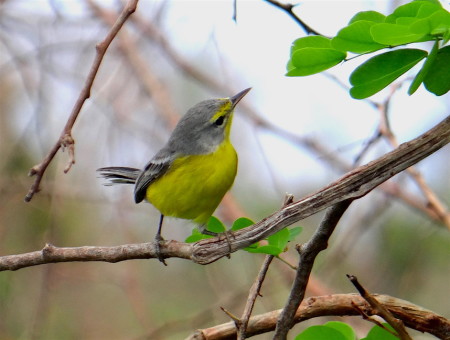
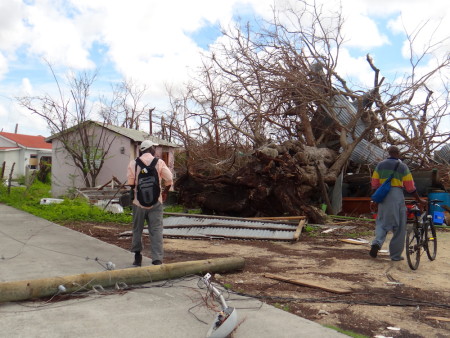
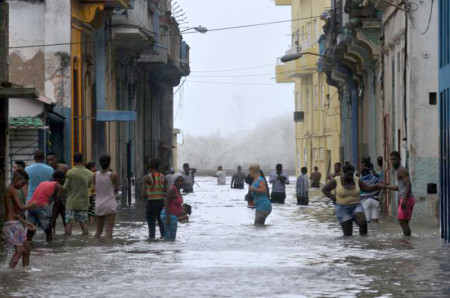
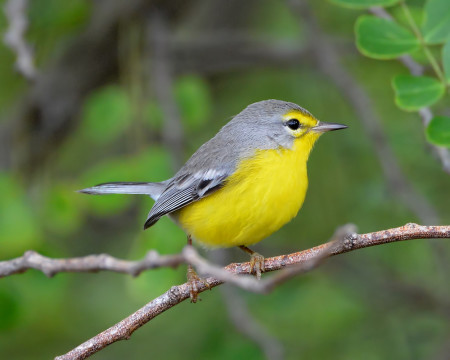
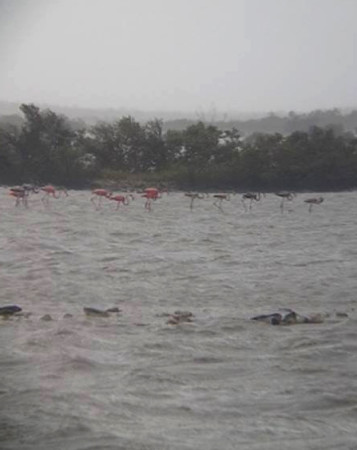
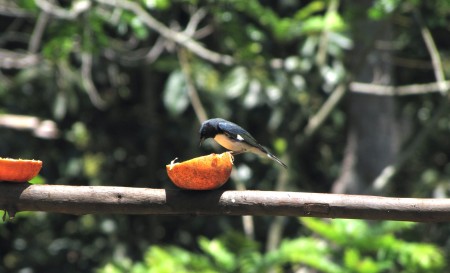
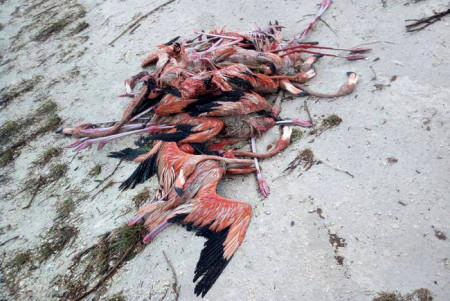
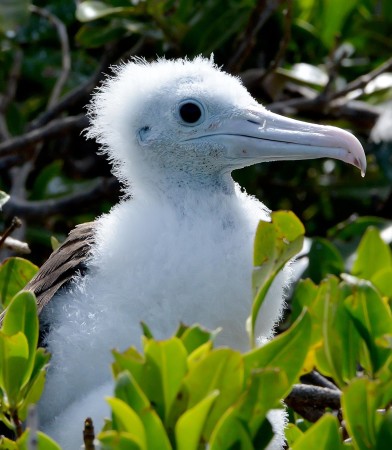
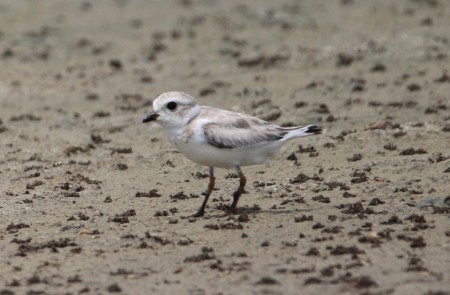
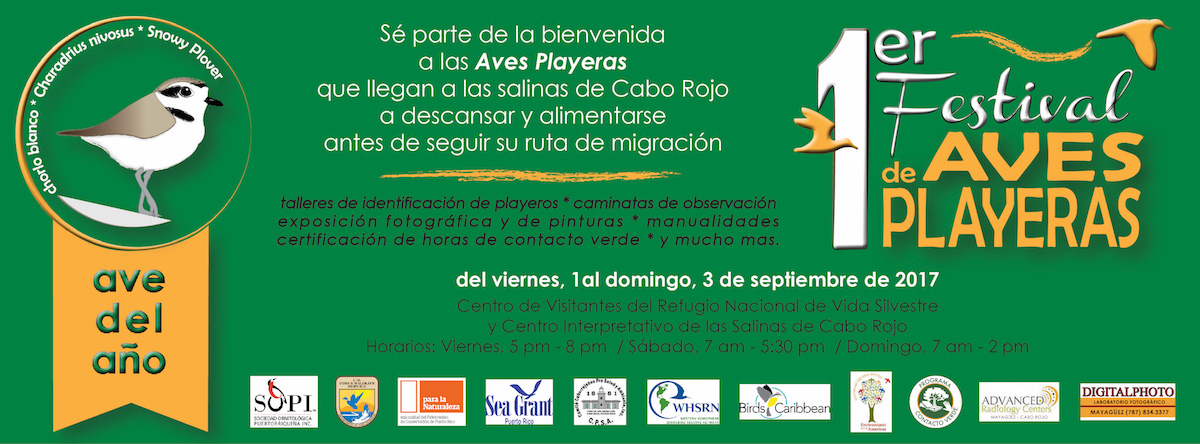
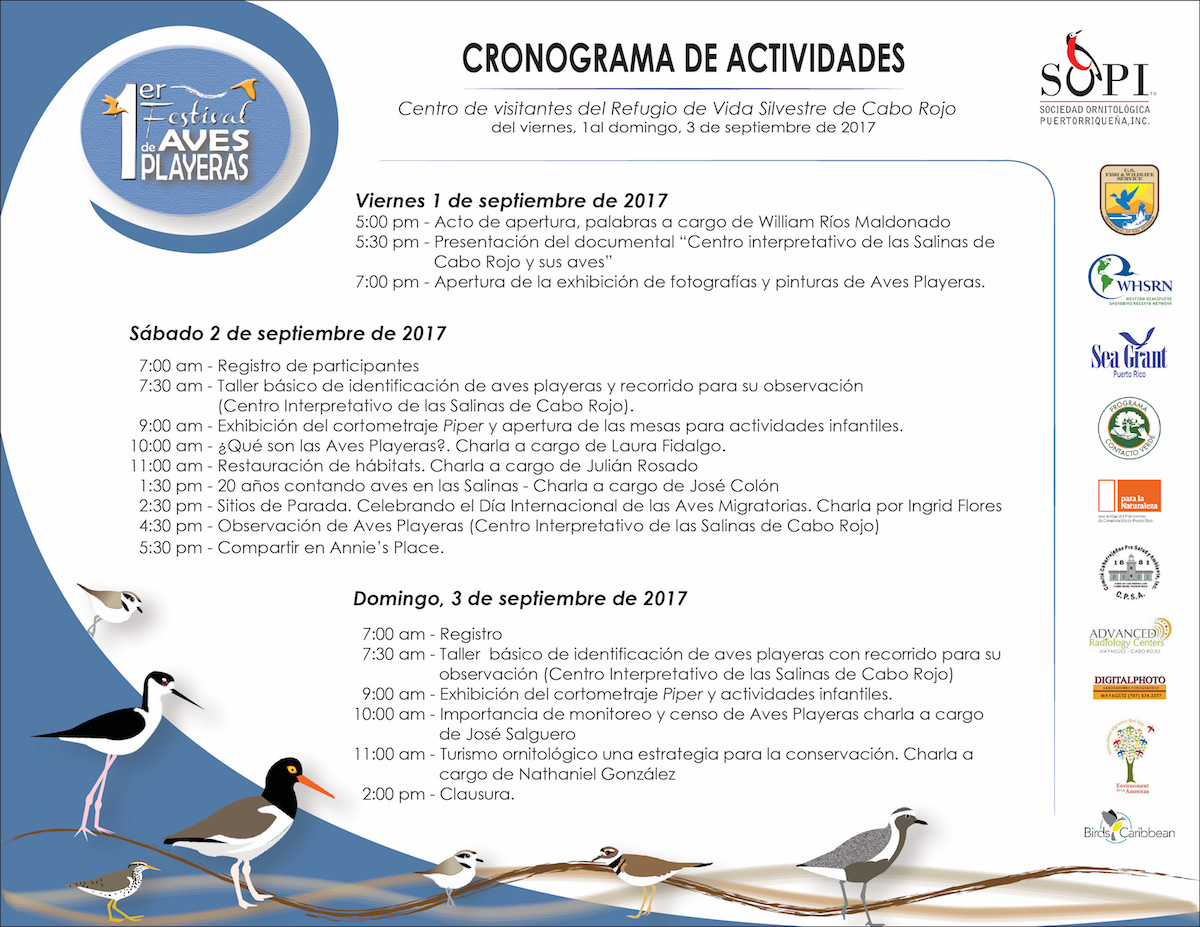
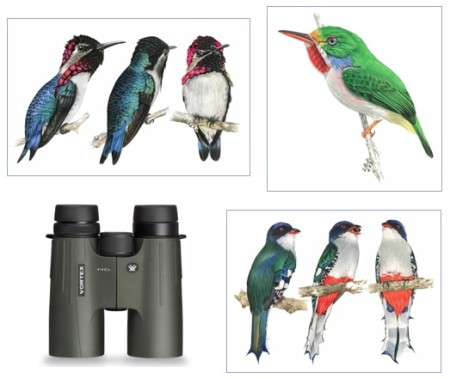
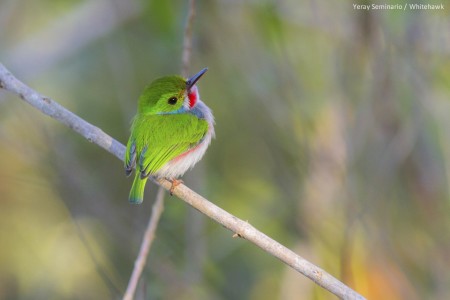
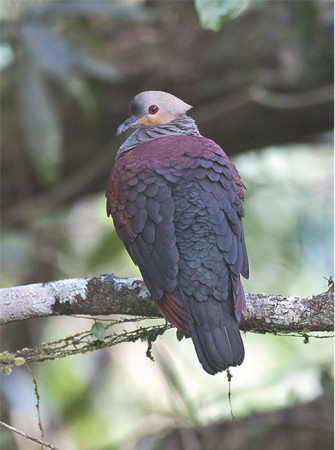
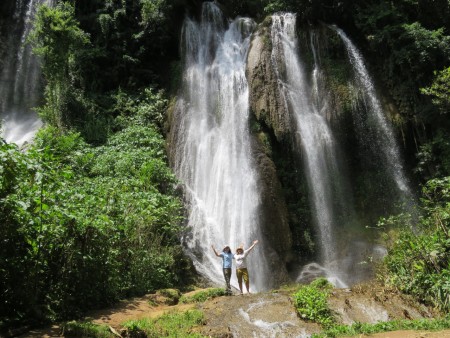



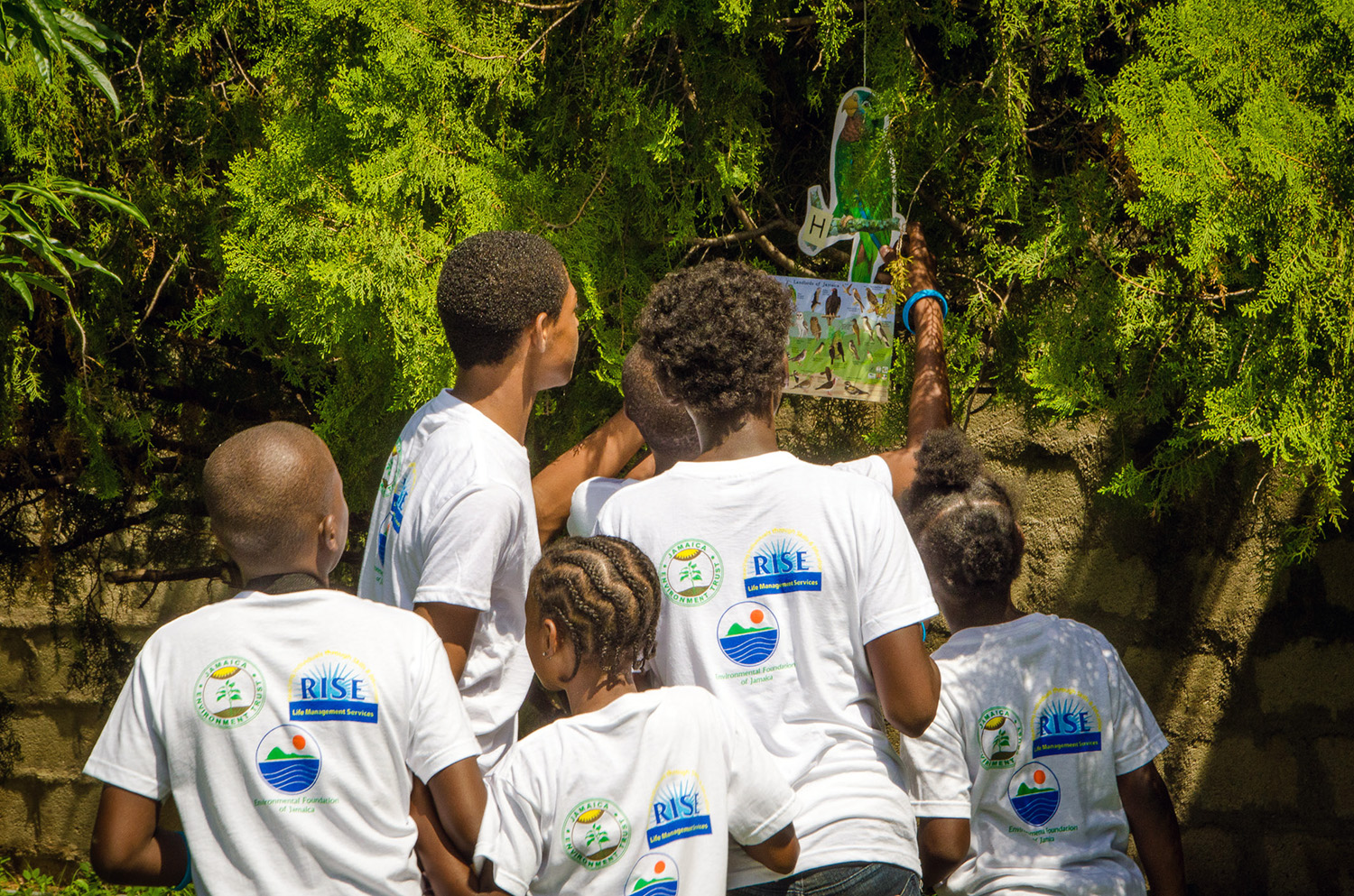
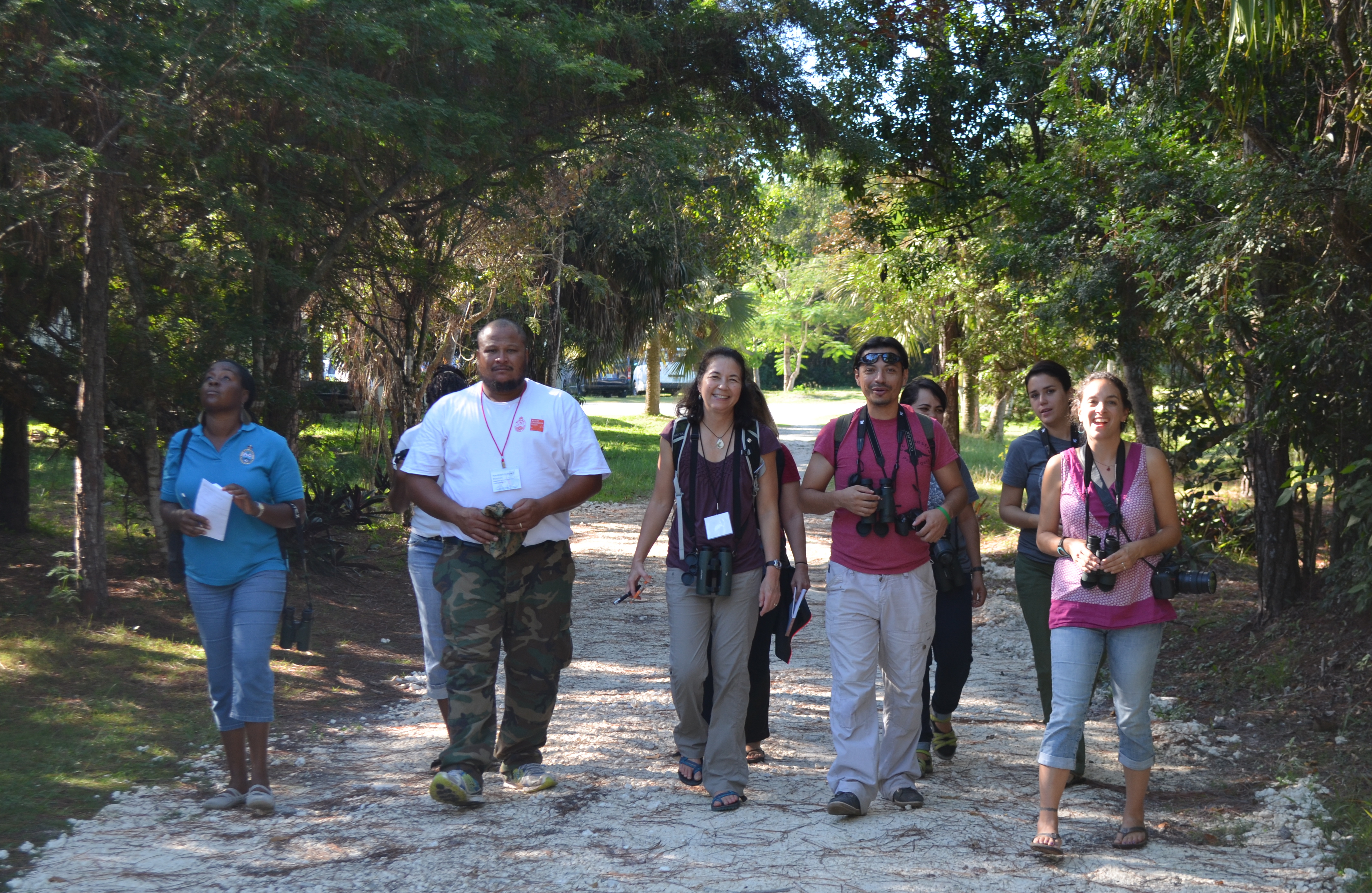
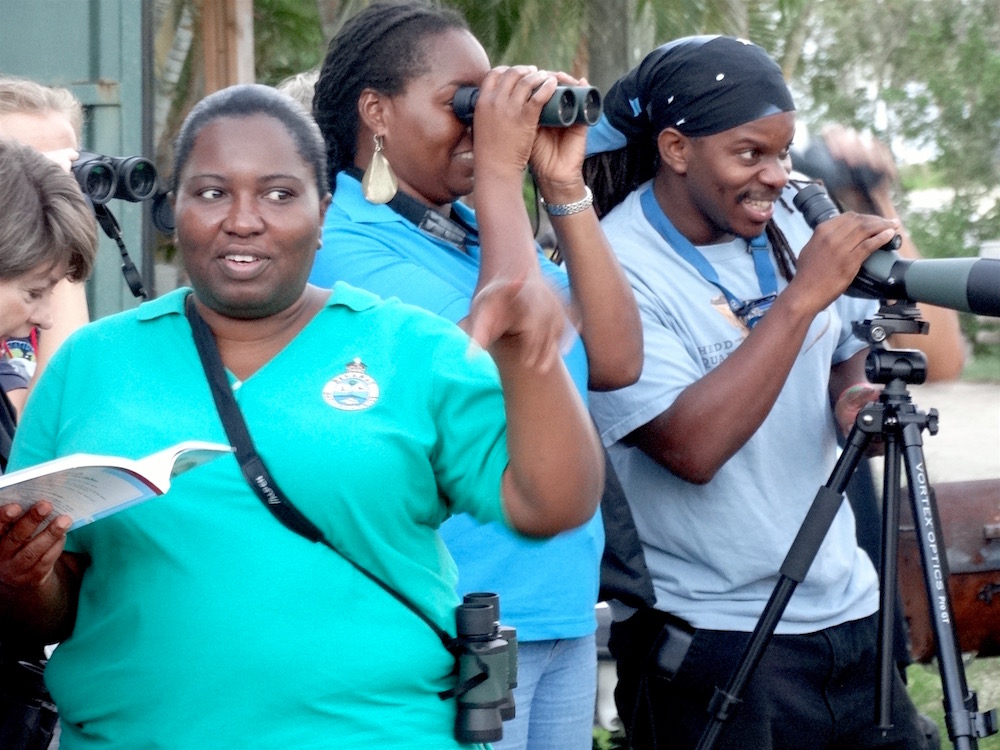
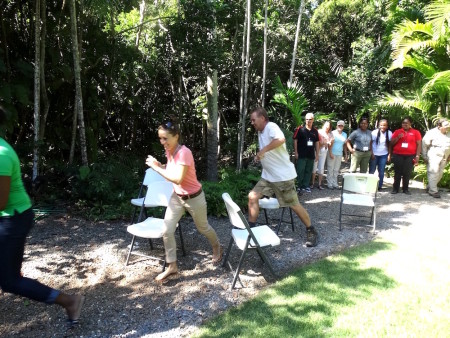
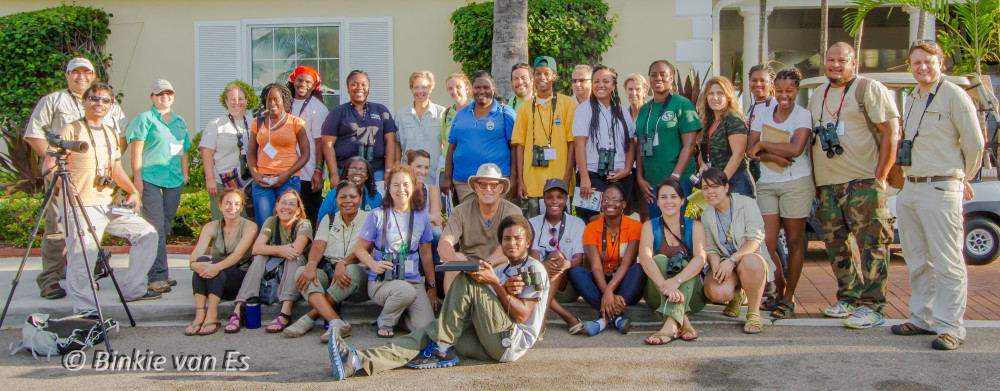
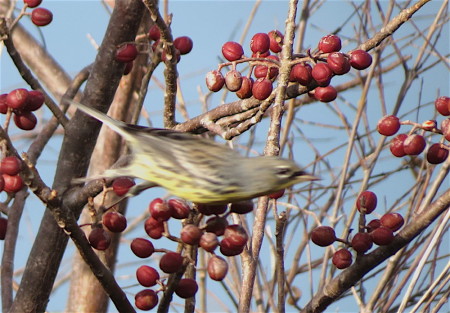
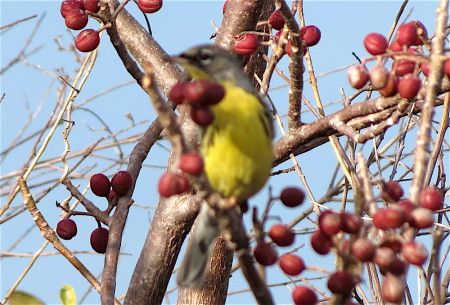
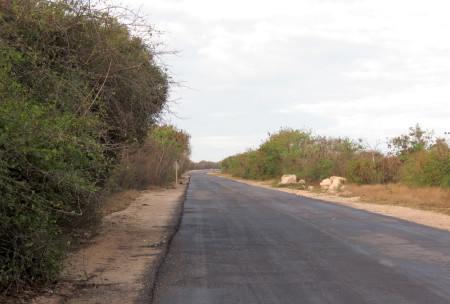
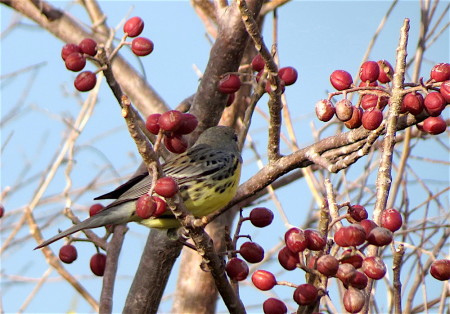
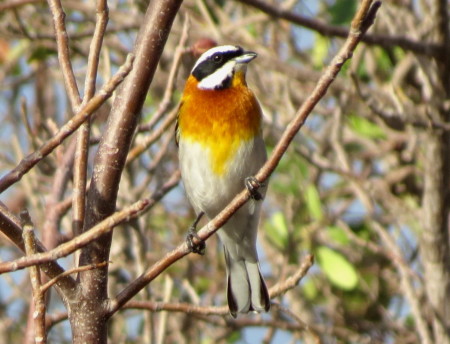
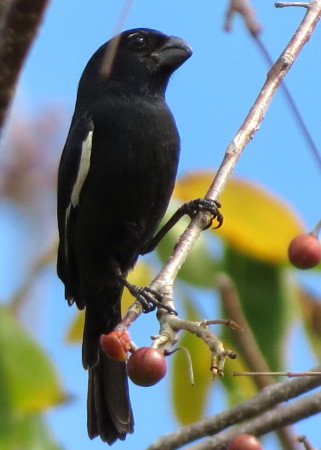
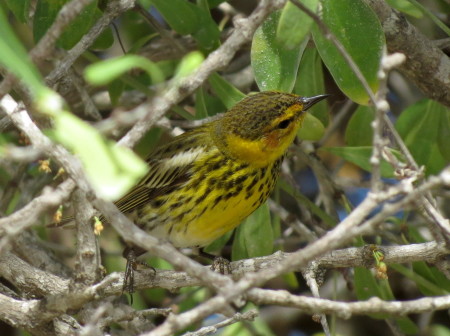
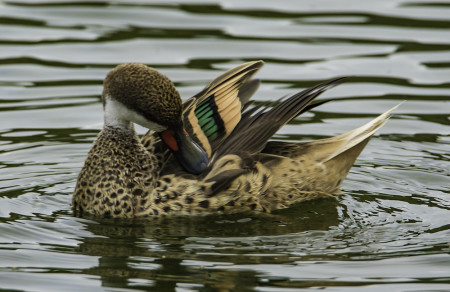
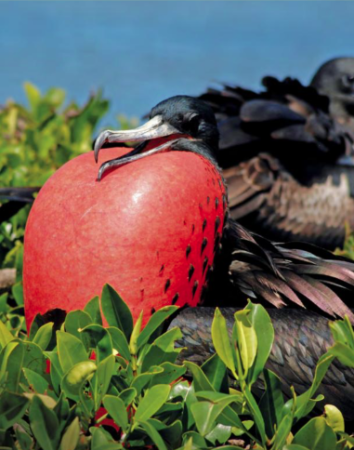

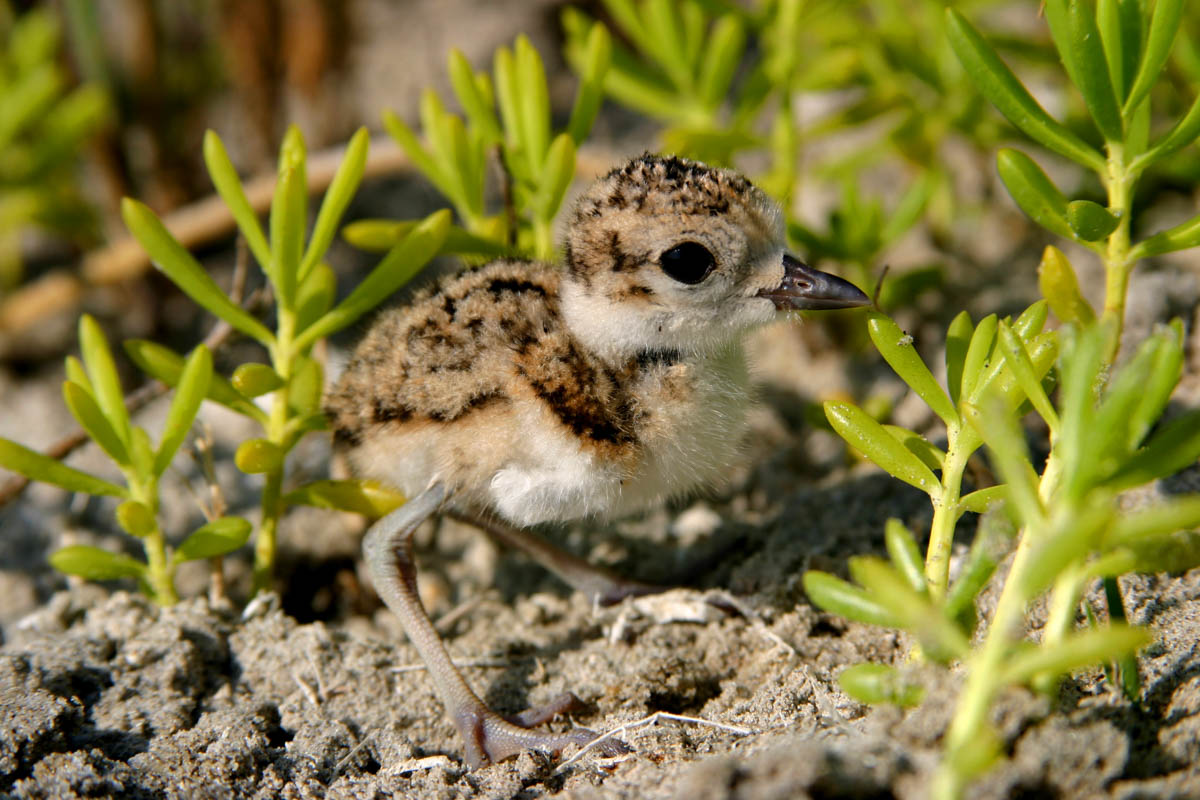
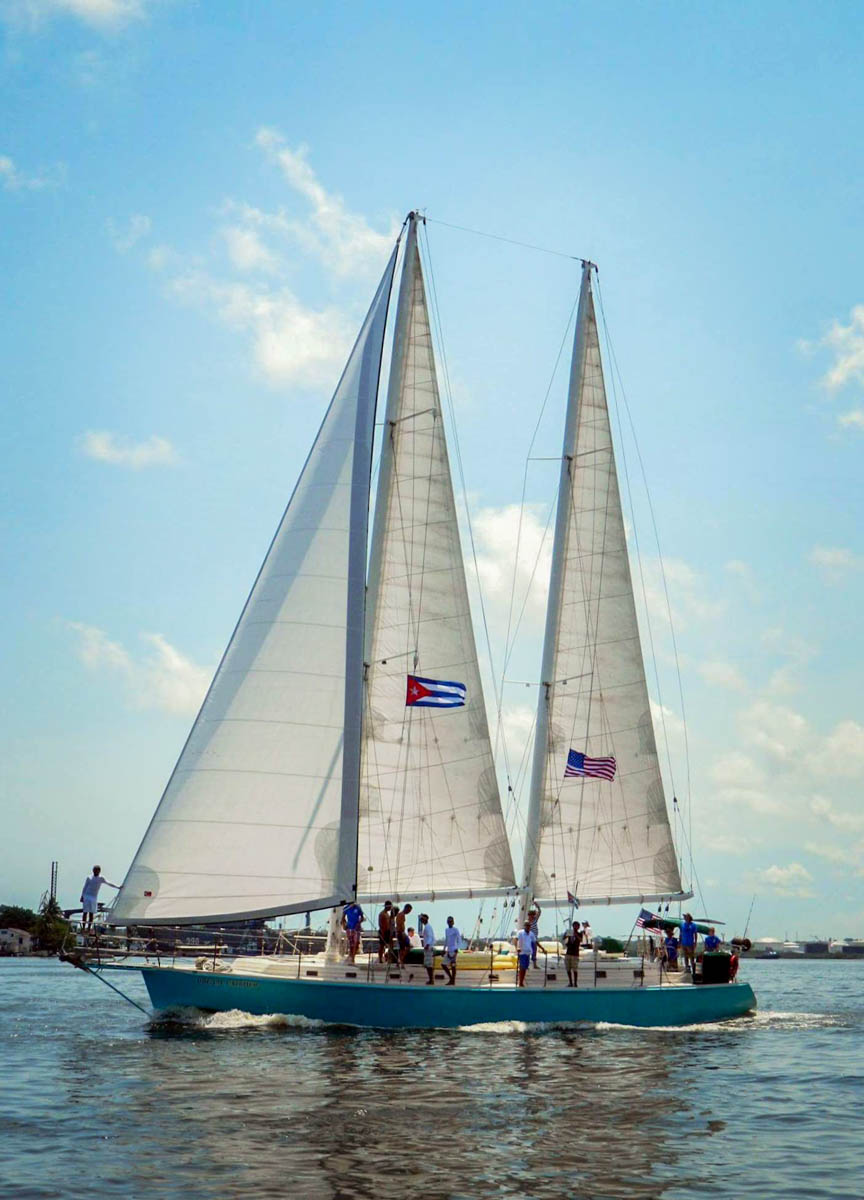

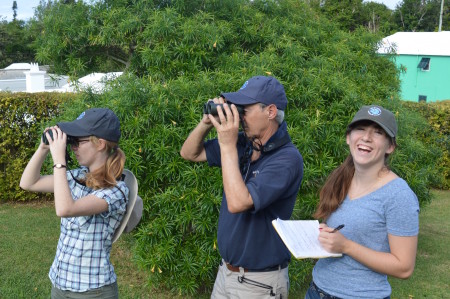

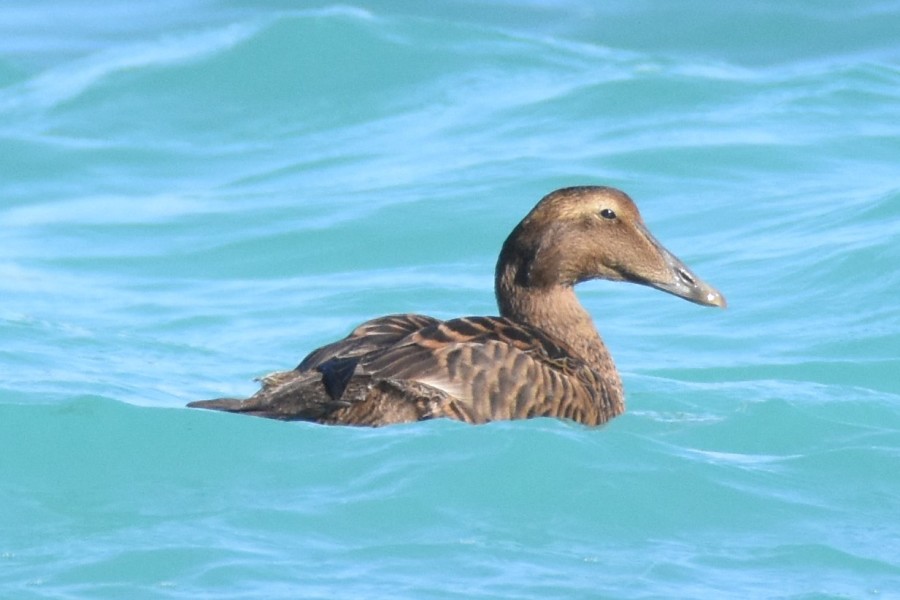
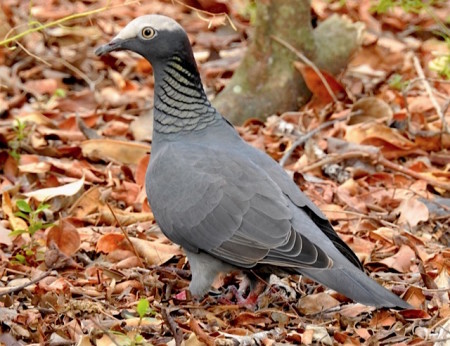
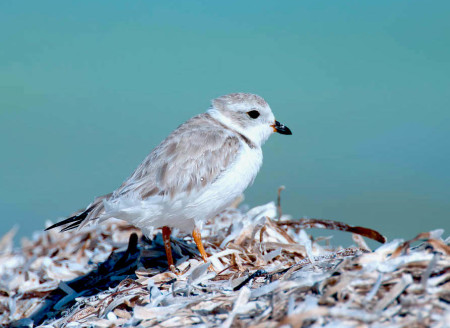
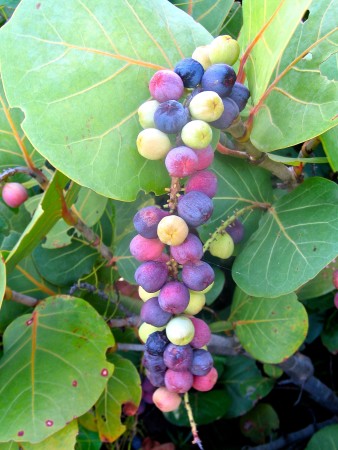
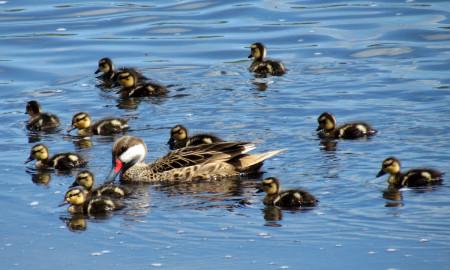
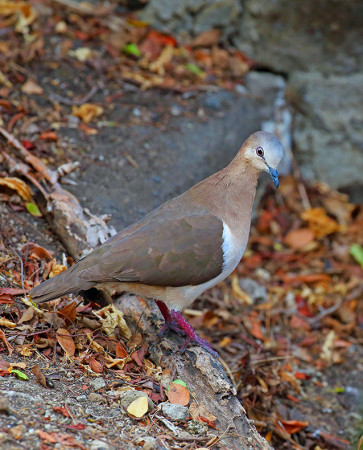
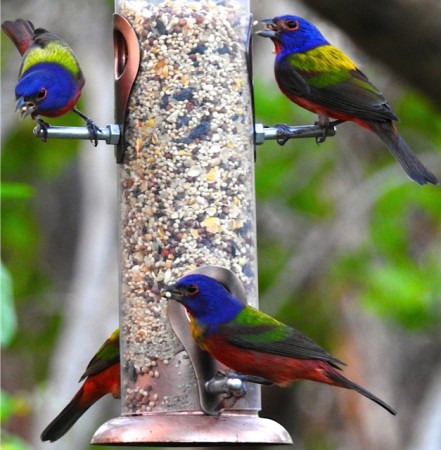
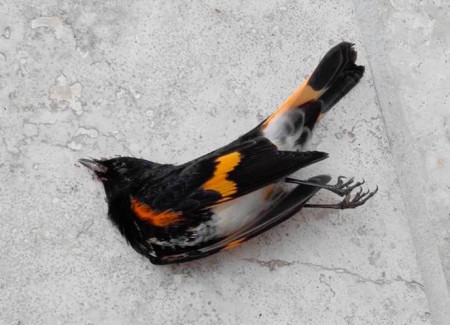
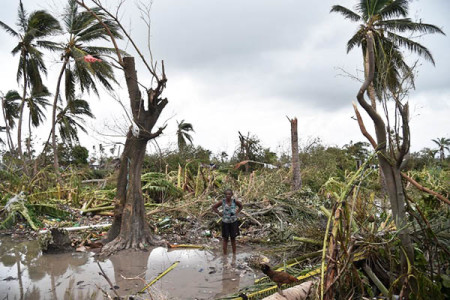
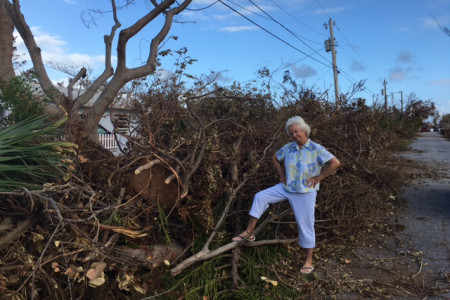
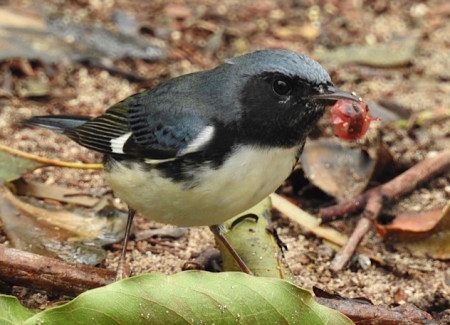
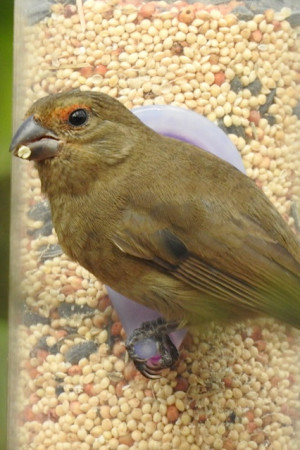
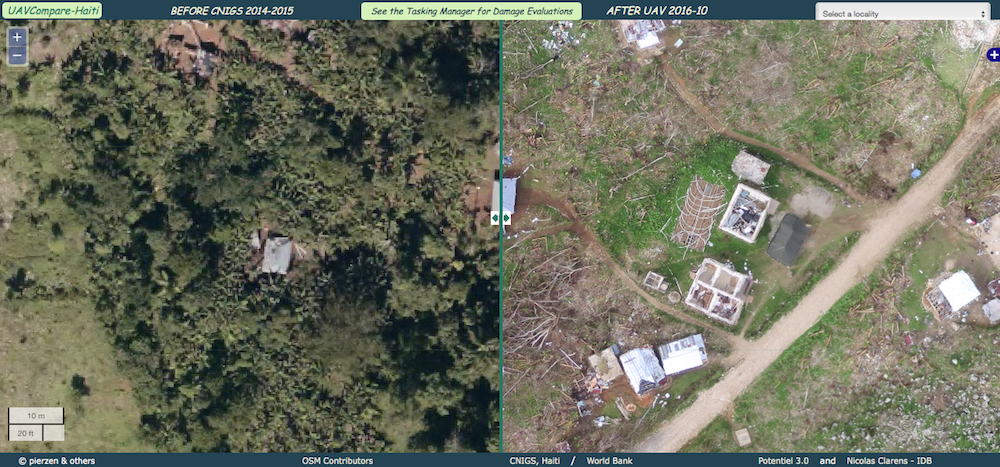
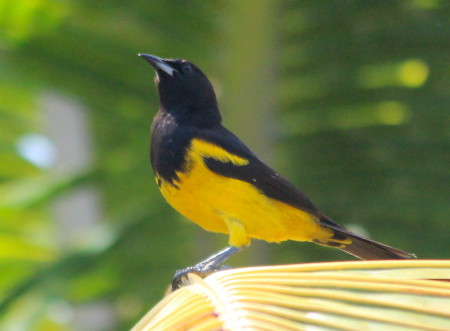
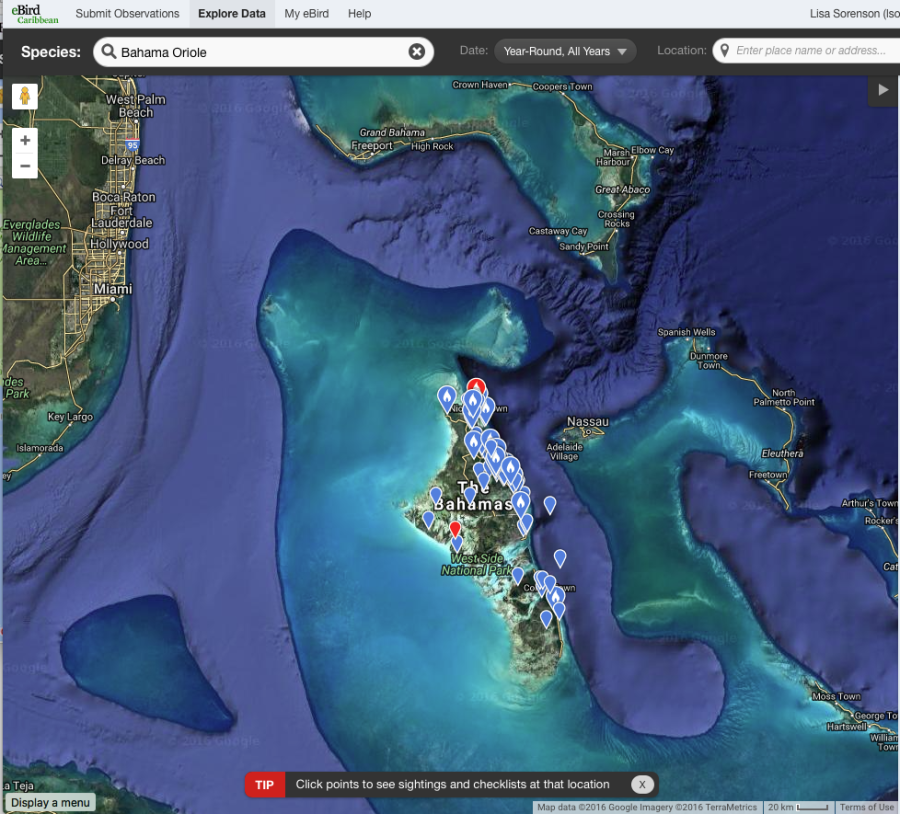
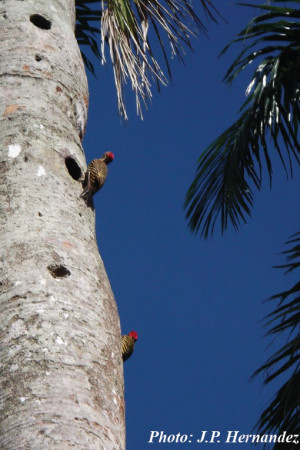
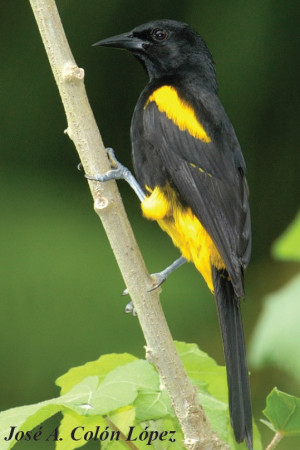
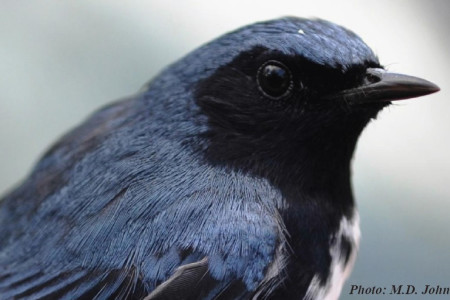
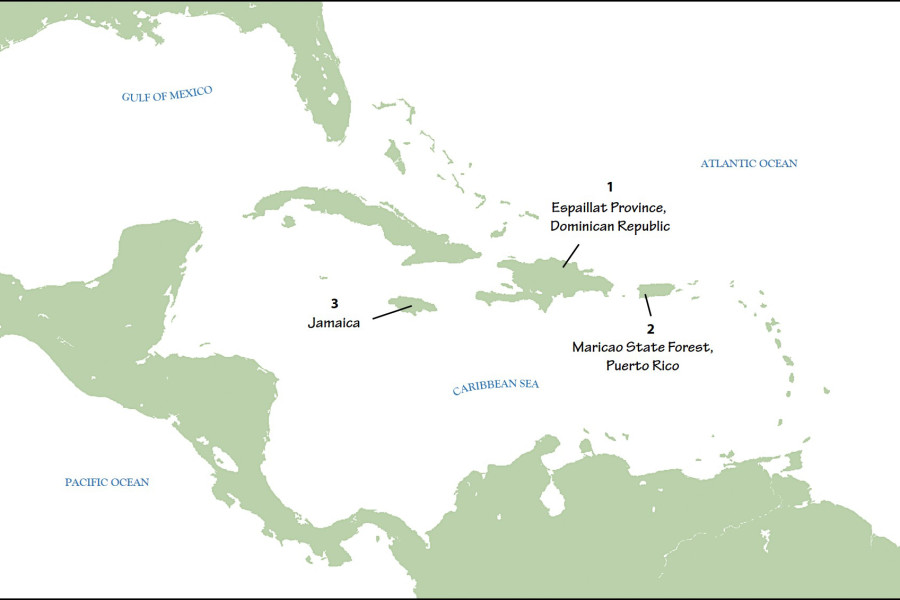
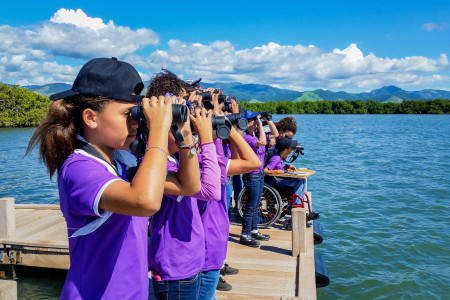
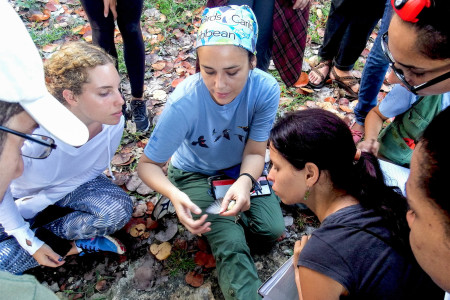
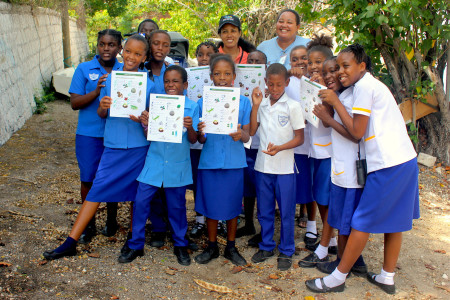
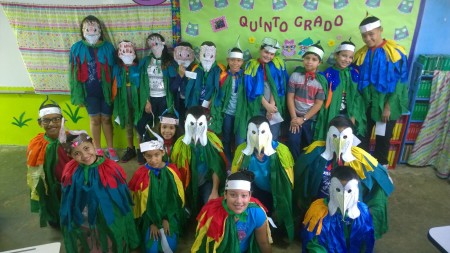
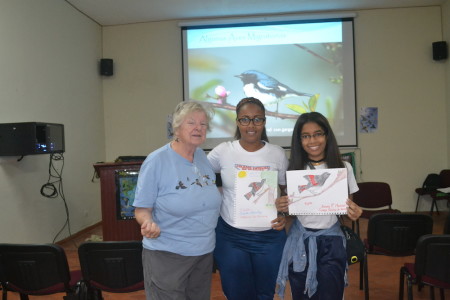
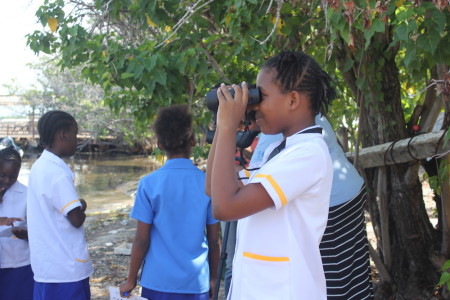
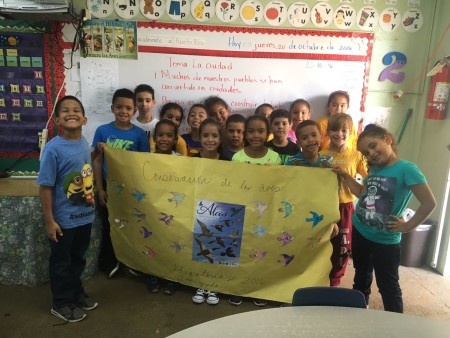
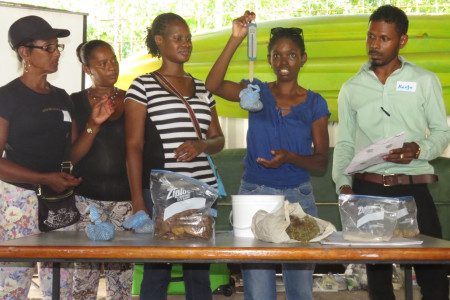
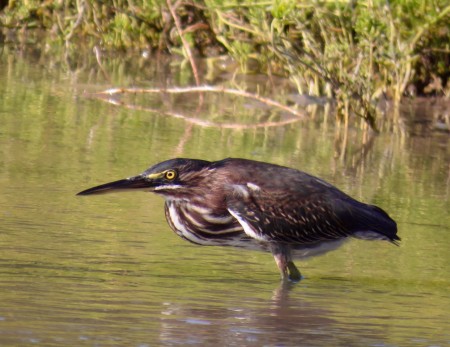
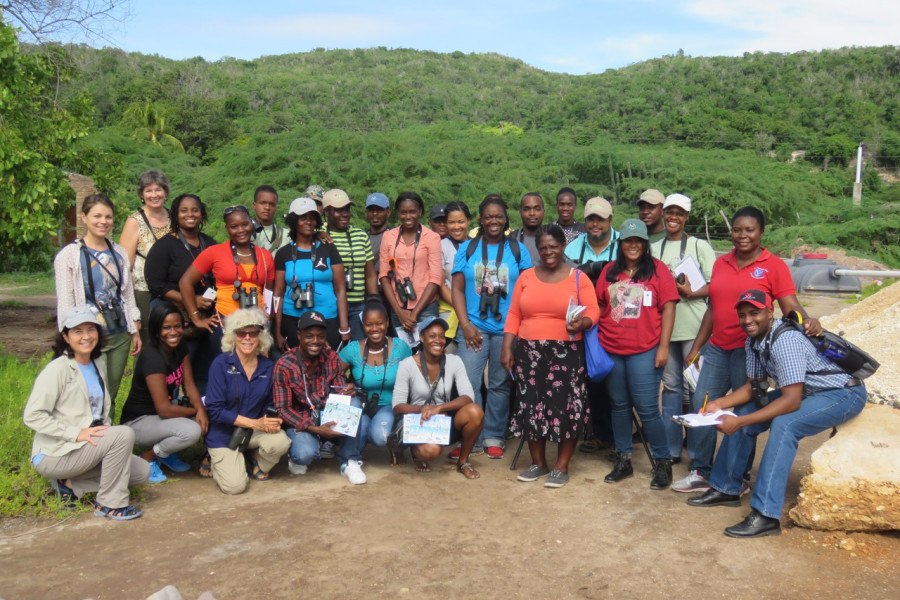
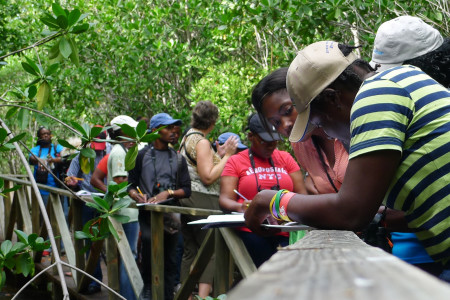
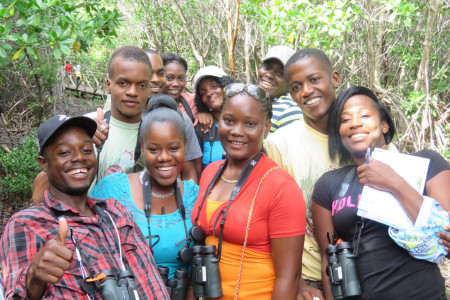
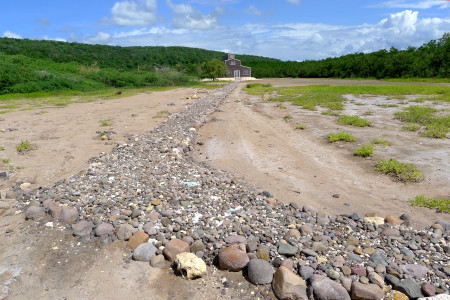
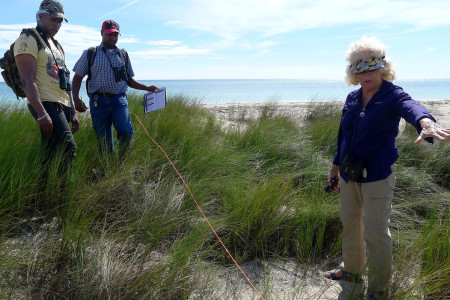
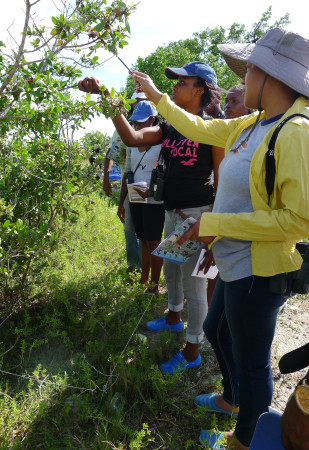
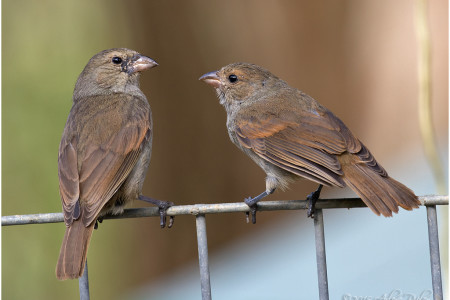
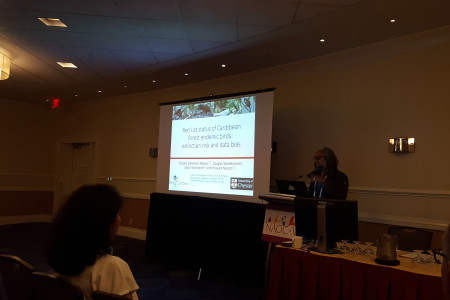
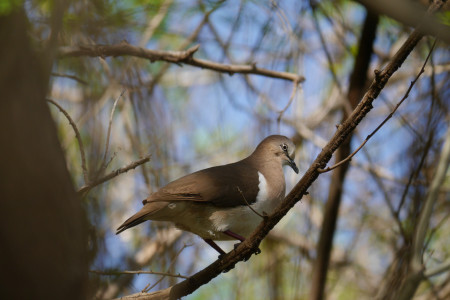
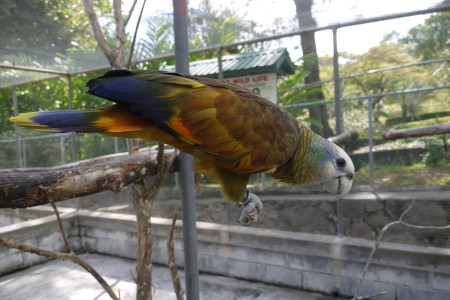
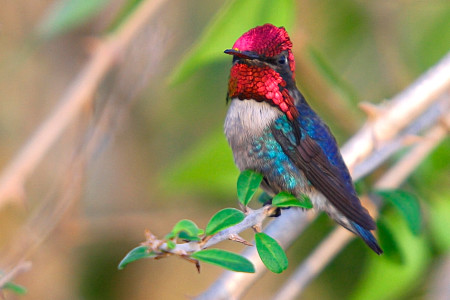
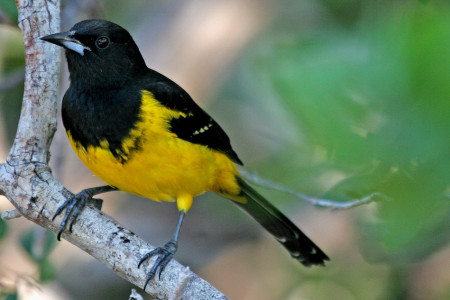
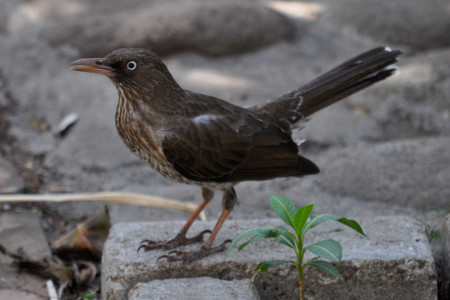
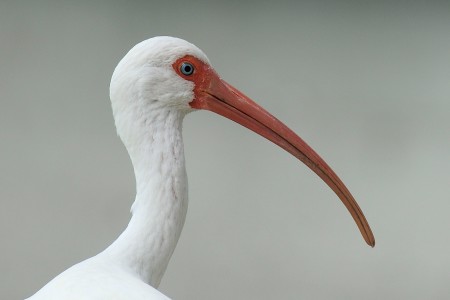
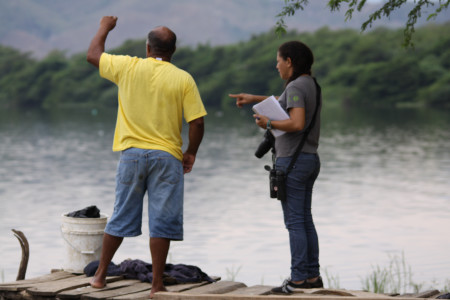
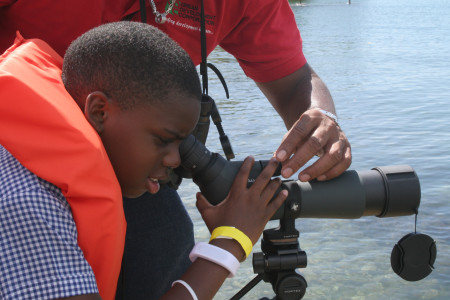
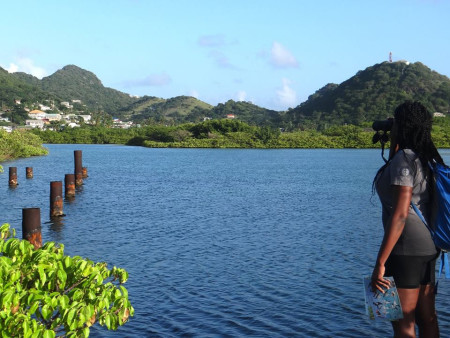
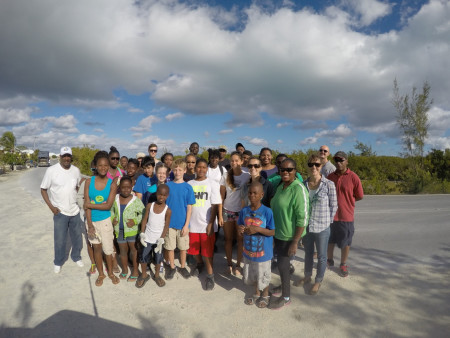
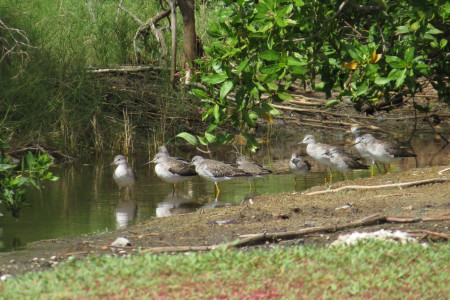
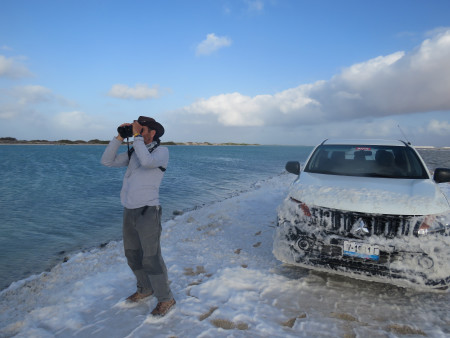
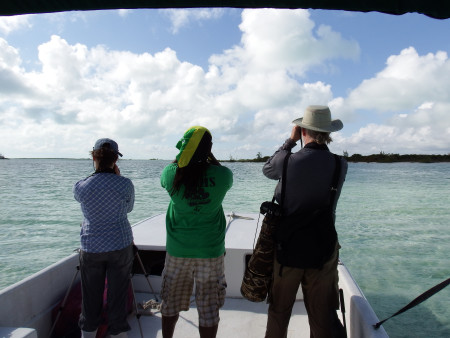
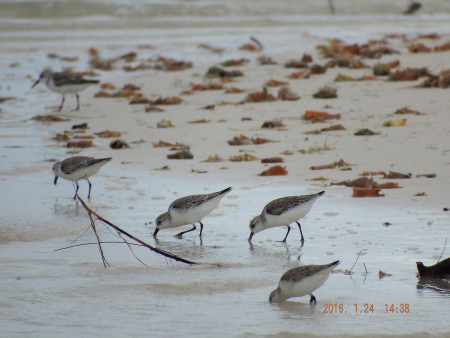
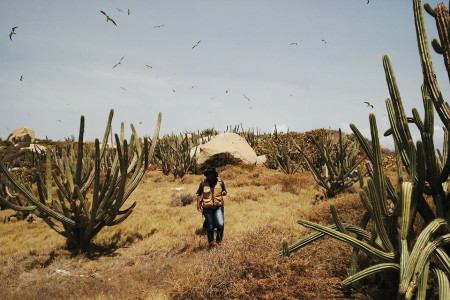
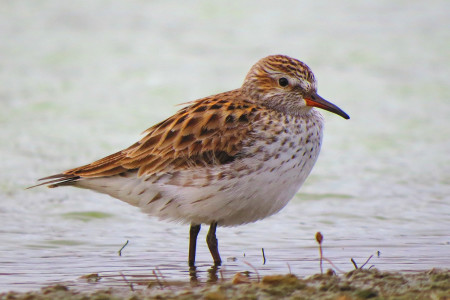
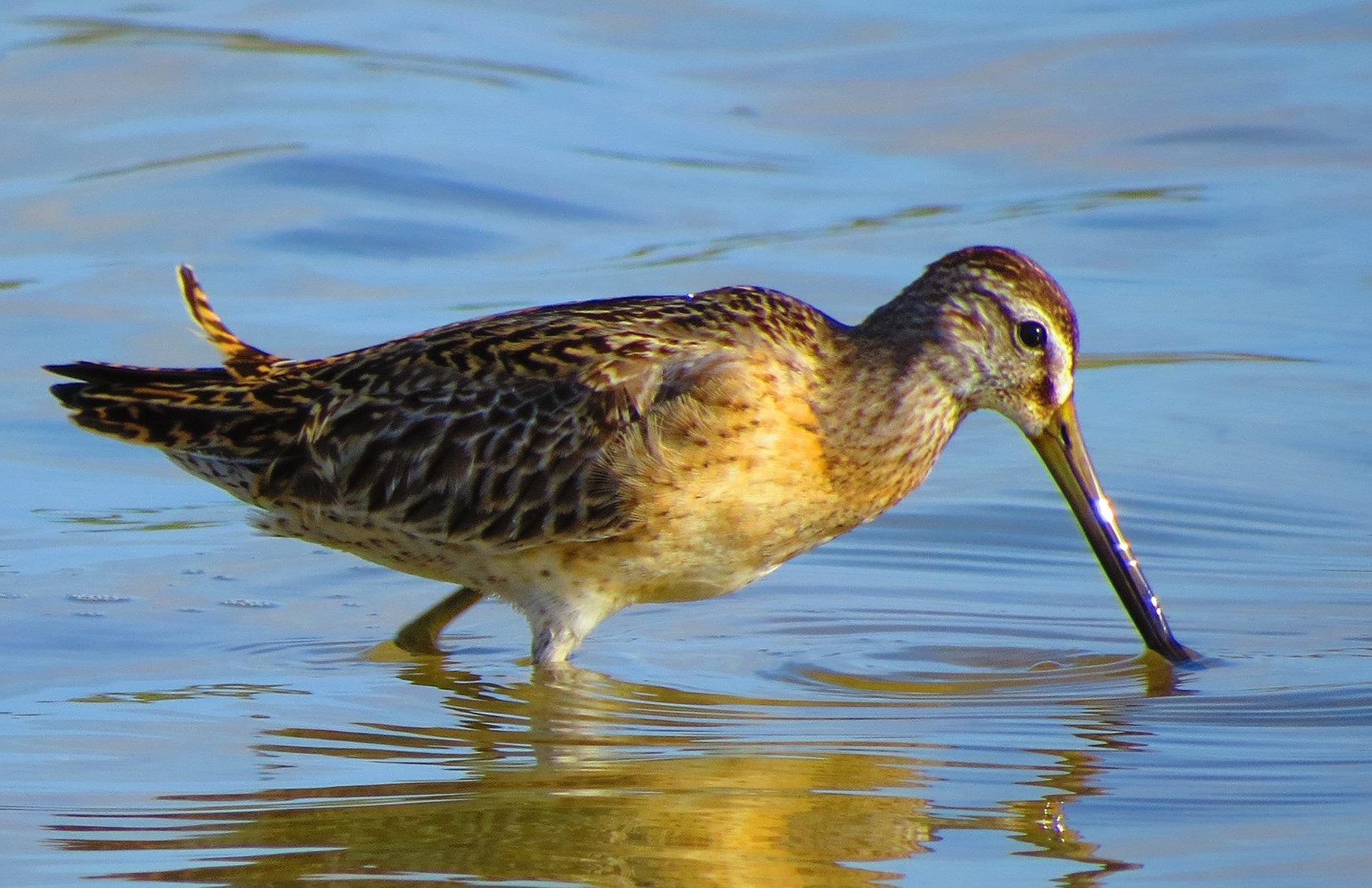
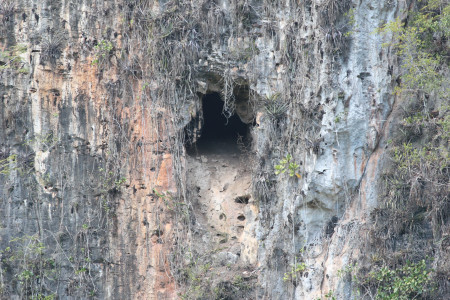
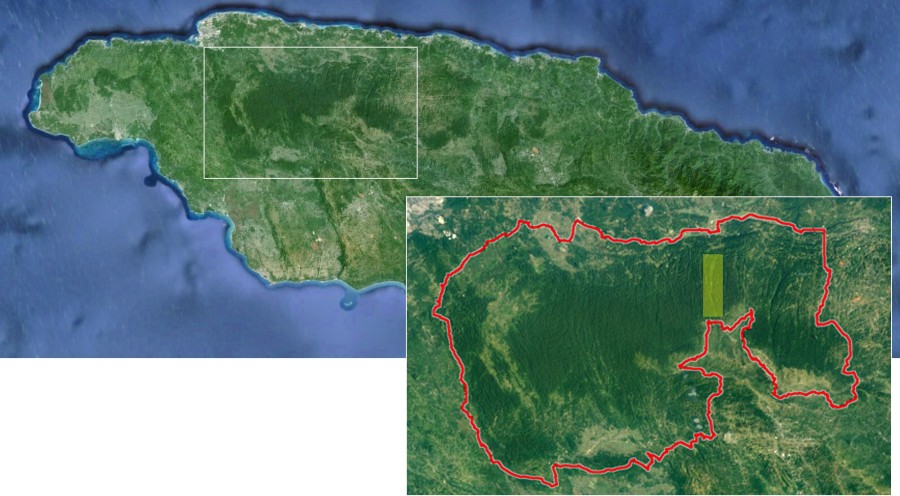
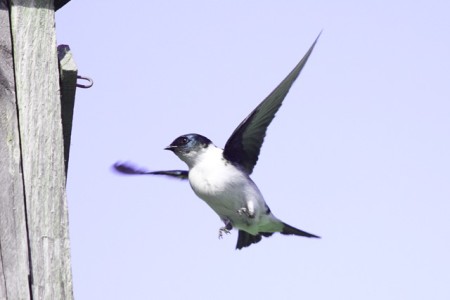
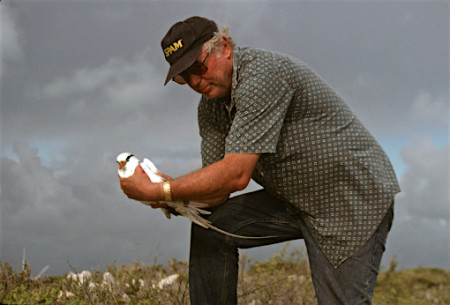
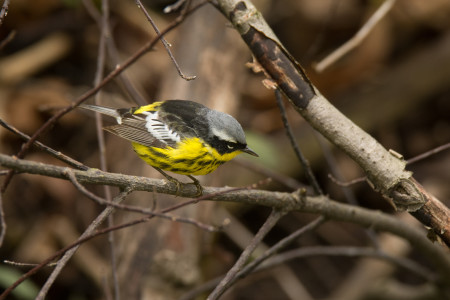
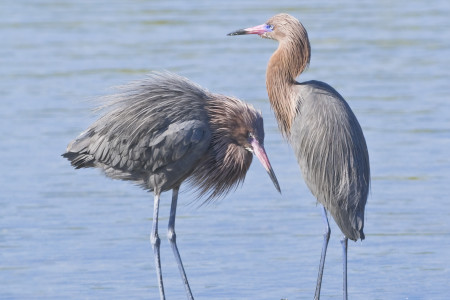
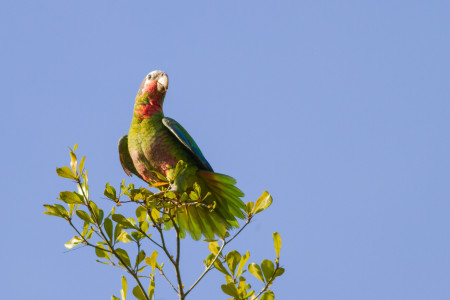
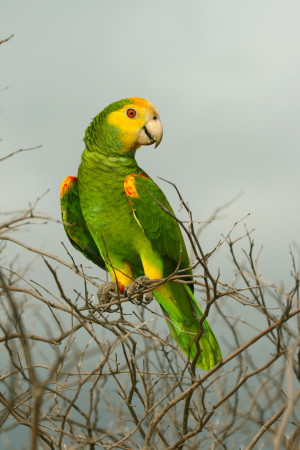
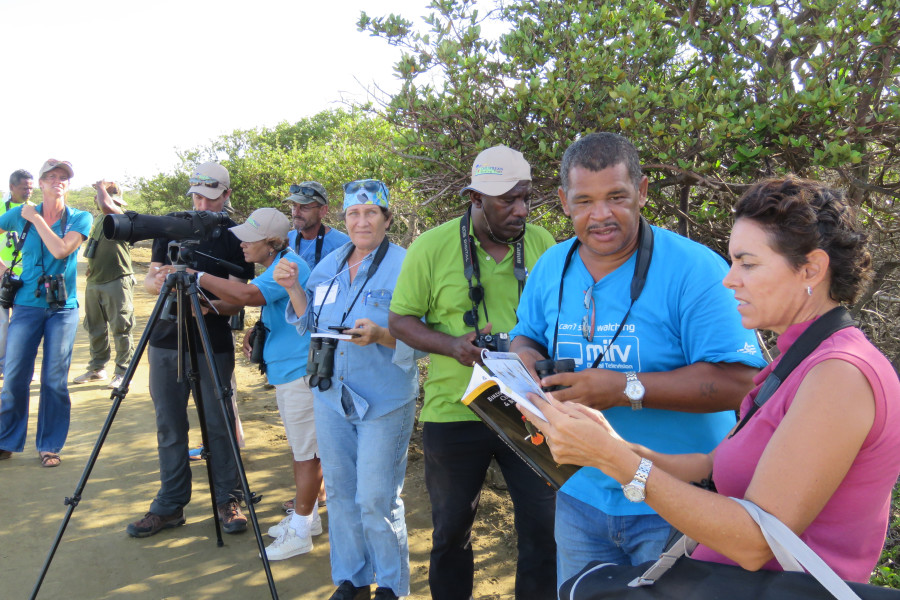
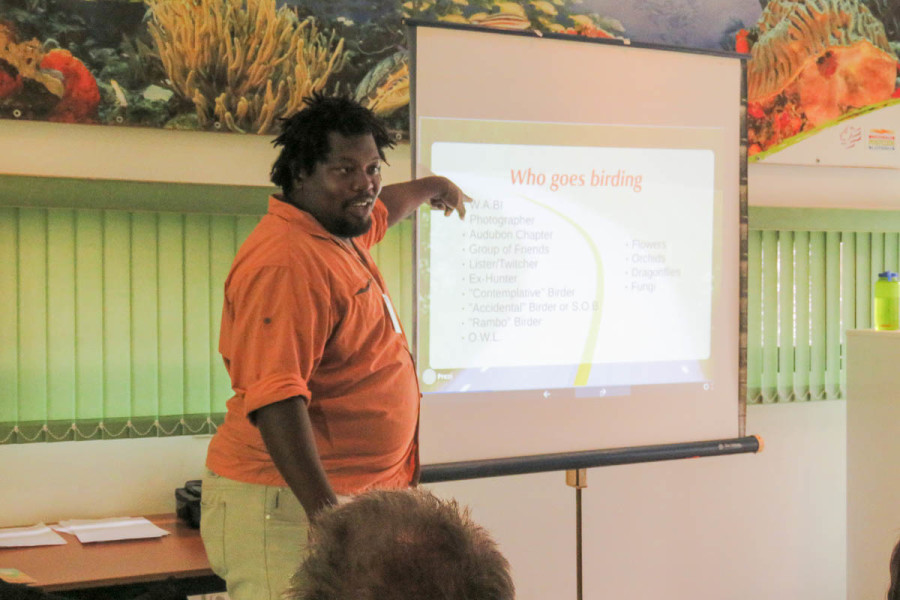
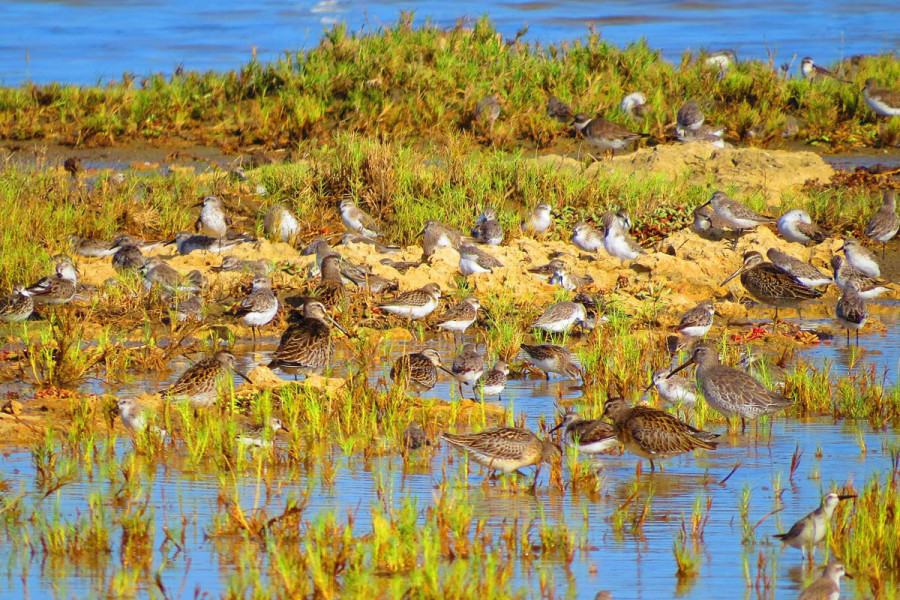
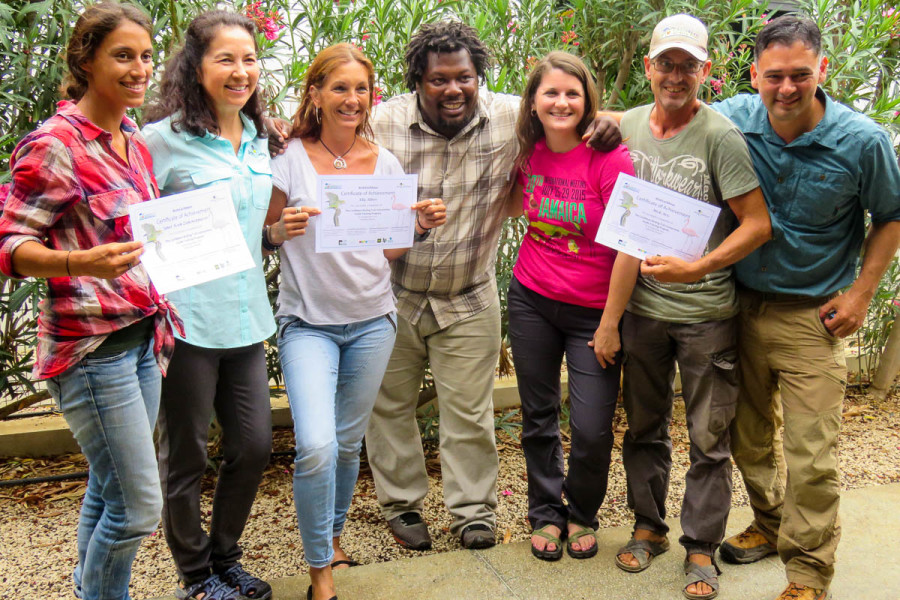
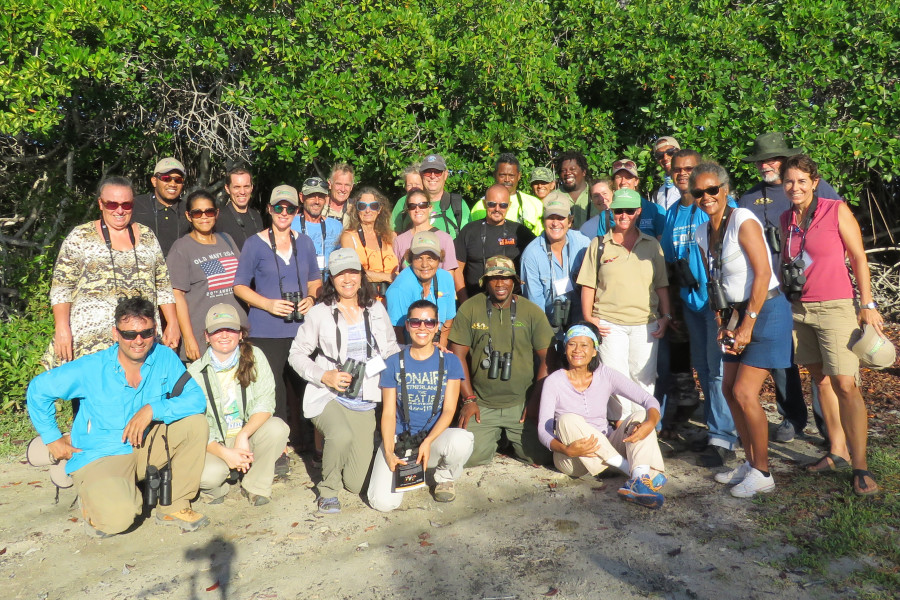
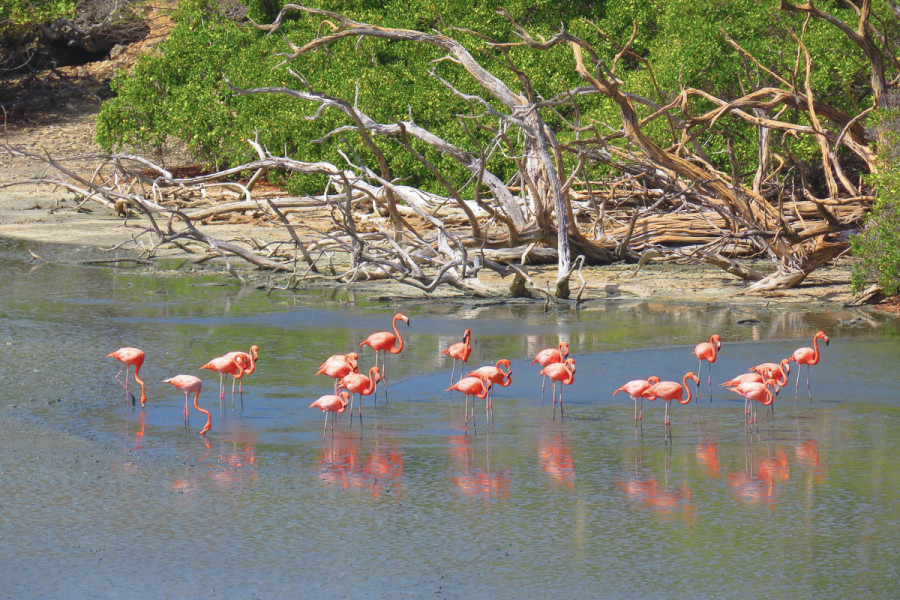
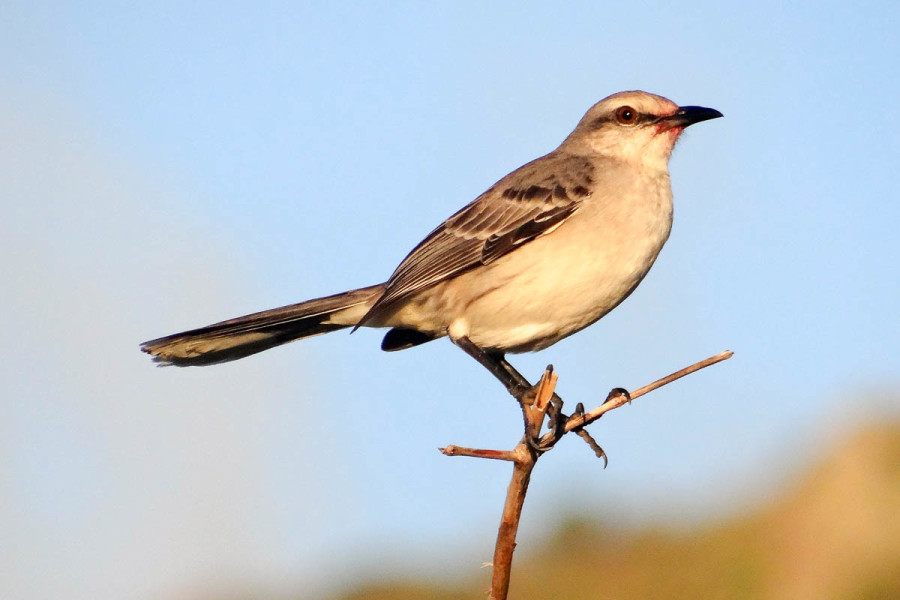
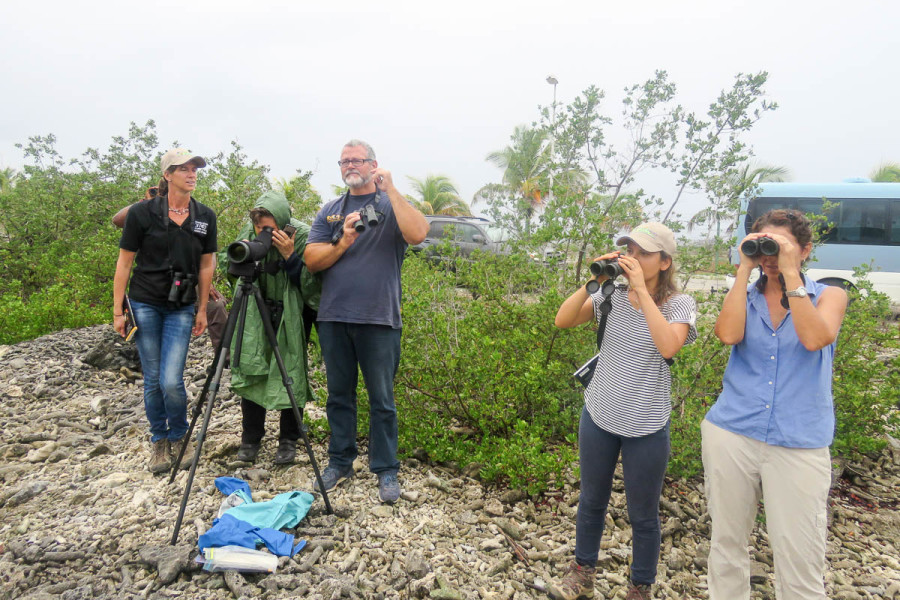
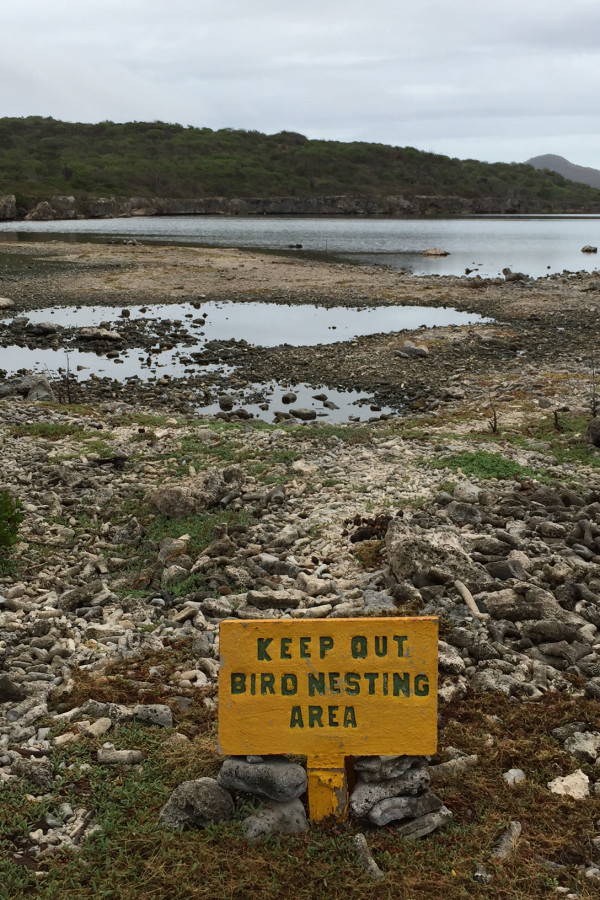
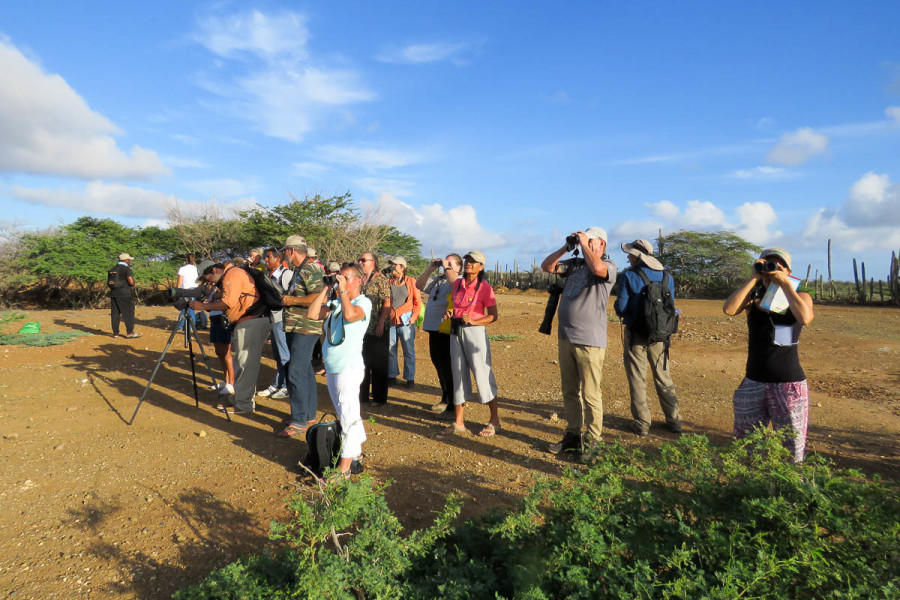
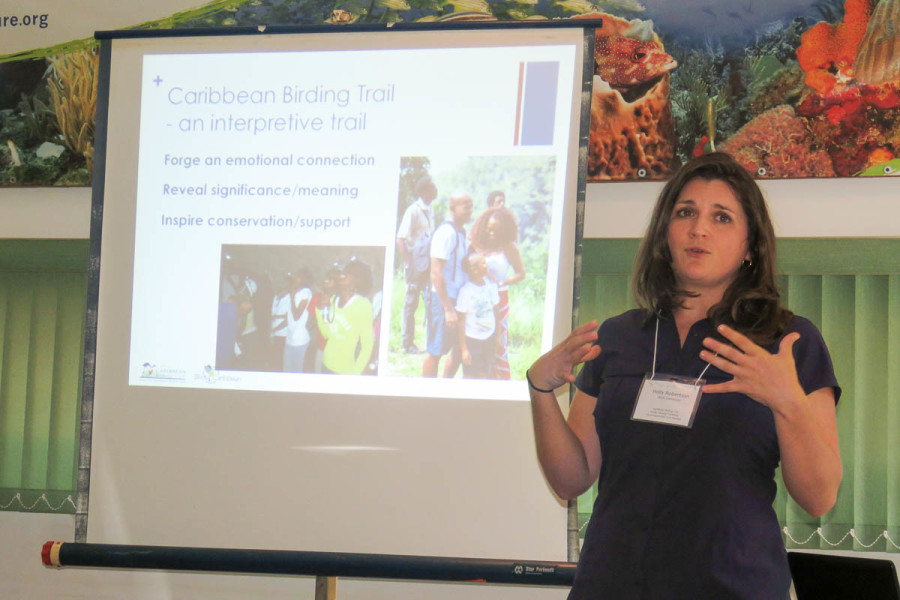
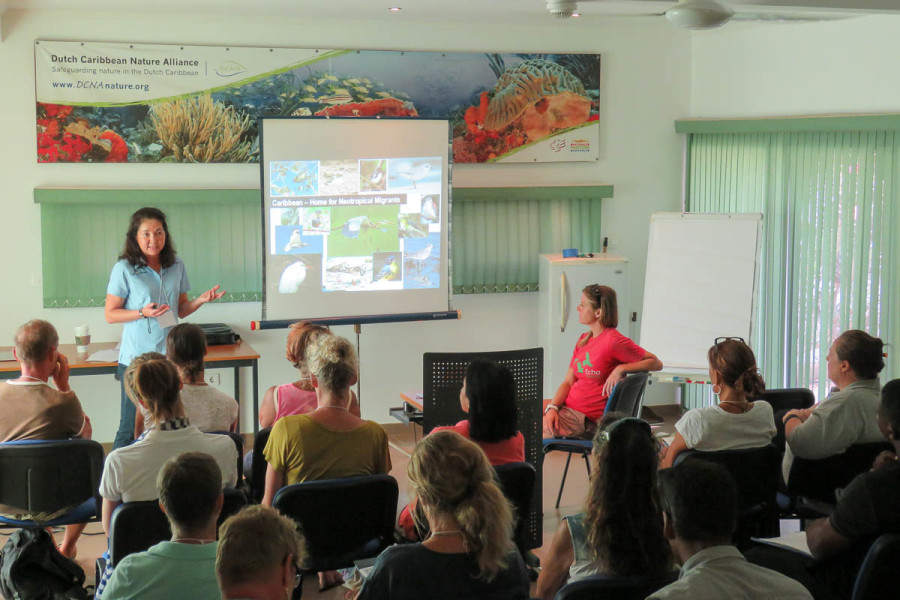
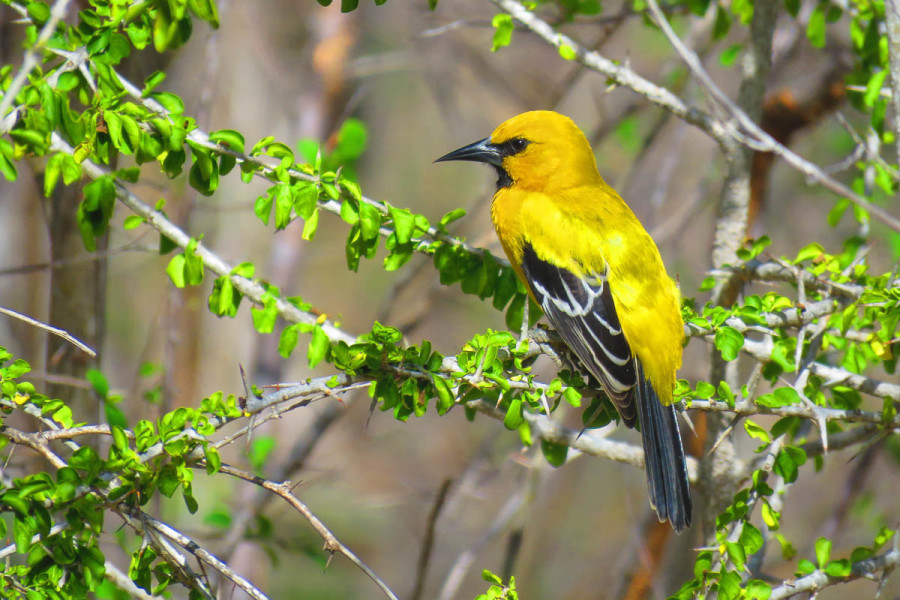
 (Note: options may be considered “rare” in certain areas and will be hidden from the default list when you enter sightings.) All previous eBird Caribbean records of Caribbean Coot have now been listed under American Coot (White-shielded). Please use this option whenever you successfully identify a Caribbean-type coot and use the American Coot (Red-shielded) option for American-type coots. For more information