Seabirds are among the most endangered of all vertebrate groups. A new crowdfunding campaign is underway to support three critical scientific projects that will drive new discoveries and aid conservation of these most amazing birds. Please help us succeed!
Roseate Tern, a seabird of conservation concern that breeds in the Caribbean. (photo by Jenny Daltry)
Three projects that will advance conservation of Caribbean seabirds via a crowdfunding grant have just been launched by BirdsCaribbean biologists. Crowdfunding is the practice of funding a project or venture by raising many small amounts of money from a large number of people, typically via the Internet. According to a study by Massolutions.com, the crowdfunding industry is on track to account for more funding in 2016 than traditional venture capital sources (wealthy investors or financial institutions)! The websites, Kickstarter or Indiegogo, are two of the most well-known crowdsourcing websites, but there are many other sites.
Experiment.com is a crowdfunding site that focuses on promoting “science for the people, by the people.” It recently launched an initiative focused on seabirds, a group of wildlife urgently in need of science-based conservation. The call went out to BirdsCaribbean’s Seabird Working Group to consider projects. Three Caribbean seabird projects were submitted, accepted and are now ready to receive your backing!
Seabird colony in the northern Bahamas. (photo by Will Mackin).
This project will seek the causes behind the disappearance of thousands of breeding seabirds in the Northern Bahamas. The project leaders, Will Mackin, Ann Sutton, Margo Zdravkovic, Lisa Sorenson, and Scott Johnson, will use surveys and mark-recapture techniques to find out whether the missing seabirds moved, suffered nesting failure due to invasive predators, or changed their behavior due to disturbance…or some combination of the above. The project builds on work underway by Conservian, an NGO which began a new monitoring and habitat restoration program for coastal birds in the Bahamas in 2016.
The endangered Diablotin, or Black-Capped Petrel, is the focus of this project. Françoise Benjamin and Juan Carlos Martínez-Sánchez seek to reduce collisions of petrels at communication towers along their breeding colonies in Southern Haiti, a threat brought to light by the International Black-capped Petrel Conservation Group. They will map and characterize communication towers located along known flying corridors and colonies of petrels, record bird collisions through personal observations and interviews, then take their findings to government and industry in order to recommend solutions to this concerning source of mortality.
Wayne Smart and Natalia Collier want to determine the causes of documented declines in southern Grenadine seabird populations. In specific, they will look at how human and rat predation affects trends in six different seabird populations located north of Grenada. The findings of this project will be summarized, and made available to the public, and government agencies, in order to recommend and stimulate conservation actions.
Each of these projects has a specific fundraising goal. With Experiment.com, as with most crowdfunding sites, funding is all-or-nothing (that is, pledges by backers are collected only if the fundraising goal is achieved). Experiment.com has designated this initiative as a funding “challenge,” in that it will award additional funds to the three projects (of 15 total seabird projects) that have received the greatest number of backers by 6 PM on August 9th.
So don’t delay – Please support one or all of these worthy projects! Small donations from many people are most welcome as this will help all of us to be in the top 3 of seabird supported projects and win extra funds.
We thank you in advance for your support!
Will Mackin, Ann Sutton, Margo Zdravkovic, Lisa Sorenson, Scott Johnson, Françoise Benjamin, Juan Carlos Martínez-Sánchez, Wayne Smart and Natalia Collier
Members of BirdsCaribbean Seabird Working Group
p.s. Please share this post with your networks, colleagues and friends!
A peek into the sometimes elusive world of the Caribbean’s Piping Plover and the challenges of finding them on their wintering grounds. Elise Elliott-Smith reports Caribbean results for the 2016 International Piping Plover Census, held every 5 years.
A flock of Piping Plovers and a Sanderling found in South Caicos, Turks and Caicos Islands. (photo by Craig Watson).
I’ll never forget the excitement, relief, and wonder I felt in seeing a group of ten Piping Plovers (Charadrius melodus) on Little Water Cay, Turks and Caicos Islands. It was January 27, our first day of the 2016 International Piping Plover Census, and I had been more than a little anxious that we might not see any at all. I had made contact with Eric Salamanca of the Turks and Caicos Department of the Environment and Coastal Resources (DECR) through BirdsCaribbean, and with the assistance of the US Fish and Wildlife Service (USFWS) we successfully launched the first ever Piping Plover census in the Turks and Caicos Islands. Many people helped make this possible although it had been challenging getting the necessary funding, permits, and planning. Aerial images of the habitat looked good but there were only a handful of reports of only one or two Piping Plover in TCI, and more than one person had discouraged me from trying to survey there.
Elise Elliott-Smith, Craig Watson and Eric Salamanca count Piping Plovers on Fort George Cay, Turks and Caicos Islands. (photo by Caleb Spiegel).
Nevertheless, against all odds our census confirmed that these little birds had successfully flown over one thousand miles from their North American breeding grounds to land here on Little Water Cay, an island inhabited only by the critically endangered Turks and Caicos Iguana and other native wildlife. As we excitedly set up our scopes, the Piping Plovers quietly foraged on a little sand-spit near a couple of American Oystercatchers and a small fishing boat.
Piping Plovers in the Joulter Cays, Bahamas. (photo by Walker Golder).
Piping Plover are a threatened/ endangered shorebird that breed in North America along the Atlantic Coast (Charadrius melodus melodus) and the interior’s Great Lakes and Great Plains regions (Charadrius melodus circumcinctus) of Canada and the United States. They are better studied on their breeding grounds, and their tendency to disperse across their winter grounds makes monitoring and conservation efforts quite a challenge. In order to understand their distribution and track changes in populations, the International Piping Plover Census has been conducted every five years since 1991 across the bird’s winter and breeding range. Counts are always lower during winter, and we suspected we were missing birds outside the U.S. However, we didn’t have an inkling of the importance of the Caribbean to this at-risk species until we found over 400 Piping Plover in the Bahamas in 2006 and around 1,000 in 2011.
Location and numbers of Piping Plovers seen in the Bahamas, Turks and Caicos, Islands and Cuba during the 2016 International Piping Plover Winter Census. Over 1,500 birds were counted. Map courtesy of Audubon.
During the 2016 International Piping Plover Census we coordinated the biggest search to date for this species in the Bahamas and northern Caribbean, resulting in over 1,500 observations. Multi-national teams of biologists and volunteers from the Bahamas National Trust, National Audubon, US Geological Survey, US Fish and Wildlife Service, Canadian Wildlife Service, Conserve Wildlife Foundation of New Jersey, BirdsCaribbean, and many others surveyed the Bahamas, Cuba, and Turks and Caicos Islands. The Piping Plover surveys were well-publicized with instructions and identification tips published on eBird Caribbean, helping to garner support and volunteers counters. Surveys on other Caribbean islands were conducted as part of the Caribbean Waterbird Census; incidental reports also helped increase our understanding of this species’ presence in the Caribbean.
A stunning Reddish Egret in the Bahamas. (photo by Walker Golder).
It is an exciting time for biologists wishing to learn more about the distribution of Piping Plover and threats it faces during the non-breeding season. We also learned about other shorebird species in the Caribbean, including Wilson’s Plover and Snowy Plover, which is crucial to understanding why many shorebird species are declining, as well as learning more about their winter distribution. Although their eggs and young are vulnerable, recovery of the Piping Plover and other species depends on protection across their life-cycle. For example, the 2011 Census led to the designation of a National Park and Important Bird Area in the Bahamas. The 2016 results will hopefully inform many other conservation initiatives. Below is a summary of the Census on different islands/ island groups and additional photos and maps showing locations of surveys and numbers of different species of plovers that were counted.
Cuba 2016
University of Havana’s Bird Ecology Lab (left to right) – volunteer: Ral Gomez, Bird Ecology Lab: Alieny Gonzalez, MartÌn Acosta, Lourdes Mugica, Ianela GarcÌa-Lau, Ariam Jiménez. (photo by Jen Rock).
For the fifth time (5 out of 6 census years) the Canadian Wildlife Service partnered with local Cuban biologists to survey sites on the Caribbean’s largest island. 2016 marked a new collaboration with the University of Havana’s Bird Ecology Group led by Dr. Ariam Jiménez. Surveys differed from previous years in that there was greater capacity and improved coverage, with the addition of new survey sites and more local engagement.
Francois Shaffer (Canadian Wildlife Service) and Ianela Garcia-Lau (University of Havana) surveying for Piping Plover at Cayo Coco, Ciego de Ávila Province, Cuba. (photo by Jen Rock)
A total of 105 Piping Plover were detected, an increase from the previous count of 89 birds during the 2006 census. Without a doubt, one highlight was identifying five banded birds from various breeding grounds including: Atlantic US, U.S. Great Lakes, U.S. Great Plains and Eastern Canada. However, our greatest delight was spotting birds from home: one banded in New Brunswick’s Acadian Peninsula and the other on the island of Newfoundland – the latter where only 12 birds have previously been banded! Overall the trip was a great success and we are happy to have engaged the expertise of the University of Havana; all of which was made possible via partnerships with Birds Studies Canada and through connections made via BirdsCaribbean.
The team was excited to spot a Piping Plover banded by Environment Canada at Plover ground North, Acadian Peninsula New Brunswick (summer 2015)! The banded bird (left foreground) was seen at playa Covarubias, Camaguey Province, Cuba, January 2016. (photo by Jen Rock)Dr. Ariam Jiménez counting plovers at playa Santa Lucia, Camagüey Province, Cuba. (photo by Jen Rock)
The Bahamas 2016
Braving the elements to conduct the census in the Bahamas. (photo by Walker Golder).
Between January 18 and 25, teams of Bahamians, U.S. and Canadian scientists spread out across the Bahama Archipelago to participate in the 2016 International Plover Census. The census was coordinated by Bahamas National Trust, Audubon, USGS and Conserve Wildlife Foundation of New Jersey. Funding from USFWS, Disney and Audubon, helped engage an impressive thirty Bahamian volunteers who joined international scientists and volunteers to participate, develop skills, and increase our collective knowledge of shorebirds across the Bahamas.
American Oystercatchers in the Bahamas (photo by Walker Golder).
Faced with many logistical challenges and some uncooperative weather, the teams still managed to survey Grand Bahama, Abaco, Eleuthera, Harbour Island, Andros, New Providence, Inagua, the Berry Islands, the Joulter Cays, Water Cays, the Exumas and Ragged Island chain. Shorebird research and improved Bahamian capacity between the 2011 and 2016 censuses helped focus efforts, which resulted in a successful count and the final data points to create at least two new Important Bird and Biodiversity Areas. The total number of Piping Plovers counted seen is still being finalized but is between 1,350 and 1,400, an increase from 2011 effort. Several banded birds were tracked back to their breeding grounds in the United States and Canada.
Turks and Caicos Islands 2016
Plover counters on North Caicos in the Turks and Caicos Islands (left to right): Elise Elliott-Smith, Caleb Spiegel, Brian Naqqi Manco of the DECR, and Craig Watson.
The 2016 Census was the first ever survey for Piping Plover on any of the Turks and Caicos Islands (TCI), thanks to support from USFWS Migratory Birds, two USFWS and a USGS biologist worked with local biologists from the TCI Dept of Environment and Coastal Resources (DECR). Additionally, a School for Field Studies professor accompanied us on one survey and we received support from local boat and fishing guides. Many of the larger Islands and smaller Cays were surveyed including Providenciales, North Caicos, Middle Caicos, South Caicos, Little Ambergris Cay, Dick Hill Cay, and others. Piping Plover were found throughout the Turks and Caicos Islands on 6 different islands/cays.
Wet work! Caleb Spiegel (USFWS) looks for plovers on Little Ambergris Cay, TCI. (photo by Craig Watson)
The preliminary total for surveys in the Turks and Caicos Islands was 96. Since little is known about shorebirds in Turks and Caicos and there is conservation concern for other species, efforts were made to record all shorebirds encountered, resulting in over 3,200 shorebirds from 17 species. We surveyed many of the most promising areas in the Turks and Caicos Islands, however there is additional habitat that we were unable to explore. The highlight of the trip was finding a flock of 42 Piping Plover on a small cay near South Caicos, including banded birds from New Brunswick (Canada), Massachusetts, and Rhode Island (U.S.).
Other Islands
One of two Piping Plovers spotted by Sipke Stapert in Bonaire, winter 2016. (photo by Sipke Stapert)
Although unable to organize surveys on other Caribbean islands as part of the 2016 International Census, we requested participants in the Caribbean Waterbird Census to make an effort to visit suitable habitat to look for Piping Plovers. Two surveys were conducted in Aruba but no Piping Plovers were seen. However, two were seen incidentally in Bonaire after the census in early March. Small numbers of Piping Plover have been reported in prior years on islands throughout the Caribbean including the Dominican Republic, Puerto Rico, Antigua, St. Croix, Guadeloupe, and others. Generally these reports have been of only one or two birds, but there was one sighting of a group of 12 observed in the Dominican Republic in 2006. Since the Piping Plover is rare, cryptic, and widely dispersed in winter they could be more widespread in the Caribbean than we know at this time. Hence, we encourage biologists and birders on all islands to look for them on sand-spits, beaches, and other unvegetated or sparsely vegetated habitat on or adjacent to the shore.
Looking Forward to 2021 and Beyond
Wilson’s Plover, one of the few shorebirds that breeds in the Bahamas, photographed on Andros Island in the Bahamas. (photo by David Jones).
Participating in the 2016 International Census was an amazing experience and I long to return in order to explore further and access sites we couldn’t get to in 2016. Flying from South Caicos to Providenciales in a tiny Twin Otter, I had a view of all the Caicos and little cays and it was impossible not to be struck by the beauty of the crystal clear waters and wonderful habitat. One thing that surprised me was the breadth of undeveloped and lightly developed land in Turks and Caicos. I did not realize that such areas still existed in the Caribbean, and these areas are an excellent resource for locals, visitors and birds. Birding eco-tourism is being promoted by the Turks and Caicos National Museum and the Tourism Board. National Audubon has been doing great work training locals in the Bahamas. Bird and nature tourism is also being developed throughout the Caribbean through the Caribbean Birding Trail, which has trained guides in Grenada, Jamaica and the Dominican Republic. There is huge potential for much more, as long as natural areas are protected. Learning more about Piping Plovers and other shorebird species in the Caribbean informs conservation efforts and leverages international support to protect the vital habitat on which they depend. So, open your field guides to the shorebird section and read up on your plovers, then go look for them next winter, participate in the 2021 International Piping Plover Census, take pictures, and report all your observations on eBird Caribbean (and any Piping Plover sightings to me as well please!). With luck and your help, we might ensure that this fascinating but vulnerable shorebird remains for future generations to enjoy. Elise Elliott-Smith is a Wildlife Biologist for US Geological Survey Forest and Rangeland Ecosystem Science Center in Corvallis, Oregon. She works on a variety of research and monitoring projects related to shorebird species of conservation concern. Email: [email protected]Many thanks to Jen Rock (Canadian Wildlife Service) and Matt Jeffery (National Audubon Society) for summary information on the counts in Cuba and the Bahamas, respectively, and Karen Aguilar Mugica for the Cuba maps. P.S. Please continue to look for Piping Plovers whenever you are visiting coastal areas and/or doing a Caribbean Waterbird Census count. Plover identification tips and photographs are available here. Enter your checklists in eBird Caribbean and help advance our knowledge of all Caribbean waterbirds. Be on the lookout for banded birds and do your best to read the band colors and flags as described at this website and be sure to report any banded bands you see. Thanks! P.P.S. Guide booklets on bird-watching in the Turks and Caicos Islands are available at this website.
Location and numbers of Wilson’s Plovers seen in the Bahamas, Turks and Caicos, Islands and Cuba during the 2016 International Piping Plover Winter Census. Map courtesy of Audubon.Location and numbers of Snowy Plovers seen in the Bahamas, Turks and Caicos, Islands and Cuba during the 2016 International Piping Plover Winter Census. Map courtesy of Audubon.A closer look at Piping Plover survey sites in Cuba, 2016. Map courtesy of Karen Aguilar Mugica.A closer look at Piping Plover numbers at each of the survey sites in Cuba, 2016. Map courtesy of Karen Aguilar Mugica.Piping Plover in the Berry Islands. (photo by Walker Golder)
The Journal of Caribbean Ornithology is a free, peer-reviewed journal produced by BirdsCaribbean.
As we round the bend into the second half of the calendar year, the Journal of Caribbean Ornithology (JCO) is excited to have already published four fantastic peer-reviewed articles since the beginning of 2016. We encourage you to follow the embedded links to the Journal of Caribbean Ornithology’s website where you can download and read the complete articles for free. Don’t hesitate to pass them around, discuss them with colleagues, and reach out to the authors themselves if you are interested in learning more about their research. The Caribbean is home to a unique, tight-knit community of researchers, conservationists, and students throughout the sciences; the JCO is excited to be at the forefront of all the incredible new ornithological knowledge coming from the islands and is equally excited to offer free access to all of the journal’s publications.
First up is an article by Hiram González Alonso, Alejandro Llanes Sosa, and Eneider Pérez Mena, entitled: Inventario de las poblaciones de aves en San Vicente y las Granadinas [Inventory of Avian Populations in Saint Vincent and the Grenadines]. The authors conducted avian surveys at 25 localities around Saint Vincent and the Grenadines with the objective of updating our current knowledge of the species diversity and distributions found on these islands. The authors identified 89 species in total, and use their results to highlight several geographic areas of conservation importance, some of which are not currently recognized as IBA’s (Important Bird Areas) yet were found to serve as essential breeding and foraging grounds for multiple species of birds.
Cerulean Warbler on Margarita Island (photo by Elysa Silva).
Next we head ~350 km to the southwest for our second article, Registros de nuevas especies de aves accidentales y exóticas en la isla de Margarita, Venezuela [Records of new accidental and exotic bird species on Margarita Island, Venezuela], by Virginia Sanz, Elysa Silva and Gianco Angelozzi. Margarita Island is located 22 km off the northeast coast of Venezuela and as of 2009 there were 193 bird species that had been recorded there. This article updates that list with an additional five species that were recorded for the first time on the island during the authors’ 2010–2014 study period. Those species include Plain-breasted Ground Dove (Columbina minuta), Cerulean Warbler (Setophaga cerulea), Wattled Jacana (Jacana jacana), Scarlet-fronted Parakeet (Psittacara wagleri), and Chestnut-fronted Macaw (Ara severus). The dove and warbler are accidental visitors, while the jacana is a widely distributed species known to inhabit various aquatic habitats in South America and may possibly be expanding its range onto Margarita Island. The two parrot species are most likely escapees from the local parrot trade. Documenting changes to diversity on islands is important as we strive to better understand how the addition of both natural and introduced species impact island ecosystems.
Barn Owl in Jamaica (photo by Gary R. Graves).
The third article, Observation of a Barn Owl (Tyto alba) bathing in a rainwater pool in Jamaica by Gary R. Graves, stems from the south-central coast of Jamaica. Graves was able to document what may be the first record from the Western Hemisphere of bathing behavior being exhibited by a Barn Owl in the wild. The plumage of the individual indicates that it was T. a. furcata, the resident race known to the Greater Antilles, as opposed to the North American race, T. a. pratincola, which has been documented as a migrant to the region. Natural history observations such as this one by Graves are important in helping ornithologists identify all of the resources (in this case limited freshwater pools) a species needs in order to survive, which in turn helps to build a more holistic foundation of knowledge that conservation management policies can draw from.
Eastern Phoebe (photo by Mike Burrell).
Lastly, we have Kenneth G. D. Burrell and Lillian A. Knopf’s article, The status of the Eastern Phoebe (Sayornis phoebe) in Cuba. The authors describe what appears to be the eighth formal record of an Easter Phoebe individual on the island of Cuba, documented in February of 2015. Burrell and Knopf summarize the other seven documented sightings of Eastern Phoebe in Cuba and attribute these occurrences to specific weather patterns happening at the time of fall migration or in winter. Specifically, the species may be susceptible to being blown off course by cold fronts and extreme winter weather.
The Journal of Caribbean Ornithology is a peer-reviewed scientific journal produced by BirdsCaribbean, the largest regional organization dedicated to the conservation of wild birds and their habitats in the insular Caribbean. The JCO has been in publication since 1988 (before 2003 as El Pitirre), offering authors the opportunity to publish avian-focused research from the Caribbean in any of the three most commonly used languages: English, Spanish, and French. In an effort to maximize ornithological knowledge throughout the Caribbean, the JCO offers free and open access to all of its publications.
Map depicting research locations of the four studies published by the Journal of Caribbean Ornithology in the first half of 2016.
By Justin Proctor, Caribbean Ornithologist; Freelance Writer; Loving Husband. Justin is part of our JCO Editorial and Production team and a frequent contributor to our blog.
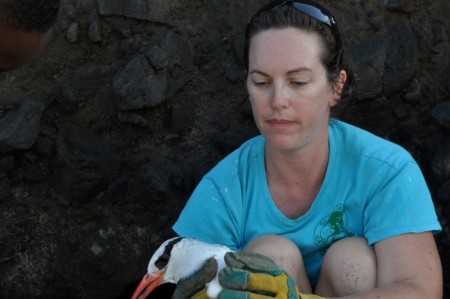
Dave Lee holding a White-tailed Tropicbird in the Bahamas. (photo by Mary Kay Clark)
David S. Lee was a pioneering naturalist and conservation biologist who helped get BirdsCaribbean started nearly 30 years ago, and inspired many naturalists with his work and his writing. He was a man of many interests, and with respect to the Caribbean, published numerous papers and articles in the popular press on seabirds, Bahamian fish, turtles, snakes, bats, and orchids.
Donations from Dave’s wife, Mary Kay Clark and his mother, June Bash, allowed the establishment of the David S. Lee Fund for the Conservation of Caribbean Birds that will award money to conservation projects in his honor. The money is being held in a trust and will be used to award an annual grant for innovative projects that protect Caribbean birds and their habitats.
This fund will be for the conservation of any bird in the Caribbean as a reflection of Dave’s diverse interests. He was an important part of many projects, ranging from those of the Black-capped Petrel and Seabird Working Groups to the scholarly debate leading to the elevation of the Bahama Yellow-throated Warbler to a full species.
At the moment the fund contains $12,000. Our initial goal is to raise $25,000 so that we can award $1,000 every year to a worthy student or early career ornithologist, conservationist or wildlife professional. Not only will this fund encourage creative field work for projects that make a difference, but it will also help build the knowledge and skills of young conservationists that are urgently needed to make sure that the Caribbean birds and habitats that Dave treasured are still around for future generations to enjoy.
The first call for proposals for proposals has been announced (deadline 15 December 2016) click here for information on how to apply) and the first award will be made in early 2017.
At the BirdsCaribbean meeting in Kingston, Jamaica in 2015, a round of beers was purchased in Dave’s honor, since he always seemed to have a cooler full when people wanted one (and even when they didn’t). Think of this fund like a cooler full of refreshing beverages that Dave would have around if he were here. We owe it to Dave to stock that cooler—to vitalize naturalists and empower them in their work to help wildlife.
Please give a tax deductible donation to the David S. Lee Fund. Give generously. The more we put into the fund, the more we can give out each year.
If you prefer to donate with a check, please make the check out to “BirdsCaribbean” and in the memo section, note that it is for the David S. Lee Fund. If you have questions or wish to make other arrangements for donating, please feel free to contact Jennifer Wheeler, BirdsCaribbean Financial Officer ([email protected])
Checks can be mailed to: BirdsCaribbean, 841 Worcester St. #130, Natick, MA 01760-2076
Insightful and humorous, Justin Proctor offers some convincing reasons to look for the Caribbean’s ‘Big Five’ aerial acrobats and tips for how to identify them.
Aerial Insectivore silhouettes in front of sun. (photo by Justin Proctor)
Are you tired of really crisp, up-close views of beautiful Caribbean birds? Are you repulsed at the idea of having an extended period of time to view a bird, jot down detailed notes about its breath-taking plumage, and really connect with the moment? Well, I knew it; and I’m happy to say that here at Proctor & Proctor Inc., we can offer you something much more challenging! Let’s start by having a long, long look at the following Rorschach test (pictured right). And if at any time it becomes painful to keep your eyes on the image, just keep looking…
Alright, let’s reflect. Did you see a hamster? If you did, I’m gonna ask you to just kindly walk away now. If rather you saw some intriguing silhouettes of our feathered friends in front of our beloved Yellow Star, you’re sitting pretty. And if you took one quick glance and were able to immediately identify all the different species present, I think we can probably get you a movie deal.
Welcome to Aerial Insectivore 101. Class materials you’ll want to bring along include a good pair of Ray-bans, an imagination, and just a little bit of patience. Now let’s see if we can get you an ‘A’!
The “aerial insectivores” of the avian world are birds that predominantly forage in flight on airborne insects, and are largely represented by five families: potoos (Nyctibiidae), nightjars (Caprimulgidae), swifts (Apodidae), flycatchers (Tyrannidae), and swallows (Hirundinidae). However, even though they belong to the same dietary guild, each one of these families has a unique set of life history traits, which results in sometimes very different types of behavior. The swallows and swifts, in particular, can be a formidable challenge. Their flight is often fast and irregular, and the glimpse that an observer is afforded is usually a quick one, coming at an inopportune time, and more likely than not, set against an unforgiving background (the sun!). That being said, there are ways to offset some of these obstacles, with the most obvious one (to me) involving starting off with some of the easier to see species and working your way up (literally). Bird watchers, therefore, must implement different strategies for viewing — and ultimately identifying — the array of species in this group.
Within the Greater Antilles, whether you’re heading to the forests of Puerto Rico, the mountains of Hispaniola, the streets of Havana, or the beaches of Jamaica, there are several species of aerial insectivores that you have an excellent chance of getting to know. And whether you’re an expert birdwatcher capable of identifying Empidonax flycatchers from a hundred meters out, or you’re fairly new to the countless ID challenges that the avian world offers, the five species I’m going to highlight in this article are capable of entertaining (and surprising!) birders of all skill levels. I’ve chosen these species in particular because you can get fairly close to them in their natural habitats (well, you might think that White-collared Swifts are a stretch in that case, but I’ll do my best to convince you otherwise later on), which ultimately means that you’ll have an easier time relating to them.
With some of the species, I’ve included photo collages composed of shots taken by me “on the fly”, so to speak, so that you can get a more realistic idea of what you’ll probably be seeing through your pair of binoculars.
A pair of Cave Swallows looking out from their mud nest erected in an alcove of a limestone arch overhanging Jamaica’s northern coastline. (photo by Justin Proctor)
Cave Swallow (Petrochelidon fulva)
These little guys are a great species to start with because they are known to all of the Greater Antilles islands. One of the best contexts to find Cave Swallows in would be nearby to one of their communal roosts / nesting sites. Terrestrially, look around cave entrances or pocket-like formations in the sides of rocky cliffs. Coastally, look for limestone formations along the beach or just offshore. If they are there, you won’t miss them. Their nests are primarily made up of a mix of mud and plant fibers that have been attached to a vertical wall. If you can manage to get close, you might be lucky enough to see a pair of Cave Swallows sitting still in a nest giving you that famous 1000-yard stare.
Cave Swallows in flight from multiple angles under different lighting conditions, Jamaica. (photos by Justin Proctor)
However, let me be brutally honest for a second – Cave Swallows often have a way of mixing in with other foraging swallow and swift species, and simply put, these mixed-species flocks can be a nightmare of a time to sort your way through. And yes, when mixed in with Barn Swallows, Tree Swallows, and just as often a handful of swifts, Cave Swallows can become easily “lost in the crowd”. However, with a little practice, the subtle differences in plumage, size, and flight patterns will help you tease the birds apart. Cave Swallows are really stocky looking with short, square tails.
Caribbean Martin (Progne dominicensis) & Cuban Martin (Progne cryptoleuca)
Cuban Martin perched outside of nesting cavity, Cuba. (photo by Ianela García Lau)
This is a two-for-one special. If you’re going to be island-hopping, then I can’t include one without the other. Your search target is going to be similar for both. Caribbean Martins can be found from the Cayman Islands eastwards to the Lesser Antilles, ultimately down to Tobago. They are not found in Cuba, yet their conspecific, the Cuban Martin, is only found there. Both martins are hefty birds; to give you an idea they weigh roughly twice that of a Cave Swallow. They are incredibly adept cavity nesters, mastering the use of crevices in high mountain trees, urban buildings, coastal lighthouses, limestone cliffs, and even the masts of moving sailboats. You may already have some knowledge of their more widely spread congener, the Purple Martin (Progne subis), the mental image of which would be helpful as you seek out their Cuban and Caribbean counterparts. To see both Caribbean Martins and Cave Swallows nesting side by side, head to Cabo Rojo, Dominican Republic. For Cuban Martins, check out the beautiful Convento San Francisco de Asís in Havana, Cuba, where they are nesting in large numbers in the church walls.
Cuban Martin in flight, Cuba. (photo by Martín Acosta)
For photos of Caribbean Martins, and to become acquainted with an ongoing effort tracking their numbers and distribution, check out the Caribbean Martin Survey information page.
Antillean Palm-Swift (Tachornis phoenicobia)
This is going to be the most noticeable and easy to identify swift out there. However, that doesn’t mean you’re going to get a really good look at one right away. They are fast, and they are small. Luckily they are gregarious and colonial nesters, which means that you will usually come across them in large numbers as they forage or move into and out of their nests – which, amazingly, are a blend of saliva, plant fibers, and feathers attached to the undersides of dead, hanging palm fronds. Look for Antillean Palm-Swifts nesting in large, isolated palms either in the country-side or in urban parks. Or, if you’re a fan of the beach, keep a watchful eye on any nearby “tiki-huts” that have roofs made of palm fronds. You’ll find it mesmerizing to watch the little swifts fly seamlessly up into a mat-like cluster of palm fronds at what seems to be an impossible speed. The strong contrast of their dark grey / black bodies with their white rumps will be an immediate indication of who you are looking at.
Antillean Palm-Swifts in flight as well as entering and exiting nests located within the hanging fronds of palm trees, Jamaica. (photos by Justin Proctor)
4. I’ve introduced you to the smallest swift you’ll find in the Greater Antilles, so it seems appropriate to bring the largest swift of the region into the equation. An all-around phenomenal bird, the White-collared Swift doesn’t get the attention it deserves, and I think I know why. Wetmore and Swales (1931) summarize the problem perfectly:
“…through its great speed in flight so annihilates distance that flocks may appear temporarily almost anywhere.”
I can attest to that. They are damn fast. Most birdwatchers, in fact, struggle to describe their behaviors from anything more than observations lasting a handful of seconds. The reason is that White-collared Swifts are true residents of what we call the “seventh habitat”- the skies above us – and their movements through that habitat are extremely difficult to track by conventional methods. Normally, in that case, we would default to observing them at and around their nests. Yet these swifts nest on vertical cliffs alongside or behind waterfalls, usually located in the most remote, rugged terrain available. It is no wonder then why following them to a nesting site and subsequently studying them there are often daunting tasks.
White-collared Swifts in flight, Jamaica; top photo is a good depiction of the species viewed head-on from a mountain top. (with the observer positioned at the same elevation that the swifts are flying) as they come together to flock in the evening. (photos by Justin Proctor)
But despite our resulting paucity of scientific knowledge on this species in the Caribbean, I can still try to promise you great views of White-collared Swifts. Go inland, climb to the top of a low-vegetated hill or mountain (ideal if you are offered 360 degrees of view), sit down and begin scanning the horizons. Target the hours around dusk and dawn, when White-collared Swifts are known to flock up, as opposed to midday when they tend to disperse into smaller foraging pairs. I’ve had extremely good luck following this protocol, finding myself within stone-throw distance of large foraging flocks. The white collar around the neck and scythe-shaped wing profile are solid indicators that you’re seeing the correct bird. [If at any time Black Swifts decide to enter the equation (the only other commonly occurring swift species in the Greater Antilles), I’ll have to encourage you to attend Aerial Insectivores 401, a (pricey) advanced class that requires a higher level of discipline, courage and utter confusion.
Northern Potoo perched on a fence post near the Windsor Research Station, Trelawny Parish, Jamaica. (photo by Justin Proctor)
Northern Potoo (Nyctibius jamaicensis)
Let’s move now from the diurnal species to a nocturnal favorite, the Northern Potoo. These birds actively hunt for insects at night by sallying out from low-lying perches where they remain camouflaged and motionless until prey is spotted. If you’ve got a little bit of energy left in you after the sun goes down, and you also remembered to pack a decent headlamp or flashlight, I can’t encourage you enough to just go for a little walk down a quiet road nearby. Pasture roads are best, as they are often lined with fence posts – a favorite perching spot for potoos. But before you start shining your light slowly around from one potential perch to the next, stand still in the dark and just listen. Oftentimes the call of a potoo will help navigate you close enough to the bird to get an immediate visual upon turning on your light. Keep in mind that potoos rely on darkness to hunt, and that a beam of light to the eye is unnatural and stressful. Illuminate the bird with only the outer, weaker edge of your light’s beam, and keep your observations brief. A good sighting of a potoo is an unforgettable memory to take home from your Caribbean vacation.
So why are aerial insectivores worth your time and effort?
My answer to that is “high rewards”. Many of these species display incredible behaviors that you won’t see anywhere else. Once you cue into them, they become addicting to watch. They also make you think differently about the complexities of the sky above you and the ecosystem that it supports. Amazingly, most of this goes largely unnoticed by the masses. Aerial insectivores are an entire branch [metaphorical pun, not taxonomical] of the avian world that often gets pushed to the back pages of birders’ “must-see” lists because of the challenges often associated with seeing and identifying them. However, I think it’s important to reinforce the fact that most of them aren’t more difficult to view compared to other families of birds, they just require the implementation of different search tactics. So why not be the first one in your birding group to notice a vortex of swirling White-collared Swifts, or identify a mixed flock of four different aerial insectivore species feeding together on a swarm of flying ants over the beach?
The scientific community is discovering new and exciting information about these guys all the time, which is important, because there are growing concerns that several of the aerial insectivore species have been facing noticeable long-term population declines. The cause(s) aren’t definitive yet, but likely point towards an amalgam of changes to their habitats and food supply. Excitingly, a lot of the ground-breaking work underway has been – and continues to be – sparked by observations from birdwatchers like you. That’s why it is critical that you contribute to these efforts by entering your observation checklists into eBird Caribbean. So the next time you find yourself in the Caribbean, shoo those obnoxious Crested Quail-doves and Rufous-throated Solitaires away, and set yourself up in a good position to scan the skies for some aerial insectivores cruising by.
Who’s with me?
Justin Proctor is a long-time contributor to BirdsCaribbean. His professional career includes lead roles in movies such as Jurassic Park 18 as well as the Titanic sequel: Jack and the Penguins Strike Back. Modestly put, he dabbles (4x consecutive Pulitzer Prize winner) in writing mildly comical pieces for scientific magazines. Although he’s 30 years old, some people think he only looks 29. He lives in Raleigh, North Carolina with his exotic wife and no children that he knows of.
On the evening of April 27th, the Dreamcatcher’s captain, John Duke, and I sat at the 75-foot schooner’s large, wooden, galley table. With the sun setting over our research vessel, we studied charts and made final adjustments to plans that had been years in the making. We sailed out of Key West on the 26th, following the Florida Keys north, our schooner efficiently loaded with food, water, gear, and materials for the expedition. At sunrise we would set out and cross to Bimini, entering the infamous Bermuda Triangle. By the 29th we would clear Bahamian Customs in Freeport.
The five week long, 900-mile round-trip expedition would take us to the far reaches of the Bahama’s northern islands, including Grand Bahama Island, Great Abaco, the Atlantic Abaco Cays, and the Berry Islands. Anchored out, the nighttime sky was clear and endlessly full of constellations not easily seen from land. For me, sleep off the Florida coast tonight would be difficult, but essential. The dream was actually happening. At sunrise, with the invaluable partnerships and cooperation of so many, Conservian’s 2016 Bahamas Shorebird Conservation Expedition would, at last, become reality.
Conservian’s mission is to conserve coastal birds and their habitats throughout the western hemisphere. The Bahamas archipelago is comprised of more than 700 islands and cays, and thousands of miles of sandy shorelines, sand flats, mud flats, and mangroves, possessing prime habitat for migratory and breeding shorebirds, much of it yet unexplored. Even now in 2016, as human-created pressures increase globally, very little information exists on many species of shorebirds in the Bahamas, particularly solitary beach-nesting birds like the Wilson’s Plover.
Why should anyone be concerned about such species? Well, the Wilson’s Plover can be thought of as a “canary in a coal mine” or species that indicates the diversity level of a specific coastal habitat. To thrive, the Wilson’s Plover, much like the endangered Piping Plover, needs healthy coastal habitats that are protected from human-caused disturbance. Plovers are fairly resilient and do well if provided with a safe stretch of coastal habitat to hatch nests and raise young. Protection for plover species can also act as an “umbrella” to benefit other coastally-dependent species.
American Oystercatcher with young (Photo by J. Gray)Least Tern parents feeding young. (Photo by J. Gray)
The seedling concept for Conservian’s shorebird habitat conservation work in the Bahamas had taken root in 2011 during face-to-face discussions with Bahamas National Trust and other partners at the BirdsCaribbean International Conference on Grand Bahama Island. Later that year the Dream Catcher partnership began with Captain Duke’s idea of a live-aboard expedition. In 2014 LightHawk funded Conservian’s Bahamas aerial surveys that provided essential habitat data necessary to begin on-the-ground work. Discussions and planning continued through 2015 at the BirdsCaribbean Conference in Jamaica, where Conservian was invited to present a vision for new shorebird conservation work in the Bahamas. Resulting partnerships led to a cooperative Neotropical Migratory Bird Conservation Act grant award which will help fund the project through 2017. The International Conservation Fund of Canada is also a key supporting partner of Conservian’s Bahamas conservation work.
With the start of our expedition Conservian and partners would begin the first program in the Bahamas to implement on-the-ground protective measures to limit human-caused disturbance to beach-nesting birds, and initiate control of invasive Casuarina pine at key shorebird and seabird sites. We would accomplish these goals by working together in the field with our local partners and community members to conserve the Bahamas coastal treasures.
Designed in 1996 by Captain Duke, the Dreamcatcher schooner, our home and floating field station, proved, as planned, the most efficient way to transport our crew, field equipment, and materials throughout the northern Bahamas archipelago. Solidly built of steel, she made a perfect expedition vessel. Her 20-foot beam provided great stability in open waters, yet her shallow, 5-foot draft allowed us close approach to our targeted landing areas. For ferrying field crew and equipment to shore we towed a traditional, custom-crafted, 30-foot, wooden longboat, the “Aida”, built by Captain Duke.
The expedition was planned for the month of May. After our three-day Atlantic crossing with only essential sailing crew, each week saw a new volunteer field team fly into Bahamian airports to join the project. The first team member, and one of our expedition photographers, arrived on Sunday May 1, followed by our first week’s crew on Monday at Freeport International Airport. Conservian’s team and ship’s crew adapted quickly to shared onboard duties of cooking, cleaning, and sailing.
Each morning, we’d awake early to the welcome aroma of the Captain’s freshly brewed coffee along with views of golden sunrises, open horizons, and almost impossibly vibrant turquoise water surrounds. Each night and each following morning, Captain Duke and I, along with first mate Andrew, would review planned navigation routes and logistics for the schooner and longboat, as well as deployment and retrieval plans for field crew and equipment.
Key elements of our mission on every island we visited centered on conducting surveys for beach-nesting bird target species and habitat assessments for human-caused disturbance. In planned areas, we posted signs to alert beach-goers to the presence of beach-nesting birds to reduce disturbance to birds, nests, and chicks. We made new friends wherever we went as the Bahamian locals were very interested in our expedition, desired to help, expressed appreciation, and discussed the future.
During survey work, we typically divided into smaller field teams of two or three, to cover the maximum area possible. Reaching shorebird sites, first by water and then by land, often proved to be our toughest daily task. Challenges began with finding suitably calm waters for team drop offs.
To reach potential habitat on islands with Atlantic beachfront, we often hiked on overgrown trails, through vegetated terrain, and across rocky shorelines. We made use of a variety of land-based transportation modes, from rental van and taxis to hitch-hiking on local golf-carts.
We walked many miles enduring May’s tropical heat, humidity, and biting insects while searching for beach-nesting birds or posting shorebird sites. Rewards, were abundant, however, with exciting new data collected, new shorebird sites posted, frequent nest and chick sightings, and unforgettable vistas of Caribbean sands and seas, as well as an occasional quick dip in the blue to cool off. Often when the Dreamcatcher was anchored off shore, our adventurous and productive days ended with a boat-side swim or snorkel in the clear, near-shore waters followed by a hearty meal from the galley, or on-deck barbecue, jointly prepared by the group.
We conducted ground surveys for beach-nesting birds on 29 islands and cays, collecting new data on habitats, and breeding abundance and distribution. Local volunteer stewards participated in ground surveys and assisted with posting and signing of imperiled shorebird areas. Noted conservationist Erika Gates and her dedicated volunteers joined us aboard the Dreamcatcher for a sign posting mini-expedition to protect Bridled Terns at Peterson Cay National Park, where Conservian also conducted Casuarina eradication. On Grand Bahama Island and Great Abaco, by invitation, we gave educational presentations, speaking about Conservian’s shorebird work and the expedition.
With assistance from Ellsworth Weir, manager of Lucaya National Park, we conducted a pilot project to control the invasive species Casuarina pine, which has spread throughout the Bahamas eroding beaches and destroying shorebird habitat. Conservian provided in-the-field Casuarina control training for staff from the Bahamas National Trust and Bahamas Public Parks and Beaches Authority. Our local Casuarina control team began eradication at Lucaya National Park’s Gold Rock Beach with herbicide donated to the project by Dow AgroScience.
Conservian’s Bahamas cooperative shorebird conservation work is a new and innovative program with long-term objectives for conserving and protecting the natural coastal resources of the Bahamas through directed assistance and local capacity building. With essential support from our partners BirdsCaribbean, Bahamas National Trust, local volunteer coordinators Erika Gates, Honorable Pericles Maillis, Dr. Elwood Bracey, Shamie Rolle, and many others, we were able to accomplish major project objectives during our first year of the project. Our present and future successes are attributable in great measure to our increasing family of supporting partners, whom we look forward to working with again soon.
In May 2017, Conservian/Coastal Bird Conservation will embark on our second Bahamas conservation expedition in the northern Bahamas. Keep a weather eye on our Facebook page at https://www.facebook.com/CoastalBirdConservation for our other project updates and message us or email [email protected] for information on joining Conservian’s conservation team on our next adventure.
Our Supporting Partner Organizations and Individuals
BirdsCaribbean, Bahamas National Trust, International Conservation Fund of Canada, US Fish and Wildlife Service/Neotropical Migratory Bird Conservation Act Grant, LightHawk, Dream Catcher Coastal Sailing Adventures, Dow AgroSciences, Grand Bahama Nature Tours, Optics for the Tropics, Grand Bahama Port Authority, Bahamas Public Parks & Beaches Authority, Bahamas Environment, Science & Technology Commission, Rand Nature Center, Abaco Friends of the Environment, Treasure Cay Community Center, Royal Bahamas Police Force/Marine Support, University of Florida, University of Miami, Mobile Bay Audubon Society, Atlantic Design Homes.
Honorable Pericles Maillis, Dr. Lisa Sorenson, Eric Carey, Erika Gates, Captain John O. Duke, Dr. Elwood Bracey, Shamie Rolle, Ellsworth Weir, Linda Barry-Cooper, Keith Kemp, James Madison Roswell, Andrew McDowell, Thomas Wilmers, Lee Pagni, Daniel Leckie, William Gravitter, Robert Gravitter, Edward Guerry, David Cummins, David L’Hereux, and Thomas Wilmers. Conservian 2016 Supporting Volunteer Crew: Maureen Lilla, Scott Hecker, Alexandra Newton, Tyler Kovacs, Emma Rhodes, Shona Lawson, Dawn Rasmussen, Carolyn Wardle, Janet Vertin, Robyn Darley, Robin Bjork, Ben Bowman, Pete Monte, Corina McBride, Coralina Meyer, Mihala Reedy, Charla Lower, Susan Silvia, Louis Wray.
Erika Gates is an inspiring powerhouse whose work in the Bahamas has not gone unnoticed. She has been involved in a multitude of projects in Grand Bahama to raise awareness, restore native habitats and foster sustainable tourism. This article highlights one of her successful campaigns—certifying Lucaya International School as a wildlife habitat.
Wetland Trail team with Dr. Batemann, Marilyn Laing, and Erika Gates displaying the certification sign.
Last year, Erika suggested to Lucaya International School’s (LIS) headmaster and board to get the school certified as a Wildlife Habitat. Erika had certified her own backyard garden a few years back and thought, “Why not get youth involved in creating habitat for birds and wildlife at their school?” The National Wildlife Federation’s Garden for Wildlife Program helps people to restore habitat and wildlife populations to our cities, towns and neighborhoods. It encourages schools to create outdoor classrooms where educators and students learn how to attract and support local wildlife. These wildlife habitats become places where students not only learn about wildlife species and ecosystems, but also hone their academic skills and nurture innate curiosity and creativity.
Marilyn Laing and Chad Haddad pruning a tree in the LIS schoolyard. (photo by Erika Gates)To meet the criteria for certification, the students had to create a wildlife habitat that provides a number of specific elements for each of the following habitat essentials: food, water, cover, places to raise young, and sustainable practices. The site also needed to be used as a teaching tool. Work began in October 2015 to prepare a portion of the school grounds as a bird and butterfly habitat. A trail, extended dock and observation tower were also created at the wonderfully productive wetland. Marilyn Laing of Garden of the Groves and Erika provided assistance with the program and helped the students select appropriate native plants that provide nectar for hummingbirds and butterflies, as well as berries and fruit for birds. They instructed them in pruning the existing trees in the habitat area, preparing the ground, composting and planting. Two birdbaths provided the water feature, and bird feeders were installed.
Sophila Clark, Jim Pierson and Brickelle Sands mulch the area after planting (photo by Erika Gates)While the Gardening Team was led by teacher Martin Suarez, the Wetland Trail Team was led by Dr. Sylvia Bateman. The school is fortunate to be located adjacent to a wetland, a perfect outdoor classroom for bird observation, water sampling and plant biodiversity. This location was enhanced by Dr. Bateman’s team through the creation of a trail along its southern shoreline. A boardwalk and dock for better access into the wetland was built and donated by Grand Bahama Nature Tours. The students’ team created an observation stand for better viewing of the wetland, and the site also received the Wildlife Habitat Certification.
Year 5 class birding from the dock at LIS wetland (photo by Erika Gates)The certified Garden and Wetland Wildlife Habitats at Lucaya International School have already become outdoor classrooms for librarian Susan Krupica’s Year 5 and 6 birding classes. Ms. Krupica has been trained by BirdsCaribbean through their BirdSleuth Caribbean program to teach young children how to spot, identify and record birds as well as submit them into eBird Caribbean, a real-time online checklist program used by birders and ornithologists all over the world to gather basic information on bird abundance and distribution. Over the past six months LIS has submitted observations of 48 different bird species!Erika was delighted to accompany and lecture the young birders on their fieldtrips. BirdsCaribbean sponsored the BirdSleuth educational materials and also provided the binoculars for the Birding Class.A pair of Black-necked Stilts nested at the LIS school wetland this spring. (photo by Erika Gates)Dr. Lisa Sorenson, Executive Director of BirdsCaribbean, stated, “The Garden for Wildlife program combined with birding and science activities in the BirdSleuth Caribbean curriculum provides a hands-on way for youth in learn about and care for the birds and nature all around them. It also provides much-needed habitat for wildlife, every little bit helps! Congratulations to the LIS school and Garden of the Groves for this initiative—it’s a wonderful model for other schools around the Caribbean to follow.”
Over 300 schools participate in the National Wildlife Federation program in the United States but Lucaya International School is the first school in the Bahamas to have received the Wildlife Habitat Certification. Mr. Michael Lowerey, Principal of the school, commented: “Students need an area in which they can take the theory learned in the classroom and put it into practice. These two areas give our students a hands-on learning experience. We are so grateful to have the assistance of Erika Gates and The Garden of Groves and all of their expertise. The outdoor classrooms also allow our students to receive a better understanding of our island and all of its resources and how important the environment is for our future.”
Erika Gates is owner and operator of Garden of the Groves, Grand Bahama Nature Tours and Grand Bahama Birders’ Bed and Breakfast. She also serves as a Board member of BirdsCaribbean. A free eBook is available from BirdsCaribbean: “Heritage Plants: Native Trees and Plants for Birds and People in the Caribbean.” This illustrated book explains the importance of native trees to birds and other animals, includes a guide featuring dozens of native trees of particular value, and serves as a resource to foster habitat restoration within local communities. It is available in English and Spanish at this page.Certified Wildlife Habitat signs are placed in the school’s gardening area and along the wetland trail. (photo by Erika Gates)Greater- and Lesser Yellowlegs fly from Alaska to spend the winter at LIS wetland (photo by Erika Gates)Blue-winged Teal migrate in large flocks from Canada to LIS wetland.Zebra Longwing butterfly on Jatropha, a genus of flowering plants in the spurge family, Euphorbiaceae. (photo by Erika Gates)Year 5 class at Lucayan International School observing and studying birds at the school grounds. (photo by Erika Gates)Cattle Egrets at the playing field. (photo by Erika Gates)Members of the Eco Gardening Team (standing) with Mr. Suarez receiving sign by Erika and Marilyn on behalf of the National Wildlife Federation. Sitting in front are the LIS Birding students with Ms. Krupica.Julia butterfly on Golden Dewdrop. (photo by Erika Gates)
Steffen Oppel from the UK’s Royal Society for the Protection of Birds (RSPB) recently visited St. Lucia to assist the Department of Forestry with setting up bird counts in order to search for the elusive Semper’s Warbler. This is his story.
An artist’s rendition of the Semper’s Warbler – the last confirmed sighting was in 1961. (Joseph Smit [Public domain], via Wikimedia Commons)The Semper’s Warbler (Leucopeza semperi) is a small songbird endemic to St Lucia, but sadly the species has not been seen with certainty for more than 50 years and may be extinct. In 2003, at the BirdsCaribbean (then known as the Society for the Study and Conservation of Caribbean Birds) meeting in Tobago, forester Donald Anthony from St. Lucia reported on his efforts to find this warbler. He said that a few years ago, he saw what he could only describe as this bird somewhere on one of the Pitons. His efforts subsequent to that turned up nothing.
St. Lucia’s breathtaking cloud forest in Edmund forest reserve. (photo by Steffen Oppel)
Martin Frost believes he saw a Semper’s Warbler in the early 1990s. This triggered several trips by Martin, Edward Massiah and forestry guides to find the bird in the mid-1990s. Although they were not able to detect the warbler, they never gave up hope that it still exists, noting that there are some very hard-to-access areas that are never visited by humans, and would take days to explore. Edward commented, “If you assume this bird is shy and possibly even ground-dwelling and very local then it is possible it has not yet been located.”
Fast forward to 2016. Unconfirmed reports of warbler sightings continue to trickle in, even as recently as 2014 and 2015, but there have been no major efforts to search for the bird despite a lot of interest in carrying out more searches. With such an appealing subject and always up for a challenge, I was sent to help give our St. Lucian friends the tools to search for one of the country’s rarest species.
Need for a proper search
Showing the staff of the Department of Forestry how to use mist nets and safely extract birds. (photo by Steffen Oppel)
Numerous invasive species introduced by humans, such as rats, cats, and mongooses, roam freely around St Lucia and unfortunately these skillful predators have caused the extirpation of some of the island’s endemic species. However, the Semper’s Warbler is a small, nondescript brownish warbler that hops around the floor of St. Lucia’s dense rainforest, and for this reason it may be easily overlooked. Given also that St Lucia still has extensive tracts of seemingly intact rainforest where the species may persist, it would be foolish to write off the Semper’s Warbler without conducting a systematic search.
The rainforest on St Lucia is so extensive and rugged that a proper search for this tiny, secretive bird would require a little more than just a weekend of intensive birding. Until now, it was not known how long the search would have to be, or what manpower would be required. Therefore in April 2016, my colleague Lyndon John and I facilitated a workshop on St. Lucia to determine the effort needed to search for the Semper’s Warbler.
The team practicing point counts in St. Lucia’s tropical montane forest. (photo by Pius Haynes)
Together with experienced and enthusiastic rangers from the Department of Forestry, we first pored over maps to identify suitable habitats where the species might still persist. We then slogged through rugged hills to assess the feasibility of sufficiently covering the remote areas where intact rainforest still remains. After two weeks, we concluded that a proper search would likely require 84 days to search ten priority areas covering the most natural rainforests on St Lucia. This means that the search team will need to be skilled and hardy, able to cope with venomous snakes, rugged terrain, and will need to use equipment such as mistnets, sound recorders and camera traps to comb the hills for this small and elusive bird.
Surveying for endemics whilst in the forest
The St Lucia Oriole is one of five species endemic to St Lucia. (photo by Steffen Oppel)
During the workshop, we established 20 permanent sampling stations in order to count birds. Conducting regular annual surveys of all forest birds might increase the chance of detecting a Semper’s Warbler while also providing valuable information on other endemic species that are still more common, such as the St. Lucia Black Finch (Melanospiza richardsoni), the St. Lucia Oriole (Icterus laudabilis), or the White-breasted Thrasher (Ramphocinclus brachyurus).
White-breasted Thrasher, a threatened species whose population stronghold is on St. Lucia. (photo by Steffen Oppel)
While no Semper’s Warblers were detected during our field work, the team emerged inspired and hopeful that the species may still persist in some of the remote valleys and ridges off the beaten paths of St. Lucia’s lush interior. Forestry Officer, Pius Haynes remarked, “We at the Forestry Department in St. Lucia are highly confident the species may still persist in some remote pocket of our rainforest. The rediscovery of the iconic Semper’s warbler would be a remarkable thing as it would boost our conservation efforts and showcase the value of our native biodiversity. The Forestry Department in St. Lucia was very happy to collaborate with the RSPB in executing a training workshop aimed at developing a feasible strategy to undertake searches for the Semper’s warbler. We were also very happy to receive much needed technical assistance and equipment to better undertake bird surveys. We are confident that the training and equipment received will go a long way in assist us in our quest to rediscover the Semper’s warbler.”
The steep slopes of Morne Tomassie could also provide hideouts for an endemic species. (photo by Steffen Oppel)
I’ve been on a Warbler-fest. I am very fortunate to have recently observed several endemic Caribbean warblers, from the Elfin-woods Warbler of Puerto Rico to the Plumbeous Warbler on Guadeloupe. I also watched dozens of North American migrants as they island-hopped northward from the tropics. And, I just returned from Magee Marsh on the shore of Lake Erie, where many warbler species make their final stops before reaching their breeding grounds. Warblers are among the most beautiful and entertaining Caribbean birds, but they can also be some of the most challenging birds to identify. As an educator and professional naturalist, I want to help you make species identification fun and simple.
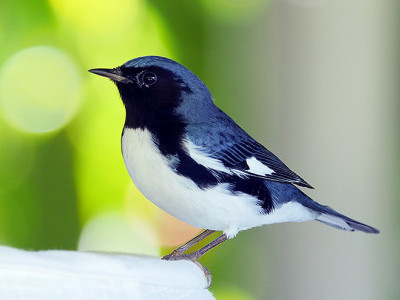
The Lesser Antillean endemic Plumbeous Warbler, showing its boldly contrasting facial and wing markings; winter in Guadeloupe. (Photo by Stephen Shunk.)Male Black-throated Blue Warbler, overwintering at Goblin Hills Villas in Portland, Jamaica. Aptly named, this is one of the easiest warblers to identify and remember! (Photo by Stephen Shunk)
The New World Warblers—family Parulidae—include approximately 115 species in 25 genera found from South America to Alaska. With about 40 regularly occurring species in the Caribbean, they are a family every birder should know. Caribbean endemics comprise 15 species; 20 more are winter residents; and a few more only pass through the islands on their bi-annual migratory journeys between the Americas. This wide variety of warblers makes the Caribbean a year-round land of colorful ornaments glowing across the landscape.
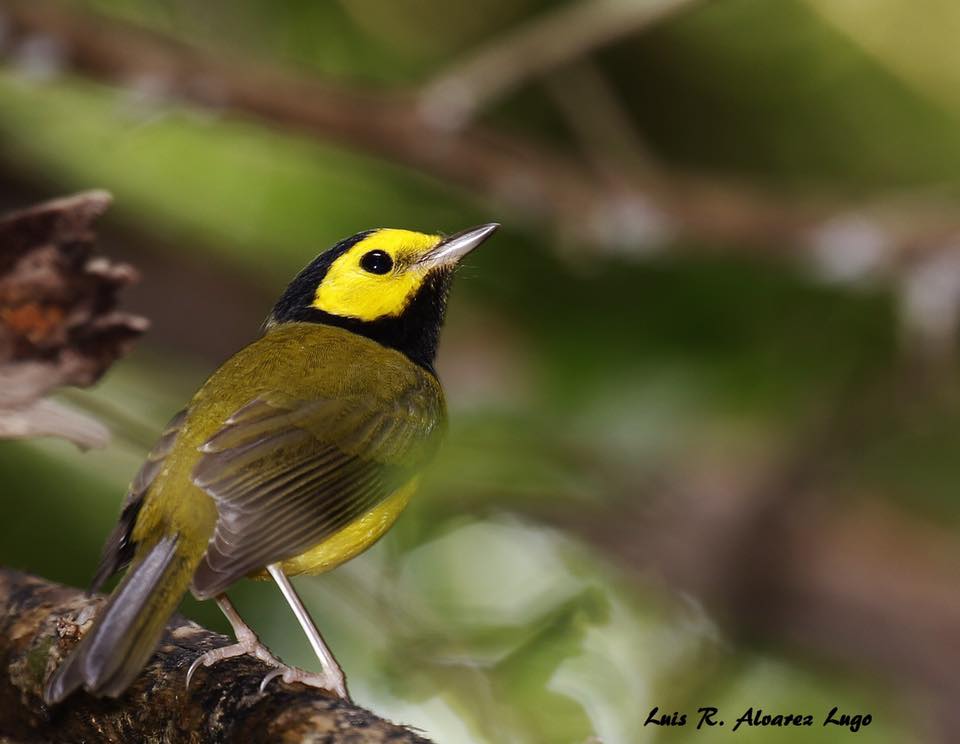
The Hooded Warbler has a yellow face with black crown and throat forming a “hood.” This male was photographed in Puerto Rico. (Photo by Luis R. Alvarez Lugo)
From winter through spring, males molt into their flashy breeding, or alternate, plumages; this is prime time to witness their brightest colors. Each fall, however, the southbound birds—adults and young—arrive in the Caribbean showing their remarkably more subtle fall, or basic, plumages. I can’t think of a better place to study “those confusing fall warblers.” Let’s learn a bit more about identifying these fascinating birds—in all seasons.
Hints on Observing and Identifying Caribbean Warblers
What is a Warbler?
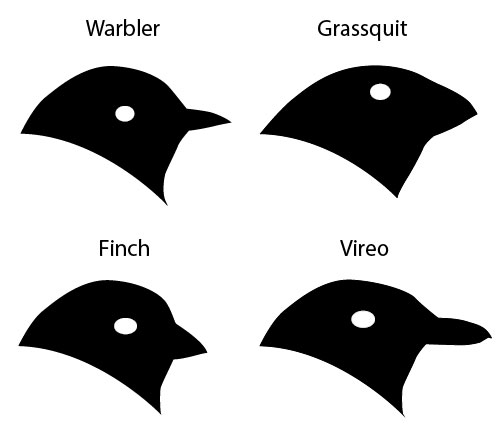
Comparison of warbler head profile with other birds. Note the short and slender bill of the warbler, adapted for catching tiny insect prey. (Illustration by Christine Elder)
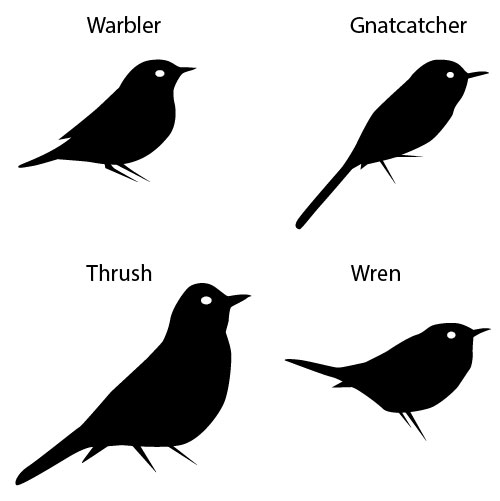
Many Caribbean songbirds are easily confused with warblers, but observing a few subtle characters can help identify birds in the warbler family. For example, sparrows, grassquits, and finches are similar in size and shape, but warblers have more delicate bills adapted for catching their tiny insect prey. Warblers also superficially resemble vireos, but the vireo bill is typically thicker than that of the warbler, usually with a noticeable hook on the upper mandible. Other warbler-esque birds include gnatcatchers, which are smaller bodied but with longer tails; wrens, with longer bills and hunched postures; and the larger thrushes, which forage mainly on the ground.
Comparison of warbler body profile with other birds. (Illustration by Christine Elder)
The New World Warblers do have a suite of unifying characters that will help separate them from these other songbirds. Most warblers are small-bodied and thin-billed. Most are colorful and more strongly patterned than similar birds. A majority have some yellow and black, with various species adding red, blue, grey or brown markings. And warbler songs tend to be fast and high-pitched. A handful of warblers are a bit less ‘warbler-like,’ including the slightly larger ground-feeding Ovenbird and two species of waterthrush.
Start with the Species Characteristics
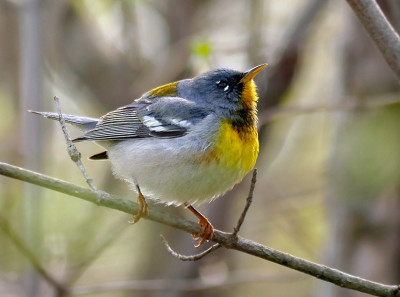
Late spring male Northern Parula, showing its brightest colors at Magee Marsh, Ohio, USA. Note the broken eye ring, two white wing bars, yellow breast and throat, and black and reddish band across the breast. (Photo by Stephen Shunk)
Identifying showy males in their breeding colors can make one feel like an instant expert, but it helps to learn a few subtle field marks that are typically displayed by both sexes. For example, the male and female Northern Parula both exhibit a broken eye ring, a yellow lower mandible and two white wing bars. If you happen to spot a colorful male first, search nearby branches for a female to study her more subdued colors. In many cases, Caribbean endemic species, such as the St. Lucia, Adelaide’s, and Barbuda Warblers, show less sexual dimorphism than migratory species.
Note Behavior
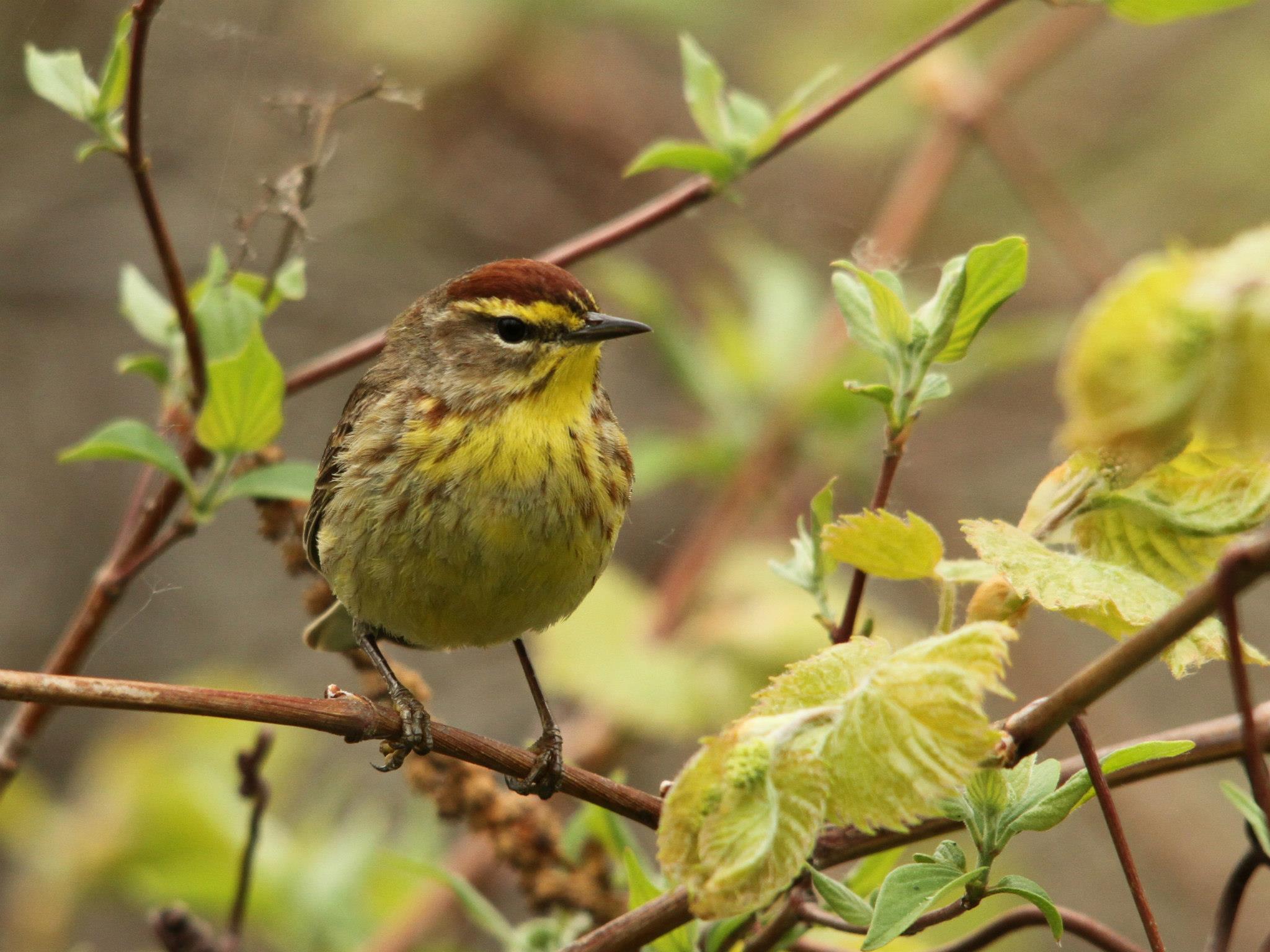
Palm Warblers constantly bob their tails, a behavior that helps to identify this species. This handsome male was spotted in Puerto Rico – the dark reddish brown crown shows this male is in breeding plumage. (Photo by Gabriel Lugo)
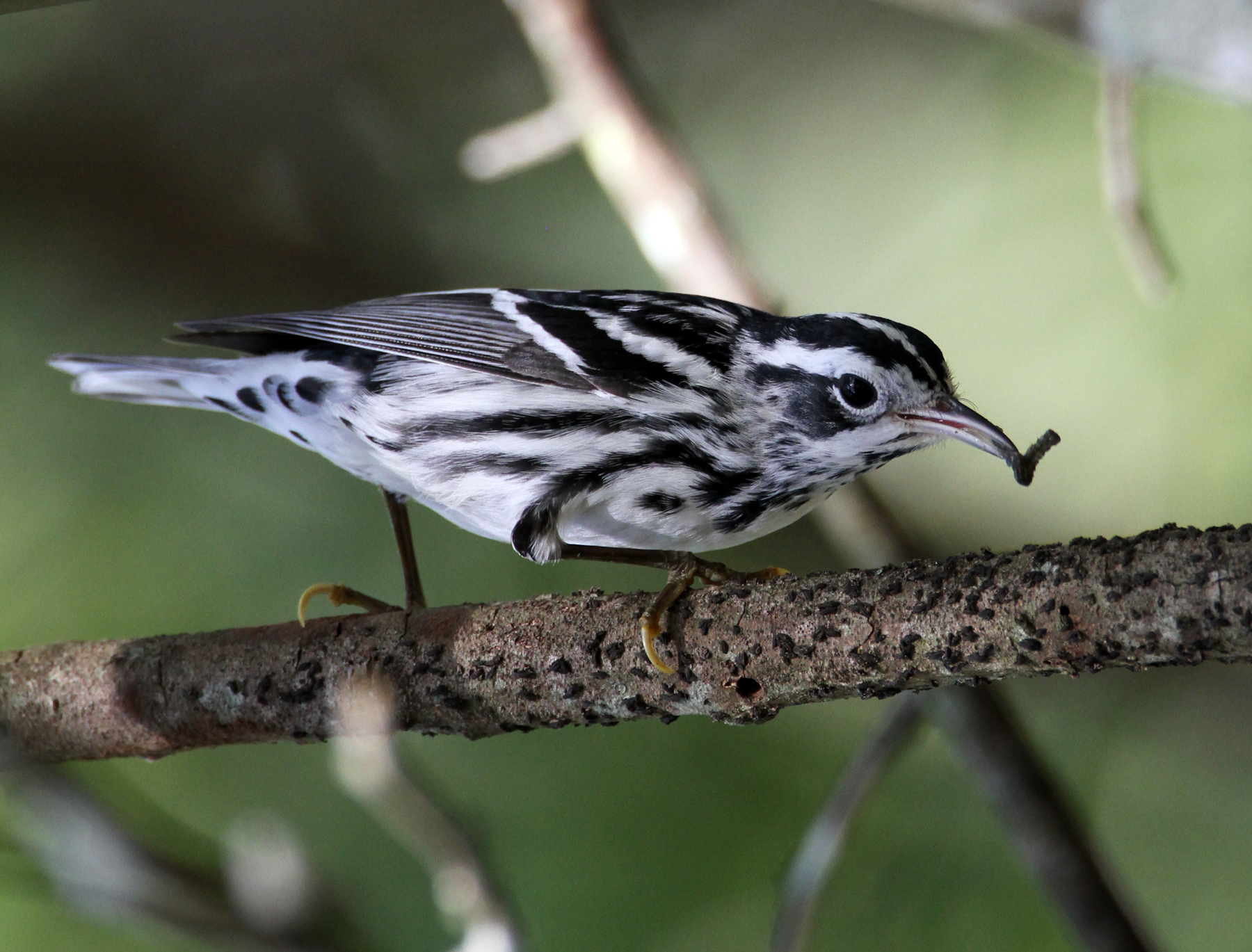
We often think of warblers as nervous birds flitting among the branches high in the treetops, but exceptions abound. The Black-and-White Warbler acts more like a nuthatch, climbing up and down along the tree trunks; the Palm Warbler is a habitual tail-pumper; and the male American Redstart fans its beautiful black and orange tail when foraging. As breeding season approaches, only males of the resident species will typically be heard singing, with migrants only uttering a confusing array of ‘chip’ notes.
Location, Location, Location
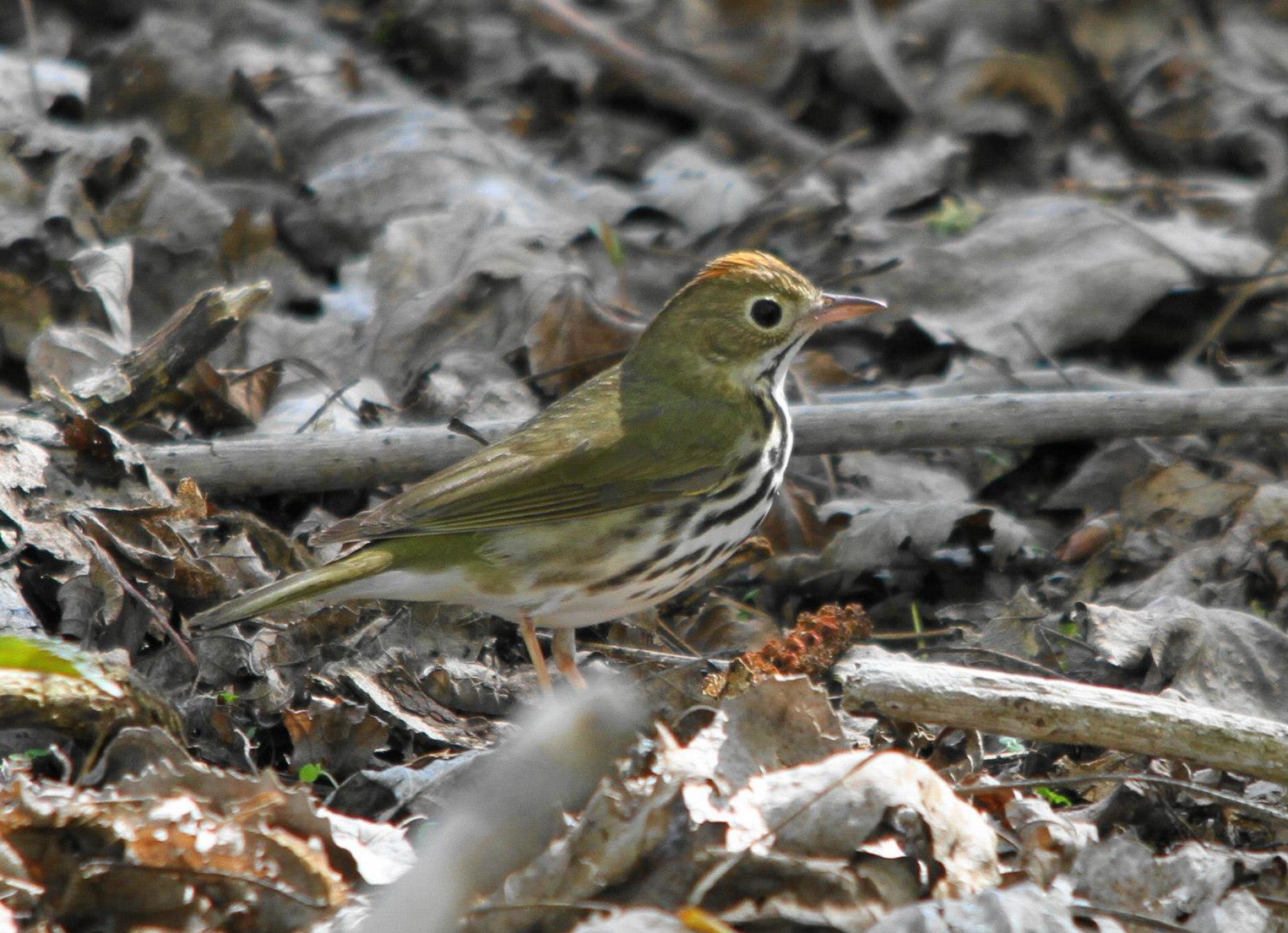
Ovenbirds tend to forage among the woodland leaf litter. Note the bold white eye ring, heavily streaked white underparts and orange crown bordered by blackish stripes. This adult was photographed in spring in Puerto Rico. (Photo by Gabriel Lugo)
Knowing the habitat preferences of different species could quickly help you make an identification. Coastal mangroves, dry scrub lands, pine forests and mountain-top cloud forests will each have its unique assemblage of species. And within each habitat, you’ll find certain species partitioned into microhabitats. While the Ovenbird, Northern Waterthrush and Lousiana Waterthrush share similar habitat on the forest floor, you’ll notice that the waterthrush species are nearly always seen foraging right along a muddy creek bank or pond edge, while the Ovenbird tends to forage among the woodland leaf litter.
Observe Color and Patterns
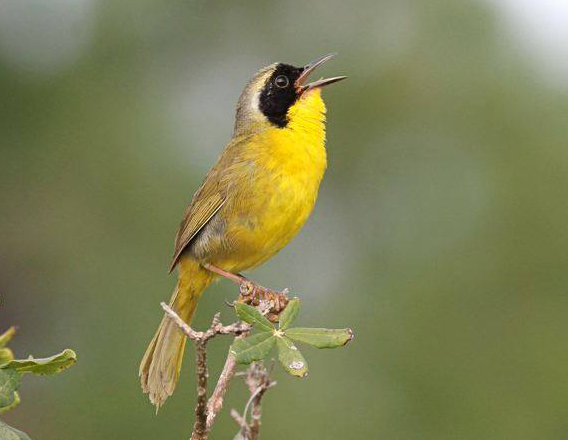
A male Common Yellowthroat singing on Abaco Island, in the Bahamas. Note the bold black face mask, yellow throat and breast. (Photo by Keith Salvesen)
You mainly see the underparts of canopy-loving species, but many of these species are identifiable from this angle. The American Redstart shows a patchy orange and black undertail, and the Yellow Warbler shows a solid yellow tail, undertail coverts, and belly. If you’re lucky enough to observe a bird lower in the canopy, you’ll want to pay attention to plumage features like eye rings, crown stripes, cheek patches, breast streaking, wing bars and rump patches. Many species have patchy yellow and black, so note the locations of each color; the male Common Yellowthroat sports a bold black face mask but the Hooded Warbler shows a yellow face with black crown and throat!
Watch from All Angles
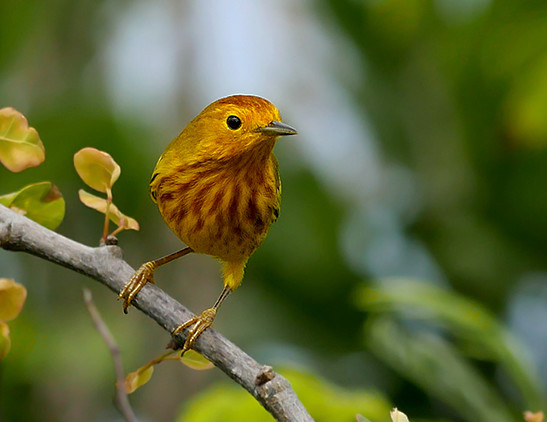
Male Yellow Warbler showing the red crown and deep breast streaking of the Lesser Antillean race. (Photo by Stephen Shunk)
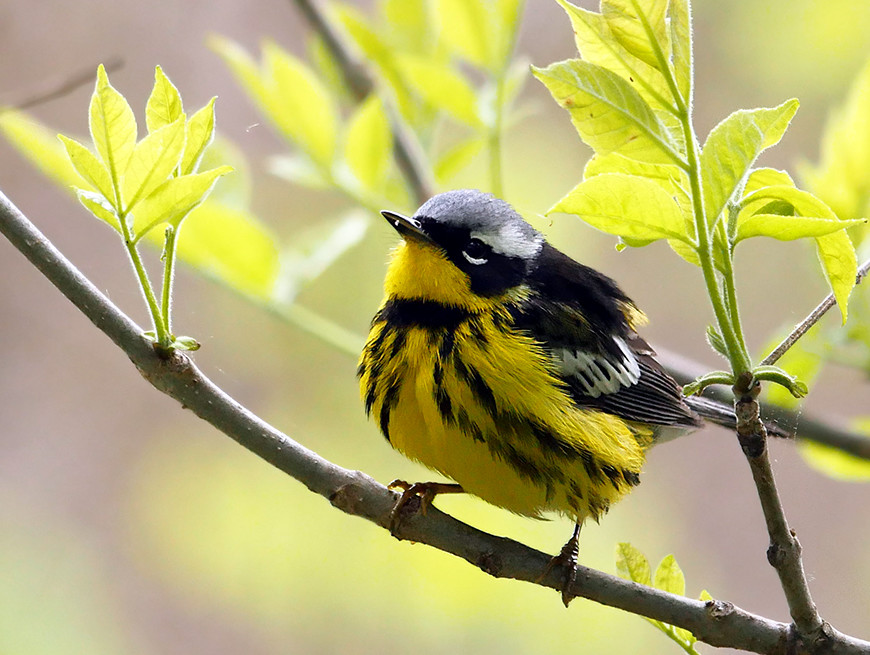
Many species may be readily identified from a single field mark—like Martinique’s Yellow Warbler, with its reddish-brown head or the Magnolia Warbler with its bold black breast streaks. Identifying other species, however, may require that you see the bird from different angles to observe multiple field marks. Challenge yourself to keep watching a bird and learn its more subtle markings. The next time you get only a fleeting glimpse of the same bird’s rump or belly, you’ll be more confident in its identification, not to mention, impressing your less observant birding pals!
Use a Field Guide
A male Blackpoll Warbler in fall migration and winter plumage, like this male seen in Guadeloupe, is rather nondescript – look for white wing bars and under tail coverts, faint side streaks and pale legs. Males in breeding plumage in spring look very different—they have a black cap and white cheek patch. (Photo by Anthony Levesque)
A good field guide will help narrow down the possibilities with each bird’s status, range and habitat descriptions. For example, if you’re in Puerto Rico, your field guide will tell you that that the Elfin-woods Warbler is endemic on the island but that the similarly streaked Blackpoll Warbler is not likely to be found in the same forests. Field guides can also help you decide among similar-looking species by comparing their levels of abundance. Thus, a yellowish warbler seen in the Bahamas is more likely to be a Pine or Yellow Warbler than the locally rare Nashville.
Sketch the Birds!
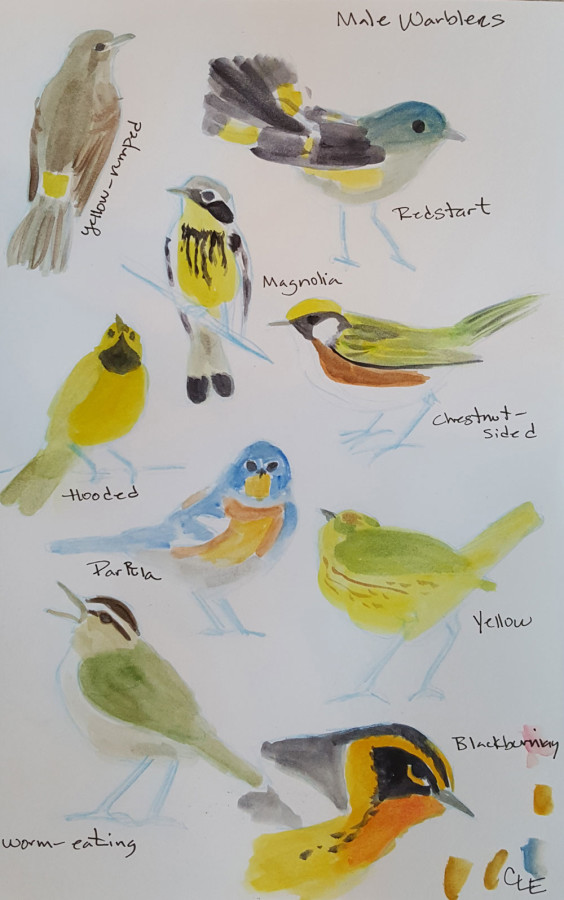
Quick field sketches of different warblers with simple watercolors showing some key field marks. (By Christine Elder)
Follow the lead of the early naturalists. Keep a journal of your bird observations with notes and sketches. If you look at a bird long enough to sketch it, you will have a much better image in your mind than if you simply see the bird in your binoculars. Don’t dwell on how rough your finished sketches may seem; the simple act of sketching will help you learn the birds. Add written notes to your sketches to increase your chance of identifying a given bird –jot down characters of its song, its feeding behavior, its habitat and its color (be specific, like lemon yellow or slate blue).
Study Warblers throughout the Year
Don’t be intimidated by the thought of your sketches needing to look like ‘fine art’ or to resemble those found in field guides. Approach sketching as just another way to document your time in the field, valuing the process over the product, and I promise you’ll gain much in your ability to recognize a species the next time it crosses your path. Once you have a handle on knowing your fancy late winter and spring warblers, keep watching them through the late summer and fall, as they fade into their basic plumages. Learn the shapes and postures of the birds, as well as their favorite habitats during this season. Warblers give you a year-round reason for taking a sketching stroll, or just spending time outside. Key into subtle differences among similar species, and you will be a warbler star before the birds leave the islands the following spring!
Summary of Things to Notice when Identifying a Warbler
Most warblers have a similar body size and shape with a fairly short and slender bill. So your challenge is to notice what is different about them, which mostly comes down to plumage and behavior.
Coloration and color patterns:
Warblers come in two basic varieties; one type is relatively plain brown with some subtle streaking (like Ovenbirds and waterthrushes) and the other type is brightly colored and patterned, with varying amounts of yellow, red, blue, white and black (like the Prothonotary Warbler or the Black-throated Blue Warbler).
Also look for the following:
This male Prairie Warbler, spotted in the Blue Mountains of Jamaica, has yellow underparts, distinctive black side streaks, yellow eyebrow stripe and yellow patch below the eye. It bobs its tail while foraging. (Photo by Sam Woods).
• An eye ring; its color, and whether it is complete or broken • Stripes around eye; either across, above, or below the eye • Patches of color on the cheeks or rump and their color • Stripes or streaking on the throat or breast • Wing bars and their color • Underparts (since that’s the only view you’ll often get of many species who flit quickly about in the treetops!). Notice the colors and patterns on their breast, belly, sides and undertail coverts.
Behavior:
• Is your warbler foraging in the trees or on the ground? • Does it fan its tail, spread its wings, bob or ‘wag’ its tail? • What angle does the bird hold its tail in relation to its body? • Is the bird’s gait hopping, walking or shuffling? • Character of its voice, the male’s song and the call and flight notes of both sexes
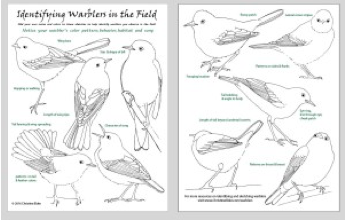
Identifying Warblers in the Field cheat sheet (illustrations by Christine Elder)
I have created this handy-dandy info-graphic for you to download. This Identifying Warblers in the Field downloadable pdf has bird templates for you to sketch on, adding field marks you see in the field, with tips on what to look for on birds to help identify them. Print it out, attach it to a clip board, and bring some colored pens or pencils with you next time you’re in the field.
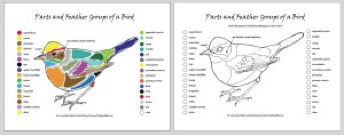
Parts of a bird cheat sheet (illustrations by Christine Elder)
Many warblers have complex color patterns, especially on their heads. These patterns often follow the feather groups, for example, a stripe on the crown or a cheek patch on the auriculars, so it’s a good idea to learn the names and placement of these groups. This is a two-page pdf that includes a blank page for you to color code. By Christine Elder, a naturalist, educator and artist from Oregon who loves to travel, write and sketch birds. Christine taught sketching to Jamaican youth at our one-week BirdSleuth Caribbean summer camp (July 2015), held in conjunction with our 20th International Conference in Kingston, Jamaica, and gave a workshop on how to sketch birds at the conference. Find more hints on identifying warblers and using sketching as a learning tool at www.ChristineElder.com/warblers.
Late spring male Magnolia Warbler, showing his bold black under-stripes and just a bit of its bright yellow rump. Magee Marsh, Ohio, USA. (Photo by Stephen Shunk)
Recommended Field Guides for the Caribbean:
Birds of the West Indies (Second Edition). 2020. H. Raffaele, J. Wiley, O. Garrido, A. Keith and J. Raffaele. Princeton University Press. 288 pages. A Guide to the Birds of the West Indies. 1998. H. Raffaele, J. Wiley, O. Garrido, A. Keith and J. Raffaele. Princeton University Press. 511 pages. Note: although this book needs updating, it contains a wealth of information about all the species that occur in the West Indies. The hardcover has 86 color plates, detailed species notes, range maps and a handy Locality Checklist in the back; the softcover has 94 color plates, species notes and colored range maps.Birds of the Dominican Republic and Haiti. 2006. S. Latta, C. Rimmer, A. Keith, J. Wiley, H. Raffaele, K. McFarland, and E. Fernandez. Princeton Univeristy Press. 258 pages. Endemic Birds of Cuba: A Comprehensive Field Guide, including West Indian Endemics Residing in Cuba, by Nils Navarro. Available for purchase on our website at the link above (scroll down). 2015. Ediciones Nuevos Mundos, 168 pp.
Black-and-white Warblers are one of the easiest to identify for obvious reasons. They are known also for their behavior of climbing tree trunks and branches upward or downward probing the bark for insects and spiders. This male was spotted foraging in the Dominican Republic. (Photo by Dax Roman).
Cape May Warbler male in winter plumage in Jamaica. Note the heavy striping on the breast, eye stripe and faint cheek patch. The cheek patch is a bright chestnut-orange when the male is in breeding plumage. Females are duller, with a grayish-olive cheek. (Photo by Ricardo Miller)
A lovely Cuban Emerald hummingbird (female), one of the species spotted by Erika Gates and her team on Global Big Day, Crabbing Bay, East Grand Bahama. (Photo by Erika Gates)
More than one hundred Caribbean birders participated in this year’s Global Big Day, helping to set a new world record of 6,299 species, as well as set a new Global Big Day record for the Caribbean itself! In order to break the old record, birders all over the world spent the 24 hours of May 14 observing and counting as many species as possible—jointly recording over 60% of all living birds in only one day and passing the old record by 141 species! In the eBird Caribbean region*, the 428 species seen (278 in the West Indies) was 42 more than last year. By joining the Global Big Day, participants enjoyed an exciting day of birding, but also showed their support for bird conservation and citizen science in the Caribbean and around the world.
Below are some statistics and a few of the many highlights from Global Big Day in the Caribbean. You can further explore Global Big Day results and statistics for the Caribbean and the rest of the world at the Global Big Day Headquarters, while a global summary and highlights can be found here.
Highlights from the Caribbean
In the West Indies sub-region, the Big Day total of 278 species was 41% of the species on the eBird West Indies species list. A major accomplishment, considering that many wintering species had already left the Caribbean while others are rare species which are not present every year. Complete Global Big Day lists for specific countries can be found by typing the name of the country in the “Explore a Region” box on the Global Big Day page, while a West Indies-only regional list can be found at this link. If you saw a species on May 14 that is missing from the list, you can still enter sightings and have them count!Click here to enter your sightings in eBird Caribbean.
Of the 21 Caribbean countries that participated in the Global Big Day, Trinidad and Tobago again reported the most species (171). However, this was way more than the 112 species seen in Trinidad and Tobago last year, and good for 40th place worldwide! Puerto Rico was next with 129 species, then Bahamas (121), Cayman Islands (74), and Curaçao (71) for the rest of the top five. You can find the worldwide list of country rankings here.
Number of species seen in each country in the Caribbean during the 2016 Global Big Day. See how your country or island compares with the rest of the Caribbean.
This year 60% more checklists (586) were entered in eBird Caribbean from 133 eBirders, representing a large improvement in participation over last year. Puerto Rico (122 checklists) and the Bahamas (118) showed especially large increases in the number of checklists, with twice as many for Puerto Rico and four times as many for the Bahamas. This allowed these two countries to lead the Caribbean for numbers of checklists this year and also to rank in the global top 25! Other countries with strong participation included the Cayman Islands (62 checklists) and Curaçao (48).
Number of checklists from each country in the Caribbean during the 2016 Global Big Day. Puerto Rico submitted the most checklists: 122 in just one day!Caribbean eBirders were very successful in this year’s Global Big Day, finding more species, submitting more checklists, and getting more participants involved than last year.
The most species seen by one person was 122 by Julio Salgado, John Garrett, and Gerardo Toledo on Puerto Rico. John Garrett and Julio Salgado also tied the Curaçao Footprint Foundation in submitting the most complete checklists with 17. You can find out how your personal Global Big Day totals compared to other Caribbean birders here (West Indies only).
107 out of 172 possible West Indies endemics were found by Caribbean birders this year, making an important contribution to breaking the Global Big Day world record.
Birds were not only counted but also photographed: photographs of 129 species were added to Global Big Day checklists. We’ve linked to a very small sample of them here, including nicely illustrated checklists from Erika Gates in the Bahamas (here and here), Michael Good in the Dominican Republic (here), and Henriette de Vries on Curaçao (here), and a rare Striated Heron (Butorides striata) photographed by John Garrett on Puerto Rico.
Thank you to everyone who participated and made this Global Big Day successful. We hope you had a great time and will continue to participate in eBird Caribbean and future Global Big Days. Of course, eBird Caribbean doesn’t only exist on one day of the year. Global Big Day is just one of 365 opportunities/year to be a part of a global network of birdwatchers, researchers, and conservationists working together with a shared passion for birds. Any bird that you see, anywhere, at any time, can become a part of this global resource—helping your fellow birdwatchers as well as the birds that we all care about. So take a look at eBird Mobile, or how to find birds near you. Go out, explore, have fun, and let all of us know what you saw. Your sightings can help change the world. We’ll see you out there.
Team eBird and Doug Weidemann
*The countries comprising the eBird Caribbean portal consist of the West Indies plus Trinidad and Tobago, Aruba, Bonaire, Curaçao, and Bermuda.
A rare Striated Heron seen by John Garrett and his team on Global Bird Day in Puerto Rico (Valle de Lajas, Lajas, PR). (Photo by John Garrett)Hispaniola Woodpecker, endemic to the Dominican Republic was photographed by Michael Good in Puerto Plata, DR on his Global Big Day count.Palmchat perched on a branch, another DR endemic spotted on Global Big Day. (photo by Michael Good)American Flamingo in Curacao, counted and photographed on Global Big Day, was part of Henriette de Vries count. (photo by Henriette de Vries)
A child releases a banded bird at Belmont Estates in Grenada. Adults and children learned about how birds are captured and banded for research, as well as how to use binoculars and identify birds in birding walks. (Photo by Dwain Thomas).
In Puerto Rico’s Cabo Rojo National Wildlife Refuge, members of the public went on a morning birding session, followed by a talk on endemic birds, in particular the “Reinita” – the Adelaide’s Warbler, known for its delightful song. On Grenada’s Belmont Estate, fifth-graders excitedly held bird bags, learned about mist netting and banding, and enjoyed releasing the birds. At the University of Havana’s School of Biology students organized knowledge piñatas, endemic bird bingo and other games and exhibits. And in Bermuda, besides the annual bluebird nestbox competition, members of the Bermuda Audubon Society sailed to Nonsuch Island in search of the National Bird, the endemic Bermuda Petrel, known locally as the “Cahow.”
What was all the fun and activity about? Well, one major clue in all of the above is the word “endemic.” The annual Caribbean Endemic Bird Festival (CEBF), coordinated by BirdsCaribbean and its energetic partners across the region, begins on Earth Day (April 22) and ends on International Biodiversity Day (May 22). The festival celebrates the
A child shares what he can do to help birds in an art activity in Puerto Rico (Photo courtesy of Centro Ambiental Santa Ana/ Sociedad de Historia Natural de Puerto Rico).
exceptionally high endemism in the region—173 species of birds call the Caribbean home, that is, they are found nowhere else in the world. Many of these species live only on a single island, and many are endangered or threatened. These birds are the most unique examples of the Caribbean’s natural heritage, and they often occupy specialized niches in the ecology of the islands where they live.
This year, dozens of events involved the active participation of thousands of islanders, young and old. The overall theme was “Spread Your Wings for Bird Conservation” which raised awareness about the different laws and programs that protect our unique birds and how everyone can participate in activities that help safeguard their long-term survival.
Grandparents (a group called “Renacer”) taking part in a bird knowledge game organized by students in the Biology Department at the University of Havana, Cuba. (Photo courtesy of the University of Havana).
For the organizers of CEBF celebrations across the region, it is important to reach out to different groups. Birds – and in particular the “special” endemics that are unique to each island – have widespread appeal, touching hearts and minds in different ways. Each year, CEBF partners such as
Grupo Acción Ecológica in the Dominican Republic, the Natural History Society of Puerto Rico and Jamaica’s Caribbean Coastal Area Management Foundation (C-CAM) offer new perspectives on endemic birds for visitors from overseas as well as students of all ages, educators, local families and youth groups such as Boy Scouts. Members of a group of grandparents (“Renacer”) were among those visiting the University of Havana exhibition. Many events were advertised via social media as well as traditional media.
Brahim Diop, Forestry Dept. Jamaica, hands out prizes to student winners of the Bird Art Competition organized by C-CAM (Caribbean Coastal Area Management Foundation) in partnership with NEPA (National Environment and Planning Agency), the Forestry Department, and the Institute of Jamaica.
In Jamaica, C-CAM’s new Portland Bight Discovery Centre, in the Salt River wetland area, was the setting for an exciting day of activities for local high school students and teachers. Prizes (including Ann Haynes Sutton’s “Birds of Jamaica” field guide) were awarded in four categories for a student art exhibition with some stunning entries. An exploration of the surrounding mangroves and bird hide, including binocular practice, was literally an “eye-opener” for the students. Earlier, the National Environment & Planning Agency (NEPA) partnered with a local non-profit organization in deep rural Trelawny for the Spring Garden Bird Festival, where the very young Team Hummingbird were champion birdwatchers.
Students from the Mary Hutchinson Primary School and the Stephanie Primary School having fun with binoculars during a bird-watching session on Union Island with Sustainable Grenadines, Inc. (Photo by Orisha Joseph)
Over in the eastern Caribbean, the trans-boundary non-governmental organization Sustainable Grenadines Inc (SusGren) took to the seas and led a series of bird-watching trips with its Junior Rangers and graduate BirdSleuth teachers. Their island excursions included an early morning trip at the invitation of the exclusive Palm Island Beach Resort (breakfast included); and extensive seabird and shorebird viewing and counting via boat trips and on foot, around Union Island and its surrounding islets and rocks.
The CEBF would be nothing without partnerships, and new ones are being forged every year on every island. Non-governmental organizations such as “SOPI” (Sociedad Ornitológica Puertorriqueña), in Puerto Rico; private sector sponsors such as the Bermuda Electricity Company; government agencies such as Jamaica’s Forestry Department; and academic institutions such as the Cuban Zoological Society and the Institute of Jamaica’s Natural History Museum – all bring extra value to the activities by lending additional local expertise, materials and funds.
On the trail looking for birds with home-made binoculars in Puerto Rico. (Photo courtesy of Centro Ambiental Santa Ana/ Sociedad de Historia Natural de Puerto Rico)
CEBF 2016 was, once again, an expression of joy and appreciation, as well as a learning experience for many. As the leader of a Boy Scouts group in Caguas, Puerto Rico put it: “What I was most pleased with were the activities for my students, teachers and the families. My boys thoroughly enjoyed it all.”
BirdsCaribbean thanks all of our partners for their leadership and hard work and the US Forest Service, US Fish and Wildlife Service, Environment for the Americas and Optics for the Tropics for materials and support.
Hannah Madden with Red-billed Tropicbird in hand. “Despite the vertigo, scrapes and bites, the rewards of seabird fieldwork are endless.”
Back in 2005, I first visited St. Eustatius on vacation. I was living in Amsterdam at the time and thought I’d give one of the lesser known Dutch Caribbean islands a try. Vacation turned into a ‘year off’ when I decided to return to the island in 2006, and that year off has since turned into a career in ecology, a house, a partner, and a child in 2016. The island has a way of grabbing hold of your heart—I had fallen in love with the way of life here, unhurried and unspoiled, and also the island’s inhabitants—namely its Red-billed Tropicbirds.
St. Eustatius, affectionately known as Statia, is a small landmass with a big history. Famous (but not well known) for being the first foreign nation to recognize the United States of America’s long sought-after independence in 1776, the island reached its economic peak around 1795. Each year, thousands of ships anchored on the roadstead of Oranjestad, and the shore of the Bay was lined with hundreds of warehouses packed with goods. In fact, more trade (both legal and illegal) transpired here after the end of the American Revolution than on any other Caribbean island.
Red-billed Tropicbird nesting inside a naturally occurring cavity of the sandstone cliff on Zeelandia Beach on Statia. This is actually the least favorable site due to erosion.
But we are here to talk about birds, seabirds specifically. As the eighteenth century drew to a close, St. Eustatius gradually lost its importance as a trading center and most merchants and planters left the island. Through the nineteenth and twentieth centuries, Statia became and remained a quiet island. In contrast to the rapid and excessive environmental destruction that has ravaged many Caribbean islands in their quest for economic development, the coastlines of Statia have remained untouched by high-rise hotels or boardwalks. This means that, despite its small size, the island has become one of the main nesting sites for Red-billed Tropicbirds in the region (Saba and Little Tobago being the others).
In 2012 I participated in a tropicbird monitoring workshop on Statia, led by Dr. Adrian Delnevo and facilitated by the Dutch Caribbean Nature Alliance. That same year I also attended an international training workshop for seabird research and conservation on San Salvador, the Bahamas, organized by BirdsCaribbean, Clemson University and Defenders of Wildlife. It was then that I realized the increasing vulnerability of seabirds and the importance of better understanding their threats and population dynamics. I also learned field techniques for monitoring and studying seabirds in these workshops. So, in 2012, together with former intern Andrew Ellis, and employed by STENAPA, the local conservation NGO, we embarked on a mammoth quest to find the island’s main nesting sites. We initially only knew that tropicbirds nested along Zeelandia Beach, which faces the Atlantic Ocean, because we could see them inside crevices in the cliff face. But where else did they nest?
Some call me a wuss for wearing gloves but I am rather fond of my fingers.
According to earlier published literature, there were estimated to be only 30 pairs of Red-billed Tropicbirds on Statia (Lee and McGehee, 2000). This was followed by EPIC’s estimate of 100-200 pairs in 2003. Having traversed the entire island in search of nests during 2012-2013, however, we believe the population more likely totals around 300-500 pairs. To our surprise, the main nesting site was not Zeelandia Beach – in fact we realized this was one of the worst habitats for tropicbirds due to erosion of the sandstone cliff. After clambering over giant boulders along Statia’s north-west coast, we finally hit gold. At elevations of just 20-40 meters above sea level, we were able to (safely) access some 85 nests along a narrow strip of coastline spanning approximately 1km. While there are many more nests at higher elevations, our lack of levitation prowess prevented us from accessing those.
My youngest and most entertaining field tech (aka my daughter, Lalia), who apparently enjoys rock climbing and retrieving angry birds from nests.
And so, since 2012, from mid-October to mid-May, we have faithfully monitored this magnificent seabird. We measure, weigh and band adults and chicks and record nest success. Sticking your hand into the nest of a ferociously angry and defensive tropicbird’s nest may not sound like fun to some, but I like to think my family would be proud. I have become accustomed to the joys of regurgitated fish, pooped-on pants, and new scars after every visit. When my daughter comes home from school I show her my new collection of scrapes and bites. She has even joined me on fieldwork (see photo) and is now the go-to person at school for anything nature-related.
Since 2012 we have banded about 450 tropicbirds. We’ve also attached geolocators and GPS loggers to a few individuals, with varying rates of retrieval success. We have learned that they can travel great distances inside and outside the breeding season, and we now have a better understanding of the threats they face (mainly rats, which prey on eggs and young), but this is just the beginning. As I write this, we are submitting a proposal to further study Red-billed Tropicbirds on Statia and Saba. If approved, I will spend another four years doing my PhD on this enigmatic species. Being able to contribute to regional knowledge and the long-term conservation of this beautiful bird is a worthy endeavor and well worth the battle scars. I am grateful for the exciting opportunities that have allowed me to stay on Statia and study Red-billed Tropicbirds; hopefully my Caribbean seabird journey will continue – stay tuned!
Map showing a single foraging trip of an adult tropicbird in the incubating stage. The bird flew around the island twice and then traveled past Montserrat towards Guadeloupe. The diet of tropicbirds primarily consists of pelagic species such as flying fish and squid.
Students from Port Royal Primary School studying the ID cards during a trip to Spittal Pond Nature Reserve in Bermuda. (photo by Andrew Dobson)
The Bermuda Audubon Society (BAS) is delighted to report that the new Bermuda bird identification cards produced with the assistance of BirdsCaribbean have proven to be a great success. Class sets of the cards have been distributed to every school on the island free of charge thanks to a grant from the Bank of Bermuda Foundation and they have been met with a very favourable response.
Budding birders learning to identify Bermuda’s birds. (photo by Andrew Dobson).
“There has been a demand for this sort of card for a long time,” commented Andrew Dobson, BAS President. “The cards are being used in both the classroom and on field trips and everyone loves them. They are a fantastic tool for helping people to learn more about Bermuda’s birds.”
One card features all of Bermuda’s breeding birds with migratory land birds on the reverse side. The second card features Bermuda’s seabirds with migratory wetland birds on the reverse. The cards are available for only $5 each to both residents and visitors from the Bermuda Audubon Society and local gift shops, book stores, and nurseries in Bermuda.
The Bermuda bird cards are the latest in a series produced by BirdsCaribbean for a number of Caribbean countries, including the Bahamas, Puerto Rico, Jamaica, Antigua and Barbuda, St. Lucia, U.S. and British Virgin Islands, Curacao, Guadeloupe, Martinique, Grenada and St. Vincent and the Grenadines. Wetland Birds of the Caribbean and Seabirds of the Caribbean cards are also available in English, Spanish and French. The cards are laminated and perfect for birding field trips.
Bermuda youth enjoying a field trip with the new Birds of Bermuda identification cards. (photo by Andrew Dobson)
“We want to support the development of these beautiful cards in every Caribbean country,” said Lisa Sorenson, BirdsCaribbean Executive Director. “It’s a great joy for us to work with our partners to develop the cards and then see how effective they are at helping children and adults to discover and appreciate local birds, including resident and special endemic species as well as visiting migrants. One youth in our BirdSleuth Caribbean program in Jamaica was so excited about his first birding experience with us that he framed his bird list and card and hung it on his wall!”
BirdsCaribbean and the Bermuda Audubon Society are very grateful for permission to use illustrations from “A Guide to the Birds of the West Indies” by Herb Raffaele and co-authors (Princeton University Press) as well as additional illustrations from David Wingate, Andrew Dobson and the Royal Society for the Protection of Birds.
If you would like to develop a bird ID card for your country, contact Lisa Sorenson ([email protected]). If you would like to support the development of this invaluable educational tool in a new Caribbean country, please click here to donate.
Breeding Birds of Bermuda – side 1Migratory Landlords of Bermuda side 2Seabirds of Bermuda-side 1Migratory Wetland Birds of Bermuda – side 2
Please join us for another exciting webinar, which focuses on the issue of illegal trafficking of birds, on Thursday, May 5th, 1 to 2 p.m. (EDT). In this webinar, learn from our experts about Caribbean endemic birds, why they are important, what threatens them (focusing especially on the issue of illegal trade), the international and local laws that help protect birds, and what you can do to help.
This webinar is part of our ongoing Caribbean Endemic Bird Festival2016 activities. The theme for this year’s festival is, “Spread Your Wings for Bird Conservation.” The webinar will be presented by Mr. Scott Johnson, Science Officer at the Bahamas National Trust and Dr. Leo Douglas (BirdsCaribbean). Our special guest speaker is Ms. Alessandra Vanzella (Program Officer at the United Nations Environment Program, Caribbean Environment Program, Kingston, JA).
Space is limited so register early! Here is the link to register:
This black-whiskered vireo was one of three caught adjacent to a small cocoa plantation in St. David.
This story begins with a couple of biologists, from Montana and Winnipeg, meeting by chance in Hawai’i, and ends in Grenada – though this is an ending that is really a beginning. In this blog I’m going to focus on a banding project that students and I started in November 2015. But first, to really appreciate the serendipity that brought us to this point, I have to tell you about how I, a conservation biologist from the University of Manitoba, came to this little paradise.
At The Wildlife Society conference on Hawai’i in 2011, I hoped to catch a glimpse of some of the endemic species that generally avoid the resort-laden perimeter of the island, so when I overheard another attendee asking where she could go to see birds, I introduced myself. We decided on the spot to rent a car together to check out the island, and spent a delightful day snorkelling and visiting local coffee plantations. I had had the good luck to meet Dr. Andrea Easter-Pilcher, a professor who was originally from Montana, and now teaches at St. George’s University (SGU) in Grenada. Andrea is also an active member of BirdsCaribbean and was on the organizing committee for the 19th Regional Conference held at SGU in July 2013. During our drive we hatched a plan to bring Canadian students down to Grenada, which in 2014 was realized as a field course (we will be returning for another field course in 2017).
Belmont Estate, one of our banding sites in Grenada, is a unique and authentic 17th century plantation that offers guests an opportunity to participate in and observe the workings of a fully functional historic plantation, growing spices, cocoa and more.
This collaboration has naturally developed further into a fledgling research program. In April 2016 we will be starting our first big field season, with 3 graduate students starting or continuing different projects. However, we initiated this program in November 2015, when we started a mist-netting and banding project focussing on passerines and near-passerines in three sites spread across Grenada’s rural habitats.
Myself, four graduate students (Paulson Des Brisay, Chelsea Enslow, Alexandra Heathcote and Christoph Ng) and Paula Grieef, bander-in-charge from Oak Hammock Marsh, Manitoba, participated in the initial banding period. We were welcomed with open arms by our amazing partners. Initially we stayed with Claudette David (of SPECTO, an environmental NGO) at High Hopes Villa in Bathway. We had the most wonderful time getting to know Claudette and many additional volunteers and staff from SPECTO. We mist-netted and banded in gardens, orchards and cocoa plantations both at High Hopes and at Belmont Estates, an award-winning organic plantation and agri-tourism destination nearby. Shadel Nyack Compton, owner of Belmont, and her staff were just as welcoming as Claudette. Finally, we moved to a more southern cocoa and mixed-species plantation at a small farm in St. David, where we had the pleasure of working with Shelley Roberts and Phillip Patrick of Little Cocoa cottage.
Paula Grief, bander-in-charge at Oak Hammock Marsh (OHM) Interpretive Centre, giving a training talk to students about bird banding. OHM also collaborates on BIrdsCaribbean’s West Indian Whistling-Duck and Wetlands Conservation Project.
In November we banded 244 individuals of 14 species, including Lesser Antillean Tanagers, Antillean House Wrens, Lesser Antillean Bullfinches, and many other passerines of forest-agriculture ecosystems. Even though we only banded for a couple of weeks so far, we have found interesting results. Between 50 and 100% of the individuals of every species we captured were in active moult, a much higher rate than we expected in November. Many species showed morphological differences relative to other populations that have been reported in the literature. We are really excited to be back banding in April and May this year, so that we can increase sample sizes, compare body condition between rainy and dry seasons, and get a better handle on moult and breeding periods.
Christoph Ng laughs with Jody Daniel, instructor at SGU and former student of both Andrea Easter-Pilcher and Nicola Koper, and a SGU marine, wildlife and conservation program student, while releasing banded birds.
We also contributed to the training of a class of students, taught by Dr. Miya Warrington, at St. George’s University. Miya’s class in ecological methods joined us at Belmont Estates and learned about mist-netting and banding a variety of different species. We have many plans to collaborate further with SGU to work towards learning about and conserving many of Grenada’s bird species. Our research lab group has already included two Masters students who are graduates of SGU’s marine, wildlife, and conservation biology program (Ezra Campbell and Jody Daniel, who served as Chairs of the organizing committee of the 2013 BirdsCaribbean Conference), and we have plans to integrate more SGU students and grads into our research activities. This has been a great opportunity to increase the international composition of the University of Manitoba’s graduate programs, while also contributing to the education and training of Grenadians.
Antillean House Wren, a subspecies endemic to Grenada, netted and banded at Belmont Estates.
One of the best parts of the trip was realizing how interested the local community members are in conservation of their birds. In St. David, lots of locals stopped to chat as they saw us banding near roads, and offered us encouragement for our work. Claudette and several of her staff, especially Valdon Paul and Shaundel Franklyn, participated in many of our banding activities, and showed great delight in seeing many different species up close. Shadel and her staff were also really engaged in our research, and were grateful that we chose to work at Belmont – indeed, this collaboration has been so wonderful that we’ve planned to collaborate further this year, participating with them and their visitors on activities for the 2026 Caribbean Endemic Bird Festival, as well as further banding. This response makes me even more excited about our research and our ongoing collaborations with Grenadian communities, and I continue to be grateful for the fates that brought Andrea and I together on that lucky day in Hawai’i. Stay tuned for more reports on our findings from the Spice Isle!
Male Hispaniolan Golden Swallow perched over-top an artificial nest-box in Parque Valle Nuevo, Dominican Republic; July 2014. (photo by Justin Proctor)
With a title like that, I’m hoping that many of you instinctively hucked your laptops across the room, sprinted out to the barn and started hitching your pride-and-joy appaloosa to the covered wagon your grandpappy gave to you as a belated wedding gift back in the summer of ‘69. Just don’t forget the “caulk the wagon and float” option if you’re coming from the mainland.
If you decide to make the journey, I suggest making landfall on the beautiful island of Hispaniola (gold deposits have all but dried up in Jamaica – but more on that later). Trade in your bikini and flip-flops for some long pants and hiking boots, because what you came for can only be reliably found high up in the mountains. Not that I like to give away too much insider advice, but if I were you, I’d keep heading up until you’ve reached the Hispaniolan pine forests – the highest altitude forest type you’ll find on the island. Find a grassy clearing, sit down, and wait, because at this point, the gold is going to come to you! With mighty wings (~11cm long each), fearsome talons (actually you’d have to strain to even notice the legs on this bird), and a relentless hunger for meat (prey doesn’t get much bigger than an 8mm march fly), watch out as the infamous Golden Swallow comes tearing over the nearest hillside radiating its majestic golden sheen across the lands…wait…wait…I can’t do this anymore. It’s a tiny bird that can’t peck to save its life, and unless the light of a passing-by solar flare manages to reflect off the swallow’s dorsal plumage at a perfect 47.86o angle, the bird is green!
Artificial nest-box mounted to a pole with a cone-shaped predator guard attached beneath, Parque Valle Nuevo, Dominican Republic; June 2014. (photo by Justin Proctor)
In 2010, in collaboration with the Golondrinas de Las Américas (Swallows of the Americas) project at Cornell University, researcher Jim Goetz and Dominican biologists Esteban Garrido and Jesus Almonthe erected nearly one hundred artificial nest-boxes across a national park known as Parque Valle Nuevo (Parque Nacional Juan Bautista Pérez Rancier) located in the Dominican Republic’s Cordillera Central. Their hope was to attract a sizeable, returning population of breeding Hispaniolan Golden Swallows (Tachycineta euchrysea sclateri) to those nest-boxes so that a formal study of the species could be carried out. By 2012 the plan had worked, and word spread back to Cornell that the time was ripe to find someone to undertake the research. Upon hearing about the opportunity – and conveniently in the very beginning planning stages of my master’s thesis – I decided to give it a go. I was fresh off two years of back-to-back-to-back field seasons working with Tachycineta swallows up and down the Western Hemisphere, and I was ready to find out where else this genus of acrobatic aerial insectivores could take me.
The Hispaniolan Golden Swallow, it turned out, was considered endemic to the island, threatened, and in steady decline. Furthermore, there was so very little known about it. Some work had been done with a very small breeding population that was nesting in crevices within the walls of abandoned bauxite mines located in the Aceitillar region of the Sierra de Bahoruco, but that was really about it. As I came to realize both the extent of what we didn’t know as well as the current plight of the species, I decided that a focused study of the swallow’s breeding biology would simply not be enough. The project would have to be more holistic. The work I decided to do would have to be chosen for its relevance and thus its ability to produce information that helped develop both short and long-term conservation management plans for the species. The project could only truly be successful if its every facet was geared towards having a broader impact on the future of the Golden Swallow. So, I had three years (roughly speaking – this is academia we’re talking about) to make some magic happen, and with the laundry list of ideas and goals growing daily, I knew I was going to need some help. Much to my good fortune, I found smiling faces and willing bodies around absolutely every bend in the road. [All of those people, groups, and foundations deserve their own article – and I plan to write it – but in the meantime let me just say that I’m hoping we all set some kind of record for the 400 word acknowledgment section within our Hispaniolan Golden Swallow monograph that’s currently under review for publication by the JCO.]
View of Parque Valle Nuevo from the top of the Pajon Blanco Fire Tower; Dominican Republic. (photo by Justin Proctor)
And so we set out on an adventure of a lifetime with the underlying goal of studying a bird and using what we learned to help save that bird, while simultaneously nourishing an already burgeoning sense of local stewardship over Hispaniola’s feathered friends and the habitats they so deeply depend upon. We set the bar high from the beginning, and I can be honest in saying that I feel good about what we accomplished and where the project stands today.
Two Golden Swallow chicks have just hatched. One begs for food, one contemplates life, and one refuses to come out; Parque Valle Nuevo, Dominican Republic, 2014. (photo by Justin Proctor)
However, as opposed to trying to tackle an impossible play-by-play of what transpired over those next three years (thankfully all of that information is in my master’s thesis and can be yours for just three easy payments of $29.99), I’m going to take a slightly different approach. I’m going to share with descriptions of images (and feelings) that go through my head when somebody kindly asks me, “So how’d that Golden Swallow Project go?” Little does that person know how much weight a question like that can have, or how it causes me to temporary black-out as my mind boards a high-speed emotional (and perhaps somewhat spiritual) roller-coaster from which there is little hope for return for at least the ensuing two minutes. So let’s go for a ride.
My wife, Marisol, and I are inside of a rental jeep that hasn’t had a tune-up since Elvis left the planet. It’s 10pm (pitch dark), and there is a rather large gathering of people around us. Some are cheering, others look nervous. We are momentarily stopped, looking out in front of us at a raging river flowing out of a stormy valley. The road, of course, stops at one side of the river and continues again on the other side. That “other side” is our only way home, back up into the mountains after having endured a long day of re-provisioning our food supplies down in town. It’s been an intense first field season so far. There have been high highs and some low lows. We really want to get back up to the cabin where we’ve been living, because field work awaits us again at 6am the next morning. Against my better judgment, we begin moving forward and into the river. Despite the water starting to come in through the driver’s side window, the four-wheel drive seems to be working well, and a grin starts creeping onto my face. That grin disappears quickly when all four tires stop making contact with the gravelly bottom of the river and the current begins carrying us downstream.
I successfully trap and get my first close-up look at a Golden Swallow. It’s a female, and she’s rather calm
Adult female Golden Swallow in the hand that will soon be measured, banded and then released; Parque Valle Nuevo, Dominican Republic. (photo by Justin Proctor)
in the hand. My rule is to keep her no longer than two minutes, during which time I’ll need to take at least four different biometric measurements, describe her plumage, and place an aluminum band on her leg. That doesn’t leave much time to just admire. But a few seconds turns out to be just enough.
I look at one of our 200 artificial nest-boxes (we expanded considerably our first year) and realize how simple it is. Yet, at the same time, it’s the solution to everything. First, the box provides a nesting cavity for swallows in a habitat where otherwise very few natural cavities exist, which results in more nesting attempts by more pairs of swallows. Second, with the boxes attached to free-standing poles, a predator guard in the form of a metallic cone can be fashioned below the box to thwart attacks from invasive rats and mongoose (not to mention those damn feral cats!). This results in higher rates of brood survival in the face of unnatural – and overwhelming – rates of predation and subsequent nest failure. Third, the boxes are built to be temporarily opened from the side by researchers studying the breeding life history of the swallows. This provides us access to a nearly limitless wealth of data. Fourth, the boxes are tangible, visible, and accessible. These are perhaps the most important features. The box itself becomes a curiosity, a talking point, and ultimately an icon for our collective efforts to protect and care for nature. Although maybe not the long-term answer, the nest-box is invaluable for now.
My field crew today consists of two Dominicans, one Haitian, two Argentinians, one Cuban, and one Venezuelan. It wasn’t necessarily easy, but we got them all here. Cross-culture-pollination is the bread and butter of great science and conservation work. Amazing how quickly good solutions come in an environment like this.
The Hispaniolan Woodpecker field team (led by Josh LaPergola, Cornell University) and the Hispaniolan Golden Swallow field team combine forces; Parque Valle Nuevo, Dominican Republic, 2014. (photo by Marisol Mata)
Josh LaPergola – the legend that studies Hispaniolan Woodpeckers in Jarabacoa – has come to visit me up in Valle Nuevo. He’s brought his entire field crew along with him in an attempt to help me piece together the riddle of why there are so few woodpeckers (and thus cavities that my swallows can use to nest in) in the high-altitude pine forests where I am working. We spent the last two days hard at work, so this evening I’m treating the group to a dip in the upper pool of Aguas Blancas, one of the best waterfalls on the island. Anyhow, Josh does a mean cannonball off the nearby rock face (perfect execution by the way), surfaces a few seconds later, and casually admits that he forgot to take his glasses off before he jumped in. Though the story only goes downhill from there, our admiration for Josh grew stronger that day as we saw in him an inhuman level of determination as he nearly went hypothermic (yes, that water is unforgivingly cold) by repeatedly diving down into the zero-visibility abyss trying desperately to save the fate of his summer. [A big shout-out to Josh, who just unfortunately suffered a serious accident during his 2016 field season, but is currently managing to push through a difficult recovery with nothing but a smile on his face. All our best buddy, we’re thinking of you!].
My field assistants and I sit down in front of an evening fire with the local park guards in Valle Nuevo. They
Field assistants Ianela García Lau (Habana, Cuba) and Milagros Jefferies (Mendoza, Argentina) busy checking all 185 nest-boxes for signs of nesting; Parque Valle Nuevo, Dominican Republic, 2014 (photo by Justin Proctor)
are bursting with energy, interrupting each other to tell me stories about the Golden Swallows they saw while making their rounds that day. One man says that he’ll give his life for those birds. I laugh, but make sure to grow a little more serious when I tell him that that’s not totally necessary…just in case. At the end of the night, I walk back to the cabin realizing that really well-done outreach takes your passion and makes it contagious.
I’m sitting at my office in Ithaca, NY in August, post field-season, and receiving a flurry of emails that Parque Valle Nuevo is burning. A forest fire spreads rampantly across the national park, directly through the areas where all of our nest-boxes are located. Everything is lost.
Not much later, I’m sent a flurry of photos that indicate otherwise. Because the nest-boxes are all mounted on metal posts in meadows away from the forest edge, the fires in those areas have burned low to the ground, passing quickly underneath them. The nest-boxes, in many areas, are the only things left standing. Though a few were lost, word soon comes back to me that they have been replaced. The project carries itself without me – a major success for everyone and a solid indication that many more good things are to come!
As my vision begins to clear, I know all-too-well what I’ll hear next…
“Whoa, sounds like an adventure! So, tell me, what are your plans for a PhD?”
[My vision goes dark again…]
Our (un)faithful jeep breaks down again. This time the rear axle snaps in half. Not good. Parque Valle Nuevo, Dominican Republic, 2012. (photo by Justin Proctor)
In 2014, I conducted my last full field season in the Dominican Republic (in other words, I had burnt up all of my NSF funding and the winds of change were blowing my wife and me from Ithaca down to Raleigh). That being said, I was (and still am) extremely passionate about Golden Swallows, and more and more so about aerial insectivores throughout the Caribbean (swifts and swallows of course; those flycatchers and nightjars will have to find other sponsors). I did, however, have the pleasure of sneaking in one more (big) Golden Swallow adventure before my master’s defense came around. I was asked by Gary Graves, the Curator of Birds at the Smithsonian National Museum of Natural History, to finish the long-running census work he had been carrying out in Jamaica in search of the critically endangered Jamaican Golden Swallow (T. e. euchrysea) – the only other known race of Golden Swallow and one that hadn’t been reliably seen since the 1980’s. Gary had scoured the island except for two places the Cockpit Country in the northwest and the Blue Mountains in the southeast.
I had never been to Jamaica before, and judging by its miniscule size relative to Hispaniola on a map, I figured I could probably walk across that island in a day. Easy. Well, Proctor men have been wrong before, which means it was bound to happen again. It turns out that remote census work in Jamaica was more physically demanding (by far) than anything else I’d ever done in my life. Luckily, with unwavering field assistants at my side (Seth only collapsed vomiting from the stress twice, mind you, and John only plunged off a cliff once), we hacked our way across as many miles of that terrain as we possibly could in two months’ time. Remember earlier on when I mentioned “gold” being scarce in Jamaica. Unfortunately, that’s the truth. By the end of our work, and in light of compounding evidence in favor, we made a formal declaration that the Jamaican Golden Swallow was indeed extinct (look to Volume 29 of the JCO!). Despite not finding our search target, we were able to document many other interesting behaviors exhibited by the swift and swallow species that still inhabit the island. Furthermore, the extinction of the Jamaican Golden Swallow race brings considerable perspective to the importance of the conservation efforts surrounding the remaining race in Hispaniola.
School children from the town of El Castillo spend the day helping researchers erect new nest-boxes; La Vega, Dominican Republic, 2013. (photo by Jose Delio Guzman)
I think that there is a slow, but powerful momentum growing behind the idea of conservation in Hispaniola, and I’m hopeful that the work that so many of us have put into the Golden Swallow Project will continue to help that movement grow. So I encourage all of you to put the mountains of Hispaniola on your bucket list – they won’t disappoint. Maybe there will be a little bit of gold waiting there for you when you arrive.
Your Caribbean Gold Digger,
Justin Proctor
PS. An afterthought – I want to encourage birders and ornithologists (especially those that have somehow made their way through the entirety of this blog post) to pay a little extra attention to aerial insectivores during your future outings, and to document what you see by entering your observations in eBirdCaribbean. We are going to need all the information we can muster in order to grow our information banks strong enough to better diagnose – and do something about – the causes behind the growing, widespread trend of aerial insectivore decline in North America. For many of these species, a little bit of information goes a long way. Thank you!
You can see a compilation video of our work in Jamaica with clips of birds and scenery from sunrise to sunset here.
Adult female Golden Swallow incubating her clutch; Parque Valle Nuevo, Dominican Republic, 2013. (photo by Justin Proctor)
Machi being fitted with satellite transmitter in August, 2009. (Photo by Bart Paxton)
When “Machi”, a Whimbrel carrying a satellite transmitter, was shot and killed in Guadeloupe in September 2011, the international bird conservation community had a rude wake-up call about what was happening to migrating shorebirds in the French West Indies.
The fact was that tens of thousands of shorebirds representing several species were being shot by hunters each fall. Swift action by BirdsCaribbean (then the Society for the Conservation of Caribbean Birds – SCSCB) and its members and partners, including AMAZONA (the local bird conservation organization), has resulted in significant progress on the issue of shorebird hunting.
Whimbrels are amazing long distance migrants. Machi had been tracked for over 27,000 miles (44,000 km) back and forth between the breeding grounds in the Hudson Bay Lowlands of Canada to wintering grounds on the coast of Brazil. In 2011, we had learned from the satellite tracking study being conducted by the Center for Conservation Biology that Machi, after hunkering down in Montserrat during Tropical Storm Maria, flew to Guadeloupe where she met her end. Ongoing tracking studies have shown that Whimbrels like Machi and other shorebirds utilize the Caribbean islands to rest and refuel, take refuge from dangerous storms, or spend the winter. However, the journey ends for many that attempt to stop in Guadeloupe, Martinique, or Barbados, where sport hunting of shorebirds remains a popular tradition.
At the time when Machi and a second satellite-tagged Whimbrel named Goshen were killed, there were no daily bag limits in the French West Indies, and no protection for species of conservation concern, such as the Red Knot. Thankfully, due to proactive advocacy, there have been some positive changes in hunting regulations since Machi’s death.
Following the shooting of the two shorebirds and in light of the fact that populations of many shorebird species are declining in the Americas, BirdsCaribbean organized a letter writing campaign targeting decision makers in environmental departments of the French government as well as other key authorities and international organizations. Many BirdsCaribbean members and partners sent letters to these officials, urging them to take actions in support of a more sustainable and responsible harvest. They also wrote about the issue in their local newspapers, websites, and blogs.
Map showing the long-distance migration of Machi from 2009 to 2011, before being shot in Guadeloupe. Machi was tagged with a satellite transmitter. (map courtesy of Fletcher Smith)
As a result of this international campaign and months of dedicated work by the National Hunting and Wildlife Agency (ONCFS) in Guadeloupe, together with other departments and local hunters, there has been a change in policy which benefits migratory shorebirds that rely on these islands’ mangroves and wetlands as wintering and critical stopover sites during their long migrations.
The Ministère de l’Environnement and the Fédération Départementale des Chasseurs de la Guadeloupe and Fédération Départementale des Chasseurs de la Martinique have acted to place some restrictions on shorebird harvest: First, the Red Knot (beginning in 2012) and Solitary Sandpiper (2013) were closed to hunting on Guadeloupe and the Red Knot was closed to hunting on Martinique in 2013. The Ministère de l’Environnement in Paris is also considering long-term removal of the Red Knot from the list of hunted species. Second, a bag limit of 20 birds per day per hunter was instituted in Guadeloupe in 2013. This action of setting bag limits, initiated by an Overseas Department, is a rare action for the French hunting community and regulatory agency. Finally, a three-year moratorium on the shooting of Whimbrels and Hudsonian Godwits was put in place in Martinique in 2013.
The BirdsCaribbean community is encouraged by these outcomes. Lisa Sorenson, Executive Director of BirdsCaribbean commented, “Machi’s death drew attention to the fate that awaits hundreds of thousands of other shorebirds that pass through the Caribbean in the future, and provided an opportunity to encourage these governments to adopt more sustainable hunting regulations.There is still much work to be done, but we consider the change in hunting laws to be a very important and significant conservation outcome. Machi did not die in vain.”
Machi on a Caribbean mudflat. (photo by Barry Truitt)
Said Howard Nelson, President of BirdsCaribbean, “We applaud the French government’s and the Fédérations des Chasseurs of Guadeloupe and Martinique actions on this issue, and we want to thank our members and partners for their help in bringing about this positive change.” He added, “We all need to remain vigilant about issues like this throughout the region as we continue to work to conserve resident and migratory birds for future generations to enjoy.” Nelson remarked that BirdsCaribbean supports broader social and ecological values of shorebirds and that in the longer term, he was hopeful that this would support meaningful behavior change on the islands.
Sincere thanks to all of our members, partners, and donors who wrote letters and supported this campaign – we could not have done it without your help.
Links to Articles on the Shooting of Machi and Goshen

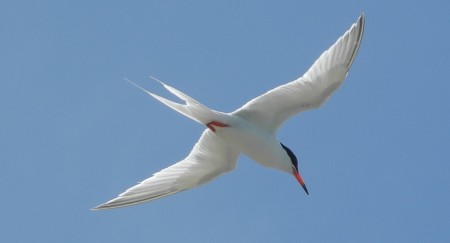
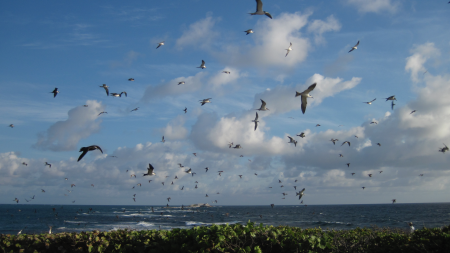
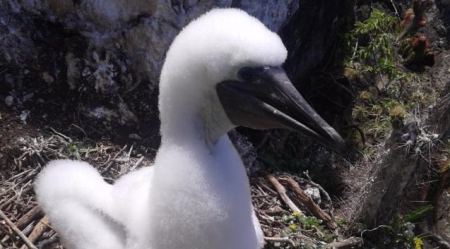
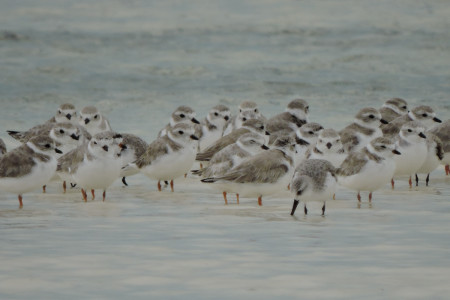
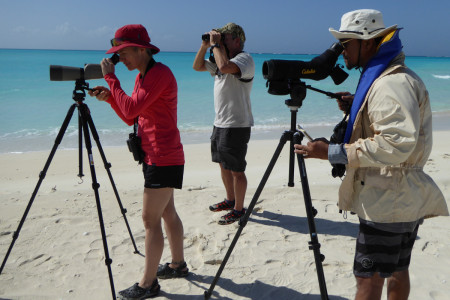
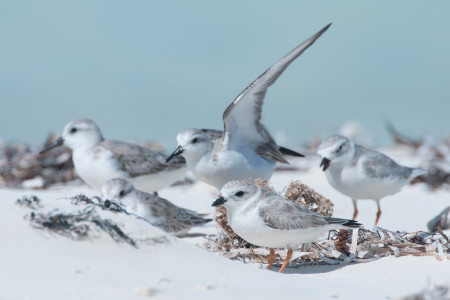
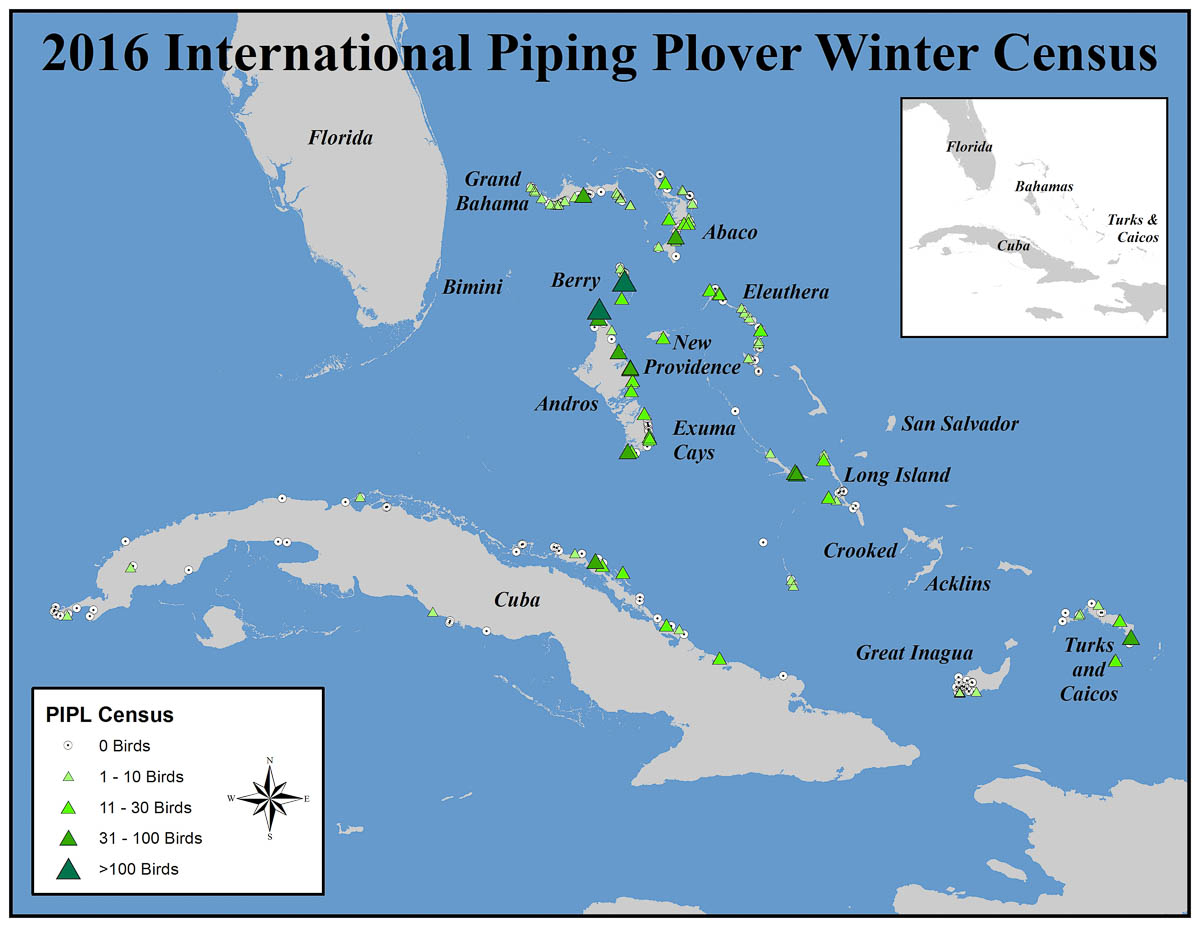
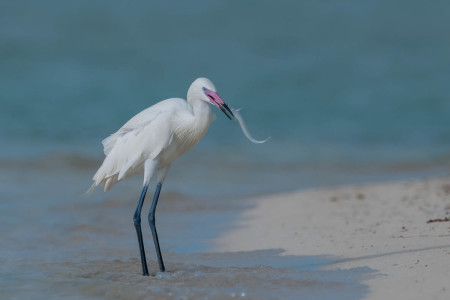
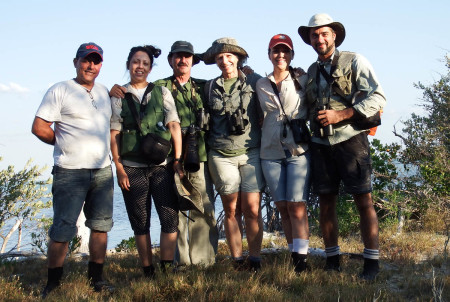
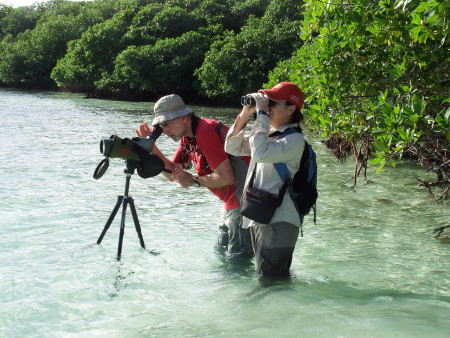
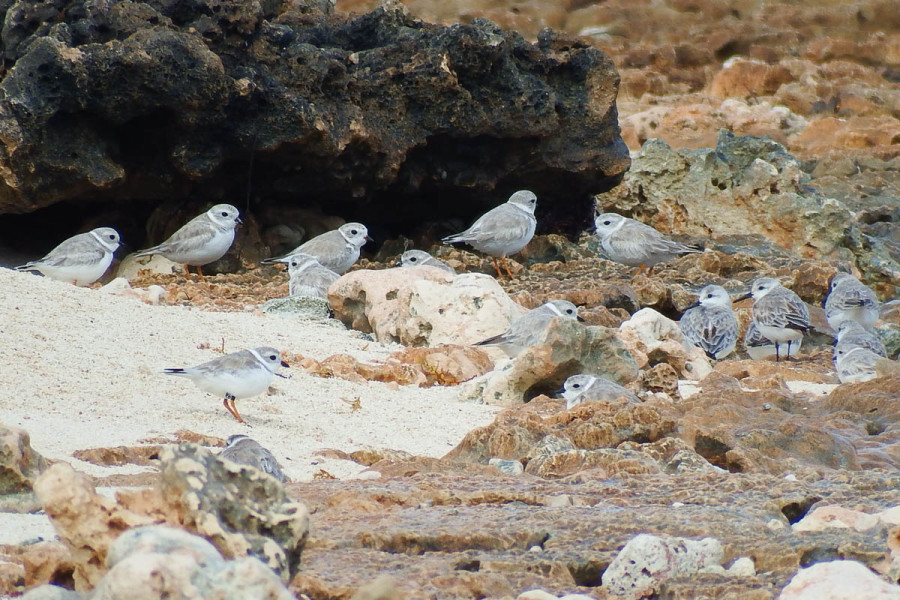
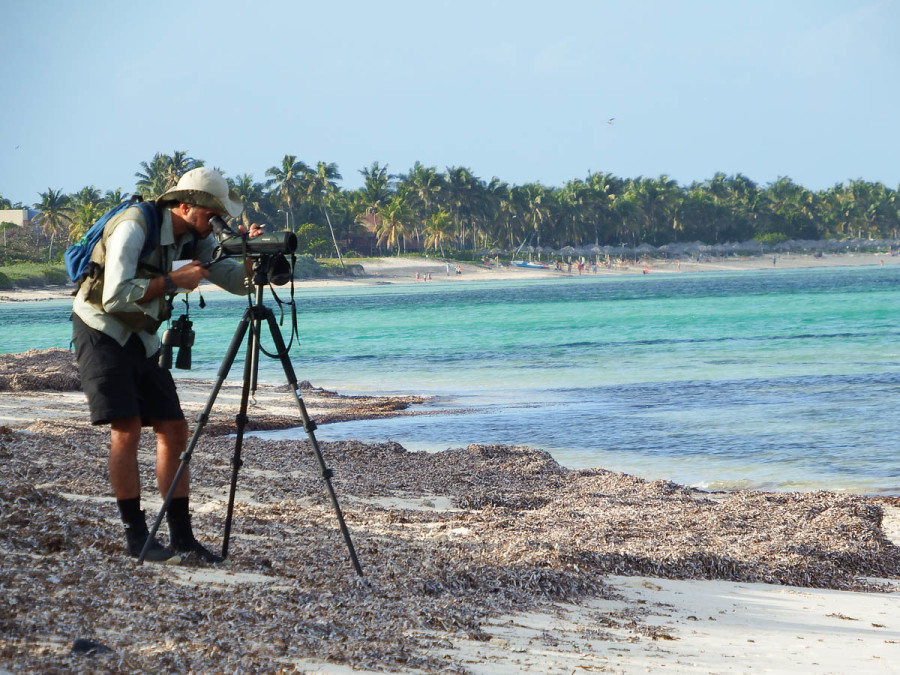
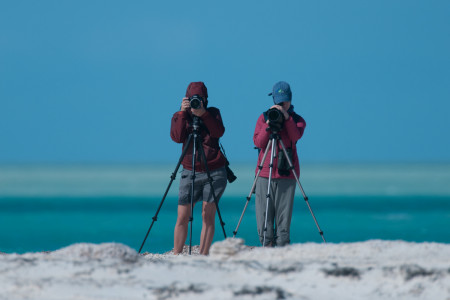
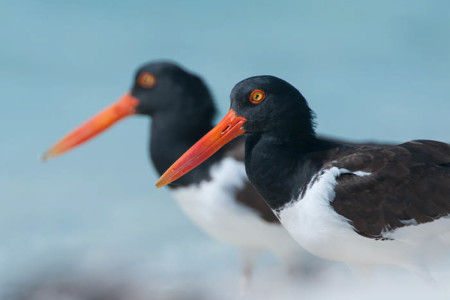
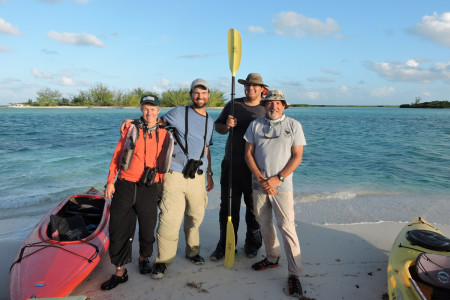
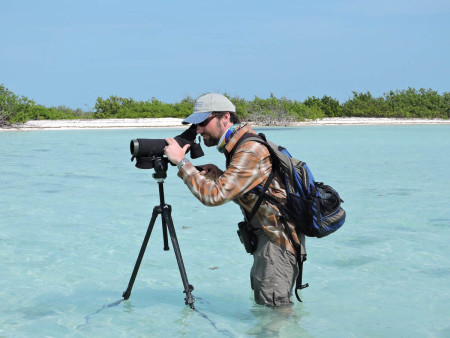
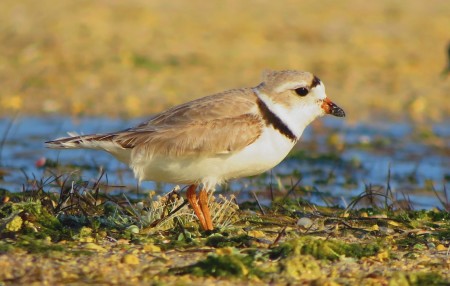
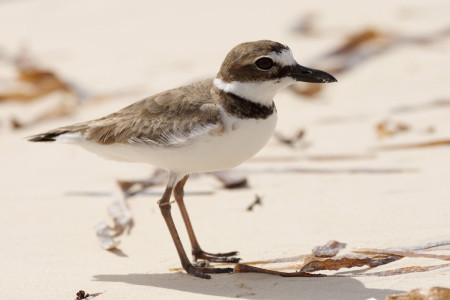
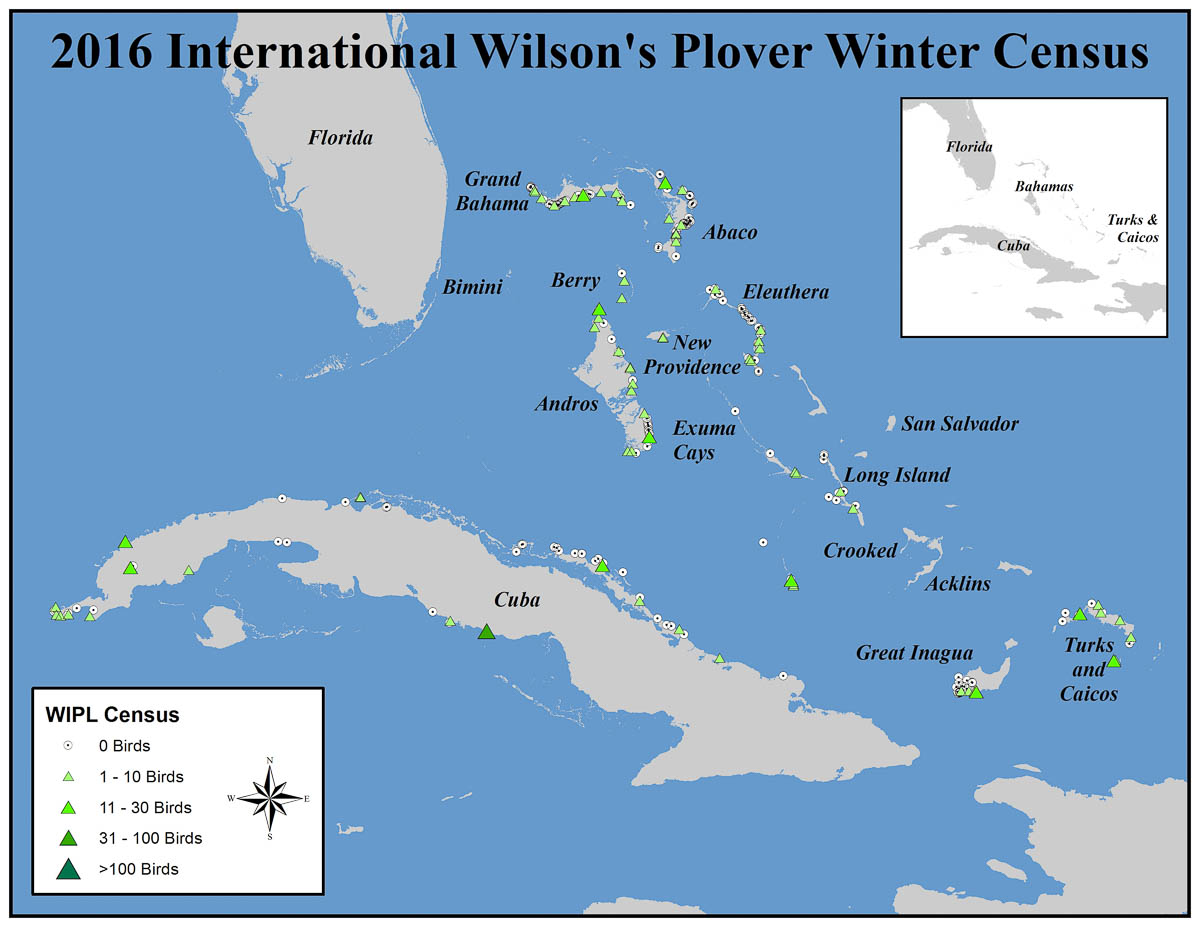
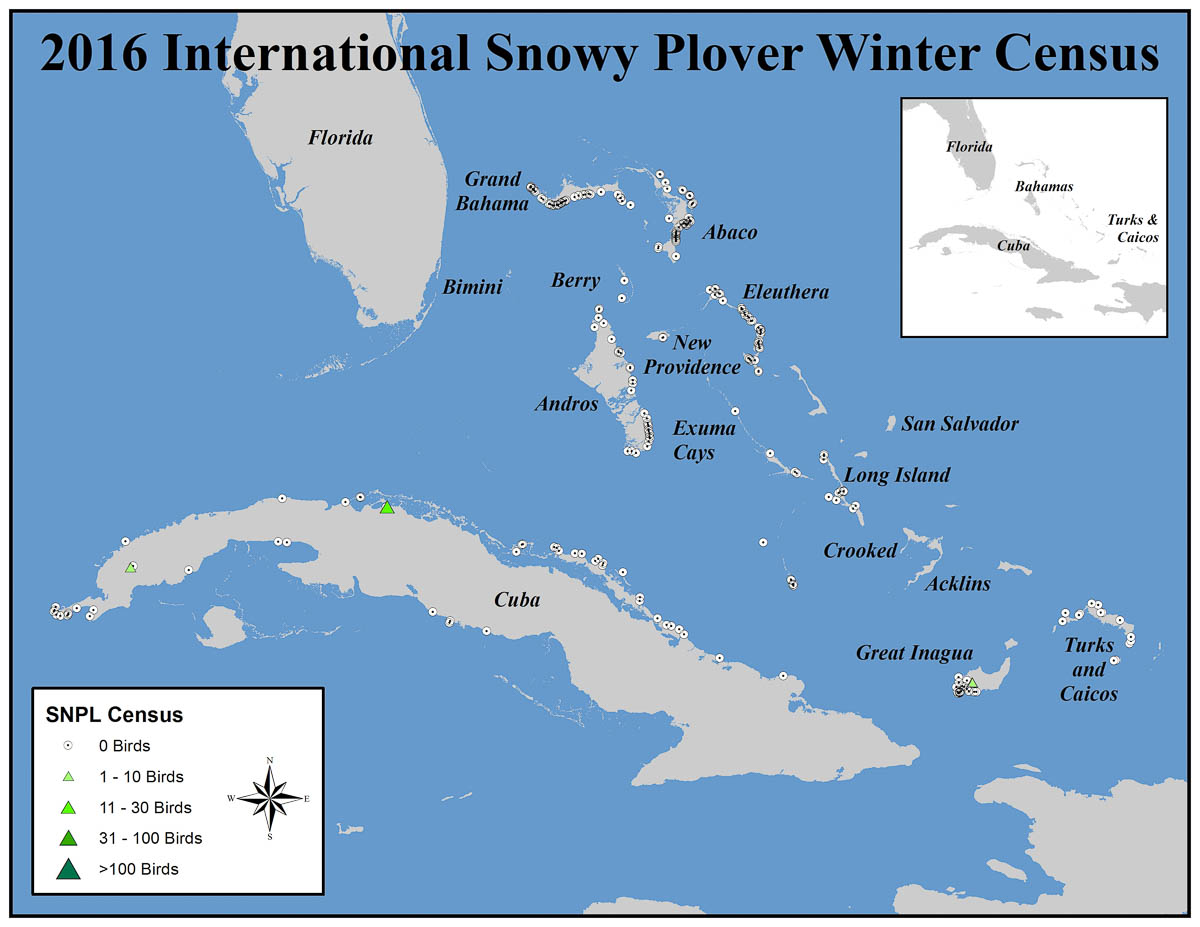
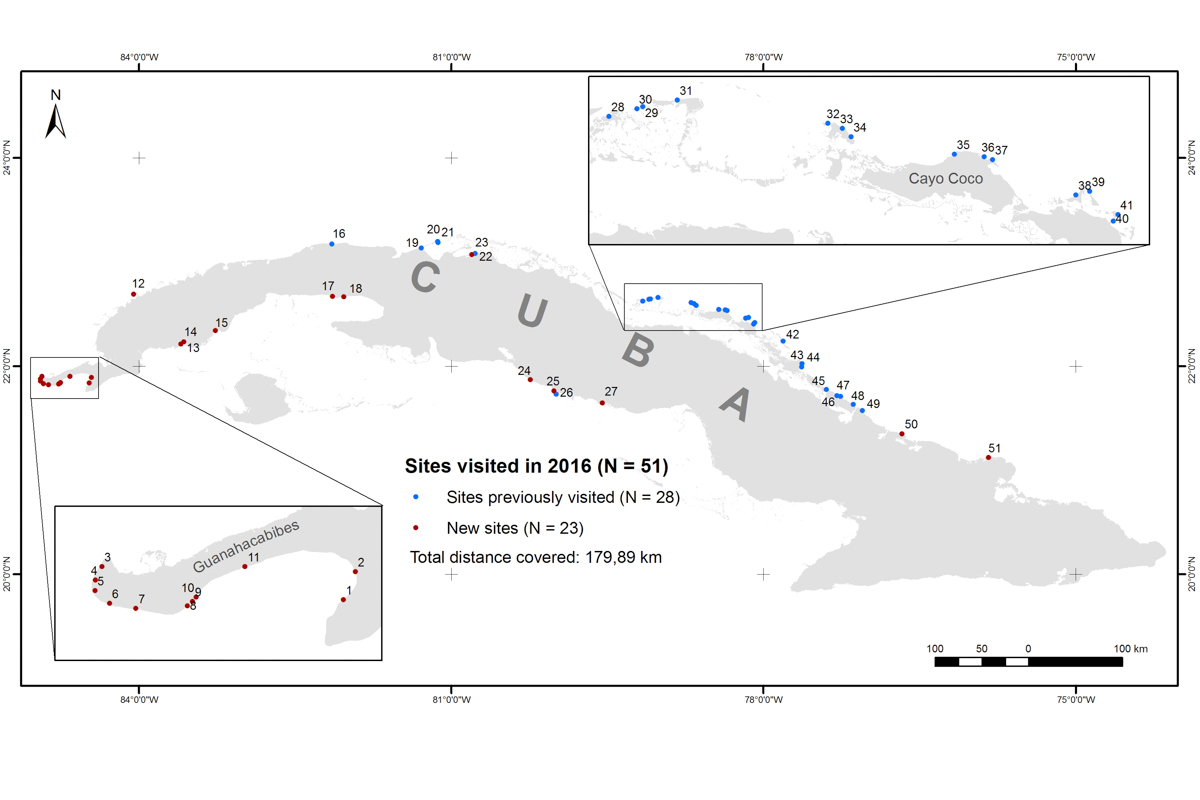
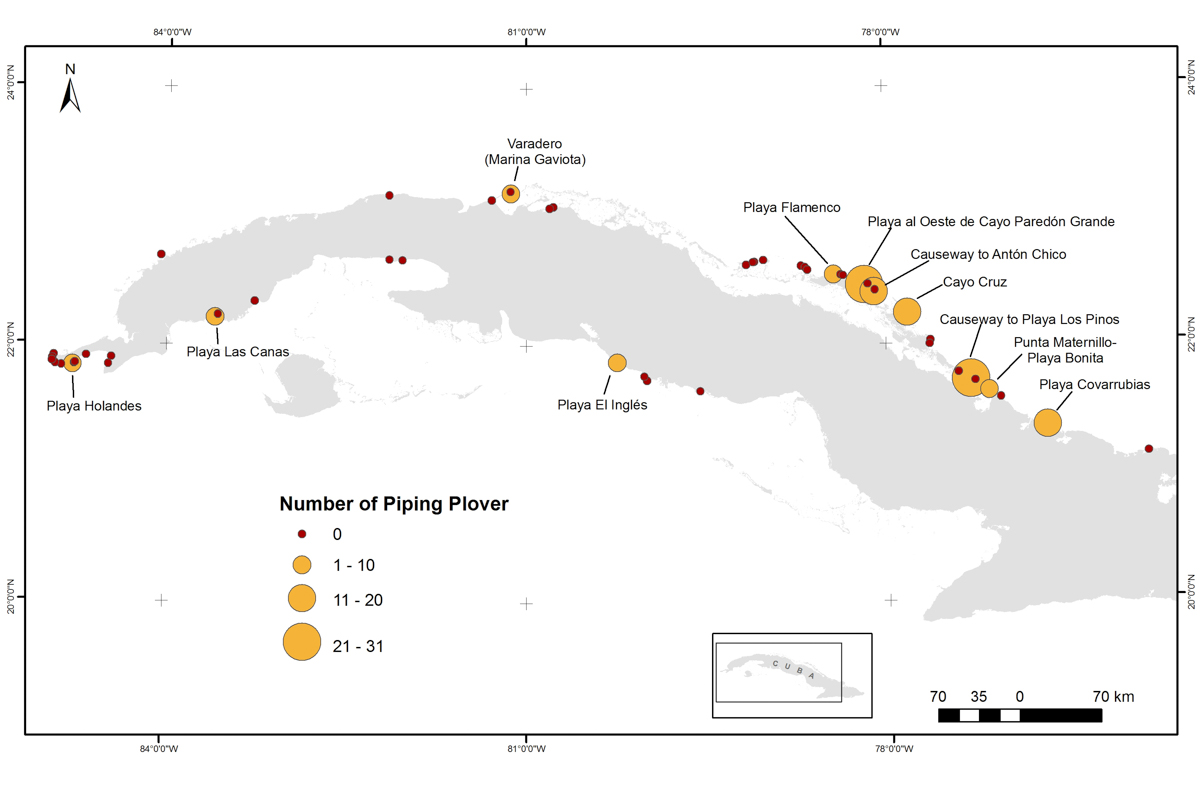
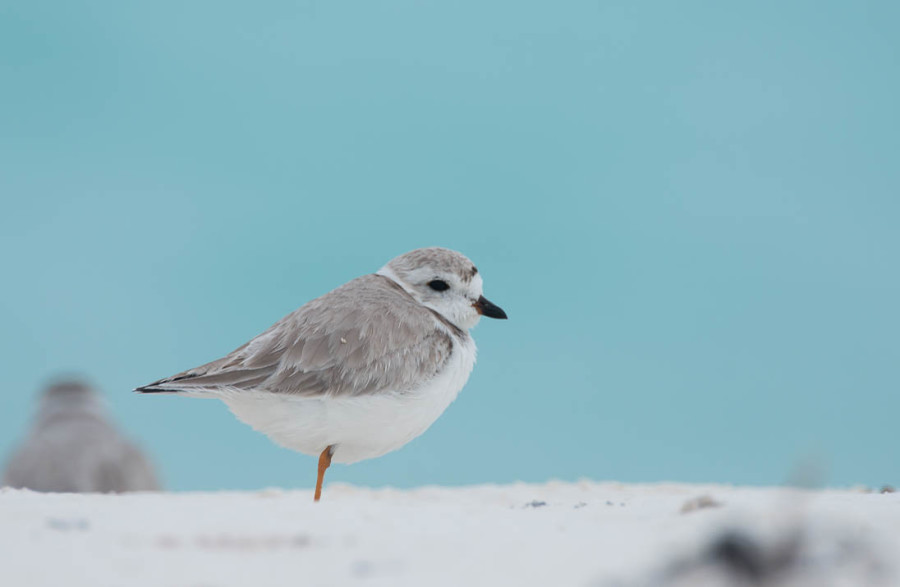
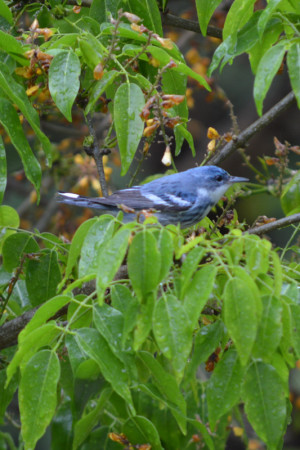
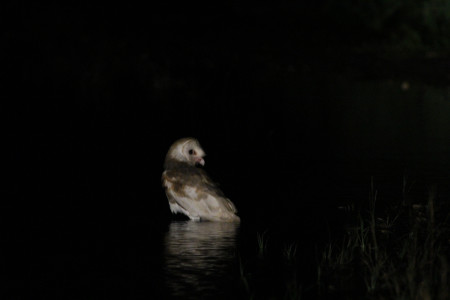
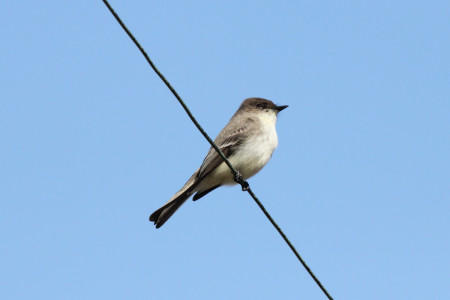
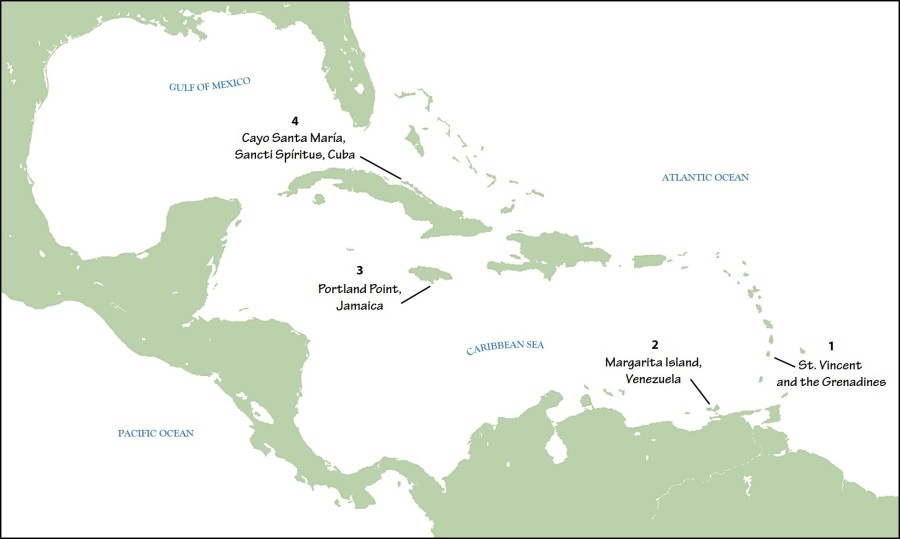
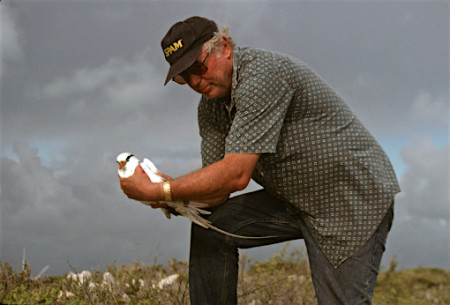
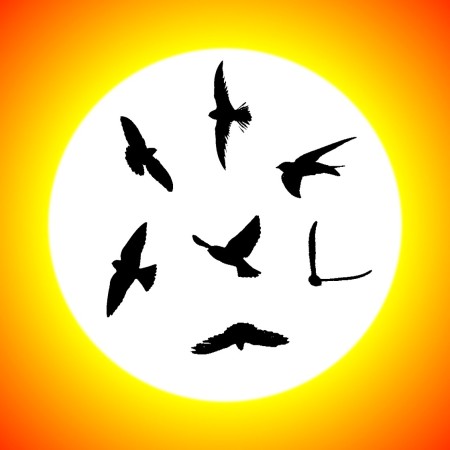
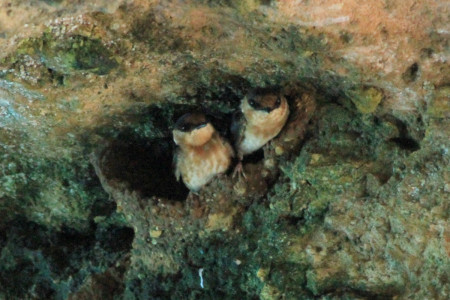
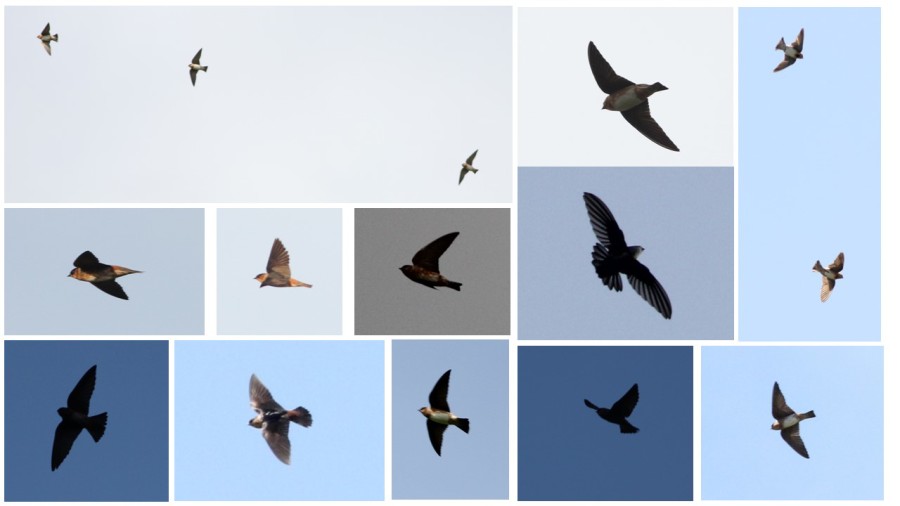
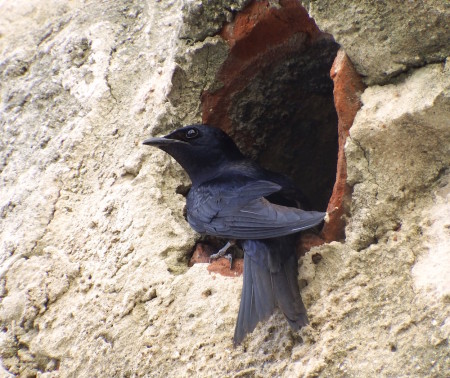
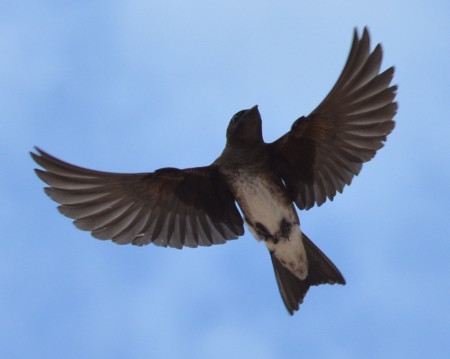
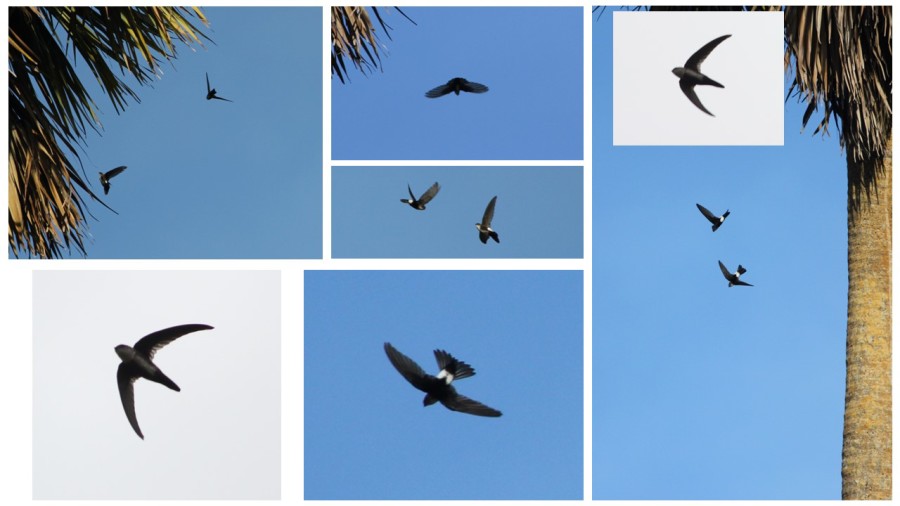
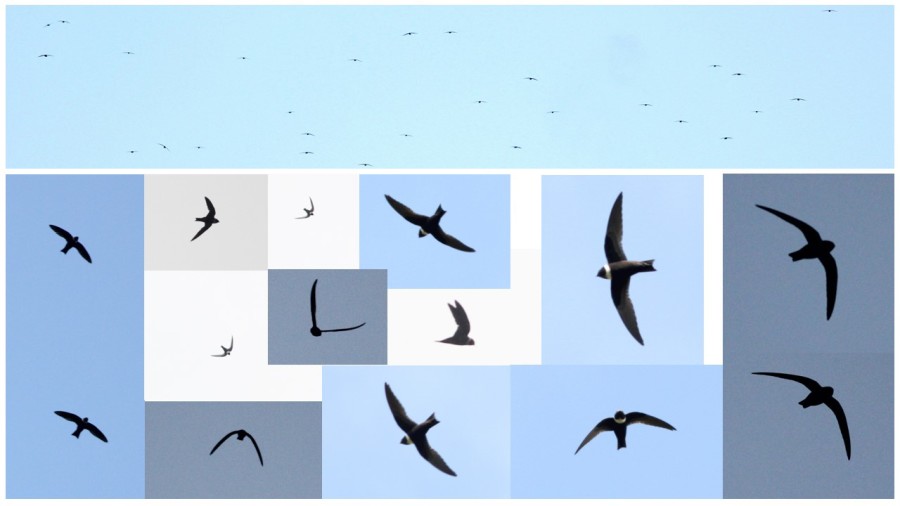
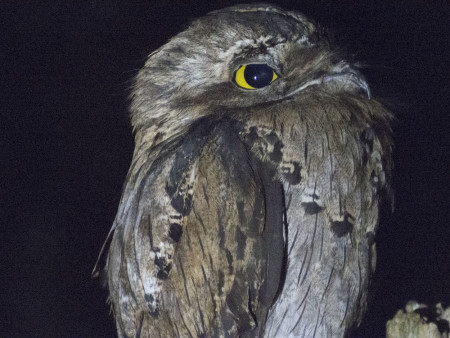
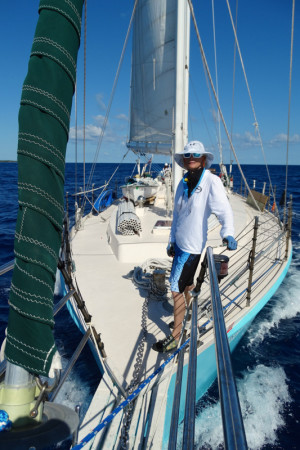
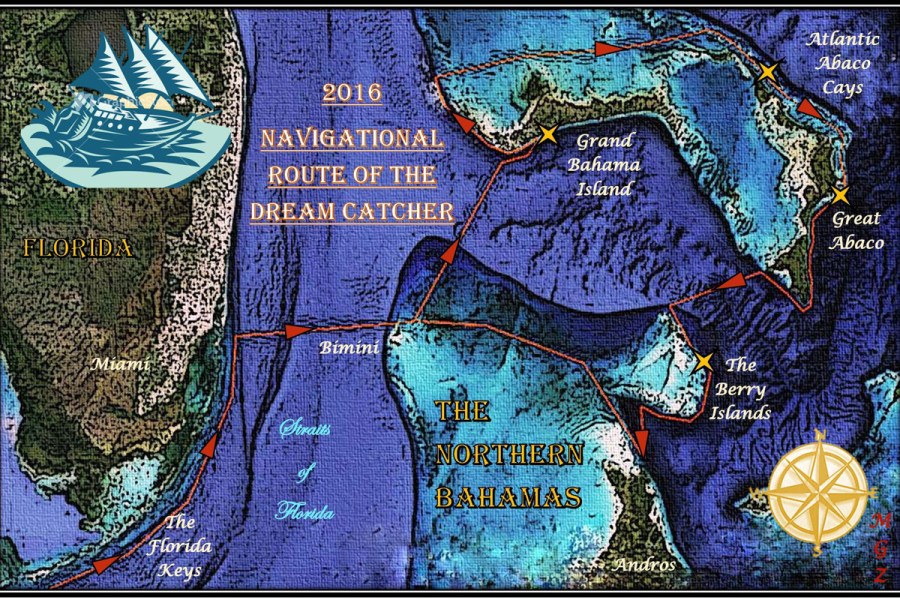
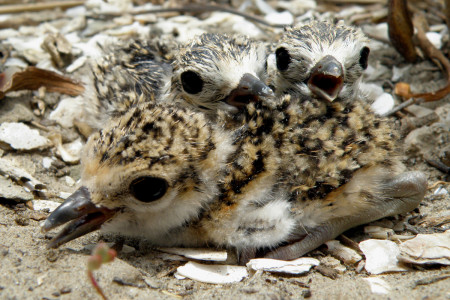
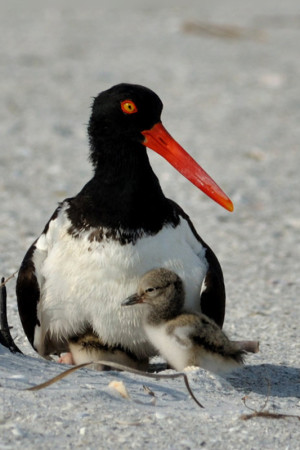
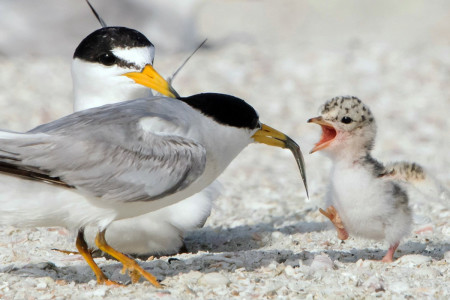
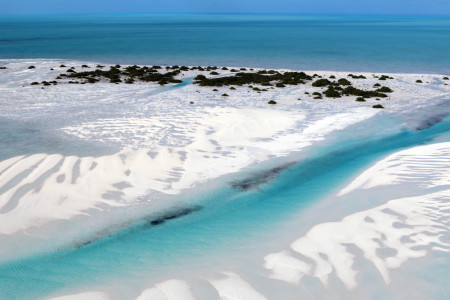
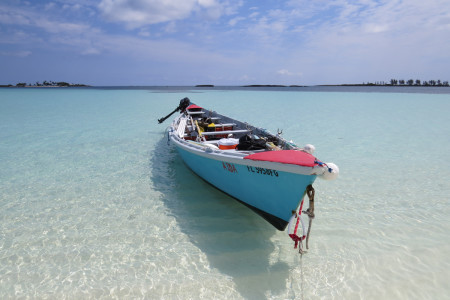
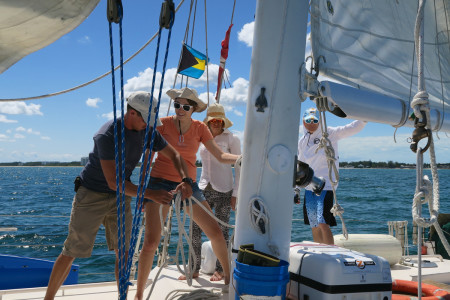
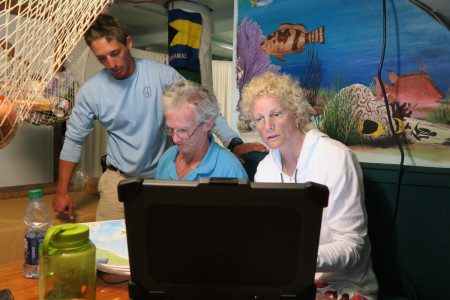
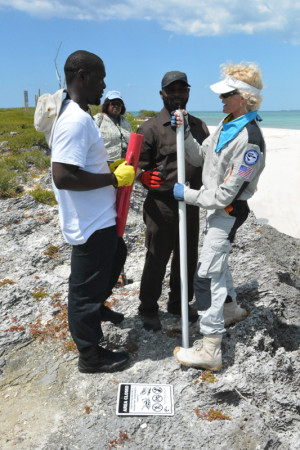
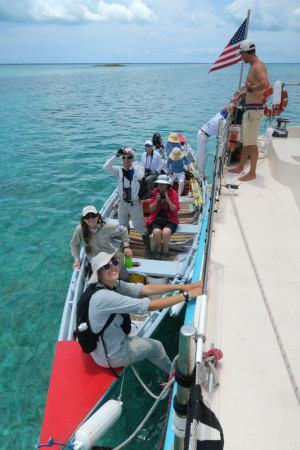
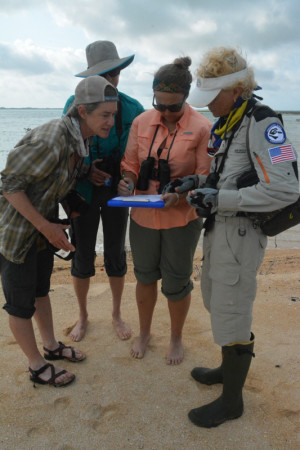
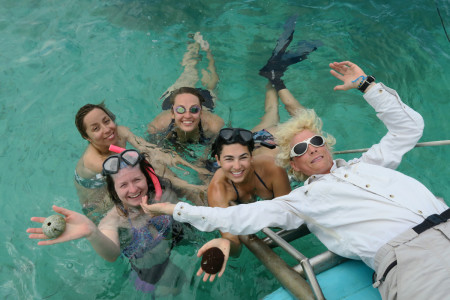
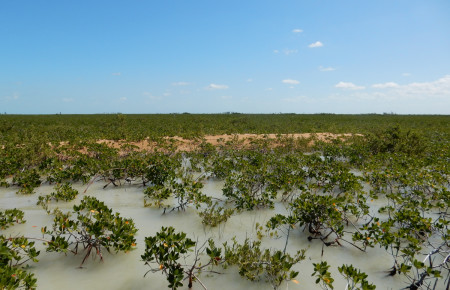
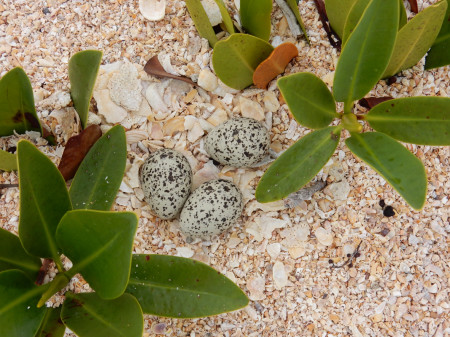
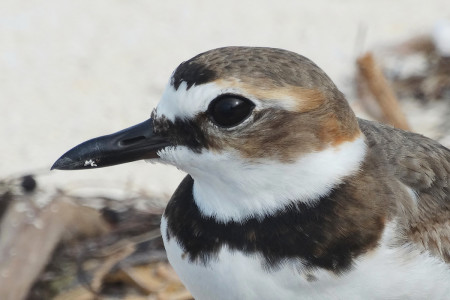
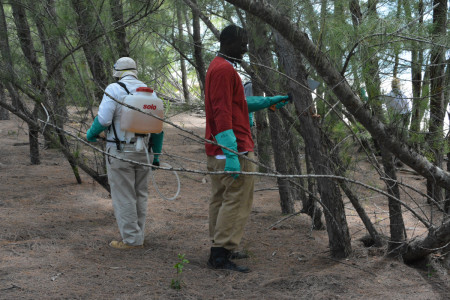
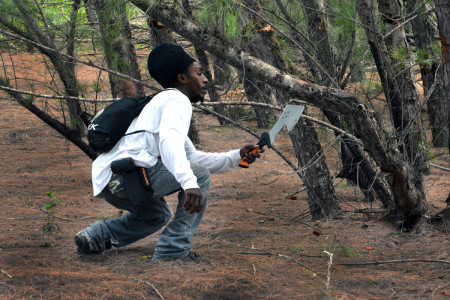
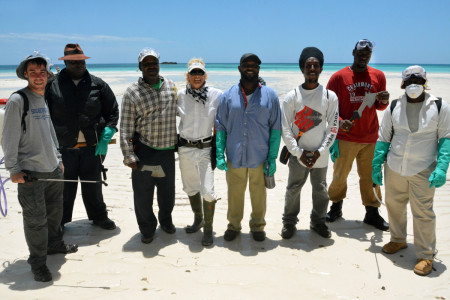
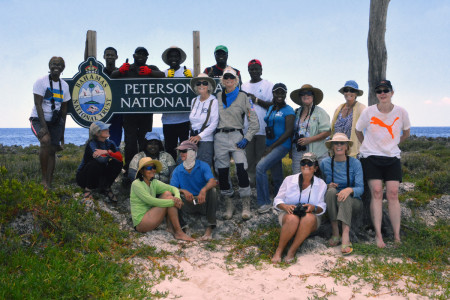
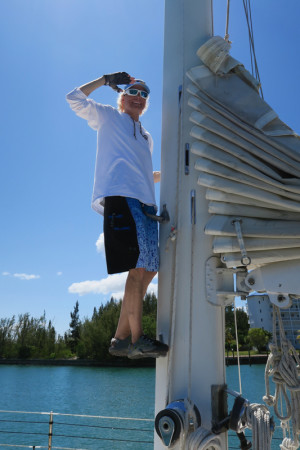
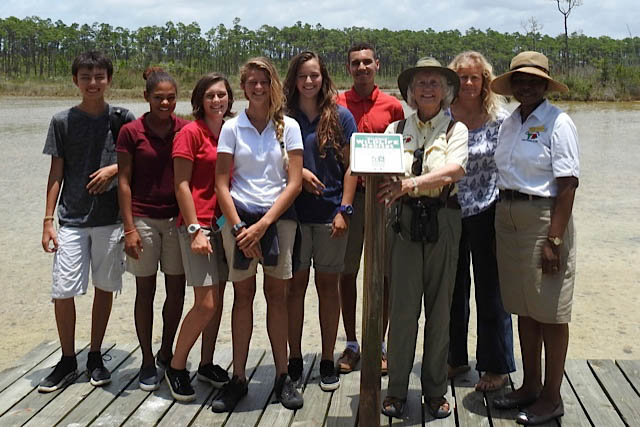
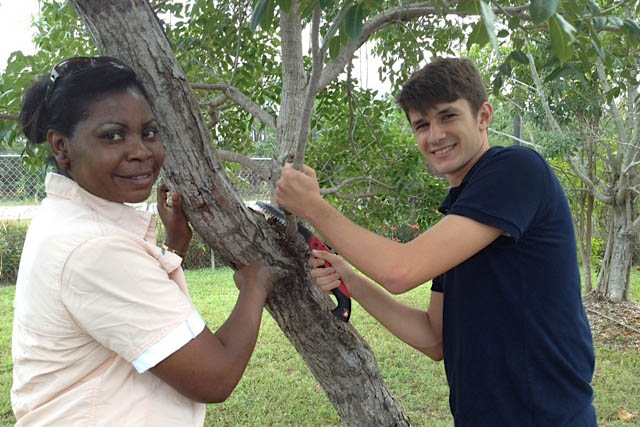
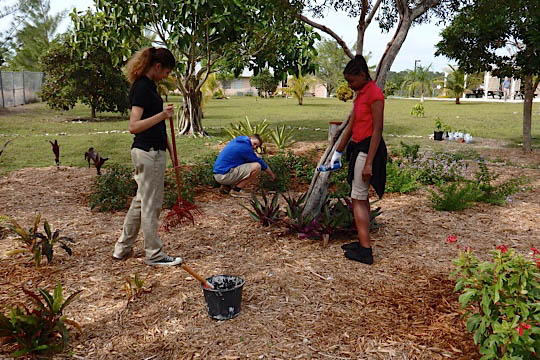
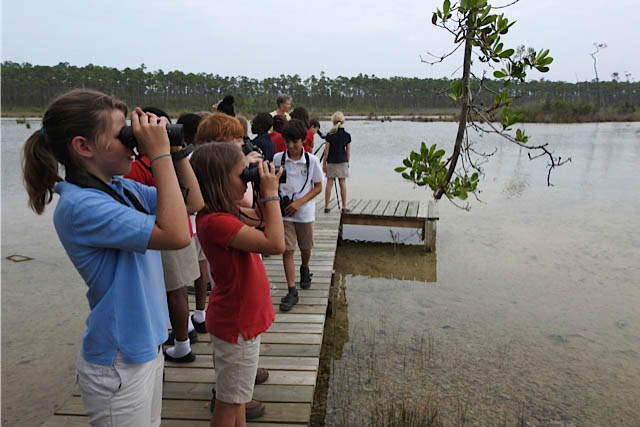
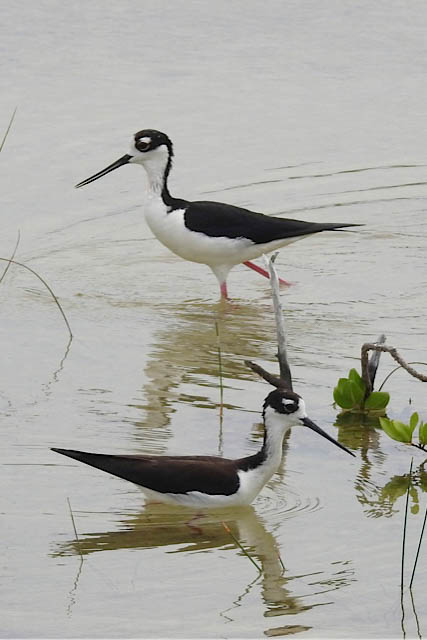
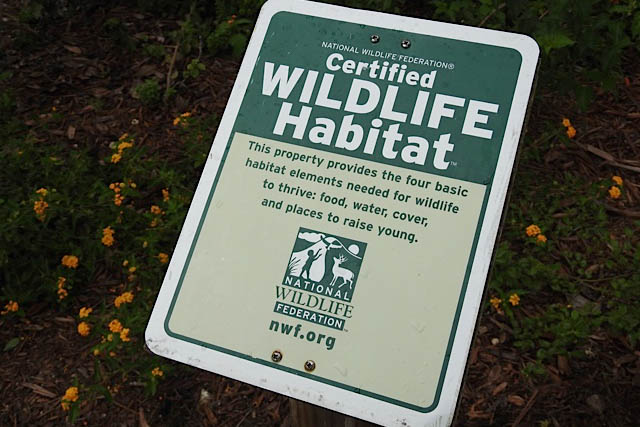
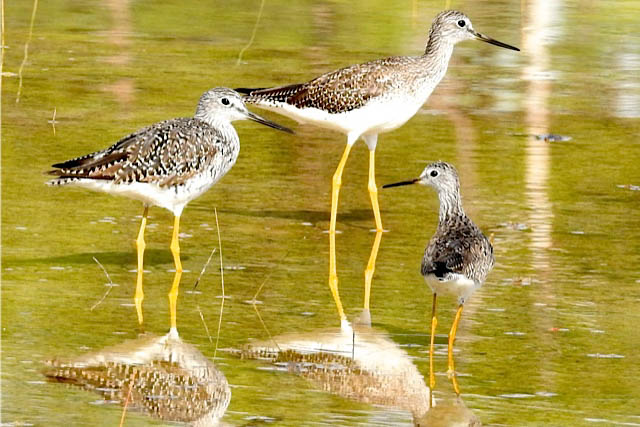
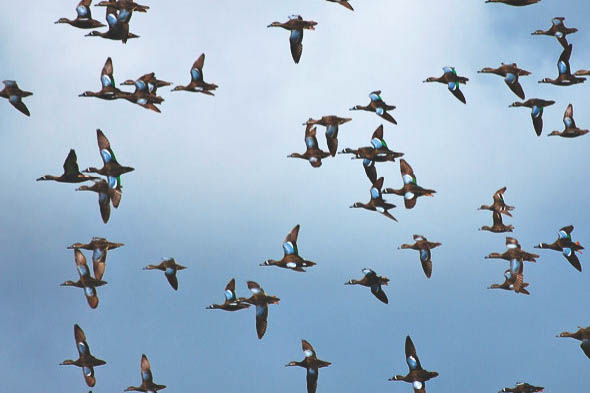
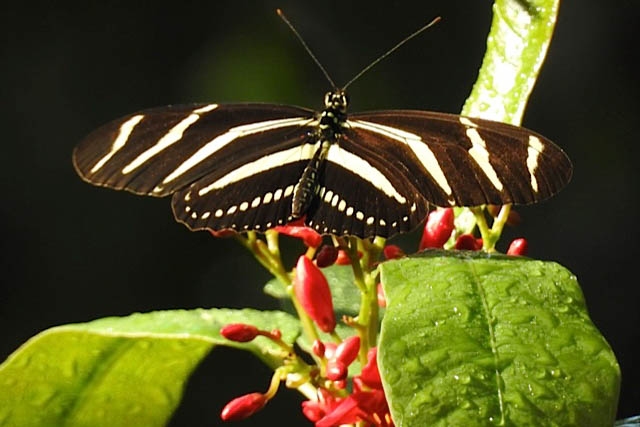
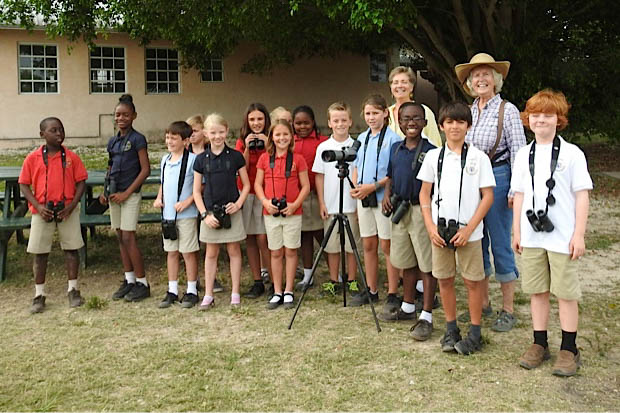
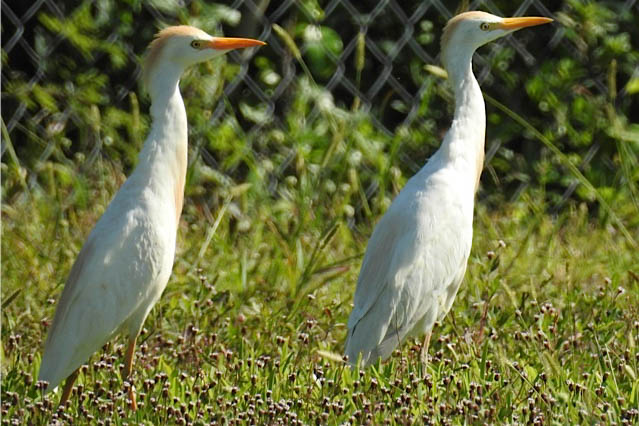
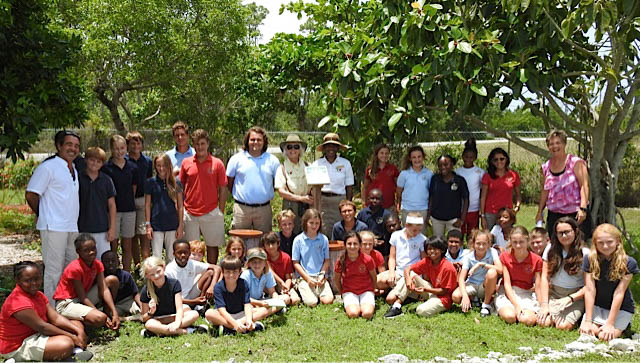
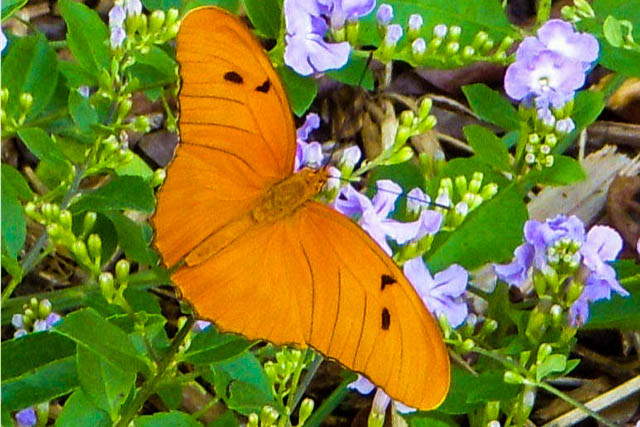
![An artist's rendition of the Semper's Warbler (Joseph Smit [Public domain], via Wikimedia Commons)](https://www.birdscaribbean.org/wp-content/uploads/2016/06/Sempers-Warbler-LeucopezaSemperiSmit-450x300.jpg)