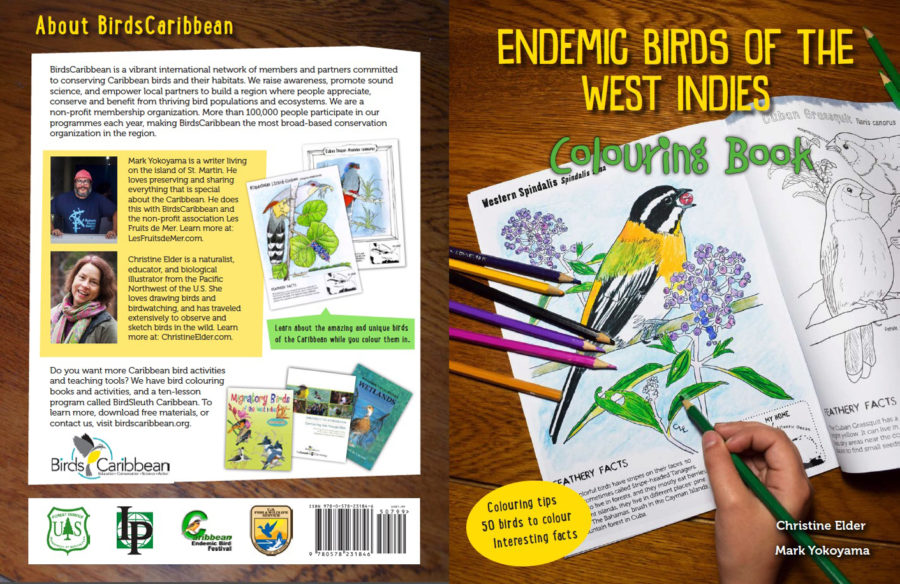
Celebrate the Caribbean Endemic Bird Festival (CEBF) with us in our virtual “From the Nest” edition! Have fun learning about a new endemic bird every day. We have colouring pages, puzzles, activities, and more. Download for free and enjoy nature with your family at home.
Endemic Bird of the Day: Antillean Euphonia
The Antillean Euphonia is a colorful, small bird of the Fringillidae family. It has a remarkable variety of melodious calls and jumbled songs that includes sharp whistles whee, trilling, tinkling notes tuc-tuc-tuc, and a hard metallic chi-chink, hence it’s Latin specific name musica. It is endemic to the islands of Hispaniola, Puerto Rico and much of the Lesser Antilles (Antigua south to Grenada, absent from Barbados). These three areas host three distinct subspecies and some authorities even consider them separate species. The three subspecies differ in color, as well as the size of the beak and tail.
The males of Hispaniola and Puerto Rico have a turquoise blue crown and nape, blackish-violet face, back and wings, a small band of tawny-yellow on the forehead, and rich tawny-yellow underparts and rump. However, males in Puerto Rico have a yellow throat while males from Hispaniola have a dark blue throat. The females of all the groups are lighter overall, with yellow-greenish body and wings, turquoise crown and nape, and the forehead nicely adorned with a spot of gold. The males of the Lesser Antilles have female-like plumage, except for a sky-blue forehead, crown and nape.
The Antillean Euphonia lives in all forest habitats at sea level and up to an altitude of more than 2,000 m, but it seems to prefer humid mountain forests. It can also be found in shade-coffee plantations. Euphonias are seen in pairs during the breeding season (Jan to July) and in small flocks at other times of the year, sometimes with warblers and tanagers. It flits about in the dense forest canopy and can be difficult to see—listen for their musical songs to locate them! These small birds feed on a variety of plants and berries but have a clear fondness for mistletoe berries (Phoradendron) and are an important disperser of its seeds.
While the species is classified as Least Concern by the IUCN, deforestation throughout its range is a concern. It has experienced a particularly worrying decline in Guadeloupe over the past thirty years where it could be classified locally as Endangered or even Critically Endangered according to IUCN criteria. It has become extremely rare in St. Vincent and may even have disappeared from Saba. The AMAZONA association has been studying it in Guadeloupe for the past three years. Further research and monitoring is needed to understand and protect this delightful bird so that it persists in abundance across the islands. Learn more about this species, including its range, photos, and calls here.
Colour in the Antillean Euphonia!
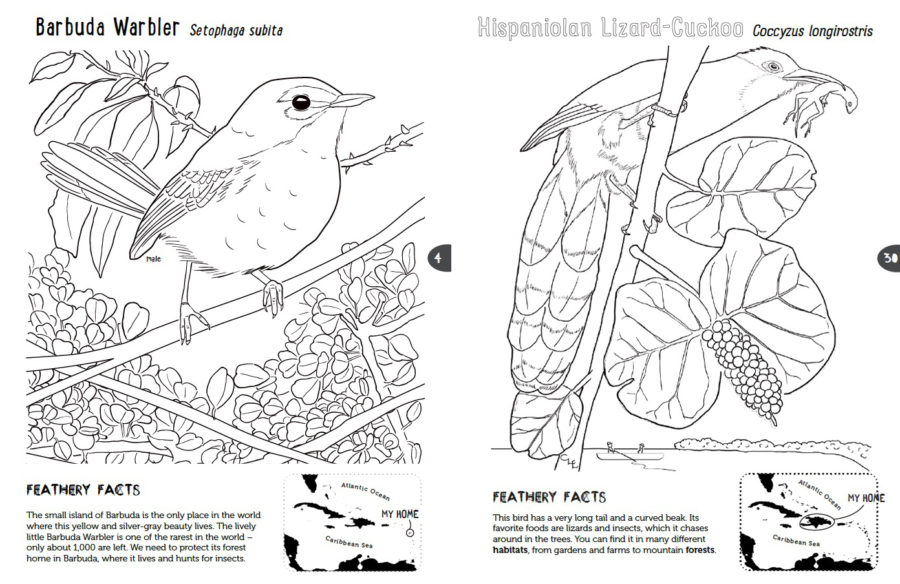
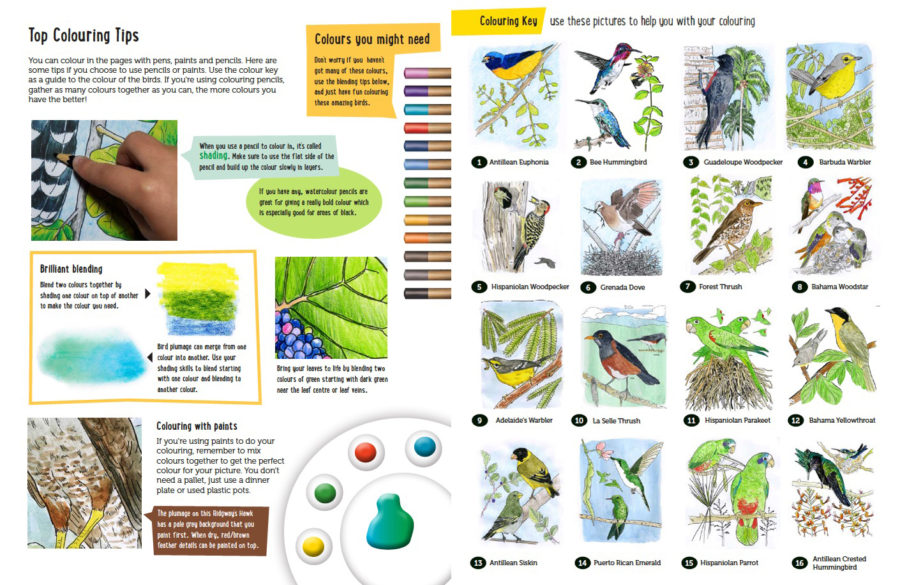
Download the page from Endemic Birds of the West Indies Colouring Book. Use the drawing above or photo below as your guide, or you can look up pictures of the bird online or in a bird field guide if you have one. Share your coloured-in page with us by posting it online and tagging us @BirdsCaribbean #CEBFfromthenest
Listen to the song of the Antillean Euphonia
The Antillean Euphonia has a remarkable variety of melodious calls and jumbled songs that includes sharp whistles whee, trilling, tinkling notes tuc-tuc-tuc, and a hard metallic chi-chink, hence it’s Latin specific name musica.
Puzzle of the Day
Click on the image below to do the puzzle. You can make the puzzle as easy or as hard as you like – for example, 6, 8, or 12 pieces for young children, all the way up to 1,024 pieces for those that are up for a challenge!
Antillean Euphonia, male, Hispaniola subspecies (Photo by Dax Roman)Female Antillean Euphonia, Hispaniola subspecies. (Photo by Hemant Kishan)
Male Antillean Euphonia, Lesser Antilles Subspecies (Photo by Anthony Levesque)Antillean Euphonia male, Puerto Rican Subspecies (Photo by Aldredo Irizarry)
Activity of the Day
FOR KIDS & ADULTS: Test your knowledge of what kinds of nests Caribbean endemic birds build and use to lay eggs and raise chicks with our Nest Matching Activity! Draw lines from the colouring book drawings to match each Caribbean endemic bird with its nest type. And here is the Answer Key – don’t look until you have completed the activity!!! More information about our Endemic Birds of the West Indies Colouring Book is here. We are sharing a new colouring page from the book each day of our Caribbean Endemic Bird Festival 2020, From the Nest, Virtual Edition.
Celebrate the Caribbean Endemic Bird Festival (CEBF) with us in our virtual “From the Nest” edition! Have fun learning about a new endemic bird every day. We have colouring pages, puzzles, activities, and more. Download for free and enjoy nature with your family at home.
Endemic Bird of the Day: Grenada Dove
One of the rarest birds in the world – the Grenada Dove – is found only in Grenada. It is a shy and elusive bird, staying well hidden within the forested hills and valleys of its dry forest habitat. It is a medium sized (~200g) dove with brown upperparts, buffy cinnamon-coloured breast and neck, and grayish forehead, face and crown. Its legs and feet are bright pinkish-red. The belly is white with a strip of white feathers that extends from its side up around the bend of the wing (key field mark!). It is a thrilling experience to get a glimpse of one of these rare birds, walking under the canopy looking for food or calling from a branch. Make sure to observe them from a distance of course so that they are not disturbed!
The Grenada Dove is Critically Endangered. The entire population is estimated at less than 160 individuals*. It lives in just 2 small parcels of remaining dry coastal forest in the southwest and west coast of Grenada. Like most doves, the Grenada Dove spends most of its time scouring the ground for seeds. If you aren’t lucky enough to get a glimpse of this dove, you will most certainly hear them calling during the breeding season. Its characteristic call is a single descending note hooooooo that is repeated every 7-8 seconds, sometimes for long periods during the breeding season when males are territorial. The nest is a platform of twigs constructed in a tree, palm or bush up to 4 m above the ground.
The main threat to the Grenada Dove is loss of habitat. Its coastal scrub habitats are unfortunately prime areas for development (resort, residential and industrial). The dove’s survival is also threatened from predation by introduced predators, especially mongoose but also cats, rats, and opossum. While there are two Protected Areas legally established for the conservation of the dove (Mt Hartman National Park and Beausejour Estates), they cover only a portion of where the dove is found. The remaining habitat is both crown and private lands. Predator control programmes have also been taking place in the protected areas. Everyone can do their part to help save this beautiful and unique species from extinction by supporting conservation of its forest habitat. Learn more about this species, including its range, photos, and calls here.
Colour in the Grenada Dove!
Download the page from Endemic Birds of the West Indies Colouring Book. Use the drawing above or photo below as your guide, or you can look up pictures of the bird online or in a bird field guide if you have one. Share your coloured-in page with us by posting it online and tagging us @BirdsCaribbean #CEBFfromthenest
Listen to the call of the Grenada Dove
The Grenada Dove’s call is a descending hoooo which repeats consistently every 7-8seconds.
Puzzle of the Day
Click on the image below to do the puzzle. You can make the puzzle as easy or as hard as you like – for example, 6, 8, or 12 pieces for young children, all the way up to 1,024 pieces for those that are up for a challenge!
Grenada Dove on its platform nest made of twigs. Note that the bird has NO spots on its body, helping to tell it apart from other similar resident doves like the Zenaida Dove, Eared Dove, and Common Ground Dove. Also, the white strip of feathers on its side extending up along the wing is a key field mark. (Photo by Greg Homel)The Grenada Dove is usually seen walking on the ground or perched on a low tree branch. If flushed, it will fly to the ground and run away. Because it spends so much time on the ground it is vulnerable to introduced predators like mongoose, cats, and dogs. (photo by Greg Homel)
Activity of the Day
FOR KIDS & ADULTS: You can see the the Grenada Dove for yourself through a fantastic virtual visit to the Mt. Hartman National Park, established in 1996 to protect the dove in the following videos:
Learn more about Mt Hartman National Park, the dove, threats to its habitat and long-term survival, and the efforts to conserve the dove:
Celebrate the Caribbean Endemic Bird Festival (CEBF) with us in our virtual “From the Nest” edition! Have fun learning about a new endemic bird every day. We have colouring pages, puzzles, activities, and more. Download for free and enjoy nature with your family at home.
Endemic Bird of the Day: Puerto Rican Parrot
The Puerto Rican Parrot is one of nine species of Amazon parrots endemic to the Caribbean region. It is the only native psittacid in the island, although 46 species of exotic Psittaciformes have been reported. This species can be distinguished from other green parrots by a red forehead, white eye ring, and brilliant blue flight feathers. It feeds on a variety of wild fruits, like those from the Sierra Palm, but also consumes seeds, flowers and leaf buds.
The Puerto Rican Parrot, locally called Iguaca, was so abundant during Spanish colonial times, that the population was believed to reach about one million individuals, particularly in the coastal forests. Sadly, human activities, mainly development of cities and towns, destroyed the parrot’s native forest habitats. In addition, parrots were captured for the pet trade and shot by farmers who regarded them as pests. All these actions led to a massive decline in the species so that by 1975 only 13 individuals were left in the wild!
This led to the Puerto Rican Parrot being listed as Critically Endangered and conservation programs were established to restore their numbers. A captive breeding program in relict habitat at El Yunque National Forest was established in 1973. Careful release of some parrots into the wild rebuilt the total wild population to nearly 200 birds by the middle of 2017. A second captive breeding facility in Río Abajo State Forest in the north-central karst area began successfully rearing parrots around 1994, and a second wild population was reintroduced there in 2006. This program has been successful in raising many parrot chicks that have been released into the forest and are thriving. After losing the relict wild population in El Yunque to Hurricane Maria in 2017, a new population has been recently reintroduced at the captive-rearing facility there and currently has 28 free-flying individuals and 2 active nests, where none existed less than 4 months ago.
At present, the two Puerto Rican Parrot subpopulations add up to more than 600 individuals, including approximately 180 living and breeding around Río Abajo. But small populations have extra concerns when it comes to conservation. Fewer individuals means less genes to share, resulting in a limited capacity to evolve with a changing environment. They are also more vulnerable to random events like disease and storms. Despite these barriers, thankfully the population is increasing. We hope someday, that with continued efforts to grow the population and restore its habitats, enormous parrot flocks will once again move through the tree tops, flashing their brilliant blue flight feathers for all to enjoy. Learn more about this species, including its range, photos, and calls here.
Colour in the Puerto Rican Parrot!
Download the page from Endemic Birds of the West Indies Colouring Book. Use the drawing above or photo below as your guide, or you can look up pictures of the bird online or in a bird field guide if you have one. Share your coloured-in page with us by posting it online and tagging us @BirdsCaribbean #CEBFfromthenest
Listen to the call of the Puerto Rican Parrot
The Puerto Rican Parrot’s call is raucous squawks and distinct bugling during flight.
Puzzle of the Day
Click on the image below to do the puzzle. You can make the puzzle as easy or as hard as you like – for example, 6, 8, or 12 pieces for young children, all the way up to 1,024 pieces for those that are up for a challenge!
Puerto Rican Parrot eating fruit – Camasey (Miconia prasina). This parrot is wearing a radio transmitter to track the bird’s movements – you can see the antenna sticking up. (Photo by Tanya Martinez)
Activity of the Day
FOR KIDS: Test your knowledge of where Caribbean endemic birds live with our Colouring Map Matching Activity! Draw lines from the colouring book drawings to match each Caribbean endemic parrot with its home island. And here is the Answer Key – don’t look until you have completed the activity!!! More information about our Endemic Birds of the West Indies Colouring Book is here. We are sharing a new colouring page from the book each day of our Caribbean Endemic Bird Festival 2020, From the Nest, Virtual Edition.
Celebrate the Caribbean Endemic Bird Festival (CEBF) with us in our virtual “From the Nest” edition! Have fun learning about a new endemic bird every day. We have colouring pages, puzzles, activities, and more. Download for free and enjoy nature with your family at home.
Endemic Bird of the Day: Bee Hummingbird
The Bee Hummingbird, endemic to Cuba, is the smallest bird in the world! In Cuba they are called Zunzuncito. They measure between 5 cm and 6 cm and weigh 1.6 to 1.9 g, less than the weight of a dime! The male has deep blue to metallic turqouise upperparts and a grayish belly with flecks of blue on the sides. The head and throat are iridescent ruby-red, with feathers changing to a dark metallic sheen color, depending on the viewing angle. During the breeding season these iridescent feathers extend down the sides of the neck, increasing the birds’ attractiveness. When males sing, the elongated feathers of the cheeks vibrate and shimmer with color. The tail is short and rounded, with a slight fork. The female is a little larger than the male and more plain. Her upperparts are turqouise blue combined with green tones and her underparts are more pale. In the non-breeding season, males are similar to females but with a more intense blue color.
The Bee Hummingbird’s distribution in Cuba is in patches, with very small populations. It has been reported in wooded areas in the west, central and eastern parts of the country. Bee Hummingbirds nest between March and June. The tiny nest is constructed with cotton, grass, hair, and other soft materials, held together with lichens and spider webs. Females lay two tiny white eggs, the size of coffee bean. Bee Humingbirds feed mainly on nectar but they also eat spiders and insects that they catch in the air. In flight their wings making a buzzing sound similar to bumblebees.
Bee Hummingbirds are shy and solitary. Males spend a lot of time perched on high branches, devoid of leaves, and may use the same perch for years. During the breeding season, males court females with an elaborate U-shaped aerial display—flying vertically straight up in the air and then descending abruptly. They are aggressive and territorial during the breeding season. Seeing this tiny gem, not much bigger than a large bee, is the thrill of a lifetime! Learn more about this species, including its range, photos, and calls here.
Colour in the Bee Hummingbird!
Download the page from Endemic Birds of the West Indies Colouring Book. Use the drawing above or photo below as your guide, or you can look up pictures of the bird online or in a bird field guide if you have one. Share your coloured-in page with us by posting it online and tagging us @BirdsCaribbean #CEBFfromthenest
Listen to the call of the Bee Hummingbird
The Bee Hummingbird’s song is mixture of high-pitched warbling phrases and a high-pitched long and noisy sizzling buzzy note, very strong for such a tiny bird.
Puzzle of the Day
Click on the image below to do the puzzle. You can make the puzzle as easy or as hard as you like – for example, 6, 8, or 12 pieces for young children, all the way up to 1,024 pieces for those that are up for a challenge!
Female Bee Hummingbird (Photo by Aslam Ibrahim)Bee Hummingbird (Photo by Aslam Ibrahim)
Activity of the Day
FOR KIDS & ADULTS:
Let your creativity flow with bird-themed poetry! Try out these two different poetry styles: a vertical poem using a focus word that guides the first letter of each line, or a cinquain, a five-lined poem with a set structure. Choose your favorite endemic bird, create a vertical poem or cinquain, and then post it to us on social media (Facebook or twitter) by tagging us @BirdsCaribbean and/or use hashtag #CEBFFromtheNest. Or, send your poem to us via email (info@BirdsCaribbean.org). We’d love to see what everyone comes up with!
Celebrate the Caribbean Endemic Bird Festival (CEBF) with us in our virtual “From the Nest” edition! Have fun learning about a new endemic bird every day. We have colouring pages, puzzles, activities, and more. Download for free and enjoy nature with your family at home.
Endemic Bird of the Day: Guadeloupe Woodpecker
The Guadeloupe Woodpecker is a stunning bird found just on the island of Guadeloupe and no other islands in the Guadeloupe archipelago. Its plumage is entirely black except for a reddish hue on the chest. The male is a little bigger than the female and the birds even vary in size within the island. The birds found on the peaks of Basse-Terre are a little bigger than those of Grande-Terre. They are 25–29 cm long and weigh 70 to 96 g.
The Guadeloupe Woodpecker is found from sea level to around 1,000 meters, in all types of forest habitat including humid forest, swamp forest, mangrove, and semi-deciduous forest. They are monogamous and pairs remain in their territory throughout the year. They mainly feed on insect larvae but will also consume fruit and even take small vertebrates. When breeding season arrives, the woodpeckers excavate a cavity in a dead tree in order to nest and lay 3 to 5 white eggs. After 15 days, the eggs hatch. The young fledge in about a month but juveniles spend several months with their parents.
This large dark Melanerpes woodpecker, is the singular endemic bird of the Lesser Antillean island of Guadeloupe. However, this was not always the case. Before their extinction in the 18th century, Guadeloupe was home to three other endemic birds: Guadeloupe Parrot Amazona violacea, Guadeloupe Parakeet Psittacara labati, and the Lesser Antillean Macaw Ara guadeloupensis. Habitat loss and fragmentation (especially the removal of dead trees), and predation by rats are the biggest threats for the Guadeloupe Woodpecker. Thankfully, its IUCN status was amended from Near Threatened to Least Concern in 2019 and the bird is legally protected. Continued protection of this species and conservation of its habitats will help ensure that this beautiful species survives for future generations to enjoy! Learn more about this species, including its range, photos, and calls here.
Colour in the Guadeloupe Woodpecker!
Download the page from Endemic Birds of the West Indies Colouring Book. Use the drawing above or photo below as your guide, or you can look up pictures of the bird online or in a bird field guide if you have one. Share your coloured-in page with us by posting it online and tagging us @BirdsCaribbean #CEBFfromthenest
Listen to the call of the Guadeloupe Woodpecker
The Guadeloupe Woodpecker’s call is a wa-uh or wa-ah and a staccato cht-cht-cht-cht-cht-cht-cht-cht.
Puzzle of the Day
Click on the image below to do the puzzle. You can make the puzzle as easy or as hard as you like – for example, 6, 8, or 12 pieces for young children, all the way up to 1,024 pieces for those that are up for a challenge!
Guadeloupe Woodpecker (Photo by Frantz Delcroix)
Activity of the Day
FOR KIDS & ADULTS:
Let’s celebrate moms AND endemic birds! Mother’s Day is this weekend on May 10th and we’ve got you covered. We have two styles of endemic bird-themed Mother’s Day Cards to download and color. This is a fun activity for people of all ages to celebrate the mother figure in their life.
Each page has two cards on them (Bahama Woodstar and Black-crowned Palm-Tanager). Please download and print in the paper size you normally use: US Letter or A4 Size. It’s best to use card stock, but regular printer paper will do just fine. Once printed, fold the sheet in half (so the short sides touch) then cut along the fold. Now, you will have two cards to fold and color. Don’t forget to write a special message on the inside!
Celebrate the Caribbean Endemic Bird Festival (CEBF) with us in our virtual “From the Nest” edition! Have fun learning about a new endemic bird every day. We have colouring pages, puzzles, activities, and more. Download for free and enjoy nature with your family at home.
Endemic Bird of the Day: Jamaican Lizard-Cuckoo
How do birds get their names? Take the case of Jamaican Lizard-Cuckoos. They are definitely Jamaican, for they are found nowhere else in the world. They in no way resemble lizards but they do dine on lizards, and it is this that gives them their middle name. Their last name is “Cuckoo”, which some people find surprising because unlike the European Cuckoo, and like most other New World Cuckoos, they build their own nests—rough platforms of sticks high in the forest canopy.
Many millions of years ago, the New World Cuckoo ancestors of the Jamaican Lizard-Cuckoo flew across the ocean from the mainland to the Caribbean. There they found islands with an abundance of lizards. Mammalian predators were absent—so birds like the lizard cuckoos evolved to take their place. Today, Jamaica, Cuba, Bahamas, Hispaniola, and Puerto Rico all have their own endemic species of lizard-cuckoos.
This spectacular group of birds specializes in eating lizards in the forest canopy. They also eat small birds, eggs and insects. They all have long straight bills; large dark eyes surrounded by brilliant red orbital skin; pale throats; rufous patch on the primary wing feathers, and pale reddish-brown underparts; but their most distinctive features are their long dark tails with large, paired, white spots along the edges. They use them for balance and fan them wide in mating displays.
The behaviour of Jamaican Lizard-Cuckoos is unmistakable – look for them running up branches in the canopy, like very large rats or squirrels, or gliding silently between trees with wings and tails spread out. They can be hard to see in their leafy forest habitats but their calls are loud and distinctive—like the rapid sound of a machine gun being fired. They are generally solitary. They may come out to feed before or after rain; thus they are sometimes called Rain Birds.
Few Jamaicans think of these birds as Jamaican Lizard-Cuckoos, rather as Old Woman Birds. Country people say that they sound like old women nagging. The (probably male) scientists who named them seem to have agreed—because they gave them the scientific name Coccyzus vetula. Coccyzus is Latin for cuckoo, and vetula means old woman! Birds get their names in many ways—and some of them are not politically correct.
Download the page from Endemic Birds of the West Indies Colouring Book. Use the drawing above or photo below as your guide, or you can look up pictures of the bird online or in a bird field guide if you have one. Share your coloured-in page with us by posting it online and tagging us @BirdsCaribbean #CEBFfromthenest
Listen to the call of the Jamaican Lizard-Cuckoo
The Jamaican Lizard-Cuckoo’s call is a trailing, low, rapid cak-cak-cak-ka-ka-ka-k-k.
Puzzle of the Day
Click on the image below to do the puzzle. You can make the puzzle as easy or as hard as you like – for example, 6, 8, or 12 pieces for young children, all the way up to 1,024 pieces for those that are up for a challenge!
Jamaican Lizard-Cuckoo (Photo by Jerome Foster)Jamaican Lizard-Cuckoo (Photo by Eric Hynes)
Activity of the Day
FOR KIDS & ADULTS:
Complete our Jamaican Lizard-Cuckoo Crossword Puzzle! How many words do you know? Be sure to read about the Jamaican Lizard-Cuckoo, our Endemic Bird of the Day, for clues to the puzzle. If you need help, also check out our Glossary for some definitions that will help you complete this puzzle. And here is a the Answer Key to the puzzle.
Celebrate the Caribbean Endemic Bird Festival (CEBF) with us in our virtual “From the Nest” edition! Have fun learning about a new endemic bird every day. We have colouring pages, puzzles, activities, and more. Download for free and enjoy nature with your family at home.
Endemic Bird of the Day: Black-crowned Palm-Tanager
Meet the Black-crowned Palm-Tanager, or locally known as Cuatro Ojos (“four-eyes”). This striking bird is a medium-sized passerine endemic to the island of Hispaniola (Haiti and Dominican Republic) and some satellite islands. Commonly found throughout the island, these birds are easily identified by their olive back contrasting with a gray nape and underparts, and a black head bearing a unique pattern of four white spots, hence its Spanish name Cuatro Ojos. Interestingly, while these birds are called tanagers, they are not in the same family as many of the other tropical tanagers, Thraupidae. They actually reside in their own family (Phaenicophilidae), along with several other of Hispaniola’s unique endemics.
The species is common in nearly all habitats, from urban to remote, from wet forest to dry forest, and both low and high elevation. They feed opportunistically on many different foods, including insects, small vertebrates such as lizards, many species of wild fruits, and occasionally nectar. Though they have several vocalizations, the presence of a Black-crowned Palm-Tanager is often announced by a cascading series of soft whistle calls as they move between perches in flight or by an almost cat-like alarm call used when agitated or detecting a predator. Where you find one, you can be almost certain that there is another close by. Mated pairs stay together year-round, and often forage together. Learn more about this species, including its range, photos, and calls here.
Colour in the Black-crowned Palm-Tanager!
Download the page from Endemic Birds of the West Indies Colouring Book. Use the drawing above or photo below as your guide, or you can look up pictures of the bird online or in a bird field guide if you have one. Share your coloured-in page with us by posting it online and tagging us @BirdsCaribbean #CEBFfromthenest
Listen to the call of the Black-crowned Palm-Tanager
The Black-crowned Tanager’s vocalizations include a high thin tseeoo and ts as well as a nasal byu. You can also hear the loud call of a Black-whiskered Vireo towards the end of the recording.
Puzzle of the Day
Click on the image below to do the puzzle. You can make the puzzle as easy or as hard as you like – for example, 6, 8, or 12 pieces for young children, all the way up to 1,024 pieces for those that are up for a challenge!
Black-crowned Palm Tanager with Chick (Photo by Dax Roman)Black-crowned Palm Tanager (Photo by Dax Roman)
Activity of the Day
FOR KIDS & ADULTS: Check out this short video of a Black-crowned Tanager in the wild in the Dominican Republic, such a distinctive and beautiful bird! This video was taken as the Indigenous Eyes Ecological Reserve, Punta Cana, Dominican Republic; the second bird shown is a Red-legged Thrush.
FOR ADULTS:Learn more about the Black-crowned Palm Tanager and other endemic birds in the Dominican Republic! Check out these articles on Spencer Schubert’s adventures into the remote corners of the Dominican Republic, all in the name of science and conservation. He is studying how important these birds are in the forest ecosystem as seed dispersers.
Celebrate the Caribbean Endemic Bird Festival (CEBF) with us in our virtual “From the Nest” edition! Have fun learning about a new endemic bird every day. We have colouring pages, puzzles, activities, and more. Download for free and enjoy nature with your family at home.
Endemic Bird of the Day: Barbuda Warbler
A little bird with a big attitude, meet the Barbuda Warbler, known to Barbudans as the Christmas Bird! This gregarious bird, packed with energy and curiosity, is the sole endemic bird of Antigua & Barbuda. The Barbuda Warbler, though near-threatened, outnumbers the entire human population of Barbuda 5:1! This warbler measures between 12 and 13.5cm and weighs about 7 grams. It is characterized by bluish-gray upperparts and yellow throat and breast. It also bears a distinct yellow eyebrow stripe and a yellow crescent just below the eye. Females are slightly duller in appearance than males.
The Barbuda Warbler has a restricted range on Barbuda, preferring dry shrubland near wetlands. Besides its physical attractiveness, another nice thing about this endemic bird is that it is extremely easy to find when visiting the island. Barbuda Warblers are often found in the company of the Yellow Warbler although it appears that they have a competitive rather than friendly relationship with them.
Barbuda Warbler populations have suffered from loss of habitat. Though Barbuda remains largely undeveloped, in recent years the government has pushed for large scale development projects to boost the country’s economy. In 2017, the Barbuda Warbler population suffered a significant decline following the passage of catastrophic super Hurricane Irma. A surprising number of these tiny warblers survived, however, and have thankfully made a recovery since then. The sounds of the warbler’s sweet, melodic trill can again be heard when one wanders the paths through tropical dry shrubland on Barbuda.
Learn more about this species, including its range, photos, and calls here.
Colour in the Barbuda Warbler!
Download the page from Endemic Birds of the West Indies Colouring Book. Use the drawing above or photos below as your guide, or you can look up pictures of the bird online or in a bird field guide if you have one. Share your coloured-in page with us by posting it online and tagging us @BirdsCaribbean #CEBFfromthenest
Listen to the call of the Barbuda Warbler
The Barbuda Warbler’s call is a loud trill varying in pitch and speed as well as a mid-strength chick.
Puzzle of the Day
Click on the image below to do the puzzle. You can make the puzzle as easy or as hard as you like – for example, 6, 8, or 12 pieces for young children, all the way up to 1,024 pieces for those that are up for a challenge!
Barbuda Warbler (Photo by Ted Eubanks)Barbuda Warbler (Photo by Frantz Delcroix)
Activity of the Day
FOR KIDS: Endemic birds face many threats and dangers in their daily life—from habitat loss to storms to non-native predators like cats, rats and mongoose, it’s a challenge for birds to stay alive every day! Read about some of the threats that our birds face and how you can help birds. Then do our maze—Hazards Birds Face—help the bird get past the hazards back home to its nest!
FOR ADULTS: Learn The Truth About the Chickcharney in this fun webinar by Scott Johnson, Science Officer with the Bahamas National Trust.
The Caribbean is home to many different cultures, with intriguing folklore about creatures and spirits such as Bre Bouki and Bre Rabbi, the Lougaroo, Lajabless, Lusca, and many others. However, one creature called the Chickcharney is said to still inhabit the pine forests of Andros in The Bahamas. This bird-like creature with the face of a man is said to bring good and bad fortune to anyone who treats it with respect or disrespects it. What is most interesting about this creature… is that it may be based on a real animal!
Join Scott Johnson of the Bahamas National Trust and BirdsCaribbean as they explore the amazing story of the Chickcharney and the bird that is believed to be the basis of the myth. This webinar helped us launch our celebration of the Caribbean Endemic Bird Festival 2020, virtual edition, called “From the Nest.” For one month starting on April 22nd, we are celebrating every day with an Endemic Bird of the Day, coloring pages, puzzles, webinars, activities, and much more. All activities are available on our website: https://bit.ly/CEBFFromthenest
Celebrate the Caribbean Endemic Bird Festival (CEBF) with us in our virtual “From the Nest” edition! Have fun learning about a new endemic bird every day. We have colouring pages, puzzles, activities, and more. Download for free and enjoy nature with your family at home.
Endemic Bird of the Day: Montserrat Oriole
The Montserrat Oriole is endemic to the island of Montserrat, where it is the national bird. The male of this species is a striking combination of black and yellow: a rich black head, chest and back contrasts with deep yellowish-orange underparts and rump. The female is mostly olive-green above and yellowish-green below. Both have the characteristic sharp beak of the blackbird family, Icteridae; its color is silver-black.
While the Montserrat Oriole has always had a small range, things took a dramatic turn for this bird – and the entire island – due to volcanic activity in the mid-1990s. Eruptions of the Soufriere Hills volcano destroyed the southern half of this beautiful island. Lava flows and ash fall drastically reduced the amount of suitable forest habitat for the oriole by two thirds. The population of the oriole rapidly declined to less than 500 birds and the species was listed as Critically Endangered. After many years of conservation work, the birds have rebounded somewhat and the population is currently stable. As a result, it has been reclassified to Vulnerable. It’s survival is still threatened due to its small population size and extremely small range.
The oriole inhabits just two wet forested areas on the island: the Centre Hills and the South Soufriere Hills. It breeds mostly between late March and September, during the rainfall season. The nest, built entirely by the female, is a hanging basket structure sewn onto the underside of leaves. While we are thankful for the oriole’s recovery, its history shines an important light on how fragile island ecosystems truly are and the need for habitat conservation and management. Learn more about this species, including its range, photos, and calls here.
Colour in the Montserrat Oriole!
Download the page from Endemic Birds of the West Indies Colouring Book. Use the drawing above or photo below as your guide, or you can look up pictures of the bird online or in a bird field guide if you have one. Share your coloured-in page with us by posting it online and tagging us @BirdsCaribbean #CEBFfromthenest
Listen to the call of the Montserrat Oriole
The Montserrat Oriole’s call consists of loud whistles and a scolding, harsh chuur.
Puzzle of the Day
Click on the image below to do the puzzle. You can make the puzzle as easy or as hard as you like – for example, 6, 8, or 12 pieces for young children, all the way up to 1,024 pieces for those that are up for a challenge!
Montserrat Oriole (Photo by Alistair Homer)
Activity of the Day
FOR KIDS: Test your knowledge of where Caribbean endemic birds live with our Colouring Map Matching Activity! Draw lines from the colouring book drawings to match each Caribbean endemic songbird with its home island. And here is the Answer Key – don’t look until you have completed the activity!!! More information about our Endemic Birds of the West Indies Colouring Book is here. We are sharing a new colouring page from the book each day of our Caribbean Endemic Bird Festival 2020, From the Nest, Virtual Edition.
FOR ADULTS: Learn more about the efforts to save the Montserrat Oriole from extinction at this link.
Celebrate the Caribbean Endemic Bird Festival (CEBF) with us in our virtual “From the Nest” edition! Have fun learning about a new endemic bird every day. We have colouring pages, puzzles, activities, and more. Download for free and enjoy nature with your family at home.
Endemic Bird of the Day: Blue-headed Quail-Dove
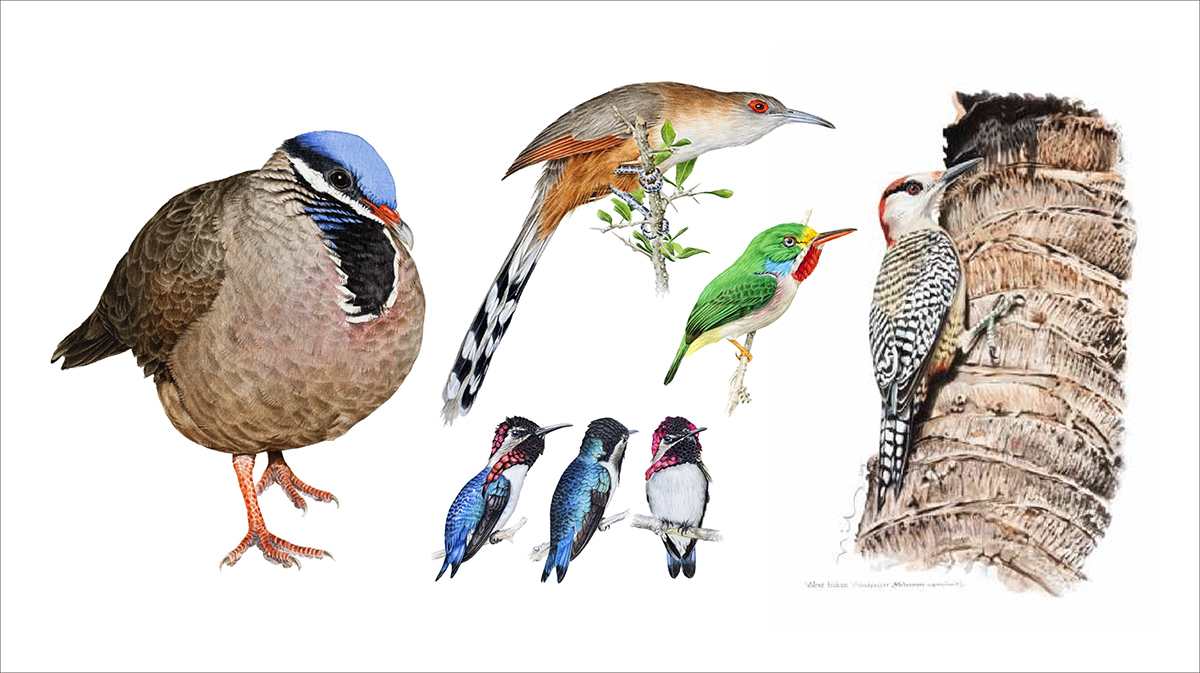
The Blue-headed Quail-Dove (Starnoenas cyanocephala) is the largest and most eye-catching of Cuba’s terrestrial doves. It has a cobalt blue crown, black eye line, white facial stripe, and black medallion on the throat and breast bordered by white. The sides of the throat have iridescent blue lines. The body is a cinnamon-brown color that blends in with dead leaves. This shy bird lives in dense forests where it walks constantly on the ground, often in pairs or small groups, searching for seeds, insects, snails, grubs, berries, and other fruits in the leaf litter.
Blue-headed Quail-Doves are endemic to Cuba. They were formerly common and widespread throughout Cuba but today are rare and classified as Endangered. They are now found in only a few forested areas, including Guanahacabibes Peninsula, Zapata Swamp, and in the Pinar del Río Province. The major threats to this species are hunting and habitat destruction. Although protected, the species is still illegally trapped for its good-tasting meat. Blue-headed Quail-Doves nest on the ground or in cavities and low bushes between the months of March and June, and lay two white eggs. Their flight is clumsy, and they produce a characteristic loud noise when they are frightened, very similar to that of the European Partridge (Perdix perdix). This is probably why Spanish colonizers gave it its local name, Perdiz, which is Spanish for Partridge.
The Blue-headed Quail-Dove’s call, a series of two similar notes, whoooo-up, whoooo-up, seems like a whisper in the forest. It should remind us that the forest is the quail-dove’s only habitat and we must protect it to continue enjoying these beautiful birds—considered a jewel of the Cuban avifuana. Learn more about this species, including its range, photos, and calls here.
Colour in the Blue-headed Quail-Dove!
Download the page from Endemic Birds of the West Indies Colouring Book. Use the drawing above or photo below as your guide, or you can look up pictures of the bird online or in a bird field guide if you have one. Share your coloured-in page with us by posting it online and tagging us @BirdsCaribbean #CEBFfromthenest
Listen to the call of the Blue-headed Quail-Dove
The Blue-headed Quail-Dove’s call is a series of two similar notes, whoooo-up, whoooo-up, with the last syllable rising in tone and then stopping short. During the breeding season, male may call from a low perch for long periods at virtually any time of day. You can also hear the chattering call of the Cuban Tody in this recording.
Puzzle of the Day
Click on the image below to do the puzzle. You can make the puzzle as easy or as hard as you like – for example, 6, 8, or 12 pieces for young children, all the way up to 1,024 pieces for those that are up for a challenge!
The spectacular Blue-headed Quail-Dove is endemic to Cuba. Once common and widespread, it is now Endangered due to hunting and deforestation. It is now found in only a few areas in Cuba. (Photo by Aslam Ibrahim)
Activity of the Day
FOR KIDS & ADULTS: Enjoy this short video of a male Blue-headed Quail-Dove courting a female by following her and head-bobbing. Breeding pairs are socially monogamous and defend territories during the breeding season. The nest is built of loosely placed twigs lined with freshly fallen leaves, placed either on the ground or low to it in a stump cavity, the fork of a branch among the roots of trees, and sometimes among tangled vines.
Celebrate the Caribbean Endemic Bird Festival (CEBF) with us in our virtual “From the Nest” edition! Have fun learning about a new endemic bird every day. We have colouring pages, puzzles, activities, and more. Download for free and enjoy nature with your family at home.
Endemic Bird of the Day: Bahama Yellowthroat
The Bahama Yellowthroat is one of five endemic bird species found in The Bahamas. It was first discovered by Dr. Henry Bryant during an expedition to The Bahamas in 1865-1866. It is a relatively large warbler species in the Family Parulidae, about 5.5in (14cm) long. There are three subspecies and they can be found on the islands of Grand Bahama, Abaco, Andros, Eleuthera and Cat Island. There was a population on New Providence, but it is believed to be extirpated.
The Bahama Yellowthroat male has a striking black face mask that makes it look like a bandit. Its back, nape, and tail are olive green, contrasting with a bright yellow throat and belly. The bright yellow coloration may serve as an “honest” signal to potential mates, indicating a healthy mate. The female is duller colored with no face mask. Its song is a loud whichity-whichity-whichity similar to a Common Yellowthroat, but louder and richer. It also has a sharp chip note.They feed on arthropods and nest in low, scrubby vegetation.
The Bahama Yellowthroat is an attractive endemic Bahamian species but it is more often heard than seen due to its skulking behaviour. It can be distinguished from Common Yellowthroats, which are common and widespread winter visitors, by its greater size, longer and heavier bill, and more uniformly yellow underparts. They also live in different habitats—the Bahama Yellowthroat prefers wooded areas while the Common Yellowthroat lives in wetlands. Learn more about this species, including its range, photos, and calls here.
Colour in the Bahama Yellowthroat!
Download the page from Endemic Birds of the West Indies Colouring Book. Use the drawing above or photo below as your guide, or you can look up pictures of the bird online or in a bird field guide if you have one. Share your coloured-in page with us by posting it online and tagging us @BirdsCaribbean #CEBFfromthenest
Listen to the call of the Bahama Yellowthroat
The Bahama Yellowthroat’s song is remarkably similar to the Common Yellowthroat, calling loudly and clearly witchity-whitchity-witchity.
Puzzle of the Day
Click on the image below to do the puzzle. You can make the puzzle as easy or as hard as you like – for example, 6, 8, or 12 pieces for young children, all the way up to 1,024 pieces for those that are up for a challenge!
Bahama Yellowthroat (Photo by Keith Salveson)
Activity of the Day
FOR KIDS & ADULTS: Hone your observation skills and go on a Nature Scavenger Hunt! Print the cards on sturdy paper and use a clipboard or piece of cardboard as a writing surface outside. Younger children can do side 1 of the card, older children side 2. English, Spanish and French versions are available for free download here!
All living things have a habitat—a place that provides the food, water, cover, and space that they need to survive. Cover includes nesting areas, places to sleep or rest, places to hide or escape, and shelter. Space means a big enough area to hunt and feed, find nesting areas, and for some bird species, to migrate safely. If a place does not provide the right food, water, space, and cover in a suitable amount, a plant or animal cannot live there.
Talk about this with your kids and then go outside to investigate your habitat using the Habitat Scavenger Hunt cards. Instead of collecting the items on the list, this is an observation scavenger hunt. Have your child or children check off the items (with a pencil or pen), as they are located. When everyone has had a chance to look for the items listed, come back together to chat about where they were located. Were any difficult or impossible to find? Why do you think that was? For example, it might be impossible to find animal tracks when it is very dry, or certain animals depending on the time of year.
Celebrate the Caribbean Endemic Bird Festival (CEBF) with us in our virtual “From the Nest” edition! Have fun learning about a new endemic bird every day. We have colouring pages, puzzles, activities, and more. Download for free and enjoy nature with your family at home.
Endemic Bird of the Day: Puerto Rican Woodpecker
The Puerto Rican Woodpecker (Carpintero de Puerto Rico in Spanish) is one of the eight endemic bird species of the family Picidae in the Caribbean region, and one of the 17 endemic species of Puerto Rico. It is abundant and widely distributed in forest reserves throughout the island, but can also be found in woodlots, gardens, and parks in urban areas. The bright red throat and breast, contrasting with solid black upperparts and a white forehead, make this bird easy to identify. It is possible to tell the sexes apart because females have less red on their underparts than males.
The Puerto Rican Woodpecker is frequently found in pairs or groups of five or more birds, which are easily heard from a distance. Its common call is a series of wek-wek-wek or wicka-wicka-wicka notes, that get louder and faster.
Woodpeckers have a powerful bill that they use to probe insects (larvae and adults) from under the bark of trees, and to carve nest cavities in dead trunks or utility poles. Unlike many woodpeckers this is an omnivorous species, eating a wide variety of animals including insects, worms, spiders, and frogs. Fruits are eaten and fed to the young.
Old woodpecker nests can later be used by other nesting birds like Puerto Rican Flycatchers or Pearly-eyed Thrashers.For its beauty, gregarious habits, and wood-working skills this endemic species has been proposed as a national bird for Puerto Rico. Learn more about this species, including its range, photos, and calls here.
Colour in the Puerto Rican Woodpecker!
Download the page from Endemic Birds of the West Indies Colouring Book. Use the drawing above or photos below as your guide, or you can look up pictures of the bird online or in a bird field guide if you have one. Share your coloured-in page with us by posting it online and tagging us @BirdsCaribbean #CEBFfromthenest
Listen to the call of the Puerto Rican Woodpecker
While the Puerto Rican Woodpecker has a variety of calls, it most commonly says a fast and loud wek, wek, wek-wek-wek-wek-wek.
Puzzle of the Day
Click on the image below to do the puzzle. You can make the puzzle as easy or as hard as you like – for example, 6, 8, or 12 pieces for young children, all the way up to 1,024 pieces for those that are up for a challenge!
Puerto Rican Woodpecker (Photo by Alfredo Irizarry)Puerto Rican Woodpecker (Photo by Wilfred Marissen)
FOR ADULTS: Learn all about the endemic birds of Puerto Rico through a presentation by Adrianne Tossas, Ph.D. a Professor at the University of Puerto Rico, Aguadilla, and Board member of BirdsCaribbean. You can view the presentation here for now in Spanish. We will be adding closed caption/ subtitles in English and posting to our YouTube channel as well. Thank you to the Department of Natural Resources and Environment in Puerto Rico for sharing this poster and co-hosting the webinar!
Celebrate the Caribbean Endemic Bird Festival (CEBF) with us in our virtual “From the Nest” edition! Have fun learning about a new endemic bird every day. We have colouring pages, puzzles, activities, and more. Download for free and enjoy nature with your family at home.
Endemic Bird of the Day: Hispaniolan Lizard-Cuckoo
The Hispaniolan Lizard-Cuckoo is true to its common name: it is found nowhere else in the world but the island of Hispaniola, its diet includes lizards (as well as many different insects), and it belongs to the Cuculidae family. On the Dominican side of the island, this cuckoo is known as Pájaro Bobo (“Silly Bird”), while on the Haitian side it goes by the name, Tako.
Cuckoos are always a delight to see while birdwatching because they are both fun to watch and listen to. They are a little like squirrels—despite their size (~100g and 45cm in length) they are able to swiftly hop, run, creep, and crawl through dense highways of understory branches—sometimes without making a sound. But when they do decide to make themselves known, their long and drawn-out rattling call will get your attention right away. You may not think at first that the rattling sound belongs to a bird, but rather an insect or frog!
Any birdwatcher will tell you that cuckoos are all about the tail—it’s downright impressive. Not only does it double the length of the bird, the pattern of white spots checkered over a black base is mesmerizing. The Hispaniolan Lizard-Cuckoo’s striking tail pattern is complemented by a rufous belly and throat, offset by a smooth grey chest. Add in the long, dual-colored, hooked bill, and you’ve got yourself a very sleek looking bird.
Look for this cuckoo almost anywhere in Hispaniola, from the high mountain broadleaf forests down to suburban gardens. Once you catch sight of one, you’ll certainly want to get closer. While doing so you might be rewarded by this species’ inquisitive behavior, as it hops into a better position to look right back at you. Learn more about this species, including its range, photos, and calls here.
Colour in the Hispaniolan Lizard-Cuckoo!
Download the page from Endemic Birds of the West Indies Colouring Book. Use the drawing above or photo below as your guide, or you can look up pictures of the bird online or in a bird field guide if you have one. Share your coloured-in page with us by posting it online and tagging us @BirdsCaribbean #CEBFfromthenest
Listen to the call of the Hispaniolan Lizard-Cuckoo
The call of the Hispaniolan Lizard-Cuckoo is a throaty descending ka-ka-ka-ka-ka-ka-ka-ka-kau-kau-ko-ko.
Puzzle of the Day
Click on the image below to do the puzzle. You can make the puzzle as easy or as hard as you like – for example, 6, 8, or 12 pieces for young children, all the way up to 1,024 pieces for those that are up for a challenge!
Hispaniolan Lizard-Cuckoo are always a delight to see while birdwatching because they are both fun to watch and listen to. (Photo by Guillermo Armenteros)
FOR ADULTS: There’s no question that birds have a special place in the hearts of Caribbean people. The intimate cultural connection between people and birds is reflected in the local names for birds that vary from island to island. They are celebrated in art and literature from the region as well, receiving praise from Bob Marley for “singin’ sweet songs,” and representing the Caribbean spirit in the poems of Derek Walcott.
Celebrate the Caribbean Endemic Bird Festival (CEBF) with us in our virtual “From the Nest” edition! Have fun learning about a new endemic bird every day. We have colouring pages, puzzles, activities, and more. Download for free and enjoy nature with your family at home.
Endemic Bird of the Day: Red-billed Streamertail
For a long time there has been much controversy about the taxonomy of Jamaica’s two endemic Streamertail hummingbirds, the Red-billed and the Black-billed; in other words, how closely related were they, and were they one species or two? These two similar hummingbirds were at first considered separate species, but were later lumped into one species: the Streamertail. More recent scientific evidence, however, has suggested that they are indeed two separate species after all—leading them to be split again! Thus, Jamaica hosts two species of this stunningly beautiful bird—the Red-billed Streamertail has a much wider range, covering most of the island, while the Black-Billed Streamertail is restricted to just a small area in the east.
Males of both species have two long, thin, fluted tail feathers that flow out behind them when they fly. Their bodies are iridescent, their emerald green breasts contrasting with their black heads with two little tufts at the back of their necks and dark wing feathers. The males of the two species differ, however, in the colours of their bills, their body size, and mating behaviour. The two species interbreed to some extent in the John Crow Mountains where their ranges overlap, providing a rare example of ‘within island speciation,’ where one species divides into two on a small island ecosystem.
Confusingly, the females of both species look very similar to each other but completely different from the males. Females have dark bills, white bellies, greenish backs—and no streamers.
Some people say that the males look like old-fashioned doctors, in their top hats and tailcoats, paying house calls to the flowers to give them injections with their long sharp bills. Perhaps this is why the local name is Doctor Bird. Or maybe it is because the original inhabitants of Jamaica, the Tainos, believed the birds had spiritual or healing powers. The world may never know how these birds got their name! Regardless, everyone agrees that they are vitally important, both ecologically and economically. This is because of the role they play in fertilizing flowers and fruits in the forests, gardens and orchards, from sea level to the mountain tops, as they fly from flower to flower, feeding on nectar and small insects. That is why they are Jamaica’s national bird. Learn more about this species, including its range, photos, and calls here.
Colour in the Red-billed Streamertail!
Download the page from Endemic Birds of the West Indies Colouring Book. Use the drawing above or photos below as your guide, or you can look up pictures of the bird online or in a bird field guide if you have one. Share your coloured-in page with us by posting it online and tagging us @BirdsCaribbean #CEBFfromthenest
Listen to the call of the Red-billed Streamertail
The call of the Red-billed Streamertail is sharp, high-pitched, metallic tseet, tseet, tseet, tseet. The wings of the male also produce a low-pitched whrrrrrr sound in flight.
Puzzle of the Day
Click on the image below to do the puzzle. You can make the puzzle as easy or as hard as you like – for example, 6, 8, or 12 pieces for young children, all the way up to 1,024 pieces for those that are up for a challenge!
The Red-billed Streamertail is a common and widespread bird in Jamaica found wherever there are flowers, regardless of altitude. It’s range is western and central Jamaica. It is the national bird of Jamaica. (photo by Ann Sutton)The Black-billed Streamertail (close relative of the Red-billed Streamer) is found only in northeastern Jamaica. (Photo by Rey Millet)
Activity of the Day
FOR KIDS & ADULTS: Try your hand at writing some bird-themed poetry! Haiku is a form of poetry written in only three lines, each with their own set number of syllables. Windsparks is another form of poetry with 5 lines. Chose your favorite endemic bird, create a Haiku or Windsparks poem, and then post it to us on social media (Facebook or twitter) by tagging us @BirdsCaribbean and/or use hashtag #CEBFFromtheNest. Or, send your poem to us via email (info@BirdsCaribbean.org). We’d love to see what everyone comes up with!
Female Red-billed Streamertail – females of both Red-billed and Black-billed Streamertail look similar with a greenish back and head, white underparts, and no streamer. (photo by Paul Jones)
Celebrate the Caribbean Endemic Bird Festival (CEBF) with us in our virtual “From the Nest” edition! Have fun learning about a new endemic bird every day. We have colouring pages, puzzles, activities, and more. Download for free and enjoy nature with your family at home.
Endemic Bird of the Day: Imperial Parrot
The Imperial Parrot is only found on the island of Dominica, where it is the national bird. It is the largest of the 32 species of Amazon parrots in the world. Locally, it’s called the Sisserou.
This stunning bird is Critically Endangered—it was estimated at 300-400 birds in 2017, having recovered from a low of 50-100 birds following Hurricane David in 1979. Category 5 Hurricane Maria smashed Dominica and badly damaged the bird’s forest habitat in September 2017. Once again parrot numbers were reduced, perhaps to a similar low as in 1979. The birds that remain persist in wet, high-mountain forests where they feed on fruits, seeds, and shoots. As the habitat recovers, we hope that the parrot population is again making a steady recovery. Major threats to this species include illegal poaching for the international caged-bird trade (more info here and here) and habitat loss from hurricanes and development (e.g, conversion to agriculture).
Male and female Imperial Parrots look the same. The head and underparts of this bird are dark and beautiful: the chest is an iridescent deep purple, the head is a shimmering mix of dark blues and greens, while the cheeks and forehead are purple/brown. These features are in stark contrast with the bird’s vivid green wings and back. The Imperial Parrot nests in tree cavities of old-growth rainforest trees and the female typically lays just one egg, every other year. It is critical to protect mountain forests so this bird has all the resources it needs for nesting and foraging.
BirdsCaribbean and Rare Species Conservatory Foundation are helping to fund conservation work by the Forestry Department in Dominica to survey the population after Hurricane Maria devastated the island in 2017, and restore the habitat of this rare and magnificent parrot. Learn more about this species, including its range, photos, and calls here.
Imperial Parrot eating the Native Rain Forest Palm locally referred to as Palmiste (Euterpe dominicana) after Hurricane Maria in September 2017. (photo by Stephen Durand)
Colour in the Imperial Parrot!
Download the page from Endemic Birds of the West Indies Colouring Book. Use the drawing above or photo below as your guide, or you can look up pictures of the bird online or in a bird field guide if you have one. Share your coloured-in page with us by posting it online and tagging us @BirdsCaribbean #CEBFfromthenest
Listen to the call of the Imperial Parrot
The call of the Imperial Parrot is a trumpeting and metallic-sounding eeee-er that descends in pitch at the end. When it’s perched, it squawks, shrieks, and even whistles in a bubbly trill.
Puzzle of the Day
Click on the images below to do the puzzles. You can make the puzzles as easy or as hard as you like – for example, 6, 8, or 12 pieces for young children, all the way up to 1,024 pieces for those that are up for a challenge!
Imperial Parrots live mainly in the Morne Diablotin area and Northern and Central Forest Reserves in Dominica (Photo by Paul Reillo)Imperial Parrots (Painting by Christopher Cox)
Activity of the Day
FOR KIDS & ADULTS: Complete our All about the Sisserou Crossword Puzzle! How many words do you know? Be sure to read about the Sisserou, our Endemic Bird of the Day, for clues to the puzzle. If you need help, also check out our Glossary for some definitions that will help you complete this puzzle. And here is a the Answer Key to the puzzle. (thanks to Stephen Durand, Dominica Forestry Dept. for help creating this puzzle!)
FOR ADULTS: Learn more about the Imperial Parrot—including threats to its survival and recovery efforts following Hurricane Maria in 2017 in these articles:
Celebrate the Caribbean Endemic Bird Festival (CEBF) with us in our virtual “From the Nest” edition! Have fun learning about a new endemic bird every day. We have colouring pages, puzzles, activities, and more. Download for free and enjoy nature with your family at home.
Endemic Bird of the Day: Western Spindalis
The Western Spindalis is a colorful songbird that lives year-round in The Bahamas, Turks and Caicos Islands, Cuba, the Cayman Islands, and Mexico. Males have a bold black and white striped head, burnt orange neck, breast and rump, a black or olive back, and black and white wings. Females are much less colourful—grayish olive above and whitish below. Both sexes have short, thick bills. Plumage color varies throughout its range (there are 5 subspecies).
The Western Spindalis feeds mainly on fruits and berries, but it will also eat other plant parts as well as snails. It can live in many different habitats where it is often found in the tree canopy. This species was formerly called the Stripe-headed Tanager with eight recognized subspecies that included birds in Puerto Rico, Hispaniola and Jamaica. Based on differences in coloration, vocal behavior, nesting, and size, ornithologists split the species into four Spindalis species in 2000. In addition to the Western Spindalis, we now have the Hispaniolan Spindalis, Puerto Rican Spindalis, and Jamaica Spindalis. They are all strikingly beautiful! Learn more about this species, including its range, photos, and calls here.
Colour in the Western Spindalis!
Download the page from Endemic Birds of the West Indies Colouring Book. Use the drawing above or photo below as your guide, or you can look up pictures of the bird online or in a bird field guide if you have one. Share your coloured-in page with us by posting it online and tagging us @BirdsCaribbean #CEBFfromthenest
Listen to the call of the Western Spindalis
The call of the Western Spindalis is a variable thin and high-pitched trill.
Puzzle of the Day
Click on the image below to do the puzzle. You can make the puzzle as easy or as hard as you like – for example, 6, 8, or 12 pieces for young children, all the way up to 1,024 pieces for those that are up for a challenge!
Western Spindalis (Photo by Susan Jacobson)
Activity of the Day
FOR KIDS & ADULTS: Test your Caribbean geography skills: Can you name all of the islands and island groups in the Caribbean? Here’s your chance to try! Fill out each of the names on the Caribbean Map from the Endemic Colouring Book and, if you can’t remember a few, use our Map Activity Key to refresh your memory and learn some new islands. You can colour in the drawings on these pages too!
Celebrate the Caribbean Endemic Bird Festival (CEBF) with us in our virtual “From the Nest” edition! Have fun learning about a new endemic bird every day. We have colouring pages, puzzles, activities, and more. Download for free and enjoy nature with your family at home.
Endemic Bird of the Day: Cuban Tody
The Cuban Tody (called Cartacuba or Pedorrera in Cuba) belongs to an endemic family from the Caribbean, the Todidae Family. The five species of this family are confined to the Greater Antilles—one species each in Cuba, Jamaica, and Puerto Rico, and two species in Hispaniola. They are among the most remarkable and beautiful birds of these islands. The Cuban Tody (Todus multicolor) is the most colorful of all, and the only one with blue feathers on the sides of the neck. It is a small chubby bird with vivid green upperparts, red throat, mostly white underparts, and pink flanks. The bill is long and flat, red below and dark brown above.
Todies mainly eat insects. They feed by sitting on exposed perches from which they dart out to capture their prey, similar to flycatchers. During flight, a curious whirring rattle may be heard, a sound made with their wings. They are common in forests, woodlands and borders of rivers and streams in the Cuban mainland, Isle of Youth, and several north cays. Their small size and green coloration makes it difficult to see them when perched in vegetation. But they call frequently with a strong repeating chatter, and this makes it easier to find them. Todies have a voracious appetite and can eat almost 40% of their own weight in insects each day! In spring, they build a nest in a tunnel-like hole in banks on the sides of roads, mounds of earth, or natural cavities. The rate at which they feed their chicks is the highest of any recorded insectivorous bird. Learn more about this species, including its range, photos, and calls here.
Colour in the Cuban Tody!
Download the page from Endemic Birds of the West Indies Colouring Book. Use the drawing above or photo below as your guide, or you can look up pictures of the bird online or in a bird field guide if you have one. Share your coloured-in page with us by posting it online and tagging us @BirdsCaribbean #CEBFfromthenest
Listen to the call of the Cuban Tody
The call of the Cuban Tody is a strong, fast and sustained tot-tot-tot-tot tottottottottot tot-tot-tot-tot tottottottottot tot tot ppreeee.
Puzzle of the Day
Click on the image below to do the puzzle. You can make the puzzle as easy or as hard as you like – for example, 6, 8, or 12 pieces for young children, all the way up to 1,024 pieces for those that are up for a challenge!
Cuban Tody (Photo by Aslam Castellon)
Activity of the Day
FOR KIDS: Do you know what the different parts of a bird are called? Knowing them can help you to learn how to describe and identify birds, as well as colour them in. Learn the names for the parts of a bird by checking out the diagram in this page. Then test your knowledge by filling in the parts on this sheet.. You can colour in the drawings on these pages too!
FOR ADULTS: Take a virtual trip to Cuba and enjoy some of the birds, scenery and culture of this marvelous country with this short video on the Birds and Natural Life of Cuba. Thanks to Suzanne Abruzzo, participant in our January 2019 Cuba Bird Tour, for creating and sharing this wonderful video!
Celebrate the Caribbean Endemic Bird Festival (CEBF) with us in our virtual “From the Nest” edition! Have fun learning about a new endemic bird every day. We have colouring pages, puzzles, activities, and more. Download for free and enjoy nature with your family at home.
Endemic Bird of the Day: Ridgway’s Hawk
The Ridgway’s Hawk is found only on the island of Hispaniola, which is shared by the nations of Haiti and Dominican Republic. It is one of the most Critically Endangered raptors in the world, with fewer than 500 birds remaining. It hunts by maneuvering through the thick forest with the help of its broad wings and long tail, or by perching low to the ground in open areas scanning for prey. It feeds on snakes, as well as lizards and skinks, frogs and toads, small rodents, bats, and birds.
This hawk often builds its nest right on top of an active nest of the Palmchat, the national bird of the Dominican Republic. The hawks add larger twigs on top of the existing Palmchat nest, without causing any harm to the smaller birds nesting below. It’s like a two-story building for birds! The Ridgway’s Hawk is not shy around people and will even nest close to settlements and roads. However, nesting pairs are quick to defend their territory against humans or any other predator—they will vocalize loudly and chase off the intruders.
Since the late 19th century, the Ridgway’s Hawk population has been in steep decline. Much of their native habitat is disappearing through clear-cutting of forests and wildfires. Birds are also shot or chicks taken from the nest and killed as people fear these beautiful hawks will prey on their chickens. Fortunately conservationists at The Peregrine Fund, working in partnership with local communities, are making great progress in saving this species from extinction. BirdsCaribbean is supporting on-the-ground conservation work for this species through its Betty Petersen Conservation Fund. Learn more about this species, including its range, photos, and calls here.
Colour in the Ridgway’s Hawk!
Download the page from Endemic Birds of the West Indies Colouring Book. Use the drawing above or photos below as your guide, or you can look up pictures of the bird online or in a bird field guide if you have one. Share your coloured-in page with us by posting it online and tagging us @BirdsCaribbean #CEBFfromthenest
Listen to the call of the Ridgway’s Hawk
The Ridgway’s Hawk call, is a loud, shrill repeated wee-uh.
Puzzle of the Day
Click on the image below to do the puzzle. You can make the puzzle as easy or as hard as you like – for example, 6, 8, or 12 pieces for young children, all the way up to 1,024 pieces for those that are up for a challenge!
Adult Ridgway’s Hawk (Photo by Pedro Genaro)Immature Ridgway’s Hawk (Photo by Guillermo Armenteros)
Activity of the Day
FOR KIDS: Complete our Ridgway’s Hawk Word Scramble! How many words do you know? If you need help, check out our Glossary for some definitions that will help you figure out this word scramble. And here is a the Answer Key to the puzzle.
FOR ADULTS: Learn more about what is threatening the Ridgway’s Hawk survival and how conservationist Marta Curti and communities in the DR are working to save it, thanks to the Betty Petersen Conservation Fund and The Peregrine Fund. Donate here to support this project and save the hawk for future generations to enjoy!
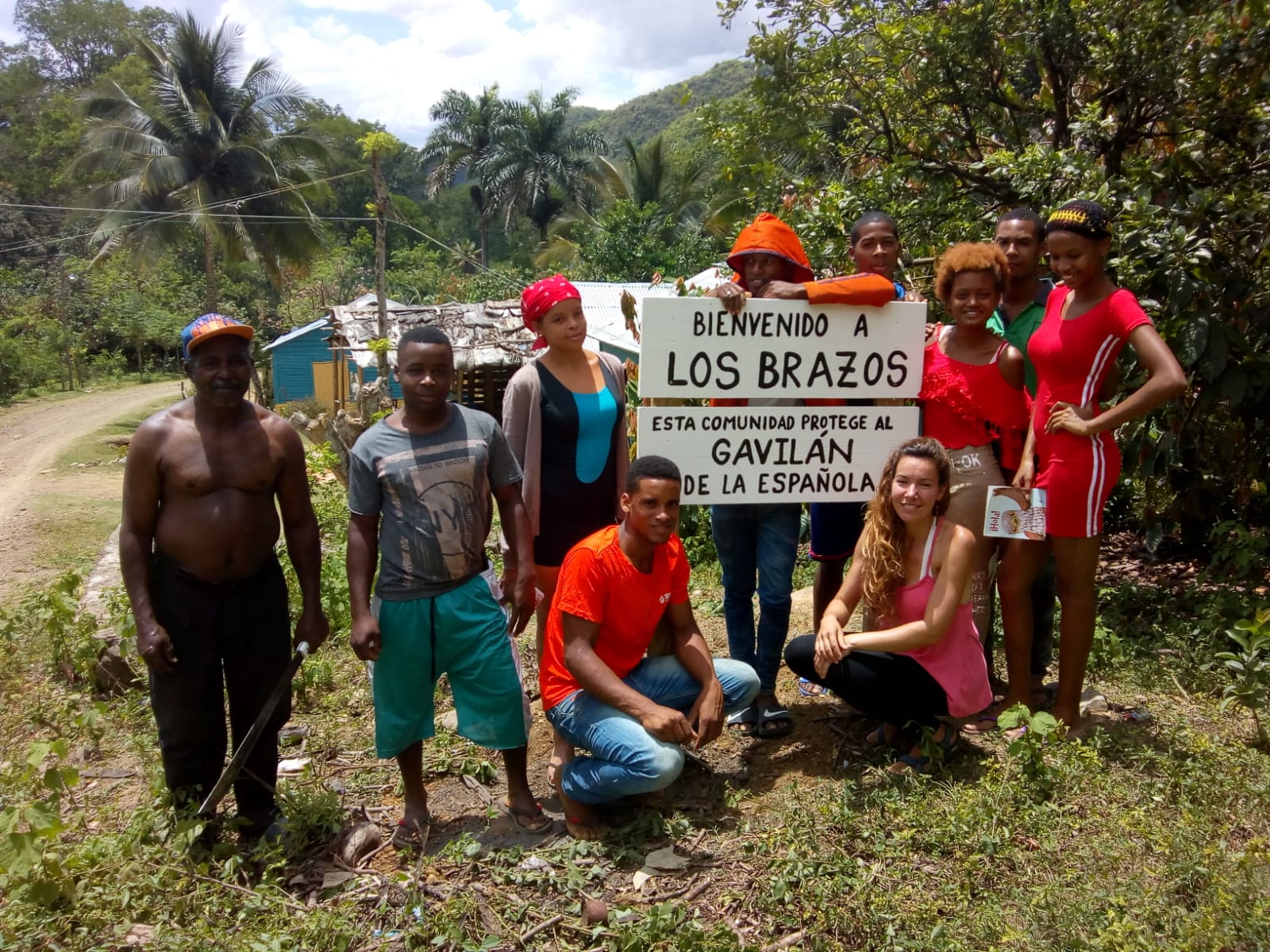
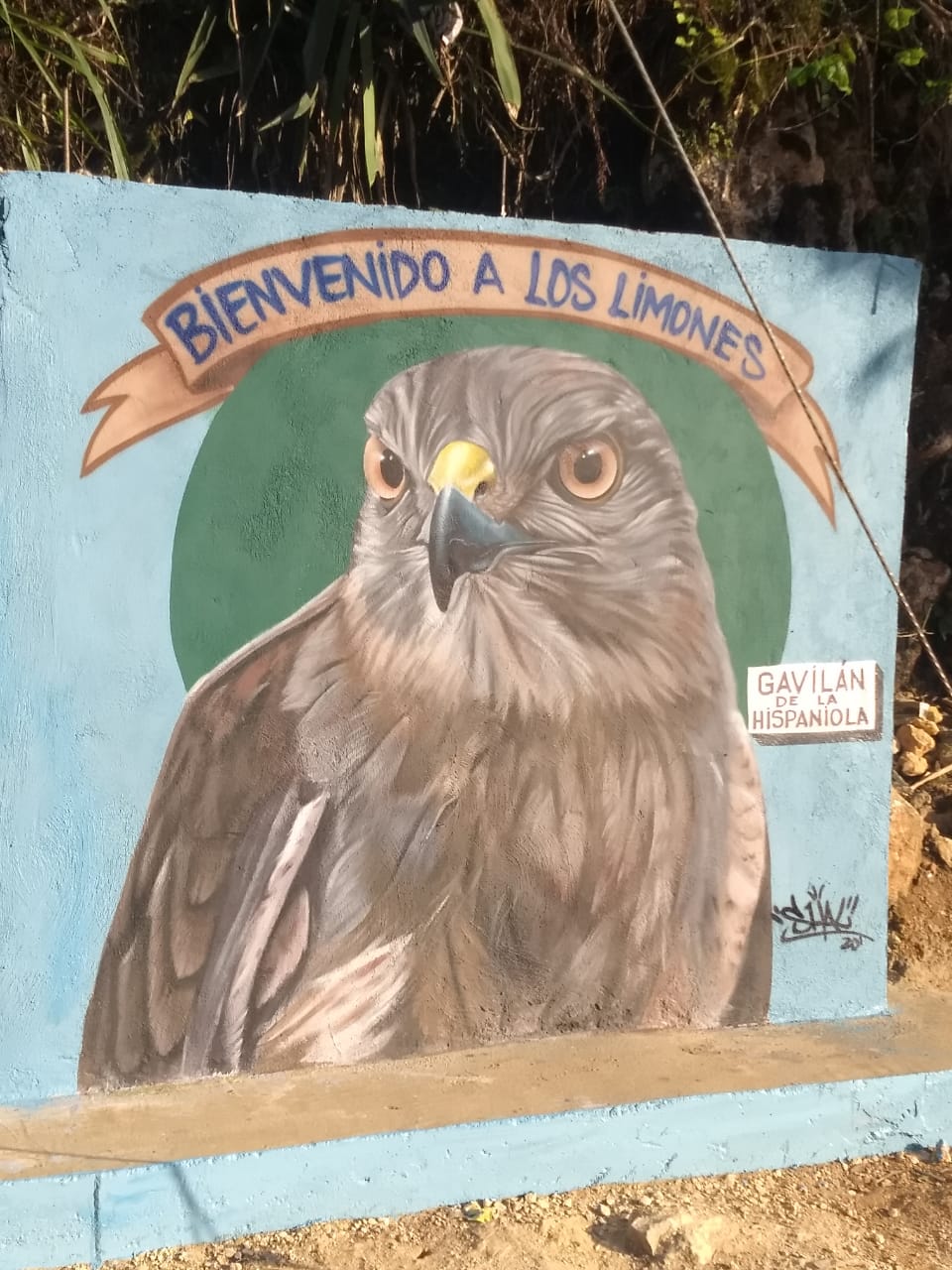
Members of the community of Los Brazos create a home-made sign that reads “Welcome to Los Brazos. This community protects the Ridgway’s Hawk” to show their support of the conservation projectOur field crew in Los Limones organized the painting of a beautiful mural at the entrance to the community to highlight the importance of conserving Ridgway’s Hawk in the area (Photo by The Peregrine Fund)
Celebrate the Caribbean Endemic Bird Festival (CEBF) with us in our virtual “From the Nest” edition! Have fun learning about a new endemic bird every day. We have colouring pages, puzzles, activities, and more. Download for free and enjoy nature with your family at home.
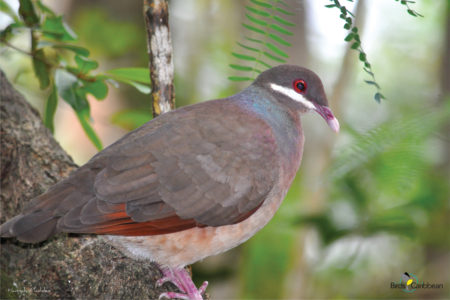
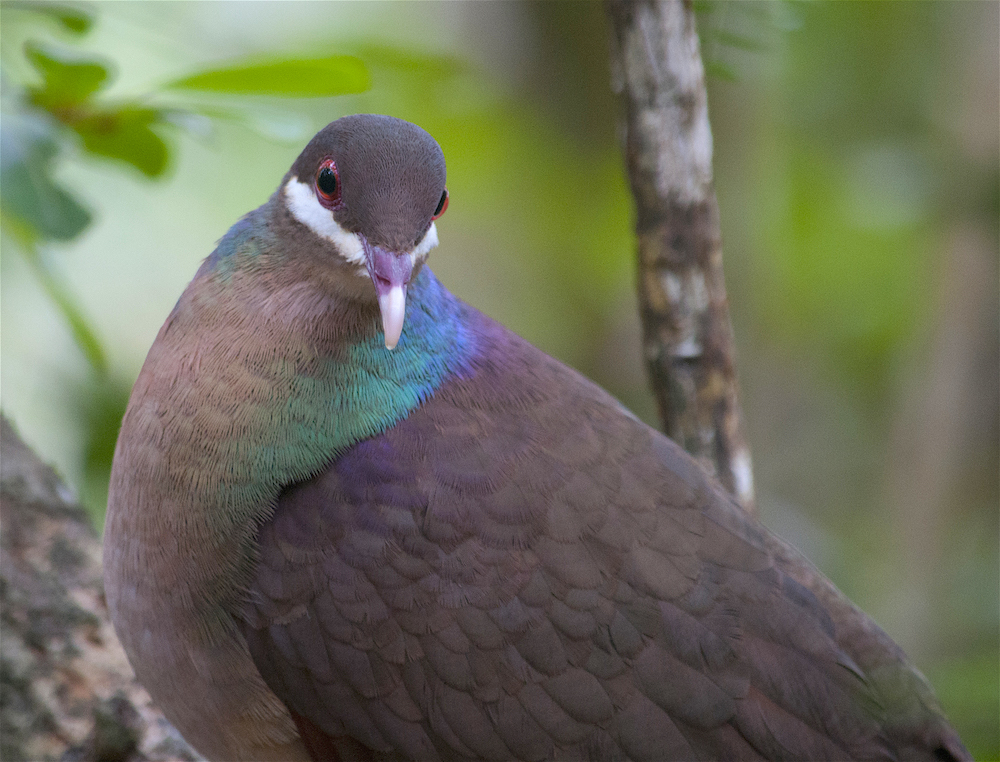
Endemic Bird of the Day: Bridled Quail-Dove
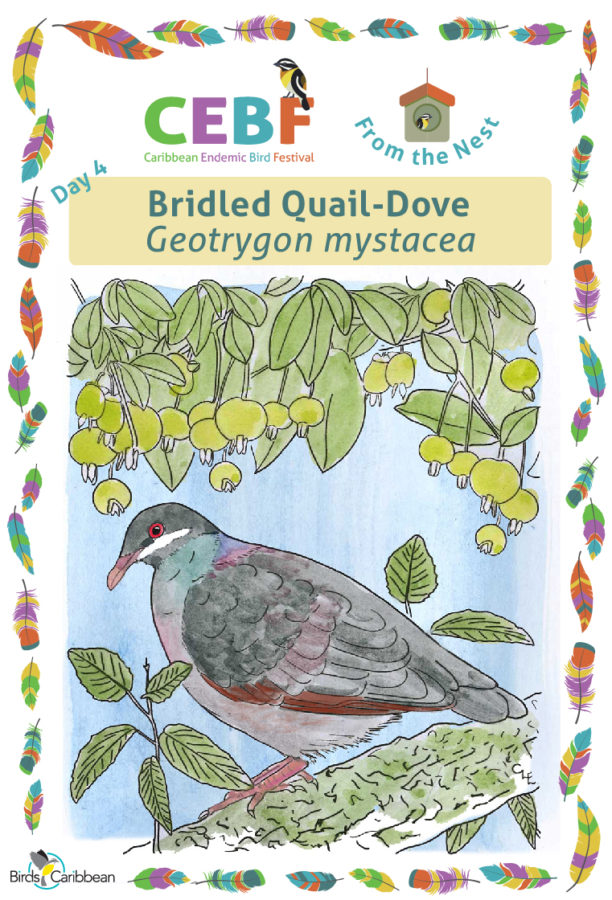
The Bridled Quail-Dove is a mostly orange-brown dove with a white stripe below its eye. Its mournful who whooo call can usually be heard in May during peak breeding season. It is endemic to the West Indies and can be found in forested areas where it forages on the ground for seeds, fruits and the occasional gecko. They use their bill to toss aside leaf litter while searching for food.
It is exciting to see this species because they are quite shy and afraid of humans. If you’re lucky enough to see one, move slowly or stand very still and you may get a glimpse of its shimmering turquoise neck feathers. More often than not, the quail-dove will walk away rather than fly, allowing you a little time to admire its beauty.
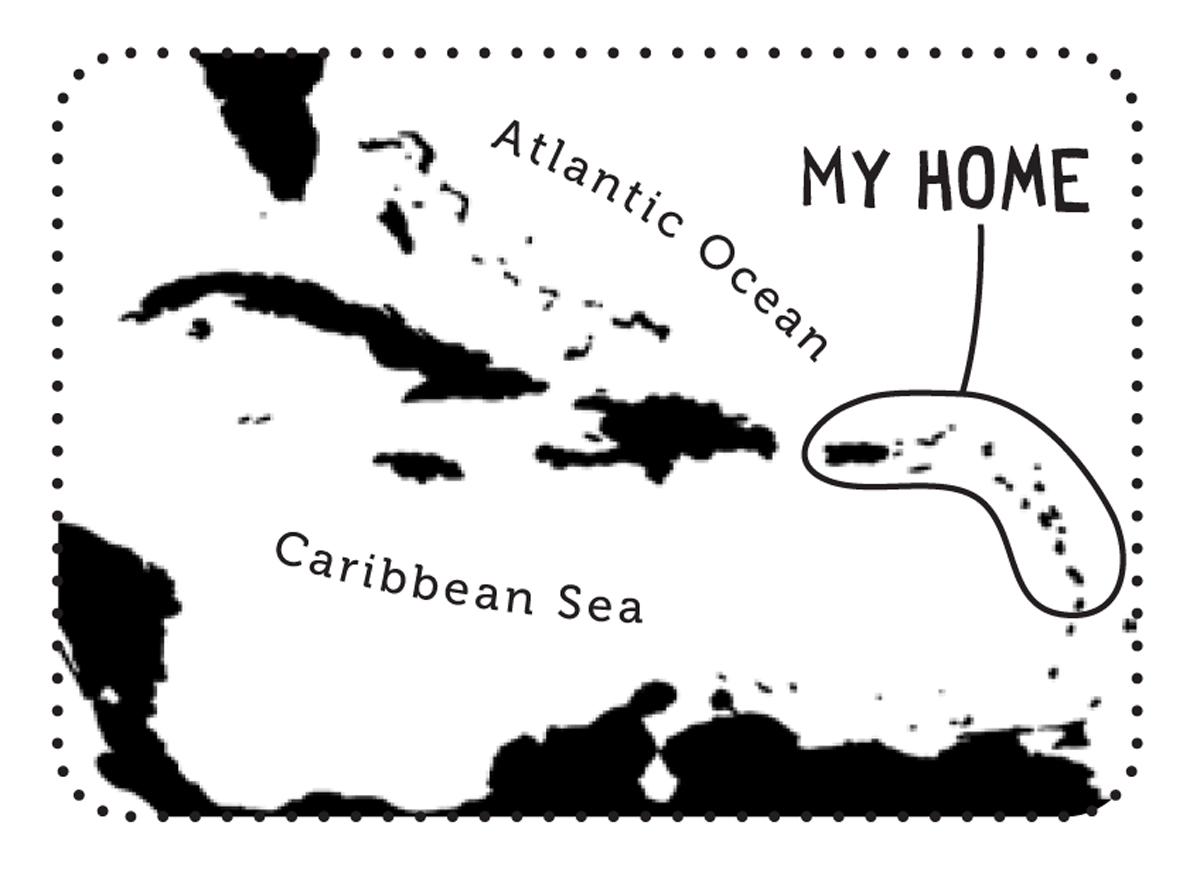
The Bridled Quail-Dove is found in the Lesser Antilles, Virgin Islands and Puerto Rico. Its natural habitats are tropical dry forests or moist lowland forests. It is considered uncommon or rare everywhere in its range and isolated populations are declining. Habitat loss from development and hurricanes threaten this species, as well as predation by cats and rats.
Unfortunately, not much is known about the quail-dove due to its secretive nature, but BirdsCaribbean is working with partners to try to learn more about its status on different islands and how we can help. If you want to help too, you can start by teaching others about this bird, as well as supporting conservation of forests in the Caribbean where it occurs.Learn more about this species, including its range, photos, and calls here.
Colour in the Bridled Quail-Dove!
Download the page from Endemic Birds of the West Indies Colouring Book. Use the drawing above or photo below as your guide, or you can look up pictures of the bird online or in a bird field guide if you have one. Share your coloured-in page with us by posting it online and tagging us @BirdsCaribbean #CEBFfromthenest
Listen to the song of the Bridled Quail-Dove
The Bridled Quail-Dove call is a mournful who-whooo, on one pitch or descending towards the end, getting loudest in the middle of the second syllable, and then trailing off. Note that there is also a Zenaida Dove calling in this recording; it’s call is coo-oo, coo, coo, coo, the second syllable rising sharply.
Puzzle of the Day
Click on the image below to do the puzzle. You can make the puzzle as easy or as hard as you like – for example, 6, 8, or 12 pieces for young children, all the way up to 1,024 pieces for those that are up for a challenge!
Bridled Quail-Doves forage on the forest floor but they frequently perch on rocks or downed tree trunks to rest and preen. (Photo by Hannah Madden)Bridled Quail-dove (Geotrygon mystacea) in the Quill (photo by Hannah Madden)
Activity of the Day
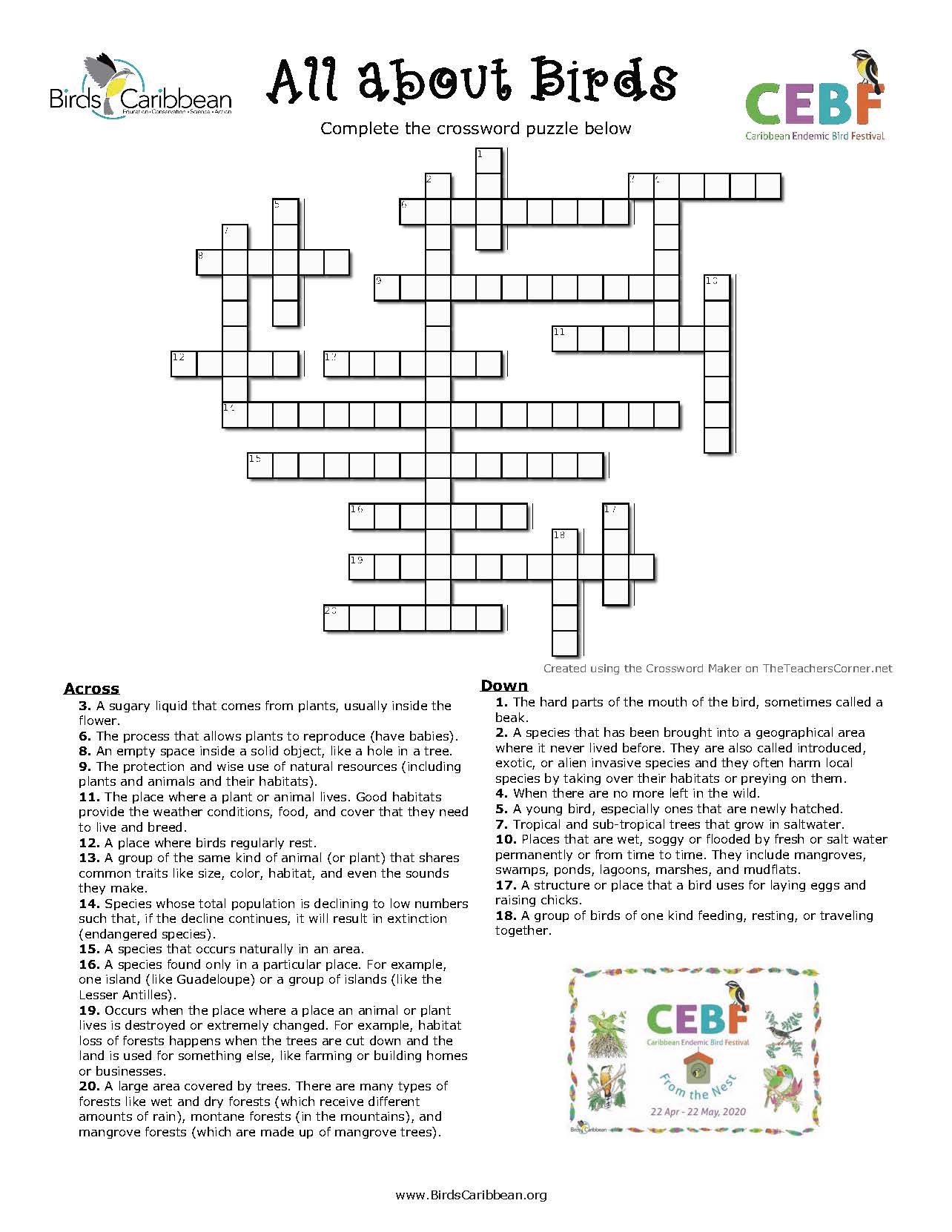
FOR KIDS: Complete our All About Birds Crossword Puzzle! How many words do you know? If you need help, check out our Glossary for some definitions that will help you complete this puzzle. And here is a the Answer Key to the puzzle.
Celebrate the Caribbean Endemic Bird Festival (CEBF) with us in our virtual “From the Nest” edition! Have fun learning about a new endemic bird every day. We have colouring pages, puzzles, activities, and more. Download for free and enjoy nature with your family at home.
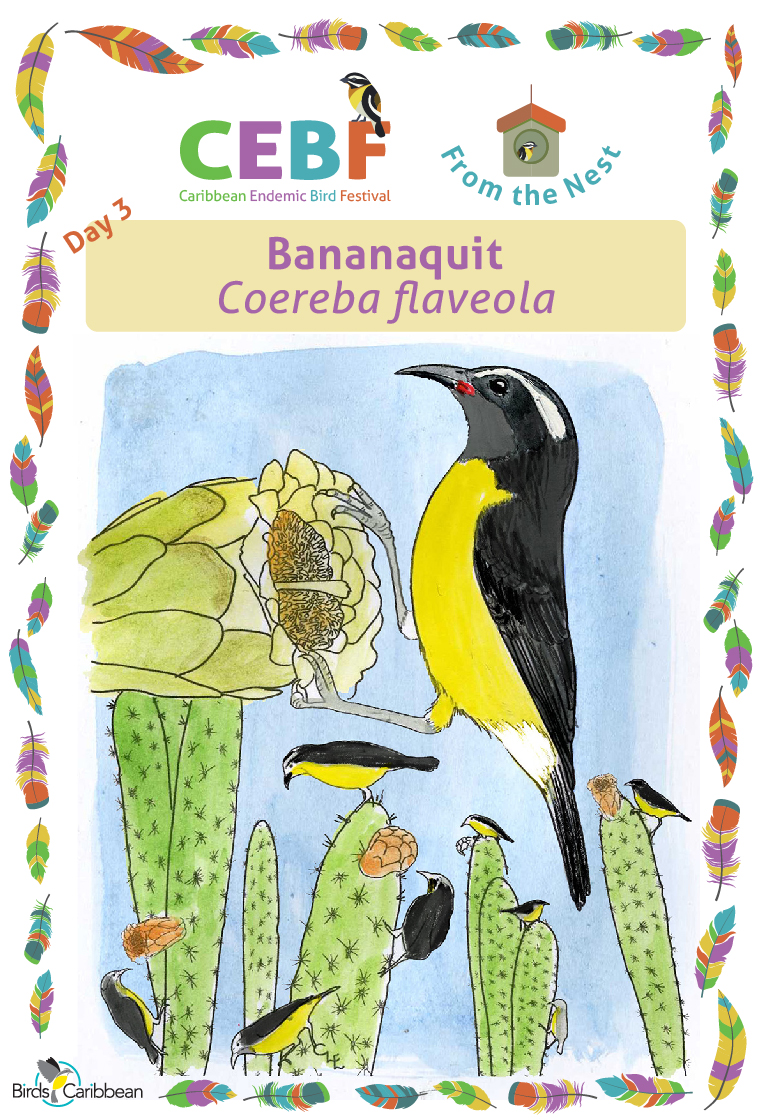
Endemic Bird of the Day: Bananaquit
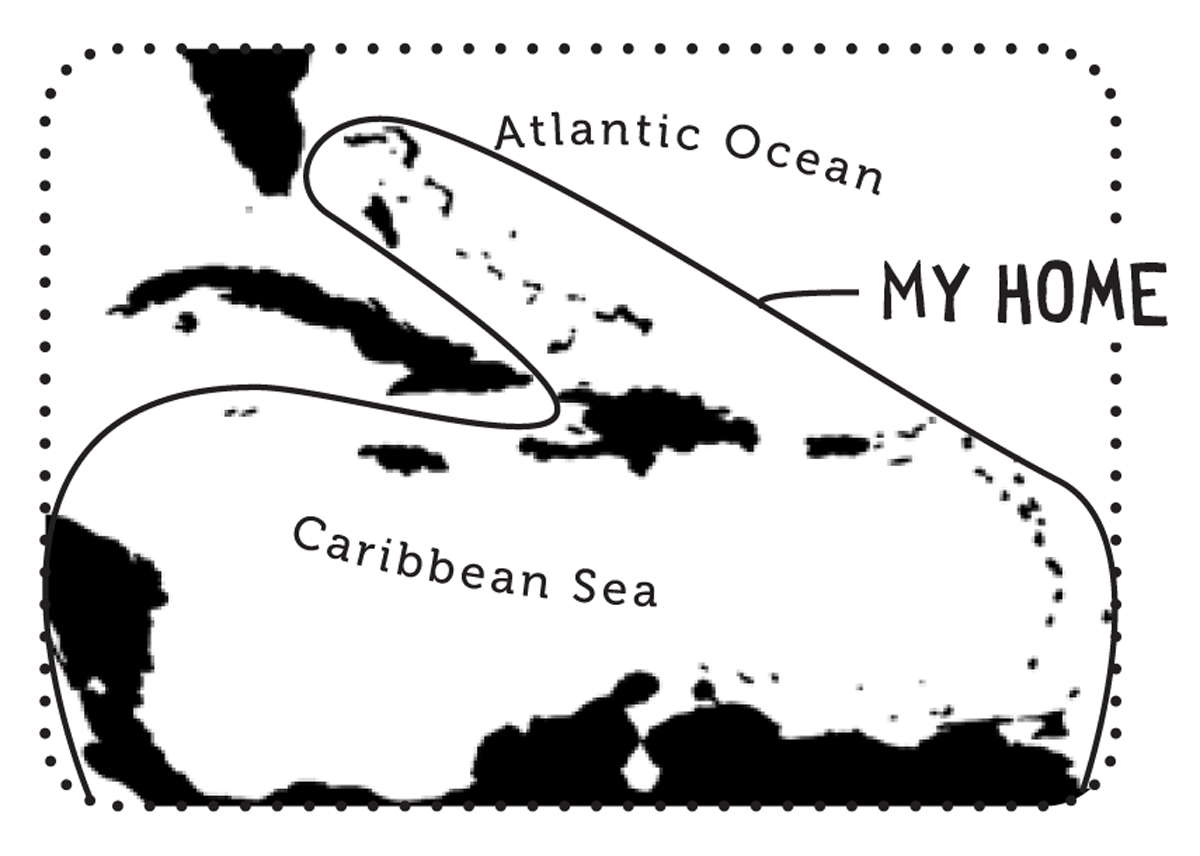
Sugar Bird, Banana Bird, See-see Bird, Beeny Bird—these are all affectionate nicknames for our beloved Bananaquit. The Bananaquit is a small, friendly songbird found throughout the Caribbean (except mainland Cuba), and parts of Central and South America.
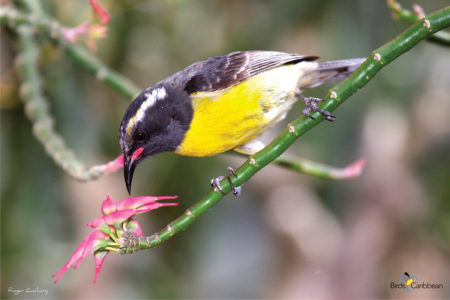
They are distinctive birds with down-curved bills, black upperparts, bright yellow belly, and a conspicuous white eyebrow. Their plumage color varies greatly across the Caribbean, however, with more than 41 recognized subspecies! Features such as the color of the throat (white, gray, or black), length of the bill, and amount of yellow on the belly vary. On Saint Vincent and Grenada, Bananaquits can even be entirely black!
Bananaquits are gregarious and are often found noisily foraging in large groups. Although they occur in nearly all habitats, they are especially common in gardens, parks, and other suburban areas where flowers are abundant. They are energetic birds, flitting from flower to flower in their search for nectar, their main diet. They also eat insects and insect larvae.
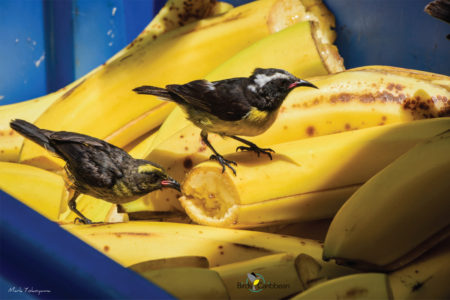
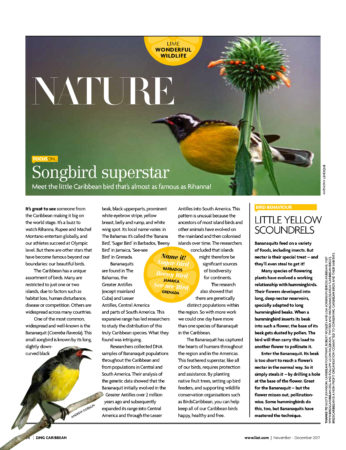
The Bananaquit’s nickname, Sugar Bird, comes from its fondness for bowls stocked with sugar, a common method of attracting these birds. Bananaquits can hang upside down to reach the nectar from flowers. And they sometimes “steal” nectar, piercing flowers from the side, to take the nectar without pollinating the plant. Despite this sneaky behavior, we all love this friendly songster; note that it is the logo bird for BirdsCaribbean! Learn more about this species, including its range, photos, and calls here.
Colour in the Bananaquit!
Download the page from Endemic Birds of the West Indies Colouring Book. Use the drawing above or photos below as your guide, or you can look up pictures of the bird online or in a bird field guide if you have one. Share your coloured-in page with us by posting it online and tagging us @BirdsCaribbean #CEBFFromTheNest
Listen to the song of the Bananaquit
The bananaquit’s song is a rapid series of high-pitched, shrill, unmelodious squeaks which is heard most noisily while foraging in groups.
Puzzle of the Day
Click on the images below to do the puzzles. You can make the puzzle as easy or as hard as you like – for example, 6, 8, or 12 pieces for young children, all the way up to 1,024 pieces for those that are up for a challenge!
The Bananaquit’s main diet is nectar. (Photo by Roger Zachary)Bananaquits feasting on bananas. (Photo by Mark Yokoyama)
Activity of the Day
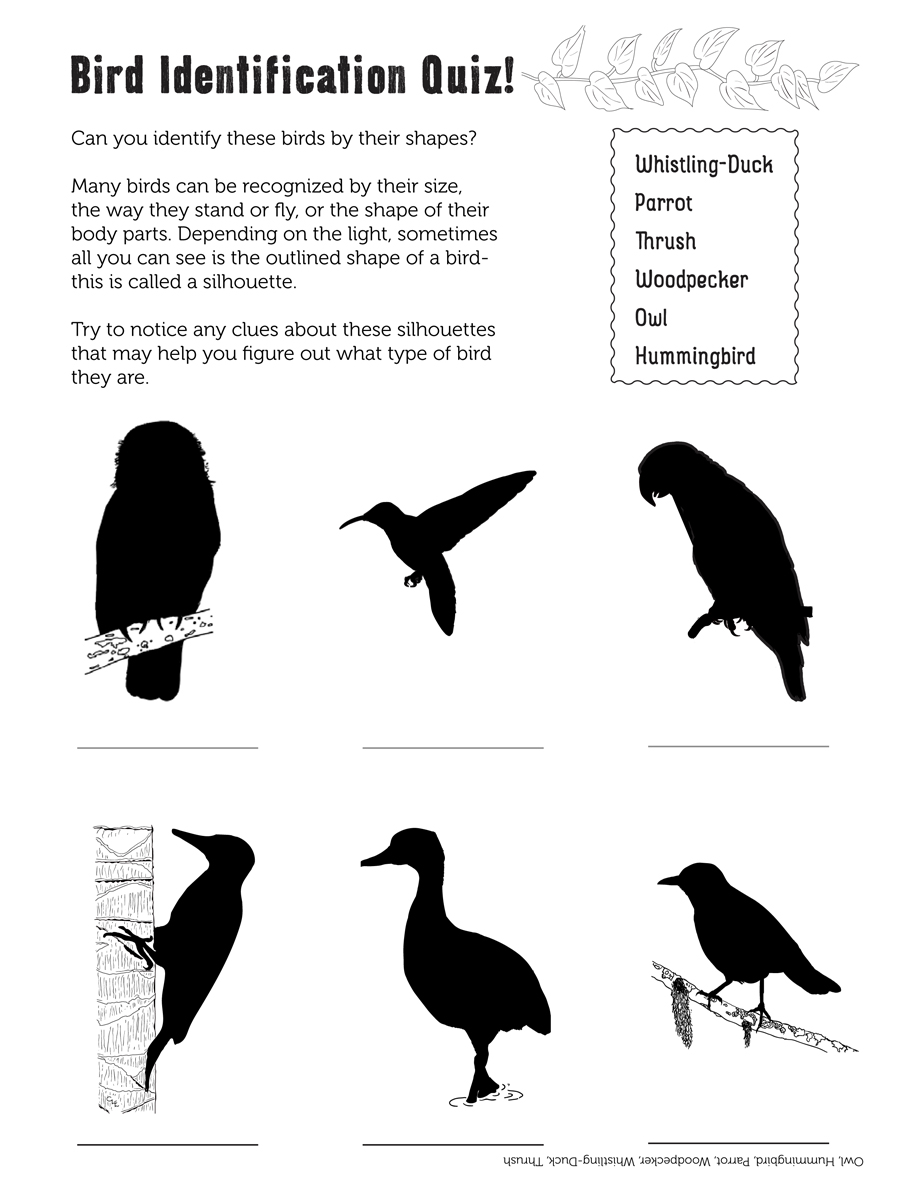
FOR KIDS: Many birds can be recognized by their size, the way they stand or fly, or the shape of their body. Depending on the light, sometimes all you can see is the outlined shape of a bird – this is called a silhouette. Try our bird identification quiz! Try to notice any clues about these silhouettes that may help you figure out what type of bird they are, simply based on their shape! FOR ADULTS: Why are there so many different subspecies of Bananaquits throughout the Caribbean? And how did they become “superstars”? Learn more about this fascinating bird in this fun article published in ZiNG magazine, LIAT Airline’s in-flight magazine. (Birdscaribbean contributes articles on birds and nature to each issue). Download the PDF.
Celebrate the Caribbean Endemic Bird Festival (CEBF) with us in our virtual “From the Nest” edition! Have fun learning about a new endemic bird every day. We have colouring pages, puzzles, activities, and more. Download for free and enjoy nature with your family at home.
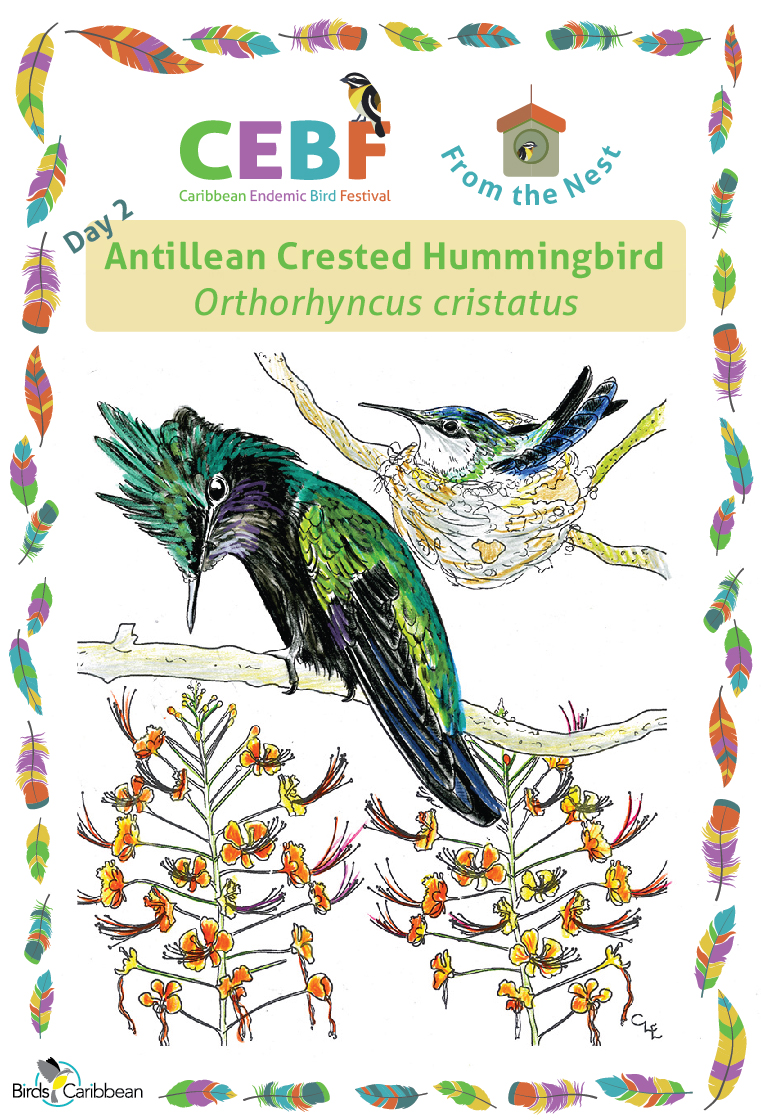
Endemic Bird of the Day: Antillean Crested Hummingbird
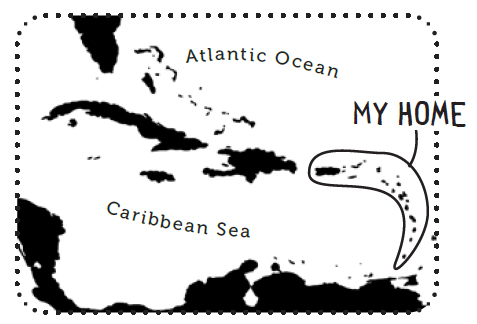
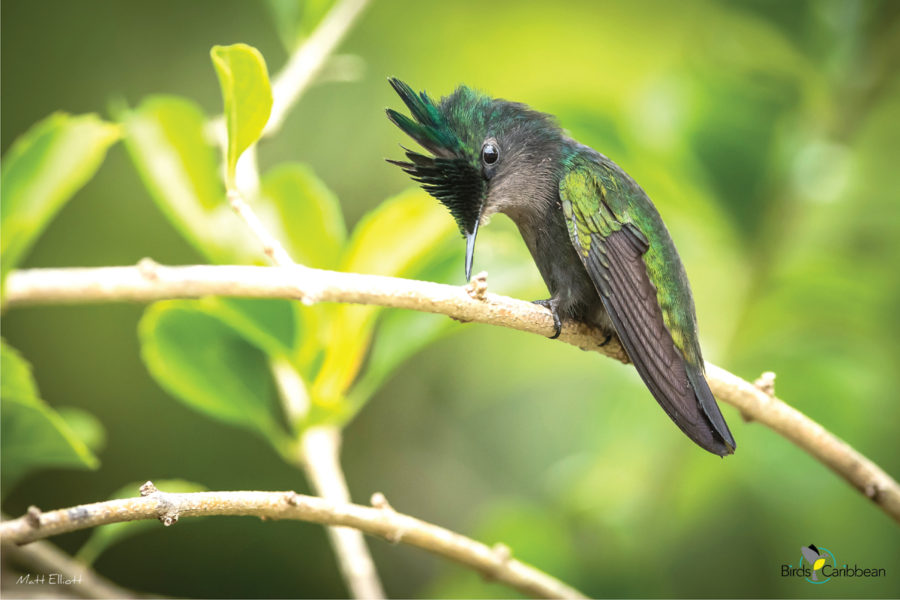
The Antillean Crested Hummingbird is a small iridescent green hummingbird with a short, straight bill. It is easy to identify as it is one of the few hummingbirds with a tall spiky mohawk, that is, crest. The male is brightly colored while the female is more plain and lacks a crest. This hummingbird is a year-round resident throughout the Lesser Antilles (as well as the Virgin Islands and parts of Puerto Rico).
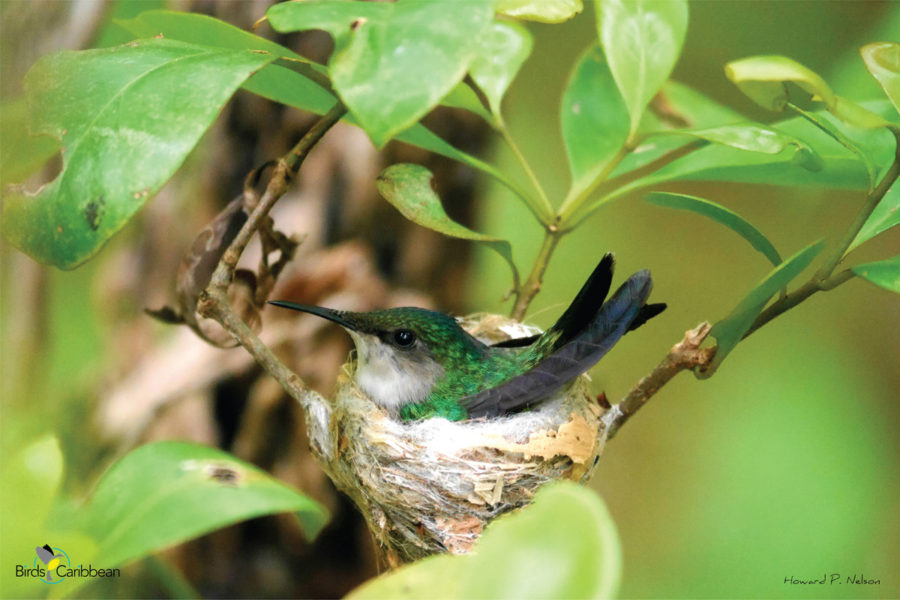
The Antillean Crested Hummingbird can be spotted in open vegetation like parks, plantations, and the borders of forests. It’s a wonderful visitor to backyard gardens. It spends its day visiting flowers to drink nectar. It also eats small insects and spiders. It breeds year-round but mainly from January to August. The nest is a tiny cup of cotton or fine fibers with lichens coating the outside and firmly bound together with spider webs (see photo below). Hummingbirds have to eat all day because it takes a lot of energy to keep their wings flapping so fast (up to 80 beats per second!). Learn more about this species, including its range, photos, and calls here.
Colour in the Antillean Crested Hummingbird!
Download the page from Endemic Birds of the West Indies Colouring Book. Use the drawing above or photos below as your guide, or you can look up pictures of the bird online or in a bird field guide if you have one. Share your coloured-in page with us by posting it online and tagging us @BirdsCaribbean #CEBFfromthenest
Listen to the call of the Antillean Crested Hummingbird
Puzzle of the Day
Click on the images below to do the puzzles. You can make the puzzles as easy or as hard as you like – for example, 6, 8, or 12 pieces for young children, all the way up to 1,024 pieces for those that are up for a challenge!
Antillean Crested Hummingbird (Photo by Matt Elliott)Antillean Crested Hummingbird on nest (Photo by Howard Nelson)
FOR ADULTS: On this Earth Day, 50th Anniversary celebration, learn about key native plants that are beneficial to native and migratory birds with our eBook: Heritage Plants: Native Trees and Plants for Birds and People in the Caribbean. The plants highlighted in this book are perfect for backyard gardens, neighborhood landscaping, and other habitat restoration projects big and small. Browse the book, get inspired, and find new plants to grow in your backyard! Check with your local Forestry Department as they may have some of these plants available at no cost. Available in both English and Spanish!
Sharpen your pencils and prepare your paints, everyone!
The Caribbean Endemic Bird Festival (CEBF) is just around the corner. This year, much of it will be celebrated virtually, as we continue to experience unusual challenges at this time. Nevertheless, BirdsCaribbean has a special surprise for young (and not so young!) bird enthusiasts: a beautiful 64-page Endemic Birds of the West Indies Colouring Book.
Back and Front Covers of the Endemic Birds of the West Indies Colouring Book
“We will be shipping out boxes, free of charge, to our partners to use in their education programs on birds and nature — and of course for their Caribbean Endemic Bird Festival (CEBF) celebrations,” noted Lisa Sorenson, Executive Director of BirdsCaribbean. “Due to the current difficult situation, we realize that the usual exciting CEBF events will not be possible and distribution of the colouring books will be delayed. In the meantime, we will share some pages online with everyone as part of our celebration of CEBF at home.”
With delicate, detailed wildlife drawings by naturalist, educator, and illustrator Christine Elder, and informative text by writer Mark Yokoyama, the book offers children of all ages the opportunity to learn interesting facts while learning the techniques of colouring the birds’ vibrant plumage.
Barbuda Warbler and Hispaniolan Lizard-Cuckoo Colouring Pages
The Colouring Book includes 50 endemic birds, with a focus on the most vulnerable, widespread, and colorful species. The front cover has an extra page that folds in and provides a Colouring Key to all 50 birds. There are also colouring tips, and background information on endemic birds, the threats they face, and how kids can help. At the end of the book there are Activity pages and a Glossary.
Colouring Tips and Colouring Key
BirdsCaribbean is working on preparing the Spanish version of the colouring book — it should be ready within a few weeks’ time. The French version will follow soon after that.
“Kids are often amazed to learn that there are birds and other animals that live only on their island,” commented our writer, Mark. “These birds, and this book, can help them discover how special their home is.”
Artist Christine Elder said, “It was an honor to work with BirdsCaribbean to illustrate these beautiful endemic birds. I’m confident that this book will serve as a valuable tool for conservation and I look forward to seeing the children’s drawings.”
“BirdsCaribbean wishes to thank the U.S. Forest Service International Programs, U.S. Fish and Wildlife Service, and BirdsCaribbean members for their tremendous support for this project,” said Lisa Sorenson. “This Colouring Book has been a dream of ours for quite a long time. It was delayed by pressing issues, such as our urgent work on hurricane relief the past several years. We are so proud of the final product. We hope our partners and the public they serve will enjoy using it as a fun educational tool, and we look forward to receiving feedback.”
Help us get these books to children across the islands!
We are short on funds to ship this book to 25+ Caribbean countries as well as funding to print the Spanish and French versions. If you would like to help, please click here. No donation is too small!!
How to obtain copies of Birds of the West Indies Colouring Book
If you are an educator working for an NGO or government in the Caribbean and would like to receive one or more boxes of the coloring book, please fill out this form. To save on shipping costs, we are aiming to limit the number of shipments per country. We ask for help with distribution by a local institution to NGOs and governmental ministries for use at bird and nature education events.
You can download the colouring book for free on our Resources page.
If you would like to purchase a copy of the coloring book (US$7.99 + shipping), we anticipate that we will be able to ship you the book by the end of April. At this time, we can easily sell only to customers in the U.S. or Canada, and in small quantities (e.g., 6 or less). (Customers in other countries, or in need of large quantities, should contact Lisa Sorenson).
You can purchase up to 6 copies of the book via PayPal using the menus below (PayPal will add the shipping). If you prefer to purchase via check, please make the check out to BirdsCaribbean and mail to: BirdsCaribbean, 841 Worcester St. #130, Natick, MA 01760. On your check, indicate the total number of books you would like and calculate the total cost for the books plus shipping by referring to the chart below.
There is a $1 discount for paid-up (2020) BirdsCaribbean members; if you wish to join BirdsCaribbean, click here. If you need to renew your membership, click here. If you are not sure of your membership status, please contact our Membership Manager, Delores Kellman).
BirdsCaribbean is excited to support Nils Navarro’s newest project: an updated, comprehensive Field Guide to the Birds of Cuba. This is an ambitious and exciting venture, and we need your help to make it a reality!
Illustrations by Nils Navarro.
Nils Navarro is Co-Chair of the Caribbean Wildlife Art Working Group of BirdsCaribbean. He has dedicated his life to the study and conservation of the biodiversity of his native Cuba as well as other areas of the West Indies and Latin America. He holds a degree in Fine Arts with a specialization in painting. An extraordinarily versatile and internationally recognized wildlife artist and illustrator, Nils’ work is characterized by a refined technique combined with a profound understanding of the biodiversity of the Caribbean region. He is an avid conservationist and has pioneered the promotion and formation of young wildlife illustrators and artists in the Caribbean and Latin America. He co-authored the ground-breaking Annotated Checklist of the Birds of Cuba in 2017 and has published a new edition each year since.
Nils began work on the field guide over a year and a half ago. The new guide will contain the largest number of illustrations by species published by any guidebook on Caribbean birds. Nils will be accomplishing this over five years by drawing upon a thorough review of the literature, museum collections, and field work, as well as Nils’ personal experience, and his role as an eBird reviewer for the island. The field guide will cover the different species, subspecies and plumages, dimorphism, and much more, through a new and practical structure never before used for such a guide.
There has never been a better time to produce a guidebook like this. For the first time in the history of the country, there is a local community movement of birdwatchers who are making significant contributions to the knowledge of Cuban birds. This is accomplished through platforms based on citizen science (eBird Caribbean) and sharing knowledge (via Facebook), and the local community requires an updated comprehensive field guide for identification. Many of these people use a field guide as the main tool for their work. In addition, many people from all over the world visit Cuba to birdwatch. They will appreciate having a a new comprehensive guide that covers all of Cuba’s birds.
If you’re interested to purchase Endemic Birds of Cuba: A comprehensive Field Guide by Nils Navarro, click here. This book covers the endemic birds of Cuba as well as the regional endemics.
From all of us at JCO, thank you to all of the authors and reviewers that contributed to a very successful Volume 32!
Inside you’ll find a sizable number of publications, including 16 research articles, our first designated “Conservation Report,” 4 book reviews, Recent Ornithological Literature from the Caribbean, and a special In Memoriam for the late Dr. James. W. Wiley.
I want to give some much-earned recognition to the 2019–2020 JCO team. While they were undertaking the aforementioned load of manuscripts, they were working double-time to make some incredible improvements behind-the-scenes. Let me just say that it’s no easy task to create and adopt a new workflow while you simultaneously have a dozen manuscripts—each at different stages— moving through the old workflow. And this new workflow means better communication, a higher-caliber final product, and a more efficient pathway for a manuscript to proceed from submission to publication. All great things!
Please take some time to enjoy all of Volume 32. Inside you’ll find a suite of excellent work stemming from more than 17 countries across the Caribbean. We should all take pride in this work and make the time to congratulate each other on all of these accomplishments. If you enjoyed reading a publication, please send the authors a quick email letting them know. That is what makes Caribbean ornithology special—a sense of community and comradery unlike anywhere else.
Thank you for your support of JCO!
— Justin Proctor, JCO Managing Editor
Map depicting research locations of the studies published in Volume 32.
On December 3rd, 2014, ornithologists spotted an American Pipet during an annual Cuba Bird Survey led by the Caribbean Conservation Trust. Previously undocumented in Cuba, this observation marks the first report of this species on the island, and underscores the importance of the Guanahacabibes region as an important stopover for fall migrants.
James F. Dwyer, Thomas I. Hayes, Russell Thorstrom, and Richard E. Harness
After a translocation program for the Critically Endangered Ridgway’s Hawk was stymied by electrocutions in the Dominican Republic, Dwyer et al. began to investigate. In this article, the authors identify the errors made while retrofitting power poles and discuss the necessity of properly mitigating electrocution risks for this project, and others throughout the Caribbean.
Meghann B. Humphries, Maribel A. Gonzalez, and Robert E. Ricklefs
Currently, there are eight subspecies of Carib Grackle distributed across the Lesser Antilles and northern South America. By sequencing mitochondrial genes of Carib Grackles across their range, Meghann et al. shed light on the phylogenetic and geographic history of the species, bringing into question the bases for the subspecies classifications.
In response to the dearth of current literature on the White-crowned Pigeon, Acosta and Mugica compiled the latest data on this Vulnerable species in Cuba. Here, they present their findings, focusing on the current distribution of the species as well as conservation measures that have contributed to the perseverance of the species.
Anthony Levesque, Antoine Chabrolle, Frantz Delcroix, and Eric Delcroix
While the Sedge Wren commonly winters in Florida, it has yet to be recorded in the Caribbean, until now. In this article, Levesque et al. recount their sighting of this species on Grand Bahama Island, providing descriptions and photographs of the bird’s diagnostic features and the habitat where it was located.
Christopher C. Rimmer, John D. Lloyd, and Jose A. Salguero-Faria
After Puerto Rico was identified as potential overwintering habitat for the globally Vulnerable Bicknell’s Thrush, Rimmer et al. conducted surveys to clarify the species’ winter distribution on the island. Here, they report that Bicknell’s Thrush is a rare and local species in Puerto Rico and highlight the importance of conservation efforts in Hispaniola, where the species is more abundant.
In 1796, Nicolas-Thomas Baudin captained an expedition to the caribbean, bringing back close to 300 specimens; however, there is controversy surrounding their procurement. After investigating the origin and spread of these specimens, Jansen and Fuchs document their findings and address the arguments of theft made by David K. Wetherbee (1985, 1986).
Currently, the six subspecies of Turkey Vulture are delineated by external measurements and subtle plumage variations, with the Antillean Turkey Vultures falling under Cathartes aura aura. However, through photographic documentation and eBird records, Graves calls attention to the similarity of facial caruncles on Turkey Vultures throughout the caribbean to those present on the eastern United States and Middle America populations. As facial caruncles are largely absent from South American populations, Graves’ work brings into question the diagnostic nature of these markings.
While there are no species of geese native to Jamaica, vagrant or introduced species have been recorded intermittently on the island. Here, Levy amalgamates the scattered history of three geese species in Jamaica and presents a new record of a Snow Goose, illustrated in 1758: the second Snow Goose ever recorded in Jamaica.
Though the comb forkedfern is native to the New World tropics, it is invasive to protected areas in the Dominican Republic and Jamaica. By comparing the bird diversity between invaded habitats and fern-free habitats in the Mason River Protected Area, Davis demonstrates that increased incidence of comb forkedfern decreases bird diversity, particularly native species. Through this, Davis urges the importance of controlling fern spread to protect native bird and plant species.
Richard R. Schaefer, Susan E. Koenig, Gary R. Graves, and D. Craig Rudolph
Though the Jamaican Crow and Jamaican Boa co-occur in certain habitats in Jamaica, there are no published reports of their interactions. By detailing four accounts of mobbing by crows on boas and one probable instance of depredation of a crow’s nest by a boa, Schaefer et al. are the first to document a presumably ongoing feud between these two native species.
With violently strong winds, hurricanes are known to displace birds and transport them to new and unusual habitats. That is why, when Hurricane Maria passed over Puerto Rico on September 20th, 2017, Pérez-Rivera was ready. Here, he documents several unusual bird sightings made by him and others in the wake of Hurricane Maria.
The island of La Gonâve, Haiti, boasts a diversity of bird habitats and has historically sustained a variety of both diurnal and nocturnal raptor species. However, due to rampant environmental degradation and habitat destruction, it is rarely visited by ornithologists or wildlife researchers. After conducting raptor surveys on La Gonâve in 2012, White et al. compared their findings with historical records of raptors on the island, noting that only a few generalist species have been able to sustain populations.
While the Shiny Cowbird is native to South America, over the past century, this brood parasite has spread across the caribbean archipelago and into North America – but how and when did this dispersal occur? In an effort to document the introduction and spread of this species in Jamaica, Levy compiles historical observations of Shiny Cowbirds and postulates a potential hurricane-mediated arrival on the island.
André Dhondt, Jeremy L. Collison, Matthew H. Lam, Matthew J. D’Ambrosio, and Taylor L. Crisologo
Palmchats are among the few passerine species that build complex, multi-chambered nests; however, there are no published studies of their nest-related behavior. After studying Palmchat nests in the Dominican Republic, here, Dhondt et al. report on their observations, noting differences in group size, nest size, twig-related activities, twig length and shape, and nest construction.
William E. Davis, Lisa G. Sorenson, and Ernesto Reyes Mouriño
On January 28th, 2018, birders on the BirdsCaribbean Cuba Bird Tour in Ciénaga de Zapata National Park, Cuba, spotted an almost entirely white Willet amongst a group of Short-billed Dowitchers and other Willets. In this article, Davis et al. present photographic evidence and a detailed description of this leucistic Willet and use phenotypic characteristics to classify it as a western subspecies.
Since its introduction to Cuba in 2003, the Caribbean Endemic Bird Festival has achieved paramount recognition for its talks, conferences, competitions, workshops, exhibitions, and other ornithological events. By uniting and strengthening the national network of environmentalists, this festival has expanded its scope of activities and built its capacity to prepare and distribute educational materials.
[this is our first publication under the header “Conservation Reports” – we invite more of these!]
Jason M. Townsend, Rafaela Aguilera Román, Felisa Collazo Torres, José González Díaz, Chandra Degia, Hiram González Alonso, Floyd E. Hayes, Lyndon John, Steven C. Latta, Lourdes Mugica Valdés, Nils Navarro Pacheco, Fernando Nuñez-García, Carlos Peña, Herbert Raffaele, Pedro Regalado, Ernesto Reyes Mouriño, Yaroddy Rodríguez, Bárbara Sánchez Oria, Helen Snyder, Joseph Wunderle
Summary: This In Memoriam of Dr. James W. Wiley not only celebrates his foundational research career, with four decades of published work, but also the profound personal connections he built through his mentorship and friendship. Twenty authors contributed to this piece, paying homage to Jim and painting a beautiful picture of the life he lived.
A special thank you to Dr. Steven C. Latta, Director of Conservation and Field Research at the National Aviary and longtime editor for JCO, for his continued efforts undertaking this important section of our journal that compiles recent publications from around the Caribbean. Steve has been contributing ROLs to JCO since Volume 22 in 2009.
“My idea then was to catch everything that was published after the publication of Jim Wiley’s “A Bibliography of Ornithology in the West Indies” which I always thought was a tremendous effort and a tremendous resource. I wanted to make it easier for people across the Caribbean to have ready access to the most recent literature by knowing what had been published and how to contact the researchers for copies of their papers. I also wanted to make the updating of the bibliography a whole lot easier.”
Steve has done an outstanding job and we encourage our readers to look back through his work over the past 10 JCO volumes, which can all be found in our free and open-access Archives.
Article by (1) Simon Campo – Editor for the Journal of Caribbean Ornithology and a Researcher at the Yale School of Medicine in New Haven, CT; Connect with Simon via LinkedIn or email; (2) Justin Proctor – Managing Editor for the Journal of Caribbean Ornithology; and (3) Aliya Hosein – Centre for the Rescue of Endangered Species of Trinidad and Tobago.
Journal of Caribbean Ornithology relies on donations to keep all of our publications free and open-access. If you would like to support our mission and the broader goal of giving a voice to Caribbean ornithologists and their work, please consider becoming a supporter of JCO.
On behalf of the entire Journal of Caribbean Ornithology staff, I am incredibly excited to announce that the JCO Archives are complete! And we are honored to dedicate these Archives to our deeply-valued and greatly-missed friend and colleague, the man who started this whole adventure: Dr. James W. Wiley.
THE BACKSTORY (some historians claim that we started with Messenger Pigeons)
Jim Wiley crossing the Mameyes River, in flood, en route to a Puerto Rican Parrot nesting area in 1978. (photo by Noel Snyder)
In 1988, Dr. James (Jim) W. Wiley conceived and published the first issue of El Pitirre, a newsletter for the Society for the Study of Caribbean Ornithology (now BirdsCaribbean). He went on to serve as Editor-in-Chief for the first 17 volumes—an incredible feat—and in the process, grew the newsletter into a peer-reviewed research journal well-respected across the Caribbean.
Volume 16 (2003) marked the end of the El Pitirre name and the birth of Journal of Caribbean Ornithology. 2004 would mark Wiley’s final year, wrapping up his tenure with Volume 17. Dr. Jerome (Jerry) A. Jackson tagged in as a co-Editor-in-Chief with Dr. Floyd Hayes for Volume 18 (2005), with Floyd taking the reins from there. In 2006, Martín Acosta Cruz came aboard as co-Editor-in-Chief, overseeing manuscripts coming out of Cuba. Two years later, Floyd recruited Douglas Weidemann, a biology student out of Pacific Union College, to serve as an Editorial Assistant. Doug has been with the journal ever since and is the only member of our current staff who was there to watch JCO transition from paper to the digital world in 2014. In his 11+ year tenure, Doug has been instrumental in keeping JCO moving forward as the leading ornithological publication in the Caribbean.
A photo of Doug Weidemann getting ready to mail out a new issue of JCO in 2010. Licking shut all 300+ envelopes is a memory that still wakes Doug up at night. (photo by Floyd Hayes)
Floyd and Martín would continue serving as Editors-in-Chief for the next eight volumes of JCO. In 2014 (Volume 27), Dr. Jason Townsend stepped into the Editor-in-Chief position, and shepherded JCO into a productive chapter that included transitioning the journal to open-access and onto an online academic publishing site, as well as growing the JCO team with new staff and new positions. When Jason created and advertised a Managing Editor position in 2016, I jumped at the opportunity to become involved, and have spent the last four years helping expand the journal’s publication capacity and improving timeliness of publication. We have worked hard at creating a bigger and more unified team, and that has made all the difference.
GETTING THE JOB DONE (if only you could claim blood, sweat, and tears as tax deductions)
More staff has ultimately afforded JCO more bandwidth to tackle some big, lingering side projects. One of those has been the ongoing project (3+ years) of completing the JCO Archives—a digitized, free, and open-access collection of every publication from every volume and issue dating back to Wiley’s Volume 1, Issue 1 in 1988.
The completion of the JCO Archives is owed to the hard work of MANY individuals, including Tristan Leisten, Zoya Buckmire, and Alex Sansom, to name a few. Thank you also to all of the great photographers who have allowed us to use their photographs for volume and issue covers:
Tanya Martinez, Zoya Buckmire, Charles D Peters, Eric Hynes, Juliana Coffey, Richard Briones, Amonie Holas, Gloria Achilla, Susan Jacobson, Jessie Pitt, Dave Irving, Rafy Rodriguez, Adam Toussaint, David Hollie, Pedro G. Rodriguez, Kenneth Butler, Jose M. Panteleon, Dax Roman, Aslam Ibrahim Castellon, Anthony Levesque, Claude Fletcher, Aaron Budgor, Pericles Brea, Adam Stinton. Ray Robles, Raphael Kopan, George Armistead, Wilfred Marissen, Ernesto Burgos, Gary Graves, Engie, Jonathan Liddell, Leticia Soares, Eladio Fernandez, Justin Proctor, Bruce Hallett, Carel P. de Haseth, Miguel A. Landestoy, Andre/Keila Dhondt, Kim Novino, Rafy Rodriguez, Rafael Arvelo, M. R. Paice, David Jones, Jamie Adams, Hubert Askanas, Pascal Villard, Matthew Johnson, Wolde Kristos, Sean Rune, Greg Homel, D. Belasco, and Michael J. Good.
So with open arms and big smiles on our faces, all of us at JCO welcome you to come and take a look through the new Archives. I may be a bit biased, but I think they look pretty darn good!
DIGGING INTO THE ARCHIVES (sit back, relax, and stay awhile!)
Readers be advised—you’ll notice that there are some differences between our cataloging of newer versus older volumes. Although we tried to keep the presentation of articles and their metadata consistent across all 32 volumes, as we worked our way back in time, older publications introduced new challenges. Early volumes of El Pitirre were organized much differently and contained different types of content. Parsing out each bulletin or announcement was essentially impossible, and so in those cases we have “lumped” some entries together into one downloadable PDF. But we still wanted you to be able to clearly see every major entry within a volume, and so we have conveniently displayed all titles and authors at the top of the page. We’ve also included downloadable PDFs for each of the El Pitirre volumes and issues so that you can have them in their entirety should you wish.
We hope you’ll enjoy strolling down memory lane as much as we have. Please take your time and enjoy reading back through 31 years of priceless contributions to Caribbean ornithology. And don’t forget to swing by the Archives whenever you’re working on a new manuscript. They contain decades of great science that might help shape your own!
Sincerely,
Justin Proctor
JCO Managing Editor
P.S. We’ve done our best to ensure accuracy across everything you’ll find in the Archives, but there is always the possibility that we missed something. If you find an error that needs correcting, please reach out and let me know (justin.proctor@birdscaribbean.org). However, there’s one thing that we definitely didn’t miss, and that’s the “winking” Gray Kingbird in the logo of El Pitirre’s third issue. Interestingly enough, it only winked for that one issue…
P.P.S. The JCO is proud to continue fulfilling our mission of commitment to giving a voice to Caribbean ornithologists and their hard work. Our journal has some great momentum underway right now, but we do need help to cover our operating costs as we grow our team, offer more development resources to our authors, keep the journal free and open-access, and continue to improve our submission to publication time. Please consider supporting Caribbean science and the dissemination of that knowledge through a donation to the Journal of Caribbean Ornithology. From all of us at JCO, we thank you for your support.
Dave Lee holding a White-tailed Tropicbird in the Bahamas. (photo by Mary Kay Clark)
David S. Lee was a pioneering naturalist and conservation biologist who helped get BirdsCaribbean started nearly 30 years ago, and inspired many naturalists with his work and his writing. He was a man of many interests, and with respect to the Caribbean, published numerous papers and articles in the popular press on seabirds, Bahamian fish, turtles, snakes, bats, and orchids.
Donations from Dave’s wife, Mary Kay Clark and his mother, June Bash, allowed the establishment of the David S. Lee Fund for the Conservation of Caribbean Birds that will award money to conservation projects in his honor. The money is being held in a trust and will be used to award an annual grant for innovative projects that protect Caribbean birds and their habitats.
Goal of the Fund: The David S. Lee Fund for Conservation seeks to continue David’s passion for protecting wildlife. The fund will support direct, innovative conservation work in the Caribbean Region for birds and their habitats. The fund will be managed by BirdsCaribbean and used for annual small grants.
A striking male Magnolia Warbler perches momentarily on a branch while foraging for food during its spring migration. (photo by Gerald A. DeBoer, Shutterstock)
Eligibility: Scientists/naturalists working in the Caribbean, in conservation organizations or academic programs, may apply. Applicants should be students or early career ornithologists, conservationists, or wildlife professionals (i.e., not established faculty or senior staff of a conservation organization, less than 7 years post-graduation). A student must be enrolled in accredited Masters or PhD program in ecology, biology, conservation, or related field to be eligible. Applicants must be paid or sponsored members of BirdsCaribbean at the time of application.
Use of Funds: The funds can cover travel to field sites, living expenses in the field, or costs for equipment and supplies to conduct conservation projects. Examples of equipment and supplies include traps, cameras, automated recording units, nest boxes, etc. Ineligible costs include salary or other wages, overhead fees, etc. Projects that foster collaboration between scientists/naturalists in different island groups of the Caribbean, such as joint projects to test conservation techniques for similar species, will be favored.
Application Guidelines:
Proposals may be submitted in English, French, or Spanish. All should have an English version of the abstract
Applications should be emailed as a Microsoft Word document.
The application should include a cover page, proposal (download guidelines below), and a curriculum vitae for the applicant.
Separately, by email, three individuals who can attest to your effectiveness in previous work should submit letters of recommendation. For students, this would include your academic advisor.
Evaluation:
A committee appointed by BirdsCaribbean will review the proposals and award the grants.
The awardee will be required to submit a report one year from the day of the award explaining how the award money was spent and the results of the project to that point. The awardee is also asked to write an article for BirdsCaribbean’s blog about their work (informal article for a lay audience).
But wait! What if you are not eligible to apply for funds, you ask? You can still support this worthy cause by being a sponsor!
Reddish Egrets (dark morph). (photo by Tania Thomson, Shutterstock)
This fund will be for the conservation of any bird in the Caribbean as a reflection of Dave’s diverse interests. He was an important part of many projects, ranging from those of the Black-capped Petrel and Seabird Working Groups to the scholarly debate leading to the elevation of the Bahama Yellow-throated Warbler to a full species.
At the moment the fund contains $12,000. Our initial goal is to raise $25,000 so that we can award $1,000 every year to a worthy student or early career ornithologist, conservationist or wildlife professional. Not only will this fund encourage creative field work for projects that make a difference, but it will also help build the knowledge and skills of young conservationists that are urgently needed to make sure that the Caribbean birds and habitats that Dave treasured are still around for future generations to enjoy.
Cuban Parrot surveying his domain. (photo by Elliotte Rusty-Harold, Shutterstock)
At the 2015 BirdsCaribbean meeting in Kingston, Jamaica, a round of beers was purchased in Dave’s honor, since he always seemed to have a cooler full when people wanted one (and even when they didn’t). Think of this fund like a cooler full of refreshing beverages that Dave would have around if he were here. We owe it to Dave to stock that cooler—to vitalize naturalists and empower them in their work to help wildlife.
Please give a tax deductible donation to the David S. Lee Fund. Give generously. The more we put into the fund, the more we can give out each year. Thanks to all those that have contributed to the fund!
If you prefer to donate with a check, please make the check out to “BirdsCaribbean” and in the memo section, note that it is for the David S. Lee Fund. If you have questions or to make other arrangements for donating, please feel free to contact Jennifer Wheeler, BirdsCaribbean Financial Officer (jennifer.wheeler@birdscaribbean.org)
Checks can be mailed to: BirdsCaribbean, 841 Worcester St. #130, Natick, MA 01760-2076
BirdsCaribbean is excited to announce the release of The Complete Checklist of the Birds of the West Indies! Jeff Gerbracht and Anthony Levesque, in consultation with experts across the region, have compiled important details for all of the bird species observed in the West Indies, including abundance, seasonality, breeding status, endemism and establishment.
The goal of The Checklist is to provide consistent, accurate and up-to-date information for use by researchers, conservationists and policy makers. The taxonomy of species follows the current version of the Clements Checklist of birds of the world. The most recent version of the checklist can be downloaded here and consists of two different documents:
The first document includes the introduction and explanatory text, definitions used and a summarized version of the species list as a pdf.
The second is a more detailed checklist in an excel spreadsheet. Providing the checklist as a spreadsheet enables you to easily sort and summarize the checklist by the columns you are most interested in, such as ‘Endemic Region’ or ‘Abundance’.
The Caribbean is home to over 700 species of bird, including 171 species that are endemic to the region and found nowhere else in the world. You can use the checklist to explore the many birds that are endemic to the Greater Antilles (109 species), to learn about the migrants and visitors that rely on the Caribbean habitats (334 species), or to check just how rare it is to see a Common Ringed Plover (very rare).
The excel spreadsheet is an invaluable resource, allowing you to manipulate the checklist and extract important information for your research, grant proposals, or personal interest. For example, how many endangered bird species are there in the Dominican Republic? Using the sort functions in excel, we see that there are six, with five of them endemic to Hispaniola: Ridgway’s Hawk, White-fronted Quail-Dove, Bay-breasted Cuckoo, La Selle Thrush, Hispaniolan Crossbill, and Black-capped Petrel.
At the BirdsCaribbean 21st International Conference in Guadeloupe, Jeff and Anthony facilitated a West Indies Checklist Working Group meeting. During the meeting we announced the release of the first checklist and quickly reviewed the format and types of information contained in the checklist. There was great interest in this initial release and we had several lively discussions about the future direction and expansion of the checklist. Creating country and island versions of the checklist is our next step in expanding the checklist coverage and a number of representatives agreed to begin work on country lists. Additionally, there was strong interest in expanding the checklist to cover subspecies (the current version of the checklist covers birds at the species level only). Everyone agreed that this checklist fills a much-needed void in open access to information on birds in the region and the enthusiasm around moving it forward was exciting and bodes well for the future of this working group.
When you are birding, remember to record all your observations in eBird Caribbean as those records will be used to keep this checklist up to date.
“There’s really no way to gauge how valuable this experience was for me…As I sat with my new mentor at lunch, the lessons that he was passing on to me had been gained over forty, maybe fifty years of a career. So now it’s my responsibility to take the baton and carry it forward.”
Bradley Watson (BNT Science Officer) and Dr. Herb Raffaele (retired Chief of USFWS International Affairs Program) get to know each other at the Mentorship Workshop in Guadeloupe, July 2019.
Bradley Watson, a new staff member at the Bahamas National Trust who is working on the Kirtland’s Warbler, was speaking enthusiastically from the recent BirdsCaribbean Conference in Guadeloupe. At the conference in July, a new Mentorship Program was launched. Bradley’s mentor is Dr. Herbert Raffaele, former chief of the US Fish and Wildlife Service’s Division of International Conservation, and author of Birds of the West Indies, among other books.
BirdsCaribbean Directors-at-Large Dr. Adrianne Tossas and Dr. Ancilleno Davis had developed the concept of a mentorship program, which they were able to debut at a workshop in Guadeloupe. Its purpose is to further BirdsCaribbean’s goal of building competence in education, conservation, and research in the region. Mentorship is one way of deliberately engaging and supporting the career development of young conservationists and professionals who were born, live, and work in the region. The exchange of information and guidance provided by mentors also helps to spur regional leadership in conservation and avian science.
A few weeks before the conference, delegates were offered a survey to participate in the new program, with 75 responding favorably. Due to the differing backgrounds of respondents, it was challenging to organize them into mentor-mentee pairs, but four main areas were determined to be most useful, based on the responses: conservation management, research, outreach and education, and ecotourism.
Mentors and mentees chat over dinner about careers in conservation – (left to right): Jeanette Victor (St. Lucia), Adrianne Tossas (Puerto Rico), Francoise Benjamin (Haiti), Jen Valiulis (US Virgin Islands), Lisa Sorenson (USA).
A Mentorship Workshop was held on the second day of the Conference to introduce and explain the purpose of the program. Participants spoke up about the needs of mentees in general, and considered ways in which mentoring would be most effective and beneficial. Afterwards, newly-paired mentees and mentors had dinner together. It was a lively meal where they got to know each other and shared information that was of value for both sides of the relationship. What was most exciting to watch was how so many of the pairs remained talking after dinner, late into the night, excited about their new friendships and eager to take advantage of the time they had together in person.
Josmar Marquez, a younger conservationist who works with the group AveZona in Venezuela, was paired with Simon Guerrero, a well-known professor and researcher from the Dominican Republic. “This program has been very enriching for me because it allowed me to discuss my work, specifically my research methodology, with an ornithologist with a different background than mine.” Josmar goes on to highlight how this mentorship program is fitting for a BirdsCaribbean conference; “I was given great advice not only by my mentor, but by so many other Caribbean colleagues surrounding me throughout the week we shared together. Now, together, we will be trying to implement and achieve results by the time we all see each other again at the next BirdsCaribbean conference!”
“It is really exciting that BirdsCaribbean has started a mentorship program,” exclaimed Cartographer and Caribbean Birding Trail Project Coordinator, Aly DeGraff Ollivierre. “It’s such a great way to share our collective knowledge and experiences with each other, and an excellent opportunity to form deeper relationships with our colleagues.””
Leno Davis and Adrianne Tossas get the Mentorship Workshop started at BirdsCaribbean’s International Conference in Guadeloupe, 25-29 July 2019. (photo by Mark Yokoyama)
Jane Håkonsson, a young ornithologist from the Cayman Islands, commented: “BC’s mentorship programme has provided me with a type of personal and professional support I would have otherwise not had access to. The programme has helped me narrow my focus and identify and prioritize developmental steps.”
BirdsCaribbean is extremely grateful to the group of 41 mentors who generously came forward to serve as role models for the new, younger members—offering their time, their valuable insights, and experience. We also thank the 34 mentees that took the initiative to reach out and get involved. These individuals are eager to learn and grow in their role as the new generation of science and conservation professionals.
Bradley Watson says being a mentee has given him a sense of purpose and direction. “I feel a bit of a responsibility,” he emphasizes. “When I look at what everybody else has done [for conservation, as reported at this conference], I know what I need to do, and how important it is.”
In these new-found partnerships, mentors and mentees will be moving forward together with the important mission of Keeping Caribbean birds aloft!
*If you would like to be a mentor or want to be connected with one, don’t hesitate to reach out to us! Email Mentorship Program leaders Adrianne Tossas (agtossas@gmail.com) and Ancilleno Davis (ancillenodavis@gmail.com).
Mentor-Mentee pairs meet up at the workshop and immediately begin talking and sharing. Pictured from left to right: Ezra Campbell (Grenada), Hana Weaver (USA), Louis Mandela Wens Skendly H. (Haiti), Jose Salguero (Puerto Rico), Adam Kent (USA, Anne Campbell (Grenada). (photo by Mark Yokoyama)
Video of Bradley Watson by Ancilleno Davis.
Special thanks for the conference are due to our major sponsor, Parc National de la Guadeloupe, as well as the Karibea Beach Hotel, Environment Canada, the U.S. Forest Service International Programs, the Royal Society for the Protection of Birds (RSPB), Para la Naturaleza, The David Webster Charitable Trust, Benjamin Olewine IV, American Bird Conservancy, Caribaea Initiative, Rare Species Conservatory Foundation, the U.S. Fish & Wildlife Service, Wildside Nature Tours, Optics for the Tropics, Inc., Holbrook Travel, Environment for the Americas, NuStar, the Bermuda Audubon Society, Vermont Center for Ecostudies, Vortex Optics, Carefree Birding, the International Fund for Animal Welfare (IFAW), Levesque Birding Enterprise, Amazona, The Friendship Association, Hideaways of Ti Heights, and many private donors and supporters.
Learn how to get your work and message into the media!
Do you want to raise awareness, change minds or let your community know what you are doing? Do you want better attendance at events or more volunteers helping your team? You need to get your message out, and media is made to do that. Two workshops at the BirdsCaribbean Conference in Guadeloupe will help you improve your media skills and get the most out of your local newspapers, magazines, radio, TV and social media channels. Build and maintain a media list. Plan out your media calendar for the year. Learn how to write an effective media release. Get better photos to attract more attention. Find out how to prepare for great radio and TV interviews. Learn how to create engaging social media posts that get lots of Likes, Comments and Shares.
Interested? Get ready by filling out our media survey. Share areas where you would like help, and tell us how you are using media right now. We will share the overall results at the workshops. https://www.surveymonkey.com/r/6DXV2BC
Before the conference, feel free to send a recent media release to media@birdscaribbean.org and we will give you some feedback on it (by email or in person, not in front of everyone at the workshop).
Come to the workshop with your media list, your media calendar and a recent media release, printed or on your computer. If you are missing any or all of these, don’t worry! You’ll have them by the end of the workshop.
It’s a hit – for students, teachers and communities.
Binkie van Es leads an eager BirdSleuth group at Les Fruits de Mer Natural History Museum on St. Martin. (photo by Mark Yokoyama)
“This program is so well designed that once introduced to educators it sells itself. It brings knowledge with the help of fun activities, and because birds are all around us, it helps children and adults alike to better appreciate our immediate surroundings, and inspires environmental stewardship for our surrounding habitats,” said Binkie van Es, an educator and guide on the island of St. Martin/ St. Maarten.
What was Binkie enthusing about? It is the BirdSleuth Caribbean program “Connecting Kids Through Birds,” an innovative, vibrant curriculum that uses birds to teach youth how to study, appreciate and conserve Caribbean birds. Designed for students 9-13 years old, the BirdSleuth Caribbean program contains lessons, activities and learning games that can be done in the classroom and outdoors.
BirdsCaribbean recently submitted its Final Report on the five-year program, which received funding support from the Neotropical Migratory Bird Conservation Act Fund of the U.S. Fish & Wildlife Service.
BirdsCaribbean is proud to report that over the five years almost 50,000 children and community members on 22 islands/ countries joined in a range of BirdSleuth activities and learning opportunities. From Junior Rangers in the Grenadines to pre-school teachers in Haiti and Montserrat, Caribbean citizens of all ages got involved.
Detectives of Discovery
A young BirdSleuth participant in Carriacou is fully focused on documenting the clues. (Photo by P. Becker)
Now, what exactly is a sleuth? He (or she) is a person who tracks things; a keen investigator who unearths all kinds of interesting facts. Inquiry is an important feature of the BirdSleuth Caribbean curriculum, which was adapted for the Caribbean by Project Coordinator Lisa Sorenson and her team. The study of our birds means asking questions: What? (species identification) Where? (habitats) and How? (the interactive nature of the learning process). There is also a Why? (the important role our birds play in Caribbean ecosystems). Why, indeed, are birds important? At the end of any BirdSleuth training session, students can all answer that question – and in many different ways.
The program got off to an exciting start in October, 2014, when 27 participants from 23 different islands attended a workshop at the Headquarters of the Bahamas National Trust in Nassau. The three-day workshop included field trips as well as classroom sessions, and peer teaching. With workshop kits and relevant materials tucked under their arms, the trained educators returned home and held 39 Birdsleuth Training Workshops for over 1,000 educators in their own countries. The response was overwhelmingly positive.
Project Coordinator and BirdsCaribbean Executive Director Lisa Sorenson is happy at the achievements of the program – and very optimistic about its prospects for sustainability. “We are especially pleased that we were able to adapt the materials from the Cornell Lab of Ornithology’s highly-successful BirdSleuth International Program for a Caribbean audience,” she said. “This was welcomed by teachers, who did not see it as an ‘imported’ curriculum, but immediately embraced and adopted it as their own. This brought the whole program to life.”
Inclusive for all Avian Investigators
Dr. Sorenson also sees it as important that all the project materials are available in English, Spanish and French. BirdsCaribbean partners are also working on Creole and Dutch versions. All the materials are available for download free of cost on the BirdsCaribbean website. Those who are interested in starting their own BirdSleuth program – whether a school, a community group or a conservation organization – can get in touch with their local BirdSleuth partners for guidance. It’s a sustainable, ongoing project.
BirdSleuth students with their certificates on Abaco, The Bahamas.
So, where have the ”Bird Sleuths” been busy sleuthing? The program has not only been taking place in school classrooms, but also at summer camps, after-school science clubs, and at events organized by youth and community organizations. Les Fruits de Mer’s Heritage Museum in St. Martin has a permanent BirdSleuth activity station for visitors. BirdSleuth Caribbean activities have also been used in annual celebrations such as World Wetlands Day, World Migatory Bird Day, and the Caribbean Endemic Bird Festival.
The feedback from the 2014 workshop and beyond has been positive. “The materials are extremely entertaining, which appeals to the children,” said Johanna Rodriguez of Grupo Acción Ecologica in the Dominican Republic. Amy Avenant of the Department of Environment and Maritime Affairs in the Turks and Caicos Islands noted: “The curriculum is well structured and uncomplicated, driving home the need for habitat conservation and equipping youth with an empathetic looking-glass through which they can view both migratory and resident bird species, alike.”
Gumshoes Achieving Goals
Children and adults have been both inspired and entertained, engaging in a wide range of activities such as planting native plants beneficial to birds, developing birding trails, conducting clean-ups, and monitoring local birds using eBird Caribbean. Despite some challenges (including hurricanes, and fitting in with teachers’ busy schedules) there were many high points. One example is the declaration of the Petite Carenage wetland on Carriacou as a protected bird sanctuary, thanks to local partner, the KIDO Foundation. They have turned nearly the entire island into a community that cares about birds and have been busy building and installing nest boxes, planting trees, and creating original artwork for their interpretive materials and signage.
The Petit Carenage Sanctuary in Carriacou, one of the Grenadine islands of Grenada. (photo courtesy of the KIDO Foundation)
“The goal of BirdSleuth Caribbean is to encourage Caribbean people in the study, appreciation and protection of endemic and migratory birds and their habitats,” explained Lisa Sorenson. “In the past five years, we have realized that the study of our beautiful birds has sparked a new excitement and an interest in teaching – and learning – more about science and conservation. And once that spark is lit, it often grows into a real passion for birds, which we at BirdsCaribbean share, of course!”
BirdSleuth Caribbean is an inquiry-based science curriculum that engages kids in scientific study and real data collection. BirdSleuth encourages kids to answer their own questions about nature using the scientific process. Students will spend more time outdoors, connecting with nature by focusing on the fascinating sights, sounds and behaviors of birds.Click here for more information on the BirdSleuth Caribbean program.
We are extremely grateful to the USFWS Neotropical Migratory Bird Conservation Act Fund for providing the main funding for this program. We also thank the Cornell Lab of Ornithology, US Forest Service International Program, Optics for the Tropics, Vortex Optics, Bahamas National Trust, and Parc National de la Guadeloupe for funding and support.
Photo gallery: Hover over each photo to see the caption. Click on the first photo to start a slide show.
BIrdSleuth Caribbean Teacher’s Workshop in Jamaica, led by Ava Tomlinson of the National Environment and Planning Agency (NEPA). (photo courtesy of NEPA)
Children in Grenada on a birding trip, learning about the special birds that call the island home. (photo by KIDO Foundtaion)
Jamaican teacher learning to identify local birds by size and shape. (photo courtesy of National Environment and Planning Agency)
Senior birders and very good friends, Jamal and Anthony, in the Bird Watching Club in Carriacou Grenada. (photo by P. Becker)
The BirdSleuth Caribbean curriculum and supporting materials (posters, games, etc.) is available in English, Spanish and French.
Understanding the life cycle and needs of birds – teacher artwork in a workshop led by Sociedad Ornitológica Puertorriqueña (photo by Israel Guzman)
Birding field trip on Union Island, St. Vincent and the Grenadines (photo courtesy of Sustainable Grenadines Inc).
Learning to use a scope at the Petit Carenage Bird Sanctuary. (photo by A.Peters)
Officer Antonia giving a lesson on bird identification to the junior group at KIDO in Carricou.
BirdSleuth Workshop Participants in Haiti. (Photo by Debbie Baker)
Cuba BirdSleuth teachers receive their certificates after a fun and eventful training.
A group of teachers works on bird ID basics at a training workshop in Puerto Rico organized by Sociedad Ornitológica Puertorriqueña (photo by Israel Guzman)
Petit Carenage, planting red mangroves where a hurricane destroyed a vast forest. (photo by P. Becker)
Read about the success of this project in these articles:

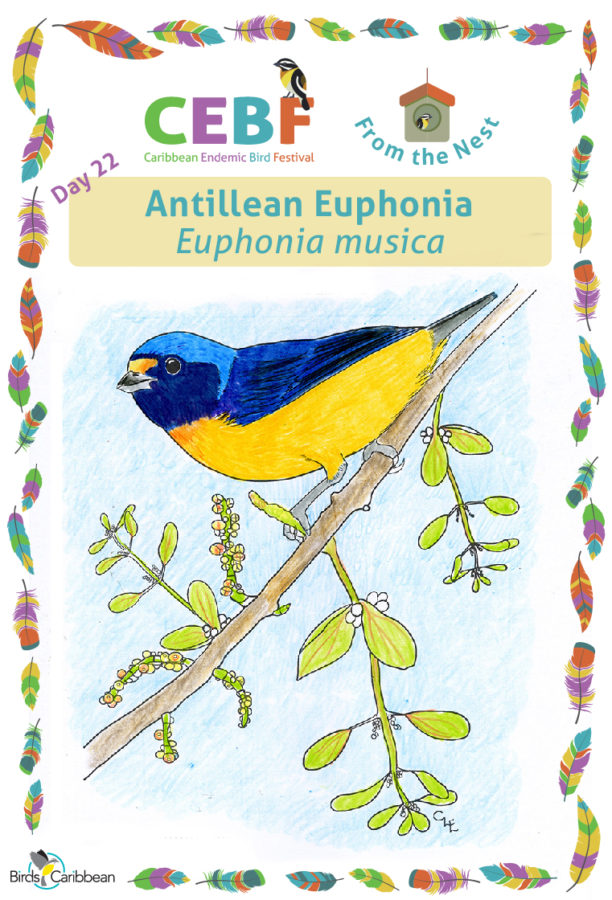
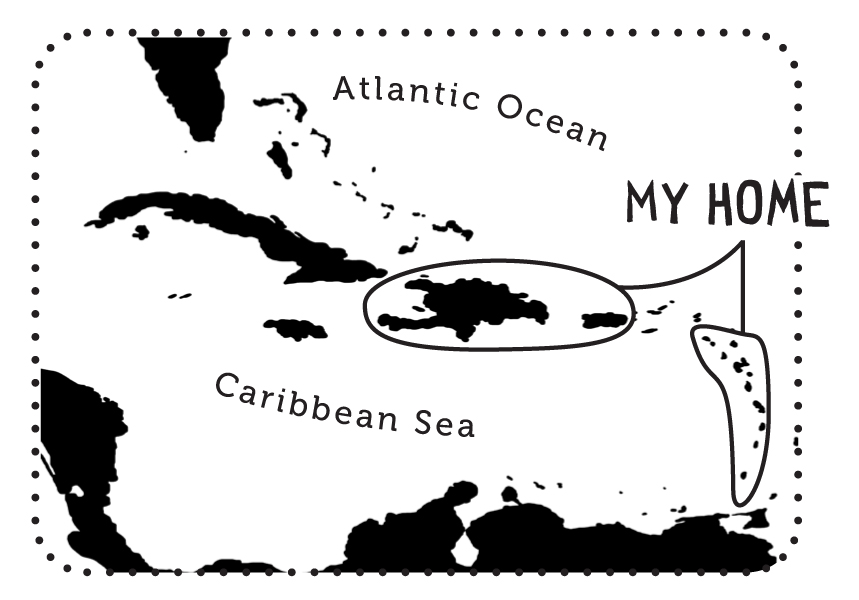 The Antillean Euphonia is a colorful, small bird of the Fringillidae family. It has a remarkable variety of melodious calls and jumbled songs that includes sharp whistles whee, trilling, tinkling notes tuc-tuc-tuc, and a hard metallic chi-chink, hence it’s Latin specific name musica. It is endemic to the islands of Hispaniola, Puerto Rico and much of the Lesser Antilles (Antigua south to Grenada, absent from Barbados). These three areas host three distinct subspecies and some authorities even consider them separate species. The three subspecies differ in color, as well as the size of the beak and tail.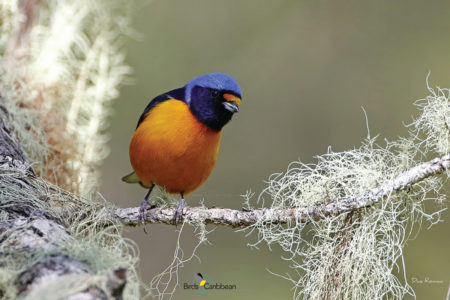
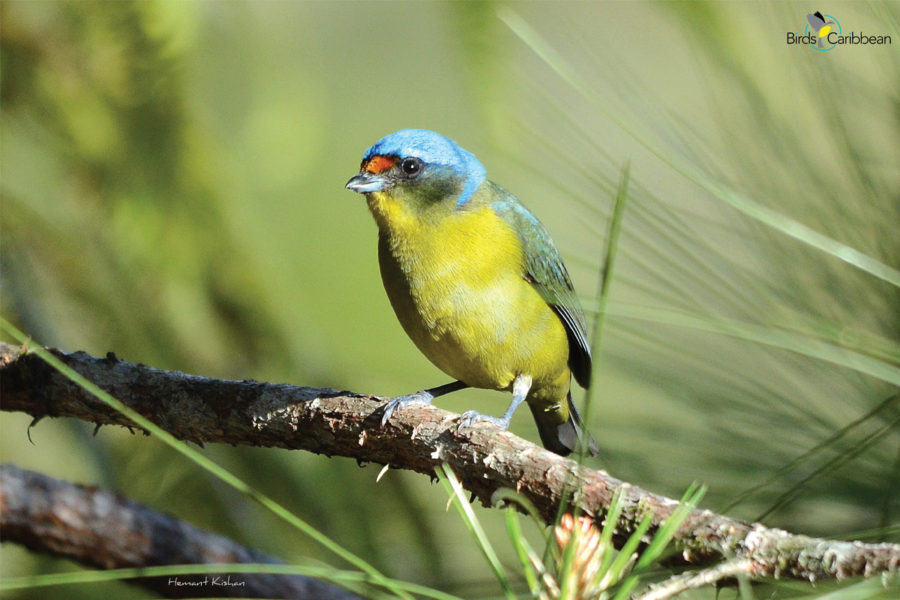
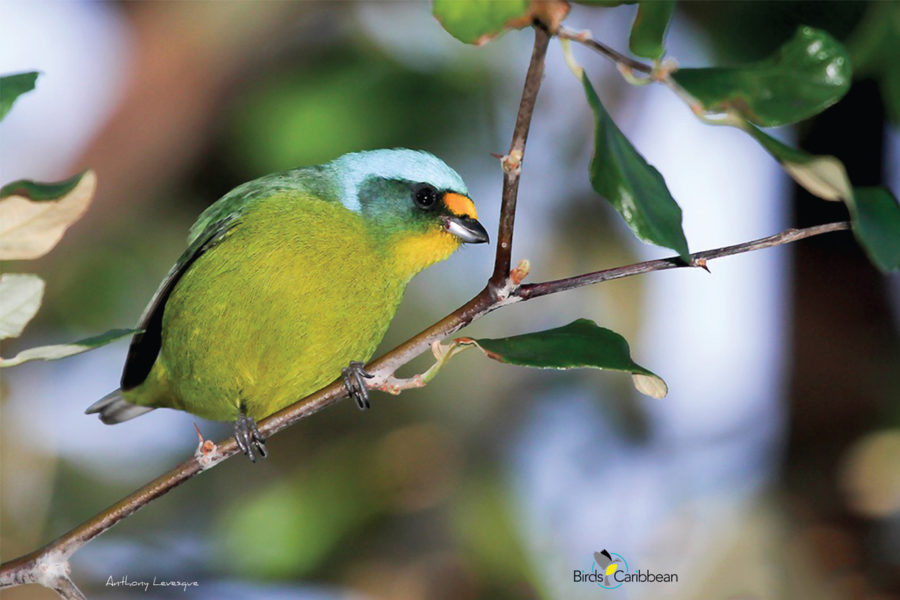
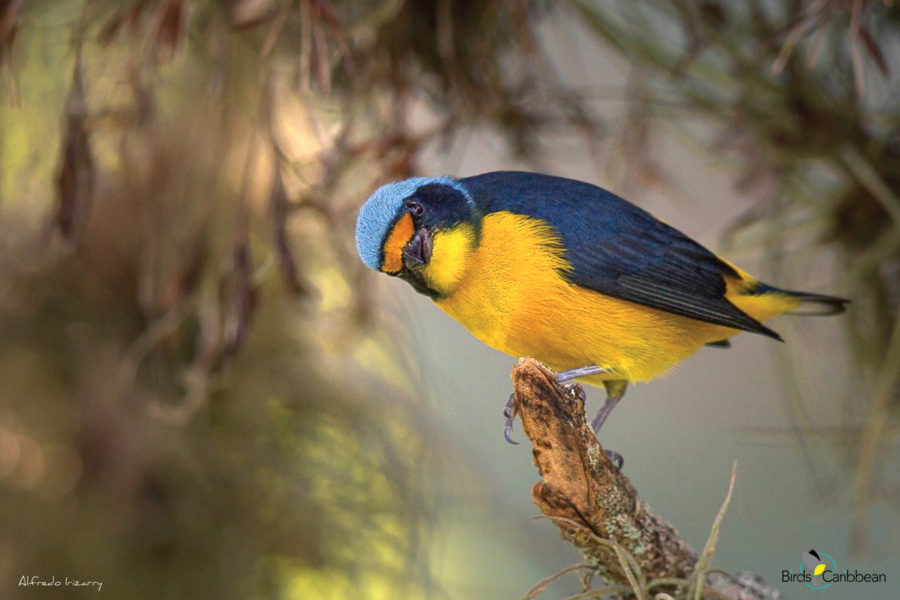
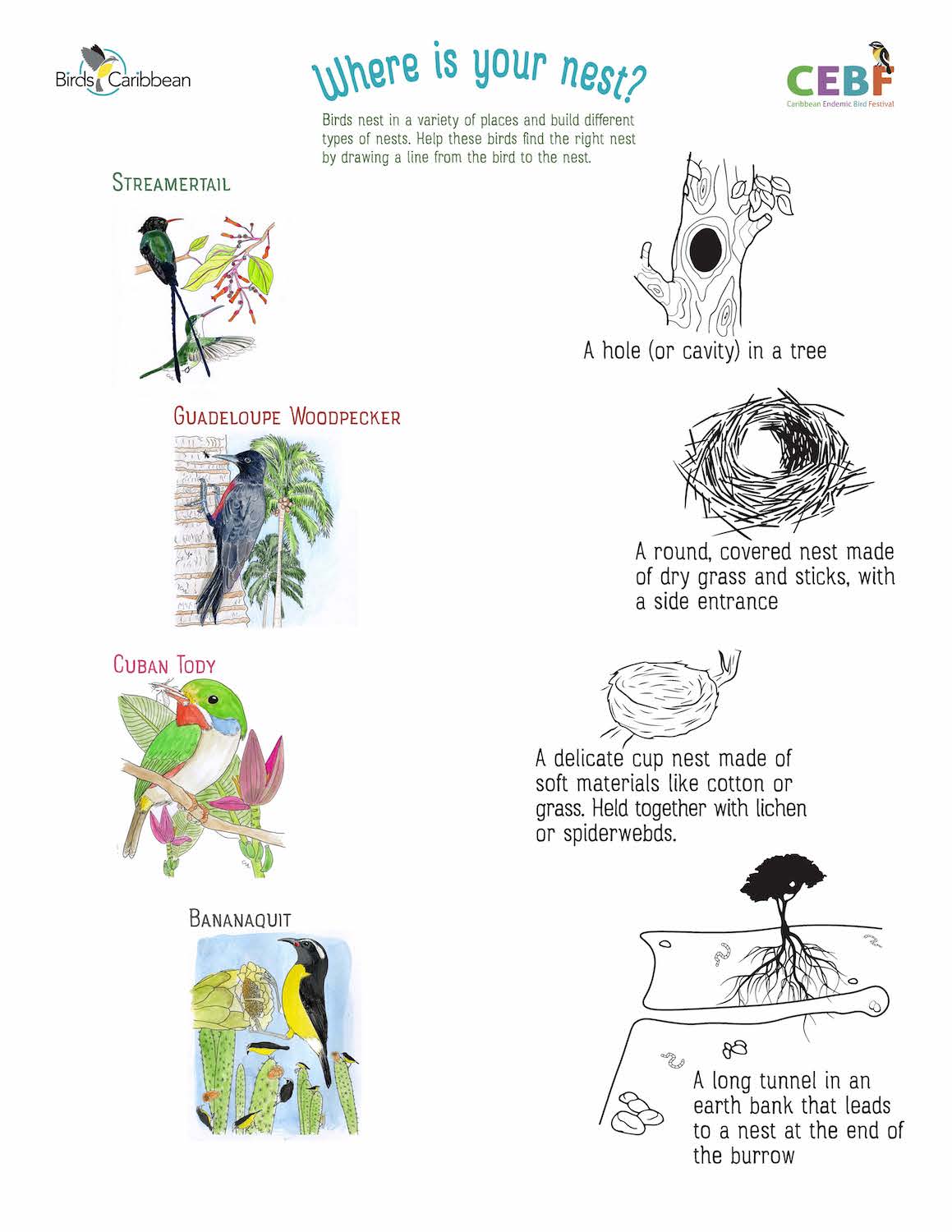 FOR KIDS & ADULTS: Test your knowledge of what kinds of nests Caribbean endemic birds build and use to lay eggs and raise chicks with our Nest Matching Activity! Draw lines from the colouring book drawings to match each Caribbean endemic bird with its nest type. And here is the Answer Key – don’t look until you have completed the activity!!! More information about our Endemic Birds of the West Indies Colouring Book is here. We are sharing a new colouring page from the book each day of our Caribbean Endemic Bird Festival 2020, From the Nest, Virtual Edition.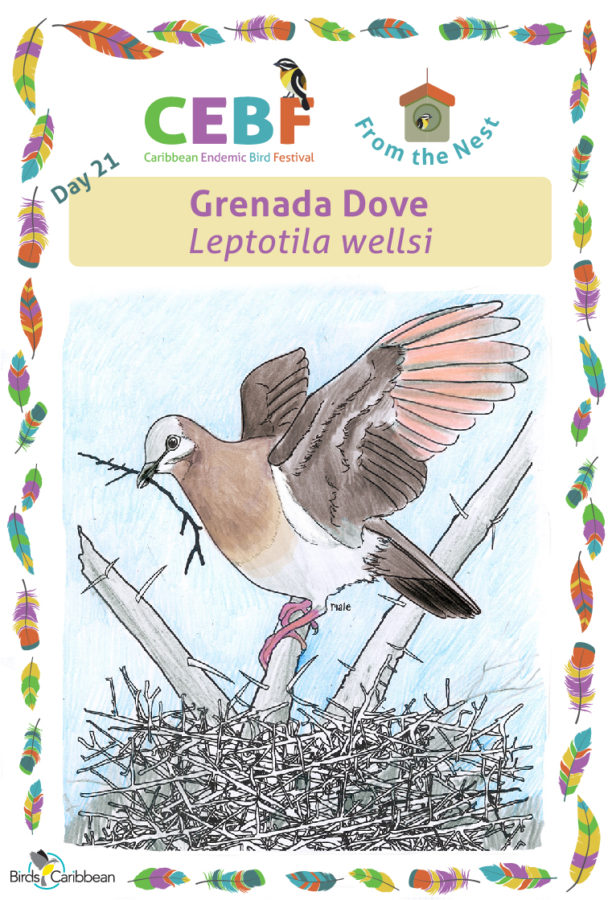
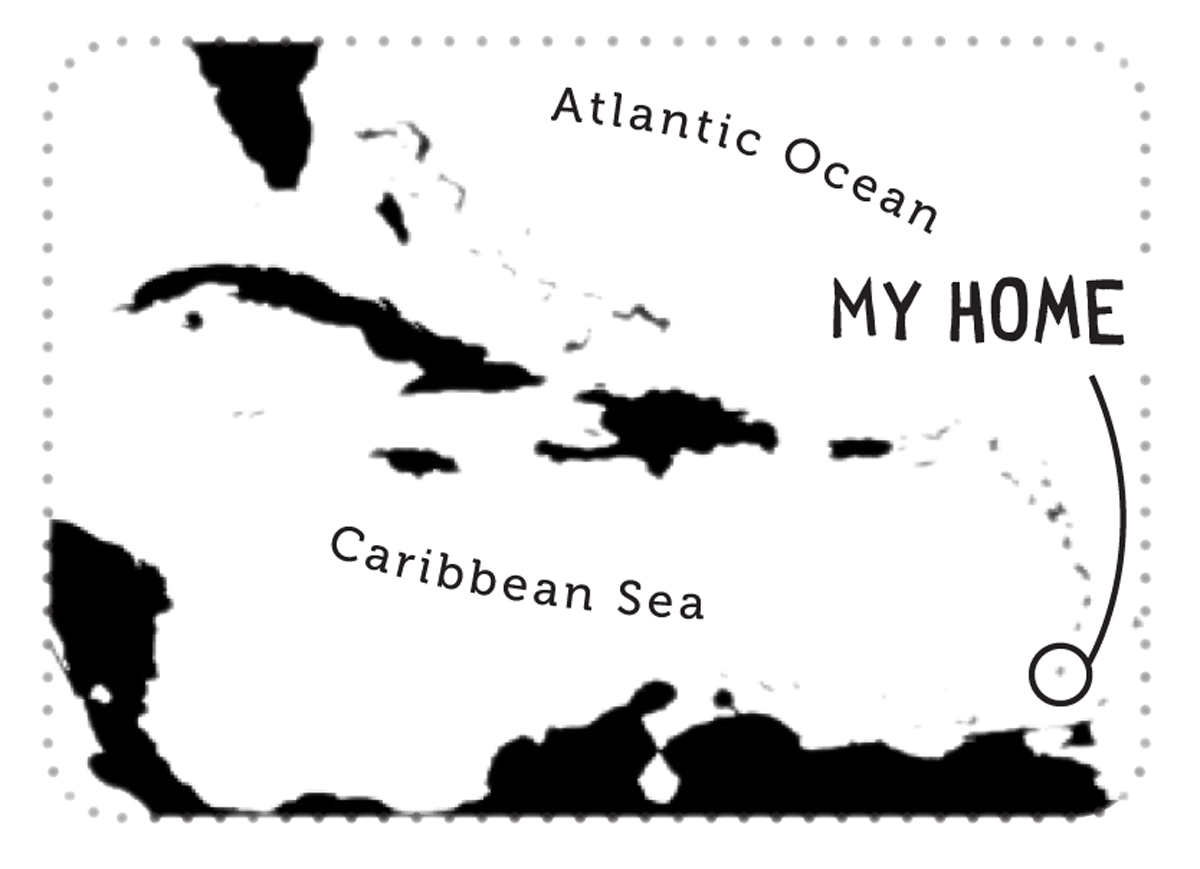
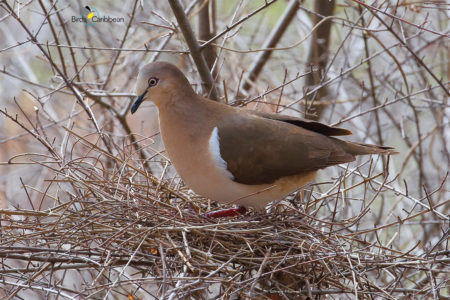
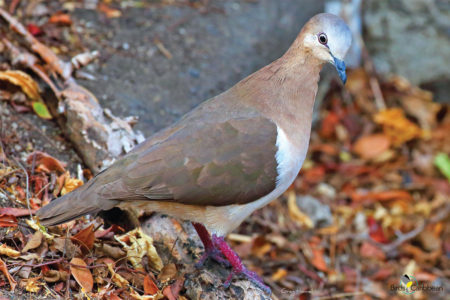
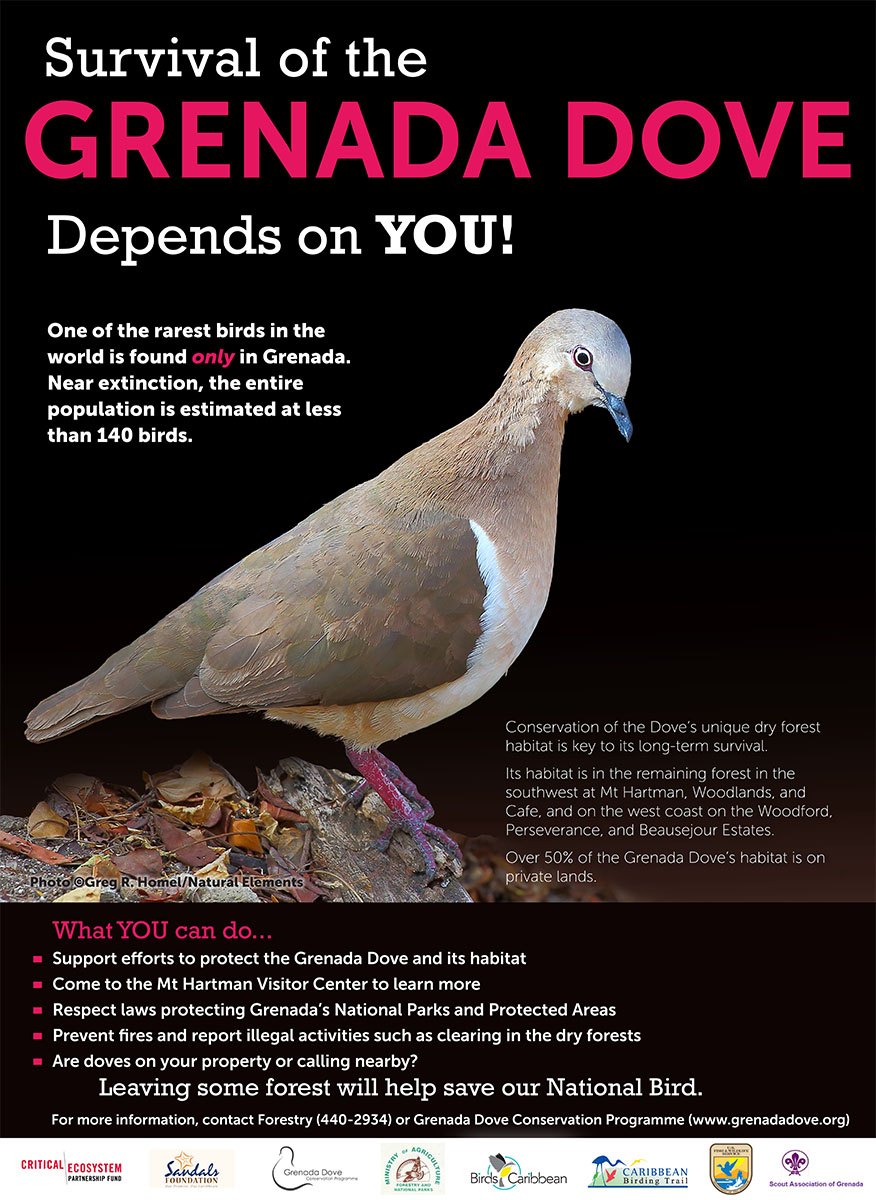
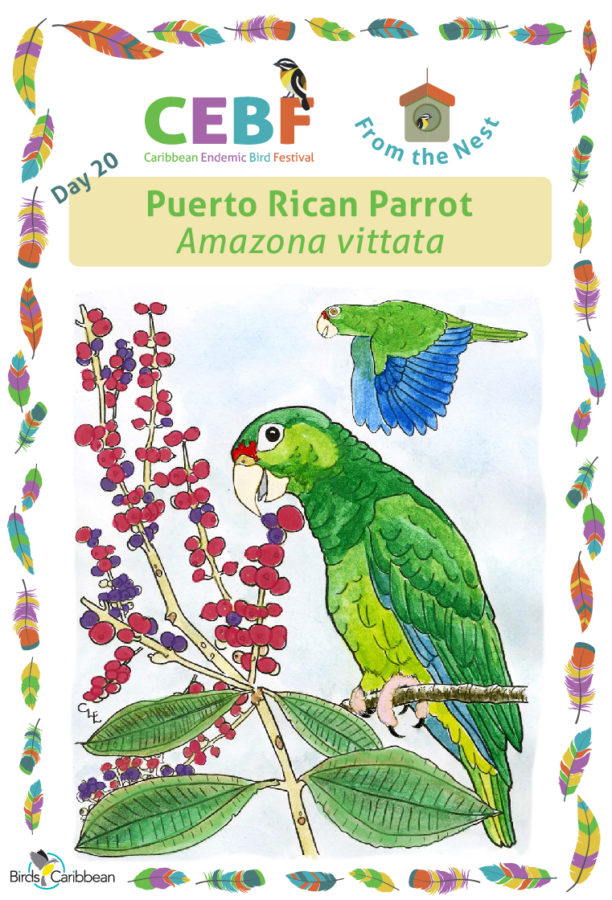
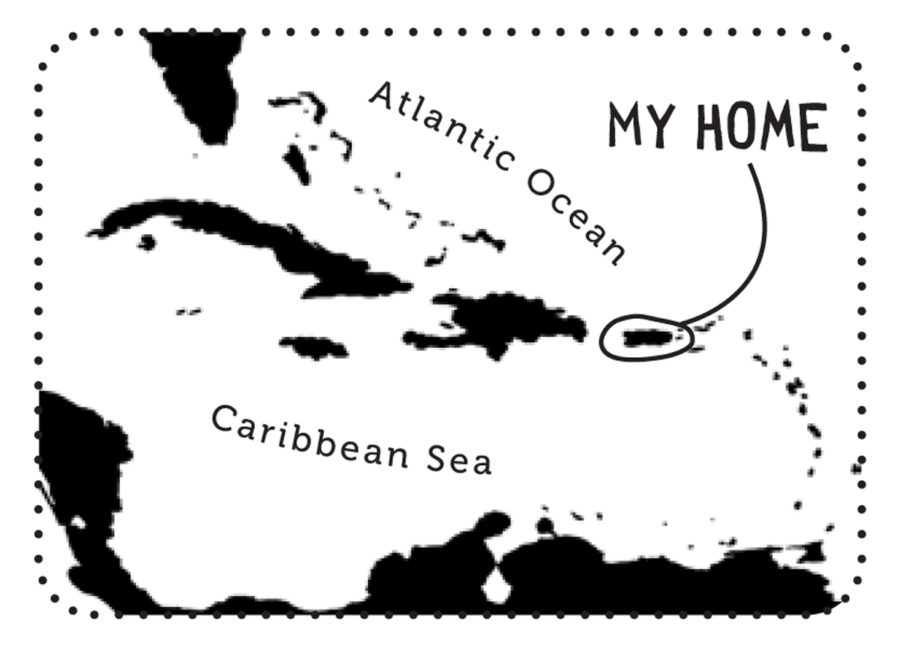
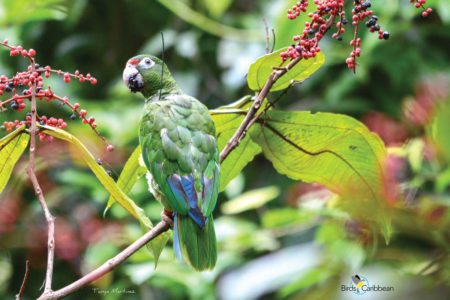
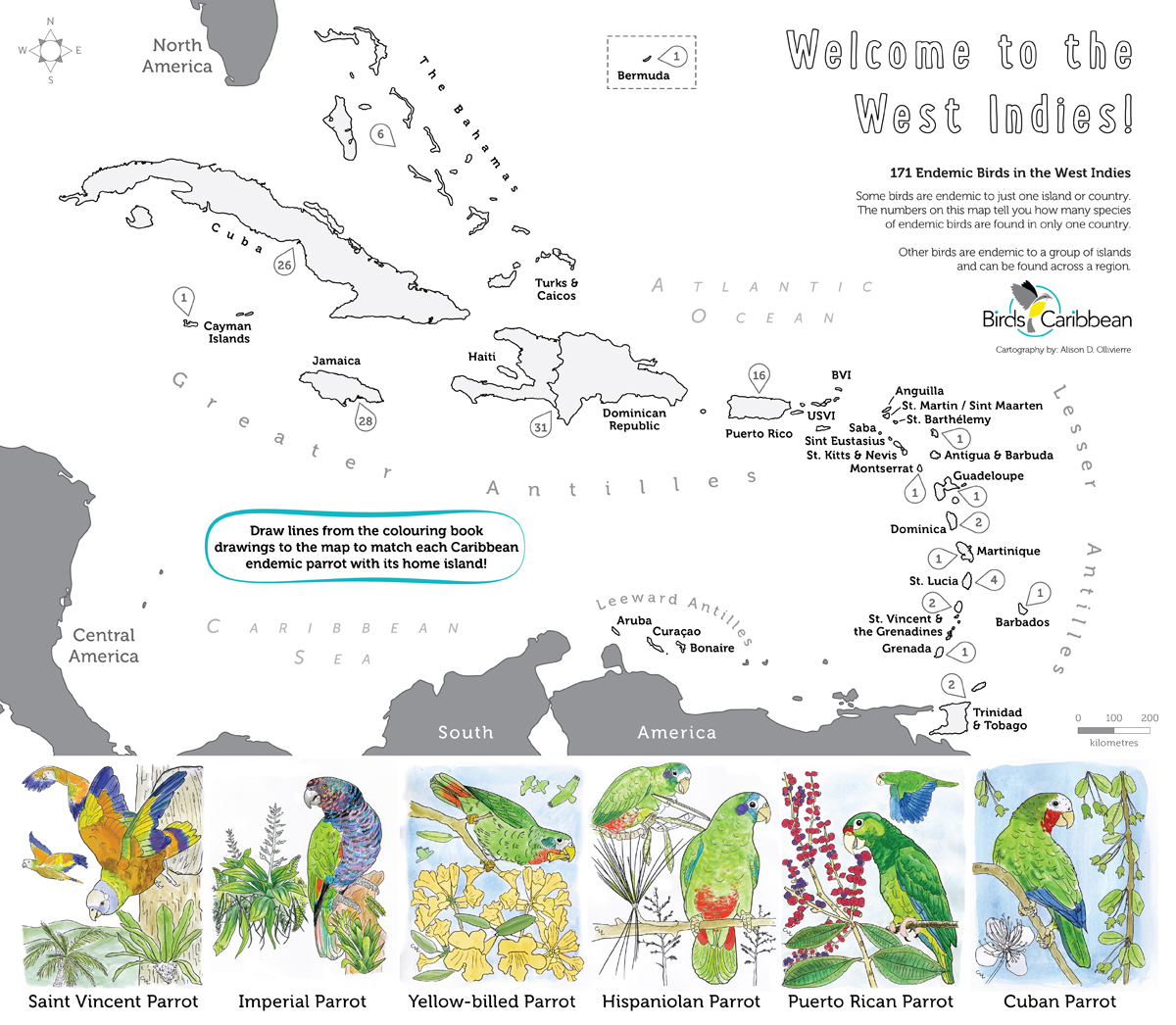
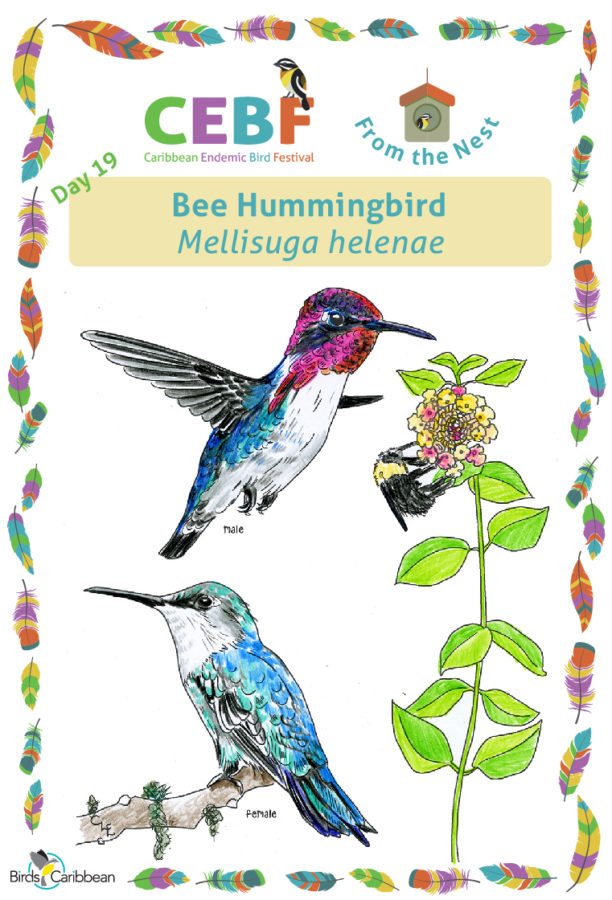
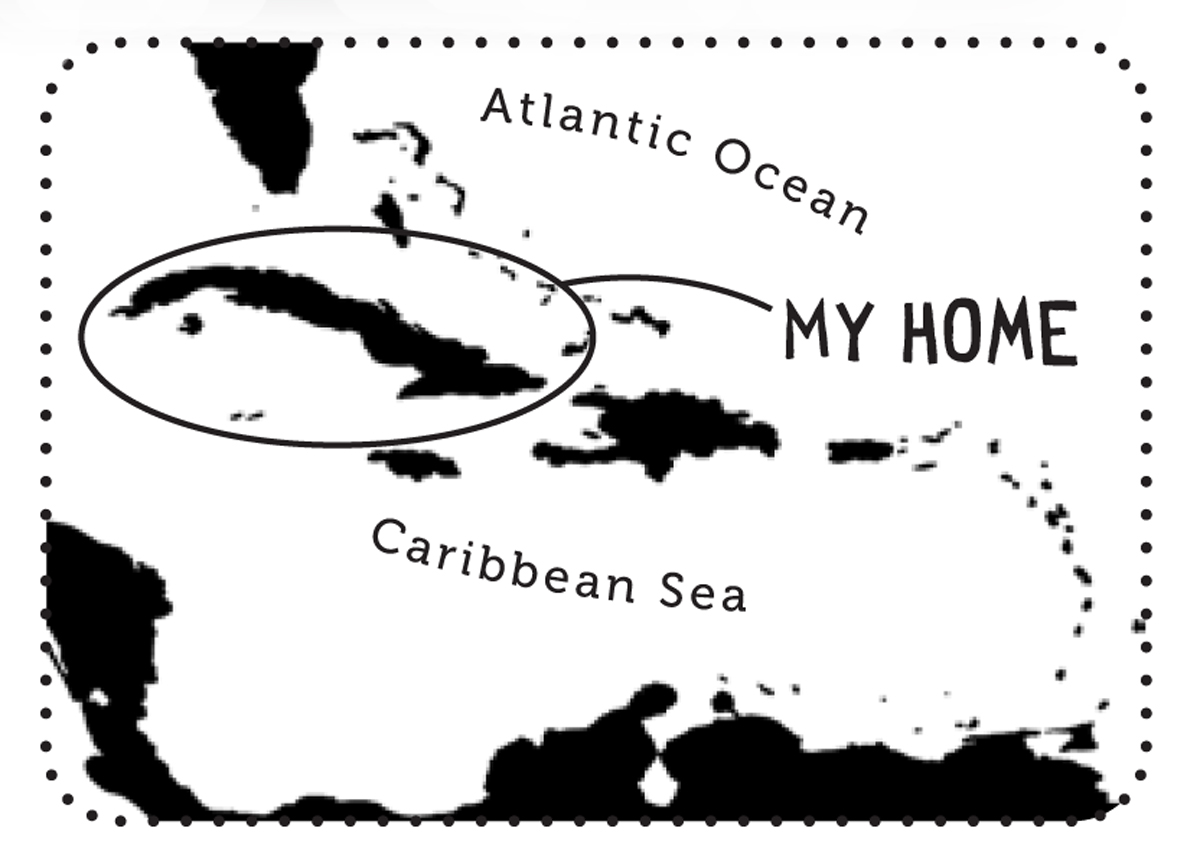
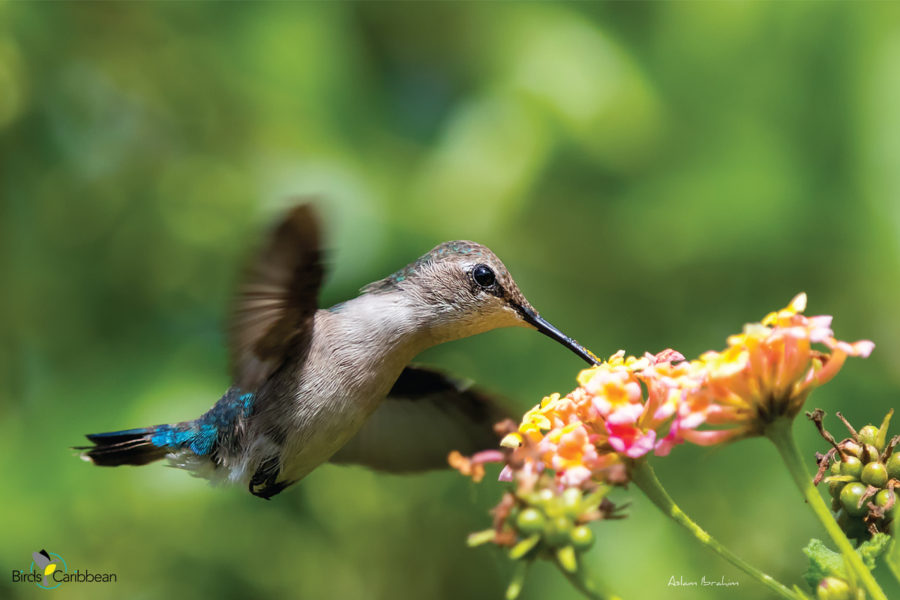
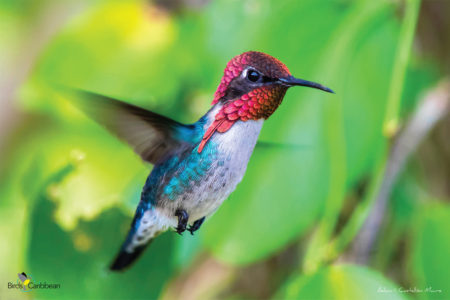
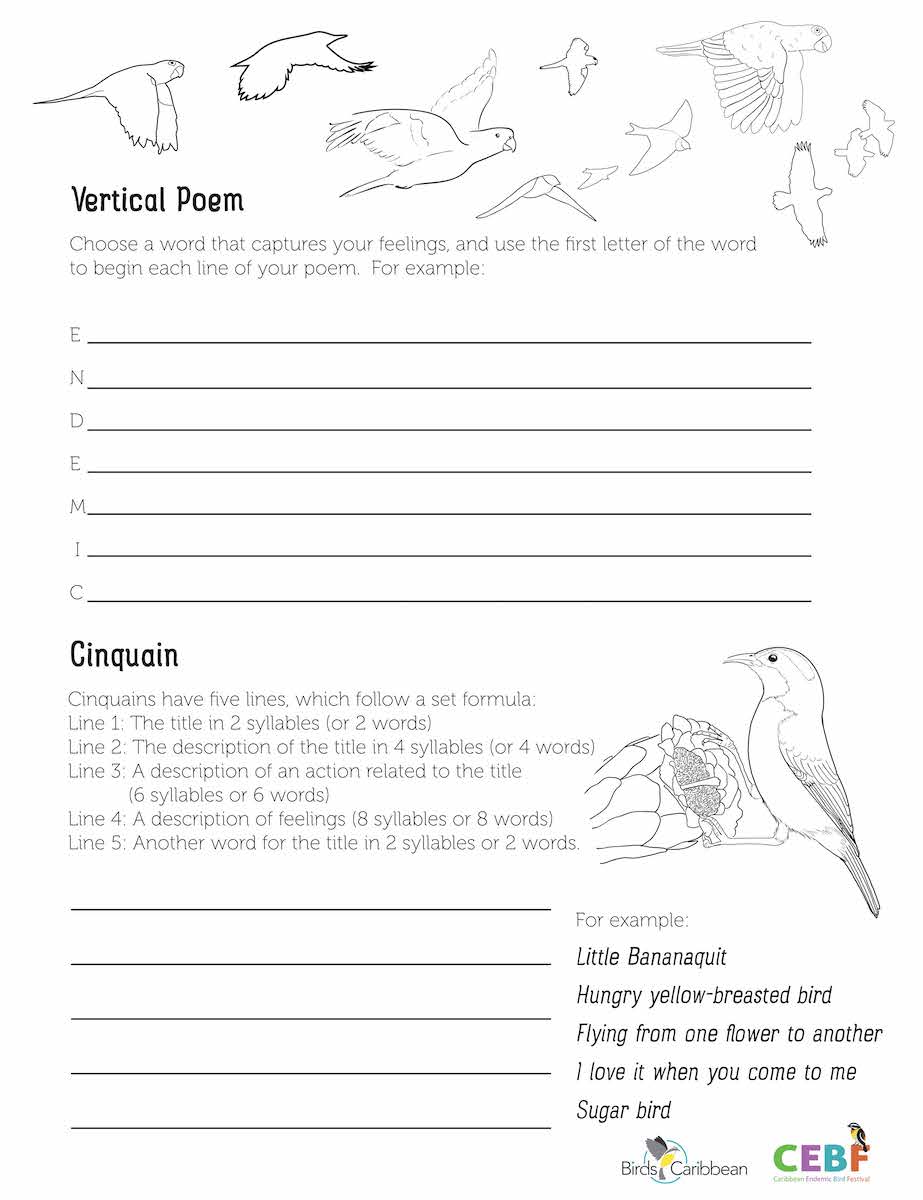
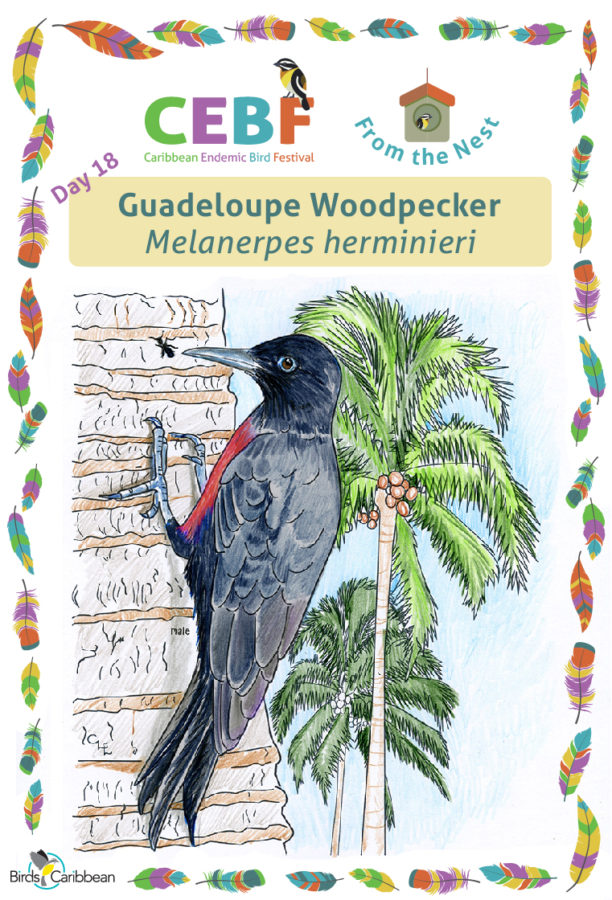
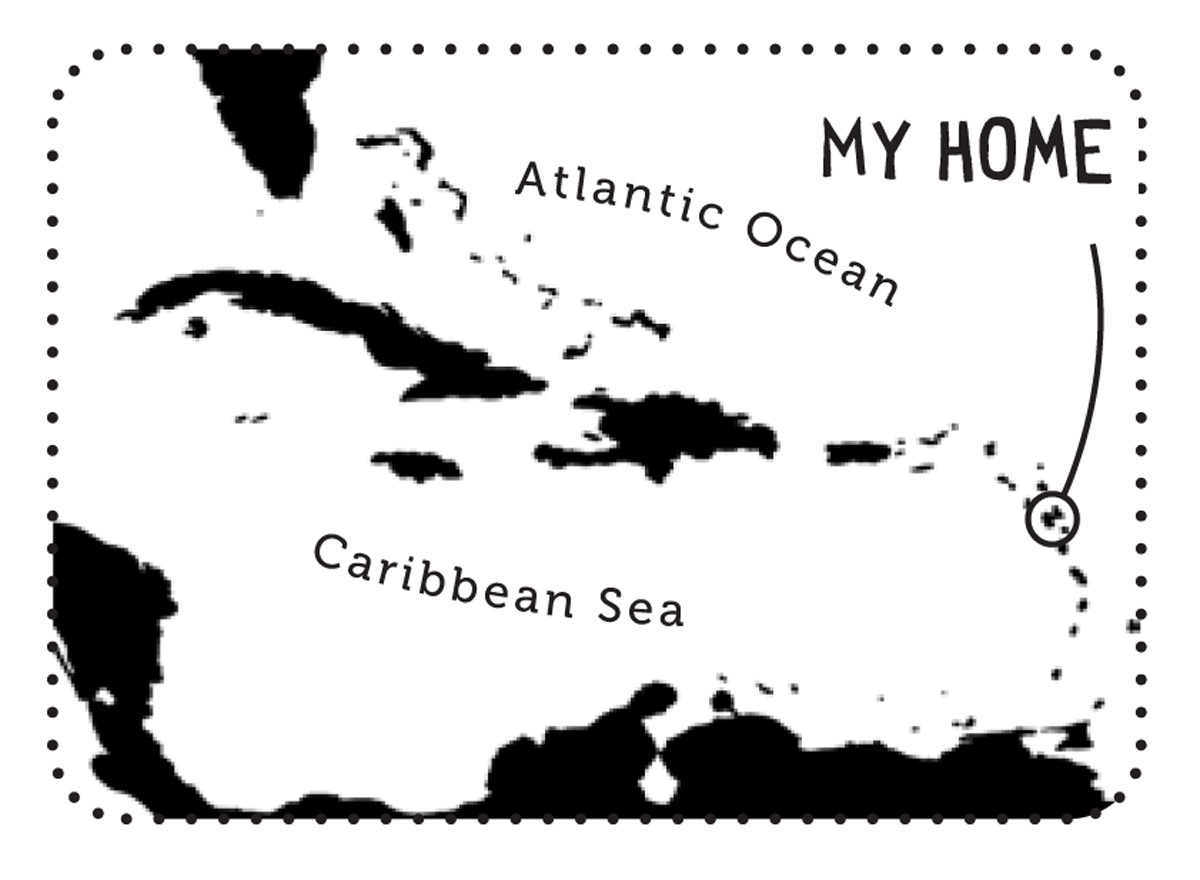
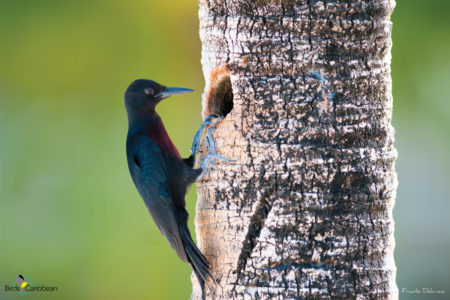
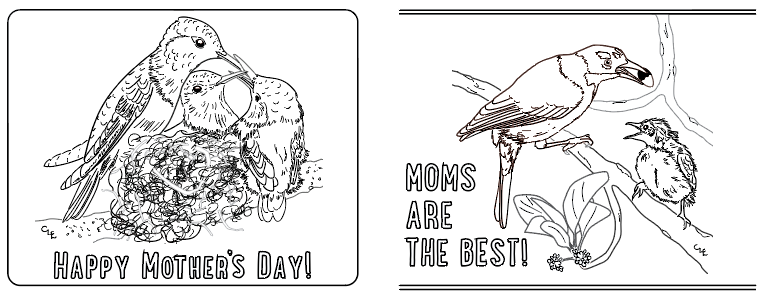
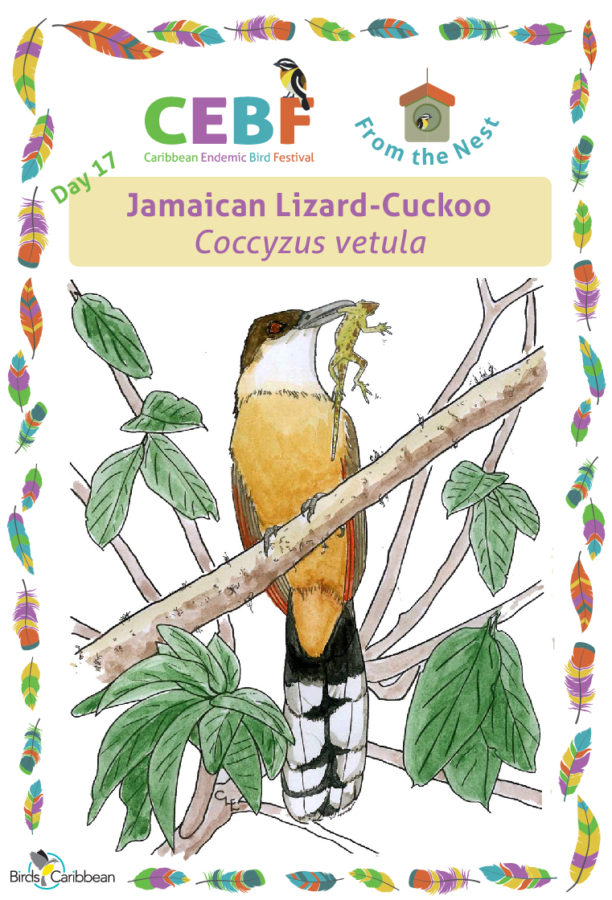
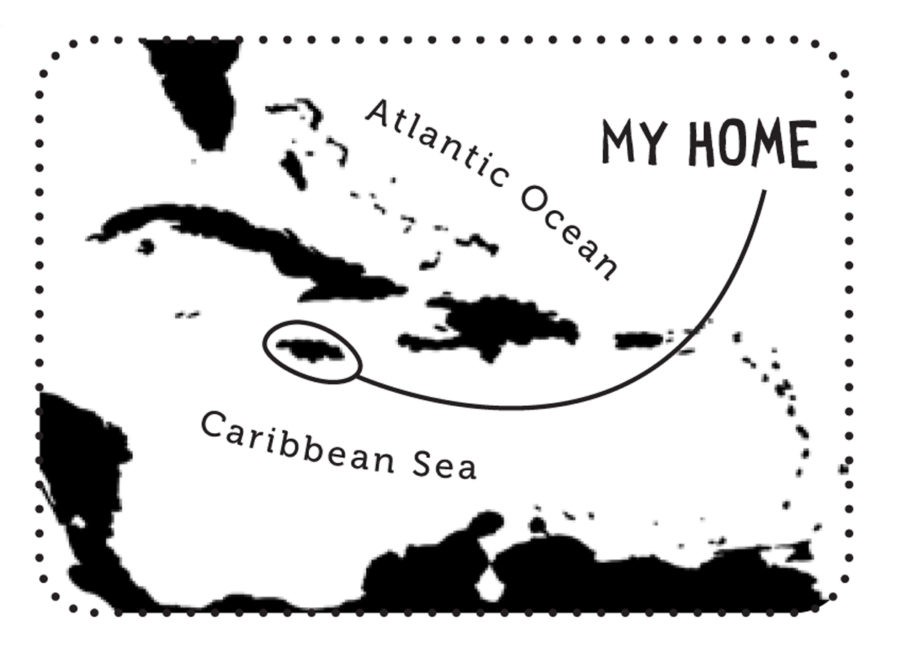
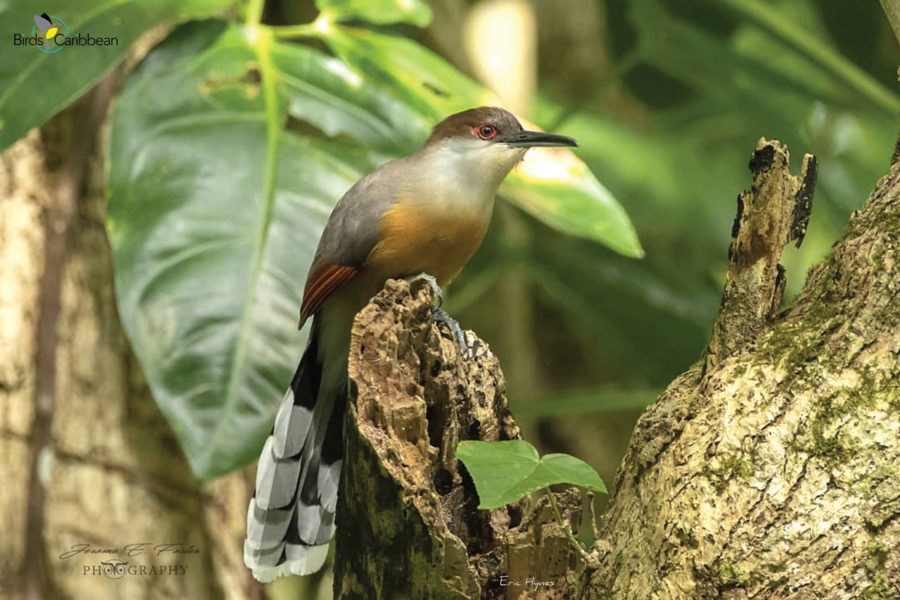
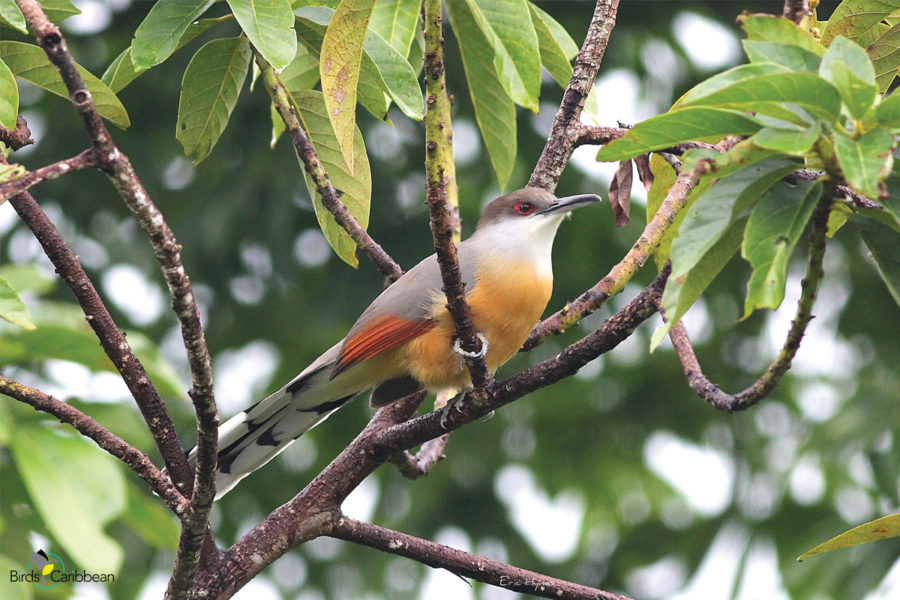
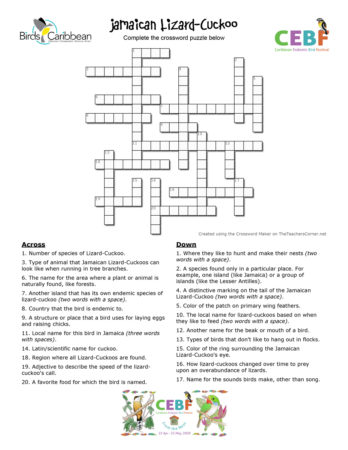 Complete our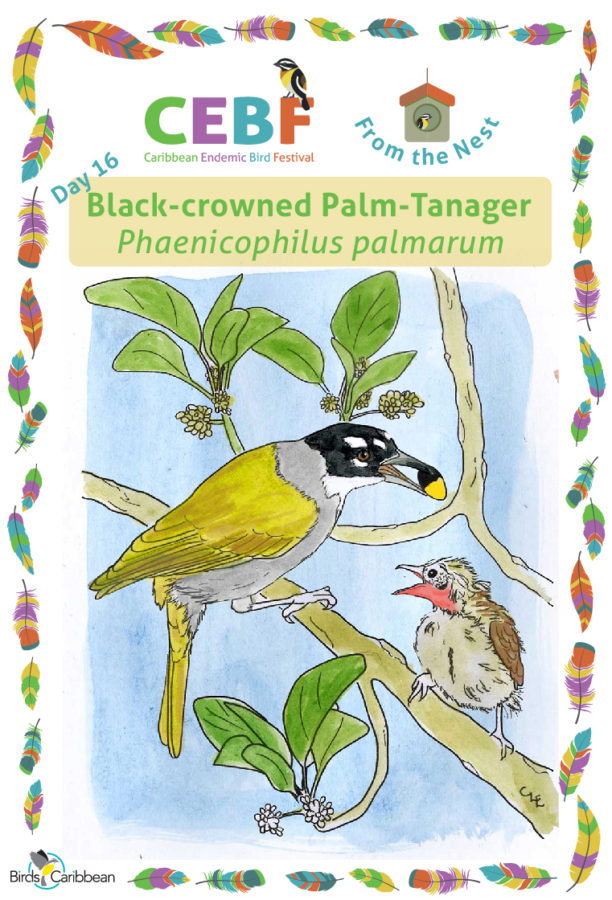
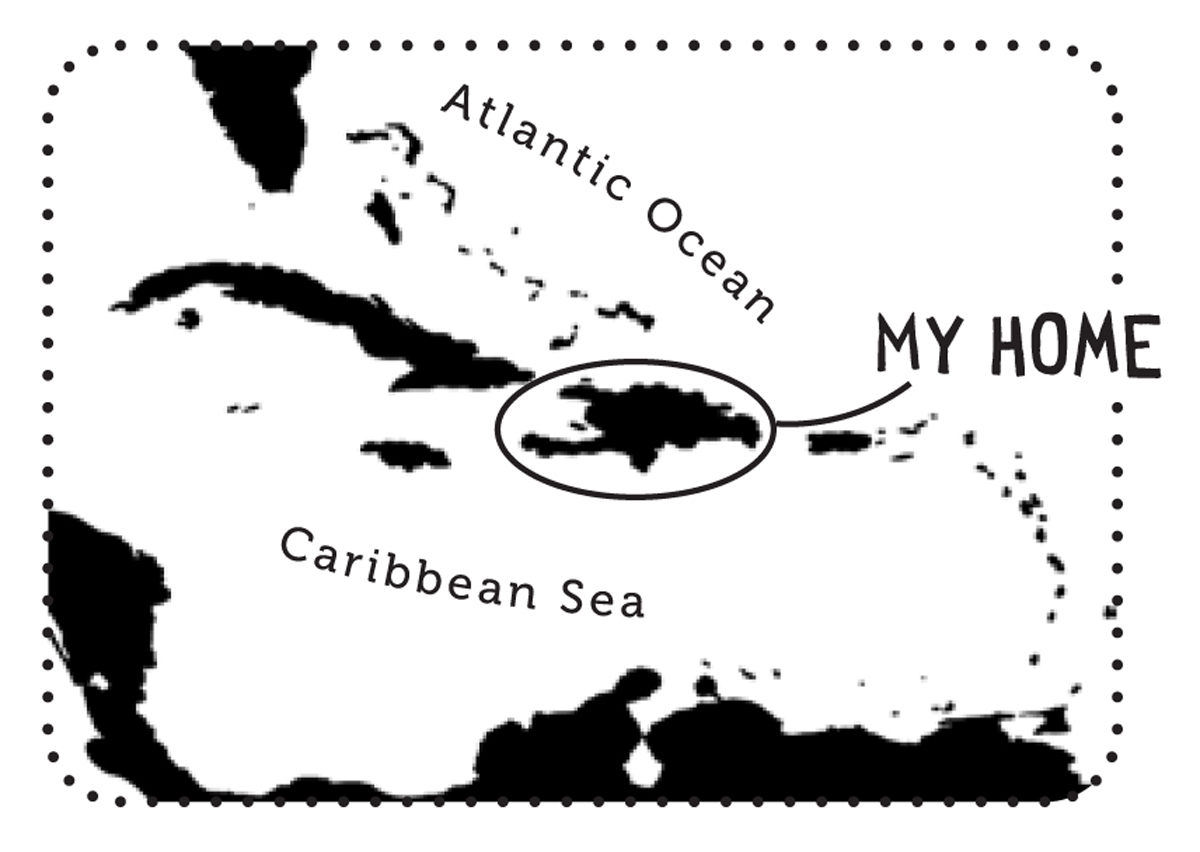
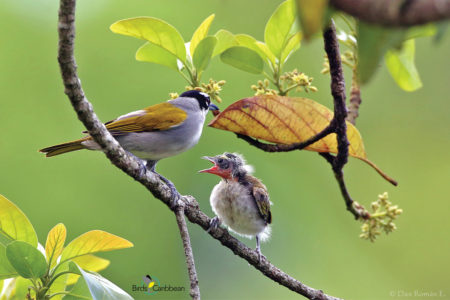
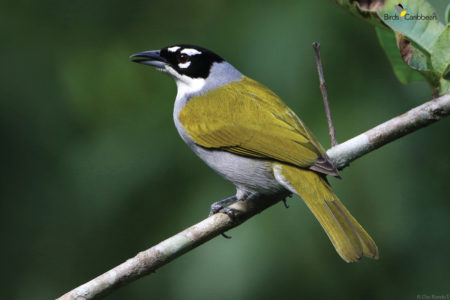
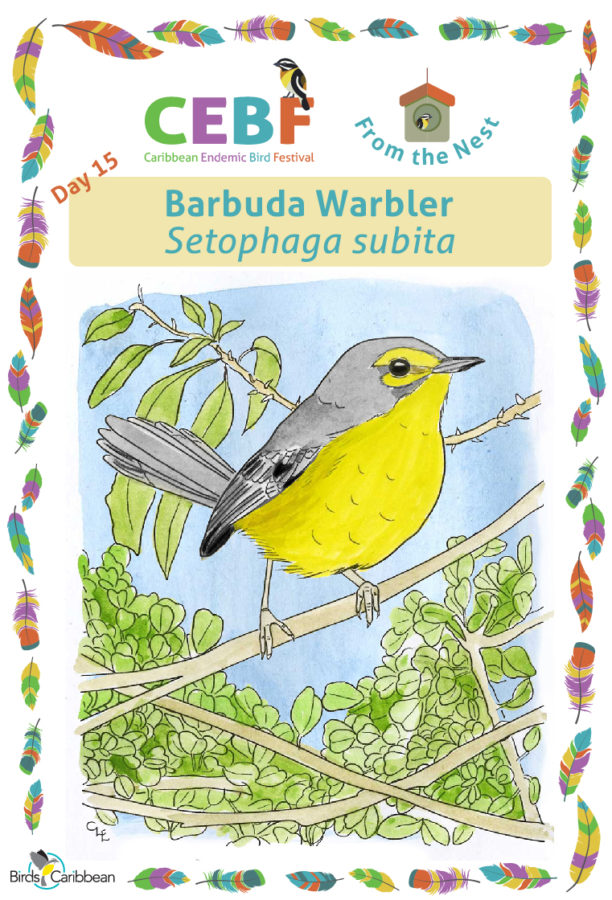
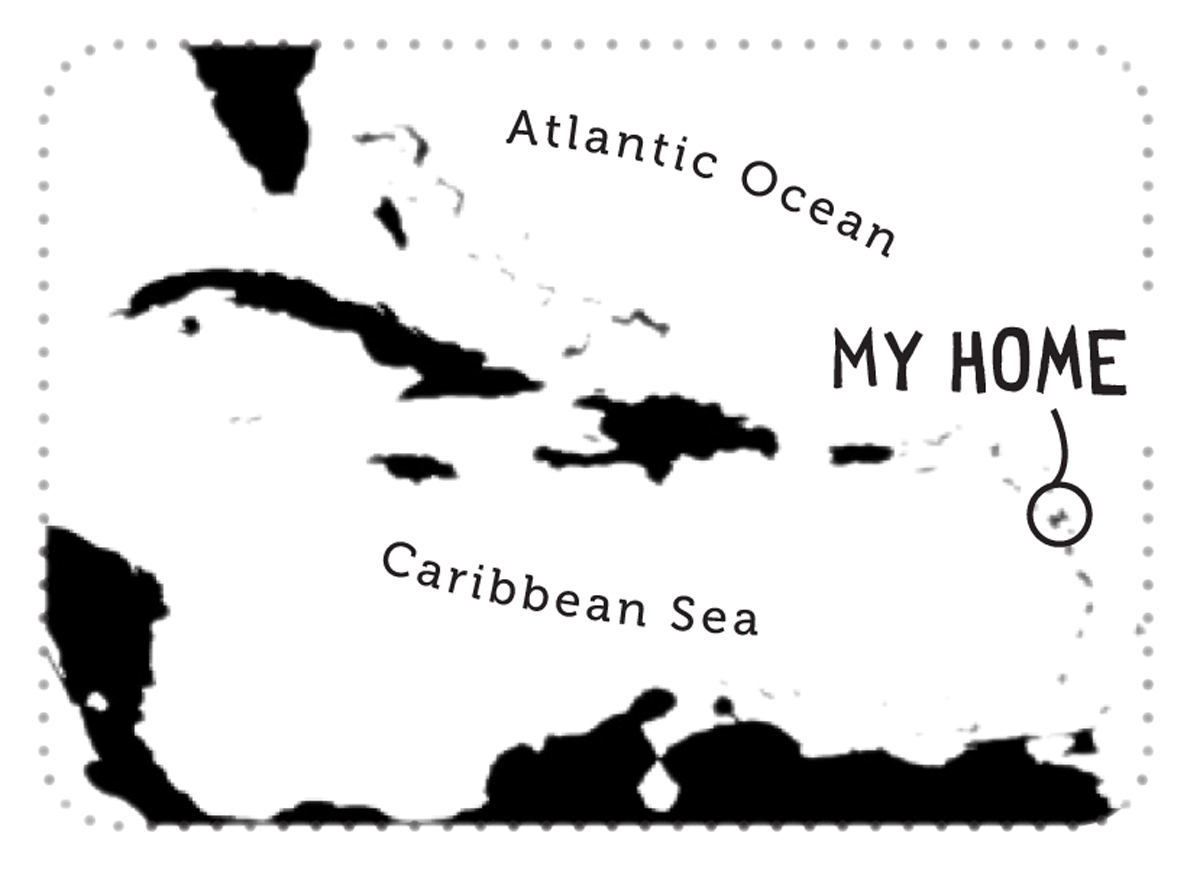
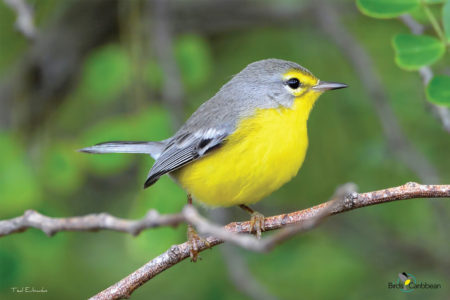
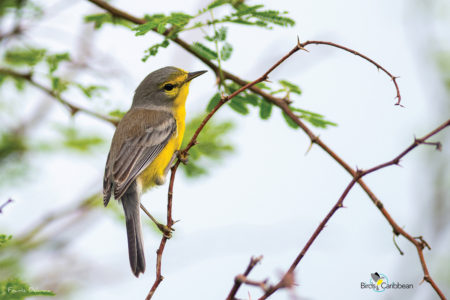
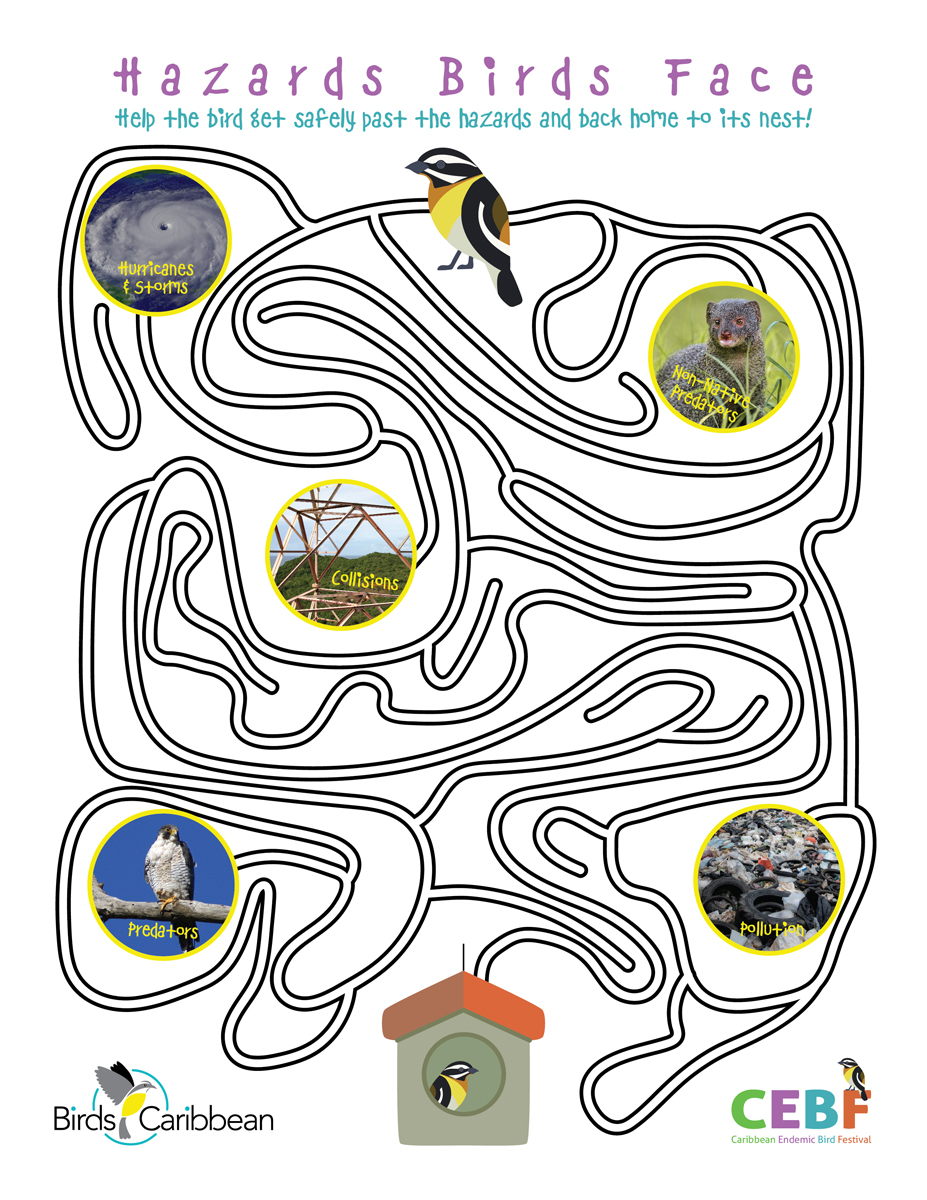
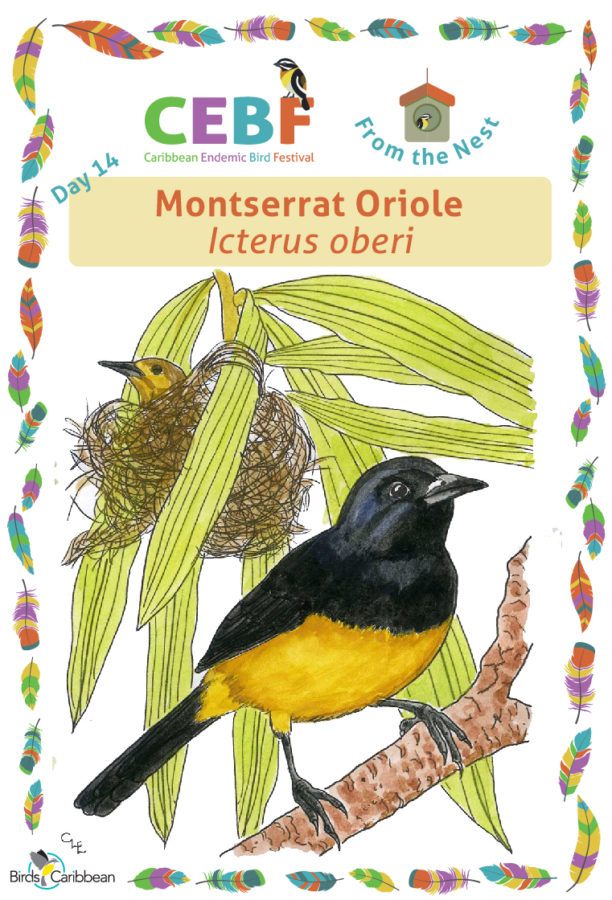
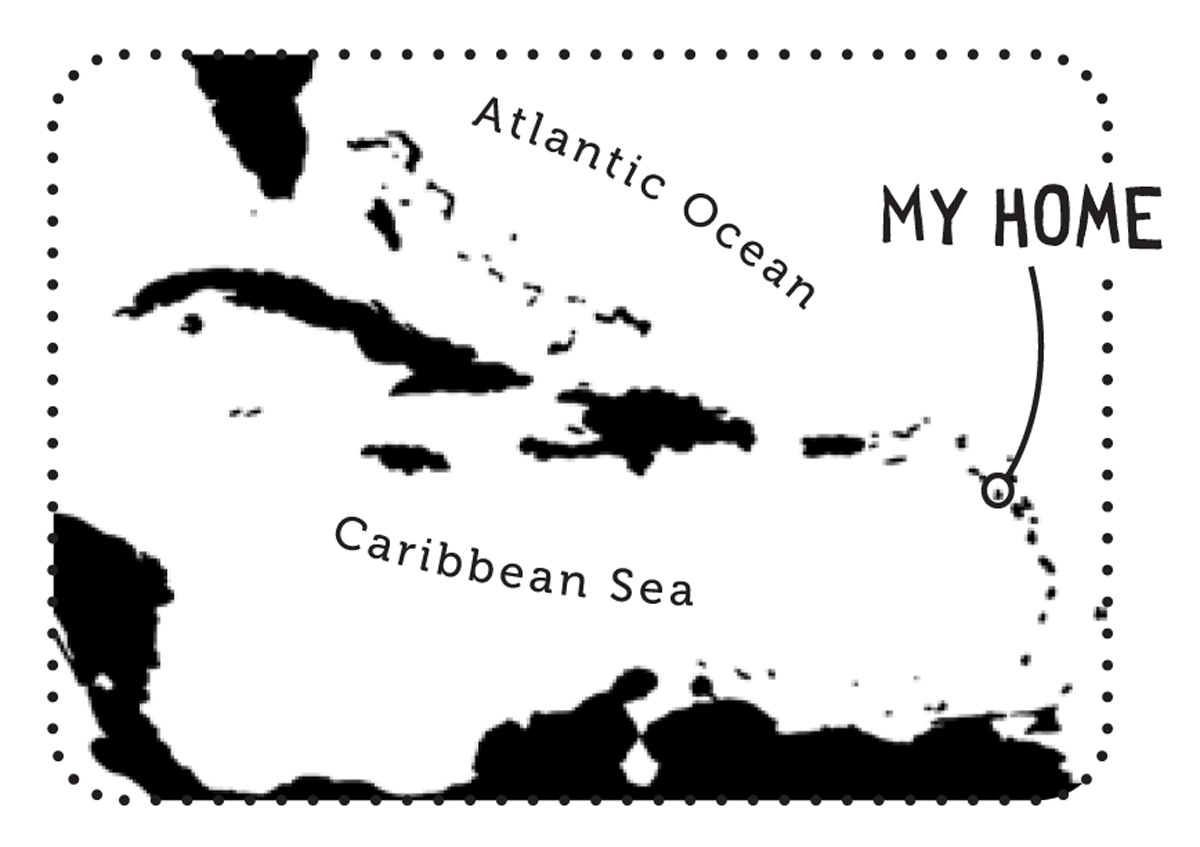
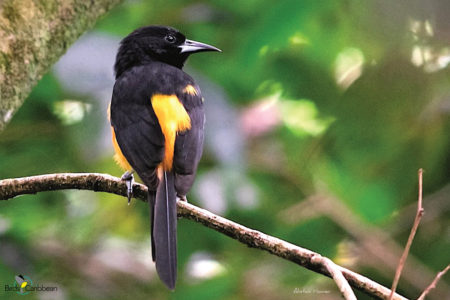
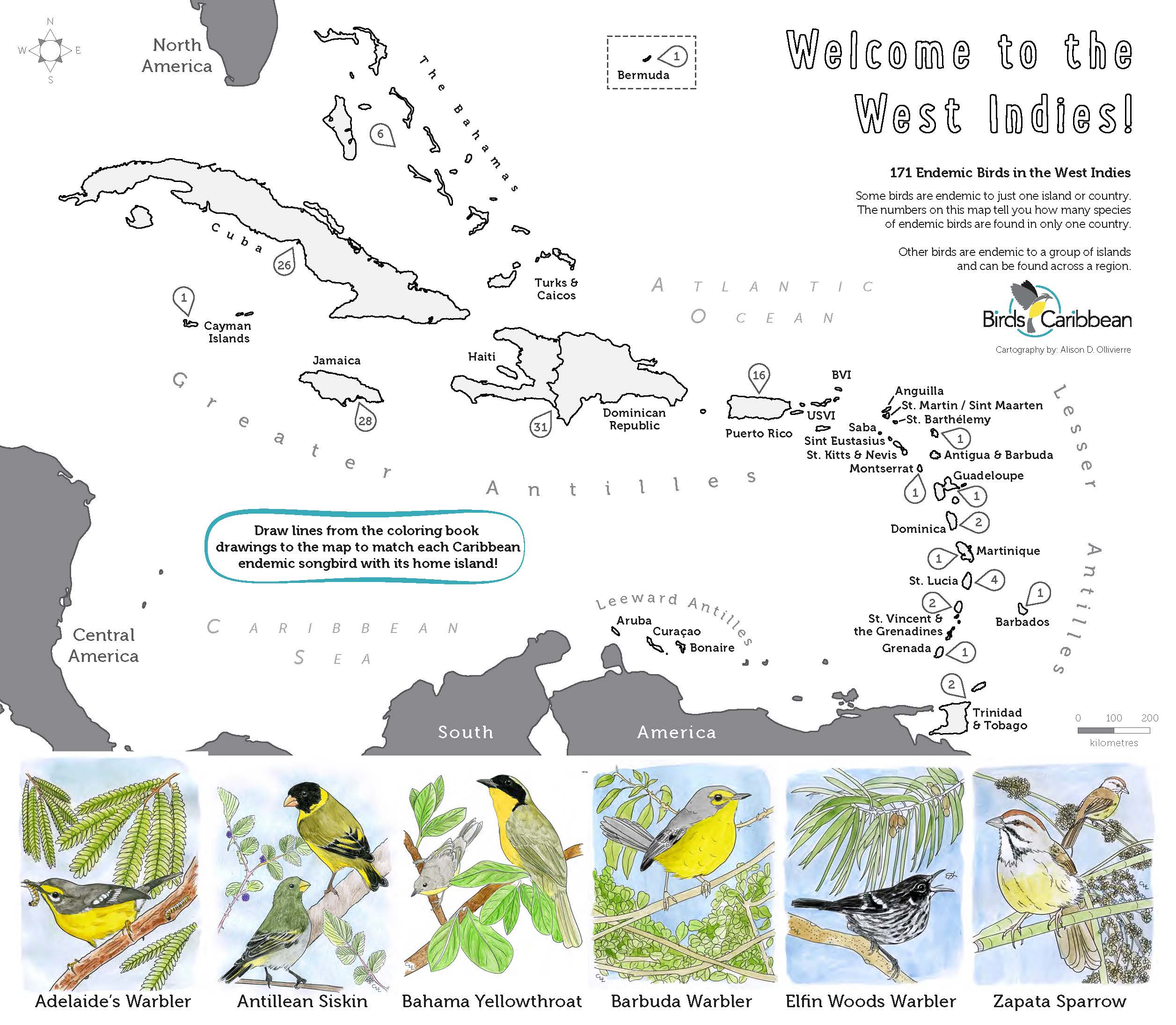
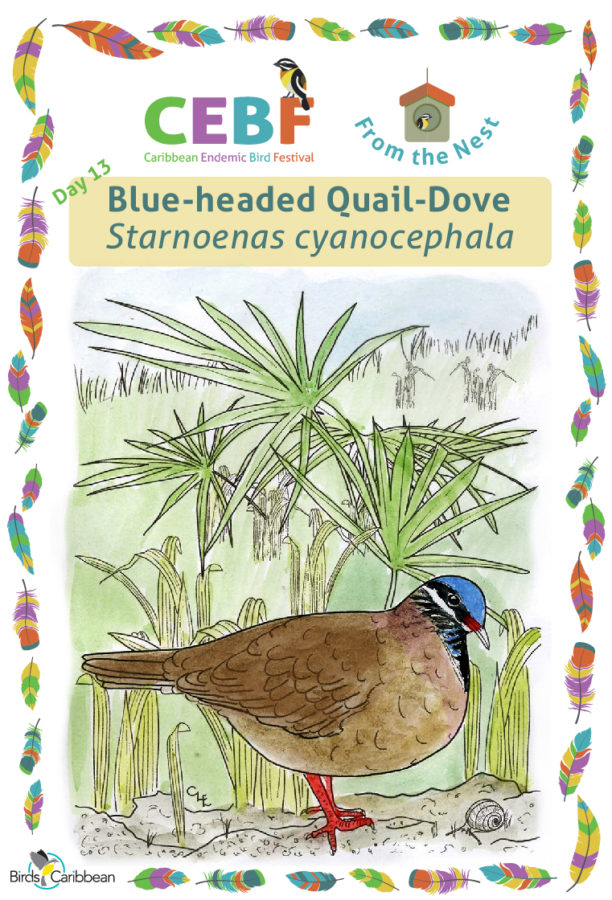
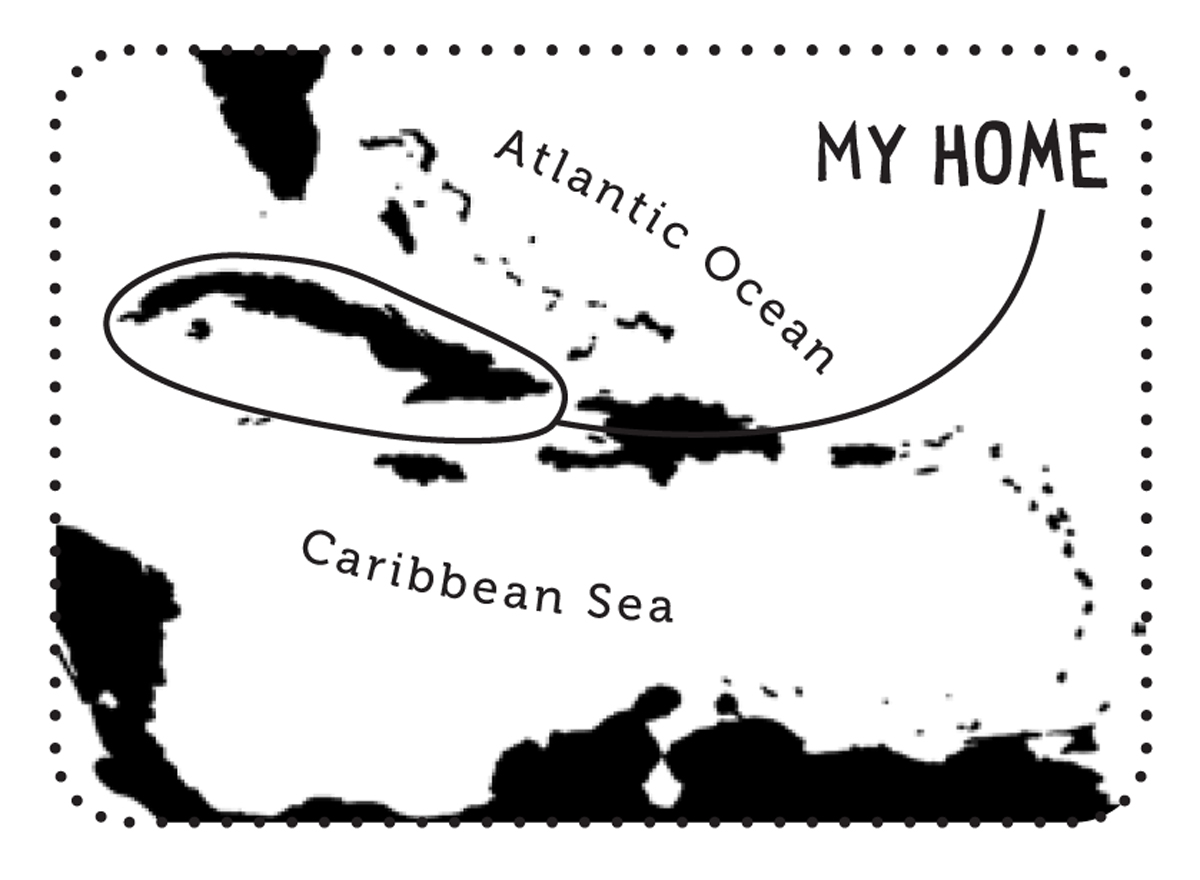
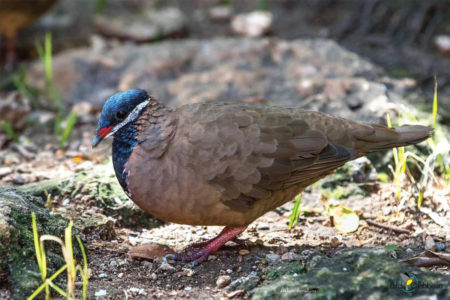
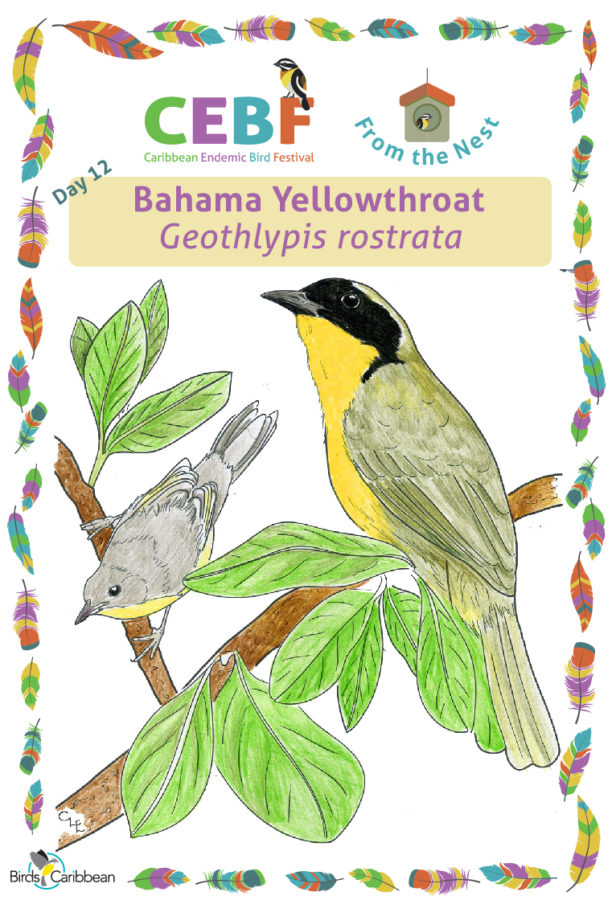
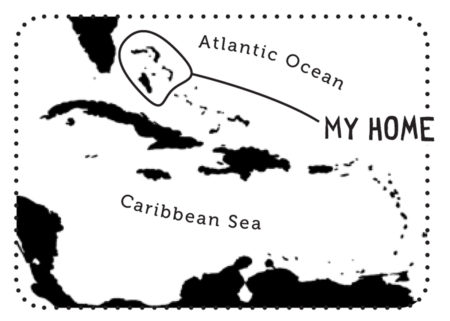
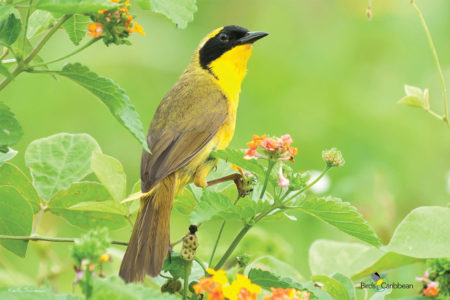
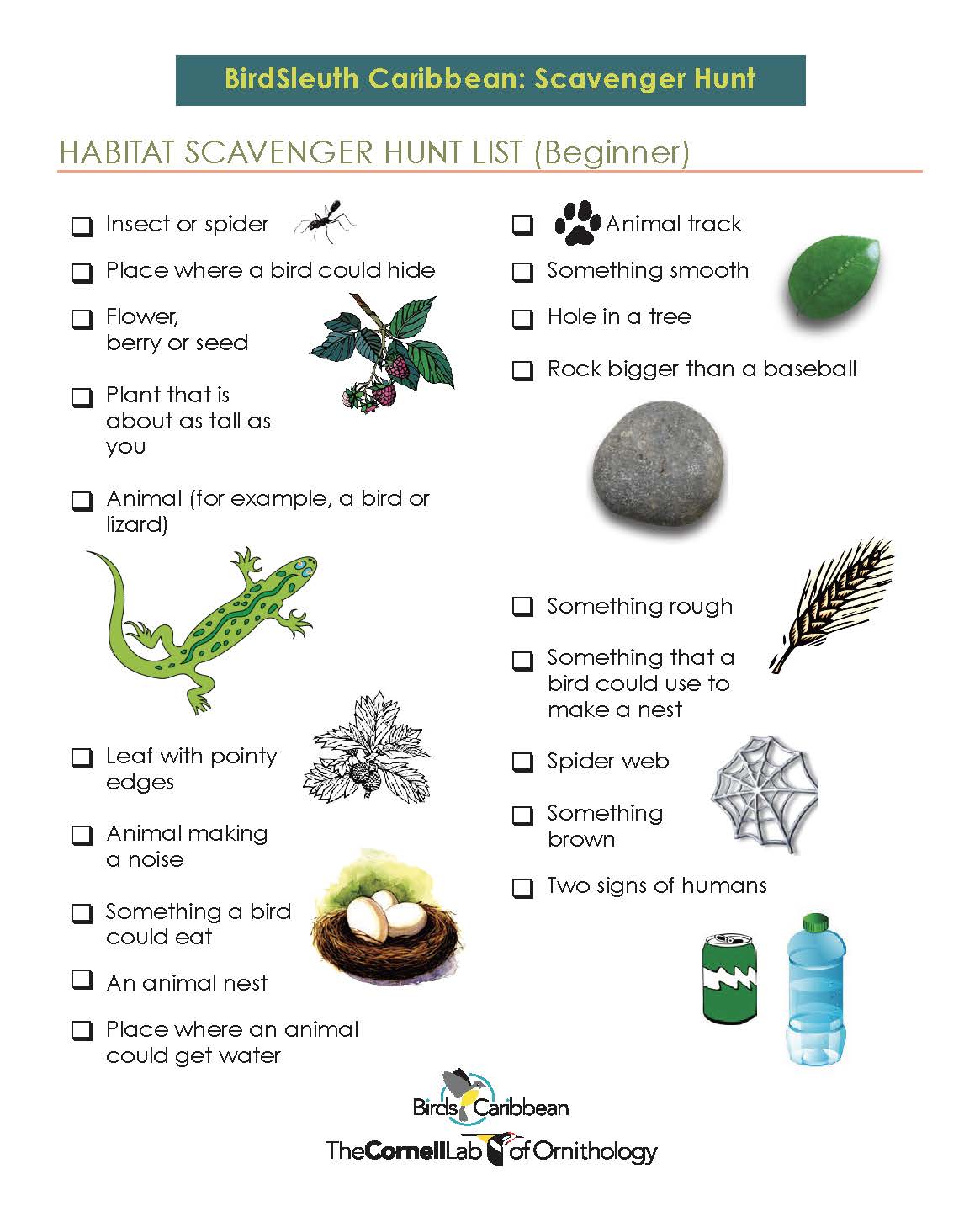
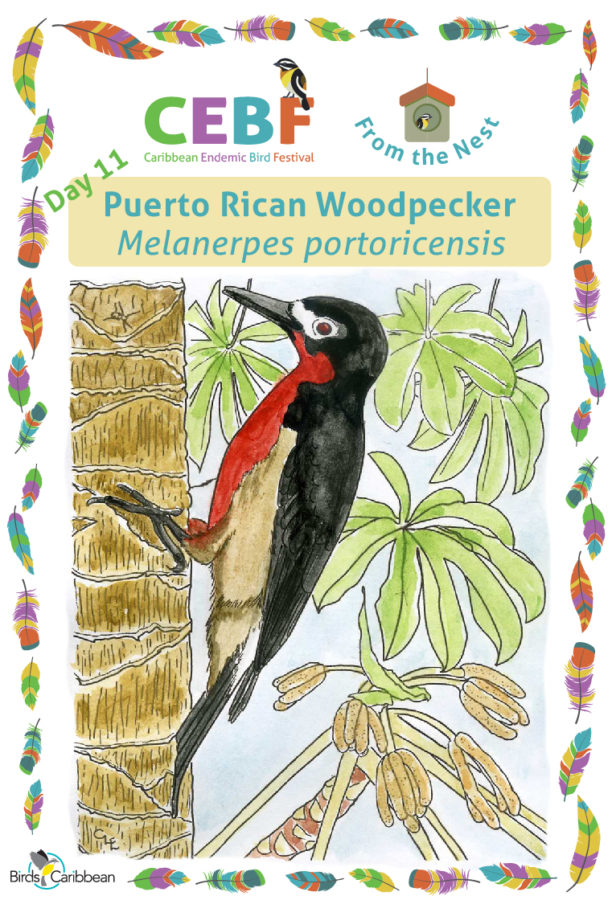
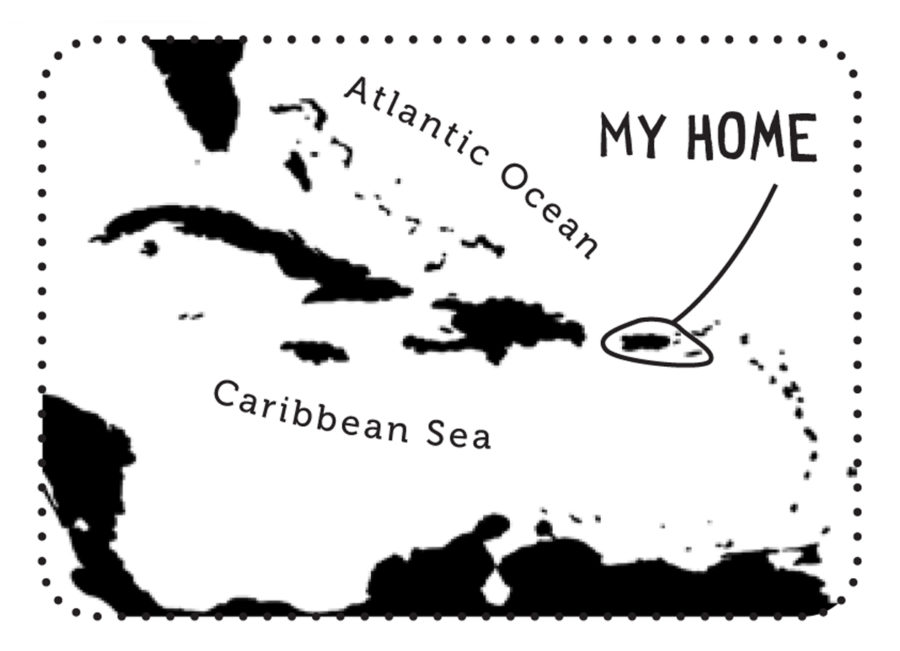
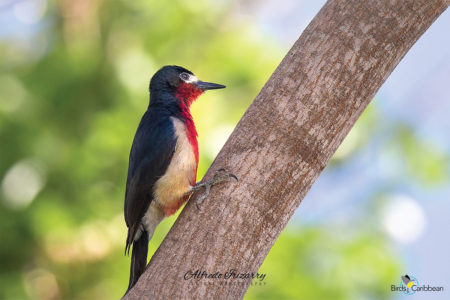
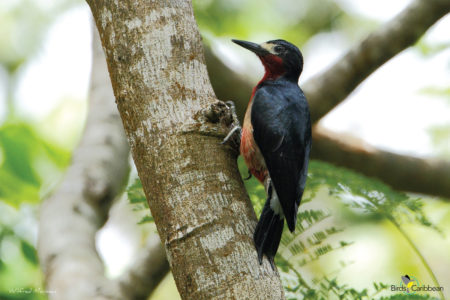
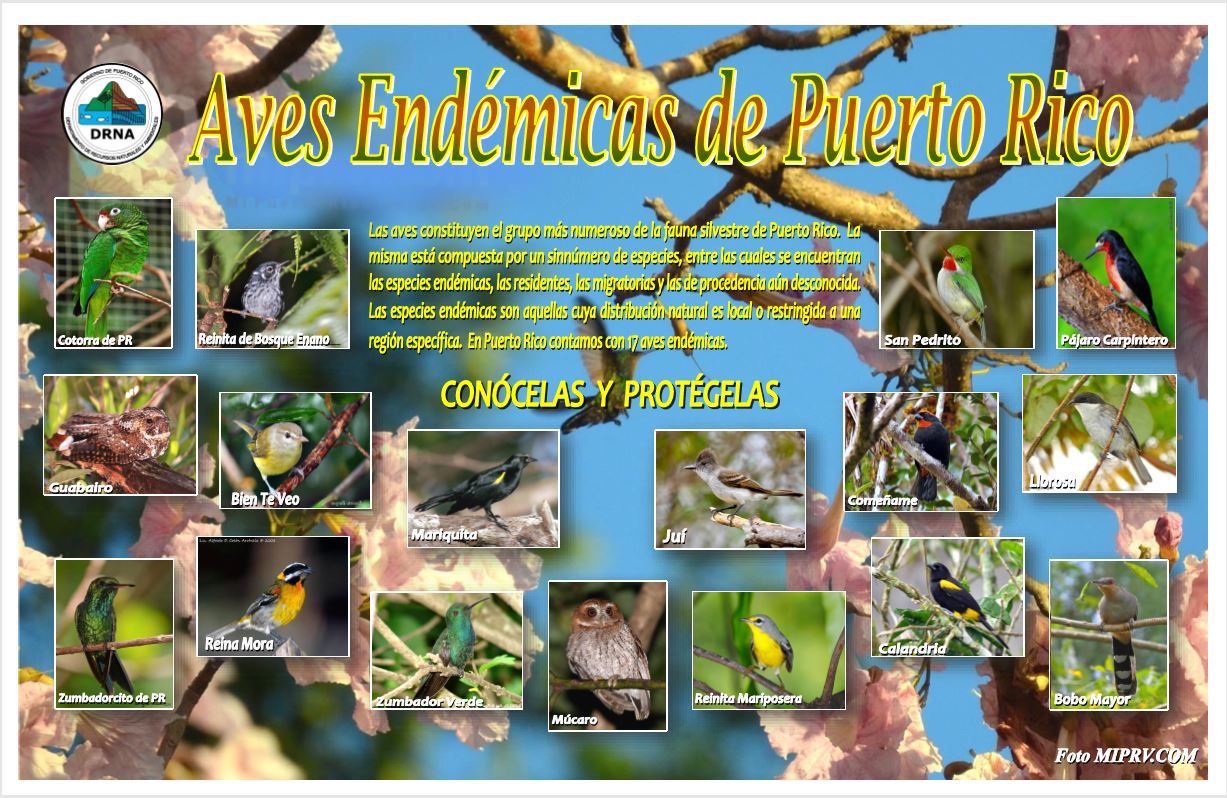
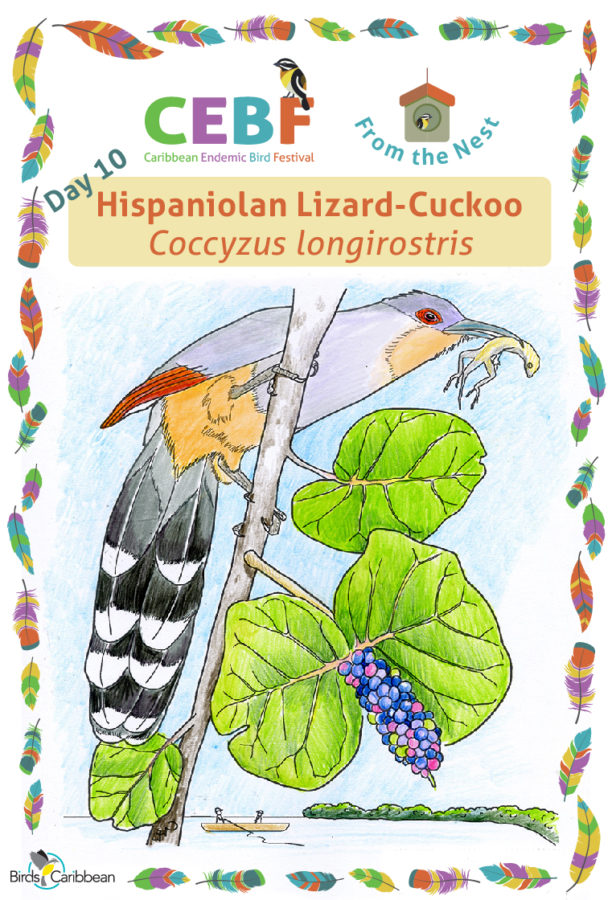
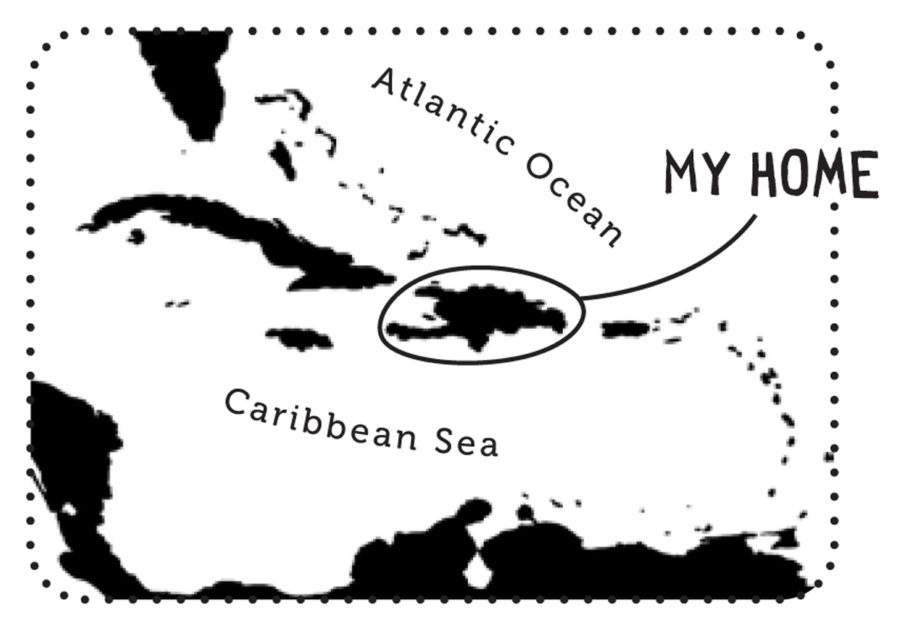 The Hispaniolan Lizard-Cuckoo is true to its common name: it is found nowhere else in the world but the island of Hispaniola, its diet includes lizards (as well as many different insects), and it belongs to the Cuculidae family. On the Dominican side of the island, this cuckoo is known as Pájaro Bobo (“Silly Bird”), while on the Haitian side it goes by the name, Tako.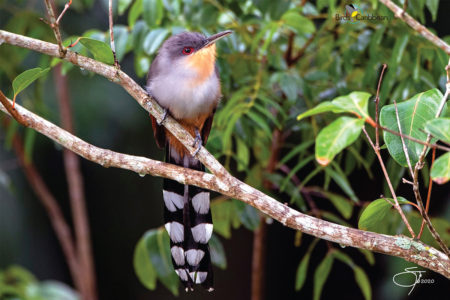
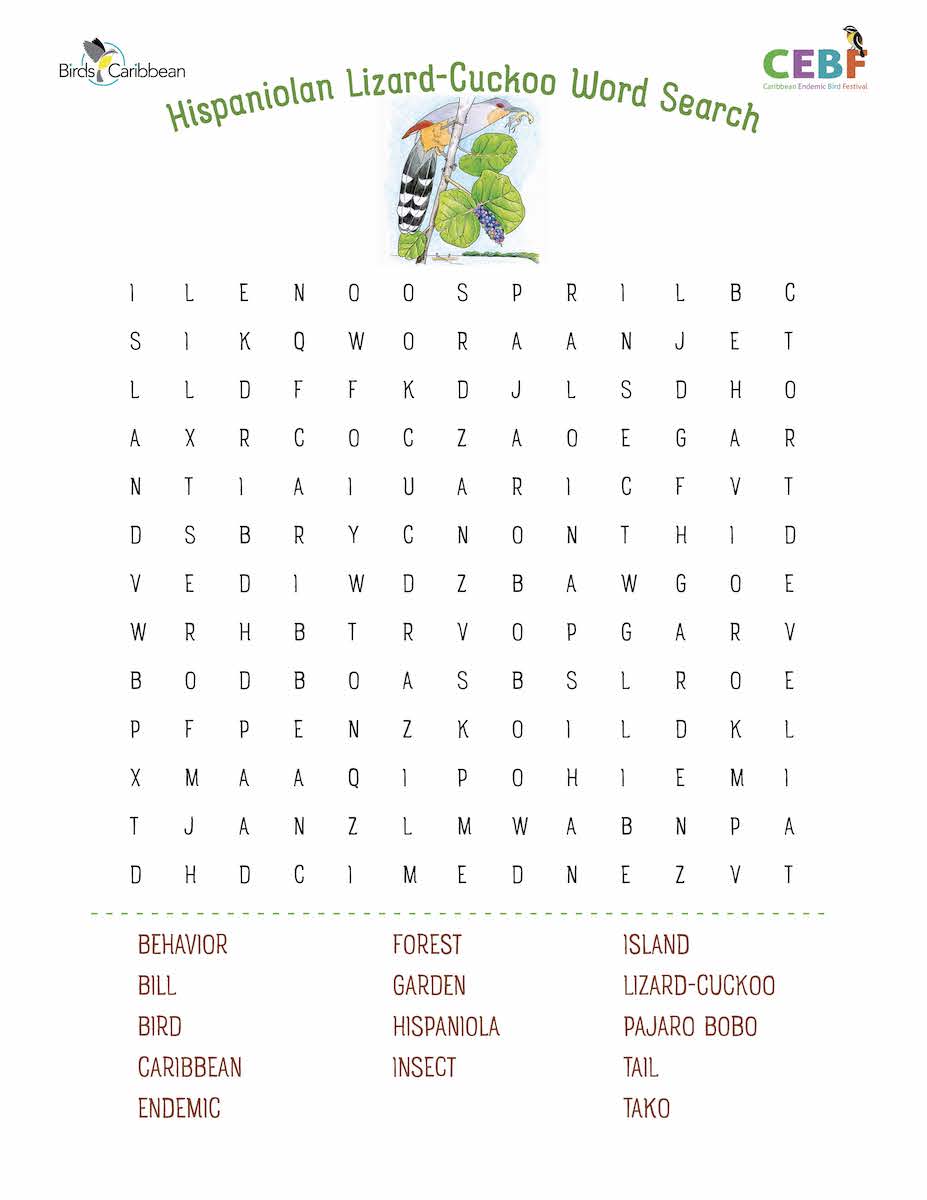
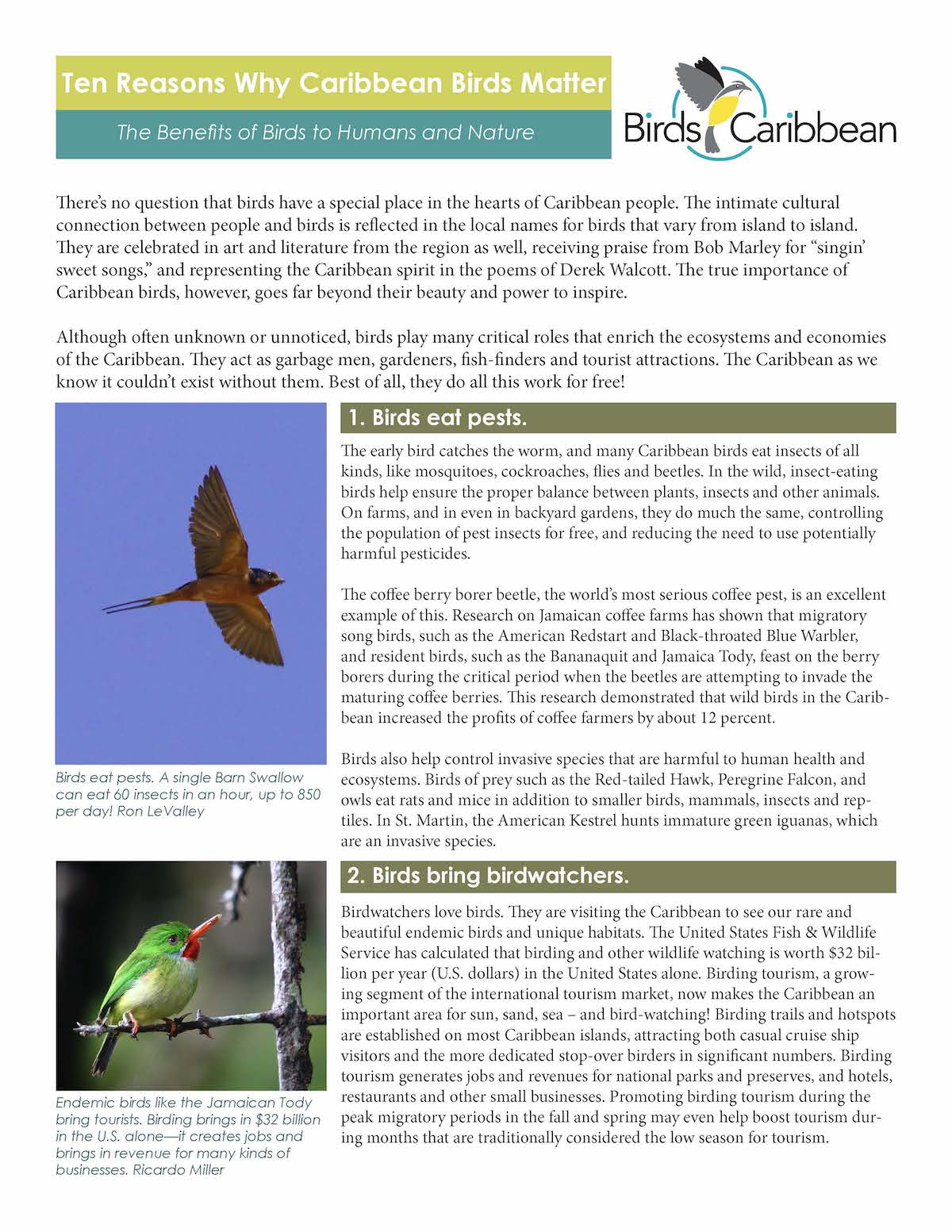
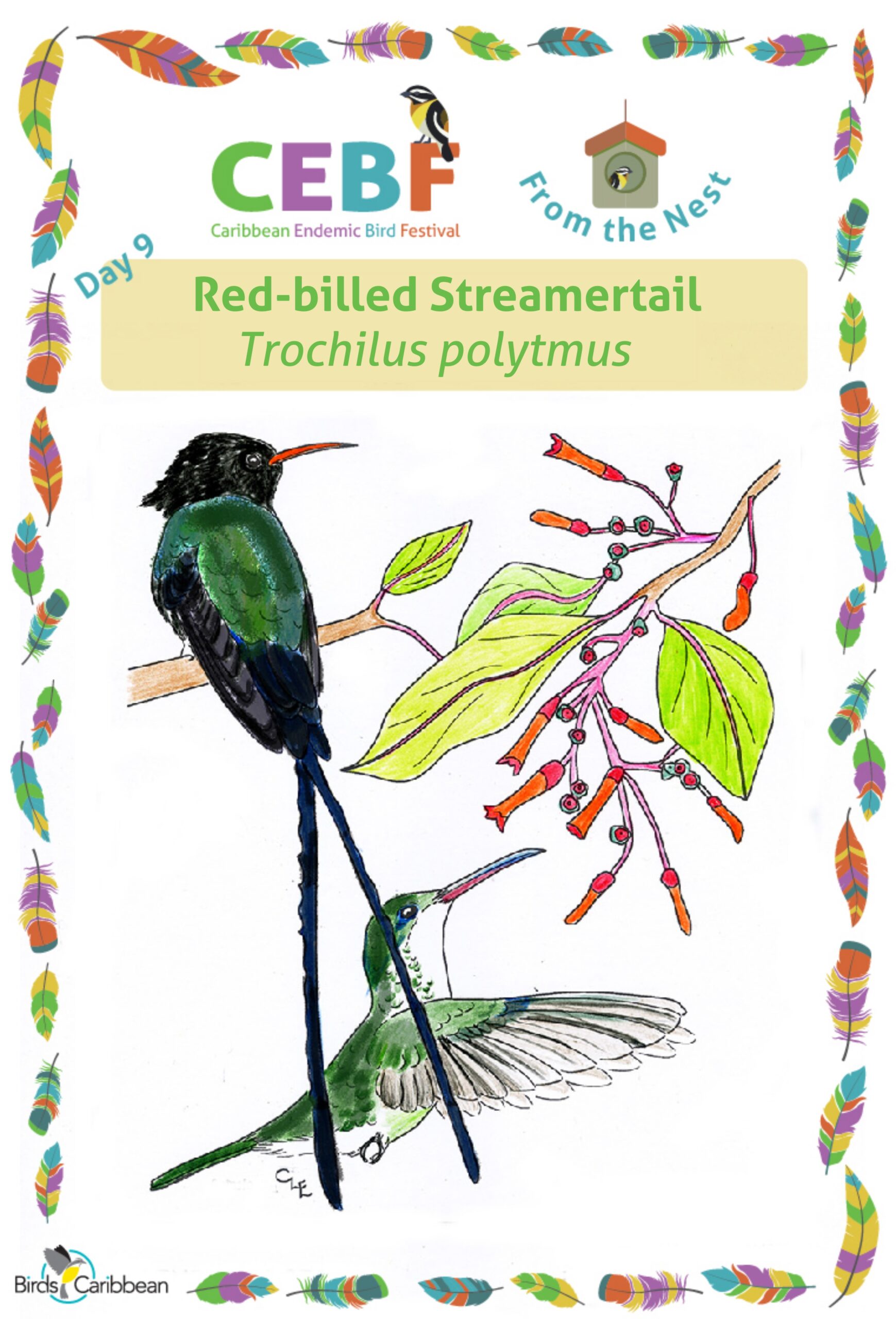
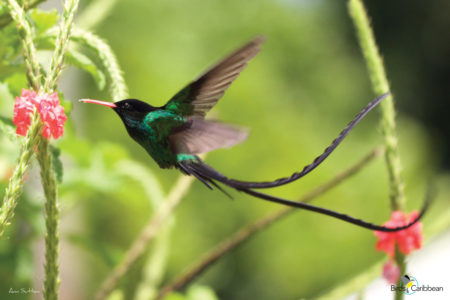
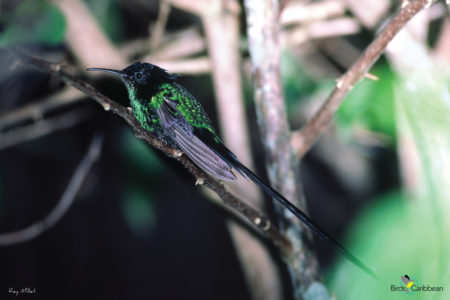
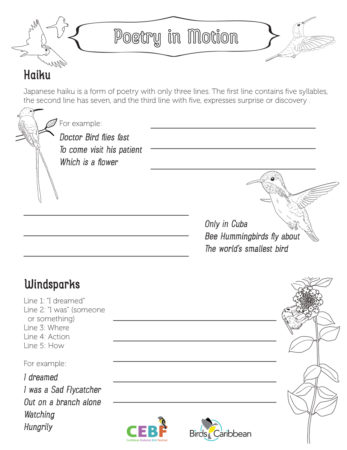
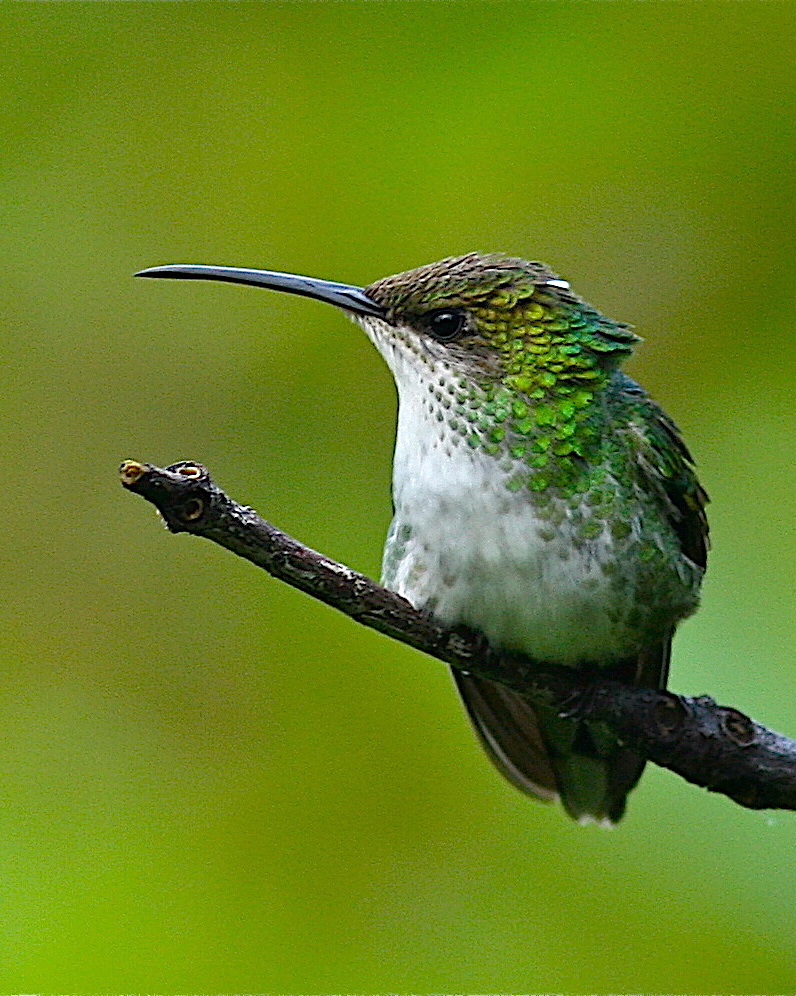
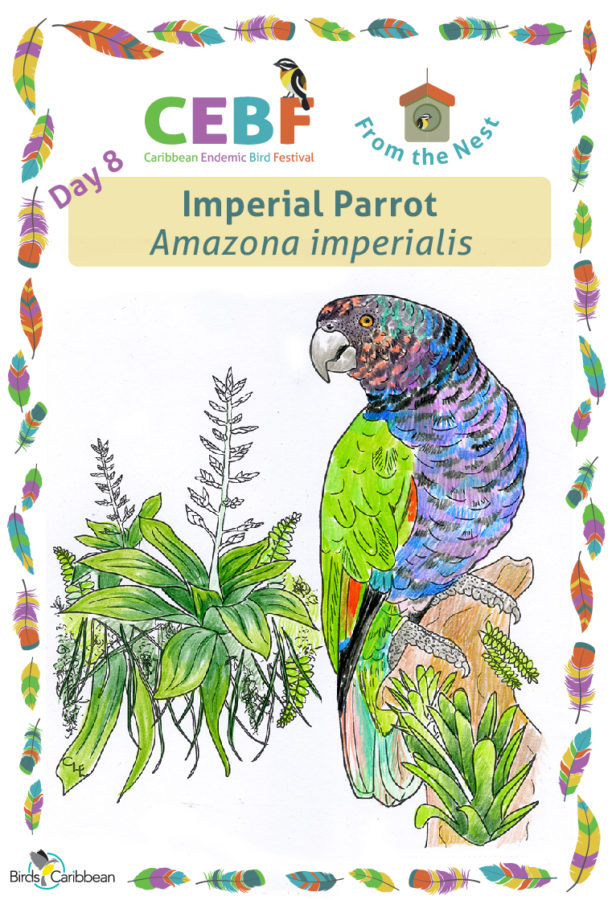
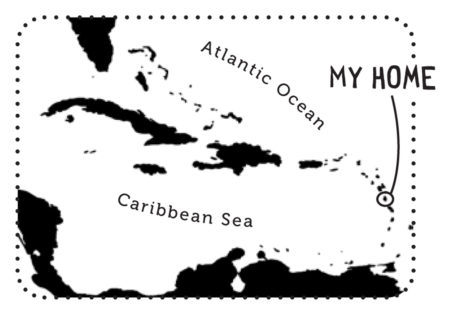
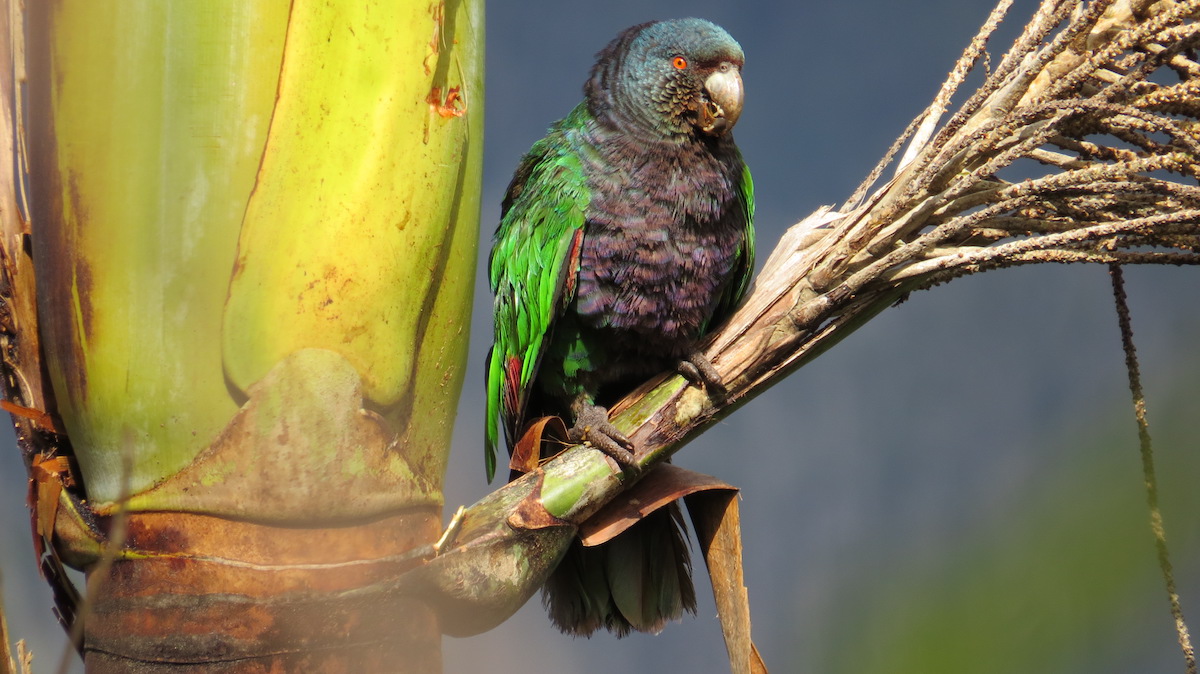
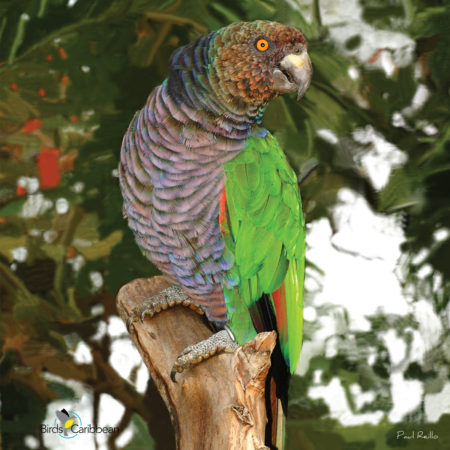
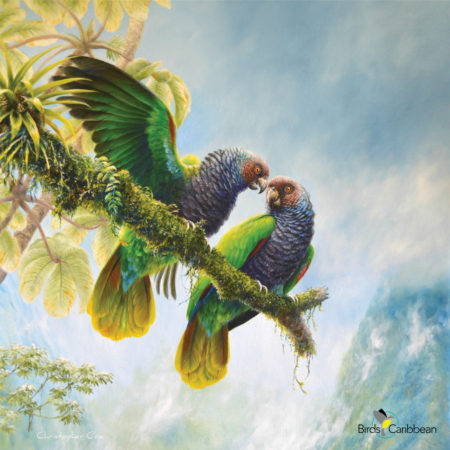
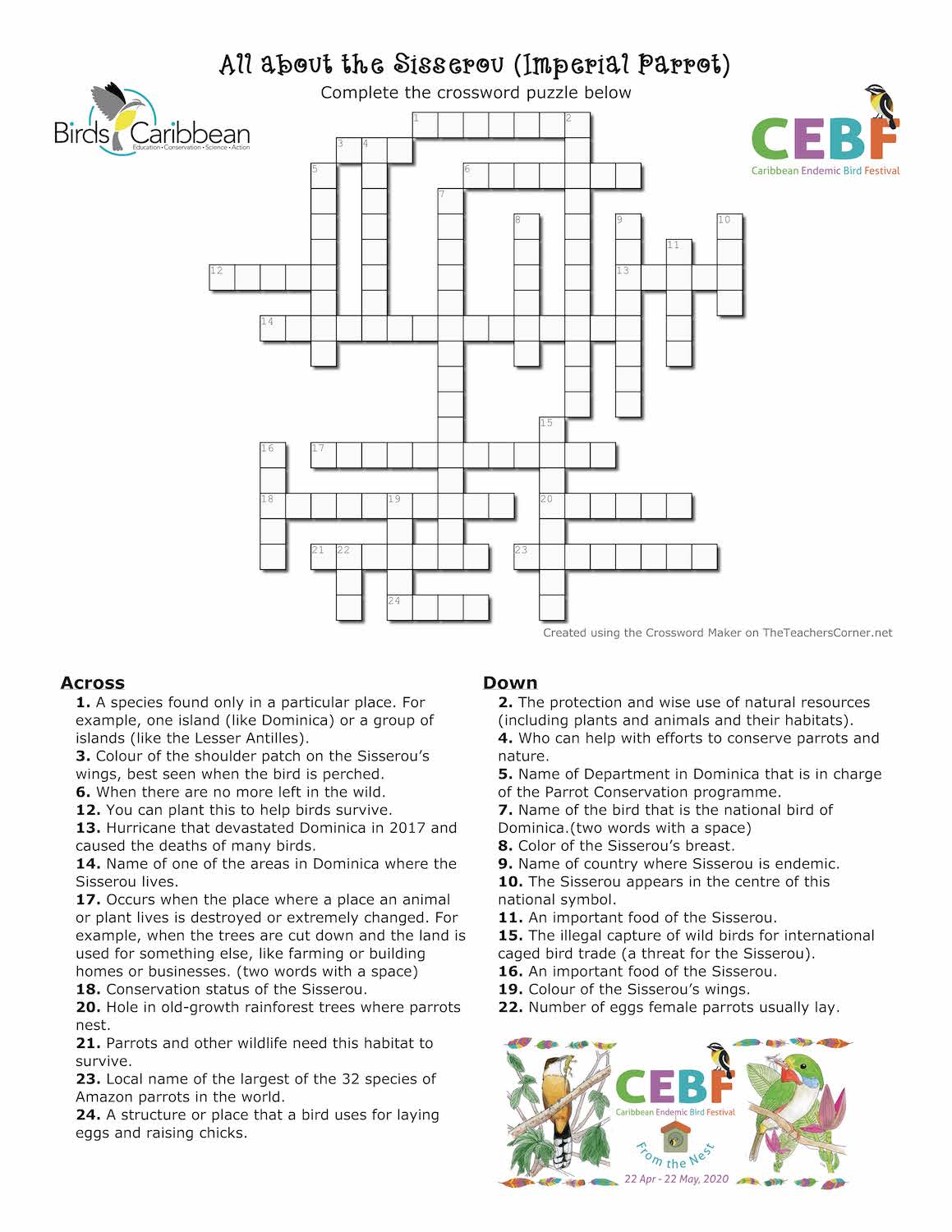
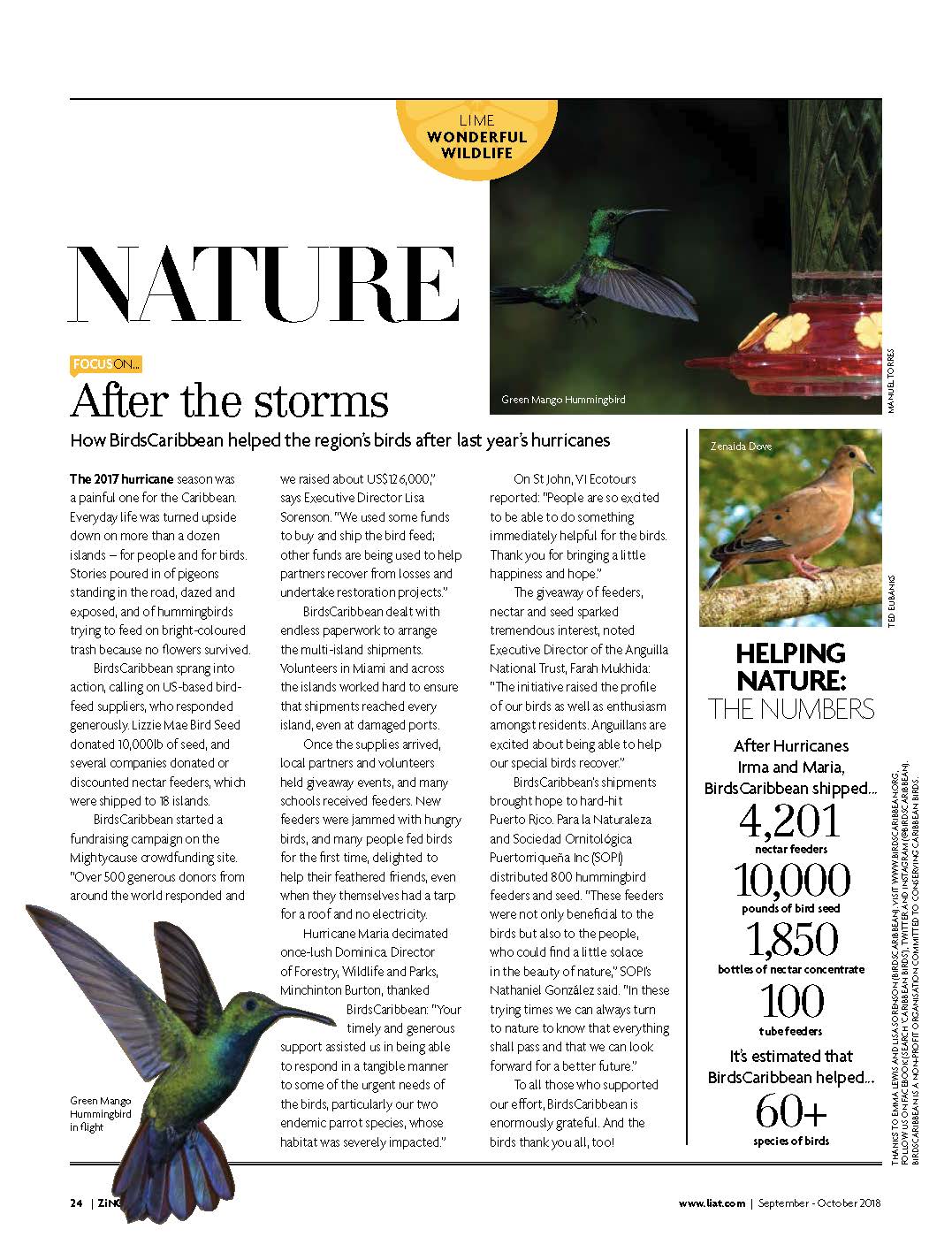
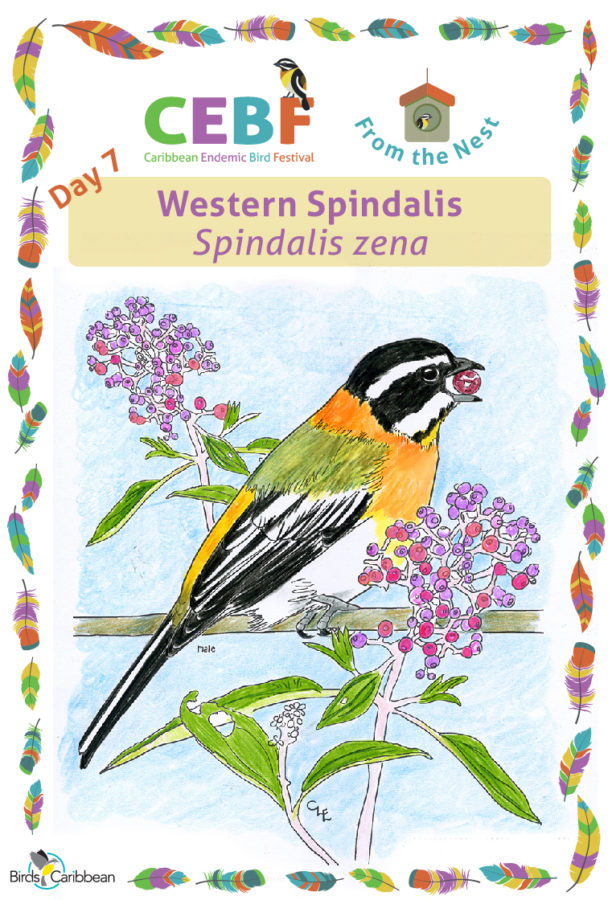
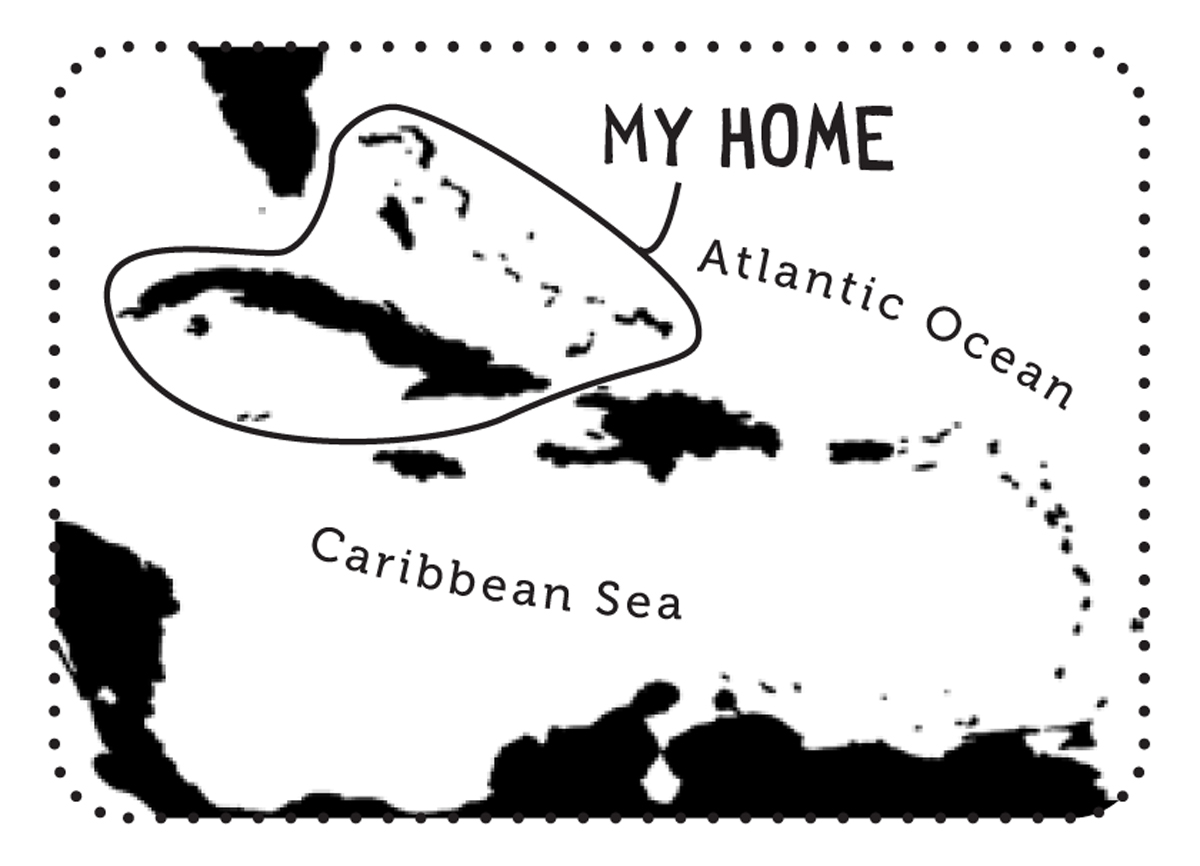
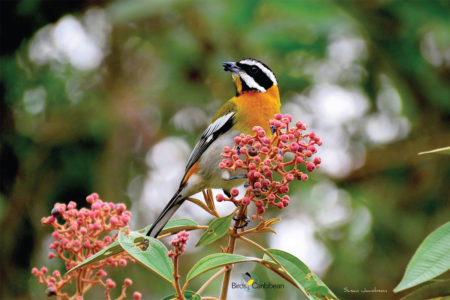
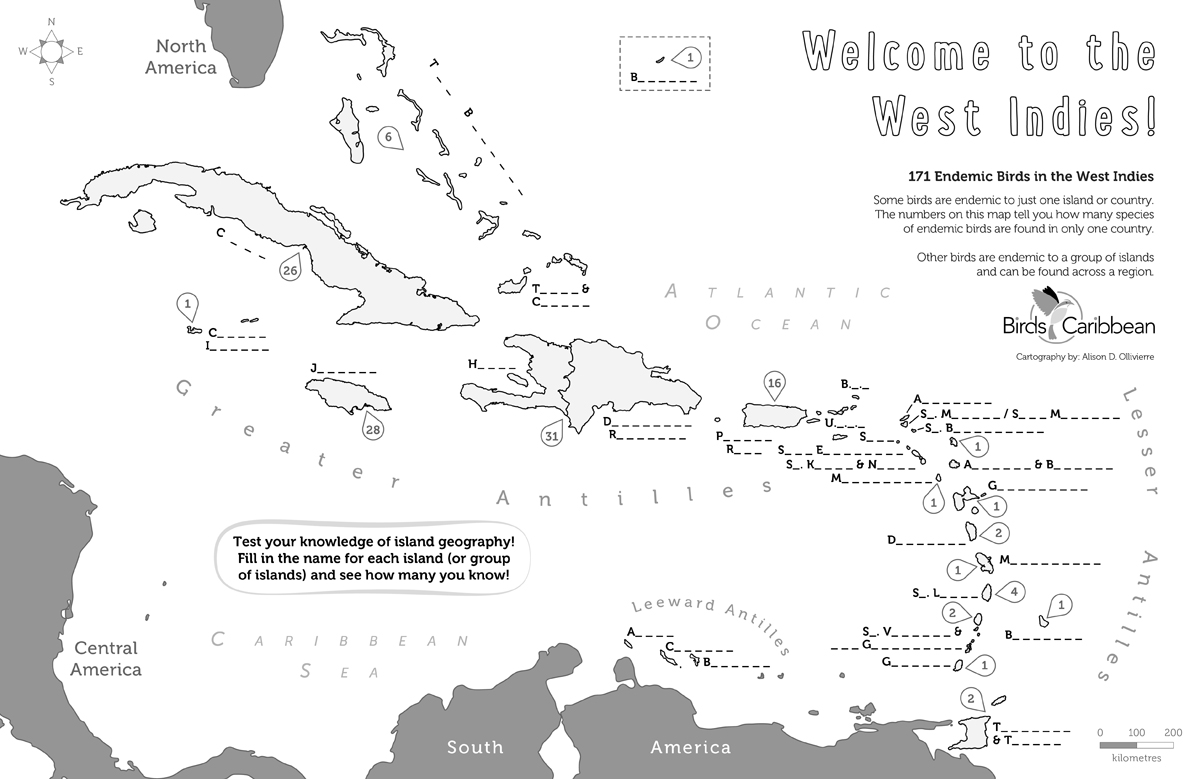
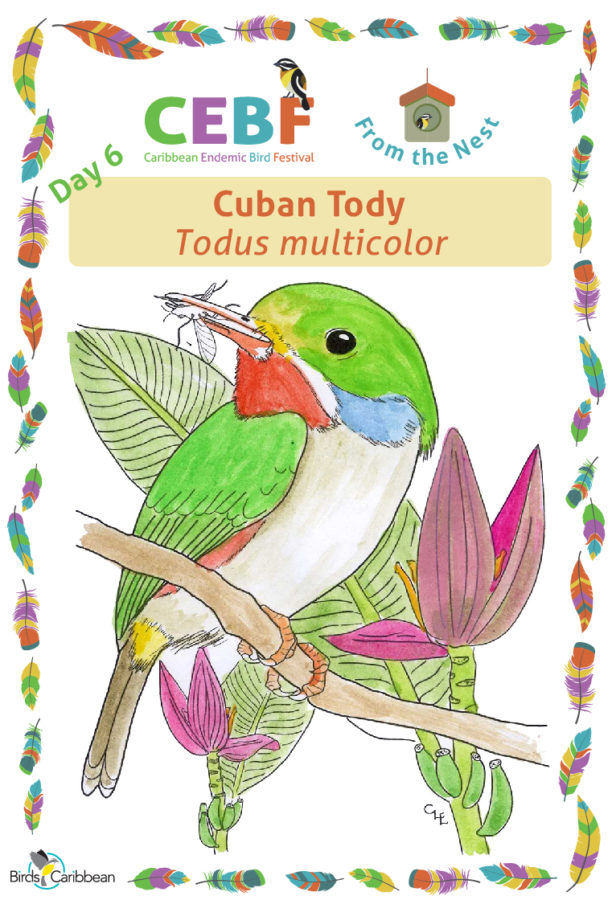
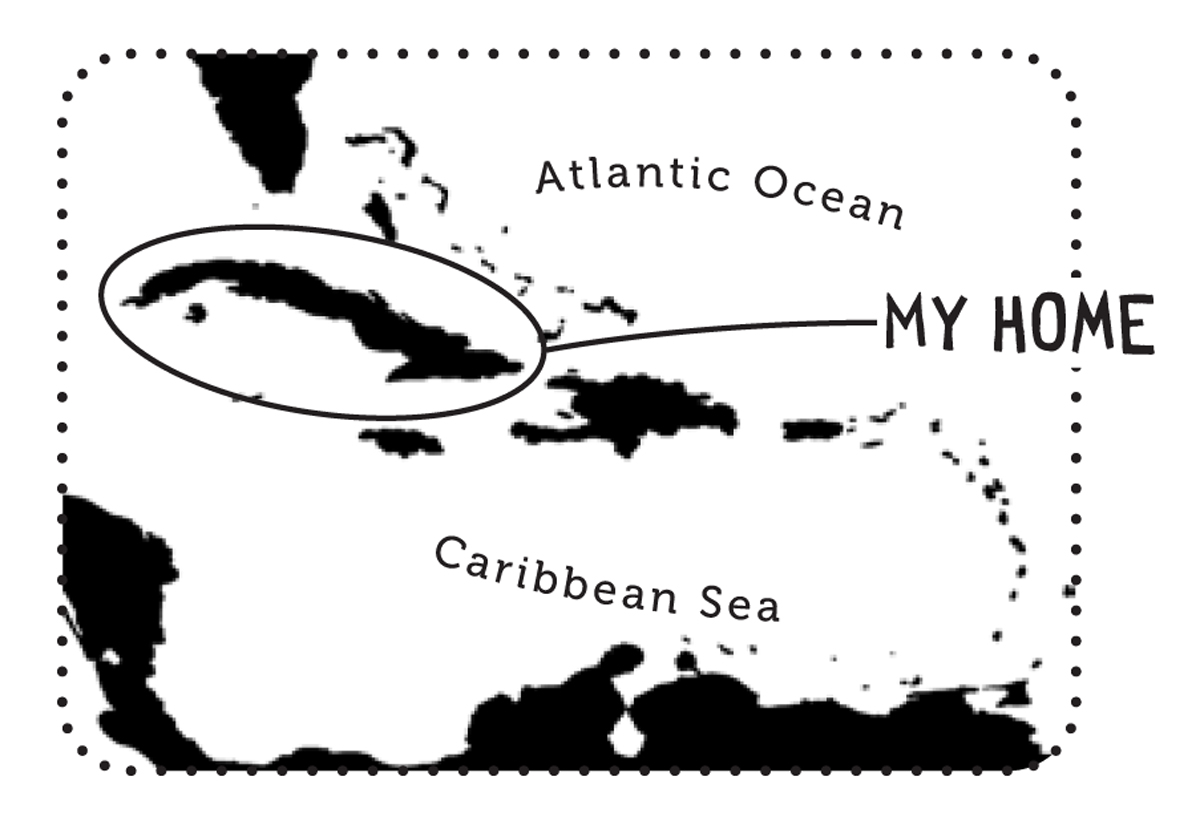
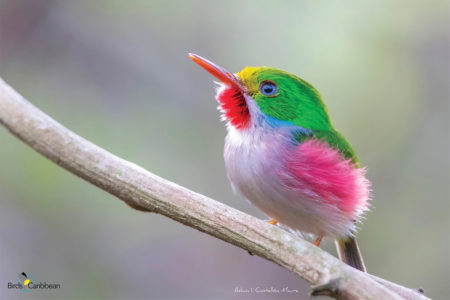
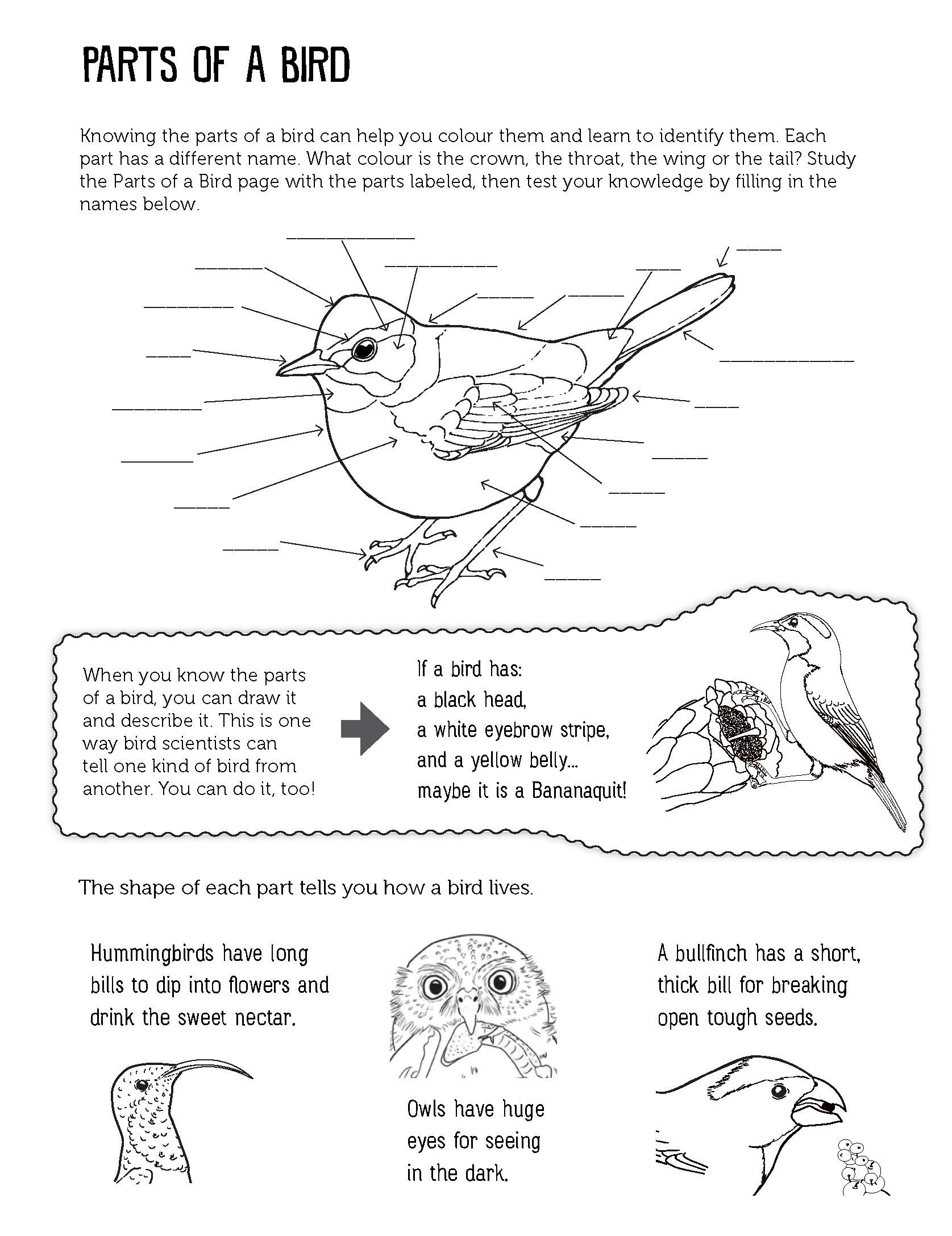
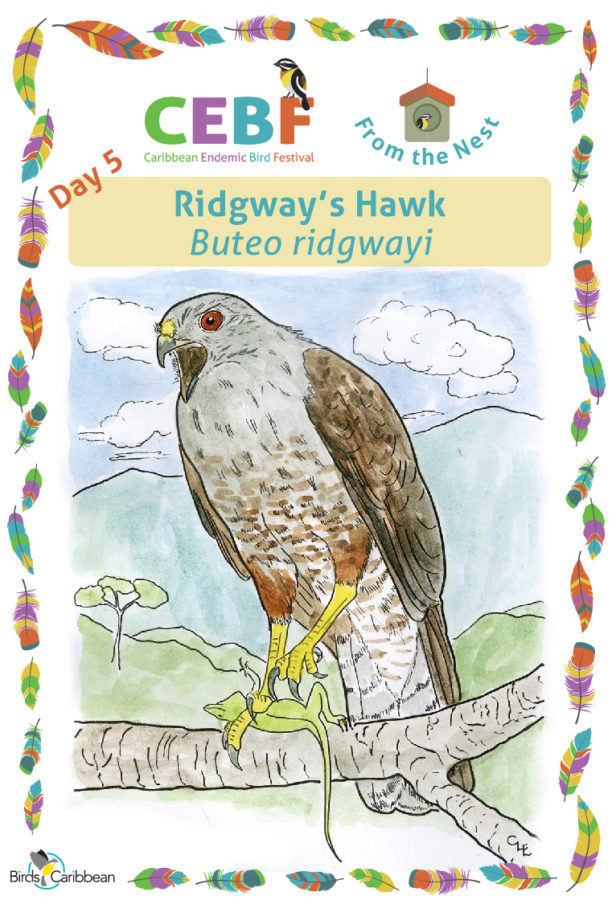
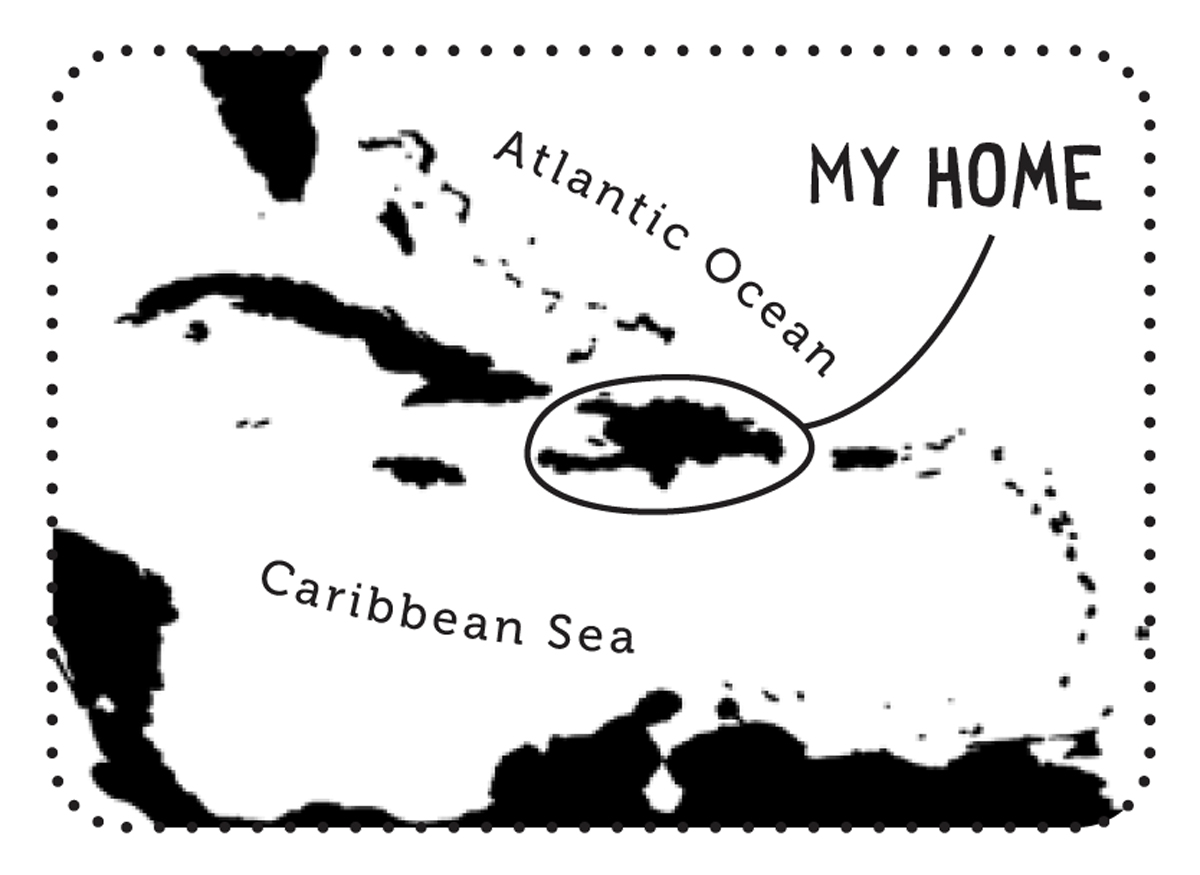
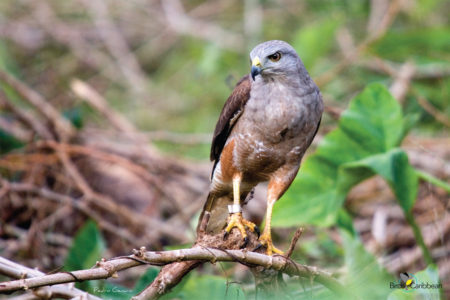
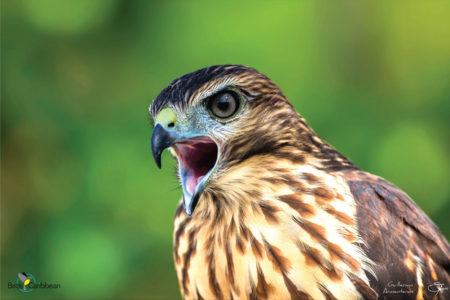
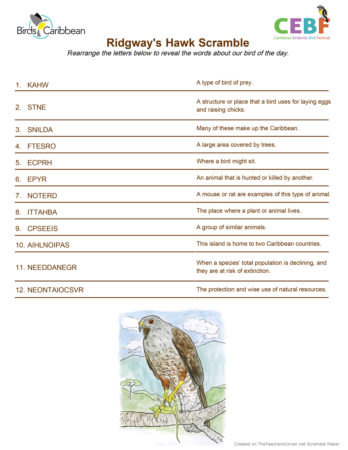 FOR KIDS: Complete our