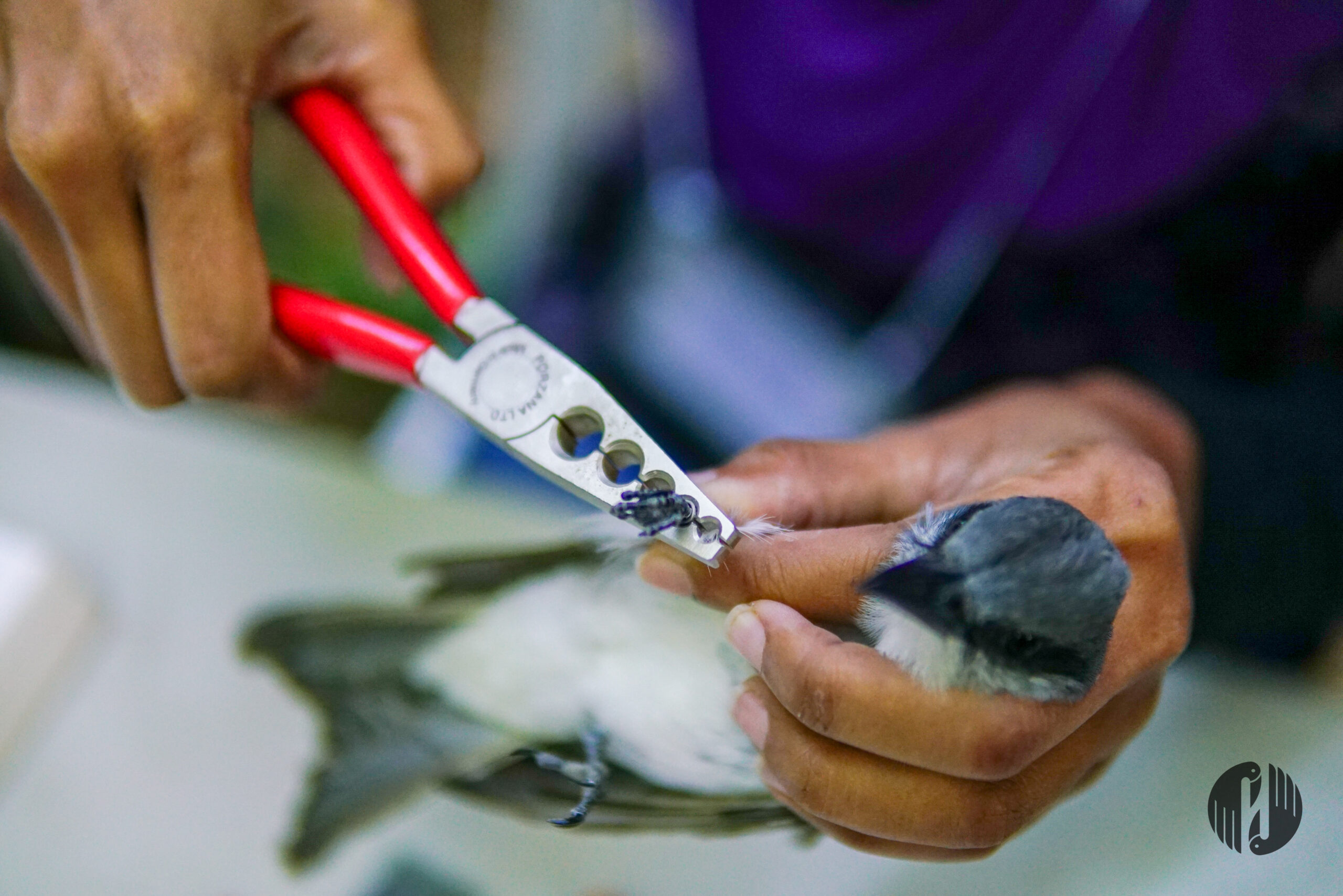
Andrys Gómez works for the Ministry of Environment and Natural Resources as a Wildlife Technician in the Dominican Republic. Training for wildlife techniques like bird banding are essential to her job both to help with monitoring the Dominican Republic’s unique wildlife and distribute permits to other people proposing wildlife monitoring projects. Our annual international Caribbean Bird Banding Workshops teaches Caribbean biologists like Andrys the basics of bird banding, including ethics, essential handling techniques, how to evaluate body condition and breeding status, and how to determine the age of birds in the hand. Data collected during bird banding can help biologists looking at survivorship, demography, phenology, and habitat quality. Learn more about the Caribbean Bird Banding Network here.
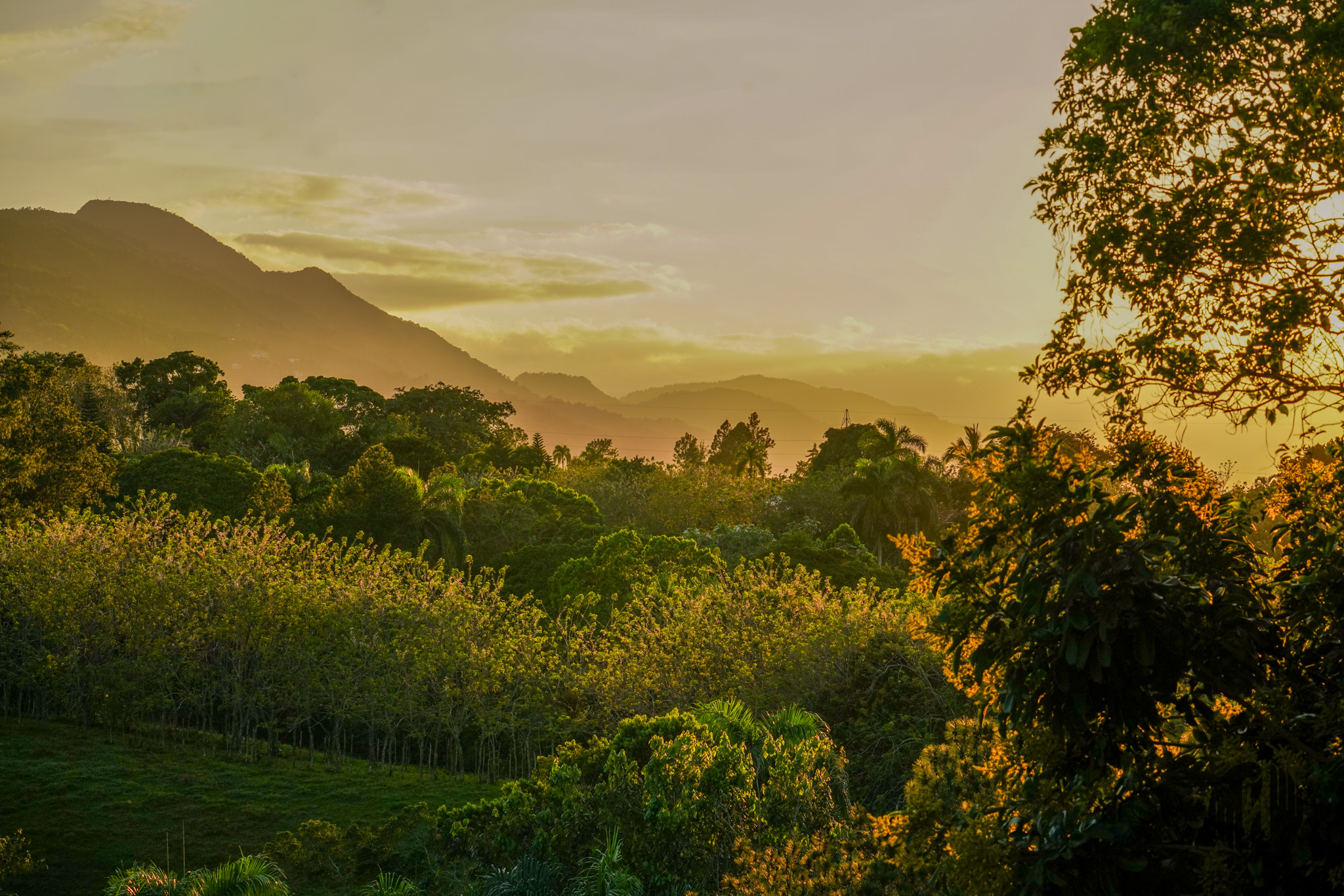
In February 2025, I spent a week in Jarabacoa, surrounded by mountains, morning mist, and, most importantly, birds! I was fortunate to attend the fourth annual Bird Banding Workshop in the Dominican Republic. This skills-building workshop is organized by BirdsCaribbean and facilitated by an incredible team of people from different parts of the Caribbean who live, breathe, and make bird conservation possible.
Which bird will it be??
From the first day, I knew this wasn’t going to be a simple course. Every day involved waking up before sunrise, wading through the dew to open mist nets, and waiting with excitement to see who would we find in the nets first: a Broad-billed Tody (Todus subulatus)? A Bananaquit (Coereba flaveola)? A Black-crowned Palm-Tanager (Phaenicophilus palmarum)?
But beyond seeing birds up close—which is already a wonder in itself—what truly left its mark on me was everything we learned. The techniques we practiced are not only useful, they’re necessary! In a country like ours, where there are still so many information gaps about our birds, knowing how to band them, how to read their molt, take their measurements, and record the data correctly is a giant step toward real, science-based conservation.
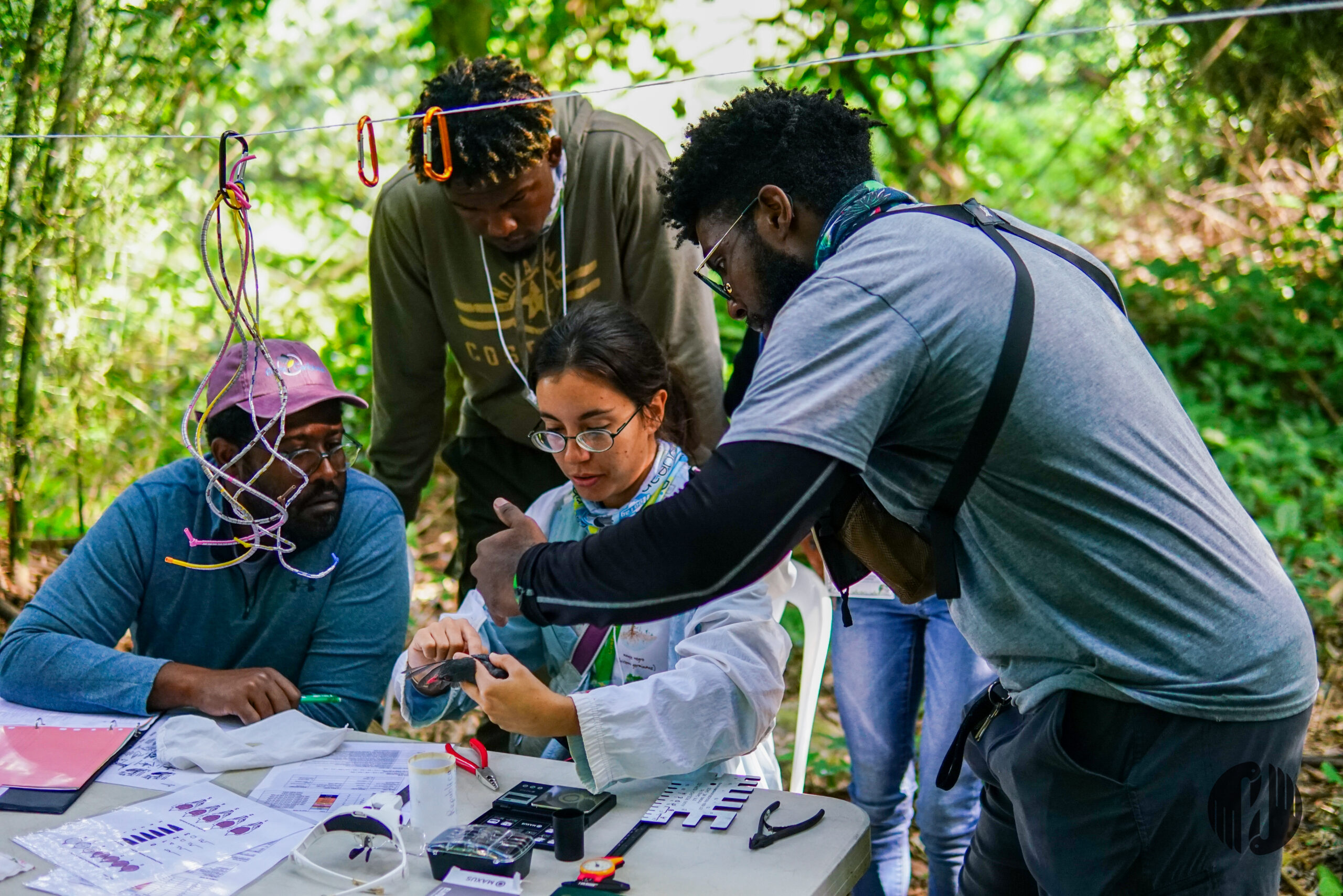
One of the things I’m most grateful for was the exceptional work of our team of instructors. Each and every one of them—Holly, Juan Carlos (JC), Daniela, and Zoya—knew how to handle a super diverse group, from people who had never handled a bird to others with extensive field experience, making us all feel comfortable and valued.
Holly’s support was especially outstanding. She translated everything incredibly well, ensuring that no one missed anything that was said, and always had an answer, no matter the difficulty of our questions. Her patience, clarity, and passion made every session a learning opportunity.
Even when we didn’t have birds in our hands, it felt like we were learning all the time. Rather than let the waits between net rounds become downtime, Zoya and Daniela used those moments to ask us questions, challenge us to reflect, and review key concepts. Each pause became another opportunity to reinforce what we had learned.
Learning alongside participants with varying levels of banding experience was incredibly valuable. We learned a lot by observing the techniques of the more experienced banders. Alejandro from Cuba shared some of his tips for aging Red-legged Thrushes, while JC showed us different methods for tying knots and collecting nets, including some techniques used in Europe.
This exchange of knowledge and styles was a great reminder that, on this path, there is always something new to learn—and that growing as a community makes the experience even more enriching and special.


What a bird in the hand tells us
Among the most important things I took away from this workshop were:
- How to use molt to interpret age and condition in birds. Who knew you could tell so much about a bird’s life just by looking at its feathers?
- How to use Pyle—the bird bander’s bible, a thick book full of initially intimidating walls of text that are an invaluable tool for any bander.
- How to apply Wolfe-Ryder-Pyle, or WRP, system to age birds based on their plumage rather than using the traditional calendar-year method.
- Why all the data collected during banding matters. These records help us study migration, estimate survival and site fidelity, assess reproductive success, and gain many other valuable insights.
- And something I’d never considered: how to work with the public while banding, sharing knowledge in a responsible and educational way. Because yes, teaching is also part of the job! A bird in the hand gives us a chance to show people a side of wildlife they don’t normally get to see.
Ani, are you okay?
One of the experiences I will remember most was processing a Smooth-billed Ani (Crotophaga ani). No one else wanted to do it because, to be honest, the bird smelled pretty bad—like overripened fruit!
Although we couldn’t band it because we didn’t have bands large enough, I had the opportunity to take its measurements and apply what we had learned about molt. Using Pyle’s book and the WRP system, we determined its age with a fair degree of confidence. The bill shape turned out to be very useful, indicating it was likely an adult female.
It was like solving a puzzle in real time, connecting what I could see in front of me with everything we had learned in the workshop. I never imagined that reading feathers could be so powerful—or so exciting.


More than a band on a bird
I left the workshop not only with new skills, but also with a different perspective. Beyond technical knowledge, the workshop offered us the opportunity to become part of a regional network of people committed to bird conservation and research. We strengthened ties, shared experiences, and, most importantly, took away a responsibility: to apply what we learned to help close information gaps in our own countries.
I also made new friends, shared stories, and gained a sense of community that still stays with me. I connected with passionate people, all eager to learn and protect what we have. Jarabacoa was the perfect setting for all of this, with its chilly mornings and the constant feeling of being surrounded by life.
If anything became clear to me, it’s that bird banding isn’t just about putting a little band on a bird. It’s about learning how to capture and handle birds with care, respect, and ethics. It’s about committing to caring for them, protecting them, improving our own understanding of them, and helping others do the same.
And I, happily, sign up to continue on that path.
Help Us Train the Next Generation of Caribbean Bird Banders
Workshops like this one are helping build a growing network of skilled Caribbean bird banders who can collect the high-quality data we need to better understand—and conserve—our region’s birds. Your support helps BirdsCaribbean provide hands-on training, equipment, mentorship, and opportunities for conservationists across the region. Support the Caribbean Bird Banding Network and help us keep this important work growing.
Thanks to funding from the USFWS and support from Institute of Bird Populations to make this workshop possible.
Andrys Gómez is a Dominican biologist specializing in wetland conservation, wildlife monitoring, and biodiversity management. She currently works as a Wildlife Technician at the Ministry of Environment and Natural Resources of the Dominican Republic, where she contributes to the monitoring and management of wetlands, protected areas, and species of conservation concern. Her work combines field research, biodiversity monitoring, technical assessments, and environmental education, with a particular interest in wetland ecosystems and their conservation