
Celebrate World Migratory Bird Day (WMBD) with us in 2026! This year’s theme is “Every Bird Counts – Your Observations Matter”. Have fun learning about a new migratory bird every day. We have coloring pages, interesting facts, activities, and more. Download for free and enjoy nature with your family at home.
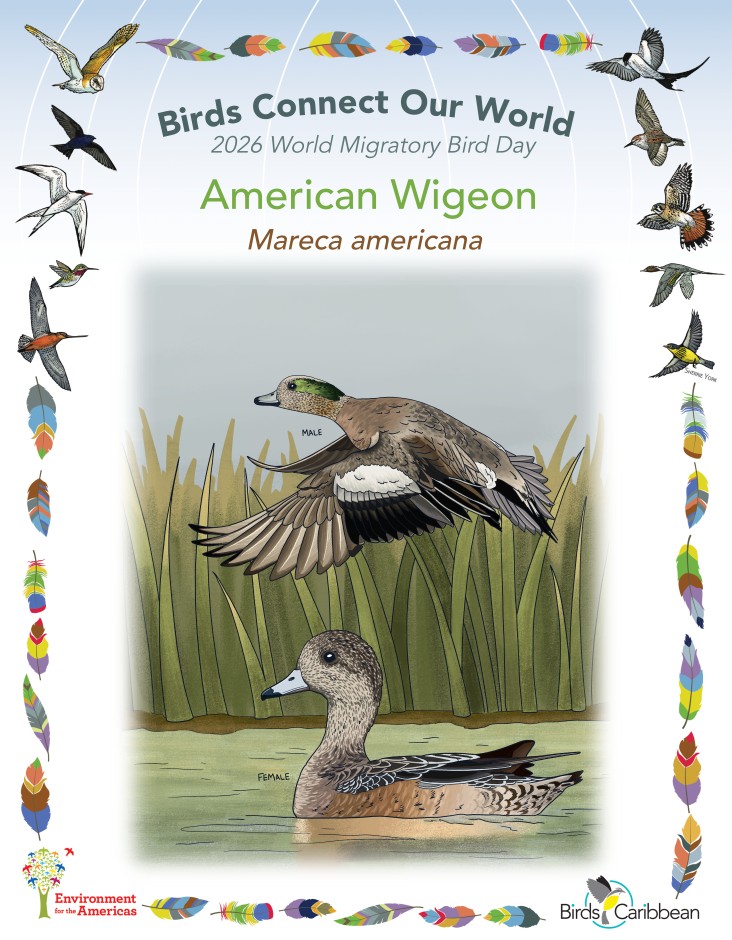
Migratory Bird of the Day: American Wigeon
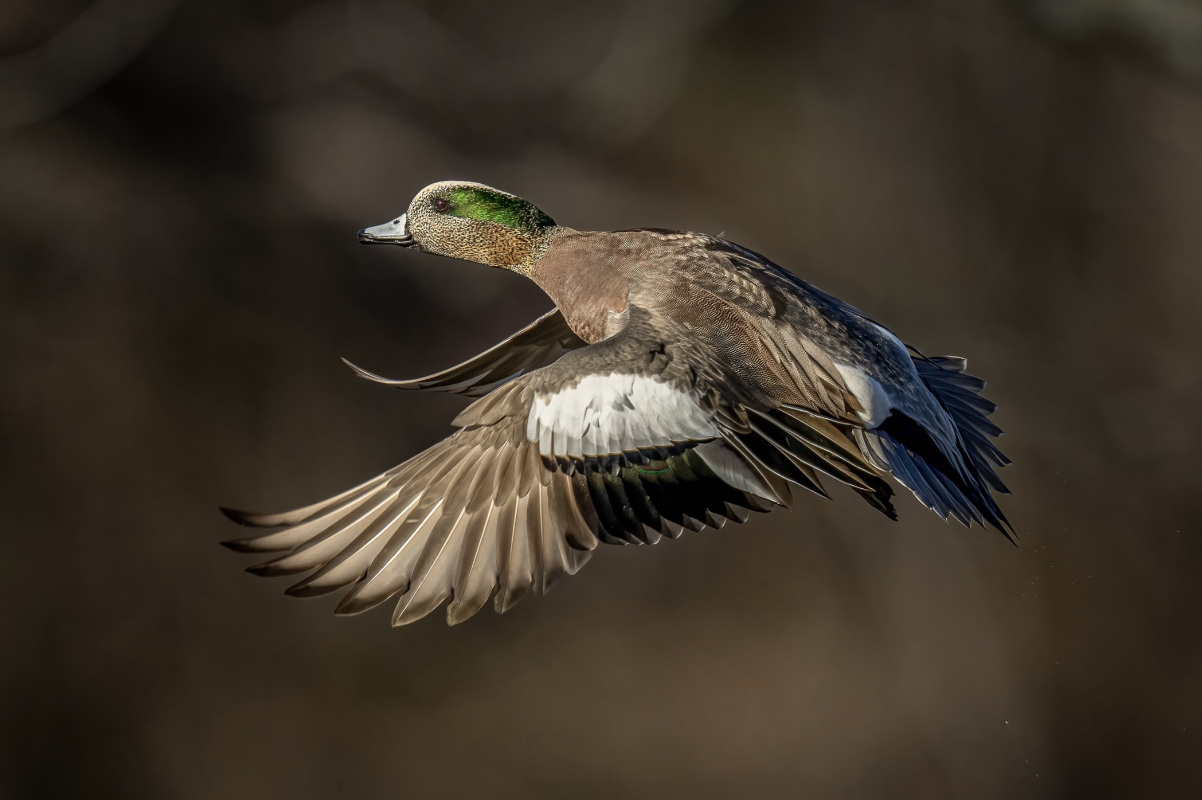
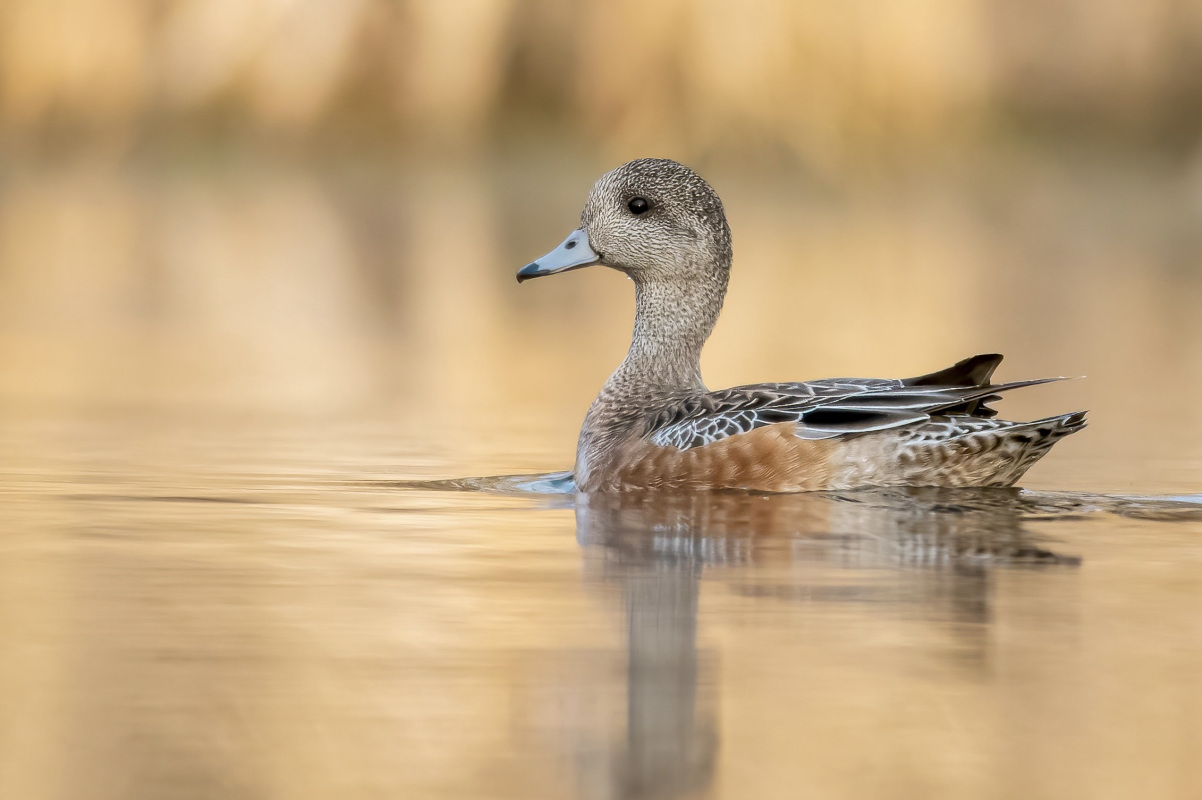
The American Wigeon is a medium-sized dabbling duck that’s definitely not mid. Breeding males have a broad green stripe behind the eye that shimmers when the light hits it just right, a gleaming white cap—earning them the nickname “Baldpate”—and a light blue bill. Their bodies are mostly cinnamon brown, with white patches on the side of the rump that contrast with black undertail feathers. Females are mostly brown, with gray-brown heads and dark smoky eyes. In flight, look for the white belly, and especially on males, a bold white patch on the forewing and a green patch behind, an area on ducks called the speculum—uniquely colored secondary flight feathers that are helpful for ID.
This duck spends more time on deep water than most other dabbling ducks. But don’t let that fool you—it loves its greens! Its short gooselike bill has a strong tip, perfect for snipping grass and plucking plants from fields and lawns. During the breeding season, wigeons add protein-rich insects and aquatic invertebrates to their diet such as midges, horseflies, caddisflies, damselflies, beetles, mollusks, and crustaceans. Females eat more of these foods than males. After all, they need extra protein to lay a clutch averaging 8 eggs, and as many as 13!
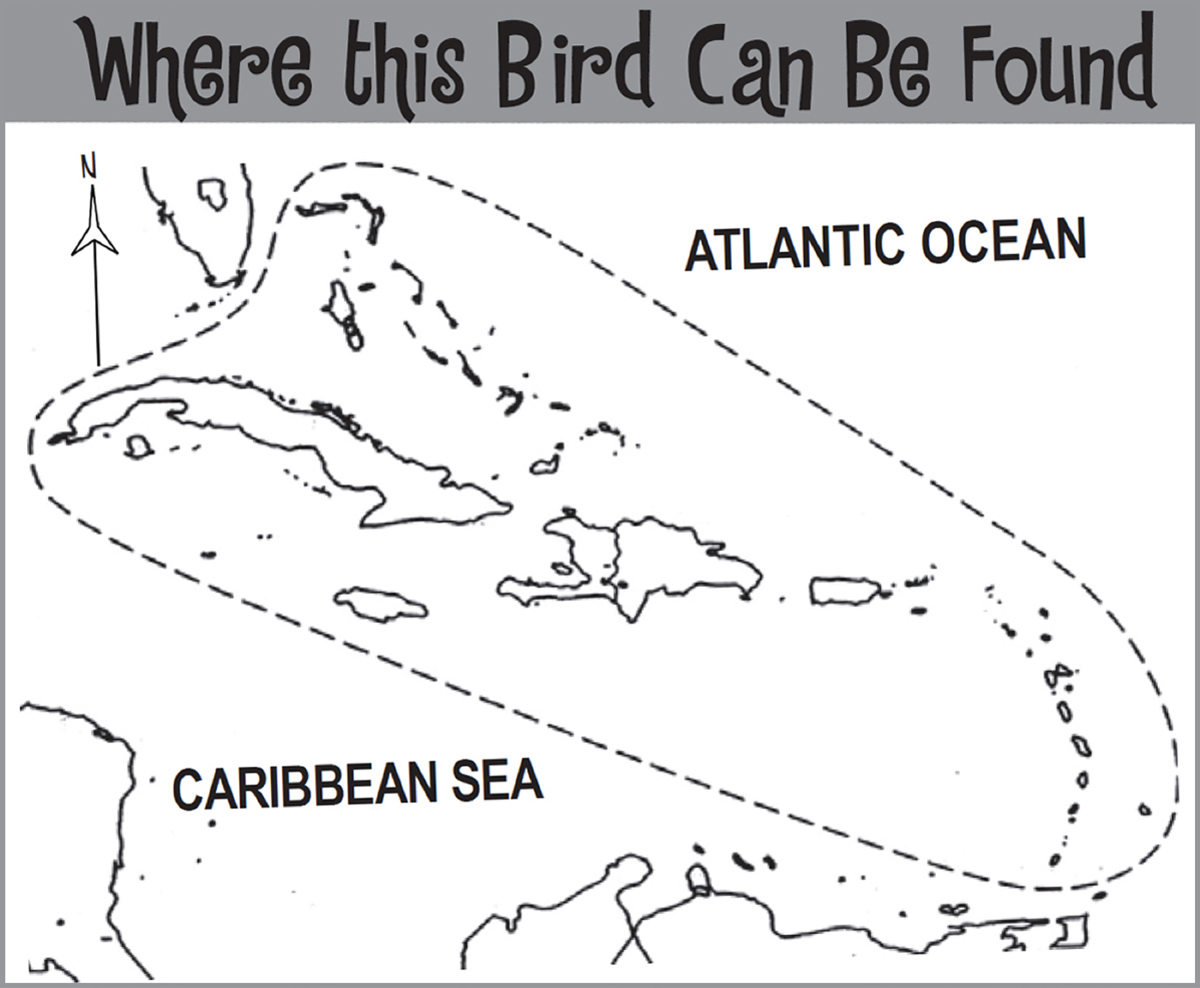
American Wigeons breed mainly in western Canada, Alaska, and the Prairie Pothole region of the northern U.S. Their broad wintering range includes much of the southern US, Mexico, Central America, northern South America, and the Caribbean.
Wigeons migrate mostly during the day, moving in small groups in spring (March-May), and forming larger flocks, often over 100 birds in fall (September-November). In the Caribbean, they are a common to uncommon winter resident from October to April in Bermuda, The Bahamas, Turks and Caicos Islands, Cuba, Hispaniola, Puerto Rico and Jamaica, but less common in the Lesser Antilles.
Like other migratory ducks, wigeons pair up on the wintering grounds. Males compete for females’ attention with courtship displays that show off their plumage, including tail-wagging, body-shaking, wing-lifting, turn-back-of-head, and jump-flights, accompanied by high-pitched whistles. Males simultaneously chase off rivals during courtship, sometimes fighting with their bills.
Once paired, males and females migrate to the breeding grounds together, returning to the female’s natal area (where she was born). There, the male defends a territory and guards his mate during nest building and egg-laying. The female builds a nest in a small depression on dry ground, lining it with grasses, reeds, cattails, and down feathers. Late in incubation, the male leaves for a molting area, where he replaces all his flight feathers at once and becomes flightless for several weeks. The female raises the ducklings alone before undergoing her own wing molt. When it’s time to migrate south, males depart first, followed a few weeks later by females and juveniles.
Healthy wetlands, including marshes, ponds, and lakes, are essential to American Wigeons. We must take care of these habitats so that this duck can continue to thrive for years to come. This includes protecting and restoring wetlands, reducing pollution runoff, and controlling invasive aquatic plant species. You can also help by recording your sightlings on eBird and joining citizen science initiatives like the Caribbean Waterbird Census and Global Big Day. Together, these actions help protect the wetlands this duck depends on throughout its journey. Learn more about this species, including its range, photos, and calls here. Great news! If you’re in the Caribbean, thanks to BirdsCaribbean, you have free access to Birds of the World and you can find out even more in the full species account of this bird!
Thanks to Aliya Hosein for the text and Eden Garrod for the lovely illustration!
Color in the American Wigeon
Download the Migratory Birds of the Day Coloring Page! Use the picture above and the photos on this page as your guide, or look up pictures of the bird online or in a bird field guide if you have one. Share your colored-in page with us by posting it online and tagging us @BirdsCaribbean #WMBD2026Carib
Listen to the calls of the American Wigeon
The calls of the American Wigeon, away from breeding areas, are high pitched, soft whistles, often used as a contact call.
Enjoy these photos of American Wigeons
Activity of the Day
FOR KIDS AND ADULTS: Discover the migratory birds with Origami, the Japanese art of paper folding, and learn how to fold a duck out of paper with this video! All you need is a square sheet of paper – 24 x 24 cm is ideal. The video will show you step by step how to fold and create your own duck!
Enjoy this video of an American Wigeon in the wild!