Read this post in English
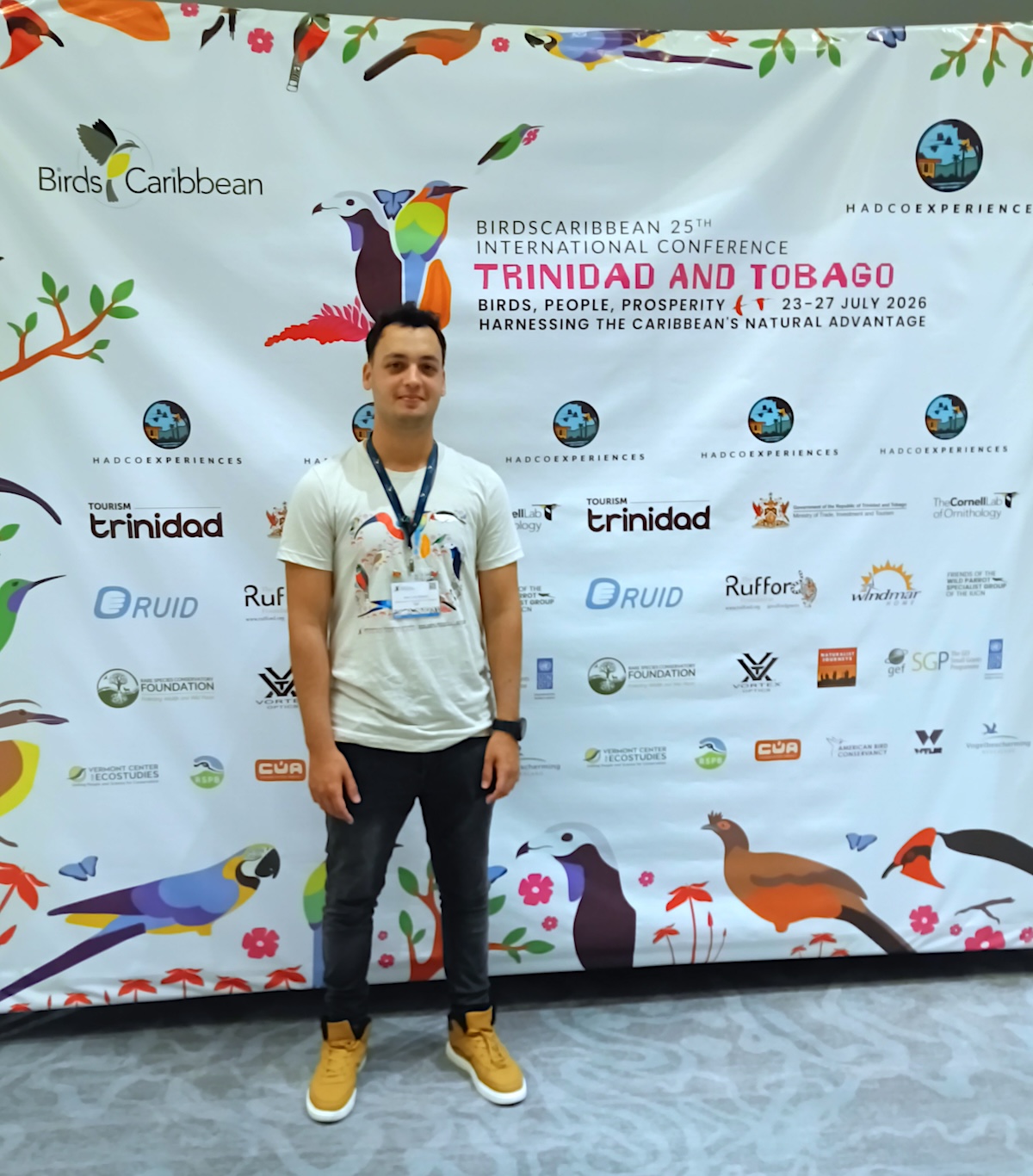
Para Abel Luis Simeón, biólogo cubano de 25 años, su primera conferencia de BirdsCaribbean supuso un hito personal. Desde los tan esperados encuentros con las extraordinarias aves de Trinidad y Tobago, pasando por el contacto con conservacionistas apasionados que comparten su profundo compromiso con la biodiversidad caribeña, hasta el intercambio de su propio trabajo en la protección de dos palomas endémicas de Cuba, Abel regresó a casa con nuevas ideas, valiosos contactos y un propósito renovado. Sigue leyendo para conocer las reflexiones de Abel sobre una experiencia transformadora en la conferencia.
Hay momentos que marcan el comienzo de un nuevo capítulo. Para mí, asistir a la 25.ª Conferencia Internacional de BirdsCaribbean en Trinidad y Tobago fue uno de ellos. Como joven biólogo y ornitólogo cubano, llevaba mucho tiempo soñando con participar en un encuentro en el que pudiera compartir experiencias con personas que, como yo, dedican su vida a la conservación de las aves del Caribe.
Aves que había soñado con ver
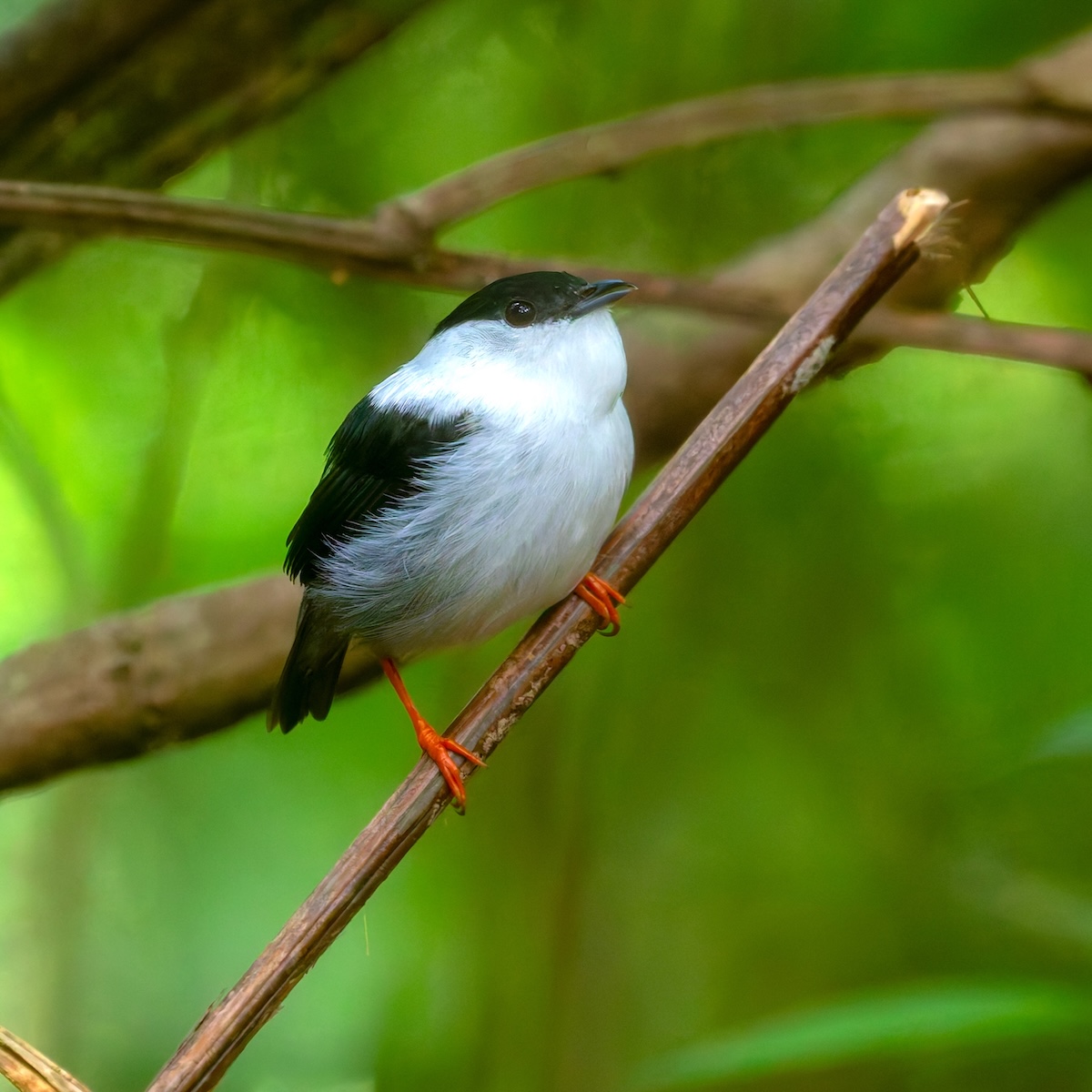
Antes de viajar, una de las cosas que más ilusión me hacía era conocer Trinidad y Tobago. Siempre había oído hablar de su extraordinaria diversidad de aves y ecosistemas, y poder observarlos en persona superó mis expectativas. Uno de los recuerdos más especiales de la conferencia tuvo lugar durante la visita al Centro Natural Asa Wright. Escuchar por primera vez el canto potente y resonante de los pájaros campana barbudos fue realmente impresionante. Pero si hubo un momento que llevaba años imaginándome, fue presenciar los famosos leks de los manakins de barba blanca (Manacus manacus). Ver a los machos reunidos, realizando sus rápidos movimientos y exhibiciones mientras emitían sus característicos cantos, fue una experiencia que nunca olvidaré. Son estos momentos los que nos recuerdan por qué decidimos dedicar nuestras vidas al estudio y la conservación de las aves.
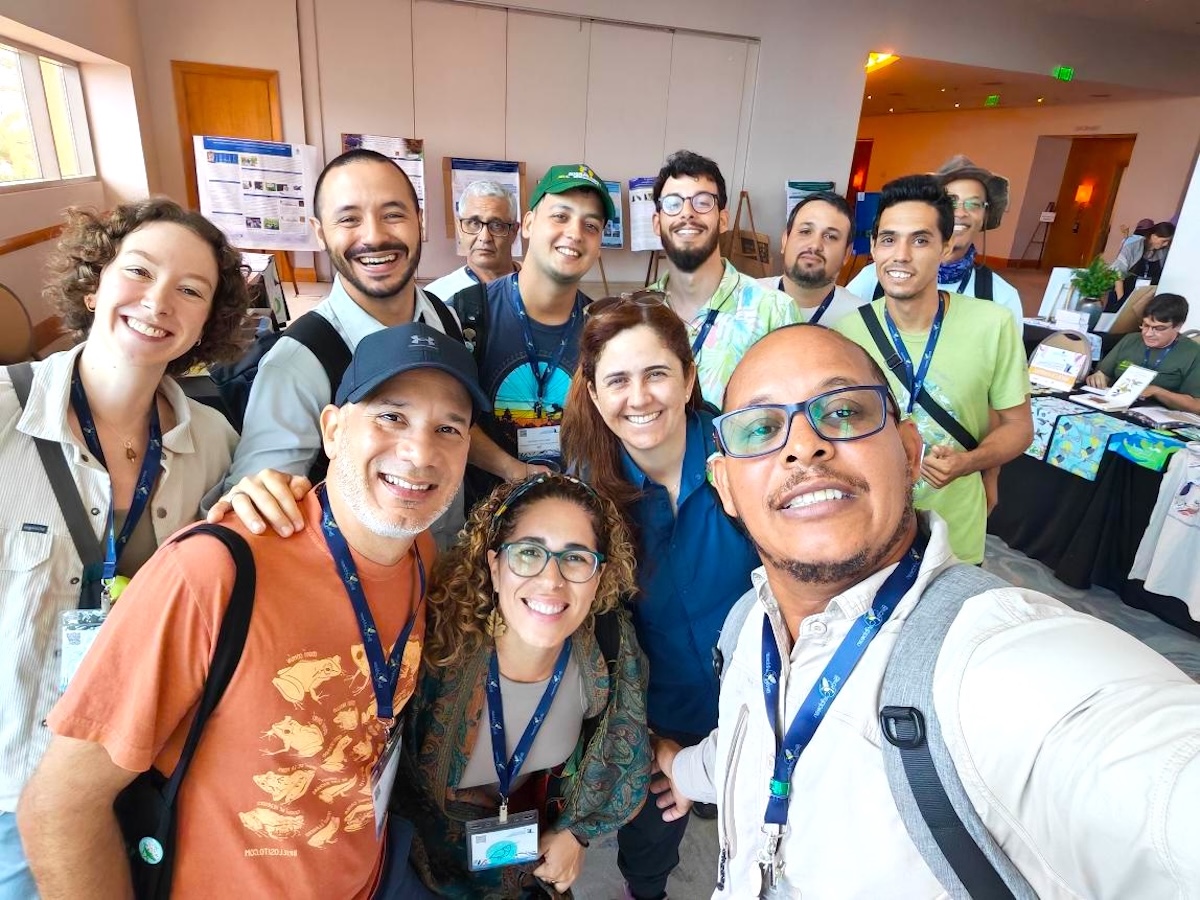
Sin embargo, lo más valioso de la experiencia fue la gente. Durante la conferencia, tuve la oportunidad de hablar con investigadores, estudiantes, conservacionistas y profesionales de todo el Caribe y más allá, todos unidos por una pasión compartida: proteger nuestras aves y los hábitats de los que dependen.
Compartir mi investigación
Uno de los momentos más importantes para mí fue presentar un póster sobre los resultados preliminares del proyecto que estoy desarrollando actualmente, gracias a una beca del Fondo David S. Lee para la Conservación de las Aves del Caribe. Mi investigación se centra en la conservación de dos especies de palomas endémicas y amenazadas de Cuba: la paloma perdiz (Starnoenas cyanocephala) (En Peligro de extinción) y el Camao (Geotrygon caniceps) (Vulnerable).


Un cuaderno lleno de nuevas ideas
Mi presentación me brindó la oportunidad de intercambiar ideas con otros investigadores, quienes compartieron valiosas recomendaciones sobre nuevos enfoques analíticos, diferentes formas de procesar datos y herramientas que podrían reforzar aún más mi investigación. Una recomendación especialmente valiosa fue explorar Arbimon, una plataforma que no había utilizado anteriormente. Como parte de mi proyecto, estoy llevando a cabo análisis acústicos de ambas especies objetivo y, hasta ahora, había utilizado principalmente BirdNET Analyzer para detectar sus cantos en grandes volúmenes de grabaciones. Arbimon ofrece nuevas posibilidades para desarrollar y perfeccionar mi propio clasificador acústico, lo que podría hacer que la detección y el seguimiento de mis especies objetivo a lo largo de muchos días de grabaciones resultaran aún más fiables.
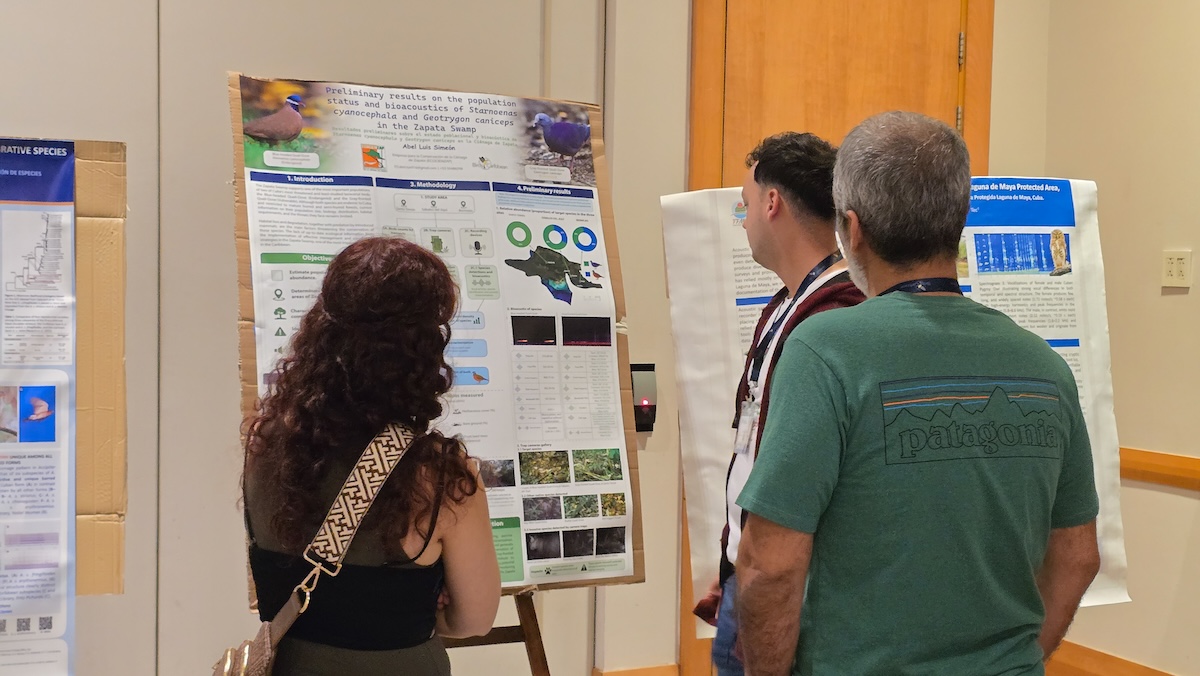
También recibí recomendaciones sobre el uso de modelos de ocupación en R para analizar los datos de mis estudios de transectos. Este enfoque resulta especialmente valioso para especies crípticas como la paloma perdiz y el camao, ya que los modelos de ocupación pueden ayudar a tener en cuenta la detección imperfecta —el hecho de que una especie pueda estar presente pero no sea detectada durante un estudio—. Esto puede proporcionar una comprensión más fiable de dónde se encuentran estas especies y cómo su distribución está relacionada con los hábitats que utilizan. Regresé con un cuaderno lleno de notas, nuevas perspectivas y muchas ideas que espero incorporar a las próximas fases del proyecto.
Regreso a casa inspirado
La conferencia también me permitió ampliar mi red de contactos y conocer a personas con las que espero colaborar en el futuro. Fue inspirador ver cómo, a pesar de los numerosos retos a los que se enfrentan nuestras islas, existe una comunidad comprometida que trabaja conjuntamente para conservar la biodiversidad del Caribe. Regresé a Cuba con nuevos conocimientos, nuevas amistades y una motivación aún mayor para seguir investigando y protegiendo nuestras aves.
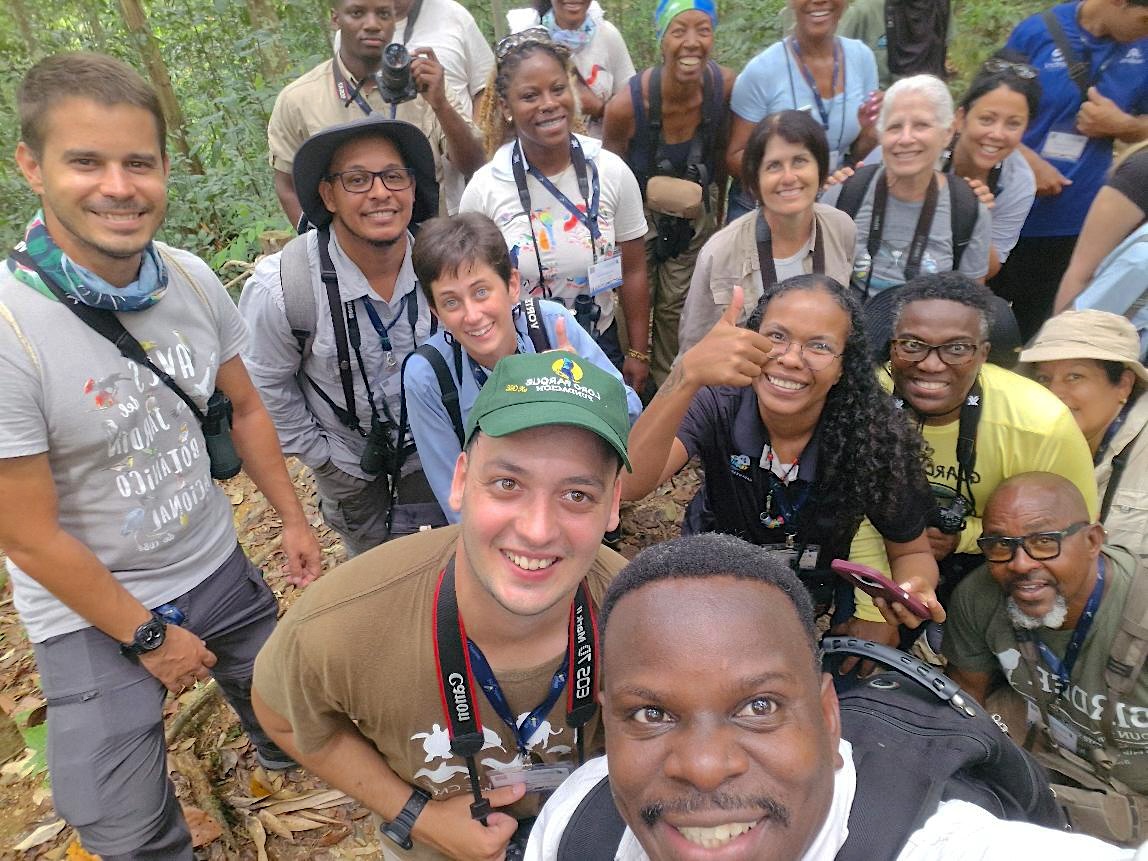
Nada de esto habría sido posible sin el apoyo de los donantes que hicieron posible mi participación. Su generosidad es una inversión en el crecimiento de los jóvenes conservacionistas y en proyectos que ayudarán a proteger la biodiversidad de nuestra región. Gracias a vosotros, pude representar a Cuba, compartir mi investigación y volver con herramientas, ideas y contactos que tendrán un impacto duradero en mi trabajo.
Esta ha sido mi primera Conferencia Internacional de BirdsCaribbean, pero espero que sea solo la primera de muchas. Me llevo recuerdos inolvidables, amistades que trascienden fronteras y la certeza de que la conservación es más fuerte cuando trabajamos juntos. ¡Gracias por creer en jóvenes investigadores como yo y por hacer posibles experiencias que inspiran y fortalecen el futuro de la conservación de las aves del Caribe!
Biografía: Abel Luis Simeón es un biólogo y ornitólogo cubano de 25 años. Su trabajo se centra en la investigación y la conservación de las aves endémicas y amenazadas de Cuba, con especial énfasis en la ecología y la conservación de la paloma codorniz de cabeza azul y la paloma codorniz de frente gris en el Parque Nacional de la Ciénaga de Zapata. Abel es uno de los galardonados de 2026 del Fondo David S. Lee para la Conservación de las Aves del Caribe.
Birds, Belonging, and New Beginnings: A Young Ornithologist’s First BirdsCaribbean Conference
For 25-year-old Cuban biologist Abel Luis Simeón, his first BirdsCaribbean conference represented a personal milestone. From long-anticipated encounters with Trinidad and Tobago’s extraordinary birds, to connecting with the passionate conservationists who share his deep commitment to Caribbean biodiversity, to sharing his own work protecting two of Cuba’s endemic doves, Abel returned home with new ideas, valuable connections, and renewed purpose. Read on for Abel’s reflections on a transformative conference experience.
There are moments that mark the beginning of a new chapter. For me, attending the 25th BirdsCaribbean International Conference in Trinidad and Tobago was one of them. As a young Cuban biologist and ornithologist, I had long dreamed of participating in a gathering where I could share experiences with people who, like me, dedicate their lives to the conservation of Caribbean birds.
Birds I had dreamed of seeing
Before traveling, one of the things I was most excited about was getting to know Trinidad and Tobago. I had always heard about its extraordinary diversity of birds and ecosystems, and being able to observe them in person exceeded my expectations. One of the most special memories from the conference took place during the visit to the Asa Wright Nature Centre. Hearing the powerful, resonant song of the Bearded Bellbirds for the first time was truly impressive. But if there was one moment I’d been imagining for years, it was witnessing the famous leks of the White-bearded Manakins. Seeing the males gathered together, performing their rapid movements and displays while producing their characteristic calls, was an experience I’ll never forget. These are the moments that remind us why we chose to dedicate our lives to the study and conservation of birds.
The most valuable part of the experience, however, was the people. During the conference, I had the opportunity to talk with researchers, students, conservationists, and professionals from across the Caribbean and beyond, all united by a shared passion: protecting our birds and the habitats on which they depend.
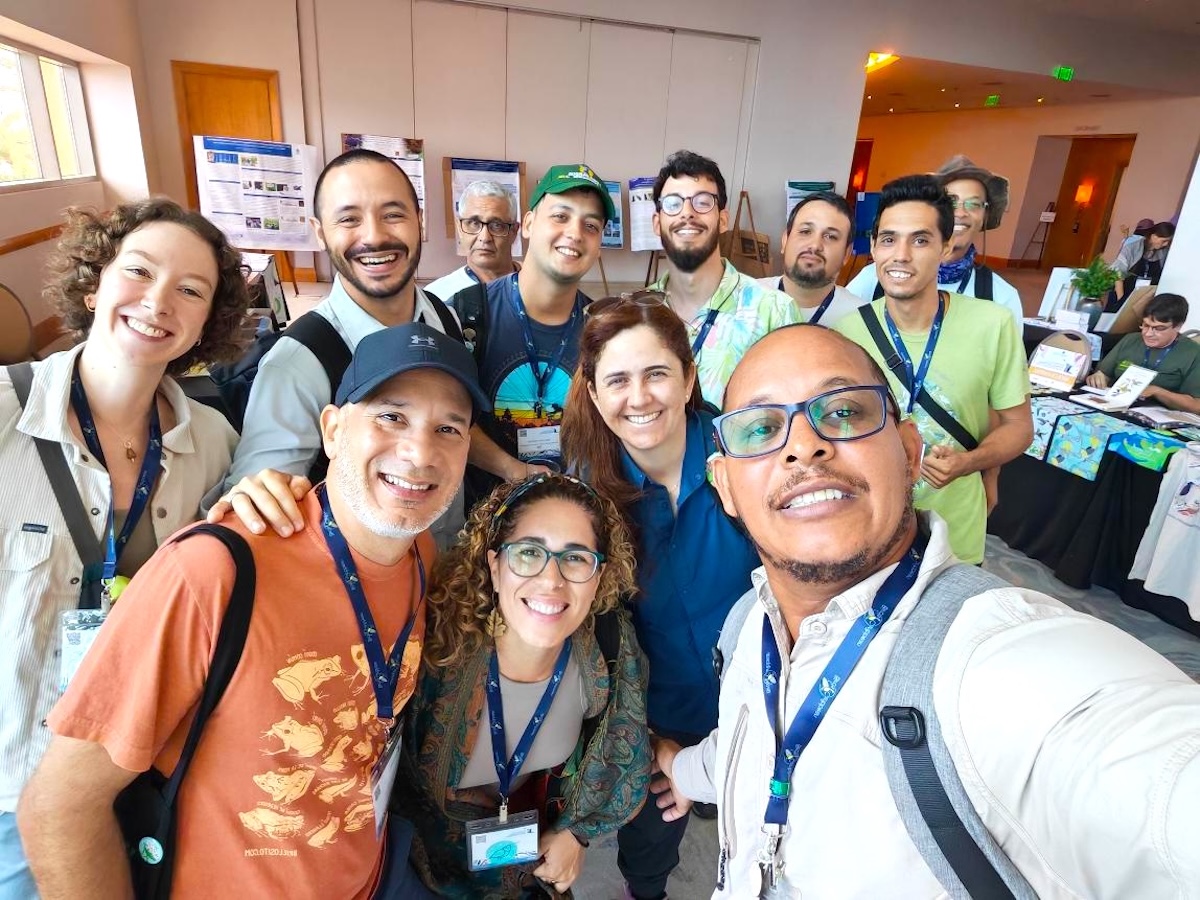
Sharing my science
One of the most important moments for me was presenting a poster on the preliminary results of the project I’m currently developing, thanks to a grant from the David S. Lee Fund for the Conservation of Caribbean Birds. My research focuses on the conservation of two endemic and threatened dove species in Cuba: the Blue-headed Quail-Dove (Starnoenas cyanocephala) (Endangered) and the Gray-fronted Quail-Dove (Geotrygon caniceps) (Vulnerable).
A notebook full of new ideas
Presenting my research provided an opportunity to exchange ideas with other researchers, who shared valuable recommendations on new analytical approaches, different ways to process data, and tools that could further strengthen my research. One particularly valuable recommendation was to explore Arbimon, a platform I had not previously used. As part of my project, I am conducting acoustic analyses of both target species, and until now I had primarily been using BirdNET Analyzer to help detect their calls in large volumes of recordings. Arbimon offers new possibilities for developing and refining my own acoustic classifier, which could make the detection and monitoring of my target species across many days of recordings even more robust.
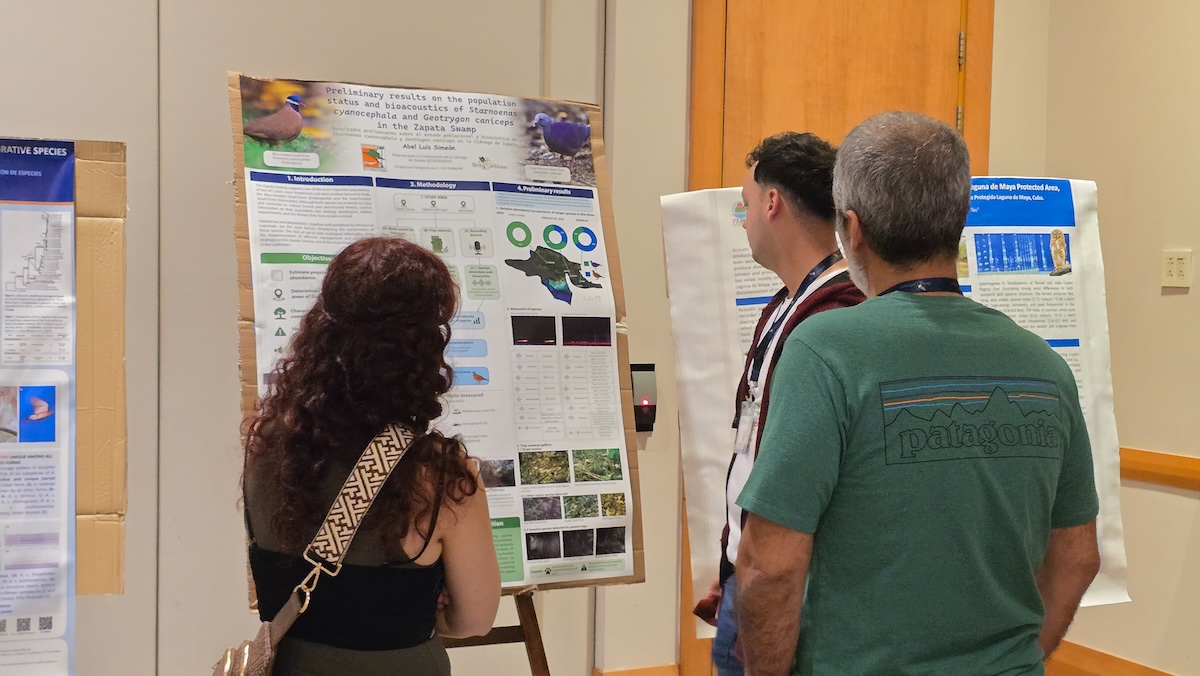
I also received recommendations on using occupancy models in R to analyze data from my transect surveys. This approach is especially valuable for cryptic species such as the Blue-headed and Gray-fronted Quail-Doves, because occupancy models can help account for imperfect detection i.e. when a species may be present but not detected during a survey. This can provide a more reliable understanding of where these species occur and how their distribution is related to the habitats they use. I returned with a notebook full of notes, new perspectives, and many ideas that I hope to incorporate into the next stages of the project.
Coming home inspired
The conference also allowed me to expand my network and meet people with whom I hope to collaborate in the future. It was inspiring to see how, despite the many challenges facing our islands, there is a committed community working together to conserve the Caribbean’s biodiversity. I returned to Cuba with new knowledge, new friendships, and even greater motivation to continue researching and protecting our birds.
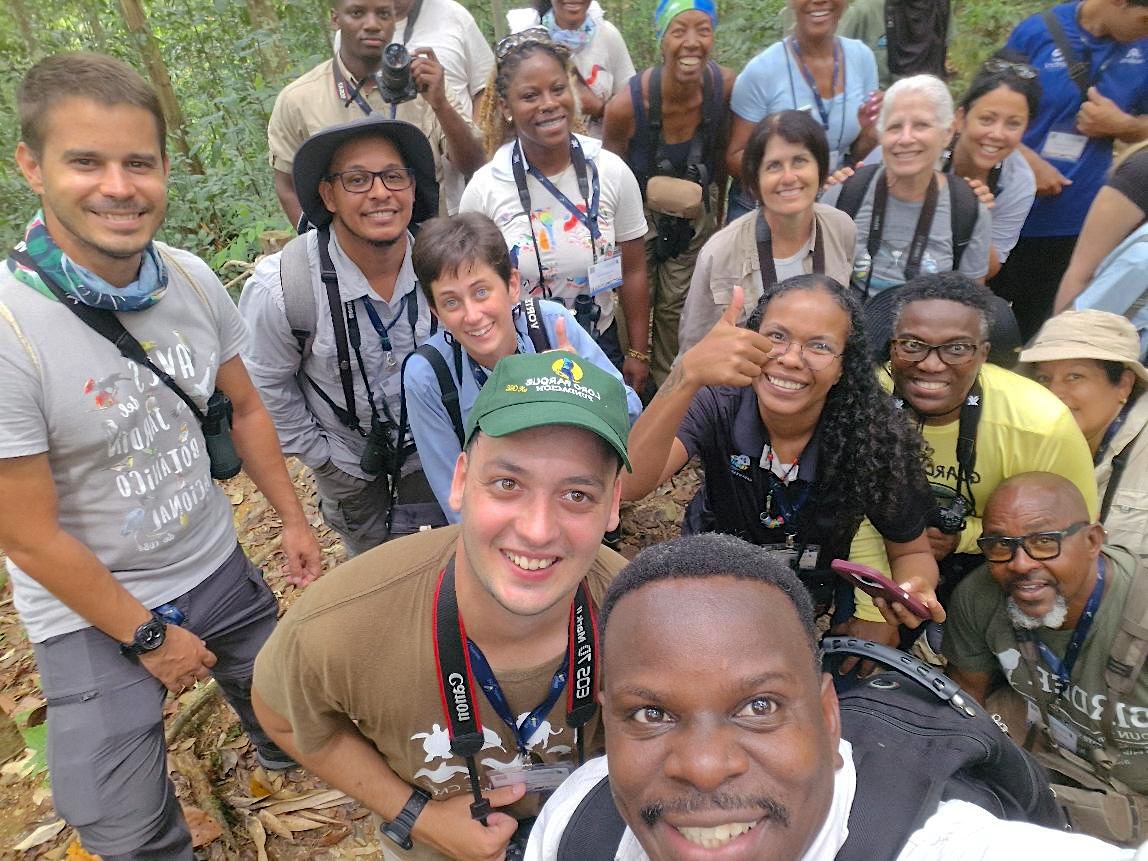
None of this would have been possible without the support of the donors who made my participation possible. Their generosity is an investment in the growth of young conservationists and in projects that will help protect our region’s biodiversity. Thanks to you, I was able to represent Cuba, share my research, and return with tools, ideas, and connections that will have a lasting impact on my work.
This was my first BirdsCaribbean International Conference, but I hope it is only the first of many. I take with me unforgettable memories, friendships that transcend borders, and the certainty that conservation is stronger when we work together. Thank you for believing in young researchers like me and for making possible experiences that inspire and strengthen the future of Caribbean bird conservation!
Biography: Abel Luis Simeón is a 25-year-old Cuban biologist and ornithologist. His work focuses on the research and conservation of Cuba’s endemic and threatened birds, with a special emphasis on the ecology and conservation of the Blue-headed Quail-Dove and the Gray-fronted Quail-Dove in the Ciénaga de Zapata National Park. Abel is a 2026 Awardee of the David S. Lee Fund for the Conservation of Caribbean Birds.