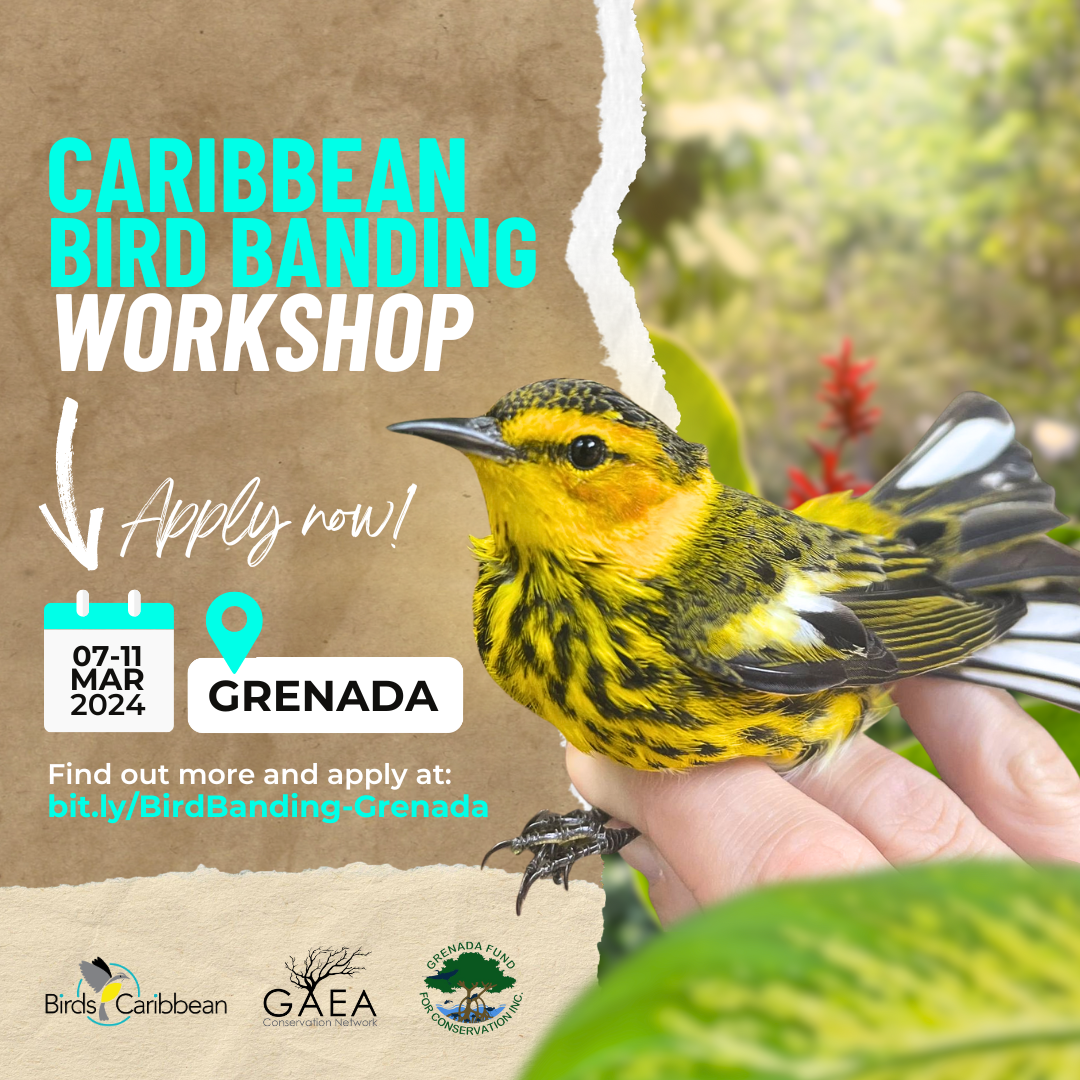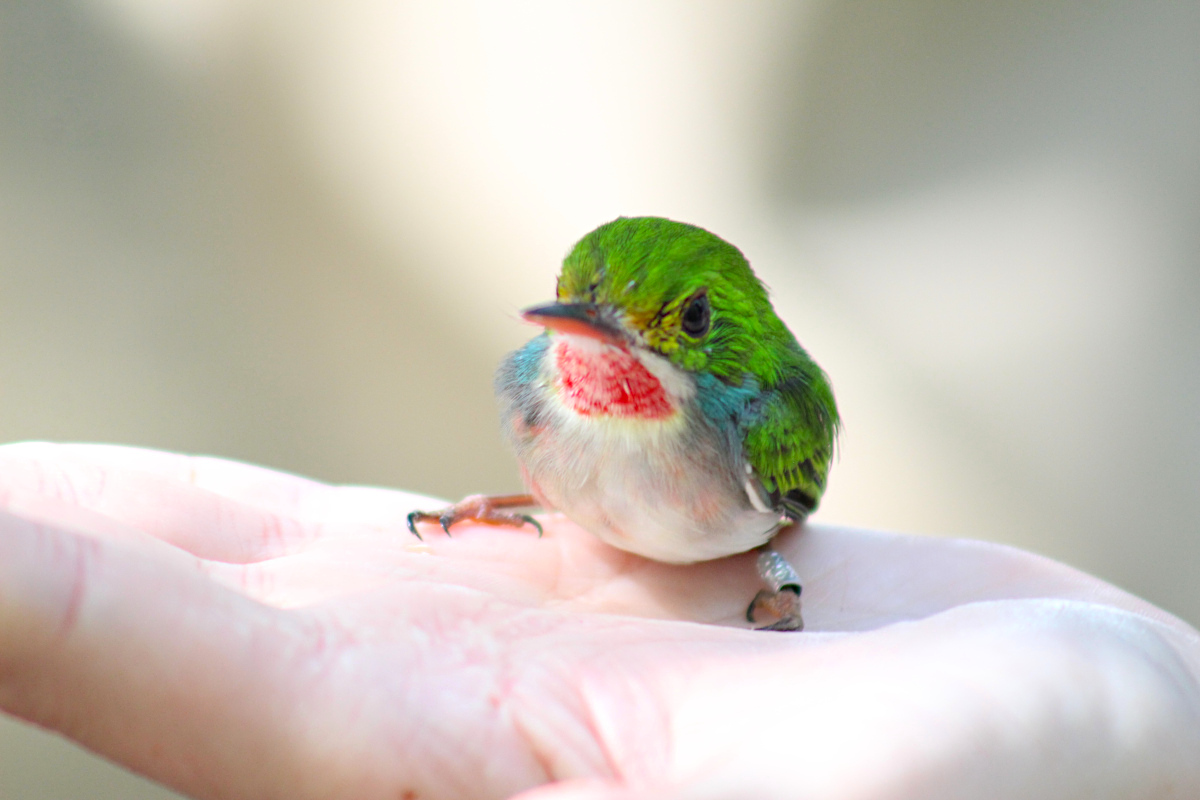
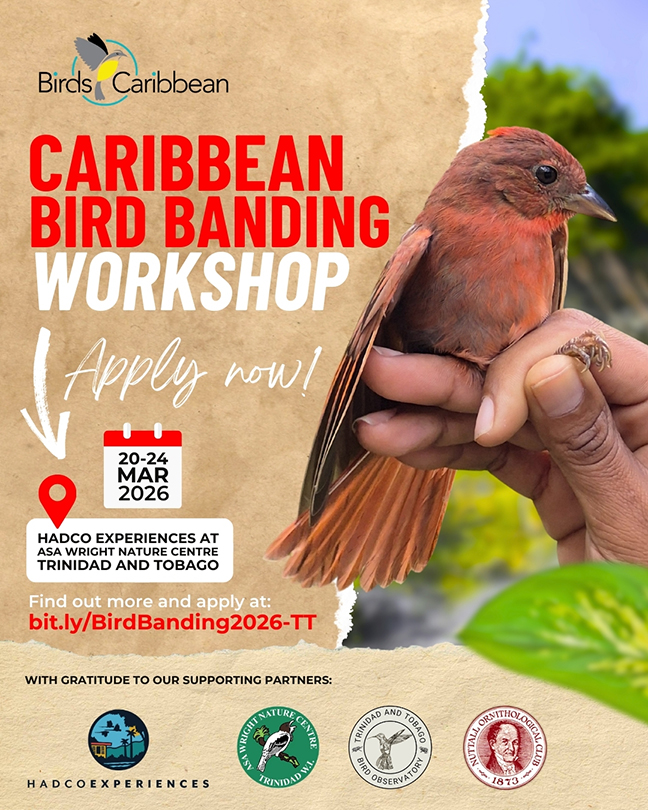
 The arrival of brightly colored, migratory warblers is a glorious time on the Caribbean birding calendar—but have you ever wondered about the lives of our vibrant guests?? Like: do they come back to the same spots in the Caribbean every year? How long do they live? And how are they faring when they visit our islands? Some of these warblers, like the delightful Prairie Warbler, have been shown to live for 8-10 years, returning faithfully to the same spots in the Caribbean! These valuable insights—the kinds that tell us about the health of our birds and how we can help them—are gained from bird banding. If you love Caribbean birds, and want to increase your ability to protect them—maybe you want to learn to put a ring (or band) on them!
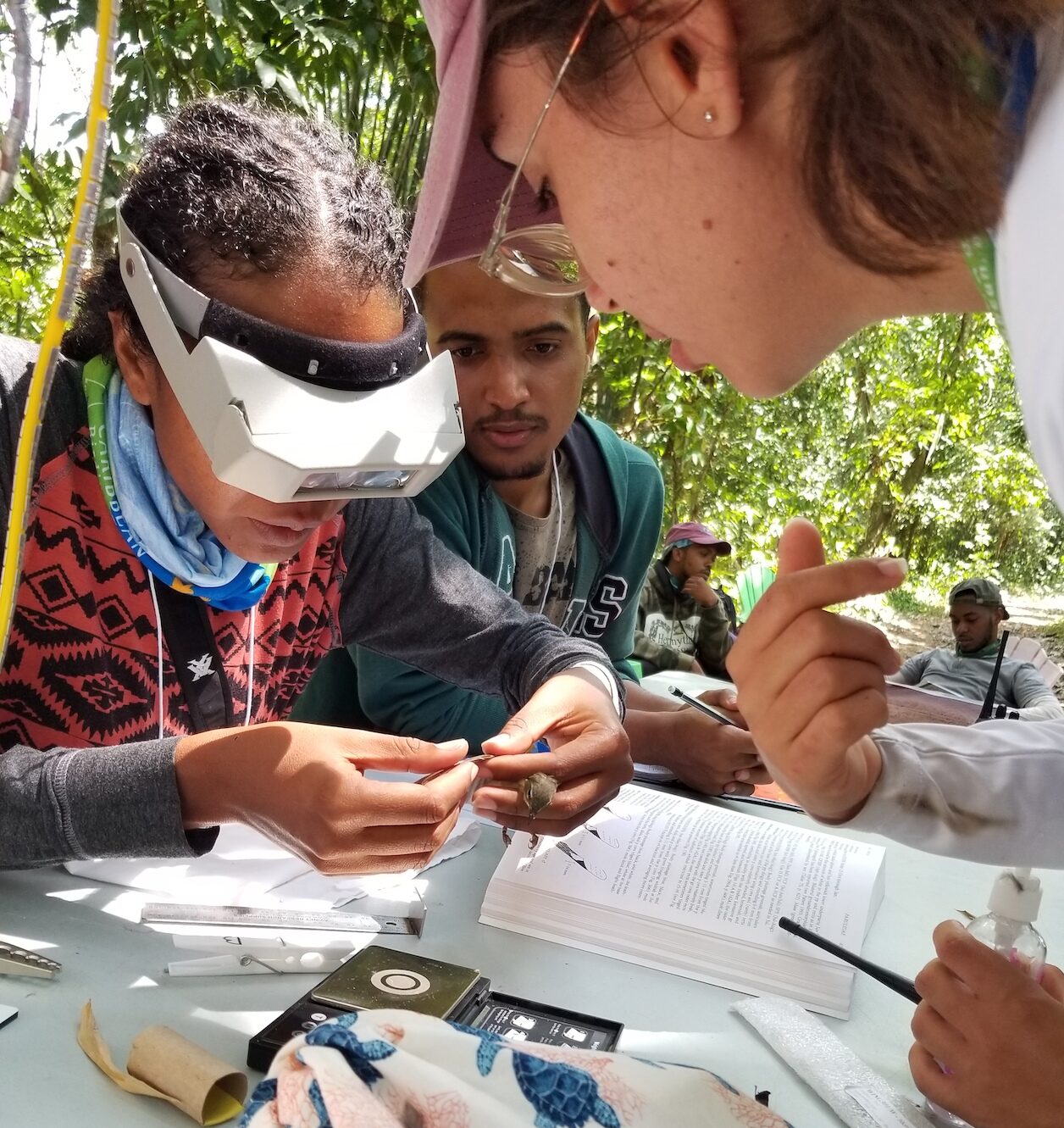
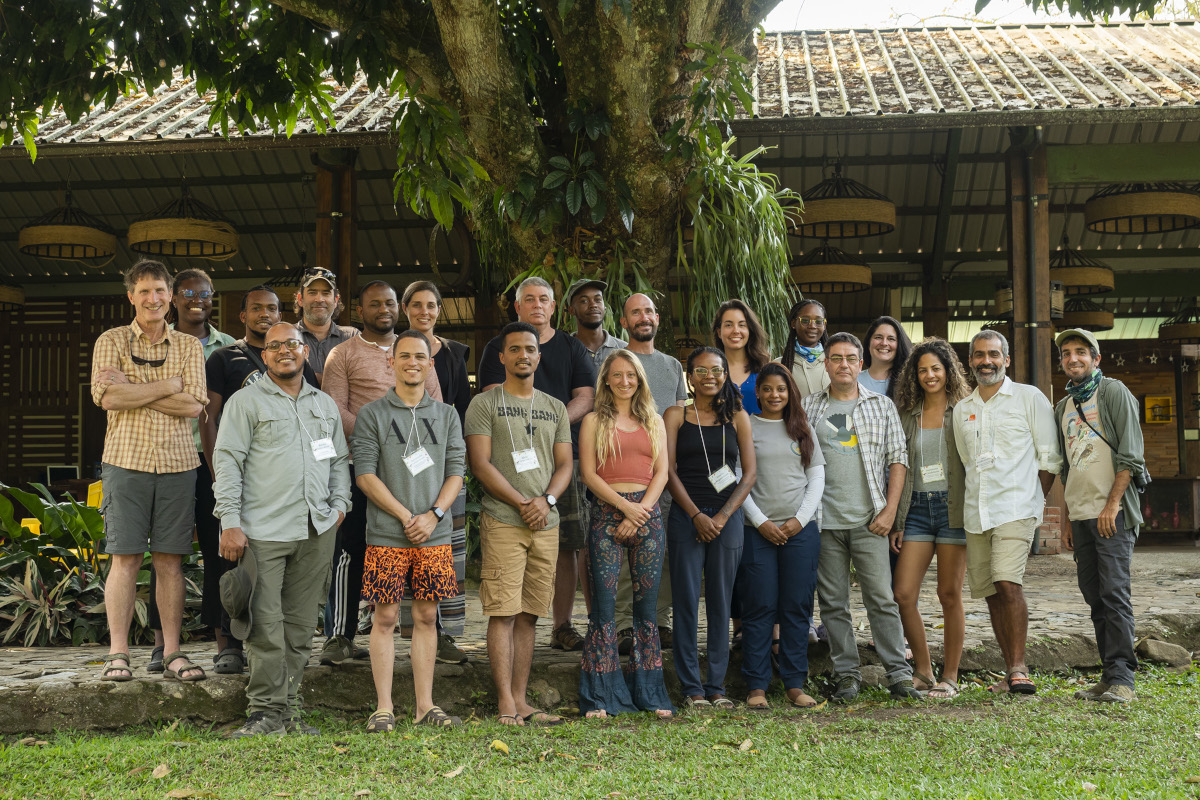
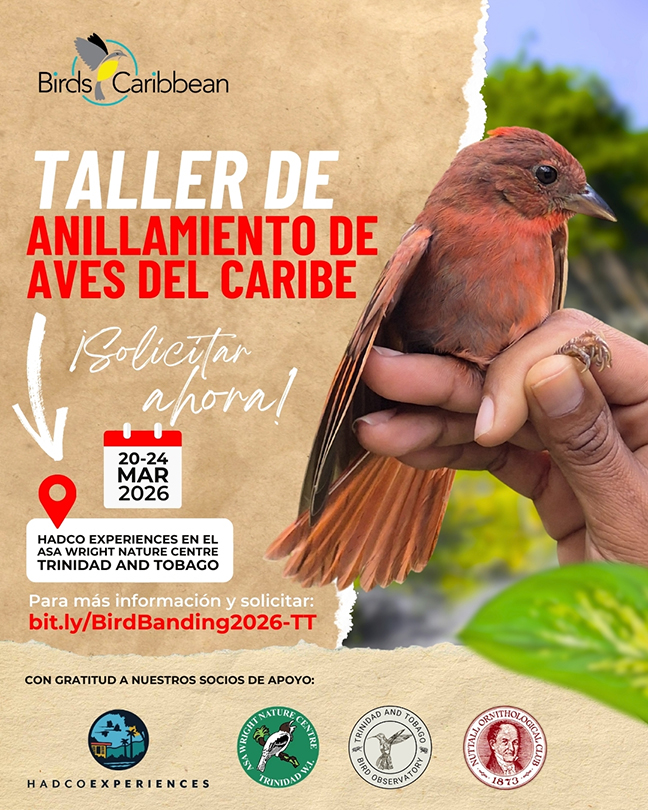
BirdsCaribbean is excited to invite applications to participate in a 5-day Caribbean Bird Banding Training Workshop! Participants will learn the basics of bird banding, from setting up a mist-net to examining molt patterns, through a blend of classroom and field based activities. We’ll also discuss and demonstrate the benefits of joining the Caribbean Bird Banding Network. We’re very excited to work with our local partner, the Trinidad and Tobago Bird Observatory, to provide this training opportunity at the internationally renowned HADCO Experiences at Asa Wright Nature Centre from 20-24 March, 2026.
Why do we band birds?
Bird surveys, like those covered in our Caribbean Landbird Monitoring Training Workshops, provide valuable information about abundance and species presence. But bird banding is a different methodology that takes a deeper dive into how bird populations are doing by assessing the condition of individual birds.
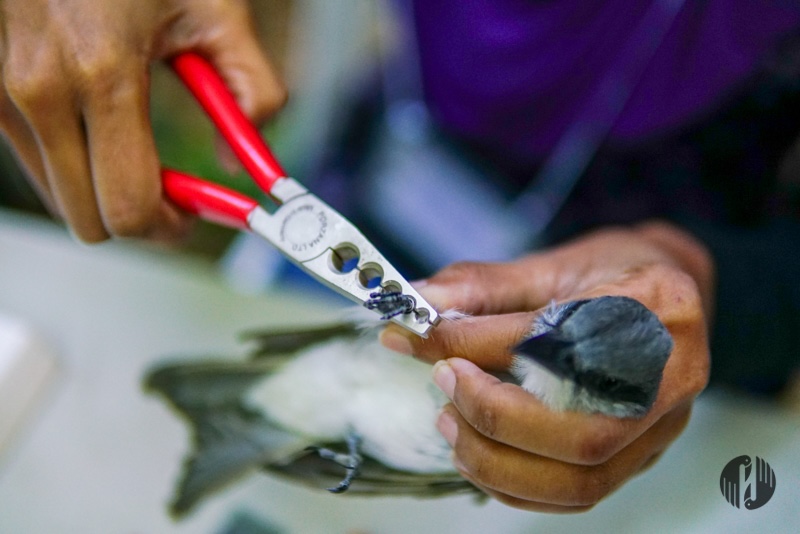
By individually marking birds with a band and assessing them in the hand, we can collect data that tell us about their demography and health, including:
- Their fat scores and weights, to assess the body condition of birds in different habitats and at different times of the year, shedding light on the quality of the habitats the birds are using.
- Aging birds using plumage to investigate demographic patterns.
- Using recapture records to learn about survivorship and longevity.
- Assessing the presence or absence of breeding characteristics to better understand the timing of breeding and life history for many of our understudied Caribbean endemics.
- Finding out which migratory routes our shared birds are taking, and gaining a better understanding of the factors influencing survival and longevity of various species.
Over the long-term, bird banding data can also help us understand patterns and trends in bird populations, to aid in their management and conservation.
About the workshop
This workshop is the fifth annual Caribbean Bird Banding (CBB) Training Workshop. It will cover many of the same topics explored in our previous CBB Training workshops held in The Bahamas (March 2022) and the Dominican Republic (March 2023, February 2025) and Grenada (March 2024). This workshop will focus on banding landbirds, with an emphasis on Passerines. We hope to provide banding training opportunities for other bird groups in the future.
The purpose of the workshop is to:
- Provide participants with a basic understanding of bird banding techniques and best practices.
- Discuss what it takes to set-up and run a bird banding station.
- Prepare participants for additional bird banding training and potential North American Banding Council (NABC) certifications (assistant, bander, trainer) in the future.
- Share information about the other training opportunities, resources, and community available through the CBB Network.


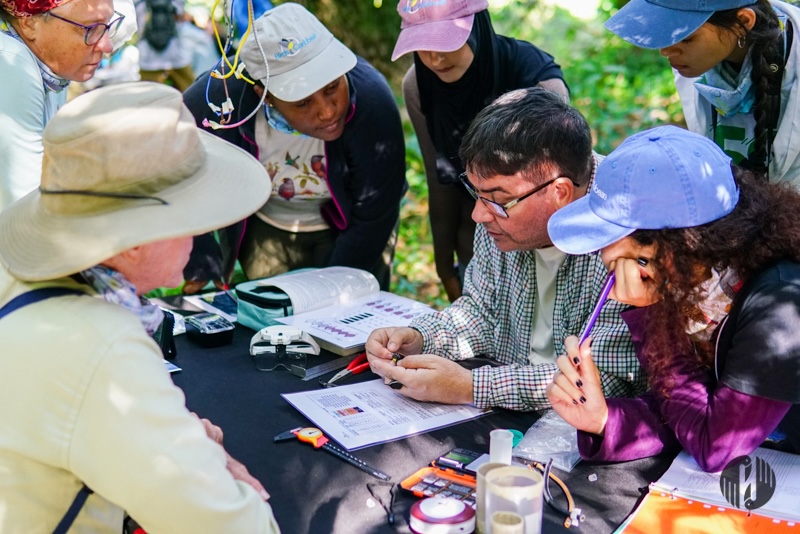
Several NABC-certified trainers will share their knowledge in the classroom, at the mist-net, and at the banding table, covering topics including:
- Proper set-up and placement of a mist-net
- Proper techniques for extracting birds from mist-nets
- Starting a banding station
- Bird first-aid and safety
- Bird banding ethics and basics
- Using bird banding for education and public demonstrations
- Aging birds using both WRP and Howell-Pyle terminology
- Molt patterns
In an effort to decrease the amount of time spent in the classroom, some content will be shared virtually prior to the in-person workshop. These virtual sessions will also be made available to a wider audience. Announcements will be made via our discussion group on the groups.io platform, which you can join here. Stay tuned for more information!
Is this Workshop for you?
This bilingual (English and Spanish) workshop is designed for Caribbean wildlife professionals and volunteers who are interested in gaining more experience with bird banding. Prior banding experience is not required. However, priority will be given to applicants who are likely to continue training to gain the knowledge, skills, and experience needed to contribute to or initiate avian research and/or banding programs on their home islands.
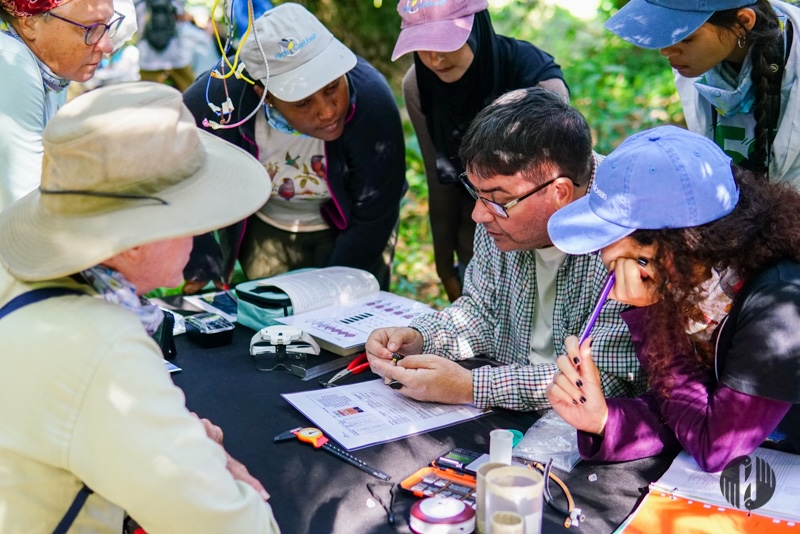
Bird banding is a complex skill to learn. This workshop is intended to be a starting point, and participants should not expect to leave the workshop with the necessary qualifications to band birds independently. To become fully immersed and practice what was learned at the workshop, participants will have the opportunity to be considered for bird banding internships following the workshop.
Funding and logistics
We aim to include approximately 15 participants in this workshop. BirdsCaribbean has funding for a limited number of need and merit-based scholarships to cover the costs of travel and participation. Participants who are able to contribute all or part of their costs can allow us to include additional participants. We encourage applications from all candidates who are well-suited to make use of this training, regardless of their financial ability. Participants should plan to arrive in Trinidad by 19 March and depart on 25 March.
Applications
If you are interested in participating in this workshop, please fill out this form by 7 January 2026.
English version: bit.ly/CBB-2026-Application-ENG
Versión Español: bit.ly/CBB2026-Solicitud-ESP
If you have any questions, please send an email to:
Maya Wilson, Landbird Program Manager
Maya.Wilson@BirdsCaribbean.org
Holly Garrod, Caribbean Bird Banding Coordinator
Holly.Garrod@BirdsCaribbean.org
Oportunidad de formación: Taller de anillamiento de aves caribeñas
 La llegada de las coloridas reinitas migratorias es un momento glorioso en el calendario de observación de aves del Caribe, pero ¿alguna vez te has preguntado cómo es la vida de nuestros vibrantes invitados? Por ejemplo: ¿regresan cada año a los mismos lugares del Caribe? ¿Cuánto tiempo viven? ¿Y cómo les va cuando visitan nuestras islas? Se ha demostrado que algunas de estas reinitas, como la encantadora reinita galana, viven entre 8 y 10 años y regresan fielmente a los mismos lugares del Caribe. Estos valiosos datos, que nos informan sobre la salud de nuestras aves y cómo podemos ayudarlas, se obtienen gracias al anillamiento de aves. Si te encantan las aves del Caribe y quieres aumentar tu capacidad para protegerlas, ¡quizás te interese aprender a ponerles un anillo!
¡BirdsCaribbean se complace en invitarte a presentar una solicitud para participar en un taller de formación sobre el anillamiento de aves en el Caribe, de 5 días de duración! Los participantes aprenderán los fundamentos del anillamiento de aves, desde la instalación de una red de niebla hasta el examen de los patrones de muda, mediante una combinación de actividades en el aula y sobre el terreno. También discutiremos y demostraremos los beneficios de unirse a la Red de Anillamiento de Aves del Caribe (CBBN, por sus siglas en inglés). Estamos muy emocionados de trabajar con nuestro socio local, el Observatorio de Aves de Trinidad y Tobago, para ofrecer esta oportunidad de formación en el internacionalmente reconocido HADCO Experiences en el Centro de Naturaleza Asa Wright, del 20 al 24 de marzo de 2026.
¿Por qué anillamos aves?
Los censos de aves, como los que se tratan en nuestros talleres de formación sobre seguimiento de aves terrestres en el Caribe, proporcionan información valiosa sobre la abundancia y la presencia de especies. Sin embargo, el anillamiento de aves es una metodología diferente que permite profundizar en el estado de las poblaciones de aves mediante la evaluación del estado de cada ejemplar.
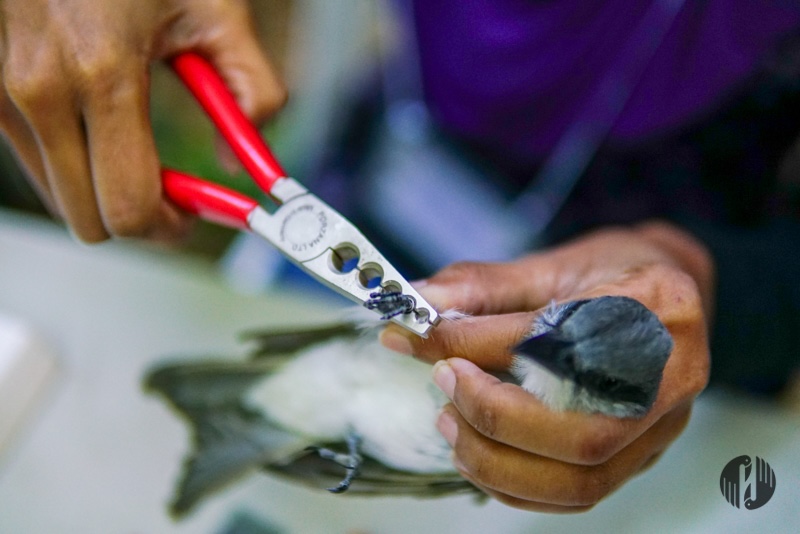
Al marcar individualmente a las aves con un anillo y evaluarlas en la mano, podemos recopilar datos que nos informan sobre su demografía y salud, entre los que se incluyen:
- Sus índices de grasa y peso, para evaluar el estado físico de las aves en diferentes hábitats y en diferentes épocas del año, lo que arroja luz sobre la calidad de los hábitats que utilizan las aves.
- Determinación de la edad de las aves utilizando el plumaje para investigar patrones demográficos.
- Utilización de registros de recaptura para obtener información sobre la supervivencia y la longevidad.
- Evaluación de la presencia o ausencia de características reproductivas para comprender mejor el momento de la reproducción y el ciclo vital de muchas de nuestras especies endémicas del Caribe, sobre las que se dispone de poca información.
- Descubrir cuáles rutas migratorias siguen nuestras aves comunes y comprender mejor los factores que influyen en la supervivencia y la longevidad de diversas especies.
A largo plazo, los datos obtenidos mediante el anillamiento de aves también pueden ayudarnos a comprender los patrones y tendencias de las poblaciones de aves, lo que contribuye a su manejo y conservación.
Acerca del taller
Este taller es el quinto taller anual de capacitación en anillamiento de aves en el Caribe (CBB). Abarcará muchos de los mismos temas tratados en nuestros anteriores talleres de capacitación de la CBBN celebrados en las Bahamas (marzo de 2022), la República Dominicana (marzo de 2023, febrero de 2025) y Granada (marzo de 2024). Este taller se centrará en el anillamiento de aves terrestres, con especial atención a los paseriformes. Esperamos poder ofrecer en el futuro oportunidades de capacitación en anillamiento para otros grupos de aves.
Los objetivos del taller son:
- Proporcionar a los participantes conocimientos básicos sobre las técnicas y mejores prácticas en anillamiento de aves.
- Debatir qué se necesita para montar y manejar una estación de anillamiento de aves.
- Preparar a los participantes para recibir formación adicional sobre anillamiento de aves y obtener posibles certificaciones del Consejo Norteamericano de Anillamiento (NABC, por sus siglas en inglés) (asistente, anillador, entrenador) en el futuro.
- Compartir información sobre otras oportunidades de capacitación, recursos y comunidades disponibles a través de la red CBBN.


Varios entrenadores certificados por el NABC compartirán sus conocimientos en el aula, en las redes de niebla y en la mesa de anillamiento, cubriendo temas como:
- Instalación y manejo adecuado de una red de niebla.
- Técnicas apropiadas para extraer aves de las redes de niebla.
- Puesta en marcha de una estación de anillamiento.
- Primeros auxilios y seguridad para las aves.
- Ética y conceptos básicos del anillamiento de aves.
- Uso del anillamiento de aves con fines educativos y para demostraciones públicas.
- Determinación de la edad de las aves utilizando la terminología W-R-P y Howell-Pyle.
- Patrones de muda.
Con el fin de reducir el tiempo que se pasa en el aula, parte del contenido se compartirá virtualmente antes del taller presencial. Estas sesiones virtuales también estarán disponibles para un público más amplio. Los anuncios se realizarán a través de nuestro grupo de debate en la plataforma groups.io, al que puedes unirte aquí. ¡Estad atentos para más información!
¿Este taller es para ti?
Este taller bilingüe (inglés y español) está diseñado para profesionales y voluntarios dedicados a la fauna silvestre del Caribe que estén interesados en adquirir más experiencia en el anillamiento de aves. No se requiere experiencia previa en anillamiento. Sin embargo, se dará prioridad a los solicitantes que probablemente continúen su formación para adquirir los conocimientos, las habilidades y la experiencia necesarios para contribuir o iniciar programas de investigación y/o anillamiento de aves en sus islas de origen.
El anillamiento de aves es una habilidad compleja de aprender. Este taller pretende ser un punto de partida, y los participantes no deben esperar salir del taller con las cualificaciones necesarias para anillar aves de forma independiente. Para sumergirse por completo y practicar lo aprendido en el taller, los participantes tendrán la oportunidad de ser considerados para realizar prácticas de anillamiento de aves después del taller.
Financiación y logística
Nuestro objetivo es incluir aproximadamente a 15 participantes en este taller. BirdsCaribbean dispone de fondos para un número limitado de becas basadas en las necesidades y los méritos, que cubrirán los gastos de viaje y participación. Los participantes que puedan contribuir con la totalidad o parte de los gastos nos permitirán incluir a más participantes. Animamos a todos aquellos candidatos que reúnan los requisitos a aprovechar esta formación y a que presenten su solicitud, independientemente de su capacidad económica. Los participantes deben planificar su llegada a Trinidad para el 19 de marzo y su salida para el 25 de marzo.
Solicitudes
Si estás interesado en participar en este taller, llena este formulario antes del 7 de enero de 206.
Versión en inglés: bit.ly/CBB-2026-Application-ENG
Versión Español: bit.ly/CBB2026-Solicitud-ESP

Si tienes alguna pregunta, envía un correo electrónico a:
Maya Wilson, Gerente del Programa de Aves Terrestres
Maya.Wilson@BirdsCaribbean.org
Holly Garrod, Coordinadora de la Red de Anillamiento de Aves del Caribe
Holly.Garrod@BirdsCaribbean.org