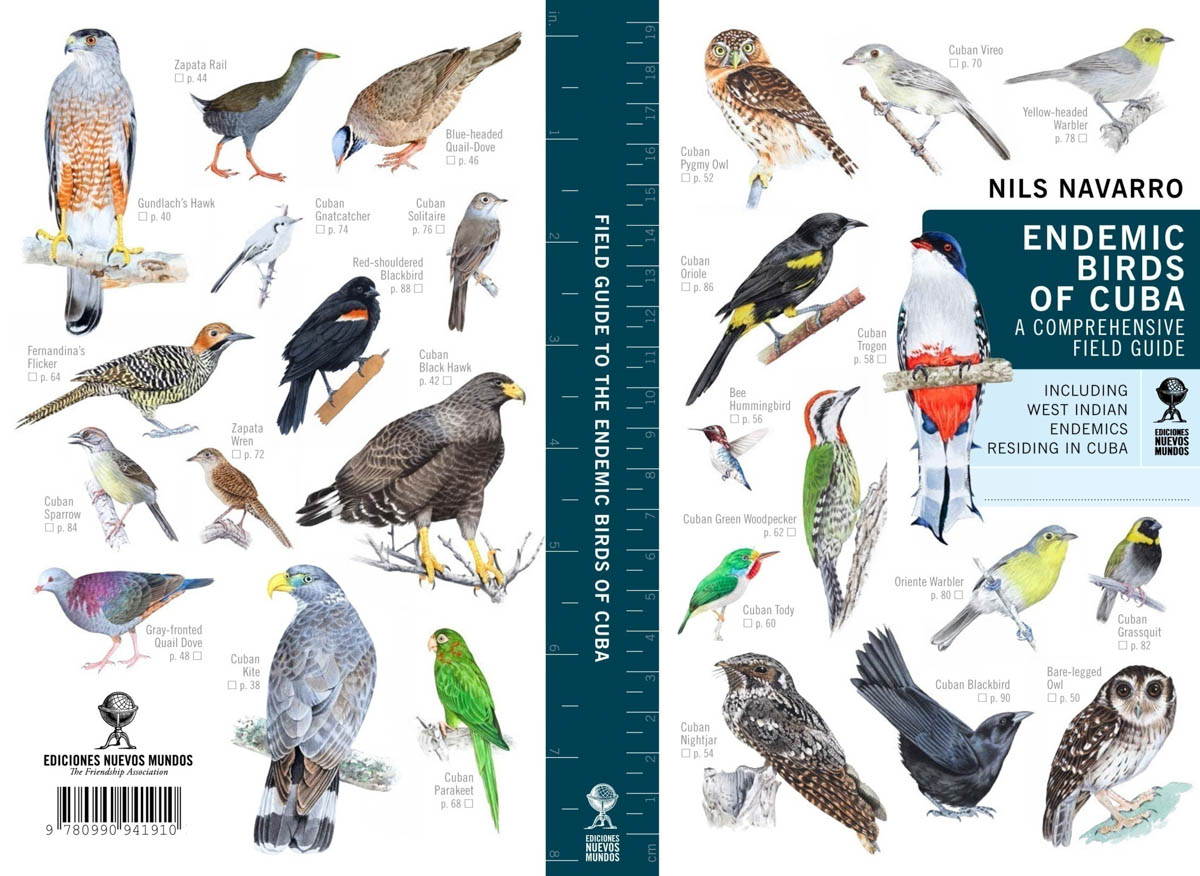
The revolutionary new field guide, Endemic Birds of Cuba – A Comprehensive Field Guide, was over ten years in the making.
A revolutionary new field guide, Endemic Birds of Cuba – A Comprehensive Field Guide is now available for purchase. This ground-breaking guide, authored by Nils Navarro, extraordinarily talented wildlife artist, illustrator and scientist, was over ten years in the making. It promises to set a new standard for field guides.
This is the first field guide focused on Cuban endemic birds. The book is worth owning for the artwork alone. The first thing to note are the large, stunningly beautiful illustrations. Each bird comes to life on the page, thanks to Nils’ intimate knowledge of each species from countless hours of careful observation in the field. The author also photographed and studied museum specimens to ensure that all details were accurately captured.
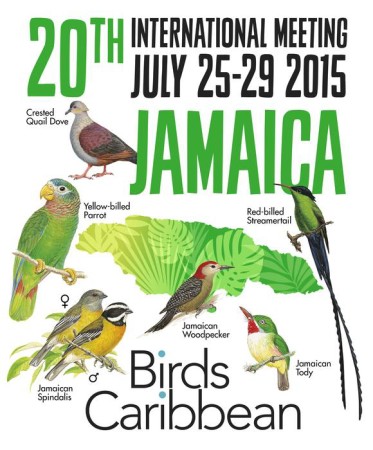
BirdsCaribbean was honored to launch this one-of-a-kind field guide in July 2015 at their 20th International Conference in Jamaica with a keynote address by Nils. Copies sold out immediately with rave reviews by members, avid bird watchers, ornithologists, and conservationists. The guide is praised not only for its gorgeous artwork and comprehensive information, but also for its innovative concept. Unlike other guides, this one combines the best of both the British birding style of writing detailed notes while in the field together with the North American preference of using a field guide and checklists while birding. Read more
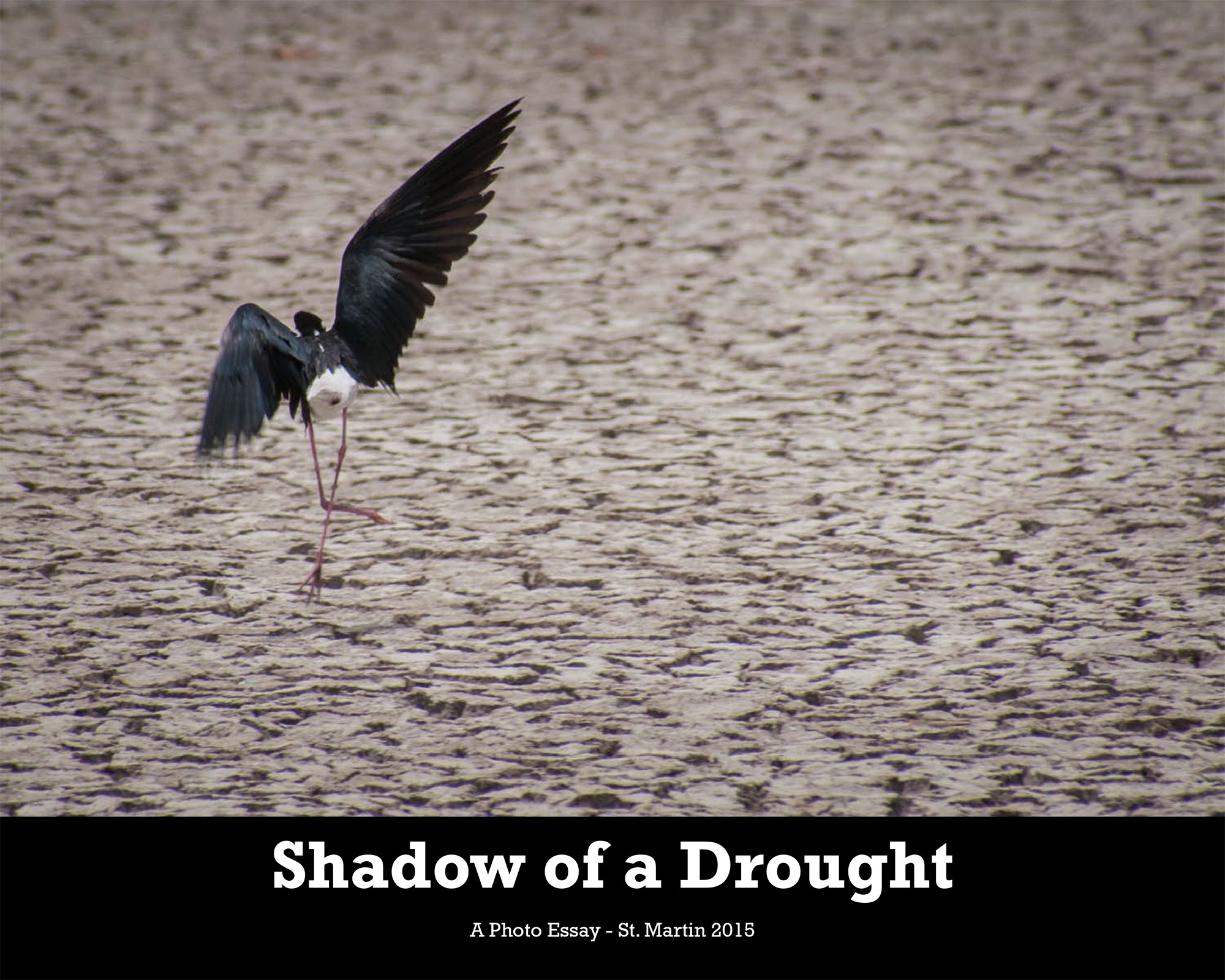
The photo essay Shadow of a Drought is available as a free download in both English and French.Each year our member and partner organizations throughout the Caribbean find new and exciting ways to engage the public as we celebrate International Migratory Bird Day. This year, BirdsCaribbean member organization Les Fruits de Mer created a unique photo essay highlighting the recent drought that has beset most of the region and its impact on migratory bird habitats. The 2015 theme of International Migratory Bird Day is Restore Habitat, Restore Birds.
Released as part of the Migratory Bird Festival that the group has hosted on St. Martin for the past three years, the photo essay, Shadow of a Drought, is available online and can be downloaded as a free ebook from their website. Selections from the photo essay were also exhibited at the event. Although all the pictures were taken on St. Martin, the images resonate with islanders throughout the region who have seen so many of the same scenes.
According to the photographer, Mark Yokoyama, the photo essay was a multi-purpose endeavor: “We wanted to create something that was timely and topical, but also something worth revisiting even after the current drought is over. It was an opportunity to explore seasonal and cyclical weather patterns, the impact of human activity on different scales, and the resilience of natural systems. This year’s habitat restoration theme, and the fact that wetlands are both an important migratory bird habitat and profoundly impacted by drought, made this a great tool for both promoting and enhancing our Migratory Bird Festival.”
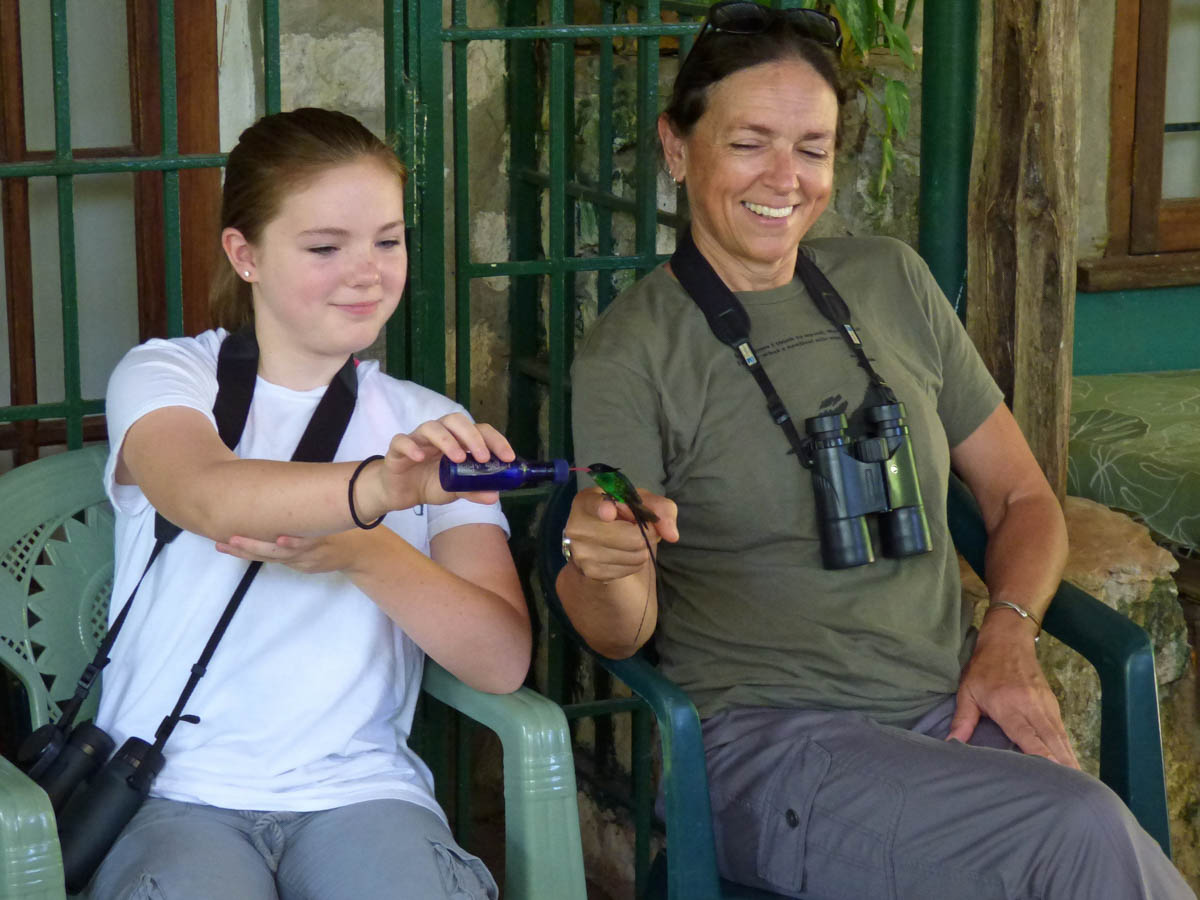
Fun with Hummingbirds at Rocklands by Wendy Lee.BirdsCaribbean’s first ever photography competition, “hatched” at our 20th International Meeting in Jamaica, has proven to be a great success. The three judges had considerable enjoyment looking through 126 photos submitted on BirdsCaribbean’s Flickr group (look for tag “BCPhotoContest2015”) by many fine photographers.
This year’s contest featured three distinct categories as well as an overall Grand Prize Winner. The Endemics category showcased the bird species found only on Jamaica. Fun with Birds and People highlighted both human-bird interaction and the International Meeting itself. Birds and Nature explored birds as well as their habitats and the other animals and plants that make up island ecosystems.
There was much to consider in the birds photographed including composition, focus, colour and overall interest. The judges were unanimous in their decisions for the following prize winners.
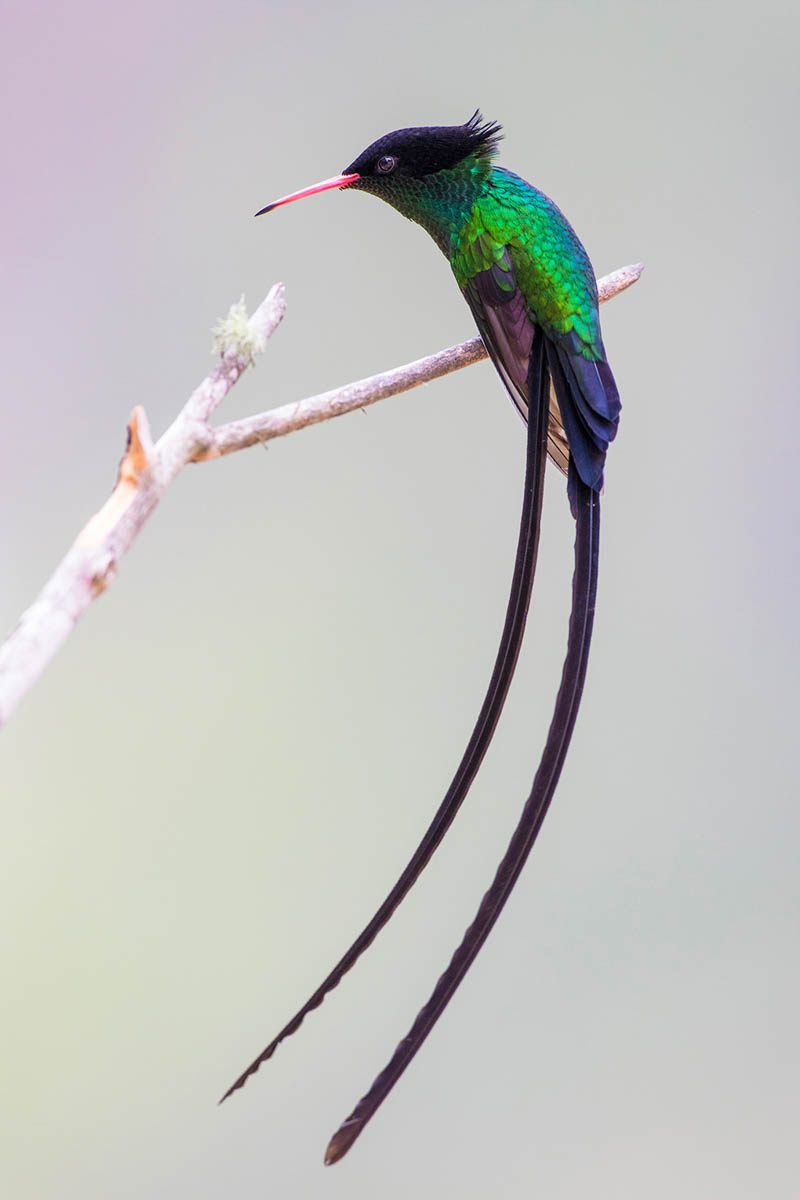
Grand Prize Winner Red-billed Streamertail by Rafy Rodriguez.
Thanks also to our three wonderful judges, Andrew Dobson, Claude Fletcher and Stokely Saddler, for their time, expertise, and careful consideration of all the photos.
Finally, thanks to all the photographers who participated in the contest! Many excellent shots were submitted, making the decision on the winning photos a real challenge for the judges. To see the entries in each category, follow these links: Endemics, Fun with Birds and People, and Birds and Nature.
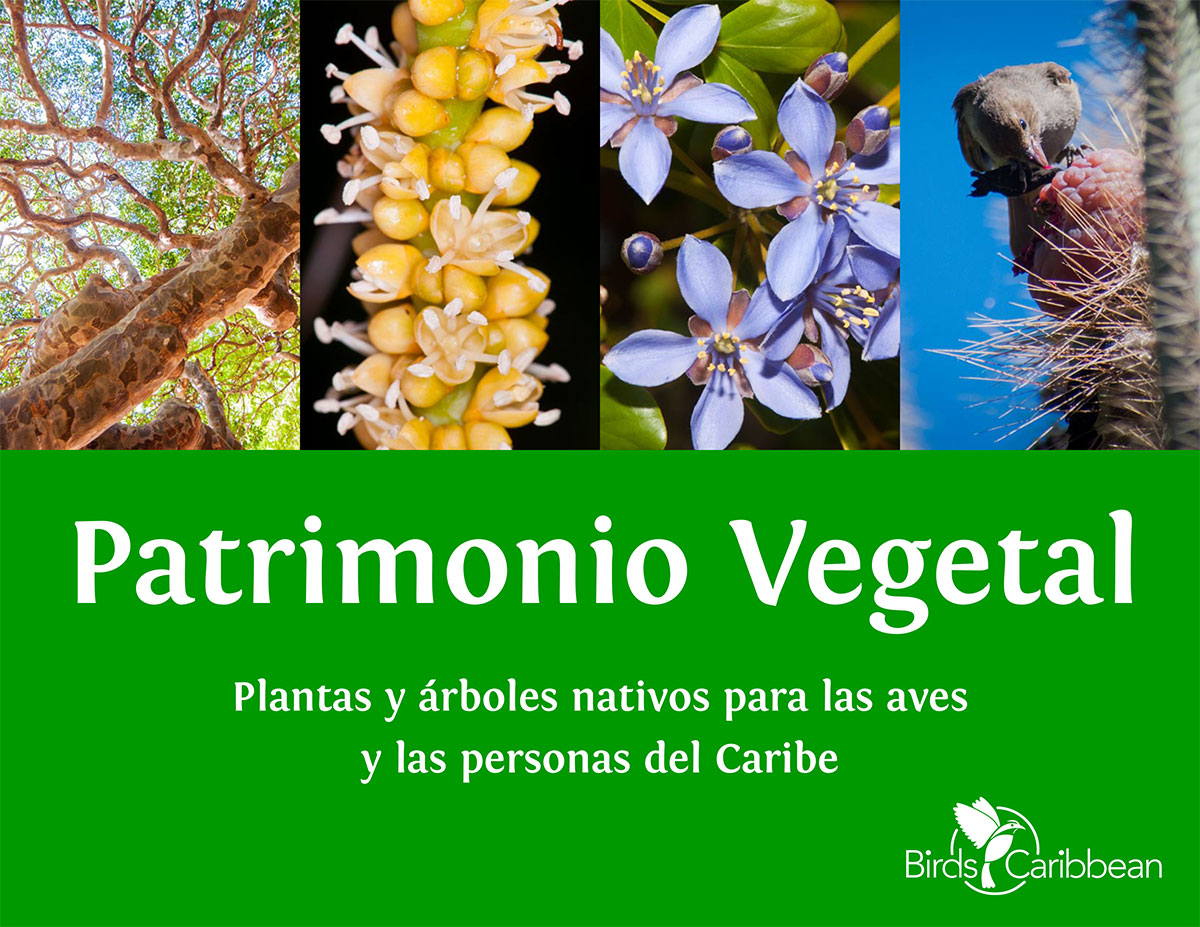
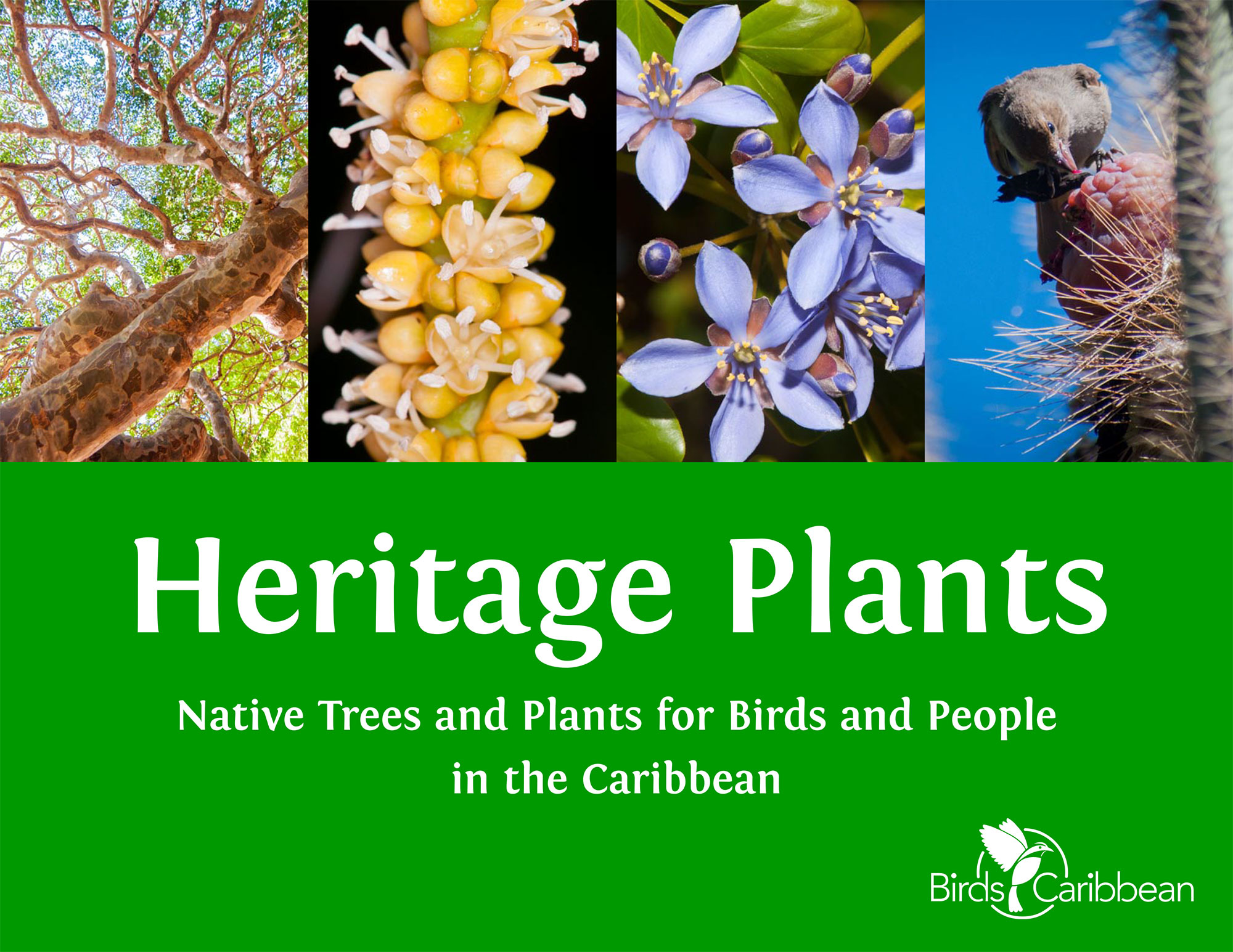
Patrimonio Vegetal is part of BirdsCaribbean’s effort to provide resources in multiple languages.The BirdsCaribbean-produced guide to bird-friendly gardening with native plants has been translated into Spanish and is available now on the Resources page of the BirdsCaribbean website. The book—called Heritage Plants in its English edition—was produced collaboratively by members of BirdsCaribbean and translated into Spanish by Juan Carlos Fernández Ordóñez. It was produced to accompany the 2015 International Migratory Bird Day theme: Restore Habitats, Restore Birds.
The book emphasizes the importance of native plants to Caribbean birds and other animals. While many islands are heavily developed, bird-friendly gardening and native tree plantings in neighborhoods can help people and wildlife co-exist. The trees and plants featured in the book were selected specifically for their value to birds. The book also includes general advice about creating bird-friendly backyards and habitat renewal as well as links to resources with additional information.
Mazarine Treyz conducting a fundraising workshop at the BirdsCaribbean International Meeting in Jamaica. (Photo by Emma Lewis)After facilitating an incredibly useful and well-received workshop at BirdsCaribbean’s International Meeting this summer, fundraising guru Mazarine Treyz has partnered with BirdsCaribbean to offer free webinars to our members. The series will start with her Crucial Year End Giving Strategies Webinar, just in time to help you craft the perfect year-end appeal for your organization.
According to Blackbaud, most money is raised in the last quarter of the year. Around the holidays, people tend to give more, both online and offline. This means that your year-end appeal letter is a critical element of your fundraising success. How can you take advantage of this most wonderful time of the year? Even if you’ve written an appeal letter or two before, why not get some new tactics to raise even more this December?
In this event, you’ll learn:
What are the different kinds of stories, and how can you tell them for your cause?
What are appropriate fundraising pictures for your letter?
How can you make your mission URGENT for your donors?
What formatting mistakes do people often make with their appeals? How can you avoid them?
How to talk about your nonprofit’s accomplishments in a donor-centered way.
Whether you’re creating your first year-end appeal or you simply want to improve your results you got last year, this presentation will help you!
If you are a BirdsCaribbean member, you can register for this free webinar now. If you’re not a BirdsCaribbean member or need to renew your membership you can do that quickly and easily online. The normal cost of this webinar is $97/person and individual membership to BirdsCaribbean is only $25. Learn more about Mazarine on her website.
BirdsCaribbean webinars are fast becoming a can’t-miss attraction.
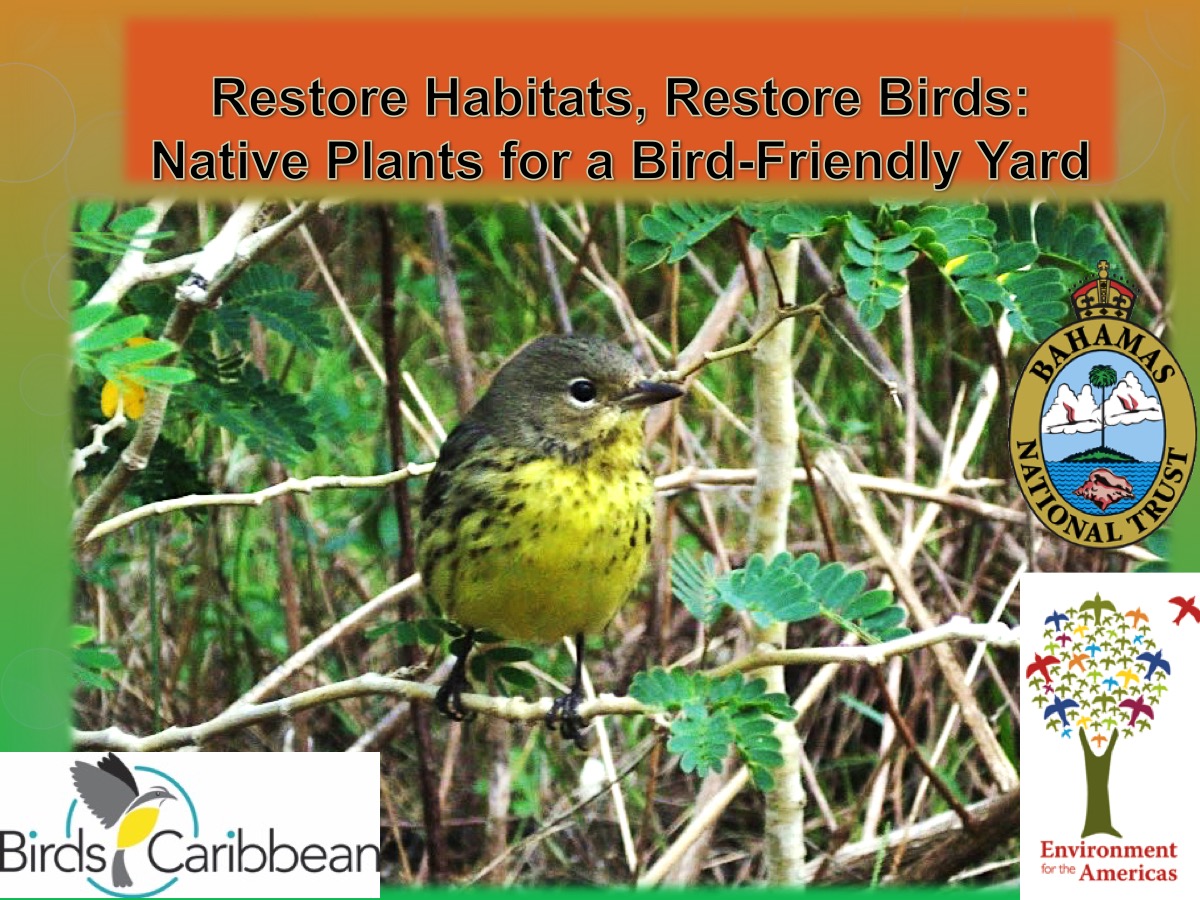
In preparation for the International Migratory Bird Day celebrations of 2015, BirdsCaribbean and the Bahamas National Trust co-hosted a special webinar about bird-friendly gardening: Native Plants for a Bird-Friendly Yard. Designed to tie into this year’s Restore Habitats, Restore Birds theme, this webinar focused on the native plants that are most beneficial to native Caribbean birds.
Scott Johnson kicked things off in style and was joined for this webinar by guest panelists and native plant experts, Dr. Joe Wunderle and Mr. Pericles Maillis. The first part of the presentation gives an introduction to bird migration and the many challenges and threats that birds face on migration.
The second part of the presentation talks about what birds need to survive—food, water and shelter (habitat)— and how we can help birds by planting plants that are valuable to birds, providing a source of water, restoring habitats in our communities, and more. The third part of the presentation gives information on 10 plants that are great for both migrant and resident birds and gives you some tips on how to get started with planting a bird-friendly yard. View the one-hour webinar right here:
The 2015 raffle prizes include beautiful works of original art.The drawing for BirdsCaribbean’s 2015 raffle is coming up October 24th, but you still have time to purchase tickets. The proceeds from the raffle support our conservation programs and to provide travel support for BirdsCaribbean delegates to attend workshops and conferences.
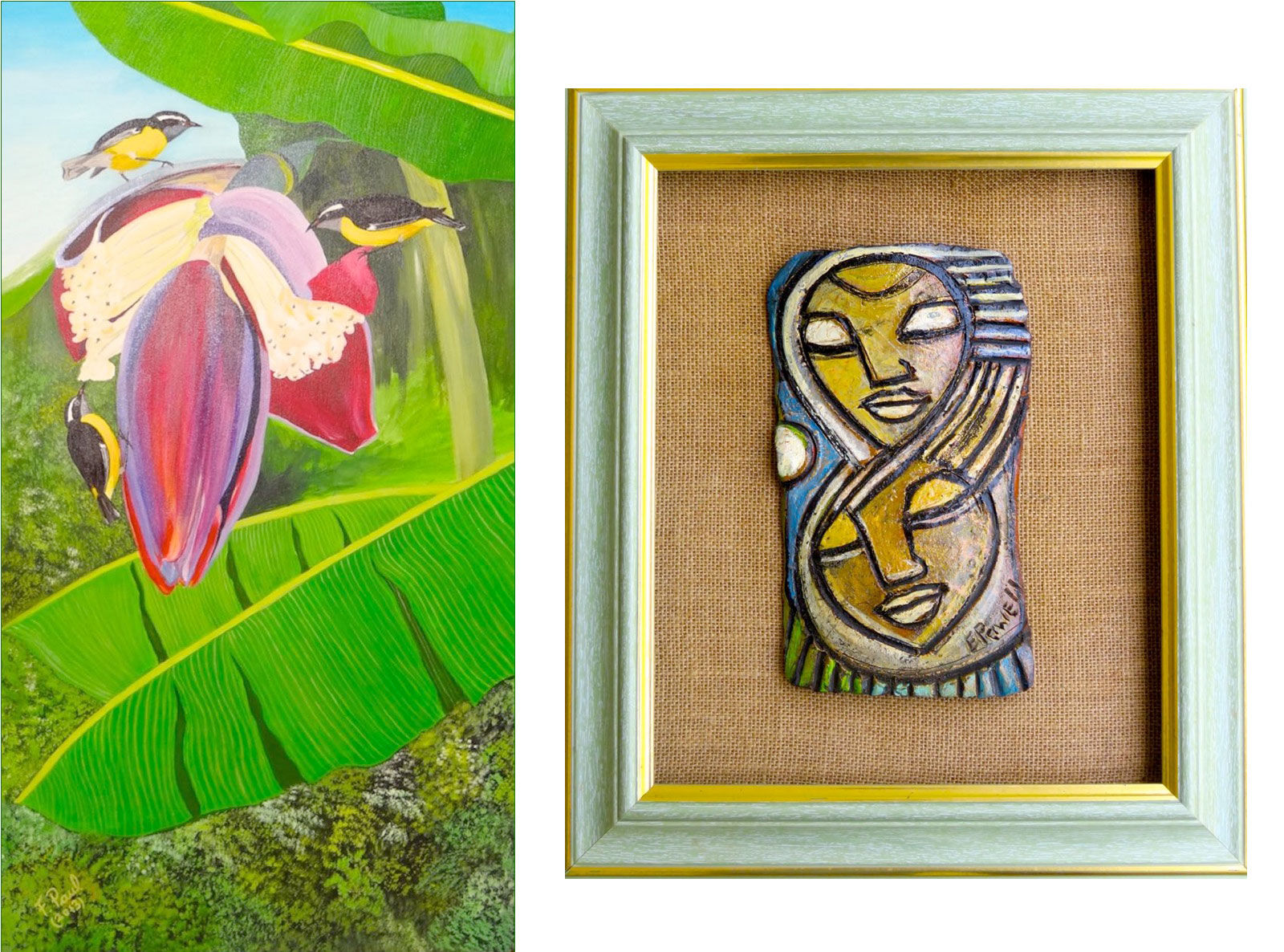
The prizes this year are fantastic if you are a bird lover, an art lover or need a new pair of binoculars: an original painting of Bananaquits on Banana Flower by acclaimed Grenadian wildlife artist Freddy Paul, generously donated by the artist, a pair of Vortex Viper HD 8×24 roof prism binoculars, and a framed, ceramic relief artwork by outstanding Jamaican artist, Everard Powell, also donated by the artist.
Tickets are $5 each or five for $20. Contact us to let you know how many tickets you would like. You can pay for the tickets online, or request other payment options when you contact us. Remember to get your tickets before October 24th, and good luck!
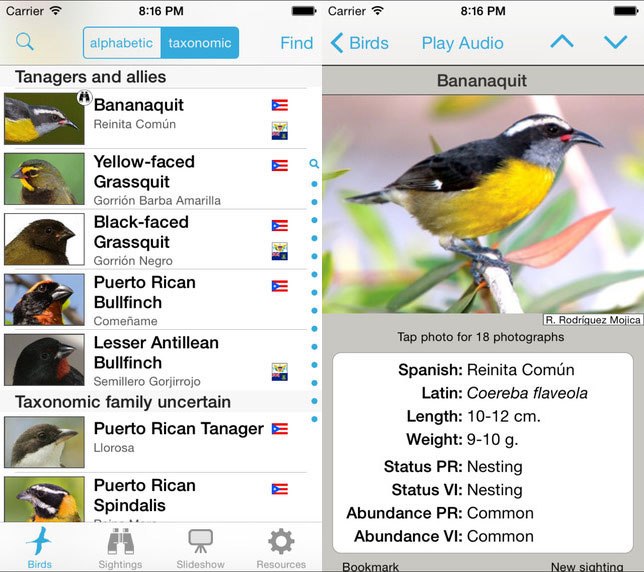
From images to audio, a wealth of information about the birds of the Puerto Rico bank just went pocket-size.Did you ever wish you had a bird guide in your pocket wherever you go? For iPhone users in Puerto Rico and the Virgin Islands, your dream has come true. The mobile app Puerto Rico and Virgin Islands Birds in Photos and Audio is the perfect companion in the field. This bilingual (English & Spanish) app features all 382 birds found in the area.
This thoughtfully-designed app lets you identify birds, browsing alphabetically or taxonomically. Beginning birders looking to ID the species in their backyards can filter results to show only common species. Users can also use the app to record their bird sightings and even export this information. If you just want to see birds, there is a slideshow mode featuring highlights from the 3,000 gorgeous photos in the app.
Listings for each bird include detailed species accounts, and advanced birders will love the audio that is included for almost every species. Over 360 audio recordings are just a touch away. The resources section includes information about Caribbean birds and introductions to key topics like biogeography, conservation and migratory birds.
Available for $9.99 from the App Store, it is compatible with iPhone, iPad and iPod Touch. It is optimized for the iPhone, so if you are using an iPad, be sure to view iPhone apps when searching in the store. More information about the app is available at: http://puertoricobirds.com/prandvibirdsapp.html
The free ebook, Heritage Plants, is a guide for backyard beautification and habitat restoration using native Caribbean plants and trees.In a region that seems blessed with eternal summer, one of the most noticeable signs of autumn is the arrival of countless migratory birds. Leaving their summer breeding grounds in North America, they transform Caribbean wetlands and forests with their colors and songs. Events celebrating these birds and their miraculous migrations are also arriving this month with International Migratory Bird Day (IMBD).
IMBD is coordinated across the Western Hemisphere by Environment for the Americas (EFTA), and events are held in over 700 locations from Canada to Argentina. BirdsCaribbean, the largest organization devoted to wildlife conservation in the Caribbean, will coordinate activities throughout the region beginning in October, a time when migratory activity is at its peak in the Caribbean. BirdsCaribbean has been the regional coordinator for the past eight years.
The theme of IMBD this year is “Restore Habitat, Restore Birds.” This theme is particularly relevant in the Caribbean, where natural habitats share limited island real estate with dense human populations and intensive development. The migratory pathways and overwintering grounds of the Caribbean are an indispensable part of the life cycle of about 350 bird species, from egrets and ducks to hawks and songbirds.
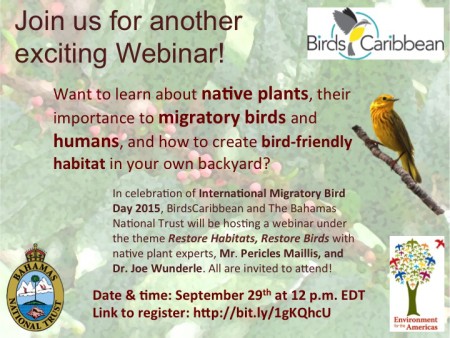
Join us for an free webinar on September 29th!Please join us for an informative and fun webinar entitled “Native Plants for a Bird-Friendly Yard” on Tuesday, September 29th, 12-1 PM (EDT). This webinar will provide information on the value of native plants for migratory and endemic birds, bird-friendly plants, and how to create a bird-friendly habitat in your own backyard.”
Scott Johnson, Science Officer at the Bahamas National Trust will give a presentation. Two outstanding guest speakers will join us to share their expertise and knowledge, including botanist/ naturalist, Mr. Pericles Maillis (Bahamas National Trust Past President, Nassau, Bahamas), and ornithologist/ ecologist, Dr. Joe Wunderle (US Forest Service International Institute of Tropical Forestry, Puerto Rico). This webinar will help us to prepare for and kick off our fall celebration of the International Migratory Bird Day (IMBD) Festival in the Caribbean, October 2015.
Space is limited so register early! Here is the link to register:
Eyes in the sky are spying on migrants. (Photo by Mark Yokoyama)To most of us in the Caribbean, weather radar is mostly a tool to tell us if we should be worried about the next tropical storm. However, thanks to cutting-edge data analysis, it can also give us an idea of what migratory birds are heading our way each fall. Radar systems can see weather patterns—like rain—but they also pick up the movement of insects and birds.
By applying machine learning algorithms to large sets of radar data, The Cornell Lab of Ornithology—a BirdsCaribbean partner—is developing the ability to track bird migrations as they happen. It sounds a bit like science fiction, and would have been a few years ago, but you can read all about it in Nautilus: Big Data Is for the Birds. Welcome to the future!
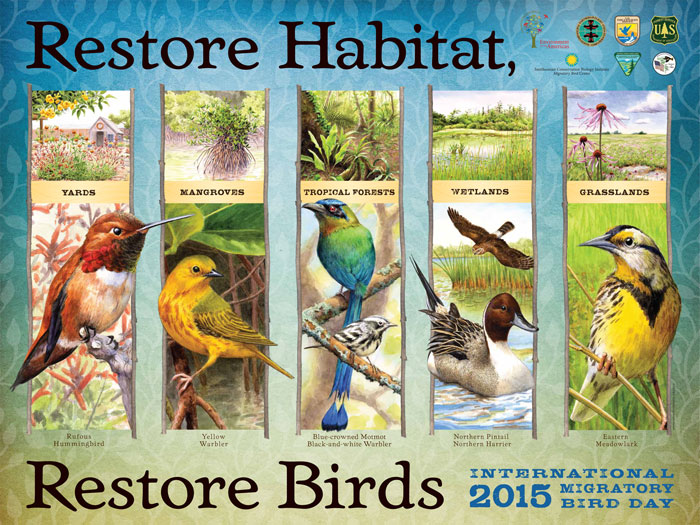
The theme for IMBD 2015 is Restore Habitat, Restore Birds.Birds migrate twice each year, once in spring and again in fall. In the Caribbean region, the miracle of bird migrations is celebrated through International Migratory Bird Day (IMBD). IMBD is coordinated throughout the Western Hemisphere by Environment for the Americas (EFTA). In the Caribbean, EFTA works with BirdsCaribbean and other organizations to promote awareness of migratory birds in this region.
The official IMBD date is the second Saturday in May for the U.S. and Canada and the second Saturday in October for Latin America and the Caribbean. Because birds don’t migrate on a single day, Bird Day activities take place year-round, and events are best offered when migratory birds are present.
We are delighted to share information about the 2015 IMBD conservation theme: Restore Habitat, Restore Birds. Loss and degradation of habitat are primary threats to bird populations. The 2015 IMBD theme considers threats, such as urbanization and climate change, and suggests ways to get involved in habitat restoration projects at home, in communities, and further afield. Each habitat illustrated on the 2015 poster provides a colorful view of a few of the places migratory birds seek for nesting, wintering, or as stopover sites during migration using the beautiful work of artist Amelia Hansen.
IMBD is celebrated in Canada, the United States, Mexico, Central and South America, and the Caribbean at protected areas, refuges, parks, museums, schools, zoos, botanical gardens and more. More than 700 events and programs are hosted annually, introducing the public to migratory birds and ways to conserve them.
For coverage of IMBD 2015 in the Caribbean, follow along here on the BirdsCaribbean blog and on the Caribbean Bird Festivals Facebook page. If you are interested in hosting an event contact us and be sure to check out the amazing collection of IMBD resources available online.
A beautiful special issue from the Journal of Caribbean Ornithology.
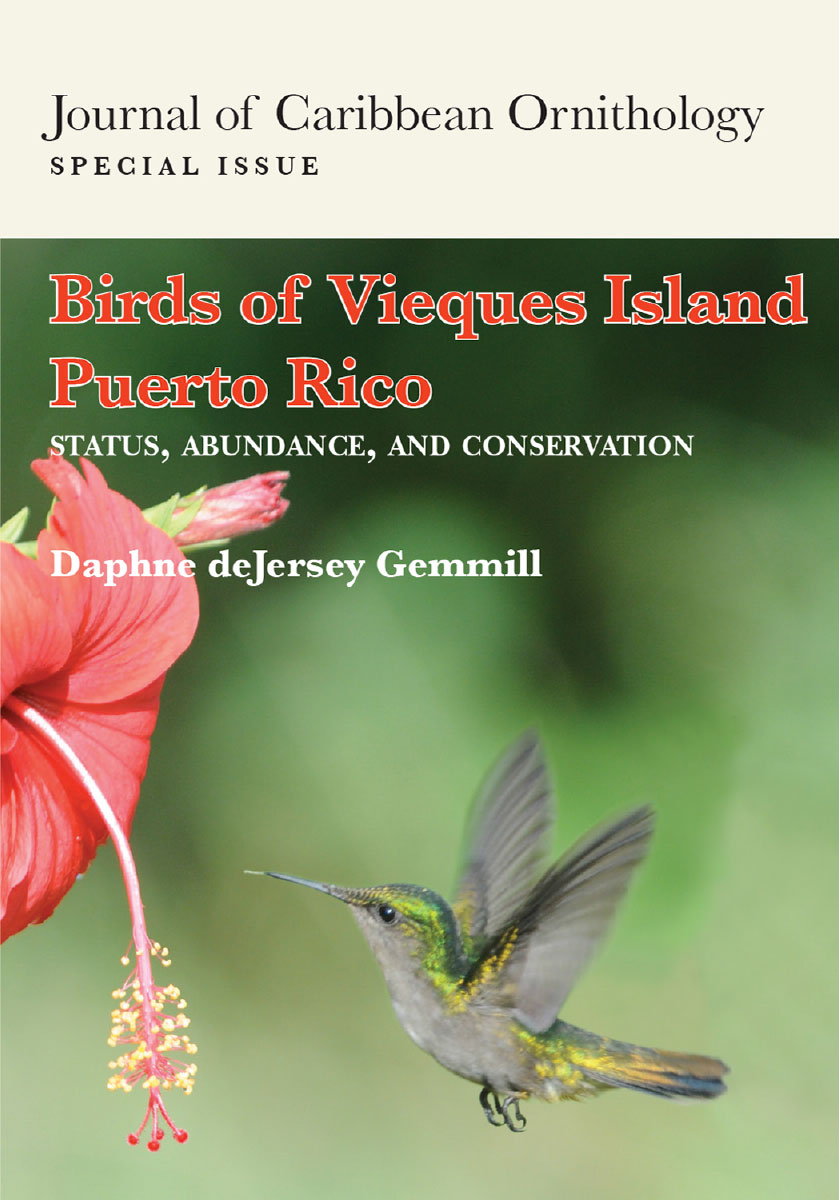
Recently released by BirdsCaribbean’s Journal of Caribbean Ornithology, Birds of Vieques Island, Puerto Rico: Status, Abundance, and Conservation is a special issue that threatens to set an impossibly high bar for the term special. Written by Daphne deJersey Gemmill, the volume draws on her three decades of surveys and exploration, painting the picture of the small island’s bird life in exquisite detail. Like all of the JCO’s publications, it is available for free online.
According to the abstract: Vieques Island is a satellite island 8 miles east of the main Island of Puerto Rico. Status, abundance, and habitat use of the birds of Vieques Island are presented based on the author’s extensive avian surveys, literature review, surveys of museum speciments, and the banding efforts of numerous other ornithologists. Species accounts are provided for each of the known birds of Vieques, along with color photos for many species and a review of the conservation challenges facing the island.
As is appropriate for a peer-reviewed journal, the abstract significantly undersells this remarkable volume. The species accounts are beautifully illustrated with dozens of photos. Thoughtful, comprehensive sections detail habitats, conservation threats, and even an ornithological history of the island. At 273 pages, this special issue is essentially a book—and an excellent one at that, recommended to anyone with an interest in Caribbean birds and ecology. A PDF of the issue is available for free on the JCO website and is guaranteed to be the most rewarding 45MB you’ve downloaded all week.
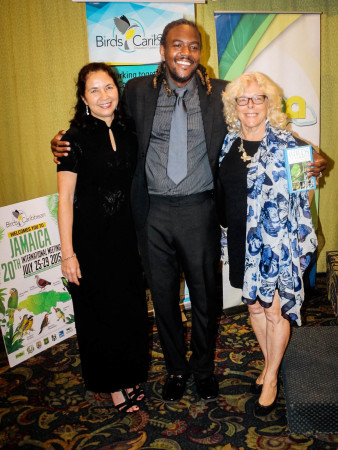
BirdsCaribbean Executive Director Dr. Lisa Sorenson, Roshaun “Bay-C” Clarke, and Dr. Ann Sutton. (Photo by Leno Davis)Every two years, bird educators, scientists and conservationists from throughout the Caribbean and beyond gather for BirdsCaribbean’s International Meeting. At this year’s meeting in Kingston, Jamaica, over 220 international and local delegates gathered to share the latest in Caribbean bird science, conservation and education. Birds—Connecting Communities and Conservation was the theme for the meeting, the largest conservation conference held in the entire Caribbean in recent years.
The conference opened with “Jamaica Day — A Celebration of Jamaica’s Unique and Wonderful Birds” which included a dozen presentations about Jamaica’s birds, from the latest research in tracking Jamaican seabird populations to the role of birds in pest control on Blue Mountain coffee farms. The extended look at Jamaica’s birds also included reports on the arrival of the Caribbean Birding Trail program to Jamaica and Jamaica’s historical contribution to ornithology.
The meeting continued with a series of outstanding presentations from famous conservationists, who spoke on a wide range of topics including the importance of involving the community in bird conservation, why it is important to conserve birds, how photography can be used to influence hearts and minds and the importance of habitat restoration for birds and people. Workshop topics focused on capacity building and included fundraising, advocacy and the use of social media.
Other highlights of the meeting included the announcement of the rediscovery of the Black-capped Petrel on the island of Dominica and the launch of a new book: The Endemic Birds of Cuba by Nils Navarro. The week before the conference, 30 children enjoyed a summer camp all about birds at the Hope Zoo, and two dozen Jamaicans were trained as birding guides during the Caribbean Birding Trail’s Jamaica launch.
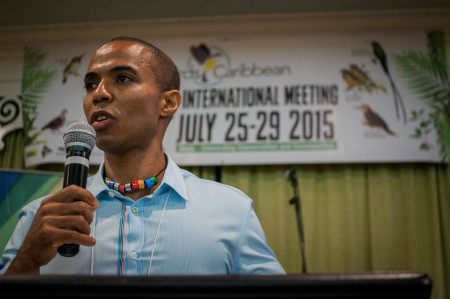
BirdsCaribbean President Leo Douglas welcomes international delegates from 33 nations. (Photo by Mark Yokoyama)“This year was the perfect time to bring the BirdsCaribbean meeting back to Jamaica,” noted BirdsCaribbean President Leo Douglas. “The Blue and John Crow mountains were named a UNESCO World Heritage Site just weeks before the meeting, while the Goat Islands and Portland Bight Protected Area are currently facing the threat of development. At this moment Jamaica is in the spotlight, representing both the irreplaceable value of Caribbean natural heritage and its vulnerability.”
In addition to over 120 presentations, workshops and panel discussions, the delegates enjoyed a variety of field trips to explore Jamaica’s natural areas first-hand. Conference trips visited Hope Gardens, Goat Islands, Cockpit Country, western Portland Bight, Portland, and the Blue and John Crow Mountains National Park, amongst other destinations. Many meeting participants were particularly eager to catch a glimpse of some of the 29 bird species endemic to Jamaica that can be seen nowhere else in the world and all expressed their amazement at the richness of Jamaica’s biodiversity and landscape and the warm welcome they received.
Local support was crucial to the success of the meeting, with sponsorships and media support coming from the National Environment and Planning Agency, Knutsford Court Hotel, Sandals Foundation, Carib Cement, Island Car Rental, Jamaica National Building Society, Hope Gardens, Hope Zoo, Jamaica Conservation Development Trust, The Gleaner, BirdLife Jamaica, AV Concepts and LIME. International sponsors included the US Fish and Wildlife Service, US Forest Service International Programs, Royal Society for the Protection of Birds, Dutch Conservation Nature Alliance, Cornell Lab of Ornithology, Audubon, Rare Species Conservatory Foundation, International Fund for Animal Welfare, and Anguilla Nature Explorers/Birds in Paradise Tour. The meeting concluded with a banquet and awards ceremony featuring renowned dancehall artist and environmentalist Roshaun “Bay-C” Clarke of the band T.O.K., ending the conference on a musical high note.
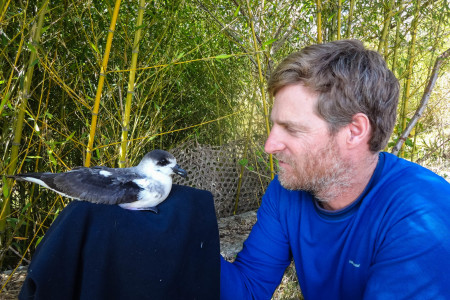
A team of scientists from EPIC and Dominica’s Ministry of Agriculture and Fisheries have recorded 968 Diablotin, also known as the Black-capped Petrel, over the mountains of Dominica, a Lesser Antilles island for which the last confirmed date of nesting of that species is 1862. This rare seabird was once abundant on Dominica, but thought to be extirpated in the late 1800s due to overhunting and the introduction of mammalian species. Observations made with radar and supplemented by detection of vocalizations showed large numbers of petrels flying between the sea and potential nest areas in the island’s highest peaks. Details of the expedition are being released at the 20th International Meeting of BirdsCaribbean, taking place now in Kingston, Jamaica.
Adam Brown, Co-Founder and Lead Scientist at EPIC states, “Finding this colony of petrels on Dominica is a real game-changer for Black-capped Petrel conservation. For years we thought the only remaining colonies of petrels were on Hispaniola, where nesting habitat is diminishing at an alarming rate and pressures of human activity are significant. Dominica is an island-nation where nature conservation is a high priority and forests needed by petrels are well protected, so we now have a huge new opportunity to undertake conservation efforts to preserve this imperiled species.”
The 20th International Meeting of BirdsCaribbean begins on Saturday.Over 40 international delegates have already arrived in Kingston, Jamaica for the 20th International Meeting of BirdsCaribbean, which officially kicks off on Saturday. Coverage of the meeting has appeared in local and regional media including the Observer, Repeating Islands and Ornithomedia (Français). Many of the early arrivals will be spending tomorrow at an all-day workshop learning how to prepare bird study skins. Study skins can be used in educational activities, like teaching the different parts of a bird, and they also form the foundation of museum collections around the world used for scientific research.
The meeting includes five days of workshops, presentations and field trips. Approximately 200 delegates from the Caribbean and beyond are attending the meeting. For more information about the meeting, visit the meeting website. Keep an eye on this blog for updates throughout the meeting and watch #Caribbeanbirds, #BirdsCarib2015, and #Caribbeannature on your favorite social media platform.
Training participants practicing their bird identification on Burnt Hill Road in Cockpit Country. Photo by Lisa Sorenson.
Robin Redbreast. Big Tom-Fool. Mountain Witch. Until recently, those were the only names Caribbean Birding Trail Guide Training participants would have used for some of Jamaica’s common birds. Now, after having successfully completed the five-day training course, participants know that these birds also have common English names that are recognized internationally by the birding community: Jamaican Tody (Robin Redbreast), Rufous-tailed Flycatcher (Big Tom-Fool) and Crested Quail Dove (Mountain Witch). With this knowledge, the guides can now share stories about Jamaica’s unique birdlife, including how these birds got their local names, for a growing global audience.
The Caribbean Birding Trail (CBT) Interpretive Guide Training Program was held from 15-19 June in Albert Town, in the parish of Trelawny and the heart of Cockpit Country. Hosted locally by the Southern Trelawny Environmental Agency (STEA), the course was attended by 24 participants—staff from local tour operators, non-profit organizations and independent guides. Jamaica is the second country to receive this training from the CBT, a newly launched project of the regional non-profit organization BirdsCaribbean.
Jamaica itself will play a starring role in the upcoming BirdsCaribbean meeting. Pictured here are the Blue Mountains, recently named a UNESCO world heritage site. (Photo by Ted Eubanks)An enthusiastic group of some 200 scientists, ornithologists, conservationists, students and educators from across the Caribbean and beyond will flock to the vibrant city of Kingston, Jamaica next month. They will attend the 20th International Meeting of BirdsCaribbean at the Knutsford Court Hotel from July 25 – 29, 2015. The theme of the meeting is “Birds—Connecting Communities and Conservation.” Members of the Local Organizing Committee include the Forestry Department, Hope Gardens, Jamaica Conservation Development Trust, Caribbean Coastal Area Management Foundation, BirdLife Jamaica, Windsor Research Centre and others. For registration and other details, go to 2015Meeting.BirdsCaribbean.org
The conference has plenty to offer in an unusually urban setting. By contrast, participants will also venture out on exciting field trips to the Blue Mountains and Cockpit Country among other locations, and bird-watching sessions around Kingston – an opportunity to see some of Jamaica’s 29 remarkable endemic birds, or perhaps all of them!
BirdsCaribbean invites interested members of the public to a special “Jamaica Day” at the Knutsford Court Hotel on Saturday, July 25; and to a fund-raising workshop conducted by Mazarine Treyz (Wild Woman Fundraising) on Tuesday, July 28. Seminars, training workshops and roundtable discussions will enable conference delegates to network and share their research and latest conservation efforts in Jamaica and across the region. Activities will include a pre-conference taxidermy workshop with the Cornell Lab of Ornithology; a symposium on Invasive Alien Species and sessions on Event Photography, Seabird Conservation, Forest Endemics, the Ecological Value of Migrants in the Caribbean, and much more. There is a brilliant lineup of keynote speakers and experts from the Caribbean, the U.S., Canada and Europe. A summer camp at Hope Zoo for children from selected schools is also on the calendar.
Do you love taking photographs? A highlight of the meeting will be a Photography Competition, open to all participants eighteen years and over, reflecting the theme of the conference. Full details can be found on the meeting website.
BirdsCaribbean (formerly the Society for the Conservation and Study of Caribbean Birds) is a non-profit organization committed to the conservation of wild birds and their habitats in the insular Caribbean. More than 80,000 local people participate in its programs each year, making it the most broad-based conservation organization in the region. Find “Birds Caribbean” on Facebook and on Twitter @BirdsCaribbean.
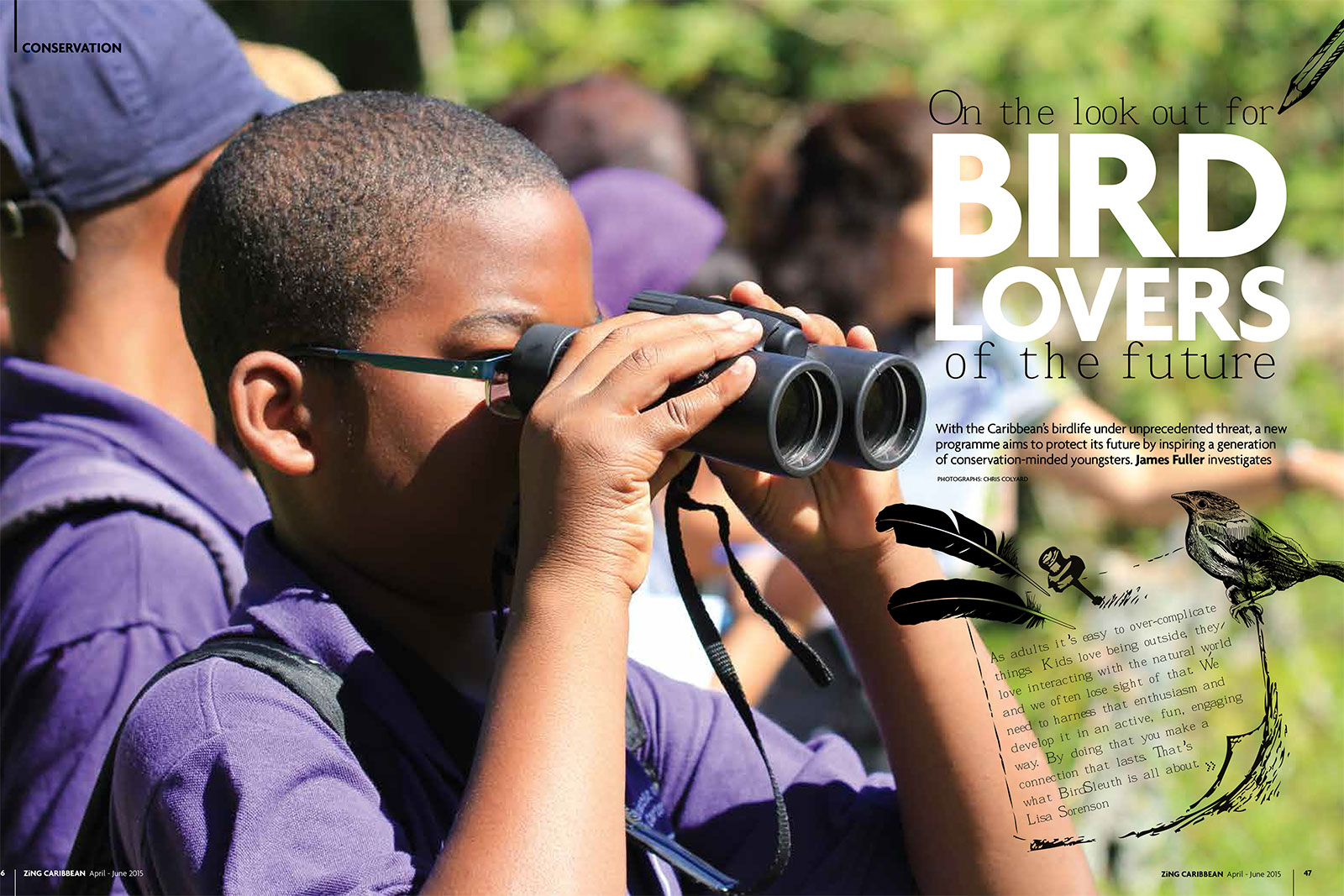
Flagship education program BirdSleuth Caribbean was featured in ZiNG magazine.
BirdSleuth Caribbean, one of BirdsCaribbean’s flagship education programs, was featured in the April-June 2015 issue of ZiNG Magazine, the in-flight magazine of the Caribbean airline LIAT. The program uses a bird curriculum—specifically adapted to the Caribbean—to engage kids in science and conservation.
According to BirdsCaribbean Executive Director Lisa Sorenson, “As adults it’s easy to over-complicate things. Kids love being outside, they love interacting with the natural world and we often lose sight of that. We need to harness that enthusiasm and develop it in an active, fun, engaging way. By doing that you make a connection that lasts. That’s what BirdSleuth is all about.”
You can find ZiNG Magazine in the seat pocket in front of you anytime you are on a LIAT flight. You can also download a PDF of the article to learn more. The BirdsCaribbean-LIAT partnership also includes a regular featured called Caribbean BirdWatch which showcases birds and bird conservation on a different Caribbean island in each issue.
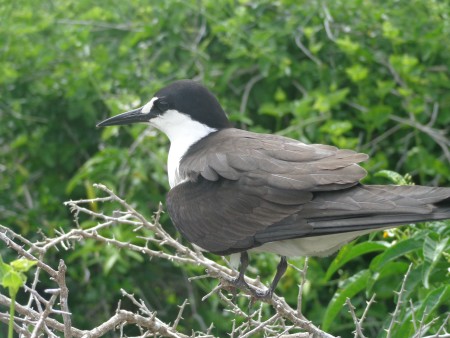
The Sooty Tern is abundant on Dog Island near Anguilla. (Photo by Farah Mukhida)
How to spot it:
Known locally as the ‘egg bird’, the Sooty Tern is Anguilla’s most abundant seabird. It is named for its strikingly dark black upperparts, which contrast with white underparts. It has a thin, black bill and legs, long wings and deeply forked tail. A conspicuous white forehead patch extends to the eye. Males and females look similar, even when they are not breeding, and their black napes turn greyish. Juveniles have a blackish-brown head and chest, and upperparts that are speckled with white.
Where to find it:
Sooty Terns occur in tropical oceans, breeding in huge, noisy colonies on rocky islands and cays throughout the equatorial zone. They spend most of their lives over the open ocean, rarely landing. After fledging from their nests, they will not return to land for several years. Between May and August, breeding sooties tend to return to their birthplace, scraping out nests on the ground and laying one egg, sometimes under low-lying scrub vegetation. The best place in Anguilla to see these birds – over 130,000 pairs of them – is on Dog Island, a 205-hectare privately owned offshore cay.
What does it eat?
Wandering over the open ocean, Sooty Terns eat small pelagic fish and squid, grabbing their prey from near the surface of the water and eating while in flight. They often feed over large predatory fish, especially tuna. Fishers often look for flocks of these birds, a sure sign of excellent fishing grounds.
Global status:
Sooty Terns have a large, wide-ranging global population. As with all seabirds, their populations are impacted by threats on water and land. They are especially vulnerable to oil pollution and spills and the reduction of tuna populations as they depend on these larger fish to bring smaller ones to the surface. On land, predation of eggs and chicks by introduced species like rats and cats, egg collecting, and human development on offshore cay nesting habitats has caused serious declines.
Mazarine Treyz is the author of The Wild Woman’s Guide to Fundraising.All of us work very hard to raise funds for our conservation programs—there are never enough funds for urgent projects, much less support to pay the staff that are essential to carry out the work. Many organizations are hanging on by a thread for their very survival. To help YOU to be a stronger and more effective organization, we are excited to announce that we have secured the help of Mazarine Treyz of Wild Woman Fundraising to do a training workshop on fundraising for us.
Mazarine Treyz is the author of The Wild Woman’s Guide to Fundraising, and founder of WildWomanFundraising.com, a popular fundraising resource with 50,000 monthly readers. She also wrote The Wild Woman’s Guide to Social Media, given a 5 star rating by nonprofit About.com. Her latest book, Get the Job! Your Fundraising Career Empowerment Guide, was also given a 5 star review by Nonprofit.About.com. Ms. Treyz has co-founded a nonprofit and worked in fundraising roles for 10 years. She’s raised millions for small, national and international charities via grants, events, sponsorships, crowdfunding, appeals. She’s trained over 10,000 people from 2011-2015 and helped nonprofits raise millions more.
Engaging photography can make it easier to promote your events.
If you ever wished you had better photos to commemorate and promote your conservation and outreach work, you’ll want to attend the event photography workshop at this year’s BirdsCaribbean meeting in Jamaica. It will be a practical, hands-on workshop to help any organization look their best and increase their exposure in traditional and social media through better event photography.
It may be hard to define great event photography, but we know it when we see it: bright, colorful images of busy events with people of all ages and backgrounds engaged and having fun. These are the images that help get your press release featured prominently in the local newspaper and generate positive buzz on social media. They are the hook that grabs visitors when they see your website and the emotional connection that drives sponsorships and donations.
In this workshop, learn how to consistently get great photos at events—from planning to shooting to editing to sharing—whether you are working with a photographer or developing your photo chops in house. The workshop will take you step by step through the process, focused on practical advice that can be implemented by any organization and hands-on practice during the workshop. You can put your new skills immediately to good use by photographing events at the meeting and entering your photos in the BirdsCaribbean Photography Competition.
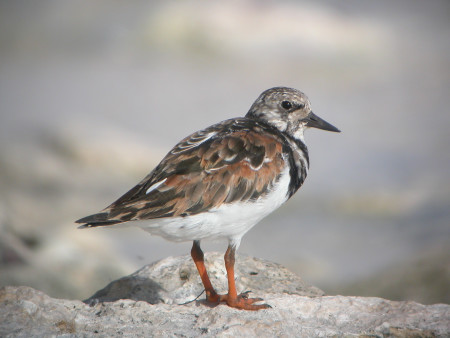
The Ruddy Turnstone travels amazing distances each year. (Photo by Anthony Levesque)
How to spot it: This stocky shorebird is identified, in its breeding plumage, by its reddish-brown
back, black bib, orange legs and small pointed bill. A striking white-and-dark pattern on its wings, back and tail is visible in flight. The colors on adults in winter plumage and young birds are duller, but the same pattern is retained. Turnstones have a variety of calls, including a loud, nasal cuck-cuck-cuck, increasing in volume.
Where to find it:
Ruddy Turnstone can be found on our beaches, mudflats, pond edges, and both sandy and rocky coasts. It is one of 40 to 50 shorebird species recorded in the Caribbean. It is an amazing long-distance migrant, since it breeds in the Arctic tundra and winters as far south as Argentina. In the West Indies, it is observed mainly from August to May, on our beaches and lagoons. Yearlings stay in our islands in June and July because they reproduce only in their second year.
What does it eat?
Turnstones are named for their method of feeding, in which they walk along the beach, deftly overturning small stones and pebbles and seizing the invertebrate food items hiding underneath. They also dig holes in the sand, often larger than themselves, in pursuit of burrowing crustaceans.
Global status:
Ruddy Turnstone has a global distribution and its populations are stable, but, as with many other shorebirds, it is threatened by the destruction of coastal habitats from development and pollution.
On December 14, KIDO Foundation incorporated BirdSleuth Caribbean program in Kids with Cameras environmental education activities, initially involving secondary school trainees, who were part of KIDO after school programs since 2012. Since December 2014 they ran 7 sessions of presentations, games and field trips, following BirdSleuth Caribbean curriculum, involving more than 70 kids from two secondary and four primary schools in Carriacou. Read more
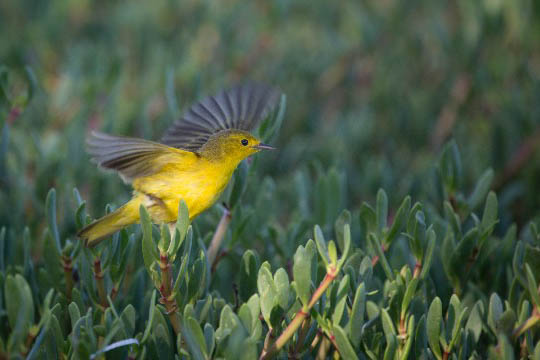
A yellow warbler on a small island in the Portland Bight Protected Area, Jamaica. (Photo: Robin Moore)Wonderful prizes await participants in the 2015 Digital Photo Contest at BirdsCaribbean’s 20th International Meeting, to take place at the Knutsford Court Hotel in Kingston, Jamaica from July 25 – 29 (Haven’t you registered yet? Well, now is the time!) The contest is open to all photographers (aged 18 years and over), except board members of BirdsCaribbean, the judges of the contest and their immediate families. The contest is open to all participants of the conference regardless of residence or citizenship, so long as the laws of their jurisdiction allow participation.
Contestants will need to take the photographs (and date them!) between the dates of July 18 and August 5, 2015 and during the conference. A range of field trips and early morning bird-watching sessions will provide ample opportunity to see and photograph the diversity of Jamaican birds. Participants should sign up now for mid-conference field trips (on July 27) to the Blue and John Crow Mountains National Park (where almost all Jamaica’s endemic bird species live); to the Ramsar Site and Protected Areas of the Port Royal Wetlands and Cays; or to the Portland Bight Protected Area, including Goat Islands and neighboring cays (designated an Important Bird Area by BirdLife International). There will also be pre- and post-conference trips on offer, showcasing Jamaica’s incredible variety of landscapes, flora and fauna as well as giving a taste of the island’s vibrant culture.
The workshop will provide hands-on training in the preparation, documentation and long-term storage of bird study skins. Participants will actively prepare their own specimen from start to finish. Present guidelines for maintaining and managing a skin collection, how to prepare specimen labels and how best to store study skins to ensure their long-term scientific and educational value (many museums house specimens over 200 years old that are nearly as pristine as when they were prepared).
First Institutional Member in the French Caribbean
Les Fruits de Mer recently became the first institution in the French Caribbean to join BirdsCaribbean.St. Martin’s connection to the regional conservation community just grew a little bit closer. Local non-profit association Les Fruits de Mer recently became the first institutional member of BirdsCaribbean in the French Caribbean. BirdsCaribbean is the largest regional organization devoted to wildlife conservation in the Caribbean. Although the two organizations have been working together for almost two years, joining helps integrate Les Fruits de Mer, St. Martin and the French Caribbean into the regional bird education and conservation community.
“Working with BirdsCaribbean has really helped us have a big impact quickly, even though we’re a young association,” explained Les Fruits de Mer President Jenn Yerkes. “They’ve provided training and materials developed for the Caribbean that have really enhanced many of our events and educational workshops. Simply being part of something bigger also makes an event more meaningful and interesting to our members and the public.”
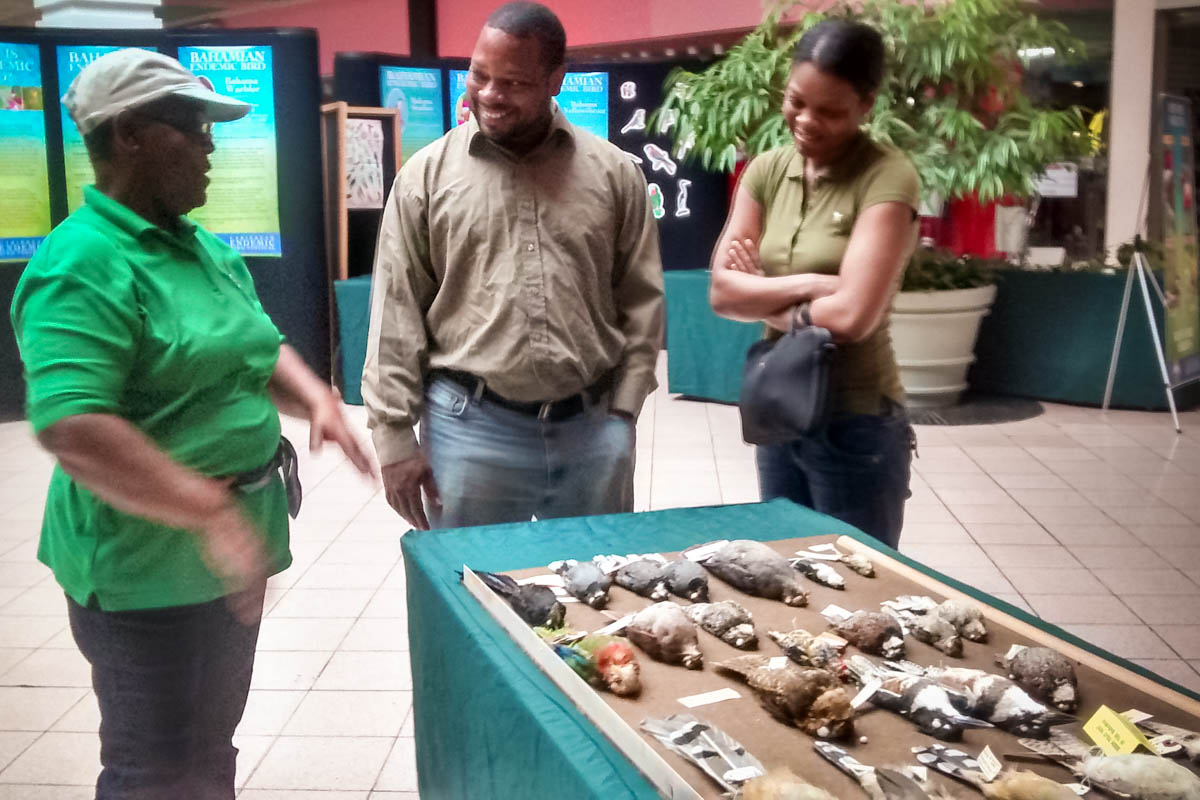
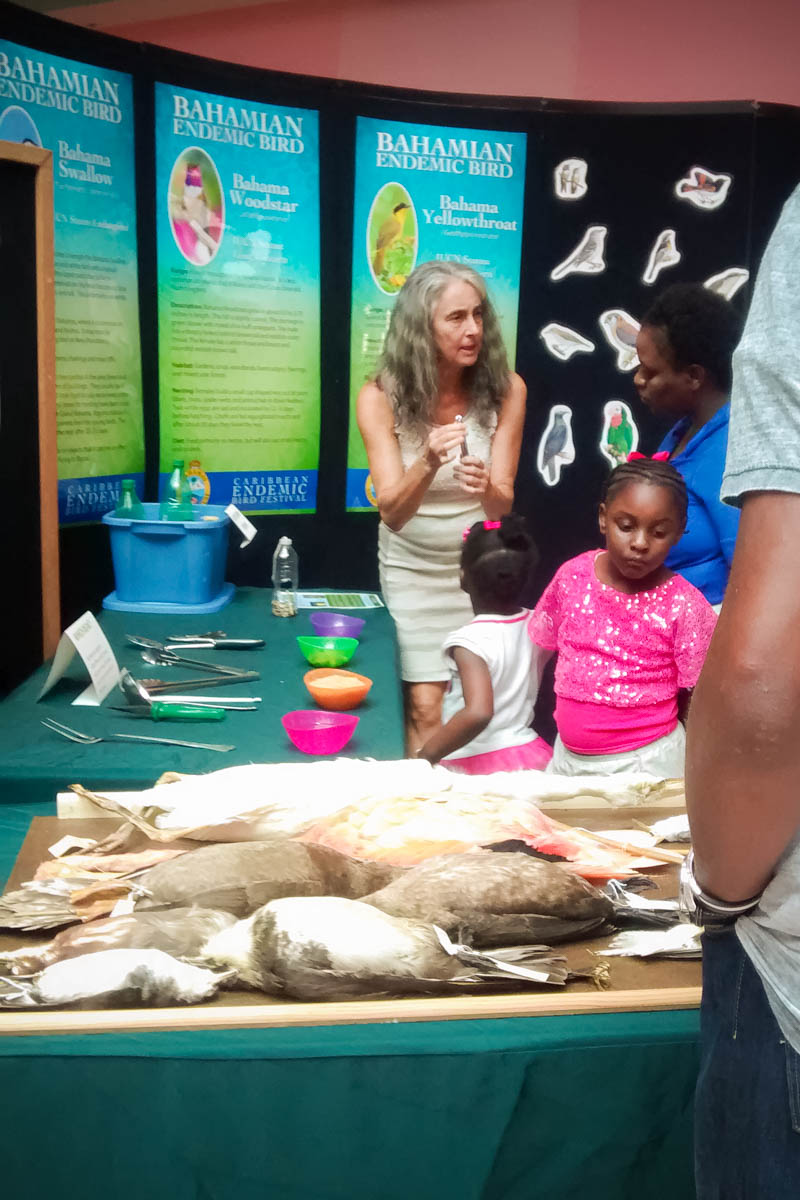
Visitors learn about birds with the help of bird study skins at the the Bahamas National Trust CEBF exhibit at the Mall at Marathon in Nassau, Bahamas.From the grand opening of an ornithological center in Puerto Rico to birding by boat at remote cays in the Grenadines, Caribbean birds were celebrated in more ways than ever during the past month. The 14th annual Caribbean Endemic Bird Festival (CEBF) included dozens of events on over 20 Caribbean islands. This unique festival focuses on the bird species that are endemic to—found only in—the Caribbean. Each year, events organized as a part of this festival reach more than 80,000 participants throughout the region.
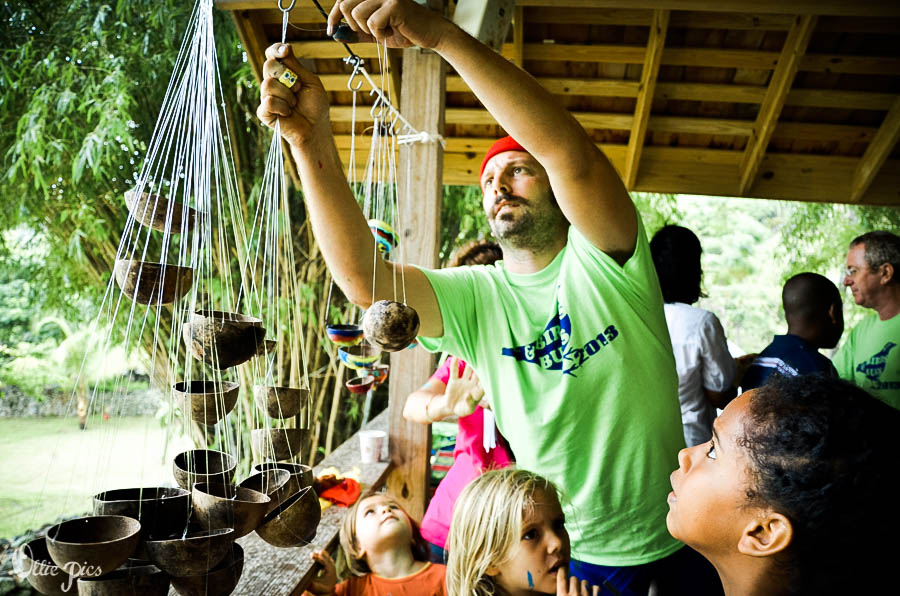
This year, the theme of “Restore Habitat, Restore Birds” inspired new activities and direct action to restore habitat on many islands. In St. Martin, over 100 seedlings of the native, but endangered, lignum vitae tree were distributed as part of a heritage tree habitat restoration project. At many events, attendees learned about the special relationships between endemic birds and native plants and trees.
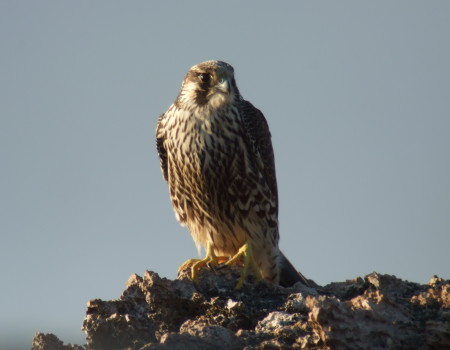
A peregrine Falcon surveys his domain. (photo by Anthony Levesque)
How to spot it:
The Peregrine Falcon is a powerful and fast-flying large crow-size falcon. It’s dark grey above and cream-colored with dark brown bars below. Pointed wings, long, narrow tail and rapid pigeon like flight identify it on the wing. When perched, its mask-like head pattern is distinctive. Immatures are brown above, cream-coloured with heavy brown streaks below.
Where to find it:
An uncommon-to-rare migratory bird, it can be found throughout the West Indies primarily from October to April in coastal areas, offshore cays and rocks, woodlands, forests and cities. One breeding record exists for Cuba and another for Dominica. Peregrines are among the most widespread bird species in the world, found on all continents except Antarctica and on many oceanic islands.
What does it eat?
Peregrine Falcon eat mostly birds, especially flocking doves, waterfowl, songbirds, waders and pigeons. They take birds on the wing, usually while flying low to the ground and surprising their prey from behind as they take off. Peregrines also dive on prey from high above, striking with their feet. They are said to be the fastest animal in the world, reaching speeds over 320 km/h (200 mph) or more during hunting dives.
Global status:
Peregrine populations crashed in 1950-1970 due to the use of pesticides, especially DDT, and it was declared an Endangered Species. Following the ban on DDT in the early 1970s, protection of nesting places, and releases of captive-bred birds to the wild, the species recovered enough to be removed from the Endangered Species List in 1999 – a conservation success story!
Jamaican Tody by Wendy LeeJoin us for BirdsCaribbean’s 20th International Meeting in Jamaica, home of reggae, amazing birds and biodiversity, from Saturday, July 25th to Wednesday, July 29th (inclusive). The purpose of the meeting is to bring together Caribbean and international wildlife professionals, ornithologists, educators, decision makers, tourism interests, community leaders, students and others to share information and learn about the latest avian research and initiatives to conserve Caribbean birds and their habitats. The meeting will feature exciting keynote speakers, symposia and paper sessions as well as training workshops, round-table discussions, and working group meetings that promote applied conservation and collaboration to solve our shared environmental challenges.
The meeting will be held at the Knutsford Court Hotel in New Kingston, Jamaica. We have arranged for discounted rooms at the conference hotel; restaurants, shopping and more are located within walking distance. Members of the Local Organizing Committee include the Forestry Department, Hope Gardens, Jamaica Conservation Development Trust, Caribbean Coastal Area Management Foundation, University of the West Indies, Windsor Research Centre and others.
The theme of the meeting is “Birds—Connecting Communities and Conservation.” In addition to the 5 days of the main conference, there will be wonderful pre- and post conference workshops and field trips (a chance to see all 29 of Jamaica’s endemic birds!), so be sure to save dates on your calendar for several days before and after the conference to participate in some of these events.
Be sure to mark your calendars and plan to attend! Jamaica is an incredibly beautiful country with a wealth of birds, biodiversity and stunning landscapes. You will definitely want to spend time exploring the country and should plan some extra time for this. Plan a holiday with your family or friends before or after the meeting!
20th International Meeting of BirdsCaribbean
New Kingston, Jamaica
25-29 July 2015
Birds—Connecting Communities and Conservation
Read more about the meeting agenda, programs, field trips, and how to register at the meeting web site.
Find the meeting report and other information from BirdsCaribbean’s previous meeting on the Grenada 2013 web site.