The Cayman Islands Government is urging residents who are keeping Cayman Parrots as pets to have their birds registered with the Department of Environment (DoE) before February 29th, 2020. This amnesty is part of the Government’s efforts to reduce poaching and prevent further decline in the wild parrot populations on Grand Cayman and Cayman Brac.
The Grand Cayman Parrot (Amazona leucocephala caymanensis) and the Cayman Brac Parrot (A.l. hesterna), both represent the national bird of the Cayman Islands. The local name is “Cayman Parrot” but these parrots are a subspecies of the Cuban Parrot, which occurs in Cuba, the Bahamas and the Cayman Islands and was formerly called the Rose-throated Parrot (read more on eBird Caribbean).
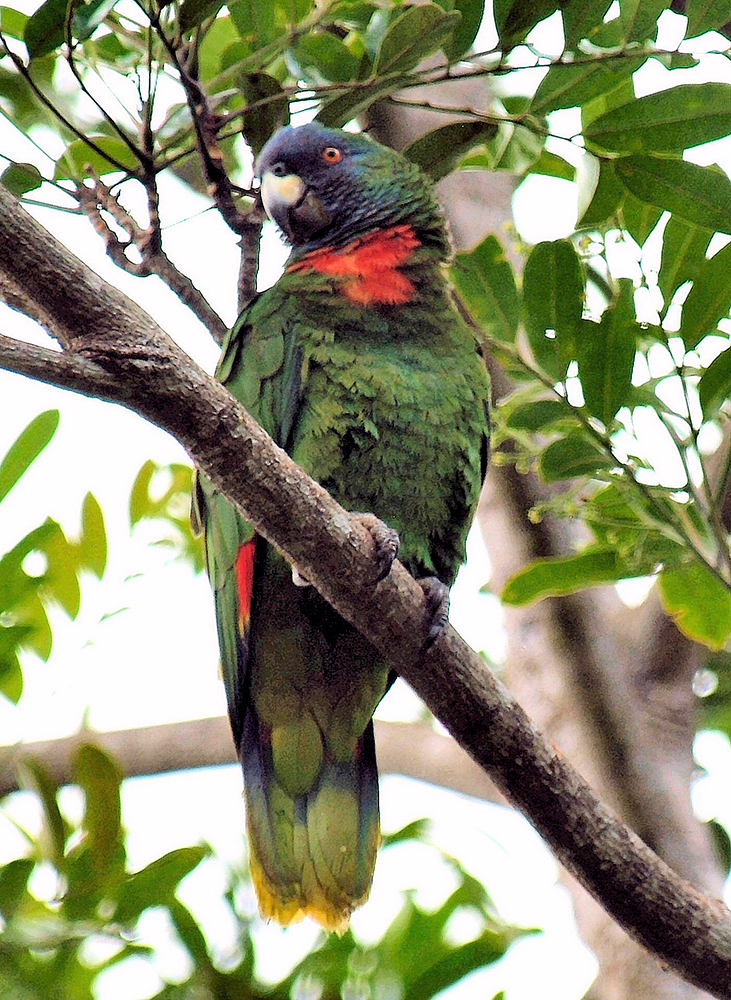
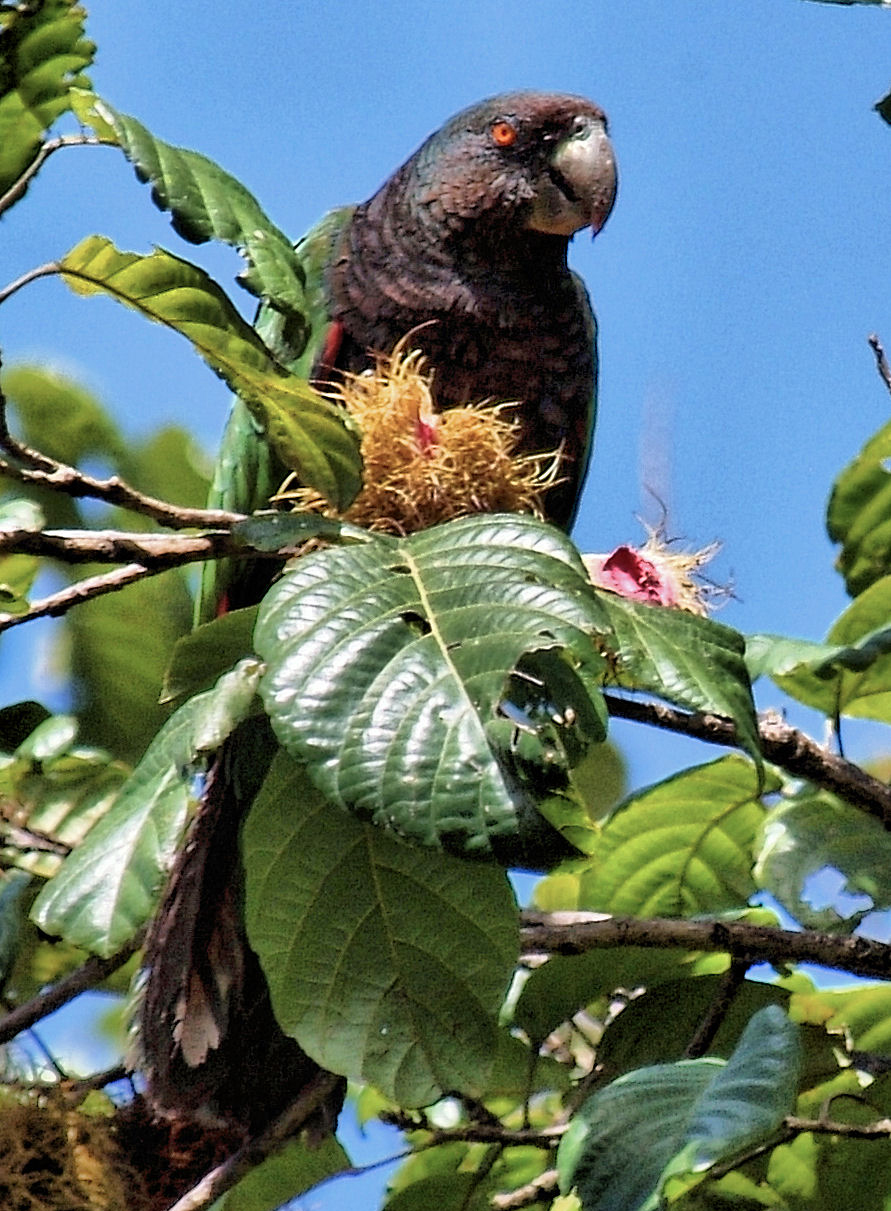
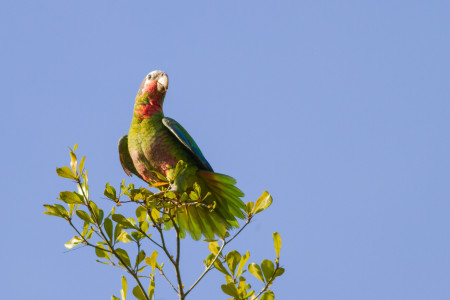
The Grand Cayman Parrot is generally green, with a white forecrown, white eye-rings, red cheeks (depending on whether male or female), black ear patches and blue wing feathers which are only seen in flight. Their tails are green with blue edges and red and yellowish-green underneath. The Cayman Brac Parrot is smaller in size and has a more pure white forehead with a large maroon area on its abdomen.
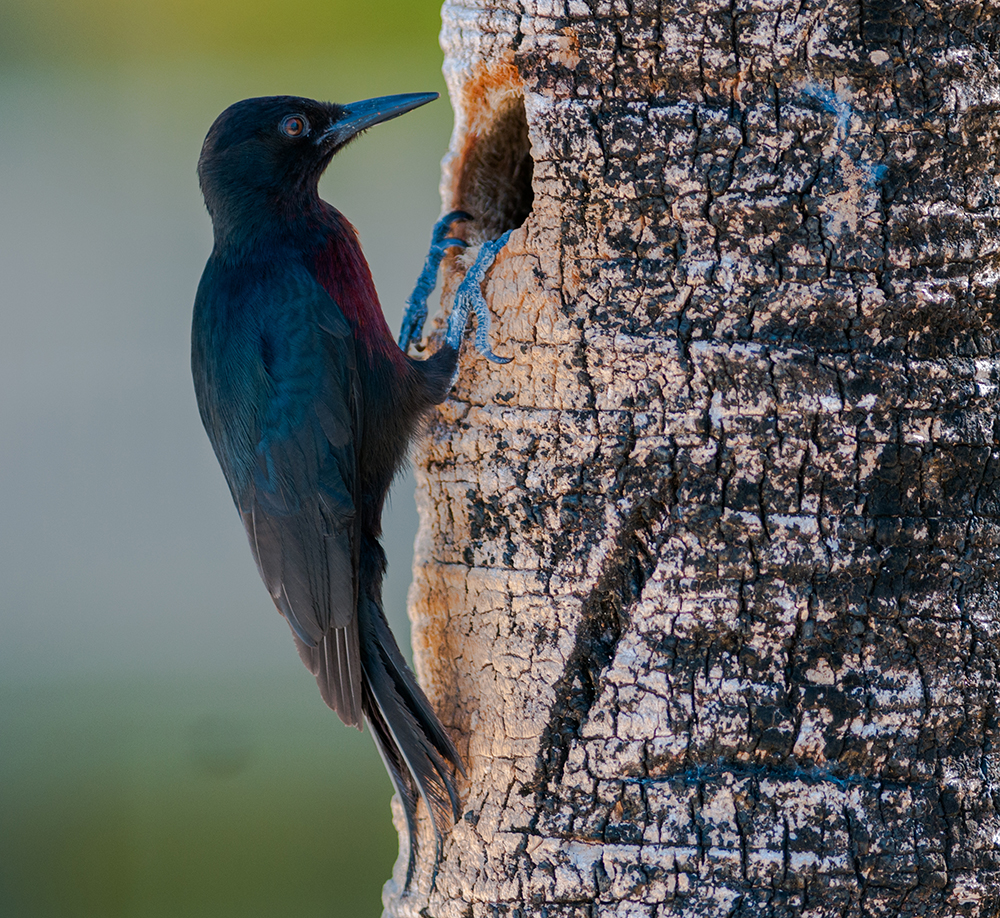
Cayman Parrot in the wild (Photo by Jane Håkonsson)
As is typical of parrots, they are active during the early morning, when they go out in search of fruits and berries. During the breeding season they look for food as well as tree cavities in which to raise their young. When resting quietly after their morning activities, they ‘comb’ and clean their feathers using their beaks. It is almost impossible to spot them at this time as they are perfectly camouflaged among the leaves of the trees. In the late afternoon they return to their roost.
The Cayman Brac Parrot previously inhabited Little Cayman but its prime nesting sites were destroyed in the Storm of 1932. It now has the smallest known range of any Amazon parrot in the world. Its survival depends entirely on the protection of remaining old-growth forest which can still be found on Cayman Brac.
Natural disasters such as hurricanes are a threat to the Cayman parrots’ survival—but not the only one. Habitat loss through development and trapping for the illegal pet trade also jeopardize the future of these birds.
DoE Research Officer, Jane Håkonsson, inspecting a pet Cayman Parrot
These parrots have been highly sought “gifts” and pets, even though they are protected by law. It is illegal to trap, sell and keep the birds in captivity. Yet, many people still keep them as pets. In an effort to curb the illegal trade in the national bird, the DoE set up a six month amnesty program, running from September 1st 2019 to February 29th 2020. Pet parrot owners can now legally register their birds without the risk of their pets being taken away.
Each pet parrot will be checked by a veterinarian, given an identification number printed on a small band around the parrot’s leg and implanted with an identification chip, similar to the ID tags used to register dogs and cats, at no cost to the owner.
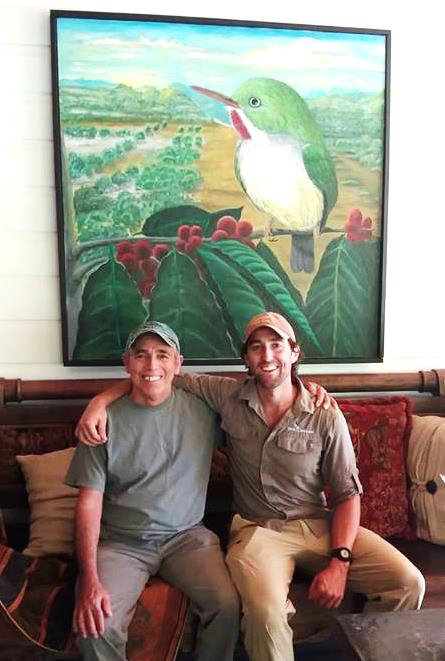
About a year ago, the DoE started a collaboration with a private member of the public to open a much-needed Parrot Sanctuary in East End. The Cayman Parrot Sanctuary boasts native plants and trees. Parrots that are not yet able to return to the wild are housed in secure, clean and spacious aviaries. The Sanctuary is managed by Australian-born Ron Hargrave, who is very much invested in the conservation and well-being of parrots and Cayman wildlife.
The Sanctuary takes in injured parrots and provides rehabilitative care, with the goal of releasing the birds back into the wild population. The birds have a much higher chance of survival in the wild following releases from the sanctuary. They are given thorough medical exams and their health is continuously monitored. Parrots are also taught how to be wild birds again. They have natural foods to eat and learn where to find them; they are also able to form social bonds with other parrots.
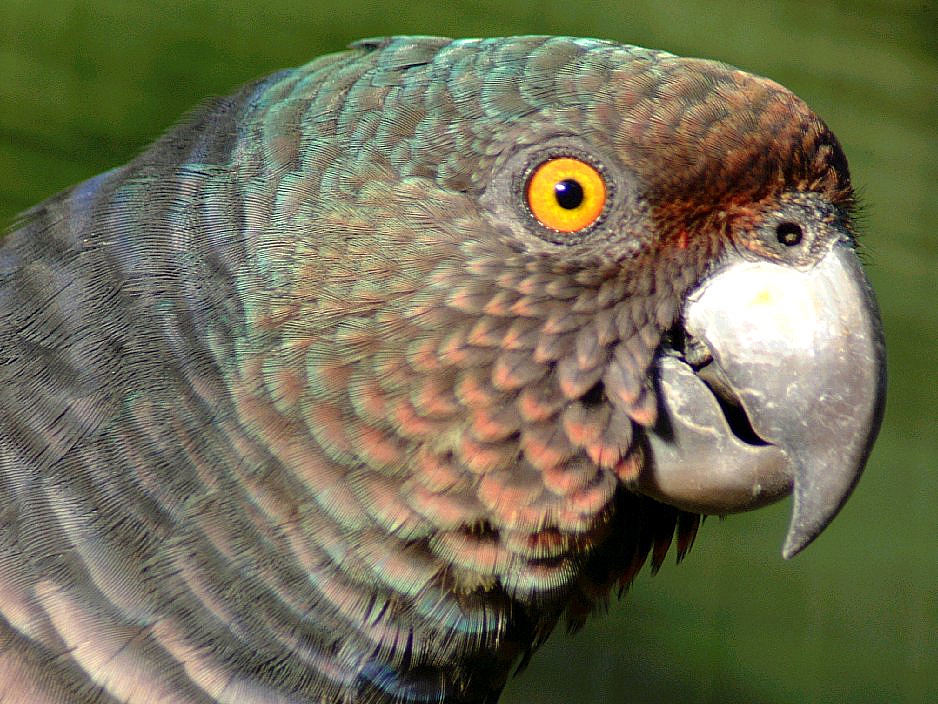
Cayman Parrot at the Parrot Sanctuary (Photo by Jane Håkonsson)
Following every release, the birds are provided with temporary supplemental feeding stations. Their behavior and movements are monitored in the wild. To date seven parrots have been released.
Not all parrots can be released back into the wild. Therefore, pet parrot owners are discouraged from releasing their pet birds themselves. They should instead contact the DoE. Also, if you are a Cayman Parrot owner but have not yet registered your bird, please call Jane Håkonsson on 925-1807 or 949-8469 or email doe@gov.ky.
Spread the word and help protect the Cayman Islands’ national bird for generations to enjoy!
Special thanks to Aliya Hosein (Leader of the Welfare and Wildlife Program at the Centre for the Rescue of Endangered Species of Trinidad and Tobago) and Jane Ebert Håkonsson (Cayman Islands’ Department of Environment Research Officer) for this blog article!
Erika Gates reports on the Christmas Bird Count (CBC) in Grand Bahama, just 4 months after Hurricane Dorian devastated large parts of the island. Initial surveys revealed badly damaged habitats and very few birds. What would they find on their 20th CBC?
Grand Bahama Birders and visiting participants gathered for our annual CBC, which took place in the West End area on January 4th and covered Central Grand Bahama on January 5th of this year. The group was worried. We did not know what species and bird numbers we could expect after the habitat and environment had only experienced 4 months of recovery, following the devastating damage of Hurricane Dorian over 3 days (Sept 1–3, 2019).
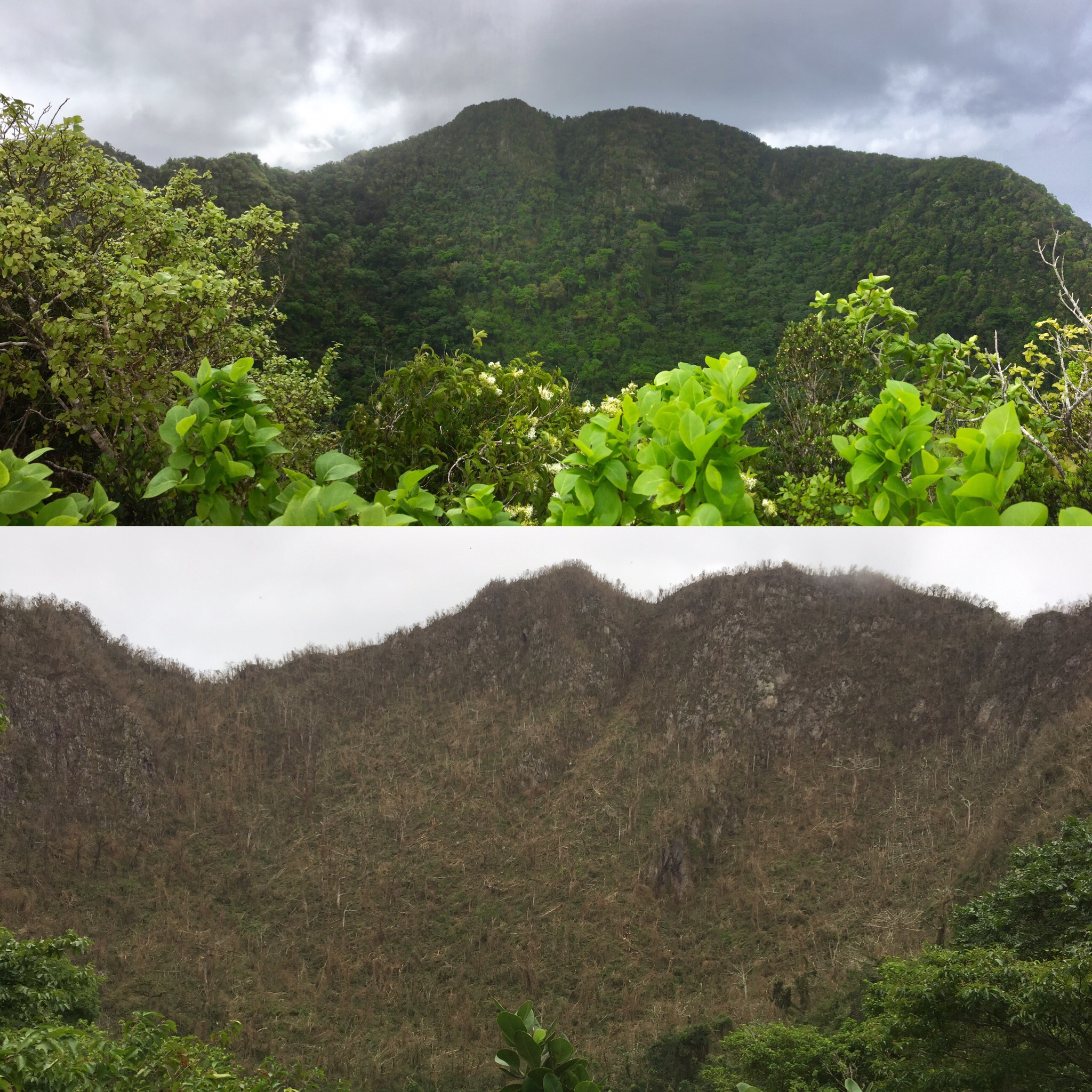
We had assessed bird life in the Eastern part of our island one month after the storm and sadly witnessed the catastrophic damage that the storm and surge had done there to humans and their homes! Very few of our resident birds had survived out east, especially those that depended on the Caribbean Pine forest and Hardwood Coppice like the Bahama Warbler, Olive-capped Warbler, Loggerhead Kingbird, Cuban Pewee, Hairy Woodpecker, Blue-gray Gnatcatcher and Black-faced Grassquit. Arriving winter migrants would have inspected the non-existent habitats, vegetation, and food sources and most likely continued on south.
The orientation evening prior to our first count day is always a happy occasion as Erika Gates welcomed visiting birders and team leaders back. This included Count Compiler Bruce Purdy from Florida, Team Leader Bruce Hallett from Atlanta, Team Leader Dr. Woody Bracey (Bahamas), and visiting birders Craig and Barbara Walker (California).
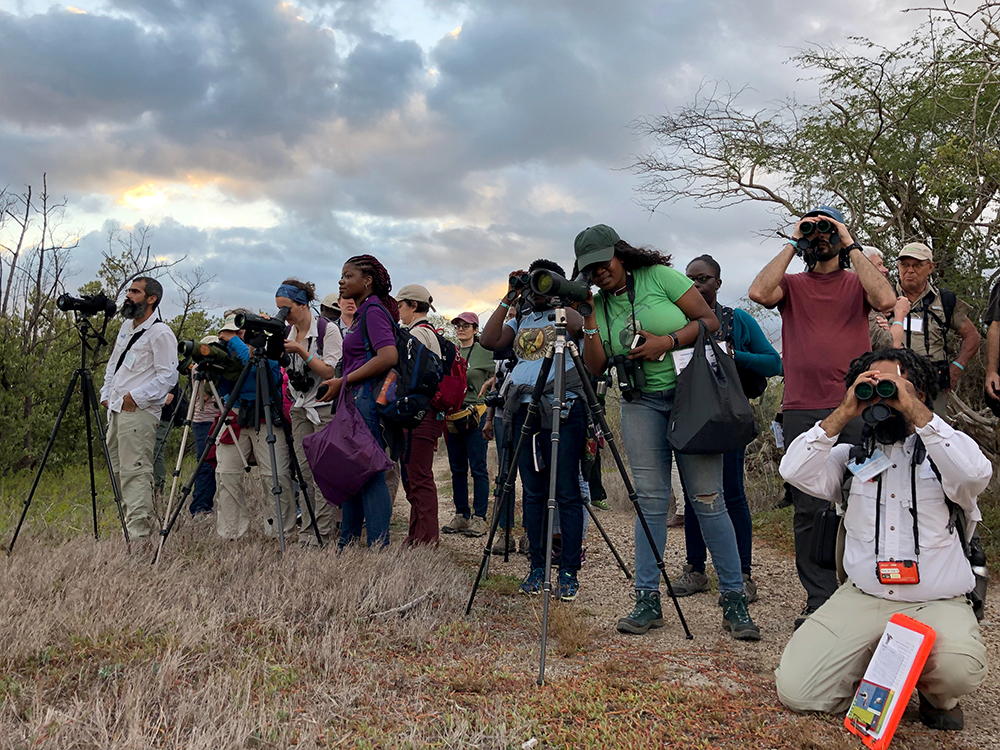
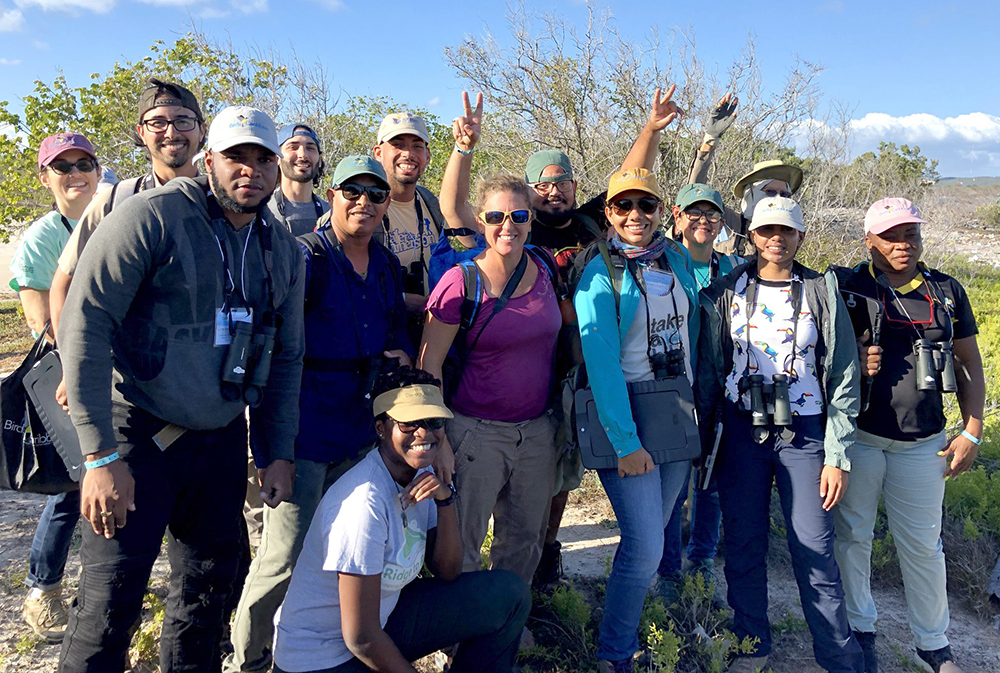
Group photo of all participants at the 2019 Christmas Bird Count in Grand Bahama. (Photo by Jock Hall)
Special guests at the Gates’ that evening were Ann and Sidney Maddock from South Carolina. Ann is finalizing her photographic hummingbird book “Winged Jewels” in the Bahamas while Sidney is conducting a winter months survey for of Piping Plovers on many Bahamian islands (with funding from Environment Canada). Upon distribution of clipboards with team and area assignments we all sat together, shared a meal, chatted a while, and then everybody retired early. I felt a sense of anxiety in the air about what to expect the next morning!
Taking a Step Back in Time
The first Christmas Bird Count (CBC) was held on December 25th in the year 1900 in the United States. Up until then it had been a tradition for persons that liked the outdoors to engage in the Christmas Bird Hunt. People would go into the fields and forests in teams and shoot any bird they saw. The winning team would be the one that brought in the largest number of dead birds! Many persons became concerned about the indiscriminate, senseless slaughter of these beautiful feathered creatures and worried about declines in bird populations. Dr. Frank Chapman, founder of Bird-Lore which evolved into Audubon magazine, suggested the alternative of counting rather than shooting birds. Thus began the first Christmas Bird Count in the year 1900 with 27 dedicated birders observing and counting birds.
Grand Bahama has participated the CBC for the past 20 years. The count now includes all Canadian Provinces, some Caribbean islands, the Bahamas, South America and several Pacific islands. This year more than 80,000 birders will have participated in this count on one chosen day between December 15th and January 5th from sunrise to sunset. The count data is becoming increasingly important in predicting the effects of climate change and decline in bird populations. Our local birders, together with their international partners, will be contributing valuable information to the longest running database in ornithology.
Team Reports
West End Teams
Jill Cooper, Gena Granger, Bruce Hallet (team leader), Woody Bracey, Randrew Martin, Barbara Zill, Erika Gates, Delores Kellman (recorder) and Bridget Davis (photographer)Louise Durocher, Bruce Purdy (team leader), Arlene Kerber, Candice Woon, Gail Woon, Melanie Darville (recorder), Judith Dawkins, Craig Walker, Barbara Walker, Rudy Sawyer, Martha Cartwright (photographer)
As expected, both West End teams got a 7 am start on a windy day of the count. Bruce Purdy’s sites included Eight Mile Rock, Holmes Rock wetlands, Josie’s Cave, Bootle Bay and Bayshore Road. Bruce Halletts’s team had been assigned to survey the Old Bahama Bay property and the West End golf course. Both teams returned back to Freeport at sunset and were elated with a combined number of 71 species observed, matching the West End count in 2017! There were several rare species to report as well, like Gadwall, Mottled Duck, Whimbrel, American Pipit, American Oystercatcher, and Snow Goose.
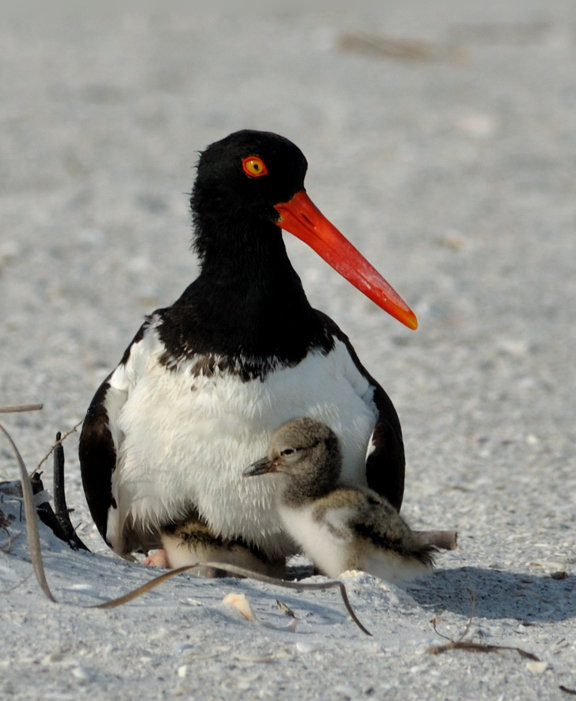
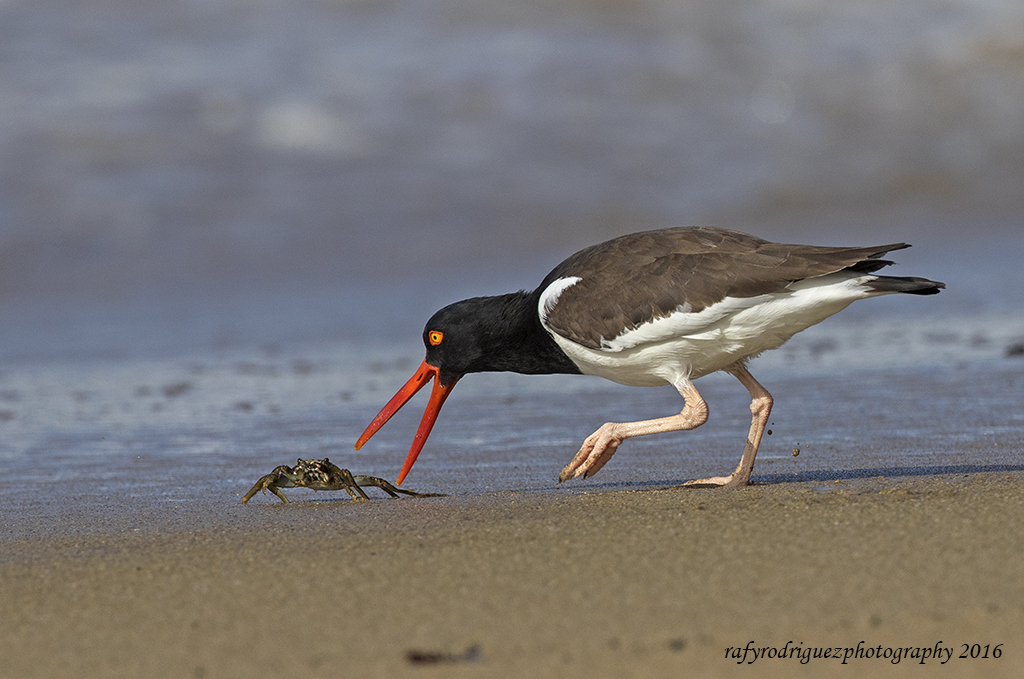
American Oystercatcher (Photo by Erika Gates)Beautiful pair of Mottled Ducks (photo by Bruce Hallett)Snow Goose, a rare migrant to the Caribbean. (Photo by Erika Gates)
Central Grand Bahama Teams
Our spirits were uplifted and we all were in happy moods at sunrise the next morning when we set out in four teams for our Central Grand Bahama count of many of our Freeport birding sites. Some of the most productive areas out of the 25 sites to be surveyed on day two were Lewis Yard wetlands, Emerald Golf Course pond, Reef Golf Course, LIS wetlands, Taino Trail, Garden of the Groves, Barbary Beach, Rand Nature Centre, Pine Tree Stables, and the Gates’ Bird Sanctuary.
By sunset our hopes had been restored that the catastrophic Dorian had failed to wipe out Grand Bahamas’ beautiful feathered friends and that many of our resident and migratory species as well as their habitat had shown tremendous resilience! All four teams were happy with an amazing count of 93 species for the Freeport area, almost coming close to previous years which tallied anywhere between 95 to 110! Rarities for the Freeport area were a Red-breasted Merganser, Willet, Chipping Sparrow, and Canada Goose.
Chipping Sparrow, a rare migrant to the Bahamas and the Caribbean. (photo by Erika Gates)Whimbrel (photo by Erika Gates)Canada Goose (Photo by Erika Gates)
The traditional Tally Rally and Final Dinner were celebrated at Garden of the Groves once again after the Garden had undergone four months of hurricane restoration under the expert and tireless leadership of general manager, Marilyn Laing and her team. Everyone was much encouraged to see and document that birds had returned to habitats that are still recovering.
Intensive surveys are being carried out in both Abaco and Grand Bahama by the Bahamas National Trust with support from partners (e.g., BirdsCaribbean, American Bird Conservancy, Audubon) to assess the damage to habitats and population sizes of species of conservation concern, such as the Olive-capped Warbler, Bahama Warbler, Bahama Parrot and especially the Bahama Nuthatch. We eagerly await results from these studies. For now, we are pleased with our observations from the CBC which shows that more common species are alive and coming back to our recovering habitats.
To learn more about how to participate in the Christmas Bird Count, click here, here, and here.
Erika Gates is owner and operator of Garden of the Groves, Grand Bahama Nature Tours and Grand Bahama Birders’ Bed and Breakfast. Erika is a former Board member of BirdsCaribbean. She is also leading bird conservationist on the island, educating and involving youth and communities through various programs such as BirdSleuth Caribbean, the Caribbean Endemic Bird Festival, World Migratory Bird Day, Caribbean Waterbird Census, her annual birding course, habitat restoration projects, and more.
From all of us at JCO, thank you to all of the authors and reviewers that contributed to a very successful Volume 32!
Inside you’ll find a sizable number of publications, including 16 research articles, our first designated “Conservation Report,” 4 book reviews, Recent Ornithological Literature from the Caribbean, and a special In Memoriam for the late Dr. James. W. Wiley.
I want to give some much-earned recognition to the 2019–2020 JCO team. While they were undertaking the aforementioned load of manuscripts, they were working double-time to make some incredible improvements behind-the-scenes. Let me just say that it’s no easy task to create and adopt a new workflow while you simultaneously have a dozen manuscripts—each at different stages— moving through the old workflow. And this new workflow means better communication, a higher-caliber final product, and a more efficient pathway for a manuscript to proceed from submission to publication. All great things!
Please take some time to enjoy all of Volume 32. Inside you’ll find a suite of excellent work stemming from more than 17 countries across the Caribbean. We should all take pride in this work and make the time to congratulate each other on all of these accomplishments. If you enjoyed reading a publication, please send the authors a quick email letting them know. That is what makes Caribbean ornithology special—a sense of community and comradery unlike anywhere else.
Thank you for your support of JCO!
— Justin Proctor, JCO Managing Editor
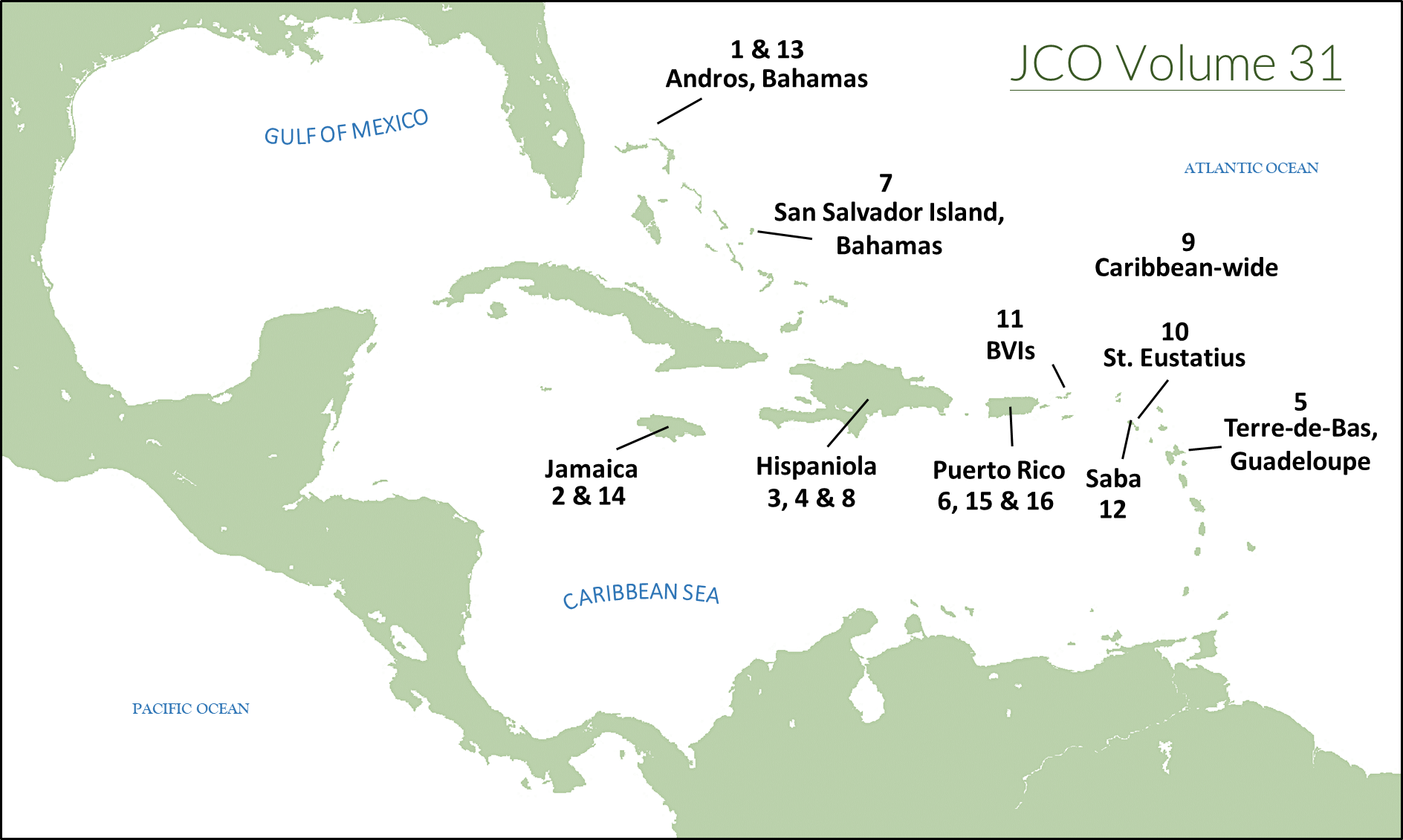
Map depicting research locations of the studies published in Volume 32.
On December 3rd, 2014, ornithologists spotted an American Pipet during an annual Cuba Bird Survey led by the Caribbean Conservation Trust. Previously undocumented in Cuba, this observation marks the first report of this species on the island, and underscores the importance of the Guanahacabibes region as an important stopover for fall migrants.
James F. Dwyer, Thomas I. Hayes, Russell Thorstrom, and Richard E. Harness
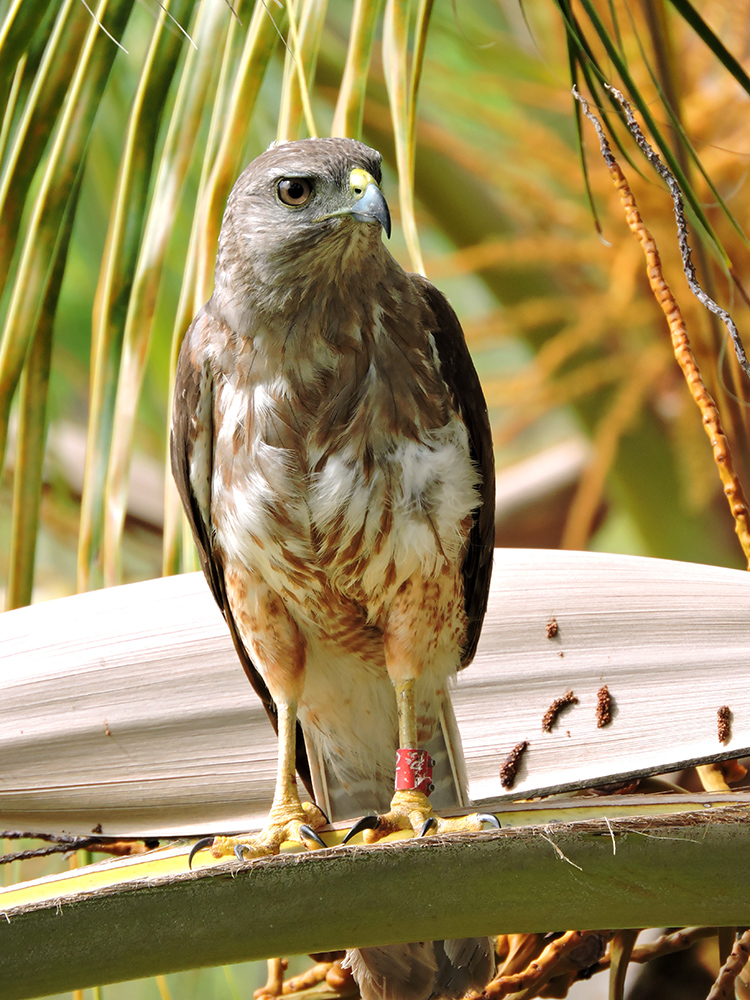
After a translocation program for the Critically Endangered Ridgway’s Hawk was stymied by electrocutions in the Dominican Republic, Dwyer et al. began to investigate. In this article, the authors identify the errors made while retrofitting power poles and discuss the necessity of properly mitigating electrocution risks for this project, and others throughout the Caribbean.
Meghann B. Humphries, Maribel A. Gonzalez, and Robert E. Ricklefs
Currently, there are eight subspecies of Carib Grackle distributed across the Lesser Antilles and northern South America. By sequencing mitochondrial genes of Carib Grackles across their range, Meghann et al. shed light on the phylogenetic and geographic history of the species, bringing into question the bases for the subspecies classifications.
In response to the dearth of current literature on the White-crowned Pigeon, Acosta and Mugica compiled the latest data on this Vulnerable species in Cuba. Here, they present their findings, focusing on the current distribution of the species as well as conservation measures that have contributed to the perseverance of the species.
Anthony Levesque, Antoine Chabrolle, Frantz Delcroix, and Eric Delcroix
While the Sedge Wren commonly winters in Florida, it has yet to be recorded in the Caribbean, until now. In this article, Levesque et al. recount their sighting of this species on Grand Bahama Island, providing descriptions and photographs of the bird’s diagnostic features and the habitat where it was located.
Christopher C. Rimmer, John D. Lloyd, and Jose A. Salguero-Faria
After Puerto Rico was identified as potential overwintering habitat for the globally Vulnerable Bicknell’s Thrush, Rimmer et al. conducted surveys to clarify the species’ winter distribution on the island. Here, they report that Bicknell’s Thrush is a rare and local species in Puerto Rico and highlight the importance of conservation efforts in Hispaniola, where the species is more abundant.
In 1796, Nicolas-Thomas Baudin captained an expedition to the caribbean, bringing back close to 300 specimens; however, there is controversy surrounding their procurement. After investigating the origin and spread of these specimens, Jansen and Fuchs document their findings and address the arguments of theft made by David K. Wetherbee (1985, 1986).
Currently, the six subspecies of Turkey Vulture are delineated by external measurements and subtle plumage variations, with the Antillean Turkey Vultures falling under Cathartes aura aura. However, through photographic documentation and eBird records, Graves calls attention to the similarity of facial caruncles on Turkey Vultures throughout the caribbean to those present on the eastern United States and Middle America populations. As facial caruncles are largely absent from South American populations, Graves’ work brings into question the diagnostic nature of these markings.
While there are no species of geese native to Jamaica, vagrant or introduced species have been recorded intermittently on the island. Here, Levy amalgamates the scattered history of three geese species in Jamaica and presents a new record of a Snow Goose, illustrated in 1758: the second Snow Goose ever recorded in Jamaica.
Though the comb forkedfern is native to the New World tropics, it is invasive to protected areas in the Dominican Republic and Jamaica. By comparing the bird diversity between invaded habitats and fern-free habitats in the Mason River Protected Area, Davis demonstrates that increased incidence of comb forkedfern decreases bird diversity, particularly native species. Through this, Davis urges the importance of controlling fern spread to protect native bird and plant species.
Richard R. Schaefer, Susan E. Koenig, Gary R. Graves, and D. Craig Rudolph
Though the Jamaican Crow and Jamaican Boa co-occur in certain habitats in Jamaica, there are no published reports of their interactions. By detailing four accounts of mobbing by crows on boas and one probable instance of depredation of a crow’s nest by a boa, Schaefer et al. are the first to document a presumably ongoing feud between these two native species.
With violently strong winds, hurricanes are known to displace birds and transport them to new and unusual habitats. That is why, when Hurricane Maria passed over Puerto Rico on September 20th, 2017, Pérez-Rivera was ready. Here, he documents several unusual bird sightings made by him and others in the wake of Hurricane Maria.
The island of La Gonâve, Haiti, boasts a diversity of bird habitats and has historically sustained a variety of both diurnal and nocturnal raptor species. However, due to rampant environmental degradation and habitat destruction, it is rarely visited by ornithologists or wildlife researchers. After conducting raptor surveys on La Gonâve in 2012, White et al. compared their findings with historical records of raptors on the island, noting that only a few generalist species have been able to sustain populations.
While the Shiny Cowbird is native to South America, over the past century, this brood parasite has spread across the caribbean archipelago and into North America – but how and when did this dispersal occur? In an effort to document the introduction and spread of this species in Jamaica, Levy compiles historical observations of Shiny Cowbirds and postulates a potential hurricane-mediated arrival on the island.
André Dhondt, Jeremy L. Collison, Matthew H. Lam, Matthew J. D’Ambrosio, and Taylor L. Crisologo
Palmchats are among the few passerine species that build complex, multi-chambered nests; however, there are no published studies of their nest-related behavior. After studying Palmchat nests in the Dominican Republic, here, Dhondt et al. report on their observations, noting differences in group size, nest size, twig-related activities, twig length and shape, and nest construction.
William E. Davis, Lisa G. Sorenson, and Ernesto Reyes Mouriño
On January 28th, 2018, birders on the BirdsCaribbean Cuba Bird Tour in Ciénaga de Zapata National Park, Cuba, spotted an almost entirely white Willet amongst a group of Short-billed Dowitchers and other Willets. In this article, Davis et al. present photographic evidence and a detailed description of this leucistic Willet and use phenotypic characteristics to classify it as a western subspecies.
Since its introduction to Cuba in 2003, the Caribbean Endemic Bird Festival has achieved paramount recognition for its talks, conferences, competitions, workshops, exhibitions, and other ornithological events. By uniting and strengthening the national network of environmentalists, this festival has expanded its scope of activities and built its capacity to prepare and distribute educational materials.
[this is our first publication under the header “Conservation Reports” – we invite more of these!]
Jason M. Townsend, Rafaela Aguilera Román, Felisa Collazo Torres, José González Díaz, Chandra Degia, Hiram González Alonso, Floyd E. Hayes, Lyndon John, Steven C. Latta, Lourdes Mugica Valdés, Nils Navarro Pacheco, Fernando Nuñez-García, Carlos Peña, Herbert Raffaele, Pedro Regalado, Ernesto Reyes Mouriño, Yaroddy Rodríguez, Bárbara Sánchez Oria, Helen Snyder, Joseph Wunderle
Summary: This In Memoriam of Dr. James W. Wiley not only celebrates his foundational research career, with four decades of published work, but also the profound personal connections he built through his mentorship and friendship. Twenty authors contributed to this piece, paying homage to Jim and painting a beautiful picture of the life he lived.
A special thank you to Dr. Steven C. Latta, Director of Conservation and Field Research at the National Aviary and longtime editor for JCO, for his continued efforts undertaking this important section of our journal that compiles recent publications from around the Caribbean. Steve has been contributing ROLs to JCO since Volume 22 in 2009.
“My idea then was to catch everything that was published after the publication of Jim Wiley’s “A Bibliography of Ornithology in the West Indies” which I always thought was a tremendous effort and a tremendous resource. I wanted to make it easier for people across the Caribbean to have ready access to the most recent literature by knowing what had been published and how to contact the researchers for copies of their papers. I also wanted to make the updating of the bibliography a whole lot easier.”
Steve has done an outstanding job and we encourage our readers to look back through his work over the past 10 JCO volumes, which can all be found in our free and open-access Archives.
Article by (1) Simon Campo – Editor for the Journal of Caribbean Ornithology and a Researcher at the Yale School of Medicine in New Haven, CT; Connect with Simon via LinkedIn or email; (2) Justin Proctor – Managing Editor for the Journal of Caribbean Ornithology; and (3) Aliya Hosein – Centre for the Rescue of Endangered Species of Trinidad and Tobago.
Journal of Caribbean Ornithology relies on donations to keep all of our publications free and open-access. If you would like to support our mission and the broader goal of giving a voice to Caribbean ornithologists and their work, please consider becoming a supporter of JCO.
Join Chris Johnson as he recounts his experience conducting the Christmas Bird Count on Abaco just two months after Hurricane Dorian devastated the region. While the survey was a somber reminder of the destructive forces of nature and how much recovery is still needed, Chris and his team found hope and encouragement in the birds they encountered. #AbacoStrong
Abaco – my beloved island
The Bahama Yellowthroat (endemic to the Bahamas) is one of many species of birds directly affected by Hurricane Dorian. (Photo by Chris Johnson)
I have been bird-watching in Abaco, an island in the northern Bahamas, for a little over eleven years. Actually, Abaco is where I started birding at the age 7. Needless to say, Abaco is very near and dear to my heart. When Hurricane Dorian hit the island that I have so much love for, I was heartbroken. I could not begin to fathom how my favorite island would be changed forever.
The hurricane occurred in September 2019, and shortly after, I made a trip back to assist some family members. The destruction I saw was catastrophic and the numbers of bird species had declined dramatically. On December 7th, 2019 , I learned that there would be no annual Christmas Bird Count (CBC) for North and South Abaco. I asked fellow birder and mentor Dr. Elwood Bracey if there were any plans to conduct the CBCs on Abaco. I was distraught to learn that the two annual leaders – Dr. Bracey and Reg Patterson – would not be able to attend and assist in the conducting of these surveys. The Abaco CBCs are a yearly tradition for the past ten years; I was very disheartened. I thought it over and said to myself, “If there’s nobody else who can lead it… You have to do it!” I contacted my Abaco emailing list and began to “round up the troops” for the 2020 Abaco CBCs.
After I touched down in Marsh Harbour for the second time post-Dorian, I realized immense reconstruction had begun. Roofs were being replaced, trash was being hauled back and forth to the dumps, the roads had been cleared of debris, and the well-known Abaco food store, Maxwell’s, had reopened. Sadly, however, the resident bird life in Marsh Harbour was still immensely affected. During three hours in Marsh Harbour the only resident birds that were seen or heard were four Great Egrets; five Eurasian Collared-Doves (invasive species, now resident); and a Turkey Vulture.
The aftermath of Hurricane Dorian during one of the author’s visits showing the destruction of St. Francis De Sales Catholic School and defoliated trees. (Video by Chris Johnson)
At the end of the first day in Abaco, a gorgeous sunset peered through the pulverized pine barrens. It was a beautiful ending to the day; the South Abaco CBC would follow the very next day.
South Abaco Christmas Bird Count
I woke up on the morning of South Abaco CBC anxious for the day to come. I brewed my two cups of coffee and sat on the porch as I felt the 20 mile per hour winds roll through Cherokee Sound. My Uncle, Keith Kemp arrived at my grandfather’s house at around 6:30 a.m. so we could begin our journey south to “The Y” (a popular landmark in South Abaco) at the Abaco National Park. Along the way we collected fellow birder and leader for the South Count, Niles Primrose. Along the 28-mile drive from Cherokee Sound down to The Y, we discussed the team grouping and the leaders for each team. We all agreed that my uncle would lead the team going North of the Abaco National Park, Niles would lead the Sandy Point team and I would lead the Abaco National Park (Forest) team. We arrived at the meet-up spot for 7:30 promptly. At the Y we met our additional birding peers: Janene Roessler and Lavonda Smith. After catching up for a short time we were met by Bahamas National Trust (BNT) park warden Marcus Davis. As we discussed the plans for the day a resident Red-Tailed Hawk flew over the group. A great first bird for the Forest Team! With everyone assembled we split into our respective groups and went our separate ways.
Abaco is located in the northern Bahamas. (Map by Aly Ollivierre)
The forest team, consisting of Marcus Davis and myself, travelled into the forest armed with our binoculars, field guides and one oversized camera to count all the bird species that we could possibly find. The first species that we saw was a male Cuban Emerald, fluttering around some morning glory flowers. He was eventually chased away from his routine pollination job by another Cuban Emerald, who also wanted a taste of the nectar. As we continued traversing the forest, we were listening closely for some Bahamian specialties such as the Bahama Warbler and Olive-capped Warbler. The next bird of interest was a Yellow-bellied Sapsucker hard at work on drilling into a Caribbean Pine Tree.
The sapsucker, who was reaping rewards from his task of drilling into the dense pine tree, became “antsy” very quickly. Before our eyes the bird was under attack from another species of the raptor family. A Merlin had seemingly dropped out of the sky to attempt to catch the apsucker for a meal. However, the plot had failed and the Merlin decided to sit on a long pine branch. After a great photo-op, the small falcon decided that enough was enough and he was back on the hunt. He began coasting along the track road that appeared unaffected by Dorian, awaiting another opportunity for prey to present itself.
A Resilient Abaco National Park
As we journeyed deeper into the National Park, Marcus began to explain how lucky South Abaco was. It was minimally affected by Hurricane Dorian. And the numbers, even within the pine forest, were proving this statement. As we continued our conversation, a vivacious song filled the forest. Not one, not two, but three Pine Warblers flew into the pine right in front of our vehicle. The bright yellow warblers flew onto the bark of the pines, flitting about and dropping into the understory. After these warblers, we saw an Abaco and Grand Bahama specialty bird. The tiny and long-tailed Olive-capped Warblers maneuvered through the large pine tree tops, singing and chirping. The show continued for another ten minutes as we watched the tiny warblers ramble about the pine forest.
Northern Parula posing in Abaco National Park. (Photo by Chris Johnson)
Forty minutes in and we were already up to 17 species. However, we were still missing a few species. The Bahama Warbler, a relative of the North American Yellow-throated Warbler was finally seen for the first time of the day clinging onto the bark of the large pine trees and moving transversely. I decided to use a playback of a Bahama Warbler in an attempt to coax the fascinating warbler out. The explosive song from the pint-sized warbler began to ring out from within the forest. 1..2..3..4..5..6..7… seven Bahama Warblers flew into the pines directly in front of Marcus and me. What a sight to see! All of these warblers congregated together even after Hurricane Dorian.
After many more encounters with the Bahamian specialties, we began to spot and note many more migrant and winter resident species. Some of these species’ behavior and feeding habits had definitely changed thanks to Hurricane Dorian. For example, I noted a group of Indigo Buntings hopping about and feeding along the quarry road, something I had not seen in my ten-plus years of birding. Many birds were also grouped together, something quite abnormal for the time of year. One by one winter residents began to appear: Black-and-white Warblers, Northern Parulas, Yellow-throated Warblers, American Redstarts, Common Yellowthroats and an abundance of Palm Warblers.
A Thick-billed Vireo spotted during the count. (Photo by Chris Johnson)
We eventually arrived at Cross Harbour to begin counting some water birds and shorebirds. Upon arrival at Cross Harbour, we were greeted by two new species. Sticking to each other very closely were a Yellow-rumped Warbler of the Myrtle variety and a Cuban Pewee. Both concentrated on catching insects for a quick meal. With all of the wind on the shorefront, catching bugs would prove to be a difficult task.
As Marcus and I traversed the seemingly endless beach and shore we also spotted new species! Three new herons and egrets had positioned themselves on the beach to begin fishing for their food. The species included a Yellow-crowned Night-Heron, Reddish Egret and a Great Egret. The tiny “tail-bobbing” Spotted Sandpiper decided to make an appearance for the day as it foraged on the shorefront for any small crustaceans that it could fit its beak around.
Along the trail which would eventually lead back to “The Y”, I noticed that we had not seen any species of dove for the day. The Common Ground Doves and Zenaida Doves, which were usually plentiful on the track roads, were now few and far between.
We eventually arrived back at “The Y” and arranged with the other teams to count all the bird species – as well as make time for a group picture in front of the Bahamas National Trust’s Abaco National Park sign! By the time everything was said and done the South count had totaled 62 species on the day of CBC and 67 species after count week. *Count week is the period of time before and after the day of CBC*. The numbers for the South were great post-Dorian as in past years the total number of birds were sometimes over 70.
POST CBC TRIP TO Bahama Palm Shores
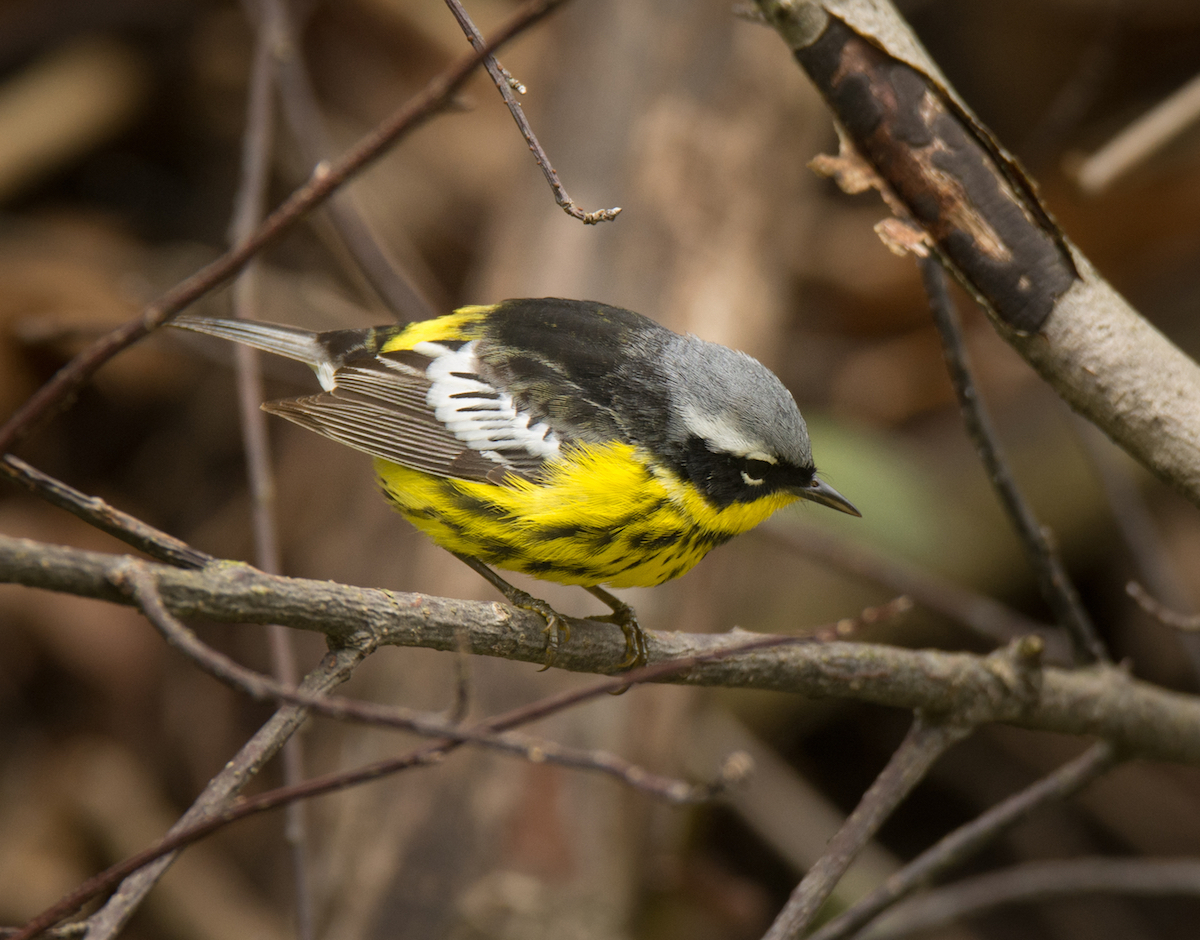
After the CBC information was gathered and shared amongst ourselves, we all parted ways and returned back to our homes. I had decided that I just did not get enough birding during the CBC and decided to head to Bahama Palm Shores (BPS). I started off the checklist by stopping near a large patch of coppice. There was a dead tree trunk with dead branches still attached. Upon “pishing” for a few minutes, four Magnolia Warblers appeared. They put on a show by approaching me and got within three feet! The other species that made themselves known were Greater Antillean Bullfinches, Red-legged Thrushes, Blue-gray Gnatcatchers and an abundance of Northern Parulas.
As I was just about to wrap up, I heard a vociferous chatter and calling near the easternmost street within Bahama Palm. I knew the chatter well; it was the species that got me started on bird-watching. The Bahama / Cuban Amazon Parrot had established a small population within BPS. I counted a total of more than 45 parrots in that particular area. This was abnormal, as I had never seen a group of more than thirty parrots in Bahama Palm Shores. They all appeared healthy and were actively feeding on Gum Elemi berries. Within the hour and four minutes I had spent at Bahama Palm Shores I had a total of 26 species and 114 individuals sighted (see the full eBird checklist here).
North Abaco Christmas Bird Count
The South Abaco Team. From left to right: Janene Roessler, Chris Johnson, Keith Kemp, Lavonda Smith, Marcus Davis & Niles Primrose. (Photo by Chris Johnson)
The morning of the North Abaco CBC started much like the previous morning. I started brewing my coffee and sat on the porch. This morning was much cooler than the morning of the South Abaco CBC. My Uncle Keith Kemp arrived at the house packed and ready for the day. We jumped in the truck and proceeded to the road that connects Cherokee to the Great Abaco Highway. There at the “turnoff” (the road where the Cherokee and Great Abaco Highway meet) we collected birding buddy Janene Roessler, who would be our scribe for the day.
As we began to inch closer towards Treasure Cay on the S.C. Bootle Highway, we witnessed a bizarre number of Great Egrets grouped in the ruinous wetland. There was a total of 14 Great Egrets in this one area and that was it. No Common Gallinule, Coots, Grebes, or any herons in sight. It was heartbreaking to see the damage to the North; it was undoubtedly worse than the catastrophe that struck Marsh Harbour in Central Abaco.
We arrived at the original meeting point for all the previous North counts. “Spanky’s Parking Lot” was located within Treasure Cay. It was almost unrecognizable, if not for the large liquor store, which was still standing but had lost all of its windows during the storm. The damage at “Spanky’s” would be minuscule compared to the damage within Treasure Cay.
A Cuban Pewee seemingly undaunted by a human with a large camera approaching. (Photo by Chris Johnson)
The first location would be to stop at the waterfront gas station to assess the damage the storm had done to the pylons and small rocky shorefront. After some substantial searching with our binoculars assisted by my 200-500mm camera lens we were able to pick up the first birds for the North Abaco CBC. We found: one Ring-billed Gull, one Black-bellied Plover, one Short-billed Dowitcher, and two Royal Terns.
We meandered our way through the debris-covered roads and paths for the next half hour with our destination in mind. My uncle had always spoken about a sandbank at the eastern end of Treasure Cay that always had birds. On our way out to the beach we were shocked to see Indigo Buntings perched low to the ground in dead shrubs foraging for food. The sandbank tragically held nothing for the count and we continued within the easternmost point. The damage at this end of the settlement was extraordinary. We saw entire “seawalls” washed out by the storm, houses seemingly torn in half, and cars flipped upside down.
Months after the hurricane, forests (like this one near Treasure Cay) have only begun to recover, and it will be years before they are able to support the same biodiversity as before the storm. (Video by Chris Johnson)
The next location was the Treasure Cay Golf Course Ponds. Many species had been counted on these small ponds in previous years. This area was by far our most active for the day. Our most notable species in this area were: White-cheeked Pintails, Least Grebes, Cattle Egrets, Merlin, White-eyed Vireo and the prize bird of the day… a Hooded Merganser! We noted quite a few new species for the count – but the storm-ravaged ponds and golf course were quite distressing to see.
The last few locations that we would check proved extremely disappointing. Sunset Ridge was a famed birding spot within Treasure Cay. Species ranging from Roseate Spoonbills to American White Pelicans, to the extremely rare Bald Eagle sighted by Dr. Bracey for many years had been recorded there. However, hope began to dwindle for the Dorian-devastated wetland. With the assistance of my camera we came to add a few more species to the “slowly-but-surely” growing list. One Belted Kingfisher, two Reddish Egrets, three Little Blue Herons, – and peculiarly enough, another large group of Great Egrets: a total of 26 individuals!
A resident Blue-gray Gnatcatcher was a welcome and familiar sight during the CBC. (Photo by Chris Johnson)
We then decided it would be in our best interest to make our way to Cooper’s Town foreshore to count some gulls and cormorants. Our trip to the foreshore allowed us to add numerous species to the list. It included: 25 Double-crested Cormorants, 18 Laughing Gulls, 11 Ring-billed Gulls, 4 Herring Gulls, 7 Lesser Black-backed Gulls and 1 Great Black-backed Gull!
At the end of the count, we had a total of 43 species for the North. This 2019 total was frightening as in previous years we would sometimes have totals of over 90 species. The number of species was effectively cut by fifty percent.
Final Thoughts
We all know that Dorian has done irreversible damage to Abaco. I would have never thought that such damage could be done to my second home. The catastrophic damage on this island is heartbreaking. The population counts are proving that we have not only lost many birds in the storm, but that birds in Abaco are still struggling to find food and shelter post-Dorian. There are many ways we can assist this Bahamian island in the rebuilding and replenishing of habitat for these avian species that make their home there. BirdsCaribbean and the Bahamas National Trust have done, and continue to do fantastic work in supporting research and replenishment of both Abaco and Grand Bahama. If you would like to assist these organizations in their efforts, please donate to the BirdsCaribbean Hurricane relief fund or The Bahamas National Trust.
Abaco and Grand Bahama will come back in time, and hopefully the birds with them. #AbacoStrong
Hover each photo to see the caption; click on a photo to see a slide show.
This Bahama Parrot was attempting to blend into the treetop and allowed for great shots as he remained absolutely still. (photo by Chris Johnson)
Reddish Egret spotted at Crossing Harbour. (photo by Chris Johson)
We were thrilled to have 8 Bahama Warblers (endemic to the Bahamas) fly right in front of us in the forest. (photo by Chris Johnson)
This Merlin was hunting along the track road in the forest. (photo by Chris Johnson)
Chris Johnson is an avid 18-year-old birder and photographer. He has been birding for over 10 years and has gotten opportunities to further his birding skills namely the Cornell Lab of Ornithology’s Young Birder Event. He enjoys spending his time on many Bahamian family islands and photographing the fauna around him. You can find him on Instagram @cmjphotography242 to see more photos from this young photographer and birder.
The Red-legged Thrush is a key seed disperser in the forests of the Dominican Republic. (photo by Dax Roman)
Spencer Schubert’s adventures into the remote corners of the Dominican Republic Part continue, all in the name of science and conservation.
If you are reading this, I probably do not have to convince you that birds are great. The more interesting discussion to be had, of course, would be what makes them so great. We are all drawn to birds for different reasons. For some of us, the sights and sounds they provide to the ambience of our backyard or local natural area are enough to endear them to us. For many others it comes from their experience as pet owners. Even the tradition of hunting can inspire reverence for birds and a passion for their conservation. I have always liked birds, but I can hardly claim that they were any more interesting to me than lizards or turtles, for example. Indeed, on my grumpiest of days, I sometimes refer to myself as a failed herpetologist.
My gateway to birds has been a fascination with their role as seed dispersers. It may not be the first thing that you notice, but no matter where you go, as long as you’re standing on dry land and there is some green vegetation nearby, you would be hard pressed to find somewhere where there aren’t birds eating fruits and seeds. These feeding behaviors by birds are a key component to many terrestrial ecosystems. By swallowing fruits or otherwise carrying away seeds in their bill, potentially flying great distances, birds give plants a major boost in their potential to propagate in the environment.
Our restoration plots, constructed in 2017, are small pasture areas each about the size of a basketball court. By enclosing these areas with barbed wire fences, our objective was to eliminate the effects of cattle grazing, trampling, and landscaping efforts by farmers in order to observe the process of seed dispersal and plant growth. Perches with crossbars were installed to attract birds and collect droppings and seeds.
One of the major implications of seed dispersal in a world with ever diminishing forests is the prospects for degraded ecosystems to bounce back. About two years ago, I contributed an article to this blog on up-and-coming work in the small town Jarabacoa in the central mountains of the Dominican Republic. I was studying whether constructed perches could be used to attract birds to restoration sites on abandoned parcels of farmland, with the goal of promoting natural seed dispersal and forest recovery. It all began with a simple principle: If you build it, they will come.
To some extent this was true. We found that installing perches increased the number of birds visiting restoration plots. However, some key seed dispersers such as the Palmchat, Black-crowned Palm Tanager, and Red-legged Thrush – to name a few – showed little to no interest in our perches. So, I got to thinking, maybe we need a better sales pitch.
Have you ever walked down the streets of a popular street in town looking for a place to eat or hang out? Would you rather walk into an establishment that is silent with no sign of people inside or one that is bustling with music and laughter? Atmosphere is what you’re looking for. All else being equal, you’re much more likely to walk into a restaurant that sounds like there are a lot of people inside than one that is quiet and seemingly empty. We use these social cues to inform our judgments of the quality of different businesses all the time. As it turns out, birds are not so different.
Birders will already be familiar with the magic of playback. Many bird species are readily stimulated by hearing their own call and often rush in to investigate whether the sound is from a mate, new neighbor, or a potential intruder to the territory. This is often used to draw in shy birds for us to have a closer look at them or prompt them to reply for better identification (Note: Playback may cause unnecessary stress for some species, particularly during nesting season, and is prohibited in some parks and in many cases for threatened species). Similarly, birds may be drawn to the sounds of both their own kind and other species as a signal to flock up to find high quality habitat or food.
Black-crowned Palm Tanager (Phaenicophilus palmarum) feeding on Inga vera. (photo by Spencer Schubert)
Here is where my idea set in. One aspect of my studies over the past four years has been the community-level analysis at our sites in the central Dominican Republic in an attempt to fully document all feeding/dispersal relationships between all of the bird and plant species that occur here. Through thousands of hours of observation, we have uncovered enormous variation in the extent to which different bird species act as seed dispersers.
Some “generalist” species are responsible for dispersing the seeds of large numbers of plant species. For example, our research has revealed that the Palmchat eats fruits from 42 species. That’s nearly half of all trees and shrubs that are found, collectively, at the sites we have surveyed! Other “specialist” species, like the Antillean Euphonia, are only known to feed on fruits from just a few species. So, if you were any average Joe Bird in the mood for some tasty fruits, which of these species would you rather take a recommendation from?
Antillean Euphonia (Euphonia musica) feeding on a mistletoe (Phoradendron racemosa). (photo by Spencer Schubert)
This is, effectively, the question we asked with our latest experiment. By broadcasting sounds of fruit-eating generalists, specialists, and birds that do not eat fruits in separate trials, we sought to test how these sounds affect bird activity in our restoration plots. We expected, first of all, that the sounds of particular species would attract members of that same species. Additionally, we expected experimental trials with sounds from generalist birds to attract more birds in general than in trials with sounds from specialists, non-frugivores, and no sound. We used digital video cameras to record the activity of birds in the plots during these experiments. At this time, we are still reviewing the footage from this study. But we have already seen some fascinating results! Several species that we had never before recorded in the plots were confirmed as visitors responding to the sound of their own species during this experiment.
Here we see a family of Grey Kingbirds (Tyrannus dominicensis) frolicking among the perches in one of our restoration plots. Kingbirds are, nominally, insectivores. However, they supplement their diet heavily with a large variety of fruits. Their propensity to venture out into open spaces to hunt for insects makes them highly prolific seed dispersers in deforested landscapes. (Video by Spencer Schubert)
Our work demonstrates that sound and social cues are likely a key factor in birds exploring degraded landscapes. And this exploration and habitat use by birds has a direct relationship with seed dispersal. While our work is only a first glance into these relatively unexplored aspects of bird behavior, there is reason to believe that it could have key implications for environmental management and conservation. Beyond simply tricking birds into showing up to a particular site, taking various measures to promote the local abundance of birds through providing resources and habitat can extend well beyond improving the well-being of birds. Helping birds in this context has great potential for restoring the ecosystem services like seed dispersal that birds provide, which will be key in our future struggle to support biodiverse and resilient ecosystems.
As an extension of plant surveys and phenology monitoring, we used a make-shift space at our field station to germinate and rear seedlings of more than 30 species. At the end of the summer, Plan Yaque Inc. helped us transport these to a large scale nursery that supplies ongoing forest restoration projects for the Ministry of the Environment.
In the time since the inception of our project, we have taken steps to ensure that measures will be taken to improve management practices to make landscapes more supportive of bird populations. Our biggest push in this regard has been emphasizing the importance of planting native species both in restoration areas and in backyard landscaping projects to support native birds.
Over the past year, we have collected seed and grown seedlings of more than 30 species of native plants, all of which produce fruit resources for birds. In July of this year, we donated more than two hundred of these seedlings to Plan Yaque Inc. (a local NGO working to conserve natural resources in the Rio Yaqui del Norte watershed) and the Ministry of the Environment to incorporate into routine forest restoration projects, including the plots where we have done our experiments. We hope that this will be an important first step to reforming forest restoration practices so that they may become more sustainable and effective in promoting native biodiversity.
A Palmchat, endemic to the Dominican Republic and an important seed disperser, uses one of our artificial perches. (photo by Holly Garrod)
I owe gratitude to many individuals and organizations for their roles in supporting this project over the past several years. Chiefly among these were project technicians: Joaris Samuel Gonzalez and Juan Miguel Liberata. Field assistants: Alex Lascher-Posner, Paris Werner, Kim Shoback, Tyler Glaser, Alejandra Monsiváis, Juan Carlos Cárdenas, and Lara Grevstad. Dr. Eric Walters of Old Dominion University helped advise the project and has been instrumental in the progression of my ideas and my development as a scientist. Holly Garrod has closely partnered with this project as a collaborator during the course of MS thesis on todies of Hispaniola. Local organizations Plan Yaque and Rancho Baiguate have provided key logistic support, without which this work would not have been possible. Furthermore, numerous private land owners have generously received us on their farms to conduct our field studies. This research was funded jointly by the Rufford Foundation, the Sophie Danforth Conservation Award from Roger Williams Park Zoo, the Old Dominion University Kirk Wetland Research Award, and the David S. Lee Fund from BirdsCaribbean.
By Spencer Schubert. Spencer is Ph.D. student in the ecology program at Old Dominion whose thesis focuses on the contributions of avian seed dispersal to tropical forest recovery and plant-frugivore seed dispersal networks on farmland landscapes in the Dominican Republic. Spencer is a recipient of two BirdsCaribbean David S. Lee Fund Grants and is using his research as a platform to raise interest in the ecological importance of birds for restoration projects in the region around Jarabacoa.
Trinidad is home to 18 species of hummingbirds – we are all envious of this diversity! Aliya Hosein shares a folk tale of the role these birds played in the creation of one of Trinidad’s natural wonders—The Pitch Lake—and also some amazing natural history facts about these tiny but mighty birds.
Glittering-throated Emerald (photo by David Huggins)
Most cultures around the world have superstitious beliefs, some of which involve birds. In Trinidad and Tobago—and possibly the entire Caribbean region—birds were thought to be messengers of the gods or representation of the gods themselves. Hummingbirds, in particular, were revered by Amerindian tribes. It is reported by historians that Amerindians first named Trinidad, Iere (or Kairi, Caeri) for the hummingbird yerette (or ierette).
These birds are also featured in the story of origin of one of Trinidad’s natural wonders: The Pitch Lake. The Pitch Lake is located in the village of La Brea in southwest Trinidad and covers 100 acres. At its centre it is about 250 feet deep. This Lake is the world’s largest commercial deposit of natural asphalt. It sluggishly replenishes itself causing a “stirring” action in the lake which causes trees and other objects to appear, disappear and re-emerge!
The Pitch Lake was believed to be covered by lush green forest inhabited by an Amerindian tribe. On one day a rival tribe made a sudden attack but the warriors fought with all their might to protect their land. The rival tribe surrendered and left the village as quickly as they could. Only a few huts were damaged.
The tribe was overcome with joy. They wanted to celebrate, but, since the unexpected attack prevented them from hunting that day, they feasted on hummingbirds. They plucked the shimmering feathers off the tiny birds and adorned their own bodies. They carried on with their celebrations paying no attention to their belief that these sacred hummingbirds held the spirits of their ancestors.
White-tailed Sabrewing (Photo by Steve Laycock)
As retribution for their evil deed, the hummingbird gods opened up the ground beneath the village and summoned a lake of pitch that swallowed everything, including the people! The hummingbirds, however, were spared and can now be found throughout the island.
Trinidad and Tobago is home to 18 dazzling species of hummingbirds. Most recently the Glittering-throated Emerald (Amazilia fimbriata) was sighted in the country’s Northern Range bumping the total up to an unofficial 19.
Hummingbirds make up their own bird family. They are tiny, about as heavy as a pack of gum. They have long, narrow bills to sip nectar. Their wings are sabre-shaped for precise flight control. Males, and sometimes females, have small, reflective, colourful feathers on the throat and upper chest. The true intensity of these colours are seen when the hummingbird turns its head to catch the sunlight.
Glittering-throated Emerald (Photo by David Huggins)
Despite being the smallest of birds, they have been built to live an extraordinary life. As expected, small birds mean small eggs. Hummingbirds lay eggs as tiny as peas in equally tiny cup-shaped nests made from spider webs and leaves. After mating, the female protects and cares for the eggs and chicks by herself.
Hummingbirds have powerful down- and up-beat wing flaps. They are tremendously agile fliers; they are the only vertebrates capable of staying in one place during flight and flying backward and upside-down as well. To the flying acrobatics add speed: their wings beat about 70 times per second in direct flight, and more than 200 times per second while diving.
Tufted Coquette (Photo by Luke Seitz)
In order to maintain their fast-paced lifestyle, hummingbirds must be able to locate reliable sources of nectar from flowering plants. This explains why their movements are often tied to the changing pattern of flower production over time and space.
Interestingly, hummingbirds do not forage or fend off predators together. They will instead compete with each other for nectar, which explains the hullabaloo around flowering gardens or bird feeders. However, they do have very good reasons for being obnoxious and feisty around flowering plants.
Flowers take time to produce nectar. Hummingbirds therefore wait to feed at flowers in order to lower the risk of losing a tasty meal to other hummingbirds. In areas where many species live together the largest tries to defend small territories where they know they can get the biggest sips of nectar. Since nectar is low in protein, they switch from flowers to insects during the breeding season. They catch small flying insects by hovering in mid-air which are then fed to their growing chicks. If hummingbirds cannot find enough food, they go into a sleep-like state in which their metabolism slows down and body temperature drops to conserve energy.
White-chested Emerald (Photo by Mark Hulme)
Unfortunately, as human settlements continue to expand, the flowers that hummingbirds prefer are disappearing. The good news is that by planting the right plants (for example: trumpet bush, vervain, powderpuff, and torch lily) in your yard and providing sugar water in hummingbird feeders, you help replace lost food sources.
And you can still help the hummingbirds, even if you are not the ‘gardening’ type, by drinking Bird Friendly certified coffee. When coffee is grown under a diverse canopy of shade trees, coffee plants, the trees that shade them, and the plants that grow on the trees provide a buffet of flowers for these birds and other wildlife that depend upon them.
Hummingbird species recorded in Trinidad and Tobago:
Glittering-throated Emerald (Photo by David Huggins)
Amethyst Woodstar (Calliphlox amethystina)
Copper-rumped Hummingbird (Amazilia tobaci): its subspecies if found only on Tobago
White- chested Emerald (Amazilia brevirostris)
Blue-tailed Emerald (Chlorostilbon mellisugus)
Blue-chinned Sapphire (Chlorestes notata)
White-necked Jacobin (Florisuga mellivora)
Black-throated Mango (Anthracothorax nigricollis)
Green-throated Mango (Anthracothorax viridigula)
White-tailed Goldenthroat (Polytmus guainumbi)
Long-billed Starthroat (Heliomaster longirostris)
Ruby Topaz (Chrysolampis mosquitus): annual visitor to Trinidad
Tufted Coquette (Lophornis ornatus): the lightest hummingbird recorded for Trinidad
Green Hermit (Phaethornis guy)
Rufous-breasted Hermit (Glaucis hirsutus)
Little Hermit (Phaethornis longuemareus)
Brown Violetear (Colibri delphinae)- favours high altitudes
Rufous Shafted Woodstar (Chaetocercus jourdanii)
White-tailed Sabrewing (Campylopterus ensipennis): listed as Near Threatened by the IUCN, found only on Tobago and Venezuela
Article by Aliya Hosein, member of BirdsCaribbean’s Media Working Group. Aliya works as the Leader of the Welfare and Wildlife Program at the Centre for the Rescue of Endangered Species of Trinidad and Tobago. She is a biologist and avid conservationist, especially fond of parrots and hummingbirds.
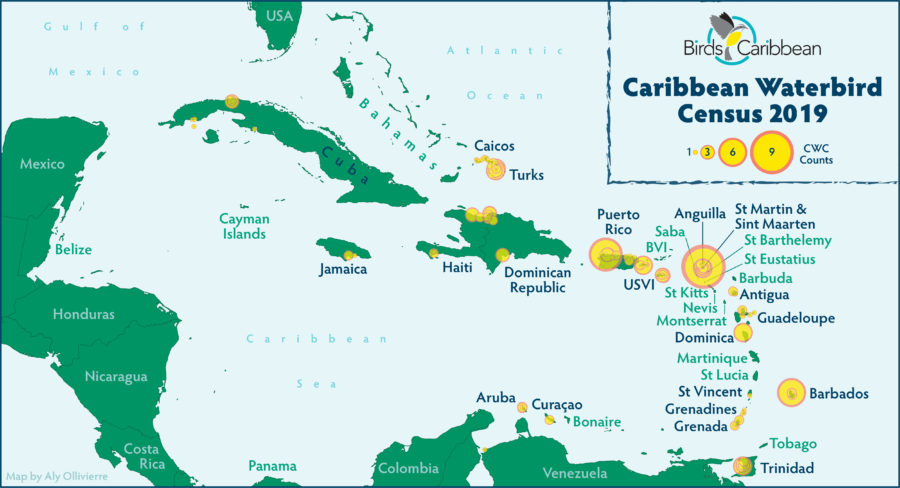
The 11th annual Caribbean Waterbird Census (CWC) starts on Tuesday January 14th and we need your help surveying all types of waterbirds on your island! Anyone can participate in the CWC. Grab a friend, head out to your nearest wetland or beach, and record the birds you see. Detailed information about how to conduct surveys can be found here.
Starting in 2010, dedicated bird enthusiasts have ventured into wetlands across the Caribbean to systematically survey all types of waterbirds (shorebirds, seabirds, wading birds, marshbirds, and waterfowl) each January 14th to February 3rd. The Caribbean is home to over 185 species of waterbirds, including a number of endemic and globally threatened species and many migrants. A structured, ongoing survey is essential for understanding how to best conserve this exceptional group of birds and manage their habitats.
Increasing Caribbean eBird Presence
For all eBird records for the year 2019, there were 36 countries and regions across the world that doubled their eBird growth compared to 2018. We are so excited that 4 Caribbean countries were among them! Saint Martin (French part) (265.52% growth), Turks and Caicos Islands (204.3%), Sint Maarten (115%), and Antigua and Barbuda (101%). Joining the CWC in 2020 is a great way to keep the momentum going and to continue putting the Caribbean and its birds on the global stage! In 2019, the three-week CWC period yielded a total of 321 checklists from 19 countries.
The CWC Is an Important Tool for Conservation
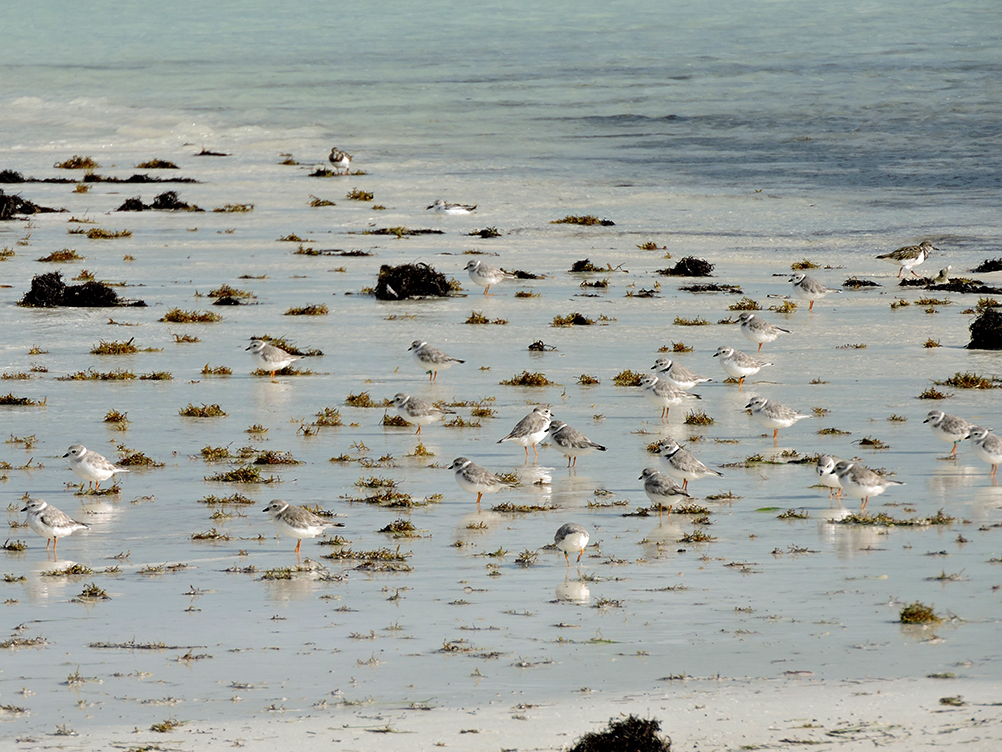
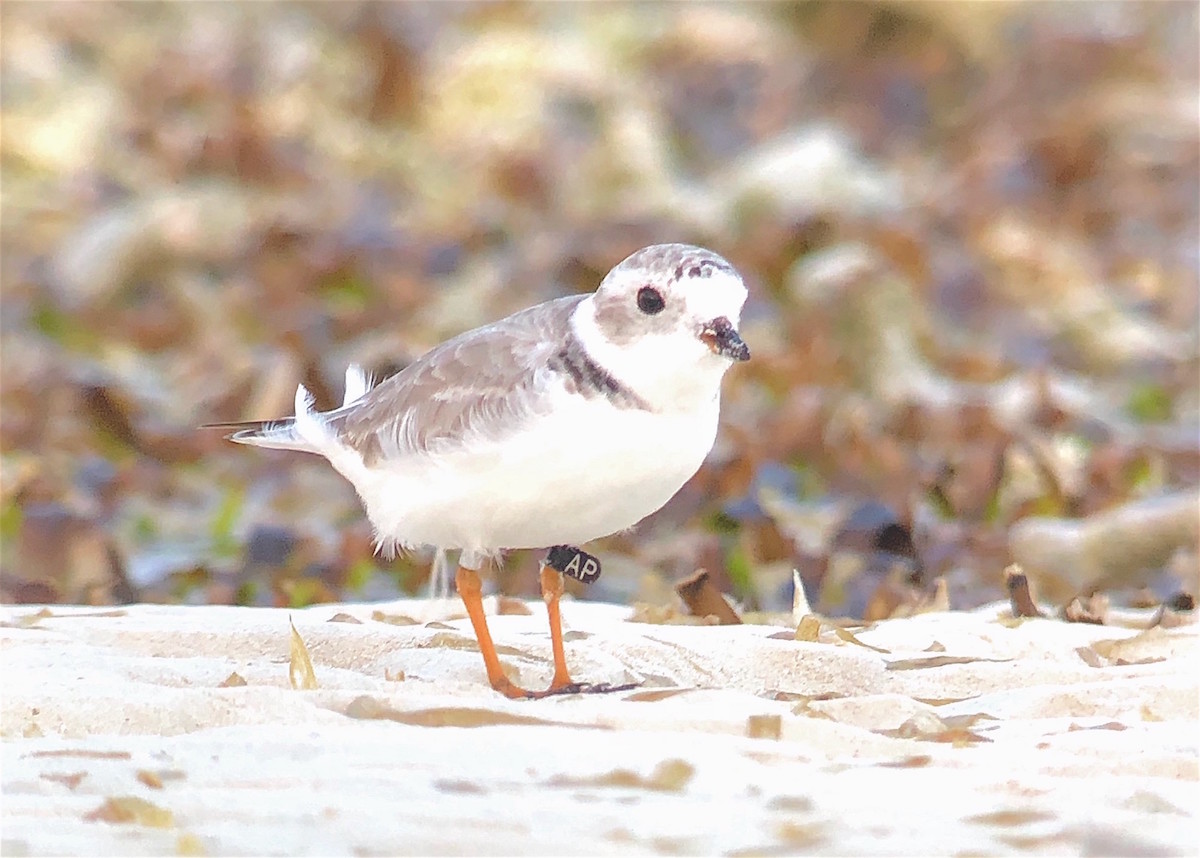
Piping Plover are one of the shorebird species that rely on Caribbean habitats. (photo by Walker Golder)
Since 1900, 64% of the world’s wetlands have disappeared, and the Caribbean region is no exception to this crisis. Wetlands are in urgent need of conservation. They are unique ecosystems that provide critical habitats to specialist species. Yet, they face many threats ranging from complete conversion due to development, degradation due to pollution and introduced species, and loss due to sea-level rise.
The waterbirds that rely on wetlands not only face the threats of their habitat being altered or destroyed but also hunting and introduced predators. In order to properly manage habitat for waterbirds in the Caribbean, we need to understand waterbird population trends. In addition, monitoring the health of waterbird populations and their habitats is beneficial to both birds and people, since we rely on the same habitats for our health and well-being.
The CWC is an important tool for monitoring how hurricanes effect bird abundance and distribution. In 2017, Hurricanes Irma and Maria wreaked havoc in the Caribbean, damaging fragile wetland ecosystems. Results from the CWC in 2018 several months later were concerning, with our counters reporting dramatic declines in common bird species. The CWC in 2019 revealed encouraging numbers, especially for shorebird populations. We look forward to the 2020 CWC to know if bird diversity and abundance have continued to recover. In addition, we anxiously await results from areas hit by Hurricane Dorian in September 2019.
In addition, survey data can be used as a tool to designate habitats that are essential for birds. The Cargill Salt Ponds in Bonaire were designated a Western Hemisphere Shorebird Reserve Network (WHSRN) site of Regional Importance as a direct result of survey efforts. With the survey data we collected, our team was able to provide evidence that the site met the criteria for listing. Now, Cargill is dedicated to managing habitat for shorebirds on their property. It’s amazing what birding can achieve!
Good luck, have fun, and we look forward to hearing about your findings. If you have any photos to share, please share them on our BirdsCaribbean Facebook page. For sharing on social media, use hashtags: #CaribbeanWaterbirdCensus and #WaterbirdsCount AND please tag us: @BirdsCaribbean
Banded Birds
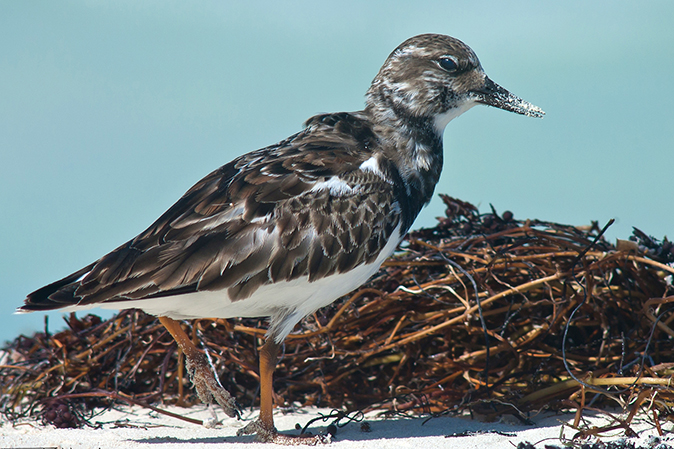
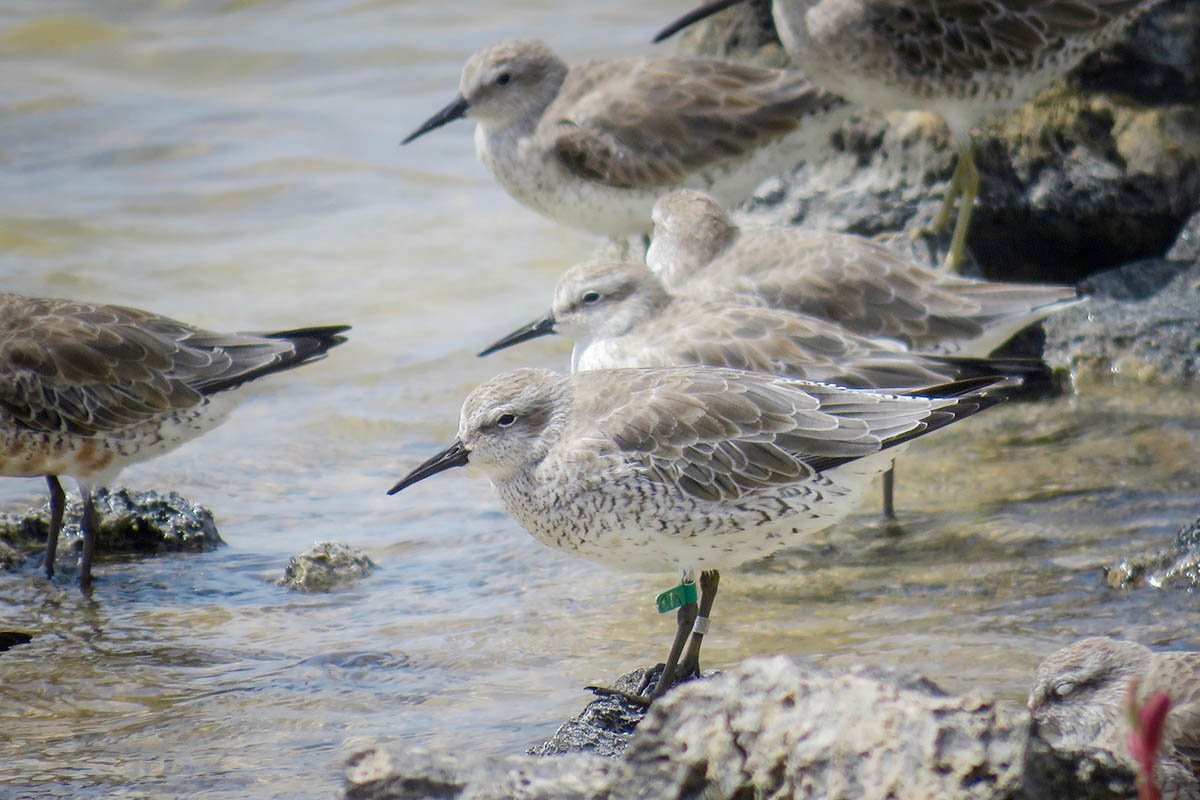
Be sure to be on the lookout for banded birds! Especially Piping Plovers, Red Knots, Semipalmated Sandpipers, Ruddy Turnstones, and Sanderlings. You may report your sightings to BandedBirds.org and the USGS Bird Banding Lab which oversee all banding in the United States.
Need Help?
Find a tricky shorebird in winter plumage that you can’t identify? Need help setting up an eBird account? Want to participate in the CWC but you’re not sure how to get started? Please contact BirdsCaribbean’s Waterbird Program Manager, Jessica Rozek Cañizares at jessica.rozek@birdscaribbean.org.
Entering CWC Data in eBird
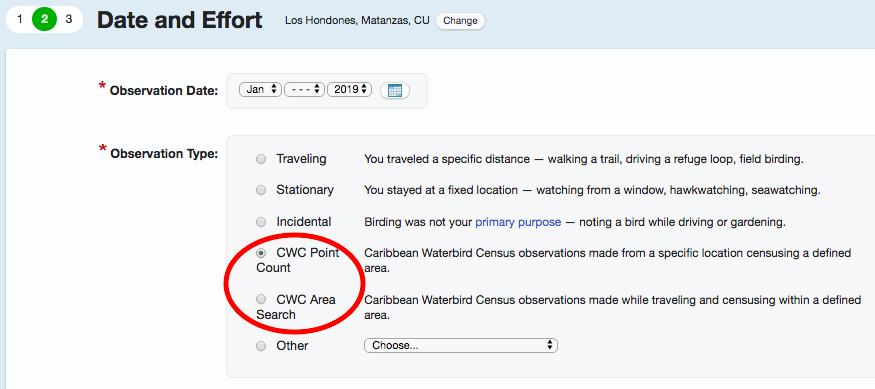
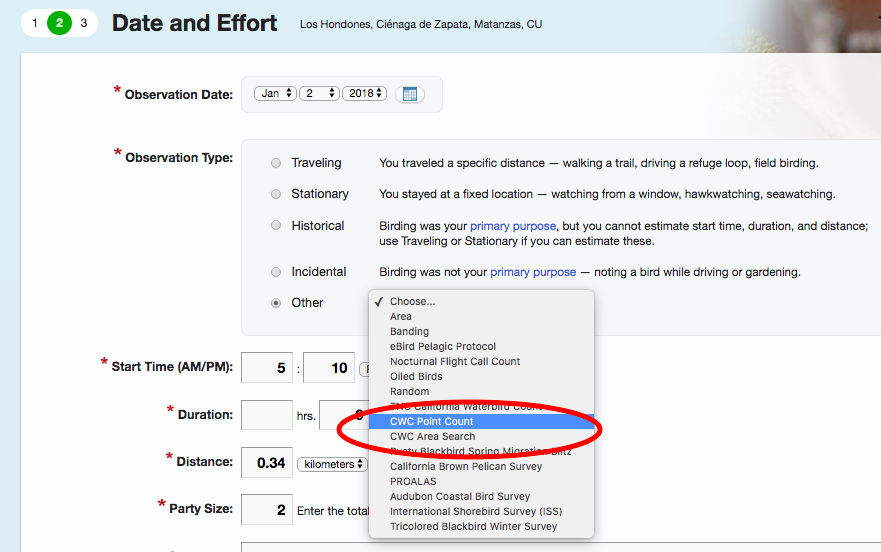
CWC data is stored on eBird Caribbean. If you participate in the CWC, it’s very important that you enter your data through this website using the correct protocol on Step 2, because this is where we collate all the data used for analyses. We don’t want to miss a single bird or site! Simply making an eBird list during these dates is not enough- the protocol is required for it to be CWC data.
If you are using a desktopcomputer to enter your data:
Sign into your account on ebird.org/Caribbean
Enter location information
Select the appropriate CWC protocol under Observation Type
If you recorded your CWC data using the mobile eBird app:
After you have submitted your checklist on your smartphone:
Log into eBird on a desktop computer
Click on “My eBird” at the top of the screen
Click on “Manage My Checklists” on the right menu
For your CWC checklist, click on “View or Edit”
Click on “Edit Date and Effort”
For Observation Type, select “Other” and then choose the appropriate CWC protocol
“Protect birds: Be the Solution to Plastic Pollution.”
A beach clean-up at Punta Cucharas Nature Reserve, Ponce, Puerto Rico. (Photo by Eduardo Llegus)
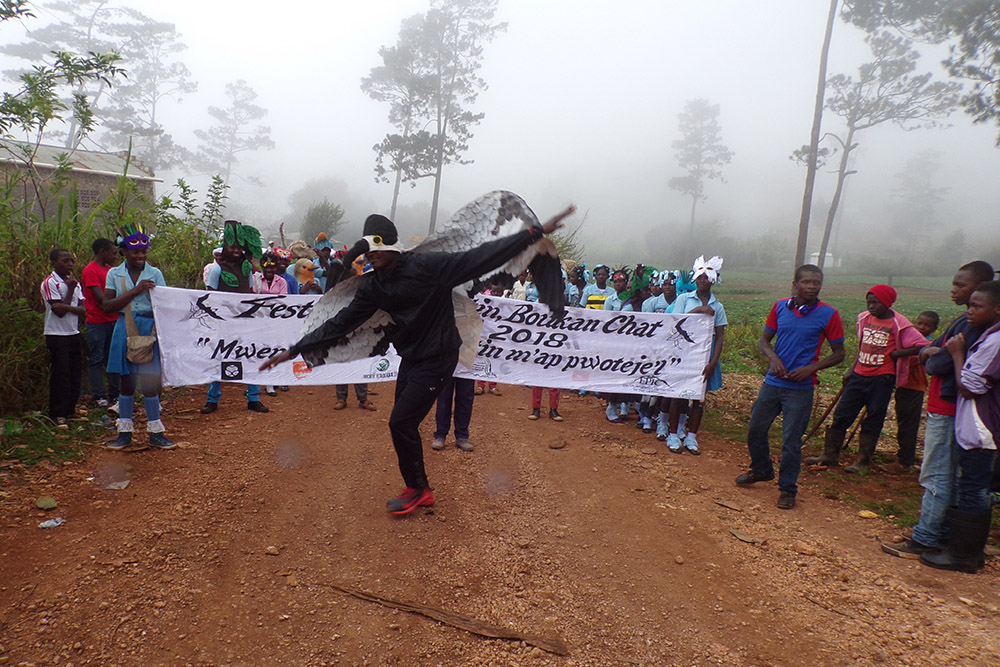
Islands across the Caribbean turned the focus on the devastating impact of plastic pollution on rivers, wetlands and seas with the theme for World Migratory Bird Day 2019 (WMBD 2019). Grassroots organizations, government ministries and agencies and non-governmental organizations collaborated on a range of activities focused on the fascinating species that appear on the islands later in the year, and stay until spring.
Since 2017, a number of Caribbean countries have started initiatives to fight single-use plastics. – including Antigua and Barbuda, the Bahamas, Bermuda, Dominica, Haiti, Jamaica, St. Vincent and the Grenadines and Turks and Caicos Islands. Others are starting to look at measures to ban Styrofoam manufacture and imports. More plastic and Styrofoam bans are set to take effect in 2020. While much more work is needed on the ground and in partnership with governments, there is growing awareness on the islands that plastic pollution is harmful to both land and marine environments. Whether these are wetlands or coastal regions, many areas affected provide habitats for migratory birds.
Mangroves, Masks and Migratory Birds
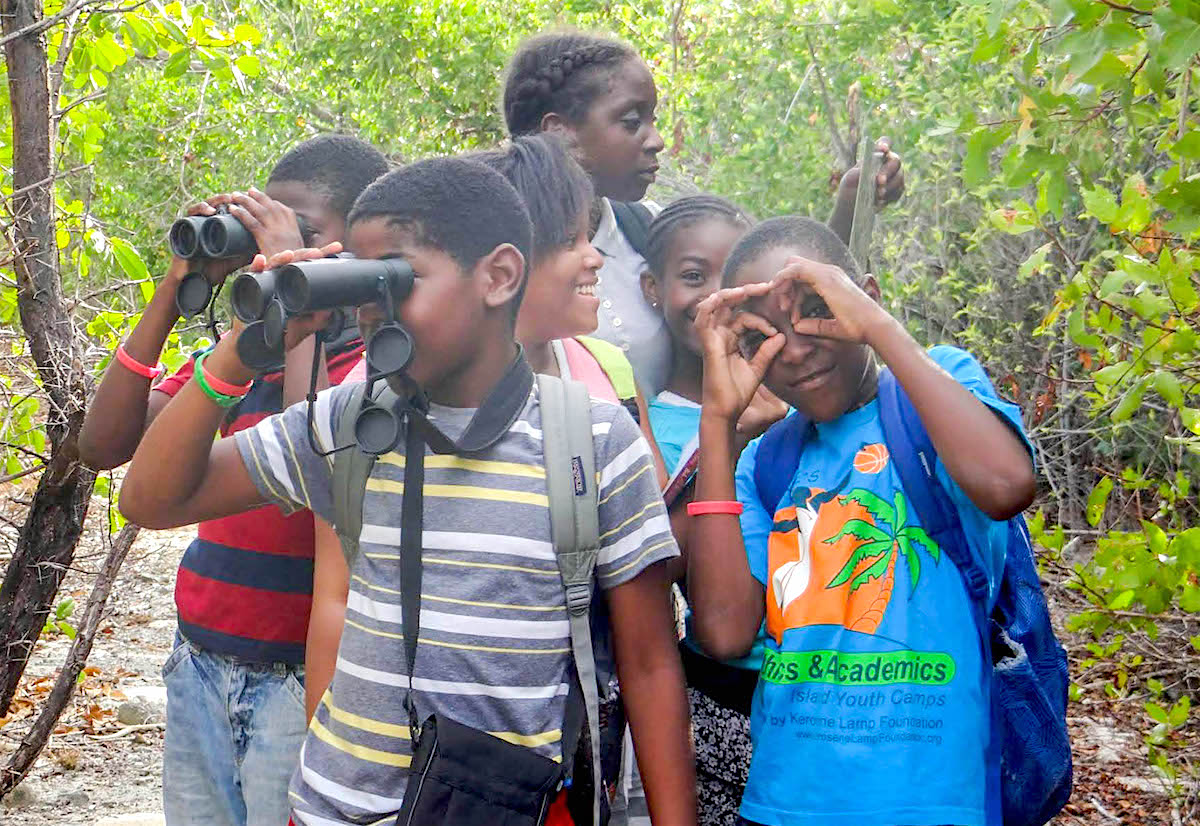
We did it! Students display the results of their BirdSleuth Caribbean Scavenger Hunt in Salt River, Jamaica. (photo by Emma Lewis)
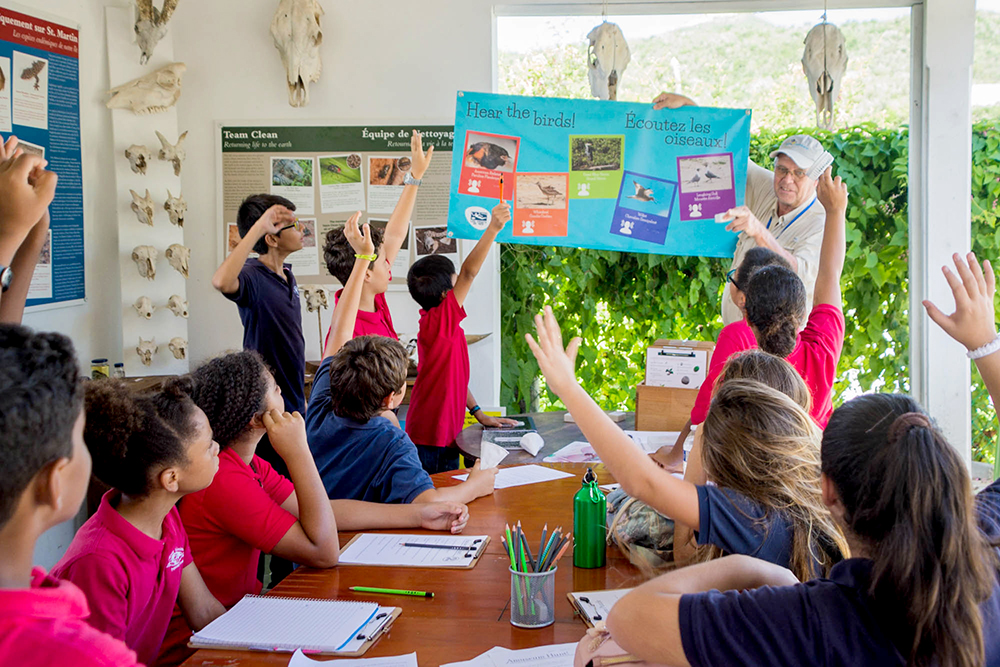
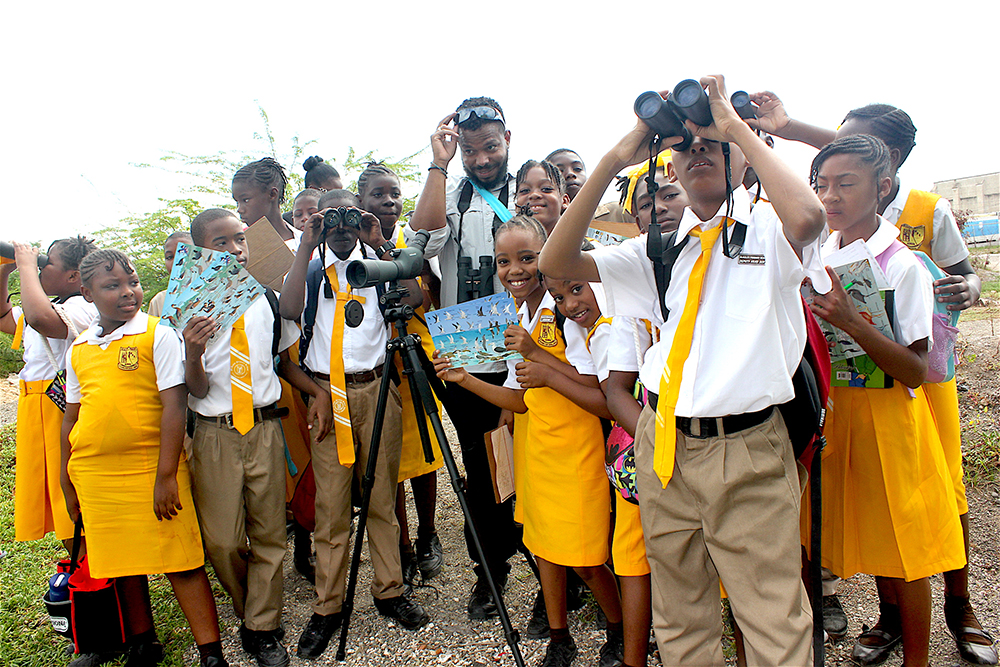
In Jamaica, the Portland Bight Discovery Centre in Salt River, Clarendon hosted World Migratory Bird Day with teachers and students from nearby schools. Science Officer at the Caribbean Coastal Area Management Foundation (C-CAM) D. Brandon Hay gave an illustrated talk, outlining how ingesting plastic affects bird life, and which species suffer. After a lively Q and A session, the students took a guided walking tour of a nearby wetland area, using BirdSleuth Caribbean’s Scavenger Hunt materials. The students also created and displayed colorful birdfeeders, and performed original educational pieces, including dub poetry and song – all reflecting the theme! After a guided boat ride through the mangroves, their day ended tallying points earned from these activities. The first prize winner was the Mitchell Town Primary and Infant School!
Education Officer in Dominica Ameka Cognet reported highlights of the day’s activities. Primary school students enjoyed making colourful migratory bird masks. They then went on a birdwatching tour of the Botanical Gardens in the island’s capital, Roseau. The children learned a great deal about the migratory species that visit the island annually. They also gained a much deeper understanding of how plastic pollutes the environment, choking land and sea and harming birds and other wildlife.
A First for St. Croix and Record Numbers for St. Martin’s Seventh Celebration
Creative use of plastic waste to make bird feeders! St. Croix Environmental Association WMBD event. (photo by Jen Valulius)
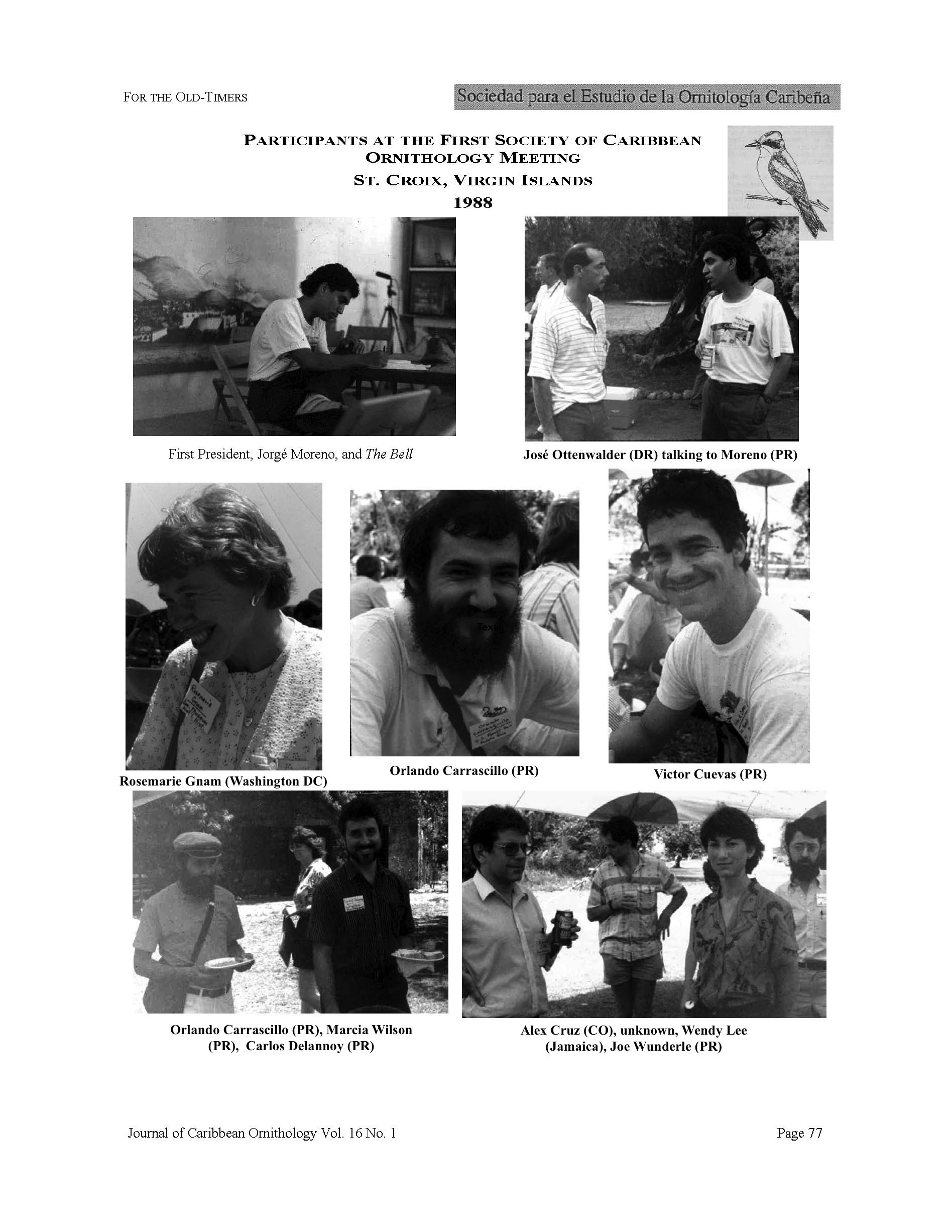
The St. Croix Environmental Association in the U.S. Virgin Islands (the site of BirdsCaribbean’s very first international meeting in 1988) celebrated WMBD for the first time – and they did it in style. They organized two events in October at the Sandy Point National Wildlife Refuge. Arts and crafts, bird walks, bird banding, and storytelling activities were on the agenda. A bird rescue expert gave a talk, and informational displays were presented. The activities included a coastal clean-up, where participants saw for themselves how much plastic is in the environment. “Every activity had a meaningful impact on each participant,” said Jennifer Valiulis, local coordinator. Clean-up materials provided by Environment from the Americas were also distributed to participants.
No less than 250 residents, young and old, enthusiastically joined WMBD celebrations spearheaded by the non-governmental organization Les Fruits de Mer in St. Martin. “We were able to reach more youth than ever, and it is all thanks to our sponsors,” said event organizer Jenn Yerkes. St. Martin’s seventh annual Migratory Bird Festival at Amuseum Naturalis was a great success, with students using BirdSleuth Caribbean materials for several activities. Crafts are always popular, and the children decorated canvas backpacks to take home with them. Technology was also an exciting feature this year; the mobile media and learning hub IdeasBox shared videos and e-books.
Education is Key! And Thanks to All the Sponsors
Young artists at work on bird-themed bags at Les Fruits de Mer’s Migratory Bird Festival in St. Martin. (photo by Mark Yokoyama).
World Migratory Bird Day offers another opportunity for our partners across the region to educate residents on the importance of conserving habitats and ensuring that our visiting species continue to thrive when they visit our islands. This year, the message was about how plastic pollution affects not only our birds, but our own quality of life also. There are solutions, but we must take action for our own health as well as that of the vulnerable birds that we enjoy every day.
We would like to thank all the sponsors – local, national, and international – who provide funding for these important activities. Special thanks to Environment for the Americas for providing awesome materials. If your organization participated in an event and if you would like to share your experience, please send us a message to sdiaz-mendez@environementamericas.org. It’s about the birds, the habitat and the people.
A Few Lines of Poetry to End With
Caribbean people love poetry as a form of expression. We end with these few lines from Greta, a University of the Virgin Islands student and presenter of World Migratory Bird Day at Southgate Coastal Reserve, who offers this advice:
Be a solution To plastic pollution. Always walk with a garbage bag and pick up your trash. Do not throw it where the birds hatch.
Let’s spread the word and fight plastic pollution in the Caribbean!
Enjoy the gallery of photos from WMBD events in 2019; hover over each photo to see the caption or click on a photo to see a slide show.
Highlight of this year’s celebrations in Dominica were a migratory bird mask-making activity with primary schools, followed by a birdwatching tour at the Botanical Gardens in the Roseau Area.
Students in Dominica proudly show off their bird masks.
How big is your wing span? WMBD event in St. Croix, US Virgin islands.
Youth work hard at beach clean-up in Guanabo, Cuba.
Painting hand-made bird feeders. (photo by Jen Valiulis)
Beach clean-up in Guanabo, Cuba.
Some little ones are taking their bird art seriously, but others have time for a toothy smile – at the Amuseum Naturalis in St. Martin. (photo by Mark Yokoyama)
Dominos are very popular in Cuba, especially this version made with birds!
Beach clean-up in Guanabo, Cuba.
Learning all about raptors at St. Croix Environmental Association’s WMBD event. (photo by Jen Valiulis)
Working out bird puzzles at the WMBD Community Festival in Quinta de Los Molinas, Cuba.
Young artists at work on bird-themed bags at Les Fruits de Mer’s Migratory Bird Festival in St. Martin. (photo by Mark Yokoyama).
Creative use of plastic waste to make bird feeders! St. Croix Environmental Association WMBD event. (photo by Jen Valiulis)
A timeline of Jamaica’s bans on single-use plastic. (photo by Emma Lewis)
Learning all about the impacts of plastic pollution on birds in Cuba.
World Migratory Bird Day Poster showing different groups of birds that are affected by plastic pollution. (Artwork by BirdsCaribbean member, Arnaldo Toledo, from Cuba)
This is my wingspan! A student at the WMBD event in St. Martin spreads her “wings.” (photo by Mark Yokoyama)
A beach clean-up at Punta Cucharas Nature Reserve, Ponce, Puerto Rico. (Photo by Eduardo Llegus)
Beach clean-up in Guanabo, Cuba.
Brandon Hay, Science Officer at the Caribbean Coastal Area Management Foundation (C-CAM) gives a talk to students and teachers on the impact of plastic pollution on our birds. (photo by Emma Lewis)
Educational materials on display at the WMBD Community Festival in Quinta de Los Molinas, Cuba.
Beach clean-up for WMBD in St. Martin/ Sint Maarten, organized by EPIC (Environmental Protection in the Caribbean).
Alieny Gonzalez, WMBD Coordinador in Cuba counts shorebirds for WMBD.
Working together to clean up a beach in Cuba overloaded with plastic trash. (photo by Alieny Gonzalez)
We did it! Students display the results of their BirdSleuth Caribbean Scavenger Hunt in Salt River, Jamaica. (photo by Emma Lewis)
Story time in St. Croix, all about the amazing long distance migration of the Whimbrel. (photo by Jen Valiulis)
A young Brown Booby caught on a fishing lure. Many kinds of plastic are dangerous to Caribbean birds. (Photo by Michiel Oversteegen)
The sad impacts of plastic pollution on birds- this cormorant will not survive long with this plastic ring stuck on its bill and neck.
The beach is much cleaner now!
Students from Rose Hall Primary School in Jamaica do a little research. (photo by Emma Lewis)
Dominos are very popular in Cuba, especially this version made with birds!
A young girl is happy with her migratory warbler tattoo at a WMBD Community Festival in Quinta de Los Molinas, Cuba.
On the scavenger hunt on the Portland Bight Discovery Centre’s boardwalk through the mangroves, Jamaica. (photo by Emma Lewis)
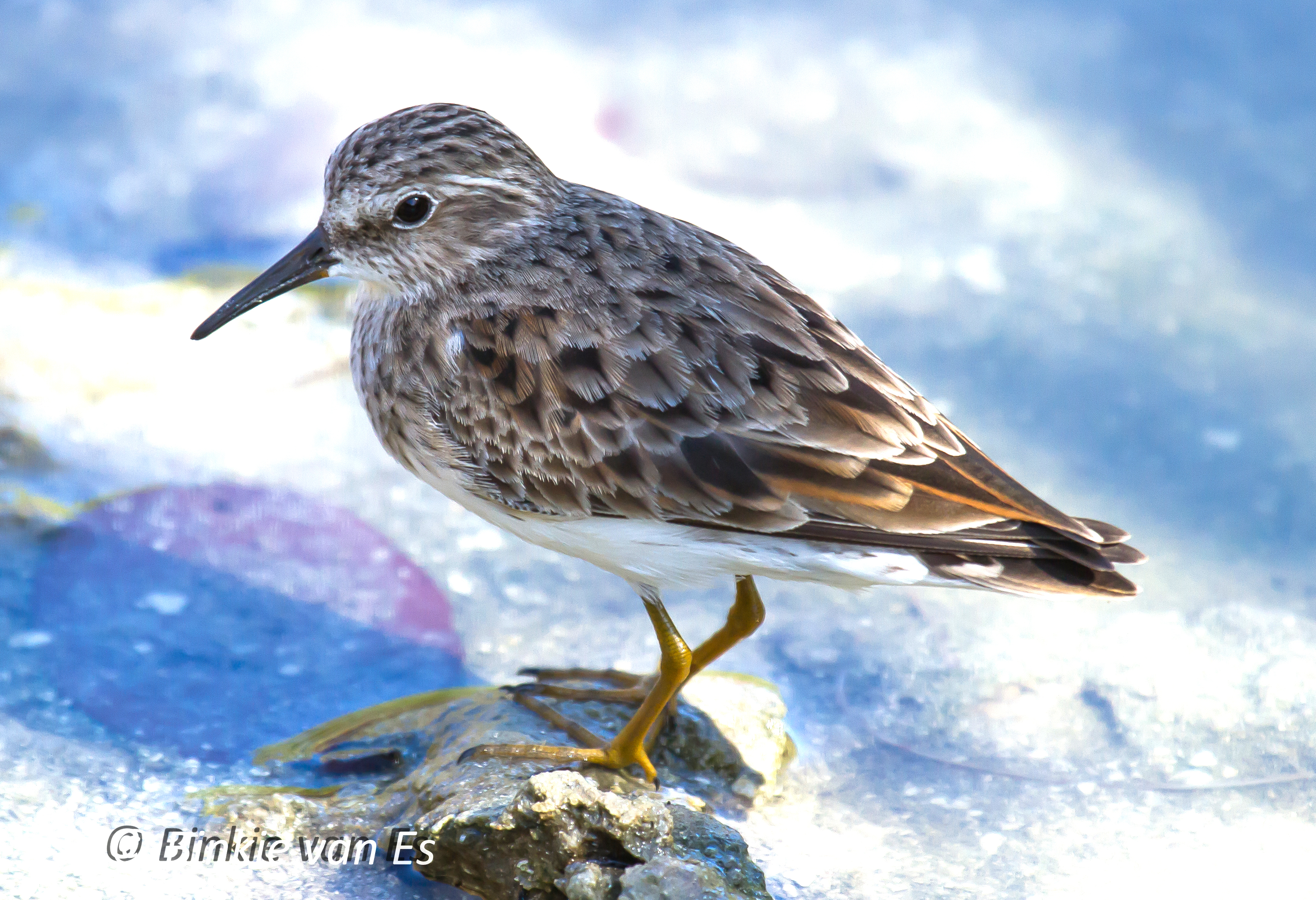
Least Sandpipers at the Portland Bight Discovery Centre, Jamaica. (photo by Emma Lewis)
Looking back on 2019, the year provided us with a range of experiences. There was excitement, success, tragedy, and hope. When we reflect on all that we have accomplished this year, in both the good times and the bad, there was one common theme: collaboration. Sometimes it took the form of official partnerships and other times grassroots community efforts. Even fundraising, which was critical for efforts like hurricane relief, is a collaborative process. Here, we review some of the most important moments of the past year and acknowledge and thank all those who collaborated with us to further our mission. We are also grateful to our many members, volunteers, and donors who generously support our work. We have an awesome community!
Celebrating Success & Partnerships
The Cuban contingent! A record 20 Cubans attended, thanks to our generous sponsors! (photo by Fred Sapotille)
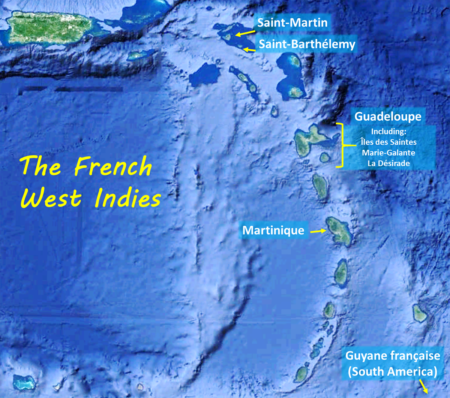
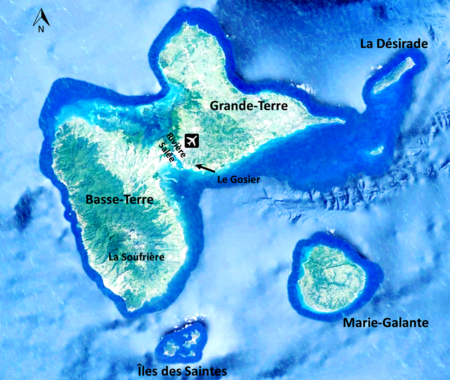
Keeping Birds Aloft! This was the inspirational theme of our 22nd BirdsCaribbean International Conference held in July. Over 250 delegates from 34 countries grabbed French phrasebooks and headed to the Karibea Beach Hotel in Le Gosier, Guadeloupe. The lively, productive and thought-provoking meeting was organized with our major partners, the Parc National de la Guadeloupe. Keynote speakers, workshops and brainstorming sessions helped participants plan how to engage their communities, combat wildlife trafficking, and address the varied environmental threats facing the Caribbean and its birds. A mentorship program for younger members was launched. (Check out what a few of our sponsored delegates had to say about how they benefited from attending the conference). Despite the profound topics being discussed, participants were upbeat and as would be expected of any Caribbean event, there was dancing on the final night!
At the conference, we were humbled and proud to receive the 2018 Partners in Flight Award. Our Board President Andrew Dobson accepted the award, presented by the U.S. Forest Service, in recognition of BirdsCaribbean relief and recovery work in the wake of Hurricanes Irma and Maria in 2017.
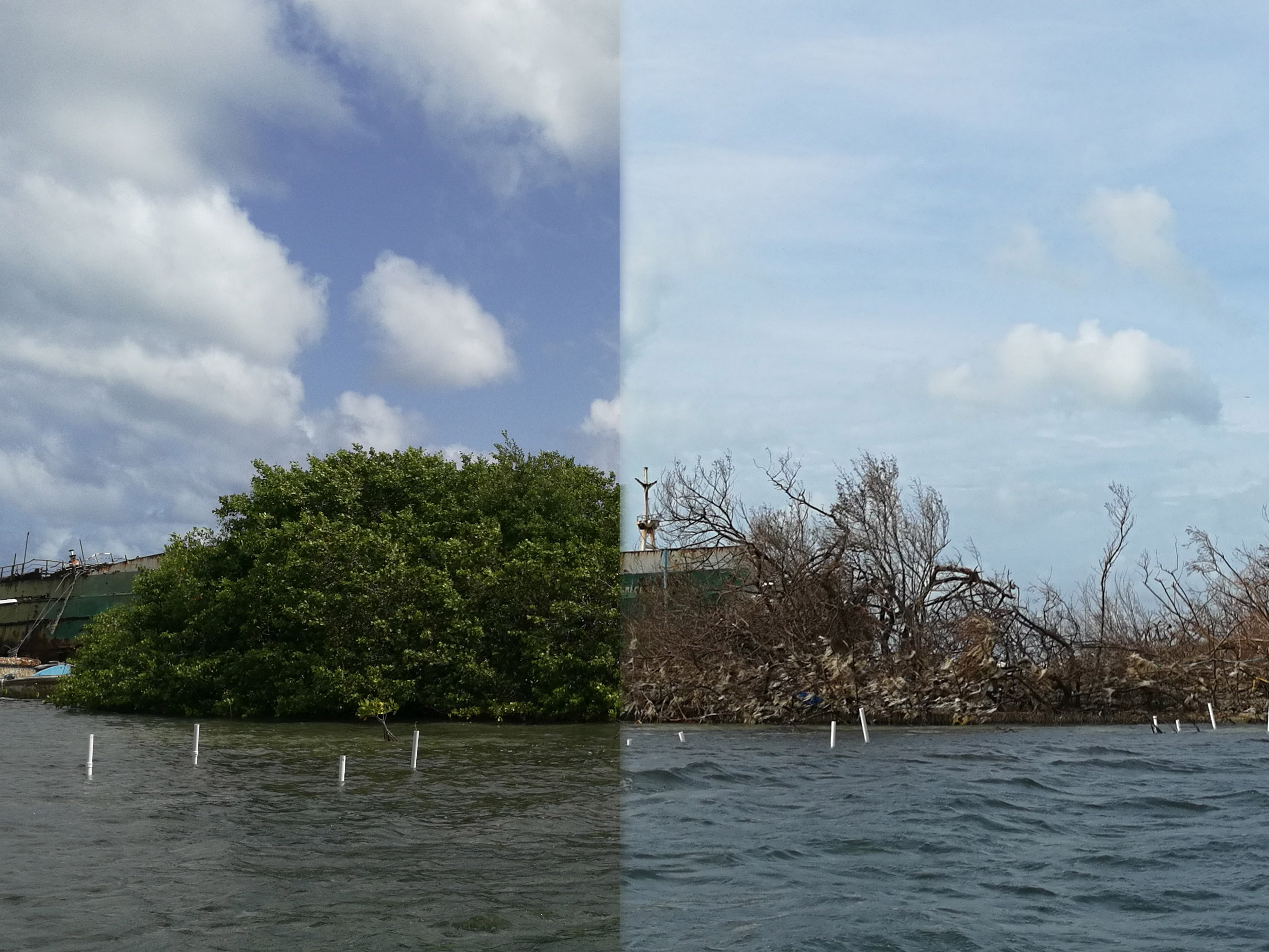
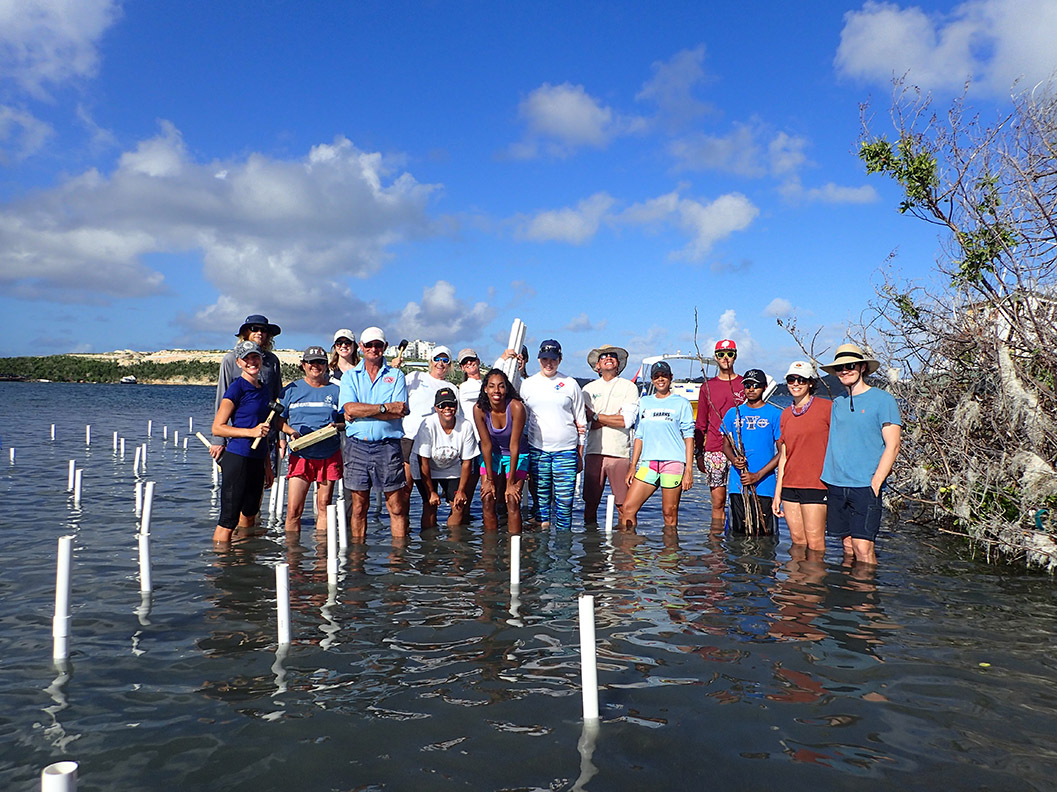
Ceremony celebrating the the opening of the restored Ashton Lagoon.
BirdsCaribbean was thrilled to celebrate the official reopening of the restored Ashton Lagoon, which took place on May 31, 2019. After 13 years of truly challenging work, our partners in the island archipelago between St. Vincent and Grenada – called the Transboundary Grenadines – proudly welcomed supporters and generous donors to Union Island. After a misguided tourism project at the site lay in ruins for 25 years, the neglected wetlands finally have a chance to reawaken. Orisha Joseph and her team at Sustainable Grenadines, Inc. (SusGren) were the stars of the show. Next step: to have the Lagoon and its surroundings designated as a Marine Protected Area.
During the restoration work, BirdsCaribbean organized a highly successful Interpretive Bird Guide Training Workshop on Union Island, empowering citizens from the Grenadines and beyond. In August, the Caribbean Birding Trail’s spectacular new website – https://www.caribbeanbirdingtrail.org – covering more than 150 birding sites in 24 countries, was launched. If you have not already done so, we invite you to explore – both virtually and in person, with our enthusiastic trained guides!
Devastation from Hurricane Dorian
Six Grand Bahama Island Birders carried out the first bird survey of the Eastern End of Grand Bahama Island one month after Hurricane Dorian. Left to right – Shelagh Paton-Ash, Delores Kellman, Gena Granger, Bridget David (recorder) and Erika Gates. (photo by Martha Cartwright)
Just a few weeks after our conference, we watched with heavy hearts as tragedy of incredible proportions struck the islands of Abaco and Grand Bahama. The Category Five Hurricane Dorian, which lingered from September 1 to 3 over these islands, brought death and destruction to many communities, and devastated the landscape.
Immediately, BirdsCaribbean formed a response team to raise funds and deliver supplies. The first tentative forays by our Bahamian partners were subdued and sad, with moments of joy and relief when bird species such as the Bahama Parrot, thought to be badly impacted from the island by the storm, were discovered to be doing okay. As always, severe storms bring strong emotions in their wake – and for conservationists, deep anxiety over whether habitats and birds will eventually recover.
Our Hurricane Dorian Recovery Fund has raised US$29,000 to date, with less than one month to go. Thanks to our generous supporters, we shipped thousands of pounds of bird seed and hundreds of feeders. We also used funds to help replace equipment the Bahamas National Trust lost during the storm in addition to funding field surveys. Now the questions loom: Did the Bahama Nuthatch population survive? How quickly will the parrots recover? Will the waterbirds return? While there are encouraging signs, the future is still uncertain. There is much work to be done.
Supporting Conservation & Community
Participants of the shorebird conservation workshop on a field trip within Cabo Rojo National Wildlife Refuge. (Photo by Lisa Sorenson)
This year we also focused on our most vulnerable migratory species, shorebirds. We know these birds are in trouble; this is a global phenomenon. In February, we hosted the International Training WorkshopConserving Caribbean Shorebirds and Their Habitats in Cabo Rojo, Puerto Rico with 33 enthusiastic participants on “Conserving Caribbean Shorebirds and their Habitats.” Our partners were Manomet and local NGO Sociedad Ornitológica Puertorriqueña (SOPI).
Our Betty Petersen Conservation Fund provided support to finance direct conservation actions for three endangered Caribbean species: The Black-capped Petrel in Haiti, the Ridgway’s Hawk in the Dominican Republic, and the White-breasted Thrasher in St. Lucia. In all these projects, community involvement (especially youth) has been a key factor. In Haiti, entire farming communities that cultivate lands adjacent to the Petrel’s nesting colonies are pledging to protect these critical breeding areas while in the Dominican Republic, teenagers are volunteering to guard the hawks’ nests. This work would not be possible without the many generous donations to the Betty Fund.
Children in the Dominican Republic learn to celebrate their endemic raptor with the new Ridgeway’s Hawk brochure. (photo by Marta Curti)
Meanwhile, our dedicated citizen scientists have been hard at work again. Global Big Day was – well, really big. 846 checklists were posted on May 4 – over twenty percent more than in 2018. The Bahamas ran away with the top number of species this time – 138. Runners up were Puerto Rico and third-place Cuba were not far behind. In all, eighty percent of the Caribbean’s endemics were spotted in just one day. BirdsCaribbean is proud of its partnership with eBird through our portal eBird Caribbean. Have you downloaded the free mobile app? Every bird counts!
In 2019 we all learned how to protect birds by becoming the solution to plastic pollution. This was a hugely popular theme for the Caribbean region, which witnesses daily the scourge of plastic pollution and its harmful impacts on birds. Dozens of coordinators organized many events related to this theme for our annual Caribbean Endemic Bird Festival in spring and World Migratory Bird Day celebrations in fall, including beach and wetland clean-ups, raising awareness about the issue and how plastic pollution harms us and wildlife, and how to personally reduce your use of plastic. Many Caribbean countries are leading the way with this global problem by banning plastic bags, plastic straws, and styrofoam. And, we continue to train and empower local educators so that they can develop the next generation of bird conservationists and environmental stewards – watch this inspiring short story from one of our star educators, Natalya Lawrence.
Creative use of plastic waste to make bird feeders! St. Croix Environmental Association WMBD event. (photo by Jen Valiulis)
Finally, there were lessons learned (or re-learned) in 2019. In the face of climate change, Caribbean islands must build greater resilience, especially along their vulnerable coastlines. The restoration of wildlife habitat is critical. So is the sustained and determined protection of our most endangered bird species, including migratory birds, in the face of encroaching human development. But we cannot do it alone. We need the support and the active participation of the communities where birds live – and we need you!
Then, and only then, will Caribbean residents – humans, birds, and wildlife in general – truly thrive, and continue to thrive in the future.
Our sincere gratitude to all of our donors and funding agencies for your generous support in 2019, which allowed us to carry out the work highlighted above, and much more! And a big thanks to all of our awesome partners, members, and volunteers for your dedication and hard work. You all inspire us every day!!!
Bananaquit by Aslam I. Castellan Maure. This unique shot of our logo bird won an Honorable Mention in our 2019 Photography Contest.
BirdsCaribbean’s third biennial photography competition took place at our 22nd International Conference in Guadeloupe. The five judges found it difficult to decide on the winners in each of three categories, and in particular the Grand Prize Winner. Artistry, composition, technique, colour, humour – and a great love for the subject matter – were embodied in the striking photographs submitted. Photos were taken between July 21 and August 3, 2019 and uploaded via BirdsCaribbean’s Flickr site. The Grand Prize was donated by Vortex Optics. Click here to see all the photos submitted (hashtag #BCPhotoContest2019). The three categories were:
Endemics – including endemic and regional (West Indies) endemic birds of Guadeloupe;
Fun With Birds and People – showing humans, birds and nature interacting (including conference activities); and
Birds and Nature – featuring Guadeloupe’s non-endemic birds, close-up shots of other wildlife, natural habitats, and landscapes.
Below are the winners, with some comments from the judges:
Grand Prize Winner
Grand Prize Winner: Guadeloupe Woodpecker by Frantz Delcroix
Guadeloupe Woodpecker by Frantz Delcroix: The only endemic bird of Guadeloupe has just caught a moth and is sitting near his nest with his meal in his bill. “Nicely focused and composed,” with the light catching his rufous breast feathers.
Endemics
1st Prize:Antillean Crested Hummingbird by Aslam I. Castellón Maure. The eye and the crest are in sharp focus. “It draws you into the picture…Great portrait.”
Antillean Crested Hummingbird by Aslam I. Castellón Maure
2nd Prize:Purple-throated Carib by John C. Sterling. A “wood fairy bursting out of the shadows. Dazzling and puzzling at the same time.”
Purple-throated Carib by John Sterling
3rd Prize:Guadeloupe Woodpecker by Judd Patterson. “Really sharp, especially eye, good habitat setting, exposure is spot on.”
1st Prize:Seabird Viewing by John Webster. A panoramic view of a field trip group. “This speaks to what the conference does…connect people to others passionate about birds and the actual environment all seek to preserve, protect and nurture…Could be oil painting!”
Seabird Viewing by John Webster
2nd Prize: Beach Break! by John Webster. “Great focus and depth of field. Good use of a smartphone!”
Beach Break by John Webster
3rd Prize: Recording Guadeloupe Woodpecker by Venicio Wilson Altamiranda. An atmospheric image… “Science and fashion in the shot. Note the foot lifted as he is working it.”
Recording Guadeloupe Woodpecker by VenicioWilson Altamiranda
1st Prize: Guadeloupe Anole by Judd Patterson. “Beautifully framed by the vegetation.” “Great composition, framing – green within green.” “The blurred foreground frame adds to the surprise moment for both anole and photographer.”
Guadeloupe Anole by Judd Patterson
2nd Prize: Three Pelicans Plunging by Holly Garrod. “I like the raw energy of this trio, as if they are doing an air show.” “The marvelous, crazy shapes of the birds – wings, beaks, feet.”
Three Pelicans Plunging by Holly Garrod
3rd Prize: Snowy Egret by Aslam I. Castellón Maure. “This is an amazing shot…the feathering reminds me of a fashion shoot with this gorgeous model.”
Snowy Egre by Aslam I. Castellón Maure
Honorable Mentions:Black-necked Stilt by Venicio Wilson Altamiranda. Stick Insect by Frantz Delcroix. Bananaquit by Aslam I. Castellón Maure. Congratulations to all our winners!
The Grand Prize winner will receive a Vortex Viper Angled Spotting Scope: 20 – 60 x 85. First Prize Winners will receive an Echo (2nd Generation) Smart Speaker with Alexa and Dolby processing. Those coming in second will receive an Echo Dot (3rd Generation) Smart Speaker with Alexa. Third place winners will receive a LETSCOM Fitness Tracker with Heart Rate Monitor, Slim Sports Activity Tracker Watch, Waterproof Pedometer Watch with Sleep Monitor.
Many thanks to our five fabulous judges: Ivan Mota, Skip Glenn, Andrew Dobson, Stephen Cutting and Emma Lewis, for their time, their keen eyes, and thoughtful consideration of each entry. Huge thanks also to Vortex Optics for donating the Grand Prize. Last but not least – our deepest appreciation to all those who entered the contest. We really enjoyed these beautiful shots, making it quite challenging for judges to choose.
Please enjoy this photo gallery of all the Honorable Mentions!
Grassland Yellow Finch by Martin Gebauer
Stick Insect by Frantz Delcroix
Black-necked Stilt by Venicio Wilson Altamiranda
Scaly-breasted Thrasher by Judd Patterson
Woodpecker Blues by John Webster
Walking Deshaies Guadeloupe by Venicio Wilson Altamiranda
New twin suspension bridges over breached gaps in failed marina causeway in the Ashton Lagoon (Photo by Sustainable Grenadines, Inc.)
The local non-profit conservation organization Sustainable Grenadines (SusGren) welcomed guests to the lagoon’s (re)birthday celebration at its welcoming eco-friendly building on Union Island in the Grenadines on May 31, 2019. The building adjoins Ashton Lagoon, the largest natural bay and mangrove ecosystem in St. Vincent and the Grenadines. This area was legally designated a Conservation Area in 1987 and named as an Important Bird Area (IBA) by BirdLife International in 2008.
The story of Ashton Lagoon is worthy of honor and rejoicing, far and wide. The birthday party guests wore beaming smiles.
After 13 years of diligent work, SusGren, supported by its national and international partners, has succeeded in restoring the lagoon—not only for the well-being of the marine and bird life, but also for that of future generations of Union Islanders. Now it is transformed, blossoming into a beautiful place in which to learn, observe, and enjoy the bounties of nature.
Orisha Joseph, Sustainable Grenadines Executive Director, welcomes everyone to the Ashton Lagoon Restoration Project Unveiling event on May 31st, 2019. (Photo by Sustainable Grenadines, Inc.)
As the King said in “Alice in Wonderland,” it’s best to begin at the beginning. The tale of Ashton Lagoon began some 25 years ago, in 1994. That year marked its decline—the moment when an overseas investor said: “Let’s build a golf course over the mangroves. Let’s build a marina for 300 boats!” as Joseph described it. A causeway was to join Frigate Rock to Union Island.
Map of Union Island ecosystems prior to the Ashton Marina Project and the airport runway extension (Map by Price & Price, 1998)
The following year, the investor went bankrupt. The project was abandoned, but the damage had already been done. Joseph described the development as a “catastrophe.” The causeway and marina berths, constructed from metal sheet piles and dredged coral, blocked the circulation of water, causing immense harm to the mangroves, reefs, and seagrass.
Thereafter, Ashton Lagoon languished. With its stagnant green waters and its degraded mangrove forest, locals—including fisherfolk who passed through to their fishing grounds—shunned it. It became a lonely place, Joseph recounted during her presentation in Guadeloupe (which you can watch below!).
But hope appeared on the horizon. In 2004, Executive Director of BirdsCaribbean Lisa Sorenson visited Union Island to deliver a Wetlands Education Training Workshop. The group took a field trip to the damaged lagoon and learned about the heartbreak residents and fishers felt living with the eyesore of the abandoned and algae-filled lagoon. Sorenson began work to raise funds, and in 2007, thanks to support from the USFWS, SusGren and BirdsCaribbean held a 3-day Participatory Planning Workshop with local stakeholders. All agreed (including, thankfully, donors) that something must be done. But wasn’t this a Herculean task?
An aerial view of Ashton Lagoon in 2004 shows how the failed marina disrupted the natural water flow. Impacts included stagnant polluted water in the lagoon and marked declines in marine life and the health of the mangrove. (Photo by Michele Kading)
Yes, it was. The Restoration Project was a tough, complex undertaking, not for the faint-hearted. Initially, stakeholders developed a vision for the management and sustainable use of the area, and wrote funding proposals. Surveys and monitoring of the ecologically sensitive area were conducted. And then, there were the engineering issues to be resolved. Joseph reserved special appreciation for the man she called her “miracle worker,” Ian Roberts, Engineer/ Works Supervisor for the restoration.
Joseph emphasized that, apart from the onerous technical issues that besieged them (how to deal with those horrible metal piles?) another challenge was a less “concrete” one: How to keep the local community engaged and interested. They were impatient and SusGren’s credibility and reputation were at stake on this small island with a population of 3,500.
The group went through a funding crisis in 2014—one that Joseph looked back on with wry humor. In 2016, when the funds began to work out, the project’s three broad objectives were refined. These were to restore the ecosystem; to strengthen the community’s resilience to climate change, for its economic benefit; and to increase environmental awareness.
In 2018, the water began to flow again. The “miracle workers” had created some breaches in the marina’s piles for it to flow through …after 24 years. “The lagoon said, ‘I can breathe again!’” laughed Joseph.
There followed a frantic period of activity, as SusGren worked on several projects simultaneously. The mangroves were flooded with new water and circulation in the lagoon restored through strategic breaches and culverts in the causeway and marina berths. Two bird towers were built (one named after Lisa Sorenson’s favorite seabird, the Royal Tern). The Interpretive Centre was built and some moorings at Frigate Island were created. A nursery of 3,000 red mangroves was created; the seedlings, donated by the Grenada Department of Forestry. They were planted using bamboo, rather than PVC. A community-owned apiculture and honey production enterprise started up (“bees like black mangroves,” noted Joseph).
Approximately 3,000 red mangroves seedlings were replanted in the Ashton Lagoon (Photo by Sustainable Grenadines, Inc.)
There are also two bridges. After the marina causeway and berths were breached in several places to allow the water to flow freely, the bridges were needed to provide access to the whole causeway—a part of which had been washed away by storms—as a place to walk and watch birds and wildlife. Now, the marina berths are turning into “little islets” with mangroves and other vegetation—growing well and providing a roosting place for birds and habitat for other wildlife.
Hon. Camilo Gonsalves (Minister of Finance, Economic Planning, Sustainable Development and Information Technology) and Hon. Saboto Ceasar (Minister of Agriculture, Industry, Forestry, Fisheries, and Rural Transformation) on the suspension bridge at Ashton Lagoon at the May 31st Restoration Unveiling event. (Photo by Sustainable Grenadines, Inc.).
Executive Director of BirdsCaribbean, Lisa Sorenson felt a great emotional investment in the project. “I could not stop smiling at the launch!” she confessed. “We are so proud of SusGren, their local partners and the donors for persevering with the project. This is a shining example of what can be done, with vision and determination, to right an environmental wrong that occurred many years ago. SusGren did not give up on Ashton Lagoon. Now it is a wonderful place for people—and birds—to visit. An American Flamingo showed up there recently, for the first time!”
BirdsCaribbean continues to provide support for clean-up activities, tree planting and additional signs for the bird towers.
Importantly, members of the public are using the Lagoon Eco Trail, including schoolchildren and teachers, eager to learn. In July, Danny’s Summer School on Union Island went birding at the Lagoon, identifying birds and exploring the trail. “This is what brings me most joy,” admits Orisha Joseph. Those years walking round the lonely lagoon with a colleague are gone. Now, at last, it is appreciated by local people. Non-motorized recreational activities have begun to take off. Kite surfing is booming!
Sustainable Grenadines, Inc. Junior Rangers visit to the Ashton Lagoon Trail. Students poses with Hon. Camillo Gonsalves, Dr. Lisa Sorenson, and Mr. Herman Belmar (Photo by Sustainable Grenadines, Inc.)
World Migratory Bird Day monitoring with the Stephanie Browne Primary School students and teachers. The students pose with bird ID cards outside of SusGren’s new headquarters at the lagoon. (Photo by Sustainable Grenadines, Inc.).
Of course, more work remains to be done. SusGren and its partners now face a number of new and different challenges. They had not quite been prepared for a sudden flood of publicity (for example, in the Caribbean Compass yachting magazine) and the thousands of “likes” on social media. “We were even featured in the phone book!” said Joseph, with a hearty laugh.
Ashton Lagoon on Caribbean Compass cover
The Ashton Lagoon Restoration Project is still lobbying the Governments of St. Vincent and the Grenadines and Grenada—not only for funds, but to have the lagoon properly gazetted as a Marine Protected Area. On the ground, SusGren is tackling such issues as an invasion of cattle in the mangroves during the “let-go season” and management of vehicles. While increasing bird habitat, the organization wants to encourage community involvement that is orderly, and above all sustainable.
Kristy Shortte, SusGren Program Officer, conducts Caribbean Waterbird Census (CWC) bird monitoring from the Yellow-crowned Night-Heron Birding Tower (Photo by Sustainable Grenadines, Inc.)
Now, the tides are flowing again in the lagoon, and the jewel-like waters, turquoise and opal, are clear and free. The mangroves are busy with bird life. Marine life is thriving. Pedestrian and boat access has been opened up.
Residents of Union Island visiting Ashton Lagoon (Photo by Sustainable Grenadines, Inc.)
In some ways, the story of Ashton Lagoon is almost like a Hollywood plot: disasters, disappointments, struggle and ultimately a sense of triumph. The less glamorous sub-plot is the sheer hard work and determination to see the project through, tackling red tape and unexpected obstacles, worrying about funding. It is the story of many conservation non-profits across the region.
The story of Ashton Lagoon has a happy ending—but actually it has not ended. Ashton Lagoon is cared for, again. It has a bright future, for wildlife and for people.
Supporters of the Ashton Lagoon Project at the Ashton Lagoon Restoration Project Unveiling event on May 31st, 2019. (Photo by Sustainable Grenadines, Inc.)
Partners and supporters of the Ashton Lagoon Restoration Project included:BirdsCaribbean; the Phillip Stephenson Foundation; The Nature Conservancy (TNC); the United States Agency for International Development (USAID) through the Caribbean Marine Biodiversity Program (CMBP); the German Development Bank (KFW) through the Caribbean Community Climate Change Centre (5C’s); the Global Environment Facility–Small Grants Program (GEF-SGP); US Fish and Wildlife Service, Neotropical Migratory Bird Conservation Act Fund, the St. Vincent and the Grenadines National Trust; Global Coral Reef Alliance; AvianEyes; Science Initiative for Environmental Conservation and Education; Ministry of Agriculture, Rural Transformation, Forestry, Fisheries and Industry; Construction Logistics, Inc.; Ministry of National Security, Lands and Survey Department; National Properties Limited; National Parks, Rivers and Beaches Authority; Grenadines Partnership Fund; University of New Hampshire; Union Island Environmental Attackers; Union Island Tourism Board; Union Island Association for Ecological Preservation (UIAEP); Union Island Ecotourism Movement, and others.
We invite you to enjoy the gallery of photos below. Hover over each photo to see the caption or click on the first photo to see a slide show.
Yachts Anchored at Frigate Rock using SusGren mooring services (Photo by Sustainable Grenadines, Inc.)
Migratory shorebirds now find great wintering habitat in the newly restored lagoon, mangroves and salt pond. (photo by Sustainable Grenadines Inc)
View of mangroves and suspension bridges in the distance from the Royal Tern Observation Tower. (photo by Lisa Sorenson)
Signs at the Entrance of the Trail (Photo by Sustainable Grenadines, Inc.)
Wallets rest in the protected waters of the Ashton Lagoon mangroves. (photo by Sustainable Grenadines Inc).
Tropical Mockingbird (Photo by Sustainable Grenadines, Inc.)
Richmond Vale Academy, St Vincent- Visit to the Ashton Lagoon (Photo by Sustainable Grenadines, Inc.)
Royal Terns on remains of Ashton Marina (Photo by Sustainable Grenadines, Inc.)
View of suspension bridges and Union Island. (photo by Lisa Sorenson)
Humorous Signs Found in Ashton Lagoon (Photo by Sustainable Grenadines, Inc.)
Ribbon cutting ceremony for the new office and visitor centre of Sustainable Grenadines, Inc. adjacent to Ashton Lagoon. (photo by Sustainable Grenadines, Inc.)
The Whimbrel is a fairly common winter visitor to Ashton Lagoon and other wetlands in Union Island. (photo by Peter Duce).
SusGren Staff (Sonia, Chandra, and Orisha) and Dr. Lisa Sorenson crossing the gap in 2013 in the days before the bridges! This was necessary to carry out Caribbean Waterbird Census bird counts. (Photo by Sustainable Grenadines, Inc.)
Shorebirds enjoying the peace of Ashton Lagoon (Photo by Sustainable Grenadines, Inc.)
Landbirds of Grenada and St. Vincent and the Grenadines (side 2) – these waterproof bird ID cards help residents and visitors to know and enjoy the country’s beautiful birds. (cards produced by BirdsCaribbean)
A happy moment – Lisa Sorenson reunited with Martin Barriteau and Matthew Harvey at the restoration unveiling ceremony. Martin is the former Executive Director of SusGren and worked on the Ashton Lagoon Restoration Project for many years. Matthew Harvey is a local fisher whose livelihood was harmed by the failed marina development. He never gave up hope that the lagoon would be restored.
One of the interpretive signs along the trail.
Visitors from Caribbean Tourism Authority (CTO) (Photo by Sustainable Grenadines, Inc.)
Students from Stephanie Browne Primary School enjoy bird watching on World Migratory Bird Day 2019 (Photo by Sustainable Grenadines, Inc.)
American Flamingo spotted at Ashton Lagoon (Photo by Sustainable Grenadines, Inc.)
Alex Smith- SusGren Junior Ranger participating in the planting of mangrove seedlings project in the Ashton Lagoon (Photo by Sustainable Grenadines, Inc.)
Mr. Edwin Snagg – Director Grenadine Affairs delivering brief remarks (Photo by Sustainable Grenadines, Inc.)
View of the rejuvenating Ashton Marina (Photo by Sustainable Grenadines, Inc.)
Landbirds of Grenada and St. Vincent and the Grenadines (side 1) – these waterproof bird ID cards help residents and visitors to know and enjoy the country’s beautiful birds. (cards produced by BirdsCaribbean)
A Whimbrel, a migratory shorebird, visits Ashton Lagoon. (photo by Sustainable Grenadines, Inc.)
Ian Roberts, Engineer/ Works Supervisor, and Orisha Joseph on one of the suspension bridges that Mr. Roberts designed. (photo by Lisa Sorenson)
Lisa and Orisha in front of the Royal Tern observation tower, named after Lisa’s favorite seabird. (photo by Ian Roberts)
Mangrove Sign (Photo by Sustainable Grenadines, Inc.)
View of the marina berth islets and Union Island from the Twin Bridges (Photo by Sustainable Grenadines, Inc.)
Wilson’s Plovers are common residents of Ashton Lagoon; they nest on mudflats near the mangroves. (photo by Peter Duce)
1st Birding tower from the entrance, Yellow-crowned Night-Heron Tower (Photo by Sustainable Grenadines, Inc.)
Visitors from Caribbean Tourism Authority (CTO) (Photo by Sustainable Grenadines, Inc.)
Like mother, like son, birding in the Lagoon (Photo by Sustainable Grenadines, Inc.)
Swales from the Entrance (Photo by Sustainable Grenadines, Inc.)
Richmond Vale Academy, St Vincent- Visit to the Ashton Lagoon. (Photo by Sustainable Grenadines, Inc.)
Visitors to Ashton Lagoon (Photo by Sustainable Grenadines, Inc.)
Beautiful performance by the Cultural Conquerors at the Ashton Lagoon Restoration Unveiling event on May 31st, 2019. (photo by Sustainable Grenadines Inc.)
Green Heron (Photo by Sustainable Grenadines, Inc.)
Louise Mitchell (St. Vincent and the Grenadines Environment Fund ) and other attendees at the launch event marvel at the new gazebo and bridges. (photo by Sustainable Grenadines Inc).
Ruddy Turnstone (Photo by Sustainable Grenadines, Inc.)
Yellow-crowned Night-Heron Birding Tower, named after local birder Katrina Collins Coy’s favorite bird (Photo by Sustainable Grenadines, Inc.)
Panoramic view from the second floor of SusGren’s new headquarters at the Ashton Lagoon Restoration Unveiling Ceremony, May 31, 2019. (photo Lisa Sorenson)
Mermaid sign and mermaid on trail. (photo by Lisa Sorenson)
Hon. Saboto Ceasar, (Minister of Agriculture, Industry, Forestry, Fisheries, and Rural Transformation) giving the featured address at the Ashton Lagoon Restoration Unveiling Ceremony (Photo by Sustainable Grenadines, Inc.)
Kristy Shortte, SusGren Program Coordinator, conducting Caribbean Waterbird Census (CWC) bird counts (Photo by Sustainable Grenadines, Inc.)
Drone Shot of the Entrance to the Ashton Lagoon Trail (Photo by Sustainable Grenadines, Inc.)
Students from Stephanie Browne Primary School on World Migratory Bird Day, October 2019 (Photo by Sustainable Grenadines, Inc.)
Educational signs found in Ashton Lagoon (Photo by Sustainable Grenadines, Inc.)
Wetlands are wonderful places for birds, recreation and learning. View of the Twin Bridges, Ashton Lagoon, Union Island, St Vincent and the Grenadines. (Photo by Sustainable Grenadines, Inc.)
Brief remarks by Mr. Joaquin Monserrat, Deputy Chief of Mission, US Embassy of Barbados, Eastern Caribbean and the OECS. (photo by Sustainable Grenadines, Inc.)
Grenada Flycatchers are found only in Grenada and St. Vincent and the Grenadines. (Photo by Ted Eubanks)
View of the causeway, marina berth islets, and Frigate Island from the Twin Bridges (Photo by Sustainable Grenadines, Inc.)
Everyone is excited about the new bridges! Hon. Saboto Ceasar, Orisha Joseph, and Dr. Lisa Sorenson (Photo by Sustainable Grenadines, Inc.)
Directional Signs along the Trail (Photo by Sustainable Grenadines, Inc.)
Manchineel Tree warning sign – although poisonous to humans, the Manchineel tree is a valuable food tree for birds. (photo by Lisa Sorenson)
Cinders Creative Nest Preschool visit to the Ashton Lagoon area (Photo by Sustainable Grenadines, Inc.)
Hon. Camilo Gonsalves (Minister of Finance, Economic Planning, Sustainable Development and Information Technology) provides brief remarks at the Ashton Lagoon Restoration Unveiling event. (photo by Sustainable Grenadines, Inc.)
Many more shorebirds use the lagoon since it has been restored (photo by Sustainable Grenadines Inc.)
Richmond Vale Academy, St Vincent- Visit to the Ashton Lagoon (Photo by Sustainable Grenadines, Inc.)
Mayreau Government School visits the Ashton Lagoon (Photo by Sustainable Grenadines, Inc.)
Richmond Vale Academy, St Vincent- Visit to the Ashton Lagoon (Photo by Sustainable Grenadines, Inc.)
Visitors on the Swing Bridges Following the Official Launch Ceremony for the Ashton Lagoon (Photo by Sustainable Grenadines, Inc.)
Read more about the Ashton Lagoon Restoration Project (and also a project at Belmont Salt POnd) at the links below:
By Emma Lewis, Blogger, Writer, Online Activist, and member of BirdsCaribbean’s Media Working Group, based in Kingston, Jamaica. Follow Emma at Petchary’s Blog—Cries from Jamaica.
On behalf of the entire Journal of Caribbean Ornithology staff, I am incredibly excited to announce that the JCO Archives are complete! And we are honored to dedicate these Archives to our deeply-valued and greatly-missed friend and colleague, the man who started this whole adventure: Dr. James W. Wiley.
THE BACKSTORY (some historians claim that we started with Messenger Pigeons)
Jim Wiley crossing the Mameyes River, in flood, en route to a Puerto Rican Parrot nesting area in 1978. (photo by Noel Snyder)
In 1988, Dr. James (Jim) W. Wiley conceived and published the first issue of El Pitirre, a newsletter for the Society for the Study of Caribbean Ornithology (now BirdsCaribbean). He went on to serve as Editor-in-Chief for the first 17 volumes—an incredible feat—and in the process, grew the newsletter into a peer-reviewed research journal well-respected across the Caribbean.
Volume 16 (2003) marked the end of the El Pitirre name and the birth of Journal of Caribbean Ornithology. 2004 would mark Wiley’s final year, wrapping up his tenure with Volume 17. Dr. Jerome (Jerry) A. Jackson tagged in as a co-Editor-in-Chief with Dr. Floyd Hayes for Volume 18 (2005), with Floyd taking the reins from there. In 2006, Martín Acosta Cruz came aboard as co-Editor-in-Chief, overseeing manuscripts coming out of Cuba. Two years later, Floyd recruited Douglas Weidemann, a biology student out of Pacific Union College, to serve as an Editorial Assistant. Doug has been with the journal ever since and is the only member of our current staff who was there to watch JCO transition from paper to the digital world in 2014. In his 11+ year tenure, Doug has been instrumental in keeping JCO moving forward as the leading ornithological publication in the Caribbean.
A photo of Doug Weidemann getting ready to mail out a new issue of JCO in 2010. Licking shut all 300+ envelopes is a memory that still wakes Doug up at night. (photo by Floyd Hayes)
Floyd and Martín would continue serving as Editors-in-Chief for the next eight volumes of JCO. In 2014 (Volume 27), Dr. Jason Townsend stepped into the Editor-in-Chief position, and shepherded JCO into a productive chapter that included transitioning the journal to open-access and onto an online academic publishing site, as well as growing the JCO team with new staff and new positions. When Jason created and advertised a Managing Editor position in 2016, I jumped at the opportunity to become involved, and have spent the last four years helping expand the journal’s publication capacity and improving timeliness of publication. We have worked hard at creating a bigger and more unified team, and that has made all the difference.
GETTING THE JOB DONE (if only you could claim blood, sweat, and tears as tax deductions)
More staff has ultimately afforded JCO more bandwidth to tackle some big, lingering side projects. One of those has been the ongoing project (3+ years) of completing the JCO Archives—a digitized, free, and open-access collection of every publication from every volume and issue dating back to Wiley’s Volume 1, Issue 1 in 1988.
The completion of the JCO Archives is owed to the hard work of MANY individuals, including Tristan Leisten, Zoya Buckmire, and Alex Sansom, to name a few. Thank you also to all of the great photographers who have allowed us to use their photographs for volume and issue covers:
Tanya Martinez, Zoya Buckmire, Charles D Peters, Eric Hynes, Juliana Coffey, Richard Briones, Amonie Holas, Gloria Achilla, Susan Jacobson, Jessie Pitt, Dave Irving, Rafy Rodriguez, Adam Toussaint, David Hollie, Pedro G. Rodriguez, Kenneth Butler, Jose M. Panteleon, Dax Roman, Aslam Ibrahim Castellon, Anthony Levesque, Claude Fletcher, Aaron Budgor, Pericles Brea, Adam Stinton. Ray Robles, Raphael Kopan, George Armistead, Wilfred Marissen, Ernesto Burgos, Gary Graves, Engie, Jonathan Liddell, Leticia Soares, Eladio Fernandez, Justin Proctor, Bruce Hallett, Carel P. de Haseth, Miguel A. Landestoy, Andre/Keila Dhondt, Kim Novino, Rafy Rodriguez, Rafael Arvelo, M. R. Paice, David Jones, Jamie Adams, Hubert Askanas, Pascal Villard, Matthew Johnson, Wolde Kristos, Sean Rune, Greg Homel, D. Belasco, and Michael J. Good.
So with open arms and big smiles on our faces, all of us at JCO welcome you to come and take a look through the new Archives. I may be a bit biased, but I think they look pretty darn good!
DIGGING INTO THE ARCHIVES (sit back, relax, and stay awhile!)
Readers be advised—you’ll notice that there are some differences between our cataloging of newer versus older volumes. Although we tried to keep the presentation of articles and their metadata consistent across all 32 volumes, as we worked our way back in time, older publications introduced new challenges. Early volumes of El Pitirre were organized much differently and contained different types of content. Parsing out each bulletin or announcement was essentially impossible, and so in those cases we have “lumped” some entries together into one downloadable PDF. But we still wanted you to be able to clearly see every major entry within a volume, and so we have conveniently displayed all titles and authors at the top of the page. We’ve also included downloadable PDFs for each of the El Pitirre volumes and issues so that you can have them in their entirety should you wish.
We hope you’ll enjoy strolling down memory lane as much as we have. Please take your time and enjoy reading back through 31 years of priceless contributions to Caribbean ornithology. And don’t forget to swing by the Archives whenever you’re working on a new manuscript. They contain decades of great science that might help shape your own!
Sincerely,
Justin Proctor
JCO Managing Editor
P.S. We’ve done our best to ensure accuracy across everything you’ll find in the Archives, but there is always the possibility that we missed something. If you find an error that needs correcting, please reach out and let me know (justin.proctor@birdscaribbean.org). However, there’s one thing that we definitely didn’t miss, and that’s the “winking” Gray Kingbird in the logo of El Pitirre’s third issue. Interestingly enough, it only winked for that one issue…
P.P.S. The JCO is proud to continue fulfilling our mission of commitment to giving a voice to Caribbean ornithologists and their hard work. Our journal has some great momentum underway right now, but we do need help to cover our operating costs as we grow our team, offer more development resources to our authors, keep the journal free and open-access, and continue to improve our submission to publication time. Please consider supporting Caribbean science and the dissemination of that knowledge through a donation to the Journal of Caribbean Ornithology. From all of us at JCO, we thank you for your support.
The Avalon is setting sail again this May for important shorebird and seabird conservation and research – join us! The mission is a continuation of on-the-ground protective and restorative measures to limit human-caused disturbance and control invasive Australian pine at key shorebird and seabird sites in The Bahamas with support from Conservian, BirdsCaribbean, Bahamas National Trust, and partners.
Volunteers Needed!
Our days will be filled with much adventure aboard the 75ft schooner “Avalon”. (Photo by Margo Zdravkovic)
We need your help to protect beach-nesting birds, nests and young. Conservian is seeking a weekly crew of 10 enthusiastic volunteers for our Bahamas shorebird habitat conservation project in May 2020 aboard our 75ft research schooner. Crews fly to the Bahamas each week to designated airports for shuttle transport to schooner. All trips include bunk, onboard meals, water, & ground transportation associated with project. Trip cost is is $1,750 per person/per week. Please see website for more information at Coastalbird.org A valid passport is required. Airfare & insurance are not included.
This is a wonderful opportunity to gain field experience and shorebird ID skills or simply a once in a lifetime experience! In 2018, BirdsCaribbean’s own Jennifer Wheeler joined the trip. Read all about her amazing adventures here. And check out an article by Margo about one of the past expeditions.
May 2020 Expedition Dates & Locations:
Please note our ports of call were not impacted by Hurricane Dorian. All islands on the 2020 itinerary were unaffected.
American Oystercatcher with young (Photo by J. Gray)
Choose one week or more! Each week includes 7 nights aboard the schooner
Week 1: May 3-10 – Ambergris Cay, Joulter Cays & S. Andros (Nassau Int Apt)
Week 2: May 10-17 – Exumas & Great Exuma (Nassau Int Apt/Exuma Int. Apt)
Week 3: May 17-24 – Cat Island, Little San Salvador, Eleuthera (Exuma Int. Apt/Nassau Int. Apt)
Project Crew Activities:
Protect, post & sign shorebird & seabird sites
Collect new data on nesting shorebirds, seabirds & habitat
Locate & protect shorebird & seabird nests & downy young
Control invasive Australian pine on beach habitats (select trips)
Work with local volunteers to accomplish the above goals
Snorkel reefs in gin clear waters
Learn sailing crew skills
Fish for dinner-catch of the day!
To join our conservation pirate crew please contact Margo Zdravkovic at MargoZ@Coastalbird.org Go to Coastalbird.org for more information on our 2020 expedition and Conservian’s coastal bird conservation work.
Aerial photo of prime shorebird habitat on Andros.
IMPORTANT: Applicants must be responsible, adventurous, in good physical condition, enjoy working in teams, and be capable of walking several miles during warm weather on Bahamas beaches. Applicants must be comfortable living communally onboard a schooner for a week and riding in small boats to access survey sites.
Bahama Parrots trying to find fruit to eat in a Gumbo Limbo tree stripped bare from Hurricane Dorian, Abaco Beach Club. (photo by Ancilleno Davis)
It is almost two months since a Category Five Hurricane named Dorian completely devastated the islands of Grand Bahama and Abaco from September 1 to 3. Here is what has been happening since BirdsCaribbean sent out an online appeal for emergency funding to help birds and restore habitats on these islands. If you have not already done so, please consider donating even a small amount. There is much work still to be done, and Bahamian birds and nature will be grateful!
Still a Long Way to Go
Media reports have made it clear: life has by no means returned to normal on the islands. Many lives have been lost. Many residents have lost everything and are homeless. A large number have left the islands to seek a new life elsewhere.
Meanwhile, what needs to be taken into consideration, as rebuilding starts? This is up for debate. At BirdsCaribbean, when the time comes we hope that reconstruction will take place on an equitable basis, taking into account the need for coastal resiliency and habitat restoration. In other words, the environment takes priority.
What We Have Done So Far
Nectar feeders (400) and nectar concentrate have reached Grand Bahama and are being distributed to help birds during this post-hurricane food shortage period.
Thanks to the generosity of our supporters, we are pleased to report that contributions are going directly to restoration and long-term planning efforts across both islands. As we reported in our first update, 2,000 pounds of bird seed, 300 tube seed feeders, 400 nectar feeders, and nectar concentrate (enough to make 1,900 gallons) are currently being distributed in Grand Bahama (items are also been sent to Abaco). We will be sharing an update on which communities received supplies and the results of the feeding effort shortly. See a photo essay report on the first bird survey conducted on the East End of Grand Bahama on October 3rd, one month after Hurricane Dorian lingered over the area for 3 full days.
We also reached out to our valued partners at Bahamas National Trust (BNT) with essential new equipment. These include cameras, binoculars, a drone, iPad, GPS equipment, rangefinders, compasses, backpacks and other equipment vital for field survey work.
Our Partners Have Been Out in the Field
Thanks to generous donors, we were able to supply Bahamas National Trust with field equipment needed to carry out post-Hurricane Dorian field surveys. (photo by Scott Johnson)
Armed with the equipment they received from BirdsCaribbean, our colleagues at BNT did not waste any time. They went straight out into the field to assess the impacts of the storm on wildlife. Your support is helping to cover the cost of Rapid Assessment Field studies. A team from BNT and Audubon Florida just completed an initial 5-day survey of Abaco focused on the Bahama Parrot (also known as the Abaco Parrot) and its habitat.
Our partners found that conditions on the island of Abaco varied widely. In southern Abaco, both humans and birds appeared to be recovering and spirits were positive. Life was going on, homes were in relatively good condition, stores and bars were open and a fuel station at Sandy Point was open for business. Common bird species such as House Sparrows and Cuban Pewees appeared unaffected by the storm’s impact.
The northern part of the island painted a very different picture – a very sad picture. Many trees and buildings were destroyed. Older trees had lost their leaves or were severely damaged, losing limbs and bark. They were just beginning to sprout small leaves and shoots.
Getting Down to Work
Abaco Field Survey Team (left to right): Caroline Stahala, Bradley Watson, Giselle Dean, and Ancilleno Davis
The team got organized. They divided up tasks, in order to get as much done as possible in a short space of time.
Abaco Parrot researcher Caroline Stahala Walker (Audubon) and Bradley Watson (BNT Science Officer) worked on vegetation surveys. Occasionally, they were joined by David Knowles (BNT, Chief Park Warden, Abaco National Park), who had lost his own home in the hurricane, but is still continuing to work; along with Marcus Davis, the BNT Deputy Park Warden, whose home further south remained intact.
Giselle Deane (BNT Assistant Science Officer) and Ancilleno Davis (Blue Lagoon Island and BirdsCaribbean Board member) collected the bird survey data using the binoculars and rangefinders BirdsCaribbean was able to provide, thanks to the emergency funds raised. Visual records are vitally important. Bradley Watson used his new camera provided by BirdsCaribbean to take plenty of photograph of birds, plants, and habitats throughout.
Will Abaco’s Parrots Recover?
Bahama Parrots foraging on the ground; normally they feed only in the trees but their fruit trees have been stripped bare of food. Feeding on the ground has made the parrots vulnerable to predation by cats (seen hunting nearby). The team set up feeding stations to help the parrots survive during this critical period of food shortages. (photo by Ancilleno Davis)
It was disturbing to see the birds foraging in the dirt for fallen fruit at a resort development in central Abaco, while a cat prowled around nearby. The parrots’ usual habit is to only eat the freshest fruit directly from the trees, dropping small portions on the ground. Abaco’s population of the Bahama Parrot is also especially vulnerable since they nest in rock cavities on the ground.
But all is not lost. The team found small flocks of Bahama Parrots flying in Abaco. They are making themselves heard again across the island. The team put out supplemental food stations, to help the parrots survive during this critical period of food shortages.
It’s not clear, however, whether prospects for the parrots are encouraging in the long term. This is because the destruction of large parts of the birds’ habitat in central and northern Abaco means that food will remain in short supply. While the researchers remain cautiously optimistic, it is clear that a much wider effort to restore foraging habitat will be needed to help sustain the parrot population year-round and outside of the breeding season, which is May/June.
A Mixed Picture
The survey team will soon be releasing a full report on their findings on Abaco. There is much more work to be done, and the post-hurricane period is critical for the welfare of the birds and indeed all wildlife on these devastated islands.
Meanwhile, human residents are still picking up the pieces – in some cases literally – and many challenges remain.
PHOTO GALLERY – Hover over each photo to see the caption, to see a slide show click on the first photo.
Sincere thanks to all who have donated so generously to our Hurricane Dorian Recovery Fund! We will continue provide updates on our work to help restore birds and habitats and help local partners like the Bahamas National Trust with recovery work on Abaco and Grand Bahama.
Field survey team on Abaco (left to right): Ancilleno Davis, Giselle Dean, Bradley Watson and Caroline Stahala (photo by Ancilleno Davis)
Giselle Dean, BNT Science Officer, ready for field work with her new equipment. (photo by Bradley Watson)
Scott Johnson’s Facebook post, expressing his gratitude for receipt of new field equipment from BirdsCaribbean – thanks to all the donors who made this possible! (photo by Scott Johnson)
Thanks to generous donors, we were able to supply Bahamas National Trust with field equipment needed to carry out post-Hurricane Dorian field surveys. (photo by Scott Johnson)
Bradley Watson (BNT) made good use of his new camera on Abaco, documenting birds, plant specimens and habitats on the recent post-Dorian Abaco survey trip. (photo by Ancilleno Davis)
Cat hunting near ground-foraging Bahama Parrots on Abaco after Hurricane Dorian, October 13 2019. Cats are known predators of Bahama Parrots. (photo by Ancilleno Davis)
Giselle Dean practices using her new compass. (photo by Bradley Watson)
2,000 pounds of special Island Relief Wild Bird Seed Mix are being distributed in Grand Bahama to help birds survive a period of food shortage. Thanks to Lizzie Mae Bird Seed for this donation!
Bird seed on pallet ready to be shipped to Grand Bahama. It is being distributed to residents, along with tube feeders, nectar feeders and nectar concentrate.
Scott Johnson with his new binoculars, GPS and backpack. (photo by Bradley Watson)
Bahama Parrot foraging on the ground in Abaco, unusual behavior for this species. Parrots were forced to search for food on the ground due to lack of fruit on trees stripped of vegetation by Hurricane Dorian. (photo by Bradley Watson)
Join Martha Cartwright and her five birding companions on their intrepid journey to the East End of Grand Bahama (GB) Island one month after Hurricane Dorian. Their mission was to check on the status of the birds and habitats devastated by this monstrous Category 5 Hurricane. Martha paints a vivid and sobering picture of the “new normal” on GB for people and nature in the early stages of recovery.
I love birding on Grand Bahama, and I have a sweet spot in my heart for birding on the east end of the island. One highway runs from Freeport eastwards, but to call it a “highway” is a misnomer. It is two simple lanes, often potted with holes, and lightly traveled. It can be tedious, this road: mile after mile of Caribbean Pine trees and “bush” (our word for the native Thatch Palms, bushes, Century Plants, vines and orchids that grow under the pine trees). After rains there are usually pockets of standing water along the road; but there is never enough elevation to glimpse the beauty of the ocean, paralleling the road just off in the distance, nor the wetlands that are a hidden haven for birds of all kinds.
To love birding the east end, one has to learn to wait, to walk along unpaved trails in the pines, along miles of pristine beaches, around mangrove swamps…And let the birds slowly reveal themselves.
Six Grand Bahama Island Birders carried out the first bird survey of the Eastern End of Grand Bahama Island one month after Hurricane Dorian. Left to right – Shelagh Paton-Ash, Delores Kellman (BirdsCaribbean’s Administrative Assistant), Gena Granger, Bridget Davis (recorder) and Erika Gates (our leader and driver). We’re smiling for the camera, but we were not a happy group. I’m behind the camera, just where I like to be. (photo by Martha Cartwright)
Three Days of Fear and Waiting
It was this same East End of the island that took the brunt of Hurricane Dorian, that slow-moving storm whose feeder bands we started feeling Sunday and who, if we were lucky enough to keep our houses, kept us inside until Tuesday.
From September 1 to September 3, for those three days, the world had been watching in awe and anguish the videos coming out of Abaco and Grand Bahama Island. Friends and family all over the world held their breaths, waiting with troubled hearts to hear that their loved ones had survived, waiting to hear if their homes were intact. For many of us in or near the storm without power, internet or cell service for weeks, realization of the devastation came in dribs and drabs. For me, the terrible news came mostly through conversations and shared stories, over the fence, waiting in lines, driving around or walking over debris to check on friends.
We heard grim stories of hours spent in the attic of flooded homes waiting for rescue, inspiring stories of courage as people on jet-skis headed over the bridge on Tuesday to rescue stranded families, sorrowful stories of the loss of family members – drowned or “missing.” Daily we watch news of global catastrophes – floods, fires, tornadoes. But when it is your own back yard that lies tattered and torn, emotions sit heavy in the heart and mind. The body keeps moving forward day by day, but the trauma burrows deeps and lingers.
#Grand BahamaStrong
While we were in the midst of the storm, thousands of rescue and relief organizations had already started to mobilize to bring in the necessities of survival. We saw the scenes on TV and the Internet and they were real. The disaster drills that rescue and relief organizations mobilized to bring in water, food, medical support, shelter, cadaver dogs. These organizations made good use of the millions of dollars donated for our recovery by caring people all over the world.
The people who work in humanitarian relief and rescue are amazing angels of hope and strength for the people whose lives they touch. Help from the outside gives local people time after a hurricane to take the initial steps towards recovery. We had to clear debris, salvage belongings, tend to businesses that were also damaged, and watch out for our neighbors. On Grand Bahama, we are so grateful to all who have helped and are continuing to help.
How Did the East End Fare?
This is the view as we drove east along Grand Bahama Highway, seeing for the first time the damage from salt-water surge and hurricane force winds. We were a quiet group, stunned and saddened during the drive. (photo by Martha Cartwright)
We wondered how our birds fared out east, but for the most part we kept our eBird recording to the Freeport area, where most of the Grand Bahama Island Birders (GBIB) live. It took us a month to gather a group of six for our initial survey of the birds out east. Roads that had been dangerous and nigh impassable except for relief trucks were now open. I wanted to go. I wanted to know about the birds, but truthfully, for days I dreaded the trip. People were still missing. Habitats were like moonscapes. Relief organizations were setting up camps, helping families, distributing supplies. People first. But what was happening to the birds?
Our Tour Begins With Many Questions: Owl Hole
Grand Bahama and bird survey sites on the highway out to the East End of Grand Bahama. (Map by Aly Ollivierre)
We stopped first in the pine barrens around Owl Hole Road. On one birding excursion in 2016, we had spotted 25 species for a total of 93 birds in the forest. It was home to the Common Ground-Dove, Yellow-billed Cuckoo, Cuban Emerald, Hairy Woodpecker, Western Spindalis, Red-winged Blackbird, Black-faced Grassquit, Blue-gray Gnatcatcher, Cuban Peewee, mockingbird, thrushes, vireos, and warblers.
Now, we were wondering. The Bahama Warbler is known only on Grand Bahama Island and Abaco – has it survived? The Bahama Yellowthroat is seen in other islands beside our two Northern Islands, so it has a better change of survival. The Caribbean Pine or Yellow Pine, native to the four northern islands of the Bahamas (Andros, Abaco, Grand Bahama and New Providence) is also the only known home to the Critically Endangered Bahama Nuthatch. How long will it be before we know whether that little bird, that endemic species has survived Dorian?
Happier days birding along Owl Hole Road, before Hurricane Dorian. (photo by Martha Cartwright)
The endemic Bahama Warbler, photographed on Grand Bahama before Hurricane Dorian, occurs only on Grand Bahama and Abaco. (photo by Martha Cartwright)
This post-Dorian trip at Owl Hole we spotted four species for a total of 11 birds: one Common Ground Dove (in someone’s yard), three Turkey Vultures, five Palm Warblers and two Prairie Warblers. We were ecstatic to see our first bird, a Palm Warbler! (Owl Hole eBird checklist)
The Pine Forest habitat was inundated with salt-water and later burned with bush fires. (photo by Martha Cartwright)We were ecstatic to see our first bird, a Palm Warbler. There is not much food for birds, so each bird seen was a jubilation. (photo by Erika Gates)
Erika Gates pointing out the new growth in the scrub palm. (photo by Martha Cartwright)
Some Encouragement in Lucayan National Park
Our next stop was the beautiful Lucayan National Park (LNP.) With the higher elevation around Ben’s Cave, no surge had flooded the Blackland Coppice. Recent rains had encouraged leaf growth. I saw my first Gray Catbird of the season. We marveled and took comfort in how quickly nature started to bring back her green mantle. One hundred and twenty-six species have been spotted in the Lucayan National Park. We walked the elevated Coppice area and saw just seven species, nine birds total. Not many, to say the least. (Lucayan National Park eBird checklist)
Gold Rock Beach before Hurricane Dorian. Downed casuarina trees along the shore are from previous hurricanes. Unless hauled away, the uprooted trees stay for… I don’t how long – decades? Casuarina eradication programs can’t keep up with this invasive species. (photo by Martha Cartwright)
The elevation near the Lucayan National Park Visitors’ Center afforded us a view of the ocean. This is unprecedented in our lifetimes; usually the elevation of the dune blocked the view. The dune with its sea oats, trailing Morning Glory and other dune stabilizers had been washed away by the storm. (photo by Martha Cartwright)
Bridget stopped in her tracks at Lucayan National Park: we tried but were unable to get to Gold Rock Beach or even to the edge of the mangroves due to standing water and washed out boardwalks and trails. This area previously had wonderful paths, boardwalks and bridges through the mangroves to the beach and signs describing the birds and mangroves. (photo by Martha Cartwright)
On to the Wetlands
One of my favorite birding spots out east are the wetlands that run just inland from the beach. They are almost hidden from view and difficult to access. With good rains, the wetlands run from west of the oil bunkers down to Pelican Point. I always smile to think of Anthony Levesque birding out there, opening the car door and standing on the edge of the door so that he was high enough to see into the wetlands. He would have preferred the roof, but Frantz and I insisted on the door frame. On this trip, we didn’t need to stand on any part of the car. The vegetation had been stripped. Despite the better views, there were not many birds in the area. Again there was jubilation at seeing a Tri-colored Heron and a Little Blue Heron!
(Wetland near Statoil eBird Checklist).
The wetlands west of the oil storage tanks. We did not see visible signs of oil in the area, but we did not go into the water to take samples. (photo by Martha Cartwright)We were excited to spot a Tricolored Heron. (photo by Erika Gates)
Clean-up in progress at Equinor. (StatOil changed its name to Equinor.) The storm blew tops off some of the tanks and heavy oil covered the area. With all the work crews, equipment, and security, we did not even consider trying to access the beach south of the oil storage tanks. (photo by Martha Cartwright)Driving past the Equinor oil spill which is in the process of being cleaned up. (photo by Martha Cartwright)
Wetlands east of the oil storage tanks were often filled with large wading birds, ducks, and shorebirds before Hurricane Dorian. One month post-Dorian, very few birds present. (photo by Martha Cartwright)
I love birding in the wetlands and on the beach at the “bend in the road” just before Pelican Point. The long, curving, isolated beach, with sandy shoals at low tide, is habitat for a variety of plovers, Sanderlings, American Oystercatchers, yellowlegs, warblers, egrets and herons. On this trip, no birds were spotted on the beach. Only a few Royal Terns and a Laughing Gull flew overhead. (Pelican Point wetlands eBird Checklist)
I think of this as Bend in the Road Beach. On the way east our birding groups always stop here to look for shorebirds. This picture was taken March 28, 2019. (photo by Martha Cartwright)Bend in the Road Beach one month after Hurricane Dorian, high tide. (photo by Martha Cartwright)
Pelican Point: A Scene of Destruction
Our final eastern destination for the day was what used to be the beautiful, idyllic shoreline settlement of Pelican Point, host to the annual Coconut Festival. Dorian had transformed it from a dynamic, well-tended little village into a warzone of rubble and gutted houses. We left relief supplies with a woman, who said that only three homes were still habitable in the area.
Pelican Point before Hurricane Dorian, habitat for turtles and shorebirds. Not always in large numbers, but we have seen Piping Plovers, Semipalmated Plovers, Black-bellied Plovers and larger birds along the coast. I love when the Brown Pelican idles by. (photo by Martha Cartwright)
Pelican Point Beach this past April during the annual Coconut Festival. (photo by Martha Cartwright)
Same Coconut Festival beach after Dorian. Bridget is dwarfed by the roots of the downed casuarina tree. (photo by Martha Cartwright)
Pelican Point Beach after Dorian. Photo taken from the location of the now missing Nesting Turtles sign. (photo by Martha Cartwright)
Shorebirds were often seen along the Pelican Point beaches, particularly during migration. Here, before Hurricane Dorian, a photo of Sanderlings resting on the rocks near the gentle surf. (photo by Martha Cartwright)
Same beach post-Dorian, but no Sanderlings spotted on this trip. In fact, no shorebirds at all were seen on the Pelican Point Beach. Is there no food on the damaged beach? (photo by Martha Cartwright)
This past week, while waiting to fill my bottles at a water station at the Anglican Church, I met a Mr. Laing from Pelican Point. He had lost his home, but with a smile he told me that like all the families in the area he planned on rebuilding! Pelican Point was his home and would continue to be his home. Time and again I am humbled by the resilience and strength of island people.
A Visit to High Rock
Our last stop heading back home to Freeport was at Marilyn Laing’s home in High Rock. Being on the higher side of the main street, the house avoided the brunt of the storm surge. Marilyn is General Manager at the Garden of the Groves, and during the week, with assistance from Sanitation Services, she is working hard on restoring the gardens. On weekends she works to restore her home and community. We dropped the last of our relief supplies off with Marilyn, whose house has been a depot for relief goods in High Rock. She is a member of our Grand Bahama Island Birders group and well-known to BirdsCaribbean for her excellent education work with youth. And of course, while at Marilyn’s we lifted our binoculars to see the warblers flitting through the trees.
Despite an owner’s efforts to protect a home from the hurricane, this photo shows the power of the surge that swept over much of Grand Bahama. (photo by Martha Cartwright)
Our empty bus sits with Marilyn’s house in the background. It is just across the street from the house in the previous picture. (photo by Martha Cartwright)
The long ride back to Freeport. (photo by Martha Cartwright)
Recovery for Humans and Birds – and Some Rare Visitors
For some families in Grand Bahama, recovery will take years. For others, life seems almost “normal,” if you don’t visit certain parts of the community. Businesses and families are working hard to rebuild. (We do miss and need our tourists!)
And for the birds? It was sobering, but not surprising to see so few birds out east. Their instinct is for survival, and food is fundamental. Thanks to donations from BirdsCaribbean, our Grand Bahama Island Birders group has been distributing seed feeders and bags of wild bird seed, as well as hummingbird feeders and red nectar concentrate to anyone wanting to help our birds. Many people want to help our birds by making food available. Sarah left yoga class this morning with a seed feeder and a bag of seeds, asking, “May I take some more nectar?”
Again, thank you, Birds Caribbean.
Post-Dorian birders have been recording rare birds to the islands, perhaps vagrants after the hurricane. I’ve been excited to see a Hudsonian Godwit and a Yellow-headed Blackbird. Late yesterday afternoon, a Barn Owl sat in Erika’s garden long enough for us to get a good look at this normally elusive resident.
Playing Our Part…While the Birding Continues
What about habitat recovery? The Bahamas National Trust, in a recent article in the Bahamas Tribune, indicated that it would begin to conduct “comprehensive assessments to determine the impact of Dorian on wildlife.” We are happy to hear this. I encourage environmentalists and scientists worldwide to travel to these storm-ravaged habitats to assess the damage to water, soil, plants and animals; to search for our fragile endemic species; and to recommend steps to enhance recovery and minimize damage from future hurricanes.
Bird feeders, seeds, and nectar are a welcome start, but more will need to be done. I encourage BirdsCaribbean to continue their work. I implore the National Audubon Society, The Nature Conservancy, American Bird Conservancy, BirdLife International, Manomet, The World Wildlife Fund, and all other groups dedicated to the conservation of birds to assist BirdsCaribbean and Bahamas National Trust with our recovery.
As local birders, we will continue what we love to do…bird! We will report our findings to eBird Caribbean and the International Shorebird Survey (ISS). We will continue to distribute feeders and food for the birds. Mother Nature has already started to do her recovery work; no self-pity, no complaints, she will continue. Now it is time for each of us to insist that our governments and leaders take seriously the detrimental effect of climate change on our planet – and do their part. If you are reading this article, I am sure that you must care. You care deeply. I hope my story of the birds of East Grand Bahama after Dorian will encourage you to continue to act. You must know that your efforts will be appreciated, and are important.
Martha Cartwright receives her certificate from Lisa Sorenson at BirdsCaribbean’s “Conserving Caribbean Shorebirds and their Habitats” Workshop in Cabo Rojo, Puerto Rico, March 2019.
It’s raining now as I finish this article. Since our normally potable tap water is still salty, I stop to put out large coolers to catch the rainwater for my plants and bird bath. From my desk I spot a Smooth-billed Ani up in the fig tree. Oh, and two Eurasian Collared Doves.
Goodbye for now, from Grand Bahama – an island in recovery.
Martha Cartwright has been an avid birder on GB since 2014. She is particularly fond of shorebirds and participated in BirdsCaribbean’s Conservation Caribbean Shorebirds Workshop in Puerto Rico last March. Together with bird guru-in-chief, Erika Gates, and their close group of Grand Bahama Island Birders, they regularly carry out birding excursions and counts in many habitats on GB and also do a lot of habitat restoration, outreach, and education about birds and nature on the island.
BirdsCaribbean is extremely grateful to all who have donated to our Hurricane Dorian Recovery Fund; donations are providing bird seed, nectars and feeders, replacing equipment and infrastructure lost in the storm and helping to fund bird and habitat surveys and restoration in Grand Bahama and Abaco. We are working with the Bahamas National Trust and other partners on this recovery work. Please click here or here if you would like to help with this work.
Pristine and beautiful Gold Rock Beach in Lucayan National Park in 2003. We could not reach the beach to check its status and look for birds on our October 3rd, 2019 birding trip. (photo by Erika Gates)Another pic of beautiful Gold Rock Beach in Lucayan National Park. We could not reach this beach to check its status and look for birds on our October 3rd, 2019 birding trip. (photo by Erika Gates)
Partners in Flight 2018 Leadership Award to BirdsCaribbean — a beautiful carving of a Bananaquit, our logo bird.
We are patting ourselves on the back! But the feeling is bittersweet…
It was a special moment at our 22nd International Conference in Guadeloupe on July 29, when BirdsCaribbean received a 2018 Partners in Flight Group Leadership Award. This was in recognition of our response to the devastation caused by Hurricanes Irma and Maria across several islands in September 2017. President Andrew Dobson accepted the award alongside many members who had participated in the hurricane recovery effort.
Our efforts were twofold: Immediate relief for Caribbean birds, providing for their critical needs after the storms passed. Despite expected post-hurricane logistical challenges “Operation Feeder Rescue” succeeded in delivering crucial food resources across the affected islands for over 60 species of birds. 4,000 nectar feeders, almost 2,000 bottles of nectar and five tons of bird seed arrived in the islands’ ports. Secondly, through fund-raising efforts we were able to fund fifteen small grants for post-hurricane assessments, restoration, and recovery of birds and their habitats. At the same time, BirdsCaribbean helped to raise awareness and knowledge among the public on these islands about the needs of birds stressed by hurricanes. Many realized that it was not only humans who had suffered, and eagerly volunteered to help in the effort.
Greg Butcher (USFS) presents BirdsCaribbean with a 2018 PIF Group Leadership Award for Hurricane Relief and Recovery for Caribbean Birds and Habitats, with Andrew Dobson (President, BirdsCaribbean) accepting. Pictured from left to right are persons who participated in the hurricane recovery effort: Jennifer Yerkes (St. Martin), Mark Yokoyama (St. Martin), Scott Johnson (Bahamas), Natalya Lawrence (Antigua and Barbuda), Stephen Durand (Dominica), Frantz Delcroix (hidden, Guadeloupe), Anthony Levesque (Guadeloupe), Jose Colon (Puerto Rico), Julissa Irizarry (Puerto Rico), Laura Fidalgo (Puerto Rico), Judd Patterson (USA), Eduardo Llegus (Puerto Rico), Alcides Morales (Puerto Rico), Fernando Simal (Bonaire), Kathleen Wood (Turks and Caicos Islands), Adrianne Tossas (Puerto Rico), and Jennifer Valiulis (US Virgin Islands). Note that not all persons that helped with hurricane relief and recovery were present at the conference for this award. (Photo by Fred Sapotille)
So, why bittersweet? Because, just a few weeks after receiving the award, our members in the Bahamas were hit with the worst natural disaster in the country’s history. The violent Category Five Hurricane Dorian hit the Abaco Islands and then Grand Bahama on September 1 and 2, stalling for nearly two days close to Grand Bahama. People and wildlife are again suffering.
Lisa Sorenson, Executive Director, explained: “BirdsCaribbean was thrilled to get this award, but saddened that our members and islands are again facing devastation. We learned so much from this effort in 2017 and in fact had a whole symposium on it in Guadeloupe. Many lessons were learned and we are applying them to our current efforts to help the northern Bahamas with recovery, including supplying bird feeders and seed, replacing items that were lost, and funding bird surveys and restoration actions.”
Partners in Flight (PIF) Awards recognize exceptional contributions to the field of landbird conservation, in the categories of Leadership, Investigations, Public Awareness, Stewardship, and Lifetime Achievement. The PIF Leadership Award honors an individual or group that demonstrates outstanding guidance and direction that contributes, or has contributed, to advancing Partners in Flight conservation efforts. BirdsCaribbean received a 2018 PIF Group Leadership Award for Hurricane Relief and Recovery for Caribbean Birds and Habitats.
Thank you to Partners in Flight for this honor. Congratulations and thanks again to all who participated so enthusiastically in our recovery efforts for birds and habitats over the past two years. And sincere thanks to the many caring and generous individuals, organizations and companies that donated to help make this and our current efforts possible!
Dave Lee holding a White-tailed Tropicbird in the Bahamas. (photo by Mary Kay Clark)
David S. Lee was a pioneering naturalist and conservation biologist who helped get BirdsCaribbean started nearly 30 years ago, and inspired many naturalists with his work and his writing. He was a man of many interests, and with respect to the Caribbean, published numerous papers and articles in the popular press on seabirds, Bahamian fish, turtles, snakes, bats, and orchids.
Donations from Dave’s wife, Mary Kay Clark and his mother, June Bash, allowed the establishment of the David S. Lee Fund for the Conservation of Caribbean Birds that will award money to conservation projects in his honor. The money is being held in a trust and will be used to award an annual grant for innovative projects that protect Caribbean birds and their habitats.
Goal of the Fund: The David S. Lee Fund for Conservation seeks to continue David’s passion for protecting wildlife. The fund will support direct, innovative conservation work in the Caribbean Region for birds and their habitats. The fund will be managed by BirdsCaribbean and used for annual small grants.
A striking male Magnolia Warbler perches momentarily on a branch while foraging for food during its spring migration. (photo by Gerald A. DeBoer, Shutterstock)
Eligibility: Scientists/naturalists working in the Caribbean, in conservation organizations or academic programs, may apply. Applicants should be students or early career ornithologists, conservationists, or wildlife professionals (i.e., not established faculty or senior staff of a conservation organization, less than 7 years post-graduation). A student must be enrolled in accredited Masters or PhD program in ecology, biology, conservation, or related field to be eligible. Applicants must be paid or sponsored members of BirdsCaribbean at the time of application.
Use of Funds: The funds can cover travel to field sites, living expenses in the field, or costs for equipment and supplies to conduct conservation projects. Examples of equipment and supplies include traps, cameras, automated recording units, nest boxes, etc. Ineligible costs include salary or other wages, overhead fees, etc. Projects that foster collaboration between scientists/naturalists in different island groups of the Caribbean, such as joint projects to test conservation techniques for similar species, will be favored.
Application Guidelines:
Proposals may be submitted in English, French, or Spanish. All should have an English version of the abstract
Applications should be emailed as a Microsoft Word document.
The application should include a cover page, proposal (download guidelines below), and a curriculum vitae for the applicant.
Separately, by email, three individuals who can attest to your effectiveness in previous work should submit letters of recommendation. For students, this would include your academic advisor.
Evaluation:
A committee appointed by BirdsCaribbean will review the proposals and award the grants.
The awardee will be required to submit a report one year from the day of the award explaining how the award money was spent and the results of the project to that point. The awardee is also asked to write an article for BirdsCaribbean’s blog about their work (informal article for a lay audience).
But wait! What if you are not eligible to apply for funds, you ask? You can still support this worthy cause by being a sponsor!
Reddish Egrets (dark morph). (photo by Tania Thomson, Shutterstock)
This fund will be for the conservation of any bird in the Caribbean as a reflection of Dave’s diverse interests. He was an important part of many projects, ranging from those of the Black-capped Petrel and Seabird Working Groups to the scholarly debate leading to the elevation of the Bahama Yellow-throated Warbler to a full species.
At the moment the fund contains $12,000. Our initial goal is to raise $25,000 so that we can award $1,000 every year to a worthy student or early career ornithologist, conservationist or wildlife professional. Not only will this fund encourage creative field work for projects that make a difference, but it will also help build the knowledge and skills of young conservationists that are urgently needed to make sure that the Caribbean birds and habitats that Dave treasured are still around for future generations to enjoy.
Cuban Parrot surveying his domain. (photo by Elliotte Rusty-Harold, Shutterstock)
At the 2015 BirdsCaribbean meeting in Kingston, Jamaica, a round of beers was purchased in Dave’s honor, since he always seemed to have a cooler full when people wanted one (and even when they didn’t). Think of this fund like a cooler full of refreshing beverages that Dave would have around if he were here. We owe it to Dave to stock that cooler—to vitalize naturalists and empower them in their work to help wildlife.
Please give a tax deductible donation to the David S. Lee Fund. Give generously. The more we put into the fund, the more we can give out each year. Thanks to all those that have contributed to the fund!
If you prefer to donate with a check, please make the check out to “BirdsCaribbean” and in the memo section, note that it is for the David S. Lee Fund. If you have questions or to make other arrangements for donating, please feel free to contact Jennifer Wheeler, BirdsCaribbean Financial Officer (jennifer.wheeler@birdscaribbean.org)
Checks can be mailed to: BirdsCaribbean, 841 Worcester St. #130, Natick, MA 01760-2076
BirdsCaribbean is excited to announce the release of The Complete Checklist of the Birds of the West Indies! Jeff Gerbracht and Anthony Levesque, in consultation with experts across the region, have compiled important details for all of the bird species observed in the West Indies, including abundance, seasonality, breeding status, endemism and establishment.
The goal of The Checklist is to provide consistent, accurate and up-to-date information for use by researchers, conservationists and policy makers. The taxonomy of species follows the current version of the Clements Checklist of birds of the world. The most recent version of the checklist can be downloaded here and consists of two different documents:
The first document includes the introduction and explanatory text, definitions used and a summarized version of the species list as a pdf.
The second is a more detailed checklist in an excel spreadsheet. Providing the checklist as a spreadsheet enables you to easily sort and summarize the checklist by the columns you are most interested in, such as ‘Endemic Region’ or ‘Abundance’.
The Caribbean is home to over 700 species of bird, including 171 species that are endemic to the region and found nowhere else in the world. You can use the checklist to explore the many birds that are endemic to the Greater Antilles (109 species), to learn about the migrants and visitors that rely on the Caribbean habitats (334 species), or to check just how rare it is to see a Common Ringed Plover (very rare).
The excel spreadsheet is an invaluable resource, allowing you to manipulate the checklist and extract important information for your research, grant proposals, or personal interest. For example, how many endangered bird species are there in the Dominican Republic? Using the sort functions in excel, we see that there are six, with five of them endemic to Hispaniola: Ridgway’s Hawk, White-fronted Quail-Dove, Bay-breasted Cuckoo, La Selle Thrush, Hispaniolan Crossbill, and Black-capped Petrel.
At the BirdsCaribbean 21st International Conference in Guadeloupe, Jeff and Anthony facilitated a West Indies Checklist Working Group meeting. During the meeting we announced the release of the first checklist and quickly reviewed the format and types of information contained in the checklist. There was great interest in this initial release and we had several lively discussions about the future direction and expansion of the checklist. Creating country and island versions of the checklist is our next step in expanding the checklist coverage and a number of representatives agreed to begin work on country lists. Additionally, there was strong interest in expanding the checklist to cover subspecies (the current version of the checklist covers birds at the species level only). Everyone agreed that this checklist fills a much-needed void in open access to information on birds in the region and the enthusiasm around moving it forward was exciting and bodes well for the future of this working group.
When you are birding, remember to record all your observations in eBird Caribbean as those records will be used to keep this checklist up to date.
World Migratory Bird Day Poster showing different groups of birds that are affected by plastic pollution. (Artwork by Arnaldo Toledo)
The month of October heralds a change in the seasons — even in the Caribbean. The days grow shorter and the fierce heat of the sun lessens. Countless birds journey to their winter homes in the Caribbean. For World Migratory Bird Day (WMBD), Caribbean people celebrate the birds that come here every year.
In the Caribbean, about a third of the 500 often seen species of birds are summer or winter visitors. More than 50 events on 18Caribbean islands are already lined up to celebrate these amazing birds. More than 80,000 residents and visitors will join in the activities this fall, led by BirdsCaribbean and Environment for the America partners.
The 2019 theme for WMBD in the Caribbean is “Protect birds: Be the solution to plastic pollution.” Plastic pollution has become a worldwide epidemic and a great threat to birds around the world. It is estimated that since the 1950s, we have made 8.3 billion metric tons of plastic. Over 90% of plastic is not recycled and ends up in our landfills and the natural spaces.
Plastic can hurt birds in many ways. Birds can mistake floating plastics like bags, drinking straws and bottles, covered in algae, for food. Parent birds feed plastic to their chicks. Swallowing sharp plastic can kill birds by piercing organs. Birds can starve with stomaches full of plastic, and birds can die after being trapped in plastic waste or fishing line.
To celebrate, local coordinators on each island will raise awareness about simple actions that people can take to keep birds safe from plastic pollution. For example, practice the three R’s: reduce, reuse and recycle plastic and other trash. Some events will include clean-up activities and, by supporting local and global action against plastics. Festival events will include birding walks, tree plantings, church services, media interviews, street parades, fairs, information booths, games, and drama and art competitions.
World Migratory Bird Day is officially the second Saturday of October in the Caribbean and Latin America (October 12th in 2019), but you may celebrate at any time of the year that is convenient to you. Fall migration in September, October, November tends to be the best period as this is when a lot of migrants arrive to the islands or are passing through.
Visit migratorybirdday.organd birdscaribbean.org for ideas on how to celebrate and many free resources. Find us on Facebook, Twitter and Instagram for more information about the WMBD, to find events in your area, and see an event map on worldmigratorybirday.org and updates throughout the month.
What can we do about plastic?
BirdsCaribbean workshop participants clean up plastic trash in Cabo Rojo, Puerto Rico. (Photo by Lisa Sorenson)
We know that all the plastic ever manufactured since the 1950s is still with us, in some form or another. Globally, only around 9% of plastic is recycled. According to the Ocean Conservancy, which sponsors International Coastal Cleanups in the Caribbean and around the world, 8 million metric tons of plastic enter our seas annually – adding to the 150 million tons that is already floating around!
Like other parts of the world, the Caribbean has become increasingly aware of the scourge of plastic pollution. Several islands have already moved to ban various forms of plastic as well as Styrofoam, including Antigua & Barbuda, Dominica, Grenada, Jamaica, Saint Lucia and the French-speaking islands—kudos to these countries! Others have plans in place to reduce the use of single-use plastic in the next year or two. Meanwhile, private and government-led plastic recycling programmes have started up. But much more needs to be done.
Plastic pollution ruins our beautiful beaches and coastlines, and blocks drains and gullies. It impacts our own health and lifestyle and hampers economic growth, especially in the tourism sector. What is more, it is harming all kinds of marine life, including endangered Caribbean turtles.
During recent beach cleanups around the Caribbean, non-biodegradable, indigestible plastic has been by far the most common type of trash to be collected from our shorelines, rivers and gullies by local volunteers. Plastic bottles, especially for soda and water, are the most common plastics that end up in our waters and on our beaches, as well as small items such as bottle caps, single-use plastic cutlery and straws and toothbrushes. Electronics (e-waste) of various types is increasingly washing up on our shoreline. Plastic shopping bags are also a great danger to our marine life, including birds.
Killer Trash
A dead seabird tangled in a balloon string.
Have we thought about how plastic affects our birds? It is estimated that 80% of seabirds and waterbirds have ingested plastic.
“Plastic pollution is a global issue. Here in the Caribbean it is having a major impact, not only on our important tourism product, but also on our fragile environment,” explained festival coordinator Sheylda Diaz Mendez. “Our islands are home to over 170 endemic birds – found nowhere else in the world. Just like our human visitors, the birds that live year-round on our islands need to feel welcome and comfortable in a clean, healthy environment. Solid waste, mostly consisting of plastics, is upsetting the balance of our ecosystems, for birds and for ourselves.”
“The number of seabirds dying as a result of plastic may be as high as one million annually,” said BirdsCaribbean Executive Director Lisa Sorenson. “Many Caribbean birds are eating plastic daily. The pileup of plastic can also hamper nesting, breeding and feeding on land and prevents important habitats such as mangroves and wetlands from flourishing. This year, our volunteer CEBF coordinators will be organizing this spring, to raise awareness about plastics pollution, how you can reduce your use of single use plastic, doing clean-ups and other activities.”
World Migratory Bird Day Poster showing different groups of birds that are affected by plastic pollution. (Artwork by Arnaldo Toledo)
Plastic breaks down into tiny fragments (microplastics), which can be ingested and lead to disease and suffering in birds – as well as in smaller members of the food chain that birds may eat. It can gradually kill a bird, filling its stomach and essentially starving it to death. Plastic bags can choke and smother birds and animals. In the Caribbean, birds often become entangled in plastic fishing nets, lines, and other equipment, causing serious injury or death.
Which birds are particularly impacted by plastic pollution? The twelve bird species selected for the beautiful WMBD poster produced by Environment for the Americas this year have each been negatively affected by plastic, even though their feeding habits and the places where they live are very different. They are the Magellanic Penguin; the Black Skimmer, which feeds by flying low over the waves; the Lesser Scaup, a diving duck; the Chilean Flamingo; the Common Tern; the Northern Fulmar; the Magnificent Frigatebird (which you may see soaring around our coastlines), the splendid Osprey, a fish hawk; the lively Belted Kingfisher; the stately Tricolored Heron; the Killdeer, a shorebird; and the lovely yellow Prothonotary Warbler.
By the way, the gorgeous artwork on this poster is by Arnaldo Toledo Sotolongo, from Santa Clara, Cuba, a BirdsCaribbean member, who works as a scientific illustrator, photographer and designer and volunteers in conservation projects in his free time.
Be the Solution
Plastic is a worldwide epidemic. We need to work together to be the solution, for the sake of our birds and ourselves!
What YOU Can Do to Beat Plastic Pollution:
Use reusable metal bottles for your drinking water.
Travel with your own metal cutlery and use glass or metal storage containers.
Take cloth shopping bags with you to the grocery store.
Try reusable bamboo or metal straws.
Refuse plastic straws or containers in restaurants and stores.
Avoid plastic packaging in food stores as much as possible, including clamshell containers.
Take your plastics to the nearest recycling centre.
Reuse plastic items as much as possible in and around the home.
Host a beach or community cleanup day. Get local companies on board as sponsors. Share your photos.
Get involved! Join a local environmental or community group. Get your neighbours involved, too!
Design art competitions highlighting the problem of plastic trash.
Contact your local environmental group to find out about events on your island, or contact WMBD Coordinator in the Caribbean, Sheylda Diaz-Mendez, to organize an event of your own.
World Migratory Bird Day (WMBD) is a celebration of the thousands of birds that make their way to and fro across the Americas and the Caribbean each year. It was created in 1993 as International Migratory Bird Day, by visionaries at the Smithsonian Migratory Bird Center and the Cornell Laboratory of Ornithology. In 2007, WMBD found its “forever home” at Environment for the Americas (EFTA), a non-profit organization that connects people to bird conservation through education. Each year a single conservation theme is chosen to help highlight one topic that is important to migratory bird conservation. These educational campaigns have been integrated into numerous programs and events, focusing on topics including the habitats birds need to survive, birds and the ecosystem services they provide, the impacts of climate change on birds, and the laws, acts, and conventions that protect birds, such as the Migratory Bird Treaty Act, the Endangered Species Act, and the Convention on Biodiversity. Click here to learn more.
To raise awareness about the need for bird conservation, volunteer coordinators organize events in the Caribbean in April and May for the Caribbean Endemic Bird Festival (CEBF) in the spring and WMBD the fall. For much more information about CEBF, WMBD and the 2019 plastics theme, visit www.BirdsCaribbean.org and www.migratorybirdday.org/
It goes without saying that every member of the BirdsCaribbean community deserves recognition for the amount of hard work and dedication they put into their professions—all of which are rooted in the effort to conserve Caribbean birds and their habitats. This is a family that knows long hours, hot days in the field, and perseverance in the face of work that is often unpredictable. It is a family of strong and passionate people.
But at every BirdsCaribbean conference we set aside a special block of time to acknowledge those of us that have managed to go even more above and beyond in a variety of distinguished ways. In the evening of the final day of the conference, all of our conference delegates gather in the largest presentation room. Although everyone is itching to hit the dance floor to celebrate the closing of another successful conference, they know that the Awards Ceremony is not only a ritual, but an important moment to show support for some of their amazing colleagues. We were pleased and proud to honor 12 special persons at our recent conference in Guadeloupe (July 2019) with an award.
On the final night of the Guadeloupe Conference, delegates gather in good spirits in anticipation of the Awards Ceremony.
Here’s a recap and another shoutout to all of our 2019 Award Winners:
Founders’ Award: This award is presented to the student who presents the best paper in conservation or management research at the biennial conference. All student presentations are judged by members of a Founders’ Award Committee, consisting of ~10 conference delegates and led by Joe Wunderle.
This year’s Founders’ Award went to Christopher Cambrone from Guadeloupe, for his outstanding presentation entitled, “Population genetic structures of two closely-related, Caribbean-endemic Columbid species, the Scaly-naped Pigeon, Patagioenas squamosa, and the White-crowned Pigeon, P. leucocephala.”
Christopher Cambrone takes home the Founders’ Award for best student presentation, recognition that earns him a Lifetime Membership to BirdsCaribbean. (photo by Mark Yokoyama)
This is the fourth year that this award has been presented, but the first time an Honorable Mentions category was instituted (no doubt as a response to there being so many great student presentations, year after year). The two Honorable Mentions include (1) Spencer Schubert and his presentation, “Artificial perches as a technique for enhancing tropical forest restoration: a case study from the central Dominican Republic, and (2) Laura Fidalgo and her presentation, “Characteristics of Elfin-woods Warbler (Setophaga angelae) post-hurricane habitat structure.” More information on these presentations and past winners of the Founders’ Award can be found here.
President’s Awards: There were three particularly special community members that received the President’s Award, hand chosen by BC’s current President, Andrew Dobson. These individuals stand out for services and work they have done that are simply extraordinary, raising the bar to new heights. The winners of the 2019 President’s Awards went to (1) Jennifer Wheeler for all of the blood, sweat, and tears that she relentlessly gives to the BirdsCaribbean organization, (2) Doug Weidemann for 10+ years of devoted service to the Journal of Caribbean Ornithology, and (3) Anthony Levesque for being a leader for birds and bird tourism on his home island of Guadeloupe.
Anthony Levesque (right) looks up in surprise to see that he has won the President’s Award for his nonstop work with birds and bird tourism on Guadeloupe. (photo by Mark Yokoyama)
Educators Awards: These awards are given jointly by BirdsCaribbean and their partner, Environment for the Americas, to those that have excelled as educators in their communities. With great enthusiasm and energy, these persons have consistently organized fun and creative communities activities for both the Caribbean Endemic Bird Festival and World Migratory Bird Day. Educators Awards were presented to (1) Andrea Thomen and (2) Hector Andujar, both affiliated with Grupo Jaragua in the Dominican Republic, (3) Ava Tomlinson who works with the National Environment and Planning Agency (NEPA) in Jamaica, and (4) Kate Wallace (stay tuned for much more on her).
Hector Andujar accepts the Educators’ Award for Grupo Jaragua. (photo by Mark Yokoyama)
Three organizations were recognized for doing wonderful events and faithfully turning in reports with a gift of 3 pairs of binoculars to their organizations, thanks to the generosity of Joni Ellis and Optics for the Tropics. These were the Environmental Awareness Group of Antigua and Barbuda (Natalya Lawrence and her son Jordan accepting), Les Fruits de Mer of St. Martin (Mark Yokoyama and Jenn Yerkes), and Adrianne Tossas (who leads the Avian Ecology and Conservation Project at the University of Puerto Rico, Aguadillas).
Les Fruits de Mer (Jenn Yerkes and Mark Yokoyama on right) receiving recognition and binoculars for turning in reports of their World Migratory Bird Day activities.
Site Fidelity Award: Have you ever noticed one particular bird that stays year-round on your property, despite all of its flock leaving for periods of time? It’s always there, it’s always singing, and somehow it gets by and is content no matter the season and no matter the weather. Over the years, you come to depend on that bird to be there to brighten your day, and to be your friend. And that bird always does; it never disappoints. There is a special someone in our community that fills that same niche. The Site Fidelity Award is a special award designed to be given only once, in recognition of an individual that has been loyal to and supportive of the BirdsCaribbean family since the very beginning of the society’s existence…since 1988. That amazing person is Joe Wunderle, and we are extremely lucky to have him in this family.
Joe Wunderle (second from left) receives the one and only Site Fidelity Award for being the longest running BirdsCaribbean member that has not missed a single conference in 30 years! (photo by Mark Yokoyama)
Lifetime Achievement Awards: These are the most prestigious awards, presented to the people in the BirdsCaribbean family that everyone knows and respects for the lifetime amount of work and dedication they have shown to our cause. It goes without saying, that these are remarkable individuals that have helped change the future for Caribbean birds and their habitats for the better. The 2019 Lifetime Achievement Awards went to (1) Kate Wallace, a woman that has served the Caribbean in so many capacities, including Peace Corps volunteer, researcher, naturalist, author, bird guide, educator, and community leader, and (2) Maurice Anselme, Director and longtime leading force behind the many environmental successes of the Parc National de la Guadeloupe.
Kate Wallace (far right), who earlier this year celebrated her 80th Birthday, is overwhelmed to have received a Lifetime Achievement Award (not to mention and Educators Award as well!)
Although these awards to Kate and Maurice do not include the extensive retirement packages they both deserve, they should each know that across the islands there are hundreds of doors open to them, with loving friends and colleagues waiting inside to welcome them.
So, congratulations again Christopher, Spencer, Laura, Jennifer, Doug, Anthony, Joe, Andrea, Hector, Ava, Kate, and Maurice. . .
You have, without a doubt, earned the recognition!
Photo gallery: Hover over each photo in the gallery to see the caption or click on a photo to view as a slide show.
Ava Tomlinson, Senior Public Education Community Outreach Officer with the National Environment and Planning Agency (Jamaica) received an Educators Award for the many wonderful events she organizes in different communities in Jamaica (accepted by Ann Sutton). (photo by Mark Yokoyama)
The Avian Ecology and Conservation Project, led by Adrianne Tossas, receives recognition and a token of gratitude for organizing wonderful WMBD events and reporting back. (photo by Mark Yokoyama)
Doug Weidemann (second from right) accepts a President’s Award for more than a decade of work he has invested into the Journal of Caribbean of Ornithology. (photo by Mark Yokoyama)
Hector Andujar and Andrea Thomen, both with Grupo Jaragua in the Dominican Republic show off their awards after the ceremony. (photo by Yolanda Leon)
The Environmental Awareness Group, represented by Natalya Lawrence, receives recognition and a token of gratitude for organizing wonderful WMBD events and reporting back. (photo by Mark Yokoyama)
The Dominican Republic swept the awards this year! Andrea Thomen, Hector Andujar and Kate Wallace of Grupo Jaragua (photo by Yolanda Leon)
Maurice Anselme (with plaque), the Director of the Parc National de la Guadeloupe, dedicates his Lifetime Achievement Award to all the staff of his national park. (photo by Mark Yokoyama)
Jennifer Wheeler (right) has been a powerhouse for BirdsCaribbean. She fully deserves this President’s Award (and a night off)! (photo by Mark Yokoyama)
Spencer Schubert (center)) is proud to have received an Honorable Mention Founders’ Award for his graduate work in the Dominican Republic. (photo by Mark Yokoyama)
Andrea Thomen (center) receives the Educators Award for the strong impact she has made with youth and communities in the Dominican Republic. (photo by Mark Yokoyama)
Laura Fidalgo (center) accepts an Honorable Mention Founders’ Award for her work with the Elfin-woods Warbler in Puerto Rico. (photo by Mark Yokoyama)
Birds of the Transboundary Grenadines is an innovative new avian field guide by co-authors Juliana Coffey and Alison (Aly) Ollivierre for the Grenadine archipelago shared between the countries of Saint Vincent and the Grenadines and Grenada in the Eastern Caribbean. This is the first guide to specifically cover these transboundary islands, which are geologically, ecologically, historically, and culturally more similar to one another than to their respective mainland islands (Saint Vincent and Grenada). The book contains:
140+ pages of high-quality photographs of the birds and natural areas of the Grenadines
117 bird profiles with details on identification, diet, habitat, local knowledge, and sightings
14 detailed maps illustrating conservation areas and local toponyms on more than 50 islands and cays
Full chapter of previously undocumented local ecological knowledge, folklore, and prehistoric-to-modern-day human values of birds
To purchase via credit card (more buying options are listed below):
A page of seabird profiles in “Birds of the Transboundary Grenadines” with text detailing a description of each species, including identification, interesting facts, local knowledge, and symbols depicting habitat, diet, and migratory statusOne of the 14 detailed maps, featuring Mayreau and the Tobago Cays, in “Birds of the Transboundary Grenadines”First page of the “People and Birds” chapter of “Birds of the Transboundary Grenadines”
On one fateful rainy day in July 2011, Juliana and Aly met at the airport on Union Island where they had both just moved for work in their respective fields. Not only did they become neighbors, but they quickly became great friends. Early on in their friendship, they saw an opportunity to collaborate on their professional interests and passion for ornithology, cartography and participatory strategies for conservation and management. Both authors have a strong background in community-focused research with Juliana working in co-management and documenting local ecological knowledge amongst indigenous and fisherfolk communities in Canada, Saint Lucia and throughout the Grenadines, and Aly facilitating participatory mapping programs in the transboundary Grenadines and conducting research on participatory mapping in the Caribbean as a whole. Together their shared perspectives on the value of combining scientific with local ecological knowledge made for a perfect partnership.
Juliana and Aly have been living and working throughout the islands intermittently ever since, although not always at the same time or on the same island. Their continued commitment to completing this project allowed the book to be written and designed in all corners of the world—including at sea and remote field camps—as they regularly pursued other opportunities in their careers. They have conducted extensive literature and field research to ensure that this guide is regionally representative of the natural, cultural, and historical contexts of the islands. Local bird names, knowledge, and lore are highlighted throughout the book: compiled through consultation with over 100 stakeholders throughout the Grenadines.
The seven years the authors spent researching and writing Birds of the Transboundary Grenadines is evident in the book—the attention to detail and user-friendly design make the guide a valuable companion for any type of outing in the transboundary Grenadines! Juliana and Aly created this book with the following goals in mind:
serve as a valuable resource for local bird monitors to learn species identification and carry out surveys,
enhance the overall conservation and management of Grenadine resources,
educate the general public, and
be useful to both locals and foreigners with an interest in the avifauna of the region.
They’ve already received great feedback from local environmentalists, casual tourists, bird biologists, government officials and most importantly—the local fisherfolk and resource users who now take pride in seeing their knowledge represented in this publication. If you’re planning a trip to the Grenadines, this book is a must-have.
Alison Ollivierre (author), Lisa Sorenson (BirdsCaribbean Executive Director), and Juliana Coffey (author) at the book launch (Photo by Justin Proctor)
BirdsCaribbean was honored to officially launch this new and exciting avian field guide in July 2019 at their 22nd International Conference in Guadeloupe. Juliana gave a presentation on the local ecological knowledge research that went into the guide which provided additional information to the one Aly had given at the BirdsCaribbean 20th International Conference in Jamaica in 2017. After waiting four years since many of the BirdsCaribbean delegates had first learned about the upcoming book, everyone was excited to share in the celebration of this launch. The guide was especially praised for its skillful combination of scientific and local knowledge as well as its final chapter which focuses on interactions between people and birds in the Grenadines spanning from first occupation by Amerindians to the modern day.
The authors would like to thank everyone who assisted them throughout the duration of this project, including the more than 100 residents and visitors to the Grenadines who took the time to provide local knowledge and lore, and to all of the people that contributed to the crowdfunding and review of the book which made the publication possible. A complete list of acknowledgments is available in the book!
Buy the Book:
Birds of the Transboundary Grenadines can be purchased from BirdsCaribbean with a credit card below, or with a US check or postal money order made payable to BirdsCaribbean and mailed to 841 Worcester Street #130, Natick, MA 01760, USA.
Birds of the Transboundary Grenadines By Juliana Coffey and Alison Ollivierre 142 pages, section sewn softcover (7” x 5”), full color photographs and maps ISBN 978-1-9994585-0-8 Price: US$25 US shipping – $6.95 Canada shipping – $24.95
To purchase via credit card:
Please reach out to Alison Ollivierre if you’re interested in international shipping elsewhere and we can provide a shipping quote.
Books can be purchased within Saint Vincent and the Grenadines and Grenada at local businesses, for more information visit: www.grenadinesbirds.com/avian-field-guide
Please also consider helping Juliana and Aly fulfill their goal of getting copies of the books into the hands of all of the schools and relevant community organizations in the transboundary Grenadines! So far, more than one third of the books that have left their hands have been donated. Help them keep up this momentum with any donations that you can.
Interview with the Authors:
How did you first become interested in birds and birding?
Juliana: I first became interested in wildlife in general at a very young age, and at just five years old (even though I couldn’t spell the word “biologist”) I told my family that’s what I wanted to grow up to become. This was likely due to the plethora of stray animals that my parents let me take home and care for, always stating “no more pets!”, but always having room for just one more. When I was sixteen, I officially began my career with birds during a summer internship with a world renowned ornithologist, Dr. Bill Montevecchi, at Memorial University of Newfoundland, and was exposed to both the field research aspect and community outreach.
Aly: I first got excited about birds at an Audubon Youth Camp in rural Vermont in the 1990s when I had the opportunity to mist net and band birds with an ornithologist. I saved up for months for the first edition Sibley field guide, went birding with anyone who would go with me, earned the Girl Scout birding badge, and even competed on a youth team in the World Series of Birding in 2002.
Where did you go from there, did you decide to become ornithologists?
Juliana: I was very fortunate after my internship, that Dr. Montevecchi recognized my passion for wildlife, and decided to keep me involved in his work throughout my undergraduate degree. When I was 18 years old, he sent me to Labrador, Canada, to work in the field with indigenous seabird harvesters. Although I initially expressed that I did not want to work with hunters, his statement that “sometimes hunters are the best conservationists” changed my perspective entirely. After I saw first-hand how skilled and knowledgeable these hunters were, I very quickly became an advocate for traditional ecological knowledge and resource harvesting issues in marginalized communities, and that branched my career in a completely different direction. Since that time, I have always advocated for the consultation of local communities and the documentation of such knowledge that is threatened to be lost in future generations. I focus on seabirds, and as such, I have spent a considerable amount of time at sea and in remote seabird colonies ranging from the Arctic to the Southern Ocean, and working with fisherfolk.
Aly: By the time I got to university I had a hard time choosing between my interests in the hard sciences (environmental science, biology) and social sciences (history, sociology, international studies, political science). When I took my first geography class, I knew that was the perfect field to combine all my passions (think: environmental geography, historical geography, political geography). My career specialties are in participatory mapping and cartography, and while I didn’t become the ornithologist I thought I might be as a kid, I’ve found a really great balance doing conservation work with a geospatial focus.
How did you first end up in the Grenadines?
Juliana: I had been working as a fisheries biologist for a co-management board in an Inuit territory (Nunatsiavut) in northern Labrador and elsewhere in the Arctic. Prior to that I had completed my Masters degree research in Saint Lucia. After departing my job in the north, I wanted to continue in the same field, but gain additional international experience. I applied for a placement through the Canadian International Development Agency (CIDA) and was matched with the Sustainable Grenadines, Inc. (SusGren)—a transboundary NGO—in the Grenadines, and worked on implementing multiple grants ranging from research to community outreach.
Aly: After graduating from undergrad and completing an internship at National Geographic, I received a really amazing research fellowship through the Compton Foundation which funded my facilitation of a participatory mapping project I designed to map the important historical, cultural, and ecological heritage sites throughout the transboundary Grenadines to strengthen the countries’ joint application for designation as a mixed (natural and cultural) marine transboundary UNESCO World Heritage site. Through this, I also had the opportunity to work with The Nature Conservancy and SusGren on the marine multi-use zoning plan for the Grenadines. After I finished up my fellowship year, I knew I had to find a way to come back and work in the islands again!
What made you decide to create this field guide?
Juliana: During my career with birds, I always collected and relied on avian field identification guides, that enabled me to effectively do my work. During my bird surveys on Union Island, however, I quickly became aware that there was no field guide for Saint Vincent and the Grenadines, nor Grenada, and not even a complete bird list. So, in essence, I needed a bird book for the Grenadines! Through my previous experience in collecting traditional knowledge I also noticed that there was an opportunity to document unwritten information to promote awareness and valuation of birds amongst residents of the Grenadines. I told myself it would be complete in a year. Seven years later, and through my partnership with Aly, it exceeds what I originally envisioned it could be. I could not have completed such an extensive project alone, without Aly’s complementary expertise and commitment. She has had a remarkable patience with me throughout this project since I regularly tell her, “I’m going to sea for a month with no phone or internet – I’ll work on that when I get back”. At times, I was living in a tent and using a generator to charge my computer, so I could have an update to send Aly when I returned from remote field camps.
Aly: This book was Juliana’s brainchild, but I loved the idea and went with her to that first bird meeting she organized back in 2011 when she first floated the idea of a bird book specific to just Union Island! In early 2013 Juliana was still talking about how much she wanted to write this book and I offered to come on board and partner with her to help make it a reality. Given my work with participatory mapping in the Grenadines, I had a lot of knowledge and contacts across all the islands and knew that if we combined our extensive expertise, we could only succeed in making an even better book together!
What was your favorite part about the 7 years you spent working on the book?
Local Ecological Knowledge Interview with Christopher Bartholomew and authors Juliana Coffey and Alison Ollivierre on Carriacou in 2014 (Photo by Vendol Ollivierre)
Juliana: There have been many wonderful times throughout this project. While sometimes it felt like we may never complete the book, I can say what an honest relief it was to finally send it to the printers, and to personally pick them up at a jetty in Saint Vincent. I am also so honored now to be back in the Grenadines to be able to officially donate copies to fisherfolk, local NGOs, schools and others who either helped us along the way or who have an interest in preserving the birds of the Grenadines. We met a lot of great people along the way, and despite rarely seeing each other, Aly and I have remained best friends and continue to work with each other on other projects.
Aly: My favorite part was definitely when Juliana and I were able to do our local ecological knowledge interviews in 2014. It was really important to us to ensure that we had accurately collected as much local knowledge as we could from each of the Grenadine islands and it was also just a lot of fun to travel around and talk to people about birds with my best friend and our local liaison (aka my now-husband, Vendol Ollivierre).
What work are you still involved with in the Grenadines?
Juliana: Currently I am working as a consultant for Environmental Protection in the Caribbean (EPIC) on the “Conservation of Key Offshore Island Reserves” in the Grenadines. After 20 years of working with seabirds around the world, and 8 years of coming to the Grenadines, I can say that this is a dream project for me. The seabirds in the Grenadines are present in globally significant numbers, yet are located in remote and inaccessible areas and afforded little attention or protection. I work to bring awareness to the plight of seabirds in this region, train local seabird monitors, promote awareness at all levels of society and, of course, get out to see the birds!
Aly: While I am currently based in the USA and working full-time making maps for National Geographic, I am still actively involved with projects in the Grenadines. I serve on the Board of Directors for We Are Mayreau, Inc., which manages the Mayreau Community Centre; I am an Associate with Environmental Protection in the Caribbean (EPIC) and assist with the Protecting Seabirds in the Transboundary Grenadines project; and I work for BirdsCaribbean as the Cartographer and the Caribbean Birding Trail (CBT) Project Coordinator. I also freelance as Tombolo Maps & Design and am currently working on a series of wall maps for the transboundary Grenadines!
“There’s really no way to gauge how valuable this experience was for me…As I sat with my new mentor at lunch, the lessons that he was passing on to me had been gained over forty, maybe fifty years of a career. So now it’s my responsibility to take the baton and carry it forward.”
Bradley Watson (BNT Science Officer) and Dr. Herb Raffaele (retired Chief of USFWS International Affairs Program) get to know each other at the Mentorship Workshop in Guadeloupe, July 2019.
Bradley Watson, a new staff member at the Bahamas National Trust who is working on the Kirtland’s Warbler, was speaking enthusiastically from the recent BirdsCaribbean Conference in Guadeloupe. At the conference in July, a new Mentorship Program was launched. Bradley’s mentor is Dr. Herbert Raffaele, former chief of the US Fish and Wildlife Service’s Division of International Conservation, and author of Birds of the West Indies, among other books.
BirdsCaribbean Directors-at-Large Dr. Adrianne Tossas and Dr. Ancilleno Davis had developed the concept of a mentorship program, which they were able to debut at a workshop in Guadeloupe. Its purpose is to further BirdsCaribbean’s goal of building competence in education, conservation, and research in the region. Mentorship is one way of deliberately engaging and supporting the career development of young conservationists and professionals who were born, live, and work in the region. The exchange of information and guidance provided by mentors also helps to spur regional leadership in conservation and avian science.
A few weeks before the conference, delegates were offered a survey to participate in the new program, with 75 responding favorably. Due to the differing backgrounds of respondents, it was challenging to organize them into mentor-mentee pairs, but four main areas were determined to be most useful, based on the responses: conservation management, research, outreach and education, and ecotourism.
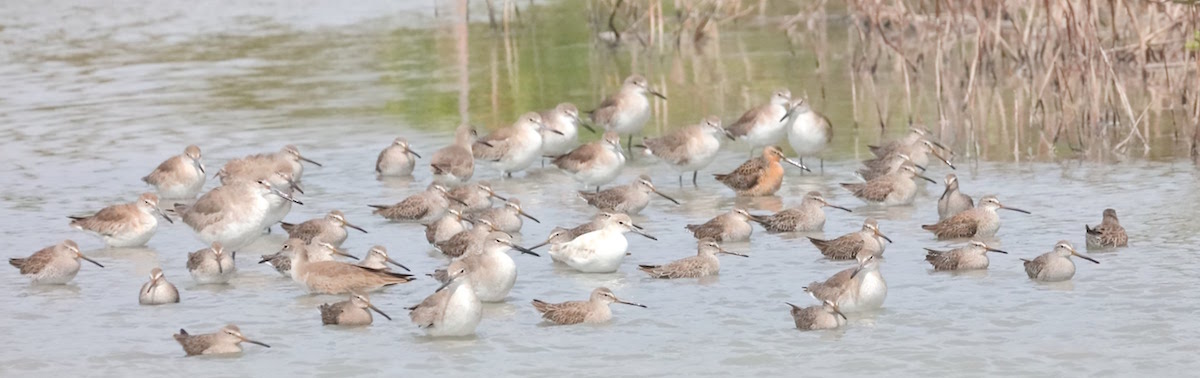
Mentors and mentees chat over dinner about careers in conservation – (left to right): Jeanette Victor (St. Lucia), Adrianne Tossas (Puerto Rico), Francoise Benjamin (Haiti), Jen Valiulis (US Virgin Islands), Lisa Sorenson (USA).
A Mentorship Workshop was held on the second day of the Conference to introduce and explain the purpose of the program. Participants spoke up about the needs of mentees in general, and considered ways in which mentoring would be most effective and beneficial. Afterwards, newly-paired mentees and mentors had dinner together. It was a lively meal where they got to know each other and shared information that was of value for both sides of the relationship. What was most exciting to watch was how so many of the pairs remained talking after dinner, late into the night, excited about their new friendships and eager to take advantage of the time they had together in person.
Josmar Marquez, a younger conservationist who works with the group AveZona in Venezuela, was paired with Simon Guerrero, a well-known professor and researcher from the Dominican Republic. “This program has been very enriching for me because it allowed me to discuss my work, specifically my research methodology, with an ornithologist with a different background than mine.” Josmar goes on to highlight how this mentorship program is fitting for a BirdsCaribbean conference; “I was given great advice not only by my mentor, but by so many other Caribbean colleagues surrounding me throughout the week we shared together. Now, together, we will be trying to implement and achieve results by the time we all see each other again at the next BirdsCaribbean conference!”
“It is really exciting that BirdsCaribbean has started a mentorship program,” exclaimed Cartographer and Caribbean Birding Trail Project Coordinator, Aly DeGraff Ollivierre. “It’s such a great way to share our collective knowledge and experiences with each other, and an excellent opportunity to form deeper relationships with our colleagues.””
Leno Davis and Adrianne Tossas get the Mentorship Workshop started at BirdsCaribbean’s International Conference in Guadeloupe, 25-29 July 2019. (photo by Mark Yokoyama)
Jane Håkonsson, a young ornithologist from the Cayman Islands, commented: “BC’s mentorship programme has provided me with a type of personal and professional support I would have otherwise not had access to. The programme has helped me narrow my focus and identify and prioritize developmental steps.”
BirdsCaribbean is extremely grateful to the group of 41 mentors who generously came forward to serve as role models for the new, younger members—offering their time, their valuable insights, and experience. We also thank the 34 mentees that took the initiative to reach out and get involved. These individuals are eager to learn and grow in their role as the new generation of science and conservation professionals.
Bradley Watson says being a mentee has given him a sense of purpose and direction. “I feel a bit of a responsibility,” he emphasizes. “When I look at what everybody else has done [for conservation, as reported at this conference], I know what I need to do, and how important it is.”
In these new-found partnerships, mentors and mentees will be moving forward together with the important mission of Keeping Caribbean birds aloft!
*If you would like to be a mentor or want to be connected with one, don’t hesitate to reach out to us! Email Mentorship Program leaders Adrianne Tossas (agtossas@gmail.com) and Ancilleno Davis (ancillenodavis@gmail.com).
Mentor-Mentee pairs meet up at the workshop and immediately begin talking and sharing. Pictured from left to right: Ezra Campbell (Grenada), Hana Weaver (USA), Louis Mandela Wens Skendly H. (Haiti), Jose Salguero (Puerto Rico), Adam Kent (USA, Anne Campbell (Grenada). (photo by Mark Yokoyama)
Video of Bradley Watson by Ancilleno Davis.
Special thanks for the conference are due to our major sponsor, Parc National de la Guadeloupe, as well as the Karibea Beach Hotel, Environment Canada, the U.S. Forest Service International Programs, the Royal Society for the Protection of Birds (RSPB), Para la Naturaleza, The David Webster Charitable Trust, Benjamin Olewine IV, American Bird Conservancy, Caribaea Initiative, Rare Species Conservatory Foundation, the U.S. Fish & Wildlife Service, Wildside Nature Tours, Optics for the Tropics, Inc., Holbrook Travel, Environment for the Americas, NuStar, the Bermuda Audubon Society, Vermont Center for Ecostudies, Vortex Optics, Carefree Birding, the International Fund for Animal Welfare (IFAW), Levesque Birding Enterprise, Amazona, The Friendship Association, Hideaways of Ti Heights, and many private donors and supporters.
“Horrific…. Unprecedented.…Complete and utter devastation…Human, environmental and economic ruin.“ These are the words people are using to describe to me the impact of Hurricane Dorian, the Category 5 storm that pounded the northern Bahamas for 2 straight days.
McLean’s Town on the eastern end of Grand Bahama Island. (photo by Meredith Kohut)
Last night I spoke with Erika Gates, a recent BirdsCaribbean Board member and resident and owner of eco-tourism businesses in Grand Bahama. She told me that the area around the Lucayan National Park is still in search and rescue/recovery mode. Rescue teams have not even reached the farthest east community of McClean’s Town yet!
In the community of High Rock, only 12 out of about 100 homes are still standing. One resident (and member of our Birdscaribbean community) is cooking for 100 people a day when supplies are brought in! The non-profit World Central Kitchen (Chef José Andrés) is cooking 6,000 meals a day on location to feed those that have lost everything.
We have also received reports that Dorian left the oil facility in High Rock in shambles. Sam Teacher, founder of the Freeport-based non-governmental organization Coral Vita, saw the damage firsthand. He said that the tanks’ white domes and sides were stained black and six of the domes that top the tanks were gone. Oil was soaking into the soil, lying across the highway, and covering a now-flightless bird.
The Need for Clean, Fresh Water
The oil tanks at the Equinor South Riding Point oil facility in High Rock, Grand Bahama, were severely damaged, causing a large spill. Eric Carey, Executive Director of the Bahamas National Trust, commented: “This can be a serious environmental disaster that we need to get on top off because this could be catastrophic.” (photo by Sam Teacher)
Petroleum is toxic and fresh water is limited on Grand Bahama. The population is almost entirely dependent on its aquifers for drinking water, and the water table on these islands is usually near the land surface. The spill could have an equally horrendous effect on marine life—which people depend on for both food and their economy. Sam worries the oil could further erode the coral and mangrove, already damaged by the hurricane, and destroy the natural sea wall that is supposed to protect the island from storms.
Our hearts go out to the people of these islands, many of whom are BirdsCaribbean members and friends. We are thankful that, as far we know, our friends and colleagues are safe and accounted for. We stand with our 30-year partner, the Bahamas National Trust (BNT), and pledge to do our best to help them with recovery of their birds, wildlife and national parks. To do this I need your help right now!
Our Experience With Major Hurricanes
Two years ago, we saw similar devastation when Hurricanes Irma and Maria cut a swathe of destruction across 18 different islands and leveled them. We know from experience that there are three tiers of action required to alleviate the situation:
Massive trees were felled and most were stripped of leaves and fruit, leaving little food for birds. (photo by Erika Gates)
Crisis management – simply addressing the most immediate needs of all survivors, both human and wildlife, to receive food and shelter;
Rapid assessment of restoration needs. For BirdsCaribbean that means assembling teams that can survey and evaluate the situation of species at risk and the habitat restoration needed to ensure their survival.
Formulating long-term policy changes that will make the communities and island’s habitats more resilient and better protected from the next terrible storm. That storm will inevitably appear on the horizon, now that climate change has made extreme hurricanes an annual event.
We know that the most immediate need will be supplemental food for starving birds. Most trees have been stripped of flowers, leaves, fruit and seeds. As we did for Hurricanes Irma and Maria, we are organizing delivery of nectar feeders and seed so that hungry birds will have help getting through a period of serious food shortage.
Delivering Hope
Students from Bagatelle Primary School, Dominica, with bird feeders and nectar after Hurricane Maria devastated this country and others in 2017.
Feeding the birds is beneficial not only to the birds, but also indirectly to people. Hundreds of people on multiple islands, who received supplies for the birds in 2017, told us they were happy to help the birds, even though they themselves were struggling to survive. The simple act of helping another living creature was truly uplifting in a situation where people felt helpless. As birds began to recover, people felt this was a tiny but important first step towards normal life. The birds lifted their spirits, reminding them that nature – and their own lives – can be rejuvenated and renewed.
Right now, there is a huge need to help with the ongoing humanitarian crisis. We are gratified to see the outpouring of assistance with food, water and shelter, as well as rescue and evacuation to other islands and the U.S. for the tens of thousands that lost their homes. BirdsCaribbean’s role is to focus on the birds and ecosystems we all depend upon.
Mobilizing for the Restoration
As soon as conditions on the islands are stabilized, we are ready to help with the surveys, restoration and recovery actions: clean-ups, planting trees, and repairing and replacing damaged equipment and infrastructure in national parks and birding hotspots. It is a massive amount of work and we need your help to make it happen.
Four threatened endemic species on Grand Bahama and Abaco (clockwise from upper left): Bahama Parrot, Bahama Swallow, Bahama Warbler, Bahama Nuthatch. (photos by Lynn Gape, Melanie Rose Wells, Erika Gates and Bruce Hallett)
With huge parts of both islands flooded and hammered by strong winds for two days, we are seriously concerned about how four threatened and endemic birds that live on these islands are doing after the hurricanes. These species will be the focus of the first surveys. They include the Bahama Parrot (ground nesting population in Abaco, also occurs in Inagua in the southern Bahamas), the Bahama Nuthatch (only occurs on Grand Bahama, Critically Endangered), Bahama Warbler (only occurs on these 2 islands) and the Bahama Swallow (GB and Abaco comprise 2 of its 3-island range). Intensive surveys of the Bahama Nuthatch in 2018 found just 5 birds; this species has declined by more than 95% since the 1960s and 70s.
Other country and island endemics like the Olive-capped Warbler, Bahama Woodstar, Cuban Emerald, Red-legged Thrush, and many migratory warblers (like Kirkland’s Warbler, Painted Bunting), waterbirds and shorebirds (Piping Plover, Reddish Egret), and others also call the diverse habitats on these islands home.
We know from experience that birds are resilient; many are able to survive severe storms and hurricanes by hunkering down on the ground or sheltering in low vegetation. The fact that Hurricane Dorian raged for 48 hours without a break is almost without precedent. We are fearful about how many birds were able to survive this onslaught. Undoubtedly, many were lost during the storm.
By restoring the incredibly diverse ecosystems of the Grand Bahama and Abaco Islands, we will greatly increase our birds’ chances of survival. In addition, the sooner the islands and parks recover, the sooner we can restore residents’ livelihoods that are dependent on these ecosystems.
The gorgeous Bahama Woodstar, endemic to the Bahamas, is one of the many species impacted by the devastation of Hurricane Dorian. (photo by Keith Salveson)
Although they will never be quite the same, we are optimistic and determined that these islands can be restored to their former glory once again, teeming with tropical vegetation and beautiful wildlife across the landscape. I need your help to make this happen, please give generously.
Thank you to all of you that have expressed concern and have already donated, and to those that are donating now!
Lisa Sorenson, Executive Director of BirdsCaribbean (Lisa.Sorenson@BirdsCaribbean.org)
If you prefer to donate with a check, please make the check out to “BirdsCaribbean” and in the memo section, note that it is for Hurricane Dorian Relief. If you have questions or wish to make other arrangements for donating, please feel free to contact Jennifer Wheeler, BirdsCaribbean Financial Officer (jennifer.wheeler@birdscaribbean.org) or Lisa Sorenson (Lisa.Sorenson@BirdsCaribbean.org).
Checks can be mailed to: BirdsCaribbean, 841 Worcester St. #130, Natick, MA 01760-2076
“Mango Delight” by Daniel Gabriel Angelo Jean-Baptiste.
Silk painting artist Daniel Gabriel Angelo Jean-Baptiste of Saint Lucia uses tropical nature as his inspiration and silk as his canvas. His creations reflect on a life of growing up in the beautiful tropical paradise of the Caribbean.
“Mango Delight” is a commissioned one-of-a-kind. It is hand painted using Sumi sheep hair brushes to apply a water-based liquid pigment silk paint onto 10mm, 100% Habotai silk. This magnificent image measures 40″high x 30″wide. The piece is unframed and is shipped as a rolled textile. The painting is valued at $6,000.
Daniel’s works are in the private art collections of golf champion Arnold Palmer, heavyweight boxing champion George Foreman, singer/songwriter Paul Simon, U.S. President Bill Clinton, U.S. President George W. Bush, South African President Nelson Mandela, and CEO of Sandals Resorts Gordon “Butch” Stewart.
Daniel states, “My life is one which is so close to nature that I feel a part of all her splendor and mystery. When I paint, I become my subject, from the tree frog in the mist of Fond St. Jacques rainforest to the sea turtle gliding in the deep blue waters of Anse Chastanet Bay… I do not just want to paint, but I want you to create so that you too can feel the intense joy that I experience in being here.”
Other Amazing Prizes
Vortex VIPER HD 8X42 ROOF PRISM BINOCULAR. This premium-quality, award winning binocular is packed with everything you need and nothing you don’t. It is rugged, waterproof, compact and lightweight (one of the lightest full-size binoculars on the market)! In addition, the binoculars come with Vortex’s incredible unlimited, unconditional life-time VIP Warranty!
GICLEE PRINTS BY ACCLAIMED CUBAN WILDLIFE ARTIST NILS NAVARRO. Celebrate the endemic birds of Cuba with prints of the gorgeous original artwork: the Bee Hummingbird (the world’s smallest bird) and the Cuban Trogon (national bird of Cuba). The giclee prints are signed and numbered, measuring ~8.5″ by 11″.
The drawing for the Raffle is on Saturday, October 5th, 2019. Now is the time to purchase tickets!Proceeds from the raffle support our conservation programs and provide travel support for BirdsCaribbean delegates to attend our workshops and conferences.
Tickets are $5 each or five for $20. You can purchase tickets online, or send a check made out to “BirdsCaribbean” and mail to: BirdsCaribbean, 841 Worcester St. #130, Natick, MA 01760. Any questions, contact Lisa Sorenson. Remember to get your tickets before October 5th, and good luck!
It only takes one to win, but you can’t win without one!
Sincere thanks to our generous donors for providing awesome prizes for the Raffle: Daniel Gabriel Angelo Jean-Baptiste, Vortex Optics, and Nils Navarro.
September has come around again, and that means it’s time to head for your favorite birding spot (or spots) to count Caribbean shorebirds. World Shorebirds Day 2019 is Friday, September 6th.
This year’s Global Shorebird Count will take place from September 3 to 9, 2019. All across the Caribbean, birders will be compiling checklists from island to island and recording them on eBird Caribbean. BirdsCaribbean urges you to participate! Our migratory shorebirds are more vulnerable than ever, threatened by human activities that have changed their habitat. Most species of shorebirds are in decline around the world.
Where are these fascinating birds to be found? While you will find them on shores and beaches, some shorebirds use habitats further inland, including freshwater and brackish marshes and ponds. Shorebirds are also fond of salt ponds, mud flats, mangrove areas, and tidal flats. Last year, the Whimbrel, a regular migrant through the region, was selected as “Shorebird of the Year.”
eBird Caribbean is a critical tool for tracking and understanding bird migration and population changes – never more so than for our shorebirds. If you do not have an account, it is easy to register – here’s a quick start guide. A useful free mobile app is also available for recording your data in the field.
To make your submitted data visible to World Shorebirds Day, please be sure to share your checklist with worldshorebirdsday eBird username of World Shorebirds Day, or add shorebirdsday@gmail.com email address, to your contact list, and share all your related checklists with us. Only checklists made during the World Shorebirds Day count period between 3–9 September 2019 (inclusive) are eligible. Guidelines for sharing checklists are here.
We hope you will visit as many sites as possible during the 6 days of the count! For more tips on how to do the Global Shorebird Count, go to the World Shorebirds Day website.
For helpful resources on Shorebird ID, including our Shorebird poster, visit this page and this page.
Which species will be Shorebird of the Year 2019? Whichever one is selected – all our shorebirds are precious. The Global Shorebird Count is an important way to help us to learn more about them.
Participate in the International Shorebird Survey (ISS)!
Some of our birds are already on the move. BirdsCaribbean invites all shorebird lovers to schedule some extra counts during the migration season (August to October and March to May) by volunteering for the International Shorebird Survey, a year-round initiative organized by Manomet since 1974. On eBird Caribbean simply do a Caribbean Waterbird Census entry, choosing one of the CWC Count Protocols (Point Count, Traveling Count or Area Search) on Step 2 of “Submit observations” in eBird Caribbean. Fill out a Site Form if you are new to ISS.
Depending on the timing of migration, you may see a lot of birds or just a few at your site(s). Don’t be disappointed if you only see just one. Remember that very effort counts and adds to our knowledge of shorebirds and waterbirds and their habitat needs in the Caribbean!
Good luck and we look forward to hearing about your findings and seeing your photos! Please share on our BirdsCaribbean Facebook page.
Banded Birds
Be sure to be on the lookout for banded birds! Especially Piping Plovers, Red Knots, Semipalmated Sandpipers, Ruddy Turnstones, and Sanderlings. You may report your sightings to BandedBirds.org and the USGS Bird Banding Lab which oversee all banding in the United States.
Handout from the US Fish and Wildlife Service that provides information about Piping Plover banding locations and how to read and record the flags for reporting.
Plunging Brown Pelicans put on a show each day next to our dining terrace at Karibea Beach Hotel, Le Gosier, Guadeloupe. (photo by Holly Garrod)
Plunging pelicans, soaring terns and majestic frigatebirds put on a dazzling show outside the dining terrace, as we ate delicious French cuisine. Impromptu discussions sprang up over coffee and drinks. Bright T-shirts, bird paintings and merchandise were on sale; members’ posters sparked intense learning sessions; and brilliant keynote speakers kept us on the edge of our seats.
It happens every two years, and it just keeps getting better. This year, BirdsCaribbean held its 22nd International conference in Le Gosier, on the French West Indies island of Guadeloupe. 250 delegates from 34 countries gathered for discussions, lectures, workshops – and perhaps most importantly, to connect with each other – under the theme, Keeping Caribbean Birds Aloft.
The conference took place at the lovely seaside Karibea Hotel from July 25 – 29, 2019. BirdsCaribbean partnered with the Parc National de la Guadeloupe for an exciting week of learning, sharing, and discovery.
While #BirdsCarib2019 is now behind us, the memories and friendships made will keep us aloft as we collectively continue to move our science and conservation work forwards. For those who were not able to attend this year and for delegates feeling wistful for woodpeckers and croissant, here is a recap of some of the highlights and activities that made this event so special.
All About Birds – and People
250 delegates from 34 countries gathered for out 22nd International Conference in Guadeloupe. (photo by Fred Sapotille)
The first day of the conference started with some rock n’ roll, literally, as our delegates were shaken awake by a 4.7 earthquake! On arrival, registration buzzed with the laughter and excitement of a family reunion – was it really 2 years ago that we saw each other last?
Our delegates quickly got to work birding across the island. Who was the first to see the endemic Guadeloupe Woodpecker? An incredible 422 checklists were entered into eBird Caribbean by our delegates and more than 95 bird species were detected. We couldn’t have done this without the help of our local guides. BirdsCaribbean conferences are great opportunities for local guides to showcase their islands, their natural beauty, and best spots for seeing wildlife.
And once again, the Guadeloupe conference highlighted the Caribbean’s amazing diversity—its birdlife, peoples, and cultures. A critical discussion during the conference was the need to expand and develop bird tourism in the region through BirdsCaribbean’s Caribbean Birding Trail (CBT). Everyone was excited that the CBT Project recently launched a new and much improved website.
Featured speaker, Anthony Levesque, shared his excitement and many accomplishments about his work with birds on Guadeloupe. (photo by Fred Sapotille)
Always a highlight of our conferences, delegates packed the main room each morning to hear our passionate keynote speakers celebrate the diversity of thought, culture, knowledge and work within our community. On the first day, dedicated BirdsCaribbean member, Anthony Levesque, opened our traditional session to celebrate our host country – Guadeloupe Day – and shared his personal journey of how Guadeloupe, its nature, and its birds have shaped his life. His excitement was infectious as we applauded his own phenomenal efforts and felt his hope about the future for his island’s capacity for science and conservation.
We also welcomed Ambassador Dessima Williams to the island, an Elected Partner of the Caribbean Natural Resources Institute and former Ambassador to the United Nations, who inspired us to engage with the UN’s sustainable development goals to enable bird conservation. Other keynote presentations on each morning of the conference inspired delegates on topics as diverse as the evolution of beauty, relationships between birds and plants, landscape management, avian olfaction, and restoration of a damaged wetland.
Challenges, Solutions, Optimism
The Guadeloupe conference saw the launch of an exciting new Mentorship program* where younger BirdsCaribbean members paired with mentors that have more experience in their specific areas of interest, including scientific writing, data analysis, research techniques, conservation strategies, education, bird guiding, career development, and more. The launch culminated in an energizing mentee-mentor dinner, with pairs spilling out across the venue long into the evening, to share knowledge, inspire, support and learn from each other.
Conference workshops offered practical opportunities to learn new skills and share important knowledge, including grappling with data analysis in R, being the solution to plastic pollution, addressing shorebird harvesting, and becoming a media maestro.
Ancilleno Davis had the audience dancing to his dubstep remix of inspired by eBirders! (photo by Fred Sapotille)
Other topics addressed included the challenges to the survival of the region’s birds and habitats, including illegal wildlife trafficking, invasive species, and the threat of development. Several speakers and sessions emphasized the need for stronger advocacy, involving communities, and education to fight the greed that is the root cause of many of our environmental problems.
We heard inspiring stories about engaging young people through education and diverse audiences via social media, and explored visual art and dubstep music as conservation tools. We heard about valuable contributions to our scientific understanding of avian ecology, and learned how to address the challenges of hurricane recovery, caged birds and illegal wildlife trade. And we took the time to acknowledge and celebrate our successes, including invasive species eradication, endangered species recovery, and successful restorations of habitats believed too-far gone to ever be brought back.
The passion continues to flow
The heart of BirdsCaribbean and our conferences is the passion of our members to support conservation of regional endemic and endangered birds as well as migratory species that visit our islands. Most importantly, our conferences give us an opportunity to share and celebrate the new and continued work of our members. Much of what made this conference special is symbolic of all biennial BirdsCaribbean conferences and we encourage you all to look out for details about our next conference in 2021!
Delegates from Grenada and St. Vincent and the Grenadines gather for a group pic. (photo by Fred Sapotille)
The momentum continues amidst the growing comradery and passion that the conference helped fuel. We will be sharing a series of posts over the next few weeks that highlight the work our partners have done, and provide more details on some of the presentations and conference content. If you have a suggestion for an article, please email us at info@birdscaribbean.org. Thank you for reading, and please subscribe and consider donating to help us “Keep Caribbean Birds Aloft”.
Special thanks are due to our major sponsor, Parc National de la Guadeloupe, as well as the Karibea Beach Hotel, Environment Canada, the U.S. Forest Service International Programs, the Royal Society for the Protection of Birds (RSPB), Para la Naturaleza, The David Webster Charitable Trust, Benjamin Olewine IV, American Bird Conservancy, Caribaea Initiative, Rare Species Conservatory Foundation, the U.S. Fish & Wildlife Service, Wildside Nature Tours, Optics for the Tropics, Inc., Holbrook Travel, Environment for the Americas, NuStar, the Bermuda Audubon Society, Vermont Center for Ecostudies, Vortex Optics, Carefree Birding, the International Fund for Animal Welfare (IFAW), Levesque Birding Enterprise, Amazona, The Friendship Association, and Hideaways of Ti Heights.
*If you would like to be a mentor or want to be connected with one, don’t hesitate to reach out to us! Email Mentorship Program leaders Adrianne Tossas (agtossas@gmail.com) and Ancilleno Davis (ancillenodavis@gmail.com).
The Cuban contingent! A record 20 Cubans attended, thanks to our generous sponsors! (photo by Fred Sapotille)
Andrea Thomen (Dominican Republic) shares her work with Leo Douglas (Jamaica / USA). (photo by Mark Yokoyama)
Jennifer Wheeler sounding the conch to signal the start of a session. (Photo by Fred Sapotille)
Leno Davis talks about engaging diverse audiences through creative avenues, like music and art (photo by Mark Yokoyama)
Much learning took place at the evening poster sessions. (photo by Mark Yokoyama)
Herb Raffaele supporting new Grenadines bird guide with authors Aly Ollivierre and Juliana Coffey. (Photo by Mark Yokoyama)
Two of our fearless leaders, Justin Proctor (Birdscaribbean Vice President) and Lisa Sorenson (BirdsCaribbean Executive Director) on the first morning of the conference. (Photo by Fred Sapotille)
“Keeping Caribbean Birds Aloft” was the theme of BirdsCaribbean’s 22nd International Conference in July in Guadeloupe.
Prepping conference bags with the Cubans (Photo by Justin Proctor)
Conference t-shirts for sale on Day 1 of the conference (photo by Mark Yokayama)
Keynote speaker, Dr. Howard Nelson, called for more collaboration across the Caribbean to save birds and their habitats. (photo by Fred Sapotille)
Plunging Brown Pelicans put on a show each day next to our dining terrace at Karibea Beach Hotel, Le Gosier, Guadeloupe. (photo by Holly Garrod)
Keynote speaker, Tomas Carlo, gave an exciting talk on bird-plant interactions and their consequences for habitat restoration. (photo by Fred Sapotille)
Ancilleno Davis had the audience dancing to his dubstep remix inspired by eBirders, say what?! (photo by Fred Sapotille)
The Founders Award for Best Student Paper went to Christopher Cambrone.(Photo by Fred Sapotille)
St. Martin delegates, Jenn Yerkes, William Allanic,and Mark Yokoyama, in Les Fruit de Mer uniforms.(Photo by Fred Sapotille)
Group selfie attempts. (Photo by Fred Sapotille)
Kate Wallace (Dominican Republic) won a Life-time Achievement Award for her 20 years of tireless bird education and outreach work. (Photo by Fred Sapotille)
Dessima Williams, wowed us with her inspiring and poetic keynote talk. (photo by Lisa Sorenson)
Keynote Speaker, Gabrielle Nevitt, shared her exciting research an avian olfaction and the ability of seabirds to smell plastic! (photo by Fred Sapotille)
Dancing with the local performers on the last evening of the conference. (Photo by Fred Sapotille)
Busy and not-so-silent Silent Auction (Photo by Mark Yokoyama)
We thank Director of the Parc National de la Guadeloupe (PNG), Maurice Anselme, and his fabulous crew for outstanding help with organizing the conference! (photo by Fred Sapotille)
Important conference notice about dancing with Herb at the party on the last night.
Keynote Speaker, Orisha Joseph (Sustainable Grenadines Inc) told us about the incredible restoration of Ashton Lagoon in Union Island. (photo by Fred Sapotille)
Keynote speaker, Richard Prum, dazzled the audience with his fascinating talk on The Evolution of Beauty and bird mating tactics. (Photo by Fred Sapotille)
Arnaldo Toledo and Maikel Canizares show the beautiful t-shirt artwork created to fight the Caged Bird problem in Cuba, Caged Bird Working Group meeting (photo by Lisa Sorenson)
Featured speaker, Anthony Levesque, shared his excitement and many accomplishments about his work with birds on Guadeloupe Day. (photo by Fred Sapotille)
Featured speaker, Beny Wilson, did a mini-training on bird guiding and the bird tourism market during the Caribbean Birding Trail session. (photo by Fred Sapotille).
Old friends reunited: Leo Douglas and Maurice Anselme. (photo by Lisa Sorenson)
Conference organizer-in-chief, Justin Proctor with Guadeloupe organizers, Maitena Jean, Catherine Chicate-Moibert and Anais Abatan. (photo by Fred Sapotille)
The right person, Stephen Durand, got this one-of-a-kind binocular harness with Imperial Parrot artwork by Jessica Canizares (photo by Lisa Sorenson)
Anthony Levesque (Guadeloupe) won a President’s Award for his bird research, education and conservation work in Guadeloupe. (Photo by Fred Sapotille)
Our fearless translators provided English-French-Spanish translation throughout the entire 5-day conference! (Photo by Fred Sapotille)
Delegates from Grenada and St. Vincent and the Grenadines gather for a group pic. (photo by Fred Sapotille)
Bird Hide at Grand Etang on Waterfalls Field Trip.(Photo by Anais Abatan)
Smiling volunteers help with conference check-in, left to right, Jen Mortenson, Alieny Gonzalez, Natasha Atkins, Arnaldo Toledo. (photo by Lisa Sorenson)
Dominicans and Lisa Sorenson. (photo by Fred Sapotille)
Guadeloupe conference souvenir bird bands. (Photo by Fred Sapotille)
New friends (Photo by Fred Sapotille)
250 delegates from 34 countries gathered for our 22nd International Conference in Guadeloupe. (photo by Fred Sapotille)
Main conference room at Karibea beach Hotel. (photo by Fred Sapotille)
Maurice Anselme, General Director of the Parc National de la Guadeloupe (PNG) and Mylene Musquet, Executive Director of PNG, on the last evening of the conference. (photo by Fred Sapotille)
Visit the newly-redesigned website for information on the best sites, guides and tours in the region!
More visually appealing. Easier to navigate. A LOT more information about birding hotspots in the Caribbean, how to get there, and which guides and operators can offer the best birdwatching experience on the ground.
Those were our objectives when we embarked on redesigning the Caribbean Birding Trail (CBT) website. Now, we are finally ready to launch the CBT’s new online home and to share it with you, and the world! Click here to access the new website.
The CBT was launched in 2011 by BirdsCaribbean in order to promote authentic experiences that benefit local people and encourage the protection of the Caribbean’s natural resources, including birds and their habitats. The website has always been a key part of making this happen.
Overhauling the website and building a customized directory (and beautiful maps!) of the birding gems of the Caribbean was no small task. To do the project justice, we knew we would need to learn as much as possible about every birding nook and cranny there is on each island. And we are here to tell you…there are many!
What’s Special about the New CBT Website
Map of the West Indies from the CBT website showing locations of Birding Sites, History/Culture Sites, and bird-friendly Accommodations. You can also toggle on and off eBird Hotspots on this map. Note that this is a work in progress: we need YOUR help to add many more sites!
As you scroll through the pages, you will find information about 138 birding sites in 24 countries. We are also proud to be promoting more than 50 guides and tour operators. These are people and enterprises who are from the Caribbean, or who now call the region home. We also aim to include a listing of every field guide and book that our partners have published for their islands. We also provide links to as many additional resources as we possibly can, giving you as full a picture as possible of the wealth of birds, habitats, and local customs and folklore.
Through the website, we also strive to tell the story of the Caribbean and its incredible natural heritage through pictures. There are nearly 700 species of birds known from the Caribbean, including 171 species that are endemic to the region and found nowhere else in the world. Furthermore, there are thousands of endemic plants, snails, lizards, frogs, mammals, and insects; and the beautiful landscapes and geological treasures that the birder will discover along the way. We have collected almost 1,000 photos thus far, and hope for many, many more.
Narrow-billed Tody by Dax Roman
It’s a Work in Progress, and We Love Our Partners!
If you are one of the dozens of individuals who supplied us with photos and/or information about people and places, we thank you! And we ask that you keep the information coming. We are not planning to stop adding to the website. In fact, our goal is for the CBT’s new site to become the number one resource in the world for planning a trip to the Caribbean to see birds, or simply to enjoy the nature and culture of the islands. We are going to build it into the “go-to” site for Caribbean birding.
We consider this website a work in progress. We will always accept suggestions for additional sites, guides, and accommodations to add; or edits and corrections to existing pages. We also greatly appreciate high quality photos, especially of birds.
Our online presence has already helped spur fruitful discussions with tour operators, and as a result BirdsCaribbean has partnered with three different companies (Wildside Nature Tours, Birding the Islands, and Carefree Birding). These companies are committed to giving back to the islands, and they donate a portion of their profits from Caribbean tours to BirdsCaribbean to invest in conservation.
The CBT…More than Site Promotion
CBT Guide Training in Cuba.
The CBT project is not just about places to go. Through the CBT we are also helping create authentic experiences, and building capacity where needed in the Caribbean to do so. Essential to this is the Caribbean Birding Trail Interpretive Guide Training program, a five-day intensive course where participants not only learn to identify the local bird species and their connection to the environment, but also discover how to use interpretation techniques that will bring this knowledge to life for their birding guests.
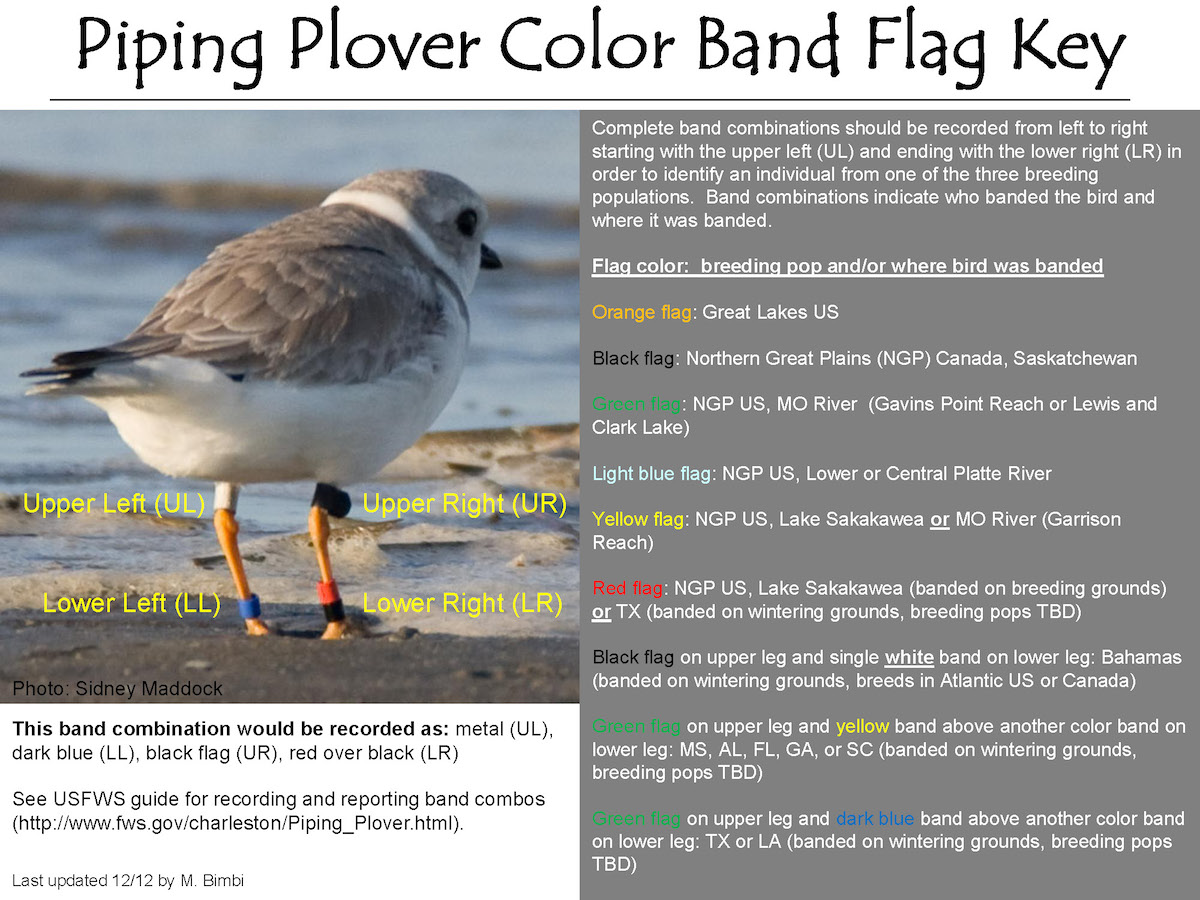
The training helps guides to uncover unusual pieces of local science and cultural context that will spark the imagination of the birders and have them fully engaged during their tours. Professional bird and nature guides, certified through the National Association of Interpretation in the U.S., conduct this exciting, hands-on training program.
The reason we thought this important is for the same reason we think the Caribbean Birding Trail itself is important. It is because birds are windows to nature. And in the Caribbean, they are also portals for getting away from the tourism hubs and into the beating heart of the islands. They facilitate discovery, having an authentic experience, and bird by bird, getting to know the real Caribbean.
Our new video is now available on the CBT website and on our YouTube channel. The four-minute long video gives the viewer an enticing glimpse into the birds they will see, and a taste of the culture they can get immersed in when they go looking for those birds.
With Deep Gratitude
Thank you again to everybody who contributed to the original CBT website and this much-improved 2.0 version.
Special thanks to our CBT cartographer, Aly DeGraff Ollivierre for creating the awesome maps and helping solicit, organize, and upload content to the website. Also to Holly Robertson, the CBT Project Manager, for her role as webmaster and digging deep into the world of WordPress.
We would be nowhere without the patience and fortitude of our web designer, Kathleen McGee of BTN Designs, and the vision of Ted Eubanks and Fermata, Inc in originally charting the course of the Caribbean Birding Trail and establishing the first iteration of the website.
With deep gratitude we also thank the donors who financially supported the development of this website over the years: the Critical Ecosystems Partnership Fund, the Marshall-Reynolds Foundation, and the U.S. Fish and Wildlife Service Neotropical Migratory Bird Conservation Act Program.
Links to articles about our Caribbean Birding Trail Guide Training workshops:
Youth decorate bird feeders made from plastic bottles at the Endemic Animal Festival on St. Martin. (Photo by Mark Yokoyama)
At dozens of events on more than 20 islands, people of all ages came together to celebrate and protect their birds. The events were part of the Caribbean Endemic Bird Festival, organized by BirdsCaribbean. The festival highlights endemic birds—the ones found only in the region—and how to protect them.
There are over 170 kinds of bird that live only in the Caribbean. Many of these live only on a single island, and many are rare. The events celebrating these unique birds are also unique. Groups all over the region find different ways to celebrate and learn about these birds.
This year’s festival theme was a profoundly important one: Protect Birds: Be the Solution to Plastic Pollution. As in other parts of the world, the Caribbean faces a serious plastics pollution problem. Coordinators enthusiastically tackled the topic with many activities featuring cleanups and learning about plastic waste. In Puerto Rico, the Department of Natural and Environmental Resources took part in several events, including presentations about plastics waste and microplastics (plastic particles less than 5 mm in size) and how they are harming birds and entering the food chain .
In Jamaica, the National Environment and Planning Agency led activities and games from the BirdSleuth Caribbean program. These activities help kids learn about the problems that birds face, like plastic debris. In Venezuela, the group Ave Zona held a beach cleanup on Isla de Coche. On the island of St. Martin, kids decorated bird feeders made from reused plastic bottles.
At the Ponce Museum of Art, Adrianne Tossas led a special guided tour that shared birds and nature in the museum’s artwork. Twenty visitors learned about topics related to ornithology, conservation and sustainable through 14 selected pieces of art. Participants were very enthusiastic and contributed interesting comments. This was the first tour of its kind in the 60 years since the museum was founded. Eliezer Nieves-Rodriguez shared a great video of CEBF activities at the San Juan Bay National Estuary, including learning all about micro plastics and the impacts on birds and the environment.
Child from Happy Day Preschool plants a tree with staff from Dominica’s Forestry Division.
In Dominica, the Forestry, Wildlife and Parks Division went all out with a full month of exciting activities. A major highlight was this year’s Choral Speech competition among the country’s schools with the CEBF festival theme: Protect Birds – Be the Solution to Plastics Pollution. The winner was a group of youngsters from Wesley Primary School who gave a rousing performance with an important message about reducing plastic pollution. The video can be seen at this link. Forestry staff also organized beach clean-ups with communities, bird watching excursions, presentations in schools, an art exhibition on endemic birds, a radio show on plastics pollution, and several tree planting activities with children. The trees species planted included Sea Grape, Almond, Anglin, Kenip and Pwa doux Maron, which will help provide habitat for birds, timber and protect the coastline from future storms and hurricanes.
In Montserrat the Department of Environment (DoE) led several activities including visits to primary schools to give talks on birds and taking kids birding. The schools received bird feeders, bird posters and a tree seedling of their choice. Students received prizes such as activity sheets, exercise books, bottles, bird bands, stickers and child temporary bird tattoos. The DoE also hosted an exhibition all about the birds of Montserrat and shared materials. During the event they gave away nectar feeders so that residents could enjoy the island’s endemic hummingbirds and Bananaquits—great preparation for the upcoming hurricane season. Guests also received bird seed, reusable shopping bags, and pamphlets with information about how to protect birds.
Children from “Verano Artístico Recreativo” of CREARTE in Puerto Rico show off their bird masks with Ingrid Flores, DNER Educator. (Photo by Carmen Peña)
“We are so happy that our 18th Caribbean Endemic Bird Festival reached so many people,” said festival coordinator Eduardo Llegus. “We are especially happy to see the many creative ways people have found to share, honor and help our birds. Our birds are unique symbols of our region. To protect them is to protect our heritage, our nature and our communities.”
The Caribbean Endemic Bird Festival is organized by BirdsCaribbean. Thousands of youth and adults participate each year in activities hosted by dozens of local groups on over 20 islands.
Thanks to all our dedicated and hard-working coordinators for the amazing and creative ways that you found to celebrate with your schools and communities. And big thanks to Environment for the Americas for providing materials and resources.
Haitian youth participated in a school presentation that focused bird arts and crafts , endemic birds and what threatens them (including hunting and plastic pollution). Activities by o Jeunes en Action pour la Sauvegarde de l’Ecologie .
Learning the parts of a bird in a CEBF educational activity in San Lorenzo, PR, educational project of the Department of Natural and Environmental Resources.
Bird watching and learning to identify Jamaican endemic birds, activity led by the National Environment and Planning Agency. (Photo by Otto Williamson)
School children in the Dominican Republic learn about the many endemic birds in the DR, thanks to Grupo Accion Ecologica.
Students learn while playing a game from the BirdSleuth Caribbean program. (Photo by Otto Williamson)
Students on seabird watching excursion in Dominica.
Schoolchildren birding with coordinator, Ivelisse Rodriguez, from Jobos Bay National Estuarine Research Reserve, Aguirre, PR.
Endemic Bird Exhibition in Montserrat, hosted by the Montserrat Dept of Environment. Ajhermae White, Environmental Officer shares materials with a visitor from the community.
Jamaican schoolchildren learn the parts of a bird, thanks to the National Environment and Planning Agency. (Photo by Otto Williamson)
Enthusiastic youth learning about Puerto Rico Endemic Birds, Endangered Species Conservation and Plastic Pollution to SU Oscar Porrata Doria School of Comerío, PR, thanks to the Dept. of Natural and Environmental Resources.
A classroom in Jamaica receives a BirdSleuth Caribbean kit filled with resources to learn about birds, thanks to the National Environment and Planning Agency.
Children visiting the Endemic Bird Art Exhibit at the Botanical Gardens, Dominica.
CEBF clean-up activity in Venezuela, led by Ave Zona.
Many kids had the answer to questions about birds, presentation by Grupo Accion Ecologica.
Children birdwatching in Bosque Piñones, Puerto Rico celebrating CEBF 2019 with San Juan Bay National Estuary, San Juan, Puerto Rico. (photo by Eliezer Nieves)
The DNER celebrated the Caribbean and Puerto Rico Endemic Bird Festival with a talk presentation to a Community Group of Lomas Cubuy, Canóvanas, PR.
Ingrid Flores shares information about the dangers of micro plastics to birds and people; Department of Natural and Environmental Resources in Puerto rico.
Jamaican youth record the birds they see on a CEBF field trip organized the National Environmental and Planning Agency. (Photo by Otto Williamson)
The Environmental Awareness Group in Antigua did a great job with a media campaign about plastics pollution and how everyone can reduce their use of plastic.
Celebrating CEBF 2019 at San Juan Bay National Estuary, children showing off their bird face masks. (photo by Eliezer Nieves)
The Puerto Rico Dept. of Natural and Environmental Resources helped students of the Bayamón Central University with planting trees and creating an arboretum. (Photo provided by: DNER)
Visitors learn about nature in art during a guided tour of Ponce Museum of Art in Puerto Rico. (Photo: Adrianne G. Tossas)
Spotting birds along the Blenim River in Dominica for CEBF 2019.
Presentation about endemic birds to primary school children in Montserrat by Ajhermae White, Environmental Officer with the Dept of Environment.
Youth learn about micro plastics in the environment; activity by Department of Natural and Environmental Resources in Puerto Rico.
Schoolchildren celebrating endemic birds at Jobos Bay National Estuarine Research Reserve, Aguirre, PR.
Schoolchildren from local secondary school at coastal-cleanup in Punta Cucharas Nature Reserve, Municipality of Ponce, Puerto Rico. Organized by Proyecto: Reverdece y Educa tu Comunidad. Plastics was the most abundant category among wastes collected. (Photo credit: Aquela Photography by: Karla M. Oquendo)
Birding field trip in Dominica with Forestry Officer, Stephen Durand.
Learn how to get your work and message into the media!
Do you want to raise awareness, change minds or let your community know what you are doing? Do you want better attendance at events or more volunteers helping your team? You need to get your message out, and media is made to do that. Two workshops at the BirdsCaribbean Conference in Guadeloupe will help you improve your media skills and get the most out of your local newspapers, magazines, radio, TV and social media channels. Build and maintain a media list. Plan out your media calendar for the year. Learn how to write an effective media release. Get better photos to attract more attention. Find out how to prepare for great radio and TV interviews. Learn how to create engaging social media posts that get lots of Likes, Comments and Shares.
Interested? Get ready by filling out our media survey. Share areas where you would like help, and tell us how you are using media right now. We will share the overall results at the workshops. https://www.surveymonkey.com/r/6DXV2BC
Before the conference, feel free to send a recent media release to media@birdscaribbean.org and we will give you some feedback on it (by email or in person, not in front of everyone at the workshop).
Come to the workshop with your media list, your media calendar and a recent media release, printed or on your computer. If you are missing any or all of these, don’t worry! You’ll have them by the end of the workshop.
“Keeping Caribbean Birds Aloft” is the theme of BirdsCaribbean’s 22nd International Conference in July in Guadeloupe. Parc national de la Guadeloupe is our local host. (artwork by Guillaume Zbinden)
Every two years, BirdsCaribbean holds its international conference. The meeting is the largest of its kind, attracting hundreds of guests from the region and beyond. This year, it will be held on the island of Guadeloupe from July 25-29, partnering with local host, Parc national de la Guadeloupe.
BirdsCaribbean is the largest conservation group in the region. Its members come from nonprofits, forestry departments and universities all over the region. They do research, save wild spaces and share the magic of birds and nature all over the Caribbean. At the conference, over 200 members will gather in one place to share the latest in research and more.
The conference is important because it is the one time when people working all over the Caribbean come together to learn and share. Training workshops teach skills like how to do a bird survey. New research and techniques for helping birds are shared. This know-how is brought back to dozens of islands where it can be used to save rare birds or protect valuable habitats.
This year’s conference is “Keeping Caribbean Birds Aloft” (or “An nou poté mannèv pou zozio karayib volé” in Créole). In keeping with the theme, the conference will feature many ways to help birds in the Caribbean.
“Our birds face many challenges, and we want to address them,” noted Lisa Sorensen, the Executive Director of BirdsCaribbean. “We will work on how to protect birds from threats like plastic pollution or habitat destruction. We are also working to promote birds for their value as a tourism attraction and the benefits they provide to people.”
The Guadeloupe Woodpecker is found only on the island of Guadeloupe; conference delegates will have a chance to see this bird on conference field trips. (photo by Frantz Delcroix)
You can learn more about the conference here, including keynote speakers, workshop themes and field field trips. Registration is open – it is not too late to join us! BirdsCaribbean is also still seeking sponsors to help delegates attend that would not be able to otherwise. Click here to help sponsor a delegate – any donations are gratefully received! Sponsorship donations are tax-deductible for US donors.
BirdsCaribbean is very grateful for the help and financial support of many companies and organizations to make this conference a success, including Parc national de la Guadeloupe, Karibea Beach Hotel, Environment Canada, US Forest Service International Programs, Royal Society for the Protection of Birds, para la Naturaleza, Benjamin Olewine IV, American Bird Conservancy, Rare Species Conservatory Foundation, US Fish and Wildlife Service, Caribbean Initiative, Wildside Nature Tours, Carefree Birding, Optics for the Tropics, NuStar, Vermont Center for Ecostudies, Bermuda Audubon Society, Holbrook Travel, Levesque Birding Enterprise, AMAZONA, and The Friendship Association.