
The English names we use for shorebirds that describe them by their color, physical characteristics or behavior can totally make sense, and even help with ID… until they totally don’t! Here is a Caribbean perspective of when shorebird names hit the mark and when they fall-flat.
Bird names come in all sorts of forms. Sometimes it’s easy to understand why a bird was given its name, or at least to trace the history behind it. Other times, things are not as clear! Shorebirds are no exception.
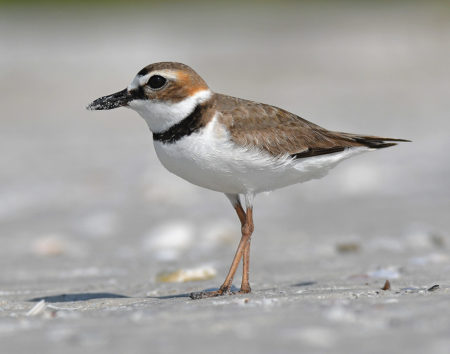
Some shorebirds are named after people, especially naturalists. For example the Wilson’s Plover is named in honor of Alexander Wilson, often called the “father of American ornithology.” But honorifics don’t tell us what the birds actually look like. The name Wilson’s Plover certainly doesn’t tell you that this shorebird has a huge, heavy bill that helps you pick it out from other brown-and-white plovers!
Fortunately, descriptive names are extremely common amongst birds. Researchers who developed the AvianLexiconAtlas found that almost 90 percent of the 11,000 bird names they examined reflect appearance, habitat, or other characteristics, while only 11 percent are named after people. (You can explore the AvianLexiconAtlas and access their research publication here).
Descriptive names can tell us about a species’ appearance, where it lives, its favourite foods, or even its behavior. These clues can be remarkably helpful, especially for new birders. Shorebirds are notoriously tricky to identify, so any clues in their names the help with ID are VERY welcome!
But sometimes those supposedly ‘helpful’ descriptive names can be confusing—or downright misleading! That’s because the appearance, and even behavior, of shorebirds (and other birds) can change drastically across seasons and life stages. For instance, a name describing a bird’s plumage might only make sense during the breeding season, or apply to just one sex. Similarly, names referencing a particular location can be misleading when the bird migrates and spends much of the year elsewhere.
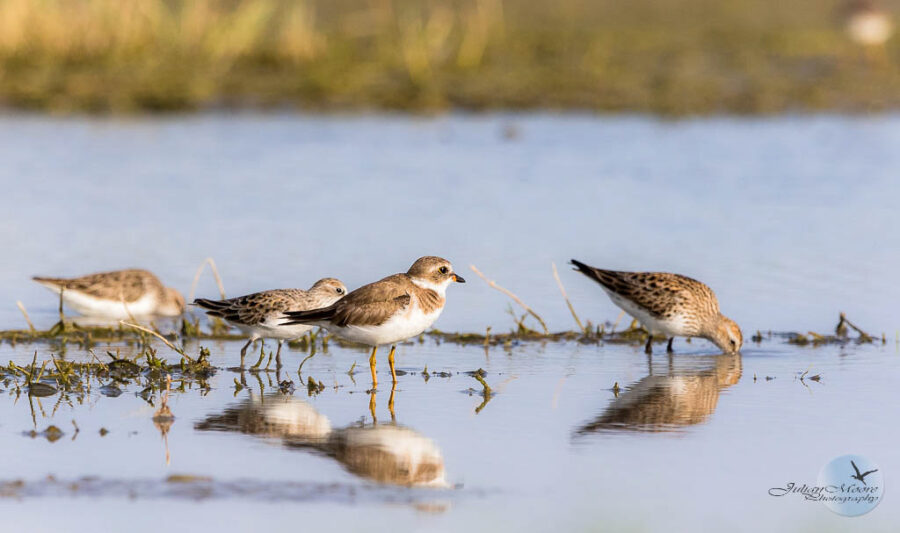
Depending on the species, a descriptive moniker might hit the nail on the head, miss the mark entirely, or only ring true at certain times and in certain places. And of course, there are also bird names that sound descriptive but don’t tell us anything helpful at all!
Let’s take a look at some shorebird names and find out just how helpful they really are.
When shorebird names tell the truth
Rock flipping at its finest! Yes! Turnstones really do use their bills to flip rocks, pebbles, seaweed, and pieces of drift wood in search of small crustaceans and insects.
It’s the only oystercatcher native to the coastal regions of the Americas. Do they really catch oysters? You bet! They feed on oysters, clams, and other saltwater molluscs.
Note: Oystercatcher species found in the UK and Europe, Australia, New Zealand and the Pacific Northwest rarely, if ever, feed on oysters.
Greater & Lesser Yellowlegs
These nearly identical shorebirds mainly differ in their size and proportion. The Greater Yellowlegs is larger and has a longer bill than the Lesser Yellowlegs. One is bigger, one is smaller, both species maintain their bright yellow legs year-round, so a great name for both these birds! The main challenge here is not understanding their name, but telling one from the other.
This short video should help you!
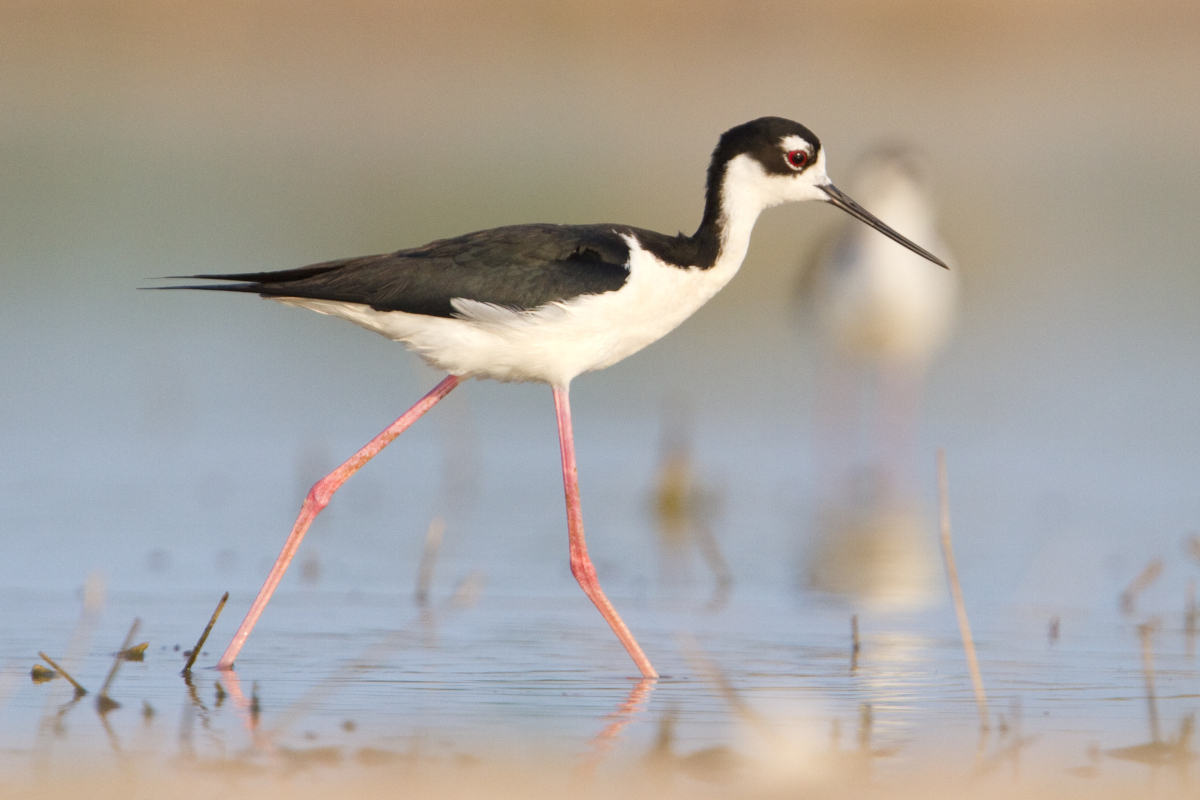
This shorebird lives up to its name in the most stylish way possible, with long bubblegum-pink legs and elegant black-and-white plumage. Only flamingos beat stilts when it comes to having the longest legs relative to body size among all birds.
White-rumped Sandpiper
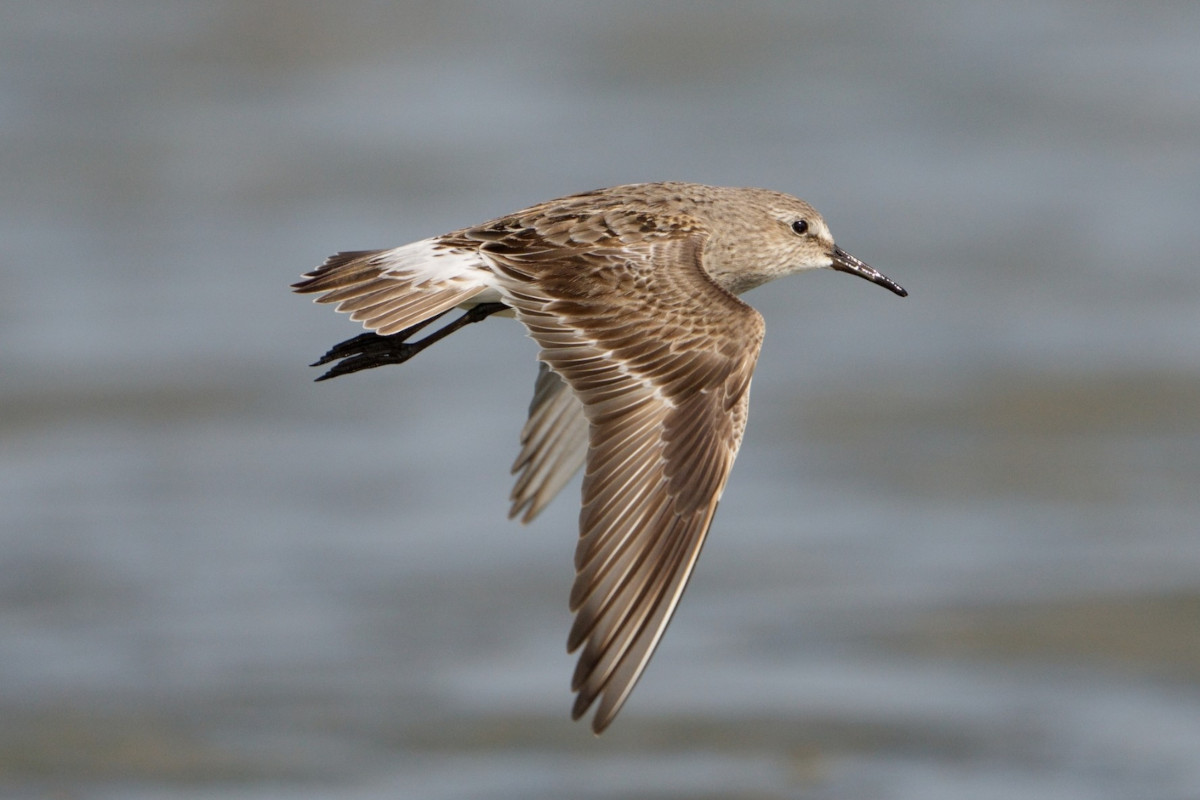
In flight, that giveaway white “rump” is all it takes to help distinguish this bird from its lookalike shorebirds. Despite its name, its actual rump is dark! That famous white patch is formed by its uppertail coverts, the feathers covering the base of the tail. And because this doesn’t change through the year, whether in breeding or non-breeding plumage, the white “rump” is always there to help you ID this bird!
When shorebird names lie
The Short-billed Dowitcher wins the award for misleading naming. It definitely has a long bill—the “short” is just a comparative nod to its lookalike, the Long-billed Dowitcher, whose bill is microscopically longer.
And what on earth is a “dowitcher”? In the late 19th century, this bird was hunted in North America. It seems that Dutch and German immigrant hunters may have referred to them as “Deutscher” or “Duitsch” snipe (i.e., “German” or “Dutch” snipe). Over time, this may have evolved into “dowitcher” or “dowitch.” Short-billed Dowitchers do have a snipe-like appearance, with long straight bills, short-ish legs, and somewhat plump bodies.
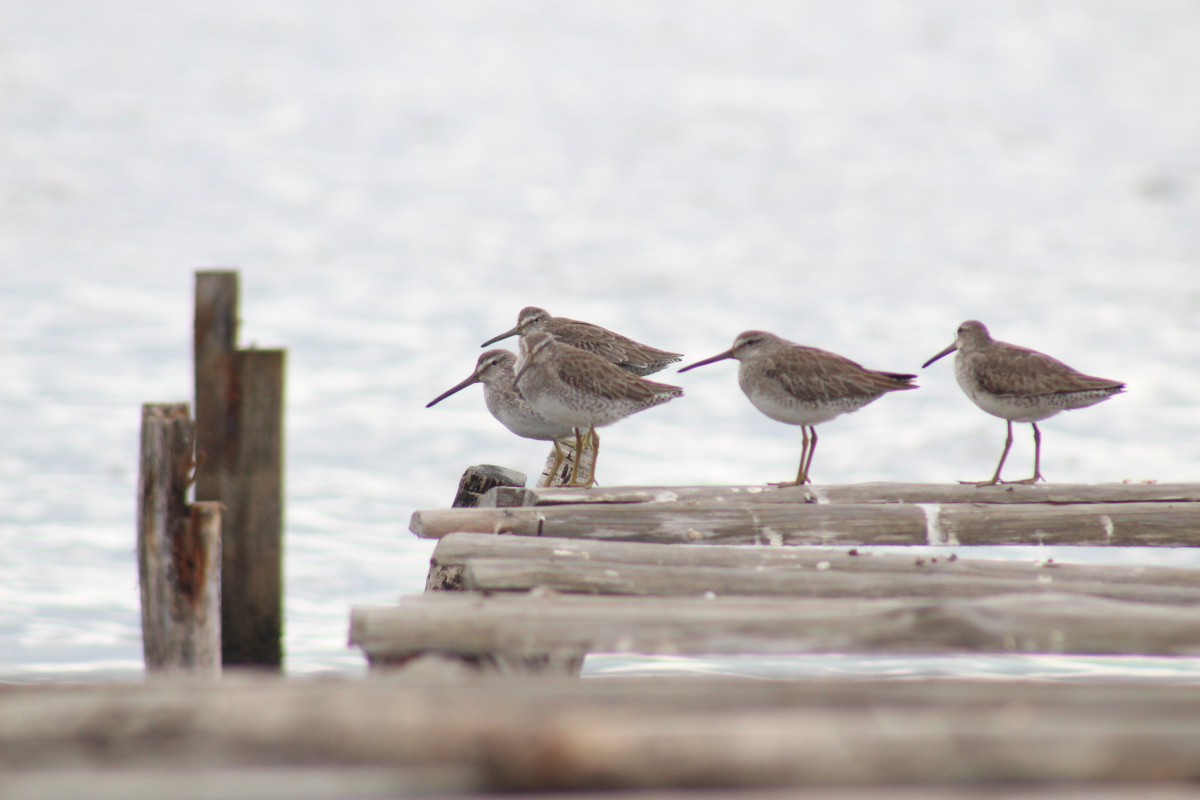
The English name might be confusing but in Haiti they got this one right with their local name Bekasin mawon bèk long which more or less translates as “brown snipe with a long beak”.
When shorebird names are “complicated”
This plover definitely rocks a jet black belly (and face), but only during the breeding season when it is important for them to be looking their best. Outside the season of love, look out for a drab plover with mottled gray-brown upperparts and whitish belly.
One of your best clues is actually the black wing-pits, which are present year-round and distinguish this species from the similar American Golden-Plover. But “Black-wing-pit Plover” is not a very catchy name!


Local Caribbean names better reflect its change to drabber plumage. In Cuba and Puerto Rico, these birds are called Pluvial Cabezón and Chorlito Cabezón, respectively, both translate to “big-headed plover.” In the Dominican Republic they’re called Chorlo Gris or “gray plover”—the same name (spelled “grey”), used in English for this wide-ranging species outside the western hemisphere (e.g., in Europe, Africa and Asia). In French, and thus in the French-speaking Caribbean, we get the much more poetic Pluvier argenté which refers to them being silvery-coloured.
If you’re looking for the red on a Red Knot, timing is everything! It only flashes that rich rust-red plumage during the breeding season, spending the rest of the year with brownish-gray upperparts and pale underparts.


Because that red color is fading or absent by the time the Red Knots arrive on Caribbean islands, local names sometimes focus on other traits. In Cuba, they’re called Zarapico Raro, reflecting their status as uncommon migratory visitors to the island. In the Dominican Republic, the name is more literal: Playero Pechirrojo (“red-breasted shorebird”), perhaps because some birds still have reddish plumage during migration.
Puerto Rico, meanwhile, leans into a delightfully affectionate description: Playero Gordo, or “fat shorebird.” In French, this bird is Bécasseau maubèche, a name that references the woodcock (bécasse) and may also reflect the species’ plump appearance.
The Spotted Sandpiper wears its signature polka-dots during the breeding season, but swaps them out for a clean, plain coat when the season ends.
In Cuba it is called Zarapico Manchado, and in the Dominican Republic, Playerito Manchado. Manchado translates to “spotted,” suggesting that both local names refer to its breeding appearance. The same is true for the French-speaking islands, where its called Chevalier grivelé, or “speckled sandpiper.” They arrive in the Caribbean as early as August when they may still be sporting their breeding plumage.


In Puerto Rico they are called Playero Coleador. Coleador comes from cola (tail), most likely referring to the bird’s habit of bobbing its tail up and down. And in Haiti, the local name is Bekasin zèl tranble. The second part of this name means “trembling wings,” which likely refers to this species’ rapid, shallow, stiff wing-beats when it takes flight.
Western Sandpiper
This sandpiper sticks to its nesting grounds on the western half of North America during the breeding season, giving it a geographic edge over the similar Semipalmated Sandpiper, which has a more easterly breeding range. (Though we have to wonder: if the western bird gets a geographic name, why isn’t the Semipalmated Sandpiper called the “Eastern Sandpiper”?).
Once the breeding season wraps up and it’s time to migrate, you can spot these globe-trotters along eastern and southern coasts as well.
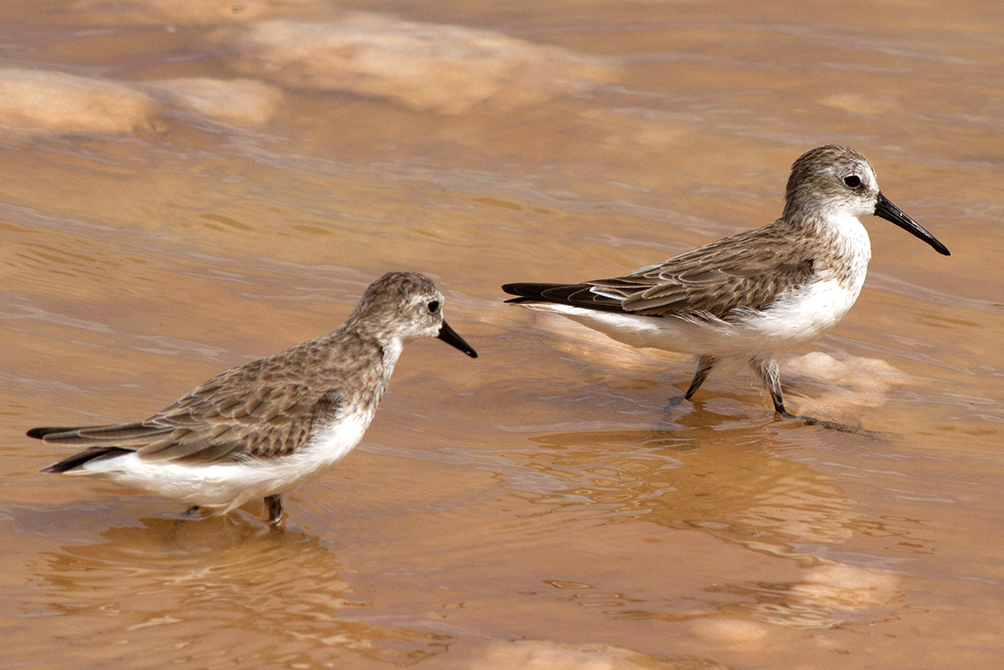
In Puerto Rico and the Dominican Republic the name Playero Occidental also means Western Sandpiper. But in Cuba, this bird is known as Zarapico Chico, which more or less translates to “small sandpiper.” Not the most helpful name for identification, given that several other small sandpipers can be found in Cuba!
Name that shorebird!
Naming birds can be a bit messy. If it were up to you, what would you call these birds? If you had a chance to rename them, what would you choose? Drop your best names in the comments below!
Interested in learning about the common names used for shorebirds and other bird species across the Caribbean? Visit Birds of the World species page and click on “Names” under each species main name,
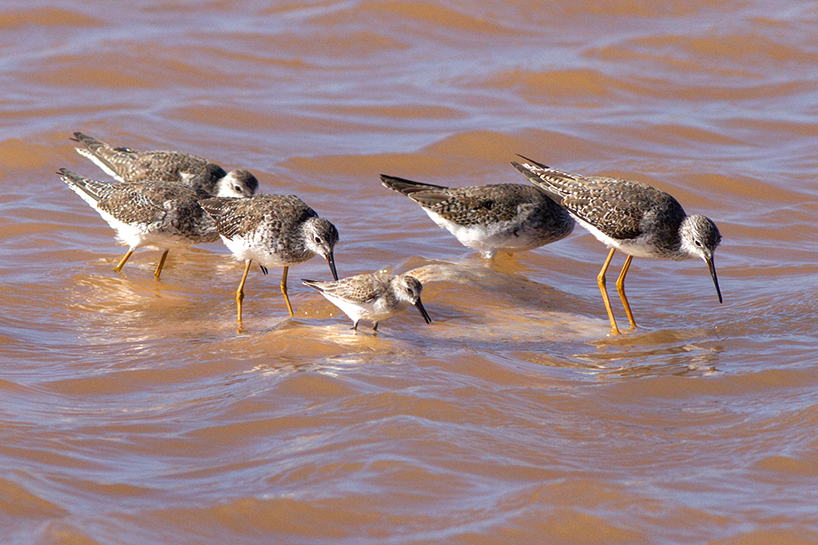
Now that you’ve been introduced… why not join the region-wide shorebird count?
Bird names might be full of quirks and surprises, but nothing beats seeing these amazing creatures in action. While you’re out looking for them at your island’s mangroves, beaches, salt ponds, and mud flats, you can help protect them, too!
With shorebird migration underway and continuing into November, it’s the perfect time to grab your binoculars and take part in the Caribbean Waterbird Census and International Shorebird Survey! The more information we gather about the wetlands our shorebirds use, the more we can learn about their populations and protect the critical places they need to survive.
As shorebirds have shown us, bird names carry history, geography, observations, language, and culture! Protecting these birds means protecting all of that, too! So the next time you spot a shorebird bobbing its tail or flipping rocks, remember: these amazing travelers, and the global community they connect, are entirely worth protecting.