
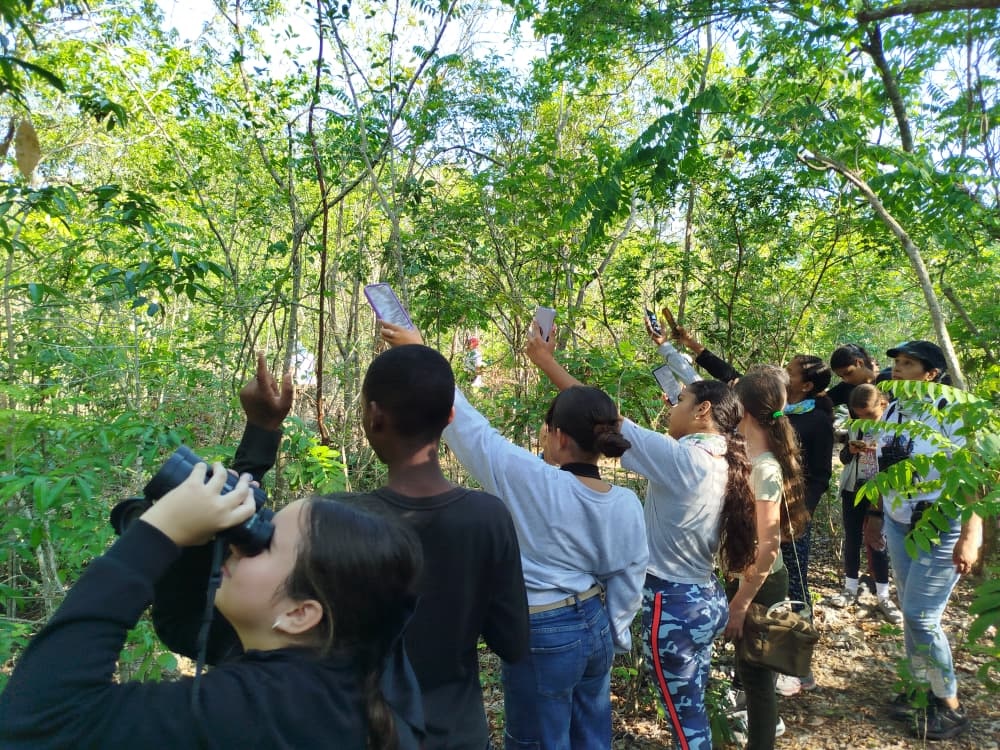
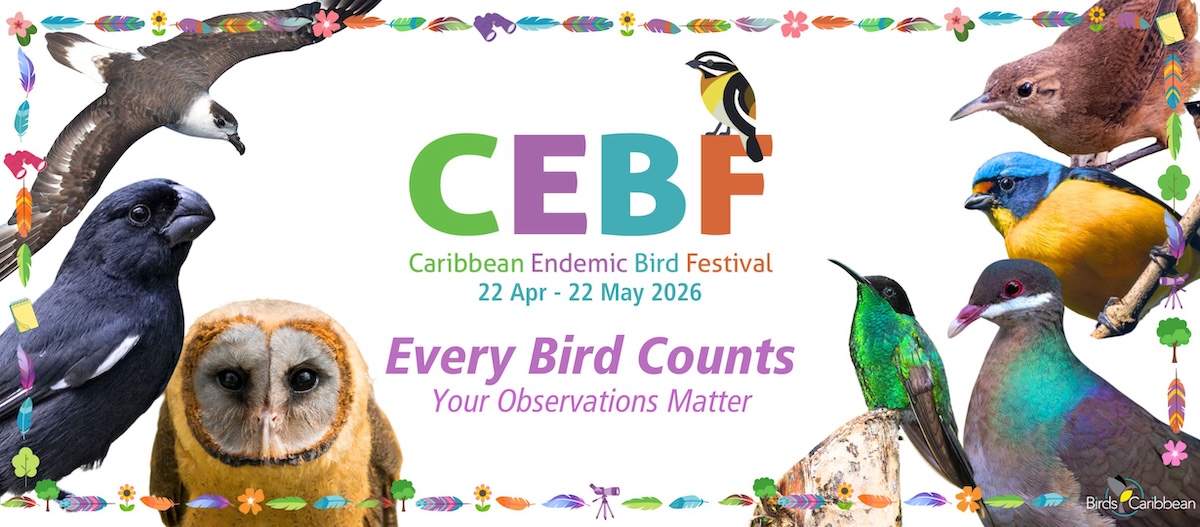
From Earth Day (April 22nd) to International Biodiversity Day (May 22nd) the Caribbean came alive with nonstop watching, listening to, and recording of birds! Environmental organizations across the region united for the Caribbean Endemic Bird Festival (CEBF) to celebrate the 187 unique bird species that call our islands home. This year, the festivities took on an active focus under the theme “Every Bird Counts — Your Observations Matter.” From island to island, our partners and local communities learned to admire these birds and discovered that even their casual sightings hold the power to protect them.
“Birds are hype!” as one young Jamaican birder put it and we couldn’t agree more. But to keep these incredible birds around for years to come, we have to look out for them and we can’t protect what we don’t know. This year’s theme underscores that fundamental truth in conservation. Many of our iconic Caribbean birds are single-island endemics, making them incredibly vulnerable to habitat loss, climate change, and human impacts like pollution, illegal persecution as pests, or trapping for the pet trade. By focusing on observation, CEBF 2026 helped everyday citizens to step up as data collecting champions, proving that a community with binoculars and checklists is a powerful force for protecting birds.
Every checklist submitted and call recorded builds a regional picture, helping us learn more about these birds and guiding conservationists to ensure the habitats we all depend on remain in tip-top shape.
CEBF coordinators rallied their communities to show that conservation is a collective team effort. Through birdwatching field trips, citizen science workshops, community counts, and educational school visits, participants discovered that their individual sightings carry real scientific weight.
JAMAICA
The Caribbean Coastal Area Management (C-CAM) foundation brought the theme to life at the Portland Bight Discovery Centre through a fun-for-all-ages bird fair. The day was packed with hands-on activities, including citizen science workshops, crafting bird feeders, drawing and coloring sessions, and an exciting bird walk. Participants hit the bird hide (bird blind) and successfully logged a mix of local and migratory species, including the White Ibis, Red-tailed Hawk, John Crow (Turkey Vulture), mockingbird, flycatcher, warbler, blackbird, Snowy Egret, Green Heron, Tricolored Heron, and Killdeer. The bird walk was an absolute crowd favorite, perfectly capturing the eye-opening magic of the festival. As one participant shared, “Wow, I did not know we had so many birds in Jamaica.”
View this post on Instagram
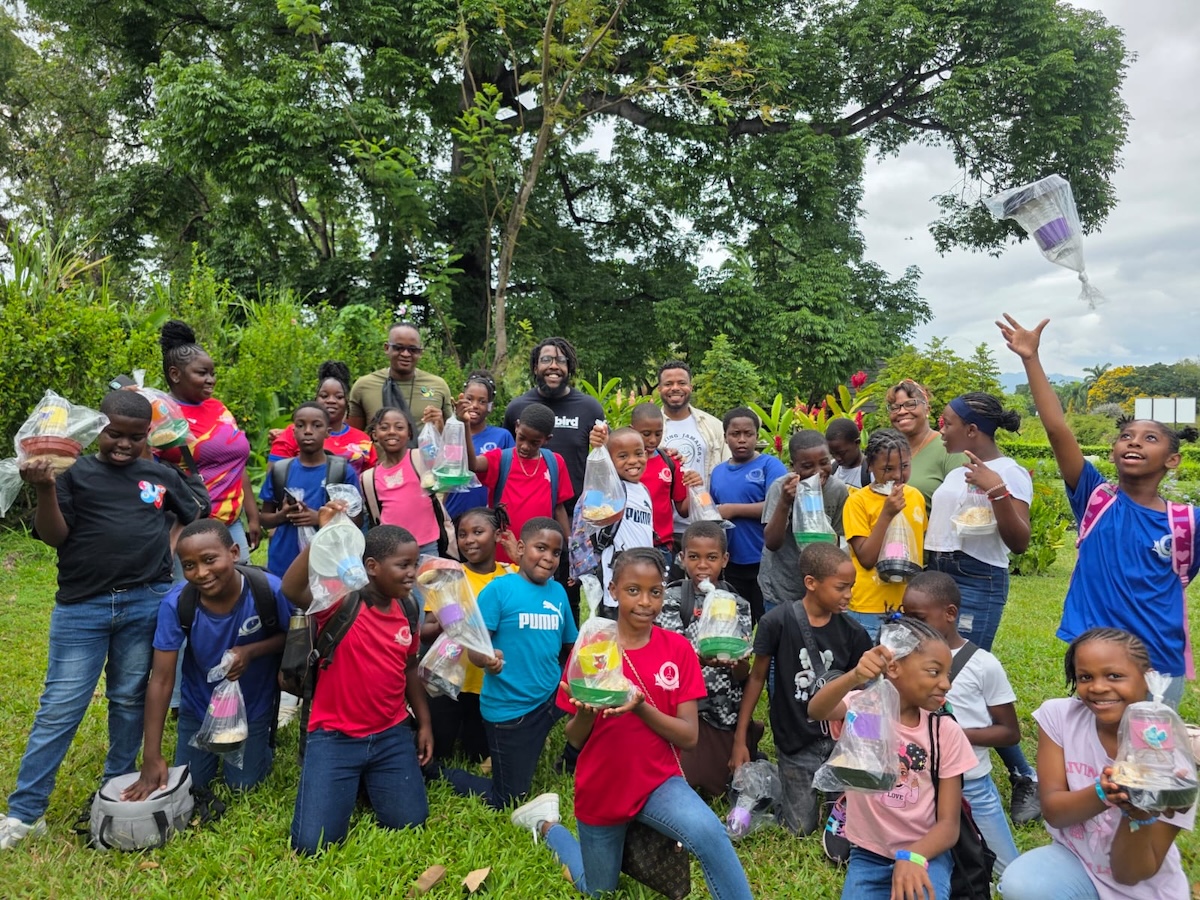
BirdLife Jamaica sparked a passion for conservation with a two-part event hosted at the Hope Botanical Gardens and Red Hills Primary School. The adventure kicked off with an introductory bird walk and count where eager students identified at least 15 different species. For many of the young participants, peering through binoculars was a brand-new experience and while mastering the focus wheels was a bit of a struggle at first, they quickly transformed into engaged birdwatchers!
The event wrapped up with a lively DIY craft session building bird feeders, which was a hit among the students. In fact one of the students, Malika, was inspired to write a poem about her experience! You can read it in full here. To ensure the daily bird-watching continues, the team launched a Birdify Your School Yaard initiative, donating 25 pounds of wild bird feed and six hummingbird feeders (supplied by BirdsCaribbean) to the school’s Grade 4, Grade 5, and Special Education divisions.
Rounding out the incredible impact in Jamaica, the Natural History Museum of Jamaica (NHMJ-IOJ) partnered with the Tourism Product Development Company Limited (TPDCo) to launch the Climate Resilient School Gardens Initiative in St. James. Developed as a recovery response following the impacts of Hurricane Melissa, this initiative brought habitat restoration and climate awareness directly into Western Jamaica’s schools. The project was rolled out across five schools: Herbert Morrison Technical School, Montego Bay High School, Niagara Primary School, Garlands Primary School, and the Caribbean Christian Centre for the Deaf. By rolling up their sleeves to plant fruit trees, native ornamentals, and pollinator-friendly species, students and teachers rebuilt their green spaces, restored urban habitats for local wildlife, and boosted food security.
View this post on Instagram
ST. EUSTATIUS
St. Eustatius National Parks Foundation (STENAPA) made a massive splash with their multi-day Statia Bird Festival. Spreading the love for birds far and wide, the festival stretched across the island including two protected areas: the lush forests of the Quill National Park and the coastal stretches of Zeelandia Beach. The team utilized everything from newspaper articles and social media campaigns to packed workshops and citizen science bird counts. Youth engagement was at the heart of the celebration, featuring an action-packed lineup of educational games, arts and crafts, and an exciting scavenger hunt along the birding trails. Hands-on conservation took center stage as participants built 12 American Kestrel nesting boxes, a practical initiative that turned out to be a crowd-pleaser. As Jethro van’t Hul, STENAPA Terrestrial Parks Manager, noted, “Building the bird houses was a huge hit.” While the multi-day festival celebrated all things birds rather than strictly endemics, its impact on the next generation was undeniable. By the end one young participant proudly declared, “I like birds now.”


DOMINICA
WildDominique organized a cross-island educational tour that spanned from the urban center of Roseau, up the coastal dry scrub of the west coast, through the dry coastal forest of Cabrits National Park, and deep into the rural communities of the Kalinago Territory and the rainforest interior along the Syndicate Nature Trail in Morne Diablotin National Park. The team kicked things off digitally by hosting a webinar to prepare the island’s youth for Global Big Day, teaching them how to log sightings using the eBird app. The training paid off massively: on Global Big Day, the team and their young observers successfully logged a spectacular 40 bird species as they tracked birds across Dominica.
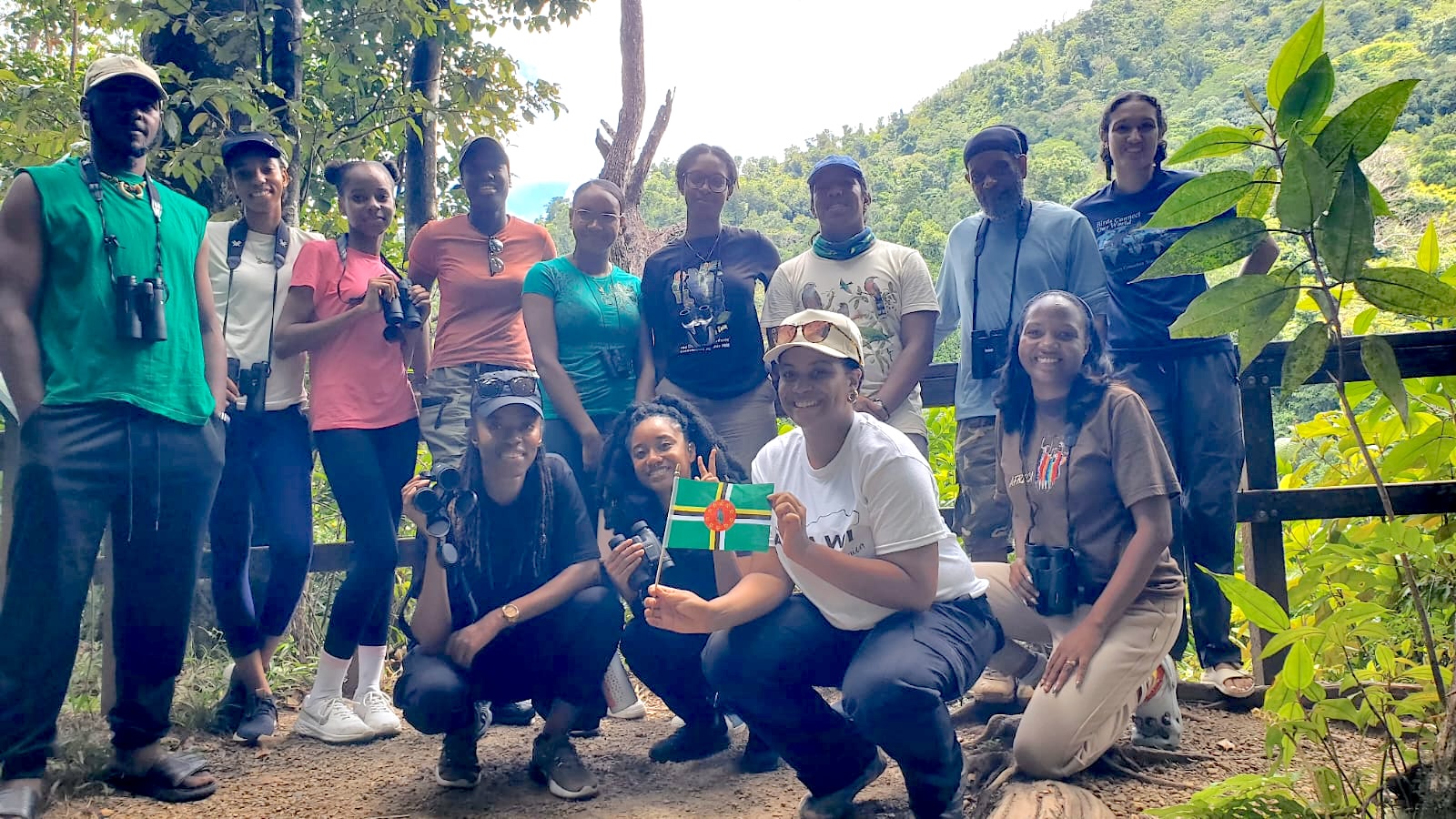
The team also brought high-energy environmental education directly into four local primary schools in urban and rural communities. Using engaging, participatory tools, they delivered tailored presentations on Wildlife Ecology and Conservation and The Importance of Birds. The classrooms came alive with interactive Bird Sleuthing exercises, Bird Bingo, a lively migratory bird game, a nature scavenger hunt, and hands-on face mask crafting. The team shared “The kids were so enthusiastic they were practically jumping out of their seats to answer questions in exchange for stickers, showcasing an impressive preexisting knowledge of local bird names.” Several students having spotted the team out in public eagerly asked when’s the next birdwatching event.
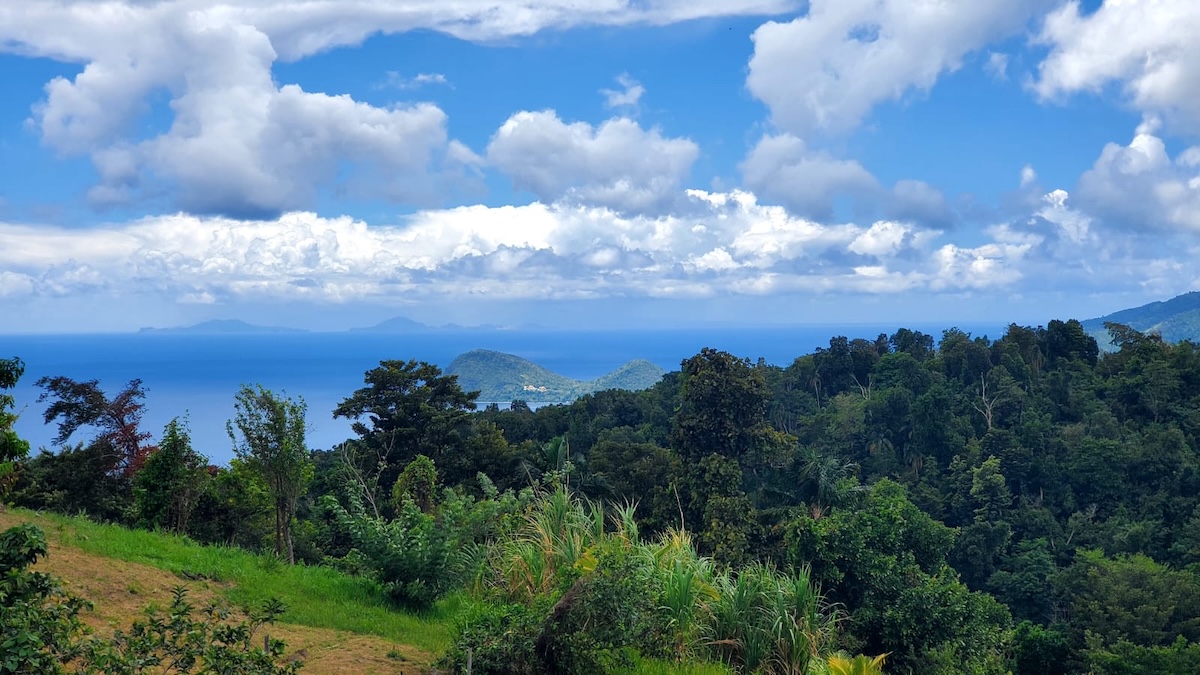
Out in the field at Cabrits National Park, WildDominique expanded their citizen science training by teaching older youth how to use iNaturalist alongside eBird to map local biodiversity. The teens had an absolute blast, with many expressing that they can’t wait for the next count, hopefully with their own binoculars. Best of all, several participants have independently continued to submit their own checklists long after the CEBF festivities wrapped up.
MARGARITA ISLAND
Bio Zoe orchestrated a phenomenal marathon of environmental education, hosting eight diverse events across the high school areas of Liceo Dr. Francisco Antonio Risquez, Cerro La Libertad, and Parque Nacional Cerro Copey. The festival’s lineup featured everything from radio interviews and social media campaigns to five immersive bird walks and counts. A major highlight included two role-playing performances where children acted out conservation challenges to better understand their complexity, alongside detailed drawing and craft sessions focusing on local species like the Yellow-shouldered Amazon, locally called Cotorra Margariteña. As 16-year-old Camila Bastardo shared, “I loved drawing the Cotorra Margariteña… you learn to detail the colors.” Jemimah Rivera, Founder of Bio Zoe, reflected, “Taking the theory into practice is fascinating—when they paint a bird in detail, and then go outside with binoculars and realize it’s the exact same bird, it’s pure adrenaline.” Eight year old Antonio Quintero agreed: “I liked seeing birds, I saw so many… I want you (Jemimah) to come back so we can do it again!”
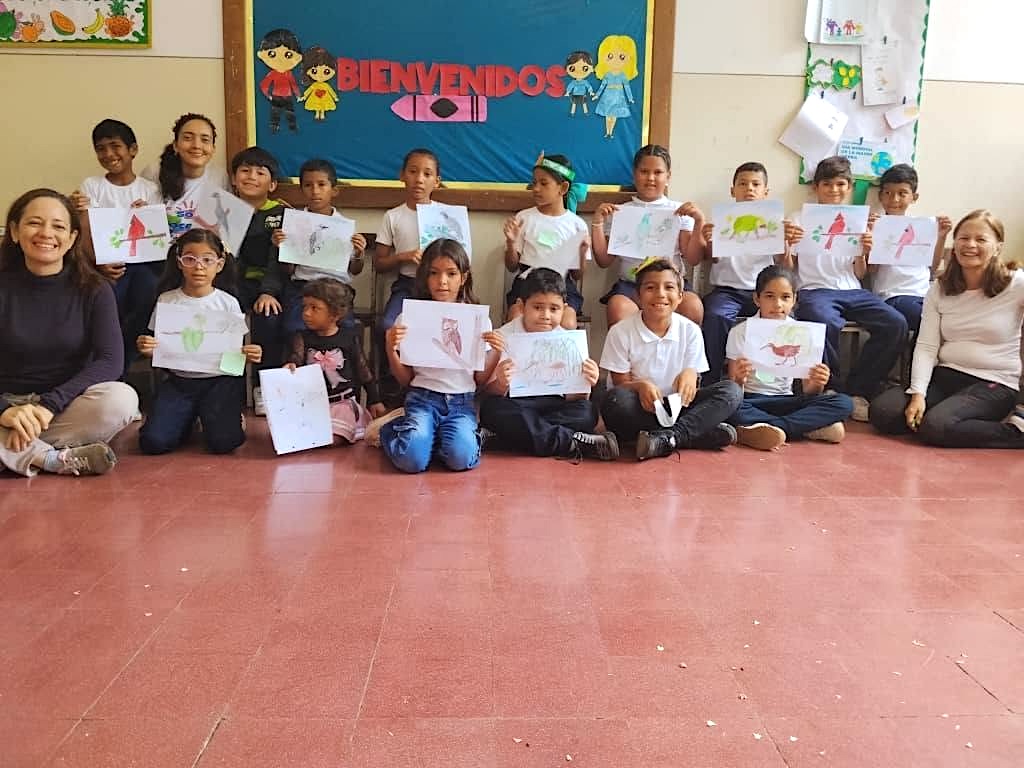
Professor Marycarmen Indriago also noted how important these experiences are for youth, sharing that they “enthuse our children to be more sensitive to the environment… and appreciate details in their environment which is good for their mental health.”
View this post on Instagram
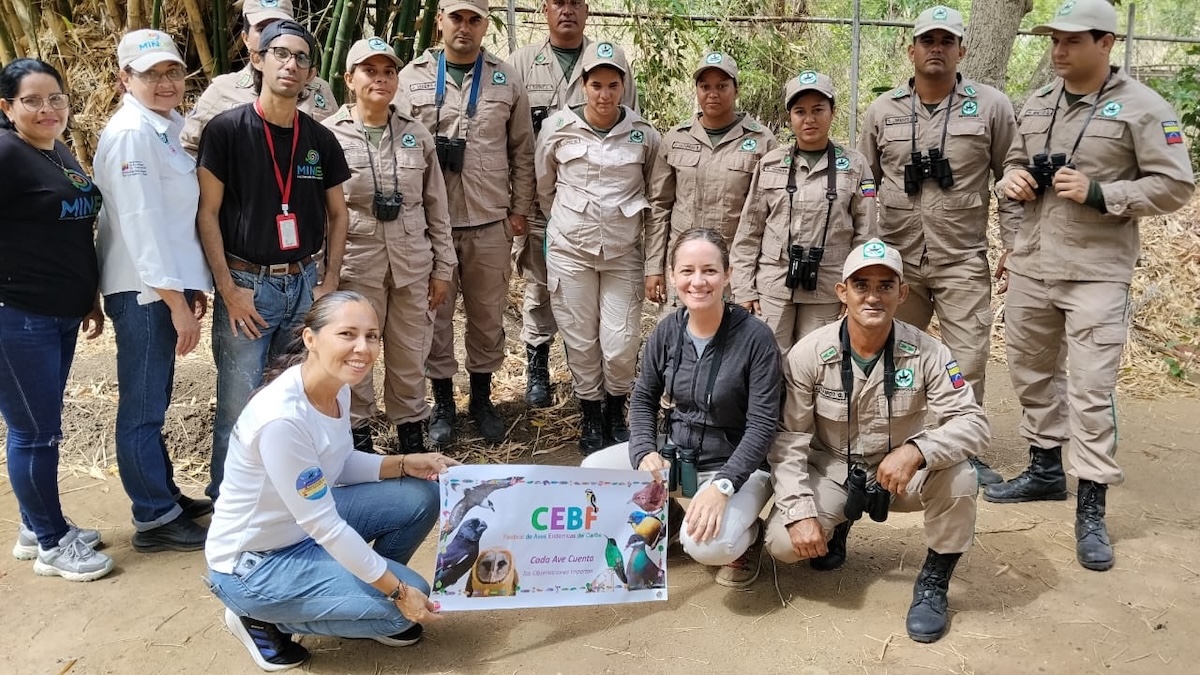
Recognizing the severe institutional crisis and high staff turnover affecting local conservation efforts, Bio Zoe also stepped up to support the island’s frontline protectors. They invited park rangers to join the field counts and hosted two specialized workshops on endemic birds. The response was appreciative. Park Ranger Rosalinda Quijada expressed, “Thank you so much for taking us into account and teaching us to appreciate nature in all its splendor.”
Even unexpected challenges turned into powerful teaching moments; when a few unregistered children joined a school group and began throwing stones at birds, the original students immediately called them out. Jemimah was able to step in and mediate, noting how that behavior underscored just how vital these educational spaces truly are to bridge the information gaps in homes and schools.
DOMINICAN REPUBLIC
Grupo Jaragua launched an ambitious, seven-stop national campaign that brought bird conservation into the hearts of both urban centers and rural communities. Their journey spanned seven distinct locations between April and June, taking the festival’s energy to the Museo del Hombre in Santo Domingo, Oviedo in Pedernales, the Jardín Botánico and KidsCreate School in Santiago, the Jardín Botánico Eugenio de Jesús Marcano, Escuela “La 100” in El Limón (Duvergé), and Galería 360 back in Santo Domingo. Enjoy these photos shared by Andrea Thomen, who organized and led most of the events.


The celebrations featured a vibrant blend of interactive talks on parrot conservation, guided bird walks, creative craft stations, and educational interpretive tables. In a standout hands-on effort for habitat restoration, the team also facilitated a collaborative community workshop where participants built 13 parrot nest boxes to support local breeding populations. Throughout the campaign, young attendees were completely captivated by the festival’s playful, immersive elements—especially a beloved parrot mascot costume, customized bird stickers, and lively, engaging presentations. The power of these experiences to ignite young minds was captured perfectly by one amazed child following a session, who exclaimed, “Wow, I did not know parrots were so incredible!”
SOH Conservación coordinated a landscape-scale campaign across the southwest region, seamlessly blending citizen science, habitat restoration, and community solidarity. The initiatives spanned the humid broadleaf canopy near the private reserve Bosque de las Nubes in Polo, Barahona (a critical site for ecological connectivity within the Bahoruco Oriental landscape as well as the municipalities of Duvergé and Vengan a Ver). The grand finale took place in the buffer zone of Sierra de Neiba National Park, where a coalition of local farmers, students, volunteers, environmental authorities, and community leaders rolled up their sleeves for a massive reforestation drive, successfully planting approximately 2,000 native trees including Caribbean Pine (Pinus occidentalis) and West Indian Cedar (Cedrela odorata) to reinforce the area’s watersheds.
The action-oriented approach of the festival sparked pride and connection to the land among the participants. Children and teenagers thrived outside the confines of a traditional classroom, captivated by the interactive outdoor workshops and guided birdwatching trips. One community member shared with the team, “I never imagined that planting a tree could make me feel part of something so important for the future of our communities,” while another noted that the activities “helped our children understand why forests and rivers must be protected.”
By bringing together everyday citizens and institutional leaders, the event united entire neighborhoods around long-term environmental stewardship and climate resilience, proving that protecting the Caribbean’s shared natural heritage truly is a collective team effort.
ST VINCENT AND THE GRENADINES
St. Vincent and the Grenadines Forestry Services staff proved that even when circumstances were beyond their control, scaled down yet dedicated field-based conservation makes a difference. Activities focused on strategic bird monitoring, outdoor education, and anti-poaching forest patrols in the dry forest of Pierre Hughes Barrouallie, Questelles Beach, and the rugged trail from Rose Hall Mountain to Chateaubelair.


S.V.G Forestry Officers practicing their birdwatching and ID skills. (Photos by Jodelia Simmons)
A major highlight of their outreach was an empowering outdoor educational session titled “Celebrating CEBF 2026 – Women in Forestry SVG.” This initiative put women in conservation center stage, providing participants with practical training in basic bird identification, key field marks, the distinct differences between shorebirds and landbirds, and proper binocular techniques.
The spirit of citizen science thrived as numerous eBird checklists were submitted throughout the festival month. In the field, the team used the outings to train colleagues on how to use the eBird app. While the elusive Whistling Warbler managed to dodge the ladies this time, they successfully documented two other endemics: the St. Vincent Amazon and St. Vincent Wren! To amplify their reach, the team shared informational social media posts about the St. Vincent Wren, St. Vincent and the Grenadines’ recently recognized third endemic bird species!
PUERTO RICO
Con Ciencia Ciudadana PR Inc brought the celebration to life with a fantastic blend of education and citizen science at the CROEC School in the municipality of Ceiba and within the iconic canopy of El Yunque National Forest. When it came to the crowd favorites, participants of all ages consistently shared that they loved the hands-on crafts most, with children and youth fully immersed in creating vibrant art with their own hands. Another massive hit was the Endemic Birds Memory Game, which quickly became the most popular station on-site, prompting kids to exclaim, “¡Quiero jugar otra vez!” (I want to play again!) and “Ya me aprendí todas las aves” (I already learned all the birds!).


While the youth dominated the game stations, adults highlighted just how much they enjoyed the immersive guided nature tours through the rainforest. They appreciated learning about local habitats and endemic island species from the experts, describing the field walks as “informative,” “eye-opening,” and “beautifully guided.” From the classrooms of Ceiba to the trails of El Yunque, both youth and adults left the event feeling connected to nature, and incredibly grateful for the shared experience
Eliezer Nieves Rodríguez, alongside Coral Aviles Santiago and Dr. Natalia Rodríguez, spearheaded 13 education and outreach activities engaging participants across the San Juan Bay Estuary watershed and surrounding regions. The program masterfully engaged a diverse audience: local families, volunteers, tour guides and university students, connecting all of them directly to Puerto Rico’s rich diversity of birds.


The festival kicked off with community-driven citizen science in Río Piedras, hosting an iNaturalist training session followed by the 3rd Capetillo Community BioBlitz, which mobilized residents to document local wildlife alongside guided bird walks. Outreach expanded through a mix of virtual and in-person events, including a virtual educational session on the San Juan Bay Estuary watershed, an Estuary Bird Census at the Jardín Botánico de Río Piedras, and a guest lecture at the University of Puerto Rico focusing on endemic birds within the island’s unique karst landscapes. Dedicated field experiences brought families and youth into nature with interpretive tours through the Piñones State Forest in Loíza, a Global Big Day birdwatching tour, and guided walks at the Fundación Luis Muñoz Marín and Julio E. Monagas National Park in Bayamón. The team also prioritized long-term regional capacity building by hosting a specialized identification and environmental education workshop for local tour guides at the Reserva Natural Estuarina de la Laguna del Condado.
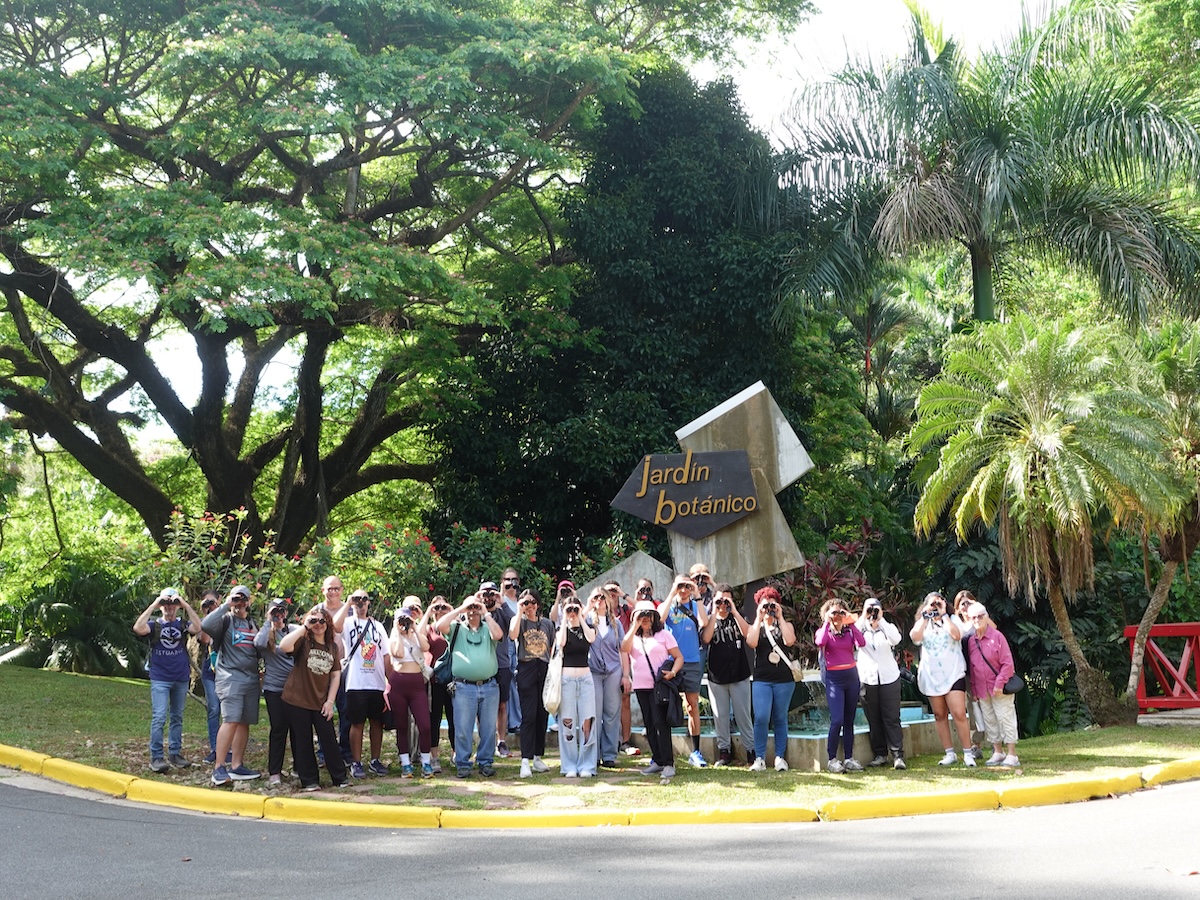


Throughout the birdwatching events, participants successfully saw and recorded regional species, including the Puerto Rican Woodpecker, Puerto Rican Flycatcher (Bienteveo), Puerto Rican Bullfinch, Puerto Rican Oriole, and Adelaide’s Warbler, alongside broader Caribbean endemics like the Scaly-naped Pigeon and Zenaida Dove. For many urban residents, the festival offered profound moments of first-time discovery! One participant expressed excitement over experiencing the Monagas Forest for the very first time, while another shared their gratitude, noting it was the “first time I saw and heard the Bienteveo.” By blending urban forest monitoring, academic lectures, and hands-on field identification, the project left local communities inspired and equipped to serve as guardians of Puerto Rico’s birds and habitats.


GUADELOUPE
The local environmental organization AMAZONA celebrated the festival by taking participants deep into the heart of the lush, totally protected humid forests of the Guadeloupe National Park. A group of 19 enthusiastic adults set out on a guided birding walk, immersing themselves in the canopy soundscapes and logging an impressive total of 17 different bird species. The absolute highlight of the excursion was catching clear, easy views of the Guadeloupe Woodpecker. The group was equally thrilled to spot the secretive Forest Thrush, a regional endemic that can be tough to see but thrives in these cool, shady rainforests. Watching these spectacular forest birds foraging in their natural, undisturbed habitat was an unforgettable experience for the group.


SAINT MARTIN
Les Fruits de Mer hosted a spectacular Endemic Animals Festival at Amuseum Naturalis at The Old House. The bird fair was, again, seamlessly woven into this larger, highly popular Festival, which naturally drew a massive crowd of both adults and kids eager to learn about the island’s unique wildlife and native plants. A major highlight of the festivities was a brilliant cross-border partnership that brought the whole island together. As the organizers shared, “This year we collaborated with Nature Foundation Sint Maarten, so that aspect was really fun.” Through a lively mix of hands-on arts and crafts, an interactive in-person bird fair, and engaging local newspaper features, the Festival continues to educate and inspire national pride in the island’s incredible biodiversity.


TOBAGO
Heading further south to Tobago, the festival took on a highly focused and specialized approach at the beautiful Bon Accord & Buccoo Wetlands. Organizers hosted an intimate “Sustainable Birder Trainer” workshop designed to deeply empower local conservation advocates. Tailored specifically for a dedicated cohort of two adult participants, this immersive session offered a close-up, intensive dive into the fundamentals of avian ecology and environmental stewardship. The trainees received hands-on, comprehensive instruction on recognizing various local bird habitats, implementing vital conservation strategies, and mastering practical bird identification techniques right in the field.
CUBA
The festival in Cuba was a testament to the sheer adaptability, resilience, and unwavering commitment of local conservationists. Coordinators refused to let the momentum stall when faced with challenges including fuel shortages and rolling power outages that frequently delayed scheduled events or forced sudden location changes. Instead, they adapted on the fly, shifting schedules and rearranging logistics to ensure that the next generation of bird protectors wouldn’t miss out on the joy of the festival.
Flora y Fauna Santiago de Cuba offered an incredible, multi-layered festival across the parks and schools of Santiago de Cuba and the municipality of Segundo Frente. The celebrations blended citizen science, art, and community action, featuring radio interviews, vibrant school competitions between Environmental Interest Groups, and a beach cleanup to restore habitats in the Estrella Aguadores protected area. Education took center stage with a special visit to the Tomás Romay Natural History Museum (home to the BIOECO research center), where the team broke down complex ecological roles, endemism, and bird biology into accessible, simple terms for the curious young crowd.
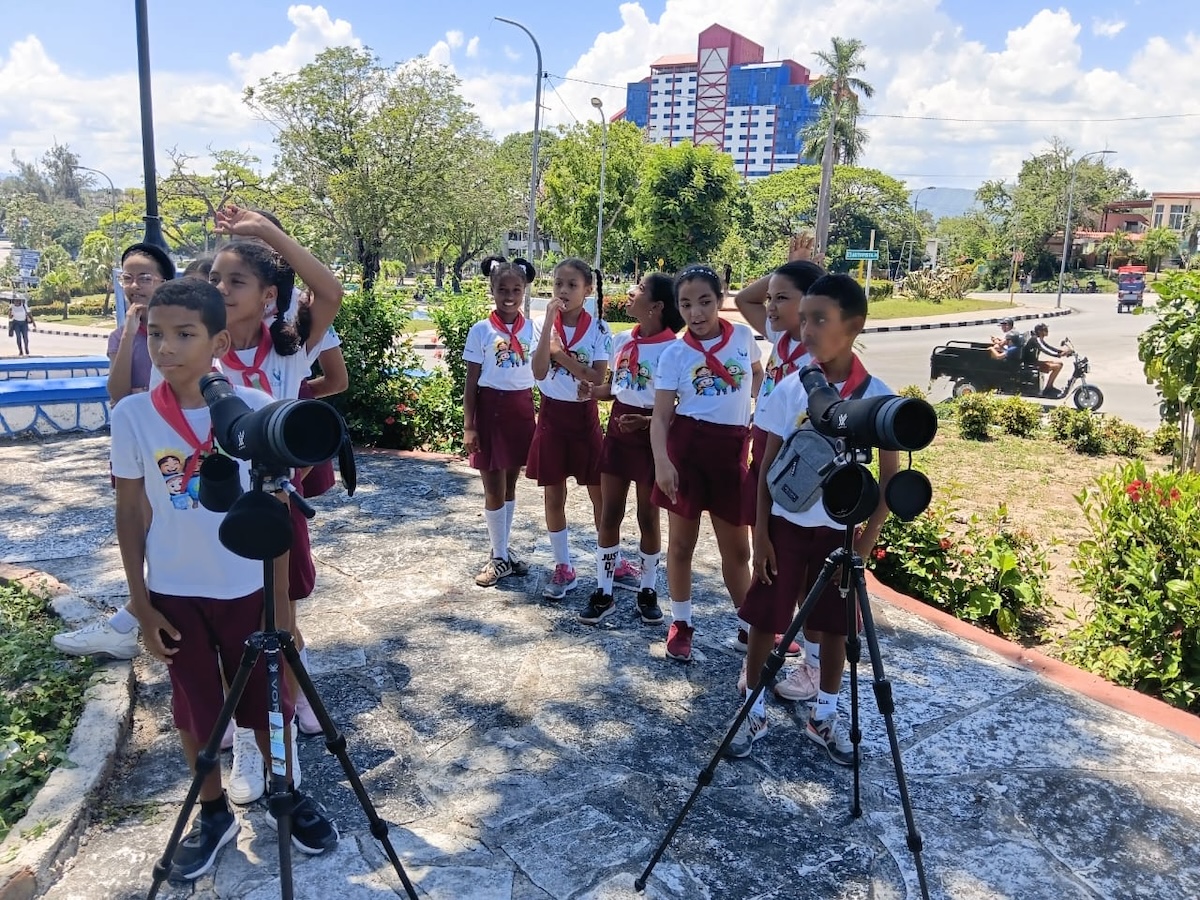
The team also hosted a hands-on crafts contest challenging the children to answer a vital question: How can we help birds from home? Yet, without a doubt, the absolute favorite activity of the festival was heading out into the city streets and local parks for urban birdwatching. The outdoor citizen science experience changed how the children saw their environment and themselves, perfectly captured by one young participant who exclaimed, “I feel like a scientist with these binoculars!”
In the community of Vista Alegre, the team from the Museo de Historia Natural “Tomás Romay Chacón” brought an inclusive and therapeutic energy to the festival. Working closely with local schools, organizers hosted a vibrant series of events that combined environmental interpretation tours, bird walks, and hands-on conservation. The children worked together to plant 50 fruit trees, including mango, guava, mamoncillo, orange, tangerine, and sugar apple (anón), creating a future food source for both local wildlife and the community.


Creativity flowed freely across four specialized craft workshops, which included storytelling, puppetry, and animated comic-strip creation. A truly stand-out highlight of the festival was the introduction of art therapy tailored specifically for children on the autism spectrum. Blending detailed bird painting with sensory outdoor birdwatching, the initiative provided a gentle, immersive way for the children to connect with nature. The response from participants and educators was overwhelming, with many describing the inclusive sessions as precious, wonderful, educational, and full of joy.
In the Matanzas province, the Empresa Flora y Fauna de Matanzas made a massive splash by centering their festivities within the Laguna de Maya Wildlife Refuge; a protected coastal habitat flanked by mixed mangroves and semi-deciduous forests. The team maximized their outreach through radio and TV interviews, local newspaper spreads, and a large-scale coastal cleanup at the Punta Maya Lighthouse. Embracing the rich local history, they took participants to the historic Cafetal La Dionisia (established in 1820), where coffee has been sustainably cultivated under the natural forest canopy for over two centuries. To ensure the long-term survival of these coastal ecosystems, volunteers and community members rolled up their sleeves to plant native trees in the community of Carbonera and successfully restored habitats by planting seedlings of Sea Grape/Uva de Playa (Coccoloba uvifera) along the shoreline.
The crown jewel of their program was a massive in-person bird fair and a highly successful Global Big Day turnout. For this count, a passionate team of children hit the trails to record bird songs as part of the BirdsCaribbean and Grabando Aves’ Sound Recording Challenge. Participants were absolutely mesmerized to discover that spectacular, globally unique wildlife lived right in their own backyards.
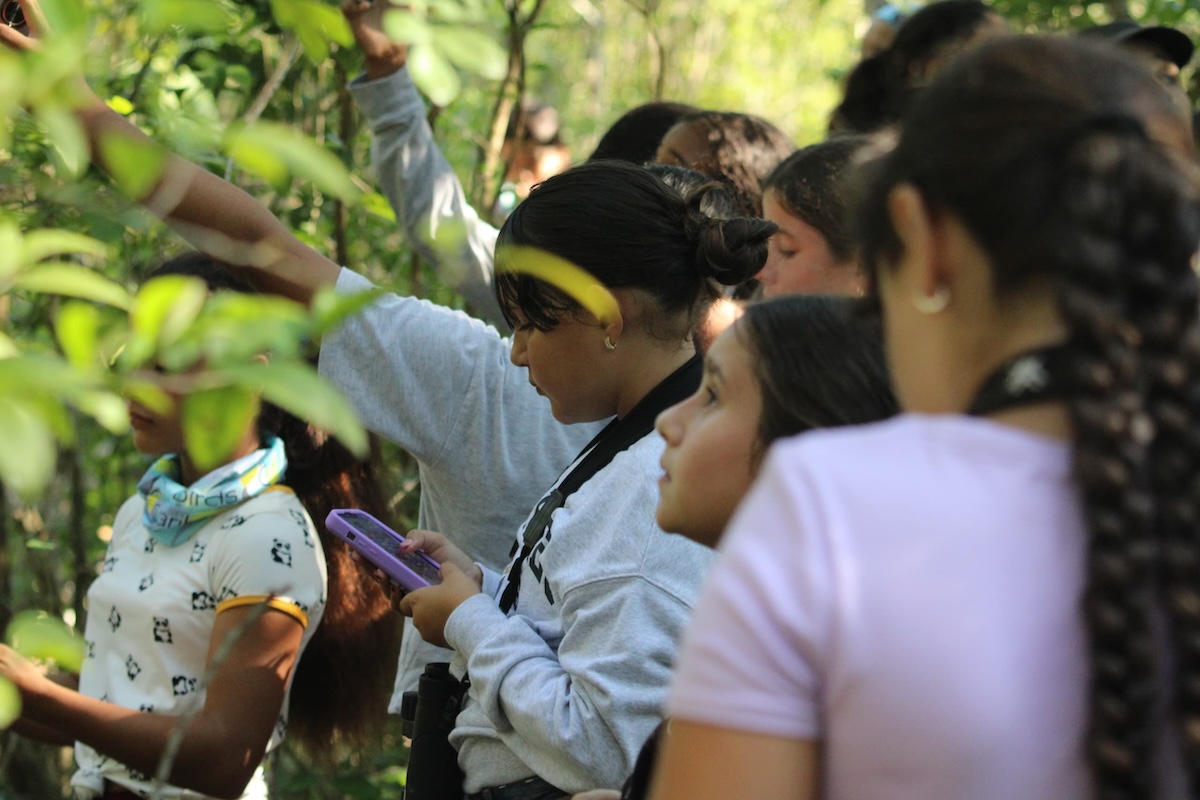
This wave of pure excitement was captured beautifully by two young participants, Milena and Yelena:
Milena: “I discovered new birds today, and they are all so beautiful. We saw the Cuban Tody, which is one of my favorite birds. We also saw the Cuban Trogon, the Cuban Pygmy Owl, and… what’s the name of the one with the little yellow head? Oh yes, the Yellow-headed Warbler! They were all so pretty, and I loved listening to their songs.” You can watch Milena’s interview below.
Yelena: “I loved it! My favorite bird was the Cuban Tody because it’s so tiny and beautiful, with amazing colors. I also saw the Cuban Trogon, the Greater Antillean Grackle, and so many others!” You can watch Yelena’s interview below.
Riding this wave of inspiration, the youth immediately began sketching and coloring the endemic species they had just seen using the beloved educational coloring book “Aves del Jardín Botánico Nacional” by Karen Aguilar and Lourdes Múgica. For a deeper personal look at how this event touched the community, you can also check out this first-hand blog post on Patricia’s unique perspective of the festival.
Activities also stretched across the UNESCO World Heritage Site Alejandro de Humboldt National Park and the Yara-Majayara Outstanding Natural Feature in Baracoa. Despite challenging circumstances, the community turned out in full force, kicking off with a grand opening ceremony of over 150 children and wrapping up with an inspiring closing event for teenagers. The festival focused heavily on critical habitat restoration, with volunteers planting 350 native trees. This included positioning Caguairán (Guibourtia hymenaeifolia) to restore essential biological corridors for forest birds, planting Ocuje (Calophyllum antillanum) along the riparian buffer zones of the Nibujón and Santa María rivers, and undertaking the highly delicate task of planting Patabán and Yana mangrove species to strengthen coastal defenses. The community also participated in five beach cleanups across the coastal zones of Baracoa, each concluding with lively sports and cultural celebrations.


Back in the classroom, local youth participated in lectures, drawing contests, and dynamic role-playing games where children simulated avian migration and nesting challenges. Out on the trails, deep in the lush forests, the guided birdwatching excursions became the absolute pinnacle of the festival. Watching species like the Cuban Trogon (Tocororo), the Cuban Tody (Cartacuba), and the Cuban Blackbird thrive in the wild sparked a profound wave of local pride and community resolve, beautifully captured in the participants’ own words:
“It was exciting to observe birds that only exist here and learn how we can help protect them for future generations. The birds look beautiful in their natural habitat.”
“The experience in Alejandro de Humboldt National Park allowed me to appreciate even more the natural wealth of our country… That is why we must fight to not keep birds in cages.”
“I learned that conservation is also our responsibility, the responsibility of local communities. Saving the birds is in our hands.”
Our journey through Cuba continues, heading to the coastal municipality of Gibara in the Holguín province. Here, the team from the Museo de Historia Natural Joaquín Fernández de la Vara Pi designed a campaign that directly targeted areas historically affected by wild bird trapping.
Spanning the communities of Las Marías, La Vigía, and the Cuartelón neighborhood, the museum hosted exhibition fairs to bring conservation messages straight to the heart of local families. A massive beach cleanup rallied secondary school students to protect coastal ecosystems, while students and professors from the Municipal University Center stepped up for citizen science, conducting bird counts for Global Big Day. Thanks to educational materials from BirdsCaribbean and Environment for the Americas, the team was able to bring dynamic learning to six distinct rural communities. The cultural heart of their festival was a poetry, painting, and craft contest themed “Birds Are…”, where youth poured their hearts into themes of avian freedom, in an effort to reshape how the community views pet birds.
The deep community impact and the loving energy of the organizers resonated immensely with local parents, who shared their gratitude like Lubia Mayo Ramírez who provided this comment on the event “Muchas felicidades a todos, una actividad maravillosa, todo estuvo muy bien organizado y fue creativo. Los niños aprendieron y lo disfrutaron mucho.” (Huge congratulations to everyone, a wonderful activity, everything was so well organized and creative. The children learned a lot and truly enjoyed it).
Enjoy these event photos shared by lead organizer Ailen Anido:


Rounding out our incredible journey through Cuba, Grupo de Ecología de Aves coordinated an extensive, multi-site educational campaign across Havana and neighboring Bauta in the Artemisa Province. The team relied on educational manuals like BirdSleuth Caribbean to teach communities about endemism, bird morphology, and habitat conservation. In the local community of Baracoa, the team partnered with the La Finquita del Arte to host four weekend sessions where children engaged in endemic bird puzzles, played interactive games like “Mobile Vote” and “Habitat Tag,” and created custom watercolor masks. Each child also walked away with a school art set and their own copy of the National Botanical Garden’s bird coloring book.
The team brought citizen science straight to local schools and community spaces. They visited three primary schools: Juan Gualberto Gómez, Francisco Zayas, and Ignacio Pérez Zamora. Students learned to use binoculars and conducted counts right on their school grounds. In a heartwarming milestone, the festival adapted its programming for toddlers at the Mariposita de Cristal daycare, where children brought toy birds from home to study their features and painted masks as Mother’s Day gifts. The team also hosted a day of traditional board games and coloring activities for youth at a local shelter for children without family support.
Global Big Day counts were activated across three major hubs: the National Botanical Garden, Laguna del Doctor, and Quinta de Los Molinos. At Laguna del Doctor, neighborhood children were treated to a binocular workshop and mini-safari, while the other hubs paired bird counts with advanced training workshops. This included bird banding demonstrations for students from the French School and scientific banding masterclasses for university research groups like the Grupo Científico Estudiantil Ara. Despite severe national transit constraints, the team successfully utilized grant funding to manage critical event mobility and provide refreshments for the children, ensuring that nothing stood in the way of environmental education.
The CEBF team extends a massive, heartfelt thank you to our incredible Cuban coordinators. Your passion, resourcefulness, and refusal to let these critical educational events fade out are what keep regional conservation aloft. We are profoundly grateful for your dedication to inspiring the next generation against all odds!
ANTIGUA AND BARBUDA
The Environmental Awareness Group (EAG) pulled out all the stops across Antigua and Barbuda, activating key Important Bird Areas (IBAs) like Wallings Forest, McKinnons Salt Pond, Johnson’s Point, and Darkwood Salt Pond, as well as the Codrington Lagoon National Park on Barbuda. Their jam-packed lineup featured a “Bird Maskerade,” an Earth Day Bird Celebration Fair, a fascinating bird banding demonstration, and a Global Big Day count. Hands-on habitat restoration took center stage as participants planted mango, cherry, and soursop trees. The seamless connectivity of the day’s activities fostered a beautiful sense of shared responsibility and environmental ownership among the youth, who even created a catchy impromptu song: “Mango is my favourite fruit!”


Another massive highlight was an incredible, life-sized Barbuda Warbler costume that stole the hearts of the students, prompting one to exclaim, “Wow, I love the Barbuda Warbler! It is so special to our country and to me.” Between designing their own custom watering cans and planting trees, the children were so deeply engaged they simply didn’t want the day to end, begging for more time.
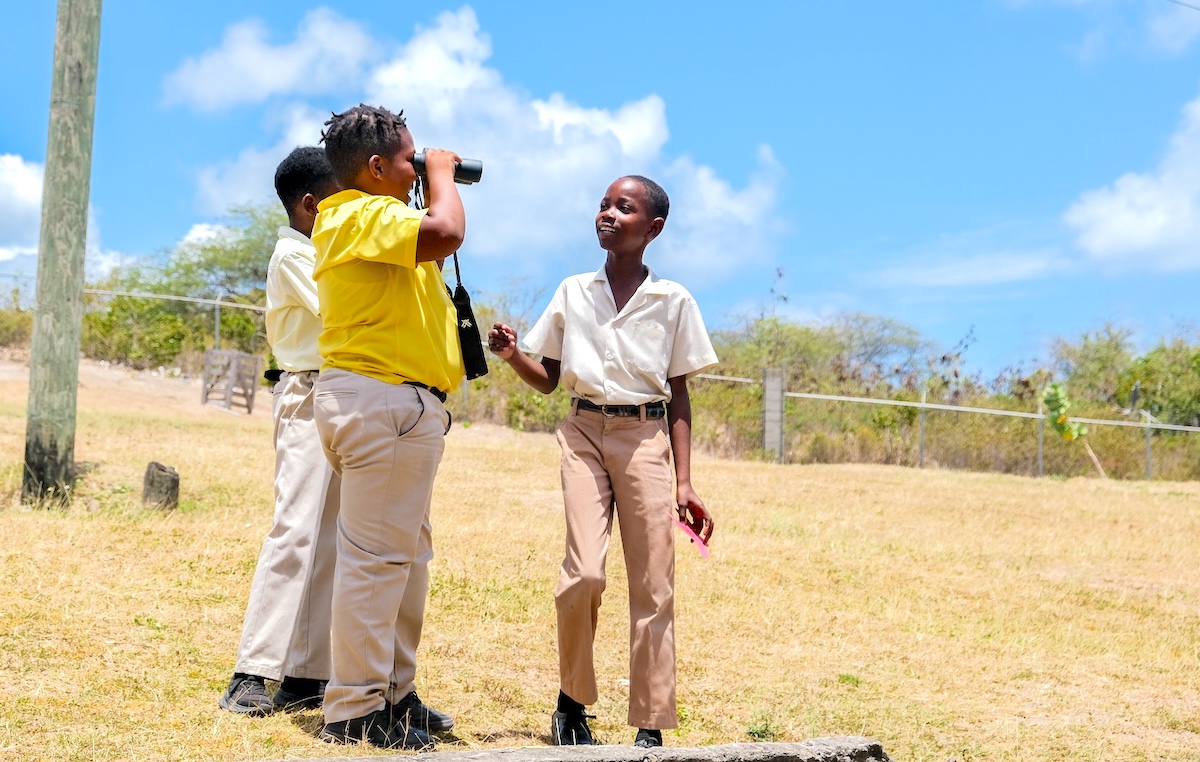
Of course, pulling off such a massive multi-island event brought its own unique set of logistical hurdles. Navigating event coordination right around a snap general election proved tricky, and the coordinators playfully noted that the kids’ absolute favorite tool was the binoculars, so much so that sharing was completely off the table, with every single participant demanding a pair and an activity kit entirely to themselves.
Fuel the festival, protect the birds
Festivals like CEBF—and the small grants that fund our local partners—are only possible because of bird lovers like you 💚. Consider making a donation today to help us keep these critical community conservation programs taking flight across the Caribbean!
Bring the festival to your community
Behind every successful festival is a network of passionate leaders, and we are always on the lookout for new coordinators to help bring the joy of birds to more communities! When you step up as a CEBF coordinator, you’re joining a vibrant, supportive community of like-minded bird and nature lovers. Plus, there are some great perks to joining our network, including:
Financial & Resource Support: Access to small grants to support your events, plus free educational materials, activities, and discounts on essential equipment where possible.
Professional Growth: Opportunities for advanced BirdsCaribbean research grants and specialized training workshops.
Skill Building: A chance to gain valuable, transferable skills in event planning and science communication.
Get in touch with us to learn more about how you can get involved for next year. 📧 [email protected], [email protected] and [email protected]
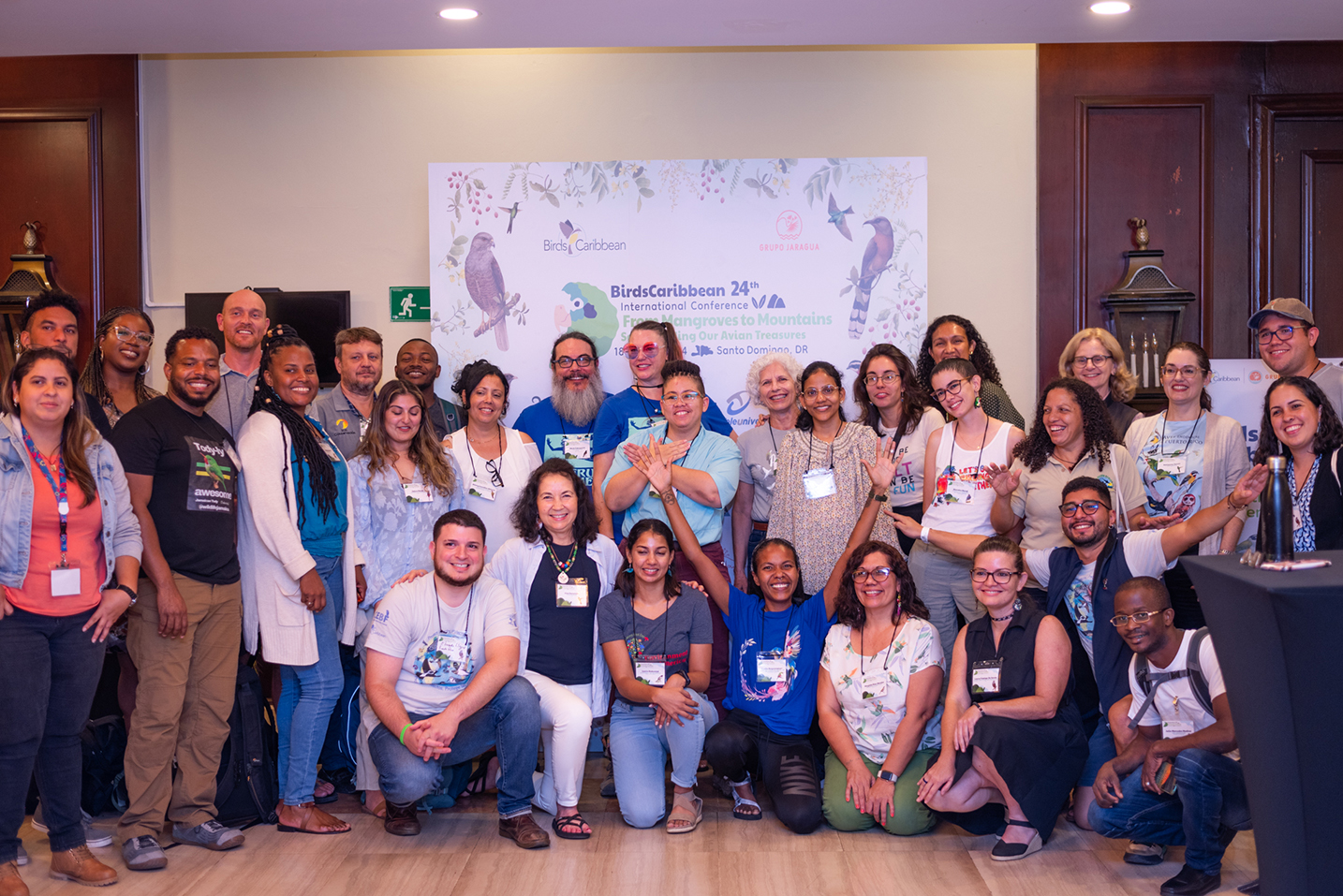
This year’s CEBF is over—but don’t worry, we still have plenty of bird content for you to enjoy! Make sure you are following us on Facebook, Instagram and LinkedIn, and have joined the BirdsCaribbean mailing list, to ensure you are kept up to date with our latest news via our monthly newsletter.
Acknowledgements 😊: A massive THANK YOU to the island coordinators for your enthusiasm and dedication to making this another memorable CEBF! Each year we see a growing number of participants committed to increasing their knowledge of Caribbean birds and actively working to protect their habitats.
We also extend our gratitude to our donors and members 🙌 who help us provide the coordinators with the support and resources they need to educate and inspire future generations of bird and nature loving communities.