Break out your life lists — the 66th supplement to the American Ornithological Society’s (AOS) Checklist of North and Middle American Birds, published in August 2025, brought several taxonomic changes that Caribbean birders will want to be aware of. We’re taking a closer look at the updates that matter most for our region.
Taxonomy — the science of naming and classifying organisms — is always evolving. The AOS maintains the official checklist for birds from the Arctic down to the Panama–Colombia border, including Bermuda, the West Indies, and the Hawaiian Islands. Each year, ornithologists review the list and evaluate proposals for taxonomic revisions.
Usually, the most attention-grabbing changes involve species level shifts: “splits,” where one wide-ranging species is divided into two or more localized ones; or “lumps,” where similar species are combined. But in this supplement, many changes affecting the Caribbean occur at higher taxonomic levels, offering new insights into evolutionary relationships rather than altering species counts.
Taxonomy 101
To understand what these AOS updates mean, let’s take a quick refresher on how taxonomy works!
When we’re birding, we usually rely on common names—think “Killdeer” or “Carib Grackle.” Depending on where you are in the Caribbean, you may even hear different local names for the same species. Bananaquits, for example, are called “sugarbirds” in Trinidad, “beeny birds” in Jamaica, and “see-see birds” in Grenada! But every species also has a universally recognized scientific name made up of two parts: the genus and the species epithet. These names are always italicized, a convention going back to Swedish biologist Carl Linnaeus, who wanted scientific names to stand out clearly in manuscripts.
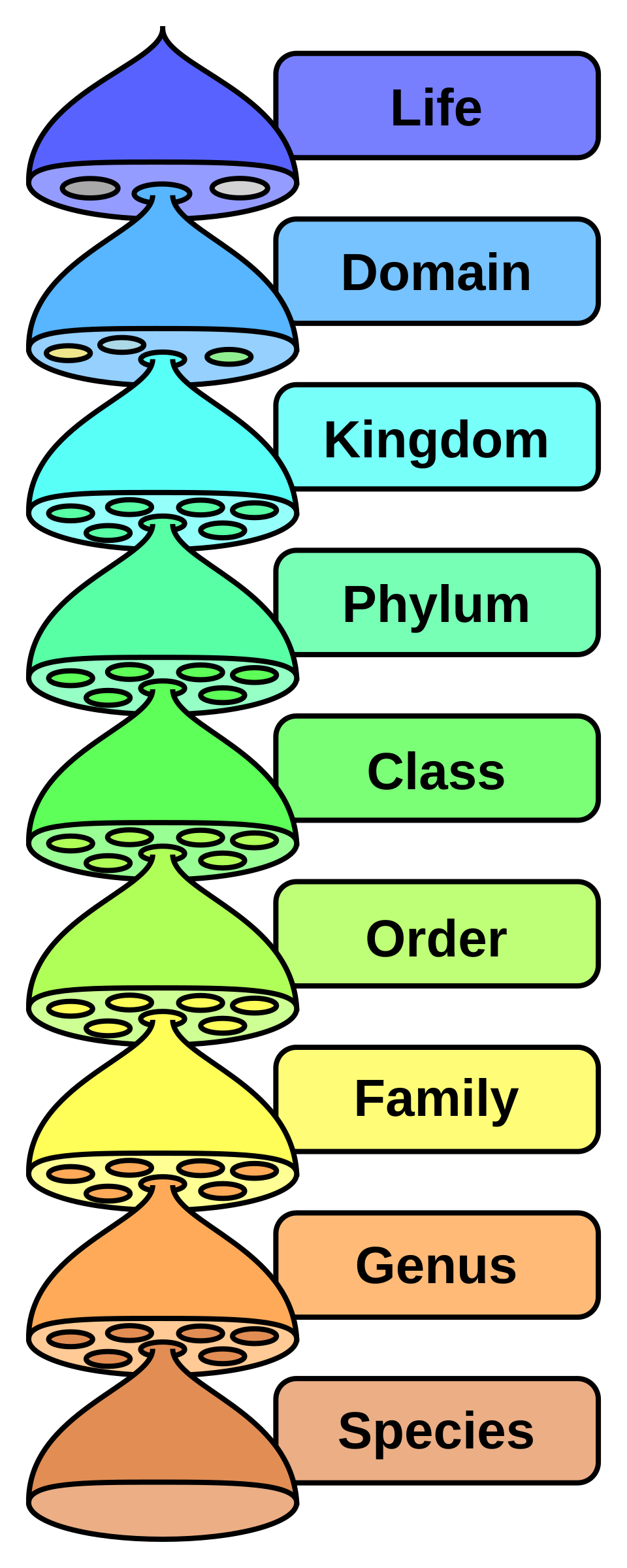
When categorizing organisms, the genus groups very closely related birds together; the species epithet distinguishes one species from another within that genus. When we zoom out, genera (the plural of genus) are grouped into families. Closely-related families are grouped into orders. And one level above that is the class, where all birds fall under Aves.
So the main taxonomic categories look like this:
Species – a single, distinct type of bird
Genus – a small group (sometimes just one!) of closely related species
Family – a group of related genera
Order – a group of related families
Class – the broad category that includes all birds (Aves)
A cool tip: In animal taxonomy, all family names end in “-idae”, and all bird orders end in “-iformes.” Once you spot those endings, you’ll know exactly where you are in the taxonomic hierarchy.
To illustrate further..
Let’s look at a familiar Caribbean species: the Least Tern or Sterna antillarum. The genus Sterna contains several tern species, but the species epithet ‘antillarum’ tells us we’re talking specifically about the Least Tern.
Least Tern in flight. (Photo by Sam Miller Macaulay Library-ML161558471)
If we think about birds similar to terns, gulls, noddies, and skimmers might come to mind — all of which belong to the avian family Laridae. And if we think further about birds similar to gulls and terns, other beach-going birds might come to mind, like shorebirds or plovers, and maybe other seabirds like skuas. All these birds (plus a few others) are grouped together within the avian order Charadriiformes. If you’re ever unsure where a bird fits taxonomically — just flip through your favorite field guide—most are arranged first by order, then by family.
Primer complete — and you passed with flying colors!
With that foundation, let’s turn back to the AOS checklist update. The changes in this supplement include moving species from one genus to another more closely related genus, shifting species between families, and revising the order-level placement of certain bird groups. These updates are almost always based on new genetic research — and they help refine our understanding of how birds are truly related.
Black morph of the Bananaquit in Grenada. (Photo by Paul Des Brisay)
Normal morph of the Bananaquit, photo from Jamaica. (Photo by Stuart Reeves)
In the Caribbean, many species remain understudied, so each AOS supplement often brings valuable new insights. Sometimes a species that appears widespread across multiple islands turns out to comprise several distinct island endemics — especially if birds rarely move between islands and can no longer interbreed. Over time, isolated populations can evolve unique traits, such as the melanism seen in Bananaquits from the Lesser Antilles.
Just last year, two major taxonomic splits added six new endemic species to the Caribbean, underscoring the region’s extraordinary biodiversity. And, as always, continued study will undoubtedly reveal even more.
So — with your refreshed understanding of taxonomy, are you ready to explore the latest in Caribbean bird updates?
Breaking news — our Caribbean tanagers are more related than we thought!
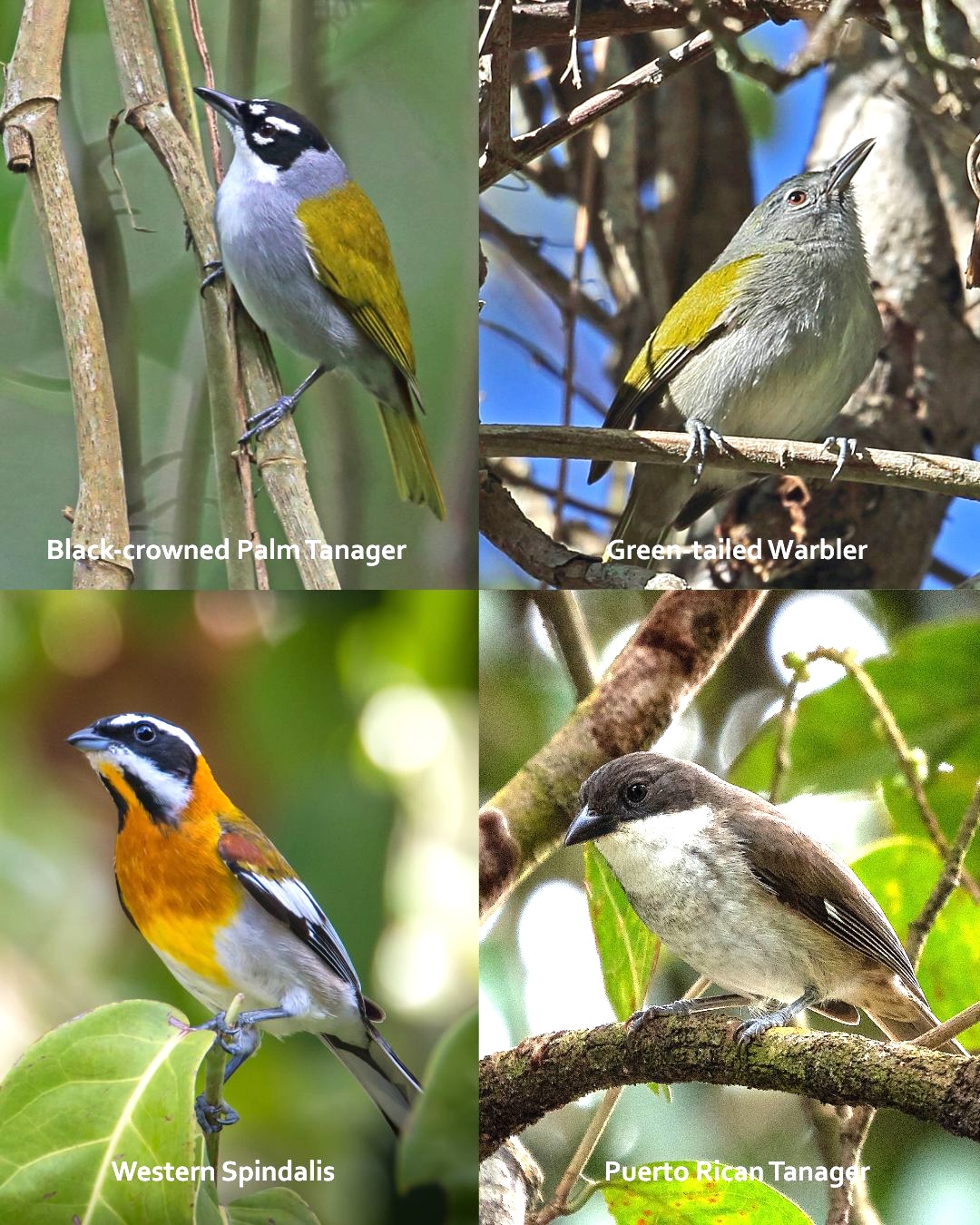
These endemic tanagers have all been lumped into the Phaenicophilidae family.
Until now, Caribbean tanagers were split across three different families: the Spindalidae (Spindalis), Phaenicophilidae (Hispaniolan tanagers such as the Gray-crowned and Black-crowned Palm-Tanagers, White-winged Warbler, and Green-tailed Warbler), and Nesospingidae (Puerto Rican Tanager). But new genetic research shows they are much more closely related than previously believed. All of these species are now united under one family: Phaenicophilidae, also known as the Greater Antillean Tanagers.
Don’t worry — they haven’t lost all their individuality. Spindalis species and the Puerto Rican Tanager now form the subfamily Spindalinae, while the Hispaniolan tanagers fall within Phaenicophilinae. Subfamilies group genera that share more characteristics than the broader family, so this nuance helps keep their evolutionary story intact.
Importantly, our Caribbean tanagers remain a family entirely endemic to the Caribbean, and still very much distinct from the New World tanagers in the large and diverse family Thraupidae.
In short: while we originally thought all the Greater Antillean Tanagers were distinct enough to reside in their own families, this new genetic data shows that they are actually one happy Caribbean family!
What are you hawking about?
Next up: hawks. We also have a division within the familiar hawk genus, Accipiter. Accipiters are known for their long tails and shorter wings, making them agile forest predators who often seek out small songbirds for lunch. While Accipiter hawks were all thought to be closely related, new research has revealed that there’s more to the story — and a new genus of hawks, Astur, has emerged.
Cuban Sharp-shinned Hawk. (Photo by Roberto Jovel)
Sharp-shinned Hawk in Puerto Rico. (Photo by Skyler Bol ML559082281)
For those familiar with birding in North America, you may have struggled telling apart Sharp-shinned and Cooper’s Hawks due to their similarities. But these similarities have actually arisen not due to them being closely related — but through convergence. This is an evolutionary process where unrelated species evolve to be very similar, usually attributed to them filling a similar ecological niche. Cooper’s Hawks have now been reassigned to the genus Aster while Sharp-shinned Hawks remain in the Accipiter genus.
What does this mean for the Caribbean? Our own Gundlach’s Hawk, long considered an Accipiter, has also now been moved in the Astur genus. No split (yet!) for our Caribbean Sharp-shinned Hawks—but there’s always next year’s supplement. . .
Gulls just want to have fun!
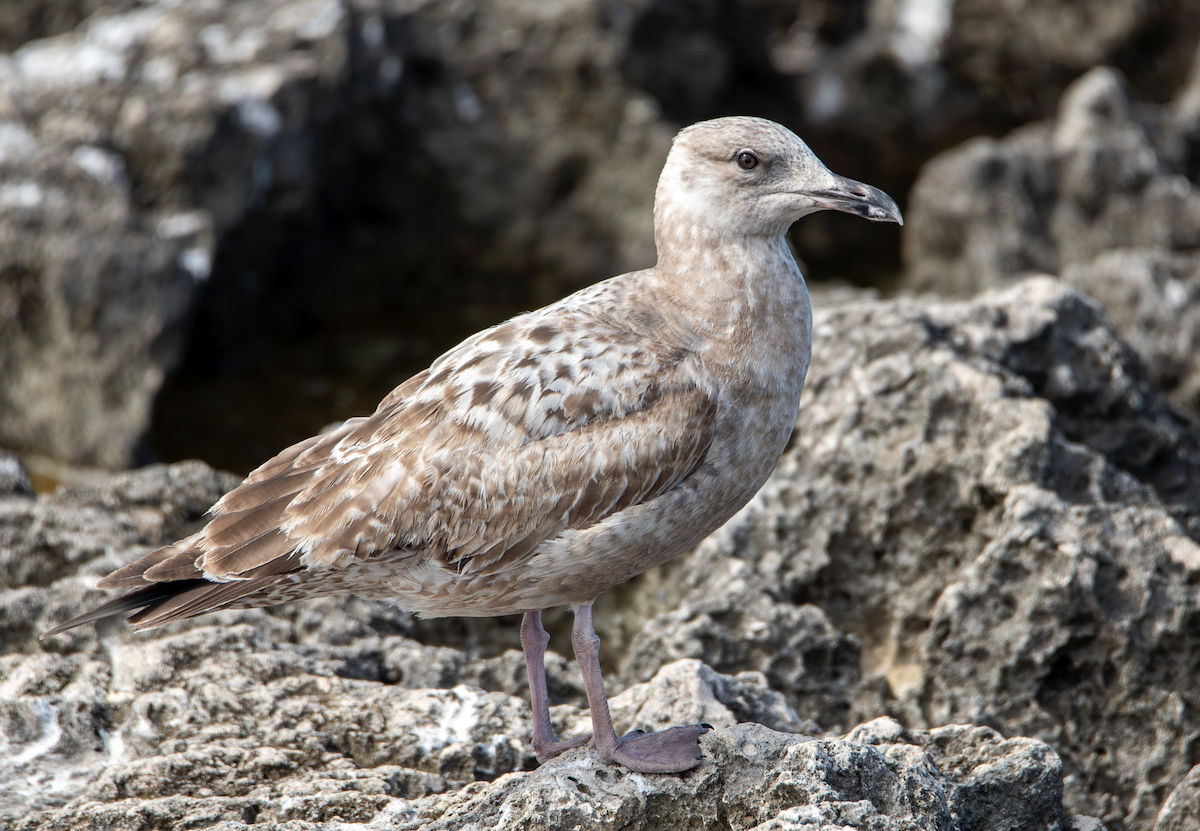
And now gull enthusiasts get a treat: the old, widespread Herring Gull has been split into four species — American Herring Gull, European Herring Gull, Vega Gull, and Mongolian Gull. We’ll be seeing the American Herring Gull around our Caribbean seas, but be sure to look out for the others!
Around the Caribbean, you’ll most often see the American Herring Gull, but keep your eyes open — winds and weather occasionally deliver surprising visitors from across the ocean.
Within the gull family Laridae, there’s more movement. Brown Noddies have been shifted out of the tern subfamily Sterninae and into their own distinct grouping, Anoinae, alongside White Terns . Physical traits, vocalizations, and even archaeological evidence show these birds stand apart from the classic tern lineage.
American Herring Gull spotted in the Cayman Islands. (Photo by Denny Swaby ML629237235)
In summary, this year’s updates bring some fascinating shifts:
Greater Antillean tanagers are now united into a single Caribbean-endemic family, Phaenicophilidae.
Gundlach’s Hawk is finds its new home in the genus Astur, refining our understanding of its evolutionary relationships.
Herring Gull is now four species, with one regular Caribbean visitor, American Herring Gull, with eyes on the lookout for transatlantic surprises.
While this supplement didn’t add new endemic species to the Caribbean, it did deepen our understanding of how unique — and evolutionarily distinctive — our birds truly are and how they fit within the larger ornithological world. And there’s still more to be discovered! Our Caribbean avifauna, including taxonomy, remains understudied. Only through more research and observations, can we gain a deeper knowledge of how remarkable our island birds really are, and how best to protect and conserve them.
Please consider making a contribution to our research and grants programs here. Your support makes critical Caribbean bird research and conservation possible.
Perhaps it all started with chickens! Orlando with two Rhode Island Red chickens in Third grade. A gift from his father for being in the top 10 of the class.
HAPPY BIRTHDAY to our dearest friend and colleague, renowned Cuban Biologist and Ornithologist, and living legend, Orlando H. Garrido Calleja, on the occasion of his 90th birthday, March 1st, 2021! Orlando, you are a jewel in the crown of Caribbean ornithology, and a treasured friend to so many!!! We wish you excellent health and many more years of happiness enjoying your work, passions, and company of dear family and friends!
In this article, Nils Navarro Pacheco pays tribute to Orlando in honor of his birthday, describing his many contributions to science, taxonomy, and natural history in Cuba, as well as his personal qualities of humility, generosity, and kindness. (scroll down for español) Many of Orlando’s colleagues also give testimonials about Orlando’s many achievements and contributions in a wonderful video by AvesPuertoRico (scroll down to view video).
I thank my BirdsCaribbean colleagues for giving me the opportunity to write this tribute to my beloved and admired friend and teacher, Orlando Garrido Calleja, on his ‘first’ 90th birthday. And I say ‘first’, because (simply) Garrido, as everyone calls him, is History, and history outlives human beings forever and ever.
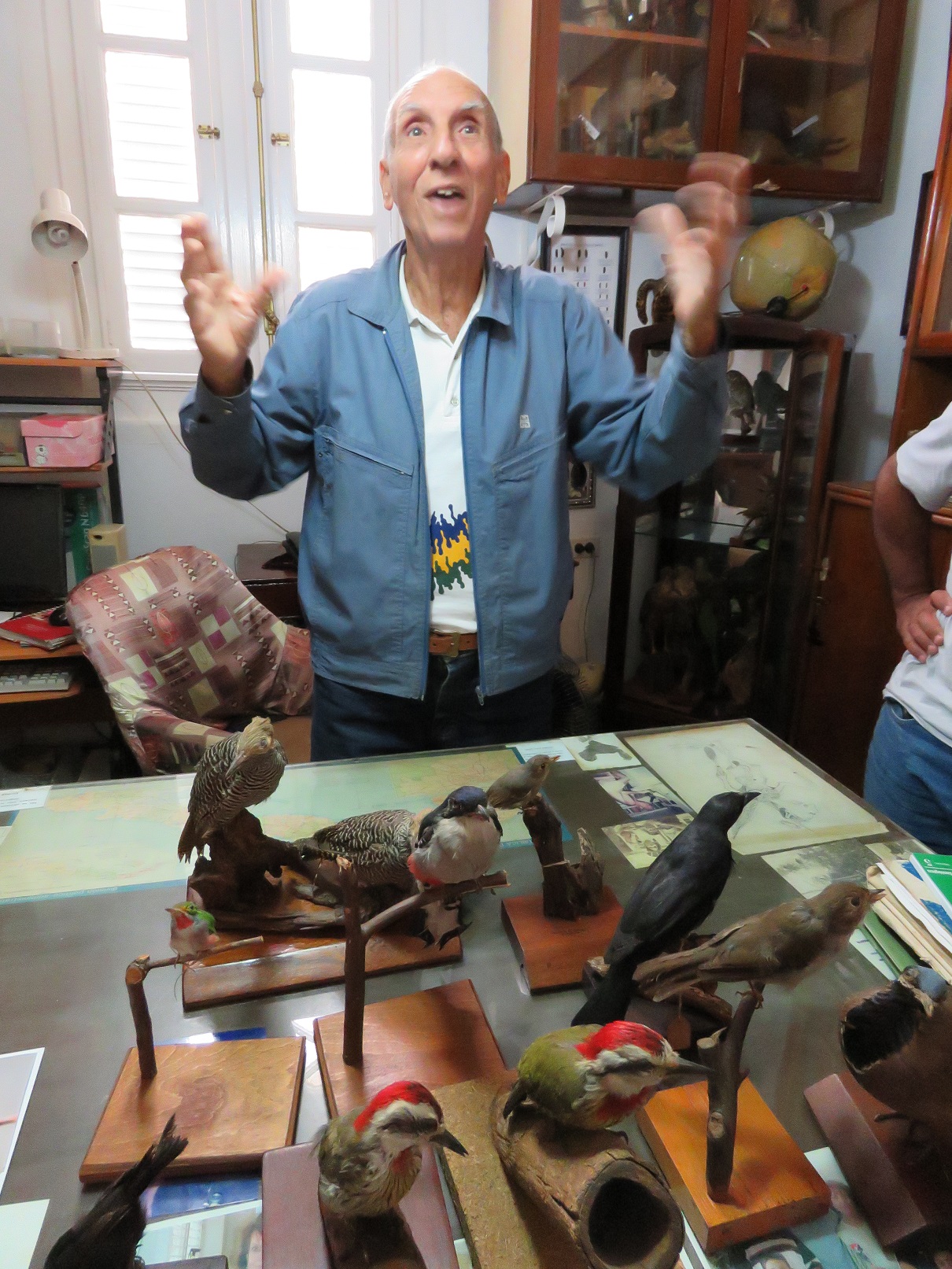
Emeritus ornithologist and living legend, Orlando Garrido, sharing stories from the field while showing us his endemic bird collection; BirdsCaribbean Cuba Bird Tour. (Photo by Susan Jacobson)
Natural sciences in Cuba has in Garrido one of their most illustrious sons, whose awards have transcended national borders to become a symbol for generations of Caribbean naturalists. Nobody else has been able to explore each landscape and each animal entity of this archipelago and beyond in the same way; venturing into a great diversity of zoological groups, ranging from beetles to mammals, and it is in birds and reptiles, where his greatest scientific contributions lie. All in a historical context where there were no books or field guides like there are today. When he went to the field it was almost “blindly,” only with a backpack full of the passion and spirit of a “discoverer,” a word that would define him as a man of science. These were times when neither GPS nor digital technology existed, and the Internet had not even been thought of. His bibliographic reviews are incredible and even today I often ask him how they could do it in those days, to which he only responds with his characteristic smile.
Garrido is an example of greatness, simplicity and humility, as is common from greatest men of science, and also he is a person with great insight and irreverent sense of humor. Garrido does not skimp on sharing his knowledge and discoveries with other colleagues. When I met him, many years ago, I saw him as something unattainable; I remember the first time when Alfredo Rams, a mutual friend and former director of the Holguín Natural History Museum, took me to his house. That was precisely when I began to become more interested in herpetology, on that occasion Garrido, with that spontaneity that characterizes him, provided me with all the basic and necessary information to be able to delve into what later were new species that we would describe together, from that moment he has been my mentor and enduring advisor.
It is surprising how this nonagenarian sportsman turned scientist, mind is still so clear and fluid, personally, I consider it as we call here ‘mataburros’ (donkeys’ killer = encyclopedia), when I have any questions I just call him by phone. Garrido still remembers details from any of his publications, from expeditions in the 1960s, and describes them with the same passion as in those days. Anyone would think that Garrido is an excellent teacher, nothing could be further away, because they do not ask him to give them a class. His patience would not allow it, neither his nor yours… However, with Garrido, you learn by his side, with his example; Garrido is a school unto itself.
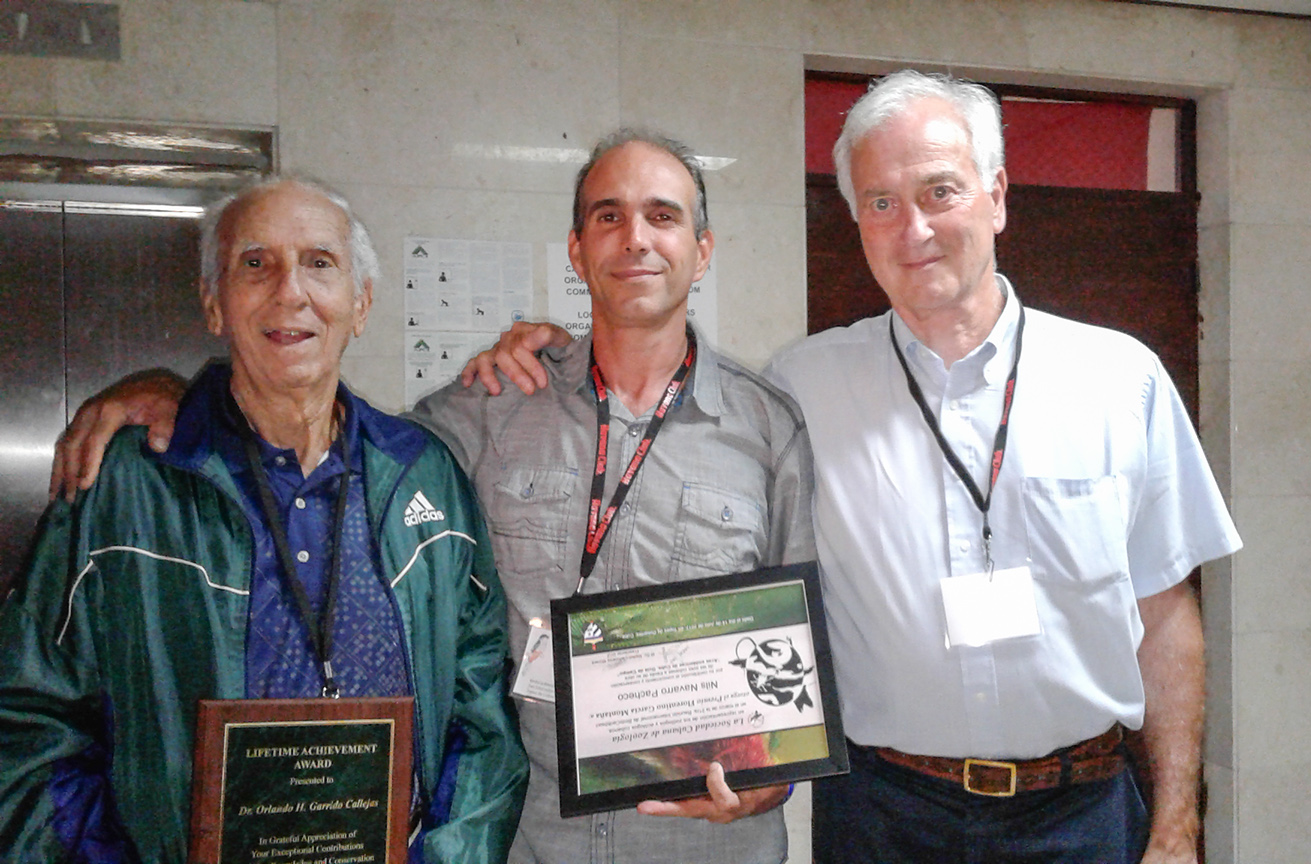
Orlando Garrido, Nils Navarro and Herb Raffaele at the 21st International Conference of BirdsCaribbean, in Topes de Collantes, Cuba, July, 2017. Orlando was awarded a BirdsCaribbean Lifetime Achievement Award.
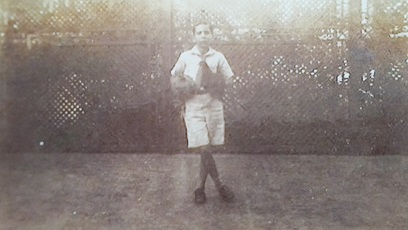
I will not do the story of his life, but we attach his full biography so that it is available to all. From that boy who raised chickens, to that boy who dropped out of biology at the University to become an internationally famous tennis player (he played six times at Wimbledon and still has the sweater from 1958!), representing Cuba in countless national and international competitions of the highest category. And from there he went on to become the pride of Cuban science.
I would like to summarize in a paragraph the greatness of his research. Garrido has to his credit the discovery of four mammalian taxa and the description of: 58 insect taxa, 21 birds, 90 reptiles (37 of them at the species level), and he holds the world record in species description of the genus Anolis. Also 78 new records among birds, reptiles, and coral fish, 23 taxa have been dedicated to him, and in total he has 298 publications.
Orlando, today I want to congratulate you with all my heart for having reached such an advanced age, with such energy and clarity, and also extend it to that person who by your side has allowed you to be who you are, to Gloria, your wife, that sweet and kind being who has “put up with you” for all these years, because as the saying goes: Behind every great man there is always a great woman…!
Personally, I would like to give you the dedication of my new book (in prep), for which you are and will continue to be an inspiration, and your legacy is inextricably linked to each of its pages:
Dear Orlando, this is my gift for your first 90 years. I dedicate this new “Field Guide to the Birds of Cuba” to you on behalf of all those who in one way or another love and enjoy the nature of Cuba and the Caribbean. In its pages and illustrations are engraved your countless teachings, adventures, studies, and discoveries. To you who have always been our example, with your enthusiasm and infinite energy, your invaluable contributions to science, your simplicity and your friendship. To you who are Great among the Greats, with the pride of being your disciple and friend!
Hover over each photo to see the caption – click on any photo to view the photos as a slide show. Thank you to Orlando’s wife, Gloria, for providing most of these precious photos to us!
Orlando and Reynaldo Garrido Calleja
Orlando, on the roof of the house of Perseverancia 258 between Neptuno and Escobar. Havana
Orlando Garrido Calleja
With the medal of the Sacred Heart
Orlando Garrido Calleja.
Perhaps it all started with chickens! Orlando with two Rhode Island Red chickens in Third grade. A gift from his father for being in the top 10 of the class.
Finalist in singles and doubles with Eduardo Zuleta, Ecuador. Rey Garrido when he won the Quebec, Canada Open. 1959.
Playing ball at El Vedado Tennis
Clandestine historical photo. Coffin of the Egyptian Pharaoh Cheops, in the Pyramid of Cheops, Cairo, Egypt. 1958
In front of the Pyramid of Cheops, Cairo, Egypt
Humboldt Expedition. Cuba-La Rada.
On a street in Calcutta, India, taking notes to include in my memoirs while Eduardo Argón, from Uruguay, took the photo. 1958
After a hunt with Warren, Popeye, Jacques. Australia.
La Fe, Pinar del Río, a future new subspecies. With the taxidermist Felino González
Cochabamba. Bolivia, with a sloth
With Florentino García Montaña and Telmo Naranjo, taxidermist, in Cayo Pugas, Tunas de Zaza.
Common Loon, Gavia Immer. First Record for the Antilles and Cuba.
With an Iguana, Juan García Cay, San Felipe Keys.
With Florentino García Montaña and Felino González, la Fe, Pinar del Río
Bare-necked breed of chickens created by Orlando Garrido
Bare-necked breed of chickens created by Orlando Garrido
Celebration of the First Anniversary of the Collections Department of the National Museum of Natural History. 1988.
Recording bird songs with George Reynalds
Orlando and Ornithologist George Reynalds. Recording bird songs.
Orlando and Ornithologist George Reynalds. Recording bird songs.
Orlando recording bird songs.
With ornithologist Lester Short, entomologist Esteban Gutiérrez. Arachnologist Giraldo Alayón, Jennifer Horne, wife of South African ornithologist Lester Short
Zapata Swamp. 1982
Isla de Pinos, March 1984
With George Reynard March 1984
With George Reynard March 1984
Ornithologist George Reynard, Ornithologist from Kenya, South Africa, Mrs. Jennifer Horne, wife of North American ornithologist specialist in woodpeckers Lester L. Short and Orlando
Holguín – Guantánamo. 1 April 1986.
Holguín, Río Jaguaní
Holguín, Río Jaguaní
With Jorge de la Cruz
Key West Florida- 1993
Key West Florida-1993
Key West Florida-1993
Key West Florida-1993
Monte Verde, Costa Rica, Marzp 1994
With Florentino García Montaña, tourism specialist
With George Reynard, 1994
Puerto Rico. Orlando Garrido, Alberto Areces, Antonio Pérez Asso, Riberto Arencibia and Víctor L. González.
Puerto Rico
Puerto Rico
Puerto Rico
Puerto Rico
Puerto Rico
Caracas, Venezuela.
Caracas, Venezuela.
Orlando Garrido and Mario Llamas, former Mexican National Tennis Champion. Acapulco, November 1995
Tribute to Gilberto Silva Taboada. José Fernández Milera and Orlando Garrido Calleja. University of Havana
Tribute to Gilberto Silva Taboada. José Fernández Milera and Orlando Garrido Calleja. University of Havana
Tribute to Gilberto Silva Taboada. José Fernández Milera and Orlando Garrido Calleja. University of Havana
With Rogelio García, El Pelao, Orlando’s first guide in Zapata Swamp.
With Rogelio García, El Pelao, Orlando’s first guide in Zapata Swamp.
With bird watchers in Santo Tomás, Zapata Swamp.
With bird watchers in Santo Tomás, Zapata Swamp.
International Congress of Zoology. Topes de Collantes, Trinidad, 15th November, 2007.
International Congress of Zoology, with Luis Diaz. Topes de Collantes, Trinidad, 15th November, 2007
International Congress of Zoology, with Arturo Kirkconnell. Topes de Collantes, Trinidad, 15th November, 2007
International Congress of Zoology, with Luis, Arturo, Alayón, Silva, Ivonne y Esteban. Topes de Collantes, Trinidad, 15th November, 2007
International Congress of Zoology, with Luis, Arturo, Silva, Esteban y los otros. Topes de Collantes, Trinidad, 15th November, 2007
Group photo at the third NAOC Conference in Baton Rough, Louisiana, in September 2002. (photo by Mike Sorenson)
Victor Joseph (Antigua), Orlando Garrido, and Leo Douglas (Jamaica), At the third NAOC Conference in Baton Rough, Louisiana, in September 2002. (photo by Lisa Sorenson)
International Congress of Zoology, Trinidad, 15th November, 2007
International Congress of Zoology, Trinidad, 15th November, 2007
Orlando signing “The Birds of Cuba”. November 2014JPEG_420
Orlando Garrido in his Wimbledon sweater from 1958
Esteban Gutiérrez, Orlando Garrido, Arturo Kirkconnell and James Wiley
Group photo during the 21st International Conference of BirdsCaribbean, in Topes de Collantes, Cuba, July, 2017
From left to right: Vicente Berovides, Orlando Garrido and Nils Navarro. 21st International meeting of Birds Caribbean, in Topes de Collantes, Cuba, July, 2017.
From left to right: Vicente Berovides, Pedro Regalado, Orlando Garrido and Hiram González. 21st International meeting of Birds Caribbean, in Topes de Collantes, Cuba, July, 2017.
During the award ceremony for Orlando Garrido’s lifelong work and presentation of a documentary about his life and work. 21st International conference of BirdsCaribbean, in Topes de Collantes, Cuba, July, 2017. Maikel Canizares and Lisa Sorenson present a BirdsCaribbean Lifetime Achievement Award to Orlando.
Orlando Garrido, Nils Navarro and Herb Raffaele at the 21st International Conference of BirdsCaribbean, in Topes de Collantes, Cuba, July, 2017. Orlando was awarded a BirdsCaribbean Lifetime Achievement Award.
From left to right: Nils Navarro, Orlando Garrido and Esteban Gutiérrez. During Illustration event in Cuba, Antonio Núñez Jiménez Foundation for Nature and Man, April 2019.
From left to right: Orlando Garrido, Vicente Berovides, Alberto Estrada, Santos Cubilla, and Aslam Ibrahim Castellón, Garrido’s home.
From left to right: Orlando Garrido and Nils Navarro. During the launch of the Cuba Endemic Birds Field Guide. Felipe Poey Museum, University of Havana, 2015.
Visit with Orlando at his home in Havana (2016) – Lisa Sorenson, Jim Wiley (RIP), Orlando, and Ann Sutton.
Emeritus ornithologist and living legend, Orlando Garrido, sharing stories from the field while showing us his endemic bird collection; BirdsCaribbean Cuba Bird Tour. (Photo by Susan Jacobson)
Orlando Garrido regales our group with stories of his Cuban adventures as a biologist and tennis pro! BirdsCaribean Cuba Bird Tour (Photo by Lisa Sorenson)
Orlando Garrido and Herb Raffaele, at Orlando’s home in Havana, January 2017 (photo by Lisa Sorenson)
Joanne Justo-Gaymes, Orlando Garrido, and Glenroy (Pewee) Gaymes at the BirdsCaribbean Conference in Topes de Collantes, Cuba, July 2017 (photo by Lisa Sorenson)
Lisa Sorenson and Orlando Garrido – It’s always a delight to visit with Orlando, who is so vivacious and full of stories!
Group photo with Orlando at his home in Havana. BirdsCaribbean Cuba Bird Tour, January 2019.
Group photo with Orlando at his home in Havana. BirdsCaribbean Cuba Bird Tour, January 2020.
Tribute video to Orlando Garrido, presented at the BirdsCaribbean 21st International Conference in Topes de Collantes, Cuba, July 2017:
Presentation of a lifetime achievement award to Orlando Garrido, at the BirdsCaribbean 21st International Conference in Topes de Collantes, Cuba, July 2017:
Homenaje a Orlando H. Garrido en sus 90 años
Agradezco a los colegas de BirdsCaribbean por darme la oportunidad de escribir este homenaje al querido y admirado amigo y maestro Orlando Garrido Calleja, en sus primeros 90 cumpleaños. Y digo primeros, pues Garrido (a secas), como le llaman todos, es Historia y la historia simplemente sobrevive a los seres humanos por los siglos de los siglos.
Las ciencias naturales en Cuba tienen en Garrido a uno de sus hijos más ilustres, cuyos lauros han sobrepasado las fronteras nacionales para convertirse en símbolo para generaciones de naturalistas caribeños. Nadie como él ha sido capaz de adentrarse en cada paisaje y en cada entidad animal de este archipiélago y fuera de él, incursionando en una gran diversidad de grupos zoológicos, que va desde los coleópteros hasta los mamíferos. Y es en las aves y los reptiles, donde radican sus mayores aportes científicos. Todo en un contexto histórico donde no existían libros ni guías de campo como ahora, cuando se iba al campo casi “a ciegas”, solo con una mochila llena de la pasión y el espíritu de un “descubridor”, palabra que pudiera resumirlo como hombre de ciencia. Eran tiempos donde ni existía GPS, ni tecnología digital y menos se pensaba en la Internet. Sus revisiones bibliográficas son increíbles y aún hoy le pregunto, a menudo, como fue que las pudieron hacer en aquellos tiempos, a lo que él solo responde con su característica sonrisa.
Garrido es un ejemplo de grandeza, sencillez y humildad, como es típico de los grandes hombres de ciencia y, además, una persona con una gran perspicacia e irreverente sentido del humor. Garrido no escatima en compartir sus conocimientos y descubrimientos con otros colegas. Cuando lo conocí, hace ya muchos años, lo veía como algo inalcanzable. Recuerdo la primera vez, cuando Alfredo Rams, amigo común y antiguo director del Museo de Historia Natural de Holguín, me llevó a su casa. Ahí fue precisamente cuando comencé a interesarme más por la herpetología, en esa oportunidad Garrido, con esa espontaneidad que lo caracteriza, me brindó toda la información básica y necesaria para poder profundizar en lo que luego fueran nuevas especies que describiríamos juntos, desde ese momento ha sido mi mentor y consultor permanente.
Es sorprendente como este hombre nonagenario devenido en científico desde el mundo del deporte, posee su mente aun tan clara y fluida. En lo personal, lo considero, como decimos acá, un “mataburro”, cuando tengo alguna duda simplemente lo llamo por teléfono. Garrido aún recuerda detalles de cualquiera de sus publicaciones y de expediciones de los años 60, describiéndolos con el mismo apasionamiento que en aquellos días. Cualquiera pensaría que Garrido es un excelente profesor, nada más alejado de eso, pues no le pidan que les dé una clase, su paciencia no se lo permitiría, sí, ni la de él ni la suya… Sin embargo, con Garrido se aprende, a su lado, con su ejemplo, Garrido es una escuela en sí mismo.
No voy a hacer la historia de su vida, sino que adjuntaremos su biografía completa para que esté disponible para todos. De aquel niño que criaba pollitos, hasta aquel muchacho que dejó la carrera de biología en la universidad para llegar a ser un tenista internacionalmente famoso, representando a Cuba en un sinnúmero de certámenes nacionales e internacionales de la más alta categoría y de ahí pasó a convertirse en gloria y orgullo de la ciencia cubana.
Quisiera resumir en un párrafo la grandeza de sus investigaciones. Garrido tiene en su haber el descubrimiento de cuatro taxones de mamíferos y la descripción de 58 taxones de insectos, 21 de aves y 90 de reptiles (37 de ellos a nivel de especie), ostentando el récord mundial en la descripción de especies del género Anolis. Ha realizado 78 nuevos registros entre aves, reptiles y peces coralinos; 23 taxones le han sido dedicados y en total posee 298 publicaciones.
Orlando, hoy quiero felicitarte de todo corazón por haber llegado a tan avanzada edad, con tal energía y claridad y además hacerlo extensivo a esa persona que estando a tu lado ha permitido que seas quien eres, a Gloria, tu esposa, ese ser dulce y amable que te ha “soportado” todos estos años, porque como dice la frase: ¡Detrás de todo gran hombre siempre existe una gran mujer…!
A título personal quisiera regalarte la dedicatoria de mi nuevo libro, para el cual tú eres y seguirás siendo inspiración y tu legado está ligado indisolublemente a cada una de sus páginas:
Querido Orlando, este es mi regalo por tus primeros 90 años. Te dedico esta nueva “Guía de campo de las aves de Cuba” en nombre de todos los que de una forma u otra aman y disfrutan de la naturaleza de Cuba y del Caribe. En sus páginas e ilustraciones están grabados tus incontables enseñanzas, aventuras, estudios y descubrimientos. A ti que has sido siempre nuestro ejemplo, con tu entusiasmo e infinita energía, tus inestimables aportes a la ciencia, tu sencillez y tu amistad. ¡Para ti que eres Grande entre los Grandes, con el orgullo de ser tu discípulo y amigo!
Nota: Hemos dispuesto un espacio para todos los colegas que deseen enviar mensajes de felicitación a Orlando. Los que lo conocen, saben que todos los que hemos interactuado con él tenemos siempre una anécdota que contar, ¡Bienvenidas sean entonces también sus anécdotas!

 To understand what these AOS updates mean, let’s take a quick refresher on how taxonomy works!