
Break out your life lists — the 66th supplement to the American Ornithological Society’s (AOS) Checklist of North and Middle American Birds, published in August 2025, brought several taxonomic changes that Caribbean birders will want to be aware of. We’re taking a closer look at the updates that matter most for our region.
Taxonomy — the science of naming and classifying organisms — is always evolving. The AOS maintains the official checklist for birds from the Arctic down to the Panama–Colombia border, including Bermuda, the West Indies, and the Hawaiian Islands. Each year, ornithologists review the list and evaluate proposals for taxonomic revisions.
Usually, the most attention-grabbing changes involve species level shifts: “splits,” where one wide-ranging species is divided into two or more localized ones; or “lumps,” where similar species are combined. But in this supplement, many changes affecting the Caribbean occur at higher taxonomic levels, offering new insights into evolutionary relationships rather than altering species counts.
Taxonomy 101
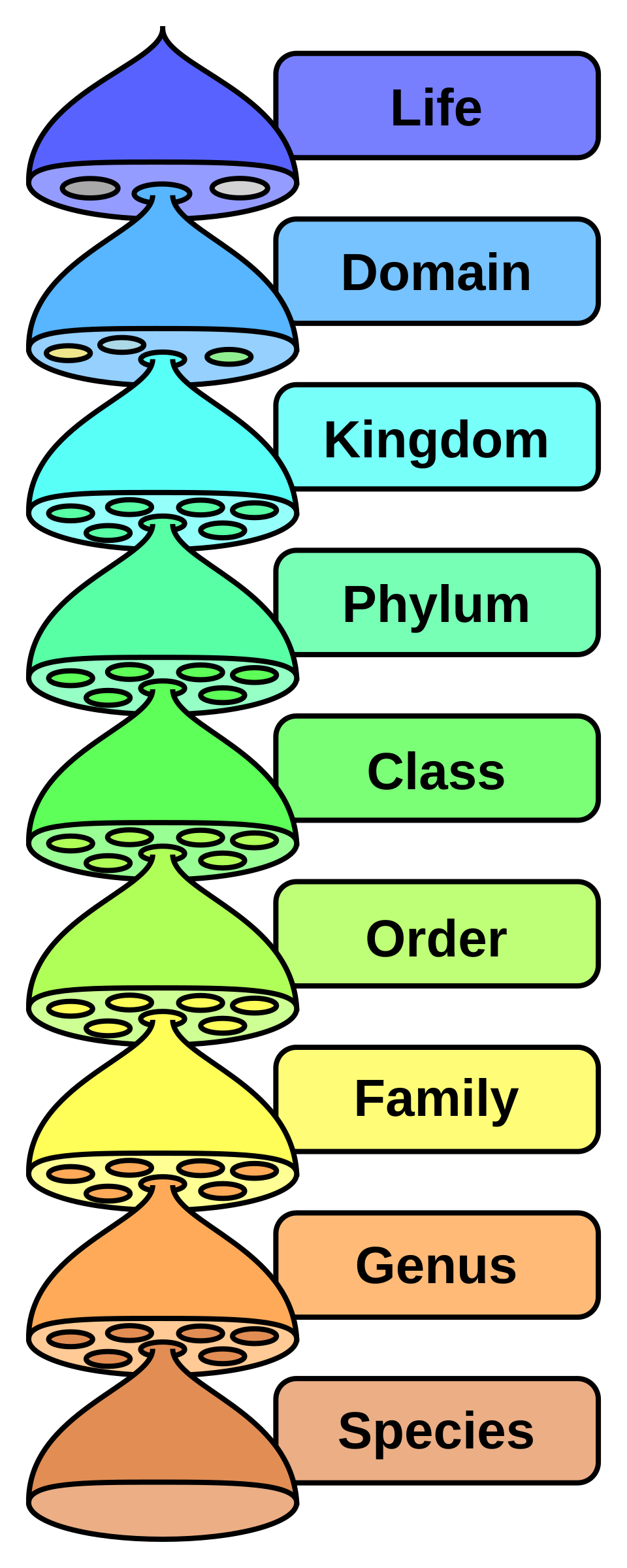 To understand what these AOS updates mean, let’s take a quick refresher on how taxonomy works!
When we’re birding, we usually rely on common names—think “Killdeer” or “Carib Grackle.” Depending on where you are in the Caribbean, you may even hear different local names for the same species. Bananaquits, for example, are called “sugarbirds” in Trinidad, “beeny birds” in Jamaica, and “see-see birds” in Grenada! But every species also has a universally recognized scientific name made up of two parts: the genus and the species epithet. These names are always italicized, a convention going back to Swedish biologist Carl Linnaeus, who wanted scientific names to stand out clearly in manuscripts.
When categorizing organisms, the genus groups very closely related birds together; the species epithet distinguishes one species from another within that genus. When we zoom out, genera (the plural of genus) are grouped into families. Closely-related families are grouped into orders. And one level above that is the class, where all birds fall under Aves.
So the main taxonomic categories look like this:
- Species – a single, distinct type of bird
- Genus – a small group (sometimes just one!) of closely related species
- Family – a group of related genera
- Order – a group of related families
- Class – the broad category that includes all birds (Aves)
A cool tip: In animal taxonomy, all family names end in “-idae”, and all bird orders end in “-iformes.” Once you spot those endings, you’ll know exactly where you are in the taxonomic hierarchy.
To illustrate further..
Let’s look at a familiar Caribbean species: the Least Tern or Sterna antillarum. The genus Sterna contains several tern species, but the species epithet ‘antillarum’ tells us we’re talking specifically about the Least Tern.

If we think about birds similar to terns, gulls, noddies, and skimmers might come to mind — all of which belong to the avian family Laridae. And if we think further about birds similar to gulls and terns, other beach-going birds might come to mind, like shorebirds or plovers, and maybe other seabirds like skuas. All these birds (plus a few others) are grouped together within the avian order Charadriiformes. If you’re ever unsure where a bird fits taxonomically — just flip through your favorite field guide—most are arranged first by order, then by family.
Primer complete — and you passed with flying colors!
With that foundation, let’s turn back to the AOS checklist update. The changes in this supplement include moving species from one genus to another more closely related genus, shifting species between families, and revising the order-level placement of certain bird groups. These updates are almost always based on new genetic research — and they help refine our understanding of how birds are truly related.


In the Caribbean, many species remain understudied, so each AOS supplement often brings valuable new insights. Sometimes a species that appears widespread across multiple islands turns out to comprise several distinct island endemics — especially if birds rarely move between islands and can no longer interbreed. Over time, isolated populations can evolve unique traits, such as the melanism seen in Bananaquits from the Lesser Antilles.
Just last year, two major taxonomic splits added six new endemic species to the Caribbean, underscoring the region’s extraordinary biodiversity. And, as always, continued study will undoubtedly reveal even more.
So — with your refreshed understanding of taxonomy, are you ready to explore the latest in Caribbean bird updates?
Breaking news — our Caribbean tanagers are more related than we thought!
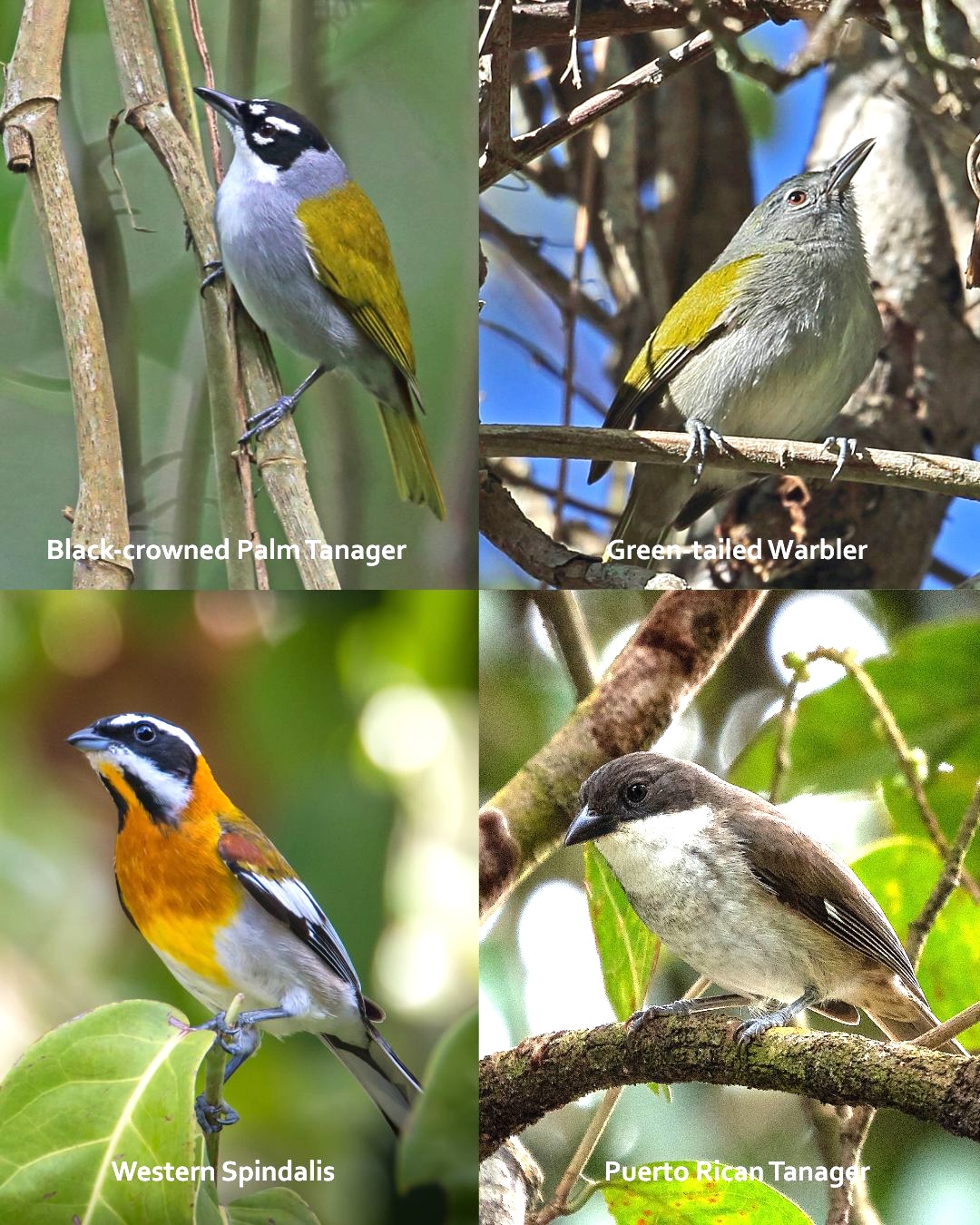
Until now, Caribbean tanagers were split across three different families: the Spindalidae (Spindalis), Phaenicophilidae (Hispaniolan tanagers such as the Gray-crowned and Black-crowned Palm-Tanagers, White-winged Warbler, and Green-tailed Warbler), and Nesospingidae (Puerto Rican Tanager). But new genetic research shows they are much more closely related than previously believed. All of these species are now united under one family: Phaenicophilidae, also known as the Greater Antillean Tanagers.
Don’t worry — they haven’t lost all their individuality. Spindalis species and the Puerto Rican Tanager now form the subfamily Spindalinae, while the Hispaniolan tanagers fall within Phaenicophilinae. Subfamilies group genera that share more characteristics than the broader family, so this nuance helps keep their evolutionary story intact.
Importantly, our Caribbean tanagers remain a family entirely endemic to the Caribbean, and still very much distinct from the New World tanagers in the large and diverse family Thraupidae.
In short: while we originally thought all the Greater Antillean Tanagers were distinct enough to reside in their own families, this new genetic data shows that they are actually one happy Caribbean family!
What are you hawking about?
Next up: hawks. We also have a division within the familiar hawk genus, Accipiter. Accipiters are known for their long tails and shorter wings, making them agile forest predators who often seek out small songbirds for lunch. While Accipiter hawks were all thought to be closely related, new research has revealed that there’s more to the story — and a new genus of hawks, Astur, has emerged.


For those familiar with birding in North America, you may have struggled telling apart Sharp-shinned and Cooper’s Hawks due to their similarities. But these similarities have actually arisen not due to them being closely related — but through convergence. This is an evolutionary process where unrelated species evolve to be very similar, usually attributed to them filling a similar ecological niche. Cooper’s Hawks have now been reassigned to the genus Aster while Sharp-shinned Hawks remain in the Accipiter genus.
What does this mean for the Caribbean? Our own Gundlach’s Hawk, long considered an Accipiter, has also now been moved in the Astur genus. No split (yet!) for our Caribbean Sharp-shinned Hawks—but there’s always next year’s supplement. . .
Gulls just want to have fun!
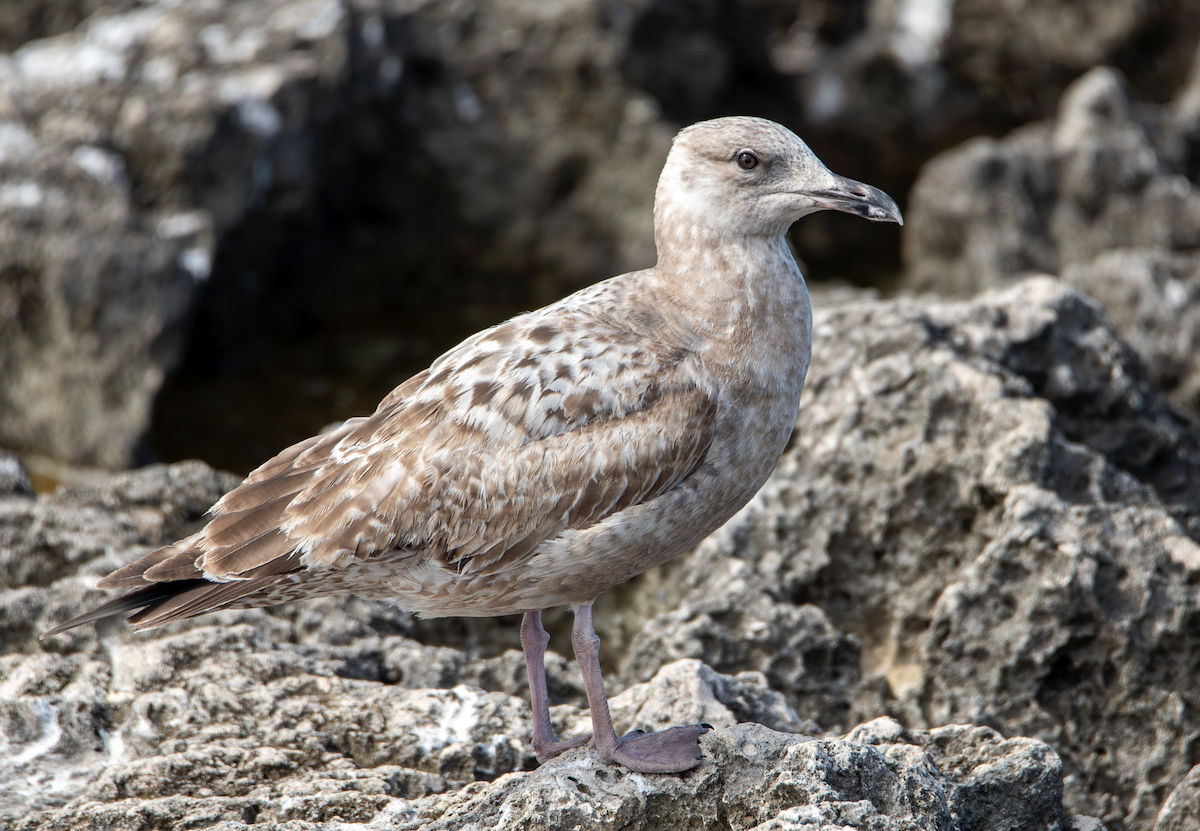
And now gull enthusiasts get a treat: the old, widespread Herring Gull has been split into four species — American Herring Gull, European Herring Gull, Vega Gull, and Mongolian Gull. We’ll be seeing the American Herring Gull around our Caribbean seas, but be sure to look out for the others!
Around the Caribbean, you’ll most often see the American Herring Gull, but keep your eyes open — winds and weather occasionally deliver surprising visitors from across the ocean.
Within the gull family Laridae, there’s more movement. Brown Noddies have been shifted out of the tern subfamily Sterninae and into their own distinct grouping, Anoinae, alongside White Terns . Physical traits, vocalizations, and even archaeological evidence show these birds stand apart from the classic tern lineage.
In summary, this year’s updates bring some fascinating shifts:
- Greater Antillean tanagers are now united into a single Caribbean-endemic family, Phaenicophilidae.
- Gundlach’s Hawk is finds its new home in the genus Astur, refining our understanding of its evolutionary relationships.
- Herring Gull is now four species, with one regular Caribbean visitor, American Herring Gull, with eyes on the lookout for transatlantic surprises.
While this supplement didn’t add new endemic species to the Caribbean, it did deepen our understanding of how unique — and evolutionarily distinctive — our birds truly are and how they fit within the larger ornithological world. And there’s still more to be discovered! Our Caribbean avifauna, including taxonomy, remains understudied. Only through more research and observations, can we gain a deeper knowledge of how remarkable our island birds really are, and how best to protect and conserve them.
Please consider making a contribution to our research and grants programs here. Your support makes critical Caribbean bird research and conservation possible.