
Celebrate World Migratory Bird Day (WMBD) with us in 2026! This year’s theme is “Every Bird Counts – Your Observations Matter”. Have fun learning about a new migratory bird every day. We have coloring pages, interesting facts, activities, and more. Download for free and enjoy nature with your family at home.
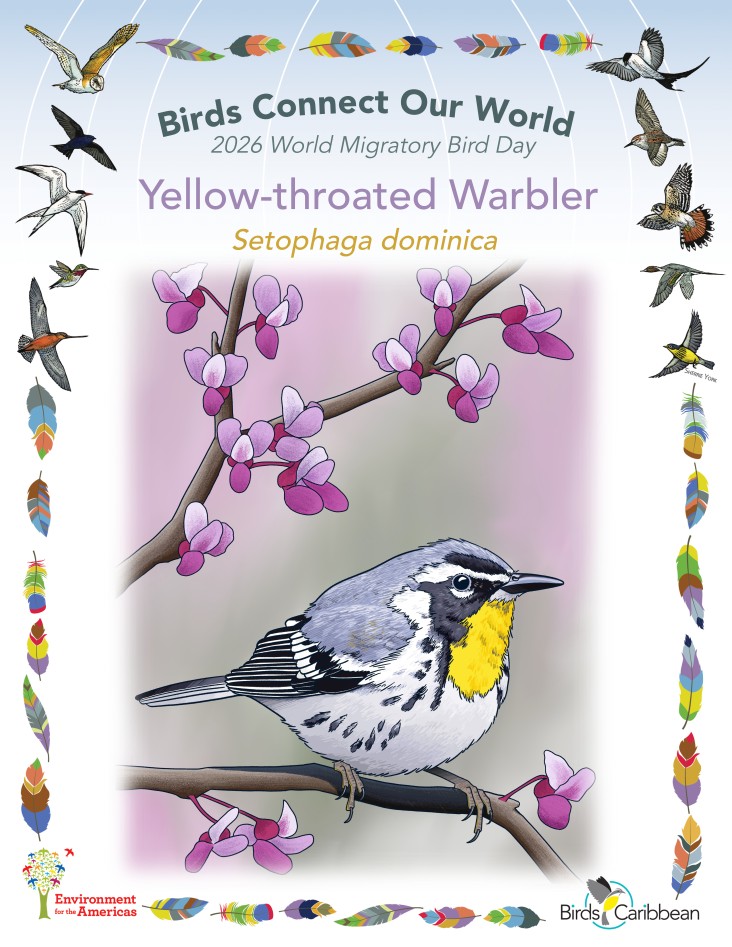
Migratory Bird of the Day: Yellow-throated Warbler
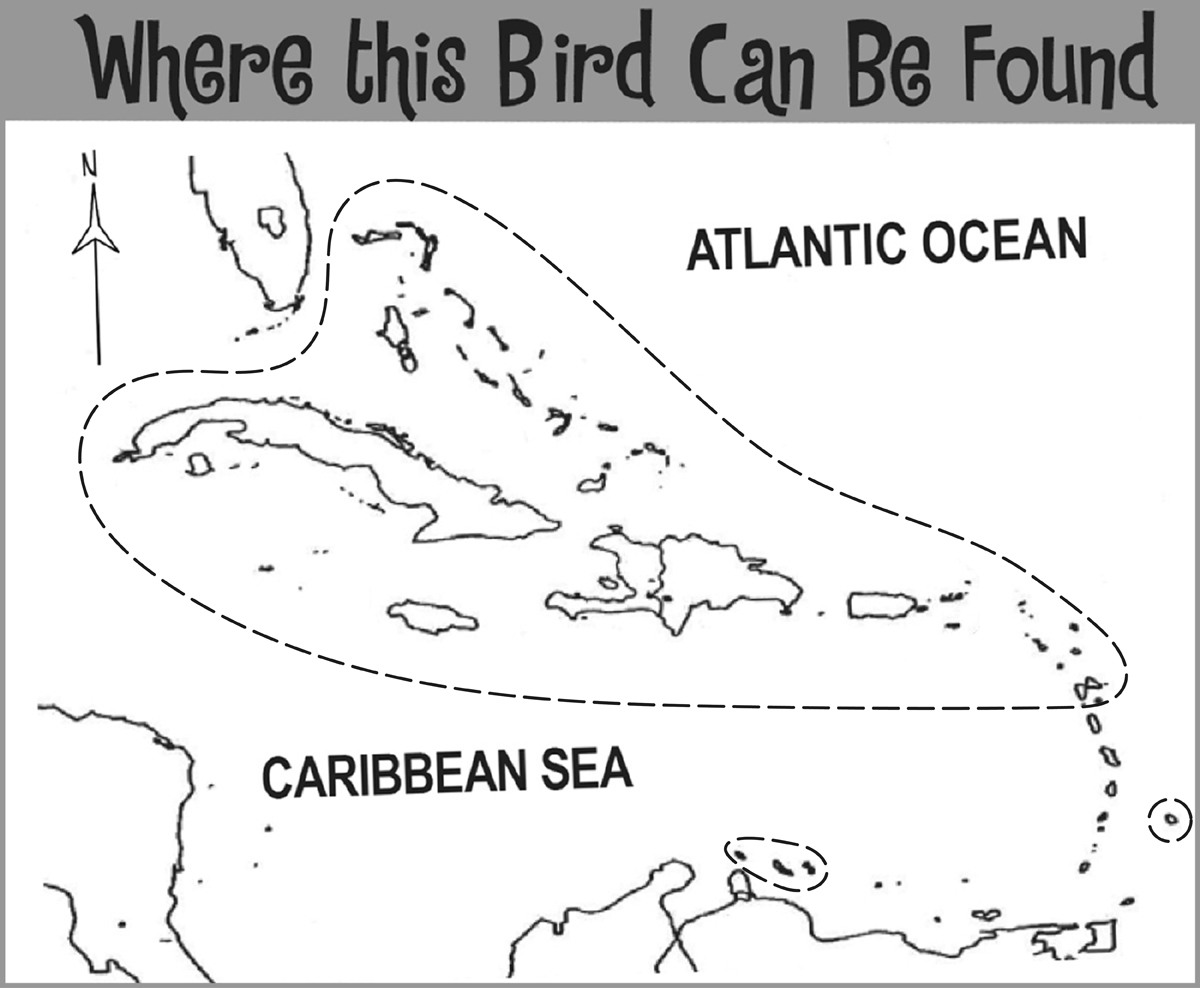 I can feel it—the seasons are shifting. Fall is gearing up for its big debut, which means it’s time for me to head south.
Up north, you’ll find me raising my family in all sorts of habitats—pine and deciduous forests, cypress swamps, pine woodlands, and streamside forests. My nest? Practically impossible to spot. Good luck finding it! Once my chicks are strong enough to fly, I’m off to warmer skies, trading in cooler forests for the bright colours and tropical vibes of the West Indies and Central America.
Of course, migration isn’t easy: I dodge storms, skyscrapers, windows, cars, and the deadliest predators of all: free-roaming cats.
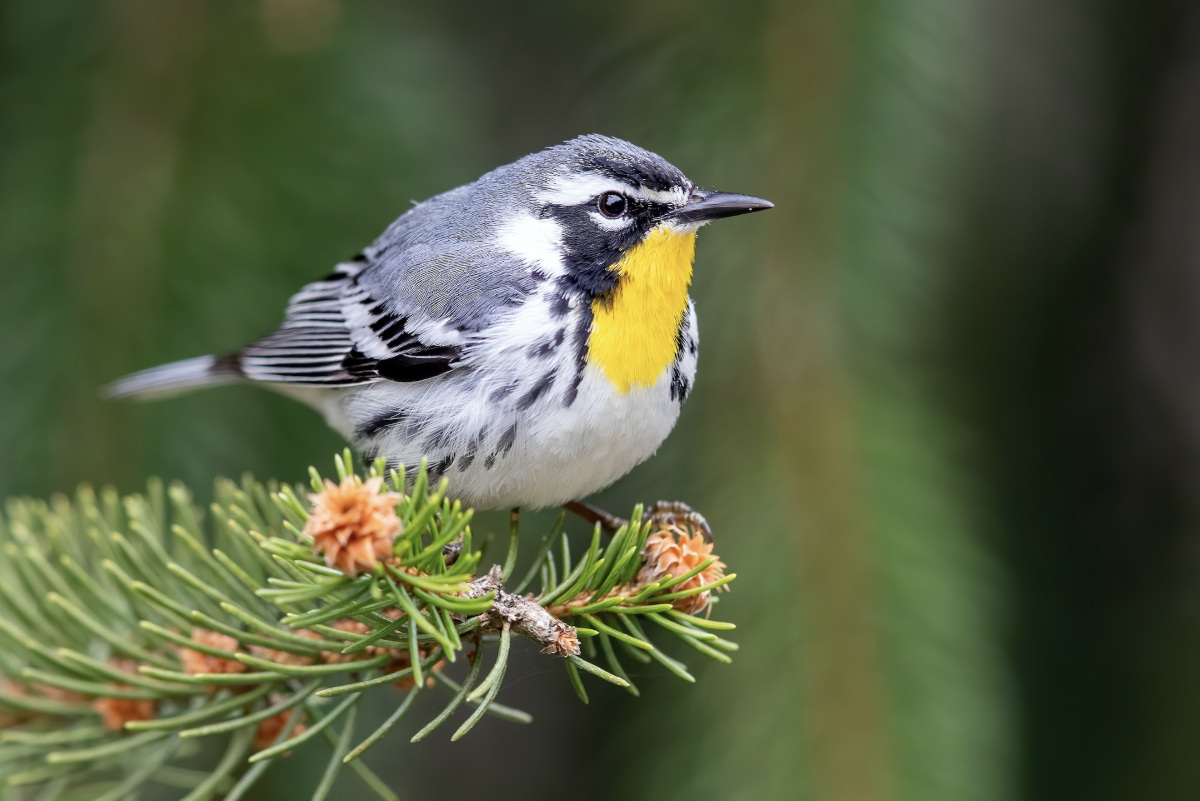
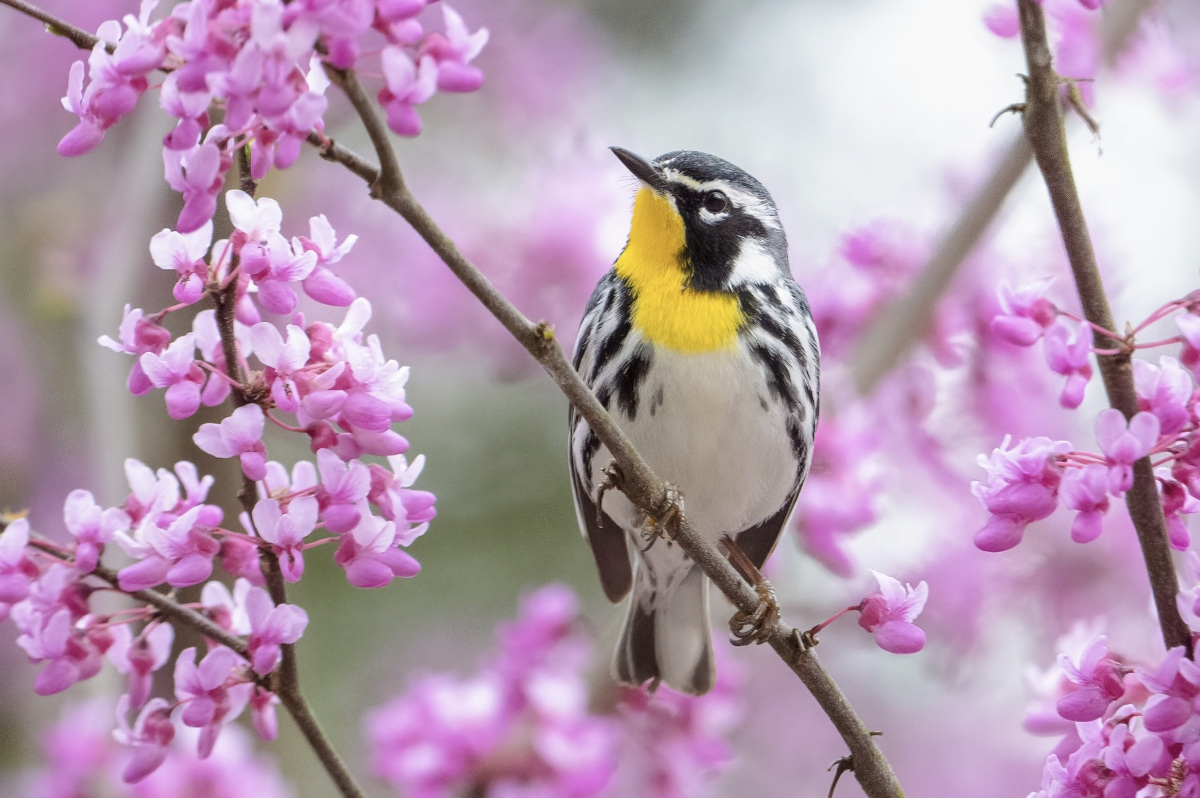
One of my favourite getaway spots is The Bahamas. People there start spotting me as early as July, darting around palm trees (my personal favourites). Honestly, I should’ve been called the Palm Warbler—funny enough, the real Palm Warbler mostly hangs out on the ground! But hey, my actual name, Yellow-throated Warbler, works too. After all, my bright yellow throat, black mask, bluish-grey back, and streaked sides make me one flashy little bird. I stand out among the warbler crowd.
Special shout-out to naturalist Mark Catesby for my original common name (Yellow-throated Creeper). That was a pretty spot-on description.
Sometimes, just before I head back north in spring, Bahamians hear me singing. Folks describe my song as sweet and lilting, ending with a sharper twist.
As for food? Bugs, bugs, and more bugs. I scour trunks and branches for tasty arthropods, but I won’t say no to nectar or juicy fruit when I find it.
If you’re in The Bahamas, especially in Abaco, you might even run into my cousin, the Bahama Warbler. From a distance, we look alike, but he’s got a yellow belly and throat, an even longer bill (the longest of any warbler, actually), and he’s a bit of a homebody, never straying far from Abaco’s pine forests. I, on the other hand, like to get around.
Now, here’s the tough part: even though my range is pretty wide, stretching from North America down through Central America and the West Indies, my future isn’t guaranteed. Habitat loss and dwindling food supplies on both my breeding and wintering grounds are making survival harder. Since I spend so much time on my wintering grounds, things like droughts, deforestation, or food shortages can leave me in poor condition for the long trip back north to breed.
But here’s where you can help. Plant native trees and skip the pesticides. The more insects around for me to munch on, the better! You can also add a bird bath—I enjoy a clean drink and quick dip too. Volunteering with local environmental organizations for habitat cleanups or tree planting is another great way to show your love to me and other wildlife. And please keep your pet cats indoors. It’s one of the best things you can do for their wellbeing and for birds!
Every little step makes a huge difference. Do that, and you’ll help keep my song alive in forests and swamps for generations to come.
I may not visit feeders regularly, I prefer to glean insects from treetops and shrubs, but if you do spot me, report your sighting to eBird to help scientists learn more about me! Learn more about this species, including its range, photos, and calls here. Great news! If you’re in the Caribbean, thanks to BirdsCaribbean, you have free access to Birds of the World and you can find out even more in the full species account of this bird!
Thanks to Scott Johnson for the text and Eden Garrod for the lovely illustration!
Color in the Yellow-throated Warbler
Download the Migratory Birds of the Day Coloring Page! Use the picture above and the photos on this page as your guide, or look up pictures of the bird online or in a bird field guide if you have one. Share your colored-in page with us by posting it online and tagging us @BirdsCaribbean #WMBD2026
Listen to the song of the Yellow-throated Warbler
The song of the Yellow-throated Warbler is a series of sweet descending notes, followed by sharper notes at the end.
Enjoy these photos of Yellow-throated Warblers
Activity of the Day
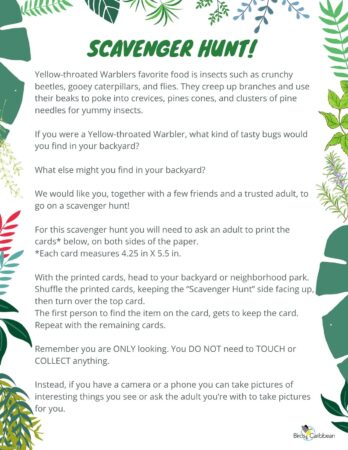 FOR KIDS: Use your observation skills and go on a scavenger hunt! Print the cards on sturdy paper or pieces of cardboard.
Talk about this with your kids and then go outside to investigate your habitat and get looking! Instead of collecting the items, this is an observational scavenger hunt. If you have a camera or a phone you can take pictures of interesting things you see.
When your hunt is over you could come back together to chat about what was seen and where they were located. How many different bird did you see? Which habitat had the most insects? What else did you discover?
FOR KIDS AND ADULTS: Enjoy this video of a Yellow-throated Warbler in the wild!