

The Journal of Caribbean Ornithology (JCO) continues to publish peer-reviewed research that advances our understanding of Caribbean birds and ecosystems, providing critical insights for conservation. The latest issue of the journal serves as a vivid reminder that even in well-trodden landscapes, there is always something new to discover.
Volume 38 features a wide range of studies, including intraspecific and interspecific behaviors, exploration of avian physiology, and conservation-focused monitoring. This volume is particularly exciting because it challenges long-held assumptions whether that’s questioning the “silent” nature of female birds or re-evaluating the physical boundaries of a species’ range. Additionally, Steven Latta contributes another installment of “Recent Ornithological Literature” and one of two insightful book reviews.
We are deeply grateful to our dedicated team of editors, reviewers, copyeditors, translators, proofreaders, and production specialists, whose hard work ensures the continued excellence of our publications. We also extend our appreciation to the authors who entrusted JCO to share their open-access research. With the support of our non-profit partner, BirdsCaribbean, JCO remains committed to fostering early-career researchers, publishing content in three languages, and maintaining an open-access archive dating back to our very first volume in 1988. Join us in sustaining this vital resource—become a JCO supporter today!
RESEARCH ARTICLES AND NOTES
Lucas H. Fink, Dora Donacik, Garrett Erickson-Harris, Bailey Guy, Jahan Okata Harrison, María Teresa Reinoso-Pérez, Kimberly Navarro-Vélez, and André A. Dhondt
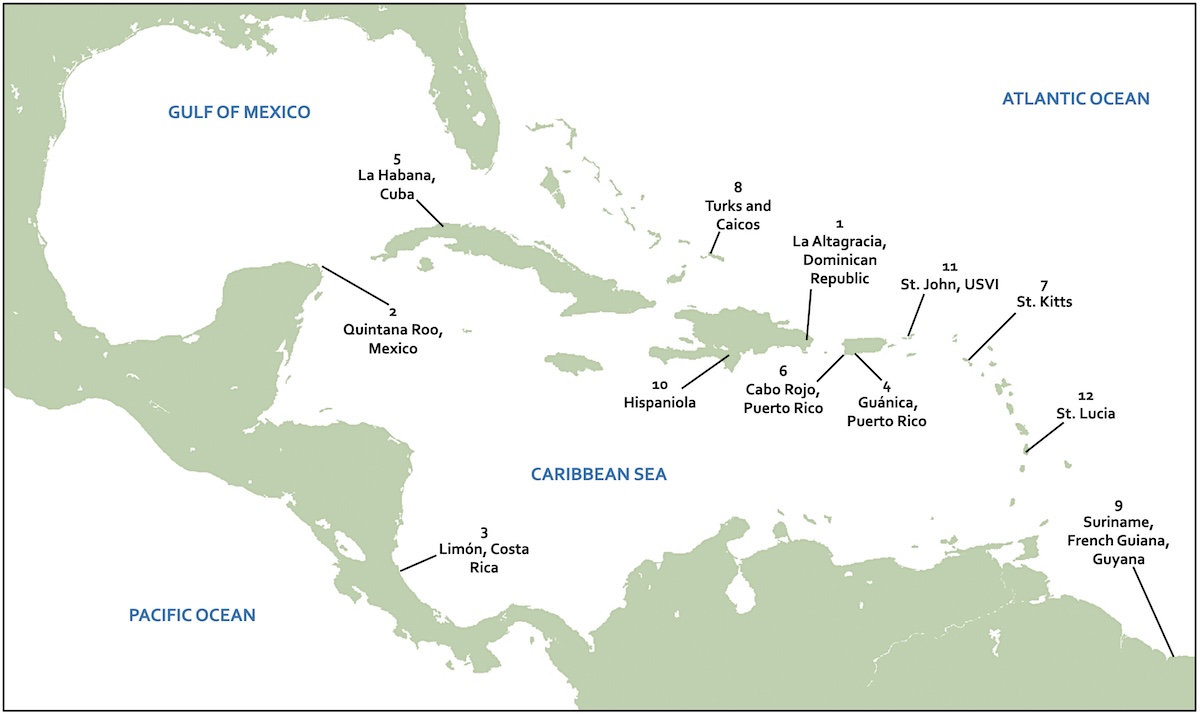
Where two sister species overlap, interactions can be interesting, especially if the species are territorial, competitive, or have similar diets. The endemic Hispaniolan Lizard-Cuckoo and the widespread Mangrove Cuckoo co-exist in various habitats across Hispaniola, including in the lowland scrub forests of Punta Cana. To test the degree of interaction between these two species, Fink and colleagues used playback to assess the responses of the species to conspecifics and to each other. The authors present their results in this article, adding to our behavioural knowledge of these species and suggesting improvements to the study design for similar studies on other related species.
Jonathan R. Nochebuena Jaramillo, Marisol Gaytán Núñez and Alan Monroy-Ojeda
Along the Central American Caribbean coast, on a tiny island off of Mexico, researchers are making dazzling discoveries. At their banding research station within the Isla Contoy National Park, funded in part by BirdsCaribbean’s David S. Lee Fund for the Conservation of Caribbean Birds, Nochebuena Jaramillo and colleagues had a surprising visitor that had never before been recorded that far north. This research note describes their capture of a White-necked Jacobin (Colibrí Capucha Azul), a Central and South American native, and provides an important addition to our knowledge on the species and of understudied sites like Isla Contoy. You can also get the behind-the-scenes scoop in this blog from mid-2025.
Emily S. Khazan, Lianne C. Woudstra, Morgan Hughes, and Charlotte Foale
Throughout the Caribbean, psittacid species are threatened by habitat loss and degradation, and related species in Central America face the same plight. In the Tortuguero Conservation Area along Costa Rica’s Caribbean coast, the Great Green Macaw and Scarlet Macaw have begun a slow recovery, and the Caño Palma Biological Station is tasked with monitoring their populations. In this article, the authors describe the trends from 1,048 surveys over 4.5 years, highlighting the importance of food availability and landscape connectivity for far-ranging species, as well as the need for long-term monitoring. More details can be found in this blog we wrote in 2025.
4. Observation of female song in Chlorophonia sclateri (Puerto Rican Euphonia)
Miguel J. Costas Sabatier and Alejandro Ríos-Franceschi
The fact that male birds sing is common knowledge to many. But did you know that female birds can also sing? This behaviour is more common in tropical species, and underrepresented in the literature due to a temperate bias in scientific study. In Puerto Rico, the females of several species have been documented singing, including the now-endemic Puerto Rican Euphonia, formerly part of the Antillean Euphonia complex. In this article, Costas Sabatier and Ríos-Franceschi describe the intricacies of female song in this species, highlighting the importance of addressing biases in research and sound recording to get a fuller picture of avian communication. We also shared a blog about this article in 2025.
Randy Simón Vallejo, Jean Michel De Jongh González, and Nils Navarro Pacheco
For our understudied Caribbean endemics, any new life history information is a critical piece of the puzzle to figuring out how best to protect and conserve our species. For Gundlach’s Hawk (Gavilán Colilargo), a medium-sized hawk of Cuba, data on its breeding habitats were few and far between. In this research note, Simón Vallejo and colleagues describe their findings of a nest within the National Botanical Gardens in Havana, an important record showing the adaptability of the species and their ability to breed even in anthropogenic, semi-urban habitats.
6. First record of melanism in Myiarchus antillarum (Puerto Rican Flycatcher)
Scott T. Wieman
Melanism is a phenomenon where individuals exhibit darker (or even all-black) plumage due to increased pigment deposition. These plumage variations add to the overall variation in a population, and can affect how birds regulate temperature, hide from predators, and more. In this research note, Wieman presents his findings of a melanistic flycatcher in Puerto Rico and describes its significance in understanding the evolutionary pressures faced by our birds.
Kimberly M. Stewart, Jeremy M. McKeever, Gary W. Buckles, Kathleen Clements, Jennifer Kishbaugh, and Terry Norton
What do sea turtles and birds have in common? They both have great taste in beaches! In St. Kitts and Nevis, the two main leatherback nesting beaches, Keys Beach and North Friars Beach, also host numerous bird species, including Wilson’s Plover, Black-necked Stilt, and Least and Royal Terns. The local Sea Turtle Monitoring Network conducted regular surveys during the turtle nesting season for 4 years, to not only identify the nesting birds but also to determine the fate of each of these avian nesting attempts. In this article, Stewart and colleagues present their findings, with recommendations to improve the management of these coastal sites for both sea turtles and birds.
Simon Busuttil, Agile LeVin, and Laura Watson
Flamingos are an unmistakable and distinctive part of the wetland landscape in the northern Caribbean, particularly in The Bahamas and Turks and Caicos Islands (TCI). Numerous historic records name the species as a resident breeder in TCI, but lacked both empirical and anecdotal evidence to back up this claim. To quantify the population and assess current breeding status across the territory, Busuttil and colleagues conducted small craft aerial surveys to get a literal bird’s eye view of the flamingos over two seasons in 2024. In this research article, the authors present their findings and settle once and for all the question of whether the American Flamingo breeds in TCI.
9. First observations of Limosa fedoa (Marbled Godwit) in Suriname, French Guiana, and Guyana
Arne J. Lesterhuis, Olivier Claessens, Brian J. O’Shea, Sean Dilrosun, Gini Dilrosun, Elie Monin, and Karel de Weerdt
The northern coast of South America is teeming with birds, often considered “one of the most important areas for migratory species in the Americas”. Guyana, Suriname, and French Guiana, located south-west of the insular Caribbean, are especially important overwintering sites for species that may stopover on the islands en route. This research note describes the first records of the Marbled Godwit in each of these countries over the last 3 years.
Yvan G. Satgé, J. Brian Patteson, Bradford S. Keitt, Chris P. Gaskin, and Patrick G.R. Jodice
Black-capped Petrels are unique for many reasons – they are the only Pterodroma petrel that nests in the Caribbean (on 5 suspected or probable islands), they nest in burrows, and they have marked physical variation from small and dark to large and pale. To test their hypothesis that these forms represent different breeding populations, Satgé and colleagues tagged individual petrels with satellite trackers before the breeding season to see what they got up to. This article describes their findings from two individuals tracked through the 2019–2020 breeding season.
11. First record of Bucephala albeola (Bufflehead) for the U.S. Virgin Islands
Victoria Mae Beasley
New records of species are always exciting, whether they are vagrants, pioneers in a range expansion, or new migratory visitors. In this research note, Beasley shares her observation of a Bufflehead on St. John, U.S. Virgin Islands, the first record of the species for the entire territory. The individual overwintered from at least November to mid-February, providing new information on the species’ migratory routes and overwinter habitat.
Daniel J. Lebbin, Willow Francois, Jorge Brocca, Jacob Saucier, and R. Terry Chesser
There is still so much we do not know about our endemic species, especially those more recently split from sister species or species complexes. The Lesser Antillean Euphonia, considered conspecific with the Hispaniolan and Puerto Rican Euphonias until 2023, is found only on 9 small islands in the Eastern Caribbean. It differs from its Greater Antillean counterparts by having less marked differences between male and female plumages, but a recent observation from St. Lucia is challenging this assumption. In this research note, Lebbin and colleagues describe a euphonia that looks nothing like it “should”, and evaluate numerous hypotheses about what this unique plumage could mean.
BOOK REVIEWS
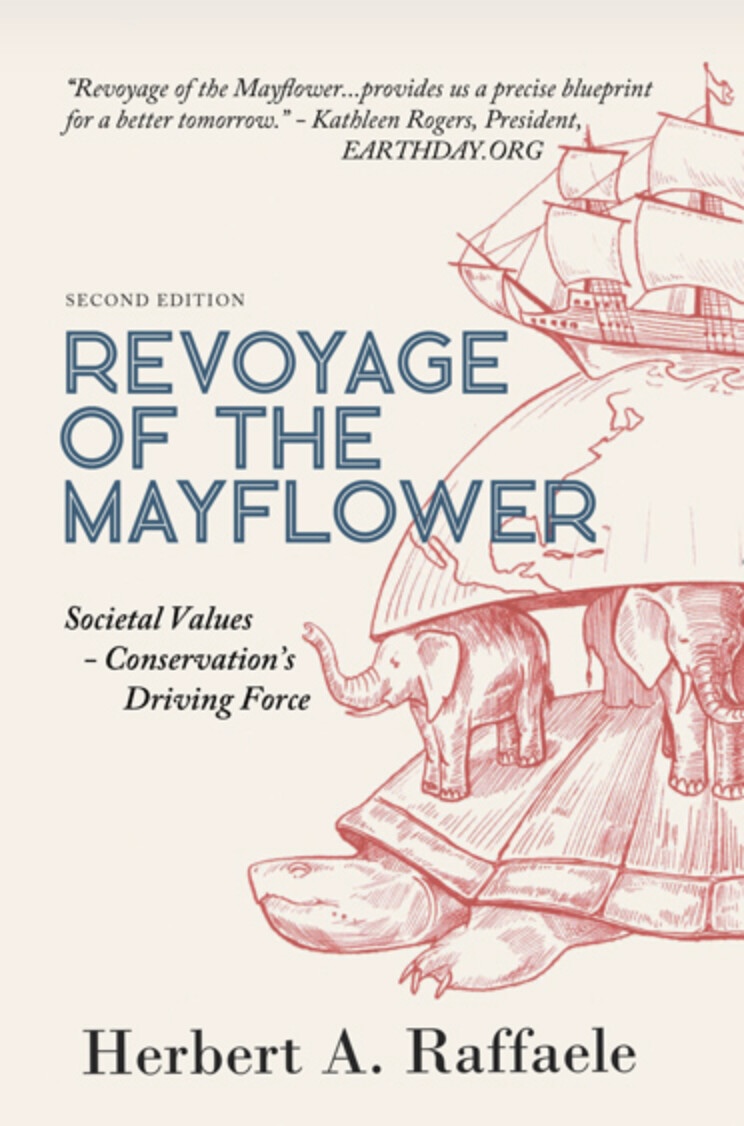
Revoyage of the Mayflower: Societal Values—Conservation’s Driving Force
Book Author: Herbert A. Raffaele
Review by: Robert Askins
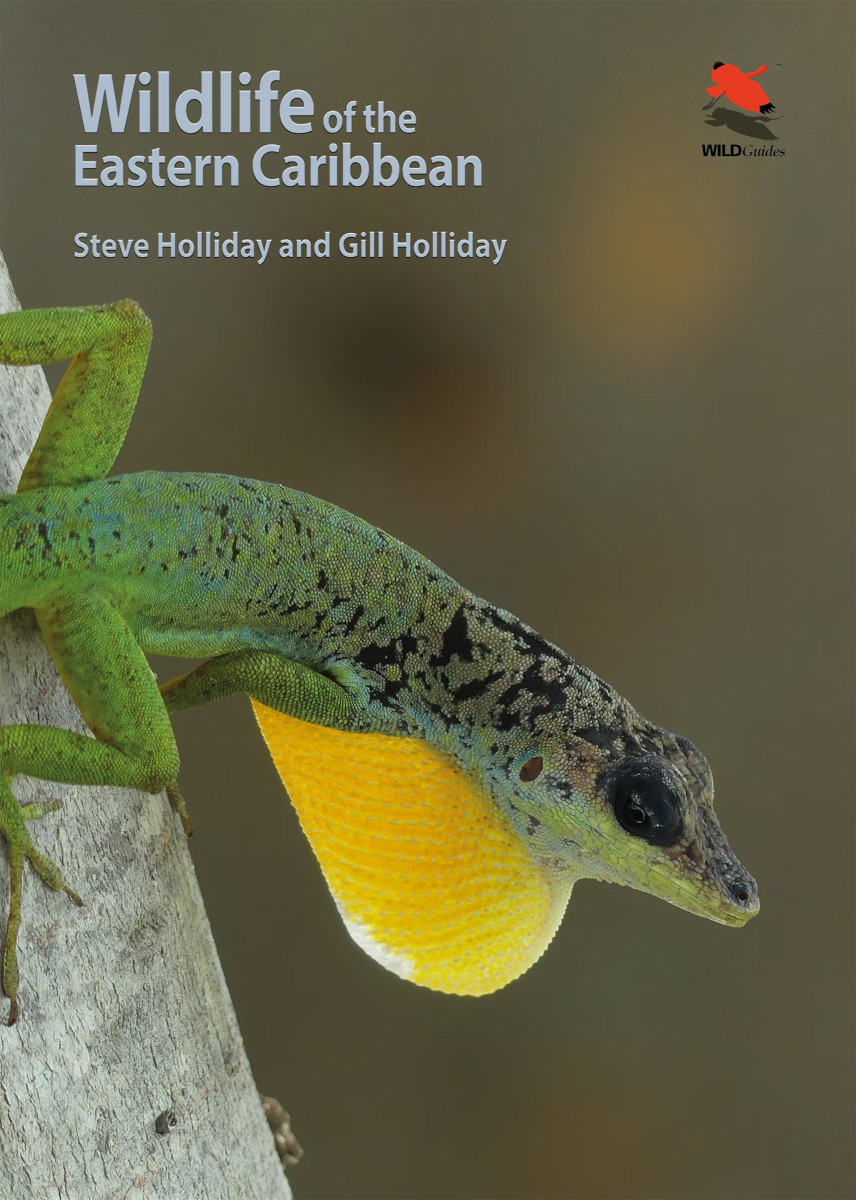
Wildlife of the Eastern Caribbean
Book Authors: Steve Holliday and Gill Holliday
Review by: Steven C. Latta
RECENT ORNITHOLOGICAL LITERATURE (ROL) FROM THE CARIBBEAN
Steven C. Latta
This annual compilation, curated and annotated by Steve Latta, highlights the most important ornithological articles published in other journals. The Recent Ornithological Literature (ROL) section serves as a valuable resource for researchers, conservationists, and bird enthusiasts by summarizing key studies on Caribbean birdlife. This collection ensures that the latest scientific findings remain accessible to those working to protect and understand the region’s avian diversity.
Article by
Zoya Buckmire – Lead Copy Editor for the Journal of Caribbean Ornithology;
Stefan Gleissberg – Managing and Production Editor for the Journal of Caribbean Ornithology
 The Journal of Caribbean Ornithology relies on donations to keep our publications free and open-access. Your support helps give a voice to Caribbean ornithologists and their critical research while ensuring that conservation knowledge is accessible to all. Join us in sustaining this vital resource—become a JCO supporter today!