
 Get ready for the 17th annual Caribbean Waterbird Census (CWC) Region-Wide count! This year is extra special as we mark the 60th year of the International Waterbird Census (IWC) — a global effort to collect waterbird data, of which the CWC is a part. From January 14th to February 3rd 2026, you can directly contribute to Caribbean Waterbird conservation.
Did you know that when you take part in our CWC regional count you are part of something much bigger? Since 1967, thousands of people around the world have headed to their local wetlands to take part in the International Waterbird Census (IWC). That’s 60 years of global citizen science efforts, all dedicated to tracking the health of waterbird populations and the wetlands they depend on! And our very own CWC has been part of this for the past 16 years! You can find out more about this special 60th anniversary of the IWC here.
Supporting over 185 species of waterbirds, Caribbean wetlands are great places to explore to discover amazing birds and habitats. You might see one of our Caribbean endemics like the West Indian Whistling Duck, or ones of the many globally threatened species that live there, including many migrants such as shorebirds like Lesser Yellowlegs and Short-billed Dowitchers. Our wetlands are threatened by coastal development, pollution and the impacts of climate change, so it’s critical that we protect these special places. The data you collect in this ongoing, annual, standardized survey is essential for helping us understand how to best protect these amazing habitats and protect these birds. CWC surveys are also critical in keeping up to date with the changes and threats to waterbirds and their wetland homes.
How to be part of the bigger picture
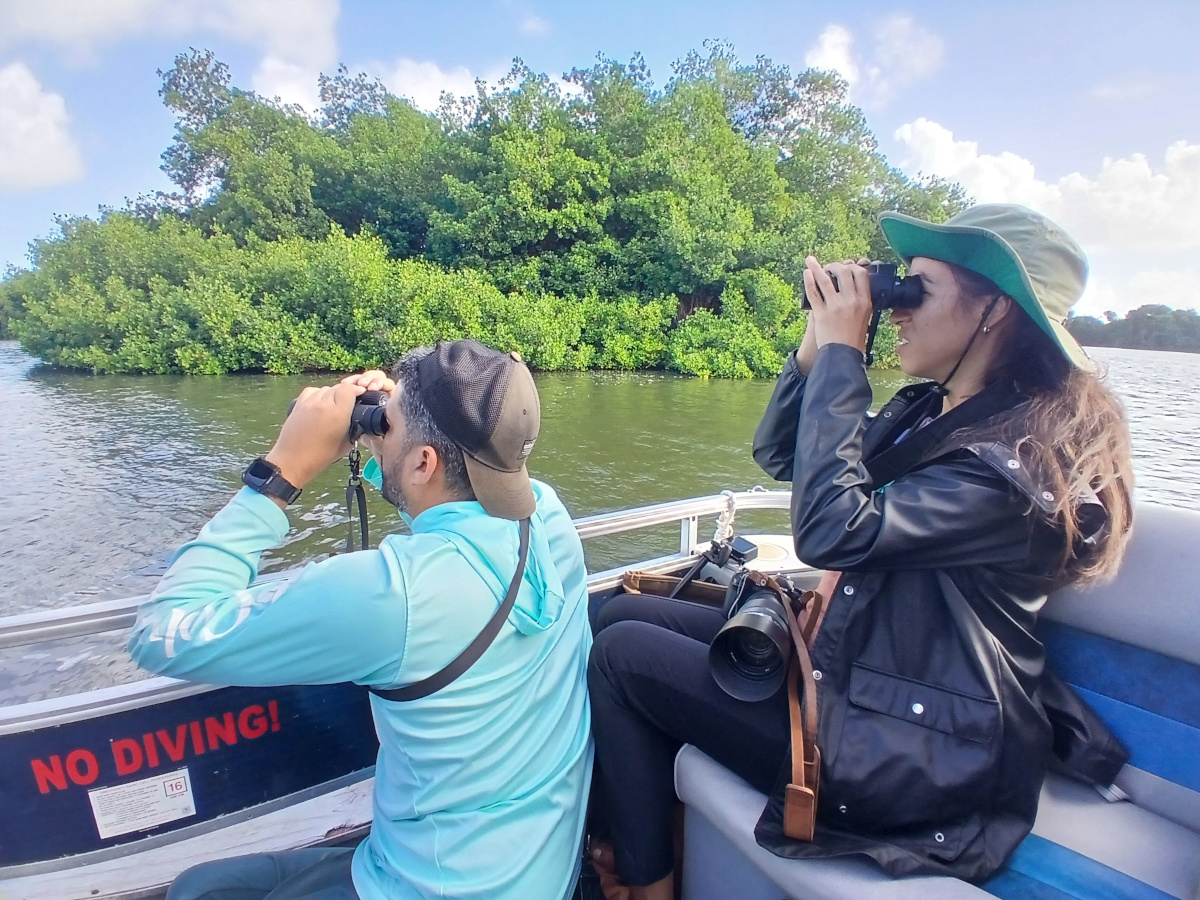
As we mark our 17th year, you can play an important role in this global effort to protect waterbirds and wetlands! Anyone can participate in the CWC –— just head out to your nearest wetland, and record the birds you see — don’t wait, just wade right into the wonderful world of waterbirds!


For CWC, a wetland is any area where water is the primary factor controlling what lives there. These include any place where water is covering the land or is just below the surface. This wide definition includes coastal wetlands like mangroves, mud flats, lagoons and beaches, as well as inland wetlands like lakes, ponds, swamps, areas around rivers and streams and even some types of agriculture (e.g. rice fields). Of course, because this is the Caribbean Waterbird Census, you need to be in the Caribbean to take part! You can find more information about how to conduct surveys here.
Get with the project
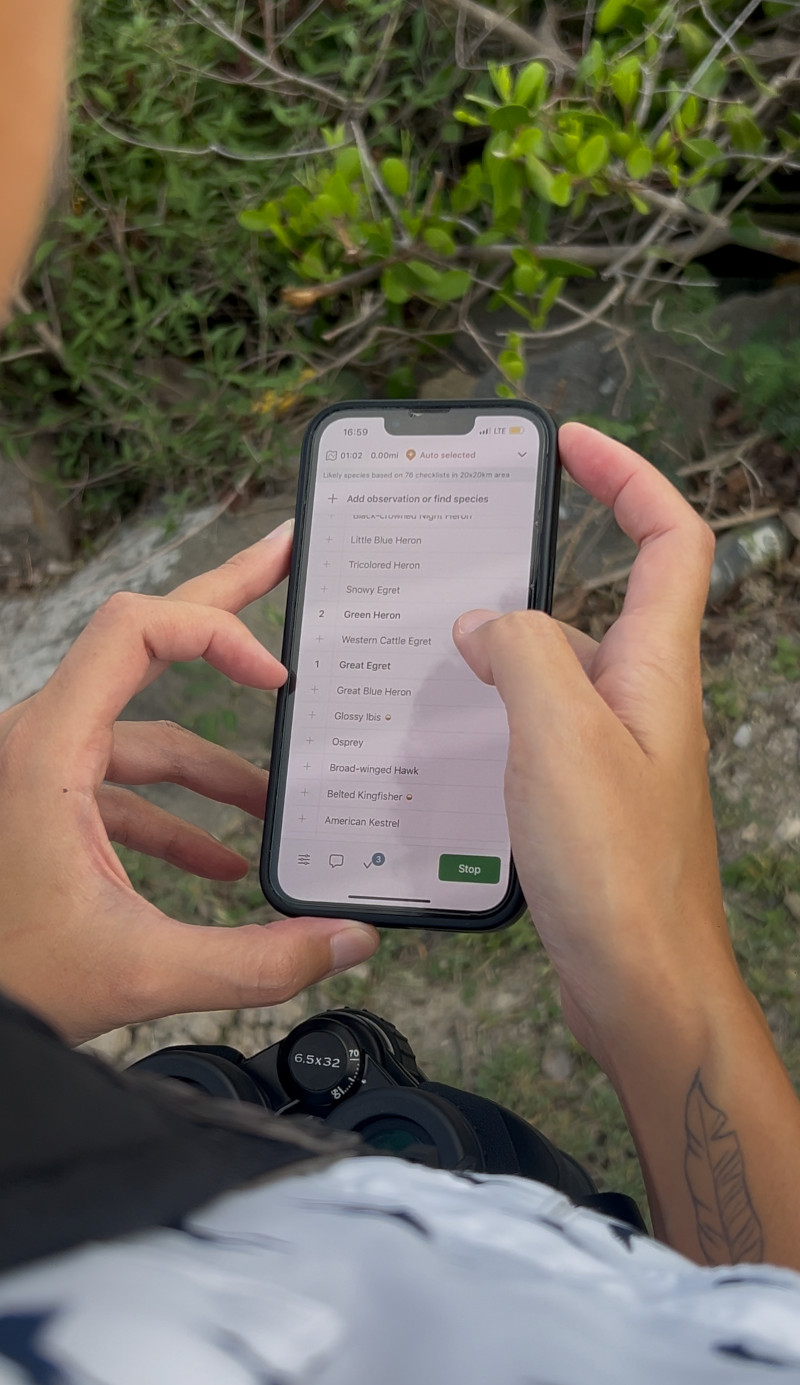
All our CWC data is still stored on eBird, but earlier in 2025 CWC became a project in eBird. This means that you need to be part of the project on eBird to ensure that your counts contribute to our amazing database!
Here’s the good news—if you’ve ever submitted a checklist using a CWC protocol in the past—you’ve likely been automatically added to the project! Check out the CWC project pages here to confirm you’ve joined.
If you’re new to CWC or if for some reason you’ve not been joined, just visit the CWC Project Page and click “Learn how to join.” Review the info about the project, scroll to the end and then click “Join Project.” If you are not logged into eBird you will be prompted to “Login to Join Project.”
Once you’ve joined the CWC project, it’s easy to add your CWC lists to our database on the eBird app or on the website.
Here’s how:
CWC in the eBird Mobile App:
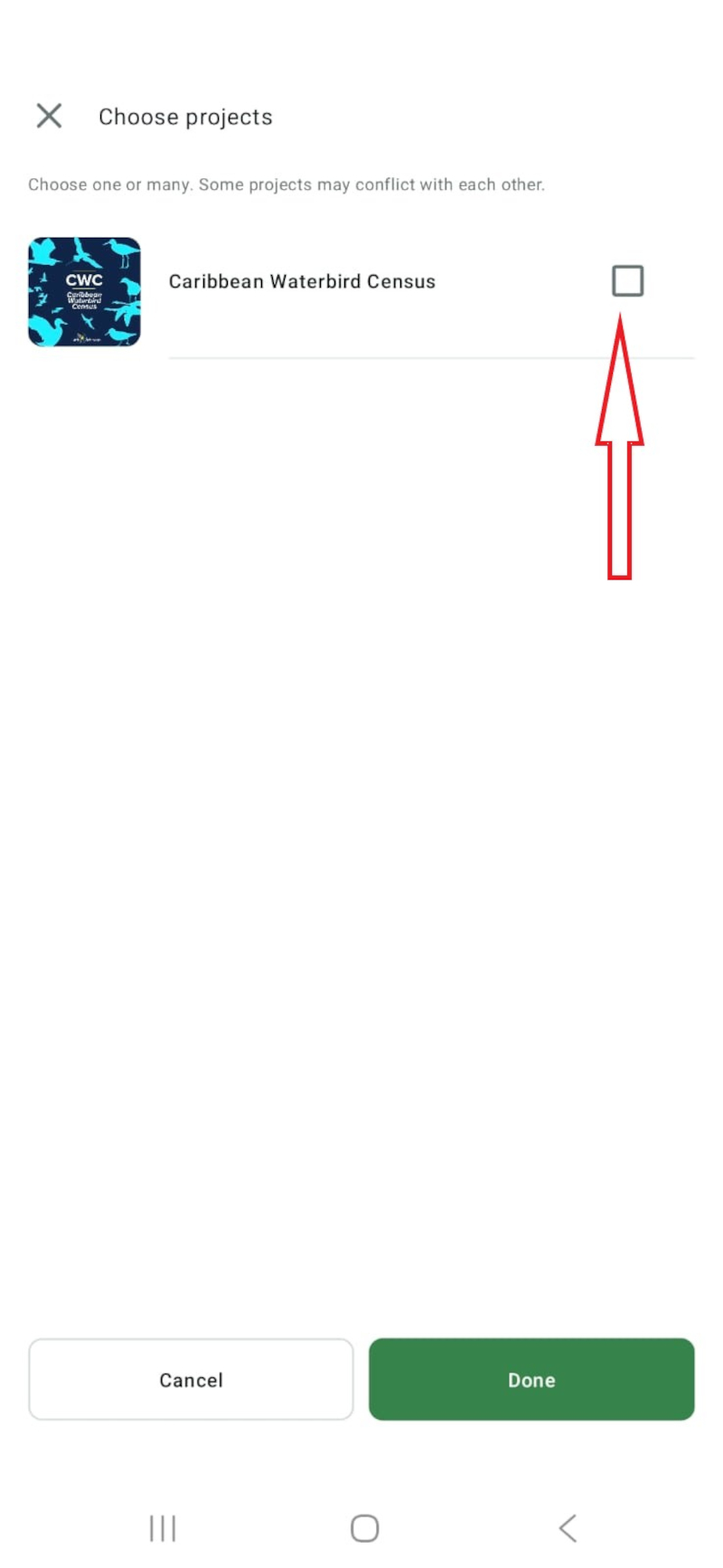
- Tap “Choose projects” above the “Start checklist”’ button.
- Select the CWC project, and, if you like, ask the app to remember this choice for future submissions. If you do this CWC will appear automatically above the “Start checklist” button next time you use App.
- Tap “Continue” and do your count (it’s that simple!)
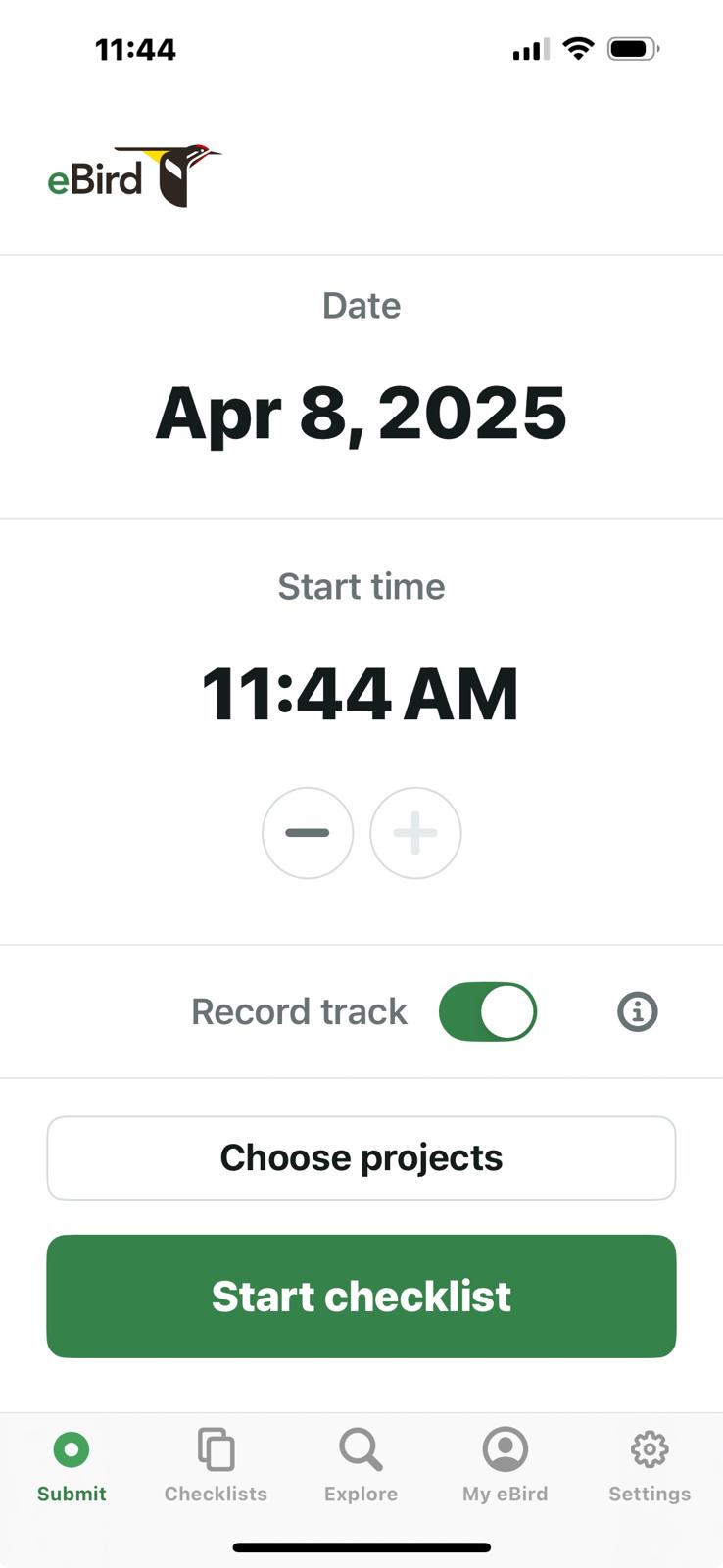
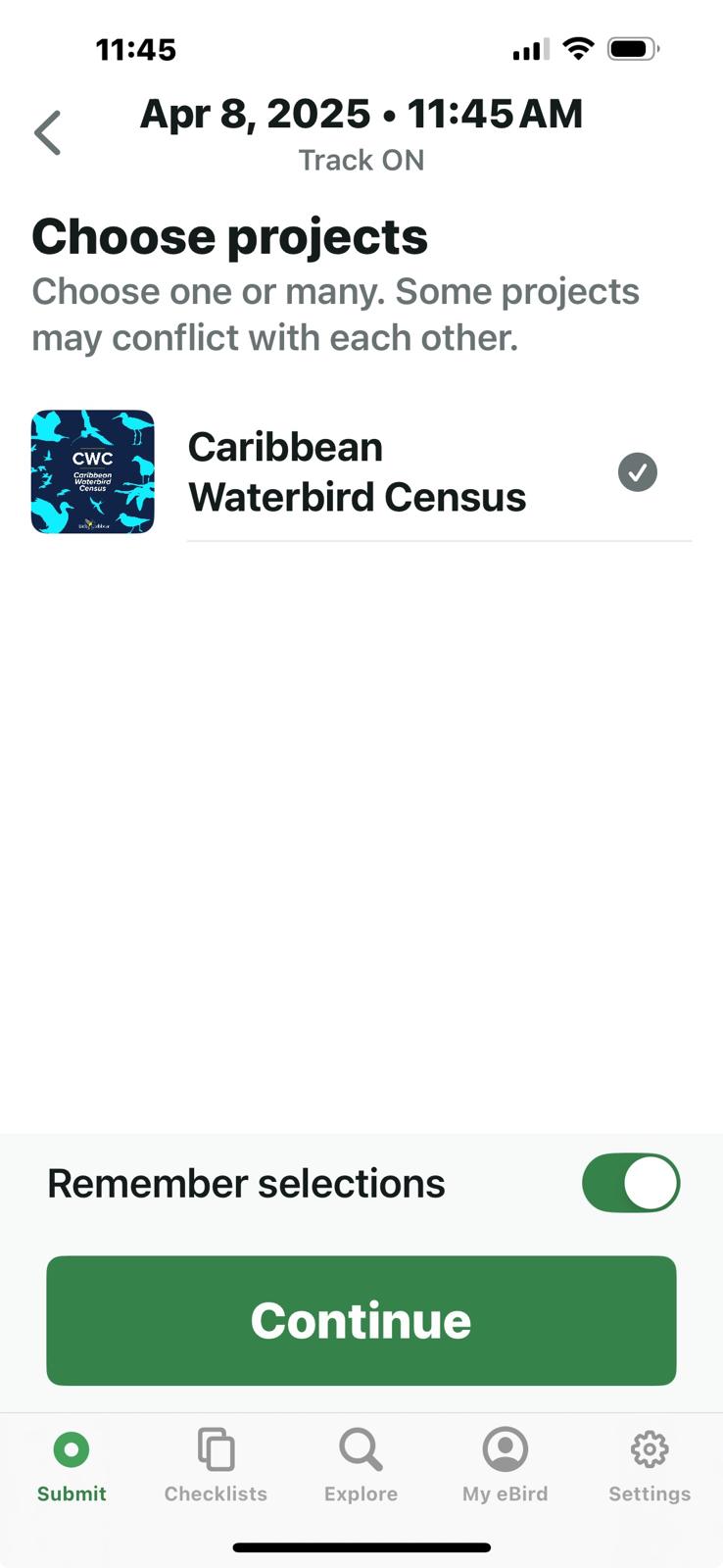
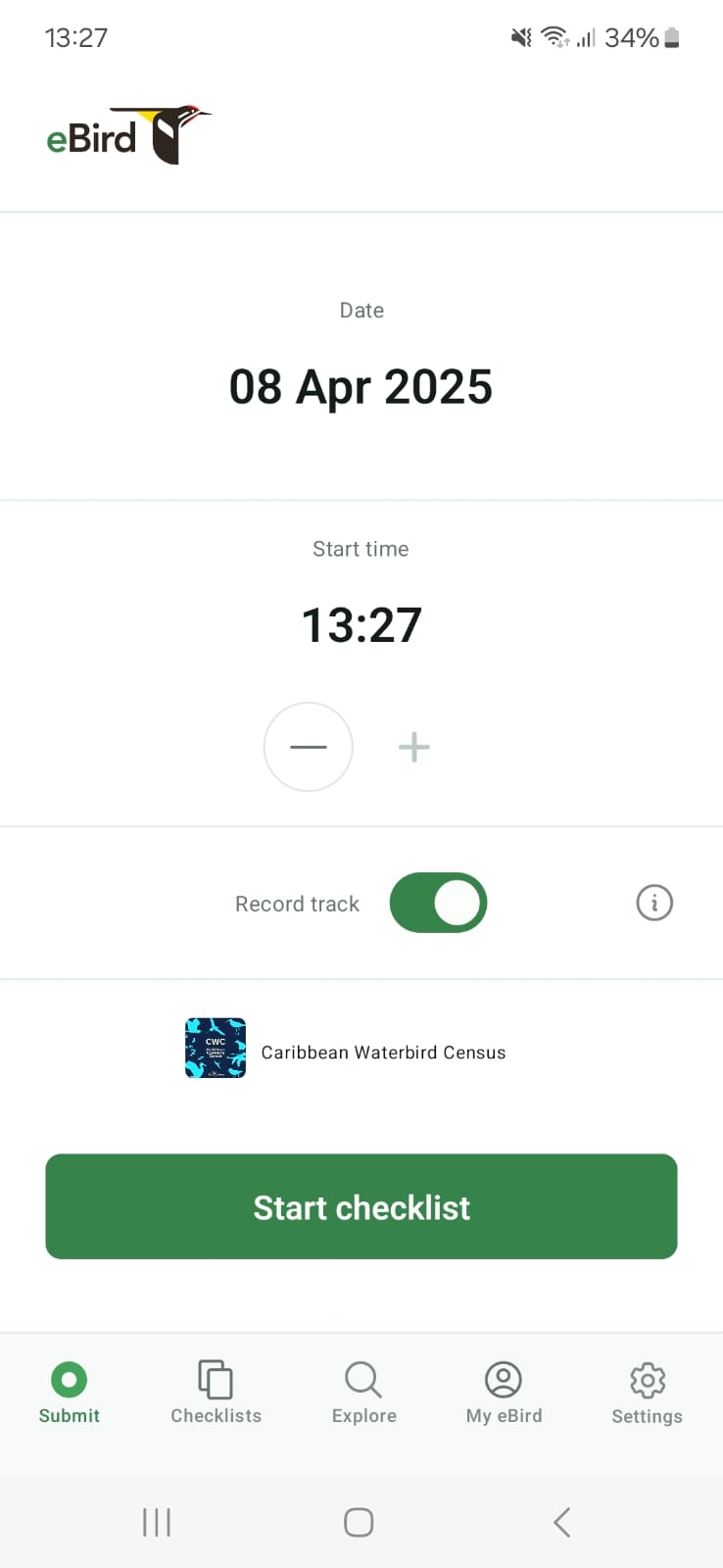
Next time you do a count at a Caribbean wetland, select “Caribbean Waterbird Census” above the “Start checklist” button.
CWC on the eBird Website:
- Go to the Submit page.
- Use the “Choose a Project” dropdown to check the box next to “Caribbean Waterbird Census.”
- Then follow the steps below to add your list details as normal.

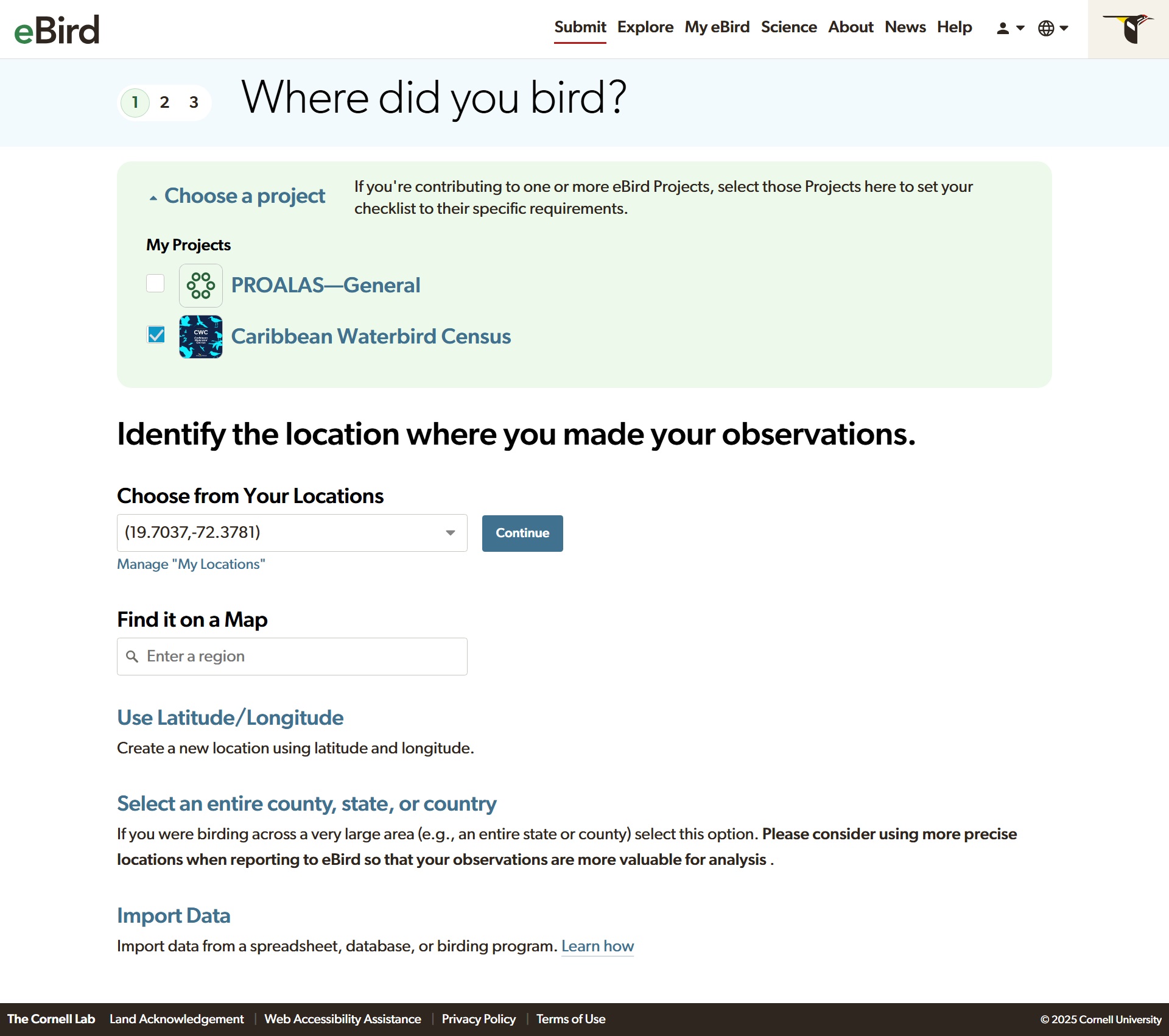
Now that CWC is a project there are no longer specific ‘CWC protocols’ in eBird, you just need to select the “Traveling” or “Stationary” protocol before submitting.
Remember that although these are waterbird counts, you should be sure to count all the birds that you see and hear during your survey visits, not just the waterbirds. If you need help with eBird submissions, have questions about which protocol to choose, or with setting up an eBird account, please contact Alex Sansom: [email protected]
You can learn more about the CWC project on eBird here. And if you’re completely new to eBird, start by looking at this page that will guide you through opening an account and adding data.
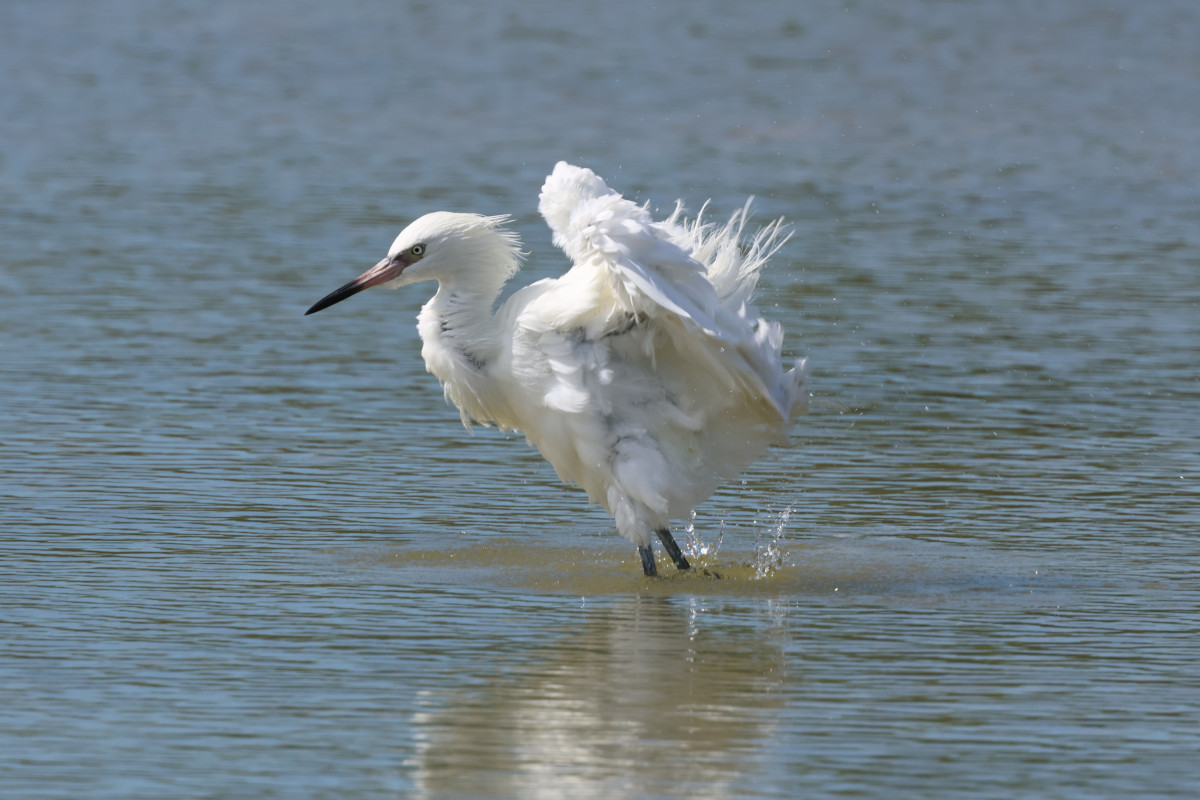
Forget to choose the CWC project in eBird?
You went out in the field, you started your list in eBird and did your CWC survey and submitted the list…. THEN you realize that you forgot the “choose a project” step at the start! It happens! This means your list will not be ‘counted’ as part of the CWC- yet. But don’t worry it can be fixed, you just need add it to the project after you have submitted.
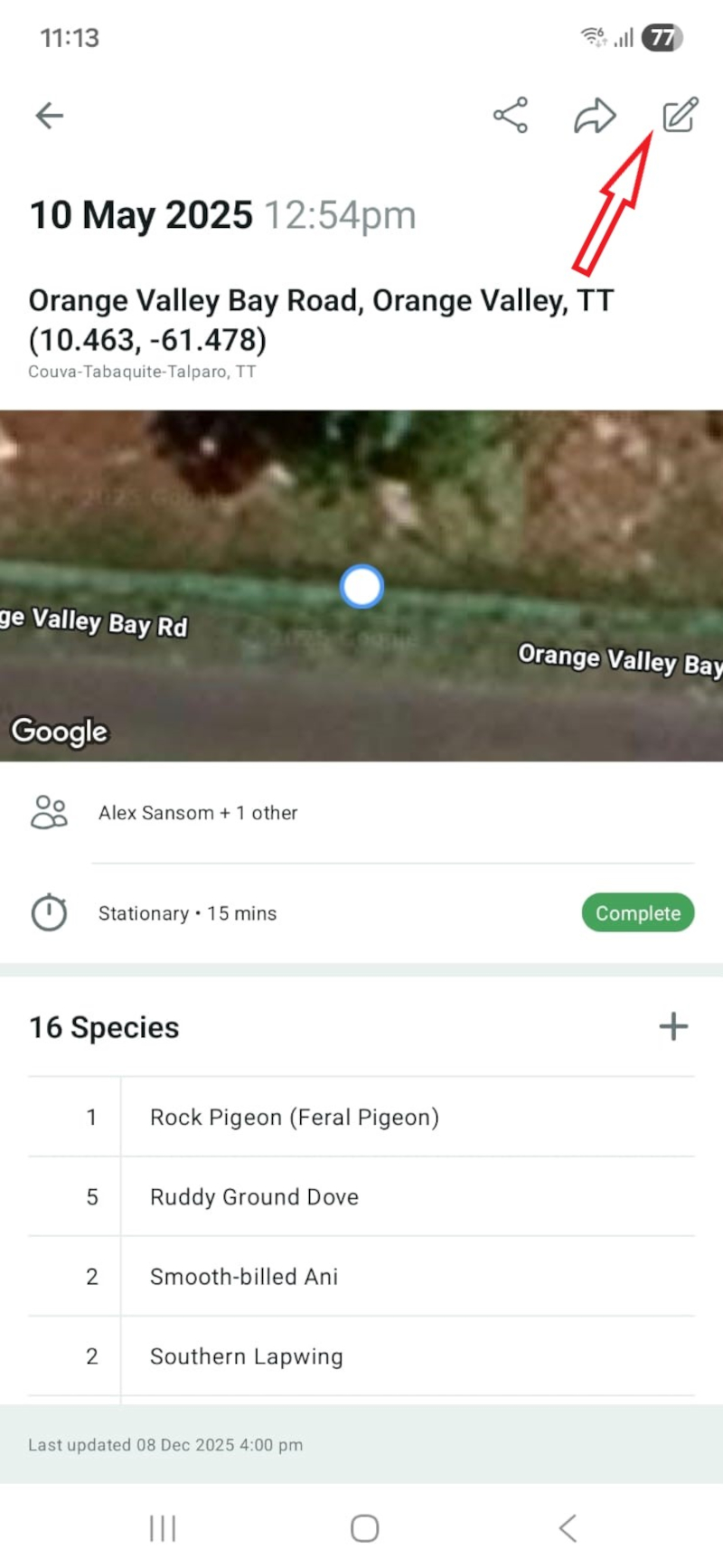
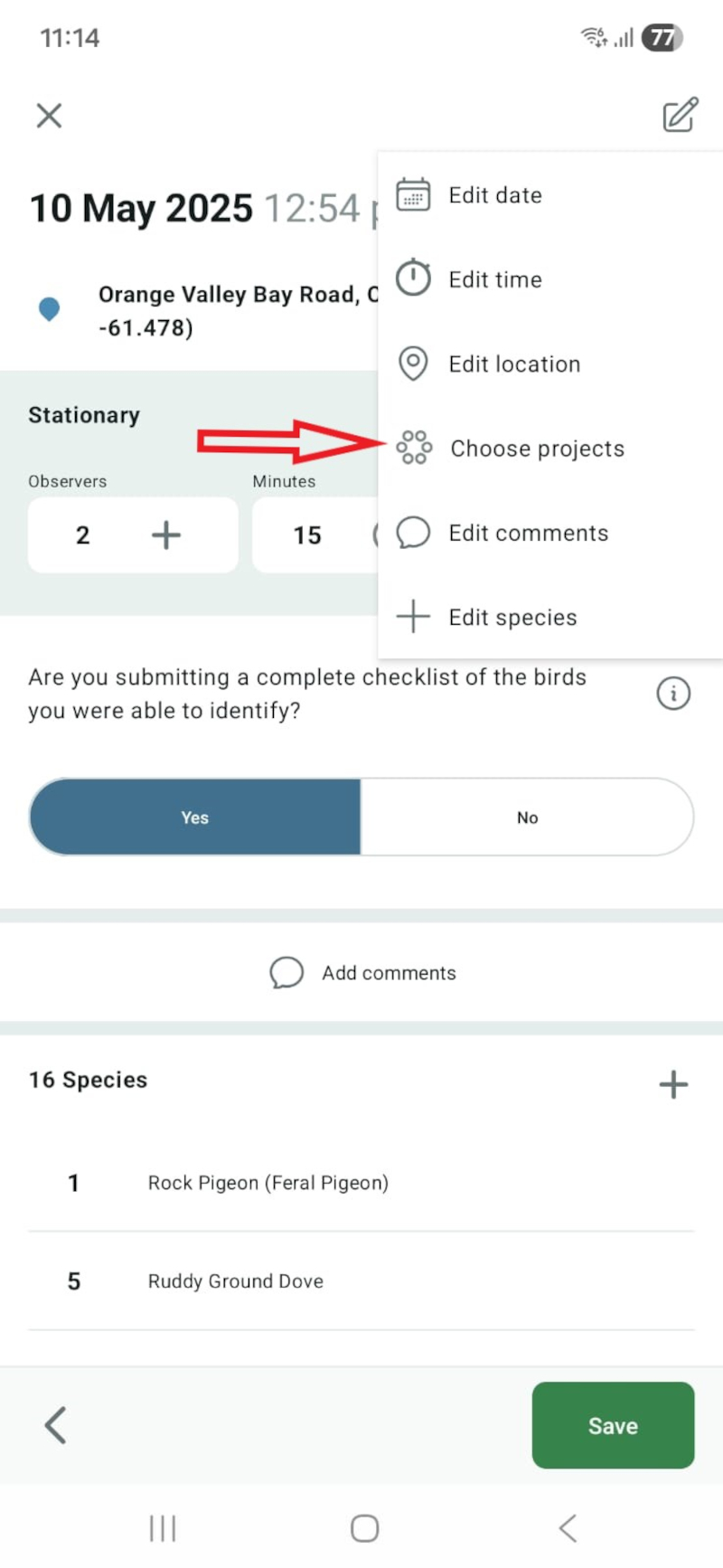
On the eBird app, go to “checklists”, then toggle to show your submitted lists. Next find the list that should have been in the CWC project and open it. Open the ‘edit checklist’ menu (click on the edit icon on the top right), then once in ‘edit’ mode, choose the ‘edit’ menu icon again (again in the top right). Here you will see a menu with the option to ‘choose projects’. Click on this and select the Caribbean Water Census from your projects (of course you need to have joined the project already to do this!). Then save your changes.
On the eBird website it’s slightly different. You can go to ‘My Checklists’, and choose the one you want to add to the CWC project. Once this list is open, you need to select the ‘Edit Location’ option. When you click on this you will see the ‘choose project’ option, at the top of the page under the ‘Where did you bird?’ heading. Just select the Caribbean Waterbird Census project and save the changes.
We’re here to help!
Never done a CWC survey before or need a refresher? Don’t worry! We’ve pulled together some amazing resources that will help you with your counts. To help you get started on your CWC survey journey or give you a reminder about how to take part check out our helpful YouTube webinar that takes you through the steps of how to participate in the CWC*!
*This is a great introduction to the CWC and how to plan your counts and carry out surveys, but the information on adding data to eBird has been updated since it was recorded. Please use the information provided above and here. Join the project, then remember to choose the project when making your eBird list to make sure your data gets included as CWC in eBird.
If you need a hand with your waterbird ID you’ve come to the right place—why not brush up on your ID skills using our helpful videos on YouTube! Part I covers herons, egrets, ducks, marsh birds, and seabirds. Part II tackles those tricky shorebirds! We also have even more ID, survey planning tips, and outreach resources that are available for you to use and download on this page. This includes information on what to do if you see a banded bird during your surveys as well as our handy ID Guide to Common Caribbean Shorebirds, which can print and take with you on your surveys.


If you need more help with those troublesome shorebirds you can also check out our series of short videos. Each of these deals with ID-ing some of the shorebirds that are more difficult separate, even those tricky small sandpipers!
Have fun out there!
We hope you have a great time exploring your country’s wetlands and counting birds during the regional CWC count! Please remember to stay safe and carry out your counts responsibly. This means taking care not to disturb the birds or damage their habitats. Enjoy counting birds and see how many of your local wetlands you can visit during this three-week period! Finally, if you enjoy your CWC experience remember that CWC counts are not limited to the regional count. You can do a CWC survey at any time of year as long as you are in a Caribbean wetland and count all the birds you see!
Good luck! We look forward to hearing about your findings. If you need help with bird ID, or have photos and exciting observations to share, please post to our Waterbird Group Listserv (everyone is welcome to join) and/or on our BirdsCaribbean Facebook page. For sharing on social media, use hashtags: #CaribbeanWaterbirdCensus #CWC2026 #WaterbirdsCount and for this special IWC anniversary year #IWC60 AND please tag us: @BirdsCaribbean
The Caribbean Waterbird Census is an ongoing, long-term survey effort that provides important data that helps us keep track of the birds using Caribbean wetlands, understand the threats they face, and raise awareness. With 27,000+ CWC lists in our long-term database, we’re building an invaluable resource for bird conservation across the region. You can support the CWC here.
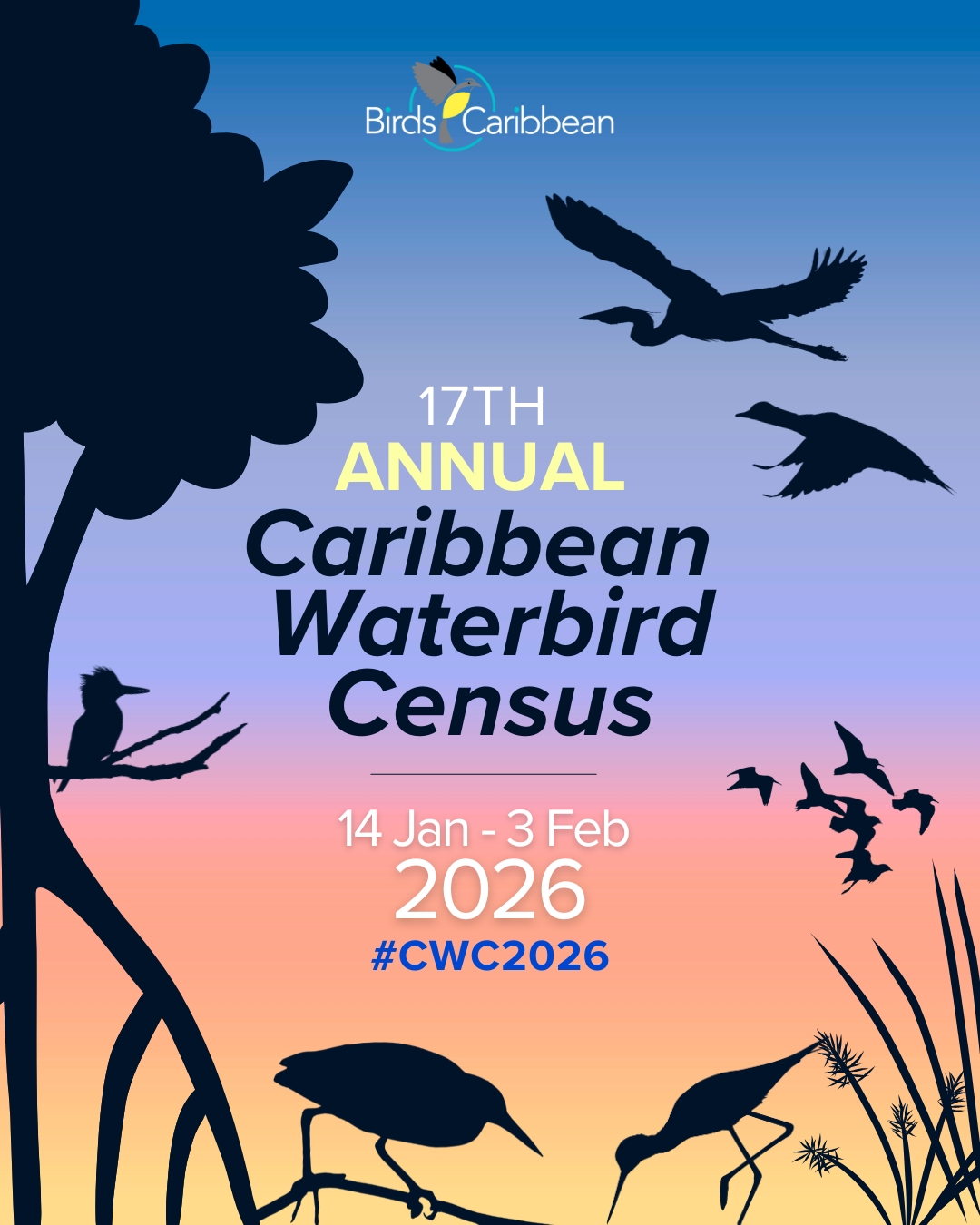
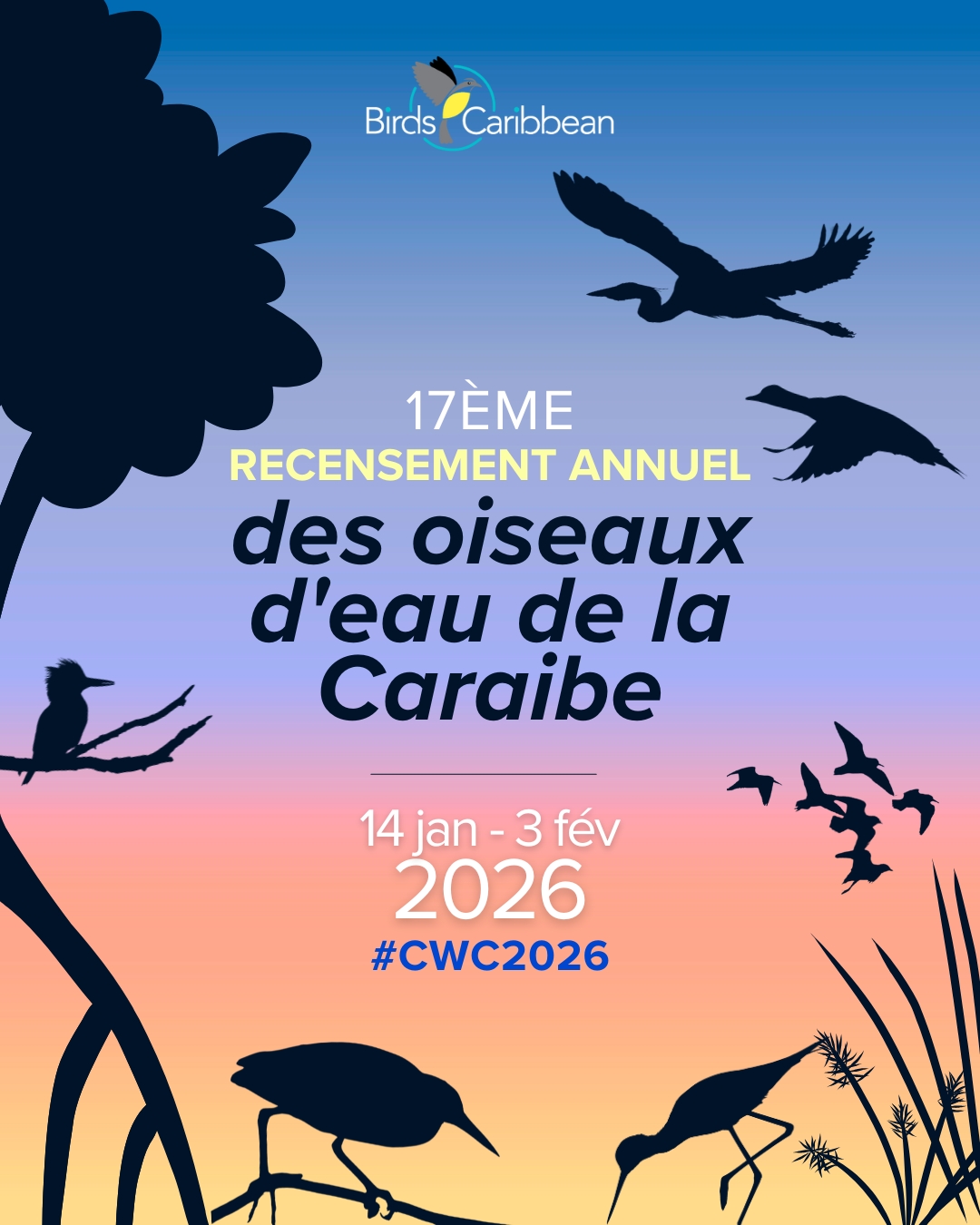
Promotional Social Media Graphics – Please feel free to download these graphics and use these to promote your Caribbean Waterbird Census surveys (just open the graphic you want to use right click and choose ‘save image as’) .
Por favor, para mejor entendimiento del documento por todas las personas, debe tener la opción de traducción al español y francés .
Saludos
Hola Rodolfo, ¡gracias por tu interés en el Censo de Aves Acuáticas del Caribe! Puedes traducir la página al español, francés o cualquier otro idioma haciendo clic en el botón verde TRADUCIR situado en la parte superior derecha de la página web. Creo que el idioma predeterminado es el español, pero puedes elegir cualquier idioma utilizando el menú que aparece en la parte superior izquierda de la página. Si necesitas más ayuda, ¡solo tienes que decírnoslo!