
Global seabird populations are in serious decline, facing threats that span from habitat loss to climate change. These magnificent birds are essential indicators of ocean health and help maintain resilient coastal ecosystems like mangroves and corals. Their crisis is a crisis for our marine environment that strengthens Caribbean island economies through tourism and fisheries, and protects coastal communities from storms.
This urgency is what drove the Seabird Working Group (SWG) in May 2022 to launch the first-ever coordinated Caribbean Seabird Census (CSC).


The goal was simple: to improve knowledge of where seabirds nest in the region, and how many are in their breeding populations, providing them with the hard data needed for effective advocacy, protection, and management actions.
Now, a major milestone has been reached: researchers from across the region recently convened in Santo Domingo, Dominican Republic, from 23rd to 24th September, to analyze the rich dataset collected from 2023 to 2024.
What did they find? This report by the Seabird Working Group details how the CSC has progressed across the region and what the dataset reveals about the state of our Caribbean seabirds.
Setting the stage
The 2023–2024 Caribbean Seabird Census (CSC) marks a major step forward in conserving our seabird populations. Led by BirdsCaribbean and EPIC, this regional effort brought together more than 150 experts and volunteers from across more than 30 organizations representing 25 territories to gather the first comprehensive seabird data for the Caribbean in over a decade. These counts, done through boats, drones, and on-the-ground surveys, help understand how seabird populations are coping with challenges like invasive species, coastal development, and climate change. By mapping where seabirds still thrive and where they are disappearing, the CSC provides the science needed to guide urgent conservation action. Its findings will help shape recovery programs, and ensure that future generations will witness the vibrant seabird life of the Caribbean.
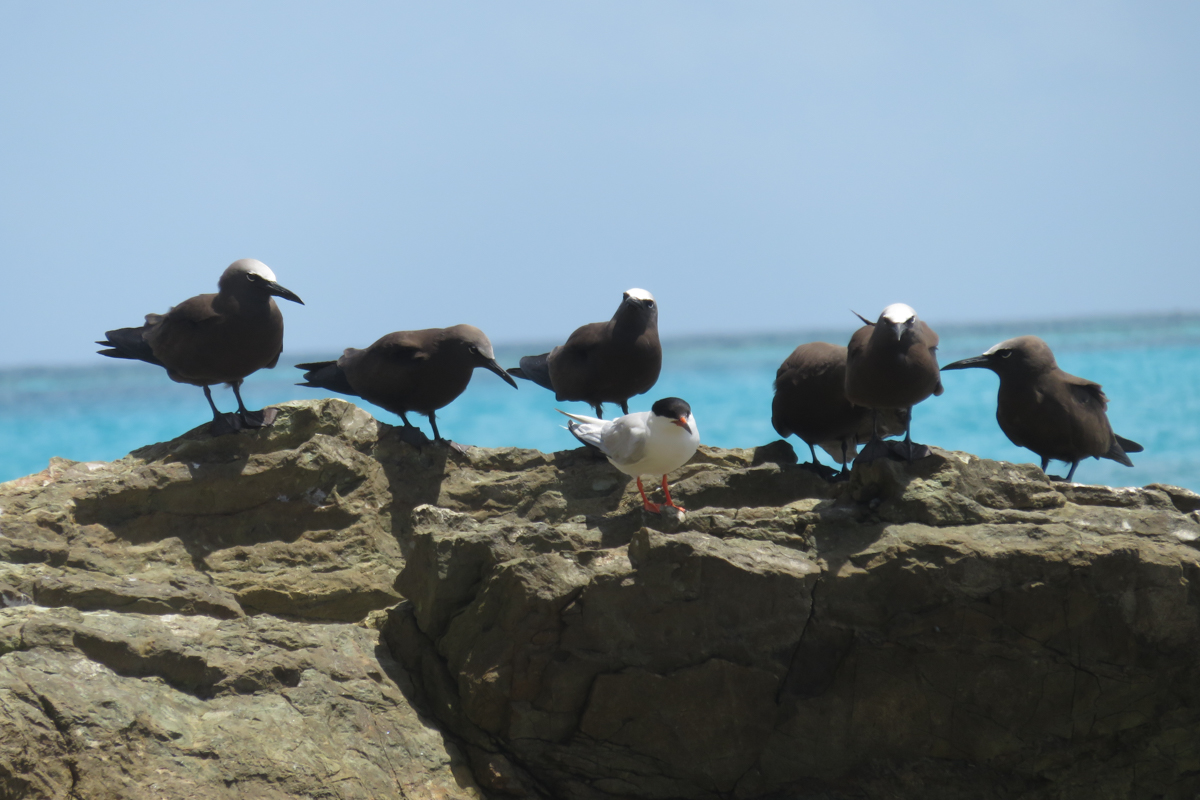
Following the success of the CSC, we shifted our focus in 2025 to sharing results and building regional collaboration. This continued effort led to a CSC workshop in Santo Domingo, Dominican Republic, where 25 participants from 14 countries in and bordering the Caribbean worked together to strengthen seabird conservation across the region, along with four instructors from the UK, US, and Ecuador.
Our objective was to take a deep dive into the data collected during the 2023–2024 CSC. Specifically, we aimed to:
- Collate and review seabird census data at national and regional levels.
- Discuss and agree on methods to standardize, process, and analyze data for conservation use.
- Provide training in tools for data processing and analysis.
- Explore ways to identify conservation priorities and apply census data to management.
- Identify next steps for coordinated regional seabird efforts following the baseline census.
Day 1: Diving into the data
We were warmly welcomed by Dr. Yolanda León, Executive Director of Grupo Jaragua, our local host and holder of workshop funds granted by the Bio-Bridge Initiative, a project of the Convention on Biological Diversity.
Participants introduced themselves; we represented a wide range of experience—from those new to seabird monitoring to others with extensive expertise in data collection and analysis.
Yvan Satgé, researcher with Clemson University–South Carolina Cooperative Fish & Wildlife Research Unit (US) and long-time Co-Chair of the SWG, opened the sessions with an overview of Caribbean seabirds and the 2023–2024 CSC. Yvan highlighted how the CSC builds on previous regional efforts, described in Bradley & Norton (2009) and Lowrie, Lowrie & Collier (2012), and suggested the value of making regional censuses a recurring initiative. He emphasized the importance of data standardization for meaningful comparisons across sites, countries, and years—an approach modeled by the Caribbean Waterbird Census, coordinated by BirdsCaribbean.


Next, Dr Rhiannon Austin, research associate at the University of Liverpool, UK, another SWG Co-Chair, led sessions on Census Data Considerations. She reminded us that while the goal of a survey is to estimate population size accurately, challenges abound—no survey detects every bird, and factors such as method, behavior, habitat, and weather all play roles.
Then came our first hands-on exercises. Participants grouped into English- and Spanish-language tables, working on either their own data or example datasets from the Turks and Caicos Islands (where Rhiannon just wrapped up a two-year seabird monitoring project). We focused first on data cleaning in Excel—learning how small inconsistencies in date formats, coordinate precision, or file types can complicate regional compilations.
From there, we moved to GIS exercises using QGIS, exploring how to map, visualize, and compare data across years. While some found this a refresher and others a first experience, the peer-to-peer support made it fun and productive.
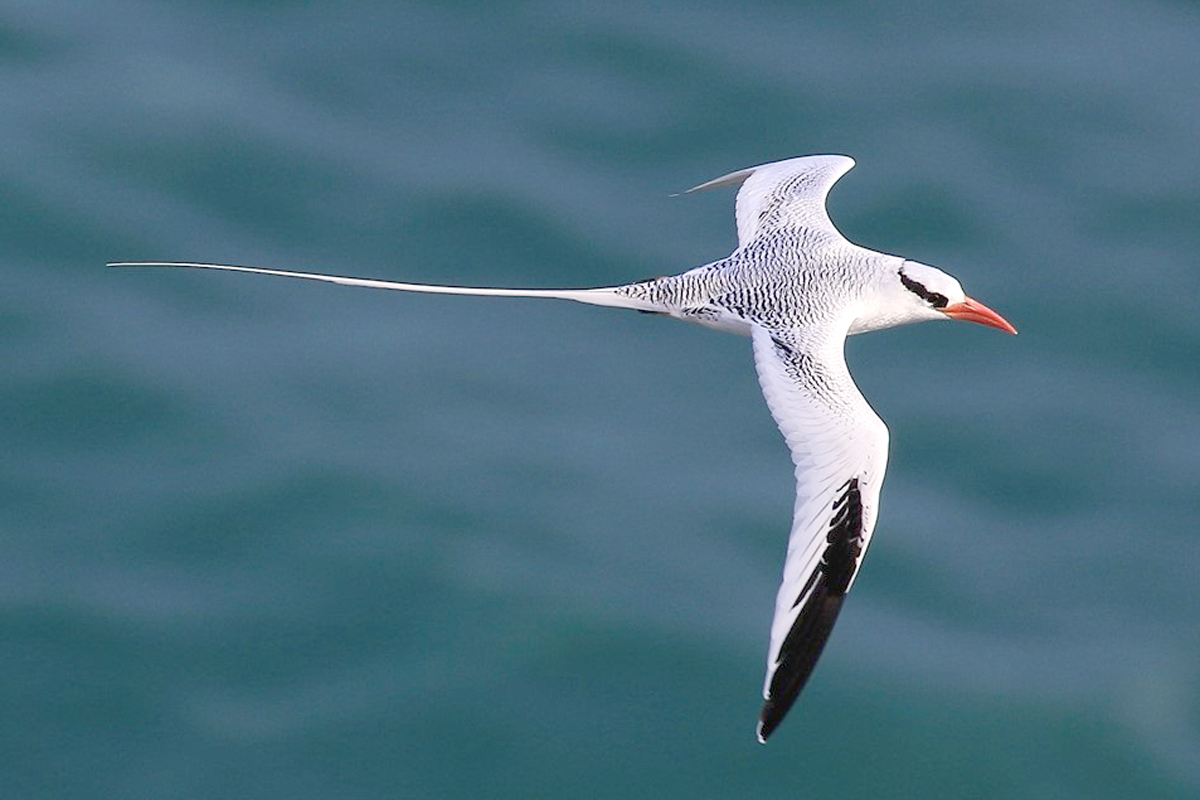
After dinner, we reconvened to enjoy videos from participants showcasing seabird conservation work across the region—proof that seabird monitoring in the Caribbean involves breathtaking landscapes, fascinating species, and some very dedicated (and tough!) fieldworkers.
Day 2: Assessing threats and setting priorities
The second day focused on interpreting data at the regional and global scale.
Louise Soanes of the RSPB Centre for Conservation Science (UK) presented results from the 2023–2024 CSC, which covered 17 species, 18+ countries, 300+ sites, 30+ organizations, and 150+ observers. Louise compared these data with those from Bradley & Norton (2009), identifying monitoring gaps, challenges, and opportunities for future coordination.
Participants then tackled a practical exercise in threat assessment—evaluating major threats to key seabird colonies, rating their likelihood and severity, and noting current actions. This helped illustrate how site-level analysis can guide regional conservation priorities.
Next up was Gabriela (Gaby) Toscano from BirdLife International, who discussed Key Biodiversity Areas (KBAs) and how they relate to the earlier framework of Important Bird Areas (IBAs). She explained how BirdLife and partners have transitioned from bird-specific IBAs to all-taxa KBAs, harmonizing criteria to ensure globally consistent biodiversity site designations.
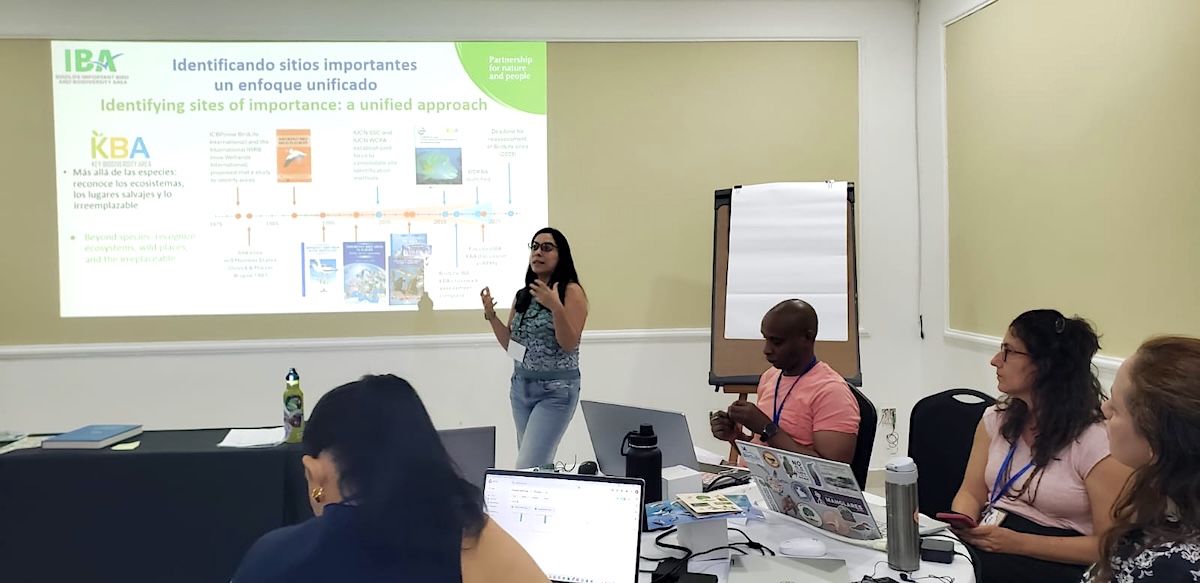
Today, the Caribbean region includes 429 KBAs in the World Database of KBAs—most designated before 2016 through the IBA “crosswalk” process. While 191 are globally confirmed, many remain “priority for update,” underscoring the need for renewed data collection like that generated by the CSC.
Hands-on exercises followed, where groups reviewed Caribbean seabird IBAs under the KBA framework. Participants assessed which species could trigger KBA designation, verified thresholds and population data, and discussed whether other taxa might qualify sites as KBAs.
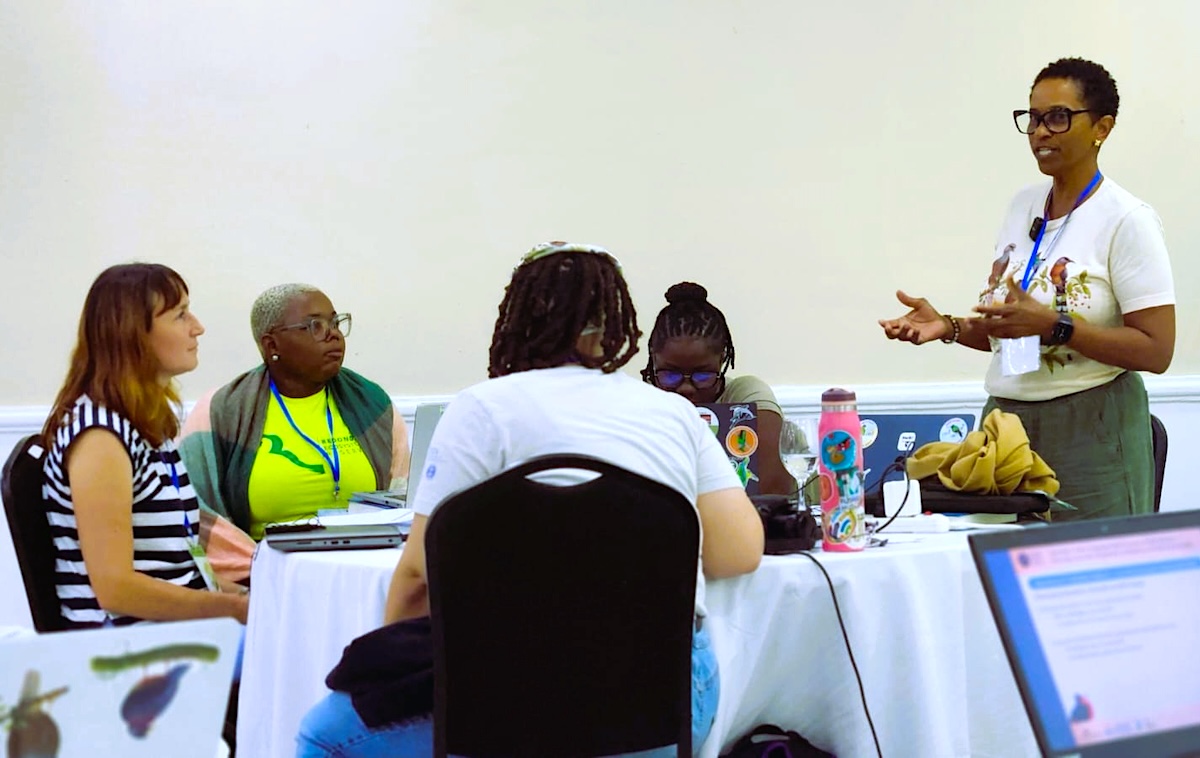
A key issue emerged: many Caribbean seabird species are pan-tropical (distribution spans tropical regions of both western and eastern hemispheres), and individual colonies rarely exceed the global threshold (1% of the species’ population). Yet, given the historic decline in regional populations, nearly every colony holds conservation importance. Participants discussed the possibility of developing Caribbean-specific regional criteria to ensure that even smaller colonies receive recognition and protection.
Conclusions and Next Steps
We closed the workshop with reflections on the 2023–2024 CSC and ideas for the road ahead. Participants emphasized the importance of sustained regional collaboration, continued data sharing, and integration with broader biodiversity initiatives.
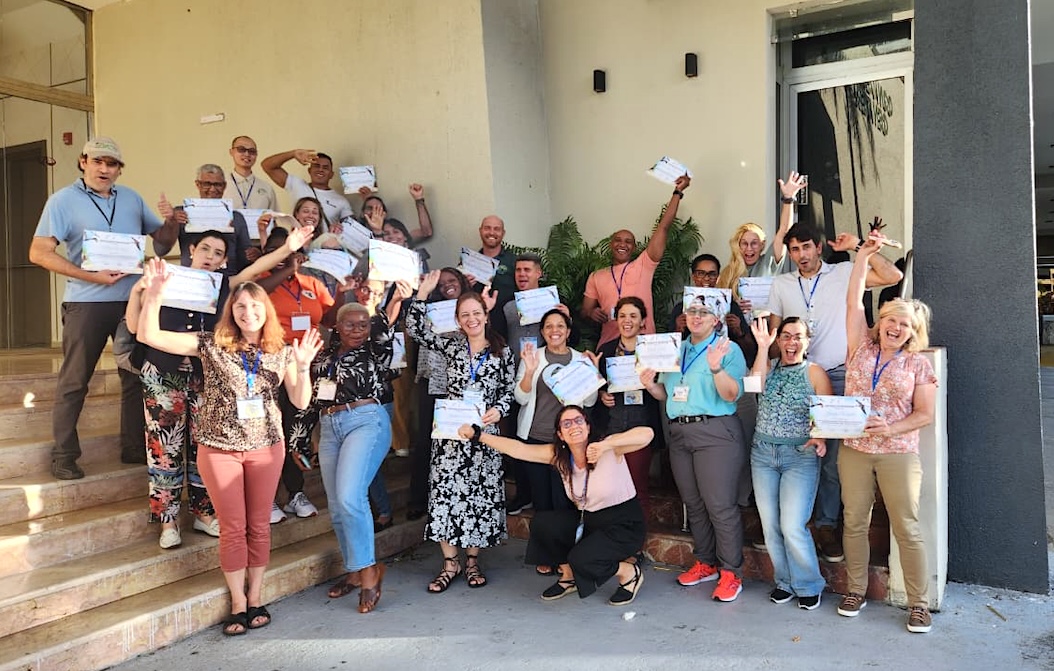
Everyone agreed: building a long-term regional seabird monitoring and conservation program is both necessary and achievable.
Jethro van’t Hul, Terrestrial Parks Manager, St. Eustatius National Parks Foundation (STENAPA), Sint Eustatius emphasized, “It’s refreshed motivation and redrawn attention to the importance of our seabird colony and the work we need to do to protect them. Definitely good things to come!”
Ernesto Hernández Pérez, Lead Specialist, Flora and Fauna Company of Villa Clara, Cuba added, “For me, it was very educational to share with specialists who do the same work, and very useful to standardize methodologies and apply mapping in a practical way to achieve results.”
The next key step is the publication of a co-authored report in the Journal of Caribbean Ornithology. The report will share results of the CSC in a formal but accessible way that can be used as a reference across the region and for years to come. Looking ahead, we also plan to expand participation in the CSC, refine monitoring methods, and launch a follow-up census in 2030.
In the meantime, the SWG will continue to support regional collaboration through online meetings and the BirdsCaribbean 2026 International Conference in Trinidad. We also look forward to continuing this momentum through related initiatives, such as the Caribbean Marine Mammals and Anthropogenic Activities (CAMAC) Project.
Acknowledgements: The Caribbean Seabird Census workshop was made possible through the support of the Convention for Biological Diversity’s Bio-Bridge Initiative. We extend our thanks to Patricia Bradley for her generous support of the Caribbean Seabird Census and the work of the Seabird Working Group. We thank our local host Grupo Jaragua, and our partners at the Royal Society for the Protection of Birds and BirdLife International. The Caribbean Seabird Census is co-organized by BirdsCaribbean and Environmental Protection in the Caribbean.