
You’ve experienced the thrill of a rare sighting—but have you encountered the darker side of birdwatching?
Just in time for Halloween, we share firsthand accounts of disease, introduced predators, and ethical lapses that threaten the birds we love—and explore how we can help.
Read on… if you dare. The birds are watching and the community is whispering.

Something sinister lurks beyond the binoculars.
And we’re not talking about dreadful weather, trickster leaf warblers, treacherous terrain or even the pressures of checklists.
The true darkness is more troubling: disease sweeping through seabird colonies, introduced predators attacking vulnerable birds, and the pursuit of a perfect photograph taking priority over a bird’s welfare.
We asked our members for the most haunting scenes they’ve witnessed in the field. These stories can be difficult to read. But they also show why our choices matter—and how awareness can lead to action.
Contagion of the coasts
Infectious diseases such as highly pathogenic avian influenza (HPAI) pose a ghastly threat to wild birds. These invisible killers can ride the wings of migration, spreading across continents. Once they strike, large numbers of birds can fall ill or die. Some show lethargy, difficulty breathing, or other signs of severe illness. The darkest terror? Avian influenza viruses can also infect mammals—including, on rare occasions, people.
Yvan Satgé, independent seabird researcher at Clemson University and Co-Chair of our Seabird Working Group (SWG), knows this dread all too well “In the islands, there have been only two confirmed cases of HPAI so far: one in Havana in 2023 and one in Puerto Rico in 2024,” he explains. ”Both were contained quickly and no further outbreaks were reported. That doesn’t mean the virus wasn’t here—it just never revealed itself. Had there been an outbreak, we would have known.”
The reprieve brought little comfort. Elsewhere in the world, the story was far more horrific. Beginning in 2022, HPAI caused devastating losses in seabird populations across the Northern Hemisphere before spreading into South America. Reports of deaths among Peruvian Pelicans and Brown Pelicans along Venezuela’s Caribbean coast brought the threat closer to home.

“That’s when my heart started racing,” Yvan recalls. “We don’t have a clear understanding of how seabirds move between islands—but we know pelicans do. They roost and nest together. It was entirely possible infected pelicans could cross to the Antilles, and from there, the virus could spread from island to island until the whole Caribbean archipelago was affected. And this was right at the onset of the breeding season, when colonies are packed tight. We were bracing for the worst.”
For Yvan and the SWG, the fear was not unfounded. They had watched entire seabird colonies elsewhere wiped out in weeks. The idea of such devastation reaching the Caribbean’s isolated populations was horrifying. Each day without new reports brought relief and dread, knowing that the next outbreak could be just one migrating bird away.
He emphasizes that in island systems like the Caribbean, where birds evolved in isolation, biosecurity—steps taken to prevent the introduction and spread of diseases and invasive species—is one of the only defenses we have.
The SWG’s advice is clear and simple: Document, don’t disturb. Do not touch or move sick or dead birds. Keep pets away, observe from a distance, and report what you find.
- Record the details: From a safe distance, take a photograph, note the exact location, and record the species and number of sick or dead birds.
- Contact local authorities: Contact the relevant veterinary, wildlife, or animal-health agency promptly and follow its instructions.
- Help spread reliable information: Raise local awareness about HPAI’s devastating toll on wild birds, where losses can receive less attention than outbreaks in poultry. Encourage others to report unusual bird deaths and avoid handling affected birds.
- Keep the SWG informed: Sharing reports can help our regional network stay alert to emerging threats.


Feral fright
Another real-world nightmare waits where we might least expect it: on a Caribbean shoreline!
Shorebirds arrive tired and hungry after flying thousands of kilometers, only to face free-roaming cats and dogs. A cat waits silent and motionless before pouncing; a dog will rush into a flock, excited by the chase. Even birds that escape lose valuable feeding or resting time.
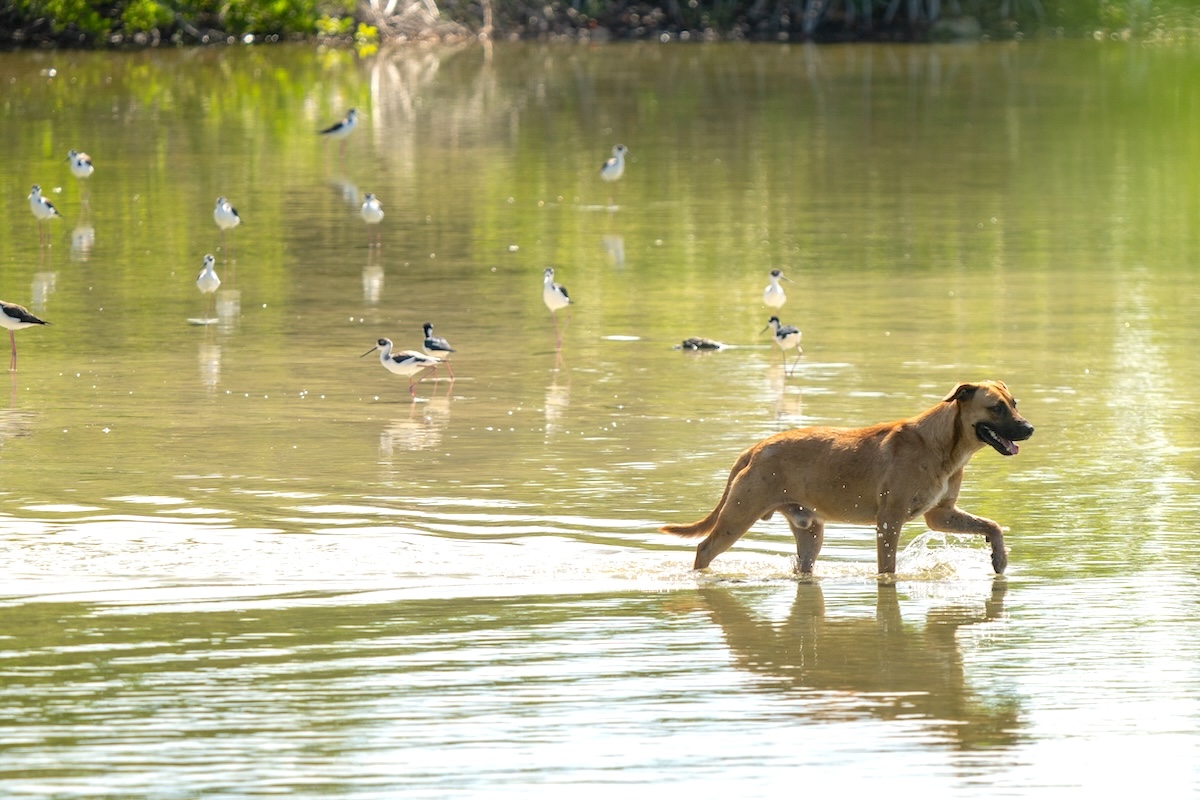
People sometimes shrug this off as animals “doing what comes naturally.” But the concentration of domestic predators in these habitats is a human-created problem. Abandonment, uncontrolled breeding, and pets allowed to roam put wildlife at risk.
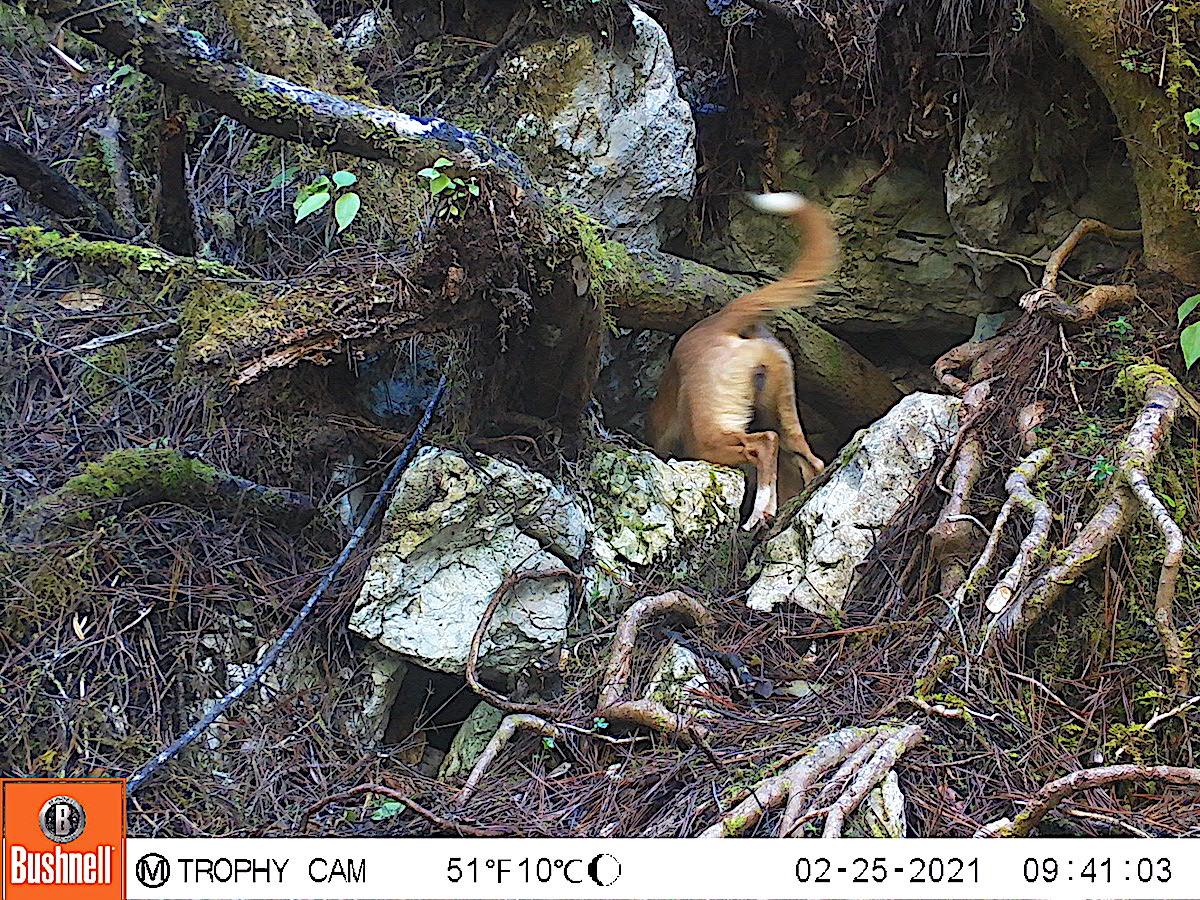
A true sense of dread settles in when these threats materialize right before our eyes, turning routine surveys into horrifying encounters. During a Black-capped Petrel survey in the Dominican Republic in March 2021, researchers hoped to find the season’s first chicks. Instead, they discovered a scene of carnage— torn-up burrows, scattered feathers, and the remains of eggs and adults. Camera traps revealed that one very determined dog had killed at least seven adult petrels; likely more were attacked off camera.
Our Waterbird Program Manager, Dr. Alex Sansom describes a familiar anxiety at another site:
“Each time we pull into the carpark at one of our Caribbean Waterbird Census sites on Trinidad’s west coast, there’s a sense of foreboding. Instead of being excited about what birds we might encounter, I’m wondering how many stray dogs and cats will there be today. Will these be the same individuals, or new ones? Will the friendly dogs, hopeful for some food, follow us on our route and chase the birds away as we try to count them? Will we have to shoo away a cat as it stalks the Ruddy Turnstones on the shoreline?”
The animals themselves are suffering too.
“Often dumped by owners, perhaps as unwanted litters of kittens and puppies, there’s a constant flow of new animals at this site,” Alex explains. Whilst they get some food from people concerned for their welfare, they have little shelter from the elements and no protection from cruelty or inter-animal aggression. It’s a horror story for them and for the wildlife!”
Changing this story begins with responsible pet ownership: preventing abandonment, spaying and neutering pets, keeping cats safely contained, and controlling dogs around wildlife. Supporting local animal welfare groups and coordinated, humane efforts to remove abandoned animals from sensitive habitats can help protect both wildlife and domestic animals.
When we keep pets safe and prevent them from roaming, we also give exhausted shorebirds—and vulnerable nesting birds—the space they need.
I know what you did for that photo
There’s another temptation lurking behind the click of a shutter: capturing the perfect shot at any cost.
The image may look stunning, but what happened just before it was taken? Was the bird resting peacefully—or repeatedly disturbed or chased into flight?
According to Audubon, the cardinal rule is simple: respect for birds and their habitat must come before getting the perfect shot.
Birds need time to feed, rest, and raise their young. Approaching too closely can interrupt those activities, waste precious energy, or expose nests to predators. Moving vegetation around a nest, repeatedly using playback to draw a bird closer, or pursuing it for a better angle can turn an apparently harmless encounter into a serious disturbance.
Our responsibility continues after the shutter clicks. Sharing precise locations of sensitive nests, roosts, or threatened birds can attract more visitors than a site can safely accommodate.
Fortunately, there is a brighter side behind the lens. Conservation-minded photographers show what patience, knowledge of bird behavior, and respect can achieve. Their images reveal extraordinary moments while helping others appreciate why birds deserve protection.
A long‐lens photograph taken from a respectful distance can help, but it is no guarantee against disturbance. Watch the bird: if it stops feeding, becomes alert to your presence, gives alarm calls, or moves away, give it more space.
The guidelines for ethical bird photography offer a useful starting point: keep your distance, respect nests, avoid baiting birds for photographs, and protect sensitive locations. Sometimes, the best decision is to put the camera down.

The worst part? The illusion of innocence. We might think we’re simply capturing nature, but when we reposition branches, use playback calls, chase birds for the “best angle,” or share precise locations online for others to descend upon, the damage ripples outward. In one chilling example from Scotland, fewer than 600 of the endangered Capercaillie remain and social media‐fueled invasions of their leks have been singled out as major threats. We must ask ourselves: when posting that rare bird photo, are we contributing to conservation or fueling its undoing?
Fortunately, there is a brighter side behind the lens. For every snapshot taken at a bird’s expense, there are countless conservation-minded photographers who prove that patience and respect always yield the most powerful art. These ethical storytellers master the art of the long lens that keeps birds completely undisturbed, blending into the background, and prioritizing the creature’s well-being over a viral image. By sharing gorgeous, stress-free imagery captured from a distance and protecting sensitive nest locations they become powerful allies for conservation, showing us the true beauty of birds in their natural element without ever stealing their peace.
The guidelines are clear: use zoom lenses, keep your distance, avoid baiting, respect nests, delay posts of exact locations, and give the birds a chance to live without our interference.
Don’t let your sightings haunt you
As passionate birders, we may travel the globe ticking off lifers, yet overlook opportunities to give back to the lands, people, and creatures that make these encounters possible. When the checklist becomes the goal instead of the gateway, we risk forgetting that our access to wild birds is not guaranteed.
We are not just onlookers in nature’s story—we can help shape what happens next. To secure a future where our children and grandchildren can wake to birdsong, we can move from being observers to active stewards: advocating, volunteering, and supporting the very efforts that keep these birds thriving.

When you log your observations on platforms like eBird or participate in citizen science programs such as the Caribbean Waterbird Census, your efforts provide critical data. Every checklist helps scientists understand population populations and the habitats they need.
Volunteering, supporting local conservation groups, and speaking up for threatened habitats are other ways to turn appreciation into protection. By donating to conservation organizations, you help sustain the critical research, education, and habitat protection that gives our birds, communities, and our planet a fighting chance.
You can support BirdsCaribbean’s regional bird conservation programs here.
Breaking the curse
Every birder, photographer, and nature lover can help turn dread into determination. By transforming awareness into action—reporting unusual bird deaths, keeping pets from roaming, giving birds space, logging our sightings for science, and supporting the people protecting birds and their habitats—we lift the shadows that endanger the birds we love.
The threats are real, but so is our ability to make a difference.
Because the only thing more powerful than these haunting stories… is what we do next to protect the birds we love.