

Colourful, vibrant, and so charismatic—birds are easy to love and fascinating to study. Amidst the ever-present threats of climate change, deforestation, invasive species, and more, our feathered friends are persevering, aided by targeted research, conservation actions, and habitat protection.
From hawks in Cuba, to hummingbirds in Mexico, and parrots in Costa Rica—this blog, by Zoya Buckmire, Lead Copy Editor for the Journal of Caribbean Ornithology (JCO), highlights some of the findings recently published in Volume 38 of the JCO, with the behind-the-scenes scoop from the authors themselves. All three studies were conducted in Spanish-speaking countries, and two were published in Spanish (the JCO is trilingual!), so this blog article is available in Spanish as well. [Click here if you would prefer to read it in Spanish.]
Observations of a nesting endemic hawk in Cuba
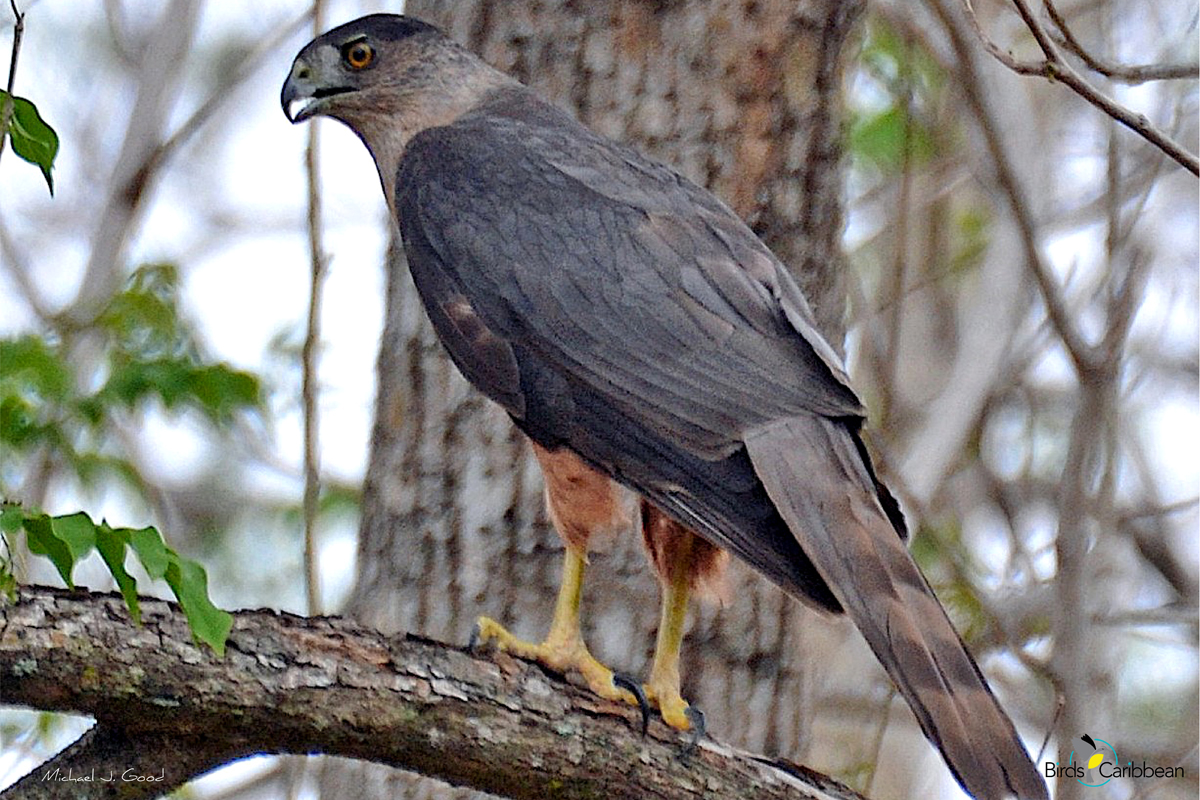
Cuba is the largest and most biodiverse Caribbean island. Adding to this biodiversity are almost 30 species of endemic birds, including the widespread but Endangered Gundlach’s Hawk (Astur gundlachi). For our understudied Caribbean endemics, any new life history information is a critical piece of the puzzle to figuring out how best to protect and conserve our species. A nest found within the National Botanical Gardens in Havana in 2022 is filling some of that knowledge gap. Randy Simón Vallejo and colleagues describe their findings of the nest in a research note, an important record showing the adaptability of the species and their ability to breed even in anthropogenic, semi-urban habitats.
How did you first conceive of this study, and what motivated you to conduct this research?
What made us initiate this study is knowing about the pair of Gundlach Hawks at the National Botanical Garden and that we are already conducting literature reviews of the species.
Tell us about a memorable moment during field research or data analysis.
There was a day when it rained that we saw an unexpected behavior—the father spread his wings over the chicks to protect them while the mother was on the defense perch.
Tell us about a challenge you had to overcome.
It was really a job that we enjoyed very much. What was most difficult was that the mother was very aggressive all the time.
What are your hopes of what your research will lead to? Will this work impact your own research agenda going forward?
This work is a driving force for a master’s research project on this bird of prey in a protected area.
More on Gundlach’s Hawk:
Gundlach’s Hawk is locally known as “Gavilán Colilargo” or “long-tailed hawk.” Adults are dark gray above and white-to-rufous below, while younger hawks are brown overall and streaked in their first year. An agile predator, Gundlach’s Hawk feeds almost exclusively on birds, including many local passerines, near-passerines, and fowl. The species is widespread but not common throughout Cuba, and habitat loss and disturbance are the main factors contributing to its Endangered status.
Read more about the species here on Birds of the World. Access is free for all Caribbean residents thanks to a collaboration between BirdsCaribbean and Cornell Lab of Ornithology!
Unexpected hummingbird capture in eastern Mexico
On a tiny island off the coast of Mexico, research is also ongoing—this time using bird banding as the method of choice. The migratory bird banding station is located on Isla Contoy within the Isla Contoy National Park, and operates using the MoSI protocol to study migrating and overwintering bird populations. During their second MoSI pulse in December 2022, Jonathan Nochebuena Jaramillo and colleagues caught a very unexpected White-necked Jacobin (Florisuga mellivora). These dazzling little gems are native to Central and South America—and Trinidad and Tobago—but had never been recorded that far north in Mexico.
Such records can occur for a variety of reasons: dispersal by young or inexperienced birds, natural range shifts potentially linked to climate change, navigational errors during migration, or severe weather blowing birds off course. Whatever the cause, this record is an exciting and important addition to our knowledge of the species and highlights the value of monitoring efforts at understudied sites like Isla Contoy.

How did you first conceive of this study, and what motivated you to conduct this research?
The banding station in Isla Contoy National Park was a personal initiative that arose from the need to help birds that cross the Mexican Caribbean. When I visited Isla Contoy for the first time I realized the large number of birds that cross the Caribbean so I said to myself, “There must be a station here that is dedicated to the conservation and protection of migratory birds.”
Tell us about the memorable moment when you captured the rare hummingbird.
Everything happened around 9:30 am when tourists arrived on the island—when they begin to arrive it is time to close the nets. We were working normally at the banding station when suddenly we heard a boat and said, “They’re tourists, runnn!”
We started to close the nets, when suddenly someone shouted “Look, a bird!” and we all ran! When we saw it we said to each other, “This isn’t normal—it is a very large hummingbird, keep it!” When we took it out of the bag, we exclaimed, “Wow, it’s beautiful!”
The team’s quick response was a matter of prioritizing the birds’ safety. As soon as tourists arrive, the area becomes a popular spot, and the increased activity could disturb the birds. By quickly closing the nets, the researchers ensure a stress-free environment for the birds.
What are your hopes of what your research will lead to? Will this work impact your own research agenda going forward?
Isla Contoy hides many mysteries as it is a buffer zone for many species, not just birds. We are sure that there are many birds that have not yet been recorded that use the island at some point in their lives. We are also confident that this information will greatly assist with the island’s conservation programs and the development of sound management plans in the future.
We are grateful to BirdsCaribbean for giving us the opportunity to share this great experience. We truly believed that we would never see this species in person, unless we traveled to South America where it is found.
Recovery of two macaws in northeastern Costa Rica
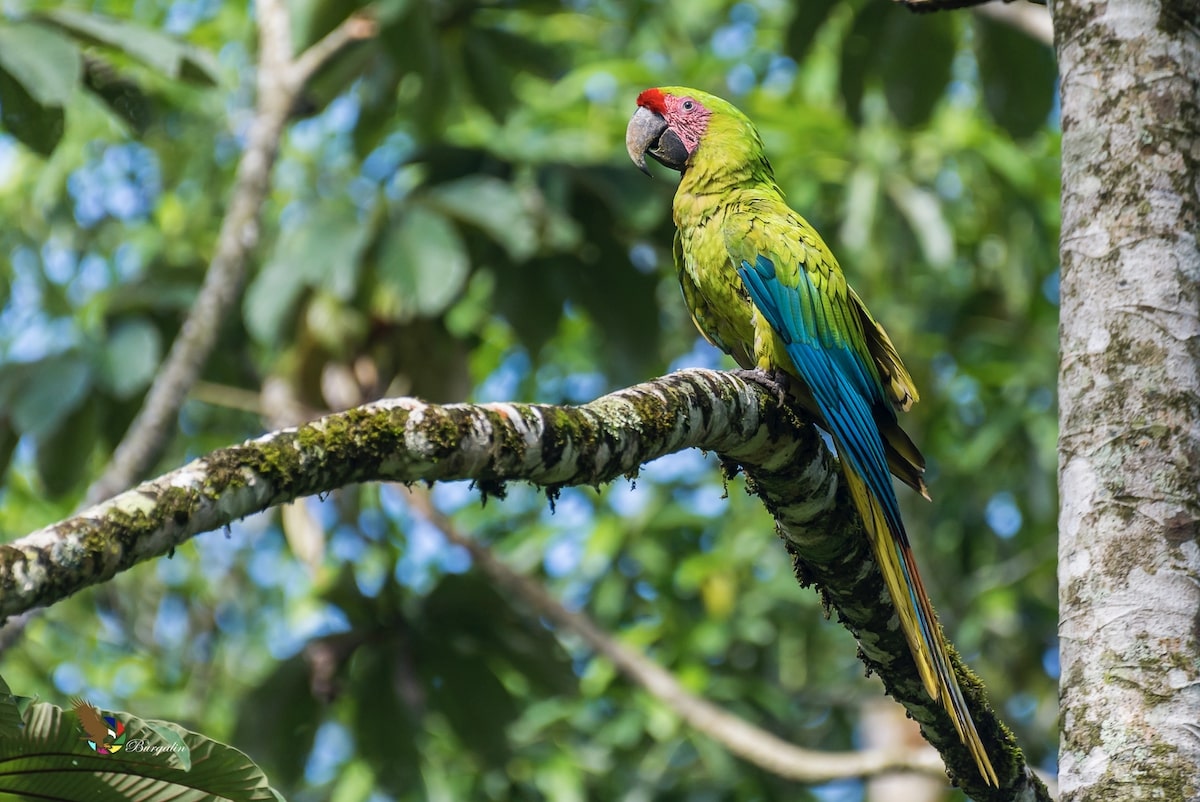
The Great Green Macaw (Ara ambiguus) and Scarlet Macaw (Ara macao) are two gorgeous psittacid species native to Costa Rica and whose populations are threatened by habitat loss throughout Central America. In fact, before 2014, they were considered rare and extirpated, respectively, in the Tortuguero area on Costa Rica’s Caribbean coast. Despite habitat protections in Costa Rica and Nicaragua, the status of the two macaw species was still unclear, especially as macaw populations are known to be highly mobile and seasonal based on food availability.


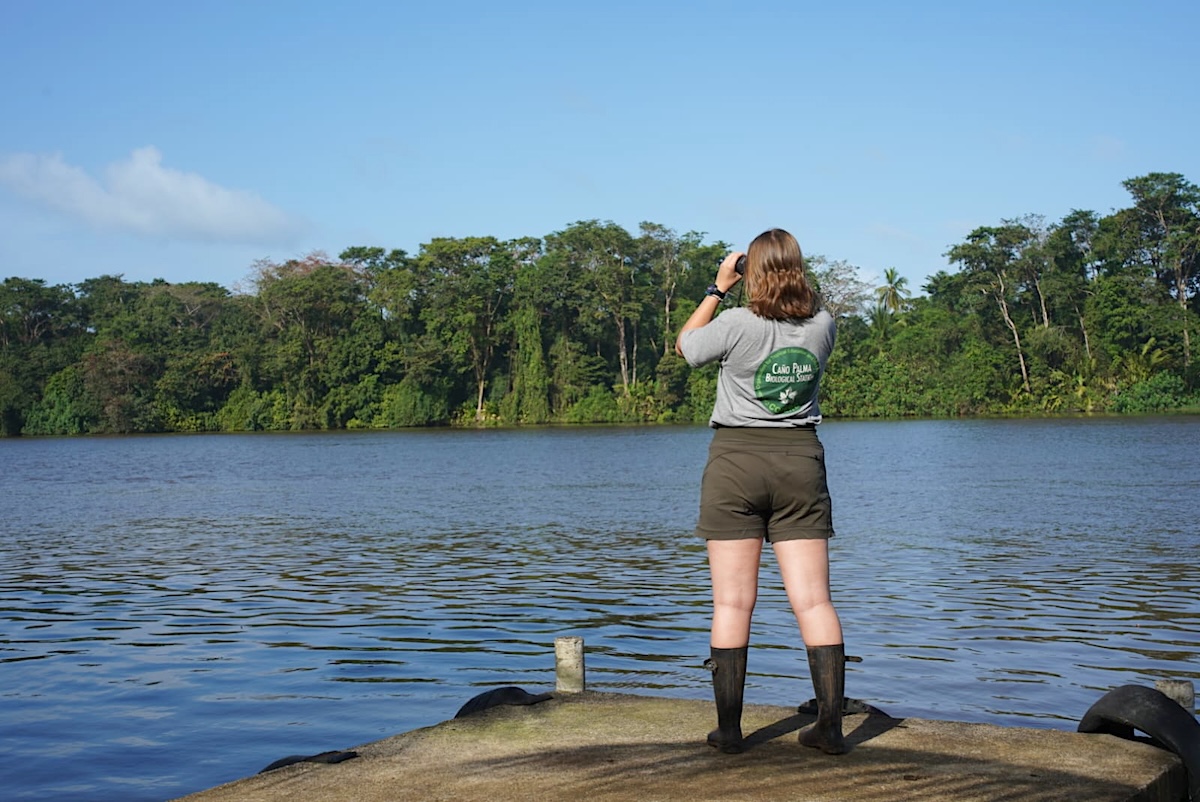
Enter the Caño Palma Biological Station, a small field research station established in the ‘90s to drive biological research and give budding scientists real experience. In 2017, Caño Palma began a targeted macaw survey program, doing point counts at lookouts throughout the Tortuguero Conservation Area every week for four and a half years. In their article, Emily Khazan and colleagues describe the trends from over 1,000 surveys of Great Green Macaw and Scarlet Macaw populations in Tortuguero.
How did you first conceive of this study, and what motivated you to conduct this research?
We conduct a number of long-term monitoring programs and when we were in the field for other surveys, noticed an increase in the number of green macaws in the area. We also started to see a marked increase in the number of months we were observing them. Being aware of their fragile status, we wanted to better understand the importance of Tortuguero National Park to the health of the species.
Tell us about the memorable moment during field research or data analysis.
While we were waiting for our permits to come through, we saw a flock of 56 green macaws feeding in the village of San Francisco (at that time the biggest group we’d seen), and it was mind-blowing. It was frustrating as we hadn’t started surveys yet, but we went back every day to watch them, along with all of the kids from the local primary school, and it really energized us to move forward.
Tell us about a challenge you had to overcome.
The greatest challenge is staying motivated during periods when very few macaws are present during surveys. We know that “no data” is still good data, and being surrounded by a wealth of bird diversity helps us to get through the 4-hour shifts.
What are your hopes of what your research will lead to? Will this work impact your own research agenda going forward?
We have broadened our research to look at the phenology of key local food sources (Dipteryx panamensis and Terminalia catappa) to understand the role they play in the macaw movements and to determine if there is sufficient food here during the nesting season to support a breeding population. Understanding the distribution of Dipteryx in particular, will help us to determine if local rumours about nesting are true, by enabling us to focus observations on areas with the greatest potential for suitable nest-site availability. If the area is being used for nesting, we’d be interested in exploring options to shift our focus from just monitoring, to active conservation, potentially teaming with others to explore the option of nest-boxes, to increase the availability of nesting sites. We have participated in national and international macaw counts and hope to continue communicating with interested groups across the Great Green Macaw’s range, to better understand and contribute to the conservation of this population.
Altogether these articles showcase the inspiring regional nature of BirdsCaribbean’s work and network. Across taxa and across borders—even across large bodies of water!—the similarities in our passions, our scientific interests, and our conservation actions shine through. We hope these findings inspire you to explore how you too can better help Caribbean birds. There is still so much we are still learning about our species’ habits, and there is always more to be done to strengthen habitat protections and improve our coexistence with birds.
 There is also always a need for additional funding, especially for small scale research and conservation efforts. In 2025, BirdsCaribbean is supporting several projects throughout the region, and in fact, the bird banding station in Isla Contoy, Mexico, by Nochebuena and colleagues was funded in part by our David S. Lee Fund for the Conservation of Caribbean Birds. Support the grants program and help fund future avian research and conservation work here.
Nuevas perspectivas ornitológicas desde Cuba y el Caribe: Publicaciones JCO, volumen 38
Coloridas, vibrantes y carismáticas: las aves son fáciles de amar y fascinantes de estudiar. En medio de las amenazas siempre presentes del cambio climático, la deforestación y las especies invasoras, entre muchas otras, nuestros amigos emplumados son perseverantes, ayudados por investigaciones específicas, acciones de conservación y protección del hábitat.
Desde halcones en Cuba hasta colibríes en México y guacamayos en Costa Rica. este blog destaca algunos de los hallazgos de los artículos publicados recientemente en el Volumen 38 de la JCO, con la primicia detrás de escena de los propios autores. Los tres estudios se realizaron en países hispanohablantes y dos se publicaron en español (¡la JCO es trilingüe!), por lo que este artículo de blog también está disponible en inglés.
Observaciones de un gavilán endémico anidando en Cuba
Cuba es la isla caribeña más grande y biodiversa. A esta biodiversidad se suman casi 30 especies de aves endémicas, incluido el Gavilán Colilargo (Astur gundlachi), muy extendido, pero en peligro de extinción. Para nuestras endémicas caribeñas poco estudiadas, cualquier nueva información sobre su historia natural es una pieza fundamental del rompecabezas para descubrir la mejor manera de proteger y conservar nuestras especies. Un nido encontrado en 2022 dentro del Jardín Botánico Nacional en La Habana rellena parte de ese vacío de conocimiento. Randy Simón Vallejo y sus colegas describen sus hallazgos del nido en una nota de investigación, un registro importante que muestra la adaptabilidad de la especie y su capacidad para reproducirse incluso en hábitats antropogénicos semiurbanos.
¿Cómo concibió por primera vez este estudio y qué le motivó a llevarlo a cabo?
Lo que nos hizo iniciar este estudio fue conocer sobre una pareja de Gavilán Colilargo que había en el Jardín Botánico Nacional y que ya estábamos realizando una revisión bibliográfica de la especie.
Háblenos de un momento memorable durante la investigación de campo o el análisis de datos.
Hubo un día en el cual llovió que observamos un comportamiento inesperado para nosotros: que el padre extendió las alas sobre los pichones para protegerlos mientras la madre estaba en la percha de defensa.
Háblenos de un reto que haya tenido que superar.
Realmente, este fue un trabajo que disfrutamos mucho. La mayor dificultad estuvo en que la madre era bien agresiva todo el tiempo.
¿A dónde espera que conduzca su investigación? ¿Influirá este trabajo en su propia agenda de investigación en el futuro?
Este trabajo es motor de maestría de un proyecto de investigación de esta ave rapaz en un área protegida y también servirá como base para una tesis de maestría.
Lee el artículo completo aquí.
Más información sobre Astur gundlachi:
La especie es conocido localmente como “Gavilán Colilargo”, un nombre que se explica por sí mismo. Los adultos son de color gris oscuro en la parte superior y blanco a rojizo en la parte inferior, mientras que los jóvenes son marrones en general y tienen rayas en su primer año. Un depredador ágil, se alimenta casi exclusivamente de aves, incluyendo muchas especies locales, de paseriformes, casi paseriformes y aves de corral. Su distribución está muy extendida, pero no es común en toda Cuba, y la pérdida y alteración de su hábitat son los principales factores que contribuyen a su estado de peligro de extinción.
Puede leer más sobre la especie aquí, en Birds of the World. ¡El acceso es gratuito para todos los residentes del Caribe gracias a la colaboración entre BirdsCaribbean y el Laboratorio de Ornitología de Cornell!
Captura inesperada de colibrí en el oriente de México
En una pequeña isla frente a México, también se están llevando a cabo investigaciones, esta vez utilizando el anillamiento de aves como método de elección. La estación de anillamiento de aves migratorias está ubicada en Isla Contoy, dentro del Parque Nacional Isla Contoy, y opera aplicando el protocolo MoSI para estudiar las poblaciones de aves migratorias e invernantes. Durante su segundo pulso de MoSI en diciembre de 2022, Jonathan Nochebuena Jaramillo y sus colegas capturaron un ejemplar muy inesperado: un Colibrí Capucha Azul (Florisuga mellivora). Esta pequeña joya deslumbrante es nativa de América Central y del Sur, y de Trinidad y Tobago, pero nunca antes se había documentado tan al norte de México.
Estos registros pueden ocurrir por diversas razones: dispersión por aves jóvenes o inexpertas, cambios en el rango natural posiblemente relacionados con el cambio climático, errores de navegación durante la migración o condiciones climáticas extremas que desvían a las aves de su ruta. Sea cual sea la causa, este registro constituye una aportación emocionante e importante a nuestro conocimiento de la especie y resalta la importancia de los esfuerzos de monitoreo en sitios poco estudiados como Isla Contoy.
¿Cómo concibió por primera vez este estudio y qué le motivó a llevarlo a cabo?
La estación de anillamiento en Parque Nacional Isla Contoy fue una iniciativa personal que surgió de la necesidad de ayudar a las aves que cruzan por el Caribe mexicano. Yo cuando visité por primera vez Isla Contoy me di cuenta de la gran cantidad de aves que cruza por el Caribe, así que dije: “Aquí debe existir una estación dedicada a la conservación y protección de las aves migratorias”.
Cuéntenos sobre el momento memorable en el que capturó al raro colibrí.
Todo giro alrededor de las 9:30 am cuando los turistas llegan a la isla y, por tanto, debíamos cerrar las redes. Estábamos trabajando normal en la estación de anillamiento cuando de repente escuchamos una lancha y dijimos: “Son turistas, ¡corraaan!”
Así que empezamos a cerrar las redes, cuando de pronto alguien gritó: “¡Cayó un ave!”, y todos corrimos. Al observarlo dijimos: “¡Esto no es normal, es un colibrí muy grande, guárdenlo!” Al sacarlo de la bolsa exclamamos: “¡Wow, está hermoso!”
¿A dónde espera que conduzca su investigación? ¿Influirá este trabajo en su propia agenda de investigación en el futuro?
Isla Contoy esconde muchos enigmas, ya que es una zona de amortiguamiento para muchas especies, no solo aves. Estamos seguros de que aún quedan muchas especies de aves que no han sido registradas y que usan la isla en algún momento de su vida. También estamos seguros de que esta información ayudará mucho en los programas de conservación de la isla y en la elaboración de buenos planes de manejo en el futuro.
Agradecemos a BirdsCaribbean por abrirnos la oportunidad de poderles compartir esta gran experiencia. Sinceramente, jamás creímos conocer a esta especie personalmente, a menos que viajáramos al sur de América, y miren en dónde la encontramos.
Lee el artículo completo aquí.
Recuperación de dos guacamayas en el noreste de Costa Rica
Ara ambiguus ambiguus (gran guacamaya verde) y Ara macao cyanopterus (guacamaya escarlata) son dos hermosas especies de psitácidos nativas de Costa Rica, cuyas poblaciones están amenazadas por la pérdida de hábitat en toda América Central. De hecho, antes de 2014, se consideraban rara y extirpada, respectivamente, en la zona de Tortuguero, en la costa caribeña de Costa Rica. A pesar de las medidas de protección del hábitat en Costa Rica y Nicaragua, el estado de las dos especies de guacamayas aún no estaba claro, especialmente porque se sabe que sus poblaciones son altamente móviles y estacionales según la disponibilidad de alimentos.
Ingresé a la Estación Biológica Caño Palma, una pequeña estación de investigación de campo establecida en los años noventa, para impulsar la investigación biológica y brindar a los científicos en ciernes una experiencia real. En 2017, Caño Palma comenzó un programa específico para el estudio de guacamayas específicas, realizando conteos semanales de puntos en miradores en toda el Área de Conservación Tortuguero durante 4.5 años. En su artículo, Emily Khazan y colaboradores describen las tendencias de más de 1 000 monitoreos de las poblaciones de guacamayas verde y escarlata en Tortuguero.
¿Cómo concibió por primera vez este estudio y qué le motivó a llevarlo a cabo?
Llevábamos a cabo una serie de programas de monitoreo a largo plazo y, cuando estábamos en el campo para otros monitoreos, notamos un aumento en el número de guacamayas verdes en el área. También empezamos a ver un marcado aumento en el número de meses en que los observábamos. Conscientes de su frágil estado, quisimos comprender mejor la importancia del Parque Nacional Tortuguero para la salud de la especie.
Háblenos de un momento memorable durante la investigación de campo o el análisis de datos.
Mientras esperábamos que nos dieran los permisos, vimos una bandada de 56 guacamayas verdes alimentándose en el pueblo de San Francisco (el grupo más grande que habíamos avistado hasta entonces), y fue alucinante. Aunque fue frustrante porque aún no habíamos comenzado los monitoreos, regresábamos todos los días para observarlos junto con los niños de la escuela primaria local, lo que realmente nos llenó de energía para seguir adelante.
Emily realizando estudios sobre guacamayos en Costa Rica. (Foto de Sebastian Putz)
Háblenos de un reto que haya tenido que superar.
El mayor desafío fue mantenernos motivados durante los períodos en que hay muy pocos guacamayos presentes durante los monitoreos. Sin embargo, sabemos que la ausencia de datos también aporta información, y estar rodeados de una gran diversidad de aves nos ayudó a superar los turnos de 4 horas.
¿A dónde espera que conduzca su investigación? ¿Influirá este trabajo en su propia agenda de investigación en el futuro?
Hemos ampliado nuestra investigación para analizar la fenología de las principales fuentes de alimento locales (Dipteryx panamensis y Terminalia catappa), con el fin de entender el papel que desempeñan en los movimientos de los guacamayos y determinar si existe alimento suficiente durante la temporada de anidación para mantener una población reproductora. En particular, comprender la distribución de Dipteryx nos ayudará a determinar si los rumores locales sobre la anidación son ciertos, al permitirnos centrar las observaciones en las áreas con el mayor potencial para la disponibilidad de sitios de anidación adecuados. Si confirmamos que el área está siendo utilizada para la anidación, nos interesaría explorar opciones para cambiar nuestro enfoque de sólo monitoreo a la conservación activa, potencialmente asociándonos con otros investigadores para instalar cajas nido y así aumentar la disponibilidad de sitios de anidación. Hemos participado en conteos nacionales e internacionales de guacamayas y esperamos continuar comunicándonos con grupos interesados en todo el rango de Ara ambiguus para comprenderla mejor y contribuir a su conservación.
Lee el artículo completo aquí.
En conjunto, estos artículos muestran el carácter inspirador y regional del trabajo y la red de BirdsCaribbean. Entre taxones y fronteras— ¡incluso a través de grandes masas de agua! — las similitudes en nuestras pasiones, nuestros intereses científicos y nuestras acciones de conservación brillan con luz propia. Esperamos que estos hallazgos le inspiren a explorar cómo usted también puede ayudar mejor a las aves del Caribe. Todavía nos queda mucho por aprender sobre los hábitos de nuestras especies, y siempre hay más por hacer para fortalecer la protección de los hábitats y mejorar nuestra coexistencia con las aves.
También siempre se necesitan fondos adicionales, especialmente para la investigación y los esfuerzos de conservación a pequeña escala. En 2025, BirdsCaribbean apoya varios proyectos en toda la región y, de hecho, la estación de anillamiento de aves en Isla Contoy, México, de Nochebuena y sus colegas, fue financiada en parte por nuestro Fondo David S. Lee para la Conservación de las Aves del Caribe. Apoye el programa de subvenciones y ayude a financiar futuras investigaciones y trabajos de conservación de aves aquí.