
Celebrate World Migratory Bird Day (WMBD) with us in 2025! This year’s theme is “Shared Spaces: Creating Bird-friendly Cities and Communities”. Have fun learning about a new migratory bird every day. We have coloring pages, interesting facts, activities, and more. Download for free and enjoy nature with your family at home.

Migratory Bird of the Day: Solitary Sandpiper
While many sandpipers like to flock together, meet the one that literally stays away from the crowd—the Solitary Sandpiper! As its name suggests this bird is a bit of a loner. Medium-sized and gray-brown above with white underparts, it shows fine white speckling on the wings and a bold white eye-ring. In flight, look for dark underwings, a dark rump, and lots of white on the tail.
During the non-breeding season, it’s easy to mix this bird up with the similar Spotted Sandpiper. The Solitary Sandpiper lacks the Spotted’s “white shoulder,” and though it bobs up and down occasionally, it doesn’t dip and ‘teeter’ quite so much. You can find more ID tips for these two species here.
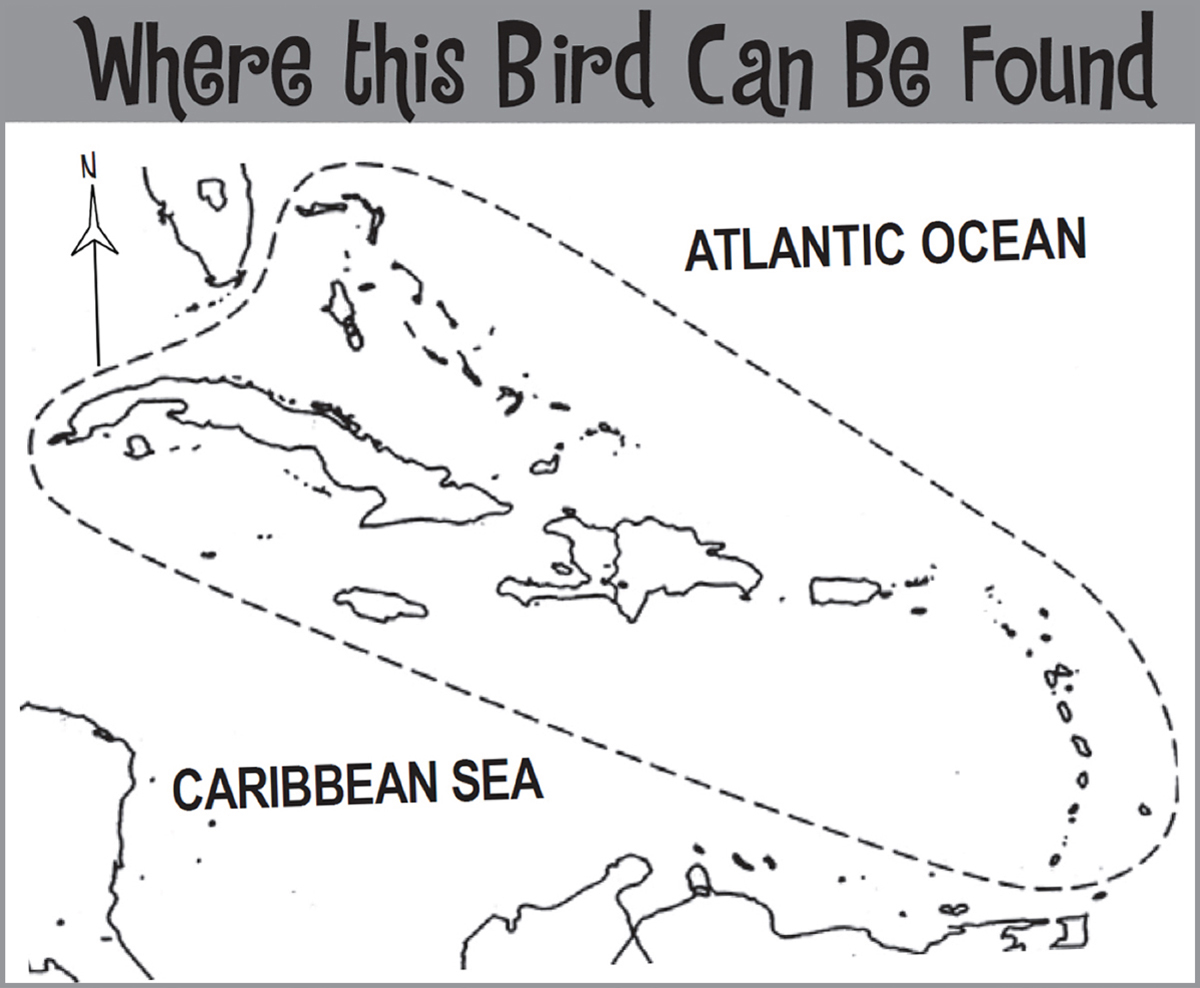
Like many migratory shorebirds found in the Caribbean, Solitary Sandpipers nest across northern North America. But unlike nearly all other sandpipers that nest on the ground, the Solitary Sandpiper does something unusual—it nests in trees! These resourceful birds will ‘upcycle’ old songbird nests in forested wetlands, likely to keep their eggs safe from predators. After breeding, they migrate south to spend the winter in Central and South America and throughout the Caribbean.
Because of their ‘lone wolf’ lifestyle, Solitary Sandpipers can be easy to overlook. But they’re not fussy about habitats—you might spot them at streams, lakes, pond edges, mangroves, roadside ditches, and even puddles in flooded agricultural areas. Wherever they are, they’ll be probing for crunchy insects and other mud-loving invertebrates.
The good news? Solitary Sandpipers are not currently threatened. Their solitary habits and wide habitat tolerance have made them less vulnerable than other shorebirds to threats like hunting and development. Still, they depend on clean wetlands and healthy insect populations, so opting for organic fertilizers, reducing pesticide use, and protecting waterways remain vital for their future.
Learn more about this species, including its range, photos, and calls here. Great news! If you’re in the Caribbean, thanks to BirdsCaribbean, you have free access to Birds of the World and you can find out even more in the full species account of this bird!
Thanks to Alex Sansom for the text and Arnaldo Toledo for the lovely illustration!
Color in the Solitary Sandpiper
Download the Migratory Birds of the Day Coloring Page! Use the picture above and the photos on this page as your guide, or look up pictures of the bird online or in a bird field guide if you have one. Share your colored-in page with us by posting it online and tagging us @BirdsCaribbean #WMBD2025Carib
Listen to the calls of the Solitary Sandpiper
The Solitary Sandpiper makes a high-pitched two-note “tsee-weet!” call.
Enjoy these photos of Solitary Sandpipers


Activity of the Day
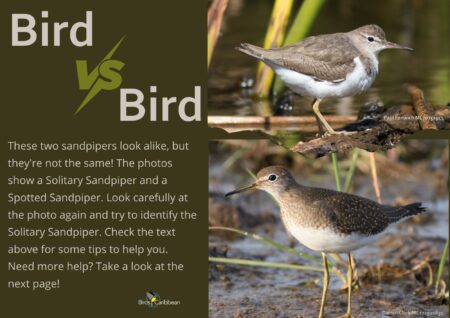 FOR KIDS : in non-breeding plumage Solitary Sandpipers are a medium sized gray-brown sandpiper with pale underparts. Spotted Sandpipers are also a medium sized gray-brown sandpiper with pale underparts. Both also have mid-length bills!
So we have two sandpipers look alike, but they’re not EXACTLY the same! There are some handy way you can tell them apart. Learn all about the differences between these birds in our ‘Bird vs Bird’ ID activity!
Can you tell the difference between the two birds in the photos? If not check out the tips and then try again! Scroll down the page and see if you got it right!
FOR KIDS AND ADULTS: Enjoy this video of a Solitary Sandpiper in the wild!
Learn how to tell the difference between Solitary and Spotted Sandpipers!