
Celebrate World Migratory Bird Day (WMBD) with us in 2026! This year’s theme is “Every Bird Counts – Your Observations Matter”. Have fun learning about a new migratory bird every day. We have coloring pages, interesting facts, activities, and more. Download for free and enjoy nature with your family at home.
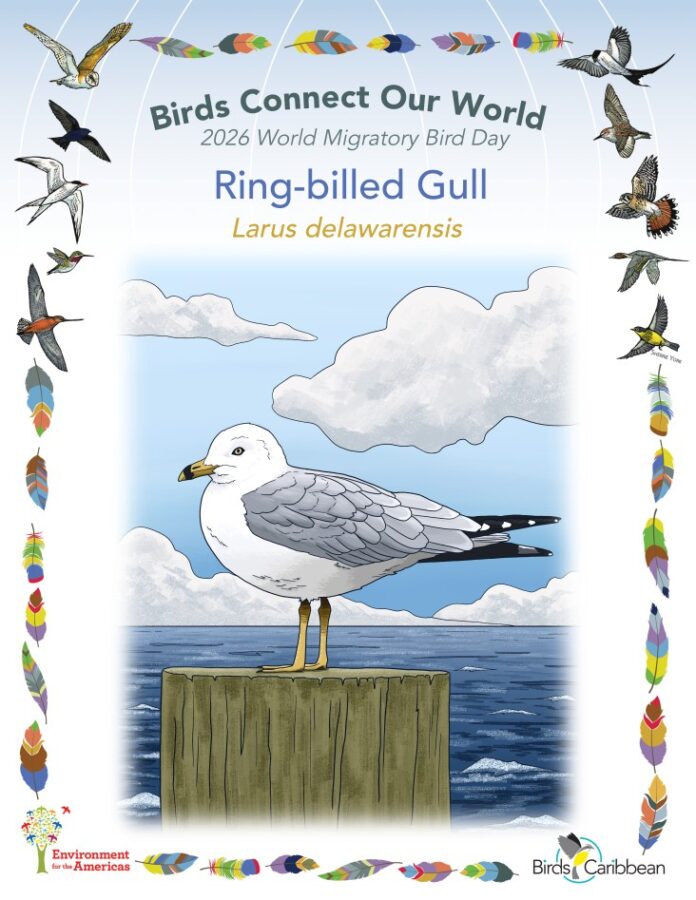
Migratory Bird of the Day: Ring-billed Gull
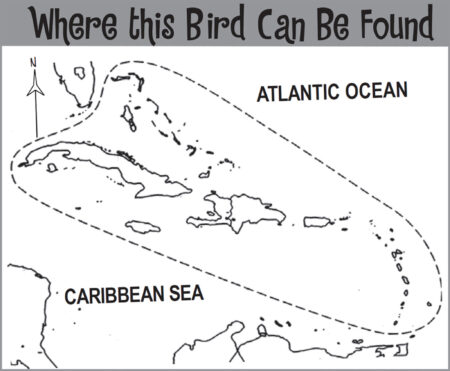 Today we stop to observe one of North America’s most adaptable gulls: the Ring-billed Gull. These medium-sized birds are a living example of population recovery and adaptation to changing environments.
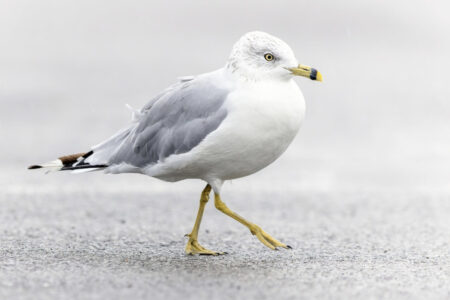
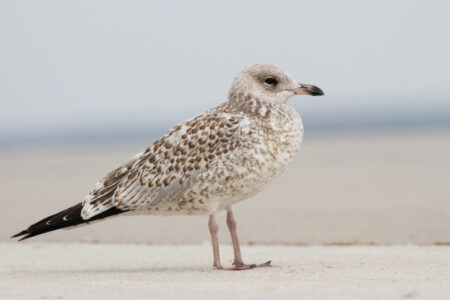
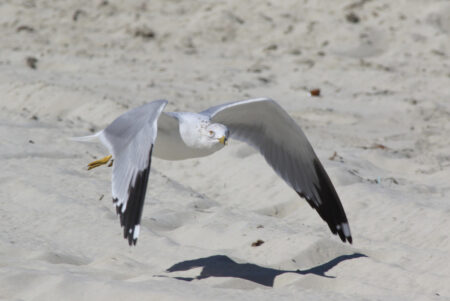
At first glance, they may look like ordinary gulls, but observe closely and you’ll notice the details that make them unique. Adults have pale gray backs and wings, black wingtips, white underparts, yellow legs, pale eyes, and a yellow bill marked with the bold black ring that gives the species its name. Their heads are white during the breeding season but often show dark spots and streaks in winter, especially toward the back of the head and neck. Young birds look quite different, with mottled brown plumage and pink bills tipped in black. As they grow and molt, they gradually take on the adults’ cleaner gray-and-white appearance.
Their story is fascinating. Ring-billed Gulls declined sharply in the late 1800s as people encroached on their nesting grounds and hunted them for feathers. By the early 1900s, many breeding colonies had disappeared. Legal protection helped them recover, and their ability to adapt to human-modified habitats gave them another advantage. A true story of resilience!
These gulls are opportunists. Their remarkably broad diet includes fish, insects, earthworms, small mammals, grains, and food discarded by people. They search for food while walking on land, skim the water for fish, and sometimes stamp their feet in shallow water to uncover small creatures. You might also see them feeding in a freshly plowed field—or stealing a meal from another bird!
Ring-billed Gulls breed across the northern United States and Canada. During the breeding season, they gather in colonies, often on sparsely vegetated islands or other open ground near freshwater. Both parents help build a nest from locally gathered vegetation and take turns caring for their eggs and chicks. The chicks hatch covered in down and can soon move around near the nest, though they still depend on their parents for food and protection.
Ring-billed Gulls are highly social and vocal. Their calls range from short notes to loud, rising squeals, and they use both sounds and body movements to communicate. When defending a territory, a gull may lower its head, call, and then toss its head back in an emphatic display. Imagine the noise of an entire nesting colony calling at once!
After breeding, some Ring-billed Gulls migrate south to spend the nonbreeding season in the West Indies. They are most often seen in The Bahamas, Greater Antilles, Cayman Islands, and Barbados; sightings are less frequent elsewhere in the region. Although they have been recorded in every month of the year, your best chance of seeing one is October through May. Look near beaches, harbors, lakes, and other waters—or even in urban areas, where these resourceful birds sometimes gather to feed.
If you spot a gull this winter, take a closer look. An adult’s black bill ring, pale eye, yellow legs, and spotted winter head can help you identify it. Younger birds are mottled brown and lack the adult’s bright yellow bill. Each Ring-billed Gull tells a story of resilience, adaptability, and survival. Learn more about this species, including its range, photos, and calls here. Great news! If you’re in the Caribbean, thanks to BirdsCaribbean, you have free access to Birds of the World and you can find out even more in the full species account of this bird!
Thanks to Ailen Anido Escalona for the text and Eden Garrod for the lovely illustration!
Color in the Ring-billed Gull
Download the Migratory Birds of the Day Coloring Page! Use the picture above and the photos on this page as your guide, or look up pictures of the bird online or in a bird field guide if you have one. Share your colored-in page with us by posting it online and tagging us @BirdsCaribbean #WMBD2026Carib
Listen to the calls of the Ring-billed Gull
The call of the Ring-billed Gull include high-pitched squeals often followed by a series of short exclamatory notes.
Enjoy these photos of Ring-billed Gulls
Activity of the Day
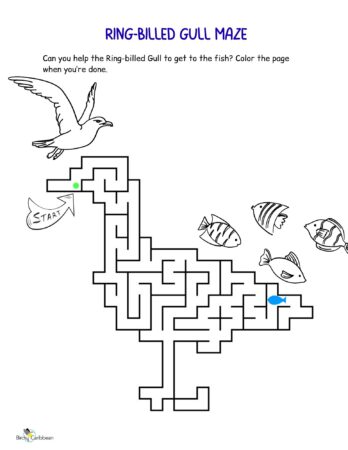 FOR KIDS: Ring-billed Gulls love a seafood feast, including many types of fish.
Can you help this hungry Ring-billed Gull find its way through our maze to to grab a fish lunch?
You can find the correct route here.
FOR KIDS AND ADULTS: Enjoy this video of a Ring-billed Gull in the wild!