
Celebrate the Caribbean Endemic Bird Festival (CEBF) with us! Our theme in 2025 is “Shared Spaces: Creating Bird-friendly Cities and Communities”—highlighting the crucial role bird-friendly cities and communities can have in addressing the decline in bird populations caused by threats like habitat loss, predation, and climate change. Have fun learning about a new endemic bird every day. We have colouring pages, puzzles, activities, and more. Download for free and enjoy learning about and celebrating nature!
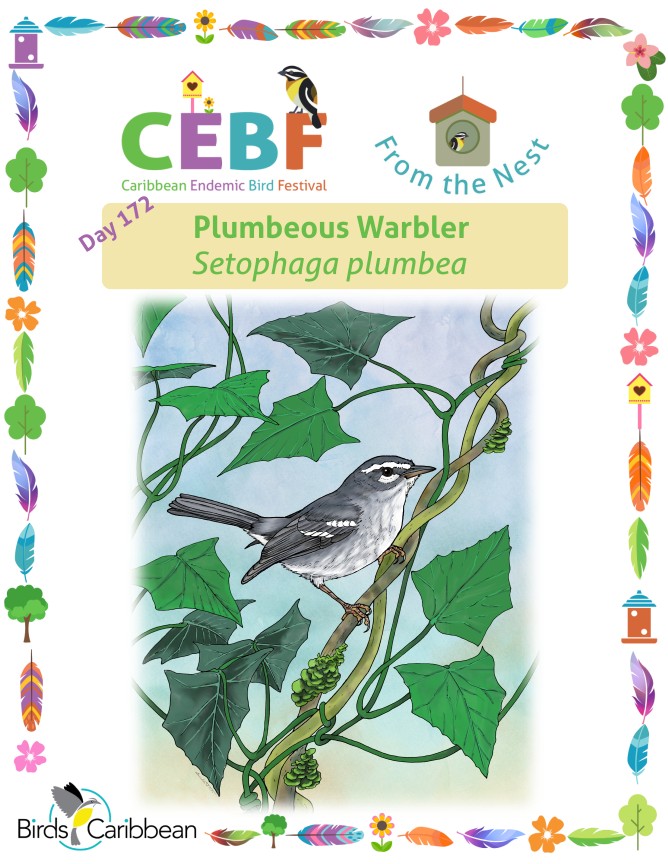
Endemic Bird of the Day: Plumbeous Warbler
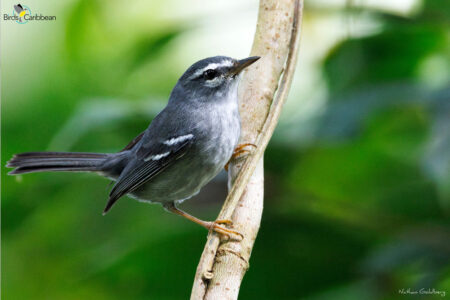
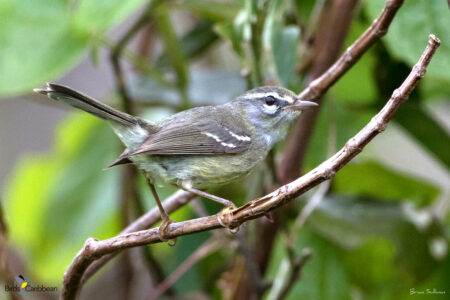
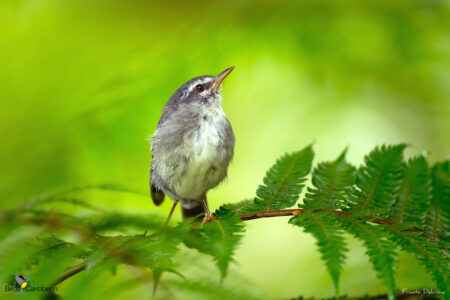
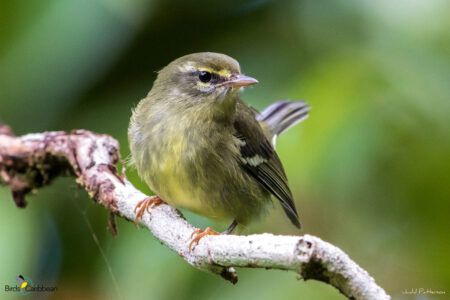
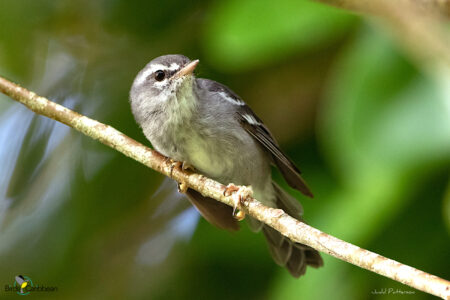
The Plumbeous Warbler is a magnificent little warbler, weighing in a just ten grams, about the weight of a ballpoint pen! Adults are dark gray above and lighter below, with two crisp wing bars, a white eyebrow, and a pale half-crescent beneath the eye. Juveniles are similar but show a greenish wash to the gray plumage and buffy to yellowish underparts, facial markings, and wingbars.
While its plumage may be modest, the Plumbeous Warbler more than makes up for it with its lovely and varied song. Throughout the day, you can hear their melodic “pa-pi-a” or “de-de-diu.” During the midday, it switches to a soft, whisper-like version of its song. When aggravated, it lets out a long, rolling rattle.
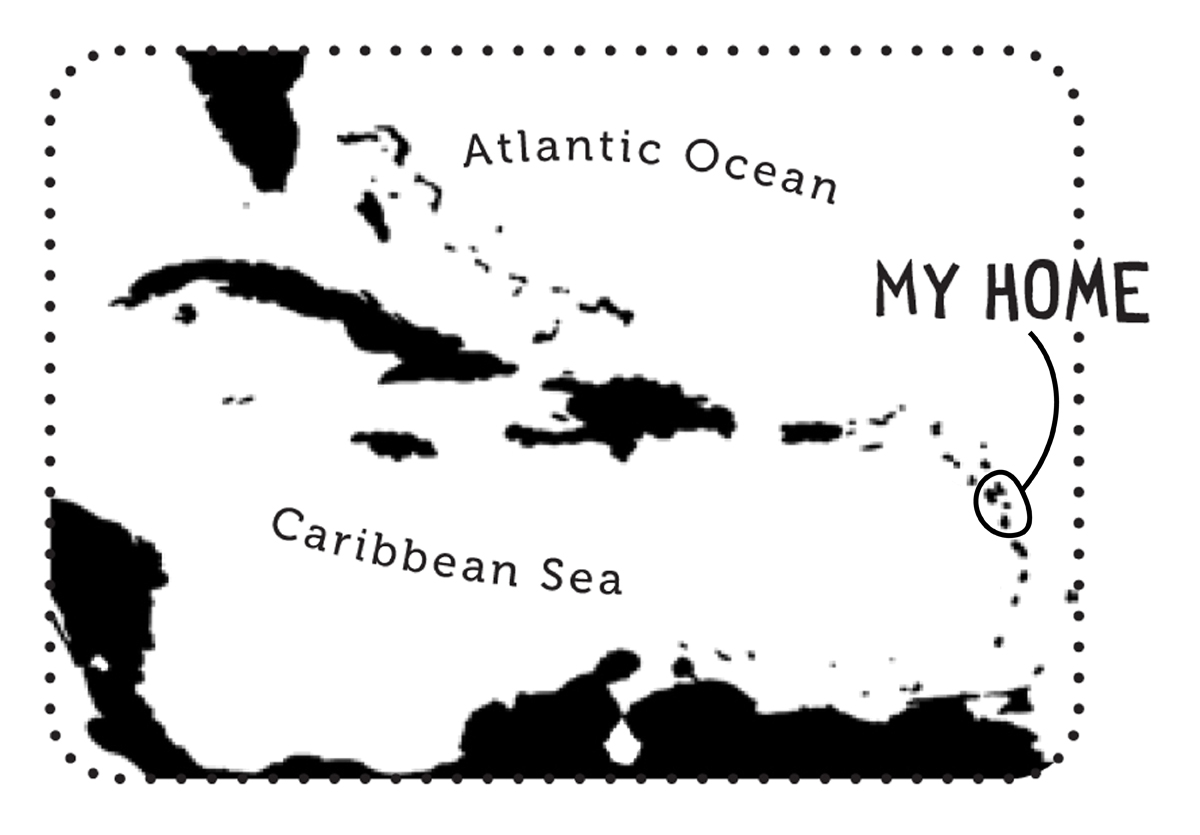
Endemic to Guadeloupe and Dominica, this warbler inhabits a wide variety of forest types—from sea level to elevations over 1,200m. In Guadeloupe, it is particularly abundant in swamp forests.
Within these habitats, the Plumbeous Warbler roams the undergrowth, searching for wriggly, crunchy, and sometimes gooey insects, and the occasional juicy berry. Its breeding season runs from March to August, with a peak in May. Nests are constructed in forked branches of shrubs or small trees using leaves and rootlets. A typical clutch contains 2–3 eggs.
Although it is still relatively common in the main islands of its range, the ecology and habits of this species remain poorly studied. A small population persists on Marie-Galante, a small island south of the “mainland” Guadeloupe, but the bird may have disappeared from Terre-de-Haut, an even smaller offshore island in the Les Saintes archipelago of Guadeloupe.
The Plumbeous Warbler is protected under Guadeloupe’s 1989 ministerial decree. Though classified as “Least Concern” by the IUCN at both regional and international levels, recent monitoring reveals a cause for concern: a 42% decline in population size between 2014 and 2024, as shown by our Breeding Bird Survey in Guadeloupe.
Confined to forested areas, the Plumbeous Warbler is mainly threatened by the destruction of its habitat from development and human activities. Better protection and restoration of forested areas—especially efforts to strengthen the ecological corridor (Green Network) between Basse-Terre and Grande-Terre——would go a long way in securing the future of this beautiful endemic warbler. Learn more about this species, including its range, photos, and calls here. Great news! If you’re in the Caribbean, thanks to BirdsCaribbean, you have free access to Birds of the World and you can find out even more in the full species account of this bird!
Thanks to Arnaldo Toledo for the illustration and Anthony Levesque for the text!
Colour in the Plumbeous Warbler
Download our West Indies Endemic Bird colouring page. Use the photos below as your guide, or you can look up pictures of the bird online or in a bird field guide if you have one. Share your coloured-in page with us by posting it online and tagging us @BirdsCaribbean #CEBFfromthenest
Listen to the song & call of the Plumbeous Warbler
The song of the Plumbeous Warbler is made up of whistles notes, the first three are given at the same pitch. They have a dry, rattling call.
Puzzle of the Day
Click on the images below to do the puzzles. You can make the puzzle as easy or as hard as you like – for example, 6, 8, or 12 pieces for young children, all the way up to 1,024 pieces for those that are up for a challenge!
Activity of the Day
FOR KIDS : The Plumbeous Warbler loves to feed on insects! In fact insects are an important delicacy for many types of birds. For our dazzling hummingbirds, our captivating todies, swooping swifts and swallows, darting flycatchers, pewees and potoos, drilling woodpeckers, and of course, our warblers —insects are an essential protein source.
we’ve compiled our top six activities into an activity book for you to enjoy! Our theme is “Protect Insects, Protect Birds,” and these activities have been purposely created to help children learn about insects.
Our “Incredible Insects” activity book is available for download directly from Flipsnack in both English and Spanish or download the PDFs.
Incredible Insects booklet as a PDF download
Insectos Increíbles
Insectos Increíbles- descargar el folleto en PDF
FOR KIDS AND ADULTS : Enjoy this video of a Plumbeous Warbler in the wild!