
Celebrate World Migratory Bird Day (WMBD) with us in 2026! This year’s theme is “Every Bird Counts – Your Observations Matter”. Have fun learning about a new migratory bird every day. We have coloring pages, interesting facts, activities, and more. Download for free and enjoy nature with your family at home.
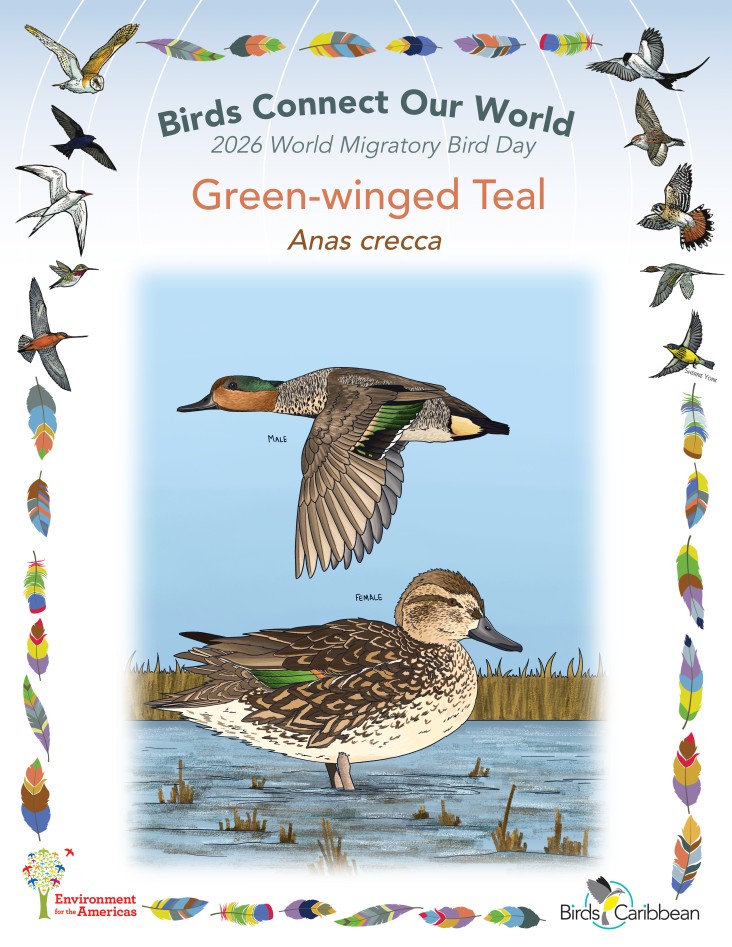
Migratory Bird of the Day: Green-winged Teal
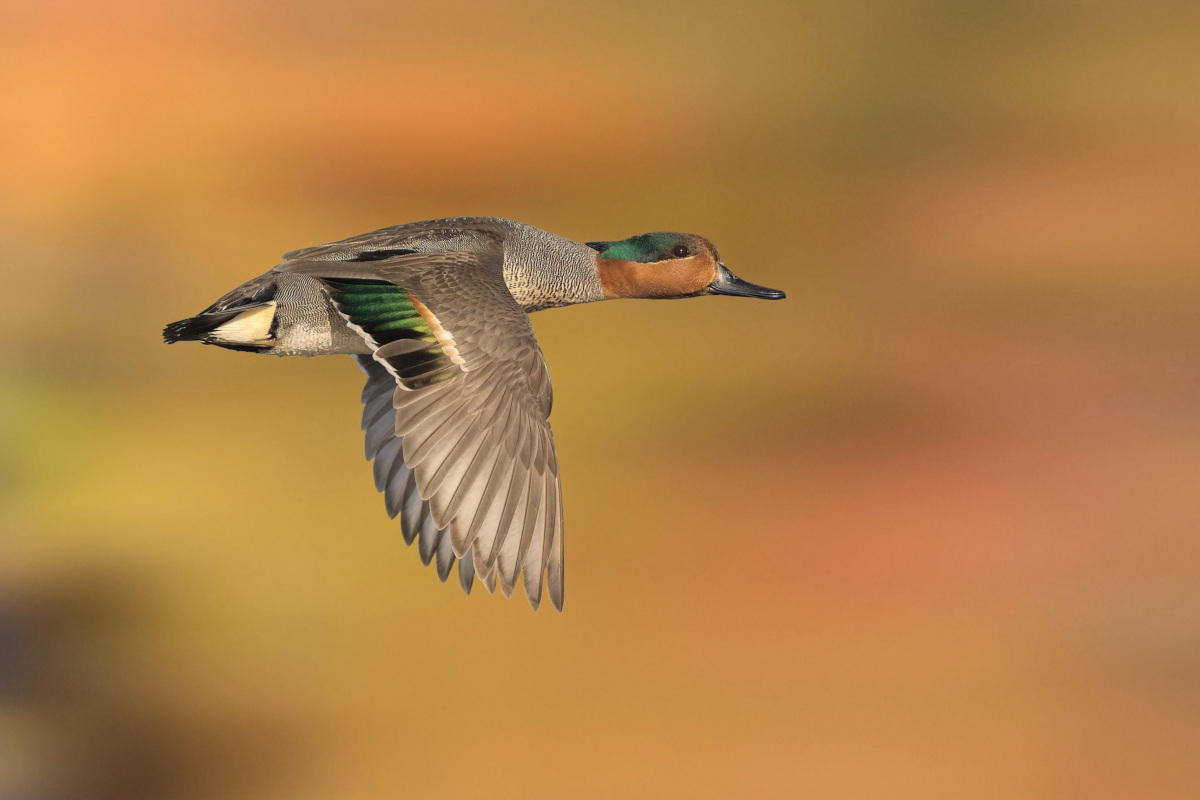
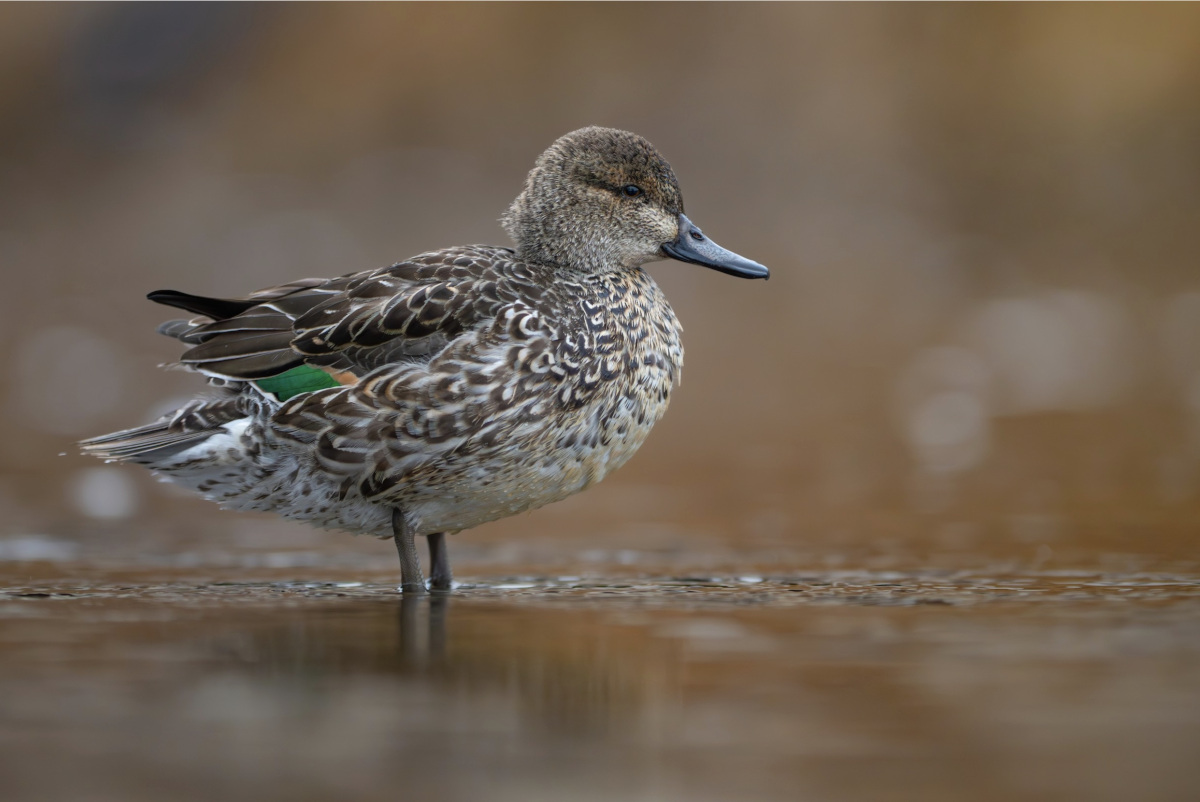
 Weighing about 400 grams—about the same as a small loaf of bread!—the handsome Green-winged Teal holds the title of North America’s smallest dabbling duck. Breeding males have a rich cinnamon head with a metallic green swoop from the eye to the back of the neck. Their bodies are mostly gray, but with a white vertical white stripe near the shoulder and a buffy booty. Females are mottled brown— like many other female dabbling ducks—but look for their darker mottling and a creamy streak along the side of the tail. Both sexes have a bright green wing patch, called a speculum, that’s easiest to see in flight.
Take a closer look at a teal’s bill and you might think it has teeth! Those tiny, comb-like ridges are called lamellae (say it with us: luh-MEL-ee). They work like a sieve, trapping seeds and tiny invertebrates while letting water and mud pass through.
Green-winged Teal feed in shallow wetlands and flooded fields, eating whatever’s most abundant. They skim the surface for seeds and small invertebrates, dip their heads underwater, or tip tail-up to reach their next meal. On mudflats, they probe for worms and tiny crustaceans such as seed shrimp and copepods. They’ll also eat grains like corn and rice.
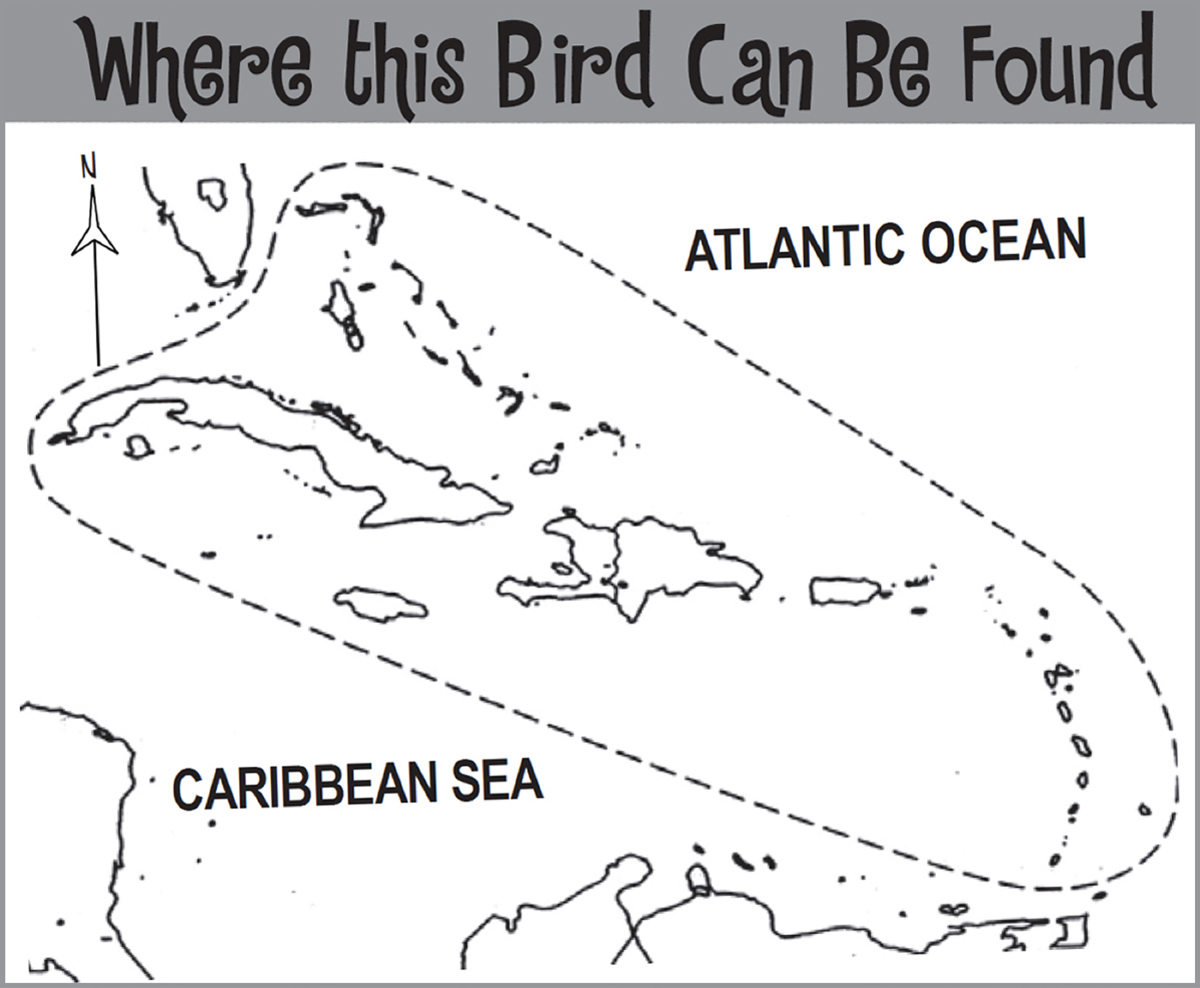
Green-winged Teals breed across the vast forested wetlands and river deltas of Alaska and Canada. In the Caribbean, they are uncommon to rare winter visitors. Look for them in the Bahamas, Cuba, the Virgin Islands, the Cayman Islands, Guadeloupe and Barbados. They’re rarely seen elsewhere in the region.
Because Green-winged Teal pair up on the wintering grounds, you might be treated to one of their courtship shows. Males often gather around one or more females, performing ritualized robot-like displays such as the “Burp,” “Grunt-whistle,” “Head-up-tail-up,” and “Turn-toward-female.” These displays are accompanied by whistles and grunts. Females choose a mate from amongst these suiters. Males follow their mates back to the breeding grounds and guard her from rival males during egg-laying and early incubation.
This dapper dabbler depends on healthy wetlands and the food they provide. You can help by supporting local wetland protection and restoration, keeping fertilizers and pesticides out of waterways, and giving feeding flocks plenty of space. If you spot a Green-winged Teal, share your sighting on eBird or join a Caribbean Waterbird Census count to help document where these tiny ducks spend the winter. Learn more about this species, including its range, photos, and calls here. Great news! If you’re in the Caribbean, thanks to BirdsCaribbean, you have free access to Birds of the World and you can find out even more in the full species account of this bird!
Thanks to Aliya Hosein for the text and Eden Garrod for the lovely illustration!
Color in the Green-winged Teal
Download the Migratory Birds of the Day Coloring Page! Use the picture above and the photos on this page as your guide, or look up pictures of the bird online or in a bird field guide if you have one. Share your colored-in page with us by posting it online and tagging us @BirdsCaribbean #WMBD2026Carib
Listen to the calls of the Green-winged Teal
The calls of the Green-winged Teal are a repeated, shrill quack.
Enjoy these photos of Green-winged Teal
Activity of the Day
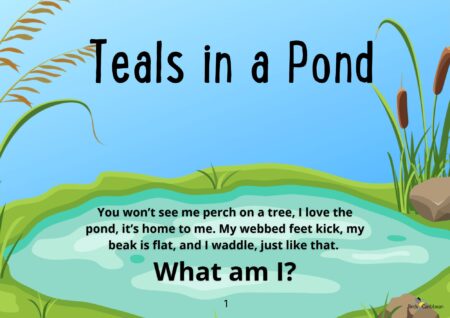 FOR KIDS: The Green-winged Teal likes to hang out in shallow ponds and flooded agricultural fields, where they can find food. They eat mainly aquatic invertebrates, grasses and seeds. Invertebrates are animals without a a backbone or bony skeleton like worms, beetles and flies.
Did you know that the Green-winged Teal has a built-in food strainer in its beak? This means they can filter out and eat the tiniest bugs from the water!
Now for the fun part! In this activity, you will make your own pond where your Green-winged Teals can wade, snack, or just hang out!
With help from an adult, gather the following materials:
- Paper Plates Medium sized paper clips
- Blue paint -acrylic Scissors
- Green craft foam OR green construction paper Small stones (Optional)
- Markers or colored pencils Magnet
- Glue
- Green-winged Teal template – on last page of the activity sheets
You can download all the instructions to make your pond and the teal template here.
FOR KIDS AND ADULTS: Enjoy this video of a Green-winged Teal in the wild!