
Celebrate World Migratory Bird Day (WMBD) with us in 2025! This year’s theme is “Shared Spaces: Creating Bird-friendly Cities and Communities”. Have fun learning about a new migratory bird every day. We have coloring pages, interesting facts, activities, and more. Download for free and enjoy nature with your family at home.

Migratory Bird of the Day: Hudsonian Godwit
With long elegant legs and a long uptilted bill the Hudsonian Godwit certainly stands out from the crowd. This large shorebird is rusty red in the breeding season, but molts to a pale gray-brown with a white belly for the rest of the year. On migration you might still spot traces of rusty coloration. The bill is bi-colored, with pink at the base and black at the tip. In flight you will spot a white rump and wing-stripe together with dark underwings. This can help you separate them from other, rarer, godwits which might be seen in the Caribbean. Marbled Godwits have cinnamon washed underwings, while Black-tailed Godwits share the white wing stripe and white rump, but have a black tail and do not have a dark underwing.
Hudsonian Godwits breed in the arctic, in areas where boreal forest transitions into wet tundra meadows and bogs. The exact breeding range of this shorebird is not well understood and there are likely to be breeding areas that we don’t yet know about! We do know however that after breeding, Hudsonian Godwits make an incredible migration of nearly 10,000 miles from the arctic, all the way down to their wintering habitat near the southernmost tip of South America. Some birds have even been recorded in the Falkland Islands! This journey involves non-stop flights of thousands of miles, some of it over open ocean.
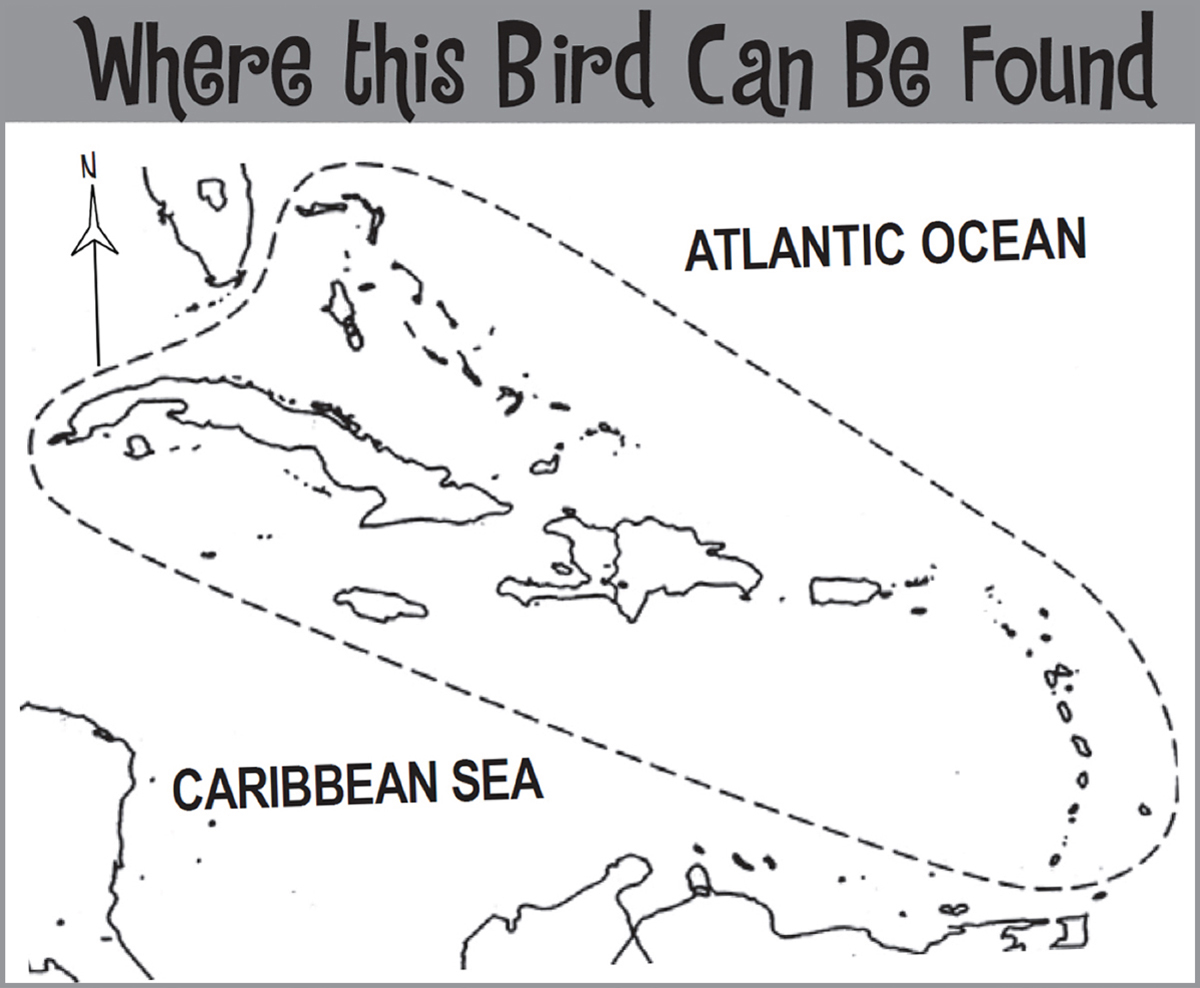
Hudsonian Godwits are not common visitors to the Caribbean, but they do sometimes take a break here to rest and refuel on their epic migration. You might spot a solo godwit, though sometimes they’ll hang out in small groups. You can find them by ponds or large rainwater pools on flooded agricultural areas (including rice farms) or wet pastures. They also rely on coastal areas including brackish swamps, estuaries, lagoons, and beaches. Hudsonian Godwits mainly eat soil dwelling invertebrates, probing for them in the mud with their long, but surprisingly flexible bills. Their flexible bill-tips allow godwits to bend their bill tip to grasp their prey in thick mud.
Hudsonian Godwits are listed as Vulnerable by the IUCN and their population is thought to be decreasing. This bird already has a relatively small global population, with a fragmented breeding range and a very restricted wintering area. In the Caribbean we can help by supporting wetland habitat protection and restoration efforts and joining wetland clean-ups wetlands; making sure there are places for godwits and other shorebirds to get the resources needed to successfully complete their long journeys. Learn more about this species, including its range, photos, and calls here. Great news! If you’re in the Caribbean, thanks to BirdsCaribbean, you have free access to Birds of the World and you can find out even more in the full species account of this bird!
Thanks to Alex Sansom for the text and Arnaldo Toledo for the lovely illustration!
Color in the Hudsonian Godwit
Download the Migratory Birds of the Day Coloring Page! Use the picture above and the photos on this page as your guide, or look up pictures of the bird online or in a bird field guide if you have one. Share your colored-in page with us by posting it online and tagging us @BirdsCaribbean #WMBD2025Carib
Listen to the calls of the Hudsonian Godwit
In wintering areas the Hudsonian Godwits are typically silent, but you might hear a flock makes soft “wheet, wheet” calls.
Enjoy these photos of Hudsonian Godwits


Activity of the Day
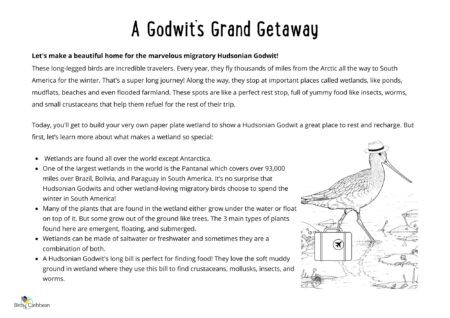 FOR KIDS: Hudsonian Godwits are incredible travelers! Every year, they fly thousands of miles from the Arctic all the way to South America for the winter. That’s a super long journey! Along the way, they stop at important places called wetlands, like ponds, mudflats, beaches and even flooded farmland. These spots are like a perfect rest stop, full of yummy food like insects, worms, and small crustaceans that help them refuel for the rest of their trip.
In this activity, you’ll get to build your very own paper plate wetland to show a Hudsonian Godwit a great place to rest and recharge.
With help from an adult, gather the following materials:
- A paper plate
- Small pebbles
- Small sticks
- moss
- Plastic animals- optional
- White cardstock or bristol board
- Paints
- Markers
- Glue
- Glue gun (optional)
Once you’ve gathered your materials, it’s time to make a wetland habitat no Hudsonian Godwit can resist! You can download all the information, instructions and worksheet here.
FOR KIDS AND ADULTS: Enjoy this video of a Hudsonian Godwit the wild!